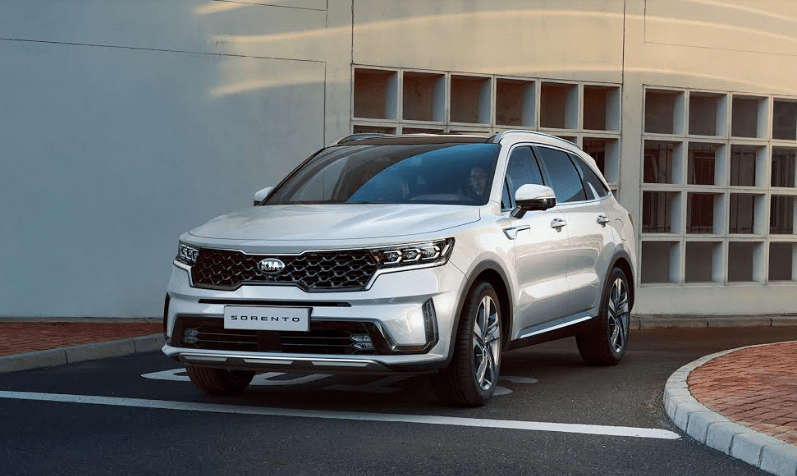
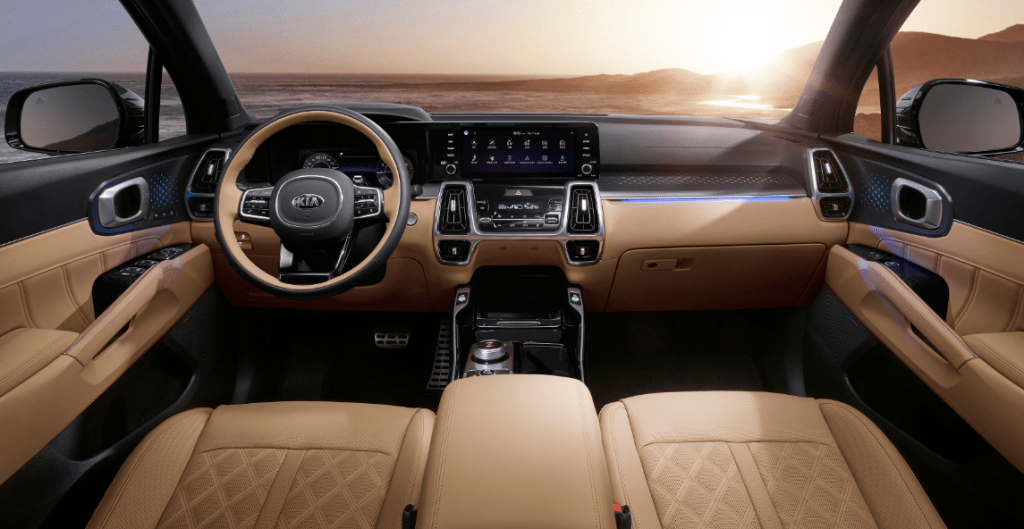
The concept of ‘refined boldness’ inspired Kia’s designers, and they came up with a more confident, mature and desirable exterior design. But that is not all. The cabin is also definitely upscale with premium material quality.
Of course, the new Sorento is crammed with progressive connectivity, driver assist and infotainment technologies. It makes its first public appearance at 2020 Geneva International Motor Show
FCA journalists launch gripping Abarth short stories series, starting with a visit to Thierry Boutsen in Monaco…
The dynamic PR and marketing people of FCA Belgium come up with an unique formula to keep the passion for the “Scorpione” alive. They launch mini-video stories that testify to the Abarth passion. The first episode shows the Belgian pilot Thierry Boutsen at the wheel of the Abarth 695 70 ° Anniversario…
This “Abarth Stories” concept was specifically devised for the Belux market. With good reason: since the launch of the brand in 2008, Abarth has achieved increasing success in Belgium and the Grand Duchy of Luxembourg, and is even about to become a reference in our shores when it comes to sporting cars.
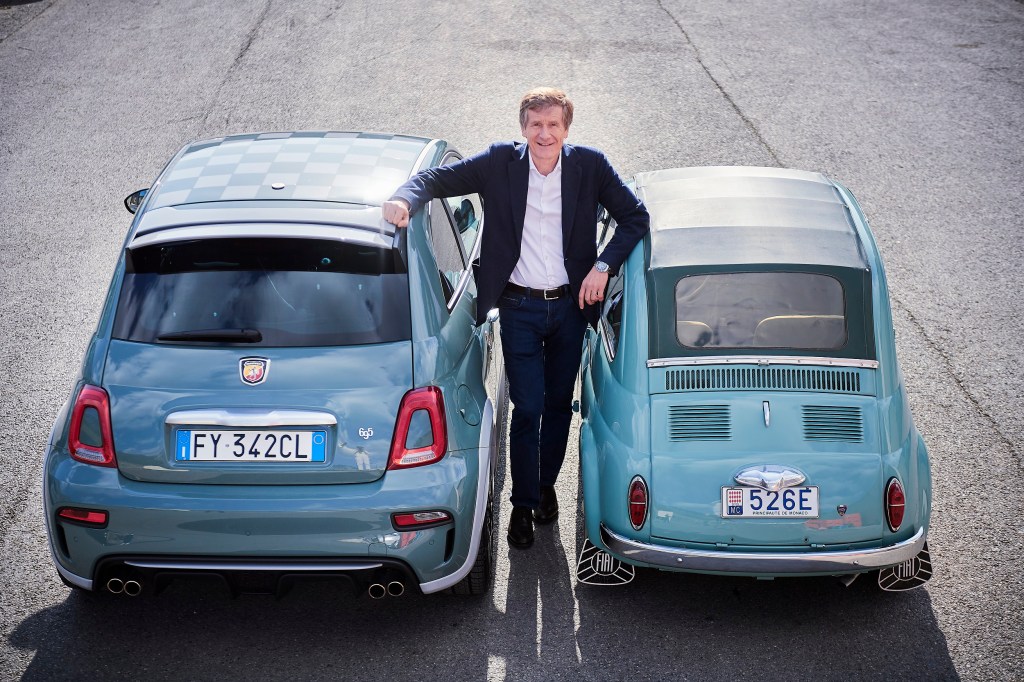
The first «Abarth Story» of 2020 brings viewers to the principality of Monaco, where they meet Belgian pilot Thierry Boutsen. He was so impressed with this latest creation from Turin, the Abarth 695 70 ° Anniversario, that he decided to buy one!
Thierry Boutsen has lived in Monaco with his family for years. The Festival du Cirque De Monte Carlo is in full swing, and with a bright blue sky outside, the FCA journalist meets Thierry Boutsen in the lobby of the Columbus hotel. Boutsen has devoted more than 23 years of his life to car racing and motor sport, a man with a true passion for cars.
In the original Cinquecento, Thierry Boutsen taught his mother to drive…
“I taught my mother to drive,” he tells our journalist quietly. “It was aboard a Fiat 500.” This undoubtedly explains his enthusiasm for the thoroughbred version the current model, sold under the brand name Abarth. «I have purchased this special edition in honor of the brand’s 70th anniversary, and it has been finished in the same color scheme as the 1957 Fiat 500 that I also own. So the circle is round! » he smiles.
Following him in the narrow streets of Monaco towards the corniche that takes us to the motorway towards Menton, one immediately sees that Boutsen has immense driving talents as a pilot, and they amply show behind the wheel of these new toys. «This new Abarth has everything one could wish for: it is light, agile, powerful, has perfect handling and powerful brakes. Everything was developed to achieve the best », Thierry smiled.
For more than 20 years, Thierry Boutsen has been involved in aircraft mediation with his company Boutsen Aviation, which is also based in Monaco. But his passion for cars is still well alive. “I still remain a car enthusiast,” he adds. «That is why I recently set up a new company specializing in the sale of collection cars, cars suitable for public roads and competition cars. Our specialty? Find rare vehicles that meet the specific criteria of the customers, from a Lancia Stratos or Porsche 904 to a Ferrari F1 in running order! » And now he relives also the passion for Abarth…
A thriving market for the cars with the “Scorpione” in Belgium…
With 1,700 cars sold in Belgium in 2019 and around 21,000 in Europe, Abarth is the sporting jewel in the Fiat Chrysler Automobiles group. Born from the heritage of Carlo Abarth, the newest 695 70 ° Anniversario is a unique model that complements the range of models 595, available in the Turismo and Competizione versions. This Abarth 695 70 ° Anniversario impresses with its new rear spoiler, which is manually adjustable,and this “Spoiler ad Assetto Variabile” can be adjusted in twelve positions, with a slope of 0 to 60 degrees…
Abarth remains active in the competition, for example through the participation of the Abarth 124 Rally in the ERC Championship, and also takes part in the F4 Championships in Italy and Germany.
This is how new pilots are discovered, such as the young Arthur Leclerc, brother of F1 pilot Charles Leclerc, who started his career at Alfa Romeo, before making the switch to Ferrari.
The Brussels motor show is always a unique event. Last but not least because this is a true buyers’ show, to be taken in the literary sense: about 30 % of the annual car sales in our country is done on the grounds of the Motor Show!
“Our” show is also unique because all the brands are present here in Brussels. First of all because no car manufacturer wants to miss the sales opportunity, but also because the Brussels show is also an ideal “test” market, it allows brands to assess what global (European) market share they can achieve overall and for their respective models individually, judging by their penetration in the Belgian market, where no national brands can distort the situation in our market place.
We took a walk through some of the stands, and here follows our report, where we focus on the brands we did not yet discuss already in our show preview, starting here with BMW.
Hans Knol ten Bensel
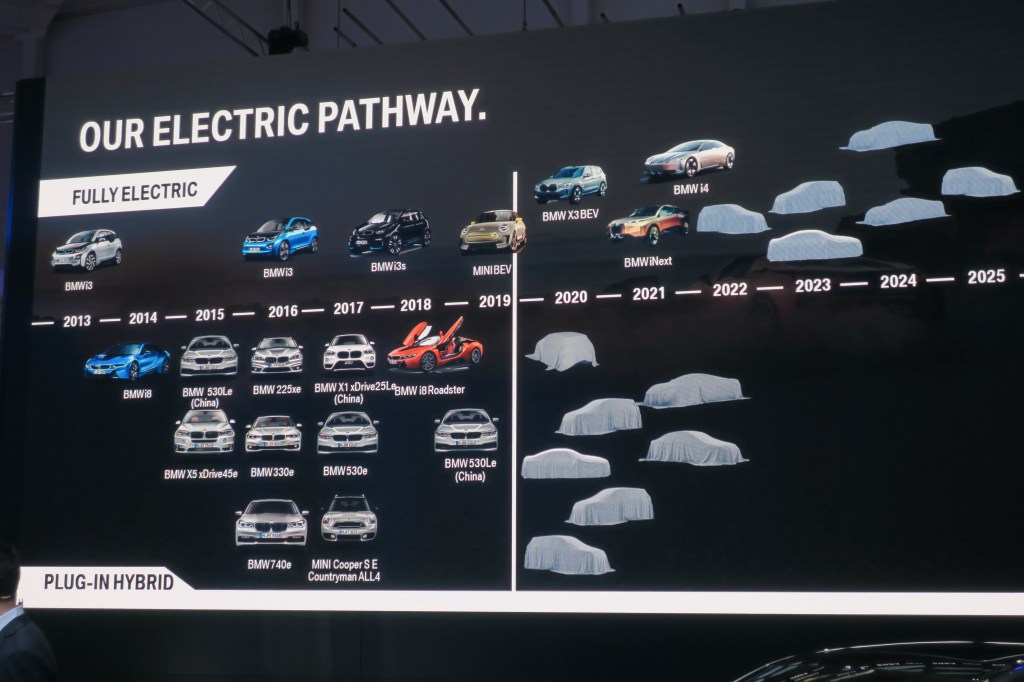
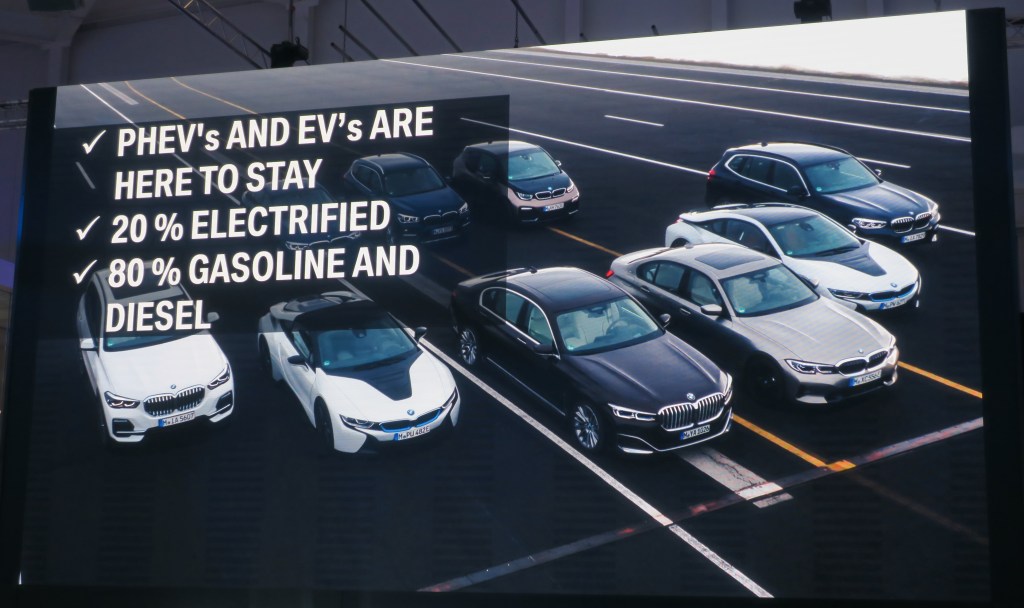
BMW and MINI unveiled two world premieres with respectively the BMW plug in hybrid versions for the X1 and the X2 models, the BMW X1 xDrive25e and the new BMW X2 xDrive25e. BMW is pushing its electrification very hard forward, and on the accompanying photo you can see the table they displayed at the show, showing the further steps they are taking towards an electrified future. An electric drive and a lithium-ion battery enable an electrically powered range of up to 57 kilometres in the two new plug-in hybrid models. In the near future, four BMW X models with plug-in hybrid drive will be available. BMW intends to have more than one million vehicles with electrified drive on the road by the end of 2021.
The plug-in hybrid system of the new BMW X1 xDrive 25e and the new BMW X2 xDrive25e consists of a 1.5 litre 3-cylinder petrol engine with BMW TwinPower Turbo Technology and an electric drive specially developed for this model. It is taken from the eDrive technology modular system of the BMW Group. The petrol engine mobilizes a peak output of 92 kW/125 hp and a maximum torque of 220 Newton meters. It transfers its power to a 6-speed Steptronic transmission and drives the front wheels.
The electric motor generates an output of 70 kW/95 hp and delivers 165 Nm of torque to the rear wheels via a single-speed transmission. This makes for a hybrid specific all-wheel drive…Together the combustion engine and electric motor produce a system output of 162 kW/220 hp. The maximum system torque of both drive units is 385 Nm. The new BMW X1 xDrive25e accelerates from 0 to 100 km/h in 6.9 seconds. The new BMW X2 xDrive25e does the 0 to 100 km/h sprint in 6.8 seconds. The top speed of the new BMW X1 xDrive25e is 193 km/h. Maximum speed of the new BMW X2 xDrive25e is 195 km/h.
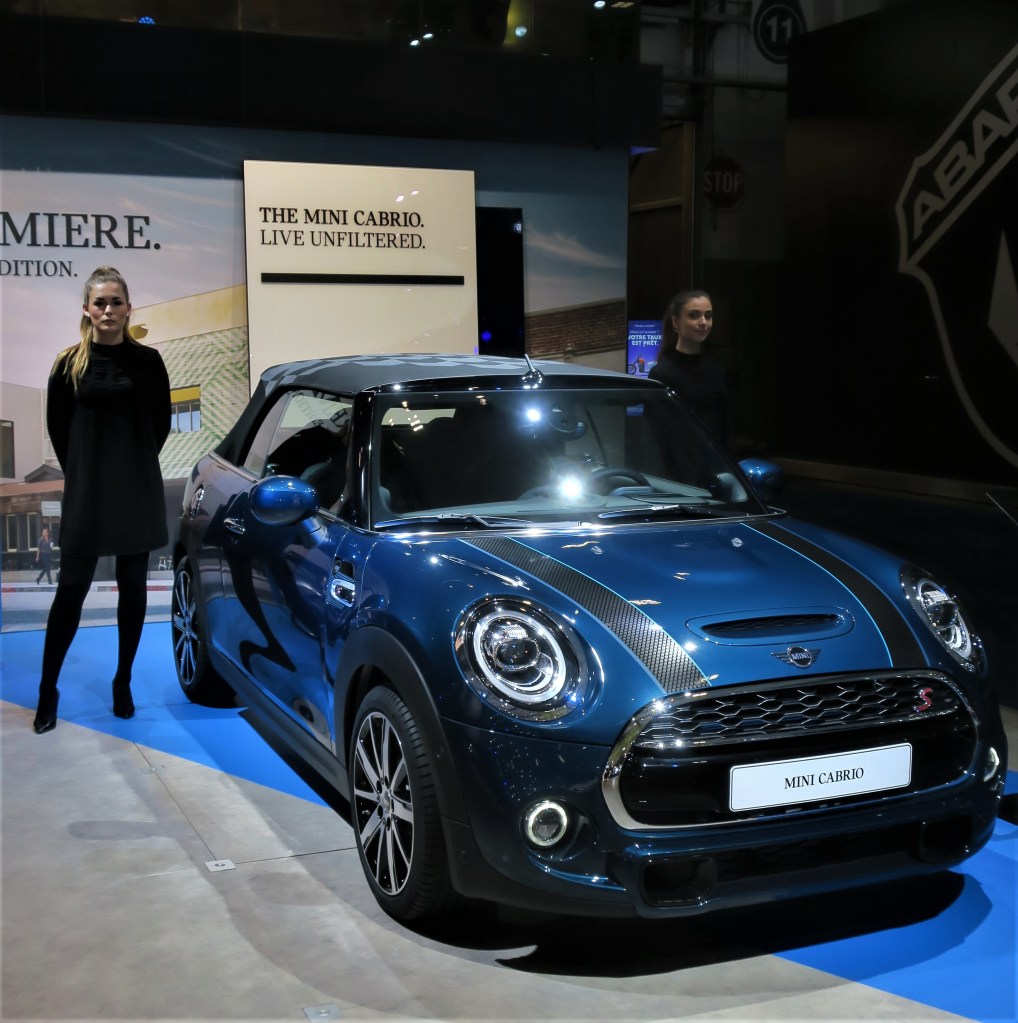
The MINI crowd was also spoiled with a world first of a Sidewalk Edition of the MINI convertible. The MINI is already cute, desirable and truly iconic, and a cabrio version adds to all the pleasure a MINI can offer its driver and occupants. Variants of the exterior paintwork, soft top design, rim styling and interior fittings are developed especially for the edition model. The version of the fully automatic textile soft top, specially designed for the edition model, can be opened or closed electrically and almost silently in 18 seconds. It features an artistically woven-in arrow graphic in the particularly high-quality finish typical of MINI Yours. The 17 inch light-alloy Scissor Spoke 2-tone wheels of the new MINI Convertible Sidewalk are also a model-specific design feature. There are also the side indicator bezels, known as side scuttles, which bear the “Sidewalk” model designation.
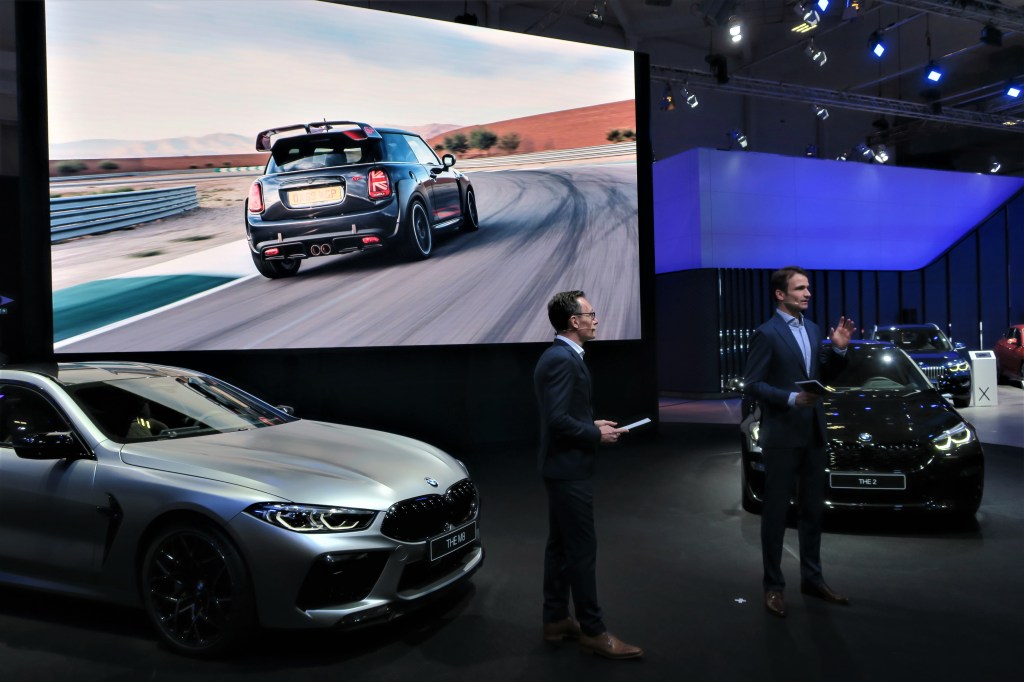
Presenting the MINI John Cooper Works GP and the M8 Gran Coupé
Three engine versions are available, The new MINI One Convertible Sidewalk develops 75 kW/102 hp from the 1.5 litre 3-cylinder engine. The new MINI Cooper Convertible Sidewalk is also powered by a 1.5 litre 3-cylinder engine which produces 100 kW/136 hp. The 141 kW/192 hp 4-cylinder engine of the new MINI Cooper S Convertible Sidewalk provides the sportiest fresh air experience.
European premieres for BMW and MINI
There were also European firsts in Brussels, like the BMW 2 Series Gran Coupé, interesting as it is beautiful, and we are certainly keen to drive one soon to tell you more about it. The same goes for the BMW M8 Competition Gran Coupe. It has a 200 mm longer wheelbase makes extra room for the rear passengers.
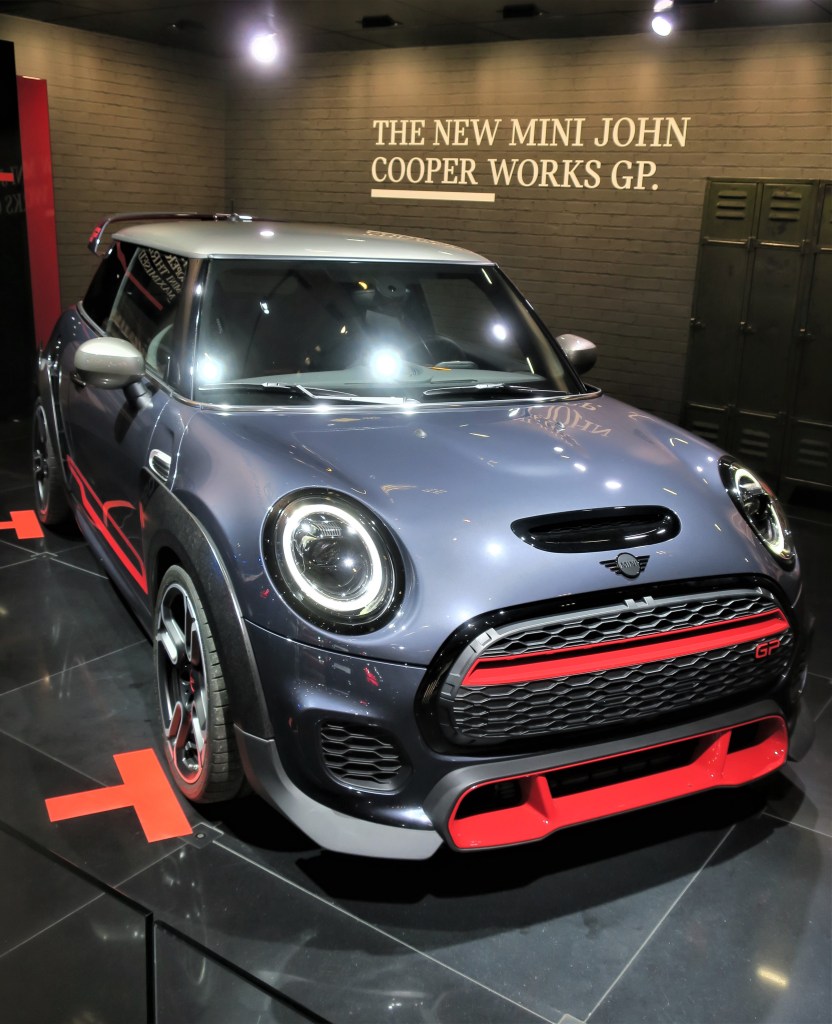
Furthermore there is the insipring MINI John Cooper Works GP, with a 4 cylinder 306 HP engine, catapulting this Mini from 0 to 100 km in merely 5,2 seconds. It is produced in Oxford in 3000 units, and is on sale from March 2020.
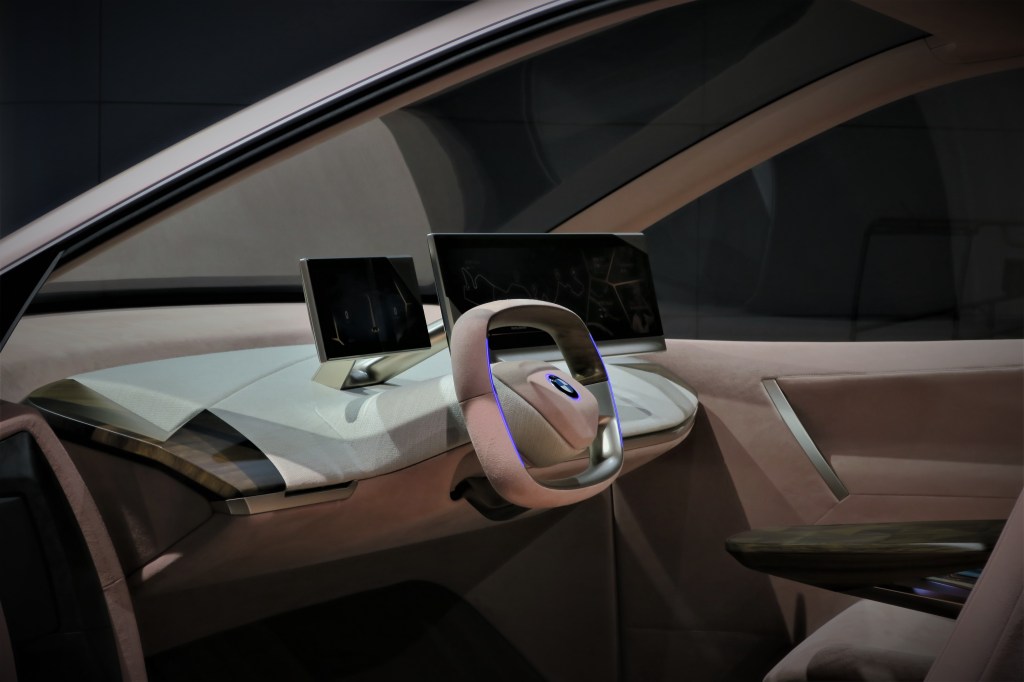
Things to come: The Vision INEXT dashboard…
The BMW BMW X5 M and X6 M have their Belgian premières, the 4,4 litre V8 is good for 625 hp and this formidable engine makes these cars sprint form 0 to 100 in merely 3,8 seconds. Last but not least there is the Belgian first of the MINI electric, or the 3-door MINI Cooper SE.
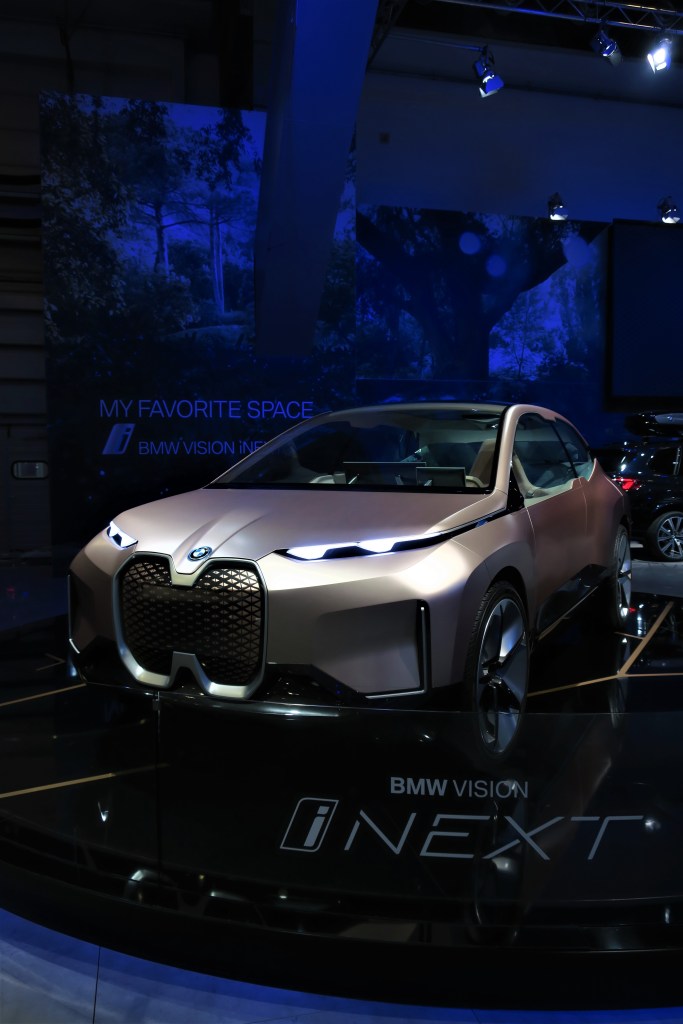
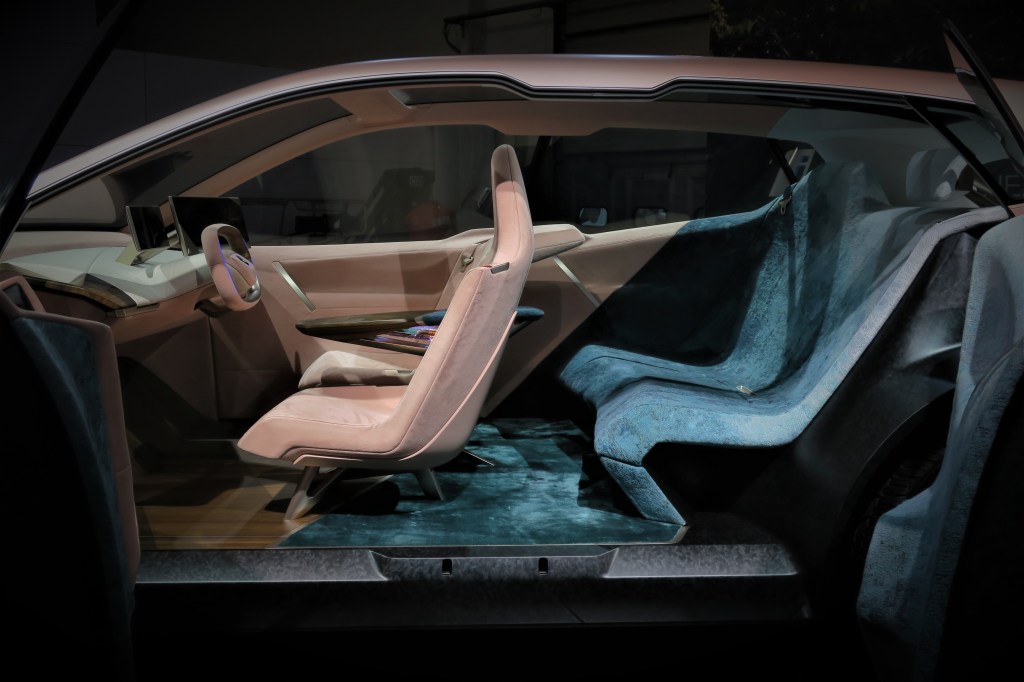
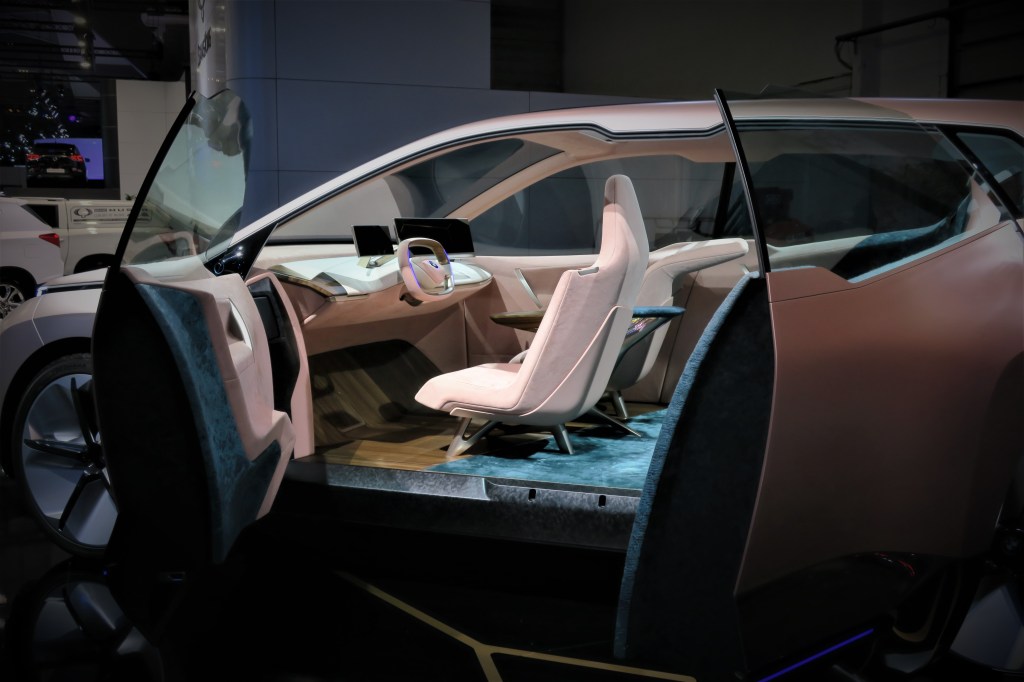
On the stand, we stood also eye to eye with the BMW Vision iNEXT, the optical highlight of the exhibition stand, which also showcases the interior design principle “My Favorite Space” with harmonious, natural surfaces and technology that is kept discreetly out of sight.
Just look at the photos here… which answers the question: “What will cars look like when they no longer have to be driven by a person, but still can be?” The interior can be a place for relaxation, interaction, entertainment, or concentration, as preferred. It is more like a comfortable and fashionably furnished “living space” on wheels – a new “Favorite Space”. A new design principle, referred to as “Shy Tech”, plays an especially important part in this.
To preserve the high-end, yet cozy character of the rear compartment, and place its occupants center-stage, the intelligent technology behind the operating controls is integrated out of sight. It only becomes visible and operable when required by the driver or passengers…
Soon more about other brands and novelties we saw on the Brussels show…
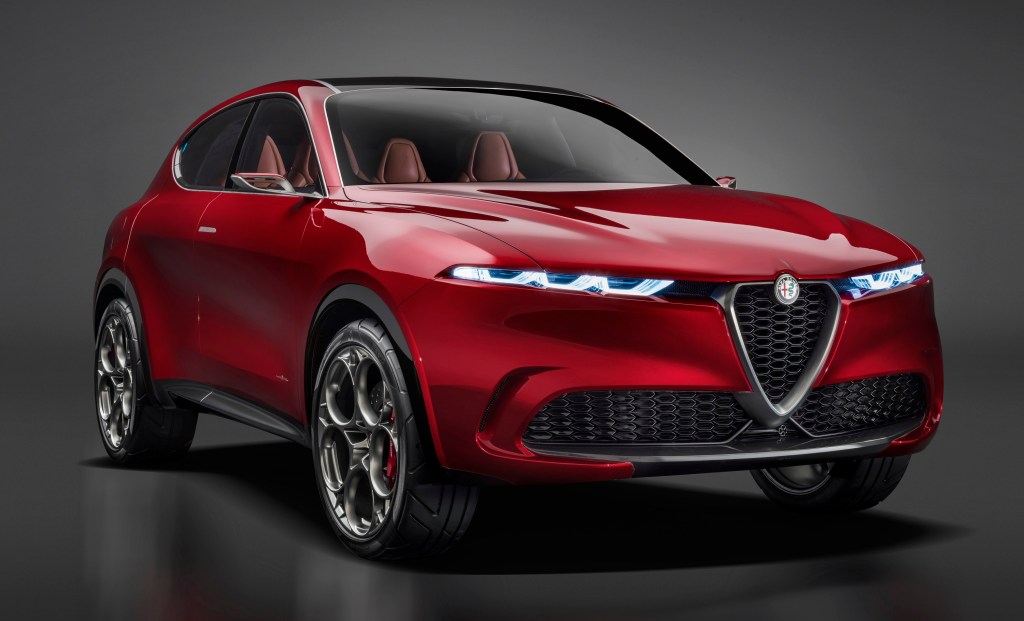
Faithful readers will remember that we stood in the FCA Centro Stile eye to eye with the stunning design concept car, the Alfa Romeo Tonale. For those lucky ones who will be invited to the gala evening and attend the press day on January 9, we have good news : it will be on show on that day in the Hall 7 of the Brussels Salon…
Hans Knol ten Bensel
Indeed, you can admire it for one day in Hall 7 of the Motor Show buildings, and you will see its design language close up. This is rather important, as its shapes will be seen back in the second SUV which will bear the Alfa Romeo badge.
Its expressive design and compact shape bode well for the future styling of Alfa’s, whilst maintaining and even rather enhancing and accentuating further the organic Alfa styling DNA of the past. One only has to look at the formidable 21-inch alloy wheels, which evoke the “telephone dial”, a pure execution of the circular theme of the wheel itself. It was first seen in the 60’s and proudly carried by the Alfa 33 stradale. The wheel design has been further enhanced by special custom-made Pirelli’s…
The lateral profile of the car is reminiscent of the shapes of the Duetto and Disco Volante Spider, and the “Linea GT” profile of the Tonale is a modern day interpretation of the shapes seen on the GT Junior.
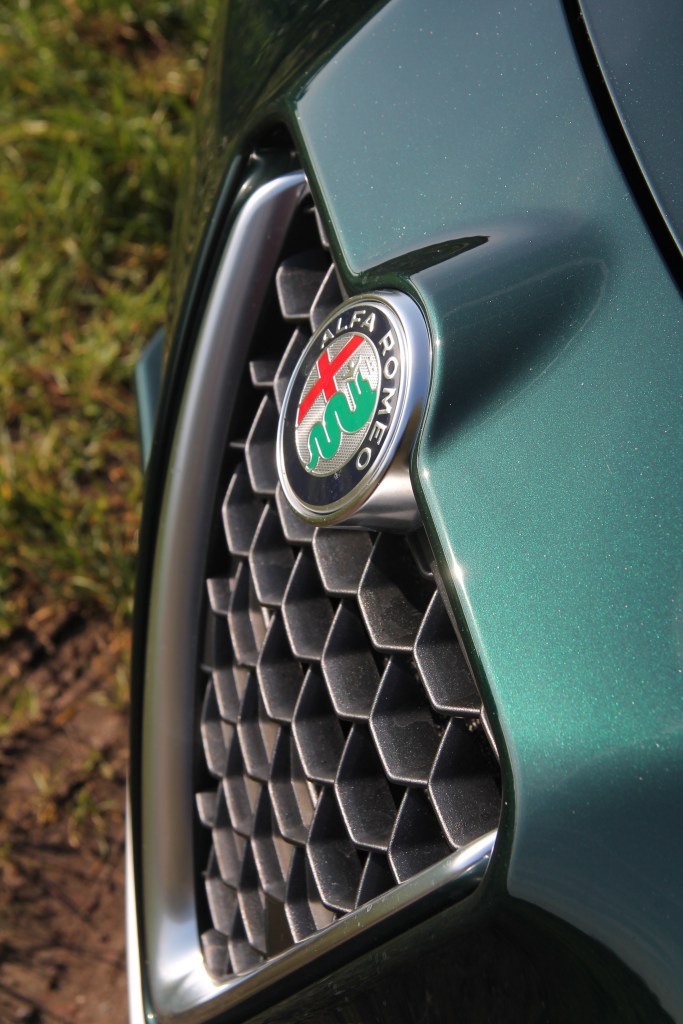
The “Trilobo” front end bears proudly the “Scudetto” grille, and the “3 + 3” headlights remember proudly the SZ and the Brera.
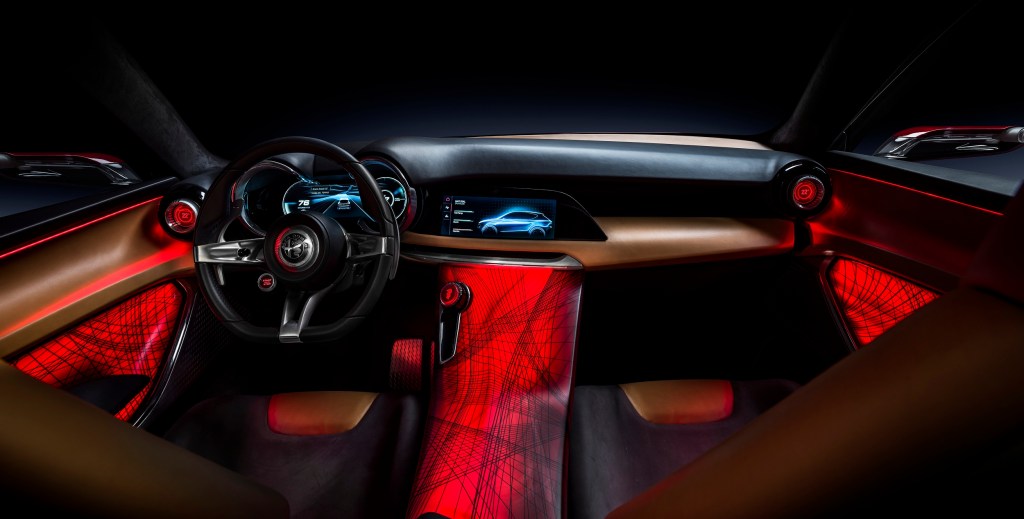
The cabin shapes have a distinct thoroughbred touch, and the materials are rich and inviting, with transparent panels in the centre console, and of course the DNA driving mode elector is a prominent element.
The Tonale is named after the Tonale mountain pass, which lies not far from the iconic Stelvio pass, and is equally breathtaking with eternal snow and water falls. Just come to admire it in Brussels…on the 9th of January. If you missed it, there is always a nice consolation for you: you can admire on the following days instead the new Giulia MY 2020…
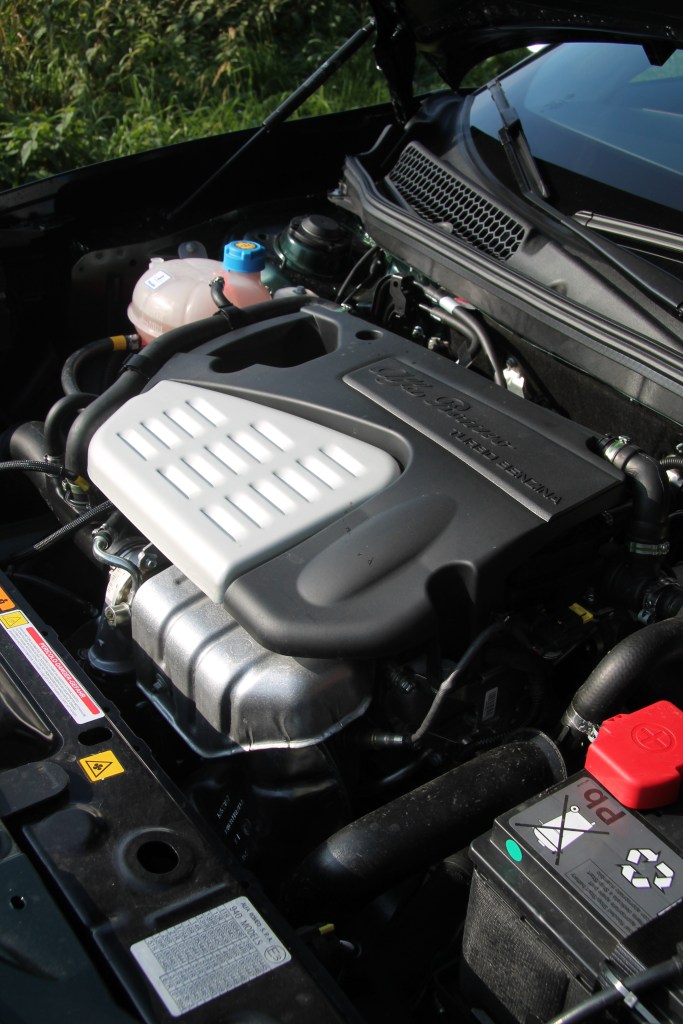
“Cuore Sportivo” This is the iconic adage of Alfa Romeo. It evokes the thoroughbred heart which throbs in their cars. And in this latest Giulietta it is a well sounding heart too. Indeed, the well proven 1,4 litre four cylinder unit does its well sounding work here, and it finds also a home in a wide range of models in the FCA stable. It develops here 120 HP, and this warrants undistilled driving pleasure. Just read on…
Hans Knol ten Bensel
It is a well matured unit, and this amply shows in its superb mechanical refinement. Even after the first meters we noticed the turbine smoothness of this engine, even at lowest revs, with both gearbox and clutch – we drove the six speed manual version – being progressive and slick too. All this makes this Giulietta a total pleasure to drive in urban traffic, and frankly the Giulietta proved totally “zen” in daily use. The process of making this marvelous unit comply with the 6D emission standards will have helped also in giving it impeccable manners.
Of course this Giulietta is a true delight to drive with spirit, the engine revs up beautifully in the most well sounding staccato. The gearbox is expertly low geared to suit the torque characteristics of this thoroughbred engine, and the Alfa Romeo pilot has always enough power to move his Alfa with panache and zest through every traffic situation.
Agile and predictable
The Giulietta runs on a state of the art platform, and this guarantees superb handling. Indeed, steering the Giulietta with abandon over curvy stretches is an undistilled pleasure. Remaining neutral up to very high cornering speeds, the chassis and suspension is very forgiving and this Giulietta can be driven sportingly with confidence. Of course, the relatively moderate power of 120 HP helps too here, and we did not meet a driving situation where the suspension and chassis ran out of breath.
The Alfa steers with adequate precision, with the steering not transmitting too much information of the road surface through your fingertips. Some would like to have more feel, but your servant personally prefers a quieter and more stable steering wheel, so this was very much OK for me.
Last but not least, there is also the Alfa DNA driving mode selector. You can adjust the car’s dynamic handling, by modifying the engine torque, the brakes (via the Pre-Fill device), the accelerator response, the ESC control system.
Lively and remarkably frugal
Outright performance is quite up to the mark, with a 0 to 100 sprint absolved in 9,5 seconds, and a top speed of 195 km/h. Pulling power with torque of 215 Nm at 2500 rpm, staying high throughout the rev range, is quite good as the gearbox ratios are also quite well chosen.
Fuel consumption will depend as everybody knows, very much on your driving style, and charmed as we were by the superb smoothness and flexibility of the drivetrain, we adopted a cool, “zen” driving style, and when staying below 3000 rpm, we were hugely rewarded with an average consumption hovering between 6 and 6.5 litres/km over part of the test distance, with quite a bit of urban driving included, as well as heavy motorway traffic. In town, it takes a very gentle right foot to let consumption stay below the 9 liter mark.
But with the excellent engine flexibility and drivetrain smoothness, this is no difficult exercise indeed. The manufacturer quotes 7.2-7.4 l/100 km as overall average.
The suspension also strikes a very good balance between sporting responsiveness and comfort, and this makes this Giulietta a very good Gran Turismo.
Sound deadening and insulation is excellent too, at high cruising speeds the engine is never obtrusive, tire/road noise can impair listening to classical music however on specific road surfaces.
Alfa ambience both inside and out.
Alfa styling has always embodied a unique sporting panache, and this is translated by the curvy body lines as well as the instrumentation and the interior and dashboard layout. The new range features five trim levels – Giulietta, Giulietta Super, Giulietta Sport, Giulietta Executive and Giulietta Veloce – and each one responds to specific requirements.
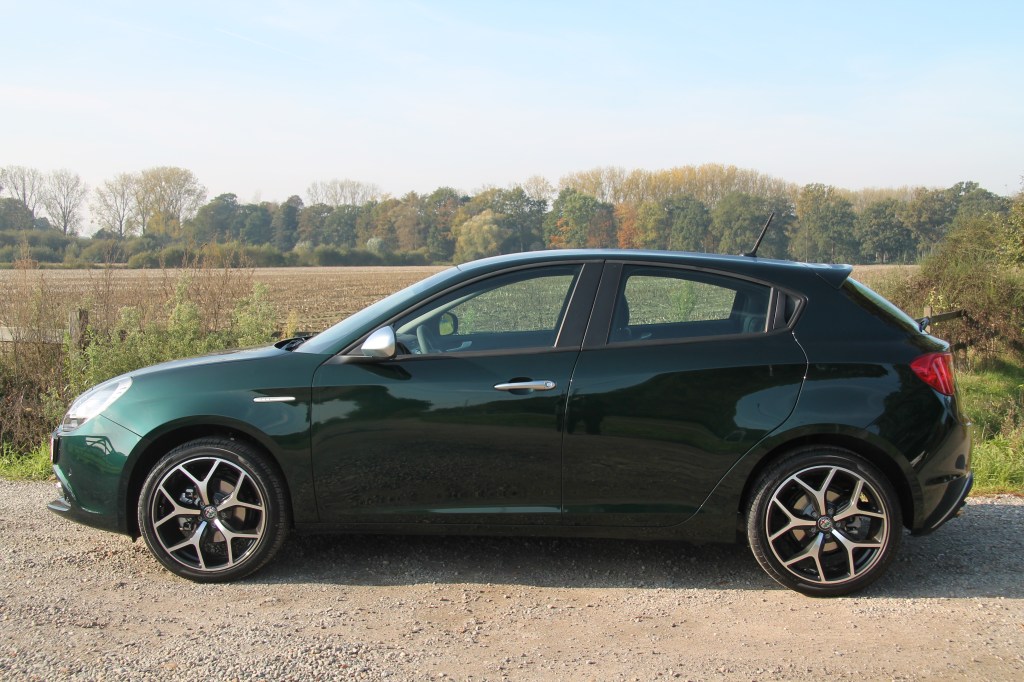
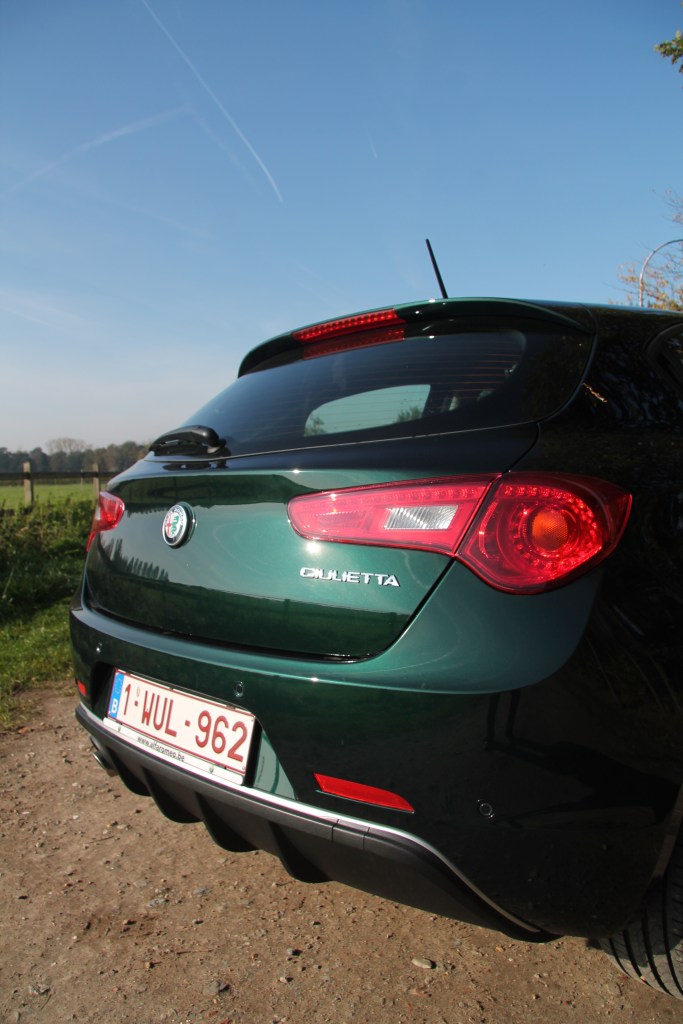
On the exterior, we were very much charmed by the Visconti Green livery of our test car, the one-of-a-kind alloy wheel rims.
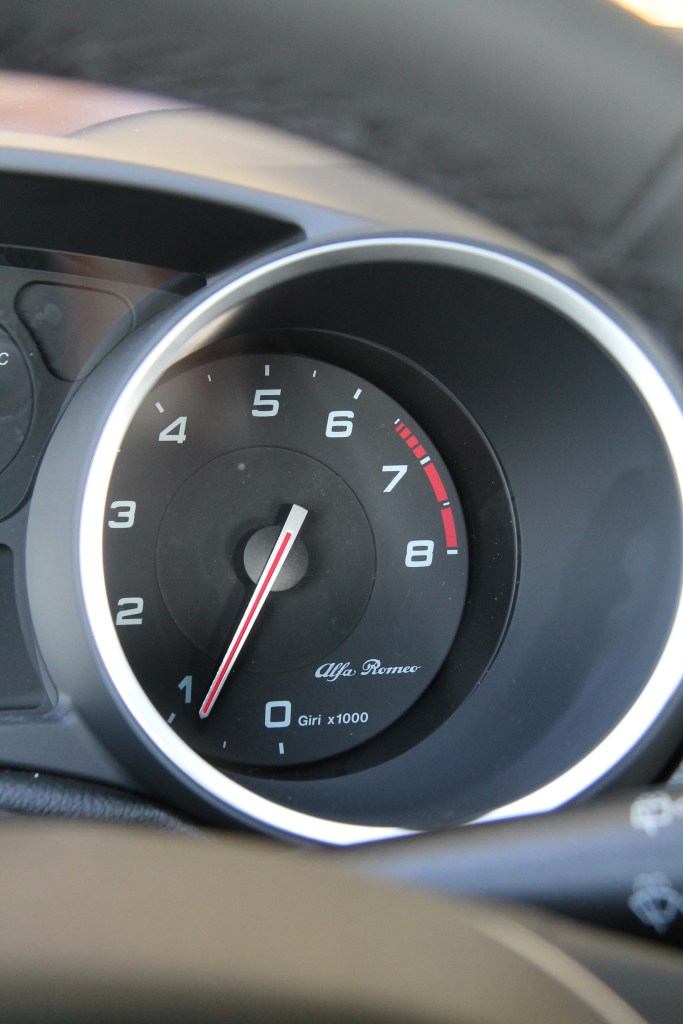
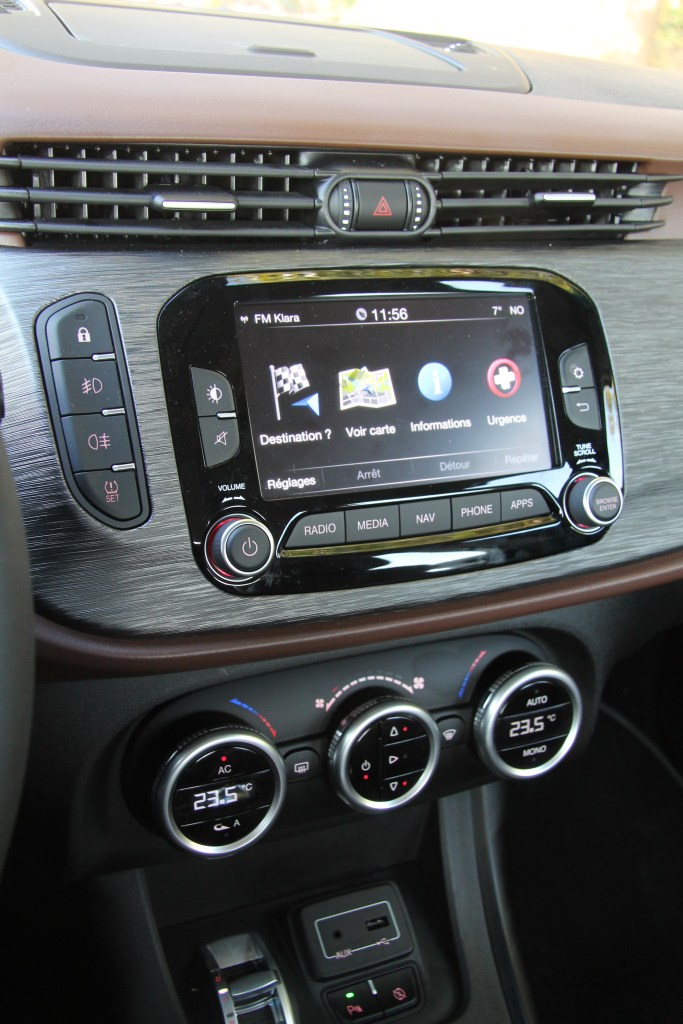
When it comes to instruments, this Giulietta continues the good tradition, although we still miss the bold instrumentation and dials of the Duetto for instance, but the dials here hark faithfully back to the ones we saw in the later Giulia Supers, and the dashboard finish is also reminiscent of wood inlays and wood grained surfaces of the beloved Giulia Super.
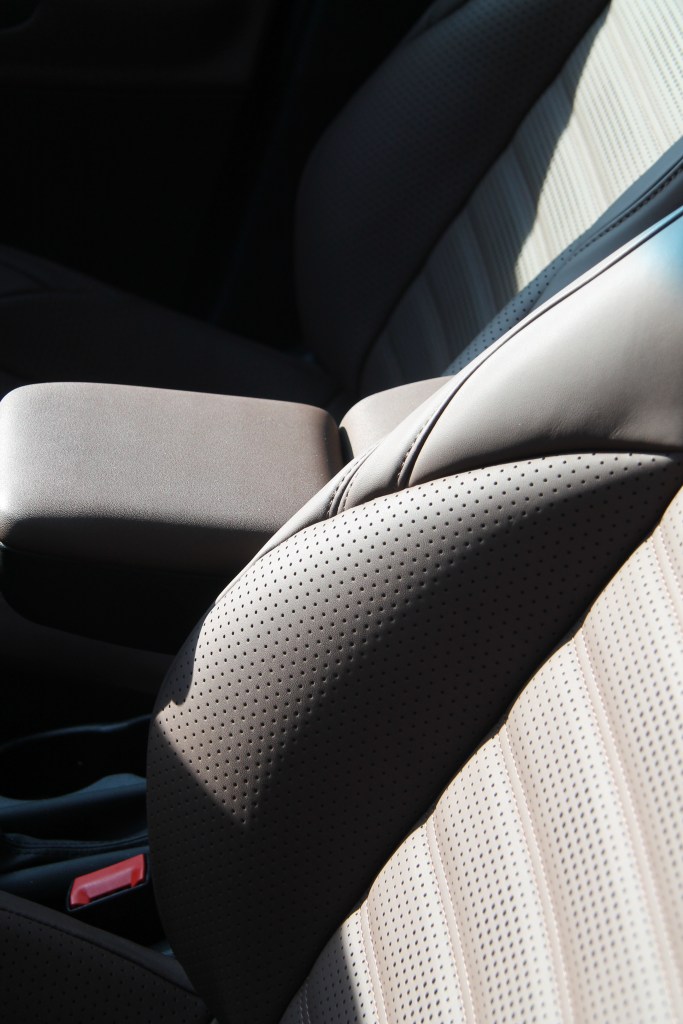
Overall, we just love it and we beg Alfa stylists to continue this good tradition. The same can be said of the seat upholstery. Indeed, the new Giulietta Veloce has new Alcantara and beige fabric seats, with leather seats optional, like in our test car. Need we say more?
Everyday practicality
This is your daily Alfa par excellence, not only with its excellent drivetrain and comfort, but also with the host of driving aids and the excellent connectivity you can enjoy throughout. Apple Car play and Android AutoTM are provided for, when you choose the Tech Pack, which offers the Alfa Connect 7″ from by Alpine infotainment system.
The Business Pack, for instance, has DAB radio with navigator and 6.5-inch screen, rear parking sensors and height-adjustable passenger seat.
The Convenience Pack includes rain sensor, the dusk sensor, electrochromic interior rear-view mirror, front and rear parking sensors, central rear armrest and electrically operated door mirrors.
Boot space is more than adequate with 350 liters.
Conclusion
This Giulietta has everything what it takes to steal your car loving heart. It has indeed the sporting character and style which is so unique to Alfa. Add to this the total smoothness of the drivetrain, the willingness of this thoroughbred engine, the stylish curves of the car, looking well balanced from every corner, the panache of the cabin and the charming handling, and you can understand we were quite impressed. We would suggest, knowing that the competition is fierce in this segment, that you take this Giulietta for a spin. This Alfa could then win you over…
Indeed, an extra zest of sportiness is added to the already iconic Audi e-tron. The Sportback version looks and is more dynamic, as it offers up to 300 kW of power and a range of up to 446 kilometers (277.1 miles). A new feature, and for the first offered on a in a mass-production vehicle, are its digital matrix LED headlights.
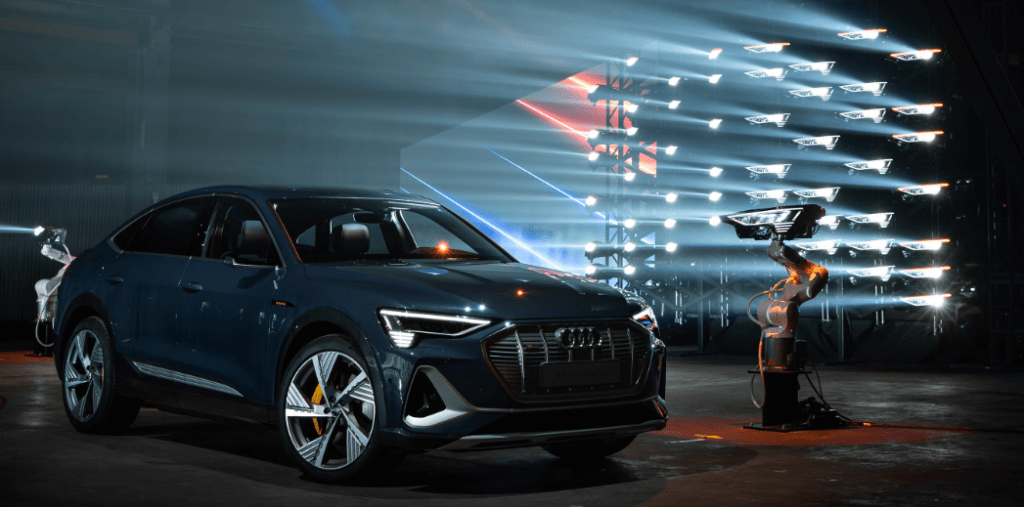
This was also clearly visible at the Los Angeles presentation of this elegant SUV Coupé, where the rakish and elegant contours of the Sportback were lit by an array of LED headlights in the background, and mounted on a robot alongside the car.
Just read on for more details…
Hans Knol ten Bensel
The Audi e-tron Sportback looks very good in the typical Audi design language. The roof drops down steeply to the rear—in typical coupé style— and is flowing into the steeply raked D-pillars. The lower edge of the third side window rises towards the rear—also a typical Sportback feature.
The designers also varied the signature at the broad diffuser, drawing attention to the absence of exhaust tailpipes. A light strip connects the LED lights to one another.
Announcing even more colour…
A total of thirteen paint finishes are available for the all-electric drive SUV coupé, including the new colour plasma blue, metallic, which is exclusive to the e-tron Sportback. The logo on the electric charging flap features the eye-catching high-voltage signal colour orange, which can also be applied to the brake callipers on request.
The S line model emphasizes the sporting
DNA of the Audi e-tron Sportback, and is standard equipped with 20-inch wheels
and sport air suspension. At the rear end, the spoiler as well as a striking
diffuser which extends across the entire vehicle width, contributes to the
outstanding vehicle aerodynamics. In contrast to the basic model, the
attachments on the S line exterior are painted in the exterior body colour –
including the wheel arch trims, door sills, bumpers and exterior mirrors.
For those who want more contrast, Audi also
offers the so-called black styling package that accentuates the area of the
Singleframe, the side windows, and the bumper. The exterior mirror housings are
also available in black as an option.
A drag coefficient of merely 0.25…
In conjunction with the S line exterior and virtual exterior mirrors, the Sportback achieves an drag coefficient value of just 0.25. This is primarily due to the coupé body shape and the associated lower aerodynamic drag behind the car. The high separating edge of the Sportback minimizes swirl in the air flow in this area.
Global innovation in a production vehicle: The digital matrix LED headlights
With the digital matrix LED headlights as top-of-the range equipment, Audi presents a worldwide first in a production vehicle: Broken down into minute pixels, their light can illuminate the road in high resolution. The design is based on a technology abbreviated as DMD (digital micromirror device) and is also used in many video projectors.
Audi e-tron Sportback: digital matrix LED headlight
At its heart is a small chip containing one
million micromirrors, each of whose edge length measures just a few hundredths of
a millimeter. With the help of electrostatic fields, each individual
micromirror can be tilted up to 5,000 times per second. Depending on the
setting, the LED light is either directed via the lenses onto the road or is
absorbed in order to mask out areas of the light beam.
Revolution ahead: just follow the light…
These LED lights will be seen on the e-tron Sportback mid 2020, and they can perform multiple tasks. It can generate dynamic leaving- and coming-home animations that appear as projections on a wall or on the ground. This presentation transforms the area in front of the car into a carefully illuminated stage. Not only does the digital light system deliver cornering, city, and highway lighting as versions of the low-beam light with exceptional precision, it also supplements the high-beam light by masking out other road users with even greater accuracy.
Above all, however, it offers innovative
functions such as lane light and orientation light. On freeways, the lane light
creates a carpet of light that illuminates the driver’s own lane brightly and
adjusts dynamically when he or she changes lane.
In this way, it improves the driver’s
awareness of the relevant lane and contributes to improved road safety. In addition,
the orientation light uses darkened areas masked out from the light beam to predictively
show the vehicle’s position in the lane, thereby supporting—especially on
narrow roads or in highway construction zones—the safe lane centering assist.
The marking light function is also used in conjunction with the optional night vision assist. The light automatically draws attention to any pedestrians it detects, thereby reducing the danger of overlooking pedestrians in the immediate vicinity of the lane.
Detail
On the second part of this report, we will
tell you more about the dynamic qualities, the drivetrain, i.e. batteries and
engines, interior and connectivity of this e-tron Sportback…
A tall standing Urban Coupé with fluid, inviting lines…
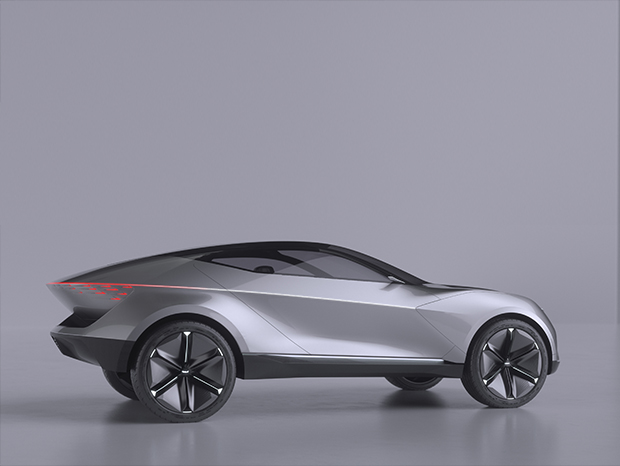
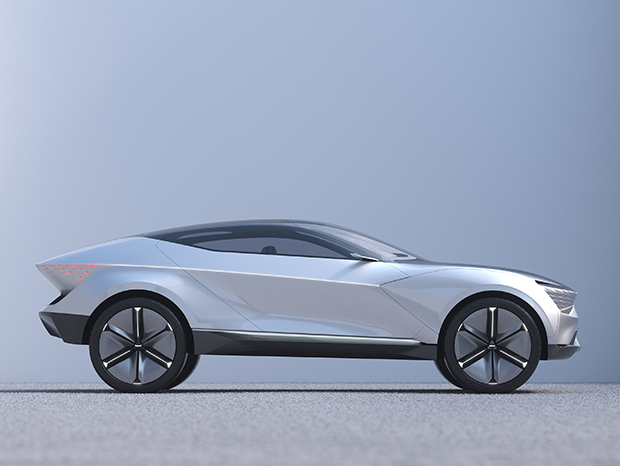
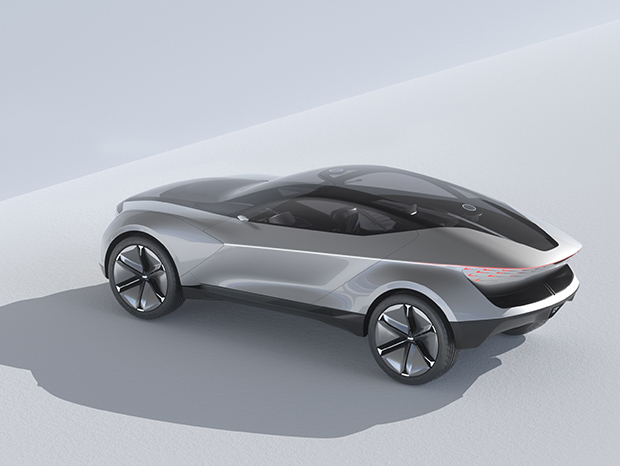
Kia recently showed a stunning electric coupé with novel proportions. This Futuron made its public debut at the 2019 China International Import Expo (CIIE) in Shanghai. Its low-profile SUV coupe body makes a strong statement of intent for Kia’s future cars, which will be – as the manufacturer puts it – confident, sporty and modern, yet also elegant. At 4,850 mm in length, 1,550 mm tall and with a 3,000 mm-long wheelbase, it has an elevated ground clearance is matched with a low, lean body to create a dynamic, confident posture.
It is indeed a sports car… on an SUV platform. Clever.
Because this makes – like for instance in the Audi e-tron – room for the
batteries to be lodged beneath the cabin floor. The advantage is also that the elevated
stance of the car is therefore matched with a low center of gravity.
And that slightly more elevated stance is just what
you want in an urban car, even if it has the sleek shape of a coupé.
Just read further…
Hans Knol ten Bensel
This “E”-Coupé
is powered by four powerful in-wheel electric motors. This e-AWD
system delivers as you can expect lively responses to driver inputs.
But the important hallmark here is its fluid, intriguing design. The front fender flows backwards from the front of the hood before plunging into the cabin itself, establishing a connection between the driving seat and the road ahead. The concept’s roof is a diamond-shaped panoramic glasshouse which sits atop the 360-degree core, in the best traditions of UFO and flying saucer design. It floods the cabin with natural light, and it also extends down the bonnet to give drivers an unparalleled view ahead. The glasshouse also incorporates a network of LiDAR (light detection and ranging) sensors capable of providing Level 4 autonomous driving features, enabling hands-off and eyes-off driving in most conditions.
Furthermore, the 360-degree theme is evident in the
lighting that illuminates a sharp character line encircling the Futuron’s body.
A new “tiger” face…
The newly-designed front of the car, like that of the
Imagine by Kia Concept first revealed earlier in 2019, expresses a new design interpretation for Kia’s future
electric vehicles.
With a wider ‘tiger face’ shape, the grille
incorporates the Futuron’s headlamps, an innovative ‘Star Cloud’ design which
gives the car a dazzling new night-time identity.
Flexible cabin space…
The layout of the electric powertrain and
incorporation of Level 4 autonomous
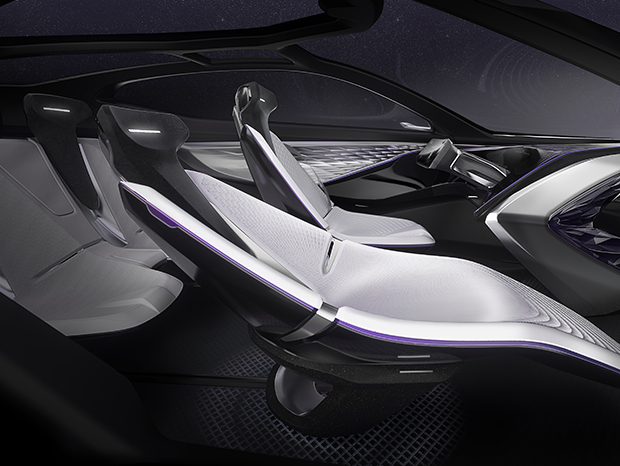
driving systems has enabled the creation of a spacious and flexible cabin
unlike any other vehicle on roads. The two
front seats are created out of flexible materials and can offer an upright
‘driving’ position, or a reclined ‘rest’ position, similar to the flexibility
afforded to first-class airline passengers. With the activation of the
Futuron’s autonomous driving features, the two front seats recline as the
steering wheel retracts. The ‘zero-gravity’ seating position this creates helps
to reduce fatigue on long journeys.
One of the most prominent features of the cabin is the
‘cockpit’ area surrounding the driver. The graphical user interface (GUI) of
the cockpit flows out of the driver-side door and wraps around the steering
wheel in a seamless arc. This merges the instrument cluster directly with the
audio-visual display at the center of the dashboard and is linked to the
display integrated within the surface of the steering wheel itself.
The GUI is operated by artificial intelligence
technologies, displaying useful information about the car various autonomous
driving, powertrain and navigation features, which creates a unique user
experience.
This is, according to Kia, what driving into the
(urban) future is all about. Just look at the photos here…
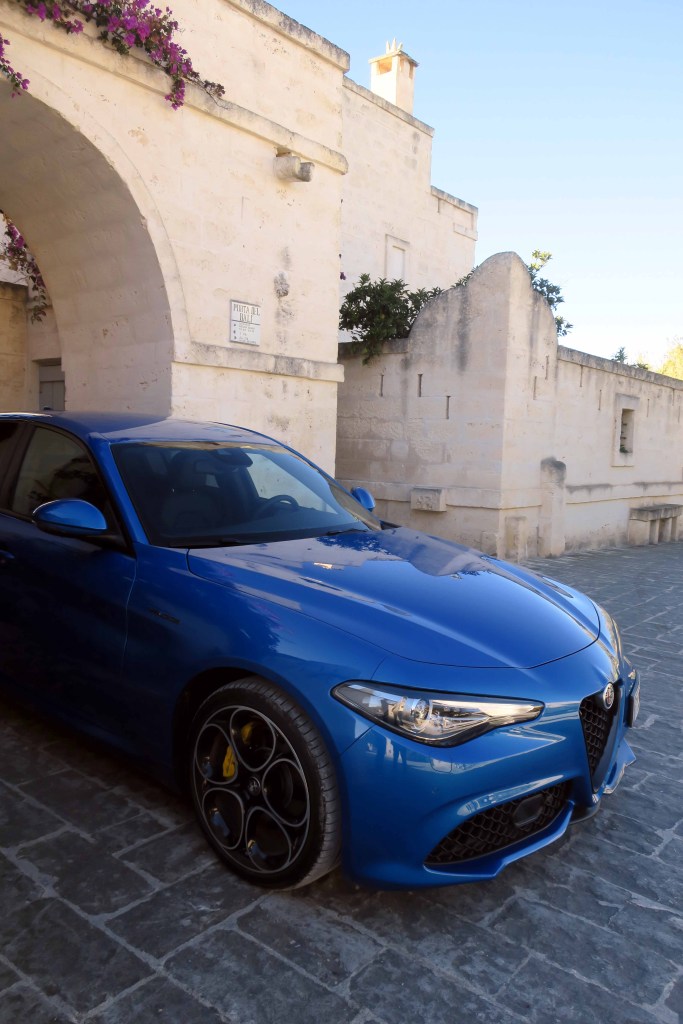
We drove for you the new 2020 Stelvio and Giulia in Puglia: revised interiors, infotainment and advanced driver assistance systems make Alfa driving even more stunning… Here we parked it in fort of the Borgo Egnazia Hotel, where the event was held…
Driving an Alfa should be on the bucket list of every car enthusiast, and indeed blessed are those who can sit in their daily life behind the iconic three spoked steering wheel of an Alfa, and even more, can call it their own.
The ever more elegant Giulia in the alleys of Borgo Egnazio Resort…
This unique driving pleasure is now further brought into the digital age, adding to the sheer driving dynamics and bringing it to an even higher level.
Alberto Cavvagioni, Head of Alfa Romeo Brand EMEA, presented to us the further steps of Alfa entering into the digital age…
We flew to beautiful Puglia to see and try it out for you, and soon you will read in these columns here the full report of our delightful Alfa experience in the stunning surroundings of Bari and the Borgo Egnezia resort hotel.
Hans Knol ten Bensel
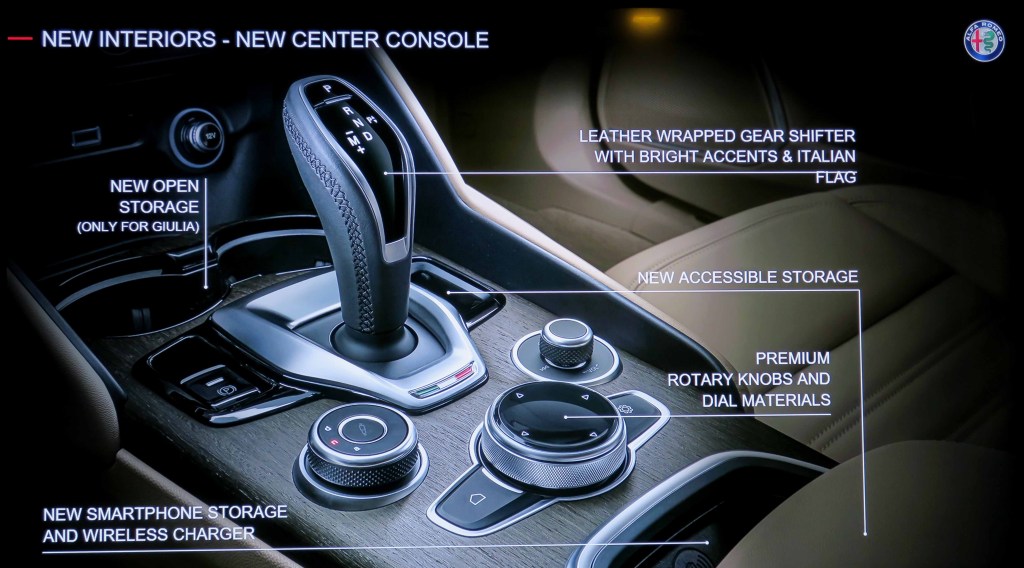
The Giulia and Stelvio now benefit from a new interior, revised materials and dashboard layouts. The infotainment has also been overhauled with connected services, touchscreen, completely redesigned human-machine interface, and new ADAS (Advanced Driver Assistance Systems) and level 2 autonomous driving systems, of which (much) more soon.
The iconic names used on the Alfa’s of the sixties and seventies are also back, and sound wonderful to the Alfa connoisseurs’ ears: Veloce, Veloce TI and Sprint for the Stelvio, and TI, Super for the Giulia, with a Business badge thrown in to suit the fleet market in these modern times.
Last but not least, there is also a whole new colour range, to fully express new emotions, closely linked to the brand’s tradition.
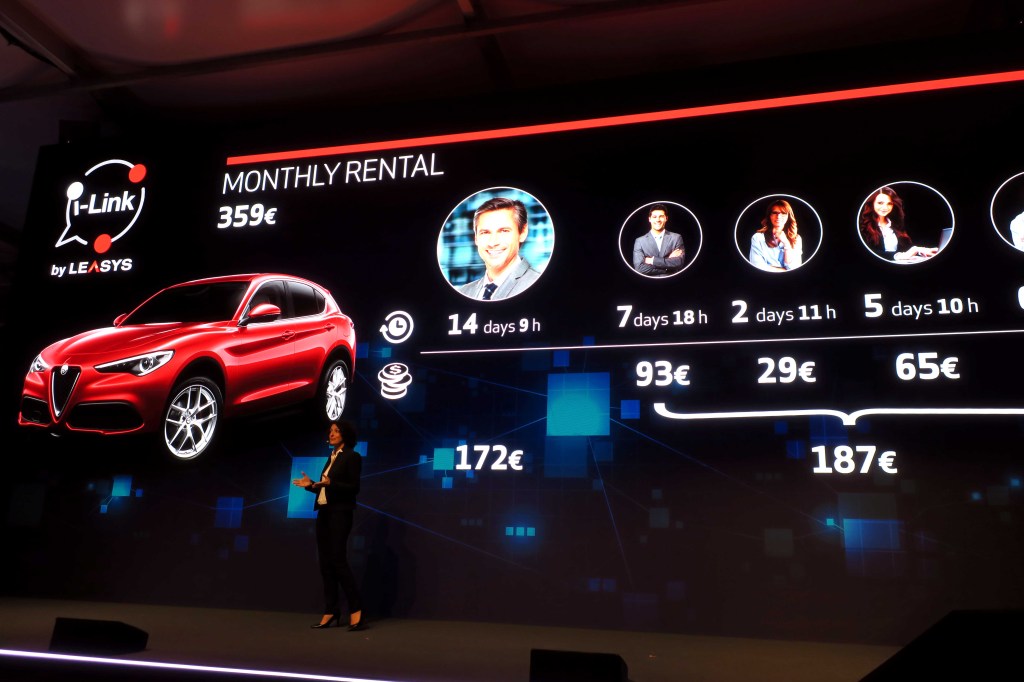
At the event, Leasys and FCA Bank introduced “I-Link” by Leasys, a service designed to strengthen the link between Alfa Romeo customers and the new forms of shared mobility.
Marcella Merli, Head of Sales and Marketing, FCA Bank, explains to us the merits of sharing the Alfa experience through i-Link…
Indeed, sharing the Alfa Romeo driving experience could or should be on the cards, we think!
Much more of all this later in depth with separate reports…
Of course, we had the opportunity to drive classic Alfa’s too…
Driven personally from Turin across the Alps to Brussels…for a unique premiere
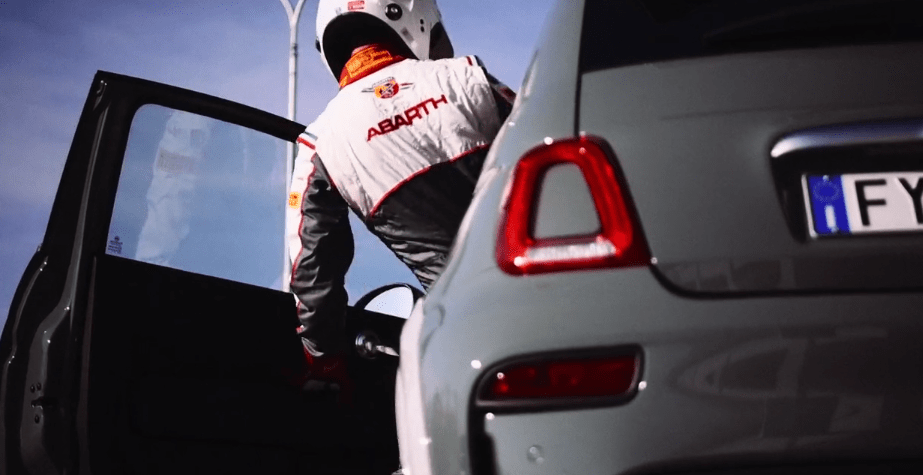
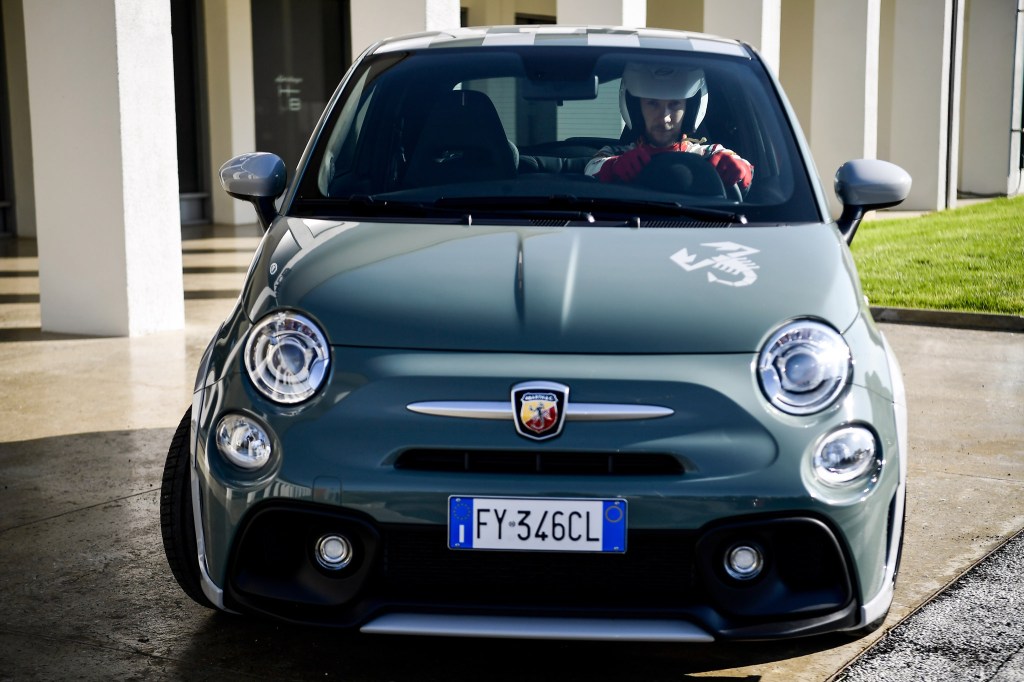
The people from Abarth Belgium have their car loving heart at the (very) right place. In order to treat the Belgian public with a very special gem, the Interclassics Brussels 2019 salon seemed to be the perfect stage to present the new Abarth 695 70 ° Anniversario for the first time in our country.
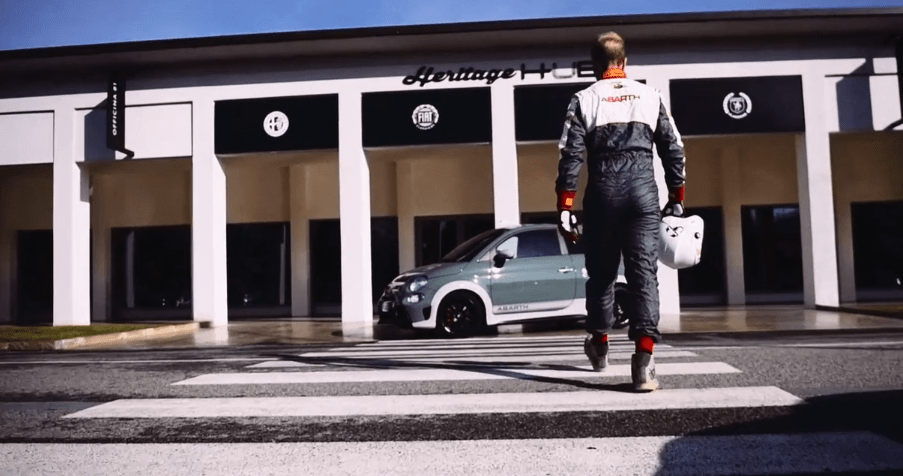
Staring from the Turin based FCA heritage HUB …
They drove personally the Abarth show car across the Alps from Turin to Brussels, and not only that. They filmed it too.
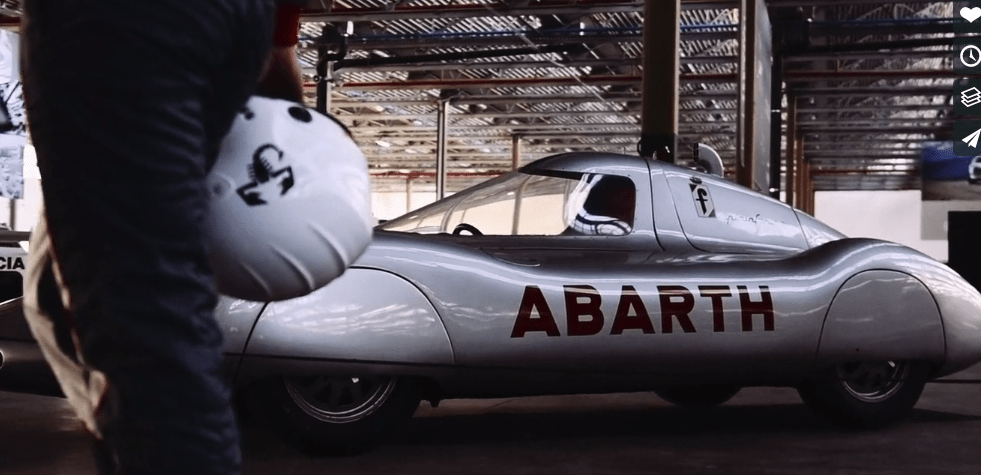
Indeed, to celebrate the 70th anniversary of the brand, an accompanying video of the model was created with a perfect mise-en-scene. The ideal setting of FCA Heritage in Turin, where all collection cars are housed, served as a perfect setting and bears witness to the immense prestigious heritage that served as a source of inspiration for this unique model.
This exclusive video was produced specifically for Interclassics Brussels 2019.
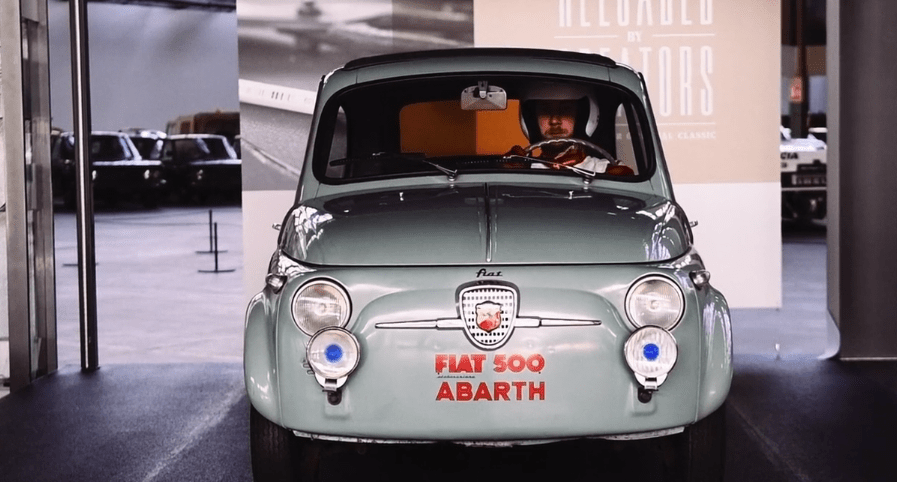
One sees a pilot who takes place at the wheel of a vintage model and then takes a seat in the new Abarth 695 70 ° Anniversario.
It then follows the road from the Heritage Hub of Fiat Chrysler Automobiles in Turin to arrive at the Interclassics salon in Brussels.
The iconic lights of the “pure” historic Abarth 500…
A route of approximately 1,000 kilometers to reach the European capital. You can see it by using the following link: https://vimeo.com/372916951
On his way from the Turin Heritage Museum to Brussels…
This video will of course serve to promote the presence of this exclusive model in avant-premiere in Brussels.
Starting away in Turin…
The production of this model is limited to 1949 copies, this number refers to the year that Abarth was founded…
Indeed, between the raindrops, other magnificent events were to be enjoyed, and beautiful cars came before our lens…
The ZOUTE CONCOURS D’ELEGANCE® by Degroof Petercam is another yearly highlight not to be missed. It is an excellent opportunity for your servant to take those timelessly beautiful photos of pre- and post war classics and supercars. Also this year the cars on show were absolutely stunning to say the least.
The concours was carefully scrutineered by both the expert jury members and illustrious collectors like Roland D’Ieteren… (to the left).
Hans Knol ten Bensel
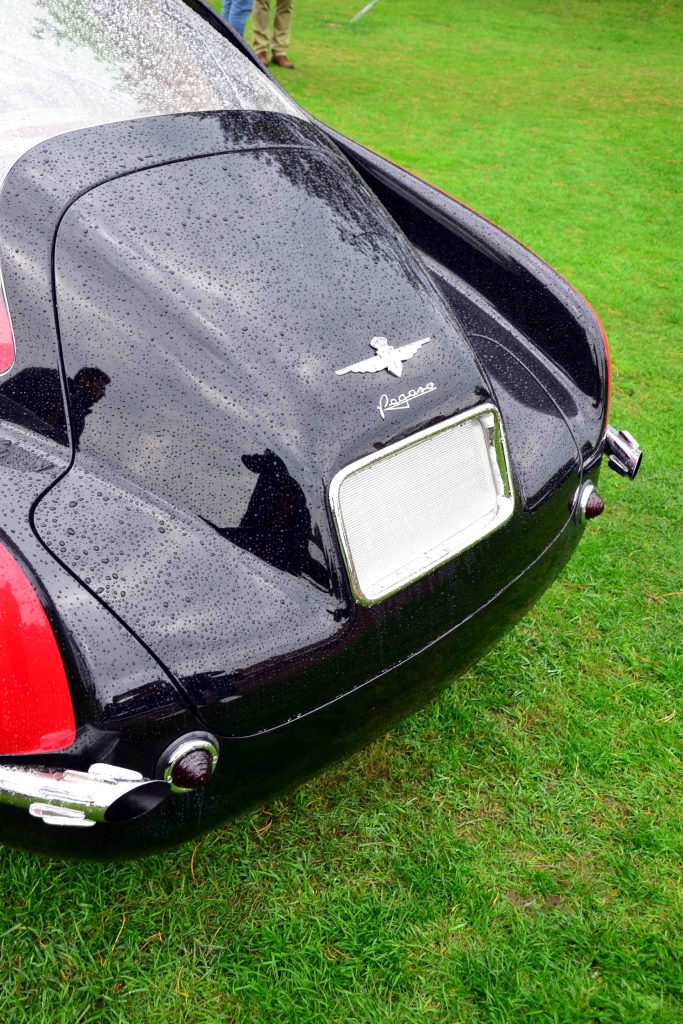
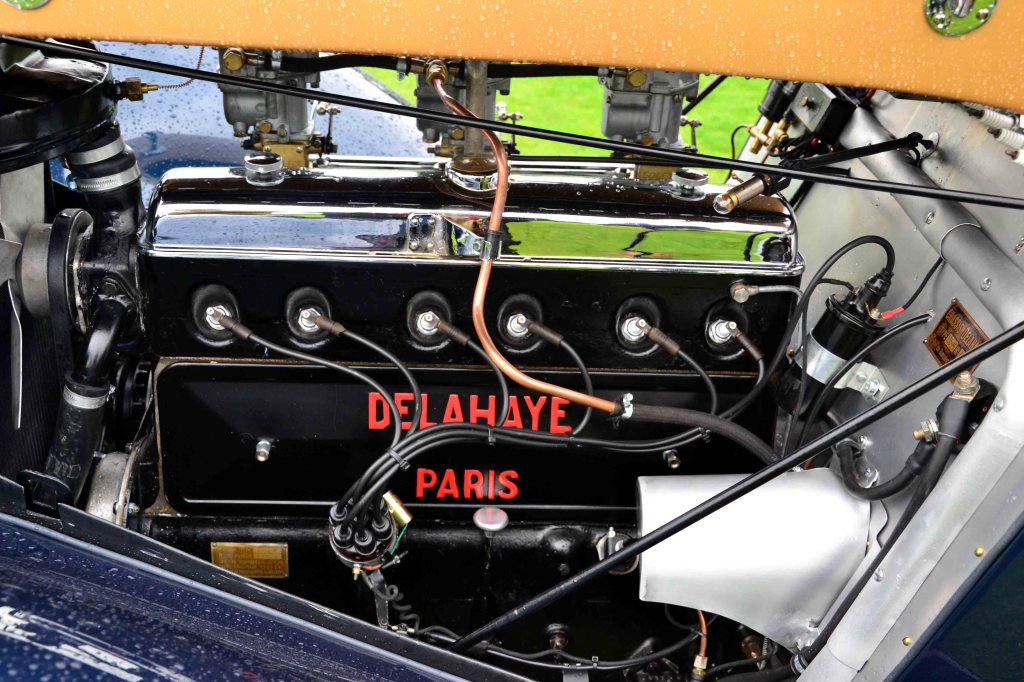
I was totally impressed by a beautiful Pegaso coupé, (see photo below) and stood also eye to eye with a magnificent Alvis and 3,5 litre Delahaye.
This 1953 Pegaso Z 102 Touring Superleggera was designed by Wilfredo Ricart, who had worked then already with Ferrari and Alfa for a few years. He himself asked “Mr. Touring”, designer Carlo Felice Bianchi Anderloni (1916-2003) to design this body. This one-off Pegaso was the focus of a lengthy promotional tour around Europe. It won the Concorsa d’Eleganza di Stresa in 1953…
Stunning is also the dashboard of this 1960 Alfa Romeo 2000 “Praho” Touring… This car was an attempt to secure for Touring the production of the Alfa 2600 Coupé. This car was displayed in 1960 in the Turin Motor Show and was a one-off.
I had a lucky encounter with Skoda Belgium Import PR Director Catherine Van Geel and her colleague from the Skoda Museum, who both proudly showed me a very impressive 1948 Skoda Superb, which had finished a total ground up restoration just four days before this Concours. We tell you more about this unique Superb in a special report.
But there was much more. For example, in the presence of 75-year-old racing legend Jacky Ickx, Porsche unveiled a unique Porsche 911 4S Belgian Legend Edition (made on 75 copies). In addition, there were 5 super rare hypercars on Saturday and Sunday: a Bugatti Centodieci, a Bugatti Chiron Sport, a Dallara Stradale, a Pininfarina Battista and a De Tomaso P72.
The unique 3,5 litre Delahaye…
Of the more than 100 participants in the competition, the international jury named a 1936 Mercedes 540 K Cabriolet A (pre war) and a 1949 Ferrari 166 Barchetta Touring – Le Mans Winner (post war) as Best of Show winners.
And its fabulous straight six engine, which was idential in the Le Mans winning car…
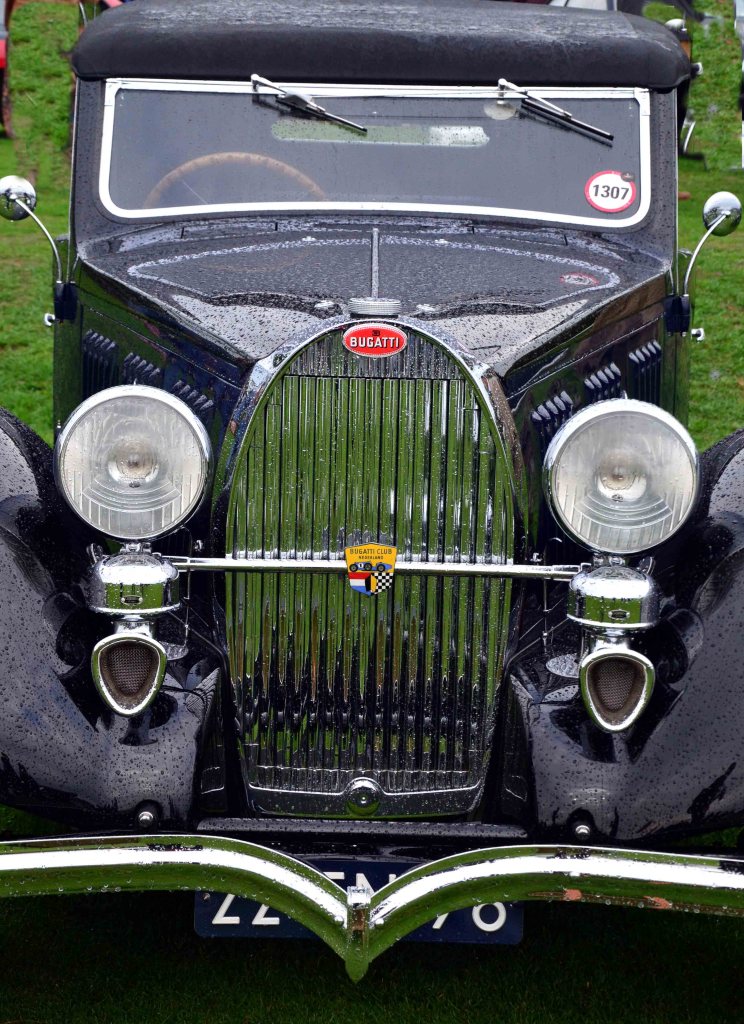
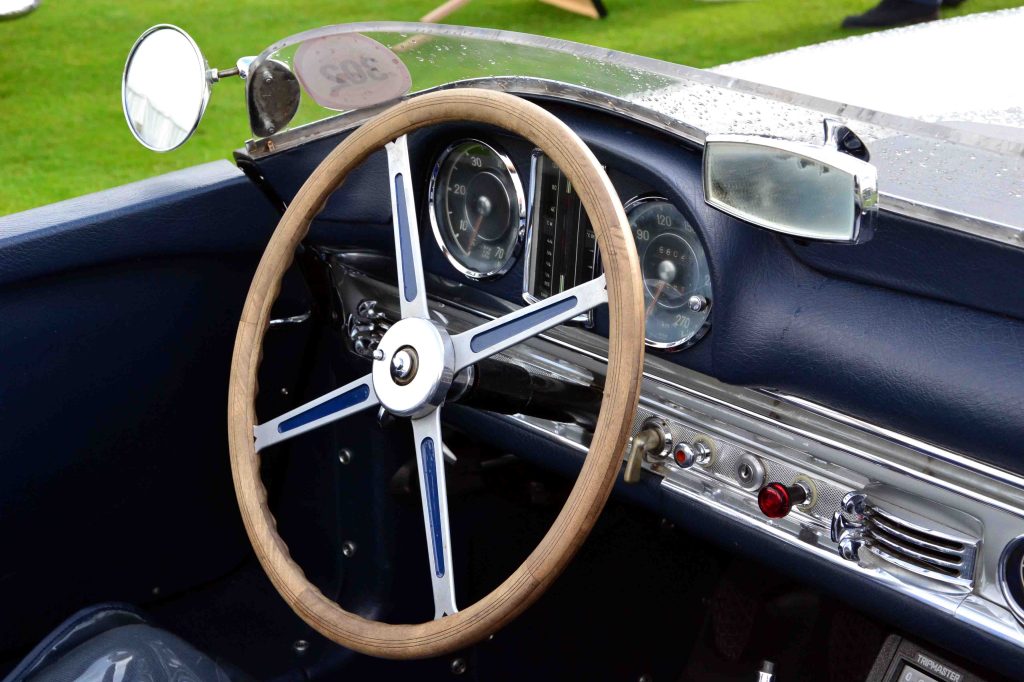
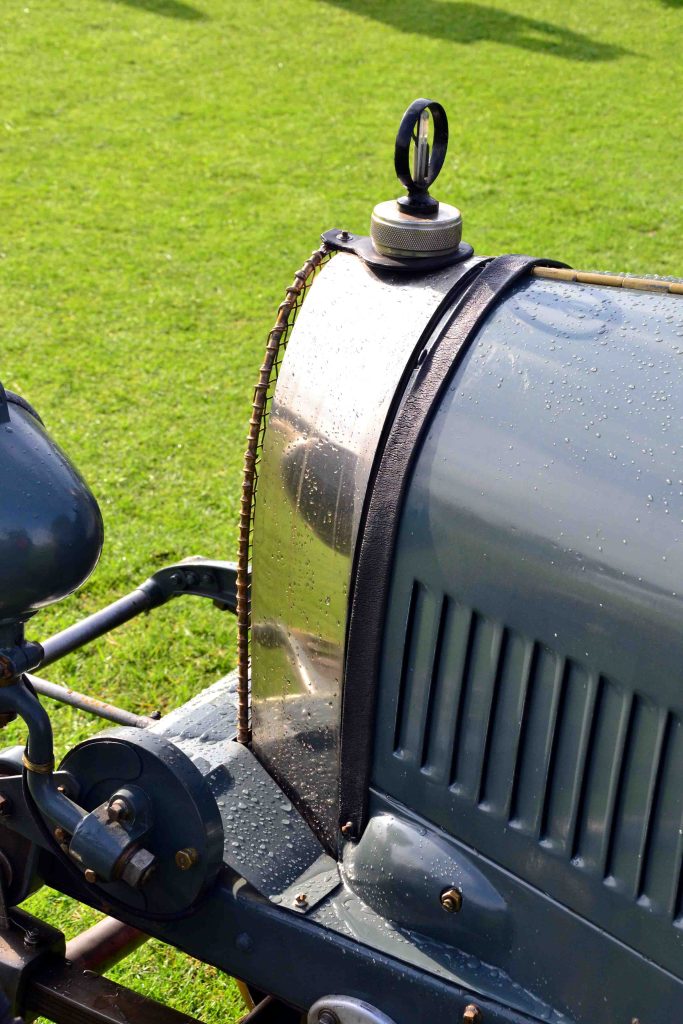
Following Bugatti’s 110th birthday there was also a special “110 Years Bugatti” category this year. Winner was a 1938 Bugatti Type 57 C Coupé – Le Patron. (See first photo). Other eye-catchers were the “Beach Cars” category in which a 1958 Fiat 600 Jolly with the main prize went. The prize for the most iconic car went, finally, to a 1955 Mercedes 300 SL Gullwing.
Eternally cute and endearing are also the Joly beach cars based on the Fiat Cinquecento and Seicento, and on the Concours we stood eye to eye with two magnificent examples.
Last but not least there was a very impressive 300 SL roadster to be admired, brought to the Knokke Golf Course by the works Mercedes Benz Classic team,
who lovingly and carefully dried the car with a soft chamois after every rain shower…
The fabulous collection of cars at the
grounds of the Royal Knokke Golf Club were judged by an international 25 head
jury led by Philip Kantor of the Bonhams Auction House.
More to see and admire…
Besides these highlights there was much more. Last but not least the ZOUTE SALE® by Bonhams. This auction can be considered par with the Grand Palais Sale in Paris, and the Quail Lodge Auction at the Pebble Beach Concours d’Elegance in Carmel (USA).
The total revenue of the auction was not less than 11,710,104 euros, a record for Belgium. One of the eye-catchers was a unique 1965 Ferrari 275 GTB Alloy Long-Nose. The car went under the hammer for a record amount of 2,875,000 euros. A 1931 Invicta 4.5-Liter S-Type ‘Low Chassis’ was sold for 890,281 euros. A Ferrari Enzo knocked out at 1,506,500 euros.
This custom built Aurelia GT had endless panache…
Then there was on Sunday the ZOUTE GT TOUR® by EY. This drive is 120 km long, and is reserved for exclusive modern GT cars, younger than 20 years old. More than 200 cars participated, and Rob Van Loock en Jens Aerts won this event in an 2019 built Audi R8 Coupé.
We just let you enjoy the photos here of this 10th edition, and tell you here already that the ZOUTE GRAND PRIX® launches new projects in 2020,
with amongst others the RALLYE DE DURBUY®. Read soon much more in these columns!