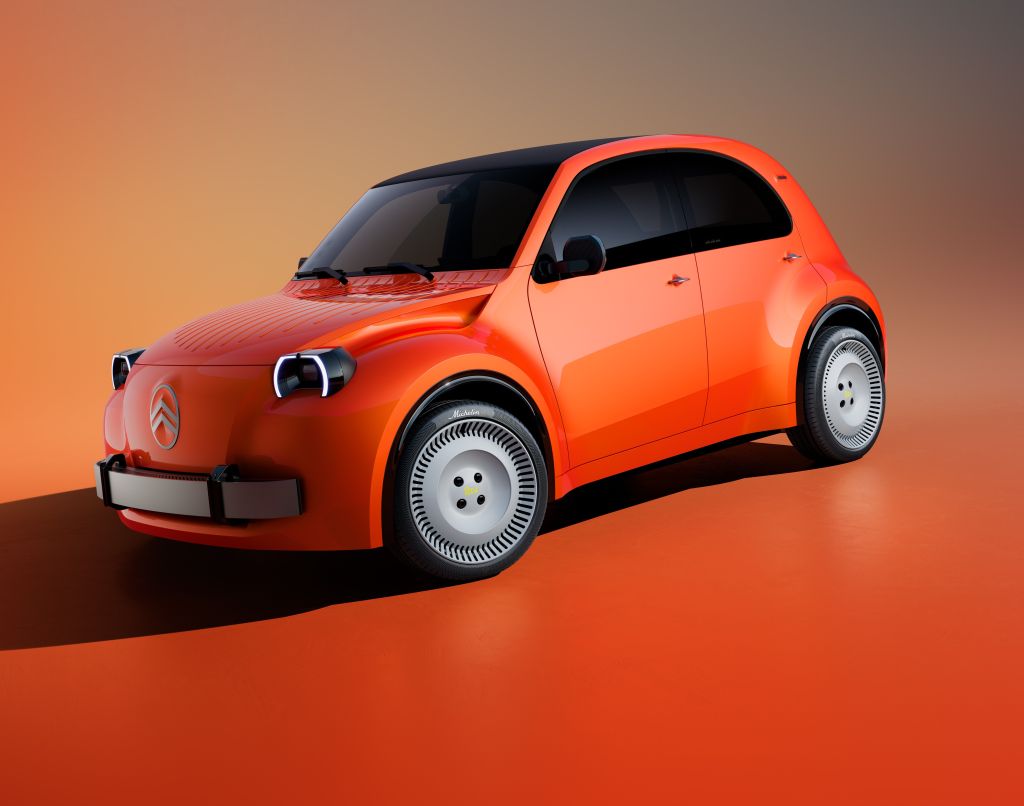
In our age cars are becoming bigger an heavier, and it was in the cards that with the mobility challenges we face nowadays, creative minds would return to the core values where the original 2 CV has always stood for: affordability, lightness, practicality, versatility and of course originality which appeals to humanity.
Indeed, the starting point was not to recreate a 2 CV, but to imagine the small electric car of the future – practical and desirable, bringing some “joie de vivre” – bringing pleasure and excitement in your everyday short journeys.
Of course, the Stellantis Group has a solid strategy behind it: To bring about a new generation of small electric cars, in line with the new European E-Car regulations, positioned between the Ami and the C3, to offer greater freedom of movement without compromising on character.
Indeed, to launch a model manufactured in Europe, with a target starting price of around 15,000 euros, to help make electric mobility accessible to as many people as possible.
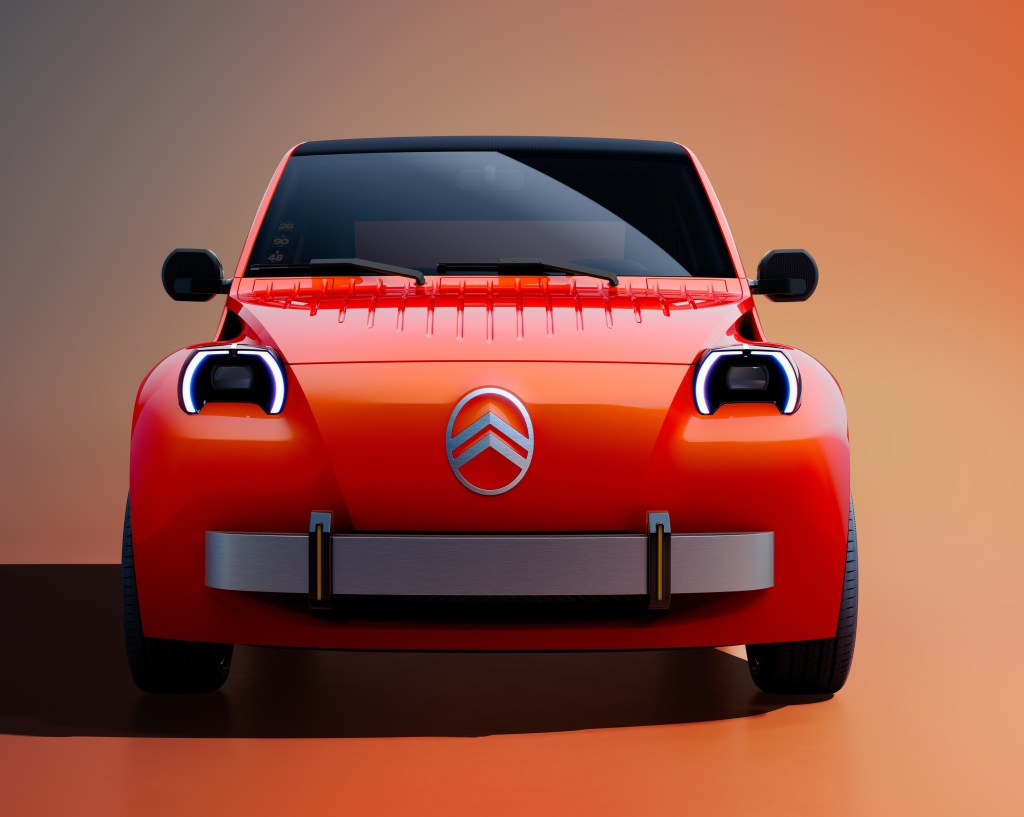
Therefore the design choices take into account mass production and ease of repair: flat surfaces and direct air intakes beneath the windscreen (which however have been sadly abandoned in the light of present safety regulations we hear) , bumpers separated from the bodywork and replaceable independently…
Make no mistake, the 2 CV is modern: it is “cool” through its styling, its on-board comfort and all the practical features for everyday use, re-imagined in the spirit of the 2 CV to make life easier for its occupants.
Pierre Leclercq, head of design Citroën and his team stress that the design of the 2 CV aims to breathe new life into an icon, not by copying it, but by reinventing its design language to ensure it is fully rooted in the present day.
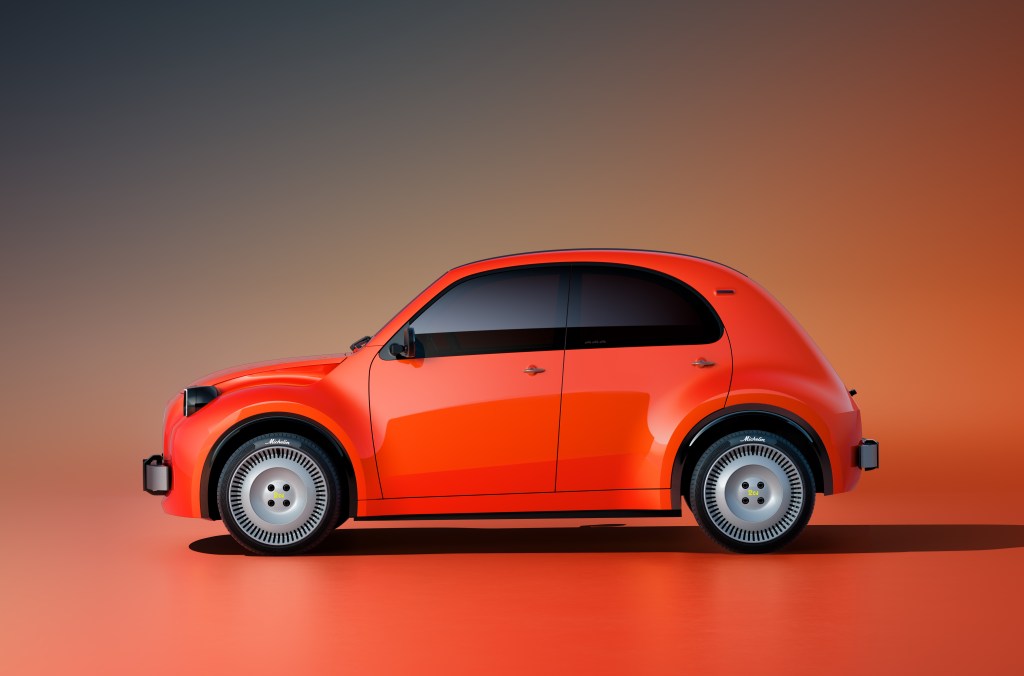
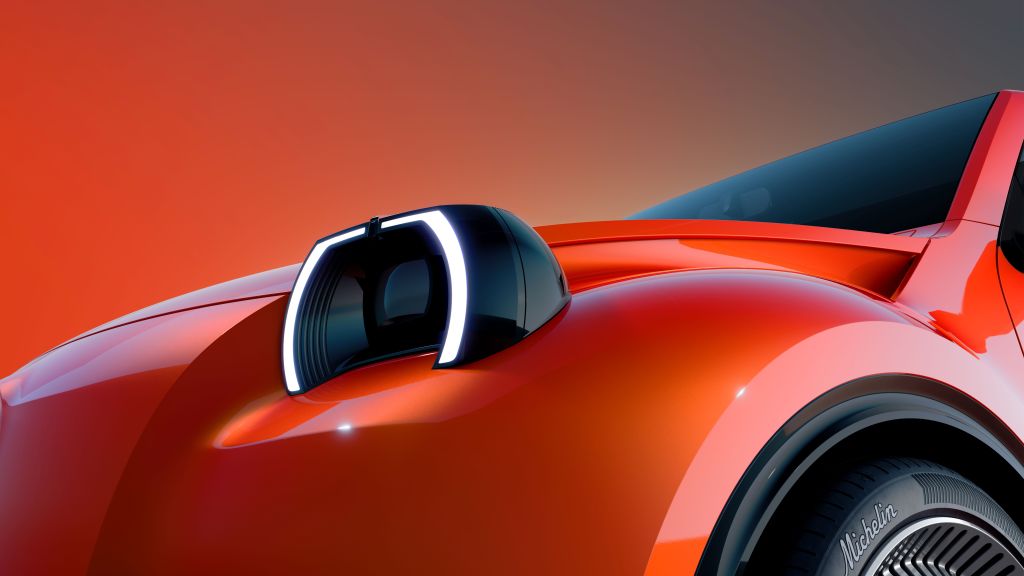
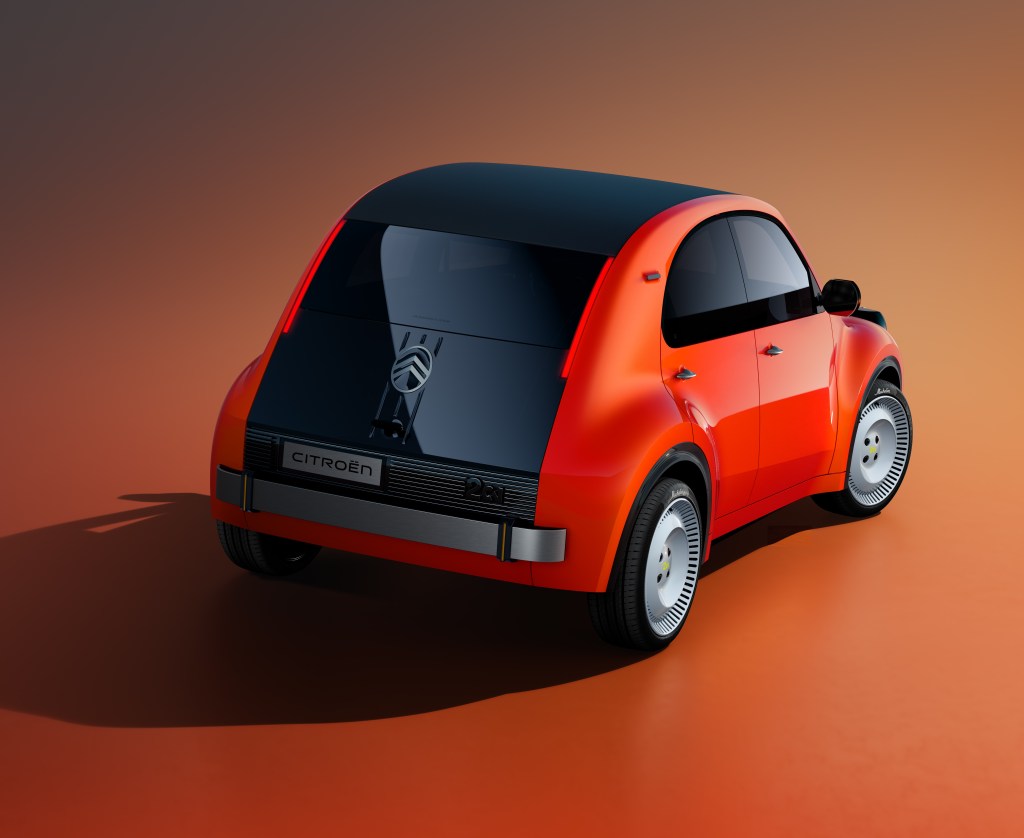
You can tell what they mean when you look at the exterior: an instantly recognizable silhouette, with the unique proportions and curves of the 2CV, but using tauter lines and generous volumes to convey greater energy. Round headlamps are set apart from the bodywork, conveying an expressive LED signature, a sculpted, sweeping bonnet.
Just look further at the vertical windscreen, the curved and flowing roof, rounded wings and taut flanks; contoured door handles, tapered indicators on the C-pillar, 18-inch steel wheels inspired by the 2 CV, and Michelin tyres bearing the Heritage logo and the Citroën chevrons. Just wonderful…
A distinctive roofline accentuated by a black tailgate extending down to the bumper, just like on the first-generation 2CV, which had originally a canvas instead of a metal boot lid. There are LED lights on either side of the tailgate, three horizontal stripes, a short overhang, a visible tailgate handle and a number plate displaying the 2CV’s nicknames in different countries.
With 3.76 m, the 2CV is also shorter than its iconic predecessor, no small feat!
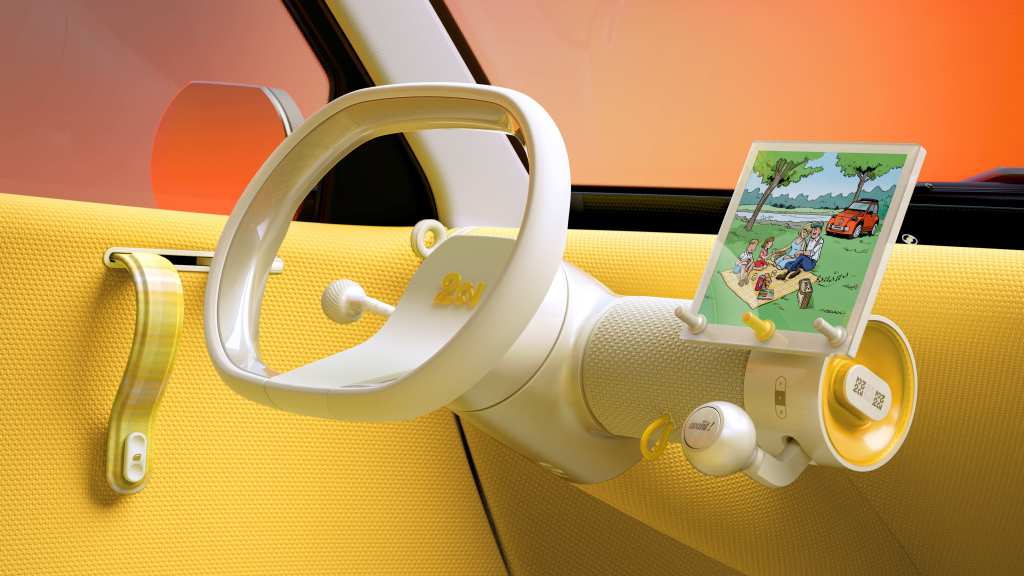
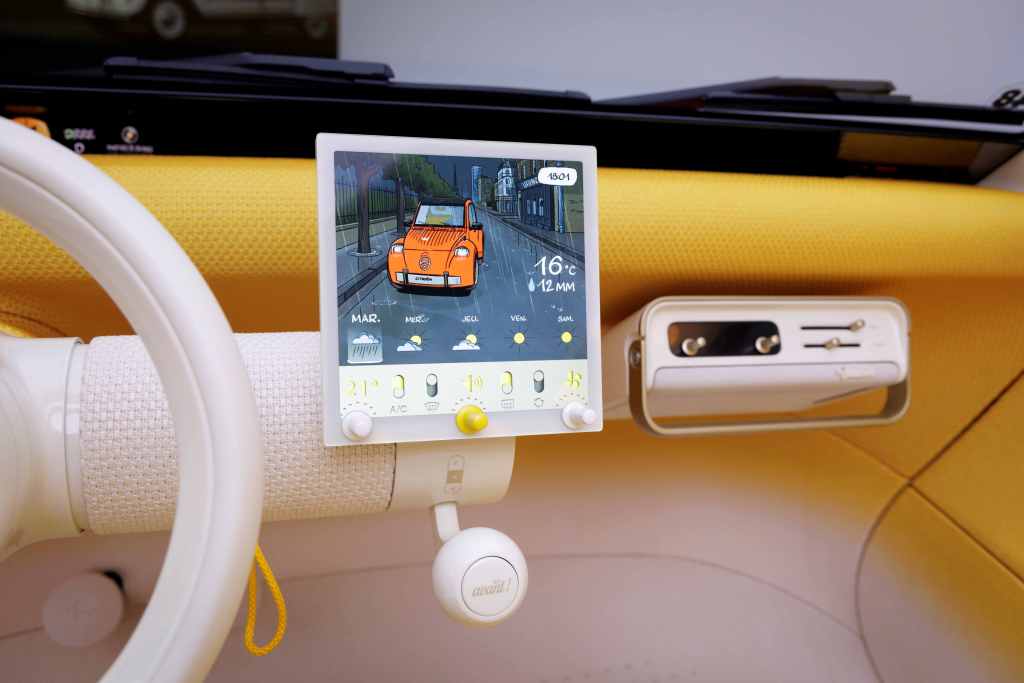
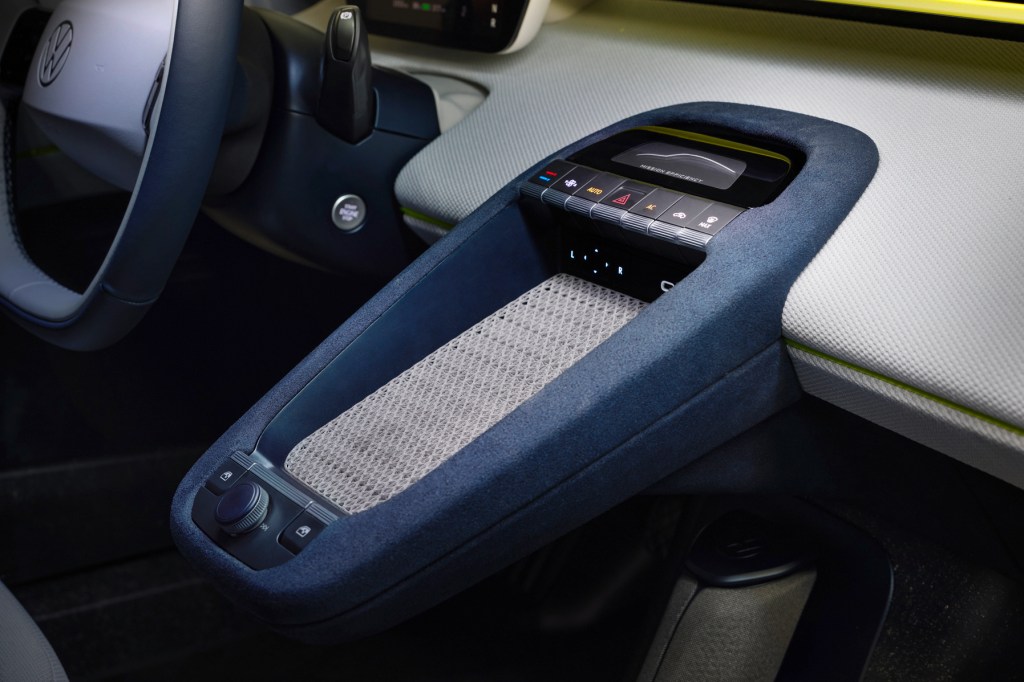
The interior plunges you in a world of joie de vivre: no traditional dashboard, but a cylinder to which the following are attached: a single-spoke steering wheel, a single control lever, a paddle-shift gear selector and a Citroën Smart Vision display which prioritises essential information within the driver’s field of vision.
An 8-inch square ‘phygital’ touchscreen, with graphics inspired by comic books.
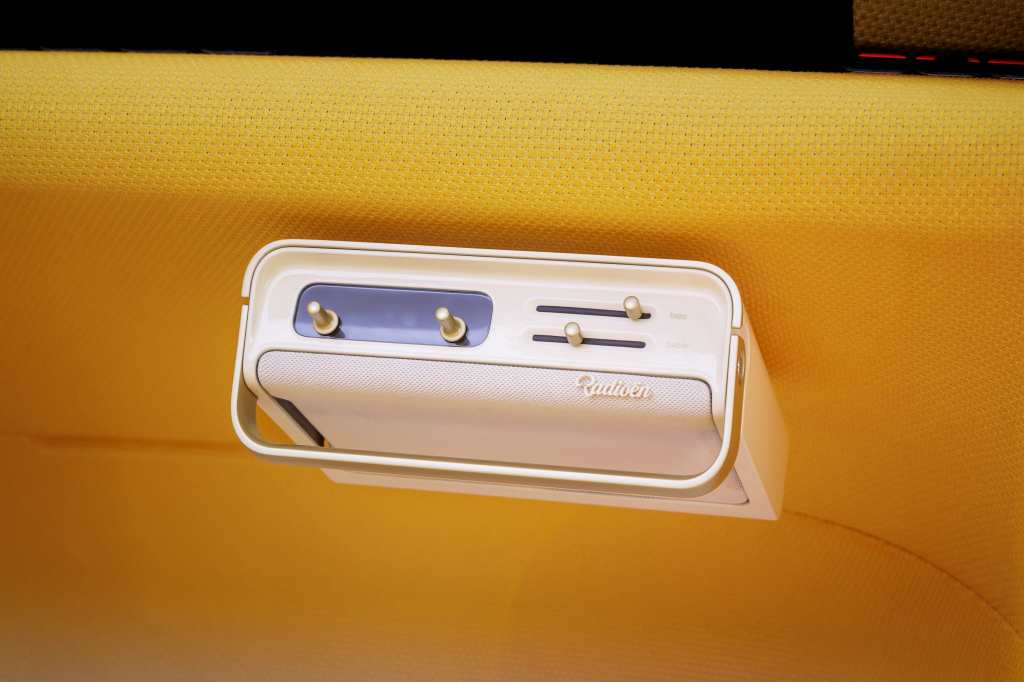
Your eyes meet the “Radioën”, a detachable radio that doubles as a speaker and accompanies occupants both inside and outside the vehicle.
We show you here some photos, and we hope we can have a written interview with Pierre Leclercq soon!
My love affair with the Audi’s goes a (very) long way. The first one I drove, when I was a young law student, was the Audi 50. It was a test car, for the car column of the weekly illustration magazine “De Post”, where my father was editor in chief. I vividly remember this “mini Audi”, nimble, vivid, well styled with a fake wood finished dashboard as a touch of luxury. It was developed as early as 1970, when the engineers at Audi NSU Auto Union AG started work on the project, spearheaded by Chief Technical Officer Ludwig Kraus, (who had developed earlier also the Audi 100, which established Audi as a premium brand.)
My father and I found it a vivid and wonderful car. Light it was, the NSU engineers in Neckarsulm, where the car was initially developed, knew everything about “Leichtbau”, or the art of making light cars. This car was also to become the first… VW Polo, rolling off the Wolfsburg production lines in March 1975. The Audi bug continued: I personally owned for many years an automatic Audi 80 S, and yes, I presently own an A5 Cabrio, designed by Walter Da Silva, a beauty with – of course- an Audi Exclusiv leather interior.
But let’s now turn to the present electric age, behind the wheel in the stylish cabin of the face lifted Q4 e-tron. Just read further!
Hans Knol ten Bensel
Facelift brings more for the eye and improved efficiency and range…
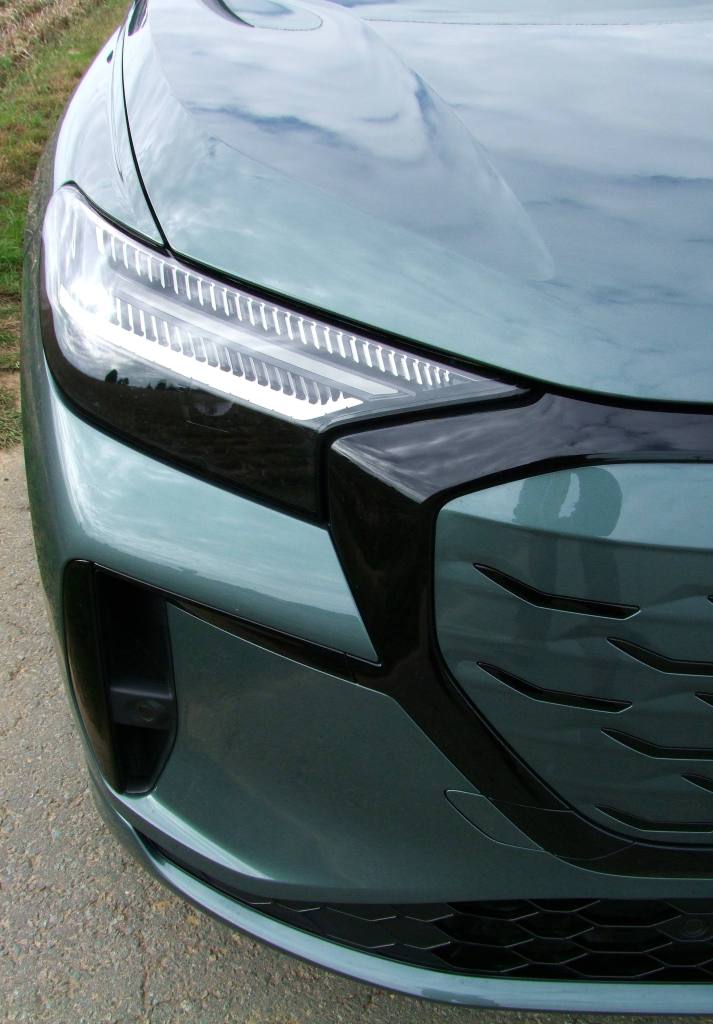
The Q4 e-tron was launched in 2021, and for this bestseller, it was time for a facelift. The grille is now color matched, it carries new LED lights front and rear, and in the superbly designed cabin you can now optionally enjoy a third screen exclusively for the passenger. It also gets an improved version of the permanently excited synchronous motor driving the rear wheels. Better battery efficiency, faster charging, and bi-directional capability. Read more below…
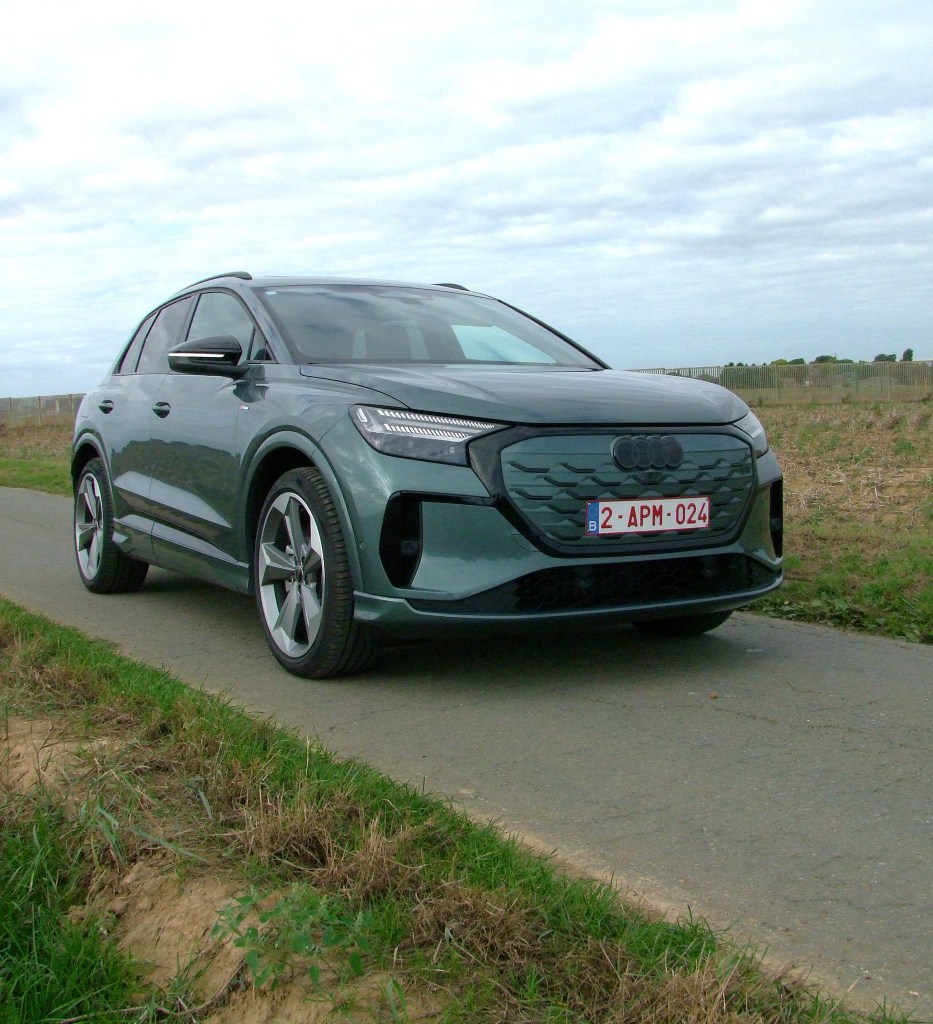
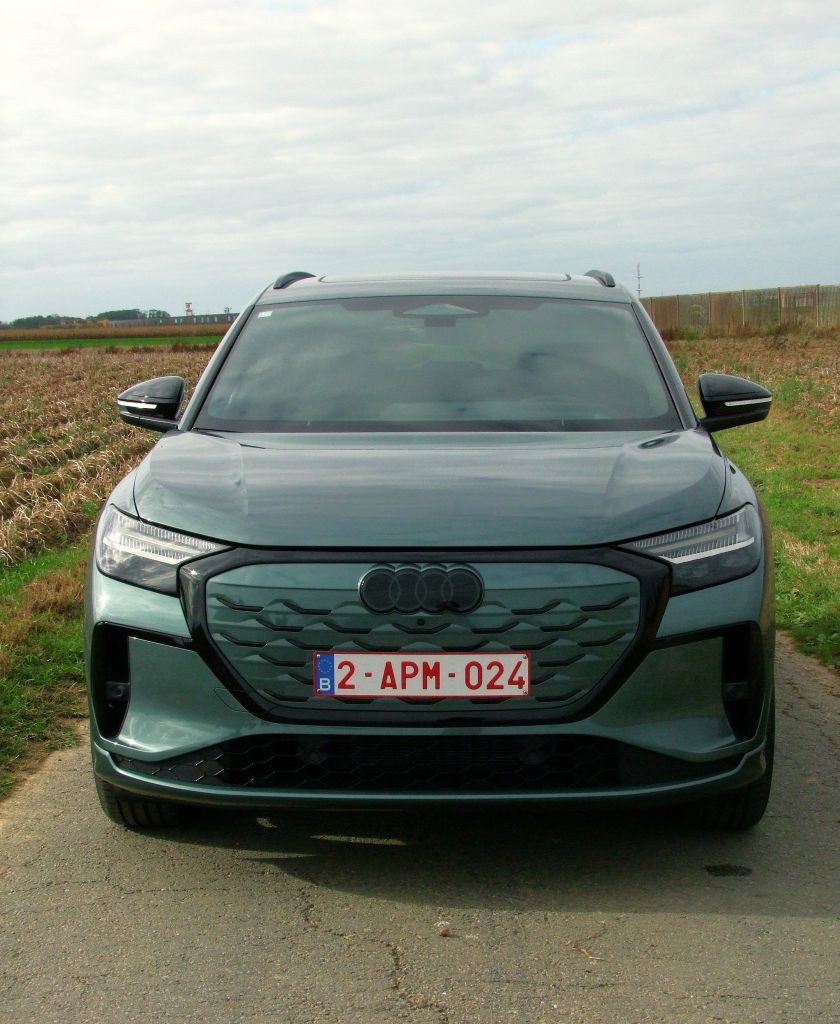
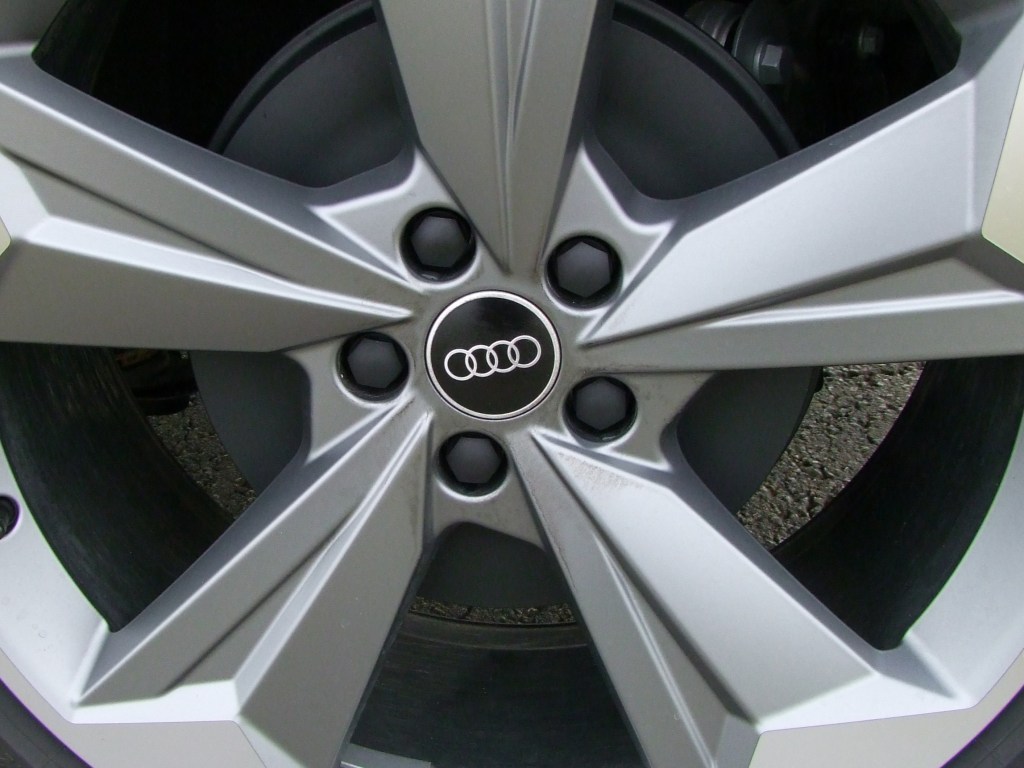
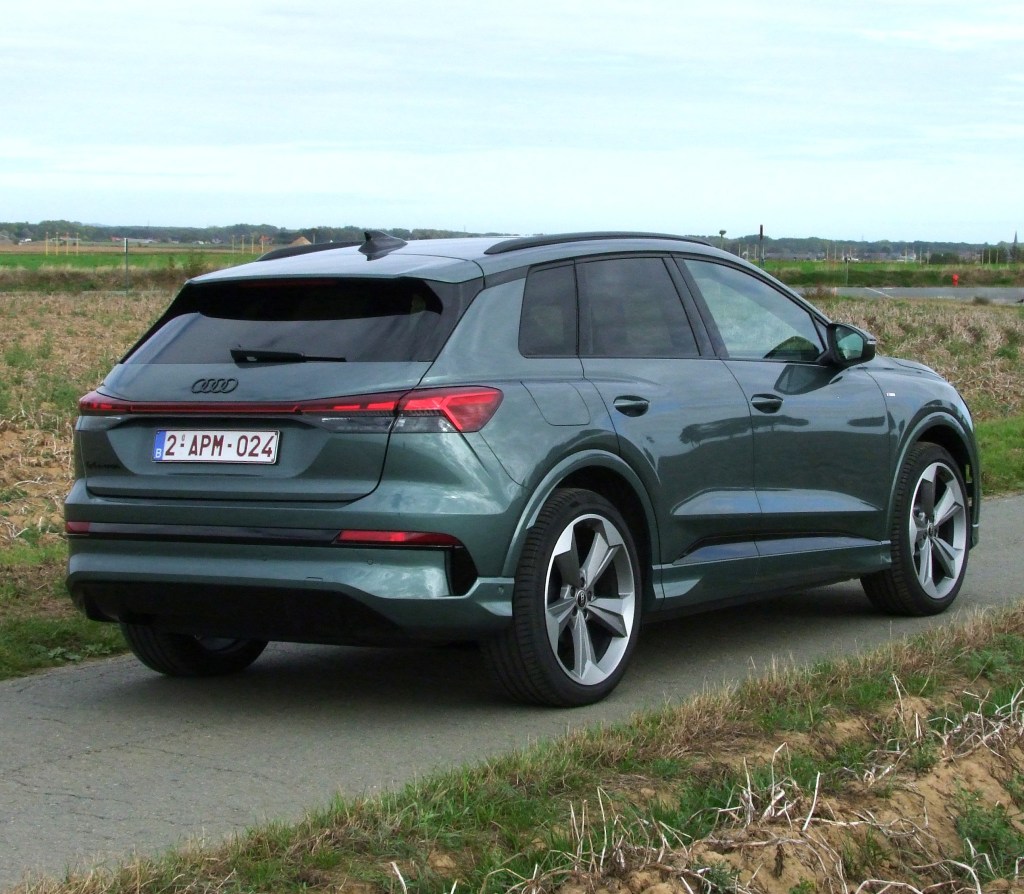
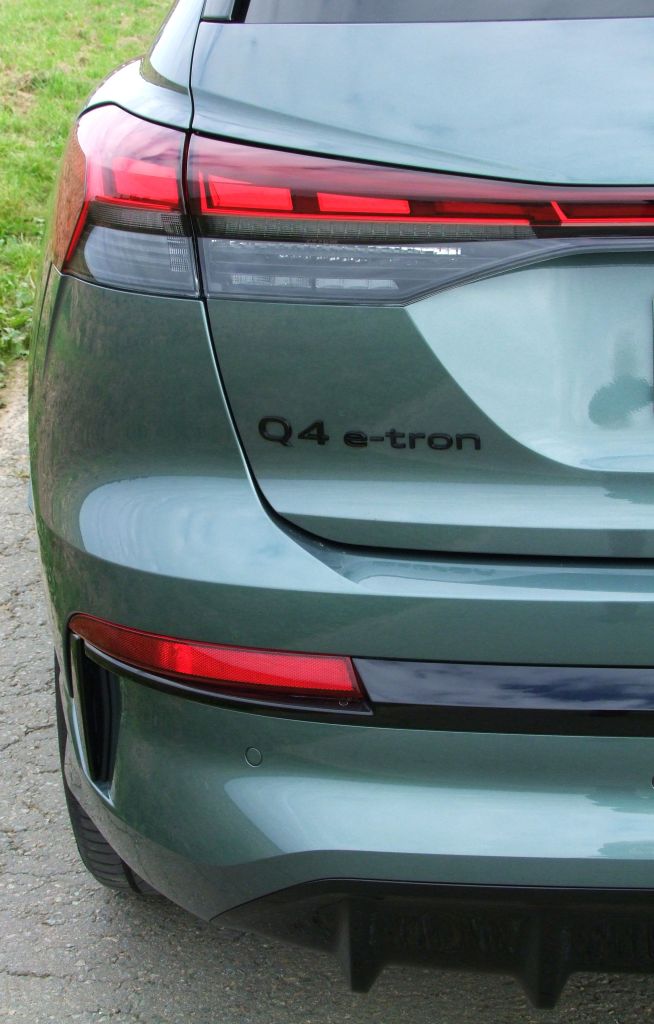
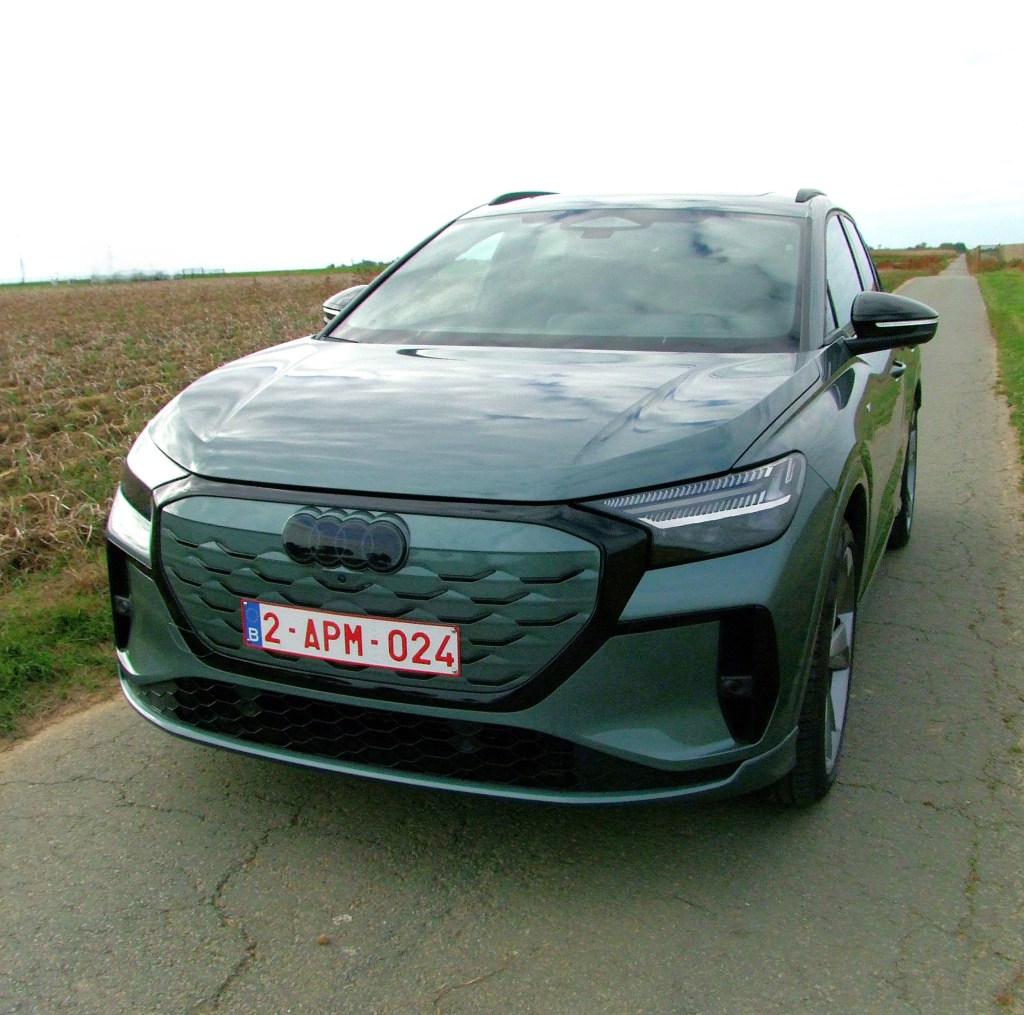
Indeed, externally the car really looks attractive. We like the color match of the grille, with the The S line variant adding vertical blades in Selenite silver matte to the corners of the front and rear bumpers. The whole car looks elegant and also muscular. We love it from every angle, and we liked also the 5 spoke “aero” alloy wheels on our test car.
Interior: stylish panache…
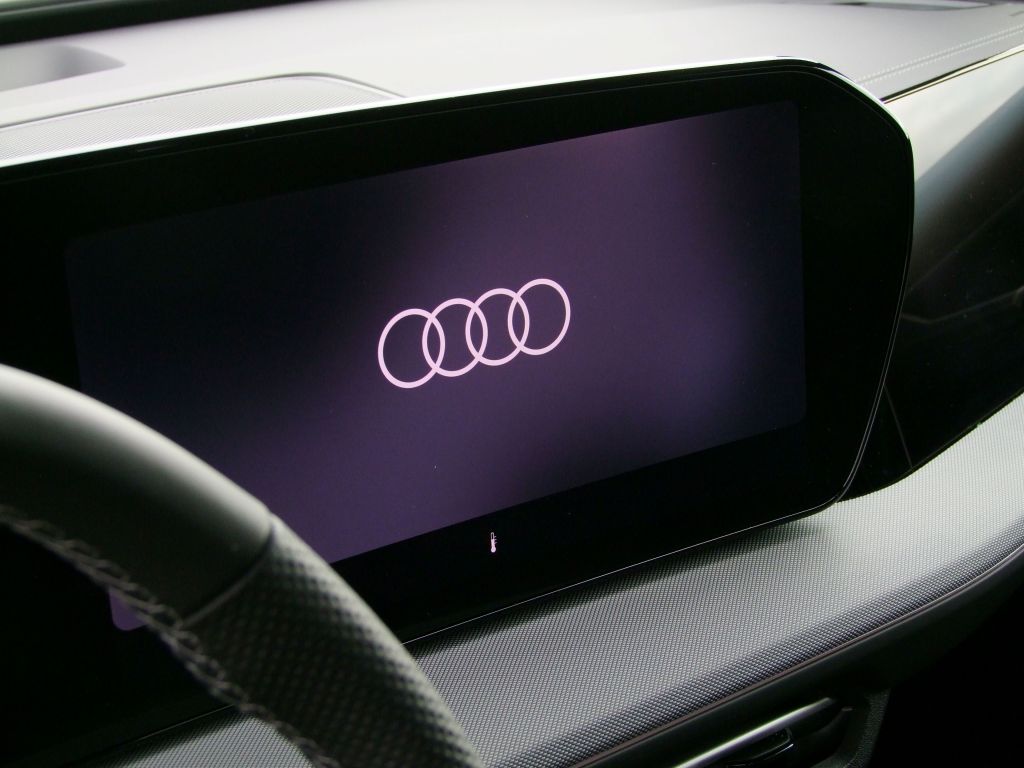
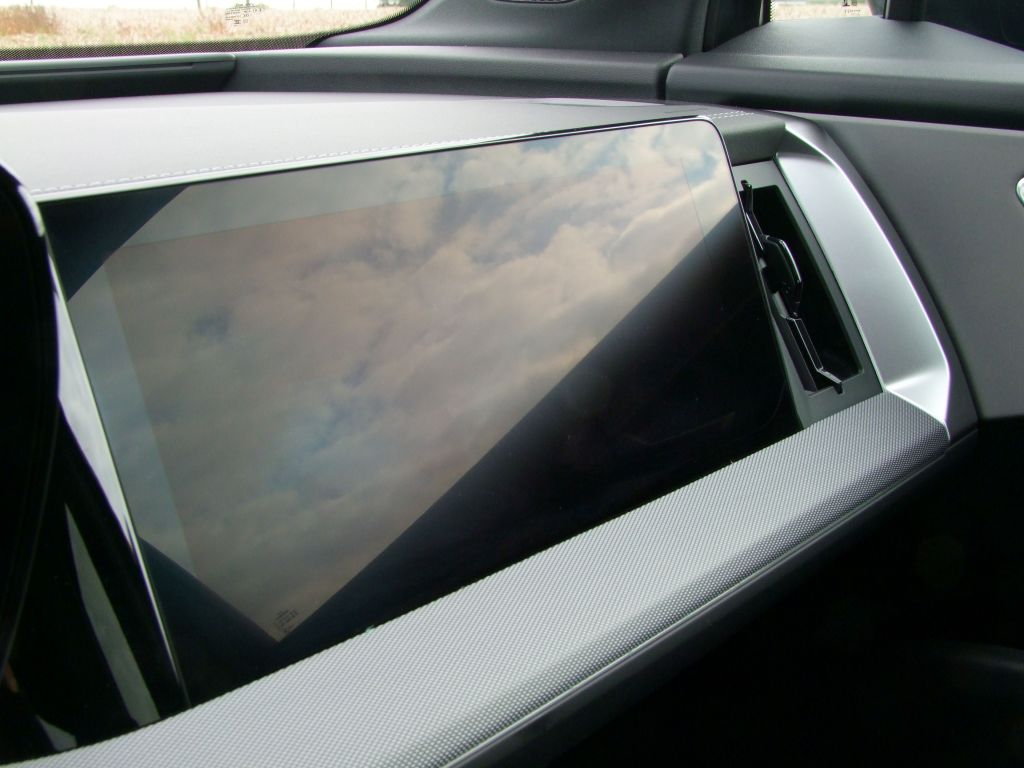
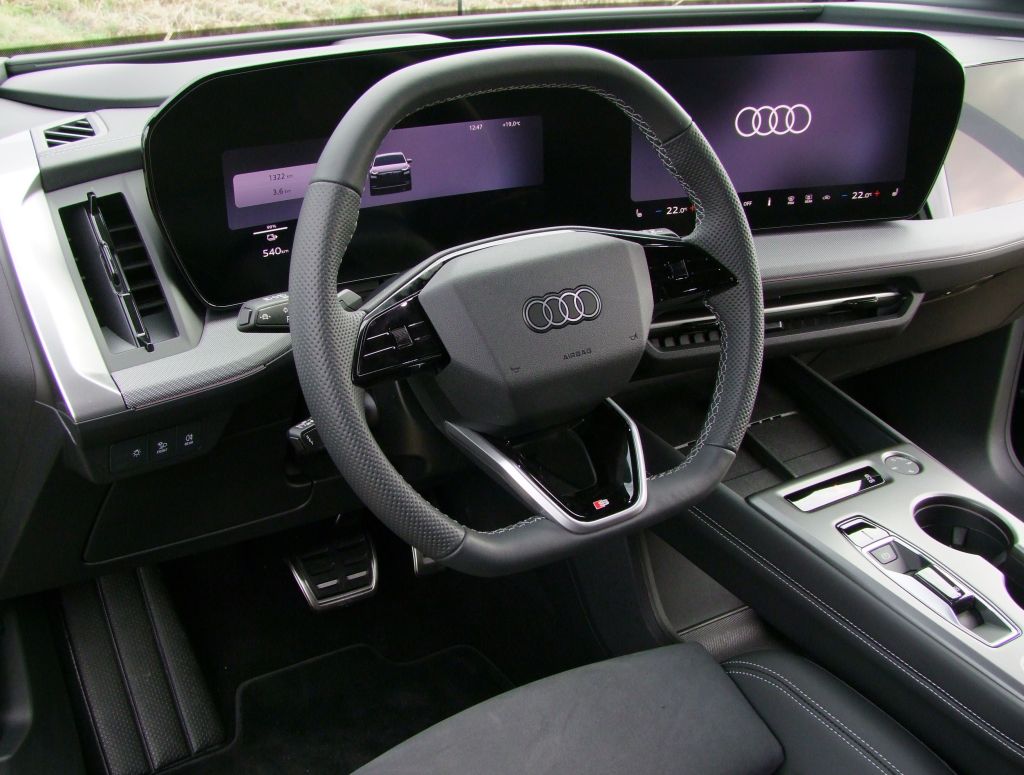
The designers brought true Audi panache into the redesign of the dashboard. It impresses with fit and finish, and gives you this unmistakable premium “Audi” feel. We like the matte aluminum inserts. Its centerpiece is the panoramic display, pairing an 11.9″ instrument cluster and a 12.8″ MMI touch display with large tiles for a quick overview of features and services. Indeed, for the first time in this segment, an optional 12″ passenger display is also available – the largest ever in an Audi, featuring a customizable standby design.
Our test car came with an optional augmented reality head-up display. This projects information onto the windshield in two layers: in the upper layer, turn arrows from the navigation system, starting points and destinations, and prompts from selected assist systems appear in the appropriate position on top of the real environment. Below this, the status layer shows speed, traffic signs, and assistance and navigation icons, visually placed around three meters ahead of the driver. Wonderful and intuitive…
There are four easily accessible charging options for smartphones: two cooled inductive charging trays (up to 15 watts each) and two USB-C ports under the center armrest.
Driving: comfortable and sporting
Our test car came in the 210 kW performance version, and this is synonymous with brilliant performance. It sprints from 0 to 100 km/h in 6,6 seconds, and top speed is limited to 180 km/h. But the beauty lies of course in the whisper smoothness of how all this power is delivered.
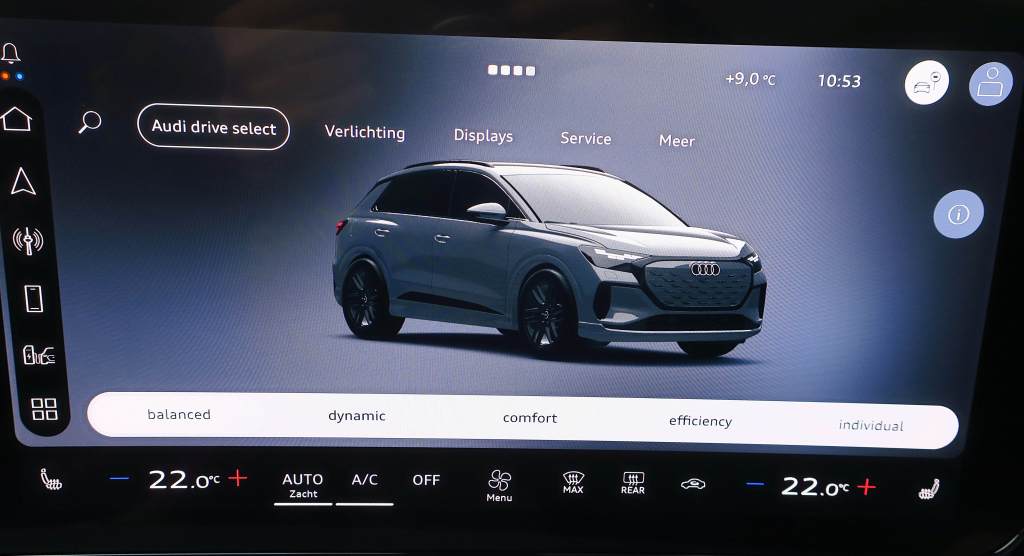
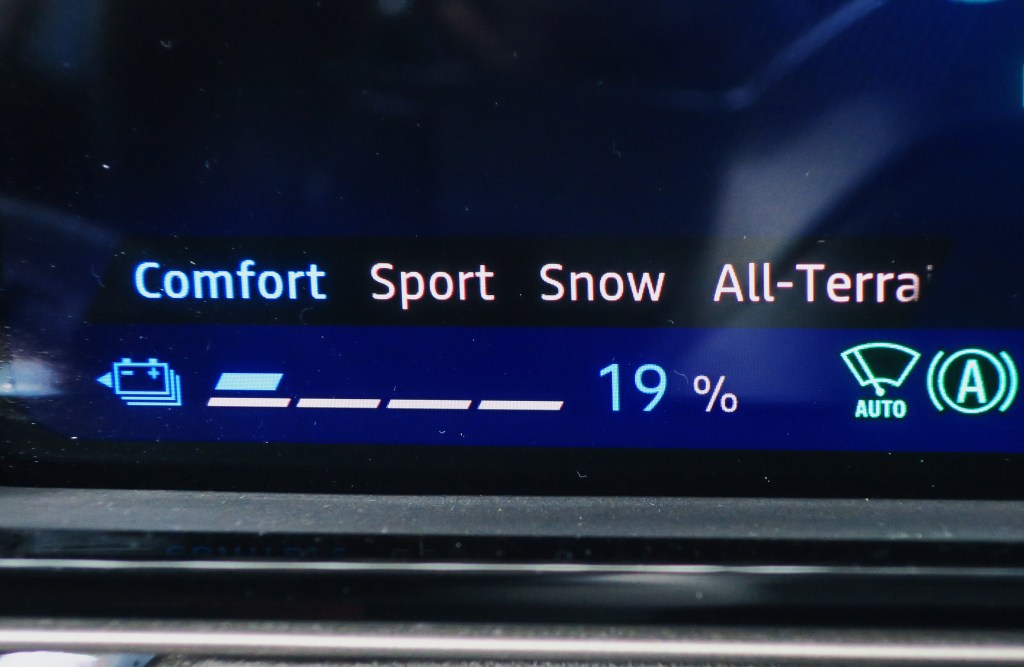
The Q4 offers you the choice of several driving modes, and we chose most of the time the balanced mode, which is an ideal mix between comfort and sportiness. We enjoyed also the three regeneration modes, but were also truly impressed by the “auto” mode, which is fed by navigation and sensors monitoring surrounding traffic.
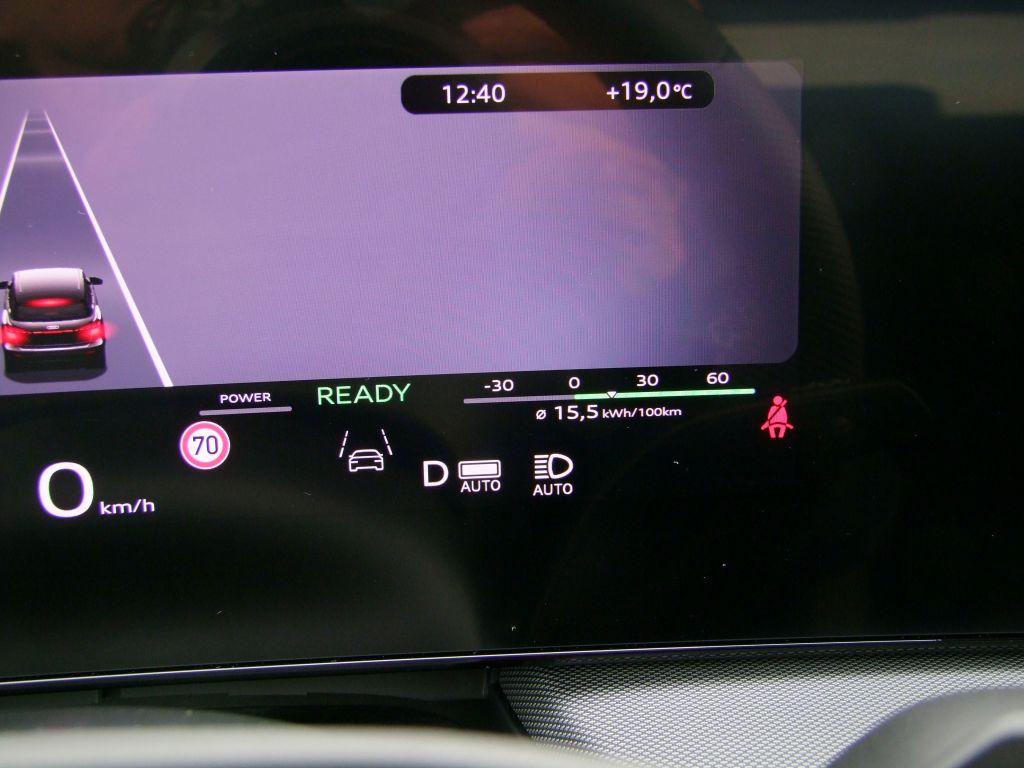
Besides, our test car came with the Adaptive driving assistant plus is available for additional convenience – it helps with acceleration, braking, maintaining speed and distance, and lane guidance. It works ever so smoothly, gently coasting wherever possible when you lift your right foot, and smoothly slowing down to a full stop when the vehicle ahead does so too.
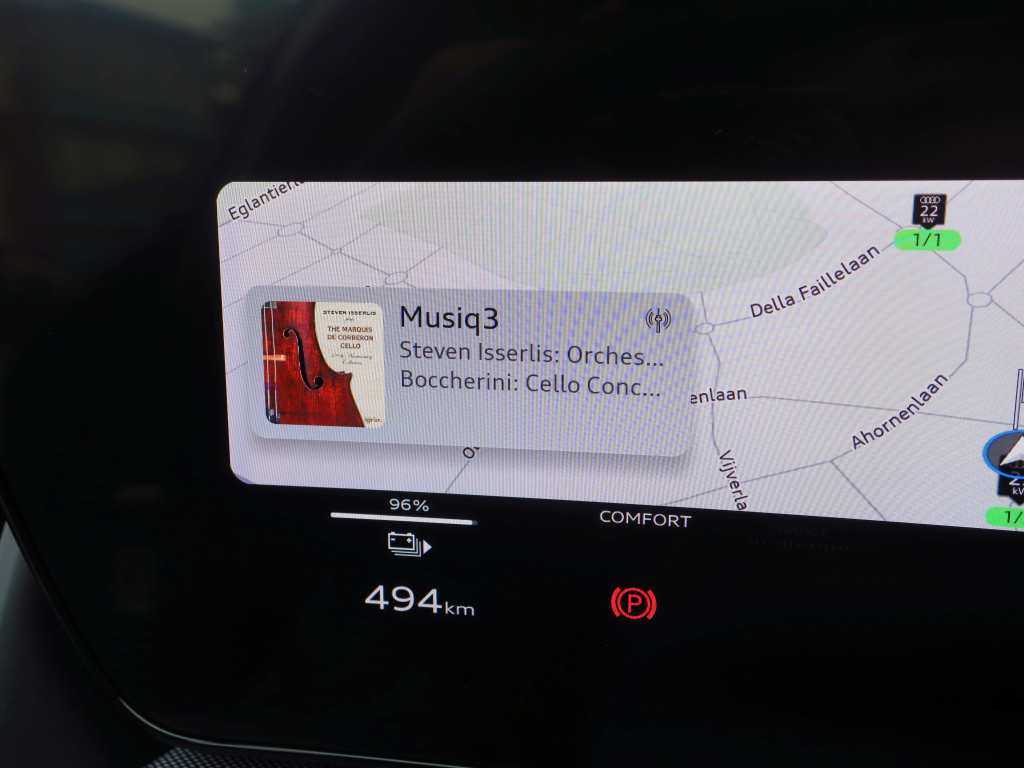
It makes city driving a wonderfully relaxing affair. Our test car came with a superb Sonos audio system, and you can imagine how I enjoyed every minute behind the wheel.
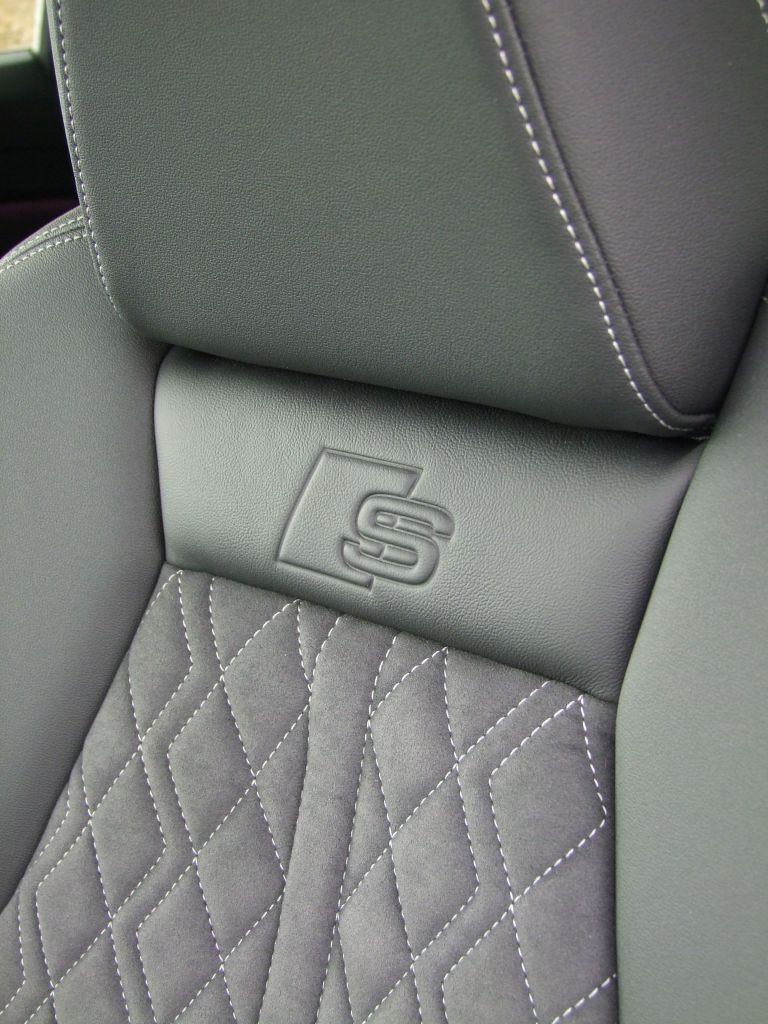
The comfort of the Q4 is outstanding, also the standard sport seats deserve an accolade. Besides boulevard driving and motorway trips in “comfort” mode, the Audi lives also up to its iconic tradition of sportiness. You can really have a go on winding roads. The steering is precise, the point of gravity is quite low with the big 82 kWh battery sitting quite deep in the MEB electric platform that is also used for the VW ID.4 and the Skoda Enyaq.
This means that the Q4 holds the road really well… We also found it quite nimble in town and narrow streets. Of course, the surround view camera’s help when manoeuvring in tight parking spaces, and parking alongside kerbs.
Consumption depends of course on your driving style, weather conditions, you name it. The manufacturer quotes a range of up to 578 km with a combined consumption between 18,4 and 15,6 kWh/100 km, which proved indeed quite realistic and achievable.
The Audi Q4 e-tron is the first Audi with bidirectional charging. With Vehicle-to-Load (V2L), the car directly powers electric devices. It does so via a domestic power socket in the trunk (providing continuous power of 2.3 kW at 230 V AC) or an optional adapter on the side charging port with a domestic power socket (2.3 kW) or a camping power socket (3.6 kW). Ideal for your electric mountain bike!
The DC charging capacity of the 82 kWh battery in the Audi Q4 SUV4 performance increases from 175 kW to up to 185 kW – charging from 10 to 80 percent at a fast-charging station in just 27 minutes. Up to 185 km of range can be added in ten minutes…
The luggace space is quite good, with 520 litres seats up and 1,490 litres seats down. There is a compartment underneath the floor in which you can tuck away the charging cables.
Infotainment: versatile and state of the art…
We were also impressed by the quality and layout of the information we got on the touchscreens in front of the driver and in the centre of the dashboard. Chrystal clear maps, superb navigation, clear layout of functions and apps to choose from on the central screen, with functions like for instance the choice between different “ambiance” moods.
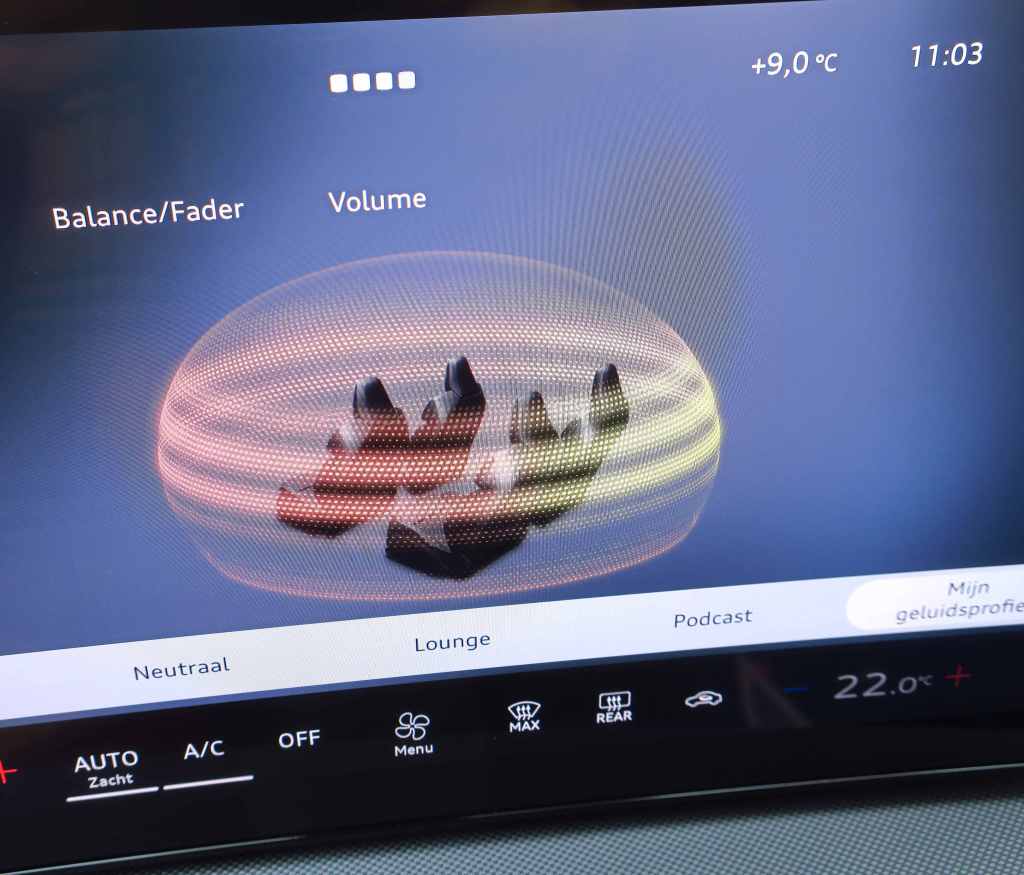
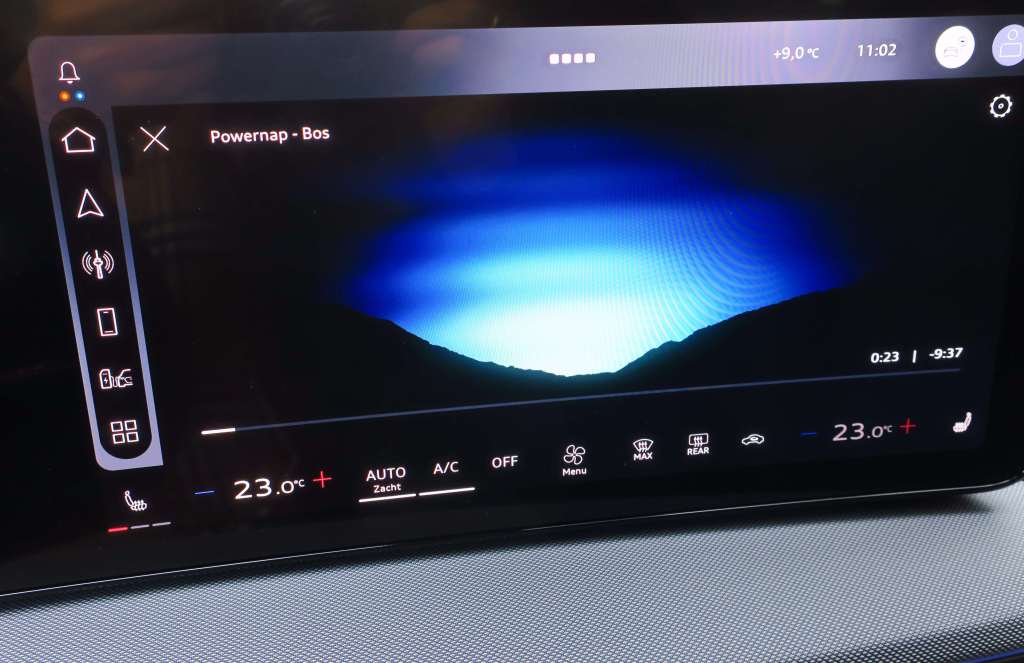
So for example your display will show a forest picture with soothing music when you take a power nap… Of course, you can adjust your optional Sonos system also and choose between concert, lounge, neutral and podcast sound setups…
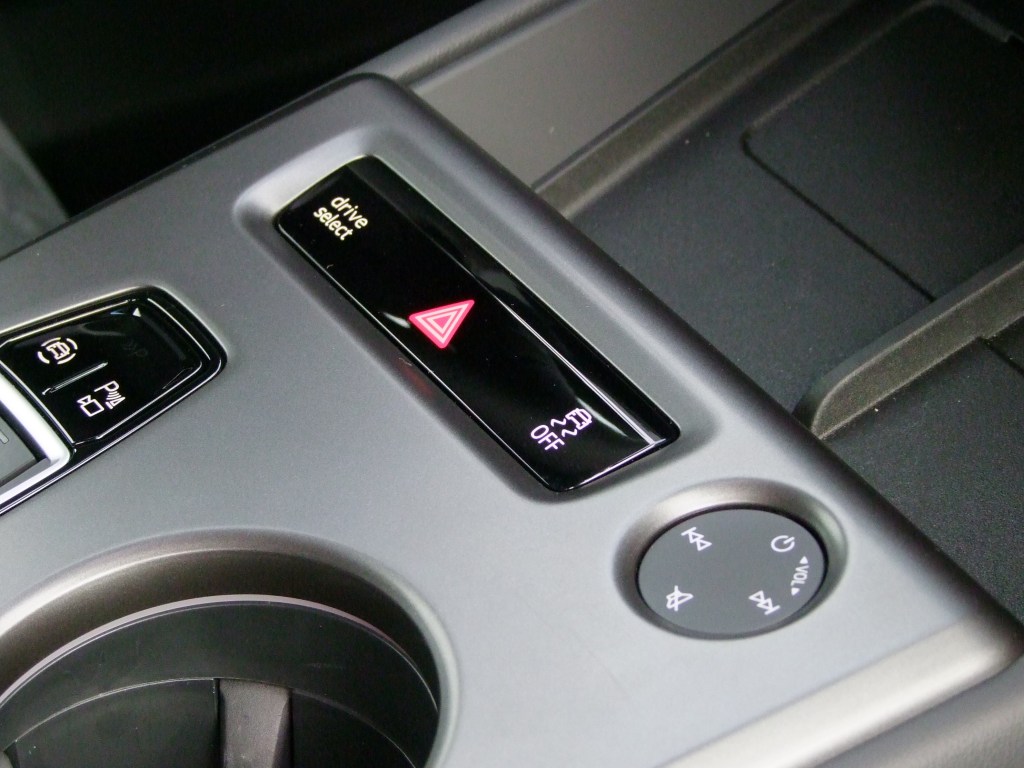
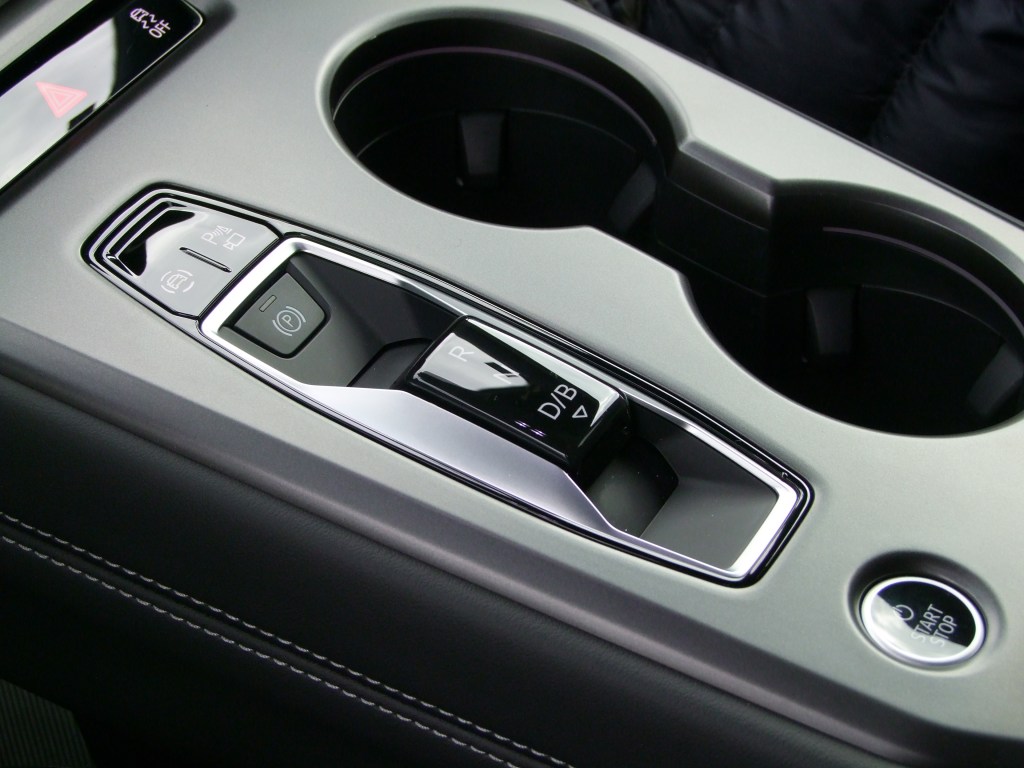
We liked also the simple and clean controls on the central console: intuitive and to the point.
Conclusion
The Q4 hits the mark again, offering an ideal combination between style, size, practicality, build quality, performance and efficiency.
It looks very good, has wonderful colour combinations, exudes the unmistakable Audi panache and aura. It comes with quite a few power combinations, starting with a 150 kW e-motor at the rear wheels and a 63 kW battery, up to a 250 kW and the 82 kWh battery for the top Quattro version. But the performance version we drove was (already) truly impressive…
Hans Knol ten Bensel
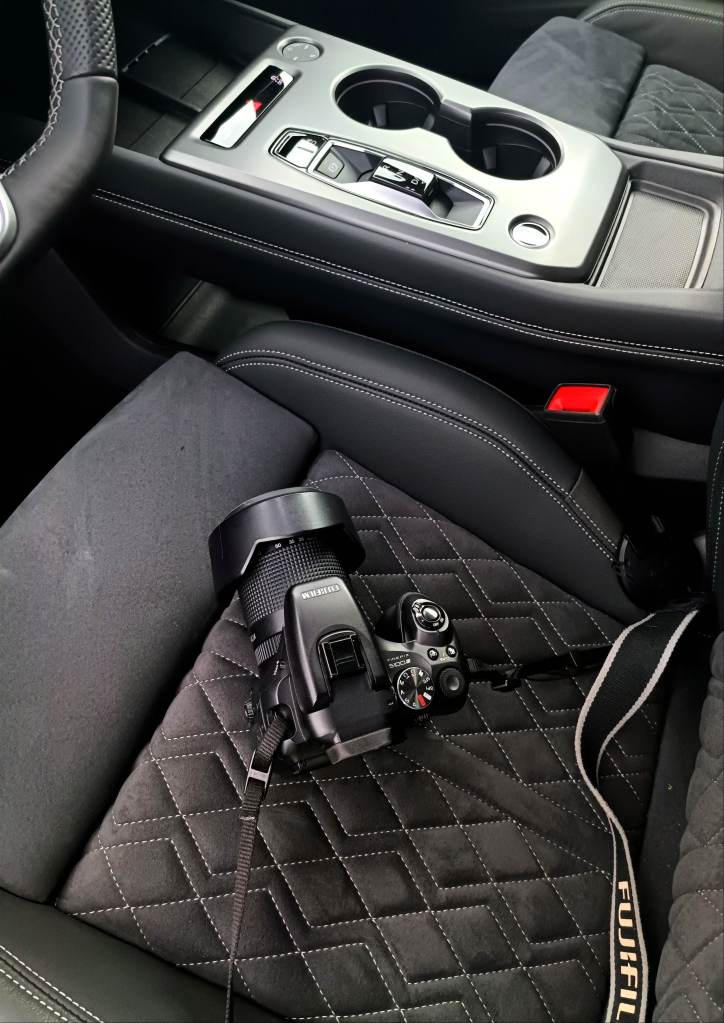
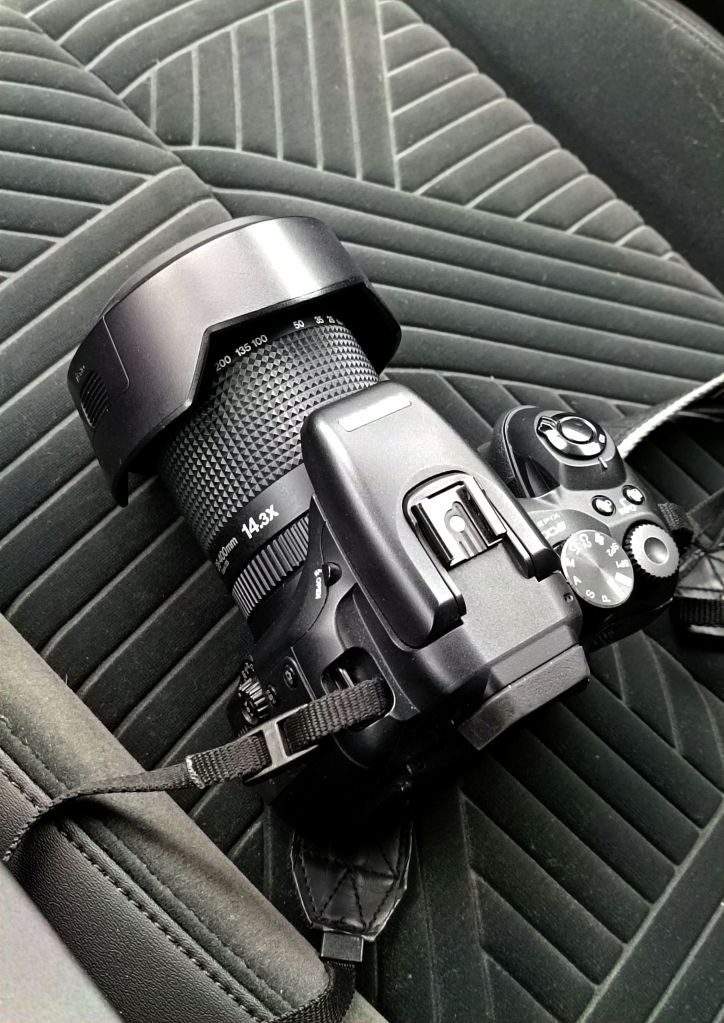
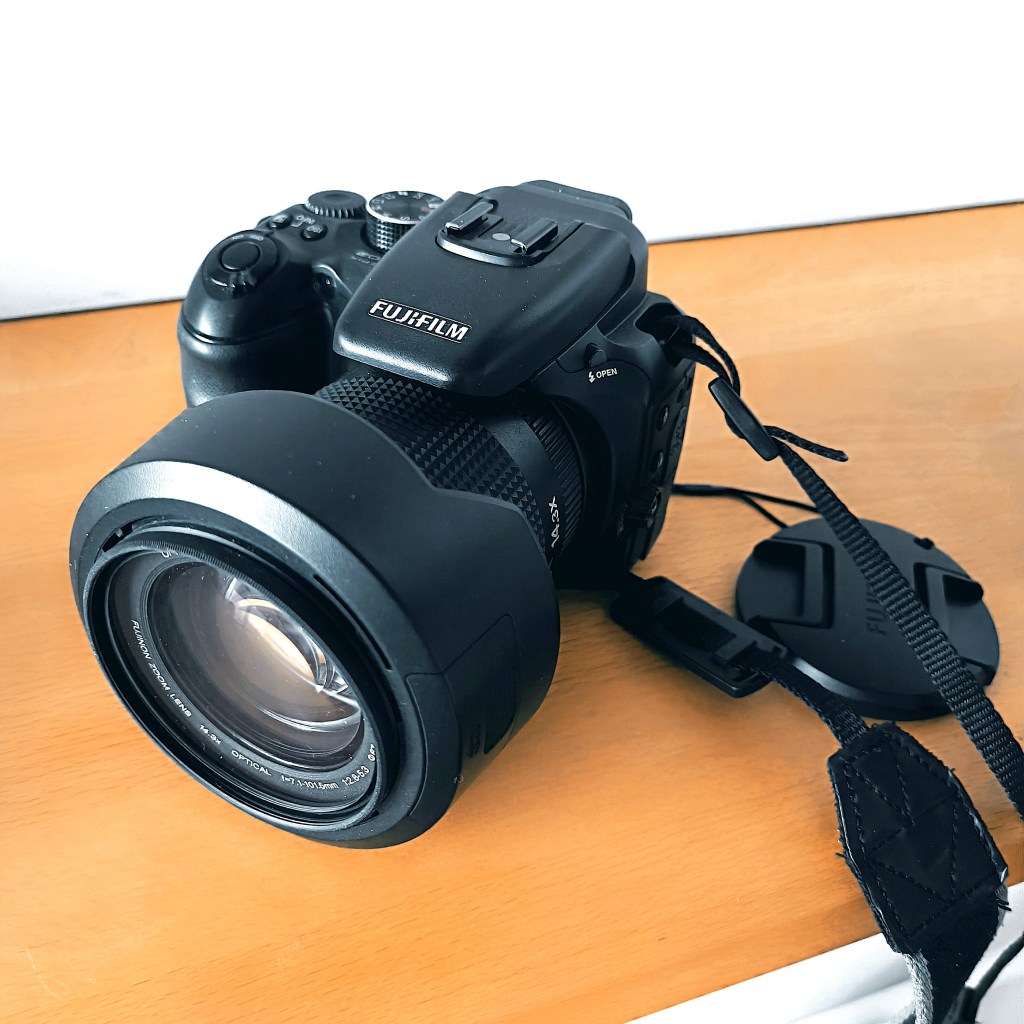
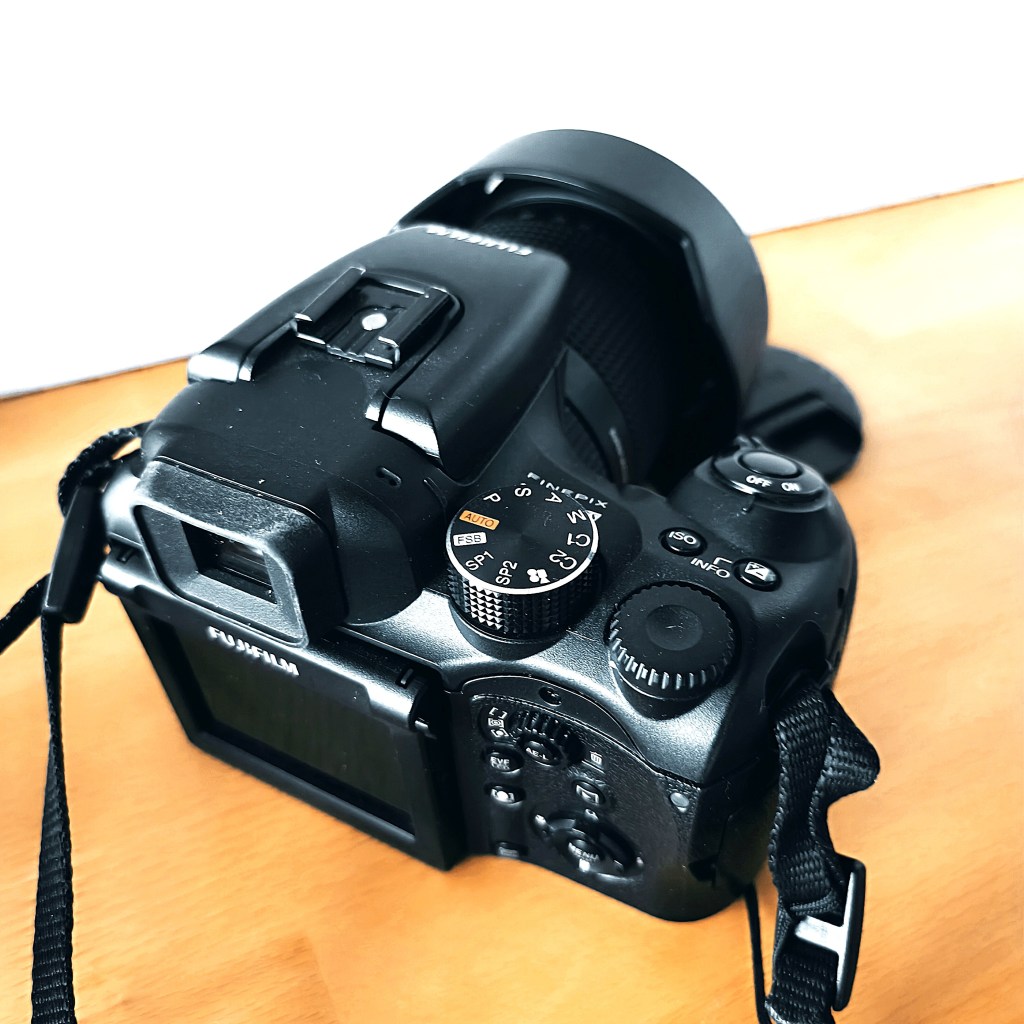
Photographers’ notes: We used here again our Fujifilm Finepix FinePix S100FS, and despite the fact that its design dates back to 2008, now almost two decades ago, it stilldelivers absolutely professional results.
Of course, the definition of the electronic viewfinder as well as the bigger foldable screen is not up to present standards, but the actual sensor and the Fujinon 28-400 mm (35 mm equivalent) lens really mean business. Note that the photos you see here are compressed to cope with the website technical requirements…so the original photos are still more detailed. Remember, I bought this versatile camera used some years ago for just 59 Euros…The photo of the camera here above is taken with my Xiaomi smartphone.
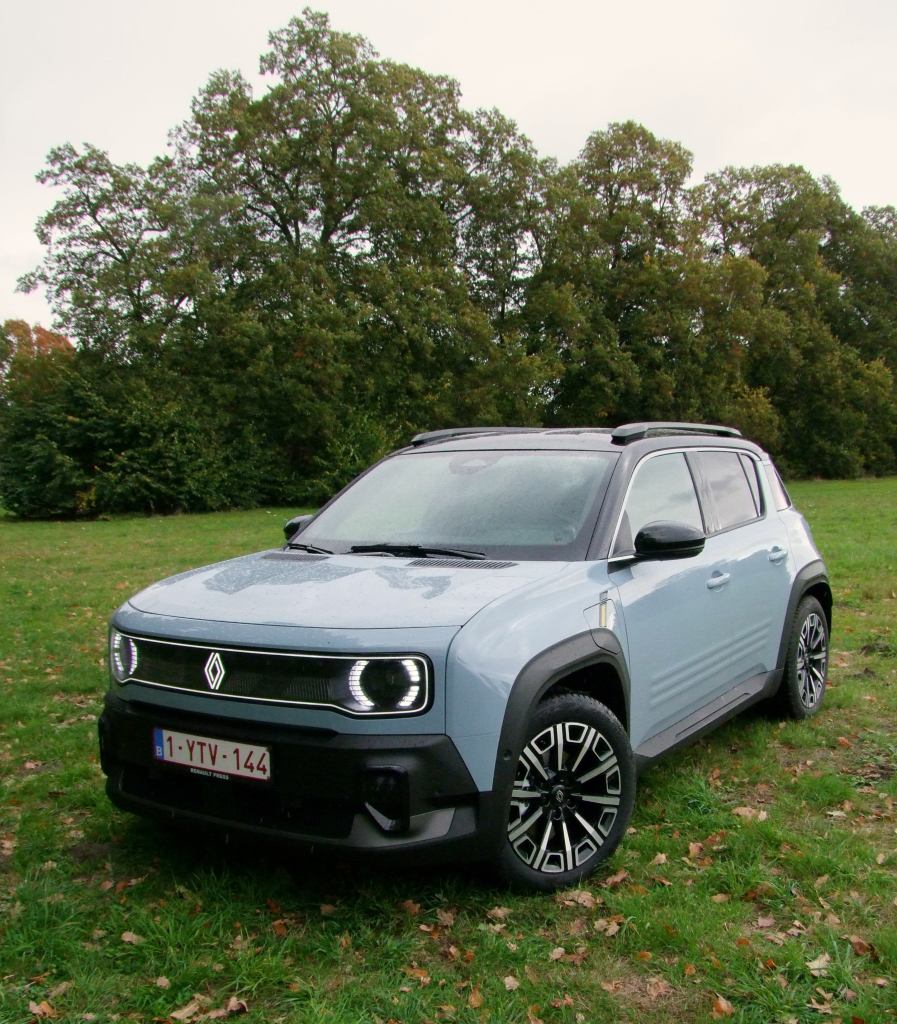
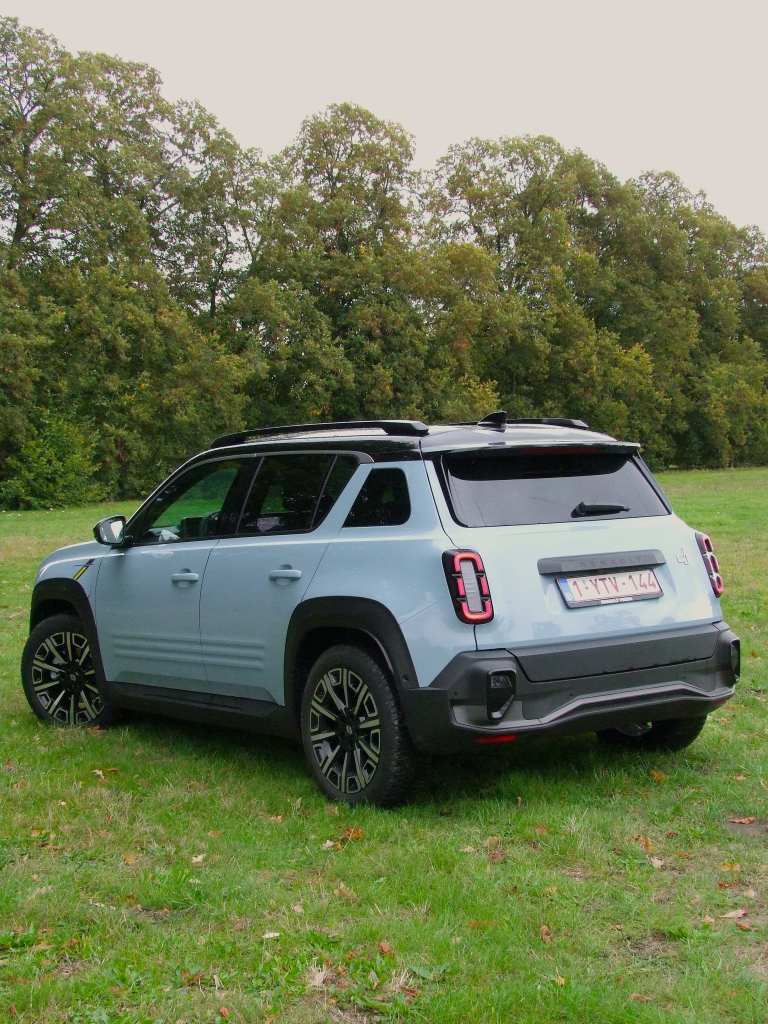
I have always been very fond of the original R4, which was my dream car when I was a university law student. I found its concept to be an absolute stroke of genius, with its front wheel drive, comfortable suspension, roominess, practicality. I was a total fan of the elegant “Parisienne” version; alas, I never owned one, as even as second hand it was still far too expensive for me.
So French ingenuity escaped me. And, as a matter of fact, I have never driven this original R4. Needless to say that now I was truly delighted to get behind the wheel of its present day successor. Electric it is, this Renault 4, and you will never ever hear the throb of an efficient 4 cylinder coming from under its bonnet. Indeed, Renault launched last year this new retro trend of the iconic R5 and the R4, responding to the obligation by the EU to fully electrify its whole range by 2035.
Technically (almost) identical to the Renault 5…
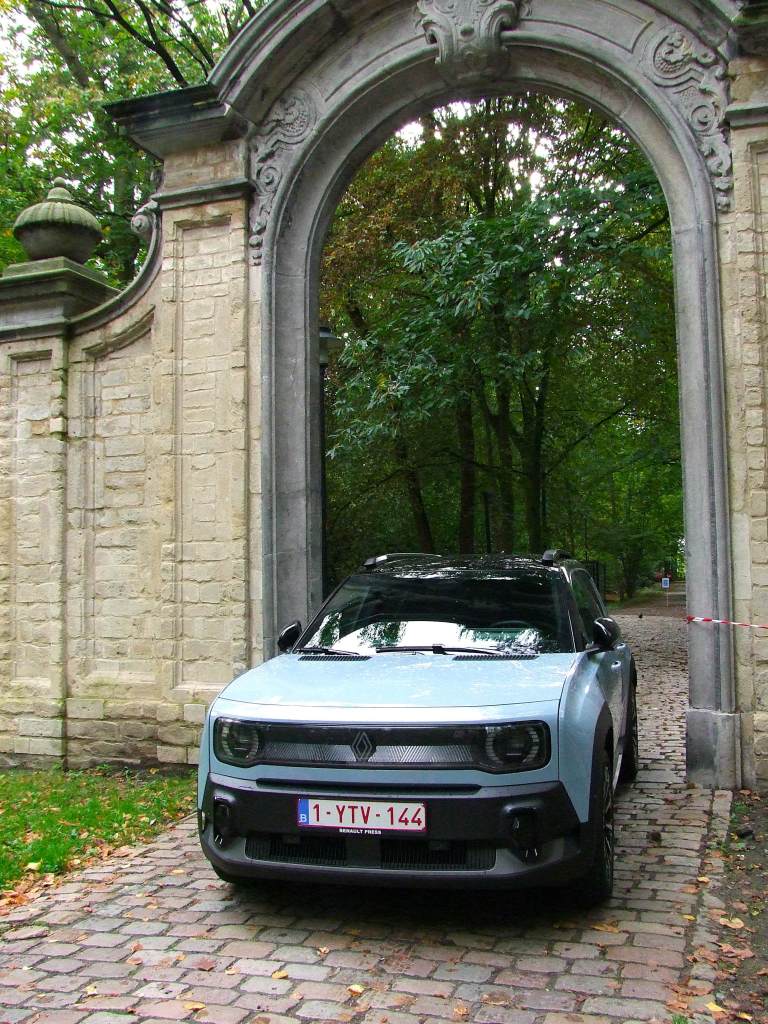
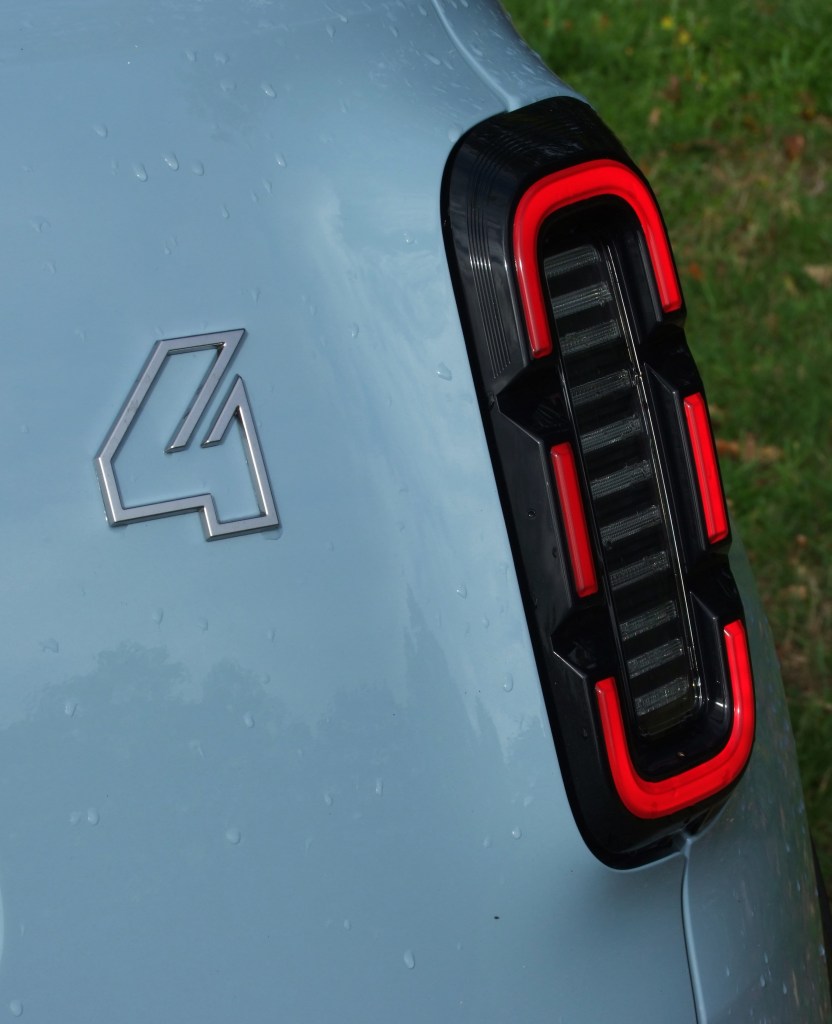
Renault uses its AmpR Small platform for both cars, and we enjoyed already its exceptional qualities in our test of the “Cinq” E-tech, which you can also read in our columns. But the R4 is actually quite a lot bigger, one could indeed say it is a compact SUV. It is 22 cm longer, 3 cm wider even and also 5 cm taller.
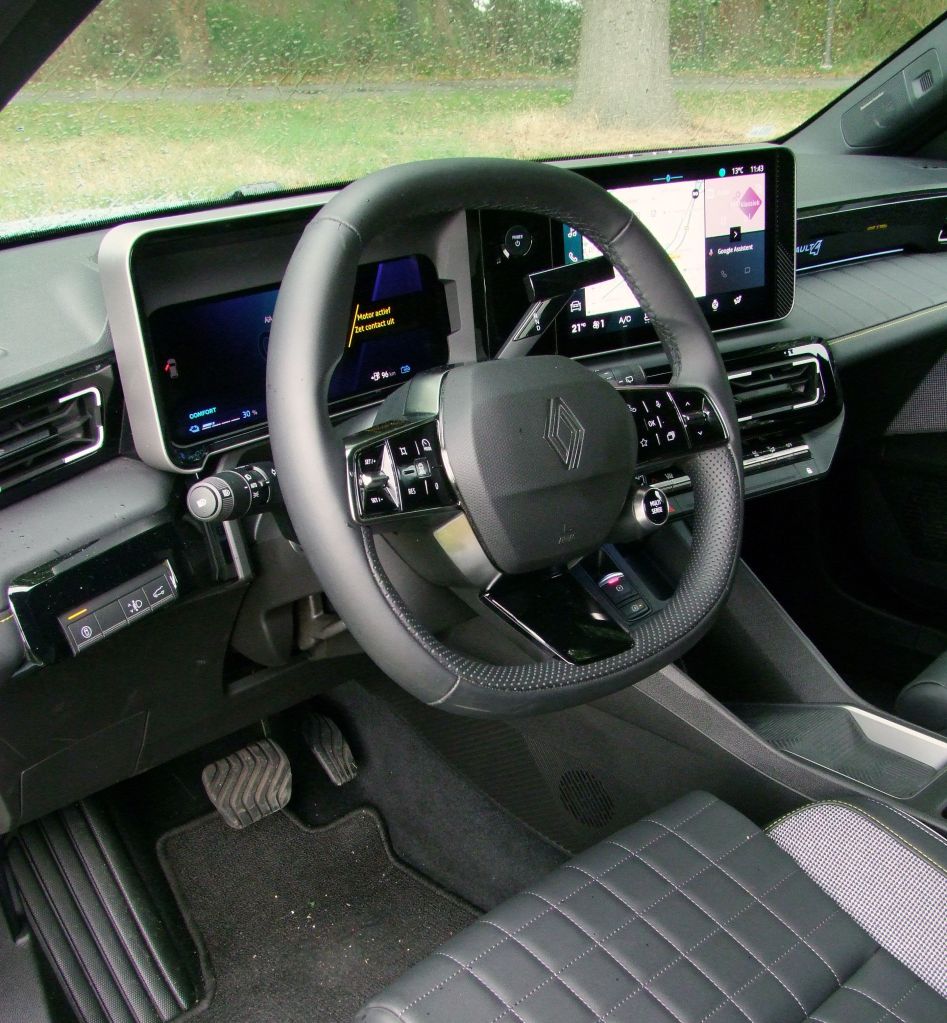
When you get behind the wheel, everything looks absolutely familiar: its dashboard and the whole front of the cabin is strictly identical to the R5. The same goes for engine and batteries: like in the five, you can choose between 120 HP and a 40 kWh battery or 150 HP and a 52 kW battery for the higher versions, being the “Techno” and the “Iconic”. We tested the 150 HP Iconic Comfort range, which in Belgium comes at a price of 37.100 Euros.
Driving
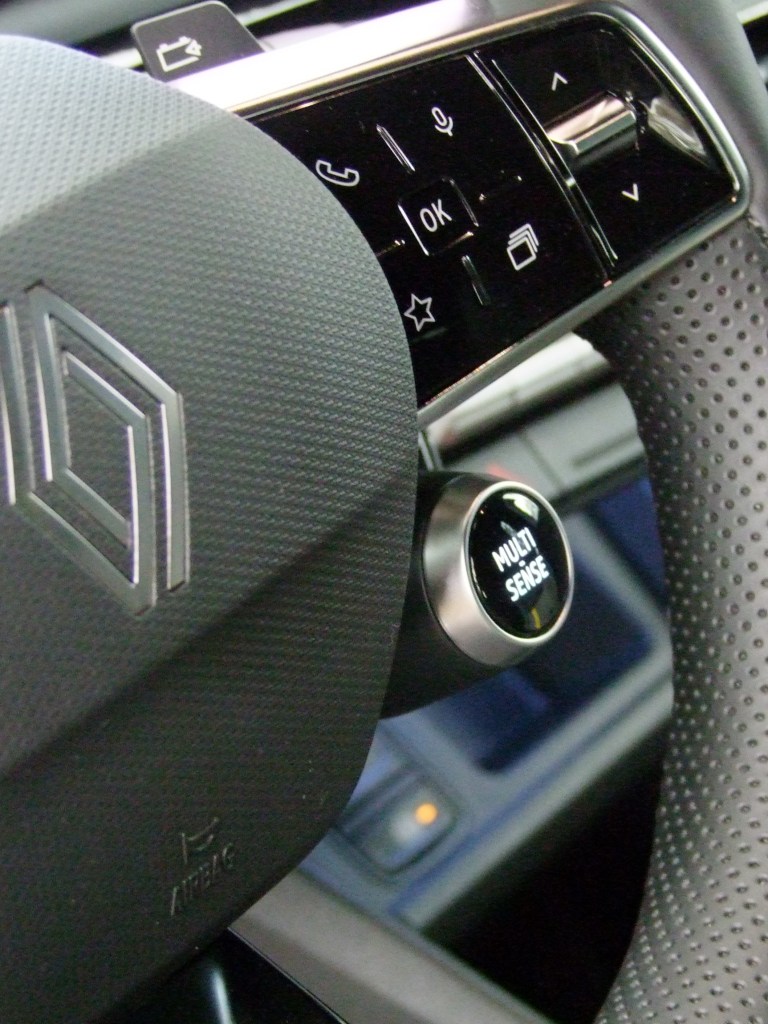
Once you stepped in the taller “Quatre”, you find the same good driving qualities of the R5. The suspension is made even a bit softer, making the car feel a touch less agile and it is indeed rather inviting you to adopt a more restful driving style. But the excellent stability and cornering power is there for course for you to enjoy if you want…certainly when you choose the “Sport” mode with the multi-sense button on the steering wheel.
The 150 HP motor gives you enough punch to put a smile on your face: the R4 will sprint from 0 to 100 km/h in a fast 8,2 seconds, the 120 HP version will do it in a still very creditable 9,2 seconds. The top speed for both power versions is limited to 150 km/h.
The other difference is that now you have two small paddles at the steering wheel which let you choose the level of energy recuperation. If you press the left paddle even more, you activate the “One Pedal” mode. It will also come soon also on the R5, by the way.
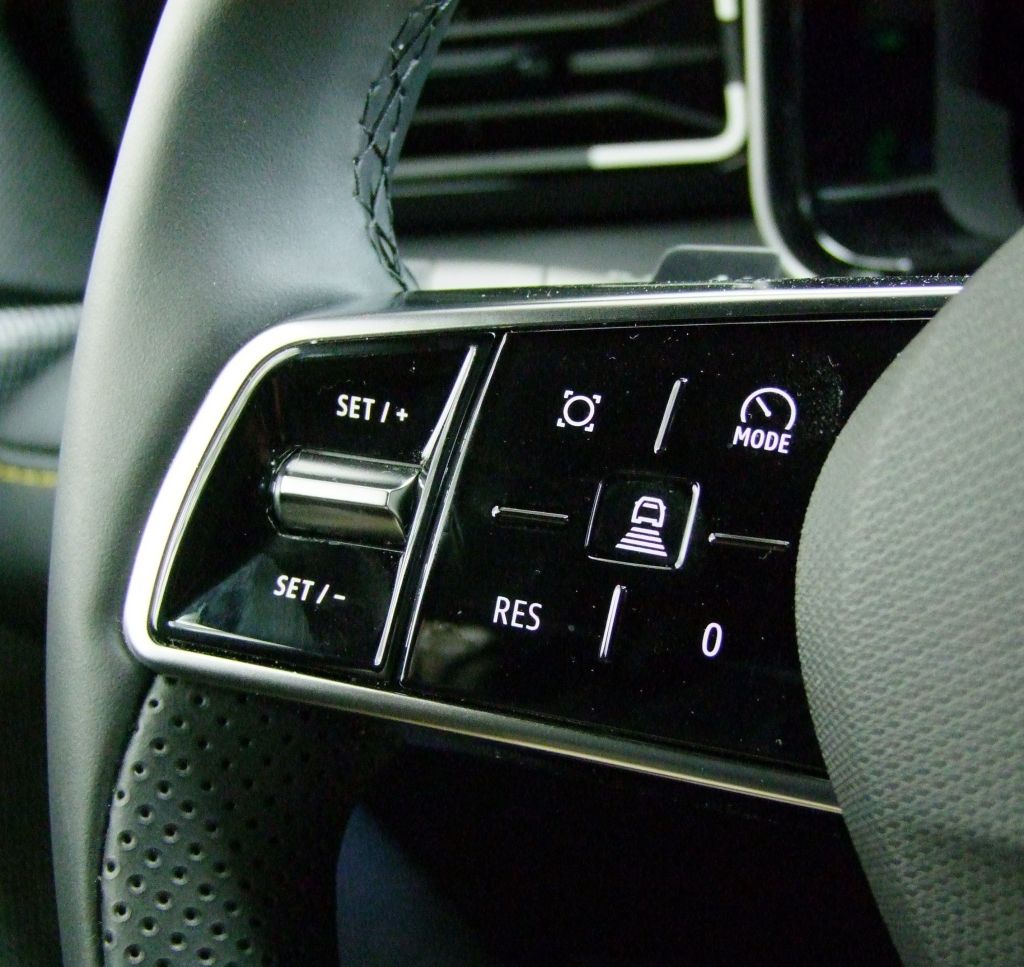
The R4 is also, like its sister, well at home on the autoroute. Sound insulation is excellent, as is seating position and overall comfort. The cruise control is intuitive to use, and on our trips we enjoyed the wonderful sound qualities of the optional Harmann Kardon sound system with 9 speakers. Lover of Jazz, Opera and classical music, you can imagine how I enjoyed all this.
The semi-autonomous driving system is also standard on this Iconic version, and indeed it works very smoothly and we wouldn’t want to miss it on our trips.
Infotainment
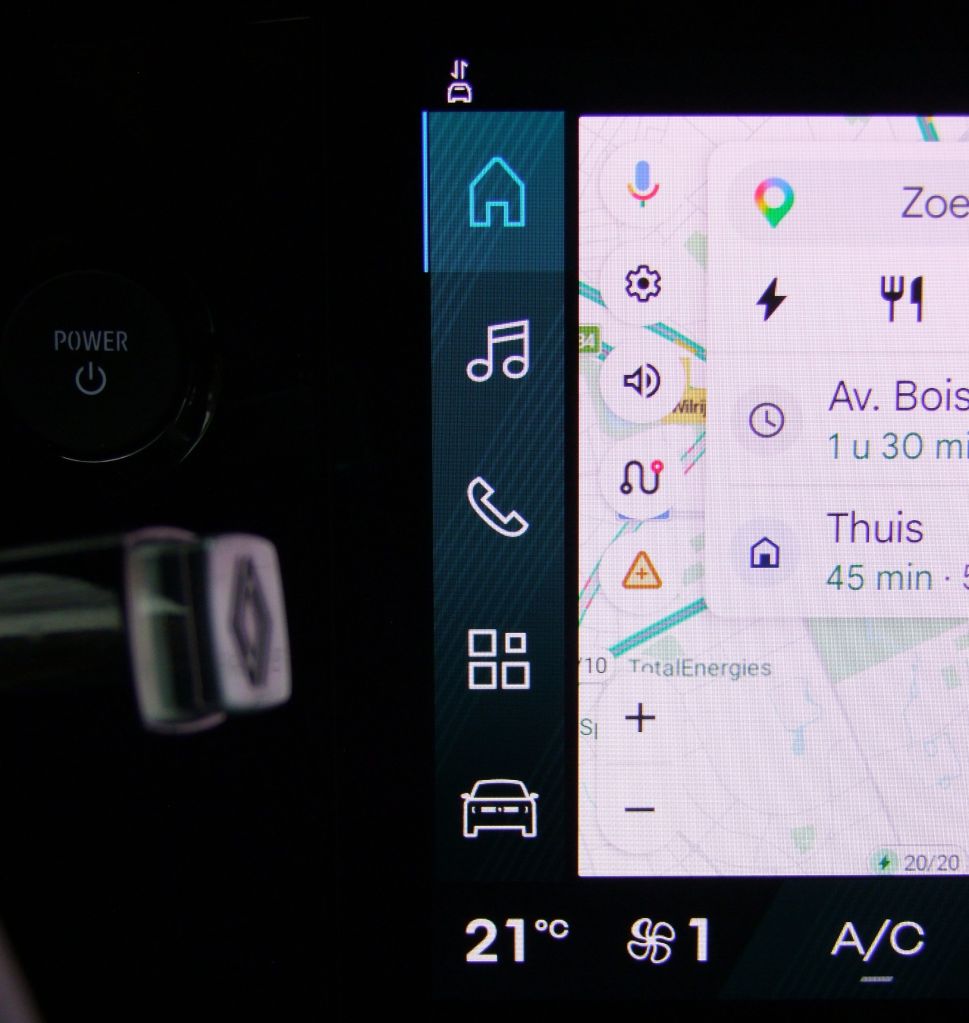
The R4 comes with Google software, and we very much liked that the Google maps function is permanently installed, so it is not necessary to hook up your phone via Android Auto or Apple Car Play. You can speak to a cute blue and yellow lozenge shaped avatar driven by ChatGPT, and he will lower the windows for you, find the proper charging spot on your trip or set the ventilation. From the Techno version upwards the Google navigation also includes a charging point planner, and indeed, when travelling from Holland on the way home it did not indicate straight away our home address, but first the point where we could recharge the battery in order to cover the further distance to our destination.
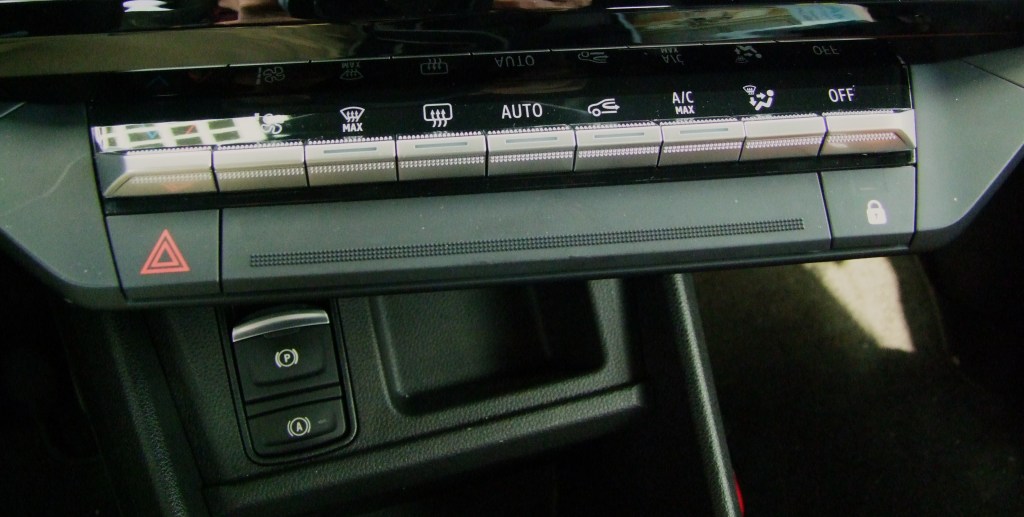
We also liked the row of analog physical touches below the central touchscreen for those essential functions for ventilation, heating, defrosting, Air-co, choosing cabin temperature.
Spacious and practical…
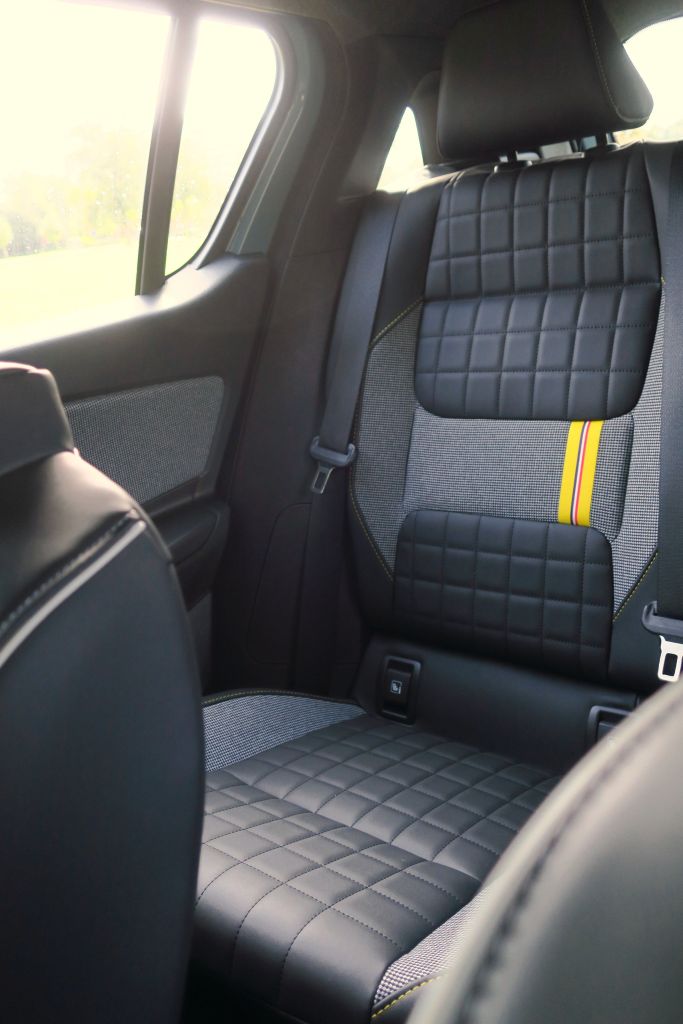
The R4 offers (a lot) more than the R5 when it comes to extra space for the rear passengers and their luggage. Indeed, the wheelbase has been stretched by not less than 8 centimeters, we already told you that the R4 is not less than 22 cm longer. The rear seats are improved and have a thicker upholstery, there is more space in the door bins, and last but not least there is now a lot more headroom. There are two type C USB slots for the (young) rear passengers, invariably social media aficionados…
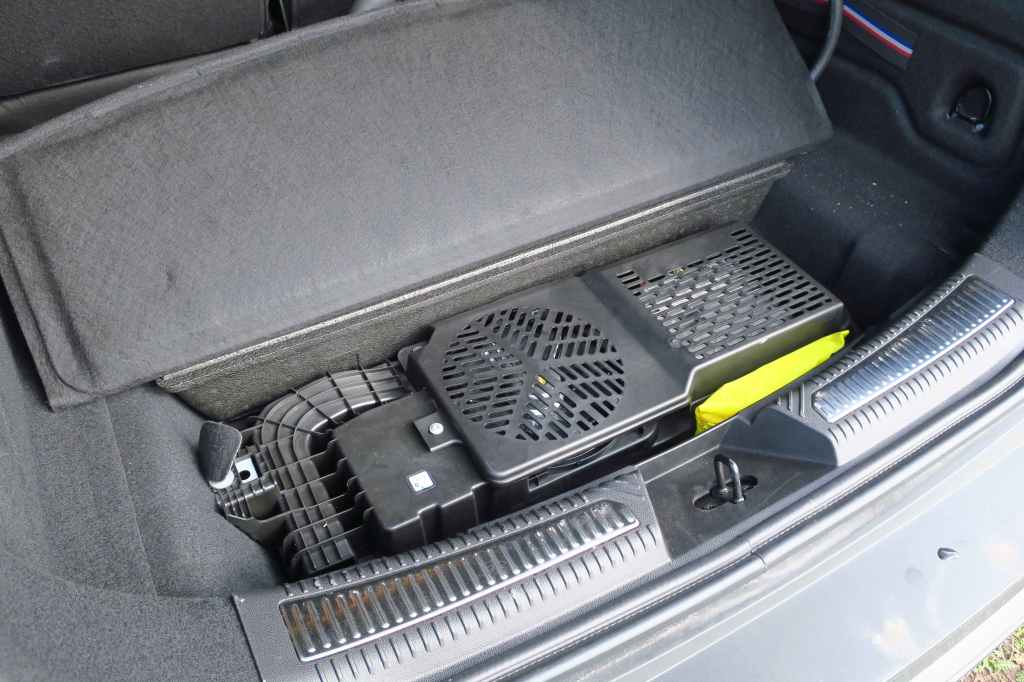
The boot space went now from 277 in the R5 to some 339 liters. The Harmann Kardon sound system takes unfortunately some of the underfloor space, but there is enough room to tuck away the charging cables. The load sill is pleasantly low, merely 16 cm. Good to know that also the front passenger can be folded down, so these long (up to 2,2 meters) IKEA panels can safely be brought home…
Consumption, charging and range…
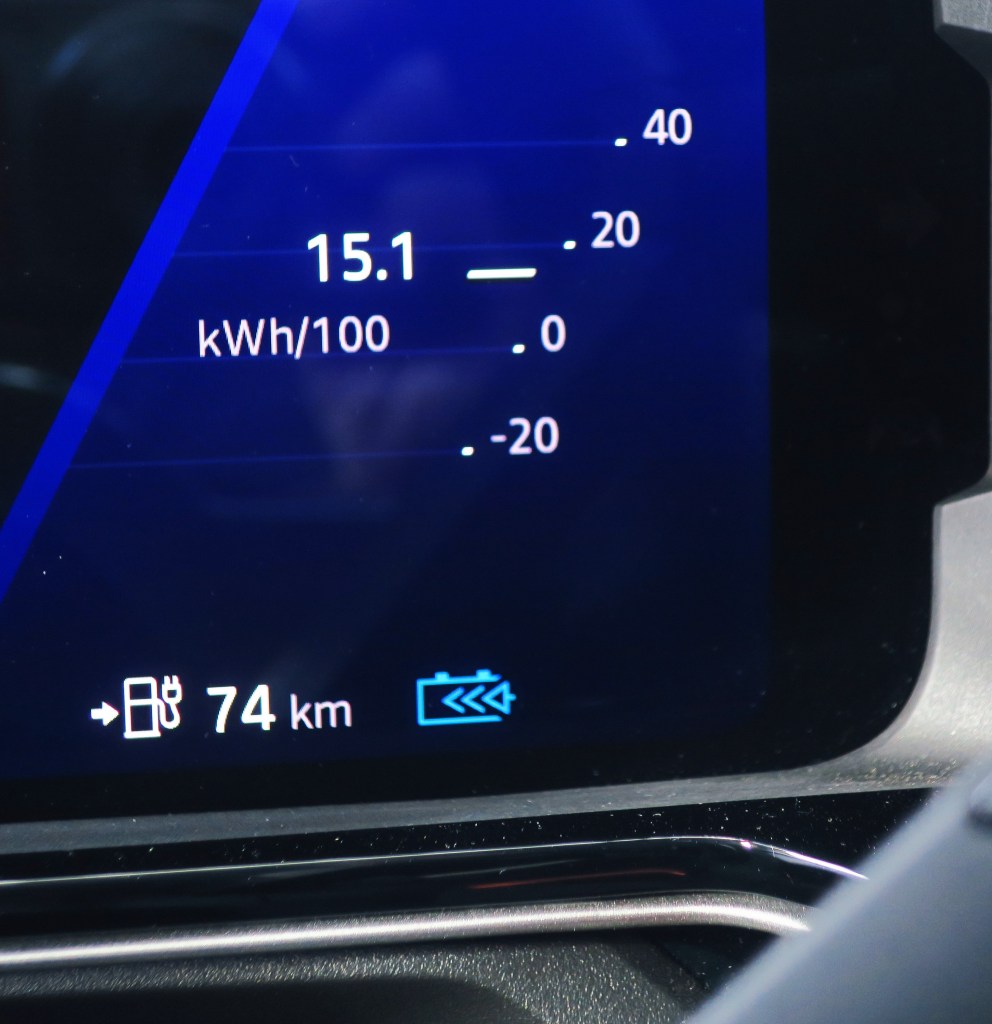
According to WLTP, the R4 in the 150 HP version has an average consumption of 15,1 kWh/100 km. We easily achieved this during our test. The WLTP range is set according to the manufacturer at 409 km.
On the motorway or “Autoroute”, consumption tends to rise slightly above 20 kWh/100 km, and in practice the range then drops on these faster trips. If you want to stick to the 15,1 kWh/100 km average, you have to cruise at 95-100 km/h on the motorway…which is indeed marvellously relaxing with Chopin Nocturnes soothing your ears through the 9 speakers of the Harmann Kardon sound system.
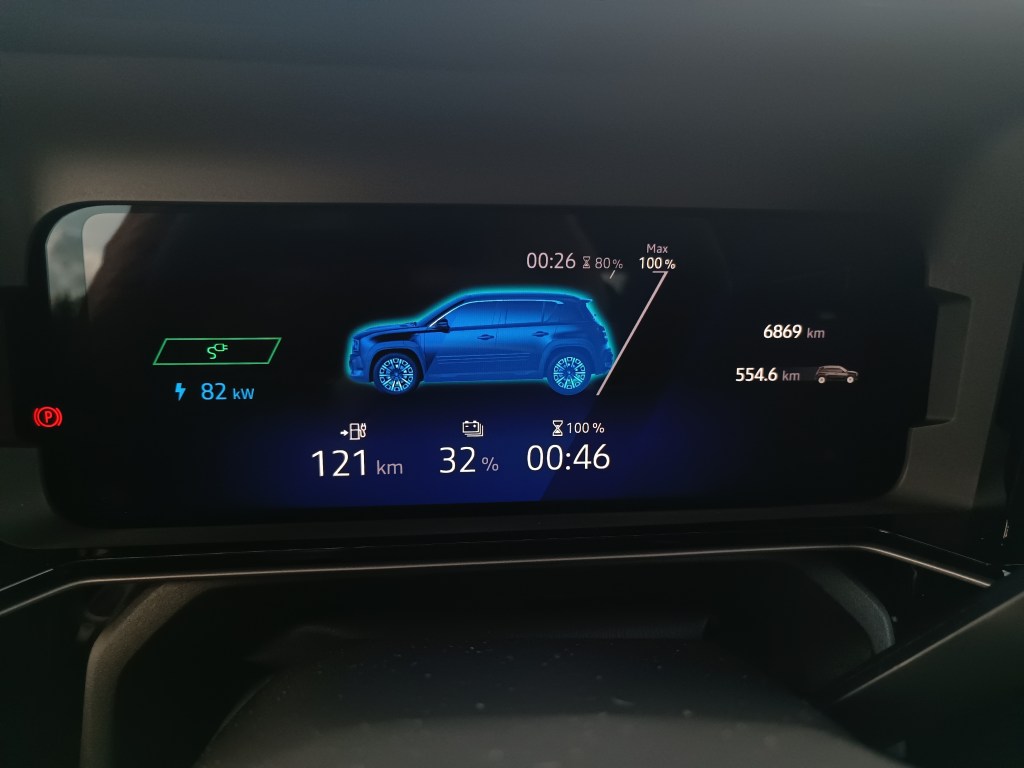
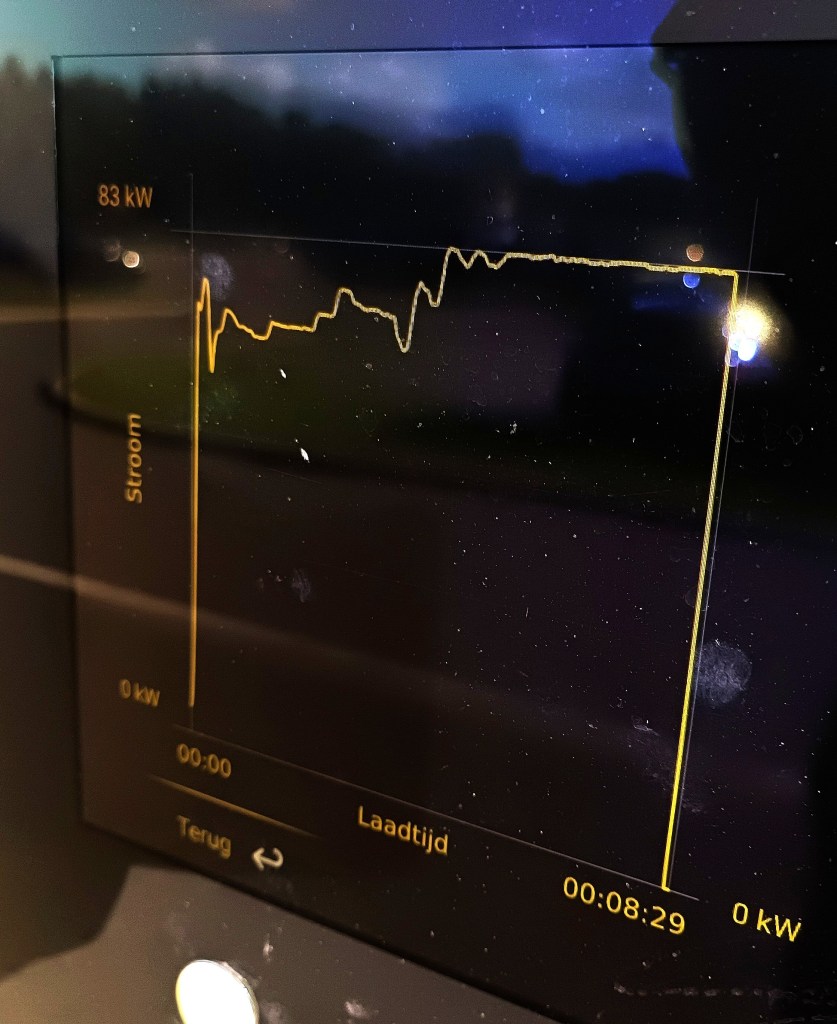
We put the R4 on a CCS(DC) charger and charged the battery at an rate of 82 kW/h.
On the “Iconic” top version we tested, bi-directional charging is standard, and you can hook an electrical appliance up to your R4, to a maximum of 3,700 W or put the energy back to you home system to reduce your energy bill…
Conclusion
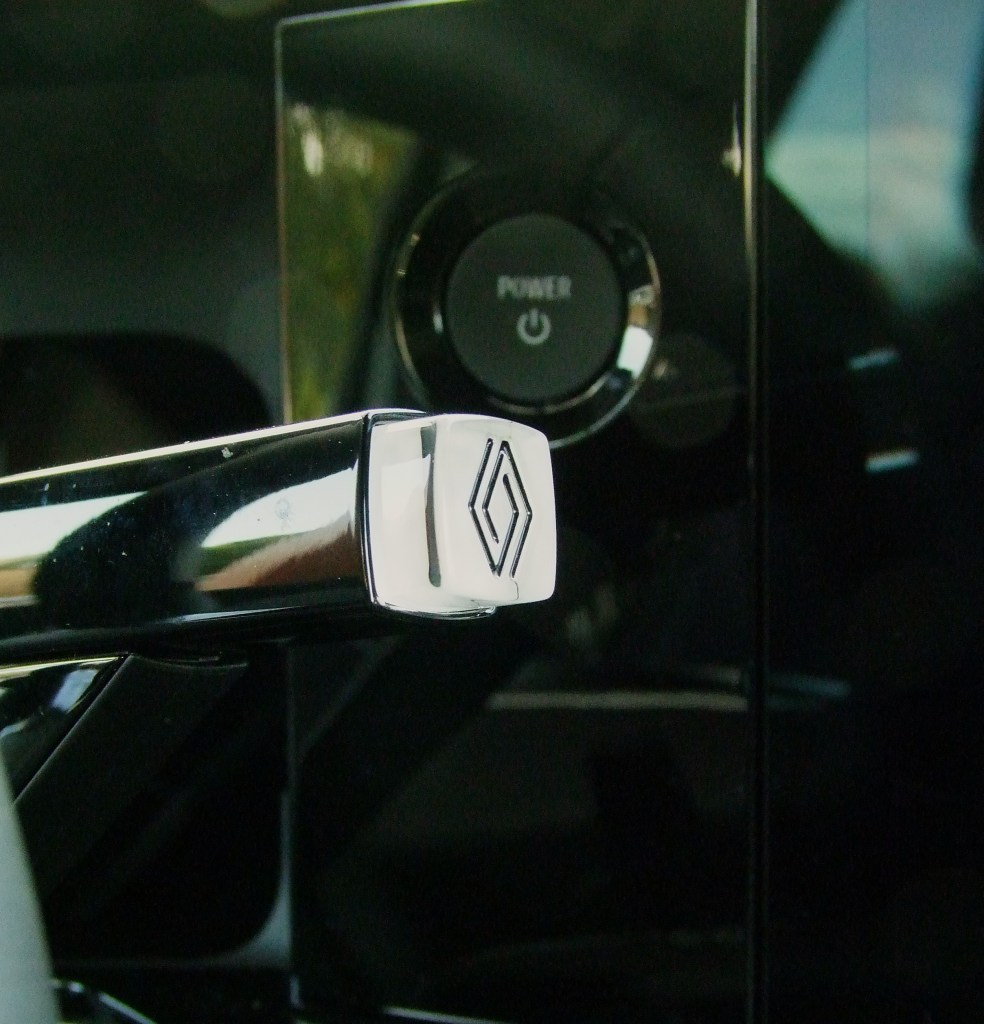
The R4 convinced us with its comfort, space, driving pleasure, its iconic aura with some retro-styled very charming aspects in cabin, dashboard and exterior details. It is also a wonderful car to take on a longer journey, the driving assistance systems are smooth and pleasant. The comfortable suspension and its higher stance make it also an ideal companion on remote country roads and add to its go-anywhere character of the original “RQuatre”.
The price is certainly in line with what the market wants for a full electric compact SUV nowadays.
The range is adequate, you are helped by the navigation and infotainment systems to find the charging spots on your route effortlessly, and yes, Renault is working on still longer range versions of both R4 and R5…
Hans Knol ten Bensel
Photogapher’s notes:
Also for this test I used the Fujifilm FinePix S100FS. Using its standard settings, the S100FS shows a pretty respectable 9.2 stops of dynamic range in total. But there is more. Unusually for a non-SLR, the Fuji has the option to ‘boost’ its dynamic range by one or two stops (marked as 200 or 400%).Not bad for a second hand camera for the price of a restaurant lunch!
Volkswagen’s pursuit of efficiency records spans over two decades, transitioning from ultra-light diesel concepts to electric prototypes.
Their first car was presented in 2002 at the VW shareholders meeting, where I was present, and – as could be expected – with no regular automotive photographers with their cameras being around. It was the surprise which Ferdinand Piëch had in mind, presenting at the shareholders’ meeting also Bernd Pischetsrieder as the new VW chairman, who sat in the back seat of the 1-Liter Concept Car with Ferdinand Piëch driving the car from Wolfsburg to Hamburg.
I was there with my faithful Nikon analog camera, the …. and the ektachrome photos are in my archives. I will publish them soon, but in the meantime here is first some history of the cars…
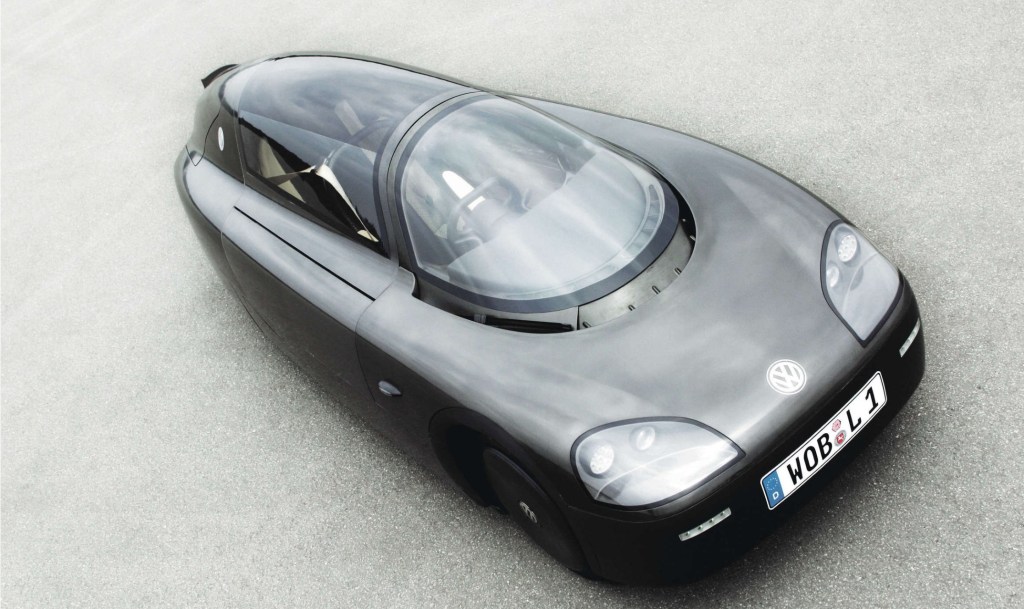
The 1-Liter Car Concept (2002)
The story began with Ferdinand Piëch’s vision for a car that could travel 100 km on 1 liter of fuel. The first prototype, unveiled in 2002, was an extreme exercise in minimalism: a 290 kg tandem two-seater with a 0.99 L/100 km consumption . It was never meant for production but proved the concept was possible. For better aerodynamics, the car seats two in tandem rather than side-by-side. There are no rear view mirrors and it instead uses cameras and electronic displays. Of course, the car is totally light, using an unpainted carbon fibre skin over a magnesium-alloy subframe.
The engine is a one-cylinder 299 cm3 (18 cu in) diesel producing just 6.3 kW (8.4 hp). It drives through a six-speed transmission that combines stick-shift mechanics, weight, and drive efficiency with automatic convenience and efficiency controls. There is no clutch pedal. The gear selection (forwards, reverse or neutral) is made using a switch on the right-hand side of the interior. The engine is switched off automatically during deceleration and stops, and auto-restarted when the acceleration pedal is pressed.
According to Volkswagen, the vehicle consumes 0.99 L/100 km , giving it a 650 km driving range on one tank of fuel.
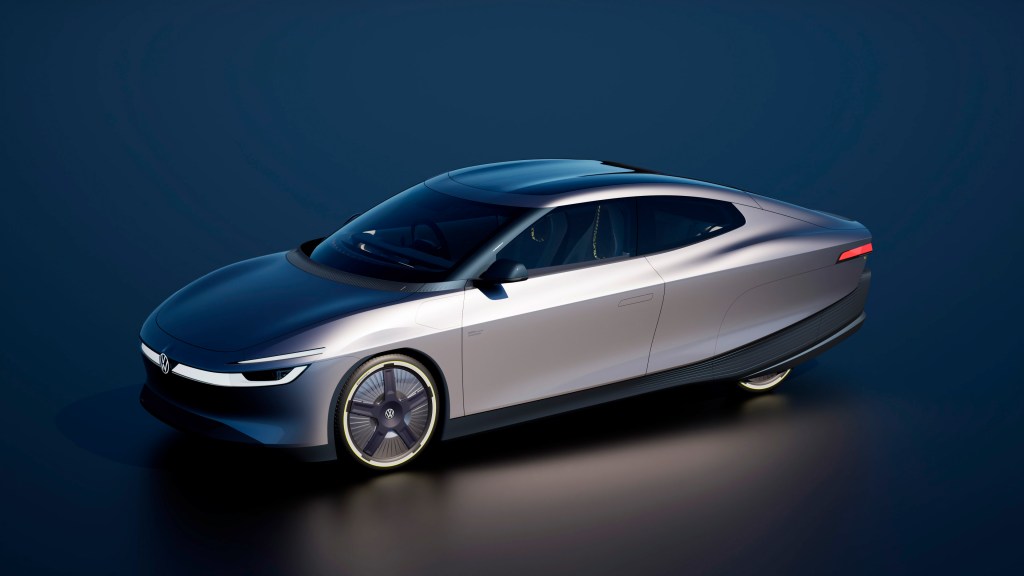
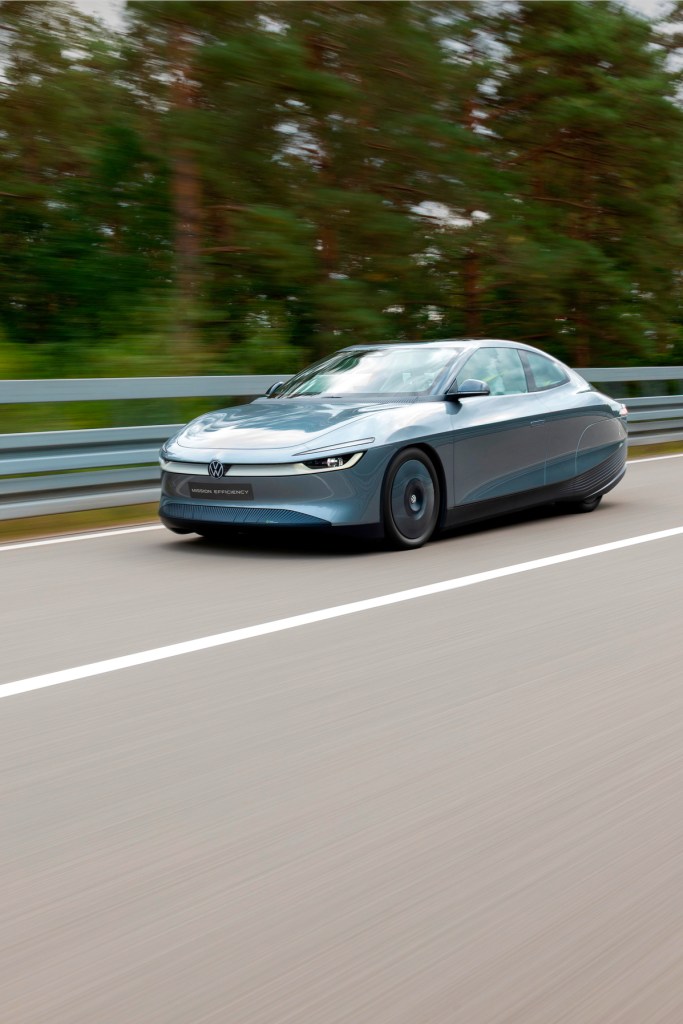
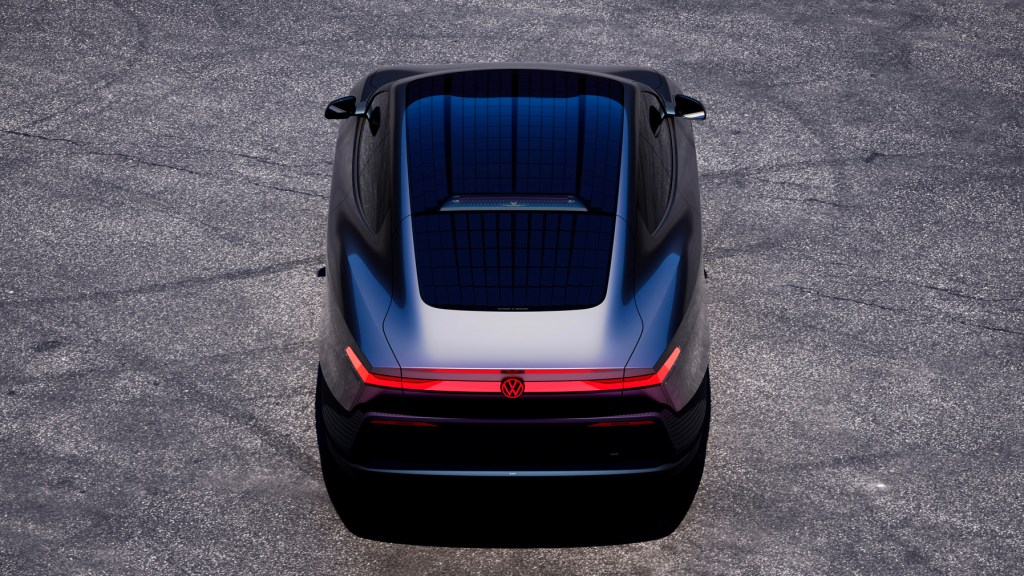
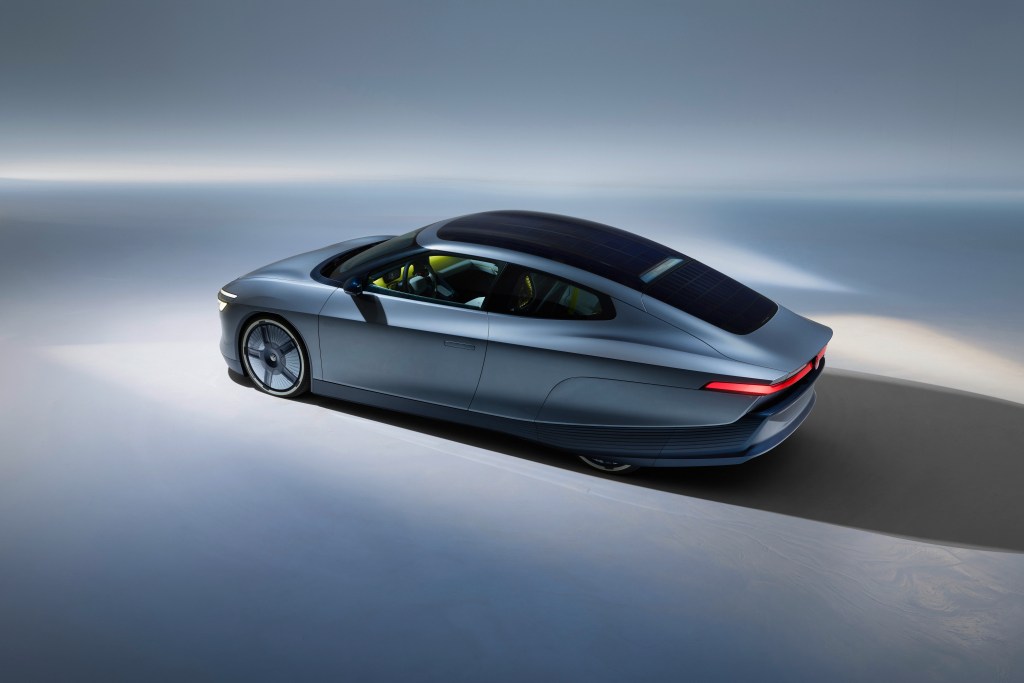
The Mission Efficiency 2 + 2 seater… an aerodynamic engineering marvel, based on ID Polo technology…
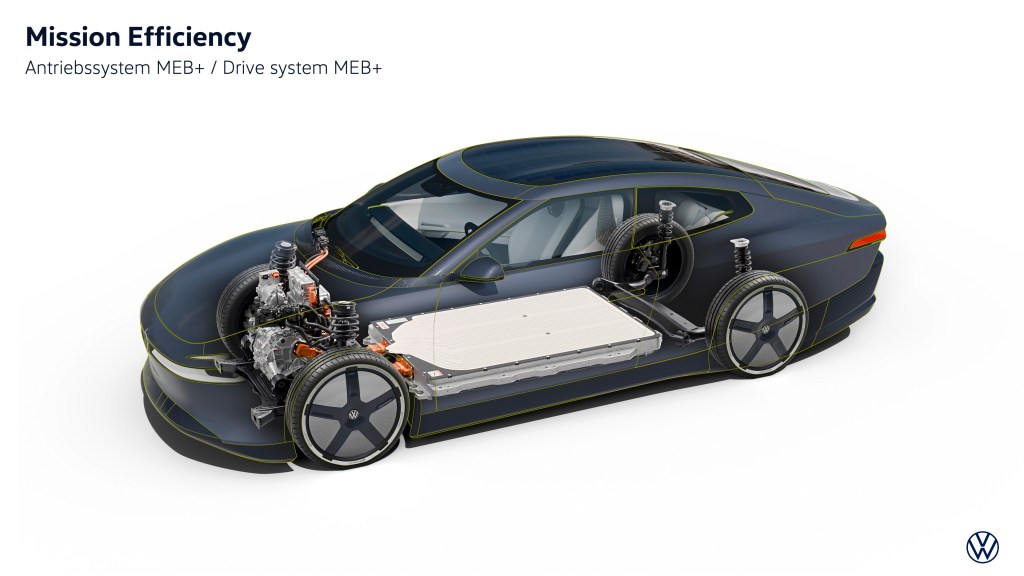
The car was presented in august this year, and besides being able to set a world record, in terms of technology, the Mission Efficiency is based on the MEB+ platform with front-wheel drive, showing the potential of the new ID. Models.
During an officially documented consumption drive over a distance of 1,278.36 km from Volkswagen’s German Research & Development Centre in Wolfsburg via Poznań (Poland) and Olmütz (Czech Republic) to the Austrian capital Vienna, the Mission Efficiency electric drive motor came in at a real consumption of just 7.51 kW/100 km including charge losses (6.89 kWh/100 km without charge losses).
The route was completed at an average speed of 67.72 km/h; the top speed was 138 km/h.
The 54.9 kWh battery was only charged once during the journey. Upon arrival in Vienna, the remaining range was 164.0 km.
Practical
Visually, the Mission Efficiency is based on the new Volkswagen “Pure Positive design” language. It’s a two-door coupé with a large boot lid, 2+2 seats, a variable luggage compartment (481 litres) as well as additional stowage compartments under the rear seats and in the side of the body (e.g. for the charging cable). While the interior can be used without restriction at the front, the two rear seats are intended for passengers up to a height of approx. 1.60 m.
The coupé is nevertheless characterised by extremely good space use for a record-breaking high-efficiency vehicle. The concept car was designed in such a way that it could theoretically be used by a young family of four.
State of the art aerodynamics
The low drag is the result of the drag coefficient (Cd = 0.158) and small frontal area (A = 2.08 m2) is the central aerodynamic feature of the Mission Efficiency.
The Mission Efficiency is 1,392 mm high, 1,744 mm wide and 4,775 mm long. Compared with the ID. Polo, this results in a significant increase in length (+722 mm). This additional length is due to a 100 mm longer wheelbase (2,700 mm) and a large rear overhang, which allowed the technical and design team to realize the teardrop shape of the body and the related pioneering aerodynamics.
Drivetrain and body…
The Mission Efficiency and the ID. Polo share the same drive system, the front axle including steering and the basic design of the rear axle.
When comparing the concept car and the production vehicle, it is clear that numerous components of the ID. Polo had to be adapted to the new proportions and new design of the Mission Efficiency.
The body combines the body structure of the ID. Polo with a likewise self-supporting aluminium structure. The doors, bonnet, boot lid as well as the wings and add-on parts are made of a high-strength CFRP aramid composite.
The prototype also has EU road approval and meets the corresponding protection, strength and crash requirements.
Interior and infotainment: less is more…
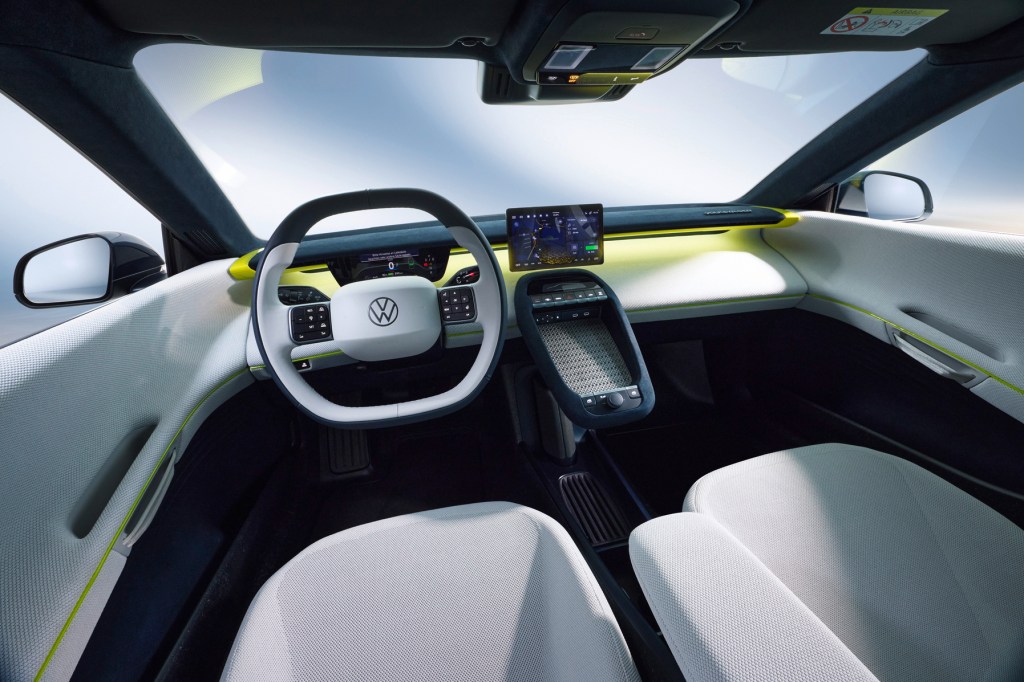
The interior of the Mission Efficiency is largely individually customised – in line with the character of a concept car. Modules such as the multifunction steering wheel, steering column switches, slightly shortened air conditioning block with haptic buttons and the central volume control have been adopted from the ID. Polo.
Unlike the ID. Polo, there is no permanently integrated infotainment display. Instead, a concept called ‘Bring your own device’ was developed here. The name says it all: the function of the infotainment screen is taken over by the driver’s own Android or Apple tablet/smartphone, which is locked in position by a clamping rail and connected wirelessly to the vehicle. All of the infotainment system’s functions are displayed on the screen of the paired device.
Brave new world, we would say. The overall design of this car is also typical for the German car engineering philosophy of combining (E-)efficiency with higher speed travel on Autobahnen, where aerodynamics play a predominant role…
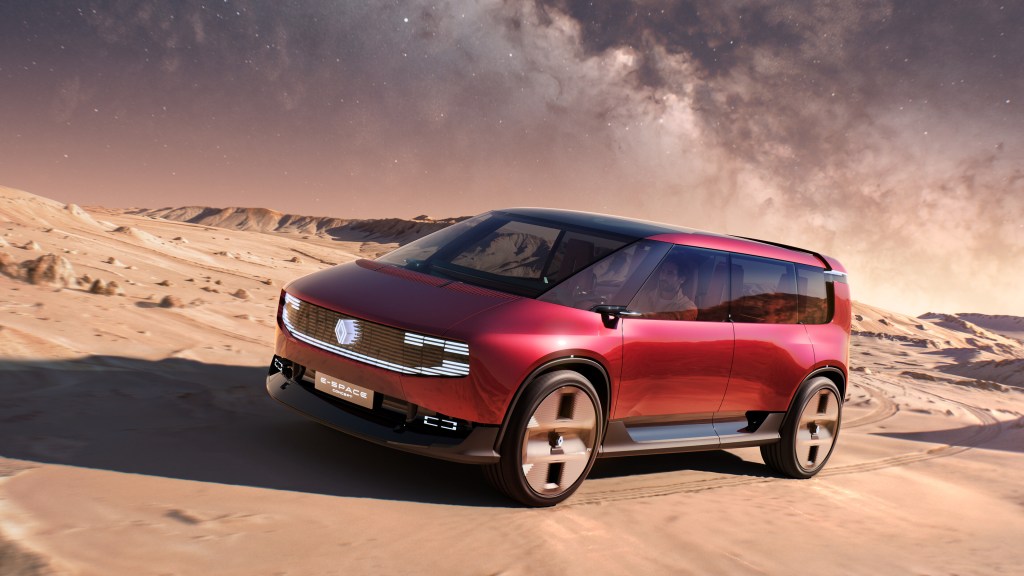
Renault has always had a keen eye for everyday practicality when designing its cars. And it is no surprise that in its ambition to create voitures à vivre, it brings a concept car to the forthcoming Paris Motor show: the E-Space Concept, which is Renault’s contemporary vision of travel and family mobility in the electric age.
With E-Space Concept, Renault is rebooting the spirit of Renault Espace, a model first launched in 1984 that has left its mark on automotive history.
More than 40 years on, E-Space Concept is a future-focused vision of the original, true to the approach that has always set Renault apart: innovating for the benefit of people, human emotion and the in-car experience.
Space Concept embodies the brand’s futuREady strategy: reinventing the automotive experience by placing user needs and the in-car experience at the heart of the design process. This Renault E-Space Concept is a spectacular car, 4.70m long with bodywork in an elegant shade of black rubé.
Alongside E-Space Concept, Renault will be exhibiting two other concept cars: Renault 8 Gordini Concept and Renault 4 JP4x4 Concept.
The Renault 8 Gordini Concept has totally stunning looks and features and we will come back on this concept car also soon in these columns.
The same goes for the Renault 4 JP4x4 Concept, previewed at the 2026 Roland-Garros French Open tennis tournament, this Renault 4 concept car is a fresh take on the Plein Air (1969) and JP4 (1981) versions of the original Renault 4. Also soon more about this iconic “quatre” soon!
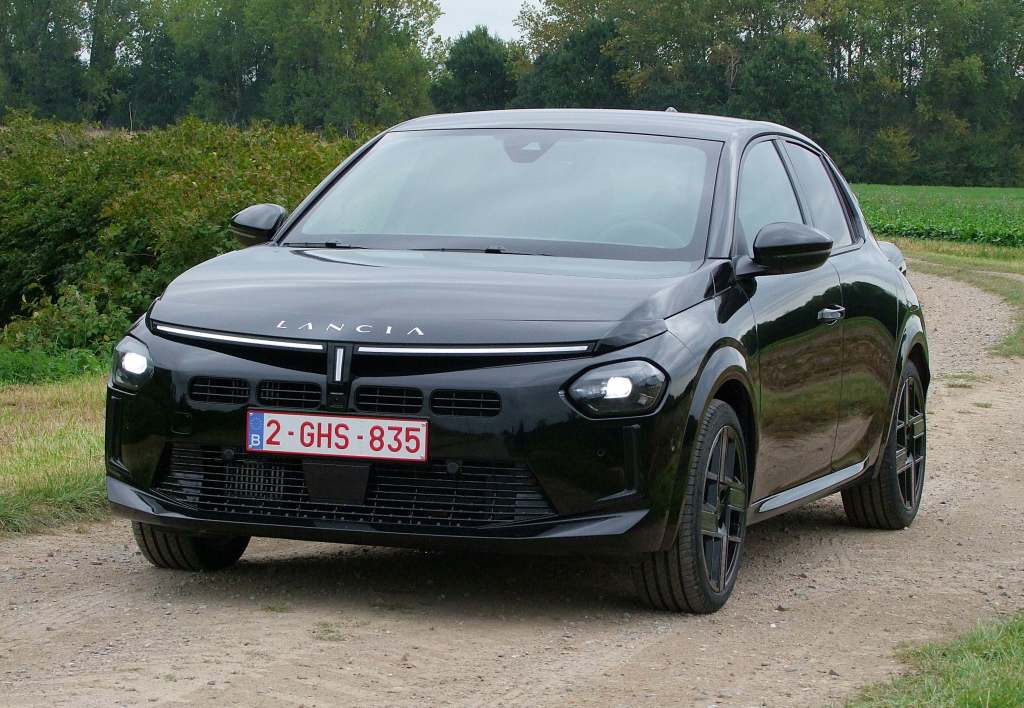
The Lancia Ypsilon has pleased us already when we drove it in the all electric version, but of course we were also curious to drive it with a trusted combustion engine combined with electric propulsion: the Ibrida. Indeed, this version has the well known 1.2-litre three-cylinder petrol unit producing 100 hp, paired with a 21 kW electric motor integrated into a six-speed dual-clutch automatic, for a combined system power of 110 hp or 81 kW and 205 Nm of torque. Technically it’s a mid-hybrid—halfway between mild and full hybrid, although the manufacturer dubs it as a mild hybrid.
The Ypsilon hybrid system runs on 48 Volts, and the battery is very small indeed, 0,43 Kwh. It performs well, but in town it needs a very sensitive right foot and a very smooth driving style to reveal the qualities of its hybrid system and take full advantage of it. More about all this further below.
Design: Distinctive and elegant.
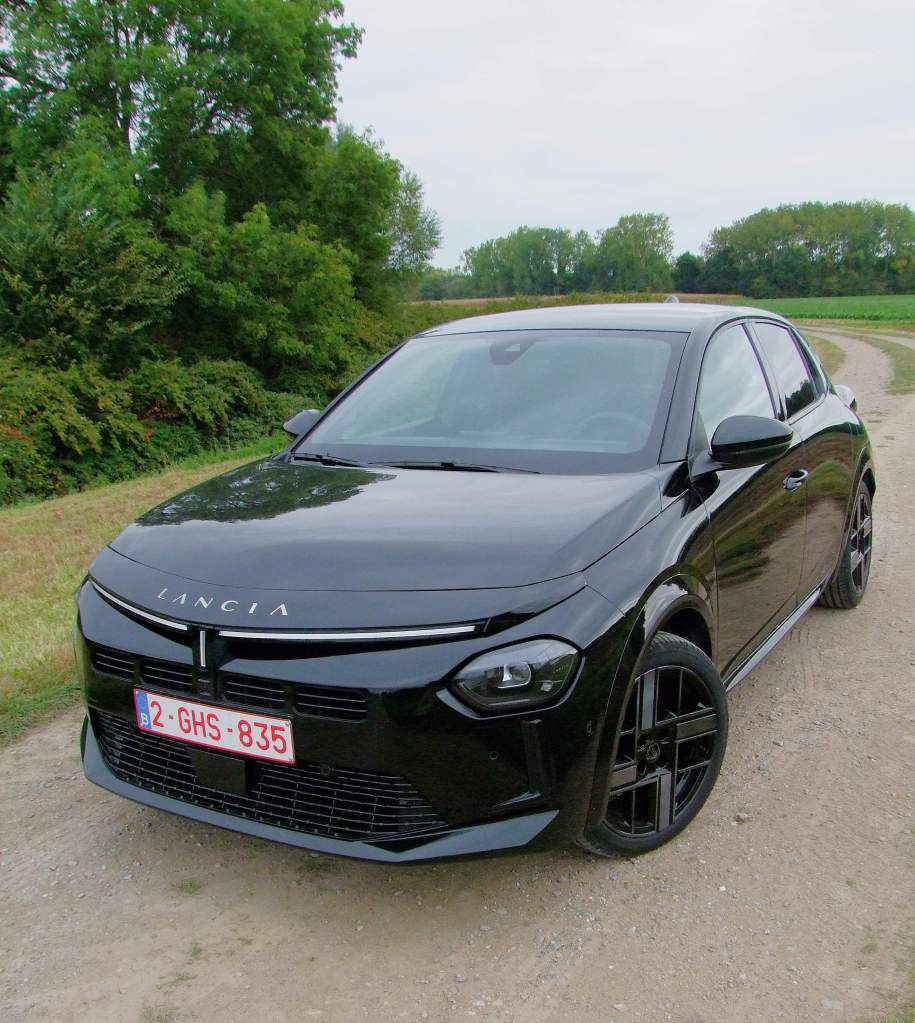
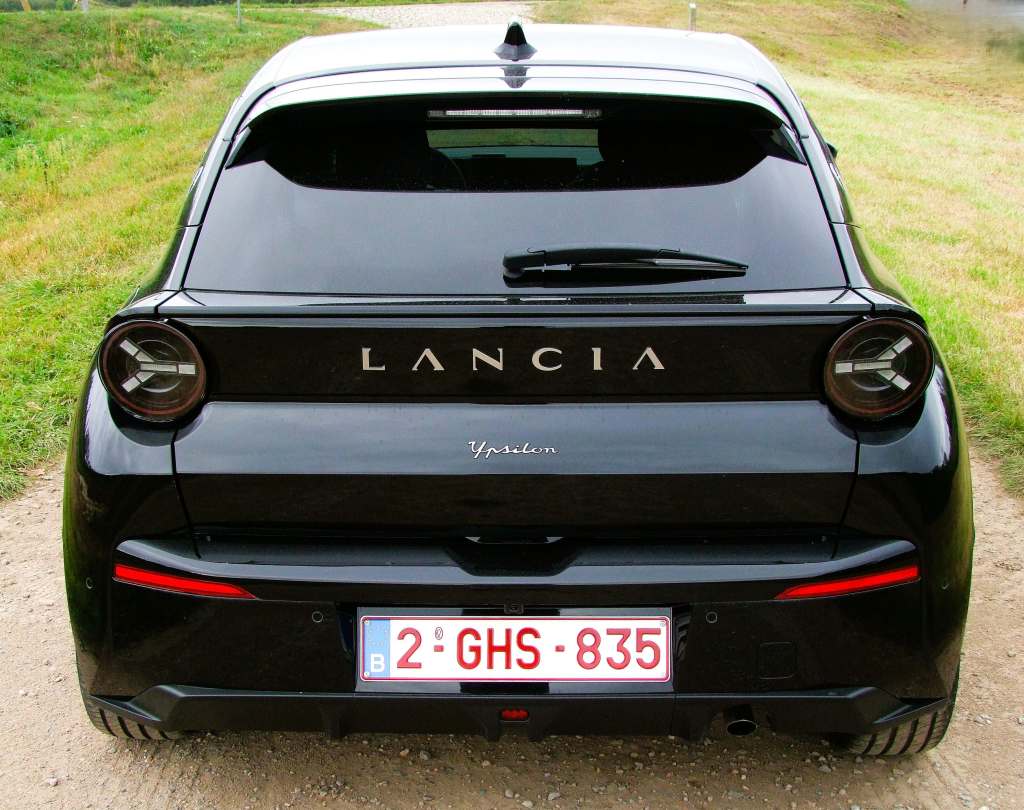
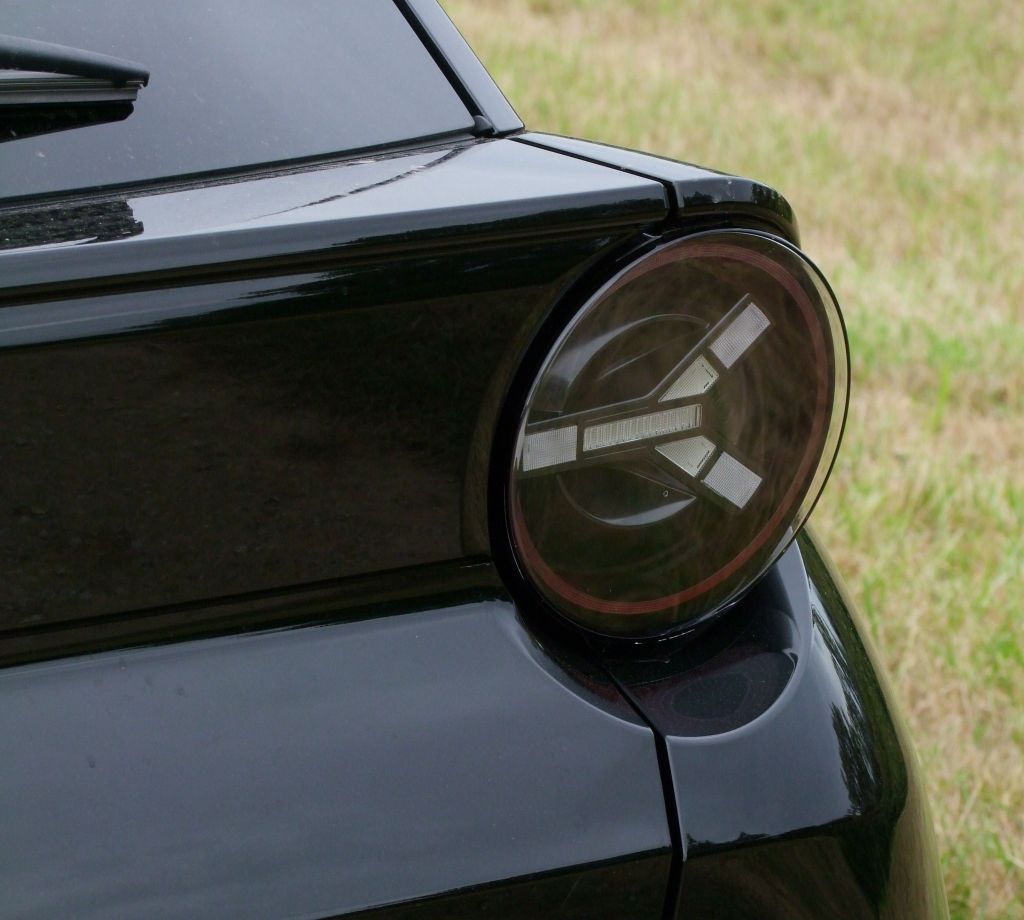
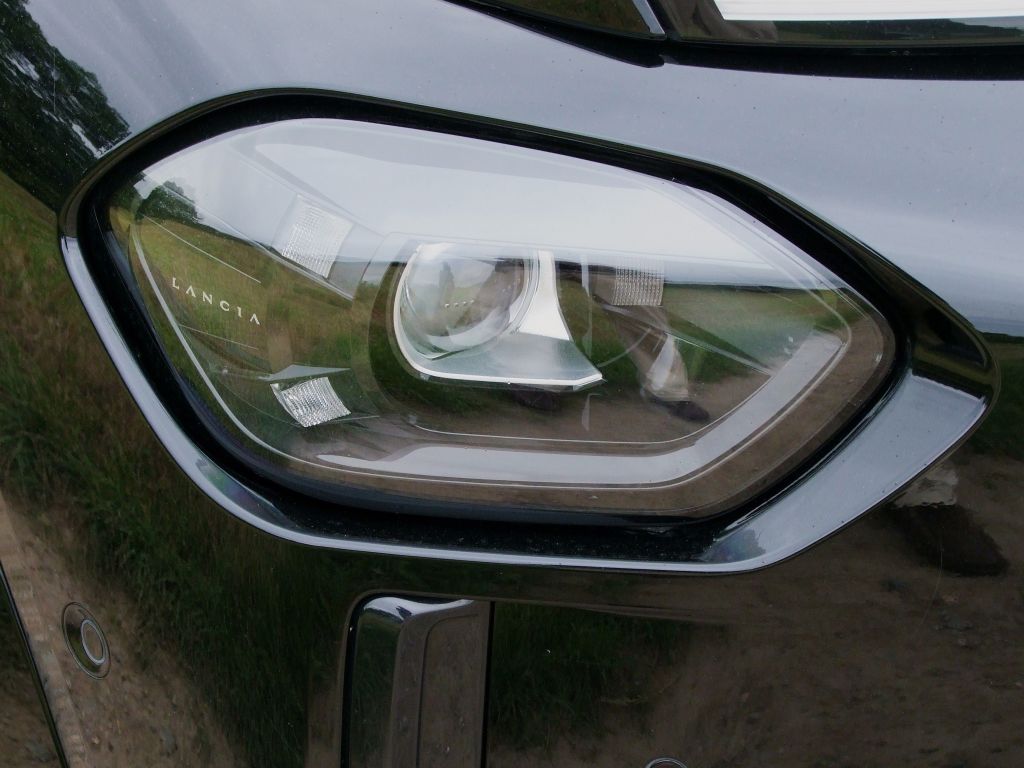
The new Ypsilon certainly attracts attention, and not only from connoisseurs. Of course, part of that is rarity—you don’t see many about—but credit also goes to its genuinely successful styling. The illuminated front signature is modern and distinctive, while the rear respectfully channels the brand’s historic design language: circular LED lights with a “Y” motif inside, a nod to the iconic rally and racing Lancias.
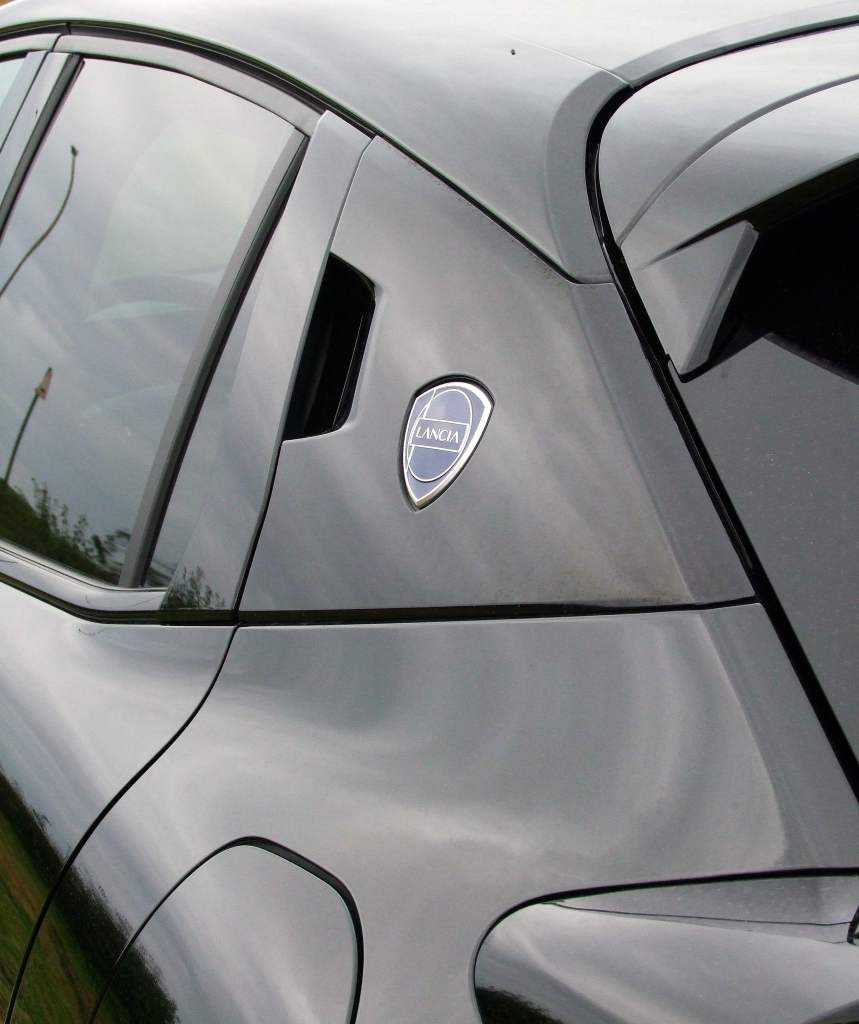
Also deserving praise are the modern wheel designs, the rear door handle, which some might find awkward to use, but we liked it.
Interior: Original and comfortable
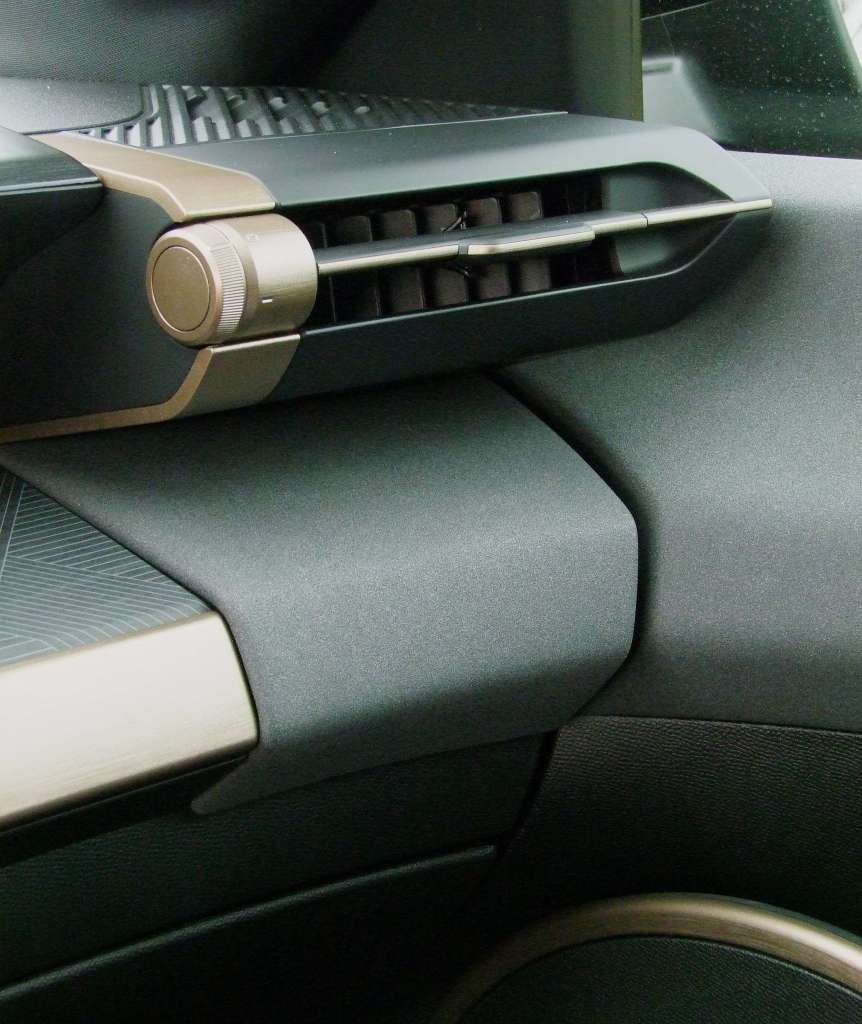
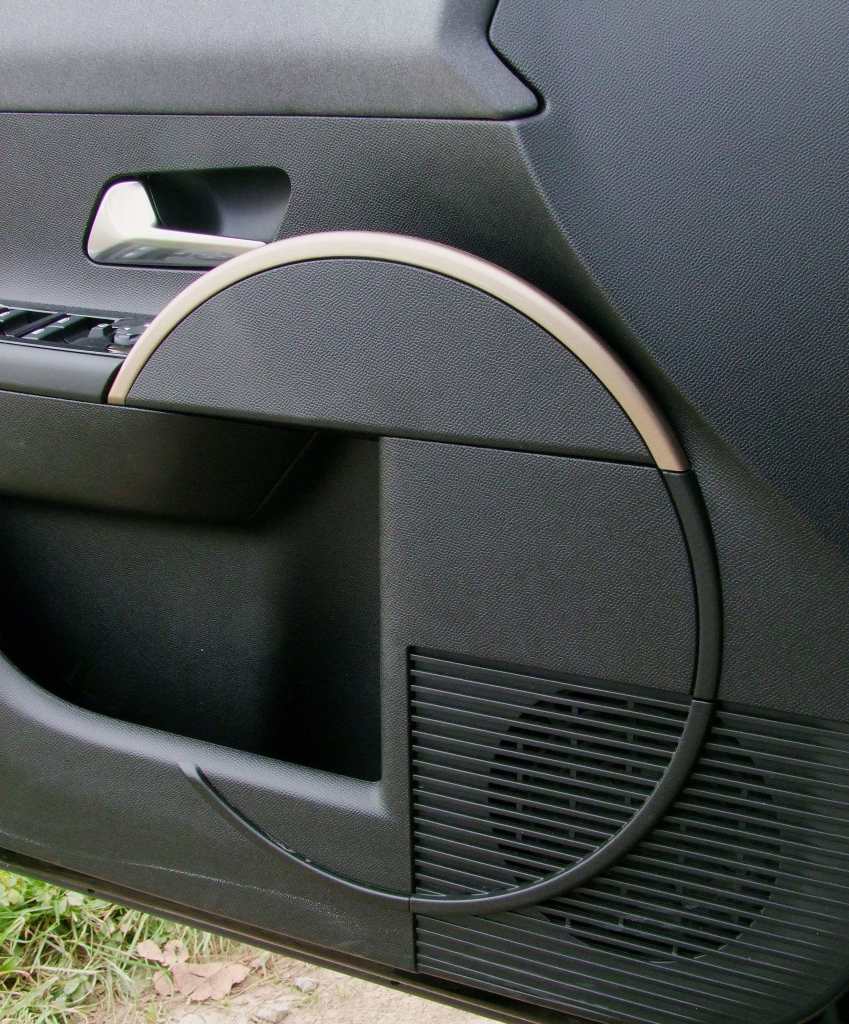
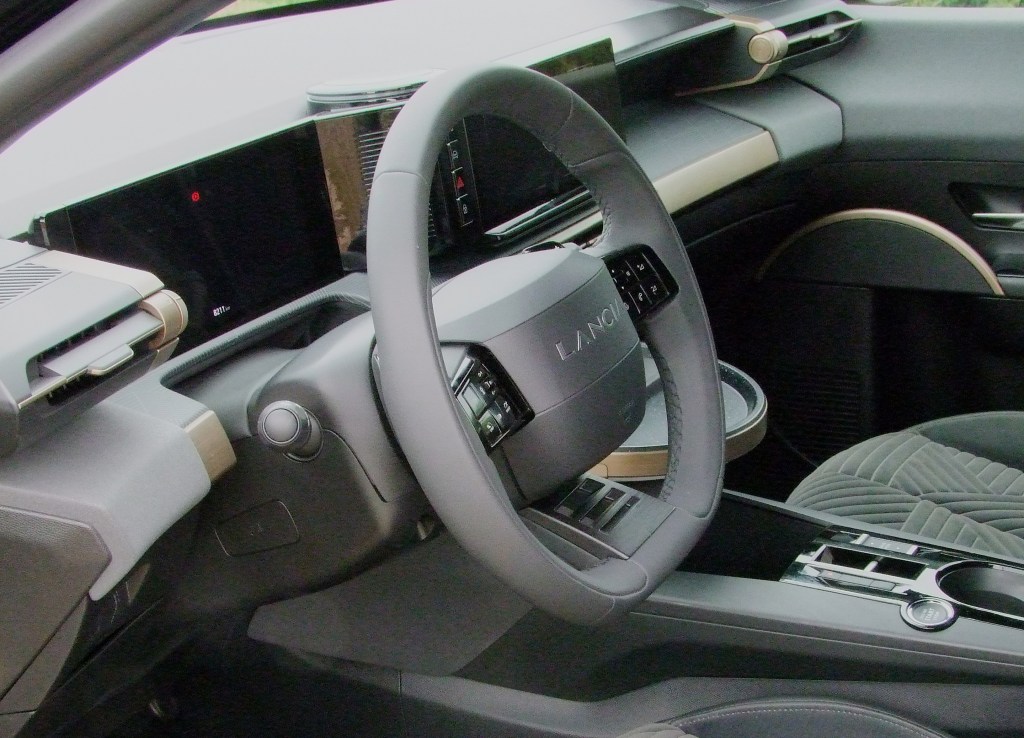
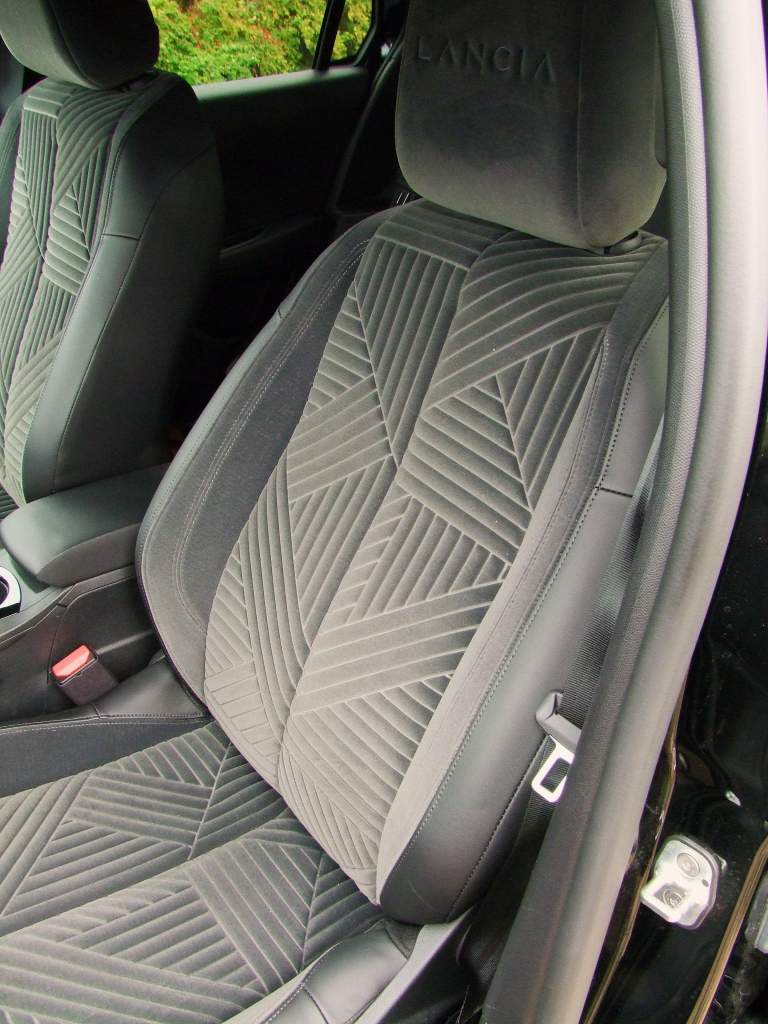
The new Ypsilon measures 4.08 metres and seduces with an original cabin. Bronze accents, a well-drawn dashboard, and comfortable, beautifully upholstered alcantara seats create an upmarket, premium ambience. We liked the tasteful patterns on the dashboard panels, the bronze finishes of ventilation openings and the surrounds of the elegant centrally placed “tavola”.
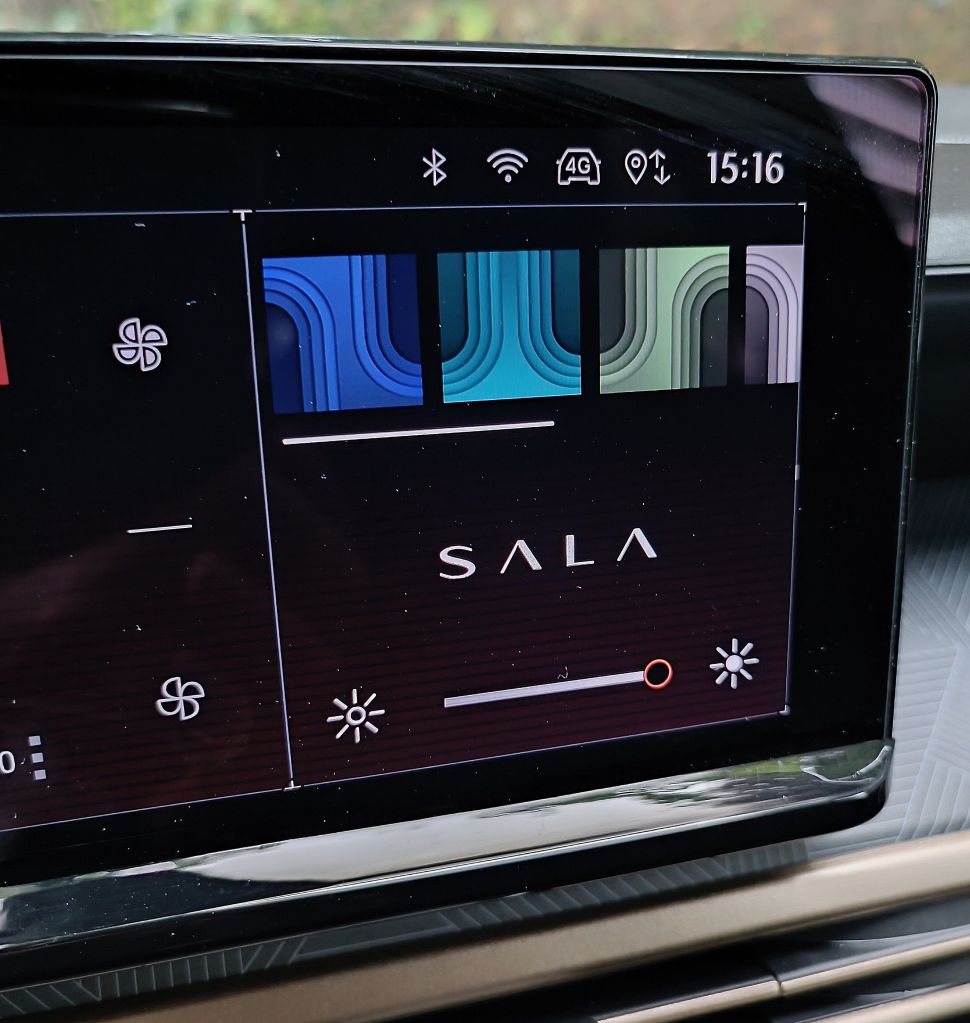
Highlights include the digital instrument cluster and a large central display with wireless Apple CarPlay and Android Auto. The infotainment, is ok, with a physical “L” button, summoning a shortcut screen with all the main functions, we found a good idea.
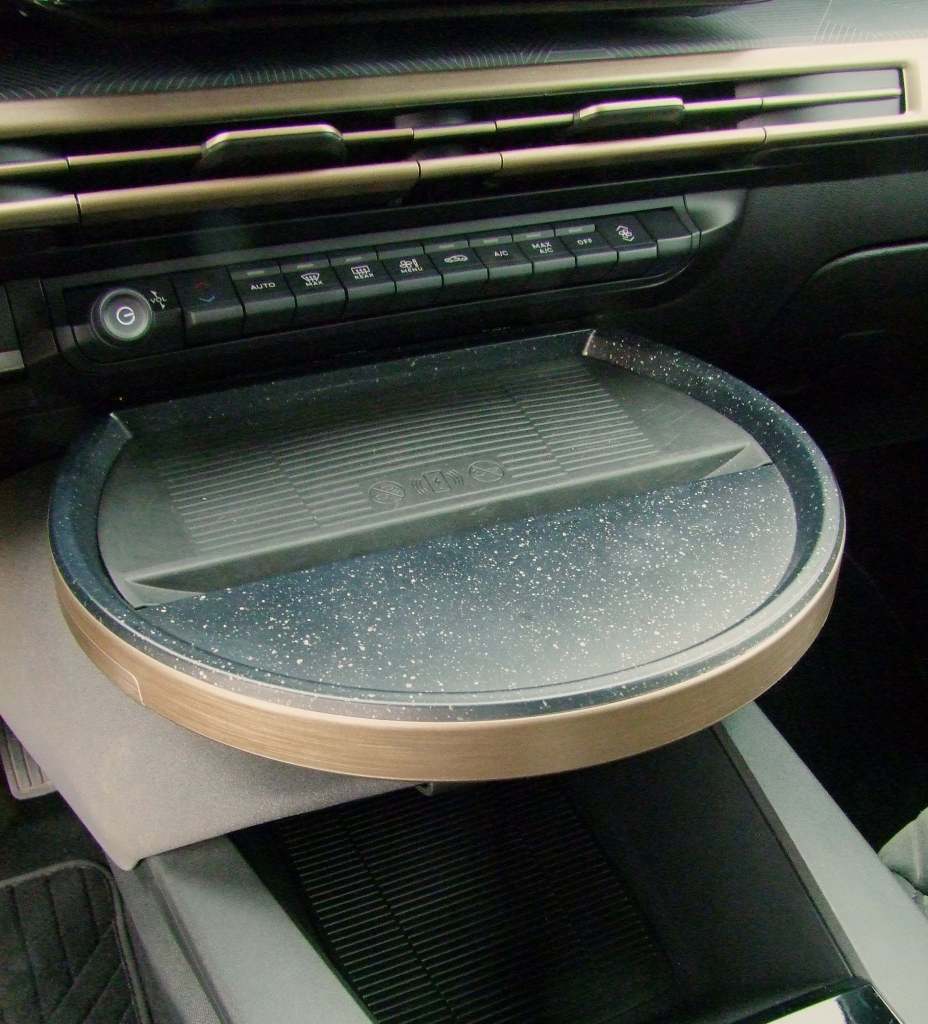
Indeed, a central “table” separates the front seats and serves as a rest for objects, a wallet, or a phone. It is a hallmark of the car’s cabin, and we think it’s brilliant.
On the road with the Ypsilon Ibrida: full of panache, but needs a delicate experienced hand (or rather foot) in town…
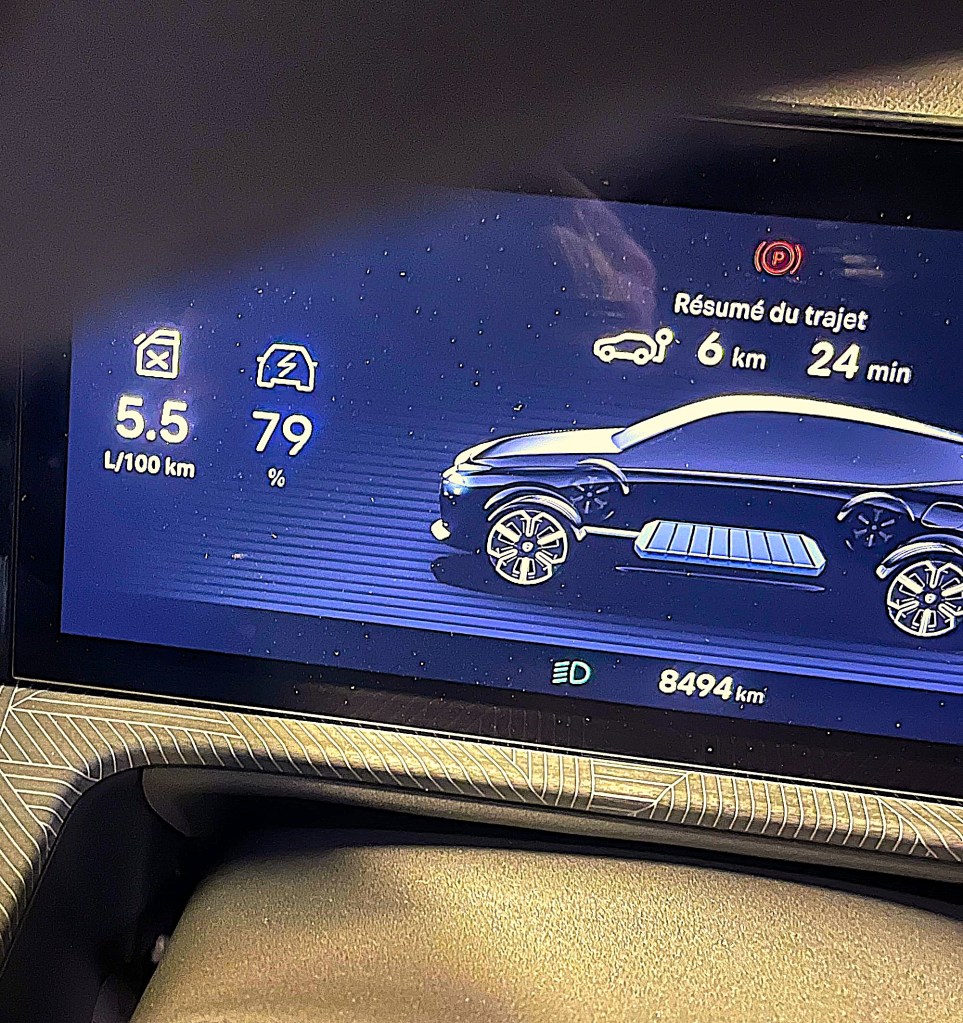
The car DOES run on electric power alone, and when you drive with anticipation and a very smooth right foot, maintaining constant speeds, it is very well possible to drive your town trip for up to 79 % on electric power. When you drive/coast at small throttle openings, the transition between the engine and battery power is smooth and imperceptible. However, when you push the accelerator pedal more deeply, the 3-cylinder petrol engine makes its torque immediately felt when it sets in.
The photo below amply shows what we mean: we drove the Ypsilon for almost half an our over 6 kilometers in very congested urban traffic, which resulted in a consumption of 5,5 liter/100 km and not less than 79% of the distance being driven under silent and silky smooth E-power. It is the Lancia art of driving, we would say, and it is very refined and also quite rewarding not only for your wallet!
According to WLTP standards, the combined fuel consumption is between 4.5 – 4.6 L/100 km. Indeed, we succeeded on a smooth Sunday drive on country roads to achieve an average consumption of 4,1 liters/100 km. Our average consumption hovered between 5 and 6 litres/100 km. CO2 Emissions, according to WLTP, are between 102 – 105 g/km (varies by trim/wheels).
On the open road, the engine is virtually inaudible and silky smooth, which makes the car an excellent motorway cruiser, one of the best we found in the B segment, not in the least because or the Ypsilon’s very good sound insulation. Listening to the well performing sound system, we were able to hear every single note of Beethovens 4th piano concerto when cruising at the 120 kmh legal limit on the motorway. Overall performance leaves nothing to be desired. It will sprint from 0 to 100 km/h in merely 9,3 seconds and the top speed is a good 190 km/h. Indeed, Lancia driving remains a sporting pleasure…
The six speed auto box is alert and smooth, and in Sport mode will hold the gears much longer, so you can enjoy the pleasant throb of the 3 cylinder engine.
When you lift the throttle and you drive with anticipation, it is well possible to accurately judge the amount of regeneration you get at any given speed, and one pedal driving is easy once you get the hang of it all..
Suspension: dynamic and comfortable
The suspension is well calibrated, offers a very comfortable ride, combined with precise steering and good stability. In this respect, the Ypsilon scores very high indeed. It’s a delight to steer on winding roads, and yes, sporting pleasure is to be had…
Space and Practicality
With a 2.54-metre wheelbase, the Ypsilon offers decent front-seat room. In the back, a taller adult has sufficient legroom, but headroom is rather tight. Two USB-C ports are a good thing, and the 352-litre boot is impressive.
State of the art driving assistance
On this front, there’s little to fault: a comprehensive, well-calibrated ADAS suite, with Lane Assist, Autonomous Emergency Braking, Speed Limiter and an efficient parking Assist. We liked also the smoothness of the easy to use adaptive cruise control, and we used it very much indeed on our Belgian roads with draconian and often too restricted speed limits everywhere. Also the calibration of the steering assistance is just right.
Conclusion
The new Lancia Ypsilon Ibrida convinces with pleasant styling and endearing driving manners.
Within the Stellantis range, it offers a more personal alternative, and overall scores high in the B segment . Given a learning curve on how to understand and use the hybrid drive train, its driving smoothness and frugality is all yours to enjoy too…
Hans Knol ten Bensel
Photographers’ notes: the professional quality of Fujifilm bridge cameras…
The photos shot on this test are taken by my trusted Fujifilm FinePix S100FS, a camera which I bought second hand in 2022 for…59 Euros in totally pristine condition (!). Its design dates back to…2008, and it is a so-called bridge camera with an excellent Fujinon 28-400 mm (35 mm equivalent) lens.
The fact is, Fuji took the design of its bridge cameras totally seriously, with a decent sensor size and a superb lens, with a delightfully smooth manual zoom command.You have understood it: this is a camera which delivers totally professional results, despite its age. Just have a look at the photos of our test car above, which are even reduced in size to adjust for web publication. The photos of the camera itself are shot with my Xiaomi smartphone and the photo of the dashboard with the urban consumption are taken with my Apple iPhone.
Back in 2008, FujiFilm had put its latest, eighth-generation, Super CCD HR technology into the S100FS. This uses octagonal photo-sites that are designed to maximize light collecting efficiency. This, combined with clever noise reduction algorithms, helped to produce excellent results still according to today’s standards, as you can admire here…As said, Fujifilm’s bridge cameras were – and still are – of a totally different league…The second hand aftermarket did not discover this at the time I bought this camera, hence the purchase price for which you can only buy a lens shade...
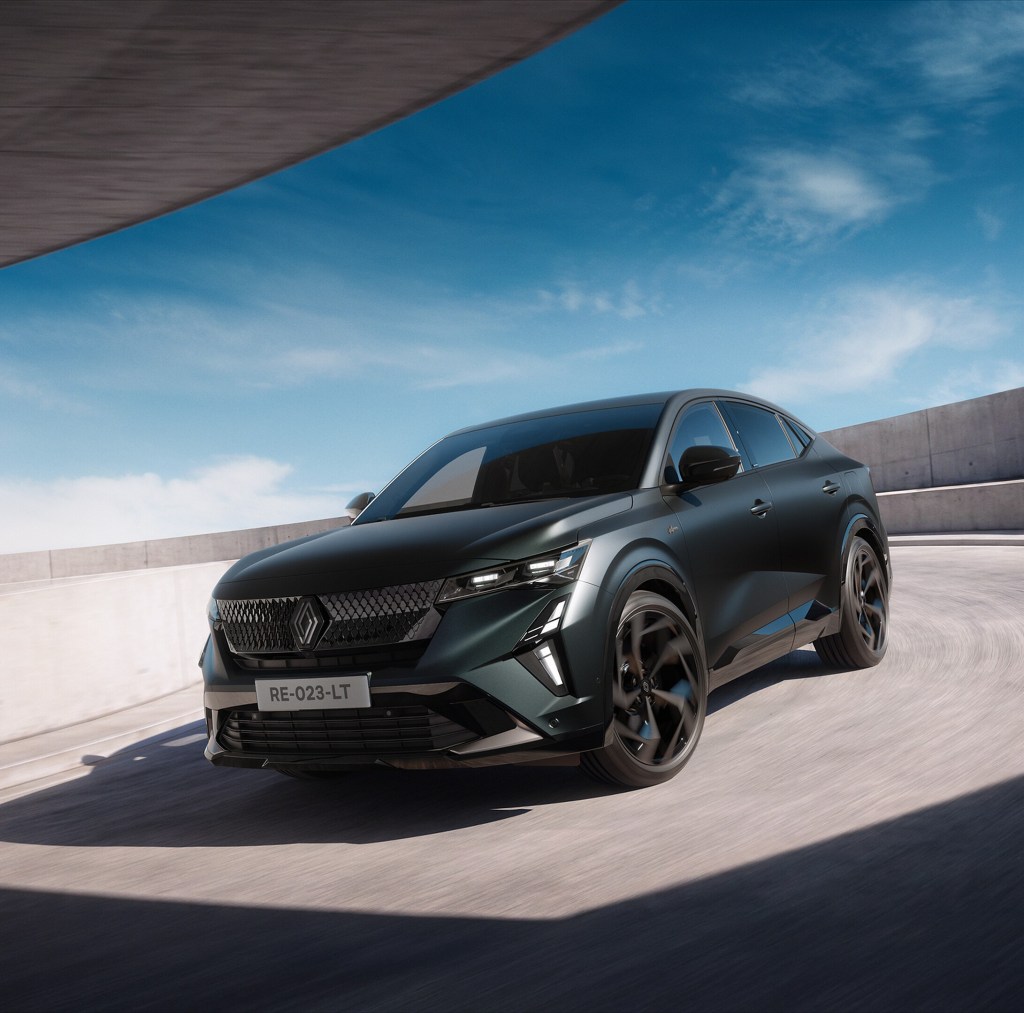
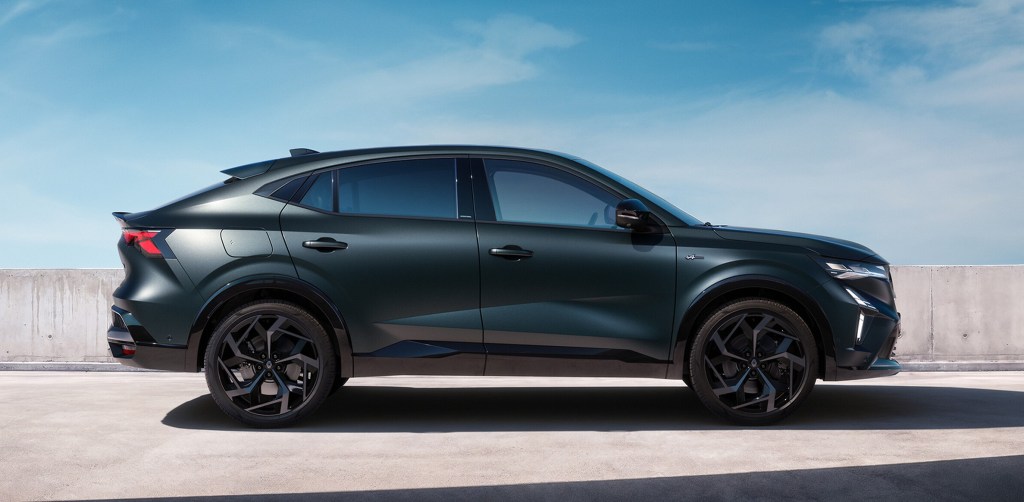
Renault marks its presence on the Paris Motor Show with a special edition of its Rafale flagship model, called ’hypnotic’.
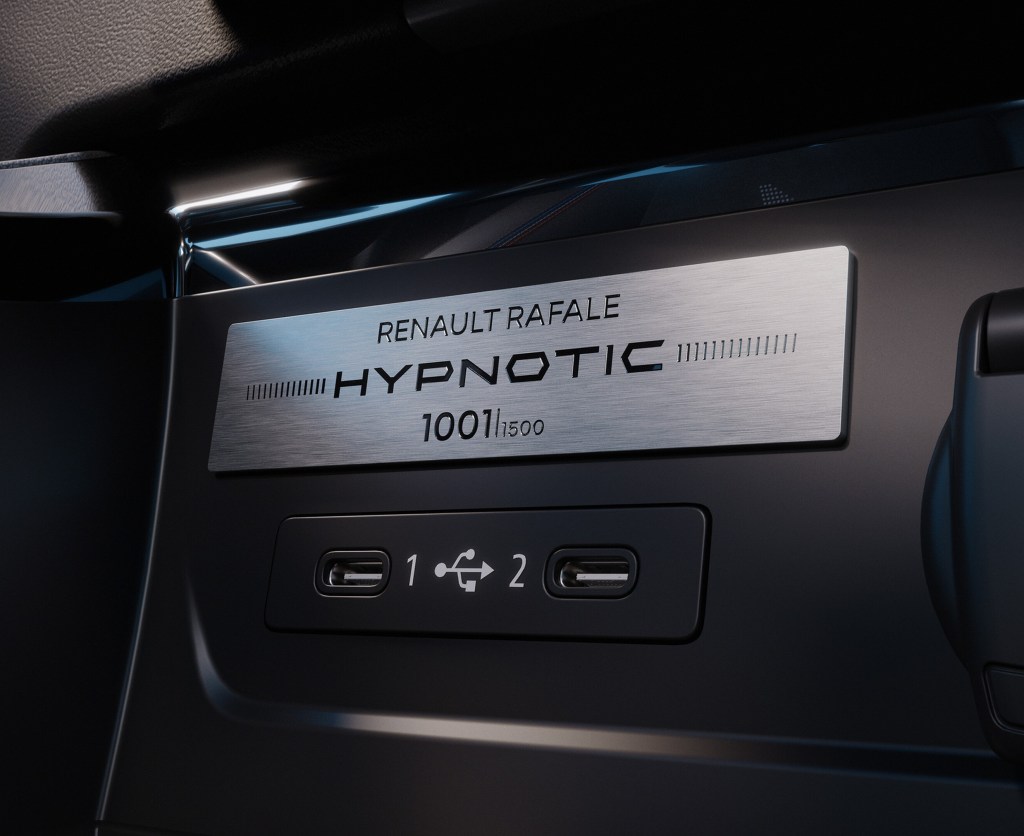
Built in just 1,500 numbered units, this limited edition takes the style cues of Rafale hyper hybrid E-Tech 4×4 300 hp Atelier Alpine.
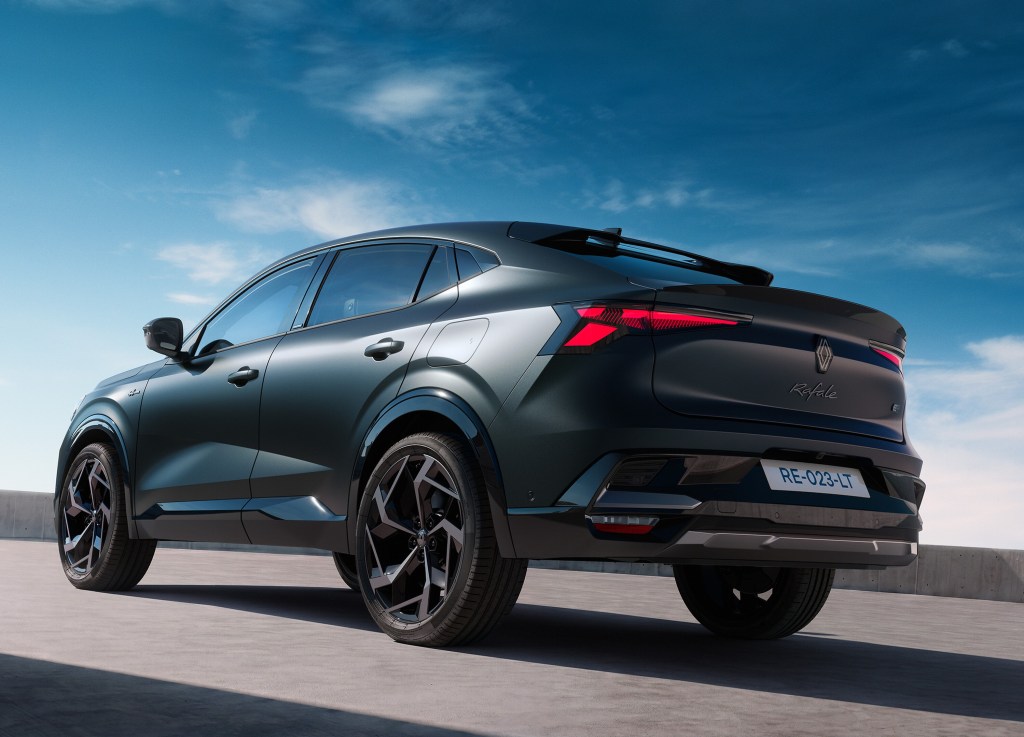
It has an exclusive satin-finish forest black paintwork, gloss black detailing, a specific interior and premium features as standard.
A ’hypnotic’ character both inside and out…
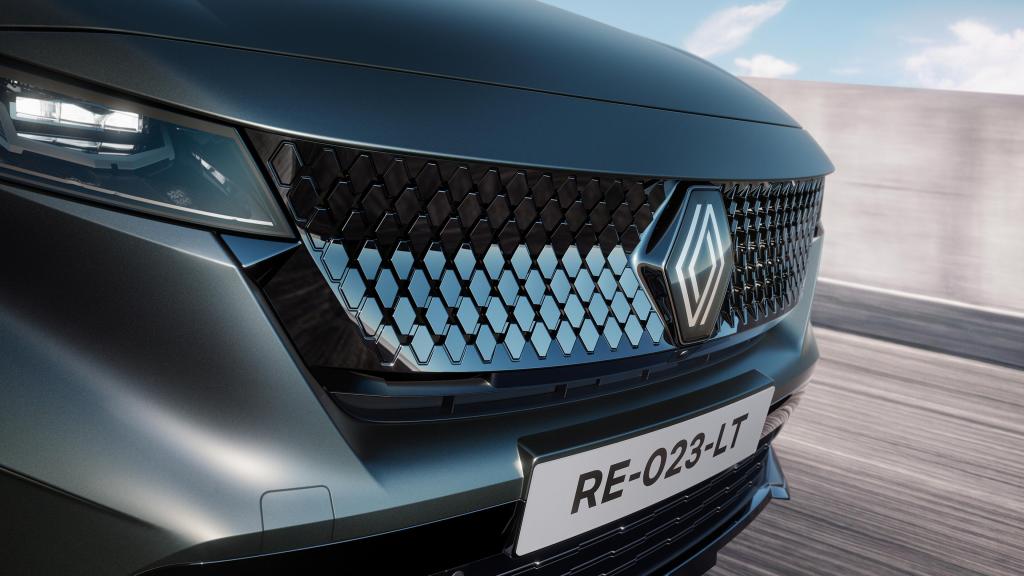
This flagship Rafale has a darker front end with a black grille, 21-inch satin-finish alloy wheels, a gloss black roof trim and boot spoiler
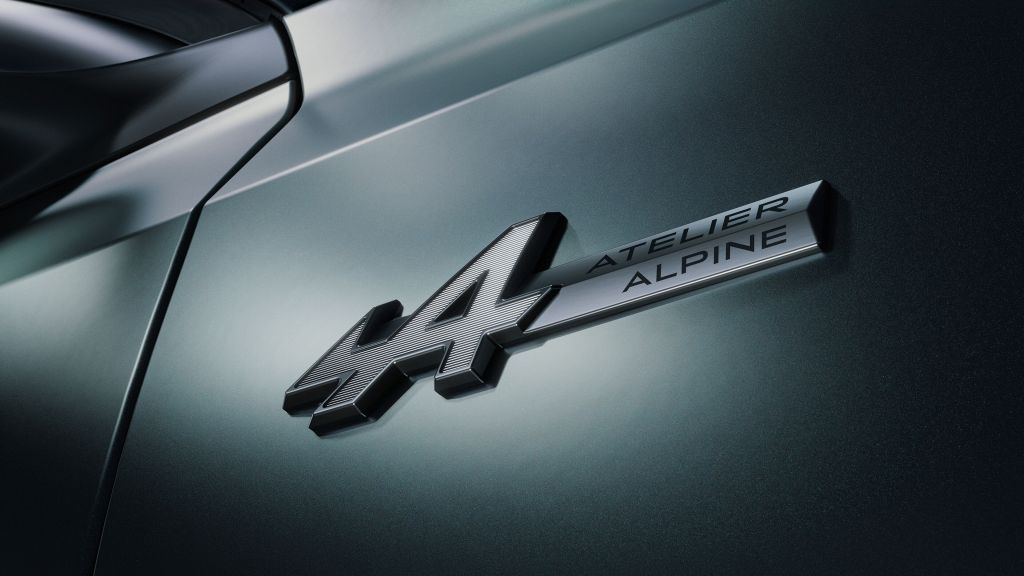
and last but not least a black ’Atelier Alpine’ badge.
A cabin of exceptional quality…
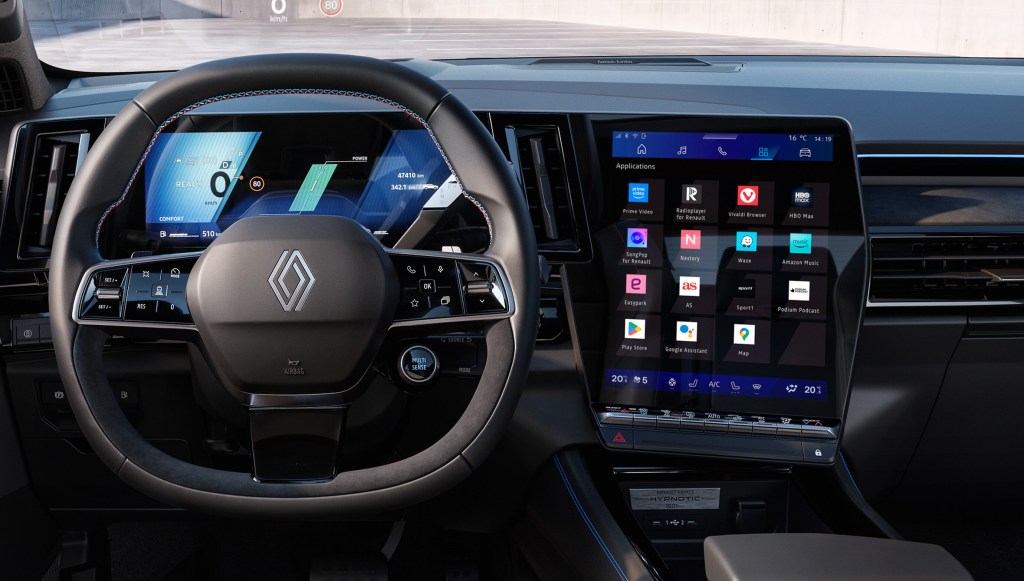
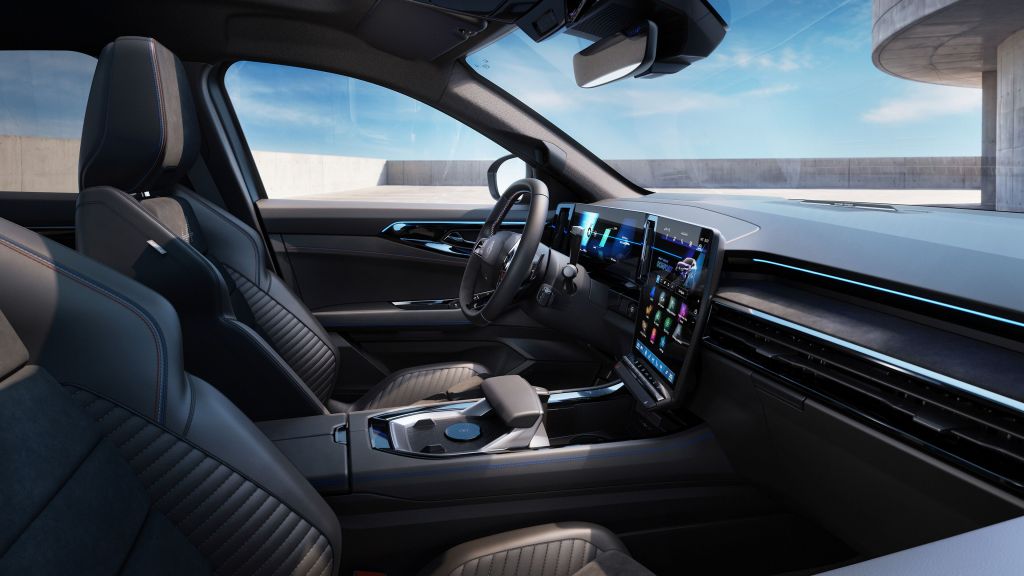
Showcasing the unique character of this limited edition, Renault Rafale hypnotic features special materials and finishes. These distinctive details create an environment that is sporty, sophisticated and also high-tech, with:
Upholstery mixing titanium black Alcantara® and black textured coated fabric, with blue, white and red top-stitching and a backlit Alpine “A” logo. Also an individually numbered plate.
Front and rear door panels with gloss black inserts and blue, white and red top-stitching and a titanium black Alcantara® trim strip on the upper dashboard, black door compartments matched with a black carpet
To deliver an experience on a par with its positioning, Renault Rafale Hypnotic is expanding the range of standard features. It has the following extras:
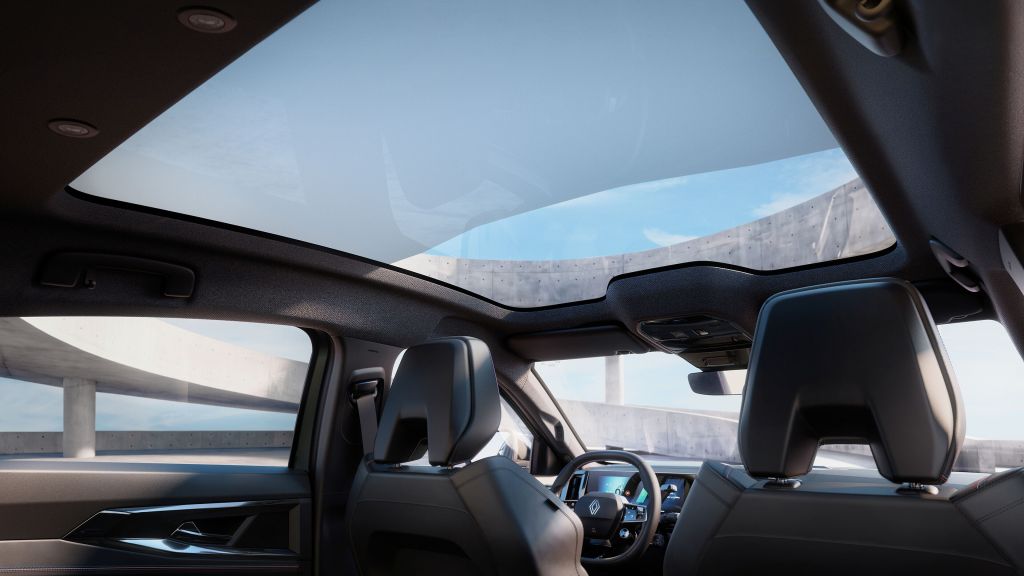
The Solarbay® opacifying glass roof, a heated windscreen, head-up display.
A limited edition of 1,500 numbered examples…
Renault will open orders for the limited-edition Rafale Hypnotic on Thursday 1 October 2026 in 14 European countries: France, Germany, Spain, Italy, Switzerland, Bulgaria, Belgium, Austria, Poland, Romania, Hungary, Slovakia, the Czech Republic and Greece.
In Belgium, a price of €60.500 is set. The first vehicles will be delivered in late 2026.
High-tech plug-in hybrid technology from the ‘Atelier Alpine’.
Behind its design, Renault Rafale hypnotic embodies the high-tech of the Renault Rafale hyper hybrid ETech 4×4 300 hp Atelier Alpine.
The plug-in hybrid powertrain combines an ICE with three electric motors to deliver 300 hp of power, while maintaining efficiency for everyday use with a range of up to 105 km in all-electric mode.
The sport-tuned chassis developed by the engineers of Alpine Cars combines four-wheel drive, “4Control Advanced” four-wheel steering and self-adjusting smart suspension with a camera for predictive control. State of the art, we would say..
Needless to say that we hope to drive this impressive flagship beginning next year!
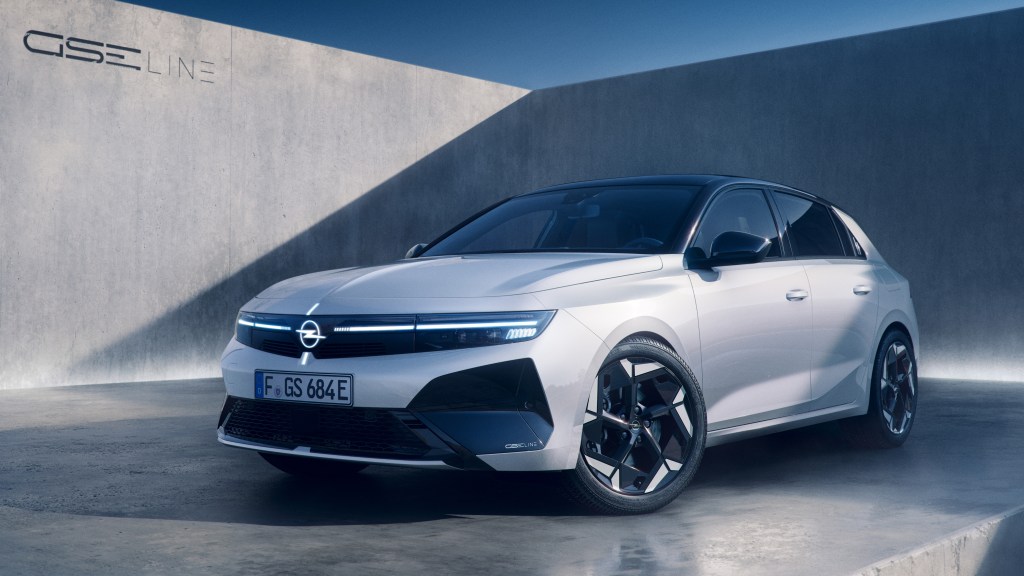
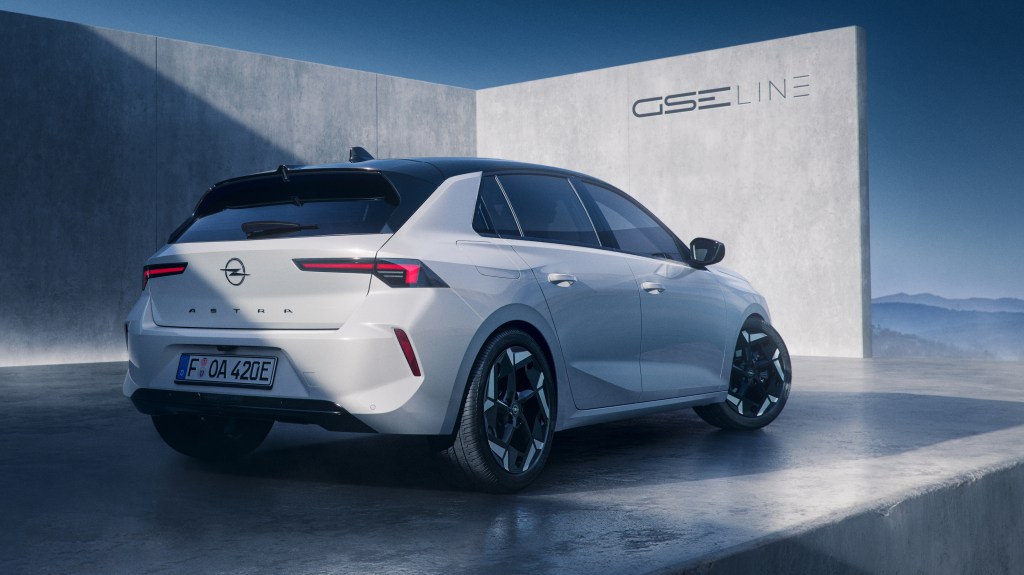
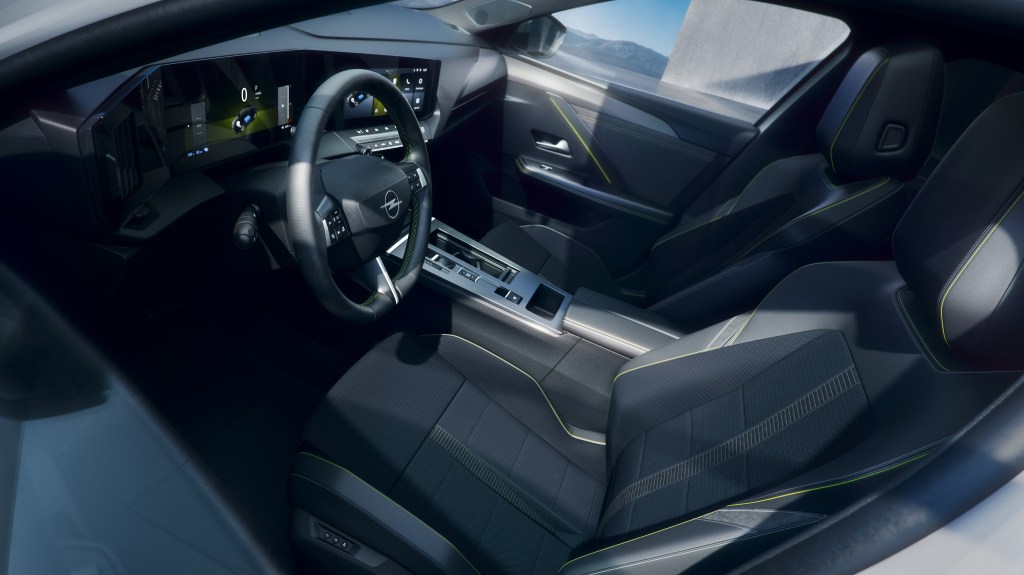
The new all-electric everyday sports cars Opel Mokka and Corsa GSE and are now available since a few days, and Opel is already following up quickly, bringing the GSE experience to other models – with the latest Astra debuting the new trim. The compact class bestseller made in Rüsselsheim will be on display as the Astra GSE line at the Paris Motor Show for the first time.
With the new trim, customers can opt for the GSE design while retaining a full choice of powertrains. GSE stands for ‘Grand Sport Electric’ by the way. The new GSE Line, which will replace the existing GS trim from spring 2027, gives the Astra an even sharper look, and can be combined with battery-electric, plug-in hybrid or hybrid powertrains, as well as conventional internal combustion engines.
There is even more soon: after the official launch of the Astra GSE Line in spring 2027, Opel will introduce a very special variant with an output of 206 kW (280 hp) and additional highlights later in the year!
We would say, fasten your seat belts, and have in the meantime a look at the photos here…
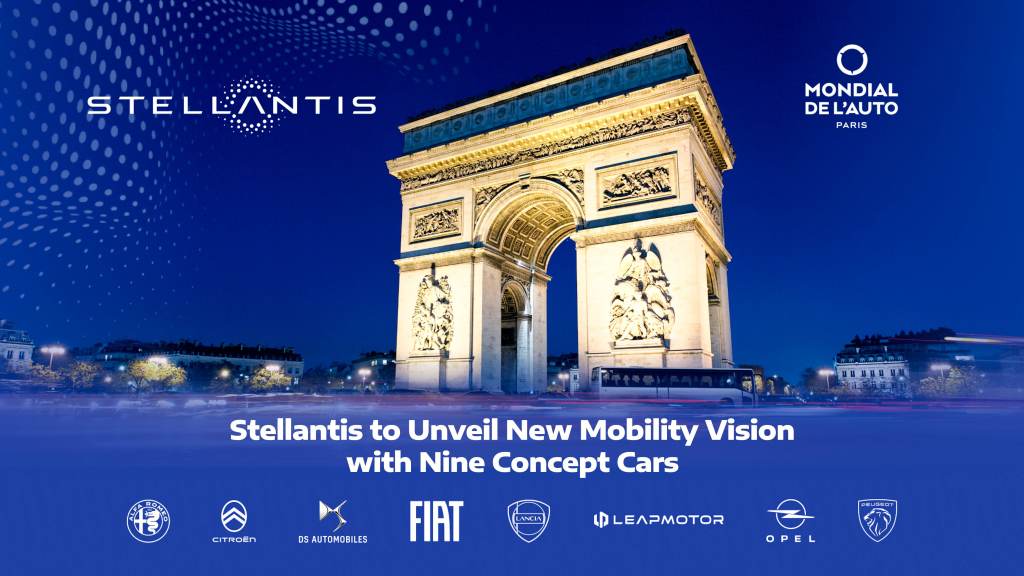
Stellantis will showcase nine concept cars from eight brands, along with over 60 vehicles at the Paris Motor Show.
The iconic brands Alfa Romeo, Citroën, DS Automobiles, FIAT, Lancia, Leapmotor, Opel, and PEUGEOT will welcome visitors in Hall 4.
The largest stand at the show, covering over 5,000 m², will offer an interactive and multisensory experience, highlighting Stellantis’ renewed ambitions.
The show will notably feature the international premieres of the premium compact SUV DS N°7, the brand-new Fiat Grizzly, the new Lancia Gamma marking the brand’s return to the C-segment crossover market (C-SUV), the B-segment compact electric vehicle Leapmotor B03, the D19, Leapmotor’s next-generation flagship SUV, as well as the Opel Corsa GSE.
More soon on the cars and the concept cars… stay tuned!
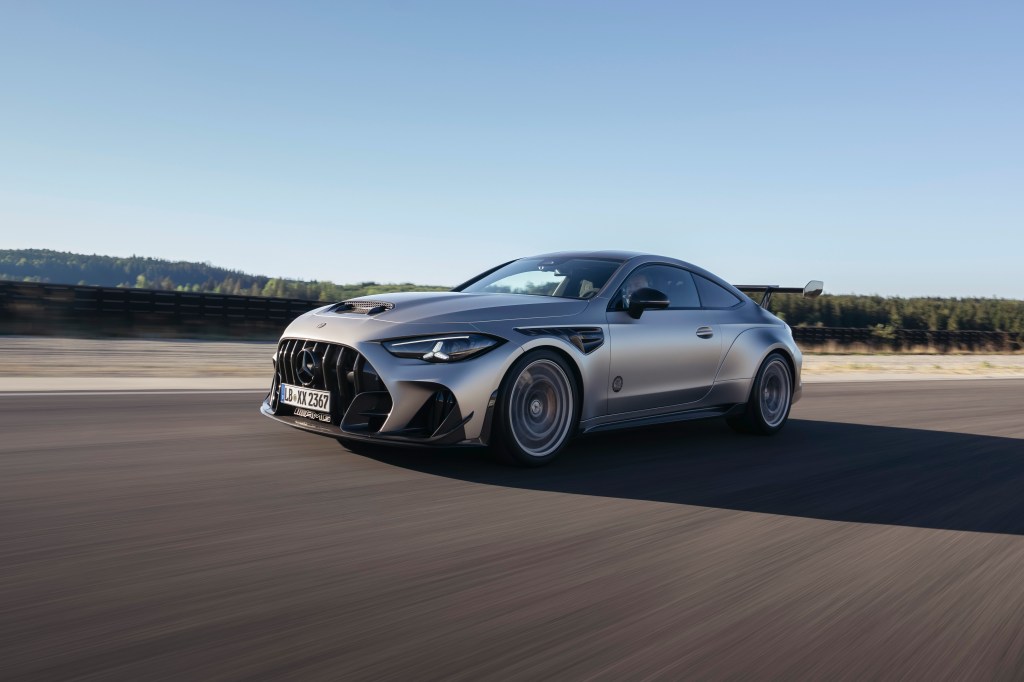
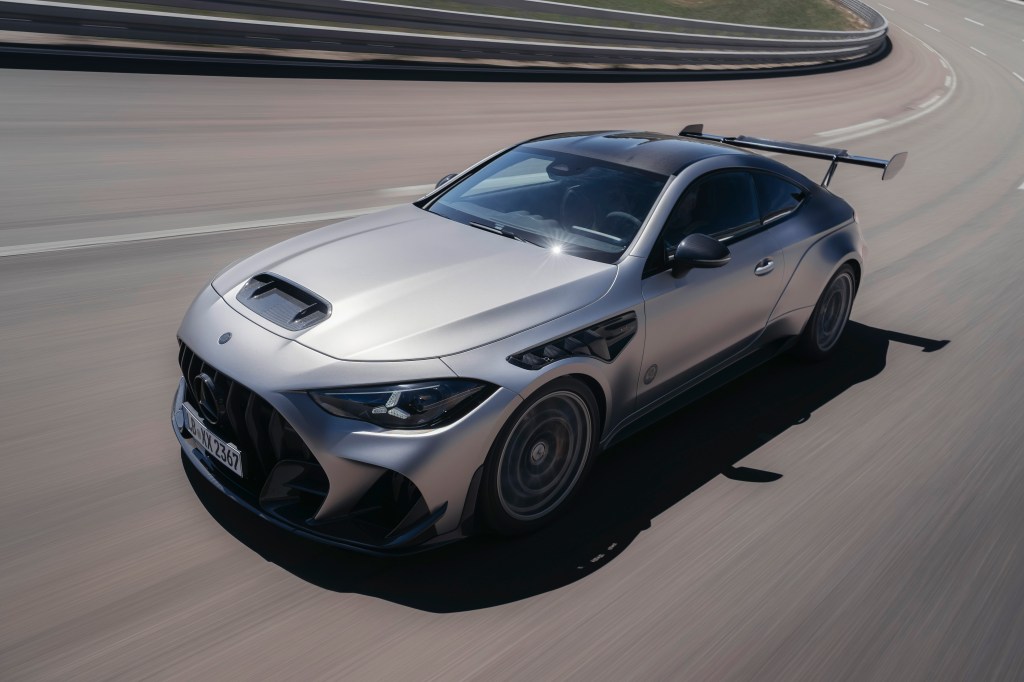
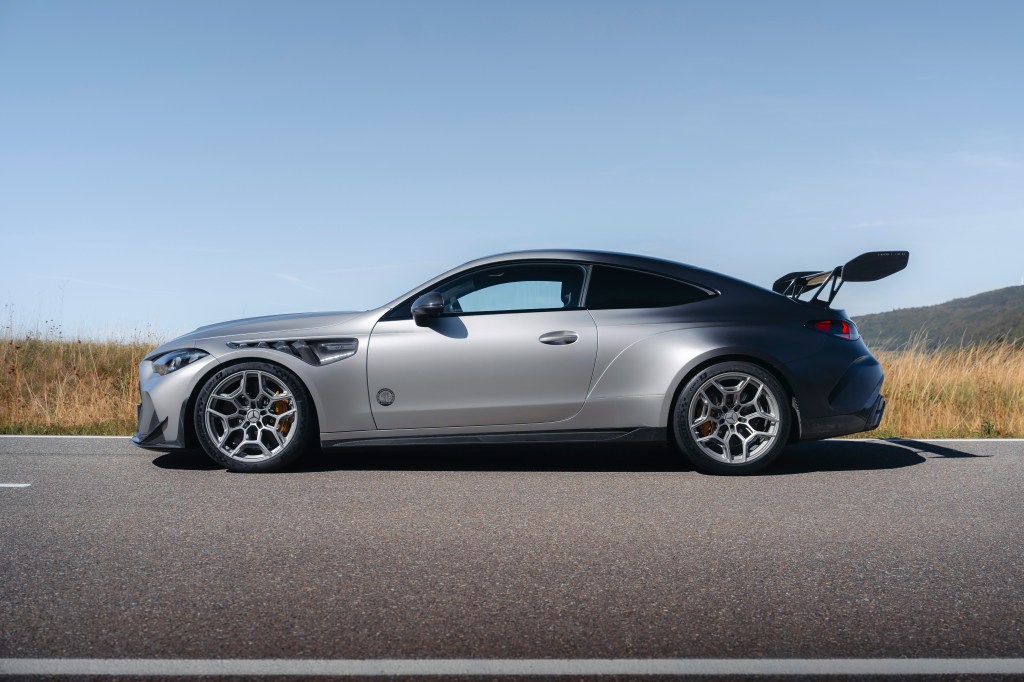
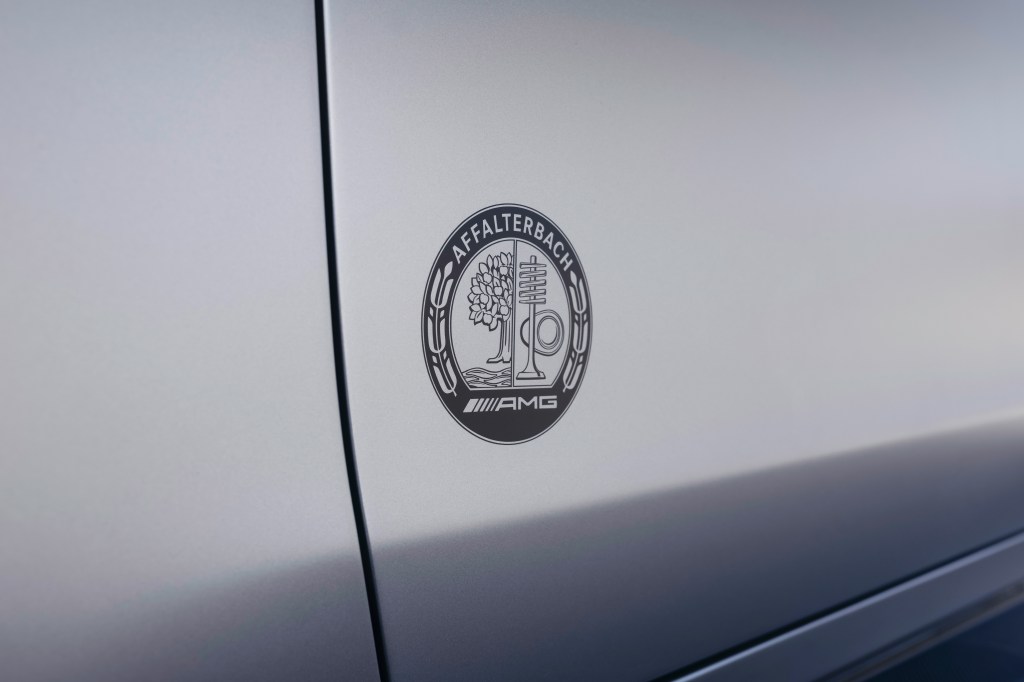
Mercedes makes our hearts beat faster with a highly limited “Mythos Series” model, handcrafted in Affalterbach. A 646 hp (475 kW) AMG 4.0litre V8 biturbo engine and rear-wheel drive makes us smile…
Your eyes are spoiled with a unique wide-body, a newly developed coil over suspension and extensively engineered aerodynamics.
Weight reduction was also paramount: the car is not less than 170 kg lighter.
Just read further…
Hans Knol ten Bensel
The story began in Affalterbach…
The MercedesAMG CLE 646 Spezialanfertigung began with a simple question: How can a CLE be developed even further towards maximum driving dynamics? Yet this was not driven by a traditional product development brief, but by an idea born within the AMG engineering team.
A small group initially began by building a prototype. The goal was not a collection of individual performance upgrades or a conventional special edition. Instead, the vehicle was completely re-imagined as a complete performance system.
AMG 4.0Litre V8 Biturbo Engine with 646 hp…
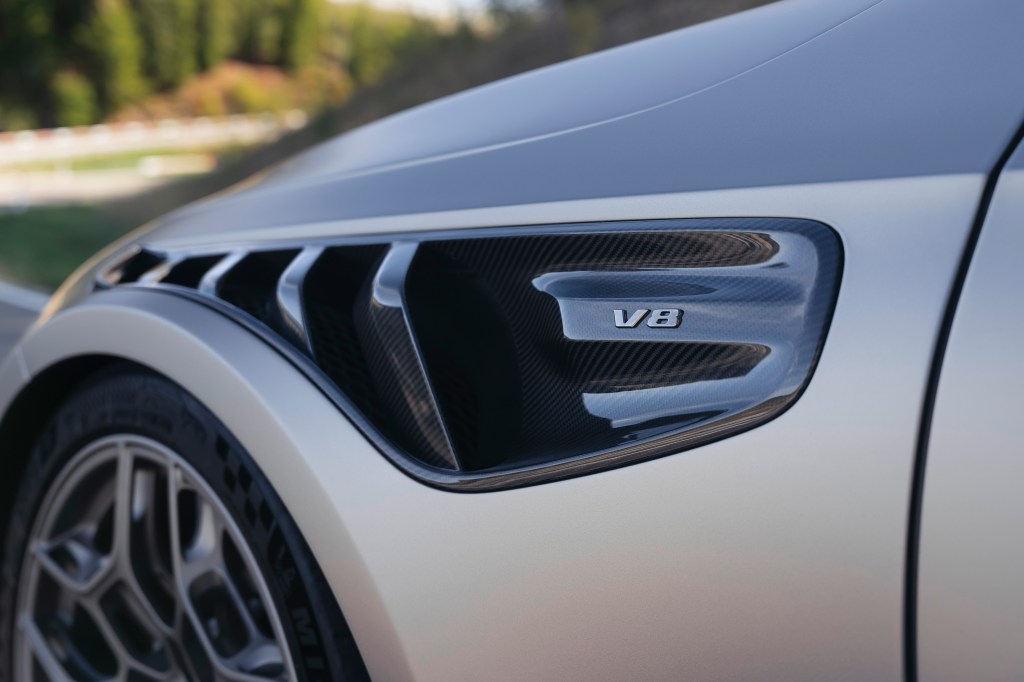
Let the star roar, we would say. At the heart of the CLE 646 Spezialanfertigung stands the extensively enhanced AMG M177 EVO 4.0litre V8biturbo engine. Its output of 646 hp (475 kW) is reflected in the model designation itself. Maximum torque stands at 850 Nm and is available across a broad engine speed range from 2,500 to 4,500 rpm. The engine’s flat-plane crankshaft reduces rotating masses, improves revving characteristics and promotes exceptionally responsive throttle response, further supported by dedicated engine mapping.
To ensure thermal stability even under extreme loads, the V8 engine features three separate cooling circuits: a high-temperature circuit for the engine itself, and two low-temperature circuits for charge-air and transmission-oil cooling as well as the 48volt components.
Of course there is a bespoke high-performance exhaust system featuring increased flow capacity and a sound signature engineered with a strong emotional focus.
Rear-Wheel Drive for this dramatic handling under power.
The AMG Performance 4MATIC+ system of the donor vehicle has been removed entirely, with the CLE 646 Spezialanfertigung transmitting its power exclusively to the rear axle.
This completely changes the car’s dynamic character. An electronically controlled limited-slip rear differential optimizes torque distribution between the rear wheels through variable locking action as required.
AMG SPEEDSHIFT TCT 9G Transmission for those lightning fast changes.
The standard AMG SPEEDSHIFT TCT 9G transmission has been retained, and justly so, as it is absolutely superb.
The torque-converter transmission can execute multiple downshifts in rapid succession to access the engine’s full performance almost instantaneously. The transmission’s overall character can be tailored via AMG DYNAMIC SELECT, which offers a range of drive programs with specific drivetrain settings.
The Mercedes-AMG CLE 646 custom-made Launch Control system has also been specifically adapted to the rear-wheel-drive layout. The Mythos bolide accelerates from a standstill to 200 km/h in 11.4 seconds. Top speed is 310 km/h. Need we say more?
Precise handling and braking guaranteed …
The suspension has likewise been specifically optimized. It features a steel coil over suspension system jointly developed by Mercedes-AMG and KW automotive. The setup enables exceptionally precise tuning to suit driving style, circuit characteristics, individual preferences and intended use.
At the heart of the suspension is four-way adjustable damper technology with independently configurable low-speed and high-speed rebound and compression settings. This allows the chassis to be tailored precisely to a wide range of driving requirements.
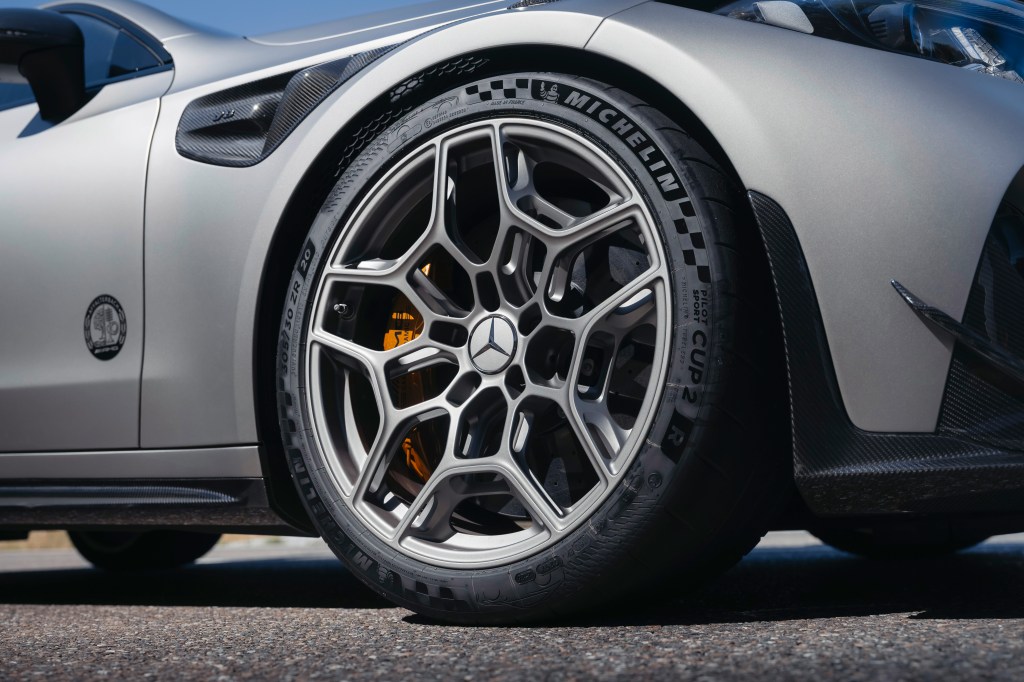
At the front axle, internally ventilated and perforated ceramic brake discs measuring 420 x 40 millimeters are paired with six-piston fixed calipers and long-fiber technology. At the rear axle, internally ventilated and perforated ceramic brake discs measuring 360 x 32 millimeters are combined with single-piston floating calipers.
Much carbon-fiber paired with the wide-body design.
Numerous series-production components have been replaced by solutions specifically developed for demanding road and track use.
A key element of the concept is its significantly wider stance. To achieve this, the bodyshell has been reinforced and widened. The result is an additional 60 millimeters of vehicle width at both the front and rear. The wider track enhances stability, increases cornering potential and allows the use of exceptionally wide wheels and tyres.
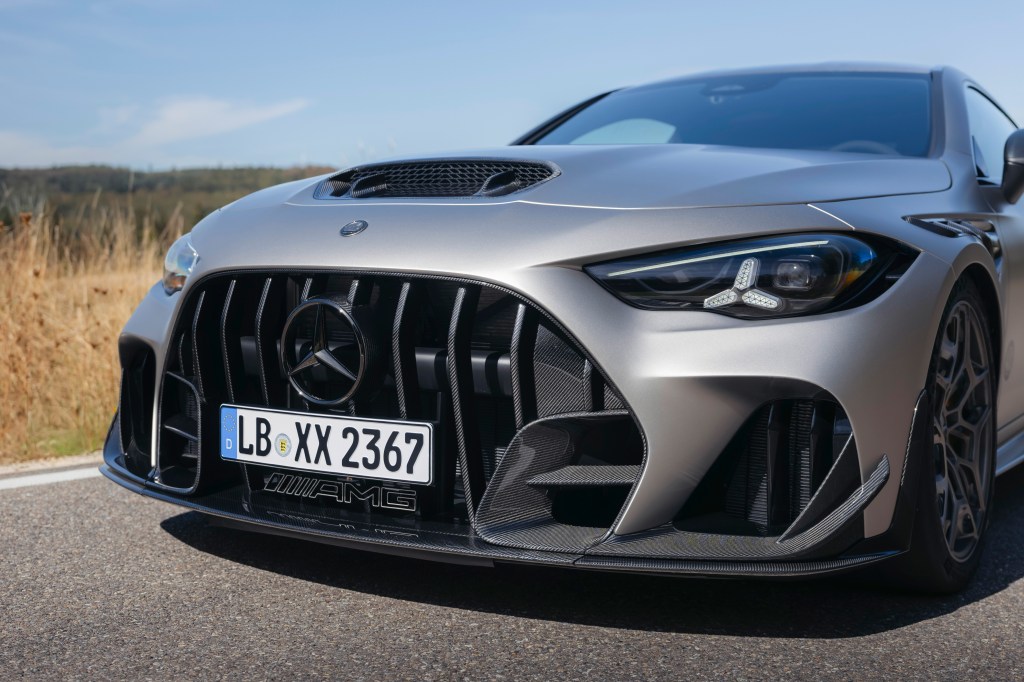
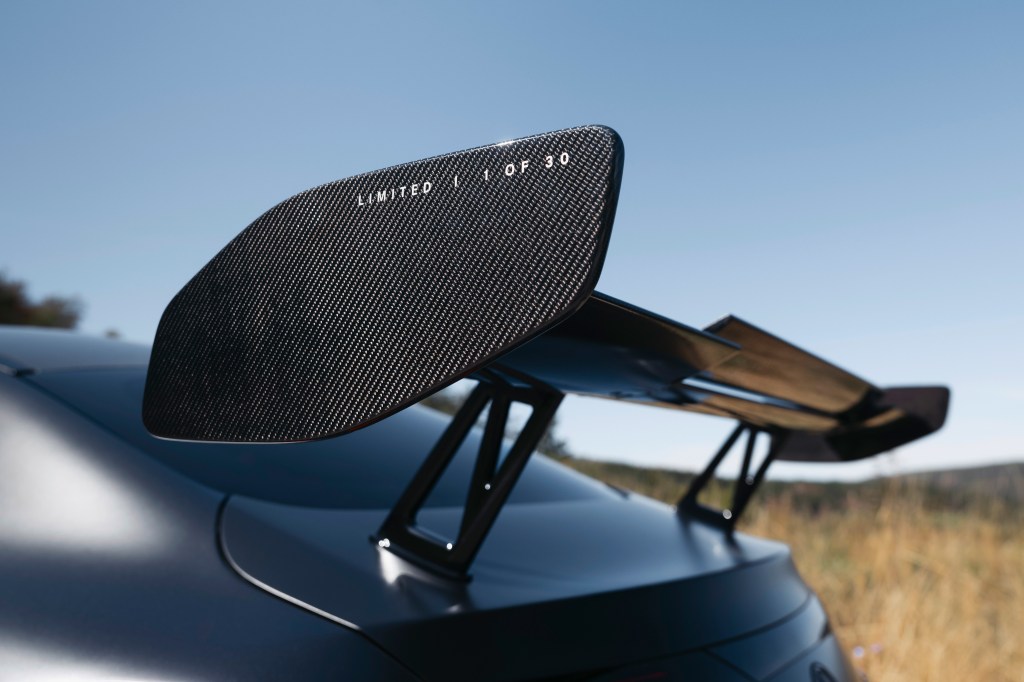
Carbon fiber is used for the widened front fenders with integrated air outlets, the redesigned front apron with large cooling air intakes, the side sill panels, the bonnet with central cold-air intake, the roof and the newly developed rear apron with diffuser.
The aerodynamics of the Mercedes-AMG CLE 646 Spezialanfertigung have likewise been developed with driving dynamics as the primary objective. The front diffuser, fender louvers, underbody measures and rear wing form a fully integrated aerodynamic package.
A Limited Collector’s Car- aimed for the track.
For use on closed circuits with ESP switched off, AMG TRACTION CONTROL allows drivers to individually tailor the level of support provided when managing the engine’s considerable output, without ESP stability interventions.
Specifically calibrated for the MercedesAMG CLE 646 Spezialanfertigung, AMG TRACTION CONTROL allows wheel slip at the driven rear axle to be preselected across nine stages.
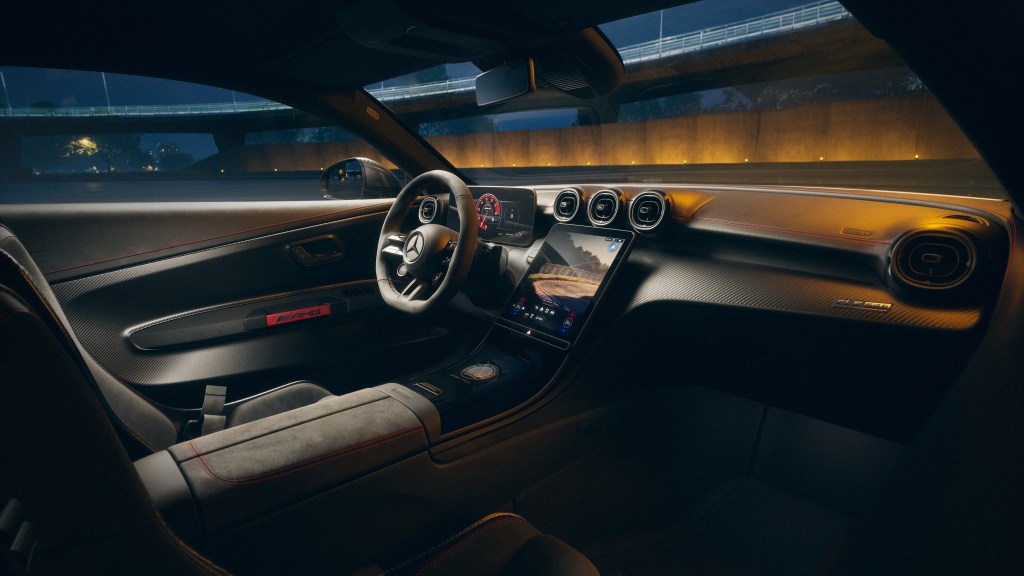
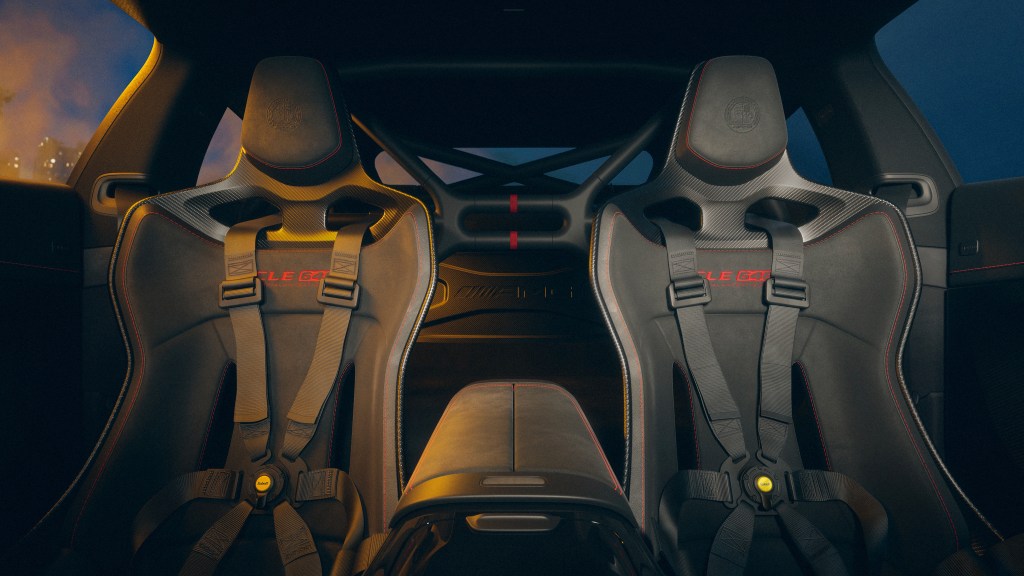
The interior of the Mercedes-AMG CLE 646 Spezialanfertigung follows the same unwavering focus on lightweight construction and driving dynamics. The rear seats and acoustic insulation materials have been removed.
Ultra-lightweight high-end racing bucket seats with pronounced lateral support are fitted as standard, along with a roll-over bar that increases torsional rigidity and further enhances driving dynamics.
The MercedesAMG CLE 646 Spezialanfertigung is the second model in the highly exclusive MercedesBenz Mythos Series, dedicated to exceptionally rare collector vehicles produced in strictly limited numbers.
Following the Mercedes-AMG PureSpeed, limited to just 250 examples worldwide and featuring an open two-seat configuration without a roof or windscreen, the Mercedes-AMG CLE 646 “Spezialanfertigung” now joins the series as a road-legal vehicle limited to only 30 examples, with an uncompromising focus on racetrack performance.
A formidable car, and just enjoy the accompanying photos!