Elegance in Motion: Aston Marin shines in Autoworld Brussels…

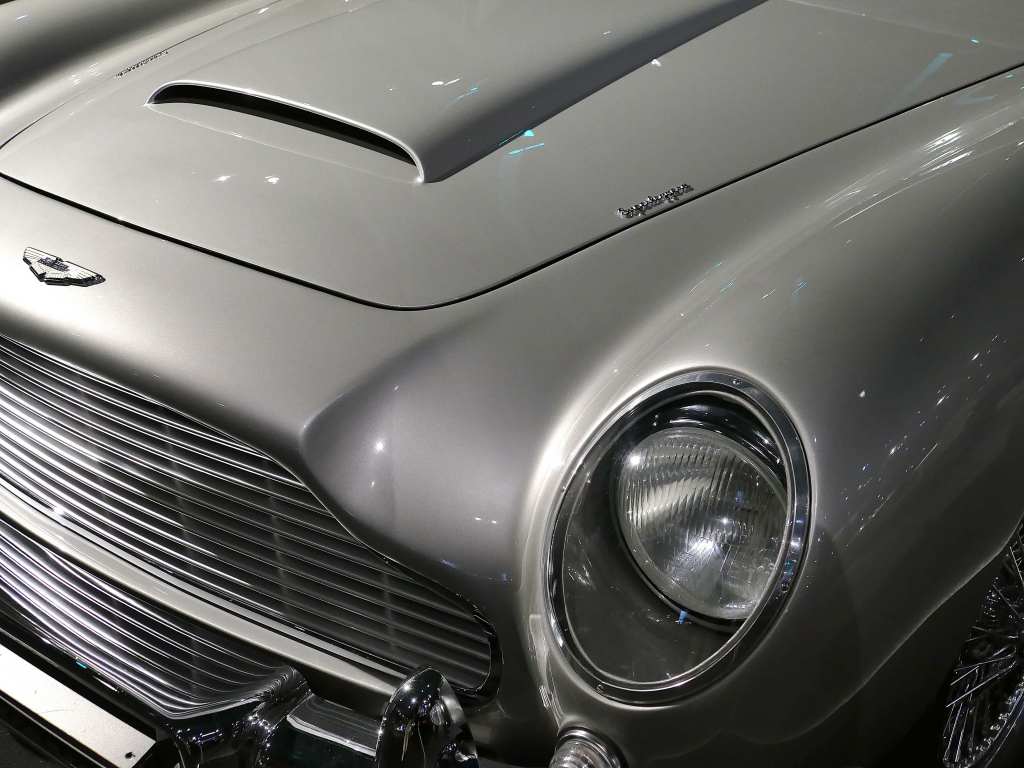
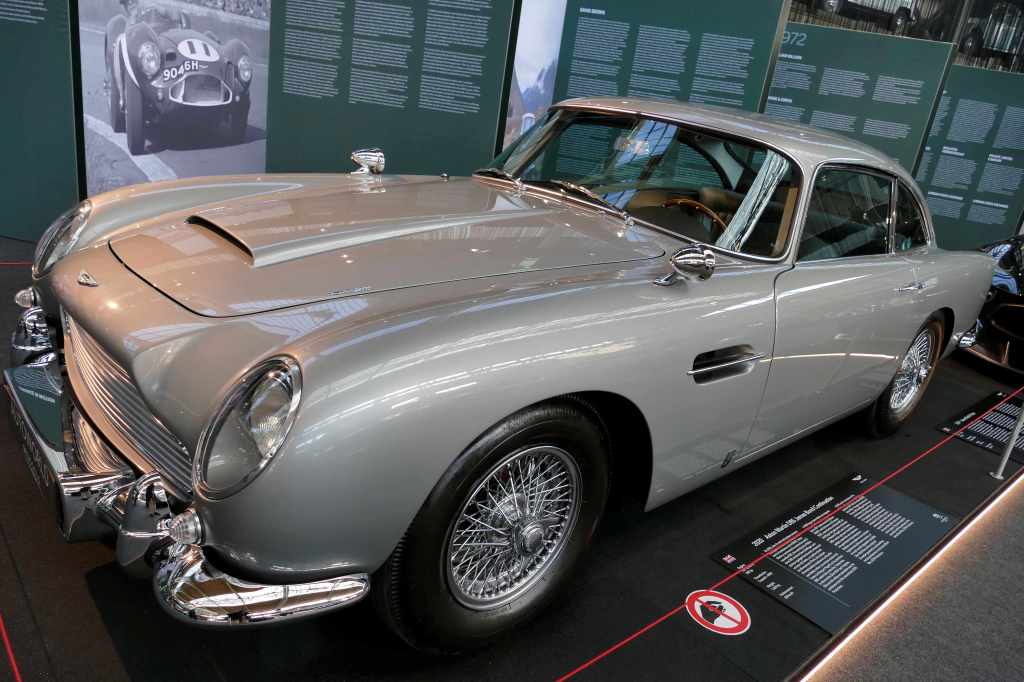
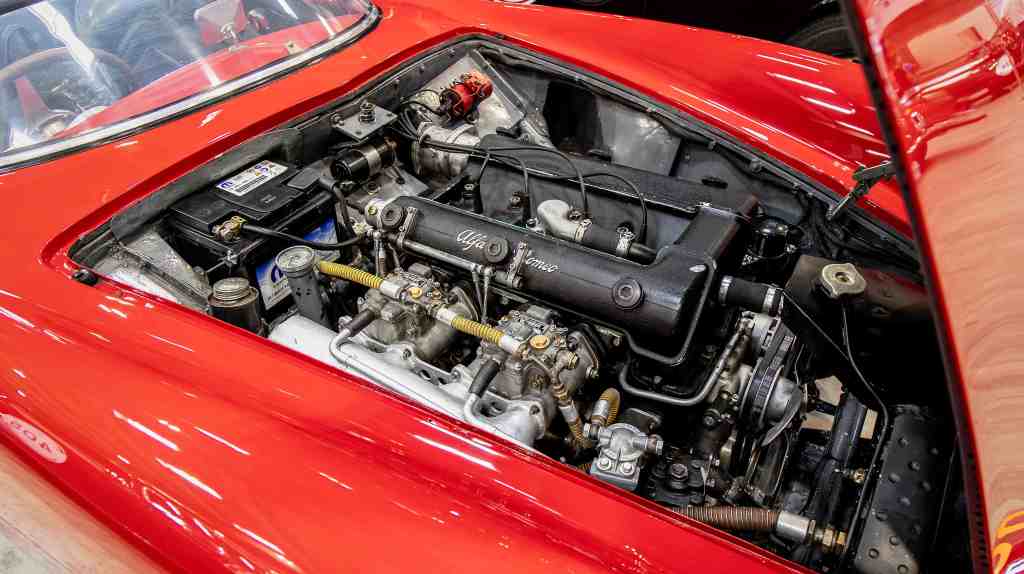
The iconic Aston Martin DB5 used by film character James Bond: this factory-made replica on, the show is an example of the “continuation” series of the original James Bond Aston Martin.

The lovers of iconic British classics can enjoy a beautiful exhibition in the heart of Brussels: until Sunday 21st of June they stand eye to eye with the iconic cars which embody the history of this wonderful brand.

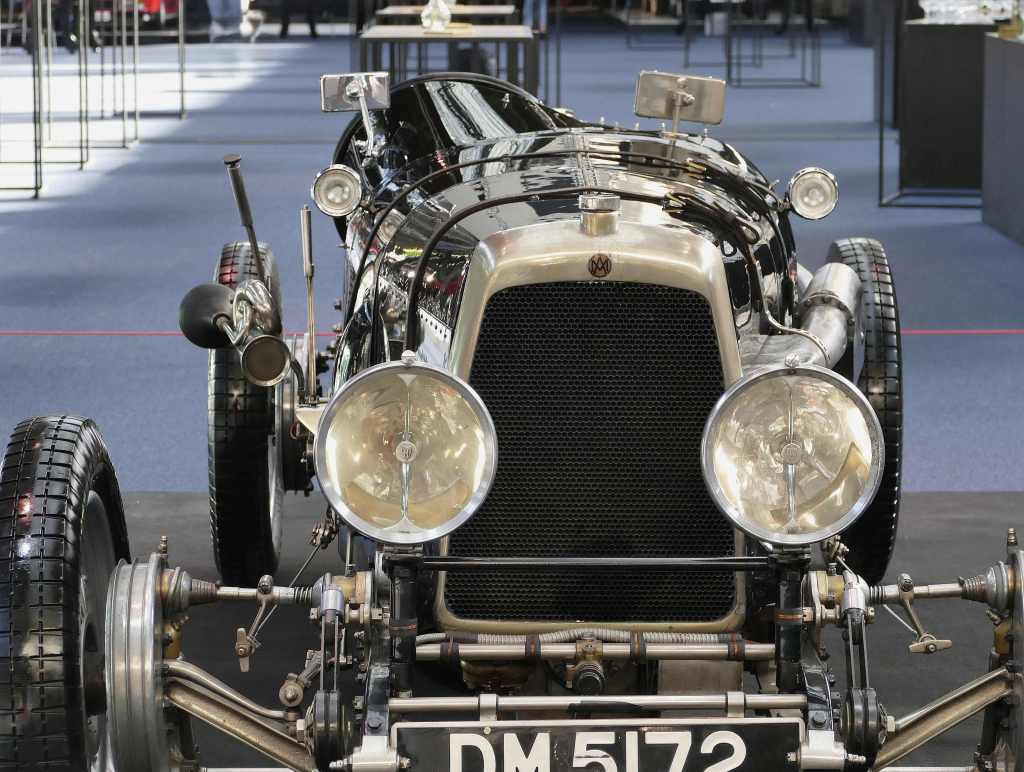
You will admire at your leisure the rare 1925 Grand Prix car, of which only 3 exist in the world today, and the one you will see in Brussels is the last one produced… Another F1 gem awaits you in the magnificent hall of Autoworld: the legendary DBR4.

But every enthusiast just loves the DB5, the iconic James Bond car. The car on the show is a replica, but it is in almost every aspect equal to the original. Did you know that the total series production of the DB5 was only 1,059 units?

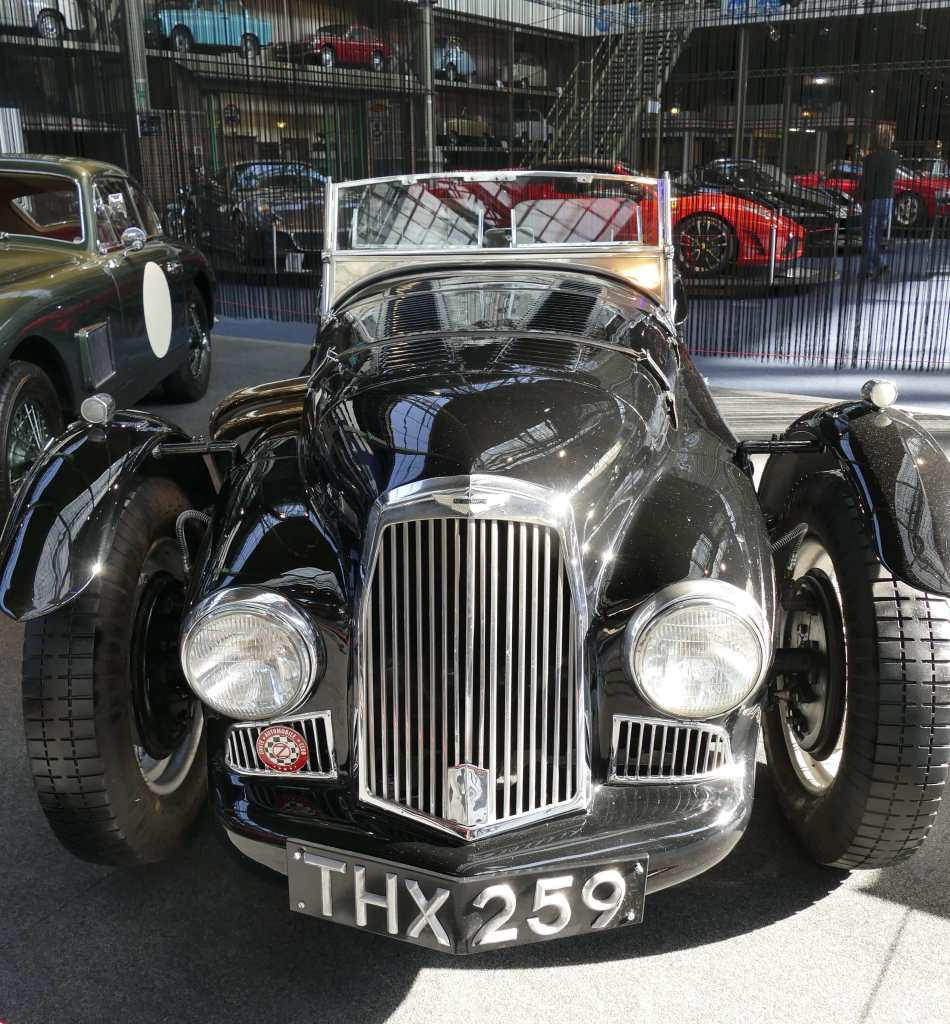
On the show, iconic Aston’s from the ‘50s and ‘60s can also be admired. What to think of the gleaming black DB1, nicknamed “Spa Special”, as this is the very car that raced to victory in 1948, with team drivers Jock Horsfall and Leslie Johnson behind the wheel.

Engineer Claude Hill had designed the 2 litre four cylinder engine for the revolutionary 1939 Atom, because of the wardid not really survive the prototype s. Key to the concept was the integral construction of body framing and chassis, which were made from rectangular steel tubes.

Looking at this photo, you can easily imagine yourself sitting behind the wheel of the Aston DB1, racing towards victory in the Spa Francorchamps 24 race…

The 1948 Motor Show saw the launch of the first car to be produced under the ownership of David Brown, thTwo Litre Sports, retrospectively named ‘DB1’.  It used the Atom chassis construction, by the way…
 

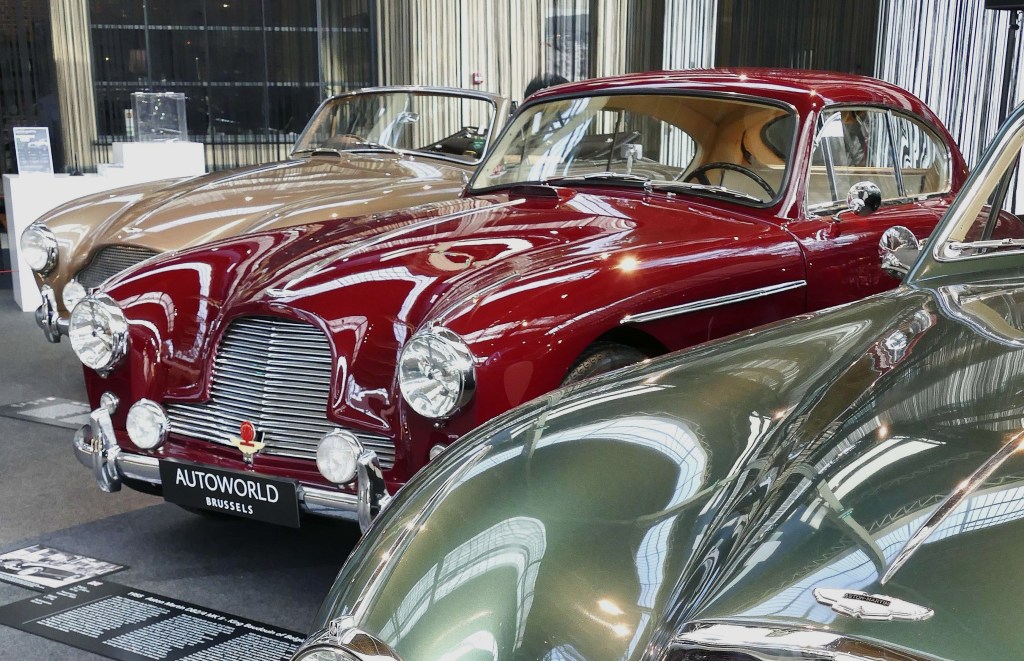
There is also a Bordeaux coloured DB2/4 to be seen, which was originally owned by Belgian king Baudouin, see the photo here above. He drove not less than four Aston Martins in his life. A true connoisseur!

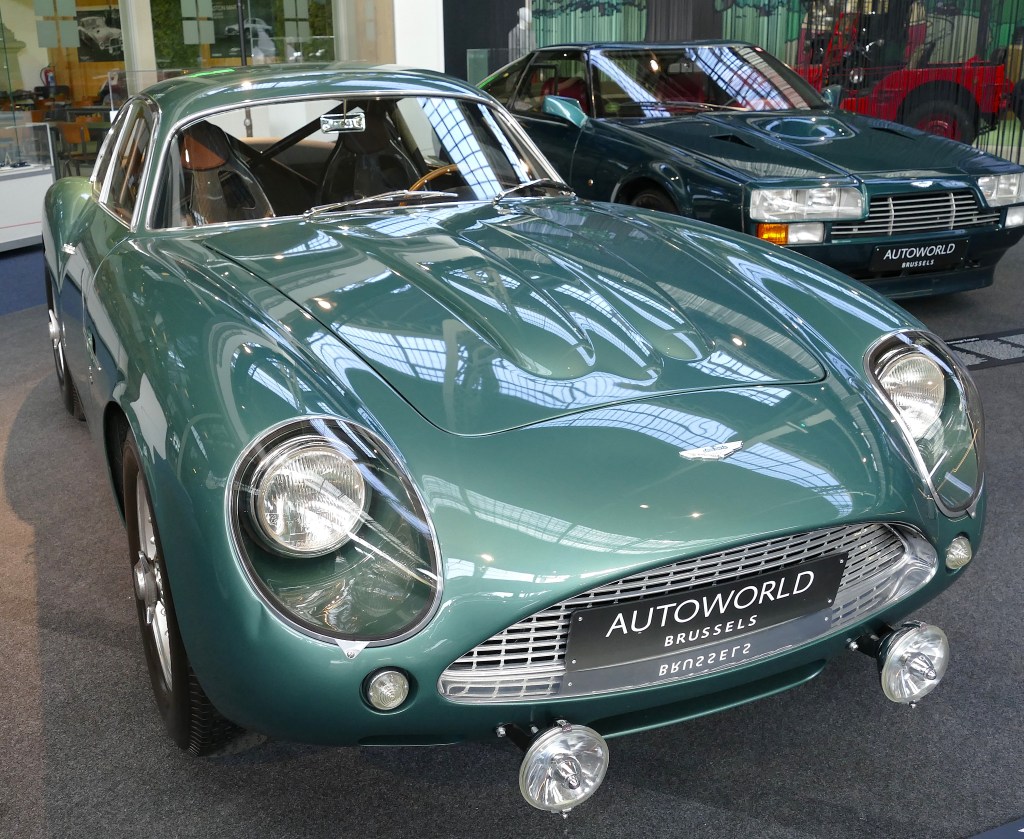
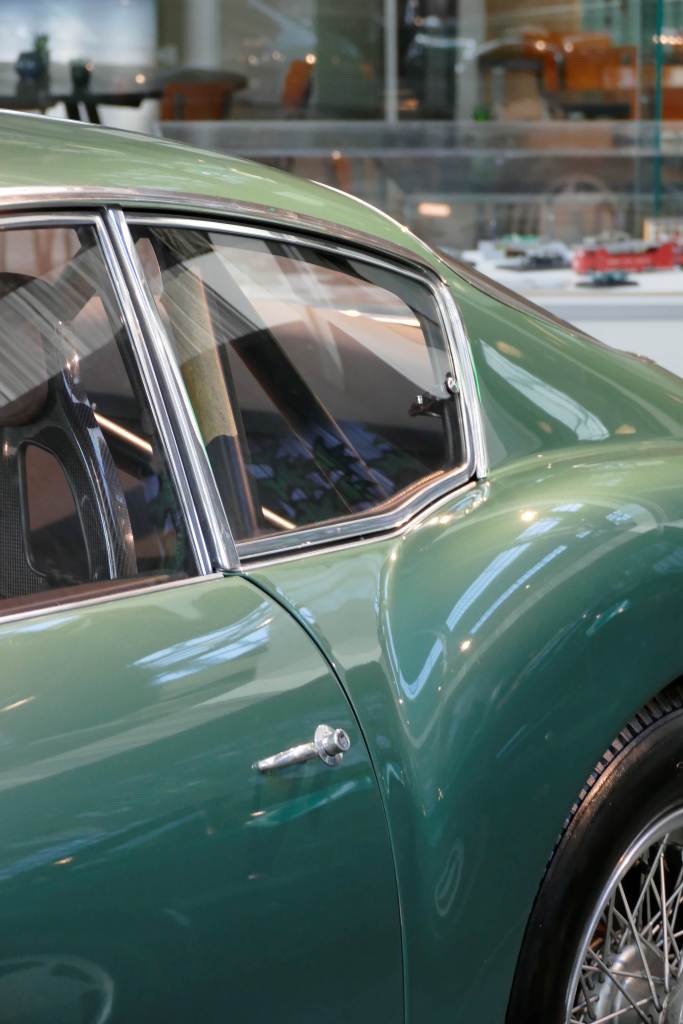
Noblesse oblige, and this means that an Aston Martin exhibition cannot do without a Zagato bodied example. We admired the DB4 Zagato, which was again a factory recreation of the original. The DB4 Zagato was produced between 1960 and 1963.

Originally, 25 units were planned, but the interest proved not to be large, resulting in only 19 copies being produced. Later, the popularity of the Zagato version was increasing, and two subsequent series were, “Sanction II” with 4 copies, and “Sanction III” with a further 2 copies.

The car on the show is produced in a new series of 19 , built in 2019 on the occasion of the centenary of Zagato. is a true racing car, and is not allowed to drive on public roads…

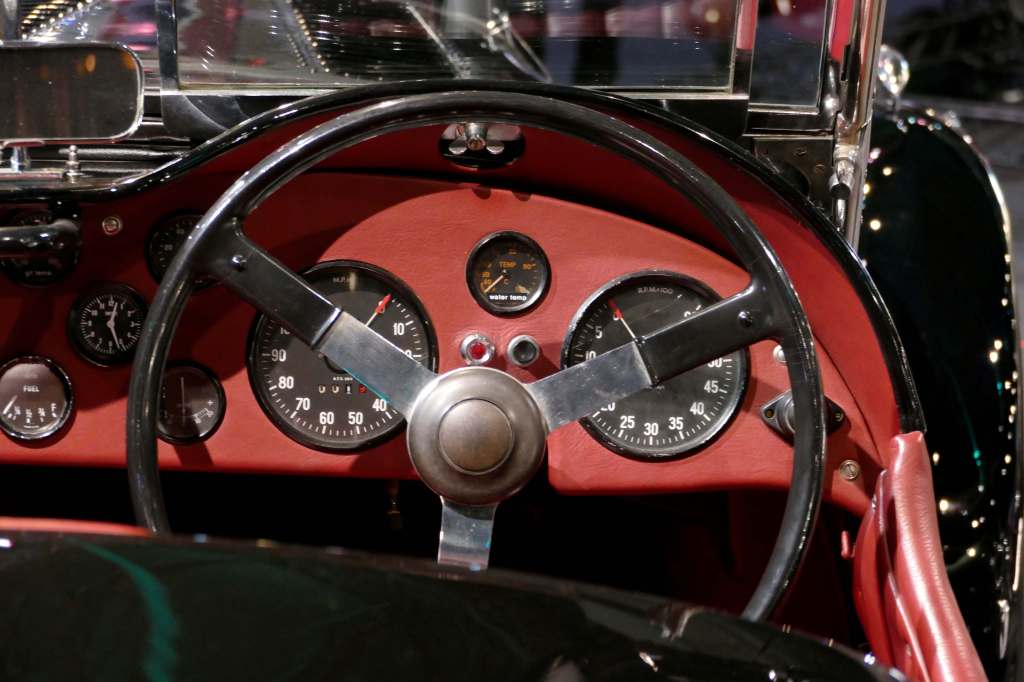
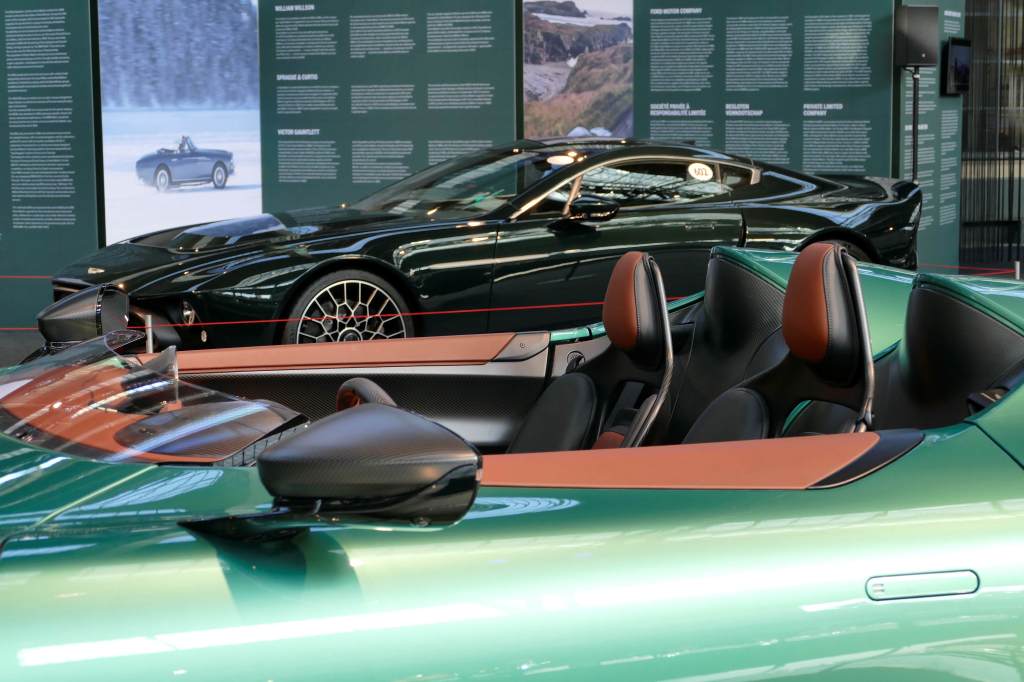
We also found the Aston Martin 2022 Speedster-type supercar, the DBR22, totally stunning. We will return soon to this beauty, which is an homage to the legendary Aston Martin DBR1 Sports Racing Car. On the photo below, you see the cockpit details of this speedster, with the Aston Martin Victor in the background.

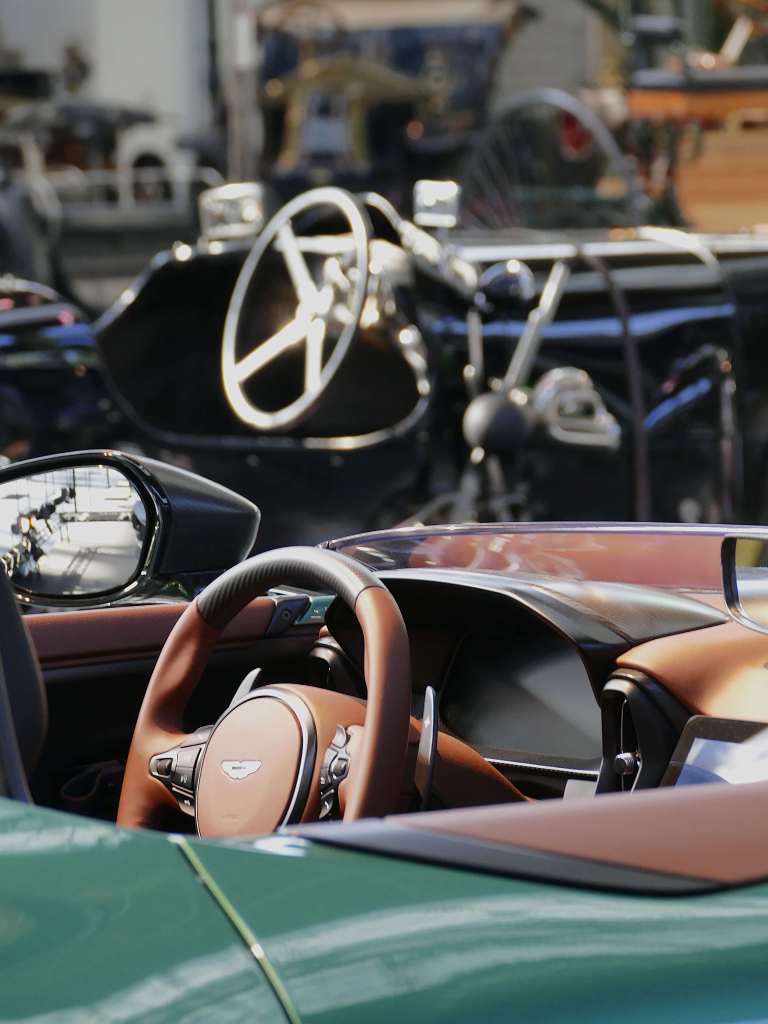
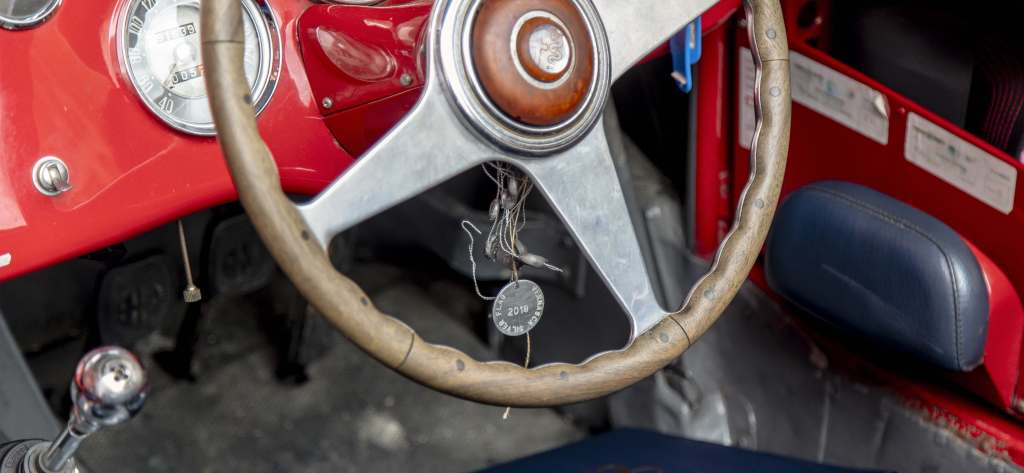
Below we show you a photo of the cockpit and steering wheel of the DBR22, with the steering wheel of the original 1925 Grand Prix Car in the background, with almost a century between them…

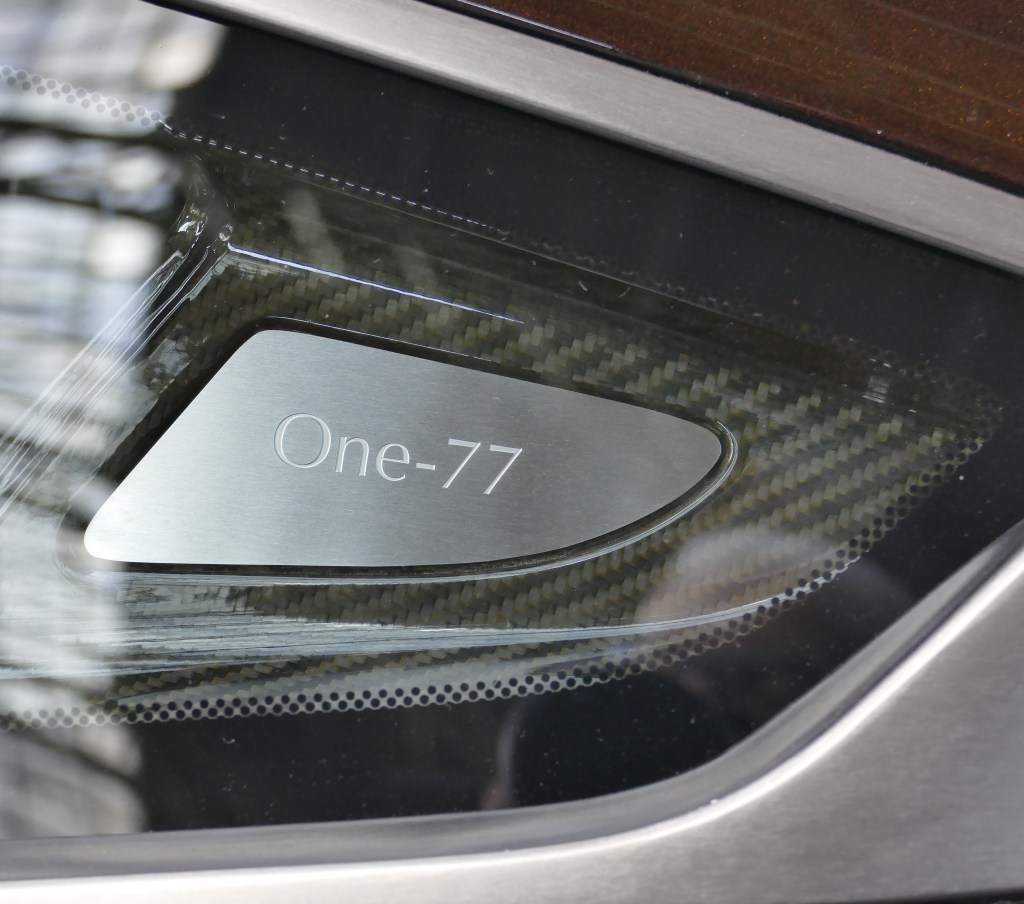
The show also includes modern creations like the Aston Martin Victor (see photo earlier) and the rare One-77. More on  these cars soon…  

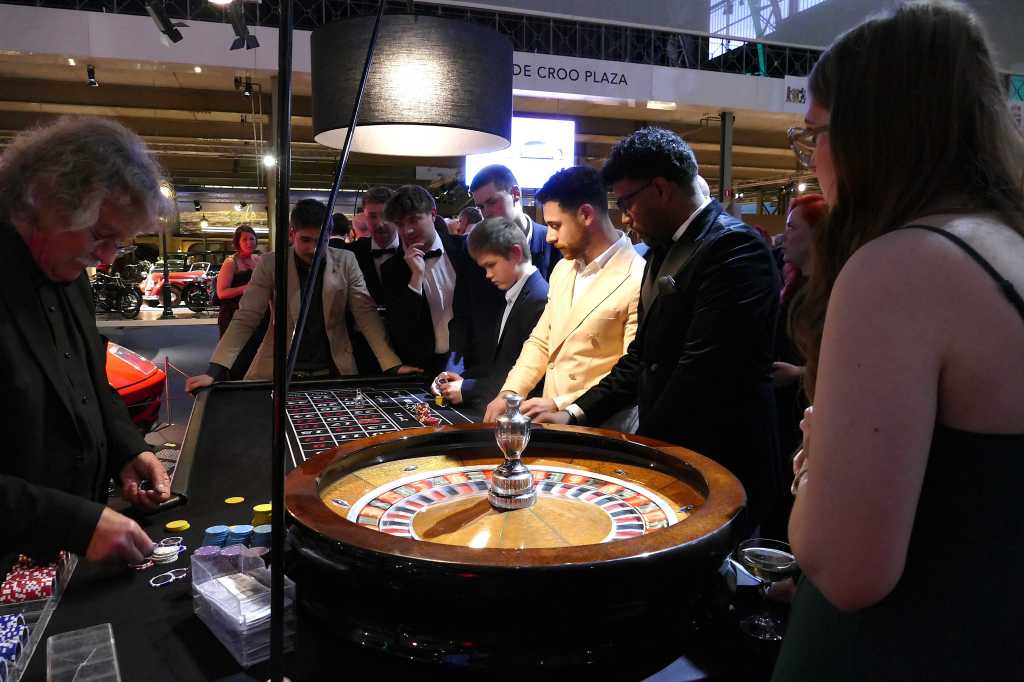
Everybody knows that the name Aston Martin is tied to casino glamour and film, and this was also very much the case at the magnificent opening night of this exhibition, where your servant was invited by the very dynamic team of Autoworld.

On the opening night, invitées could enjoy a game of roulette…in the true James Bond tradition!

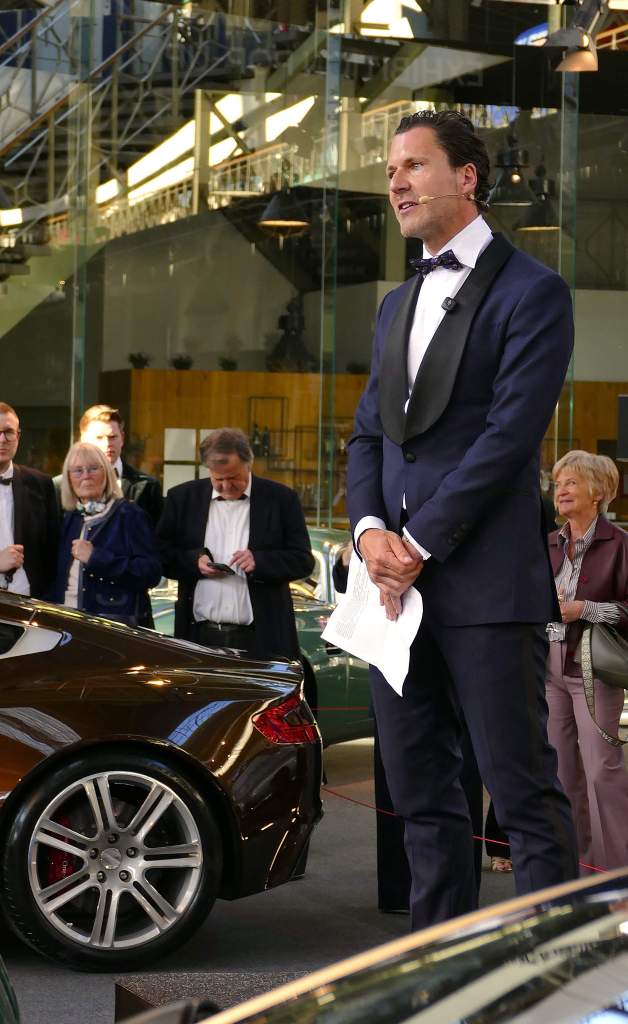
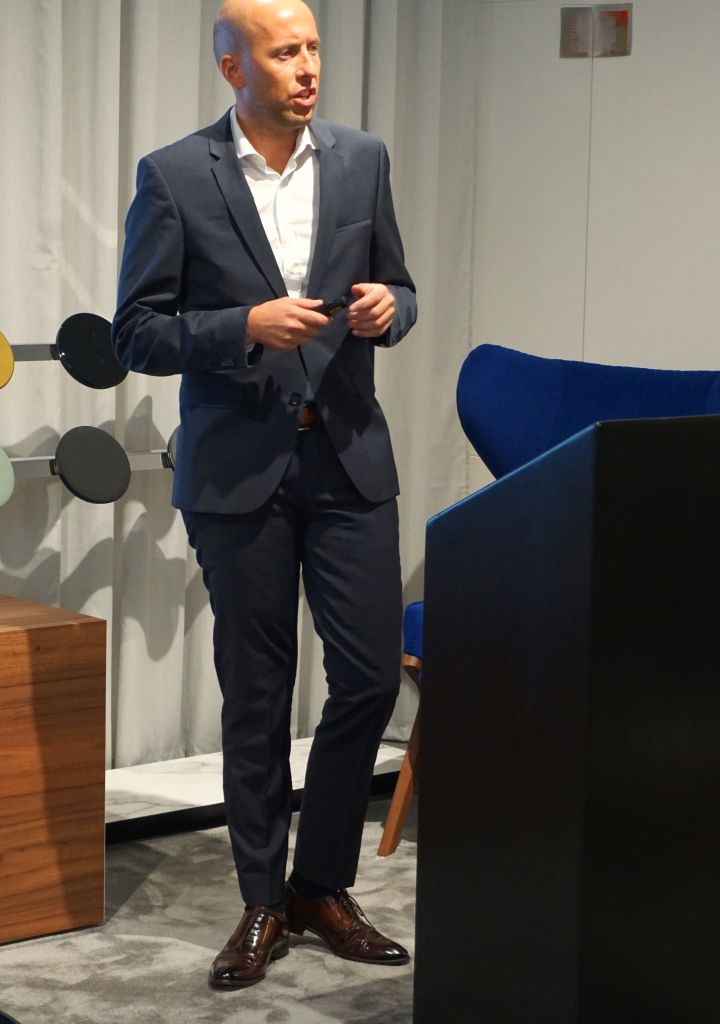
Sebastien de Baere, General Manager of Autoworld, welcomed the public…

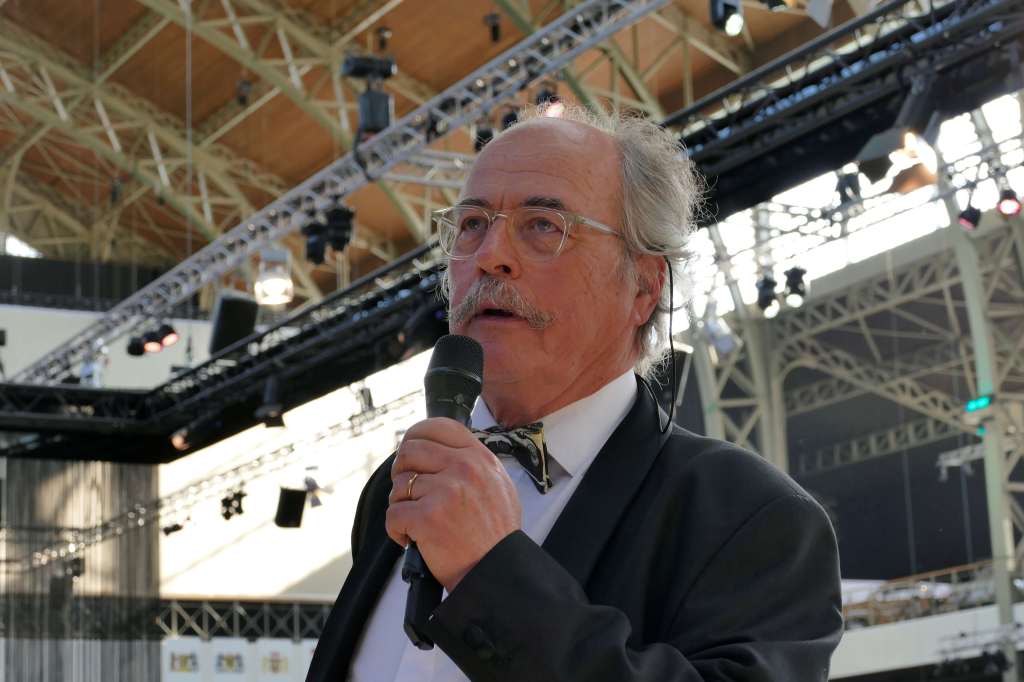
and Autoworld Curator Leo Van Hoorick commented expertly on the displayed cars…

More soon on this Aston Martin exhibition, but in our columns we will also come back on the previous Lancia exhibition, with more stories and photos of Lancia’s legendary Grand Prix car, the D50…

Stay tuned!

Hans Knol ten Bensel

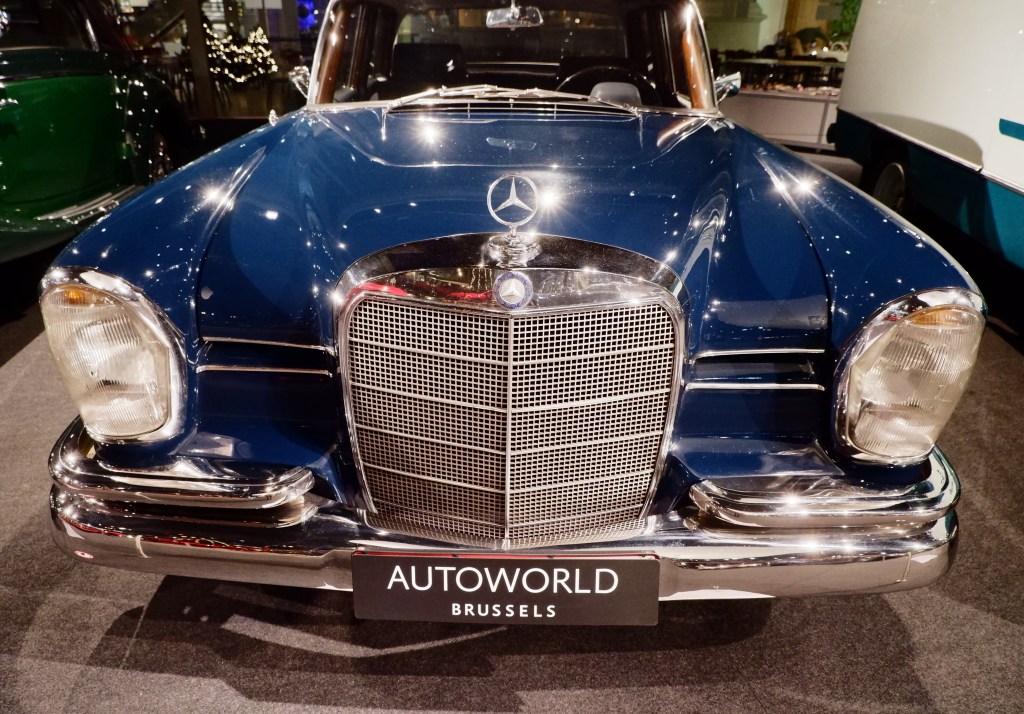
Mercedes tells us in Brussels Autoworld the iconic “Story of the Star”…

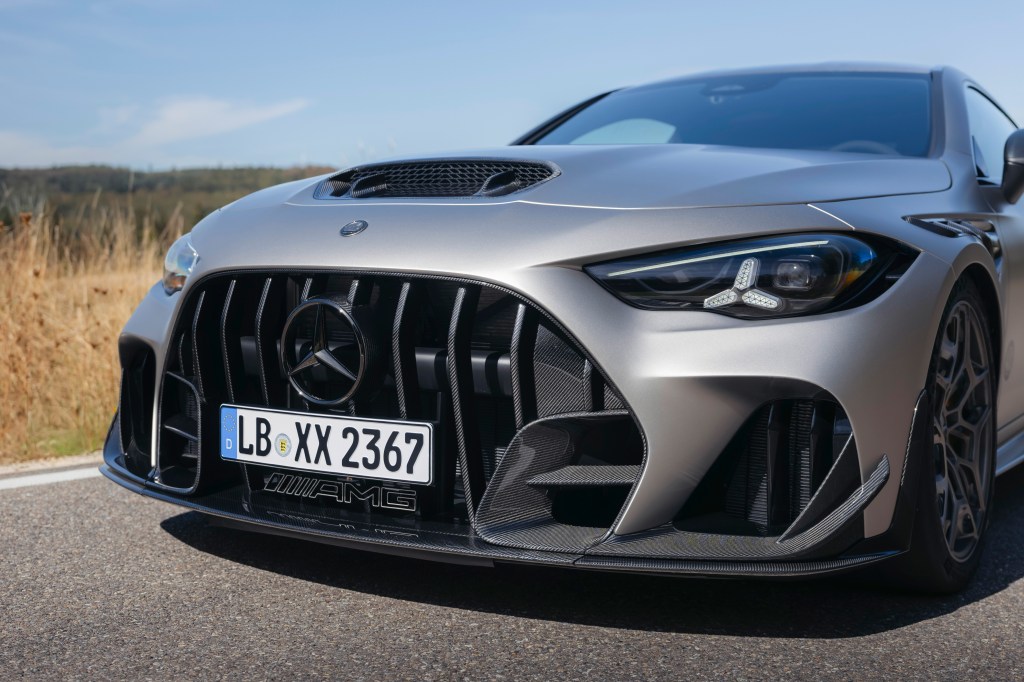
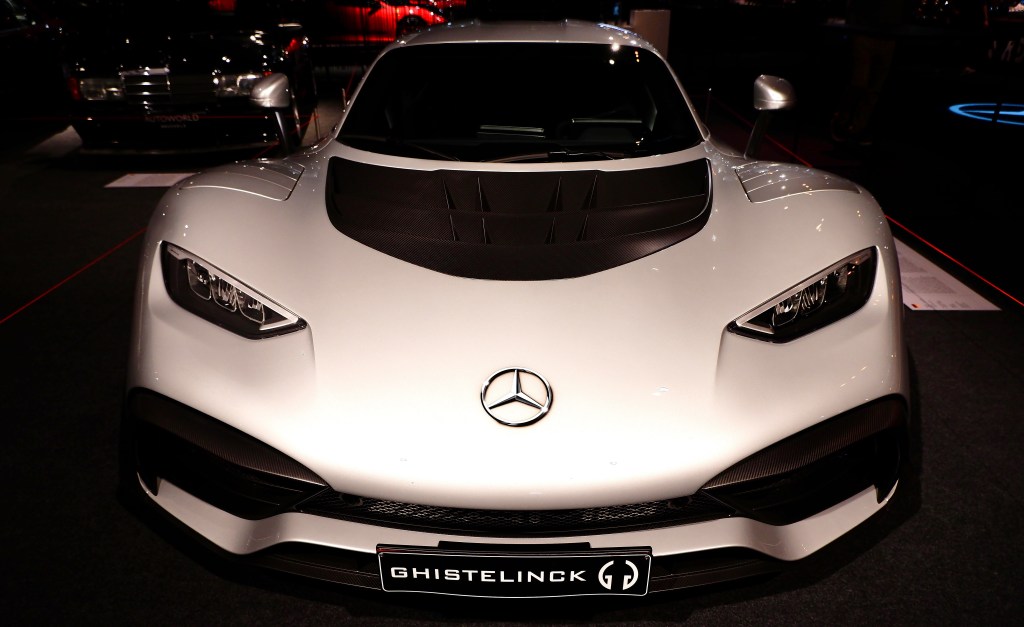
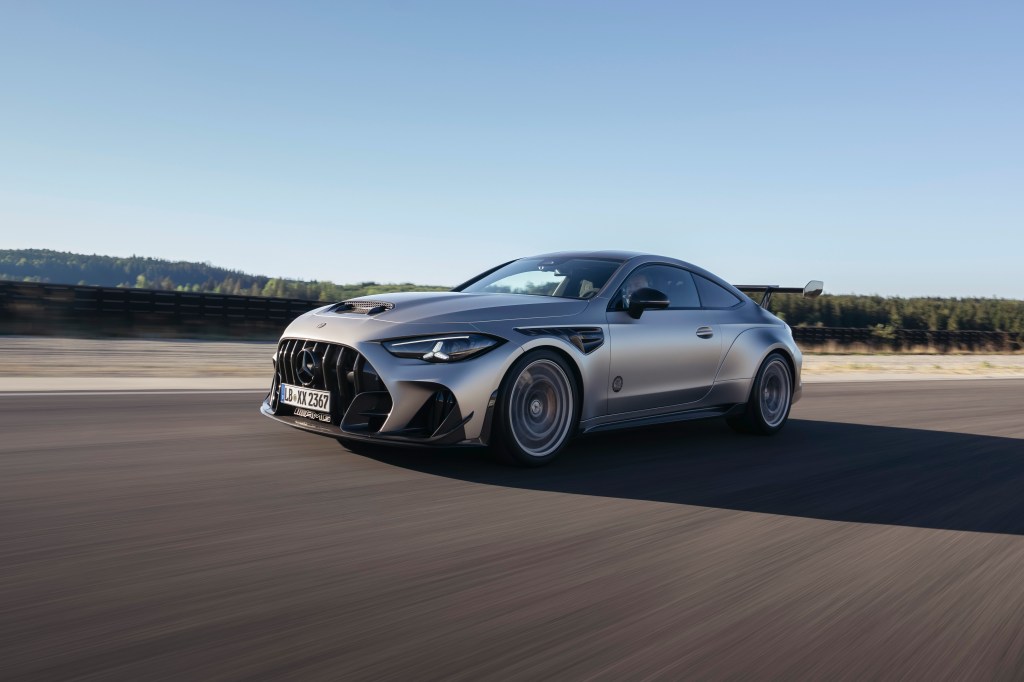
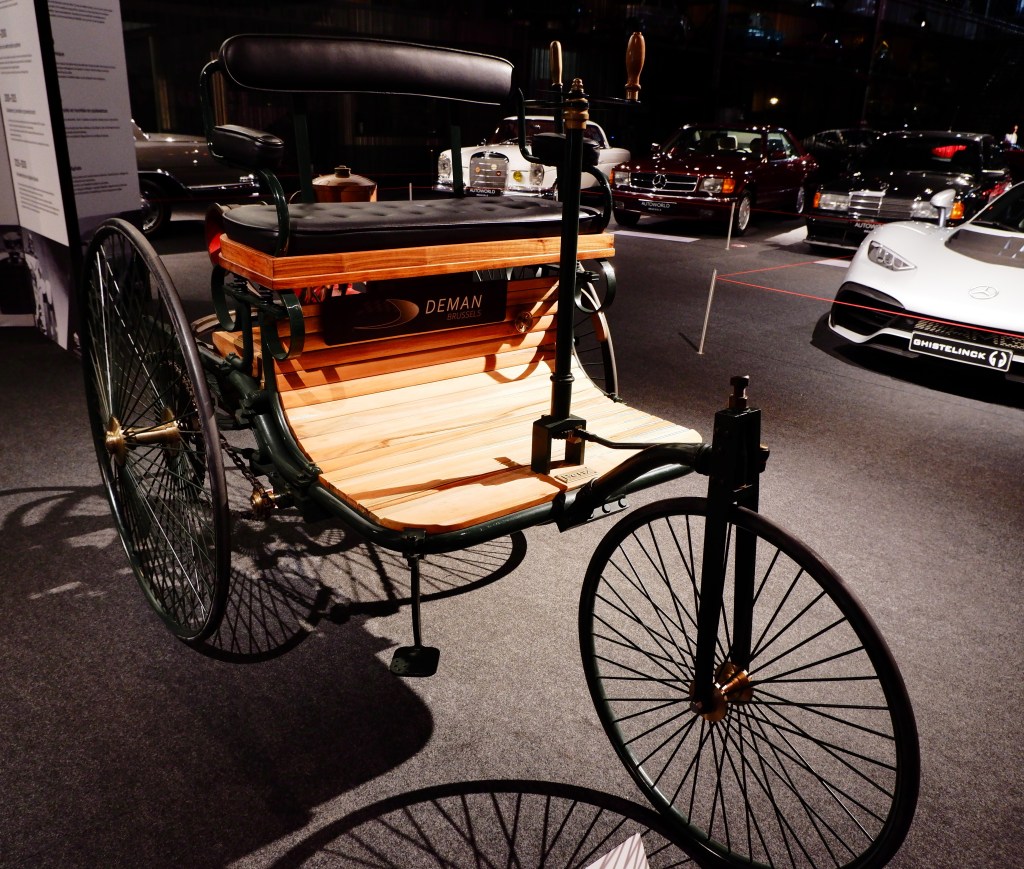
The exhibition retraces this remarkable story, from the very first three-wheeled Benz (1886) to the spectacular AMG ONE, here on the photo.

The magnificent Autoworld Museum traditionally ends the year with a major exhibition. This year, the house with the good star, Mercedes, takes centre stage. You can admire all the cars which made the brand truly legendary, and this until 22nd of February 2026.

Indeed, Mercedes has quite something to celebrate: not only is the brand now 140 years old, but it celebrates also the 100th anniversary of the merger between Daimler and Benz.

The exhibition retraces this remarkable story, from the very first three-wheeled Benz (1886) to the spectacular AMG ONE. More than fifty vehicles, including several rare highlights, are brought together for the first time in Belgium, displayed across thematic zones that reveal the many faces of Mercedes-Benz.

We attended the press evening, and of course we took our Fujifilm camera along the exhibits. We show you here some remarkable cars, but you should definitely put a visit to Autoworld, housed in  the magnificent Cinquantenaire monumental site.

You can start your tour with the 1886 Benz Patent-Motorwagen Replica. A replica indeed, as Mercedes had 100 replicas build in England, to celebrate the 100th birthday in 1986.

Carl Benz (1844 -1929) built the car and it contained quite a few novelties:  fully elliptic springs were used at the back with chain drive on both sides. A simple belt system served as a single-speed transmission. The four-stroke engine was extremely light for the time, weighing about 100 kg. A large horizontal flywheel stabilized the power output. Nevertheless, Benz was cautious, and opted for 3 wheels because he was… as an engineer not really familiar with a 2-wheel steering mechanism (!). The vehicle was awarded the German patent number 37435, applied for on 29 January 1886. Everyone knows about the drive which his wife Bertha Benz made with this car to visit her mother. The first fully-fledged automobile drive ever… when you see the car in the flesh, you wonder how on earth this was ueberhaupt possible.

The unique Mercedes DNA was soon established…  

When you stroll a few meters further, you stand eye to eye with a magnificent green 1937 Mercedes-Benz 540 K Sport Cabrio A (W29). The car was originally delivered to Alfred Krupp , and was early after the second world war sold to Prince Bernard, the husband of Queen Juliana of the Netherlands. Since he wanted his cars to be green, it was resprayed in his favorite color.

It was sold to a Swedish owner in 1953. Around 1990, Daimler-Benz meticulously restored the car to its original specification. The current owner has cherished this remarkable automobile since 1995.

Alongside the 540 K stands a 1961 220 S (W111) “Heckflossen”. This nickname stemmed from the rather timidly styled rear fins, which Mercedes apologetically commented as “helpful for parking”. This 220 S was revolutionary for its “safety cell”, truly representing a milestone in car design where front and rear crumple zones absorbed kinetic energy on impact. F1 Racing car engineer Rudolf Uhlenhaut had a major hand in the design of suspension and refining the handling of this beautiful car, and since my father owned one in these days, it is a car in which I learned to drive expertly. I still love the specific handling of this car, and I vividly remember a long drive with a 230 S “Universal” together with Autoworld Curator Leo Van Hoorick to visit the German Mercedes Benz museum, where I could enjoy behind the wheel the wonderful performance and stability in fast corners and at speed of this car. I think Leo fell immediately in love with this very car, and soon after he bought this car from the Mercedes Benz Belgium collection…and still owns it!

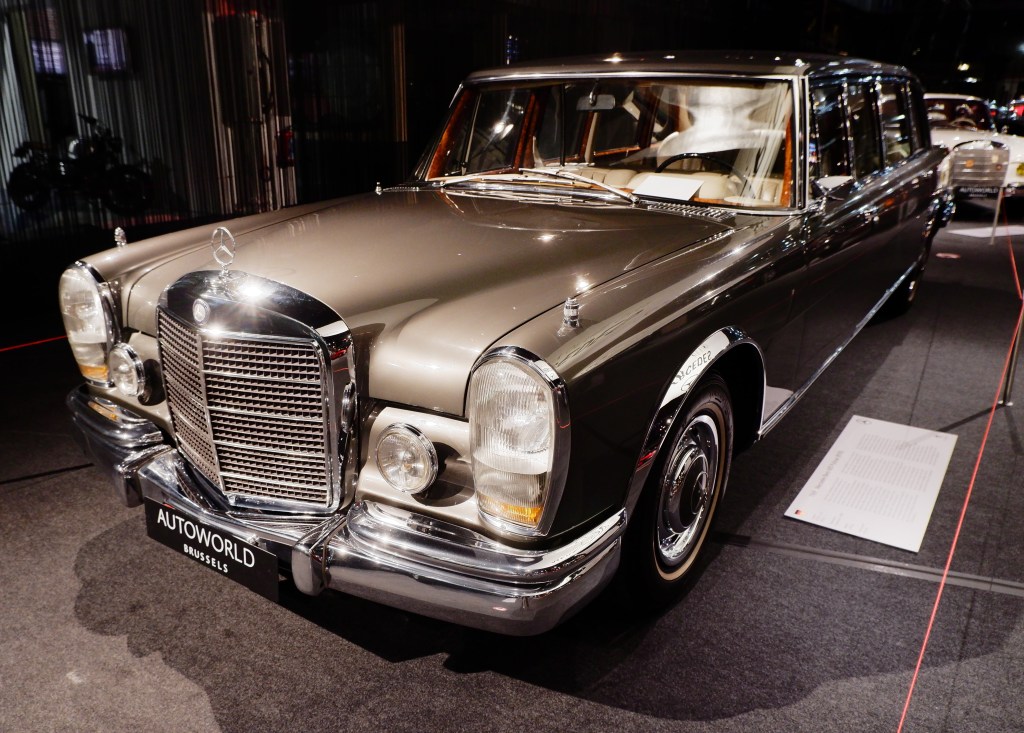
Royal transport: the 600 “Pullmann”

Strolling a bit further, one stands eye to eye with royal transport. Indeed, this car has served exclusively at the Belgian Royal Court, and is known as the “King Baudouin.”

This car, designed by the Frenchman Paul Bracq, (he also designed the iconic “Pagode” 230 SL) did not undergo a single modification during its 18-year career, undoubtedly due to its modern styling. It is equipped with air conditioning and a hydraulic system that controls, among other things, power steering, braking, and the hydraulic windows. Production began in 1964, and more than 600 variants were built until 1972. The production continued, albeit at a slower pace, until 1981. In total, 2,677 units were produced of which 487 long-wheelbase Pullmans. (overall length 6,240 mm).  

A F1 Mercedes for the road…
 

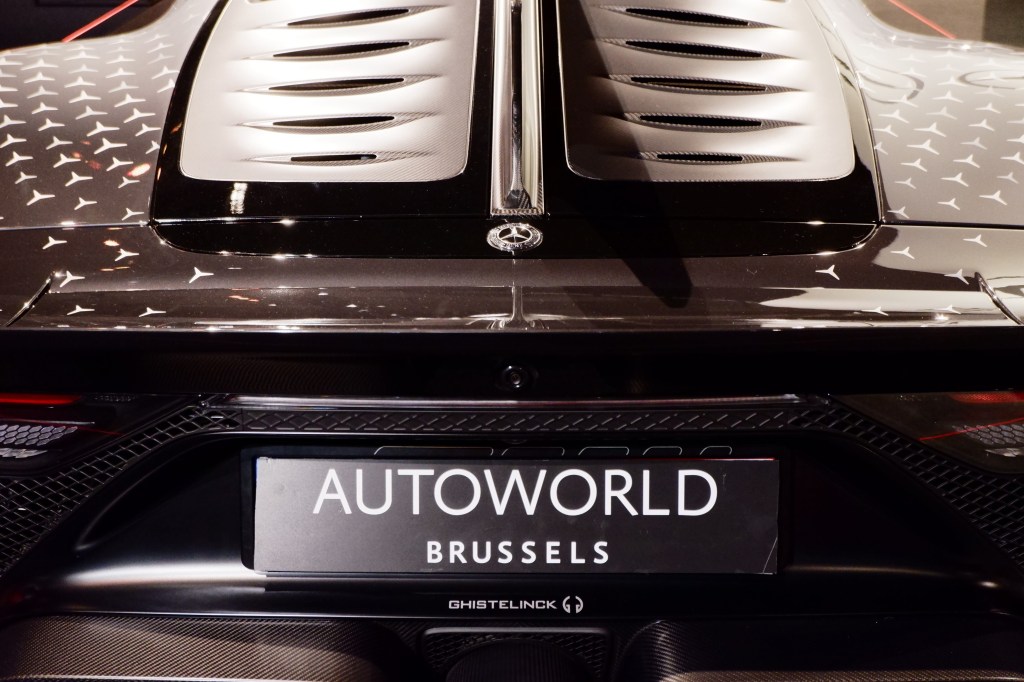
Sensational to admire is the 2025 Mercedes AMG-One. It is a hybrid supercar, nothing else actually than a F1 car adapted for road use. Behind the driver rests a 1,6 litre V6 turbo engine sourced from the Mercedes F1 car. But that is not enough: it also has four electric motors, which results in a total power delivery of 1062 HP and a top speed of 352 km/h. All this is not exceptional anymore in our dizzying EV age, but it stays quite impressive of course. The car made its debut on the 2017 IAA show in Frankfurt, but putting this complex drivetrain into production appeared to be a quite formidable task. So series production actually started only in August 2022. Only 275 units were planned, and of course they were completely sold out long before actual production began. The demand for this car was far higher, but AMG and Mercedes maintained the original production run, also to keep the car  very exclusive.

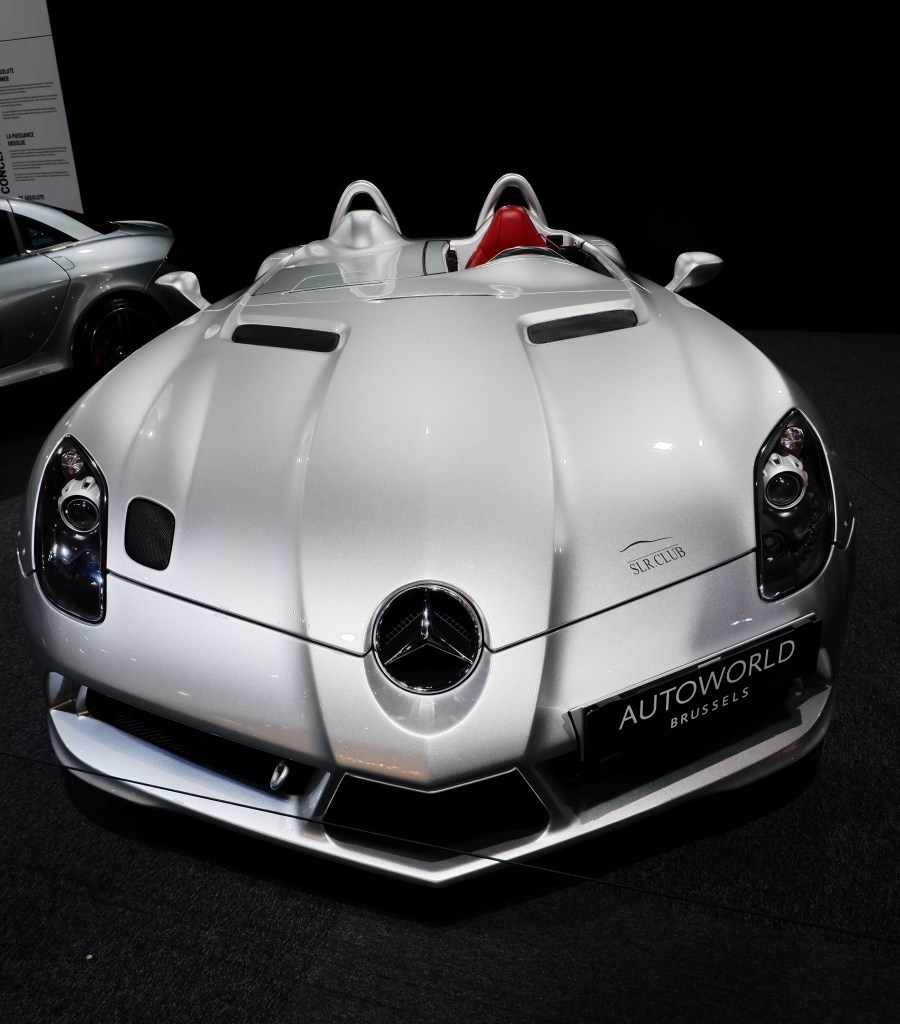
A tribute to Stirling Moss: the 2009 Mercedes-Benz SLR McLaren “Stirling Moss” (R199).

Your servant has vivid memories of this iconic British champion when he participated in the historic Mille Migilia in the official Mercedes factory team, alongside Stirling Moss. Together with my father, we drove the works 180 D “ponton”, which was far more comfortable and cooler that the 300 S Panamericana which Stirling Moss steered along the 1000 mile course. “You were having fun”, he commented, “you could drive virtually the whole course flat out!”

We like the panache and the contours of the car here which is built in his honour. Stirling drove this car on the 2009 Goodwood festival of speed.
 

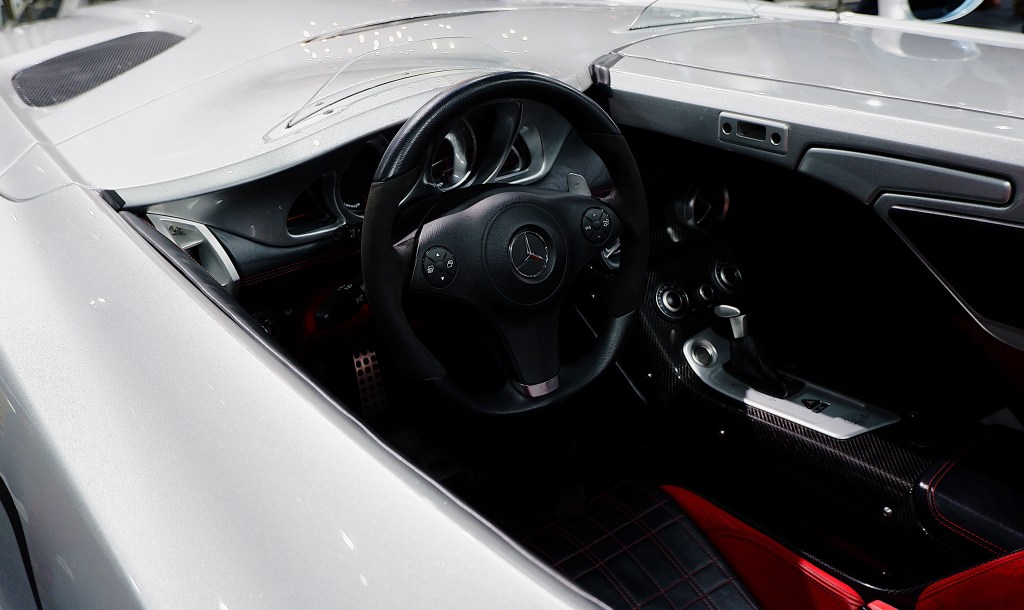
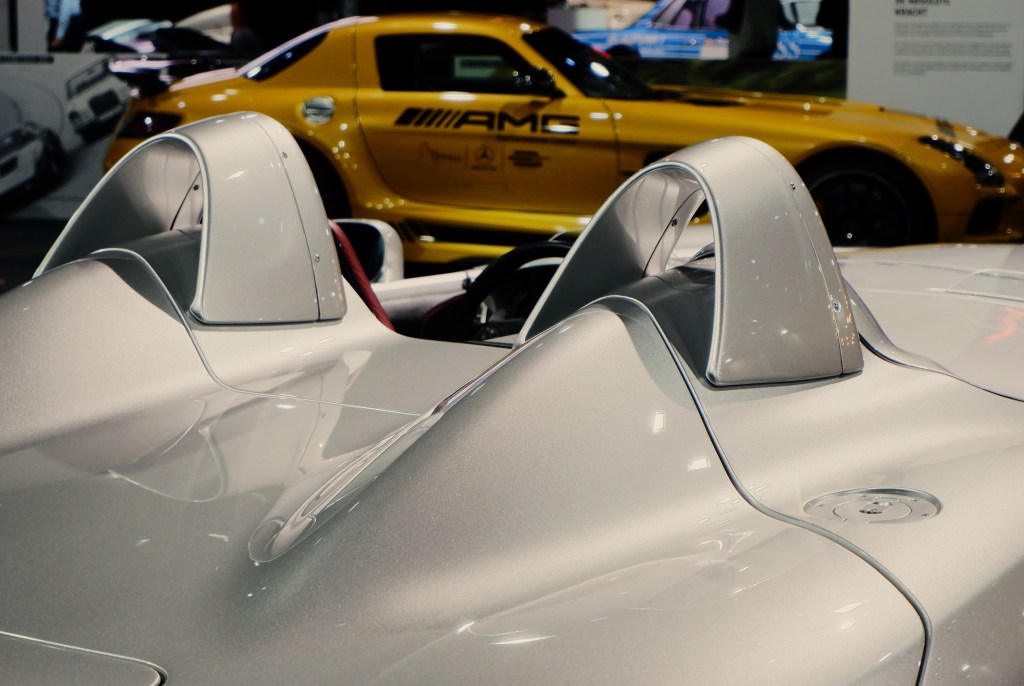
This limited edition variant uses a speedster styling that does not include a roof or a windscreen. The car is designed by Korean designer Yoon Il-hun and is of course inspired by the 300 SLR race car. The SLR Stirling Moss was to be the last series of the McLaren SLR built under the partnership between Mercedes-Benz and McLaren.

he car is approximately 200 kg lighter than the standard model thanks to carbon fibre construction and speedster styling. All 75 cars planned to be produced were completed by December 2009. It was available only to the existing SLR owners and each car cost in excess of US$1 million. This one was driven and signed by Stirling Moss in Goodwood in 2009….
 

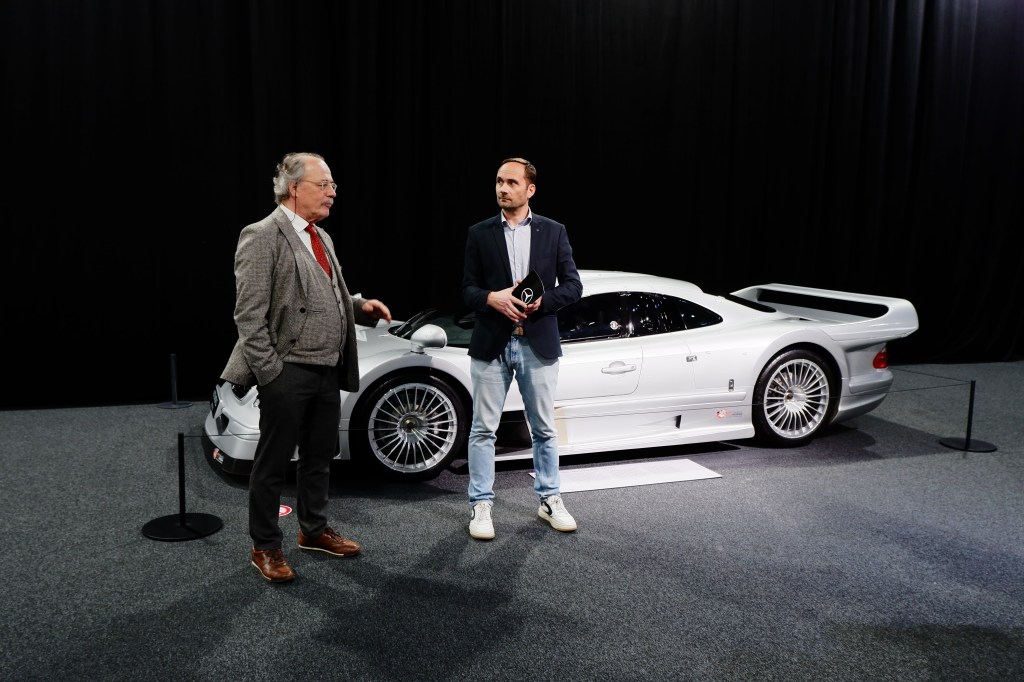
Autoworld curator Leo Van Hoorick (left) and Mercedes Benz Cars PR Bastien van Den Moortel guided us expertly through the exhibition…

But of course there is much more to be seen of stunning Mercedes cars in Brussels Autoworld. As said, the exhibition runs until February 22nd. Not to be missed…

Hans Knol ten Bensel

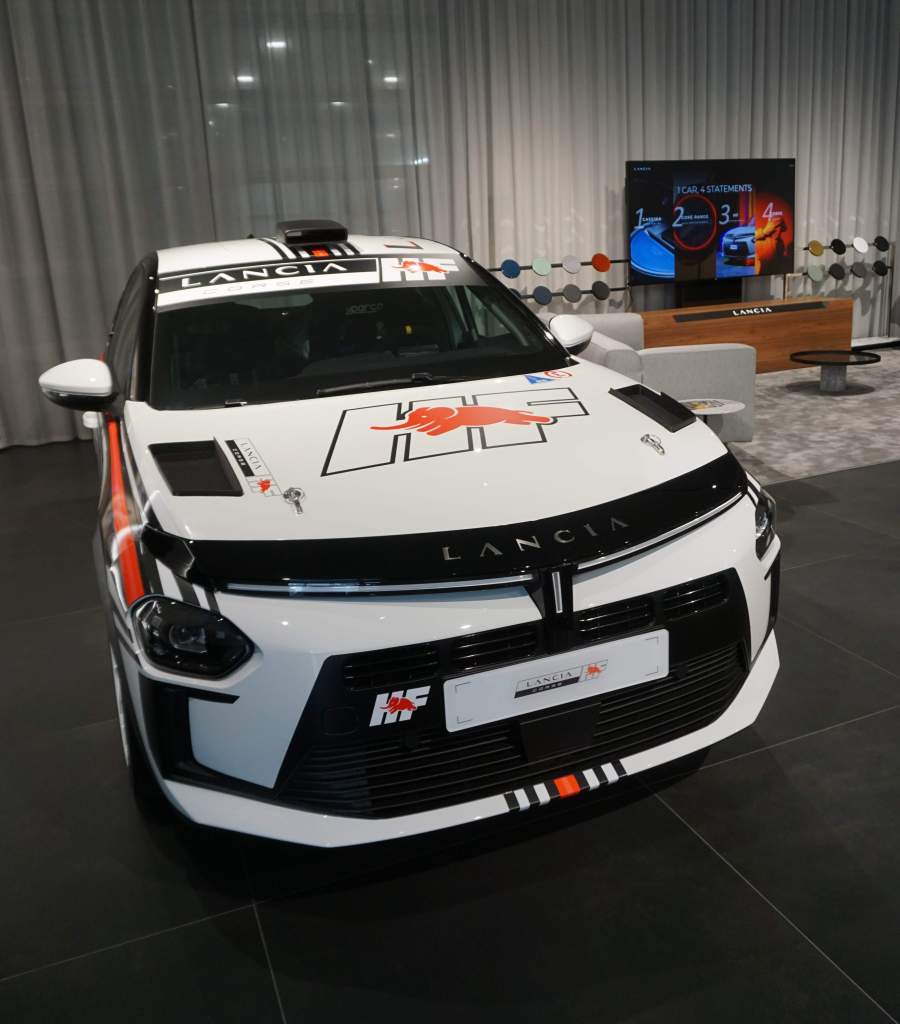
Lancia is back in Belgium, and presented in its return to world of rallying with the debut of the Ypsilon Rally 4 HF…

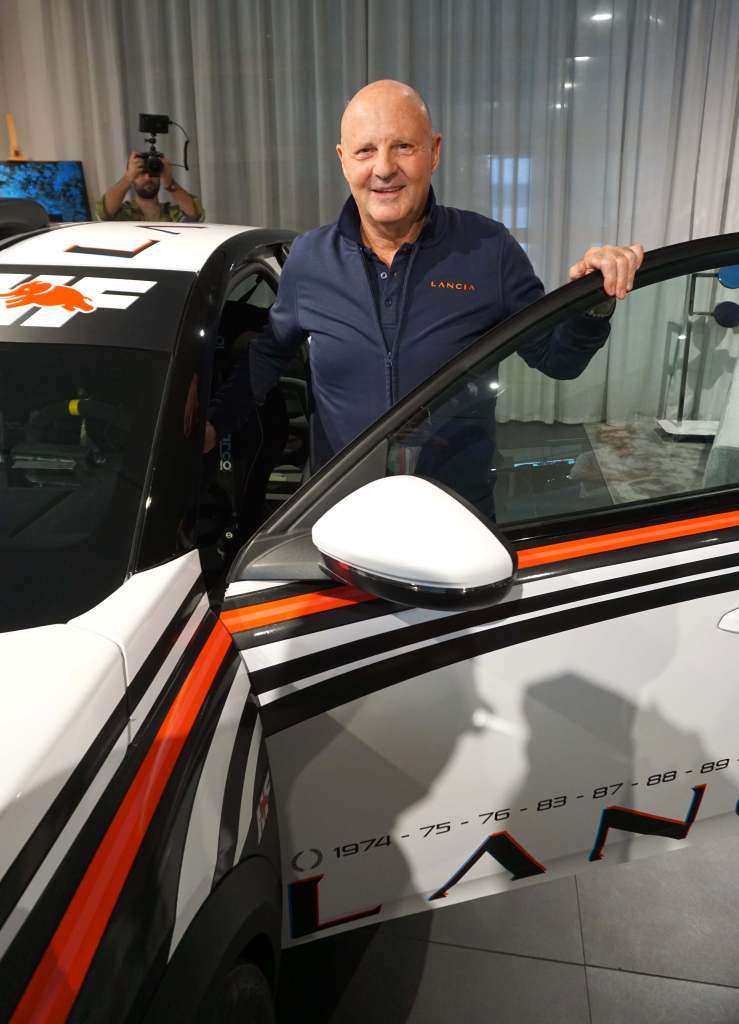
Lancia presented its Ypsilon Rally 4 HF, with from left to right rally champion Miki Biasion, Charles Fuster, Lancia head of Marketing and Communication and Eugenio Franzetti, head of Lancia Corse HF.

Indeed, Lancia is making an impressive comeback in our low countries, notably Belgium/Luxembourg  and the Netherlands. The three countries have always had a strong interest and passion for the brand, and therefore represent an important portion of the brand’s internationalization plan. It is good to know that by the end of this year, Lancia will get ten new showrooms in Belgium-Luxembourg and five in the Netherlands.

“Lancia is Back” said Charles Fuster, Head of Marketing and Communication for the Lancia brand, with indeed already a grand opening of six showrooms in the Belgium-Luxembourg region, located in Aartselaar, Overijse, Kortrijk, Gent, Gilly and Bertrange, with a network set to grow to ten showrooms by the end of 2024, including upcoming locations in Drogenbos, Hasselt, Namur and Herstal.
In the Netherlands, the brand inaugurated five new showrooms at strategic locations, in Amsterdam, Rotterdam, The Hague, Utrecht and Zwolle.

The Lancia Ypsilon Rally 4 HF…

But Lancia – as announced already several months ago by Stellantis CEO Carlos Tavares – is also returning to motorsport, and presented now in Brussels, Antwerp and Utrecht for the first time the Lancia Ypsilon Rally 4 HF.

As the name “Rally 4” already suggests, this Lancia will take part in the Rally 4 championship, a gateway to the world of rallies where junior drivers make their first steps towards becoming professional rally drivers.

and champion Miki Biasion…

Miki Biasion, the world rally champion in 1988 and 1989 with the Lancia Delta of Martini Racing, was present at the presentation, and we were able to have a few words with him.

“I am really glad to support the Lancia Product Team and the Stellantis Motorsport Team in the fine-tuning of both the Ypsilon HF and the Lancia Ypsilon Rally 4 HF,” he said. “We worked to improve the performance of the car, fine-tuning several parameters: engine response, trying out different ignition/injection mappings.” Then he continued: “We worked also extensively on grip and handling, also working on the settings of springs and shock absorbers. We also honed and perfected the braking system, the responsiveness and gearchange speed of the gearbox, also testing new ratios”

Indeed, the Lancia Ypsilon Rally 4 HF has a “classic” 1,2 three-cylinder 1.2-liter turbo engine with four valves per cylinder and an output of 212 hp under the bonnet. It has only front-wheel drive, a mechanical transmission with five gears and a mechanical limited slip differential. All this to make the car affordable for debutant young drivers, which is also the strategy of Stellantis, pursued already with the Peugeot 208 and the Opel Corsa.
 

Relying on private teams…

We spoke also with Eugenio Franzetti, presently Director of Lancia Corse HF. He told us that the strategy of Lancia and Stellantis in general is to rely for the Lancia Rally 4 HF on private teams at the start of the 2025 season, and therefore the car has to be both affordable as well as competitive.

Eugenio Franzetti together with Silvia Cassani, Head of Lancia Communications

Eugenio already occupied various important positions in the Stellantis Group. He was communications and competitions director for Peugeot in Italy, director of communications for DS Automobiles/Citroën/Peugeot in Italy, director of sales for Citroën in Italy, director of communications for Peugeot Global and Italy’s Managing Director of the DS brand before becoming director of DS Performance.

Today he remains in his position as the DS Performance Director and he will therefore retain the dual role.

E power for the road: the Lancia Ypsilon HF

The Lancia Ypsilon HF, the 100% electric performance version of the new Ypsilon, is powered by a 280 hp electric motor, which enables acceleration from 0-100 km/h in just 5.8 seconds. This drivetrain is also found in the Alfa Junior Veloce and the Abarth 600e.

With its lowered chassis, wider track and muscular design, the Ypsilon HF is a nod to the iconic models from Lancia’s rich past. The car will be launched in May 2025…

Hans Knol ten Bensel

Alfa Romeo victorious again in the 1000 Miglia 2024…

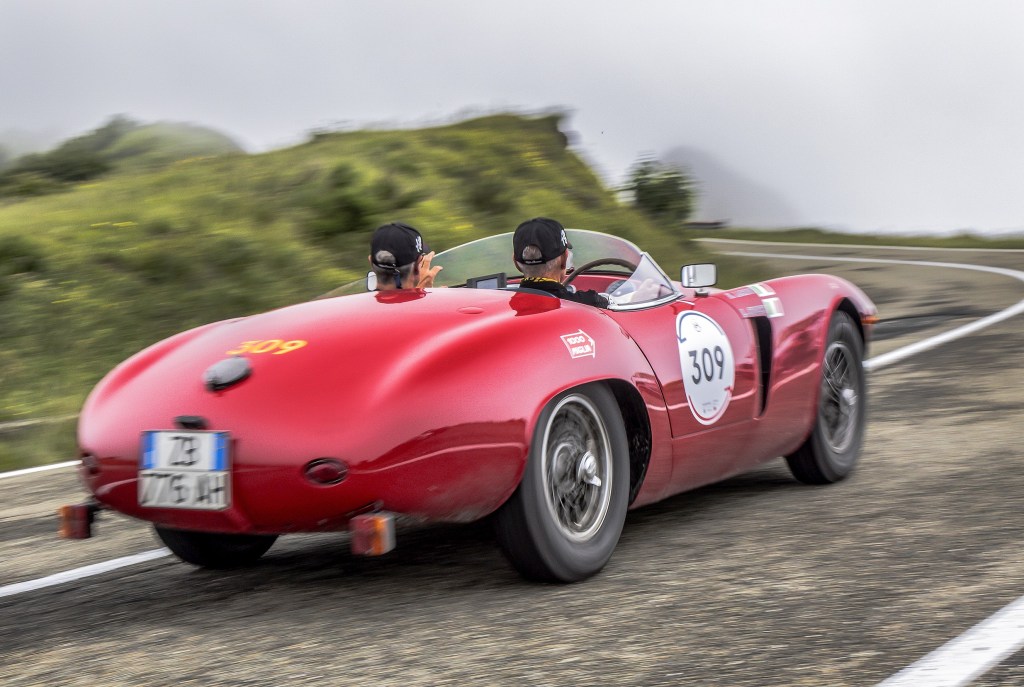
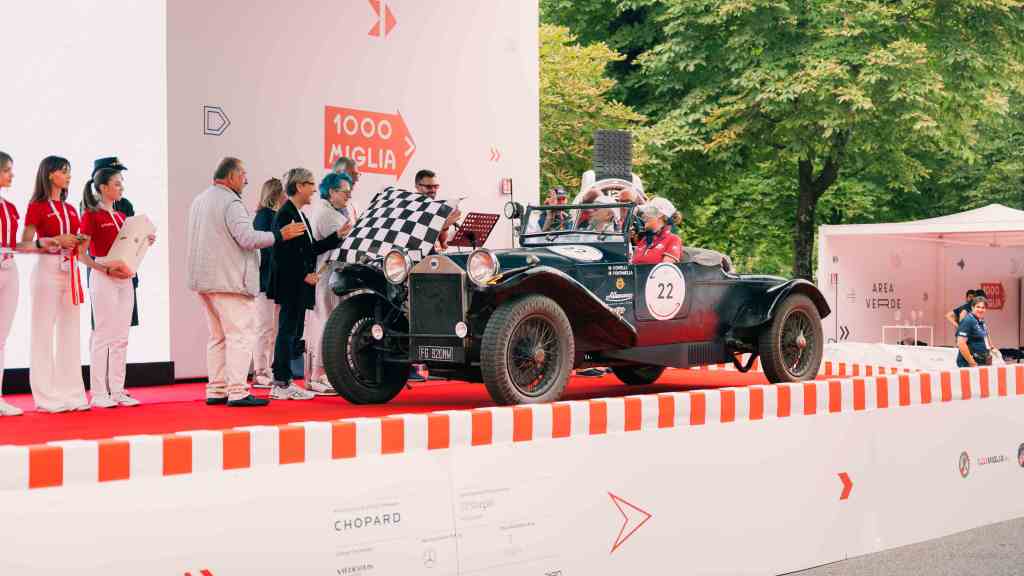
The Villa Trasqua team’s 1929 Alfa Romeo 6C 1750 Super Sport driven by the duo of Vesco and Salvinelli took the top step of the podium

The 42nd edition of the 1000 Miglia has been run beautifully again. The “Mille” is a race which has a very special place in my heart, as I have participated in it forming a team with my father in the official Mercedes Factory team, at the wheel of a works car. In the Mercedes team entry was then also Stirling Moss, and you can imagine that being in the same team, talking to him and wearing the same Mercedes Team racing overall as the celebrated champion was the pinnacle of what we would ever experience in our motoring life. I still have and cherish the Mille Miglia Shopard Watch with our entry number, 147, engraved in the back. 

The Lancia Autrelia’s of the Automobile Club di Brescia were then the car on the winners podium, and now today Alfa Romeo’s undisputed dominance of the 1000 Miglia continues. 

The 1927 Lancia Lambda Casaro VII Serie, crewed by Fontanella and Covelli, won the silver medal.

The route of the Mille Miglia is in itself totally epic…

From Brescia it went for the first time in 76 years also to Turin, then from Genoa and the beaches of Viareggio to Via Veneto in the heart of Rome, then returning north via Siena, Ferrara and Lake Garda, to end with the traditional parade on Viale Venezia in Brescia, where it all began back in 1927.

Once again this year, the pass-by of this epic “traveling museum” aroused enthusiasm and curiosity among the throngs of spectators who crowded the route of over 2,000 km. 

Also remarkable was the participation  of the Alfa Romeo Junior, the new compact car that brings Alfa Romeo sportiness back into the largest segment in the European market.

The New Lancia Ypsilon finished at the third position participating for the first time at the 1000 Miglia Green. And this on the very same days the model became available at Italian dealerships! Needless to say that we are keen to drive both cars soon…

As you will recall, I mentioned this already earlier in my columns, I have been a Lancia owner for four years, driving a dark midnight blue Lancia Dedra. It NEVER missed a beat, come what may and accompanied me in many iconic European places and cities. After that, I drove for half a year a Lancia Gamma, which also was fast, reliable and full of panache. 

But back to the Mille Miglia: what a fantastic event, it still moves my heart. 

Hans Knol ten Bensel 

Unique historic Porsches to be seen at Brussels Autoworld…

Autoworld, the impressive car museum at the Brussels Cinquantenaire, holds now an exhibition ”Porsche, driven by dreams” celebrating the 75th anniversary of the brand. You can already read about it in our columns. Some 50 Porsches are displayed, many of them brought to the capital of Europe by the Stuttgart Porsche museum, with some of them never seen before on public display in Belgium.

It ranges from the 984 to the “Mission E” prototype, the latter which was a harbinger of the alternative future coming to us all.

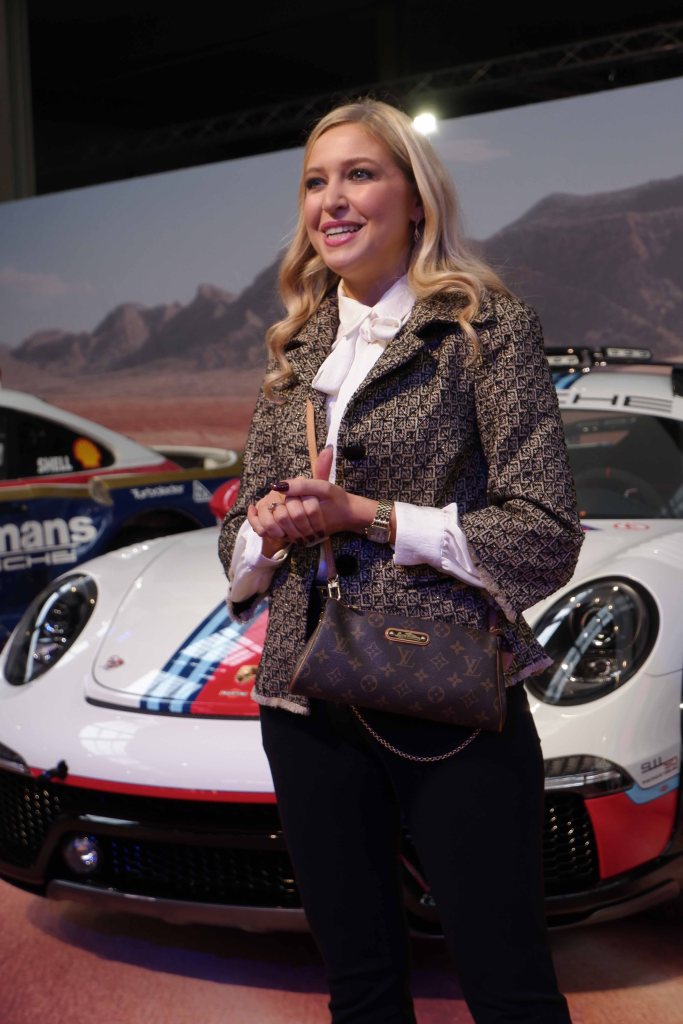
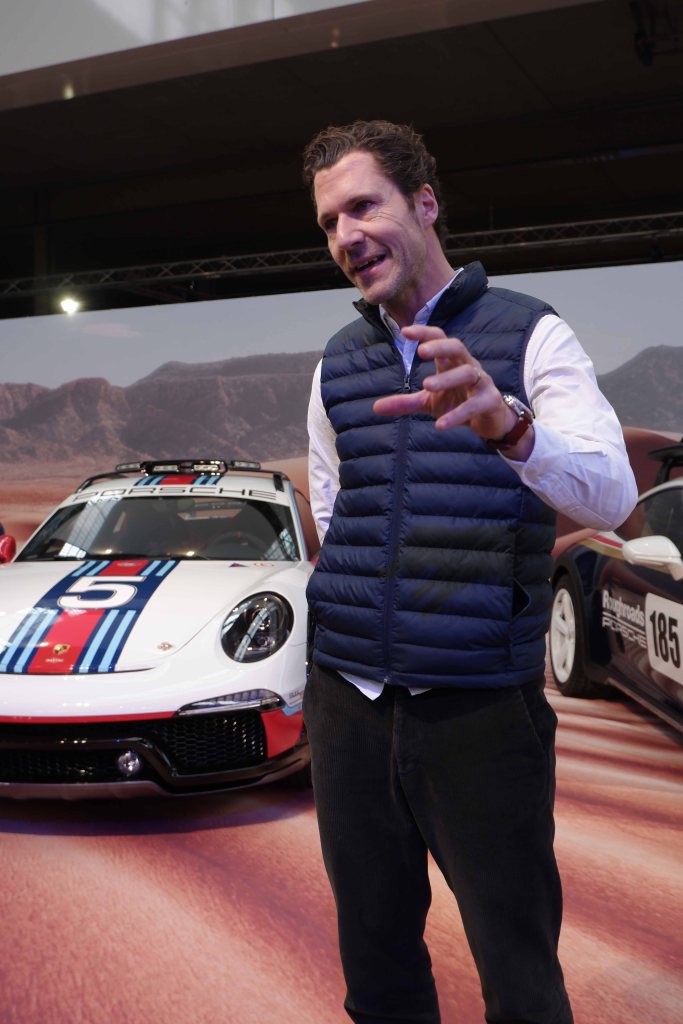
The show was presented by PR manager Porsche Belgium Liana Picard, General director Autoworld Sebastien de Baere and last but not least car expert and curator of Autoworld Leo Van Hoorick, who showed us around the exhibition and offered us his expert comments and insights. (See photo here and further in the article).

Hans Knol ten Bensel

The 911 is now already 60 years among us, and your servant still remembers driving these 911’s with sporting abandon in the early seventies. I just loved to take these genuine drivers’ cars to the limit, their handling needed an expert hand, but they never betrayed me and on the contrary, it was a pure delight to master them. The flat six engine was then still air cooled, and the echo of their roar and hiss at high revs still echoes in my ears. Just look a bit further in our columns, click the following link: https://autoprova.be/2021/03/27/some-early-photos-from-my-automotive-beginnings/


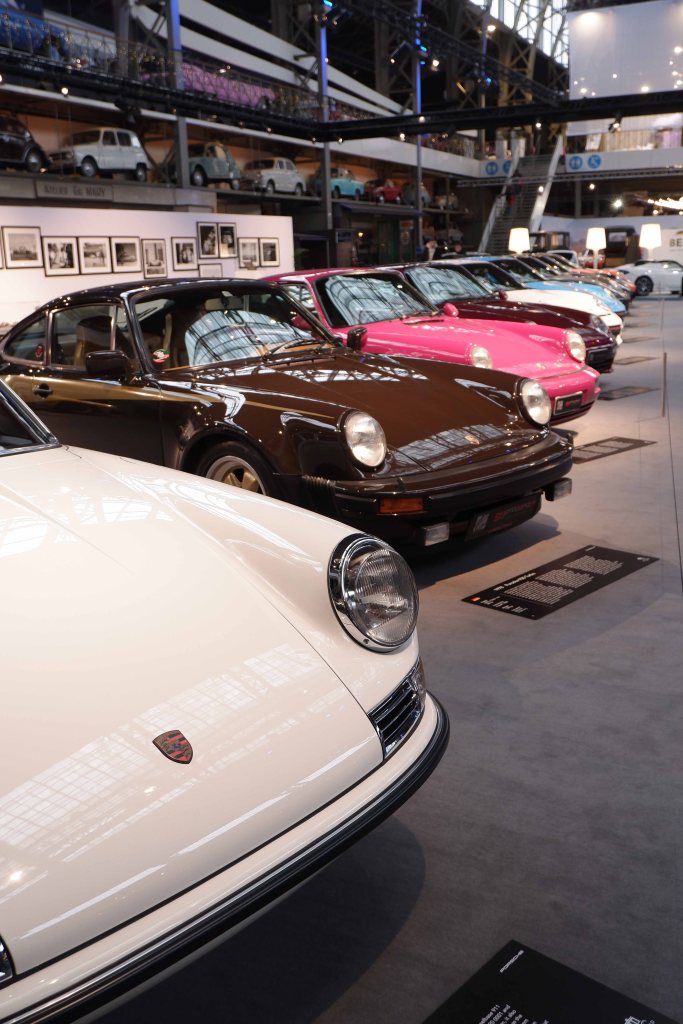
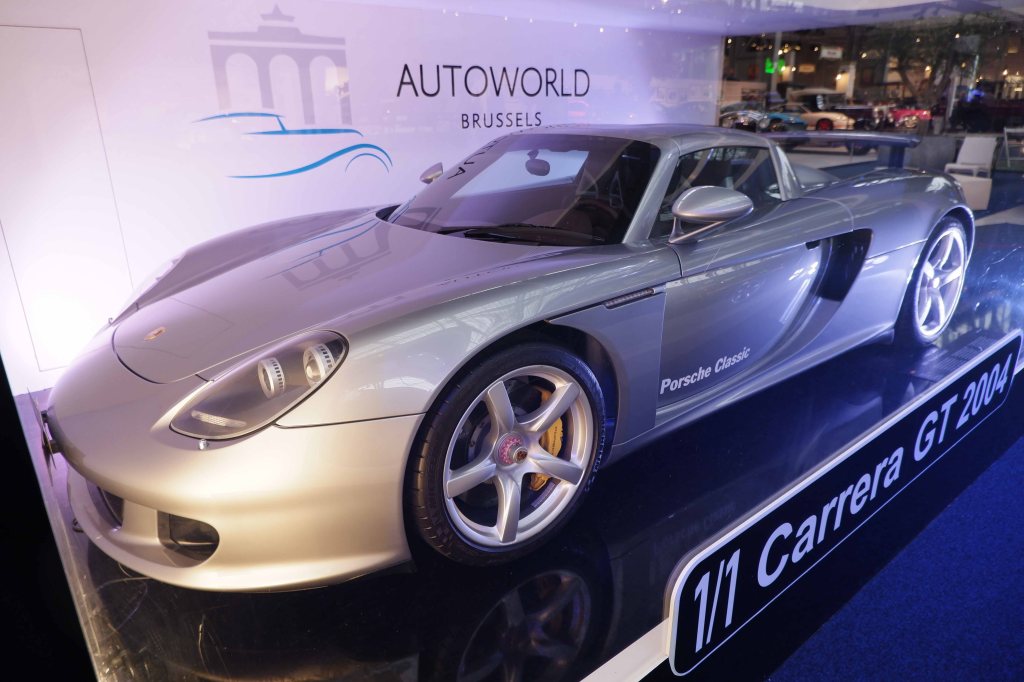
Besides the iconic 911, of which we still found an absolute classic early version in the Museum, on display outside the specific Porsche show, just look at the photo here  above, there were indeed some very dramatic Porsche Museum Cars, and the most stunning for me was the Carrera GT with its V10 engine.  It is a stylish classic sportscar, breathing the “Zeitgeist” of two decades ago, with its clean, fluent lines, inspired by the bolides at le Mans.

It’s a carbon-fibre, mid-engined super car, and made its debut at the 2003 Geneva International Motor Show. It came three years after its debut appearance at the Paris Motor Show in prototype form – an event itself which caused such an explosion of interest that Porsche knew their dream needed to be made a reality. The birth of what is today considered one of the greatest of modern classic sports cars, says Porsche. We can only agree…

Pushing technical boundaries 23 years ago…

The Carrera GT is a car that pushed technological boundaries beyond any supercar of that time. Its beautiful profile encompassed a staggeringly powerful 612PS V10 engine that was a direct descendant of the 10-cylinder race engine developed for the Le Mans 24-hours of 2000. The only modifications the race engine required were those to meet worldwide emissions and noise regulations for road legal cars. In keeping with its push for innovation, the Carrera GT also pioneered the use of pure carbon fibre for its monocoque and subframe.  Performance is – considering even today’s standards – quite impressive. It can reach 100km/h in just 3.9secs and roar on to 200km/h in 9.9secs. The top speed of the Carrera GT is officially 330km/h.

The racing engine needs of course a fair amount of cooling. The huge air intake along the car’s flanks, along with the three radiators are five times larger in area than that of the Porsche 911 Turbo of the time.

Then there are the purposeful contours of the Carrera GT. It was designed by a team headed up by legendary Dutch car designer, Harm Lagaay. He already worked since 1971 for Porsche, and designed the 924. He moved to BMW in 1985, and designed for them the BMW Z1. Also purposeful and elegant. This purposefulness is found also in this GT. He returned to Porsche in 1989 as head of the “Style Porsche” department in Weissach, and oversaw the design of the Porsches of the period – the 968, 989 (the stillborn four door Porsche), 993 (the 1993-1997 generation of the 911 for which Englishman Tony Hatter is also credited), Boxster, 996 (the all-new 911 of 1997), last but not least the Cayenne and one of his absolute masterpieces, the Carrera GT.

General director Autoworld Sebastien de Baere…

Some 1270 units of the Carrera GT were made in total over its production life (manufacture ended in May 2006). Today, the Carrera GT Type 980 is an official member of the Porsche Classic family, which means both owners and those Porsche Classic partners and Porsche Centres who maintain the cars have access to an extensive supply of genuine parts. As you might expect, many of them are still on our roads and retail at around the $1 million range for a reasonably good example… Mind you, it cost close to half a million Euros when new…

Italian blood: the Carrera Abarth

Can you believe, looking at the picture above, that this car was built in 1960? Three years before the 911, as the dust sheet was pulled back on this brand-new Porsche model at the 1963 Frankfurt International Motor Show. Looking in profile, it is quite reminiscent of the overall proportions of the 911. Just a bit more muscular, racier, more pur-sang even. It is officially called the Porsche 356 B 2000 GS Carrera GTL Abarth, and for me, it is one of the “purest” Porsche street cars.

We go back to the early sixties here. To remain competitive in Grand Touring (GT) racing, Porsche needed lightweight versions of the 356 B. They looked south for help, and found it in the Italian-Austrian sports car builder and Porsche representative Carlo Abarth. He has enjoyed a good relationship with Zuffenhausen since their collaboration with the Type 360 Cisitalia Grand Prix car in 1947. Abarth now commissions Ugo Zagato in Milan to build 20 lightweight coupés. The handcrafted aluminium bodies featuring the characteristic air scoop on the rear are compact and streamlined. It is a true beauty with wonderful proportions, in our opinion a forerunner of what the 911 was to be.

Gave us expert information about the Porsches in the exhibition, connaisseur and Autoworld curator Leo Van Hoorick…

. The 356 B Carrera GTL Abarth weighs almost 120 kilograms less than the standard 356 B. The “marriage” of the chassis and body takes place in Milan, with the GTL receiving its finishing touches at Abarth and Porsche. The list of successes of the 356 B Carrera GTL Abarth includes class victories at the Targa Florio – in 1960 with a 1.6-litre engine, 1961 with a 2-litre Carrera unit – plus outright victory at the Lyon-Charbonnières Rally of 1960 as well as class wins at Le Mans.

Driving the Abarth GTL, racing drivers such as Hans Herrmann, Herbert Linge, Edgar Barth and Paul Ernst Strähle win world championship titles in 1961 for Porsche for GT cars with a displacement of up to 2 litres. Further international titles in 1961 include Heini Walter’s fourth victory at the European Mountain Championship and Hans-Joachim Walter’s win at the European Rally Championship.

Even with the 1,588 cc flat four, developing 135 hp or 99 kW, the 778 kg Carrera was 220 km/h fast…

There is a lot more to see in this Porsche exhibition in Autoworld, and we will come back on this in following reports, where we will delve more in detail about the Porsche prototypes and the iconic Gmünd Coupé. Stay tuned!

Hans Knol ten Bensel

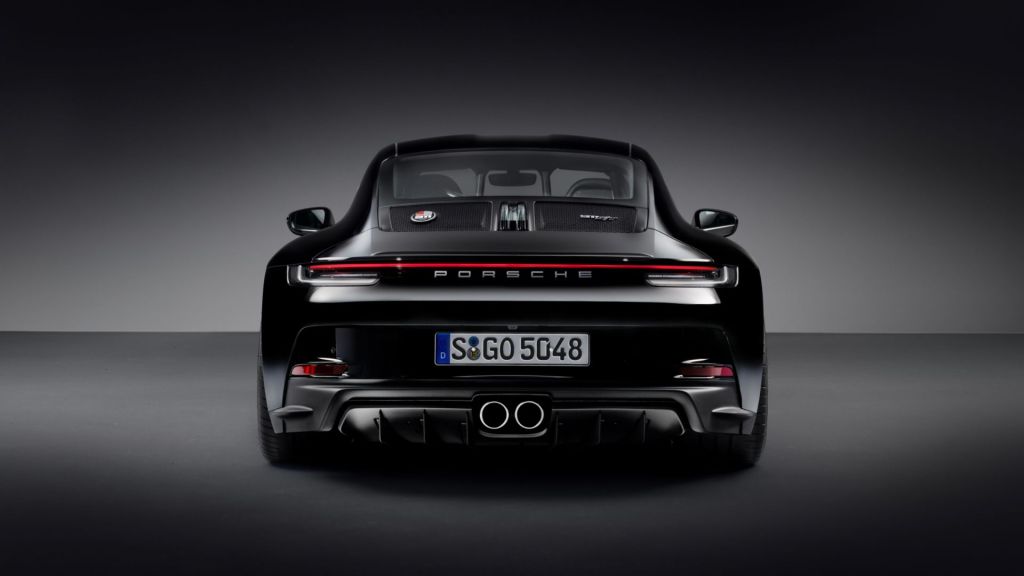
Porsche celebrates the 60th anniversary of the 911 with a special purist edition: the 911 S/T

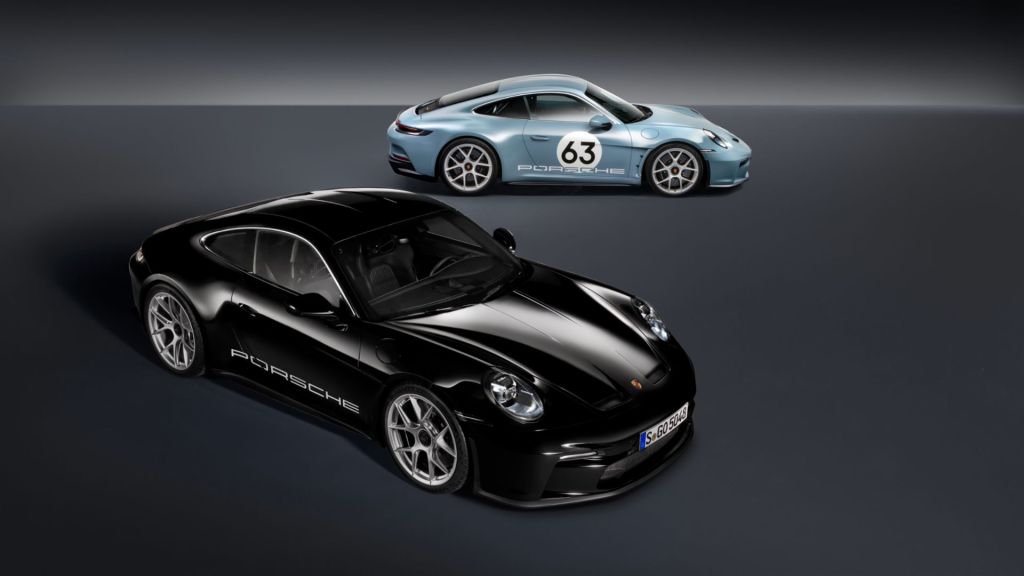
The 911 S/T here in black, with the Special Heritage Edition in the background. The new exterior colour Shoreblue Metallic and the wheel rim colour Ceramica are exclusive for this special edition.

The 911 is now already 6 decades with us. As soon as your servant hit 18 years, he sat behind the wheel of a 911 S 2,4 press car. What a legendary experience it was. My love for this car has remained unbroken ever since. Already the hissing sound of its (then air-cooled) flat six made you addictive. So Porsche takes us back to the “pure” original, with of course the power and panache of the modern day 911.

In a limited run of 1,963 examples, the Porsche 911 S/T offers lightweight design and the sound and fury of the high-revving engine from the 911 GT3 RS. The purity lies in the fact that it delivers its power to the road via a manual gearbox and lightweight clutch.

The naturally aspirated, 386 kW (525 PS) 911 GT3 RS engine has a capacity of 4 litres, and the gearbox has – noblesse oblige – short ratios. This is complemented by a resolutely lightweight construction and a running-gear setup optimised for agility and drivability. The 911 S/T weighs just 1,380 kilograms (DIN kerb weight, incl. all fluids), so you can imagine that this Porsche is to be enjoyed more than ever.

Unlike the 911 GT3 RS, the focus of the development of the 911 S/T has been not for track use, but rather for journeys on public roads. The name marks out the new 911 S/T as the descendant of a particularly performance-focused version of the first 911 generation. From 1969, Porsche offered a special race version of the 911 S. Internally, these vehicles were called 911 ST.

Modifications to the chassis, wheels, engine and body then significantly improved acceleration, braking, traction and cornering grip. The anniversary model combines elements of the 911 GT3 RS with the body of the 911 GT3 with Touring Package and supplements it with lightweight components specially developed for the 911 S/T.

Of course, performance is paramount: coupled with a six-speed manual transmission with shorter gear ratios compared to the 911 GT3, the high-revving engine in the 911 S/T propels the 911 S/T to 100 km/h in just 3.7 seconds. It achieves a top speed of 300 km/h. With that comes the beautiful sound of the flat 6 through the lightweight sports exhaust system… need we say more?

A Heritage Design Package

The 911 S/T is offered with an optional exclusive Heritage Design Package. The new exterior colour Shoreblue Metallic and the wheel rim colour Ceramica are exclusively available for this variant. On the doors, a starting number from 0 to 99 as well as a decorative foil can be applied on request. The classic-design Porsche crest from the original 911 that adorns the front, the hub caps, the steering wheel, the headrests and the car key underscores the historic roots of the 911 S/T.

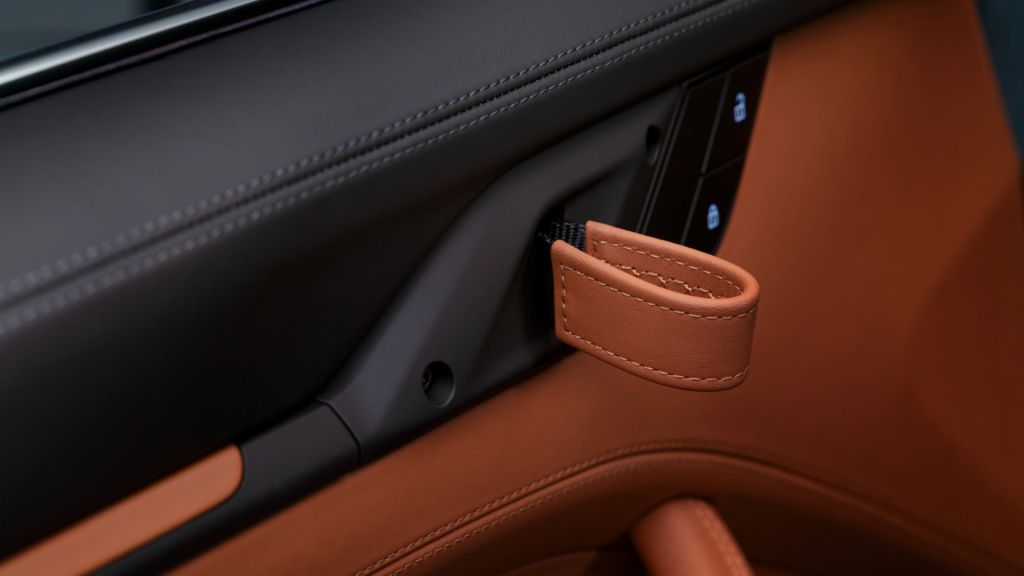
The interior also features cloth seat centers in Classic Cognac with black pinstripes, which are another homage to heritage. Two-tone semi-aniline leather trim in Black/Classic Cognac leather with extensive leather surrounds, a roof lining in perforated Dinamica, and other elements from Porsche Exclusive Manufaktur round out the package. The Porsche logo and the 911 S/T model designation on the rear of the car are in Gold.

Porsche Design is also offering customers the 911 S/T the Chronograph 1 – 911 S/T.

Featuring a titanium case, uncoated and blasted for weight-saving reasons, this exclusive timepiece goes all in on the lightweight design principle of the new purist 911 special edition.

The heart of the chronograph is the Porsche Design WERK 01.240 with its COSC certification and flyback function. It is operated with a rotor in the design of the magnesium wheel of the 911 S/T.

Already dreaming? We invite you to just look at the photos…and it is good to know that in Belgium this anniversary edition can now be ordered for 327.743,04 euro including VAT. With the chronograph 1 – 911 S/T included…  

Hans Knol ten Bensel

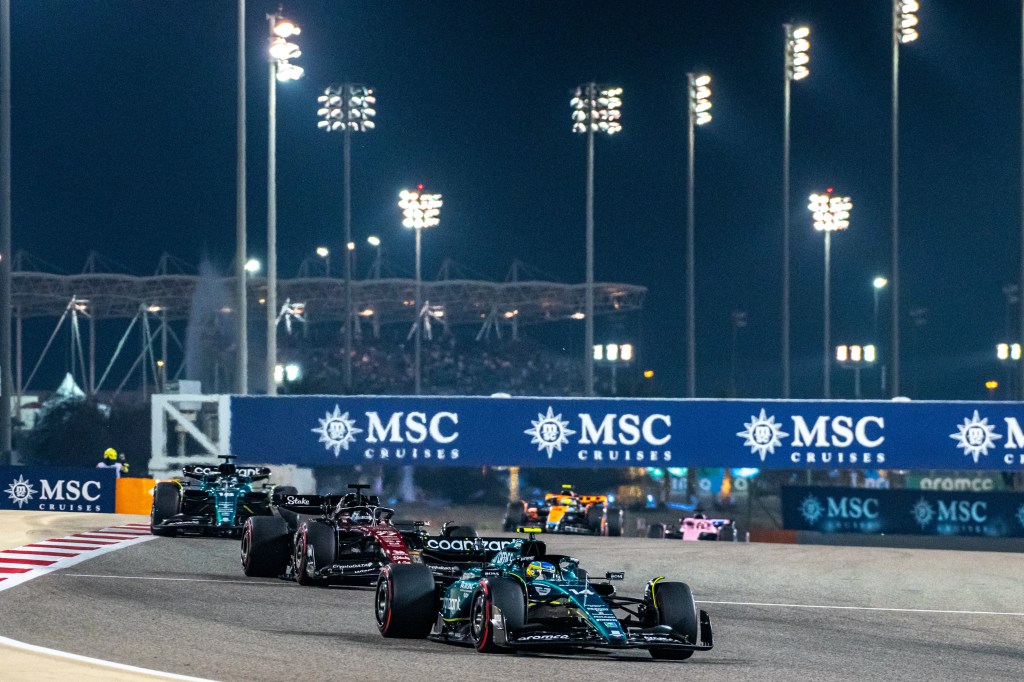
Watch the races with your cruiseship: MSC Cruises extends its global partnership with Formula 1®!

MSC Cruises is going from strength to strength, and May 5 it announced  that it will extend its global partnership with Formula 1®. They said this in Miami, on the eve of the Grand Prix™. MSC Cruises will therefore continue to be the official partner of Formula 1® for the cruise segment, until the end of the FIA World Championship in 2026.

MSC Cruises continues this partnership for all the good reasons: the ever growing interest in the Formula 1® universe around the world, and particularly in key markets for MSC Cruises, resulted in very strong results for the company and its product portfolio. The success of this collaboration between these two prestigious brands has enabled MSC Cruises to commit to further strengthen this partnership through an enriched program.

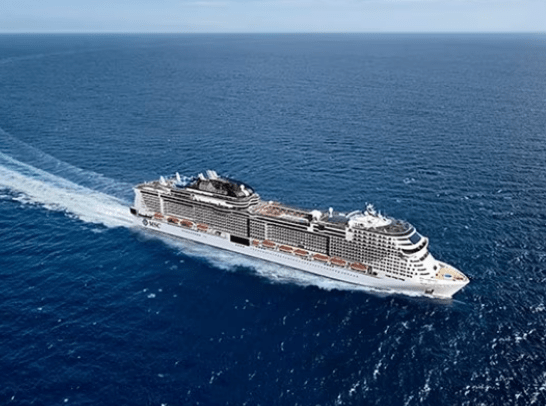
The MSC Ship Virtuosa will be your stay for the Abu Dhabi Grand Prix…

As part of the agreement, MSC Cruises will position ships in ports throughout select Grand Prix™ weekends to provide a unique hospitality experience from the circuit to the ship. The first of these event weekends will take place in November, for the last race of the 2023 season, in Abu Dhabi. The MSC ship Virtuosa will spend the Grand Prix™ weekend at the port, offering motorsport fans unique accommodation, hospitality and transport packages, including VIP packages. This concept will be enriched and deployed in other destinations, with other ships, from the 2024 season onwards.

The Virtuosa has longest LED Dome at sea…

In addition, MSC Cruises is confirmed as main sponsor of the F1® Grand Prix™ of Belgium in 2023. Thus, the brand will offer, among other things, immersive entertainment for spectators in the Fan Zone. Further main sponsorship deals will be unveiled shortly, for further 2024 F1® World Championship Grand Prix™. Needless to say that both parties are delighted with the collaboration:

Pierfrancesco Vago, Executive Chairman of MSC Cruises (on the right) said: “Formula 1® and MSC Cruises are excellent partners on many levels. Our success is partly based on teamwork, but also on our shared commitment to lasting change. We want to shape the future of our respective industries and leave a lasting legacy for generations to come. Our two brands are evolving at the head of their industries and contributing to a lasting change. For all these reasons, we are committed to Formula 1® for the long term on a global scale. We look forward to seeing this special collaboration evolve over the years. »

Stefano Domenicali, President and CEO of Formula 1®, (on the left) said: “We are delighted to extend our partnership with MSC Cruises, as our two brands share the same commitment to innovation and excellence. This collaboration has already delivered outstanding results and we look forward to strengthening our relationship. Together we will continue to push the boundaries and set new standards in sports and hospitality. »

We suggest the Grand Prix Lovers to have a closer look at MSC Cruises and their offers!

Hans Knol ten Bensel

Formula 1 drivers Valtteri Bottas and Zhou Guanyu test the Alfa Romeo Tonale Plug-In Hybrid Q4…

The entire Alfa Romeo F1 Team met in Hinwil, the location of Sauber Motorsport, for their annual preseason retreat.

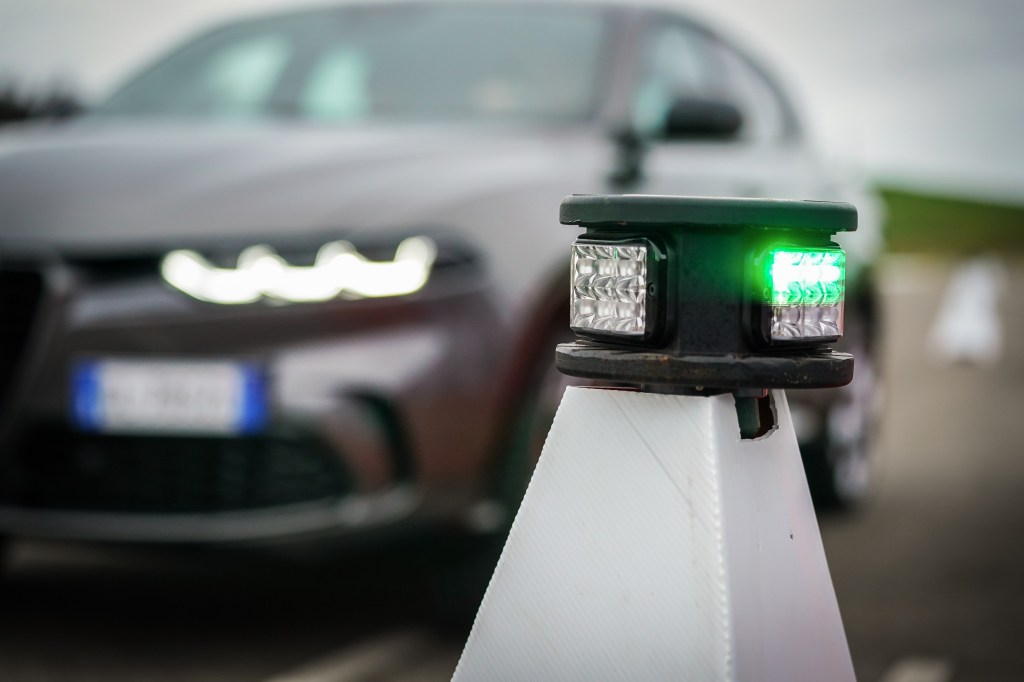
The drivers Valtteri Bottas and Zhou Guanyu there took part in an unconventional test drive of the Tonale Plug-In Hybrid Q4. They were involved in a reactivity test on a track in which a series of “doors” were progressively illuminated by sensors which, with the passing of the vehicle, progressively turned on and determined its route.

We can understand that they could not resist the temptation: I drove this formidable Tonale at its presentation on the scenic roads around Balocco, where I had also enjoyed behind the wheel a magnificent speed handling test on the circuit of Balocco, tasting the agility and driving dynamics, its 280 HP total power and formidable grip of the Q4 all-wheel drive of this “bolide”. See the full report on the presentation on https://autoprova.be/2022/11/17/we-drove-the-alfa-romeo-tonale-plug-in-hybrid-q4-in-balocco-the-wonderful-panache-of-todays-efficient-sportiness/.

The iluminated cones formed the “portals” or “doors” which formed the test circuit with many curves…

Indeed the grip in the both narrow and wide corners was masterful, and the acceleration between corners is nothing short of amazing. Know that this Tonale accelerates from 0 to 100 km in merely 6,5 seconds. Soon we will take this beautiful Tonale for a longer test drive, so stay tuned on these pages!

Hans Knol ten Bensel
Alfa Romeo  enters an exceptional crew in the 2022 “1000 Miglia”

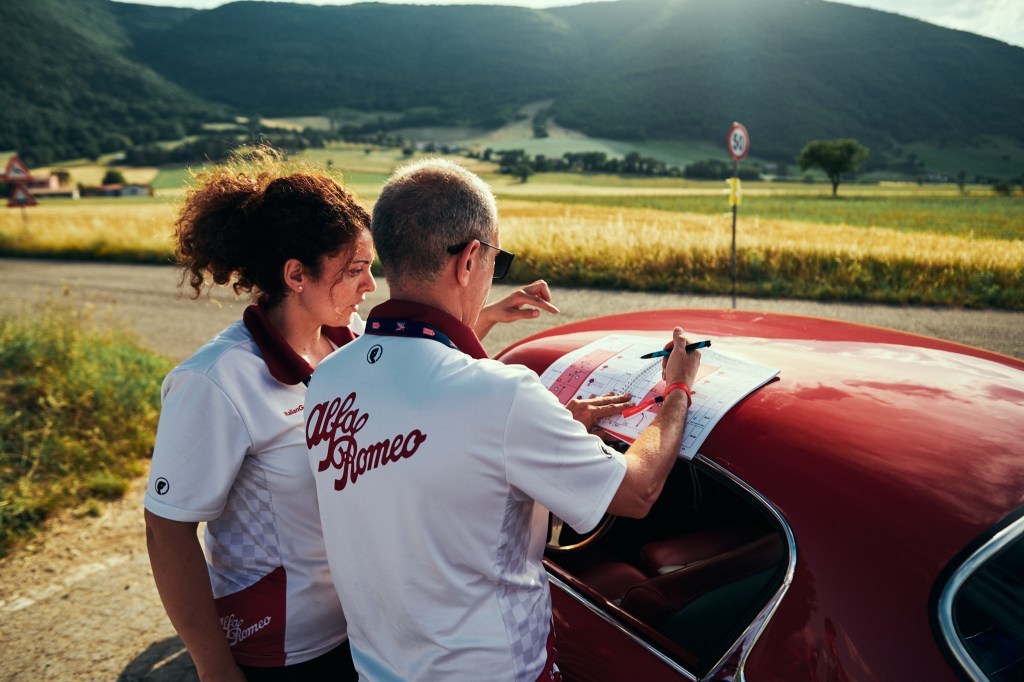
Christina Posta at the Nardi wheel of a 1900 Super Sprint

Alfa Romeo has launched an exceptional initiative at the 40th edition of the re-enactment of the “Mille Miglia”, the “most beautiful race in the world” in the famous words of Enzo Ferrari.

It features a truly exceptional crew, let us present it here for you:

Francesco Pirozzi, a member of body shop at the Giambattista Vico plant in Pomigliano, and Cristina Posta, an assembly line employee at the Cassino plant, will represent Alfa Romeo Manufacturing at the race on board a 1900 Super Sprint.

Francesco Pirozzi is 46 and has been gaining professional experience in the body shop at the Pomigliano d’Arco plant since 2005, especially on the geometry of the Alfa Romeo 147 and 159 models. An avid fan of the Alfa Romeo brand, today he is entirely dedicated to the Tonale project, which he has followed since its inception.

Father to a nine and seven-year-old, he is passionate about cars, electronics and mechanics.

Cristina Posta was born in Pontecorvo (FR) in 1984 and has worked on the assembly at the Cassino plant since 2018.

Due to her family ties, she had an emotional connection to Alfa Romeo even before working there and always wanted to be part of the Group.

Outside the factory, Cristina loves to wake up early, spend time in the kitchen and garden, and help her parents with the family agricultural business.

This crew embodies the inclusive spirit of this brand, which can rely on a cohesive and passionate team in every department.

We can only applaud this initiative. Alfa Romeo wants to engage its customers just like its own employees, offering visceral experiences like the “1000 Miglia” and remaining faithful to the Italian sporty DNA which has made it an icon since 1910.

The brand invites its fans to “Join the Tribe”…

Alfa Romeo’s 50 vehicles once again make it the most well-represented brand at the race. These include models from the brand’s private collection which are normally on show at the Alfa Romeo museum in Arese: the 6C 1500 Super Sport from 1928, the 1900 Sport Spider from 1954 and the 1900 Super Sprint from 1956.

Your servant has very fond memories of this iconic Mille Miglia. Years ago, I was invited now years ago together with my father by Mercedes Benz to form a crew at the wheel of the brand with the iconic star… it was legendary, to be then in the same team with the legendary Mille Miglia winner, Stirling Moss!

Hans Knol ten Bensel
I witnessed the E3 Saxo Bank Classic race, invited by the AG2R Citroën Team…a fascinating experience of the cycling world!

The AG2R CITROËN TEAM has not less than 12 mechanics, painstakingly preparing three bikes per team member for the race, in a specially equipped bus, of which the team has not less than four, also for the team racers, the food, the cooking, massage, etc.

I know a lot about automobiles, their history, present and future, and I am passionate about it. But when the dynamic Citroën/Stellantis PR department, notably Press & Communications Officer Wim Willems,  invited me to join the AG2R Citroën Team for the E3 Saxo Bank Classic, run on Friday, March 25, I grabbed of course this occasion with both hands. The cycle sport has reached a level of mechanical sophistication which equals that of Formula 1 Racing, and then we have said nothing about the medical/physical aspects of the cycle competition, the training, the food/diet balance, etc.

One of the four impressive buses of the team, parked in front of the Van der Valk hotel in Gent…

It proved to be a truly wonderful and interesting experience, and you will read our story here, where I learned a lot, and I am delighted to share it with you.

Hans Knol ten Bensel

I drove the evening before the race to the Van der Valk Hotel in Ghent, where I was received by my host Julien Duval. He has been himself a road racing cyclist since 2008, and has been with the AG2R La Mondiale team since 2017. He stopped racing at the end of last year, and now guides with expertise the guests Citroën has invited to see their team racing.

He led me first to the different buses, housing the bikes, the team cycling champions, the food, the kitchen and everything a team needs. Very impressive…

The bikes are being prepared…

I first climbed with him in the bus where the cycles are stored and prepared. The team has not less than three bikes per team rider for the race, and there are no less than 12 mechanics in total, who meticulously prepare the cycles before each race and training, taking them fully apart to the last nut and bolt, inspecting, adjusting and reassembling them. I read the letters “BMC” on the frames. “It stands for Bike Manufacturing Company, and it is based in Switzerland”, Julien explained. Indeed, Founded in 1994, BMC has from the outset focused on creating speed. From its headquarters in Switzerland, BMC has spent decades building the cycle sport, pushing technologies to their limits. This clearly shows…

The starting number is carefully attached the evening before the race…

BMC has won races of all varieties, defined new categories, as well as maintained its reputation as a technological and engineering powerhouse. BMC wrote its way into history by supplying bikes for the world’s top athletes, winning races such as the Tour de France, the Time Trial and Road World Championships, as well as the Olympic Road Race. In 2021 the brand suppors the AG2R CITROËN TEAM. What I saw in the bus was the flagship “Teammachine SLR”, but BMC has also at the disposal of the team its “Aero Timemachine Road” and the time trial specific “Timemachine” models.
The workhorse for the E3 Saxo Bank Classic race…the Teammachine SLR.

I show you here a photo of the “Teammachine SLR.” It has indeed won every major title that a bike can win including Monuments, World Championships, Olympic Games and the Tour de France. Gone for instance are the classic brake cables, disk brakes are now the norm, and everything is now commanded hydraulically. The brake & shift levers are built by Campagnolo, as are the cassette, the chain, the pulley wheel. Also the front and rear brakes are “Super Record Discs” stemming from the Italian manufacturer.

The super important dérailleur is the “Super Record EPS 12 speed” also built by Campagnolo. The wheels are Campagnolo “Bora” wheels. The tires are coming from Pirelli, and are P Zero / Cinturato’s.

Pirelly tires and Campagnolo wheels…

The frame, the fork, the seatpost, handlebar and stem are built by BMC.

By optimizing tube shapes, core centre stiffness, revising the carbon layout and utilizing a brand-new one-piece bar and stem cockpit, BMC has updated the bike for 2021 and beyond.

The all-important physical condition and food…

Did you know that the AG2R CITROËN team has not less than four doctors at its disposal, on top of that two physiotherapists, and next to that a psychologist & mental coach and a psycho practitioner? Then we have said nothing about the nutrition: there is a nutritionist and a micro-nutritionist and there are no less than five cooks!

Foor and last but not least enegry gels and drinks are most important during the race…

Indeed, nutrition and drinking is most important. Did you know for instance that competition cycling makes one lose about 1 liter of sweat per hour and one burns about 75-90 grams of carbohydrates per hour? So the competitors have to drink at least 600 ml of a kind of Isotonic Sports Drink per hour, divided into 4x 125 ml (every 15 min). In this way, one has the right support for fluids, as well as a replenishment of carbohydrate reserves.

After two to three hours, it is necessary to take in some solid food, and so energy bars come in the picture. Of course, in the race, most often one has no time to do this, so the competitors take so-called “energy gels”, which is a highly concentrated carbohydrates syrup. Drink gels are mostly preferred, as they are mixed with the right amount of water, so it is ready to drink.

Julien Duval holding here the energy drinks, together with the aluminum bag of energy gel, for the team cyclists during the race…at the “point de ravitaillement”

So our host Julien led us through the bus with the food and the energy drinks, and also took care of us during the race the next day, where he drove us to the important vantage points, to take along these energy drinks for the necessary ravitaillement of the team racers…

After the finish, a so-called recovery drink is also necessary, and indeed one should thoroughly re-hydrate. After two hours a good meal is also de rigueur…

Besides riding in the race itself, training is also most important. The team has no less than six sport assistants and two osteopaths.

The AG2R CITROËN TEAM… and the race.

As said, on the race day we were driven by Julien himself to the start of the E3 Saxo bank Classic race at Harelbeke, then to several vantage points on the course.

The race was won by Wout van Aert, with his team mate Christophe Laporte arriving at the finish hand in hand alongside him, but graciously allowing Wout van Aert to win the race.  

The (E3 Harelbeke) is by the way an annual cycling race with start and finish in Harelbeke. The 130 miles long race is actually a preparation race for the Tour of Flanders. The route is shorter, but many of the mythical climbs of the Tour of Flanders are also found in the E3 Saxo Bank Classic.

The crucial moment: Wout van Aert and team mate Christophe Laporte cross the finish line…

The conditions with the famous Belgian cobblestones and steep climbs are very similar. The route takes us through East Flanders including 12 hills. Since 2012 the route includes the mythical “Muur van Geraardsbergen.” Spectacular indeed!

Last but not least, let’s turn to the AG2R CITROËN TEAM. Everything started in 1992, when Vincent Lavenu made his dream of creating a professional cycling team a reality. In 1997, AG2R Prévoyance joined in this great project as a co-partner alongside Casino before becoming its main sponsor in 2000. From 2008 to 2020, the cycling team wore the colors of AG2R LA MONDIALE. Since January 2021, they have been writing new pages in the team’s history, now under the name “AG2R CITROËN TEAM”. Indeed, then Citroën became a partner, and according to Vincent Cobée – General manager of CITROËN, “the first year of partnership was a year of learning which allowed us to discover the incredible universe of cycling.”

It was also incredible for us, and we learned a lot!

The love for the cycle sport is overwhelming in Flanders. The race was about men on their bikes, but this female cycle amateur who watched the E3 Saxo Bank Classic at the finish line was for me the woman of the race!

We let you look at the photos here, and just discover a unique world with us!

Hans Knol ten Bensel