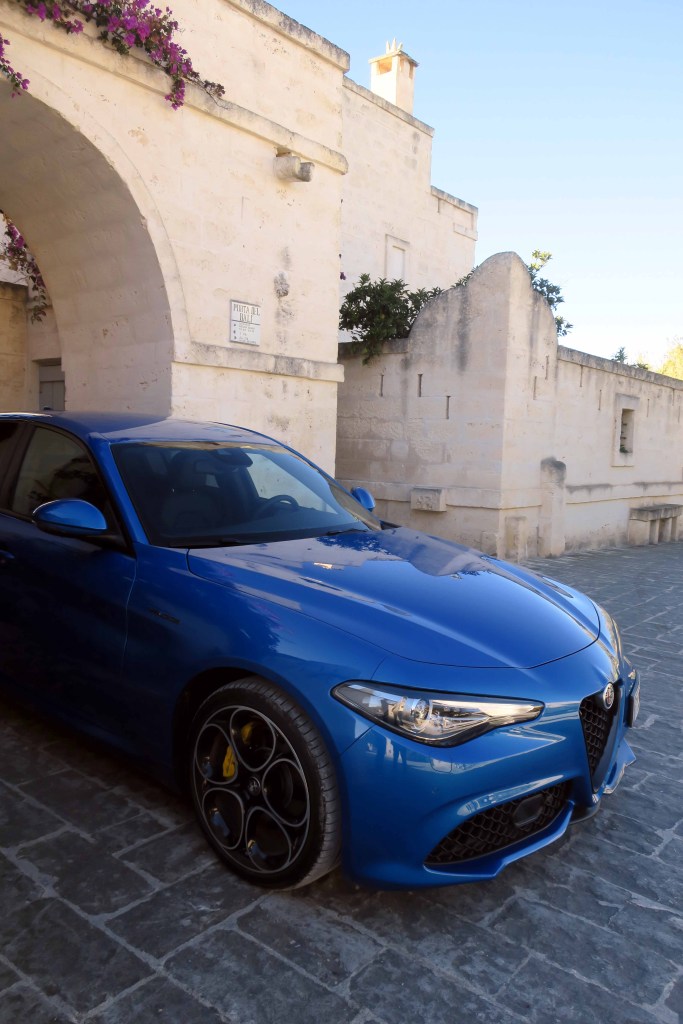
We drove for you the new 2020 Stelvio and Giulia in Puglia: revised interiors, infotainment and advanced driver assistance systems make Alfa driving even more stunning… Here we parked it in fort of the Borgo Egnazia Hotel, where the event was held…
Driving an Alfa should be on the bucket list of every car enthusiast, and indeed blessed are those who can sit in their daily life behind the iconic three spoked steering wheel of an Alfa, and even more, can call it their own.
The ever more elegant Giulia in the alleys of Borgo Egnazio Resort…
This unique driving pleasure is now further brought into the digital age, adding to the sheer driving dynamics and bringing it to an even higher level.
Alberto Cavvagioni, Head of Alfa Romeo Brand EMEA, presented to us the further steps of Alfa entering into the digital age…
We flew to beautiful Puglia to see and try it out for you, and soon you will read in these columns here the full report of our delightful Alfa experience in the stunning surroundings of Bari and the Borgo Egnezia resort hotel.
Hans Knol ten Bensel
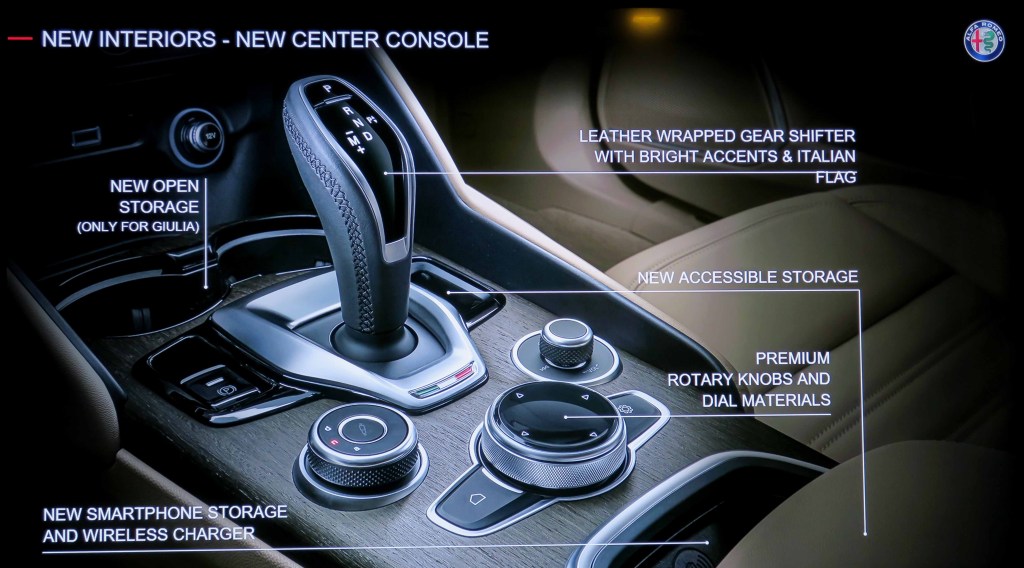
The Giulia and Stelvio now benefit from a new interior, revised materials and dashboard layouts. The infotainment has also been overhauled with connected services, touchscreen, completely redesigned human-machine interface, and new ADAS (Advanced Driver Assistance Systems) and level 2 autonomous driving systems, of which (much) more soon.
The iconic names used on the Alfa’s of the sixties and seventies are also back, and sound wonderful to the Alfa connoisseurs’ ears: Veloce, Veloce TI and Sprint for the Stelvio, and TI, Super for the Giulia, with a Business badge thrown in to suit the fleet market in these modern times.
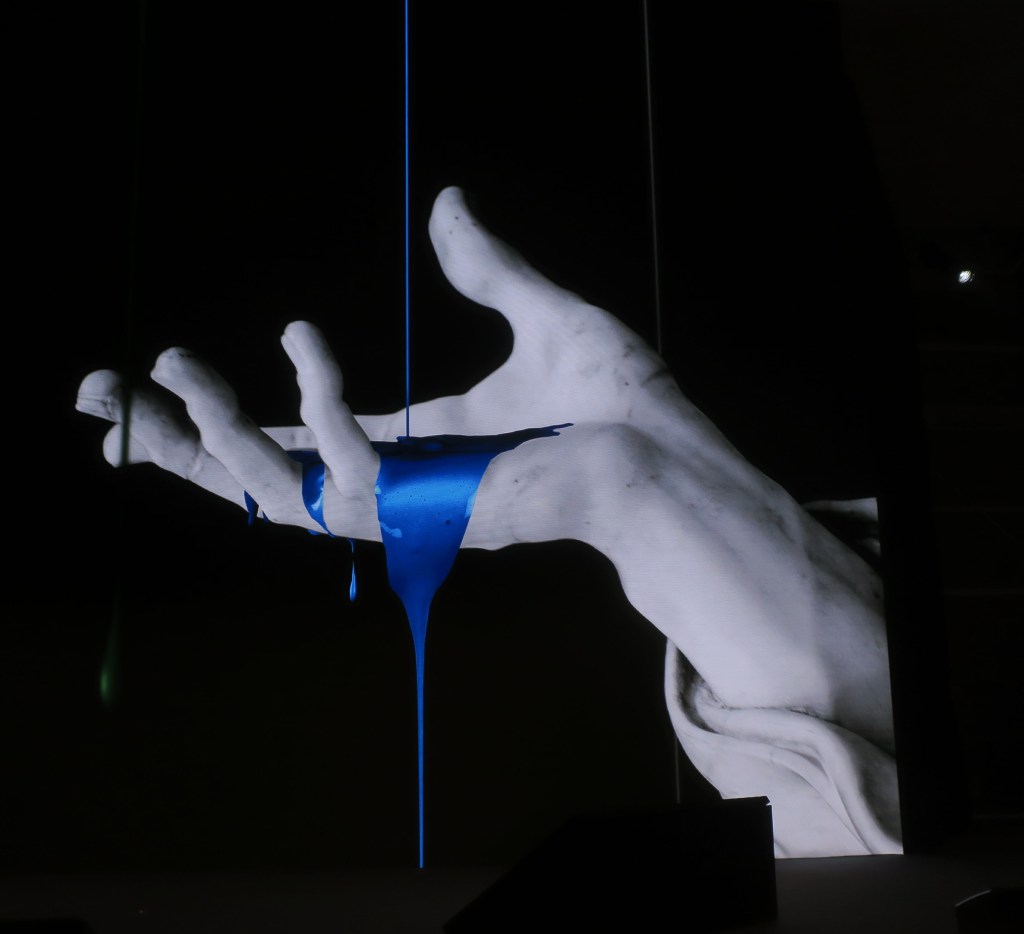
Last but not least, there is also a whole new colour range, to fully express new emotions, closely linked to the brand’s tradition.
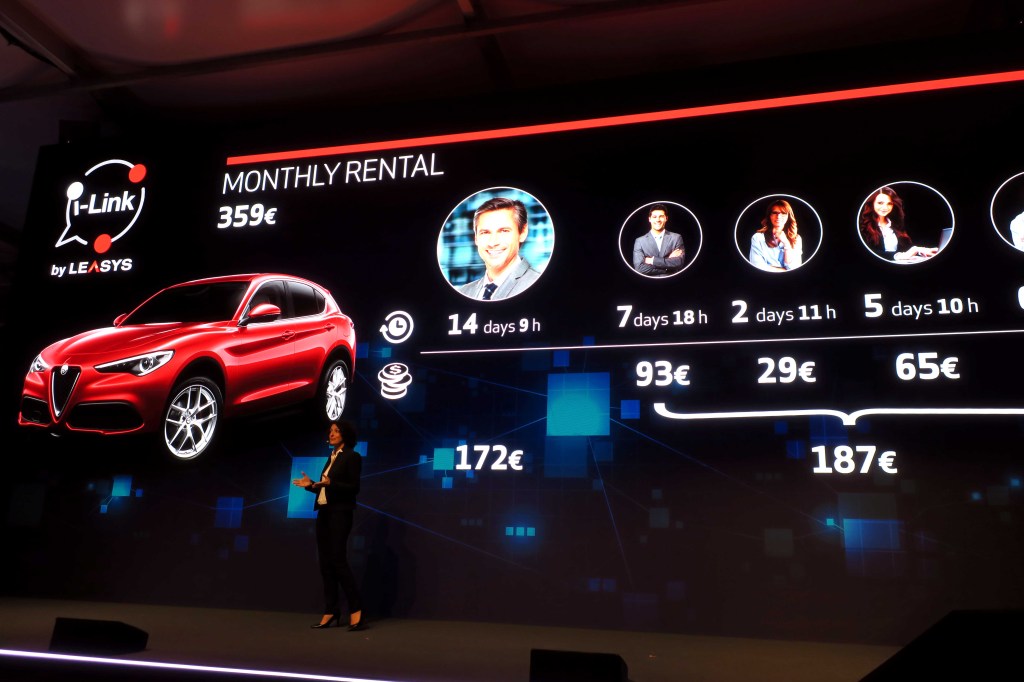
At the event, Leasys and FCA Bank introduced “I-Link” by Leasys, a service designed to strengthen the link between Alfa Romeo customers and the new forms of shared mobility.
Marcella Merli, Head of Sales and Marketing, FCA Bank, explains to us the merits of sharing the Alfa experience through i-Link…
Indeed, sharing the Alfa Romeo driving experience could or should be on the cards, we think!
Much more of all this later in depth with separate reports…
Of course, we had the opportunity to drive classic Alfa’s too…
Driven personally from Turin across the Alps to Brussels…for a unique premiere
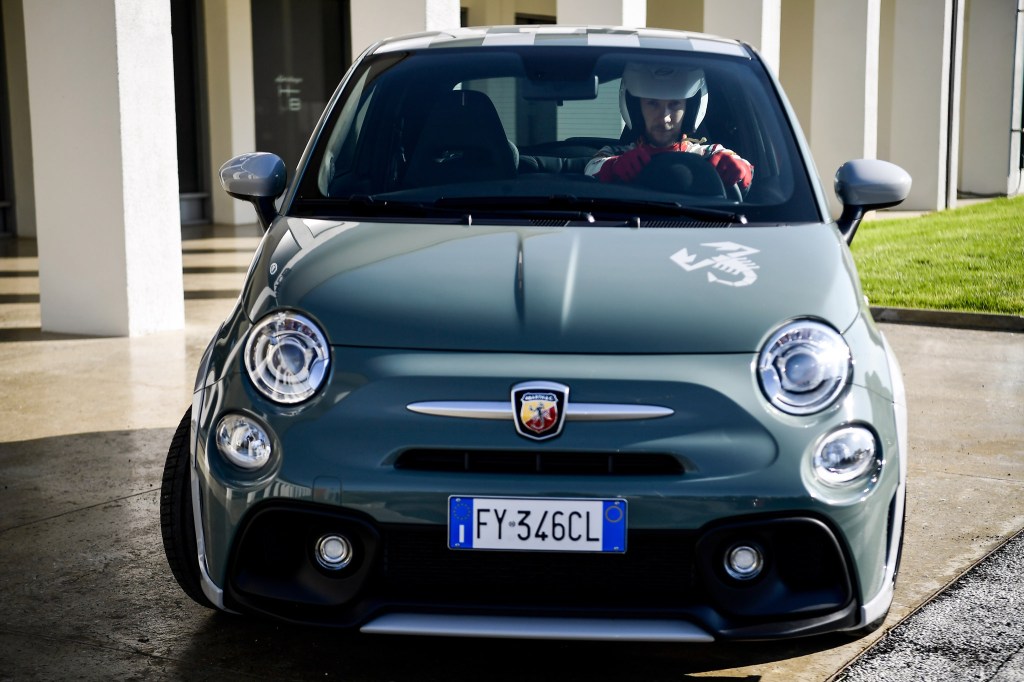
The people from Abarth Belgium have their car loving heart at the (very) right place. In order to treat the Belgian public with a very special gem, the Interclassics Brussels 2019 salon seemed to be the perfect stage to present the new Abarth 695 70 ° Anniversario for the first time in our country.
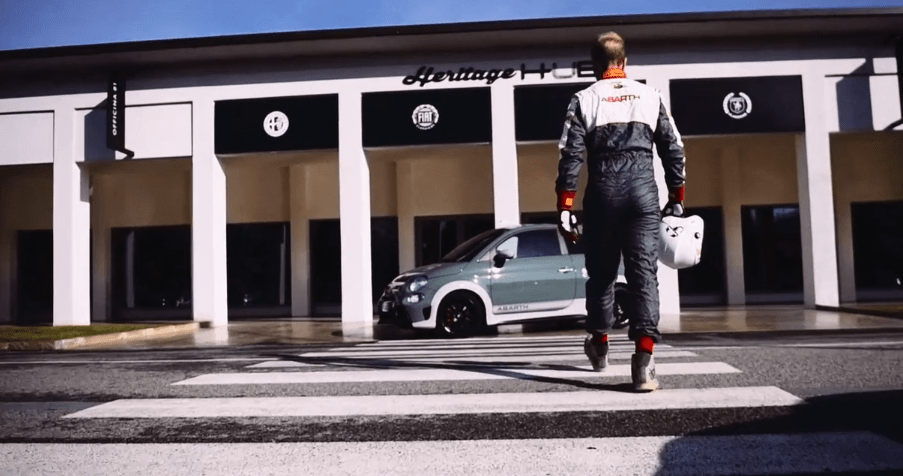
Staring from the Turin based FCA heritage HUB …
They drove personally the Abarth show car across the Alps from Turin to Brussels, and not only that. They filmed it too.
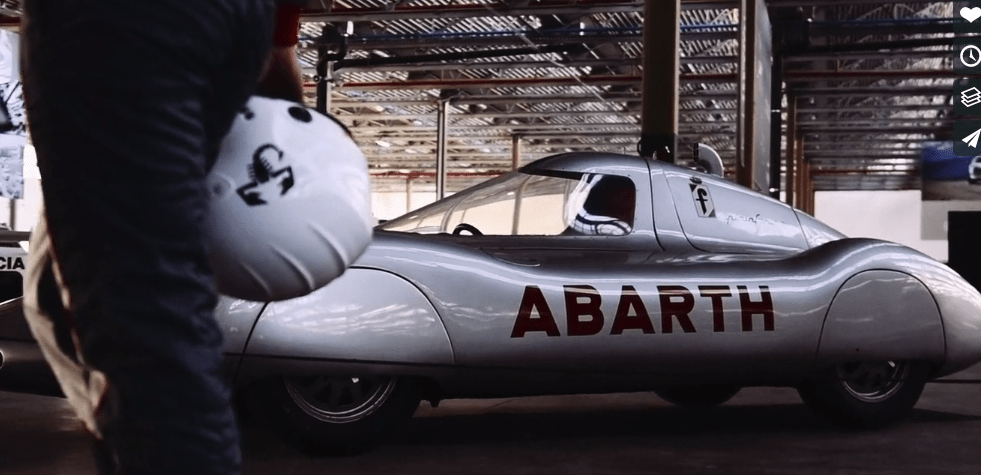
Indeed, to celebrate the 70th anniversary of the brand, an accompanying video of the model was created with a perfect mise-en-scene. The ideal setting of FCA Heritage in Turin, where all collection cars are housed, served as a perfect setting and bears witness to the immense prestigious heritage that served as a source of inspiration for this unique model.
This exclusive video was produced specifically for Interclassics Brussels 2019.
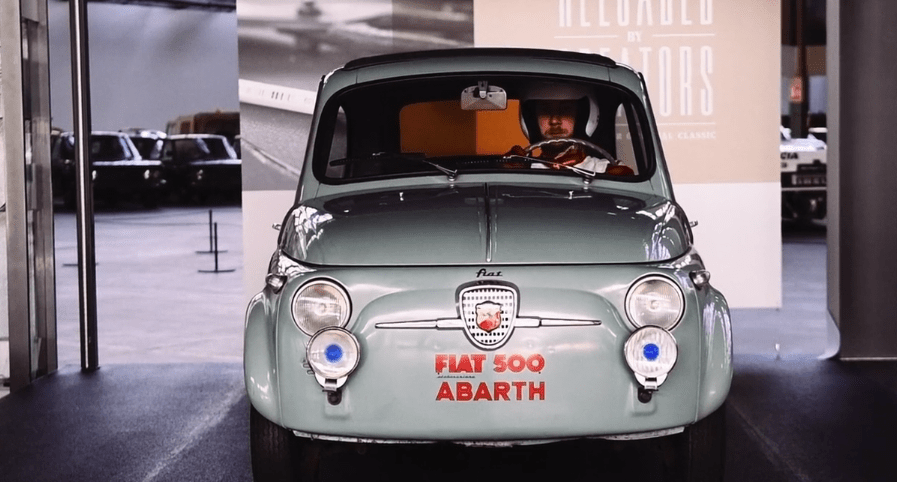
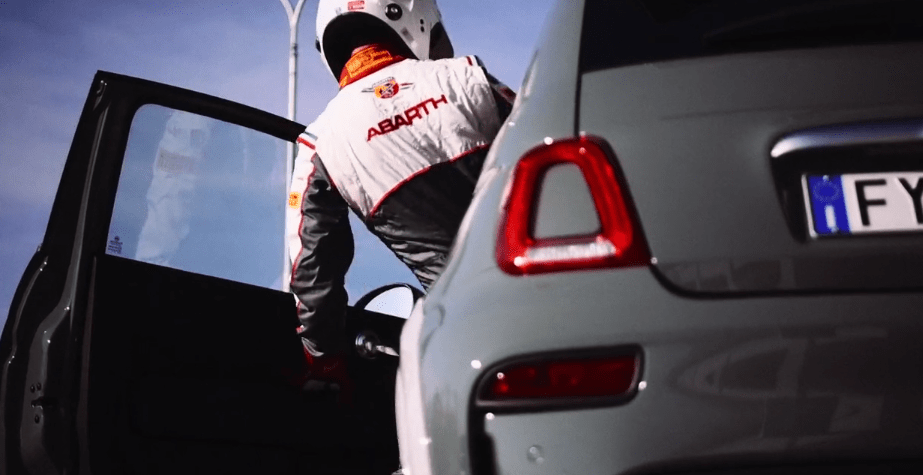
One sees a pilot who takes place at the wheel of a vintage model and then takes a seat in the new Abarth 695 70 ° Anniversario.
It then follows the road from the Heritage Hub of Fiat Chrysler Automobiles in Turin to arrive at the Interclassics salon in Brussels.
The iconic lights of the “pure” historic Abarth 500…
A route of approximately 1,000 kilometers to reach the European capital. You can see it by using the following link: https://vimeo.com/372916951
On his way from the Turin Heritage Museum to Brussels…
This video will of course serve to promote the presence of this exclusive model in avant-premiere in Brussels.
Starting away in Turin…
The production of this model is limited to 1949 copies, this number refers to the year that Abarth was founded…
Indeed, between the raindrops, other magnificent events were to be enjoyed, and beautiful cars came before our lens…
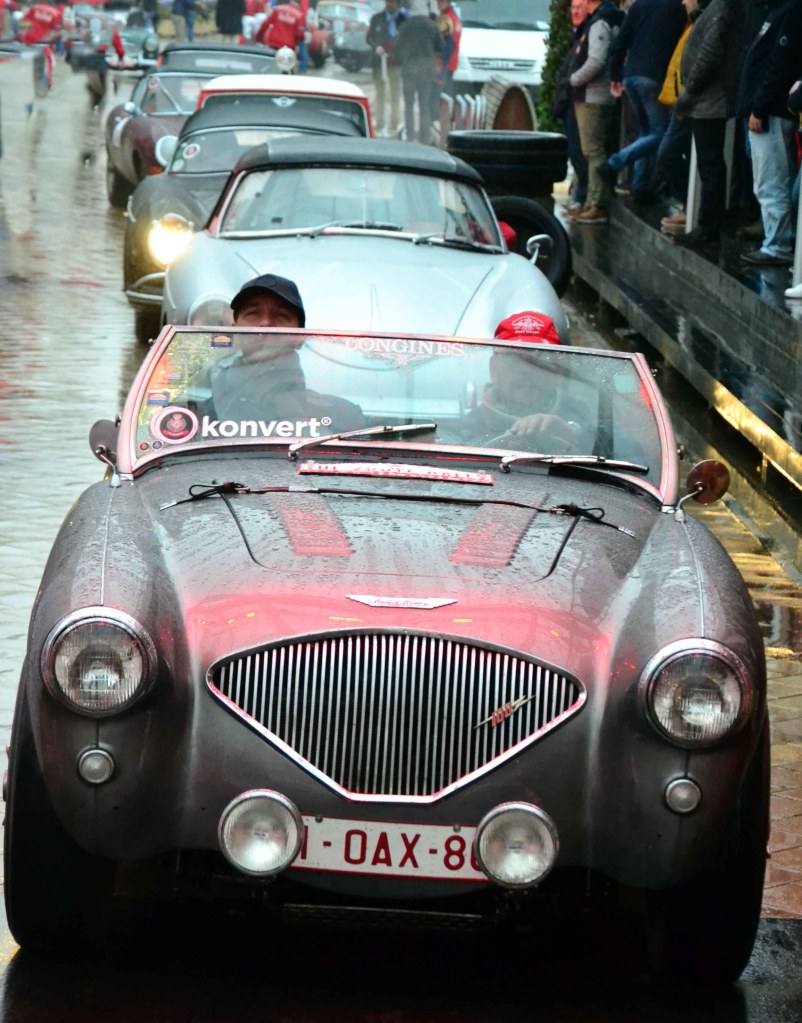
The ZOUTE CONCOURS D’ELEGANCE® by Degroof Petercam is another yearly highlight not to be missed. It is an excellent opportunity for your servant to take those timelessly beautiful photos of pre- and post war classics and supercars. Also this year the cars on show were absolutely stunning to say the least.
The concours was carefully scrutineered by both the expert jury members and illustrious collectors like Roland D’Ieteren… (to the left).
Hans Knol ten Bensel
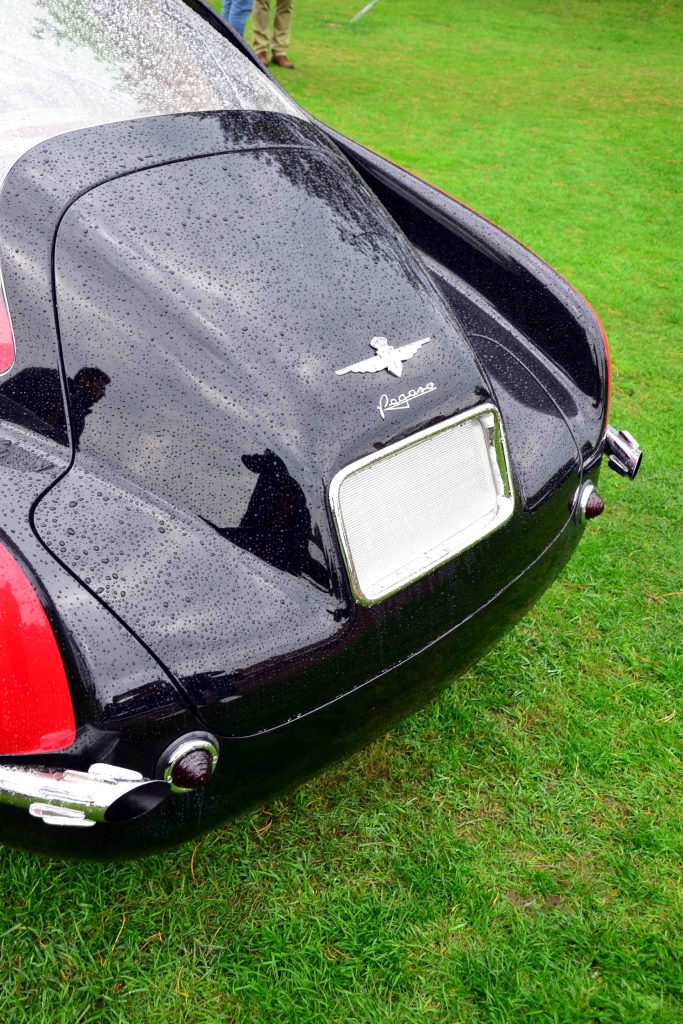
I was totally impressed by a beautiful Pegaso coupé, (see photo below) and stood also eye to eye with a magnificent Alvis and 3,5 litre Delahaye.
This 1953 Pegaso Z 102 Touring Superleggera was designed by Wilfredo Ricart, who had worked then already with Ferrari and Alfa for a few years. He himself asked “Mr. Touring”, designer Carlo Felice Bianchi Anderloni (1916-2003) to design this body. This one-off Pegaso was the focus of a lengthy promotional tour around Europe. It won the Concorsa d’Eleganza di Stresa in 1953…
Stunning is also the dashboard of this 1960 Alfa Romeo 2000 “Praho” Touring… This car was an attempt to secure for Touring the production of the Alfa 2600 Coupé. This car was displayed in 1960 in the Turin Motor Show and was a one-off.
I had a lucky encounter with Skoda Belgium Import PR Director Catherine Van Geel and her colleague from the Skoda Museum, who both proudly showed me a very impressive 1948 Skoda Superb, which had finished a total ground up restoration just four days before this Concours. We tell you more about this unique Superb in a special report.
But there was much more. For example, in the presence of 75-year-old racing legend Jacky Ickx, Porsche unveiled a unique Porsche 911 4S Belgian Legend Edition (made on 75 copies). In addition, there were 5 super rare hypercars on Saturday and Sunday: a Bugatti Centodieci, a Bugatti Chiron Sport, a Dallara Stradale, a Pininfarina Battista and a De Tomaso P72.
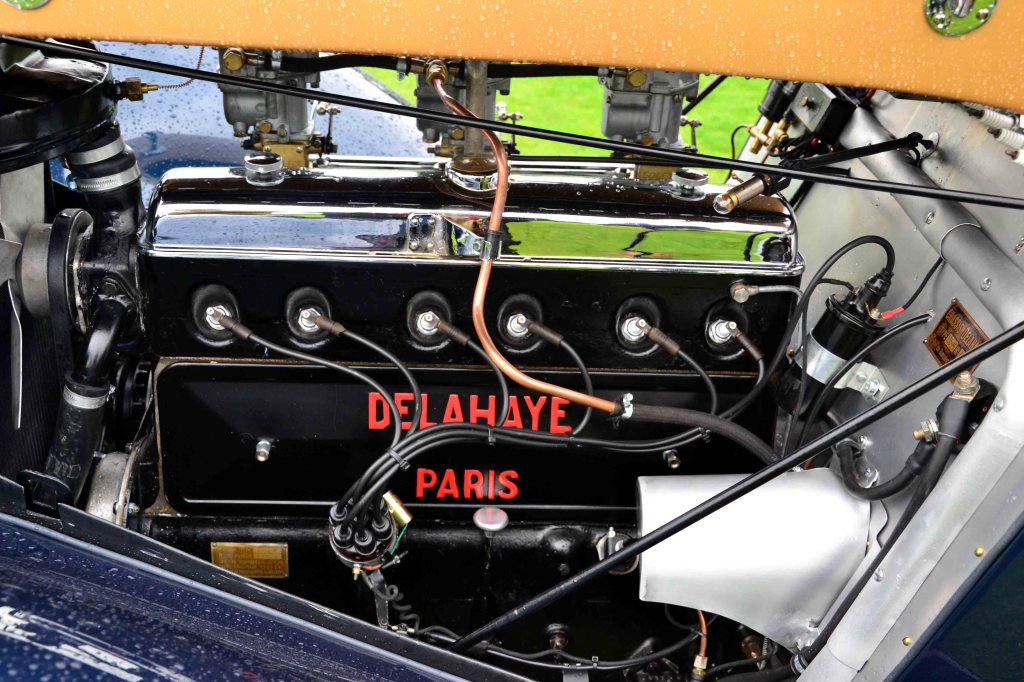
The unique 3,5 litre Delahaye…
Of the more than 100 participants in the competition, the international jury named a 1936 Mercedes 540 K Cabriolet A (pre war) and a 1949 Ferrari 166 Barchetta Touring – Le Mans Winner (post war) as Best of Show winners.
And its fabulous straight six engine, which was idential in the Le Mans winning car…
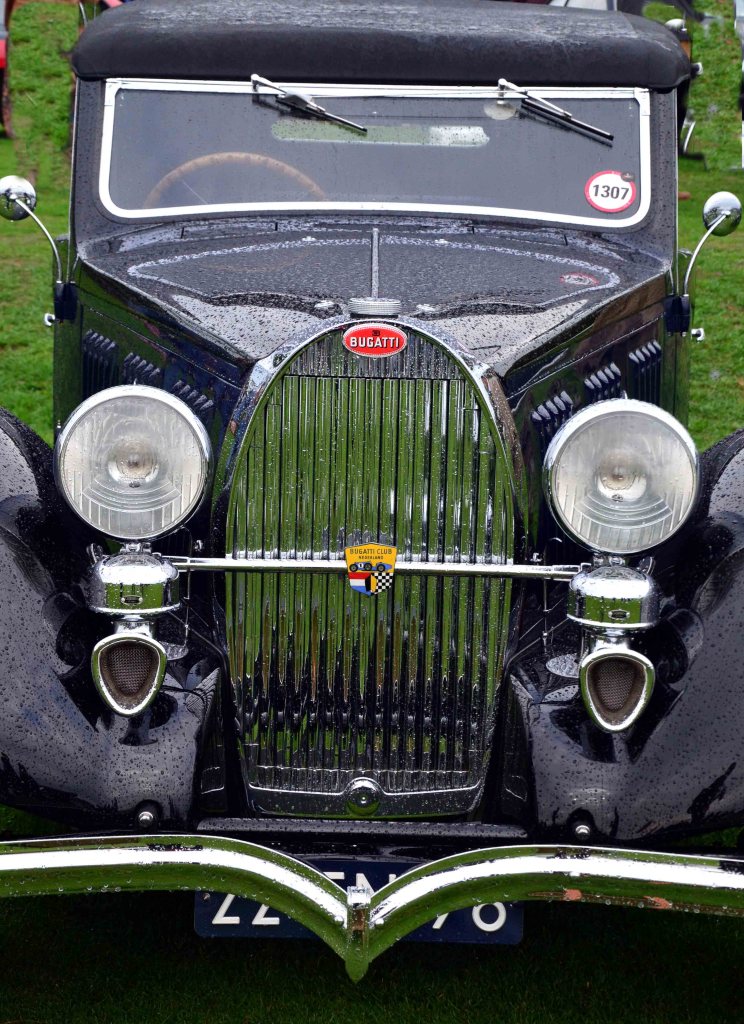
Following Bugatti’s 110th birthday there was also a special “110 Years Bugatti” category this year. Winner was a 1938 Bugatti Type 57 C Coupé – Le Patron. (See first photo). Other eye-catchers were the “Beach Cars” category in which a 1958 Fiat 600 Jolly with the main prize went. The prize for the most iconic car went, finally, to a 1955 Mercedes 300 SL Gullwing.
Eternally cute and endearing are also the Joly beach cars based on the Fiat Cinquecento and Seicento, and on the Concours we stood eye to eye with two magnificent examples.
Last but not least there was a very impressive 300 SL roadster to be admired, brought to the Knokke Golf Course by the works Mercedes Benz Classic team,
who lovingly and carefully dried the car with a soft chamois after every rain shower…
The fabulous collection of cars at the
grounds of the Royal Knokke Golf Club were judged by an international 25 head
jury led by Philip Kantor of the Bonhams Auction House.
More to see and admire…
Besides these highlights there was much more. Last but not least the ZOUTE SALE® by Bonhams. This auction can be considered par with the Grand Palais Sale in Paris, and the Quail Lodge Auction at the Pebble Beach Concours d’Elegance in Carmel (USA).
The total revenue of the auction was not less than 11,710,104 euros, a record for Belgium. One of the eye-catchers was a unique 1965 Ferrari 275 GTB Alloy Long-Nose. The car went under the hammer for a record amount of 2,875,000 euros. A 1931 Invicta 4.5-Liter S-Type ‘Low Chassis’ was sold for 890,281 euros. A Ferrari Enzo knocked out at 1,506,500 euros.
This custom built Aurelia GT had endless panache…
Then there was on Sunday the ZOUTE GT TOUR® by EY. This drive is 120 km long, and is reserved for exclusive modern GT cars, younger than 20 years old. More than 200 cars participated, and Rob Van Loock en Jens Aerts won this event in an 2019 built Audi R8 Coupé.
We just let you enjoy the photos here of this 10th edition, and tell you here already that the ZOUTE GRAND PRIX® launches new projects in 2020,
with amongst others the RALLYE DE DURBUY®. Read soon much more in these columns!
This magnificent event is all about enjoying cars to the full, and what’s more, a very large public can participate and witness the ZOUTE GRAND PRIX® events up close, see and touch the cars, which embody the pinnacle in automotive heritage and panache.
It’s a truly stunning event, which has now grown to impressive proportions. Last year’s figures amply prove it: What to think of 645 cars, 1040 participants, 263.000 visitors?
The organisers look already into the
future, and after a decade of successes are planning even grander events. They
told us all about it at their press conference, held at the prestigious Royal
Zoute Golf Club, of which more in a further report.
But here we tell you more about this year’s
event…
Hans Knol ten Bensel
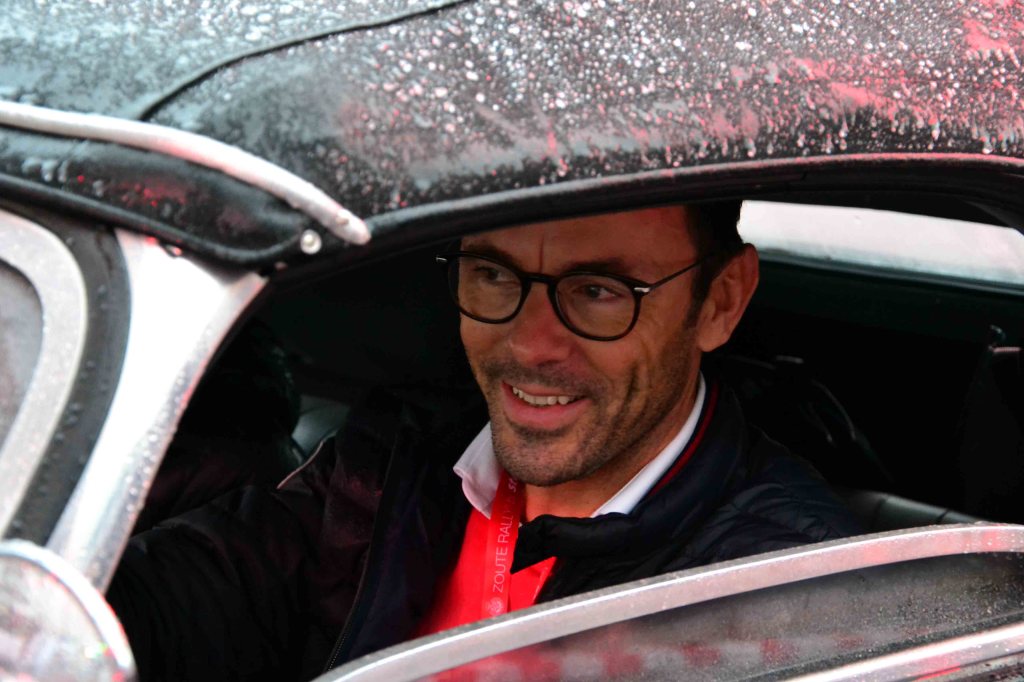
The weather gods were not altogether with us this time, but this did not dampen the enthusiasm of both participants and spectators. The ZOUTE RALLY® started for its first leg on Friday morning, and not less than about 200 pre- and post-war classic cars participated.
Media celebrities like Veronique De Cock participated…
One can choose between a “regularity” drive, where the ideal average speed is of paramount importance, with special Regularity Tests being also included in the daily 250 km course.
Exotics like this Fiat “Otto Vu” were also seen…
Enthusiasts who were looking for a more leisurely drive, opted for the “Balade” formula, and received a road book of the untimed course, which they could drive and enjoy at their own pace.
The route is different from the “regularity” drive, albeit in the same region. On Friday, the route went through the Flemish Ardennes, and lunch was enjoyed for all in the grounds of chateau Kluisbergen.
The cockpit of the “Otto Vu”…
On Saturday the ZOUTE RALLY® went through Zoutelande for a luncheon stop at the biggest Dutch yacht builder Amels Shipyard in Vlissingen. Winners of the regularity class were Ruben Maes and Bjorn Vanoverschelde with their Porsche 356c.
The founding father(s): ZOUTE Grand Prix Creator and Organiser Filip Burgoo on the left…
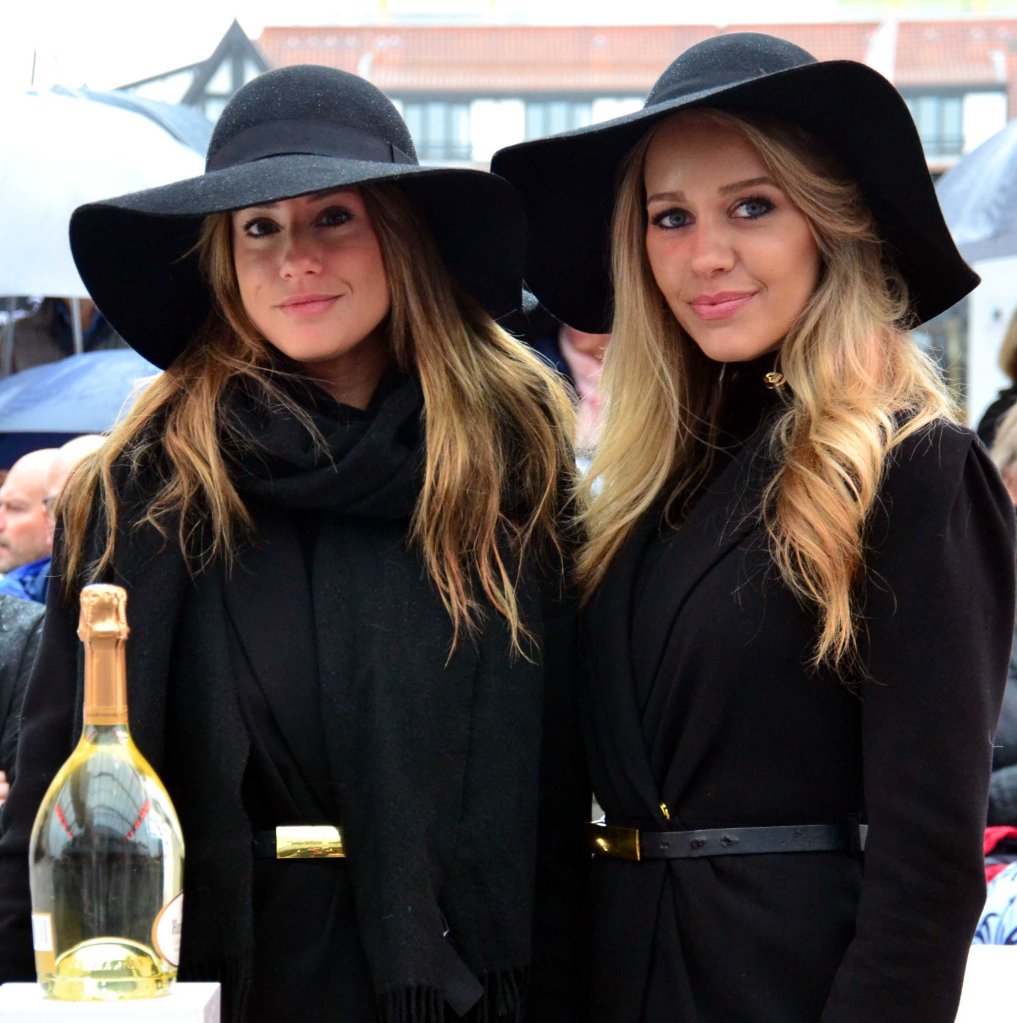
At the finish line, many happy faces were seen again of course. All lucky finishers got of course a fine glass of Ruinart champagne, and congratulations from David Burgoo and his colleagues.
The team Feltes/Feltes in their Bugatti T35 Grand Prix de Lyon with starting nr. 1 also finished the event in good form, with David (left) and Filip Burgoo (right) congratulating!
We just let you enjoy the photos here of this 10th edition of the ZOUTE RALLY®, second part follows with more tales and images…
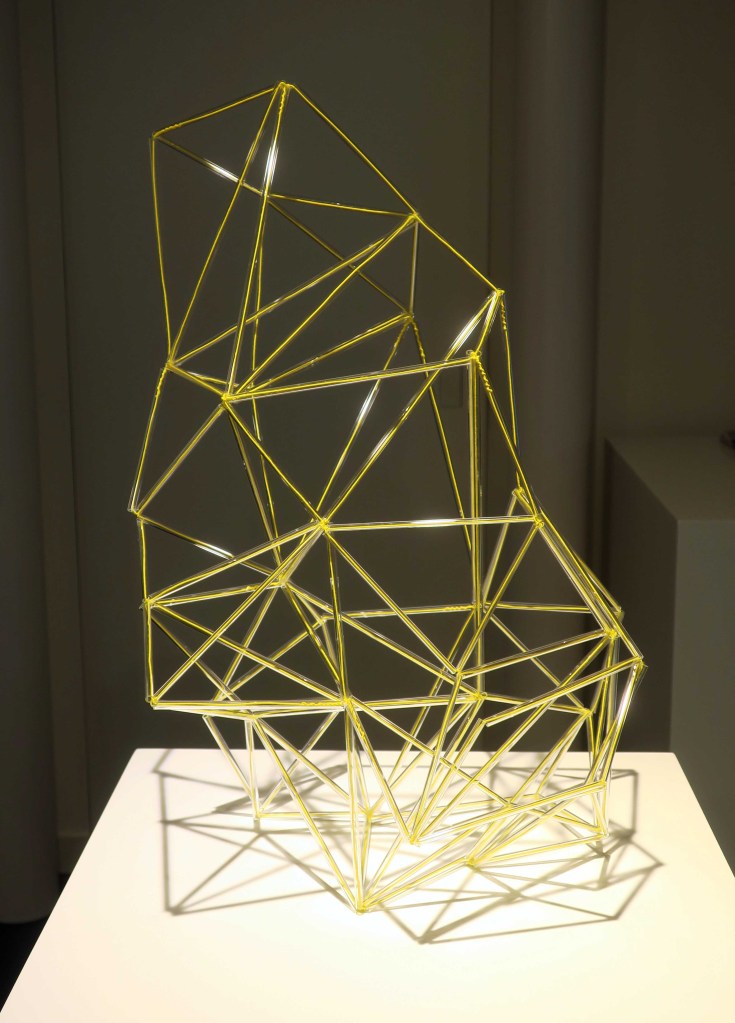
Stunning geometric design in the glass artwork of Christine Vanoppen…
Faithful readers have already experienced in these columns our love for contemporary glass art, and more especially the unique approach of Hasselt based Sue Schiepers Gallery in bringing the pinnacle of this artistic craft to a wide(r) public.
This time Sue Schiepers truly delighted us
again with two artists who both make a very bold statement in glass art with
unique techniques, shapes and forms in their creations. Both artists come as it
were from the same stable, Sue Schiepers tells us. They both studied monumental
arts at the Antwerp Academy, both are also teachers of their glass art.
Driving the future. Now. Literally, without any strings or plugs attached. That is what Lexus driving is all about. Superbly engineered, dramatically styled. With an eye for quality and modern day luxury: this is what Lexus’s most compact SUV offers you.
It runs on the new GA-C-platform, which is also seen in the new
Corolla. It shares also (most) of its drivetrain. Indeed, the well known 2
litre Atkinson Cycle four cylinder plays here the fiddle in harmony with its
electric cousin under the bonnet, in clever hybrid fashion, just like in the
Corolla. This means absolute technical perfection and utmost reliability is
yours to enjoy. But that is not all. The bodywork of this SUV has what it takes
to please you, both inside and out. Just read further…
Klaus Busse told us about the sensuous essence of Italian Car design, and how it is embodied in Alfa Romeo…
This is the second part of our series about
the visit to the FCA Centro Stile in Torino. It started with an intriguing interview
and talk with Klaus Busse, head of Design for Fiat, Abarth, Lancia, Alfa Romeo
and Maserati, offering us interesting insights into the sculptural design
philosophy and language of the iconic sporting Milano brand. This talk
continues here…
Hans Knol ten Bensel
Shaping the body of an Alfa is also performing the art of sculpture…
HktB: “When we look at earlier design, and I want to take you here to the first Giulia, you see this modernism with the aerodynamic concepts brought into the brand and also the first dashboards of this Giulia, with their, as the Germans say it, “neue Sachlichkheit”, a strictly modern, pure, rectangular style, with a horizontal ribbon speedometer flanked by a small rev counter and column gearchange. In later years, with the later updates of this Giulia, this was again replaced by floor gearchange, a wood rimmed three spoke steering wheel, and two classic round dials for speed and revs in their individual clusters.
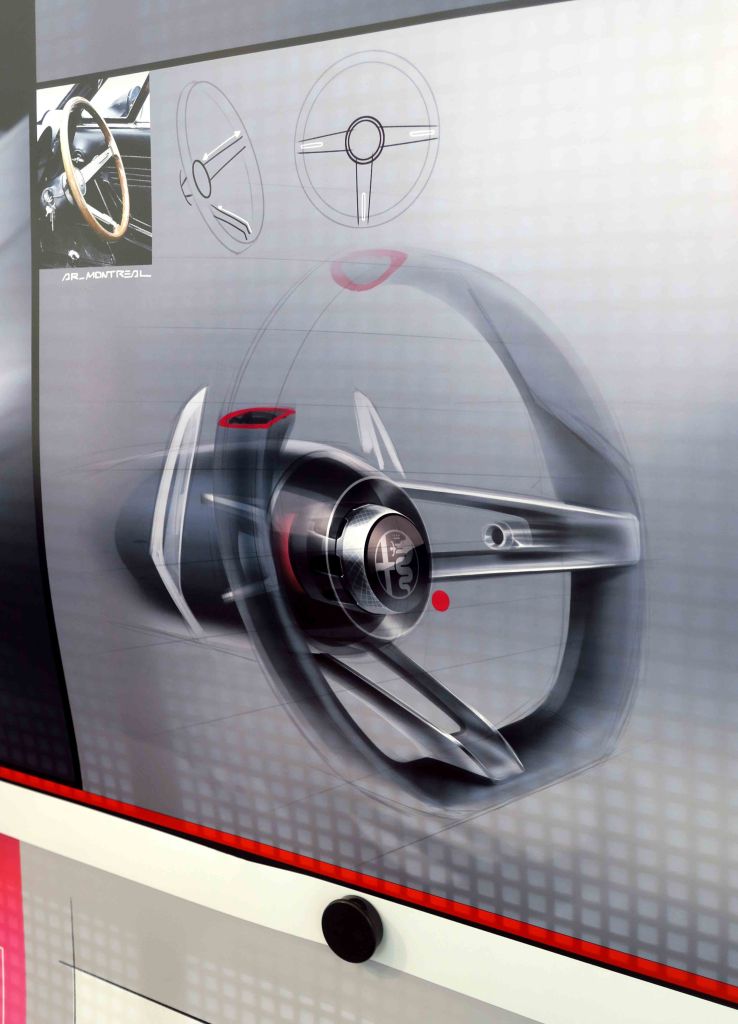
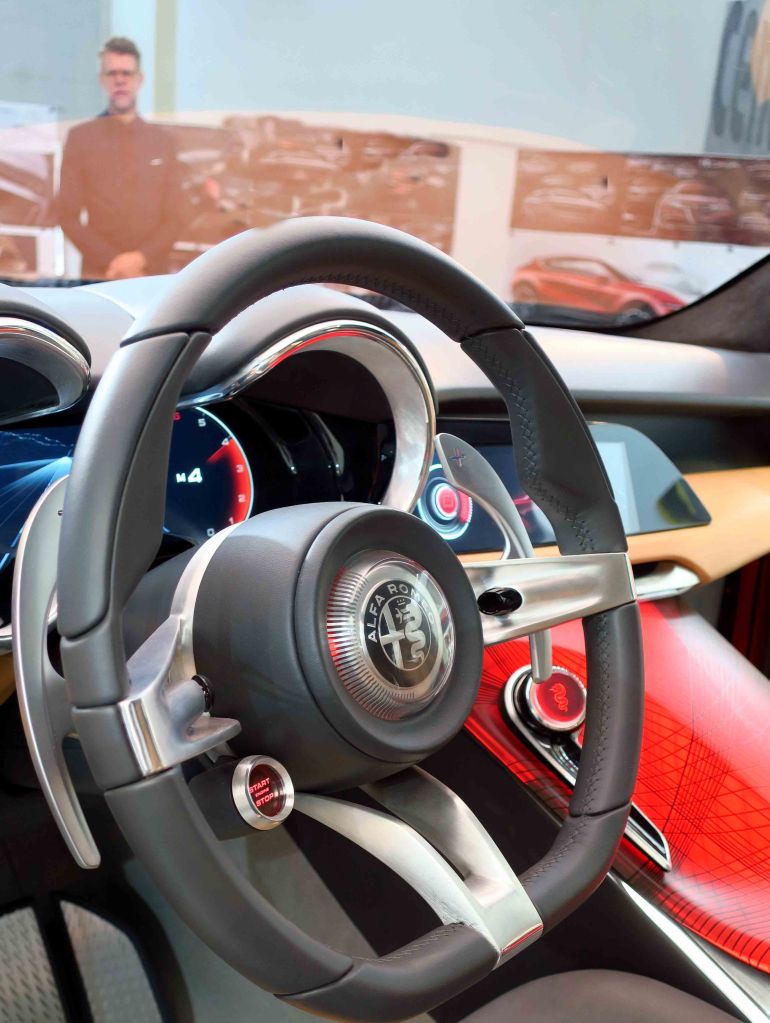
The shape of the three spoked wheel of the Tonale is also inspired by the historic Montreal…
Back to tradition, again we would say. What can you say about this tension between absolute, purified modernism and a more traditional (sporting) tradition in the styling language of the brand?
B: This is a beautiful question, thank you for this. Of course, we have the same challenge here. When I say Italian design process, let’s start with the classical approach and then I will come back to the modern aspect. The classical approach at Centro Stile, even though we have virtual reality, we do virtual reality reviews with the teams around the world, we scan, we mill, we digitize, we use computers, out of these 200 people, a big amount of people is dealing with computers, one way or the other.
Marrying the sporting styling language with today’s materials and connectivity…
But, when we design an Alfa Romeo, we always do it by hand. Meaning, that once the sketch is created, and we have the model in front of us, out of clay and clay material, hand modeling is still the king. Because, unless you shop online, when you buy any of your clothes, you look at it and you touch it. Because touch is for us humans such an important thing. And the other thing is, when you look at the car itself, we want to create something than feels good to the hand. I always say to joke, the best way to experience an Alfa Romeo is to hand wash it.
You discover an Alfa by touching, and hand washing it…
As a matter of fact, any car, when you hand wash it, you experience it. And there are some brands that take a lot of pride in super sharp edges, and it is not a very nice experience hand washing that car. It is not criticism; I am just pointing that out. Our way is to have the very sensuous experience touching an Alfa Romeo. And you can only achieve that if you hand model the car. Now we support it with computer, because we want to be fast in our process and we want to have high quality. Clearly, the creation process is manual, and that is a very Italian thing.
Also the seats are a work of dedicated sculpture…
This is the land of sculptures. You go to Florence, Rome, there are beautiful sculptures. Then of course, when it comes to technology, like the lighting technology, we can use the modern technology to emphasize graphics which were not possible in the past. You go from halogen reflector to projectors that are very, very slim, so that’s on the exterior where the technology helps us.
Coming to the interior, there is a lot of discussion about connectivity, screens these days. So for us, the question for Alfa Romeo is always, considering we build a drivers’ car, with the handling of the car being equally important, so what room do we dedicate to screens and connectivity experience, and what you don’t see in this concept car and in an Alfa Romeo, is these big screens, the “tombstone” that almost blocks your view, that almost screams for attention.
Big screens do not block the drivers’ vision…
For Alfa Romeo, we do use these screens, we have of course large screens in this vehicle, we also have 12 inch cluster, etc, etc, we have all that, but we keep it more like it’s here to support you, but it is not saying “look at me, look at me”…
The graphics themselves, what we use, is of course state of the art, in terms of connectivity, in terms of HMI, so for is, this is the connection we try to find between the classic approach to handmodelling, sculpting, and the historic approach to design, but then combining it with state of the art technology, how we assist the driver, and bring an enjoyable experience to being in the car. It is a long answer to your question, but it was a very very good question because it comes very close to what we are dealing with every day, how do you combine these two worlds.”
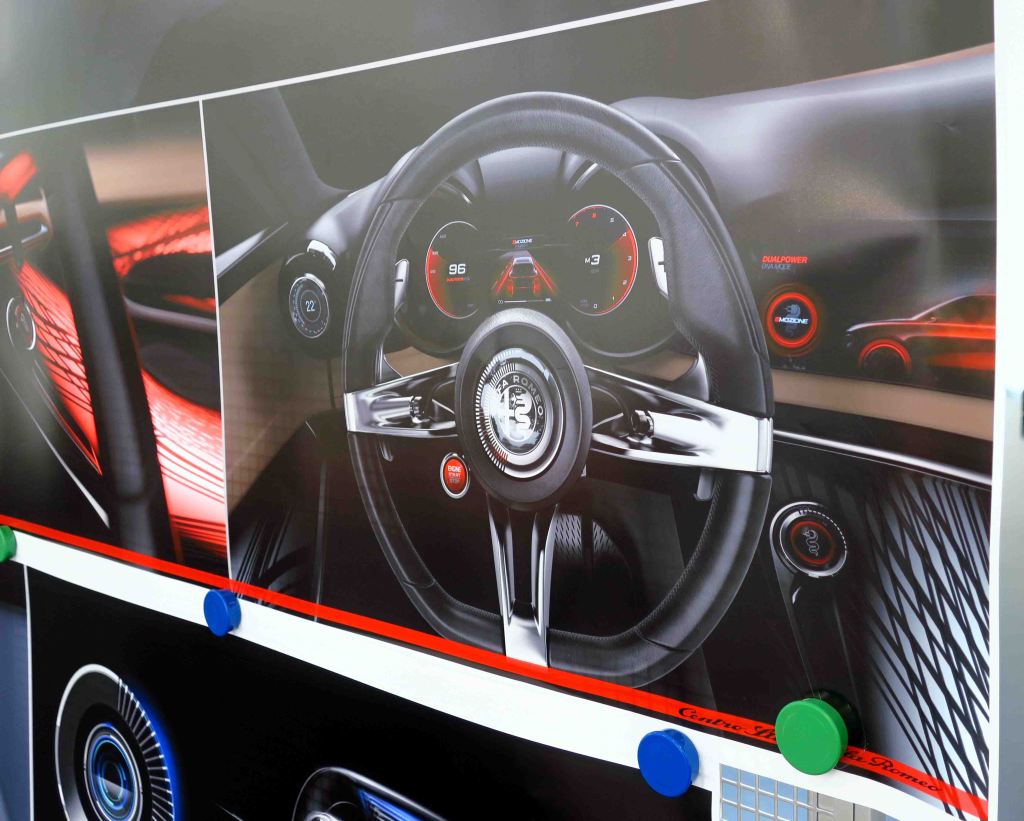
Directed towards the driver, while he keeps his eyes on the road…
The
conversation was far from over, but then covers different subjects, with we
will soon continue to cover in a following part in this series…
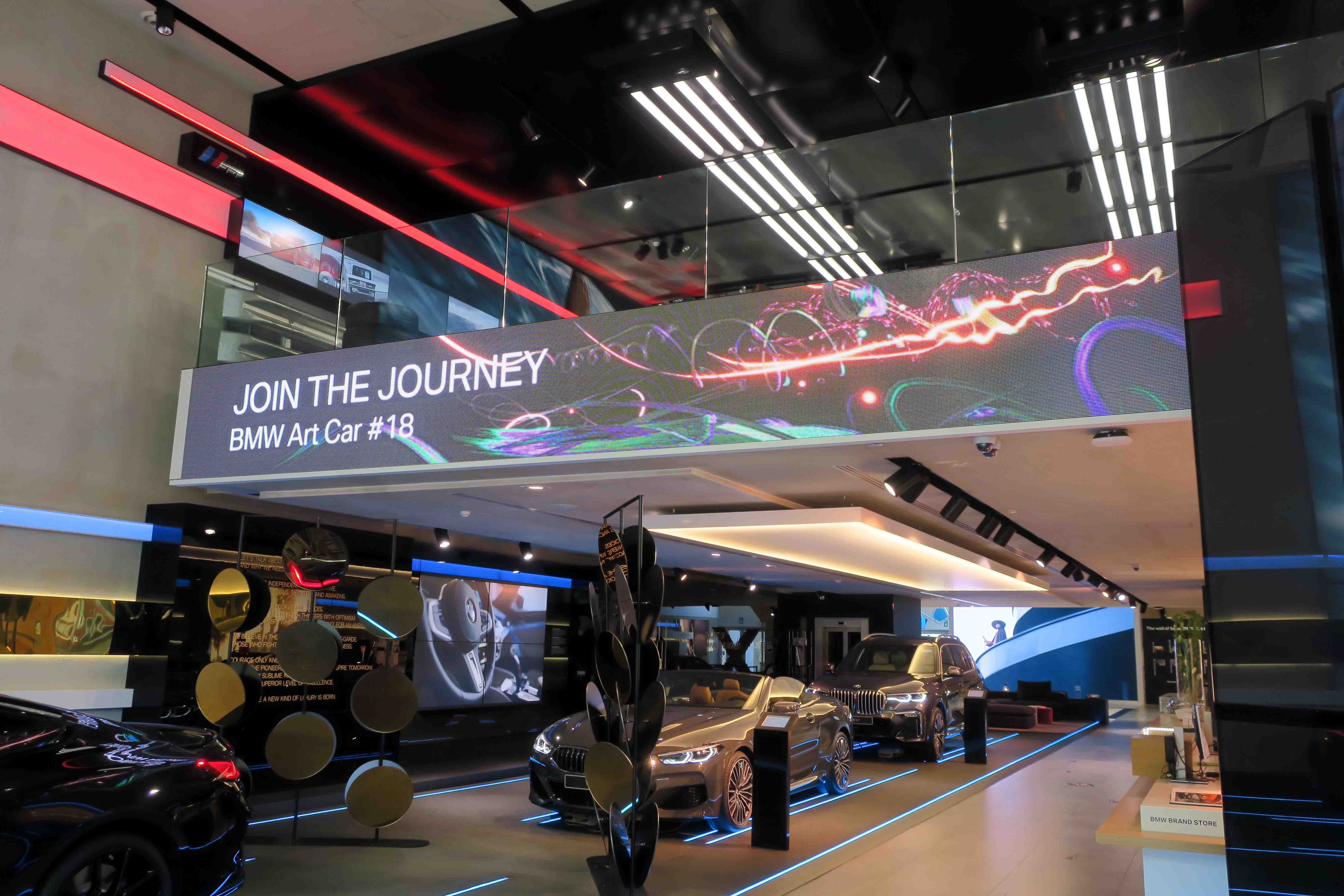
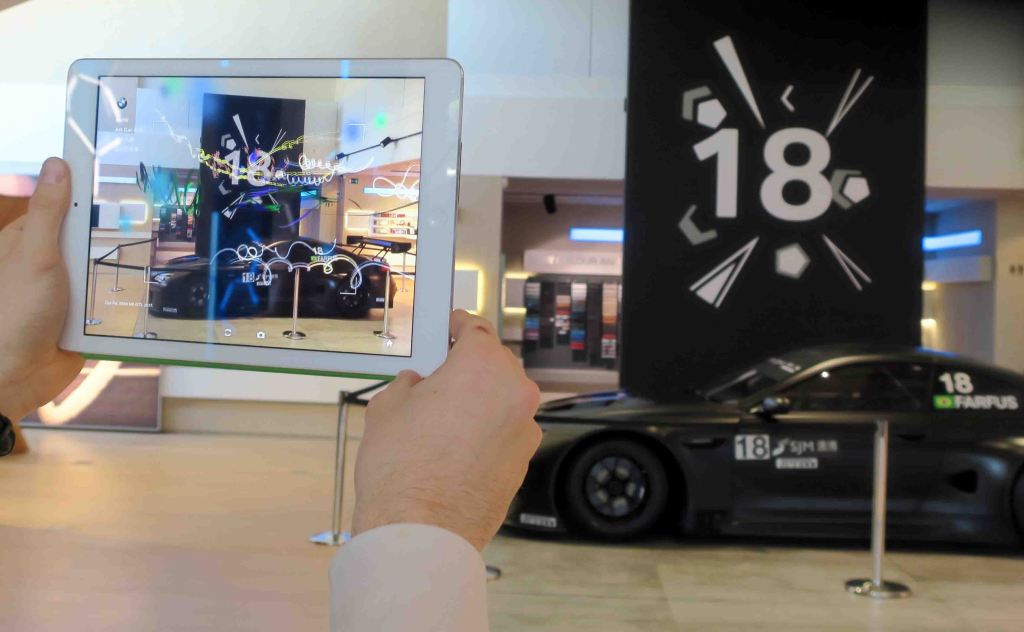
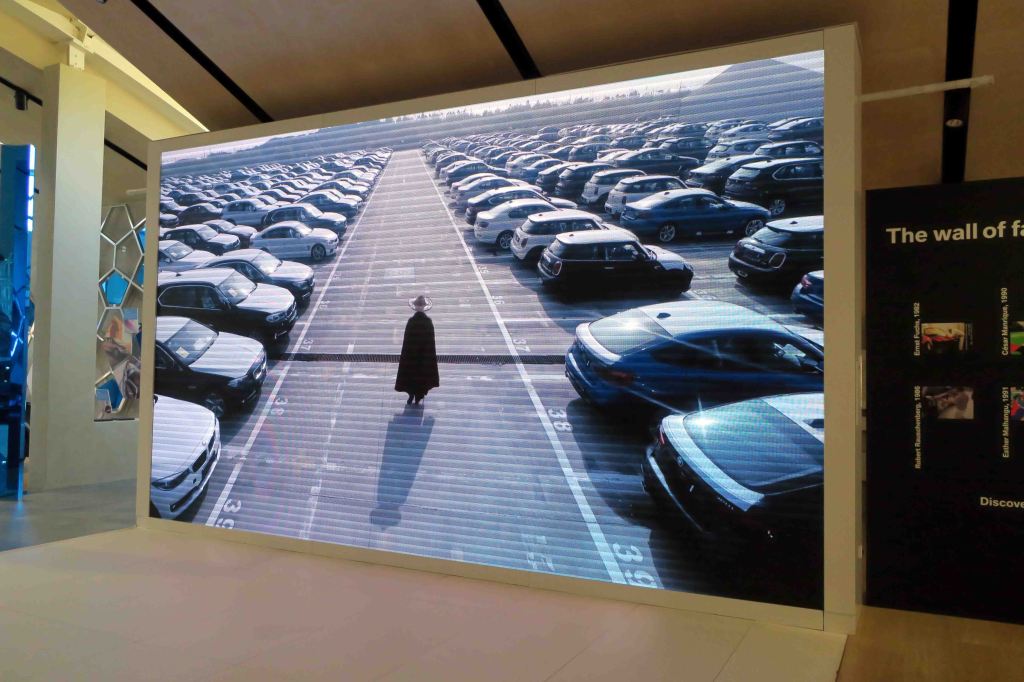
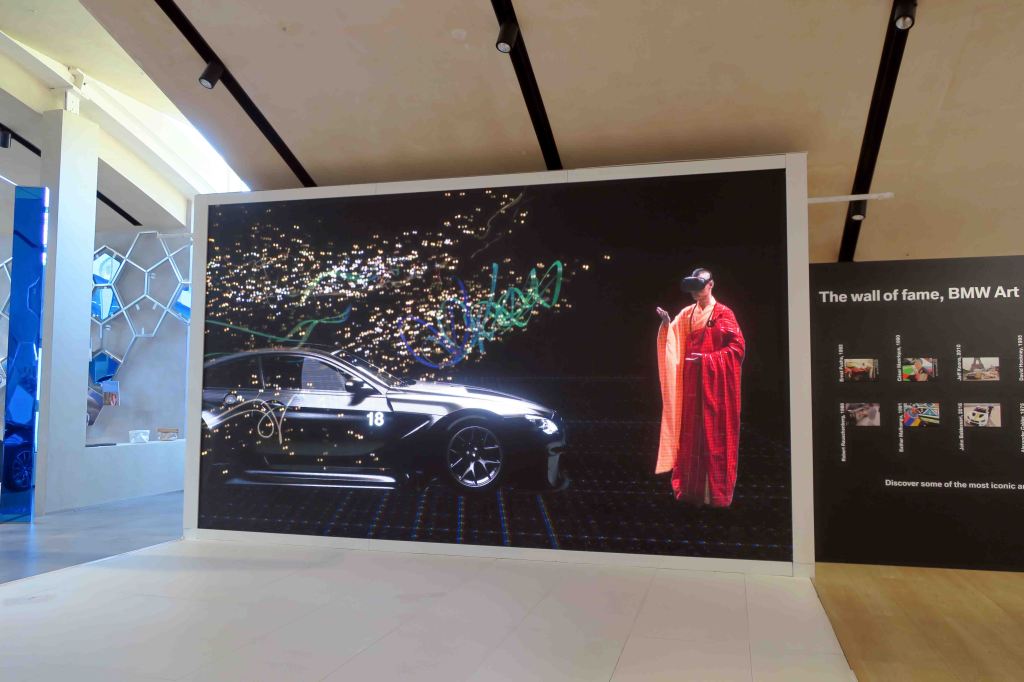
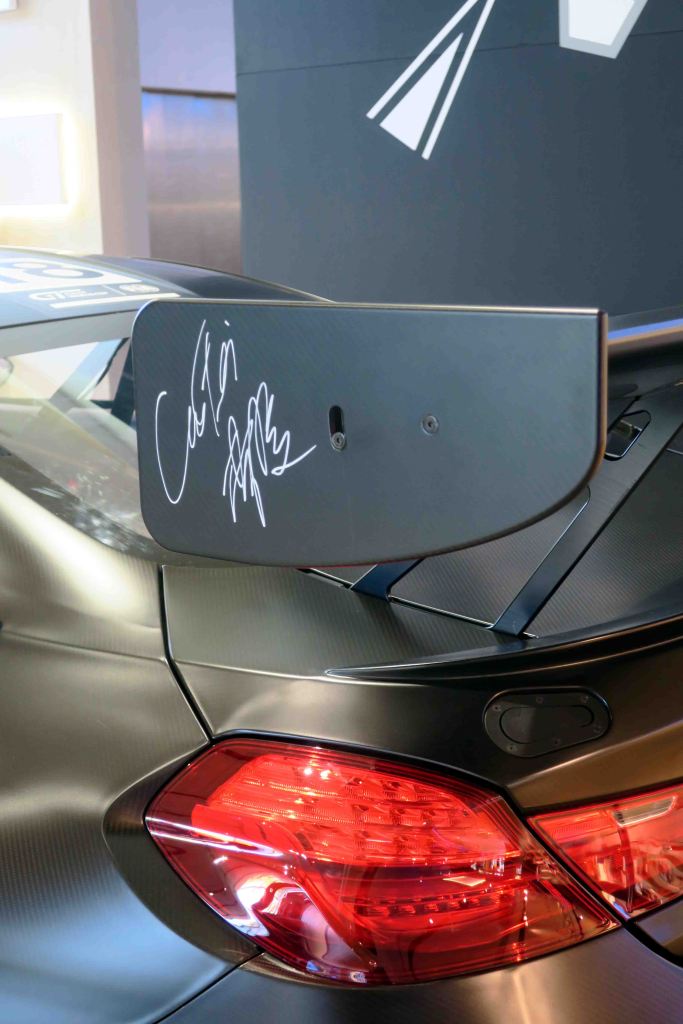
BMW driving art is again to be seen in the capital of Europe: In its flagship Brand Store, BMW organizes until June 1 an Art & Design Expo. The 18th BMW Art Car, a BMW M6 GT3 with multimedia design, has been created by the Chinese female artist Cao Fei, is the focus point of this show. It is even to be enjoyed and admired with the use of an app bringing the car to you on your smartphone with enhanced reality. A stunning experience, of which we show here some photos, but which has to be seen to be believed.
Hans Knol ten Bensel
In the Brussels BMW Brand Store you can join the stunning journey to discover this Art Car in augmented reality…
This virtual animation is also created by the artist, and forms an integral part of the car. “We are now entering a new era where the mind can steer objects directly and thoughts can be transferred, like unmanned controls and artificial intelligence.” comments Cao Fei.
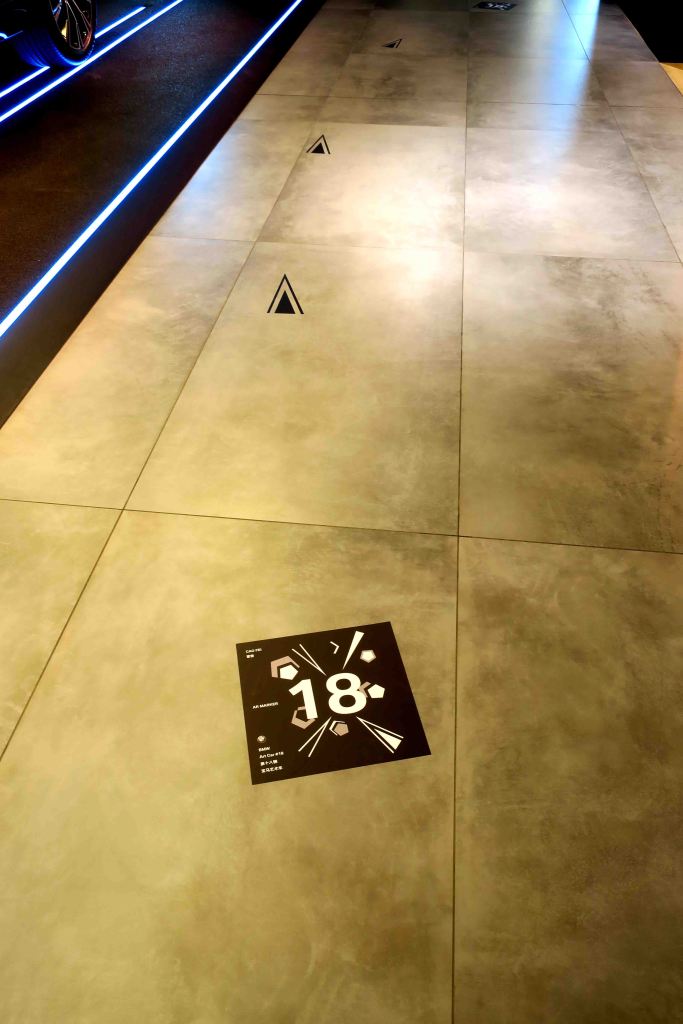
Follow this path in the showroom and zero in with your Ios device on this graph to experience the augmented reality… Download the app BMW ART CAR #18 on your mobile (IOS) device, follow the screen instructions and enjoy!
The work of Cao Fei illustrates the fast and stunning changes in China and its society. With her BMW Art Car she spans a road which stretches over thousands of years, honouring the spiritual wisdom of Asia, which now enters the third millennium with breathtaking speed. The film can of course also be viewed on YouTube, using the following link: https://www.youtube.com/watch?v=Y_GNSyeIpOY&feature=youtu.be.
A video which focuses on the millennial time which a spiritual person travels through… Finishes with presenting the augmented reality…
The multimedia artist approaches the
concept of a BMW Art Car in her own unique way, with which she builds a
parallel universe.
Her work consists of three components: a video that focuses on the millennial time which a spiritual person travels through, augmented reality with colourful light particles (via a special app called BMW Art Car # 18) and the BMW M6 GT3 racer in the original colour carbon black.
As a tribute to the carbon fibre structure of the BMW M6 GT3 applies Cao Fei a lot of non-reflective black paint, which means the possibilities in the digital world are endlessly applicable.
The application of video and augmented reality creates an environment in which the BMW M6 GT3 plays an essential role. Cao Fei uses in her video spiritual movements that express themselves in colourful flashes of light.
Point your device on the graph and a whole enhanced world opens to you…
When the app is used in the vicinity of the car, these light accents are transformed into an augmented reality installation that floats above and around the BMW M6 GT3. In this way, the viewer becomes interactively involved in the artwork.
Just download the app BMW ART CAR #18 on your mobile (IOS) device and follow the instructions on your screen.
The BMW Art Car Tradition runs back already decades… more about this in a special report!
Practical info:
The
exhibition runs until May 31, at BMW Brand Store Brussels, Waterloolaan 23,24, 1000
Brussel
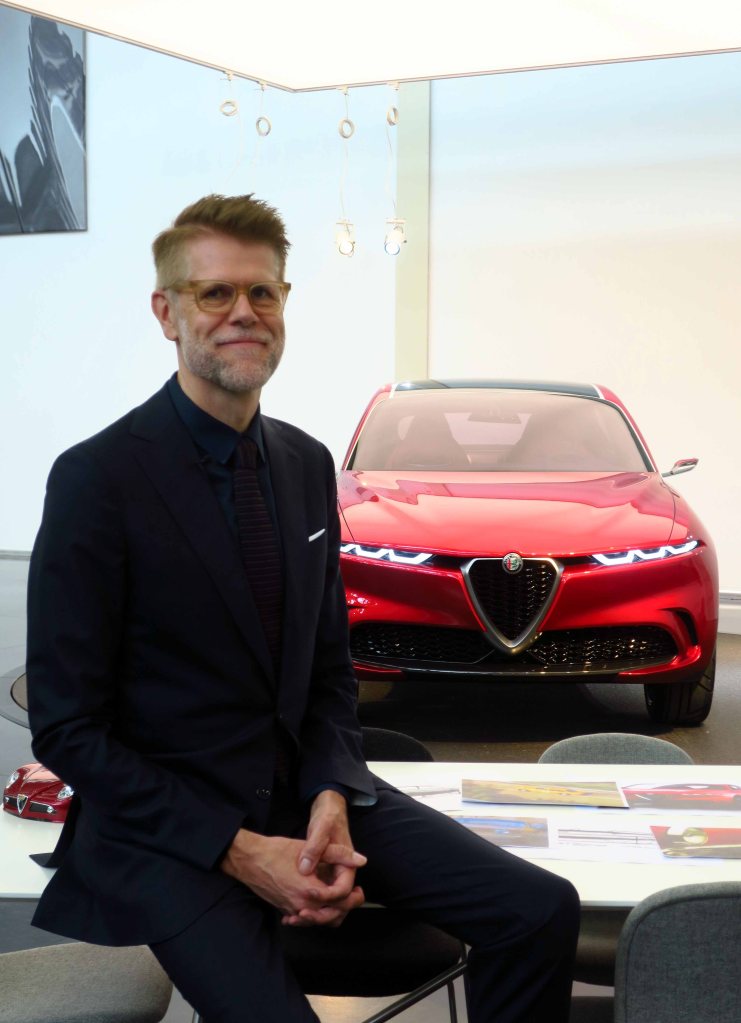
Klaus Busse talked with us in depth about the Alfa Romeo Tonale…
Our series about the visit to the FCA Centro Stile in Torino starts with an intriguing interview and talk with Klaus Busse, vice president of Design for Fiat, Abarth, Lancia, Alfa Romeo and Maserati, offering us interesting insights into the sculptural design philosophy and language of the iconic sporting Milano brand.
Of course this is not all. This in depth
talk and interview covers more aspects about the Tonale, and furthermore also the
Fiat approach to automotive product design…so we decided to split this
interview into a series, focusing in more detail on the various aspects. So stay
tuned on these columns for further reports in this series!
Hans Knol ten Bensel
The original wooden styling sculpture of the legendary Multipla stands proudly in the entrance hall of the Torino based FCA Centro Stile…
Having walked through the impressive
entrance hall of the Centro Stile, we started off with a question about how
this styling centre is set up.
B: “It is of course every day a joy for me to walk through the several studios of our Centro here. Every brand has a separate studio, and you met earlier here with Scott Krugger, the head of design for Alfa Romeo. (Note: this will be our next interview in this series). Every brand has their own head of design. We have 200+ individuals working here, from around the world. It is a very international team, we look at ourselves as the “espresso beans”, because as you know, espresso beans also come from around the world, but with the Italian process it creates an Italian iconic drink, and with the Italian process of design, we hopefully, you will agree, we are able to create Italian iconic design, even though the designers are not coming only from Italy, but from around the world.
We went first to the room of Alfa Styling department
Q: We are here seeing today shoulder to shoulder two different cars on our visit: the Tonale and the Centoventi…
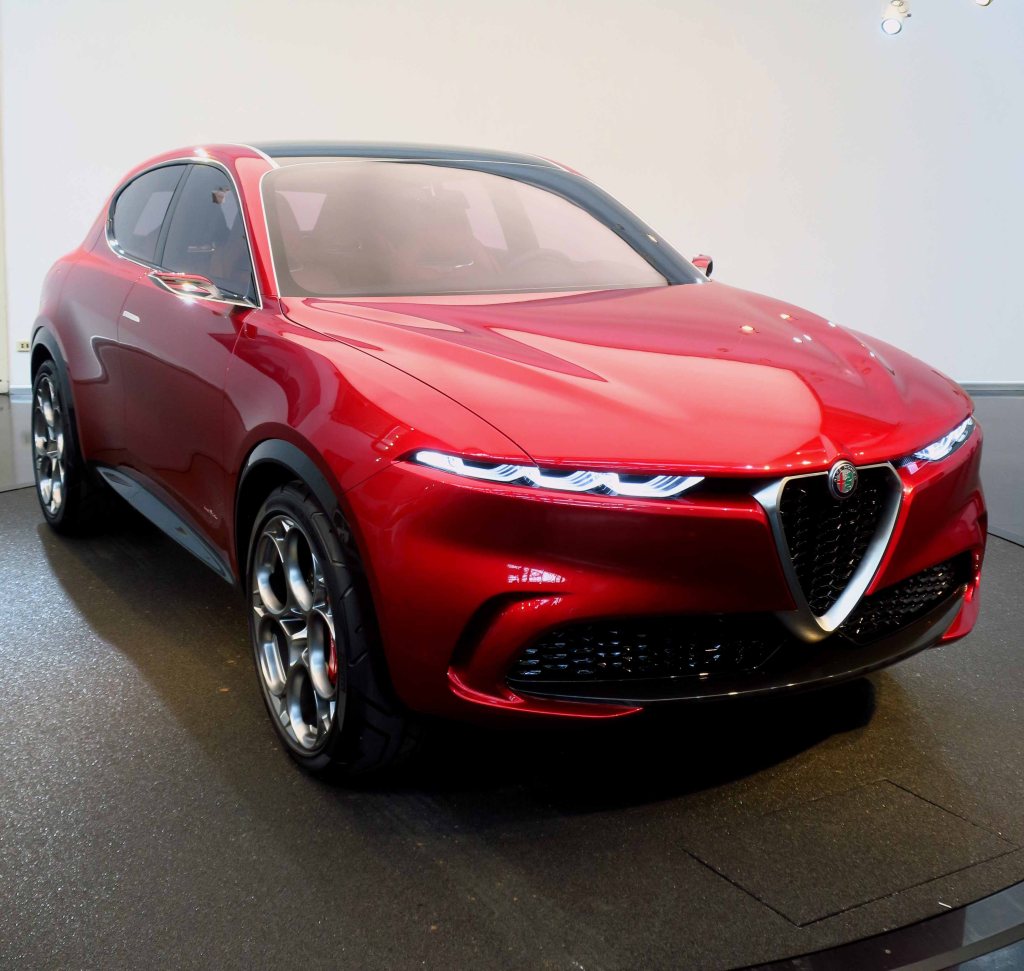
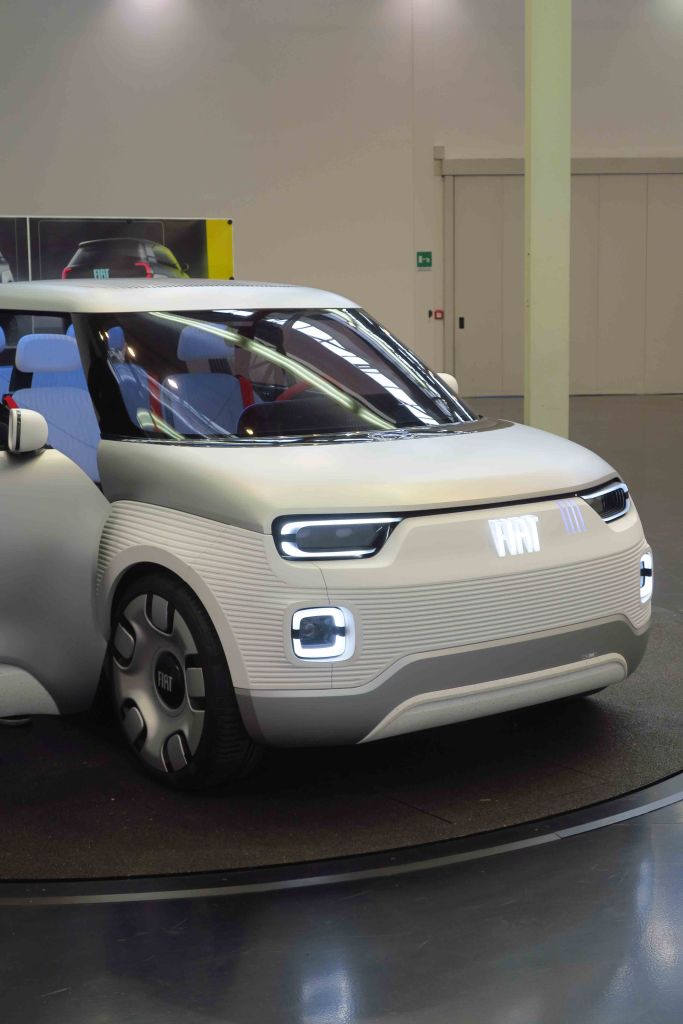
B: I can tell you here first a few words about the Tonale itself, and notably also of the Fiat Centoventi. (Note: which we will also discuss later in separate interviews). It is a very rare thing for us to go to a show with two concept cars, and the beautiful thing we were able to do with the Alfa Romeo and the Centoventi, is that we were able to show the two sides of Italian design, the way we see it. So we have in front of us here with the Tonale the classic sculptural beauty of Italian design, and with the Centoventi we have the Italian approach to product design, applied to the car. So you see the two extremes of Italian design in the automotive sphere.
In the Fiat Centro Stile room, we stood eye to eye with the Centoventi… more about it later in this series!
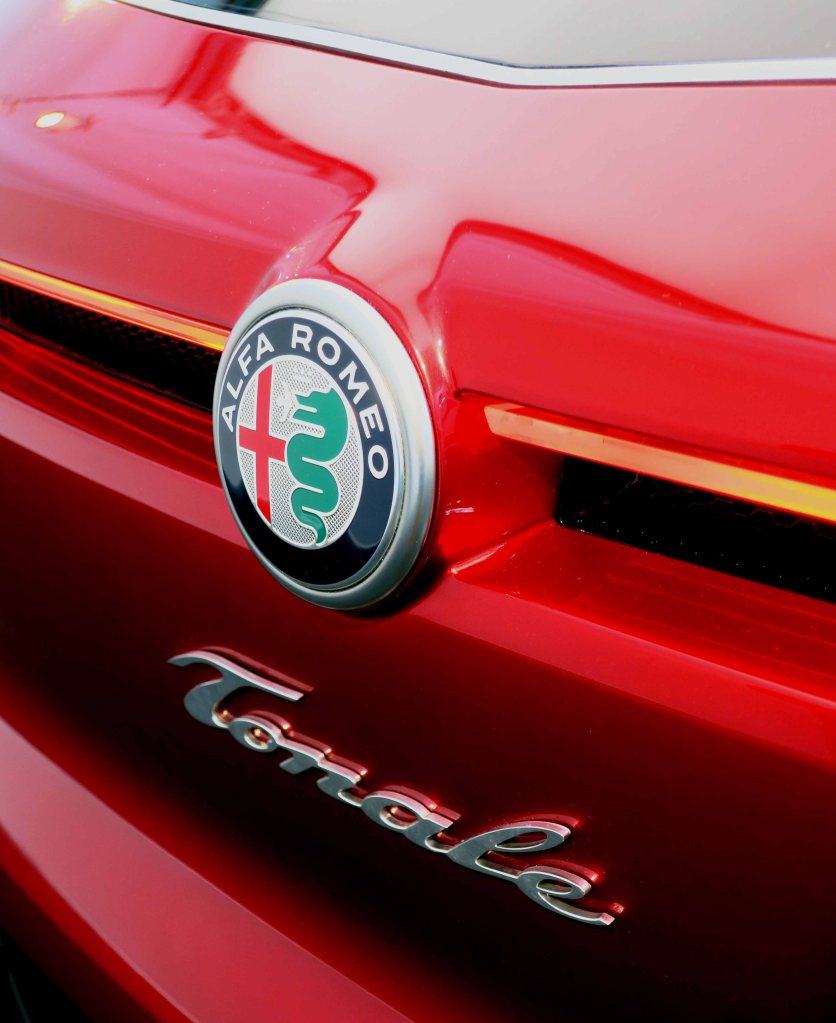
With the Tonale, the challenge was, since it is again an SUV, and we have already an SUV with the Stelvio, to create something that is typical Alfa Romeo, but has nothing to do with the Stelvio in terms of the shapes. The Stelvio is a very muscular car, with emphasis on the wheels and the voluptuous shapes, here on the side you see we have a different construction of the car, we have a completely different front, so the challenge was that with our second entry to the SUV market, we do not create a copy of the big brother, like you see with other companies, who are just adopting a same design and adapt it to different sizes. We wanted to create something completely different with the Tonale.
The horizontal “eyebrow” line is clearly seen here…
Q: Will this car be a trendsetter for the future Alfa design?
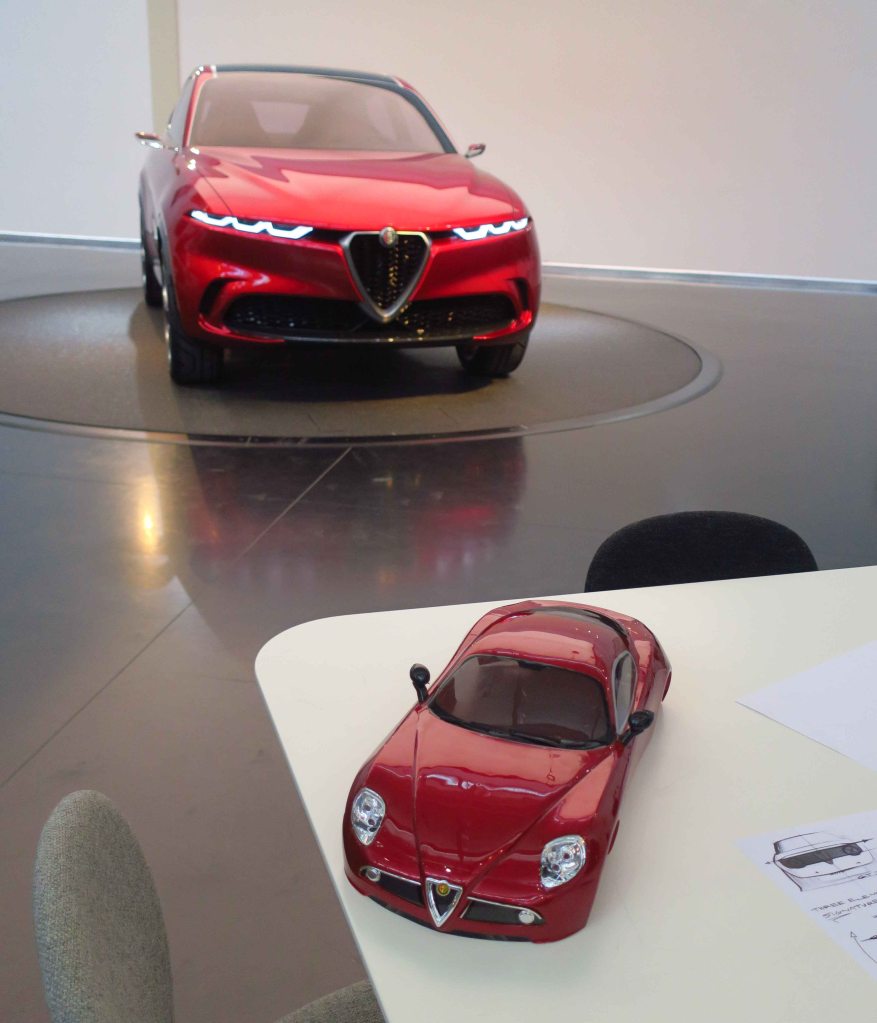
The one thing you will not hear me talk about today is the future. I will talk about the present, about the Tonale, but I will not lift the veil more. All I can say is that I think we found something which is a beautiful progression. I saw that my team put the 8C model here, and maybe that allows me to highlight where I see the progression what the team has done here, when we look at the front. The 8C, the 4C, the Stelvio, the Giulia, all of these cars have basically have this hood line, it is a flowing design, and it nicely encompasses the grille. This face was applied to all current generation vehicles.
The muscle lines on the hood converging into the Scudetto, as seen here in the 8C, is now completely given up in the Tonale…
With the Tonale, we completely gave up this kind of interpretation, you still see the muscles of course leading to the Scudetto, but we went to a much more horizontal design. So we went from a vertical design to a horizontal design, and that of course is a completely different construction of the front, and this much I can tell you, we would not do this just for one car…
Klaus Busse dedicated a drawing to your servant… with the horizontal line clearly visible…
Because here, the 8C created a family of cars, and in this case again, it might create a new family of cars…
As
said stay tuned for the next part of this interview, where we will talk in
depth about tradition and modernity embodied in today’s Alfa design language…
We had long and in depth conversations with FCA Group Chief Designer Klaus Busse and his team…
What we saw and heard on our visit to the Torino based Centro Stile was nothing short of absolutely stunning. We had long and in depth conversations with FCA Group head of design Klaus Busse and his team, both from Alfa Romeo and Fiat styling.
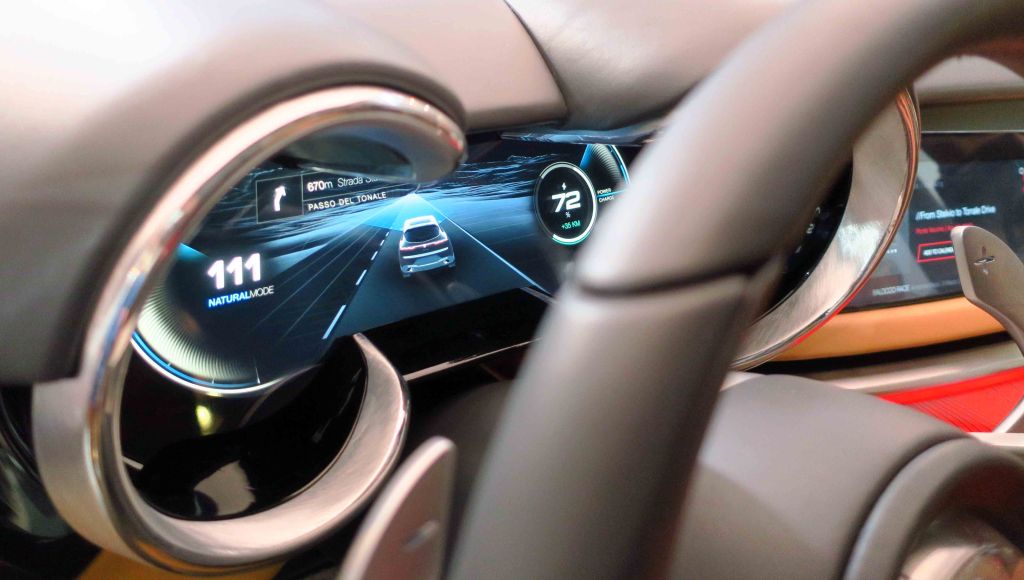
The beautiful instrumentation and interior of the Tonale, with Klaus Busse watching in the background…
Needless to say that we are the coming days eager to report on all this extensively, and indeed you can expect to read our findings in several reports…
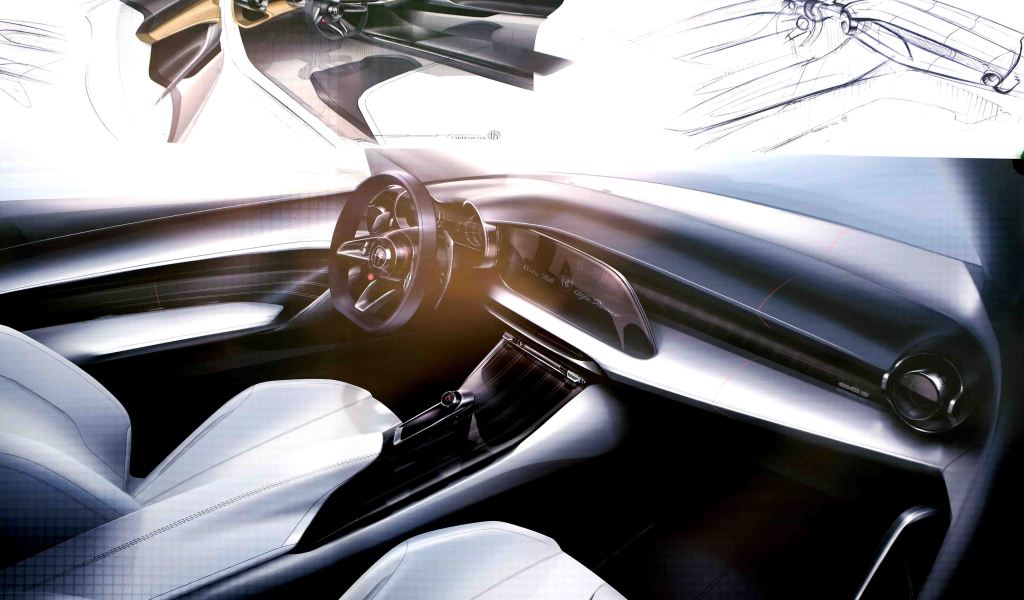
Alfa DNA styling revived on the drawing boards provides the mould for the new Tonale design…
The next few photos just lift a tip of the veil of the vast material we collected and photographed…
Rewriting democratic mobility and opening many new doors in design: the Centoventi Fiat
We just want to thank here the magnificent efforts of the dynamic PR team of Fiat Chrysler Automobiles Belgium, notably Dominique Fontignies, PR & Communication Director and Wim Willems, Press Officer, for sharing the knowledge of these experts and their creations with us.
Full of revolutionary, practical solutions: the interior of the Centoventi…










































 Autoprova - for the Connaisseur