We will drive for you at the end of this year the latest Qashqai, and look forward to have a go next year at their new (EV powered) products; In the meantime, there is some interesting Nissan news.
Did you know that by 2026, this is merely within some four years, more than 75% of all Nissan passenger cars sold in Europe will be electrified?
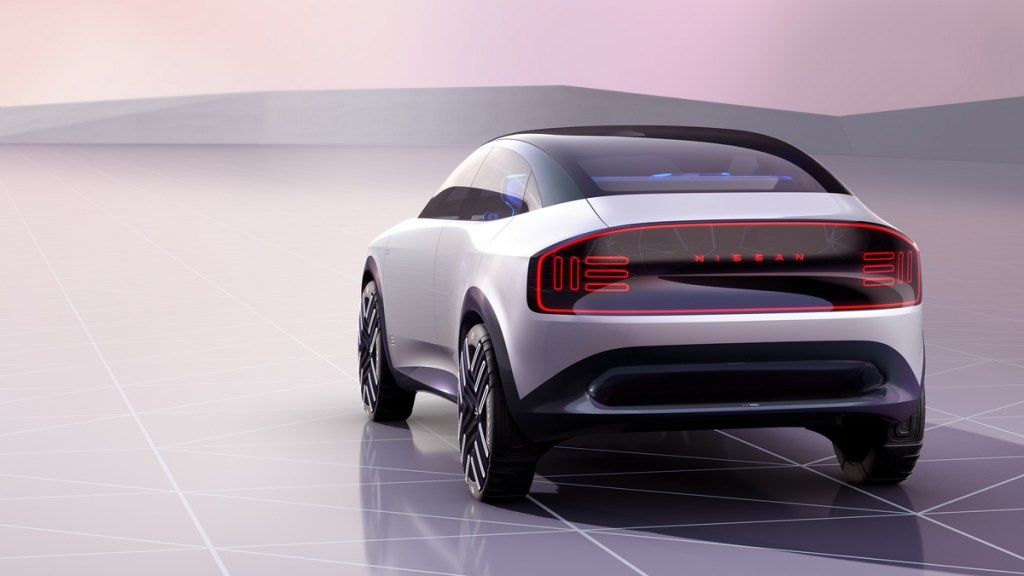
Nissans “CHILL OUT” concept foreshadows the future 100% electric crossover to be built in Sunderland, and there is a new battery recycling facility planned in Europe…
Just read further!
Hans Knol ten Bensel
Nissan Motor Co. Ltd. Unveiled the Nissan Ambition 2030, the brand’s new long-term strategy that goes beyond mobility.
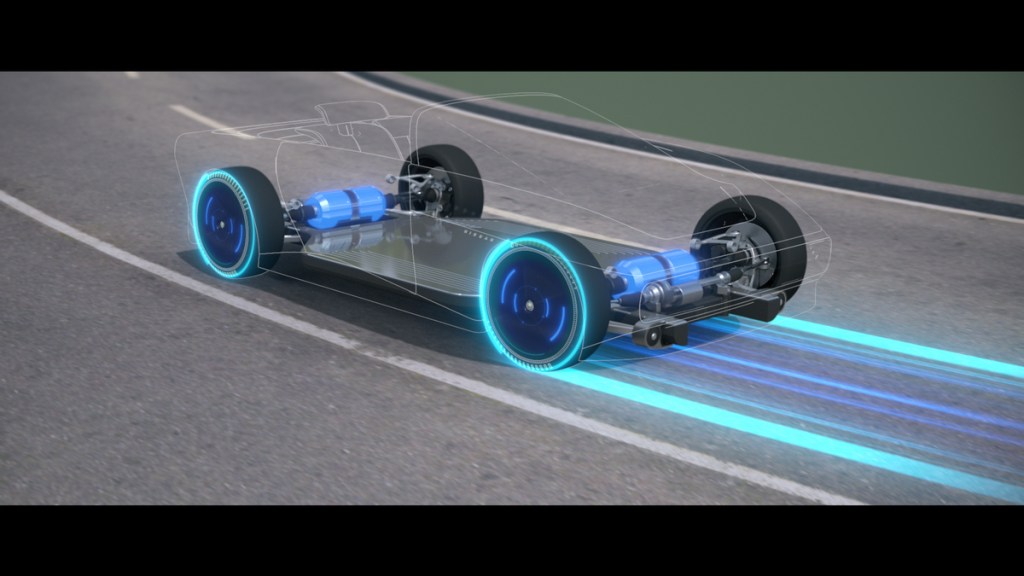
Earlier this year, Nissan launched the EV36Zero concept, the world’s first fully integrated EV production ecosystem, which connects mobility and energy management to help achieve carbon neutrality for Nissan. The future hub is centered around the production facility in Sunderland, UK, and will include the production of an EV, a new giga production facility and use of 100% renewable electricity. Initially, £1 billion will be invested.
The AMIEO Region, centered on the EV36Zero, will play a leading role in realizing the “Ambition 2030” vision, which will help Nissan achieve carbon neutrality across the entire lifecycle of its products by fiscal year 2050. Here are some key points:
By the end of fiscal 2023, Nissan will offer electrified versions of all models offered in Europe, and by fiscal 2026, more than 75% of all Nissans sold are expected to be electrified.
The now-unveiled CHILL OUT crossover concept, as announced in Sunderland in July as part of the EV36Zero project, uses the Renault-Nissan Alliance CMF-EV platform to deliver the European handling and performance customers expect. The model has a sleek and modern design, is both attractive and aerodynamically optimized, fun-to-drive, has advanced safety technologies and has a practical and comfortable interior, according to Nissan.
Nissan plans to expand battery recycling and reuse facilities outside of Japan with a new location in Europe during fiscal year 2022. This infrastructure will support a circular economy for energy management. Nissan plans to fully market its ‘vehicle-to-everything’ and ‘home battery’ systems in the coming years.
Building on the success of the Nissan LEAF, Nissan will soon introduce innovative e-POWER technology in the all-new Qashqai and X-Trail. With the 100% electric crossover Ariya and the future all-electric Townstar Van on the way, an electrified European model program is in the works.
‘In the past period, Europe has been leading in the transition to electrification. Our goal for the next decade is to accelerate this development, with new products and technologies that will enhance the driving experience for Nissan’s customers,” said Guillaume Cartier, President of Nissan AMIEO Region.
Not only will we be offering an electrified version of every Nissan model in Europe, our 360-degree vision of sustainable mobility also means using 100% renewable electricity in our EV Hub in the UK. New battery recycling and reuse facilities will also be built in Europe.
To spearhead the transition to full electrification and carbon neutrality, our teams and products in Europe will serve as a source of information and support for our plans for electrified cars in the rest of the AMIEO Region and other markets.”
Bold new plans… we will report on them regularly as they unfold!
At the end of January next year, we will test for you, dear reader, the Renault Arkana E-TECH Hybrid, and this will prove highly interesting indeed. But Renault has further stunning news in store, which your servant reserves for you in these columns.
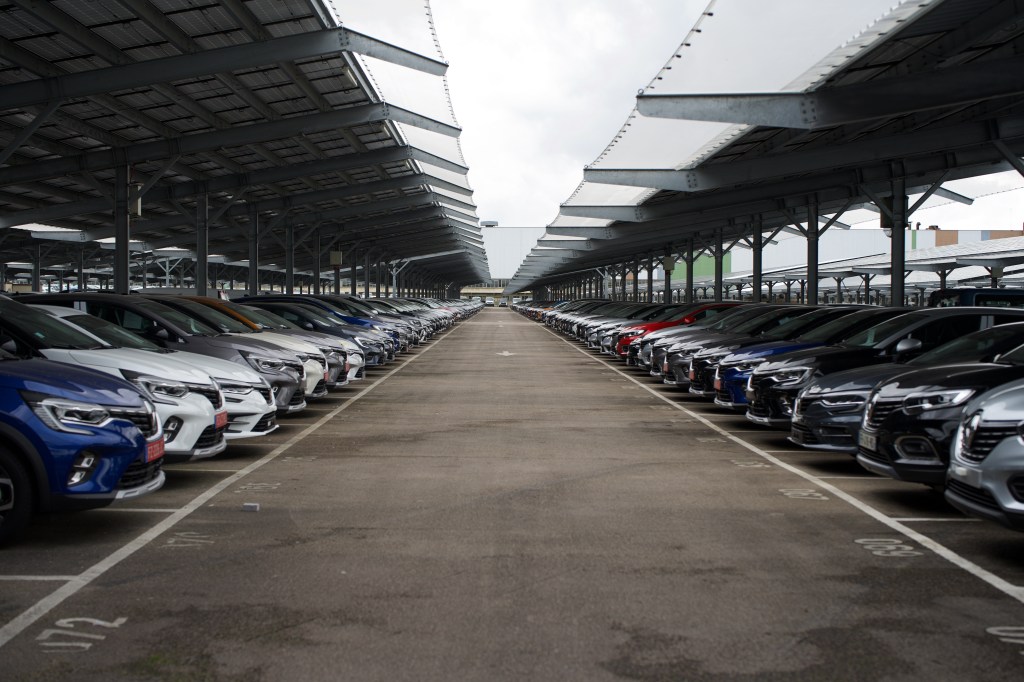
Renault Group presented namely the actual progress of its Refactory project, an initiative launched a year ago to transform the Flins site (Yvelines, France) into the first European factory dedicated to the circular economy of mobility. Circular here means re-using second hand vehicles…no less!
On this occasion, the group is inaugurating its Factory VO (Used Vehicles), the first factory specializing in the reconditioning of used vehicles on an industrial scale. This conversion is part of the group’s overall transformation plan, focused on value creation and sustainable development. Just so interesting!
Read more about it here…
Hans Knol ten Bensel
A wonderful initiative…
Your servant can only applaud this bold initiative, which in my opinion is visionary to say the least. We just cite here Luca de Meo, CEO of Renault Group, on this project.
“We are keeping our promise: one year after its launch, the Refactory embodies an innovative and ambitious project for the Flins site, a new source of economic, social and environmental value. The Refactory is emblematic of the Renaulution, which engages the group in a deep, rapid and lasting transformation, driven by the creation of value. At the heart of this project, our 1st used vehicle factory demonstrates our ability to industrialize our know-how and activities linked to the circular economy. This Factory OV (or used vehicle factory) puts us in an excellent position on the growing used vehicle market, with a unique industrial tool capable of reconditioning up to 45,000 vehicles per year ”.
4 poles…
According to Renault, the Refactory is based on an ecosystem articulated around 4 poles:
RE-TROFIT: this division brings together the retrofit and reconditioning activities of used vehicles. Operational since September 2021, the Factory VO has already reconditioned more than 1,500 vehicles. In the next two years, it is planned to increase its capacities and introduce new activities, such as important body repair. A retrofit offer to convert commercial vehicles to electric will also be studied by 2023.
RE-ENERGY: this pole contributes to the development of applications around the second life of batteries and new energies. With the rise of electric mobility, Gaia, a subsidiary of the group specializing in battery repair, is preparing to change its scale of activities: by the end of 2021, 2,000 battery repairs will be carried out and this will grow to more than 20,000 repairs per year by 2030. In coordination with Mobilize, the Flins site hosted in 2021 a stationary energy storage device from batteries, with a capacity of 15 MWh (“Advanced Battery Storage” project). The development of mobile or stationary energy storage systems for multiple uses (construction sites, solar energy storage, on board ships, etc.) will represent a capacity of 30 MWh over the years 2021 and 2022. In the As part of the Hyvia joint venture dedicated to hydrogen mobility, the Flins site will also host, from 2022 onwards, the assembly activities of fuel cells, recharging stations and the supply of hydrogen.
RE-CYCLE: this division brings together recycling and re-use of parts and materials. The gradual arrival between 2021 and 2022 of the teams from the Choisy-le-Roi plant, experts in the remanufacturing of mechanical parts, will make it possible to maximize the use of reconditioned and spare parts within the Factory VO and the group. It is also planned to extend the strategic activity of repairing electronic boards (mechatronics) as part of this transfer of activity. The division is continuing to implement short loops for the recycling of materials and parts, such as catalytic converters or bumpers.
RE-START: this cluster encompasses the innovation and training center project. It brings together 3 entities: an innovation center at the service of Industry 4.0 to develop specifically prototyping, 3D printing, the retrofitting of our robots, a commercial vehicle prototyping activity, as well as a campus where professional training leading to diplomas are offered to employees of the Flins factory. At the start of 2022, this cluster will integrate an incubator dedicated to research and innovation in the circular economy, as well as new academic certifying training courses with the support of the region.
A state of the art factory, creating value…
To preserve product value and respond to the growth of the second hand vehicle market, the Flins used vehicle reconditioning plant is based on a unique model, designed to offer the best level of the market in terms of lead times, cost and quality.
The Factory VO is a 100% digitized site, which ensures excellent traceability and real-time monitoring of the repair stages. Developed to recondition all types of vehicles, of all brands, the site is mainly based on 4 major assets:
Economies of scale:
Spread over an area of 11,000 m2, the Factory VO in Flins is presently the largest reconditioning site in Europe. Organized into three teams, it can recondition 180 second-hand vehicles per day, or 45,000 vehicles per year by 2023, with the possibility of doubling this figure in the medium term.
Lower costs…
The site’s competitiveness is a result of the high productivity rate, driven by an online organization and optimized production systems for new vehicles. The Factory VO benefits from short delivery loops of parts and materials from group subsidiaries such as Gaia, Indra, and Choisy in order to limit the replacement of parts as much as possible, favouring repairs instead. Pooling logistic flows with those of new vehicles also cuts costs and reduces the impact on the environment.
Short repair and reconditioning times…
Equipped with 4 production lines, the Factory VO is organized in such a way that there is no going back. Carried out by SGS Automotive Services, technical inspection and control is integrated on the line in order to increase efficiency and reduce delays. The site is equipped with a photo and video studio installed on a turntable to generate automated shots (up to 10 vehicles per hour). This high-resolution scanner gives access to a virtual 360-degree inspection (interior, exterior, underbody and tires). Designed by specialist Twinner, this tool allows the vehicle to be offered again for sale immediately, without waiting for it to be returned to the dealership. On average, the Factory VO reconditions a vehicle in 8 days instead of 21 days.
“New vehicle” quality standards…
Reconditioned vehicles benefit from the same quality standards as the manufacture of new vehicles. An independent quality control device is integrated into the production, as well as a battery qualification system for electric vehicles. By 2022, 200 employees will have joined the Factory VO. These internal recruitments at the Flins plant are accompanied by a certified training program, made up of a general section (after-sales strategy, durability of materials, recycling, etc.) and more specific training geared to to the Factory VO (electromechanical, smart repair).
The Refactory project is, still according to Renault, at the heart of the Group’s sustainable development strategy. It is a global industrial project, which is intended to be deployed more widely, recently also at the factory in Seville, Spain.
All this has a very good reason: these activities contribute, at their scale, to the decarbonisation trajectory to aim for the group’s carbon neutrality in Europe in 2040.
A very interesting initiative, which we will follow closely in the future…
We have not been driving Peugeots and Opels for a (very) long time, and besides bringing you Peugeot and Opel news on a regular basis, we will in the future also test and collect driving impressions of their new models.
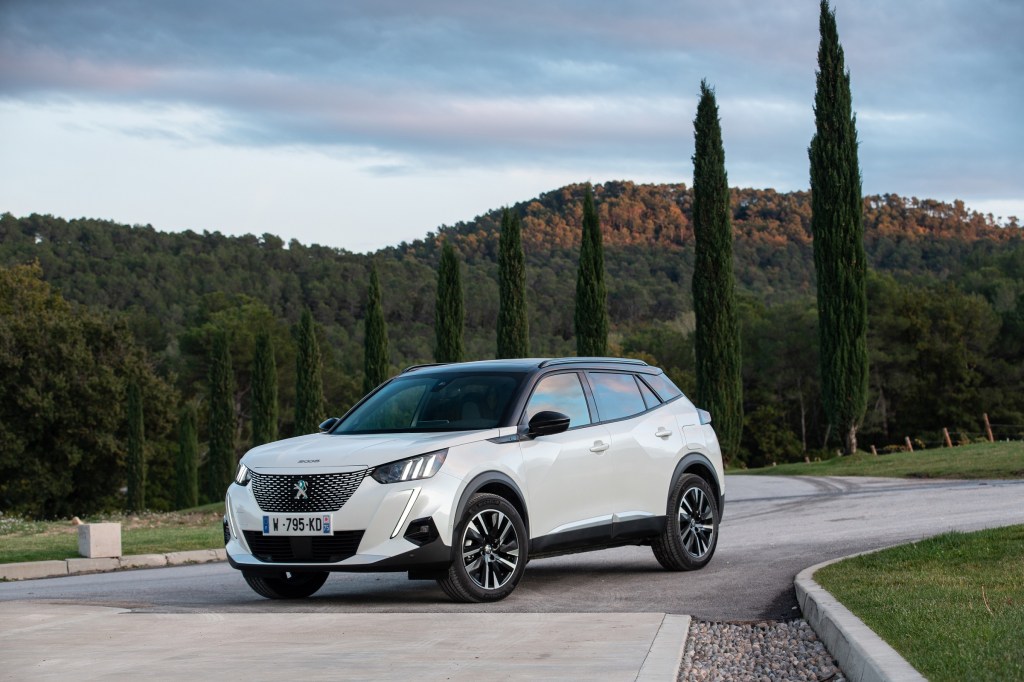
Now to the news: the latest technological developments from early 2022 on the 100% electric versions of the new PEUGEOT 208 and 2008 and Opels will deliver up to 25 km and 8% more range according to the WLTP cycle, and even more in practice.
Based on the eCMP (Common Modular Platform), equipped with a 50 kWh battery, a 100 kW (136 hp) electric motor and a torque of 260 Nm, these models will – like the DS 3 – also receive the latest technological developments to increase their autonomy.
Talking about the platform, did you know that this is a global subcompact platform jointly used and developed by Groupe PSA and state-owned Chinese automaker Dongfeng?
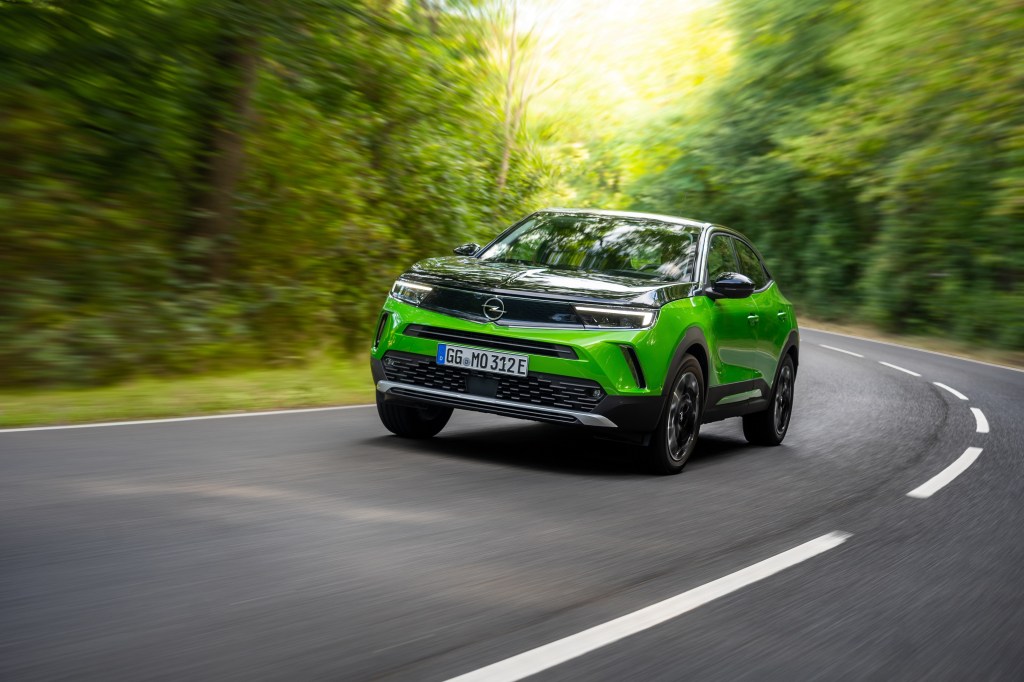
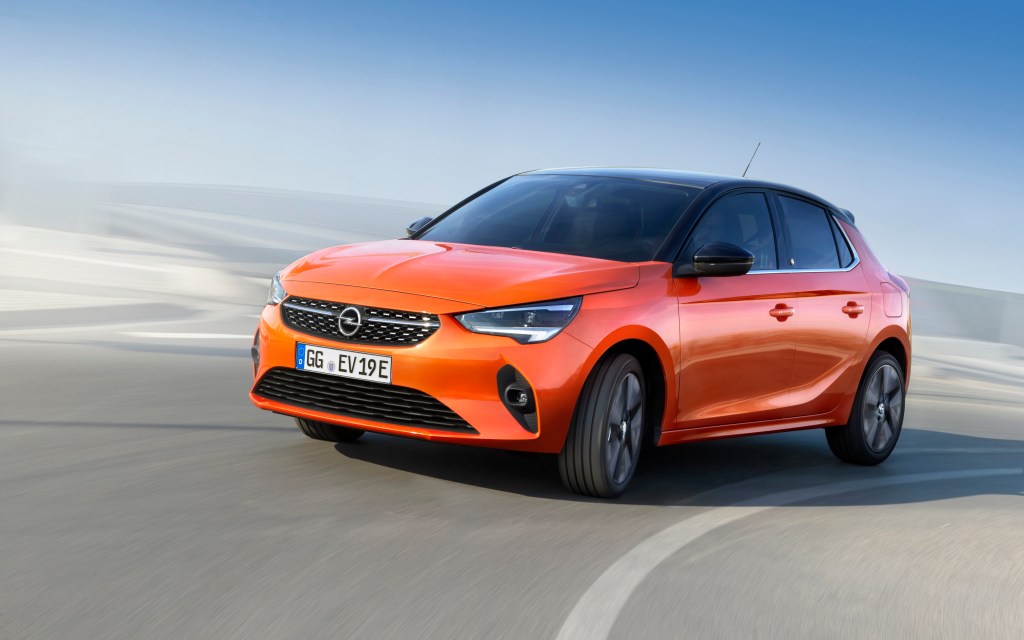
The DS3 also runs on it, as do the latest Citroën DS4 and the ë-DS4. But also the Opel Mokka and Mokka-e and last but not least the Corsa and the Corsa-e.
2020 Opel Mokka-e
The DS3 is built in Poissy, as are the Opel Mokka’s. As with the DS3, for the 208 and 2008, the tires have been optimized and now have a lower rolling resistance. This concerns amongst others the 16 inch wheels for the PEUGEOT e-208 and the 17 inch wheels for the PEUGEOT e-2008.
The Corsa-e is now good for 359 kilometers, the Mokka-e has an improved range of 338 kilometers.
In addition, the Peugeots and Opels have also the new gearbox ratio, which optimizes further the range on the road and on the highway.
2019 Opel Corsa-e
Finally, they have, like the DS3, also received a new heat pump in combination with a humidity sensor at the top of the windscreen optimizes the energy efficiency of heating and air conditioning.
The improved sensor enables a more precise control the air circulation in the passenger compartment, so it costs less energy to heat up and maintain the temperature in the vehicle. This latest development is particularly noticeable at low outside temperatures.
Audi has ambitious plans for further electrification: in 2025, it will have not less than 20 pure EV’s in its model range. Besides the big Audi e-tron Quattro and its Sportback version and the stunning e-tron GT, another pure EV joins the party: the compact SUV Q4, which is also available right away in a stylish Sportback version.
The Q4 comes in two battery and power versions. The base model is the Q4 35 with a 55 kWh battery. Its range is said to be 350 kilometers and it has a 125 kW/170 HP motor driving the rear wheels. We tested for you the Q4 40 which has the 77 kWh battery and the 150 kW/204 HP motor we also find in the VW ID.4.
The Q4 is built… in the VW factory in Zwickau, where also the ID.3 and ID.4 are rolling off the production lines. Only logical if one knows that the Q4 runs on the same MEB platform as the two Volkswagens.
So the Q4 is a dressed up VW? Not at all, the Audi engineers and designers have succeeded in giving the Q4 its unmistakable premium character and Audi identity.
Just read further…
Hans Knol ten Bensel
Stylish
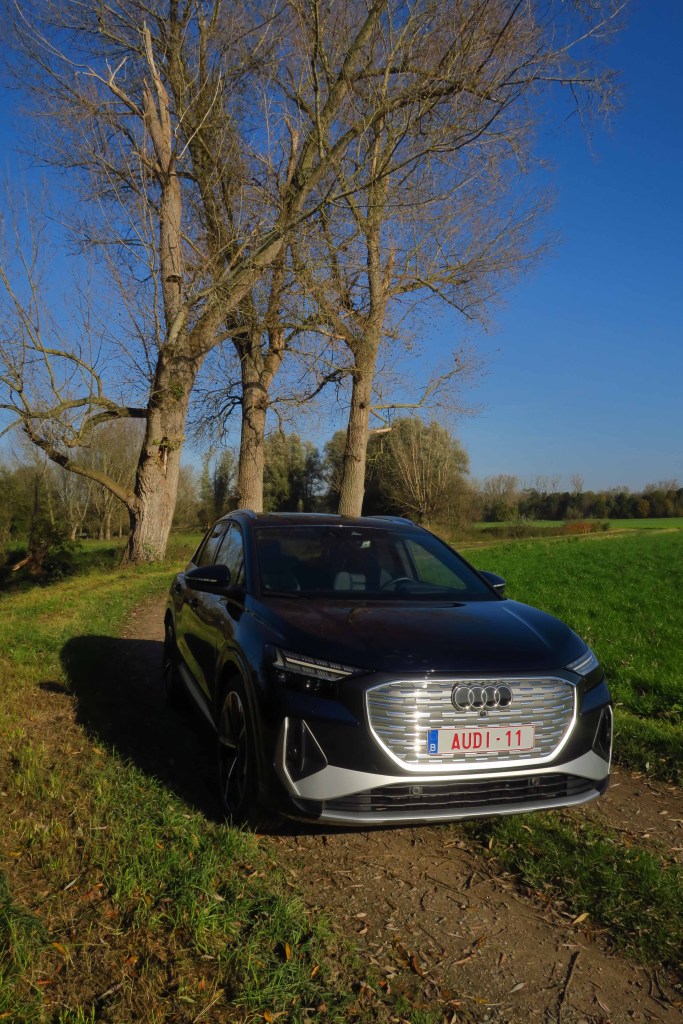
The bodywork of the Q4 breathes the timeless Audi styling language, with very good proportions throughout. The front end grille betrays its “pure” EV character, as it is closed. Indeed, electric motors need a lot less cooling.
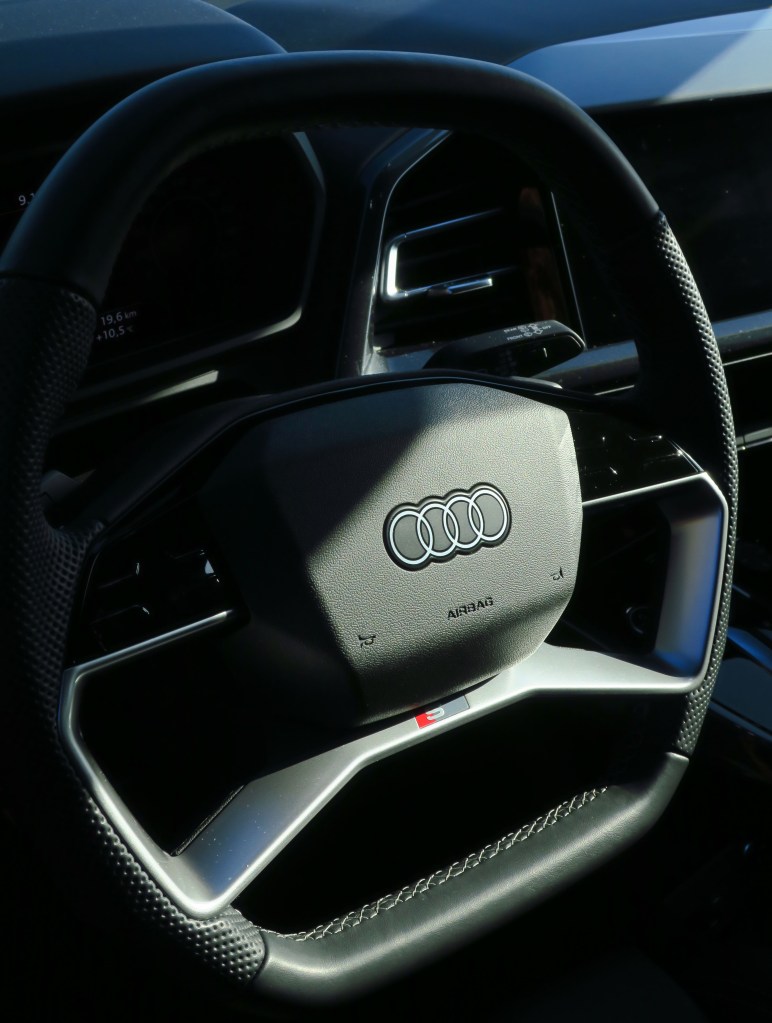
The dashboard and cabin breathe Audi panache: the instrumentation is directed towards the driver here, rather untypical for a SUV. Bravo for Audi, and they did also very well with the instrument layout: two large dials are seen in front of you, on the digital display which is almost equally as large as the central touchscreen.
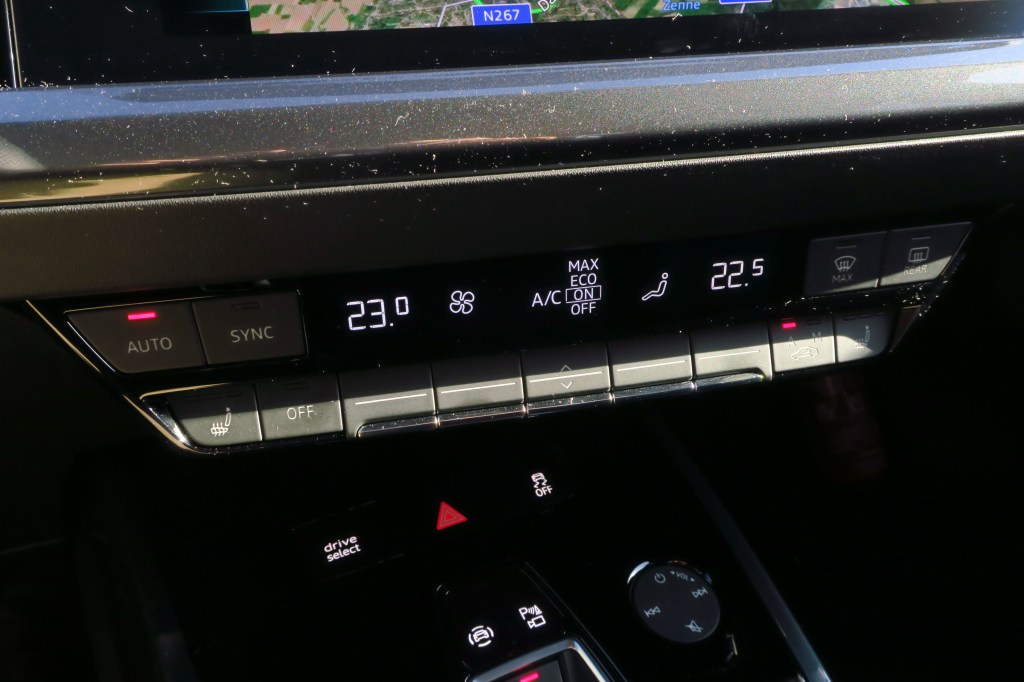
The ventilation commands are thankfully also on a separate panel with extra knobs, and also the audio volume knobs are of the rotating touch type as found on the early Apple I pods.
When you opt for the MMI package, you can also enjoy an augmented reality head up display. Our test car came with it and we liked it very much.
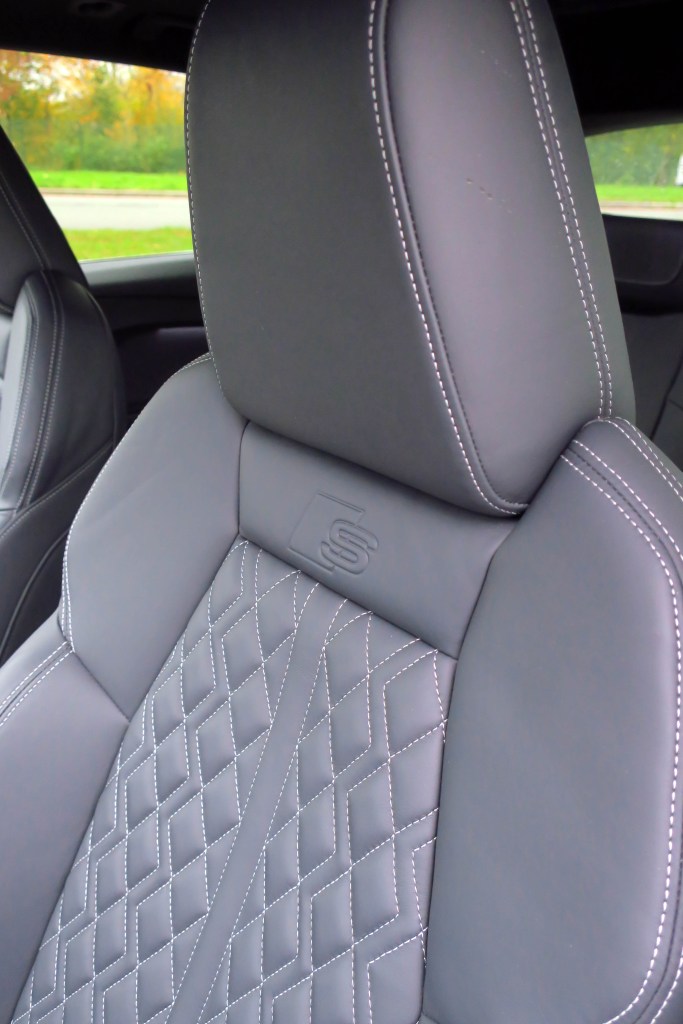
In the posh “S line” equipment level of our test car the seat upholstery with its typical cross stitched patters was very pleasing to the eye, and the seats are also very comfortable indeed.
While we are talking about the cabin, we can mention here that also the Q4 offers plenty of room, also for its rear passengers, taking advantage of the good qualities of the MEB platform. This SUV is certainly not compact here…
There is also plenty of room for storage in the interior, a good 24,8 liters. On the central console between the two front seats you have already 4,4 liters at your disposal.
Luggage space is more than adequate with 520 liters, with both rear backrests down you have a maximum of 1490 liters at your disposal, when you use the available space up to the roof.
The charging cables are neatly tucked away under the luggage floor. Only a bit cumbersome to reach them when the boot is fully loaded when on holiday. For the rest of the year it’s very fine.
Dynamic and smooth…
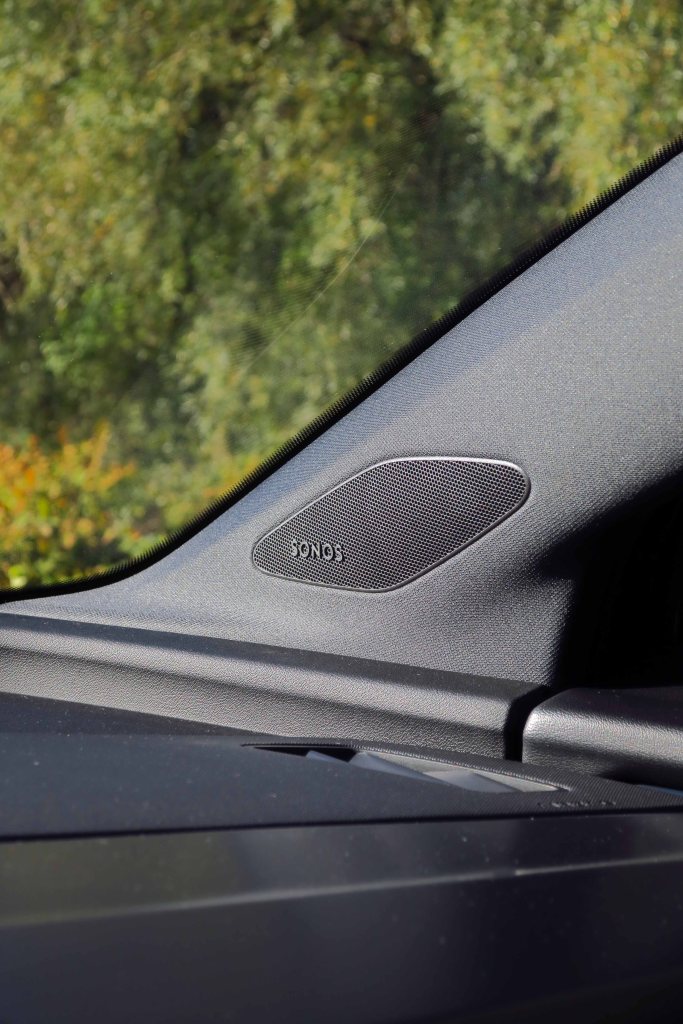
Let’s get behind the wheel now and start driving. As an EV befits, this Audi is again supersmooth. It is “Zen” driving all the way. EV’s are just a delight to drive in town, with their feline power delivery. 310 Nm of torque is at your disposal, always. It makes this Audi beautifully agile and nimble in dense traffic. Stop and go traffic is now for you an ideal moment to relax behind the wheel, and enjoy the beautiful sound coming from the Sonos system we had in our test car.
Performance is of course excellent, with a 0 to 100 km/h acceleration time of 8,5 seconds. Top speed is limited to 160 km/h, as in the ID.4.
German Autobahn aficionados would like this to be more, but then we would not speak of a useable range anymore.
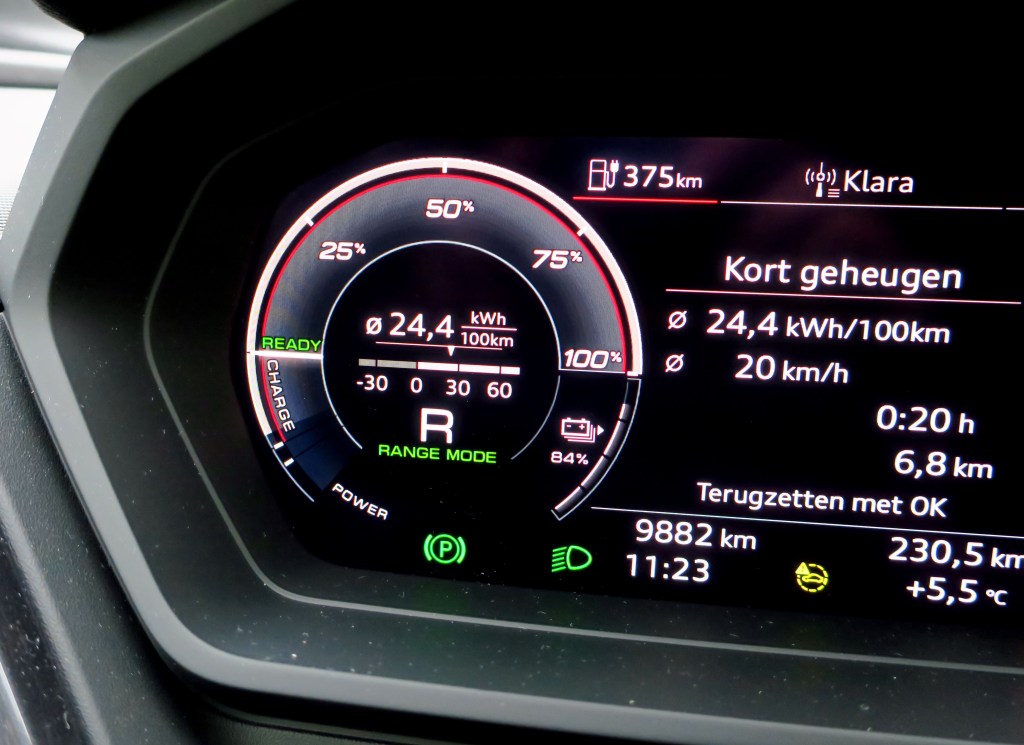
When it comes to range, your driving style is here of paramount importance. You see it clearly on the photo showing the instrumentation: when collecting our test car, we drove it gently to the motorway, where we drove a constant 95 km/h, just a bit faster than the trucks, to reach our photo spot. Consumption was then a very reasonable 15,2 kWh/100 km, over 19,6 km at an average speed of 42 km/h.
A cold start in the morning, with heater full ablaze and just some slow stop and go traffic paints another picture. There the consumption over 5,4 km was a whopping 43,6 kWh. The following photo tells the story.
When we take the WLTP consumption as the norm, being 19,3 kWh, then the effective range would be 530 km. In practice, you can expect a useable range of a good 400 km.
There are different driving modes on the Audi, one of them being the “Range” mode. It limits power and sets a maximum speed of 90 km/h.
Charging at the home wallbox is possible up to 11 kWh, and on public charging points you can “fast charge” your Audi at not less than 125 kWh. Then it takes only 10 minutes to add an extra of 130 km to your range.
Practice in our country is of course rather different to say the least. 98 % of our existing condominium and apartment buildings have NO wallbox provisions in their underground garages, not even electricity sockets in many cases, limiting possibilities of enjoying EV propulsion greatly.
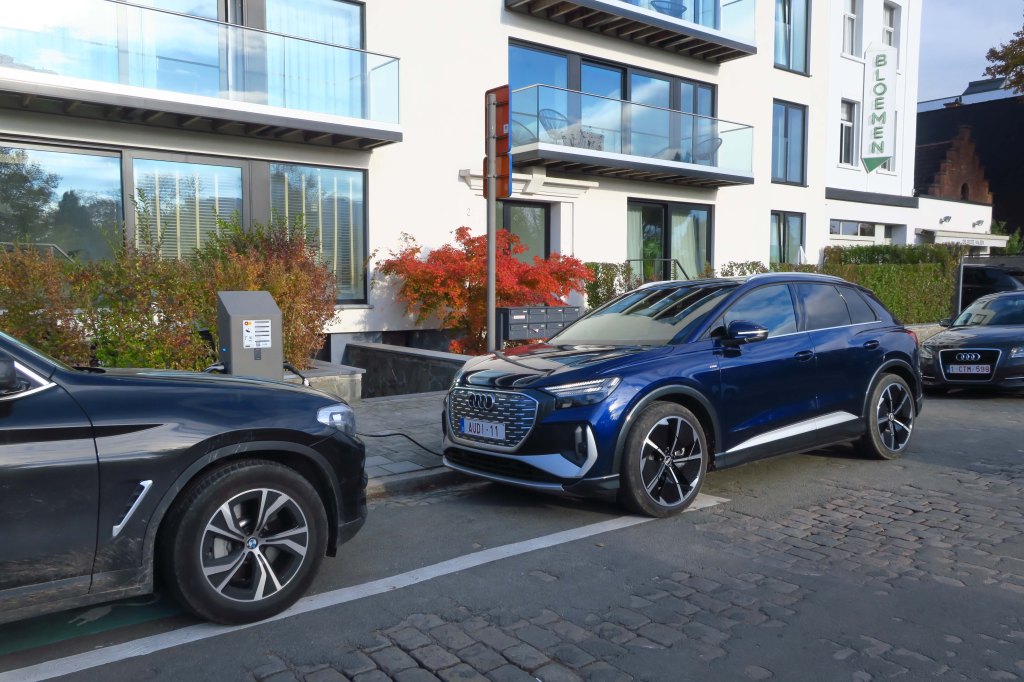
My nearest public charging point is about 1 kilometre away, and this is not a “fast” charging point. Allowed time for charging is also limited to 3,5 hours. Belgian municipalities – at least those near Antwerp – have still to wake up to reality that the charging points have TWO sockets and can actually charge two cars simultaneously. The square they paint on the pavement actually is clearly meant for ONE car. Users of the charging point are so kind and gentlemen-like to ignore this, so your servant could charge the Q4 too, as the following photo shows, which leaves one certainly perplex…
Driving the Q4 to Knokke, we found no unoccupied charging points within a reasonable walking distance from the place we stayed, so the next day we used the “Range” Driving mode to get us home again. It was a magnificent and leisurely drive…
Car manufacturers are certainly not to blame here. Their products increasingly offer useable ranges, and we could easily plan a longer route on the Audi, where the touchscreen clearly indicated which charging points en route we could use, how long we had to charge, which were open, etc.
Of course, providers are working hard to change the situation. At the moment of writing, IONITY is invetsing 700 million € for 5.000 extra HPC charging points in Europe.
Comfortable and agile
Besides room of its occupants, the Audi Q4 also offers a genuinely comfortable ride and steering is also precise and engaging. Audi’s are build to deliver driving pleasure, and this is also found in this Q4. A well balanced car, certainly making the very best of what the MEB platform has to offer. The same goes for the brakes, which can be well dosed to come to a smooth stop.
We also mention here the “coasting function”. When one hasn’t chosen the “B” mode, the Audi will just coast along when you lift the throttle, and this adds greatly to the “Zen” driving pleasure, once you have mastered the art of anticipative driving.
Of course you can recuperate energy when decelerating, or you can leave everything to the wisdom of this Q4. Indeed, you can put the Predictive Energy Assistant at work, which will interpret road signs and navigation data. Then the system will calculate for you continuously the right balance between sailing and energy recuperation, no less!
Conclusion
Audi has succeeded in designing and building a magnificent compact EV on the MEB platform. A car with impeccable finish, oozing with style, panache, good comfort and handling, very good range and performance, and on top of all that roomy too.
Of course this has a price tag, but it is a timelessly styled premium car, one of the very best which ever rolled of VW production lines.
Citroëns have always been quite exceptional cars for me, not onIy the “big” Citroëns, but also the compact cars, beginning with the GS. In the early days of my career as a car journalist, I vividly remember the stylish GS as a test car. Indeed, not only the boxer engine, also the suspension and styling where totally of another league.
I also recall fondly a very fast trip to the Frankfurt Motor Show, with a 1,6 litre petrol engined C4, the generation prior to the Cactus, driving totally relaxed at speeds between 160-180 km/h in pouring rain on the Autobahn, showing superb GT qualities in total comfort. But also the 1,9 litre Diesel versions were extraordinary. I remember the used red BX and the used dark blue Xantia, both of which I drove as long-term test cars for Autokrant. They offered excellent performance, GT panache and comfort, combined with exemplary economy.
But now let’s turn our nostalgic hearts to the present day C4. To tell you right away, it continues the tradition with its equally unique suspension, Progressive Hydraulic Cushions® and Advanced Comfort seats. It has the same unique personality and character as its predecessors, and even a lot more. Just read on…
Hans Knol ten Bensel
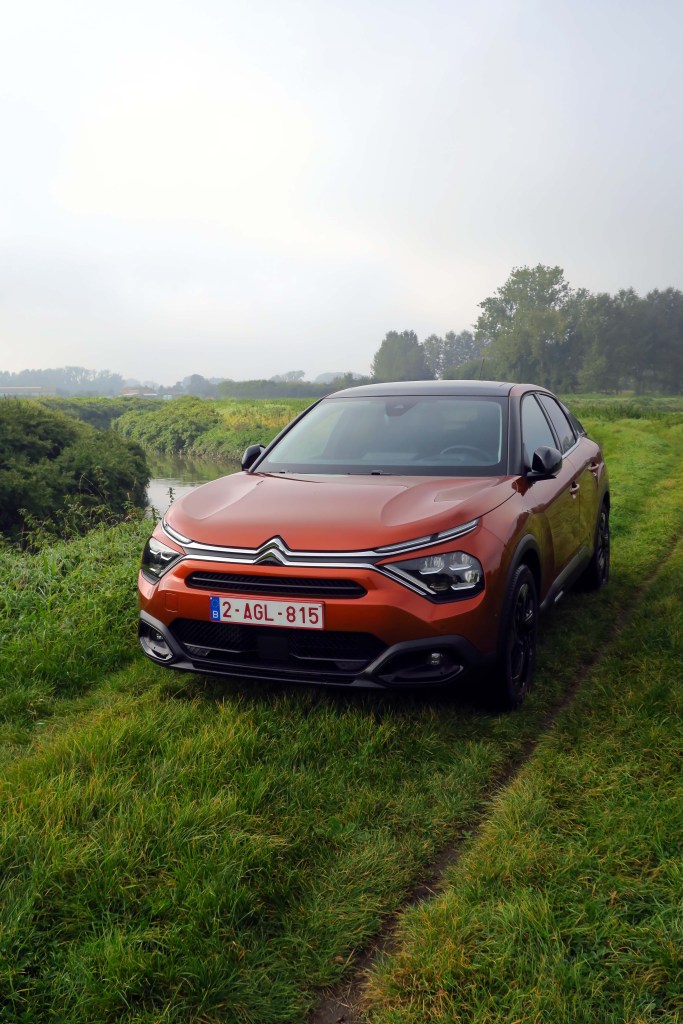
With the new ë-C4 and New C4, actually Citroën’s new-generation compact hatchback, the iconic brand is targeting this time the still very important (European) hatchback market. This C4 has a rather elevated posture, not unlike we see with Asian competitors like amongst others the Toyota CH-R, with the same quite busy styling language.
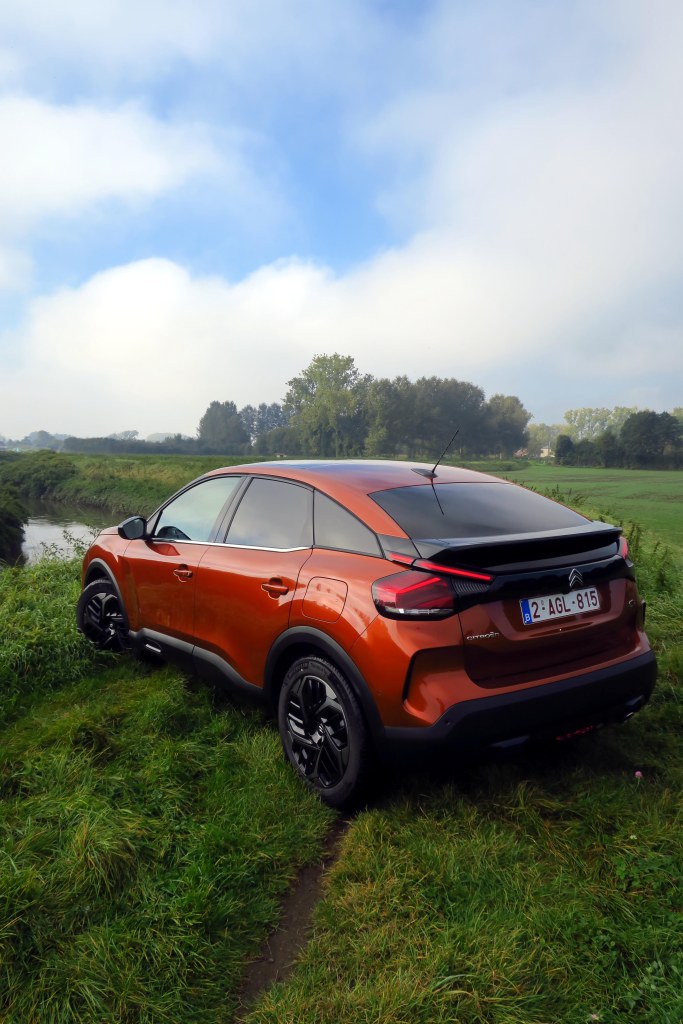
Citroën says that it wants to combine the dynamism of a hatchback with SUV design forms for added character. With its sloping rear window and spoiler, Citroën says, the rear end draws its inspiration from the 2004 C4 Coupé with its original two-piece rear window topped by an aerodynamic spoiler.
Sliding behind the wheel, we are pleasantly surprised by a restful and uncluttered simplicity, indeed every effort has been made not to distract the driver unduly. The instrument cluster is a superb example of less is more: small dials for water temperature, revs and a digital speed indicator are the only things to attract your attention. The designers have kept these indicators rather small, and indeed your eyes should rather focus on the road and the large colored head-up display. Restful and efficient!
In the centre, at the top of the dashboard sits the ultra-thin borderless 10-inch touchscreen, which is of course the nerve centre of the vehicle’s controls. The controls of the dual-zone automatic climate control – thankfully also physical for immediate access to change the settings – have chrome dials and gloss black push buttons.
One finds easily his way in this C4. There is also an elegant guilloché metal automatic gear lever. It has the three usual positions (R, N and D) that are backlit for clarity. There are also two backlit push buttons: P to activate Parking mode, M to activate manual driving mode (for conventional engine versions) or B to activate the “Brake” energy recovery mode for the electric version. The console also incorporates the electric parking brake and a driving mode selector that has three settings on automatic transmission versions: Eco, Normal, Sport.
Smooth diesel power combined with a fluent 8 speed automatic…
Indeed, we drove here the BlueHDi 130 S&S in combination with the EAT8 Auto gearbox. Here we again were impressed by what a modern 1499 cc four valve turbocharged diesel engine (still) has to offer in terms of velvety power delivery and sheer economy, all this in paired with a state of the art transmission.
Starting from cold, the once so familiar diesel clatter is totally absent: this engine runs smooth, virbationless and silent right from the word go. At speed, it is totally inaudible, and very unobtrusive indeed at urban crawling speeds. The transmission is ideally mated to the engine’s torque characteristics. Indeed, the unit has ample pulling power, developing 300 Nm at a low 1700 rpm. Performance therefore leaves nothing to be desired: it will accelerate smoothly in 10,6 sec to 100 km/h, further to an impressive top speed of 206 km/h. Revs are kept low due to the high final gearing of the transmission, providing very restful high speed cruising. Indeed, maximum power of 96 kW or 130 HP is developed at a very sedate 3700 rpm.
So this C4 has everything in house to excel as a fast “grande routière”, and on top of that there is a truly astonishing fuel economy: we reached an average during our test of merely 4,4 l/100 km!
Legendary comfort…
The C4 is equipped, as standard, with the Citroën brand’s innovative suspension system featuring Progressive Hydraulic Cushions®, which were first introduced on C4 Cactus and C5 Aircross SUV. The suspension setup offers supreme comfort and a “magic carpet ride” effect, according to Citroën. Indeed, comfort is truly top notch. Not less than twenty patents were filed in the development of this suspension system. Its operating principle is simple: the Citroën Progressive Hydraulic Cushions® system adds two hydraulic stops – one for compression, the other for decompression besides the classic metal springs and shock absorbers. The suspension works in two stages, depending on the stresses it encounters.
For light compression and decompression, the spring and shock absorber control vertical movements together with no assistance required from the hydraulic stops. However, the presence of the hydraulic stops means the engineers have greater freedom to tune the setup to achieve the fabled “magic carpet ride” effect, which gives the impression that the car is gliding over uneven road surfaces.
Indeed, with major impacts, the spring and shock absorber work together with the hydraulic compression or decompression stops, which gradually slow the movement to avoid jolts at the end of the range. Unlike a traditional mechanical stop, which absorbs energy, but then returns part of it as a shock, the hydraulic stop absorbs and dissipates this energy. Clever!
The C4 is also quiet: particular attention has been paid to acoustic insulation, with a focus on running and aerodynamic noise. Special attention has been paid to the insulation around the engine block.
…is also found in the seats
The special foam on the surface of the seat, thickened by 15 mm, offers softness and support from the first contact. The new high-density foam at the core of the seats holds the occupants in place during long journeys. The seats are also pleasantly wide and generously dimensioned.
The front seat passenger is also spoiled…
A Smart Pad Support Citroën™ is a World Premiere on New ë-C4 and New C4. It is a retractable system designed to hold a tablet computer. It is solid, functional and directly built into the dashboard. It enables the front passenger to make the most of the time spent on-board. Ideal to put your co-pilot at work to read for you the stories and information about the towns or the regions you travel through, which you have prepared on your IPad or tablet prior to your voyage of course…
The Dashboard tray itself is a large sliding drawer with a cushioned action, positioned in front of the front passenger. It has a special anti-slip surface to store personal items or hold a tablet in place in complete safety. Just great!
Of course there is an open wireless charging area for smartphones, which comes combined with two USB sockets, one of which is Type C.
Infotainment and connectivity galore…
The 10-inch touchscreen, with a capacitive screen that needs only be touched with the tip of a finger, allows the driver to configure the vehicle, access the multimedia system, telephone, air-conditioning and navigation. It also features voice recognition.
Wireless charging for smartphones allows a wide range of Qi-compatible devices to be induction-charged using a charging mat incorporated into the centre console. The wireless transmission of electrical energy is based on the principle of magnetic induction. Connect Play, using the Android Auto and Apple CarPlay™ compatible Mirror Screen function are installed of course.
ConnectedCAM Citroën® is an independent camera system integrated into the base of the rear-view mirror. It uses full HD and GPS technology. The camera allows you to take a photo or video of the outside scene in front of your vehicle, with the corresponding data stored on the integrated 16 GB memory card. Thanks to the WiFi connection, the data recorded by the camera can be transferred to a smartphone to be shared via e-mail or social networks. ConnectedCAM Citroën® continuously films the road in front of the windscreen and automatically saves the recordings in the event of an accident.
As well as driving aids…
The new ë-C4 and New C4 are packed with driving aids – no less than 20 latest-generation technologies in all. That is as many as on C5 Aircross SUV, which is the benchmark for driving aids at Citroën.
Practical and spacious…
The C4 has a wheelbase measuring 2,670 mm – one of the longest in the segment – delivering the “Best in Class” knee room in the rear at 198 mm. The 1,800 mm exterior width easily accommodates three people in the rear – providing 1,380 mm of width at the shoulders and 1,440 mm at the elbows. Headroom in the back is a bit restricted for the tallest among us though.
With a 380-litre boot and a low, flat loading sill (715 mm), the C4 is at the heart of the segment. For added convenience, a two-position floor allows the boot to be divided into compartments and provides a flat floor when the rear seating is folded down. For even more practicality in everyday life, hooks are present to hang bags, while a ski hatch allows particularly long objects to extend into the cabin.
Last but not least we tell you here that this Citroen C4 is built at its Madrid plant, and Stellantis has spent €144 million in upgrading the factory and designing the new C4.
We also had a short drive with the electric ë-C4, and we tell you soon about our driving impressions… stunning indeed!
Conclusion
In terms of driving comfort, long-legged cruising performance, and last but not least exceptional economy and smoothness, this C4 truly stands in a class of its own. It is one of the most harmonious cars we have come across lately. Its 1,5 litre 130 HP diesel showed us again how formidable these engines have become, offering a useable range of well over 1,000 kilometers.
This C4 breathes originality and character, even more so in the interior, and we can tell you this: just slide behind the wheel of this one, and you will notice, Citroën driving is addictive, and this feeling grows further with every meter you drive it…
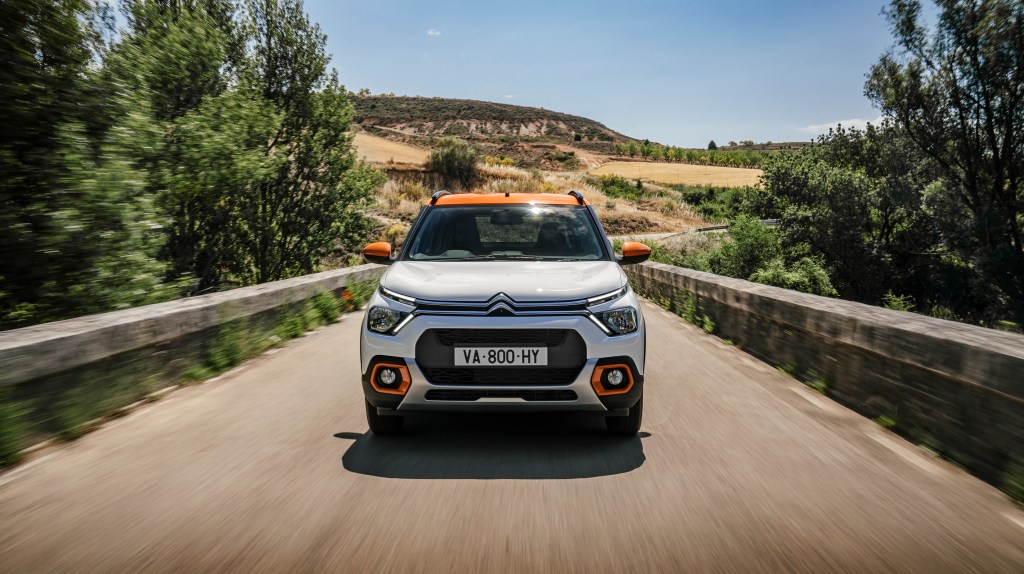
Stellantis CEO Carlos Tavares has bold plans for Citroën and its role within the group. The iconic brand is set to sharpen up its international strategy, and therefore unveiled on September 16 a totally new C3, according to Citroën “a versatile hatchback measuring less than 4m in length”. It will enable the brand to expand in India and consolidate its presence in South America.
This new C3 is very important: not in the least because it is the first model in a family of three vehicles aimed at the international market. It is developed and produced in India and South America and which will exclusively sold in those two regions over the next three years.
New C3 is conceived as a modern hatchback designed to meet the needs and road conditions of the two regions, offering comfort and connectivity to progressive customers in search of peace of mind and prestige.
Does this mean that Citroën, which since many decades has developed a tradition of providing affordable and reliable mobility (one has only to think of the iconic 2CV…) through ingenuity and excellent engineering focusing on effective solutions, will use its design and engineering experience in India and SA to strengthen and refine its acumen and expertise as manufacturer of affordable transport in our markets?
What Citroën CEO Vincent Cobée has to say about the brand and its international strategy…
The dynamic Stellantis PR department in Belgium offered us to participate in a media roundtable conference with Vincent Cobée, and of course the abovementioned question was burning in our minds.
Here follows what Mr. Cobée answered:
“Citroën is about innovation, well-being and you can call that humanism, you can call that audacity, you can call that a bit of a militant brand. We will remain like this, translated into the Indian ecosystem. We are not a petrolhead brand (although, we should note here, that Citroën played a favorite role in international rallies…) but we will be true to our global DNA. We will be competitive in India, which means developed, manufactured and distributed in India.
Having said this, we have entered in Europe in the car industry in Europe a rather complex period, where the technological requirements imposed by the European legislation are going to make the cars more expensive, and this at a time where there is an economic crisis looming, and at the same time the availability of freedom of movement is going to become more and more important with the pandemic which we have been living for the last year or so.
If you put those three things together, there will be an aggravated tension into affordable mobility.
So Citroën, as a social progressive, innovative brand, has a role to play here. The environment is obviously different from what we see in India or Brazil and those represent different challenges, but the spirit of maintaining and enhancing the freedom of mobility in an environment where there is a mismatch between the (consumer) appetite and the regulatory cost, this is something that we will address with ambition.
So every lesson that we can learn from our development in fast going markets outside of Europe will be helpful and indeed used…
Inspired by SUV architecture…
Now let’s turn to the new C3. It is built for international markets, where roads are not always in top condition. So this Citroën adapts to the terrain by drawing inspiration from SUVs for its ground clearance, high bonnet and elevated driver position.
In addition to Citroën’s trademark comfort and market-leading spaciousness, its clever design meets the wishes of a young, tech-savvy public, grown up with smartphones, which are totally integrated and connected to an XXL 10” touchscreen.
But that is not all. Set to be launched in the first half of 2022, New C3 will also offer an unprecedented customer experience, including innovative services and the opening of a dedicated sales website in certain markets.
India is both promising and (very) important…
India is a rather new market for Citroën and one with significant potential that will soon be the third largest in the world.
The brand announced its arrival in 2019 and launched its first import model at the start of 2021: C5 Aircross. As a new market player, Citroën is initially focusing on large metropolitan areas. As said here earlier, it offers a top level customer experience.
Citroën products are positioned at the forefront of the Indian market, thanks to a strategy of high-level local integration (more than 90%) based on the two joint venture agreements between the Stellantis Group and the companies in the CK Birla Group (car assembly and distribution and power-train manufacturing).
The automotive market in India is growing rapidly and is expected to reach over four million cars sold annually by 2025. B-segment hatchbacks represent nearly 23% of this market.
The new C3 is meant to appeal to customers for whom their car is a reflection of their personality. A car that they can customize however they wish, which is a strong expectation on the Indian market.
In addition, the compactness (less than 4m to fall into a lower tax band), agility, versatility, on-board space, comfort and connectivity will improve the experience of traffic conditions which can sometimes be difficult, while adapting to each individual’s lifestyle.
This new C3, which will be produced in Chennai, will be aimed at new married consumers in their thirties, from the emerging middle class, with a comfortable income, who will be attentive to the value offered by a product that represents a significant outgoing and which needs to be robust and practical to maintain. It must be attractive, modern with innovative options for connecting to the family’s smartphones, while reflecting their tastes and their personality.
A stronger position in South America…
Citroën’s presence in South America is much older, dating back to the 1960s. Citroën’s objective today is to gain a firmer foothold in this market with modern products, in step with customer aspirations. The C4 Cactus is produced in the Porto Real plant and embodies Citroën’s positioning in Argentina and Brazil with its original and bold styling as well as comfort.
Produced in Porto Real in Brazil, the New C3 symbolizes a real renewal in the region, with its modern styling, its connectivity and the experience of its on-board comfort. The B-Hatch segment accounts for almost 30% of the total market in Brazil and almost 26% in Argentina (data FY 2020).
The versatility and positioning of New C3 will ensure greater coverage of the segment (in Brazil, New C3 will cover 90% of the segment’s needs, compared to 40% for the former model, while that coverage rate in Argentina is set to increase from 50% to 75%).
It will be aimed at active couples in their forties, married and with two children, looking for a prestigious, versatile and spacious car for their short everyday journeys and also weekend getaways.
It will also appeal to independent and active single people in their thirties, living in cities and with a slightly higher-than-average monthly income, looking for a vehicle that is elegant (for modernity and status), robust and safe.
We show you here some photos of this new C3, and tell you here also that soon we will test the Citroën C3 Crossback and the C4… stay tuned on these columns!
Alfa Romeo wants to build a top quality gem: the beautiful and striking Tonale, which will be Alfa’s first all electric vehicle. Beautiful it is, we sat personally behind the wheel of the clay model at the Centro Stile under the watchful eye of head of design Klaus Busse, and now Alfa also wants its finish and quality also to be legendary.
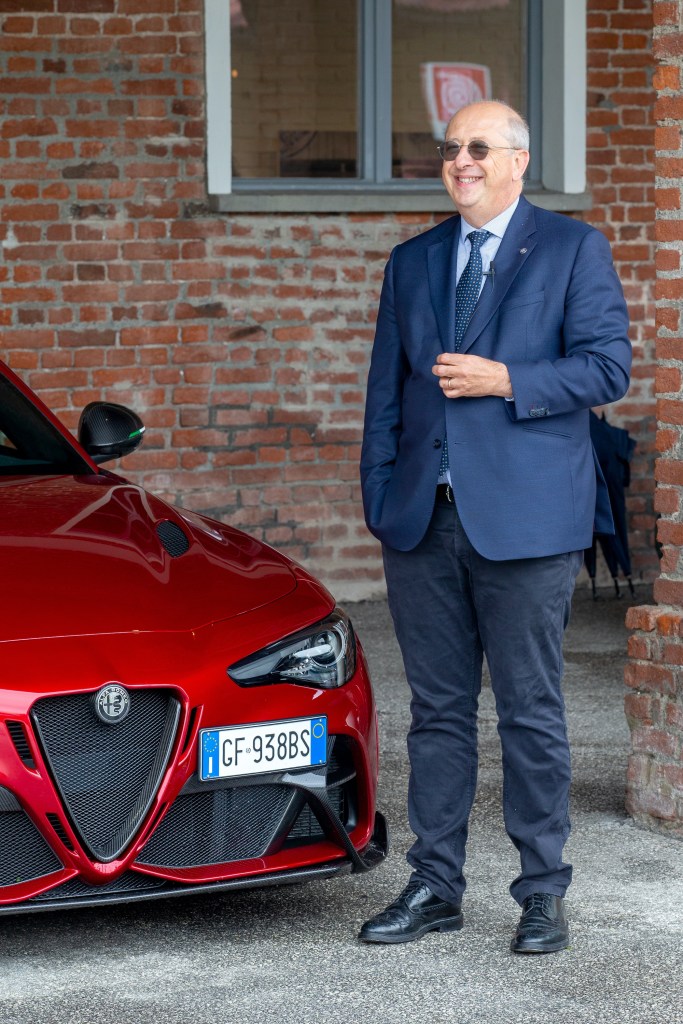
So the Alfa Romeo CEO Jean-Philippe Imparato and Alfa Romeo senior management met up recently with not less than 150 Italian and international suppliers at the G.B. Vico plant in Pomigliano d’Arco.
Alfa Romeo CEO Jean-Philippe Imparato seen here above…
Quality was on the agenda, and virtually only that.
Having specifically focused on this goal ever since his appointment, new CEO Imparato has taken part in monthly meetings at the Pomigliano and Cassino plants.
And Again at the meeting – with about 60 suppliers in attendance and others linked up by a livestream – he strongly reiterated that quality is a major priority. The goal is excellence.
“To achieve it, Imparato told, the starting point is the selection of materials. Our suppliers, the companions on a journey the destination of which is the brand’s first electrified car, embodying Alfa Romeo’s DNA with the highest quality standards.
Plant manager Alessio Leonardi adressing the audience of suppliers at the plant...
Joining the CEO at the meeting were the Stellantis Chief Customer Experience Officer, Richard Schwartzwald, and the plant manager, Alessio Leonardi.
During the meeting, the project targets were shared with the suppliers, considered fundamental stakeholders in the achievement of the qualitative objectives set.
If you are eager to see, drive and make this car your own, we tell you here that the Tonale will be marketed in Europe from June 2022 onwards… we will keep you posted on the further developments concerning this masterful Alfa, stay tuned on these columns!
Today Luca de Meo, Renault Brand CEO, and the Renault brand team have participated in the first ever “Renault Talk”, a brand-new all-digital event where they discussed their vision of the wider group.
The new direction, unveiled by the team, presents Renault Group as an energy transition leader, at the forefront of the latest technology and services, operating in a more sustainable and responsible manner as part of its ‘Nouvelle Vague’ (New Wave).
A people-centric brand, Renault is entering a new era as it delivers enhanced modernity to the European automotive industry.
Technology and state of the art electronics will hallmark the future Renaults…
Nouvelle Vague…
The ‘Nouvelle Vague’ will turn Renault into a brand focused on technology, services and clean energy, by engineering smarter everyday vehicles and mobility solutions that are more sustainable.
This is in line with the DNA as a company that changed with the times throughout the 20th century with innovative, modern vehicles.
Now, more than ever, Renault strives to meet market expectations of responsible, carbon-free, safe and scalable mobility solutions that are in line with customer needs.
The Arkana, the first SUV Coupé of a volume manufacturer… presented here by Laure Grégoire – Model launch Manager.
During Renault Talk #1, Luca de Meo restated the direction set for the brand, at the heart of the Group’s Renaulution plan:
As industry leader of the energy transition, the Renault brand will be the greenest brand in Europe as of 2030, with nine out of 10 cars on sale being electrified.
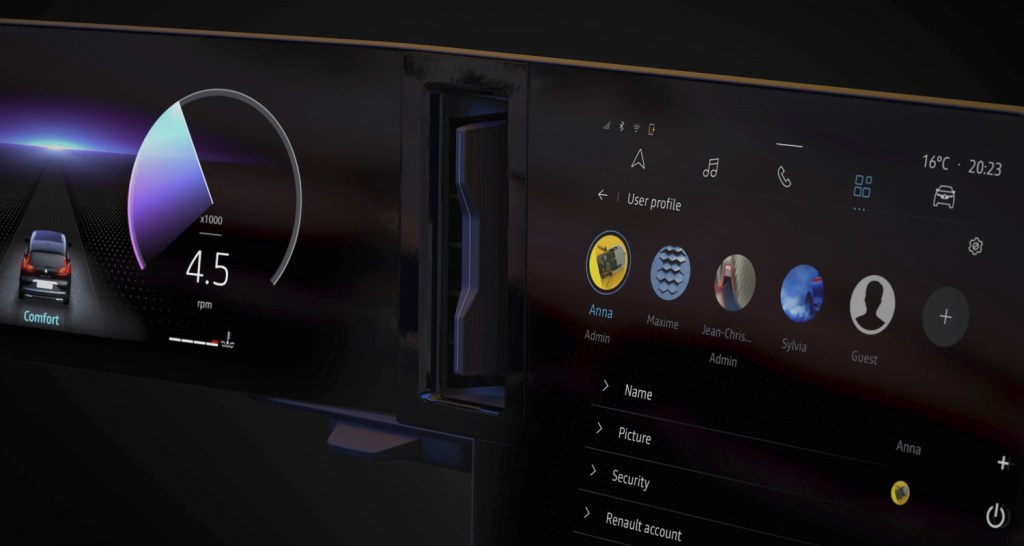
At the forefront of technology and services, the Renault brandis shaping the future of urban mobility, primarily via the ‘Software Republique’. More than 2,000 engineers from five industry-leading companies will bring their shared expertise in cyber security, artificial intelligence, data processing, software, and microelectronics, in order to deliver turnkey mobility solutions for cities and communities.
The Renault Re-Factory – Europe’s first circular-economy hub – marks a move towards a more sustainable and responsible model, with up to 120,000 vehicles (EV included) recycled or upcycled every year. Nearly 80 per cent of strategic recycled materials will be reused in new batteries. By 2030, Renault will become the world’s best automotive manufacturer when it comes to the percentage of recycled materials in new vehicles.
Renault is taking its ‘voitures à vivre’ to upper segments: Seven models will be released in the C and D segments by 2025, all of them electrified, with the All-New Arkana marking the beginning of this offensive. The next generation Megane E-TECH Electric, a vehicle that embodies the future of connected and full-electric cars, is also set be launched in the near future. Lastly, ongoing improvements to E-TECH hybrid technology will continue to provide upcoming C- and D-segment vehicles with the very best in efficiency and dynamic driving experiences.
A NEW ERA, and a NEW LOGO
Throughout its history, the Renault brand has undergone several changes to its visual identity. But one thing has remained unchanged since 1925: the instantly recognizable Renault diamond, a true brand icon.
The latest version of the Renault logo was created in 1992 before being slightly refreshed and reworked in 2015. As a brand deeply rooted in a modern, international market, this all-new logo brings a more modern and vibrant feel and serves a key purpose of portraying the Renault brand as more relatable and built on people-centric values. A streamlined design without typography or brand signature, the logo is an open-ended shape, reflecting the brand’s openness and transparency.
The new logo was co-designed with Landor & Fitch consultants and will be phased in as of next year on all Renault brand vehicles and throughout the Renault network. By 2024, the whole Renault range will bear the new logo.
During the Renault Talk, Gilles Vidal, Renault Brand Design Director, unveiled an image of the logo as it will appear on the back of the new Megane E-TECH Electric, which will come to market in 2022.
ALL-NEW BRAND EXPRESSION
According to Arnaud Belloni, VP of Global Marketing for the Renault brand, the ‘Nouvelle Vague’ is also reflected in the brand’s advertising.
Imbued with a creative and modern edge, they incorporate some of the brand’s most iconic pieces of memorabilia: the Renault Fuego, covers of cult classics like ‘Johnny & Mary’, or the Renault-Gitane cycling jersey featured in a recent advert for the Captur E-TECH Hybrid.
Renault makes their “Cars fit for true living” increasingly electrified… presented here by Gilles Le Borgne – Engineering Director Renault Group
THE RENAULT E-TECH HYBRID OFFENSIVE
With more than 10 years of experience and almost 400,000 vehicles sold to date, Renault is a leader in the European EV market. Building from its expertise in pure-electric vehicles, Renault has extended its EV range with hybrid and plug-in hybrid versions of its core market vehicles.
With more than 150 patents to its name and having leveraged the brand’s experience in Formula One, E-TECH hybrid technology is as unique as it is modular. In both hybrid and plug-in hybrid versions, it provides the best in energy efficiency and driving pleasure while also reducing CO2 emissions and fuel consumption.
This revolutionary piece of technology debuted on three of the brand’s core vehicles in 2020 as a way of making the EV experience something for everyone:
Clio E-TECH Hybrid
Captur E-TECH Plug-in Hybrid
Megane Sport Tourer E-TECH Plug-in Hybrid
In 2021, the E-TECH range is set to expand with the release of the All-New Arkana and Captur E-TECH Hybrid, plus the Megane E-TECH Plug-In Hybrid, totalling an electrified range of six E-TECH hybrid and plug-in hybrid vehicles.
Gilles Le Borgne, EVP, Engineering, Renault Group, has confirmed that the brand is preparing for the future by extending the scope of its E-TECH hybrid technology to future generations.
Upper segments – especially the C-SUV segment – will see the arrival of a brand-new 1.2-litre three-cylinder engine combined with an electric motor, for a 200hp hybrid vehicle in 2022 and a 280hp in plug-in hybrid four-wheel drive vehicle in 2024.
ALL-NEW ARKANA: SPORTY, HYBRID, AND SPACIOUS
The All-New Arkana’s unique, full-hybrid design is the first SUV with coupe design from a mass-market manufacturer.
Its TCe engines feature 12-volt micro-hybrid technology delivering enhanced fuel efficiency, while the E-TECH hybrid powertrain is capable of running in electric mode for up to 80 per cent of the time on urban roads, contributing to around 40 per cent in fuel savings compared with a standard petrol engine.
Across Europe in May so far, more than 6,000 orders have already been placed for the All-New Arkana.
THE ALL-NEW KANGOO: ELEGANT AND SPACIOUS
The All-New Kangoo combines sophisticated design, space and technology, offering superior practicality with three full-sized seats in the rear and more than 49 litres of accessible storage areas. The car is here presented by Thierry Plantegenest – VP Sales Marketing LCV and Pick-ups, (on the left).
The bootspace ranges from 775 litres up to 3,500 litres of flat-bed cargo area, while it can be specified in five- or seven-seat models. The All-New Kangoo also boasts 14 standard-fit driver assistance systems.
In 2022, the All-New Kangoo range will expand further as it becomes available as a full-electric E-TECH model.
VALUE FIRST
Fabrice Cambolive, SVP, Renault Brand Sales and Operations, restated Renault brand’s commercial priorities:
The ‘green’ offensive: Ramping up the EV range and furthering the E-TECH offensive, as already in Europe, 25 per cent of Renault sales are electrified and 30 per cent of Clio sales in France are for the E-TECH Hybrid
Products: Speeding up product line renewal, both in Europe and abroad, by winning back market shares in the C-segment
A global player…
Proud of its French roots, the Renault brand is also an international brand. The Renaulution plan is Renault’s way of bolstering its international presence, while boosting efficiency. Model by model, market by market, the Renault brand has overhauled its business model. The final objective is to increase the profitability of its vehicles while preparing a generation of new products to conquer new markets.
Internationally, the Renault brand has been investing in its historical high-potential markets with a strong local presence – Brazil, Russia, Turkey, and India – while keeping risk levels in check.
In Europe, Renault continues to rely on its key markets – France, Spain, Italy, Germany, and the United Kingdom – with a more visible range and a clear roadmap: leverage E-TECH to foster E-mobility leadership and ramp up efforts to increase market shares for both C-segment and commercial vehicles.
A bold future lies ahead! We will soon test for you the Megane Grandtour and Captur Plug in Hybrid, as well as the bestselling ZOE – stay tuned!
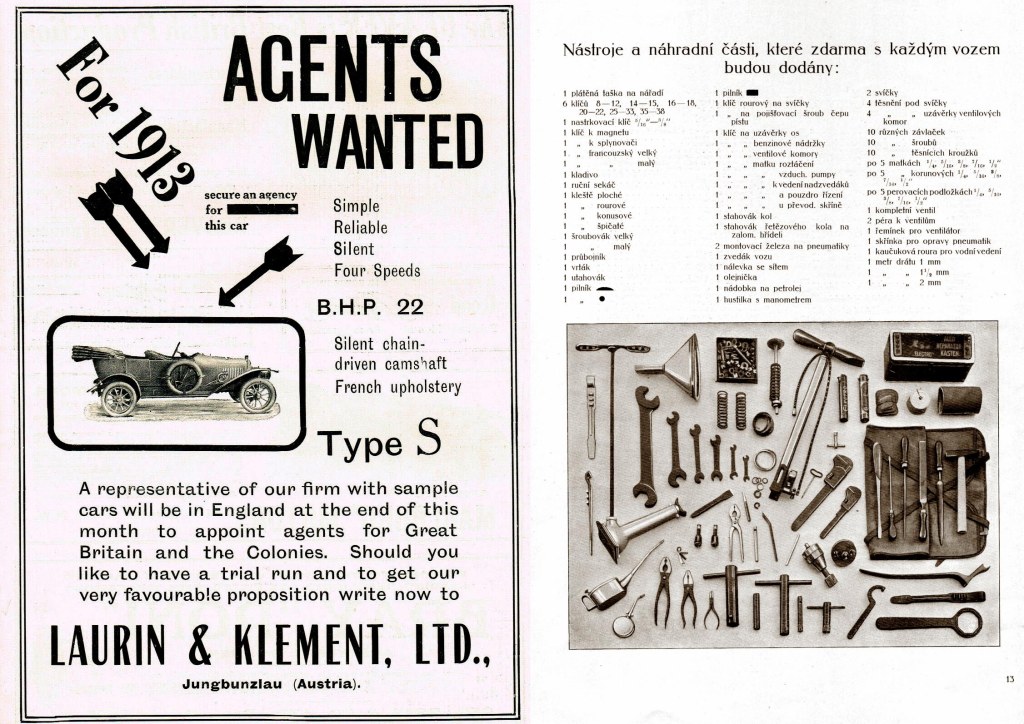
This is already the second series of the Laurin & Klement, enjoying also success in the middle east, besides the many buyers in the vast Austro-Hungarian empire…
The car manufacturer Laurin & Klement enjoyed first economic and sporting success with bicycles immediately after it was founded in 1895. Bicycles were the product to begin with. But already 4 years later, the product range was expanded to include motorbikes before the company presented its first automobile in the autumn of 1905 – the Laurin & Klement Voiturette A.
The Austrian sales center of Laurin & Klement was eagerly looking for dealerships in the UK and Commonwealth, for its Type S.
Lets not forget, Laurin & Klement was embedded in the vast Austro-Hungarian empire, and this meant a domestic market good 50 million people. In 1908, 90 per cent of all automobiles in the voiturette segment manufactured during the dual monarchy of Austria-Hungary were made by Laurin & Klement. And voiturettes were quite popular too.
In addition to its high utility value, the vehicle also had a particularly attractive price-performance ratio and low fuel consumption.
Laurin & Klement presented its best-selling model, the S series, on 16 April 1911. It sold in high numbers: more than 2000 units had been built by 1924 in numerous versions, including the Lady coupé and the Kavalier ‘double saloon’.
Laurin & Klement’s vehicles also appealed to international customers, finding buyers as far afield as the British and Russian Empires. The S series performed well in the most demanding races and competitions, finishing 6th overall in the 1914 Targa Florio, for example.
The additional designation 12/14 HP resulted from 12 ‘tax horsepower’, a value calculated for tax purposes according to an officially defined formula, as well as from the actual output of 14 hp (10.3 kW). This was produced by a water-cooled four-cylinder petrol engine with a displacement of 1,771 cm3 and side valves.
The engine, with a flywheel positioned at the front, closely behind the radiator, formed a single unit with the clutch and the three-speed gearbox. This meant that only one oil level had to be checked and changed. In addition, the car manufacturer installed a special lubricator made by Friedmann, which served as an oil pump and oil reservoir. It ensured the supply of oil, thus increasing the service life of the mechanical assemblies. The Eisenmann magneto-electric system was used for the ignition.
There were several versions of the robust chassis, and the four-cylinder petrol engines with a displacement of up to 2,413 cm3 generated 30 hp (22.1 kW) at this stage of development.
The fifth series of the celebrated Model S was quite powerful and fast for its time.
The range quickly grew with the addition of models in higher vehicle classes, and the number of units produced in the individual model series soon numbered in the dozens or even hundreds.
A robust ladder frame made of U-shaped steel profiles riveted together formed the basis of the L&K S. The rigid axles at the front and rear were each suspended with two longitudinally mounted leaf springs. The pedal-operated main service brake acted on the cardan shaft behind the gearbox, while the drum brakes on the rear wheels were connected to the handbrake lever. The standard equipment included special spoked wheels, the steel rim of which was firmly bolted to a wooden hub cap. This made it easier to repair the 710 x 90 mm tyres when they were damaged, which was a common occurrence at the time. For an additional charge, the manufacturer also offered wire-spoke wheels, followed by full steel rims from Michelin after the First World War. The complete road-ready chassis of the Model S with a wheelbase of 2,688 mm weighed 650 to 700 kg.
Wide range of variants to meet all requirements
The early Laurin & Klement S reached a top speed of 50 to 60 km/h, depending on whether it was completed with a light commercial vehicle body or passenger car body. The basic versions could be adapted to the specific needs of each customer. At first, the open-top models with two or four seats were most in demand, but later the range was expanded to include other versions, such as the ‘Vienna’ landaulet, the ‘Karlovy Vary’ saloon, the ‘Kavalier’ double saloon and the ‘Lady’ or ‘Doctor’ coupés, each with a specific ladies’ or gents’ interior. The light commercial vehicle derivatives included the ‘Fortschritt’ platform truck and the ‘Express’ luggage carrier.
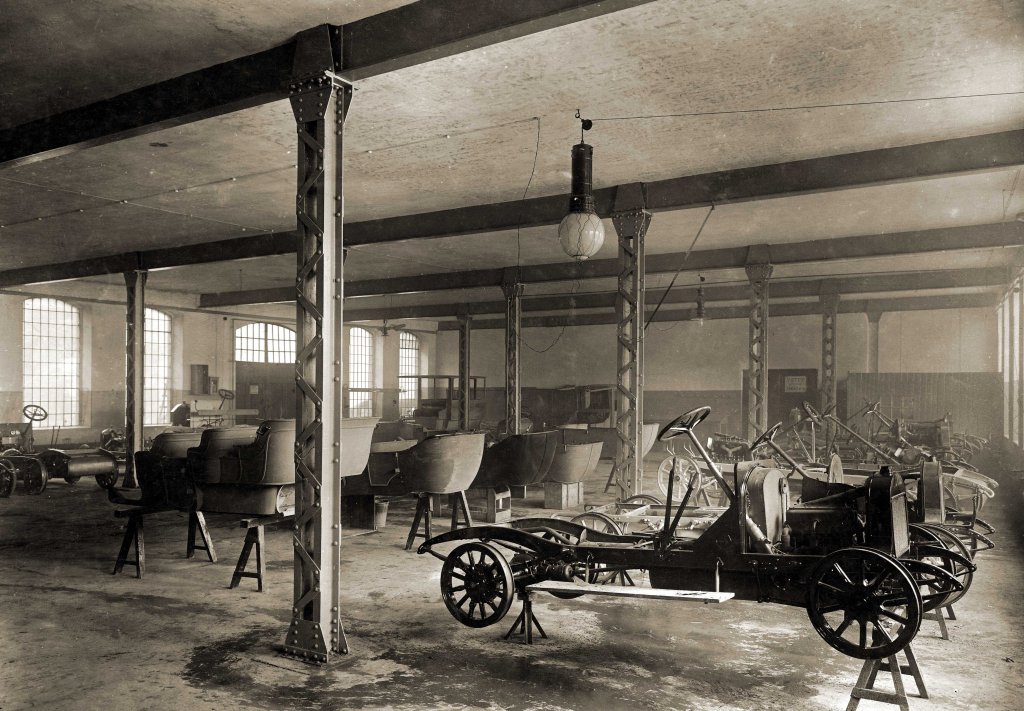
The “series” production of the sixth and last series of the Model “S”: cars and bodies were already on stands to make work easier…
Customer demand continued to rise, not least because of the regular modernisation of the Laurin & Klement S vehicles. Each stage of development was denoted by a type designation with a subsequent letter from Sa to So. The designations complemented each other, and there were overlaps in the production periods. Over time, the wheelbase grew in numerous steps from the original 2,688 millimetres to 3,220 millimetres. The basic configuration of the in-line four-cylinder engines was retained; however, the displacement increased from 1,771 cm3 to 2,413 cm3 over several stages. In turn, the power output increased from 14 hp (10.3 kW) to 30 hp (22.1 kW). In addition, the three-speed gearbox was replaced by a four-speed transmission to enhance the dynamic characteristics of the S-series vehicles. A modern electric starter became available from 1918 – initially only at the customer’s request – although it was still possible to crank the engine as before. Due to the larger displacement and the higher compression ratio, however, cranking was very strenuous. The original acetylene lights with carbide gas generators were replaced at the beginning of the 1920s by electric light bulbs, which were much easier to operate.
During the 14 years that the Laurin & Klement S models were built, the car manufacturer achieved numerous motor racing successes with the series. Among the most noteworthy are the victories in the Trieste – Opicina and Troppau – Moravian Ostrava races (1911) as well as the Grand Gold Medal at the race in Parma, Italy (1913), 6th place in the overall standings at the challenging Sicilian mountain race Targa Florio (1914) and the special prize awarded by the Chairman of the Czechoslovak Automobile Club Prof. Otakar Kukula for the ‘L&K Se’ model in the 2,000-kilometre reliability race of 1921. In the same competition, the larger ‘L&K So’ model was awarded the silver plaque. In addition, the cars drove to victories in the Zbraslav – Jíloviště and Ecce Homo hill climbs as well as in the Schöber race (1922).
By the First World War, the Laurin & Klement company had become the largest car manufacturer in the Austro-Hungarian Empire. A significant proportion of the vehicles produced in Mladá Boleslav went to foreign customers on all continents.
Tradition of volume models from Mladá Boleslav
After more than 2,000 vehicles of the S series had been produced, the Laurin & Klement / ŠKODA 110 model became the best-selling model of the Mladá Boleslav-based manufacturer; a total of 2,985 units were produced between 1925 and 1929. These were the last cars to be developed in the Laurin & Klement era, though they already bore the ŠKODA logo.
The tradition of affordable volume models, which began 110 years ago with this Laurin & Klement S series, continued after ŠKODA entered as a strong strategic partner.
The ŠKODA 422 was the brand’s first vehicle to be produced on an assembly line using efficient production methods and was available from the spring of 1930 at a starting price of 33,000 crowns. The average annual salary of a civil servant at that time was 18,000 crowns. Between 1930 and 1932, 3,466 customers opted for the Š 422.
In March 1934, the Baťa company took delivery of the first model of a completely new generation of cars from Mladá Boleslav – the ŠKODA POPULAR. The model was the answer to the economic crisis at the time. The POPULAR’s technical innovations included its central tubular frame and independent suspension. The price of the vehicle, which was also in high demand abroad, started at just 17,800 crowns. This was one of the reasons the car won over more than 22,500 customers between 1934 and 1947.
Other milestones in the Czech automaker’s history include the introduction of rear-engined vehicles (1964: ŠKODA 1000 MB), and transversely mounted front engine and drivetrain (1987: ŠKODA FAVORIT). In 2020, ŠKODA presented the ENYAQ iV, the first series-production model based on the Volkswagen Group’s MEB platform for battery-electric vehicles.
The Bentayga Hybrid, destined for a Chinese customer, met the oldest surviving Bentley, EXP 2, and a number of long serving colleagues, as it rolled off the production line at the home of Bentley in Crewe this week.
Things have taken off for the inconic brand over the last 18 years. Thanks to the success of the Continental GT and more recently the Bentayga SUV, daily production has soared. Indeed, over that period, over 75 per cent of 101 years of production has been hand-built at the Crewe factory, more than ever the home of Bentley. Current daily production, 85 cars per day, equals monthly production numbers of two decades ago.
The Bentley Continentals – then and now…
I vividly recall the interview I made at the Frankfurt Motor Show more than a decade ago with Franz-Josef Paefgen, then CEO of Bentley Motors and Bugatti Automobiles, posts he left in 2011.
During his time as the Chief Executive Officer of Bentley Motors Ltd., he was responsible for the Bentley Mulsanne and the Bentley Continental series of cars. From 2003 to 2005, Dr. Paefgen was responsible for the development of the Bugatti Veyron.
Every Bentley is actually a four wheeled chapter in automotive history…
I asked him then whether a hybrid Bentley was not on the cards, as Bentley’s could be considered the pinnacle of engineering and an electrified Bentley would be proper. It clearly was not in the strategy of the VW Group then, as the idea was immediately brushed aside by Mr. Paefgen as unrealistic, customers not wanting this at all…
Well times have changed quite a bit since then, as we now read that Company aims to be end-to-end carbon neutral by 2030 with entire model range switched to battery electric vehicles(!). Bentley will move to full electrification – PHEV or BEV only – by 2026, then switch the entire model range to battery electric vehicles by 2030. The industry-leading Beyond100 Strategy will transform every aspect of the business as Bentley accelerates into its second century of luxury car production.
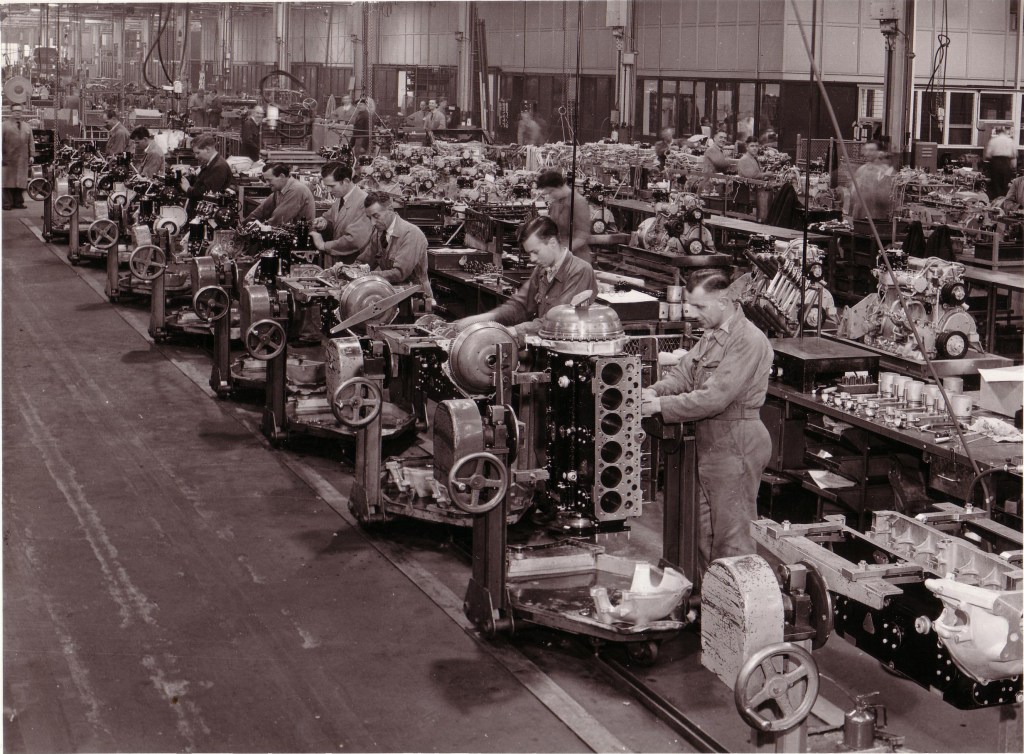
Six cylinder Bentley engine production in the ’50s in Crewe…
What this means for the retail value and depreciation of the existing and historic Bentley’s remains to be seen…
But back to the production history.
The Continental GT was the first landmark…
In 2003 the introduction of the Continental GT represented a transformative moment for the brand, and this Bentley alone, has represented 80,000 sales of the total of 200,000, and created both a new segment, and a contemporary image foundation for the Bentley business.
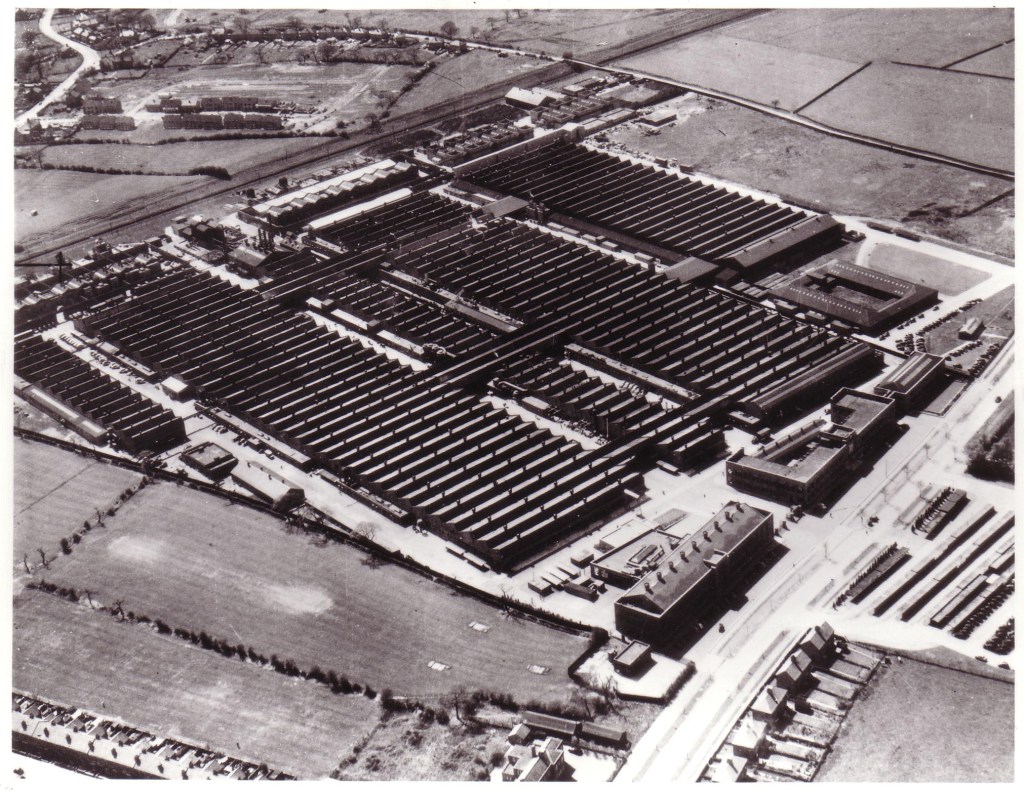
The Crewe factory in 1940…
…followed by the Bentayga
The success of the Continental GT has been mirrored by the Bentayga, offering a true Bentley driving experience and unparalleled luxury. Launched in 2015, when it established the luxury SUV sector, the fastest SUV in the world has reached its 25,000 production landmark. It is expected that the Bentayga could surpass total sales of the Continental GT within a decade and become the biggest selling Bentley model in history.
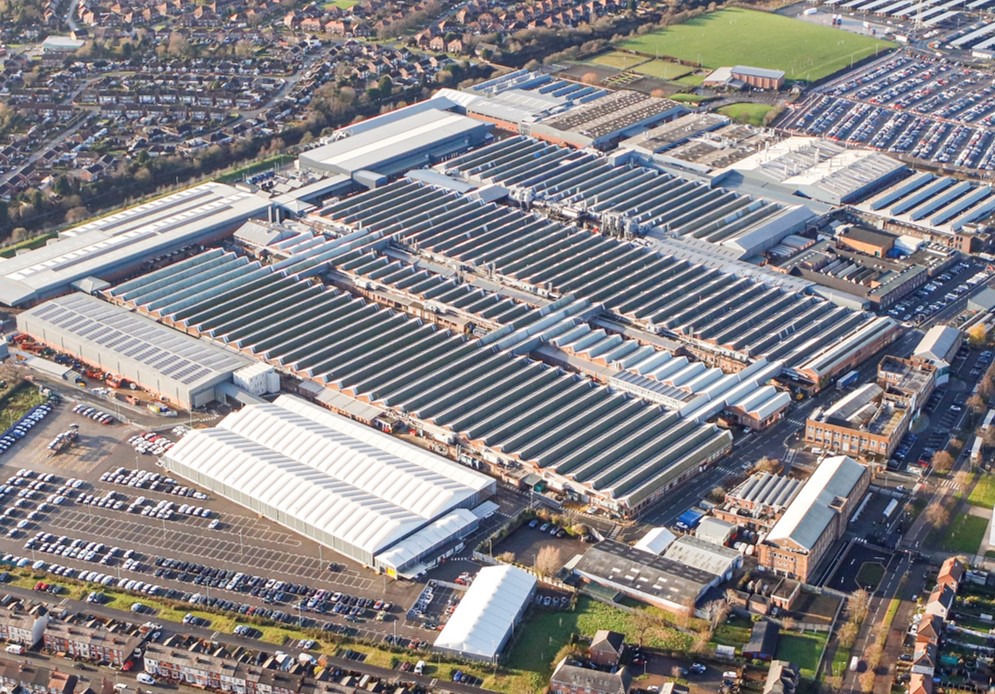
And now in 2021…
Since 2005, the company has also built 40,000 examples of the Flying Spur, the most successful luxury sports saloon in the world.
We show you here some photos, lifting a veil of the very interesting and multifaceted production history of the brand, and then we have told nothing of their sporting achievements…




























 Autoprova - for the Connaisseur