Nissan has made some research lately about what makes for both driver and passengers a harmonious journey. First of all, using the phone whilst driving is something passengers hate the most. It can indeed cause in-car arguments… Nissan points out of course than NissanConnect helps greatly here, as it integrates the phone seamlessly with the car. Also the compatibility with Apple Play and Android Auto will let you digest safely incoming calls and messages…
Good Music
Not less than 55 % of Europeans believe that good music is the most important ingredient for an enjoyable trip. Of course, you have to agree on a playlist before you start off… The NissanConnect infotainment system helps greatly here…
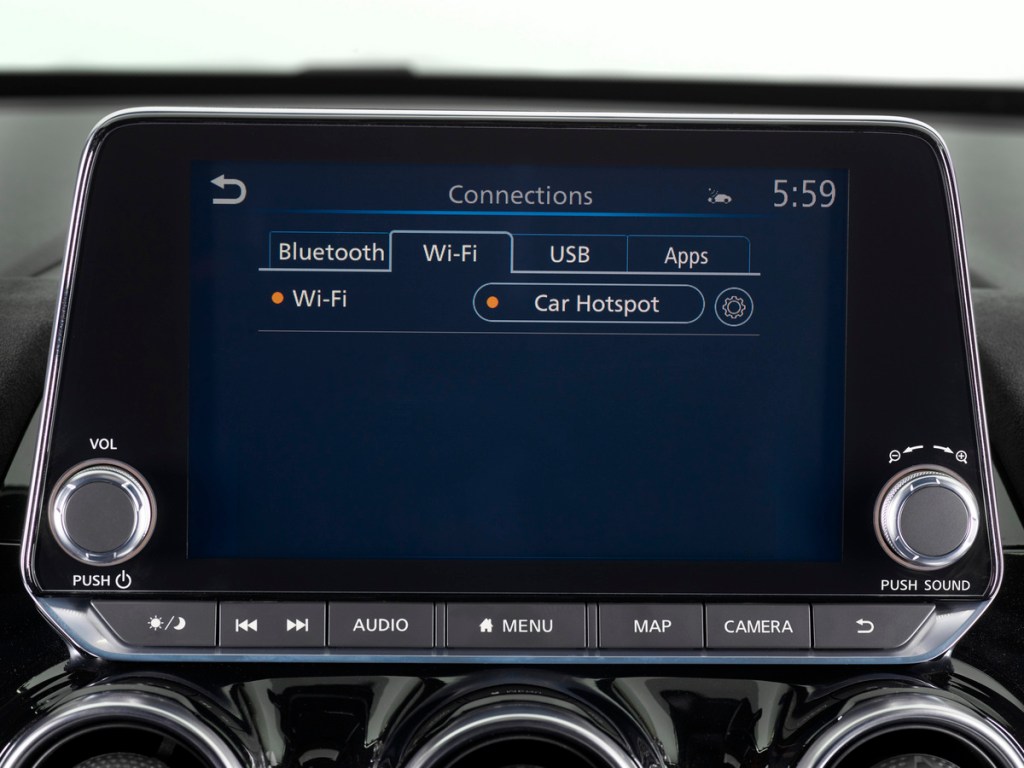
In the Juke, front seat passengers can enjoy the good sound of the Bose Personal Plus System. You can even select your music via the in Car Wi-Fi Hotspot…
Passengers hate tailgating, and it is one of the worst things a driver can do. 46 % of the passengers find it very annoying. At least two seconds should be between you and the car in front of you. Nissan suggests using its ProPilot system which keeps you at a safe distance, whatever the speed…
Nearly one in five drivers admit that tiredness is a problem. So take a break, and don’t continue for too long. A chime and a coffee cup symbol will warn you when you drive a Nissan…
Risky overtaking
Indeed, not less than 56 % of European passengers just hate that. It makes them feel very uneasy. Nissan drivers can make good use of JUKE’s Blind Spot Intervention for instance, which returns the car back to its original lane if the driver doesn’t intervene…
Good seating
This is for many passengers even more important than room, and we can agree…
To conclude, a smooth, cool drive with good music is what passengers want, and their happy faces will also turn a broad, relaxed smile on your face…
We will bring you in several reports some further details about the latest iDrive, which is a further step into improved vehicle interaction in this era where things get increasingly smarter.
BMW’s operating system equips the vehicle to actively engage in its relationship with those on board. As BMW states, a natural dialogue is created with the aim of precisely tailoring all the functions controlled via BMW iDrive to the driver’s needs and preferences as the situation demands.
Underpinning the unique user experience are the new BMW Operating System 8, a new generation of displays, controls and software, and extremely powerful connectivity and data processing. The new iDrive will be rolled out gradually across all vehicle classes, making its debut later this year in the BMW iX before also featuring in the BMW i4.
The BMW Intelligent Personal Assistant adjusts to the driver’s individual needs and routines, as well as the situation at hand, and this makes it – more than ever – a central operating channel of human-machine interaction.
The operating system is designed with a clear focus on dialogue-based interaction using natural language and touch operation via the BMW Curved Display.
But there is more. BMW speaks of “Great Entrance Moments”, bringing emotionality to the relationship between driver and vehicle even before the driver climbs on board.
This new customer experience welcomes the driver and invites him or her into the vehicle with a thoroughly choreographed routine. During the journey, the new “My Modes” use an all-encompassing interplay of various functions to conjure special moments from a combination of vehicle characteristics and the interior ambience adapted to the situation at hand.
Processing data leading to further personalisation…
The new BMW iDrive constantly processes a large quantity of self-generated data, information available online and data imported from the BMW Group vehicle fleet to implement the driver’s wishes in a context-related way.
This is paving the way for even greater personalisation, and this system is called the “BMW ID.”
This system recognises repetitive situations, learns from them and provides suggestions on how functions can be activated accordingly. There is even more to keep the system up to date: Remote Software Upgrade allows the new BMW iDrive to benefit from regular over-the-air improvements, integrate additional functions and stay up to date at all times.
Design approach and operating concept.
The BMW iX all-electric Sports Activity Vehicle was developed from the inside out. It’s the same story with the user experience for the new BMW iDrive. The wishes of those travelling in the iX underpin how the user experience is designed – in all its facets and for all the senses.
Advances made in the field of digital design are likewise reflected in the design of a user interface which not only fulfils its functional role but is also clear, aesthetically pleasing and rich in detail.
This artistic approach creates surprising moments, with graphic presentation on the displays precisely designed, down to the last pixel.
The interaction between driver and vehicle becomes a unique experience in which the boundaries between the digital and analogue worlds melt away.
The digital design’s use of form fits in neatly with the geometric structures of the analogue elements in the new BMW design language. A prime example is the use of clear, minimalist design in both the exterior and interior of the car, which is reflected in the pure, reduced design of the digital elements of BMW iDrive.
The Curved Display takes centre stage…
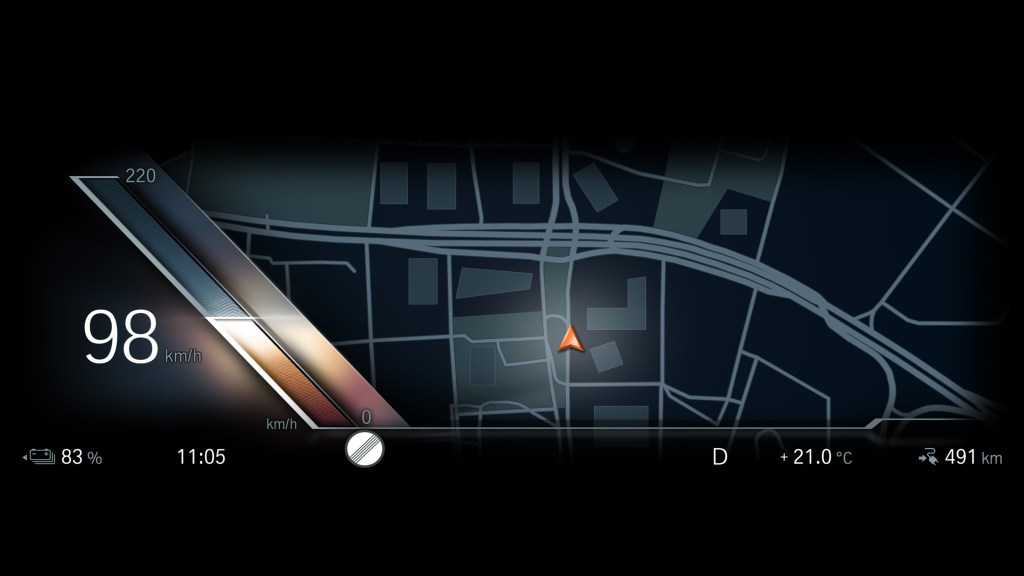
The most distinctive new addition to the physical components on board is the BMW Curved Display, which groups together the information display and control display. This curving screen offers a futuristic interpretation of the traditional driver orientation in the cockpit design of BMW models. The BMW Curved Display is angled clearly towards the driver , making the intuitive touch control even more straightforward. In this new BMW Curved Display, the screen areas of the 12.3-inch information display and 14.9-inch control display merge together into a single unit.
The “Act, Locate and Inform” principle, which ensures information is distributed clearly and screen redundancy is avoided, takes the signature BMW driver orientation of the cockpit design to a new level. Pre-filtering ensures that only information relevant to the driving situation is presented to the driver – and always shown where they can absorb it as quickly and easily as possible.
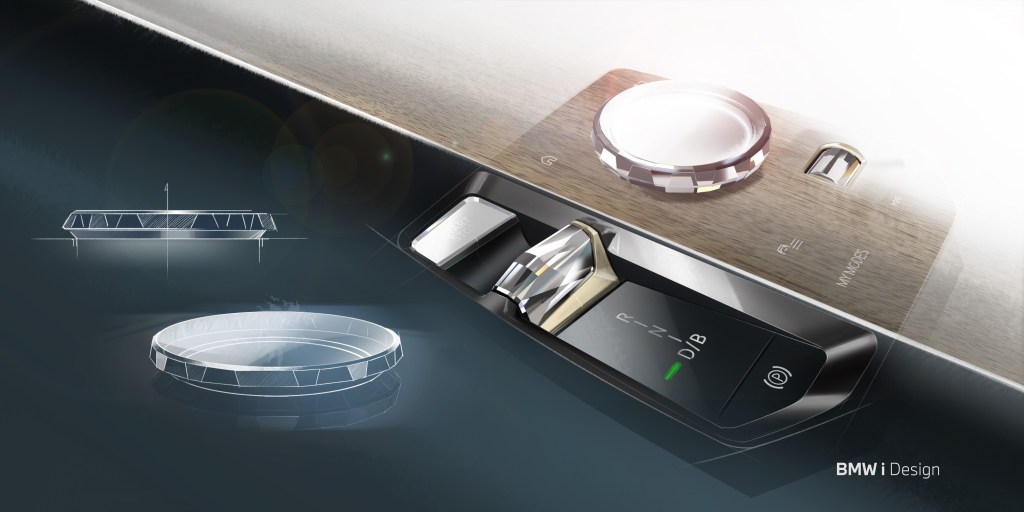
Voice control and the touch function of the BMW Curved Display were prioritized as usage options in the development of the new BMW iDrive. The number of buttons and switches has been reduced by almost half. At the same time, control clusters for relevant and frequently used basic functions are retained where customers expect to find them. The control panels on the centre console and instrument panel have an all-new, minimalist design. The familiar iDrive Controller is the central control element on the centre console. The Touch Controller, designed in an extremely smart glass-effect finish for the BMW iX, is encircled by a bezel painted in Gold Bronze.
The upgraded BMW Intelligent Personal Assistant performs the role of a digital character which can engage in natural dialogue with the driver and front passenger – similarly to a relationship between humans.
More about the Graphical User Interface in a following report…
Last but not least, we are looking forward to drive some BMW and Mini products in June, and maybe get a first “real” experience of the iDrive also in the coming months…
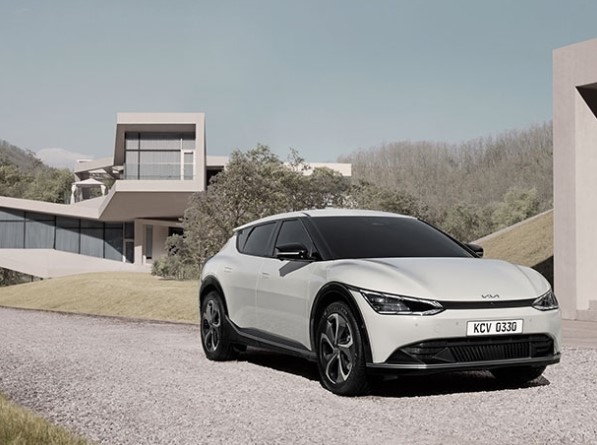
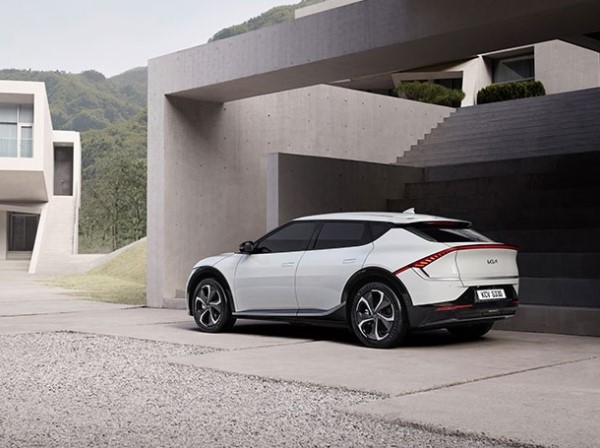
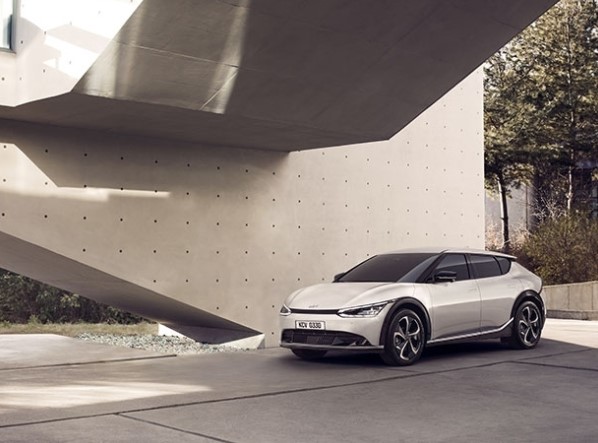
Kia Corporation has revealed the first images of the exterior and interior design of EV6, its first dedicated battery electric vehicle (BEV), ahead of the car’s world premiere at the end of March.
EV6 was designed under the brand’s new design philosophy ‘Opposites United’, which takes inspiration from the contrasts found in nature and humanity.
At the centre of the design philosophy is a new visual identity evoking positive forces and natural energy, with contrasting combinations of sharp stylistic elements and sculptural shapes.It is definitely contemporary and has timeless proportions, which will please for years to come, with a purity not unlike for instance VW’s ID3 and ID4.
Boasting a distinctive crossover-inspired design and based on the brand’s new Electric-Global Modular Platform (E-GMP), the EV6 is Kia’s first dedicated BEV to be influenced by the new design philosophy.
Opposites United: a design philosophy for all future Kia vehicles
The Opposites United design philosophy makes its debut on EV6, and will inform the design of all future Kia models. The philosophy is based on five key design pillars: ‘Bold for Nature’, ‘Joy for Reason’, ‘Power to Progress’, ‘Technology for Life’, and ‘Tension for Serenity’.
We explain it more in detail here.
Bold for Nature is based on interaction with nature, informed by the details, shapes and proportions found both in the natural and human worlds. This design pillar creates organic, yet technical structures and finishes for vehicle interiors; exterior designs are characterised by a combination of clear and simple lines with bold, ever-changing surfaces.
Joy for Reason focuses on the feel and ambience of Kia’s future vehicles. Future designs will fuse the emotional with the rational, creating vehicles that influence the mood of passengers, by relaxing and inspiring. It will also influence the adoption of new organic materials and more daring colours, expressing a sense of youth and playfulness.
Power to Progress builds on the brand’s current design strengths. By drawing on and developing the skills and expertise learned throughout Kia’s recent era of design-led transformation, the designs and layouts of the brand’s future products will continue to evolve. Future designs will draw on experience and creativity to invent and innovate new designs.
Technology for Life embraces new technologies and innovations to foster positive interactions between humans and machines. The brand’s future vehicles will adopt a next-generation in-car user experience (UX) through design and innovation and advancements in lighting, feel and in-car connectivity – to help customers engage with their cars.
Tension for Serenity evokes the tension between opposing forces and creative contrasts, and recognises the design equilibrium that comes from two opposing forces. It delivers striking design concepts that use sharp, highly technical details to create surface tension – and realise a harmonised, future-oriented design vision.
Exterior design: a future-oriented EV design characterised by high-tech details
The exterior design of EV6 is a powerful representation of ‘Power to Progress’.
At the front, characteristic daytime running lights create a sleek appearance. They form part of the car’s ‘Digital Tiger Face’, a design progression evoking the spirit of Kia’s ‘Tiger Nose Grille’ for the electrified era. The design of the lamps also includes a ‘sequential’ dynamic light pattern.
The side profile displays a crossover-inspired design aesthetic, contrasting with sharp lines and high-tech details to create a sense of tension in the design.
Designed in part to realise ultimate aerodynamic performance, the rear displays a sloping rear C-pillar with an integrated black glossy insert which visually widens the window glass.
The EV6 is the result of a collaborative effort between all three studios in Kia’s global design network in Namyang (Korea), Frankfurt (Germany), and Irvine (California, US).
Interior design: a modern and spacious interior for the EV era
A distinct product of the EV era, the interior design is liberated as it were by Kia’s dedicated E-GMP platform, which offers increased space compared to previous Kia EVs based on existing model architecture. Here Kia goes with VW’s trend set in with their ID series.
One of the most striking elements of the new interior is a seamless high-tech curved high-definition audio visual and navigation (AVN) screen. The simple form language of the wide curved screen and the slim dashboard give the space an open feel.
The width of the screen creates an immersive experience for the driver, while a minimal number of physical buttons offer an uncluttered and soothing driving experience.
Underneath the AVN screen, passengers control HVAC (heating, ventilation and air conditioning) settings by using haptic ‘buttons’, while below this panel, the dashboard slopes away towards the front of the car, creating a sense of space and openness for the front-seat passengers.
The seats are slim, lightweight and contemporary, and clad in modern, visually interesting and robust fabrics created using recycled plastics, which create yet greater openness in the cabin.
EV6 will make its world premiere in March 2021, during a special online event. We will keep you posted!
The Women’s World Car of the Year is the first time a Land Rover has won the top prize at the awards and is the latest in a series of international honours for the most capable Land Rover ever made.
The new Defender remains true to the pioneering spirit that has been a Land Rover hallmark for over 70 years and redefines adventure for the 21st century. Iconic in name, shape and capability, it is available in a choice of body designs and can be personalised with a choice of four Accessory Packs to help owners make more of their world.
The Women’s World Car of the Year (WWCOTY) awards are the only car awards in the world with a jury comprised exclusively of woman, with 50 motoring journalists from 38 countries on 5 continents recognizing the best new models available.
The New Defender was named Best Medium SUV 2021 at the awards before being awarded – to coincide with International Women’s Day – the headline WWCOTY prize.
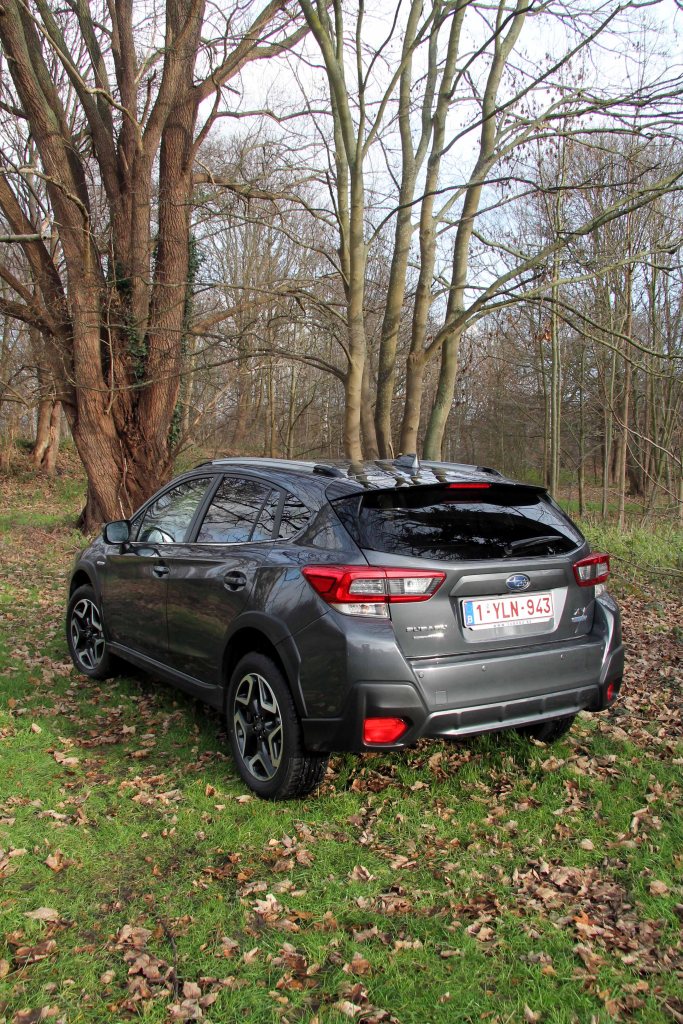
The XV embodies perfectly what a Subaru stands for: it is compact, styled with zest and panache, versatile, rugged and of course crammed from bumper to bumper with state of the art, innovative and exclusive technology. This legendary Subaru boxer technology, combined with unique 4WD capability comes now to you with additional e-power, to make this Subaru fit for the E future which is coming upon us.
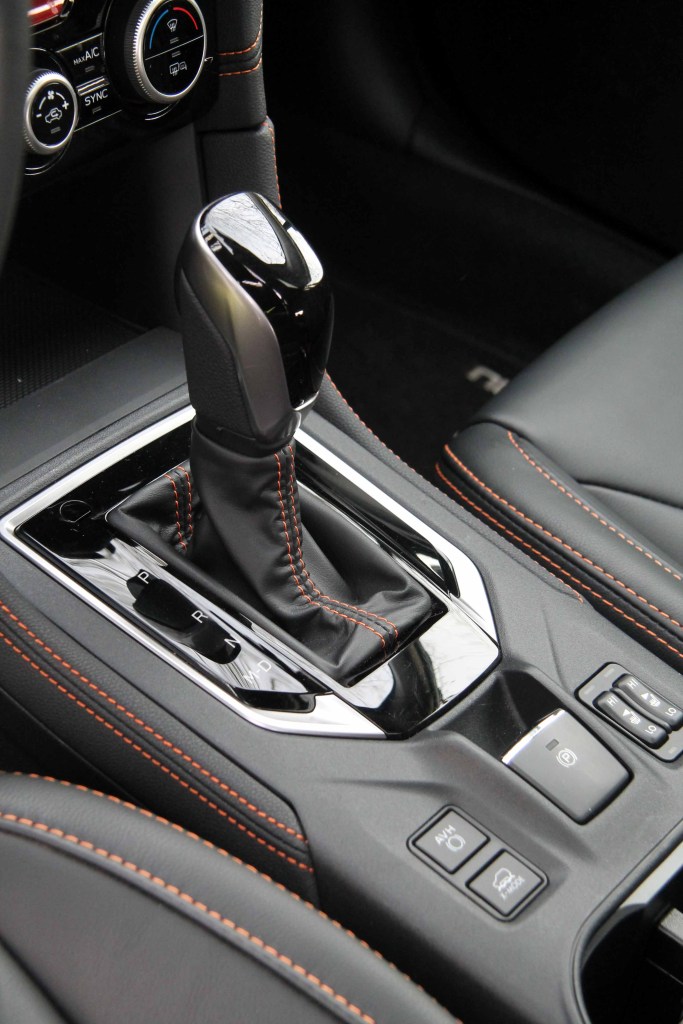
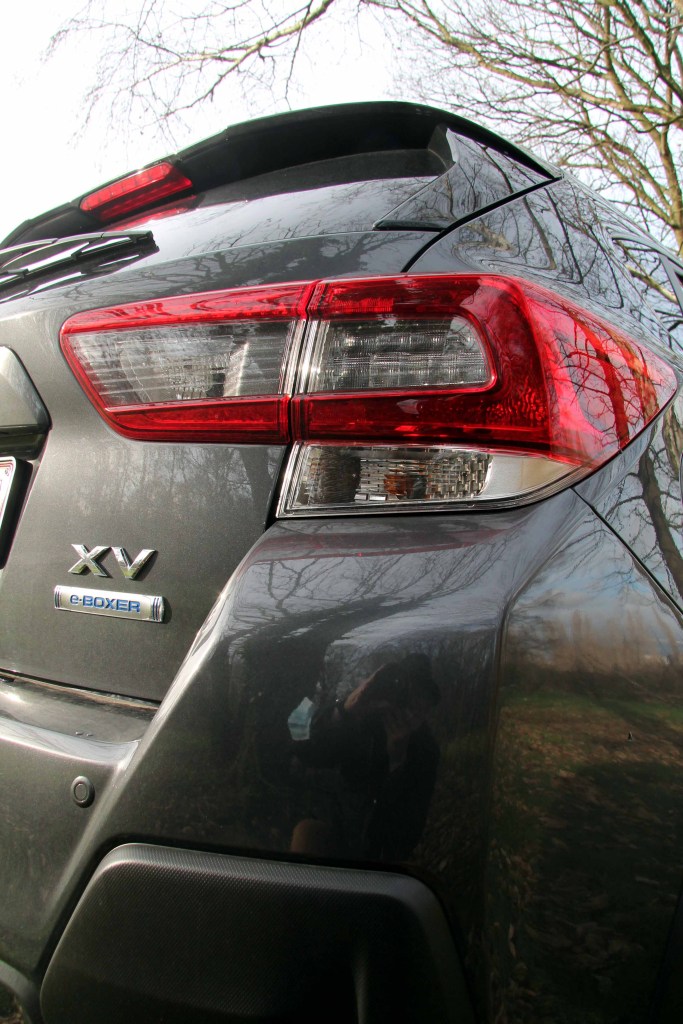
Subaru prefers rugged no-nonsense go anywhere capability, and therefore opts for hybrid technology: the 2 litre direct injected boxer engine is coupled via a Lineartronic CVT Transmission to a 12.3 kW e-motor which sits right behind the engine and is fed by a 13.5 kWh battery pack which sits behind the rear wheels. E power is available at slow speeds up to 40 km/h. Subaru describes this as the EV driving mode. Depending on the enthusiasm of your right foot and the state of charge of the battery pack, you could drive on E power over distance of up to 1,6 kilometers at speeds, as we said earlier, of up to 40 km/h. In practice, the battery and motor just assist the combustion engine when driving away from traffic lights and in slow stop and go traffic.
When you really keep your right foot very calm, a lot can be gained here. As you servant is well trained with his Lexus 200 CTH, it was no trouble at all to eke out a consumption of 6 litres/100 km in tightest urban traffic. It just takes a good amount of concentration and anticipation.
The Subaru changes very smoothly from E- to petrol power and vice versa at varying speeds above 40 km/h in the “engine assist function.” Nice too is that the CVT transmission has 6 “steps” or ratios if you want to, so you can avoid that the willing boxer revs too high for your liking when you really put your foot down and accelerate hard on a motorway entrance for instance.
At higher speeds, the petrol engine takes over fully and charges also the battery. The beauty of hybrids is that you can use them anywhere, anytime, for any distance, just like any other petrol engined car. With a significant reduction in petrol consumption if you understand them and know how to drive them…
We averaged between 6 and seven litres/100 km on our regular routes. The manufacturer quotes 6,5 litre/100 km as average consumption, and 149 g/km in CO2 emissions.
Off road capability…
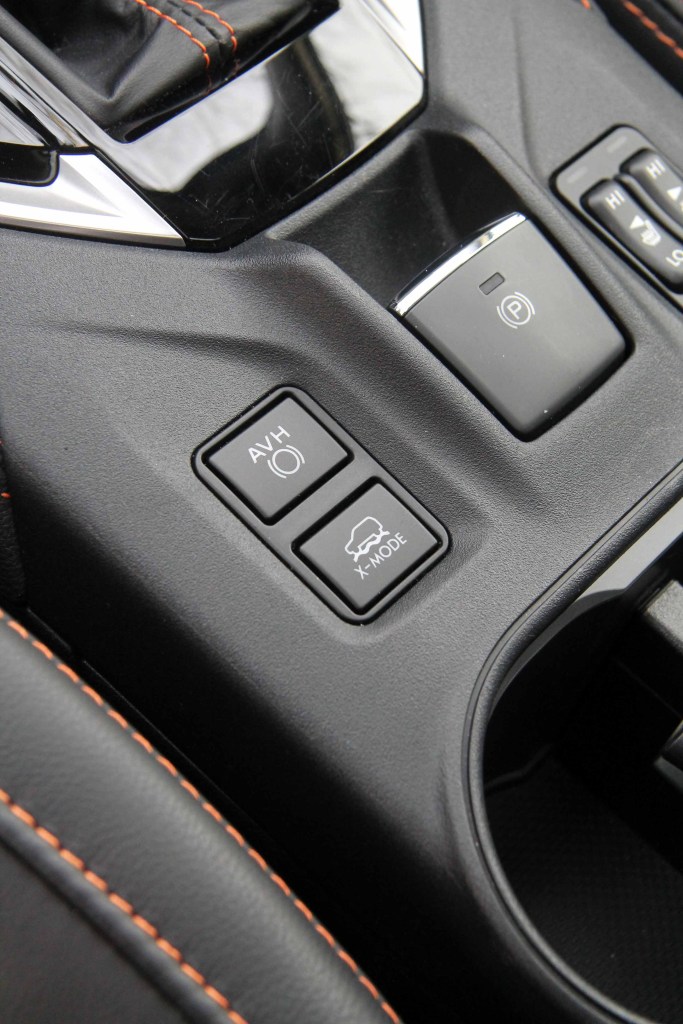
But then, this car is a Subaru. This means king of the road, off-road. The XV offers go anywhere capability with its Symmetrical AWD, and its further developed X Mode. This mode effectively remaps the 4WD system, using the E motor to modulate the traction on all 4 wheels even more finely. Taking the family out on a weekend skiing or having fun in the snow: this Subaru gets you there and back… and how!
Good performer
Although it will not invite you to throw it around corners, it certainly has the rally-bred stamina to do it. This XV has legendary on-road handling, and remains controllable and neutral no matter in what situation you put it in. The hazards of winter season and/or slippery roads simply do not exist for the XV.
Outright performance leaves nothing to be desired: 0 to 100 km/h is reached in 10.3 seconds, top speed is a healthy 193 km/h.
Of course the Subaru is an excellent motorway cruiser. The suspension is comfortable, the XV rolls on the brand new Subaru Global Platform which added considerably more body stiffness, but then a very stiff body is also prone to resonances, and there is some road/tyre/wheel noise noticeable.
Subaru’s EyeSight keeps you safe
Another point we cannot miss to mention is the superb EyeSight Driver Assist Technology. Driving in thick fog on motorways, winding forest roads has no collision risk for you anymore. Two stereocamera’s sit on both sides of the rear view mirror and keep an eye on the road ahead. Coupled with the adaptive cruise control, the system will assist in keeping a safe distance and adapt speed automatically to the car in front of you over a very wide speed range between 0 and 180 km/h.
Well-equipped and pleasant cabin
The XV dashboard has three screens, two on the centre console, and one between the nicely finished round instruments for speed and revs. Infotainment is intuitive and easy to use, and leaves nothing to be desired. The whole cabin is well finished, quality of materials used is very good, sturdy and fit for no nonsense practical use for years to come, in the good Subaru tradition.
Boot space is not enormous, due also partially to the rear battery pack, but the standard 355 litres can be easily enlarged when the rear seats are folded down. On the other hand, the Subaru still has a healthy 1270 kg braked trailer pulling power, and if you have any doubts about Subaru’s mettle, just have a look at the numerous You Tube films where Subaru’s are pulling stranded trucks out of snowy ditches…
Conclusion
Together with the Forester, Subaru now has two (partially) E-powered models in its range, and the ever so popular XV has become even more desirable now. Embodying all the traditional legendary Subaru qualities, the XV now offers excellent economy and the “Zen” driving style which comes with electric propulsion. Definitely have a long hard look at thisone when you consider buying a crossover in this segment. This car has so many unquestioned and unique talents, you shouldn’t miss it for anything in this automotive world.
Liane Engeman, from the race track to photo modelling for Alfa…
In the first part of our story where Alfa Romeo pays tribute to its glorious queens of speed, we took you back to the ‘30s, but now we guide you to more recent times. First we start off with a good looking racing driver, who later became even a …photo model for Alfa: The super-fast Dutch driver Liane Engeman, she excelled herself in the Toine Hezemans team’s Alfa Romeo 1300 Junior.
Liane Engeman with Toine Hezemans…
The photo here above let’s you understand fully why she became later an iconic model for Alfa…
Then there is Christine Beckers, who I came to know personally. Her heroic days were in the ‘60s, the era of the Alfa Romeo Giulia Sprint GTA. Its results, victories and importance in Alfa Romeo’s history are well-known. Less known, however, are the events of the (supercharged) Alfa Romeo GTA-SA. Prepared in ten units for Group 5, it was equipped with two hydraulically operated centrifugal compressors that boosted output to 220 hp, resulting in a top speed of 240 km/h.
It reached peak performance, but as historical test driver from Autodelta Teodoro Zeccoli explained, the GTA-SA had “an unpredictable boost of power would kick in suddenly without notice, making the SA an unpredictable vehicle, hard to govern on curves or when maneuvering.” One able to govern this ill-tempered vehicle better than any other was the young Belgian driver Christine Beckers, who won in Houyet in 1968 and went on to achieve excellent results the following year: in Condroz, at the “Tre Ponti”, at Herbeumont and at Zandvoort. But there are more heroines…
Maria Grazia Lombardi & Anna Cambiaghi
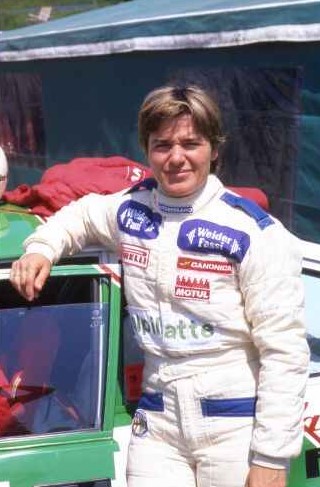
To follow Maria Teresa de Filippis in the 1950s, the second Italian woman to drive in a Formula 1 race – in as many as 13 GPs – was Maria Grazia Lombardi, known as “Lella”.
Between 1982 and 1984, she took part in the European Tourism Championship with the Alfa Romeo GTV6 2.5, together with Anna Cambiaghi, Giancarlo Naddeo, Giorgio Francia and Rinaldo Drovandi, and helped to bring in multiple titles. She remains the only female Italian driver to have improved her standing in a Formula 1 race.
Tamara Vidali
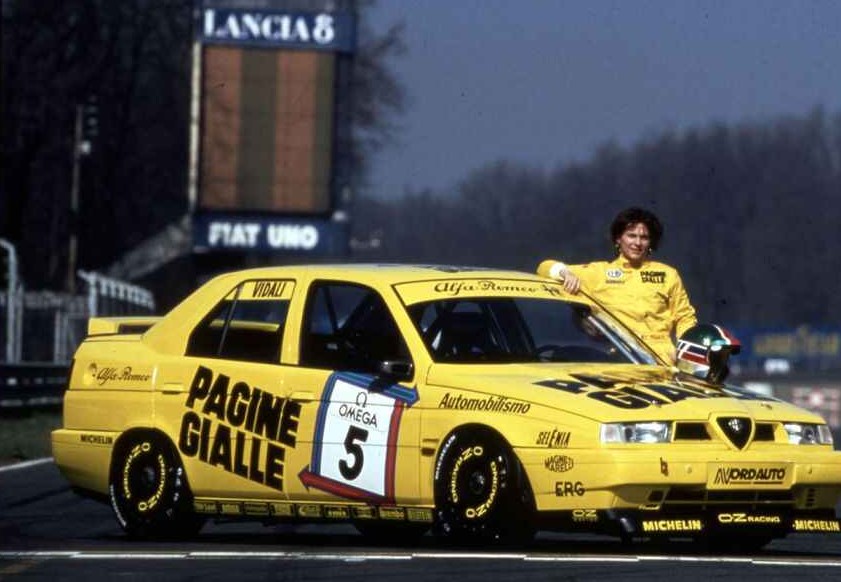
In 1992, Vidali won the Italian Tourism Championship (Group N) in an Alfa Romeo 33 1.7 Quadrifoglio Verde, set up by the brand’s newly established Racing Department. Just as unforgettable is the fully yellow livery of the Alfa Romeo 155 that she drove in the Italian Superturismo Championship (CIS) in 1994.
Last but not least there is Tatiana Calderon.
Born in 1993 in Bogotá, Colombia, Calderon took her first steps in motorsport in 2005, winning a National Championship in the Easy Kart Pre-Junior series. Just three years later, she would become the first woman to win the JICA class of the Stars of Karting Championship East Division in the United States.
In 2017, Calderon became a development driver for the Sauber Formula One team. One year later, Sauber promoted her from F1 development driver to F1 test driver for Alfa Romeo Racing.
We enjoyed reading about all these (very) fast women, and we trust you did too…
International Women’s Day is an ideal occasion, Alfa Romeo found, to put its female racing champions behind an Alfa sportscar wheel into the spotlight. The material they put forward is so abundant and interesting, that we make (at least) a two-part series of it.
We start here with the early, very elegant protagonists, who combined female elegance with panache and excellent racing qualities…
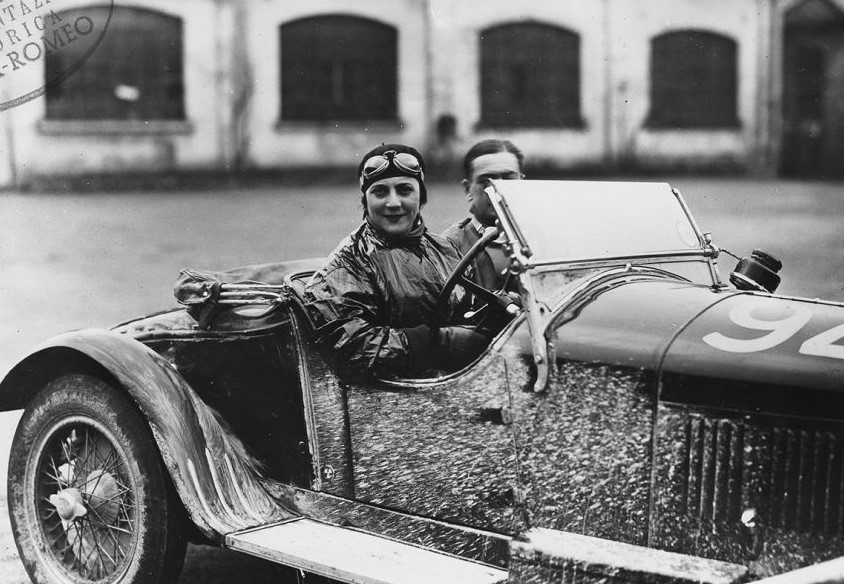
We start here with Odette Siko, you see her elegantly here in the photo above.
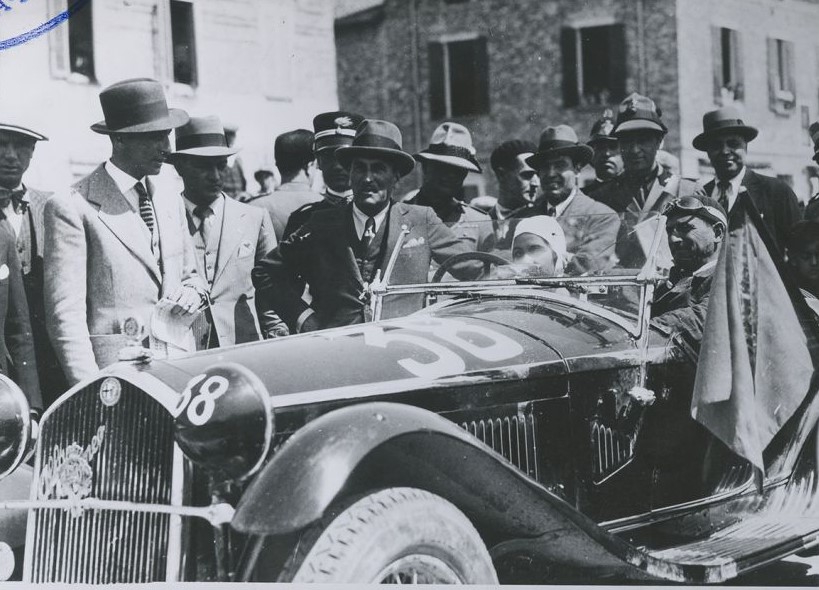
She takes you back to the 1930s, where Alfa Romeo asserted itself as one of the main protagonists in motorsport. This was partly down to extraordinary vehicles, but also to drivers who became part of the legend: these were the years of Nuvolari, Varzi, Caracciola and Sommer. The latter won the 24 Hours of Le Mans in 1932 behind the wheel of an Alfa Romeo 8C 2300, but the Alfa Romeo 6C 1750 SS driven by the striking Odette Siko finished fourth overall and won the 2.0-liter category! A young Parisian, Siko quickly became one of the stars on the track, displaying her elegance both in the paddock and in her racing performance, often accompanied by another female French racer whose path also crossed Alfa Romeo’s several times: Hellé Nice.
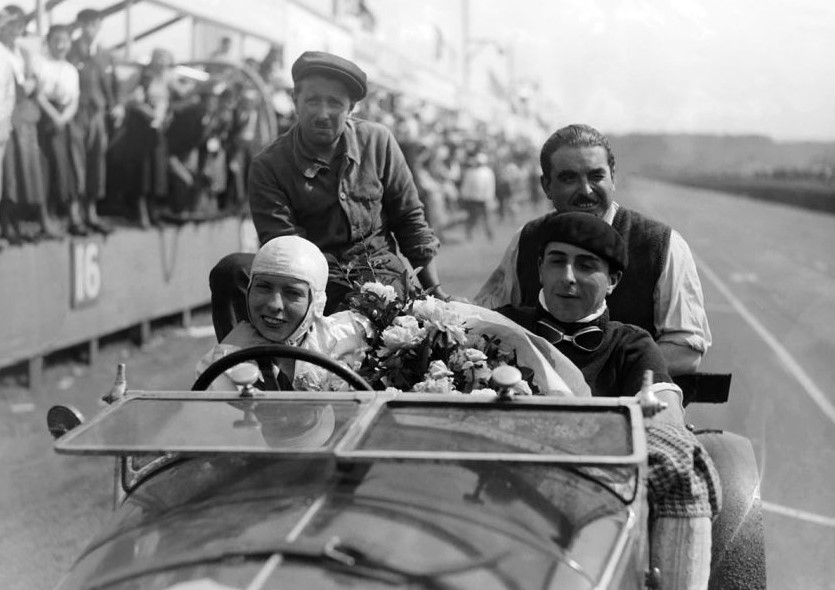
Hellé Nice, see the photo here, was a model, acrobat, and dancer. Her real name was Mariette Hélène Delangle, but was more commonly known as Hellé Nice. Renowned for her outgoing personality, Nice was good friends with the Rothschilds and the Bugattis. She raced in Europe and America and became one of the first drivers to display the logos of her sponsors on the bodywork of a single-seater racing car.
She took part in the 1933 Italian Grand Prix at Monza in her own 8C 2300 Monza; in the same race, Campari, Borzacchini and Czaikowski tragically lost their lives. In 1936, she won the Ladies Cup in Monte Carlo and took part the São Paulo Grand Prix in Brazil, where she fell victim to a dreadful accident, then miraculously came out of her three-day coma.
Further on, there was Anna Maria Peduzzi. In her time, the years of Scuderia Ferrari marked a crucial chapter in Alfa Romeo’s history. The drivers of the “Prancing Horse” included Como-born Anna Maria Peduzzi, the wife of driver Franco Comotti, who was nicknamed the “Moroccan”.
After her debut aboard her own Alfa Romeo 6C 1500 Super Sport, which she had purchased from Ferrari himself, Peduzzi almost always raced alone and only occasionally with her husband. In 1934, she won the 1500 Class at the Mille Miglia and, in the post-war period, raced in the Alfa Romeo 1900 Sprint and the Alfa Romeo Giulietta.
We conclude our first part here with Maria Antonietta d’Avanzo.
The forerunner of female Alfa Romeo drivers, Baroness Maria Antonietta d’Avanzo made her debut in the interwar years. A pioneer of Italian motorsport, aviator and journalist, d’Avanzo won third place in the Alfa Romeo G1 at Brescia in 1921, and proved her worth in many competitions as a formidable opponent for the best drivers of the time, including a young Enzo Ferrari.
Baroness d’Avanzo in her Alfa 20-30 ES
Baroness d’Avanzo raced until the 1940s in a variety of vehicles and races, traveling all over the world to do so…
In the next part we will tell you more about our national champion Christine Beckers and her more contemporary colleagues… Stay tuned!
Klaus Busse presented the Alfa Romeo Tonale two years ago in Geneva…
Klaus Busse is the talented head of design for Alfa Romeo, Fiat and Chrysler, and he is also quite active on social media. We read today a post from his hand on his Instagram page about the presentation of the Tonale at the Geneva Show two years ago, together with some stunning photos showing how the Tonale was sculpted out of plaster and other materials to become a real looking car, to be shown as a styling model at the salon.
Craftsmen working on the clay model, succeeding into making it a real looking car…
The photos show how elements of the car were formed and made by hand. Some pieces were 3D printed, I believe, but personally I find it truly amazing how these craftsmen put the car together, and finished it to become a design model with gleaming paint and shiny elements, the result being indistinguishable from a “real” car.
I believe, 3D printed elements were used… Also here 3D printed elements abound…
I found the photos so interesting that I want to show them here to you on these pages.
The steering wheel gets a “real” feel…Craftsmen sculpting the rear end…
On the fourth of May 2019, I visited the Centro Style in Turin, and met Klaus Busse. You see me standing proudly beside the Tonale prototype, and also in a group photo with Klaus Busse himself on the left.
Sweet memories, and of course your servant would love to witness once how these craftsmen work to create such an unbelievably finished prototype…
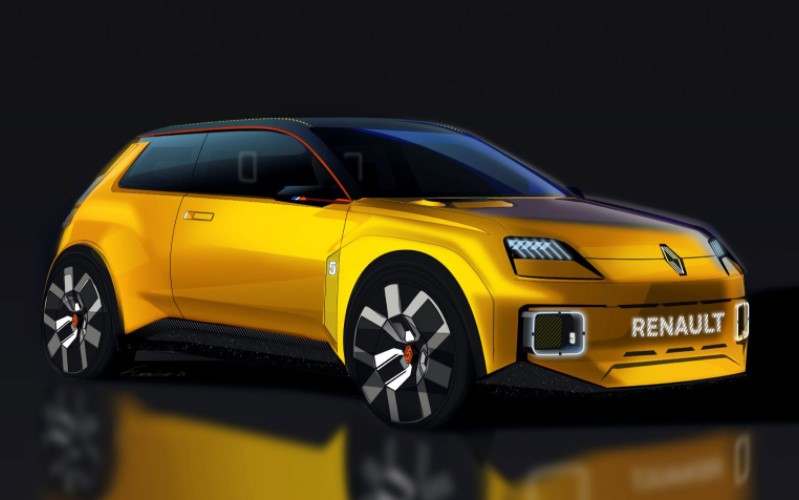
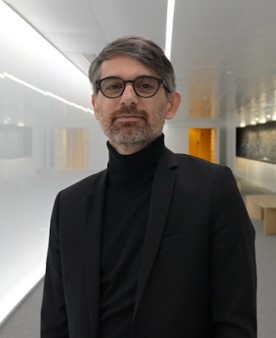
The brand new Renault 5 Prototype has already stolen the hearts of many, as was the case with the original R“Cinq”. François Leboine, Director of Design Concept and Show-Cars at Renault explains here how to succeed in the retro-futuristic exercise carried out on the cute Renault 5 Prototype.
Revive good memories, “provoke a smile”, that’s what François Leboine wanted with the Renault 5 Prototype. Responsible for concept cars and show cars at Renault, he looks back at the development of the prototype’s headlights, which, he confides to us, embody all the work done on the car. To do this, he used a well-oiled method that he agreed to unveil to us.
“If I had to choose a particular element that symbolizes all the work done on the Renault 5 Prototype, it’s definitely the headlights.”
Before starting any creative process, you need material, explains François Leboine.
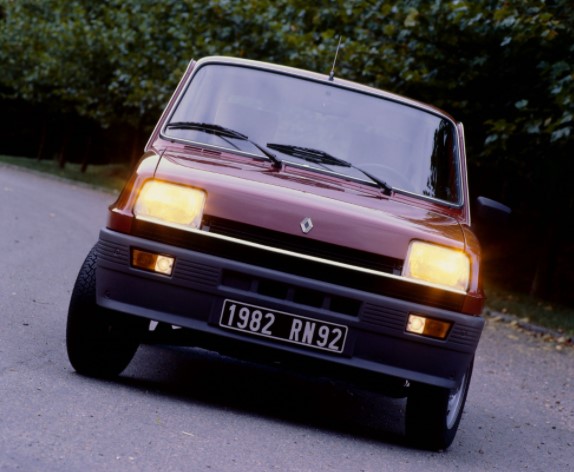
The first step, called analytical, was to gather archives to analyze, understand, decompose the original vehicle. To grasp its very essence. Photos, sketches by the original designer Michel Boué, period magazines, fascicles and brochures, made it possible to study the mythical R5 from all angles. A vehicle loaned by Renault Classic also helped to better understand certain elements such as the famous headlights.
We really capitalized on the history of Renault and the R5 in particular, which had this special sympathy with people and this perfectly recognizable mischievous look.
Then the designers draw the first sketches on paper, like cartoonists who try to capture what makes a face’s personality.
“The sketches captured the fundamental elements that needed to be retained to reproduce the mischievous look of the original R5,” explains François Leboine.
Getting the proportions right…
Then, the designers moved on to a graphic palette to define proportions, contours, the distance between the headlights, to find the expression, the smiling look of the 1970s R5.
After analyzing graphic characteristics and working on proportions, designers operate what is called a shift: a method that consists of taking an object and tilting it into another world. “They’re going to use all the graphic work from previous research, mixing it with the mood board research and codes from today’s objects to project the design details into a futuristic world.”
Inspired by the worlds of aeronautics, architecture, product design and even electronics…
Thanks to this method of shifting visual codes, the prototype’s headlights have become true technological and futuristic elements. As for the fog lights that were often added at the time, they took a leap into the future. They were transformed into daytime running lights fully integrated into the front bumper.
“It was really important that the Renault 5 Prototype was not just a slavish copy of the past, but that it really was a vehicle that contained the elements of the future.”, explained François Leboine.
The final test: meeting the public
Finally, comes the encounter, the ultimate step for designers. The one that allows them to know if their work is successful. “Everything we’ve done, it’s the reaction of the people around us which determines if we’ve hit the bull’s eye, if we’ve brought the R5 back to life or if it was a failure”, says François Leboine.
The reaction of the internal people was already telling us that the car was going to be a success, but in the end it exceeded our expectations.
The Renault 5 Prototype has indeed received a very warm and unanimous welcome. Whether on the headlights or on the whole vehicle, the treatment of the lines and the futuristic details were very much appreciated. With the Renault 5 Prototype, the emblematic model of Renault’s heritage now has a worthy heiress. A modern car, full of charm and in tune with the times. Renault’s DNA respected, a successful projection into the future: mission accomplished
We can only agree…
Within 5-6 weeks, we will be able to take the wheel again, also anxious to get acquainted again with Renault’s latest E-powered products and hybrids… Stay tuned!
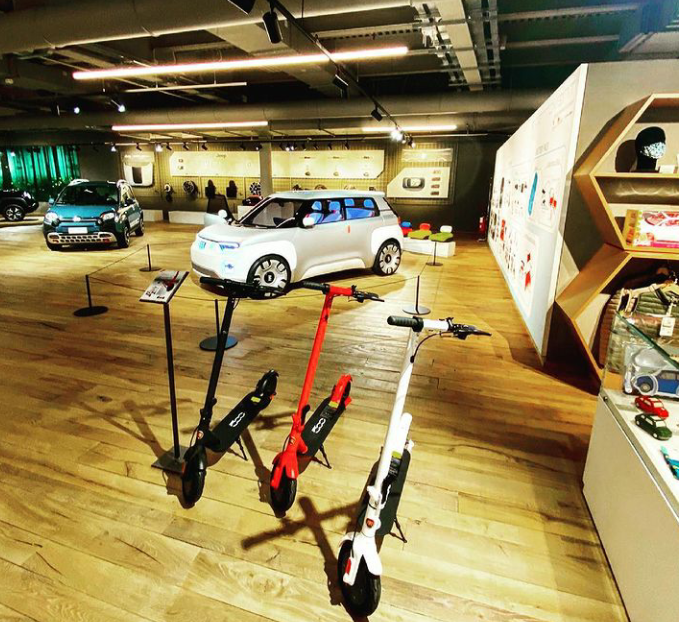
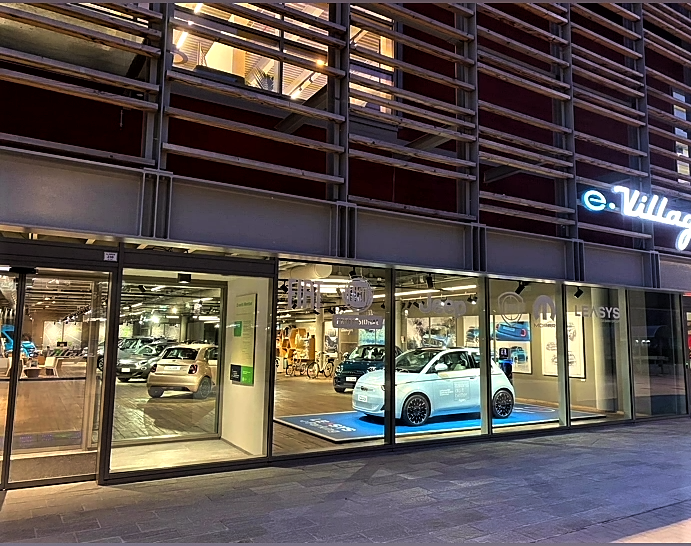
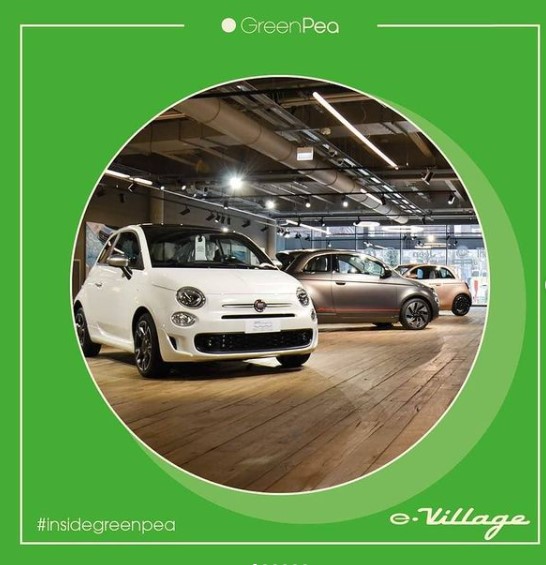
Dynamic Stellantis PR Manager Dominique Fontignies sent us yesterday his photo of the Fiat Centoventi concept displayed at the “e-Village” in the Green Pea building in Torino.
What is this e-Village? It is a branch of Mirafiori Motor Village in Turin and it’s the biggest sales point of electrified cars in Europe.
It’s located in an area of 1300 square meters inside Green Pea and showcases all FCA technologies related to electrification, including hybrid and all-electric vehicles on the market, as well as prototypes of upcoming models.
Another photo made by Dominique Fontignies…
It’s a zero-impact space that adopts the “reuse, reduce, recycle” philosophy and it can be considered the fulfillment of the efforts made by FCA to promote the future of mobility.
At Floor 0 – move, energy & connect, inside the e-Village: the space entirely dedicated to the sustainable future of mobility wanted by Stellantis, the fourth automotive group in the world.
In e-Village halls you can find all solutions of the Group’s for the avant-garde mobility, such as the Electric New 500, Panda Mild Hybrid and Jeep and Ducato’s electric vehicle range.





















 Autoprova - for the Connaisseur