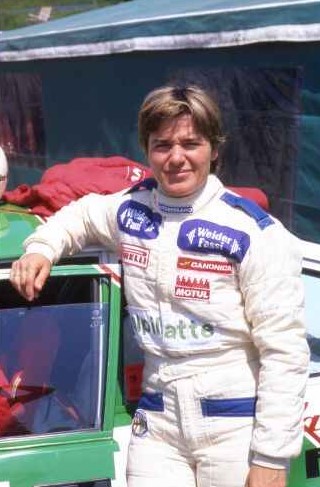
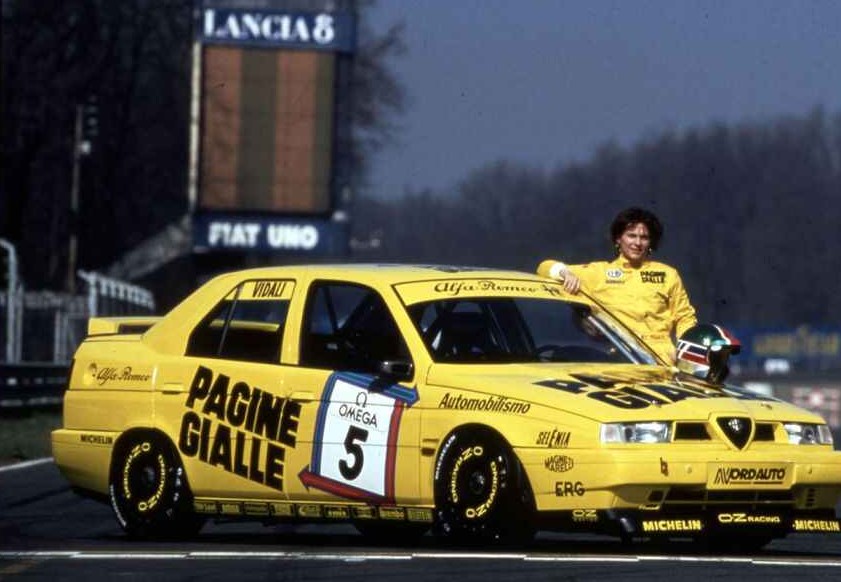
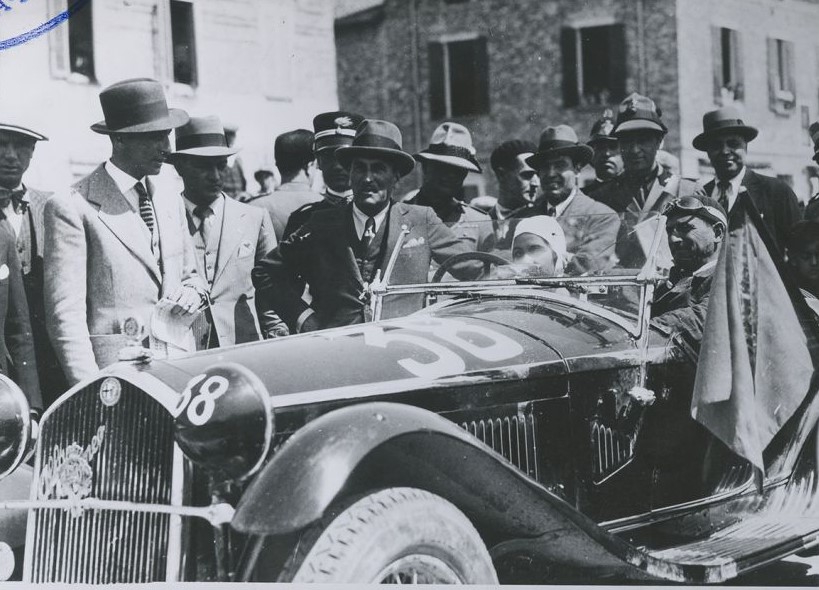
International Women’s Day is an ideal occasion, Alfa Romeo found, to put its female racing champions behind an Alfa sportscar wheel into the spotlight. The material they put forward is so abundant and interesting, that we make (at least) a two-part series of it.
We start here with the early, very elegant protagonists, who combined female elegance with panache and excellent racing qualities…
We start here with Odette Siko, you see her elegantly here in the photo above.
She takes you back to the 1930s, where Alfa Romeo asserted itself as one of the main protagonists in motorsport. This was partly down to extraordinary vehicles, but also to drivers who became part of the legend: these were the years of Nuvolari, Varzi, Caracciola and Sommer. The latter won the 24 Hours of Le Mans in 1932 behind the wheel of an Alfa Romeo 8C 2300, but the Alfa Romeo 6C 1750 SS driven by the striking Odette Siko finished fourth overall and won the 2.0-liter category! A young Parisian, Siko quickly became one of the stars on the track, displaying her elegance both in the paddock and in her racing performance, often accompanied by another female French racer whose path also crossed Alfa Romeo’s several times: Hellé Nice.
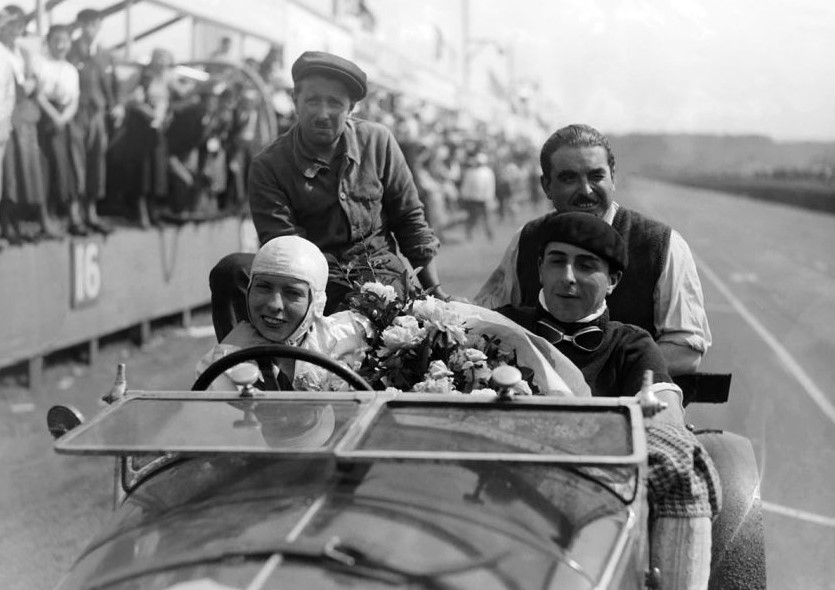
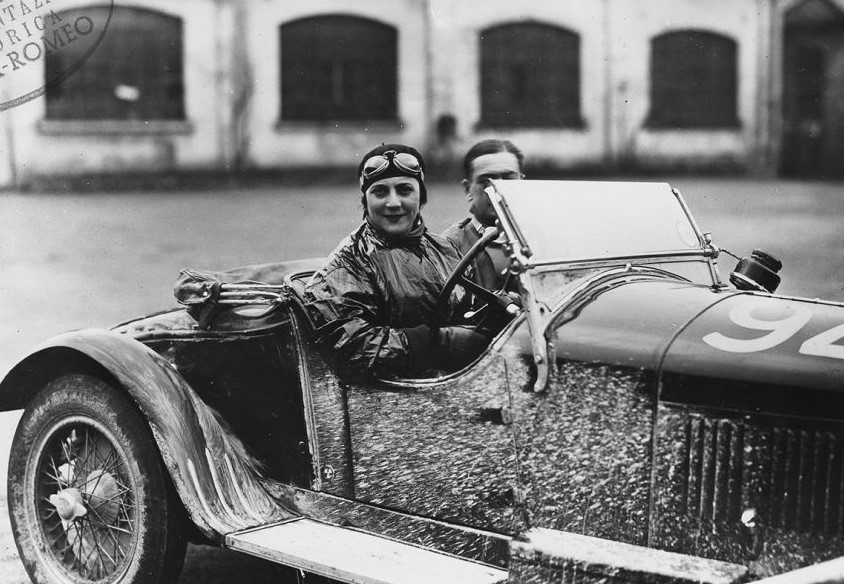
Hellé Nice, see the photo here, was a model, acrobat, and dancer. Her real name was Mariette Hélène Delangle, but was more commonly known as Hellé Nice. Renowned for her outgoing personality, Nice was good friends with the Rothschilds and the Bugattis. She raced in Europe and America and became one of the first drivers to display the logos of her sponsors on the bodywork of a single-seater racing car.
She took part in the 1933 Italian Grand Prix at Monza in her own 8C 2300 Monza; in the same race, Campari, Borzacchini and Czaikowski tragically lost their lives. In 1936, she won the Ladies Cup in Monte Carlo and took part the São Paulo Grand Prix in Brazil, where she fell victim to a dreadful accident, then miraculously came out of her three-day coma.
Further on, there was Anna Maria Peduzzi. In her time, the years of Scuderia Ferrari marked a crucial chapter in Alfa Romeo’s history. The drivers of the “Prancing Horse” included Como-born Anna Maria Peduzzi, the wife of driver Franco Comotti, who was nicknamed the “Moroccan”.
After her debut aboard her own Alfa Romeo 6C 1500 Super Sport, which she had purchased from Ferrari himself, Peduzzi almost always raced alone and only occasionally with her husband. In 1934, she won the 1500 Class at the Mille Miglia and, in the post-war period, raced in the Alfa Romeo 1900 Sprint and the Alfa Romeo Giulietta.
We conclude our first part here with Maria Antonietta d’Avanzo.
The forerunner of female Alfa Romeo drivers, Baroness Maria Antonietta d’Avanzo made her debut in the interwar years. A pioneer of Italian motorsport, aviator and journalist, d’Avanzo won third place in the Alfa Romeo G1 at Brescia in 1921, and proved her worth in many competitions as a formidable opponent for the best drivers of the time, including a young Enzo Ferrari.
Baroness d’Avanzo in her Alfa 20-30 ES
Baroness d’Avanzo raced until the 1940s in a variety of vehicles and races, traveling all over the world to do so…
In the next part we will tell you more about our national champion Christine Beckers and her more contemporary colleagues… Stay tuned!
Klaus Busse presented the Alfa Romeo Tonale two years ago in Geneva…
Klaus Busse is the talented head of design for Alfa Romeo, Fiat and Chrysler, and he is also quite active on social media. We read today a post from his hand on his Instagram page about the presentation of the Tonale at the Geneva Show two years ago, together with some stunning photos showing how the Tonale was sculpted out of plaster and other materials to become a real looking car, to be shown as a styling model at the salon.
Craftsmen working on the clay model, succeeding into making it a real looking car…
The photos show how elements of the car were formed and made by hand. Some pieces were 3D printed, I believe, but personally I find it truly amazing how these craftsmen put the car together, and finished it to become a design model with gleaming paint and shiny elements, the result being indistinguishable from a “real” car.
I believe, 3D printed elements were used… Also here 3D printed elements abound…
I found the photos so interesting that I want to show them here to you on these pages.
The steering wheel gets a “real” feel…Craftsmen sculpting the rear end…
On the fourth of May 2019, I visited the Centro Style in Turin, and met Klaus Busse. You see me standing proudly beside the Tonale prototype, and also in a group photo with Klaus Busse himself on the left.
Sweet memories, and of course your servant would love to witness once how these craftsmen work to create such an unbelievably finished prototype…
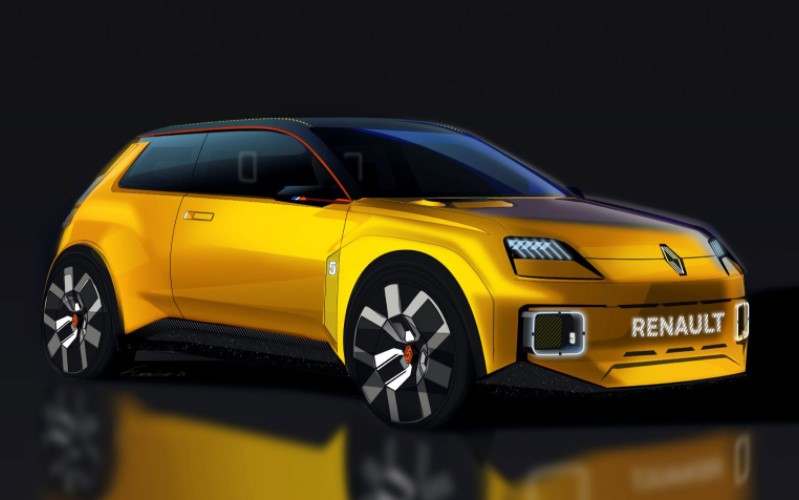
The brand new Renault 5 Prototype has already stolen the hearts of many, as was the case with the original R“Cinq”. François Leboine, Director of Design Concept and Show-Cars at Renault explains here how to succeed in the retro-futuristic exercise carried out on the cute Renault 5 Prototype.
Revive good memories, “provoke a smile”, that’s what François Leboine wanted with the Renault 5 Prototype. Responsible for concept cars and show cars at Renault, he looks back at the development of the prototype’s headlights, which, he confides to us, embody all the work done on the car. To do this, he used a well-oiled method that he agreed to unveil to us.
“If I had to choose a particular element that symbolizes all the work done on the Renault 5 Prototype, it’s definitely the headlights.”
Before starting any creative process, you need material, explains François Leboine.
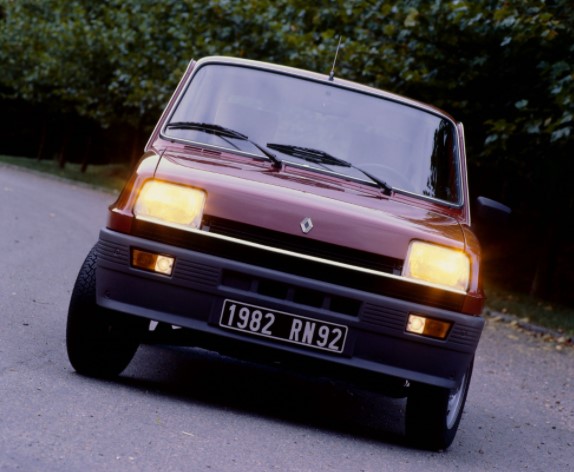
The first step, called analytical, was to gather archives to analyze, understand, decompose the original vehicle. To grasp its very essence. Photos, sketches by the original designer Michel Boué, period magazines, fascicles and brochures, made it possible to study the mythical R5 from all angles. A vehicle loaned by Renault Classic also helped to better understand certain elements such as the famous headlights.
We really capitalized on the history of Renault and the R5 in particular, which had this special sympathy with people and this perfectly recognizable mischievous look.
Then the designers draw the first sketches on paper, like cartoonists who try to capture what makes a face’s personality.
“The sketches captured the fundamental elements that needed to be retained to reproduce the mischievous look of the original R5,” explains François Leboine.
Getting the proportions right…
Then, the designers moved on to a graphic palette to define proportions, contours, the distance between the headlights, to find the expression, the smiling look of the 1970s R5.
After analyzing graphic characteristics and working on proportions, designers operate what is called a shift: a method that consists of taking an object and tilting it into another world. “They’re going to use all the graphic work from previous research, mixing it with the mood board research and codes from today’s objects to project the design details into a futuristic world.”
Inspired by the worlds of aeronautics, architecture, product design and even electronics…
Thanks to this method of shifting visual codes, the prototype’s headlights have become true technological and futuristic elements. As for the fog lights that were often added at the time, they took a leap into the future. They were transformed into daytime running lights fully integrated into the front bumper.
“It was really important that the Renault 5 Prototype was not just a slavish copy of the past, but that it really was a vehicle that contained the elements of the future.”, explained François Leboine.
The final test: meeting the public
Finally, comes the encounter, the ultimate step for designers. The one that allows them to know if their work is successful. “Everything we’ve done, it’s the reaction of the people around us which determines if we’ve hit the bull’s eye, if we’ve brought the R5 back to life or if it was a failure”, says François Leboine.
The reaction of the internal people was already telling us that the car was going to be a success, but in the end it exceeded our expectations.
The Renault 5 Prototype has indeed received a very warm and unanimous welcome. Whether on the headlights or on the whole vehicle, the treatment of the lines and the futuristic details were very much appreciated. With the Renault 5 Prototype, the emblematic model of Renault’s heritage now has a worthy heiress. A modern car, full of charm and in tune with the times. Renault’s DNA respected, a successful projection into the future: mission accomplished
We can only agree…
Within 5-6 weeks, we will be able to take the wheel again, also anxious to get acquainted again with Renault’s latest E-powered products and hybrids… Stay tuned!
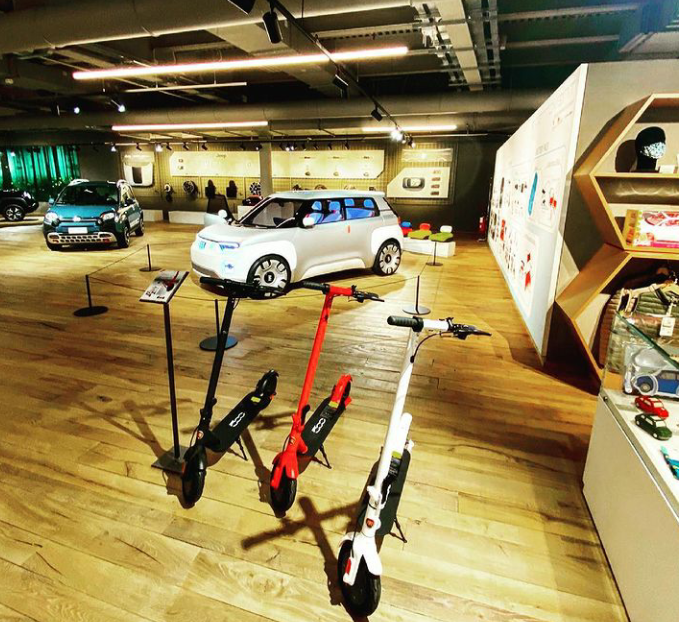
Dynamic Stellantis PR Manager Dominique Fontignies sent us yesterday his photo of the Fiat Centoventi concept displayed at the “e-Village” in the Green Pea building in Torino.
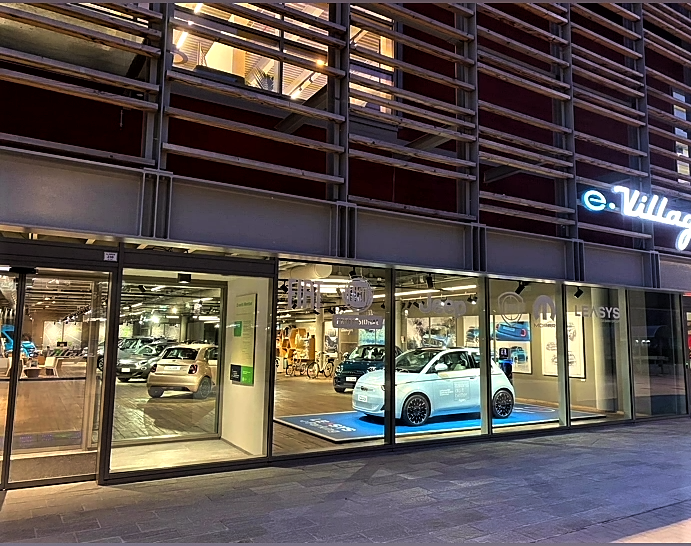
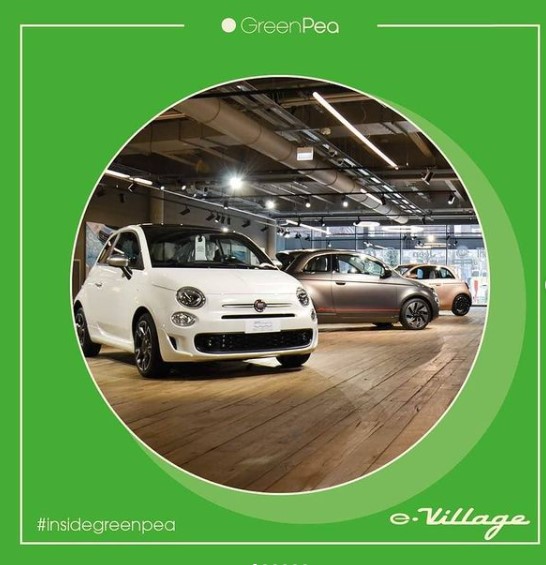
What is this e-Village? It is a branch of Mirafiori Motor Village in Turin and it’s the biggest sales point of electrified cars in Europe.
It’s located in an area of 1300 square meters inside Green Pea and showcases all FCA technologies related to electrification, including hybrid and all-electric vehicles on the market, as well as prototypes of upcoming models.
Another photo made by Dominique Fontignies…
It’s a zero-impact space that adopts the “reuse, reduce, recycle” philosophy and it can be considered the fulfillment of the efforts made by FCA to promote the future of mobility.
At Floor 0 – move, energy & connect, inside the e-Village: the space entirely dedicated to the sustainable future of mobility wanted by Stellantis, the fourth automotive group in the world.
In e-Village halls you can find all solutions of the Group’s for the avant-garde mobility, such as the Electric New 500, Panda Mild Hybrid and Jeep and Ducato’s electric vehicle range.
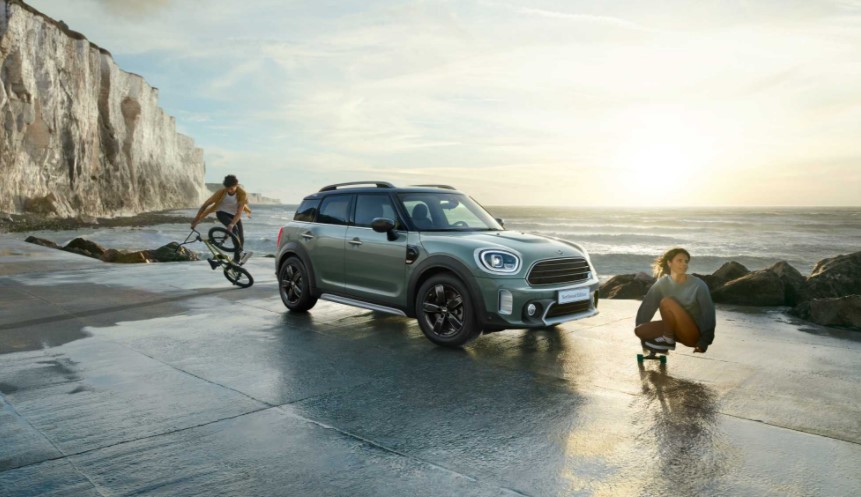
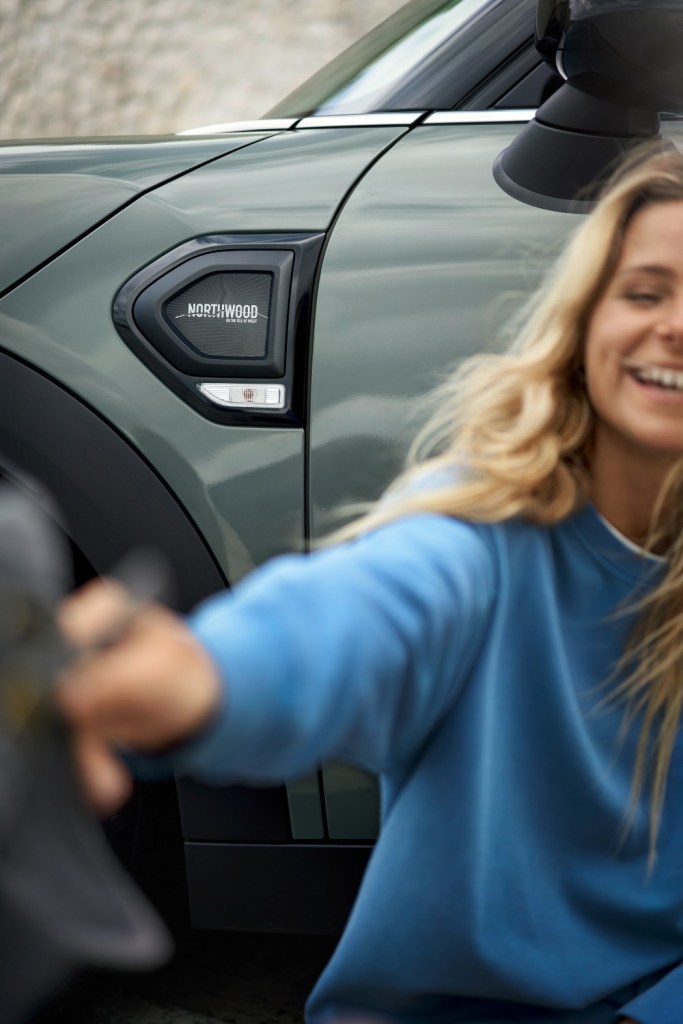
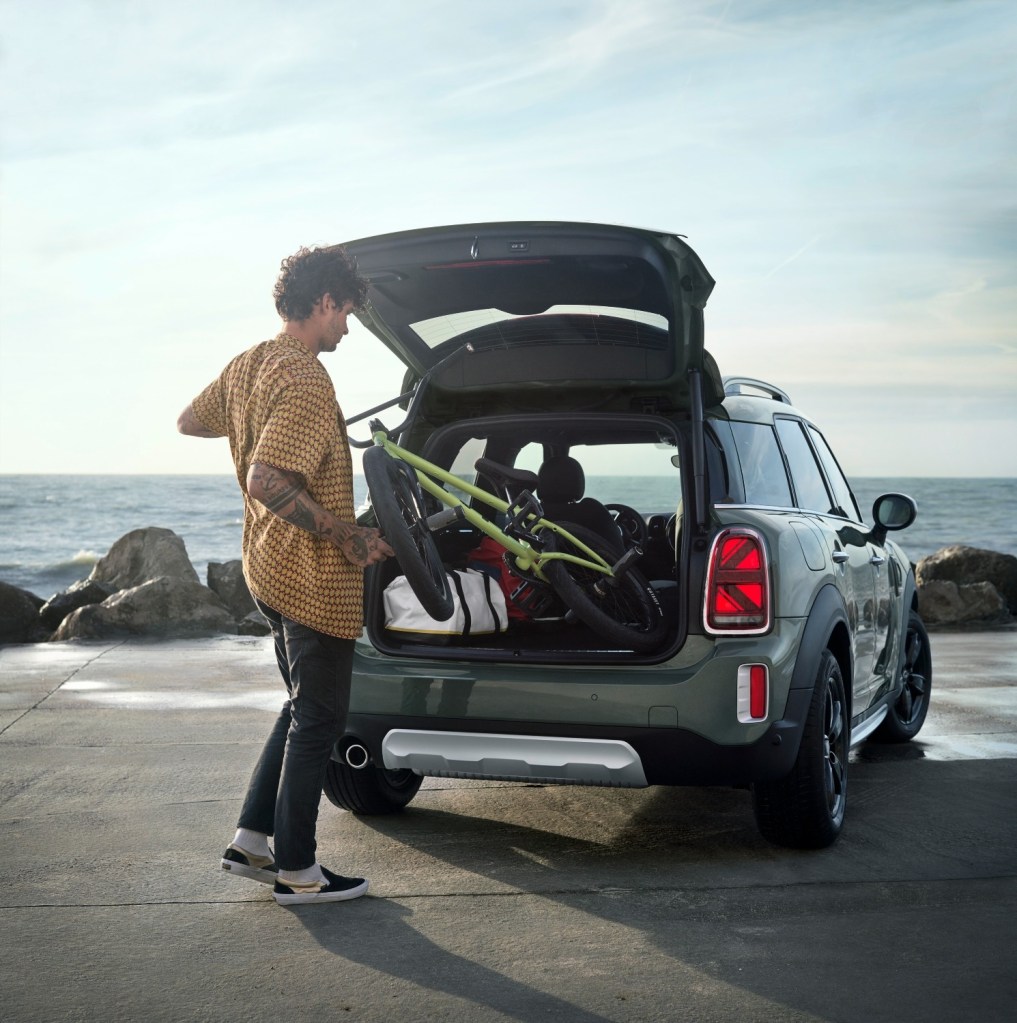
The new MINI Countryman Northwood Edition is inspired on the authentic and unique surroundings of this town on the English island Wight.
This edition integrates the contours of this legendary landscape in a logo which adorns in Piano Black finish both sides of the car.
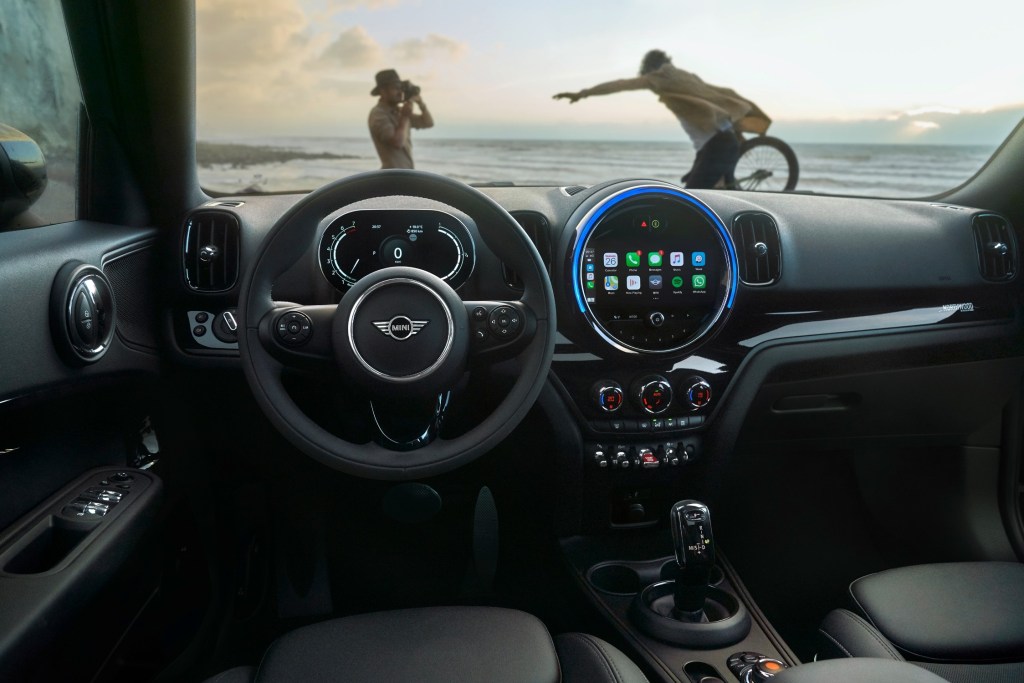
The “Union Jack” flag and the logo “Northwood” are integrated in the total design. On the door sills executed in Piano Black, the name of the edition is engraved, just as is the logo “Special Edition”. The geographical coordinates of this town are engraved in the door pillar on the drivers’ side, and a “Northwood” badge in the passenger area is integrated at the level of the “Piano Black” accent strip.
The MINI Cooper SE Countryman ALL4 Plug-In Hybrid Drive retains its typical air inlets at the sides of the car and has adapted sills in Electric Yellow. On top of the C-pillars a “Northwood” badge is also seen.
The MINI Countryman Northwood Edition is offered with the Plug-in Hybrid Cooper SE ALL 4 engine, the “One” and Cooper S petrol engines, as well as the Cooper Diesel engine. This Special Edition is available at prices from € 32.750.
We are absolutely total Jeep lovers: we just are totally sold on its style, panache and how these cars ride and perform. There is also very good news: four months after its world premiere, staged last September in Detroit, the new Jeep® Wrangler 4xe is available for pre-booking in selected European markets before going on sale later this year.
Customers in Italy, Spain, Germany, France, Switzerland, the Netherlands, Belgium and Austria, can be among the first to discover the new Jeep Wrangler 4xe “First Edition” with just a few clicks on the dedicated website, and express their interest in being contacted when the vehicle will be available at dealerships.
This new initiative serves as confirmation of the journey embarked upon early last year, with the pre-booking initiative for the Renegade and Compass 4xe – a resounding success, generating a lot of interest across Europe. The arrival of the Jeep Wrangler 4xe also marks a significant moment in the brand’s evolution and another step in the strategy towards the electrification of its entire range, announced in 2020. This journey will include the introduction of at least one electric or electrified version of each model in the coming years.
A few days ago, the dedicated website was launched in Italy, France, Germany and Switzerland and will be soon available in the other markets involved in the initiative.
The all-inclusive “First Edition” configuration will be packed with comprehensive technological and driving assistance features, the easyWallbox for more efficient home charging, and a Mode 3 cable for public charging. A specific launch package is also standard on the Wrangler 4xe “First Edition” and features a practical Cargo Organiser for the storage space, the new 4xe car cover, 3 years of extended vehicle warranty (providing a total of 5 years) as well as the advantages of “Jeep Wave”, with first two routine services as per the user and maintenance manual included.
“Jeep Wave” is the new loyalty and customer care program offered on the new Jeep Wrangler 4xe First Edition and all models in the 2021 Jeep range. This program provides exclusive services and benefits, including the first two routine services at Jeep dealerships, 24/7 roadside assistance, a new dedicated customer service accessed through a multi-lingual Jeep call center for priority support and privileged entry to brand events and partnerships.
The Wrangler 4xe is the most technologically advanced and capable Wrangler ever.
It offers a maximum combined output of 380 horsepower, courtesy of the pairing of two electric motor generators, a high-voltage battery pack, a high-tech turbocharged 2.0-litre petrol engine and the proven TorqueFlite eight-speed automatic transmission. This is the most advanced powertrain ever fitted to the Wrangler and optimises efficiency of consumption and CO2 emissions, offering the option to drive in full electric, with a range of up to 50 km*. The electric powertrain is also perfectly integrated into the 4×4 system, taking the off-road performance of the Wrangler 4xe to the next level.
Packed with comprehensive equipment as standard and dedicated styling cues.
The Wrangler 4xe “First Edition” will be available with a choice of three exteriors: Black, Granite Crystal and Bright White – the colors most beloved by European customers. The new model will also come with new driving modes: Hybrid, Full Electric, E-save, as well as specific functions for electrified driving and charge management.
Full of Panache and Zest: the Rubicon version…
The First Edition’s standard features and specific styling cues include Granite Chrystal accents, 18-inch wheels, full-LED high-visibility headlights, hard cover for the spare tyre, 8.4-inch UconnectTM NAV system with touchscreen, smartphone integration and on-board connectivity (as managing the recharge from the smartphone), plus a 7-inch TFT for information on battery charge levels and range (electric and hybrid). Standard safety features include Adaptive Cruise Control, Forward Collision Warning Plus, Blind Spot Monitoring with Rear Cross-Path Detection, rear camera and new front camera, front and rear parking sensors, Keyless Enter ‘N Go™ and electric rearview mirrors.
The exclusive “First Edition” is the most comprehensive trim in the Wrangler 4xe range, which is due to arrive in European Jeep showrooms before this summer.
Maserati’s successful Ghibli has already won several prizes and awards, and on February 11 recently today it has received a very special one as it won the “Upper Middle Class – Import” category at BEST CARS 2021. Initiator of this readers’ choice is the leading German car magazine AUTO MOTOR UND SPORT. More than 100,000 readers had followed the call and picked their favourites from 378 vehicles in eleven categories. This is the 45th time that these prestigious awards have been held.
Of course, this led to smiling faces at Maserati. Davide Grasso, CEO Maserati, said: “Ghibli is an iconic Maserati model. With over 100,000 units produced since its launch in 2013, this model perfectly embodies our DNA and the Brand’s values. For this reason we have also chosen the Ghibli to ignite the spark of electrification which projects the Brand into the future: last year we revealed the new Ghibli Hybrid, the first hybrid vehicle in Maserati’s history.”
We will return in these columns on this Hybrid version of the iconic Ghibli, and hope to lay our hands on one for you the coming months. The new Ghibli Hybrid has a 2.0 litre 4 cylinder engine that is coupled with BSG, eBooster and 48 volt battery. It is certainly no sluggard: it has an output of 330 hp, which ensures a top speed of 255 km/h and a sprint from 0 to 100 km/h in 5.7 seconds.
For the current MY 2021, Ghibli received comprehensive technical and stylistic enhancements. Among other things, there is the completely new infotainment system MIA (Maserati Intelligent Assistant) with a 10.1” screen in 16:10 format. Furthermore, the new Maserati Connect program enables the owner to stay connected to their vehicle and, for example, to be informed about the cars condition in detail.
A 580 HP V8 engine makes its debut…
For the first time a V8 engine is also available in the Ghibli’s range. The 580 hp 3.8 litre twin turbo unit accelerates the Ghibli Trofeo from 0 to 100 km/h in just 4.3 seconds and provides a top speed of 326 km/h – a Maserati sedan has never been faster. The exclusivity of this version is also underlined by the new “Corsa” driving mode and stylistic elements that make the uniqueness clearly recognizable.
Audi launches the Audi e-tron GT: a breathtakingly styled four-door coupé, which will be introduced on the market as simultaneously as an RS model. Audi reinterpreted with this e-tron GT the classic idea of the gran turismo: an emotive design packed with revolutionary technology. Two powerful electric motors provide confident electric all-wheel drive and stunning road performance.
The high-voltage battery has a net energy content of 85 kWh and enables ranges of up to 487 kilometers (302.6 mi) for the Audi e-tron GT quattro. The e-tron GT can be recharged extremely quickly thanks to its 800-volt technology.
Your servant is at the moment hospitalized for a cardiac operation, but soon enough we will tell you more about the ins and outs of this beautiful Gran Turismo, a benchmark car for anyone who is interested in sporting and stylish e-mobility. Stay tuned!
There are cars in our world which are worth their weight in gold. Every bit of it. These cars are called Abarths. Their creator had one principle: build absolute thoroughbreds. Pur sang engines, pur sang suspension, pur sang style and soul. Even when they were born and bred based on mass produced Fiats. Enthusiasts remember them immediately. The racing-ready 850 TC’s for instance. The 500 Abarth’s “Esse Esse”, to stay within the original Nuova Cinquecento theme, now decades ago.
The 595 “Scorpione oro” or “Golden Scorpion” is reminiscent of the exclusive A112 Abarth “Gold Ring”, better known to fans as the A112 Abarth “Targa Oro”. A truly exclusive car, only 150 models of which were produced in 1979, all featuring a black livery, golden details, sophisticated interiors and a wide range of equipment as standard, in line with the Italian tradition of “granturismo” cars.
This dapper front wheel drive transverse engined four seater started life as the Autobianchi 112, which had the 903 Fiat four cylinder under the hood. Already in standard form, it produced a healthy 43 DIN HP at 6.000 rpm, good for 0-100 in some 17 seconds. The Abarth Version actually was dubbed officially as “Autobianchi A-112 5a Serie Abarth.” Its 1050 cc four cylinder was fed with a Weber 32DMTR38/250 2-barrel carburettor, and was good for 70 HP. It already proved a good sprinter, with 0 to 100 km/h reached in 11,4 seconds.
Brilliant performance with panache
This is where all comparison ends. The actual Abarth 595 is still compact, but then again a lot sturdier with a kerb weight of slightly more than 1 tonne, much heavier than the nimble 700 kg of the A112. The engine is now the well proven double overhead cam 1368 cc unit, developing here 165 HP, and is very characteristic with its deep exhaust roar. It is very civilized in town, ready to pull away without hesitation from 900 rpm onwards, and this proved to be very pleasant in slow traffic. We tested this Scorpioneoro with the 5 speed manual transmission, and it delighted us with its very subtle and slick changes, combined with a very smooth and progressive clutch. With all this, the 595 behaves delightfully smooth and easy in tight urban traffic, and is of course an absolute dream on the open road.
The chassis and stiff and very sporting suspension truly come to their own there, and delight the enthusiast driver with precise, neutral handling and steering, which lets you take all bends and fast curves like a master.
This brilliant experience is made even more dramatic by the wonderful roar and staccato of the willing four cylinder, catapulting you from one corner to another. Suffice to say that this Abarth races from 0 to 100 km/h in merely 7,3 seconds. The brakes are of course quite up to the task, and the 17” “golden” alloy wheels are kept firmly on the tarmac in all circumstances.
The special Abarth 595 Scorpioneoro series is a genuine “collector’s item”, produced as it is in a limited edition and bearing a prestigious numbered plate in its cockpit.
The new special series is recognizable by its black scorpion livery – available on request in Podium Blue, Racing White and Record Gray – and the matt black chessboard roof is matching the “tar cold gray” finish of the handles, mirror caps, and the front and rear DAM.
To emphasize its “Golden” or “Oro” character, this new special series includes golden details, such as the scorpion on the bonnet, the lining around its bodywork and – we already mentioned it – the 17” “golden” alloy wheels or, on request, 17” “black” alloy wheels with the golden scorpion on the hubcap.
In the interior, everything kept in sporting black, with dramatic looking new Abarth “Scorpionflage” sports seats with black leather upholstery.The centre of the seat is in special material with high friction, to better contain the body during the sportiest driving. On the front seat head restraints, embroidered “Scorpioneoro” lettering alongside the Italian flag and Abarth embroidery. The new seats combine with the Scorpion Black dashboard with matte black details, last but not least with the gold plate on the central tunnel and of course personalized mats.
State of the art infotainment
To top everything off, the Abarth 595 Scorpioneoro offers the best infotainment currently available: the 7″ HD UconnectTM system fitted with Apple CarPlay and Google Android AutoTM* – a fast platform with high definition monitor, GPS and DAB digital radio – as well as the sophisticated BeatsAudio™ system with overall output of 480 W and a 8-channel digital speaker including a cutting-edge equalization algorithm capable of reproducing the full sonic spectrum of a recording studio.
All this to please the ears of the Abarth pilot. But to be honest, during our test we rather listened to the music of the Abarth exhaust, ranging from a deep burble to a staccato roar, which drives more adrenaline in your veins than you ever thought possible.
Modern-day panache
The beauty of these 595 Abarth’s is their stunning everyday useability. Gone are the times when these thoroughbred engines needed regular finetuning of their Weber carburettors, a delicate right foot to avoid fouling the plugs when starting up the cold engine in damp weather.
The days when the good roadholding still needed an expert and sensitive hand or “Fingerspitzengefühl” to drive it on the limit are also to some extent behind us.
To some extent, as this Abarth still will reward a masterful hand when driven as hard as it can. But at least all the electronic driving aids will keep you out of trouble, unless you totally transgress the limits of physics, of course.
This being said, this Abarth teaches you to become a better driver, make you better understand with every ride the kinetics of a motor car, the forces which act upon it. The 595 is a very forgiving teacher, which lets you climb step by step higher into the art of sporting driving and racing.
On the other hand, you can hand the keys with closed eyes to every less experienced driver, he or she will not foul the plugs or do any mischiefs to the drivetrain, the totally predictable and safe behaviour and handling of this car will also see that the car is still in one piece when you get the keys back…
On fuel economy, this Abarth is of course as frugal or thirsty as you want it. All depends on your right foot here. When it comes to service costs, all the ingedients are well proven and reliable, so it will not be beyond what you expect from any normal compact car…
So when you are dreaming of a totally sporting but also eminently practical everyday urban and Gran Turismo car, this Abarth 595 is totally right for you. And we bet you will cherish it, for years to come.
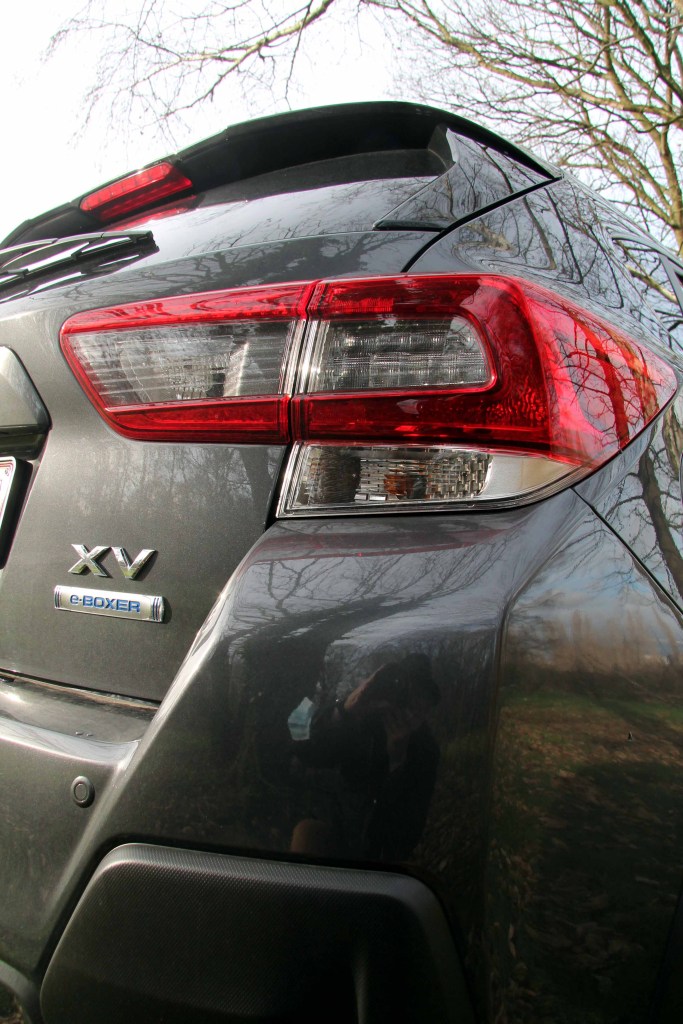
Subaru has always been synonymous with engineering excellence, resulting in truly thoroughbred practice- and rally proven cars, which have since many years won a large number of devoted followers. You can count us among them: we have always liked the cleverness of the boxer engines, coupled to superb 4WD systems. Now Subaru has gone a step further and coupled a modest 16 HP E-motor to its 150 HP Boxer, all this in combination with an excellent CVT “Lineartronic” transmission and its symmetrical 4WD.
We already told you in these columns about the pleasant drive characteristics of the Subaru hybrids. The Impreza follows suit. We were again charmed by the subdued throb of the trusty boxer, and how well balanced the whole drivetrain goes about its task. If you put your mind and right foot to it, this Subaru can truly surprise you with excellent economy.
Again it proved easy to achieve an average of 6,6 litres/100 km, as the electric motor cuts in quite often when you move your Impreza with anticipation through tight urban traffic. It will also regenerate kinetic energy under braking, and does all this without any interference from the driver. Very clever and relaxing. Under smaller throttle openings and lighter loads, the CVT transmission will spontaneously choose low revs, and keep the engine running very efficiently. When you put your foot down, the transmission will let the engine rev up eagerly, and this results in adequate sprint performance, in the region of 10 seconds from 0 to 100 km/h. Top speed is a good 190 km/h, enough to satisfy all of us.
Comfortable and predictable handling
The latest generation Impreza now runs on the Subaru Global Platform, and this delivers very predictable handling, on all roads cand weather conditions. Indeed, you feel very safe in this Subaru, and it is not only engaging, it also makes you a better driver. Moreover, it also converts you in a safer driver. Indeed, the Subaru offers state of the art driver assistance systems. Its EyeSight system with two stereo colour camera’s gives you an additional pair of eyes on the road and steers the adaptive cruise control, lane sway and departure warning, amongst others.
The Subaru has also a clever lead vehicle start alert, which warns you when the car in front of you starts going again. The two eyes will also let you keep your lane and helps you with its pre-collision braking system. Eventually, in the worst case scenario, your Subaru will start braking automatically to limit any damage.
The 4WD is of course an asset in snowy weather conditions, and lets you also tackle many country roads with peace of mind.
Elegant and practical
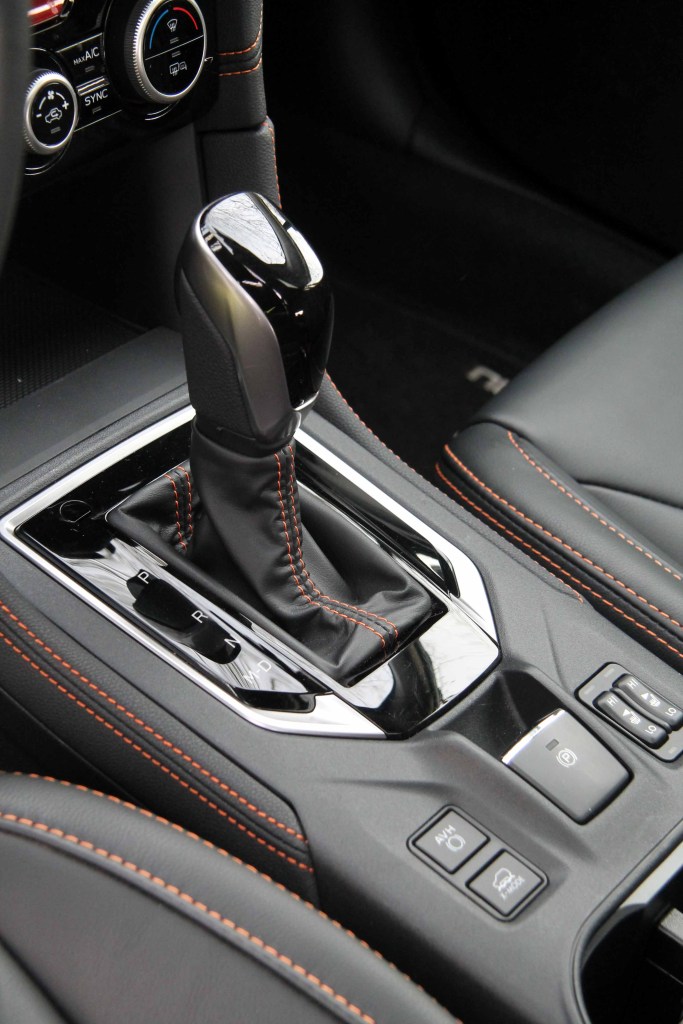
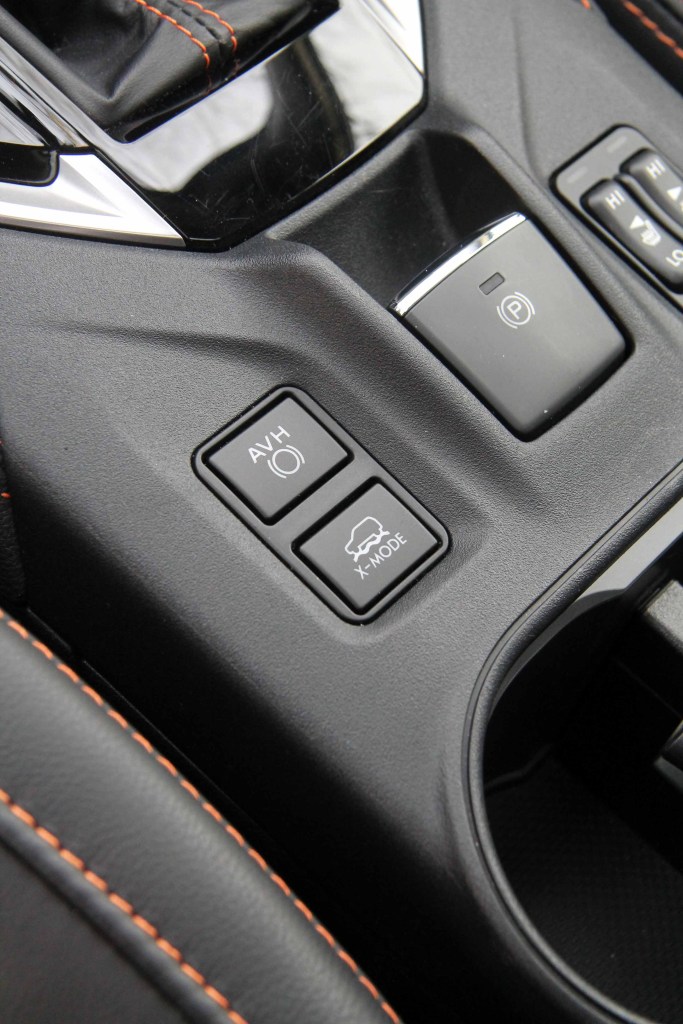
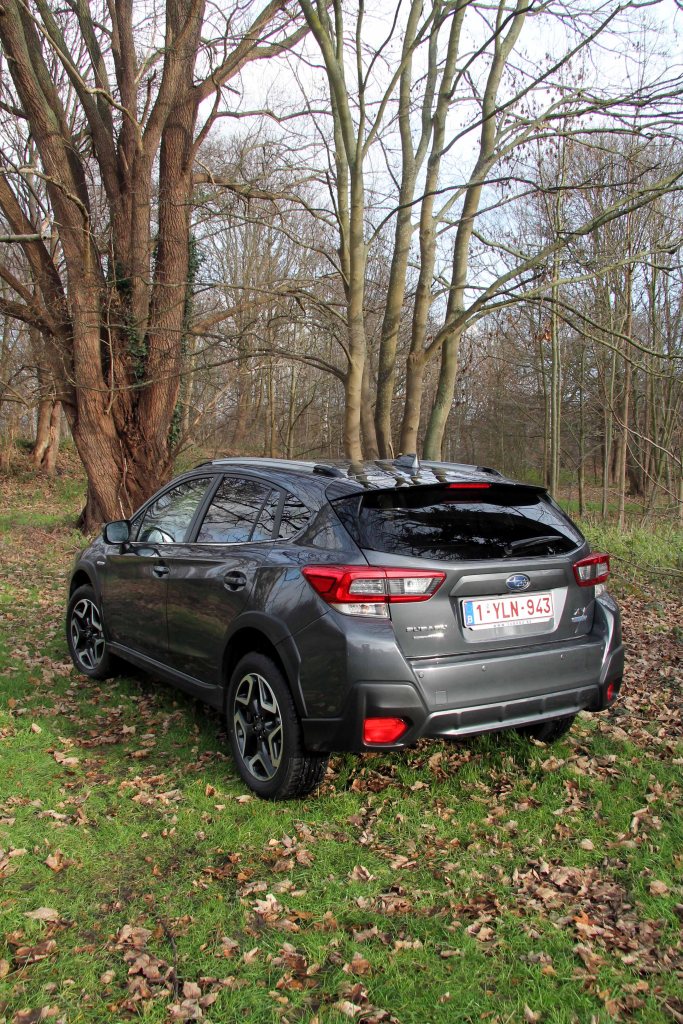
Subaru styling is quite good on this latest generation Impreza, and also the cabin is altogether pleasing. The infotainment and instrumentation is top notch and practical, with everything ergonomically well laid out and a breeze to use.
One feels immediately at home in this Impreza, and this is meant to be. USB and Aux inputs are provided of course, panoramic sunroofs can be had, and this Impreza offers up to almost 1300 liters of luggage space with all seats folded down.
Dual zone automatic airco and the excellent seats provide you with comfort on long and short trips. We also liked the feeling of solidity of the bodywork and cabin of this Impreza, and we all know also that Subaru’s score very high on reliability.
Conclusion
Very well equipped, practical and easy to use, predictable handling, and last but not least superb mechanical sophistication and smoothness combined with good suspension comfort make this Impreza quite endearing. The characteristic boxer sound reminds the aficionado of the legendary sporting heritage of the brand, which is now well adjusted to the “green” eco-times we are living in right now. A reliable companion for any weather, road, with economy and reliability thrown in, this is what you get with this Impreza. Just think of it…