Stirling Moss, the most iconic racing driver ever, has left us….

“I saw you were having fun, going flat out behind me all the time” Stirling Moss said to me with a broad smile in the Mille Miglia historic edition I drove with my father. We drove the ponton Mercedes 180 D, he drove the Mercedes 300 S, the Le Mans winning car.


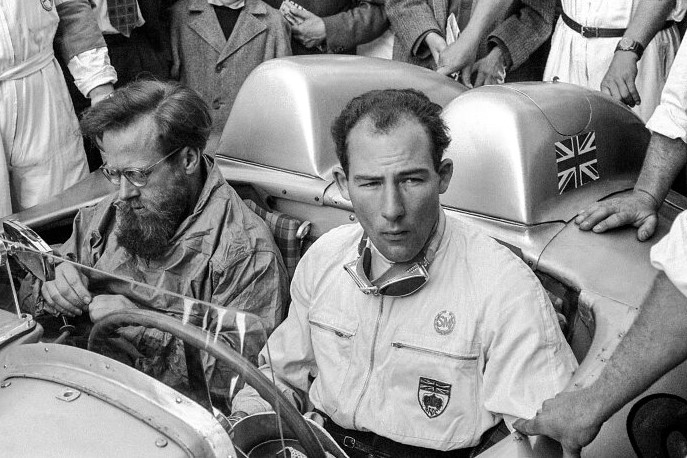
Mille Miglia 1955 in Italy from 30 April to 1 May 1955: Stirling Moss won the legendary road race with his co-driver Denis Jenkinson in a Mercedes-Benz racing sports car 300 SLR (W 196 S) in the best ever time achieved.

The Mercedes Classic Racing team mechanics had advised us. “Sie gehen Stirling hinterher”, “die Strassenlage in schnellen Kurven ist mit dem 180 D ganz gut, also wenn Stirling geht, vollgas hinterher, sie fahren genau dieselbe Linie, das ist spektakulär, auch wenn sie nicht so schnell sind.”

“Go behind Stirling.” “The road holding in fast bends is very good with the 180 D, so when Stirling goes into the curve, follow his ideal line, on full power, just floor the throttle, go flat out behind him”… This is what we did, much to the delight of the tifosi and thousands of bystanders along the route. And also Stirling liked it. What a dream come true it was for us, to be in the same Mercedes Works Racing team as the legendary winner of this iconic race. He with close to 300 horsepower, we with at best 45 from our 1,8 liter Diesel.

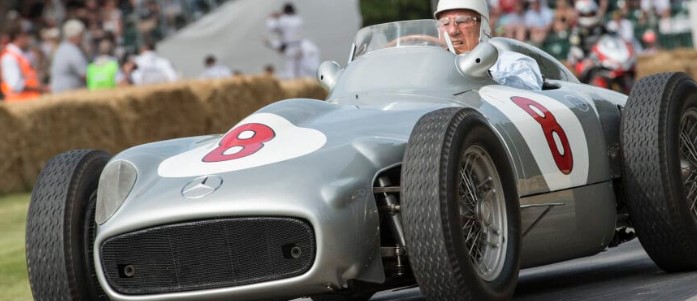
Stirling at the Goodwood Festival of Speed in 2015, at the wheel of the W196 R Formula 1 racing car…

An honour we will never forget. The be in the same team, to stand as team members face to face with the man who sped to victory in the 1955 Mille Miglia, a 1000 mile or 1,609 km long race, which he drove from start to finish in merely 10 hours, 7 minutes and 48 seconds in the 300SLR.

He passed away on Easter Sunday, April 12, this year, after a long illness.


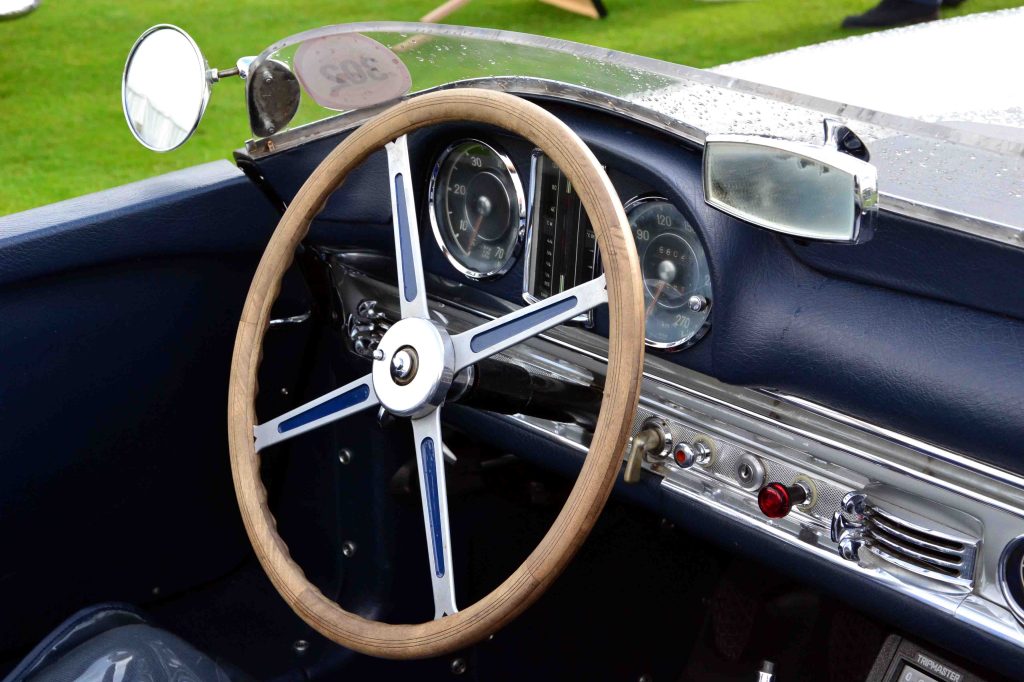
Picture taken in 1955 at the end of test drives with the Mercedes-Benz racing sports car 300 SLR (W 196 S) at the Hockenheimring. The vehicles were then brought to Italy for training on the route of the Mille Miglia. Look at the beautifully chromed lettering and star. Even a lightweight racing car remained a true Mercedes…

We will never forget this gentlemen driver, who embodied perfectly the sportiness and fair play of a true racing driver. He will remain an icon for us for ever, and many stories will be told, also by us in the coming months, about his long career and wonderful, long and eventful life. We could be part of it, albeit shortly, and it is an unforgettable memory for us.

Hans Knol ten Bensel

Opel and E-power: a very long tradition

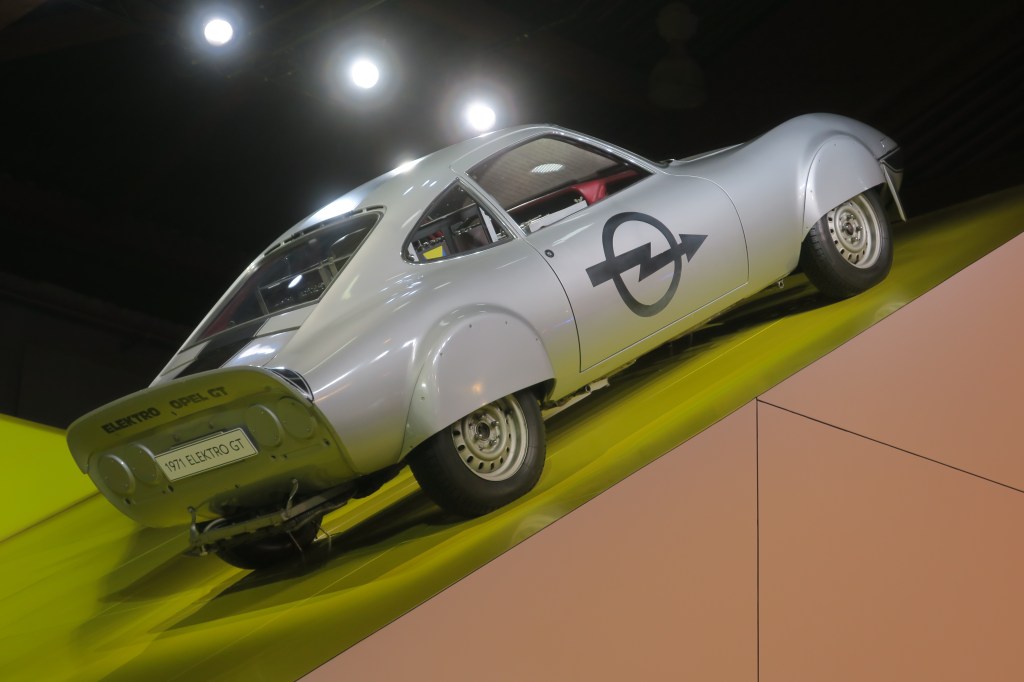
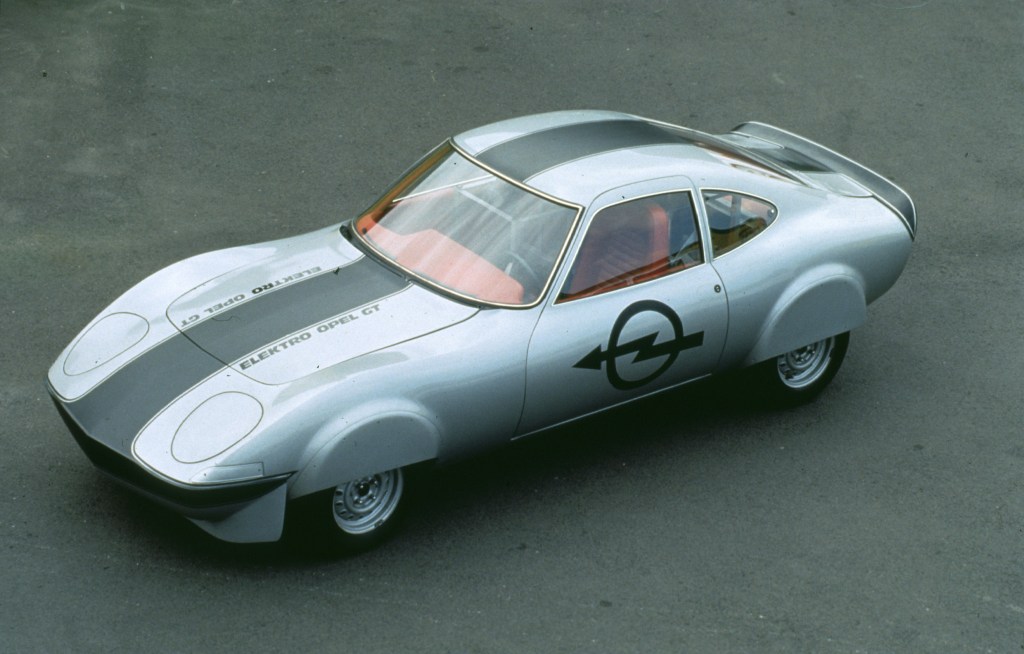
A stunning E-Opel at the latest Brussels show, with a remarkable logo…

We stood on the latest Brussels Salon eye to eye with not only the latest Opel electric cars like the Corsa-e and Grandland X plug-in hybrid, but also with a stunning looking 1971 Opel Electro GT. Clearly, Opel has been dabbling with electric cars already since five decades. At the presentation on the Brussels show by Opel CEO Michael Lohscheller of the entire Opel range, we asked him why the very photogenic “E-power” Logo on the Opel Electro GT was not used for Opel’s present E-models.  

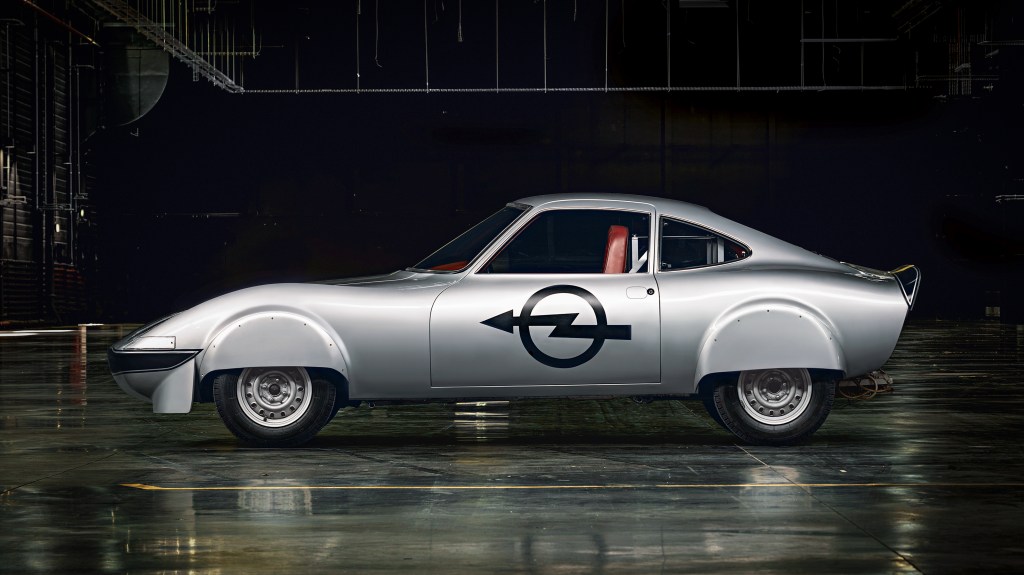
Opel Electro GT

But this aside, the early electric Opels were more than intriguing we found. So we delve a bit more in their history here…

Hans Knol ten Bensel

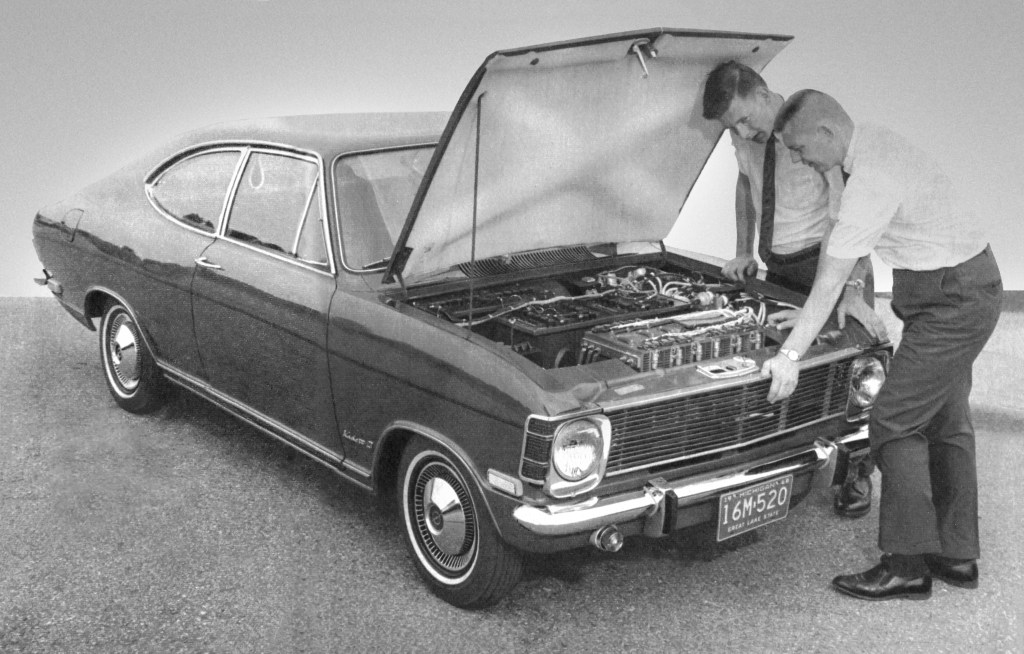
It is indeed a very long and interesting story, so we will come back on it several times. It all started back in 1968, when the Kadett B “Stir-Lec” I featured the principle of the “range extender” that would later go into production with the Opel Ampera. The “Stir-Lec” study was powered by 14 lead-acid batteries and the electricity that kept the batteries constantly charged was generated by a rear-mounted Stirling combustion engine.

Only three years later, Georg von Opel, the grandson of the company founder, broke six electric vehicle world records at the wheel of this stunning looking 188 km/h Opel Electro GT powered by two coupled electric motors producing 88 kW/120 hp. Energy was supplied by a 590 kilogramme nickel-cadmium battery pack and at a constant speed of 100 km/h, the car had a range of 44 kilometres.

I have personally sweet memories of the Opel GT. As a student but already dabbling in automotive journalism, I assisted at the presentation of the Opel GT 1900 in Port Grimaux, and was impressed by its agility on the winding roads in the Alpes Maritimes.

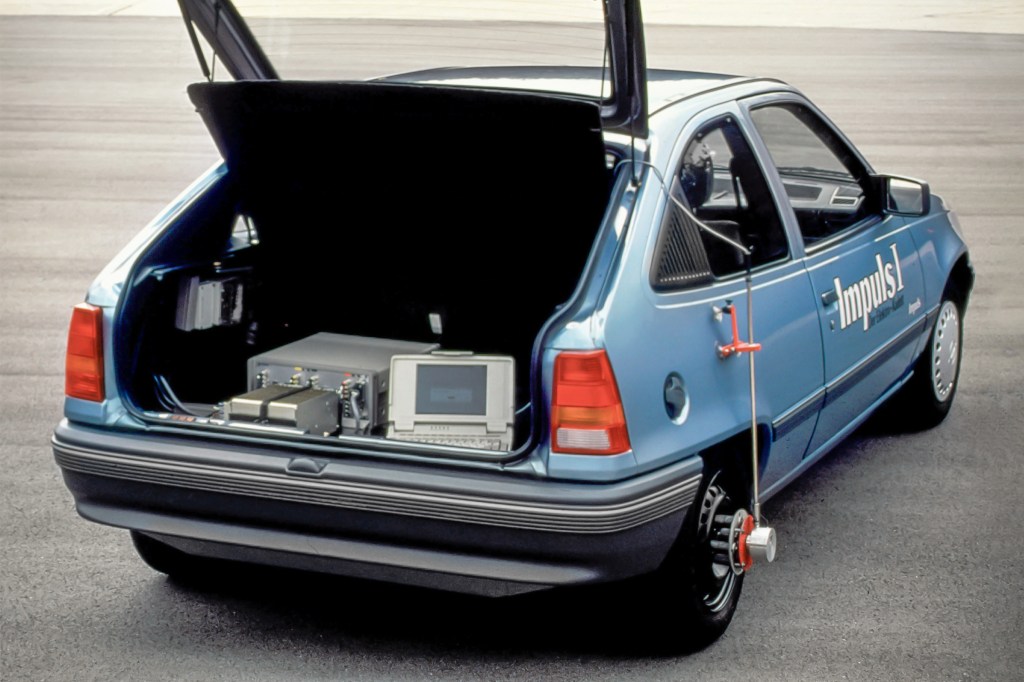
Research took a step forward with the Opel Impuls programme during 1990-97. The Impuls I was a Kadett-based vehicle powered by a 16 kW direct-current electric motor using nickelcadmium battery cells with a liquid electrolyte. It had a range of around 80 km and a top speed of 100 km/h. But more about the impuls programme later.

Opel also was keen on developing hydrogen propulsion.

In 2000, Opel’s fuel-cell development took to the streets with the Zafira-bodied HydroGen1. Its hydrogen fuel cell supplied electricity for a three-phase asynchronous motor giving 55 kW/75 hp and 251 Nm of torque. A buffer battery covered power peaks.

Arriving in Lisbon, Avenida da Torre de Belem…

In 2001, a fleet of 20 HydroGen3 models was driven by test customers. Power was increased to 60 kW/82 hp, giving a top speed of 160 km/h. In the 2004 Fuel Cell Marathon, two HydroGen3 vehicles covered nearly 10,000 km across Europe, from Hammerfest in Norway to Lisbon in Portugal. (See photo here above) At the wheel of a HydroGen3, Grand Prix and Opel DTM driver Heinz-Harald Frentzen also won the 2005 Monte Carlo Rally for cars with alternative propulsion.

A well styled gem… 13 years ago…

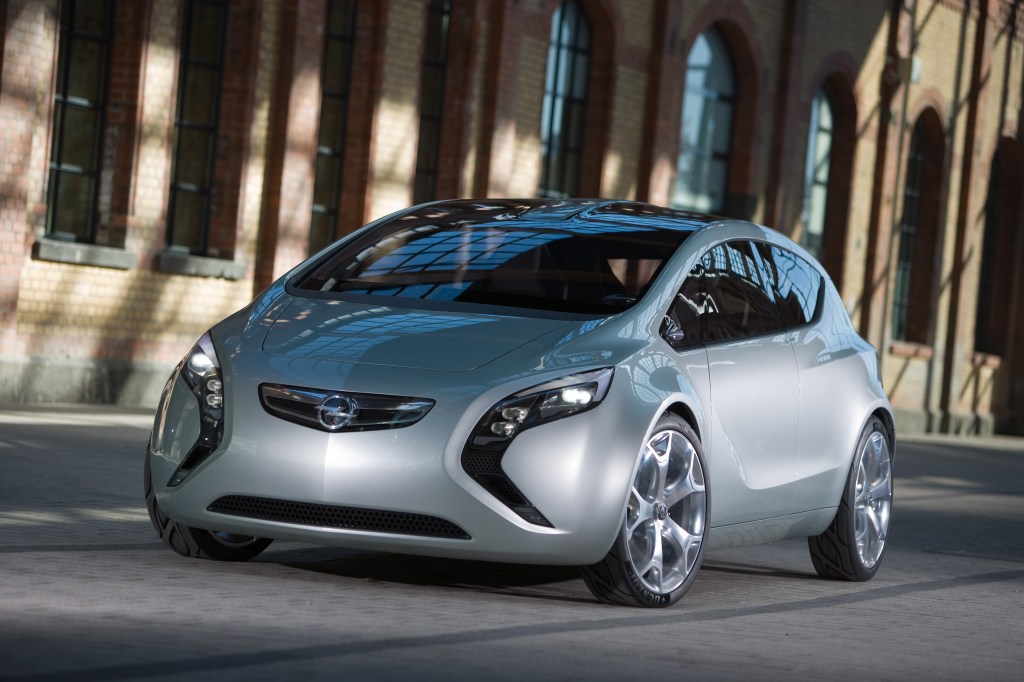
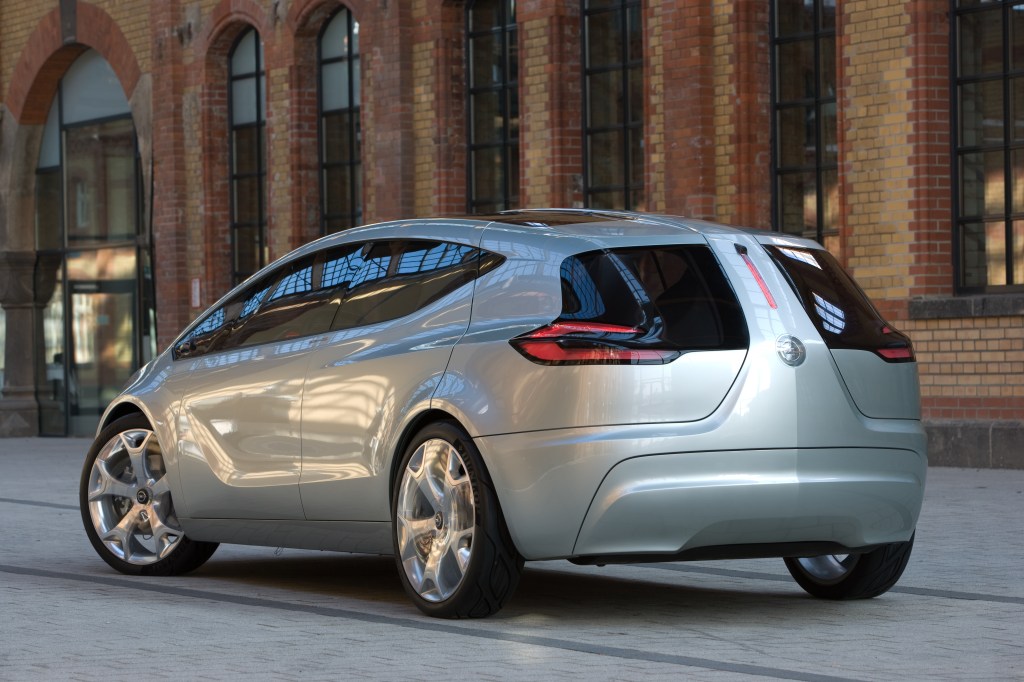
But we stumbled also on some surprisingly advanced and stylish E-cars. Indeed, Opel also pursued the development of battery-powered vehicles and presented the innovative Flextreme Concept at the 2007 IAA in Frankfurt, which featured the Voltec extended-range electric propulsion.

A harbinger of the Ampera, but more of that car in a following report.

In the meantime, just be surprised at the stunning elegance of the Flextreme…

Hans Knol ten Bensel

Sweet memories

In Corona times, we all now spend more than enough time behind our laptops and in our homes. A delightful occasion to delve now in our old archives and finally give them a thorough cleanup. Of course, true gems are found. Like a photo my father took when I must have been about 7 years old, behind the wheel of a 1950 MG TD.

I just want to share this with you. It clearly shows that my love for cars started very early on. Actually, at the age of four I surprised my Dutch grandmother in Helmond with my knowledge about car makes. When there was a beautiful British limousine parked in the street of their home, I could whisper to her that this was an Armstrong Siddeley Sapphire. I already appreciated then as a very young boy that this was a very exceptional quality car.

The beautiful radiator of the Armstrong Siddeley Sapphire…

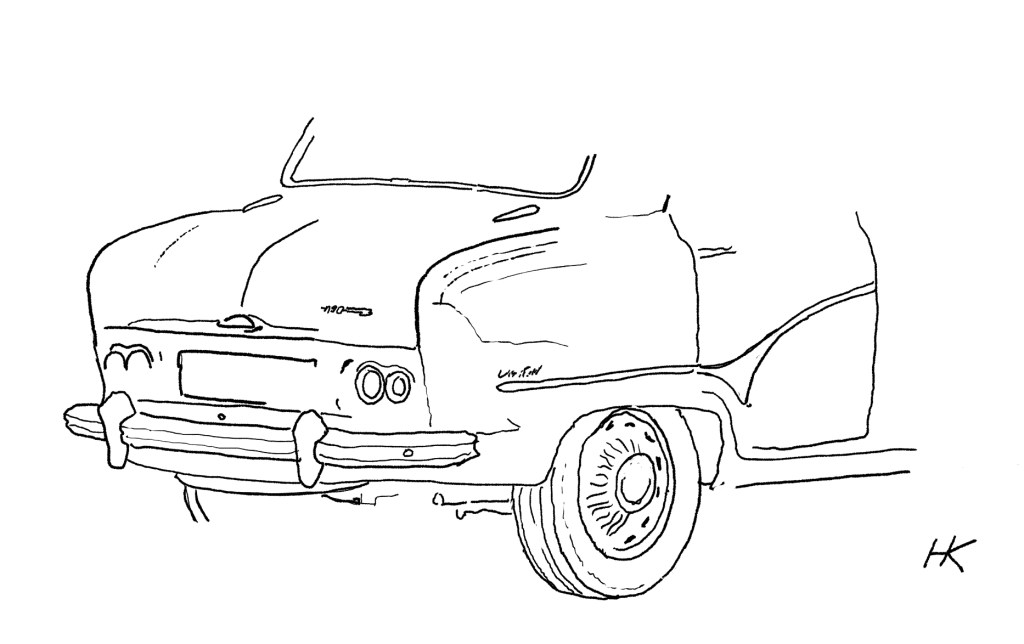
My deep love for British powerful cars with elegance and panache was born then. My grandmother’s daughter was married to an eye doctor Harry Donders, who owned then a black Austin A90 Westminster.

The A90 was remarkably compact and had some modernity about it… just look at the simple rear/indicator lights…

A remarkably austere interior for a British car I found, with Austin definitely having a good throw at some modernity.

The car itself was also remarkably compact.

The Austin logo was beautifully placed on the bonnet of the A 90…

But my heart was then already taken by Jaguar. The Mk 1 Saloon was totally awesome in my mind, and dreams. So as soon as I earned my first money, the Jaguar MK II was bought, as faithful readers know…

On the photo you see me then behind the wheel of this MG TD in front of my parent’s house. My father took the picture with his Rolleiflex with the fast 2.8 lens. I still own the camera, and here I took a photo of it today for this article.

My uncle, the brother of my father, is actually still is in good health and well into his nineties and had hired the car to drive it to our home for a visit. The Belgian cobblestones got the best of it during this trip, as the whole fuse board had fallen on the slender legs of his surprised wife, while speeding along on the Belgian roads!   

Hans Knol ten Bensel       

Unique “Abarth Stories” tell about Abarth driving passion for the Belux market…

FCA journalists launch gripping Abarth short stories series, starting with a visit to Thierry Boutsen in Monaco…

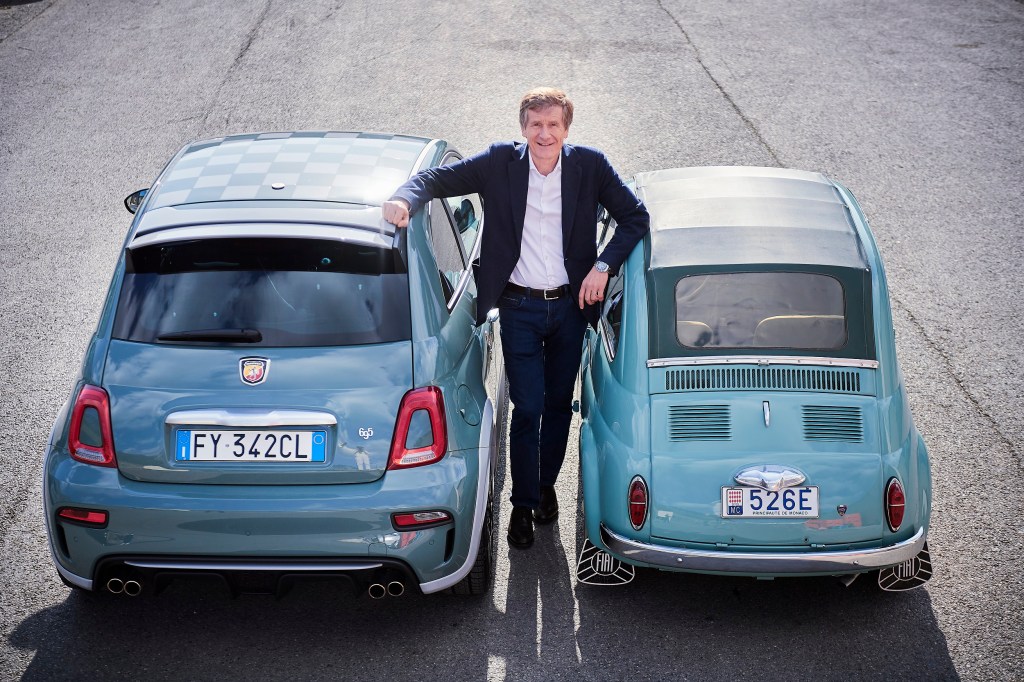
The dynamic PR and marketing people of FCA Belgium come up with an unique formula to keep the passion for the “Scorpione” alive. They launch mini-video stories that testify to the Abarth passion. The first episode shows the Belgian pilot Thierry Boutsen at the wheel of the Abarth 695 70 ° Anniversario…

This “Abarth Stories” concept was specifically devised for the Belux market. With good reason: since the launch of the brand in 2008, Abarth has achieved increasing success in Belgium and the Grand Duchy of Luxembourg, and is even about to become a reference in our shores when it comes to sporting cars.

The first «Abarth Story» of 2020 brings viewers to the principality of Monaco, where they meet Belgian pilot Thierry Boutsen. He was so impressed with this latest creation from Turin, the Abarth 695 70 ° Anniversario, that he decided to buy one!

Thierry Boutsen has lived in Monaco with his family for years. The Festival du Cirque De Monte Carlo is in full swing, and with a bright blue sky outside, the FCA journalist meets Thierry Boutsen in the lobby of the Columbus hotel. Boutsen has devoted more than 23 years of his life to car racing and motor sport, a man with a true passion for cars.

In the original Cinquecento, Thierry Boutsen taught his mother to drive…

“I taught my mother to drive,” he tells our journalist quietly. “It was aboard a Fiat 500.” This undoubtedly explains his enthusiasm for the thoroughbred version the current model, sold under the brand name Abarth. «I have purchased this special edition in honor of the brand’s 70th anniversary, and it has been finished in the same color scheme as the 1957 Fiat 500 that I also own. So the circle is round! » he smiles.

Following him in the narrow streets of Monaco towards the corniche that takes us to the motorway towards Menton, one immediately sees that Boutsen has immense driving talents as a pilot, and they amply show behind the wheel of these new toys. «This new Abarth has everything one could wish for: it is light, agile, powerful, has perfect handling and powerful brakes. Everything was developed to achieve the best », Thierry smiled.

For more than 20 years, Thierry Boutsen has been involved in aircraft mediation with his company Boutsen Aviation, which is also based in Monaco. But his passion for cars is still well alive. “I still remain a car enthusiast,” he adds. «That is why I recently set up a new company specializing in the sale of collection cars, cars suitable for public roads and competition cars. Our specialty? Find rare vehicles that meet the specific criteria of the customers, from a Lancia Stratos or Porsche 904 to a Ferrari F1 in running order! » And now he relives also the passion for Abarth…

A thriving market for the cars with the “Scorpione” in Belgium…

With 1,700 cars sold in Belgium in 2019 and around 21,000 in Europe, Abarth is the sporting jewel in the Fiat Chrysler Automobiles group. Born from the heritage of Carlo Abarth, the newest 695 70 ° Anniversario is a unique model that complements the range of models 595, available in the Turismo and Competizione versions. This Abarth 695 70 ° Anniversario impresses with its new rear spoiler, which is manually adjustable,and this “Spoiler ad Assetto Variabile” can be adjusted in twelve positions, with a slope of 0 to 60 degrees…

Abarth remains active in the competition, for example through the participation of the Abarth 124 Rally in the ERC Championship, and also takes part in the F4 Championships in Italy and Germany.

This is how new pilots are discovered, such as the young Arthur Leclerc, brother of F1 pilot Charles Leclerc, who started his career at Alfa Romeo, before making the switch to Ferrari.

We just let you enjoy further the photos here…

Hans Knol ten Bensel

The ZOUTE GRAND PRIX® celebrated its 10th edition, part 2

Indeed, between the raindrops, other magnificent events were to be enjoyed, and beautiful cars came before our lens…

The ZOUTE CONCOURS D’ELEGANCE® by Degroof Petercam is another yearly highlight not to be missed. It is an excellent opportunity for your servant to take those timelessly beautiful photos of pre- and post war classics and supercars. Also this year the cars on show were absolutely stunning to say the least.

The concours was carefully scrutineered by both the expert jury members and illustrious collectors like Roland D’Ieteren… (to the left).

Hans Knol ten Bensel

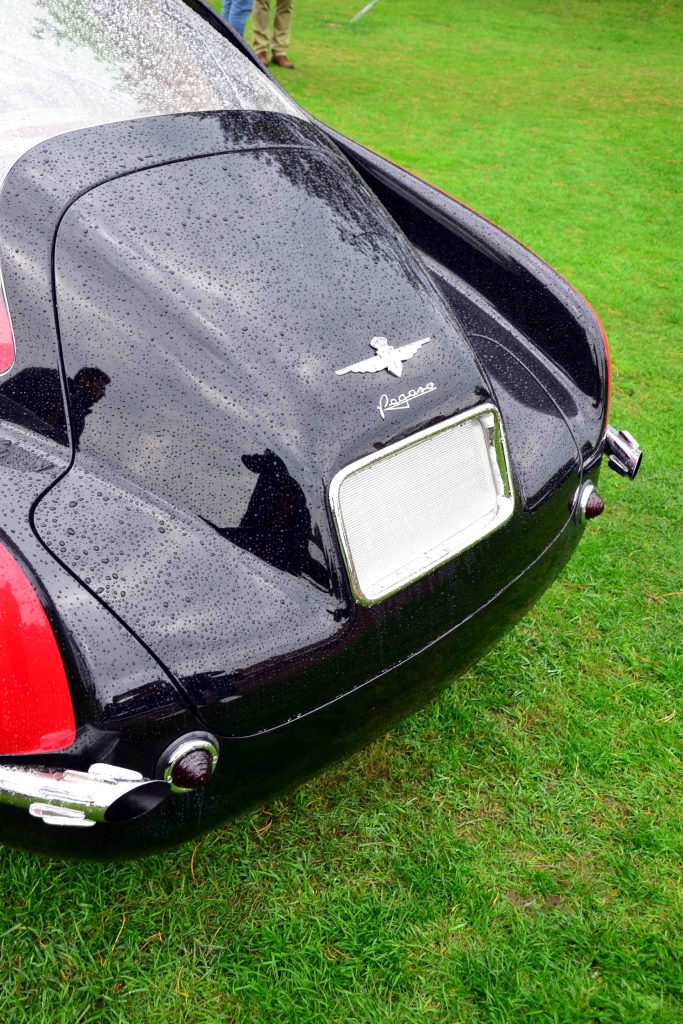
I was totally impressed by a beautiful Pegaso coupé, (see photo below) and stood also eye to eye with a magnificent Alvis and 3,5 litre Delahaye.

This 1953 Pegaso Z 102 Touring Superleggera was designed by Wilfredo Ricart, who had worked then already with Ferrari and Alfa for a few years. He himself asked “Mr. Touring”, designer Carlo Felice Bianchi Anderloni (1916-2003) to design this body. This one-off Pegaso was the focus of a lengthy promotional tour around Europe. It won the Concorsa d’Eleganza di Stresa in 1953…

Stunning is also the dashboard of this 1960 Alfa Romeo 2000 “Praho” Touring… This car was an attempt to secure for Touring the production of the Alfa 2600 Coupé. This car was displayed in 1960 in the Turin Motor Show and was a one-off.

I had a lucky encounter with Skoda Belgium Import PR Director Catherine Van Geel and her colleague from the Skoda Museum, who both proudly showed me a very impressive 1948 Skoda Superb, which had finished a total ground up restoration just four days before this Concours. We tell you more about this unique Superb in a special report.

But there was much more. For example, in the presence of 75-year-old racing legend Jacky Ickx, Porsche unveiled a unique Porsche 911 4S Belgian Legend Edition (made on 75 copies). In addition, there were 5 super rare hypercars on Saturday and Sunday: a Bugatti Centodieci, a Bugatti Chiron Sport, a Dallara Stradale, a Pininfarina Battista and a De Tomaso P72.

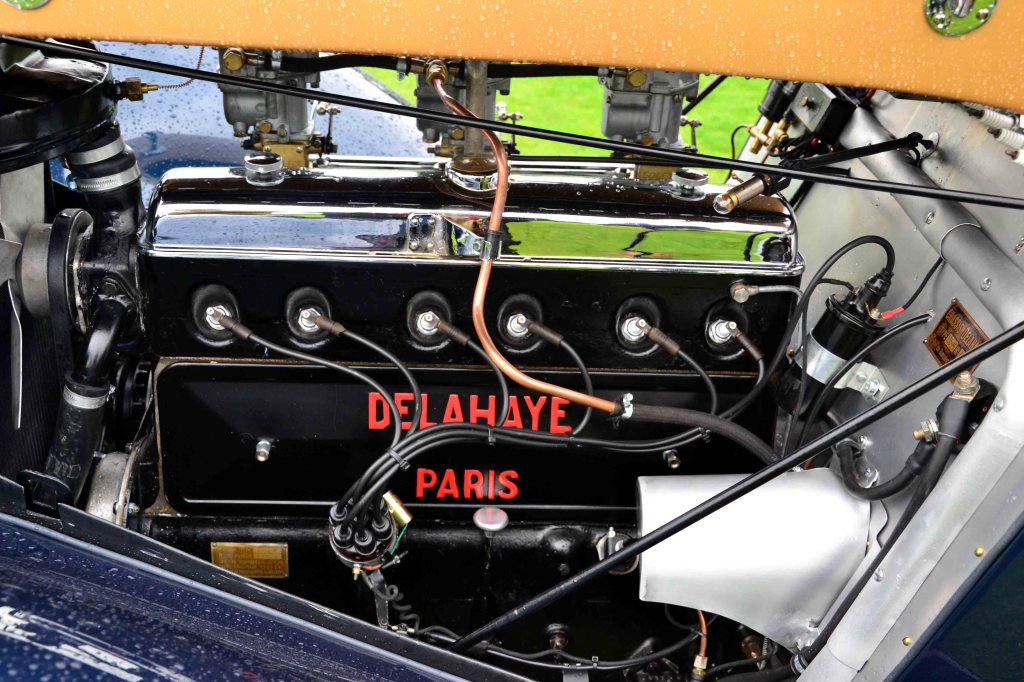
The unique 3,5 litre Delahaye…

Of the more than 100 participants in the competition, the international jury named a 1936 Mercedes 540 K Cabriolet A (pre war) and a 1949 Ferrari 166 Barchetta Touring – Le Mans Winner (post war) as Best of Show winners.

And its fabulous straight six engine, which was idential in the Le Mans winning car…

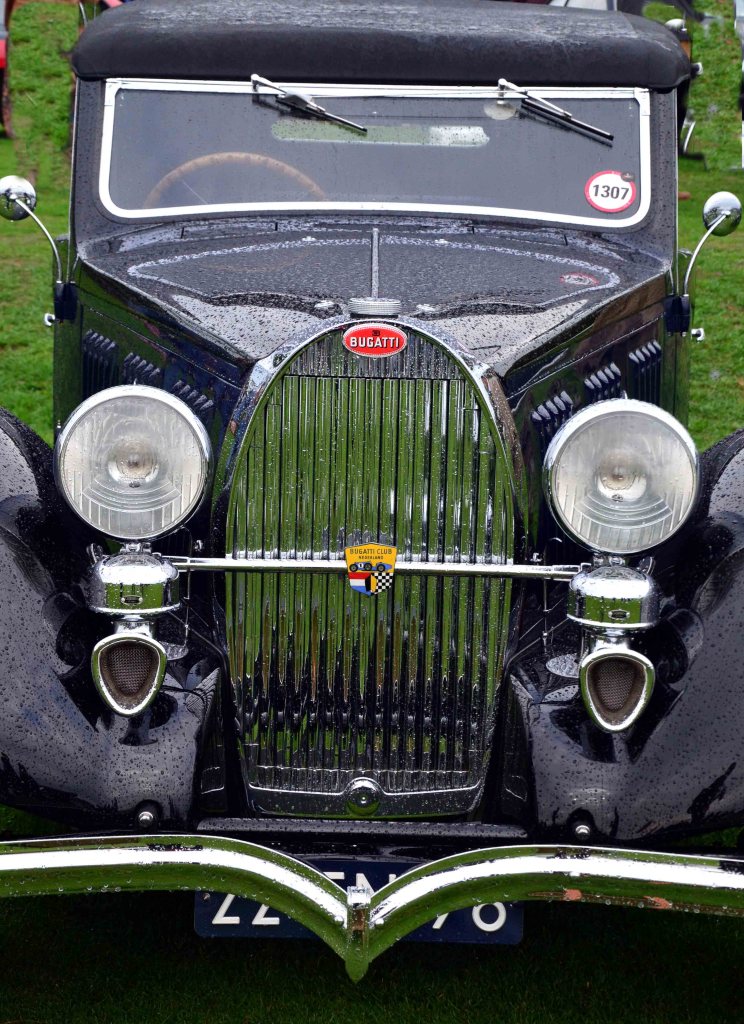
Following Bugatti’s 110th birthday there was also a special “110 Years Bugatti” category this year. Winner was a 1938 Bugatti Type 57 C Coupé – Le Patron. (See first photo). Other eye-catchers were the “Beach Cars” category in which a 1958 Fiat 600 Jolly with the main prize went. The prize for the most iconic car went, finally, to a 1955 Mercedes 300 SL Gullwing.

Eternally cute and endearing are also the Joly beach cars based on the Fiat Cinquecento and Seicento, and on the Concours we stood eye to eye with two magnificent examples.

Last but not least there was a very impressive 300 SL roadster to be admired, brought to the Knokke Golf Course by the works Mercedes Benz Classic team,

who lovingly and carefully dried the car with a soft chamois after every rain shower…

The fabulous collection of cars at the grounds of the Royal Knokke Golf Club were judged by an international 25 head jury led by Philip Kantor of the Bonhams Auction House.

More to see and admire…

Besides these highlights there was much more. Last but not least the ZOUTE SALE® by Bonhams. This auction can be considered par with the Grand Palais Sale in Paris, and the Quail Lodge Auction at the Pebble Beach Concours d’Elegance in Carmel (USA).

The total revenue of the auction was not less than 11,710,104 euros, a record for Belgium. One of the eye-catchers was a unique 1965 Ferrari 275 GTB Alloy Long-Nose. The car went under the hammer for a record amount of 2,875,000 euros. A 1931 Invicta 4.5-Liter S-Type ‘Low Chassis’ was sold for 890,281 euros. A Ferrari Enzo knocked out at 1,506,500 euros.

This custom built Aurelia GT had endless panache…

Then there was on Sunday the ZOUTE GT TOUR® by EY. This drive is 120 km long, and is reserved for exclusive modern GT cars, younger than 20 years old. More than 200 cars participated, and Rob Van Loock en Jens Aerts won this event in an 2019 built Audi R8 Coupé.

 We just let you enjoy the photos here of this 10th edition, and tell you here already that the ZOUTE GRAND PRIX® launches new projects in 2020,

with amongst others the RALLYE DE DURBUY®. Read soon much more in these columns!

Hans Knol ten Bensel

The ZOUTE GRAND PRIX® celebrated its 10th edition: a decade of four-wheeled dreams came true…

This magnificent event is all about enjoying cars to the full, and what’s more, a very large public can participate and witness the ZOUTE GRAND PRIX® events up close, see and touch the cars, which embody the pinnacle in automotive heritage and panache.

It’s a truly stunning event, which has now grown to impressive proportions. Last year’s figures amply prove it: What to think of 645 cars, 1040 participants, 263.000 visitors?

The organisers look already into the future, and after a decade of successes are planning even grander events. They told us all about it at their press conference, held at the prestigious Royal Zoute Golf Club, of which more in a further report.

But here we tell you more about this year’s event…

Hans Knol ten Bensel

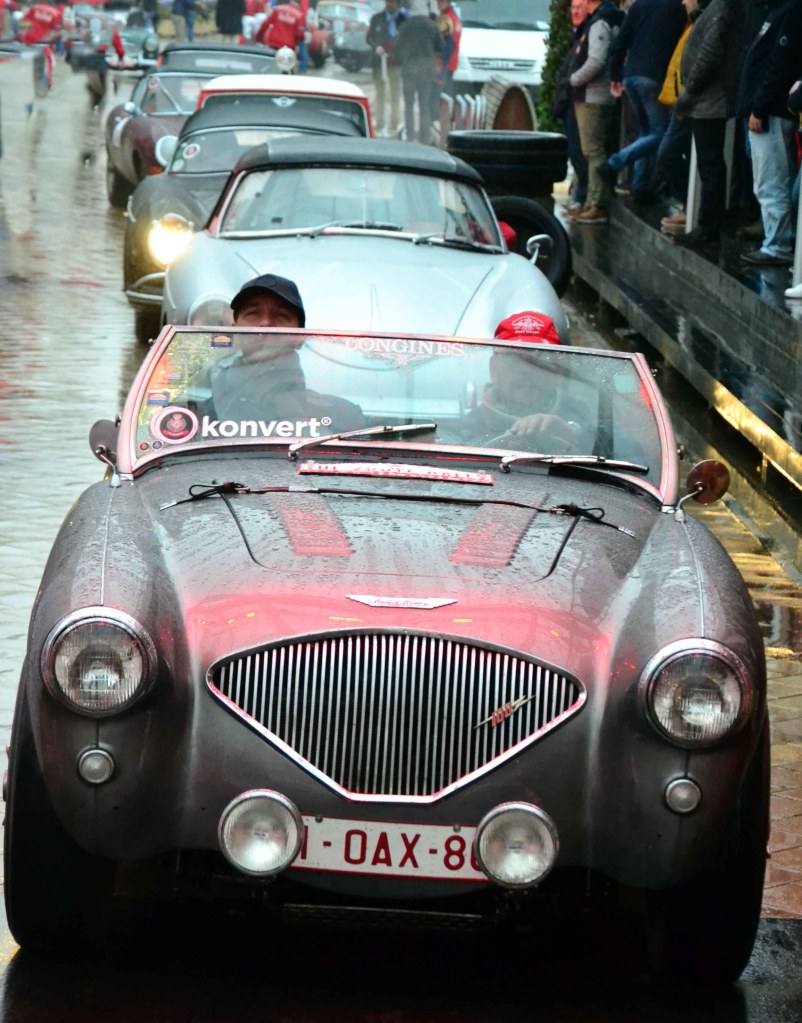
The weather gods were not altogether with us this time, but this did not dampen the enthusiasm of both participants and spectators. The ZOUTE RALLY® started for its first leg on Friday morning, and not less than about 200 pre- and post-war classic cars participated.

Media celebrities like Veronique De Cock participated…

One can choose between a “regularity” drive, where the ideal average speed is of paramount importance, with special Regularity Tests being also included in the daily 250 km course.

Exotics like this Fiat “Otto Vu” were also seen…

Enthusiasts who were looking for a more leisurely drive, opted for the “Balade” formula, and received a road book of the untimed course, which they could drive and enjoy at their own pace.

The route is different from the “regularity” drive, albeit in the same region. On Friday, the route went through the Flemish Ardennes, and lunch was enjoyed for all in the grounds of chateau Kluisbergen.

The cockpit of the “Otto Vu”…

On Saturday the ZOUTE RALLY® went through Zoutelande for a luncheon stop at the biggest Dutch yacht builder Amels Shipyard in Vlissingen. Winners of the regularity class were Ruben Maes and Bjorn Vanoverschelde with their Porsche 356c.

The founding father(s): ZOUTE Grand Prix Creator and Organiser Filip Burgoo on the left…

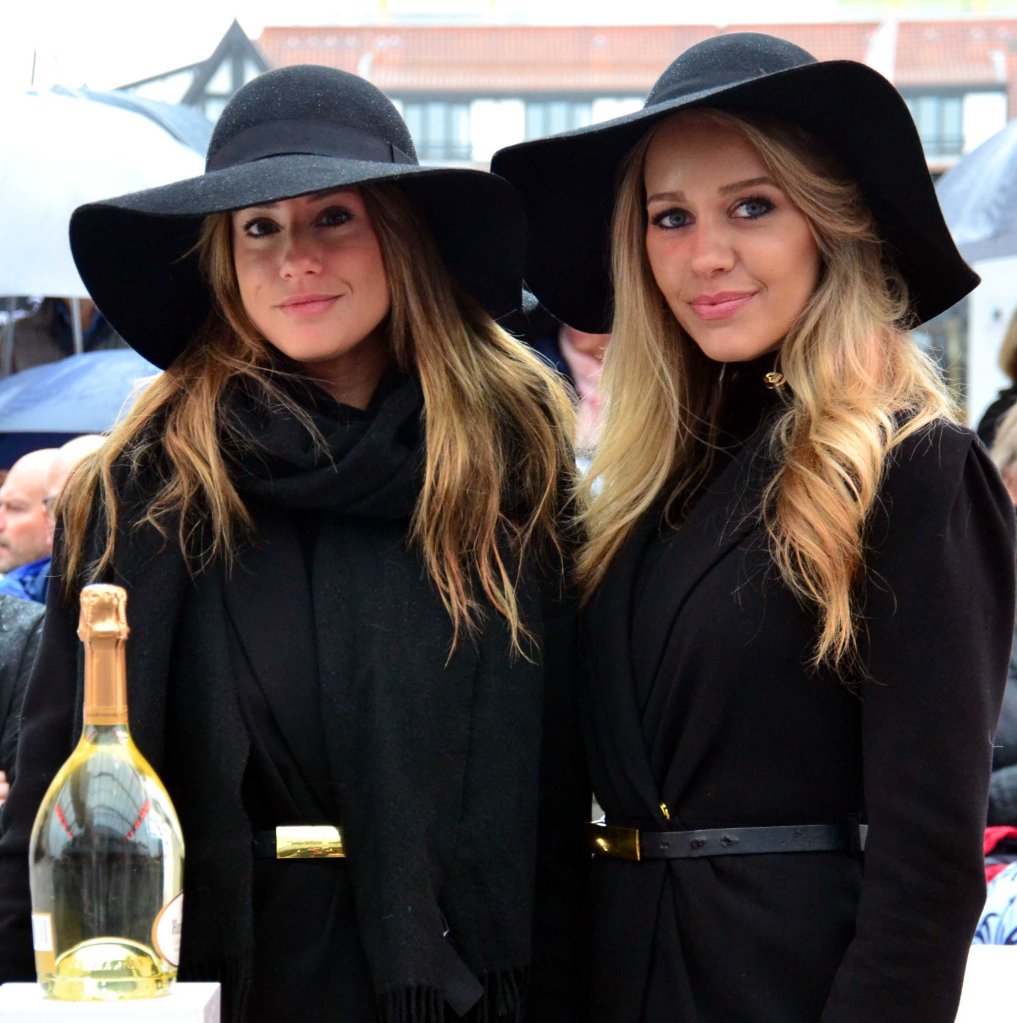
At the finish line, many happy faces were seen again of course. All lucky finishers got of course a fine glass of Ruinart champagne, and congratulations from David Burgoo and his colleagues.

The team Feltes/Feltes in their Bugatti T35 Grand Prix de Lyon with starting nr. 1 also finished the event in good form, with David (left) and Filip Burgoo (right) congratulating!

We just let you enjoy the photos here of this 10th edition of the ZOUTE RALLY®, second part follows with more tales and images…

Hans Knol ten Bensel

D(r)iving into history: Ostend revisited…

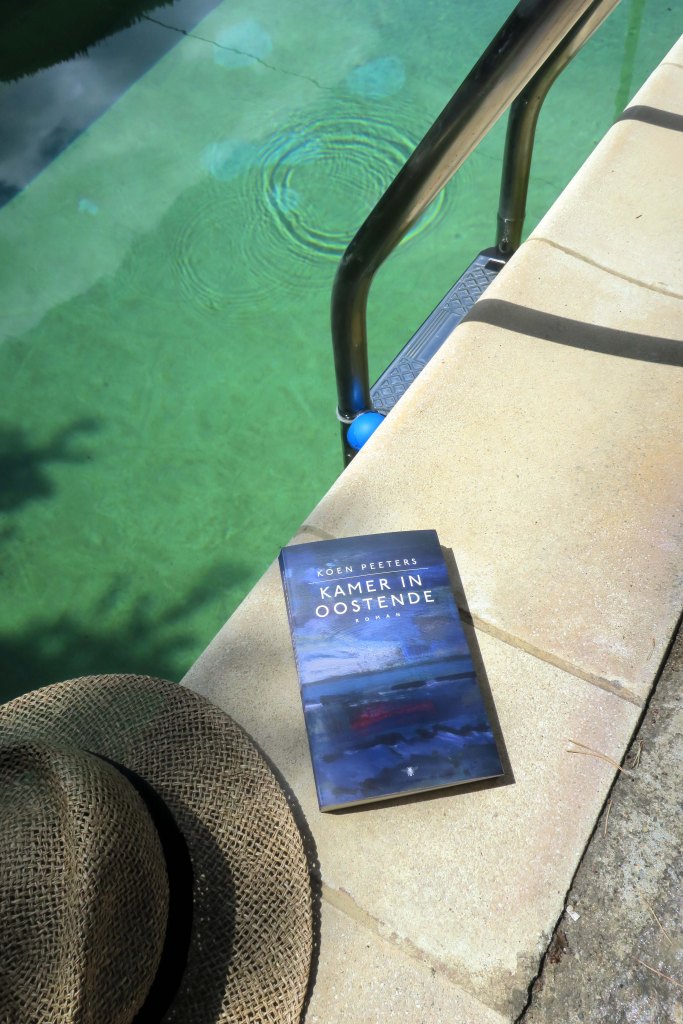
I was reading a marvellous novel by Koen Peeters during my French holiday, called “Kamer in Oostende”, or “Room in Ostend”, which tells about his wanderings with his friend painter through the streets of Ostend, looking for its history, its people, who can still recall the history of this iconic seaside city of the last century. Notably they looked for some remembrances of its famous painters James Ensor and Leon Spillaert. Understandably, as Koen Peeters made this research voyage with his friend painter.

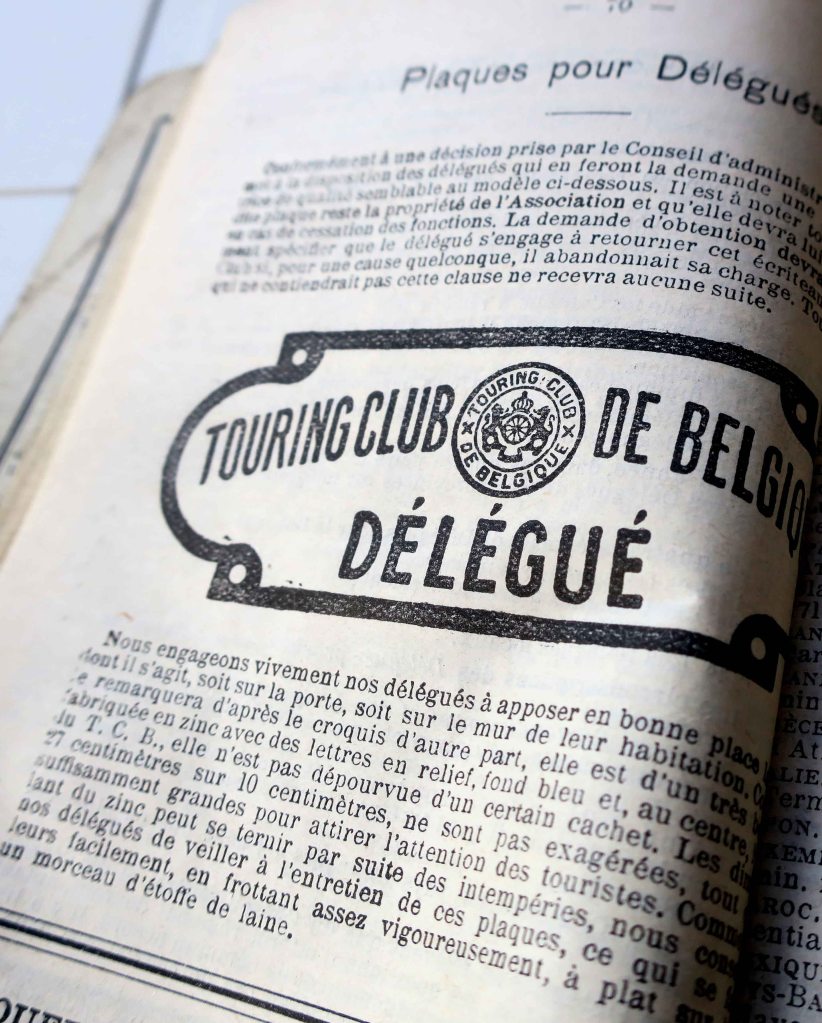
It inspired me to look for motoring history which took place in famous cities, and make this into an interesting series with an original and interesting view on car history. Fortune has it that in my French holiday house I just stumbled on a little booklet – an annuary- of the “Touring Club de Belgique” from as early as 1911. Why not focus on Ostend here first, I thought, and I started to look more closely in the booklet. It lists all the members of the Touring Club de Belgique, many of them being in Brussels and Antwerp, and other major cities like Liège, then the heart of industrial Belgium. In Ostend I found in this booklet only three members, a rather bleak result.

One is the “arrondissement” member of the club, Mr. Pierre Laroye, an industrial, living at n°2, quai du Chantier.

The other local members are Mr. H. Geysen, a joint member of the “Génie”, at the avenue Serruys, and Mr. De Meuninck, a trader/shopkeeper, in the West Street, or Rue de l’Ouest.

All members or “délégués” were offered a special “plaque”, 27 by 10 centimetres, which they were suggested to put at their front door. The T.C.B. even suggested proper maintenance procedures, like polishing the “plaque” vigourously regularly, after having put it on a woollen cloth.

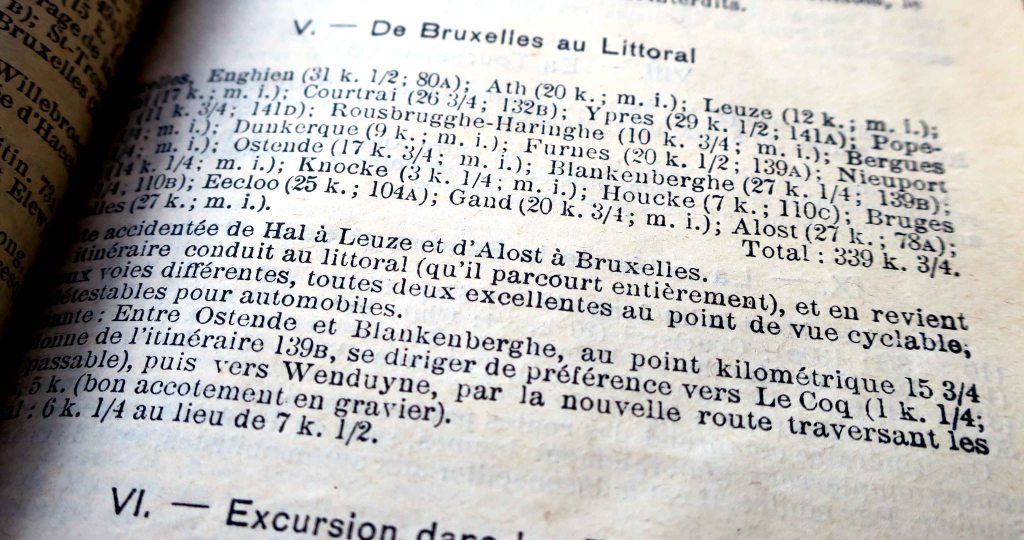
Driving from Brussels to Ostend was not an easy affair. The annuary even describes the road as excellent for cyclists, but horrible for motorists…

Interesting and intriguing is the long list of hotels, amongst others the Hotel Kursaal and “du Beau- Site”, at the promenade or “Digue de Mer”, which was then the most expensive hotel in Ostend, with a bed for 4 Belgian francs, a Dinner for 5 francs, full pension from 12,50 francs onwards. A breakfast would set you back 1,5 francs.

Of course there is parking provided for your car. The guide describes the Kursaal as “the biggest and most sumptuous of its kind” in Europe. It also ranks Ostend as “an important seaside resort” with a beautiful 8 kilometre long promenade, a Wellington horse race track and an 8 hectare park, actually the “Parc Leopold”.

The annuary includes of course street plans of the most important cities, and notably Ostend…

This is what this “annuaire” tells us. In a further report, we will investigate the motor (sport) history of Ostend. In such a posh seaside place, the home of royals and the famous, there must have been much more at hand…

Hans Knol ten Bensel  
Driving the Fiat Tipo to Deauville: a voyage in comfort and panache…

A swift Gran Turismo drive to an iconic destination: Deauville/Trouville, the beach town of artists and celebrities…

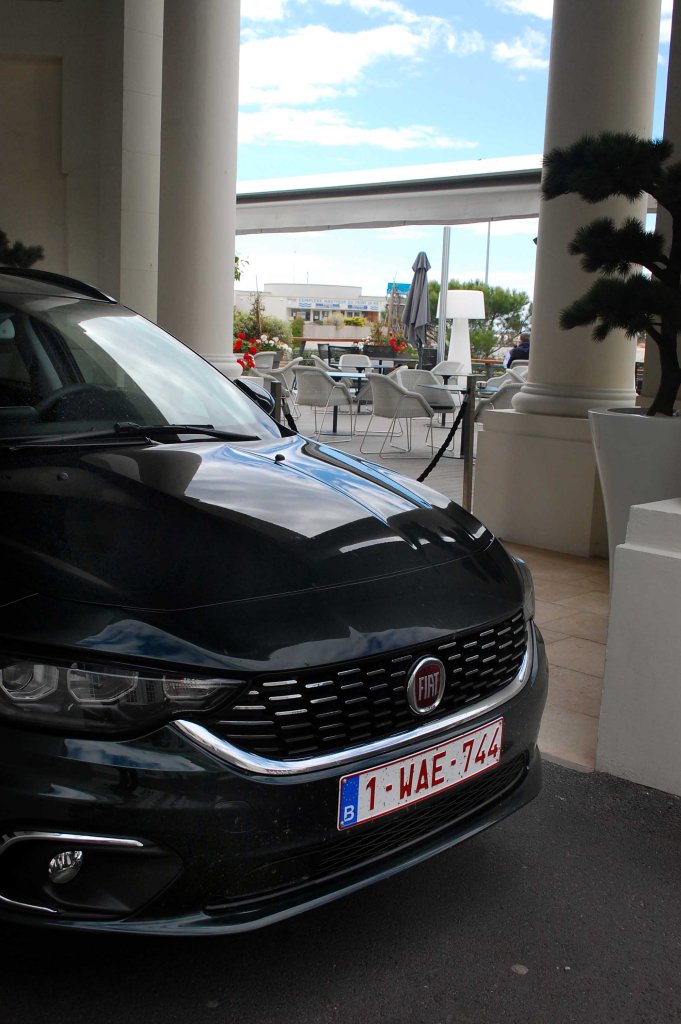
Testing the very good looking Fiat Tipo SW, we were invited to have a drive in it to Trouville-sur-Mer, a stone throw to Deauville, and have a stay at the Les Cures Marines Trouville Hotel Spa & Thalasso, where we had the opportunity to see and drive the brand new and good looking Tipo Sport version. More on this Sport version soon, we show you here some photos and impressions about the drive, the hotel and the beautiful Normandy coast…

Hans Knol ten Bensel

The Tipo Station Wagon we drove proved an excellent companion on this more than 400 km long trip from Brussels to Trouville-sur-Mer. The 120 HP 1,6 litre Multijet II Diesel delivers magnificent pulling power: its 120 HP are already available at 3750 rpm, and has an impressive torque of 320 Nm at merely 1750 rpm. It is coupled in our test car to the smooth 6 speed DCT transmission, and this combination is just magnificent for fast, effortless motorway driving. It picks up speed in swiftly after the numerous “péages” and holds the 130 km/h cruising speed in total silence and with very good economy indeed, which hovered during the trip at around 5,3 liters/100 km.

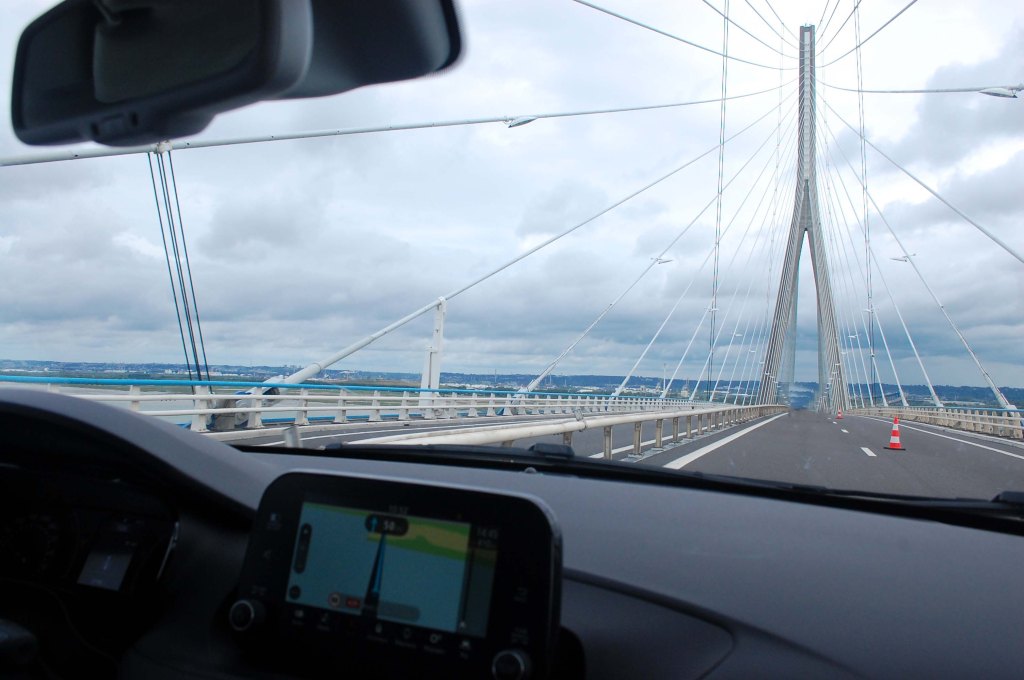
On the trip itself, one of the spectacular spots is of course the bridge of Tancarville, crossing the estuary of the Seine near Le Havre.

No need whatsoever to intervene with the gearbox lever on the narrow Normandy winding roads and frequent roundabouts and crossings, when we approaching Honfleur and Deauville. Just leave it in “D” and the powerful engine does the rest. The official performance figures amply show that this is an ideal companion on your Gran Turismo voyages: 0 to 100 km/h is reached in 10,4 seconds and top speed is 200 km/h, which lets you mix in with the superfast GT’s, if need be. We were just pleased with the absence of wind noise at cruising speeds, the excellent comfort of seats and suspension, the very good overall stability.

More about the car soon in a test report, we just show you here the pleasing looking SW at its arrival in Normandy and at the Hotel.

Trouville itself has style. French literary giants, Flaubert and Proust were here to be found. As to Monet and his Norman master, Boudin, they painted memorable scenes of 19th century bourgeois in their finery promenading along the broad beachfront here. In fact, Trouville was one of the first-ever coastal resorts to be developed in France. Artists may have started the trend for coming here, but by the time of Emperor Napoleon III, from the mid 19th century on, the rich and fashionable flocked to Trouville too. They ordered grand villas and palaces of entertainment, like the impressive casino.

Trouville casino was built surprisingly close to the lively fishing port, backed by a classic covered fish market, with lively seafood restaurants all around. Scallops, sole, prawns and mackerel are traditional specialities.

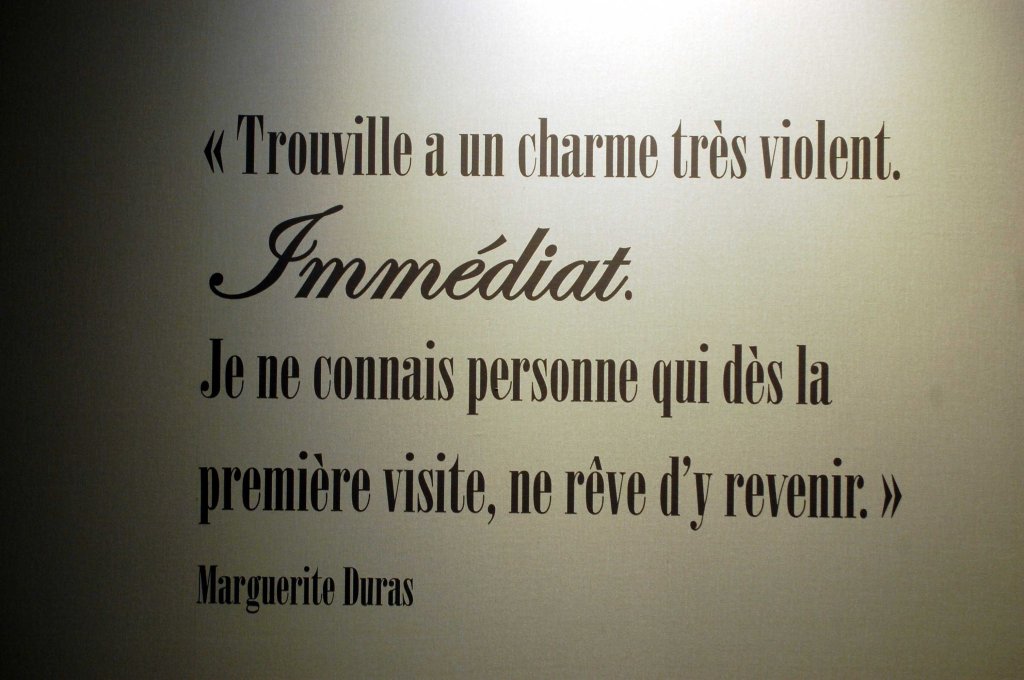
Marguerite Duras, perhaps France’s most famous female writer of the 20th century, was a great cultural figure who became a devotee of Trouville, spending her summers here.

She said that everyone she had ever met who had come to the resort for a first time said they dreamt of returning.

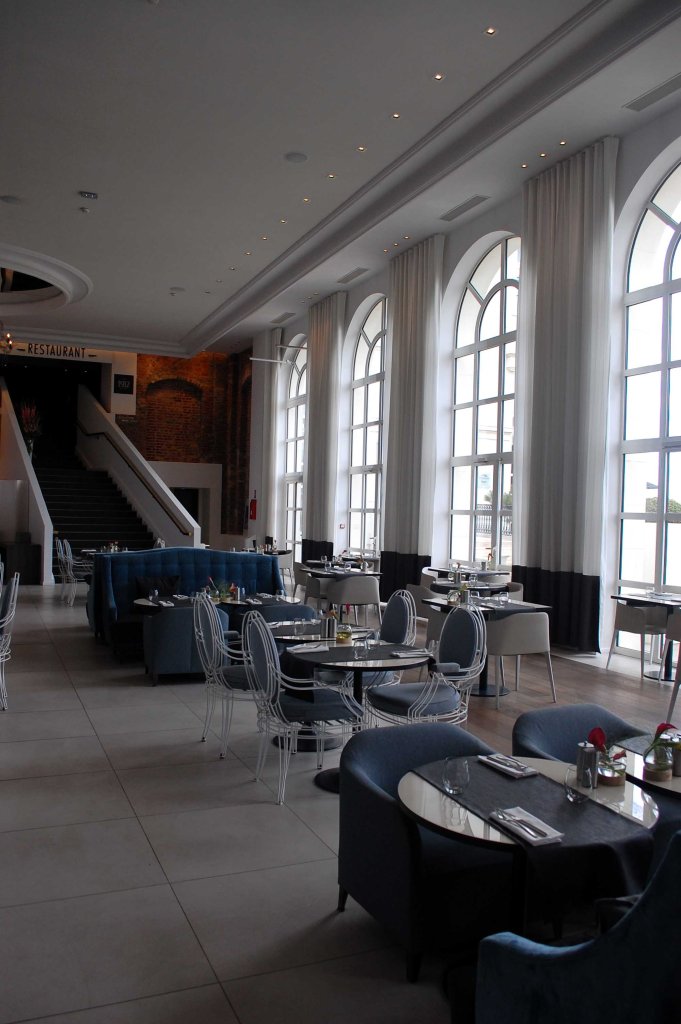
The hotel, Les Cures Marines Trouville Hotel Spa & Thalasso, breathes the atmosphere of elegant yesterday. It is nestled in the right wing of the Casino in the heart of Trouville.

Inspired by the first seawater baths, the Cures Marines Institute revives its visitors with the comforts of a magical renovation project, overseen by Monuments Historiques and the expertise of the MGallery and Thalassa Sea & Spa from the Accorhotels group, retaining style of palaces from the beginning of last century.

We just show you here some photos, and remember fondly the place and the car…

Hans Knol ten Bensel

Citroën is celebrating its 100th anniversary

Citroën is celebrating its 100th anniversary, and therefore is launching #BornAndré, in tribute to its founder, André Citroën.

Any child born on June 4, bearing the name André(e), will receive a present…

The Brand is putting people at the centre, and this it underlines with its ‘Inspired by you’ signature. And when they are ‘Inspired by you’, why are they not giving their customers a present?

So said, so done: if a child born on 4 June 2019 bears the name of André(e), Citroën will give them an exceptional present: a C3 Origins, the collector’s edition launched for the centenary.

Therefore, Citroën is inviting its community to help it find the baby André(e), by making this appeal, which you can find out more about online: https://youtu.be/PCF1EUIs6MQ.

Promoting the ideal city car, to increase your business appointments per day, using this nimble car, costing three times less than a large one, and being just as useful…

In the meantime, just have a look at some historic material, sent to us by their dynamic PR department…

There are some remarkeable ideas about cars ideal for the city, and how mass production was achieved in those days…

The timid beginnings of a production line, which was not exactly rolling yet, but things were close!

Last but not least, a picture of a proud owner and his mount, so useful in improving urban mobility…

Hans Knol ten Bensel

We spoke with Charlie Cooper, the grandson of one of the founding fathers of modern motorsport…

If there is a man who played a pivotal role in the evolvement and development of Formula One and motorsports as we know it, then it is John Cooper, who founded the Cooper Car Company with his father Charles, just after the Second World War.  The company started regular production of rear-engined 500cc cars in 1948.

It was Moss’s victory in the 1958 Argentinean Grand Prix that would really put the company from Surbiton firmly on the map. Moss was contracted to the Vanwall team for that year, but delays in adapting their engines to run on new fuels caused them not enter the race. Moss accepted the offer from Rob Walker to drive his privately entered 2.0-liter Cooper in the event.

In the end, the small Cooper’s good handling and the driving skill of Moss, saw them finish ahead of Luigi Musso’s Ferrari by just 2.7 seconds after 80 laps of racing. The racing world was surprised, Ferrari and Maserati had been defeated!

We spoke with at the celebration of 60 year MINI at the BMW stand on the Brussels Show with Charles Cooper, and you can read here more about this great conversation we both had.

Hans Knol ten Bensel

Continue reading “We spoke with Charlie Cooper, the grandson of one of the founding fathers of modern motorsport…”