Kia introduces its new design philosophy and presents it in the brand new EV6…

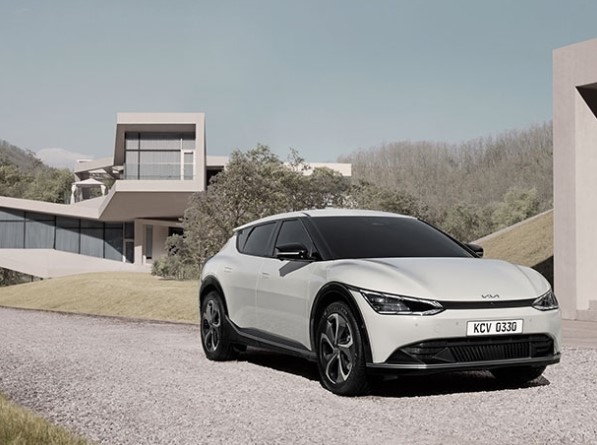
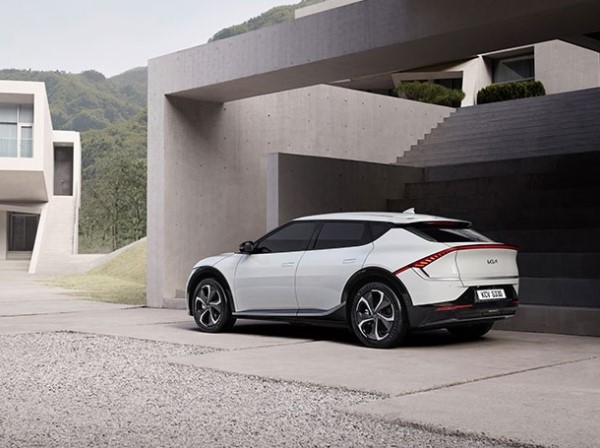
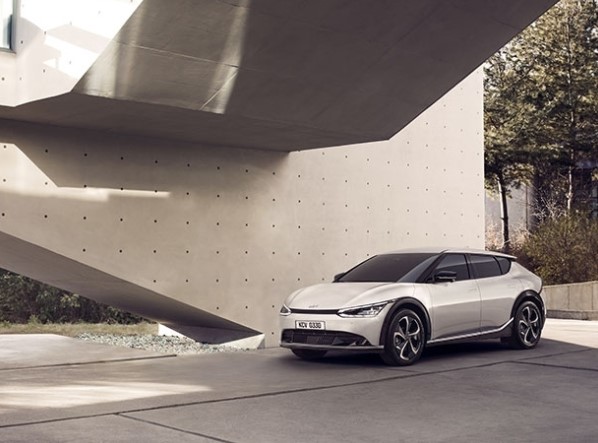
Kia Corporation has revealed the first images of the exterior and interior design of EV6, its first dedicated battery electric vehicle (BEV), ahead of the car’s world premiere at the end of March.

EV6 was designed under the brand’s new design philosophy ‘Opposites United’, which takes inspiration from the contrasts found in nature and humanity.

At the centre of the design philosophy is a new visual identity evoking positive forces and natural energy, with contrasting combinations of sharp stylistic elements and sculptural shapes.It is definitely contemporary and has timeless proportions, which will please for years to come, with a purity not unlike for instance VW’s ID3 and ID4.

Boasting a distinctive crossover-inspired design and based on the brand’s new Electric-Global Modular Platform (E-GMP), the EV6 is Kia’s first dedicated BEV to be influenced by the new design philosophy.

Opposites United: a design philosophy for all future Kia vehicles

The Opposites United design philosophy makes its debut on EV6, and will inform the design of all future Kia models. The philosophy is based on five key design pillars: ‘Bold for Nature’, ‘Joy for Reason’, ‘Power to Progress’, ‘Technology for Life’, and ‘Tension for Serenity’.

We explain it more in detail here.

Bold for Nature is based on interaction with nature, informed by the details, shapes and proportions found both in the natural and human worlds. This design pillar creates organic, yet technical structures and finishes for vehicle interiors; exterior designs are characterised by a combination of clear and simple lines with bold, ever-changing surfaces.

Joy for Reason focuses on the feel and ambience of Kia’s future vehicles. Future designs will fuse the emotional with the rational, creating vehicles that influence the mood of passengers, by relaxing and inspiring. It will also influence the adoption of new organic materials and more daring colours, expressing a sense of youth and playfulness.

Power to Progress builds on the brand’s current design strengths. By drawing on and developing the skills and expertise learned throughout Kia’s recent era of design-led transformation, the designs and layouts of the brand’s future products will continue to evolve. Future designs will draw on experience and creativity to invent and innovate new designs.

Technology for Life embraces new technologies and innovations to foster positive interactions between humans and machines. The brand’s future vehicles will adopt a next-generation in-car user experience (UX) through design and innovation and advancements in lighting, feel and in-car connectivity – to help customers engage with their cars.

Tension for Serenity evokes the tension between opposing forces and creative contrasts, and recognises the design equilibrium that comes from two opposing forces. It delivers striking design concepts that use sharp, highly technical details to create surface tension – and realise a harmonised, future-oriented design vision.

Exterior design: a future-oriented EV design characterised by high-tech details

The exterior design of EV6 is a powerful representation of ‘Power to Progress’.

At the front, characteristic daytime running lights create a sleek appearance. They form part of the car’s ‘Digital Tiger Face’, a design progression evoking the spirit of Kia’s ‘Tiger Nose Grille’ for the electrified era. The design of the lamps also includes a ‘sequential’ dynamic light pattern.

The side profile displays a crossover-inspired design aesthetic, contrasting with sharp lines and high-tech details to create a sense of tension in the design.

Designed in part to realise ultimate aerodynamic performance, the rear displays a sloping rear C-pillar with an integrated black glossy insert which visually widens the window glass.

The EV6 is the result of a collaborative effort between all three studios in Kia’s global design network in Namyang (Korea), Frankfurt (Germany), and Irvine (California, US).

Interior design: a modern and spacious interior for the EV era

A distinct product of the EV era, the interior design is liberated as it were by Kia’s dedicated E-GMP platform, which offers increased space compared to previous Kia EVs based on existing model architecture. Here Kia goes with VW’s trend set in with their ID series.

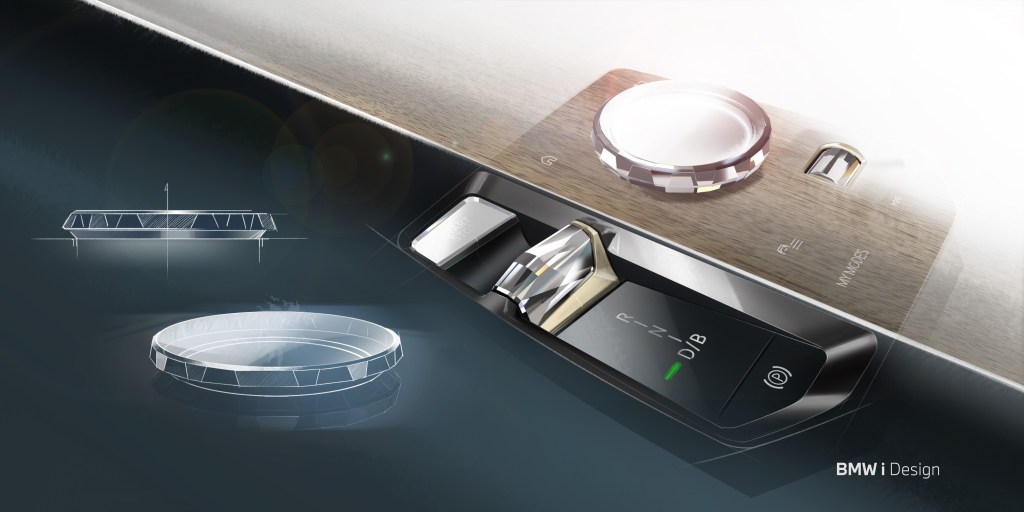
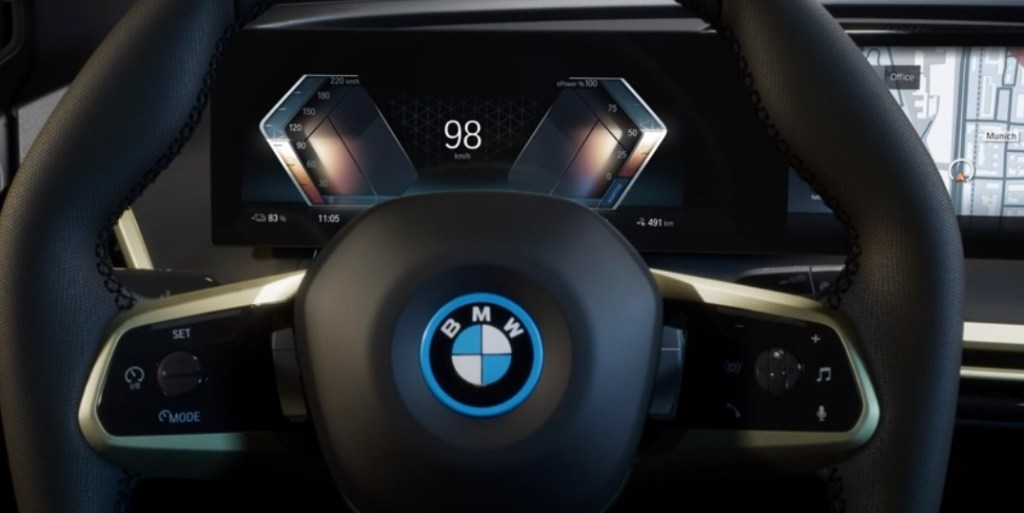
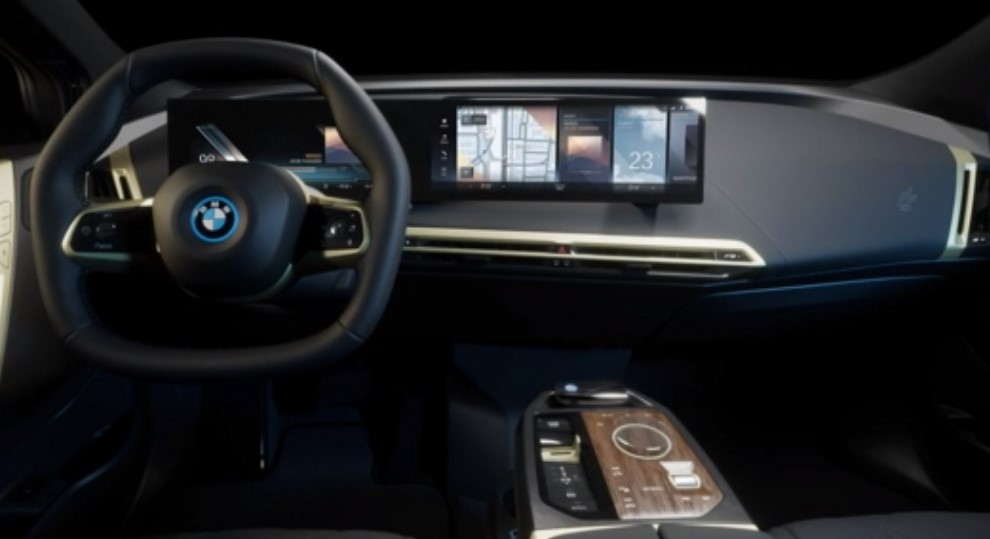
One of the most striking elements of the new interior is a seamless high-tech curved high-definition audio visual and navigation (AVN) screen. The simple form language of the wide curved screen and the slim dashboard give the space an open feel.

The width of the screen creates an immersive experience for the driver, while a minimal number of physical buttons offer an uncluttered and soothing driving experience.

Underneath the AVN screen, passengers control HVAC (heating, ventilation and air conditioning) settings by using haptic ‘buttons’, while below this panel, the dashboard slopes away towards the front of the car, creating a sense of space and openness for the front-seat passengers.

The seats are slim, lightweight and contemporary, and clad in modern, visually interesting and robust fabrics created using recycled plastics, which create yet greater openness in the cabin.

EV6 will make its world premiere in March 2021, during a special online event. We will keep you posted!

Hans Knol ten Bensel

The Land Rover Defender has been named Supreme Winner Women’s World Car of the Year 2021.

The Women’s World Car of the Year is the first time a Land Rover has won the top prize at the awards and is the latest in a series of international honours for the most capable Land Rover ever made.

The new Defender remains true to the pioneering spirit that has been a Land Rover hallmark for over 70 years and redefines adventure for the 21st century. Iconic in name, shape and capability, it is available in a choice of body designs and can be personalised with a choice of four Accessory Packs to help owners make more of their world.

The Women’s World Car of the Year (WWCOTY) awards are the only car awards in the world with a jury comprised exclusively of woman, with 50 motoring journalists from 38 countries on 5 continents recognizing the best new models available.

The New Defender was named Best Medium SUV 2021 at the awards before being awarded – to coincide with International Women’s Day – the headline WWCOTY prize.

Hans Knol ten Bensel

How the Tonale prototype design model was born for the Geneva Salon…two years ago.

Klaus Busse presented the Alfa Romeo Tonale two years ago in Geneva…

Klaus Busse is the talented head of design for Alfa Romeo, Fiat and Chrysler, and he is also quite active on social media. We read today a post from his hand on his Instagram page about the presentation of the Tonale at the Geneva Show two years ago, together with some stunning photos showing how the Tonale was sculpted out of plaster and other materials to become a real looking car, to be shown as a styling model at the salon.

Craftsmen working on the clay model, succeeding into making it a real looking car…

The photos show how elements of the car were formed and made by hand. Some pieces were 3D printed, I believe, but personally I find it truly amazing how these craftsmen put the car together, and finished it to become a design model with gleaming paint and shiny elements, the result being indistinguishable from a “real” car.

I believe, 3D printed elements were used…
Also here 3D printed elements abound…

I found the photos so interesting that I want to show them here to you on these pages.

The steering wheel gets a “real” feel…
Craftsmen sculpting the rear end…

On the fourth of May 2019, I visited the Centro Style in Turin, and met Klaus Busse. You see me standing proudly beside the Tonale prototype, and also in a group photo with Klaus Busse himself on the left.

Sweet memories, and of course your servant would love to witness once how these craftsmen work to create such an unbelievably finished prototype…

Just enjoy the photos with me!

Hans Knol ten Bensel

How Renault succeeded in building a bridge between past and present with it’s Renault 5 Prototype…

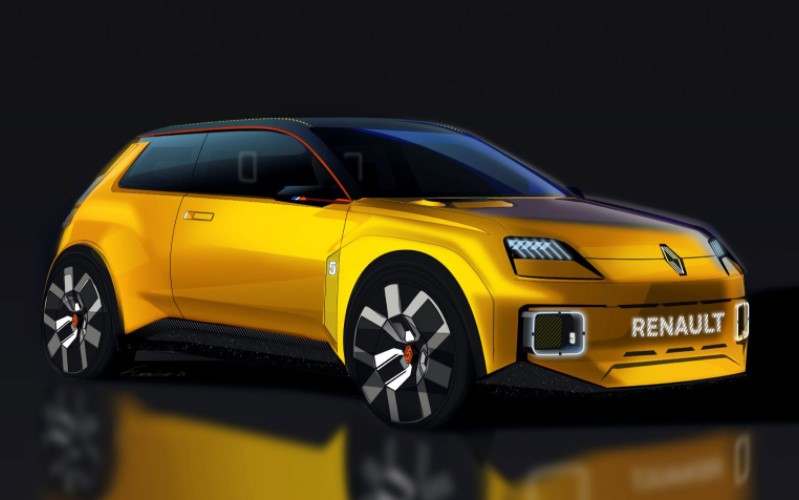
The brand new Renault 5 Prototype has already stolen the hearts of many, as was the case with the original R“Cinq”. François Leboine, Director of Design Concept and Show-Cars at Renault explains here how to succeed in the retro-futuristic exercise carried out on the cute Renault 5 Prototype.

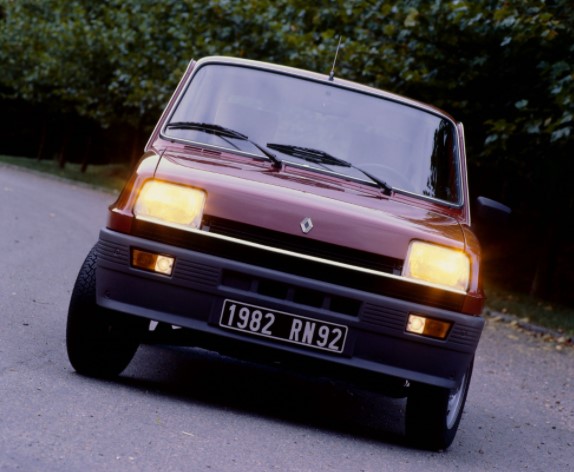
Revive good memories, “provoke a smile”, that’s what François Leboine wanted with the Renault 5 Prototype. Responsible for concept cars and show cars at Renault, he looks back at the development of the prototype’s headlights, which, he confides to us, embody all the work done on the car. To do this, he used a well-oiled method that he agreed to unveil to us.

“If I had to choose a particular element that symbolizes all the work done on the Renault 5 Prototype, it’s definitely the headlights.”

Before starting any creative process, you need material, explains François Leboine.

The first step, called analytical, was to gather archives to analyze, understand, decompose the original vehicle. To grasp its very essence. Photos, sketches by the original designer Michel Boué, period magazines, fascicles and brochures, made it possible to study the mythical R5 from all angles. A vehicle loaned by Renault Classic also helped to better understand certain elements such as the famous headlights.

We really capitalized on the history of Renault and the R5 in particular, which had this special sympathy with people and this perfectly recognizable mischievous look.

Then the designers draw the first sketches on paper, like cartoonists who try to capture what makes a face’s personality.

“The sketches captured the fundamental elements that needed to be retained to reproduce the mischievous look of the original R5,” explains François Leboine.

Getting the proportions right…

Then, the designers moved on to a graphic palette to define proportions, contours, the distance between the headlights, to find the expression, the smiling look of the 1970s R5.

After analyzing graphic characteristics and working on proportions, designers operate what is called a shift: a method that consists of taking an object and tilting it into another world. “They’re going to use all the graphic work from previous research, mixing it with the mood board research and codes from today’s objects to project the design details into a futuristic world.”

Inspired by the worlds of aeronautics, architecture, product design and even electronics…

Thanks to this method of shifting visual codes, the prototype’s headlights have become true technological and futuristic elements. As for the fog lights that were often added at the time, they took a leap into the future. They were transformed into daytime running lights fully integrated into the front bumper.

“It was really important that the Renault 5 Prototype was not just a slavish copy of the past, but that it really was a vehicle that contained the elements of the future.”, explained François Leboine.

The final test: meeting the public

Finally, comes the encounter, the ultimate step for designers. The one that allows them to know if their work is successful. “Everything we’ve done, it’s the reaction of the people around us which determines if we’ve hit the bull’s eye, if we’ve brought the R5 back to life or if it was a failure”, says François Leboine.

The reaction of the internal people was already telling us that the car was going to be a success, but in the end it exceeded our expectations.

The Renault 5 Prototype has indeed received a very warm and unanimous welcome. Whether on the headlights or on the whole vehicle, the treatment of the lines and the futuristic details were very much appreciated. With the Renault 5 Prototype, the emblematic model of Renault’s heritage now has a worthy heiress. A modern car, full of charm and in tune with the times. Renault’s DNA respected, a successful projection into the future: mission accomplished

We can only agree…

Within 5-6 weeks, we will be able to take the wheel again, also anxious to get acquainted again with Renault’s latest E-powered products and hybrids… Stay tuned!

Hans Knol ten Bensel

Did You know “e-Village” in the “Green Pea” building in Torino?

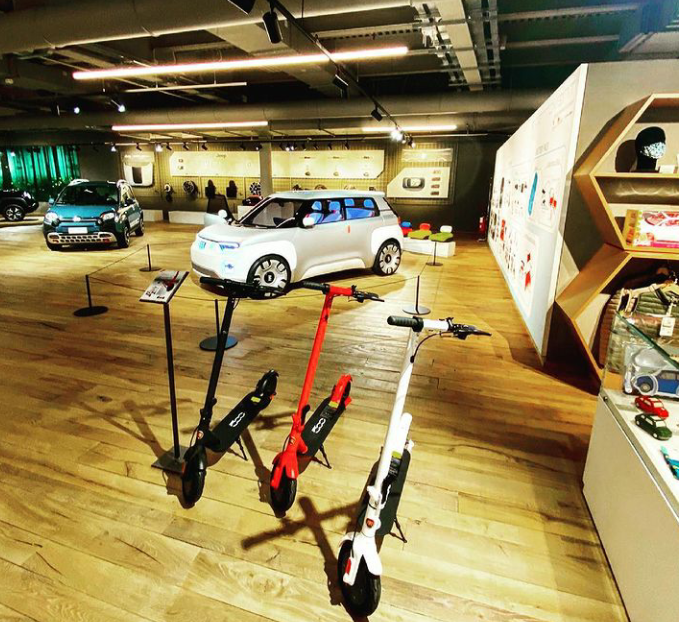
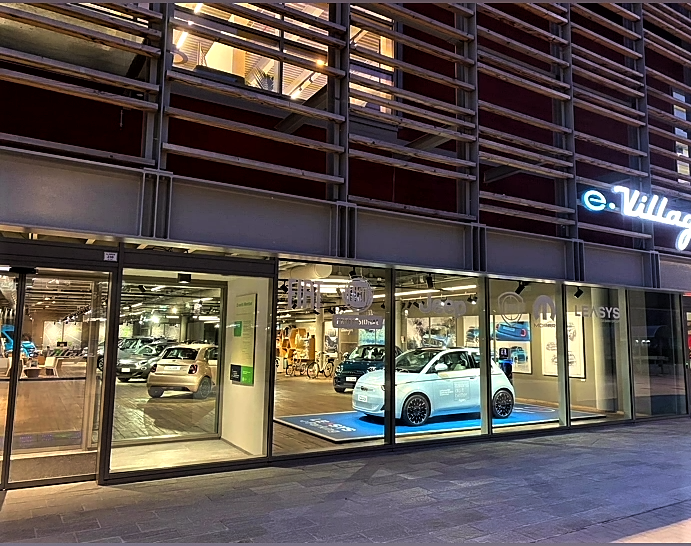
Dynamic Stellantis PR Manager Dominique Fontignies sent us yesterday his photo of the Fiat Centoventi concept displayed at the “e-Village” in the Green Pea building in Torino.

What is this e-Village? It is a branch of Mirafiori Motor Village in Turin and it’s the biggest sales point of electrified cars in Europe.

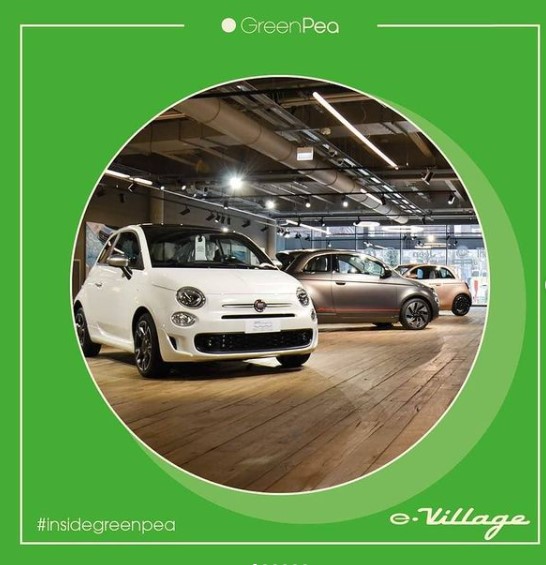
It’s located in an area of 1300 square meters inside Green Pea and showcases all FCA technologies related to electrification, including hybrid and all-electric vehicles on the market, as well as prototypes of upcoming models.

Another photo made by Dominique Fontignies…

It’s a zero-impact space that adopts the “reuse, reduce, recycle” philosophy and it can be considered the fulfillment of the efforts made by FCA to promote the future of mobility.

At Floor 0 – move, energy & connect, inside the e-Village: the space entirely dedicated to the sustainable future of mobility wanted by Stellantis, the fourth automotive group in the world.

In e-Village halls you can find all solutions of the Group’s for the avant-garde mobility, such as the Electric New 500, Panda Mild Hybrid and Jeep and Ducato’s electric vehicle range.

See also Green Pea (@greenpeaofficial) • Instagram-photo’s and -video’s

When your servant will be mobile having recovered from his surgery operations, it is certainly a place he is keen to visit!

Hans Knol ten Bensel

Stylish and Iconic: MINI launches the new MINI Countryman Northwood Edition

The new MINI Countryman Northwood Edition is inspired on the authentic and unique surroundings of this town on the English island Wight.

This edition integrates the contours of this legendary landscape in a logo which adorns in Piano Black finish both sides of the car.

The “Union Jack” flag and the logo “Northwood” are integrated in the total design. On the door sills executed in Piano Black, the name of the edition is engraved, just as is the logo “Special Edition”. The geographical coordinates of this town are engraved in the door pillar on the drivers’ side, and a “Northwood” badge in the passenger area is integrated at the level of the “Piano Black” accent strip.

The MINI Cooper SE Countryman ALL4 Plug-In Hybrid Drive retains its typical air inlets at the sides of the car and has adapted sills in Electric Yellow. On top of the C-pillars a “Northwood” badge is also seen.

The MINI Countryman Northwood Edition is offered with the Plug-in Hybrid Cooper SE ALL 4 engine, the “One” and Cooper S petrol engines, as well as the Cooper Diesel engine. This Special Edition is available at prices from € 32.750.

You can order it now at your Belux MINI dealer!

Hans Knol ten Bensel

Debut of the Jeep® Wrangler 4xe “First Edition”: you can order it now via a dedicated website…

We are absolutely total Jeep lovers: we just are totally sold on its style, panache and how these cars ride and perform. There is also very good news: four months after its world premiere, staged last September in Detroit, the new Jeep® Wrangler 4xe is available for pre-booking in selected European markets before going on sale later this year.

Customers in Italy, Spain, Germany, France, Switzerland, the Netherlands, Belgium and Austria, can be among the first to discover the new Jeep Wrangler 4xe “First Edition” with just a few clicks on the dedicated website, and express their interest in being contacted when the vehicle will be available at dealerships.

This new initiative serves as confirmation of the journey embarked upon early last year, with the pre-booking initiative for the Renegade and Compass 4xe – a resounding success, generating a lot of interest across Europe. The arrival of the Jeep Wrangler 4xe also marks a significant moment in the brand’s evolution and another step in the strategy towards the electrification of its entire range, announced in 2020. This journey will include the introduction of at least one electric or electrified version of each model in the coming years.

A few days ago, the dedicated website was launched in Italy, France, Germany and Switzerland and will be soon available in the other markets involved in the initiative.

The all-inclusive “First Edition” configuration will be packed with comprehensive technological and driving assistance features, the easyWallbox for more efficient home charging, and a Mode 3 cable for public charging. A specific launch package is also standard on the Wrangler 4xe “First Edition” and features a practical Cargo Organiser for the storage space, the new 4xe car cover, 3 years of extended vehicle warranty (providing a total of 5 years) as well as the advantages of “Jeep Wave”, with first two routine services as per the user and maintenance manual included.

“Jeep Wave” is the new loyalty and customer care program offered on the new Jeep Wrangler 4xe First Edition and all models in the 2021 Jeep range. This program provides exclusive services and benefits, including the first two routine services at Jeep dealerships, 24/7 roadside assistance, a new dedicated customer service accessed through a multi-lingual Jeep call center for priority support and privileged entry to brand events and partnerships.

The Wrangler 4xe is the most technologically advanced and capable Wrangler ever.

It offers a maximum combined output of 380 horsepower, courtesy of the pairing of two electric motor generators, a high-voltage battery pack, a high-tech turbocharged 2.0-litre petrol engine and the proven TorqueFlite eight-speed automatic transmission. This is the most advanced powertrain ever fitted to the Wrangler and optimises efficiency of consumption and CO2 emissions, offering the option to drive in full electric, with a range of up to 50 km*. The electric powertrain is also perfectly integrated into the 4×4 system, taking the off-road performance of the Wrangler 4xe to the next level.

Packed with comprehensive equipment as standard and dedicated styling cues.

The Wrangler 4xe “First Edition” will be available with a choice of three exteriors: Black, Granite Crystal and Bright White – the colors most beloved by European customers. The new model will also come with new driving modes: Hybrid, Full Electric, E-save, as well as specific functions for electrified driving and charge management.

Full of Panache and Zest: the Rubicon version…

The First Edition’s standard features and specific styling cues include Granite Chrystal accents, 18-inch wheels, full-LED high-visibility headlights, hard cover for the spare tyre, 8.4-inch UconnectTM NAV system with touchscreen, smartphone integration and on-board connectivity (as managing the recharge from the smartphone), plus a 7-inch TFT for information on battery charge levels and range (electric and hybrid). Standard safety features include Adaptive Cruise Control, Forward Collision Warning Plus, Blind Spot Monitoring with Rear Cross-Path Detection, rear camera and new front camera, front and rear parking sensors, Keyless Enter ‘N Go™ and electric rearview mirrors.

The exclusive “First Edition” is the most comprehensive trim in the Wrangler 4xe range, which is due to arrive in European Jeep showrooms before this summer.

Hans Knol ten Bensel

Audi makes E-mobility more fascinating…

Audi launches the Audi e-tron GT: a breathtakingly styled four-door coupé, which will be introduced on the market as simultaneously as an RS model. Audi reinterpreted with this e-tron GT the classic idea of the gran turismo: an emotive design packed with revolutionary technology. Two powerful electric motors provide confident electric all-wheel drive and stunning road performance.

The high-voltage battery has a net energy content of 85 kWh and enables ranges of up to 487 kilometers (302.6 mi) for the Audi e-tron GT quattro. The e-tron GT can be recharged extremely quickly thanks to its 800-volt technology.

Your servant is at the moment hospitalized for a cardiac operation, but soon enough we will tell you more about the ins and outs of this beautiful Gran Turismo, a benchmark car for anyone who is interested in sporting and stylish e-mobility. Stay tuned!

Hans Knol ten Bensel

In-car cinema is amongst us: the top all-electric Mercedes EQS gets a unique MBUX Hyperscreen.

Mercedes is making another breakthrough in terms of dashboard infotainment. In 2018 the MBUX (Mercedes-Benz User Experience) was unveiled in the current A-Class, and there are now more than 1.8 million Mercedes-Benz passenger cars equipped with it on the roads worldwide. A few months ago, the second generation of this learn-capable system debuted in the new S-Class. The next big step now follows in the form of the new EQS and the optionally available MBUX Hyperscreen.

The large, curved screen unit stretches almost the entire width from the left to the right A-pillar. In addition to its sheer size, the high-quality, detail-loving design also provides a “wow” effect. This aesthetic high-tech look is the emotional dimension of the MBUX hyperscreen.

Added to this is artificial intelligence (AI): With software capable of learning, the display and operating concept adapts completely to its user and makes personalized suggestions for numerous infotainment, comfort and vehicle functions.

Thanks to the so-called zero layer, the user does not have to scroll through submenus or give voice commands. The most important applications are always offered in a situational and contextual way at the top level in view. In this way, numerous operating steps are taken away from the EQS driver. And not only him: The MBUX Hyperscreen is also an attentive assistant for the passenger. It receives its own display and operating area.

“The MBUX Hyperscreen is both the brain and nervous system of the car”, says Sajjad Khan (photo here above) , Member of the Board of Management of Mercedes-Benz AG and CTO. “The MBUX Hyperscreen continually gets to know the customer better and delivers a tailored, personalized infotainment and operating offering before the occupant even has to click or scroll anywhere.”

We are of course quite keen to get acquainted with this Hypersreen…hopefully soon!

Hans Knol ten Bensel

We drove the Jeep Compass PHEV 4xe: plug-in hybrid now takes you beautifully everywhere…

Jeep is building on a very comprehensive drivetrain offering across its range, with increasing emphasis on (hybrid) E-power.

Jeep has always been a vehicle which has been near to nature, and this new 4xe range comes ever closer to its vocation. It represents an important step of the brand’s evolutionary process, which is oriented more than ever towards sustainability and electrification.

In these columns you could read already about our driving impressions of the Compass with the very smooth new four-cylinder 1.3-litre turbo petrol engine made at the FCA plant in Melfi, in the Italian region of Basilicata. Just read our report titled “We drove the new Compass “Made in Europe” with the brand new 1,3 litre petrol engine…” It is part of the new FCA Global Small Engine family, launched in mid-2018 on the Jeep Renegade.  As you can read in this post, we were very impressed. But there is an even more interesting version, which we test for you today: the 4xe, with an electric motor mated to a choice of either the 190 hp and 240 hp version of the 1.3-litre Global Small Engine. What’s more, both these 4xe versions are four-wheel drive only. Just read on…

Hans Knol ten Bensel
Thorough development…

The 4xe range is important for the brand, so the greatest attention was given to its development.

The painstaking development process of the Compass 4xe culminated at the Arjeplog Proving Grounds in Swedish Lapland. Up to 3,800 kilometers of road tests were clocked up to reach Arjeplog from Turin and put the Jeep plug-in hybrid SUVs through their paces in all conditions that customers might need to tackle. Tests continued in the winter of 2019 in Arjeplog and during the long-awaited Jeep Winter event in Champoluc (Val d’Aosta, Italy), where the brand provided a glimpse on the operation of the 4xe system through a cross section of a Jeep Renegade on display. The beginning of 2020 welcomed the launch of the “First Edition”, the exclusive launch editions for both Jeep Renegade 4xe and Jeep Compass 4xe.

No secrets, even for a novice…

We must admit, the results are quite impressive. Right from the first meters, this PHEV shows its maturity. What’s more, it is not only thoroughly engineered, it is also eminently practical, and understandable even for the first time hybrid and 4WD driver for that matter. The driver can easily select one of the three buttons on the center console, i.e. “hybrid”, “electric” and “e-save.” This can be done at the start, but also whilst driving, one can select between the three modes. The modes are self-explaining actually, but we describe them for you here:

Hybrid is the default mode selected when the car is started. It is designed to manage and use the system in the most efficient way, optimizing power and minimizing fuel consumption. The internal combustion engine and electric motor work together according to the road type, with braking energy recovery phases.
Initially, the system favors electric driving (so the power is supplied by the electric motor). When the battery reaches the minimum charge level (called “SOC”, State Of Charge), the internal combustion engine is used for propulsion. Throughout the drive or trip, the system manages start-up and intervention through an optimization algorithm (Hybrid Control Processor – HCP) designed to maximize the system efficiency levels.

Electric is the mode that provides a full-electric average range of around 50 kilometers at zero emissions. It is designed to maximize the electric driving experience through a different calibration of the HCP optimization algorithm. The car drives in electric-only mode as long as there is sufficient charge in the battery. The system automatically switches to HYBRID mode when the battery is completely flat or when the driver uses kick-down. A top speed of up to 130 km/h can be reached. This is the ideal mode for traveling in city centers with traffic and emission restrictions.

E-SAVE , on the other hand, is the mode for maintaining battery charge or for charging it while driving using the internal combustion engine. E-SAVE mode supports two secondary modes, called Battery Save (passive E-SAVE) and Battery Charge (active E-SAVE), both of which can be activated on the Uconnect system screen.

Passive E-SAVE or Battery Save: maintains the state of charge of the battery through the predominant use of the internal combustion engine;

E-SAVE active or Battery Charge: charges the battery up to 80% through the operation of the internal combustion engine on which the combined front electric generator acts.

We tested of course all the modes, but to measure the overall efficiency of the E-drivetrain, we opted for quite an important part of our test for the E-SAVE active mode. While keeping the battery charged on longer trips, even recharging it indeed up to 75-80 %, we clocked an average consumption of 7,6 liters/100 km, which, for a full 4WD vehicle is very, very creditable indeed. It must be said that we drove this Compass with anticipation and respected the legal speed limits. In hybrid mode, with the E-motor also delivering some work, consumption evidently drops. In the combined cycle, the manufacturer quotes 2,1 l/100 km. CO2 emissions are very low with 47 – 49 g/km.

We were also very impressed, as in our previous test with the “normal” Compass, by the outstanding level of technical refinement of this drivetrain. The Compass we tested was equipped with the 130 HP version of the smooth 1,3 litre engine, plus the 60 hp produced by the electric motor, adding up to a total of 190 hp. In terms of torque, the electric motor produces 250 Nm, while the combustion engine delivers 270 Nm. Performance does not leave anything to be desired: 0 to 100 km/h costs 7,9 seconds and top speed is 183 km/h.

E-power…

The Compass has two electric motors, one of which is located on the front axle and coupled to the internal combustion engine that, in addition to working in synergy with the engine, can act as a high-voltage generator, as necessary.

The second one is located on the rear axle and features reduction gear and integrated differential (“e-axle”). It delivers 60 hp of power and 250 Nm of torque, generating traction and recovering energy while braking. The electric motor actually drives the rear wheels, the combustion engine the front wheels.

The 11.4 kWh, 400-volt lithium-ion battery pack uses cobalt-nickel manganese/graphite chemistry. It is located underneath the second-row of seats, where it is protected from outside elements. Enclosed in a steel casing, the pack is fitted with a dedicated heating and cooling circuit to keep the battery at its optimum temperature for best performance.

The 11.4 kWh battery pack allows the Renegade and Compass 4xe to travel an average range of 50 kilometers* in full-electric, zero-emission mode. The hybrid system also includes a power inverter (PIM) housed inside the battery pack, which is also protected from damage.

Regenerative braking and…e-Coasting!

The 4xe Compass is relaxing and smooth to drive in town, where you can enjoy the “zen” qualities of pure E-power, and the six-speed auto box is super smooth when you enjoy the pulling power qualities of the 1,3 litre engine. But there is more than just smooth progress. There is regenerative braking, which is always active regardless of the driving mode (internal combustion engine or electric motor) to maximize energy recovery when the throttle and brake pedals are released. But the Compass has more upon its sleeve. It also allows e-Coasting. This function is available when the gearlever is put in “D”.  By pressing the ‘e-Coasting’ button, the regenerative braking intensity can be activated according to two different levels, more or less intense.

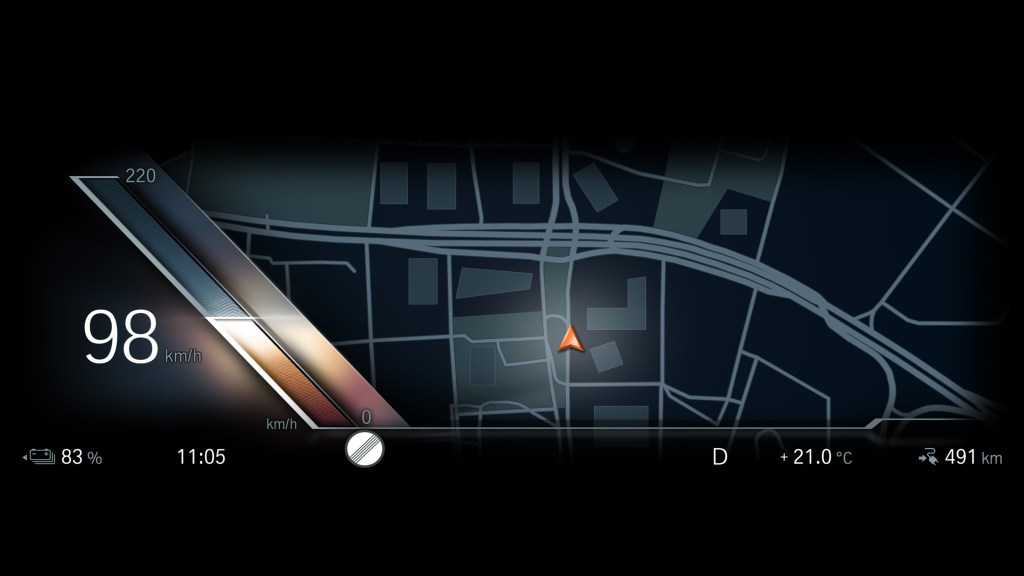
A warning light on the instrument panel display indicates activation through two different colors: White (“Normal”) if the “Intense” function is selected but not active (accelerator pedal not released); Green, if the “Intense” function is selected and active (accelerator pedal released).

After the more intense function has been activated, the regenerative braking calibration is more explicit when coasting. This feature reduces the speed faster than standard regenerative braking and generates more electricity to be conveyed to the battery pack.

A dedicated message will appear on the instrument panel during the transition from the “Intense” to “Normal” function and vice versa.

The absolute king off-road…

The legendary offroad qualities of a Jeep are well known to all of us. With an electric motor with its instant massive torque driving the rear wheels independently from the front wheels, 4WD torque delivery can be even more gradual and fine-tuned, and this Compass (and Renegade) 4xe even outclasses in this respect the “classic” Jeeps. The Jeep driver has the usual choice between different off-road driving modes: Auto, Sport, Snow, Sand/Mud. Remarkable is also this “Sport” mode: This is a first on the Compass and Renegade, and uses both the electric motor and the internal combustion engine to deliver sporty driving performances. It tightens up the steering, sharpens the throttle response and adjusts the behavior of the transmission via higher upshifts for full power and torque delivery. Just great!

And then here is also Jeep Selec-Terrain traction control. It combines the dynamic modes to two different 4×4 traction modes, i.e. 4WD Lock and 4WD Low. In the 4WD Lock mode, the four-wheel drive is permanently engaged at speeds up to 15 km/h, keeping the rear electric motor (P4) constantly running to provide 4×4 traction at low speeds with a constant distribution of torque between the two axles (the distribution ratio varies depending on the selected Terrain mode). At speeds above 15 km/h, AWD becomes on-demand. Jeep thought here of everything: what if the battery charge is low? Well, the full functionality of the 4xe four-wheel drive is guaranteed by the ’Powerlooping‘ function when the battery charge level is low. This ensures that the front electric motor, which is mechanically connected to the internal combustion engine, continuously generates high-voltage current to power the rear electric motor and so maximum traction is delivered regardless of the state of charge of the battery.

4WD Low mode is used when the going gets really rough: like when you are tackling big rocks for example…

Versatile

The Compass is an eminently versatile 4WD vehicle. Smoothly at home in urban and open road traffic, and a master off-road: there is nothing this Compass cannot do. It’s hybrid system is quite practical and self-explaining to use, and the Compass is also the proverbial breeze to charge: either through the normal domestic socket using the supplied cable, or by connecting to the handy easyWallbox charger the evening before. Using the “E-Control” function, the driver can set the favorite start time and the battery charging time, for instance picking the most cost-effective electricity tariffs. He can also program charging from home using his smartphone.

Easy charging

FCA is developing solutions to fulfill every requirement, starting from charge points: the around 3,600 charging columns installed at dealerships across Europe and in plant parking lots are heading in this direction, as are the agreements with Enel X and ENGIE, leading players in the energy sector, to offer simple and immediate access to public and home charge points, like the easyWallbox.

Based on another partnership with Digital Charging Solutions (DCS), customers who choose the Jeep Renegade and Compass 4xe will have access to “My easy Charge”, a digital service providing access to the largest public charging network in the world, managed by DCS.

Via a dedicated app and a single card, this solution will offer access to more than 130,000 charging stations in 21 European countries. Finally, with ENGIE Eps and Terna, FCA e-Mobility has developed laboratories for innovative technologies, such as Vehicle-to-Grid (V2G), a system whereby an electric car interacts with the electricity network to return or store energy.

Conclusion

A very clever and eminently useful Plug In Hybrid, which is totally in tune with the times, has style, panache, roominess, sturdiness, smoothness, is economical and has legendary off-road qualities. Above all, it is a Jeep, the genuine article. What are you waiting for?

Hans Knol ten Bensel