RENAULT TALK #1: a new ERA – THE RENAULT BRAND RESTATES ITS AMBITIONS

A new Logo, and a bold future…

Today Luca de Meo, Renault Brand CEO, and the Renault brand team have participated in the first ever “Renault Talk”, a brand-new all-digital event where they discussed their vision of the wider group.

The new direction, unveiled by the team, presents Renault Group as an energy transition leader, at the forefront of the latest technology and services, operating in a more sustainable and responsible manner as part of its ‘Nouvelle Vague’ (New Wave). 

A people-centric brand, Renault is entering a new era as it delivers enhanced modernity to the European automotive industry.

Technology and state of the art electronics will hallmark the future Renaults…

Nouvelle Vague…

The ‘Nouvelle Vague’ will turn Renault into a brand focused on technology, services and clean energy, by engineering smarter everyday vehicles and mobility solutions that are more sustainable.

This is in line with the DNA as a company that changed with the times throughout the 20th century with innovative, modern vehicles.

Now, more than ever, Renault strives to meet market expectations of responsible, carbon-free, safe and scalable mobility solutions that are in line with customer needs.

The Arkana, the first SUV Coupé of a volume manufacturer… presented here by Laure Grégoire – Model launch Manager.

During Renault Talk #1, Luca de Meo restated the direction set for the brand, at the heart of the Group’s Renaulution plan:

  • As industry leader of the energy transition, the Renault brand will be the greenest brand in Europe as of 2030, with nine out of 10 cars on sale being electrified.
  • At the forefront of technology and services, the Renault brand is shaping the future of urban mobility, primarily via the ‘Software Republique’. More than 2,000 engineers from five industry-leading companies will bring their shared expertise in cyber security, artificial intelligence, data processing, software, and microelectronics, in order to deliver turnkey mobility solutions for cities and communities.
  • The Renault Re-Factory – Europe’s first circular-economy hub – marks a move towards a more sustainable and responsible model, with up to 120,000 vehicles (EV included) recycled or upcycled every year. Nearly 80 per cent of strategic recycled materials will be reused in new batteries.  By 2030, Renault will become the world’s best automotive manufacturer when it comes to the percentage of recycled materials in new vehicles.
  • Renault is taking its ‘voitures à vivre’ to upper segments: Seven models will be released in the C and D segments by 2025, all of them electrified, with the All-New Arkana marking the beginning of this offensive. The next generation Megane E-TECH Electric, a vehicle that embodies the future of connected and full-electric cars, is also set be launched in the near future. Lastly, ongoing improvements to E-TECH hybrid technology will continue to provide upcoming C- and D-segment vehicles with the very best in efficiency and dynamic driving experiences.

A NEW ERA, and a NEW LOGO

Throughout its history, the Renault brand has undergone several changes to its visual identity. But one thing has remained unchanged since 1925: the instantly recognizable Renault diamond, a true brand icon.

The latest version of the Renault logo was created in 1992 before being slightly refreshed and reworked in 2015. As a brand deeply rooted in a modern, international market, this all-new logo brings a more modern and vibrant feel and serves a key purpose of portraying the Renault brand as more relatable and built on people-centric values. A streamlined design without typography or brand signature, the logo is an open-ended shape, reflecting the brand’s openness and transparency.

The new logo was co-designed with Landor & Fitch consultants and will be phased in as of next year on all Renault brand vehicles and throughout the Renault network. By 2024, the whole Renault range will bear the new logo.  

During the Renault Talk, Gilles Vidal, Renault Brand Design Director, unveiled an image of the logo as it will appear on the back of the new Megane E-TECH Electric, which will come to market in 2022.

ALL-NEW BRAND EXPRESSION

According to Arnaud Belloni, VP of Global Marketing for the Renault brand, the ‘Nouvelle Vague’ is also reflected in the brand’s advertising.

Imbued with a creative and modern edge, they incorporate some of the brand’s most iconic pieces of memorabilia: the Renault Fuego, covers of cult classics like ‘Johnny & Mary’, or the Renault-Gitane cycling jersey featured in a recent advert for the Captur E-TECH Hybrid.

Renault makes their “Cars fit for true living” increasingly electrified… presented here by Gilles Le Borgne – Engineering Director Renault Group

THE RENAULT E-TECH HYBRID OFFENSIVE

With more than 10 years of experience and almost 400,000 vehicles sold to date, Renault is a leader in the European EV market. Building from its expertise in pure-electric vehicles, Renault has extended its EV range with hybrid and plug-in hybrid versions of its core market vehicles.

With more than 150 patents to its name and having leveraged the brand’s experience in Formula One, E-TECH hybrid technology is as unique as it is modular. In both hybrid and plug-in hybrid versions, it provides the best in energy efficiency and driving pleasure while also reducing CO2 emissions and fuel consumption.

This revolutionary piece of technology debuted on three of the brand’s core vehicles in 2020 as a way of making the EV experience something for everyone:

  • Clio E-TECH Hybrid
  • Captur E-TECH Plug-in Hybrid
  • Megane Sport Tourer E-TECH Plug-in Hybrid

In 2021, the E-TECH range is set to expand with the release of the All-New Arkana and Captur E-TECH Hybrid, plus the Megane E-TECH Plug-In Hybrid, totalling an electrified range of six E-TECH hybrid and plug-in hybrid vehicles.

Gilles Le Borgne, EVP, Engineering, Renault Group, has confirmed that the brand is preparing for the future by extending the scope of its E-TECH hybrid technology to future generations.  

Upper segments – especially the C-SUV segment – will see the arrival of a brand-new 1.2-litre three-cylinder engine combined with an electric motor, for a 200hp hybrid vehicle in 2022 and a 280hp in plug-in hybrid four-wheel drive vehicle in 2024.

ALL-NEW ARKANA: SPORTY, HYBRID, AND SPACIOUS

The All-New Arkana’s unique, full-hybrid design is the first SUV with coupe design from a mass-market manufacturer.

Its TCe engines feature 12-volt micro-hybrid technology delivering enhanced fuel efficiency, while the E-TECH hybrid powertrain is capable of running in electric mode for up to 80 per cent of the time on urban roads, contributing to around 40 per cent in fuel savings compared with a standard petrol engine.

Across Europe in May so far, more than 6,000 orders have already been placed for the All-New Arkana.  

THE ALL-NEW KANGOO: ELEGANT AND SPACIOUS

The All-New Kangoo combines sophisticated design, space and technology, offering superior practicality with three full-sized seats in the rear and more than 49 litres of accessible storage areas. The car is here presented by Thierry Plantegenest – VP Sales Marketing LCV and Pick-ups, (on the left).

The  bootspace ranges from 775 litres up to 3,500 litres of flat-bed cargo area, while it can be specified in five- or seven-seat models. The All-New Kangoo also boasts 14 standard-fit driver assistance systems.

In 2022, the All-New Kangoo range will expand further as it becomes available as a full-electric E-TECH model.

VALUE FIRST

Fabrice Cambolive, SVP, Renault Brand Sales and Operations, restated Renault brand’s commercial priorities:

  • The ‘green’ offensive: Ramping up the EV range and furthering the E-TECH offensive, as already in Europe, 25 per cent of Renault sales are electrified and 30 per cent of Clio sales in France are for the E-TECH Hybrid
  • Products: Speeding up product line renewal, both in Europe and abroad, by winning back market shares in the
    C-segment

A global player…

Proud of its French roots, the Renault brand is also an international brand. The Renaulution plan is Renault’s way of bolstering its international presence, while boosting efficiency. Model by model, market by market, the Renault brand has overhauled its business model. The final objective is to increase the profitability of its vehicles while preparing a generation of new products to conquer new markets.  

Internationally, the Renault brand has been investing in its historical high-potential markets with a strong local presence – Brazil, Russia, Turkey, and India – while keeping risk levels in check.

In Europe, Renault continues to rely on its key markets – France, Spain, Italy, Germany, and the United Kingdom – with a more visible range and a clear roadmap: leverage E-TECH to foster E-mobility leadership and ramp up efforts to increase market shares for both C-segment and commercial vehicles.

A bold future lies ahead! We will soon test for you the Megane Grandtour and Captur Plug in Hybrid, as well as the bestselling ZOE – stay tuned!

Hans Knol ten Bensel

We drove the Mercedes EQA: a compact SUV with e-powered excellence…

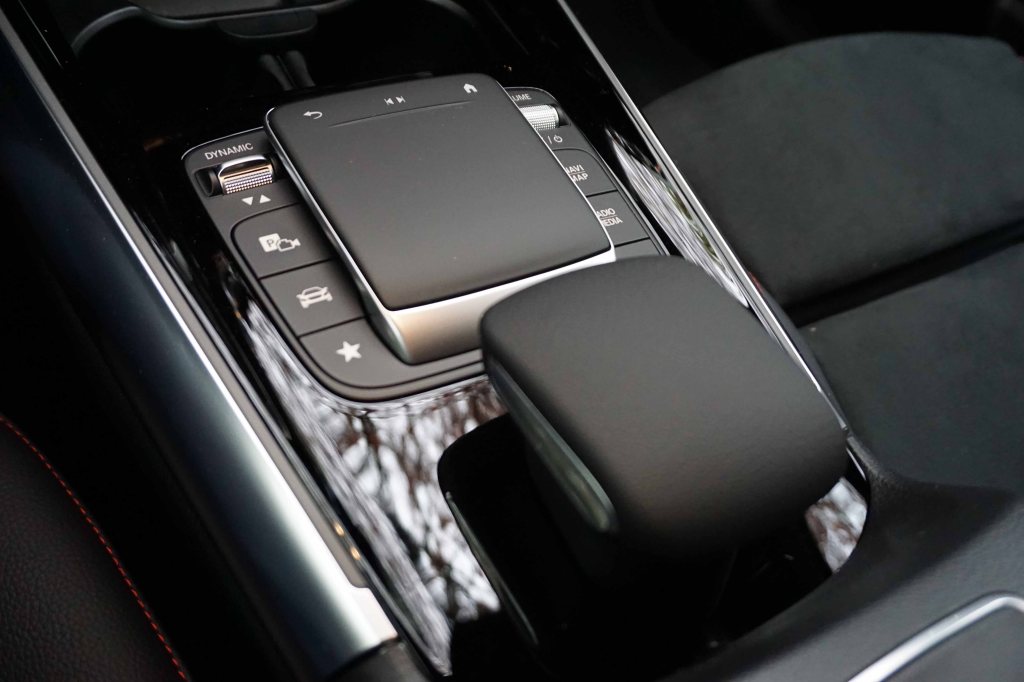
Mercedes steps boldly into the all-electric vehicle world, and now enters the mainstream compact SUV segment with its EQA. Here the competition is fiercer, but then the oldest car manufacturer in the world has some solid arguments up its sleeve: the state-of-the art MBUX (Mercedes Benz User Experience) infotainment system we find throughout the range is also present in this EQA, and the lavish interior, quality of used materials and workmanship is one of the very best in the electric car field, certainly in its segment.

Add to this the very pleasant styling with a touch of futurism so typical for the EQ range, and the excellent insulation and silence of the electric motor which results in very refined progress, and you have in a nutshell all the reasons why this EQA merits our (and your) attention here…

Hans Knol ten Bensel

A solid base…

The EQA runs on the platform of the GLA, an obvious choice as its SUV body can provide easy accommodation for the batteries, which are floor mounted and sitting within a specially developed frame made out of extruded sections. The cabin space is therefore largely similar as the GLA, with the rear passengers having a somewhat raised floor, which doesn’t impair legroom and seating comfort though. The boot space has been reduced somewhat to 340 L instead of 435 L with the GLA, but then the three rear seat backs can be folded individually, which makes the EQA quite versatile.

Meticulous attention has been given to insulating the drivetrain from the body, resulting in absolutely noise and vibration free progress, one of the most silent and refined we have come across in the all-electric car field, which makes this EQA truly stand out in its class. More in detail about this later.

Adequate performance and range…

The EQA starts its life as the EQA 250 with 140 kW available at the front wheels. The manufacturer quotes a combined electrical consumption of 15.7 kWh/100 km and a range according to NEDC of 486 kilometers. In real life this boils down to a practical range of some 340 kilometers, as we experienced during our test. Performance is more than adequate we would say, with a 0 to 100 km/h sprint absolved in 8,9 seconds. Let’s not forget that the EQA (mostly due to its batteries, having an energy content of 66.5 kWh) puts a hefty 2040 kg on the scale. Top speed is sensibly limited to 160 km/h.

The conclusion is obvious: the EQA in its present form is meant to be a comfortable and refined cruiser, rather than a high-performance car.

We said in its present form, as like any self-respecting German manufacturer, Mercedes plans more powerful versions of the EQA in the future, including a 200 kW four-wheel drive version, with a second electric motor driving the rear wheels.

Mercedes also works on further improving efficiency and range, with the answer not being in using ever-larger batteries, but rather in systematic improvement in the efficiency of all vehicle components.

Clever e-planning of your trip…

Of course, Mercedes has all the electronic intelligence and wizardry on board to make range anxiety on longer trips a thing of the past. The navigation with “Electric Intelligence” as they call it, calculates the route that will get you to your destination fastest, taking into account charging times. On the basis of continuous range simulations, the system makes allowance for any necessary charging stops as well as a host of other factors, such as the topography and the weather. It is also able to react dynamically to changes, for instance in the traffic situation or personal driving style.

The charging point density in suburban Antwerp (i.e. Wilrijk) leaves much to be desired, with the nearest charging point for your servant being some 7-800 meters away, and being mostly occupied.

Mercedes has launched “me Charge”. This allows customers convenient use of the charging stations of various providers, even when travelling abroad. By registering just once, you can benefit from an integrated payment function with a simple billing process.

If Navigation with Electric Intelligence is activated, the battery may also be pre-heated or cooled while driving in order to ensure that it is within the ideal temperature window for a rapid charging station. One has thought of everything(!).

Efficient driving modes

Behind the steering wheel, one finds back the usual paddles, which here have a different function however: The driver can select the recuperation function manually using these paddles. The paddle on the left increases the level of recuperation, the paddle on the right reduces it.

Of course you can monitor the setting in the instrument cluster. The following recuperation stages are available: DAuto (recuperation via ECO Assist to suit the particular situation) D+ (coasting), D (low recuperation), D- (medium recuperation) and D- -(high recuperation). New with the EQA is that, if the function DAuto is selected, this mode remains the default setting when the car is restarted.

Clever: ECO assist

ECO Assist coaches the driver with messages when the accelerator can be released, for instance because a speed limit is approaching, and with functions such as gliding and specific control of recuperation. For this purpose, navigation data, traffic sign recognition and information from the intelligent safety assistants (radar and stereo camera) are linked and processed.

ECO Assist continuously generates coasting simulations in the background: depending on the state of charge of the battery and the traffic situation, it computes whether the vehicle should ideally be allowed to coast (or “glide”) with the lowest possible driving resistance with the driver’s foot off the pedals, or whether it should be decelerated so that the battery can be efficiently charged (recuperation).

All in all, these system will add to the efficiency, but it is good to know that when driving short urban errands, more energy is used by heating/ventilating the car than by the electric motor actually moving it…

A proper heat pump…

Therefore the EQA has a heat pump as standard. This reuses the waste heat from the electric drive system. Clever! 

Predictable handling…and attention to utmost safety.

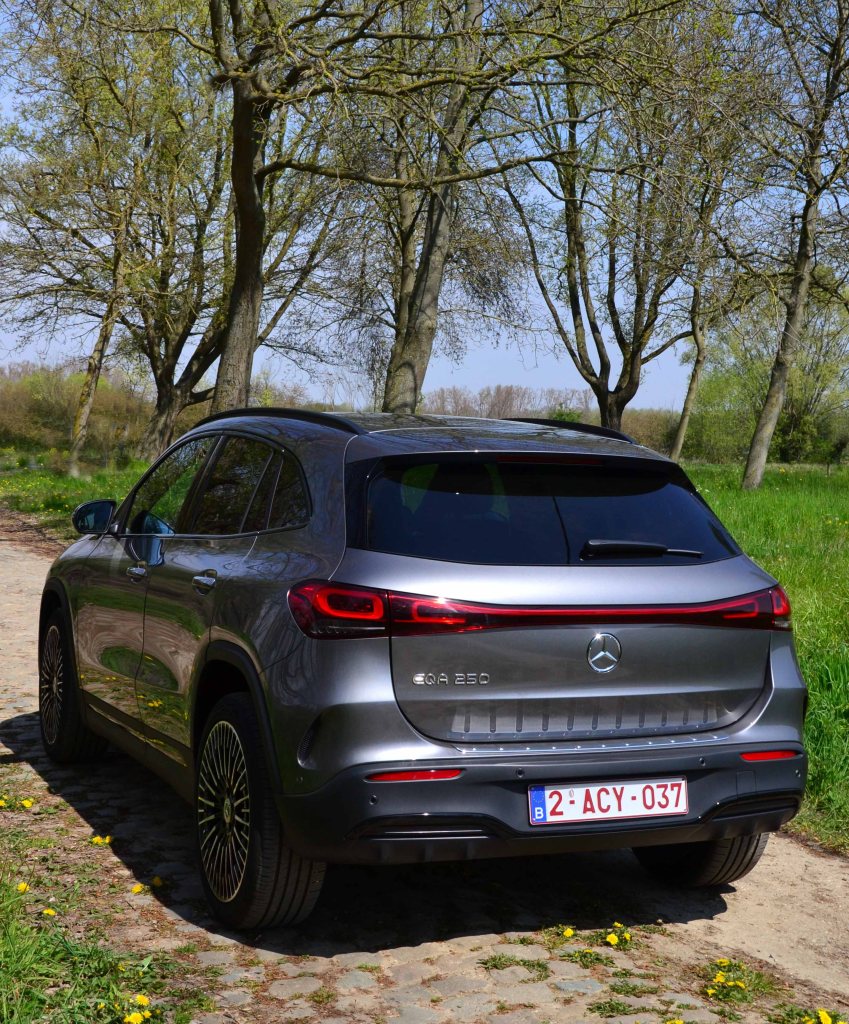
Our test car was equipped with the AMG line package, and also included beautiful multi-spake 20 inch alloys. It also came with the driving assistance package, of which more here later. But it is good to know that the AQA has standard on board the Active Lane Keeping Assist and Active Brake Assist. In many situations the purpose of the latter is to prevent a collision by autonomous braking, or to mitigate its consequences. The system is also able to brake for stationary vehicles and crossing pedestrians at typical city speeds and even to prevent collisions, depending on the situation.

The EQA gives good feedback of the road surface, but will not invite you with razor-sharp steering to throw it around corners. Driven with verve on winding roads it will keep its course admirably, albeit with some body roll. But the EQA is above all comfortable, with however the typical rather firm suspension setup which we encounter also in the other passenger cars and SUV’s from the brand.

Let it be known too that an Adaptive Damping System is available as an option. This enables the driver to choose the preferred damping characteristics. A valve in each of the four shock absorbers is electronically actuated to control the oil flow. The damping characteristics are changed by regulation of the oil flow. The Comfort programme comes into its own especially when travelling at low speeds, for example on a cobblestone road.
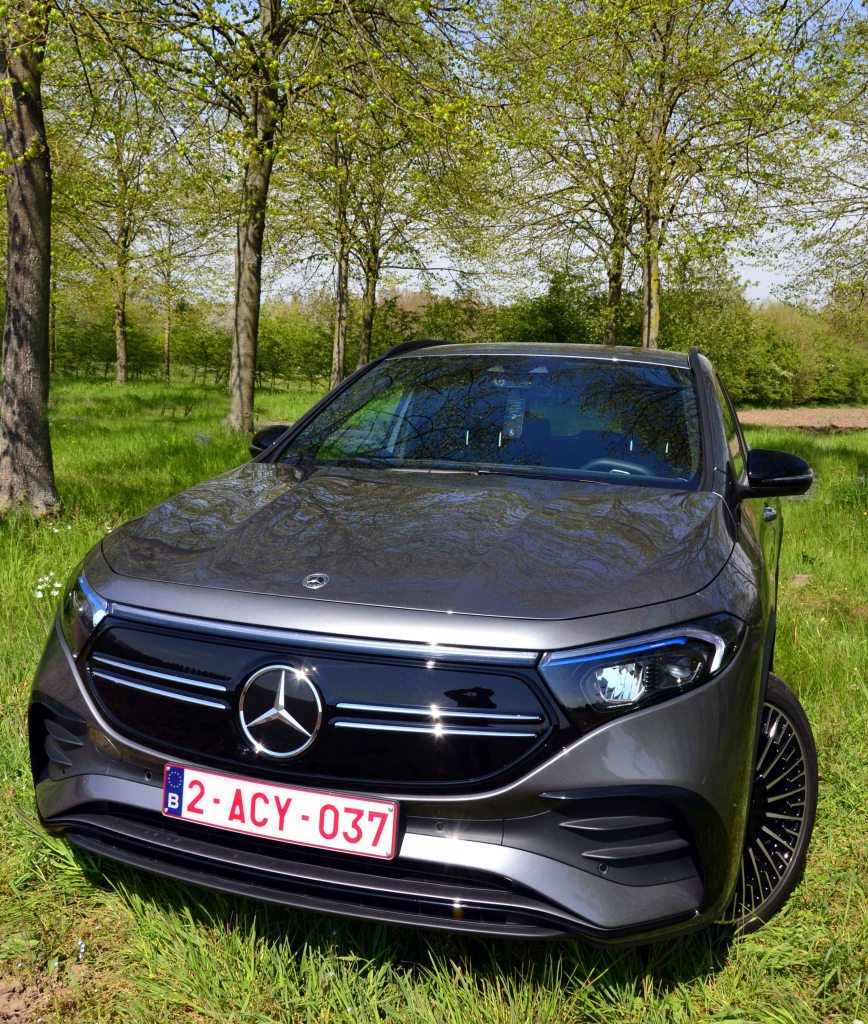
Mercedes is also well known for its electronic driving aid systems, which it has been pioneering for decades now.

The Driving Assistance package we mentioned above in our test car has the lot, from Active Distance Assist DISTRONIC, Active Steer Assist, down to PRE-SAFE® PLUS, which can detect a potential rear impact. It will firmly apply the brakes of the stationary vehicle, minimizing the risk of whiplash injuries by reducing the forward jolt caused by an impact from the rear… need we say more?

It is this painstaking attention to utmost safety which makes a Mercedes really stand out, ranging from the solid and crash tested body construction and platform, to the electronic driving aids which protect you in many ways.

Silence and refinement…

In order to reduce road and tyre noise, the engineers introduced a compact, shear-resistant integral mount which has significantly increased the introductory rigidity at the guide bearing of the front axle. The subframe of the multi-link rear axle is furthermore elastically isolated by rubber bushings.

The front subframe connection is integrated into the C-ring structure and therefore has the necessary rigidity for isolation. A cross-member is integrated into the multifunction recess to increase the introductory rigidity of the rear subframe connection.

There is more: The single-speed transmission that forms an integral part of the electric powertrain at the front axle (eATS) operates particularly smoothly thanks to the improved microgeometry of the gearing. Indeed, we did not hear a thing…

Futuristic electrified styling

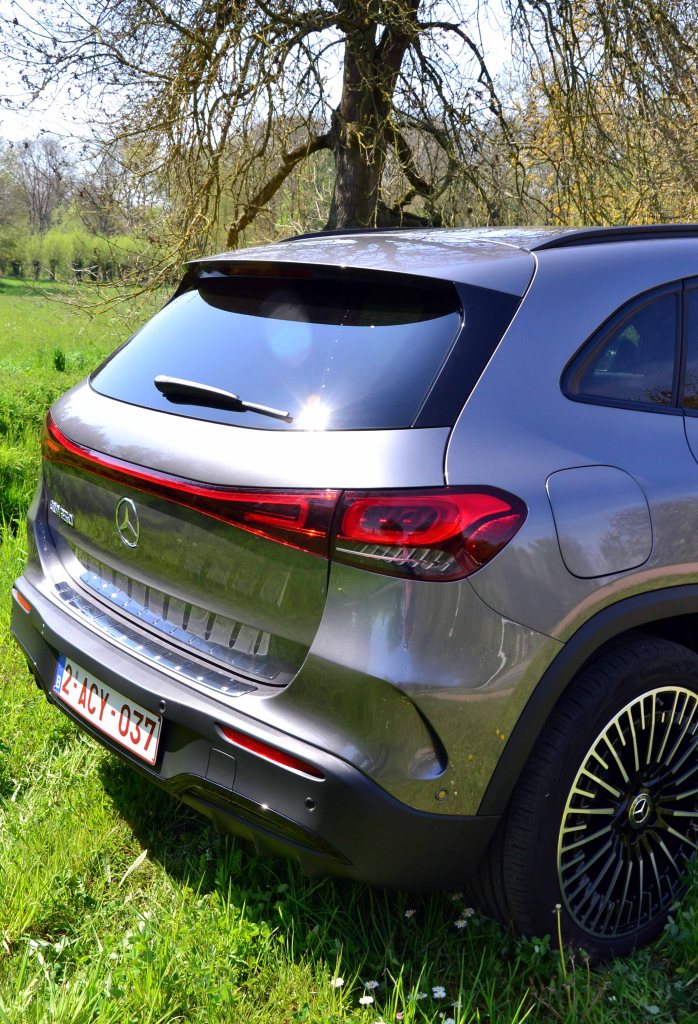
The EQA drives you into the future, and it shows it clearly. Already the rounded front grille with a car wide led illumination between the headlights give it an unmistakable character and light signature. The same is repeated at the rear, where also a light bar is running over the whole width of the EQA. In the cabin, you can choose an atmosphere lighting out of not less than 64 colours, so sitting in a Mercedes is more than ever a moving experience. The EQA is the first model from Mercedes-EQ range whose aerodynamic development has been undertaken entirely digitally. The ensuing measurements undertaken in the wind tunnel revealed a Cd value of 0.28, thereby confirming the high quality of the numerical simulation.

Conclusion

This EQA is a true Mercedes, inside and out, through and through. Excellent workmanship, with an admirable finish seen and felt in the cabin, and also a build quality of its sleek SUV body being beyond reproach. Add to this, as we said, the uncanny silence and absolute mechanical refinement of the drivetrain, putting this EQA together with its bigger brothers at the top of what an E-powered car can offer nowadays. All very solid arguments to take a closer look at this car.

Last but not least this EQA is rather affordable, which has us truly convinced that the EQA has all what it takes to carve a sizeable niche in its segment. And for those who want a but more panache, it is good to know that powerful 4WD versions are soon to come…

Hans Knol ten Bensel

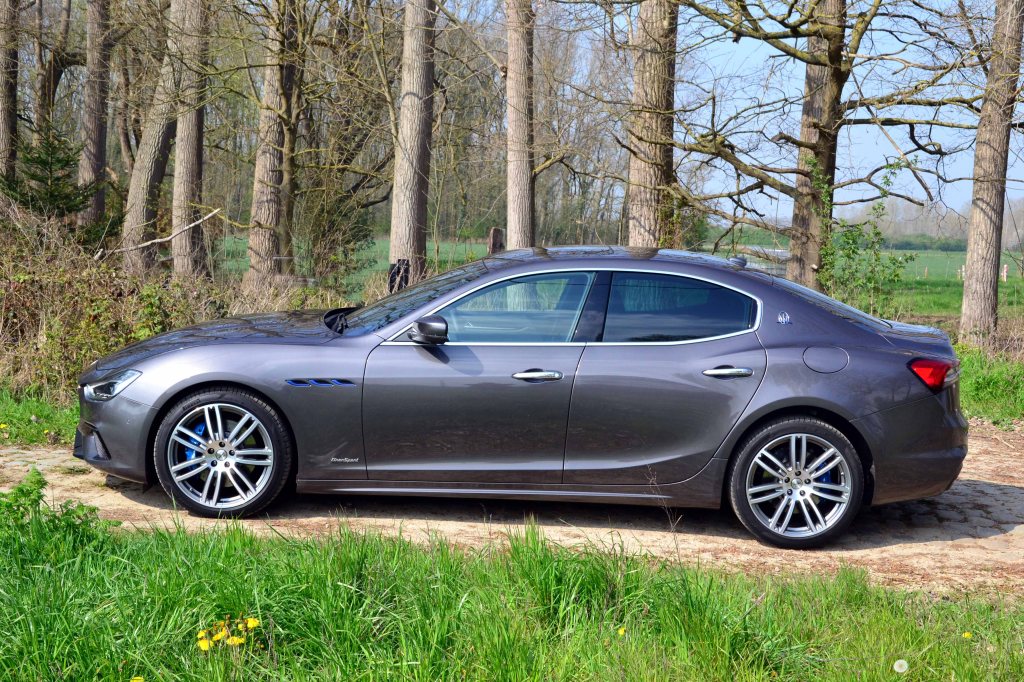
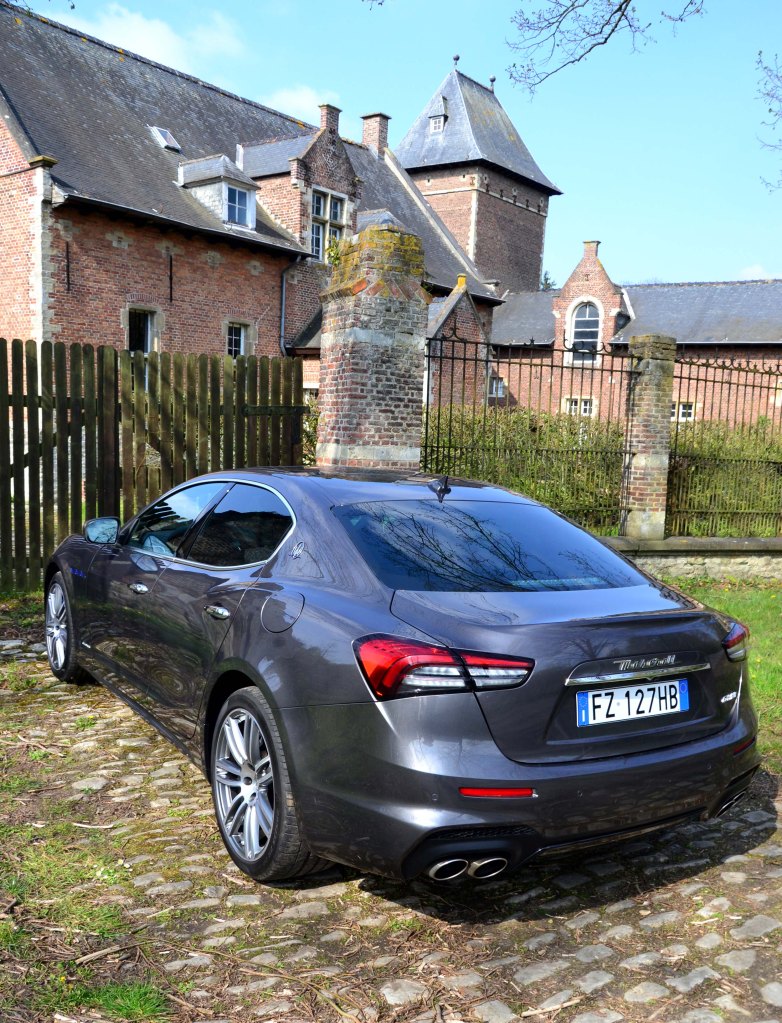
We drove the Maserati Ghibli Hybrid: an electrifying thoroughbred…

When a “pur-sang” four door Gran Turismo car gets electrified to carry it into our “green” age, one has to do this cleverly. For Maserati engineers, the challenge was to retain the character, performance and panache of the brand. This meant retaining a sporting typical sound and presence of a combustion engine, “la macchina” so to say, in every driving situation. Typical for every Maserati built so far.  This also meant at least maintaining the present performance and handling levels, all this combined with of course a marked difference in consumption and CO2 emissions.

As the Ghibli marks the brand’s first entry into electrification, it was very important to get it right.

Well, after this test we can say, the about 100 engineers and developers involved in the Ghibli Hybrid project, did a marvelous job. Just read further.

Hans Knol ten Bensel

Choosing the right engine…

From the beginning it was clear the efficiency of a smaller volume four cylinder engine was called for. Within FCA, a true gem was waiting in the Alfa Romeo stable: a two litre four cylinder petrol engine, with a state-of-the art cylinder head and excellent thermal efficiency. But for the Ghibli, more power was needed, as the present performance level had to be retained. This meant a maximum power of 330 HP.

The internal mechanical components of the two litre 4 cylinder Alfa engine derived from FCA have been completely reworked by the Maserati Innovation Lab in Modena, to achieve greater torque and enable the turbocharger and e-booster to deliver the required extra power. The engine’s electronic control system is also totally different, with a switch to a Bosch new-generation ECU. Practically, all that remains of the original engine are the dimensions and part of the cylinder head: this four cylinder has been transformed into a true Maserati engine. The engine is built by the way at the big powertrain & engine production plant at Termoli. This plant builds various engines and drivetrains for the brands of the (now merged) FCA group.

…and coupling it to the ideal hybrid drivetrain.

Keeping the weight down to achieve equal or even better performance, whilst retaining an ideal weight distribution to preserve the excellent handling, excluded a solution using a large battery and a separate electric motor.  

Preserving the kinetic energy of this dynamic Maserati was the key focus. We point out here that the Ghibli Hybrid is built around a modified version of the chassis and bodywork of the Ghibli V6.

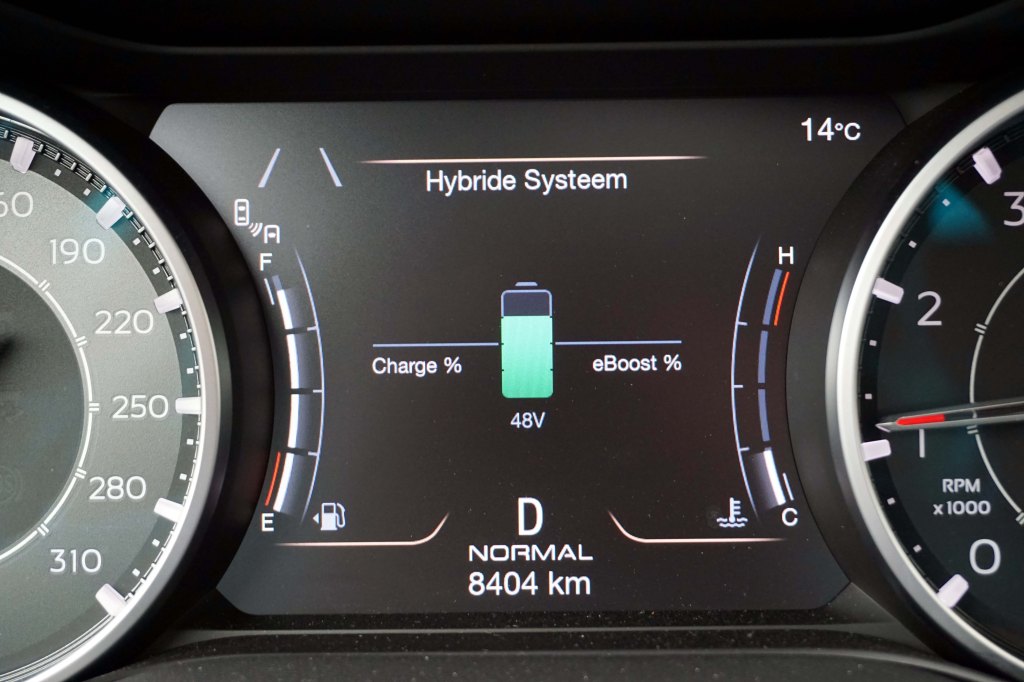
So Maserati opted for a 48 volt hybrid system, which has four parts: the BSG (Belt Starter Generator), the battery, eBooster and a DC/DC converter. The BSG does the job of an alternator, recovers energy during braking/deceleration and charges the battery in the boot, which in turn powers the engine’s eBooster. The reason for installing an eBooster on the car is to back up the conventional turbocharger, working in tandem with it, to sustain the engine’s power output at low rpm. The hybrid system’s operating strategy ensures that the eBooster is always available, with current delivered via battery or BSG, whenever it is needed.

The result is an immensely tractable power unit, with torque delivery equal to the previous V6 Diesel, and guaranteeing brilliant acceleration performance. What to say of an acceleration from 0 to 100 km in merely 5,7 seconds, with the Ghibli Hybrid hurting smoothly further to a top speed of 255 km/h?

Smooth 8 speed transmission…

And of course, all this performance is delivered smoothly and effortlessly. Not least thanks to the excellent ZF transmission. Like the other Ghibli versions, the Hybrid is equipped with the same eight-speed ZF automatic transmission, which is used on the Quattroporte and Levante models. This unit is a true gem. It caters for all demands, from comfort to fast gear shifting, and from minimized fuel consumption to low noise, vibration and harshness (NVH). The car also recognizes a variety of conditions, such as uphill or downhill driving, hard braking or driving through a corner, and selects the optimal gear and the most suitable gearshift style accordingly.

In Manual Normal mode the system automatically shifts up as the red line approaches, while in Manual Sport, gearshifts are quicker and sharper and the engine can be pushed to the red line without the system intervening.

The true Maserati sound retained…

Here the Maserati engineers performed some miraculous work. Even on small throttle openings at urban crawling speeds, the unit has the hum of a multicylinder thoroughbred. Indeed, this Ghibli Hybrid still has the distinctive growl of every Trident model, and all this is achieved without resorting to amplifiers, by just tweaking the fluid dynamics of the exhausts and adopting resonators, tuned to deliver the typical roar.

Driving is believing…

Indeed, driving this Ghibli Hybrid is an exquisite experience. Ultrasmooth at slow speeds, reacting with thoroughbred staccato when you put your foot down. This Hybrid has retained the agility and responsiveness of a true Maserati. As it recuperates kinetic energy, an anticipative (urban) driving style will greatly reward you with good economy. It was no trouble to stay well below the 10 litre/100 km mark in dense city traffic, cruising at constant legal speeds on the open road will get consumption down to around 8 litres/100 km. The high gearing and the thermal efficiency of the engine see to that, along with the good aerodynamic qualities of the body of course. Typically at 120 km/h, the engine turns over at 1500 rpm. By the way, the manufacturer quotes for the WLTP combined cycle (l/100 km) 8.1 – 9.4, for the WLTP combined cycle (g/km) 183 – 213.

But using the exhilarating performance is an undisturbed pleasure. Our test car was executed in the GranSport trim. (The Ghibli Hybrid is available in both GranLusso and GranSport trims) and this meant that our car came standard with the Skyhook suspension system, where all four dampers can be electronically controlled independently of each other.

The default mode of the Skyhook suspension system prioritizes comfort, and is more sporty if the driver presses the suspension button. This extra damping stiffness, which was developed in both extreme test scenarios and on the racetrack, pushes the Ghibli’s handling characteristics to even higher levels. Essentially, the Skyhook system drastically reduces both longitudinal and lateral load transfers and minimizes body roll to bring out the sportiest side of the car’s character. The computer system in control of the Skyhook dampers monitors a vast array of parameters, including speed, lateral and longitudinal acceleration, individual wheel movements, body movement and damper dynamics. Adjusting to suit the suspension mode selected by the driver, the system delivers the perfect damping mode for each wheel almost instantly. We can tell you, it has to be experienced to be believed…

The well-balanced handling of this Ghibli is of course mainly due to its weight distribution and the general layout of its suspension. The battery in the back actually improves the weight distribution, whilst the double-wishbone suspension layouts are a race-bred tradition at Maserati. The Ghibli continues with this heritage but also incorporates some new technologies, featuring high-mounted all-aluminium double wishbones at the front to guarantee light and precise handling characteristics. The system’s geometry has delivered a quadrilateral architecture, which has enabled Maserati’s handling team to deliver a precise, communicative and comfortable steering feel.

The rear suspension employs a five-bar multi-link system with four aluminium suspension arms, and ensures exceptional ride comfort on the one hand and sports performance on the other. The Ghibli’s suspension package is based around a fixed-rate damping system to control the movement of its steel springs and anti-roll bars.

Superb stopping power…

Dual Cast technology, pioneered by Maserati, combines the strength of cast iron with the lightness of aluminium to reduce unsprung mass and, therefore, increase handling prowess. These brakes have a large swept area, highly efficient cooling and are designed for consistent performance in sports driving situations.

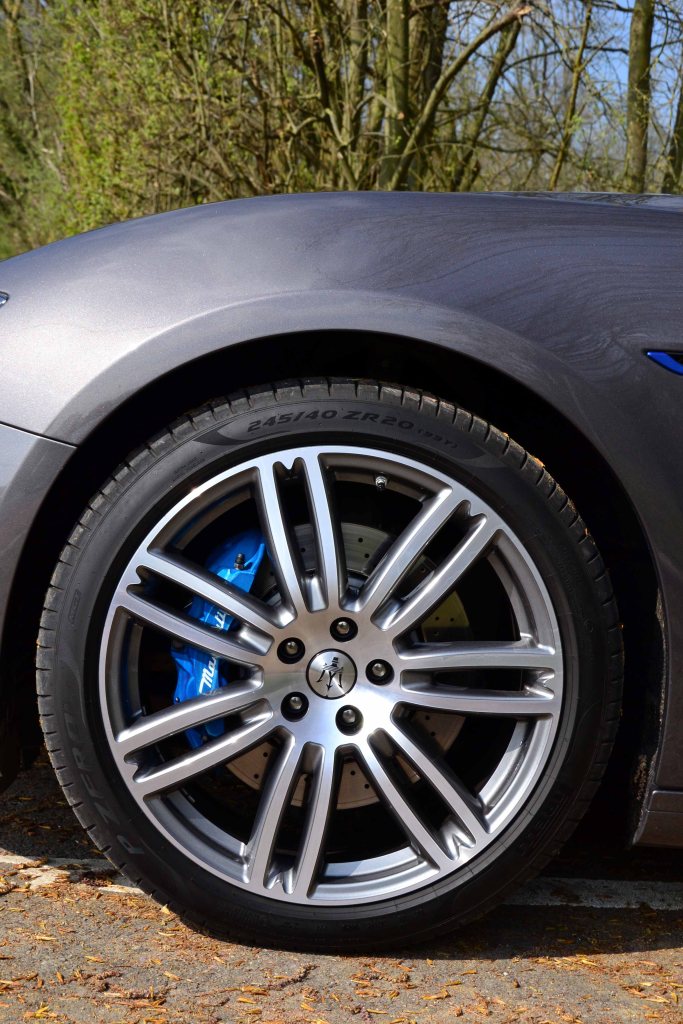
The Ghibli Hybrid is fitted with Dual Cast 360×32 mm ventilated and cross-drilled brake discs with six-piston fixed alloy Brembo calipers on the front axle, while the rear axle is fitted with four-piston fixed alloy 345×28 mm Brembo calipers.

Electrifying elegance and comfort, both inside and out…

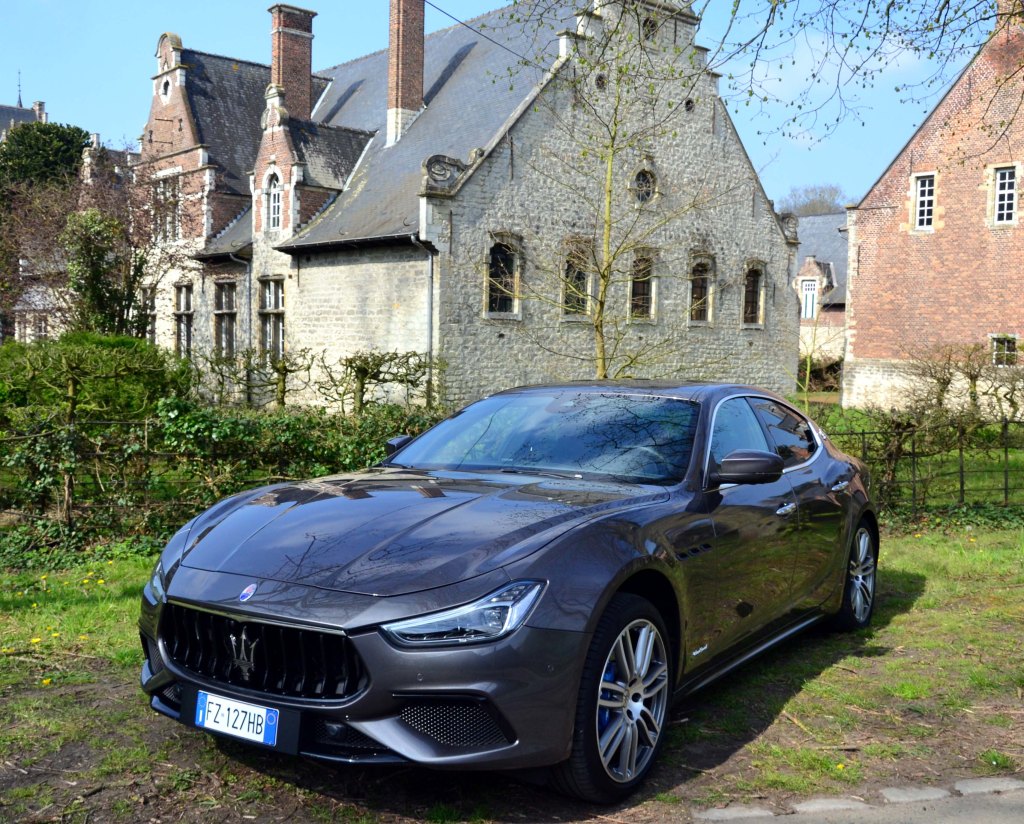
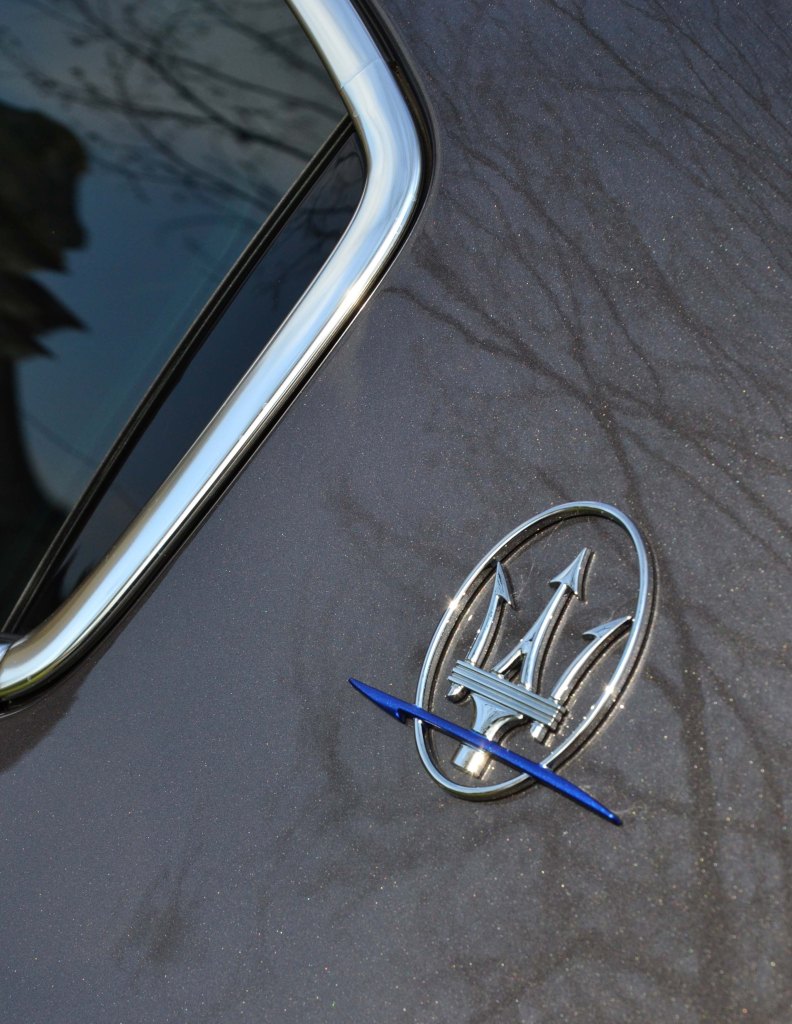
The hybrid version of Ghibli features a number of details in dark blue, the colour universally adopted as the symbol of clean mobility. The three traditional air ducts on the front mudguard have a blue trim, and the Brembo brake calipers and the thunderbolt in the pillar logo are in the same colour.

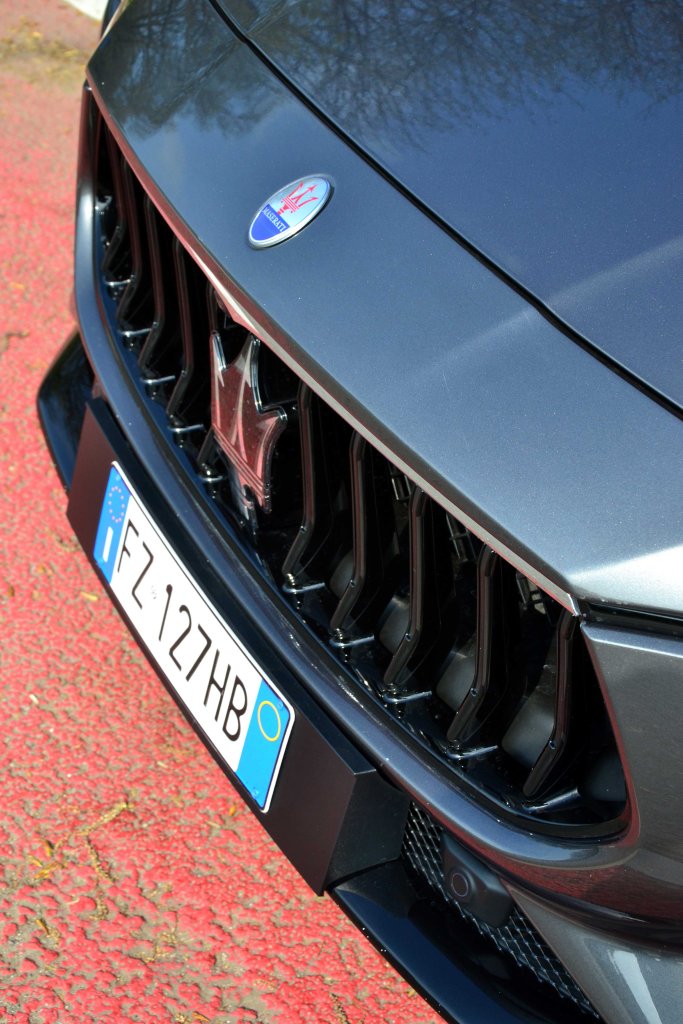
Ghibli Hybrid makes its debut with a new front grille, characterized by a distinctive feature: the Maserati tuning fork. In fact, the updated front grille is based on this shape, and is finished in chrome in the GranLusso trim and in an even more aggressive, sportier Black Piano in the GranSport trim. Like the other cars in the Trident Brand’s range, Ghibli also transforms its rear look, with the development of a new light cluster with a style known as boomerang design, inspired by many Maserati models from history and typical of the Brand’s genetic identity

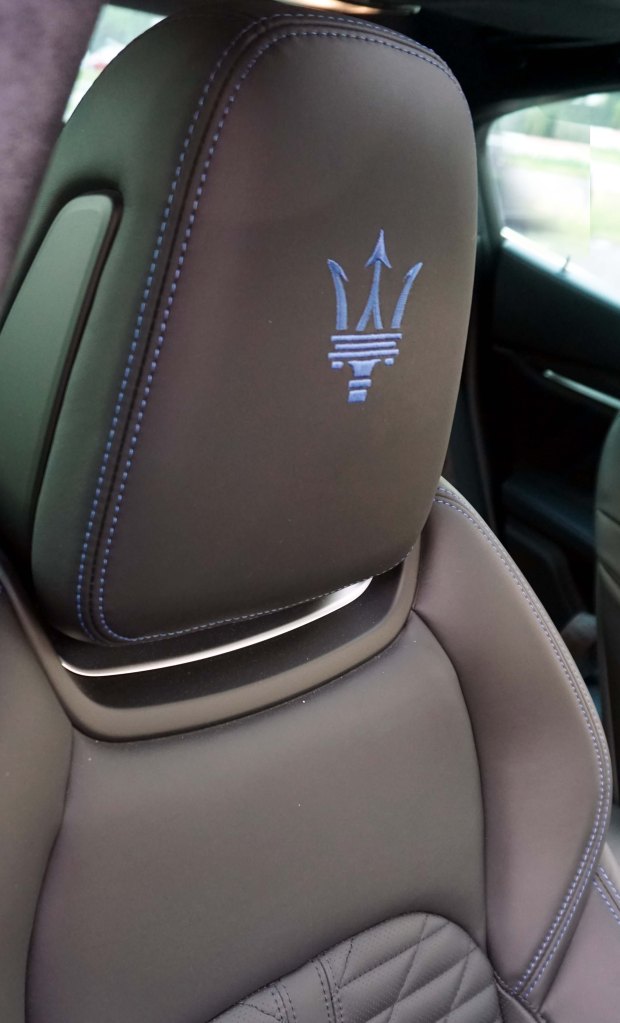
In the interior, the Maserati panache prevails more than ever. The sculpted sport seats are upholstered with a premium full-grain “Pieno Fiore” natural leather, with contrasting dark blue stitching and an embroidered Trident on the headrests. The same styling is repeated on the door panels and instrument cluster.

The driver’s seat offers 6-way electric adjustment, while the GranLusso and GranSport trims both have standard 12-way power front seats. Needless to say, an ideal seating position is soon found…

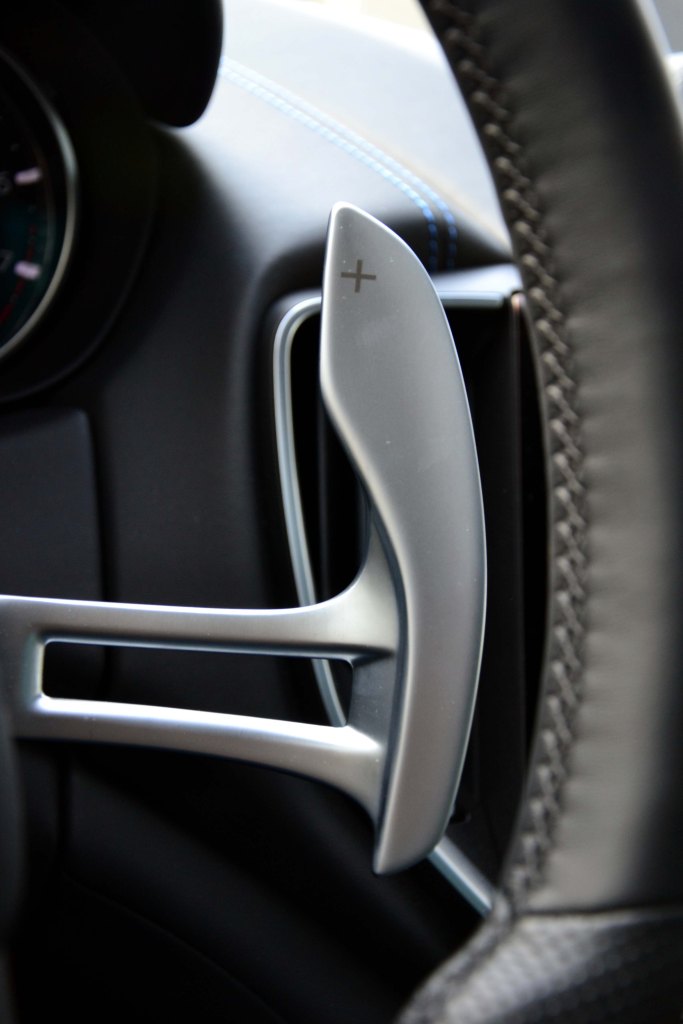
The sport steering wheel fitted with aluminium gearshift paddles, and the Inox sport pedals are also typical for the GranSport trim.

Infotainment and connectivity up to scratch…

The Ghibli Hybrid is complete with all the technology upgrades featured on MY21 models, and thus also the new generation MIA (Maserati Intelligent Assistant) multimedia system. The heart of the MIA is the powerful Android Automotive operating system, with full personalization to the driver’s use preferences. The HD screen of the MIA system is enlarged from 8”4 with a ratio of 4:3 to 10”1 with a ratio of 16:10 and is now frameless for a more contemporary look, with the surrounding bezel almost removed.

With effect from MY21 all Maserati cars are connected thanks to the new Maserati Connect program. Having the Maserati connected at all times enables an eye to be kept on the car’s health, and Maserati Connect will alert the driver when a service is due. With a Smartphone or Smartwatch, drivers can always stay in contact with their Maserati thanks to the Maserati Connect app; this is also possible from home via their virtual personal assistant (Amazon Alexa & Google Assist).

Last but not least we enjoyed the stunning Bowers & Wilkins Premium Surround Sound System, with 15 speakers, a 1,280 W amplifier and QuantumLogic™ Surround.

Driving aids galore…

The Integrated Vehicle Control (IVC) function is incorporated in the Maserati Stability Program control for enhanced active safety and driving dynamics, while the optional active Advanced Driver Assistance Systems provide Level 2 autonomous driving technology.

IVC uses a smart, feed-forward controller that predicts driving situations in advance and adapts the engine speed and brakes accordingly. IVC intervenes more smoothly and with less noise than a traditional ESP, ensures better car balance and traction at the limits of the car’s dynamics and employs intelligent torque vectoring to optimize lateral dynamics in a natural way even when MSP is off. In dynamic test maneuvers, like slalom and lane change, IVC has demonstrated higher drive-through speed and improved racetrack lap times. Wow!

Conclusion

The step towards electrification of its range has been done very harmoniously with this Ghibli Hybrid. Whilst completely retaining the original undistilled thoroughbred character of the Trident brand, it succeeded in putting very reasonable economy in place, in combination of course with a corresponding anticipative (urban) driving style, in line with modern times.

All this packed in a timelessly styled, elegant body which exudes elegance and style for the coming decades, this Ghibli Hybrid is a perfect companion, and is also an ambassador for how you understand motoring and individual mobility, for years to come…

Hans Knol ten Bensel

Audi unveils its first all-electric compact SUV’s: the Audi Q4 e-tron and the Q4 Sportback e-tron…

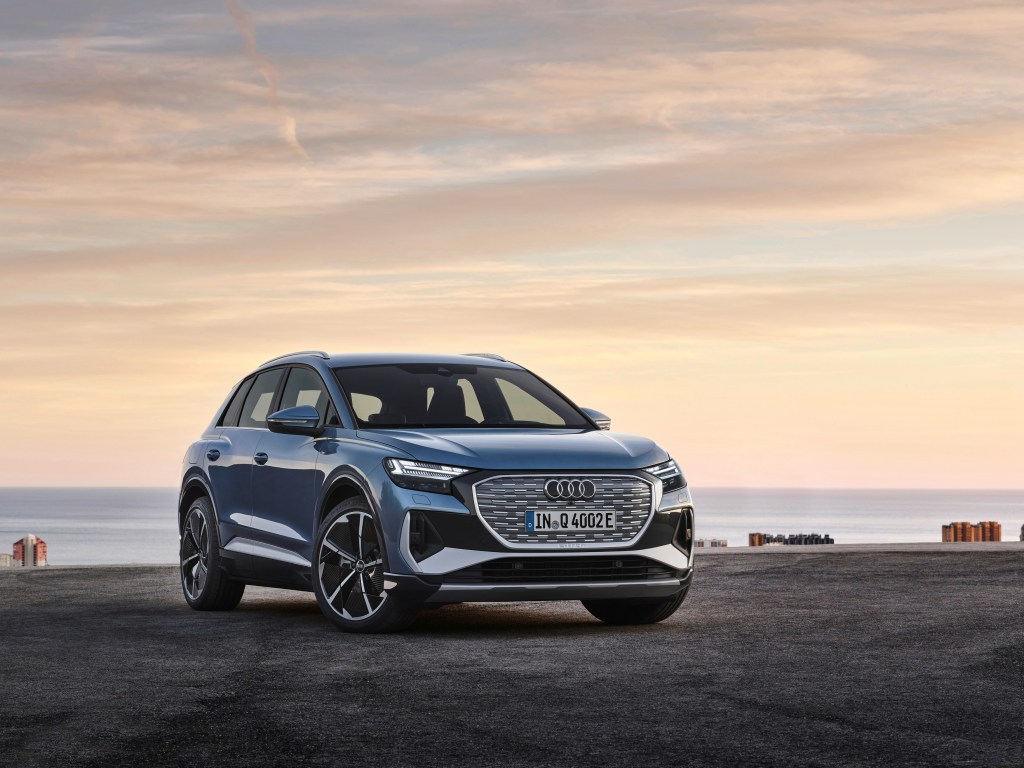
Audi Q4 50 e-tron quattro Colour: Geyser blue, metallic and Audi Q4 50 e-tron quattro Edition One Colour: Typhoon gray

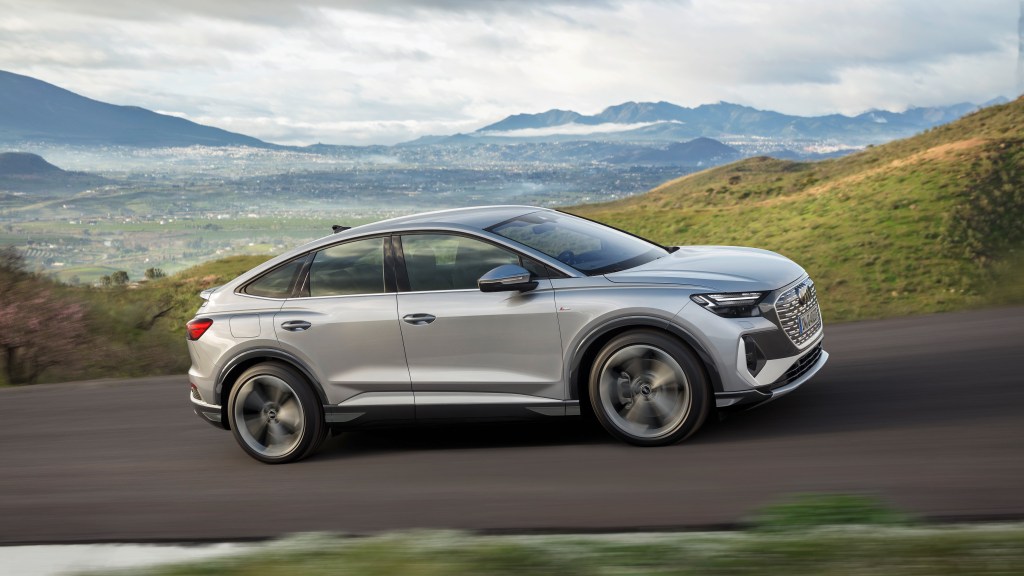
Versatile all-rounders for everyday use that transfer the progressive design of the concept cars into series production and that can be driven locally without any emissions: The Audi Q4 e-tron and the Q4 Sportback e-tron are the first compact electric SUVs from the brand with the Four Rings.

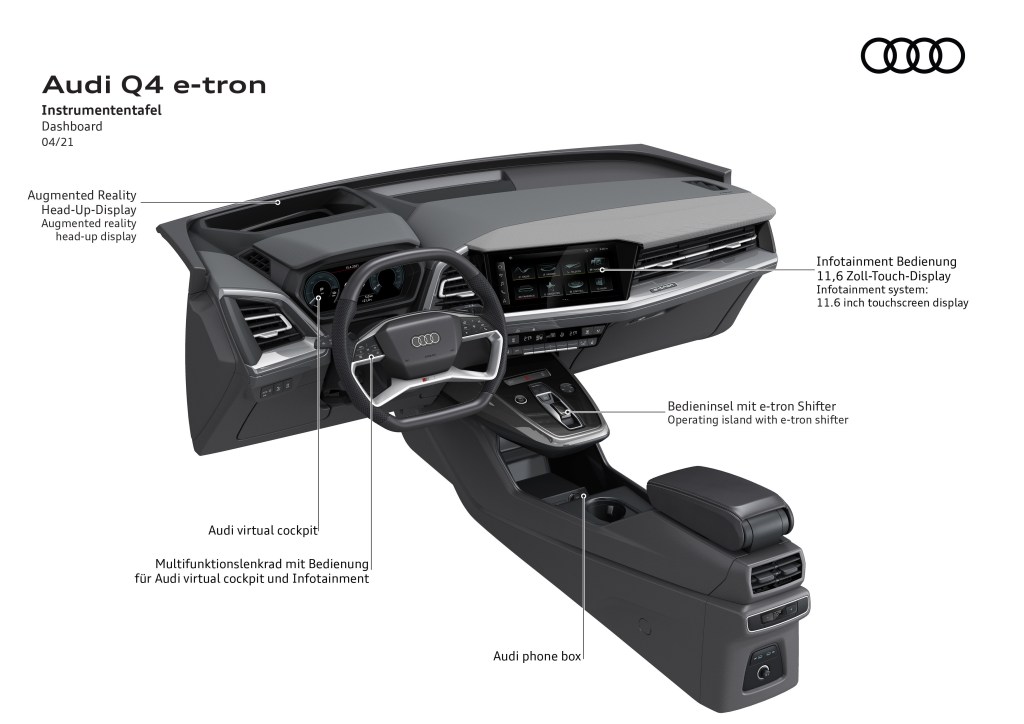
Both of them impress with a new spacious dimension in the interior and pioneering solutions when it comes to operation, display, and assist systems. The augmented reality head-up display connects the virtual and the real worlds in a totally new way.

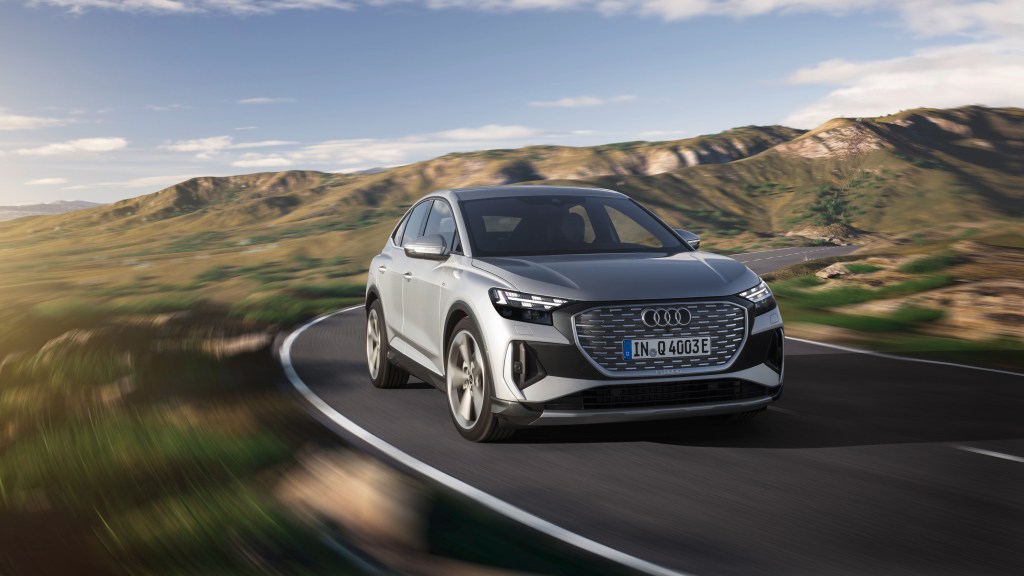
Q4 50 Sportback e-tron Quattro Colour: Florett silver

The range comprises three drive versions, spearheaded by a quattro model with a maximum output of 220 kW (299 PS). Attributes that they all share are zero local emissions driving  and high ranges, charging times of around ten minutes for sufficient power to travel about 130 kilometers (80.8 mi) in ideal conditions (WLTP) and convenient charging with the e-tron Charging Service. The rear-wheel drive Q4 40 e-tron achieves a range of up to 520 kilometers (323.1 mi) in the WLTP cycle. It goes on sale in Europe in June 2021, with prices in Germany starting at EUR 41,900 – where the customer can claim a subsidy of EUR 9,000 (net).

Audi’s next step: the exterior design

With the Q4 e-tron and the Q4 Sportback e-tron, Audi is taking the next step in the design language of its electric models.

The two compact SUVs bring into series production the body line that the Audi Q4 concept and Audi Q4 Sportback e-tron concept show cars demonstrated at the beginning of 2019.

In the Audi Q4 Sportback e-tron, the especially low coupé-style roofline ends in an expressively designed rear where the spoiler sits deep on the two-part window.

On request, both of these compact electric SUVs can be driven off the assembly line with Matrix LED headlights. What’s more, the driver can switch between four signatures in the MMI touch operating system. At the rear, a light strip links the taillight units to each other. A choice of eight colors is available for the paint finish, including the new metallic shade aurora violet. In addition to the basic version, there are the two advanced and S line exteriors.

E-mobility for everyone…

Audi wants its new Q4 line to be an all-round car which offers everything for everyone. The available space in the interior is comparable with the full-size SUV class; there is no center tunnel. The feeling of spaciousness is not just confined to the front seats – with the generous legroom, passengers in the rear also benefit from the advantage of the technological platform, which is designed as electric-only.

Depending on the positioning of the rear seat backs, the volume of the luggage compartment is 520 to 1,490 liters in the Q4 e-tron and 535 to 1,460 liters under a power trunk lid in the Sportback. Both models can tow trailers with a weight of up to 1,000 kilograms (braked, at 12% incline), with the quattro versions even able to pull up to 1,200 kilograms.

Another strength for everyday use is the high range – the Q4 40 e-tron travels up to 520 kilometers (323.1 mi) (WLTP) on a single battery charge. Thanks to a maximum charging capacity of 125 kW, in ideal conditions it can charge enough power for about 130 kilometers (80.8 mi) (WLTP) in around ten minutes. Using the myAudi app, the owner can activate charging at home and pre-entry climate control from their smartphone.

In the interior, there are also quite a few innovations. For instance totally new is the steering wheel with its seamless touch surfaces, which the driver uses to control the digital instrument cluster.

Infotainment and navigation are operated primarily using the central MMI touch display, which will also be available in the largest configuration level of 11.6 inches towards the end of the year. Natural voice control provides the third operating interface.

On request, the Audi Q4 e-tron and the Q4 Sportback e-tron can be equipped with another innovation on board – the augmented reality head-up display.

Fully digital: the Q4 e-tron is an e-mobility device

The Q4 e-tron models offer a fully digital user experience. The infotainment package in the electric compact SUV is structured in three levels – from MMI through MMI plus to MMI pro.

Different functions are provided depending on the configuration level, including the augmented reality head-up display and the Audi virtual cockpit plus. The optional levels provide the online services of Audi connect, including the intelligent e-tron route planner for working out the optimal route that stays close to the public charging infrastructure. For premium sound, the Sonos sound system which combines lifestyle, technology and design in a new dimension.

Audi Q4 50 e-tron quattro Static photo, Colour: Geyser blue, metallic Audi Q4 50 e-tron quattro Edition One Static photo, Colour: Typhoon gray

For urban commuters and long-distance drivers: battery, drive and charging options

The drive portfolio of the two compact electric models lives up to the expectations of very different groups of customers – from the urban commuter to the long-distance driver. It includes two battery variants and three drive variants. The compact battery for the Q4 35 e-tron has a net energy content of 52 kWh (55 kWh gross), while the figures for the large battery in the Q4 40 e-tron and Q4 50 e-tron quattro are 77 (82) kWh.

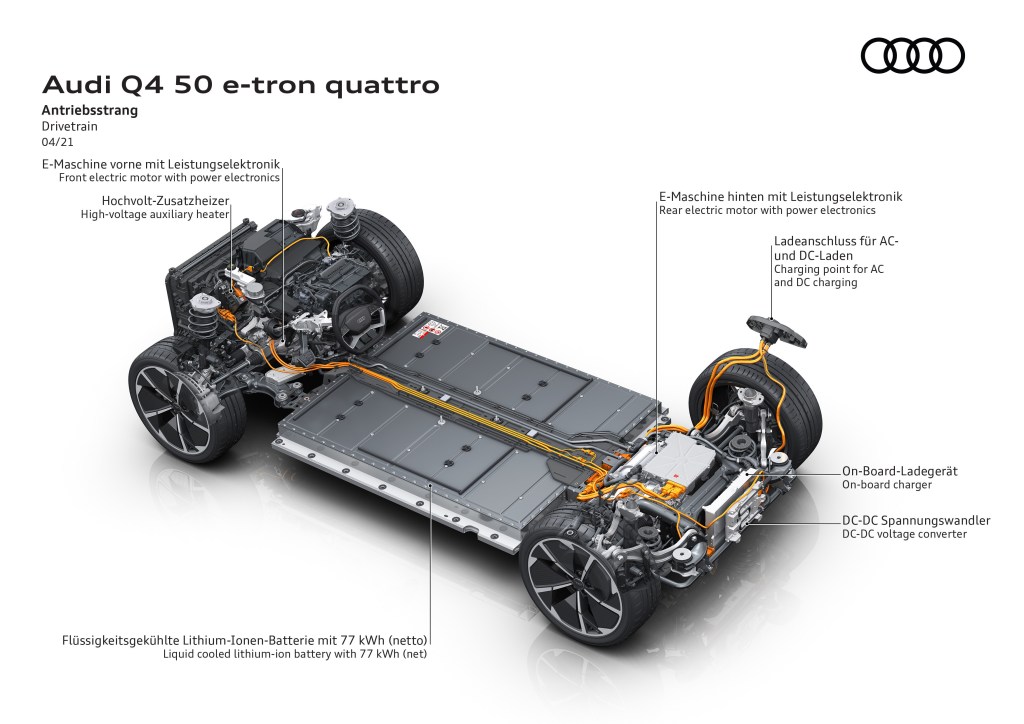
The Q4 35 e-tron and the Q4 40 e-tron have an electric motor that drives the rear wheels, with an output of 125 kW (170 PS) and 150 kW (204 PS) respectively. The top-of-the-range version Q4 50 e-tron quattro has two electric motors for the electric all-wheel drive. They give it a maximum output of 220 kW (299 PS) – sufficient for a sprint from 0 to 100 km/h in 6.2 seconds and an electronically limited top speed of 180 km/h. For efficiency, the motor on the front axle comes into action only when high power or a strong grip is needed.

Another important factor in energy-saving driving is intelligent recuperation, which also incorporates navigation and topographical data.

Dashboard

Audi’s two new electric SUVs can be charged with different outputs using alternating current (AC) and direct current (DC) depending on the battery. The compact battery can get up to 7.2 kW with AC charging and up to 100 kW when using HPC charging (high-power charging) with direct current. As standard, the larger battery allows for up to 11 kW with AC and up to 125 kW with HPC.

Audi e-tron Charging Service…

Drivetrain

The Audi e-tron Charging Service provides access to around 210,000 public charging points in 26 European countries, 4,400 of which are HPC fast-charging points (as of April 2021), using just one charging card. In the transit tariff, customers buying the Q4 e-tron do not pay any basic fee in the first year. They benefit here especially from the preferential conditions in the IONITY network: The charged kilowatt hour costs 31 cents, which corresponds to the price level when charging at home in Germany.

The Audi Q4 e-tron will appear in June 2021 on European markets, with the Q4 Sportback e-tron following in the late summer. Of course we are keen to sample driving impressions this summer!

Hans Knol ten Bensel

New ŠKODA ENYAQ iV earns five stars in Euro NCAP test.

The new ŠKODA ENYAQ iV truly scores: The new electric SUV has achieved the highest classification of five stars in tests conducted by the independent European New Car Assessment Programme (Euro NCAP).

It now ranks among the safest vehicles currently available with a total of 86% of the possible points.

And there is more: The ŠKODA ENYAQ iV achieved the best result ever in the Euro NCAP test for occupant protection, with 94% for adult passengers and 89% for children.

ŠKODA’s first model based on the Volkswagen Group’s Modular Electrification Toolkit thus continues the string of top scores for ŠKODA vehicles in the crash safety reference test, even with the now stricter assessment criteria. ŠKODA’s bestseller, the OCTAVIA, the compact model SCALA and the SUV models KODIAQ, KAROQ and KAMIQ, among others, have all been awarded the coveted five star rating.

Needless to say that the ENYAQ iV inspires, with its styling and build quality, and we will be keen to sample driving and test impressions in the coming months…

Hans Knol ten Bensel

Jaguar launches a stunning “R-Dynamic” version of their elegant F-Type…

Jaguar launches a mouth-watering version of their elegant F-TYPE: the Exclusive F-TYPE R-Dynamic Black. It boasts additional equipment as standard and is offered in Coupé and Convertible body styles

There is an even more desirable version: the so-called “Black Pack”, with 20-inch gloss black wheels, and choice of Santorini Black, Eiger Grey or Firenze Red metallic paint.

Refinement…

The driver-focused interior is equipped with 12-way adjustable Windsor Leather Performance Seats in Ebony with Light Oyster stitch or in Mars with Flame Red stitch. An Ebony coloured suede cloth headliner enriches the iconic ‘1+1’ cabin.  

The R-Type comes with many appealing details: A heritage-inspired monogram pattern is used for seat and door trim stitching and also embossing of the suede cloth wrap for the instrument cluster.

And abundant power…

The F-Type comes with what it takes: the 300PS Ingenium four-cylinder and 450PS supercharged V8 with rear- or all-wheel drive and eight-speed ‘Quickshift’ transmissions deliver engaging, exploitable performance and outstanding driver reward.

The new R-Dynamic Black models add to the purity and presence that already sets Jaguar’s definitive sports car apart.

The F-TYPE’s shape is further accentuated by the Black Pack and 20-inch, five split-spoke wheels with gloss black finish. Known as ‘Style 5039’, these wheels are not available on any other model in the range. Complementing these perfectly is the choice of three metallic paints: Santorini Black, Eiger Grey or Firenze Red.

Performance galore…

Exclusively rear-wheel drive, the 300PS, 2.0-litre turbocharged Ingenium four-cylinder engine generates maximum torque from just 1,500rpm, delivering exceptional throttle response throughout the rev range. It also provides the performance expected from F-TYPE and enables acceleration from 0-60mph in only 5.4 seconds and a top speed of 155mph. 

The 450PS, 5.0-litre supercharged V8 has been developed to offer exploitable, useable and rewarding performance – maximum torque of 580Nm is generated from 2,500rpm. It is offered with a choice of all-wheel drive with Intelligent Driveline Dynamics or – for purists – rear-wheel drive. Both 450PS powertrains feature an electronic active rear differential to optimise traction, and both enable 0-60mph in just 4.4 seconds and a maximum speed of 177mph.

The 300PS and 450PS units are also available in other F-TYPE models, but for truly exceptional performance in all weathers and on any kind of road there is the F-TYPE R. Offered exclusively with all-wheel drive, its supercharged V8 delivers 575PS and 700Nm: the benchmark sprint to 60mph takes just 3.5 seconds, while maximum speed is an electronically-limited 186mph. 

Tailoring your Jaguar to your personal driving style…

The F-TYPE R and P450 models are equipped as standard with Jaguar’s Adaptive Dynamics system with Configurable Dynamics. Using electronically-controlled, continuously-variable dampers, Adaptive Dynamics optimizes both low speed comfort and high-speed control, while Configurable Dynamics enables the driver to tailor the settings for suspension stiffness, steering weight, throttle response and gearshifts. All 300PS four-cylinder F-TYPEs use meticulously tuned passive monotube dampers to deliver the ride and handling attributes which give these models their unique character.

Needless to say that we are keen to sample test driving impressions from these wonderful, sporting and elegant Jaguars soon…

Hans Knol ten Bensel

Bentley celebrates the production of its 200.000th car…


The Bentayga Hybrid, destined for a Chinese customer, met the oldest surviving Bentley, EXP 2, and a number of long serving colleagues, as it rolled off the production line at the home of Bentley in Crewe this week.

Things have taken off for the inconic brand over the last 18 years. Thanks to the success of the Continental GT and more recently the Bentayga SUV, daily production has soared. Indeed, over that period, over 75 per cent of 101 years of production has been hand-built at the Crewe factory, more than ever the home of Bentley. Current daily production, 85 cars per day, equals monthly production numbers of two decades ago.

The Bentley Continentals – then and now…

I vividly recall the interview I made at the Frankfurt Motor Show more than a decade ago with Franz-Josef Paefgen, then CEO of Bentley Motors and Bugatti Automobiles, posts he left in 2011.

During his time as the Chief Executive Officer of Bentley Motors Ltd., he was responsible for the Bentley Mulsanne and the Bentley Continental series of cars. From 2003 to 2005, Dr. Paefgen was responsible for the development of the Bugatti Veyron.

Every Bentley is actually a four wheeled chapter in automotive history…

I asked him then whether a hybrid Bentley was not on the cards, as Bentley’s could be considered the pinnacle of engineering and an electrified Bentley would be proper. It clearly was not in the strategy of the VW Group then, as the idea was immediately brushed aside by Mr. Paefgen as unrealistic, customers not wanting this at all…

Well times have changed quite a bit since then, as we now read that Company aims to be end-to-end carbon neutral by 2030 with entire model range switched to battery electric vehicles(!). Bentley will move to full electrification – PHEV or BEV only – by 2026, then switch the entire model range to battery electric vehicles by 2030. The industry-leading Beyond100 Strategy will transform every aspect of the business as Bentley accelerates into its second century of luxury car production.

Six cylinder Bentley engine production in the ’50s in Crewe…

What this means for the retail value and depreciation of the existing and historic Bentley’s remains to be seen…

But back to the production history.

The Continental GT was the first landmark…

In 2003 the introduction of the Continental GT represented a transformative moment for the brand, and this Bentley alone, has represented 80,000 sales of the total of 200,000, and created both a new segment, and a contemporary image foundation for the Bentley business.

The Crewe factory in 1940…

…followed by the Bentayga

The success of the Continental GT has been mirrored by the Bentayga, offering a true Bentley driving experience and unparalleled luxury. Launched in 2015, when it established the luxury SUV sector, the fastest SUV in the world has reached its 25,000 production landmark. It is expected that the Bentayga could surpass total sales of the Continental GT within a decade and become the biggest selling Bentley model in history.

And now in 2021…

Since 2005, the company has also built 40,000 examples of the Flying Spur, the most successful luxury sports saloon in the world.

We show you here some photos, lifting a veil of the very interesting and multifaceted production history of the brand, and then we have told nothing of their sporting achievements…

Hans Knol ten Bensel

Maserati MC20 wins “Best of the Best” at the Red Dot Awards with its outstanding design…

The new Maserati MC20 receives the prize for “Best of the Best” at the Red Dot Awards 2021 in the Product Design category.

Competition run by a German design center…

The Red Dot Awards is well known, although not everyone is aware that this international design competition is run by Design Zentrum Nordrhein Westfalen in Germany, which has been assessing and selecting the most aesthetically exciting, functional, intelligent, innovative products from all over the world since 1955.

Every year, this prestigious competition rewards excellence in the field of product and brand design and communication at the global level, with criteria constantly updated to the socio-cultural context.

A jury of 50 international experts chooses products in almost fifty different categories, from fashion to accessories and from furnishings to vehicles.

This reward puts of course a smile on the faces at Maserati…

We cite a few comments:

Maserati CEO Davide Grasso: “Our mission was to develop a car that would be remembered in the future as the model that launched the Maserati New Era. And I think we’ve achieved our goal with MC20. Maserati is innovative by nature, powered by passion and unique by design: the new super spots car embodies all these values and is a watershed, the founding model of this new phase in the Brand’s history.”

Klaus Busse, Head of Maserati Design, added: “We are honoured to receive this coveted accolade, which recognises the work of an entire team who have worked hard on this unique project, creating a car that opens a new chapter in Maserati’s history.”

Truly Italian

MC20 is designed by the Centro Stile Maserati in Turin and inaugurates a new Era for the Trident Brand.

The new super sports car represents the pure form of speed, with Maserati style: a work of sculptural engineering, showing the way to the Brand’s aesthetic future.

Developed by the Maserati Innovation Lab and built at the historic Modena plant, Maserati MC20 is genuinely an all-Italian car.

Besides its innovatige, good looks, it is also fast…

With the new 630 hp V6 Nettuno engine the MC20 catapults from 0 to 100 km/h in under 2.9 seconds and reaches a top speed of over 325 km an hour. The patented engine was conceived, developed, designed and built entirely by Maserati, and uses a pre-chamber combustion technology derived from Formula 1 engines… wow!

Hans Knol ten Bensel

BMW’s new generation iDrive further explained…part 1

We will bring you in several reports some further details about the latest iDrive, which is a further step into improved vehicle interaction in this era where things get increasingly smarter.

BMW’s operating system equips the vehicle to actively engage in its relationship with those on board. As BMW states, a natural dialogue is created with the aim of precisely tailoring all the functions controlled via BMW iDrive to the driver’s needs and preferences as the situation demands.

Underpinning the unique user experience are the new BMW Operating System 8, a new generation of displays, controls and software, and extremely powerful connectivity and data processing. The new iDrive will be rolled out gradually across all vehicle classes, making its debut later this year in the BMW iX before also featuring in the BMW i4.

The BMW Intelligent Personal Assistant adjusts to the driver’s individual needs and routines, as well as the situation at hand, and this makes it – more than ever – a central operating channel of human-machine interaction.

The operating system is designed with a clear focus on dialogue-based interaction using natural language and touch operation via the BMW Curved Display.

But there is more. BMW speaks of “Great Entrance Moments”, bringing emotionality to the relationship between driver and vehicle even before the driver climbs on board.

This new customer experience welcomes the driver and invites him or her into the vehicle with a thoroughly choreographed routine. During the journey, the new “My Modes” use an all-encompassing interplay of various functions to conjure special moments from a combination of vehicle characteristics and the interior ambience adapted to the situation at hand.

Processing data leading to further personalisation…

The new BMW iDrive constantly processes a large quantity of self-generated data, information available online and data imported from the BMW Group vehicle fleet to implement the driver’s wishes in a context-related way.

This is paving the way for even greater personalisation, and this system is called the “BMW ID.”

This system recognises repetitive situations, learns from them and provides suggestions on how functions can be activated accordingly. There is even more to keep the system up to date: Remote Software Upgrade allows the new BMW iDrive to benefit from regular over-the-air improvements, integrate additional functions and stay up to date at all times.

Design approach and operating concept.

The BMW iX all-electric Sports Activity Vehicle was developed from the inside out. It’s the same story with the user experience for the new BMW iDrive. The wishes of those travelling in the iX underpin how the user experience is designed – in all its facets and for all the senses.

Advances made in the field of digital design are likewise reflected in the design of a user interface which not only fulfils its functional role but is also clear, aesthetically pleasing and rich in detail.

This artistic approach creates surprising moments, with graphic presentation on the displays precisely designed, down to the last pixel.

The interaction between driver and vehicle becomes a unique experience in which the boundaries between the digital and analogue worlds melt away.

The digital design’s use of form fits in neatly with the geometric structures of the analogue elements in the new BMW design language. A prime example is the use of clear, minimalist design in both the exterior and interior of the car, which is reflected in the pure, reduced design of the digital elements of BMW iDrive.

The Curved Display takes centre stage…

The most distinctive new addition to the physical components on board is the BMW Curved Display, which groups together the information display and control display. This curving screen offers a futuristic interpretation of the traditional driver orientation in the cockpit design of BMW models. The BMW Curved Display is angled clearly towards the driver , making the intuitive touch control even more straightforward. In this new BMW Curved Display, the screen areas of the 12.3-inch information display and 14.9-inch control display merge together into a single unit.

The “Act, Locate and Inform” principle, which ensures information is distributed clearly and screen redundancy is avoided, takes the signature BMW driver orientation of the cockpit design to a new level. Pre-filtering ensures that only information relevant to the driving situation is presented to the driver – and always shown where they can absorb it as quickly and easily as possible.

Voice control and the touch function of the BMW Curved Display were prioritized as usage options in the development of the new BMW iDrive. The number of buttons and switches has been reduced by almost half. At the same time, control clusters for relevant and frequently used basic functions are retained where customers expect to find them. The control panels on the centre console and instrument panel have an all-new, minimalist design. The familiar iDrive Controller is the central control element on the centre console. The Touch Controller, designed in an extremely smart glass-effect finish for the BMW iX, is encircled by a bezel painted in Gold Bronze.

The upgraded BMW Intelligent Personal Assistant performs the role of a digital character which can engage in natural dialogue with the driver and front passenger – similarly to a relationship between humans.

More about the Graphical User Interface in a following report…

Last but not least, we are looking forward to drive some BMW and Mini products in June, and maybe get a first “real” experience of the iDrive also in the coming months…

Stay tuned!

Hans Knol ten Bensel

BMW iDrive: a stunning presentation, and a bold step towards a safe personal driving experience…

We just witnessed the presentation, and of course we will come back on this with more details, but we can say already that BMW again produced a breakthrough in car to driver communication…

We show you here some screenshots of the presentation, but, as said, there is more to come about this very convincing approach…

Hans Knol ten Bensel