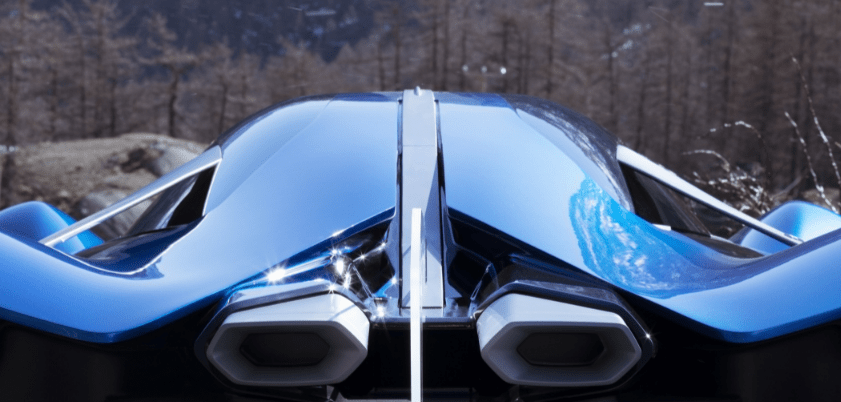
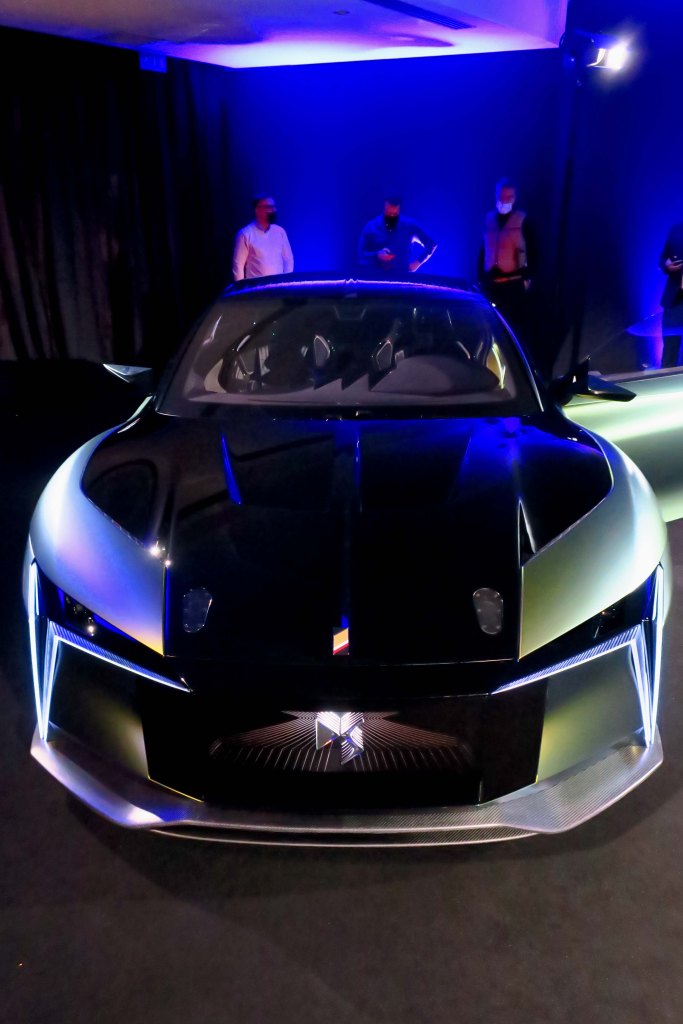
Students at the Italian Istituto Europeo di Design (IED) presented the ‘A4810 Project by IED’, their new concept car made in collaboration with Alpine. The result of this collaboration between the Italian design school and Alpine is a hydrogen-powered two-seater supercar.
Twenty-eight Masters students studying Transportation Design at IED worked on the project.
Alpine proposed the students to design a ‘super berlinette’ for the year 2035. The two-seater supercar was designed to be a high-performing vehicle both in terms of performance and environmental impact.
After the brief was given last autumn, students worked individually to come up with their own interpretation and present it to the Alpine designers. Alpine then selected a combination of two main ideas. Based on the two selected proposals, the young designers created the ‘A4810 Project by IED’: a light yet powerful and agile concept car that boasts pure driving pleasure.
During the design phase, the students sought to combine vision and innovation, without losing sight of the traditional roots of the French car manufacturer.
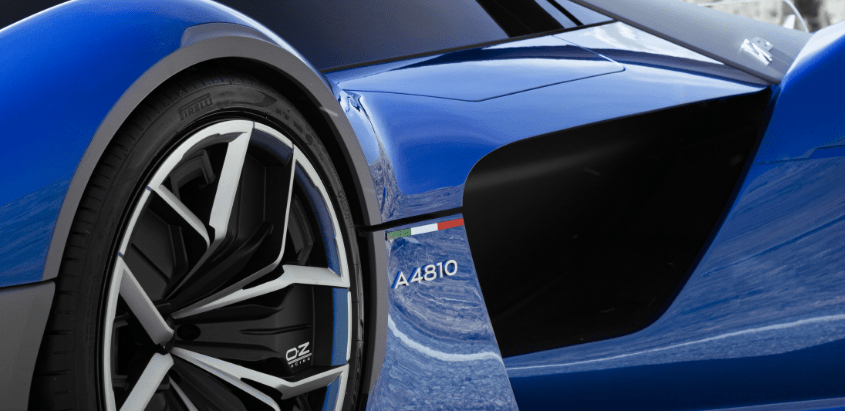
Furthermore, they chose a name that conveyed the brand’s legacy. In fact, ‘4810’ is the height (in meters) of the Mont Blanc: the highest and most emblematic peak in the Alps that sits at the border between Italy and France, like a bridge connecting IED and Alpine. The car manufacturer is named after the very same mountains and evokes the joy of driving along their winding roads.
A STUNNING LOOKING CONCEPT CAR
The Alpine A4810 Project by IED (length 5,091 mm – width 2,010 mm – height 1,055 mm – wheelbase 2,717 mm) is a two-seater supercar with the experimental combination of the shape of a berlinette with a hydrogen powertrain.
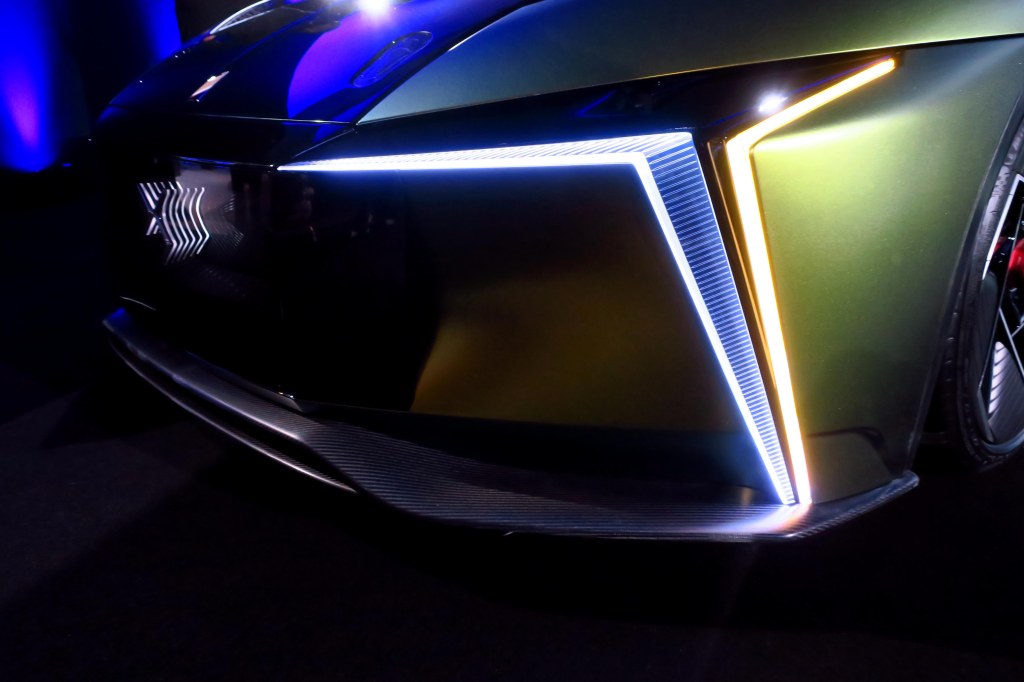
While the engine and fuel tanks are built like those on a typical hypercar, the subtraction process is proof of considerable innovation. The design alternates between empty and full spaces, giving the vehicle a lightweight look and aerodynamic features inspired by Formula 1 models. Furthermore, the A4810 Project by IED was tasked with bringing the brand to the cusp of the sports car category.
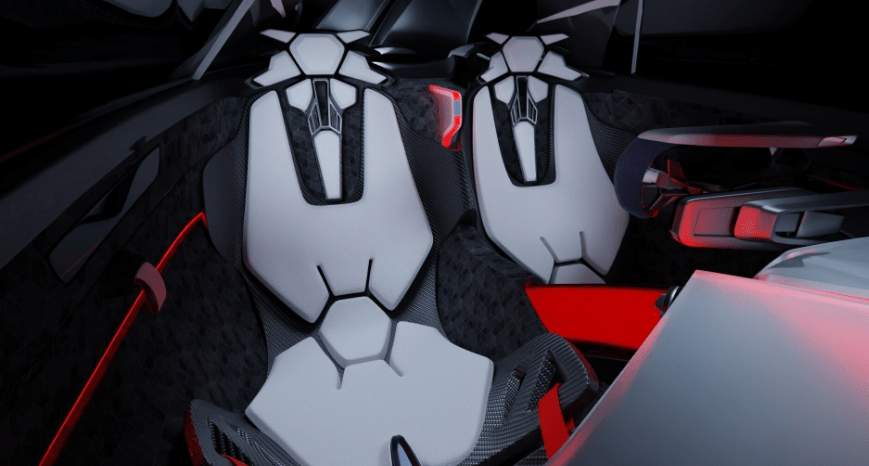
The team of students used digital tools to design the interior through sketches, 3D models, renderings, animations, and HMI (Human Machine Interface) development.
The A4810 Project by IED was presented on Friday, 18th March with a livestream broadcast from OGR Tech in Turin. For more info, please visit www.iedA4810.makeitlive.it.
Just click your way to Alpine’s sporty future, and in the meantime, have a look at the photos…!
The distinctive grille of the new 7 series will get an extra light signature…
At the BMW Group Annual Conference held on March 16, Frank Weber, Member of the Board of Management of BMW AG for Development, presented the first details of the future BMW 7 Series.
The focus lies initially on technology highlights, a new front-end design based on hallmark BMW design features and a unique interior experience consisting of digital features and exclusive materials. In April, BMW will present the all-electric BMW i7, and with it the entire new BMW 7 Series.
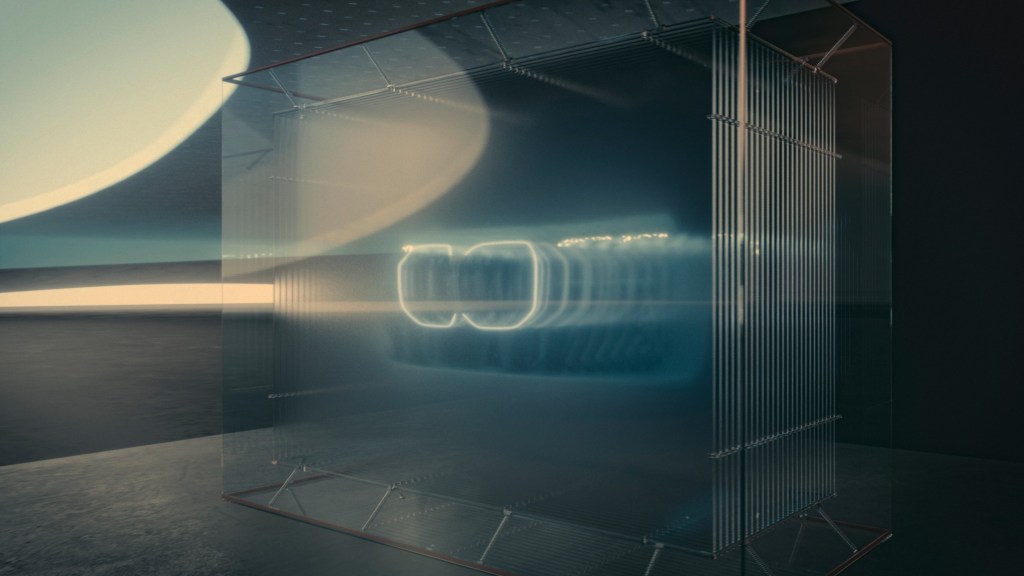
In the BMW i7, the characteristic design elements of twin round headlights and BMW grille have been completely reinterpreted. Some of the special design statements are upper light elements made of exclusive crystal glass and the illuminated contour of the kidney grille.
BMW developed also a new “My Modes” and the latest generation of the iDrive operating system. My Modes enable the driver to precisely customise the car’s driving characteristics and interior ambience. In addition to the BMW Curved Display, a new type of light and function strip on the instrument panel and the doors provides a visual and haptic quality.
The BMW Interaction Bar is part of the ambient lighting and also features integrated control buttons. In addition, the newly developed Sky Lounge panoramic glass roof adds to the feeling of spaciousness.
Cinema entertainment for the rear passengers…
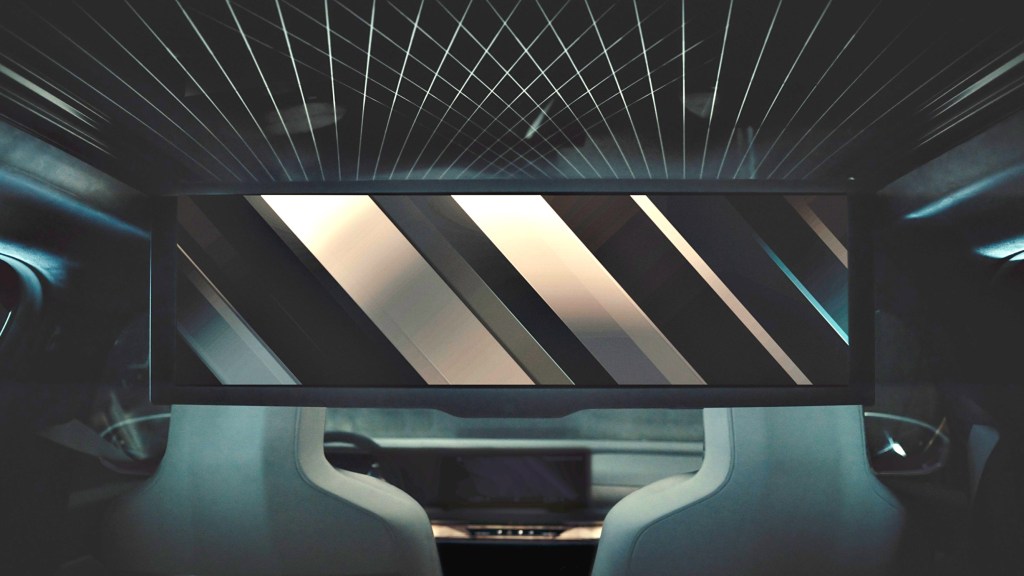
The rear of the BMW i7 sets new entertainment standards offering a unique cinematic experience. There is a BMW Theatre Screen, which moves out of the roof liner, an ultra-wide screen with a 31 inch screen, 32 : 9 panoramic display format and 8K streaming resolution. It transforms the rear seats into an exclusive, private cinema lounge where passengers can select their personal entertainment programme from a diverse range of streaming offers!
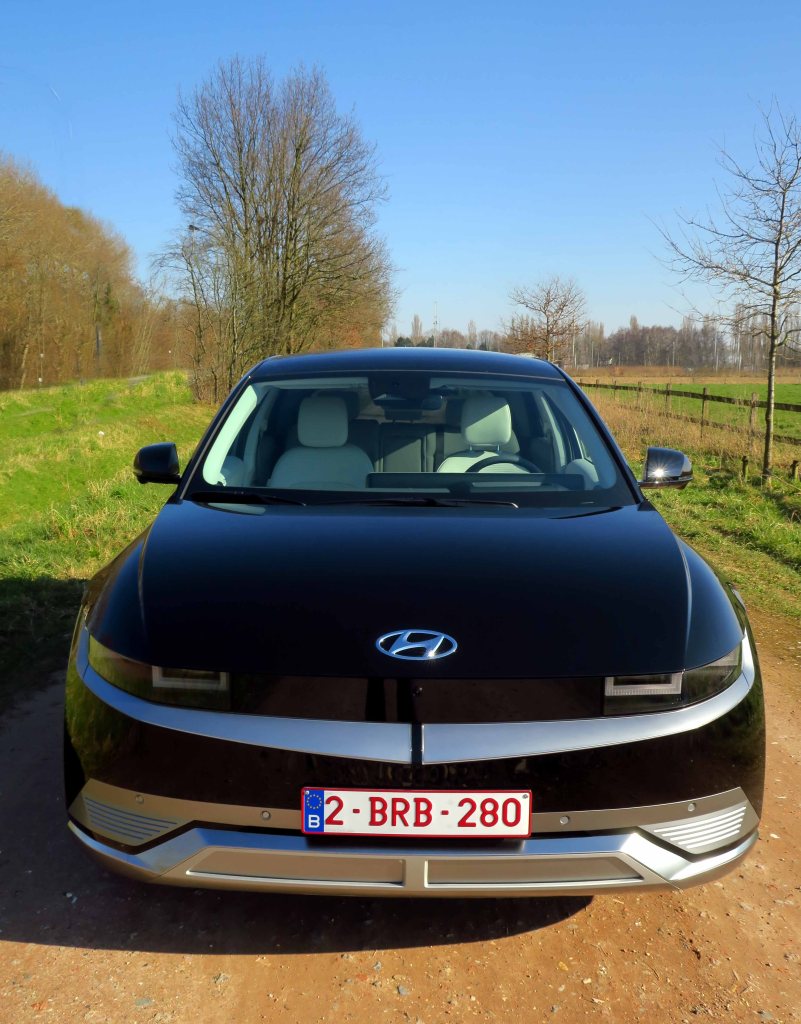
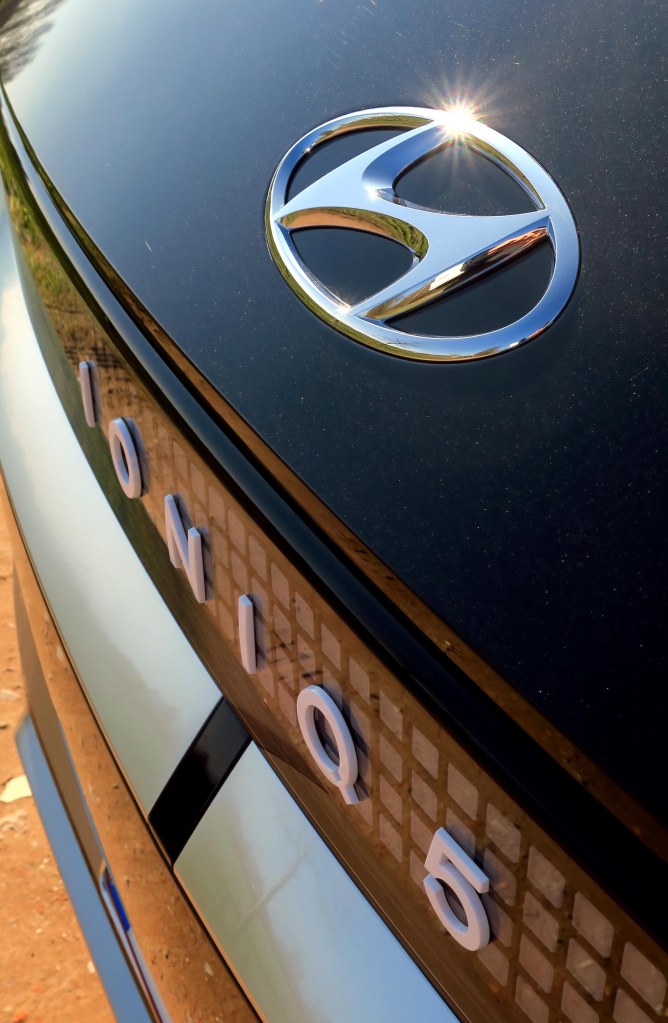
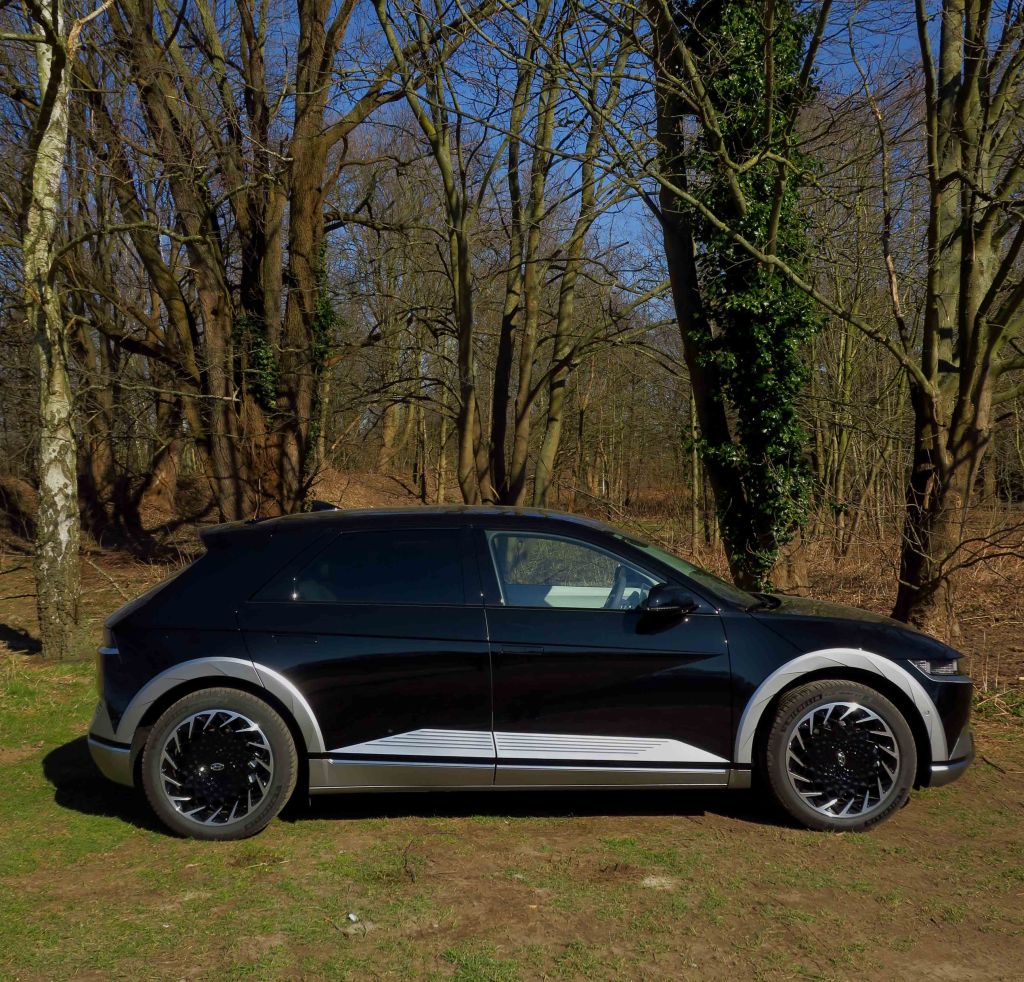
The Ioniq 5 is elegant with its retro-futuristic style…
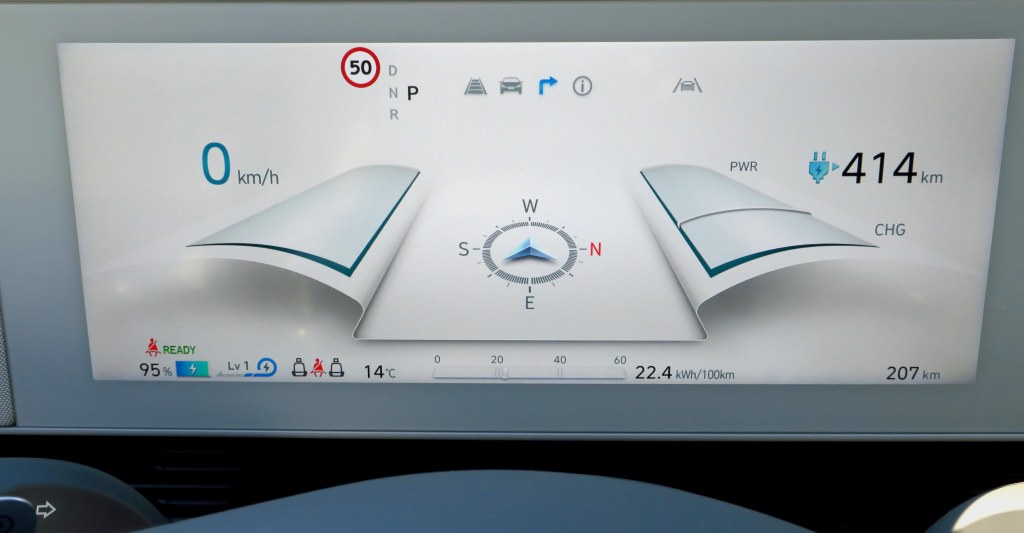
There are cars which make a mark in history. Such a car is certainly also the Ioniq 5. In the EV-segment, its retro-futuristic style make it really stand out. This also goes for the interior. Brimming with superb and clever solutions, the Ioniq 5 is nothing less than a game changer. It is the first car for me where you really get the feeling of driving a car of the future, and this is already by just looking at the graphics of the instruments in front of you.
Behind the wheel, the future smiles at you
And then we have said nothing about the way you sit in it, what space you have and how it drives, handles and performs…and how much it (only) costs. It moves boundaries, for sure. Just read on.
Hans Knol ten Bensel
Hyundai created for its electric cars a proper sub-brand: Ioniq. Now it has created the car which can justifiably be called the iconic ambassador of this brand: de Ioniq 5. This uniquely styled car (we truly love it) is classified as a CUV, or Crossover Utility Vehicle.
It runs on a totally new, dedicated platform, which Hyundai has specially developed for its electric cars. The so-called Electric Global Modular Platform or E-GMP. This platform comprises the chassis of the vehicle including the battery, motor and power electric system, and its scalable wheelbase allows it to form the backbone of many different vehicles. Indeed, Hyundai has great plans with it: it will underpin the Ioniq 6, which will be launched in the middle of this year. This will be an electric sports limousine. Then followed in 2024 by the Ioniq 7, a “classic” large SUV.
When it comes to EV’s, Hyundai is ambitious. It wants to have a technological top position in the EV-market by 2025. All this doesn’t seem to be unrealistic. The Hyundai Kona already impresses with impressive EV efficiency.
The electronic architecture of this platform also sets new benchmarks. Its 800V charging capability enables super-fast charging. In just five minutes the battery can charge enough for a range of 100km, and that is one of the very strong points of this Ioniq. With a 350-kW charger, the IONIQ 5 can charge from 10% to 80% in just 18 minutes.
But there are more advantages offered by this platform. It enables total freedom in vehicle design. Designed exclusively for BEV’s, it has no transmission tunnel at all. A completely flat floor is an ideal playground for (interior) designers. So explains Vice President of design, Haksoo Ha: “The innovative platform means we can design for greater productivity in transit,” and “Seats reclining to a near-horizontal will provide a ‘zero gravity’ experience and will open up endless configuration opportunities.”
Indeed, the front seats convert into first class sleeping seats. Ideal when on a longer evening trip you can take a power nap when your Ioniq is quickly recharging to bring you home…
There is no transmission tunnel, the front centre console can be moved backward, so front legroom is also limitless sideways.
Also in the back there is ample legroom, last but not least because of the Ioniq’s long 3 meter wheelbase. With the absence of the transmission tunnel, it seats three grownups relatively comfortable at the rear. The back seat can also be inclined and moved fore and aft! Indeed, the well proportioned and elegant Ioniq is big. It is 4,64 meters long, and 1,89 meter wide. Its boot offers 531 l space in standard setup, and with the rear backrests down, a maximum space of 1591 l is available.
Under the front hood, above the electric motor, you find a neat box with its lid having the appearance of an engine cover. When you drive the two wheel version of the Ioniq 5, this box offers 57 liters, with the 4WD version this is “only” 24 liters.
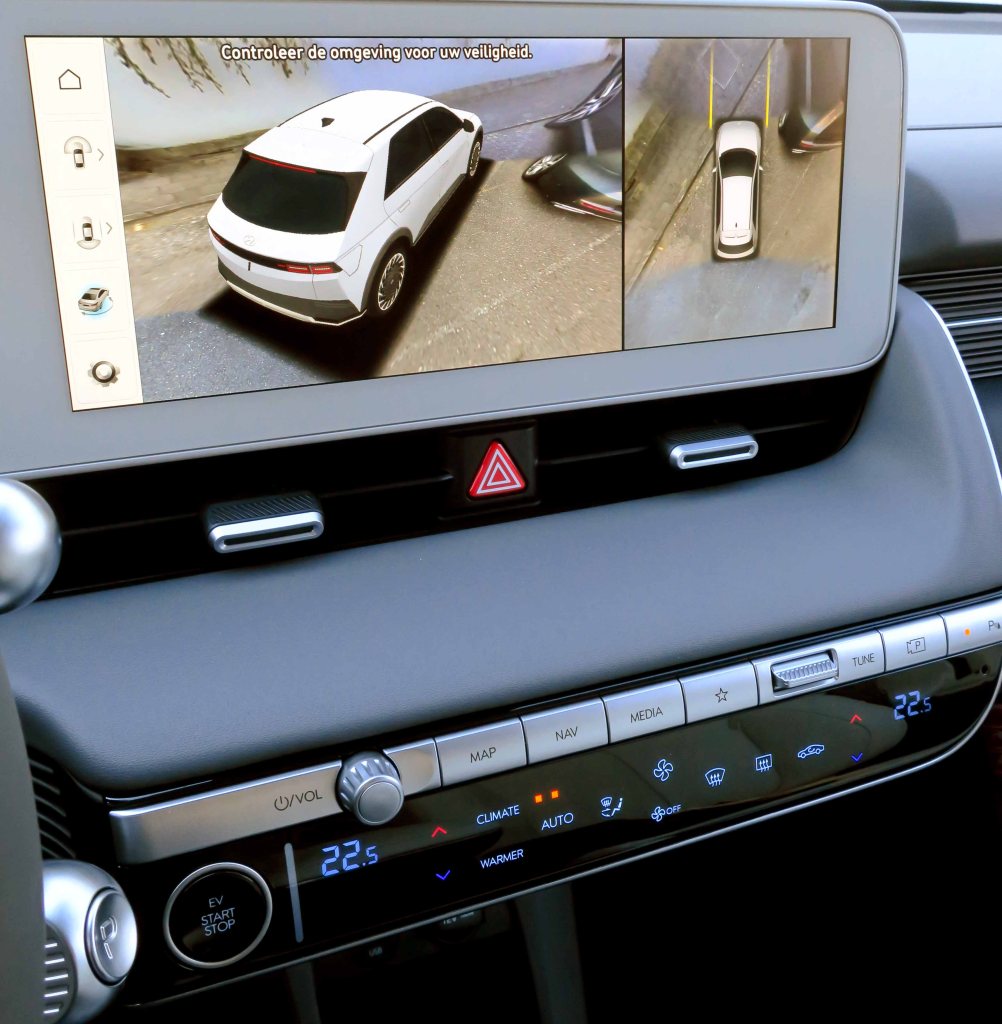
But let’s turn to the stylish dashboard. Notwithstanding its futuristic clean architecture with two wide screens, it is surprisingly intuitive to use, and you really don’t need an instruction manual to put all its functions to work. Beneath the central touchscreen you find the heating/ventilation functions, with classic buttons and controls.
Under the hood…
The E-GMP platform allows a wide choice of drivetrain combinations. The Ioniq 5 can be had with one or two electric motors, resulting in rear wheel drive or 4WD as the second motor drives the front wheels, and two battery capacities, 58 or 72,6 kW respectively.
Total available power ranges from 125 kW/170 HP to 225 kW/, with the top version accelerating from 0 to 100 km/h in 5,2 seconds. Top speed is for all the power versions limited to 185 km/h.
Our test car had the 160 kW/217 HP engine, developing 350 Nm of torque. This resulted in an acceleration from 0 to 100 km/h in 7,4 seconds, coupled with the 72,6 kW battery. Consumption according to WLTP standards is 16,8 kWh/100 km, with a range of some 481 km. Range anxiety is in the light of the fast recharging capacities a thing of the past…
On a 101 km triip with dense traffic at varying speeds, we clocked a consumption of 16,1 kWh…
The larger battery also allows you to tow greater loads, up to 1600 kg for our test car…
Did you know that the Ioniq 5 also has a 230 V external plug adapter? It’s so-called “V2L” function in the car can also supply up to 3.6 kW of power. So when you are out in the open, and want to charge your laptop or use a spot light or portable fridge or recharge the battery of your electric bike, the Ioniq 5 helps you out…
The Ioniq 5 has of course the usual driving modes, from Eco to sport, and you have also two paddles at the steering wheel which allow you to choose the degree of E-recuperation when you lift the throttle. During our test, we used mostly the level 3 position, which we felt delivered the right deceleration, and with some experience, we managed to drive around town and on the open road without ever touching the brake pad pedal at all…
Driving is (again) believing…
Driving with the Ioniq 5 is nothing short of delightful. Twist the ring on the selector stick a click forward in “D” and there you go. The Head-up-Display with Augmented-Reality-Function is ultra visible and shows what you need to know. Progress is silent and smooth. The suspension is also quite comfortable, and the Ioniq seems literally to float over the road surface. Body roll is virtually absent and the suspension is not too soft either, but copes rather well with potholes and ridges.
This is your ideal mount for long urban and/or Gran Turismo trips. Handling is also much more precise and nimble than one would expect from a two-tonne car, but the low gravity point of the battery package results in impeccable and stable cornering. We found also the lane assist functioning very smoothly, and we liked also the electronic displays of blind spots when you operate the left or right indicator. A wonderful solution!
The Ioniq 5 is large, but just be surprised with us, this Ioniq offers distance parking! Just press the symbol on the key, and the Ioniq 5 will sweetly drive itself into or out of a narrow parking space.
The superb smoothness and acoustic refinement of the Ioniq is further enhanced with a superb Bose audio system, and Classic Music and Jazz buffs as we are, our ears also enjoyed every ride…
Conclusion
Style, grace, space, this Ioniq has it all; add to this the panache in the design details of headlamps and rear lights, in ’80 retro futuristic fashion. It really stands out.
Also the 20 inch alloys are elegant and aerodynamically efficient. This Hyundai has been carefully thought out, is wonderfully designed with no detail being overlooked. Add to this the efficient motors, the impressive recharging capacity, the generous space, and you understand our enthusiasm. You will also be smiling when you see the price of the Ioniq 5 in whatever version you choose.
Hard to beat? We should think so. Except maybe by the Kia EV6, running on the same platform and using the same technology, which we are driving at the moment of writing, and of which you will also read our driving impressions soon!
Kia announced its key targets to transform into Sustainable Mobility Solutions Provider. This corporate vision is supported by three key pillars – ‘people’, ‘planet’ and ‘profit’. It did this in presenting the roadmap to 2030 at the company’s 2022 CEO Investor Day virtual event.
Under these pillars, Kia will strive to enhance customer value and nurture talents, reduce carbon emissions in consideration for the environment, and generate profits while working as a responsible corporate citizen.
Kia also announced its four key business targets for 2030. These core business aims include: accelerating electrification and achieving annual sales of 1.2 million battery electric vehicle (BEV) units by 2030; reaching 4 million annual vehicle sales by 2030, including over 2 million eco-friendly models; expanding the application of connected car feature and autonomous driving technologies to all new vehicles; and become the number one brand in the global purpose-built vehicle (PBV) market by 2030.
Kia to establish a line-up of 14 BEV models by 2027. Indeed, starting in 2023, Kia plans to launch at least two BEVs per year. Compared to its previous plan to release 11 models by 2026, Kia will add two electric pickup trucks – a dedicated electric pickup truck and a strategic model for emerging markets – and an entry-level BEV model.
‘AutoMode’, Kia’s new autonomous driving technology, to be launched in 2023 with first application in EV9…
Kia’s range of autonomous driving technologies, branded ‘AutoMode’, will be rapidly expanded throughout the line-up starting with the EV9 in 2023.
Kia AutoMode supports performance optimization through wireless updates and will be improved as the technology develops. It will also include Highway Driving Pilot feature which would enable driving without driver intervention on highway sections. Kia aims to expand connected car features to all vehicle lineup by 2025
Aims to become No.1 global PBV brand by 2030···first dedicated PBV model in 2025.
Indeed, As a customer-centered company, Kia will provide flexible mobility services that reflect the diverse needs of people and businesses. A core part of Kia’s work in this area will focus on PBV. (Purpose Built Vehicle)
Kia is the one of the first movers in the global PBV market and plans to become a market leader. The demand for delivery and logistics services has increased significantly following the acceleration in e-commerce during the Covid-19 pandemic. In the mid-to long term, Kia will develop dedicated PBVs. The dedicated PBV will be developed as flexible structure that sits on a flat, skateboard EV platform, so that the size and shape can be adjusted according to the purpose and customer needs.
Kia will launch its first dedicated model in 2025 when the PBV market is expected to mature. The first dedicated PBV will be similar in size to a medium-sized vehicle, with inherent scalability.
Company announces financial targets for 2026···gross revenue of KRW 120 trillion; operating profit margin of 8.3%
The company plans to garner 39 percent of operating profit from BEVs in 2026 with the reduction of fixed costs through volume expansion and cost reduction from technology development.
Furthermore, Kia expects that by 2026, the contribution to operating profit from all eco-friendly models will reach 52 percent, exceeding that of internal combustion engine models.
To achieve these goals, Kia will not only expand sales of its eco-friendly models but also greatly improve profitability, securing additional sales and profit structures due to the commercialization of new businesses and technologies.
Kia will also actively participate in Hyundai Motor Group’s next-generation projects, such as Advanced Aviation Mobility (AAM), robotics. Specifically, Kia plans to focus on creating synergy between the Group’s AAM efforts and its own PBV business.
We keep you posted further on Kia soon as next week we will test the Kia EV6!
In the stormy February days, the new Opel Grandland stood admirably its ground against the elements…
My love affair with Opel really dates a long time back. To 1968, to be exact. As a university student studying law and economics, I replaced my father on a press trip in the South of France to test the sleek Opel 1900 GT fastback two seater. It was designed by Opel stylist Erhard Schnell, who had taken the ’67 Corvette as a model, and had the 1,9 litre single overhead cam four cylinder under its long bonnet. I remember driving it with verve over the twisty roads of the Massif de l’Estérel, as I did now with the DS9. It was bullet fast and nimble to me, as I remember it.
The Opels then had already plenty of panache and character. Then came the Commodore GS Coupés, the Manta’s, even the big Admirals and V8 Diplomats. They were appealing, rock solid and fast. All this good qualities came back at the wheel of the Opel Grandland Hybrid.
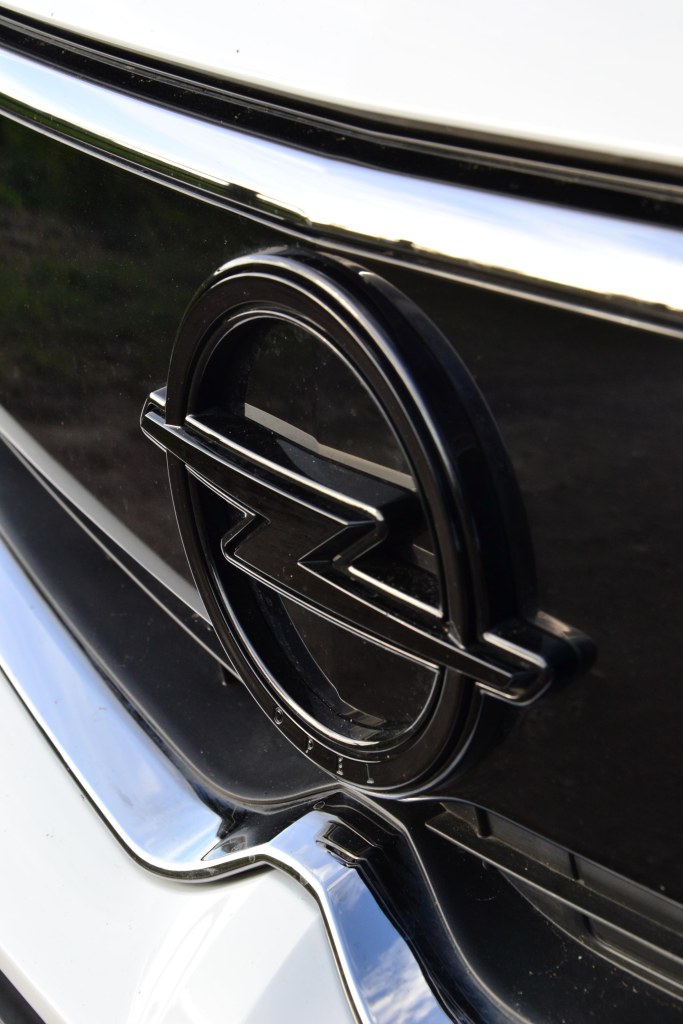
The “Blitz” or lightning still adorns the Opel emblem…
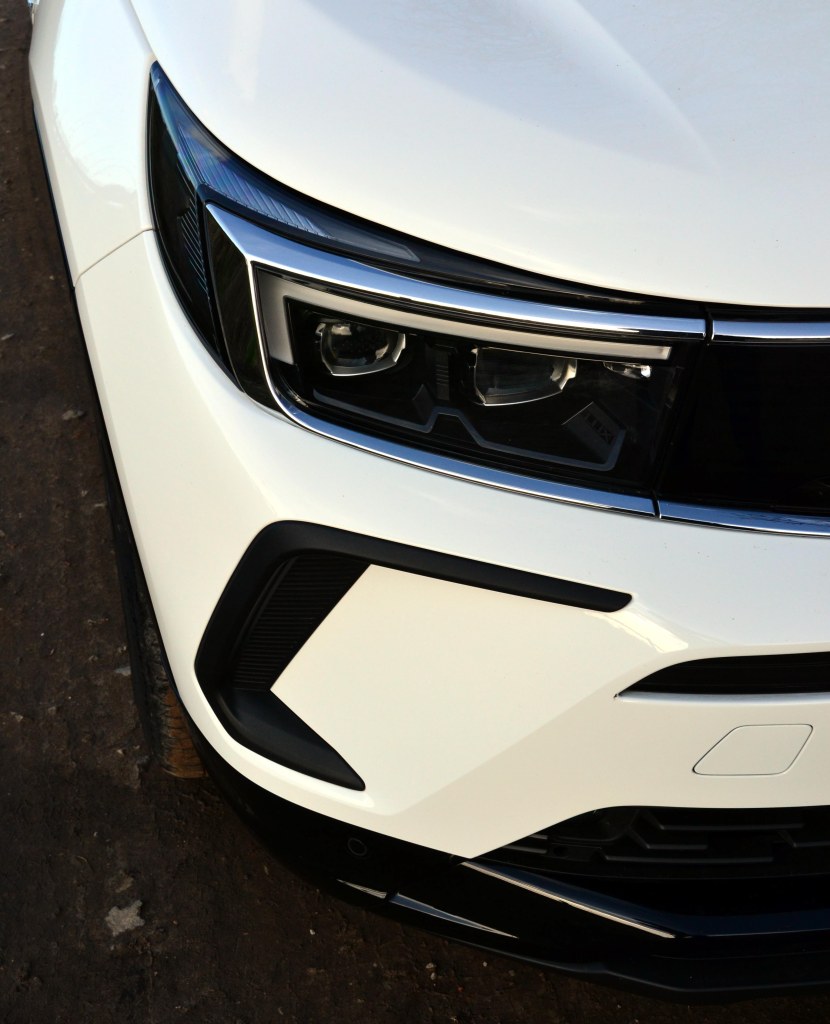
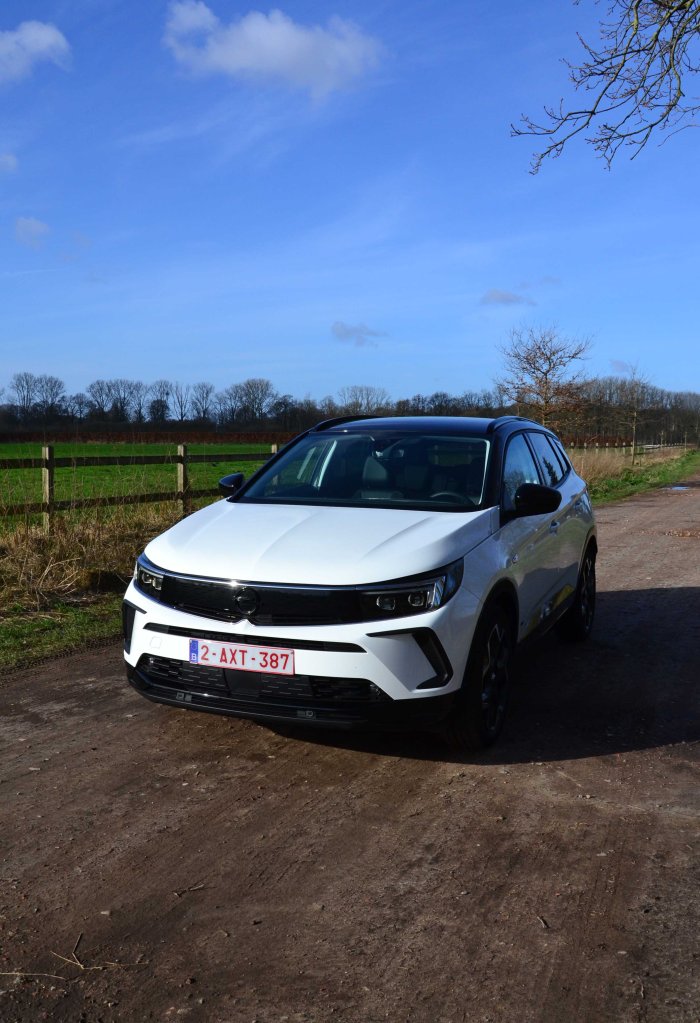
Stylish, with the new Opel Vizor front grille, the Opel has a distinctive and very clean, contemporary character. The dashboard and infotainment displays are an example of less is more, and indeed are just “right” for everyday driving. It also embodies the no nonsense approach of Opel. But it is mostly in the way this Grandland steers and drives that my good Opel memories came back. It invites you to adopt an active driving style, due to its overall responsiveness and handling. Again the car also feels solid and well built, for years to come, is roomy and has this unmistakable Opel “no nonsense” character. But just read further…
Hans Knol ten Bensel
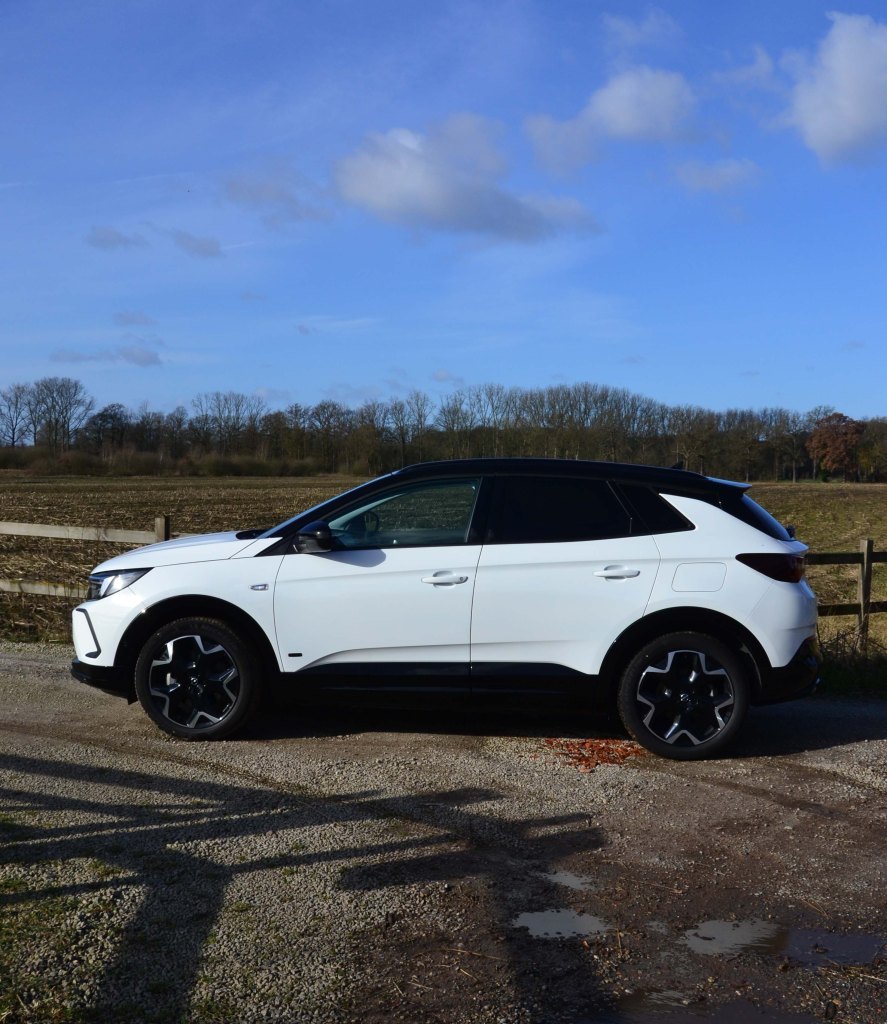
Dual tone paintwork and the glass panorama roof on our test car add panache…
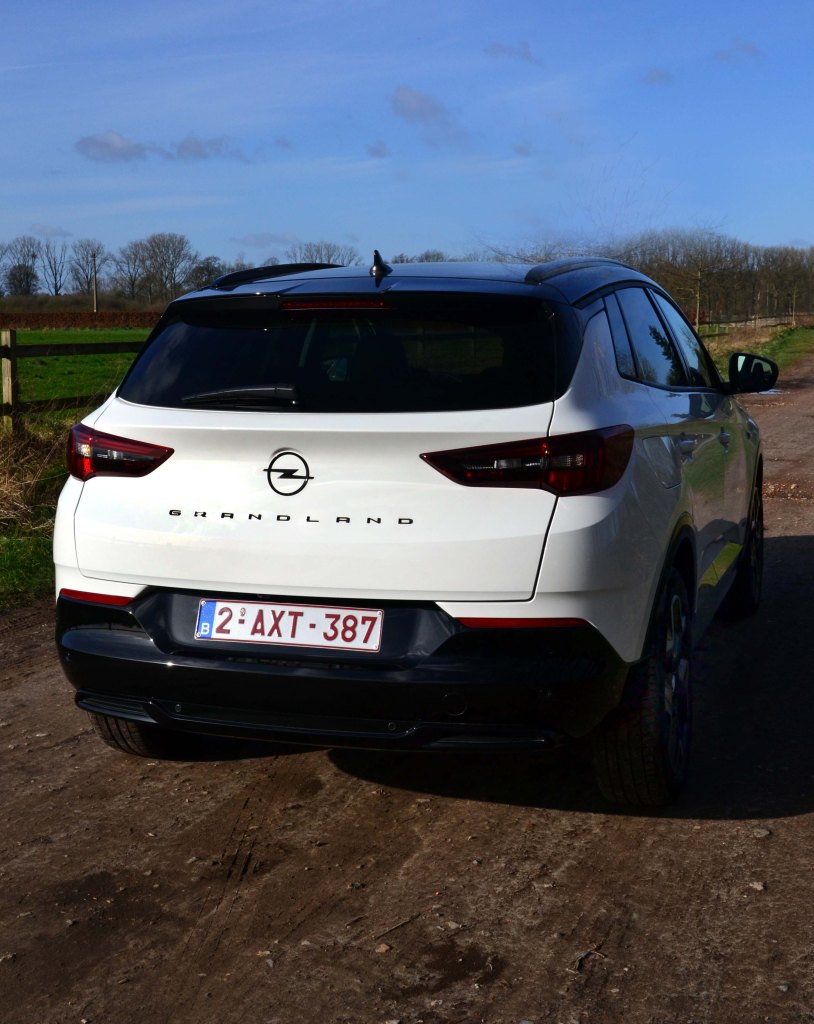
The elegant Grandland rolls of the Opel assembly lines in Eisenach, and certainly pleases from any angle. Your servant liked especially the dual tone paintwork, also a typical hallmark of the Grandland…
The stylish Vizor front grille houses high-tech, such as the adaptive IntelliLux LED® Pixel Light. The light focus is adapted to every bend and corner, the beam has always the optimum range and cuts out uncoming traffic in seconds. While we are talking about the electronic wizardry in this Opel, let’s continue a bit on this subject.
The Vizor front grille houses the adaptive IntelliLux LED® Pixel Light.
Indeed, this Opel also includes Night Vision. This system is found amongst others also on the DS4. The system’s infrared camera detects people and animals up to 100 metres ahead of the Grandland in the direction of travel, based on their temperature difference from the surroundings. Night Vision warns the driver and shows the position of pedestrians, for example, in the digital Driver Info Center in the new “Pure Panel.” See also how the system works on YouTube, link: https://www.youtube.com/watch?v=djieXHE9iBM&list=RDCMUCSr5PuKiJ5Zi00zfsiT-7jA&index=1
Also new in combination with 8-speed automatic transmission is Highway Integration Assist. The adaptive cruise control will brake to a standstill if necessary. Thanks to “Stop & Go”, the Grandland with Highway Integration Assist will also automatically resume driving from this standstill.
Intuitive and relaxing: The Opel Pure Panel cockpit.
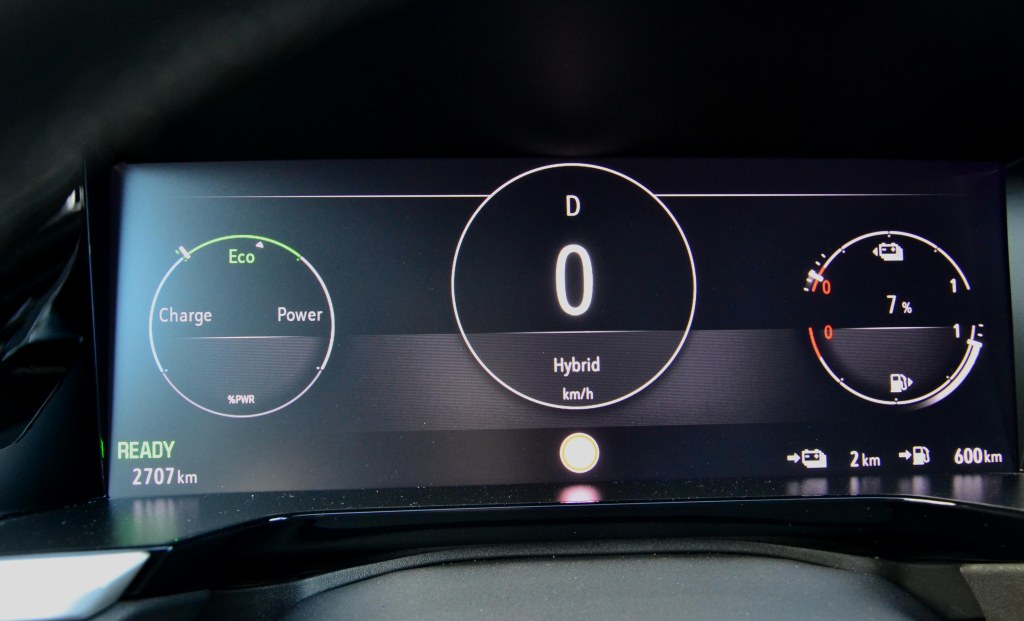
The customizablescreen in front of the driver gives you to the point information…
Two wide screens in a single unit form the Opel Pure Panel. There is the so called “Driver info Center”, a 12 inch screen right in front of you, and a 10 inch central touchscreen which is also turned towards the driver. Of course, the two screens can be personalized to your taste. In the driver’s central field of vision, there are now menu entries for the new Night Vision camera as well as for drowsiness warning, oil temperature and on-board computer settings.
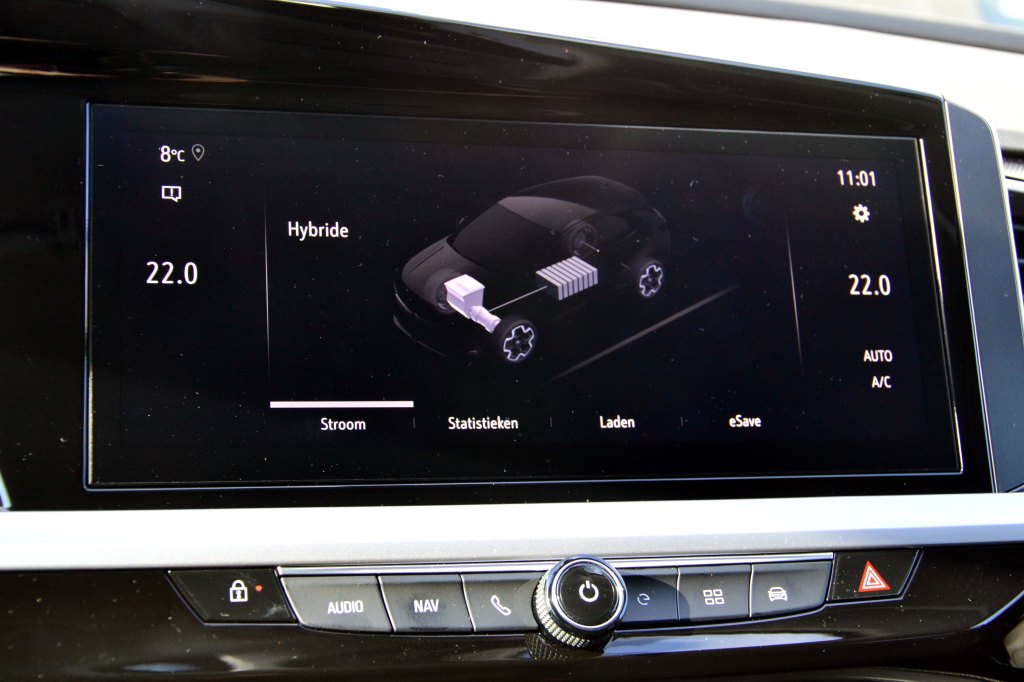
The centre display can show the energy flow, but also the eSave function and charging as well as consumption statistics…
Further details on audio or navigation, which were previously only displayed on the infotainment system monitor, can now also be selected via the Driver Info Center, and on the Hybrid version we tested, the display of the energy flow can also be seen on the display straight ahead of you.
Apple CarPlay and Android Auto compatible multimedia infotainment systems up to Multimedia Navi Pro is of course also available.
We loved the “less is more” approach in the screen layouts, and the intuitive way everything could be used.
Behind the wheel…
A smooth 8 speed auto box and the choice between three drive modes: “Electric”, “Hybrid”, “Sport”
Stepping into the Grandland SUV is a breeze as it sits a bit higher, and you are welcomed in ergonomic active seats for drivers and front passengers certified by the “Aktion Gesunder Rücken e.V.” (campaign for healthy backs). Indeed, they support you very well, and offer a wide range of adjustments, from electric seat tilt to electro-pneumatic lumbar support. They offer heating and in the leather trim even ventilation.
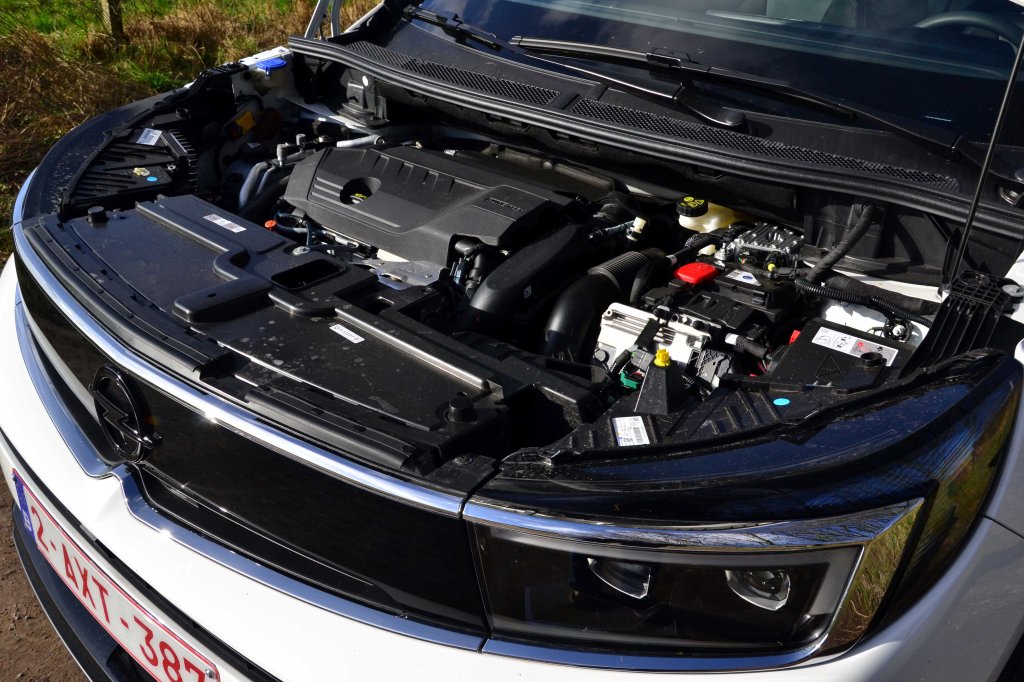
The Hybrid Grandland has, as we said, the same 8 speed auto box we find in the DS E-Tense versions for example, and this is a smooth one indeed. It is mated here to the also familiar four cylinder 1598 cc engine we find back in other Stellantis Group models, delivering here an impressive 133 kW/180 hp at a sporty 6000 rpm.
A total system power of 165 kW…
But of course, the Hybrid is assisted by an electric motor driving the front wheels, developing 81.2 kW/110 hp @ 2500 rpm. Total system power is 165 kW/224 hp, which is even 15 hp more than the 1964 3,4 litre six cylinder Jaguar Mk II which I now own for almost 40 years. You can understand that the performance is nothing short of exhilarating: 0 to 100 km/h is absolved in 8,9 seconds, top speed is 225 km/h, with 135 km/h reached on the electric motor alone.
Overall liveliness is however even more the result from the massive torque the Opel driver has at his or her disposal: the 1,6 litre direct injection turbo engine is already good for 300 Nm at 3000 rpm, but it is of course the electric motor developing 320 Nm over a broad range between 500 and 2500 rpm which makes all the difference. This pulling power is smoothly transferred to the front wheels by the automatic transmission, and this makes this Opel an absolute joy to drive, whether in tight urban traffic or on open winding roads. We rediscovered the Opel DNA, and absolutely loved it. The engine is barealy audible, only a subdued sporty roar is heard when one is pushing (very) hard.
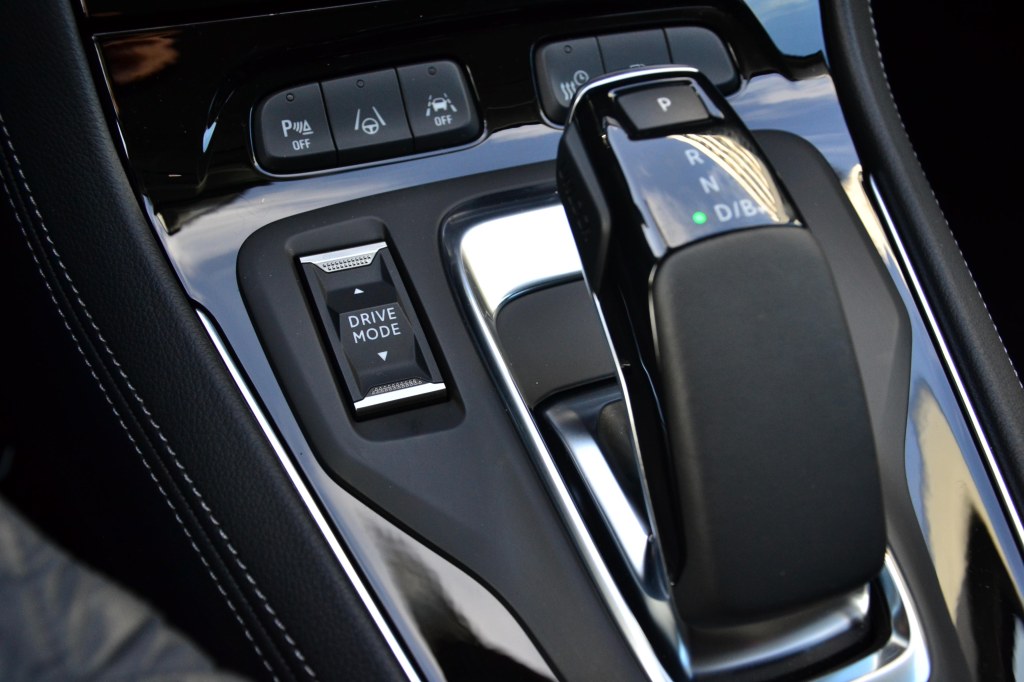
Driving this 1,8 tonne car enthusiastically in “sport” mode costs energy, and therefore the test consumption suffered somewhat. Making rather dynamic (urban) errands cost us some 8 litres/100 km, topped with some extra kW’s in the process, but suffice to say that the consumption of a plug-in Hybrid depends greatly how you use it and recharge it, we said this already so many times. You can of course choose between different driving modes (“Electric”, “Hybrid”, “Sport”), and when you frequently recharge your Grandland, you will hardly consume any fuel at all. If the driver shifts the automatic transmission to drive mode B, this recuperation and the braking torque are further intensified, and there is also an “E-save” function which allows you to save the battery power to use it later when driving/entering in town areas. The function can be set via the colour touchscreen of the infotainment system.
According to WLTP, the fuel consumption is 1.8-1.3 l/100 km, kWh consumption lies between 17.5-15.0. The E-range varies between 64-53 km. CO2 emisisions vary between 41-29 g/km. The Hybrid version has a lithium-ion battery with 13.2 kWh capacity. Charging time at an AC household socket with mode 2 cable is some 7 h 30 min.
The suspension is taut without being uncomfortable, conveying this typical “German car” feel, or, shall we say “Opel” character? It is quite busy on our bad Belgian and Flemish roads, which manage to have much pore potholes, ridges and irregularities than (many) other European countries. The result of the rather firm setup is that this Opel steers precise, and invites you to a dynamic driving style. On motorways the Opel Grandland is masterfully stable, and really feels in its element.
Practical
Opels are made to excel in daily (family) use, and offer the roominess to do it. Boot capacity varies between 390-1528 litres. You can order a sensor-controlled tailgate that can be opened and closed by a movement of the foot under the rear bumper. Here, too, the unlocking settings and opening angle of the power tailgate can be customised via the corresponding menus in the colour touchscreen. Doorbins are large, and also the central console offers good stowaway possibilities.
The Opel Grandland is elegant with a clean, contemporary styling language…
Conclusion
The Grandland PHEV has all the good, iconic Opel qualities. Very practical and simple to use, it is inviting in its responsiveness and agility, giving you genuine driving pleasure every time you take the wheel. The performance is impressive, but altogether smooth and effortless. The Grandland feels taut and stable, the finish and quality of the materials used is impeccable, the car is practical, has this unique no nonsense character, and is on top of all that is very stylish indeed.
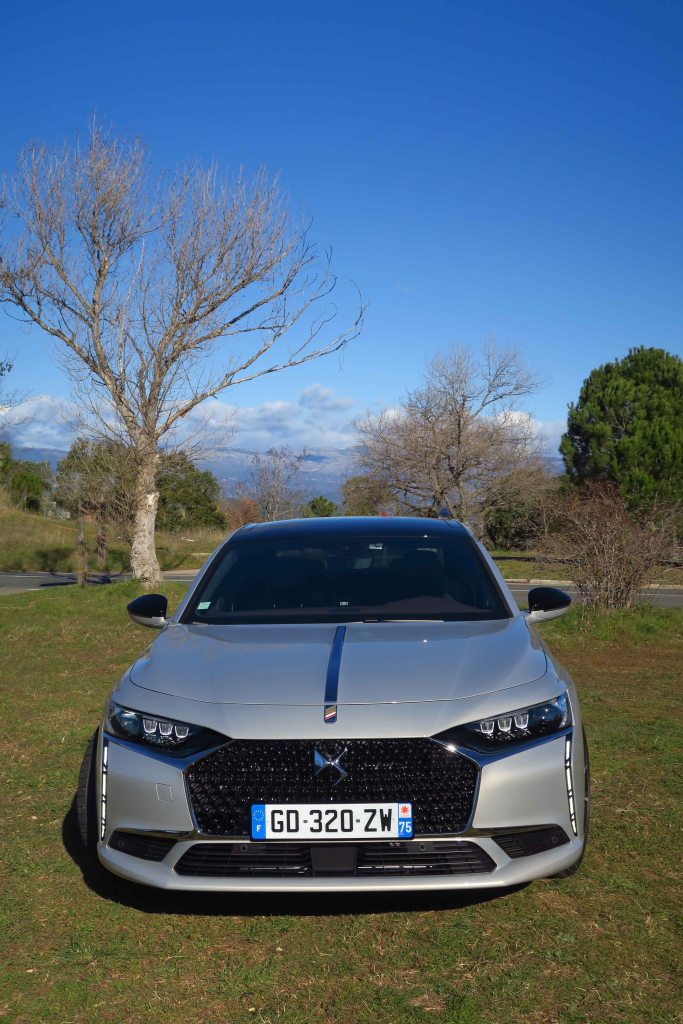
The French automakers have a unique tradition of building “Grandes Routières”, distinctive in style, comfort and performance. DS Automobiles takes this custom to new heights in this electronic times and age, putting also their vast experience gained over recent years in E-formula racing into their automobiles.
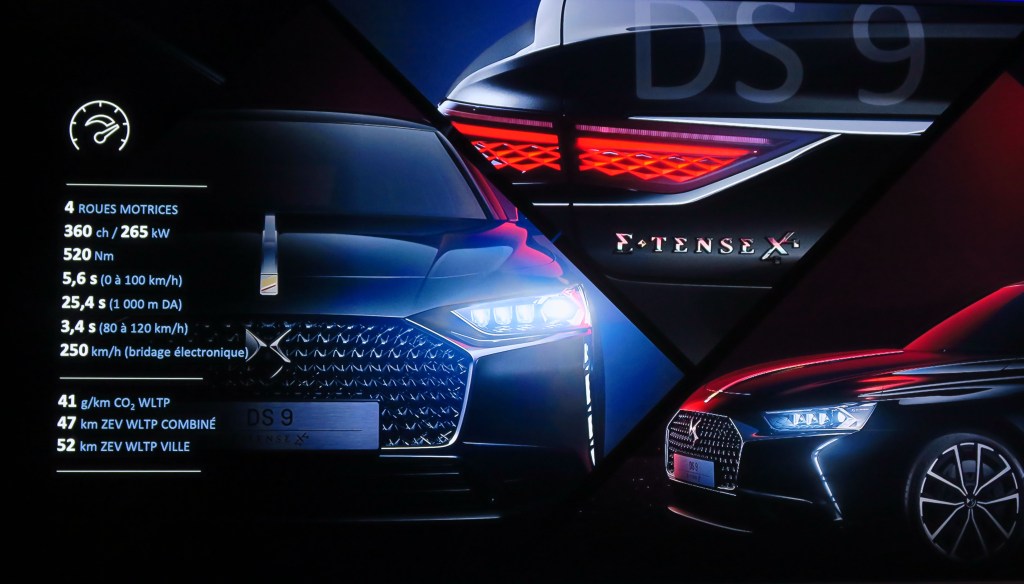
The result is the E-TENSE 4×4 360. A 4-cylinder 200 horsepower engine and two electric motors, one 110 horsepower (integrated with the gearbox at the front) and the other 113 horsepower (linked to the rear axle), are aided by intelligent four-wheel drive transmission. The 11.9 kWh battery features advanced management to save energy so as to handle different applications, says DS Automobiles.
The result is of course breathtaking performance, not in the least thanks to the ample torque developed by the two electric motors. 0-100 km/h takes only 5.6 seconds, top speed is electronically limited to 250km/h, with the capability of reaching 140 km/h on electric power alone. Total torque, engine and E-motors combined is an impressive 520 Nm.
The figures displayed here at the press conference about the DS9 E-Tense 360 tell it all…
But there is more than just sophisticated power. It means also that the DS9 is designed to combine the virtues of E-power with combustion power to achieve the environmentally responsible footprint of a modern, electrified high end performance limousine.
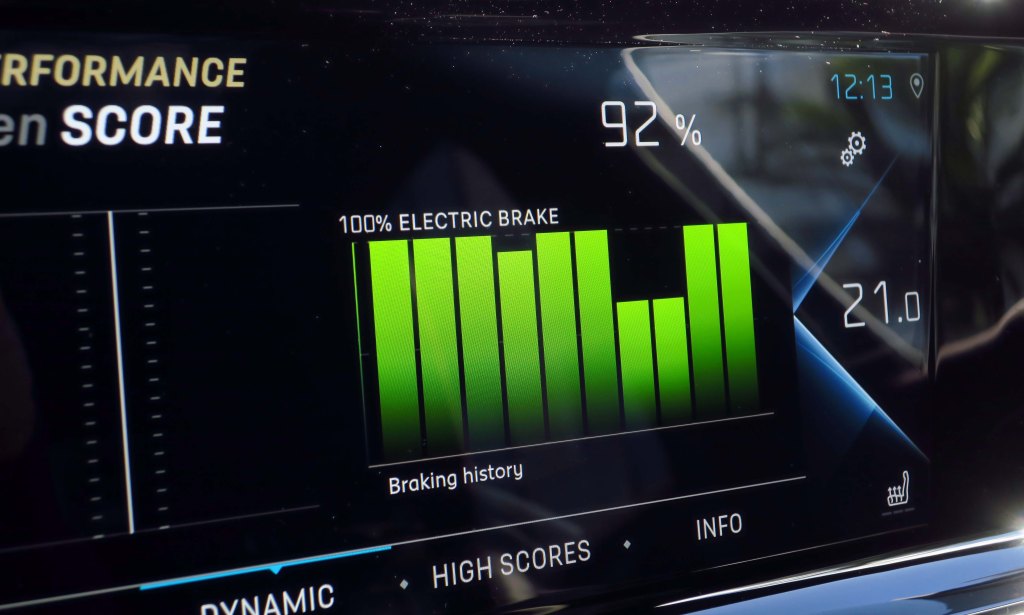
At the morning press briefing before we took the cars on the road on a well chosen 148 course around Nice, Christophe Château of Product Communication DS Automobiles explained us a unique feature of the DS9, which put us in the footsteps of the E-formula racing pilots: the “Energy Coach”, an exclusive app installed on the DS9.
On the 148 km long varied test course, your servant managed a score of 92 % recuperation of kinetic energy!
Developed with DS Performance and double Formula E champion Jean-Éric Vergne, the DS ENERGY COACH app helps drivers to maximize energy regeneration during deceleration. Scores are shown on the central screen. The trick is to fine tune your pressure on the brake pedal, so that the brakes are not activated and all the kinetic energy is transformed again into E-energy. It takes clever anticipation to achieve this in all traffic situations. The Formula E-drivers have to do this too, to enable them to have sufficient battery power for these last extra fast laps in the final stages of the race…
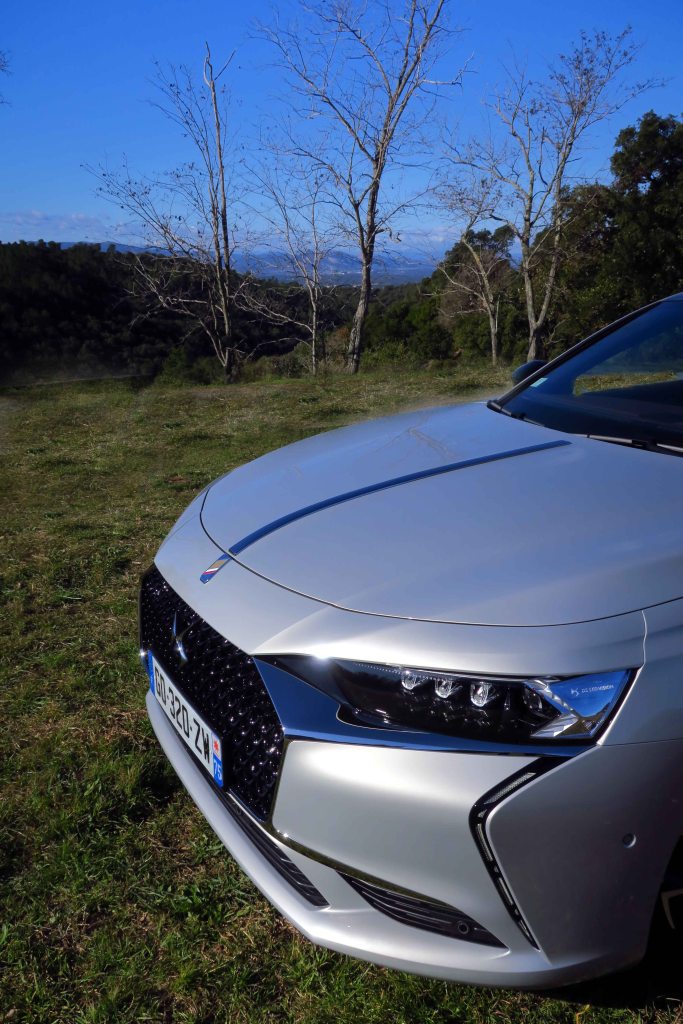
Your servant decided to have a go at this, and indeed, while being totally unfamiliar with a very mixed course comprising sharp bends on the corniches in the beautiful Estérel, the autoroutes and the city streets in Cannes and Nice, I managed a score of 92 %, meaning that 92 % of the kinetic energy in all my decelerations was transformed into E-energy. By doing this, we still maintained a rather brisk pace, as we had to respect the “moyenne” or average speed because we had to be back at the starting point of the course at 12.00 h to have lunch and attend the second press conference in the afternoon. I had to hurry even slightly more as I had to allow also some time to take some photos you see here.
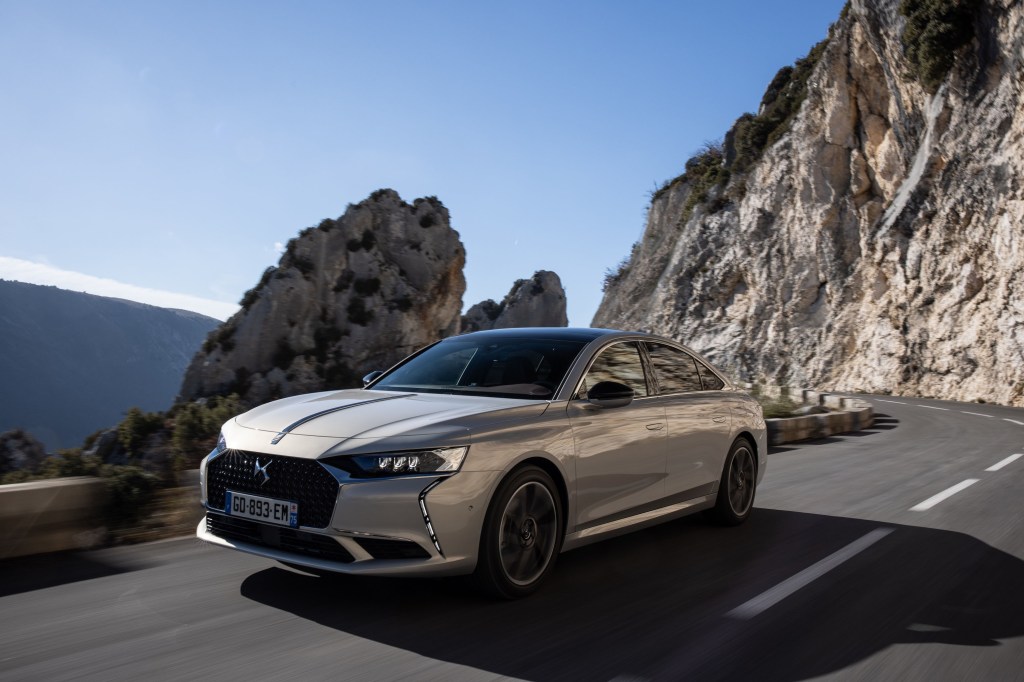
So the DS9 was driven with verve over the winding roads on the cornices, and here I discovered again how well the comfortable suspension behaves in these conditions. We already applauded in our previous test of the DS9 225 the merits of the DS ACTIVE SCAN SUSPENSION, which scans the road ahead of you to fine tune the suspension to an ideal setting to cope with the road surface irregularities immediately in front of you. You can see a 1 minute You Tube film by DS automobiles on this system with the following link: https://www.youtube.com/watch?v=ZE-1MolcvAI
Indeed, remaining stable and predictable as on rails with virtually no body roll in corners, the DS9 remained utterly comfortable.
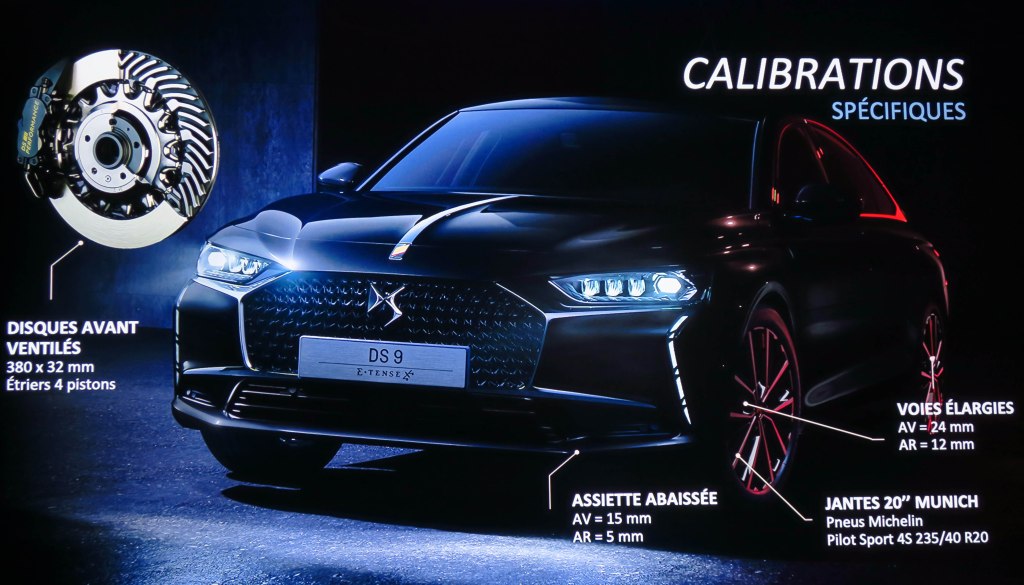
This slide shows the modifications made by DS Performance on the DS9 4 x 4 360…
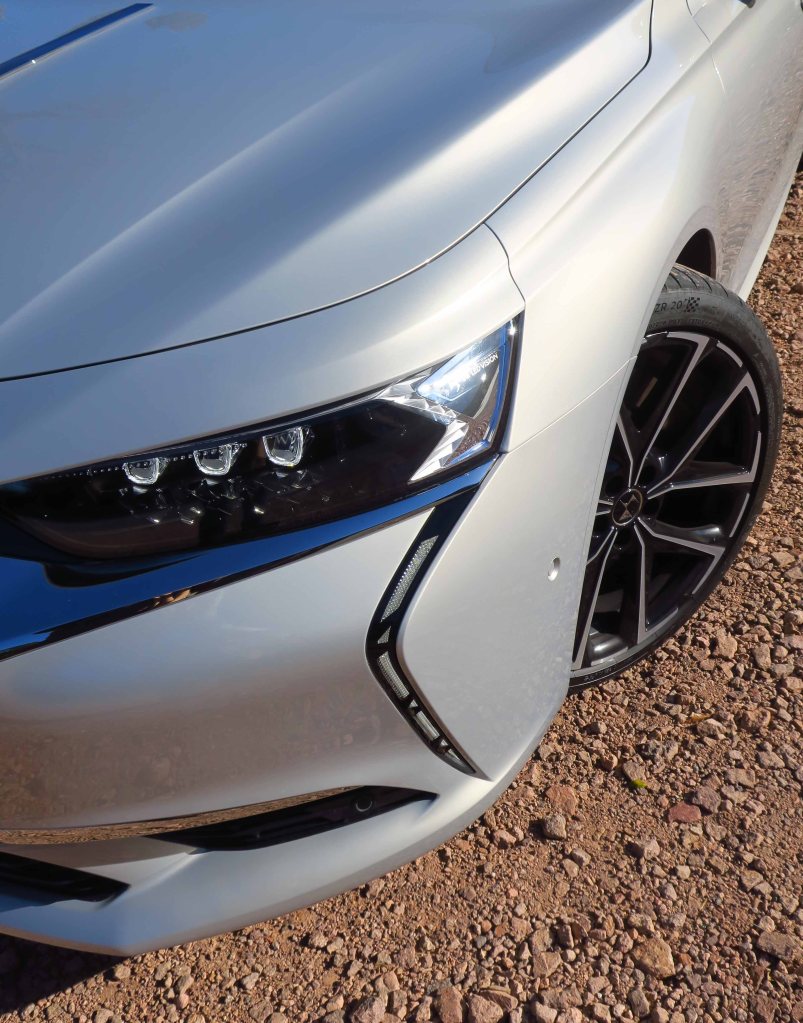
The DS 9 E-TENSE 4×4 360 uses special front and rear axles with a wider track. The braking system is uprated with four-piston calipers for better power distribution under heavy braking with 380 x 32 mm discs at the front (up by 50 x 2 mm compared with DS 9 E-TENSE 225) and 290 x 12 mm at the rear. 20 inch MUNICH alloys are used and the suspension is lowered.
We could not measure exactly due to time pressure our consumption on the trip, but suffice to say here that after 148 kilometers, only a quarter of the small 41 litre petrol tank was emptied…boiling down probably to a fuel consumption of some 7 litres/100 km, with also a good 15 % of the battery still remaining charged.
In zero emissions mode, the DS 9 E-TENSE 4×4 360 covers 52 kilometres on the WLTP urban cycle or 47 kilometres on the WLTP combined cycle.
According to the WLTP Cycle, fuel consumption is restricted to 1.8 litre / 100km with homologated CO2 emissions of 41 g/km.
During our trip, we (re)discovered what an excellent GT this car really is, indeed a totally relaxing and an undisturbed joy to drive. The 1598 cm3 engine remains quiet, subdued and refined, aided by the smooth 8 speed automatic transmission. Last but not least we tell you here that the 360 is available in PERFORMANCE LINE + and RIVOLI + specifications.
The DS9 250…
With this car, we rediscovered the DS9 we tested earlier (see our report on https://autoprova.be/2022/01/29/we-drove-the-ds9-e-tense-225-french-elegance-and-panache/) with the total system power now raised to 250 HP. This DS has only front wheel drive, and somewhat lesser performance: 0 to 100 km/h (62mph) in 8.2 seconds, a maximum top speed of 149 mph (240 km/h). But it still remains a superb car, and in daily driving practice, apart from the delightful out-of-corner accelerations of the most powerful 360, driving impressions on the sunny dry road course at the Côte d’Azur were not radically different. Suffice to say that total torque, engine and electric motor combined, is here still some 360 Nm.
According to WLTP, fuel consumption is 1,5 l/100 km, the electric range on its 15.6 kWh (total capacity) battery is up to 61 kilometers on the WLTP combined cycle with an unchanged vehicle weight.
The DNA of DS…
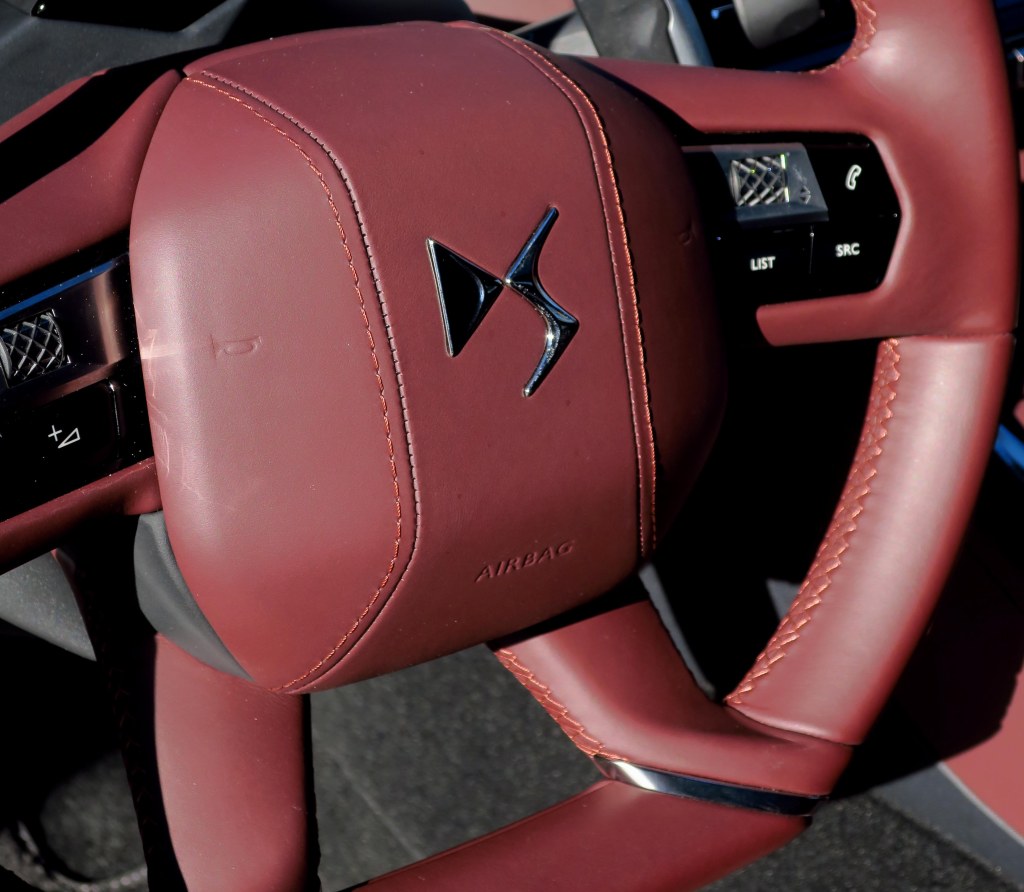
Superb quality of materials, intricate stitching and styling, is the DNA of DS Automobiles…
At the lunch, your servant had a very interesting conversation with Alexandre Stricher, (communication Brand and Prototype DS Performance), who applauded me on my achieved results on the ENERGY COACH app. “I wish every owner of the DS9 would adopt your driving style”, he complimented. Our conversation then drifted to the unique styling language which defines DS Automobiles, being a crucial element of their DNA. I remarked that the angular styling touches in the interior and instrumentation layout are reminiscent of the “art deco” styling language and rakish shapes found amongst others in Voisin automobiles.
Alexandre Stricher, (communication Brand and Prototype DS Performance), speaking at the afternoon press conference…
My conversation partner agreed. “A refined, elegant styling language and the use of unique materials and (stitching) patterns is what we are aiming for. We want to differentiate ourselves from the competition as a young, up market brand, combining a sense for refinement in styling and used materials with superb electrified technology,” he told me.
“But there is more, much more, he said with a smile in his eyes. “What to think of 800 hp? an acceleration of 0 to 100 km/h in less than 2 seconds?
And during the press conference, he revealed the E-Tense Supercar, of which much more in a separate report…
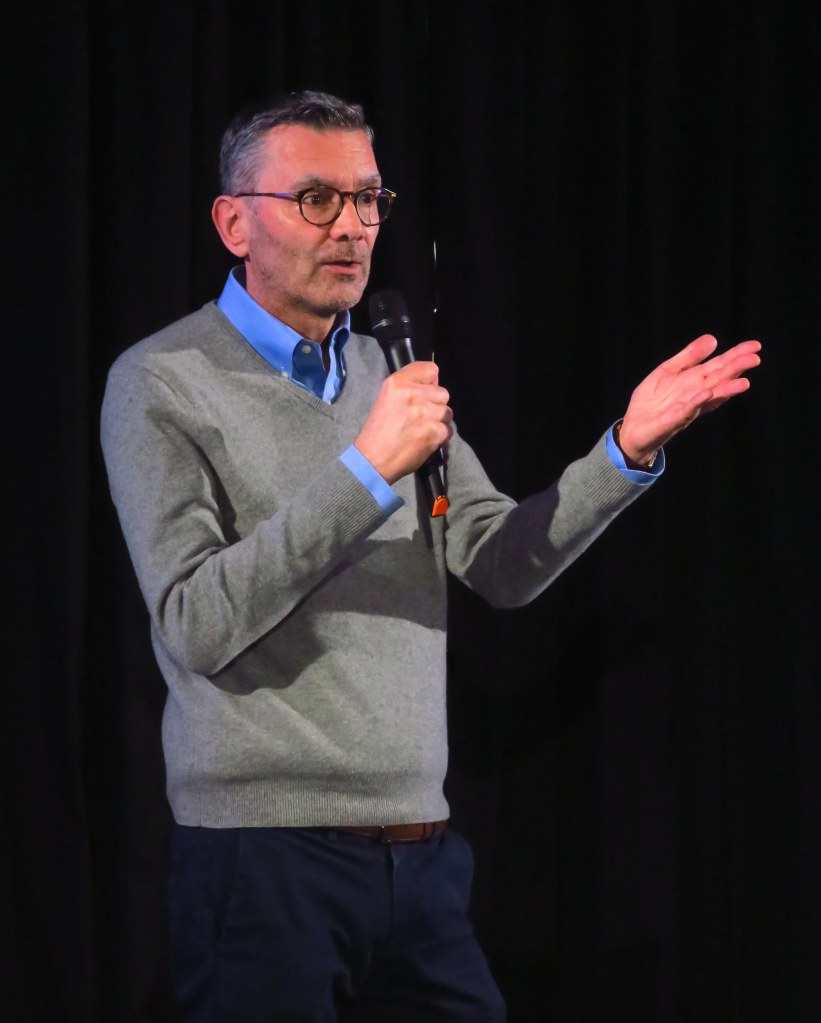
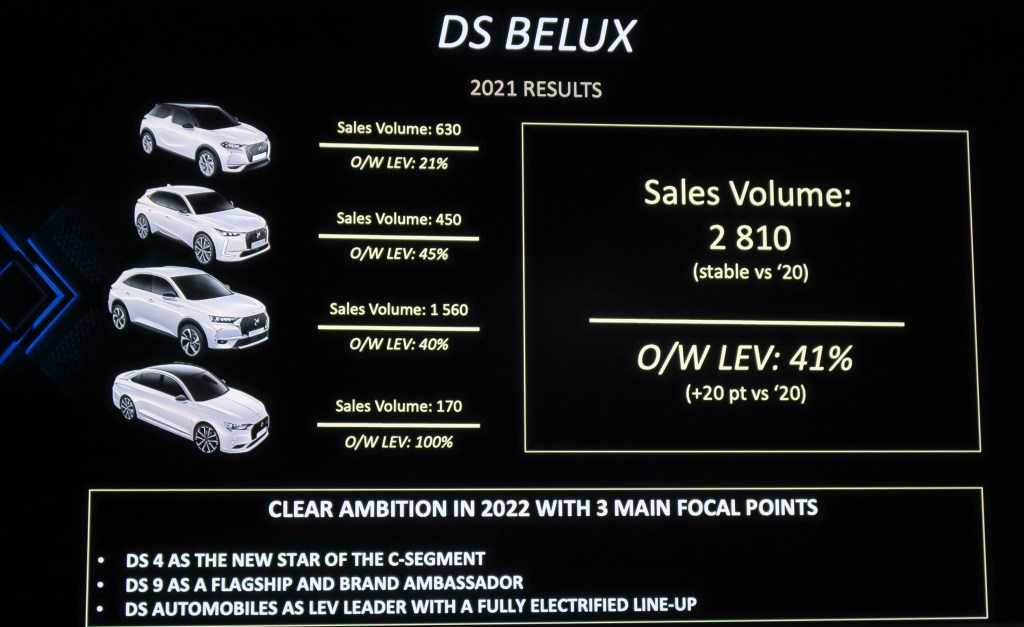
Last but not least, seen here on the photo above, Dominique Fontignies, PR & Communications director – Stellantis Belux, briefed us about the situation for DS Automobiles on the Belgian market.
We show you here the slide with the sales figures, which speak for themselves…
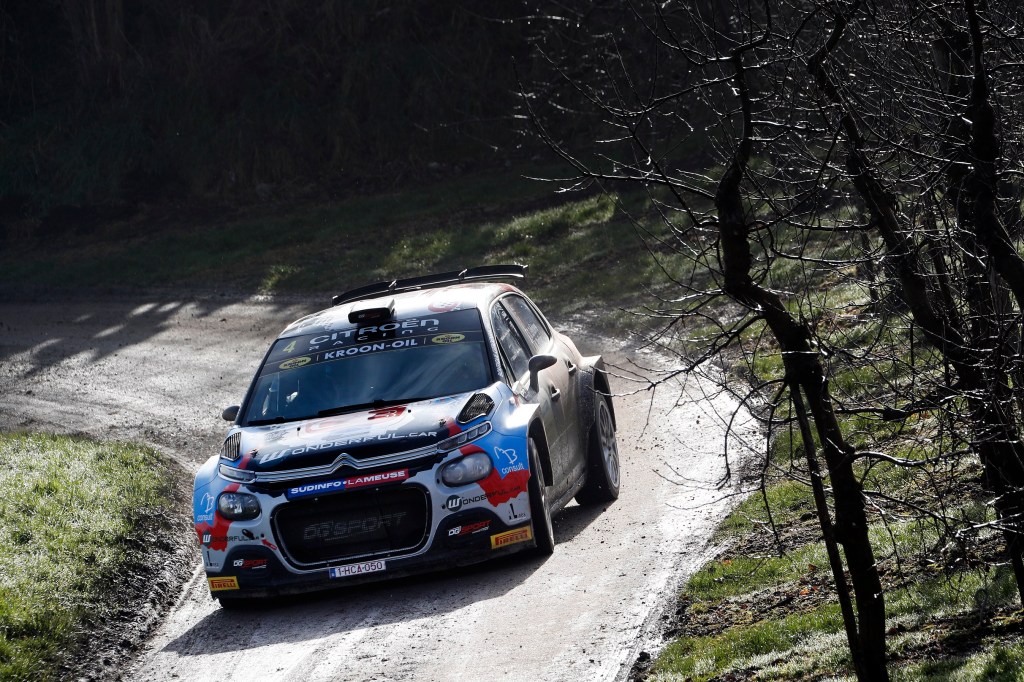
BELGIAN CHAMPIONSHIP ROUND 1 HASPENGOUW RALLY 2022, won by Stéphane Lefebvre-Xavier Portier Citroen C3 RC2 Rally 2
The Rally of Haspengouw last Saturday proved a magnificent opener of the Kroon-Oil Belgian Rally Championship in Sint-Truiden and the fruit region.
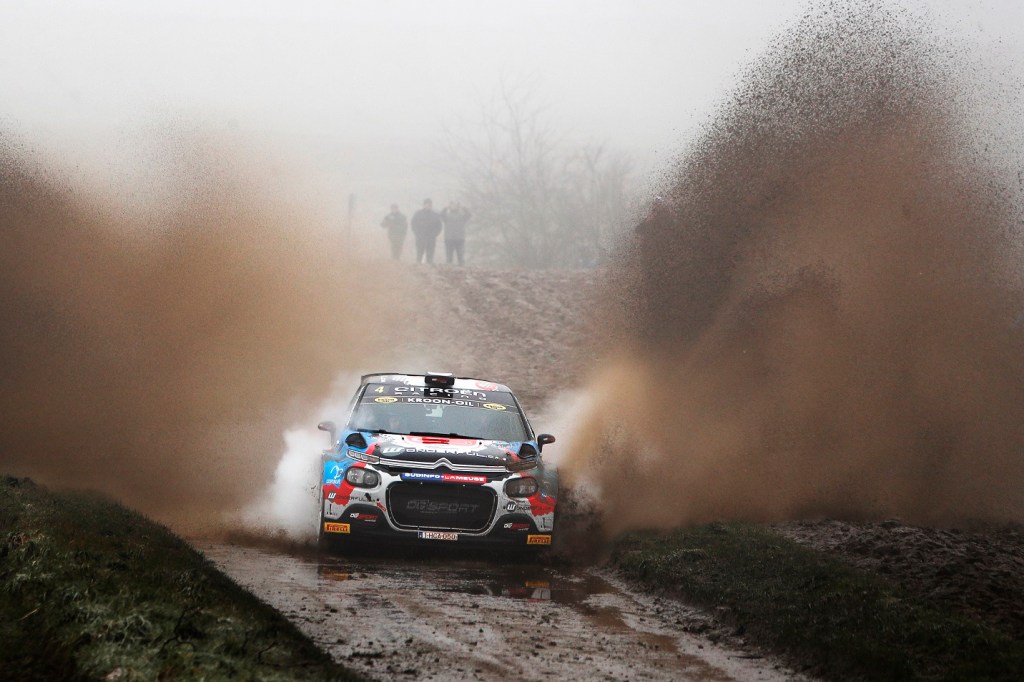
The iconic “classic” was dominated from start to finish by Frenchman Stéphane Lefebvre in his Citroen C3 Rally2. Gino Bux, the revelation of the match, and winner of the 2021 Stellantis Motorsport Rally Cup came in second.
Stéphane Lefebvre and Xavier Portier happy with their win…
DG Sport Compétition proved that the Citroëns C3 Rally2 were more than up to the competition…
Not only did Stéphane Lefebvre and Xavier Portier storm to an outright win, team mates Jos Verstappen and Kris Botson, Maxime Potty and Renaud Herman, and Richard Pex and Johan Findhammer also made quite an impression. Four cars on the start, four at the finish, with excellent results.
“Last Saturday DG Sport Compétition had a wonderful team day”, stated team principal Alain Georges. “Not only did we perform well, but each one fulfilled his or her role impeccably.”
First outing, first win…
Stephane Lefebvre came to win and succeeded. But also his teammates with less – and sometimes no – experience contributed to this success. Besides the actual results, we are also very pleased with the magnificent team spirit.”
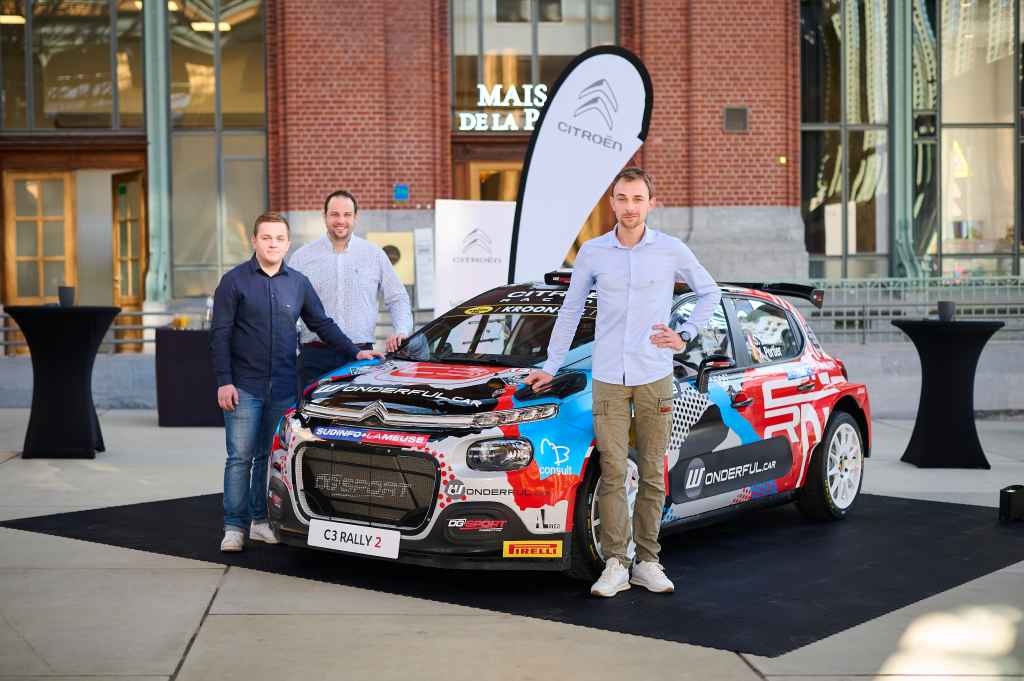
Team presentation in Brussels in the old premises of Von Thurn und Taxis, now “Maison de la Poste”: from left to right: Andy Malfroy (co-pilot), Xavier Portier (co-pilot) and Stéphane Lefebvre (Pilot)
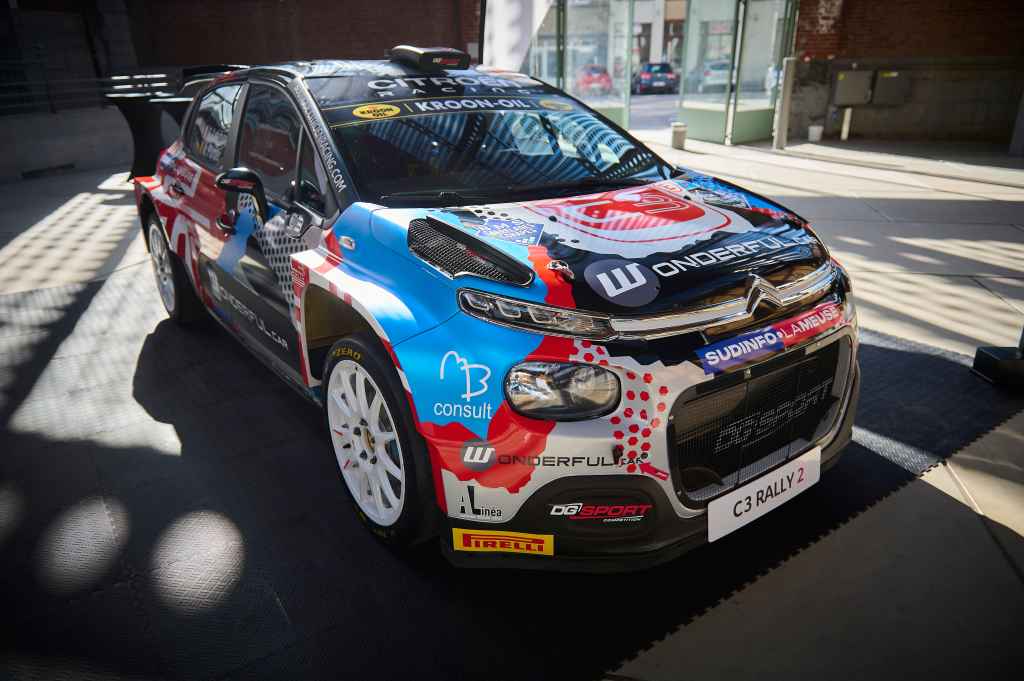
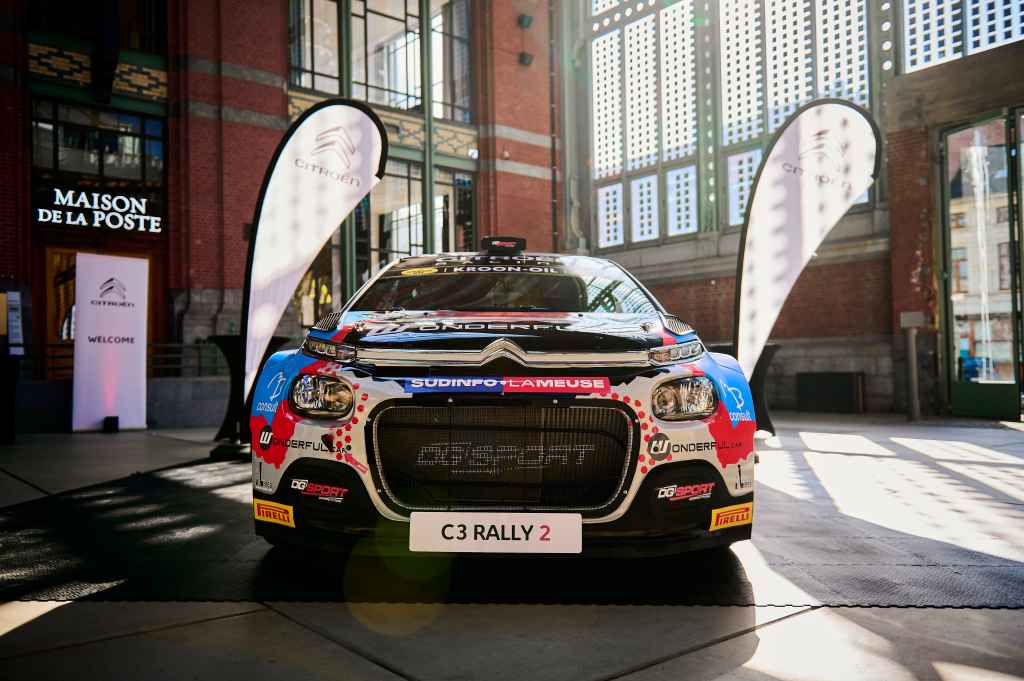
This week in the “Maison de la Poste” the team was introduced that will use the colors van Citroën Racing will defend this year in the Kroon Oil Belgian Rally Championship 2022. The experienced Stéphane Lefebvre will be at the wheel of the C3 Rally2 from DG Sport, taking up the challenge against the fierce competition. This weekend he is already participating in the Rally of Haspengouw. He never drove in this event, but that only makes the challenge only bigger and more exciting.
The C3 Rally2 is in shape, more than ever…
Since 2017, Citroën Racing has put its many years of experience in rallying at the service of customers and has put in more than 15,000 test kilometers to increase performance, add more reliability and still better handling to the C3 Rally2 drivers and teams.
Jean-François Grandclaudon of Citroën Racing explains: «Since its introduction in 2017, we have worked hard to offer our customers ever faster cars, suitable for all types of pilots and always with a view to reducing operating costs.
In the past two years, the car has changed a lot and our efforts have paid off with national and world titles claimed in recent years in major championships.”
DG Sport is on high alert at home and abroad.
DG Sport has been a loyal partner of Citroën Racing for years and is looking forward to participate in the international WRC2 and the Belgian BRC championship with the Citroën C3 Rally2.
“Thanks to the support of Citroën Racing, we will start with the duo Stéphane Lefebvre – Xavier Portier in the BRC this season. This is a perfect complement to his involvement with Andy Malfoy in the WRC2 Championship.
By participating in both championships, Stéphane will be able to keep up his rhythm and build up even more experience.
Although we are currently only confirming our presence on the first two meetings of the BRC, we aim to be at the starting grid of at least seven rallies to be there and to take home the championship title,” said Alain Georges from DG Sports.
From left to right: Andy Malfroy (co-pilot), Stéphane Lefebvre (pilot), Xavier Portier (co-pilot) and Jonathan Vercellino (Director Marketing Citroën, Belux)
Stéphane Lefebvre is looking forward to the Belgian season.
“I am looking forward to the start of the Kroon Oil Belgian Rally Championship 2022 this weekend. I like to come to Belgium, all the more because I have already won both the Rally of the Condroz and of Ypres. With a slight handicap in terms of terrain knowledge in Sint-Truiden, I know I will have to drive a perfect first loop and I will be forced to take some more risks than my opponents. But this won’t stop me from approaching this rally in the same way as everyone else: we intend to make our mark from the very beginning in the race,” warns Stéphane.
He admitted to us that in the meantime he has a great love for the Belgian rallying scene and their iconic rallies.
Stay tuned for the Rally of Haspengouw this weekend!
Arriving late last night from Nice, we report you here immediately about the wonderful driving experience with the most powerful DS9, enjoying its pure GT talents over the winding roads around Grasse and the iconic Côte d’Azur. We will soon tell you more about it.
But the gentlemen of DS Automobiles did even more than just letting us have a drive in their flagship DS9, they also unveiled in the flesh at their press conference a wonderful Supercar, with absolutely stunning looks and performance.
DS Automobiles puts their E-Formula racing experience into practice on our roads… What to think of 815 HP or 600 kW, developed by two electric motors of 250 kW in the front, and 350 kW driving the rear wheels.
Acceleration from 0 to 100 km/h is done in a fantastic 2 seconds…and the car is a beauty too!
Much more about this superfast E-“bolide” and the impressive top-level DS9 soon on these pages!
The letter T has represented a unique form of dynamic driving at Porsche since the 1960s. It stands for ‘Touring’ and identifies models that offer an especially authentic driving experience thanks to precise tuning, exclusive equipment and efficient engines.
It all started in ’68 with the Porsche 911 T. Lightweight and dynamic. Your servant vividly remembers being at the wheel of this “Ur” 911 T… I drove it full bore on the winding small roads along the Leie in the region of Deurle.
The same recipe maximizing agility is used for the Macan T. Besides the sportier setup, it has a lightweight, two-litre turbo engine. This concept positions the Macan T between the Macan and the Macan S.
Lightweight, for an agile response
The two-litre, four-cylinder turbo engine of the Macan T combines, Porsche says, “great agility, low weight and a compact design to create a package that offers an ideal balance of weight and performance.”Compared to the 2.9-litre biturbo V6 engine in the Macan S and GTS models, the powertrain in the Macan T weighs 58.8 kg less on the front axle.
Power galore
The Macan T has an output of 195 kW (265 PS) and 400 Nm of torque. The engine is coupled with a seven-speed dual clutch transmission (PDK) and the Porsche Traction Management (PTM) all-wheel drive system. A broad spread of torque provides, according to Porsche, “responsive acceleration in all driving situations.” When fitted with the standard Sport Chrono Package including the mode switch and Sport Response button on the steering wheel, the Macan T accelerates from 0 to 100 km/h in 6.2 seconds and reaches a top speed of 232 km/h.
Specially tuned chassis lowered by 15 millimetres or more
The Macan T is the only Porsche model to feature steel suspension with Porsche Active Suspension Management (PASM) as standard, combined with the body being lowered by 15 mm. The anti-roll bars on the front axle are more rigid and the car’s chassis tuning has been optimized to create the perfect suspension for the vehicle and powertrain, resulting in very responsive steering behavior and agile handling.
Get the tail out sideways…
The Porsche Traction Management (PTM) has also been adapted to the driving demands of the Macan T and has been specially designed with a rear-wheel bias. Adding adaptive air suspension with PASM and lowering the body by a further 10 mm is also an option – a new feature for Macan models with four-cylinder engines. Porsche Torque Vectoring Plus (PTV Plus) can also be added: the system has been adapted to the dynamic characteristics of the T model and further sharpens the driving dynamics.
Exclusive details inside and out
Design elements painted in Agate Grey Metallic on the front, flank and rear of the Macan T differentiate the vehicle from other models in the series. The exclusive contrast colour can be seen on the painted front trim, exterior mirrors, side blades, roof spoiler and logos on the rear. Sports tailpipes and side window trims in Black (high gloss) are included as standard and the side blades feature the ‘Macan T’ logo in Black. Twenty-inch Macan S wheels, exclusively in dark titanium, come as standard. Customers can choose from a range of 13 plain, metallic and special colours for the exterior.
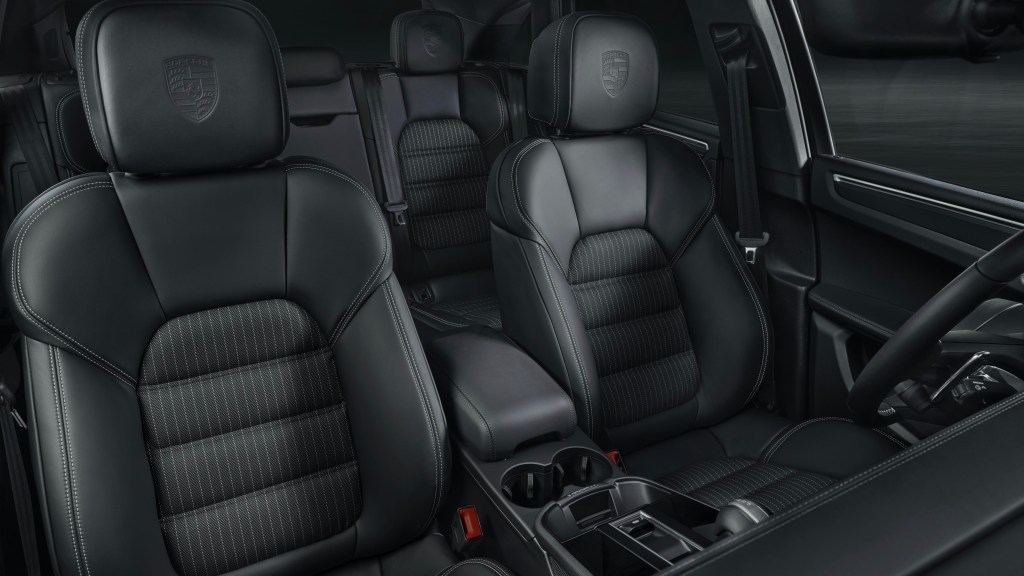
The interior of the Macan T has its own distinct ambience. The standard, eight-way electrically adjustable heated sports seats feature an upholstery based on the Black leather package. The centres of the front seats and the outer rear seats are delivered with the Sport-Tex Stripe pattern and the front headrests each have an embossed Porsche crest. The contrasting colour from the exterior continues inside the vehicle in the form of decorative silver stitching on the seats, headrests and steering wheel.
Porsche panache in the cabin
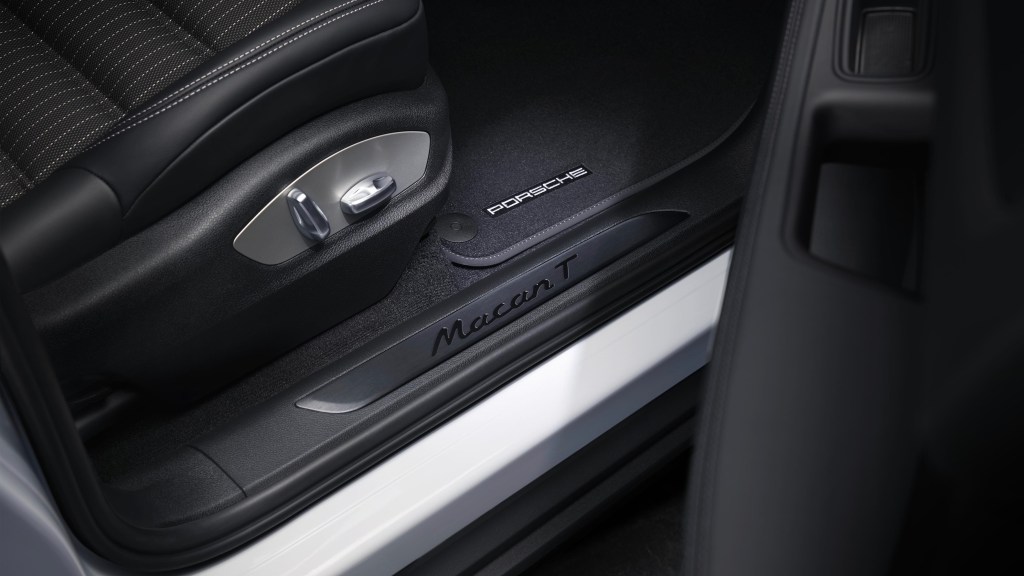
Standard equipment also includes a multifunction GT heated sports steering wheel and the Sport Chrono stopwatch in the upper part of the dashboard. The door entry guards come in black aluminium as standard and feature a Macan T logo. Optional features include the multifunction GT sports steering wheel in Race-Tex with carbon trims and an ioniser.
The Macan T also benefits from all of the new elements of the model generation revised in summer 2021, such as the new centre console with its sophisticated glass-look and touch-sensitive surface, as well as the fully networked Porsche Communication Management (PCM) system with a 10.9-inch touch screen and online navigation as standard.
Soon on our roads…
The new model is available to order now. Deliveries in Germany will commence in April 2022.























 Autoprova - for the Connaisseur