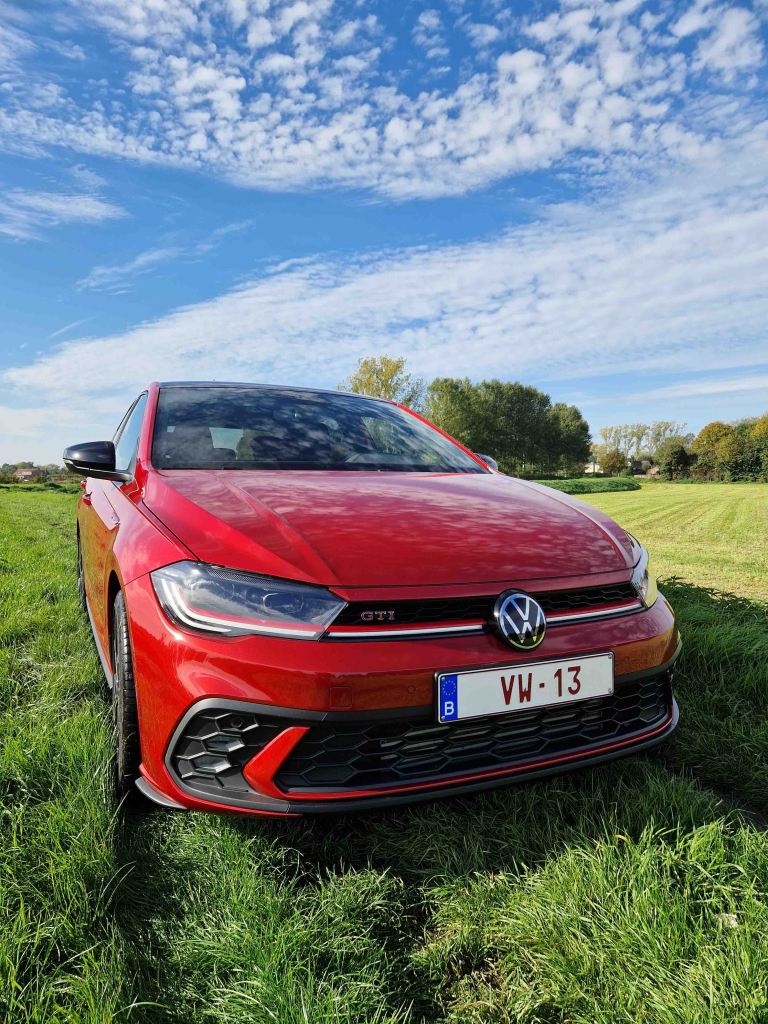
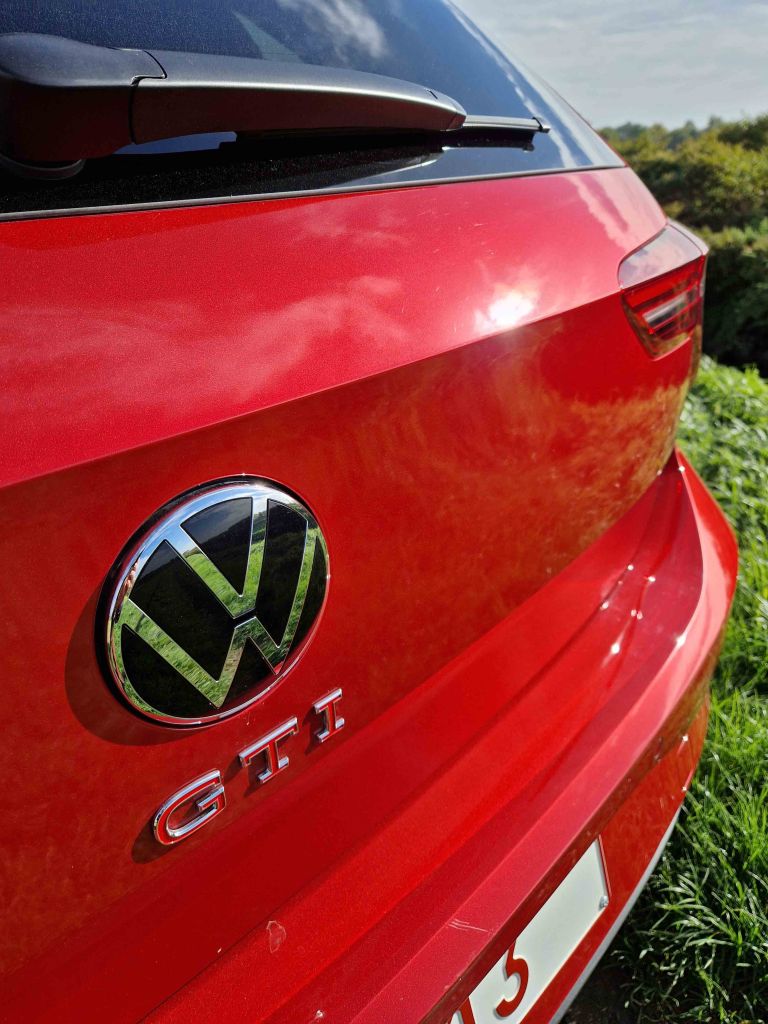
There are cars where even the initials evoke a modern day legend. VW succeeded in doing this with the letters GTI. They created a car which had it all: a Golf a 1,6 lite four cilinder developing a healthy 110 hp. This first Golf had not only an elegant design, it was also light and compact. So 110 hp meant exhilarating performance, certainly in the days and age it was born. But sheer power was not all. The VW engineers also took great care to give the car a superb handling. They also added a few sporting touches to the interior which quickly became iconic, and the recipe for success was made.
Hans Knol ten Bensel
Over the years, VW continued the tradition. The GTI remained the top end, sporting Golf with above average performance and handling.
But with the Golf growing bigger and heavier, there was room in the model range to continue the original concept of nimbleness with extra power. The Polo proved to be an excellent base for this.
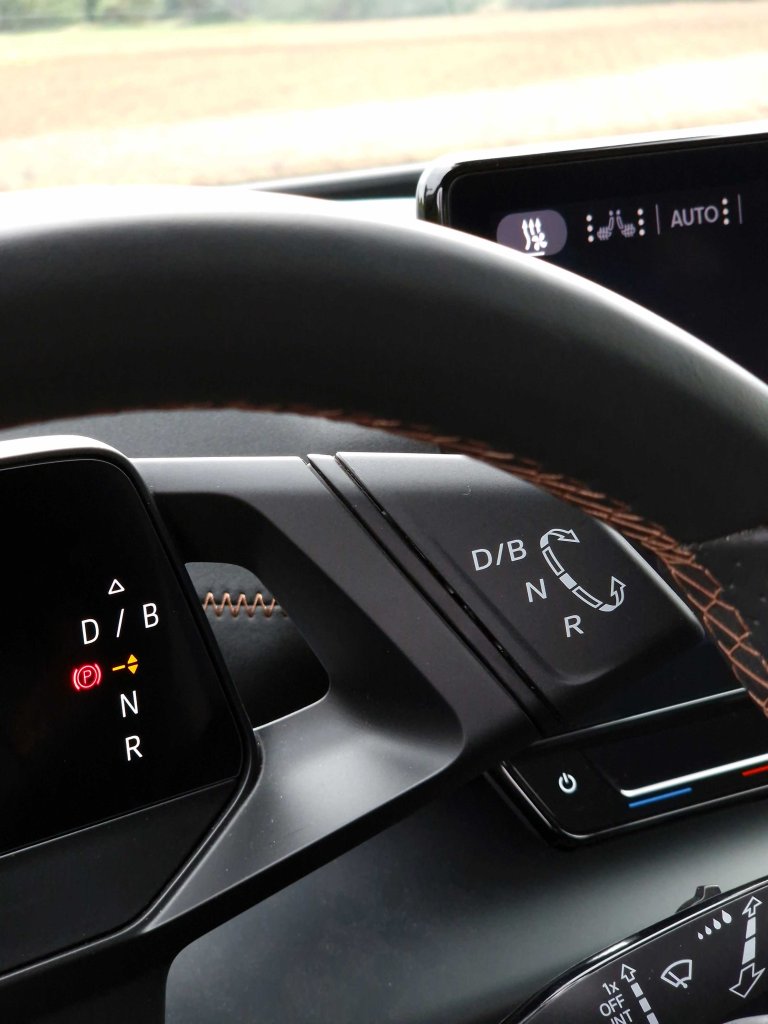
Despite its move to fully fledged EV’s, the VW group has of course excellent combustion engines (still) in store, and so it shoehorned its formidable 2 litre four cylinder 200 hp engine into the car, and coupled it to an equally efficient 7 speed auto box. Most pleasant is the pulling power of this engine, with 320 Nm torque being available over a very wide rev range between 1500 and 4350 rpm.
The fun starts as soon as you push the starting knob, and the engine comes to life with a beautiful and very promising growl. Subdued of course, but very pleasing to the sporting ear nonetheless.
Despite all its eagerness, one immediately also feels the mechanical perfection and uncanny docility of it all. This is a well honed and perfected drivetrain, refined despite all its sportiness.
There are different driving modes at your fingertips, and the sports mode will surely inspire you most, but let it be said that the engine power is so abundant that this is a very fast and nimble machine under all circumstances.
The performance figures speak for themselves. The Polo sprints from 0 to 100 km/h in merely 6,7 seconds and hurtles to a top speed of not less than 238 km/h. The engine emits a pleasant growl, but as said, remains refined and also the chassis takes all this very well in its stride.
Consumption is very much dependent on your personal driving style, but let’s say that the relatively low weight of the Polo helps here. We achieved an average consumption of 6,4 liters. Consumption is typically rather more – between 7,5 and 8,5 liters – when runnign at very high speeds on German Autobahnen…
Sporting touches…
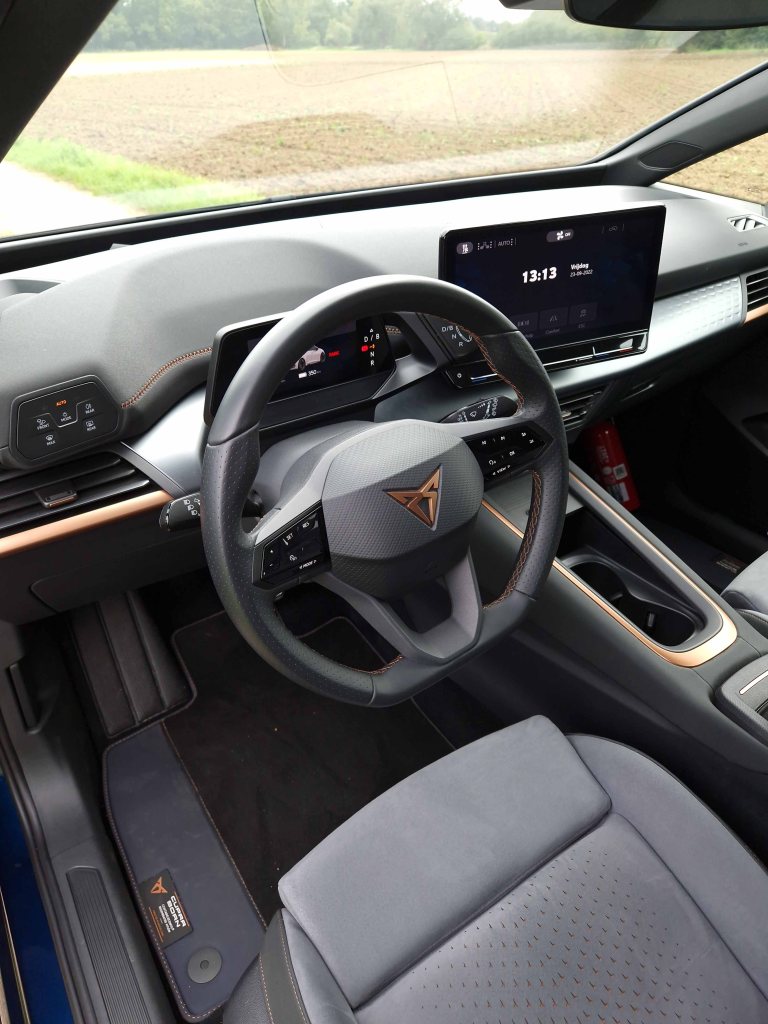
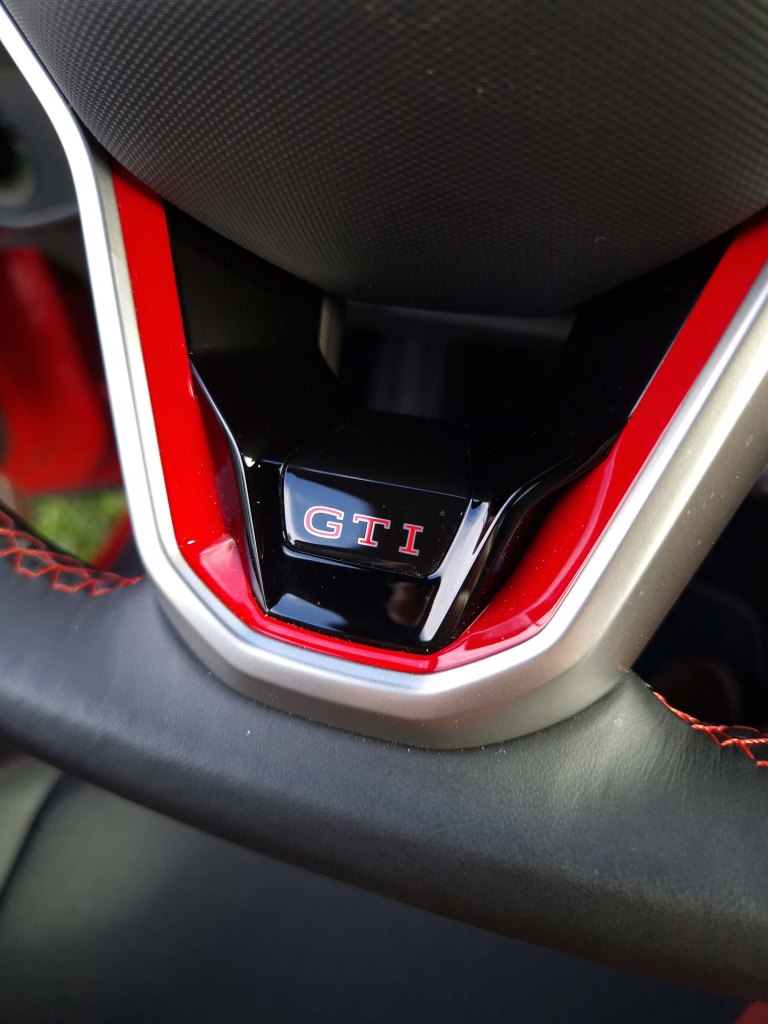
This Polo breathes also the unique aura of the original “Ur” Golf GTI, and is found in details such as the patterns of the seat upholstery, combined with more modern touches such as the contrasting red stitching on the steering wheel amongst others.
The digital instrumentation offers also many possibilities to put you in a very sporting mood. You can measure your lap times for instance, or you can check on the so-called power monitor the oil temperature, turbo boost pressure, engine power in kW or g-force(s).
The layout of the dashboard is good, and one has much appreciated manual controls via a round knob for volume (left) and choosing a menu item on the central touchscreen. The high gloss surface of this touchscreen shows of course every possible fingerprint, which makes frequent use of a microfibre cloth necessary…
Ever so practical
Our test car came with a DAB+ radio and AppleCarPlay, Google Auto and Mirror link, so we could hook up our Samsung S22 and enjoy it all.
On the practical front, the Polo scores. It’s a hatchback, this means you can load up to a good 600 liters of luggage with the rear seat folded down and with luggage height up to the waistline. The Polo is roomy enough to seat four tall adults too.
The truth of a sports car lies in its suspension fine-tuning and handling…
This proverb is again well proven by this Polo GTI. Of course, when one knows that this Polo platform plays a central role in the vast VW group strategy, one can only expect the very best, and indeed, the Polo delivers here. Our test car came with the optional “sport select” suspension, which offers in the “Normal” mode still quite decent comfort at slow urban speeds. This comfort improves the faster you drive, and indeed, when moved with spirit this Polo feels “just right” and puts a smile on the face of its passengers.
The handling of the GTI Polo is also top notch. Straight line stability is excellent, and on curvy roads one can steer with utmost precision. At the limit, the rear wheels start to drift, but are caught reliably by the ESP. Body roll is negligible. All this inspires confidence and gives you indeed tons of driving pleasure. The GTI comes standard with an electronic limited slip differential XDS, which controls the braking pressure of the inner front wheel in curves, which of course adds to the overall agility.
The steering servo is strong at slow speeds, when things go faster, this diminishes so the proper steering “feel” is retained. The brakes have also excellent stamina and are quite powerful indeed. Noblesse oblige…
Conclusion
For those who enjoy powerful and well handling petrol engined cars, the Polo GTI is the one to have and cherish. It will give you tons of driving pleasure, whilst remaining the well built and practical everyday car. Still sensible, but then offering close to supercar panache and punch.
Of course, it doesn’t come exactly cheap. Remember however, this is a well honed performance car, engineered and built to top standards. And given the pleasure it offers to you every day for years to come, its cost – last but not least in driving it – is very reasonable indeed…
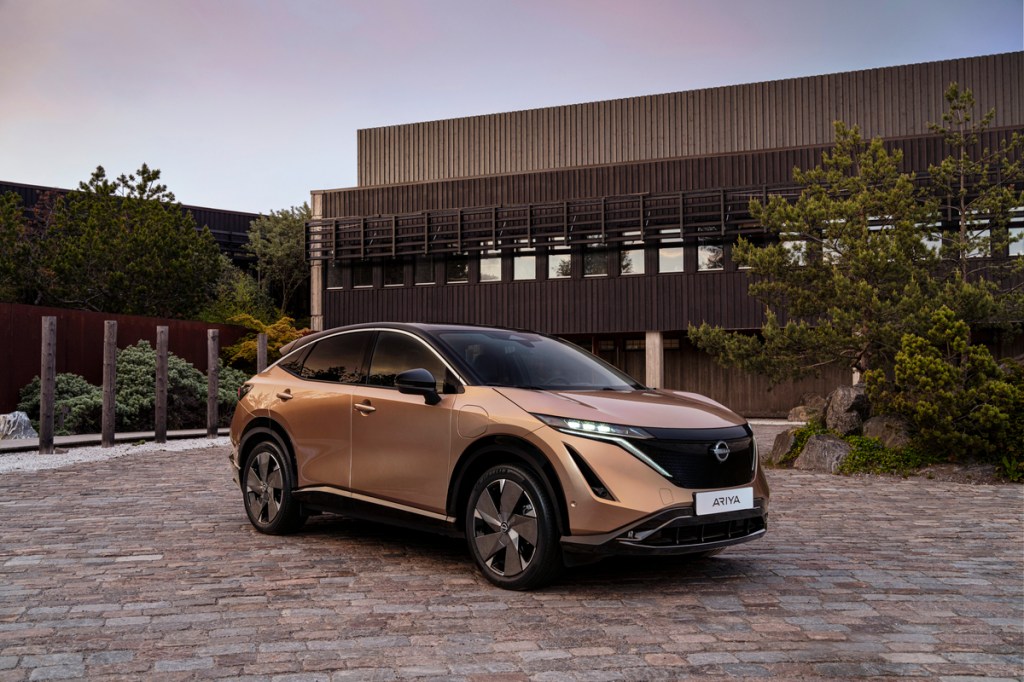
Nissan Belux was the first to hold a press conference prior to the Brussels Auto Show 2023, and organized it at the magnificent premises of Quartier Papier in Zaventem. On the photo below you see the Nissan Ariya, which according to Nissan, redefines E-Driving…
At the start of the conference, Jerôme Saigot, Managing Director of Nissan Belux, stated that with the Ariya, LEAF and Townstar EV models, Nissan has a very nice range of e-vehicles. But consumers are still not fully ready for a 100% electric range of cars. With the new Qashqai e-POWER and the X-Trail e-POWER, they can experience the pleasure of a 100% electric transmission without having to recharge the car via a socket, thanks to a second gasoline engine that produces electricity, he said. Indeed, Nissan goes a step further than the competition with new technologies such as e-POWER. So Nissan reaffirms its role in the fields of crossovers and electric cars. But read further…
Hans Knol ten Bensel
Jerôme Saigot, Managing Director of Nissan Belux, presented the new Nissan electrified range and the environmental strategy of the brand towards 2030…
Nissan’s green strategy for 2030…
Jerôme Saigot also stressed that sustainability is at the core of Nissan’s long-term vision, Ambition 2030. Responding to critical environmental, societal and customer needs, this strategy sets out to deliver electrified models and technological innovation in key markets globally, empowering mobility and beyond. Ambition 2030 supports Nissan’s goal which is to be carbon neutral across the life cycle of its products and operations by 2050.
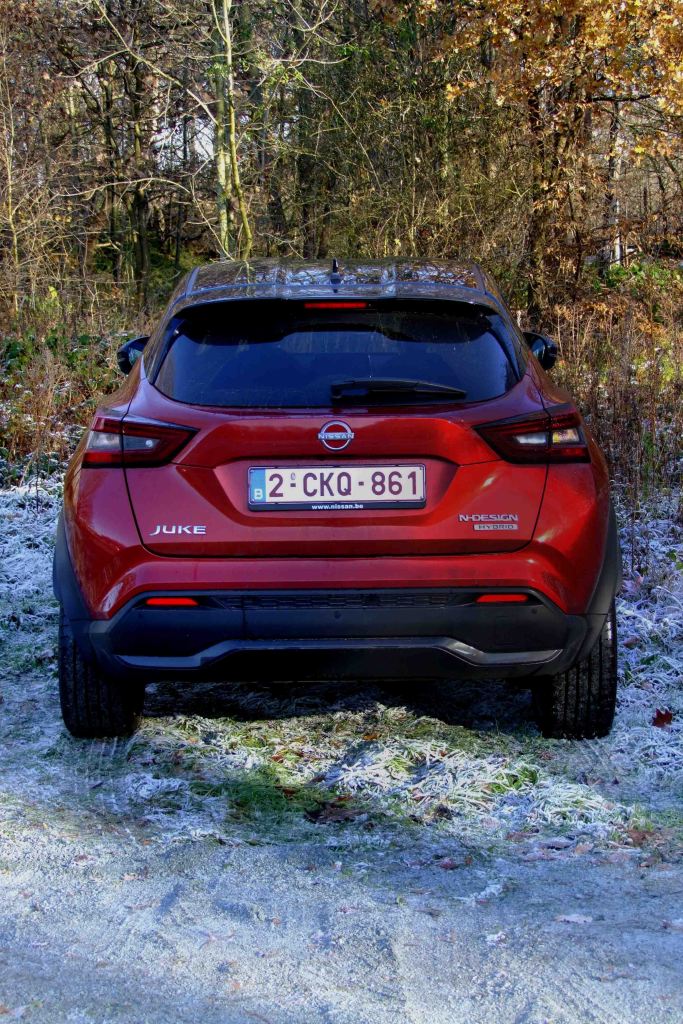
Nissan JUKE Hybrid: new advanced powertrain offers efficiency and responsive performance
Indeed Nissan is embarking further on the 100 % electrification of its range. We have the Juke, the popular compact crossover, offered with hybrid technology. Key to the driving pleasure at the heart of the Nissan JUKE Hybrid is an advanced low friction multi modal gearbox, using dog clutches instead of conventional synchronizer rings to shift the 4 “ICE” gears and 2 “EV” gears. Additionally, to reduce friction, this gearbox does not use a clutch. All vehicle starts are 100% electric, and the 2 EV motors are used in combination to synchronize the gears, delivering smooth and responsive acceleration. We will be keen to drive a hybrid Juke soon, and tell you about our driving experience with it.
A car which will please many is the Nissan Qashqai e-Power, said Mervin Keuter, Communications Director at Nissan Belux, offering 100 % electric power without the need for recharging externally. Indeed, a combustion engine coupled to a generator provides the electricity. The e-POWER system consists of a high-output battery, complemented by a variable compression ratio 1.5-litre three-cylinder turbo-charged petrol engine generating 156hp, a power generator, inverter and 140kW electric motor of similar size and power output as found in Nissan’s electric vehicles. The petrol engine generates electricity, which can be transmitted via the inverter to the battery pack, the electric motor or both, according to the driving scenario.
Melvin Keuter, Communications Director at Nissan Belux, highlighted the qualities of the Nissan Qashqai e-Power…
What sets this powertrain apart is that the electric motor is the sole source of power for the wheels, so its response is instant and linear. Needless to say that also here we are looking forward to gets our hands on one to experience how all this actually works. It certainly is clever and responds certainly to what modern-day drivers want… we also want to see how economical and environment friendly all this still is.
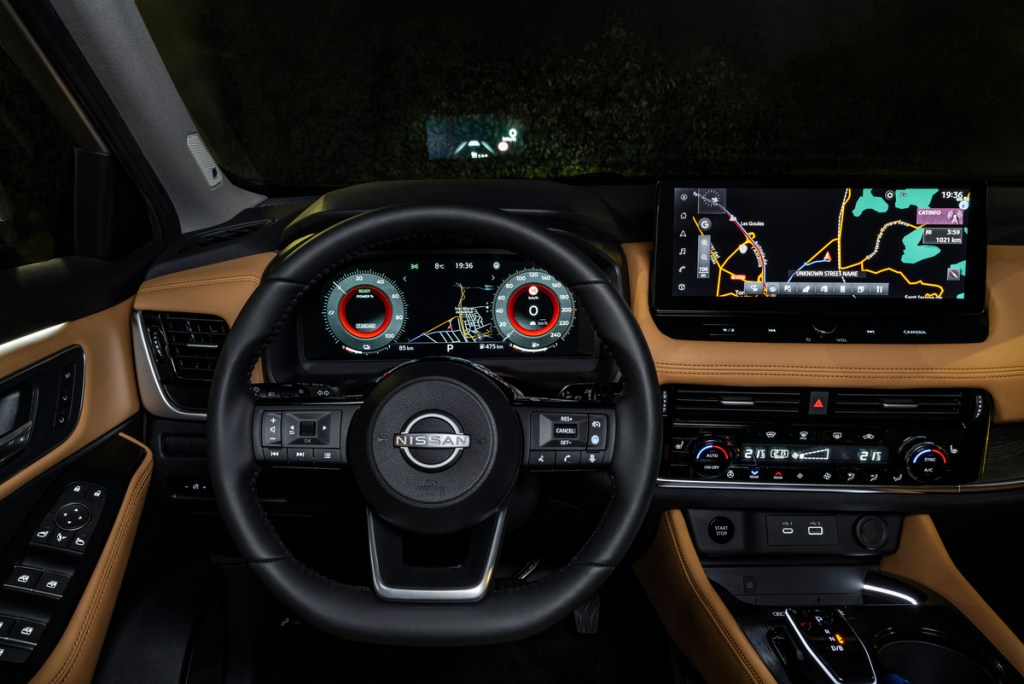
The dashboard of the new Nissan X-Trail with e-POWER and e-4ORCE…
Another important novelty for Nissan is the revamped X-Trail with its e-4ORCE system on X-Trail and fully electric Ariya. The innovative e-4ORCE all-wheel drive system was conceived for use on either Nissan’s pure electric powertrains or with its e-POWER system, mentioned above. In both cases, the driven wheels are powered purely by electric motors fed by the battery.
In the case of the X-Trail, the dual e-motor system has a total output of 157kW (213PS) with a 150kW front motor and a rear 100kW motor. This generates lively acceleration from 0-100km/h in 7 seconds. Nissan proudly announces that a rear electric motor has its advantages: it has a 10,000 times faster rear torque response than a mechanical 4WD system(!).
Rémy Le Gall, Marketing Director of Nissan Belux, commented also on the electrified Nissan range and last but not least dealer organisation and client approach, of which more later in a separate report!
Now, on the X-trail, you can also opt for the turbocharged 1.5-litre variable compression ratio powering the wheels in the traditional fashion. Generating 120kW (163PS) and 300Nm of torque, it will be offered only in two-wheel drive configuration, with power to the wheels being transmitted via Xtronic stepped continuously variable transmission. In driving scenarios with relaxed driving and light acceleration, the engine switches to high compression ratio for optimised fuel efficiency, while in situations where more performance is needed, the compression ratio is adjusted to a low level.
The powertrain is also equipped with 12v mild hybrid technology. The system provides torque assist, extended idle stop, quick restart and coasting stop, with benefits to both fuel economy and CO2 output.
The Nissan X-Trail e-4ORCE offers 100 % electric power without the need for recharging externally…
Driving the future: the Ariya
Staying true to Nissan’s heritage of fun-to-drive, exciting vehicles, the Ariya is built on the all-new Alliance-developed CMF-EV platform that’s optimized to deliver unparalleled performance.
The Ariya’s all-electric platform combines excellent power delivery, charging capabilities and range, with a carefully tuned balance between ride comfort and handling agility. Available in three versions (Ariya 2WD 63kWh, Ariya 2WD 87kWh, Ariya e-4ORCE AWD 87kWh) and a range of up to 533 km, Ariya can confidently meet a variety of customer needs.
The Ariya 87kWh can recover up to 350 kilometres with a 30-minute quick charge using a CCS charging system. The battery pack sits at the base of the chassis to ensure 50/50 weight distribution on the e-4ORCE version and near-equal weight distribution on the 2WD versions. During benchmarking, engineers placed great emphasis on striking the ideal balance between handling agility, secure feeling and ride comfort, something not all EV rivals are known for.
Subtle regional differences exist for Ariya, as well. For example, European consumers demand responsive steering and high manoeuvrability, but also require additional stability at higher speeds, so damping forces were increased to improve body control. Nissan Europe engineers also adjusted spring rates and retuned steering feedback to increase on-centre definition at higher speeds.
A timeless Japanese design language…
Incorporating Nissan’s Japanese DNA, Ariya’s striking exterior and interior reimagines EV potential by embodying Nissan’s Timeless Japanese Futurism philosophy of powerful design that fuses aesthetics with functionality while creating an upscale, open atmosphere.
The all-new EV platform and compact nature of powertrain components made it possible for Nissan to position Ariya’s climate-control system under the hood. This allowed designers to use the whole length of the cabin and create a flat, open floor with a lounge-like space inspired by premium futurism.
For the LCV market: the new Townstar…
The Townstar EV builds on the success of the e-NV200. Built on a shared CMF-C platform, the new vehicle will be manufactured at the Alliance centre of excellence for small vans in Maubeuge, France.
The fully electric version of the all-new Townstar EV features a powertrain optimised with intelligent energy management and battery thermal cooling. The Townstar EV is able to achieve a superior range autonomy of up to 300km (WLTP cycle). Delivering 122 PS and 245Nm of torque, the Townstar EV’s 45kWh battery can accept AC charging (11 kW or 22 kW) or DC quick charging (CCS format). The latter of which enables users to charge the battery from 15% to 80% in as little as 37 minutes.
Lots of interesting news from Nissan, keep posted for further Nissan news and driving reports of their interesting new cars!
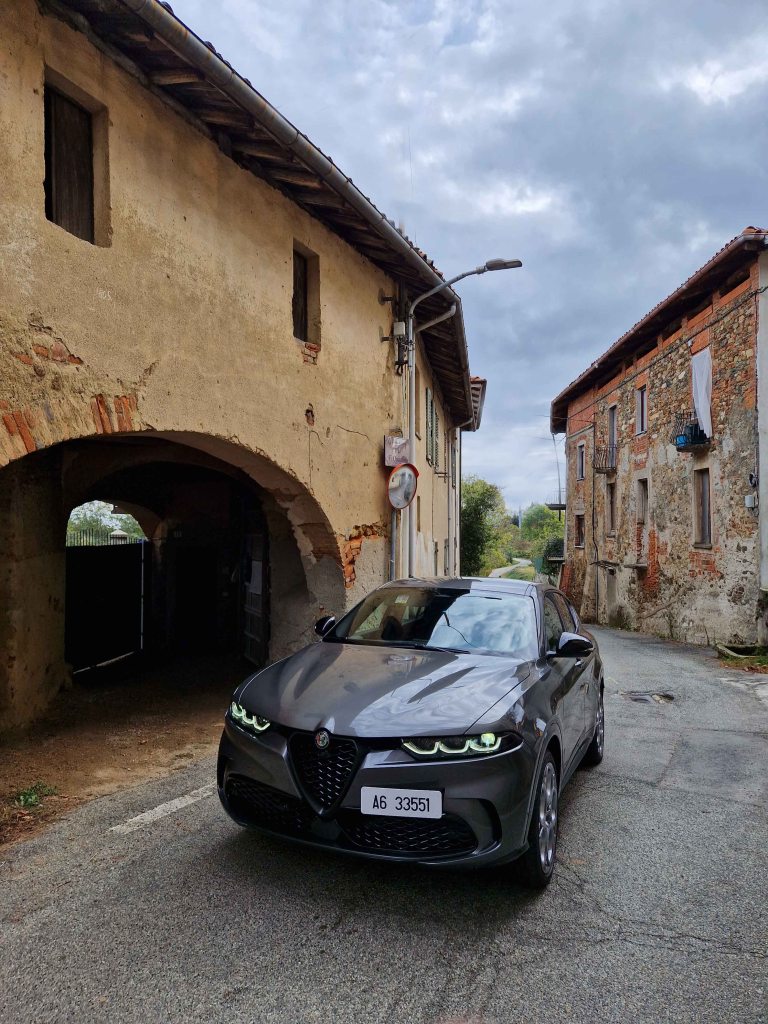
We drove the Alfa Romeo Plug-in Hybrid Q4 Veloce in the historic roads near Biella…
Alfa Romeo is at an important turning point of its long history. With the Tonale, this potent, 280 HP stylish compact SUV, it wants to make a fundamental transition. It is the first milestone on the way to zero emission(s) – within 5 years the brand wants to see all its Alfa’s electric. It makes us shiver, quite frankly, and hopefully not literally, when a cold winter will bite us all in conflict ridden Europe nowadays.
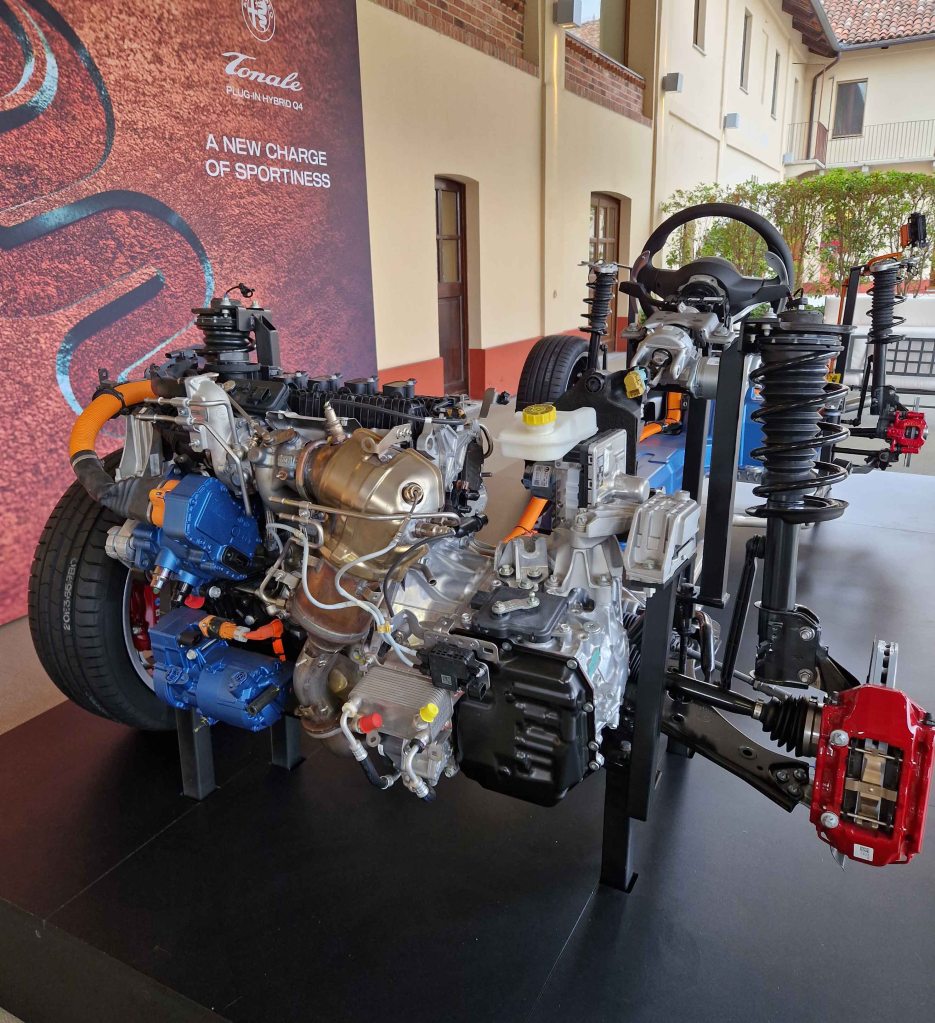
But indeed, a positive mind and hope should fulfill our hearts, and looking at the mechanics of this Tonale, there is still plenty to let it beat a bit faster.
Hans Knol ten Bensel
An excellent and very convincing thoroughbred hybrid.
The Tonale is conceived when the merger between FCA and PSA was not yet achieved, and this is one of the (main?) reasons we find a so-called FCA “GSE” or Global Small Engine, also marketed as Firefly, under the hood as its combustion engine. This is a family of engines produced by Fiat Chrysler Automobiles or (FCA) starting in 2016, and subsequently Stellantis.
The unit in the Alfa is also dubbed as the “FCA e-engine” and is to be seen in slightly different power versions now also in the Jeep Renegade 4xe, in the Jeep Compass 4xe. It is being produced in the Brazilian Betim plant, now the largest vehicle plant in Latin America and one of the largest in the world. It was the production unit with the largest capacity installed of the entire Fiat Chrysler Automobiles (FCA) group. The Tonale itself rolls of the production lines at the Stellantis plant in Italian Pomigliano d’Arco, a municipality of the Metropolitan City of Naples in Italy, located north of Mount Vesuvius.
Of course, this engine embodies the very latest state of the art technology. Indeed, this new generation MultiAir III, present in the GSE family, has even more flexible valve control. The new cam profile with pre-lift allows the opening of the suction valves during the exhaust phase, aiming at the realization of the internal EGR, with reduction of nitrogen oxides and increase of the efficiency of the engine in the partial load. Besides, the lifting profile of the MultiAir III intake valve is more extensive and makes it possible to manage the effective compression ratio of the engine, keeping the tendency to detonation under control regardless of the fuel used. Wow!
The unit produces 180 HP or 132 kW, and is coupled to a 6-speed automatic transmission, which provides traction to the front axle. We must say that the unit is not only smooth and very willing, it also produces the unmistakable, typical throb of a classic Alfa; the sound engineers did truly excellent work!
But then, this is a fully fledged hybrid, and this Tonale Q4 has an electric motor capable of supplying 90kW of max peak power and 250 Nm of torque to the rear axle.
The battery at the centre and the electric motor and its battery junction control box at the rear warrant an excellent weight distribution…
The 306-volt, 15.5 kWh lithium-ion battery supplies an electric range of over 80 km in the urban cycle and more than 600 km of total range. It is also excellent in terms of sustainability thanks to the new hybrid drivetrain which reduces Co2 emissions to 26kg/km, bringing the range’s total emissions down by 40%. A reduction has also been made in fuel consumption, which has been brought down to 1.14 liters per 100 km in the WLTP cycle. Plus, with the aim of providing maximum efficiency, it takes less than 2.5 hours to fully charge the battery when the 7.4 kW onboard charger is in use.
Driving is believing…
We took the Tonale “Q4” -as we shorten its name here – on an interesting 102 km road circuit laid out by the Alfa people in the surroundings of the Balocco proving ground. It led us via an interesting picturesque city Ricetto di Candelo and its beautiful Castello di Castellengo towards Biella, then took us on a nice curvy stretch back to the Autostrada direction Balocco. Endearing is the precision of its steering, and the feedback of the road surface in your hands at the wheel. You can really place this Alfa on the ideal line and adopt some razor sharp driving, even in the “natural” or “N” mode. We found the steering a bit too light however, except in the “D” or Dynamic mode, where the steering is more direct, even more responsive and feels a bit heavier.
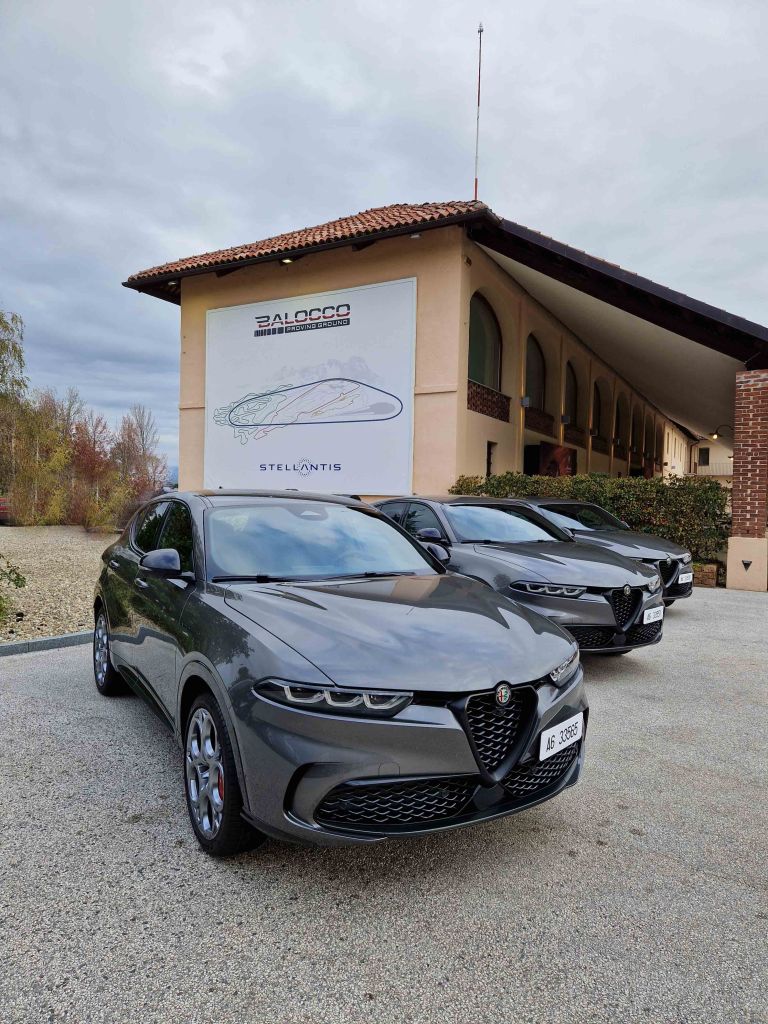
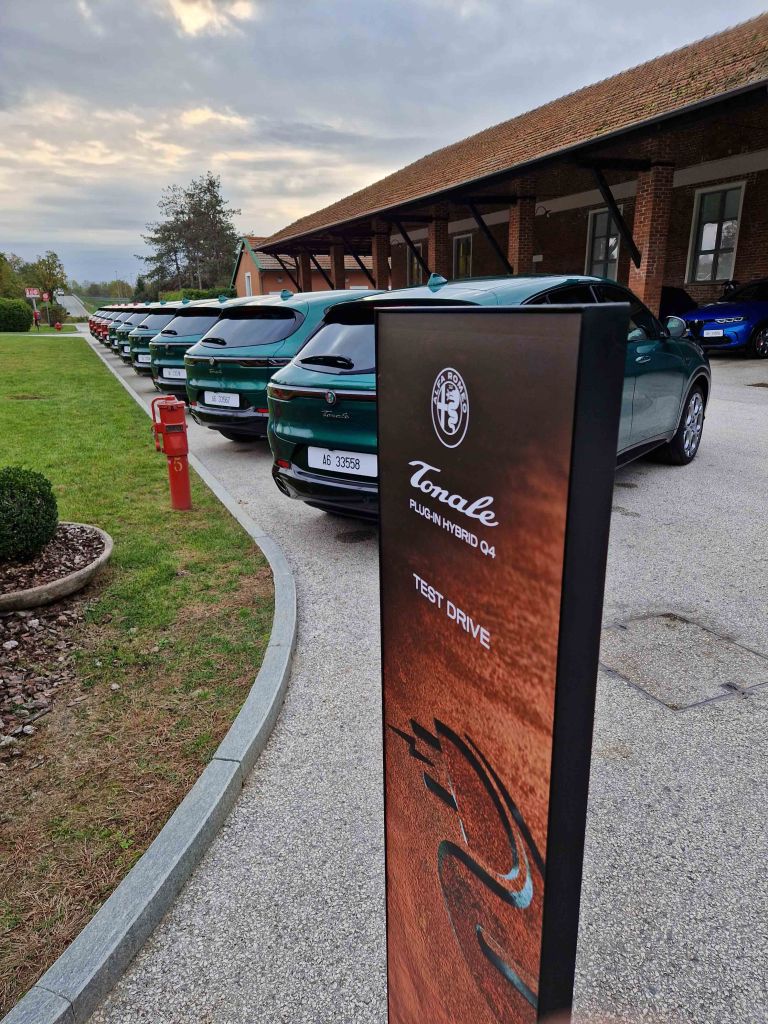
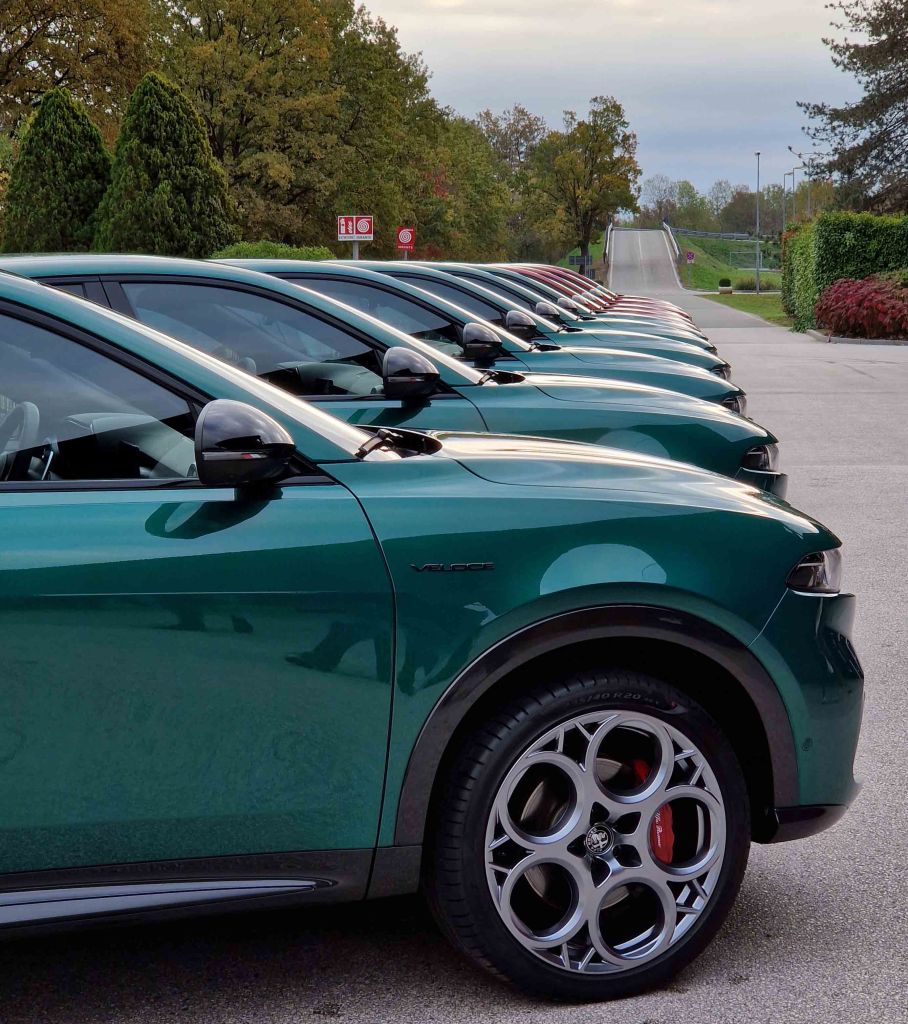
The gleaming row of Alfa’s ready for the road test, aligned in front of the Balocco Proving Ground headquarters…
But pleasure at the wheel is to be had every inch of the way, and we found the Alfa also display excellent neutral handling, also thanks to its ideal weight distribution. Icing on the cake was a stint on the curvy circuit section of the proving ground, behind a Giulia Quadrifoglio pace car. It gave us the opportunity to drive flat out and (safely) close to the limits of this endearing Tonale, and the car could prove its qualities masterfully. Remember, the four wheels are driven, the front wheels being powered by the internal combustion engine and the rear wheels driven by the electric motor. Your servant could thanks to the e-AWD system, enjoy the instantaneous deployment of 100% of available torque from the electric motor, with a rear axle responding as soon as one steps on the throttle, and this resulted in excellent and stable out of corner acceleration, truly exhilarating indeed!
The performance is of course nothing short of astonishing. On the short straights of the circuit speeds well over 170 km/h were easily achieved, with stopping power to match. The “Q4” Tonale shoots from 0 to 100 km/h in merely 6,2 seconds and hurtles further to a top speed of 206 km/h. On e-power alone, the Tonale can achieve 135 km/h.
The suspension is well calibrated. For technical buffs we tell you here that the Tonale, as a result of its development history, runs on the FCA Small Wide platform of the Jeep Compass of the second generation.
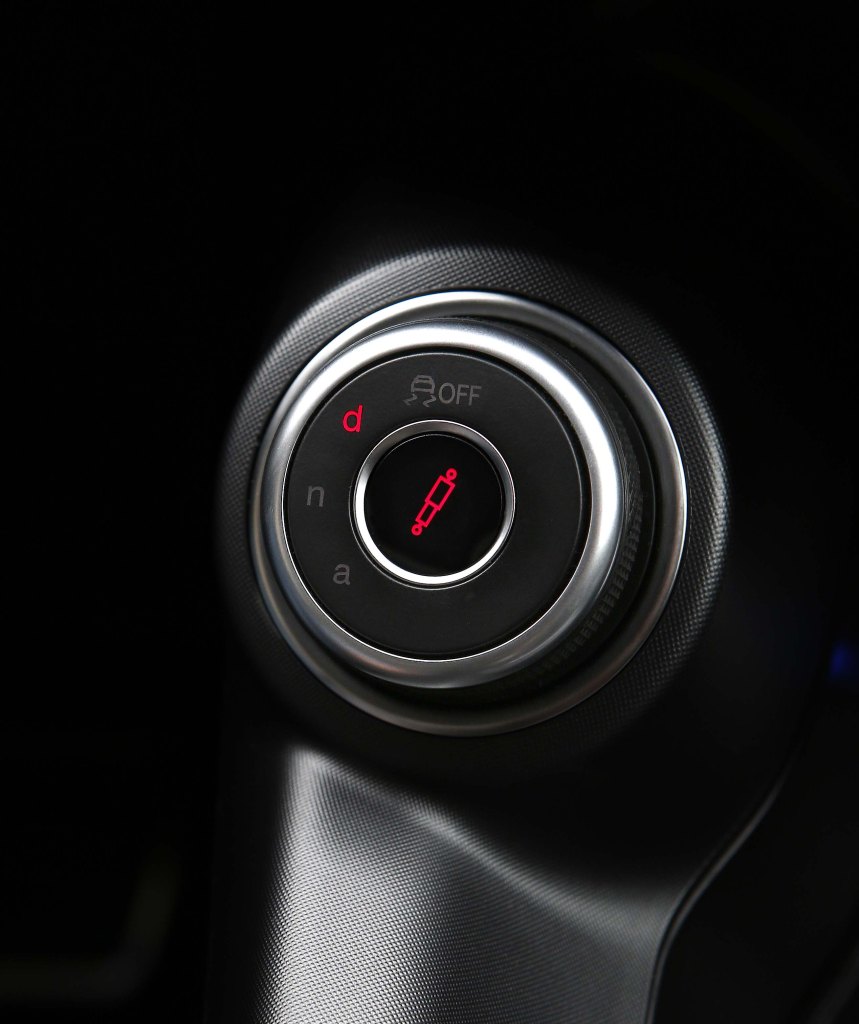
The D.N.A. selector at the centre of action…
You can drive this Alfa exactly how you feel. We already applauded its qualities in the Dynamic mode, and the subdued but sporting roar of the engine still rings in our ears. But then you can also enjoy the agility, responsiveness and nimbleness of the Alfa Tonale in a more refined, “zen” way, which Alfa calls “modern sportiness”. We do agree, as the transgression between engine and E-power is ever so smooth as to becoming completely imperceptible, and that is no small feat. So when you select “N” or “Natural” mode, it keeps hybrid driving to all-wheel drive to optimize performance. The use of combustion engine and electric motor is automatically managed and allows for energy and fuel savings without giving up on performance.
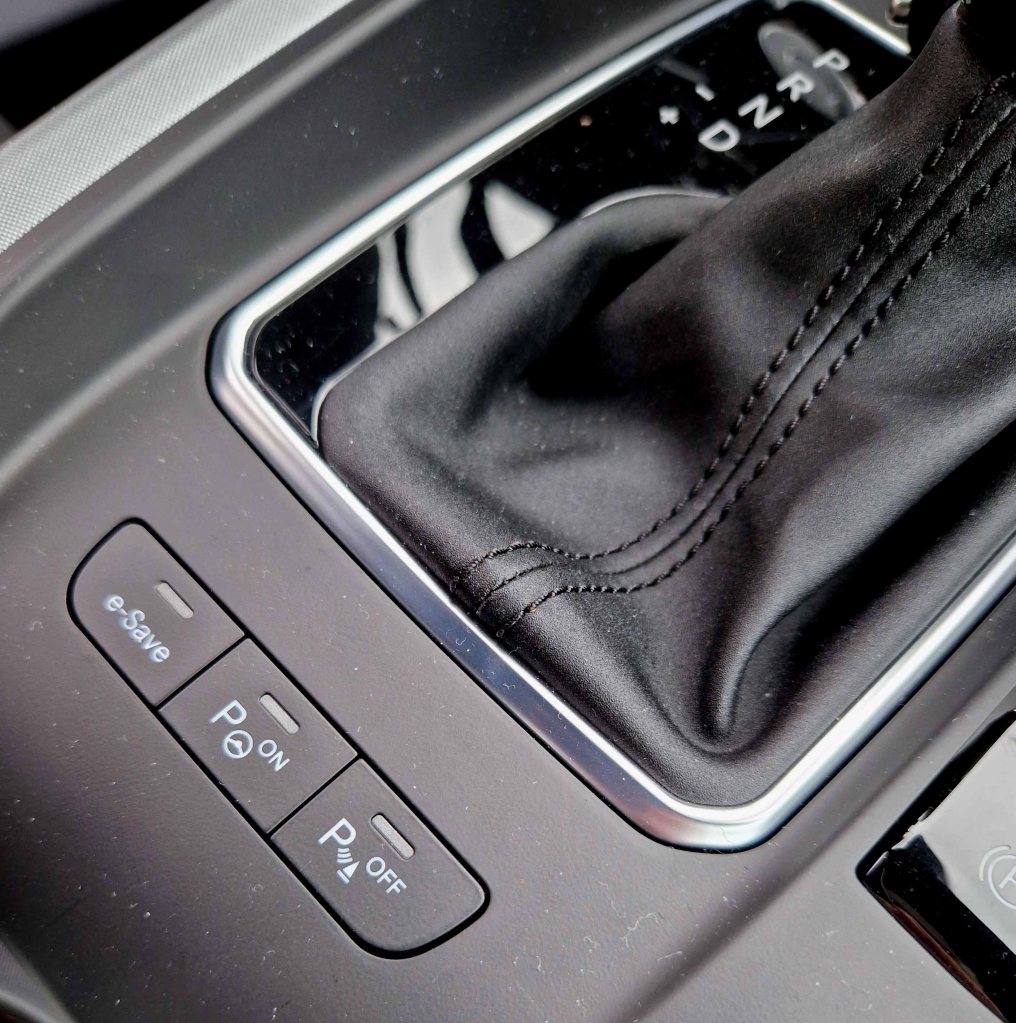
Last but not least there is the “Advance Efficiency” mode, calibrated to obtain maximum energy efficiency in full-electric driving mode. It is the ideal driving mode in urban traffic. When you lift the throttle, the car continues driving in “Sailing.” Meanwhile, when one is going downhill, the new eCoasting Descent Control is activated to maintain a constant speed of 50 km/h, which is however adjustable with a light dab on the throttle or brake. Specifically, “E-Save” allows one to recharge or maintain the battery level when the internal combustion engine is on, and there is also the regenerative braking system.
Premium comfort and safety
The Tonale is quite roomy, remember, it rolls on the second generation Jeep Compass platform. Sound insulation is also quite good, enhancing the “zen” driving experience. Moreover, on-board comfort is also ensured by dual-zone climate control, pleasing ambient light, a sophisticated Infotainment system, ventilated and heated front seats, and a 14-speaker Harman Kardon sound system.
It also includes ADAS systems for level 2 automatic driving, a hi-res camera which provides a 360° view of the car, a Blind-Spot Detector and Rear Cross-Path Detector, as well as superior structural and industrial quality which earned it a 5-star NCAP rating.
Software connectivity…
Amazon Alexa allows one to remain constantly updated on the state of the vehicle from the comfort of one’s home, as it provides useful information like the charge Tonale Plug-In’s battery. The built-in Infotainment system comes standard and offers contents, functionalities, and services which are constantly being updated via its customizable Android operating system and 4G connectivity with “Over The Air” (OTA) updates.
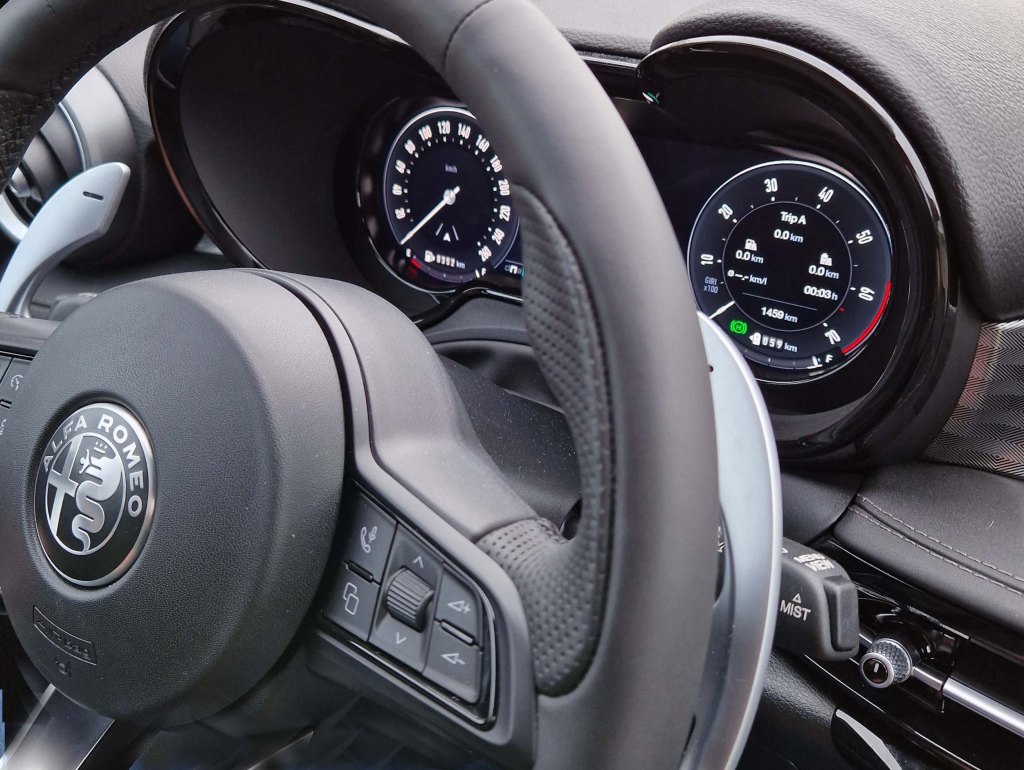
Thanks to a hi-res screen whose overall dimensions are 22.5”—a 12.3” totally digital screen and a 10.25” main touchscreen unit, the Tonale Plug-In ensures easy-to-use connection. The centre 10,25” screen is also seen by the way in the 500e. The Tonale Plug-in Hybrid Q4’s circular dials include ad-hoc upgrades like the electro-biscione in the lower part of the right dial which changes color based on the electric motor’s status (off, on, on and charging) and so provides all the information related to power and charging. Clever!
Four new functionalities of Alfa Connect Services make their debut on the Tonale Plug-in Hybrid Q4:
E-control: it allows the customer to control various functionalities based on the EV features—like charging and the climate control system—at a distance directly from the My Alfa Connect App, which you have to install on your phone.
Dynamic Range Mapping: it allows drivers to travel with peace of mind as it shows them the destination they can reach based on the battery charge both on the navigation system map and the My Alfa Connect app.
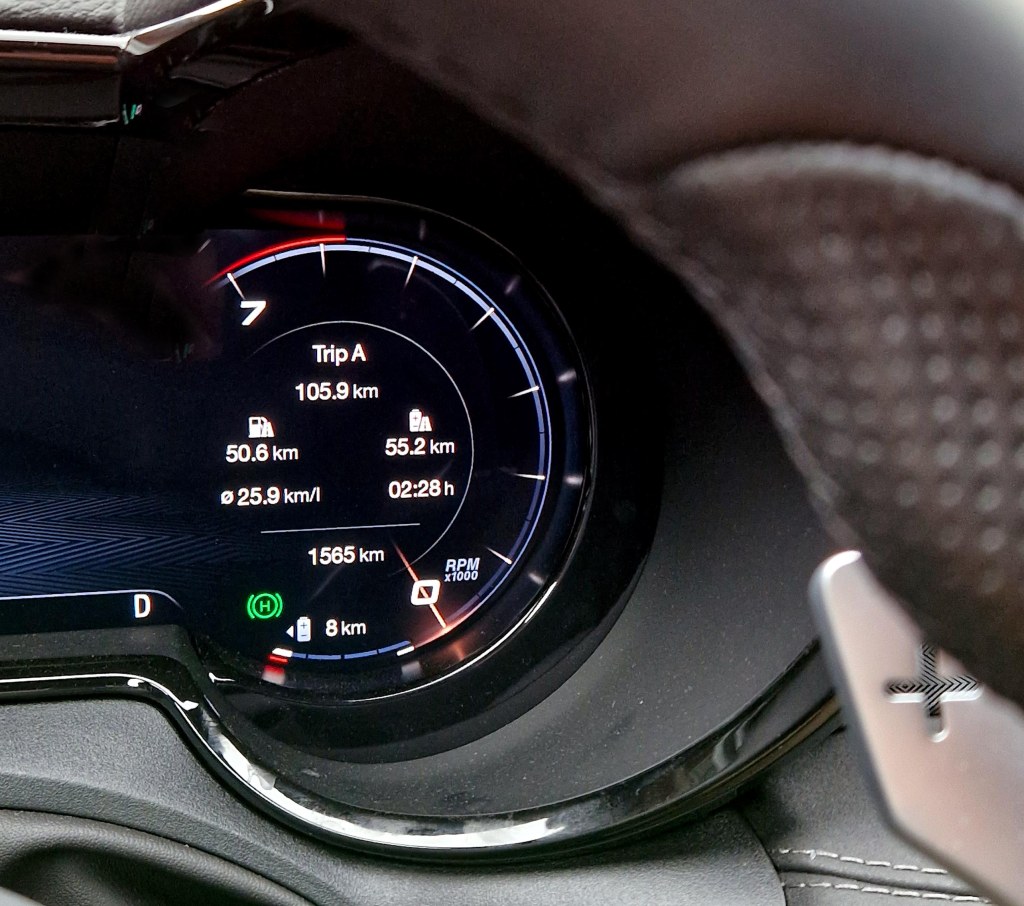
At the end of our 105,9 km road trip, the instruments tell the story: we drove 50,6 km on engine power, 55,2 km on batter e-power. This resulted in a consumption of 3,86 litres/100 km, but then with 8 km left in the battery, so we estimate some 14 kW consumed…
Charging Station Finder: it allows the customer to see the nearest public charging stations both on the navigation system map and the My Alfa Connect app.
My eCharge: it allows for the use of the My Alfa Connect app to directly access Free2Move eSolutions services to manage public and private charging. In fact, it is possible to locate the public charging stations, check the charging methods, make payments, visualize the charge history, manage one’s own Wallbox to decide how much electricity to use and even increase, decrease, suspend, and reactivate the charge.
Your Tonale has an NFT which lets you generate a certificate…
This means that specifically, based on the customer’s selection, the NFT generates a certificate which guarantees the identity and good maintenance of the vehicle, and thus supports its residual value. The NFT certificate provides a further source of credibility on the used car market and is even more valuable on the Tonale Plug-In Hybrid Q4 as it contains even more information.
A special “Edizione Speciale” at the launch…
The Tonale Plug-in Hybrid Q4 is the top-of-the-range model and is in line with the simplification and rationalization of Alfa Romeo’s lineup strategy. In fact, it can already be ordered in the exclusive EDIZIONE SPECIALE launch version and in the VELOCE trim which has been made to reach the most in terms of performance and sportiness.
The EDIZIONE SPECIALE offers inserts on the titanium body, a special badge on the fenders, and a “Tonale” black badge, 20” alloy wheels, metallic pedals, red Brembo brake calipers and aluminum shift paddles which are integrated into the steering column. Later on, customers will be able to order the Tonale Plug-In Hybrid Q4 in the Ti trim for a more elegant and distinctive character.
We have to wait a bit to get our hands on this remarkable Alfa for a more extended test, but stay tuned for more Alfa news soon!
The cars were lined up for us at the Bella Luigina farmhouse, centre and headquarters of the proving ground.
The world famous proving ground and high speed test circuit at Balocco, built in 1962 by Alfa Romeo to test the Giulia’s as well as the racing cars, was the setting for us to get a hands on driving experience of the brand new Tonale Plug-In Hybrid Q4. The Test Track was built at Balocco, in a strategic location between Turin and Milan.
It all proved to be absolutely epic. The handling and driving dynamics of the Tonale on the state of the art test circuit, with its plug-in hybrid 4 WD drivetrain which produces not less than 280 HP, was the stuff of legends to say the least.
In front of the stables of the Bella Luigina farmhouse – the former home of legendary Autodelta racing department – stood these impressive Tonale’s, waiting for a test drive…
We had also a taste of what Alfa calls its “efficient sportiness” and what it understands this sportiness to be in our modern times. This Alfa Tonale indeed displays its formidable performance in a totally effortless, mechanically refined and predictable manner, which has to be experienced to be believed.
The important loan documents for a drive in this wonderful modern day Alfa, including the permission to have a go at (almost) racing speeds on the Balocco test track!
We will of course come back the coming days on this presentation of the Tonale Plug-In Hybrid Q4, a very important car in the new future strategy of Alfa Romeo.
BMW’s have always lightened the hearts of the men and women behind their steering wheel. Their agility, responsiveness, the feeling of being “one” with the car, this pervades you every minute you drive a four wheeled product of the brand, and this always has been with every BMW. I can tell, as I am writing the report of this test while waiting in line to pass the yearly MOT test of my beloved BMWZ3, built in 1997. (For photos of this, see my instagram page autoprova.be). The sensation is just unique.
The BMW 218d Active Tourer we tested recently is no exception. It puts a smile on your face too. The car itself has now front wheel drive, and purists might look a bit worried here, but the excellence of the handling, the way the BMW engineers have fine tuned the suspension is nothing short of astonishing. The car steers with much precision, stays neutral until very high corner speeds and goes into a mild and controlled understeer when reaching the adhesion limit. The overall typical BMW agility is beautifully maintained.
Of course, this (compact?) SUV has what it takes to enjoy the family. There is plenty of room for five, and a luggage space which will satisfy almost everybody, more about this later.
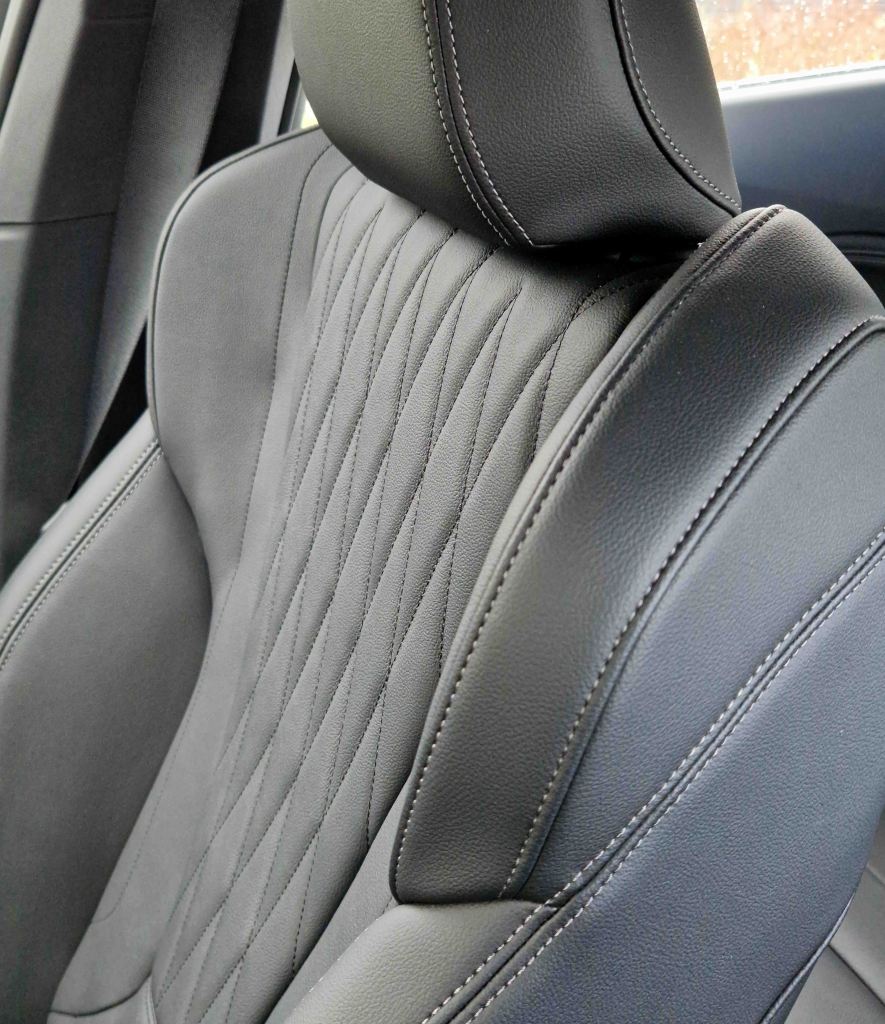
The seats are just wonderful, wrapping you in comfort with a sporting touch.
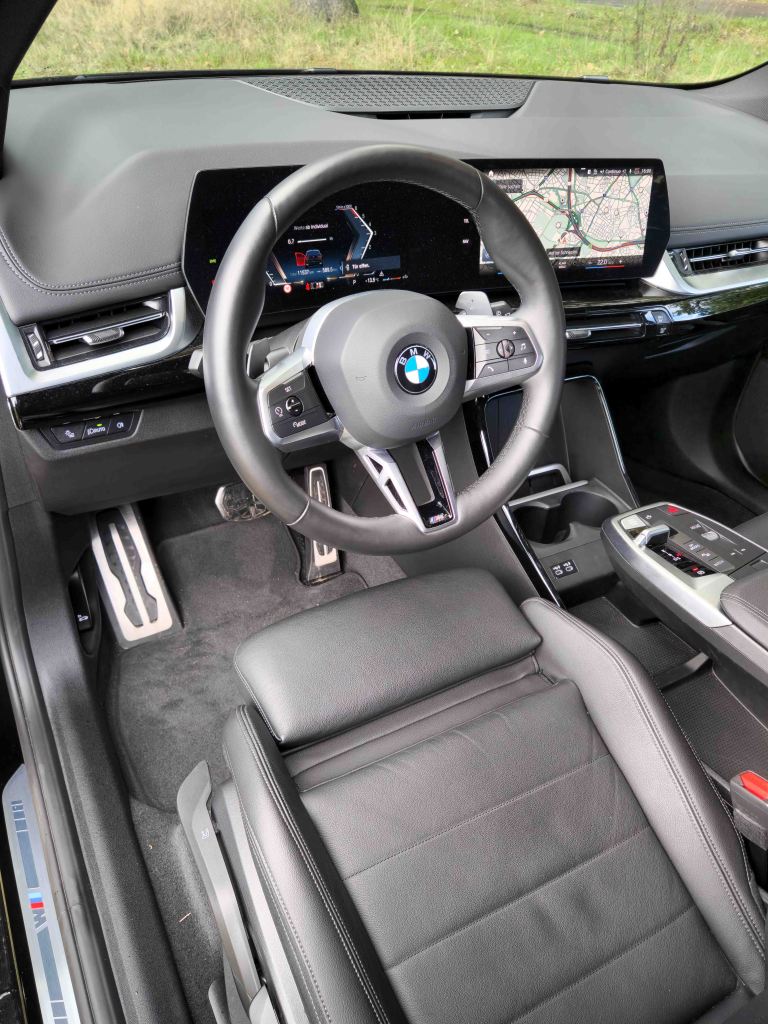
We absolutely love the BMW typical dashboard architecture, and the design and shape of the digital instrumentation, although we still love the iconic BMW styling of the round dials which adorn for example my now 24 year old BMW Z3.
One might regret that the iDrive round control knob in the centre console – which BMW thankfully had pioneered – has disappeared to manage all the functions and settings, and from now on everything has to be selected on the 10.25 inch touchscreen,
but this seems to be the trend of the times, and we have to admit that the functions are very logical and self explaining, albeit sometimes one has to search quite “deep” in the menu.
We very much liked also the gearbox selector neatly placed on a “floating” control pad which leaves space underneath for sunglasses, driving gloves and sundry. It has also a handy rolling control for audio volume, a knob for selecting the different driving modes, parking cameras and auto hold. Of course the start stop button lodges there too. We also liked the charging pad for the phone, which holds the phone upright, and tight so it does not slide around when you indulge yourself in some very spirited driving.
The screen graphics and the screen definition are a joy to behold, and this enhances the high quality feel this BMW gives you. Note that the touchscreen and its functions are the same as you find in the flagship BMW’s… The touch and feel of the upholstery and dashboard surfaces and panels is also top notch.
The magic of Diesel…
We tested the two liter diesel engine version of the Active Tourer, and it proved again masterfully how wonderful modern diesels have become. The four cylinder 1995 cc unit is ultra smooth, coupled to an 8 Steptronic speed automatic, it provided a velvety yet powerful energy flow to the front wheels. It has plenty of power with 110/150 kW/hp, and has ample torque of 350 Nm, which is available over a wide rev range between 1750 – 2500 rpm. You don’t hear it at speed, nor does it emit any vibrations. Performance is excellent we would think, with a 0 to 100 km/h acceleration time of merely 9 seconds. Top speed is a good 213 km/h, and we took our Active Tourer on a trip to Düsseldorf to have a go on the legendary German Autobahnen, and we enjoyed the high speed qualities of the Active Tourer to the full. We have to admit, this is what this (and many other) BMW’s are built for…
A range of 1125 km, makes one dream, isn’t it?
This effortless high speed driving and zesty touring in our cities and highways doesn’t cost you much energy with this marvelous frugal diesel. We clocked an average consumption of merely 5 litres/100 km. According to WLTP norm, the average consumption for the 8 speed Steptronic is quoted at between 5,2-4,9 l/100 km. Need we say more? This means, considering a tank capacity of 51 litres, you have an action radius of a good 1.000 km. This lets you dream, doesn’t it? How we enjoyed this mobility freedom with this diesel…
Good to know that its emission rating is 6D, and still according to WLTP norm it emits between 135-128 g/km of CO2.
Roomy
This is a compact SUV, or crossover, and it offers resulting from its body shape plenty of space also in the back seats. It is practical too. The rear seats slide fore and aft easily via manual locking mechanisms, so you can choose between more luggage space or better legroom. One has 470 liters in standard configuration, extendable to 1,455 liters with the rear seat backrests folded down.
Conclusion
A well made car with a stylish interior and excellent and frugal performance, and of course wonderful, care-free mobility in this diesel version. Refined too, with good comfort, excellent handling (certainly for a SUV). It doesn’t come exactly cheap, but as said, it is built for a very, very long service life, and this will reflect itself in overall very little depreciation. Last but not least, there is the emotional factor: it’s a BMW… made to make you smile behind the wheel.
Right after having unveiled its new brand identity, Citroën stunned the international press last Friday, when it presented its OLI concept car in Paris.
You can judge yourself from the photos I took with my flagship Samsung S22 (I am getting increasingly used to it now) how completely groundbreaking the design and the whole concept of the car is actually.
I decided to bring the news of this concept car in different episodes, as thanks to the excellent PR people, I was able to have interviews with not only the CEO of Citroën, Vincent Cobée, but also with Laurence Hansen, Head of Citroën Product Development and Citroën’s Head of Design, Pierre Leclercq. I will bring this extensively in further reports, together with also a further interview with Laurent Barria, responsible for marketing.
So read on, and you can expect much more soon!
Hans Knol ten Bensel
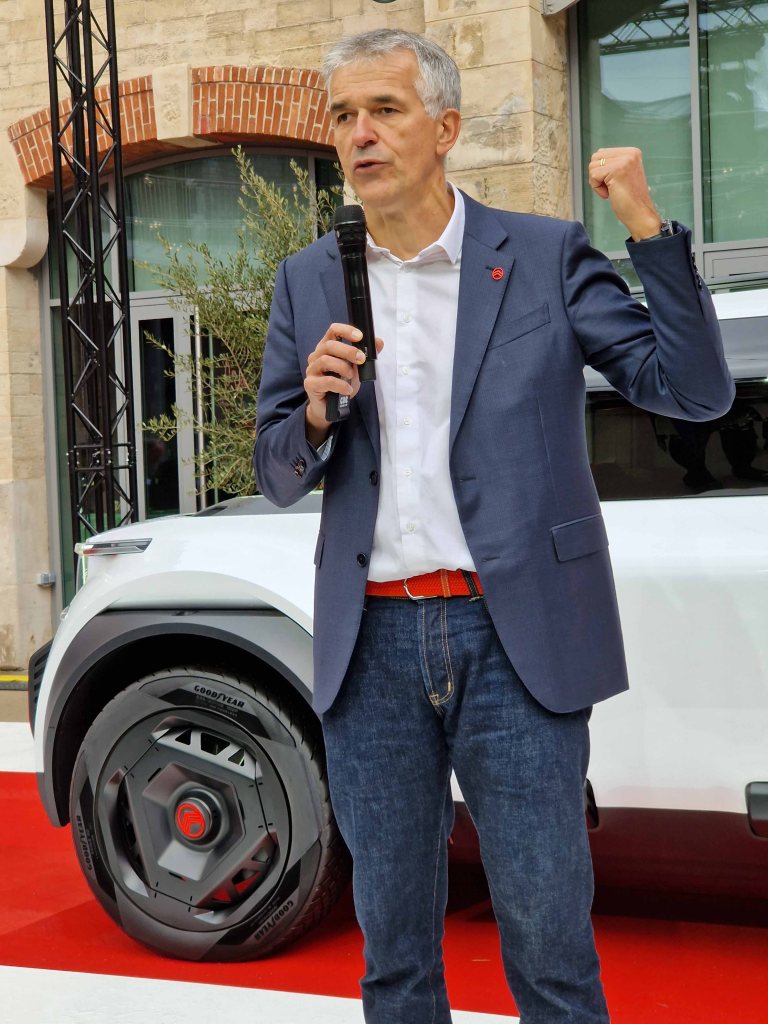
The oli concept car focuses on how more can be achieved with less…says Citroën CEO Vincent Cobée
In the footsteps of the Ami…now for mobility of the whole family.
Citroën already showed with its Ami (in a few days, we will also attend in Brussels the introduction of the Ami Buggy) that it believes strongly in offering affordable mobility, and it builds further on this concept, taking ‘unconventional’ to a new level with this conceptual oli [all-ë].
The Citroën oli concept is designed to do the same for family mobility that Ami achieved for personal urban mobility. Significantly, oli acts as a precursor to the concepts and innovations that will be available in future Citroën electric models.
The oli concept car focuses on how more can be achieved with less, first and foremost with less weight, how the inventive use of responsible materials and a sustainable production process can lead to inexpensive yet desirable zero-emission vehicles that meet multiple lifestyles.
In his introduction speech, CEO Vincent Cobée stated “Three societal conflicts are happening simultaneously – first is the value of and dependence on mobility, second is economic constraints and resource uncertainty, and third is our growing sense of desire for a responsible and optimistic future.”
Then he commented on the trend that cars are becoming bigger, heavier and more complex…
Styling language which is soon to be seen on new Citroën models…
“A typical mid-70s family car weighed around 800kg and was 3.7 m long and 1.6m wide.” He continued. Today’s equivalents have grown to more than 1200kg, are at least 4.3 m long and 1.8m wide. Some even weigh more than 2500kg. Legal and safety requirements have driven some of this, but if the trend continues and we carry on parking these vehicles 95% of each day and driving 80% of journeys with a single occupant, the conflict between the need to protect our planet and the future promise of sustainable, electrified mobility will not easily be resolved.”
He concluded: ““Citroën believes electrification should not mean extortion, and being eco-conscious should not be punitive by restricting our mobility or making vehicles less rewarding to live with. We need to reverse the trends by making them lighter and less expensive and find inventive ways to maximize usage.”
So true we would say, and it is this unerring vision which inspired Citroën to build this concept car.
They focused instead on creating a pure, honest vehicle that is above all lighter, less complicated and truly affordable, as well as inventive and joyful.
With oli, Citroën is raising the stakes for future family mobility by re-thinking every detail to reduce resources and needed materials without compromising on quality or versatility.
A car conceived and built for a (very) long life
Laurence Hansen, Head of Citroën Product Development… now we choose a lifestyle, and the car which responds to it…
Who does not crave for a car which becomes your classic, beloved, (life)long companion? Well, that’s the beauty of it, the oli will be at your side, no matter what or how long. This conceptual multi-activity family vehicle has sustainability at its heart and demonstrates how ‘best-in-class’ Life-Cycle-Assessment (LCA) can be achieved, from conception onwards with restrained, optimal use of lightweight and recycled materials, to sustainable production processes, and from durability for an extended ‘life in service’ to responsible end-of-life recyclability. The front and rear end parts can be easily changed, upgraded, customized, and the oli can within the family be passed from one generation to another…
Thoughtful details…
Clever details are found throughout. The seats, for example, are simply constructed and use 80% less parts than a traditional seat. They are made of recycled materials and clever ‘mesh’ backrest designs enhance the natural light inside the vehicle.
They can also be easily upgraded or personalized to suit the taste of individual owners. It’s indeed the result of a chosen and adopted lifestyle, and the concept car reflects that. Your servant also suggested to Citroën Head of Design Pierre Leclercq that in the aftermarket, a company like Ikea could offer their version of the seats to rejuvenate the interior after many years of use, for instance. Pierre Leclercq liked the idea…
Less weight means less power needed and more range…
The oli offers reasonable, useable performance for many. Through the use of lightweight materials, oli can extend the range of the 40kWh battery on board to up to 248 miles between charges. Citroën has also limited the top speed of the oli to 68mph to maximise efficiency, while rapid charging capability ensures a charge from 20% to 80% takes just 23 minutes.
Extraordinary looks, harbinger of a total revolution…
The reasonable performance – read top speed – gave extra room for the designers to shape the concept car. Striking and clearly making a statement, oli’s unconventional stance and silhouette exude personality, productivity and positivity in a footprint similar to a compact SUV at 4.20m long, 1.65m high and 1.90m wide.
It defies traditional labelling. oli can be whatever it needs to be – family limo, urban explorer, adventure vehicle, workmate, or even an extension to the family home thanks to its ability to power everyday appliances.
The oli was presented in the stunning setting of a caserne de sapeurs pompiers in Paris…
Pierre Leclercq, believes oli embraces purity and geniality for families who don’t care for automotive status and stereotypes. I couldn’t agree more…
In the oli, the aesthetic approach has been deliberately exaggerated to reinforce functionality and versatility. And, like Ami, it is not afraid to show its simple and intuitive approach and distinguishes itself with its playful use of colour highlights, bright trim materials and vivacious patterns that advocate opportunities for personalisation.
Versatile
The oli truly threads new paths here. Oli’s flat bonnet, roof and rear ‘pick-up bed’ panels, as well as driving the vehicle’s unique silhouette, were chosen to meet the objectives for low weight, high strength and maximum durability.
Made from recycled corrugated cardboard formed into a honeycomb sandwich structure between fibreglass reinforcing panels, they have been co-created with partner BASF. They are coated in Elastoflex® Polyurethane resin covered in a protective layer of tough, textured Elastocoat®, which is often used on parking decks or loading ramps, and painted with innovative, waterborne BASF R-M Agilis® paint.
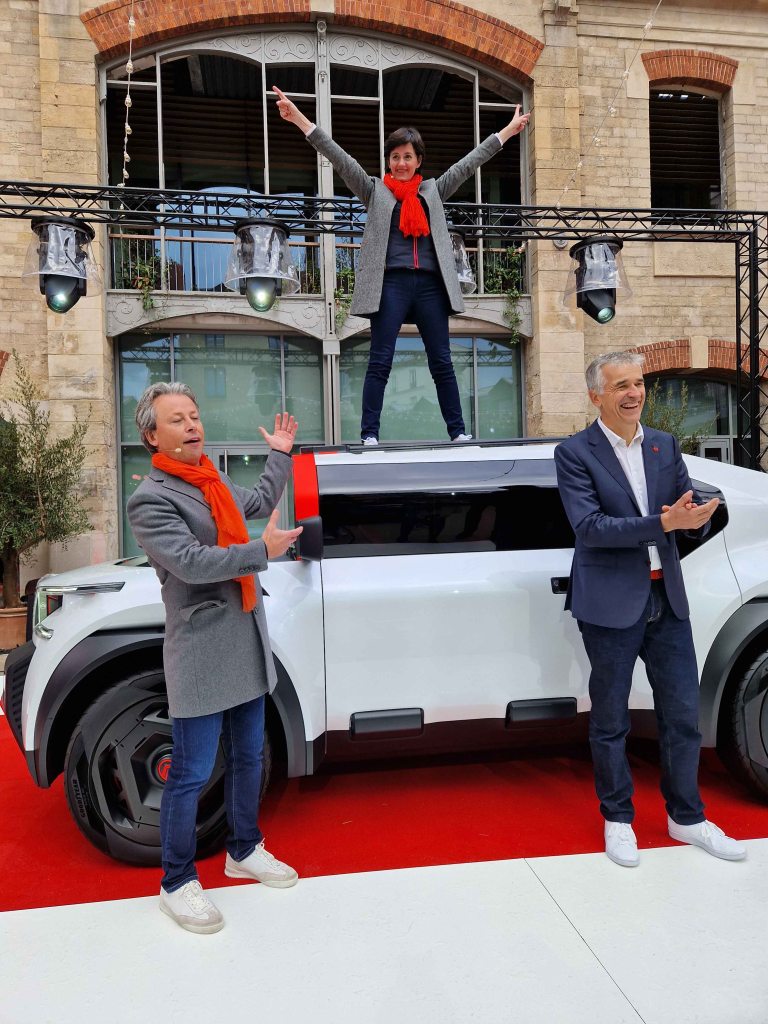
The panels are very rigid, light and strong – so strong that an adult can stand on them – and weight is reduced by 50 per cent when compared to an equivalent steel roof construction.
The roof is quite strong, as is amply demonstrated by Laurence Hansen, with Pierre Leclercq and CEO Vincent Cobée applauding…
Load carrying versatility is not compromised either, as roof rails each side of the roof panel allow owners to attach accessories like bicycle racks and roof boxes for family vacations, while below the bonnet panel are neatly detailed storage areas including compartments for charging cables plus personal and emergency items.
Not afraid to go vertical…
All of the key design elements on oli are perfectly horizontal or vertical, indeed, Citroën is looking for honesty and efficiency in the form language.
The windscreen is vertical because it’s the shortest distance between top and bottom and uses the smallest amount of glass. As well as reducing weight and complexity, the smaller screen is less expensive to produce or replace.
To aid aerodynamic efficiency, oli features an experimental “Aero Duct” system between the front section of the bonnet and the flat top panel which blows air towards the screen, creating a curtain effect to smooth airflow over the roof.
The eye-catching windscreen frame is finished with a bright ‘infra-red’ wrap – a new signature colour Citroën will use in conjunction with its new brand identity.
The contrast between horizontal and vertical is evident in the rationally thought-through side panels and glass.
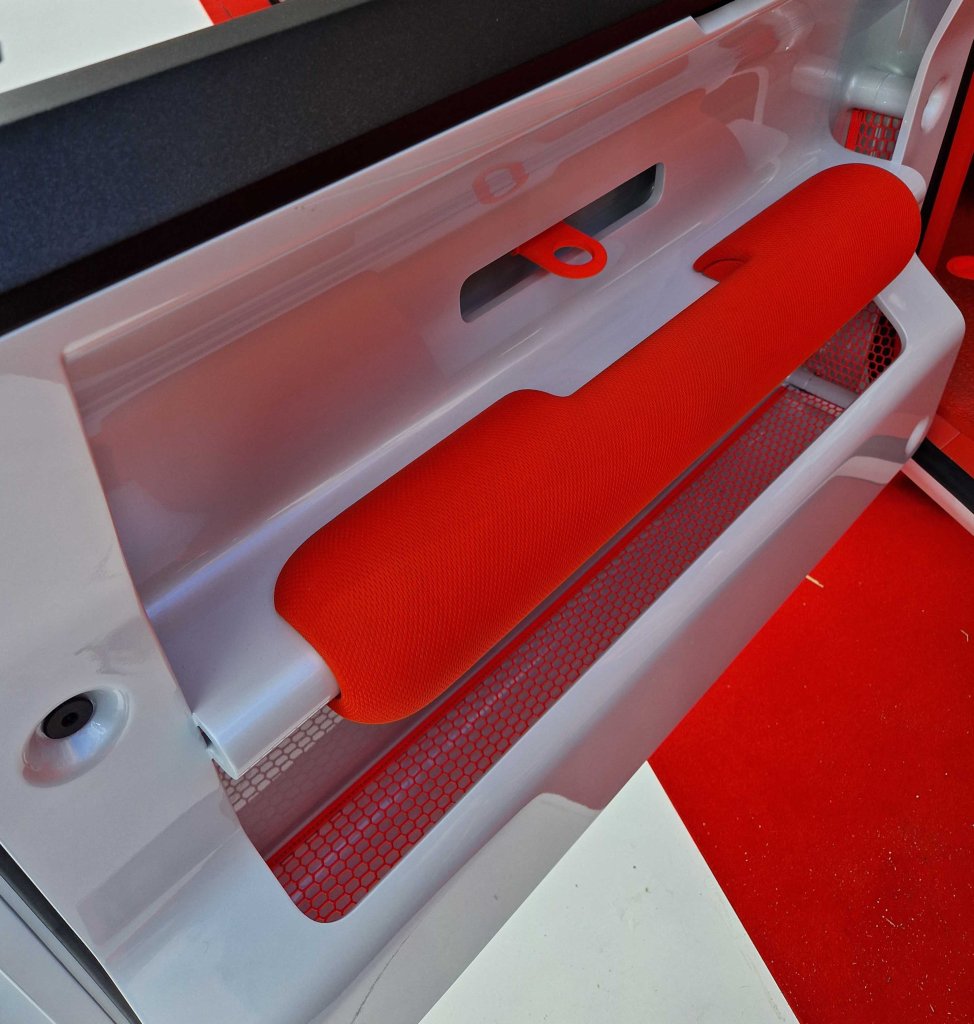
The front doors follow the example set by Ami and are identical on each side, though mounted differently. They are lighter, yet still strong, and much easier to make and assemble.
Reducing complexity and simplifying construction saves 20% in weight per door compared to a typical family hatchback. Half the number of components is required, and around 1.7kg per door is saved by the removal of the loudspeaker, soundproofing material and electrical wiring.
The external door panel is simpler to stamp and is designed to maximize interior storage. Gentle curvatures flow up the sides of the vehicle, and into the top of the side glass as it tumbles home to the roof.
Large, horizontal windows are tilted slightly towards the ground to help to reduce the effects of the sun, and manual, easy-to-operate “flip up” pantograph opening sections, similar to those used on Ami, provide fresh air ventilation.
The narrower rear doors are hinged at the rear of the vehicle and use vertical glass to give rear passengers more light and visibility. The change in form between the front and rear doors also gave an opportunity to add a passive air intake providing ventilation for rear seat passengers.
Access to the spacious cabin is wide, uncluttered and unhindered with both side doors open – ideal for when the driver needs to get straggling family members loaded efficiently.
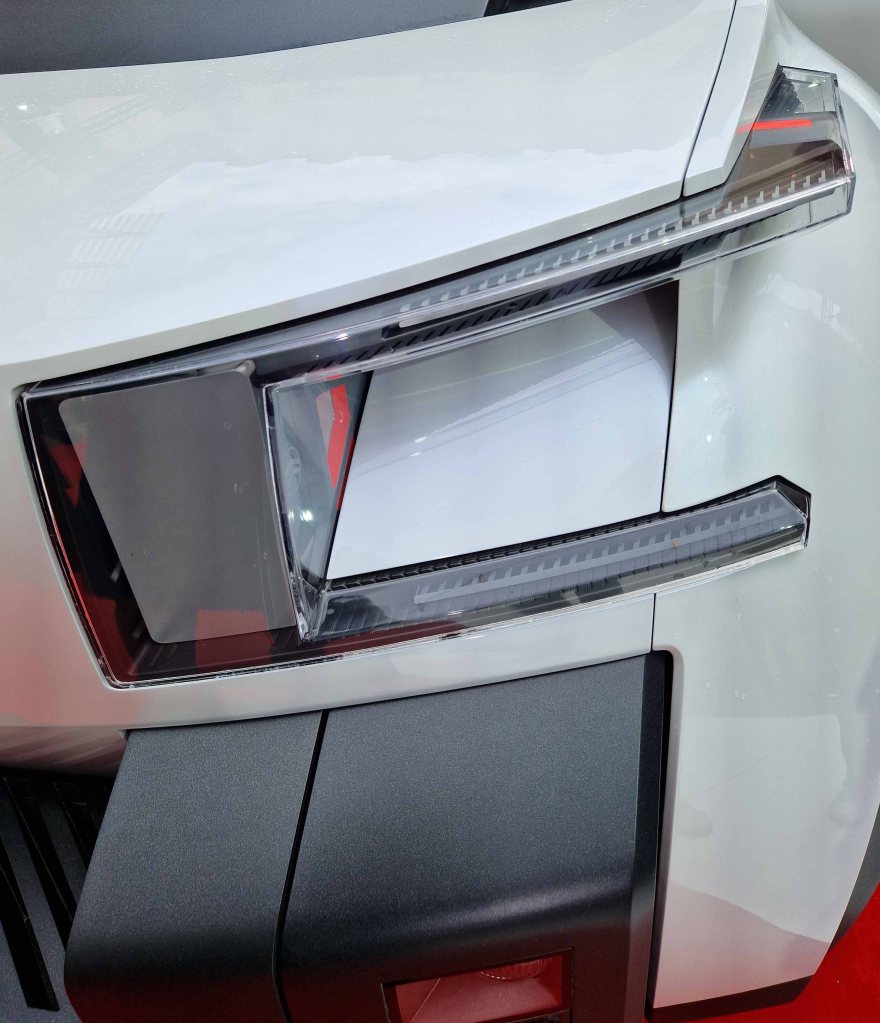
Front and rear lighting modules are, again, uncomplicated but highly distinctive, and also play with the contrast between two horizontal lines and one vertical section. This approach will be evolved further as a distinctive Citroën lighting signature in future production vehicles.
A pick-up (load)bed in the boot…
Instead of a conventional boot, oli features an unexpected, inspired exercise in useful product design, and comes with a pick-up bed inside the boot for added practicality. The independent rear seat headrests pop up into the roof, the rear screen glass opens upwards, with the flat 994mm wide removable load bed expanding in length from 679mm to 1050mm.
The tailgate folds down and with the load bed panel removed there is up to 582 mm height between the vehicle floor and the rear glass. With the panel in place, 330 mm height of useful and secure trunk space is available below. The removable bed panel is light and flat, and made from the same recycled cardboard structure as the bonnet and roof panels.
But there is more, on the bodywork, the interior, the wheels and drivetrain. More soon!
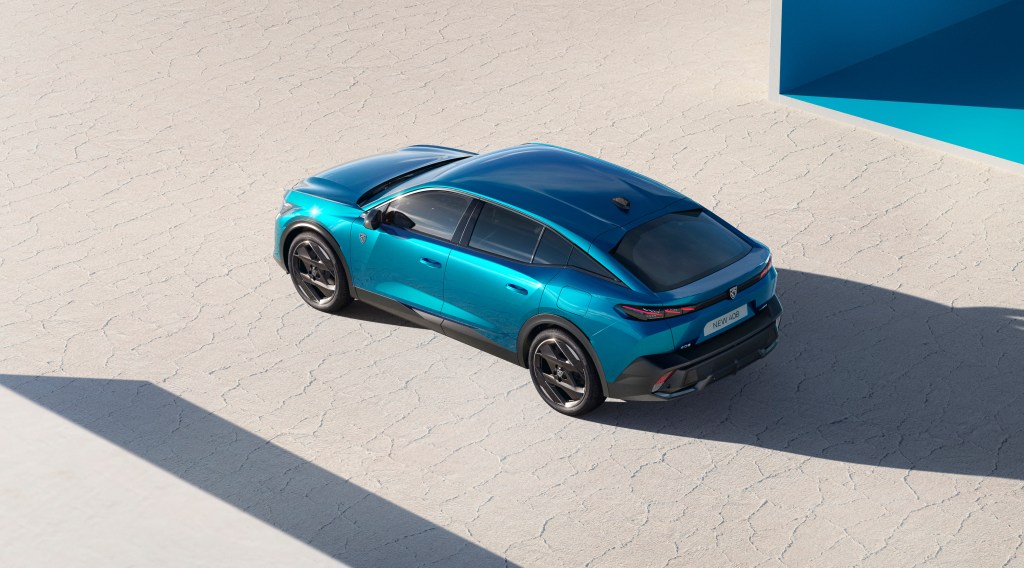
The new PEUGEOT 408 is different. Here PEUGEOT demonstrates the creativity of its teams by offering a new fastback silhouette at the top of the C segment. This new age PEUGEOT offers – this is how the company calls it – allure, as well as engineering excellence focused on efficiency and intelligent electrification. According to Peugeot, it awakens emotions, thanks to the cutting-edge technologies dedicated to driving pleasure and instinctive use.
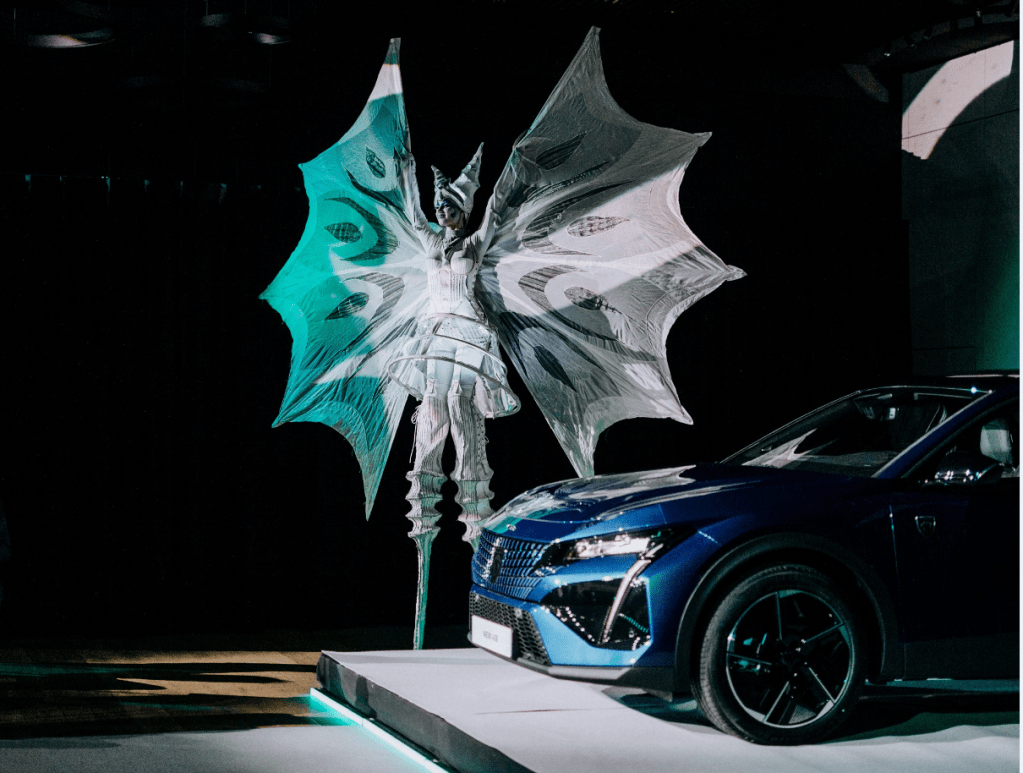
We saw the car for the first time in the flesh, at a stationary presentation held in our country. It certainly has the looks, presented to us in a dramatic setting offered by elegant ladies on stilts and spectacular fairy-like uniforms. See my YouTube short using the following link: https://www.youtube.com/shorts/hZVv01F0OgI
And also read further… Hans Knol ten Bensel
The unveiling was spectacular to say the least…
I must admit that the 408 has character, and its angular shapes certainly impress, exuding elegance as well as a bold presence. Peugeot calls it having “allure”.
Its lines are sharp, with remarkable styling details like the inverted cut-out of the rear bumper. We also liked the 20- inch rims feature an interesting geometric design. What I also personally liked was that the tyre rims bulge out over the alloy rims and thus protect them, so you cannot readily damage the beautiful wheels at the first stone kerb you meet, which modern architects now go to utmost lengths to build ever higher, in their foolisch anti-automobile philosophies.
But even the narrow (Parisian) older parkings with their circular trottoir bordered entrées present no menace any more, which is a blessing…
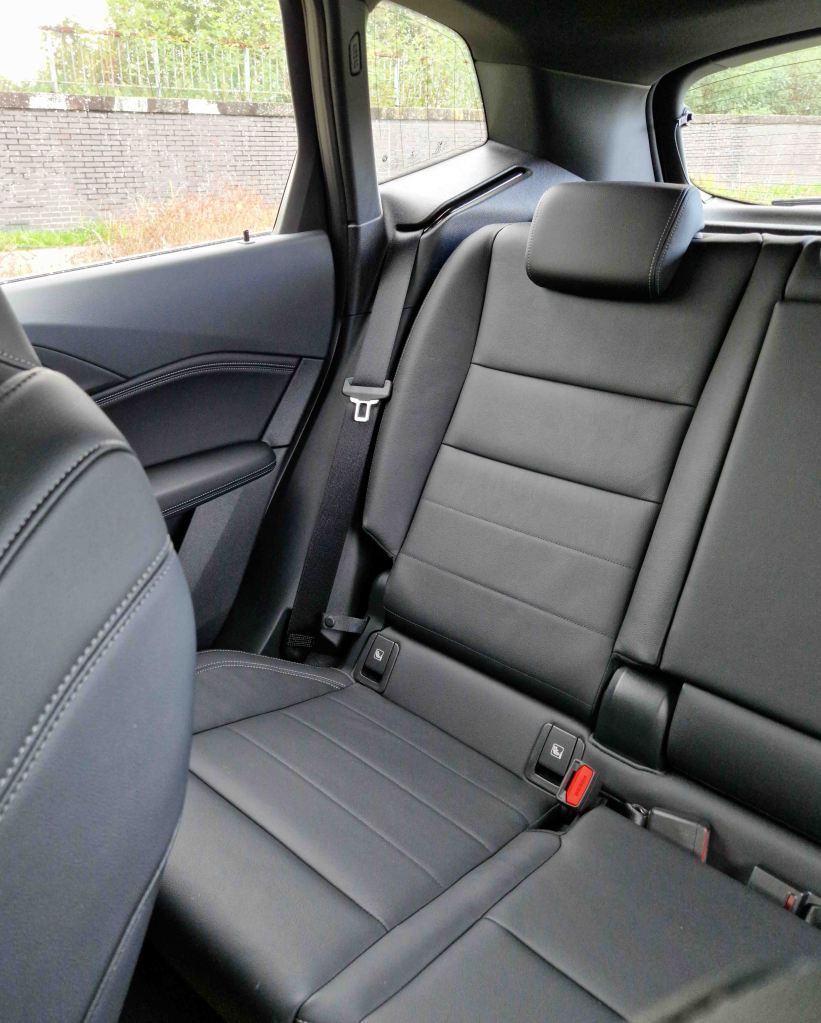
In good Peugeot tradition it is comfortable and offers room. Remember, back in the mid fifties, the 403 ponton was dubbed with good reason “la Mercedes française” and indeed was built to offer comfort and refinement. With a length of 4.69m, based on a long wheelbase of 2.79m, the new PEUGEOT 408 continues the tradition and offers 188mm of legroom in the rear. The boot is also well sized, with a volume of 536 litres, which can be increased to 1.611 litres once the rear seats are folded down.
Emotion and excellence…
Besides “allure”, Peugeot marketing puts forward two other hallmarks of its products: they should provide driver’s emotion and let you enjoy engineering excellence.
Indeed, the PEUGEOT 408 offers the latest generation of the PEUGEOT i-Cockpit®, instantly recognisable by its compact steering wheel dedicated to driving pleasure and controlled agility.
In the cockpit, the emphasis is on quality and connectivity, and the very latest technologies make the driving and travelling experience more intuitive and rewarding.
Powered by 6 cameras and 9 radars, the driver assistance systems provide peace of mind and safety. They include:
Adaptive Cruise Control with Stop and Go function,
Night Vision, which warns of animals, pedestrians or cyclists ahead before they appear in the high beam,
Long-range blind spot monitoring (75 metres),
Rear Traffic Alert, which warns of a potential hazard when reversing.
The typical Peugeot rear lights, representing separate three claws…
Drivetrains: power, smoothness and efficiency…
The range of engines powering the PEUGEOT 408 includes two rechargeable hybrid versions with 180 and 225bhp, and a 130bhp petrol version. All three are paired with an 8-speed EAT8 automatic gearbox. An all-electric version will follow a few months later.
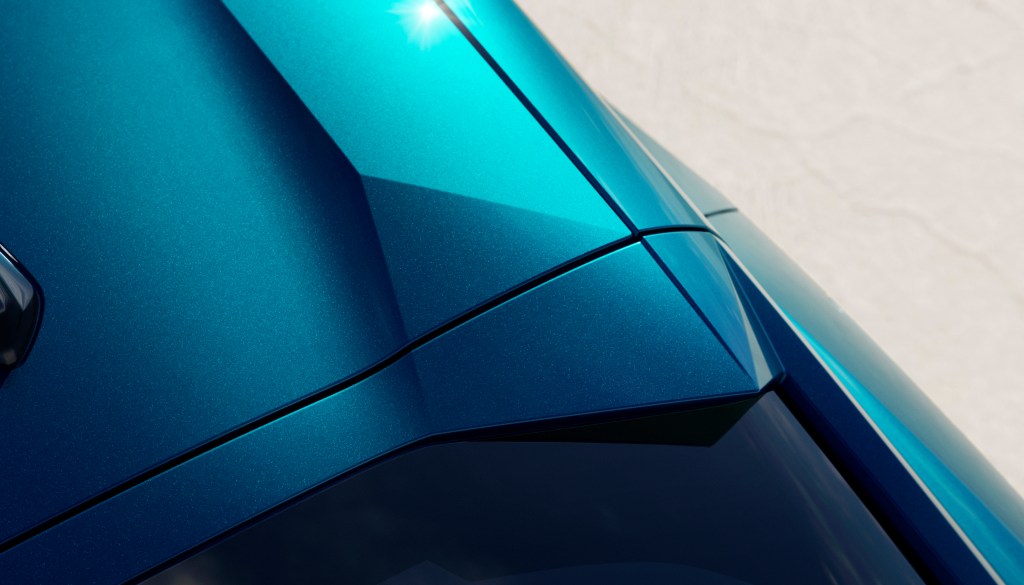
State of the art aerodynamics, like the deflectors at the rear end of the roof…
Efficiency was a key concern for the designers of the PEUGEOT 408, since the combination of efforts in terms of aerodynamics, weight reduction (from 1396kg) and low-emission engines means that the vehicle can now boast remarkably low average energy consumptions (under homologation), both for the hybrids as well as for the 130bhp petrol version.
The new PEUGEOT 408 will arrive on the market at the end of 2022. A car with a global ambition, it will be produced at first in Mulhouse, France, for the European market and then, soon afterwards, in the Chengdu factory in China for the local market.
Just have a look at the photos, and more news about this stylish 408 soon…
Hans Knol ten Bensel
Photographers’ notes: this is the first time we used exclusively a smartphone, actually the flagship Samsung S22. Quite a change for your servant who has been using camera’s for ever, and it was quite a struggle geting used to it. But experience will soon help…
There is good news from Jeep lately. Indeed, the Jeep® brand reveals next phase of its all-electric product offensive to become the global Zero-Emission SUV leader.
The all-new, all-electric Jeep® Recon: 100% Jeep; 100% zero emission
The plan, which premiered on the brand’s YouTube channel: http://www.youtube.com/thejeepchannel, calls for the introduction of four all-electric SUVs in North America and Europe by the end 2025. As part of an ongoing comprehensive product plan, 50% of Jeep brand sales in the U.S. will be fully electric by 2030, while 100% of European sales will be all-electric by then. The plan is in full support of the net-zero carbon emissions targets set by Stellantis during the Dare Forward 2030 long-term strategic plan.
Jeep Brand Electrified Portfolio in North America
Building upon the success of the Jeep Wrangler 4xe, the best-selling plug-in hybrid vehicle (PHEV) in the U.S., and the recently introduced Grand Cherokee 4xe, the brand is developing a comprehensive electrified product range specifically developed to enhance the brand’s legendary capability and expanding its reach in North America.
The all-new, all-electric Jeep® Recon
The All-new Jeep Recon: 100% Jeep; 100% Zero Emission
One of the first all-new electric SUVs that will launch in North America is the Jeep Recon.
This all-new vehicle is aimed at those who love to explore extreme adventures in near silence with a rugged, fully electric vehicle package.
The Jeep Recon is designed from the ground up to be 100% Jeep 4×4 and 100% zero emission.
This global SUV will be displayed to the public next year and production will start in 2024 in North America. Customers in the U.S. will be able to make a reservation for the new Jeep Recon BEV SUV in early 2023. The Jeep Recon will be sold in major markets around the world, including Europe.
An All-new, All-electric Wagoneer – The Art of American Premium
All-new, all-electric Wagoneer S, the art of American premium
The Wagoneer family is also set to grow with an all-new SUV. Code-named Wagoneer S, this fully electric vehicle will continue to expand the brand’s presence in the premium SUV segment by offering a unique, sleek, aerodynamic design and 4×4 capability as standard, with all-terrain management, advanced Jeep brand-focused technology and impressive performance credentials.
This new, all-electric, global SUV will be offered exclusively as a BEV, targeting a range of 400 miles on a single charge, 600 hp and a 0-60 mph time of around 3.5 seconds.
All-new Jeep Avenger, the First-ever Fully Electric Jeep SUV, Arrives in Europe in 2023
In Europe, the Jeep brand has already made a big shift by offering only electrified SUVs in countries such as Germany and France. By the end of this year, 100% of the Jeep SUV portfolio will be electrified in almost all of the European markets.
All-new Jeep® Avenger, the first-ever fully electric Jeep SUV
The plan revealed today builds upon this 4xe momentum, developing a portfolio of capable, fully electric vehicles designed and rightsized for Europe. The brand will introduce four zero-emission vehicles in Europe by 2025, with offerings in the main volume segments. As a result of this product onslaught, all the Jeep vehicles on sale in the region will be 100% electric by 2030.
All-new Jeep® Avenger, the first-ever fully electric Jeep SUV
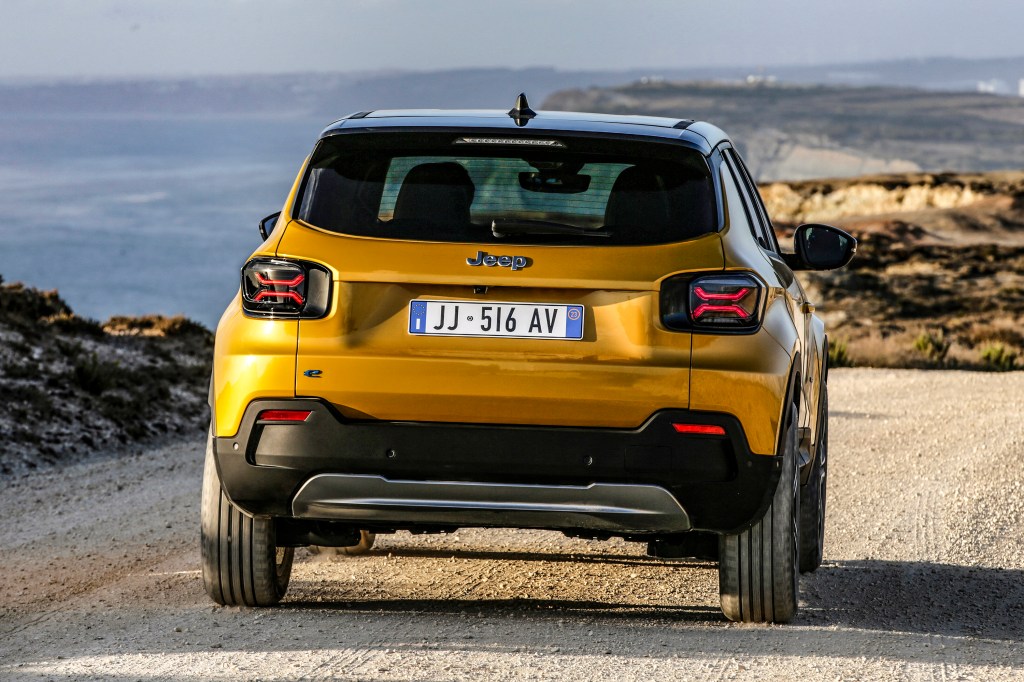
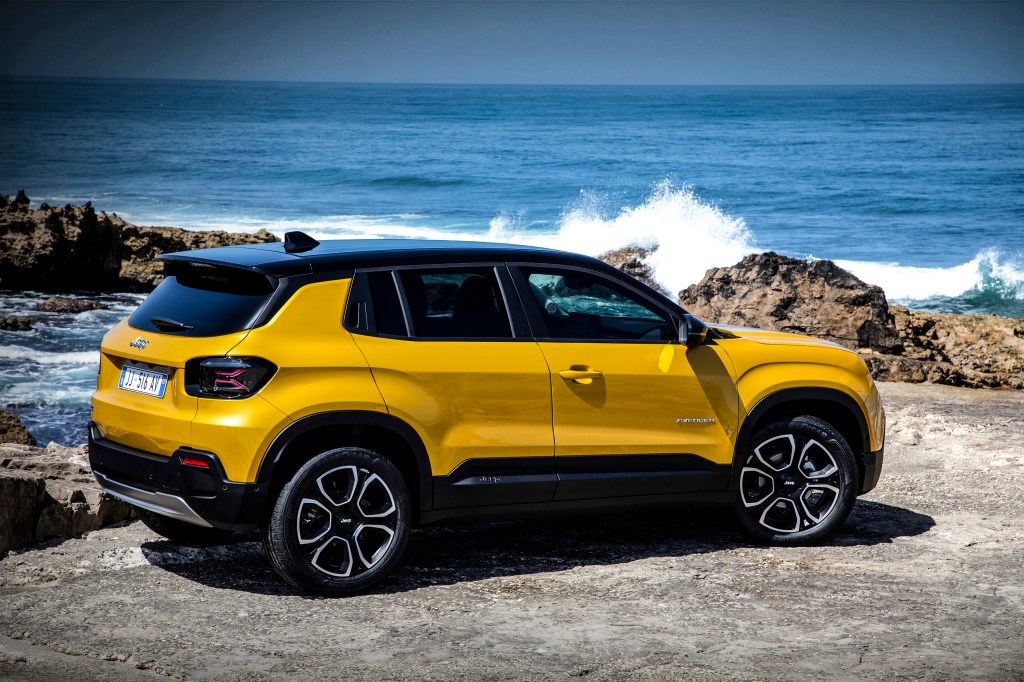
The first model of this product offensive is the all-new, all-electric Jeep Avenger, a compact SUV that was presented during the Stellantis Dare Forward long-term strategic plan earlier this year.
The all-new Jeep Avenger, to be introduced in Europe and other markets, such as Japan and South Korea, will be positioned under the Jeep Renegade and will be produced in the high-efficiency plant in Tychy, Poland.
All-new Jeep® Avenger, the first-ever fully electric Jeep SUV
The Jeep Avenger will debut during the Paris Motor Show press day, on October 17, with reservations opening for customers that same day. The all-new Jeep Avenger will arrive in showrooms in early 2023.
Stay tuned for more Jeep news!
Look also at our newly introduced Instagram page autoprova.be !
When you like smooth motoring and enjoy a car which is well engineered and built, (as we do) then Lexus has a superb car in store for you: their flagship sedan, the LS. We enjoyed it greatly, and tell you here more about this car which makes an admirable statement about the Lexus philosophy in designing and building automobiles.
Just read on…
Hans Knol ten Bensel
The Lexus LS is styled as a sleek slimousine with coupé-like character.
Of course we are moving fast towards total electrification of our cars, and all the car manufacturers are strategically moving in that direction. Lexus – and also Toyota – have already since decades taken a long term view about environmentally responsible mobility, and have come up with the hybrid Prius and the Lexus 200CT many years ago. They have been sold in millions and made a statement how smoothness, reliability and go anywhere mobility can be combined with unparalleled economy. Your servant clocks an average fuel consumption with his Lexus 200CTh of 4,7 l/100 km, an average over the year, and actually this year in year out.
No small wonder that Lexus has maintained and honed this solution to ensure easy mobility, in these present times when a convenient charging infrastructure for carefree full EV mobility is still a daydream in many countries in this world. It therefore also takes a long hard look at hydrogen as a power source.
In the Lexus LS, one finds this “classic” hybrid technology, now engineered and honed to absolute perfection.
Under the hood purrs a 3,5 litre V8 Atkinson cycle petrol engine, good for 295 HP. It is coupled to a 10 speed CVT, and is assisted by two electric motors, who have a combined power of (only) 60 hp. With a battery having a capacity of 11 kW, you cannot use this LS for extended “pure” EV drives in urban areas. The 4WD is made possible thanks to an integral transmission. The electric power is only used to deliver power in situations where the full use of the petrol engine would not be efficient. So one has the advantage of very reasonable fuel consumption, especially in congested urban traffic, where – given a relaxed and anticipative driving style – averages around 8 litres/100 km are easily reached. These are very good values for a large limousine. The manufacturer quotes 7,1 l/100 km as average consumption.
The other advantage is the utter smoothness of the power delivery, especially from standstill and in stop and go traffic.
This smooth and silent progress is one of the very strong points of this Lexus, and this is in our opinion what the designers had in mind for their flagship sedan. Of course it has the power to deliver: 100 km/h is reached from standstill in merely 5,5 seconds, top speed is 250 km/h.
In the wide array of driving modes at your disposal, you can even opt for the “sport” and “sport+” modes. The CVT transmission will then be ultra alert and reactive to any movements of your right foot, the pneumatic suspension will be setting itself a bit firmer and the steering will be more sensitive and direct, but nevertheless the sheer weight – a good 2,425 kg – and size of the car will not invite you to really throw it around each corner. It is a bit out of character for this sleek automobile, primarily designed to move you from A to be in well insulated comfort, and that’s where it excels. By the way, you have the choice between further driving modes, Eco, Normal, Comfort and Custom…you guessed it: we chose between Eco and Comfort all the way through our test.
Impressive and elegant
The Lexus LS is a flamboyant and impressive automobile. It stretches 5,24 metres long and its fluid roof contours which are continued to the boot give it a coupé like character. The grille is uniquely Lexus in its bold styling signature and gives the LS panache and personality.
The Lexus exudes opulence, but also quality and workmanship, as the overall bodywork finish is superb.
The same can be said for the interior, dashboard and seats. The seats are a chapter on their own, and you can opt for the most exclusive leather finishes, ventilation and massage functions and the like. Six chromed bands stretch across the dashboard, giving it a fluid elegance. In the centre towers a 12,3 inch touchscreen, and there is also a big touchpad next to the gear selector lever, which lets you choose all the screen functions. We like to use this touchpad, as it avoids you touching the screen and getting it muddled with fingerprints. When the car is in motion, it is easier for you to touch the more accessible and ergonomically stable pad anyway.
Of course you can monitor on the display exactly what the hybrid system is doing, besides all the other info functions and layouts. It is worth every minute you spend on reading the instructions to familiarise yourself with the wide array of possibilities, functions and infotainment, as you then will enjoy this flagship car so much more.
We were of course smitten again by the superb quality of the Levinson audio system, which still sports a CD audio player, a tradition applauded by “classic” audiophiles like your servant…
Comfort
The Lexus LS 500 offers you superb comfort, with ample leg- and headroom for all (four) passengers. The subtle pneumatic suspension does the rest. Especially in the Comfort setting, it literally swallows for you all ridges and potholes ancient urban streets have in store for you. Sound insulation is also of paramount importance for the Lexus engineers, as well as total filtration of any vibrations or mechanical noises from the drivetrain. All this adds greatly to the total “zen” experience which going from A to be in this LS entails.
The screen lets you monitor all the hybrid driveline functions…
Sporting aficionados will find maybe that they lack a more direct “feel” of the car and the road conditions, but being cocooned by a soothing behaviour of the car in all driving situations is actually aimed for by the engineers when they set out creating this unique automobile.
Conclusion
The present Lexus LS series is already amongst us since 2017, and got an important facelift in 2011, both visually and technically. It makes a bold statement with its “Zen” philosophy of environmentally responsible smoothness and performance.
This panache is further underlined by a tradition of craftsmanship, resulting in a superb finish and excellence in the quality of the materials used.
If you want to drive an alternative to the German savoir faire in building top class executive sedans, have a drive with this LS series, and enjoy the change…
Hans Knol ten Bensel
Photographers’ notes:
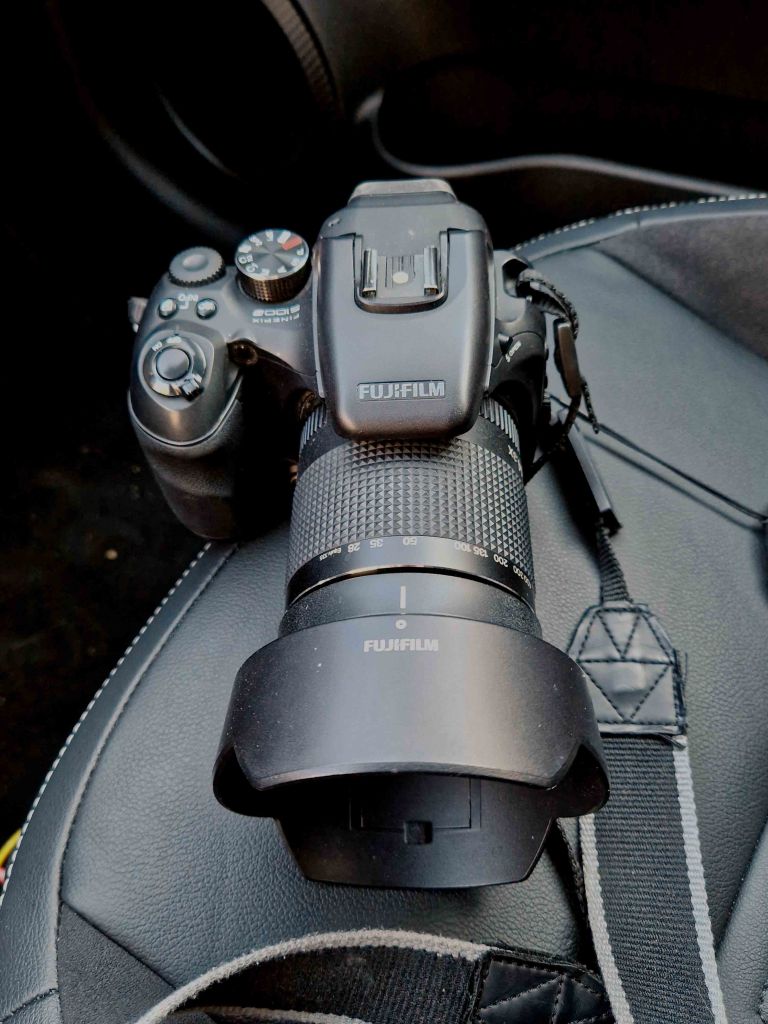
The photos were taken with our faithful Canon G9 X. A 209 g gem which offers a 1″-type 20.2MP CMOS sensor and 28-84mm equivalent F2-4.9 lens encircled by a control dial, as well as a fixed 3″ LCD. It has been our favorite workhorse for years now, and it is still performing very well. We use it mostly on Aperture Priority mode, also for the photos here.
After the revolutionary and dedicated i3, BMW uses the popular bestseller X3 as a basis for an EV which will inspire many to take the step towards full electric mobility. Does it convince? It certainly does…
The i-version of the X3 saw light in China, where production began in September 2020 at BMW’s factory in Dadong, China.
Of course, the EV version doesn’t come exactly cheap, but then its major competitors, the Mercedes EQC, the Audi e-tron and the Jaguar F-pace also need a deeper pocket to call them your own. In Flanders, these EV’s mostly appeal as business cars, also due to the simple fact that business cars in our country need to be EV’s in order to benefit from the fiscal advantages which make them interesting.
The problem with using EV’s überhaupt at the moment in our country lies with the abysmal charging infrastructure we encounter. Let it be said, this has nothing to do with the car. During our test however, we met further charging problems, which made us use the efficiency of the iX3 to the limit, and indeed we clocked an average EV consumption of 16,4 kWh, which is, considering the weight and size of the car, excellent. It resulted in a range of around 482 km, which is certainly no small feat.
Needless to say that in order to achieve these low consumption levels, one can only use merely 10 % of the available power, and you can imagine that we enjoyed during most of our test the acceleration performance and speed of a heavy truck…But then coasting along with the slower traffic was a very restful experience!
Powerful and “zen”.
Not that the iX3 lacks power. It has not less than 210 kW or 286 HP driving the rear wheels, and even for a 2,2 tonne car this means performance. It will sprint from 0 to 100 km/h in 6,8 seconds, and hurtle smoothly to a top speed of 180 km/h.
But sheer performance does not tell the whole story. The feeling that all this power is immediately available all the time at the slightest movement of your right foot is one of the beauties of EV driving, besides the utter smoothness and silence which adds to this unique “zen” feeling, which pervades you every moment you are behind the wheel, and this certainly so in urban driving conditions.
The iX3 driver has three modes at his/her disposal, “sport”, “comfort” and “eco pro”. Needless to say that given our charging situation we used the “eco pro” function virtually all the time.
The electric powertrain is BMW’s fifth-generation scalable electric drivetrain, and has a very compact layout with the electric motor, transmission, and power electrics grouped together in a single component. It does not use any rare-earth materials in its construction. The 80 kW Litrium Ion battery consists of 188 prismatic cells.
This BMW thinks with you…
If you use the navigation function together with the adaptive speed control, an intelligent interaction between the two systems unfolds. Indeed, navigation data and the sensors of the driving systems combine to slow the car at junctions or approaching bends.
When you are driving at fairly constant speeds with low traffic density, lifting your right foot will cause the car to coast, when you activate the direction indicators, the recuperation mode sets in immediately. Soo clever….
The front camera can even detect whether the traffic light jumps to green, so the recuperation mode is immediately interrupted.
Of course you can set the recuperation mode in three different intensities, to get that pleasant “one pedal” feel. We used it to the max.
A wide array of charging possibilities
The iX3 can be charged in AC mode up to 11 kW, in DC mode up to 150 kW. We had no experience of this as we were due to malfunctions unable to recharge the car during our test. At the maximum 150 kW level, one could recharge the BMW in about 30 minutes to 80 pct of its charge. You can also enjoy the info of the digital service offered by BMW, dubbed Connected Charging, which helps you find public charging stations. Not of any use for us, as the BMW charge card malfunctions (or otherwise?) prevented us from charging the car during our test, as we said earlier.
By the way, over the last several years I live in the Antwerp (Wilrijk) urban area not one public charging has been added within reasonable walking distance from my home. At the moment, there are only three charging points, which are now almost permanently in use. This makes the regular use of an EV (still) a rather nervous affair with range anxiety setting in the minute you get behind the wheel.
Dynamic handling…
A BMW is and remains a BMW. The iX3 handles very well indeed. Of course, this EV version has standard adaptive damping and its centre of gravity has been lowered by some 7,5 centimetres. Aerodynamics have also been improved with the new closed grille and the special air slippery 19 inch alloys. The front and rear end has been restyled and this iX3 carries also a somewhat bolder light signature.
Revised cabin
The dashboard has been further modernized, as well as the array of knobs and functions, which all are logical and quite intuitive. We truly love the layout of the audio commands for instance. But there is the big central 12,3 inch control display, combined with the also 12,3 inch large instrument display. Of course, the plethora of available digital information, menus and functions take some good study, but are worth every minute you spend on learning them. By the way, many functions can be steered by voice control, called the BMW Intelligent Personal Assistant.
You are also engulfed at night with blue accent lighting while you enjoy the now standard sports seats in the front.
Assistance systems galore
Safety is also an important issue for BMW. In the iX3, you enjoy the support of their Driver Assistant Professional, with amongst others the active navigation guidance function.
Space
Their is enough space for five, with the three rear seat backrests foldable independently. Total boot volume is 510 litres, with all the backrests folded down, some 1.560 litres.
Two equipment levels
At the moment of writing, the iX3 is offered in two equipment levels, Inspiring and Impressive. The Inspiring level is already very complete with panoramic sunroof, electrically adjustable front seats, metallic paint, smartphone integration and DAB radio. We already applauded the active navigation. The inspiring level now sets you back some 71.000 Euros.
Conclusion
A well thought out EV, in a superb X3 body, inheriting all the good qualities of this model. The facelift is stylish and underlines the EV character of this SUV. It has impressive efficiency and range, combined with more than adequate performance. When you are looking for an EV, this is a very good choice indeed.
EV’s of this stature don’t come cheap, and their longevity and resale value will depend on battery life, the evolution in battery technology, and last but not least the venue of alternatives like Hydrogen. Will this source be practical and available for the masses?
Big oil companies are increasingly looking at the latter possibility, as they are familiar with the manufacturing, transport and storage of liquid molecular sources of energy. They plan on building big solar E-plants to manufacture Hydrogen and then transport and distribute it to the whole wide world. Also for individual cars? This remains to be seen in a more distant “green” future…
Hans Knol ten Bensel
Photographers’ notes
The Fujifilm X100F is the latest addition to our mirrorless digital camera fleet. It has a superb 35mm equiv. F2 lens. Inside, the camera has a new 24.3MP CMOS sensor along with an updated image processor , and it is a true gem. The photo conditions were very difficult here, strong sunlight and a black car, but the camera still managed to produce creditable results. You will see more photos with this camera with a unique precision feel…