After the Renault Scénic in 2017 and Renault Grand Scénic in 2018, the new Renault Clio has been elected “VAB family car of the year 2020”. New Renault Clio wins the win in the category up to 20,000 €. VAB is the Flemish Automobile Club, and it organizes yearly a very coveted contest of best family cars in the different categories.
Now for the third year in a row, Renault has distinguished itself as the top VAB Family Car. In 2016, Renault ZOE won in the “electric” category. Renault Scénic and Renault Grand Scénic won respectively in 2017 and 2018 the first place in the category up to € 29,500.
A closer look at the winner: the Renault Clio TCe 100
The winner of this 33rd edition is the Renault Clio Intens TCe 100. We drove it recently for you, and a test report will follow soon. Needless to say that this Cleo greatly impressed us, and this award hardly comes as a surprise to us.
This is the fifth generation of the Renault Clio. This latest generation has been designed according to the double principle “Evolution & Revolution”.
On the one hand, it inherits from its predecessor the design that inspired the entire Renault range.
On the other hand, the revolution is mainly in the cabin that is inspired by the upper segments both in terms of quality and available technology.
This year, the winner is equipped with the 1.0 TCe three-cylinder engine. Just as out test car.
This unit is new in the Renault range, offering the latest technologies, such as a turbocharger with electrically controlled relief valve, an exhaust manifold partially integrated with the cylinder head, a double variable hydraulic timing of the distribution and a specific steel coating of cylinders (Bore Spray Coating).
With a power output of 100 hp and a torque of 160 Nm, this new generation engine gains 10 hp and 20 Nm over the TCe 90 it replaces, while reducing fuel consumption and CO2 emissions.
In Belgium, Renault Clio is the second best-selling vehicle, all segments combined, after the VW Golf. In addition, Renault Clio occupies the top spot in the B segment for retail sales…
We were totally impressed driving the Alfa Giulia and Stelvio MY2020 for you in Bari. You can read about this in our columns, and we will also come back more in depth about our driving experiences. Suffice to say that we were not only delighted with the sheer performance of these thoroughbreds, we also noticed how refined and “mature” the whole drivetrain has become. One can feel clearly the enormous development and further honing which has gone into these marvelous machines. A truly superb driving experience is the result.
Hans Knol ten Bensel
It is therefore no surprise that both these cars are earning high awards among enthusiasts and car lovers.
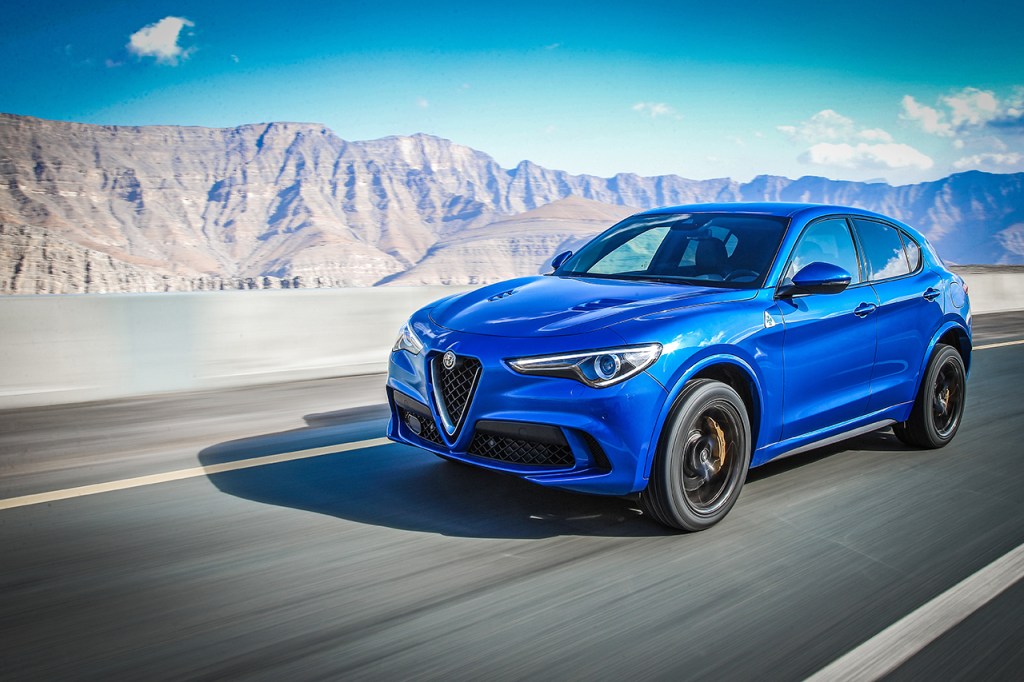
Alfa Romeo Stelvio Quadrifoglio is “Sportscar of the year”
Readers of the magazine AUTO BILD SPORTSCARS chose the 375 kW (510 hp) strong top version of the Alfa Romeo Stelvio as the winner of the category “SUV/Import”. A total of 110 candidates in ten classes participated in the competition
The readers of the magazine AUTO BILD SPORTSCARS are seeing the Stelvio as a true sportscar. They chose the 375 kW (510 hp) strong Alfa Romeo Stelvio Quadrifoglio as the “Sportscar of the Year 2019” (issue 01/20 of 13 December 2019). The top model of this model won the SUV/Import category.
The Alfa Romeo Stelvio Quadrifoglio has indeed what it takes to fall in the sports car league. What to think of a V6 biturbo petrol engine with 2.9 litres capacity, whose power is brought to the road by the four-wheel drive AlfaTM Q4. The excellent traction provided allows an acceleration from zero to 100 km/h in only 3.8 seconds, the top speed is a whopping 283 km/h. Not suprising that the standard equipment of the Alfa Romeo Stelvio Quadrifoglio also includes the limited slip differential with active torque distribution in the rear axle (AlfaTM Active Torque Vectoring). But that is not all. There is also the AlfaTM Chassis Domain Control, a unique central vehicle “intelligence” created by Alfa Romeo with its own algorithms to handle all the electronic devices that intervene on the car’s behaviour harmoniously and in real time, making driving extremely natural, instinctive and safe.
Double awards also for the Giulia…
Alfa Romeo Giulia is also reaping awards. It finished at the top of the list of the readers from the magazine SPORT AUTO. In the survey for the “SPORT AUTO AWARD 2019”, they chose the stylish Giulia as the winner in two categories.
Now for the third year in a row, as also in 2017 and 2018, the top model Alfa Romeo Giulia Quadrifoglio, powered by a V6 turbo petrol engine with 375 kW (510 hp), won the import rating in the category “standard production limousines/station wagons up to 100,000 Euro”.
In the “series cars limousines/station wagons up to 75,000 Euro” the readers of SPORT AUTO voted the 206 kW (280 hp) strong Alfa Romeo Giulia 2.0 Turbo Veloce as the number one import model.
A tall standing Urban Coupé with fluid, inviting lines…
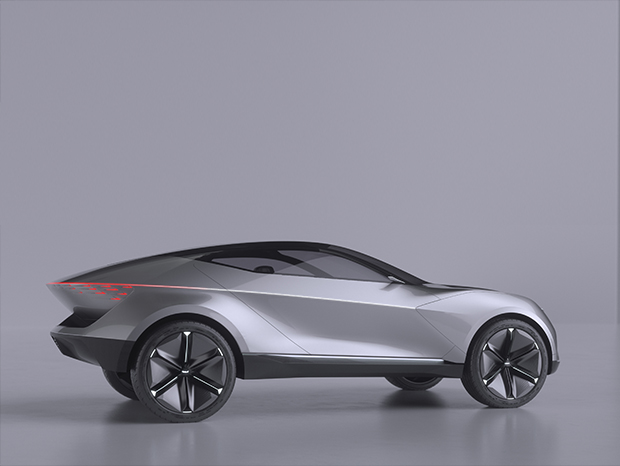
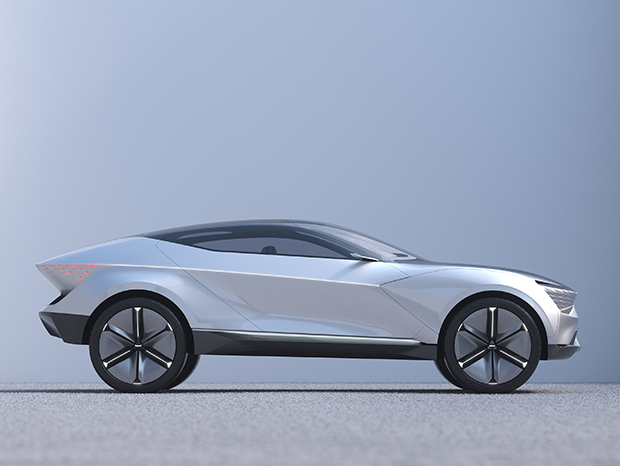
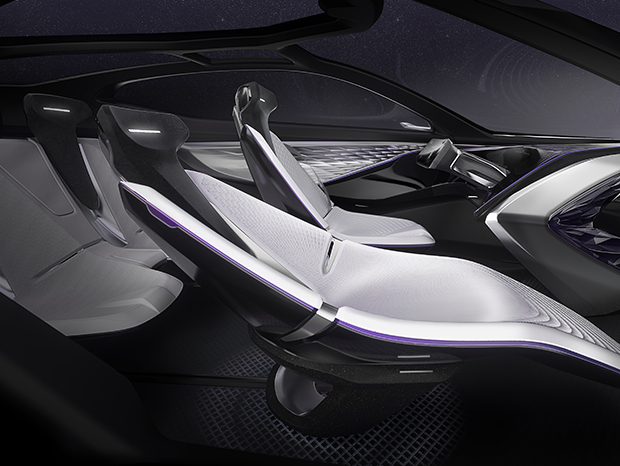
Kia recently showed a stunning electric coupé with novel proportions. This Futuron made its public debut at the 2019 China International Import Expo (CIIE) in Shanghai. Its low-profile SUV coupe body makes a strong statement of intent for Kia’s future cars, which will be – as the manufacturer puts it – confident, sporty and modern, yet also elegant. At 4,850 mm in length, 1,550 mm tall and with a 3,000 mm-long wheelbase, it has an elevated ground clearance is matched with a low, lean body to create a dynamic, confident posture.
It is indeed a sports car… on an SUV platform. Clever.
Because this makes – like for instance in the Audi e-tron – room for the
batteries to be lodged beneath the cabin floor. The advantage is also that the elevated
stance of the car is therefore matched with a low center of gravity.
And that slightly more elevated stance is just what
you want in an urban car, even if it has the sleek shape of a coupé.
Just read further…
Hans Knol ten Bensel
This “E”-Coupé
is powered by four powerful in-wheel electric motors. This e-AWD
system delivers as you can expect lively responses to driver inputs.
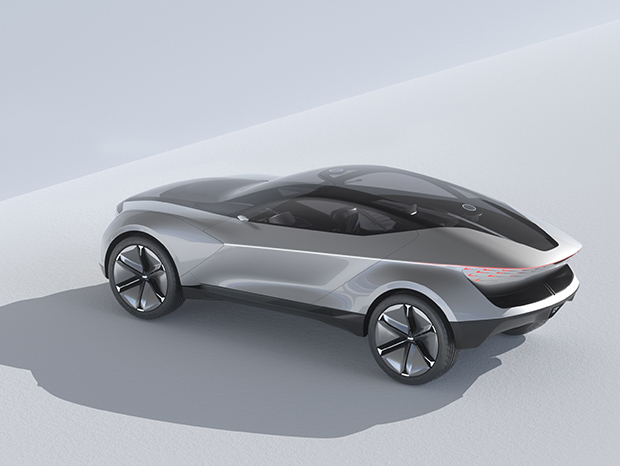
But the important hallmark here is its fluid, intriguing design. The front fender flows backwards from the front of the hood before plunging into the cabin itself, establishing a connection between the driving seat and the road ahead. The concept’s roof is a diamond-shaped panoramic glasshouse which sits atop the 360-degree core, in the best traditions of UFO and flying saucer design. It floods the cabin with natural light, and it also extends down the bonnet to give drivers an unparalleled view ahead. The glasshouse also incorporates a network of LiDAR (light detection and ranging) sensors capable of providing Level 4 autonomous driving features, enabling hands-off and eyes-off driving in most conditions.
Furthermore, the 360-degree theme is evident in the
lighting that illuminates a sharp character line encircling the Futuron’s body.
A new “tiger” face…
The newly-designed front of the car, like that of the
Imagine by Kia Concept first revealed earlier in 2019, expresses a new design interpretation for Kia’s future
electric vehicles.
With a wider ‘tiger face’ shape, the grille
incorporates the Futuron’s headlamps, an innovative ‘Star Cloud’ design which
gives the car a dazzling new night-time identity.
Flexible cabin space…
The layout of the electric powertrain and
incorporation of Level 4 autonomous
driving systems has enabled the creation of a spacious and flexible cabin
unlike any other vehicle on roads. The two
front seats are created out of flexible materials and can offer an upright
‘driving’ position, or a reclined ‘rest’ position, similar to the flexibility
afforded to first-class airline passengers. With the activation of the
Futuron’s autonomous driving features, the two front seats recline as the
steering wheel retracts. The ‘zero-gravity’ seating position this creates helps
to reduce fatigue on long journeys.
One of the most prominent features of the cabin is the
‘cockpit’ area surrounding the driver. The graphical user interface (GUI) of
the cockpit flows out of the driver-side door and wraps around the steering
wheel in a seamless arc. This merges the instrument cluster directly with the
audio-visual display at the center of the dashboard and is linked to the
display integrated within the surface of the steering wheel itself.
The GUI is operated by artificial intelligence
technologies, displaying useful information about the car various autonomous
driving, powertrain and navigation features, which creates a unique user
experience.
This is, according to Kia, what driving into the
(urban) future is all about. Just look at the photos here…
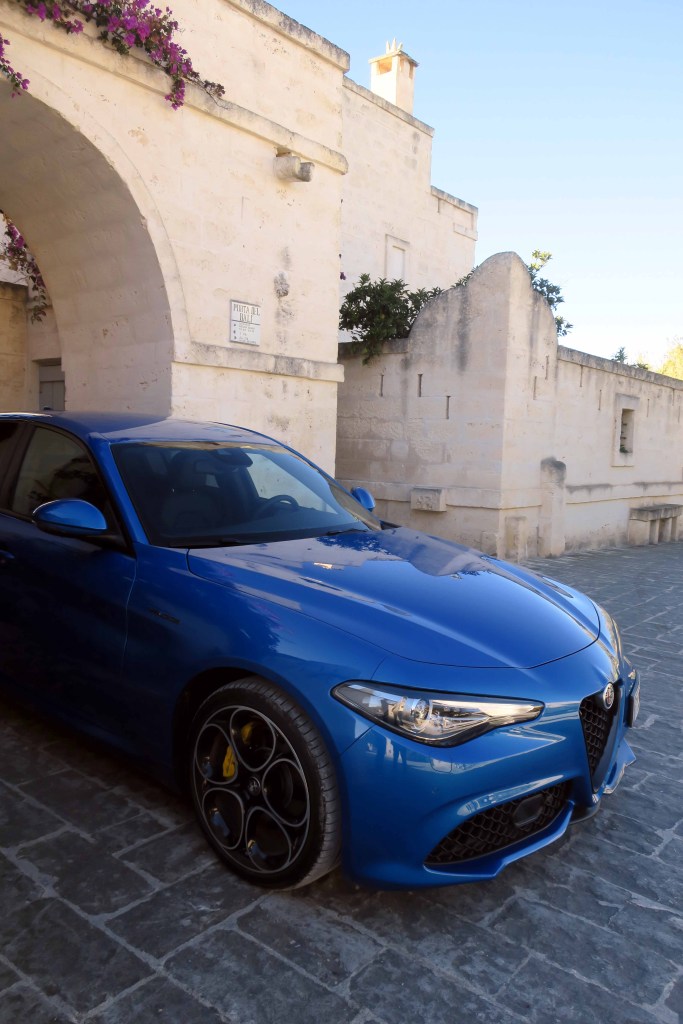
We drove for you the new 2020 Stelvio and Giulia in Puglia: revised interiors, infotainment and advanced driver assistance systems make Alfa driving even more stunning… Here we parked it in fort of the Borgo Egnazia Hotel, where the event was held…
Driving an Alfa should be on the bucket list of every car enthusiast, and indeed blessed are those who can sit in their daily life behind the iconic three spoked steering wheel of an Alfa, and even more, can call it their own.
The ever more elegant Giulia in the alleys of Borgo Egnazio Resort…
This unique driving pleasure is now further brought into the digital age, adding to the sheer driving dynamics and bringing it to an even higher level.
Alberto Cavvagioni, Head of Alfa Romeo Brand EMEA, presented to us the further steps of Alfa entering into the digital age…
We flew to beautiful Puglia to see and try it out for you, and soon you will read in these columns here the full report of our delightful Alfa experience in the stunning surroundings of Bari and the Borgo Egnezia resort hotel.
Hans Knol ten Bensel
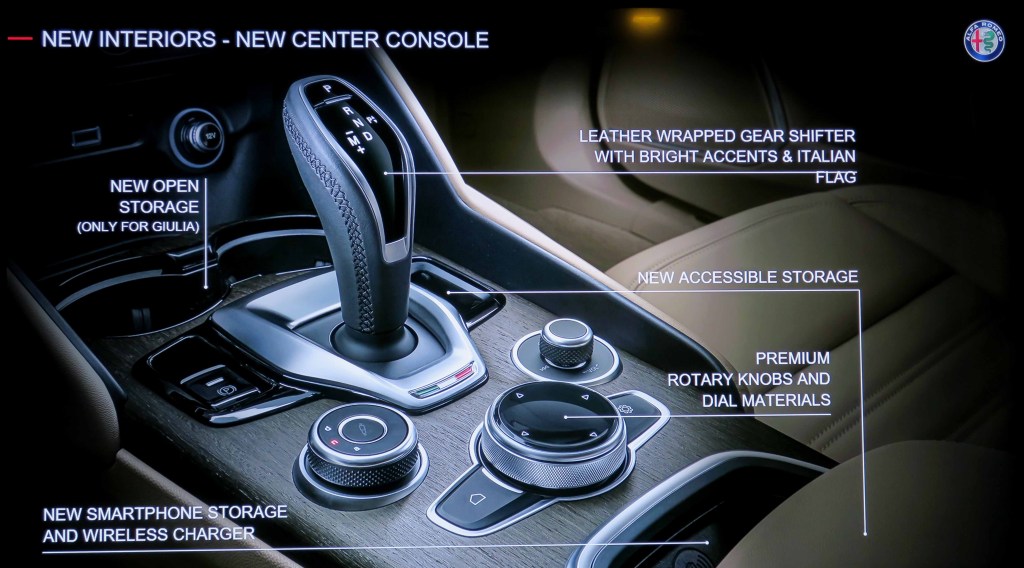
The Giulia and Stelvio now benefit from a new interior, revised materials and dashboard layouts. The infotainment has also been overhauled with connected services, touchscreen, completely redesigned human-machine interface, and new ADAS (Advanced Driver Assistance Systems) and level 2 autonomous driving systems, of which (much) more soon.
The iconic names used on the Alfa’s of the sixties and seventies are also back, and sound wonderful to the Alfa connoisseurs’ ears: Veloce, Veloce TI and Sprint for the Stelvio, and TI, Super for the Giulia, with a Business badge thrown in to suit the fleet market in these modern times.
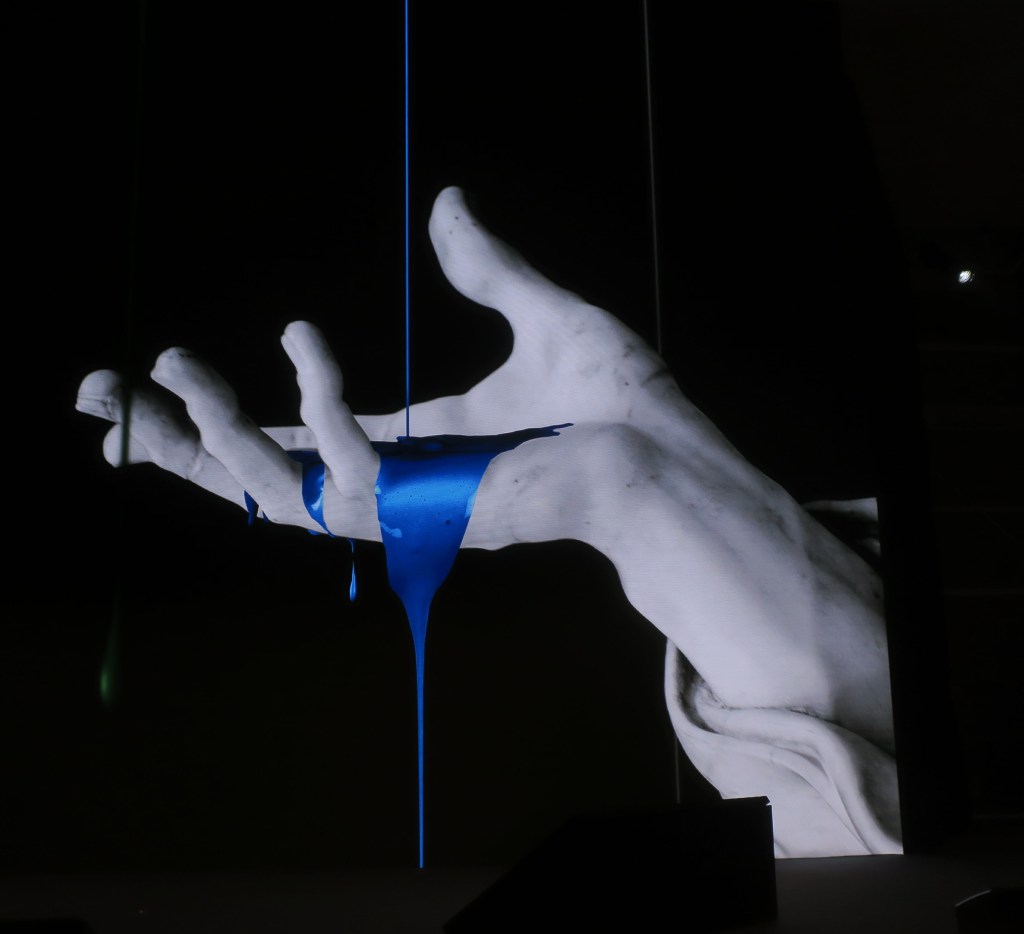
Last but not least, there is also a whole new colour range, to fully express new emotions, closely linked to the brand’s tradition.
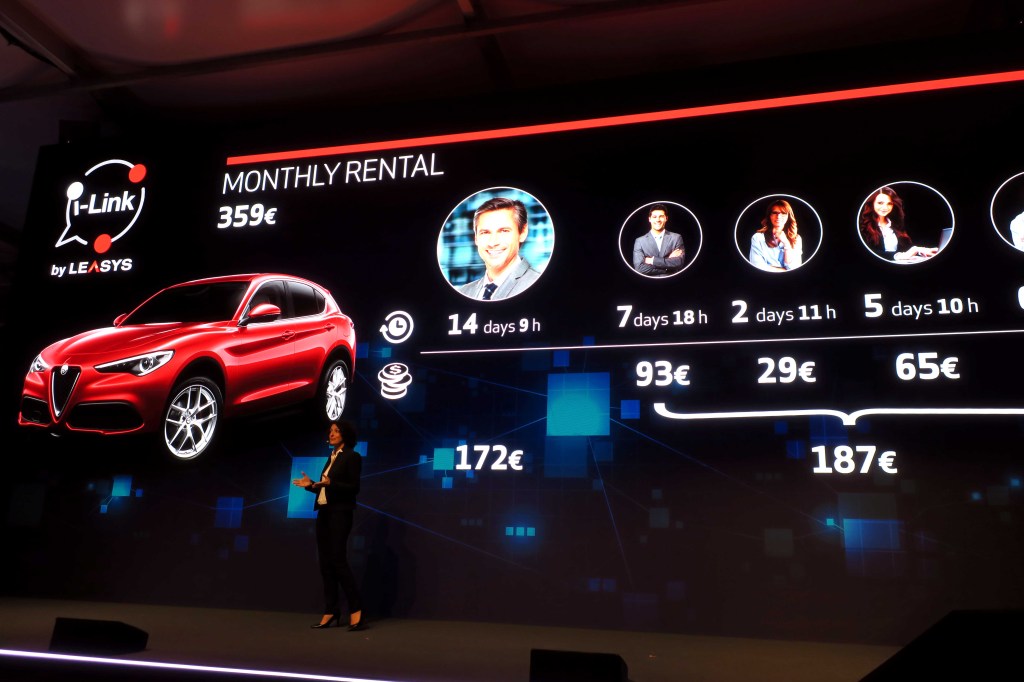
At the event, Leasys and FCA Bank introduced “I-Link” by Leasys, a service designed to strengthen the link between Alfa Romeo customers and the new forms of shared mobility.
Marcella Merli, Head of Sales and Marketing, FCA Bank, explains to us the merits of sharing the Alfa experience through i-Link…
Indeed, sharing the Alfa Romeo driving experience could or should be on the cards, we think!
Much more of all this later in depth with separate reports…
Of course, we had the opportunity to drive classic Alfa’s too…
Driven personally from Turin across the Alps to Brussels…for a unique premiere
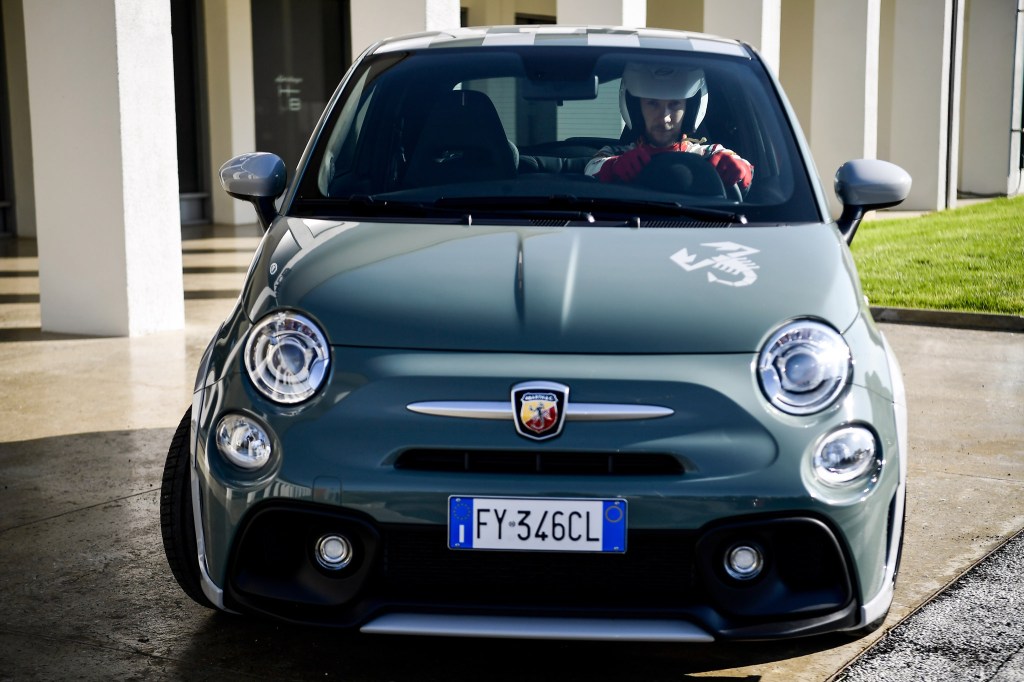
The people from Abarth Belgium have their car loving heart at the (very) right place. In order to treat the Belgian public with a very special gem, the Interclassics Brussels 2019 salon seemed to be the perfect stage to present the new Abarth 695 70 ° Anniversario for the first time in our country.
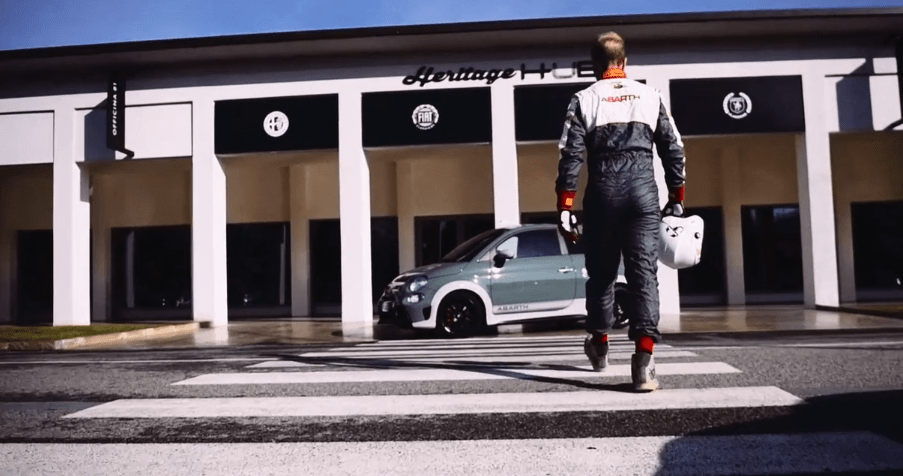
Staring from the Turin based FCA heritage HUB …
They drove personally the Abarth show car across the Alps from Turin to Brussels, and not only that. They filmed it too.
Indeed, to celebrate the 70th anniversary of the brand, an accompanying video of the model was created with a perfect mise-en-scene. The ideal setting of FCA Heritage in Turin, where all collection cars are housed, served as a perfect setting and bears witness to the immense prestigious heritage that served as a source of inspiration for this unique model.
This exclusive video was produced specifically for Interclassics Brussels 2019.
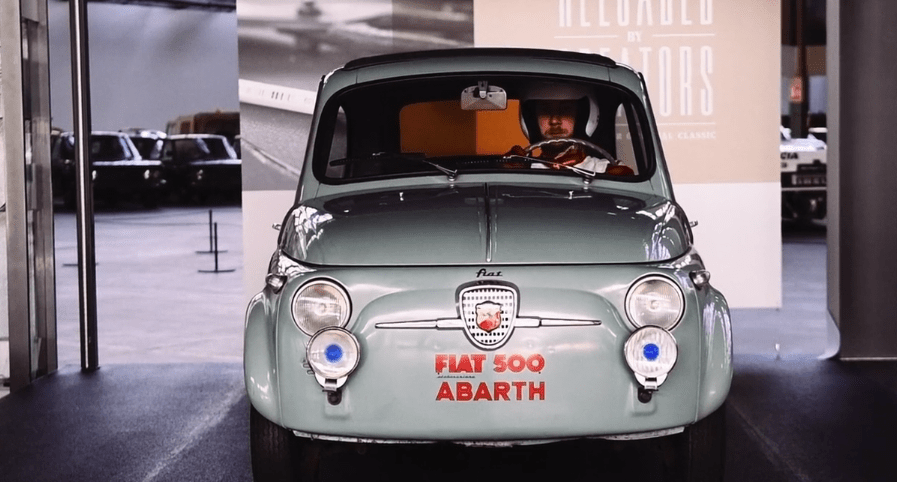
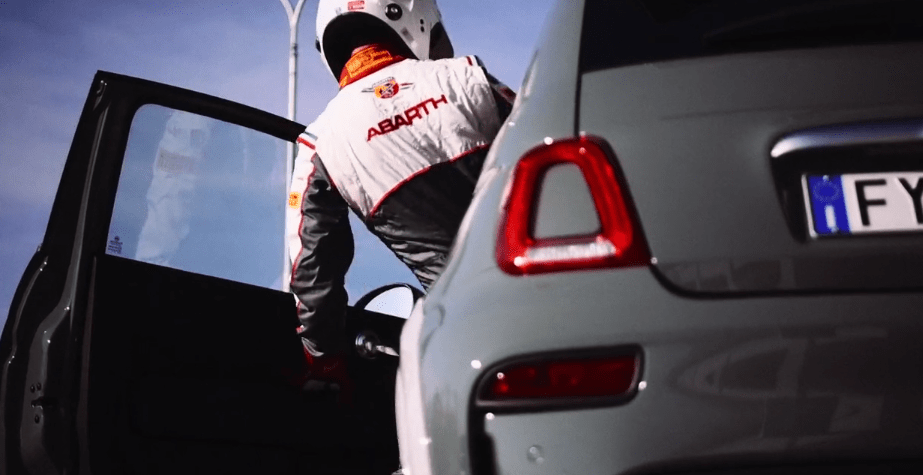
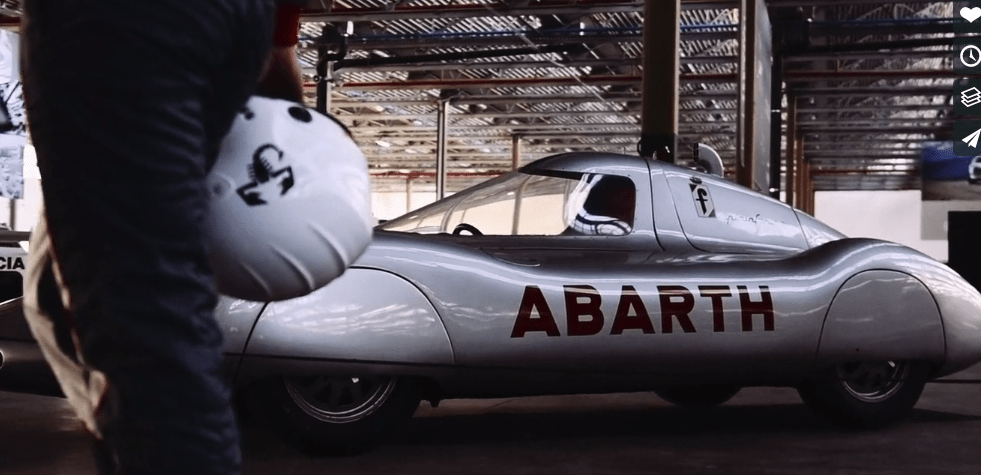
One sees a pilot who takes place at the wheel of a vintage model and then takes a seat in the new Abarth 695 70 ° Anniversario.
It then follows the road from the Heritage Hub of Fiat Chrysler Automobiles in Turin to arrive at the Interclassics salon in Brussels.
The iconic lights of the “pure” historic Abarth 500…
A route of approximately 1,000 kilometers to reach the European capital. You can see it by using the following link: https://vimeo.com/372916951
On his way from the Turin Heritage Museum to Brussels…
This video will of course serve to promote the presence of this exclusive model in avant-premiere in Brussels.
Starting away in Turin…
The production of this model is limited to 1949 copies, this number refers to the year that Abarth was founded…
Indeed, between the raindrops, other magnificent events were to be enjoyed, and beautiful cars came before our lens…
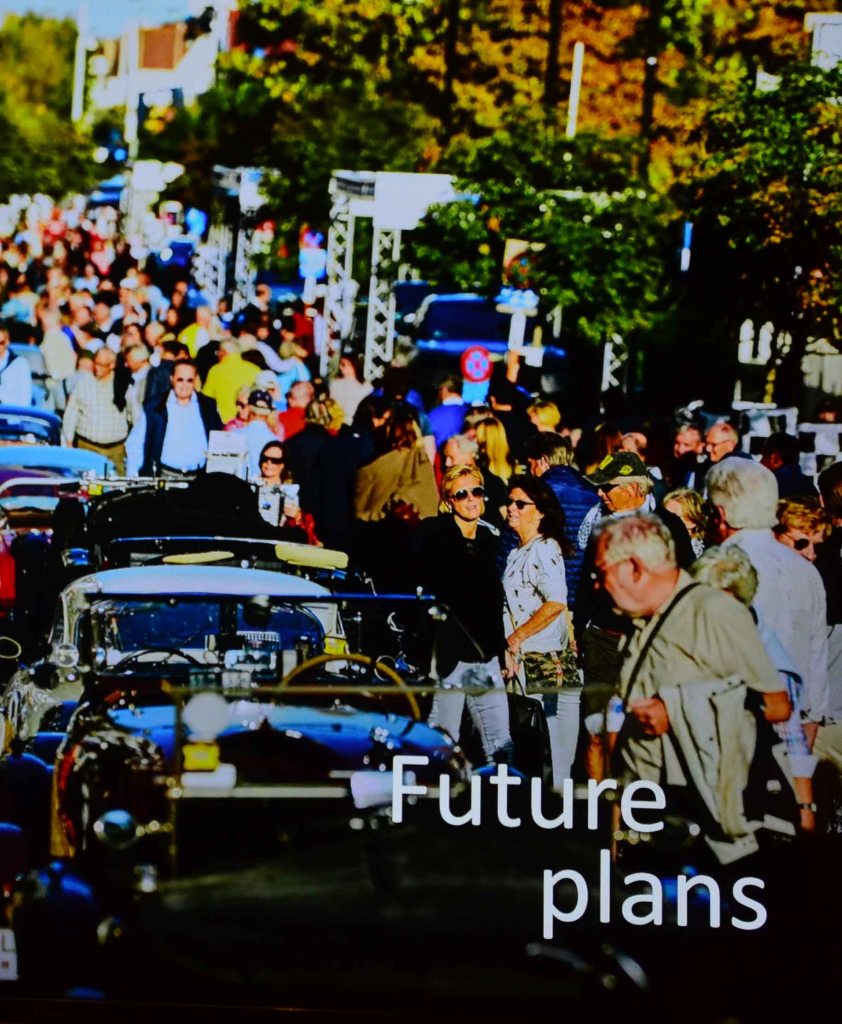
The ZOUTE CONCOURS D’ELEGANCE® by Degroof Petercam is another yearly highlight not to be missed. It is an excellent opportunity for your servant to take those timelessly beautiful photos of pre- and post war classics and supercars. Also this year the cars on show were absolutely stunning to say the least.
The concours was carefully scrutineered by both the expert jury members and illustrious collectors like Roland D’Ieteren… (to the left).
Hans Knol ten Bensel
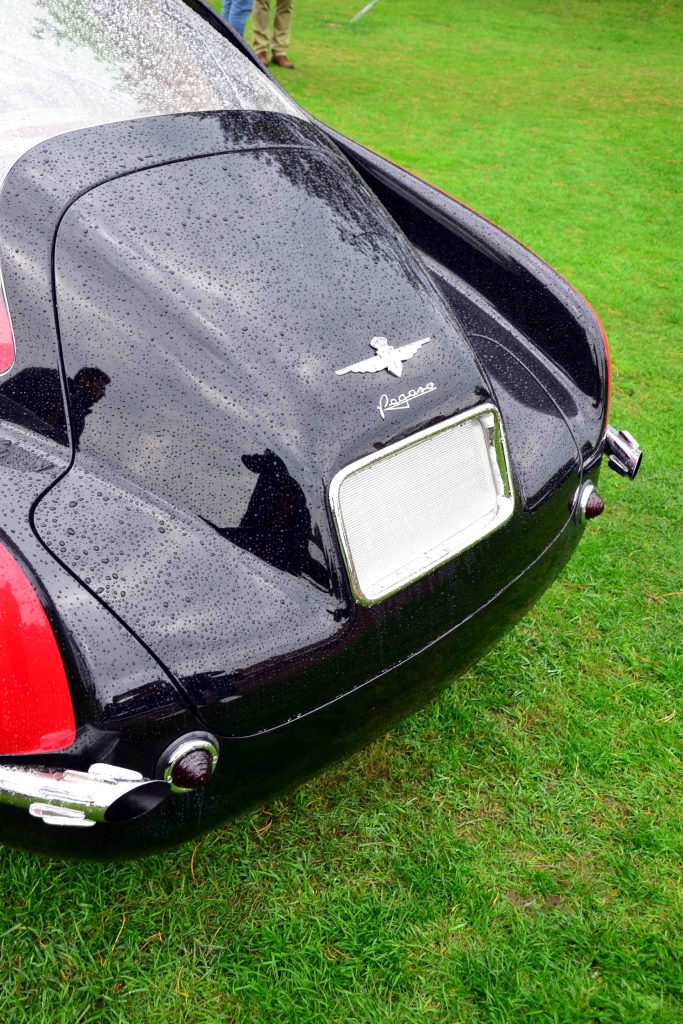
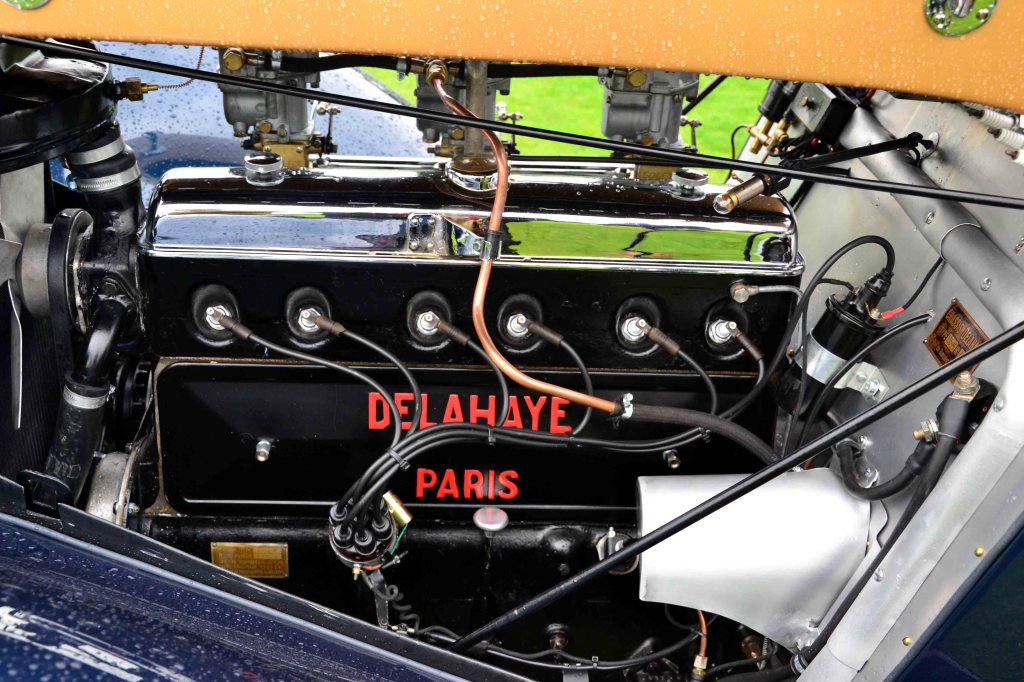
I was totally impressed by a beautiful Pegaso coupé, (see photo below) and stood also eye to eye with a magnificent Alvis and 3,5 litre Delahaye.
This 1953 Pegaso Z 102 Touring Superleggera was designed by Wilfredo Ricart, who had worked then already with Ferrari and Alfa for a few years. He himself asked “Mr. Touring”, designer Carlo Felice Bianchi Anderloni (1916-2003) to design this body. This one-off Pegaso was the focus of a lengthy promotional tour around Europe. It won the Concorsa d’Eleganza di Stresa in 1953…
Stunning is also the dashboard of this 1960 Alfa Romeo 2000 “Praho” Touring… This car was an attempt to secure for Touring the production of the Alfa 2600 Coupé. This car was displayed in 1960 in the Turin Motor Show and was a one-off.
I had a lucky encounter with Skoda Belgium Import PR Director Catherine Van Geel and her colleague from the Skoda Museum, who both proudly showed me a very impressive 1948 Skoda Superb, which had finished a total ground up restoration just four days before this Concours. We tell you more about this unique Superb in a special report.
But there was much more. For example, in the presence of 75-year-old racing legend Jacky Ickx, Porsche unveiled a unique Porsche 911 4S Belgian Legend Edition (made on 75 copies). In addition, there were 5 super rare hypercars on Saturday and Sunday: a Bugatti Centodieci, a Bugatti Chiron Sport, a Dallara Stradale, a Pininfarina Battista and a De Tomaso P72.
The unique 3,5 litre Delahaye…
Of the more than 100 participants in the competition, the international jury named a 1936 Mercedes 540 K Cabriolet A (pre war) and a 1949 Ferrari 166 Barchetta Touring – Le Mans Winner (post war) as Best of Show winners.
And its fabulous straight six engine, which was idential in the Le Mans winning car…
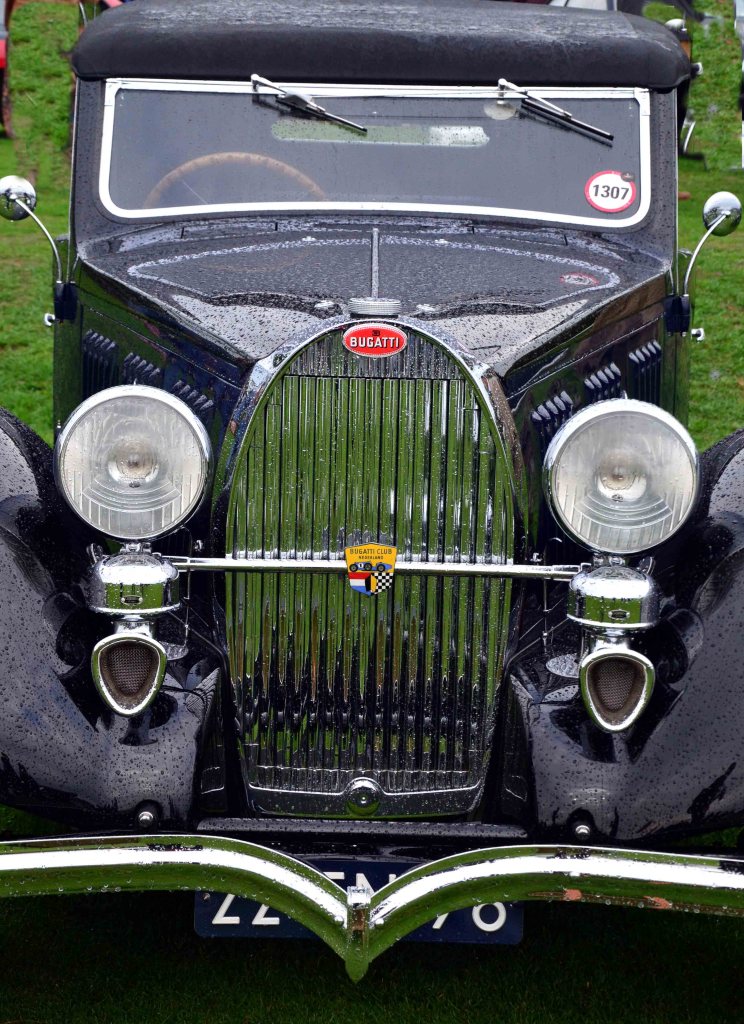
Following Bugatti’s 110th birthday there was also a special “110 Years Bugatti” category this year. Winner was a 1938 Bugatti Type 57 C Coupé – Le Patron. (See first photo). Other eye-catchers were the “Beach Cars” category in which a 1958 Fiat 600 Jolly with the main prize went. The prize for the most iconic car went, finally, to a 1955 Mercedes 300 SL Gullwing.
Eternally cute and endearing are also the Joly beach cars based on the Fiat Cinquecento and Seicento, and on the Concours we stood eye to eye with two magnificent examples.
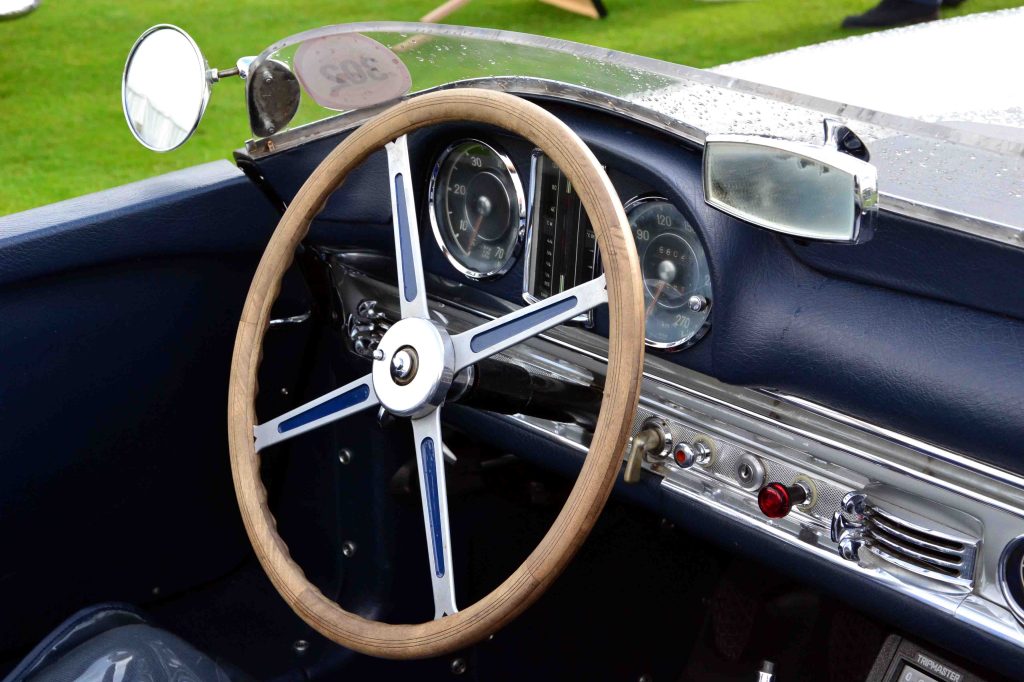
Last but not least there was a very impressive 300 SL roadster to be admired, brought to the Knokke Golf Course by the works Mercedes Benz Classic team,
who lovingly and carefully dried the car with a soft chamois after every rain shower…
The fabulous collection of cars at the
grounds of the Royal Knokke Golf Club were judged by an international 25 head
jury led by Philip Kantor of the Bonhams Auction House.
More to see and admire…
Besides these highlights there was much more. Last but not least the ZOUTE SALE® by Bonhams. This auction can be considered par with the Grand Palais Sale in Paris, and the Quail Lodge Auction at the Pebble Beach Concours d’Elegance in Carmel (USA).
The total revenue of the auction was not less than 11,710,104 euros, a record for Belgium. One of the eye-catchers was a unique 1965 Ferrari 275 GTB Alloy Long-Nose. The car went under the hammer for a record amount of 2,875,000 euros. A 1931 Invicta 4.5-Liter S-Type ‘Low Chassis’ was sold for 890,281 euros. A Ferrari Enzo knocked out at 1,506,500 euros.
This custom built Aurelia GT had endless panache…
Then there was on Sunday the ZOUTE GT TOUR® by EY. This drive is 120 km long, and is reserved for exclusive modern GT cars, younger than 20 years old. More than 200 cars participated, and Rob Van Loock en Jens Aerts won this event in an 2019 built Audi R8 Coupé.
We just let you enjoy the photos here of this 10th edition, and tell you here already that the ZOUTE GRAND PRIX® launches new projects in 2020,
with amongst others the RALLYE DE DURBUY®. Read soon much more in these columns!
This magnificent event is all about enjoying cars to the full, and what’s more, a very large public can participate and witness the ZOUTE GRAND PRIX® events up close, see and touch the cars, which embody the pinnacle in automotive heritage and panache.
It’s a truly stunning event, which has now grown to impressive proportions. Last year’s figures amply prove it: What to think of 645 cars, 1040 participants, 263.000 visitors?
The organisers look already into the
future, and after a decade of successes are planning even grander events. They
told us all about it at their press conference, held at the prestigious Royal
Zoute Golf Club, of which more in a further report.
But here we tell you more about this year’s
event…
Hans Knol ten Bensel
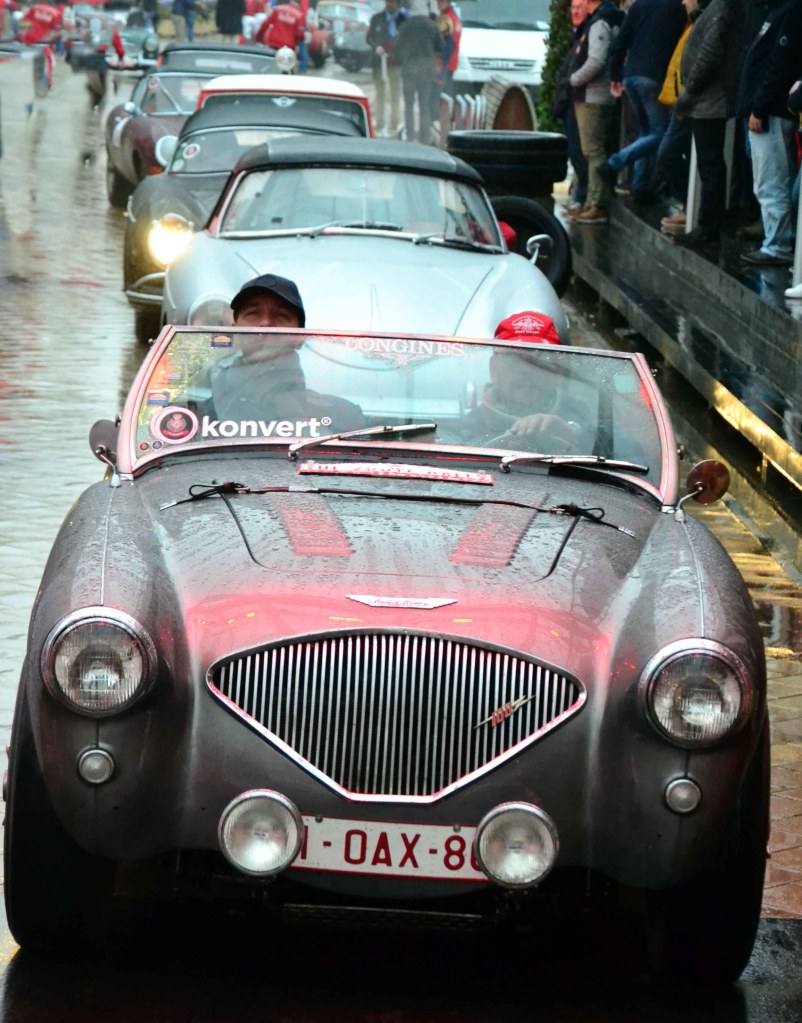
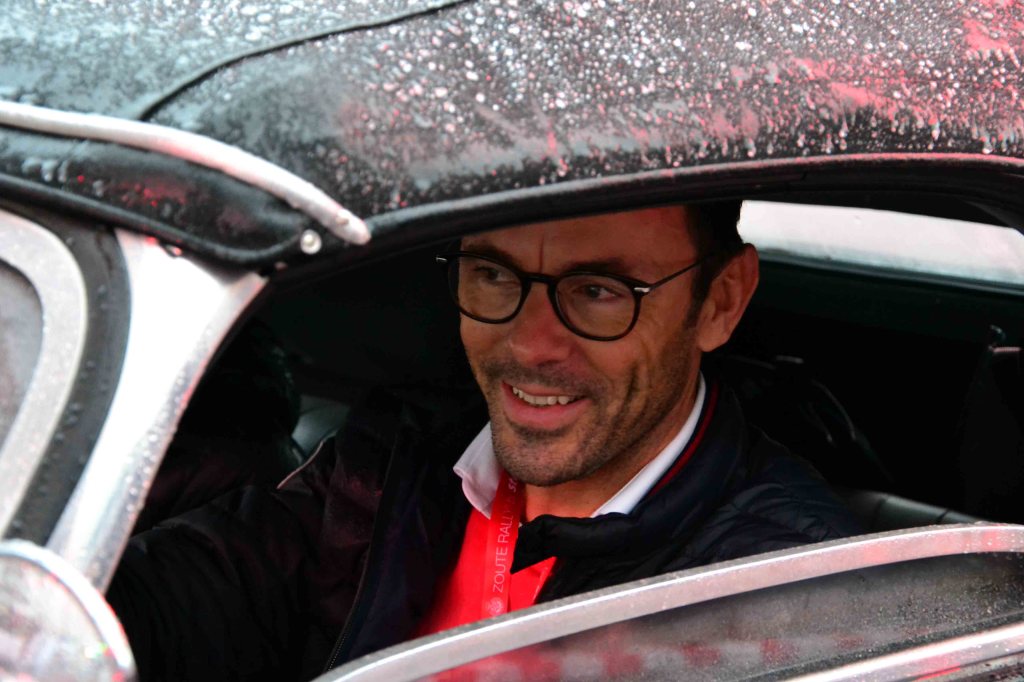
The weather gods were not altogether with us this time, but this did not dampen the enthusiasm of both participants and spectators. The ZOUTE RALLY® started for its first leg on Friday morning, and not less than about 200 pre- and post-war classic cars participated.
Media celebrities like Veronique De Cock participated…
One can choose between a “regularity” drive, where the ideal average speed is of paramount importance, with special Regularity Tests being also included in the daily 250 km course.
Exotics like this Fiat “Otto Vu” were also seen…
Enthusiasts who were looking for a more leisurely drive, opted for the “Balade” formula, and received a road book of the untimed course, which they could drive and enjoy at their own pace.
The route is different from the “regularity” drive, albeit in the same region. On Friday, the route went through the Flemish Ardennes, and lunch was enjoyed for all in the grounds of chateau Kluisbergen.
The cockpit of the “Otto Vu”…
On Saturday the ZOUTE RALLY® went through Zoutelande for a luncheon stop at the biggest Dutch yacht builder Amels Shipyard in Vlissingen. Winners of the regularity class were Ruben Maes and Bjorn Vanoverschelde with their Porsche 356c.
The founding father(s): ZOUTE Grand Prix Creator and Organiser Filip Burgoo on the left…
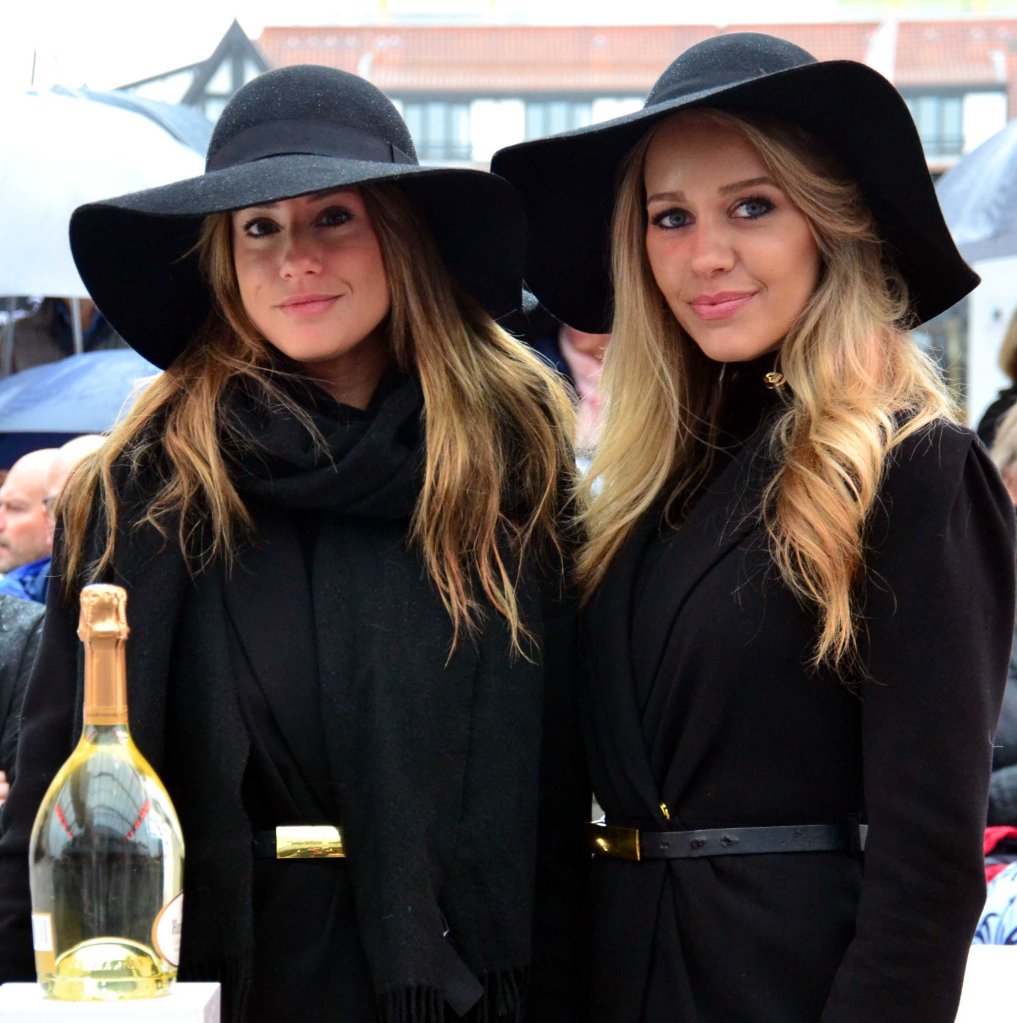
At the finish line, many happy faces were seen again of course. All lucky finishers got of course a fine glass of Ruinart champagne, and congratulations from David Burgoo and his colleagues.
The team Feltes/Feltes in their Bugatti T35 Grand Prix de Lyon with starting nr. 1 also finished the event in good form, with David (left) and Filip Burgoo (right) congratulating!
We just let you enjoy the photos here of this 10th edition of the ZOUTE RALLY®, second part follows with more tales and images…
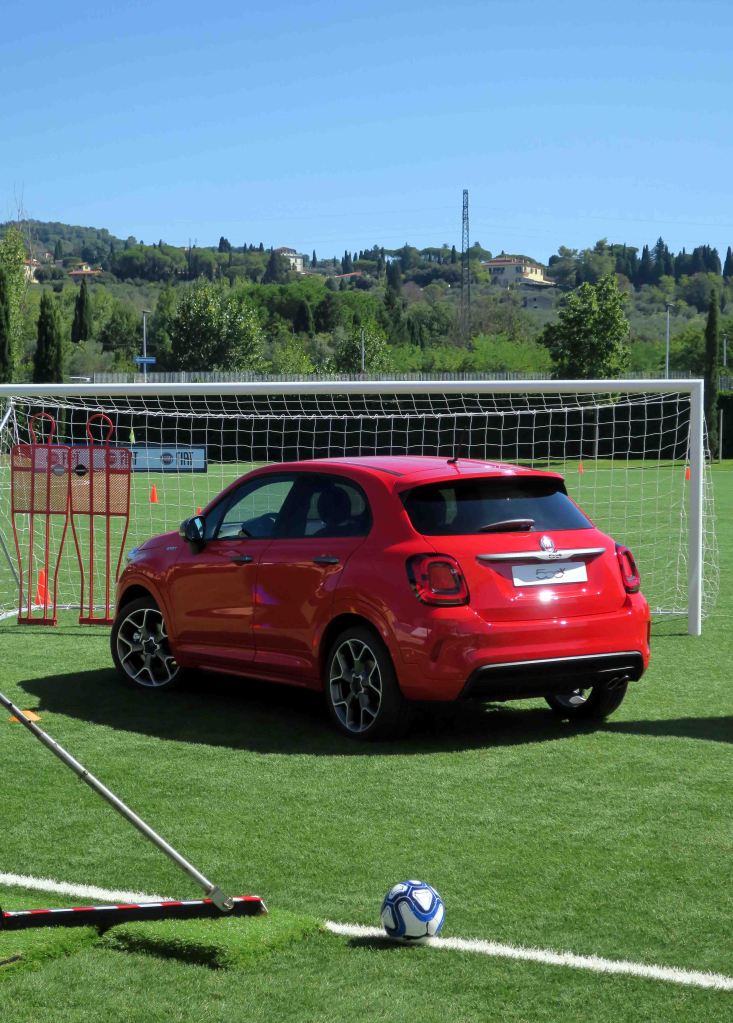
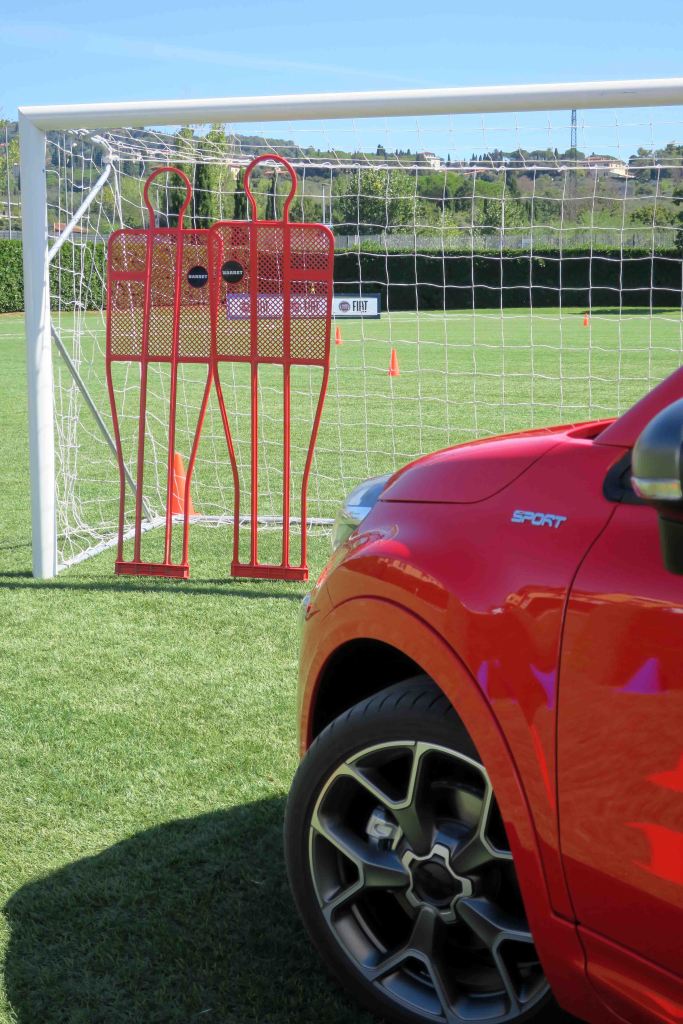
Charles Fuster taking the 500X Sport to the football field…
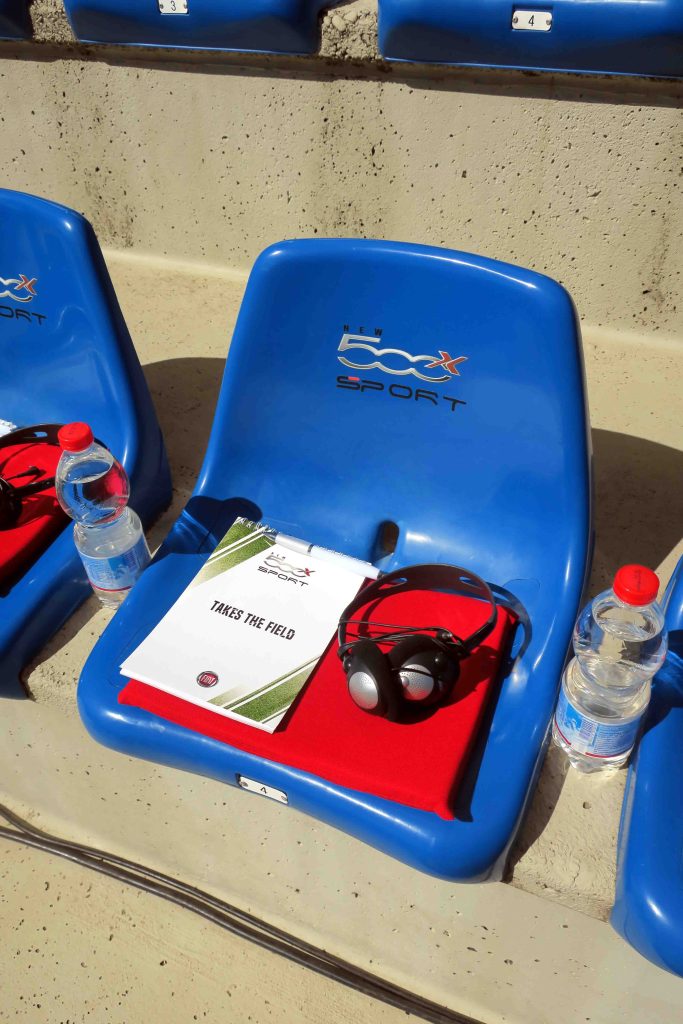
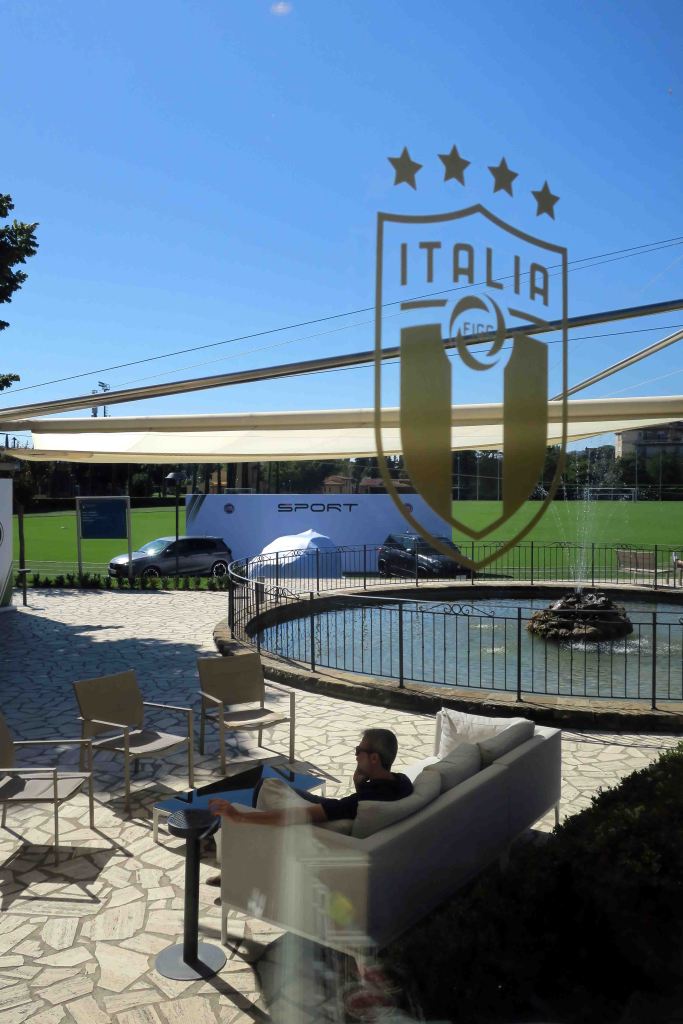
When Fiat presented the 500 X Sport, they had the very good idea to draw a parallel between its excellent sporting and stylish qualities and embed it into the language and philosophy of top football. Therefore the venue of presenting this new Fiat was at the the “Luigi Ridolfi” Federal Technical Centre in Coverciano (FIorence), a centre of excellence for teaching, training and sport, as well as the historic seat of the Italian Football Federation.
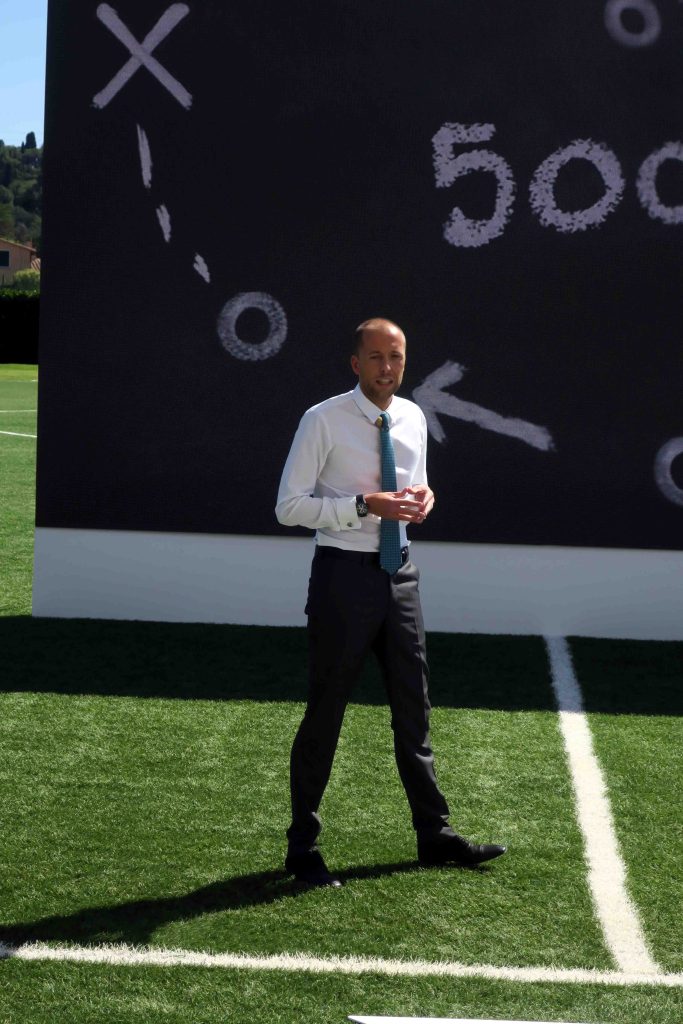
The presentation “in the field” was expertly done by Charles Fuster, Product Marketing Manager 500 X, and the qualities of dynamism, precision, control
Echoing the qualities of the National Team in the Fiat 500 X…
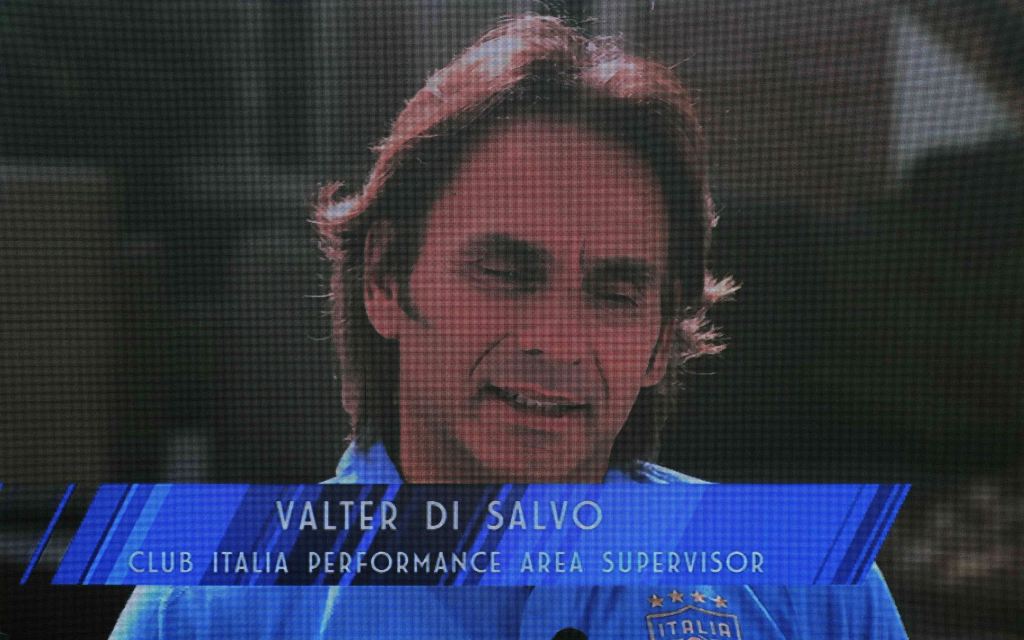
and Italian style of this 500 X Sport were echoed on the accompanying screen by the coaches and specialists of the Italian national team, indeed the same characteristics that lead a player to wear the blue jersey of Italy with pride and joy…
Reason enough to have an interview with
Charles Fuster here…
Hans Knol ten Bensel
HK: How did you communicate the enhanced
sporting characteristics and properties of the new 500 X to the top people of
the Italian Football Federation, how did they tune into this? What was their
reaction?
CF: Actually, the starting point and the basis was and is the car. It arrives with important improvements. The balance, the road holding, the performance, the style, and of course, when we had created this story about the car, we focused ourselves on the world of football. This had very good reasons: like Fiat, it is a very democratic world, it is a very accessible sport for everybody. And so we started to work with the Italian Football Federation to draw all these parallels, between the world of the automobile and the world of football.
Charles Fuster on the playing field…
This proved extremely interesting because all this storytelling proved extremely natural. Also the persons of the federation, who we have presented today is somebody who has worked all his life with football and has an incredible experience.
Top performance is top performance, whether one speaks about cars or people…
These people prepare the future stars of tomorrow. So we arrive at an allegory with a well perfected industrial product and a sports player, and this can be very eloquent…
HK:
indeed, this is very unique in your presentation today… we saw the comments
of Roberto Mancini, Italy’s National Team Head Coach and others…
CF: Thank You, it is indeed the work of our
whole team!
HK: Can you tell a bit more what is the
mission of this sporting version of the 500 X…
CF: Just have a look at its position within the range. The Cinquecento is a typical women’s car. 75 % of the clients are women. This is different with the 500 X, where the buyers are about fifty-fifty between men and women. The 500 X Sport will also be bought by independent women who want to be seen having personality and character.
But this is a car which is targeted to a large public. We will not discriminate. Of course the car has a look which distinguishes it from the others in the range.
HK: Can you tell a bit more about the
future electrification of the Fiat models? We think about PHEV…
CF: There will be something new in 2020.
There will be an important electrified range at FCA in 2022. That is the only
thing I can tell you right now… The first models will be launched in 2020,
and this will continue throughout 2021 to 2022. It is the strategy of the group
to be present in all forms of electrification. It will also be very important
for the fleet market.
HK: We thank you for this interview.
Of course there is (still) more. We will
treat you also shortly with further interviews with Danilo Coglianese, Head of
Fiat & Abarth Communications, EMEA, and also have a long talk with
Alessandro Grosso, Head of Fleet and Business Sales, EMEA, about the European
Fleet markets and FCA’s position therein.
We already told you, dear reader, in our “teaser” about our venue to the “Luigi Ridolfi” Federal Technical Centre in Coverciano (FIorence), to have a stint at the wheel of the new Fiat 500X Sport.
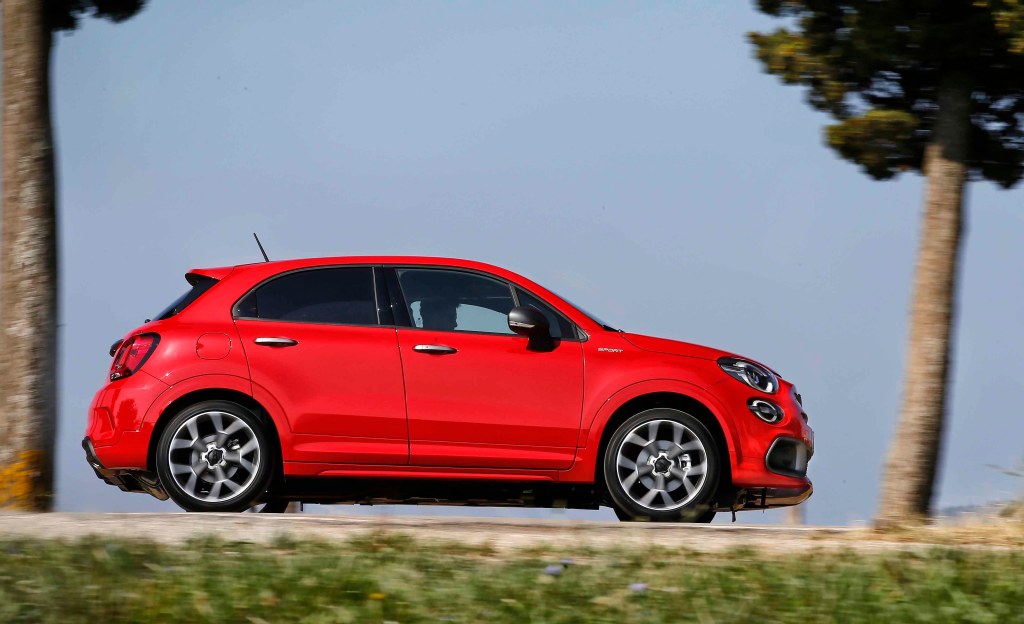
The 500 X is the most global model of the
Fiat range. This iconic compact crossover is designed and engineered in Italy
and built in the FCA factory in Melfi. It was launched in 2014, but has lost
none of its appeal, as it has been renewed last year. Now the 500 X accentuates
sportsmanship, and emerges as an alternative to compact C-segment cars with a
sporty look.
When you launch a sporting version of your crossover bestseller, you want it to be somewhere (very) special. And so the dynamic PR department of Fiat did. They invited us to nowhere less than the “Luigi Ridolfi” Federal Technical Centre in Coverciano (FIorence), a centre of excellence for teaching, training and sport, as well as the historic seat of the Italian Football Federation.
This had its good reasons. First of all, the
FIGC Federation headquarters was chosen to honour the 20-year cooperation
between the Fiat brand and the Federation, as well as to express the shared
values uniting the new Fiat 500X Sport with sport in general.
Indeed, what better location could there be for displaying “in the field” the qualities of dynamism, precision, control and Italian style highlighted in this new version of the already iconic 500X, a car which has won the hearts in all parts of the globe.
We will soon tell you more here
about the excellent sporting qualities of this 500X Sport, and we will also
bring you again some interviews, notably with Charles Fuster, the product
marketing manager of the 500 X, and Alessandro Grosso, Head of Fleet and
Business Sales, EMEA.