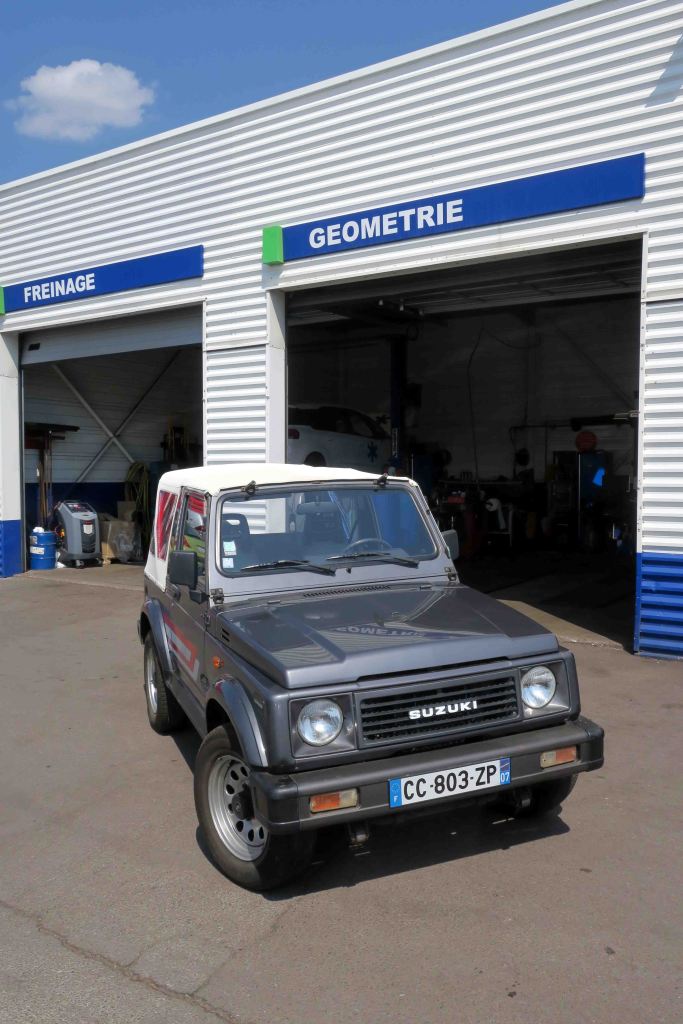
The technician at the “contrôle technique” puts a broad smile…
Indeed, this is the second part of a very happy story. As we said earlier, we took our faithful runner to the “Point S” station, and got the oil and filter changed, and the brake system cleaned and brake fluids replaced. In the meantime, the slight brake friction we had felt on the left front wheel had already disappeared.
We first went to “point S” for a checkup…
The next day we presented it to the “Securitest”, and as expected, it passed the test without a hitch. “C’est une très bonne voiture!” acclaimed the man who checked the car. We photographed him in front of our Samurai at the end of the test, after he had put the small sticker with the test validity date on the window.
Indeed, it is immediately visible for anyone in France whether the car is properly insured and has passed the MOT test, as it is obligatory to put both the insurance and the MOT test sticker on the window. Very clever!
The validity date of the last “controle technique” is put on “la carte grise” or the grey card, which are the car’s identity papers.
Contrary to Belgium, the control is valid for a period of two years instead of one, which is far more logical if you consider the present state of technology of our modern cars.
Our 1988 Samurai passed…
Indeed, even with the soaring heat wave temperatures well above 30 degrees we are experiencing at the moment of writing, our youngtimers, the 21 year old Mercedes A Class and this 31 year old Suzuki, perform perfectly without the slightest hint of overheating or whatsoever. It proves again how much superior car technology is and has been since more than thirty years ago, compared to present day public transport trains and their infrastructure, if one reads the horrible stories of thousands of people stuck in overheated, defect trains and rail infrastructure this week. Quod erat demonstrandum!
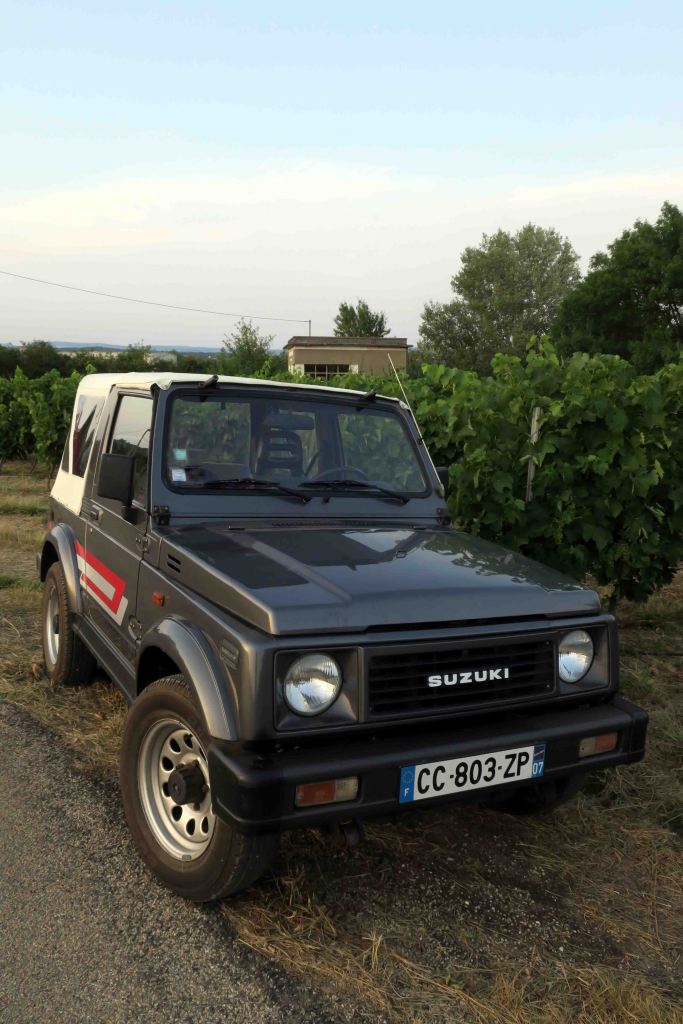
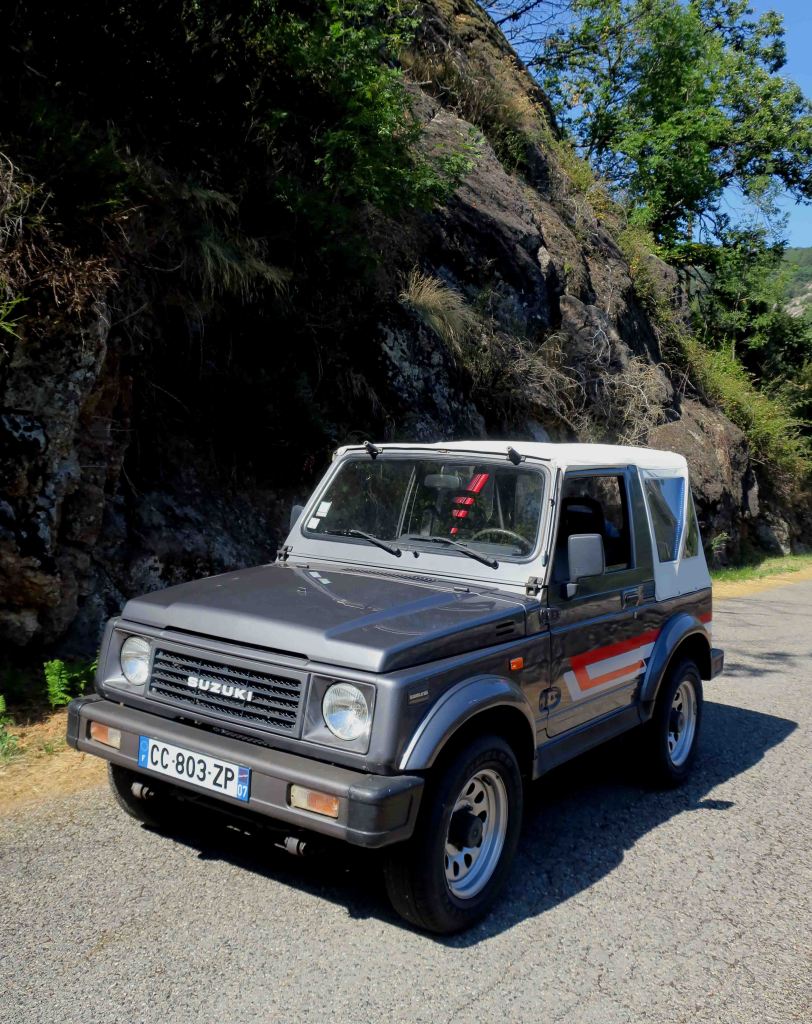
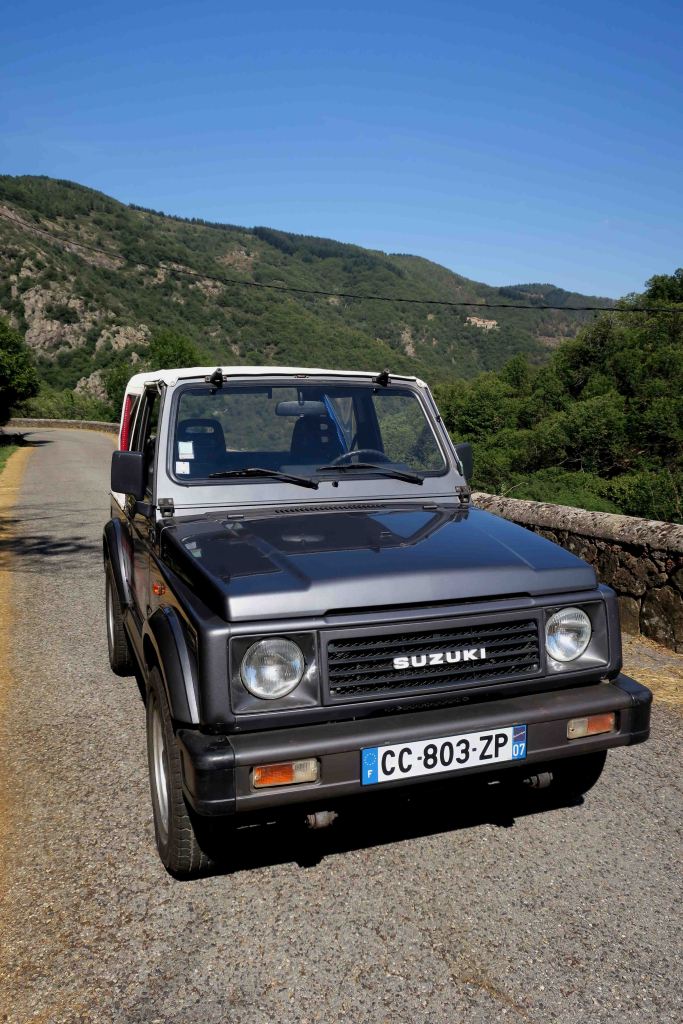
We are now enjoying our Suzuki, driving it
along vineyards and historic villages with good places to eat, and are now
putting things in place to get it registered as a “voiture de collection”…
As some readers will remember, the stable of cars at our French holiday house also includes a 1988 Suzuki Samurai, which has now reached the venerable age of more than 30 years, and is therefore now elegible to become a “collectors’ car”. It hasn’t been running last year, but that didn’t prevent it for starting right away after 2 years, after an initial 7 second burst on the starter motor to get the fuel up. After this first burst we waited for about 20 seconds or so, and then turned the key again: tchch-vrooom it shot into life right away, settling immediately in a smooth 1300 rpm on the automatic choke, without any hiccup or misfiring. Soon, after a minute or so, it ran at the 800 rpm normal tickover, and that was that. After this first start, it fires up immediately every time.
We depressed the clutch, which was free
moving, and we cautiously moved it slowly in first and reverse, to loosen
things up further. Clutch and brakes seemed OK. So we took it out of its garage
and went for a first 10 kilometer mountain drive, only to notice that the left
front brake must be not completely loose as after a 4 kilometers or so, the
Samurai started pulling a bit to the left and indeed the left front wheel rim
was running warmer, and this could be felt by hand. Luckily the rear drum
brakes were fine, as the wheels stayed cold. We stopped and luckily noticed
that even the slightest descent got the car rolling, so the friction could not
be that much. We will drive it quietly tomorrow to the service station “Point
S” to get the brakes checked and the oil and filter changed, and the day after
it will be a visit to the “contrôle technique”.
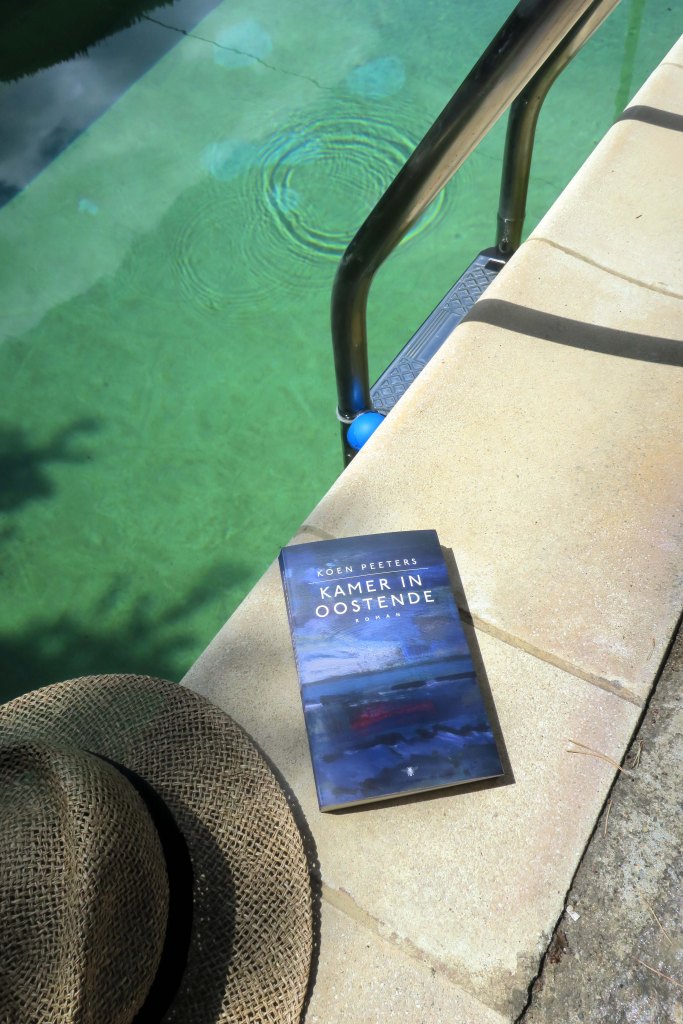
I was reading a marvellous novel by Koen Peeters during my French holiday, called “Kamer in Oostende”, or “Room in Ostend”, which tells about his wanderings with his friend painter through the streets of Ostend, looking for its history, its people, who can still recall the history of this iconic seaside city of the last century. Notably they looked for some remembrances of its famous painters James Ensor and Leon Spillaert. Understandably, as Koen Peeters made this research voyage with his friend painter.
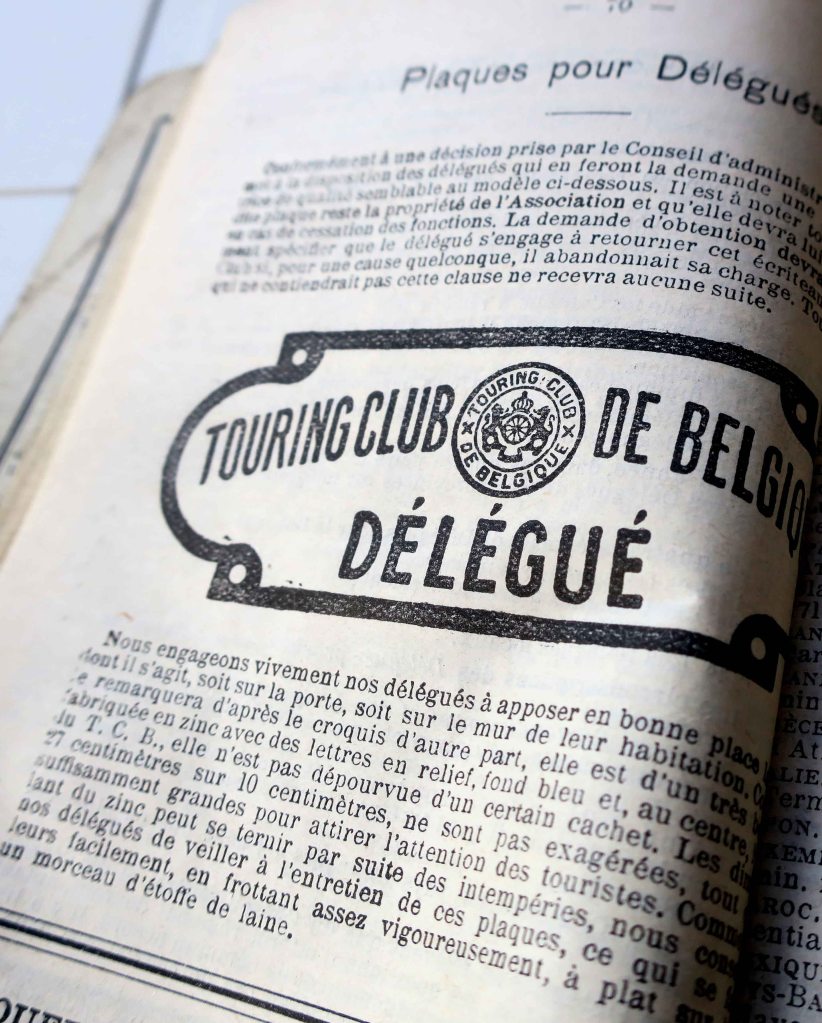
It inspired me to look for motoring history which took place in famous cities, and make this into an interesting series with an original and interesting view on car history. Fortune has it that in my French holiday house I just stumbled on a little booklet – an annuary- of the “Touring Club de Belgique” from as early as 1911. Why not focus on Ostend here first, I thought, and I started to look more closely in the booklet. It lists all the members of the Touring Club de Belgique, many of them being in Brussels and Antwerp, and other major cities like Liège, then the heart of industrial Belgium. In Ostend I found in this booklet only three members, a rather bleak result.
One is the “arrondissement” member of the
club, Mr. Pierre Laroye, an industrial, living at n°2, quai du Chantier.
The other local members are Mr. H. Geysen, a joint member of the “Génie”, at the avenue Serruys, and Mr. De Meuninck, a trader/shopkeeper, in the West Street, or Rue de l’Ouest.
All members or “délégués” were offered a
special “plaque”, 27 by 10 centimetres, which they were suggested to put at
their front door. The T.C.B. even suggested proper maintenance procedures, like
polishing the “plaque” vigourously regularly, after having put it on a woollen
cloth.
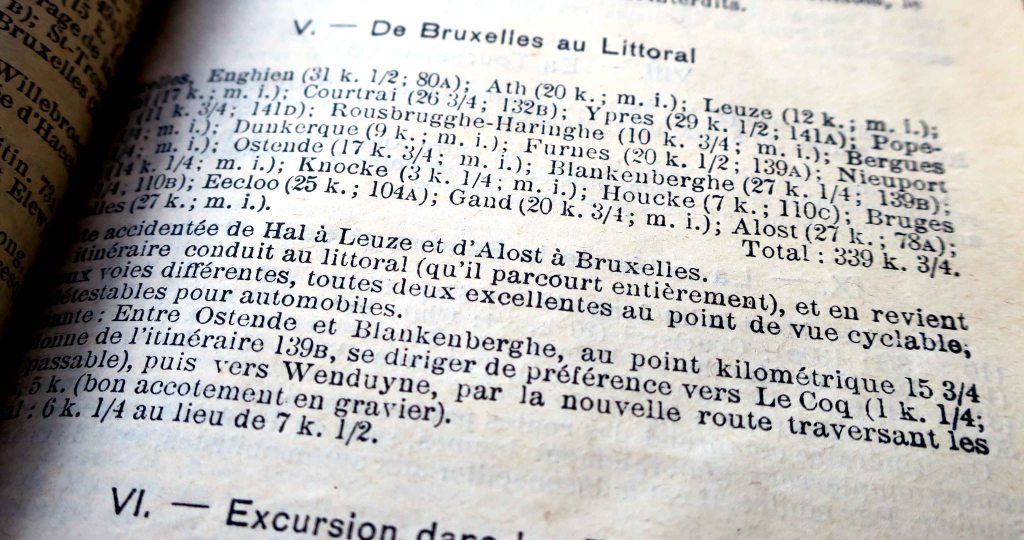
Driving from Brussels to Ostend was not an easy affair. The annuary even describes the road as excellent for cyclists, but horrible for motorists…
Interesting and intriguing is the long list of hotels, amongst others the Hotel Kursaal and “du Beau- Site”, at the promenade or “Digue de Mer”, which was then the most expensive hotel in Ostend, with a bed for 4 Belgian francs, a Dinner for 5 francs, full pension from 12,50 francs onwards. A breakfast would set you back 1,5 francs.
Of course there is parking provided for your car. The guide describes the Kursaal as “the biggest and most sumptuous of its kind” in Europe. It also ranks Ostend as “an important seaside resort” with a beautiful 8 kilometre long promenade, a Wellington horse race track and an 8 hectare park, actually the “Parc Leopold”.
The annuary includes of course street plans of the most important cities, and notably Ostend…
This is what this “annuaire” tells us. In a
further report, we will investigate the motor (sport) history of Ostend. In
such a posh seaside place, the home of royals and the famous, there must have
been much more at hand…
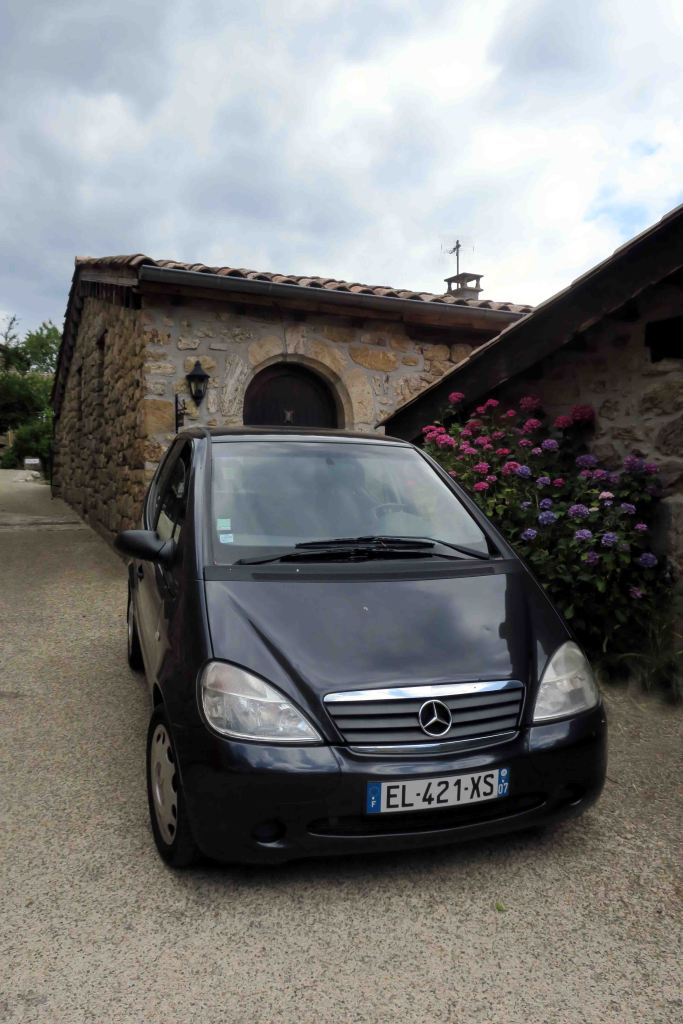
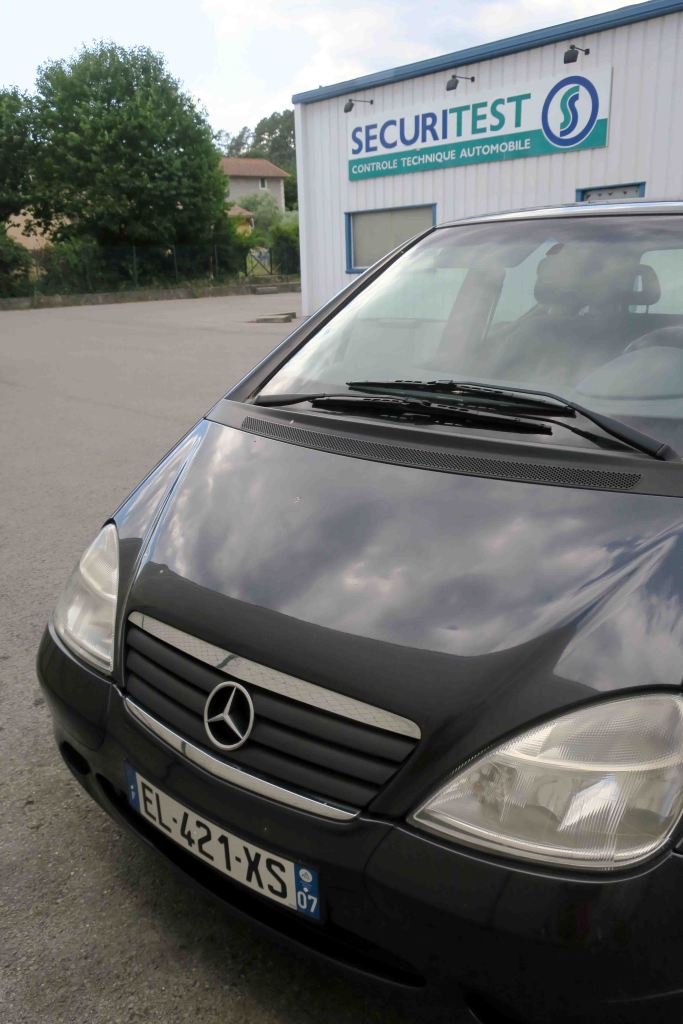
In our stable we also have some “French” cars, which live in our French country house, where they serve as holiday transport when we enjoy “time out” in la Douce France. One of these is a 1998 A Class 160 with a five speed automatic which we bought used now more than 14 years ago and which has seen intensive (professional) daily use by my wife for more than a decade; it has since 3 years found a new home in France. It is an ideal fit for the winding roads in the French Midi, its zesty 1,6 litre petrol engine is well mated to the auto box, and it is our favoured transport for outings and shopping.
In France, older cars have to pass a
“contrôle technique” every two years, and they are checked for brakes,
steering, windows/wipers, lights, suspension, chassis corrosion, seats and seat
belts, interior, all commands, door locks, etc. With of course last but not
least brake efficiency and emissions testing included. The multinational SGS
actually is the company organising technical car controls under its “securitest”
label in France and the test items and procedures can be found on their website
securitest.fr.
Our trusted A Class passed the test with flying colours, not very surprising as the car is properly maintained. The “contrôle technique” is done by appointment, so you don’t waste any time, and is concluded by a very kind and detailed personal comment about the points which need attention on the car in the coming two years. On our A Class, it was the condition of the last muffler and of course brake pads, although not critical, the latter which indeed are due for renewal within the coming months.
So our A Class, with now 248.000 km on the
clock, is soldiering on still further!
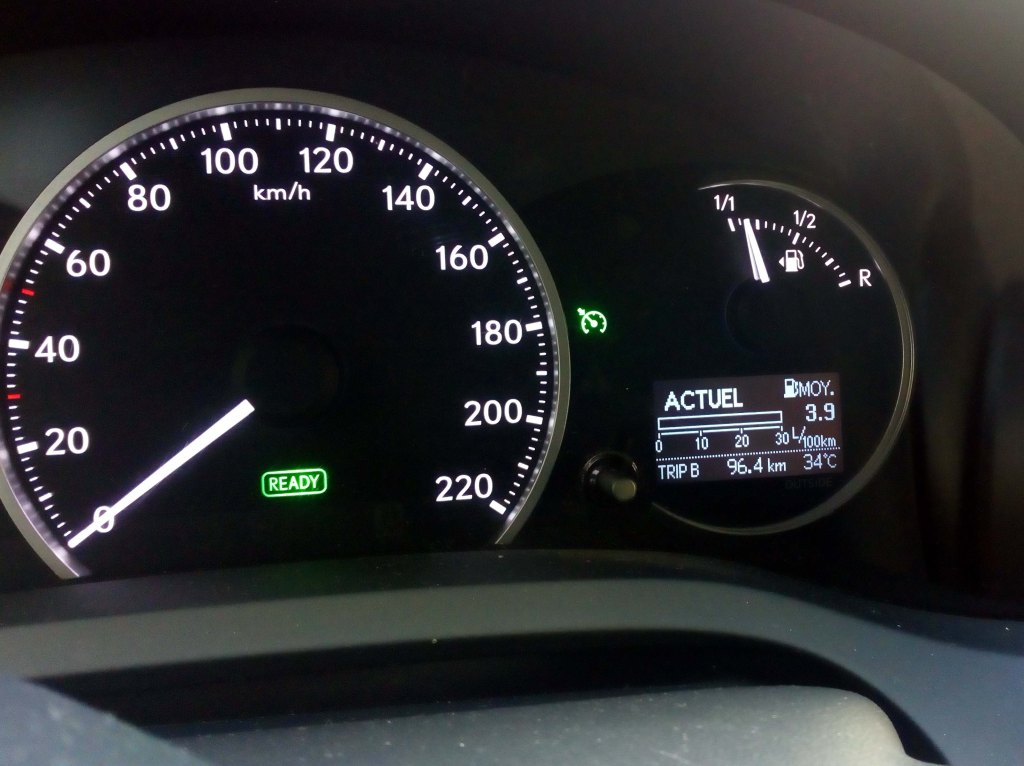
Our personal Lexus CT200h is demonstrating its amazing economy ever more.
On a recent 96 km summer trip along scenic
coastal roads in our low countries, we reached a new personal low of… 3,9
liters/100 km.
Of course we were driving with anticipation, taking full advantage of the hybrid system, but moving along with the pace of holiday traffic, and with the airco full ablaze in the recent hotter (heat wave) weather. So nothing special there.
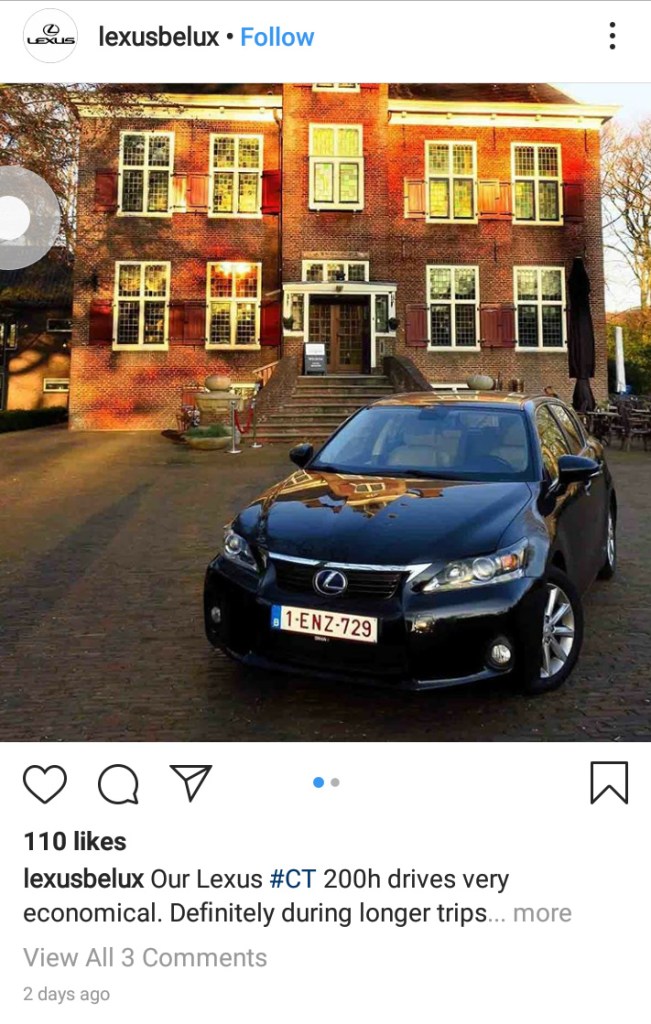
You can also read this on the instagram page of Lexus Belux, who were so kind, after we told them enthusiastically about our feats, to mention it also on their page…
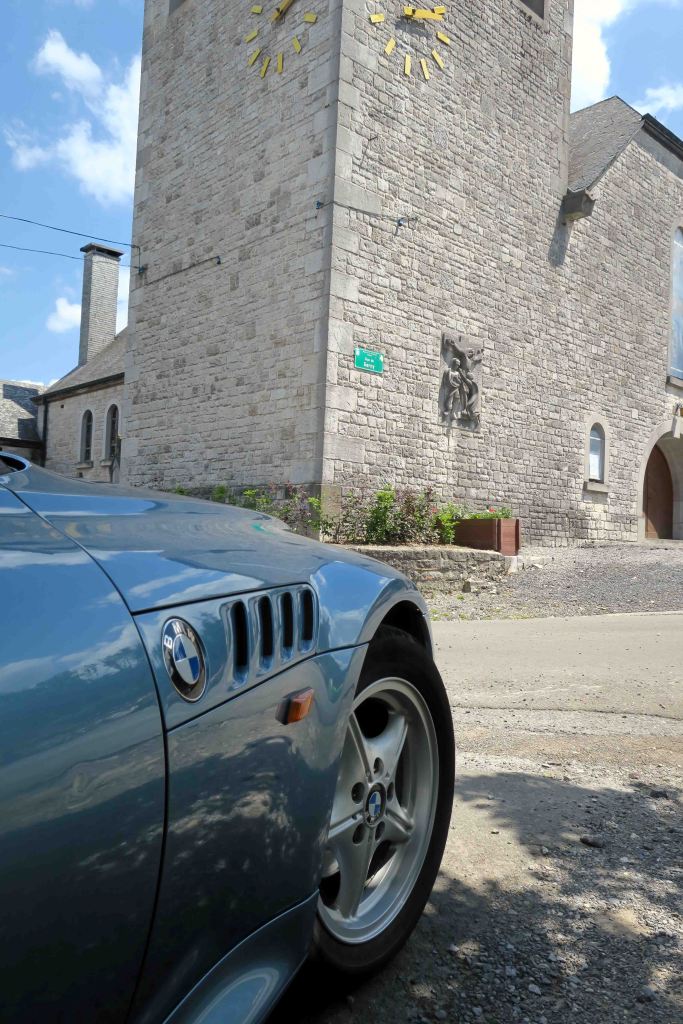
Stopping under the tree shadow, in front of the church at Humain…
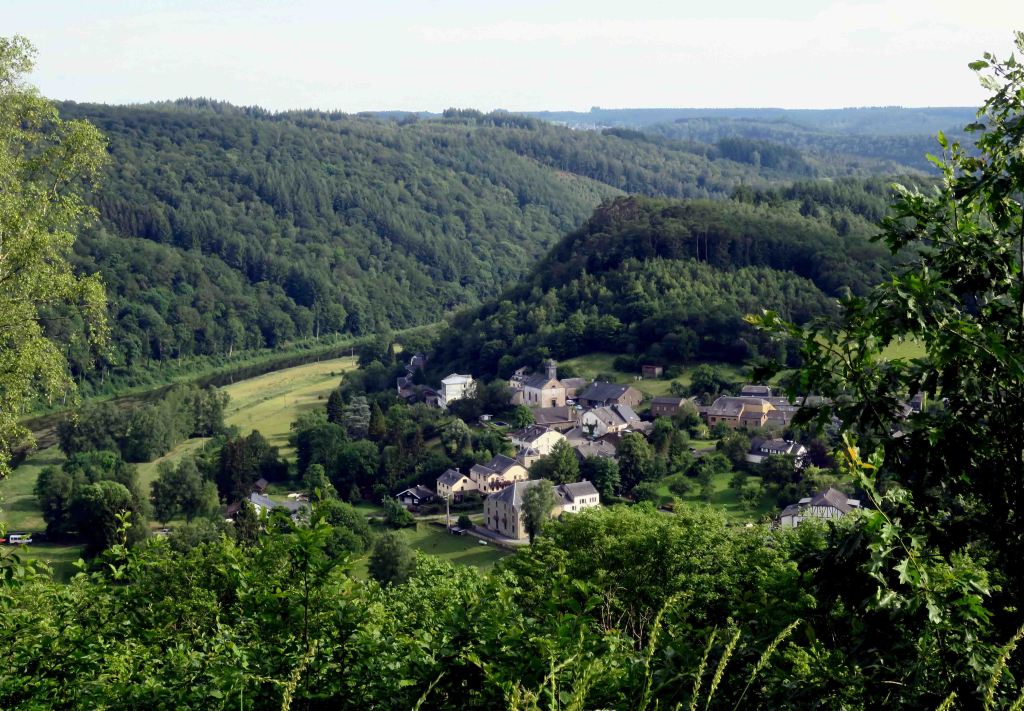
Summer has arrived, and therefore it is time to get our cars out for long drives. We didn’t hesitate when the invitation dropped in our mailbox from her Royal Highness Princess Léa of Belgium and Fiat Chrysler Automobiles Belgium to get our BMW up and ready for a drive to her Château in Humain (close to Marche-en-Famenne), where we would start for a 120 km long trip through the scenic Ardennes roads and enjoy a subsequent Garden Party and dinner at the grounds of the castle.
Our BMW was of course fit for the trip, and we enjoyed its smooth pulling power and excellent road manners on the winding roads through dramatic countryside’s and historic village centres.
Magnificent vieuws, like the Tombeau du Géant at Bouillon…
As this was a touristic drive with no emphasis on performance or speed, we adopted a more leisurely driving style, and our BMW with its 140 HP 2 litre petrol engine rewarded us with an average consumption over the 443 km trip of a good 6,6 litres/100 km, which goes a long way to demonstrate that also more than 20 years ago, engine thermal efficiency was not an idle word.
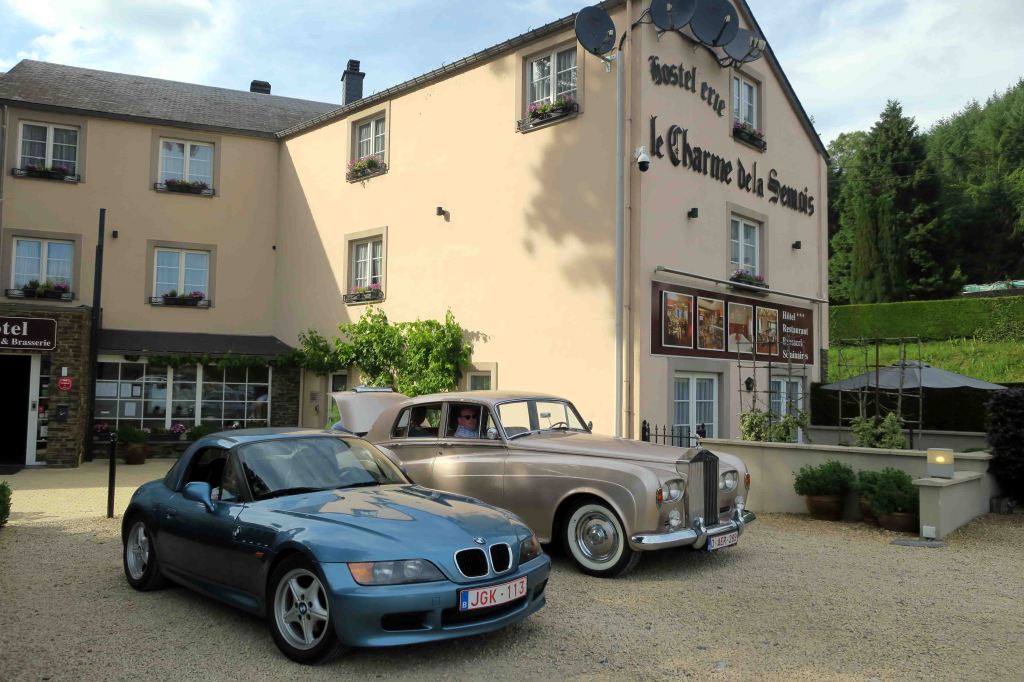
On our afternoon 120 km circuit, we stopped for coffee at the Hostellerie Le Charme de la Semois, at B-5550 Alle-sur-Semois
Don’t forget, this engine has double overhead camshafts, ideally shaped combustion chambers with 4 valves per cylinder and electronic multi-point injection, just like its present day brothers. For refinement, it also has a balancing shaft, so this rather big four is smooth as a straight six both at low and high revs, which brings of course even more pleasure at the wheel…
We just let you enjoy the photos, with
understandably, for reasons of discretion, no photos of the royal castle and
its grounds…
A swift Gran Turismo drive to an iconic destination: Deauville/Trouville, the beach town of artists and celebrities…
Testing the very good looking Fiat Tipo SW,
we were invited to have a drive in it to Trouville-sur-Mer, a stone throw to Deauville,
and have a stay at the Les Cures Marines Trouville Hotel Spa & Thalasso, where
we had the opportunity to see and drive the brand new and good looking Tipo Sport
version. More on this Sport version soon, we show you here some photos and
impressions about the drive, the hotel and the beautiful Normandy coast…
Hans Knol ten Bensel
The Tipo Station Wagon we drove proved an excellent companion on this more than 400 km long trip from Brussels to Trouville-sur-Mer. The 120 HP 1,6 litre Multijet II Diesel delivers magnificent pulling power: its 120 HP are already available at 3750 rpm, and has an impressive torque of 320 Nm at merely 1750 rpm. It is coupled in our test car to the smooth 6 speed DCT transmission, and this combination is just magnificent for fast, effortless motorway driving. It picks up speed in swiftly after the numerous “péages” and holds the 130 km/h cruising speed in total silence and with very good economy indeed, which hovered during the trip at around 5,3 liters/100 km.
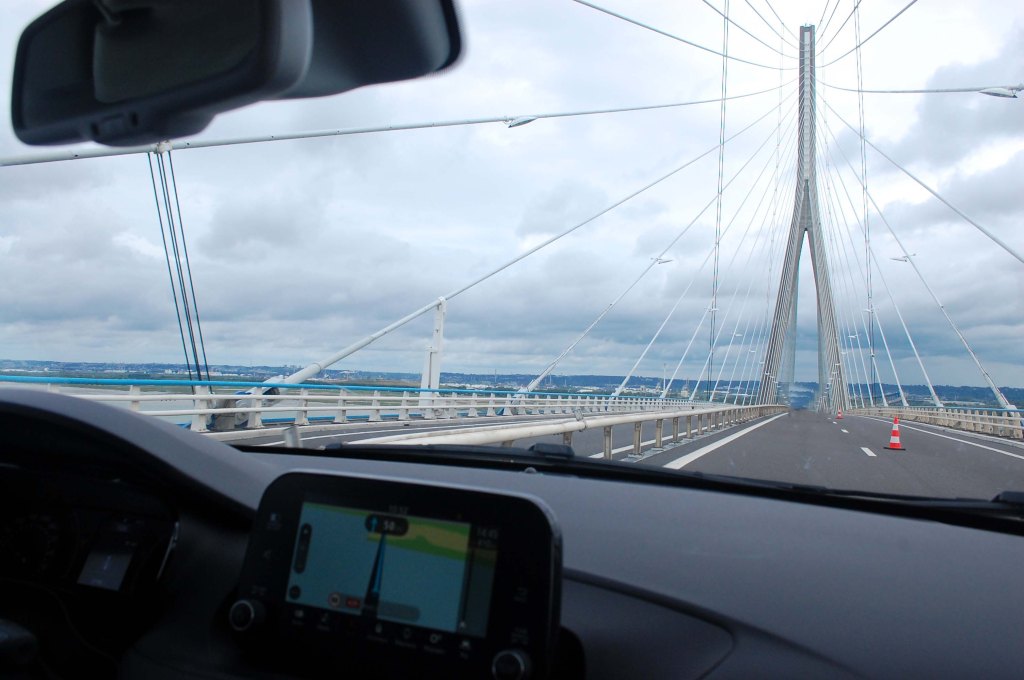
On the trip itself, one of the spectacular spots is of course the bridge of Tancarville, crossing the estuary of the Seine near Le Havre.
No need whatsoever to intervene with the gearbox lever on the narrow Normandy winding roads and frequent roundabouts and crossings, when we approaching Honfleur and Deauville. Just leave it in “D” and the powerful engine does the rest. The official performance figures amply show that this is an ideal companion on your Gran Turismo voyages: 0 to 100 km/h is reached in 10,4 seconds and top speed is 200 km/h, which lets you mix in with the superfast GT’s, if need be. We were just pleased with the absence of wind noise at cruising speeds, the excellent comfort of seats and suspension, the very good overall stability.
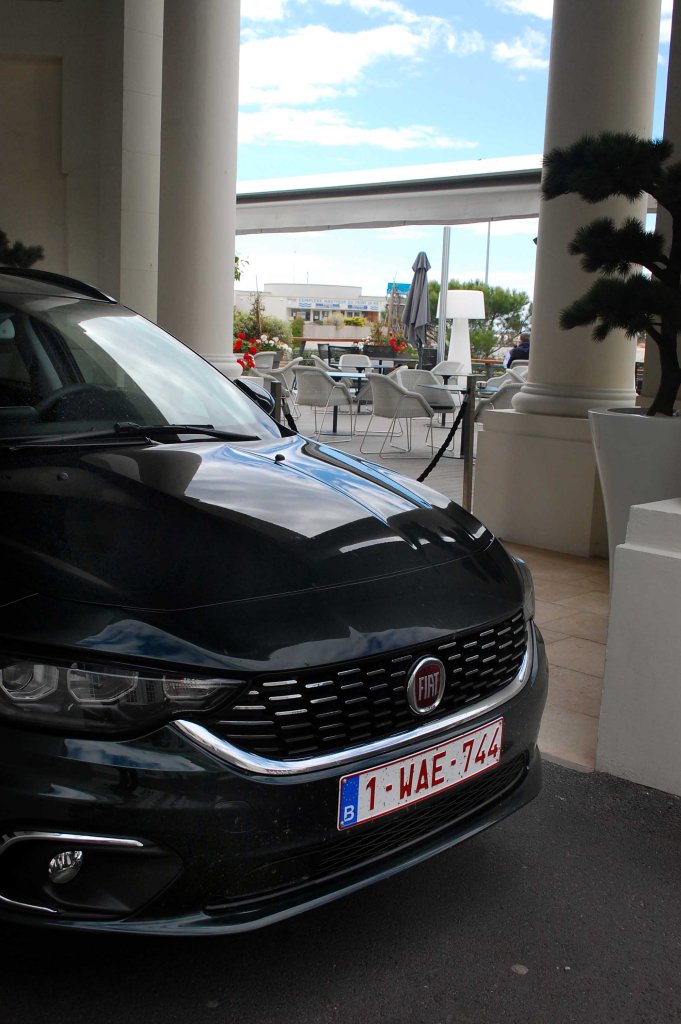
More about the car soon in a test report, we just show you here the pleasing looking SW at its arrival in Normandy and at the Hotel.
Trouville itself has style. French literary giants, Flaubert and Proust were here to be found. As to Monet and his Norman master, Boudin, they painted memorable scenes of 19th century bourgeois in their finery promenading along the broad beachfront here. In fact, Trouville was one of the first-ever coastal resorts to be developed in France. Artists may have started the trend for coming here, but by the time of Emperor Napoleon III, from the mid 19th century on, the rich and fashionable flocked to Trouville too. They ordered grand villas and palaces of entertainment, like the impressive casino.
Trouville casino was built surprisingly close to the lively fishing port, backed by a classic covered fish market, with lively seafood restaurants all around. Scallops, sole, prawns and mackerel are traditional specialities.
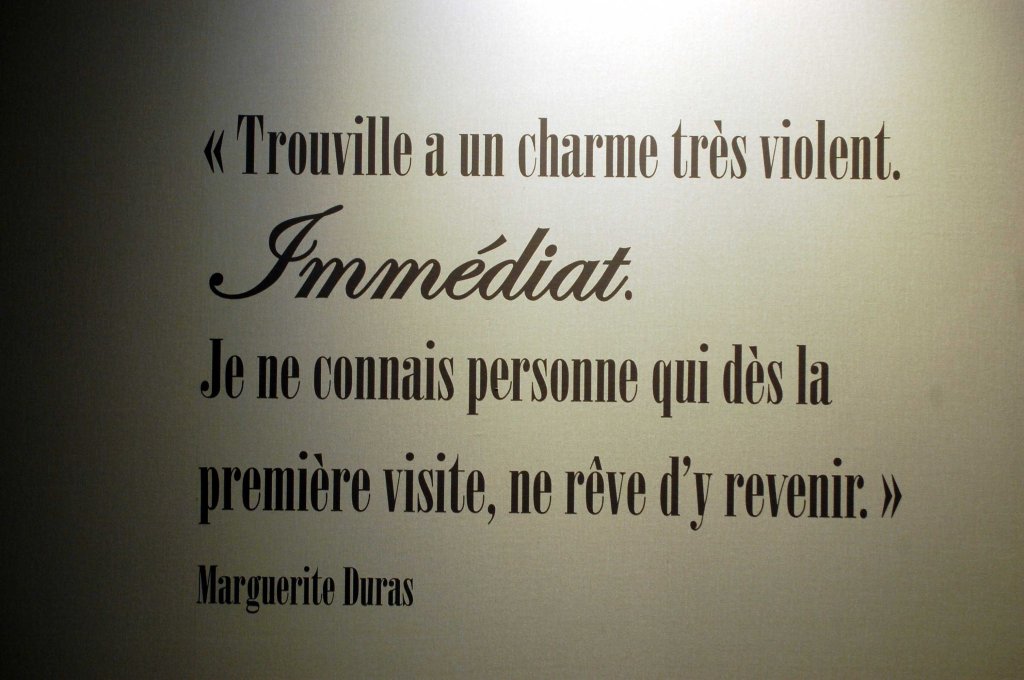
Marguerite Duras, perhaps France’s most famous female writer of the 20th century, was a great cultural figure who became a devotee of Trouville, spending her summers here.
She said that everyone she had ever met who had come to the resort for a first time said they dreamt of returning.
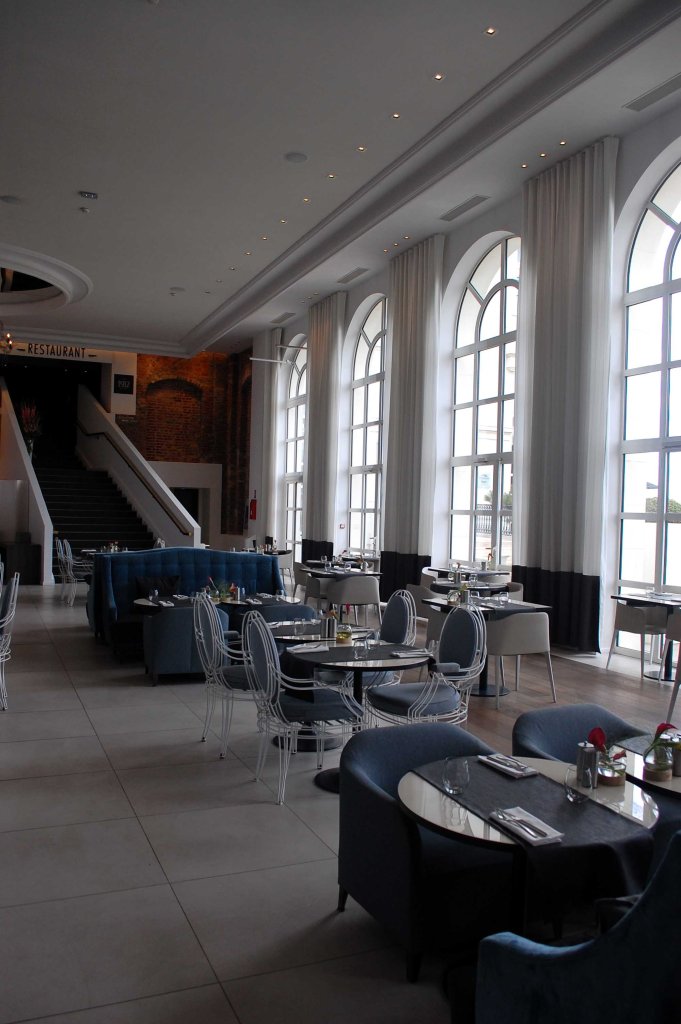
The hotel, Les Cures Marines Trouville Hotel Spa & Thalasso, breathes the atmosphere of elegant yesterday. It is nestled in the right wing of the Casino in the heart of Trouville.
Inspired by the first seawater baths, the Cures Marines Institute revives its visitors with the comforts of a magical renovation project, overseen by Monuments Historiques and the expertise of the MGallery and Thalassa Sea & Spa from the Accorhotels group, retaining style of palaces from the beginning of last century.
We just show you here some photos, and remember
fondly the place and the car…
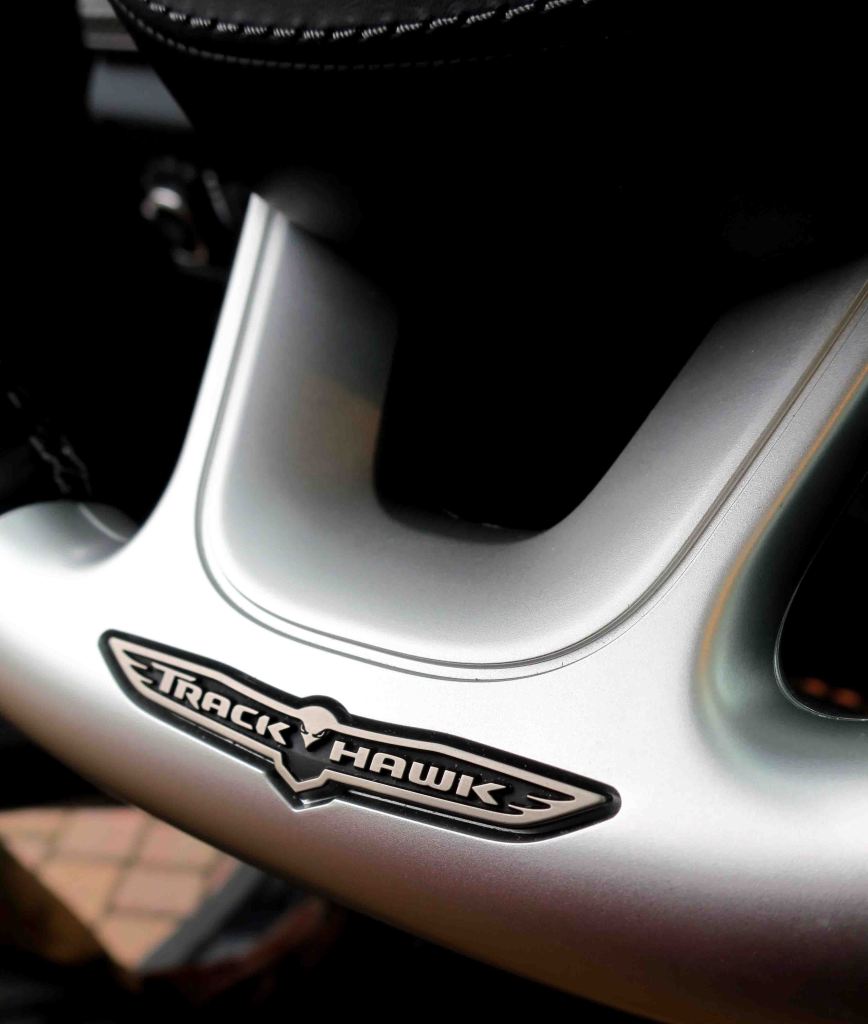
Driving the already legendary Grand Cherokee Trackhawk along the scenic villages around the beautiful Lago di Garda…
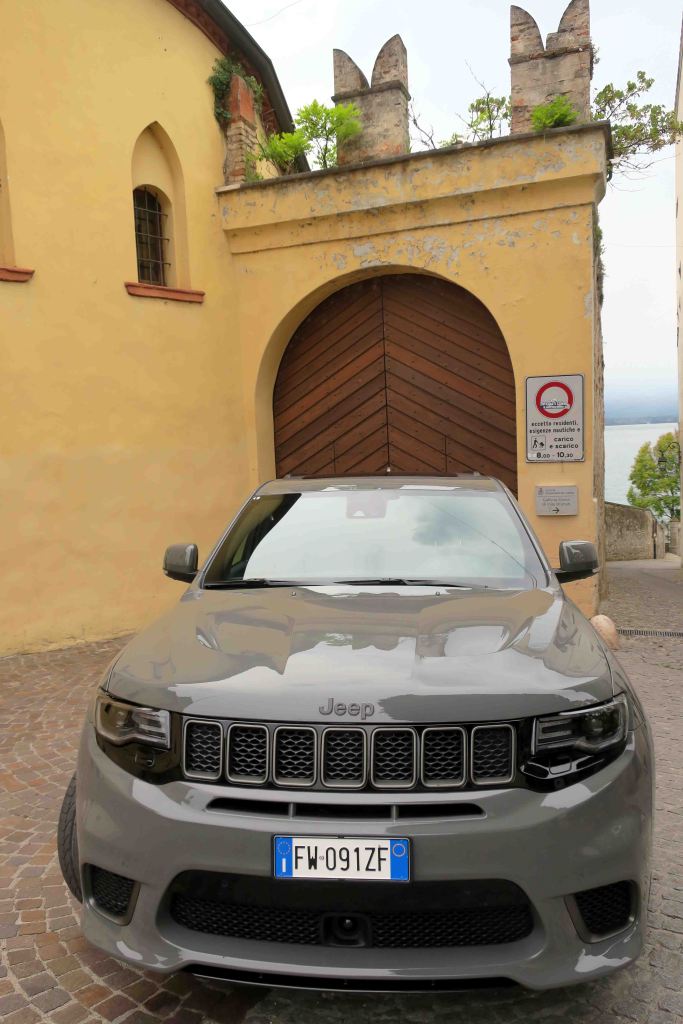
One of the absolute highlights of two days of Jeep driving amidst the beautiful scenery of the Italian Lago di Garda was a stint behind the wheel of the Grand Cherokee Trackhawk and the SRT. The Jeep® Grand Cherokee is the flagship of the Jeep brand and the most awarded SUV ever, and this gem of a car created the premium SUV category 27 years ago and with more than 6.4 million units sold since its introduction. More about this Jeep Grand Cherokee in its “normal” version(s) later, we focus here on the stunning Trackhawk and SRT versions.
Indeed, it had to happen, and the whole car world was actually expecting this: the more than 700 HP V8 of the Dodge Hellcat, the “muscle car” par excellence, was to be dropped in the engine bay of the Jeep Grand Cherokee. It all happened last year, and now we had the chance to drive it: the supercharged 6.2-litre HEMI® V-8 engine, delivering 710 hp at 6000 rpm, mated to an 8 speed automatic transmission. High-strength, forged-alloy pistons, powder-forged connecting rods and sodium-cooled exhaust valves all add to the power of the Supercharged 6.2L V8 engine. Do not expect a hissing monster though.
The massive V8 burbles smoothly through slow urban traffic through the villages around the Lago di Garda, and progress is silky smooth. Until you floor the throttle. Supercar acceleration is the instant answer, and the engine growls away. 0 to 100 km/h is reached in some 3,7 seconds, the top speed is 289 km/h, if you only dare.
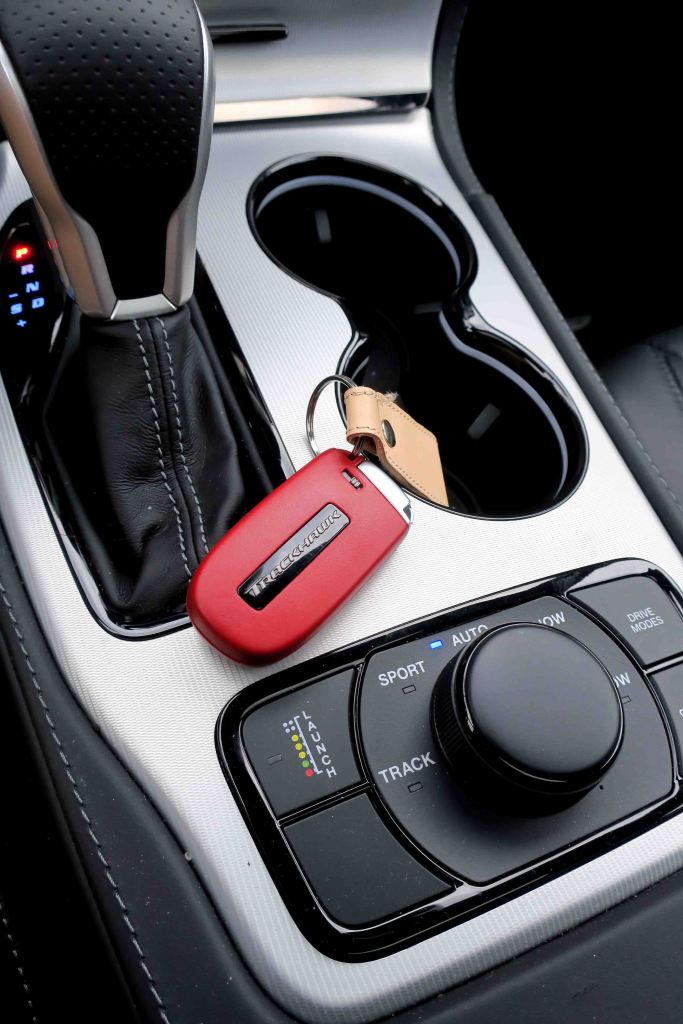
The Drive Mode selector, and the “launch” mode at the push of a button.
Of course, good traction is provided for with all this power. A “Quadra-Trac” active on-demand four-wheel-drive system, which also includes a rear Electronic Limited Slip Differential (ELSD) and a single-speed active transfer case is at your disposal.
A 6,4 litre V8 Hemi in the SRT…
Not yet an expert in unleashing all this
power and putting it “just right” on the tarmac? Good to know that there is a “Launch
Control” on SRT® and Trackhawk® , which optimizes track performance
by coordinating the engine, transmission, driveline and suspension for a
textbook launch and consistent straight-line acceleration.
The traction management system has been specifically retuned for the Trackhawk and SRT versions as “Selec-Track.” It features five vehicle setting – Auto, Sport, Track, Snow and Tow – to allow the driver to achieve the best driving experience on any surface.
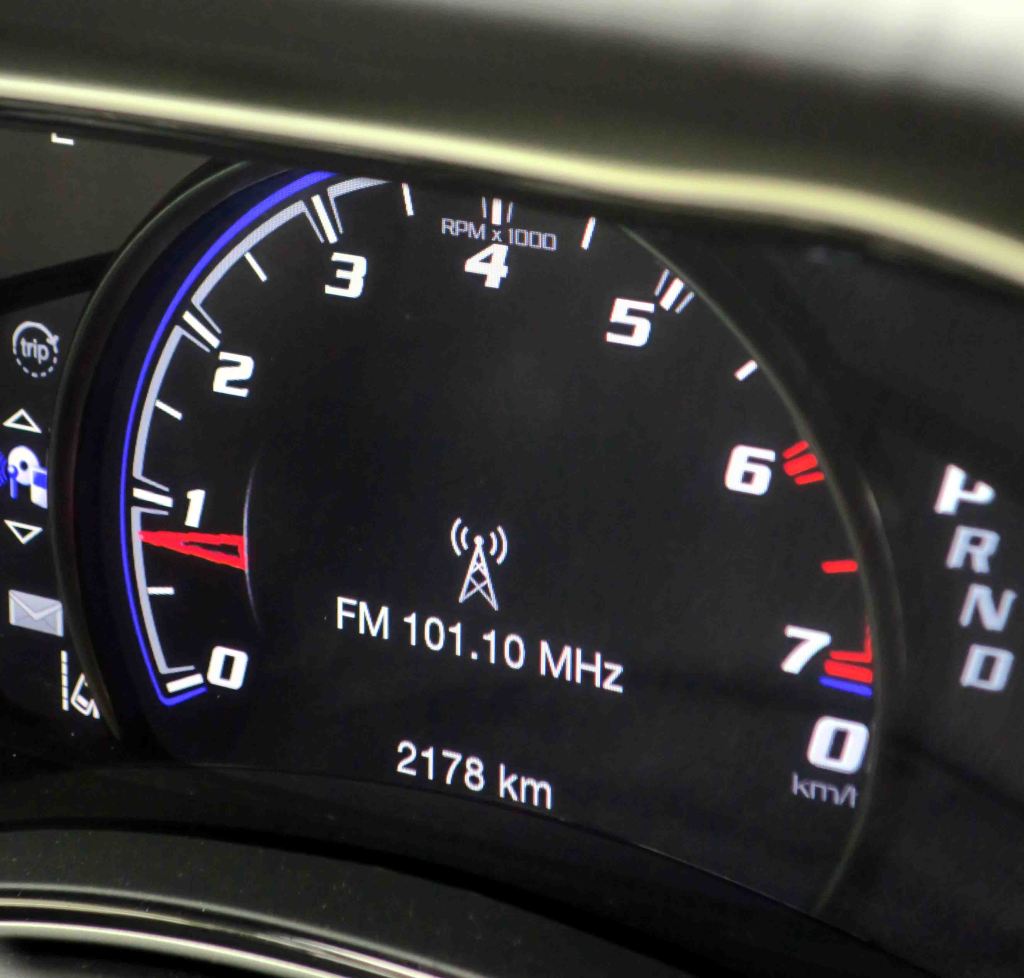
Beautiful instrumentation with a centrally placed rev counter…
The suspension is of course
well tuned to this extra power, as well as brakes, and the Grand Cherokee
remains eminently drivable.
Don’t forget there is also the Bilstein® Adaptive Suspension system, which can adjust the dampers for sport or track performance if desired, while the rear Electronic Limited Slip Differential features a four-point axle mounting to better distribute the massive power to the wheels.
For the heavier terrain work, the Quadra-Lift air suspension system allows you to change the ride height of the Grand Cherokee up to a maximum ground clearance of 28 cm.
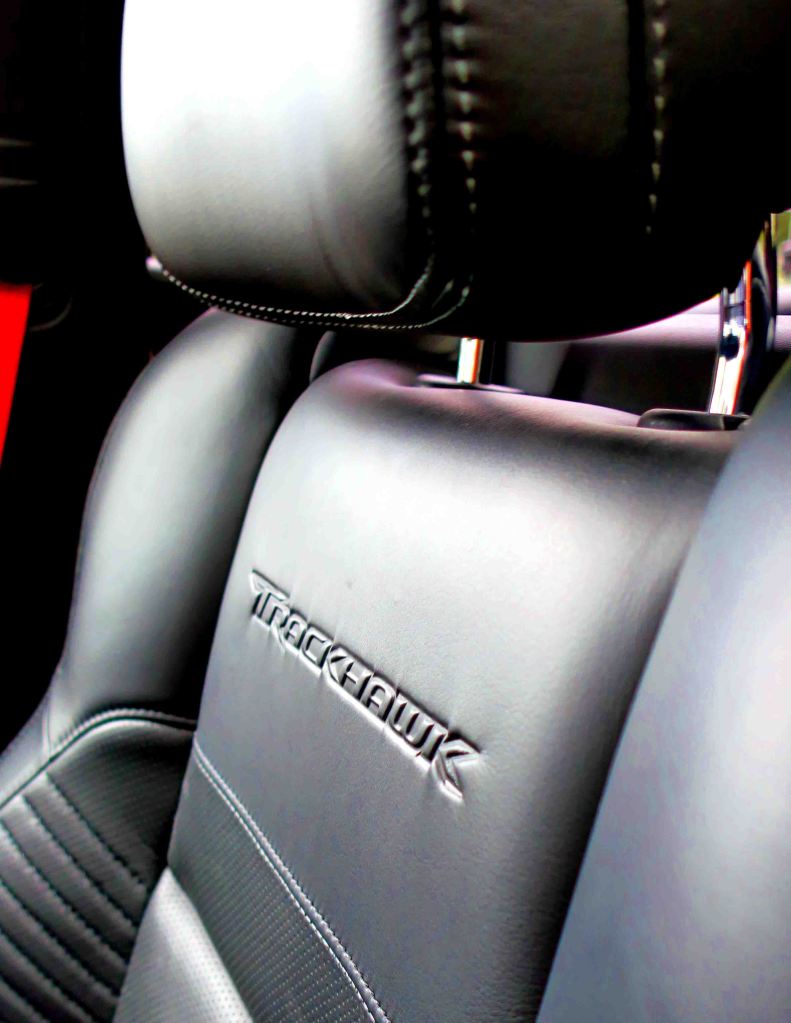
We were deeply impressed by its handling and ride when driven with more abandon, and how perfectly balanced the whole car was. The unique driving experience is further enhanced by excellent seats and instrumentation, with not only a beautiful central rev counter, but also a special “Performance Page” on the central touch screen, where you can see anything as time of your acceleration, G-Force, all engine data like oil temperature, etc.
We enjoyed also having a stint at the wheel of the more suave SRT. Not that on the urban scenic roads around the Lago, you could test fully the difference in performance compared to the Trackhawk. Under the hood of the SRT version growls the 6417 cc V8 Hemi, good for 344 kW or 468 HP @6250 rpm. The same 8 speed auto transmission as in the Trackhawk knows this engine also needs to be revved to reach all out performance, as maximum torque of 624 Nm is reached at 4100 rpm. Of course, also here the Launch Control and the choice between five dynamic Drive Modes with the Selec-Track® System, as described above.
We enjoyed the same beautiful well balanced handling, indeed an SUV which also truly stands out if you expect that extra performance. Using launch control, it will still be able to catapult you from 0 to 100 km/h in 4,9 seconds.
We just coloured this image in front of this old factory a bit more (fiery) red to enhance the Trackhawk spirit…
We let you
enjoy the photos here, and we dream along with you about this unforgettable
experience… and there is more Jeep news to come with driving impressions of the
full range!
Citroën is celebrating its 100th anniversary, and therefore is launching #BornAndré, in tribute to its founder, André Citroën.
Any child born on June 4, bearing the name André(e), will receive a present…
The Brand is putting people at the centre, and
this it underlines with its ‘Inspired by you’ signature. And when they are ‘Inspired
by you’, why are they not giving their customers a present?
So said, so done: if a child born on 4 June
2019 bears the name of André(e), Citroën will give them an exceptional present:
a C3 Origins, the collector’s edition launched for the centenary.
Therefore, Citroën is inviting its community to help it find the baby André(e), by making this appeal, which you can find out more about online: https://youtu.be/PCF1EUIs6MQ.
Promoting the ideal city car, to increase your business appointments per day, using this nimble car, costing three times less than a large one, and being just as useful…
In the meantime, just have a look at some historic material, sent to us by their dynamic PR department…
There are some remarkeable ideas about cars ideal for the city, and how mass production was achieved in those days…
The timid beginnings of a production line, which was not exactly rolling yet, but things were close!
Last but not least, a picture of a proud owner and his mount, so useful in improving urban mobility…
Klaus Busse told us about the sensuous essence of Italian Car design, and how it is embodied in Alfa Romeo…
This is the second part of our series about
the visit to the FCA Centro Stile in Torino. It started with an intriguing interview
and talk with Klaus Busse, head of Design for Fiat, Abarth, Lancia, Alfa Romeo
and Maserati, offering us interesting insights into the sculptural design
philosophy and language of the iconic sporting Milano brand. This talk
continues here…
Hans Knol ten Bensel
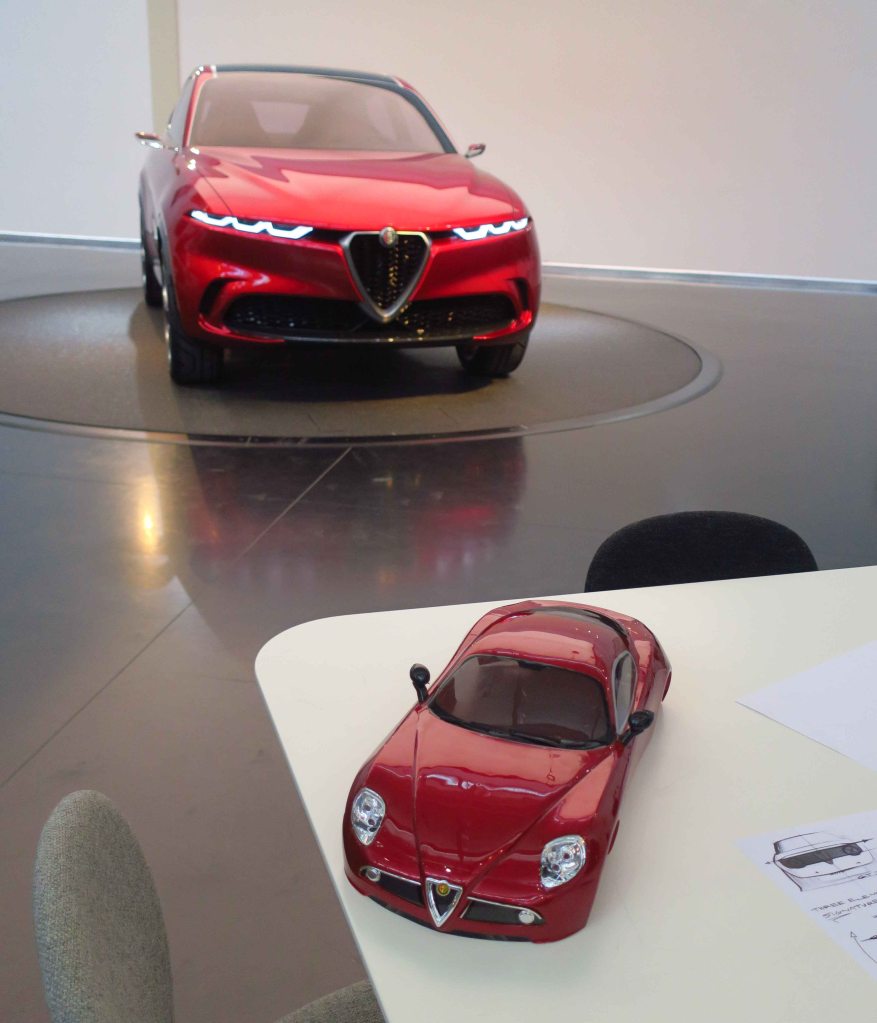
Shaping the body of an Alfa is also performing the art of sculpture…
HktB: “When we look at earlier design, and I want to take you here to the first Giulia, you see this modernism with the aerodynamic concepts brought into the brand and also the first dashboards of this Giulia, with their, as the Germans say it, “neue Sachlichkheit”, a strictly modern, pure, rectangular style, with a horizontal ribbon speedometer flanked by a small rev counter and column gearchange. In later years, with the later updates of this Giulia, this was again replaced by floor gearchange, a wood rimmed three spoke steering wheel, and two classic round dials for speed and revs in their individual clusters.
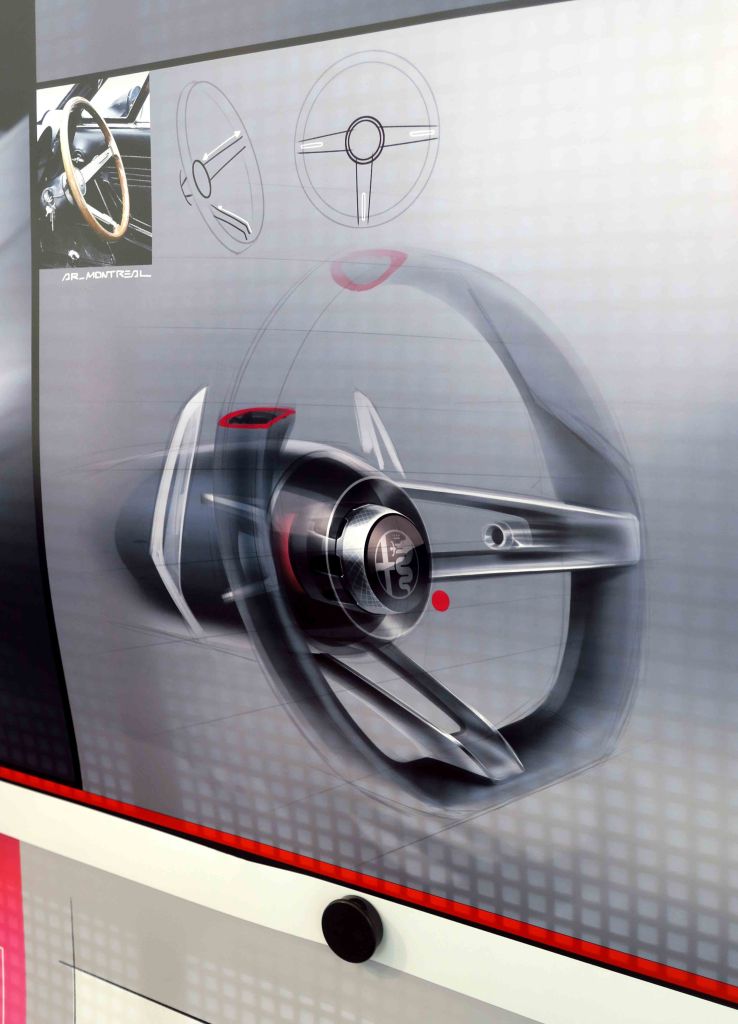
The shape of the three spoked wheel of the Tonale is also inspired by the historic Montreal…
Back to tradition, again we would say. What can you say about this tension between absolute, purified modernism and a more traditional (sporting) tradition in the styling language of the brand?
B: This is a beautiful question, thank you for this. Of course, we have the same challenge here. When I say Italian design process, let’s start with the classical approach and then I will come back to the modern aspect. The classical approach at Centro Stile, even though we have virtual reality, we do virtual reality reviews with the teams around the world, we scan, we mill, we digitize, we use computers, out of these 200 people, a big amount of people is dealing with computers, one way or the other.
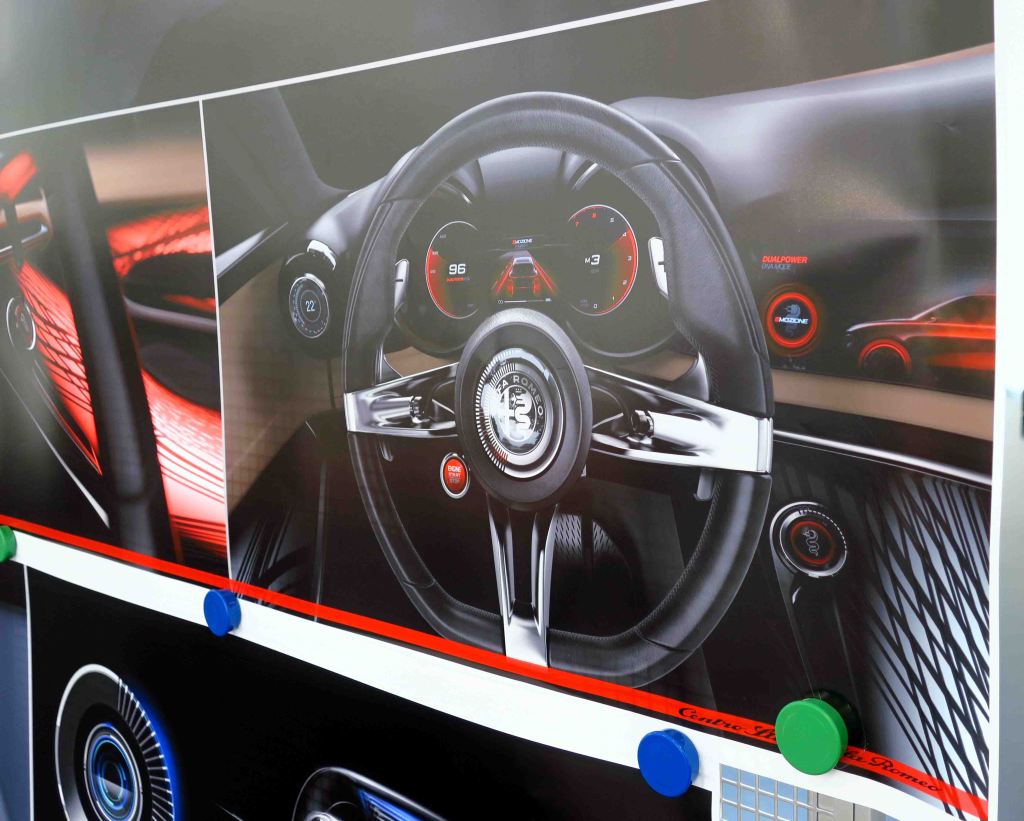
Marrying the sporting styling language with today’s materials and connectivity…
But, when we design an Alfa Romeo, we always do it by hand. Meaning, that once the sketch is created, and we have the model in front of us, out of clay and clay material, hand modeling is still the king. Because, unless you shop online, when you buy any of your clothes, you look at it and you touch it. Because touch is for us humans such an important thing. And the other thing is, when you look at the car itself, we want to create something than feels good to the hand. I always say to joke, the best way to experience an Alfa Romeo is to hand wash it.
You discover an Alfa by touching, and hand washing it…
As a matter of fact, any car, when you hand wash it, you experience it. And there are some brands that take a lot of pride in super sharp edges, and it is not a very nice experience hand washing that car. It is not criticism; I am just pointing that out. Our way is to have the very sensuous experience touching an Alfa Romeo. And you can only achieve that if you hand model the car. Now we support it with computer, because we want to be fast in our process and we want to have high quality. Clearly, the creation process is manual, and that is a very Italian thing.
Also the seats are a work of dedicated sculpture…
This is the land of sculptures. You go to Florence, Rome, there are beautiful sculptures. Then of course, when it comes to technology, like the lighting technology, we can use the modern technology to emphasize graphics which were not possible in the past. You go from halogen reflector to projectors that are very, very slim, so that’s on the exterior where the technology helps us.
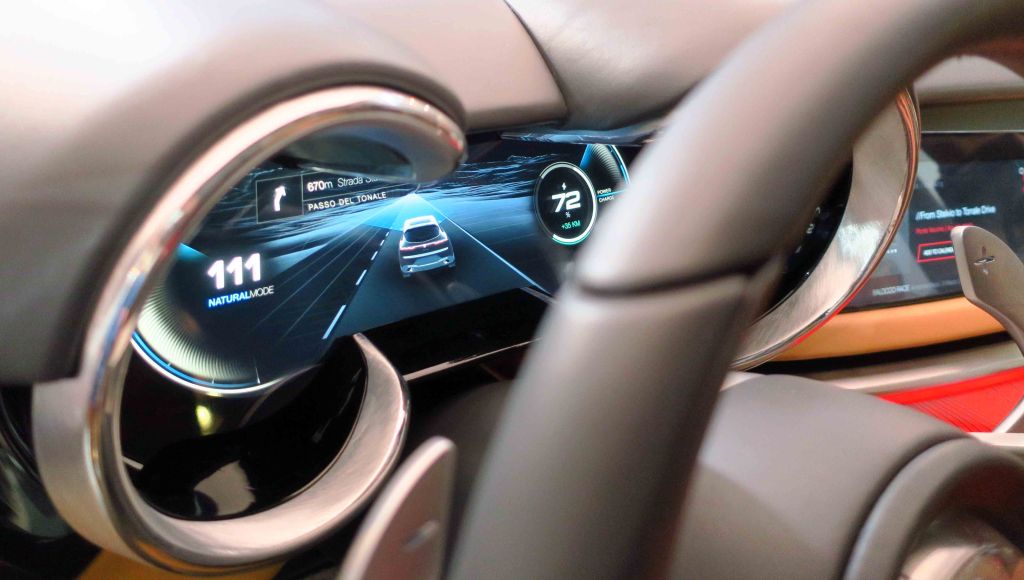
Coming to the interior, there is a lot of discussion about connectivity, screens these days. So for us, the question for Alfa Romeo is always, considering we build a drivers’ car, with the handling of the car being equally important, so what room do we dedicate to screens and connectivity experience, and what you don’t see in this concept car and in an Alfa Romeo, is these big screens, the “tombstone” that almost blocks your view, that almost screams for attention.
Big screens do not block the drivers’ vision…
For Alfa Romeo, we do use these screens, we have of course large screens in this vehicle, we also have 12 inch cluster, etc, etc, we have all that, but we keep it more like it’s here to support you, but it is not saying “look at me, look at me”…
The graphics themselves, what we use, is of course state of the art, in terms of connectivity, in terms of HMI, so for is, this is the connection we try to find between the classic approach to handmodelling, sculpting, and the historic approach to design, but then combining it with state of the art technology, how we assist the driver, and bring an enjoyable experience to being in the car. It is a long answer to your question, but it was a very very good question because it comes very close to what we are dealing with every day, how do you combine these two worlds.”
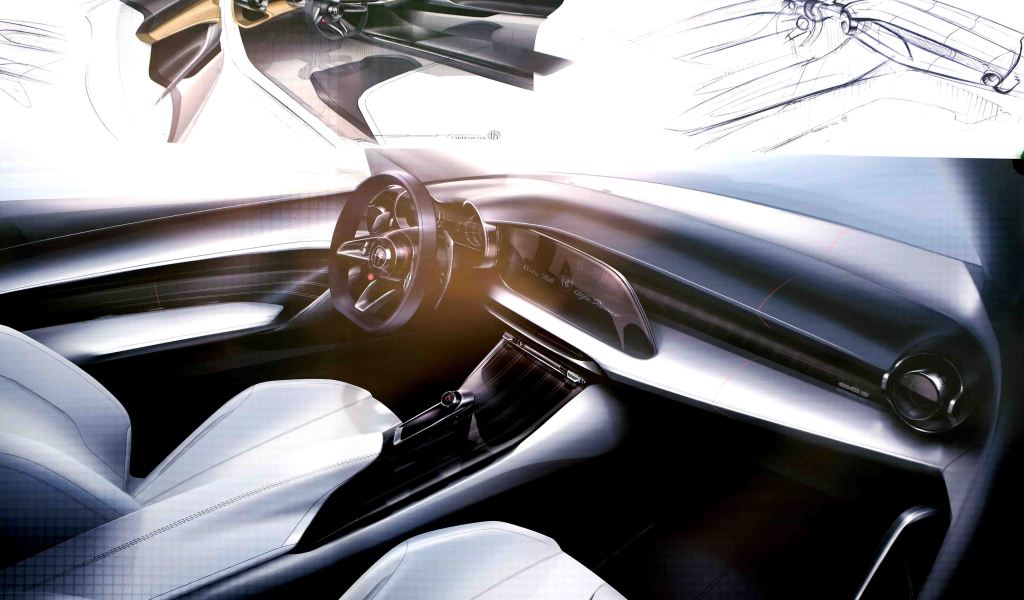
Directed towards the driver, while he keeps his eyes on the road…
The
conversation was far from over, but then covers different subjects, with we
will soon continue to cover in a following part in this series…