Our faithful Lexus CT 200h continues to please us. Over the past year, it clocked an average consumption of 4,8 litres/100 km, and besides fuel, it really did not need anything else. Well to wheel, it scores still very well, and given its longevity and reliability, its footprint is also quite small, adding to this that it doesn’t carry a massive array of batteries…
We had it serviced in June 2020, with amounted to basically an oil and filter change, and it will be scheduled for a new service next Wednesday December 22 at Beerens in Aartselaar. Nothing further to report, except that it rides ever so smoothly.
Our Lexus has some very clever items we started to like over the years, like for instance the command and manipulation of the infotainment system and screen via a “mouse” on the centre console.
Ever tried to enter a lengthy address on the touchscreen with your finger when “on the move”, with your car bouncing like a toy car on a cobblestoned or uneven road? Right, that’s what we mean…
The clever “mouse” command provents our screen to become soiled with finger marks…but we still keep it dust free!
Add to this the fact that your touchscreen gets so muddled up with finger marks, not exactly what you want in Corona times… So in the Lexus you rest your arm gently on the centre console, where it lies beautifully steady, and then slide the arrow with the mouse knob over the letters or symbols on the screen, and presto…
Our Lexus “sleeps” out in the open all year round, it doesn’t have a garage. Despite this, paintwork is still beautiful, also the beige interior holds very well, as the photos show.
The car deserves a proper polish and wax treatment, and we will get around that next year… promised!
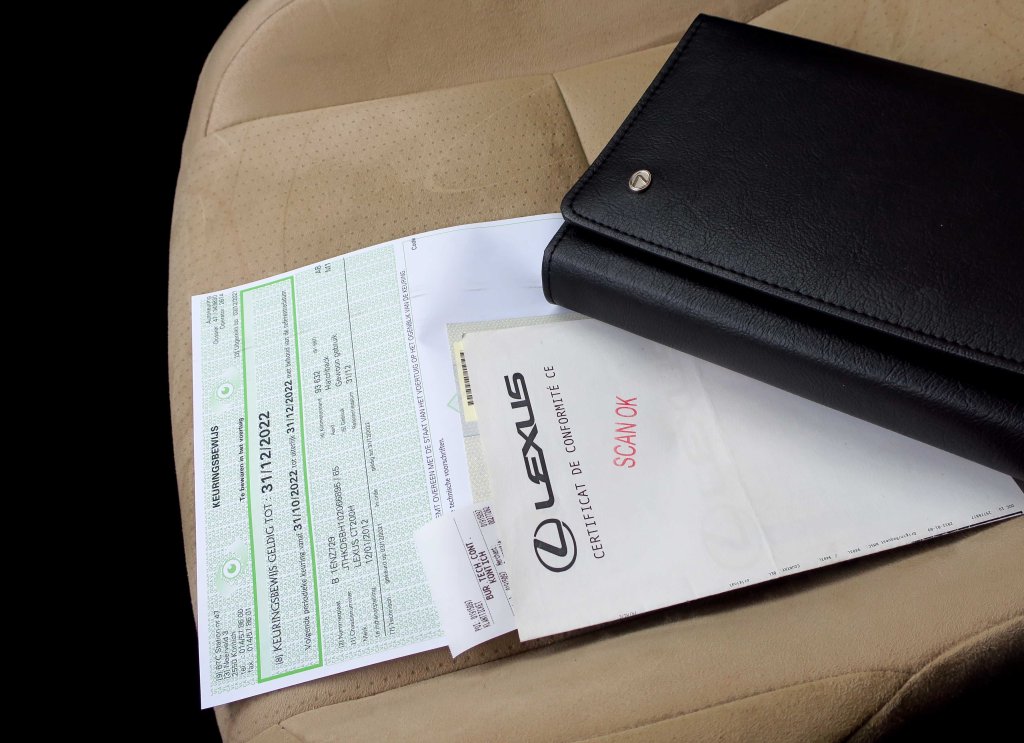
We put it though the technical control recently and, as the photo shows, there was indeed nothing wrong with our Lexus. So we have another year – until 31st of December 2022.
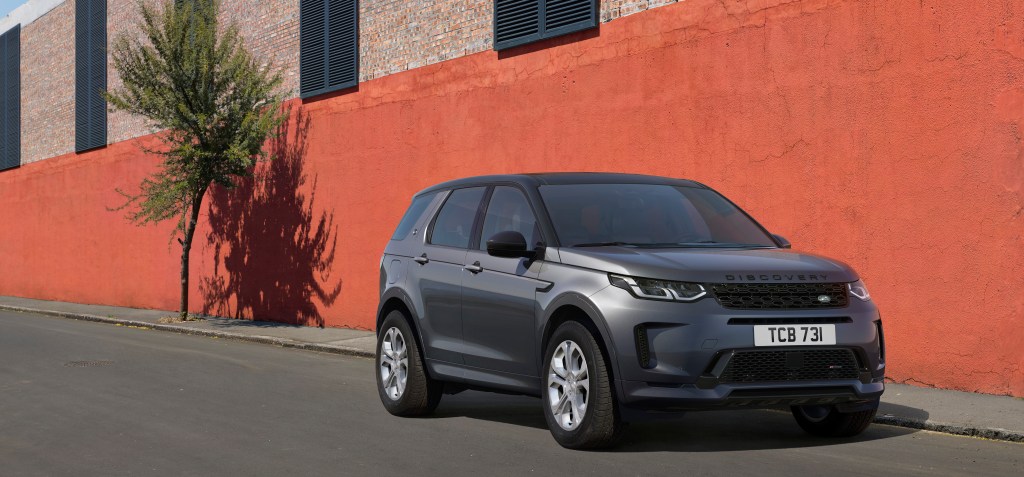
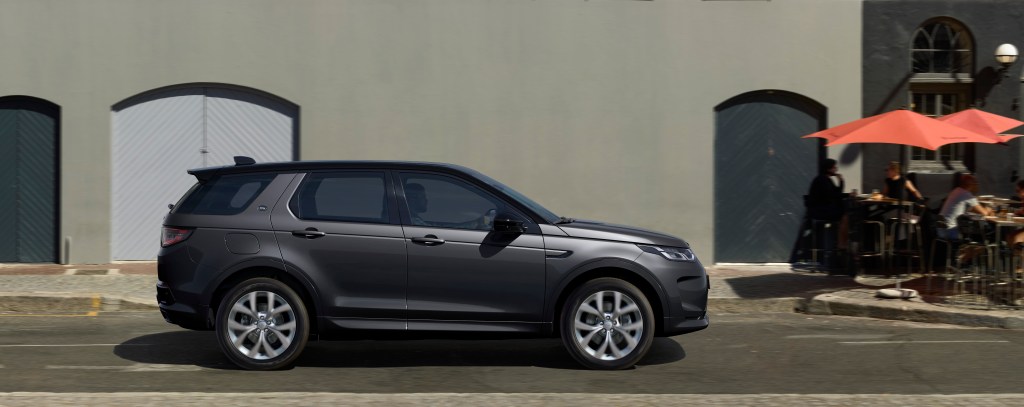
There is again some interesting news from Land Rover. This time the Discovery Sport features efficient engines, advanced technologies and a special range.
First of all, cleaner diesels: indeed, next-generation Ingenium diesel engines with efficiency-enhancing Mild Hybrid technology, available as D165 (120 kW/163 hp) or D200 (150 kW/204 hp), with CO2 emissions from 166 g/km
Plug-in Hybrid again, WLTP certified with lower CO2 and fuel consumption values from 34 g/km and 1.5 l/100 km respectively (instead of 44 g/km and 2.0 l/100 km)
Revamped Urban Edition: The Discovery Sport Urban Edition gets striking design accents.
Hyper-advanced infotainment system: Land Rover’s most advanced systems, Pivi and Pivi Pro, are available for the Evoque. An intuitive menu structure leads users from a home screen to the most popular functions and features in up to two taps
More connectivity: The online media includes Spotify, which has been integrated directly into the infotainment menu as a ‘media source’, as well as Bluetooth connectivity for two phones simultaneously and a wireless charger with optional signal amplification
Software-Over-The-Air: A dual modem with integrated SIM card enables scheduled software updates without the need to visit a dealer, so customers always have have the latest apps, maps, services and vehicle software at their fingertips.
Well-being of the occupants: the Cabin Air Filtration system filters fine dust, allergens, pollen and even strong odours. Check the levels on the touch screen to make sure the indoor air is purer than the air outdoors…
Intelligent Driver Assistance Systems: Complete technology including Rear Traffic and Rear Collision Monitors, plus optional 3D Ambient Camera… need we say more?
The new Land Rover Discovery Sport is available from €40,045 in Belgium.
We look forward to driving those fine Land Rovers again in 2022!
The Seat Cupra Born was in September 2021 still built in Mosel / Zwickau at Volkswagen Sachsen .
The electric age has certainly also arrived at Seat. Not that they produce impressive petrol engined cars. I am presently driving a very able Seat Arona 1.0 TSI Xperience, its three cylinder 110 HP 1 litre engine purrs very nicely indeed, coupled to a 7 speed DSG, and feels very well at home on the motorway as in the city. The somewhat higher stance of the Arona proved also a blessing and we would judge it “just right”. But as said, the electronic age is certainly dawning at Seat.
The SEAT S.A. team is producing working for instance at the Martorell plant the SEAT Leon e-HYBRID, the first hybrid model manufactured in Martorell. But there is more.
Beatriz Matute, head of Project Management for the launch of the CUPRA Born, has spent this year going between Barcelona and Zwickau (Germany). She’s led a team of more than 50 employees from different areas in charge of overseeing the start of series production for the CUPRA Born, CUPRA’s first 100% electric car, in Europe’s largest electric vehicle factory. “It’s been a valuable learning experience that we will certainly build on for the electrification of Martorell” she says.
The international Press Presentation of the Cupra Born was stunning indeed…
The CUPRA Born signals the start of CUPRA’s electric offensive and is a key element in the brand’s international expansion. For this reason, “we knew that the International Press Presentation of the CUPRA Born needed to be different” says SEAT S.A. Global Communications Director Cécilia Taieb. “We made it happen thanks to the help and participation of many of our employees” she continues. The first 100% electric car brought together 440 journalists from 27 countries in Barcelona. In total, 62,000 kilometres of testing were carried out over four weeks by the invited media.
The brand’s marketeers and top experts around the world have been just as dedicated in preparing to sell the CUPRA Born. More than 1,000 CUPRA Masters from 43 markets took part in the CUPRA Master Convention 2021 to deepen their knowledge and transmit their expertise to customers.
The IAA International Motor Show in Munich last September was the backdrop for the world premiere of the CUPRA UrbanRebel concept, the CUPRA team’s unconventional challenger. “The concept laid the foundations for our future 100% electric city car, which will arrive in 2025” says CUPRA Director of Strategy, Business Development and Operations Antonino Labate.
Leading the electric competition. CUPRA made motorsport history this year by winning the first ever electric touring car championship. Along with Mattias Ekström, they have been named “Kings of the season” for the PURE ETCR. With the CUPRA e-Racer, a technical feat of 500 kW (680 hp) of power, the brand successfully completed the challenge it set itself in 2017: to create the first electric racing touring car in history, and win. “The future of racing is electric, and we have already taken the lead” maintains Xavier Serra, head of CUPRA Racing.
A step forward with 1.3 Megawatts of power…
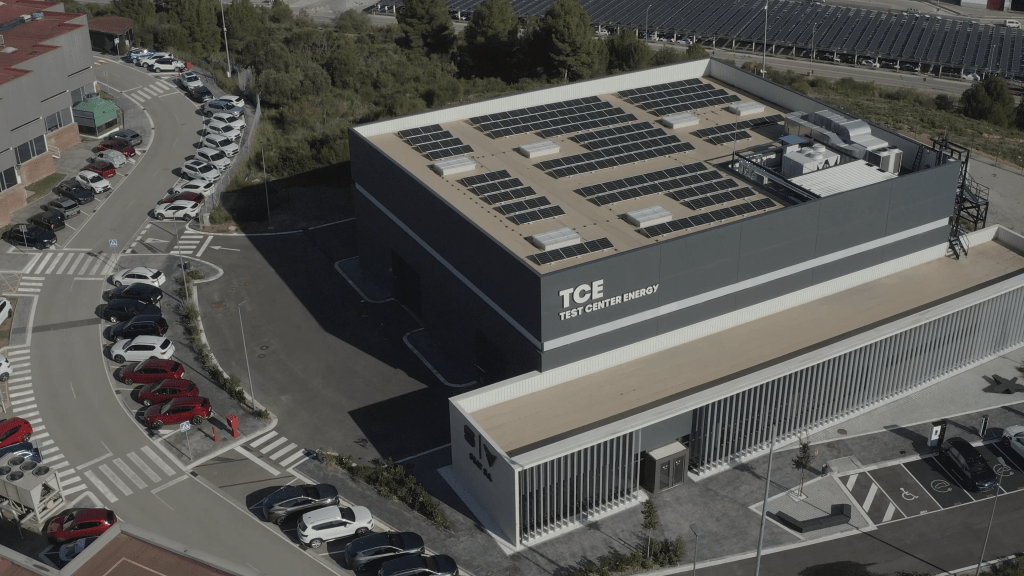
The Test Center Energy (TCE) is another of the company’s major commitments to electrification. “We’ve made a great effort to create this pioneering battery research and development centre in Southern Europe, which will enable us to develop the energy systems for electric and plug-in hybrid vehicles” says Francesc Sabaté, head of the TCE. To give an example of its testing capacity, 1.3 megawatts is equivalent to the energy consumption of 350 homes operating at maximum power.
We attended a very interesting presentation by Stellantis Belux CEO Stéphane Lévi, last but not least about Stellantis Belux itself. We start with this topic in this report.
But of course, the future of the Stellantis Group holds many different interesting aspects, and this will be covered in further reports. Just stay tuned!
Hans Knol ten Bensel
The merger between FCA and PSA leading to the birth of the Stellantis group has been very well managed in Belgium, and is now properly settled indeed.
Mr. Lévi explained that it was a very good strategic decision to bring the different brands with their respective departments as soon as possible under one single roof, notably at the premises at the Avenue de Bourget in Brussels. Indeed the implementation of Stellantis Belux in this “Stellantis House” in Evere took merely three months after the merger, which was done in January 2021. The organisation of Stellantis Belux was finalised in July this year. 20 % of the employees working in Stellantis Belux have now taken a new position within this organisation.
“It is important that the staff also feels physically that they belong to one family, and are able to interact and meet on one single work and office space”, stated Mr. Lévi.
“The staff of the several brands immediately started to figure out not why, but concentrated rather on how they would work together”, he concluded.
New working spaces are being finalised at Stellantis House to adapt to the changing working conditions brought about by the Corona pandemic.
Strong market position… and investing in the future.
Stellantis Belux has an enviable market position in Belgium and Luxembourg with a market share of 23,07 %.
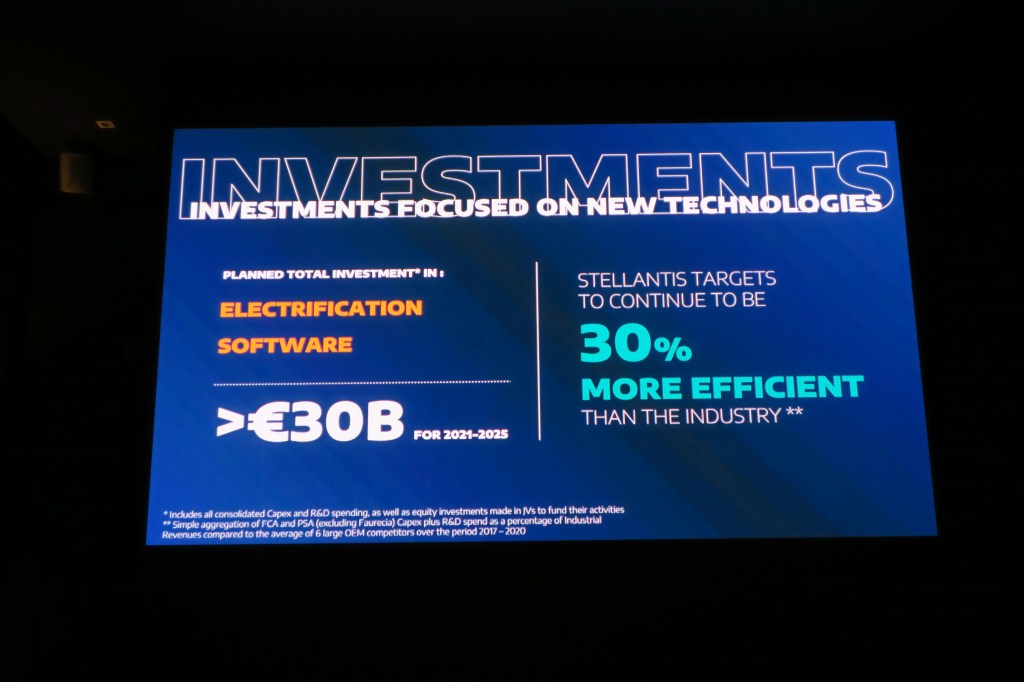
The Stellantis Group is further focused on investing in new technologies: the planned total investment in electrification and software will exceed 30 billion € between 2021 and 2025.
Stellantis targets to continue to be 30 % more efficient than the industry. This figure is based on the simple aggregation of capital expenditure and R & D spent by PSA and FCA, as a percentage of industrial revenues; this is then compared to the average of 6 large OEM competitors over the period 2017-2020.
A further EV model offensive in 2022…
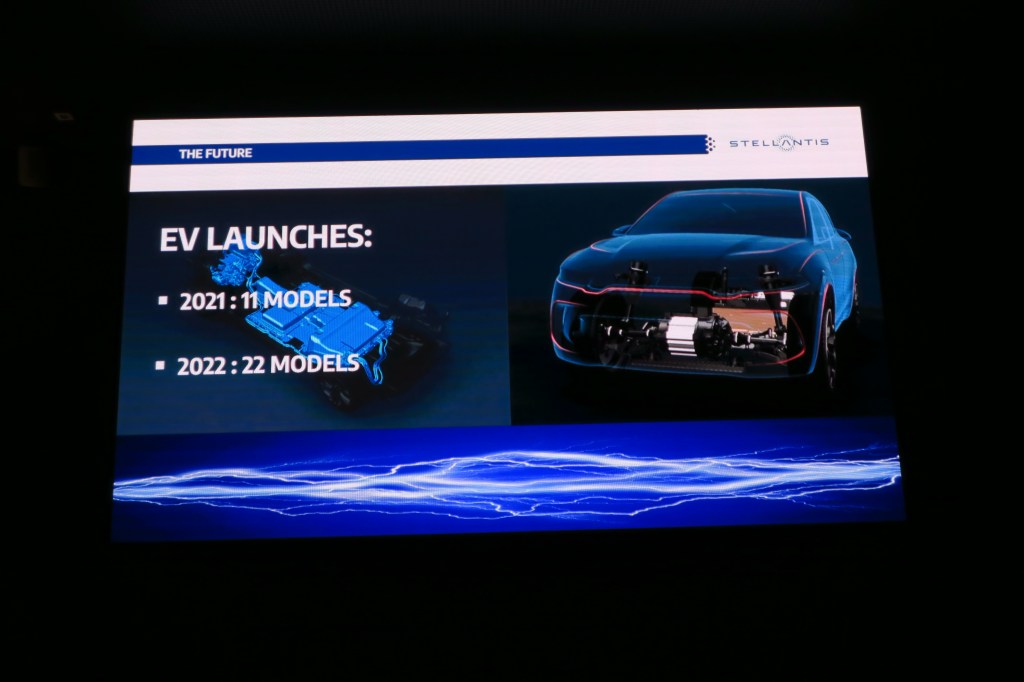
EV launches were 11 models in 2021, and this will be not less than 22 models in 2022…
It expects also its LEV mix to grow fast. For Europe, it forecasts the LEV share of total passenger car and LCV sales to rise from 14 to not less than 70 %, for the US market, the corresponding figures would be a rise from 4 % to 40 %.
Earlier this month, actually on December 7, Stellantis announced that it targets about € 20 Billion in Incremental Annual Revenues by 2030 Driven by Software-Enabled Vehicles.
Indeed, it mapped out its software strategy to deploy next-generation tech platforms, building on existing connected vehicle capabilities to transform how customers interact with their vehicles, and to generate approximately €20 billion in incremental annual revenues by 2030.
This transformation will move Stellantis’ vehicles from today’s dedicated electronic architectures to an open software-defined platform that seamlessly integrates with customers’ digital lives. It greatly expands the options customers have to add innovative features and services via regular over-the-air (OTA) updates keeping vehicles fresh, exciting and updated years after they have been built.
We will come in detail back on this in a special report later. In the next report about this press conference we will focus on further presentations on what the different Stellantis brands will have in store for 2022…
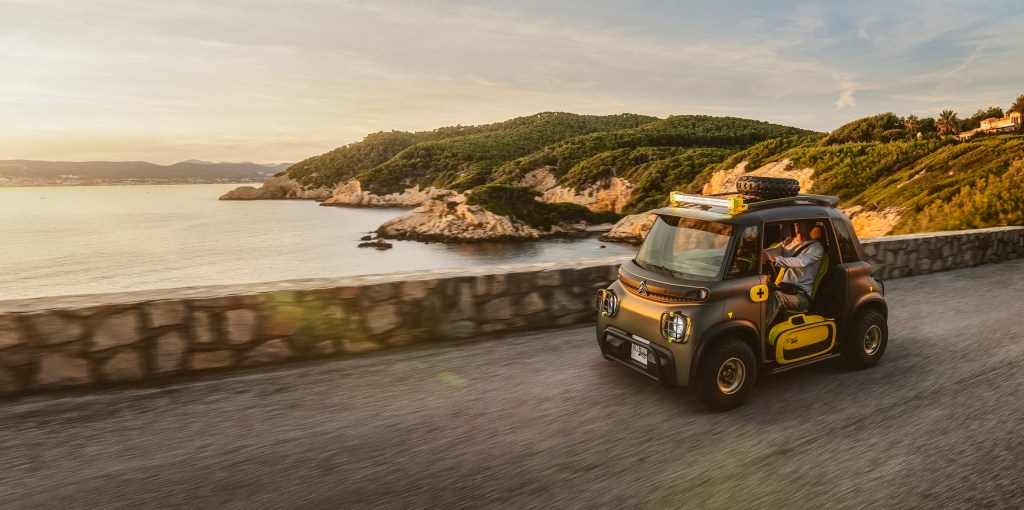
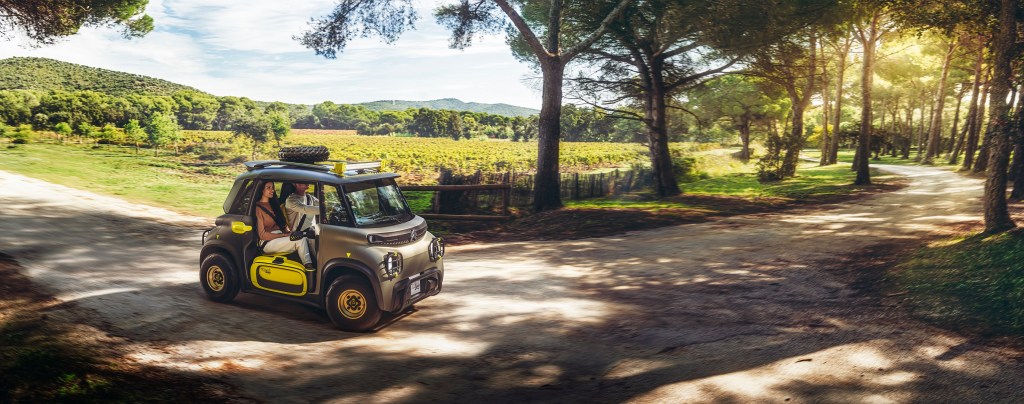
It had to happen: the cute Citroën My Ami city car was due to convert itself in a robust, go-anywhere champion for the outdoor-loving crowd, and here it is… as a concept car.
“This concept expresses without reservation the style of Citroën and draws its inspiration from non-automotive worlds such as building games, industrial design and fashion. The My Ami Buggy Concept” says Citroën, “it has an unbridled style, but remains fully rooted in real life, being at once playful and functional, aesthetic and ergonomic, but also eminently practical and ecological.”
We just cite here its designer, Samuel Pericles:
“The My Ami Buggy Concept is a proposal in line with the philosophy of Ami that is not a car. That is why we have sought inspiration from the world of building games for the playful and functional, industrial design for ergonomics and aesthetics which include everyday objects (furniture, lighting, etc.), fashion accessories (sneakers, sports equipment, glasses, etc.), for example, the camera and smartphone holders with their simple, extruded shapes are inspired by the work of designers who in the second half of the last century created essential and timeless utensils. My Ami Buggy Concept is minimalist, functional, simple, in the purest spirit of iconic contemporary industrial objects.”
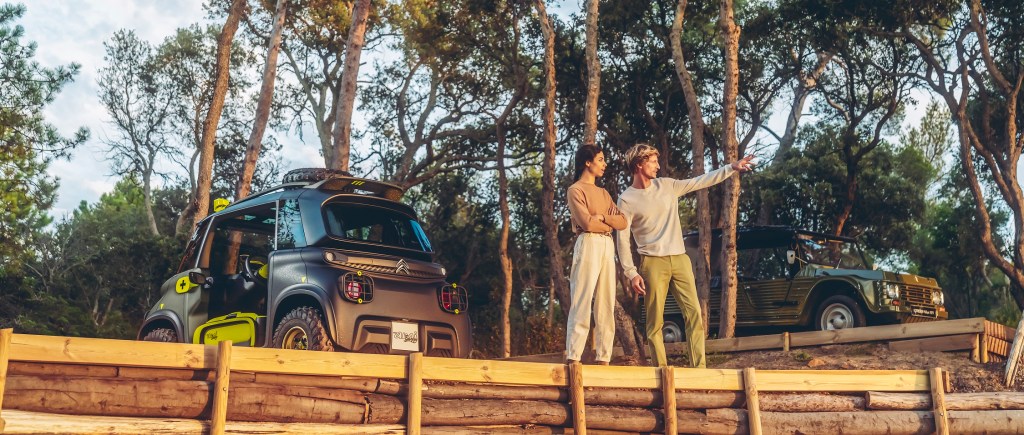
My Ami Buggy is indeed a mischievous concept car that every kid from 14 to 77 might want to put on their Santa wish list… more details about this concept car here, and some photos.
Hans Knol ten Bensel
Cute robustness…
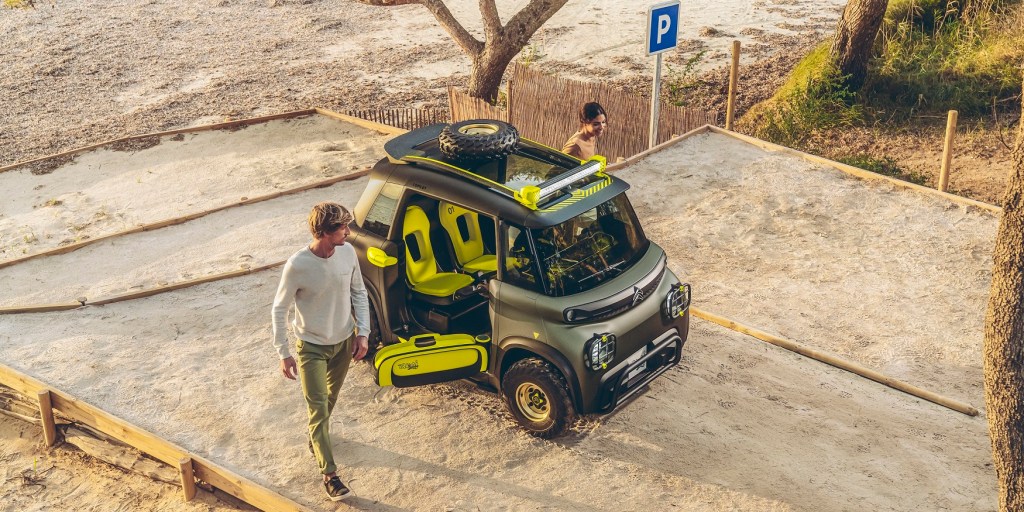
Standing firmly on its large notched wheels, the My Ami Buggy has a distinctly adventurous character, which is emphasized at the front and rear by its bull bars, headlamp shrouds and grilles, bumper panels and front panels with the chevrons in the middle.
On the sides, reworked fender flares and tubular protectors on the undersides of the doors give the car a more muscular appearance. On the roof, the roof rack and spare wheel reinforce the adventurous spirit of the concept. All these decorations are in a single black color, which is dyed directly into the mass.
The LED light bar on the front of the roof adds to the sense of adventure when driving at night or in fog. Once the vehicle is stationary, everything is set up for a “campfire atmosphere” thanks to the light diffused by this bar and the sound of its playlist, distilled through the nomadic loudspeaker.
The doors have been removed and replaced with clear watertight covers that can be pulled up in bad weather, a reference to the Mehari. These use sliding latches to close off the cab with a high opening reminiscent of the glass doors of classic vehicles. The practical covers can be removed, rolled up and stored in the backs of the chairs in special covers.
My Ami Buggy Concept is available in a total of three colors: black, khaki and yellow. The black, inspired by camping equipment, enhances the functional and robust character of the vehicle. The different shades of black – anodized black on the wheel arches and roof, textured speckled black for a hammered effect at the rear – match with the anodized khaki and lemon yellow, giving the vehicle a bold look with careful detailing.
My Ami Buggy Concept comes in a two-tone color scheme: Anodized Khaki at the front and Speckled Black at the rear, a play of symmetry that also aims to clearly distinguish the front from the rear of the vehicle.
The color anodized khaki is a nod to nature, because black, synonymous with strength and modernity, catches the light and dramatizes the colors with which it is associated. The choice of black was also motivated by the desire to use a dark, less messy color.
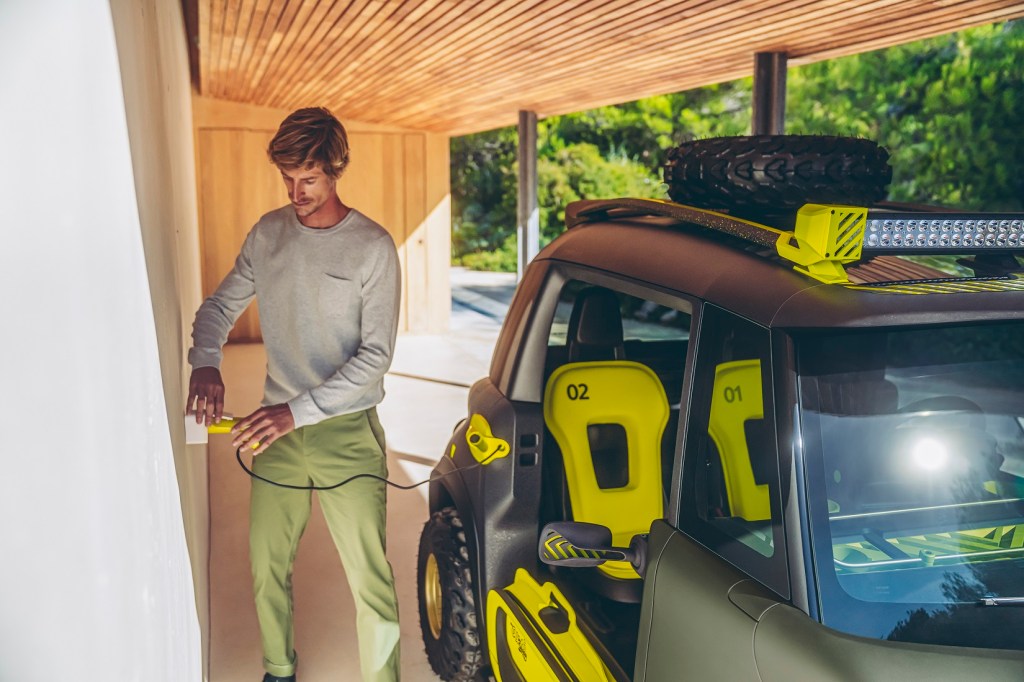
Many key elements of My Ami Buggy Concept are accentuated by a speck of Citric Yellow, such as the seats, the charging cable, the graphics capsule on the doors, all luggage and many accessories. This acidic color also indicates that the articles marked in this way are functional.
It’s all in the details…
The chevron theme, a key Citroën styling feature, is repeated with the same graphic elements on various exterior and interior elements to create a rhythm reminiscent of the Traction’s grille, the center console of the 19_19 concept car, the front roof panels of the Ami One Concept and the design of the Ami’s storage compartments. On the My Ami Buggy Concept they can be seen on the outside of the wheel covers, fascia’s, hood, side skid plates, light rail brackets, underside of bumper and rear of mirrors; and inside on the accessory brackets, storage bins and dashboard.
The word ‘Pilot’ can be seen on the roof on the driver’s side and ‘Copilot’ on the passenger’s side, and in a similar nod to motorsport, the number 01 is engraved on the driver’s seat and 02 on the passenger’s seat to indicate the location of each. Cool!
Yellow arrow stickers under the nose cone indicate the direction of the wind, a reference to aviation. This type of decoration can be found on the wheel arches.
A “+” badge appears on the driver’s side mirror, referring to the electric motor and battery terminals, just like in the parking spaces reserved for electric vehicles.
Originality also continued in the cabin…
The interior design of My Ami Buggy Concept has been meticulously (re)worked on in three areas: the seats, the storage space and the luggage.
The My Ami Buggy Concept has new Advanced Comfort® seat cushions with an increase in foam thickness from 35mm on the “City” Ami to 70mm. The combination of memory foam and seat cushions makes them both light and soft. They are easy to remove from the shell, interchangeable and washable. Their construction, consisting of two shells mounted one above the other, is inspired by the design of a buoy, thus establishing a link with the world of beach accessories.
The storage units are smart and mobile. Each has its own function in the cabin, but can also be taken outside for a picnic or outing.
The storage compartments on the dashboard, accessories already available on My Ami, have been redesigned especially for My Ami Buggy Concept. A matte gold metal gallery is attached above the bins to prevent objects from sliding.
A specific luggage line has also been created, with each piece in harmony with the interior spaces of the vehicle. Storage space is also built into the doors at seat height.
It can hold all kinds of items or a large detachable bag, which is custom and can be opened from the inside. It works like a bag. A nice push button is used to unlock the doors, which, like the Ami, always open in the opposite direction.
The charging cable is attached to the passenger door frame by means of a handle-like element that makes it easier to hold and operate.
Functional, well-designed accessories…
The accessories of My Ami Buggy Concept are not just a mere exercise in style. They had to be also truly functional. The designers adopted the mindset of a leisure enthusiast and came up with functional items to make a trip on board of the My Ami Buggy Concept are both fun and practical.
The design of the interior components was self-explaining to make their use very intuitive. For example, the turning wheel used to hold or adjust objects is used several times, in a spirit of homogeneity. The design instinctively suggests its operation. The fastening mechanisms of many accessories are designed according to the same model and are arranged transversely, so that they can be detached and placed in different places in the passenger compartment, as a mounting kit.
This is for example the case with the support for attaching a camera or camera, a must for capturing and sharing the highlights of a journey or the landscapes you pass… Equipped with a universal screw suitable for all types cameras, it can be retracted thanks to the release button integrated into the part and can thus be placed on the four anchor points located on the vertical moldings of the driver and passenger doors. A touch of genius!
The exterior mirrors can be adjusted by means of the ball joint integrated in the mounting device and can be mounted in the places provided in the door pillars. They are also removable.
The cup or bottle holder can be placed on the dashboard or on the holder instead of the My Ami bag holder.
The smartphone clamp developed for My Ami, located on the right side of the driver’s seat, transforms in the My Ami Buggy Concept into a support in the form of a cylinder with a clamping wheel at the right end of the object to hold the device. The tube can be engraved with the owner’s name and surname, a must for some.
A new conical bracket has been designed to fit the mobile speaker into the rounded shape of the dashboard behind the steering wheel.
Thanks to 3D printing, the step from idea to reality is made quickly. Each of these accessories has been the subject of an original design, as they are 3D printed and can therefore be reproduced at will.
The My Ami Buggy Concept, is for the moment a style study that you might want to put on your Christmas list. It illustrates one of the many faces that Ami could take on, the atypical mobility object developed by Citroën, ready to explore new areas. A runabout that I would love to have in my holiday home, but then, could it be sitting there for several (winter) months without using it? Would the batteries endure this? Hmmmm, wait and see…
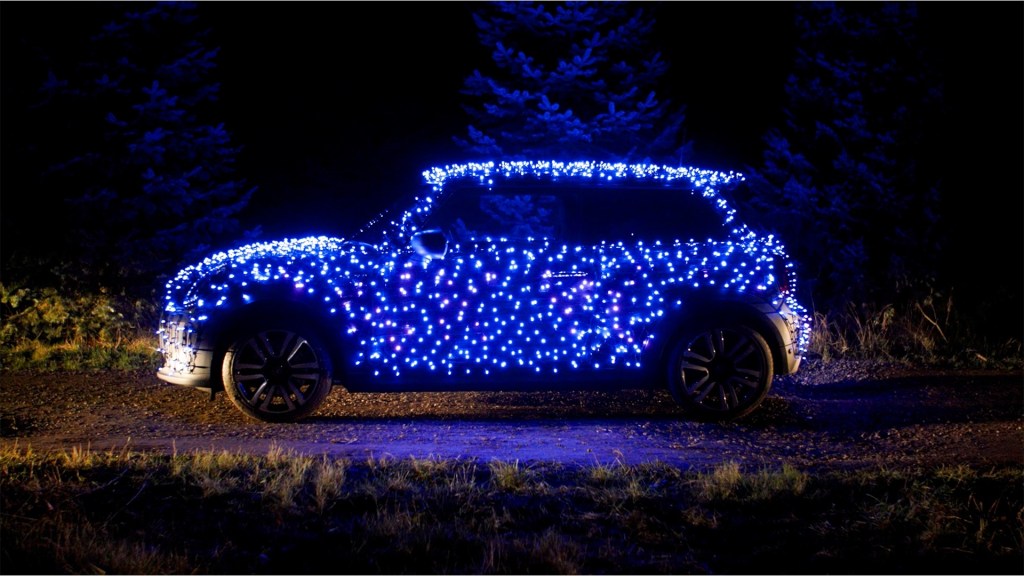
Dear reader, I will be driving a BMW Z4 Coupé until the 24th of December, on Christmas eve… so indeed, driving home for Christmas. And I will certainly be listening to the iconic song by the same name… Also the choice of the BMW is fitting, as MINI belongs to the same group.
And this because that the all-time classic “Driving home for Christmas” was composed by Chris Rea in 1978 in… the Mini of his wife. MINI is now dedicating a specially produced video clip to the song that gets people all over the world in the mood for the festive season every year, starring the global MINI community.
The production of the video is another highlight in the MINI’s current brand campaign titled BIG LOVE. The motto is, as MINI puts it, “an expression of diversity embraced in practice in all its forms, welcoming fresh thinking and new ideas no matter where they come from.” The MINI community’s characteristic blend of individuality and the sense of belonging together plays a central role here, MINI says too. The diversity of this community is summed up by the slogan “We are all different, but pretty good together”.
With the video clip production initiated by MINI, “Driving Home for Christmas” returns to where it all began: in a very special British automobile. Because the journey that inspired Chris Rea to write his successful song was taken in a classic Mini. In the video clip, the original journey from London to the north of England is reflected upon and combined with scenes showing MINI fans of today on their pre-Christmas journey. You MUST see it, and here is the link: https://www.youtube.com/watch?v=B2we7JdB7iY
We just let you look at some photos to get you in the mood, and enjoy also the sound track!
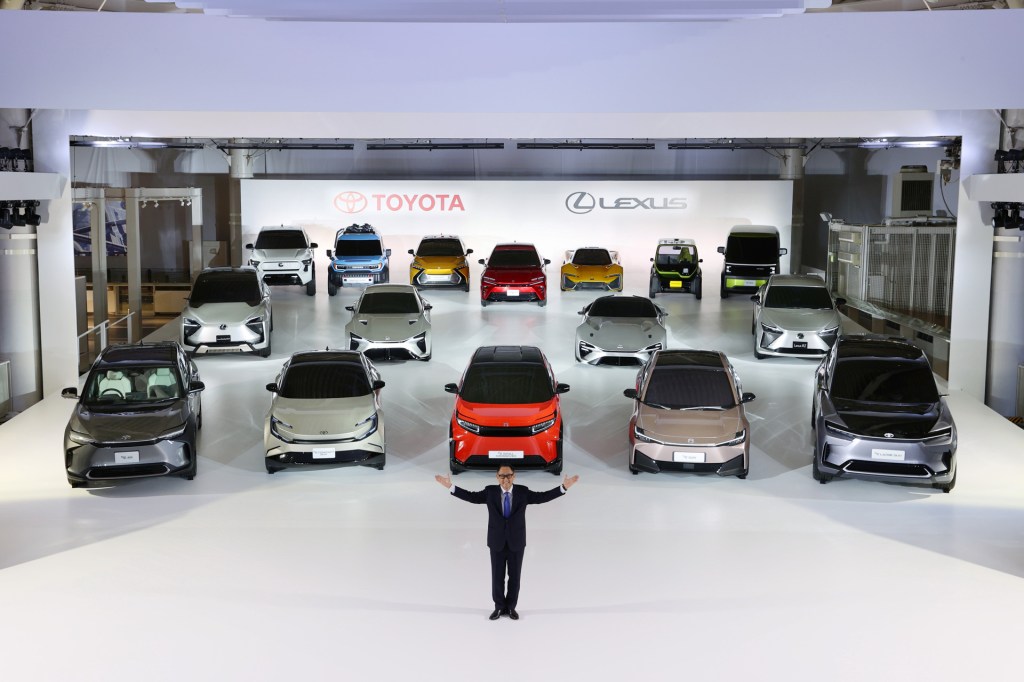
Toyota now takes the BEV market very seriously: Akio Toyoda, President of the Toyota Motor Corporation, seen on the photo above, today presented news concerning the company’s carbon neutrality strategy, by outlining its plans to offer 30 battery electric models by 2030 (Toyota & Lexus combined).
The company expects total global battery electric vehicle sales to reach 3.5M by 2030, and this announcement underpins the plan of for a 100% CO2 reduction in all new vehicles sales by 2035 in Western Europe.
Toyota’s bZ (beyond Zero) battery electric family in Europe is also soon to expand with introduction of a compact SUV as follow up to bZ4X launch. Not less than three battery electric ‘Toyota bZ’ vehicles are planned for Europe by 2025.
Toyota will further increase its investment in batteries from the 1.5 trillion yen – which was announced in September – to 2 trillion yen (15 billion euros).
The Lexus electrified sport will have formidable performance and range…
Now let’s turn the spotlight on Lexus:
Lexus aims for 100% battery electric mix in Europe, North America and China by 2030
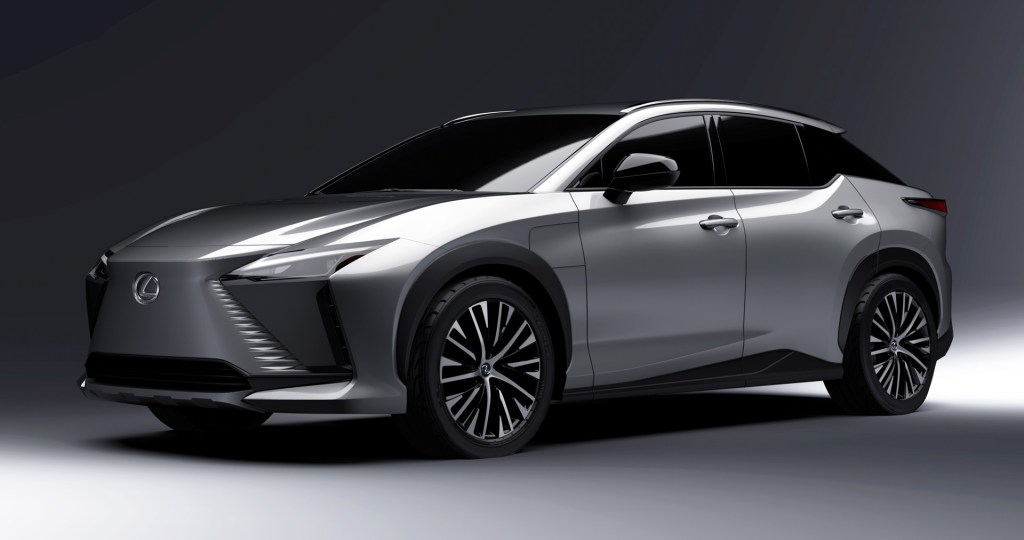
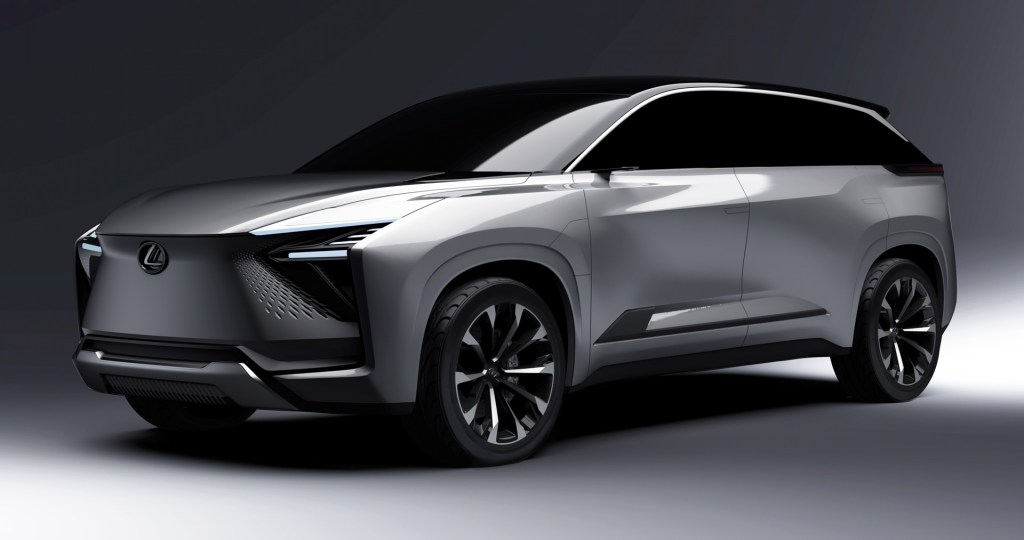
The full name of the new Lexus BEV (that will be launched towards the end of 2022) was revealed: the Lexus RZ450e. See the photo here below…
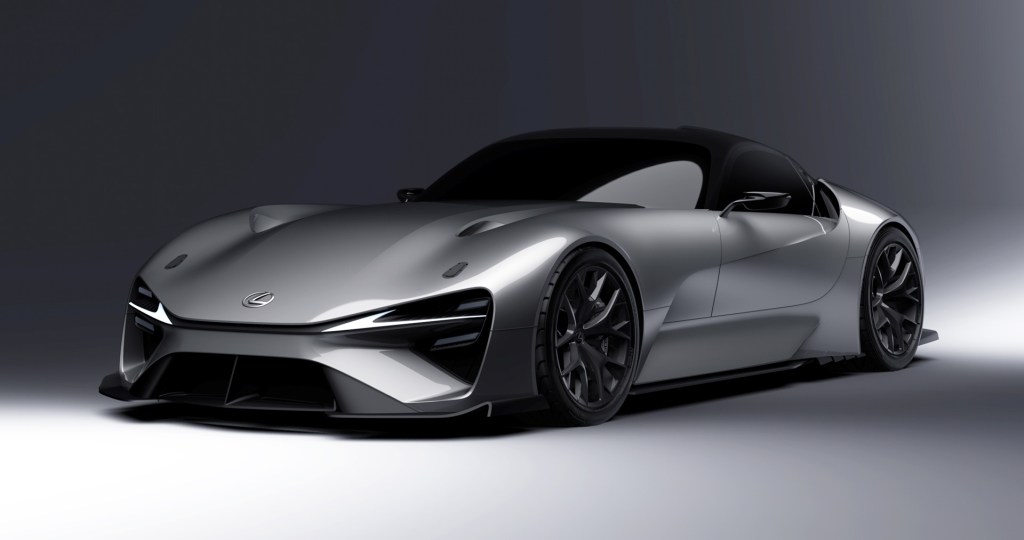
The Lexus Electrified Sport (Sports BEV) concept was also shown: it offers impressive Lexus driving performance, with an acceleration time that will be in the low 2 second range and a cruising range over 700km.
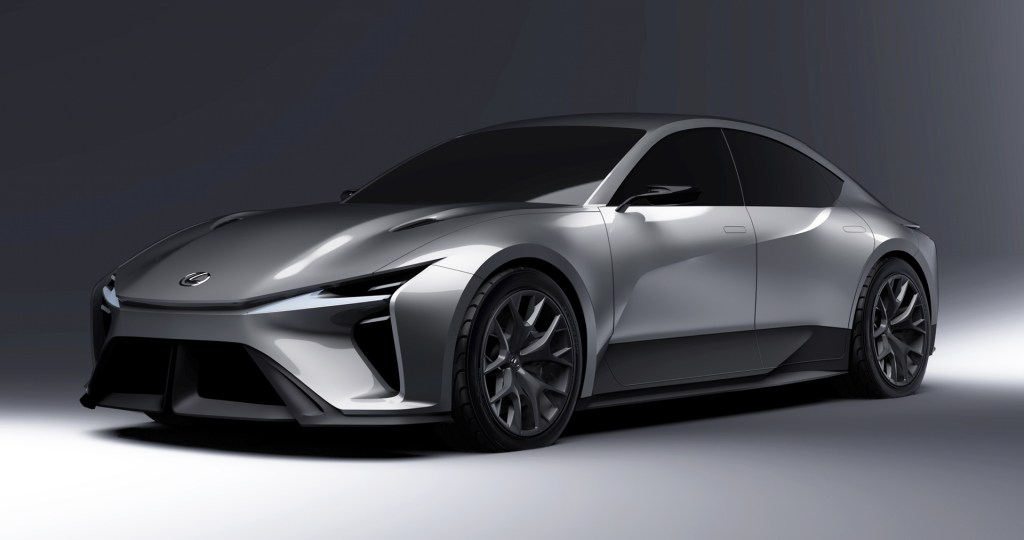
There were also two other future concepts were shown: the Lexus Electrified Sedan (BEV Sedan), and Lexus Electrified SUV (SUV BEV). We show you the photos here.
The Lexus electrified sedan…
More interesting Toyota/Lexus news to come. Faithful readers know that we are the a satisfied owner of a midnight blue Lexus CT 200h, which proves to be not only frugal with an average consumption this year of 4,7 liter/100 km, but also utterly reliable and recently passed the yearly technical inspection with flying colours. A report will follow soon. Stay tuned!
Here is some further Opel news, and it is an important feat for Stellantis: the first hydrogen transporter from a vehicle manufacturer which is ready to go. Indeed, the first Opel Vivaro-e HYDROGEN off the production line will begin its emissions-free work in the fleet of the German manufacturer of premium domestic appliances, Miele.
Clever concept: Long driving range, zero emissions, quick refuelling
The Vivaro-e HYDROGEN is based on the existing battery electric Opel Vivaro-e, the “2021 International Van of the Year”. With full tanks of hydrogen, the driving range is more than 400 kilometres (WLTP1). The 45 kW fuel cell is capable of generating enough power for continuous highway driving. It takes only three minutes to refuel with hydrogen – about the same time needed to fill up a conventional diesel or petrol vehicle.
The 10.5 kWh lithium-ion battery provides dynamic peak power when required, for example, at start-up and under acceleration. Since the battery covers power needs in such situations, the fuel cell can run at optimum operating conditions. The battery also enables regenerative braking, while the plug-in capability offers the opportunity to recharge the battery externally if necessary, e.g. at a charging station, providing 50 km of pure battery electric range. The Vivaro-e HYDROGEN features a three-phase on-board charger (11 kW) and a mode 2 charging cable as standard.
The Vivaro-e HYDROGEN demands no compromises on space compared to the combustion engine versions, offering up to 5.3 or 6.1 cubic metres of cargo volume. The fuel cell electric LCV is available in lengths M and L (4.95 and 5.30 metres) with up to 1,000 kilogrammes of payload.
Production takes place at Opel Special Vehicles (OSV) in Rüsselsheim, and, as said, makes Stellantis the first to offer a Hydrogen powered LCV to fleet users…
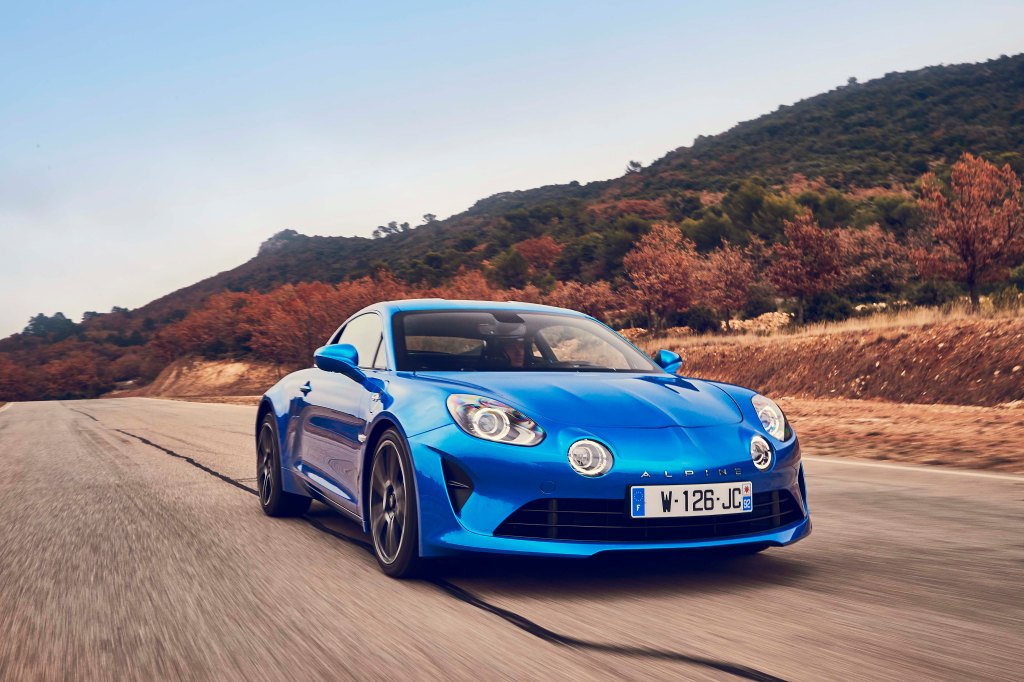
All car enthusiasts have the image of a drifting blue Alpine “berlinette” in a corner of their memory. The A110’s heroic performances in the rallies of the 1960s and 1970s left a deep impression for generations and contributed to an instinctive association between the brand and this colour.
“For Alpine, blue is more than a color. It’s territory!” exclaims Antony Villain, Director of Design at Alpine. We can only agree. But blue was not always used on Alpine bolides…
A varied palette
Indeed, the first Alpines were not exactly blue. When Jean Rédélé presented his first productions in the courtyard of the Billancourt factory to Pierre Dreyfus, General Manager of Renault, in the summer of 1955, Jean Rédélé used a varied color palette: a blue, a white and a red car. And when he entered the car in races, the little A106 is sometimes white or light blue, but not yet metallic blue. Also, Alpine street versions were more often ordered in red, white or yellow, instead of in blue.
The birth of a legendary color combination
It is only with the A110 “Berlinette” that metallic blue, which soon becomes iconic, makes its appearance. It seems that this happened at the request of a customer who wanted to see his A110 painted in a blue color called Panama. Jacques Cheinisse, then a regular commercial employee at Alpine and also an amateur pilot in his free time, would have seen it blue and also asked for the A110 that he ordered in early 1963 and used in rallying. A viral choice that was soon applied to all of the official team’s berlinettes. This is to allow the national colors to shine in races, as was formally done at Grand Prix until 1967 (blue for France, red for Italy, green for Great Britain, white and then silver for Germany, etc.). A legendary color combination was born…
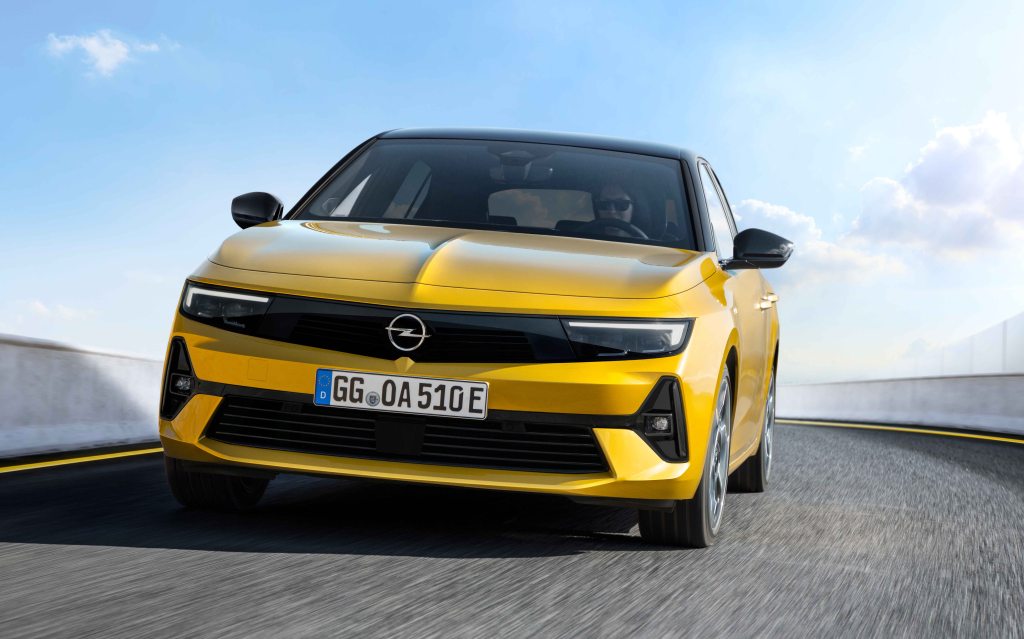
Opel CEO Uwe Hochgeschurtz explains: “With the new Astra, we are starting what we will consistently continue in all upcoming models – intelligent software applications for the maximum benefit of our customers. We call this ‘Detox to the max’. Drivers and passengers are not overwhelmed with nonsensical information and unnecessary functions. Instead, we offer the best ease of use with innovative technologies such as the new voice control and personalization of customer profiles,” explains.
Indeed, The German car manufacturer has access to top technologies from the parent company Stellantis. Stellantis already presented trend-setting innovations at its Software Day, on which we will also report further soon…We will also be driving the Opel Grandland next year, so look out for our Opel driving impressions!
Opel Astra Sports Tourer (2021)
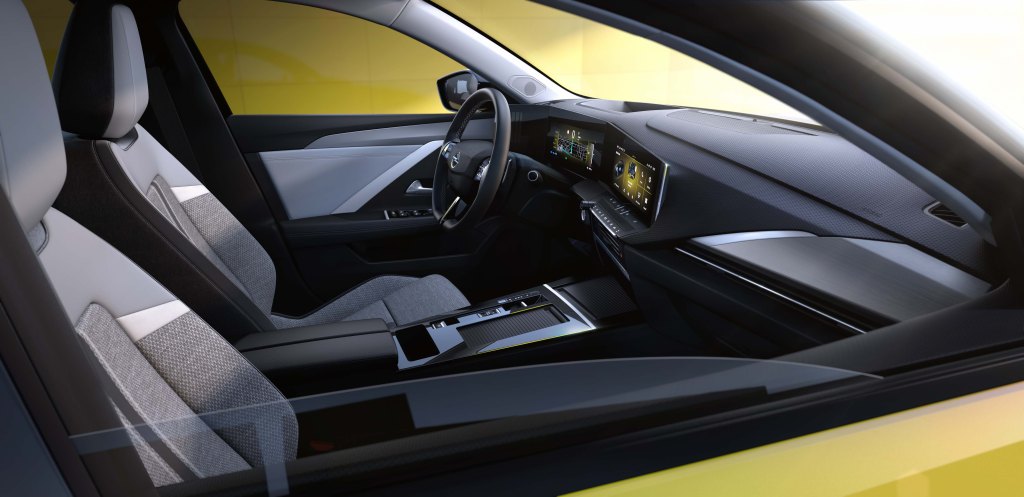
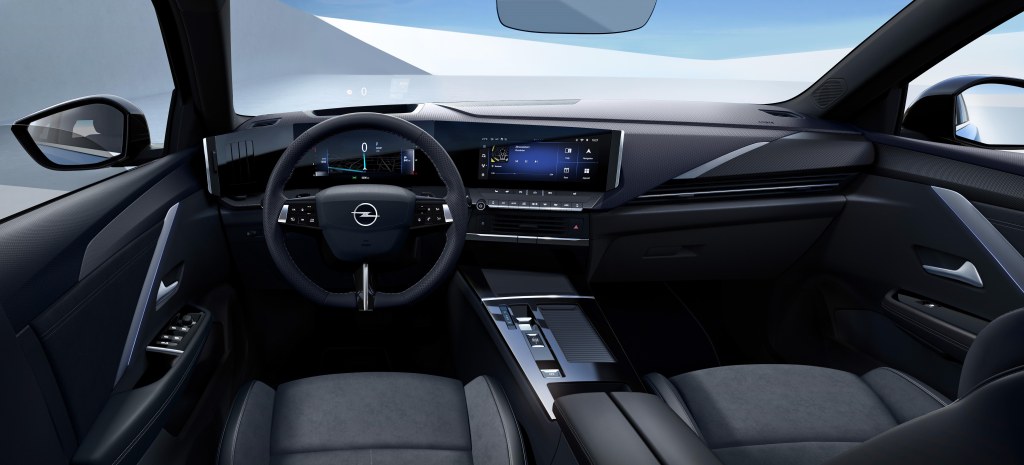
For the moment, “Hey Opel” – two words are all it takes and the new Opel Astra is all ears to what the driver and passengers want. The new natural voice recognition works fully networked like the entire infotainment of the latest generation. “Detox to the max” is the motto against any form of digital stress. The basis is the unique “Pure Panel” cockpit with its intuitive operability, which is already available in the Opel Mokka, the new Grandland and the Astra. Now the manufacturer from Rüsselsheim is igniting the next stage of digitalisation.
Save your preferences…
The new 2021 Opel Astra
Personal preferences can be saved in future as profiles. The infotainment recognises drivers or passengers by their smartphone. Different people can thus activate their individual settings with a touch on the widescreen. The Opel designers have created avatars for different characters. When navigation is called up in the Pure Panel, it is supported online in real time (Connected Navigation Plus), which means that traffic jams, for example, can be detected as they occur. Map updates are also available “over the air”, so that the latest version is always made seamlessly available to customers. The new Astra also features the latest generation of fully networked assistance systems for even more comfort and additional safety… we all like this very much!