We will drive for you at the end of this year the latest Qashqai, and look forward to have a go next year at their new (EV powered) products; In the meantime, there is some interesting Nissan news.
Did you know that by 2026, this is merely within some four years, more than 75% of all Nissan passenger cars sold in Europe will be electrified?
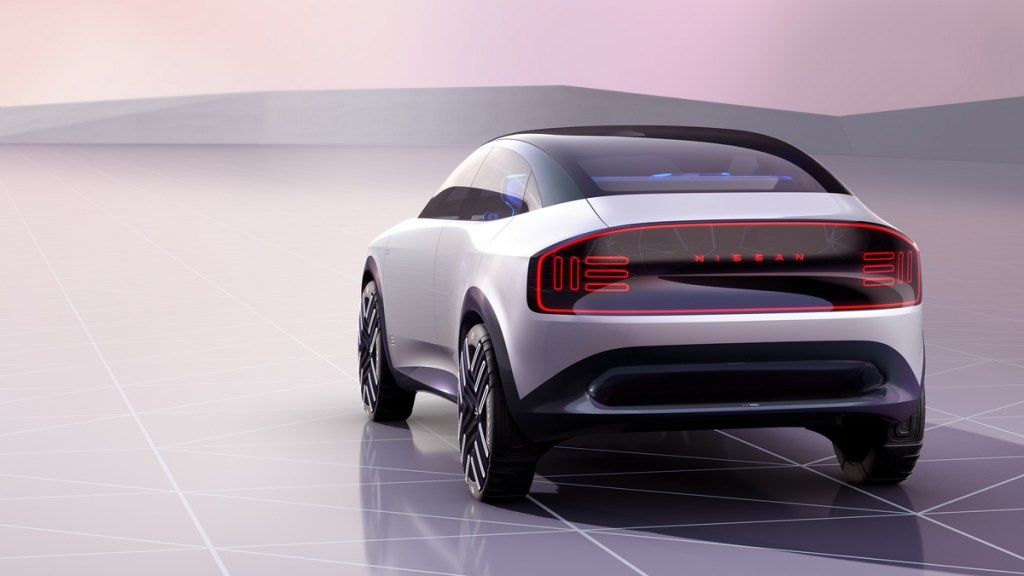
Nissans “CHILL OUT” concept foreshadows the future 100% electric crossover to be built in Sunderland, and there is a new battery recycling facility planned in Europe…
Just read further!
Hans Knol ten Bensel
Nissan Motor Co. Ltd. Unveiled the Nissan Ambition 2030, the brand’s new long-term strategy that goes beyond mobility.
Earlier this year, Nissan launched the EV36Zero concept, the world’s first fully integrated EV production ecosystem, which connects mobility and energy management to help achieve carbon neutrality for Nissan. The future hub is centered around the production facility in Sunderland, UK, and will include the production of an EV, a new giga production facility and use of 100% renewable electricity. Initially, £1 billion will be invested.
The AMIEO Region, centered on the EV36Zero, will play a leading role in realizing the “Ambition 2030” vision, which will help Nissan achieve carbon neutrality across the entire lifecycle of its products by fiscal year 2050. Here are some key points:
By the end of fiscal 2023, Nissan will offer electrified versions of all models offered in Europe, and by fiscal 2026, more than 75% of all Nissans sold are expected to be electrified.
The now-unveiled CHILL OUT crossover concept, as announced in Sunderland in July as part of the EV36Zero project, uses the Renault-Nissan Alliance CMF-EV platform to deliver the European handling and performance customers expect. The model has a sleek and modern design, is both attractive and aerodynamically optimized, fun-to-drive, has advanced safety technologies and has a practical and comfortable interior, according to Nissan.
Nissan plans to expand battery recycling and reuse facilities outside of Japan with a new location in Europe during fiscal year 2022. This infrastructure will support a circular economy for energy management. Nissan plans to fully market its ‘vehicle-to-everything’ and ‘home battery’ systems in the coming years.
Building on the success of the Nissan LEAF, Nissan will soon introduce innovative e-POWER technology in the all-new Qashqai and X-Trail. With the 100% electric crossover Ariya and the future all-electric Townstar Van on the way, an electrified European model program is in the works.
‘In the past period, Europe has been leading in the transition to electrification. Our goal for the next decade is to accelerate this development, with new products and technologies that will enhance the driving experience for Nissan’s customers,” said Guillaume Cartier, President of Nissan AMIEO Region.
Not only will we be offering an electrified version of every Nissan model in Europe, our 360-degree vision of sustainable mobility also means using 100% renewable electricity in our EV Hub in the UK. New battery recycling and reuse facilities will also be built in Europe.
To spearhead the transition to full electrification and carbon neutrality, our teams and products in Europe will serve as a source of information and support for our plans for electrified cars in the rest of the AMIEO Region and other markets.”
Bold new plans… we will report on them regularly as they unfold!
From left to right: Stefano Boeri, Silvia Boccardi and Olivier François
On World Environment Day, Olivier François, CEO of the Fiat brand and CMO at Stellantis, and the architect Stefano Boeri, whose firm is engaged in urban forestation projects all over the world, featured in a conversation for World Environment Day 2021 on the cities of the future.
They addressed the themes of urban mobility and sustainable architecture to make cities healthier and more livable, by improving air quality and therefore quality of life.
This focus on the future city, and more specifically this sharing of values of sustainability both for urban life and mobility started began over a year ago: in its vision of a utopian city, demonstrated and hinted at by Leonardo DiCaprio in the launch advert for the New 500, Fiat drew inspiration from the green architecture created by Boeri in several locations around the world.
Read all about it further…
Hans Knol ten Bensel
A new renaissance for (mega)cities…
At their meeting, François and Boeri analyzed the opportunities for a “New Renaissance”: they looked at photographs of the current situation in cities and even more so to the images of the ongoing changes. They also took a long hard look at the societal trends and the increasing interest of urban dwellers all over the world for environmental issues. Then they discussed the urgency of taking action, and the major opportunity of inspiring change.
That inspiration for change must be rooted in attention to aesthetics, in architectural beauty, but also inspired by the certainty of the need to improve the quality of the air we breathe and to reduce pollution levels in the cities we live in.
Boeri’s vertical forest in Milano.
Both men came to the conclusion that the combination of architecture like Boeri’s Vertical Forest – its 27,000 plants and millions of leaves contributing to clean the air by absorbing CO2 – and cars like the New 500 offering zero-emissions mobility can no doubt contribute to improving air quality in our cities.
The all electric 500 steps already in the new era…
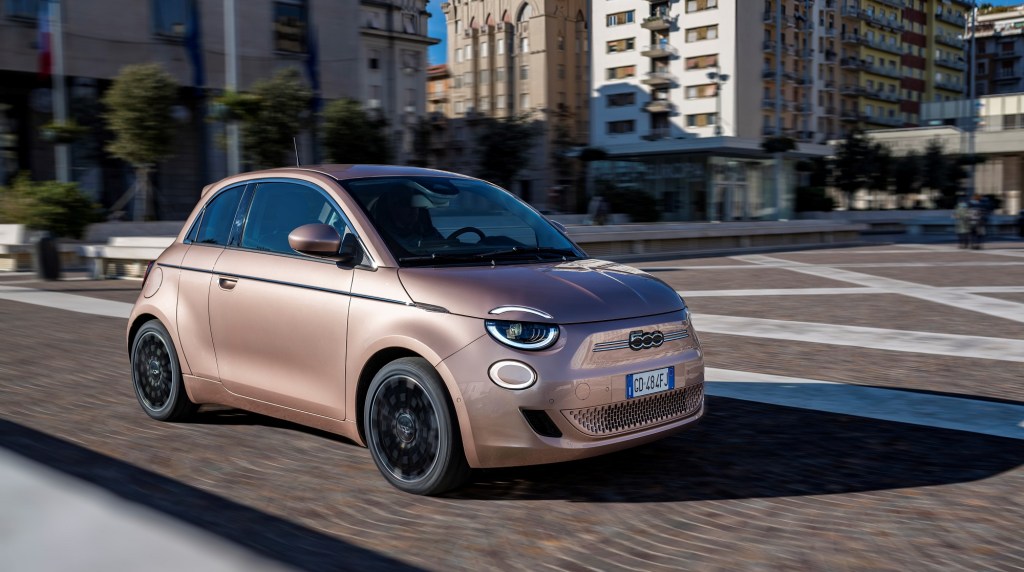
In the words of Olivier François, Fiat CEO and Stellantis CMO: “The decision to launch the New 500 – electric and electric alone – was actually taken before Covid-19. Even then, we were already aware that the world could not take any more “compromises”.
In fact, lockdown was only the latest of the warnings we have received. At that time, we witnessed situations that would have been unimaginable until then, for example wild animals roaming the cities, proving nature was taking back what was rightfully hers. Plus, as if it had still been necessary, we were reminded of the urgency of taking action, of doing something for the planet Earth.
We have an icon, the 500. An icon always has its cause and the 500 is no exception: in the 1950s, it opened access to mobility for all. Nowadays, in this new scenario, it has a new mission – our mission – to create sustainable mobility for all.
It is our duty to bring to market electric cars that cost no more than vehicles with an internal combustion engine, as soon as we can in line with the falling costs of their batteries. We are exploring the territory of sustainable mobility for all: this is our greatest project.
Between 2025 and 2030, our product line-up will gradually become electric-only. This will be a radical change for Fiat. Meanwhile, in the near future, only a few months from now, I am proud that we will see the conversion of the legendary track on the roof of the former Lingotto factory in Turin into the largest hanging gardens in Europe, hosting over 28,000 plants. A major, meaningful – and once again sustainable – project, due to revitalize the city of Turin, our home.”
Urban planning for the future…with more plants and trees.
Then Stefano Boeri, architect, urban planner and founder of the Stefano Boeri Architetti practice, gave also his views: If we consider that cities are responsible not only for the emission of over 70% of CO2, a phenomenon at the origin of global warming, but also for the emission of pollutants which are the main cause of diseases and mortality from respiratory problems, it is clear that cities are the first places to intervene with a profound change.
The Covid pandemic has shown us how fragile our lives and our bodies can be and highlighted the importance of improving the environment and above all the air of the cities in which we live.
“La Pista” 500, soon a reality on the rooftop of Lignotto, in place of the iconic oval track.
In addition to absorbing CO2, reducing energy consumption and urban heat, increasing the biodiversity of living species and making cities more attractive, trees drastically reduce fine dust pollution.
Let’s not forget: plants and trees are the only way we have to absorb the pollutants already emitted. I believe that the time has come to promote, with all our strength and resources, a great campaign to clean the polluted air of our cities, that microparticulate of substances harmful to the health of our lungs that has certainly accentuated in some particularly polluted urban areas the intensity of spread of the COVID 19 infection.
We already have several solutions available that can help us: protect and increase the permeable and green surfaces by creating new parks and gardens, in and around our cities; transform city roofs into lawns and vegetable gardens; promote community gardens and urban agriculture; use tree roots to decontaminate polluted soils; create a network of green corridors to connect parks, forests and green buildings. “
More electric mobility in the urban environment is imminent…
In Fiat’s vision, the penetration of electric mobility will rise, as more and more barriers are overcome. The topics under discussion in the talk included the need to improve access to electric cars, by means of innovation and new financial products that can lower the bar of entry; the need to increase the number of private charge points at apartment buildings, requiring a rethink of the infrastructure of the apartment buildings of the future, but most of all by adapting existing buildings; the need to raise visibility of charge points in cities and increase the penetration of fast charging stations.
That will entail a rethink of urban planning, a challenge that requires the involvement of a wider range of stakeholders. This is the stimulus and message Olivier François and Stefano Boeri wish to put out as their contribution to World Environment Day – held by the United Nations every June 5th, the message of which this year is “TOGETHER WE CAN BE #GENERATIONRESTORATION”.
Question time…
At the question time after the presentation, your servant asked CEO Olivier François to elaborate a bit more about the dialogue which existed between Fiat and these stakeholders in shaping the city of the future and its mobility.
Besides public bodies and municipalities, I was also keenly interested in how the dialogue unfolded with Fiat’s supplier firms like Bosch, Siemens, etc, who also perform extensive research in these fields. CEO Olivier François then trusted the answer to his colleague who maintains this dialogue with these external firms.
In his answer, he focused here mainly on the oil firms, which propose also future-oriented solutions, ranging from alternative “clean” fuel to renewables, and he saw the big oil companies also gradually transform themselves into suppliers of energy in all its forms, i.e. becoming “energy” supplying firms in the widest sense of the word. He pointed out that the boundaries between electricity suppliers and the oil firms will become increasingly blurred. The dialogue is indeed active and is indeed widened to all forms of energy. Energy supply and CO2 reduction remain the crux of the matter for all, he concluded his answer.
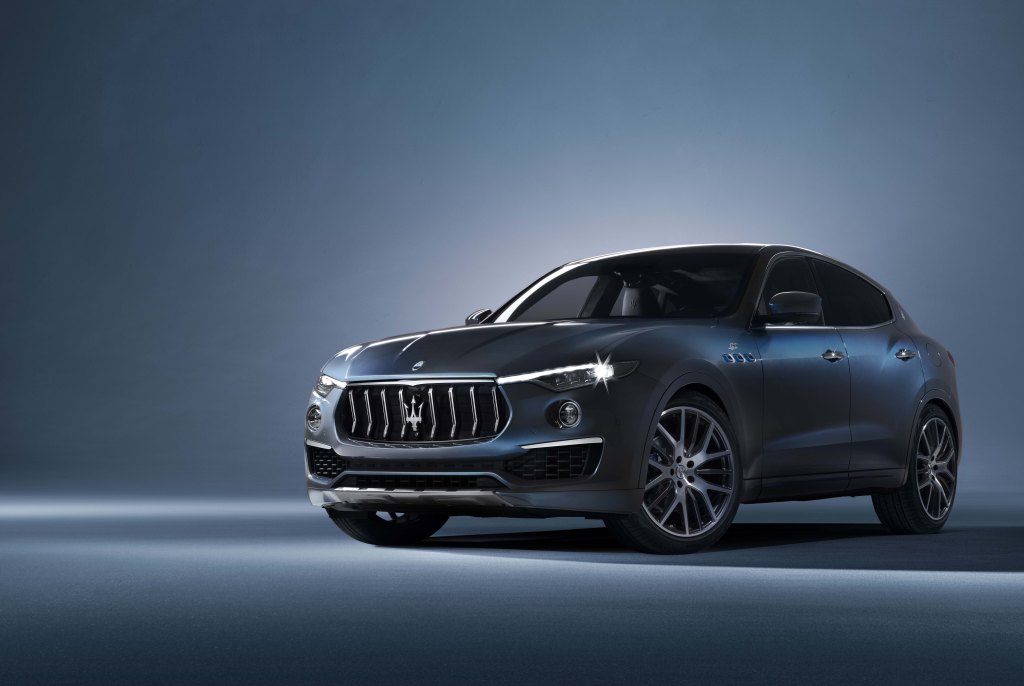
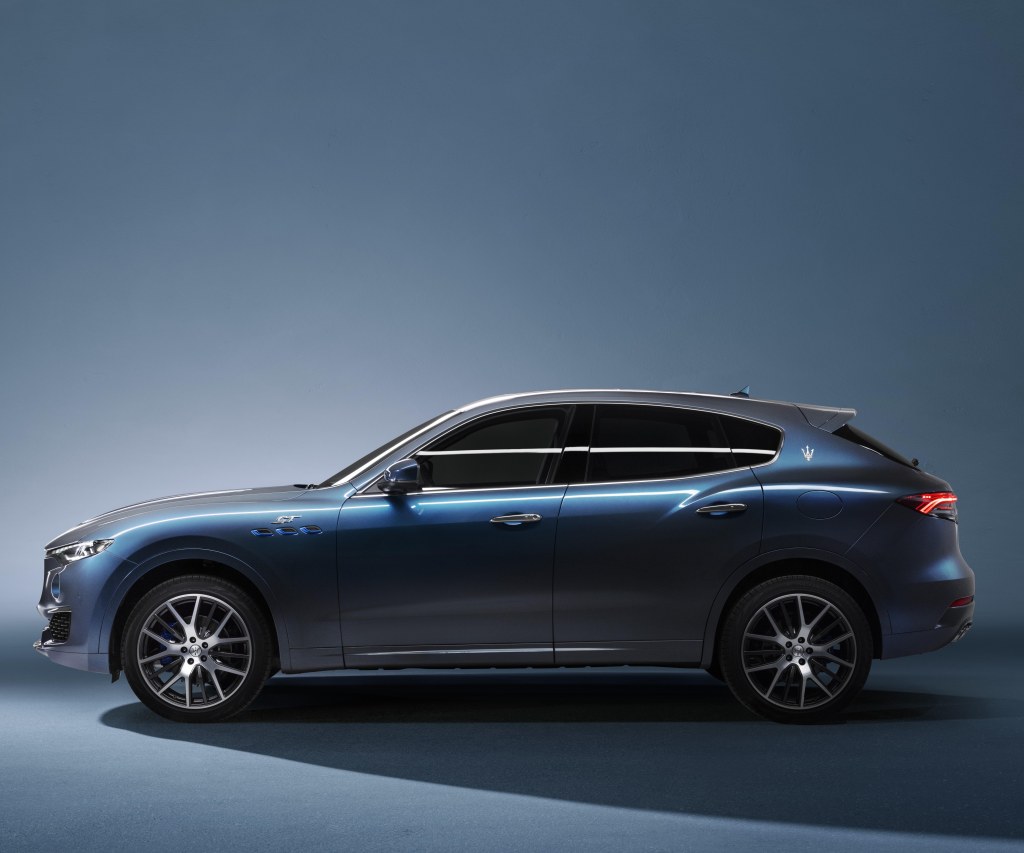
The Levante Hybrid was presented at ist launch in Azzuro Astro color. This metallic paint consists of three layers and is available through the Maserati Fuoriserie personalization program.
The Maserati Levante Hybrid has today experienced both a physical and a digital world premiere. At the time of the car’s unveiling at the Shanghai Auto Show, a virtual presentation has taken place simultaneously on the houseof.maserati.com website.
With its first electrified SUV, Maserati is taking another important step in the future plan launched last year with the Ghibli Hybrid, which will lead to the electrification of all new Maserati models.
“Faster. Cleaner. Unique ” is the motto at the launch: the Levante Hybrid is faster than a diesel, more durable than a car with an internal combustion engine and unique thanks to specific features and details.
The Levante Hybrid combines a two-liter four-cylinder engine with a 48-volt hybrid system that recovers energy during engine deceleration and application of the brakes. The hybrid SUV is lighter than the six-cylinder version (petrol and diesel) and also has a more balanced weight distribution because the battery – without sacrificing luggage space – is placed in the rear of the car. One of the goals during the development of the Levante Hybrid was to take the dynamics and driving pleasure to an even higher level.
With a maximum power of 330 hp and a torque of 450 Nm, which is available from just 2,250 rpm, the four-wheel drive Levante Hybrid delivers impressive performance: the car has a top speed of 240 km/h and accelerates from 0 to 100 km in 6 seconds.
The Levante Hybrid was presented at ist launch in Azzuro Astro color. This metallic paint consists of three layers and is available through the Maserati Fuoriserie personalization program.
The Levante Hybrid is immediately recognizable by the unique details in the exterior and interior. Several elements are finished in blue, a color specifically chosen for Maserati hybrid models. Like the brake calipers and trident on the C-pillars, the iconic side vents are finished in this shade of blue. The same color returns in the interior, including the stitching of the seat upholstery.
With Maserati Connect, the Levante Hybrid is always connected to the outside world. The driver remains fully informed about the technical condition of the car: Maserati Connect alerts the owner when maintenance is required, thus improving the quality of the service. The owner is in contact with the car via the Maserati app on the smartphone or smartwatch. You can also contact the car from home with a virtual assistant such as Amazon Alexa or Google Assist.
The digital world premiere of the Levante Hybrid on houseof.maserati.com has been attended by Maserati’s global brand ambassador David Beckham and Italian songwriter and producer Dardust, who has composed an exclusive soundtrack for the unveiling of the Levante Hybrid.
More soon about this Levante in technical detail. Stay posted!
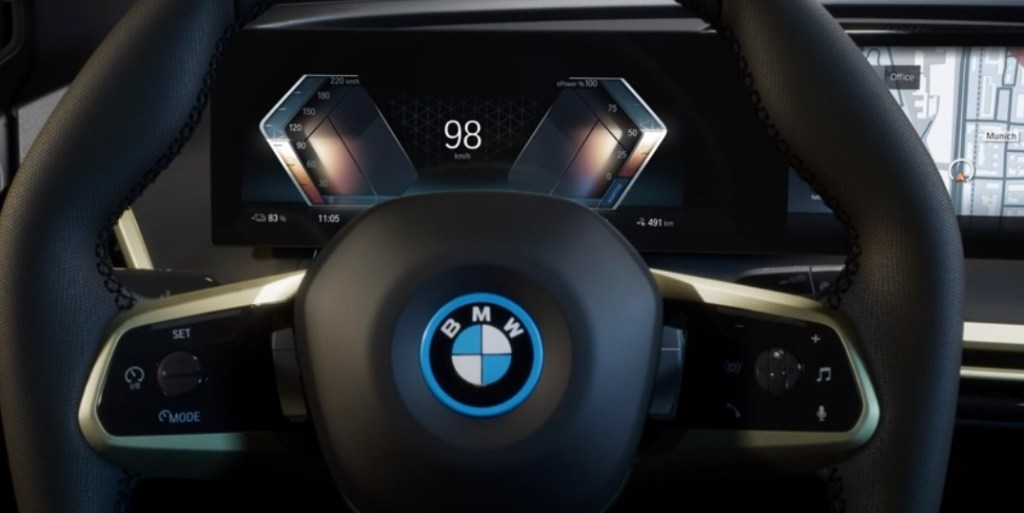
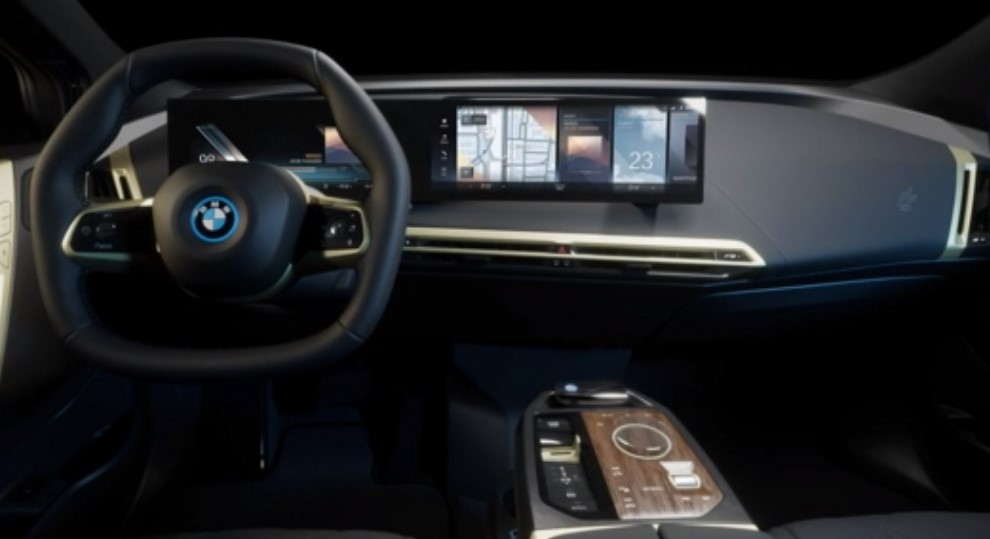
We just witnessed the presentation, and of course we will come back on this with more details, but we can say already that BMW again produced a breakthrough in car to driver communication…
We show you here some screenshots of the presentation, but, as said, there is more to come about this very convincing approach…
Klaus Busse presented the Alfa Romeo Tonale two years ago in Geneva…
Klaus Busse is the talented head of design for Alfa Romeo, Fiat and Chrysler, and he is also quite active on social media. We read today a post from his hand on his Instagram page about the presentation of the Tonale at the Geneva Show two years ago, together with some stunning photos showing how the Tonale was sculpted out of plaster and other materials to become a real looking car, to be shown as a styling model at the salon.
Craftsmen working on the clay model, succeeding into making it a real looking car…
The photos show how elements of the car were formed and made by hand. Some pieces were 3D printed, I believe, but personally I find it truly amazing how these craftsmen put the car together, and finished it to become a design model with gleaming paint and shiny elements, the result being indistinguishable from a “real” car.
I believe, 3D printed elements were used… Also here 3D printed elements abound…
I found the photos so interesting that I want to show them here to you on these pages.
The steering wheel gets a “real” feel…Craftsmen sculpting the rear end…
On the fourth of May 2019, I visited the Centro Style in Turin, and met Klaus Busse. You see me standing proudly beside the Tonale prototype, and also in a group photo with Klaus Busse himself on the left.
Sweet memories, and of course your servant would love to witness once how these craftsmen work to create such an unbelievably finished prototype…
Generating the right sound is the result of state of the art engineering…
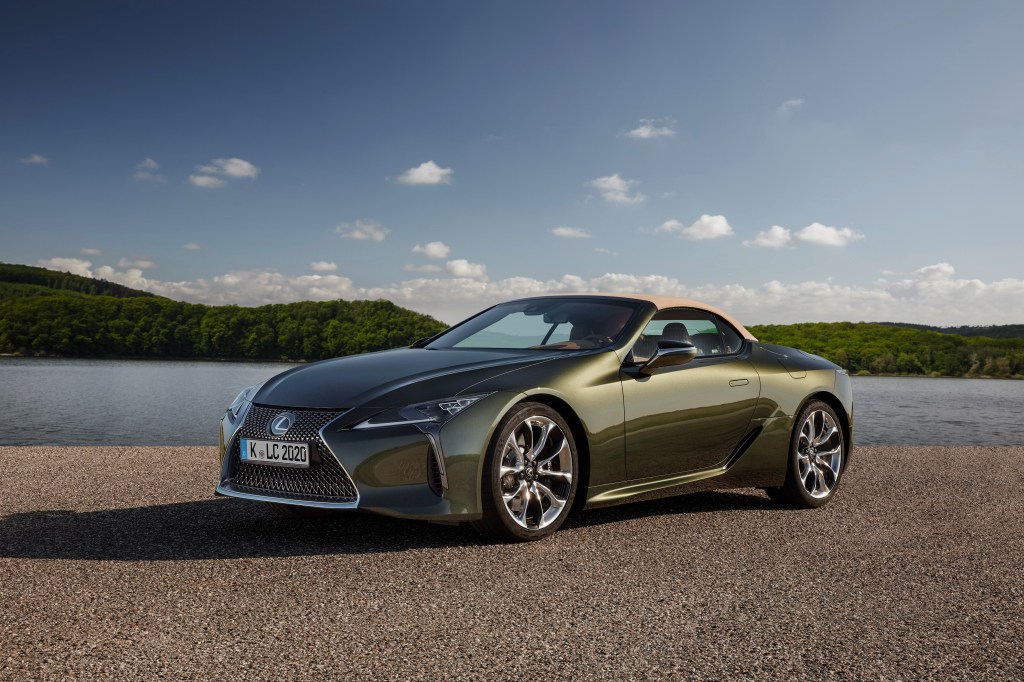
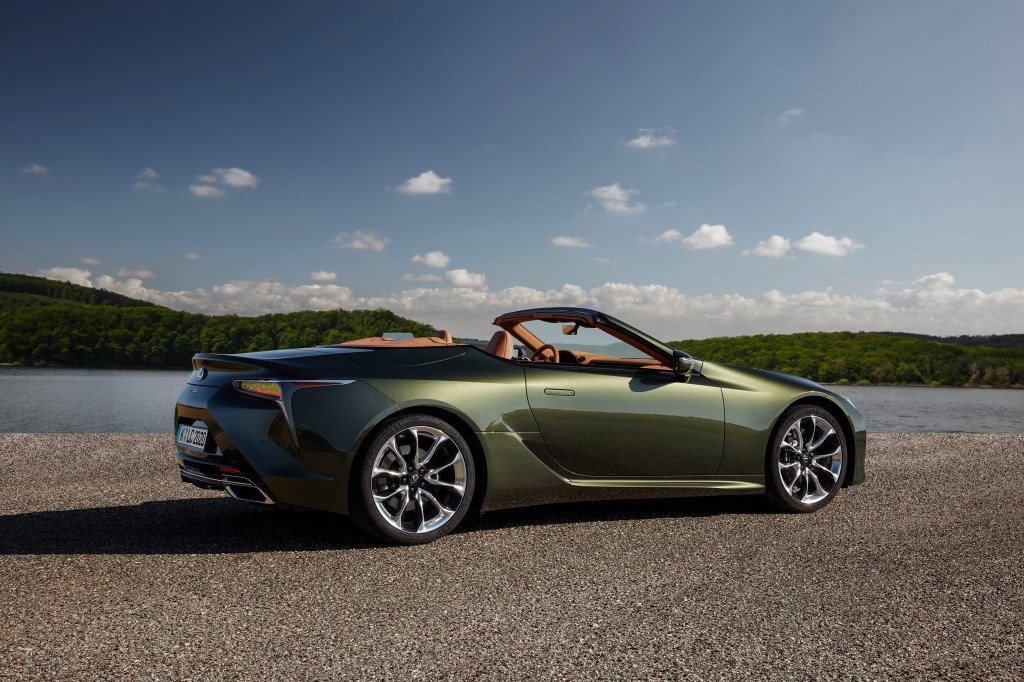
When you step inside the Lexus LC 500 Convertible, we would suggest you lower the roof and blip the throttle. The deep note from its V8 engine tells you immediately that an exhilarating drive is in prospect.
It’s all part of the exceptional sensory quality that Lexus has brought to its first soft-top model: just as much as the styling pleases the eye, the sound of the engine stirs your heart. Generating just the right aural quality was an important goal for the car’s development team, and this required precision engineering to achieve…
Just read on!
Hans Knol ten Bensel
Inspired by the LFA supercar
Lexus’ focus on the importance of the engine sound can be traced back to the LFA, its ultra-exclusive, hand-built supercar. The specialists who worked on its V10 power unit identified the separate qualities that combine to create the ideal sound “atmosphere.”
In the LC concertible, the power of the V8’s engine note had to be balanced with a level of quietness in the cabin that overturns preconceptions about driving in a convertible – an equation Lexus calls a “harmony of opposites.”
To achieve the maximum effect, the sound of the engine changes in line with the rise and fall in rpm, becoming more powerful and urgent in tune with the driver’s use of the accelerator and the sequence of shifts through the rapid-action 10-speed automatic transmission. The exhaust note, too, heightens the effect. By contrast, in gentle cruising, the sound is subdued, so conversation is easy when the roof is down.
Finding that perfect engine sound
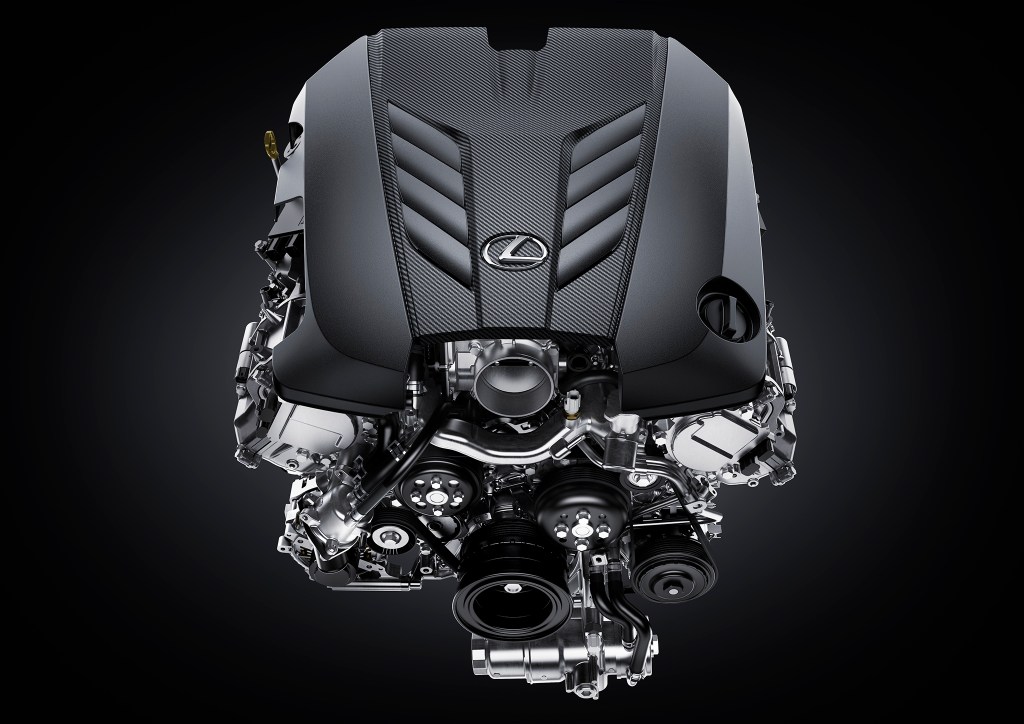
A continuous, pulsating sound is characteristic of a large-capacity, naturally aspirated V8 engine like the five-litre unit which powers The LC 500 Convertible. Lexus has used acoustic technologies to combine this with spectral harmony (perfect sound intervals that are pleasing to the ear), stereophonic sound, to create a depth of sound, and so-called “formants” – qualities that stir the senses and generate a feel-good factor.
Active Noise Control is used to “clean” the sound frequencies experienced in the car. This emits anti-pulse sounds through the audio speakers which counteract any unwelcome low frequency booming sound from the engine and drivetrain.
In the LC Coupe, noise inside the cabin is monitored by a microphone in the roof, but for the Convertible, it had to be relocated inside the driver’s headrest. Being closer to the driver’s ear means it can pick up a wider range of frequencies, but a complex algorithm had to be calculated to make sure it works accurately in any seat position.
The silence of a fixed-head coupé…
Even though the LC Convertible has a soft top, Lexus wanted to secure the same kind of cabin quietness as in the LC Coupe. Acoustic simulations were created to find out where dominant noises were entering the space, so that the amount and location of soundproofing and sound-absorbing material could be calculated.
The storage area behind the rear seats for the folding roof presented a particular challenge, as it was a route for tyre and exhaust noise to enter the cabin. There was not enough room for soundproofing material to be added, so the team looked instead at adapting the trim material itself. By allowing air to pass through the structure and using sound-absorbing material on the reverse, the entire surface of the storage space soaks up noise.
As the area is visible and part of the car’s interior, it also had to look good. Lexus assessed many different materials before choosing one usually used for lining the wings around the wheels. This meets safety standards and, being applied with extra density, has just the right appearance.
We are anxious to enjoy the ride in this formidable Convertible, which will be a feast for eyes and ears…
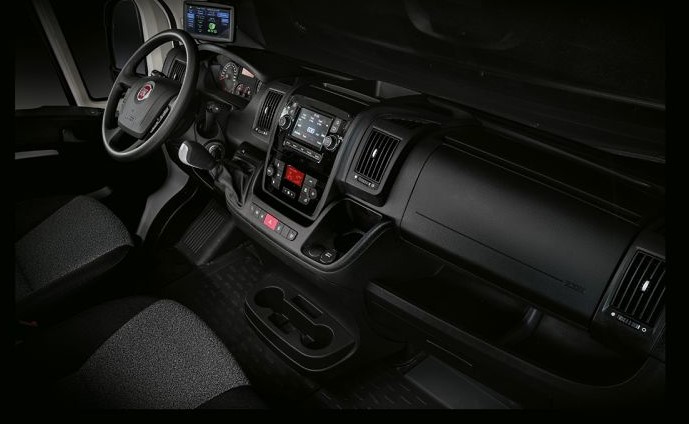
Nothwithstanding Corona times, the development of the new Fiat Professional model has been continued using simulation tools.
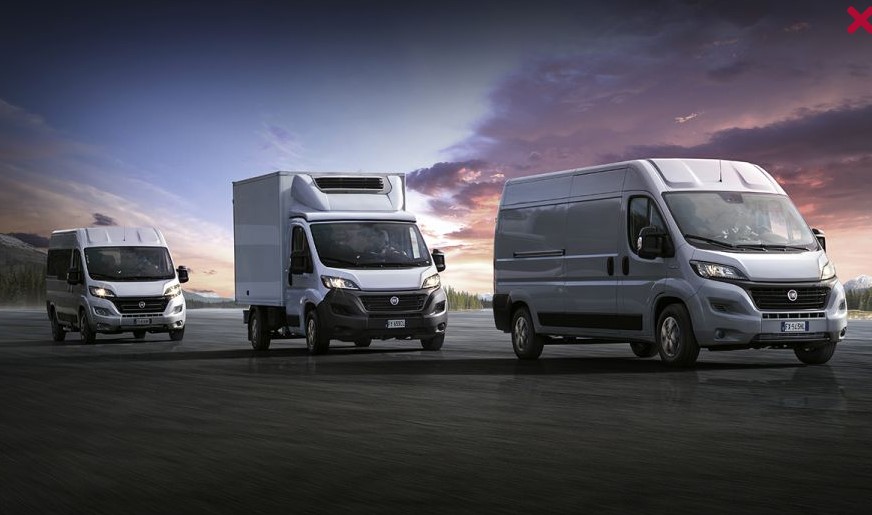
The E-Ducato is the result of an extended series of measurements and tests, taking into account all the variables of usage by different types of clients, as well as dynamic, load and environmental aspects.
Developed by professionals with the help of client professionals…
The development of the E-Ducato included over one year of on-road measurements to analyze more than 28,000 connected vehicles. The measurements from a client’s perspective were taken by a dedicated team of professionals on vehicles with combustion engines running more than 50 million kilometers, to take into account all the variables of client usage, dynamics, load, and environmental aspects.
The analyses were focused on mileage, model variability for any kind of mission, fuel expenditure, vehicle usage, and temperature. By adopting this approach, Fiat Professional is able to offer comprehensive electric mobility solutions. With an analysis of energy demand as a starting point, these solutions will not only cover every single task, they will also provide answers ranging from the vehicle to infrastructure, not to mention a whole range of the everyday services increasingly required by a new and emerging mobility.
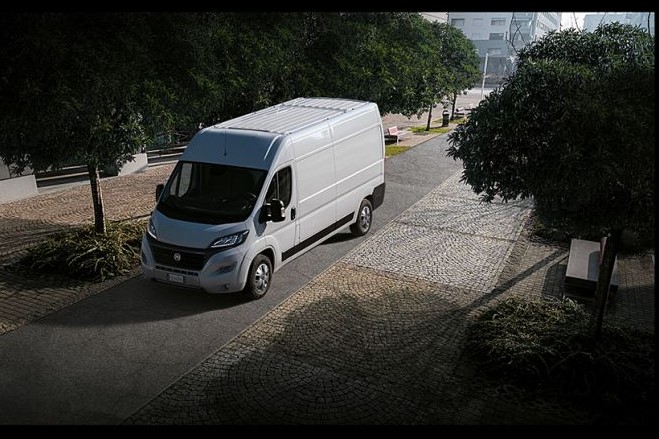
The result is a van available in all body variants with the same load volume as the conventional Ducato, from 10 m3 to 17 m3, and the best payload on the market, up to 1,950 kg.
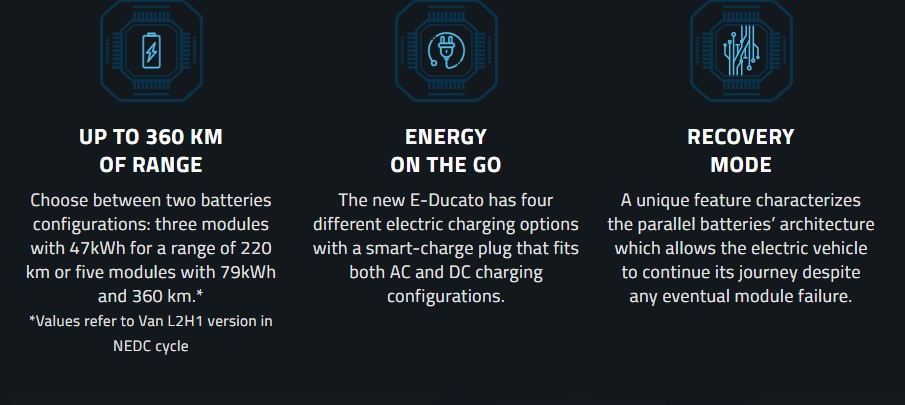
In addition to the many body styles and chassis versions, a choice of battery options will also be available for the E-Ducato, with ranges in a typical urban real delivery cycle from 200 to over 330 km at standard environment conditions, depending by battery pack, and a variety of charging configurations. It also comes with high-potential performance: speed limited to 100 km/h for improved energy absorption, maximum output of 90 kW and maximum torque of 280 Nm.
Last but not least, the FCA styling centre has developed a new logo for the 100% electric Ducato. The logo itself is made up of two distinct elements: a letter “E” in blue – the color traditionally associated with innovation and sustainability, preceded by a “D” for Ducato in brushed silver above.
Comprehensive training for a new sales process
So the E-Ducato professional experience can begin even before getting on board, Fiat Professional organized training days in February specifically for the sales force, involving 265 sales agents and managers across 124 dealerships in the main markets. Road tests structured as a journey through a city were also run at the Balocco circuit, with emphasis on the new full electric driving modes. An in-depth look was also taken at the new WLTP homologation procedure and its impact on the world of outfitted vehicles. Presentations were given on some of these, from mobile workshops and refrigeration to people carriers: versatility that has always been one of the strengths of the Fiat Professional Ducato.
Virtual training: from developments in training to business development
Given the current cautious social distancing measures, Fiat Professional continued the training in a virtual format: a development in training, just like the E-Ducato represents a development in the business. Each remote session was focused on the product in depth, in preparation for other activities.
The E-Ducato technical specifications and line-up were discussed in detail, with special consideration given to its innovative aspects. All the Virtual Classrooms were met with resounding success and were diligently attended. For example, there have already been 310 participants from Germany, 120 from Poland and 210 from non-EMEA regions, while online training will soon begin in the remaining European markets, including in Spain, France and the UK.
Actual launch expected within a few months…
To continue its journey into the market, the E-Ducato will soon be subjected to extensive specific field testing by partner clients under normal working conditions of usage. On that basis, the E-Ducato is therefore being prepared for its launch on the market, due to take place in the coming months, with the opening of orders in the main European markets as the first stage.
The brand-new electric vehicle will soon join the methane-driven Ducato Natural Power in the offering of alternative propulsion systems, to take on the market challenge.
We are looking forward to the actual launch, stay tuned in these columns!
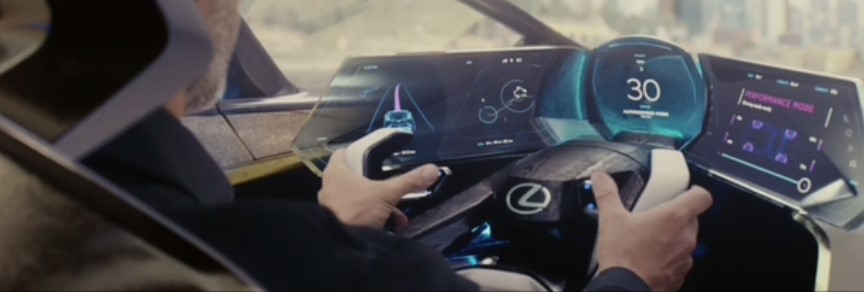
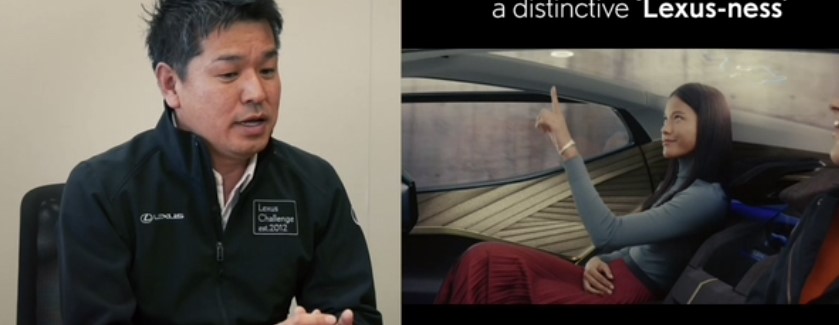
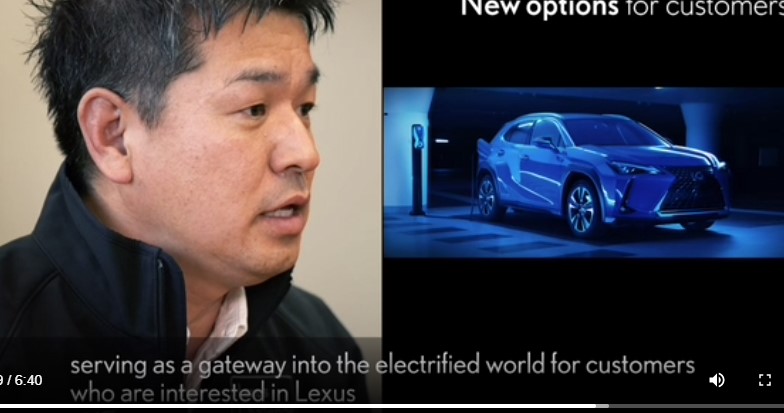
In an exclusive interview with Lexus Electrified Chief Engineer, Lexus has recently unveiled its vision for an upcoming generation of electrified vehicles, under the banner “Lexus Electrified”.
The “Lexus Electrified” vision targets a fundamental leap in vehicle performance, handling, control and driver enjoyment – even as mobility within our society continues to change with autonomous driving and vehicle electrification.
Evoking the original fun of driving, Lexus intends to use its 15 years of experience in electrification technologies to further evolve driving pleasure, and to fundamentally transform the essence of luxury vehicles of the future – creating a unique Lexus driving signature with exceptional ride comfort, quietness and craftsmanship.
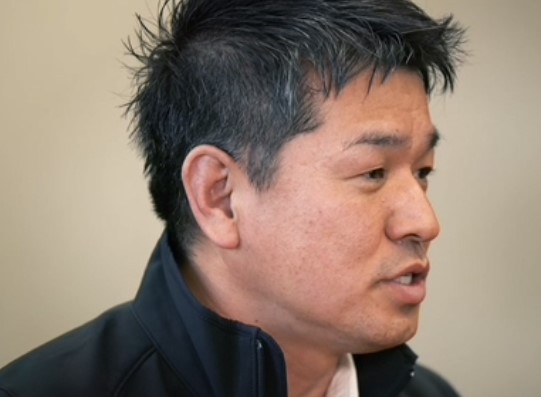
Takashi Watanabe, Chief Engineer at Lexus, takes us through the key aspects of this “Lexus Electrified” strategy in an exclusive interview.
The man behind it all…
Takashi Watanabe started his career with Toyota in 1993 with engine systems development. He has worked on many different types of engines and exhaust systems. Since 2012, he has worked also on the development of several Lexus vehicles and became in 2017 leader of the Lexus Electrified Project.
Just watch and listen, and be transported into the electric future…by Lexus, using their unique “Lexus-ness.”
Groupe Renault unveiled its new strategy for China, building on two of its key pillars: Electric Vehicles (EV) and Light Commercial Vehicles (LCV).
For the Internal Combustion engined car market in China, Groupe Renault has entered into a preliminary agreement with Dongfeng Motor Corporation under which Renault transfers its shares to Dongfeng. DRAC (Dongfeng Renault Automotive Company) will stop its Renault brand-related activities.
Of course, Renault will continue to provide after sales service ot its existing customers in this market, and Renault and Dongfeng will continue to cooperate with Nissan on new generation engines like components supply to DRAC and diesel license to Dongfeng Automobile Co., Ltd. Renault and Dongfeng will also engage in innovative cooperation in the field of intelligent connected vehicles.
Booming LCV market…
The LCV market in China reached 3.3 million in 2019 and is forecasted to maintain a steady upwards path. Renault Brilliance Jinbei Automotive Co., Ltd. (RBJAC), launched in December 2017, is Groupe Renault’s sword arm for its LCV business in China. Jinbei is a well-established Brand with 1.5 million customers in China and close to 162,000 sales in 2019.
With Renault expertise and technologies, RBJAC is modernizing Jinbei models and extending the line-up with a total of 5 core models by 2023. The joint venture will also export in the future.
The joint venture operates in Shenyang, Liaoning Province and aims to deliver 150,000 units of upper medium commercial vehicles and new energy commercial vehicles annually by 2022.
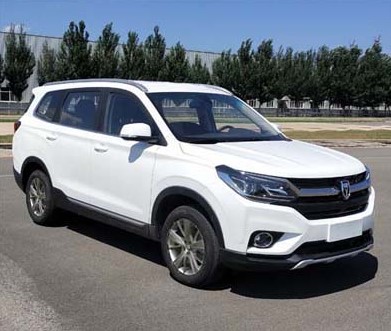
The Alliance launched a mid size Jibei SUV…
In addition, the company will roll out a series of new models in local market, including the Renault-branded Trafic, the Master (including BEV version) and the Jinbei-branded F70, the F50 BEV version as well as some LCV (light commercial vehicle) models under the Jinbei brand.
A massive Chinese EV market
With 860,000 electric vehicles sold in China in 2019, China is by far the largest EV market in the world. EV sales are expected to reach 25% of the Chinese market by 2030.
Groupe Renault was a pioneer on EV and has sold close to 270,000 electric vehicles world wide since 2011. It gives a strong competitive advantage in China as shown by the successful launching of Renault City K-ZE, the first joint venture EV car competing in A segment with the best local automakers.
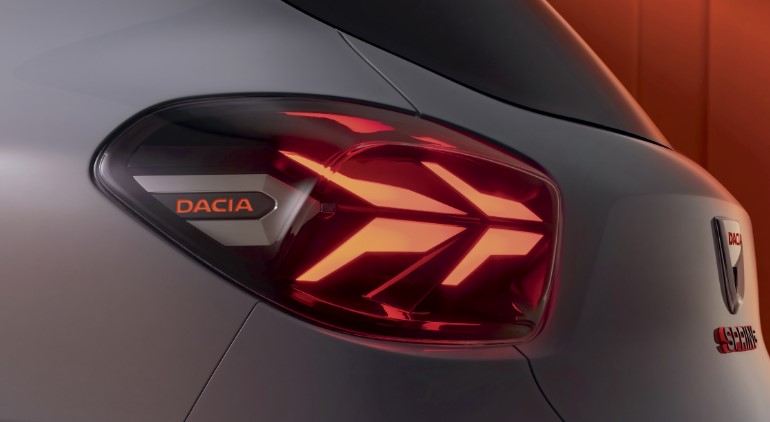
Groupe Renault expect to reinforce its partnership with Nissan and Dongfeng within eGT to make K-ZE a worldwide car. A derivative for Europe based on “Dacia Spring” concept will be sold from 2021.
JMEV is known as an agile and efficient EV player since its creation in 2015. With Renault support in terms of quality and technologies, JMEV will cover 45% of Chinese EV market in 2022 with 4 core models.
The second generation of the BMW fuel cell powertrain with a total system output of 275 kW will be piloted in the BMW i Hydrogen NEXT from 2022
BMW continues to look at alternative powertrain technologies. Did you know that the BMW Group is teaming up with the Toyota Motor Corporation as part of a successful partnership that dates back to 2013?
The two manufacturers have joined forces to work on fuel cell powertrain systems and scalable, modular components for hydrogen fuel cell vehicles under a product development cooperation agreement.
Fuel cells from the cooperation with Toyota will be deployed in the BMW i Hydrogen NEXT, alongside a fuel cell stack and overall system developed by the BMW Group.
As well as partnering on the development and industrialization of fuel cell technology for the mass market, the two companies are also founding members of the Hydrogen Council. A wealth of other leading companies in the energy, transport and industrial sectors have joined the Hydrogen Council since 2017, swelling its ranks to over 80 members.
According to Klaus Fröhlich, Member of the Board of Management of BMW AG, Research and Development, the hydrogen fuel cell technology could quite feasibly become the fourth pillar of our powertrain portfolio in the long term. The upper-end models in the extremely popular X family would make particularly suitable candidates here.
Not for the immediate future…
A customer offer powered by hydrogen fuel cell technology will be brought to market at the earliest in the second half of this decade. There are many good reasons for this cautious but realistic approach. “In our view, hydrogen as energy carrier must first be produced in sufficient quantities at a competitive price, using green electricity. Hydrogen will then be used primarily in applications that
cannot be directly electrified, such as long-distance heavy duty transport,” said Klaus Fröhlich. The requisite infrastructure, such as an extensive, Europe-wide network of hydrogen filling stations, is also lacking at present.
Initial technical details of the powertrain for the BMW i Hydrogen NEXT.
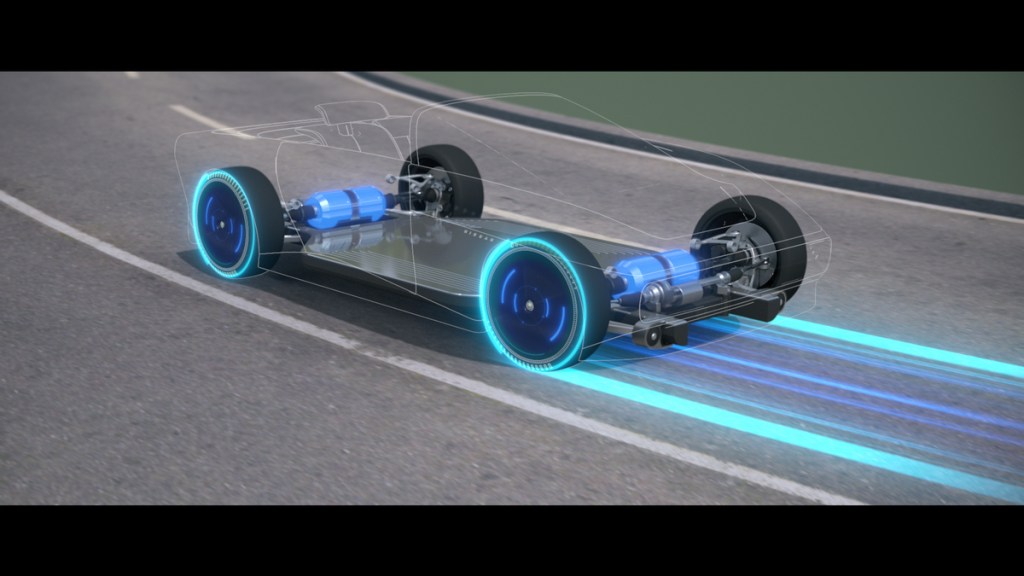
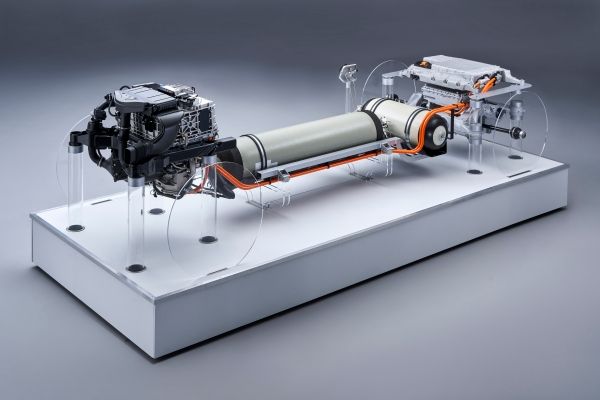
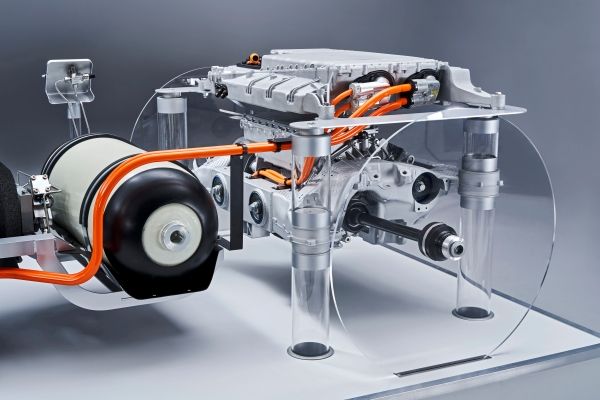
The BMW i Hydrogen NEXT will be propelled by the 5th generation e-machine, which will first be launched in the BMW iX3. The peak power battery located above the e-drive unit can supply boost power for additional dynamics, e. g. when overtaking. The total system output is 275 kW.
“The fuel cell system for the powertrain for the BMW i Hydrogen NEXT generates up to 125 kW (170 hp) of electric energy from the chemical reaction between hydrogen and oxygen from the ambient air,” explains Jürgen Guldner, Vice President of Hydrogen Fuel Cell Technology and Vehicle Projects at the BMW Group.
This means the vehicle emits nothing but water vapour. The electric converter located underneath the fuel cell adapts the voltage level to that of both the electric powertrain and the peak power battery, which is fed by brake energy as well as the energy from the fuel cell.
The vehicle also accommodates a pair of 700 bar tanks that can together hold six kilograms of hydrogen. “This guarantees a long range regardless of the weather conditions,” notes Guldner. “And refuelling only takes three to four minutes.”
The fifth-generation eDrive unit set to make its debut in the BMW iX3 is also fully integrated into the BMW i Hydrogen NEXT.
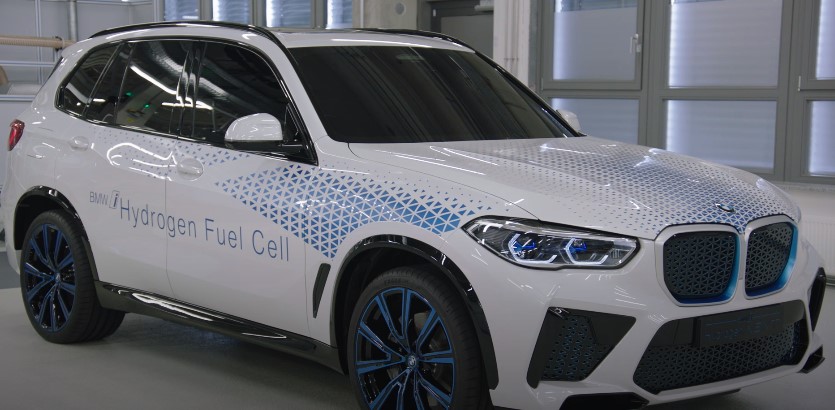
The peak power battery positioned above the electric motor injects an extra dose of dynamics when overtaking or accelerating. The total system output of 275 kW (374 hp) fuels the typical driving dynamics for which BMW is renowned. This hydrogen fuel cell electric powertrain will be piloted in a small series based on the current BMW X5 that the BMW Group plans to present in 2022.
The BMW i Hydrogen NEXT will be propelled by the 5th generation e-machine, to be seen first in the BMW iX3.
We just let you look at the photos here, giving you a detailed look into the hydrogen future…
























 Autoprova - for the Connaisseur