We are driving now the magnificent CLS 220 d. This sleek limousine embodies all the good qualities of the cars with the star. By the way, its diesel engine is also superb. But Mercedes gears up for the future. And takes now a major step towards automated driving…
Indeed, Mercedes-Benz is the first automotive company in the world to meet the demanding legal requirements of UN-R157 for a Level 3 system. SAE Level 3 means that the automated driving function takes over certain driving tasks. However, a driver is still required. The driver must be ready to take control of the vehicle at all times when prompted to intervene by the vehicle. But nevertheless, the driving elements which it takes over become more important…
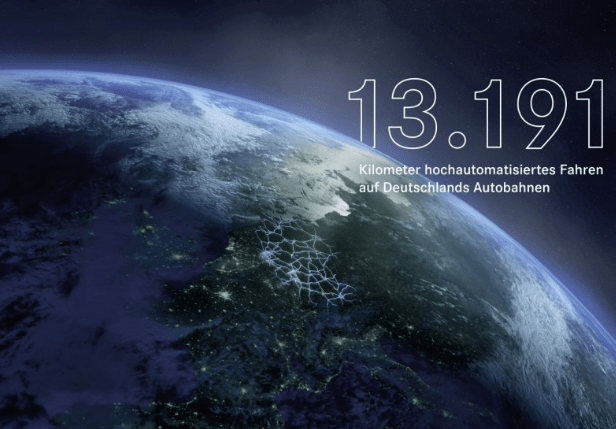
13,191 kilometers of highly automated driving on Germany’s iconic Autobahnen…
The German Federal Motor Transport Authority (KBA) has granted system approval for this on the basis of the technical approval regulation UN-R157, thus paving the way for offering such a system internationally, provided that national legislation allows it. The ECE contracting states (57) incl. states of the EU, GB, Japan, Korea, Australia…
Germany has taken a pioneering role in this with the opening of the Road Traffic Act (StVG) for Level 3 systems already in 2017. This is why the first customers will be able to buy an S-Class with DRIVE PILOT in the first half of 2022, enabling them to drive in conditionally automated mode at speeds of up to 60 km/h in heavy traffic or congested situations on suitable stretches of motorway in Germany! The special DRIVE PILOT equipment takes the strain off the driver and allows him or her to perform ancillary tasks on the central display such as online shopping or processing e-mails in the in-car office. Which secondary activities of the driver are legally permissible depends on the respective national road traffic regulations. Important to note that the system approval also applies to the EQS.
A milestone reached, says the management…
“For many years, we have been working to realize our vision of automated driving. With this LiDAR based system, we have developed an innovative technology for our vehicles that offers customers a unique, luxurious driving experience and gives them what matters most: time. With the approval of the authorities, we have now achieved a breakthrough: We are the first manufacturer to put conditionally automated driving into series production in Germany,” says Markus Schäfer, Member of the Board of Management of Daimler AG and Mercedes-Benz AG, Chief Technology Officer responsible for Development and Purchasing. “With this milestone, we are once again proving our pioneering work in automated driving and also initiating a radical paradigm shift. For the first time in 136 years of automotive history, the vehicle takes over the dynamic driving task under certain conditions. At the same time, we are pleased that Germany is continuing its pioneering role in automated driving with this approval.”
The technical approval regulation with which such a system can be certified did not come into force until the beginning of 2021. Since then, it can be implemented in Europe – an opportunity that Mercedes-Benz was quick and the first manufacturer to seize. With the opening of the Road Traffic Act (StVG) for Level 3 systems in 2017, Germany was the first country to create a legal basis for the intended use of these systems.
Mercedes-Benz is initially offering DRIVE Mercedes-Benz is initially offering DRIVE PILOT on 13,191 kilometres of motorway in Germany. Extensive test drives for this systems are already underway, for example in the USA and China. As soon as there is a national legal framework for conditionally automated operation in additional markets, the technology will be rolled out step by step! Again, we repeat ourselves, brave new world!
Times are changing in our electronic age, and fast. Manufacturers will have to build cars with an open software-defined platform, and three new platforms will arrive as early as 2024… says Stellantis.
Indeed, Stellantis N.V. today mapped out its software strategy to deploy next-generation tech platforms, building on existing connected vehicle capabilities to transform how customers interact with their vehicles, and to generate approximately €20 billion in incremental annual revenues by 2030.
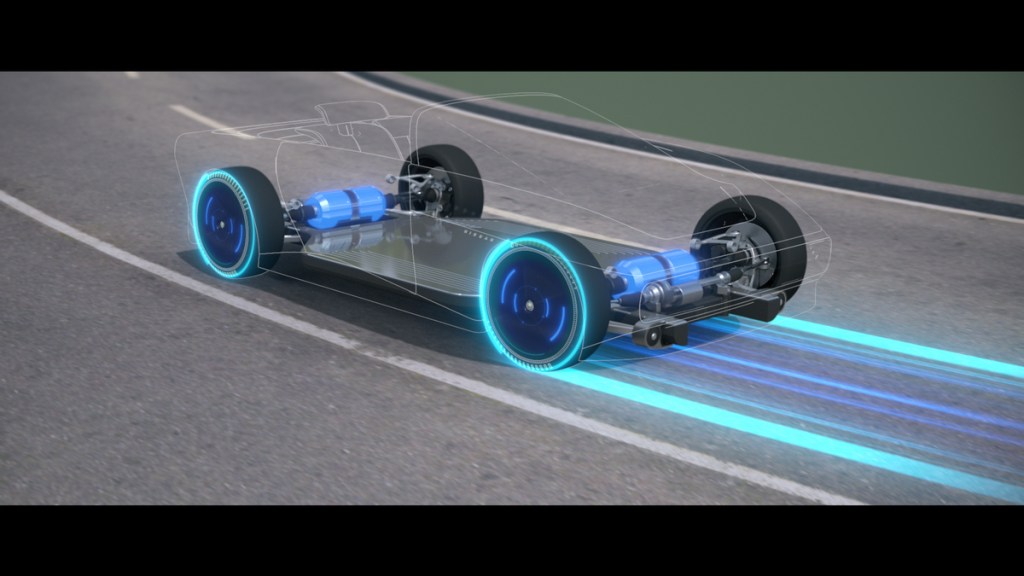
This transformation will move Stellantis’ vehicles from today’s dedicated electronic architectures to an open software-defined platform that seamlessly integrates with customers’ digital lives. It greatly expands the options customers have to add innovative features and services via regular over-the-air (OTA) updates keeping vehicles fresh, exciting and updated years after they have been built.
“Our electrification and software strategies will support the shift to become a sustainable mobility tech company to lead the pack, leveraging the associated business growth with over-the-air features and services, and delivering the best experience to our customers,” said Carlos Tavares, Stellantis CEO. “With the three all-new AI-powered technology platforms to arrive in 2024, deployed across the four STLA vehicle platforms, we will leverage the speed and agility associated with the de-coupling of hardware and software cycles.”
Stellantis plans to invest more than €30 billion through 2025 to execute its software and electrification transformation.
The Stellantis software strategy works hand-in-hand with the Company’s vehicle electrification plans, detailed at EV Day in July 2021, which targets that more than 70 percent of its vehicle sales in Europe and more than 40 percent of vehicle sales in the United States will be low emission vehicles (LEV) by 2030. Each of the Company’s 14 iconic brands is committed to offering best-in-class fully electrified solutions.
More about this, and the strategic partnership with suppliers and software companies it implies, will follow soon!
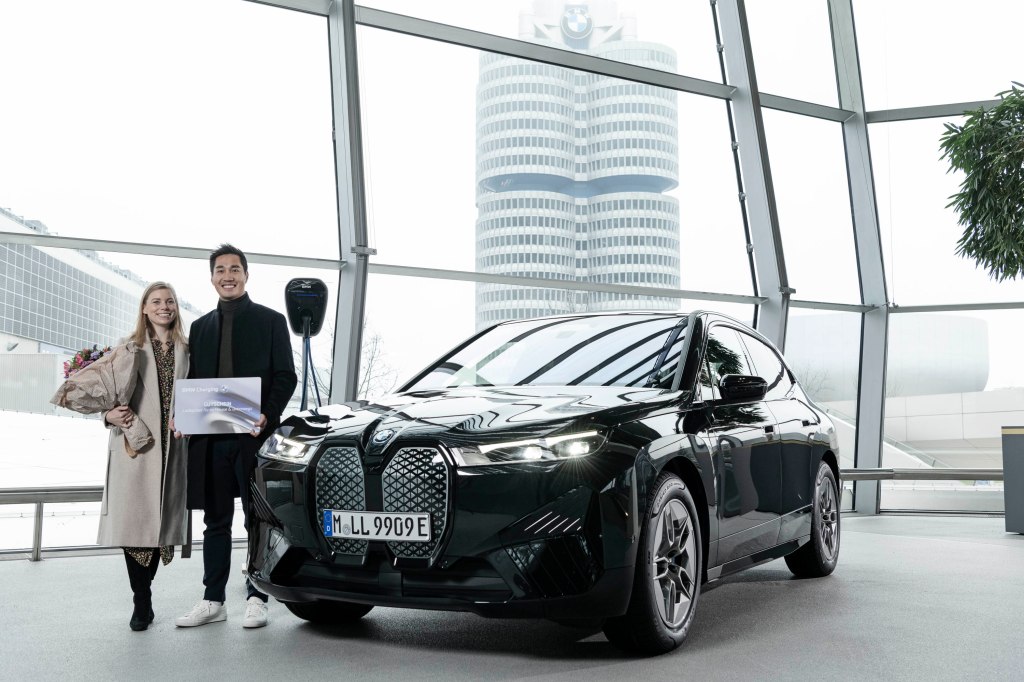
Shortly before the end of the year, the BMW Group celebrated the delivery of its one-millionth electrified vehicle: Pieter Nota, member of the Board of Management of BMW AG responsible for Customer, Brands and Sales handed over the milestone vehicle, a BMW iX xDrive40 (Power consumption in kWh/100 km: 22.5-19.3 WLTP), to its owner at BMW Welt on 6 December.
The company included a special bonus with the delivery: The customer not only received the keys for his new vehicle, but also a BMW Wallbox, including installation, to enable safe and convenient home charging, as well as a credit for public Europe-wide charging with BMW Charging.
“The delivery of our one-millionth electrified vehicle marks a milestone in our transformation – and we already have the next one in our sights: We aim to break through the two-million mark in just two years,” said Nota. “Thanks to our steadily growing product range, we are setting ourselves ambitious sales targets, in particular for fully-electric vehicles: In 2022, we aim to double this year’s sales. By 2025 the BMW Group will have delivered around two million fully-electric vehicles to customers. We expect at least one out of every two BMW Group vehicles sold to be fully electric by 2030,” Nota continued.
The BMW Group released two key innovation flagships, the BMW iX and the BMW i4, onto the market in mid-November. Both models are being very well received by customers worldwide – as reflected in new orders from around the globe
Over the next year, the BMW Group will expand its electrified product line-up to include fully-electric versions of the BMW 7 Series and BMW X1. The high-volume BMW 5 Series will be added to the electric portfolio in 2023. The successor to the MINI Countryman and the all-electric Rolls-Royce Spectre will follow. By 2023, the company will already have at least one fully-electric model on the roads in about 90 percent of its current market segments. Over the next ten years or so, the BMW Group plans to release a total of about ten million fully-electric vehicles onto the roads.
The Neue Klasse, which is uncompromisingly geared towards electric drive trains, will make a significant contribution to BMW Group sales volumes from the middle of the decade.
The MINI product range will already be exclusively all-electric by the early 2030s and Rolls-Royce will be an all-electric brand from 2030 on. All future new models from BMW Motorrad in the field of urban mobility will also be fully electric…brave new world!
We will drive for you at the end of this year the latest Qashqai, and look forward to have a go next year at their new (EV powered) products; In the meantime, there is some interesting Nissan news.
Did you know that by 2026, this is merely within some four years, more than 75% of all Nissan passenger cars sold in Europe will be electrified?
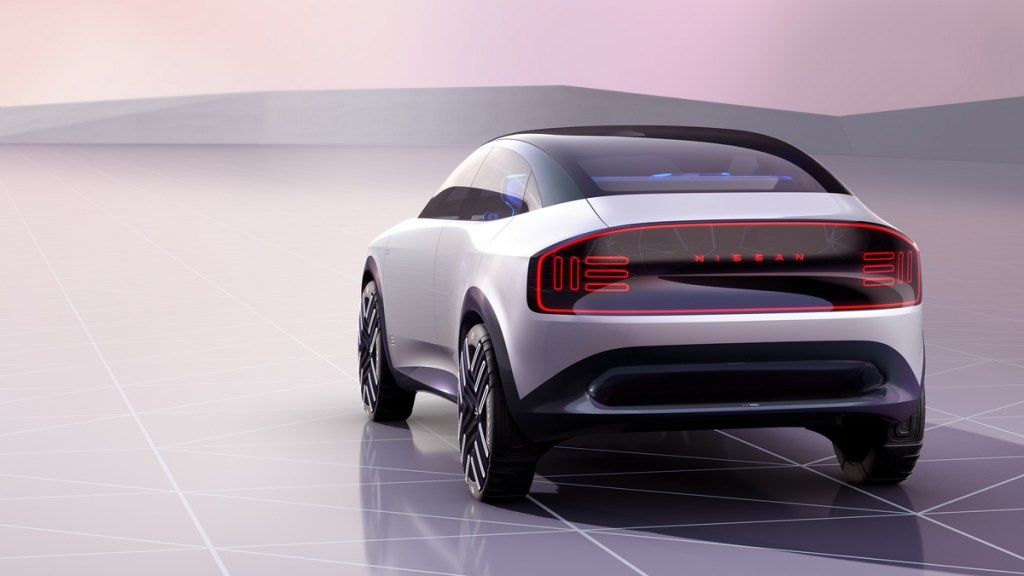
Nissans “CHILL OUT” concept foreshadows the future 100% electric crossover to be built in Sunderland, and there is a new battery recycling facility planned in Europe…
Just read further!
Hans Knol ten Bensel
Nissan Motor Co. Ltd. Unveiled the Nissan Ambition 2030, the brand’s new long-term strategy that goes beyond mobility.
Earlier this year, Nissan launched the EV36Zero concept, the world’s first fully integrated EV production ecosystem, which connects mobility and energy management to help achieve carbon neutrality for Nissan. The future hub is centered around the production facility in Sunderland, UK, and will include the production of an EV, a new giga production facility and use of 100% renewable electricity. Initially, £1 billion will be invested.
The AMIEO Region, centered on the EV36Zero, will play a leading role in realizing the “Ambition 2030” vision, which will help Nissan achieve carbon neutrality across the entire lifecycle of its products by fiscal year 2050. Here are some key points:
By the end of fiscal 2023, Nissan will offer electrified versions of all models offered in Europe, and by fiscal 2026, more than 75% of all Nissans sold are expected to be electrified.
The now-unveiled CHILL OUT crossover concept, as announced in Sunderland in July as part of the EV36Zero project, uses the Renault-Nissan Alliance CMF-EV platform to deliver the European handling and performance customers expect. The model has a sleek and modern design, is both attractive and aerodynamically optimized, fun-to-drive, has advanced safety technologies and has a practical and comfortable interior, according to Nissan.
Nissan plans to expand battery recycling and reuse facilities outside of Japan with a new location in Europe during fiscal year 2022. This infrastructure will support a circular economy for energy management. Nissan plans to fully market its ‘vehicle-to-everything’ and ‘home battery’ systems in the coming years.
Building on the success of the Nissan LEAF, Nissan will soon introduce innovative e-POWER technology in the all-new Qashqai and X-Trail. With the 100% electric crossover Ariya and the future all-electric Townstar Van on the way, an electrified European model program is in the works.
‘In the past period, Europe has been leading in the transition to electrification. Our goal for the next decade is to accelerate this development, with new products and technologies that will enhance the driving experience for Nissan’s customers,” said Guillaume Cartier, President of Nissan AMIEO Region.
Not only will we be offering an electrified version of every Nissan model in Europe, our 360-degree vision of sustainable mobility also means using 100% renewable electricity in our EV Hub in the UK. New battery recycling and reuse facilities will also be built in Europe.
To spearhead the transition to full electrification and carbon neutrality, our teams and products in Europe will serve as a source of information and support for our plans for electrified cars in the rest of the AMIEO Region and other markets.”
Bold new plans… we will report on them regularly as they unfold!
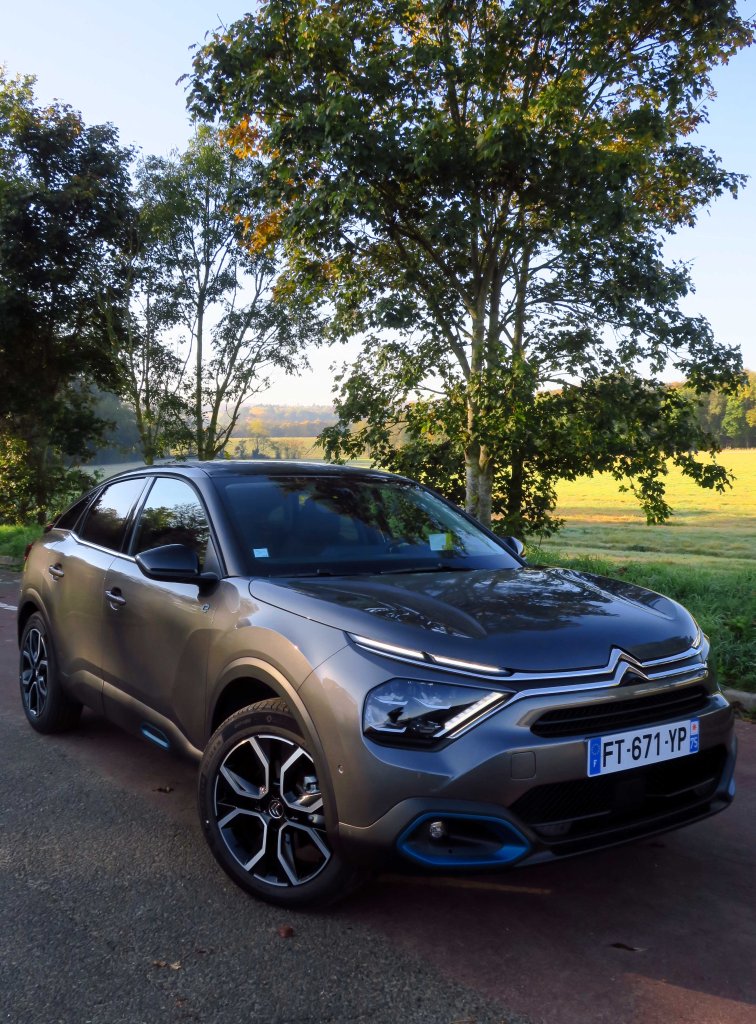
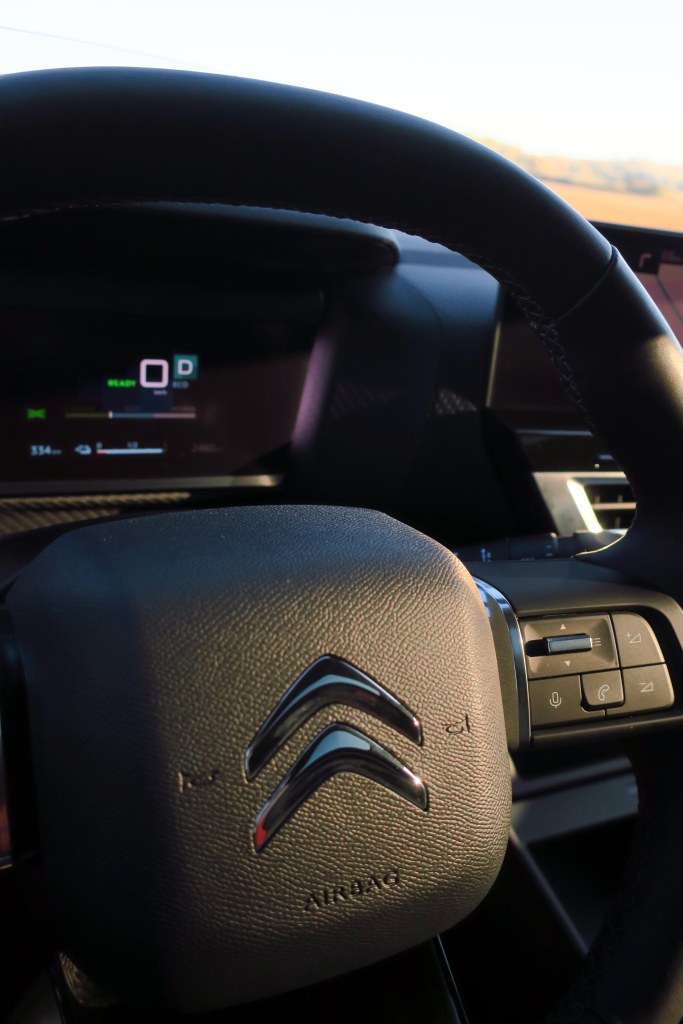
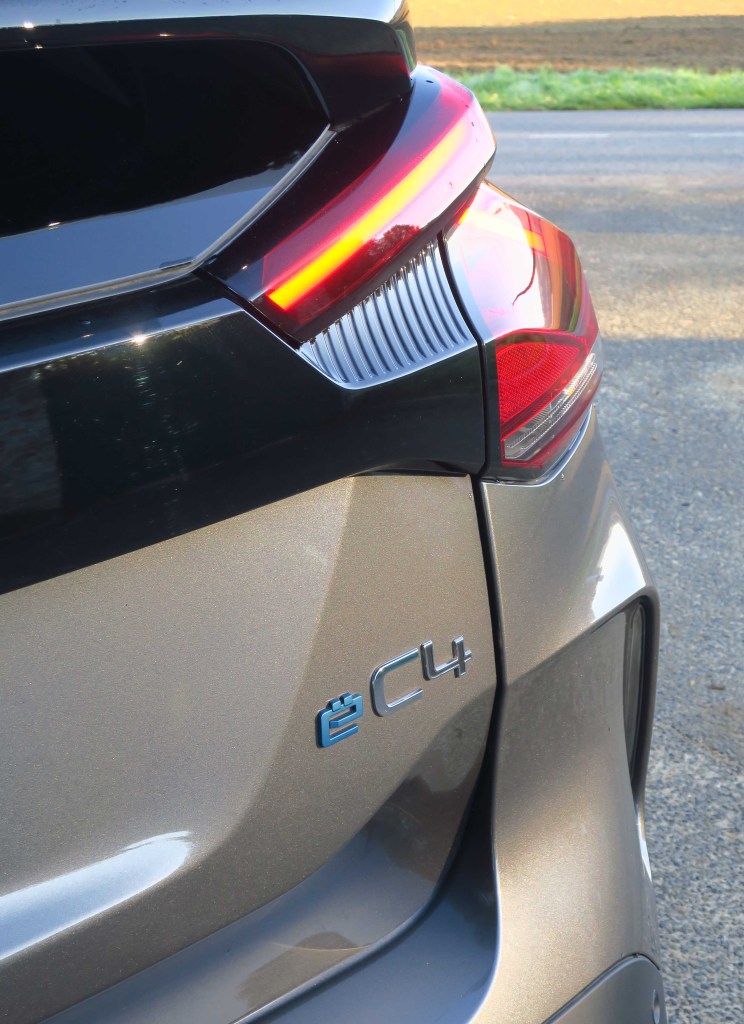
Alongside the E-powered Berlingo, we also had our first drive in the electric version of the C4 in the scenic surroundings of Paris. To tell you right away, with this velvety smooth e-power, the C4 really comes into its own. You get the impression, only after a few kilometers behind the wheel, that this car is actually built for this.
Because, as we told you already in our test of the C4 diesel, this car is all about superb comfort. Add to this the refinement of the electric drive, and subjectively, a sort of noble Rolls Royce feeling invades you.
Indeed, the progressive hydraulic cushions, like we explained, irons out the road ahead for you. Meanwhile, you sink with a smile in the advanced comfort seats. They give you just the right amount of support and comfort to let you almost feel you are in four wheeled superlimousine heaven. The superlight steering still underlines this impression. You can literally steer this C4 with your fingers…
With its 136 HP electric motor, this C4 is indeed meant to let you taste the exquisite joys of just quiet, unhurried motoring. It invites you to do this, but this does not mean that this car is sluggish at all. With 260 Nm of torque always there whenever you need it, it certainly responds eagerly at the slightest movement of your right foot. 0 to 100 km/h is absolved in 9,7 seconds. Top speed is limited wisely to 150 km/h. Add to this the unerring sure footedness of Citroën handling, whatever the road and the weather, and you will agree that it is a very nice experience to be behind the wheel of this car.
We told you here in these columns that due to the heat pump sensor changes and a modified final gearing, the WLTP cycle range is now 357 km.
Charging times are very reasonable indeed; On a 7 kWh wallbox, you can charge the ë-C4 overnight in 7,5 hours. When you are in a hurry, it is good to know that it accepts 100 kW fast charging, and will charge in 30 minutes from 0 to 80 pct charge.
We look forward for a longer test of this smooth goddess of the road soon!
We told you that the ë-C4 shares its platform with the DS3 amongst others, and the E-range improvements are therefore also implemented for the ë-C4.
Indeed, since October, the ë-C4s have benefited from the same technological developments, resulting in an increase of the approved range in the WLTP cycle to 357 km; This represents a longer field range by almost 30 km, depending on the conditions of use.
Manufactures are also helping their fleet customers via software (updates) to optimize the cost management and use of their car fleets.
Therefore, Citroën has been helping its C5 Aircross Plug-In Hybrid customers in France and the United Kingdom with the Plug-in-Reminder system to reduce their fuel consumption and environmental impact by displaying messages on the car’s screen that invite them to charge the car. The ideal time for charging is set by the on-board computer when it registers that the fuel consumption of the car can be optimized based on the number of trips made and the number of times the car has been charged. This system will be extended to Europe in early 2022 and will be fitted in the C5 X. With PHEV Connect, Citroën helps fleet managers manage their plug-in hybrid fleet and optimize their costs. PHEV Connect has been deployed in Europe since March 2021 and already covers more than 7,400 vehicles…
We have not been driving Peugeots and Opels for a (very) long time, and besides bringing you Peugeot and Opel news on a regular basis, we will in the future also test and collect driving impressions of their new models.
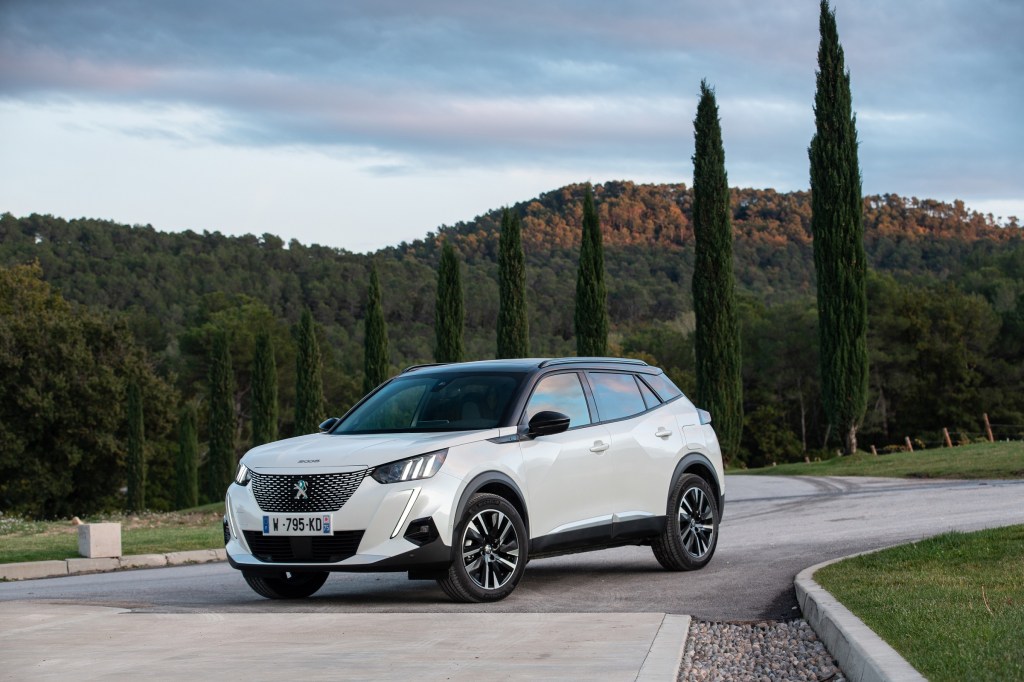
Now to the news: the latest technological developments from early 2022 on the 100% electric versions of the new PEUGEOT 208 and 2008 and Opels will deliver up to 25 km and 8% more range according to the WLTP cycle, and even more in practice.
Based on the eCMP (Common Modular Platform), equipped with a 50 kWh battery, a 100 kW (136 hp) electric motor and a torque of 260 Nm, these models will – like the DS 3 – also receive the latest technological developments to increase their autonomy.
Talking about the platform, did you know that this is a global subcompact platform jointly used and developed by Groupe PSA and state-owned Chinese automaker Dongfeng?
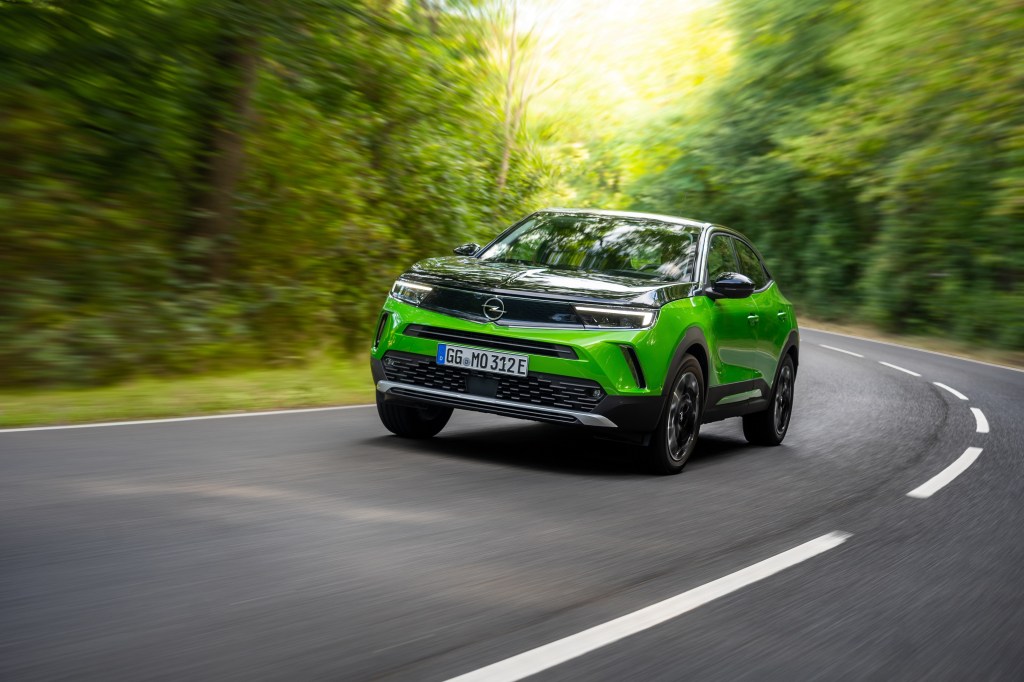
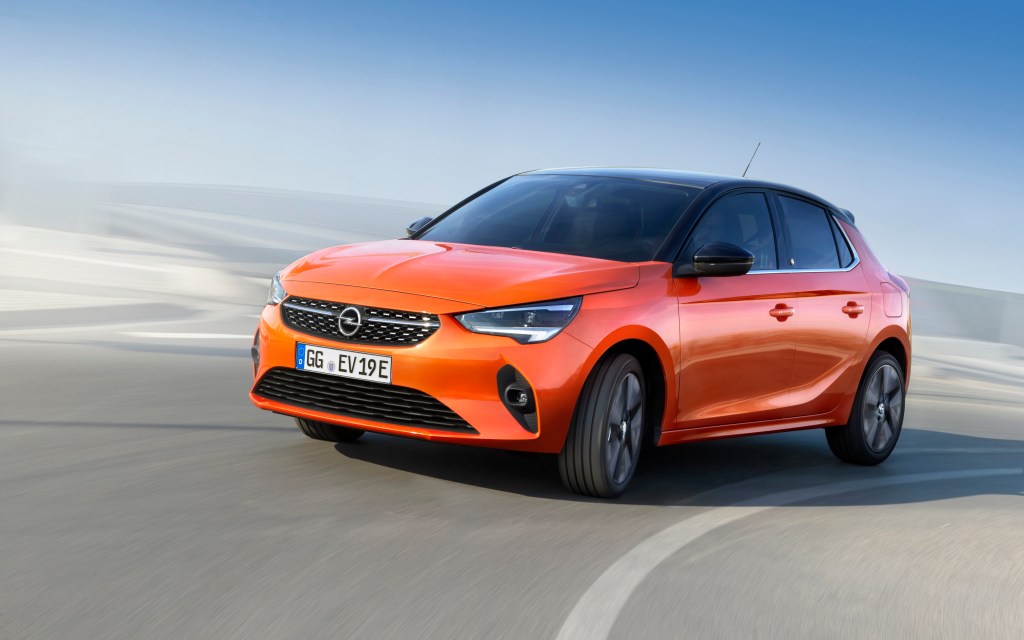
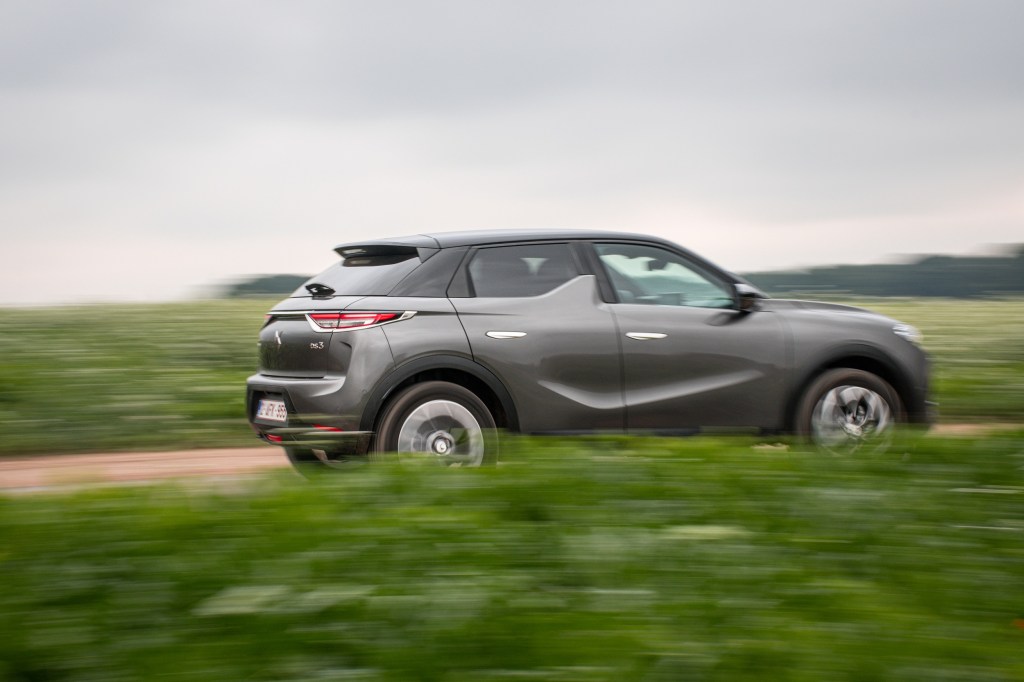
The DS3 also runs on it, as do the latest Citroën DS4 and the ë-DS4. But also the Opel Mokka and Mokka-e and last but not least the Corsa and the Corsa-e.
2020 Opel Mokka-e
The DS3 is built in Poissy, as are the Opel Mokka’s. As with the DS3, for the 208 and 2008, the tires have been optimized and now have a lower rolling resistance. This concerns amongst others the 16 inch wheels for the PEUGEOT e-208 and the 17 inch wheels for the PEUGEOT e-2008.
The Corsa-e is now good for 359 kilometers, the Mokka-e has an improved range of 338 kilometers.
In addition, the Peugeots and Opels have also the new gearbox ratio, which optimizes further the range on the road and on the highway.
2019 Opel Corsa-e
Finally, they have, like the DS3, also received a new heat pump in combination with a humidity sensor at the top of the windscreen optimizes the energy efficiency of heating and air conditioning.
The improved sensor enables a more precise control the air circulation in the passenger compartment, so it costs less energy to heat up and maintain the temperature in the vehicle. This latest development is particularly noticeable at low outside temperatures.
Early next year we will drive for you the DS4 and the DS9, and we are looking forward to have a taste of French refinement, elegance and panache.
But did you know that thanks to an electrification strategy pursued since its inception, DS Automobiles is the multi-energy brand with the lowest average CO2 emissions in Europe?
Indeed, it registered 100.2 grams CO2 per kilometer per vehicle in the first half of 2021 according to the WLTP cycle. Not surprisingly, as its production mix of electrified cars exceeds a third. This strategy is now only gaining momentum: from 2024, all new DS Automobiles models will be 100% electric only.
The first 100% electric model in the DS range is continuously under further development. The DS 3 CROSSBACK E-TENSE, on the market since 2019, now has a range of 340 kilometers according to the combined WLTP cycle, an increase of almost 7%.
During development, the focus has always lied on improving the practical use of the DS 3 CROSSBACK E-TENSE. In particular, the heat pump has been improved through the use of a humidity sensor to improve efficiency. The heat pump, supplied as standard, produces heat by compression to generate warm air. This significantly reduces the need for E-energy.
As a result of continuous development and ongoing discussions with the Formula E championship team, supported by DS Performance, the transmission ratio has also been optimized to improve the efficiency of the DS 3 CROSSBACK E-TENSE.
The hand stitched steering wheel upholstery stands out in an interior full of French panache…
Greater autonomy in real-world use is also achieved through the use of new 17″ class A tires developed by Continental. The Continental EcoContact 6 Q is available in 215/60 R17 96H and has a new high-tech silica compound to improve rolling resistance. improve and reduce noise emissions.
In Belgium, the DS 3 CROSSBACK E-TENSE is available from €38,400 (incl. VAT) with a 100 kW (DC) and 11 kW (AC) charger.
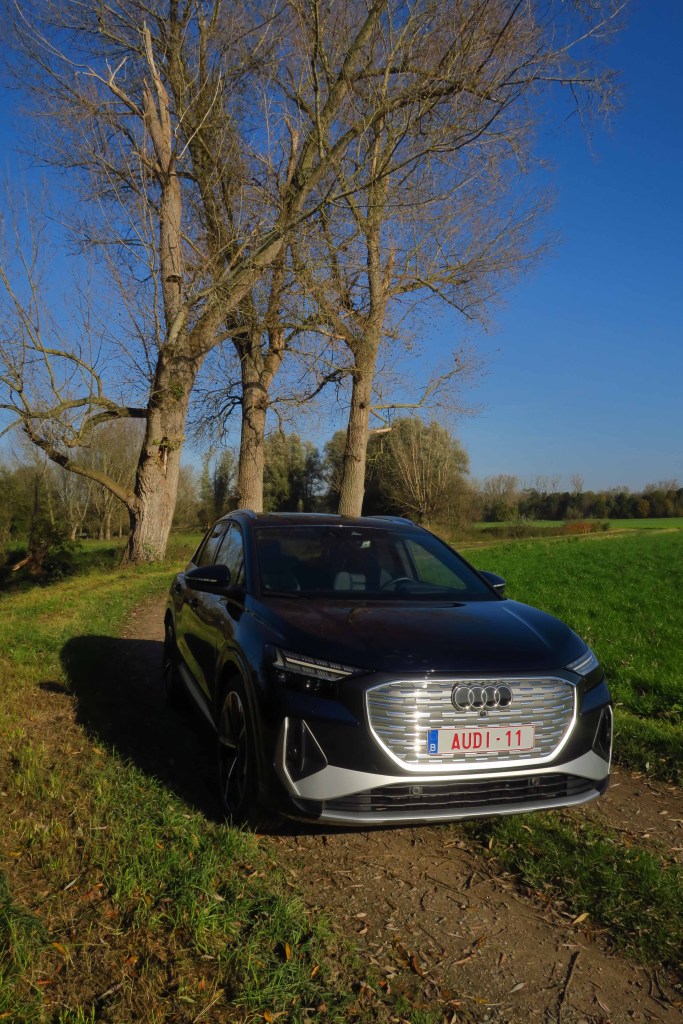
Audi has ambitious plans for further electrification: in 2025, it will have not less than 20 pure EV’s in its model range. Besides the big Audi e-tron Quattro and its Sportback version and the stunning e-tron GT, another pure EV joins the party: the compact SUV Q4, which is also available right away in a stylish Sportback version.
The Q4 comes in two battery and power versions. The base model is the Q4 35 with a 55 kWh battery. Its range is said to be 350 kilometers and it has a 125 kW/170 HP motor driving the rear wheels. We tested for you the Q4 40 which has the 77 kWh battery and the 150 kW/204 HP motor we also find in the VW ID.4.
The Q4 is built… in the VW factory in Zwickau, where also the ID.3 and ID.4 are rolling off the production lines. Only logical if one knows that the Q4 runs on the same MEB platform as the two Volkswagens.
So the Q4 is a dressed up VW? Not at all, the Audi engineers and designers have succeeded in giving the Q4 its unmistakable premium character and Audi identity.
Just read further…
Hans Knol ten Bensel
Stylish
The bodywork of the Q4 breathes the timeless Audi styling language, with very good proportions throughout. The front end grille betrays its “pure” EV character, as it is closed. Indeed, electric motors need a lot less cooling.
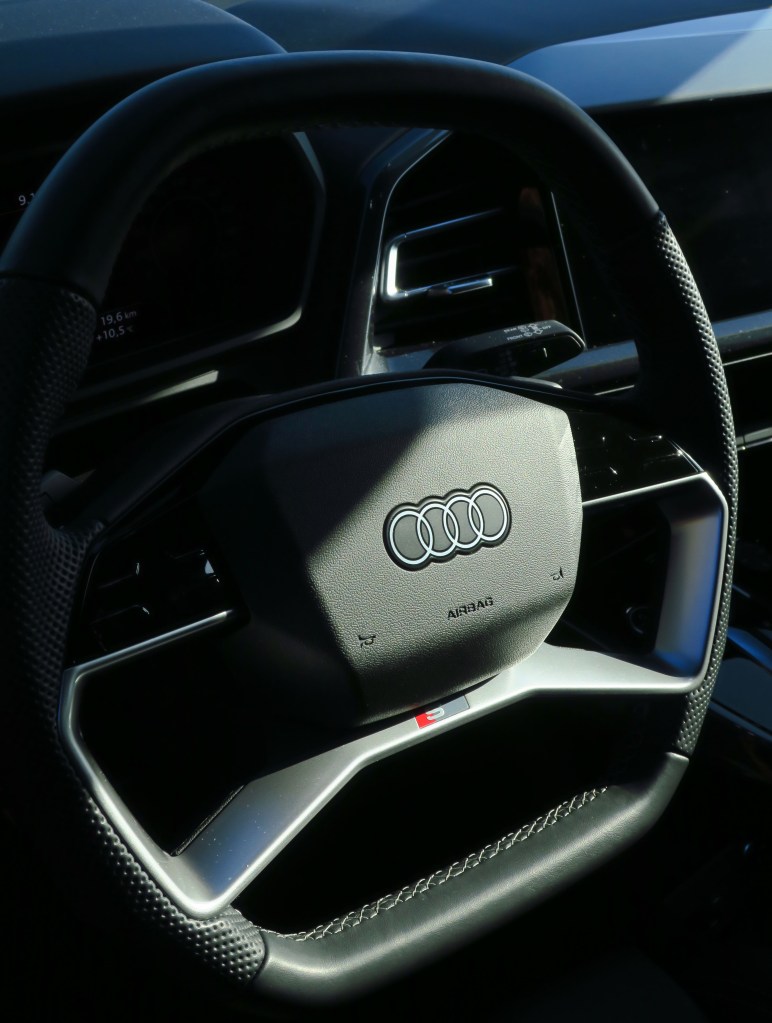
The dashboard and cabin breathe Audi panache: the instrumentation is directed towards the driver here, rather untypical for a SUV. Bravo for Audi, and they did also very well with the instrument layout: two large dials are seen in front of you, on the digital display which is almost equally as large as the central touchscreen.
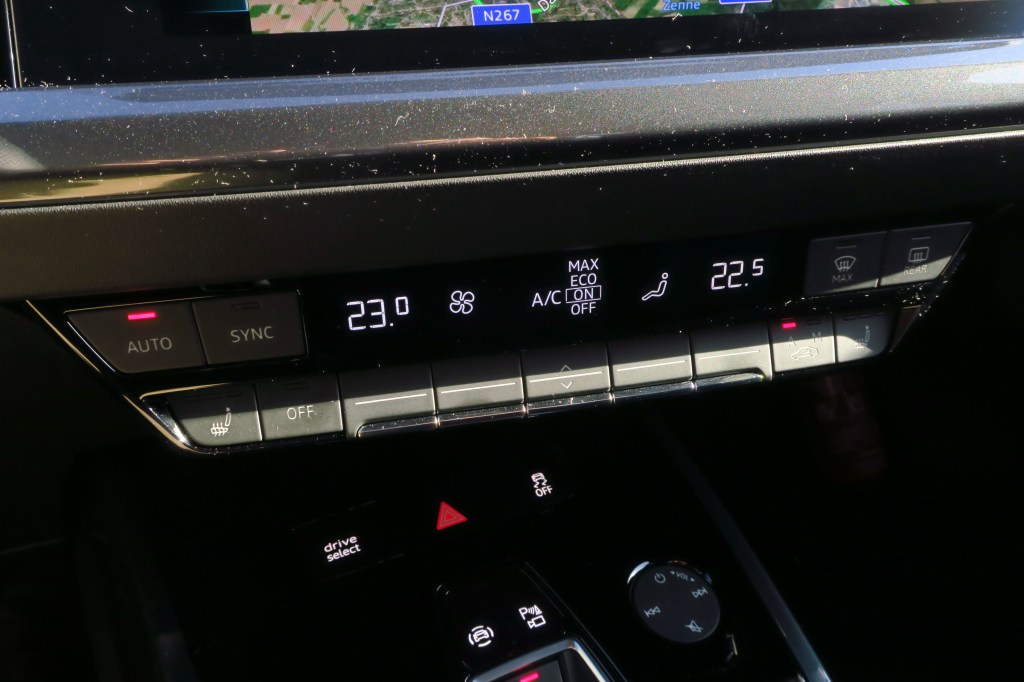
The ventilation commands are thankfully also on a separate panel with extra knobs, and also the audio volume knobs are of the rotating touch type as found on the early Apple I pods.
When you opt for the MMI package, you can also enjoy an augmented reality head up display. Our test car came with it and we liked it very much.
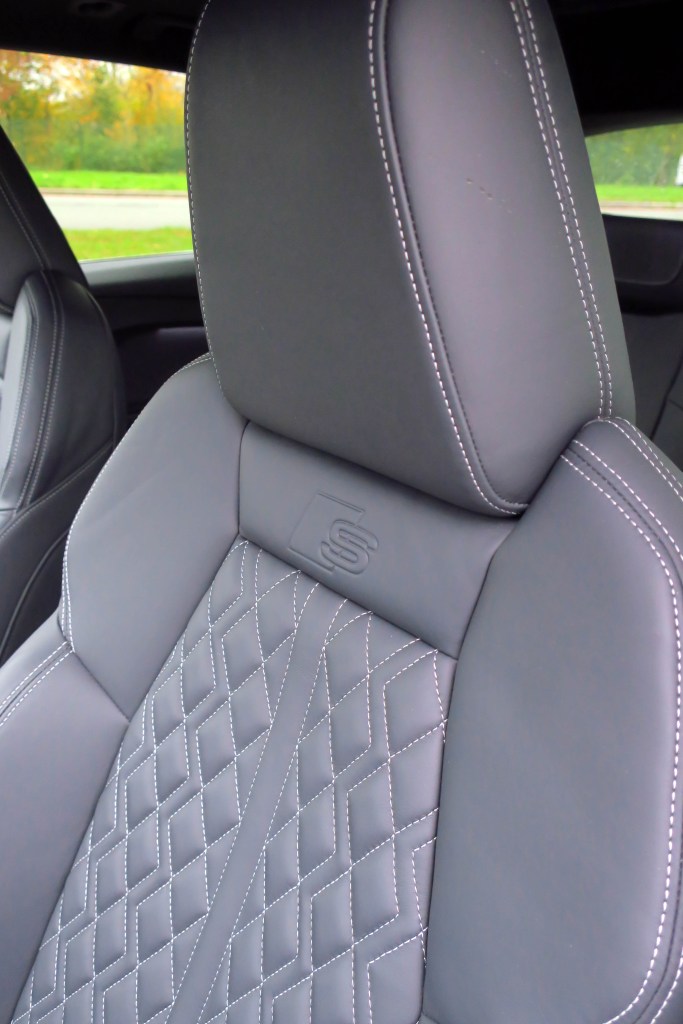
In the posh “S line” equipment level of our test car the seat upholstery with its typical cross stitched patters was very pleasing to the eye, and the seats are also very comfortable indeed.
While we are talking about the cabin, we can mention here that also the Q4 offers plenty of room, also for its rear passengers, taking advantage of the good qualities of the MEB platform. This SUV is certainly not compact here…
There is also plenty of room for storage in the interior, a good 24,8 liters. On the central console between the two front seats you have already 4,4 liters at your disposal.
Luggage space is more than adequate with 520 liters, with both rear backrests down you have a maximum of 1490 liters at your disposal, when you use the available space up to the roof.
The charging cables are neatly tucked away under the luggage floor. Only a bit cumbersome to reach them when the boot is fully loaded when on holiday. For the rest of the year it’s very fine.
Dynamic and smooth…
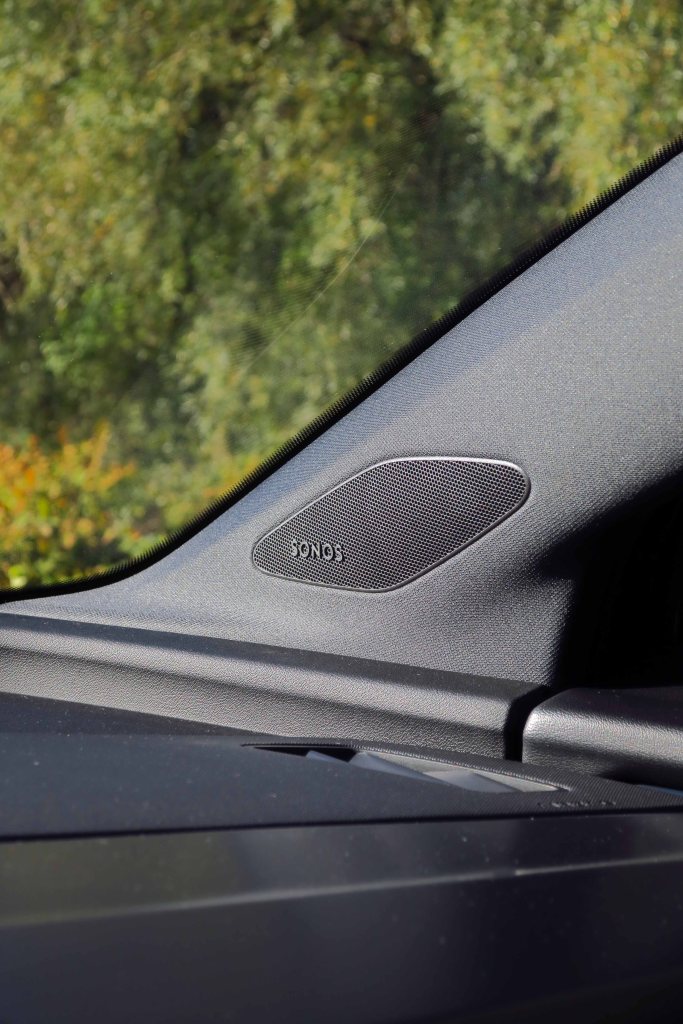
Let’s get behind the wheel now and start driving. As an EV befits, this Audi is again supersmooth. It is “Zen” driving all the way. EV’s are just a delight to drive in town, with their feline power delivery. 310 Nm of torque is at your disposal, always. It makes this Audi beautifully agile and nimble in dense traffic. Stop and go traffic is now for you an ideal moment to relax behind the wheel, and enjoy the beautiful sound coming from the Sonos system we had in our test car.
Performance is of course excellent, with a 0 to 100 km/h acceleration time of 8,5 seconds. Top speed is limited to 160 km/h, as in the ID.4.
German Autobahn aficionados would like this to be more, but then we would not speak of a useable range anymore.
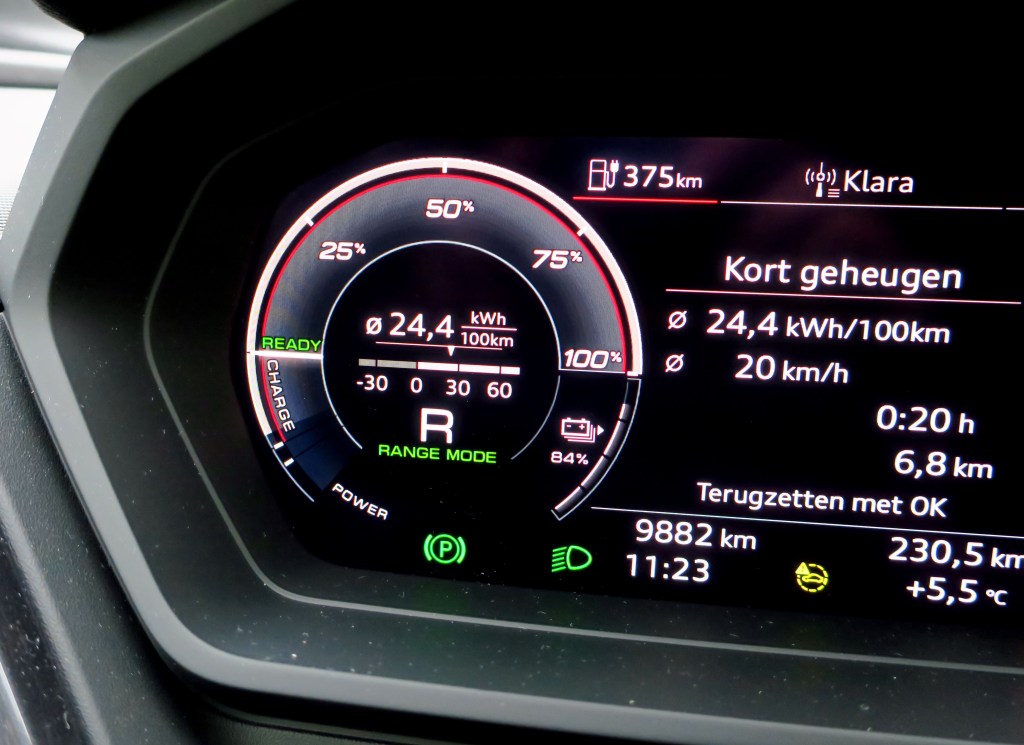
When it comes to range, your driving style is here of paramount importance. You see it clearly on the photo showing the instrumentation: when collecting our test car, we drove it gently to the motorway, where we drove a constant 95 km/h, just a bit faster than the trucks, to reach our photo spot. Consumption was then a very reasonable 15,2 kWh/100 km, over 19,6 km at an average speed of 42 km/h.
A cold start in the morning, with heater full ablaze and just some slow stop and go traffic paints another picture. There the consumption over 5,4 km was a whopping 43,6 kWh. The following photo tells the story.
When we take the WLTP consumption as the norm, being 19,3 kWh, then the effective range would be 530 km. In practice, you can expect a useable range of a good 400 km.
There are different driving modes on the Audi, one of them being the “Range” mode. It limits power and sets a maximum speed of 90 km/h.
Charging at the home wallbox is possible up to 11 kWh, and on public charging points you can “fast charge” your Audi at not less than 125 kWh. Then it takes only 10 minutes to add an extra of 130 km to your range.
Practice in our country is of course rather different to say the least. 98 % of our existing condominium and apartment buildings have NO wallbox provisions in their underground garages, not even electricity sockets in many cases, limiting possibilities of enjoying EV propulsion greatly.
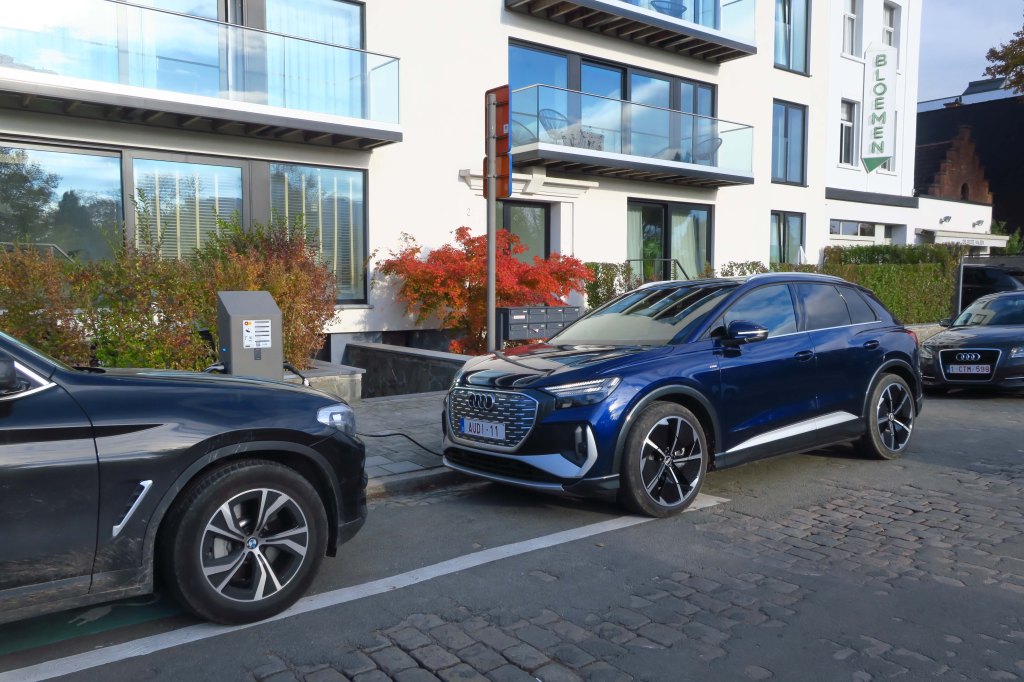
My nearest public charging point is about 1 kilometre away, and this is not a “fast” charging point. Allowed time for charging is also limited to 3,5 hours. Belgian municipalities – at least those near Antwerp – have still to wake up to reality that the charging points have TWO sockets and can actually charge two cars simultaneously. The square they paint on the pavement actually is clearly meant for ONE car. Users of the charging point are so kind and gentlemen-like to ignore this, so your servant could charge the Q4 too, as the following photo shows, which leaves one certainly perplex…
Driving the Q4 to Knokke, we found no unoccupied charging points within a reasonable walking distance from the place we stayed, so the next day we used the “Range” Driving mode to get us home again. It was a magnificent and leisurely drive…
Car manufacturers are certainly not to blame here. Their products increasingly offer useable ranges, and we could easily plan a longer route on the Audi, where the touchscreen clearly indicated which charging points en route we could use, how long we had to charge, which were open, etc.
Of course, providers are working hard to change the situation. At the moment of writing, IONITY is invetsing 700 million € for 5.000 extra HPC charging points in Europe.
Comfortable and agile
Besides room of its occupants, the Audi Q4 also offers a genuinely comfortable ride and steering is also precise and engaging. Audi’s are build to deliver driving pleasure, and this is also found in this Q4. A well balanced car, certainly making the very best of what the MEB platform has to offer. The same goes for the brakes, which can be well dosed to come to a smooth stop.
We also mention here the “coasting function”. When one hasn’t chosen the “B” mode, the Audi will just coast along when you lift the throttle, and this adds greatly to the “Zen” driving pleasure, once you have mastered the art of anticipative driving.
Of course you can recuperate energy when decelerating, or you can leave everything to the wisdom of this Q4. Indeed, you can put the Predictive Energy Assistant at work, which will interpret road signs and navigation data. Then the system will calculate for you continuously the right balance between sailing and energy recuperation, no less!
Conclusion
Audi has succeeded in designing and building a magnificent compact EV on the MEB platform. A car with impeccable finish, oozing with style, panache, good comfort and handling, very good range and performance, and on top of all that roomy too.
Of course this has a price tag, but it is a timelessly styled premium car, one of the very best which ever rolled of VW production lines.
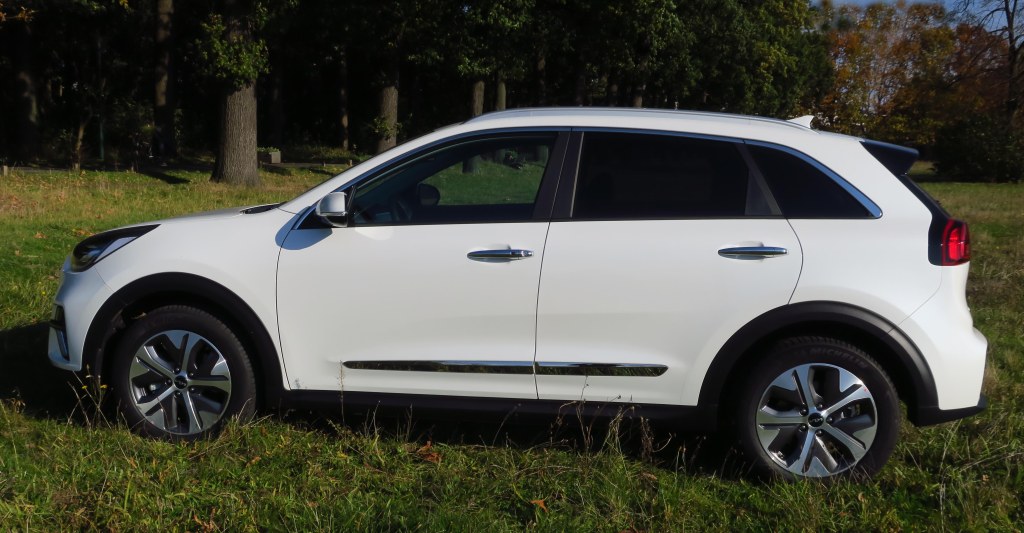
The Kia Niro is already a few years amongst us, first electrified as hybrid, then plug-in hybrid, and finally as a “pure” EV.
The competition has become a lot stronger since its introduction, notably with newcomers as the Volkswagen ID.3, the Peugeot 2008 and the Citroën ë-C4, but this Kia still has a lot of qualities which make it still earn very well an excellent place its segment. Of course, Kia is ready for this competition, and at the moment of this test going to press, it presents a completely new version of the Niro at the Seoul motor show, but the present model is still relevant enough to put it through its paces for you here.
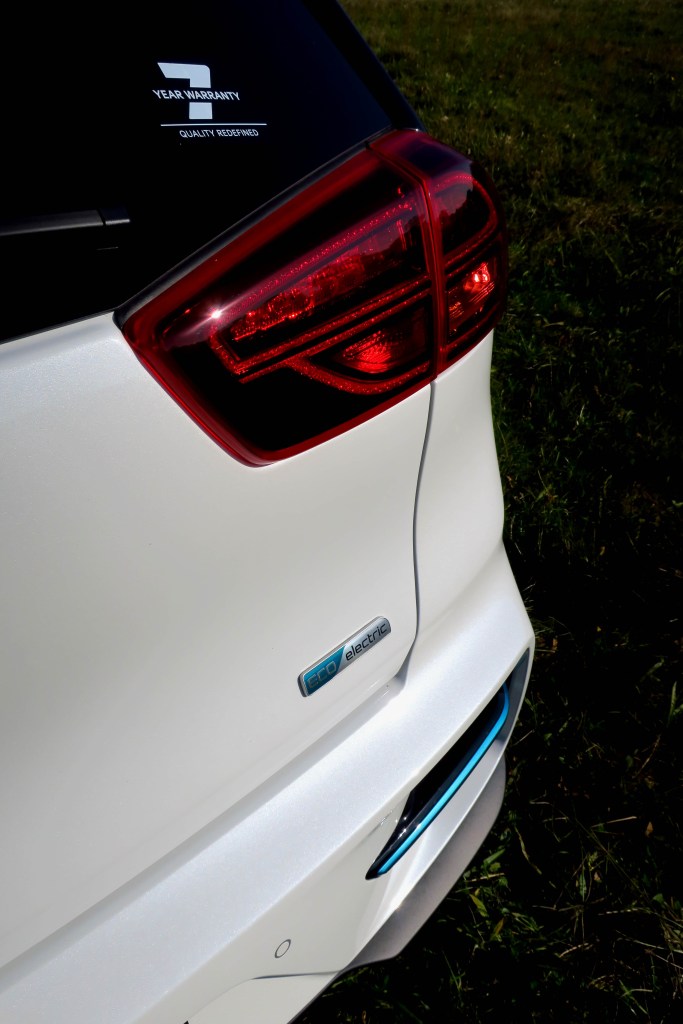
We should also not forget that this Kia EV with its 64 kW battery set the trend towards longer ranges: according to the WLTP norm, it is still good for 455 km…and on top of that, it offers very good value for money, with a 7 year guarantee!
Hans Knol ten Bensel
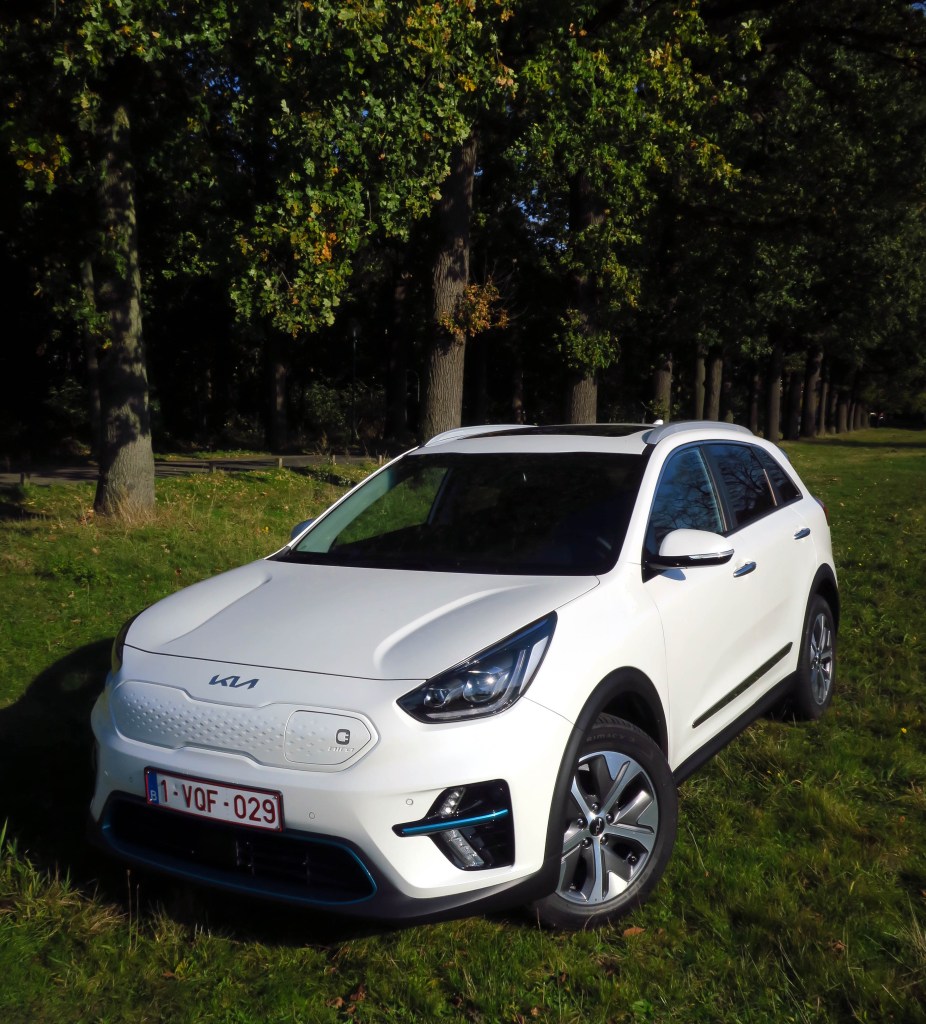
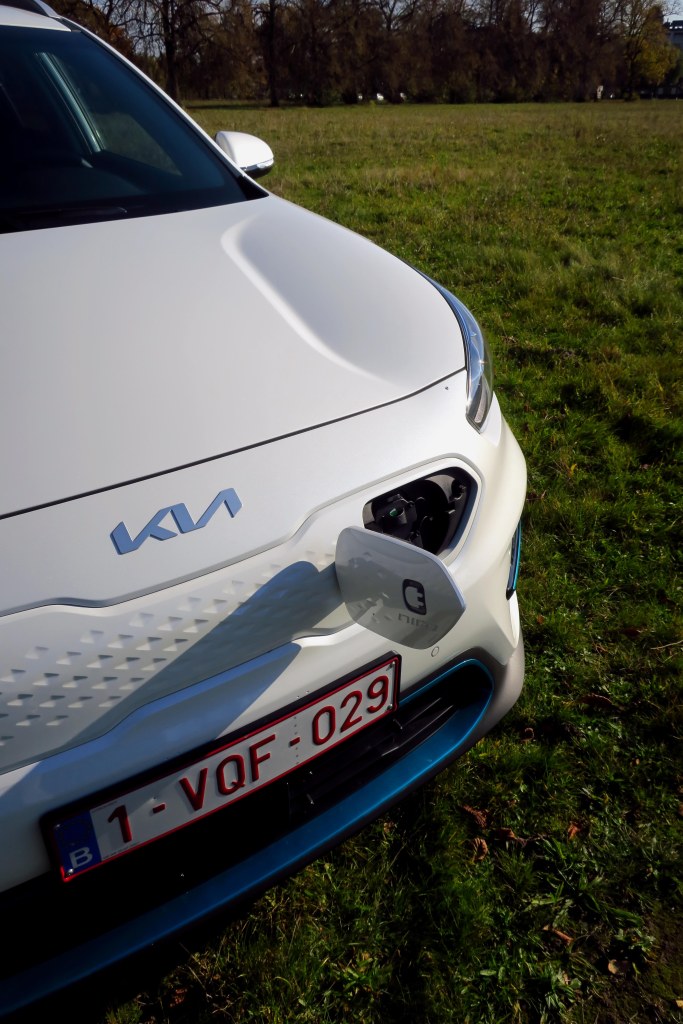
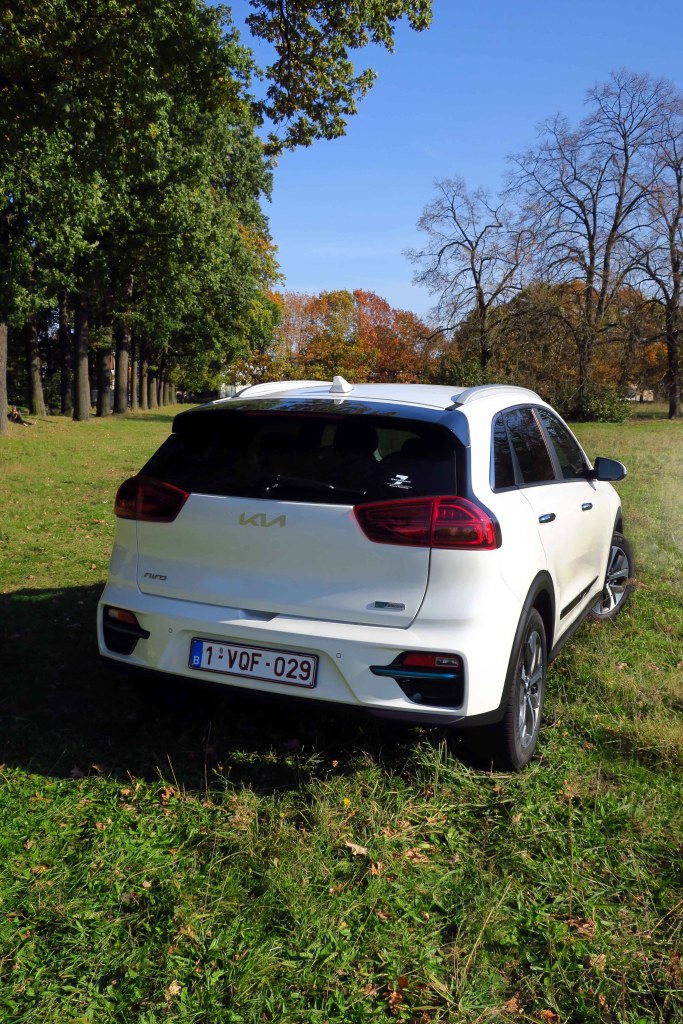
The Kia Niro still has very pleasing and now already familiar looks, with some specific blue coloured accents for the EV version. The front end clearly shows its EV character, and also the flap of the charging sockets is clearly visible. The cabin is well laid out, with classic disposition of instrumentation, commands and central touchscreen, so indeed one would hardly suspect sitting in an EV vehicle. This is all for the better, as one is very soon familiarised in using and driving this Niro.
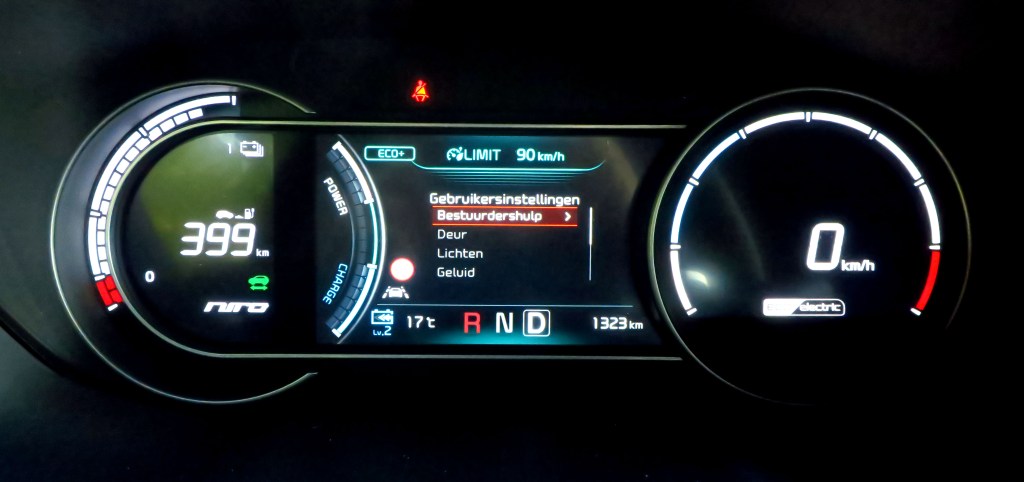
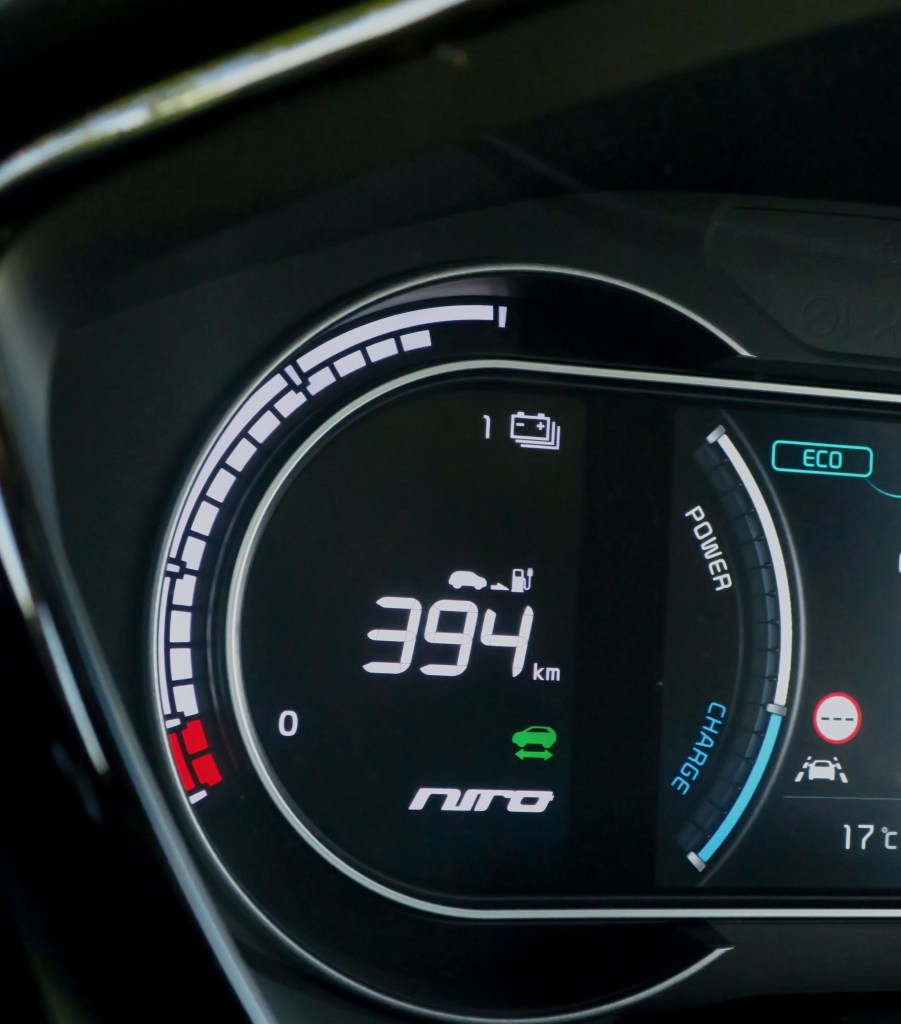
The display in front of you clearly indicates of course battery status and range, as well as the immediate or average consumption in KW/h. Soon one notices that this 150 kW or 204 HP Kia is quite frugal, where your driving style is of prime importance of course.
The manufacturer quotes 15,9 kW/h according to the overall quite realistic WLTP cycle. We took the test car on a lengthy trip to Holland, using the ECO mode throughout, and easily achieved an average of 17 kW/h.
It was delicious to be able to make this trip without the usual range anxiety, and on top of that to find plenty of public charging points in the Netherlands, not even 50 meters away from the house of the family member where we stayed over the weekend. All in all, in this ECO mode, a range of over 400 kilometers is even in more wintry conditions easily achievable when adopting a normal driving style.
Having said this, EV cars have decidedly come of age with our northern neighbours, where the e-Niro has been the top selling car in 2020 by the way…
Smoothness combined with power…
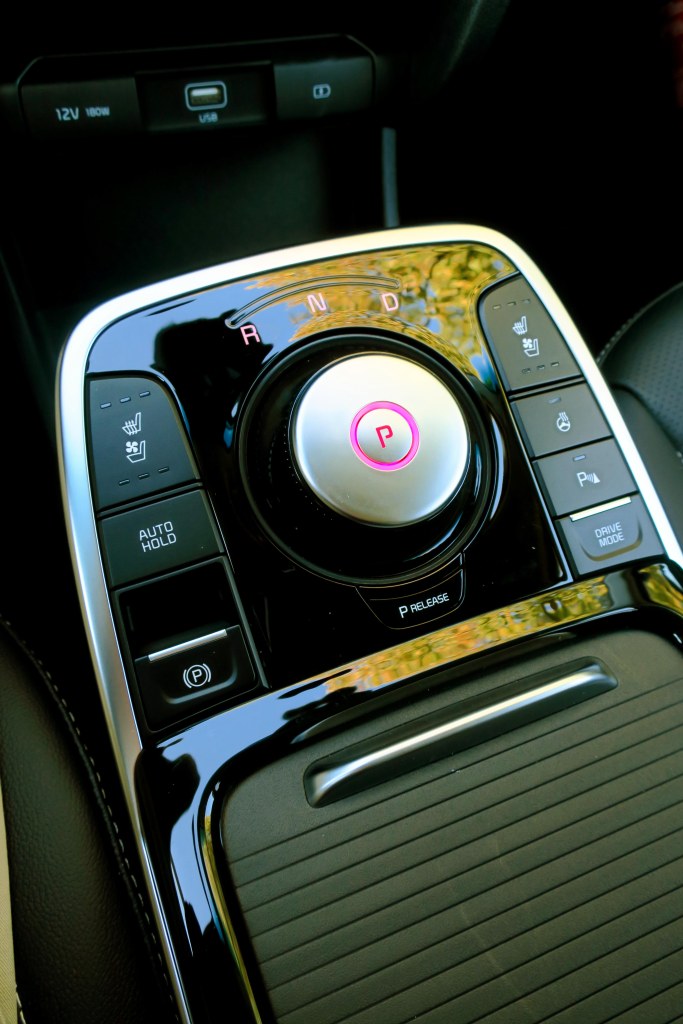
As a pure EV befits, “Zen” like feline and vibrationless power is for you to enjoy here. On the centre console is a familiar circular knob which lets you choose between drive and reverse, as we have seen in Jaguars and Land Rovers.
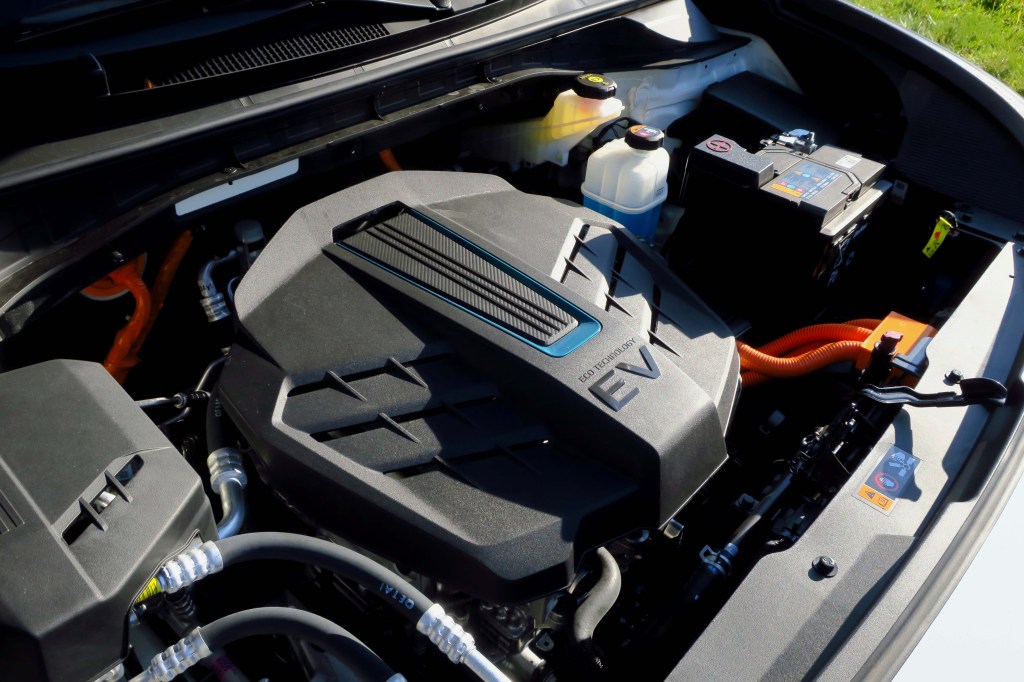
Off you go, and indeed, this Kia has under the hood what it takes. The front wheels are driven, and will pull you from 0 to 100 km/h in merely 7,8 seconds, which is no small feat as one knows that the kerb weight of the e-Niro is 1712 kg. Top speed is a very creditable 167 km/h. So performance wise, one is rather spoiled too, besides of course the uncanny smoothness and silence of the drivetrain.
There are paddles at the steering wheel column which let you choose the amount of regenerative braking, so “one pedal” driving is easy to achieve.
On the technical side, let us tell you here that our test car was equipped with the lithium-polymer 64 kW/h battery and that the permanent magnet synchronous motor has a power of 150 kW/204 HP and 395 Nm of torque.
For home charging, one is of course well advised to install a three-phase wallbox. With the optional three phase onboard charger, you can be fully charged in some 4,5 hours.
Roomy and practical
The e-Niro is quite roomy, with sufficient legroom also for taller passengers in the rear, with standard luggage space being a good 451 and 1405 liters.
With the rear cover in place, the volume is reduced to 280 and 1175 liters respectively. In the cabin, there is enough storage room in the central console and beneath the central armrest as well as the door bins. As we said, using infotainment and all the commands for heating/airco/ventilation is intuitive, and we also used the voice command to good effect for navigation amongst other things.
Safe handling
The e-Niro will not exactly invite you to throw it around corners, but its handling is fine to say the least. Sudden steering wheel movements will be met with initial understeer, with well controlled oversteer by the ESP when you lift the throttle. This e-Niro will not lean unduly in fast corners, has good straight line stability and is comfortable too.
Conclusion
The present e-Niro with its attractive range is still very much a desirable EV, combining excellent performance with low E-consumption. Add to this the good value for money considering the space and equipment found, with last but not least the 7-year warranty. You will agree that this EV-range trendsetter which will accompany you for many years in to wonderful “Zen” world of EV motoring and mobility.