Volkswagen takes a bold step towards the affordable EV for the masses with its ID.2all* concept car.

It’s coming: Volkswagen brought us a first glimpse of an all-electric Volkswagen costing less than 25,000 euros with their “ID. 2all” concept vehicle.

It is of course front-wheel drive, range of up to 450 kilometres, innovative technological features such as Travel Assist, IQ.LIGHT or Electric Vehicle Route Planner and a new Volkswagen design language.

Technical buffs are interested to know that this new “E”VW for the masses will be based on the MEB Entry platform and is one of ten(!) new electric models that Volkswagen will launch by 2026.

In my modest opinion, VW takes here a formidable and bold gamble… will the European car markets (and more specifically its electric infrastructure) be ready for this?

Read further about this “milestone” E-VW…it is sooo interesting and will be a harbinger for things to come!  

Hans Knol ten Bensel

VW’s goals and ambitions with this new true “E”-VW…

It is certain that VW wants the wider public to again fall in love with its cars: Thomas Schäfer, CEO of Volkswagen Passenger Cars stated it clearly: “We are transforming the company rapidly and fundamentally – with the clear objective of making Volkswagen a genuine Love Brand.”

The concept of “Wertarbeit”, a concept so beloved by the Germans, which can be freely translated to “Quality work which creates value”, is also not lost in the boardroom and lobby’s of Volkswagen. Imelda Labbé, Member of the Brand Board of Management for Sales, Marketing and Aftersales, stated it clearly: “We are transferring the typical Volkswagen virtues to the new world of mobility: top quality and workmanship, outstanding software and digital services with genuine added value.”

Mechanical perfection and reliability is therefore of prime importance, and so VW adops well-tried solutions, present in the MEB platform, which by the way uses also all the automated product processes which are already well in place.

Kai Grünitz, Member of the Brand Board of Management responsible for Development, states it for us: “The ID. 2all will be the first MEB vehicle with front-wheel drive. We are exploiting the great flexibility offered by our modular electric drive (MEB) platform and will set new standards in terms of technology and everyday usability with the MEB Entry platform.”

This VW will also certainly be no sluggard: It has a powerful electric drive motor with an output of 166 kW / 226 PS and will have a calculated WLTP range of up to 450 kilometres.

A new design…

The ID. 2all concept vehicle was designed by Andreas Mindt, who took over as the new Head of Volkswagen Design on 1 February 2023. Volkswagen is in his blood, as his father was a designer in Wolfsburg before him. Andreas Mindt joined Volkswagen in 1996 after studying design. He created bestsellers such as the first Tiguan and the seventh-generation Golf. In 2014, he moved to Audi in Ingolstadt as Head of Exterior Design.

The next step followed in 2021 when Mindt became Director of Design at Bentley in Crewe, England. However, he has always maintained his close ties to Volkswagen and continues to be the proud owner of a Beetle. Andreas Mindt on his first project as Volkswagen Head of Design: “We are transferring the DNA of our icons into the future. The ID. 2all is therefore also homage to the Beetle, Golf and Polo.”

Andreas Mindt has developed a new Volkswagen design strategy – one that will ensure the brand’s DNA remains clearly recognisable in the future. Mindt: “I am focusing on three main pillars: stability, likeability and excitement.”

“The most important value for Volkswagen design is stability,” says Andreas Mindt. This includes value stability, stability of form, reliability and recognisability. “A second core element of the brand is likeability,” explains the designer. The Beetle, Volkswagen bus, new Beetle and ID. Buzz clearly demonstrate this. “Stability and likeability – we have to achieve these two values in every respect.” But there is much more to a successful Volkswagen than that: “We also want to create excitement in our customers.” For example, with added dynamics, improved operability or the classic “form follows function” of an ID. Buzz or Golf. Technologies, forms and concepts are what make a Volkswagen desirable. Stability, likeability and excitement are typical characteristics of the Volkswagen design, the Volkswagen feeling. Mindt assigns three design elements to each of these three values. They are all reflected in the ID. 2all.

I was happy to read Mindt’s comments on design, which I have repeated time and again in my guide tours at Audi Brussels: Automotive design is an art form, but there are still clear laws that apply – such as the golden ratio. I couldn’t agree more with Andreas Mindt: “Likeability is created by the golden ratio. This is quite simply the ratio of three fifths to two fifths.” Leonardo da Vinci already followed this geometrical principle in works such as the Mona Lisa. The designer continues: “The feature line running below the window shoulder is located on exactly the golden ratio line of the ID. 2all. Both the Beetle and Golf also always followed the principle of the golden ratio.” People perceive this division created by nature as being pleasant and likeable.

Easy to use…

VW has learned from the usability mishaps in the commands of the early ID’s. VW now calls it ‘self-explanatory operation’. The touch display (diagonal: 32.7 cm / 12.9 inches) of the infotainment system has a new menu structure. Below this there is a newly developed, separate air conditioning control panel. Other vehicle functions are operated by means of a menu control in the centre console, which can also be used to change the look of the digital instruments. The new multifunction steering wheel is designed to be clear and self-explanatory – two thumbwheels on the left and right and two buttons each, and nothing else.

Charged to 80 per cent in less than 20 minutes…

The battery permits a calculated WLTP range of up to 450 kilometres. At DC quick-charging stations, the battery can be charged from 10 to 80 per cent in 20 minutes.

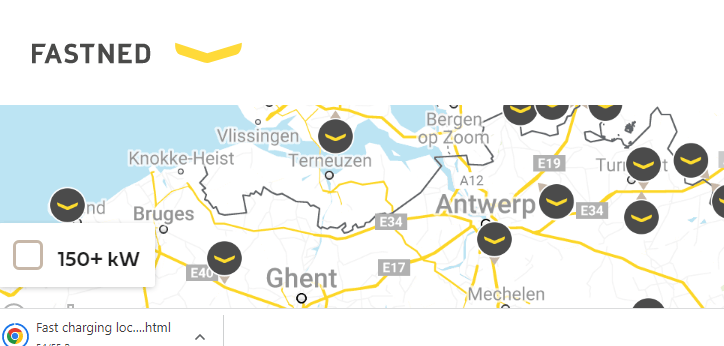
Provided we find these stations! In our country, the situation is still abysmal what these quick charging stations is concerned. Take Fastned: when I want for instance to drive from Antwerp to Knokke, I need to have enough range to make the 210 km trip back and forth to Antwerp, and to make things even worse, there is no Fastned charging station in the whole Antwerp region so far, and NONE in Knokke… so I would have to go towards Brussels in Steenokkerzeel, about 43,7 km from Antwerp, to find one… ridiculous isn’t it? I need at least 260 km range for the trip! To avoid any misunderstandings, we looked here only for Fastned charging stations. There are of course some other 4 to 38 kW charging stations, but any of the apps to find chanrging stations do NOT show whether you can use your bank card or not. At more than 90 %, it is not possible…

Back to our concept car…

Of course, this VW accelerates like a bullet: 0 to 100 km/h in less than 7 seconds. Its top speed is limited to 160 km/h.

A bold step for Volkswagen, but a very logical one if you take a look at its strategy. Soon, we will live in (very) different times…

Hans Knol ten Bensel

We drove the Alfa Romeo Tonale MHEV: fit for a long love affair…

The Alfa Tonale will always be a car close to my heart. Not least because I stood by its cradle, I have literally seen it born.

I was invited at the Centro Stile Alfa Romeo by Chief designer Klaus Busse and his team when the plaster and wood prototype of the Tonale was just finished. We admired its typical proportions in tune with the higher stance of an SUV, with a horizontal accent line reminiscent of the styling language of the famous ‘Disco Volante’ two seater, created by Carrozzeria Touring back in 2013 and the original Disco Volante 1900 C52 born 1952 also designed by the Milanese coachbuilder Carrozzeria Touring…

In these columns you can also read our driving impressions of the 4WD Tonale Hybrid, which we tested on the Balocco proving ground and its surroundings. This time we took the ‘Mild’ hybrid FWD version for you on a road test through France. Does it offer the unmatched panache of a true Alfa?

Just read on…

Hans Knol ten Bensel

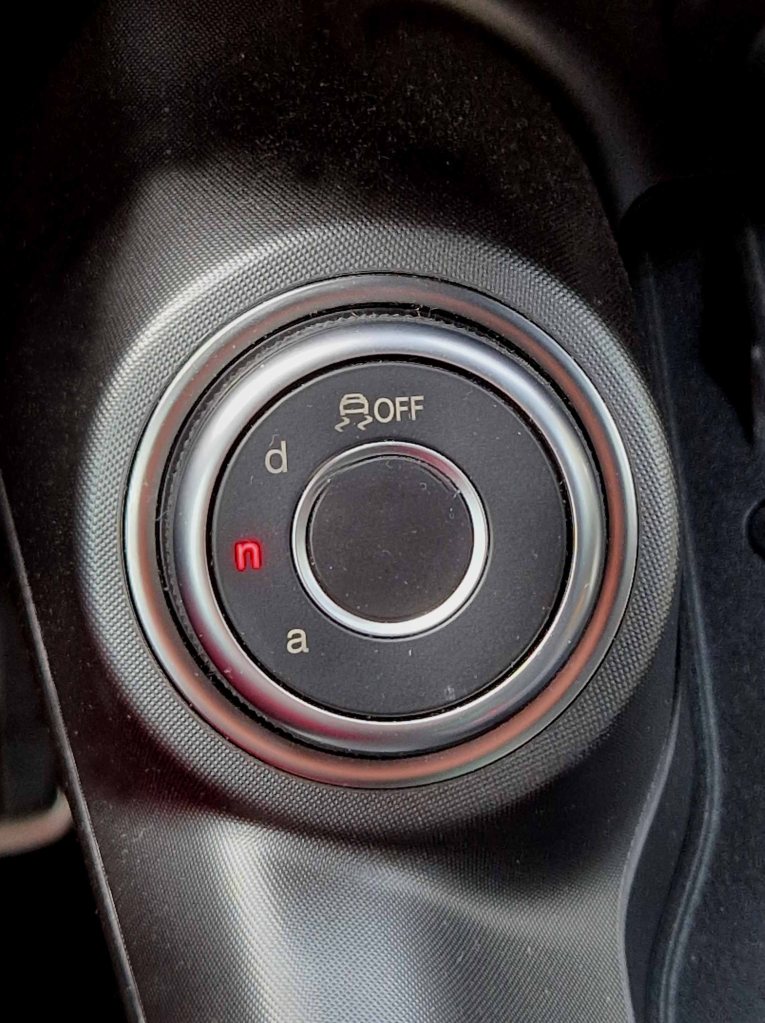
Sliding behind the wheel one is immediately engulfed by the Alfa atmosphere. Behind the classic Alfa three-spoked steering wheel, your fingers meet two very large gearchange paddles, the very same as one finds on other Alfas and Maserati’s. Round dials greet you, embedded in two large clusters. Nice! The starting knob is nestled on the left branch of the steering wheel, the DNA selector sits close to the driver’s side on the centre console. All this befits a true thoroughbred.

Smooth power

Pushing the start button will fire up the 48 V hybrid system, and the first few meters are driven on EV power from the 0.8 kWh battery. From the size of this battery one can really understand this is a (very) mild hybrid. Just to put things in perspective, the battery on my Lexus CT 200h, a model which was launched in 2011, is a 1.3 kWh nickel-metal hydrid (NiMH) one. The Audi Q5 Hybrid – launched back in 2014 – also had a capacity of 1.3 kWh. By the way, the big Mercedes E400 Hybrid, launched back in 2014, had (only) a battery with a capacity of 0,8 kWh, the same as the Tonale.

A smaller capacity battery has of course its advantages is size and weight. The battery here has a volume of about 11 liters and does not affect the size of the trunk because it is installed under the central tunnel, between the front seats. It weighs only 13,5 kg by the way. The “dual voltage” system with DC/DC converter from 48 to 12 Volts manages the interface with the electrical architecture of the Alfa.

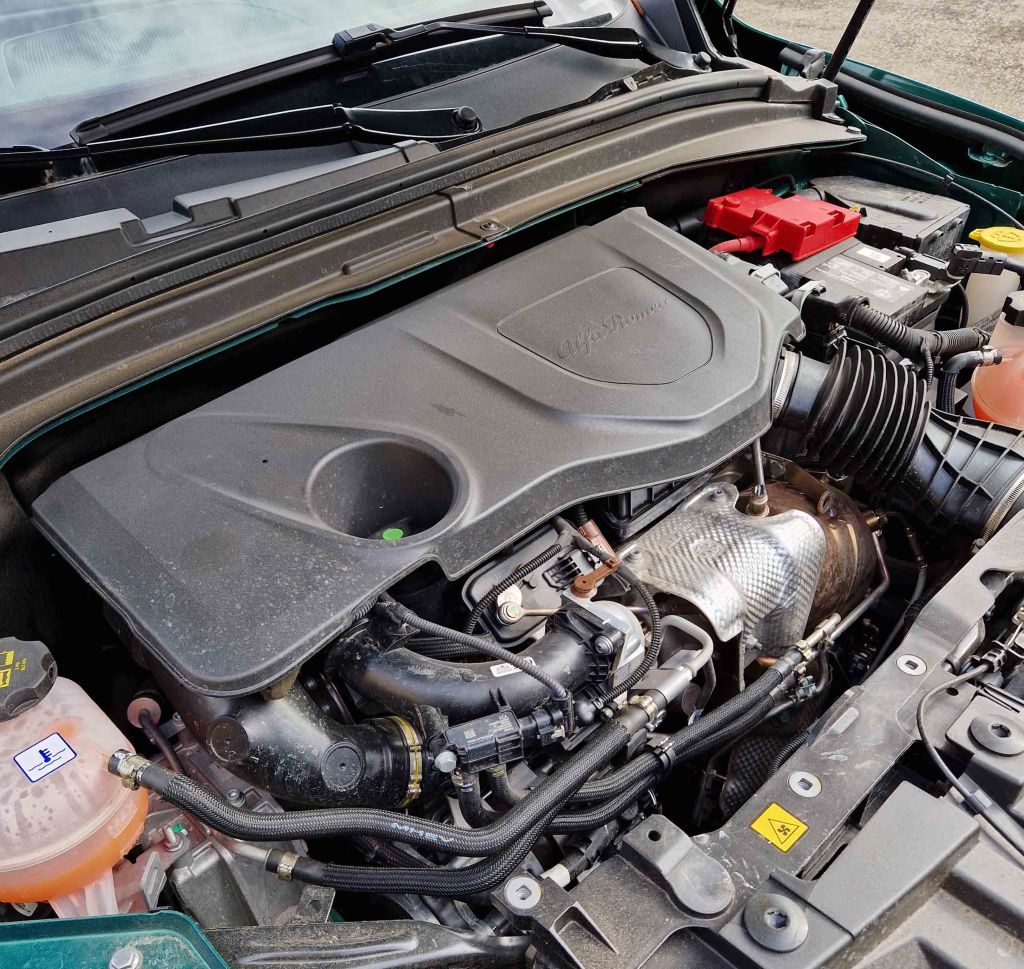
In the Tonale, the battery drives a 48-volt 15-kW and 55-Nm “P2” electric motor. (135 Nm thanks to the 2.5:1 transmission ratio). Indeed, after the initial start, very soon the 1,5 litre four cylinder sets in. The transition from E-power to engine power is very smooth indeed, as the 1.5 liter-gasoline engine with a variable-geometry turbocharger is paired with 7-speed Alfa Romeo TCT dual-clutch transmission as well as the electric motor. In stop start situations at traffic jams, the Tonale is able to drive solely on E-power, but indeed, not for long, due to the limited capacity of the battery. Also as soon as one depresses the throttle a little bit deeper because more traction power is wanted, the engine sets in anyway.

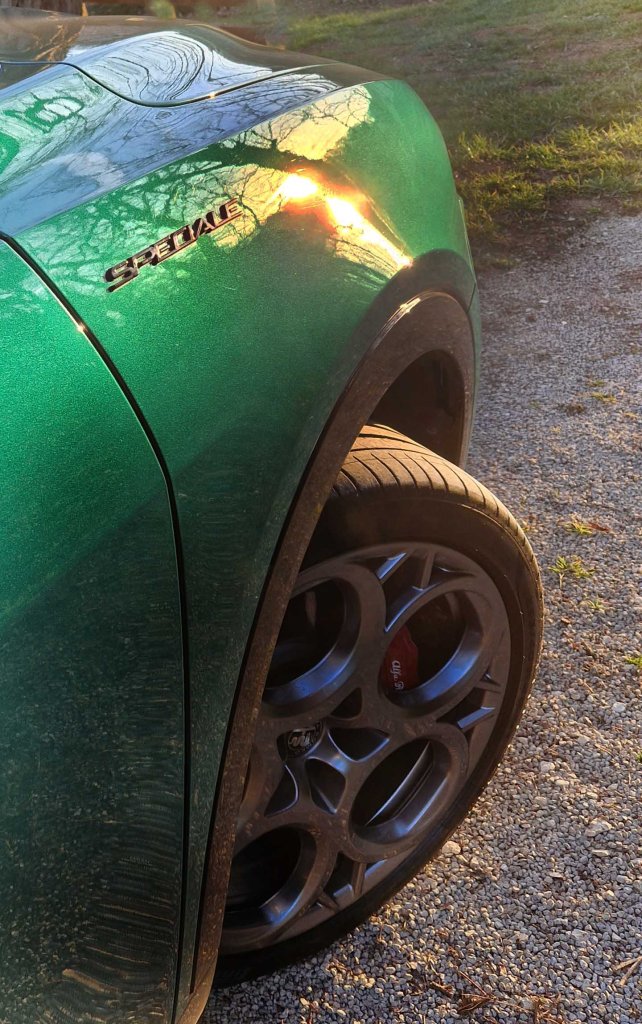
One can choose between two power levels of the engine, either 160 HP or 130 HP. The “edizione Speziale” equipment version of our test car can be had with both power versions. We would think that performance wise, the Tonale leaves nothing to be desired. In the 160 HP version, you will shoot from 0 to 100 km/h in merely 8,8 seconds and reach a top speed of over 210 km/h. With the milder 130 HP version, the Tonale is no sluggard either, as our test car amply showed. The acceleration time from 0 to 100 km/h is 9,9 seconds, and the top speed is a good 195 km/h. The engine sound is marvelous, and very well dampened. It never is obtrusive, on the contrary, it is quite melodious, and will please not only the Alfa aficionados.

The iconic DNA selector lets you choose between Dynamic, Naturale and the Advanced efficiency modes…

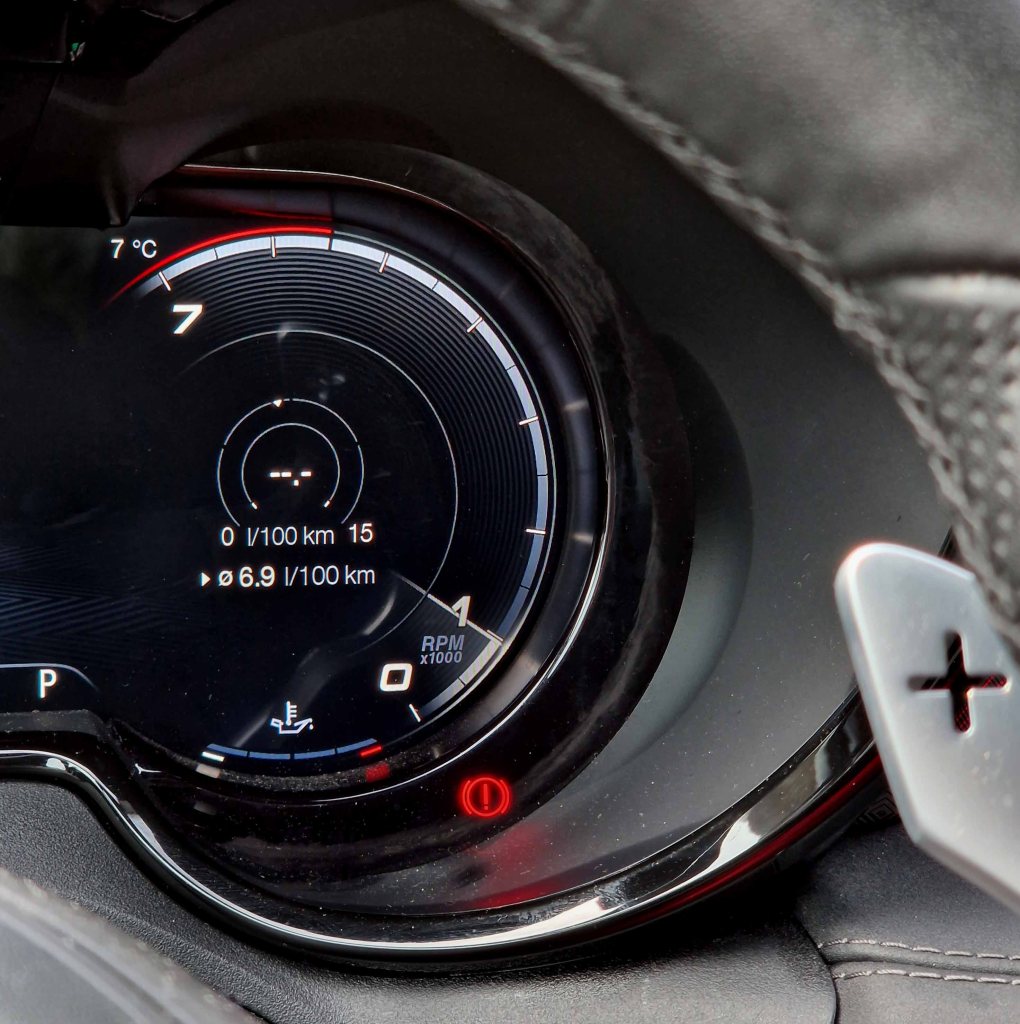
The engine, which redlines at 6500 rpm, is also turbine-like smooth and exempt from any vibrations.  At cruising speeds, it is almost inaudible. Alfa quotes an average WLTP consumption of 5.6 – 6.2 l/100 km. We managed an average consumption of 6,9 liters. Higher (cruising) speeds cost some fuel, and the Tonale invites to it… On secondary roads and slower urban speeds, the consumption hovers with some anticipative and smooth driving easily between 6 and 6,5 liters. We can only repeat ourselves that the driving style greatly influences your fuel consumption…

Acceleration at intermediate speeds is excellent and smooth, with the large gearchange paddles of course inviting you to intervene manually and let the engine “sing” in its ideal rev range when hurtling up and down mountain passes. Pulling power of the engine is quite good, as it develops 240 Nm of torque.

Curve master…

Indeed, on winding roads the Tonale really comes into its own, with its direct steering, (Alfa tells us it’s the most direct steering in its segment with a 13,6:1 ratio) and excellent suspension. The Tonale Hybrid has the Alfa Romeo Dynamic Torque Vectoring and FSD (Frequency Selective Damping) shock absorbers as standard equipment. We drove this Alfa on the mountain roads in the French Massif Central, also on the legendary Col de Burzet and the stretch towards the plateau at Lachamp Rafaël, an iconic stage in the Monte Carlo Rally, and it was a delightful experience. Stable, precise, virtually no body roll and excellent responsiveness, these were the ingredients which put a smile on our face.

Also the brakes earn a word of praise. The Alfa Romeo Tonale adopts the Integrated Brake System (IBS), an electromechanical system that combines stability control with conventional servo brakes. The system guarantees instantaneous brake response thanks to the integration between electronics and mechanics, together with weight optimization, optimal feeling and the total absence of pedal vibrations. In addition, the IBS manages the imperceptible blending between regenerative braking (to maximize energy recovery) and dissipative braking (achieved through the braking system).

What’s more, the Tonale adopts standard fixed calipers by Brembo, with 4 pistons and self-ventilated discs at the front and full discs at the rear.

…with dynamic vectoring

The front-wheel drive Tonale has standard an electronic self-locking differential. The system is built into the DNA selector and exploits the effect of the braking system by simulating a limited mechanical differential. It certainly works beautifully. It brings effective driving dynamics by controlling the vehicle stability, and by redirecting the power to the wheels when accelerating on corners. The system also provides improved greater control on slippery surfaces, as well as greatly reducing understeer, transferring torque from the inner to the outer wheel, ensuring better longitudinal acceleration and consequently better road holding. This Alfa feels truly nimble and can be thrown around corners in total confidence.

 Alexa assists you on (all) the way…

The Tonale has Amazon’s Alexa voice system built in. So you enjoy hands-free, voice-initiated interactions. Infotainment is further of course top notch with a customizable Android operating system and 4G connectivity with Over-the-Air (OTA) updates. This system includes a fully digital 12.3” screen, the main 10.25” touchscreen unit which is totaling 22.5”. The Alfa Romeo Tonale enables Level 2 autonomous driving by combining the “Intelligent Adaptive Cruise Control” (IACC) and “Lane Centering” (LC) systems and the forward-facing camera, which longitudinally and laterally monitors all the car’s surroundings.

We also appreciated the dual-zone air conditioning, pleasant ambient light, sophisticated infotainment system, ventilated and heated front seats, and a formidable 14-speaker sound system by Harman Kardon. The reception of the radio is also quite good, even on FM. We were able to listen to France Musique and France Culture with crystal clear reception in mountainous areas…  The Tonale also has an electric tailgate and a wireless charging pad.

Conclusion

The Mild Hybrid Tonale is every inch a true Alfa, which is an excellent drivers’ car with formidable handling, combined with mechanical sophistication, docility and very good urban manners. It is also reasonably economical, provided you adopt a more sedate driving style. Finish and build quality is up to scratch, and equipment in our tested “speziale” equipment version is lavish to say the least.

Hans Knol ten Bensel

We drove the Peugeot 308 SW GT Diesel Blue HDI: your stylish lion to go places…

Peugeot styling has panache and zest, and a short look at this 308 SW will convince you. The 308 SW we tested here for you came even in the GT version, which adds even more flamboyance.

The 308 finds a technical sister in the DS4, and its technology is well proven indeed.

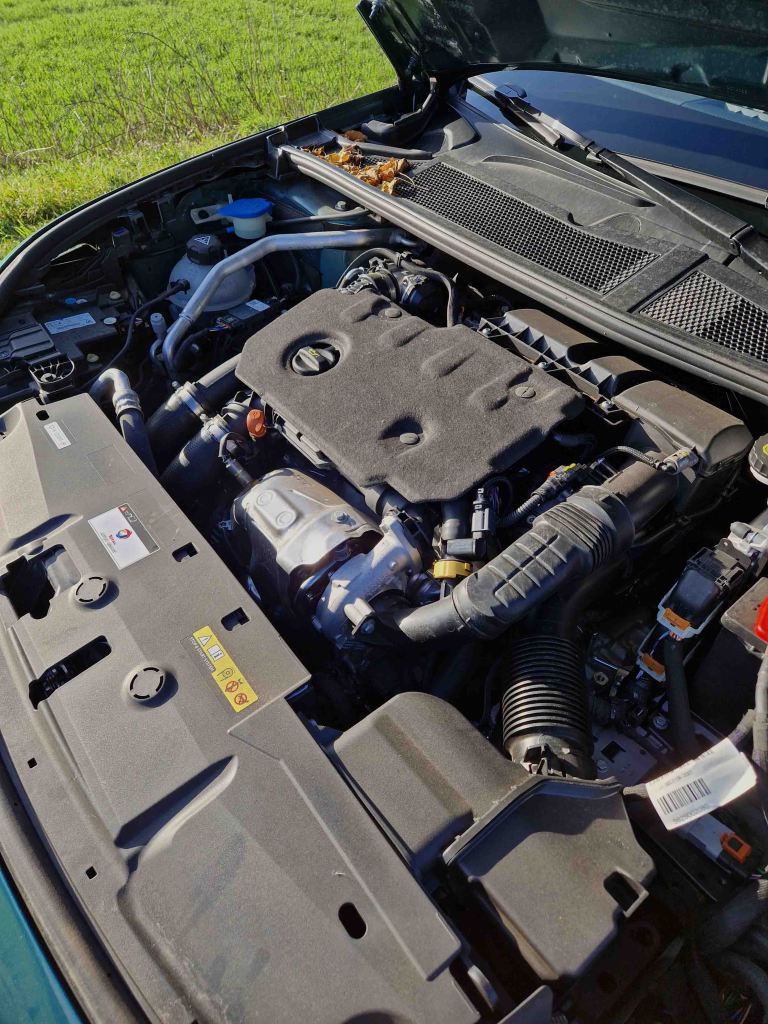
Under the hood of our test car pounded the powerful heart of a 1,5 litre “Blue HDI” Diesel, and it impressed us greatly. Let it be said, modern day diesels have come a (very) long way, combining excellent pulling power with legendary economy. Here it was coupled to the Aisin 8 speed auto box we see also in many other models of the Stellantis group, as does the engine by the way.

We asked ourselves how a diesel would compare with our modern petrol engines and (fully) electrified drivetrains, so read on!

Hans Knol ten Bensel

Sliding behind the stylish wheel of this 308 GT, our eyes immediately fell on the beautiful instrumentation. I think personally that the Peugeot stylists did a wonderful job. You have the impression to sit in a sports or racing car, reminiscent even of a formula 1 car, if you let yourself get a bit carried away. It certainly has character. The small steering wheel and the high positioning of the instrument cluster reinforce the feeling to sit in the cockpit of a very sporting machine. The size of the steering wheel also enhances the impression of agility and indeed encourages you to drive this Peugeot in a spirited manner.

Pushing the starting button lets the diesel come to life. It certainly changes from the velvety e-power we are now increasingly becoming accustomed to. Vibrations are clearly felt in the steering wheel, and even at cruising speeds some vibrations are felt. Indeed, the laws of physics inevitably come into play when the engine is very efficient and the gearing is very high indeed.

Of course, this efficiency results in stellar economy. According to the WLTP cycle, this 308 SW consumes merely liters in the urban cycle. On secondary roads, the consumption even drops to 4,5 l/100 km, and a modern Diesel is also absolutely king when it comes to high constant speed runs on the Autobahnen or Autoroutes. The WLTP cycle average quotes here 4,9 l/100 km. Co2 emissions are 129/148 g/km.

Are these figures realistic? Yes, if you drive accordingly. We repeat it time and again, one should drive with anticipation, use the available kinetic energy to the max to obtain decent fuel economy. This means coast as much as you can, instead of using the brakes. Drive in a fluid manner. You will in a few days be amply rewarded at the fuel pump. The average consumption in urban traffic of my Lexus CT 200h? 4,7 l/100 km, smoothly, no sweat. In the present state of affairs with still a fair amount of “grey” electricity, it wins the well to wheel CO2 contest still hands down.

So much for that. The torque of this 130 HP diesel is ample with 300 Nm. The 8 speed automatic takes well advantage of that, and acceleration from 0 to 100 km/h is a brisk 10,6 seconds. Top speed is 207 km, indeed, on the Autoroutes this 308 SW is fast.

Daily life with the 308 SW…

An aura of sporting panache pervades the interior. The quality of the materials and finish is impressive. We loved also the clean yet rather dramatic styling of the centre console and dashboard. Under the touchscreen is a smaller horizontal screen with a fixed layout where you can always select the main menu functions, and below that are manual switches for heating and ventilation, as one finds also in the DS4. This layout is logical, and you find your way soon enough, without having to consult a bible thick manual.

Peugeot wouldn’t be Peugeot if the seats were not excellent and the seating position is also beyond reproach.

Head- and legroom is good, also at the rear. Our modern cars have a very raked windscreen and when one wears a hat, as your servant invariably does, you have to be careful not to touch the roof rim. The Peugeot is no exception to the rule…

Boot space is more than adequate, 608 litres is available with both rear seat backrests up. Dropping them down expands the available load space to 1600 litres. This is where the longer wheelbase really pays off. Another bonus here is the ample legroom at the rear.

Top notch driving aids and connectivity…

The 308 SW in this GT livery offers a 360° camera, and parking is therefore a breeze. All the usual apps found in the more lavishly equipped cars brands of the Stellantis group are also found here, and of course Android Auto and Apple are available, and the ergonomics of the touchscreen which is slightly tilted towards the driver are also state of the art, as we said earlier.

Conclusion

The 308 SW is a typical modern day Peugeot. Well built and finished, a flamboyant styling language both inside and out, well performing and efficient, offering roominess and excellent everyday practicality. Its diesel engine makes it a candidate for frequent, high speed long distance use, and indeed when you are often on the road over a wider range, this is the version to choose…

Hans Knol ten Bensel

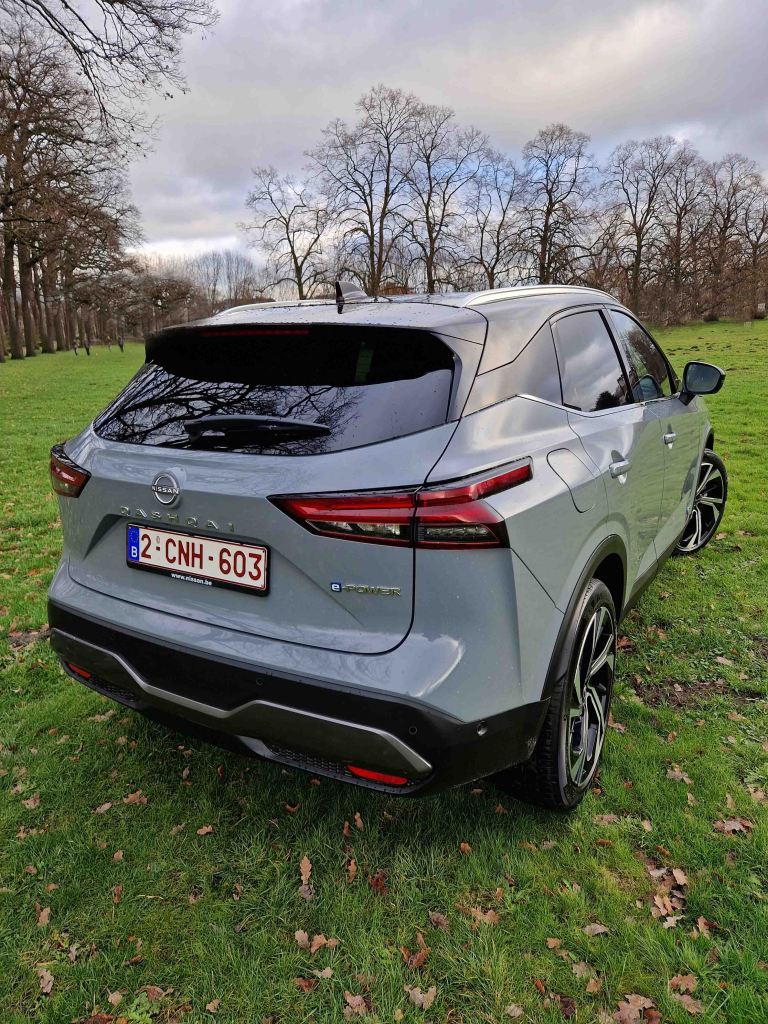
We drove the Nissan Qashqai e-power: enjoying the delights of EV driving…with no strings attached

We all know it too well: Battery powered full EV’s are just wonderful to drive, seducing you with their stream of vibrationless, quiet and instant EV power.

We also realize however that at least in Belgium and also in several European countries the public charging infrastructure seems to be still in its infancy, and when you don’t have a house with a driveway with your own charging unit, you can forget about fully enjoying your EV for private use.

Indeed, apartment or condominium inhabitants can also better look elsewhere: beefing up the power circuit in de building meets much resistance from the owners, and they also find the potential fire hazard of an EV car in their underground garage rather too big.

So if you want to sell a car to a wide public which wants to enjoy the EV smoothness, without the recharging troubles, then it is wise to develop a car such as this Qashqai “e-power.”

The Nissan engineers indeed took the hybrid concept a step further: the petrol engine, here a 1,5 litre three cylinder unit,  just generates electricity and the wheels are therefore only driven by an electric motor. Does it all work fine? Just read on…

Hans Knol ten Bensel

Full Hybrid the Nissan way…

Let’s tell it right away, this is definitely one of the very smoothest hybrids I have ever driven. Indeed, total EV smoothness is achieved as there is only the electric motor powering the car. This electric motor is good for 140 kW with a torque of not less than 330 Nm. So this Qashqai is indeed well powered, as the performance figures clearly show. This Nissan will accelerate smoothly from 0 to 100 km/h in merely 7,9 seconds, reaching an electronically governed top speed of 170 km/h.

The engine – the Nissan KR15DDT unit , a 1498 cm3 3 cylinder unit with direct injection, DOHC and CVTCS (Continuously Variable Timing Control System), is very well insulated and indeed is almost inaudible, adding greatly to the pleasant feel of driving a fully fledged EV. Just for the record, it develops 116 kW / 158 PS / at 4600 rpm, torque is 250 Nm between 2400 and 4400 rpm.

Nissan also names this engine ‘VC Turbo’, with those first two letters standing for Variable Compression. The engineers went to very great lengths: instead of conventional connecting rods, the pistons are joined to the crankshaft through motor-driven, multi-link devices which vary the top and bottom dead centre positions of the pistons. This allows to adopt a high compression when performance is wanted, or low compression to improve fuel economy. Soo clever!

But how about fuel efficiency and consumption? As there are invariably losses in the drivetrain in the generation of the electric energy, you are well advised to adopt a smooth driving style, driving with anticipation in order to save as much kinetic energy as possible. The less kW the engine has to generate given a certain distance, the better it is.

Of course, the hybrid concept in this Qashqai has also efficiency gains when the urban pace is low and involves many stops.

Simply because under these circumstances the EV motor does all the work, with the combustion engine recharging the battery under ideal load and revs, computer controlled of course. Indeed, only with the advent of electronic management of the drivetrain is this possible, but this has now been the case for many years, and has already been proven millions of times. It is good to note too that the e-power Qashqai has a 2.1kWh battery, which is somewhat larger than most non plug-in hybrids.

Therefore the Qashqai can achieve good efficiency in urban traffic, where we achieved a consumption between 6 and 6,5 l/100 km. On the open road, the engine has to feed rather more the electric motor with electricity, so when speeds are moderate, say up to 100 km/h, it is still possible to stay in the 6 litres/100 km range. 

It is only on the motorway at high cruising speeds that things are getting a bit awkward. The motor has then to feed the e-power to the electric motor for real, and this means averages between 7 and 7,8 l/100 km. So, what’s the verdict? EV smoothness and “zen” character of the drivetrain is yours indeed to enjoy fully, and we loved the Qashqai e-power for it. The consumption however will not break records here. You just need a very sensitive right foot and the constant awareness that developing kinetic energy costs money at the pump, and that you have to retain it as much as you can, adopting an anticipative driving style. Certainly in urban traffic the fuel economy is very creditable indeed…

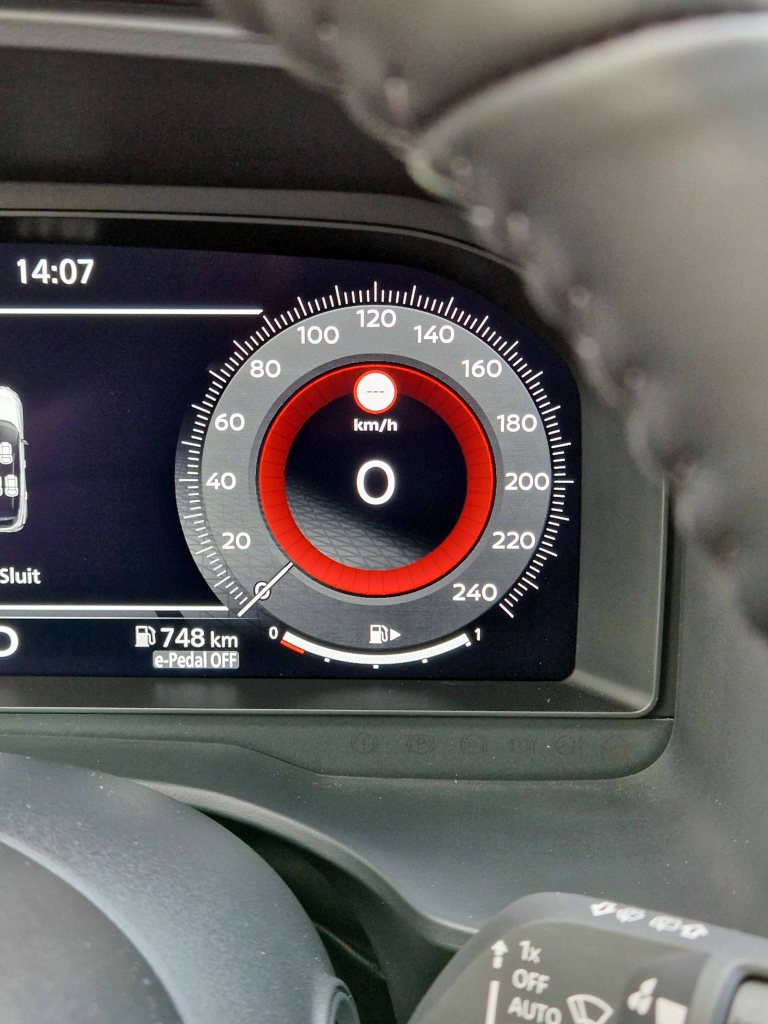
You have many choices in driving this Nissan: The D-Mode lets you select between normal, power and eco, the EV button lets you use the electric motor in urban driving conditions as much as possible, and the e-pedal lets the electric motor act as a generator when you lift the throttle

The qualities of a bestseller…

Did you know that in the UK the Qashqai is a bestseller in its segment? By the way, it is built in the Nissan factory in Sunderland, UK, where also the Juke and the Leaf roll of the production lines.

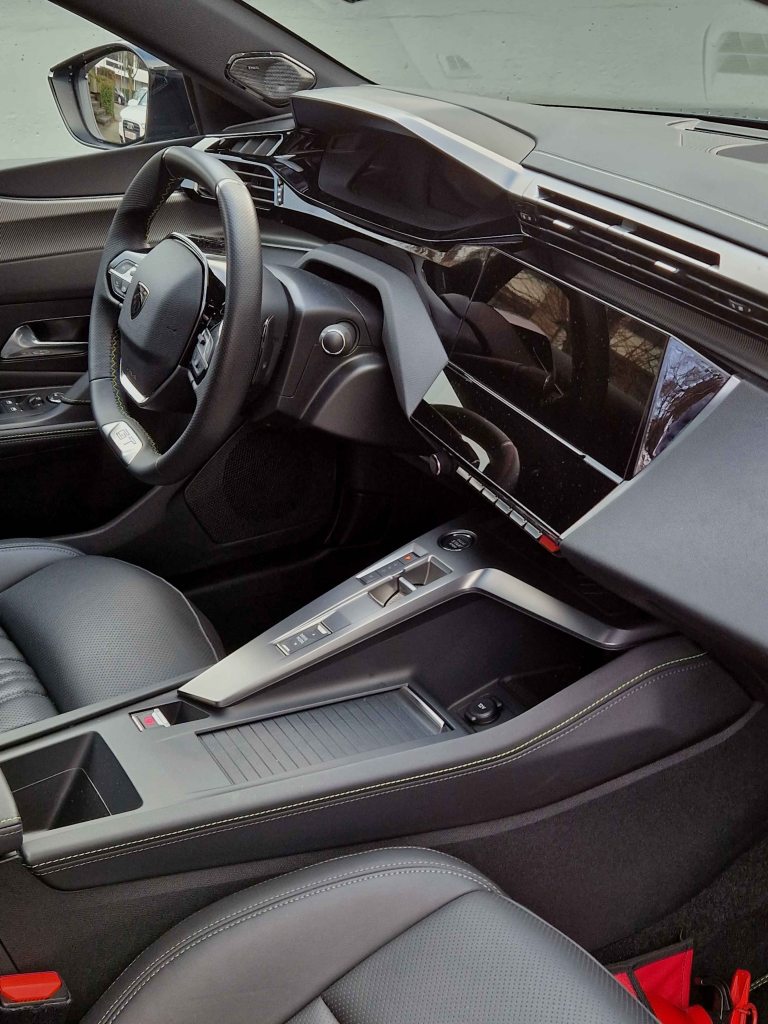
We can understand its success, as this SUV, which we tested in the Tekna top equipment version, has all the qualities to put a (broad) smile on your face. It has a very readable head-up display, a 12.3-inch ‘Nissan Connect’ touchscreen infotainment system, a powered rear tailgate and a of course many driver assistance functions. We liked the classic round dials, instrumentation buffs as we are, and also the good mix between touchscreen functions and physical knobs and levers.      

It is also practical, offering you a boot space of 505 litres, and it has very wide opening doors, a boon for mothers with toddlers which have to be heaved in the baby seats.

Comfort

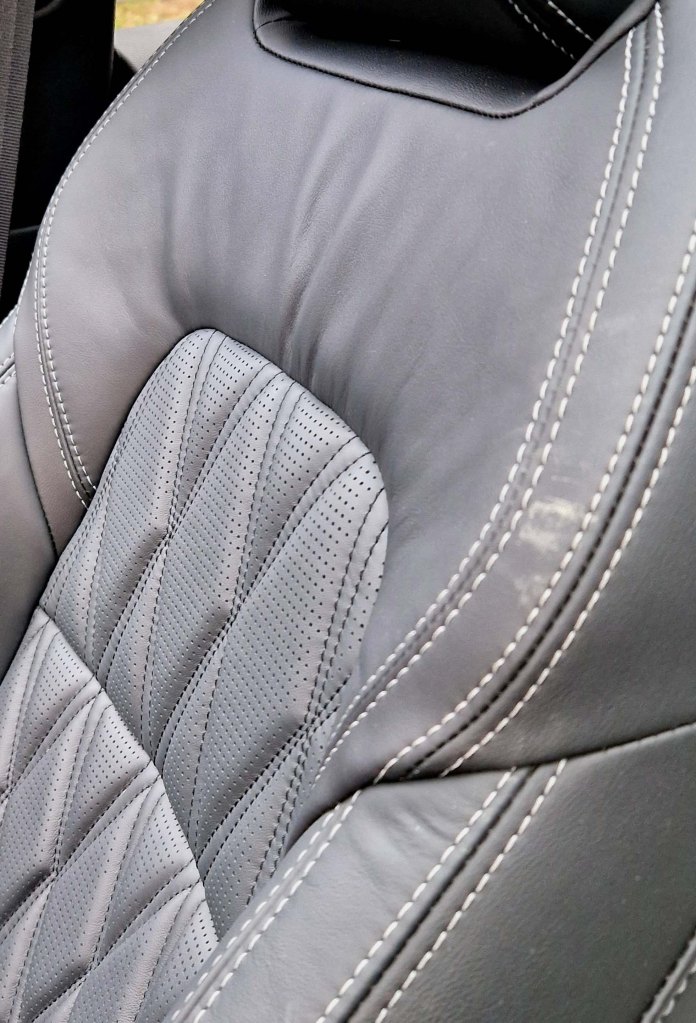
This Nissan is very well insulated from engine and road/wheel noise, and the suspension is comfortable at speed. In urban driving situations on our Belgian inner city tram rails and ridges the suspension is rather firm, but feels never obtrusive. Of course the Tekna top equipment level leaves very little to desire indeed, including a very good sound system, which we enjoyed to the full in this marvelously quiet car.

This Qashqai really convinced us by combining the wonderful qualities of EV driving with the limitless mobility a fuel powered combustion engine offers us. We must admit that your servant regretted to part with it…

Hans Knol ten Bensel
We drove the Citroën C5X 1.2 Pure Tech 130 S&S: the legend lives on…

We all know that the segment of the “grandes berlines” or the bigger saloons is under pressure. But then Citroën has a tradition to defend: making cars which provide splendid comfort, ample space for its passengers and can travel at speed for hours on end, without any fatigue for its occupants. The French call it “une grande routière”, and they whisper this with some respect. The tradition in France has been long, and magnificent. They have had in the ‘30s les grandes Bugatti, Voisin, Hotchkiss, Delahaye, and of course from the mid fifties of last century onwards the Citroën DS 19, Pallas 21. Then came the stylish CX, followed the XM and then by the iconic C6, a “voiture présidentielle” if there was one. So a “grande berline” simply MUST be on the menu. And indeed, there it is: the C5X.

The C5 X comes with different drivetrains, more powerful and electrified, but the dynamic Citroën Belgium PR team reserved for us the “base” version, with the well proven and pretty formidable 1 199 cm3 three cylinder 12 valve 131 HP engine coupled to an 8 speed automatic gearbox. Well proven we say, as this engine/gearbox combination is found in a great many models of the Stellantis group. It is found in Opels, DS Automobiles, Peugeot…and of course other Citroëns’. Does the C5X with this combination still have all the panache of a “grande routière?” Let’s see…

Hans Knol ten Bensel

Impressive stance…

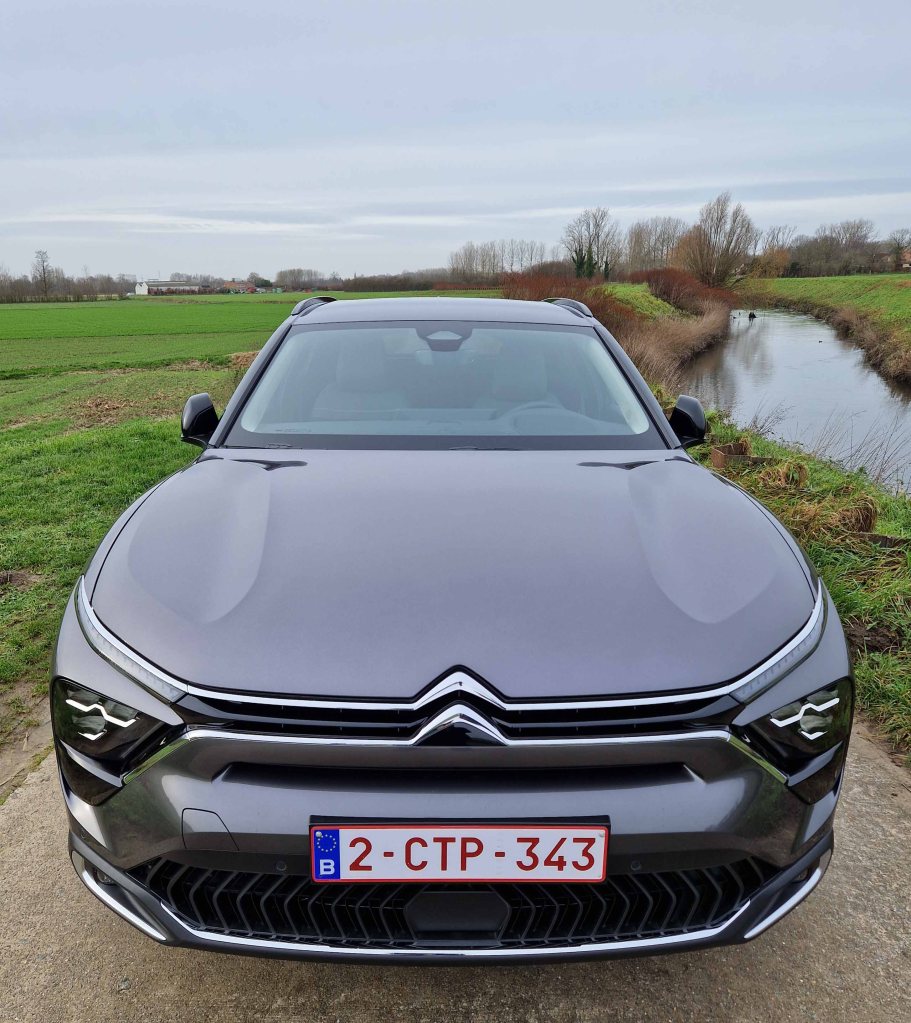
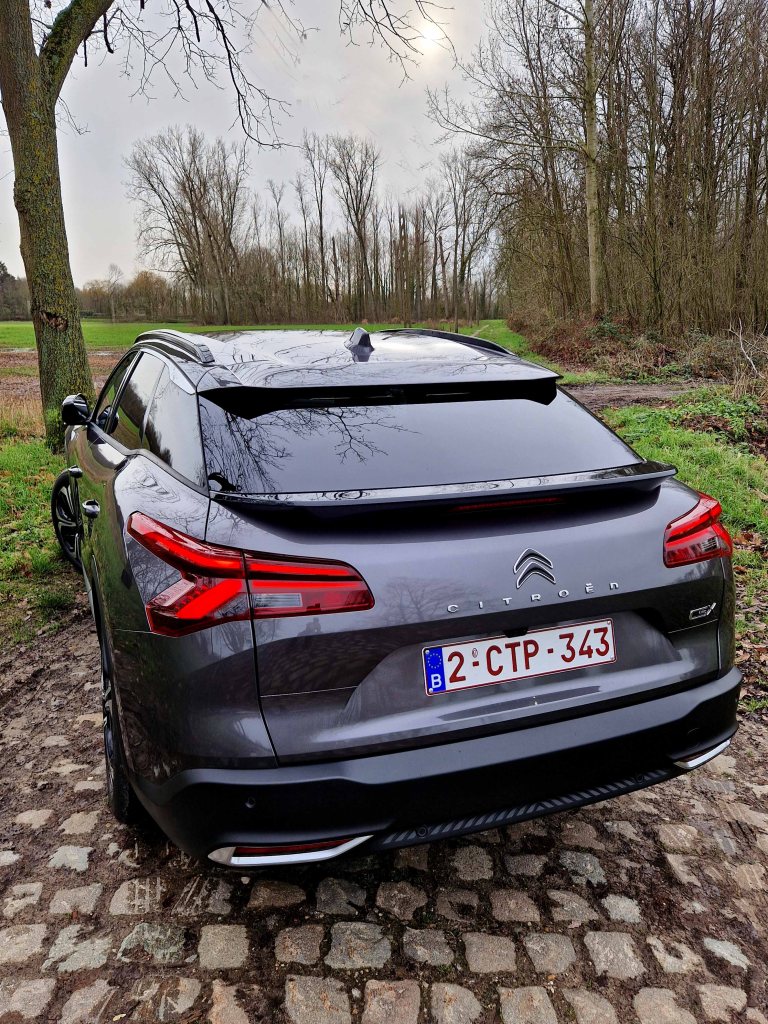
But first let’s have a walk around the car, and have a look at its aesthetics. It stands rather high on its wheels, so you cannot define it as an ordinary saloon. It rather has the looks of an SUV with its up to 19 inch wheels, and protections running around the wheel arches. When you look at its descending roofline, it also has the character of a luxury coupé.

On the front, a long chrome strip with the “double chevron” at its centre runs between the double headlights which are placed one above the other. Citroën describes the body shape of the C5 X typically as a hatchback crossover, and we would agree totally here.

In the interior, the dashboard has a rather classic layout, with small instruments facing the driver, spreading its information also on a clearly legible head up display. Luckily there is a large 12 inch touch screen display in the centre, with all the necessary functions well laid out, including the obligatory Android Auto and Apple CarPlay.

Space

The strong point of the C5 X is of course its legendary interior space. Rear passengers find regal legroom and this puts this car truly in a (more than) premium league. All this space doesn’t come at the cost of boot space, which is in standard form still offering a good 545 litres, which is extendable to a whopping 1645 litres. Despite its higher stance, the loading sill is pleasantly low.

A pounding heart

If one wouldn’t know better, one gets the impression that a big, old school 2 litre four cylinder petrol engine is doing all the work; it is not exactly refined, as vibrations on partial load at lower revs are clearly felt in the steering wheel.

But once you put your foot deeper, the engine runs smoother, and the 8 speed automatic changes also less perceptible. The gearbox can be ultra smooth when accelerating gradually at low urban speeds, and the engine is not too rough either, and even almost inaudible. So the engineers did their homework in slow city driving circumstances. The stop start function can be jerky sometimes, but soon one learns to avoid that with a sensitive right foot. All this behavior lets you think back to the DS 21 and DS 23 Injections in the seventies, and when you have known these cars, it gives you the impression that it is typically Citroën, this engine efficiency with a hint of roughness. Because efficient this engine is. Consumptions between 6 and 7 litres are easy to obtain, given of course an anticipative driving style, avoiding sprint accelerations.

Not that this 1,2 litre, 1,4 tonne Citroën is slow. Remember, 130 HP is exactly what a flagship 1972 DS 23 injection 5 speed was capable of, and its torque with 210 NM was even less than the 230 Nm the 1,2 litre three cylinder puts to the front wheels. Don’t forget, the DS 23 had a 2347 cc engine…The DS5 will sprint from 0 to 100 in 11,3 seconds, the historic DS 23 took 11 seconds to do the same. Top speed of the C5 is 210 km/h, doing honor to the Citroën tradition of “grande routière”. The DS 23 Injection was teasing Porsches in their days with a top speed of 188 km/h.

The good torque characteristics of this 1,2 litre engine and the alert 8 speed gearbox lets you enjoy good punch for overtaking and gaining  speed.

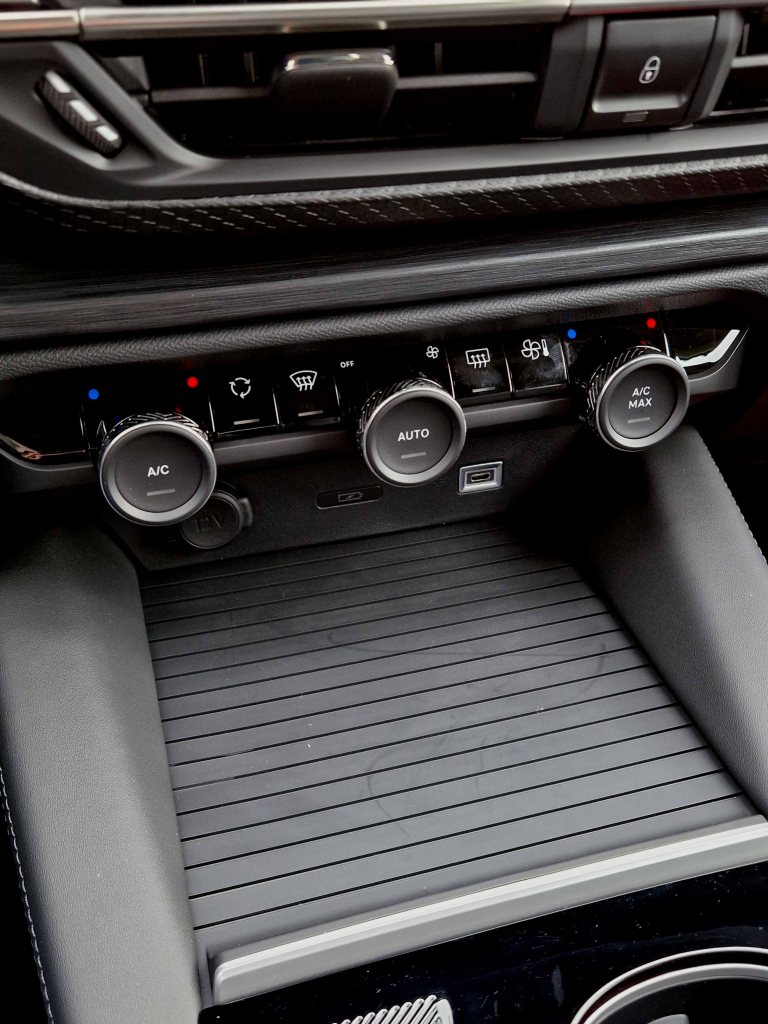
Thankfully the climate controls are analog beneath the touchscreen…

The legendary suspension and comfort…

The strong point of the DS5, and this is where it continues the tradition, is its masterful behavior at (high) motorway speeds. Because here the suspension comes into play, and here, despite the fact that we don’t have an adjustable suspension in this “basic” version, the engineers did a masterful job and succeeded in giving this big Citroën exactly this floating carpet ride which is so typical of them. This indeed makes this car an absolute king of the road, come rain, sleet, slippery surfaces, the C5 always seems to float over it with unerring stability and comfort, and…at speed. Cornering is also no punishment for the driver either, even when you are in big hurry. Of course there is some leaning to be felt in corners, but then again this feels completely natural. 

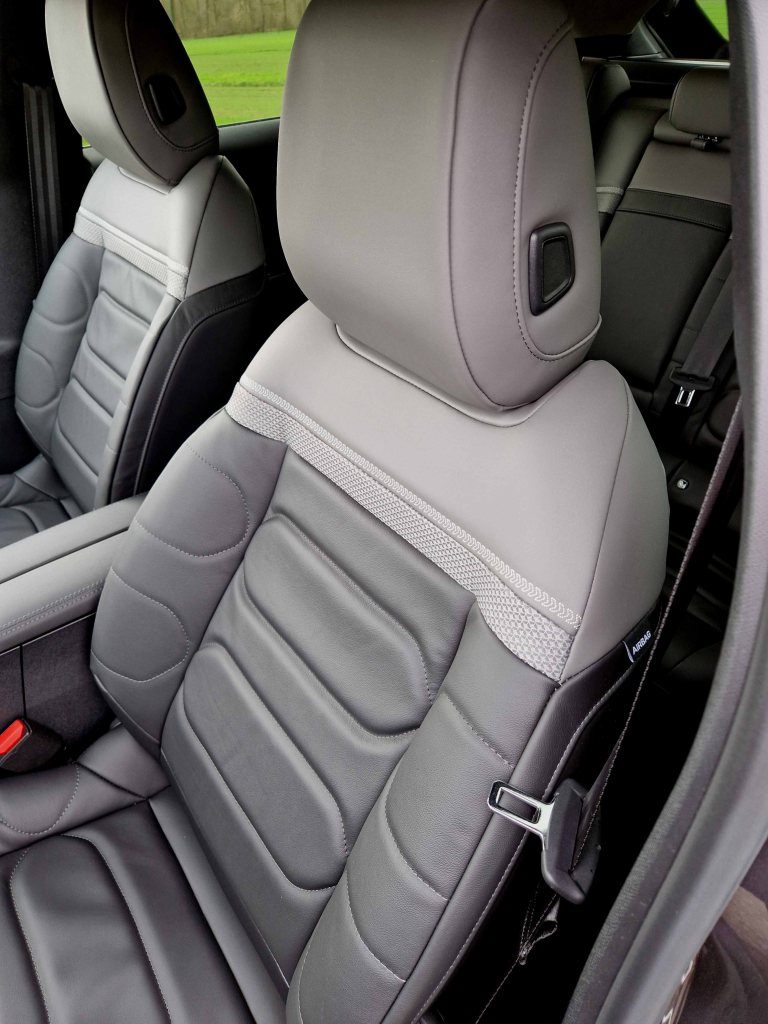
When talking about comfort, we have to mention here the absolutely fantastic Citroën comfort seats, which really stand out.

The pinnacle of mobility…

There is one thing in which this 1,2 litre petrol engined C5 X truly excels too: it has just a petrol engine only, and this does result in mean less weight to carry around, but also, and this we tend to forget in our electrified age, it gives you absolute mobility. After a (very) fast 700 km trip, it just takes minutes to refuel, and you can continue your journey for as long (and fast) as you want. Your formidable “pure” EV than has to rest for AT LEAST one hour, provided you find the proper recharging station…for example in the cute village you entered in the Alpes Maritimes…

Citroën says less is more… the rest you can read on the head up display…

With the abysmal recharging infrastructure we will witness still for years to come, as it cannot keep up with the increasing volumes of EV cars, increasing, this is an element which cannot be stressed enough. The reason also why all manufacturers are offering also (plug in) hybrids…

Conclusion

Is this 1,2 litre C5 X a true “big” Citroën? You bet it is. All the way. We mentioned its strong points, and this indeed makes it a car which continues the legend with panache and unique bravour.

We also like its style, its value for money, its roominess, comfort, safe, unerring, stable handling. Of course the C5 X is also offered with more sophisticated drivetrains, like the 225 HP Plug in hybrid version, but you get already the real taste of what a big Citroën is all about, enjoying as we said absolute mobility  with this 1,2 litre petrol engined drivetrain…

Hans Knol ten Bensel

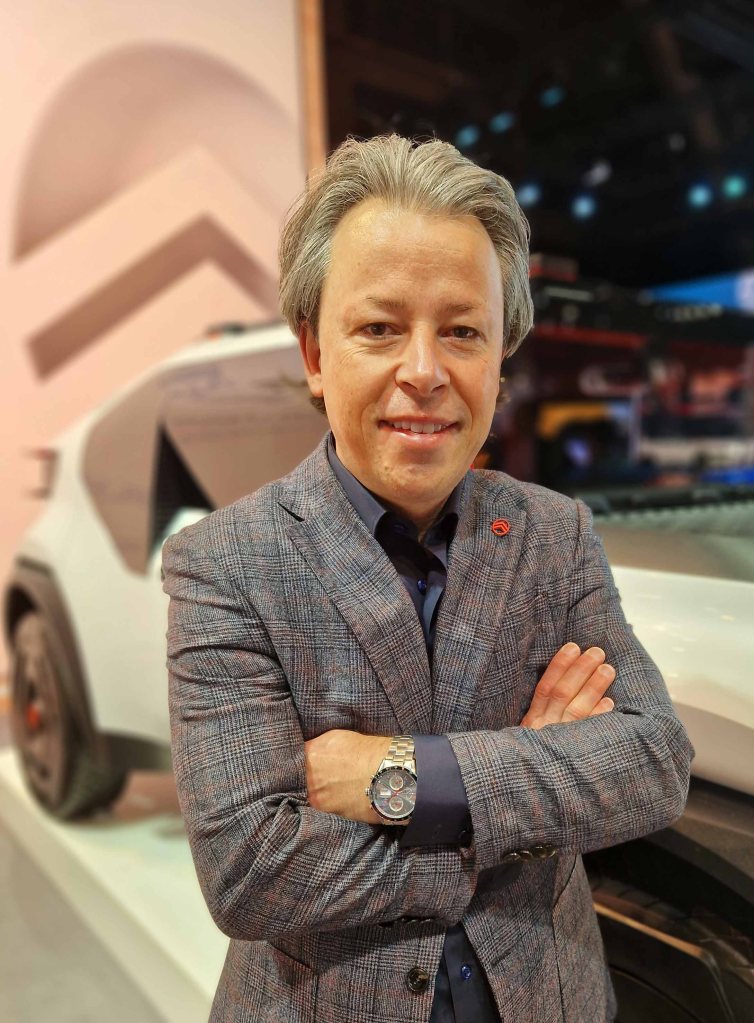
We spoke with Pierre Leclercq: “our Citroën Oli is not only style. It is French Design.”  

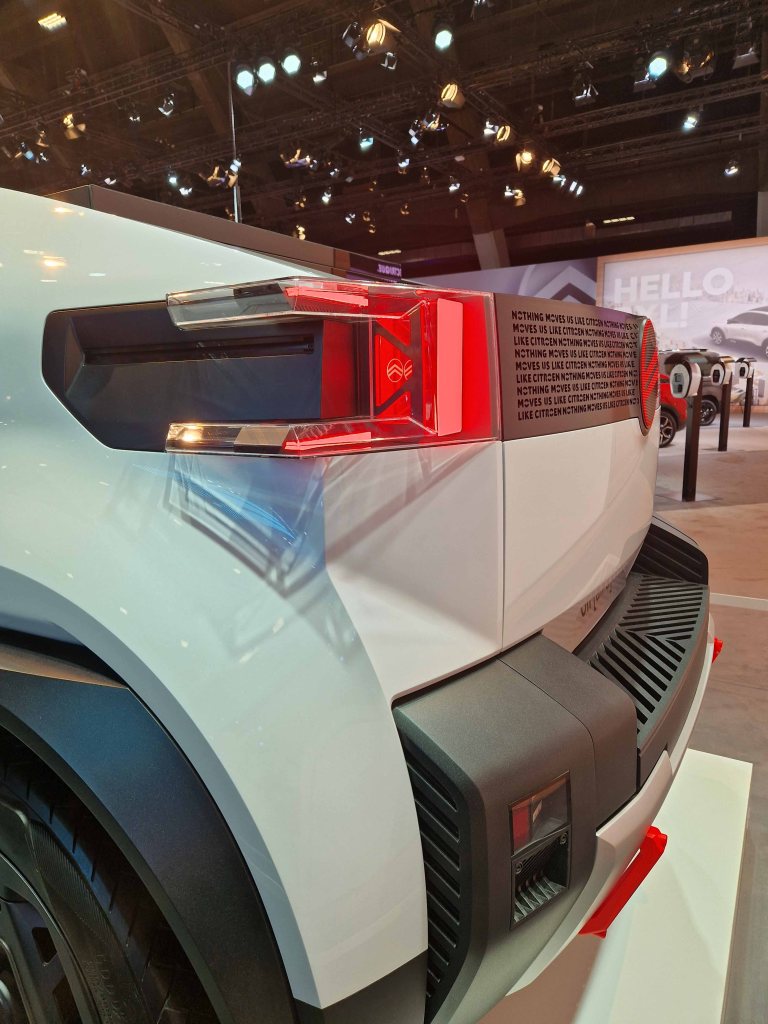
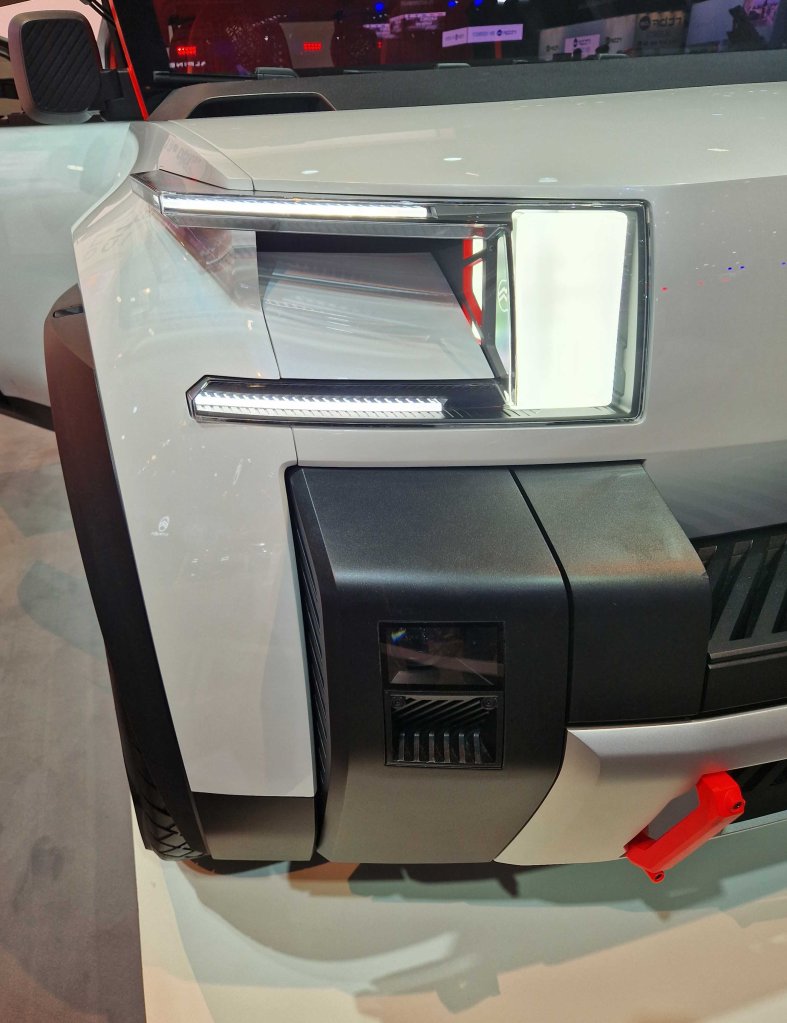
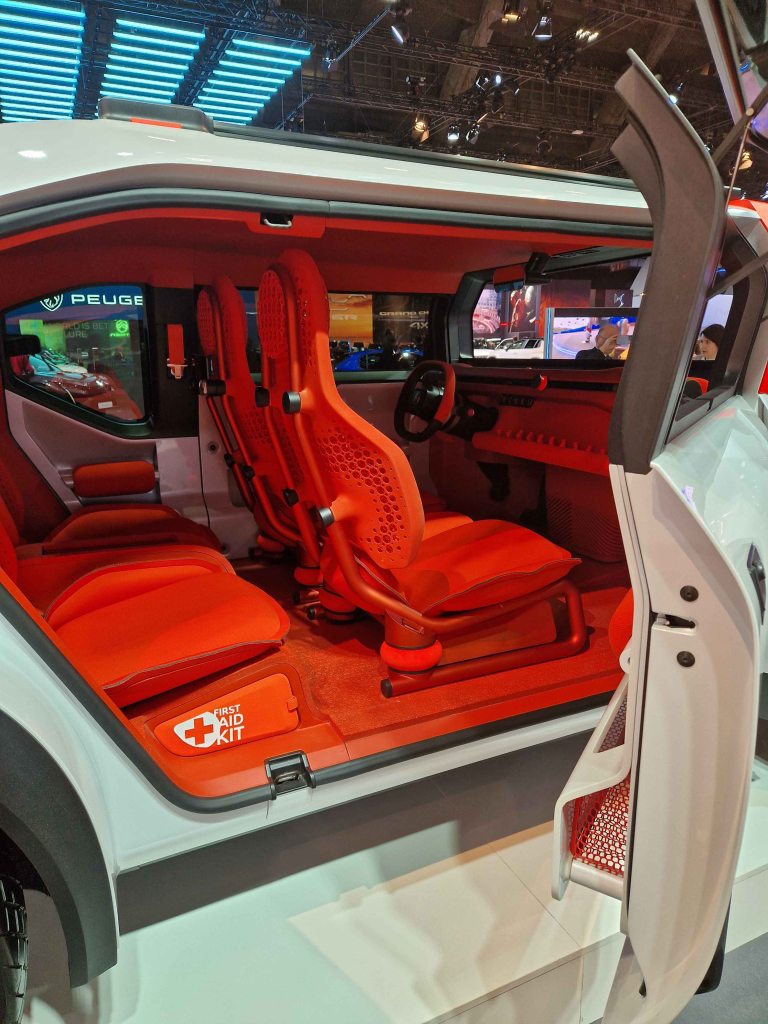
On the Brussels Salon, Citroën showed its already iconic Oli prototype, a harbinger of things to come in the Citroëns which will be in the showrooms already this and next year. Reason enough for your servant to have a talk with its head of design, Pierre Leclercq, about the design philosophy of the progressive brand with the “double chevron”, and so much more…

Hans Knol ten Bensel

I started this interview asking indeed about this new design philosophy of the brand, striving towards simplicity, practicality, lightness, durability and sustainability in a very bold and original package.

PL: “With the Oli, there are two things. First there is the brand identity, as we show with the Oli styling elements which we will bring to the market as soon as this year. The front end, the new logo, the head- and rear lamps, also the coherence between the front and rear end. The latter is a very important element in our brand identity. (We have seen this already in the Ami – editor’s note).

The form language, the simplicity of the edges and the curves will also be seen on our future production cars, but then also the contrasting vertical elements will be present. Our designers will deviate here from the strictly automotive styling which you see in the other brands of the group, we have a non-automotive touch which will be a distinctive element in our future styling.

The magic goals of French Design…

The second fact is that the Oli is not just a styling exercise. It is not only style. It is really French Design. We work together with our engineers to reduce weight, the cost, we are striving for intuitive and simple solutions.

For instance the seats. It’s very important, we work with a whole team to get a seat which is very distinctive, which we can put into production. We discovered with the Oli that our clients are ready for these things. We see that our clients are ready to take bold steps together with us, because we have an image that we will bring something more on the road than just a nice looking car.

HKtB: This translates also into the choice of the materials, the dialogue with the suppliers about the substance and texture of the elements and their surfaces, their unique touch and feel, the atmosphere and character this gives to the car…

PL: We will be a zero carbon company in 2038, and this has a huge impact on materials. Not so long ago, the choice of the materials came very late in the process of building a car. The exterior and interior, the colors, it was seen as pure decoration. Here and there, one started to use recycled materials for some items, but that was it. This process is now completely turned around at Citroën. We now ask first to tell us which materials we can use, as we want recycled materials, unpainted, and we will go from there and adopt them. This is most interesting. And I think that our clients are also ready for this.

HKtB: These elements and this approach we also see in the Ami. The French, as even Mr. Tavares recently put it, love their individual mobility. The Ami is fit for the (mega)city… will there be other models geared for a new City Mobility in the spirit of the Oli?

We always search for new solutions…

PL:  We have many projects running now. It’s a bit like a funnel. When there is one project hitting the road, we have already other proposals in the pipeline. We are always searching for new solutions. If you remember, two years ago, we showed a rather disruptive project of robotized platforms, which is an intelligent use of the present day autonomous technology, in controlled urban areas. But I imagine perfectly in 2030 and 2035 that these solutions will be used in our cities. The design will then focus on the interior of the cabins and structures rolling on these platforms, a very interesting evolution.

The Ami represented a big risk for us, indeed, we thought about the city, but in fact, we scrutinized the clients who bought the Ami, age, location, etc, and we noticed that the Ami is not only used in the cities. We have clients who buy the Ami for their children and grandchildren, remember that in France you can drive an Ami at the age of 14, and it is better than a scooter. And in a market where these vehicles cost between 12 and 15.000 Euros, ours is available for 6.000 Euros… No small feat, as we respect the profitability margins of our group! It is now on the market for two years, and it has grown more into a lifestyle than a car. This is also what the 2 CV has achieved. It is not easy to create the same phenomenon in this day and age…

HKtB: Can you tell a bit more about your Ami buyers?

We have also many clients who buy an Ami for their holiday homes. And as I said, of course grandparents who buy the Ami for their grandchildren. There are also clients who own a Ferrari and buy an Ami for their third or fourth car…

HKtB: We talked earlier in Paris about your open mindedness towards other designers, in other sectors, who could become involved in offering elements of the car during its life, for example, that in a further future one could offer replacement seats for Oli’s or Citroëns who after years of intensive use get a bit long in the teeth… or, rather, offer parts and items to customize the new Citroëns…

PL: It’s a philosophy I love very much. People more and more want an object which is really theirs. Design is not a luxury anymore. If you go for an Ikea kitchen, you can still choose the finish, styling and colors you want, to make it yours. This is now also true for cars. We have started this with the Ami.

HKtB: It is also true for Jeep. Mopar offers a wide array of accessories.

PL: Indeed, this trend is already more prominent in the States. But with the Ami we started off in Europe with the same trend. Not that we offer many accessories, but we created a desire with the customer to customize his car. It’s like Apple. They don’t offer many accessories themselves, but are produced by Belkin etc. It is a very interesting path for our cars in the future. This will give us for instance incredible interiors. I want the client to appropriate our geometries. Why not share our geometries on the internet Open Space and invite the developers to have fun with it?

Every brand has its own design team to embody its proper DNA

HKtB: What is your relationship or rather dialogue between your styling department and the suppliers? Do they come present you what is possible, or after having established a manifest for yourselves what you want to do in styling in the next five years, let’s say, you ask them to come up with new materials, possibilities?

PL: The dialogue goes both ways. But I want to stress here that the design has become very important. The suppliers are specialized in offering technology, for instance for the platforms we have conceived within the group, but over the last 30 years, what have we done? Instead of asking PininFarina or Bertone to style all the cars in the world, we have all established our design centers which carry truly our DNA, and every brand has its own equipe or team of designers. This is génial, because we have cars within the group which don’t resemble each other at all…

HKtB: With the new materials comes also repair friendliness, durability…

PL: Indeed, we want our cars to have a longer lifespan, and we will refresh them within our network. We need of course more control as nowadays we don’t see the car anymore after it has been produced. We have to control the recyclability of the car. Otherwise it’s no use to build the car with recyclable materials.

HKtB: It think it is necessary to tell the client that his car now has a long life and that you as the manufacturer will follow the car throughout its life.

PL: Indeed, a lifelong car, staying with you the rest of your life.

HKtB: Indeed, that as a brand policy you commit yourself to the clients that your Citroën model, Type A, B, or whatever, that you will always follow this car for decades to come…

PL: Ca serait génial, that would be a stroke of genius. It is our goal. It would be very interesting and it would completely change the idea of the automobile of today.

HKtB:  The youth is already there. They support and adopt the circular economy. I think Citroën is the right brand to do this. 

PL: Indeed, we push within the Stellantis group for these concepts, and I think that our clients are far more inclined to make these choices than the buyers of other brands.

HKtB: I thank you for this interview. Thinking out of the box is always interesting.

PL: I thank you, always lovely to exchange these ideas, thank you for the conversation. I also think that every car we build has to make the life of our clients better. These are not empty words. The Ami improves lives. We offered a new service; in Paris, people smiled when they saw the car. It takes something to convince a Parisien!

Hans Knol ten Bensel

A look at Peugeot’s future products and electrification strategy with the INCEPTION CONCEPT…

Featuring a revolutionary exterior and interior design, including the next-generation PEUGEOT i-Cockpit® and innovative Hypersquare control system with steer-by-wire technology, the INCEPTION CONCEPT will inspire PEUGEOT’s future products from 2025 onwards. The better news is that Peugeot plans to bring most of its innovations to production (!)

Based on the STLA Large platform, the fully electric INCEPTION CONCEPT is powered by a 100kWh battery providing a range of 497 miles. With two electric motors, the INCEPTION CONCEPT produces almost 680hp and accelerates from 0-62mph in under three seconds. The model also features 800V technology, enabling it to add 93 miles of range in just five minutes, and is capable of wireless induction charging.

Linda Jackson, CEO of the PEUGEOT brand, said: “PEUGEOT is committed to the electrification of its range. In 2023, our entire line-up will be electrified and in the next two years, five new 100% electric models will be launched. Our ambition is simple: to make PEUGEOT the leading electric brand in Europe by 2030. This objective and ambitious vision pave the way for a radical transformation for the brand, as represented by the INCEPTION CONCEPT.”

Indeed, PEUGEOT will reduce its carbon footprint by more than 50% by 2030 in Europe and to become fully Carbon Net Zero by 2038.

Over the next two years, PEUGEOT will launch five new 100% electric models and by 2030, all PEUGEOT cars sold in Europe will be electric.

Dramatic design

The PEUGEOT INCEPTION CONCEPT introduces a new, simpler and more refined design language for the brand, which will be introduced on future models from 2025. At the front, it features an all-new light signature incorporating PEUGEOT’s distinctive claw design, which is merged with the front grille to create a single object that also houses the sensors. This is made up of a single piece of glass with the logo in the centre, magnified by the 3D luminescent effect.  The front grille and headlamps are in my opinion a bit reminiscent of the ‘70s 504… 

A TECH BAR runs horizontally through the door layer. This flush screen emits different messages to the outside of the car when the driver and passengers approach it. The artificial intelligence equipped on the PEUGEOT INCEPTION CONCEPT makes it possible to recognize the driver in order to set up the comfort settings (seat posture, temperature, driving mode and multimedia preferences) desired by each occupant. In addition, the TECH BAR also displays the battery charge level and houses many sensors and radars, leaving the bodywork completely smooth.

The INCEPTION CONCEPT’s bold design incorporates 7.25m2 of glazing to create a glass capsule for the passenger compartment that plunges to the driver and front passenger’s feet. All the glazing (windscreen, side windows and quarter windows) is made from glass designed for architecture. Adapted to the PEUGEOT INCEPTION CONCEPT, it retains its exceptional thermal qualities and benefits from a multi-chrome treatment (treatment with metal oxides), a process initially used for the visors of astronauts’ helmets by NASA.

Completing the car’s unique design is an exclusive body colour, which highlights the shapes in the bodywork and interacts, like the glazing, by tinting according to the external environment. The paint is single-coated, meaning far less energy is consumed during its application.

‘BEV-by-design’ platform

The INCEPTION CONCEPT has been given the silhouette of a low (1.34m) and efficient saloon and is 5m in length. It is based on the STLA Large platform, one of four future Stellantis Group “BEV-by-design” platforms. The arrival of this new range of platforms from 2023 will revolutionize the PEUGEOTs of tomorrow. Specifically created for electrification, they offer major differences in terms of architecture which enabled designers to completely reshape the PEUGEOT INCEPTION CONCEPT’s passenger compartment.

The new “BEV-by-design” native electric platforms will also introduce technological modules powered by artificial intelligence: STLA Brain, STLA SmartCockpit and STLA AutoDrive. Like the INCEPTION CONCEPT, future PEUGEOT models will be equipped with STLA Brain artificial intelligence and will be fully connected.

Powertrain

The 100% electric PEUGEOT INCEPTION CONCEPT is equipped with 800V technology. Its 100kWh battery enables it to travel 497 miles on a single charge, with extremely low consumption of just 12.5kWh per 100 km. The INCEPTION CONCEPT is capable of adding 19 miles of range in one minute, or 93 miles in five minutes, and can also be recharged wirelessly by induction.

Two compact electric motors, one at the front, the other at the rear, make the PEUGEOT INCEPTION CONCEPT a four-wheel drive vehicle. The combined power is close to 680hp (500kW), enabling it to accelerate from 0-62mph in under three seconds.

Next-generation i-Cockpit®

With its new Hypersquare control system, the PEUGEOT INCEPTION CONCEPT offers an agile driving experience and an all-new, more intuitive i-Cockpit®. Inspired by video games, the Hypersquare control system does away with the conventional steering wheel in favour of digital electric controls and steer-by-wire technology.

The centre of the Hypersquare is a tablet-type screen dedicated to the distribution of control information. The pictograms for the different features (air conditioning, radio volume, ADAS etc.) are displayed on the two side panels to facilitate access to the chosen control. The latter is located inside the circular recesses and can be accessed by moving the thumb only, without taking your hands off the steering control.

The next generation i-Cockpit also includes the Stellantis STLA SmartCockpit technology platform and STLA AutoDrive, enabling Level 4 autonomous driving. When driving is delegated, Hypersquare retracts and a large panoramic screen slides out from the floor to offer a new passenger compartment experience.

 PEUGEOT’s goal is to introduce the Hypersquare on a next generation vehicle in the range before the end of the decade.(!)

Interior

The PEUGEOT INCEPTION CONCEPT features a minimal cockpit dedicated to the driver alone, which does without a dashboard, crossbar and the bulkhead, providing a completely open view of the road.

Sustainable ‘moulded textiles’ are also used throughout the interior. Scraps of 100% polyester fabric from the design centre’s prototyping workshops or from suppliers are re-used to make load-bearing or trim parts. The seats are covered with a velvet made from 100% recycled polyester, which extends onto the floor and features 3D patterns to act as a floor mat.

More Peugeot news soon…

Hans Knol ten Bensel
BMW rides you into an enhanced real and virtual world at CES Las Vegas…

The BMW Group is sharing its vision of the future digital experience, both inside and outside the vehicle, at the Consumer Electronics Show (CES) 2023 in Las Vegas.

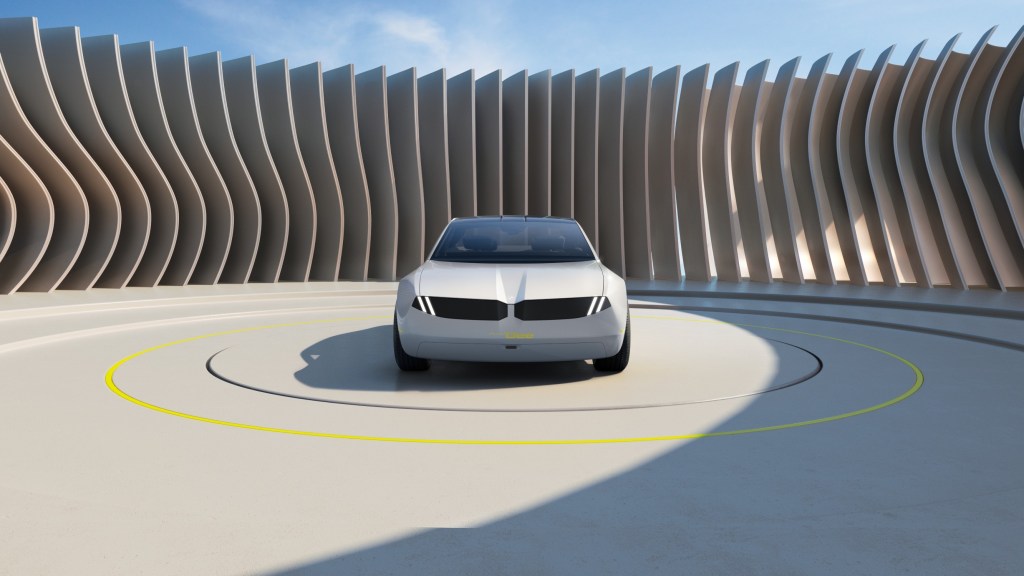
It presented the BMW i Vision Dee, a futuristic mid-size sedan with a new and pared-down design language. The name “Dee” stands for Digital Emotional Experience – and that is precisely its aim: to create an even stronger bond between people and their cars.

This car has future digital functions will go far beyond the level of voice control and driver assistance systems we are familiar with today.

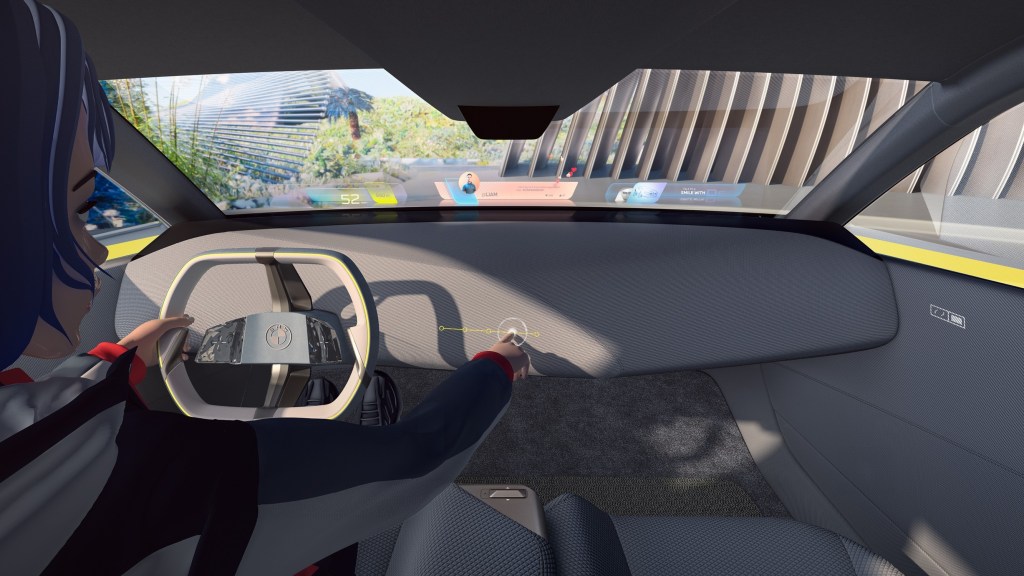
It starts all with a BMW Head-Up-Display extending across the full width of the windscreen, providing a glimpse of the next vehicle generation.

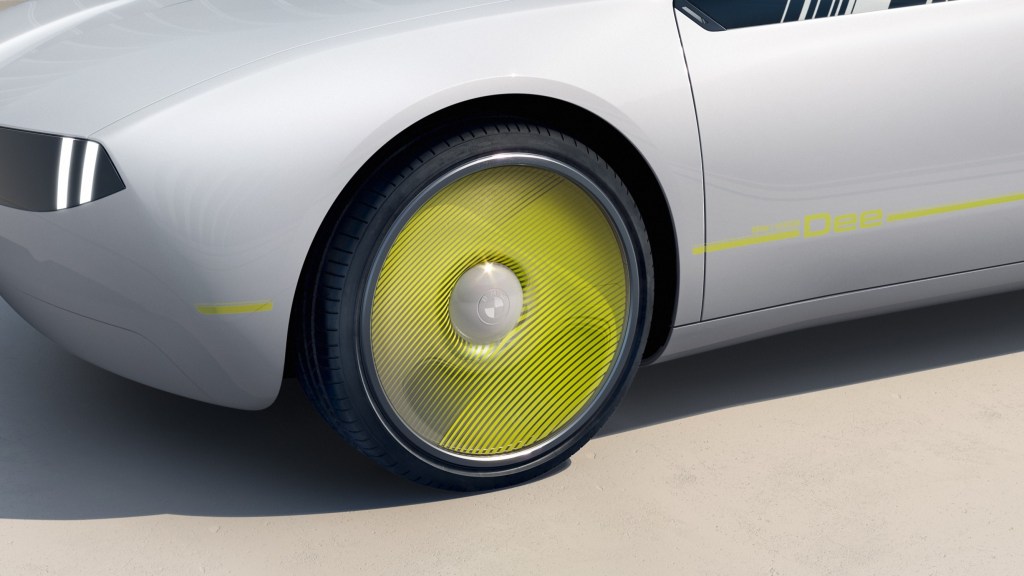
From 2025 onwards, this innovation will be available in the models of the NEUE KLASSE. The BMW Group has also refined its use of colour-change technology. Having unveiled the BMW iX Flow Featuring E Ink, with the ability to change from black to white, at the last CES, BMW i Vision Dee can now curate its exterior in up to 32 colours.

“With the BMW i Vision Dee, we are showcasing what is possible when hardware and software merge. In this way, we are able to exploit the full potential of digitalisation to transform the car into an intelligent companion. That is the future for automotive manufacturers – and, also, for BMW: the fusion of the virtual experience with genuine driving pleasure,” said Oliver Zipse, Chairman of the Board of Management of BMW AG. “At the same time, BMW i Vision Dee is another step on the road to the NEUE KLASSE. With this vision, we are looking far into the future and underlining the tremendous importance of digitalisation for our upcoming product generations.”

With its intelligent, almost human capabilities, BMW i Vision Dee accompanies drivers not only through real-life situations on the roads, but also in their digital environment.

“A BMW lives by its unparalleled digital performance. BMW i Vision Dee is about perfect integration of virtual and physical experiences,” said Frank Weber, member of the Board of Management of BMW AG responsible for Development. “Whoever excels at integrating the customer’s everyday digital worlds into the vehicle at all levels will succeed in mastering the future of car-building.”

BMW Mixed Reality Slider: into the virtual world in five steps

The BMW, in combination with the advanced Head-up Display, is the digital highlight and central operating control of BMW i Vision Dee. The completely virgin and simple dashboard panel shows just a line with dots. This is the Mixed Reality Slider. By using shy-tech sensors on the instrument panel, drivers can decide for themselves how much digital content they want to see on the advanced Head-Up Display. The five-step dot selection ranges from analogue, to driving-related information, to the contents of the communications system, to augmented-reality projection, right up to entry into virtual worlds. In parallel, dimmable windows can also be used to gradually fade out reality. Mixed reality can be experienced in BMW i Vision Dee in an immersive way that engages different senses without requiring any additional tools, creating a new dimension of driving pleasure for the user.

Advanced BMW Head-Up-Display: in NEUE KLASSE from 2025

The BMW Group is known in the automotive sector as a trailblazer for the Head-Up-Display and has systematically refined this technology over the past two decades. In BMW i Vision Dee, projection across the entire width of the windscreen allows information to be displayed on the largest possible surface – which only becomes recognisable as a display once it is activated. In this way, the BMW Group demonstrates the huge potential of projection technology and BMW i Vision Dee visualizes how a advanced Head-Up-Display could also be utilized in the future for the display and operating concept. The standard-production version of the BMW Head-up-Display extending across the full width of the windscreen will be used in the models of the NEUE KLASSE from 2025 onwards.

Welcome scenario with voice and phygital icons

The digital experience already begins outside the vehicle, with a personalized welcome scenario that combines graphical elements, light and sound effects. Natural language serves as the simplest, most intuitive form of interaction, enabling perfect understanding between humans and their vehicles. The headlights and the closed BMW kidney grille also form a common phygital (fusion of physical and digital) icon on a uniform surface, allowing the vehicle to produce different facial expressions. This means BMW i Vision Dee can talk to people and, at the same time, express moods such as joy, astonishment or approval visually. BMW i Vision Dee can also project an image of the driver’s avatar onto the side window to further personalize the welcome scenario.

World premiere for full-colour E Ink technology

Following the spectacular debut of the BMW iX Flow Featuring E Ink at CES 2022, the BMW Group is now unveiling a full-colour version of the E Ink technology in BMW i Vision Dee that will be used as the outer skin of the vehicle for the first time worldwide.

BMW i Vision Dee, rather than simply alternating between black and white, now showcases a multi-coloured, fully variable and individually configurable exterior. An ePaper film from the BMW Group’s cooperation partner, E Ink, is applied to the body to create this magical display of colour. Up to 32 colours can be displayed.

The body surface of the BMW i Vision Dee is divided into 240 E Ink segments, each of which is controlled individually. This allows an almost infinite variety of patterns to be generated and varied within seconds. The laser cutting process used to trim the films and the electronic control design were developed in partnership with E Ink. The adaptation of this technology for curved surfaces and the programming of the animations, were developed by BMW Group’s in-house engineers – enabling a form enabling a form of customisation that is unique throughout the automotive sector worldwide.

Reductive design – inside and out

The design of BMW i Vision Dee has been deliberately pared down to focus attention on the digital experience and the DNA of the BMW brand. The exterior is defined by the classic three-box sedan design that forms the core of the BMW brand. Traditional design elements, like the BMW kidney grille, twin circular headlights and the Hofmeister kink, are reimagined, with phygital icons replacing analogue elements. This gives BMW i Vision Dee its own digital, but human, character.

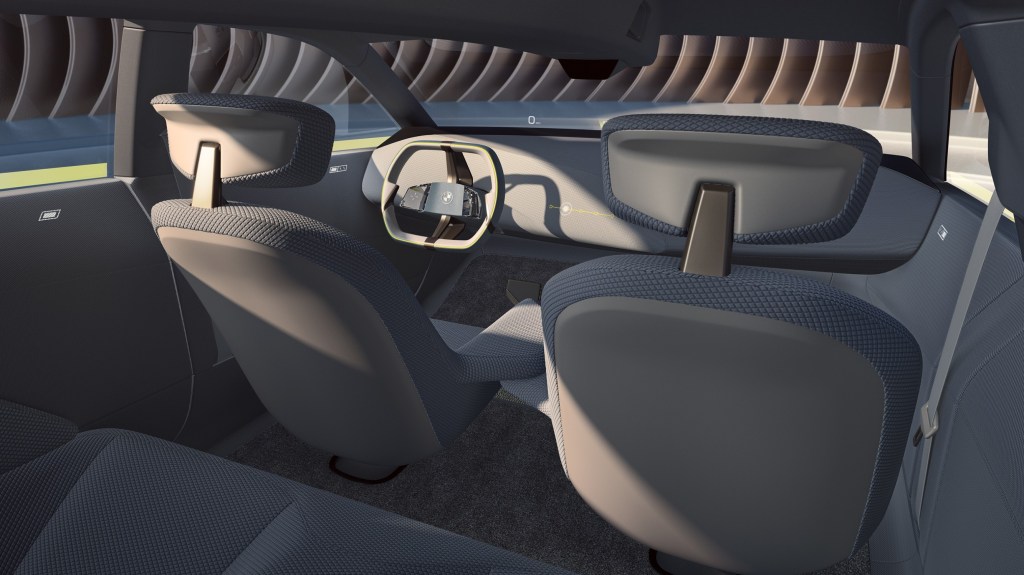
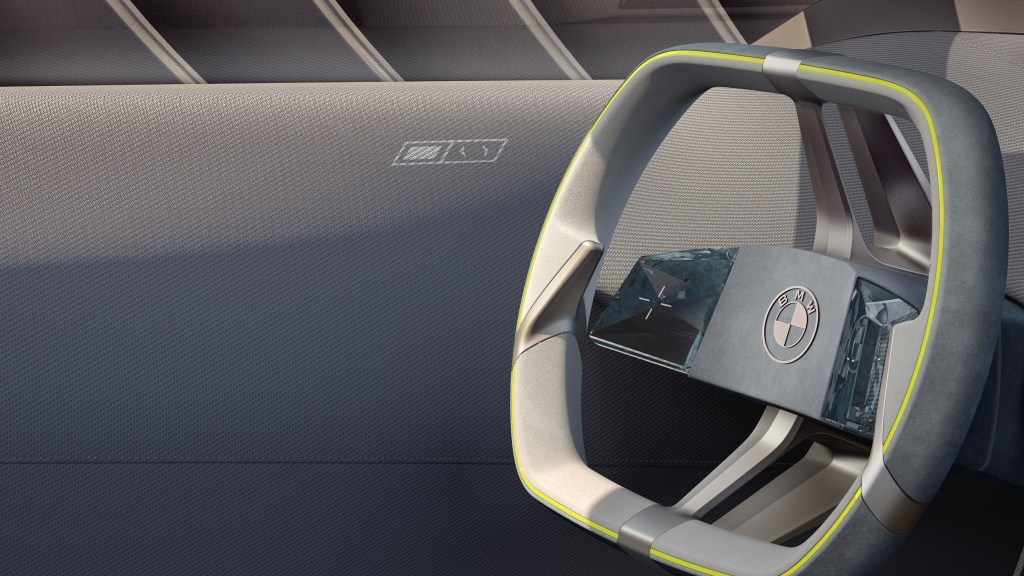
Inside, digitalisation goes hand in hand with reductive use of materials, operating controls and displays to ensure nothing distracts from the digital experience and the new feeling of enhanced driving pleasure. The unconventional design of the steering wheel, with its central vertical spoke, creates touchpoints that come to life when approached or touched and can be operated by moving the thumb. These phygital touchpoints control selection of the content projected onto the windscreen and, together with the Head-Up Display, thus support the principle of “hands on the wheel, eyes on the road”.

“With BMW i Vision Dee, we are showing how the car can be seamlessly integrated into your digital life and become a trusty companion. The vehicle itself becomes your portal to the digital world – with the driver always in control,” said Adrian van Hooydonk, head of BMW Group Design. “Implemented the right way, technology will create worthwhile experiences, make you a better driver and simply bring humans and machines closer together.”

Another milestone on the road to the NEUE KLASSE

The future of the BMW Group is electric, circular and digital. BMW i Vision Dee represents the digital aspect of this trio and will be another milestone on the road to the next vehicle generation, the NEUE KLASSE. The BMW Group will provide further insights and glimpses of the revolutionary vehicle concept of the NEUE KLASSE over the course of 2023. See more news soon!

Hans Knol ten Bensel

We drove the Nissan Juke 1,6 Hybrid: a very refined and stylish urban SUV…

The Juke has invented the compact, urban SUV and indeed has gained many faithful followers over the years. Times have changed, and the reduction of CO2 emissions is crucial now. So when the facelift of the Juke came along, it was time also to launch a hybrid version. Within the Renault group, the drivetrain of the Renault Captur was the obvious choice, and so here we are with a 1,6 litre petrol engine combined with an electric motor, delivering a system power of 105 kW or 143 HP. Nissan engineers have further honed Renault’s hybrid system, and we found it operating very refined indeed. The second generation Juke also underwent some styling changes for the better, but retained its iconic shape. Just read further…

Hans Knol ten Bensel

Pleasing…

The front end of the Juke now features a honeycomb grille with also the headlamps elegantly integrated in the bodywork with the indicators and running lights stylishly elongated along the bonnet. We already tell you here that the headlamps feature already in the standard equipment full LED, as well as the rear lights.

The interior is also very well finished, with soft padding on the dashboard, door panels and centre console. We like the very readable round instruments, and the touch screen sits nicely high up on the centre of the dashboard. Everything is quite intuitive to handle, and one feels well at home in this cosy, rather dark interior, the latter as a (happy?) result of the typical styling of this SUV.

The steering wheel is eminently adjustable, and the front seats are very comfortable indeed. Thanks to its SUV character one sits pleasantly high, with the front seats being some 52 cm above street level. So getting in and out is a breeze.

Refined, at least when you drive it smoothly…

Driving a Hybrid is also an art, which you have to learn. Ok, the hybrid offers you thanks to its electric motor that added torque and immediate pulling power which is the very charm of EV driving. But the smoothness and silence of the drivetrain will please you even more when you drive it quietly, with anticipation and restraint.

Then the clever (thanks to computer-age Artifical Intelligence) system will manage the power stream masterfully between E- and combustion power, the engine revs will not rise unduly and in urban traffic you will achieve anything between 5 and 5,5 litres/100 km. The hybrid Juke will also let you use the e-pedal function, so you can recuperate kinetic energy via the electric motor, which then acts as a generator. Of course, you set the drive selector on the centre console in “Eco” mode, and leave it there.

When you want more performance of the Juke, you can forget about any extra economy. Logically, as then the combustion engine has to do most, if not all the work, as it has also to maintain a minimum charge in the battery. Only the e-pedal will let you recuperate kinetic energy, so you can use the e-boost of the electric motor when re-accelerating. The engine revs high, one clearly hears that it’s there, and the transmission is very busy choosing the right gears with sometimes a hint of jerkiness.

This is also the reason why high cruising speeds on the motorway are also to be avoided if you want to see decent economy. Diesels can run at high speeds with consumptions remaining between 6 and 7 l/100 km, but NOT petrol engines. The Juke will then set you back with averages between 7,5 and 8 litres/100 km. No miracles, dear readers, just the laws of physics. The Nissan engineers also set the tone already, as the top speed of this Juke Hybrid is “only” 166 km/h. You shouldn’t be doing it, if you think about the earth. Enough zest though, as the Juke will sprint from 0 to 100 in 10,7 seconds.

The Hybrid Juke has a so-called “Multi-Mode” transmission, with 4 speeds for the petrol engine, and two speeds for the electric motor. AI chooses for you not less than 15 gear combinations! The engine is good for 94 HP and 148 Nm, additionally supported by a 15 kW starter/generator. The electric motor has 49 HP and 205 Nm of torque.

Our average test consumption stayed well below 6 litres/100 km, as indeed we drove the Juke Hybrid as it is engineered to be. CO2 emissions are set at 114 g/km according to WLTP standards.

When starting from cold, the engine will at least during the first few kilometers rev quite clearly, as it has to reach its operating temperature as fast as possible and also has to keep the battery (re)charged. When you use EV power extensively in (very) slow and quiet driving, every now and then, the engine will eagerly rev again, but then this is to recharge the battery. It does this even when you hardly touch the throttle or even not at all, which seems a bit unsettling at first, but soon you get used to this.

Enjoy the music…in comfort

Driven in the right way, the Juke will seduce you with quietness, and this lets you enjoy the DAB+ radio and the excellent sound system. We had a Bose system with speakers integrated also in the headrests, and the sound experience was indeed wonderful. The suspension is comfortable, a bit firmish, but never harsh. Seating is excellent with more than enough headroom in the front. In the back, this is less generous, but legroom is very much OK. There is also enough room in door bins for even 1 litre bottles.

Connectivity is also top notch, with Apple Car play and Android Auto provided.

Stable and predictable handling

The Juke steers precise, has very good stability at speed and is predictable in corners. Even abruptly lifting the throttle in de midst of a curve will trigger the ESP and the Juke will maintain its course. The steering is reasonably direct (2,5 turns from lock to lock) as an urban compact befits. The Juke is quite safe, in the NCAP Crash test it achieved 94 pct of all the achievable points. Brake performance is very good, with the wider tires of course enhancing the deceleration.

Practical

Boot space is adequate for a compact SUV with 301 liters, and there is an under floor tray with an additional 90 l. With all seats folded there is 705 liters available when you load until the rear window base. One has to lift the luggage rather high into the opening however, some 78 cm.  

Conclusion

The Juke has its iconic looks further improved, and is certainly a smooth urban performer with its Hybrid layout. On the open road it is also a good travel companion, with high speeds letting the petrol engine work rather hard, which limits economy. But as said above, adopting the proper driving style will let you enjoy fully its “zen” qualities, for years to come…

Hans Knol ten Bensel
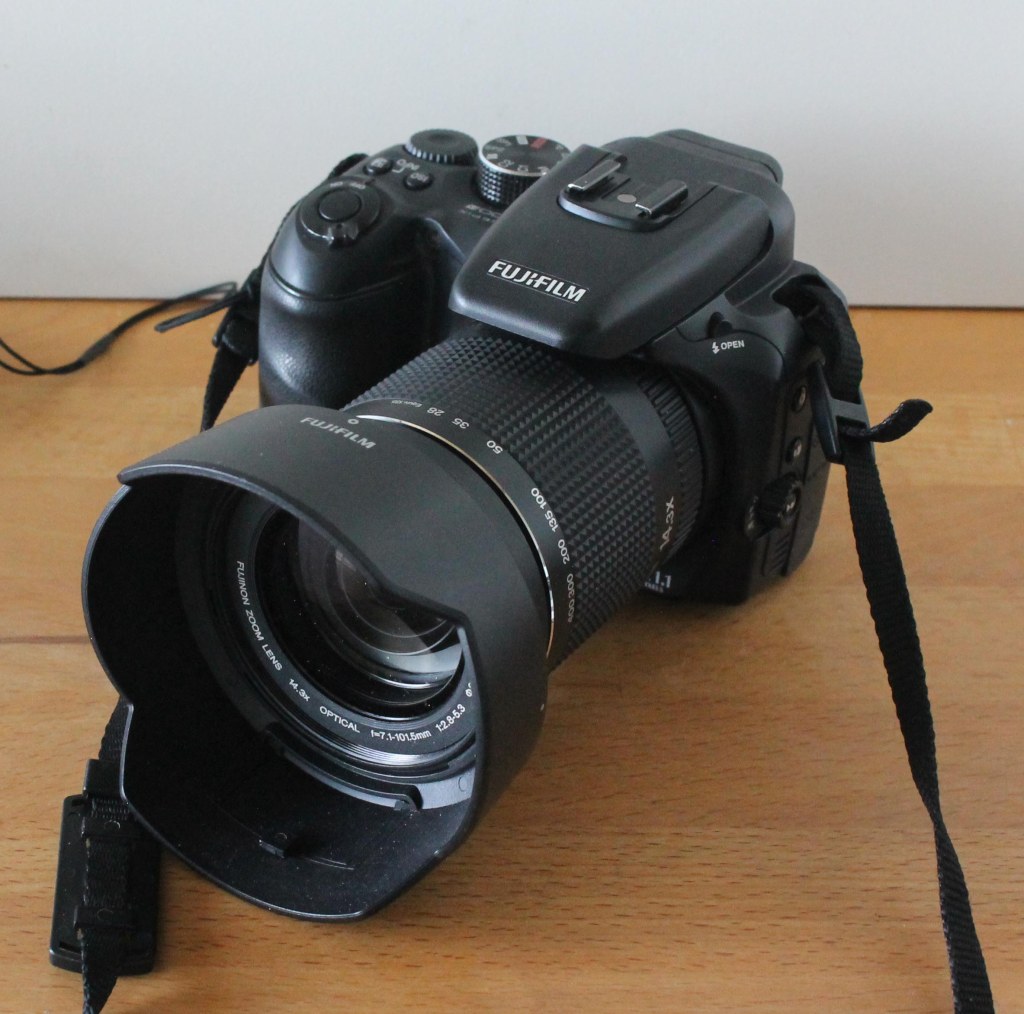
Photographer’s notes: we took most of the photos here with the bargain of the year: a still totally pristine Fujifilm Finepix S100fs, with a Fujinon 28-400 mm 35 mm equivalent lens, bought two weeks ago for almost the original price of its sun lens hood: 59 Euros!!

It proved to have excellent color and light balance, surpassing even the Samsung S22 state of the art flagship smartphone, which did not succeed in making a well color balanced photo of the e-pedal button on the centre console. The auto color balance got so completely out of line in the shadowy interior of the juke that I had to print here the photo in black and white here (see photo in the article above) instead of the exaggerated blue the S22 produced.

We drove the Seat Cupra Born…

The Spanish, more ardent version of the Volkswagen ID.3 is the Seat Cupra Born. More, sporting, more zesty, more panache, that’s what the VW group wants to offer here. And indeed, this Fully electric Cupra fills the bill, when it comes to looks, handling and performance. We put for you the 150 kW version through its paces, equipped with the 58 kWh battery. As you already well know, electric motors have formidable torque, and this Cupra surely delivers at the traffic light. It sprints from 0 to 100 km/h in 7,3 seconds, and so the beautiful EV story is again told, performance wise at least. But the Born has also other (dynamic) qualities, just read further…

Hans Knol ten Bensel

Looking at our Cupra test car, we liked its colour palette very much, and the external sporty styling elements. Also bystanders admired it, so yes it enhances clearly the personality of this car. I like the front end, the copper coloured badging, the big roof spoiler above the rear window, the nice streamlined alloys, the texture on the c pillar.

Also the interior breathes this flamboyant sportiness, although what screens, instrumentation and buttons are concerned, it is identical to the ID.3. The design of the dashboard surface does look a bit cooler though, with some added textures and copper coloured surroundings of the centre console for instance. Very nice are also the body hugging front seats.

On both sides of the steering column one finds buttons like a Formula 1 driver would use. The right button puts you immediately in the sports mode. Performance galore, but your range will soon dwindle, even more so in winter. With the left button you can click through the available driving modes, from eco to sports.

Given de immediacy and sheer amount of the available power, we found the “eco” mode more than enough for our needs, and it gave us also a more or less reasonable range. Our test car had the 58 kW battery, and this gives you a theoretical range of 425 kilometres. That supposes of course very fair weather and a driving style which even trucks find on the slow side. Under the same driving style, my Hybrid Lexus clocks then 3,9 liters/100 km… indeed, an EV rewards you with a sedate driving style in town, and very moderate cruising speeds up to max 100/110 km on the open road. Then things are truly fine. The simple truth is, the laws of physics apply everyday everywhere, for all EV’s too, miracles just don’t happen. By the way, the top speed of this Cupra is limited to 160 km/h. At higher speeds, you would spend exponentially more time at the charging stations, so there is no time gain and thus no point in going faster.

You can opt for a more powerful Cupra Born with a 170 HP motor and a bigger 77 kW battery, which would give you also a higher range of 550 km, but we found our test car totally sufficient, once you adhere to the philosophy of environmentally friendly EV driving, smooth and sedate, flow the traffic, drive with anticipation and make minimal use if the brakes, letting the electric motor recuperate the energy. We are totally convinced that this is the only way an EV should be driven. Everything else is rather absurd, given that an EV is meant to emit less and protect our world. The Cupra has also the nice “B” position on the drive selector, and that lets you use the regeneration fully so you can really drive and brake this car using one pedal only.

Smoothness is what you go for…

Refinement is your biggest reward when you choose an EV. The Born delivers here too, as you could expect. Utter silence, mechanical smoothness, it is unsurpassed. Abundant torque is always at your disposal, immediate response at the slightest blip of the throttle. Just wonderful.

The handling of the Born is also a notch better than the ID.3. The Born sits lower on its wheels, has wider tyres, bigger brakes, and steers more direct and precise. Just more fun behind the wheel here.

Otherwhis it runs on the same platform as the ID.3, the celebrated MEB platform of the VW group. By the way, it also comes from the same assembly lines as the ID.3…

The Born is well equipped, and has all you could wish for in terms of driver assistance systems and connectivity. The haptic slider controls of the ID.3 are also found on this Born. They take some getting used to, and the new ID.3 will undergo some changes, of which future Borns will also benefit of course. The annoying thing about their sensitivity is that one sometimes turns on the sound volume as you brush the steering heel spokes when taking a corner! The car is roomy enough for four, with plenty of leg and headroom in the back, due to the rather narrow bodywork it gets a bit cramped for three adults in the back. The door bins are large also in the back, and one gets also two USB connections for the rear passengers.

Boot space is adequate with some 385 liters, when you fold the rear seats down, there is still a ridge where you have to lift your luggage over. On the other hand, it prevents heavy luggage items to slide forward…

Fast charging

The Born is of course well geared for the future, and the 58 kW battery accepts fast charging of up to 120 kW. This means that you can charge from 10 to 80 pct in merely 35 minutes. When our infrastructure is up and running, this is good news. It will set you free to use the full EV power more often, provided the energy prices stay reasonable of course.

Conclusion

This Cupra Born has the extra panache which makes it even more attractive to some than the ID.3, which is build rather with a no nonsense futuristic flair, which we happen also to like by the way. Embedded into the VW group with its massive experience and know how, this Cupra will prove to be reliable and (very) long lived, so you will be able to enjoy it for many years to come, with a bit more zest added…

Hans Knol ten Bensel