Audi has another first: you can now experience virtual factory tours! For the moment, you can experience production processes of the brand at the Ingolstadt site online and in English language, both from the comfort of your own homes and/or while on the go. It is also interactive: experienced tour guides accompany the virtual tour and answer questions in the live stream.
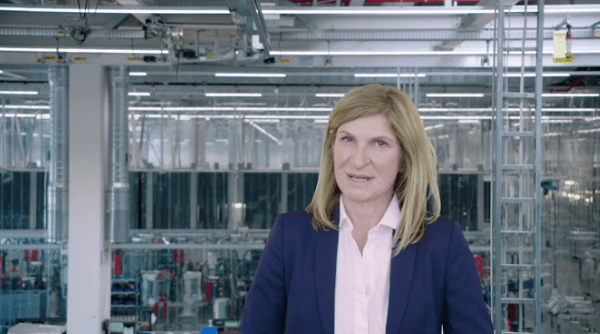
The tour guides moderate the virtual tours live from a studio…
AudiStream provides detailed insights into selected production stages at Audi in Ingolstadt. Additionally, the new online feature presents the technical highlights of the brand. The tour guides moderate the virtual tours live from a studio. They explain production processes, answer individual questions as part of a dialog, and tailor the course of the approximately 20-minute live stream to the wishes and interests of the participants.
You visit Audi Ingolstadt virtually…
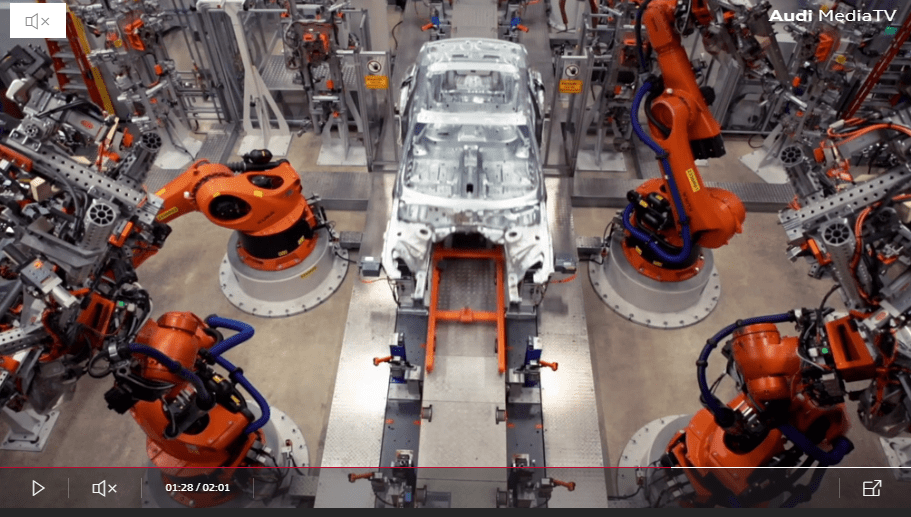
AudiStream starts with the online feature “Audi live at the Ingolstadt factory.” Participants learn how an Audi is made, from the first production steps in the press shop up to the last manual operations during the final assembly. Streams about further topics concerning the Audi brand are to follow.
You see on your screen the A4 production at Ingolstadt
Users select the desired live stream and a suitable time slot online at http://www.audi.stream.
The offering is free of charge; fees may be charged for internet access, however, depending on the selected provider. Further information on AudiStream can be found in the video. We give you here the link:
Battery tray welding at Audi Brussels for the e-Tron: to see this, follow your servant in the factory!
If you want to see the production of the E-Tron at Audi Brussels, you will still see your servant and his colleagues. For your info, I am personally guiding you through the factory and tell you everything you want to know about its presence and history and all the state of the art Audi production techniques in four languages, German, English, French and Dutch. You can book a visit through the website http://www.audibrussels.be/brussels/web/nl/factory-visit/reservation.html. Just hurry, interest is large, and bookings are already months ahead!
One would indeed create a new “mildful” English word for it: the o so clever way Fiat sees hybrid propulsion as a mild mobility solution for everybody.
Mild for nature, and also gentle for your purse. The Fiat engineers found the simple, straightforward solution of using a Belt-integrated Starter Generator to capture the kinetic energy you want to reduce and give it back the moment you want to build it up again.
Indeed, in urban stop and go traffic, reducing and gaining speed is actually the main thing you do. And this is where Fiat helps you with mild cleverness.
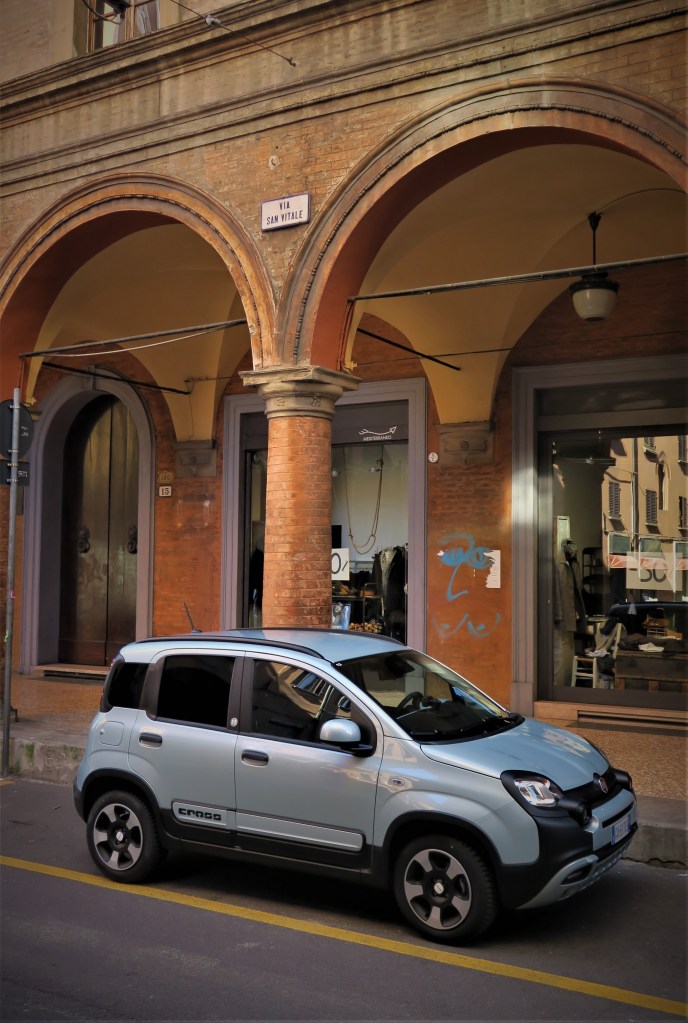
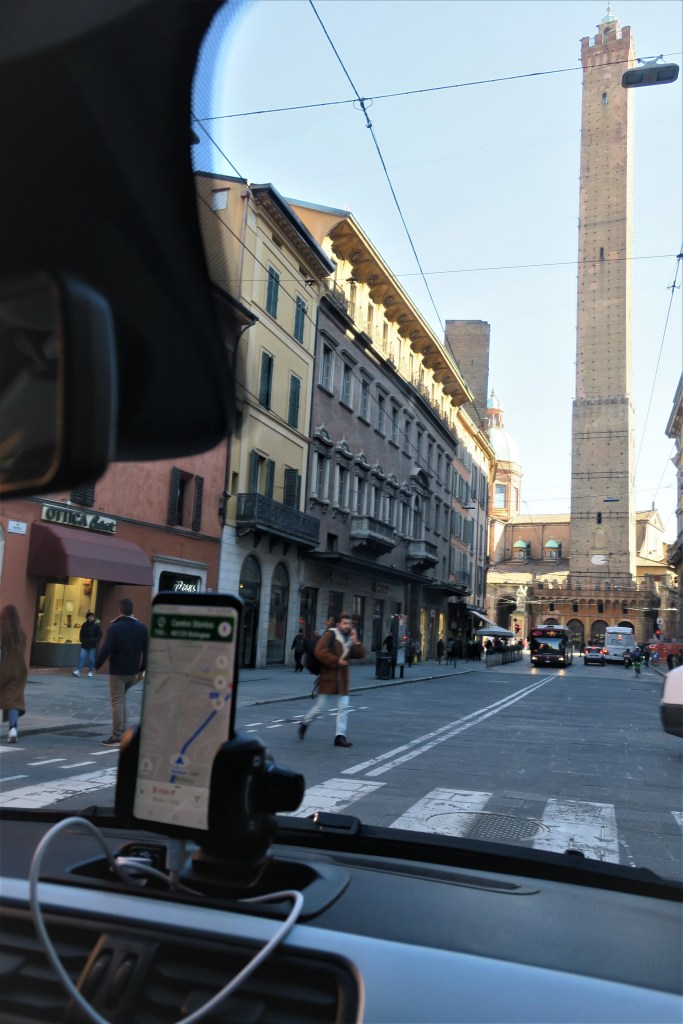
We tested it all for you in the medieval city center of Bologna. And were convinced. Just read on…
Hans Knol ten Bensel
Gentle technology with a touch of genius.
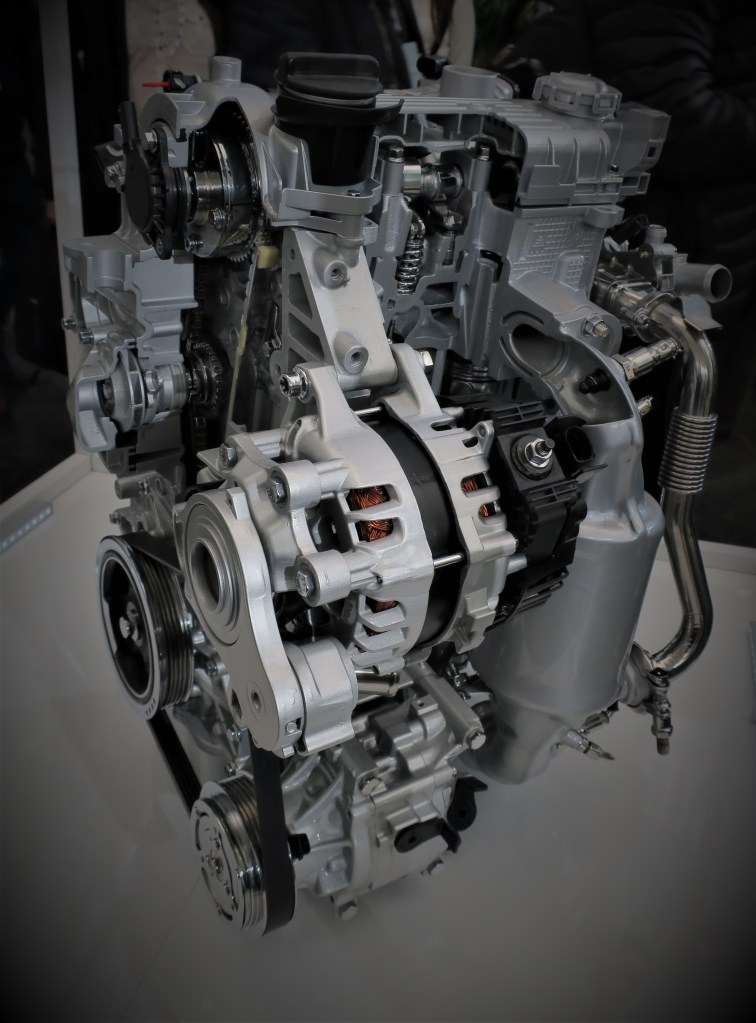
We heard it all at the presentation in Bologna. Carlo de Marino, global engineer of the Firefly Engine Family (see photo above) explained us in detail the merits of this 999 cc three cylinder engine and the hybrid system coupled to it.
First let’s focus on the hybrid system. The BSG (Belt-integrated Starter Generator) system is mounted directly on the engine (see photo above) and is operated by the belt that also drives the auxiliaries. The system recovers energy during braking and deceleration, stores it in a lithium battery with a capacity of 11 Ah, and uses it, at a peak power of 3,6 kW, to restart the engine in Stop&Start mode and to assist it during acceleration.
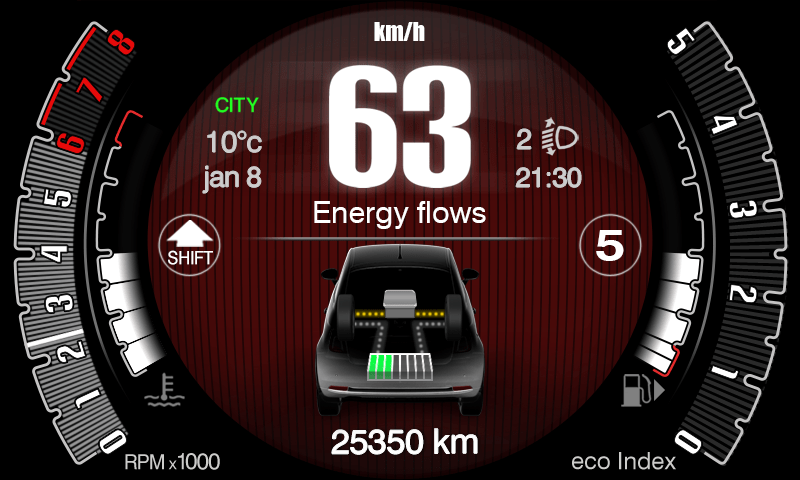
This technology allows the internal combustion engine to switch off, even at speeds below 30 km/h, simply by shifting into neutral (the dashboard, which displays information on the hybrid system, prompts the driver when to do so). In coasting mode, the lithium battery powers all services, ensuring the driver has full control of the vehicle.
The Mild Hybrid propulsion unit is combined with a 6-gear C514 manual transmission “evolution”, which has new low-friction bearings and gaskets, uses a specific high-efficiency lubricant. The gearbox sits 45 mm lower and is better supported, making for supersmooth gearchanges, which we indeed experienced during our drive.
The FireFly engine itself is tuned for utter docility, and develops 70 HP and 92 Nm of torque, the latter at a mild 3500 rpm. But as said, the starter generator helps at low revs when driving away and restarting. We drove the Panda Cross during most our test drive, keen to test out the hybrid system and get good photos of the car in the beautiful Bologna inner city, with a short stint behind the wheel of the Cinquecento.
Indeed, we were impressed by the silence and velvety smoothness of this engine, and the slick gearbox where gearchanges could be done with your fingertips. The whole system also tempts you into adopting a fluent, quiet driving style, with the engine remaining totally vibrationless from 1200 rpm or so. The gearchange indicator also invites you to stay below 1700 rpm or thereabouts, and the driving experience is then one of silent mildness indeed.
When driving gently through city streets and boulevards, with the engine being barely audible both to bystanders and occupants, the instrumentation tells you about the merits of coasting, and indeed, shifting the slick gearchange lever into neutral will stop the engine and let you coast gently along, doing exactly what all the environmentally conscious tell you to do: recuperate kinetic energy by gently rolling to a stop, adopting good anticipation and judicious driving.
If you still have to use the brakes, it is then nice to see how the generator recuperates the energy, and gives it back when starting away again. Of course, this has its good results: Fiat claims a reduction of 30 % in your average fuel consumption, and indeed, it took no effort at all to reach values between 4 and 5 litres/100 km in the Bologna streets. Of course, it takes a fluent driving style at low revs, that goes without saying. The manufacturer quotes 3,9 l/100 km as average consumption , and emissions are as low as 89 g CO2/km.
Performance is more than adequate with a quoted top speed of 155 km/h and 14,7 seconds from 0 to 100 km/h.
Durability and low service costs…
The designers of the FCA Mild Hybrid System not only kept the Hybrid system efficient and simple, also the 3 cylinder “evergreen” FireFly engine underwent some changes to enhance serviceability. The unit has here a single overhead camshaft, two valves per cylinder with continuously variable timing and last but not least chain driven timing.
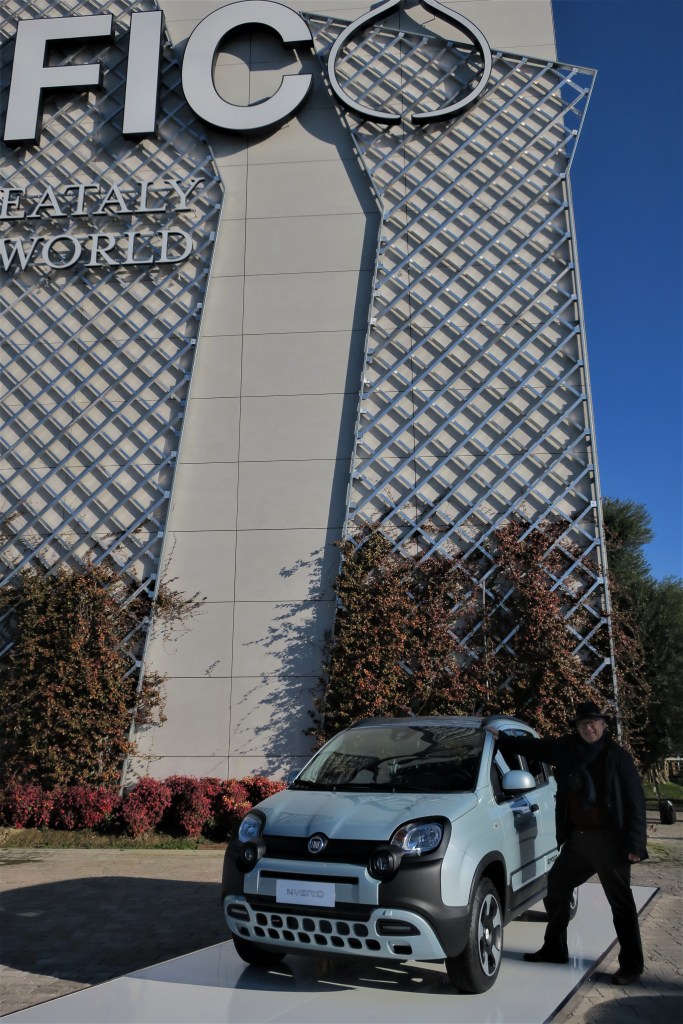
Your servant with the Panda Hybrid in front of the stunning Eataly Fico Food Show Fair…
But also other aspects of running costs are kept low.
Customers also benefit from all the advantages of going hybrid (the car is Euro 6D Final-compliant, for instance), which, depending on local regulations, include freedom of access and movement in city centers, cheaper parking in town centers and tax breaks.
The philosophy of designing and building a Hybrid system for everybody is also reflected in the very moderate extra cost of the Hybrid system compared to the standard layout(s). Indeed, the Panda Mild Hybrid Launch Edition is available in our country for slightly over 13.000 Euros…
A Hybrid Launch Edition with a distinct “green” touch…
The 500 and the Panda are today, for the first time, together in a single special series: the Hybrid Launch Edition.
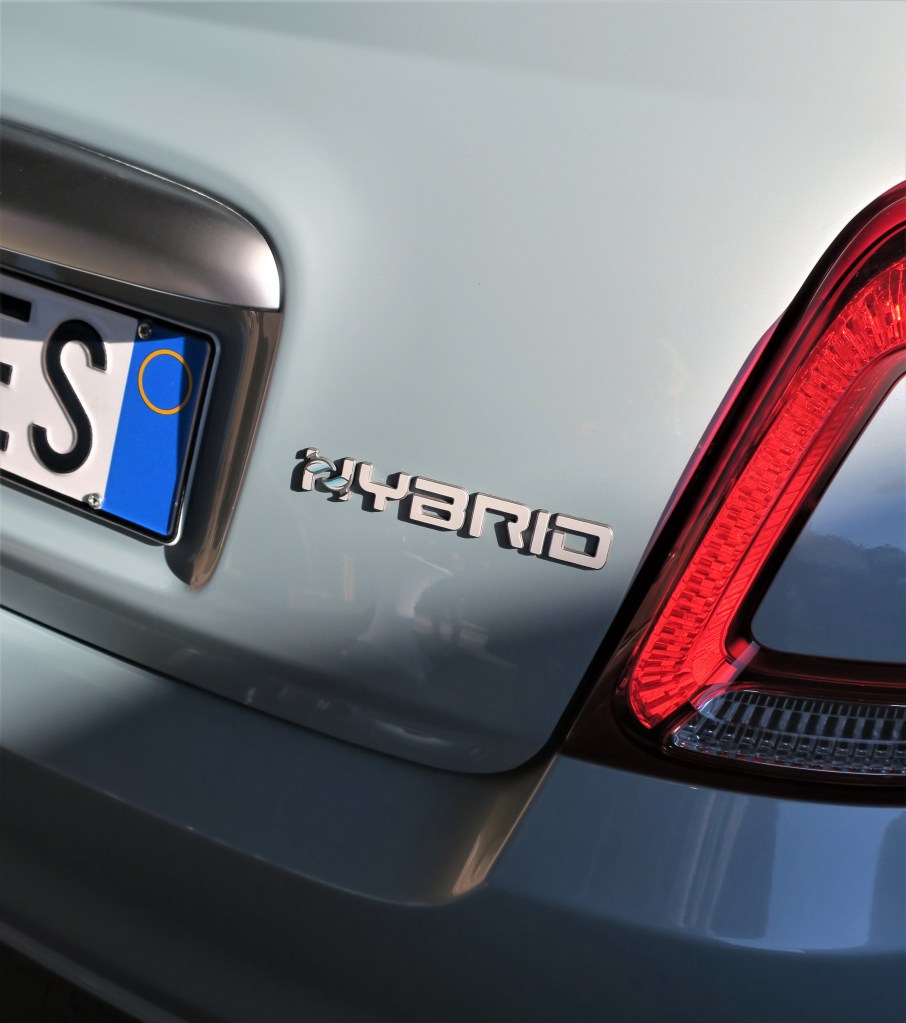
The special series can be recognized by the “Hybrid” sign written on the rear and the exclusive “H” logo, formed by two leafs with dew drops, on the center panel. Dew – the symbol of the light of dawn and therefore of the beginning of a new era – has been used also as inspiration for the “Dewdrop Green” exterior on both cars.
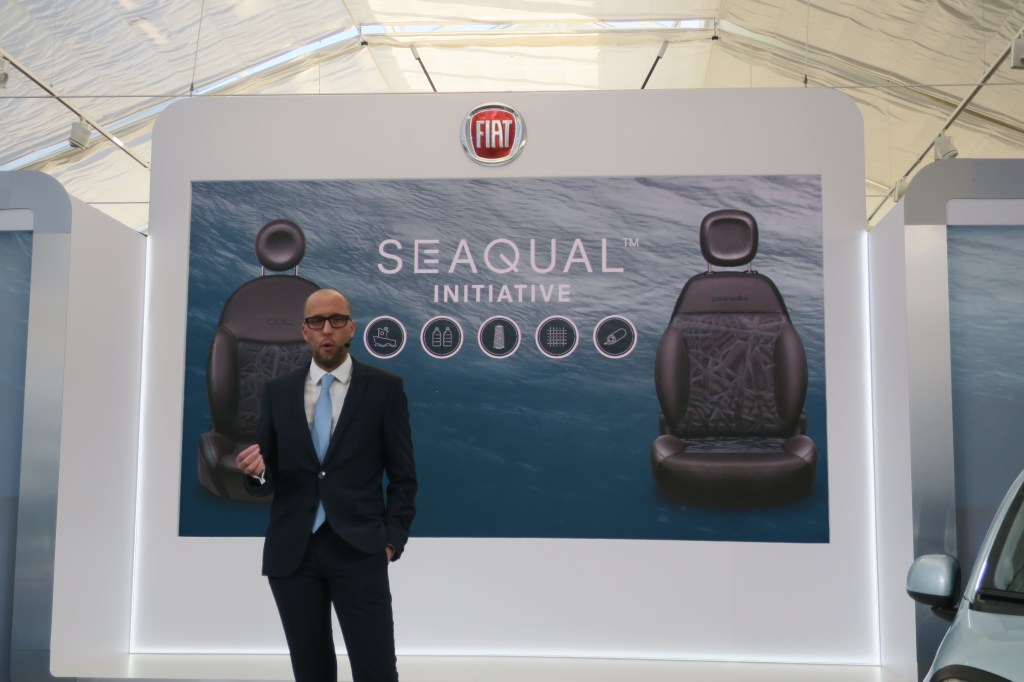
Charles Fuster, EMEA region marketing manager explaining the Seaqual initiative…
On the inside, the seat upholstery is faithful to the sustainable philosophy of the entire project. The Launch Edition seats are the first in the automotive sector to be partly made with SEAQUAL® YARN, the weaving of which produces a special material, certified by SEAQUAL INITIATIVE, derived from recycled plastic: 10% of which originates from the sea and 90% from land.
This SEAQUAL® YARN is produced by transforming plastics collected from the sea into flakes of polyethylene terephthalate. These flakes are then used in the yarn from which the fabrics are made. In the weaving phase, marine polyester is mixed with other environmentally friendly, natural, recycled or recovered fibers. This green process is completed by the application of dyes and environment-friendly finishes based on the saving of water and energy. Fiat is collaborating with SEAQUAL INITIATIVE to support ocean clean-ups to take action against marine litter.
Conclusion
The philosophy of designing this Mild Hybrid System certainly took hold with us. It is clever, effective, smooth and last but not least comes at a very small extra cost. All this completely in line with the unique talent Fiat has well honed over decades: to build small, compact cars which are simply among the best in the world in their class.
They now take this art a “green” step further with these Mild Hybrids, and there is even more to come. Just watch out for the next Geneva Motor Show: it will see the birth of the first “full electric” 500…
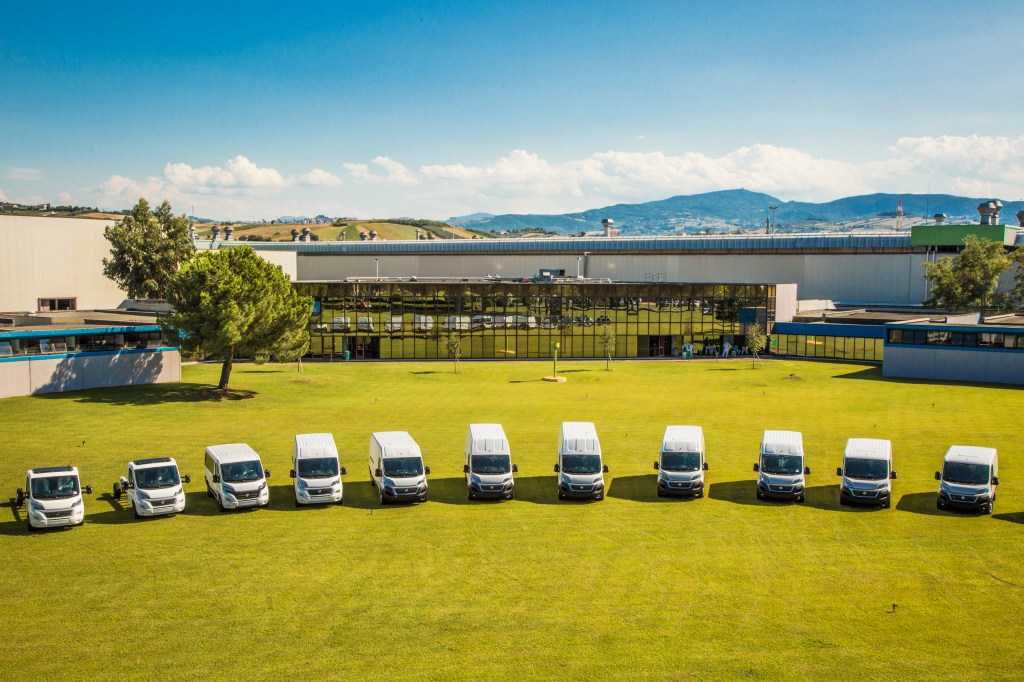
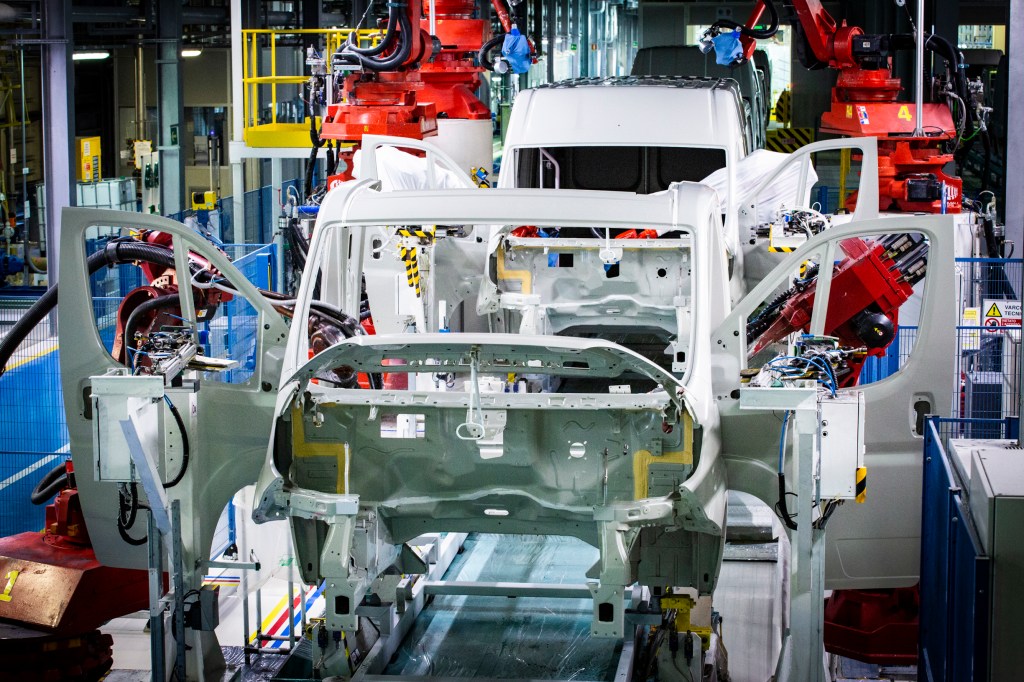
In this Sevel Sud factory, Fiat Ducato, Citroën Jumper and Peugeot Boxer are built on the same assembly line…
Did you know that in the Light Commercial Vehicle segment, Fiat and Peugeot/Citroën are long lasting friends? Did you know that the Citroën Jumper and the Peugeot Boxer are rolling shoulder to shoulder with the Fiat Ducato from the same production lines since decades in the Sevel plant, inaugurated in 1981 in Val di Sangro (Atessa Italy)?
FCA Italy and Groupe PSA have signed an agreement to extend until 2023 their successful LCV cooperation, which started not less than 40 years ago.
This new agreement also includes continued manufacture by the JV of Fiat Ducato, Peugeot Boxer and Citroën Jumper large vans as well as additional versions to cover the needs of Opel and Vauxhall brands.
The agreement also foresees the complementary use of Groupe PSA manufacturing capacity to assemble certain versions of the large vans for the Peugeot, Citroën, Opel and Vauxhall brands in the medium-term.
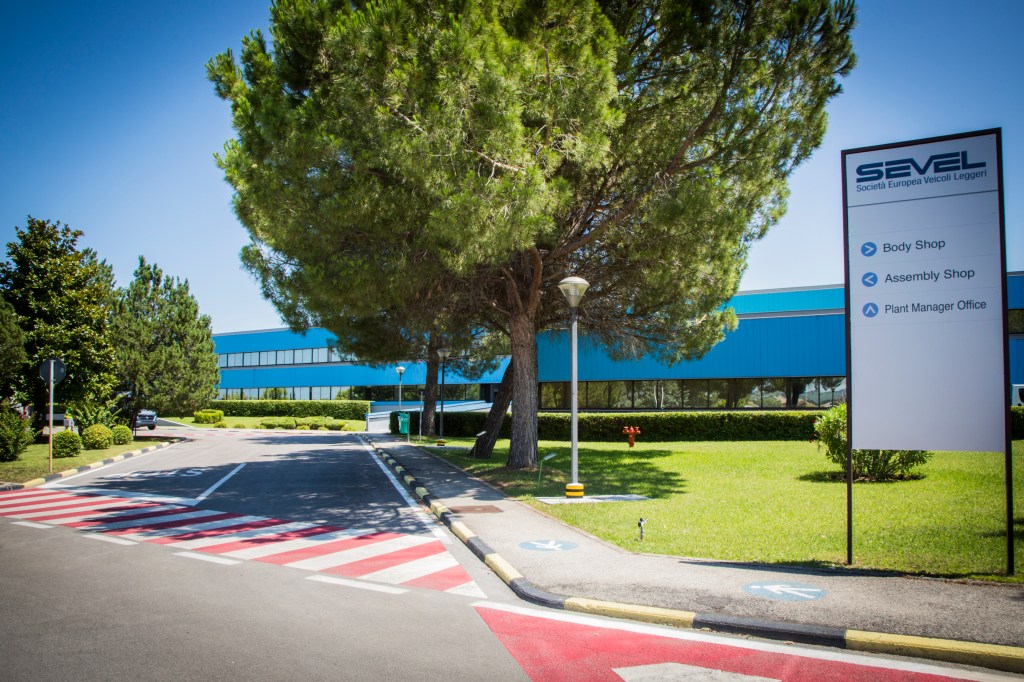
The Sevel Sud factory…
To soon to tell what will happen with the larger LCV Opel model range now. The Opel Movano was actually a version of the Renault Master, but now has to find a new (Ducato/Boxer/Jumper?) platform, as the cooperation with Renault has been ended on amicable terms.
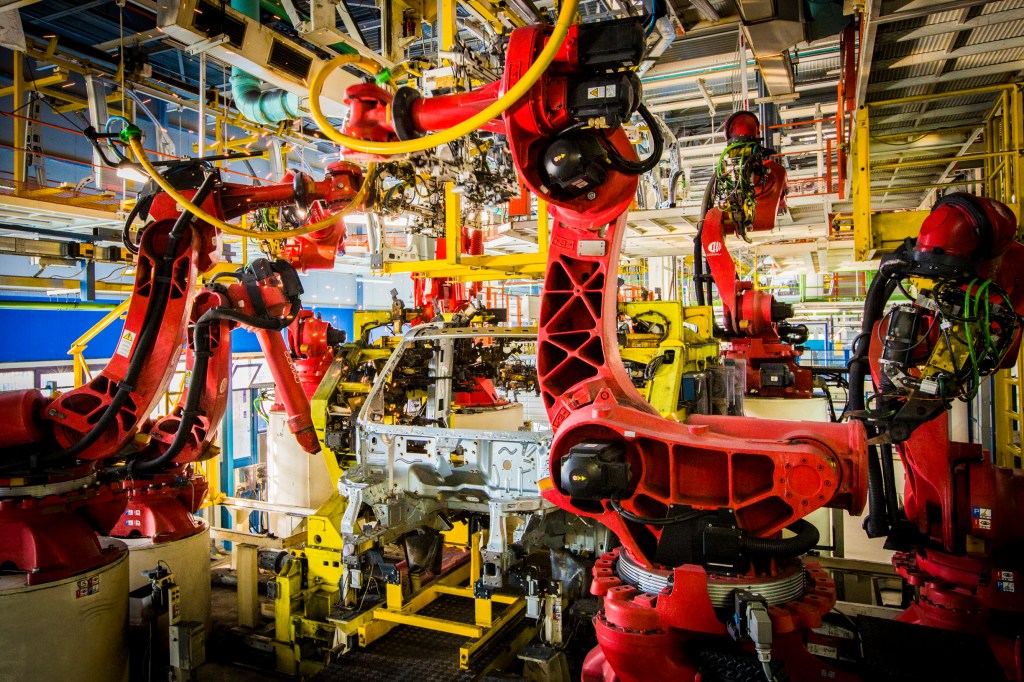
The Sevel (from Società Europea Veicoli Leggeri) plant, was inaugurated in 1981 in Val di Sangro ( in Atessa Italy), and has now a surface area of more than 1.2 million square meters and employs around 6,200 employees. It is now the biggest and most flexible light commercial vehicle plant in Europe.
It started production of the Ducato in ‘81, together with the Peugeot J5 and the Citroën C25. In also included in those days the Talbot Express and the Alfa Romeo AR6 on the same technical platform basis. This first generation lasted until 1993, followed then by further generations of Ducato, Jumper and Boxer until today.
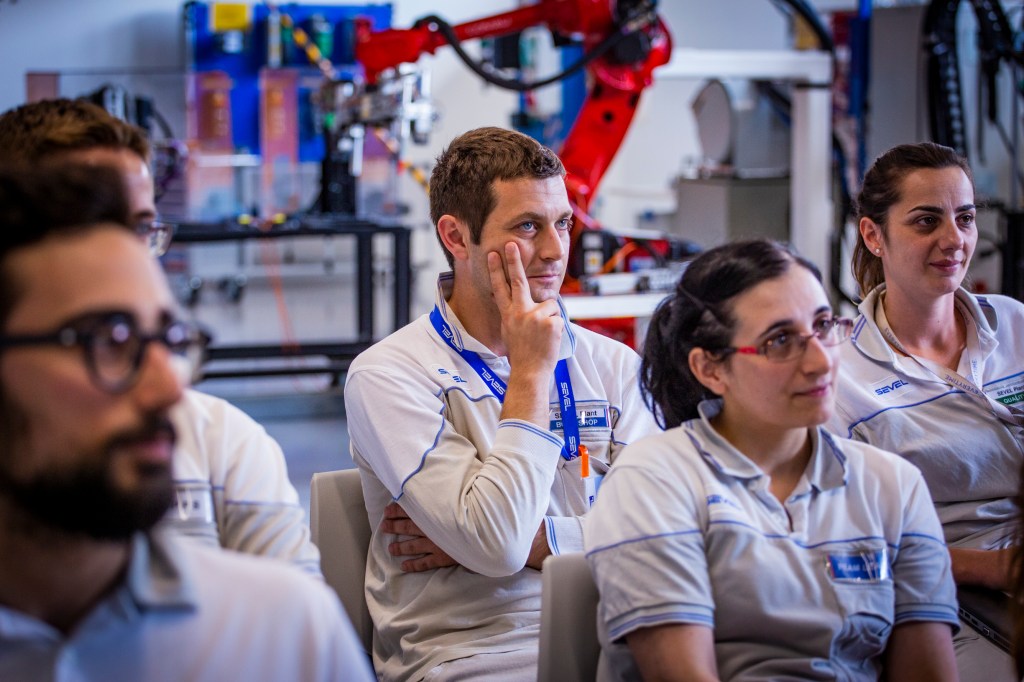
The plant also houses an on-site Academy, a center of excellence where employees have the opportunity to receive training and improve their skills, as well as to undertake simulations and create innovation.
Astonishing all this, and we show you here some photos of the plant. We are keen to know more about the further electrification of LCV family built in Sevel Sud, and whether besides the E-Ducato, where FCA now focuses on, there will be other larger LCVs which will also be electrified on this basis.
For the moment, too soon to tell, according to the dynamic PR people of FCA Belgium. We keep you posted on further synergies and further steps in adopting E-power to their LCV’s!
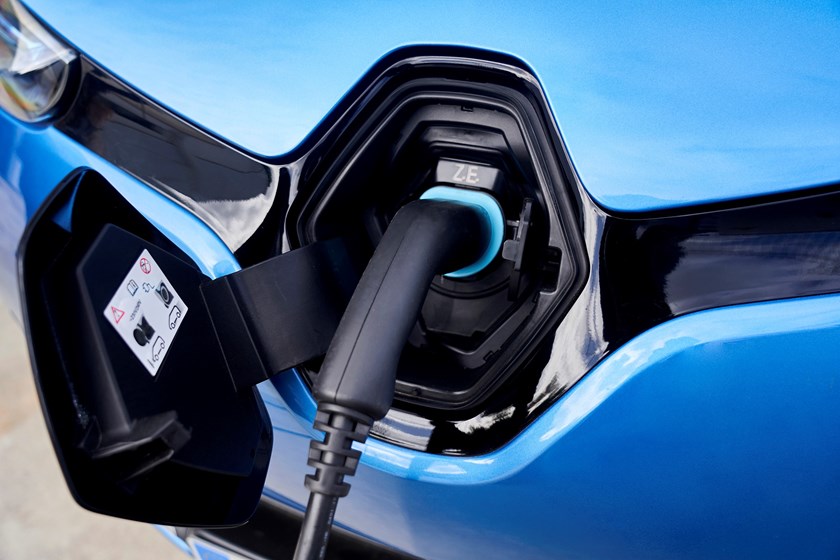
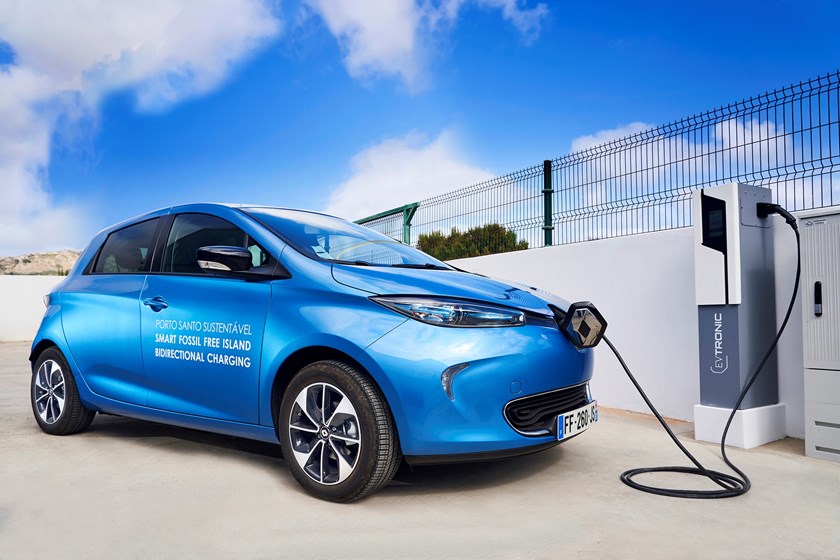
2019 – Porto Santo ecosystem – a bold experiment of insular bi-directional charging already launched by Renault
Together with major industry partners and the help of the European commission through their Horizon 2020 project, Renault takes the (electric) bull by the horns. We all are well aware of the problem: charging infrastructure is still cruelly lacking in many European countries.
The project is called INCIT-EV, and Renault is coordinating it. It aims to encourage the development of electromobility in Europe through field experiments.
7 innovative charging technologies for electric vehicles will be tested in chosen locations in Europe, just read further…
Hans Knol ten Bensel
2019 – Porto Santo ecosystem another project by Renault
The project is worked out in collaboration with 32 partners in Europe. Spanning the 48 months from January 2020 through December 2023, the INCIT-EV project will be broken down into two primary phases:
·Phase 1 will first involve analysing user needs and requirements, followed in April 2020 by an assessment of charging technologies and their integration into infrastructures.
·Phase 2 will focus on 7 tech demonstrations on selected sites and will run from the second half of 2022 to the end of the project. These 7 demonstrations are:
– A dynamic induction charging system for the urban environment in Paris, France;
– High voltage charging systems in the outskirts of Tallinn, Estonia;
– Optimised bidirectional “smart charging” in Amsterdam and Utrecht, the Netherlands;
– A dynamic induction charging system in peri-urban/long-range areas in Versailles, France;
– A charging hub in a car park for car-share vehicles in the outskirts of Turin, Italy;
– Low power bidirectional charging (for two-wheeled vehicles also) and static wireless charging in taxi lanes located at the airport and central station in Zaragoza, Spain.
2019 – Porto Santo ecosystem
·
A pan-european project brought to life by the Renault Group…
To address the needs to test the charging technologies in real-life conditions – such as the Contactless Dynamic Charging technology – and to structure the whole ecosystem, Groupe Renault took the European Commission’s call for new projects as an opportunity to create a consortium. In the capacity of coordinator, Groupe Renault serves as intermediary between the European Commission and the consortium partners, and oversees the technical development, budgeting, and scheduling.
Not less than thirty-two leading industrial companies, universities, institutes, cities, start-ups, and SMEs positively answered the call put out by Renault, with the shared desire to promote electric mobility in Europe by carrying out electric car’s user-centric experiments.
Groupe Renault experiments already on alrge scale with bi-directional charging, here in the Netherlands…
These 33 members of the consortium are based in Estonia, France, Germany, Italy, the Netherlands, Slovenia, Spain, and Turkey.
Needless to say that we will follow up closely on this initiative, as an electric powered car is only so useful as it can be practical in daily (commercial) life.
Having said this, we will in these columns also concentrate in the future more on the professional mobility, i.e. LCV’s and all purpose pick-ups and offroads, a segment which has become eminently important in Europe. We wrote in these columns already about the electric Fiat Ducato for instance and the people behind it. We will soon look more closely at the state of electrification of LCV’s and what it holds for the (near) future.
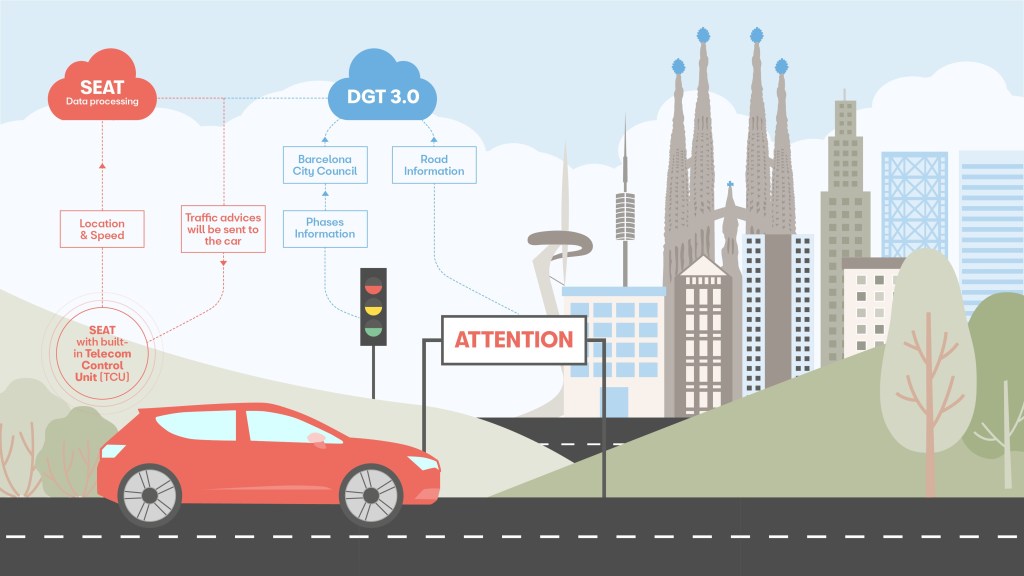
We all know the frustration: however slow or fast you accelerate from a traffic light, the next one will always be red, even if, as it happens so often, this next light is only a few hundred metres away. We all know too well how much energy is wasted with this. Seat now started a project together with the Spanish Traffic Authority, the Barcelona City Council and ETRA.
It successfully connects vehicles with traffic lights and the traffic control centre so drivers can anticipate their upcoming status. This project also enables information on motorway incidents to get sent directly to vehicles without the need for information panels, bringing cars and infrastructure together via the cloud using cellular technology with latency times of 300 milliseconds.
Oh so clever!
Hans Knol ten Bensel
Vehicles connected with traffic lights and road infrastructure.
The vehicle used in this pilot project is equipped with the necessary technology to connect with its surroundings and receive information uploaded by the Traffic Authority to the cloud, which in turn enables the driver to anticipate what lies ahead in real time.
“In this project, SEAT’s new connected cars receive real-time traffic information from the Traffic Authority’s central cloud, including information displayed on motorway panels or the traffic light status in cities”, explains Jordi Caus, the Head of Urban Mobility Concepts at SEAT.
How does it work?
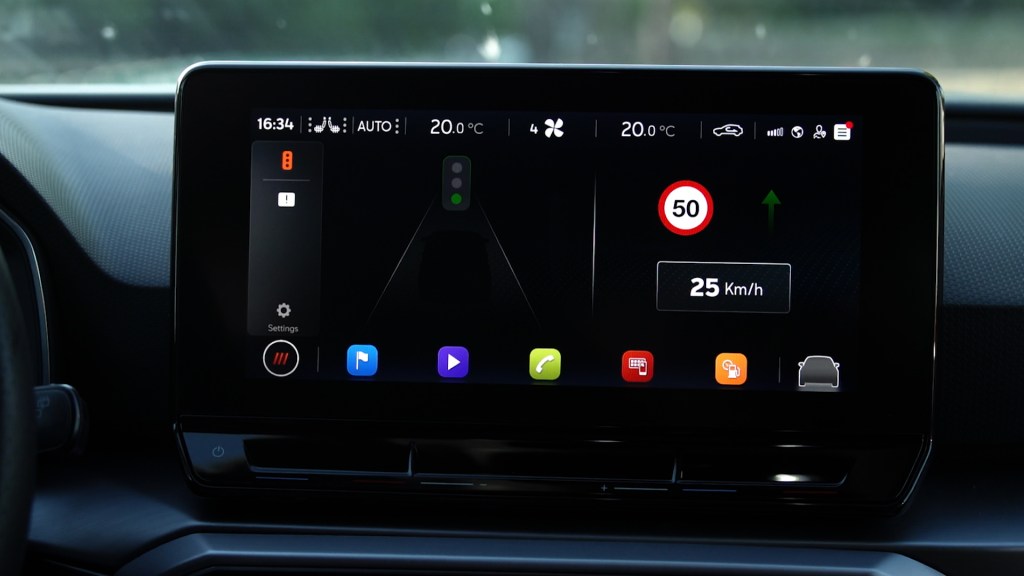
When a vehicle is approaching a traffic light, an alert appears on the screen showing whether it will be red, green or yellow when it arrives, as the system performs a calculation based on how far away the car is and the speed it is travelling at. One important note for safety is that it only works as long as the vehicle is not exceeding the speed limit. “The system does not work at above maximum speeds, which is very important for road safety. It wants to be an auxiliary tool that enables motorists to drive more smoothly”, assures Manuel Valdés, the Head of Mobility and Infrastructures at the Barcelona City Council.
Information panels in your car, too.
Today there are 2,000 information panels in Barcelona that provide drivers with traffic and weather conditions or information about road work or accidents. With this system, all this information is displayed directly on the screens of connected vehicles at any point of the road network. According to Jorge, “we can accomplish the same as what we used to do with variable message signs on the motorway, but now directly to the car from any point on the road.”
A future of collaborative information…
In addition, connected cars and users themselves will also be information suppliers. “Anyone with information about what happens on the road can share it, so other users will know in advance of any incident when they reach the same point”, explains Jorge.
“With this project we’re taking a first step to connect cars with overall traffic infrastructure. We’ve begun with information functions, but with the future autonomous vehicles in mind we’ll be able to act directly on the car in situations of risk”, concludes Jordi Caus.
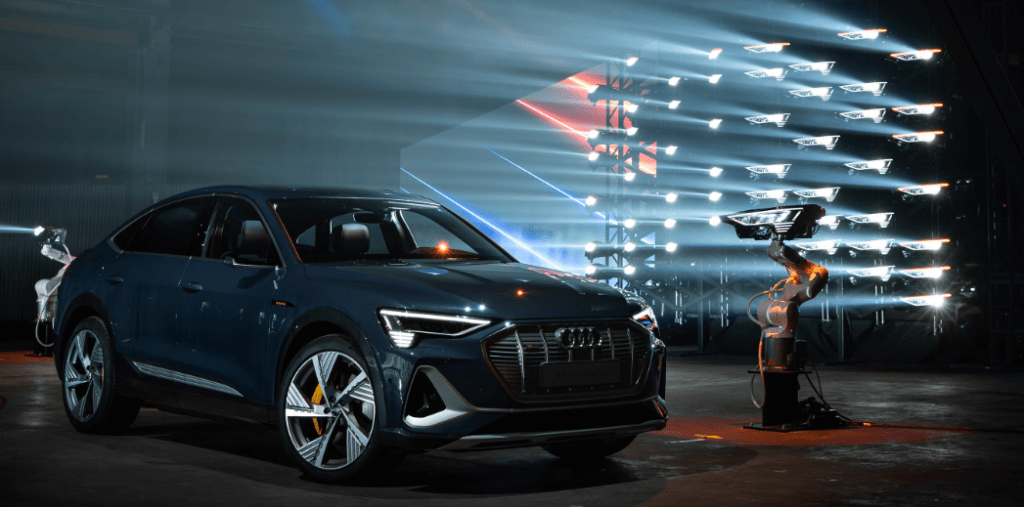
Indeed, an extra zest of sportiness is added to the already iconic Audi e-tron. The Sportback version looks and is more dynamic, as it offers up to 300 kW of power and a range of up to 446 kilometers (277.1 miles). A new feature, and for the first offered on a in a mass-production vehicle, are its digital matrix LED headlights.
This was also clearly visible at the Los Angeles presentation of this elegant SUV Coupé, where the rakish and elegant contours of the Sportback were lit by an array of LED headlights in the background, and mounted on a robot alongside the car.
Just read on for more details…
Hans Knol ten Bensel
The Audi e-tron Sportback looks very good in the typical Audi design language. The roof drops down steeply to the rear—in typical coupé style— and is flowing into the steeply raked D-pillars. The lower edge of the third side window rises towards the rear—also a typical Sportback feature.
The designers also varied the signature at the broad diffuser, drawing attention to the absence of exhaust tailpipes. A light strip connects the LED lights to one another.
Announcing even more colour…
A total of thirteen paint finishes are available for the all-electric drive SUV coupé, including the new colour plasma blue, metallic, which is exclusive to the e-tron Sportback. The logo on the electric charging flap features the eye-catching high-voltage signal colour orange, which can also be applied to the brake callipers on request.
The S line model emphasizes the sporting
DNA of the Audi e-tron Sportback, and is standard equipped with 20-inch wheels
and sport air suspension. At the rear end, the spoiler as well as a striking
diffuser which extends across the entire vehicle width, contributes to the
outstanding vehicle aerodynamics. In contrast to the basic model, the
attachments on the S line exterior are painted in the exterior body colour –
including the wheel arch trims, door sills, bumpers and exterior mirrors.
For those who want more contrast, Audi also
offers the so-called black styling package that accentuates the area of the
Singleframe, the side windows, and the bumper. The exterior mirror housings are
also available in black as an option.
A drag coefficient of merely 0.25…
In conjunction with the S line exterior and virtual exterior mirrors, the Sportback achieves an drag coefficient value of just 0.25. This is primarily due to the coupé body shape and the associated lower aerodynamic drag behind the car. The high separating edge of the Sportback minimizes swirl in the air flow in this area.
Global innovation in a production vehicle: The digital matrix LED headlights
With the digital matrix LED headlights as top-of-the range equipment, Audi presents a worldwide first in a production vehicle: Broken down into minute pixels, their light can illuminate the road in high resolution. The design is based on a technology abbreviated as DMD (digital micromirror device) and is also used in many video projectors.
Audi e-tron Sportback: digital matrix LED headlight
At its heart is a small chip containing one
million micromirrors, each of whose edge length measures just a few hundredths of
a millimeter. With the help of electrostatic fields, each individual
micromirror can be tilted up to 5,000 times per second. Depending on the
setting, the LED light is either directed via the lenses onto the road or is
absorbed in order to mask out areas of the light beam.
Revolution ahead: just follow the light…
These LED lights will be seen on the e-tron Sportback mid 2020, and they can perform multiple tasks. It can generate dynamic leaving- and coming-home animations that appear as projections on a wall or on the ground. This presentation transforms the area in front of the car into a carefully illuminated stage. Not only does the digital light system deliver cornering, city, and highway lighting as versions of the low-beam light with exceptional precision, it also supplements the high-beam light by masking out other road users with even greater accuracy.
Above all, however, it offers innovative
functions such as lane light and orientation light. On freeways, the lane light
creates a carpet of light that illuminates the driver’s own lane brightly and
adjusts dynamically when he or she changes lane.
In this way, it improves the driver’s
awareness of the relevant lane and contributes to improved road safety. In addition,
the orientation light uses darkened areas masked out from the light beam to predictively
show the vehicle’s position in the lane, thereby supporting—especially on
narrow roads or in highway construction zones—the safe lane centering assist.
The marking light function is also used in conjunction with the optional night vision assist. The light automatically draws attention to any pedestrians it detects, thereby reducing the danger of overlooking pedestrians in the immediate vicinity of the lane.
Detail
On the second part of this report, we will
tell you more about the dynamic qualities, the drivetrain, i.e. batteries and
engines, interior and connectivity of this e-tron Sportback…
A tall standing Urban Coupé with fluid, inviting lines…
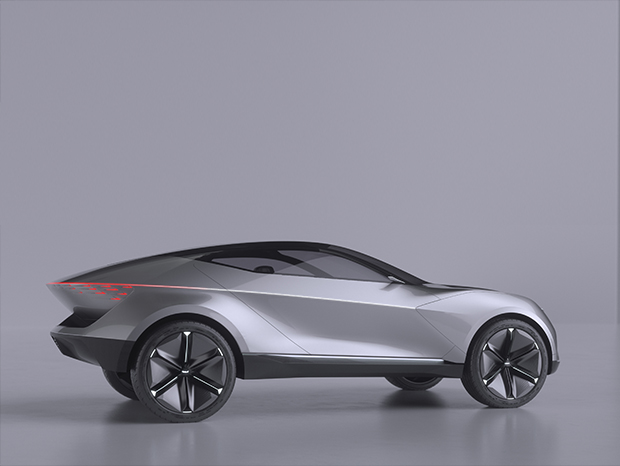
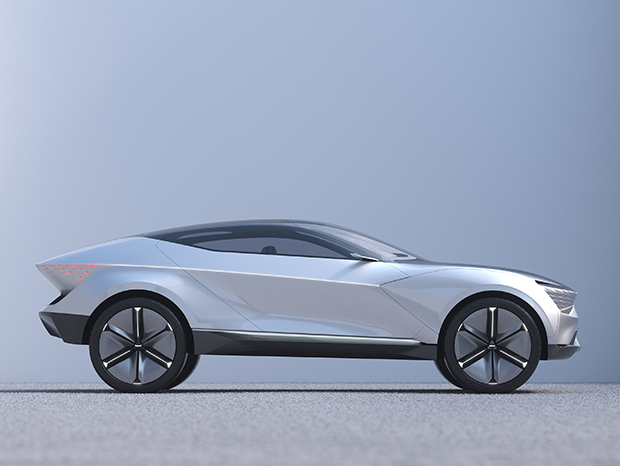
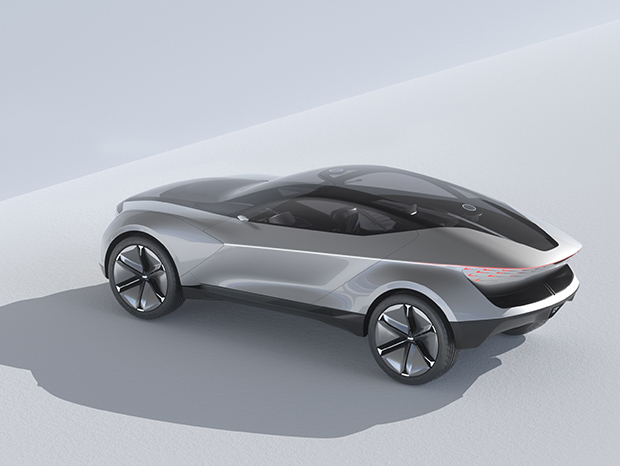
Kia recently showed a stunning electric coupé with novel proportions. This Futuron made its public debut at the 2019 China International Import Expo (CIIE) in Shanghai. Its low-profile SUV coupe body makes a strong statement of intent for Kia’s future cars, which will be – as the manufacturer puts it – confident, sporty and modern, yet also elegant. At 4,850 mm in length, 1,550 mm tall and with a 3,000 mm-long wheelbase, it has an elevated ground clearance is matched with a low, lean body to create a dynamic, confident posture.
It is indeed a sports car… on an SUV platform. Clever.
Because this makes – like for instance in the Audi e-tron – room for the
batteries to be lodged beneath the cabin floor. The advantage is also that the elevated
stance of the car is therefore matched with a low center of gravity.
And that slightly more elevated stance is just what
you want in an urban car, even if it has the sleek shape of a coupé.
Just read further…
Hans Knol ten Bensel
This “E”-Coupé
is powered by four powerful in-wheel electric motors. This e-AWD
system delivers as you can expect lively responses to driver inputs.
But the important hallmark here is its fluid, intriguing design. The front fender flows backwards from the front of the hood before plunging into the cabin itself, establishing a connection between the driving seat and the road ahead. The concept’s roof is a diamond-shaped panoramic glasshouse which sits atop the 360-degree core, in the best traditions of UFO and flying saucer design. It floods the cabin with natural light, and it also extends down the bonnet to give drivers an unparalleled view ahead. The glasshouse also incorporates a network of LiDAR (light detection and ranging) sensors capable of providing Level 4 autonomous driving features, enabling hands-off and eyes-off driving in most conditions.
Furthermore, the 360-degree theme is evident in the
lighting that illuminates a sharp character line encircling the Futuron’s body.
A new “tiger” face…
The newly-designed front of the car, like that of the
Imagine by Kia Concept first revealed earlier in 2019, expresses a new design interpretation for Kia’s future
electric vehicles.
With a wider ‘tiger face’ shape, the grille
incorporates the Futuron’s headlamps, an innovative ‘Star Cloud’ design which
gives the car a dazzling new night-time identity.
Flexible cabin space…
The layout of the electric powertrain and
incorporation of Level 4 autonomous
driving systems has enabled the creation of a spacious and flexible cabin
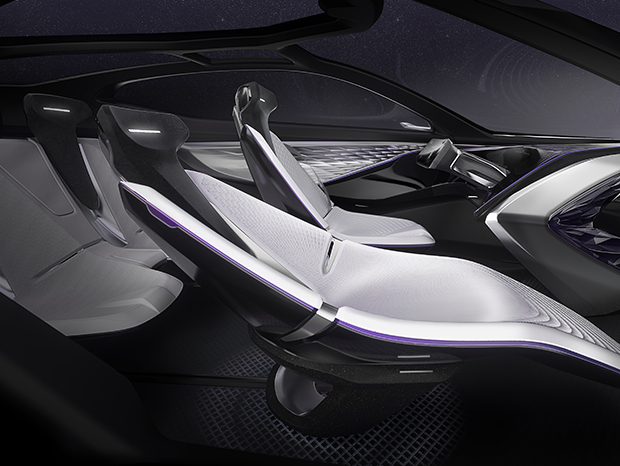
unlike any other vehicle on roads. The two
front seats are created out of flexible materials and can offer an upright
‘driving’ position, or a reclined ‘rest’ position, similar to the flexibility
afforded to first-class airline passengers. With the activation of the
Futuron’s autonomous driving features, the two front seats recline as the
steering wheel retracts. The ‘zero-gravity’ seating position this creates helps
to reduce fatigue on long journeys.
One of the most prominent features of the cabin is the
‘cockpit’ area surrounding the driver. The graphical user interface (GUI) of
the cockpit flows out of the driver-side door and wraps around the steering
wheel in a seamless arc. This merges the instrument cluster directly with the
audio-visual display at the center of the dashboard and is linked to the
display integrated within the surface of the steering wheel itself.
The GUI is operated by artificial intelligence
technologies, displaying useful information about the car various autonomous
driving, powertrain and navigation features, which creates a unique user
experience.
This is, according to Kia, what driving into the
(urban) future is all about. Just look at the photos here…
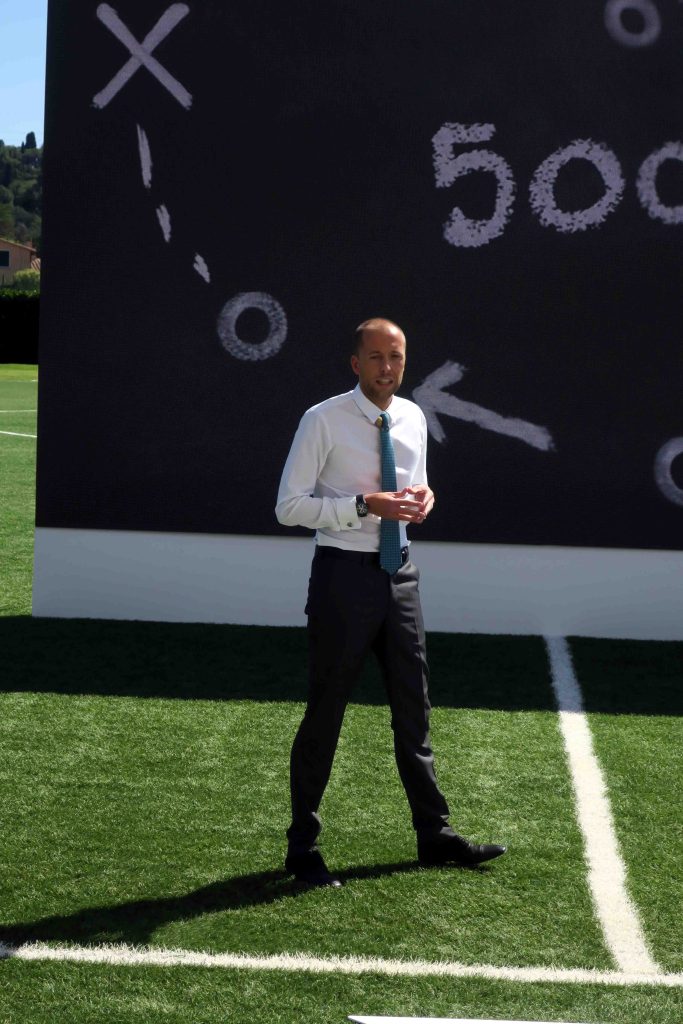
Charles Fuster taking the 500X Sport to the football field…
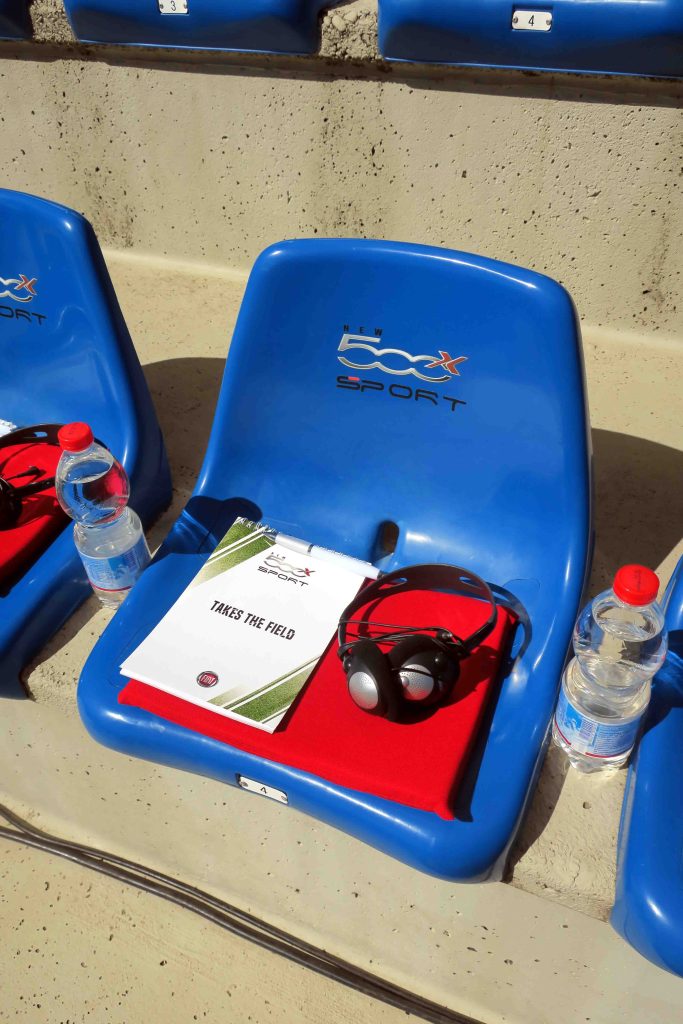
When Fiat presented the 500 X Sport, they had the very good idea to draw a parallel between its excellent sporting and stylish qualities and embed it into the language and philosophy of top football. Therefore the venue of presenting this new Fiat was at the the “Luigi Ridolfi” Federal Technical Centre in Coverciano (FIorence), a centre of excellence for teaching, training and sport, as well as the historic seat of the Italian Football Federation.
The presentation “in the field” was expertly done by Charles Fuster, Product Marketing Manager 500 X, and the qualities of dynamism, precision, control
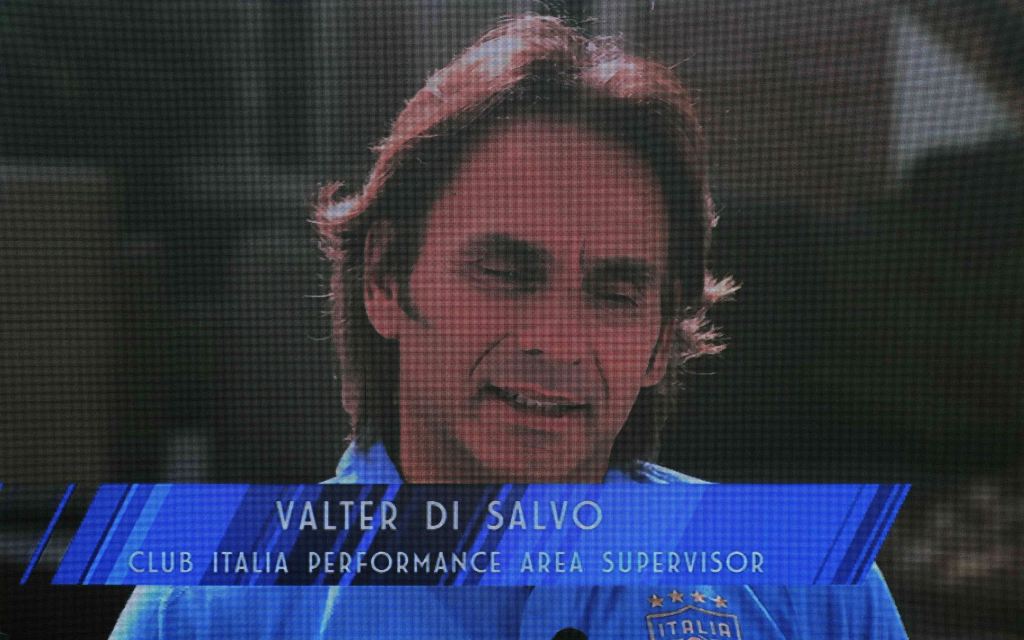
Echoing the qualities of the National Team in the Fiat 500 X…
and Italian style of this 500 X Sport were echoed on the accompanying screen by the coaches and specialists of the Italian national team, indeed the same characteristics that lead a player to wear the blue jersey of Italy with pride and joy…
Reason enough to have an interview with
Charles Fuster here…
Hans Knol ten Bensel
HK: How did you communicate the enhanced
sporting characteristics and properties of the new 500 X to the top people of
the Italian Football Federation, how did they tune into this? What was their
reaction?
CF: Actually, the starting point and the basis was and is the car. It arrives with important improvements. The balance, the road holding, the performance, the style, and of course, when we had created this story about the car, we focused ourselves on the world of football. This had very good reasons: like Fiat, it is a very democratic world, it is a very accessible sport for everybody. And so we started to work with the Italian Football Federation to draw all these parallels, between the world of the automobile and the world of football.
Charles Fuster on the playing field…
This proved extremely interesting because all this storytelling proved extremely natural. Also the persons of the federation, who we have presented today is somebody who has worked all his life with football and has an incredible experience.
Top performance is top performance, whether one speaks about cars or people…
These people prepare the future stars of tomorrow. So we arrive at an allegory with a well perfected industrial product and a sports player, and this can be very eloquent…
HK:
indeed, this is very unique in your presentation today… we saw the comments
of Roberto Mancini, Italy’s National Team Head Coach and others…
CF: Thank You, it is indeed the work of our
whole team!
HK: Can you tell a bit more what is the
mission of this sporting version of the 500 X…
CF: Just have a look at its position within the range. The Cinquecento is a typical women’s car. 75 % of the clients are women. This is different with the 500 X, where the buyers are about fifty-fifty between men and women. The 500 X Sport will also be bought by independent women who want to be seen having personality and character.
But this is a car which is targeted to a large public. We will not discriminate. Of course the car has a look which distinguishes it from the others in the range.
HK: Can you tell a bit more about the
future electrification of the Fiat models? We think about PHEV…
CF: There will be something new in 2020.
There will be an important electrified range at FCA in 2022. That is the only
thing I can tell you right now… The first models will be launched in 2020,
and this will continue throughout 2021 to 2022. It is the strategy of the group
to be present in all forms of electrification. It will also be very important
for the fleet market.
HK: We thank you for this interview.
Of course there is (still) more. We will
treat you also shortly with further interviews with Danilo Coglianese, Head of
Fiat & Abarth Communications, EMEA, and also have a long talk with
Alessandro Grosso, Head of Fleet and Business Sales, EMEA, about the European
Fleet markets and FCA’s position therein.
At the presentation of the new Fiat Ducato
earlier this summer we met up with some very remarkable people of Fiat
Professional, who had brought the new Fiat Ducato project to a pinnacle in the
world of commercial vehicles, and also made a splendid presentation of it.
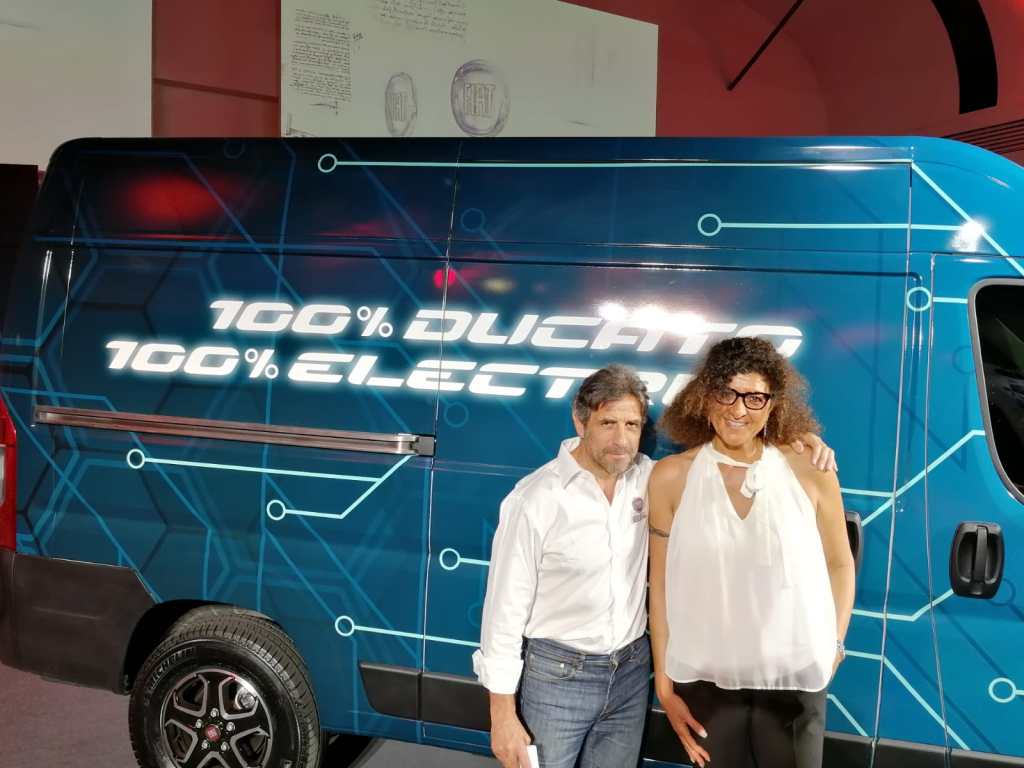
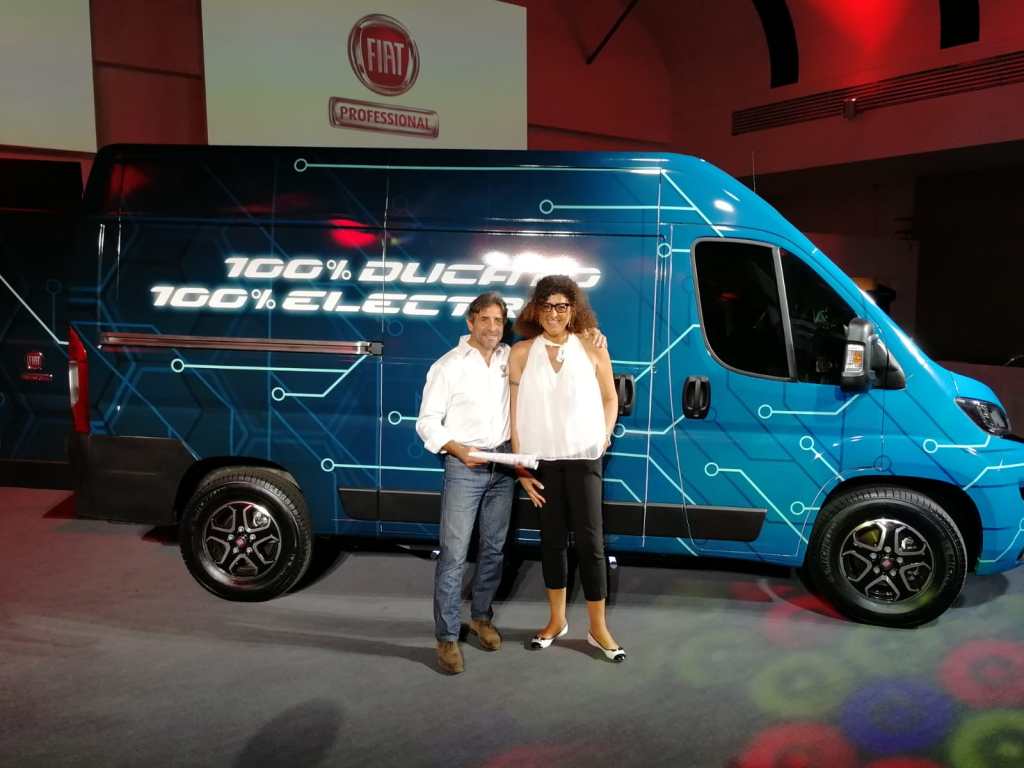
Intrigued as we were with the electric version of this Ducato, a harbinger in the trend towards clean urban mobility also for commercial purposes and bringing goods to our inner cities in an environmentally responsible way, we also directed our attention to the people behind this project, Domenico Gostoli, Head of Fiat Professional Electrification Programs, and Angelica Carapezza, assisting her boss in managing and coordinating the implementation of such electrification programs.
Angelica Carapezza and Domenico Gostoli, the team behind the Ducato Electric project…
We were very intrigued by the way they both
worked out and conceived this programme, only to discover when we spoke to
Signora Carapezza that she had a long lived passion for automobiles and Fiat,
and had participated in many important projects which had marked the history of
the Fiat brand and group.
This discovery led us to start up a series
where we present you the profiles of remarkable women who play an important
role in our automotive world. We start off with an interview here…
Hans Knol ten Bensel
HK: You have already built up quite a long career with Fiat, and were at the heart of quite a few important projects. Can you tell more about this?
AC: I started to work in FCA, more than 30
years ago; at that time it was just Fiat, a domestic company very far from the
international giant that is today.
I started in the Logistics dept, ensuring
Spare Parts distribution in Europe, then I passed to Purchasing, where I had
the chance to have a key operative role in the “world car project”. Working for
the realization of this project that took me for 3 years to Morocco as
responsible for purchasing local and nationalized components- , then I came
back in Italy. After a short while I was flying again to a new country for
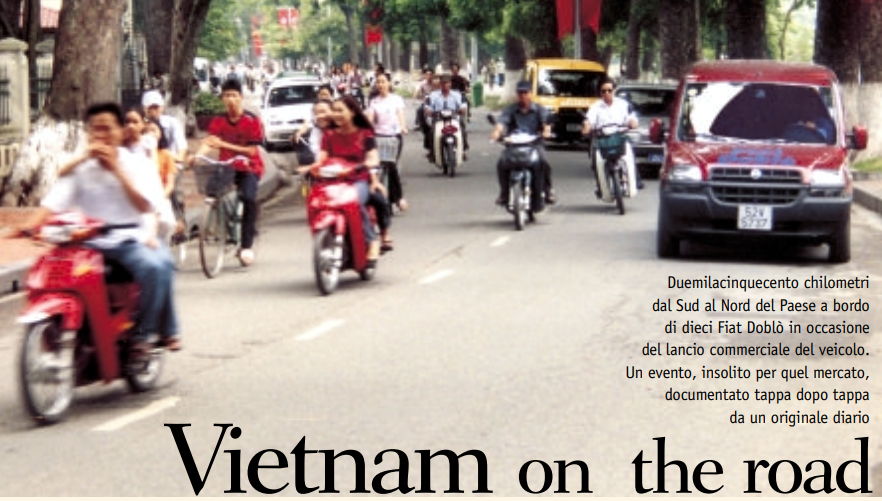
another important challenge: Vietnam, as responsible of the Licensee market
where a local partner used to assemble CKDs (Completely Knocked Down) parts and
components of the world car first and the Doblò thereafter.
After 1 year of exciting experience in Far East
Asia, it was time to come back again to the old continent and face a new role:
International Business Development. It was the time of great deals among OEMs:
General Motors, Suzuki, Ford, Peugeot/Citroen, and many other negotiations which
remain in the secret drawers of FCA… this was a great chance for me to be part
of the epochal change which the automotive world was making! Time passes and I
thought why not capitalize on all this experience and put it to good use in the
commercial world? I took the opportunity to join Fiat Professional, first as
responsible of Brand Developments (one amongst all: China experience) and then I
was focusing my time on electric developments. Always “out of the box”!
HK: You even put up a project in Hanoi, involving a press drive with the new Doblò, this was in July 2003…
AC: Yes, when I was in Vietnam, I took the chance to expand my professional background: my original assignment was to negotiate, with a local partner, a new licence for local assembly of a Fiat model. It happened that, even under the strong request of the local assembler, my role took a 360° shape: I was requested to figure out and organize the commercial launch of the Doblò (at that time I had no experience in this context), the local Partner gave me full white paper, and that is how the “Trans-Vietnam Road Show” took place.
We organised a press conference and launch ceremony in Ho Chi Minh City first, and then we literally “brought” the launch to the capital, alongside the coast of the country from south to north: a caravan of 13 Doblò’s, driving for 8 days, 2.600km, passing from Nha Trang, Danang, Halog Bay, and finally Hanoi; in the capital I set up a new launch ceremony and was honoured by the presence of Italian Ambassador and Vietnamese Minister of Transports.
36 young Angelica Carapezza heading in 2003 the launch of the Doblo in the Opera Hotel in Hanoi…
I was the only Italian and the only person of Fiat to manage the group of Vietnamese people of the Road Show: my best and most exciting professional experience ever!
HK: What led you to Fiat, was it the attraction of all the wide creative and professional possibilities which result from working for such a large group with a global reach?
Working in one of the biggest companies of
the world has positive and negative sides. You can benefit from the size of the
company itself, and collect strong and different experiences which, in a
smaller context, would oblige you to change company.
This basically means that after more than
30 years, each day I wake up being conscious that – even today – I’ll learn
something more about this extremely complicated world called “automotive”. On
the other hand – I speak personally – you develop such an attachment to the
Company, feeling as being truly yours, which
makes it impossible to betray it with another one.
I feel FCA as being my family, my personal growth, my house. I have such a sentimental attachment to the Company that it is inconceivable for me to look elsewhere, and this is indeed my emotional boundary.
Angelica Carapezza in 2003 in Hanoi posing with the Italian Amabassador and the Vietnamese Minister of transport…
HK: Coming to the present project, putting the electric Ducato on the rails so to say, can you tell us more about the “bottom up”, client-based approach, focusing first on building up a database with a specific, detailed study of customers’ real use of their vehicles, which involved a year of data gathering. How do you work together as a team with Domenico Gostoli?
AC: Domenico Gostoli is the most professionally experienced boss I’ve ever had. Working with him means to collect day by day competences and knowledges, thanks also to its vision and background: he collected in his career important roles in engineering, product planning and commercial, which is a quite rare combination in our world, and this makes him really stand “one step ahead”.
For the Ducato Electric, we started to
analyse the real life utilization of the vehicles in different usage situations
and missions, being conscious that an LCV means much more for our customer than
just being a vehicle: it is the source of daily business revenue.
We put the customer in the centre, with his
specific daily needs (path, km’s, delivery times, payload and volume request, city
centre access, etc) and we conceived a Ducato where the new Electric propulsion
enhances the successful modularity of Ducato that made it the #1 among LCVs in
Europe (more than 12.000 versions of the same model manufactured in the biggest
LCV plant @ Atessa, south Italy!).
Our “bottom up approach” starts from real
life usage, and brings a fully tailor made and customized recommendation to
customer, with whom we choose the best vehicle configuration fitting his
specific needs, which have been subject to a prior analysis.
Fiat Professional electrification does not
penalize the payload and volume of the vehicle, takes away the “range fear”
thanks to his battery modularity and lets our customers accomplish their daily
mission also in Co2 free cities. All our analysis are fully consistent to the
epochal change of people behaviours and daily needs: e-commerce means rising delivery
speed and the need for our customers to deliver goods, mainly in urban centres.
HK: What would you say/advise to women who want to start a career in the automotive world?
I would not make a statement between men
and women: first of all there must be passion and a daily
predisposition to put oneself under questioning, by seeing a new thing, a new
role as an opportunity. Disruption is always an opportunity, especially when
you face it blindly.
On the other side there is this daily
truth: women carry a heavier burden, if you are also a mother, this may turn
into a problem for your career. It is a matter of choices and compromises,
always. For a woman much more than for a man, even today.
Each of us has to develop her/his “tailored
professional profile”, because each of us has her/his “daily mission”, exactly
like a Ducato Electric.
It had to happen. BMW cultivates pleasure of driving. And this also goes for their E-cars. Even more so, as they have excellent torque and therefore massive pulling power. And what’s more, you can use several motors at once.
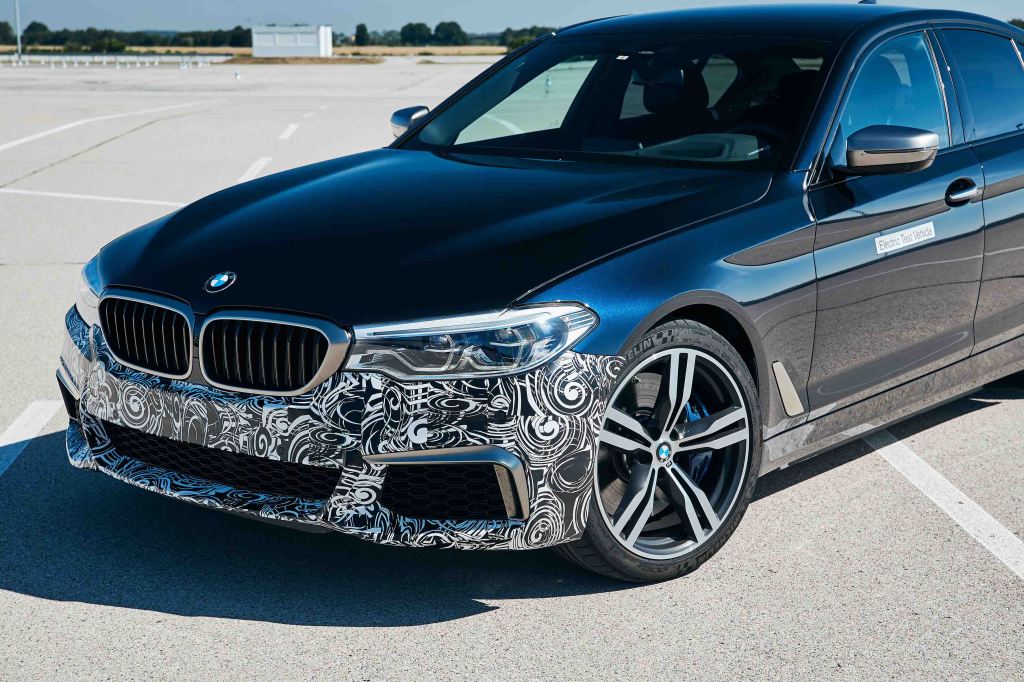
So it was only a matter of time that a trial car with superpower is created. Here it is: BMW Group presented its “Power BEV” during its #NEXTGen event in Munich.
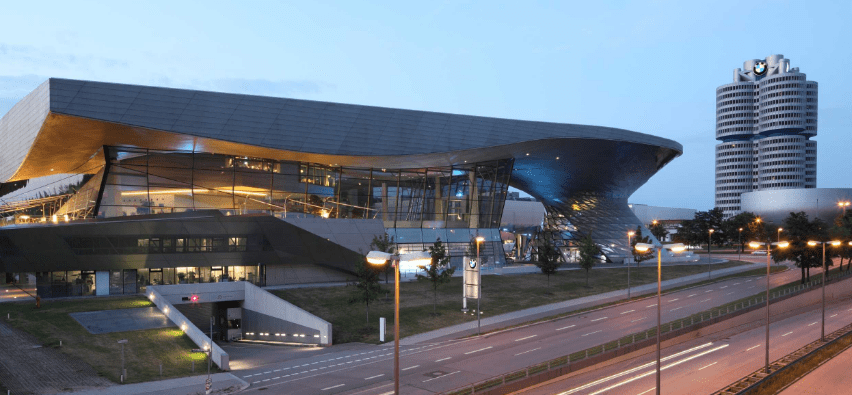
Just before we go further, just explain here a bit more on the #NEXTGen event: From 25 to 27 June 2019 the company invites selected international journalists, analysts and further stakeholders to “BMW Group #NEXTGen” at BMW Welt in Munich. With this event, The BMW Group chooses a new direction with regard to how it presents its future technologies, services and products.
But back to the car now. Indeed, BMW explores
with this “Versuchswagen” what is technically possible. A BMW 5 Series was
taken off the production line, and then fitted with three fifth-generation
electric drive units, resulting in a maximum system output in excess of …530
kW/720 hp. This transforms the 5-Series into a supercar: with this power, it accelerates
from 0 to 100 km/h in comfortably under three seconds.
But it is not only about straight line
performance, it is also about handling. A true BMW also puts a smile on the
driver’s face through corners, and so the engineers got to work on the chassis
and suspension.
Separately controlled motors provide unseen agility…
To this end, the chassis and powertrain engineers worked together particularly closely to maximise the car’s performance. Key to its dynamic superb qualities is that the two electric motors at the rear axle are controlled separately. This brings e-torque vectoring into play, which enables maximum drive power to be translated into forward propulsion even in extremely dynamic driving manoeuvres.
Two separate engines in the back…
The result is more effective and precise control
than with a limited slip differential, because actively targeted inputs are
possible in any driving situation. By contrast, a limited slip differential
always reacts to a difference in rotation speed between the driven wheels, and therefore
is slower to react.
As said, the drive system comprises three
fifth-generation drive units, each of which brings together an electric motor
and the associated power electronics and power take-off within a single
housing. One is mounted at the front axle and two (a double drive unit) at the
rear axle. Another notable aspect of this generation alongside its eye-catching
power is that it is entirely free of rare earths. An electric motor of this
type will make its series production debut in the BMW iX3. The iX3 will only
have one motor, though, rather than three.
A series production car forms the basis…
Experienced test drivers handle the power and extract the possibilities of high performance handling…
As said, a current BMW 5 Series production
model serves as the donor car for the Power BEV. Integrating a drive system of
this type into a production car represents a serious technical undertaking, but
it has been achieved here with absolutely no restriction in passenger
compartment space. This makes it far easier to assess this drive concept
alongside alternatives.
It has also allowed the engineers to look
even more effectively into the possibilities opened up by two separately
controllable electric motors at the rear axle with e-torque vectoring.
And that means, in future series-production
vehicle projects, that the right technology can be selected for the model at
hand. Customers will therefore be provided with the most appropriate technology
for their choice of vehicle concept. Wow! Needless to say, we are now looking
to the E-future with a very broad smile! Driving pleasure will be certainly
part of it!



































 Autoprova - for the Connaisseur