The ZOUTE GRAND PRIX® celebrated its 10th edition: a decade of four-wheeled dreams came true…

This magnificent event is all about enjoying cars to the full, and what’s more, a very large public can participate and witness the ZOUTE GRAND PRIX® events up close, see and touch the cars, which embody the pinnacle in automotive heritage and panache.
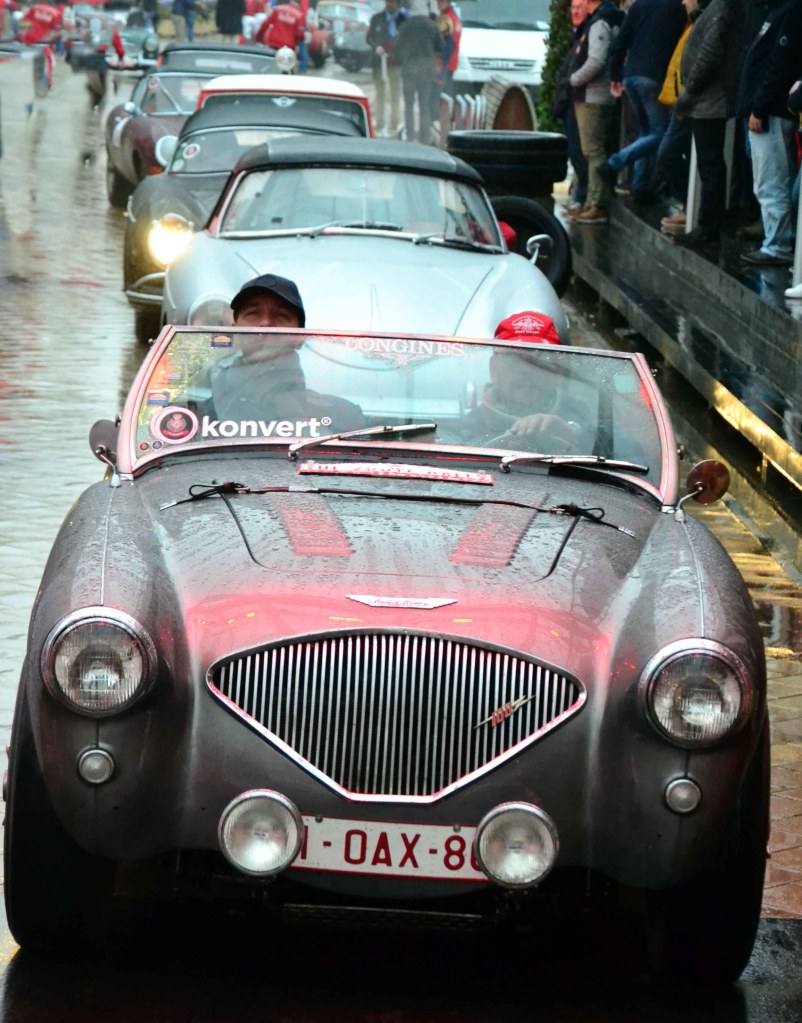
It’s a truly stunning event, which has now grown to impressive proportions. Last year’s figures amply prove it: What to think of 645 cars, 1040 participants, 263.000 visitors?

The organisers look already into the future, and after a decade of successes are planning even grander events. They told us all about it at their press conference, held at the prestigious Royal Zoute Golf Club, of which more in a further report.

But here we tell you more about this year’s event…

Hans Knol ten Bensel

The weather gods were not altogether with us this time, but this did not dampen the enthusiasm of both participants and spectators. The ZOUTE RALLY® started for its first leg on Friday morning, and not less than about 200 pre- and post-war classic cars participated.

Media celebrities like Veronique De Cock participated…

One can choose between a “regularity” drive, where the ideal average speed is of paramount importance, with special Regularity Tests being also included in the daily 250 km course.

Exotics like this Fiat “Otto Vu” were also seen…

Enthusiasts who were looking for a more leisurely drive, opted for the “Balade” formula, and received a road book of the untimed course, which they could drive and enjoy at their own pace.
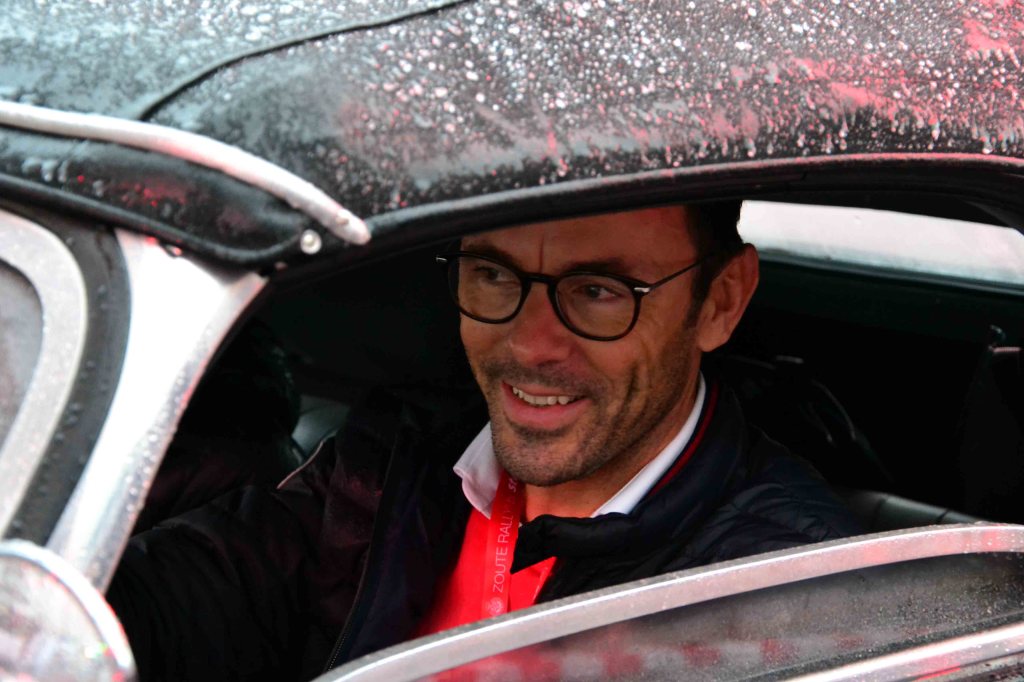
The route is different from the “regularity” drive, albeit in the same region. On Friday, the route went through the Flemish Ardennes, and lunch was enjoyed for all in the grounds of chateau Kluisbergen.

The cockpit of the “Otto Vu”…

On Saturday the ZOUTE RALLY® went through Zoutelande for a luncheon stop at the biggest Dutch yacht builder Amels Shipyard in Vlissingen. Winners of the regularity class were Ruben Maes and Bjorn Vanoverschelde with their Porsche 356c.

The founding father(s): ZOUTE Grand Prix Creator and Organiser Filip Burgoo on the left…

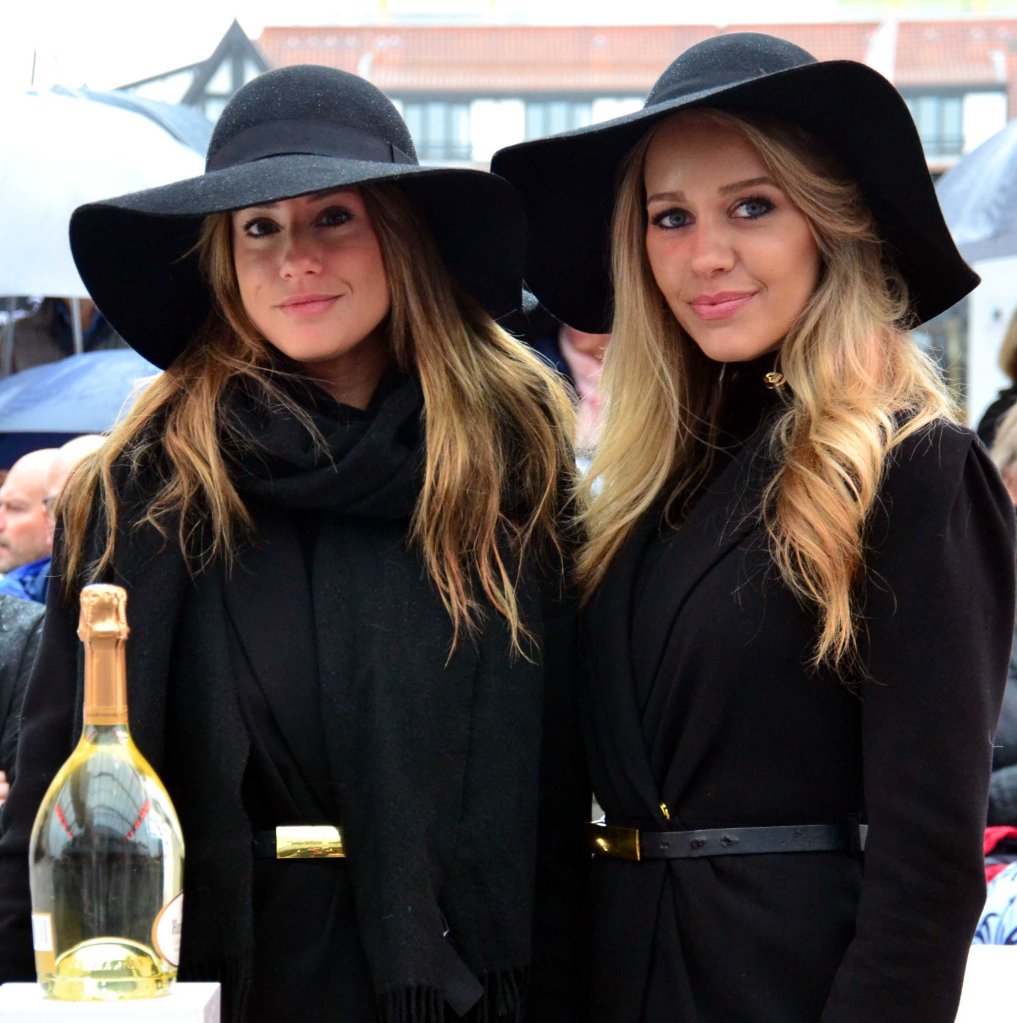
At the finish line, many happy faces were seen again of course. All lucky finishers got of course a fine glass of Ruinart champagne, and congratulations from David Burgoo and his colleagues.

The team Feltes/Feltes in their Bugatti T35 Grand Prix de Lyon with starting nr. 1 also finished the event in good form, with David (left) and Filip Burgoo (right) congratulating!

We just let you enjoy the photos here of this 10th edition of the ZOUTE RALLY®, second part follows with more tales and images…

Hans Knol ten Bensel

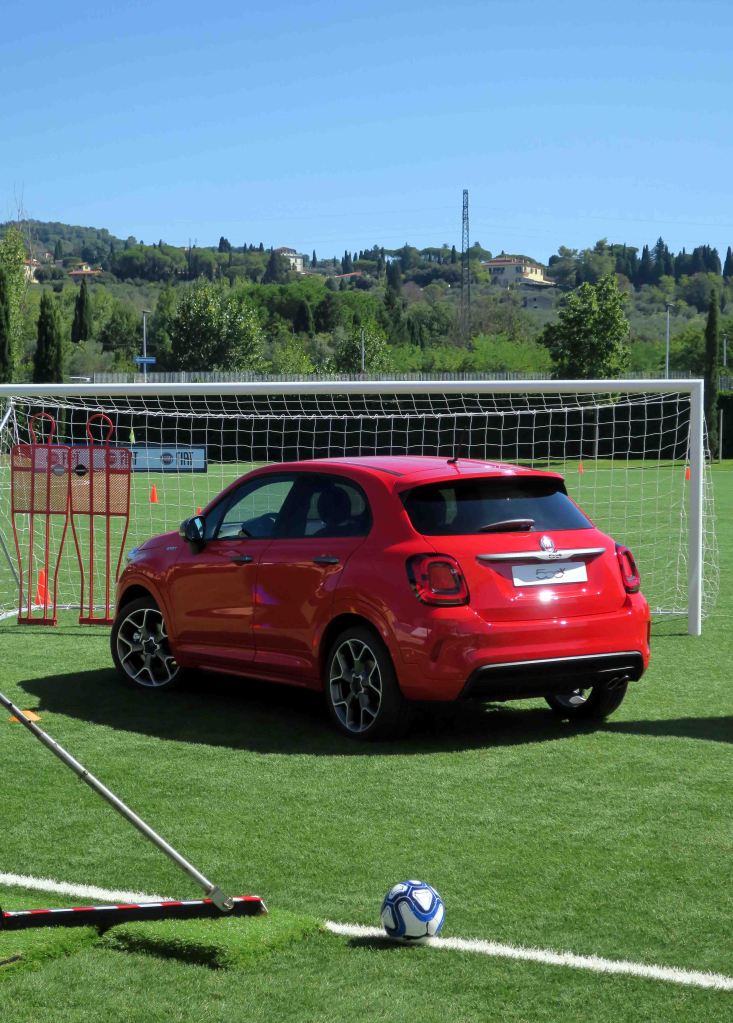
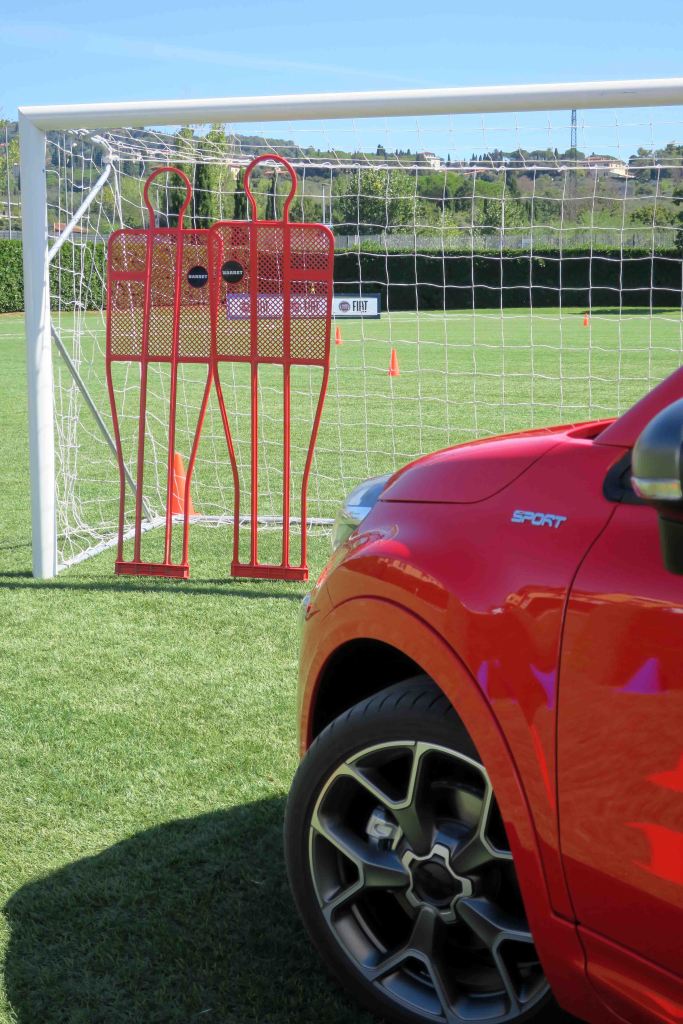
We spoke with Charles Fuster, Product Marketing Manager Fiat 500 X: this Sport version is built to conquer everybody’s sporting heart, like football…

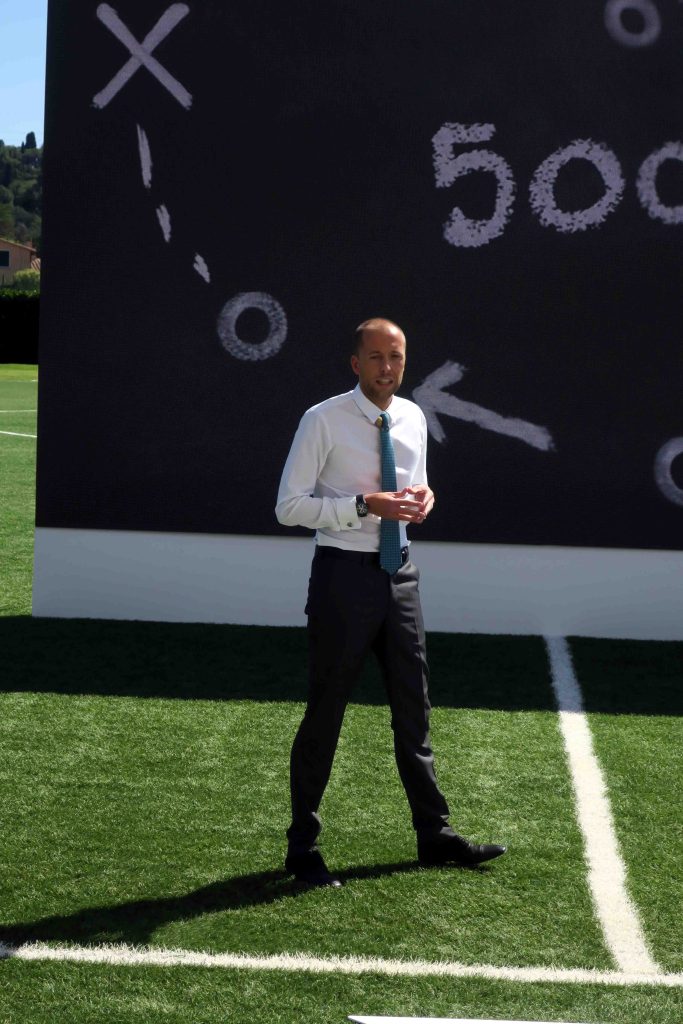
Charles Fuster taking the 500X Sport to the football field…

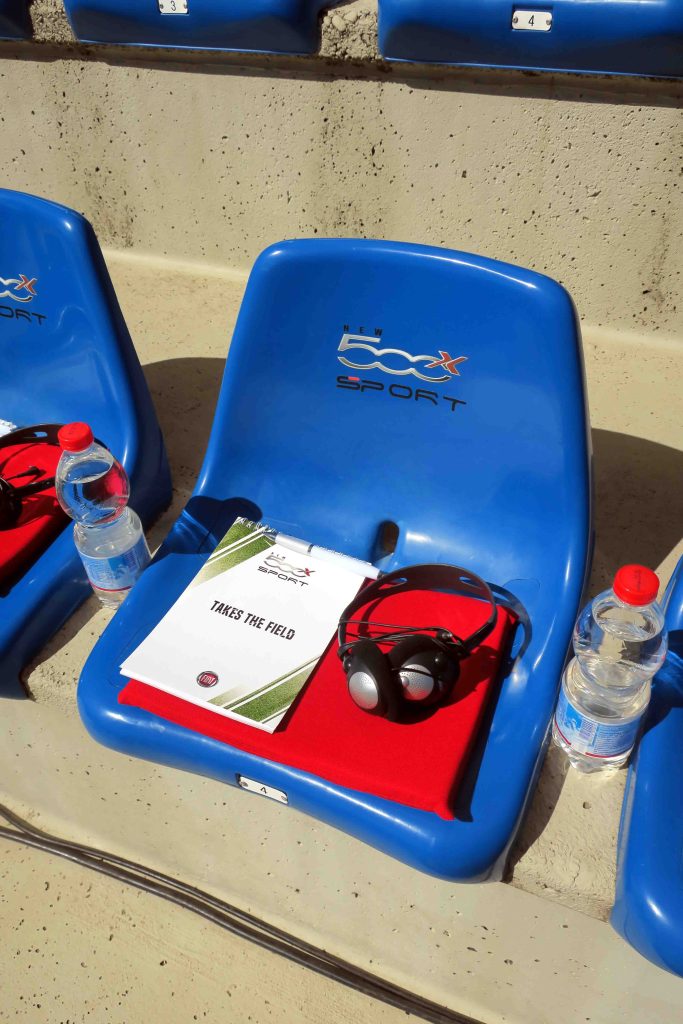
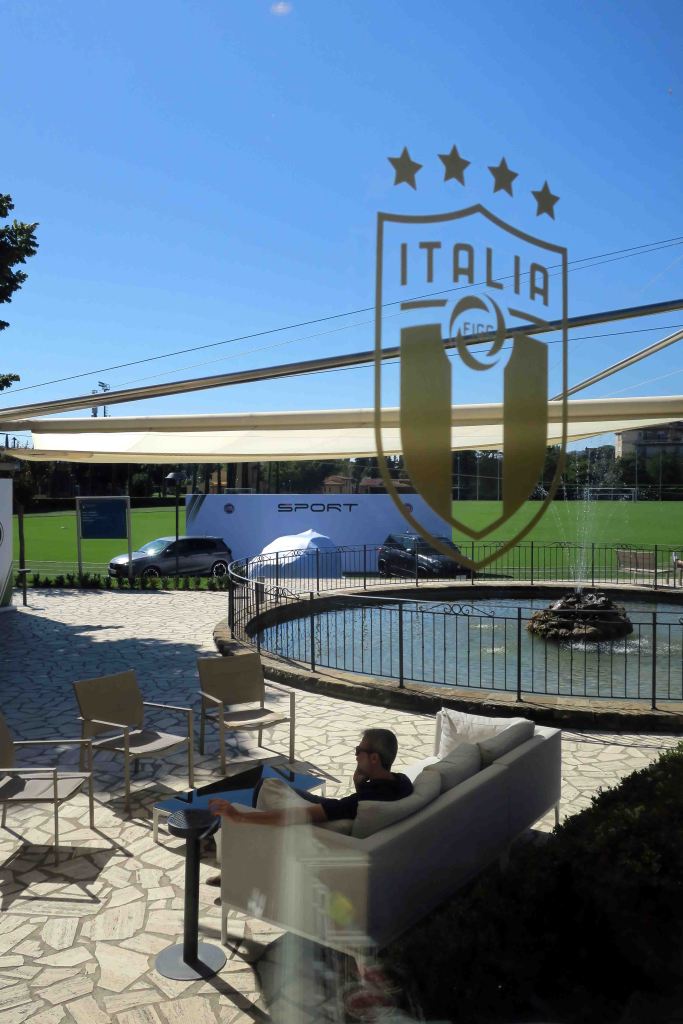
When Fiat presented the 500 X Sport, they had the very good idea to draw a parallel between its excellent sporting and stylish qualities and embed it into the language and philosophy of top football. Therefore the venue of presenting this new Fiat was at the the “Luigi Ridolfi” Federal Technical Centre in Coverciano (FIorence), a centre of excellence for teaching, training and sport, as well as the historic seat of the Italian Football Federation.

The presentation “in the field” was expertly done by Charles Fuster, Product Marketing Manager 500 X, and the qualities of dynamism, precision, control

Echoing the qualities of the National Team in the Fiat 500 X…

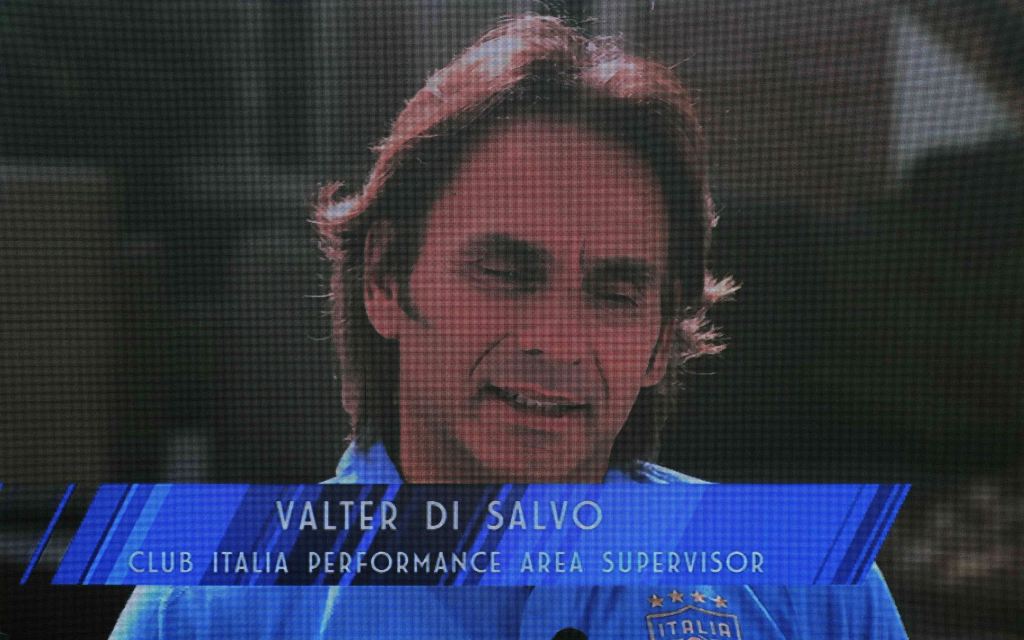
and Italian style of this 500 X Sport were echoed on the accompanying screen by the coaches and specialists of the Italian national team, indeed the same characteristics that lead a player to wear the blue jersey of Italy with pride and joy…

Reason enough to have an interview with Charles Fuster here…

Hans Knol ten Bensel

HK: How did you communicate the enhanced sporting characteristics and properties of the new 500 X to the top people of the Italian Football Federation, how did they tune into this? What was their reaction?

CF: Actually, the starting point and the basis was and is the car. It arrives with important improvements. The balance, the road holding, the performance, the style, and of course, when we had created this story about the car, we focused ourselves on the world of football. This had very good reasons: like Fiat, it is a very democratic world, it is a very accessible sport for everybody. And so we started to work with the Italian Football Federation to draw all these parallels, between the world of the automobile and the world of football.

Charles Fuster on the playing field…

This proved extremely interesting because all this storytelling proved extremely natural. Also the persons of the federation, who we have presented today is somebody who has worked all his life with football and has an incredible experience.

Top performance is top performance, whether one speaks about cars or people…

These people prepare the future stars of tomorrow. So we arrive at an allegory with a well perfected industrial product and a sports player, and this can be very eloquent…

 HK: indeed, this is very unique in your presentation today… we saw the comments of Roberto Mancini, Italy’s National Team Head Coach and others…

CF: Thank You, it is indeed the work of our whole team!

HK: Can you tell a bit more what is the mission of this sporting version of the 500 X…

CF: Just have a look at its position within the range. The Cinquecento is a typical women’s car. 75 % of the clients are women. This is different with the 500 X, where the buyers are about fifty-fifty between men and women. The 500 X Sport will also be bought by independent women who want to be seen having personality and character.

But this is a car which is targeted to a large public. We will not discriminate. Of course the car has a look which distinguishes it from the others in the range.

HK: Can you tell a bit more about the future electrification of the Fiat models? We think about PHEV…

CF: There will be something new in 2020. There will be an important electrified range at FCA in 2022. That is the only thing I can tell you right now… The first models will be launched in 2020, and this will continue throughout 2021 to 2022. It is the strategy of the group to be present in all forms of electrification. It will also be very important for the fleet market.

HK: We thank you for this interview.

Of course there is (still) more. We will treat you also shortly with further interviews with Danilo Coglianese, Head of Fiat & Abarth Communications, EMEA, and also have a long talk with Alessandro Grosso, Head of Fleet and Business Sales, EMEA, about the European Fleet markets and FCA’s position therein.

Stay tuned!

Hans Knol ten Bensel

We drove the new Fiat 500X Sport: Dynamic Gran Turismo pleasure…

We already told you, dear reader, in our “teaser” about our venue to the “Luigi Ridolfi” Federal Technical Centre in Coverciano (FIorence), to have a stint at the wheel of the new Fiat 500X Sport.

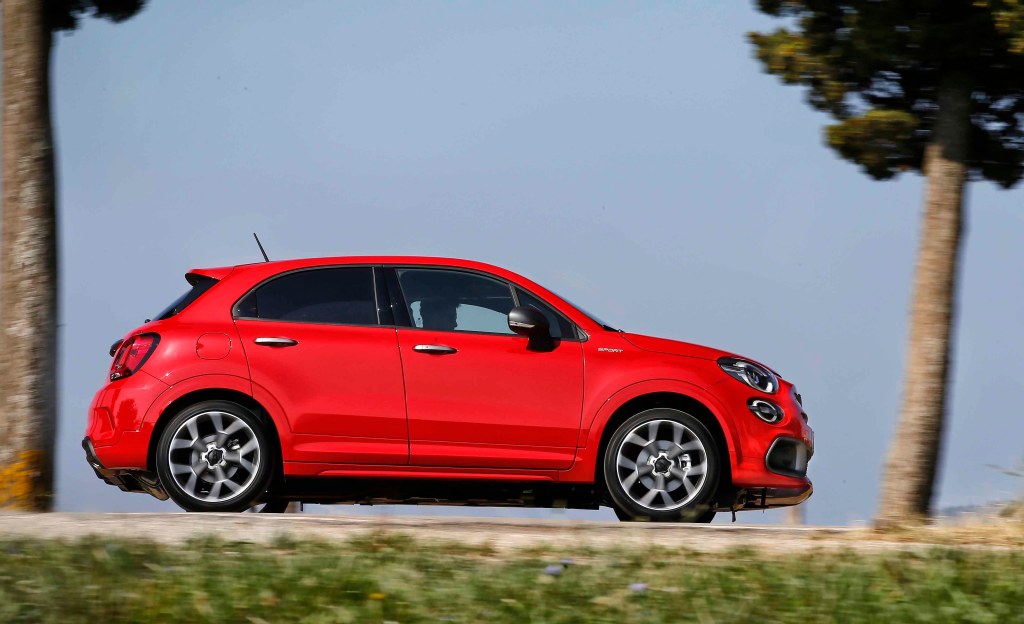
The 500 X is the most global model of the Fiat range. This iconic compact crossover is designed and engineered in Italy and built in the FCA factory in Melfi. It was launched in 2014, but has lost none of its appeal, as it has been renewed last year. Now the 500 X accentuates sportsmanship, and emerges as an alternative to compact C-segment cars with a sporty look.

Does it live up to its promises on the open road?

Just read further…

Hans Knol ten Bensel

Continue reading “We drove the new Fiat 500X Sport: Dynamic Gran Turismo pleasure…”

We drove the new Fiat 500X Sport at the holy grail of Italian football…

When you launch a sporting version of your crossover bestseller, you want it to be somewhere (very) special. And so the dynamic PR department of Fiat did. They invited us to nowhere less than the “Luigi Ridolfi” Federal Technical Centre in Coverciano (FIorence), a centre of excellence for teaching, training and sport, as well as the historic seat of the Italian Football Federation.

This had its good reasons. First of all, the FIGC Federation headquarters was chosen to honour the 20-year cooperation between the Fiat brand and the Federation, as well as to express the shared values uniting the new Fiat 500X Sport with sport in general.

Indeed, what better location could there be for displaying “in the field” the qualities of dynamism, precision, control and Italian style highlighted in this new version of the already iconic 500X, a car which has won the hearts in all parts of the globe.

We will soon tell you more here about the excellent sporting qualities of this 500X Sport, and we will also bring you again some interviews, notably with Charles Fuster, the product marketing manager of the 500 X, and Alessandro Grosso, Head of Fleet and Business Sales, EMEA.

Just stay tuned on these columns…

Hans Knol ten Bensel
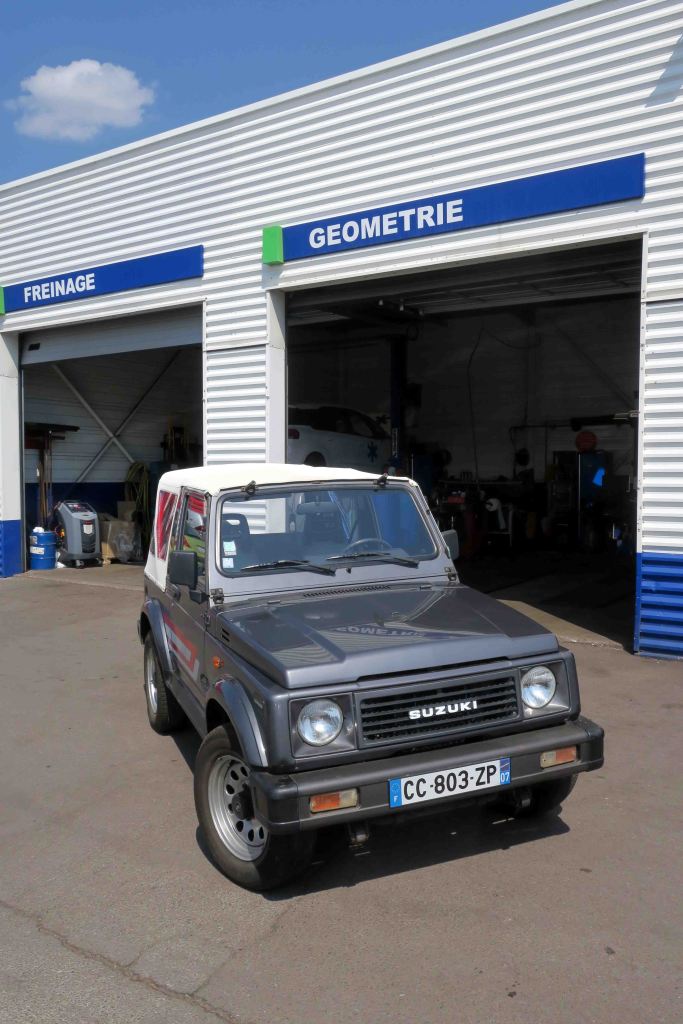
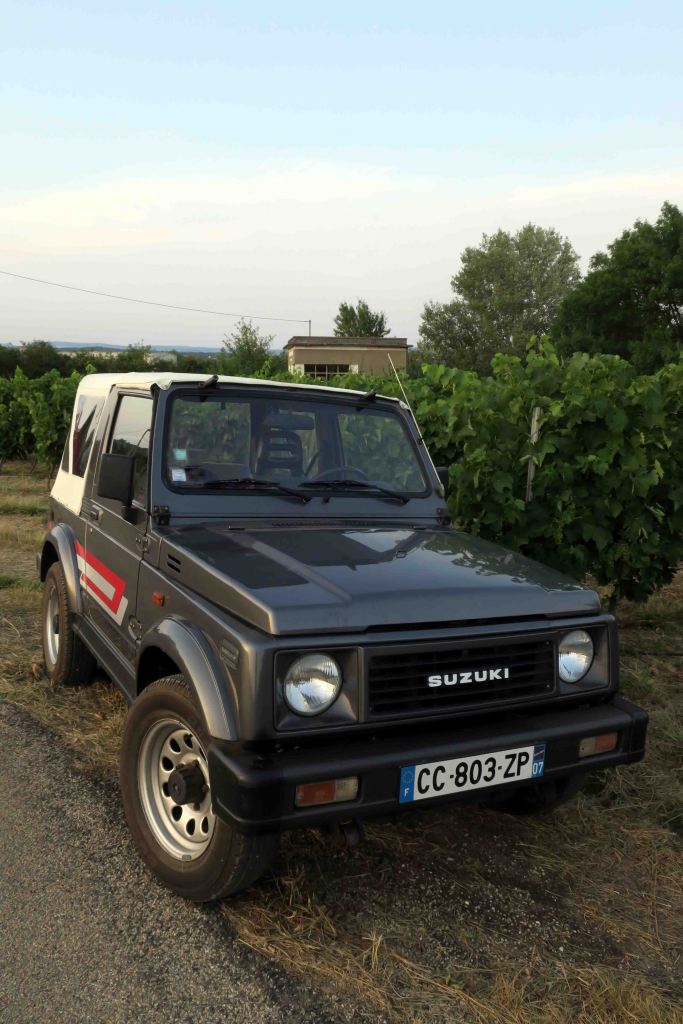
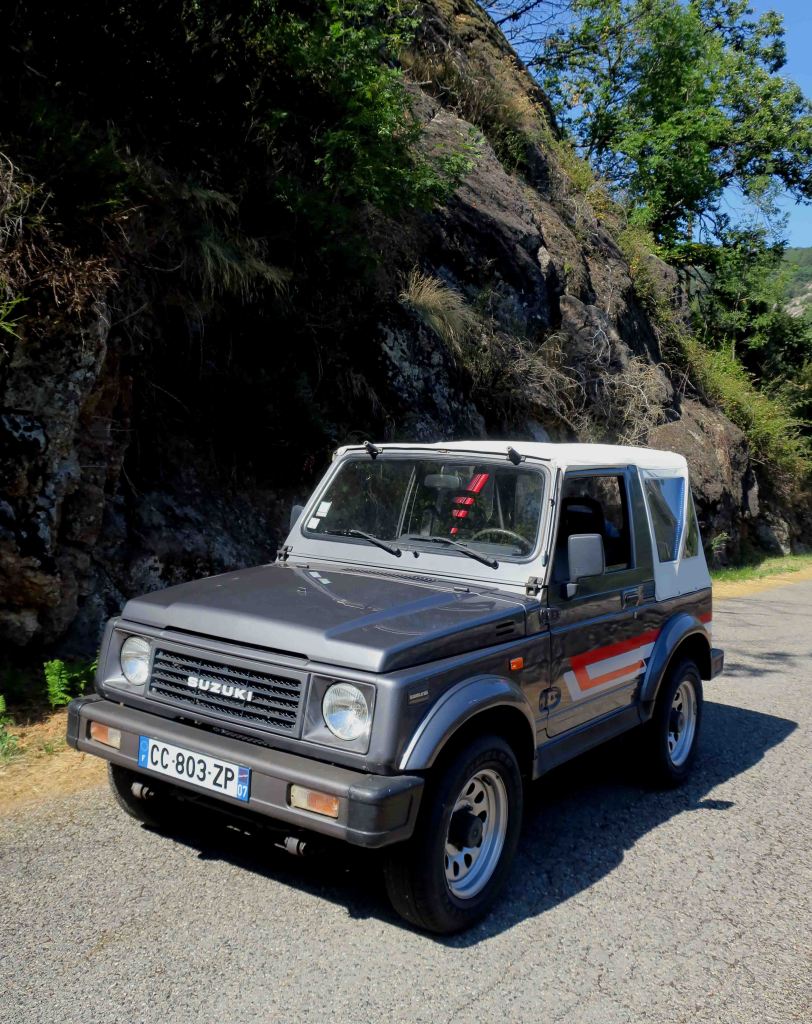
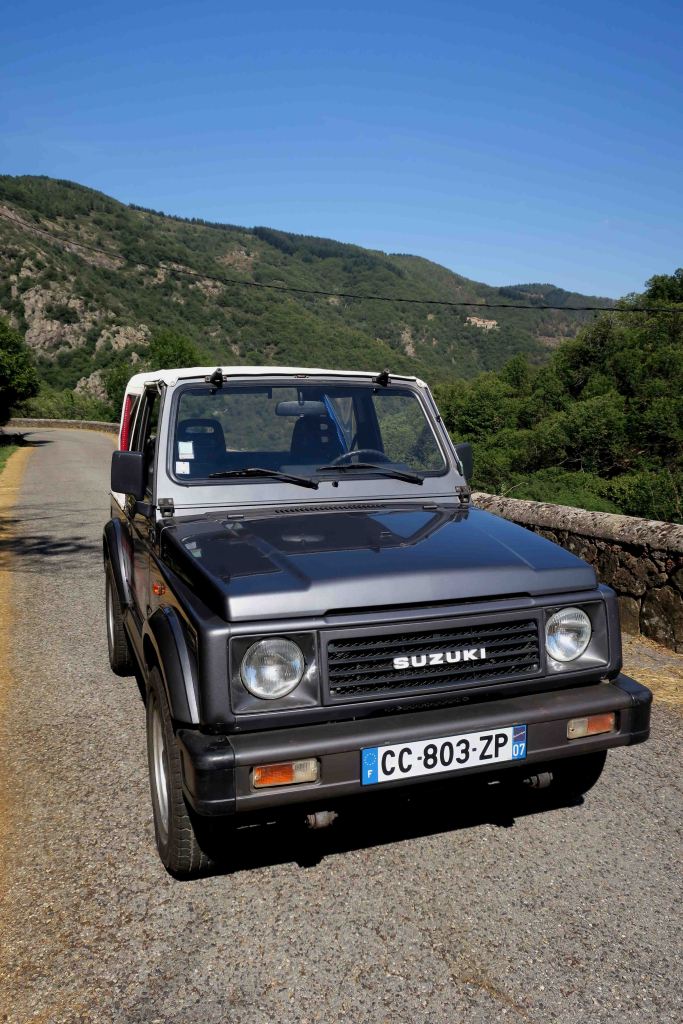
Our Suzuki Samurai passed the “contrôle technique” with flying colours…

The technician at the “contrôle technique” puts a broad smile…

Indeed, this is the second part of a very happy story. As we said earlier, we took our faithful runner to the “Point S” station, and got the oil and filter changed, and the brake system cleaned and brake fluids replaced. In the meantime, the slight brake friction we had felt on the left front wheel had already disappeared.

We first went to “point S” for a checkup…

The next day we presented it to the “Securitest”, and as expected, it passed the test without a hitch. “C’est une très bonne voiture!” acclaimed the man who checked the car. We photographed him in front of our Samurai at the end of the test, after he had put the small sticker with the test validity date on the window.

Indeed, it is immediately visible for anyone in France whether the car is properly insured and has passed the MOT test, as it is obligatory to put both the insurance and the MOT test sticker on the window. Very clever!

The validity date of the last “controle technique” is put on “la carte grise” or the grey card, which are the car’s identity papers.

Contrary to Belgium, the control is valid for a period of two years instead of one, which is far more logical if you consider the present state of technology of our modern cars.

Our 1988 Samurai passed…

Indeed, even with the soaring heat wave temperatures well above 30 degrees we are experiencing at the moment of writing, our youngtimers, the 21 year old Mercedes A Class and this 31 year old Suzuki, perform perfectly without the slightest hint of overheating or whatsoever. It proves again how much superior car technology is and has been since more than thirty years ago, compared to present day public transport trains and their infrastructure, if one reads the horrible stories of thousands of people stuck in overheated, defect trains and rail infrastructure this week. Quod erat demonstrandum!

We are now enjoying our Suzuki, driving it along vineyards and historic villages with good places to eat, and are now putting things in place to get it registered as a “voiture de collection”…

More to follow!

Hans Knol ten Bensel

Our faithful Samurai will become an oldtimer, or “voiture de collection”

As some readers will remember, the stable of cars at our French holiday house also includes a 1988 Suzuki Samurai, which has now reached the venerable age of more than 30 years, and is therefore now elegible to become a “collectors’ car”. It hasn’t been running last year, but that didn’t prevent it for starting right away after 2 years, after an initial 7 second burst on the starter motor to get the fuel up. After this first burst we waited for about 20 seconds or so, and then turned the key again: tchch-vrooom it shot into life right away, settling immediately in a smooth 1300 rpm on the automatic choke, without any hiccup or misfiring. Soon, after a minute or so, it ran at the 800 rpm normal tickover, and that was that. After this first start, it fires up immediately every time.

We depressed the clutch, which was free moving, and we cautiously moved it slowly in first and reverse, to loosen things up further. Clutch and brakes seemed OK. So we took it out of its garage and went for a first 10 kilometer mountain drive, only to notice that the left front brake must be not completely loose as after a 4 kilometers or so, the Samurai started pulling a bit to the left and indeed the left front wheel rim was running warmer, and this could be felt by hand. Luckily the rear drum brakes were fine, as the wheels stayed cold. We stopped and luckily noticed that even the slightest descent got the car rolling, so the friction could not be that much. We will drive it quietly tomorrow to the service station “Point S” to get the brakes checked and the oil and filter changed, and the day after it will be a visit to the “contrôle technique”.

To be continued, we will keep you posted!

Hans Knol ten Bensel

D(r)iving into history: Ostend revisited…

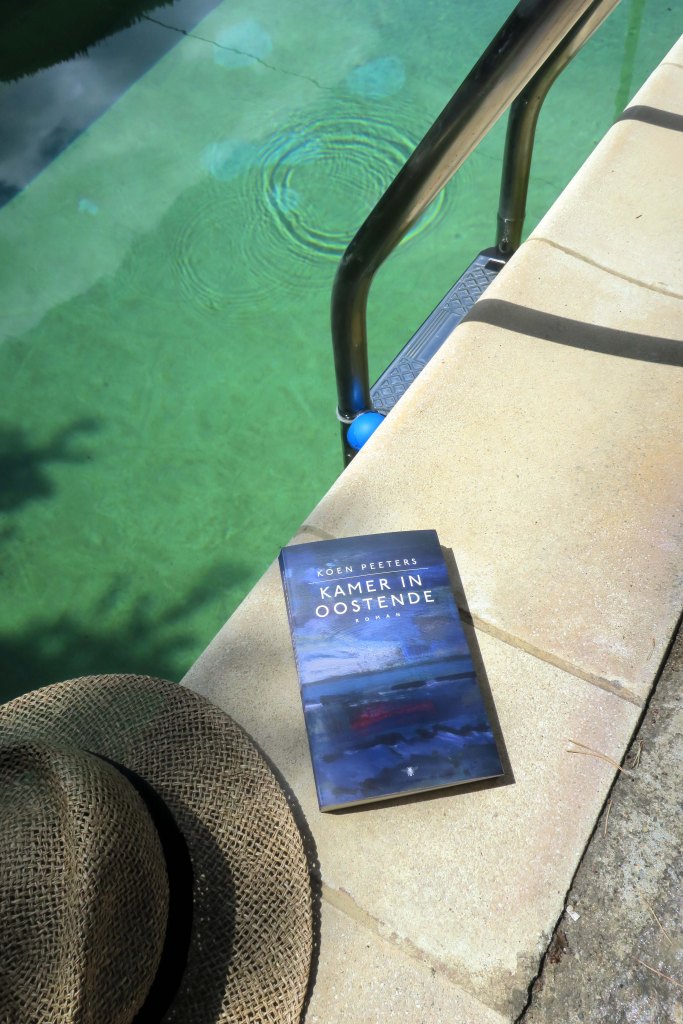
I was reading a marvellous novel by Koen Peeters during my French holiday, called “Kamer in Oostende”, or “Room in Ostend”, which tells about his wanderings with his friend painter through the streets of Ostend, looking for its history, its people, who can still recall the history of this iconic seaside city of the last century. Notably they looked for some remembrances of its famous painters James Ensor and Leon Spillaert. Understandably, as Koen Peeters made this research voyage with his friend painter.

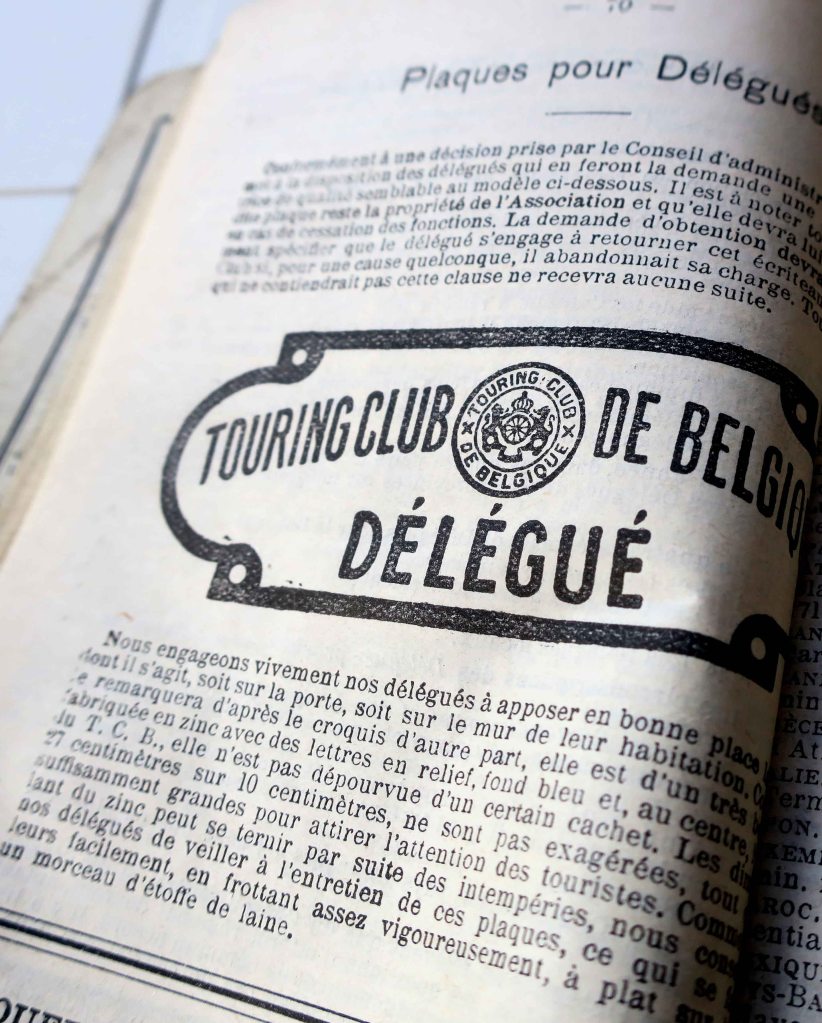
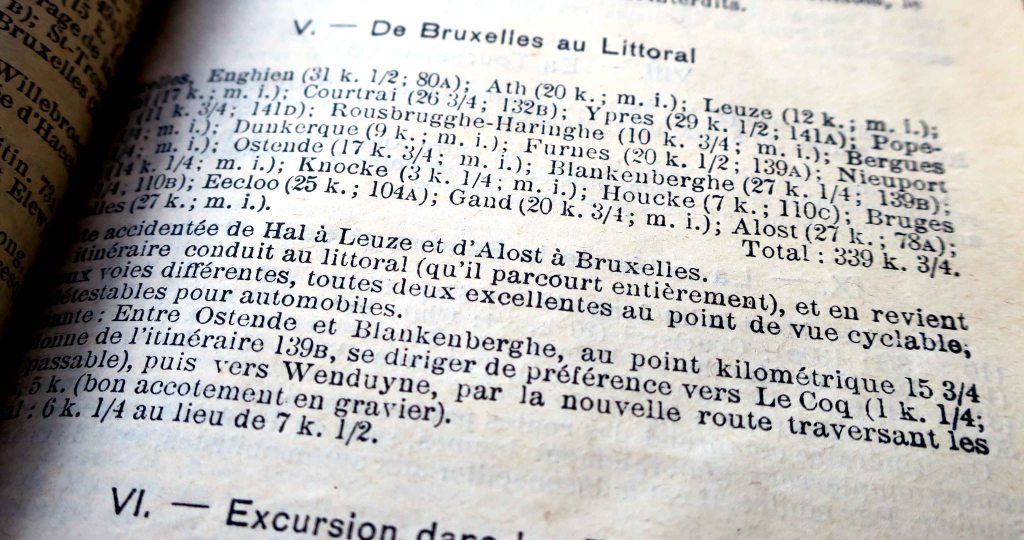
It inspired me to look for motoring history which took place in famous cities, and make this into an interesting series with an original and interesting view on car history. Fortune has it that in my French holiday house I just stumbled on a little booklet – an annuary- of the “Touring Club de Belgique” from as early as 1911. Why not focus on Ostend here first, I thought, and I started to look more closely in the booklet. It lists all the members of the Touring Club de Belgique, many of them being in Brussels and Antwerp, and other major cities like Liège, then the heart of industrial Belgium. In Ostend I found in this booklet only three members, a rather bleak result.

One is the “arrondissement” member of the club, Mr. Pierre Laroye, an industrial, living at n°2, quai du Chantier.

The other local members are Mr. H. Geysen, a joint member of the “Génie”, at the avenue Serruys, and Mr. De Meuninck, a trader/shopkeeper, in the West Street, or Rue de l’Ouest.

All members or “délégués” were offered a special “plaque”, 27 by 10 centimetres, which they were suggested to put at their front door. The T.C.B. even suggested proper maintenance procedures, like polishing the “plaque” vigourously regularly, after having put it on a woollen cloth.

Driving from Brussels to Ostend was not an easy affair. The annuary even describes the road as excellent for cyclists, but horrible for motorists…

Interesting and intriguing is the long list of hotels, amongst others the Hotel Kursaal and “du Beau- Site”, at the promenade or “Digue de Mer”, which was then the most expensive hotel in Ostend, with a bed for 4 Belgian francs, a Dinner for 5 francs, full pension from 12,50 francs onwards. A breakfast would set you back 1,5 francs.

Of course there is parking provided for your car. The guide describes the Kursaal as “the biggest and most sumptuous of its kind” in Europe. It also ranks Ostend as “an important seaside resort” with a beautiful 8 kilometre long promenade, a Wellington horse race track and an 8 hectare park, actually the “Parc Leopold”.

The annuary includes of course street plans of the most important cities, and notably Ostend…

This is what this “annuaire” tells us. In a further report, we will investigate the motor (sport) history of Ostend. In such a posh seaside place, the home of royals and the famous, there must have been much more at hand…

Hans Knol ten Bensel  

Our Cars: The Mercedes A Class is still going strong…

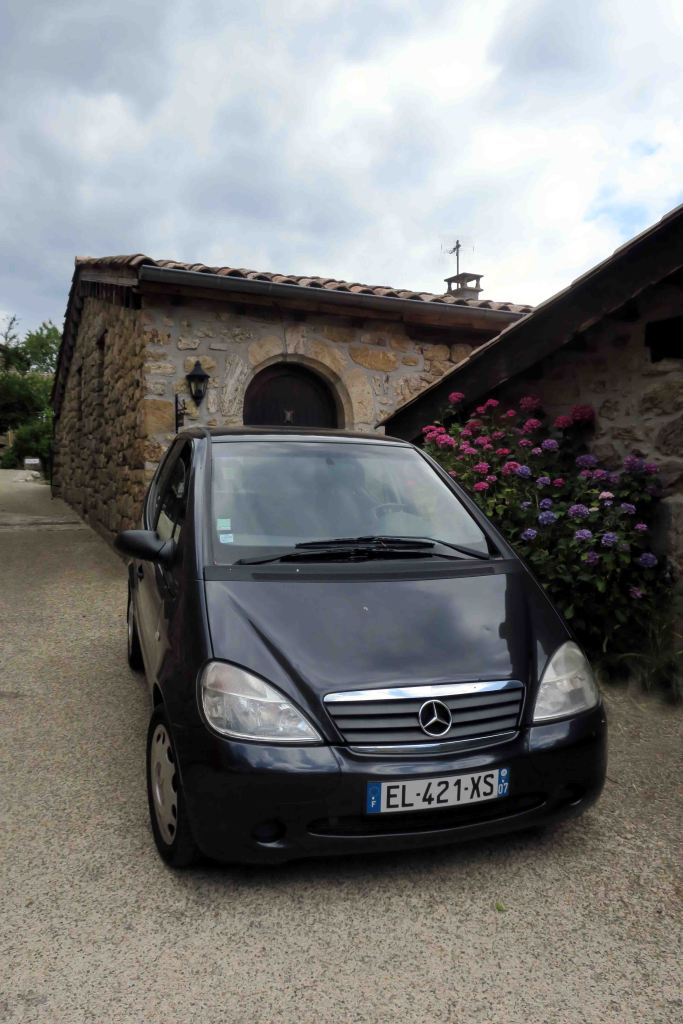
In our stable we also have some “French” cars, which live in our French country house, where they serve as holiday transport when we enjoy “time out” in la Douce France. One of these is a 1998 A Class 160 with a five speed automatic which we bought used now more than 14 years ago and which has seen intensive (professional) daily use by my wife for more than a decade; it has since 3 years found a new home in France. It is an ideal fit for the winding roads in the French Midi, its zesty 1,6 litre petrol engine is well mated to the auto box, and it is our favoured transport for outings and shopping.

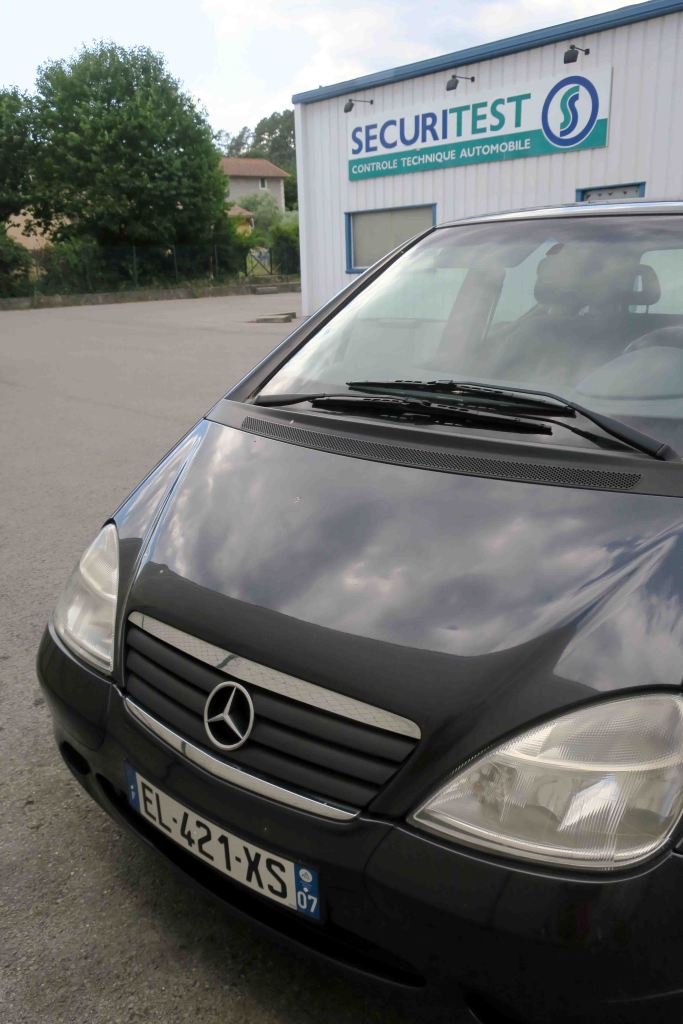
In France, older cars have to pass a “contrôle technique” every two years, and they are checked for brakes, steering, windows/wipers, lights, suspension, chassis corrosion, seats and seat belts, interior, all commands, door locks, etc. With of course last but not least brake efficiency and emissions testing included. The multinational SGS actually is the company organising technical car controls under its “securitest” label in France and the test items and procedures can be found on their website securitest.fr.

Our trusted A Class passed the test with flying colours, not very surprising as the car is properly maintained. The “contrôle technique” is done by appointment, so you don’t waste any time, and is concluded by a very kind and detailed personal comment about the points which need attention on the car in the coming two years. On our A Class, it was the condition of the last muffler and of course brake pads, although not critical, the latter which indeed are due for renewal within the coming months. 

So our A Class, with now 248.000 km on the clock, is soldiering on still further!

Hans Knol ten Bensel

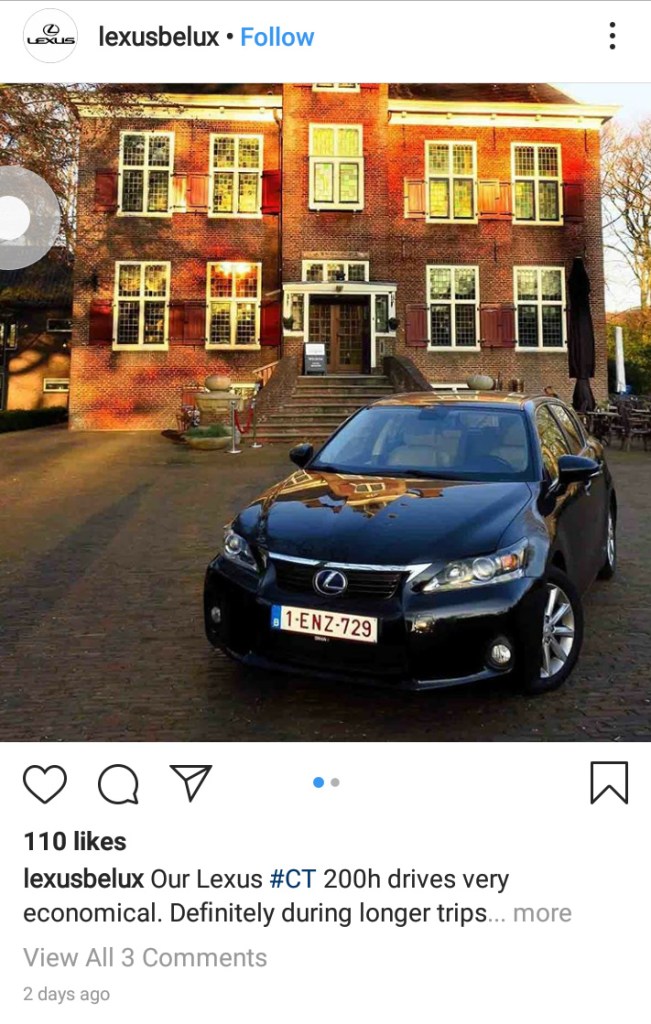
Our Lexus reaches new consumption records…

Our personal Lexus CT200h is demonstrating its amazing economy ever more.

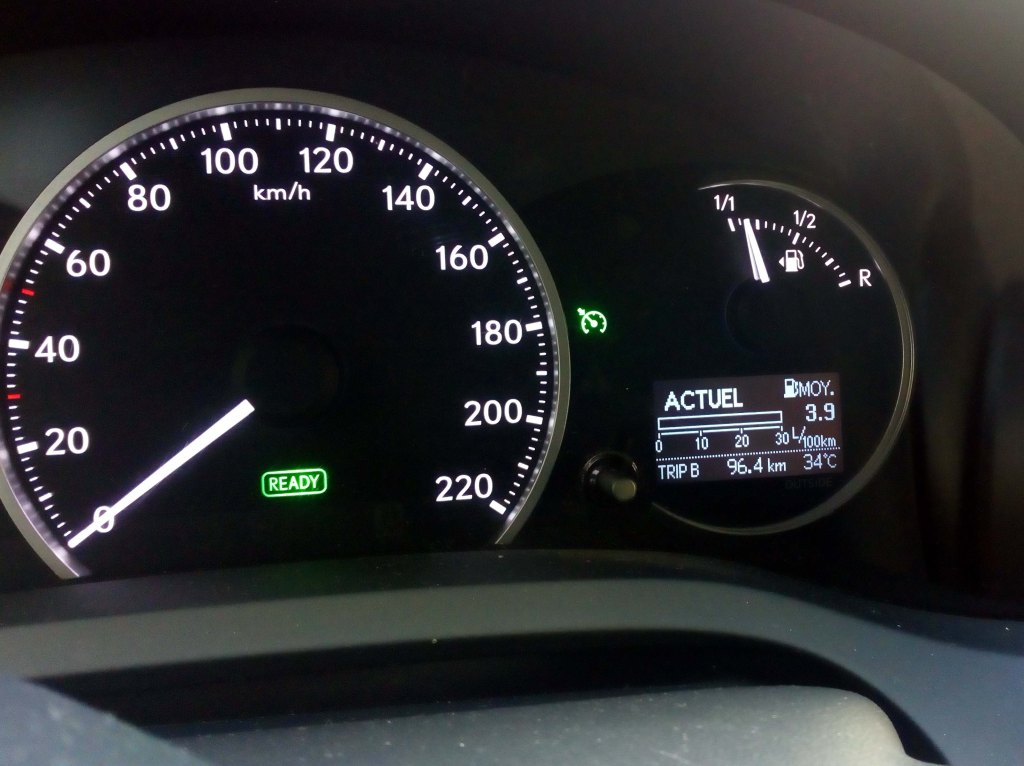
On a recent 96 km summer trip along scenic coastal roads in our low countries, we reached a new personal low of… 3,9 liters/100 km.

Of course we were driving with anticipation, taking full advantage of the hybrid system, but moving along with the pace of holiday traffic, and with the airco full ablaze in the recent hotter (heat wave) weather. So nothing special there.

You can also read this on the instagram page of Lexus Belux, who were so kind, after we told them enthusiastically about our feats, to mention it also on their page…

More (positive) news soon, stay tuned!

Hans Knol ten Bensel

A scenic drive through the Ardennes, followed by a royal garden party…
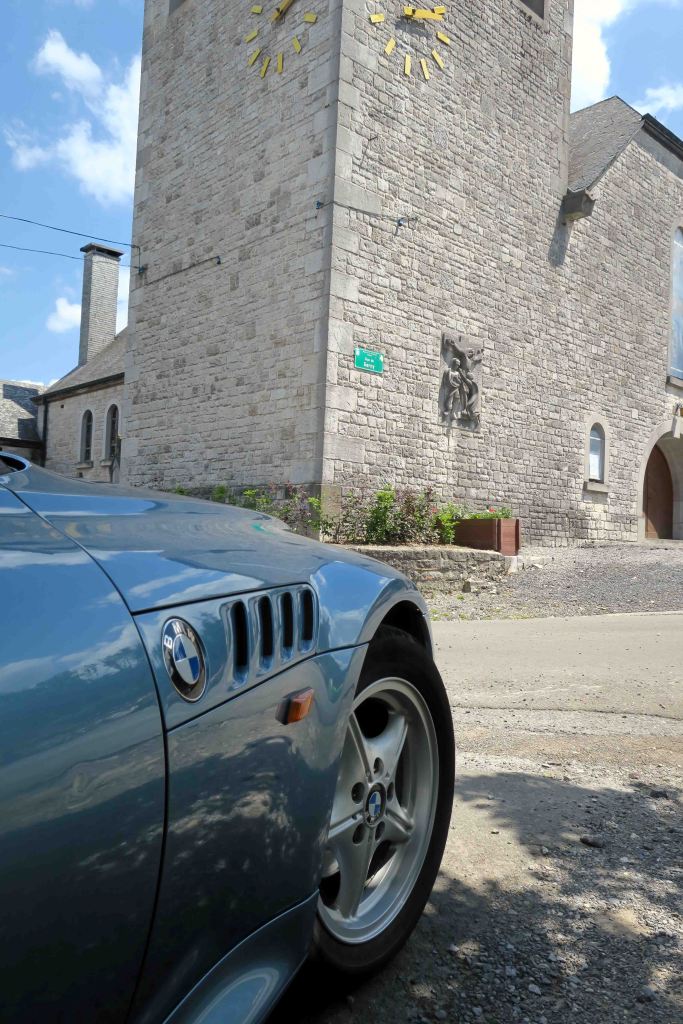
Stopping under the tree shadow, in front of the church at Humain…

Summer has arrived, and therefore it is time to get our cars out for long drives. We didn’t hesitate when the invitation dropped in our mailbox from her Royal Highness Princess Léa of Belgium and Fiat Chrysler Automobiles Belgium to get our BMW up and ready for a drive to her Château in Humain (close to Marche-en-Famenne), where we would start for a 120 km long trip through the scenic Ardennes roads and enjoy a subsequent Garden Party and dinner at the grounds of the castle.

Our BMW was of course fit for the trip, and we enjoyed its smooth pulling power and excellent road manners on the winding roads through dramatic countryside’s and historic village centres.

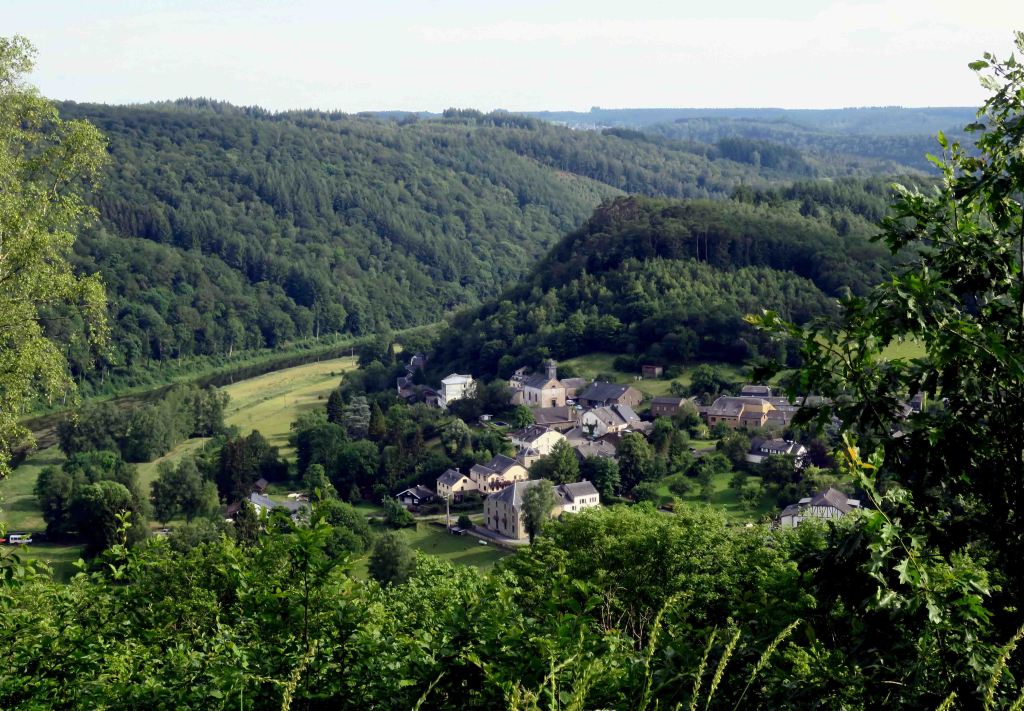
Magnificent vieuws, like the Tombeau du Géant at Bouillon…

As this was a touristic drive with no emphasis on performance or speed, we adopted a more leisurely driving style, and our BMW with its 140 HP 2 litre petrol engine rewarded us with an average consumption over the 443 km trip of a good 6,6 litres/100 km, which goes a long way to demonstrate that also more than 20 years ago, engine thermal efficiency was not an idle word.

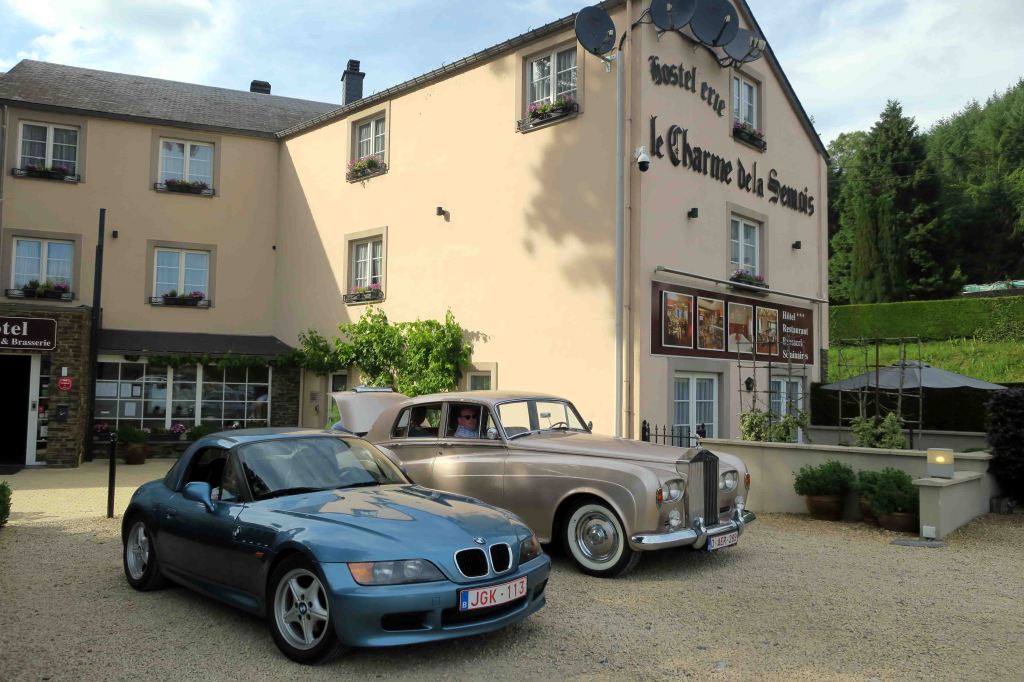
On our afternoon 120 km circuit, we stopped for coffee at the Hostellerie Le Charme de la Semois, at B-5550 Alle-sur-Semois

Don’t forget, this engine has double overhead camshafts, ideally shaped combustion chambers with 4 valves per cylinder and electronic multi-point injection, just like its present day brothers. For refinement, it also has a balancing shaft, so this rather big four is smooth as a straight six both at low and high revs, which brings of course even more pleasure at the wheel…

We just let you enjoy the photos, with understandably, for reasons of discretion, no photos of the royal castle and its grounds…

Hans Knol ten Bensel