Here is some further Opel news, and it is an important feat for Stellantis: the first hydrogen transporter from a vehicle manufacturer which is ready to go. Indeed, the first Opel Vivaro-e HYDROGEN off the production line will begin its emissions-free work in the fleet of the German manufacturer of premium domestic appliances, Miele.
Clever concept: Long driving range, zero emissions, quick refuelling
The Vivaro-e HYDROGEN is based on the existing battery electric Opel Vivaro-e, the “2021 International Van of the Year”. With full tanks of hydrogen, the driving range is more than 400 kilometres (WLTP1). The 45 kW fuel cell is capable of generating enough power for continuous highway driving. It takes only three minutes to refuel with hydrogen – about the same time needed to fill up a conventional diesel or petrol vehicle.
The 10.5 kWh lithium-ion battery provides dynamic peak power when required, for example, at start-up and under acceleration. Since the battery covers power needs in such situations, the fuel cell can run at optimum operating conditions. The battery also enables regenerative braking, while the plug-in capability offers the opportunity to recharge the battery externally if necessary, e.g. at a charging station, providing 50 km of pure battery electric range. The Vivaro-e HYDROGEN features a three-phase on-board charger (11 kW) and a mode 2 charging cable as standard.
The Vivaro-e HYDROGEN demands no compromises on space compared to the combustion engine versions, offering up to 5.3 or 6.1 cubic metres of cargo volume. The fuel cell electric LCV is available in lengths M and L (4.95 and 5.30 metres) with up to 1,000 kilogrammes of payload.
Production takes place at Opel Special Vehicles (OSV) in Rüsselsheim, and, as said, makes Stellantis the first to offer a Hydrogen powered LCV to fleet users…
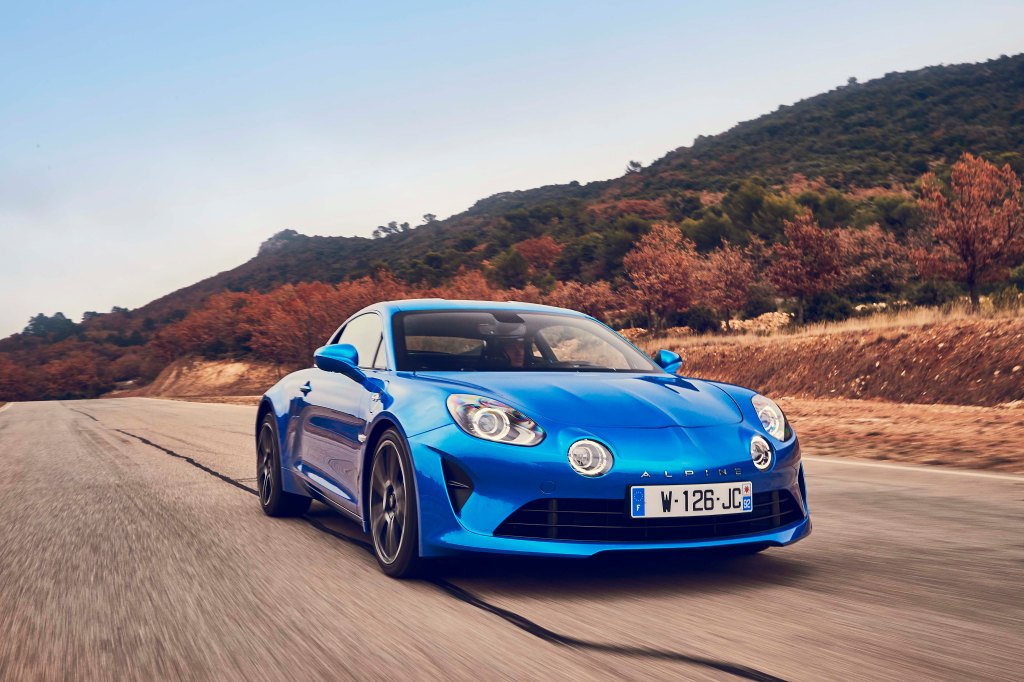
All car enthusiasts have the image of a drifting blue Alpine “berlinette” in a corner of their memory. The A110’s heroic performances in the rallies of the 1960s and 1970s left a deep impression for generations and contributed to an instinctive association between the brand and this colour.
“For Alpine, blue is more than a color. It’s territory!” exclaims Antony Villain, Director of Design at Alpine. We can only agree. But blue was not always used on Alpine bolides…
A varied palette
Indeed, the first Alpines were not exactly blue. When Jean Rédélé presented his first productions in the courtyard of the Billancourt factory to Pierre Dreyfus, General Manager of Renault, in the summer of 1955, Jean Rédélé used a varied color palette: a blue, a white and a red car. And when he entered the car in races, the little A106 is sometimes white or light blue, but not yet metallic blue. Also, Alpine street versions were more often ordered in red, white or yellow, instead of in blue.
The birth of a legendary color combination
It is only with the A110 “Berlinette” that metallic blue, which soon becomes iconic, makes its appearance. It seems that this happened at the request of a customer who wanted to see his A110 painted in a blue color called Panama. Jacques Cheinisse, then a regular commercial employee at Alpine and also an amateur pilot in his free time, would have seen it blue and also asked for the A110 that he ordered in early 1963 and used in rallying. A viral choice that was soon applied to all of the official team’s berlinettes. This is to allow the national colors to shine in races, as was formally done at Grand Prix until 1967 (blue for France, red for Italy, green for Great Britain, white and then silver for Germany, etc.). A legendary color combination was born…
Autonomous vehicles will certainly be important to improve the efficiency of large ports, all over the world.
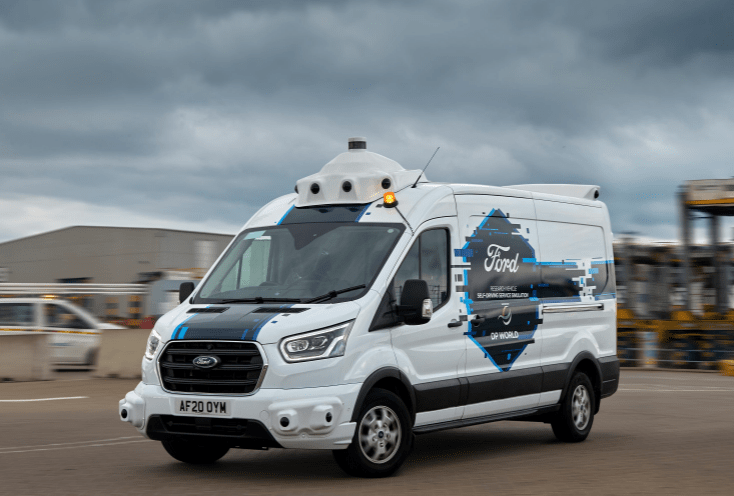
So Ford collaborates with DP World London Gateway to demonstrate how autonomous delivery could benefit large worksites, such as ports. DP World London Gateway – one of the UK’s fastest growing ports – is located 40 km east of central London and already embraces automated technology as an intrinsic part of its operations as a deep-sea container port.
The trial is part of Ford’s Self-Driving Research Programme, which works directly with customers to better understand how autonomous vehicles could integrate into their businesses
Researchers monitored DP World employees as they both loaded and accessed parcels directly to and from a simulated autonomous vehicle – without any assistance from a driver…brave new world!
The initiative is part of Ford’s Self-Driving Research Programme, designed to help businesses understand how autonomous vehicles could benefit their operations.
First launched in June to explore the potential impact upon courier services and doorstep deliveries, the DP World trial tested how recipients managed when accessing self-driving delivery vehicles themselves.
The underlying intention behind the pilot programme is to identify new opportunities and models for autonomous vehicle operations – in particular understanding how existing processes and human interactions can work alongside automated vehicles.
“It was incredible to see how enthusiastically the team at DP World embraced working with the support of a self-driving vehicle. We are continuing to work very closely with our customers to learn how these vehicles can benefit their businesses and it is exciting to see first-hand the impact this can have across a diverse range of locations,” said Richard Balch, director, Autonomous Vehicles and Mobility, Ford of Europe. “What worked so well at DP World premises could equally be of benefit at universities, airports and manufacturing facilities.”
Ford has been testing self-driving technology in major cities across the U.S. in partnership with Argo AI. The company plans to invest around $7 billion (€6.02 billion) in autonomous vehicles during 10 years through to 2025 – $5 billion (€4.3 billion) of that from 2021 forward – as part of its mobility initiatives.
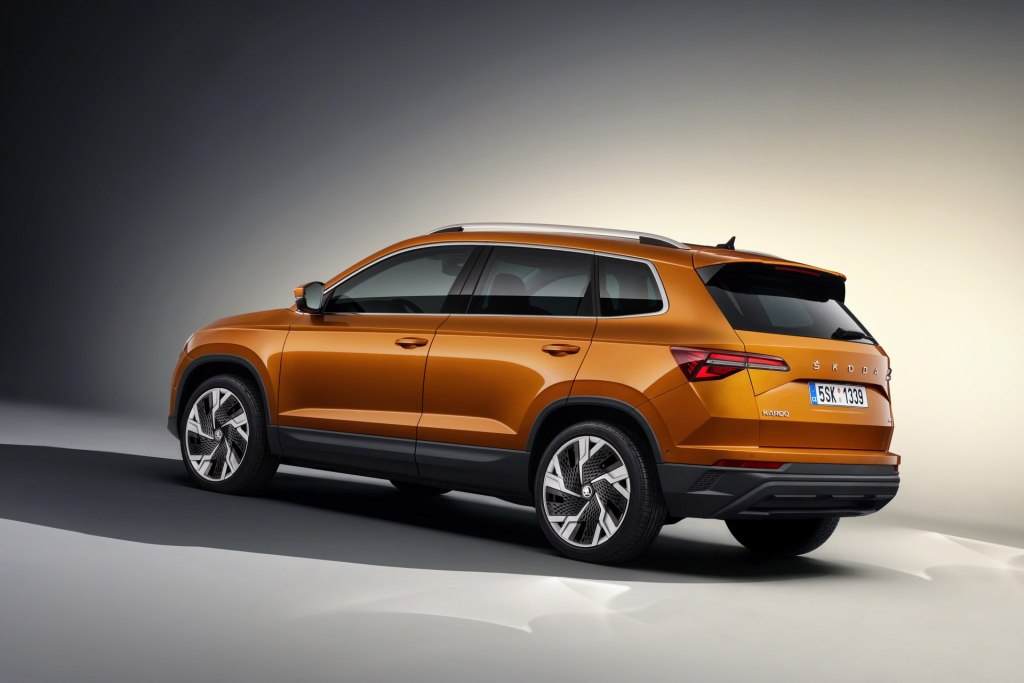
While we looking forward to driving early Fabruary the KAMIQ and the SUPERB COMBI iv = PHEV, we show you here some photos of the facelifted KAROQ, of which we showed some sketches earlier.
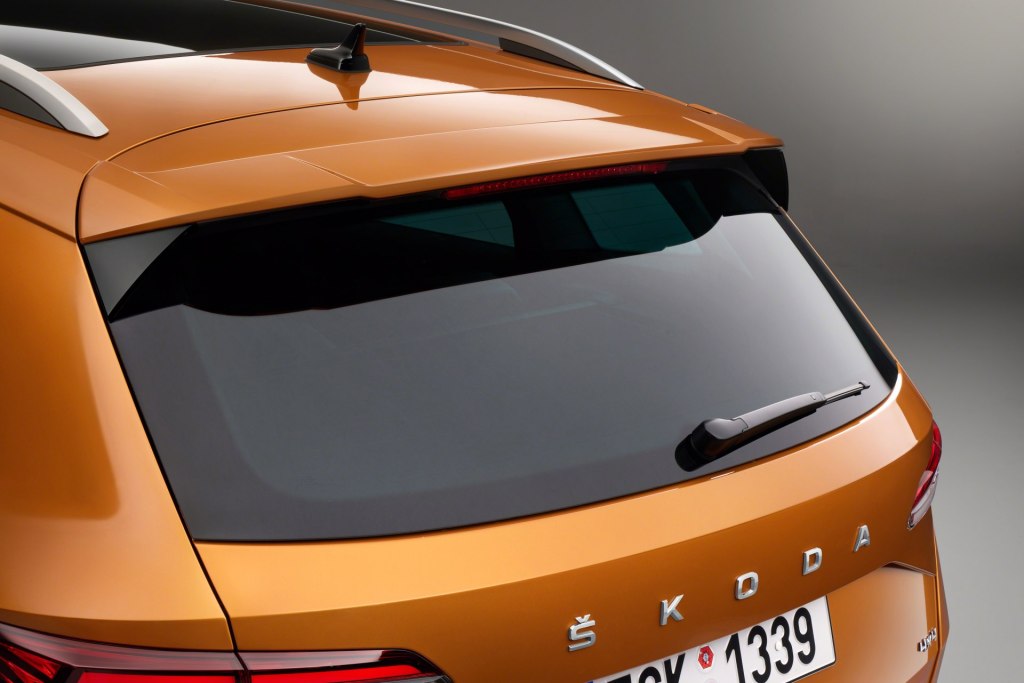
The car now has a wider, hexagonal ŠKODA radiator grille and a new front apron. The headlights are slimmer, just as the rear lights, and have a four-light cluster design. They can naw also be had with full LED matrix technology.
A longer rear spoiler, a front apron with air curtains, aerodynamically optimized bottom panels for the fuel tank and new alloy wheels with a diameter of 17, 18 or 19 inches help the air resistance of reduce the car by more than 9% to a coefficient (cd) of 0.30. This makes the KAROQ to one of the most aerodynamic cars in its segment. The photos speak further for themselves…
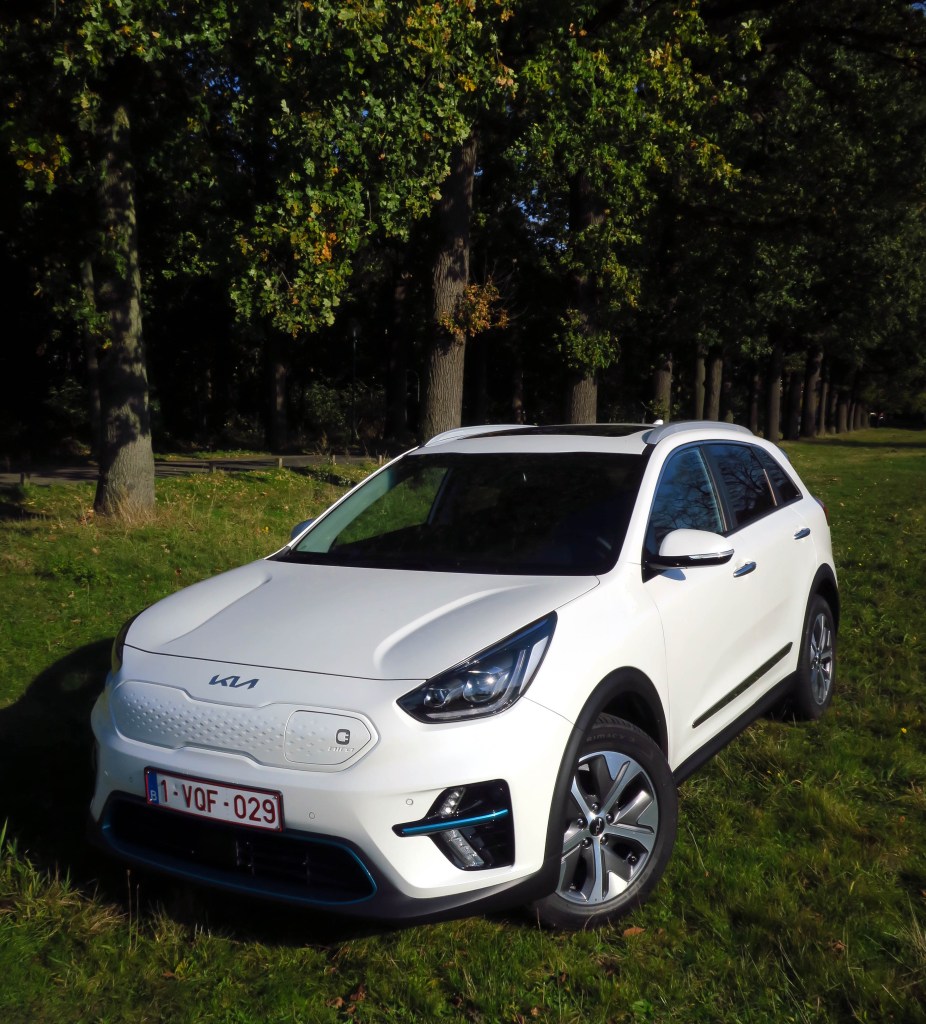
The Kia Niro is already a few years amongst us, first electrified as hybrid, then plug-in hybrid, and finally as a “pure” EV.
The competition has become a lot stronger since its introduction, notably with newcomers as the Volkswagen ID.3, the Peugeot 2008 and the Citroën ë-C4, but this Kia still has a lot of qualities which make it still earn very well an excellent place its segment. Of course, Kia is ready for this competition, and at the moment of this test going to press, it presents a completely new version of the Niro at the Seoul motor show, but the present model is still relevant enough to put it through its paces for you here.
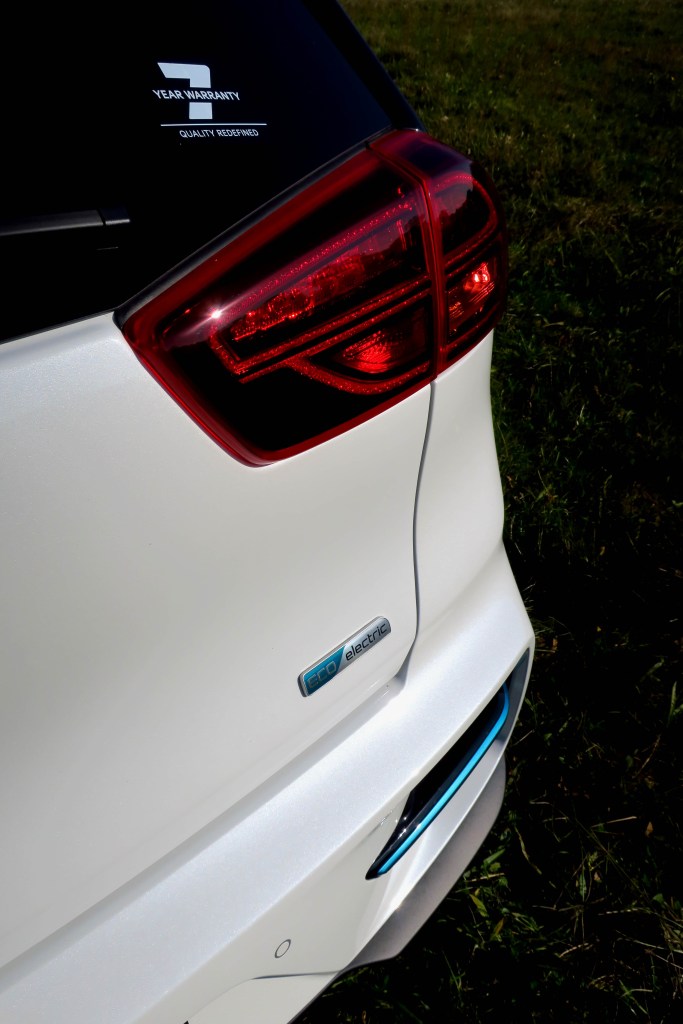
We should also not forget that this Kia EV with its 64 kW battery set the trend towards longer ranges: according to the WLTP norm, it is still good for 455 km…and on top of that, it offers very good value for money, with a 7 year guarantee!
Hans Knol ten Bensel
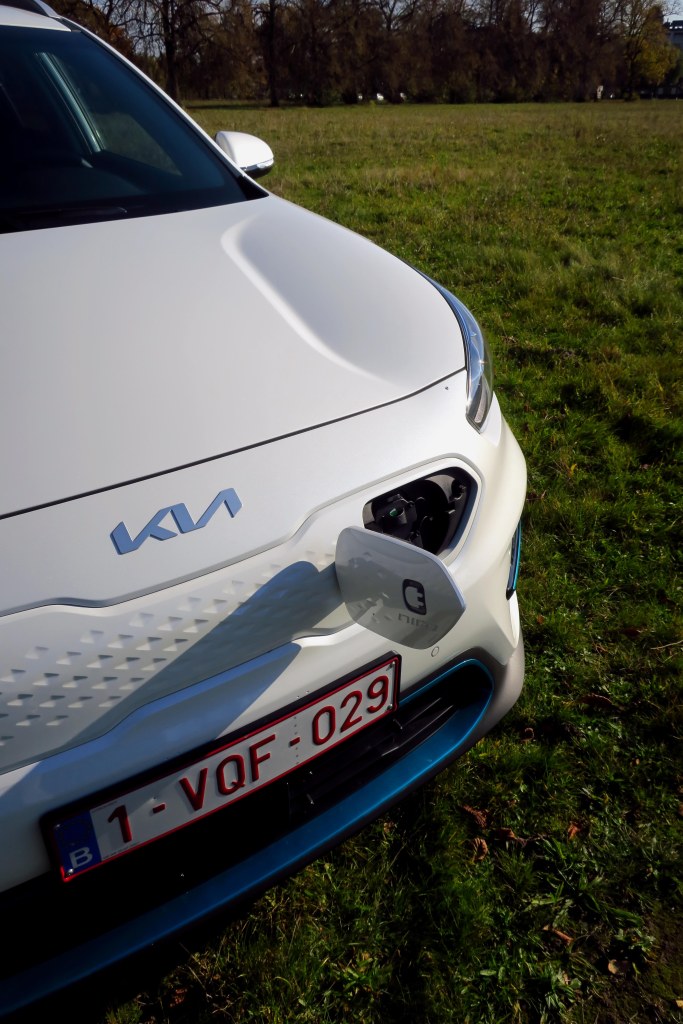
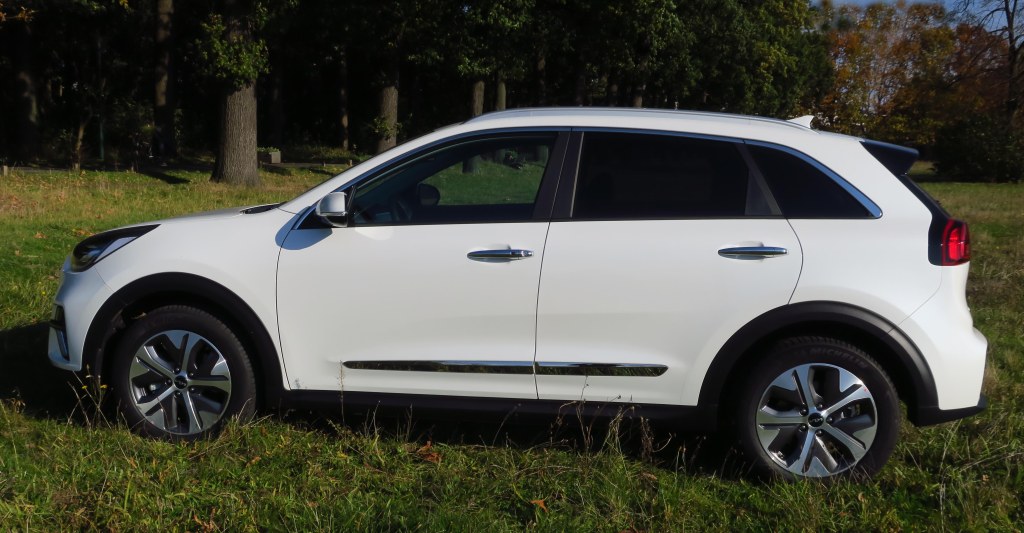
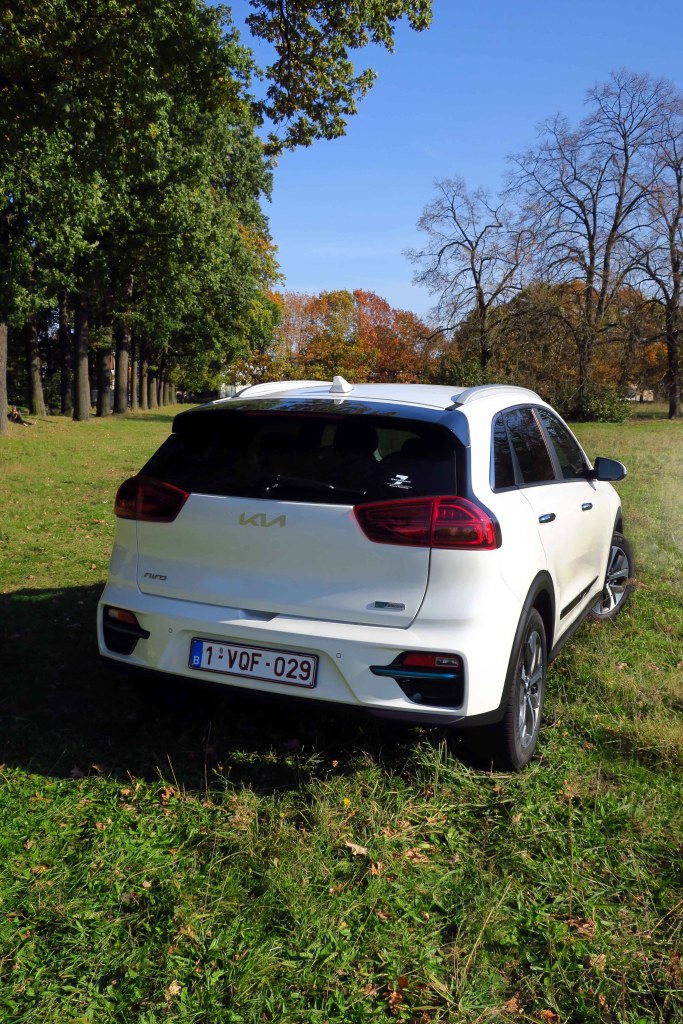
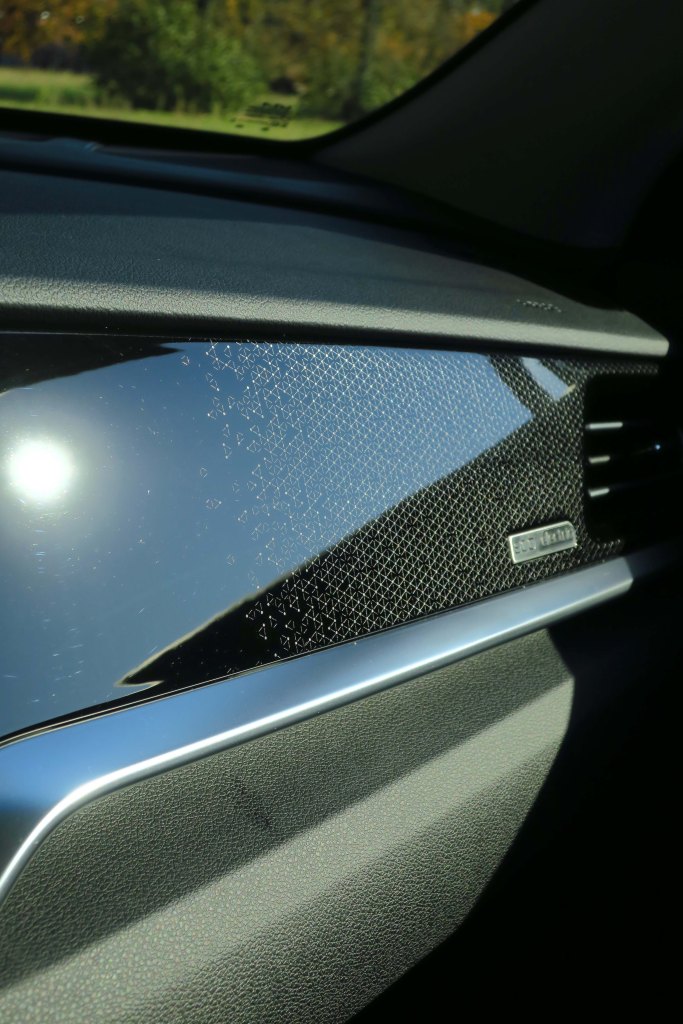
The Kia Niro still has very pleasing and now already familiar looks, with some specific blue coloured accents for the EV version. The front end clearly shows its EV character, and also the flap of the charging sockets is clearly visible. The cabin is well laid out, with classic disposition of instrumentation, commands and central touchscreen, so indeed one would hardly suspect sitting in an EV vehicle. This is all for the better, as one is very soon familiarised in using and driving this Niro.
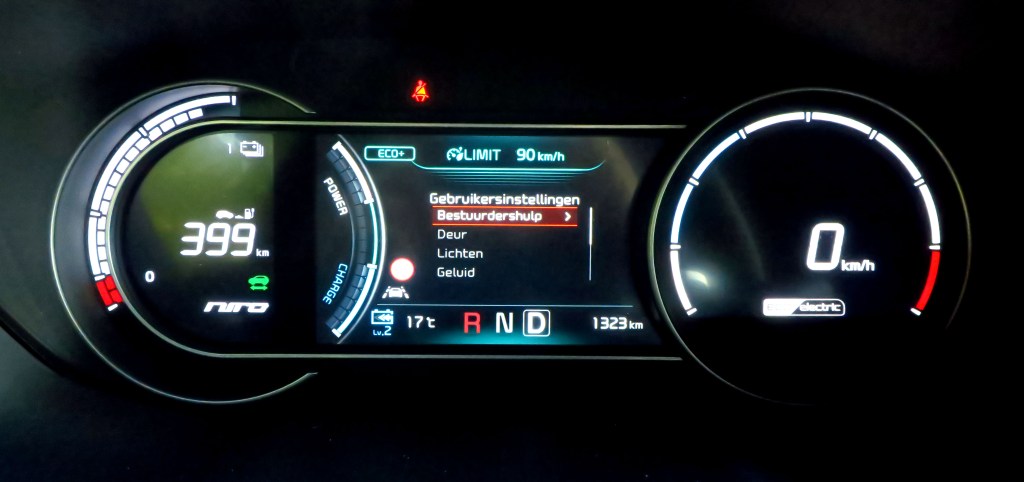
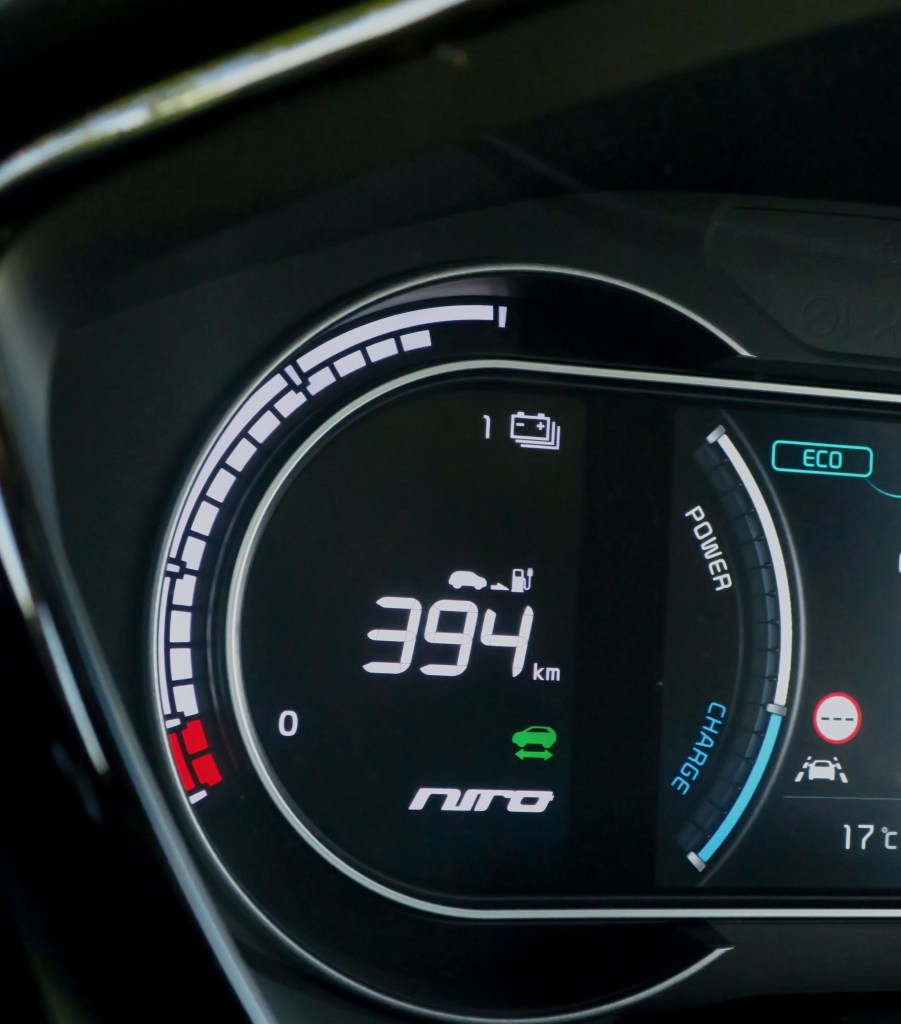
The display in front of you clearly indicates of course battery status and range, as well as the immediate or average consumption in KW/h. Soon one notices that this 150 kW or 204 HP Kia is quite frugal, where your driving style is of prime importance of course.
The manufacturer quotes 15,9 kW/h according to the overall quite realistic WLTP cycle. We took the test car on a lengthy trip to Holland, using the ECO mode throughout, and easily achieved an average of 17 kW/h.
It was delicious to be able to make this trip without the usual range anxiety, and on top of that to find plenty of public charging points in the Netherlands, not even 50 meters away from the house of the family member where we stayed over the weekend. All in all, in this ECO mode, a range of over 400 kilometers is even in more wintry conditions easily achievable when adopting a normal driving style.
Having said this, EV cars have decidedly come of age with our northern neighbours, where the e-Niro has been the top selling car in 2020 by the way…
Smoothness combined with power…
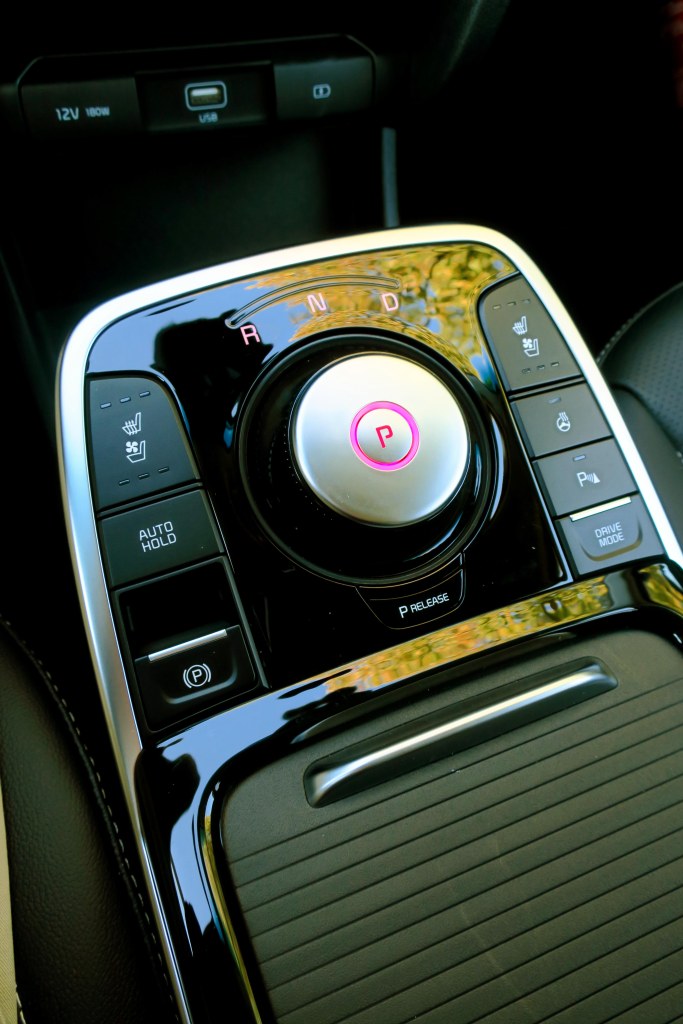
As a pure EV befits, “Zen” like feline and vibrationless power is for you to enjoy here. On the centre console is a familiar circular knob which lets you choose between drive and reverse, as we have seen in Jaguars and Land Rovers.
Off you go, and indeed, this Kia has under the hood what it takes. The front wheels are driven, and will pull you from 0 to 100 km/h in merely 7,8 seconds, which is no small feat as one knows that the kerb weight of the e-Niro is 1712 kg. Top speed is a very creditable 167 km/h. So performance wise, one is rather spoiled too, besides of course the uncanny smoothness and silence of the drivetrain.
There are paddles at the steering wheel column which let you choose the amount of regenerative braking, so “one pedal” driving is easy to achieve.
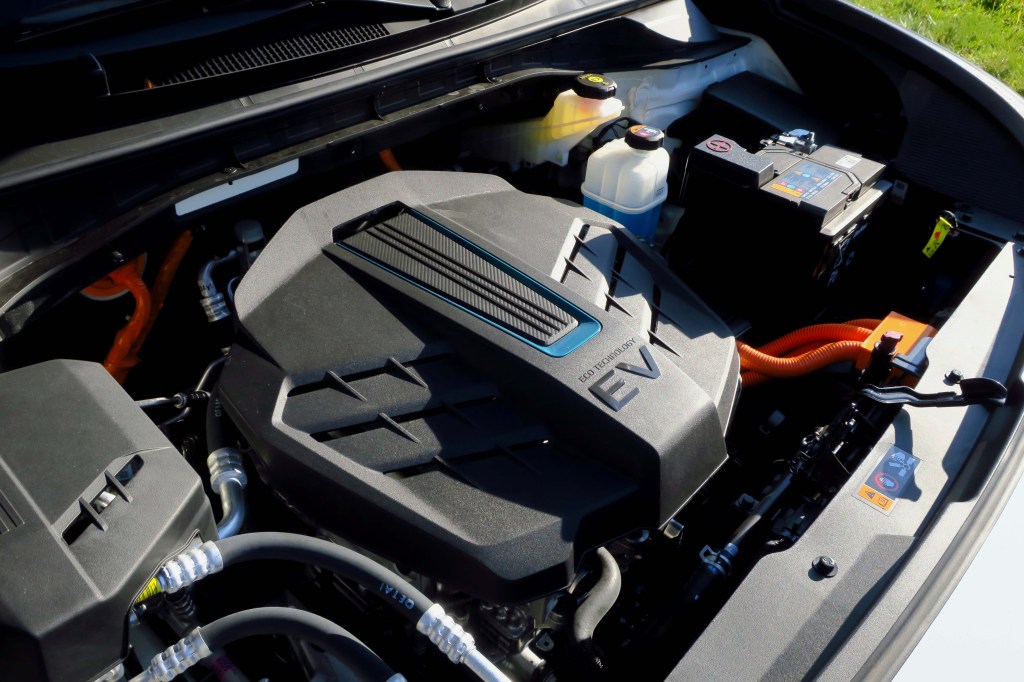
On the technical side, let us tell you here that our test car was equipped with the lithium-polymer 64 kW/h battery and that the permanent magnet synchronous motor has a power of 150 kW/204 HP and 395 Nm of torque.
For home charging, one is of course well advised to install a three-phase wallbox. With the optional three phase onboard charger, you can be fully charged in some 4,5 hours.
Roomy and practical
The e-Niro is quite roomy, with sufficient legroom also for taller passengers in the rear, with standard luggage space being a good 451 and 1405 liters.
With the rear cover in place, the volume is reduced to 280 and 1175 liters respectively. In the cabin, there is enough storage room in the central console and beneath the central armrest as well as the door bins. As we said, using infotainment and all the commands for heating/airco/ventilation is intuitive, and we also used the voice command to good effect for navigation amongst other things.
Safe handling
The e-Niro will not exactly invite you to throw it around corners, but its handling is fine to say the least. Sudden steering wheel movements will be met with initial understeer, with well controlled oversteer by the ESP when you lift the throttle. This e-Niro will not lean unduly in fast corners, has good straight line stability and is comfortable too.
Conclusion
The present e-Niro with its attractive range is still very much a desirable EV, combining excellent performance with low E-consumption. Add to this the good value for money considering the space and equipment found, with last but not least the 7-year warranty. You will agree that this EV-range trendsetter which will accompany you for many years in to wonderful “Zen” world of EV motoring and mobility.
Jacky Ickx has his 75th birthday this year, and the organisers of the Brussels Interclassics decided to celebrate him on the sixth edition of their show, which will be held on the weekend of 19, 20 and 21 November.
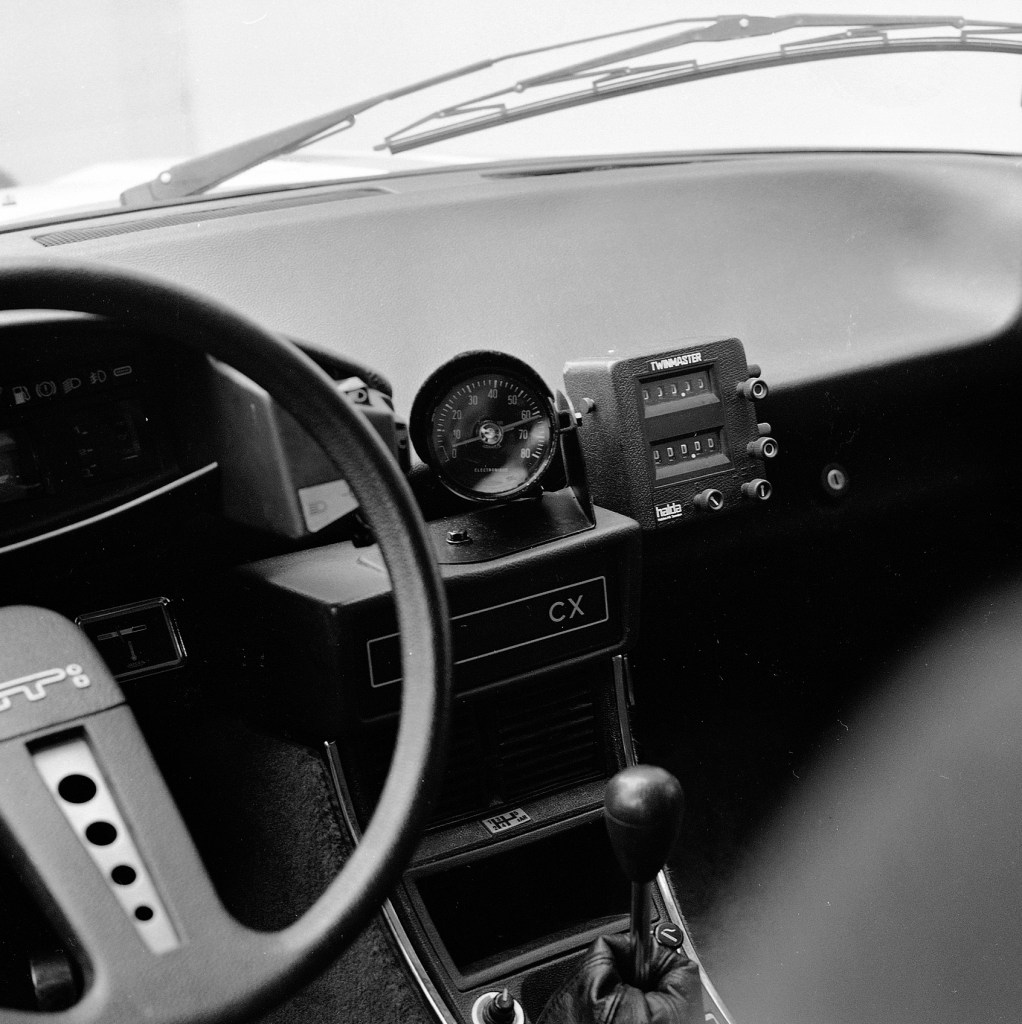
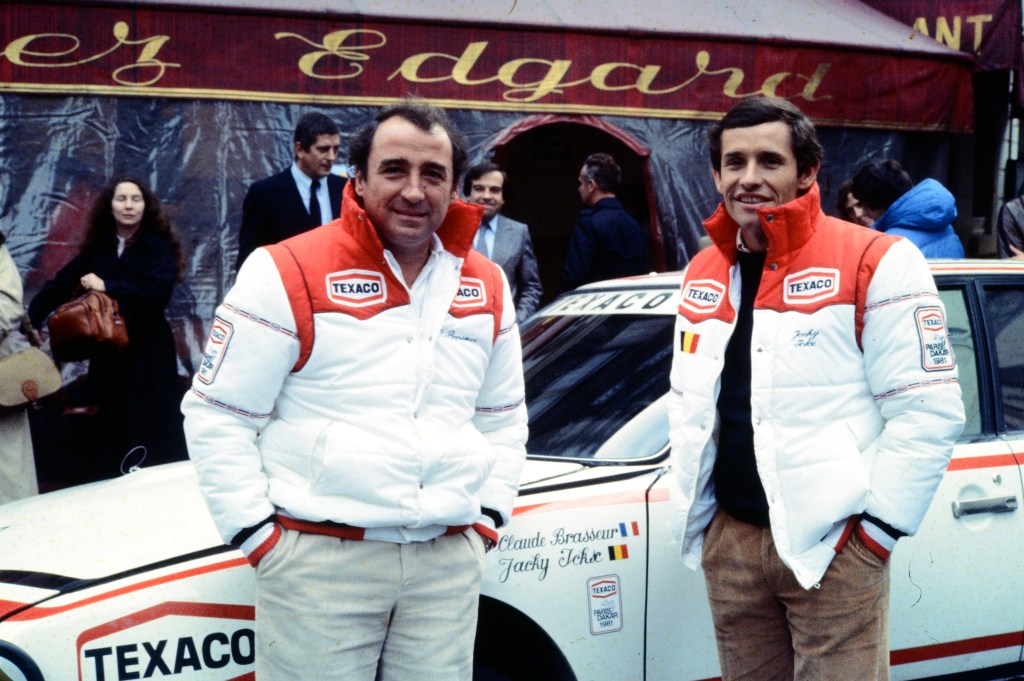
15 cars will be shown on the event, representing the milestones of Jacky’s career. On the central display, a Citroën CX 2400 GTI will also be seen, a perfect replica of the CX he drove on the 1981 Paris Dakar, together with his co-pilot, the French actor Jean Claude Brasseur.
The Citroën CX in Paris Dakar livery was remarkably close to standard, and therefore making a replica was quite feasable…
For the third edition of Paris Dakar, Citroën had entered 4 cars, one in white, driven by Jacky Ickx. The other teams were well trained, Jacky had only seen some film reels of the event prior to the race, and he commented later “Jean Claude and I were total novices to the event, we could have won this race, as the car proved very competitive indeed”.
Nevertheless, Jacky and his team mate led the race, only to abandon in the last stage due to an accident.
The impressive CX 2400 GTI is to be admired in hall 5, stand 5.307. The car is put on the show by CQS Classics, based in Tienen.
We just let you enjoy the photos here, and let you admire how sleek, powerful and efficient these rally Citroëns were in their heydays.
For Citroën enthusiasts, your servant can tell you here Citroëns have always been quite exceptional cars for me, I always cherished the moments I sat behind the wheel of them. I just love their comfort, their unerring stability, even in the worst of weather and road conditions.
Jacky Ickx and his faithful team mate, French actor Jean-Claude Brasseur
My first encounter with the marque of the “double chevron” was behind the one spoked “volant” of a DS 23 Pallas injection electronique, although as a passenger, my memories were even earlier. My aunt in Holland had bought in 1955 a white DS 19, and I sat as a king on the deep blue rear seat, totally smitten by the futuristic design both inside and out, the beautiful and cleanly styled dashboard, the hydraulic commands, the unique comfort and roadholding. My aunt liked to drive with zest, and on the straight but still rather narrow roads, speeds well above 120 km/h were often seen. It felt perfectly normal in this DS. Indeed, the goddess of the road it was called, and deservedly so.
But also the CX left us with indelible memories. I remember driving the CX 2400 GTI – indeed, exactly that model – to the Birmingham motor show. What a delightful Gran Turismo experience it was.
We can tell you here that more Citroën news is to follow: we drove the range of electric Citroëns, amongst others the Berlingo and C4 near Paris, and also tested a diesel powered version of the C4 with the 8 speed automatic, which proved very impressive indeed, showing all the good Citroën qualities.
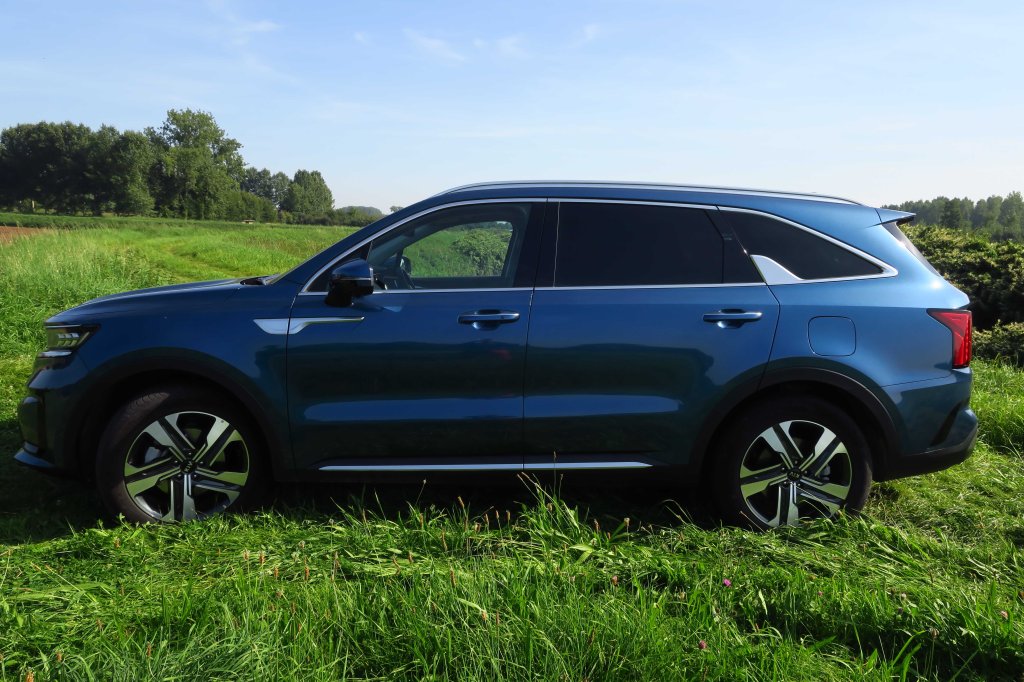
The Kia Sorento has has been an important car for Kia. This spacious SUV has won many hearts, and with environmental regulations getting stricter, Kia has adapted its big, popular SUV to suit modern times. So it has launched in this fourth generation Sorento a plug-in hybrid version. But there is more. The latest generation is now very stylish and spacious, and is packed with a host of accessories and top notch driving aids and infotainment. Read on…
Hans Knol ten Bensel
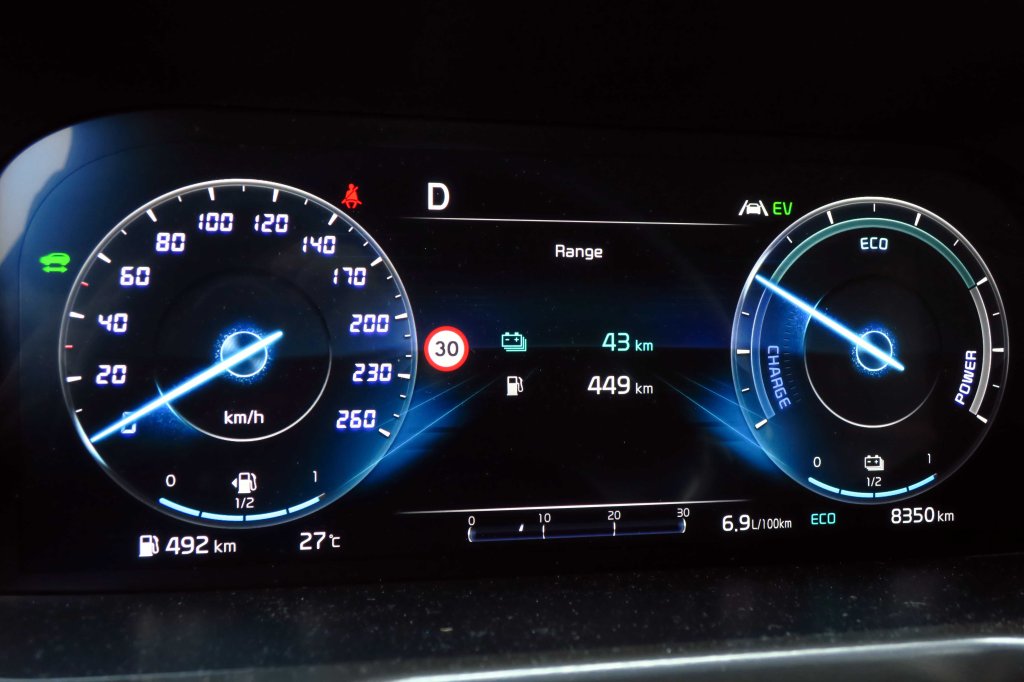
The latest Sorento has gained in style and presence, both inside and out. The accompanying photos tell the story. The dashboard and instrumentation also got a thorough makeover, and there is now one large screen for both the instrument cluster and the infotainment display. Impressive, and not unlike what one finds in the Mercedes range.
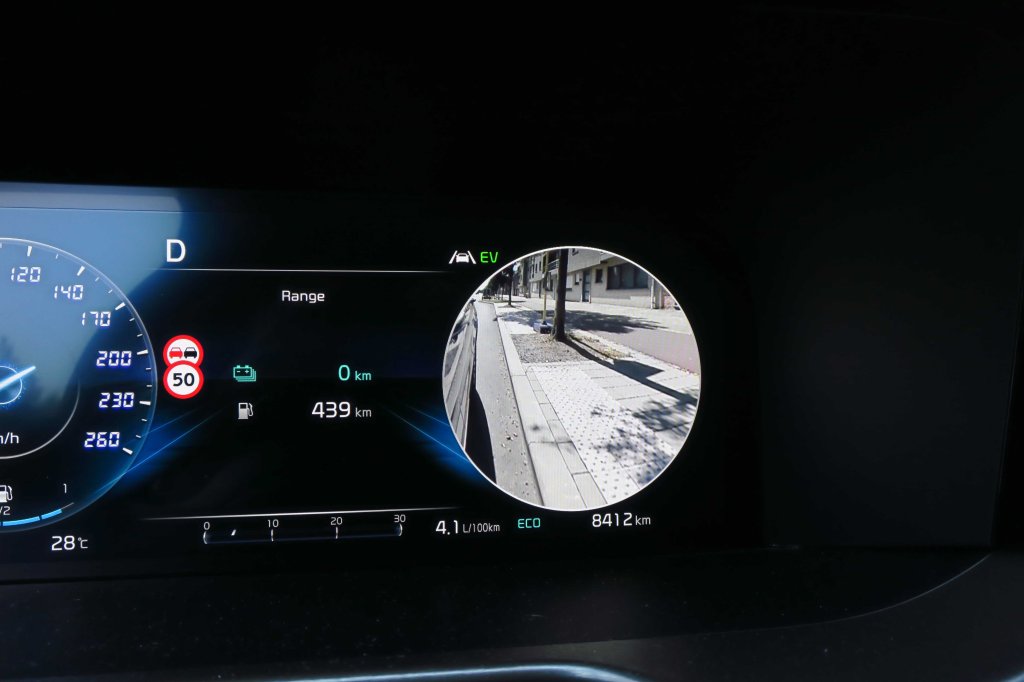
It offers all the information one could wish for, not in the least to monitor carefully the hybrid progress. But there is more. The rearview mirrors have built in cameras, and when one engages the left or right indicators, the right or left instrument dial transforms into a circular camera screen to show you what happens in the blind spots left and right. We liked that very much…
Advanced Driver Assistance Systems…
Besides this blind spot monitor, the new Sorento includes Kia’s latest Forward Collision-Avoidance Assist (FCA) technology with pedestrian, cyclist and vehicle detection. This also detects oncoming traffic when making a turn at a junction. There is also a Surround View Monitor (SVM) and Blind-spot Collision-Avoidance Assist (BCA), Intelligent Speed Limit Assist (ISLA), Smart Cruise Control with Stop&Go (SCC) and Navigation-based SCC (NSCC), Lane Following Assist (LFA), Driver Attention Warning (DAW), and Highway Driving Assist (HDA). Need we say more?
The Sorento is spacious and offers not less than seven seats, with the last row occupants still getting some reasonable comfort in this mid-size SUV, even for grown-ups, provided they are not too big…
The Sorento Hybrid’s battery pack is located under the floor of the cabin. As a result, the SUV offers generous space for up to seven passengers as well as one of the largest luggage capacities in its class – up to 821 litres (for seven-seat models) or 910 litres (for five-seat models)
With all the seats down, some 2000 litres are at your disposal…
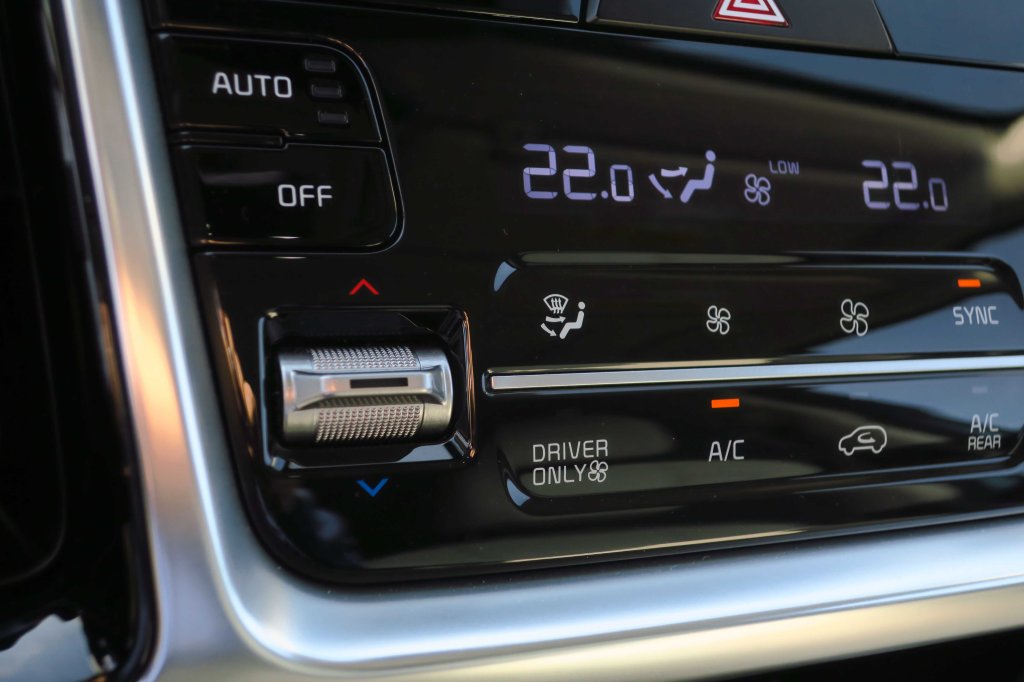
Plenty of USB outlets are present throughout the cabin, even down to the last row, where climate control is provided too. Indeed, he infotainment system also allows Bluetooth smartphone pairing for two phones concurrently, enabling separate phones to be used for, for instance, phone calls and music, while front passengers can also plug in their mobile devices via two USB chargers.
For second-row passengers, two USB charging sockets are integrated into the backs of the two front seats, with a third found at the rear of the front-row centre console. Both third-row passengers also have their own charging points, meaning all seven passengers can keep their mobile device charged – the perfect measure to maintain harmony in a full car during longer journeys.
The Sorento is lavishly equipped. The top ExecutiveLine version leaves nothing to be desired, but also the lower versions offer extra’s like panoramic roofs and heated seats for example.
Our Sorento came also with a head-up display. The system displays alerts from the car’s numerous driver assistance technologies, details of vehicle speed, and turn-by-turn navigation instructions.
We also enjoyed the 12-speaker BOSE® surround-sound audio system. A new ‘Sound of Nature’ ambient sound function enabled us to select from a range of relaxing natural soundscapes. The cabin’s Mood Lighting system lets users tailor the cabin even further, with the interior illuminated in one of seven pre-set ‘core’ colors.
Sophisticated technology
The PHEV version has a 1,6 litre four cylinder petrol engine, the so called 1,6 T-GDi. Torque is also impressive, and developed at a mere 1500 rpm. This new 1.6-litre T-GDi engine features Kia’s new Continuously Variable Valve Duration (CVVD) technology, regulating valve opening time according to driving conditions, instead of operating on a fixed opening time. The electric motor develops some 120 hp, but let it be said here that total system power is some good 265 hp or 195 kW with maximum torque being 350 Nm.
Power is sent through the six-speed automatic transmission via a transmission-mounted electrical device, allowing the full power of the engine and motor to be transferred in parallel with minimal loss of energy.
The Sorento has therefore more than adequate performance, with 0 to 100 km/h reached in 8,7 seconds and a top speed of 193 km/h.
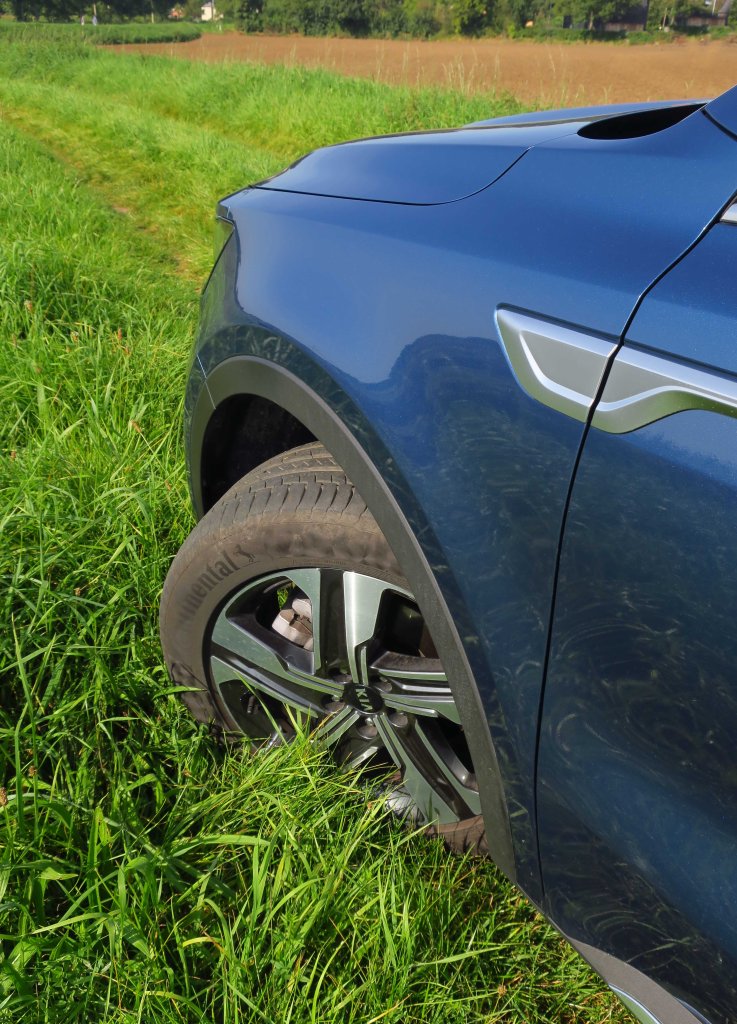
But it is the utter smoothness of the drivetrain, the excellent pairing of the two motors which impresses, both sending their power via a six-speed automatic to the four wheels. The power is only sent to the rear wheels when necessary, with an up to a fifty/fifty power split between the front and the rear wheels according to road conditions.
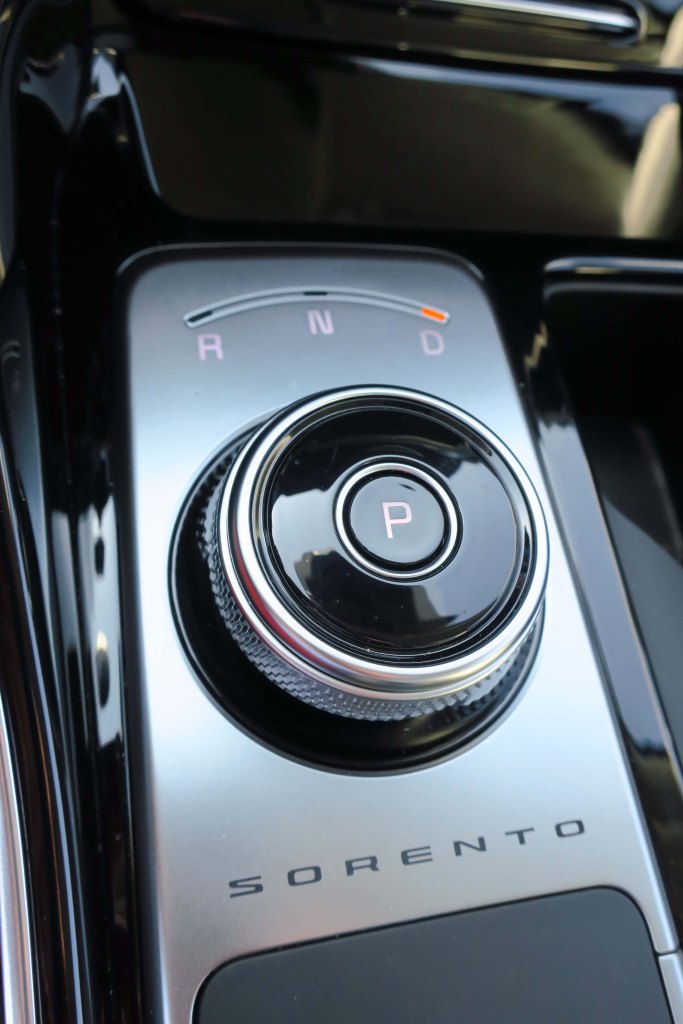
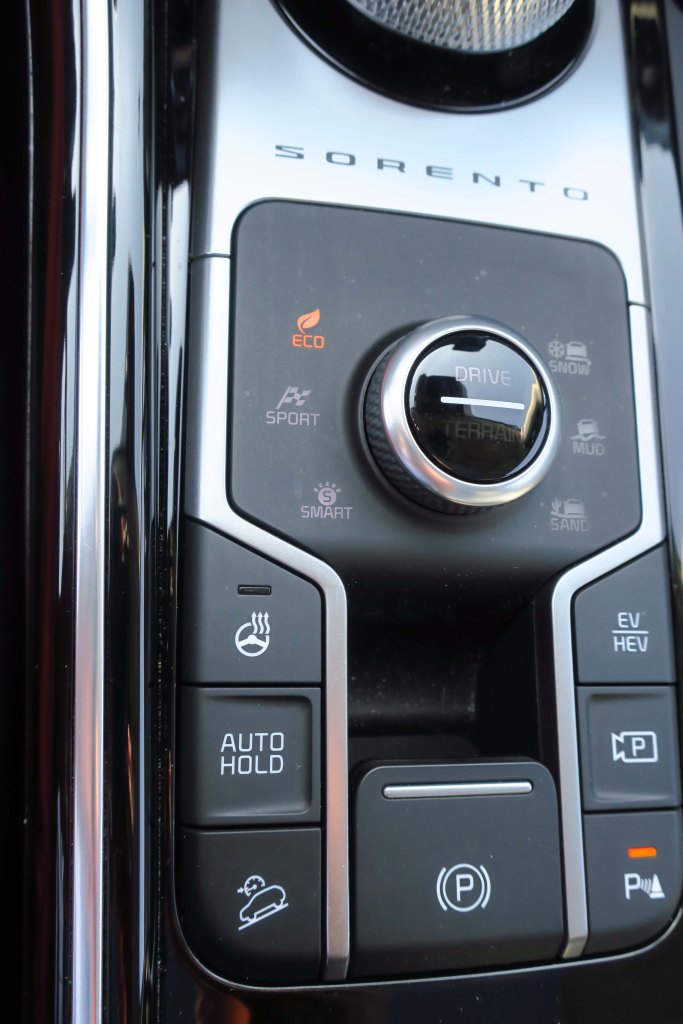
Besides the circular selector knob for selecting the gears, (homage to the Jaguar XJ…) there is a second smaller circular knob for selecting the “drive” modes and the “terrain” modes. Very clear and intuitive, this Sorento can be tailored to your wishes almost instinctively, which is no small feat indeed…
The handling of this almost two-ton Sorento is precise, with suspension setup being even rather firm, and the new platform is clearly designed with our market(s) in mind. Indeed, the new Sorento is based on Kia’s new third-generation midsize SUV platform. The new platform is built up around a compact engine bay structure and shorter front and rear overhangs, with a 35 mm longer wheelbase creating greater cabin space between the axles. Not only does this enable the new model’s stylish design; the structure and layout of the new platform means the Sorento is able to accommodate electrified powertrains for the first time.
Sound insolation is of course also excellent, and indeed this Sorento has all the panache of a limousine. Needless to say that this Sorento has excellent Gran Turismo character…
On EV power, the action radius is close to 50 km on the 14 kW battery. Consumption depends of course largely on your driving style and first and foremost on the amount of E-power you use in your travels. On petrol engine power, it is easily possible to achieve an average consumption around 7 litres with a restrained and anticipative driving style.
The manufacturer quotes CO2 emissions as 44 g/km.
Conclusion
The Sorento is full of high-class character and panache. Roomy, stylish, lavishly equipped, it offers true Gran Turismo comfort and drivetrain smoothness. In the light of all this, it is attractively priced, considering also the very generous equipment. Its plug-in hybrid layout lets you enjoy fiscal advantages too. Last but not least there is the 7 year/150.000 km guarantee offered by Kia, so you will not only enjoy the luxury of this Kia everywhere you go, you will also do so with utter peace of mind…
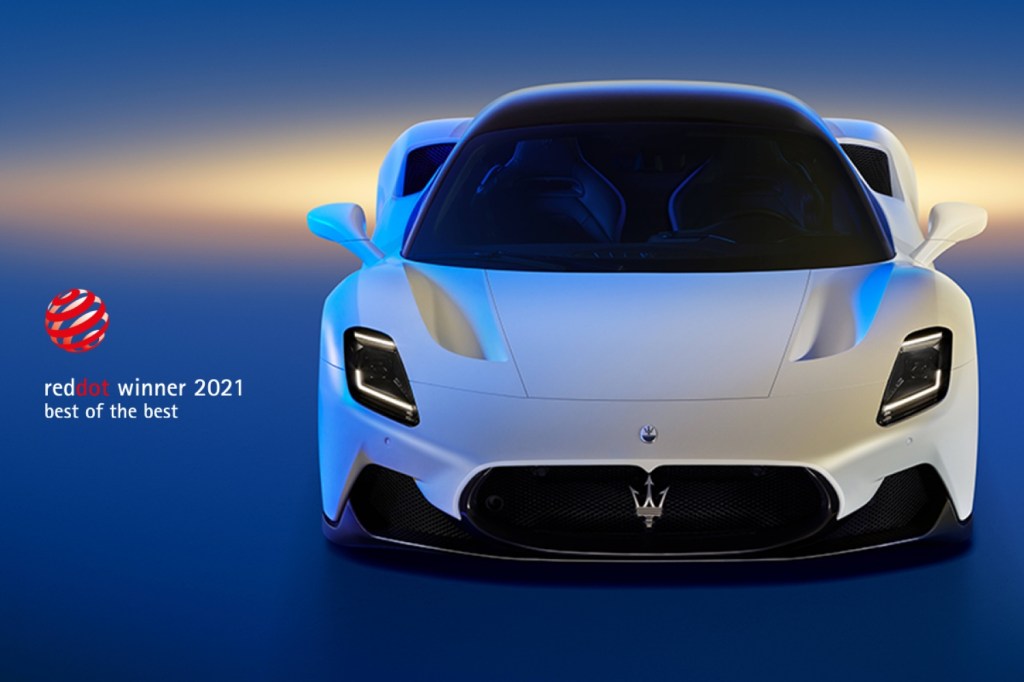
The new Maserati MC20 receives the prize for “Best of the Best” at the Red Dot Awards 2021 in the Product Design category.
Competition run by a German design center…
The Red Dot Awards is well known, although not everyone is aware that this international design competition is run by Design Zentrum Nordrhein Westfalen in Germany, which has been assessing and selecting the most aesthetically exciting, functional, intelligent, innovative products from all over the world since 1955.
Every year, this prestigious competition rewards excellence in the field of product and brand design and communication at the global level, with criteria constantly updated to the socio-cultural context.
A jury of 50 international experts chooses products in almost fifty different categories, from fashion to accessories and from furnishings to vehicles.
This reward puts of course a smile on the faces at Maserati…
We cite a few comments:
Maserati CEO Davide Grasso: “Our mission was to develop a car that would be remembered in the future as the model that launched the Maserati New Era. And I think we’ve achieved our goal with MC20. Maserati is innovative by nature, powered by passion and unique by design: the new super spots car embodies all these values and is a watershed, the founding model of this new phase in the Brand’s history.”
Klaus Busse, Head of Maserati Design, added: “We are honoured to receive this coveted accolade, which recognises the work of an entire team who have worked hard on this unique project, creating a car that opens a new chapter in Maserati’s history.”
Truly Italian
MC20 is designed by the Centro Stile Maserati in Turin and inaugurates a new Era for the Trident Brand.
The new super sports car represents the pure form of speed, with Maserati style: a work of sculptural engineering, showing the way to the Brand’s aesthetic future.
Developed by the Maserati Innovation Lab and built at the historic Modena plant, Maserati MC20 is genuinely an all-Italian car.
Besides its innovatige, good looks, it is also fast…
With the new 630 hp V6 Nettuno engine the MC20 catapults from 0 to 100 km/h in under 2.9 seconds and reaches a top speed of over 325 km an hour. The patented engine was conceived, developed, designed and built entirely by Maserati, and uses a pre-chamber combustion technology derived from Formula 1 engines… wow!
Our smartphone follows us everywhere. So why not use it as a multimedia screen in the car? That would be smart. For Dacia it was self-evident, albeit on the condition that it was fully integrated into the driving experience. This is how Media Control was born.
Nicolas Legros, Director of Transversal Operations for Dacia, explains the philosophy and advantages of this system, which is introduced in New Dacia Sandero.
“At Dacia, we are committed to redefining the essence of the car. For that we had to find a smart, simple and attractive multimedia solution. Moreover, customer studies show that the buyers of the brand prioritize simplicity in this area. That is an important point raised by members of the Dacia community as well. Our engineers and designers have worked closely together to create Media Control, a system that places our customers’ favorite screen – their smartphone – at the center of the multimedia experience in the interior. ”
Indeed, taking your smartphone out of your pocket to make it your travel companion without having to place a hard-to-attach support on your ventilation grilles? That ease of use would appeal to many people. And this is well understood at Dacia. To make life easier for drivers with smart, affordable and contemporary solutions, the brand’s engineers and designers have pooled their talents and came up with a very practical solution…
What is Media Control?
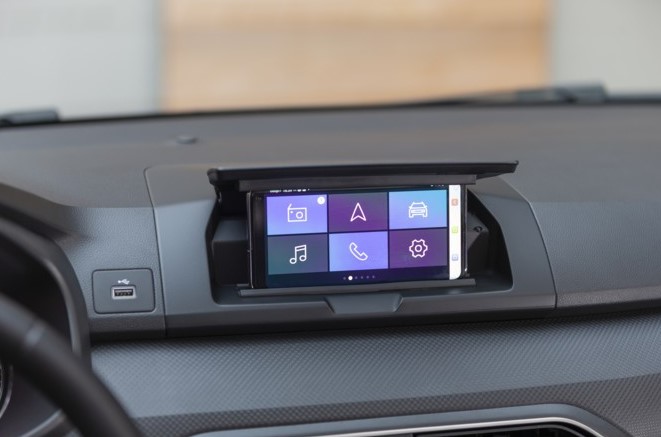
Nicolas Legros explains the system: “Media Control is a complete multimedia system. It includes a radio, two speakers, a USB connection, Bluetooth connectivity, steering wheel controls and, above all, a docking station for smartphones integrated into the dashboard. From the start of the project, this station was fully integrated into the design of the dashboard. In this way we guarantee comfort and user-friendliness for our customers. ”
The smartphone, which is placed in the universal housing in the center of the dashboard of New Dacia Sandero and held firmly in place, integrates perfectly into the driving experience. The strategic placement, at the top of the dashboard and slightly turned towards the driver, guarantees readability of the data, which improves safety. All you need to do is download the Dacia Media Control app on your smartphone. A simple Bluetooth connection then turns your smartphone into a full-fledged addition to the dashboard, replacing the integrated multimedia system.
Navigation, radio, music, telephone and even access to vehicle information – all essential functions are at your fingertips. Even the voice control is present, thanks to the voice recognition of the smartphone.
And when the phone is not in the holder, the latter disappears into the dashboard for more discretion.
A smart system with sophisticated functions
However, all this is not enough to turn Media Control into a 100% smart multimedia system. Thanks to the customizable app, the system also adapts to the needs of each user and even connects to the car’s on-board computer.
However, all this is not enough to turn Media Control into a 100% smart multimedia system. Thanks to the customizable app, the system also adapts to the needs of each user and even connects to the car’s on-board computer.
This makes it possible to create shortcuts to your favorite widgets and apps and even to frequently called contacts. To navigate, each driver chooses his own preferred app thanks to the wide choice of maps and guidance systems. Choose multimedia à la carte. Radio, playlists from your telephone, subscription to music platforms, USB stick or MP3 player … There is no shortage of choice. In addition to calls, the phone has all the essential functions: a hands-free mode to look up contacts in the phone book, consult the call history or consult scheduled events in the calendar. With Android devices, and soon also on iOS, the SMS function even reads out messages. In terms of vehicle functions, Driving ECO provides real-time access to consumption data and gives the driver personalized driving tips at the end of each journey.
Upon arrival, more distracted drivers will appreciate the phone alert and the Go To My Car feature, which guides them back to the car’s last parking spot.
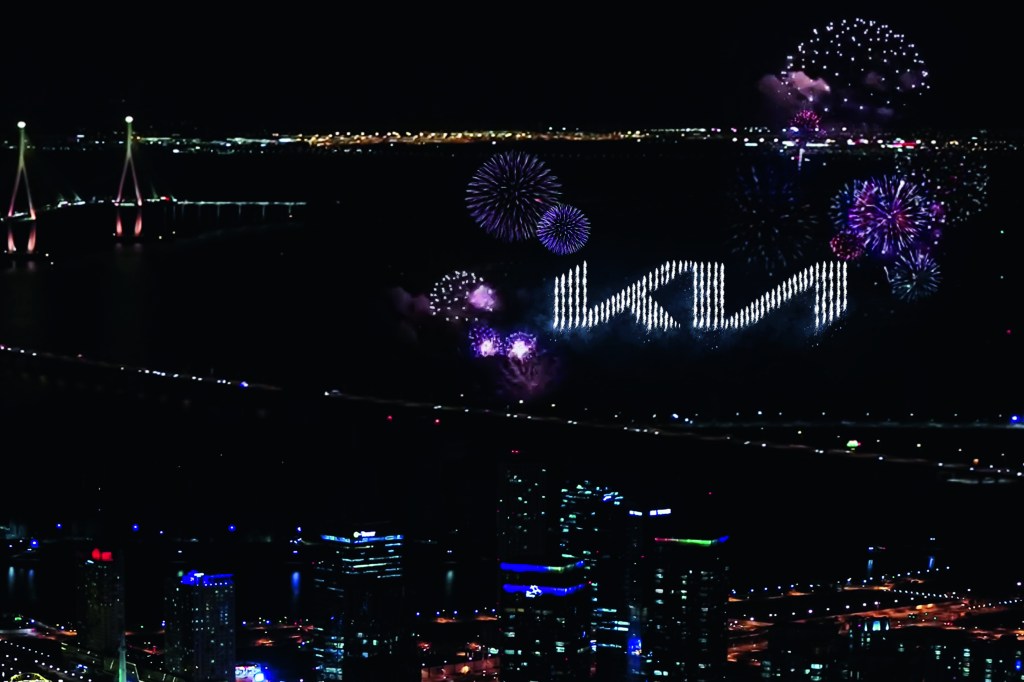
The new logo features ‘symmetry’, ‘rhythm’ and ‘rising’ elements that embody Kia’s confidence and commitment to customers.
The logo is a symbol of Kia’s new brand purpose and the values it promises to offer customers through future products and services, and the experiences these enable. Kia seals its brand promise by developing the new logo to resemble a handwritten signature. The rhythmical, unbroken line of the logo conveys Kia’s commitment to bringing moments of inspiration, while its symmetry demonstrates confidence. The rising gestures of the logo embody Kia’s rising ambitions for the brand, and, more importantly, what it offers to customers.
Dazzling show of pyrodrones…
The new logo was unveiled during a record-breaking pyrotechnic display in the skies above Incheon, Korea. The event saw 303 pyrodrones launching hundreds of fireworks in a synchronized artistic display, igniting and celebrating Kia’s new beginning. This set a new Guinness World Record for ‘Most unmanned aerial vehicles (UAVs) launching fireworks simultaneously’. The dazzling display can be seen on the Kia Global YouTube channel: https://youtu.be/s61_IsjqLzc
Kia discloses new brand slogan: ‘Movement that inspires’
In addition to an all-new logo, Kia revealed its new global brand slogan, ‘Movement that inspires’.
Details on Kia’s new brand strategy, including brand purpose and philosophy as well as application to Kia’s future product line-up, will be shared through the digital ‘New Kia Brand Showcase’ event to be held at 01:00 AM CET, January 15. The event can be viewed on the Kia Global YouTube channel.



















 Autoprova - for the Connaisseur