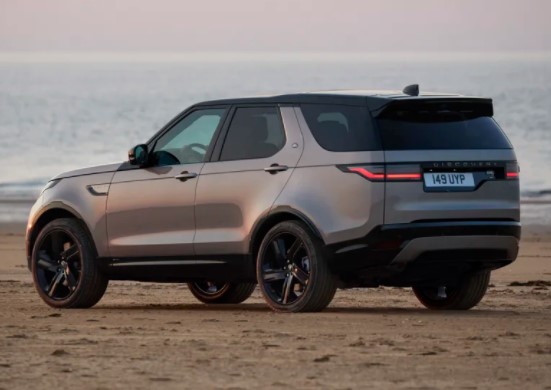
The new Land Rover Discovery will please most lovers of premium go-anywhere SUV’s. Indeed, the design of the new Discovery has gained in sophistication with new LED headlights and tail lights with fresh front and rear bumpers. A bnw R-Dynamic version is now more assertive too…
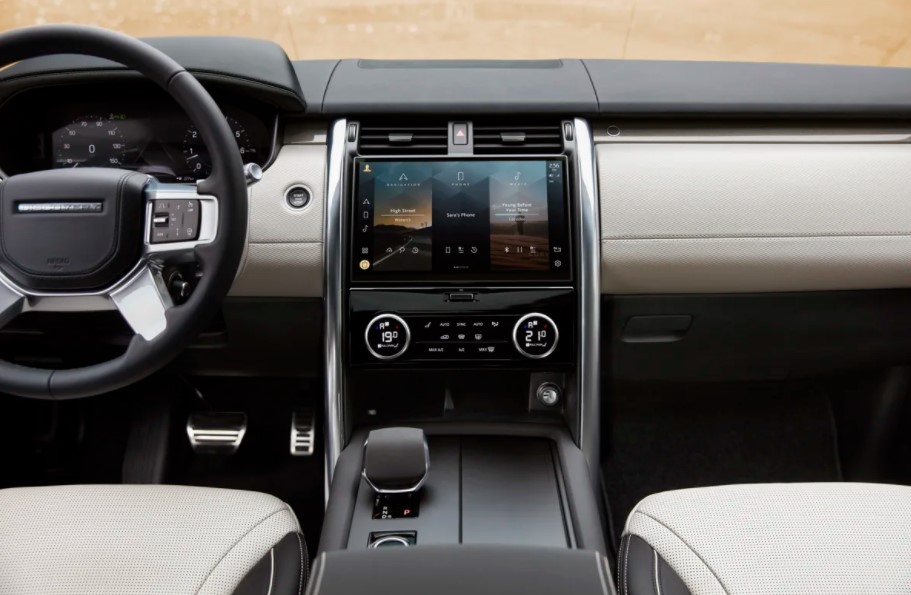
The cabin has also gained further in clean, uncluttered design with enhanced centre console featuring New Pivi Pro infotainment with a large 11.4-inch HD touchscreen and advanced connectivity with Software-OverThe-Air updates. New new second-row seats offer superior comfort.
The Latest straight-six Ingenium petrol and diesel engines have now 48V Mild Hybrid Electric Vehicle technology for superior more efficiency.
The new Discovery is among the world’s first full-sized sevenseat premium SUVs with RDE2-certified and Euro 6d-Final-compliant diesel engines.
The excellent offroad manners are a hallmark of the brand, and Intelligent All-Wheel Drive automatically distributes torque to the axle that needs it most for optimum efficiency
You feel good in the new Discovery, as new Cabin Air Ionisation with PM2.5 air filtration1 monitors air quality inside and filters harmful particulates.
Your family will also like it, as the Discovery comes now with a next-generation wearable Activity Key, Click and Go tablet holders for row-two passengers and Intelligent Seat Fold technology.
You can also tow almost anything. The Discovery is best-in-class with 3,500kg towing capacity2 and Advanced Tow Assist to take the stress out of difficult reversing manoeuvres…
When the car is available for a road test, we will tell you about our driving experience with his new Land Rover!
Until now the VISION iNEXT took centre stage when we looked at BMW’s electric vision for the future. With a year still to go before its market launch at the end of 2021, the BMW Group lets us have a first look ahead to the future BMW iX, which is currently still in the series development phase.
The BMW iX is very important: it is the first model based on a new, modular, scalable future toolkit developed by the BMW Group. It embodies a fresh interpretation of design, sustainability, versatility and luxury.
Driving pleasure, versatility and luxury.
The iX is from the outset designed for purely electric mobility, and BMW claims it is redefining the successful Sports Activity Vehicle (SAV) concept.
The BMW iX harnesses the latest innovations in the fields of electrification, automated driving and connectivity to deliver a mobility experience which puts people first. Therefore, its design has been developed from the inside out, says BMW.
Sustainability is also important, and we find optimised aerodynamics, intelligent lightweight design and extensive use of natural and recycled materials.
Fifth-generation BMW eDrive technology for a long range…
The fifth generation of BMW eDrive technology consists of two electric motors, state of the art power electronics, charging technology and a high-voltage battery. It has the zest of a true BMW: some 370 kW/500 hp, enough to power the BMW iX from 0 to 100 km/h (62 mph) in under 5.0 seconds.
BMW nevertheless targets an electronic power consumption of less than 21 kWh per 100 kilometres (62 miles) in the WLTP test cycle. A gross energy content of more than 100 kWh should enable the latest-generation high voltage battery to record a range of over 600 kilometres in the WLTP cycle.
That equates to more than 300 miles according to the EPA’s FTP-75 test procedure.
DC fast charging: over 120 kilometres (75 miles) of extra range in ten minutes.
The new charging technology of the BMW iX enables DC fast charging at up to 200 kW. In this way, the battery can be charged from 10 to 80 per cent of its full capacity in under 40 minutes.
The friendly cabin is centered on the driver and its passengers…
Added to which, within ten minutes enough energy can be fed into the battery to increase the car’s range by more than 120 kilometres (75 miles). It takes less than eleven hours to charge the high-voltage battery from 0 to 100 per cent at 11 kW from a Wallbox.
More power for automated driving…
The level of computing power has been developed to process 20 times the data volume of previous models. As a result, around double the amount of data from vehicle sensors can be processed than was previously possible.
Bold and impressive styling
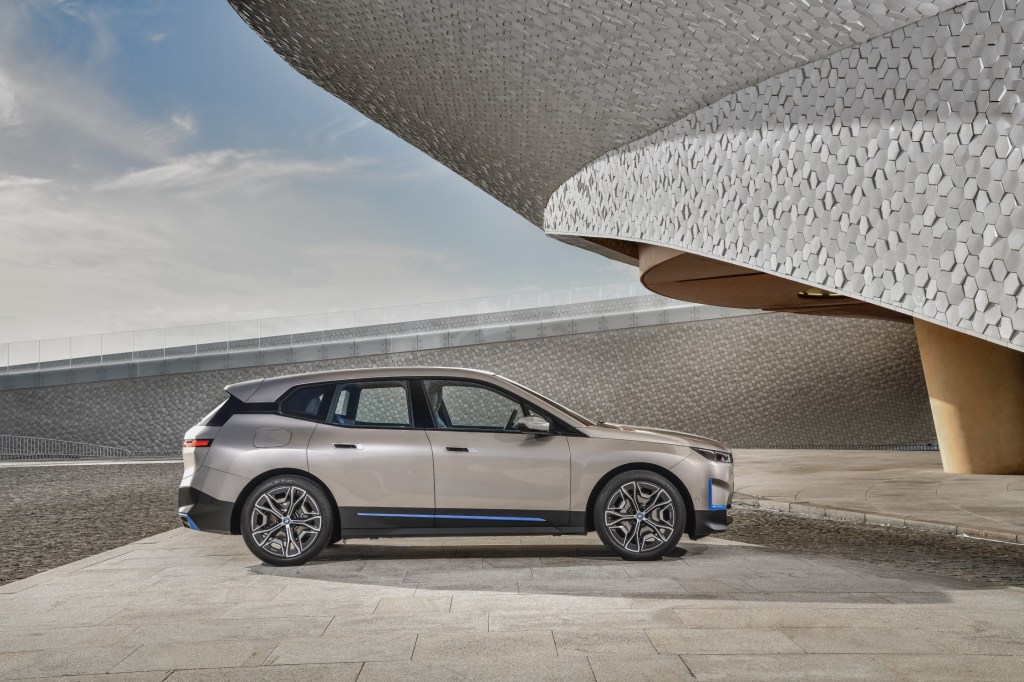
The exterior of the BMW iX has the powerful proportions of a large BMW SAV. The BMW iX is comparable with the BMW X5 in length and width, and is almost the same height as the BMW X6 on account of its flowing roofline. The size of its wheels, meanwhile, brings to mind the BMW X7.
At the centre of the front end stands the prominent, vertical kidney grille. Since the electric drive system of the BMW iX requires only a small amount of cooling air, the kidney grille is completely blanked off.
This upright grille has reinvented itself as an innovative and multifunctional high-tech interface for
the advanced driver assistance systems with which the BMW iX paves the way for automated driving.
Human friendly cabin
The architecture of the BMW iX cabin underpins a perfectly clear and straightforward functionality that revolves entirely around the needs and emotions of the driver and occupants.
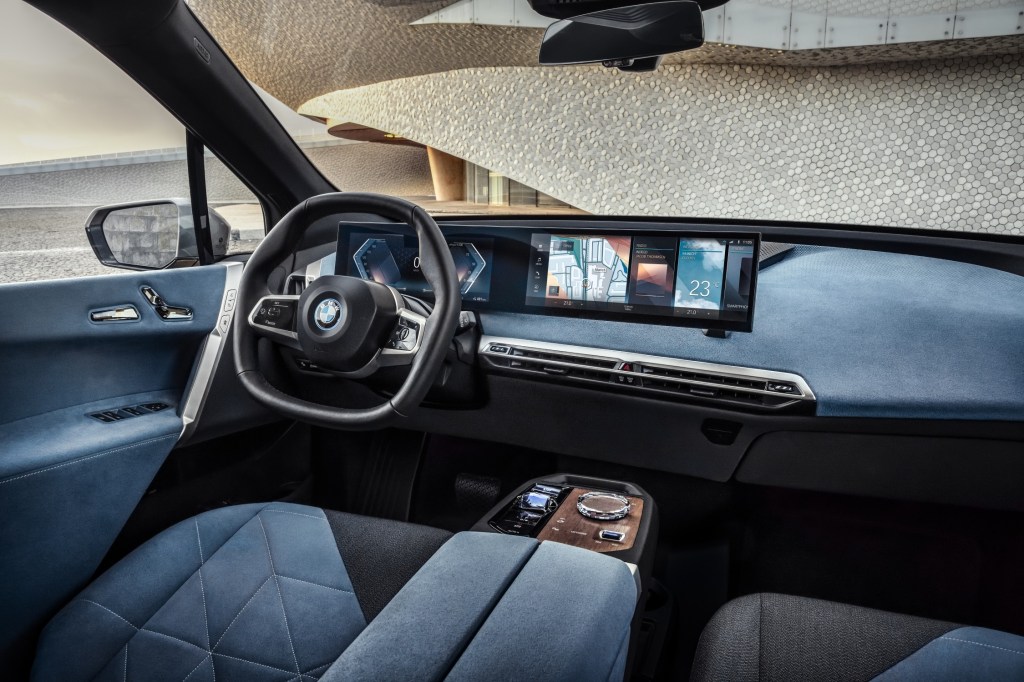
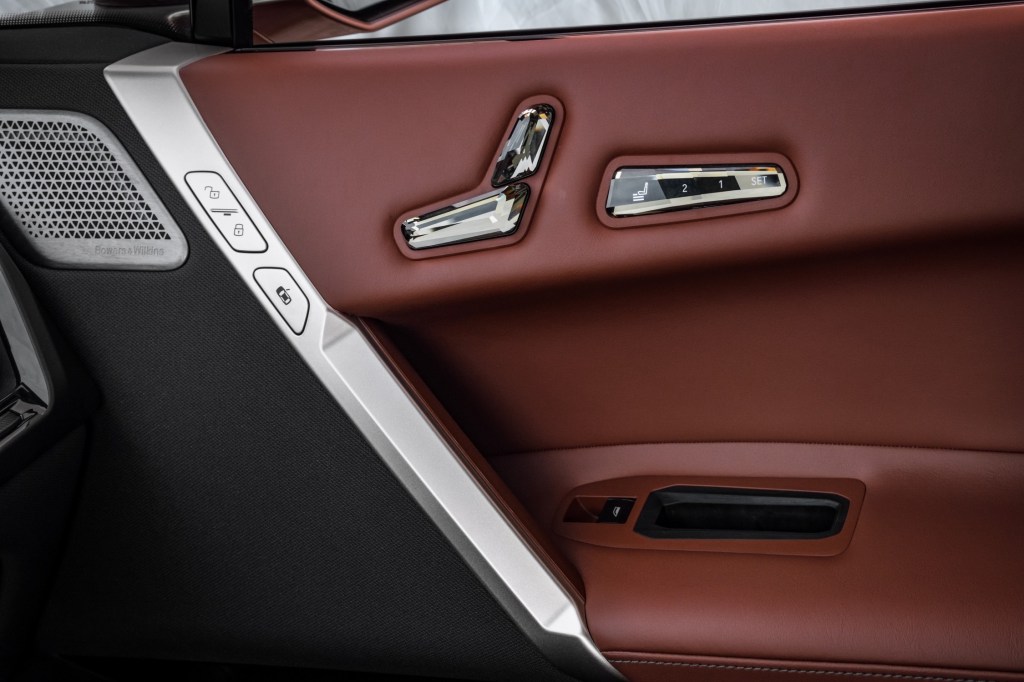
The displays and controls are all stripped down to the essentials, further reinforcing the impression of an uncluttered cabin offering a place of relaxation. The technology of the BMW iX only becomes visible when it is needed. This makes it intuitive to use rather than seeming overly complex.
The hexagonally shaped steering wheel, a rocker switch for gear selection and the BMW Curved Display – which forms part of the next-generation BMW Operating System – clearly advertise the futuristic form of driving pleasure.
Lightweight design
The body structure, featuring an aluminium spaceframe and innovative Carbon Cage, can claim extremely high torsional stiffness, which in turn enhances agility and maximises occupant protection, while minimising weight.
Fully capitalising on the benefits provided by the all-electric drive system and meticulously implementing proven measures from the past in the front end of the car, the underbody section, the wheels and the rear end gives the BMW iX optimised aerodynamics. This resuls in a drag coefficient (Cd) of just 0.25!
We let you look at the photos here…and are anxious to see this new BMW in the flesh!
In Brussels autumn streets, enjoying the latest Italian electric gem: the Fiat 500 Elettrica…
Bringing back the stunning Alfa Romeo Stelvio test car (full test report soon on these pages…), we had the lucky occasion to slide behind the wheel for a short spin through the Brussels streets with the brand new all-electric 500. Press Officer Wim Willems of the ever so dynamic FCA Belgium PR team invited me proudly to take the wheel behind one of the still Italian registered test cars.
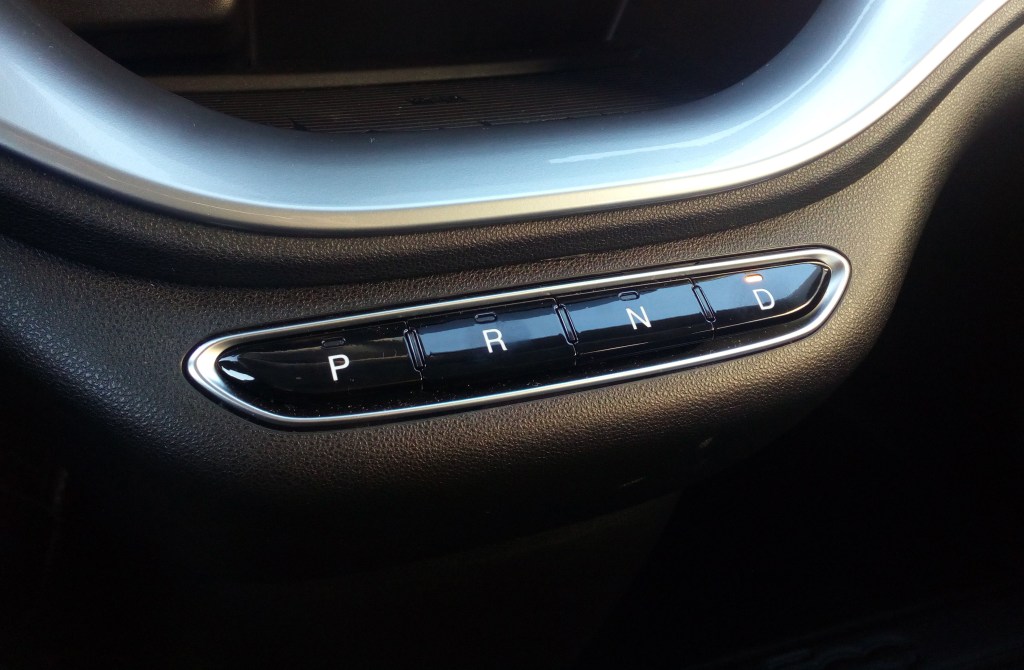
The four wheeled beauty – the styling of the electric 500 is truly spot on – drives absolutely “zen”, silent and smooth, and is of course totally intuitive to drive. On the middle of the dashboard are the four touch buttons let you choose between drive, reverse, neutral and park. This is literally all there is to it!
This electric Cinquecento we drove was the top notch ICON version, and the stylish fun starts the moment you get the keys of the car: it’s a black button-free pebble, a smart wearable key you carry in your pocket or bag, which communicates with the car and automatically unlocks the doors when you step closer.
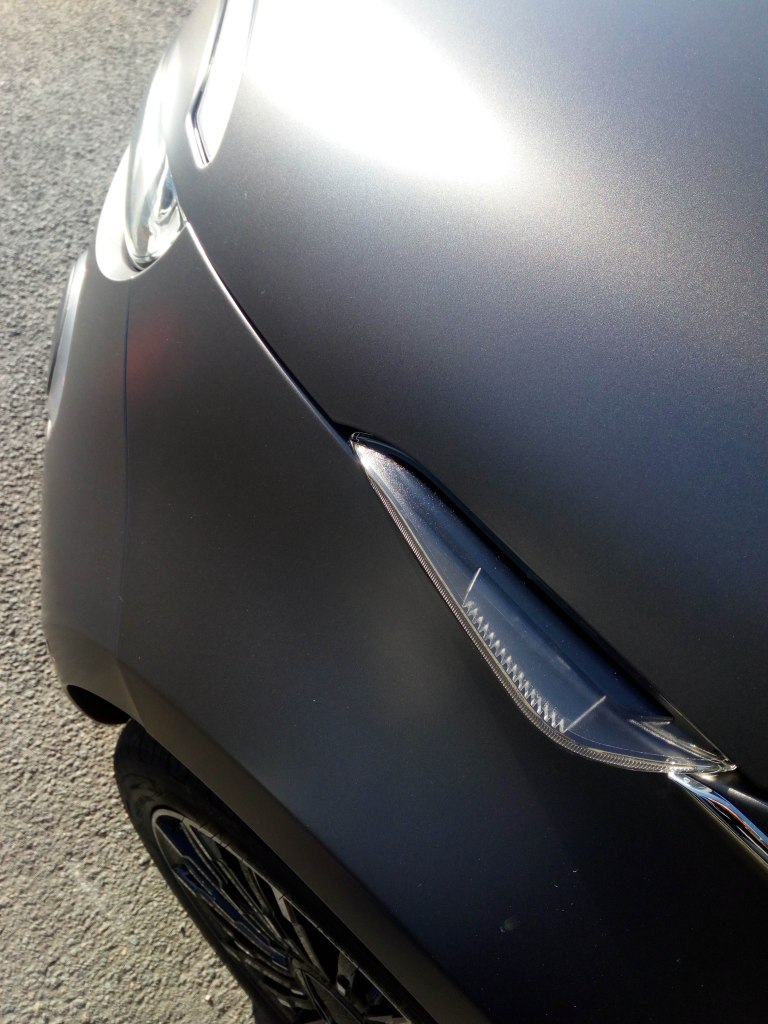
The dashboard has the same color as the bodywork, which was in our test car executed in matte grey, and in the center is a a 10.25” ‘cinerama’ touchscreen display, with GPS and the Uconnect 5 system. So superbly connected you are… more on all these features when we get our hands on this electrical gem for a test.
Let’s turn to the supersmooth driving experience. You can choose between three driving modes. The “Normal” mode gives you all the nippy performance you could ever wish for: output of 87 kW – equivalent to 118 hp, 220 Nm of torque, available instantly, and sports car acceleration from 0 to 50 km/h in 3.1 seconds, or 0 to 100 in 9 seconds.
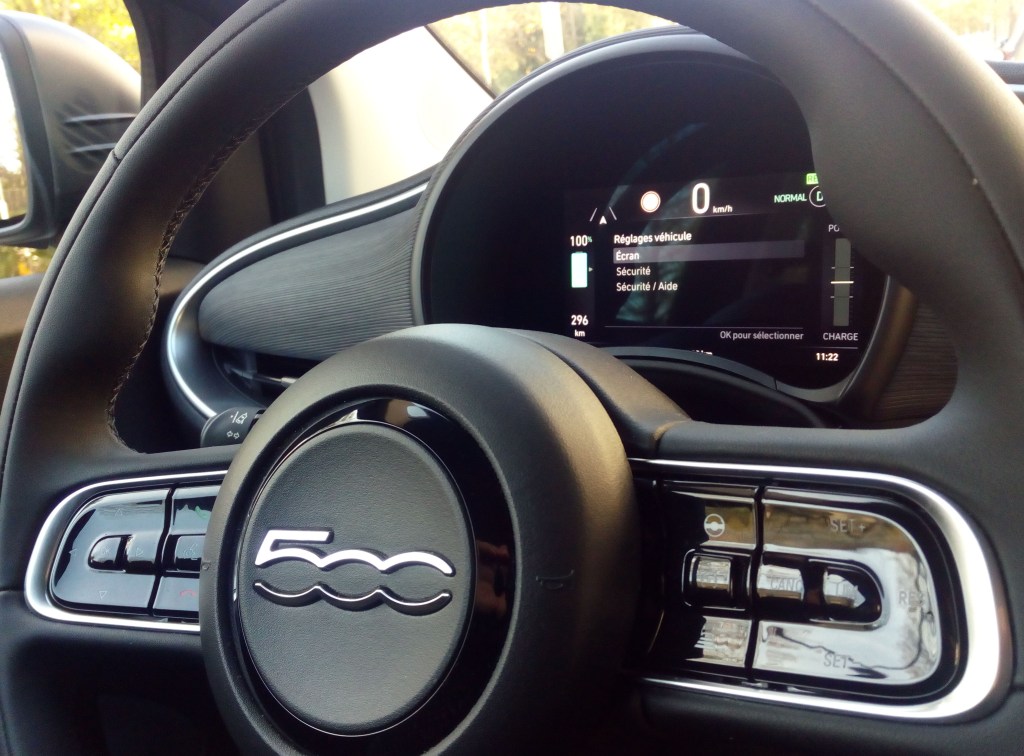
We started off our test drive with 296 km range…
But there is more. The “Range” mode treats you to a new driving experience, using only one foot. The ‘one-pedal’ function means you can control acceleration and deceleration by just pushing or lifting the throttle. When you lift off, the car recovers energy to the max, and the Cinquecento will slow down markedly until it stops.
Red hot: the test car is still running on Italian licence plates…
When your battery is low, this 500 gets you home anyway. You choose the ‘Sherpa’ mode, and here the 500 will find the right balance between all the components of the drivetrain to reduce fuel consumption to a minimum.
One last word about the range: The 500 ICON will drive of up to 320 km in the WLTP cycle, increasing to 460 km in the urban cycle alone. Rapid recharging is guaranteed by the DC fast charging system, running at up to 85 kW.
But rest assured, we will come back on all the smart recharging solutions Fiat offers for its new electric baby. We just treat you here to the few photos I shot during our first drive!
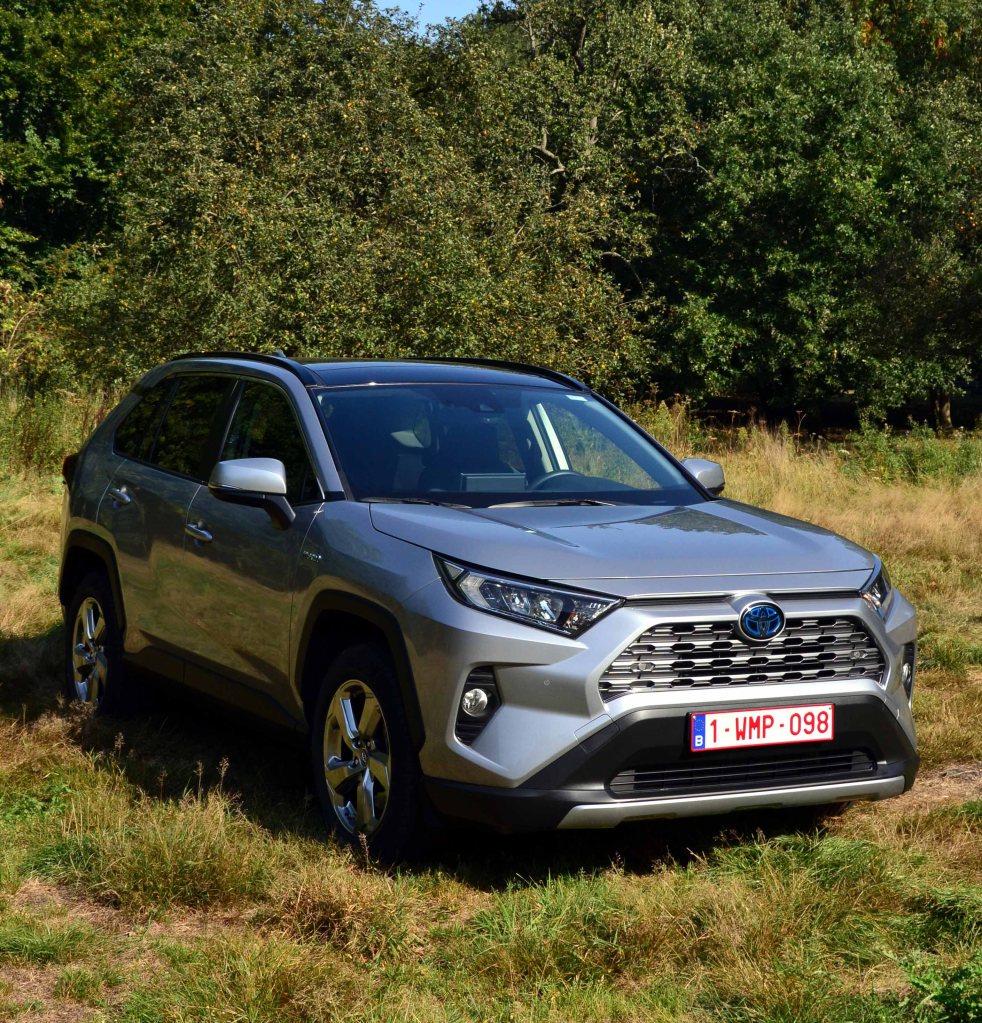
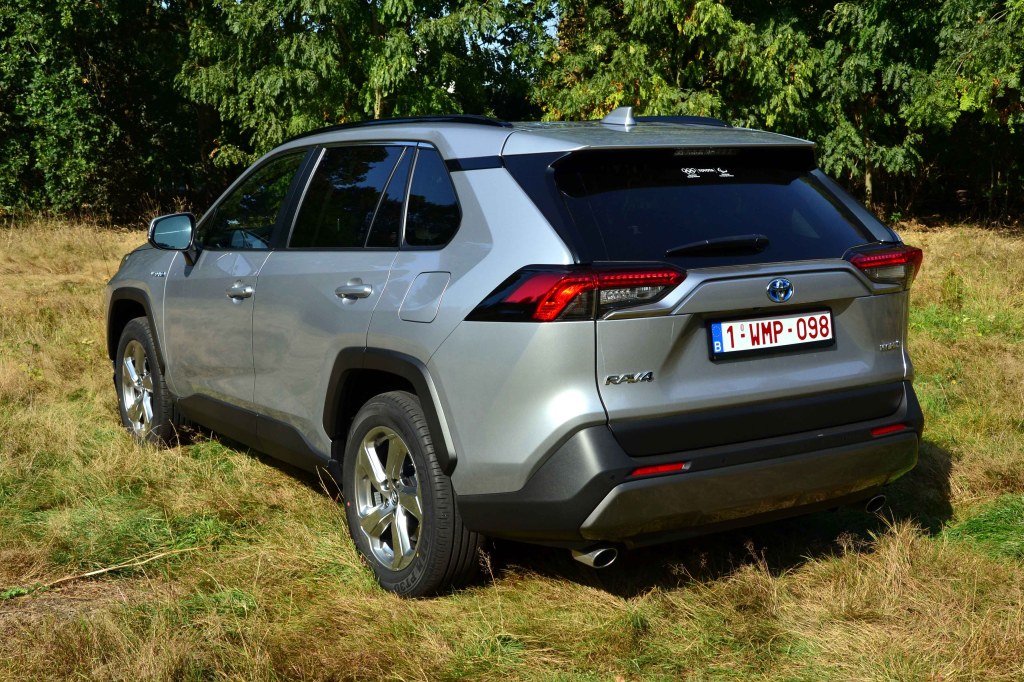
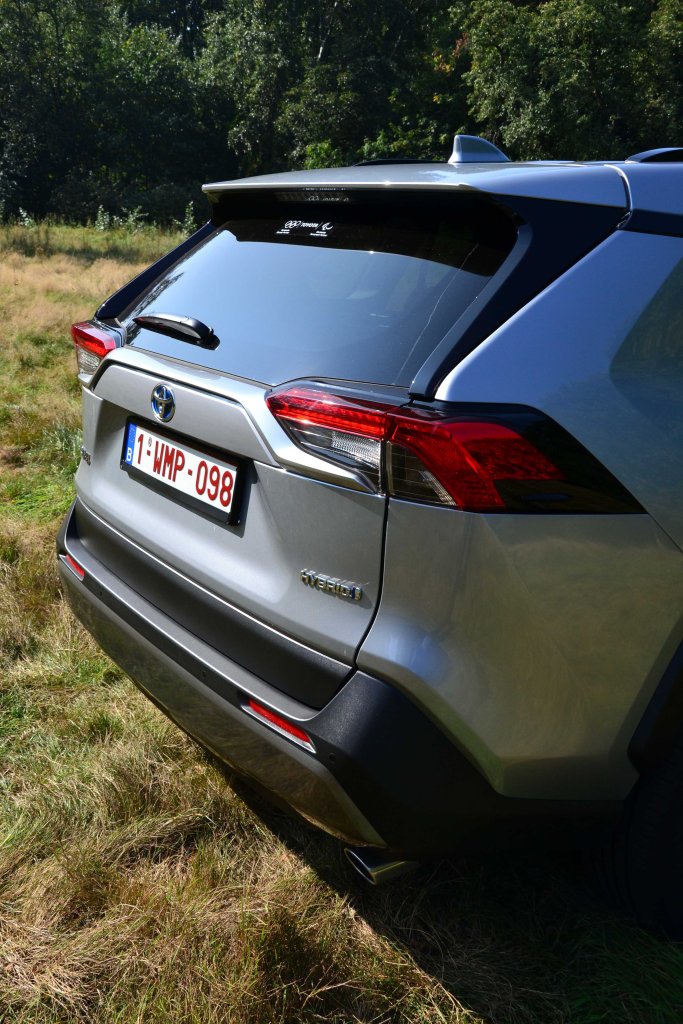
The formidable RAV4 has now some 10 million enthusiast owners, and now enters its fifth generation. It has gained in style, and is as hybrid as ever on our shores: 85 % of the European buyers opt for the self-charging hybrid power drivetrain.
It rolls on the new GA-K platform, allowing the RAV4 to be sleeker with a lower center of gravity and increased body rigidity. This also means both better handling and ride comfort, a more spacious interior, ample load space (580 liters VDA with seats in place) and enhanced styling with lower roof and hood lines in combination with higher ground clearance.
Indeed, the new RAV4 has the looks, and the ride too…Just read on!
Hans Knol ten Bensel
Self-charging hybrid, masterfully engineered…
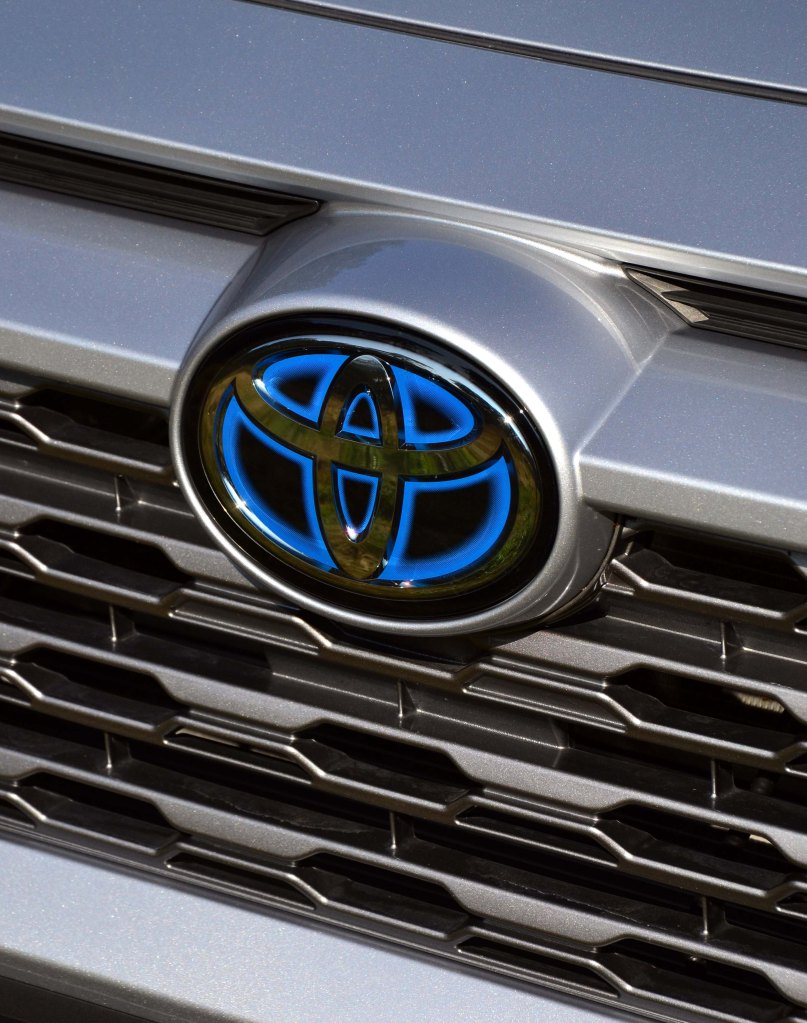
The RAV4 continues the successful Toyota hybrid story. Under the hood purrs a completely newly redesigned 2.5-litre petrol hybrid “Dynamic Force” engine, offering 218 DIN hp in front-wheel drive form. Indeed, this RAV4 is loaded with state-of-the-art top tech.
What to think of the Atkinson cycle technology and a 14.0:1 compression ratio (compared to 12.5:1 for the previous unit). It comes with D-4S direct and indirect (!) fuel injection and intelligent variable valve-timing – electric VVTiE for the intake and hydraulic VVT-i for the exhaust. The valve-timing range for both intake and exhaust has been increased. There are still more clever solutions put in this engine. Be astonished with us…
The cylinder heads are designed to generate high tumble of the fuel/air mixture, with an enlarged valve included angle and laser-cladded valve seats. A variable cooling system with an electric water pump and electric thermostat is used to improve combustion by maintaining the required temperature. There is also a fully variable oil pump for efficient engine oil pressure management.
Toyota’s fourth generation self-charging hybrid system makes its debut in the new RAV4, delivering multiple benefits. Key components, including the power control unit (PCU) and the nickel metal-hydride battery are more compact and lighter in weight, and the transaxle and transmission have been engineered to reduce electrical and mechanical losses.
The new battery pack is 11 per cent lighter than before and transmission losses have been reduced by 25 per cent compared to the previous system.
How does all this work in practice? The engine is very docile, and develops 221 Nm between a very large rev range from 3,600 – 5,200 rpm. Admittedly, these are rather high revs, but the low-end pulling power is of course greatly helped by the electric motor, which develops a healthy 202 Nm.
This means that this RAV4 will pull away always with very impressive power, and this we find is the very “zen” beauty of Toyota’s hybrid system. The electric motor alone is good for 88 kW, so you can imagine what happens when you put your foot down.
Acceleration from 0 to 100 km/h is absolved in merely 8,4 seconds. But in the lower speed ranges, the velvety power is overwhelming. The hybrid system carefully manages how both engines participate in the total power delivery, and engine revs are kept especially low at partial throttle openings.
Silk smooth progress is for you to be enjoyed: even at spirited driving the engine hums quietly, and all this contributes to let you relax behind the wheel. What is also pleasant is the total smoothness of the drivetrain, not the slightest jolt or shock will disturb you or your passengers. Not many (super)cars will reach this level of total smoothness.
Besides all this smooth power, the hybrid system warrants also excellent economy. The secret is to accelerate and decelerate smoothly, to drive with anticipation. This lets the hybrid system use the recuperation function fully when slowing down, and use the electric motor as much as possible at constant speeds below, say 70 km/h. This results in excellent economy, also and even more so in slow urban driving and stop and go traffic. It proved no effort to reach averages of 6 l/100 km. Toyota quotes 4.5/4.6 l/100 km as average consumption, with CO2 emissions being 102 g/km. Oh yes, the top speed is a good 180 km/h. More than enough for all, we would say.
Driving pleasure…
The new platform enhances handling stability and precision. The RAV4 has improved the response of the Electric Power Steering by moving the assist motor from the column to the rack, and indeed this RAV4 steers accurately. The handling is neutral and predictable.
The RAV4’s GA-K platform also distinguishes itself in its use of a double wishbone rear suspension system. What’s more, thanks to the low center of gravity and high body rigidity, the suspension does not have to be rendered stiffer to meet dynamic targets. Indeed, we found the RAV4 quite comfortable too! Its suspension travel is wide, and we know of few cars in its class which takes the many potholes and bumps on our Belgion roads with such ease.
A strong point is also the good visibility. The TNGA platform allows the hood to sit 15 mm lower, adding two degrees to the driver’s forward field of vision, and the external mirrors have been moved to a lower position on the front doors. Luggage space is 79 liters more than in the previous, fourth generation RAV4.
Flexibility is designed-in so that the space can easily be adapted to gain more cargo room when required: with the rear seats folded down, the new RAV4 can accommodate a 29-inch mountain bike without any wheels having to be removed.
Well equipped, also for safety…
The new RAV4 offers generous equipment specifications across its range, with all models equipped as standard with the latest iteration of Toyota Safety Sense and an E call emergency contact function. Quite impressive!
The improved system features a single-lens camera and millimeter-wave radar, both with enhanced performance to expand the scope of hazard detection and functionality. The unit has also been made smaller, so driver gains an even wider field of vision. We found this RAV4 delightful with the wide range of safety features.
The Toyota Safety Sense unit includes Pre-Collision System with Pedestrian Detection (PCS w/PD), intelligent Adaptive Cruise Control (iACC), Lane Departure Alert with Steering Assist (LDA w/SA), Road Sign Assist (RSA) and Automatic High Beam (AHB). In addition, it introduces Lane Tracing Assist (LTA), which provides more advanced driving support.
The system can determine collision risks at speeds from zero to 180 km/h. If it calculates an imminent risk of collision, it will alert the driver and prepare the brakes (PreCrash Brake Assist) for maximum stopping force. If the driver fails to act, it will trigger Autonomous Emergency Braking, which can reduce vehicle speed by up to 40 km/h, potentially bringing the car to a stop and avoiding an impact.
The new intelligent Adaptive Cruise Control (iACC) is also able to work in conjunction with the car’s Road Sign Assist system. When the car is travelling at a constant, pre-set speed, iACC can recognise new speed limits on major roads and let the driver adjust the speed to keep within the limit, simply by using switches on the steering wheel.
The intelligent Adaptive Cruise Control and Lane Tracing Assist work together in slow, stop/go traffic, tracking the vehicle ahead within the traffic lane, maintaining a safe distance and speed, bringing the vehicle to a halt when necessary and moving off seamlessly when traffic flow resumes. We found this feature a delight to use and indeed it takes away quite some stress in urban stop and go traffic.
Roomy cabin and creature comfort
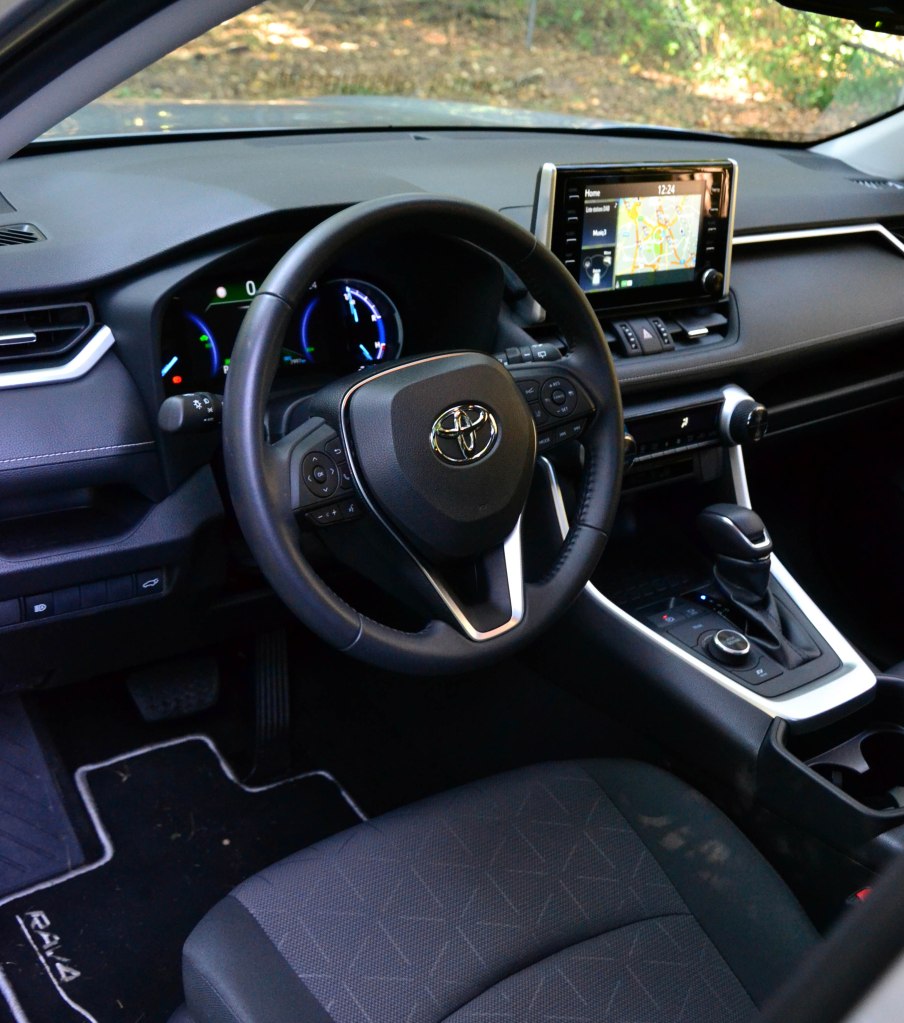
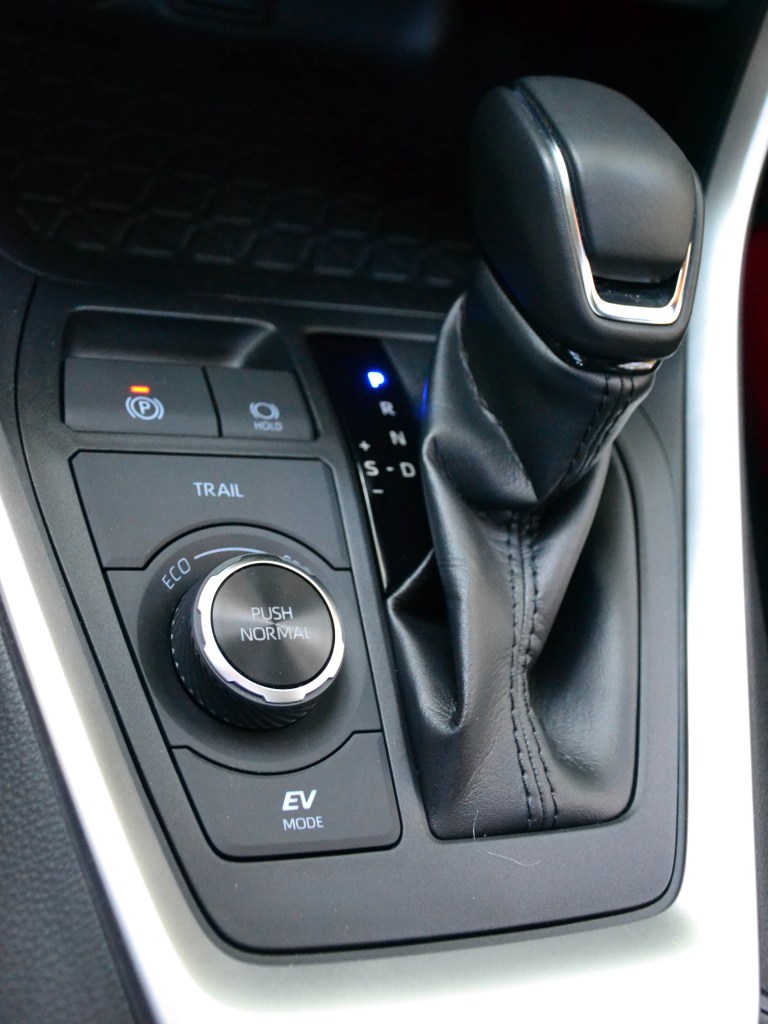
We found the cabin quite practical; it is purpose built with all the knobs and handles in the right places. The gearlever/selector is now totally classical in looks and feel, and this is maybe a good thing for many SUV enthusiasts. Seats are excellent, the lower, more dynamic seating position was appreciated. As said, there is plenty of room inside. Of course, excellent connectivity and an intuitive to use navigation system was appreciated and makes this RAV4 a pleasure in daily use.
Conclusion
A well styled, but above all superbly engineered SUV, which is sturdy, practical, mechanically refined, frugal, and roomy.
It has a very comfortable ride, and the smoothest of drivetrains. This SUV displays lively performance and surprises with excellent economy. Its unique hybrid system makes it truly stand out, and will make it also totally future proof in our ever-greener world. The RAV4 will continue to be a bestseller, and deservedly so…
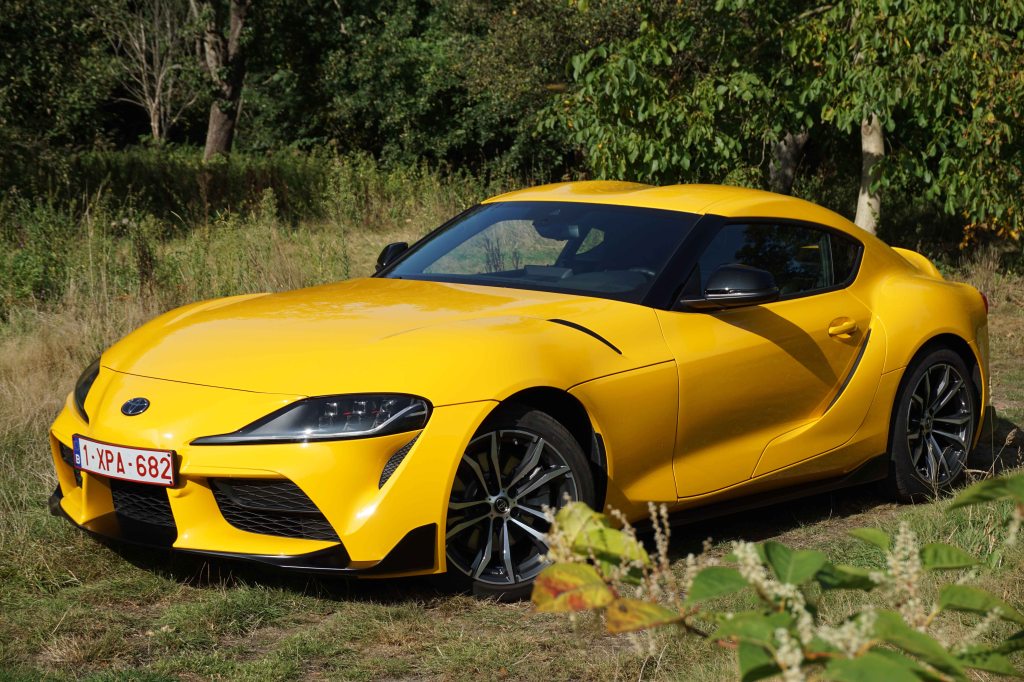
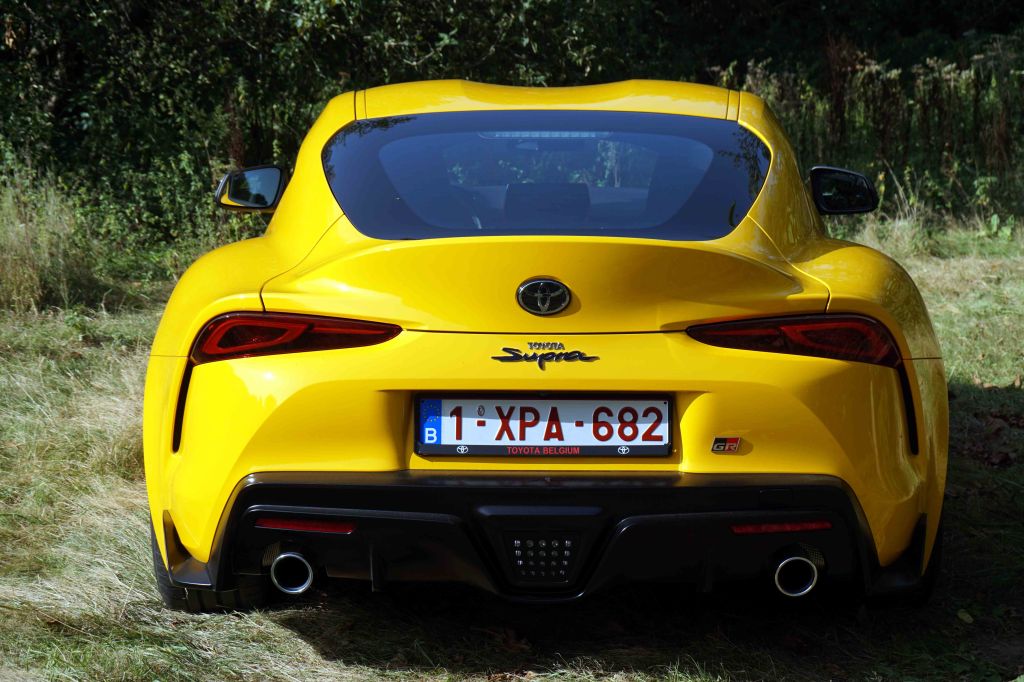
Who doesn’t dream of a two-seater sports car with flowing coupé lines, a racy cabin, long hood, wide stance and a superb styled rear? A sports car with ideal 50/50 weight distribution, handling from the seat of your pants, equipped with a thoroughbred engine?
Such a car is the Toyota GR Supra. Until now, it came with a 3 litre six engine, being the first global model to be developed by TOYOTA GAZOO Racing. Now this same team has engineered another, even more pure version for the sports car aficionados: a Supra with a double overhead cam, 2 litre 16-valve petrol unit with a twin-scroll turbocharger.
This four-cylinder Supra is 100 kg lighter, and the engine’s shorter length means its mass is located closer to the center of the car. A true driver’s delight with stunning performance? You bet! It proved indeed to be one of the nicest 2-seater “pur sang” bolides we have driven lately…
Hans Knol ten Bensel
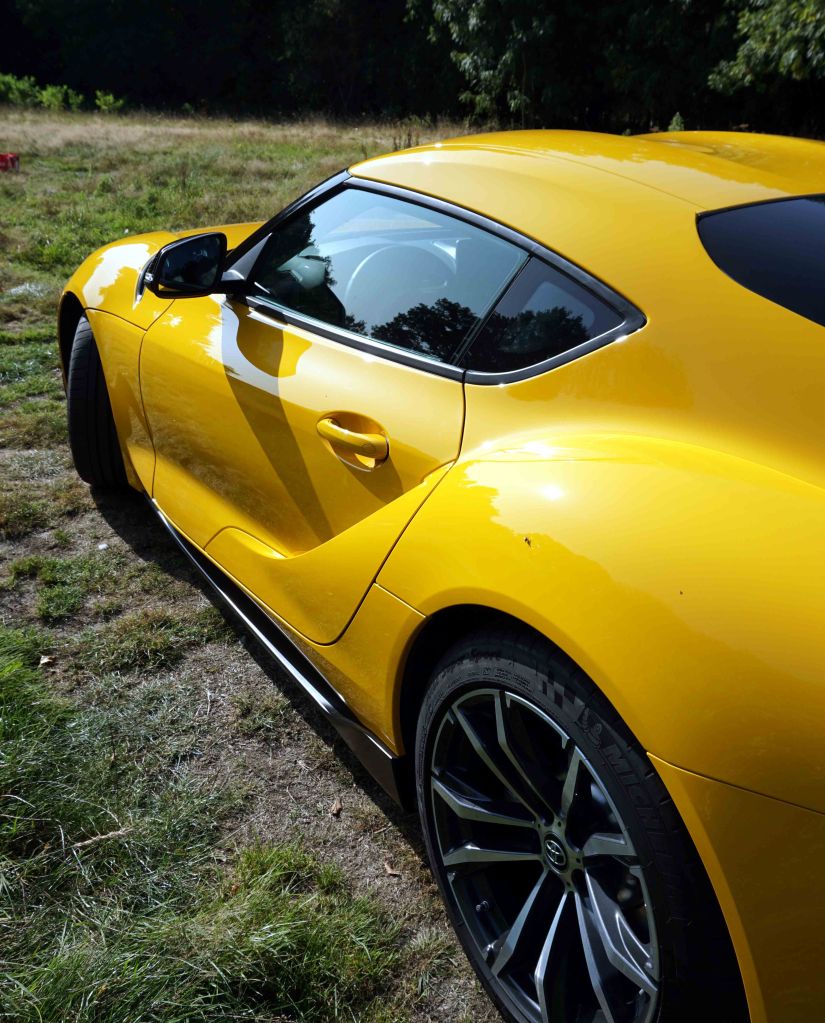
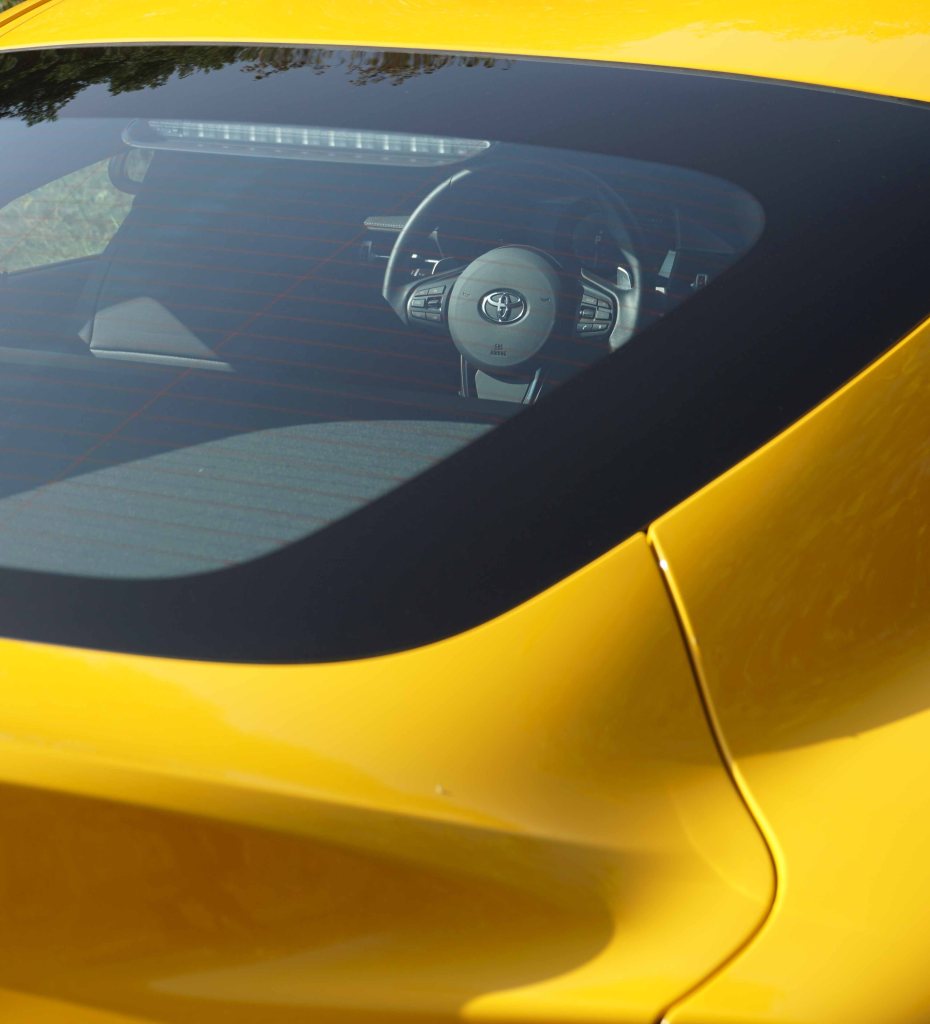
Already its looks are stunning. Chief Engineer Tetsuya Tada adhered to the classic form of a front-mounted engine driving the rear wheels, building on the heritage of Toyota’s past Supra generations and original 2000GT sports car. Indeed, this latest Supra has much of the compact purity of the legendary 2000 GT, which moves the heart of every car enthusiast.
When it comes to design a top handling car, its wheelbase and track dimensions are the first things to consider. It is widely recognized that the best balance of agility and stability is obtained with a ratio between wheelbase and track of around 1.5 and 1.6. Achieving the 1.55 “golden ratio” was thus the starting point for the GR Supra development team, the key building block on which everything else has been optimized. (For reference: wheelbase = 2,470 mm; rear track = 1,589 mm).
Superb four-cylinder…
The engine sits indeed in the right place. And it sounds and performs right too. Maximum power is 258 DIN hp/190 kW at 5,000-6,000 rpm, while peak torque of 400 Nm is available across the whole mid rev range, from 1,550 to 4,000 rpm. Performance is indeed at the rendez-vous…
What to say of a 0-100 km/h acceleration in 5.2 seconds, with top speed is electronically limited to 250 km/h… The charm also lies in the totally effortless way this performance is achieved. This sports engine is totally civilized, and while it will respond eagerly to the slightest pressure of your right foot, it is utterly docile and flexible in town traffic, and in the “normal” driving mode, it will happily potter along at 1200 rpm at legal speeds. Choose the sports mode, and the excellent 8 speed ZF automatic will spoil you with alert and lightning speed gear changes, and make you a better driver…
The staccato of the engine revving up under full power is a delight to your ears, and all this pleasure is further enhanced by the excellent handling of this Supra.
Economy is not as dramatic as you would expect from such a high-performance car, as the engine is efficient and the car is not heavy. We clocked with a lot of (very) brisk driving an average consumption of some 8,2 liters/100 km.
State of the art suspension
The Supra steers with precision. The high rigidity of the chassis makes a finely tuned suspension possible. The suspension design comprises double-joint-type MacPherson struts at the front and a five-link system at the rear.
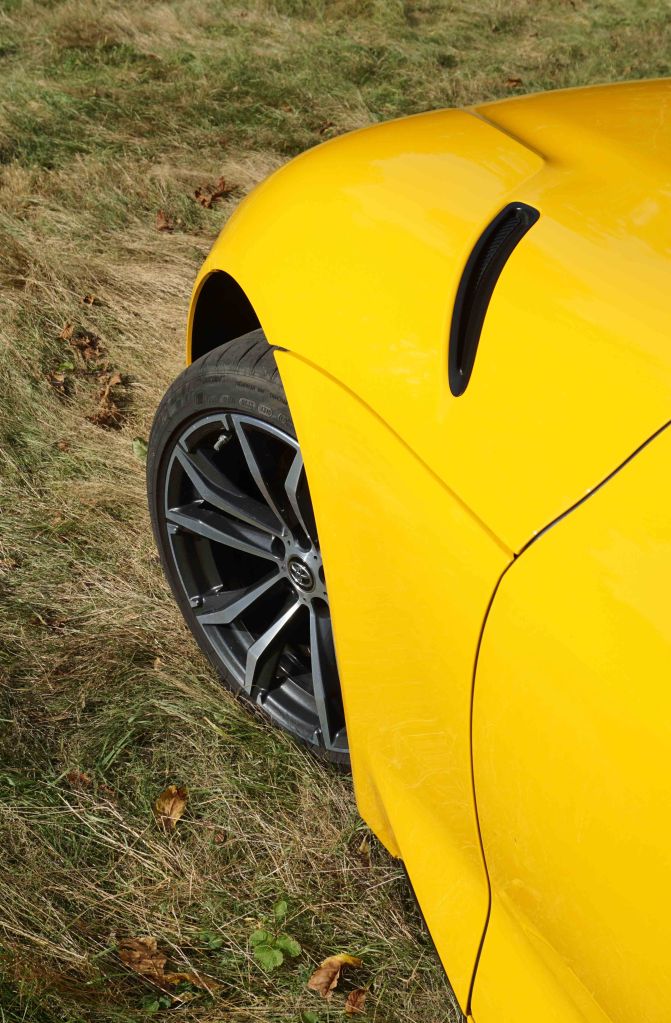
The GR Supra 2.0 is fitted as standard with 18-inch forged alloy wheels. To optimize the balance of front and rear grip, larger wheels and tyres are used at the rear. The specific Michelin Pilot Sport tyres are 255/40 ZR18 front and 275/40 ZR18 rear.
The Supra also corners as on rails thanks to its 50/50 weight distribution, and even novice drivers can drive immediately fast with utter confidence on those winding mountain sections of your Gran Turismo trip.
Do not forget that TOYOTA GAZOO Racing was instrumental in honing the new sports car’s performance, working on the famous Nürburgring Nordschleife and surrounding roads in Germany to achieve the most agile, stable and rewarding handling possible. Further extensive testing was carried out on roads around the world.
The Adaptive Variable Suspension (AVS), available as part of the optional Sport Pack, enhances performance with instant response to changes in the road surface, adjusting the shock absorber force at each wheel to maintain a flat vehicle posture, excellent steering response and supple ride comfort. Sensors constantly monitor the way the car is being driven and the road conditions, controlling the damping force accordingly.
The driver can choose between two AVS modes – NORMAL and SPORT – to suit their mood or the driving conditions. NORMAL mode strikes a high balance between vehicle stability and ride comfort, enabling a sporty drive without sacrificing comfort. SPORT mode delivers a flat vehicle posture, reduced body roll and a more agile steering response.
A cabin to dream (and drive) away in …
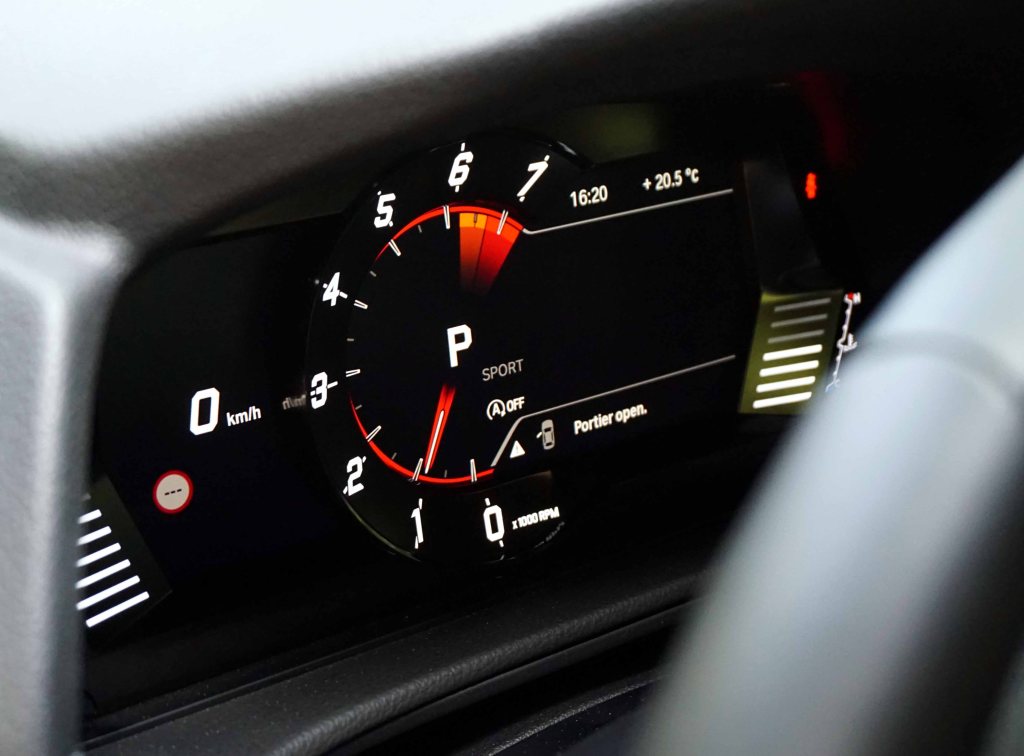
The cabin of this two-seater is a heavenly place for each trip, be it 1 or 1000 kilometers. Soon you have found the ideal driving position behind the wheel, and all the instrumentation is ideally positioned in your line of sight, with the large rev counter of course taking central place.
The low, slim horizontal dashboard maximizes the forward view through the windscreen, and you intuitively keep your eyes on the road.
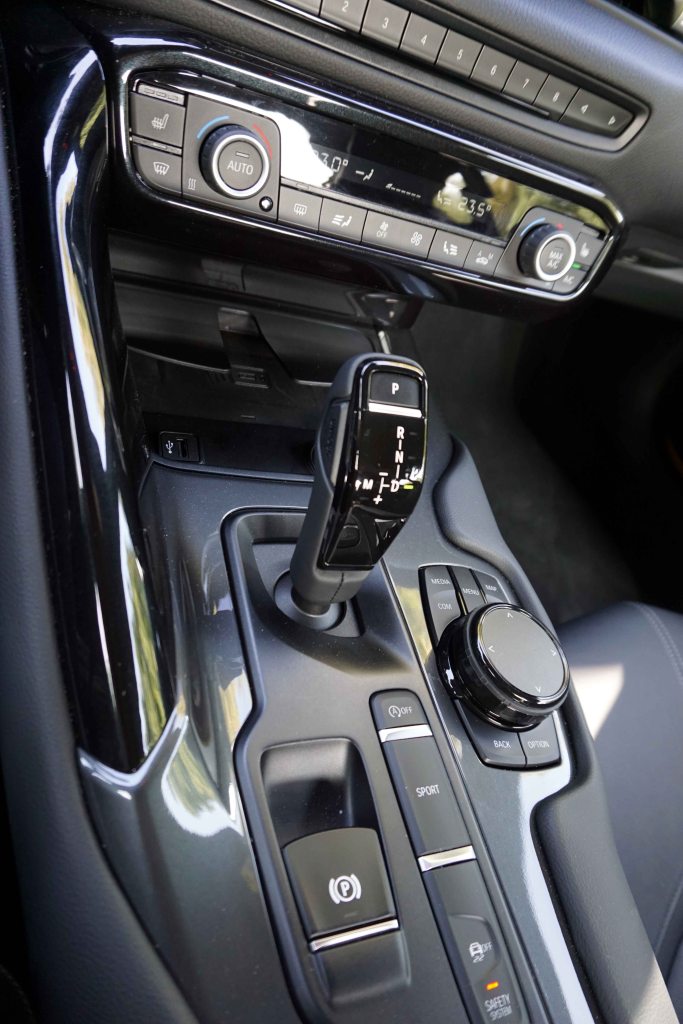
But don’t expect this Supra to be anywhere spartan. The standard multimedia system for the GR Supra 2.0 is controlled via a centrally mounted 8.8-inch high-resolution TFT touchscreen display. This can also be operated using a controller on the center console which has an intuitive touchpad control on its upper surface. It is designed for fingertip control so the driver doesn’t have to change their position at the wheel to operate it.
The package includes a four-speaker audio system with DAB radio reception, Bluetooth, a USB port and wireless smartphone integration using Apple CarPlay.
Conclusion
A formidable sports car, a dream on the track, on the mountain pass, on the motorway, but also well at home in tight and slow daily urban traffic. A stylish companion, which offers you all the practical creature comfort you could wish for, all this makes this Supra a car nice to live with every day. Then also, it’s a Toyota, which means top notch reliability, good economy and reasonable service cost. So enthusiasts, this Supra has all it takes to become an icon, and could be your four-wheeled companion, to cherish for years, if not decades to come…
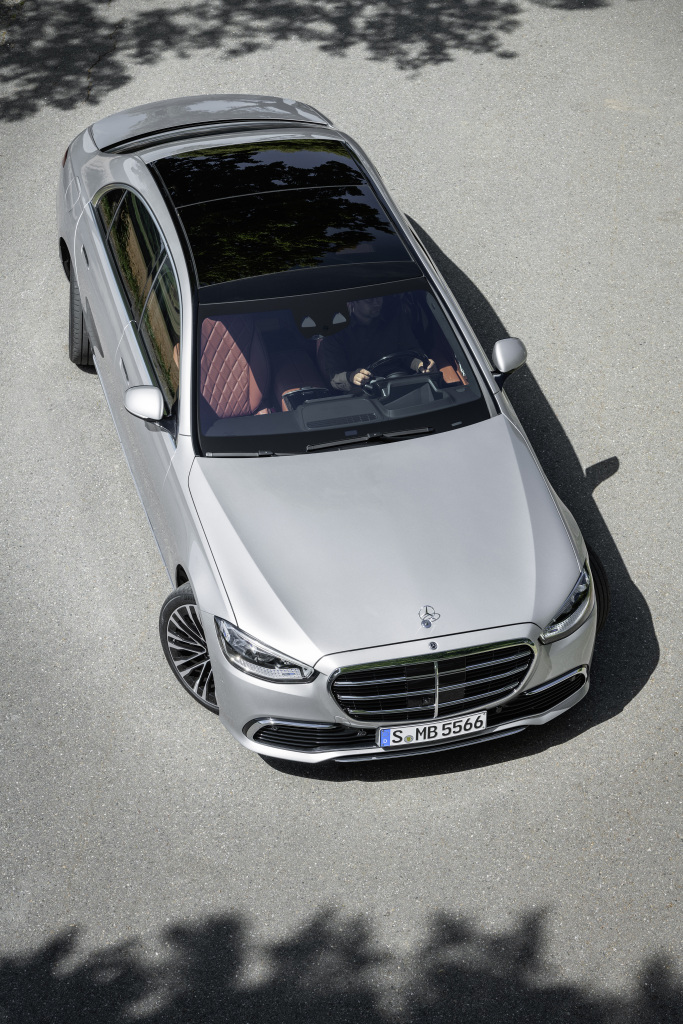
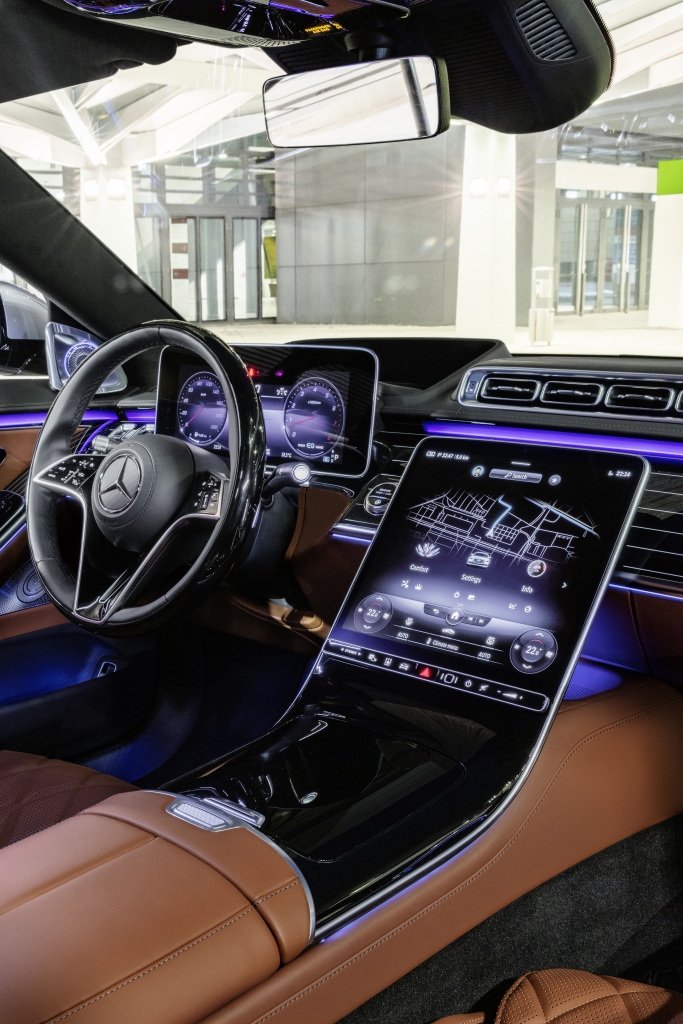
A new S-Class redefines the benchmark of luxurious motoring. This time, the high-tech innovations are centered around driver and passengers. We name a few of them: The second generation of MBUX (Mercedes-Benz User Experience) débuts in the new S-Class. Not less than five(!) screens are installed. New 3D driver display for the first time allows spatial perception of the scene with a real 3D effect thanks to eye-tracking. There is also a very large head-up display with augmented reality content. When navigating, for example, animated turn-off arrows (“fishbones”) are virtually and precisely projected onto the road lane.
Mercedes-Benz S-Class interior: leather siena brown
Using cameras in the overhead control panel and learning algorithms, MBUX Interior Assist recognizes and anticipates the wishes and intentions of the occupants. It does this by interpreting head direction, hand movements and body language, and responds with corresponding vehicle functions. For example, if the driver looks over his/her shoulder towards the rear window, Interior Assist automatically opens the sunblind.
Mercedes-Benz S-Class, interior: leather siena brown
The active ambient lighting with around 250 LEDs is now integrated into the driving assistance systems, and is able to reinforce their warnings visually.
The latest generation of the Driving Assistance Package has new and numerous improved functions. One example is the intelligent compliance with speed limits.
Mercedes-Benz S-Class, exterior: hightech silver
The new S-Class is also easy to manoeuver: Thanks to rear-axle steering (optional), the S-Class is as manoeuvrable as a compact car in the city. The steering angle at the rear axle is up to ten degrees. The turning circle is reduced by up to two metres.(!)
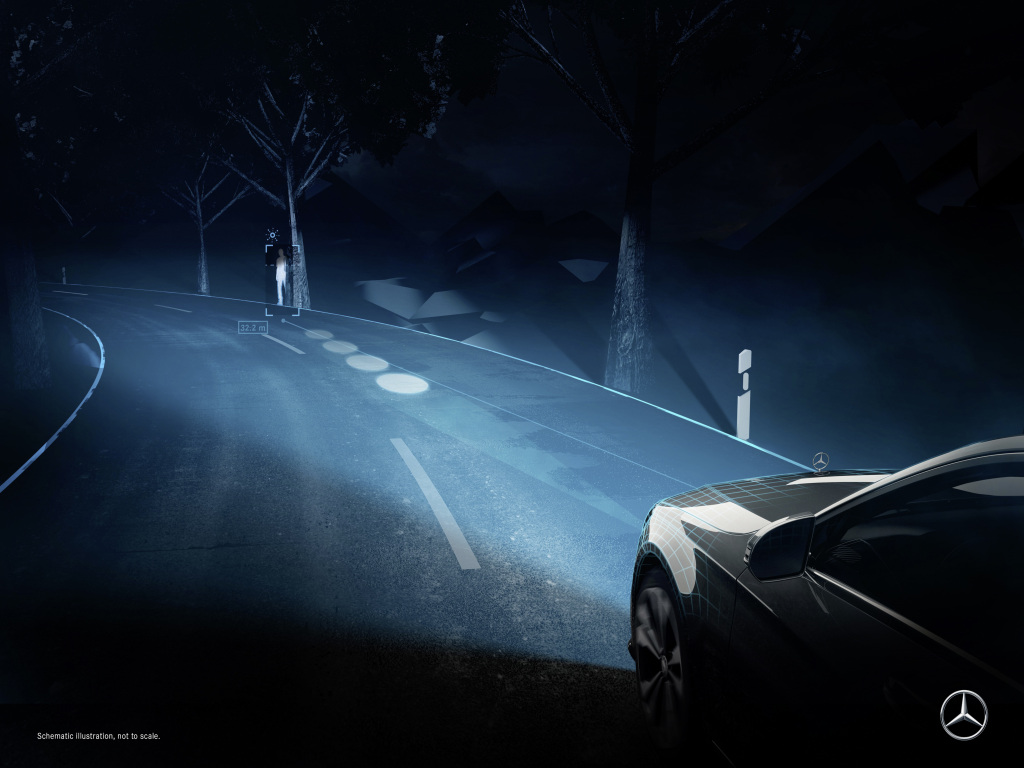
Mercedes-Benz S-Class DIGITAL LIGHT
More than 50 electronic components in the new S-Class can be updated with new software over-the-air (OTA). These include the entire MBUX infotainment system, the driver display, the driving assistance systems and the MULTIBEAM LED and DIGITAL LIGHT lighting systems. You don’t need to visit your dealer for this anymore…
The S-Class is also safer than ever. When a side impact with another vehicle threatens, the vehicle body can be raised by the E-ACTIVE BODY CONTROL suspension (optional) within a few tenths of a second.
Mercedes-Benz S-Class, interior: leather nappa black/carmin red
It is expected that from the second half of 2021 the S-Class will be able to drive in conditionally automated mode with the new DRIVE PILOT (optional extra), in situations where traffic density is high or in tailbacks, on suitable motorway sections …in Germany.
The revolutionary headlamp technology DIGITAL LIGHT (optional extra) allows completely new functions, e.g. the projection of marking aids or warning symbols onto the road ahead. In each headlamp, DIGITAL LIGHT has a light module with three extremely powerful LEDs with light that is refracted and directed by 1.3 million micro-mirrors. The resolution is therefore more than 2.6 million pixels per vehicle.
Mercedes-Benz S-Class, exterior: hightech silver
When the new S-Class is launched, six-cylinder in-line petrol and diesel engines in various output classes will be available, with a V8 engine with integrated starter generator (ISG) and a 48-volt onboard electrical system to follow shortly afterwards. A plug-in hybrid with an all-electric range of around 100 km will follow in 2021.
Of course, books can be written about this new S-Class; We will in the near future, describe some of these new technical and electronic breakthroughs in more detail…
Abarth grabs our car lover’s heart once again this autumn: it presents two new special limited-edition series of the iconic 595 – with only 2,000 units of each to be produced, which embody the duality of its soul: “Style” and “Performance”.
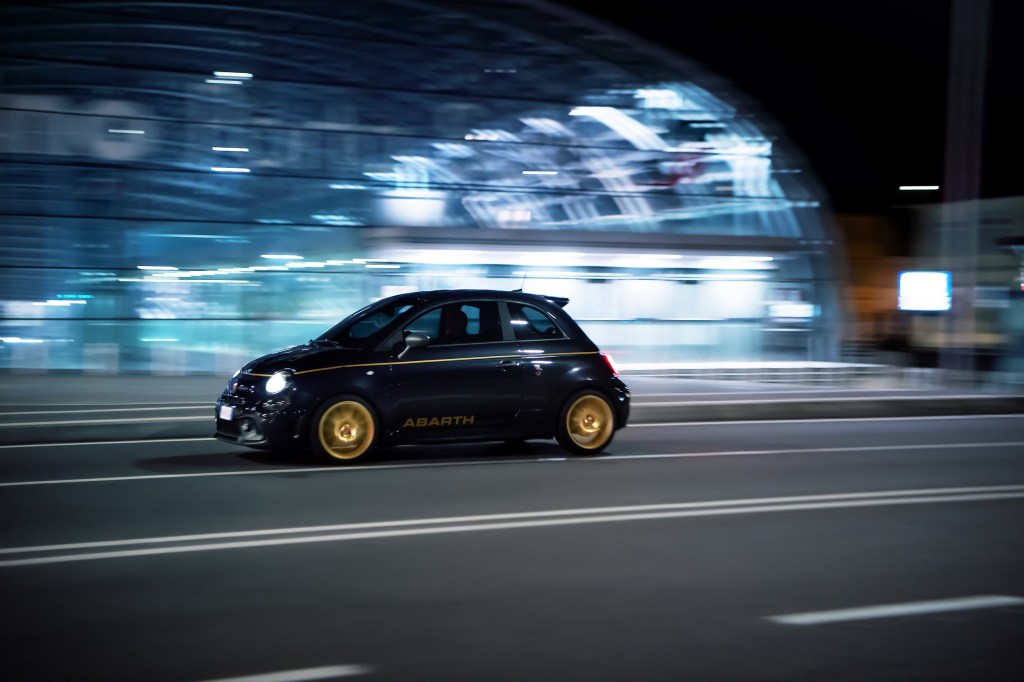
The first is the Abarth 595 Scorpioneoro, featuring elegant black livery embellished with golden details and unique content, making it a genuine “collector’s item”.
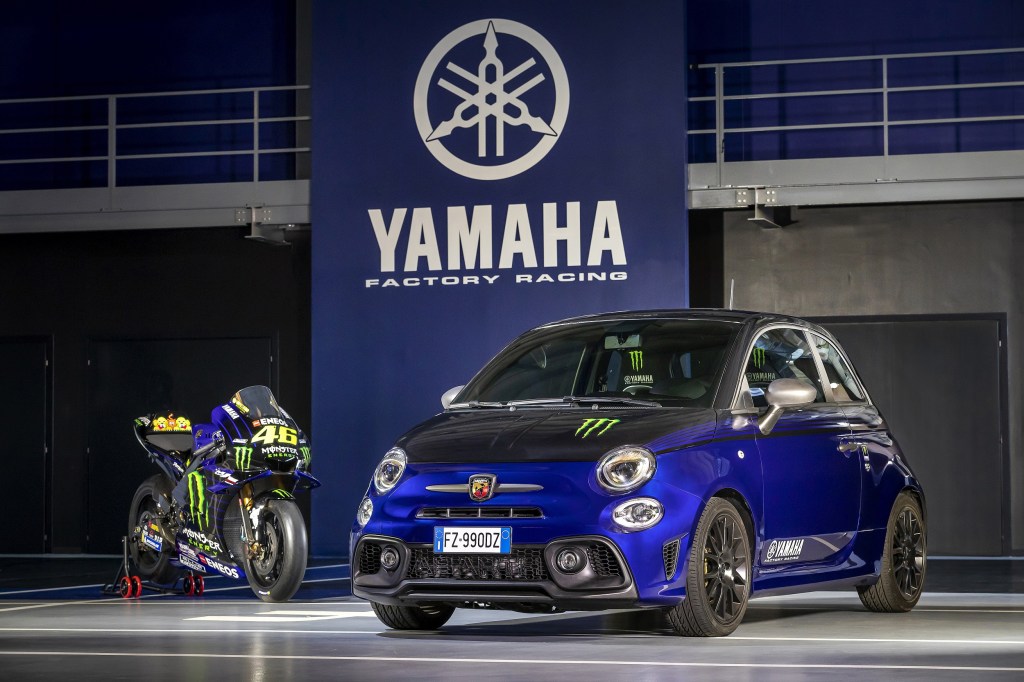
The second one is also adrenaline-packed: it is the Abarth 595 Monster Energy Yamaha, a limited edition to celebrate the partnership between the two brands, which already started in 2015. The livery and interiors are reminiscent of the colors of the YZR-M1 Monster Energy Yamaha MotoGP 2020, complete with the “Monster claw” on the bonnet as a tribute to the new collaboration with the renowned energy drink.
The two special series will be unveiled to the international media on September 18 at a virtual press conference. Read below more about both cars, but stay tuned!
Hans Knol ten Bensel
The Abarth 595 Scorpioneoro pays tribute to the exclusive A112 Abarth “Gold Ring”, better known to fans as the A112 Abarth “Targa Oro”. But instead of the original 70 HP, it has 165 HP “paw the ground”, delivering a power-to-weight ratio of 6.5 kg/HP and acceleration from 0 to 100 km/h in a staggering 7.3 seconds. It is coupled to a mechanical transmission, but the sequential box is also to be had as an option.
The special Abarth 595 Scorpioneoro bears a numbered plate in its cockpit. The new special series features exclusive details. From the outside, it is recognizable by its black scorpion livery – available on request in Podium Blue, Racing White and Record Gray – and the matt black chessboard roof perfectly matches the “tar cold gray” finish of the handles, mirror caps, and the front and rear DAM.
To emphasize its coolness even further, this new special series includes golden details, such as the scorpion on the bonnet, the lining around its bodywork and the 17” “golden” alloy wheels or, on request, 17” “black” alloy wheels with the golden scorpion on the hubcap.
In the interior, the new Abarth “Scorpionflage” sports seats with black leather upholstery and back seat in technical material to better contain the body during the sportiest driving. On the front seat head restraints, embroidered “Scorpioneoro” lettering alongside the Italian flag and Abarth embroidery. The new seats combine with the Scorpion Black dashboard with matt black details, and with the gold plate on the central tunnel and personalized mats.
To top everything off, the Abarth 595 Scorpioneoro offers the best infotainment currently available: the 7″ HD UconnectTM system fitted with Apple CarPlay and Google Android AutoTM* – a fast platform with high definition monitor, GPS and DAB digital radio – as well as the sophisticated BeatsAudio™ system with overall output of 480 W and a 8-channel digital speaker including a cutting-edge equalization algorithm capable of reproducing the full sonic spectrum of a recording studio.
Last but not least, a special limited-edition chronograph watch has been created by Breil, dedicated to the new special Abarth 595 Scorpioneoro series, which includes an incision of the golden Scorpion logo.
The second special Abarth 595 Monster Energy Yamaha series is the perfect expression of the Scorpion and Yamaha brands’ shared values, rooted in performance, racing, technology and fun.
This partnership, started in 2015, is still going strong, based on its ability to overcome sporting and racing barriers by “going down into the streets” with many adrenaline-packed special series: the Abarth 595 Yamaha Factory Racing Edition (2015), the two-seater Abarth 695 biposto Yamaha Factory Racing Edition (2015), and finally, the Limited Edition Abarth 695 XSR Yamaha (2017). Today, the baton is handed to the new Abarth 595 Monster Energy Yamaha series.
Just look at the photos here, and indeed, just as you dear reader, we cannot wait to slide behind the wheel of these four wheeled sporting gems!
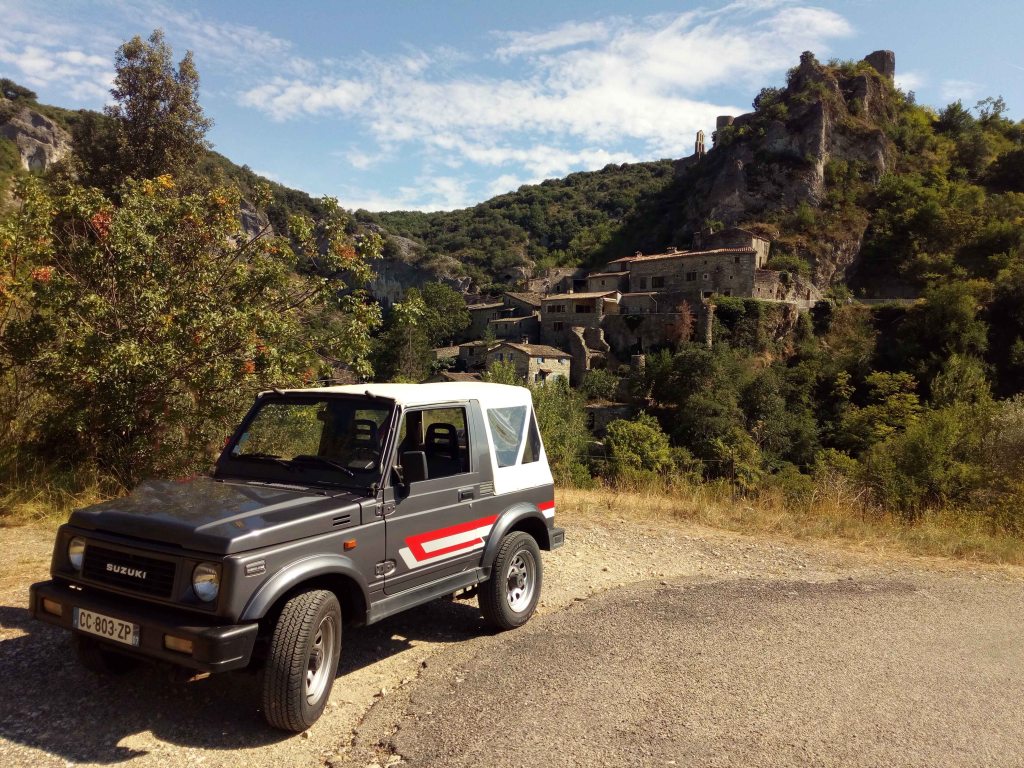
Our Samurai in front of the scenic village of Rochecolombe…
Our faithful Suzuki has reached true oldtimer status now. It is eligible to become “Voiture de Collection” in France, and we are preparing the final documents now to register it. This means the gleaming Samurai has only to pass every five years at the technical control, it can run on original “vintage “ French license plates of the sixties/seventies, and can even carry the famous French yellow bulbs in its headlights. Wow!
Hans Knol ten Bensel
In the meantime, our mid-eighties Samurai certainly has leaded a rather protected life in our hands, and the result is that it still looks virtually “as new”. Also pristine are the mechanics. We just dropped the battery in and after two starting attempts to allow the fuel to reach the carburetor, we gave it a blip on the accelerator pedal to start the automatic choke, and there it started in a smooth idle. Carefully warming it up for a minute or two to “run in” the waterpump and ancillaries after their long winter sleep, and off we went.
Our Samurai in the Vineyards near St. Maurice d’Ibie
The 80 HP 1,3 litre Suzuki is a fine performer, and of course very much at home off-road. Small “V” or “Voirie” roads in the French mountains are its favored playgrounds, and one cannot think of a better four wheeled companion to make those mountain tours far from the (Corona)maddening crowds. This jeep is therefore much cherished and immensely popular amongst outdoor lovers in the French mountain regions, due to its sturdy compactness and excellent offroad qualities.
The interior is still in mint condition…
We took it amongst others on a scenic tour to St. Maurice-d’Ibie, on the D 558 towards Les Salelles and then turning right on the D1 through Lagorce, from there on to the right on the D 401 to Rochecolombe. Here we also took some photos for this report.
The Samurai is pleasantly short geared, so steep hills are an absolute breeze, and in slow crawling traffic in the small village alleys this Samurai feels totally at home.
On the scenic road towards Les Salelles …
Again consumption depends on your driving style, but keep the revs low, and this efficient 1,3 litre combined with the light weight of the Samurai will not let you down at the pump, and consumption averages below 8 litres/100 km are quite achievable.
We loved again every minute behind the wheel of our Suzuki again, and look forward to see it again in autumn, Corona times helping of course…
Driving is believing, and the e-power experience proves to be even more exhilarating at Audi: their e-tron flagship comes now with three engines, making it 370 kW strong and giving it a massive torque of 973 Nm. Two engines are driving the rear wheels, and indeed, the emphasis is on rear end power, as well for daily use as for sporting driving. The rear end can even be seduced to produce power slides, and the Quattro concept has been further honed to deliver, as the factory puts it, an electronically controlled vector torque distribution with active and fully variable torque distribution between both rear wheels, doing away with a differential altogether.
Driving experience 2.0
The Audi pilots can wet their hands: this impressive SUV is your sporting partner on winding roads and mountain passes. Just put the electronic stability control ESC in “sport” mode and the drive mode selector in “dynamic” and things really start to happen. True power slides are now possible and the system will softly brake the inner front wheel should it want to slip through under full power. This leaves you fully in control of this e-power “bolide”, which leaves nothing to be desired in the power department.
This S-tron catapults itself from 0 to 100 km/h in merely 4,5 seconds, and then storms further ahead to its electronically controlled top speed of 210 km/h.
Still sufficient range…
The available battery power is a good match for all this sportiness. When you adopt a driving style in tune with the WLTP cycle, you can expect an action range of 360 kilometers or thereabouts. The high tension battery has a gross charge capacity of 95 kWh, of which 91 pct is effectively usable.
The Quattro principle has been further refined. When extra power is wanted, the front motor kicks in, and as said, both rear engines are individually controlled and offer this fully variable torque, managed by a permanent electronic control system.
As you can expect, the S version has a suspension setup geared towards sportiness, but when you’re not in the mood, it is good to know that the Audi Drive Select gives you the choice between not less than seven driving profile modes. The fully adaptable air suspension has controlled damping stiffness and can vary the ride height by some 76 mm.
20 inch alloys are standard, but you can opt for 21 inch tall wheels, and later even 22 inch alloys will be available. The brake saddles at the front have not less than six (!) pistons. The brake control system will decide the braking power of each wheel, and will choose also if engine, brake friction or both will be used when decelerating.
The body has also been made more aerodynamic, and the patented new wheel arches improve things markedly. The Cx is a mere 0,26 for the Sportback version.
Each e-tron also comes with a … heat pump, which effectively reduces energy consumption on the whole by extracting heat generated by the driveline, and thus extending the driving range by some 10 pct.
Of course this e-Tron S has all the infotainment and electronic driving assistance you could ever want,and will also light the road for you with matrix LED headlamps. In the cabin, MMI touch response control system with two large central screens await you. The online services of Audi Connect complete the navigation system, especially the e-tron-routeplanner.
We are certainly looking forward to have a drive in this latest edition of the e-Tron, just know that this version will be available on the European markets in autumn 2020, and prices in Belgium start at 97.100 euro incl. VAT for the e-tron S, and 99.110 euro incl. VAT for the Sportback version.
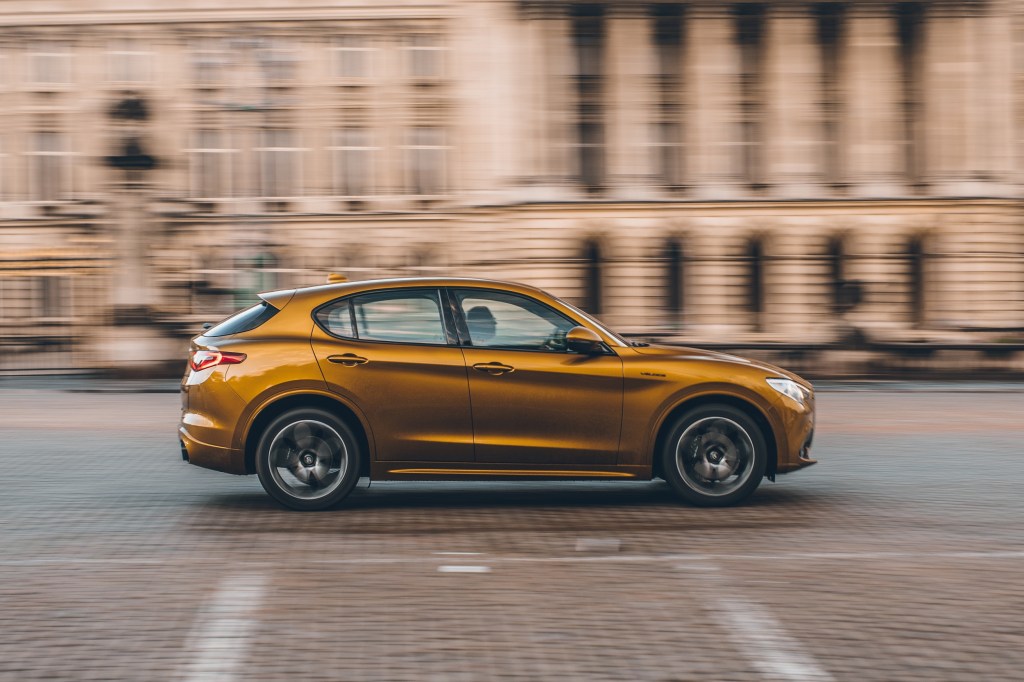
Alfa celebrates 110 years of passion in Belgium, driving here in front of the Royal Palace in the heart of Brussels…
Alfa Romeo will officially celebrate its 110th anniversary on June 24 in Arese, Italy, on the brand’s historic site. So more about this very soon this week.
But also in Belgium, Alfa has since its very first beginning always been synanimous of pure four wheeled passion.
In Belgium, fans of the brand will be able to watch a new video from today that creates a unique bond between Alfa Romeo and the Belgians, from the Brussels squares to the curves of Spa-Francorchamps, the Formula 1 mecca where Alfa Romeo will compete in August.
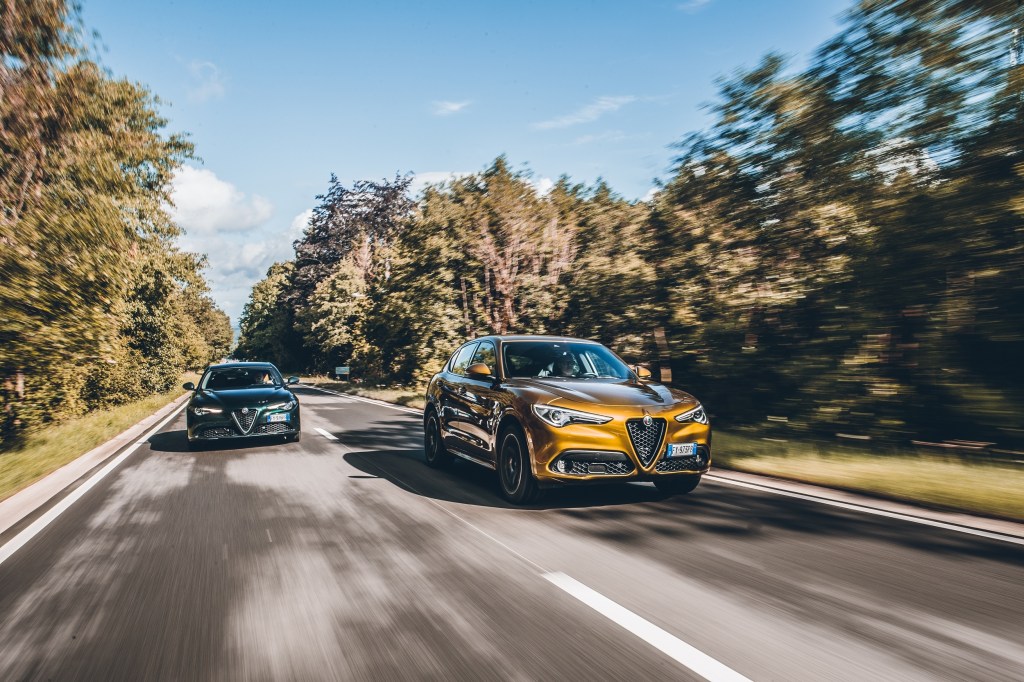
The Giulia and Stelvio MY2020 play the leading role, as this video illustrates the brand’s mastery of typical Italian design, technology and driving pleasure.
We tell you here somewhat more about it…
Hans Knol ten Bensel
The tour shot on the video starts at the iconic Place Royale, a stone’s throw from the Royal Palace in Brussels. This highly symbolic location for Belgium serves as the background for the two latest creations of Alfa Romeo: the sedan Giulia MY2020 and the SUV Stelvio MY2020.
In keeping with Belgian tradition, the nocturnal rainy weather made the wet pavement reflect in the still illuminated headlamps of the two Biscione models. It is barely 5 a.m., and the city wakes up.
This is all the more photogenic, and the media team prepares to shoot the video images and take photos of this historic moment: the celebration of the 110th anniversary of the Alfa Romeo brand on Belgian territory.
As a symbol of the “Made in Italy” label, Alfa Romeo has had a beautiful love relationship with the Belgians for a long time. The sportiness and elegance of the brand have been celebrated here for decades. In addition, Alfa Romeo has made models throughout its history that have become icons in the automotive industry. Belgium, with its many car enthusiasts, is also an important territory for discerning collectors. There are many private museums across the country, containing numerous treasures created by Alfa Romeo engineers and designers, as well as unique vehicles handcrafted by the peninsula’s great bodybuilders. For the “Belgians”, the name Alfa Romeo stands for passion.
From the squares to the striking monuments of Brussels, the last two creations of Alfa Romeo go to the east of the country, first past the Royal Palace of Brussels, remembering that the King and Queen of the Belgians, Albert II and Paola, when they were crown princes, brought a visit to Alfa Romeo and went also to its Balocco test track. The Prince of Liège hiself slid behind the wheel of the unique 33 Stradale, in October 1967.
After Brussels the team and the cars head towards Spa-Francorchamps. To the most mythical circuit of motorsport, which all Formula 1 drivers enjoy the most.
A territory that the Alfa Romeo Giulia and Stelvio have known for several years, as the Quadrifoglio versions of both models are used for the transport of the two current pilots of the brand, Antonio Giovinazzi, ambassador of the Giulia Quadrifoglio, and Kimi Räikkönen, ambassador of the Stelvio Quadrifoglio. It is also on this very track that the new Alfa Romeo Racing ORLEN Formula 1 cars will run the Belgian Grand Prix at the end of the summer, on Sunday 30 August 2020.
On the runway at La Sauvenière Airport, the scene of an impressive air ballet during the Grand Prix weekends, the two Alfa Romeos are now enjoying the asphalt, whose curves, straights and slopes are already an interesting playground on the way to circuit. Two legendary cars that are about to race on an iconic track, where the brand has had the opportunity to express the full range of its sporting expertise on numerous occasions and in many motorsport events.
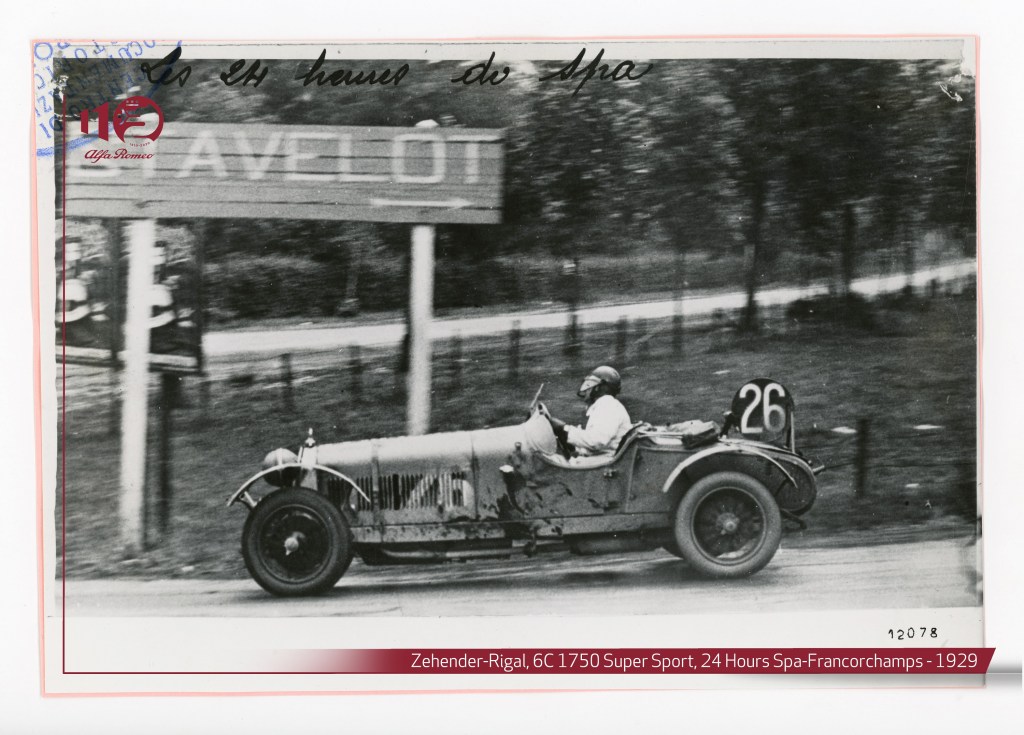
The 1750 Sport was already a star in Francorchamps in 1929…
It is in this magical setting that the last images of this commemorative video produced by the Alfa Romeo team will be shot, to testify once again to the unique bond that unites the famous sports brand with its Belgian fans. The video will be available on the Alfa Romeo social media pages in Belgium and on the Alfa Romeo press website: