The new ŠKODA ENYAQ iV truly scores: The new electric SUV has achieved the highest classification of five stars in tests conducted by the independent European New Car Assessment Programme (Euro NCAP).
It now ranks among the safest vehicles currently available with a total of 86% of the possible points.
And there is more: The ŠKODA ENYAQ iV achieved the best result ever in the Euro NCAP test for occupant protection, with 94% for adult passengers and 89% for children.
ŠKODA’s first model based on the Volkswagen Group’s Modular Electrification Toolkit thus continues the string of top scores for ŠKODA vehicles in the crash safety reference test, even with the now stricter assessment criteria. ŠKODA’s bestseller, the OCTAVIA, the compact model SCALA and the SUV models KODIAQ, KAROQ and KAMIQ, among others, have all been awarded the coveted five star rating.
Needless to say that the ENYAQ iV inspires, with its styling and build quality, and we will be keen to sample driving and test impressions in the coming months…
In the opening act of the first round for the European Ferrari Challenge at the Monza circuit, the Passione Ferrari Club Challenge 2021 has started. During this exclusive circuit event, owners of the Ferrari 488 Challenge and 488 Challenge Evo were given the opportunity to perfect their racing technique and record a personal fastest lap time.
The Passione Ferrari Club Challenge was created to give Ferrari owners the opportunity to get to know their cars – without a competitive element – on the track. The program of these exclusive club meetings is aimed at both beginners and drivers with more track experience. The cars are equipped with telemetry thanks to which the lap times and track data can be read. These data allow the participants to analyze their performance and improve their driving technique. Professional Ferrari instructors personally supervise the participants, conduct driving technique workshops and assist with the analysis of the telemetry data.
The Ferrari 488 Challenge and 488 Challenge Evo are extreme sports cars, but their performance remains very accessible. With these cars, drivers experience the same sensations and excitement as a professional driver. For Ferrari owners who want to take part in the Ferrari Challenge, the Passione Ferrari Club Challenge is an ideal springboard. Drivers who dream of taking part in an official FIA Championship are being guided in the right direction.
Driving on six European circuits…
From April to September, owners of the Ferrari 488 Challenge and 488 Challenge Evo will be able to drive on six legendary circuits in Europe. In addition, they have the opportunity to start during the Finali Mondiali 2021, where all international Challenge series will ride the final race of their championship, according to tradition.
Electric mobility is growing more popular worldwide, and even more so in Europe where the growth of electric and hybrid cars has been in three figures recently.
Leasys and FCA Bank want to play a leading role in this trend, and therefore they launched the “Electric Days”, three weeks of special offers dedicated to electric mobility, all entirely in digital fashion.
The offers will be active from the moment of writing until the end of April and they are designed to make the services offered by the Group and its rental company Leasys even more accessible and convenient.
Digital offers range in Europe from mobility to financial and banking products: from personal loans to GO4xe financing, from CarCloud to Leasys Miles, to Clickar.
Leasys and FCA Bank launch a cross-country commercial promotion that includes 10 European countries simultaneously dedicated to electric mobility and sustainability. Italy, France, Germany, Spain, UK, Netherlands, Poland, Portugal, Denmark and Belgium will offer their customers the best digital solutions to satisfy every green mobility and financial needs in every different market.
For Belgium, PR & Communication Director Dominique Fontignies announced that the first offer of this campaign gives professional clients the opportunity to drive a Jeep Compass 4xe Plug-in Hybrid from € 319/month (excl. VAT) in the financial renting formula.(60 months). Leasys offers this model in operational leasing from € 589/month (incl. VAT).
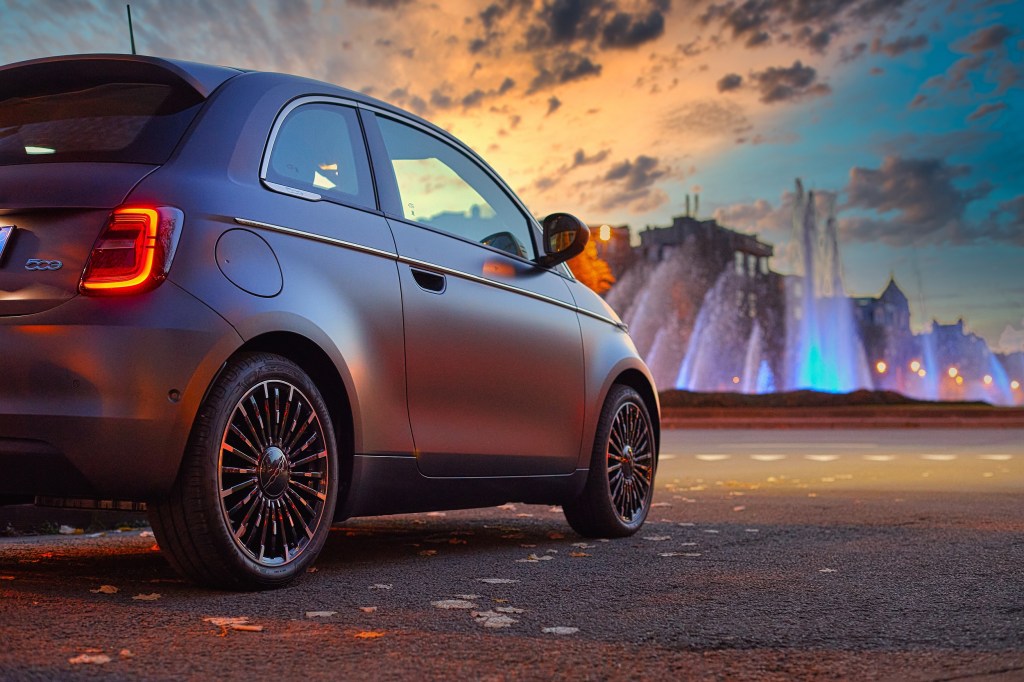
Leasys also offers the Fiat 500e Business Edition. This 500e is available from € 469/month (incl. VAT) in operational leasing. Finally, the Fiat 500C Hybrid Lounge is available in operational leasing from € 269/month (incl. VAT).
There is more news to come from Jeep, we will soon present here the new Compass…
Jaguar launches a mouth-watering version of their elegant F-TYPE: the Exclusive F-TYPE R-Dynamic Black. It boasts additional equipment as standard and is offered in Coupé and Convertible body styles
There is an even more desirable version: the so-called “Black Pack”, with 20-inch gloss black wheels, and choice of Santorini Black, Eiger Grey or Firenze Red metallic paint.
Refinement…
The driver-focused interior is equipped with 12-way adjustable Windsor Leather Performance Seats in Ebony with Light Oyster stitch or in Mars with Flame Red stitch. An Ebony coloured suede cloth headliner enriches the iconic ‘1+1’ cabin.
The R-Type comes with many appealing details: A heritage-inspired monogram pattern is used for seat and door trim stitching and also embossing of the suede cloth wrap for the instrument cluster.
And abundant power…
The F-Type comes with what it takes: the 300PS Ingenium four-cylinder and 450PS supercharged V8 with rear- or all-wheel drive and eight-speed ‘Quickshift’ transmissions deliver engaging, exploitable performance and outstanding driver reward.
The new R-Dynamic Black models add to the purity and presence that already sets Jaguar’s definitive sports car apart.
The F-TYPE’s shape is further accentuated by the Black Pack and 20-inch, five split-spoke wheels with gloss black finish. Known as ‘Style 5039’, these wheels are not available on any other model in the range. Complementing these perfectly is the choice of three metallic paints: Santorini Black, Eiger Grey or Firenze Red.
Performance galore…
Exclusively rear-wheel drive, the 300PS, 2.0-litre turbocharged Ingenium four-cylinder engine generates maximum torque from just 1,500rpm, delivering exceptional throttle response throughout the rev range. It also provides the performance expected from F-TYPE and enables acceleration from 0-60mph in only 5.4 seconds and a top speed of 155mph.
The 450PS, 5.0-litre supercharged V8 has been developed to offer exploitable, useable and rewarding performance – maximum torque of 580Nm is generated from 2,500rpm. It is offered with a choice of all-wheel drive with Intelligent Driveline Dynamics or – for purists – rear-wheel drive. Both 450PS powertrains feature an electronic active rear differential to optimise traction, and both enable 0-60mph in just 4.4 seconds and a maximum speed of 177mph.
The 300PS and 450PS units are also available in other F-TYPE models, but for truly exceptional performance in all weathers and on any kind of road there is the F-TYPE R. Offered exclusively with all-wheel drive, its supercharged V8 delivers 575PS and 700Nm: the benchmark sprint to 60mph takes just 3.5 seconds, while maximum speed is an electronically-limited 186mph.
Tailoring your Jaguar to your personal driving style…
The F-TYPE R and P450 models are equipped as standard with Jaguar’s Adaptive Dynamics system with Configurable Dynamics. Using electronically-controlled, continuously-variable dampers, Adaptive Dynamics optimizes both low speed comfort and high-speed control, while Configurable Dynamics enables the driver to tailor the settings for suspension stiffness, steering weight, throttle response and gearshifts. All 300PS four-cylinder F-TYPEs use meticulously tuned passive monotube dampers to deliver the ride and handling attributes which give these models their unique character.
Needless to say that we are keen to sample test driving impressions from these wonderful, sporting and elegant Jaguars soon…
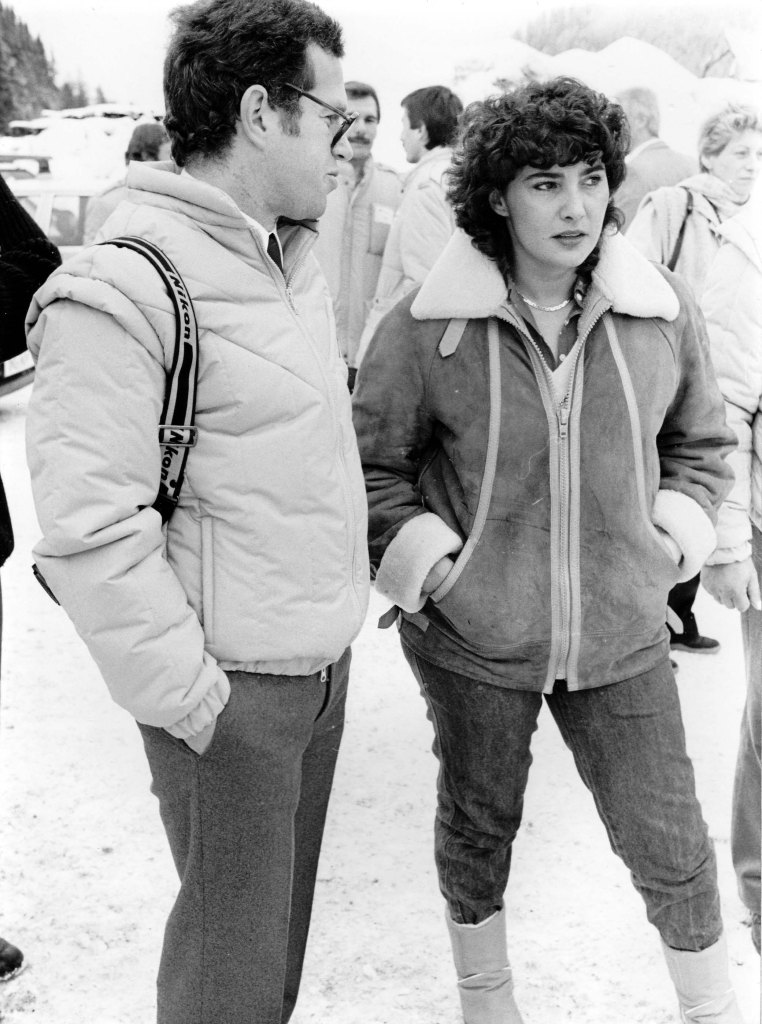
We were there: your servant in conversation with Michèle Mouton in Sankt Moritz, on December 8, 1982…
Your servant was already active as a freelance car journalist from the mid-seventies of last century, so we witnessed up close the birth of the Audi 5-cylinder engines and the (rally) cars powered by it were quite familiar. When we were telling you the long career of Audi’s 5 cylinder engine, we told you how your servant remembered a drive behind the wheel of the Audi 80 Quattro with this magnificent engine. Just look at our pages on this site, and more especially https://autoprova.be/2016/09/18/sweet-memories-our-drive-with-the-5-cylinder-audi-80-5e-quattro-in-sankt-moritz/
This memorable test drive of this Audi 80 5E Quattro took place in Sankt Moritz, on 8 and 9 December 1982. For the assembled international journalists, Audi had also organized a demonstration run with the Quattro Rally Cars, and had brought Michèle Mouton and Stig Blomquist to the venue.
You see me here chatting with Michèle Mouton before having a demo drive with her at the wheel in her Quattro Rally machine…
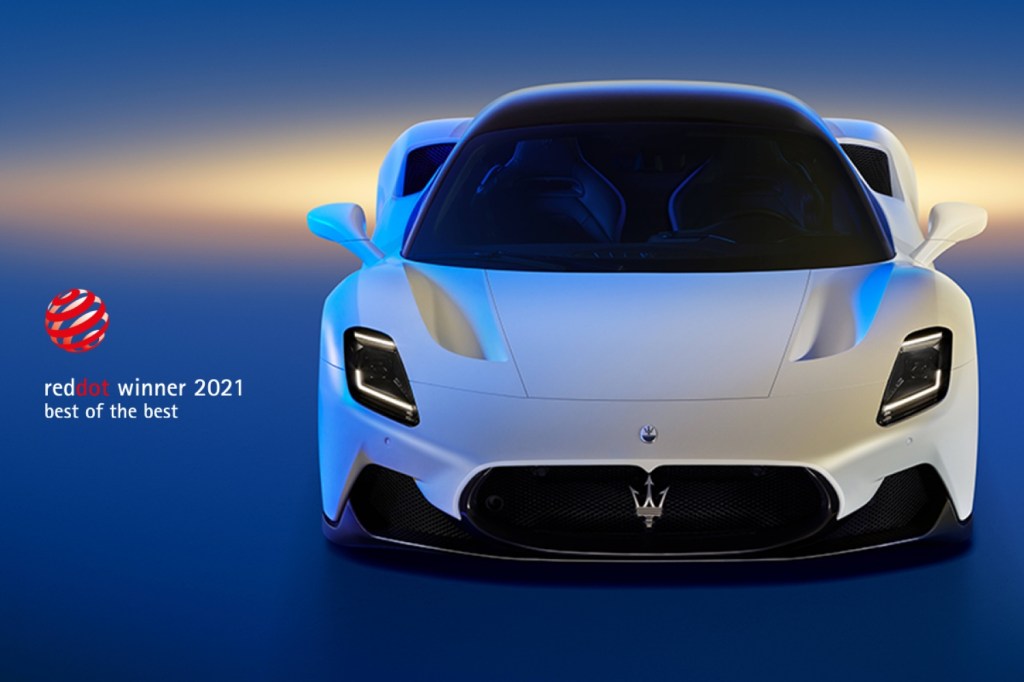
The new Maserati MC20 receives the prize for “Best of the Best” at the Red Dot Awards 2021 in the Product Design category.
Competition run by a German design center…
The Red Dot Awards is well known, although not everyone is aware that this international design competition is run by Design Zentrum Nordrhein Westfalen in Germany, which has been assessing and selecting the most aesthetically exciting, functional, intelligent, innovative products from all over the world since 1955.
Every year, this prestigious competition rewards excellence in the field of product and brand design and communication at the global level, with criteria constantly updated to the socio-cultural context.
A jury of 50 international experts chooses products in almost fifty different categories, from fashion to accessories and from furnishings to vehicles.
This reward puts of course a smile on the faces at Maserati…
We cite a few comments:
Maserati CEO Davide Grasso: “Our mission was to develop a car that would be remembered in the future as the model that launched the Maserati New Era. And I think we’ve achieved our goal with MC20. Maserati is innovative by nature, powered by passion and unique by design: the new super spots car embodies all these values and is a watershed, the founding model of this new phase in the Brand’s history.”
Klaus Busse, Head of Maserati Design, added: “We are honoured to receive this coveted accolade, which recognises the work of an entire team who have worked hard on this unique project, creating a car that opens a new chapter in Maserati’s history.”
Truly Italian
MC20 is designed by the Centro Stile Maserati in Turin and inaugurates a new Era for the Trident Brand.
The new super sports car represents the pure form of speed, with Maserati style: a work of sculptural engineering, showing the way to the Brand’s aesthetic future.
Developed by the Maserati Innovation Lab and built at the historic Modena plant, Maserati MC20 is genuinely an all-Italian car.
Besides its innovatige, good looks, it is also fast…
With the new 630 hp V6 Nettuno engine the MC20 catapults from 0 to 100 km/h in under 2.9 seconds and reaches a top speed of over 325 km an hour. The patented engine was conceived, developed, designed and built entirely by Maserati, and uses a pre-chamber combustion technology derived from Formula 1 engines… wow!
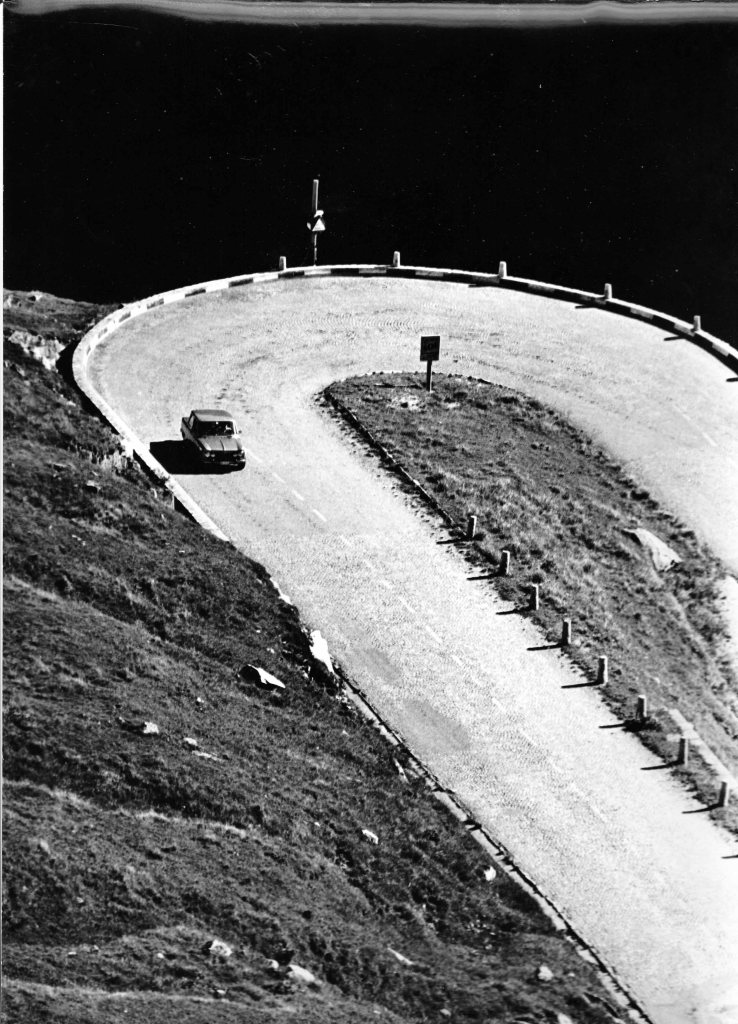
Here I stand proudly as a 23 year old behind the driver’s door of the Alfa Giulia Super, with my nephew looking into the ravine of the Great Saint Bernard pass…
There are epic moments, already in the young life of a car enthusiast. I was barely 23 at the time, when I accompanied my father on a drive to attend the 1970 Monza Grand Prix. My father had a Olive Metallic Green 1,6 Giulia Super press test car for the occasion, and I have been smitten for Giulia’s and Alfa’s ever since, as the drive was so magnificent.
My father had his faithful Leicaflex with the 90 mm Summicon – R f 1:2 lens along, and this is the perfect camera to make impressive shots. You see them here.
My father and I had also taken my nephew along, and so we went on our drive, with me doing most of the driving, as my father found that I understood the car very well. Of course we were keen to let the Alfa perform. This meant cruising on the German Autobahnen and the A27 through Switzerland and the Italian Autostradas at speeds between 150-160 km/h in fifth gear, when the law allowed it of course.
On our route, we decided not to take the Simplon Tunnel, but take the historic road winding over the Great St. Bernard pass itself, which lies a few hundred metres from the Swiss border with Italy, and is only passable from June to September.
Not only was the old classic pass road a dream for the Giulia, with its pleasantly short second and third gears, and I gladly helped the somewhat weaker synchromesh of the gearbox with expert double declutching. Descents were also epic, as this Giulia had already four disk brakes…
I still recall the eager sound and crisp exhaust roar of the 1,6 litre twin cam engine, and, as said, am totally smitten by Alfa’s ever since.
The Monza Grand Prix was rather dramatic. We arrived in Monza on the fifth of September, going down to the track after having got our press permits and parking voucher for our dear Alfa. Only to hear that Jochen Rindt had killed himself during the practice session on that day. He spun into the guardrails after a failure on his car’s brake shaft. He was killed owing to severe throat injuries caused by his seat belt. He was way ahead in points over the rest of the F1 field, so he became the only driver to be posthumously awarded the Formula One World Drivers’ Championship.
The Great Saint Bernard Pass was gruesome in winter, so prayer to our Lord was certainly appropriate…
We show you the photos, and dream away with you on the joys of holding the wheel of this magnificent four door Gran Turismo, which the Giulia was and still is right to this day…
Your servant would love to make a repeat edition of this drive on the Great Saint Bernard Pass with today’s Giulia… that would be truly great!
I found a photo of the VW, with my eldest sister – she is one year younger than me – posing in front of it, in July 1969. She lives happily married in the US and is a busy mother and grandmother now. Note how the simple and clean Mary Quandt fashion of the end of the sixties looks even very smart today…
I had removed the hubcaps of the car, put a circular racing number background to camouflage the somewhat scratched door. The former owner Johan Anthierens has also damaged the side board slightly, but neverteless, with our cosmetic changes, the VW looked very preppy and the paintwork was overall still excellent!
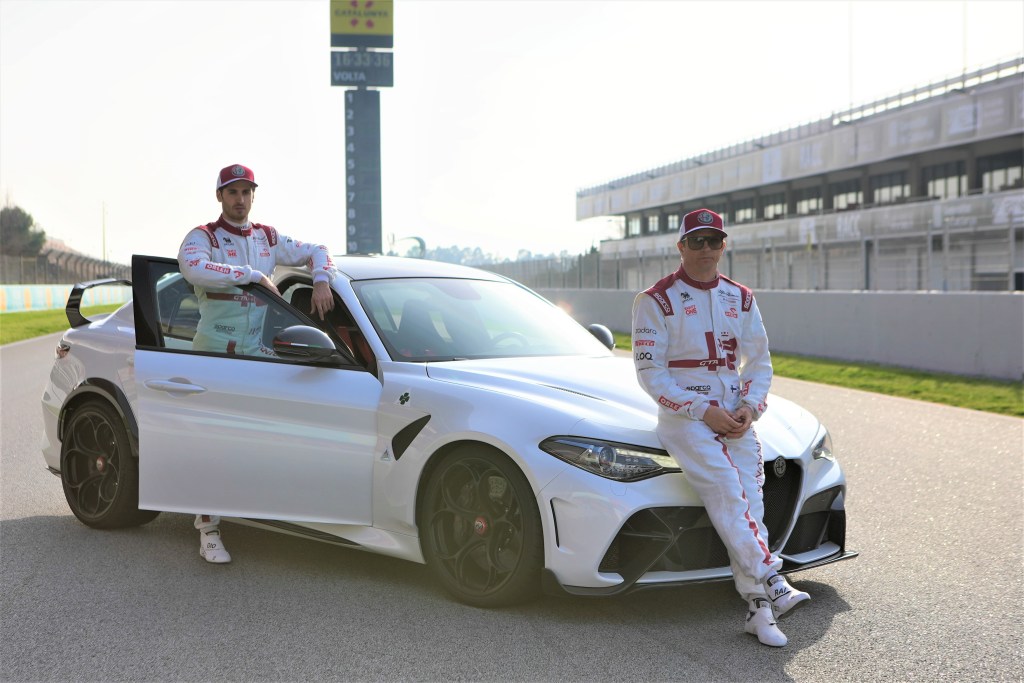
The 2021 F1 World Championship kicks off on Sunday, March 28th, at the Bahrain Grand Prix. Behind the wheel of the C41, unveiled in Warsaw in February, will be the proven Italian-Finnish pairing of Antonio Giovinazzi and Kimi Räikkönen.
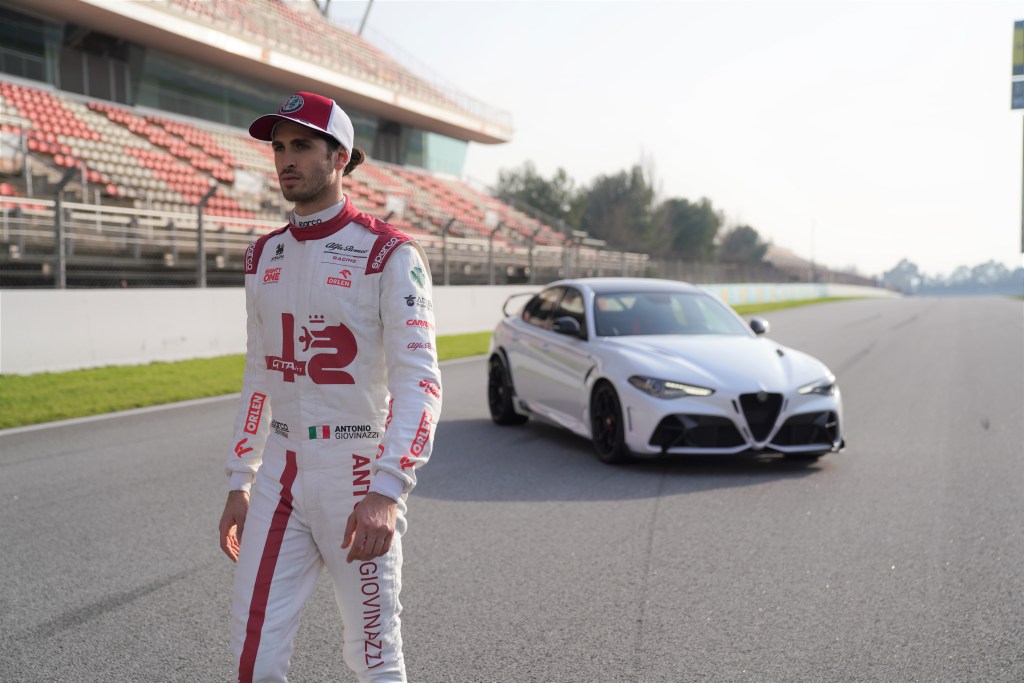
But there is more: The two champions are involved in fine tuning the Giulia GTA project. The racing suits of both champions feature the acronyms GTA and GTAm, evoking this project that draws all its inspiration from the 1965 Giulia Gran Turismo Alleggerita, a car that racked up so many successes on circuits all over the world.
Antonio Giovanazzi showing the GTAm logo on his suit…
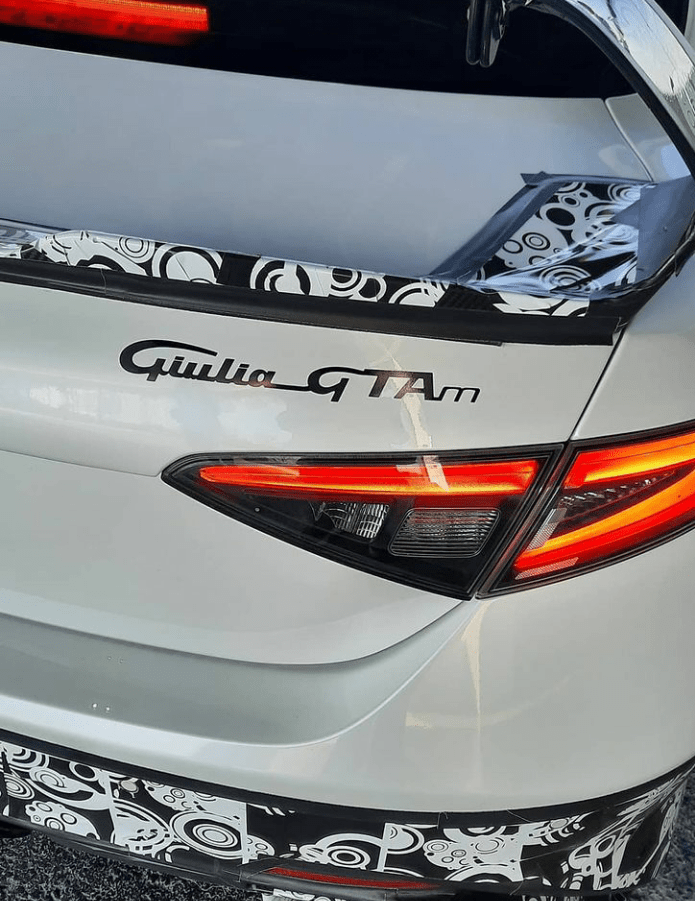
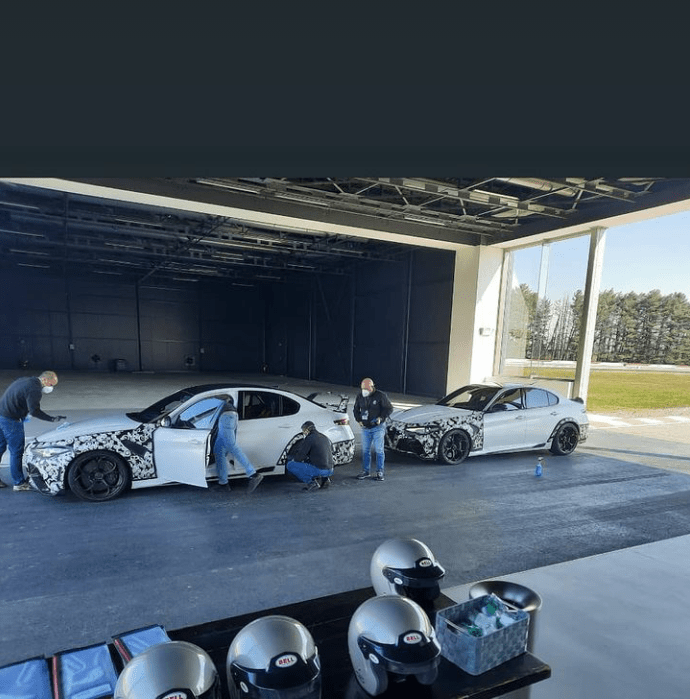
The Giulia GTA project has benefited greatly from the partnership with the Swiss Sauber team, using their Engineering know-how in the prototyping and development of carbon fiber components with a bold aerodynamic impact: the new front bumper, side skirts, extractor, the GTA spoiler and the GTAm aerowing. You see here two photos taken by dynamic press officer Wim Willems of the test sessions, showing clearly the aerodynamic body parts on the cars.
The aerodynamic parts were still camouflaged during the test sessions… Test session in full swing…
Indeed, the two drivers have also actively contributed to the project development, having completed a testing session at the Balocco Proving Ground.
Kimi and Antonio focused on the specific solutions taken up in terms of aerodynamics and handling, analyzing in depth all the changes made to the car and giving an account of their feeling on the track to the engineering team, resulting in a joint assessment of the effects on vehicle dynamics to complete its fine-tuning.
You see the champions and the here on the photo’s, at the test drives on the legendary Balocco circuit…
Nissan has made some research lately about what makes for both driver and passengers a harmonious journey. First of all, using the phone whilst driving is something passengers hate the most. It can indeed cause in-car arguments… Nissan points out of course than NissanConnect helps greatly here, as it integrates the phone seamlessly with the car. Also the compatibility with Apple Play and Android Auto will let you digest safely incoming calls and messages…
Good Music
Not less than 55 % of Europeans believe that good music is the most important ingredient for an enjoyable trip. Of course, you have to agree on a playlist before you start off… The NissanConnect infotainment system helps greatly here…
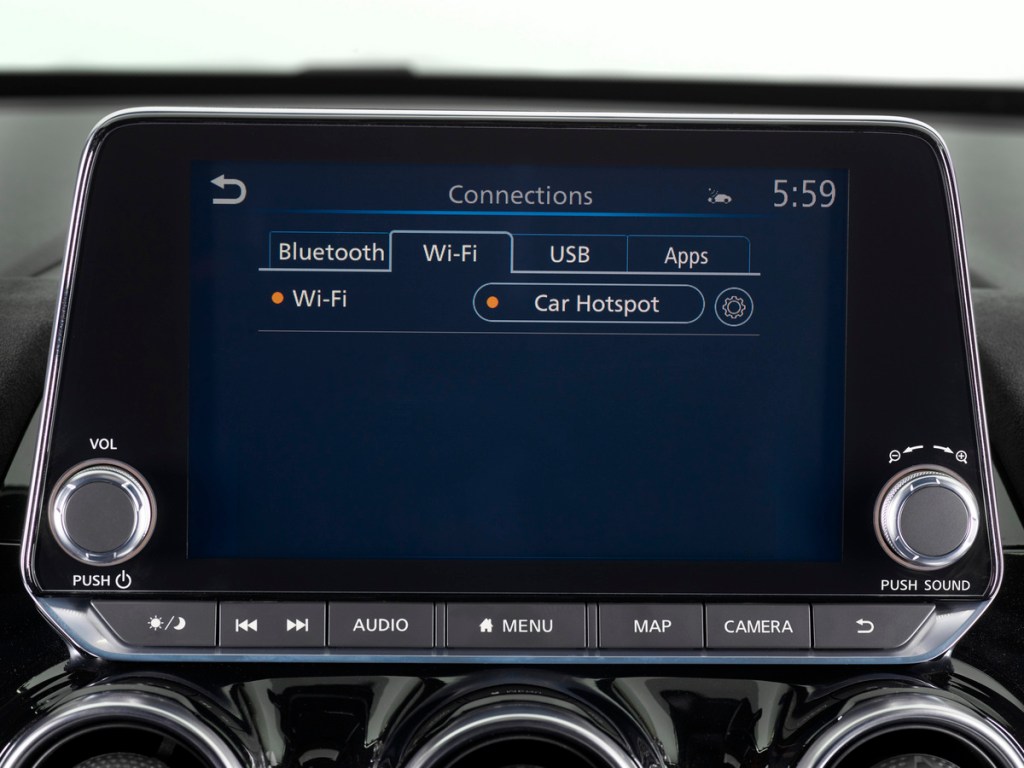
In the Juke, front seat passengers can enjoy the good sound of the Bose Personal Plus System. You can even select your music via the in Car Wi-Fi Hotspot…
Passengers hate tailgating, and it is one of the worst things a driver can do. 46 % of the passengers find it very annoying. At least two seconds should be between you and the car in front of you. Nissan suggests using its ProPilot system which keeps you at a safe distance, whatever the speed…
Nearly one in five drivers admit that tiredness is a problem. So take a break, and don’t continue for too long. A chime and a coffee cup symbol will warn you when you drive a Nissan…
Risky overtaking
Indeed, not less than 56 % of European passengers just hate that. It makes them feel very uneasy. Nissan drivers can make good use of JUKE’s Blind Spot Intervention for instance, which returns the car back to its original lane if the driver doesn’t intervene…
Good seating
This is for many passengers even more important than room, and we can agree…
To conclude, a smooth, cool drive with good music is what passengers want, and their happy faces will also turn a broad, relaxed smile on your face…