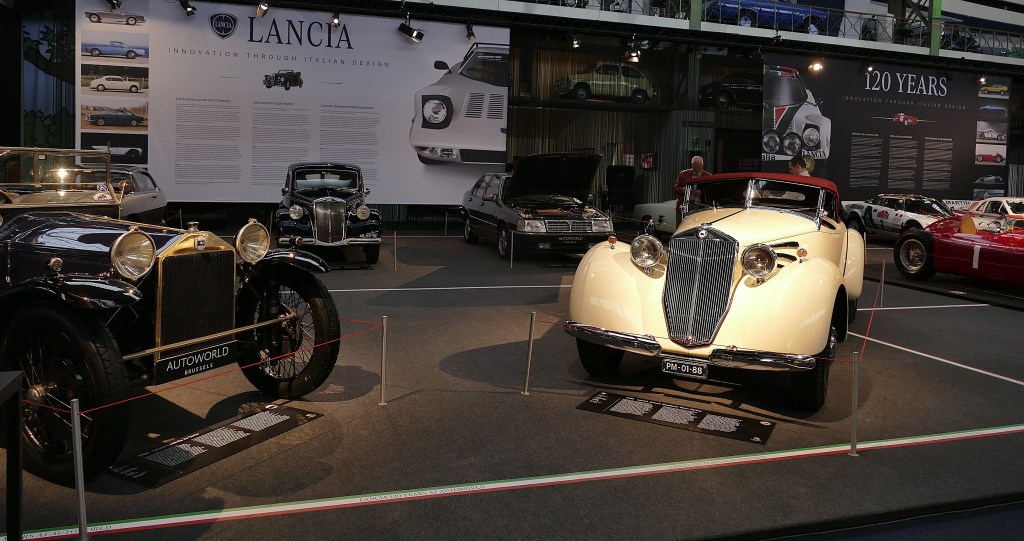
Autoworld Brussels has again an exquisite exhibition ready for us: until April 19 we can admire a carefully curated selection of about 12 absolutely iconic Lancias. It shows us the elegance and innovation through design, as the title of the exhibition indicates. But we would add, the pop-up exhibition also showcases innovation through ingenuity and engineering excellence.
The cars are beautifully displayed at the beginning of the vast and inviting central hall of Autoworld, taking you on a journey of more than a century of technical innovation, refined design, and engulfing you in its rich motorsport heritage.
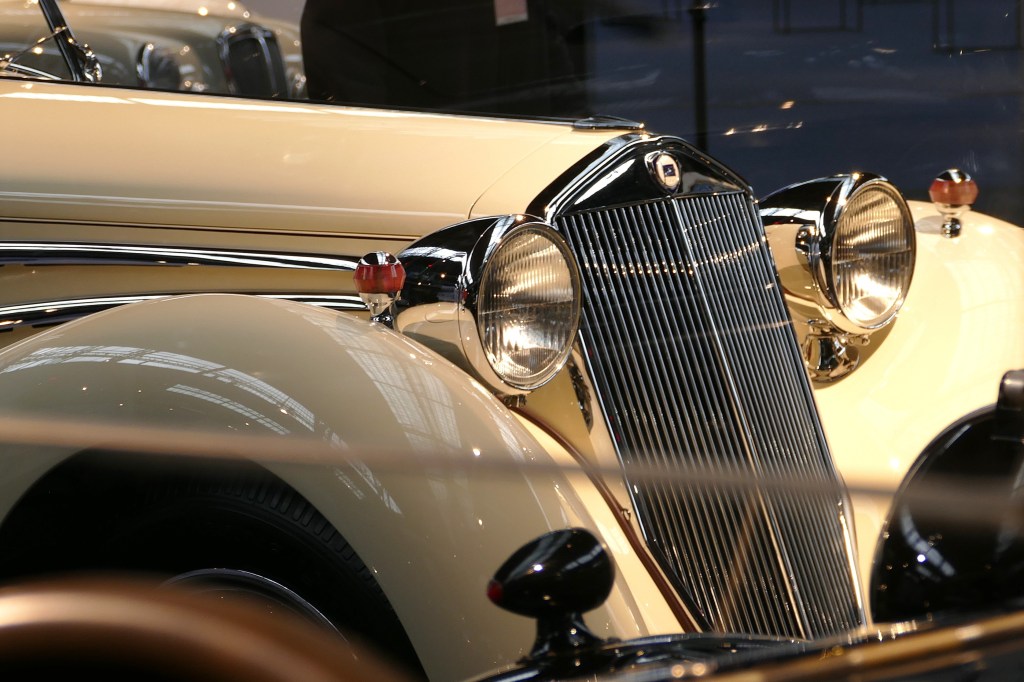
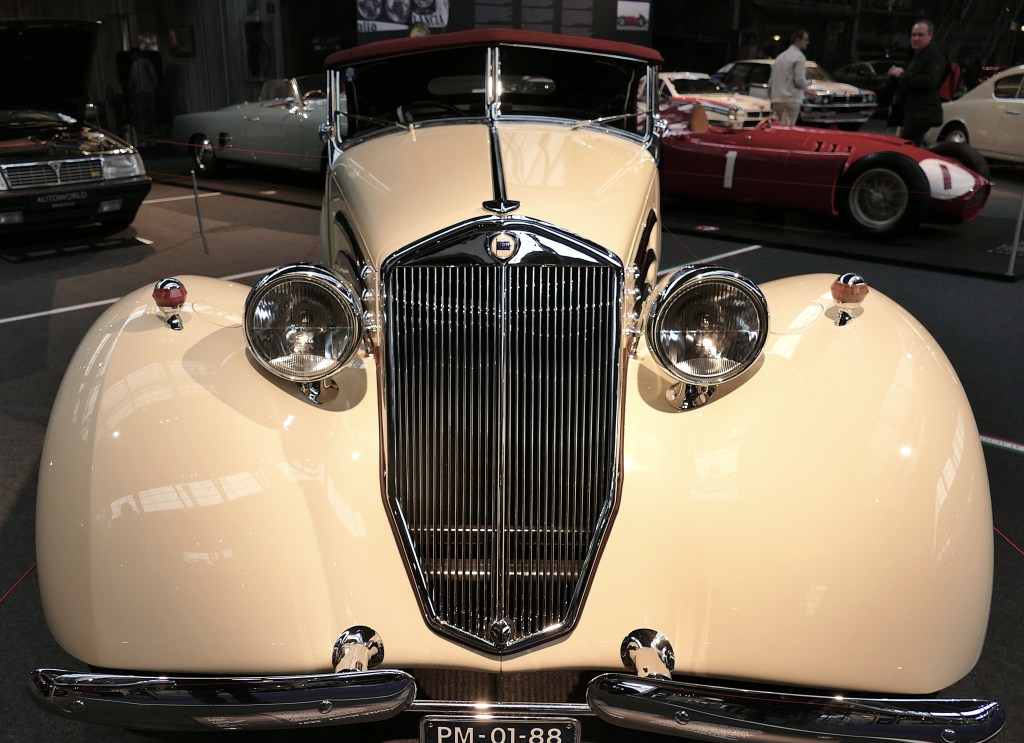
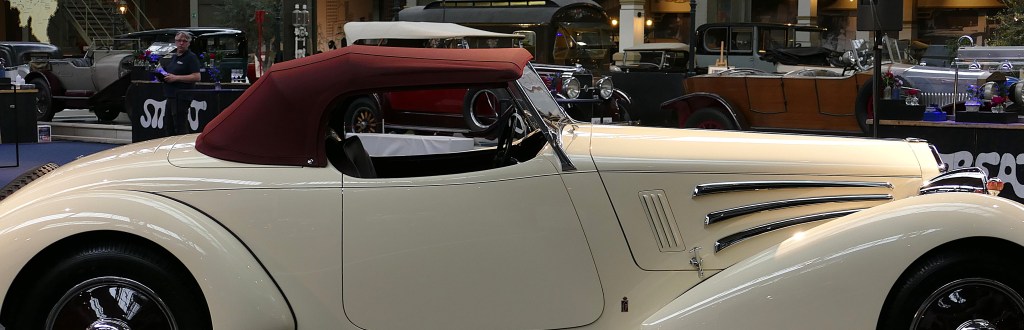
My eyes first fell on, at least to my taste, the absolute beauty of the show, the Lancia Astura Roadster by Pinin Farina. This 1935 Astura is a technical gem. The V8 engined car was introduced on the Paris Motor Show in 1931. This Astura on the show belongs to the third series, built between 1933 and 1937, with 1,243 units made.
The third-generation Astura was offered in short-wheelbase and long-wheelbase variants, and was powered by a new, larger engine. Indeed, it was enlarged from 2,6 to 3 litres, and the 17° narrow angle V8 single overhead camshaft engine now developed 82 hp. This short wheelbase you see on the photos was ideal for coachbuilders to show their talent.
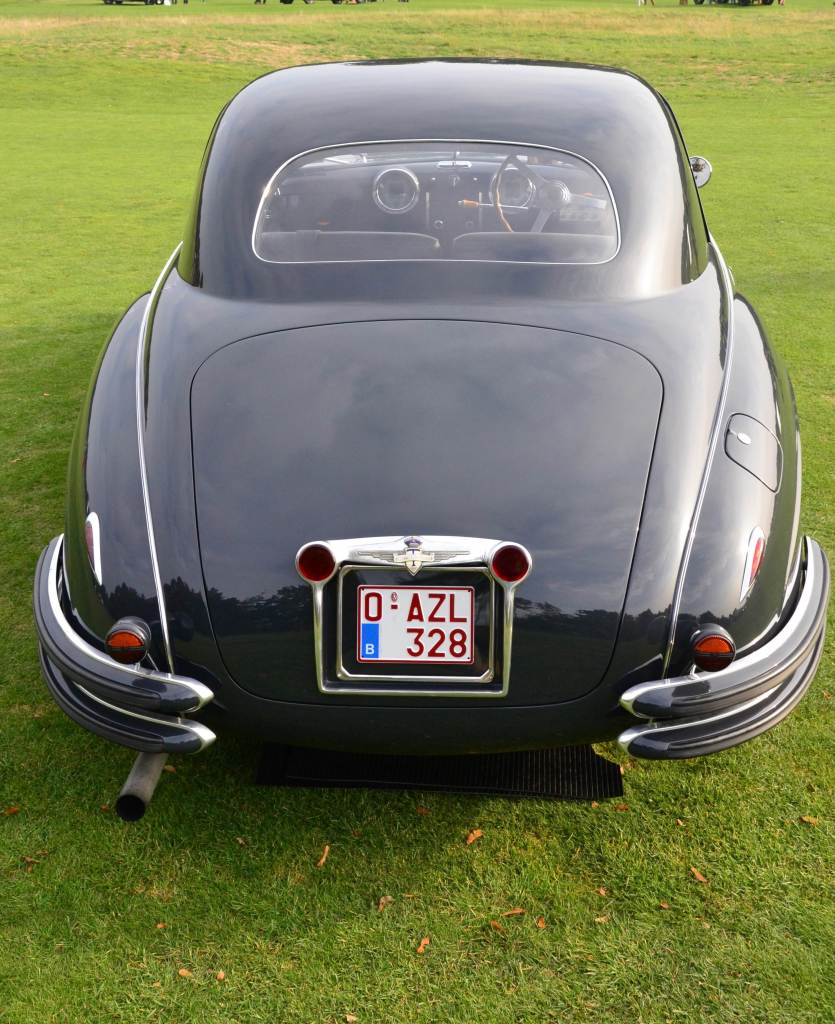
ounded with the moral and financial support of Vicenzo Lancia, the Carrozzeria of Battista “Pinin” Farina witnessed a revival and produced breathtaking bodies. Of the just 328 “Corto” chassis built, many were clothed by Pinin Farina. The contours of this roadster are from the artistic hand of Mario Revelli di Beaumont, an independent stylist who worked actually for several “carrozzerie”…
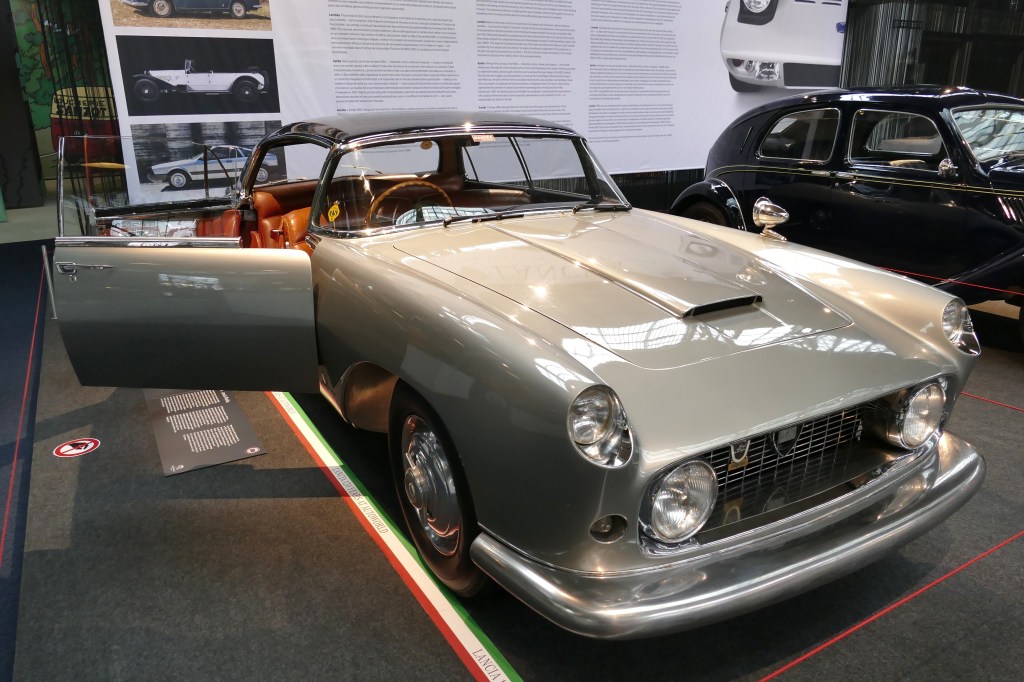
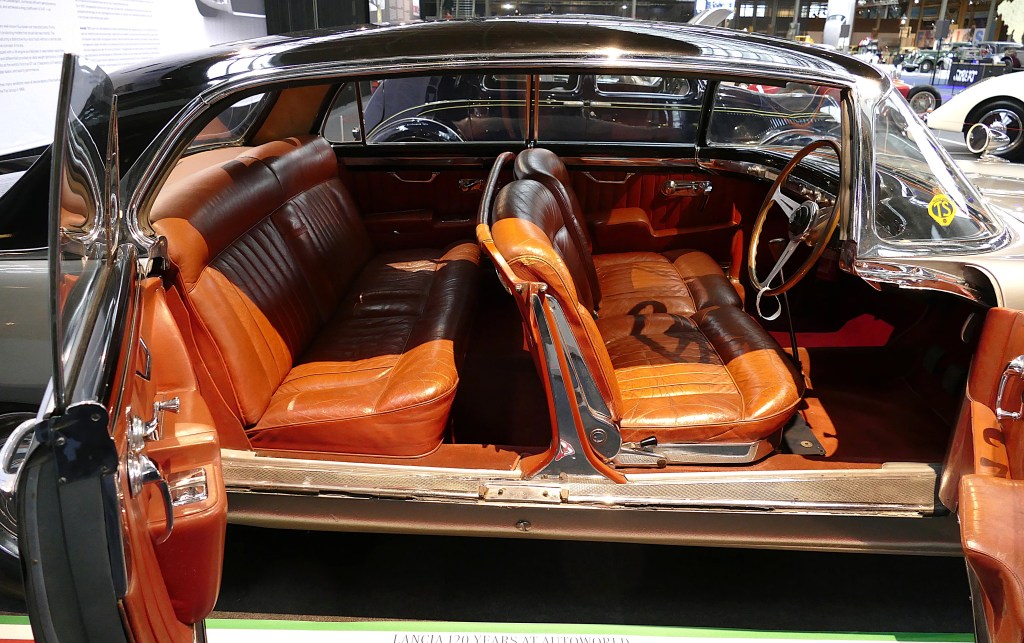
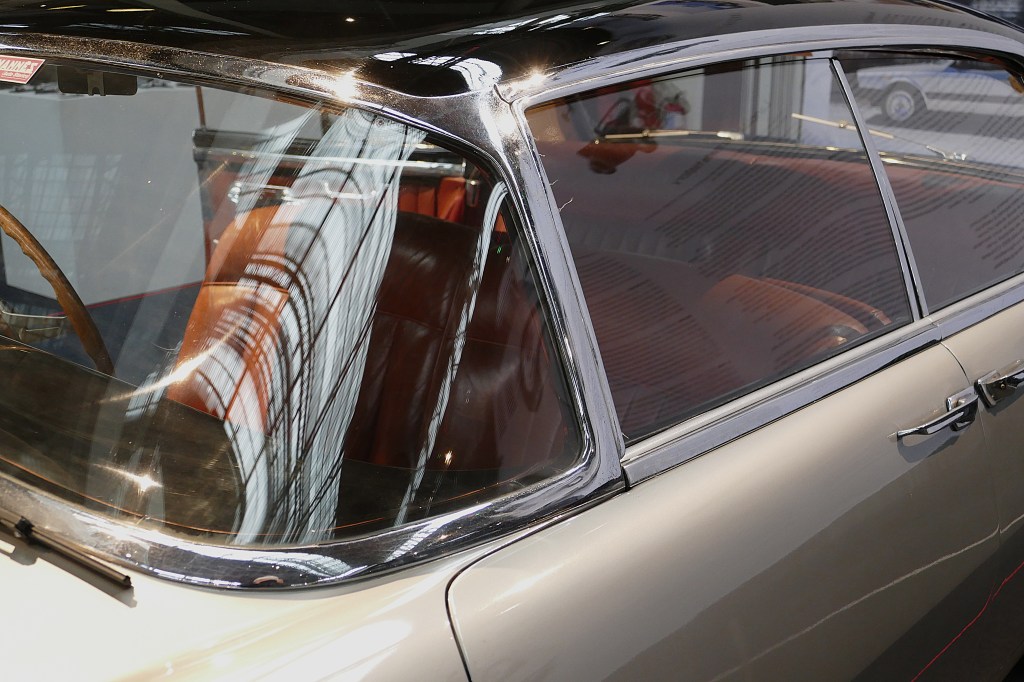
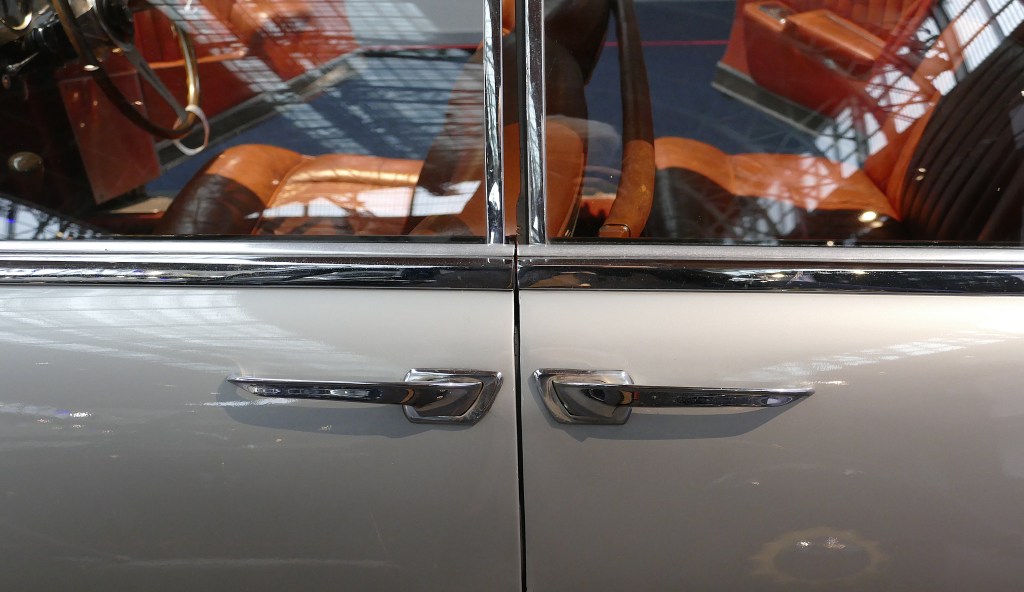
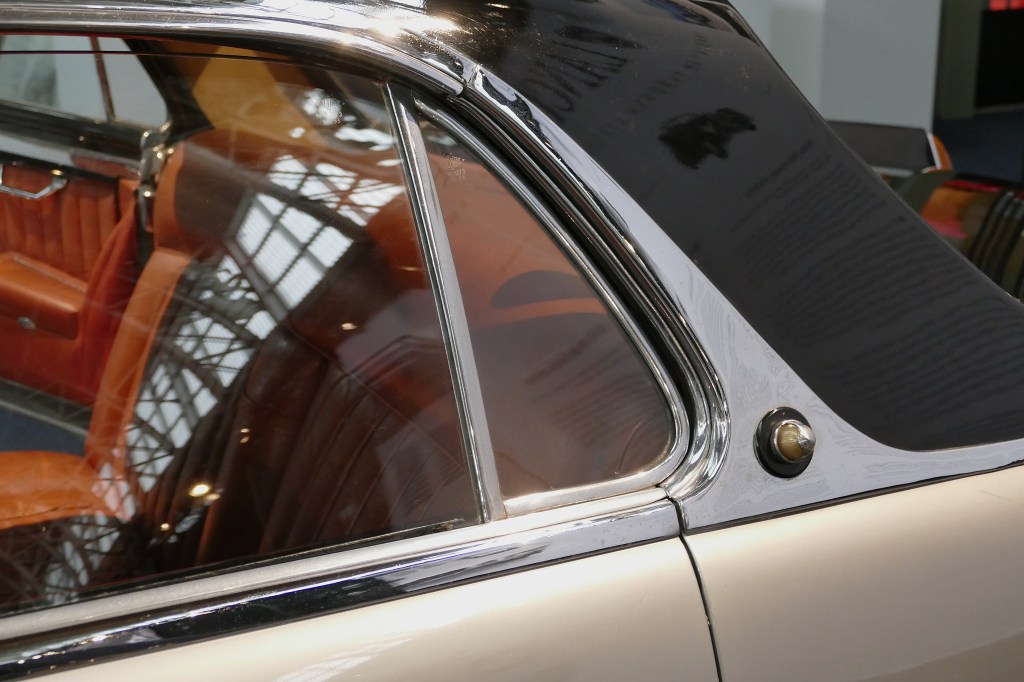
Another car by the hand of Pinin Farina was for me the Lancia Flaminia. I was therefore elated to see the conceptual predecessor of the Flaminia, the Florida. The “bellezza” and elegance of this car deeply moves me. Just look at the photos. The car was built by Pinin Farina on an Aurelia B56 chassis, and it was a technically quite daring four-door pillarless saloon.
It was shown on the 1956 Brussels salon, and as a young boy, I dreamt about it. Just like the Boano styled Ferrari’s, it was for me the pinnacle of what human art, intellect and craftmanship could reach in terms of sheer contemporary beauty.
The pillarless doors had to go in the production version, the Flaminia, therefore the elegance of this Florida truly stands out.
Much more to follow on this Lancia show at Autoworld soon, about the D50 racing car, the iconic rally cars like the Stratos… just remember, go and see it, it is on show until April 19.
Practical info: Autoworld, Parc du Cinquantenaire 11 1000 Brussels, Belgium.
Please note, the museum is closed Wednesday 11 March, Thursday 12 March and Monday 16 March 2026.
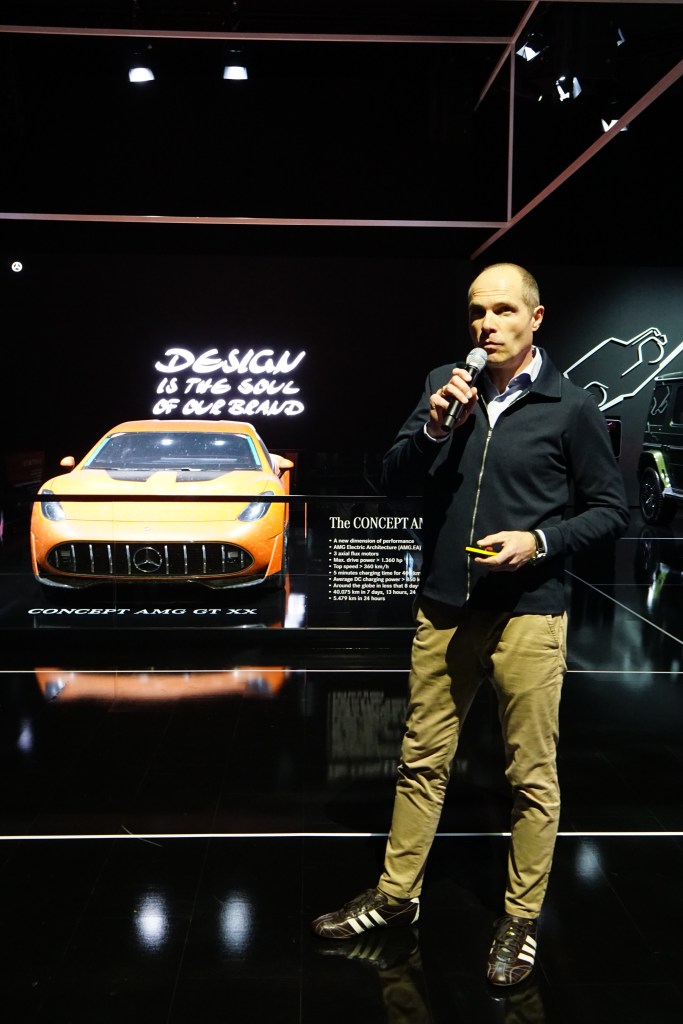
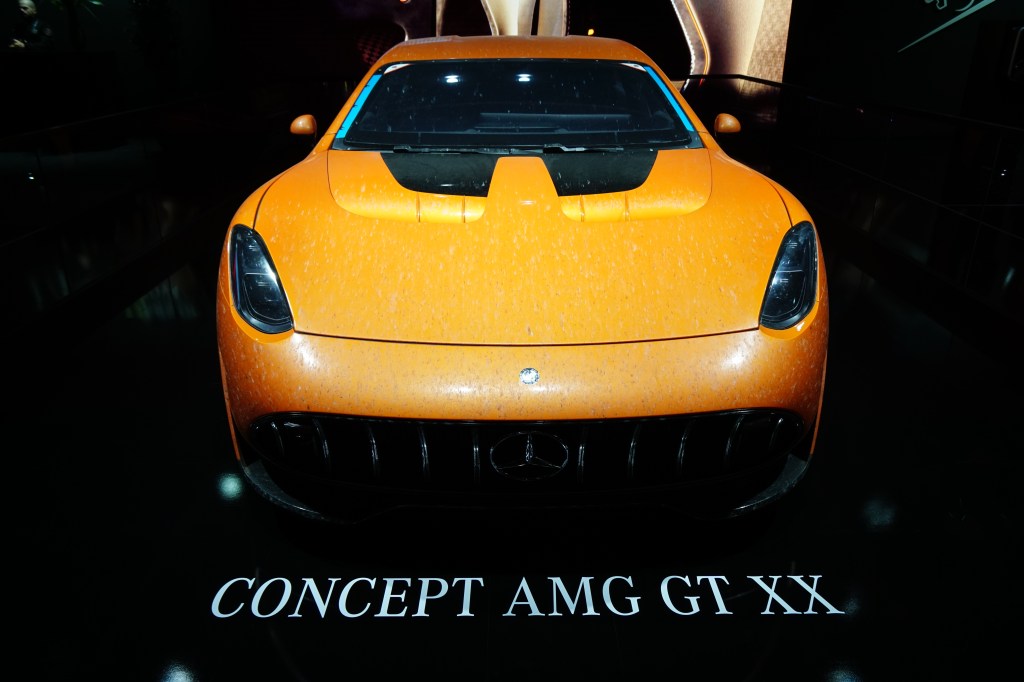
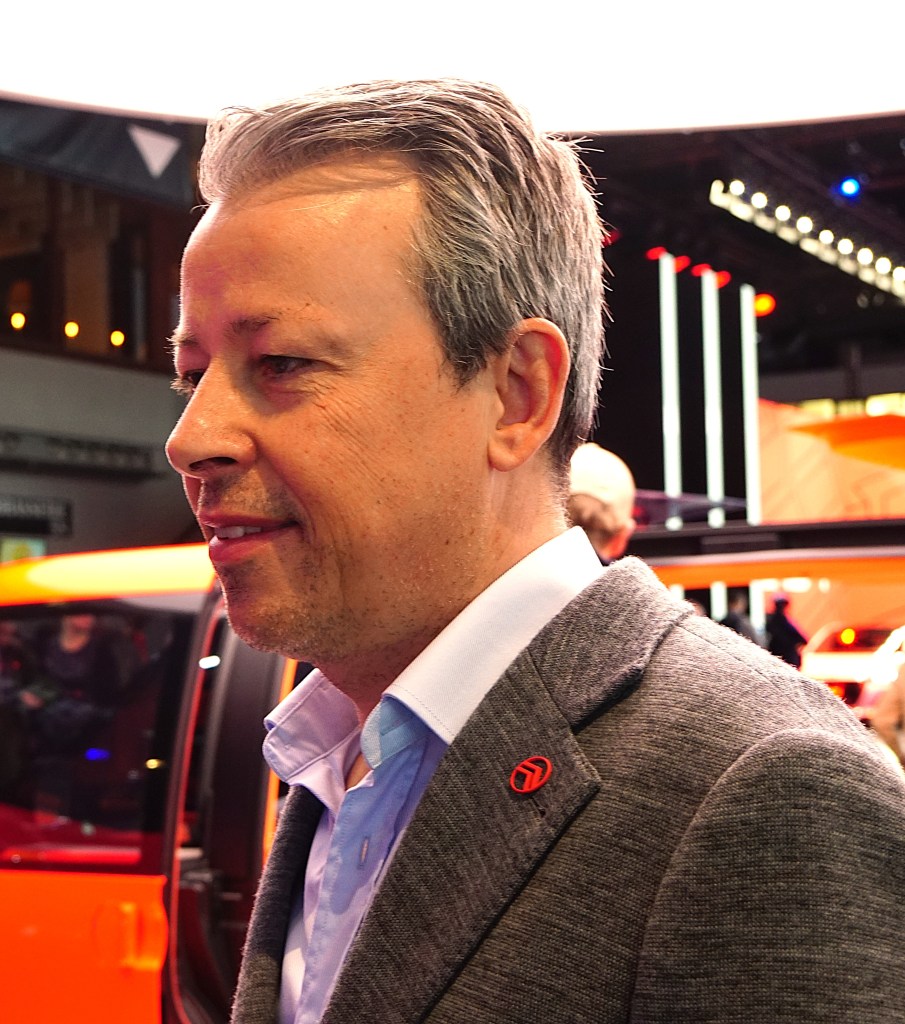
The latest Brussels Motor Show proved to be a treasure trove for us car enthusiasts. At the impressive wonderful Mercedes stand on the show we met on the press day with Robert Lesnik, Director of Exterior Design. In front of the iconic and already legendary Concept AMG XX, he presented styling examples of what Mercedes believes stands for the brand.
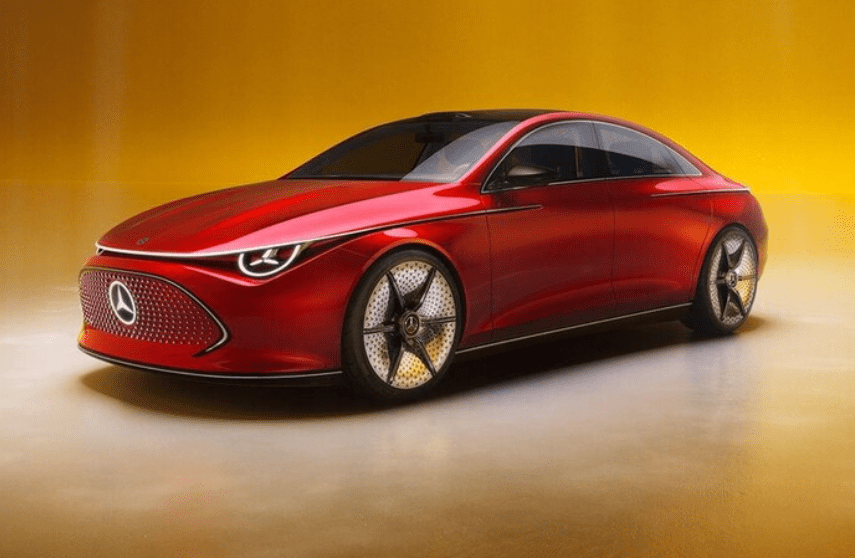
He started off with this AMG XX, and commented that this car embodies a rare combination a very aggressive sporting front end, the side view with the timeless proportion of the long bonnet, a very round shaped rear end and an amazing interior. He also showed the legendary Autobahnkourier, and he also focused on the grille of the 300 SLR Uhlenhaut Renncoupé, being so iconic and a typical design hallmark over the years for the sport coupés and cabrios of the brand. He also commented further on the Concept AMG that this car is the harbinger of what is to come for the series version of this AMG Electric sports coupé.
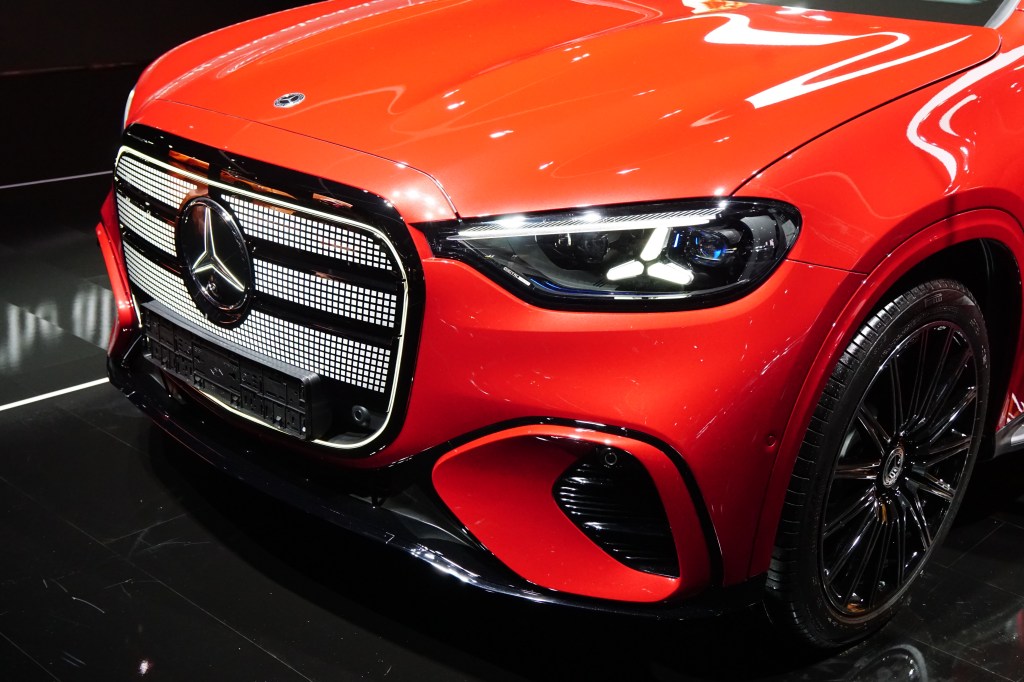
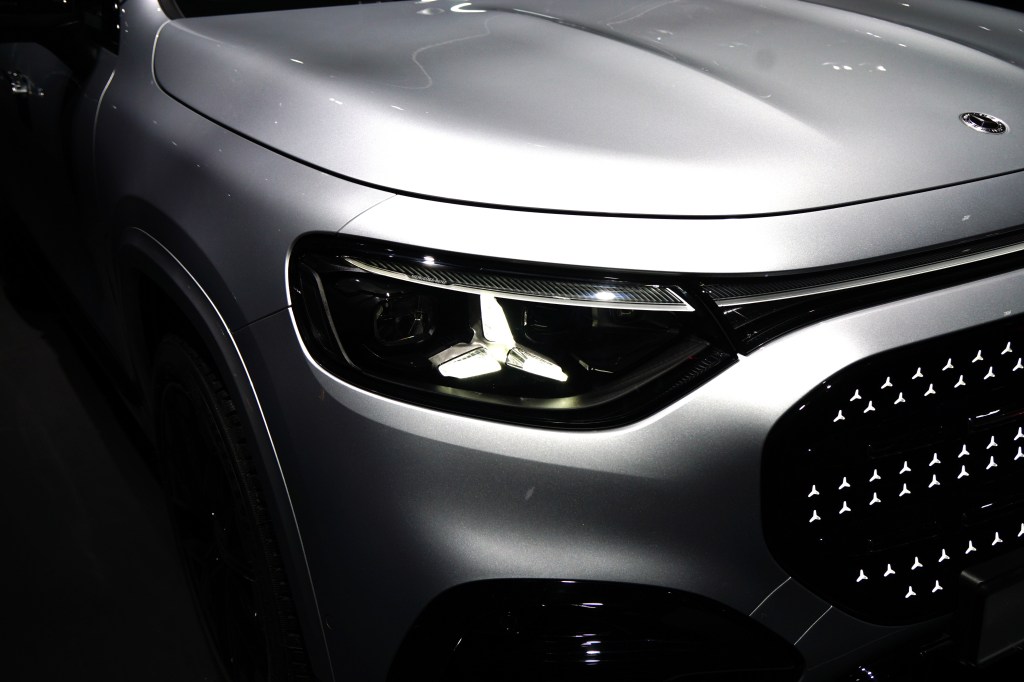
Robert Lesnik commented further: “For the new generation we were inspired by our past cars and design heritage, which doesn’t mean that we are doing retro design. You can see it on the radiator grille of the new GLC Electric SUV, with just three horizontal bars illuminated, it is a modern interpretation of a classic design icon.”
Beauty and attraction…
“There are two elements, beauty and attraction, which are the goals when we design a Mercedes”, Robert continued. Something that attracts the customer and what he perceives as beautiful.”
“Obviously, this goes for both the exterior AND the interior. There must be a certain power. I would say the sweet spot for every Mercedes is the three-quarter rear end perspective, where you really see the shoulder, and you see also a very iconic graphic with two roundish rear lights, with three lights for the AMG versions.”
We asked also about the interior, although he is responsible for exterior design, but nevertheless…
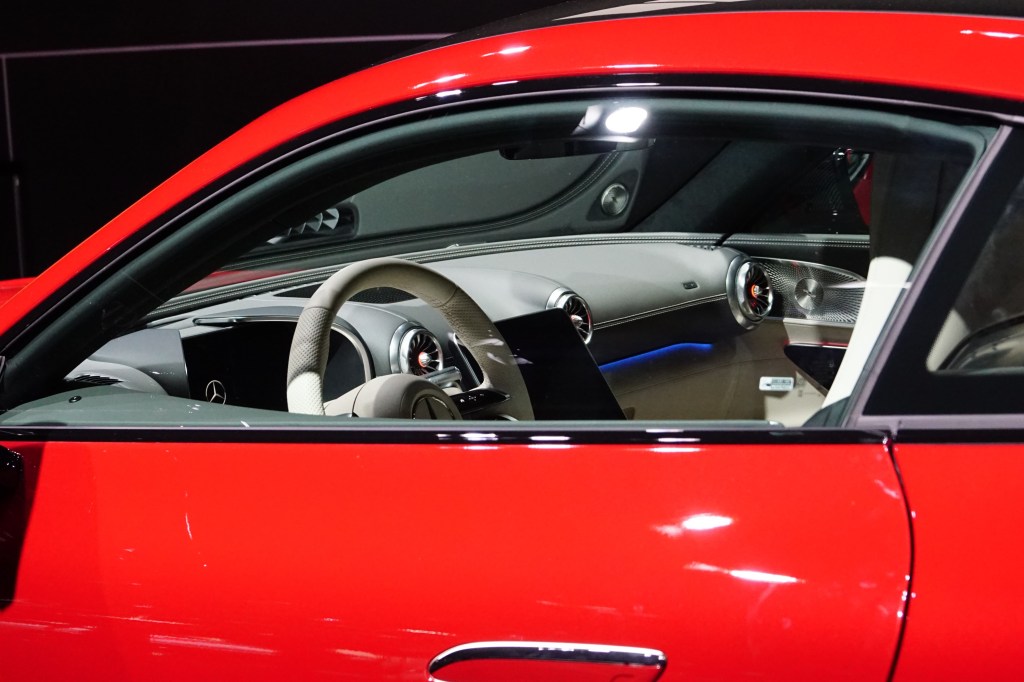
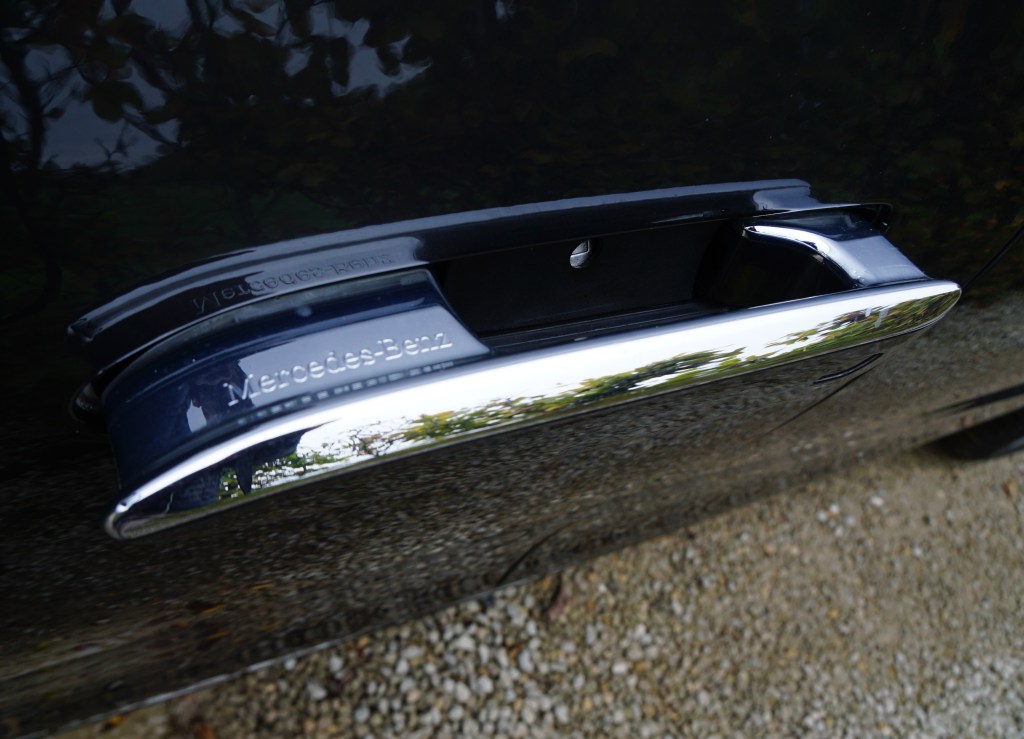
“For the interior,” he continued, “there is always a combination of the digital and the analog. For the first time, we have a hyperscreen, made of three screens being seamlessly positioned together. Also when the instruments and screen is shut off, it is not uniformly black, the air vent openings are still illuminated, the touch fields and items on the screen are also still visible, the inside door handles have a metallic coating, silver shadow galvanized so to say, these elements were there earlier, and will stay also in the future. I always say, Mercedes has always a chromium strip more.” We could only agree…
Focusing further on the front of the car, Robert stressed that it is still somewhat higher, which results in a spacious frunk. We will also strive to have clean lines.
We asked Robert also when looking back at the elegantly styled cars for the hand of Paul Bracque, the cars were lean, low, with excellent all round visibility. Do we see these styling elements back in the Mercedes cars of today and the future?
“Indeed, cars were (much)smaller, but now cars are electric, and they need more volume because of the batteries. Cars therefore need to be higher and this also calls for bigger wheels. This means also that cars are wider and have longer wheelbases. So cars are bigger and later hopefully will get smaller again. But cars as elegant as the Pagode will never appear again because of the safety regulations… But for the next five years, our horizon is set, we have a good idea what our design strategy will be.”
We thanked Robert for the interview and show you here some photos.
In a further episode we will have a further interview with Oliver Löcher, Vice President Vehicle Engineering and Overall Vehicle Functions Mercedes-Benz Cars.
Conceiving the automotive future is always a very challenging task. Some brands have also a future-oriented attitude more than others in their DNA, and one of them is certainly Citroën.
75 years ago, they brought us the 2 CV, a car which embodied nothing less than a four-wheeled French revolution, embodying Liberty, Equality and Fraternity. Indeed, this adagio of the French revolutionists fitted the post-war French “citoyens” admirably, as the 2CV brought them just that. Freedom for all, with low-cost mobility, practicality, and go-anywhere capacity.
This revolutionary dream of the brand with the double chevron has never died. And Pierre Leclercq, the Belgian born head of design, proved its love for practicality, out of the box progressive “back to authentic basics of automotive mobility” thinking already with its wonderful and stunning OLI.
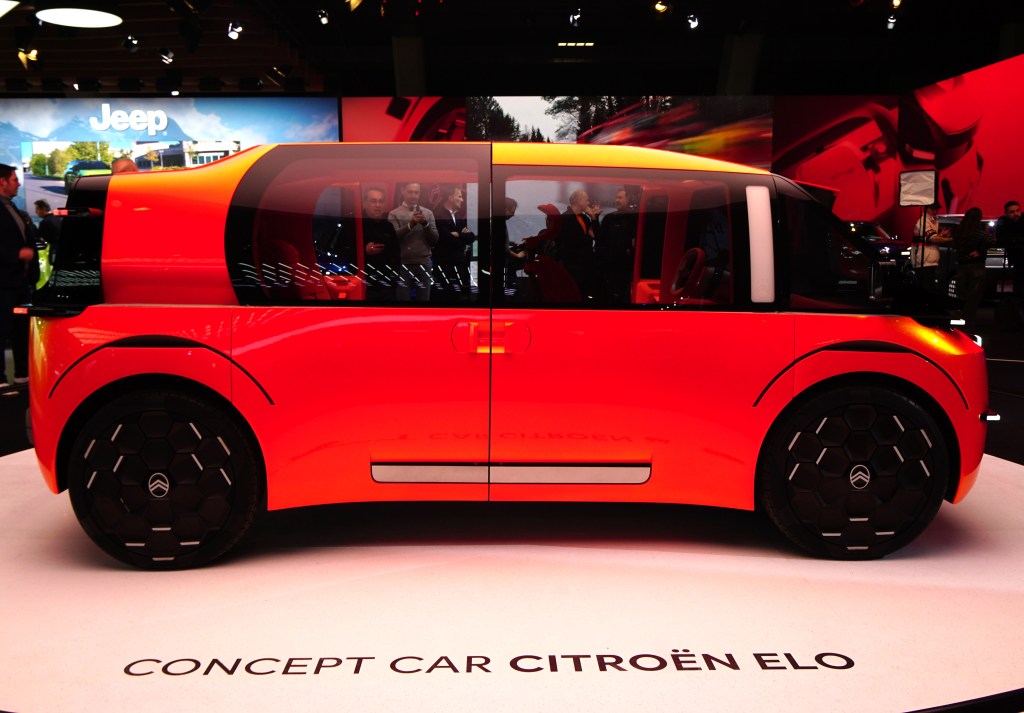
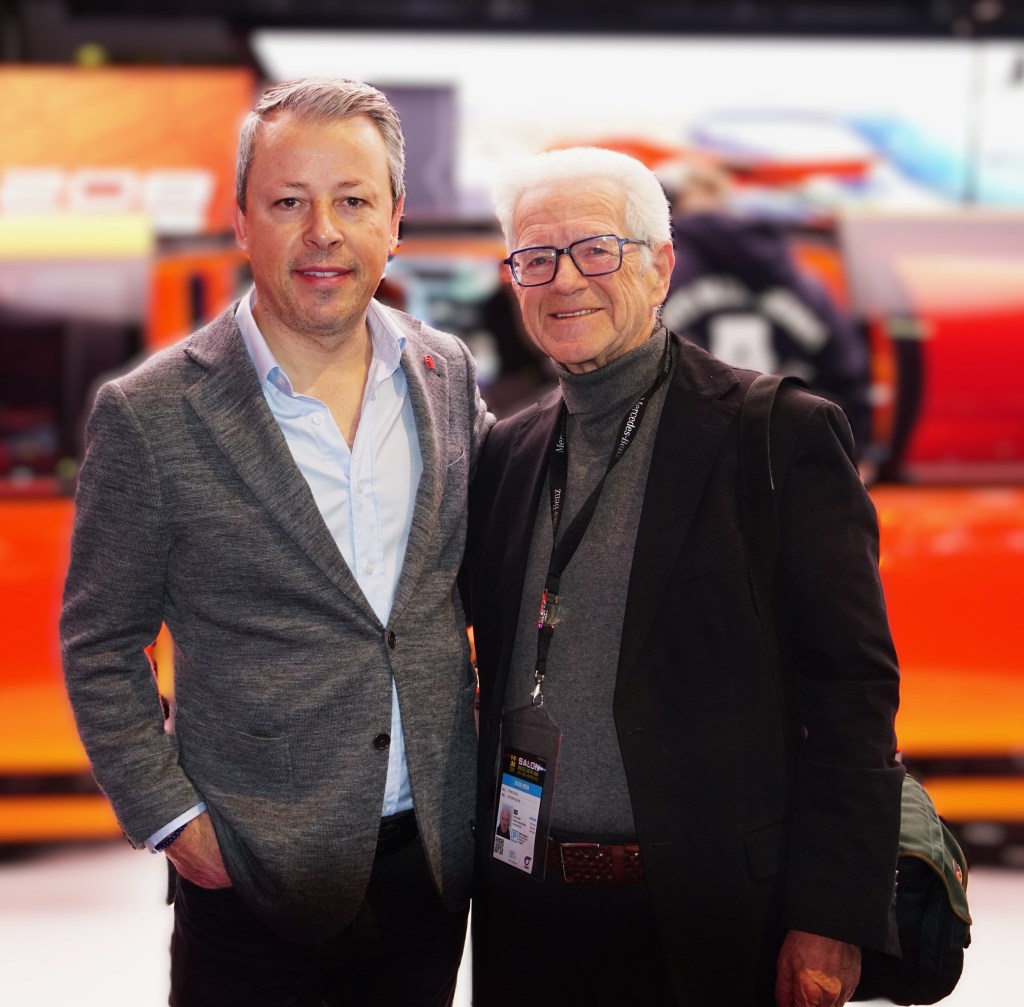
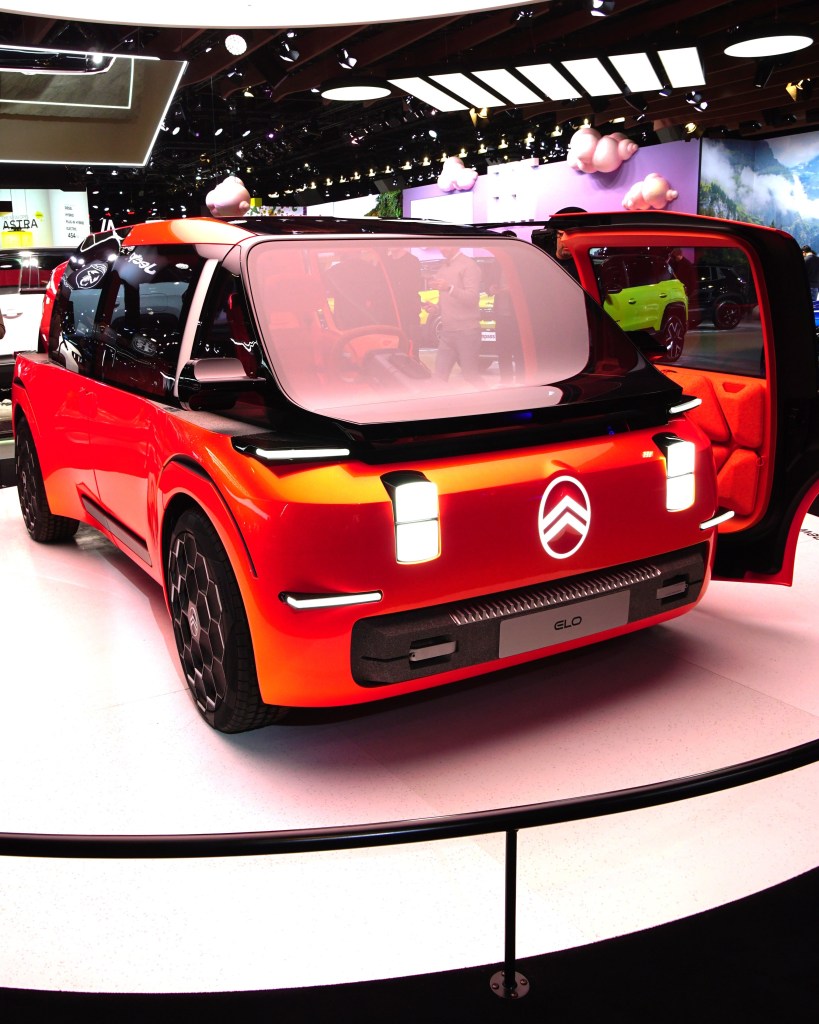
Your servant was at the presentation of this OLI in Paris, and now stood eye to eye with the equally intriguing ELO. On both occasions, he met the designer, Pierre Leclerq. We talked to him again in Brussels…
Hans Knol ten Bensel
A creative career…
Pierre Leclercq started in 1998 at BMW as an intern, he joined the Italian coachbuilder Zagato in 1999, which he left after three months to join Ford Ghia. Here he designed the interior of the Ford Street Ka concept. In 2000 he returned to BMW, where he worked for 13 years. There he notably designed the BMW X5 E70, BMW X6 E71 and the rear of the first Mini Countryman. He also worked on a successor to the BMW M1 based on the BMW i8, but the project was ultimately abandoned.
Pierre Leclercq headed the design studio of Great Wall Motors from 2013 to 2017. He then became design director at Kia, but stayed only one year with the South Korean manufacturer. Needless to say that he acquired a keen understanding of the design philosophy and DNA of both European and Far East manufacturers.
In November 2018, he took over the head of Citroën’s design office, succeeding Alexandre Malval, who had moved to Mercedes-Benz. The first project he led entirely at Citroën was the C4 X, a 4-door version of the third-generation C4.
Three pillars to keep in mind when building this concept car…
On the Brussels show, at the presentation of the ELO and the subsequent talk we had with him, Pierre stressed that this concept car is first and foremost a laboratory of ideas. He also wants to demonstrate the three pillars of the design philosophy of this car; he told us: “The ELO must become your third place (after home and office – editor’s note) to live in which you must be able to play, work and rest ”
Work…
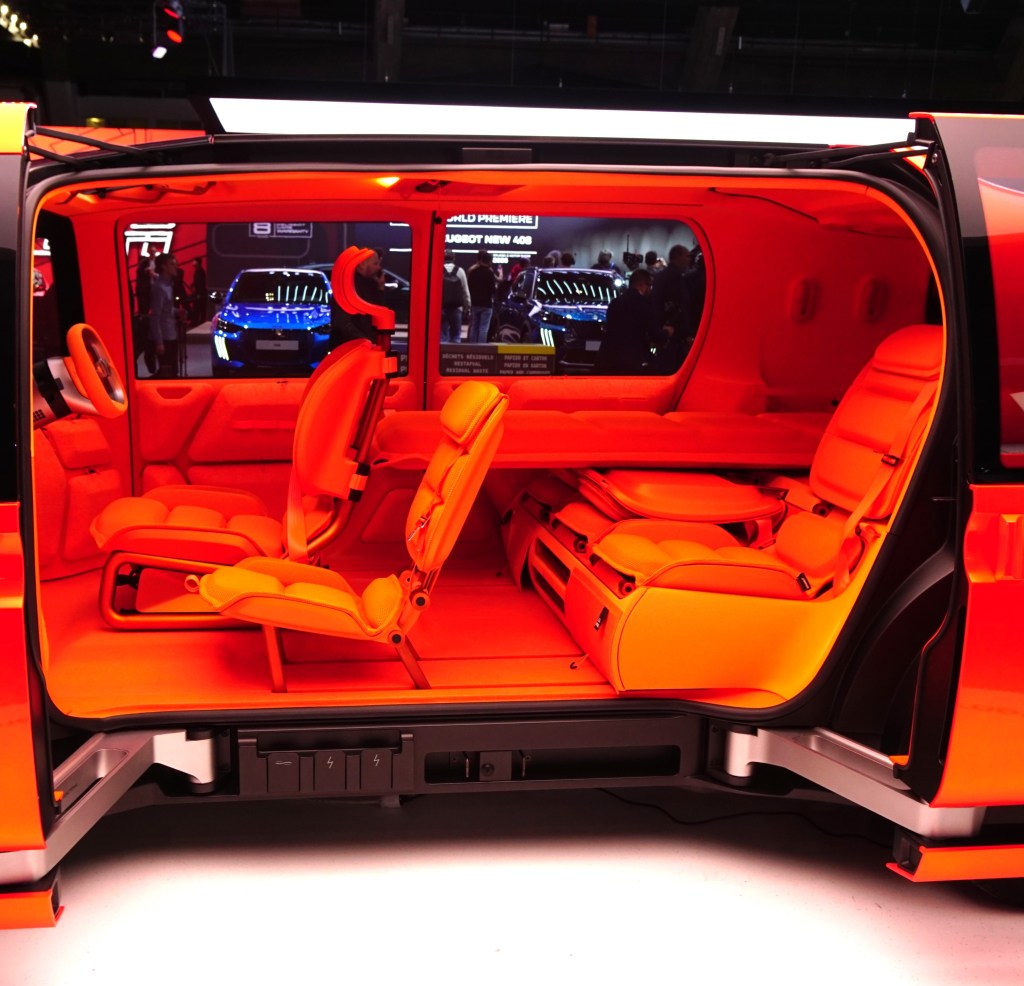
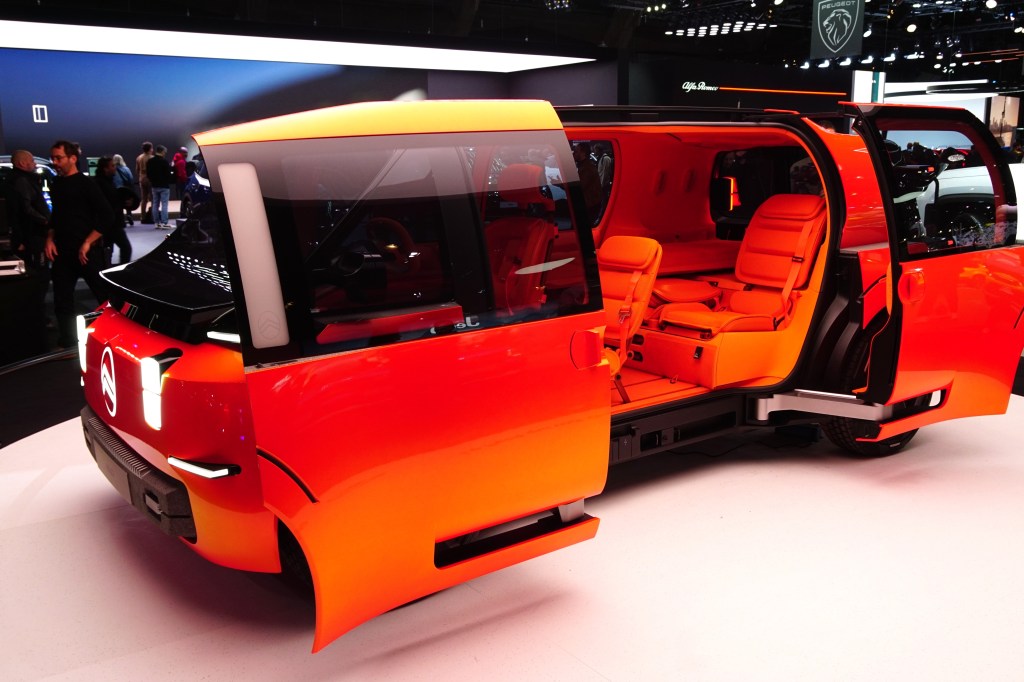
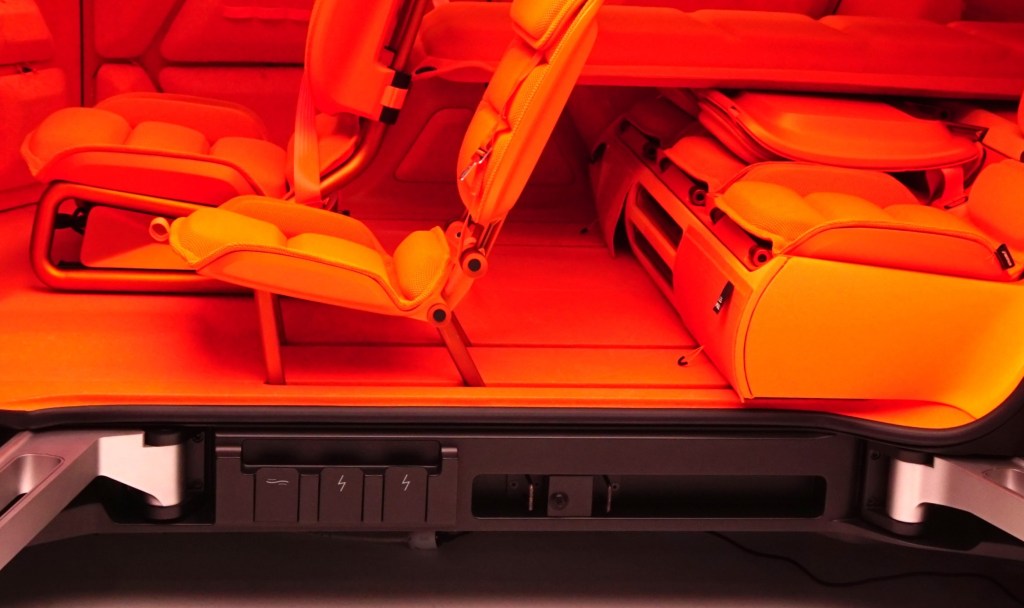
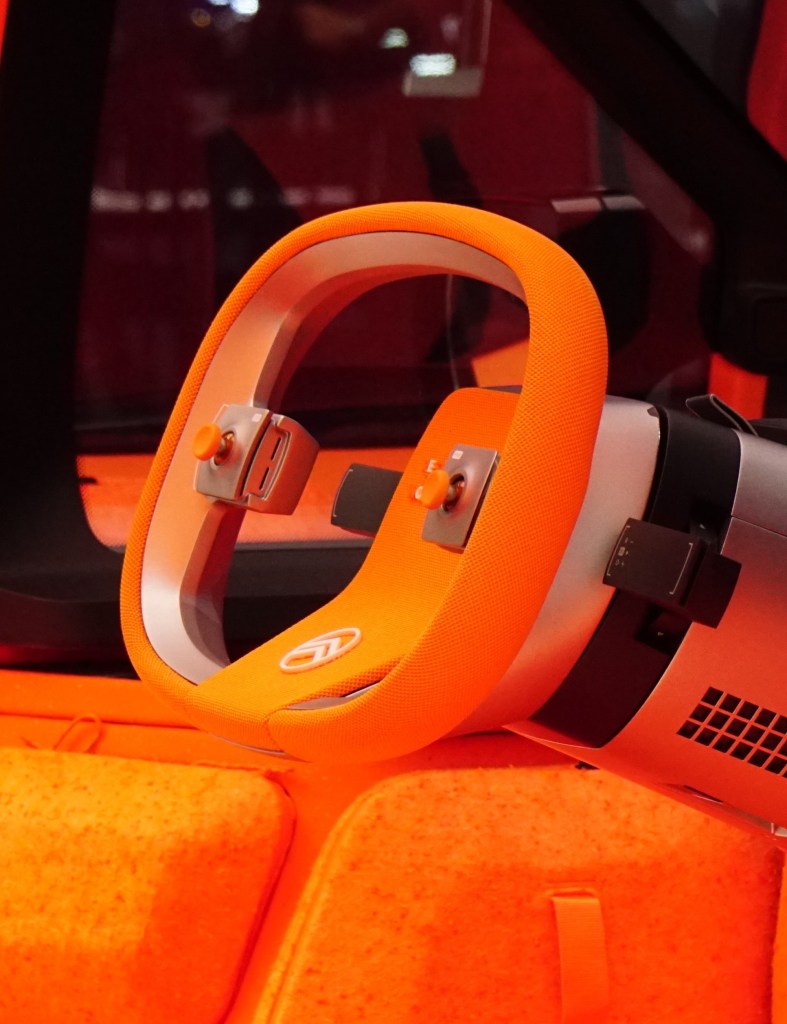
Pierre presented the ELO to us, showing the highlights of its design. “We start with a six seater”, with the driver in the center and two seats on both sides. The second row is made of three other seats.”
“Fold two seats under the rear seats and then you can rotate the driver’s seat 360 degrees, either for a good entry or when you want to work. Ideal for people who want to work – our first pillar – in another place than the office.”
Play…
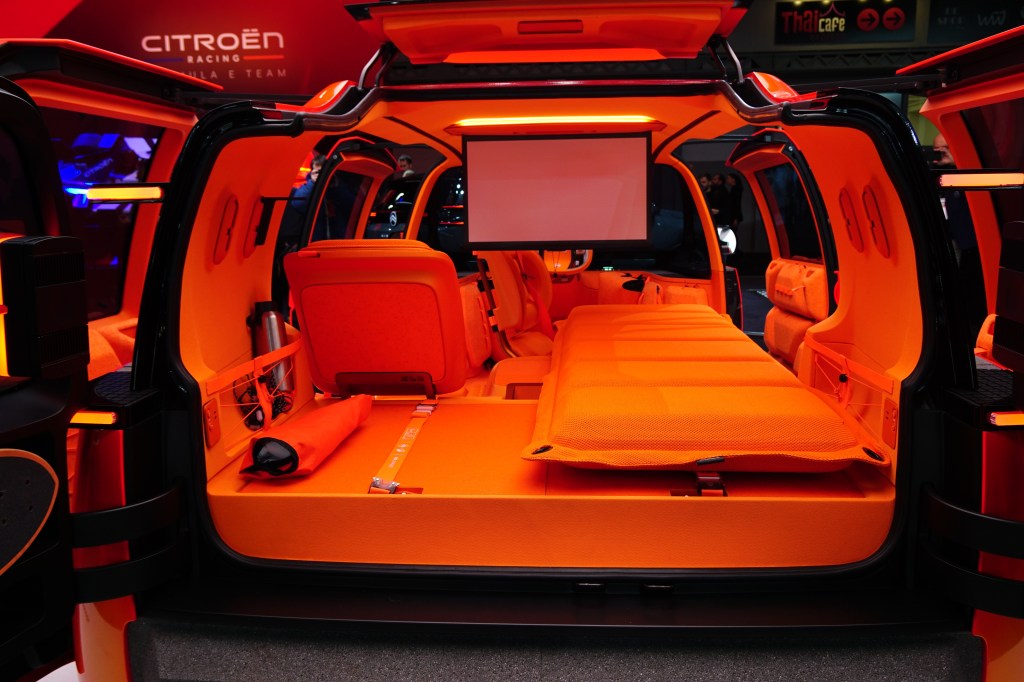
“I told you the second pillar is play”, he continues. “The cooperation with Decathlon was so inspiring and led to new ideas and applications. We developed an app together with them. You can plan your trip, plan your weekend, so that you don’t forget anything that you need, you have electricity and (compressed) air for your bikes and toys…”
Compressed air and electricity for your E-bikes are provided…
Rest…
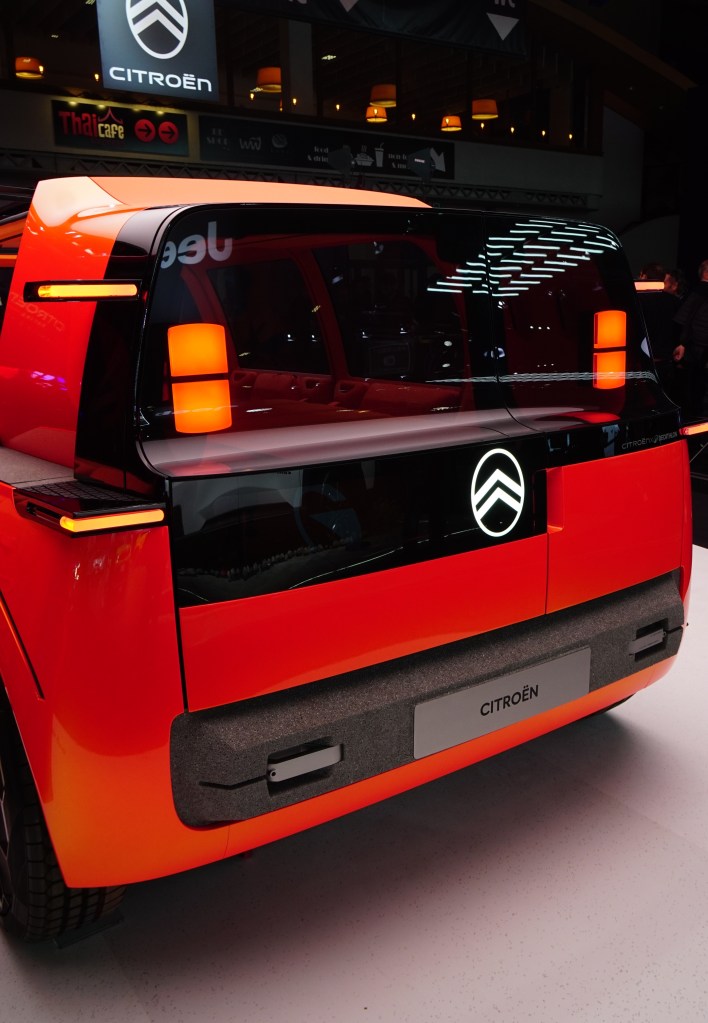
“The third pillar is rest. You fold the seats in the back row, and you have a flat floor. You then use two matresses, again an innovation from Decathlon. You inflate them to have perfect rigidity. We also have a larger screen that can unfold and we have a projector that is on the side of the car, and the little roof opens up at the back of the car to let you look at the stars in the sky.”
We asked him also about the cooperation with Decathlon on this project…
PD: “We liked Decathlon because we carry the same values.” was his answer. “Decathlon is innovating because it makes well designed and well thought products and is not reverting to expensive technologies. We worked together from the beginning to the end on this project, and it was a big learning experience for us.”
What are the futher design hallmarks of the ELO, we asked.
PD: “The car is compact, but has a lot of glass, which is very important both for the driver and people in the back, and more importantly, children.”
Can you tell us more about the materials used, we wanted to know.
PD: “Many materials are recyclable and we even recycled materials from the OLI for this project. Also the interior panels for example. They are also cheap and easy to replace when scratched due to intensive use…”
You took advantage of the EV architecture, we remarked…
PD: “Indeed, we could maintain very compact dimensions whilst offering much room. We could move driver forward, even putting him in the centre.”
We will see much of these solutions in forthcoming models?
PD: “Yes, this concept car is a laboratory of ideas, there is not one idea which we will not try to put into production. Of course, this is the beauty of our craft, of being a designer, is to make and develop many projects, and to put them on the road, and last but not least to sell them, because these concept cars are not made for us, but for the cliënt.
Needless to say it was a big pleasure for us to meet up again with Pierre Declercq, and see and admire his stunning concept car, the ELO.
In the next report on the Brussels Salon we will talk to Robert Lesnik, Director Exterior Design Mercedes-Benz and Oliver Löcher, Vice President Vehicle Engineering and Overall Vehicle Functions Mercedes-Benz Cars. Stay tuned!
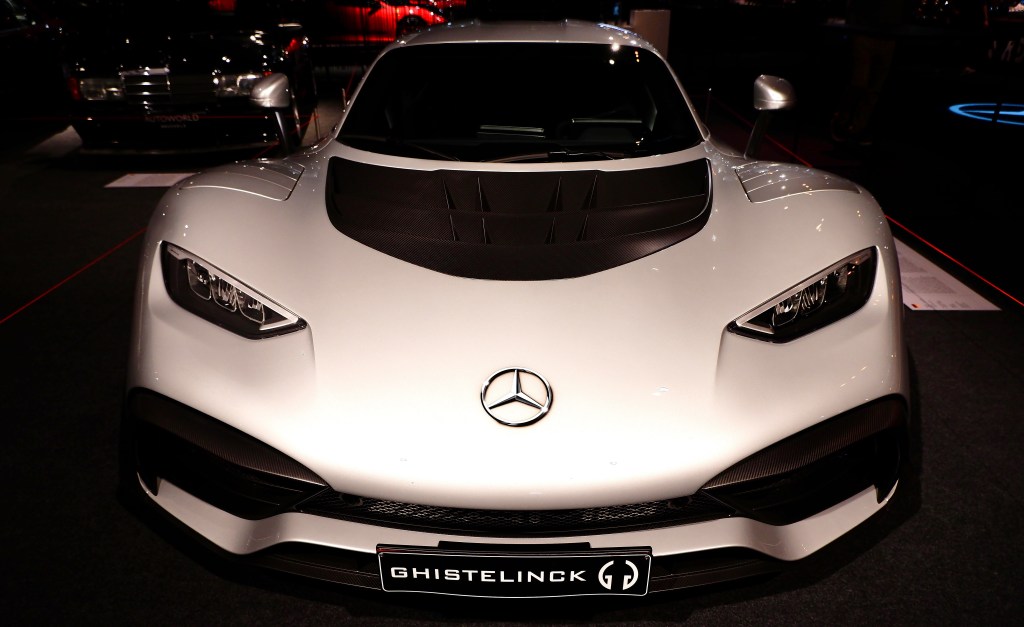
The exhibition retraces this remarkable story, from the very first three-wheeled Benz (1886) to the spectacular AMG ONE, here on the photo.
The magnificent Autoworld Museum traditionally ends the year with a major exhibition. This year, the house with the good star, Mercedes, takes centre stage. You can admire all the cars which made the brand truly legendary, and this until 22nd of February 2026.
Indeed, Mercedes has quite something to celebrate: not only is the brand now 140 years old, but it celebrates also the 100th anniversary of the merger between Daimler and Benz.
The exhibition retraces this remarkable story, from the very first three-wheeled Benz (1886) to the spectacular AMG ONE. More than fifty vehicles, including several rare highlights, are brought together for the first time in Belgium, displayed across thematic zones that reveal the many faces of Mercedes-Benz.
We attended the press evening, and of course we took our Fujifilm camera along the exhibits. We show you here some remarkable cars, but you should definitely put a visit to Autoworld, housed in the magnificent Cinquantenaire monumental site.
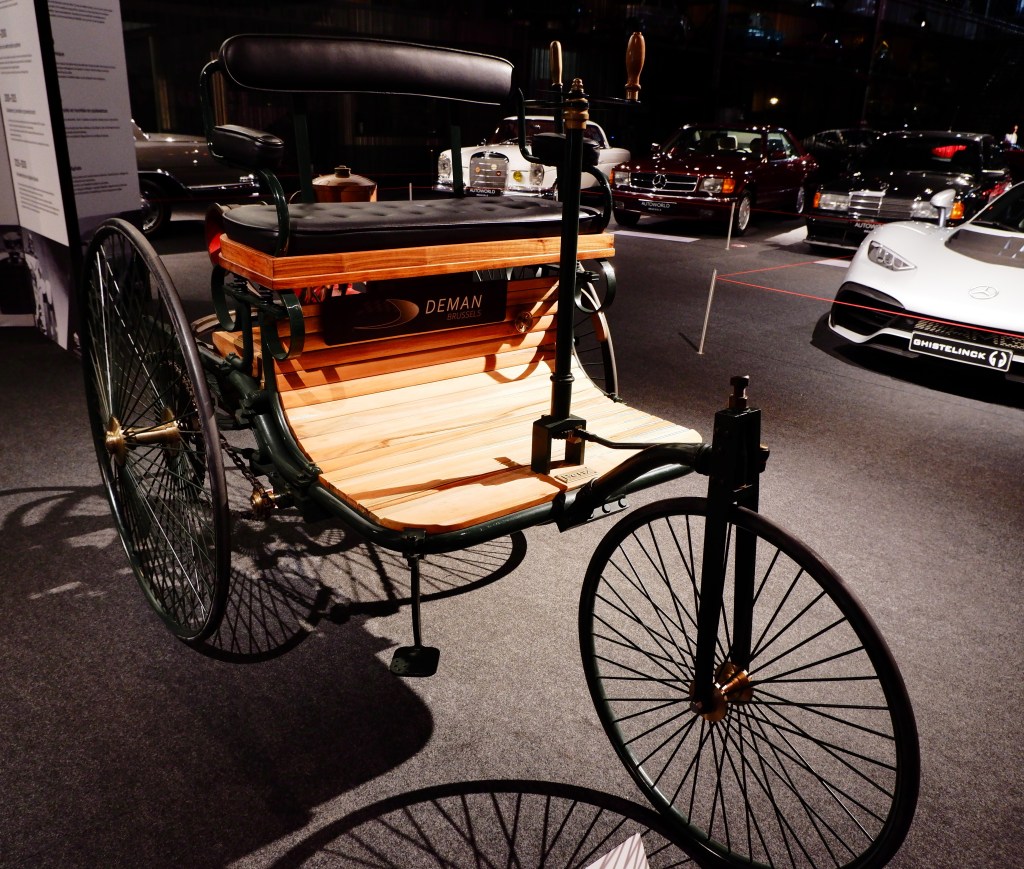
You can start your tour with the 1886 Benz Patent-Motorwagen Replica. A replica indeed, as Mercedes had 100 replicas build in England, to celebrate the 100th birthday in 1986.
Carl Benz (1844 -1929) built the car and it contained quite a few novelties: fully elliptic springs were used at the back with chain drive on both sides. A simple belt system served as a single-speed transmission. The four-stroke engine was extremely light for the time, weighing about 100 kg. A large horizontal flywheel stabilized the power output. Nevertheless, Benz was cautious, and opted for 3 wheels because he was… as an engineer not really familiar with a 2-wheel steering mechanism (!). The vehicle was awarded the German patent number 37435, applied for on 29 January 1886. Everyone knows about the drive which his wife Bertha Benz made with this car to visit her mother. The first fully-fledged automobile drive ever… when you see the car in the flesh, you wonder how on earth this was ueberhaupt possible.
The unique Mercedes DNA was soon established…
When you stroll a few meters further, you stand eye to eye with a magnificent green 1937 Mercedes-Benz 540 K Sport Cabrio A (W29). The car was originally delivered to Alfred Krupp , and was early after the second world war sold to Prince Bernard, the husband of Queen Juliana of the Netherlands. Since he wanted his cars to be green, it was resprayed in his favorite color.
It was sold to a Swedish owner in 1953. Around 1990, Daimler-Benz meticulously restored the car to its original specification. The current owner has cherished this remarkable automobile since 1995.
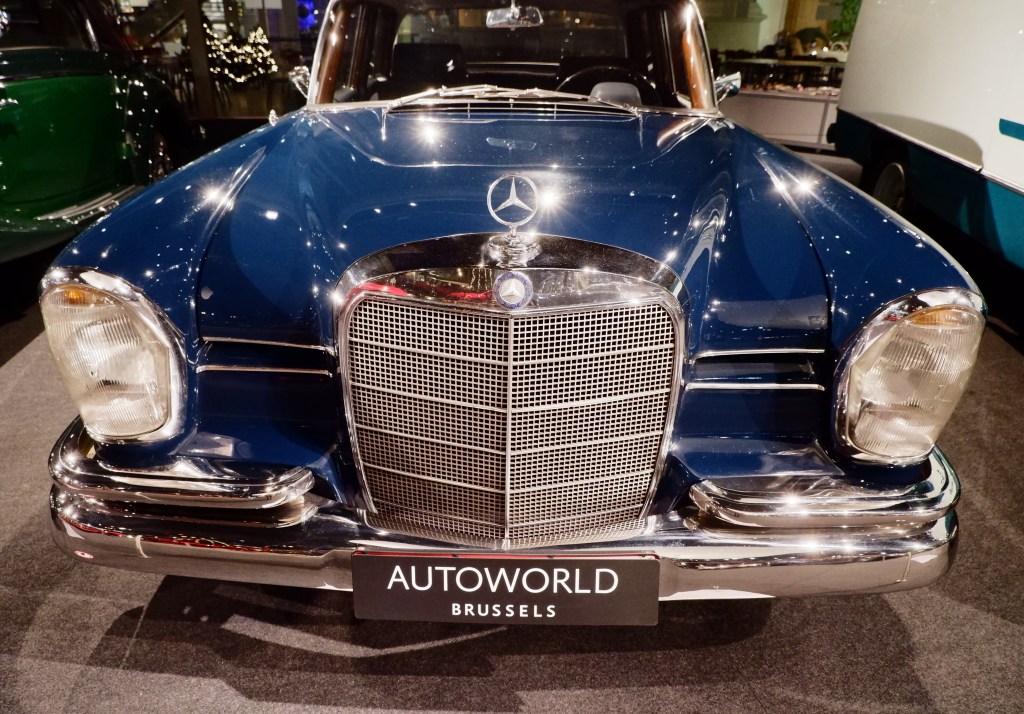
Alongside the 540 K stands a 1961 220 S (W111) “Heckflossen”. This nickname stemmed from the rather timidly styled rear fins, which Mercedes apologetically commented as “helpful for parking”. This 220 S was revolutionary for its “safety cell”, truly representing a milestone in car design where front and rear crumple zones absorbed kinetic energy on impact. F1 Racing car engineer Rudolf Uhlenhaut had a major hand in the design of suspension and refining the handling of this beautiful car, and since my father owned one in these days, it is a car in which I learned to drive expertly. I still love the specific handling of this car, and I vividly remember a long drive with a 230 S “Universal” together with Autoworld Curator Leo Van Hoorick to visit the German Mercedes Benz museum, where I could enjoy behind the wheel the wonderful performance and stability in fast corners and at speed of this car. I think Leo fell immediately in love with this very car, and soon after he bought this car from the Mercedes Benz Belgium collection…and still owns it!
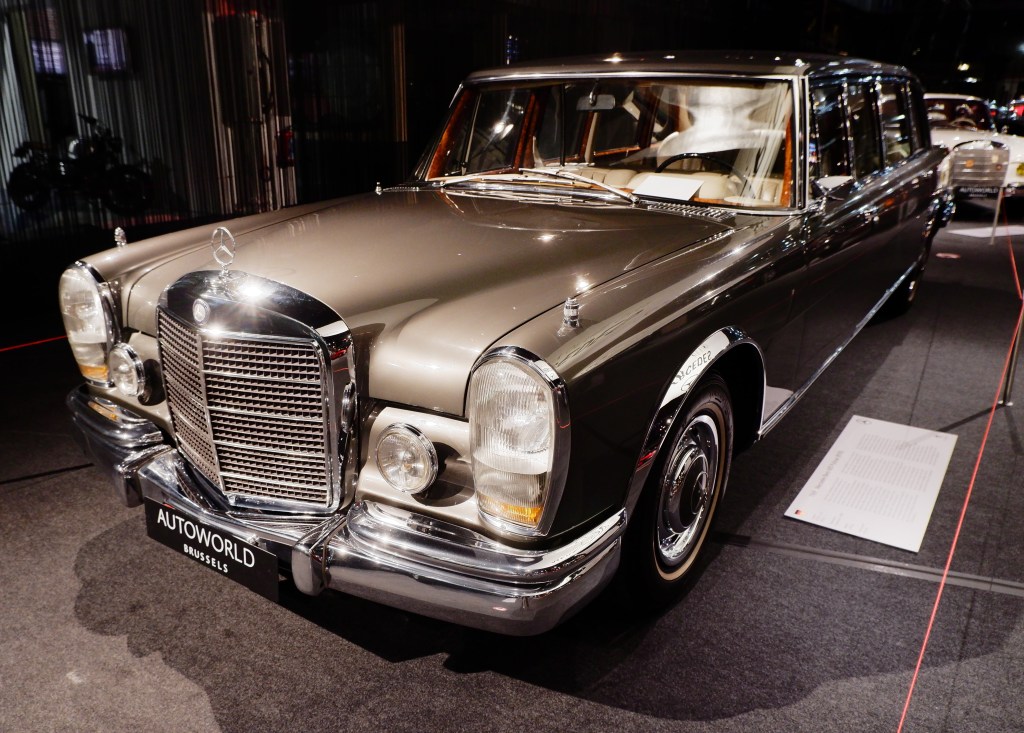
Royal transport: the 600 “Pullmann”
Strolling a bit further, one stands eye to eye with royal transport. Indeed, this car has served exclusively at the Belgian Royal Court, and is known as the “King Baudouin.”
This car, designed by the Frenchman Paul Bracq, (he also designed the iconic “Pagode” 230 SL) did not undergo a single modification during its 18-year career, undoubtedly due to its modern styling. It is equipped with air conditioning and a hydraulic system that controls, among other things, power steering, braking, and the hydraulic windows. Production began in 1964, and more than 600 variants were built until 1972. The production continued, albeit at a slower pace, until 1981. In total, 2,677 units were produced of which 487 long-wheelbase Pullmans. (overall length 6,240 mm).
A F1 Mercedes for the road…
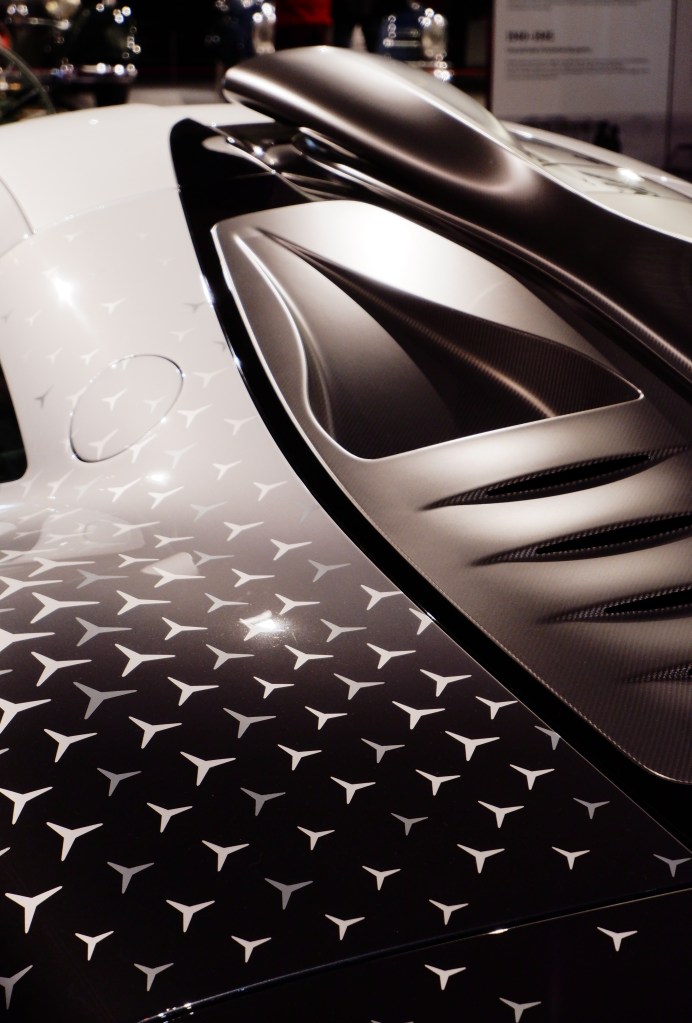
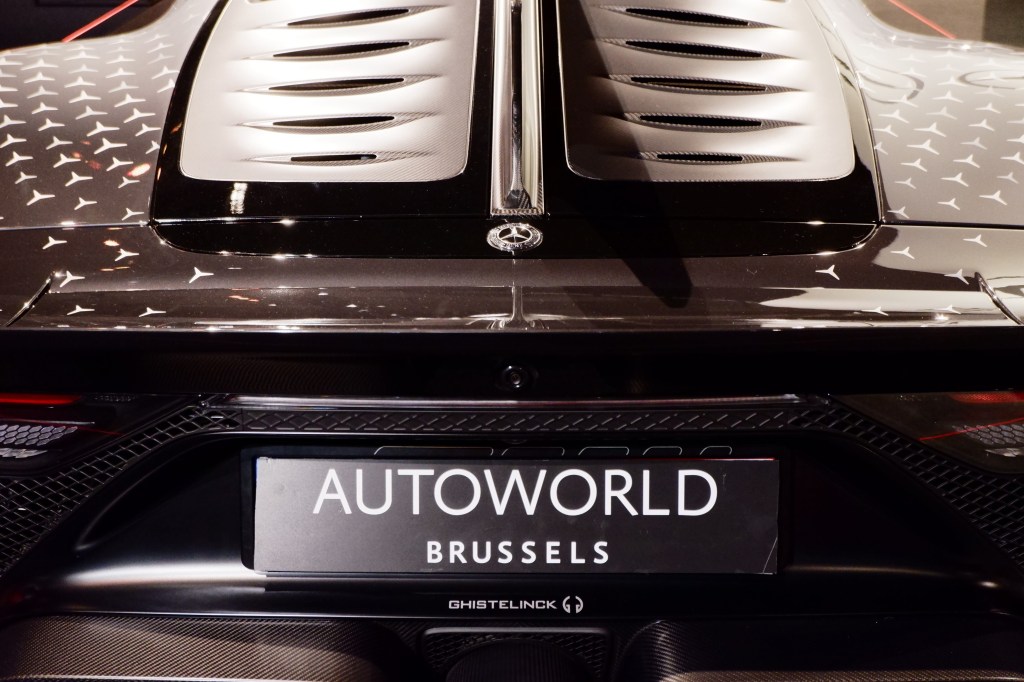
Sensational to admire is the 2025 Mercedes AMG-One. It is a hybrid supercar, nothing else actually than a F1 car adapted for road use. Behind the driver rests a 1,6 litre V6 turbo engine sourced from the Mercedes F1 car. But that is not enough: it also has four electric motors, which results in a total power delivery of 1062 HP and a top speed of 352 km/h. All this is not exceptional anymore in our dizzying EV age, but it stays quite impressive of course. The car made its debut on the 2017 IAA show in Frankfurt, but putting this complex drivetrain into production appeared to be a quite formidable task. So series production actually started only in August 2022. Only 275 units were planned, and of course they were completely sold out long before actual production began. The demand for this car was far higher, but AMG and Mercedes maintained the original production run, also to keep the car very exclusive.
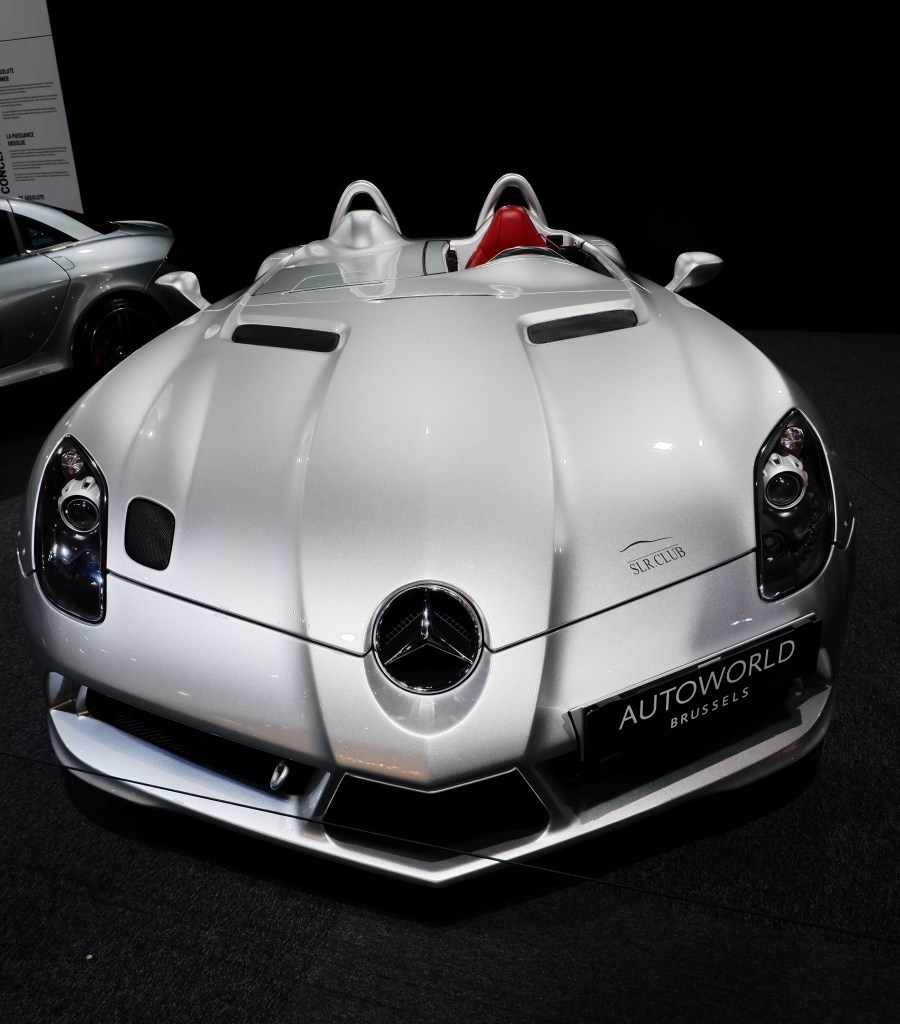
A tribute to Stirling Moss: the 2009 Mercedes-Benz SLR McLaren “Stirling Moss” (R199).
Your servant has vivid memories of this iconic British champion when he participated in the historic Mille Migilia in the official Mercedes factory team, alongside Stirling Moss. Together with my father, we drove the works 180 D “ponton”, which was far more comfortable and cooler that the 300 S Panamericana which Stirling Moss steered along the 1000 mile course. “You were having fun”, he commented, “you could drive virtually the whole course flat out!”
We like the panache and the contours of the car here which is built in his honour. Stirling drove this car on the 2009 Goodwood festival of speed.
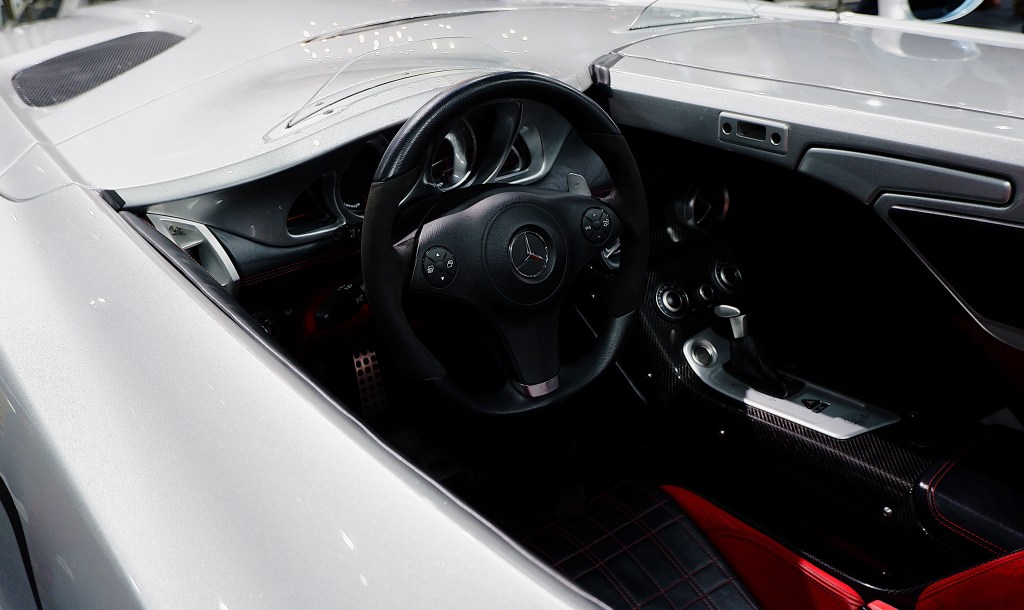
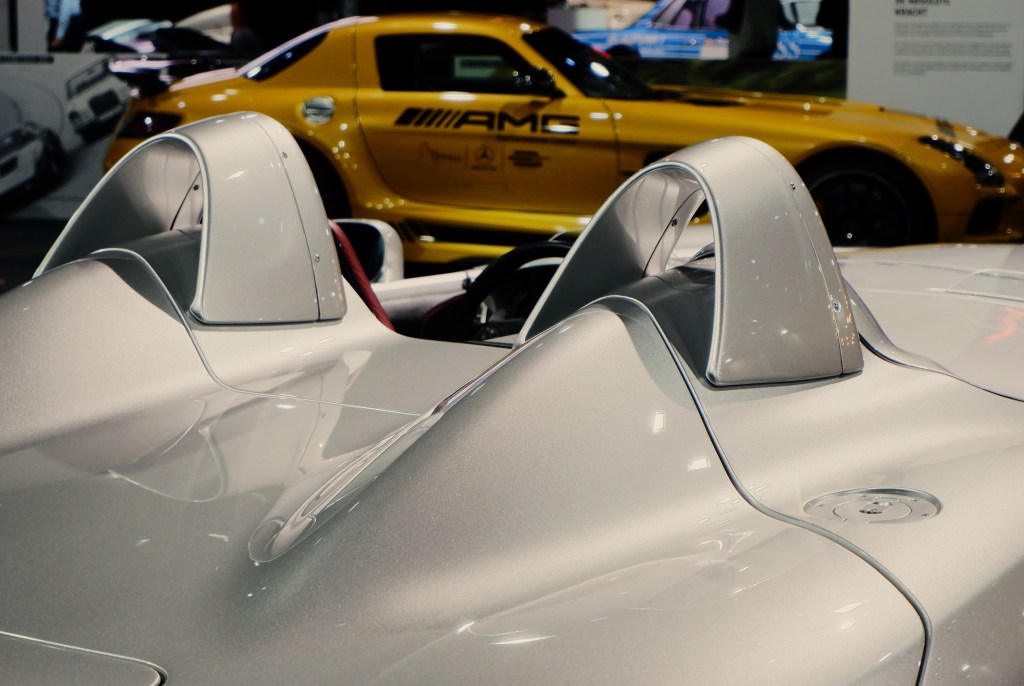
This limited edition variant uses a speedster styling that does not include a roof or a windscreen. The car is designed by Korean designer Yoon Il-hun and is of course inspired by the 300 SLR race car. The SLR Stirling Moss was to be the last series of the McLaren SLR built under the partnership between Mercedes-Benz and McLaren.
he car is approximately 200 kg lighter than the standard model thanks to carbon fibre construction and speedster styling. All 75 cars planned to be produced were completed by December 2009. It was available only to the existing SLR owners and each car cost in excess of US$1 million. This one was driven and signed by Stirling Moss in Goodwood in 2009….
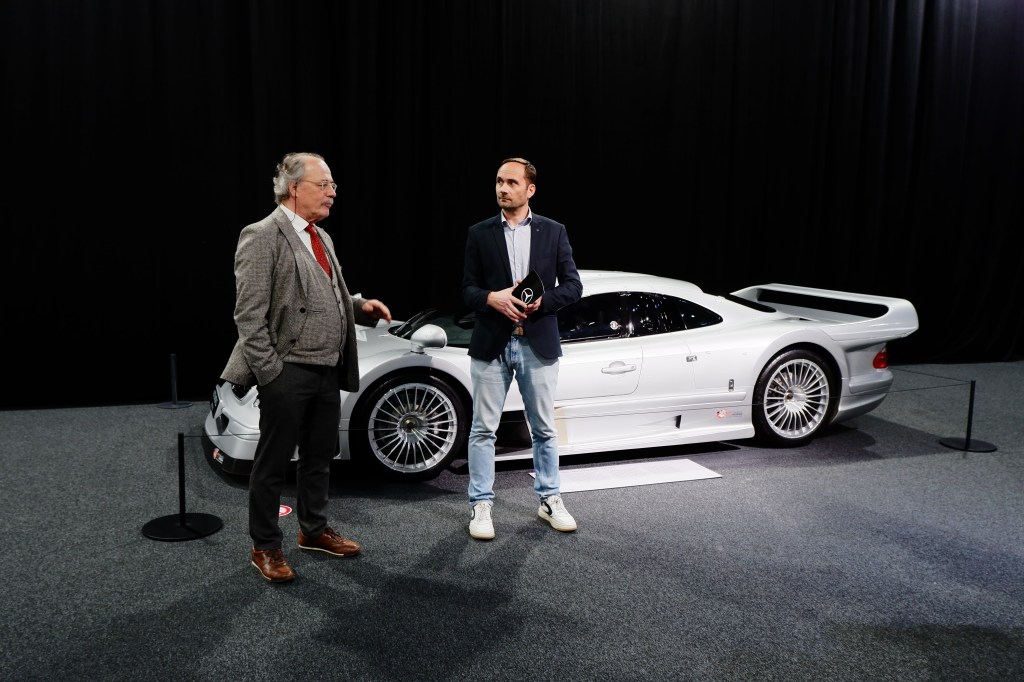
Autoworld curator Leo Van Hoorick (left) and Mercedes Benz Cars PR Bastien van Den Moortel guided us expertly through the exhibition…
But of course there is much more to be seen of stunning Mercedes cars in Brussels Autoworld. As said, the exhibition runs until February 22nd. Not to be missed…
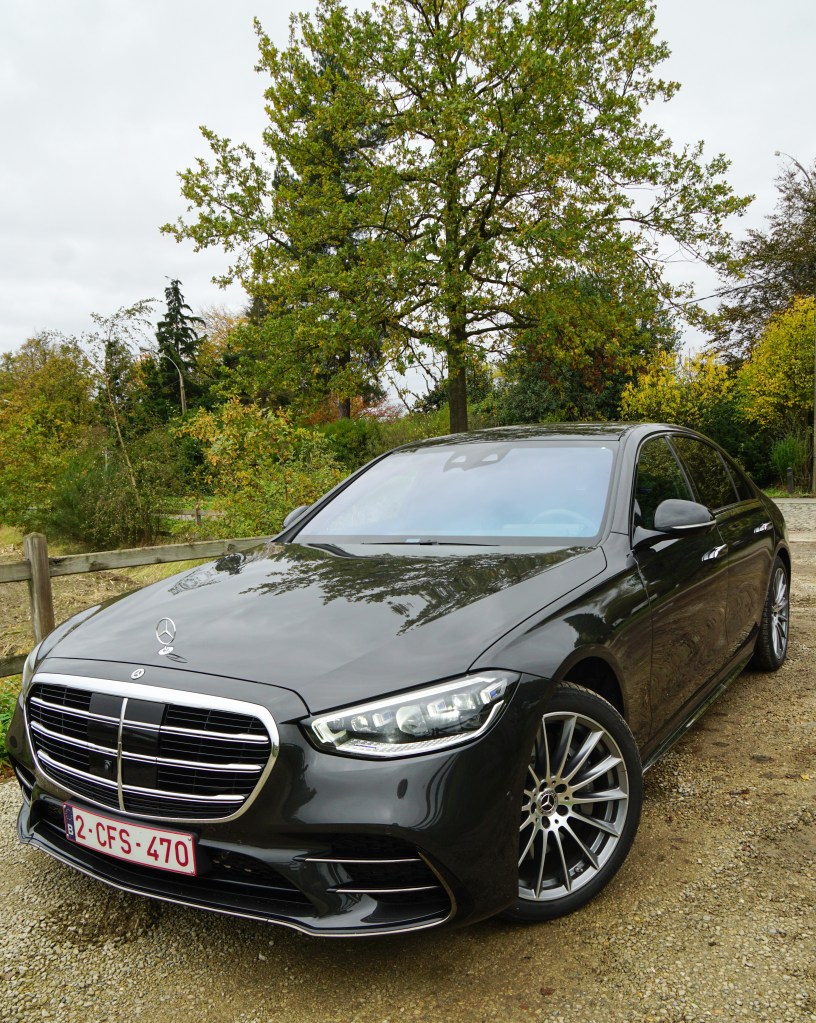
The Mercedes S-Class has been the benchmark of luxury limousine comfort since 1972. Now we are at the W223 series, and it is still unsurpassed in terms of comfort, workmanship, mechanical and electronic excellence, and last but not least, panache.
Our test car is the plug-in hybrid version of the S-Class, designated as the S 450 e. Furthermore, we drive the “L” or long version, which, of course gives you totally superb rear passenger comfort.
Don’t think that this imposing S Class version will be difficult to drive in town: thanks to the rear-axle steering (optional) the turning circle of the S-Class is reduced by up to two metres. The steering angle at the rear axle goes up to 10 degrees…The steering is also surprisingly direct: only 2 turns are needed to steer from full right to left.
Stepping behind the wheel in this magnificent limousine will however still require some caution, certainly if you wear a hat. The a-pillar is raked rather steeply for good aerodynamic reasons, but this means that you will still have to tilt your head slightly…
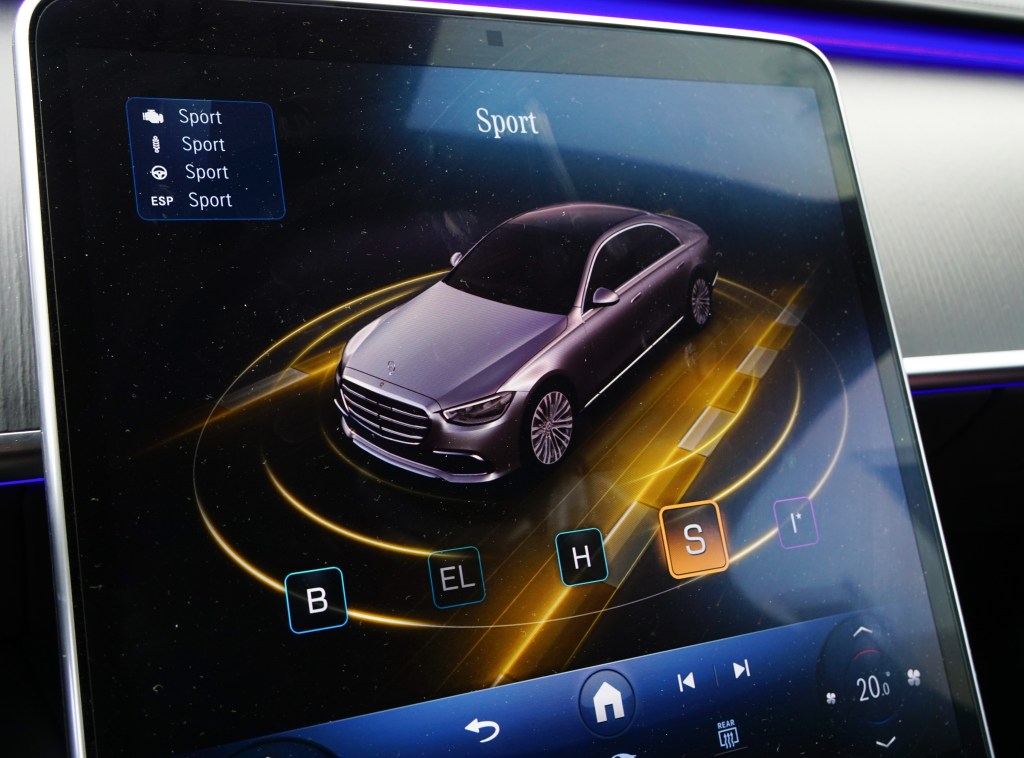
Once your are sitting down you are enveloped in superb somfort. The front seats have a 4 way back support, electronically adjusted, and of course there is a whole (optional) massage program waiting for you, just touch the “comfort” symbol on the large central control screen and you can choose your favorite session…
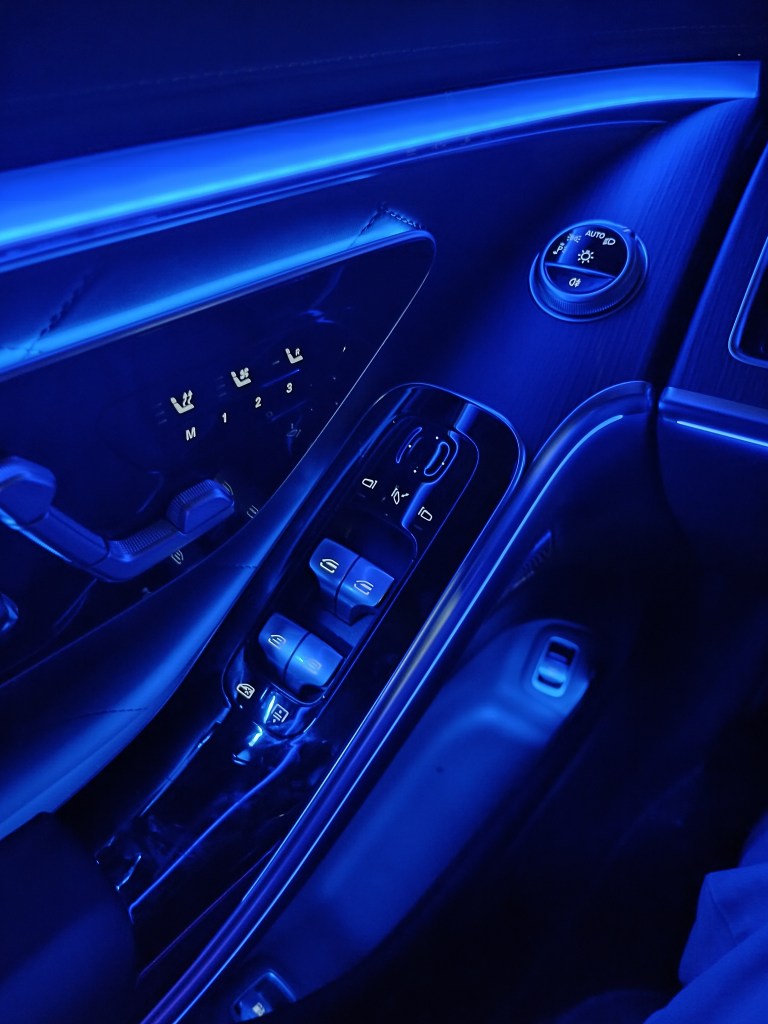
You can also opt for an active “multi-contour” package, which gives you extra lateral support when you are cornering at speed. The cabin bathes you in a wonderful light ambiance, which, of course you can adjust at will.
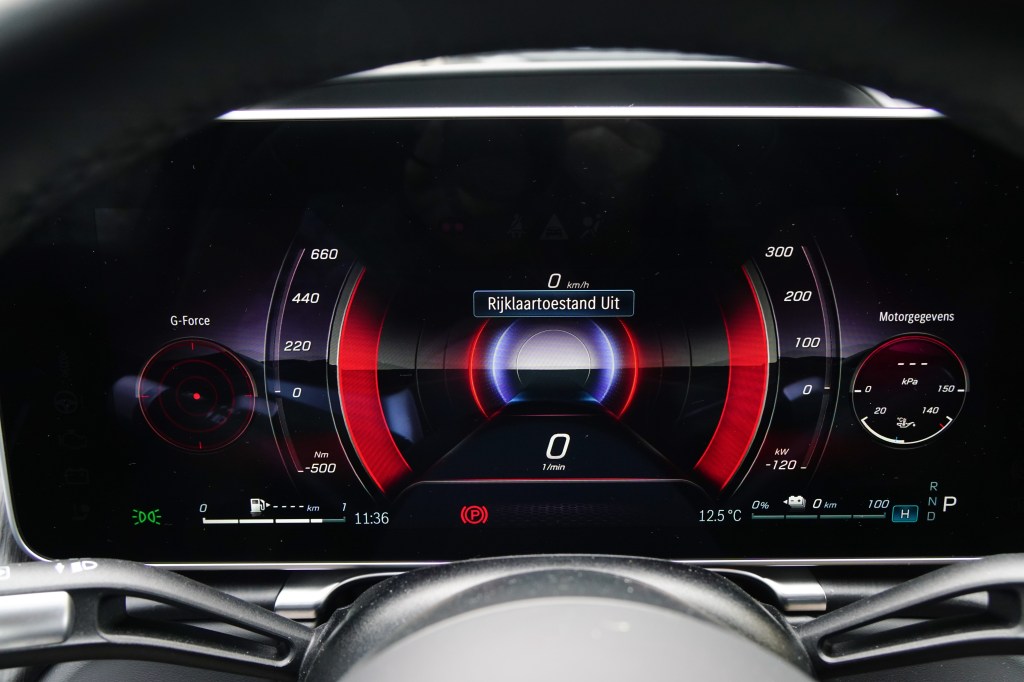
The instrumentation is clear, the immense screens both in front of the driver and the central screen are largely self-explanatory, although we would still suggest that you take some time to get acquainted with all its wonderful features.
Superb and ultra-refined performance…
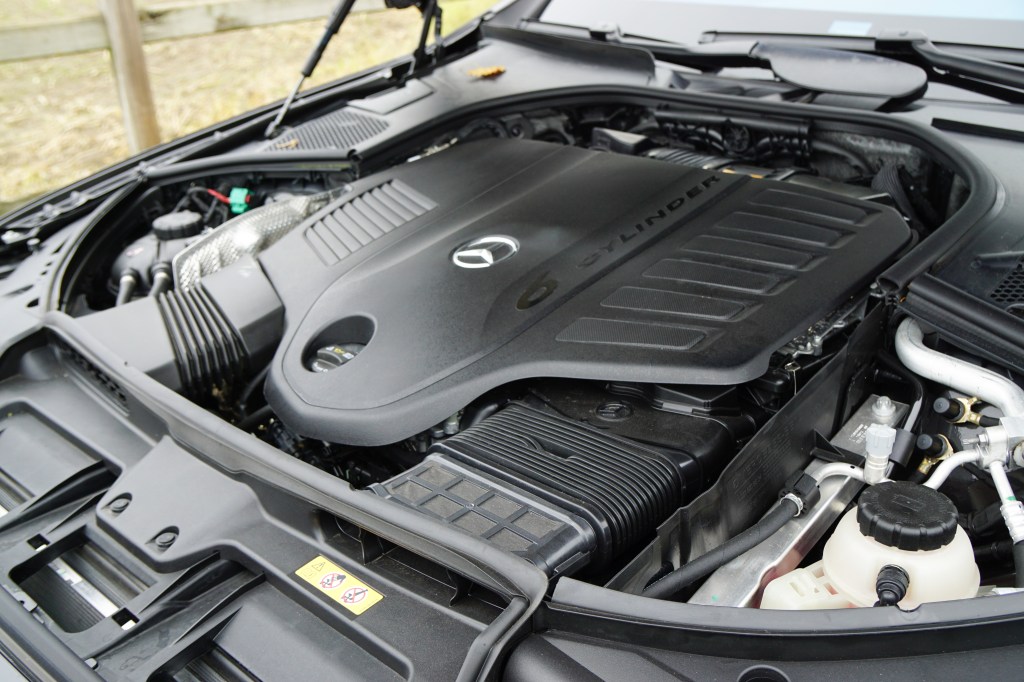
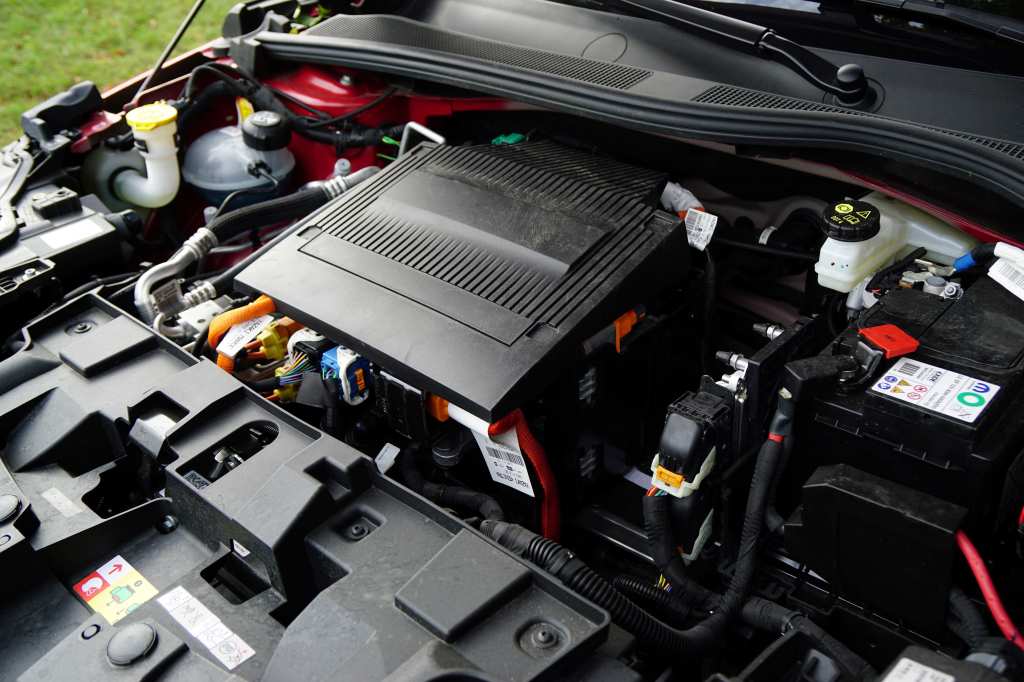
The fourth generation of the hybrid drive celebrated its premiere in the S-Class in 2021. The present 450 e version has a 3 litre straight-six cylinder under the hood, developing 220 kW or 299 hp, combined with a rather powerful 110 kW or 150 hp electric motor. The battery is not enormous with 21,96 kWh, but powerful enough to give the 2,5 tonne “e” S-Class a range between 105 and 70 km.
:
You can calculate it for yourself on the simulator which you can find on the Mercedes website.
We show you it here in two screenshots: assuming 35 % of the trip made on the Autobahn, the electric only range with an outside temperature of 20° is 100 km, when the ambient temperature drops to 10°, the range drops to 77 km. Quite sufficient in our opinion to perform a daily commute on E-power…
You can charge the battery with a maximum power of 60 kW, and on an ordinary wallbox or public charging point (Max 20 kW on DC) you can charge the battery from 10 to 80 pct in merely 20 minutes.
The outright performance leaves nothing to be desired: this S-Class will sprint from 0 to 100 km/h in merely 5,9 seconds. The top speed is electronically limited to 250 km/h.
But the beauty lies of course, in the smooth way all this performance unfolds. The electric engine is totally inaudible, the 6 cylinder 3 litre engine is ideally balanced and vibrationless, and only a soft purr is heard when accelerating hard. The engine is mated to a smooth and alert 9G-TRONIC Plus automatic gearbox, which makes imperceptible gear changes. You have gearchange paddles at the steering wheel, but with 9 gears to choose from, one is soon overwhelmed… and we chose to let the clever gearbox do the work. The 9th gear allows very relaxed cruising at very low revs. At 120 km/h, the engine exceeds barely 1500 rpm.
Consumption is, of course, very much in function of the battery status, or rather, whether you drive on e-power or not. The WLTP standard consumption is officially quoted at 2,4 l/100km. The manufacturer’s official figure for average e-consumption is 17,4 kWh/100km, which I find a rather more realistic indicator. On the open road, your flagship is still quite economical, due also to its excellent aerodynamics: it has a Cw coefficient of merely 0,22. When you drive at fast cruising speeds, the consumption hardly exceeds 11 l/100 km. Town driving will cost you around 10,5 l/100 km.
Floating carpet comfort…
The S-Class can be considered to be the ultimate standard in limousine driving comfort. It has standard an air suspension with adaptive dampers, and you can opt for E-Active body control, which keeps the car body stable even under very fast cornering. The suspension swallows any road irregularities totally smoothly and this even at very slow speeds, and one truly enjoys a “floating carpet” ride. You can choose between different suspension settings, but even in the “sport” mode the ride remains totally smooth.
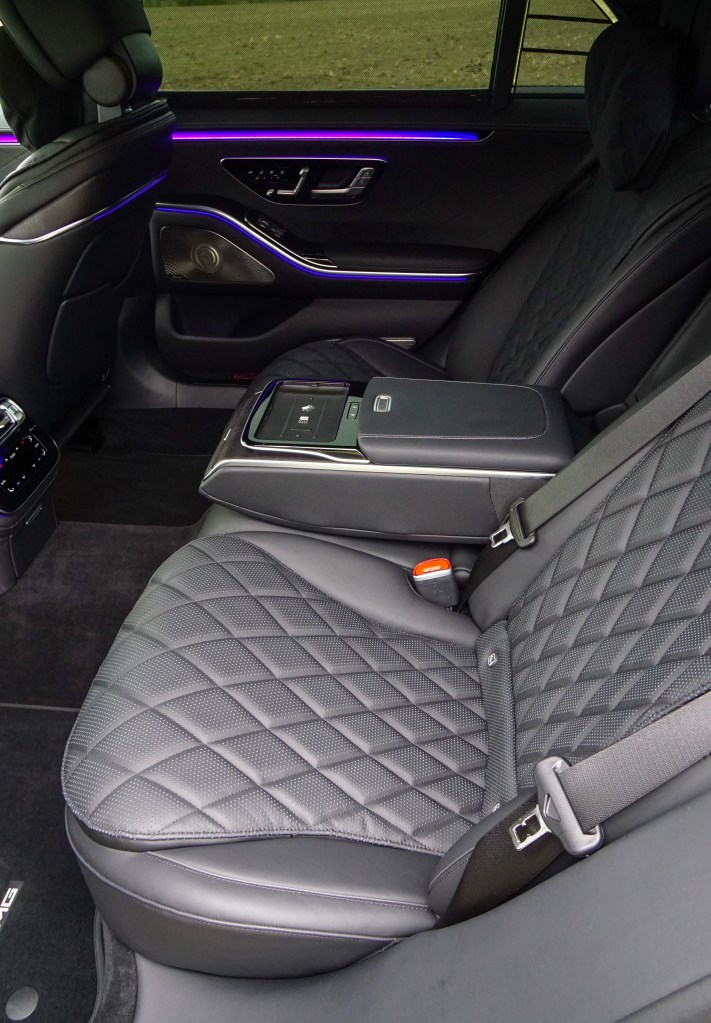
Heating and ventilation are also in a class of its own. Two-zone airco is standard, but you can opt for four-zone airco. Of course the rear passengers are spoilt too. You can obtain all conceivable extras, from heated side panels to heated and ventilated seats fore and aft, dark window curtains at the rear; you name it..
Infotainment reaches into the stars…
Mercedes is quite proud of its MBUX infotainment system, and deservedly so. As we said above, the system is quite intuitive, provided you take the effort to study the system and carefully go through all the menus. The indications are chrystal clear and seen on a massive 12,8 inch central touchscreen.
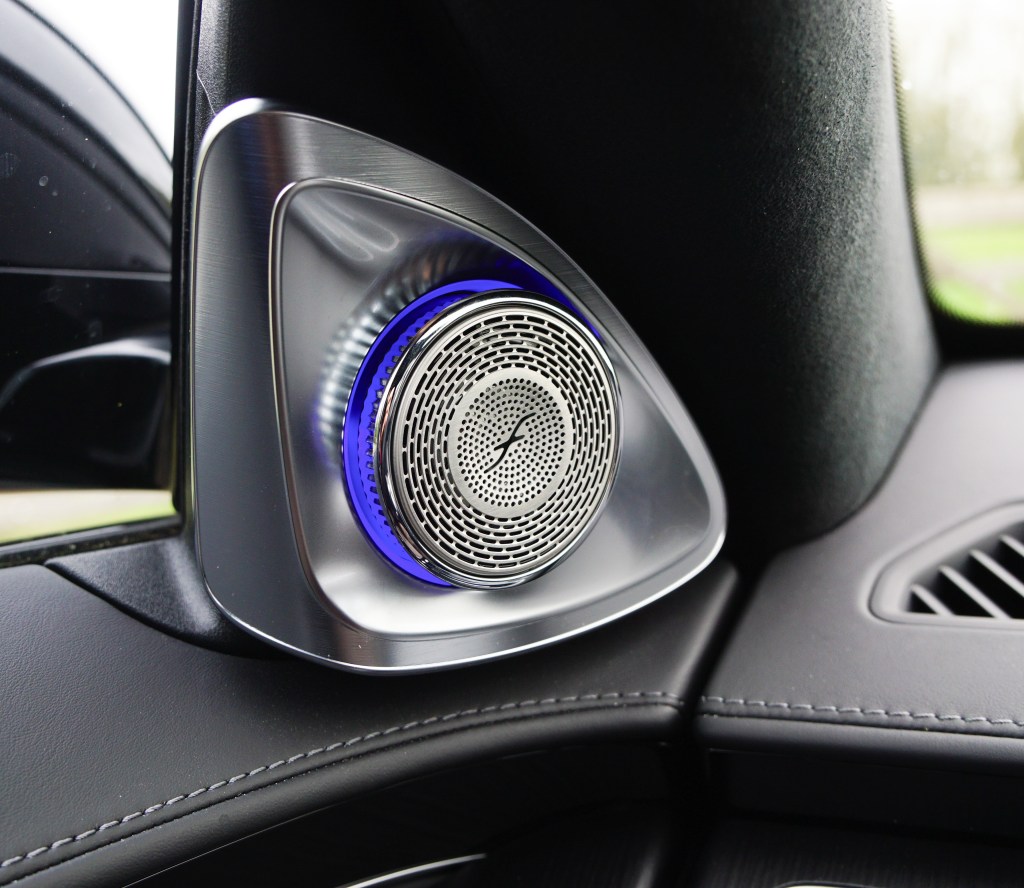
The sliding volume control for the superb Burmeister (31-speaker!) sound system takes some practice, but soon you become a master at it. You can also choose the instrument layout on the screen in front of you, and the overhead display of our test car was also eminently readable. You can also enjoy the optional augmented reality feature on this display, which shows you, with clearly visible arrows, which route to take…
This flagship Mercedes was updated last year, and has further optimized the MBUX user interface: suggestions for assisted parking are now located more intuitively in the menu. The Mercedes-Benz Automatic Lane Change (ALC) function now offers a further intelligent development: if a slower vehicle is traveling ahead, the car can initiate a lane change itself.
Indeed, if the radar recognizes sufficient open space and lane markings are detected, it can overtake the slower vehicle in front… fully automatically(!). The prerequisites are a motorway-like road with at least two lanes and a speed limit as well as a vehicle equipped with MBUX Navigation. The system does not require any further input from the driver to carry out the automatic lane change. Brave new world, we would say…
Let there be light…
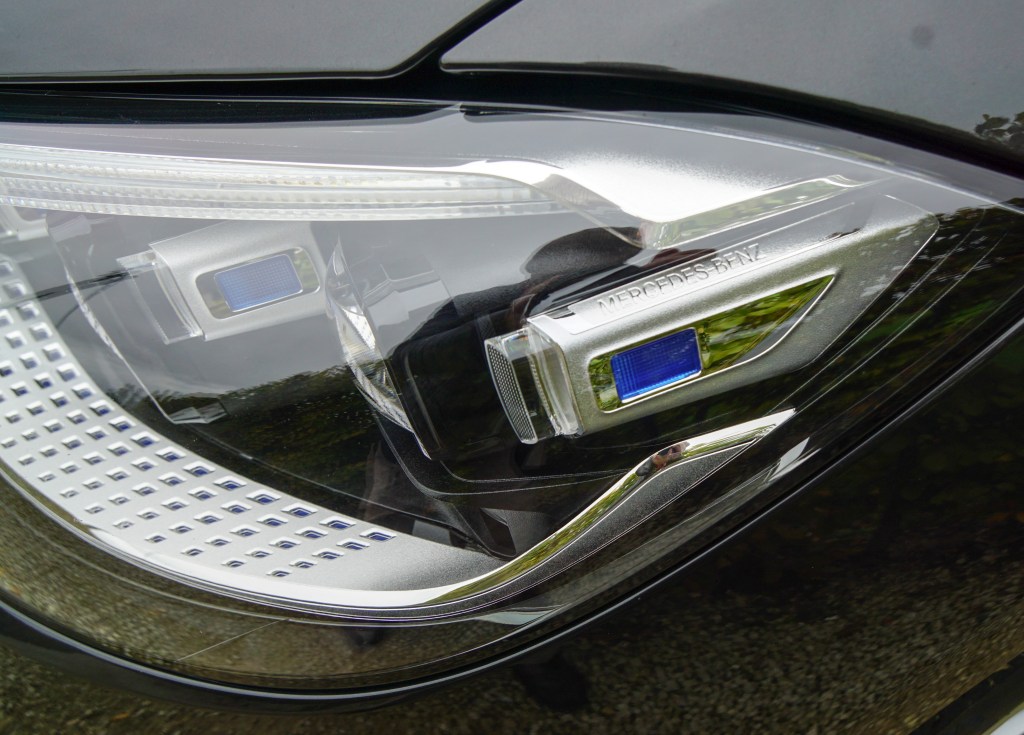
The LED headlights are state of the art, with light shining in bends, combined with excellent long-range visibility with dynamic headlight assistant and extra powerful LED elements. The headlights shine up to a distance of … 650 meters (!).
The Long version of the 450 is as you can expect enormously spacious at the rear. But also in front there is enough head- and legroom for 2 metre tall adults. Boot space is of course also sufficient with 450 liters. Conclusion
The Mercedes S Class continues to be the absolute benchmark in luxury, mechanical and electronic perfection, comfort and sheer performance. Add to this the legendary quality seen in the perfect fit and quality of the materials used, and you know that this car is built for a lifetime of superb motoring.
Of course, all this doesn’t come cheap, even more so when you take into account the long list of optional extras.
But then, when one reaches the pinnacle of what a series production luxury saloon can embody and represent, it is still quite reasonable when compared with exotic supercars…
Hans Knol ten Bensel
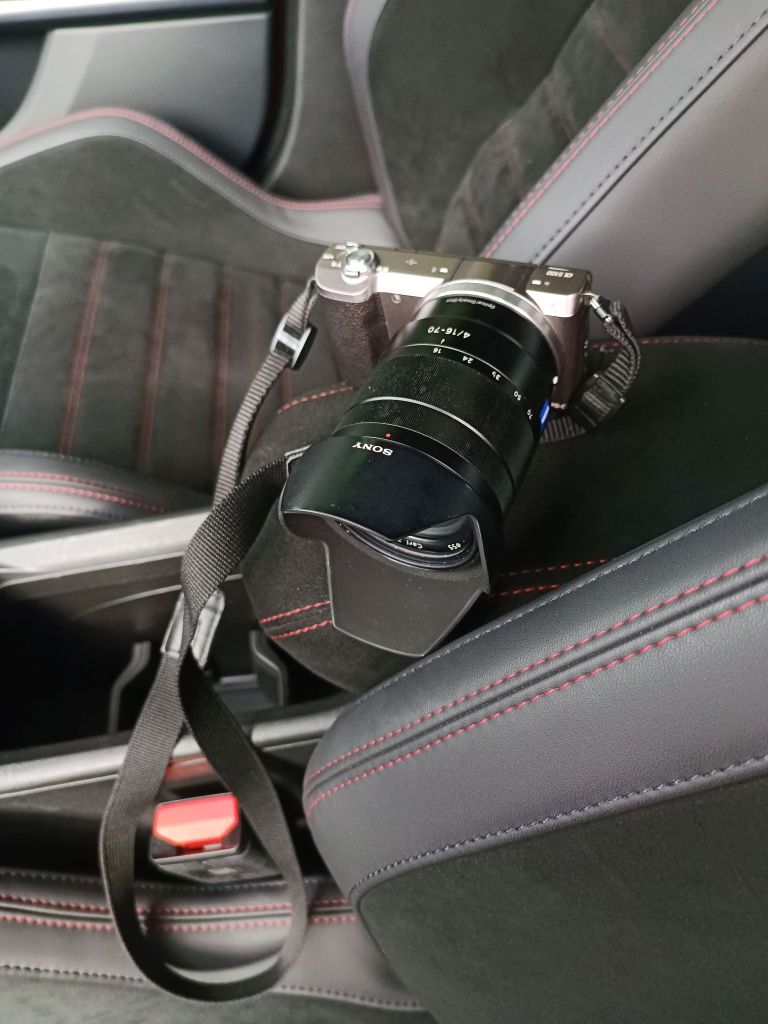
Photographer’s notes: I used for this test exclusively the Sony Alpha 5100 with the Zeiss Vario Tessar E 4/16-70 ZA OSS lens,again proving to be the ideal companion in difficult low light conditions. One exception, however, is the photo of the driver’s door under the blue ambient lighting. It was taken with our Xiaomi 11T smartphone at f/1.8, handheld at 1/9 sec, with ISO 7800. Proving again how formidable today’s smartphones have become. As the photo was taken in the darkness of an underground garage, we overexposed it 3,3 times using the “pro” mode on our phone to get details of the door and cabin surfaces. The photo below of our Sony camera with its Zeiss lens was also shot with our Xiaomi 11 T. F 1,8 at 1/60 sec with no exposure compensation.
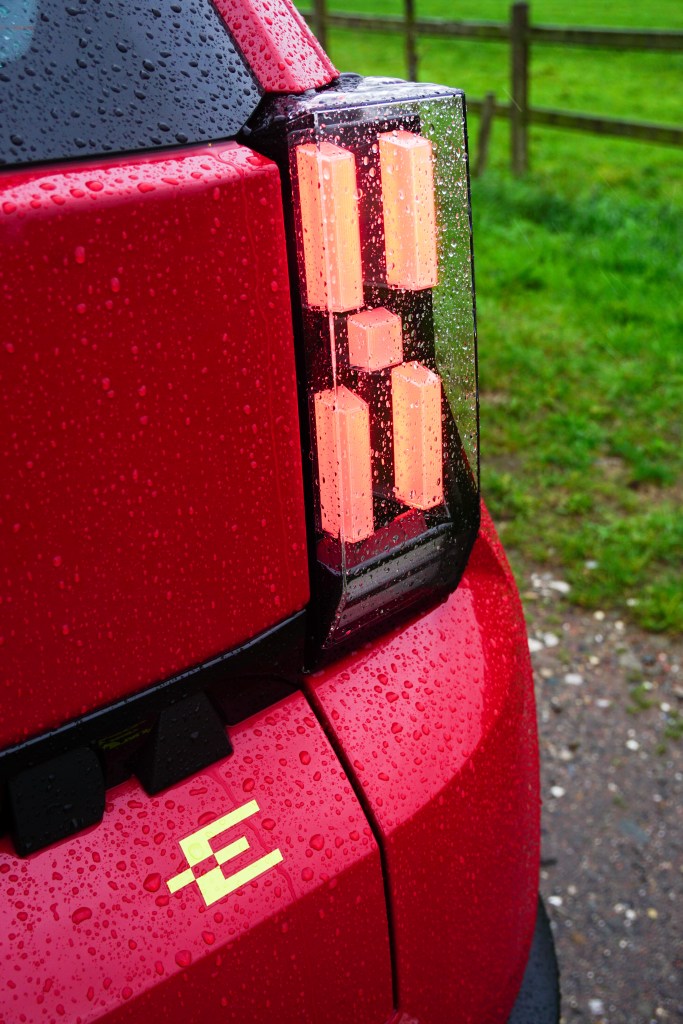
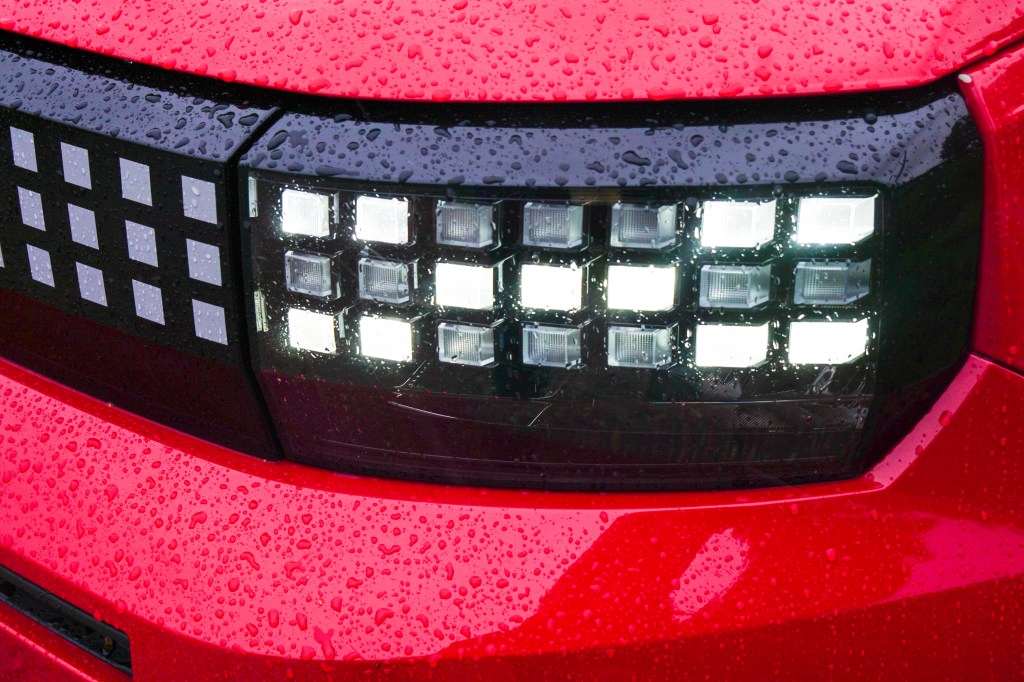
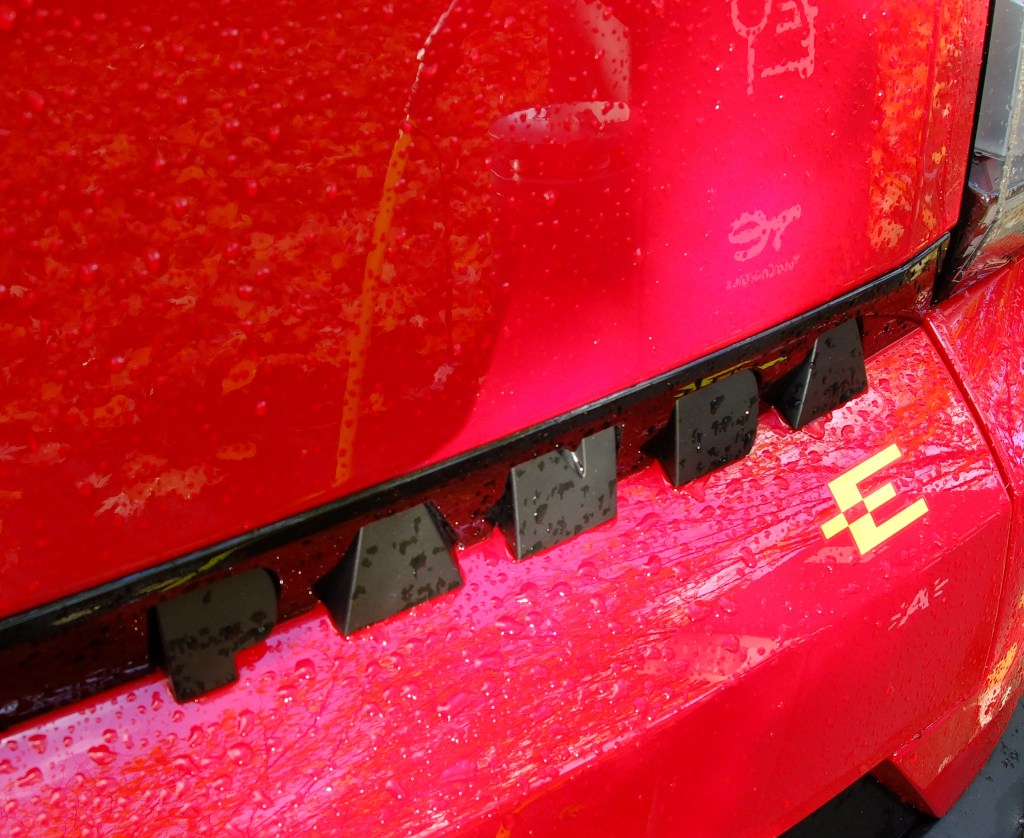
Italy is the birthplace of style and elegance, and this Grande Panda truly shows it. We personally love it and both the exterior and cabin styling solutions have won our hearts. It truly stands out in character and practicality and shows many competitors how a compact B-segment car can also be designed and built.
The Grande Panda Elettrica runs on the Stellantis compact EV platform, which it shares with the Citroën C3 (Aircross) and Opel Corsa/Frontera.
It has a 44 kW battery, and a 83 kW/113 HP electric motor. Perfect for town driving, where the less ideal aerodynamic boxy bodywork doesn’t spoil the fun. This means that in town, a practical range of some 300 km is quite realistic.
On the open road and certainly on the motorway, you better have a somewhat lighter foot, as the wind resistance pushes the consumption higher into 18-19 kW/100 km, reducing the range below 220 km.
The engineers wisely limited the top speed to some 132 km/h, which is totally reasonable. Cruising around 110 km/h will get you around 250 km useable range. The WLTP consumption is quoted at 16,8 kW/100 km. Charging on an 11 kW charger will cost 4,5 hours from zero to a full battery.
The Grande Panda is very much in its element both in town and on the open road. It steers light and precise, is quite comfortable on city pavés and is also remarkably silent, also at speed.
The electric engine is smooth and inaudible, just a faint whirr is heard when it recuperates energy when slowing down. Wind and tyre roar increase with speed, but it never gets obtrusive.
A model of the original Panda, remembering the banked round curves of the famous “pista” on top of the iconic original Fiat factory in Turin…
Besides the silence and smoothness of the electric engine, one can also enjoy the zest and power offered by the 83 kW motor. It will sprint from 0 to 100 km/h in just over 11 seconds, but actually the intermediate accelerations tell you the whole story: accelerating from 60 to 100 km/h costs slightly over 6 seconds…
Handling is quite good and predictable. This Panda doesn’t mind to drive with speed on winding roads, with good motorway stability also guaranteed.
A pleasant cabin
So much for the driving part. Stepping into the car one enjoys the modern and stylish “ambiance” of the interior. Well done! We liked the styling elements and surface texture of the glove box, the square shaped ventilation openings, the layout of digital dashboard screen and the 10,25 inch centre screen. Everthing is simple, yet there is every information you will ever need.
Of course, no navigation is provided, so the apps on your phone will via Apple Car Play or Android Auto will have do the work. It also pays to have an app on your phone which shows charging stations…
There is plenty of room on the dashboard to put your stuff and the centre console has room for your phone. Two USB C slots are provided in front near the centre console.
We liked the “Panda”lettering on the seats, and the front seats were pleasantly soft and comfortable. We were further seduced by the evident controls of heating and ventilation: three round knobs, which were a child’s play to use… When the battery is charged more than 30 pct, you can even pre-heat your Panda in the morning.
Also in the rear there is enough room for two rather tall adults. The luggage space is also more than adequate with 361 liters, with the rear seat down this increases to 1315 liters. The charging cables have no separate space, so they occupy the boot…
Conclusion
If you are looking for a B segment car which stands out in style, then this Grande Panda is the one to look at. It offers enough room for four adults and their luggage, is a dream to drive in town and will let you tour through Europe in comfort.
Its personality will let you enjoy EV motoring, that’s for sure, and last but not least, the price will also make you smile…
Hans Knol ten Bensel
Photographers’ notes
The photos were taken in abysmal rainy and windy autumn weather, where a camera and lens which performs well in low light conditions is paramount. It also pays to have a chamois at hand to keep your camera and lens dry..
We used again our Sony Alpha 5100 with the Zeiss Vario Tessar E 4/16-70 ZA OSS lens, and it delivered again wonderfully with sharp photos having good contour contrast.
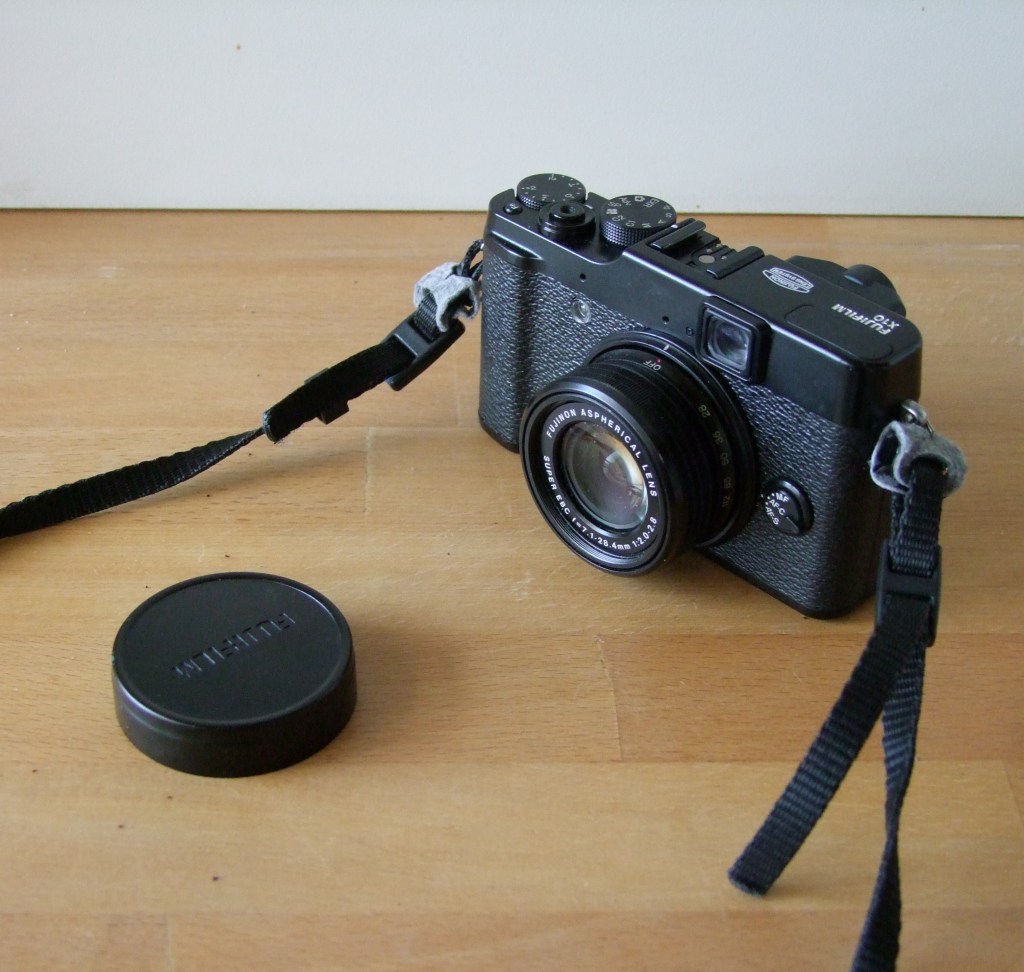
We used a second camera which is a long time favorite, the wonderfully compact and stylish Fujifilm X10, having a Fujinon aspherical lens, 7.1-28.4 mm, f. 2 to 2.8. This boils down to 28-112 mm for 35 mm equivalent. The large lens opening makes it an excellent candidate for low light situations. The sensor of the Fujifilm X10 is now 13 years old, and it is a 12 MP 2/3 CMOS X-TRANS I Sensor, but still holds its own wonderfully.
The desktop shot here of the X10 was taken with the Fujifilm Finepix S100FS Bridge Camera, with a 28-400 Fujinon zoom lens, which we bought used some years ago, for… 75 Euros (!). The handheld shot was taken at 1/40 sec, with f at 3,2, and sensitivity set at 800 ASA.The camera has, of course, image stabilization and an 11,1 MP sensor, which proves to be quite sufficient in many situations… We still think it is an impressive camera, considering also its massive zoom range and having also film simulation built in, letting you choose between Provia, Velvia and Soft and Portrait modes. On top of that you can choose between High, Mid and Low colour profiles and of course Black & White.
Indeed Renault is looking back, but then only to inject its unique iconic true DNA into the cars it designs for the E-future. This is a clever strategy of this iconic French automaker. Indeed, in the roaring sixties and seventies, it did put cars on the road which continue to inspire several generations, and this right until this day.
Besides the ”4L” or charmingly called in the Gallic language ” la quatre elle” , there was the Renault 5, lovingly called “la Cinq”.
Another Renault icon is the starting blocks by the way, the new Twingo E-TECH, and all these new characterful cars are based on the same platform which Renault has developed for the new age of very efficient, compact and financially accessible EV’s.
Renault showed a prototype of its electric “5” already in 2021, and we are delighted to see that virtually all the styling elements of this project car are found back in the series production model.
The “5” is indeed an absolute pleasure to look at, it is wonderfully proportioned and stacked with delightful details.
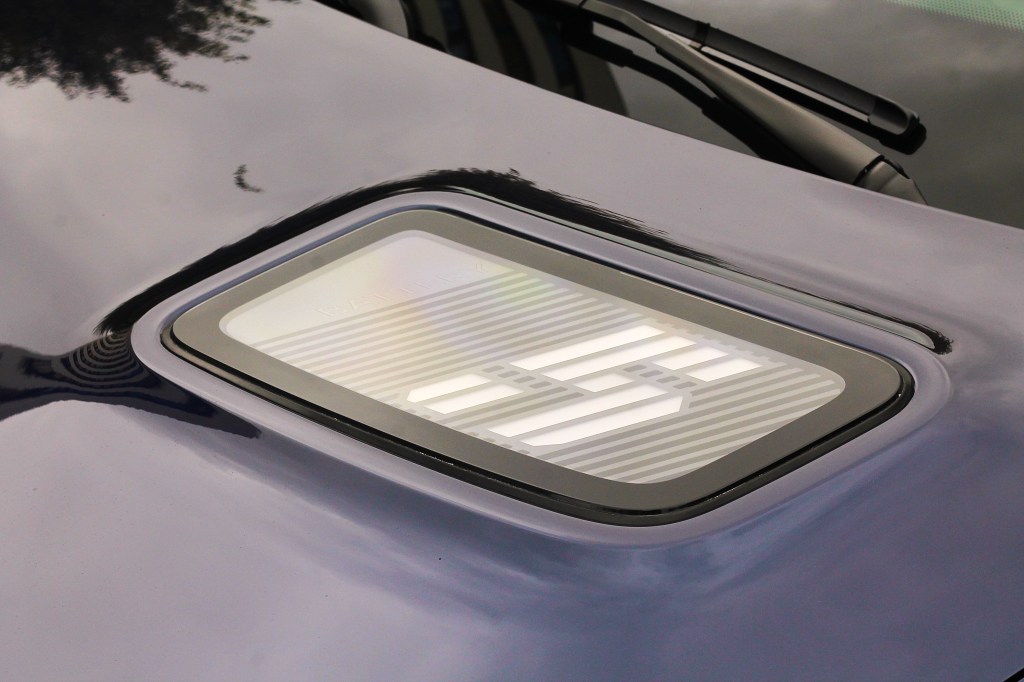
Like the big letter “5” on the hood which gradually lights up when you charge the car, so you can immediately see how far the battery is recharged. So cool!
The headlamps are also wonderfully styled, and accompanied by square led light patterns below them.
The rear lights are sculpted as on the legendary R5 Turbo. By the way, the power and panache of this Turbo classic is not much more in driving practice than the torque and immediate pulling power of the 150 HP electric motor of our test car. And then there is the 218 HP Alpine Version, which we hope to drive soon…
A wonderful cabin…
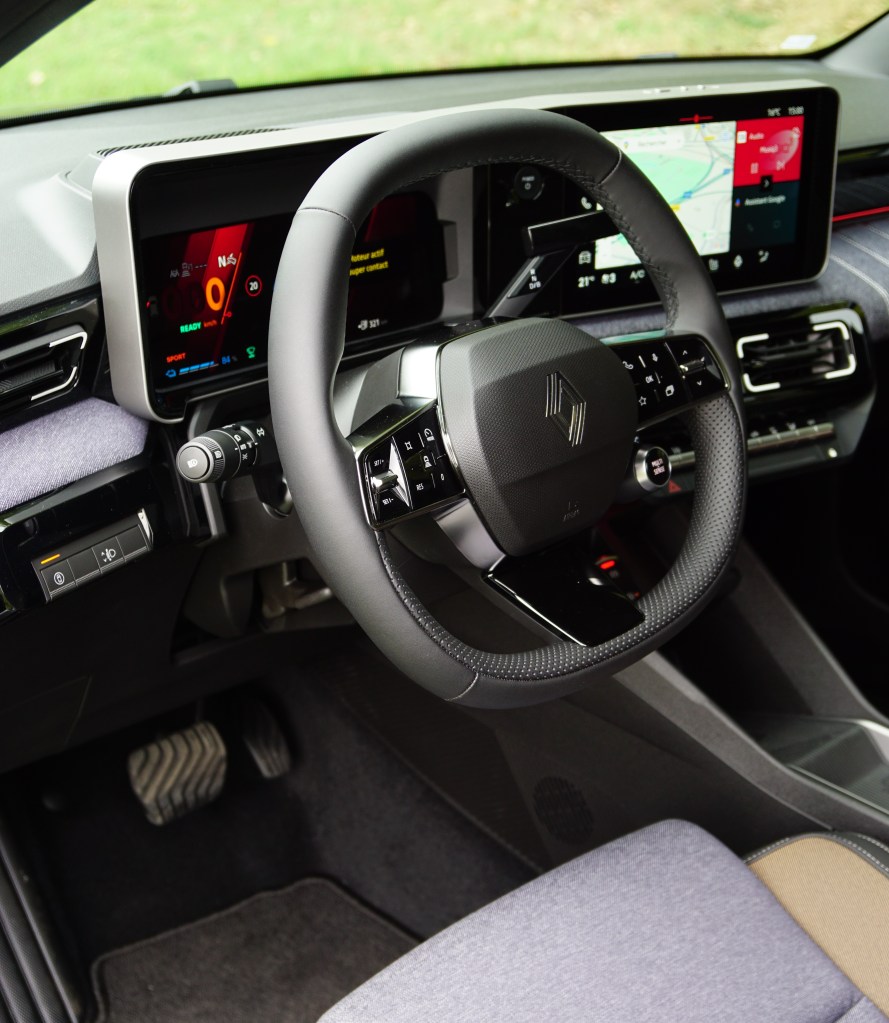
The fun continues in the cabin. We find here the typical square design style of the seventies, which is continued in the yellow colour and graphic patterns of the displays found in front of the driver and the centre.
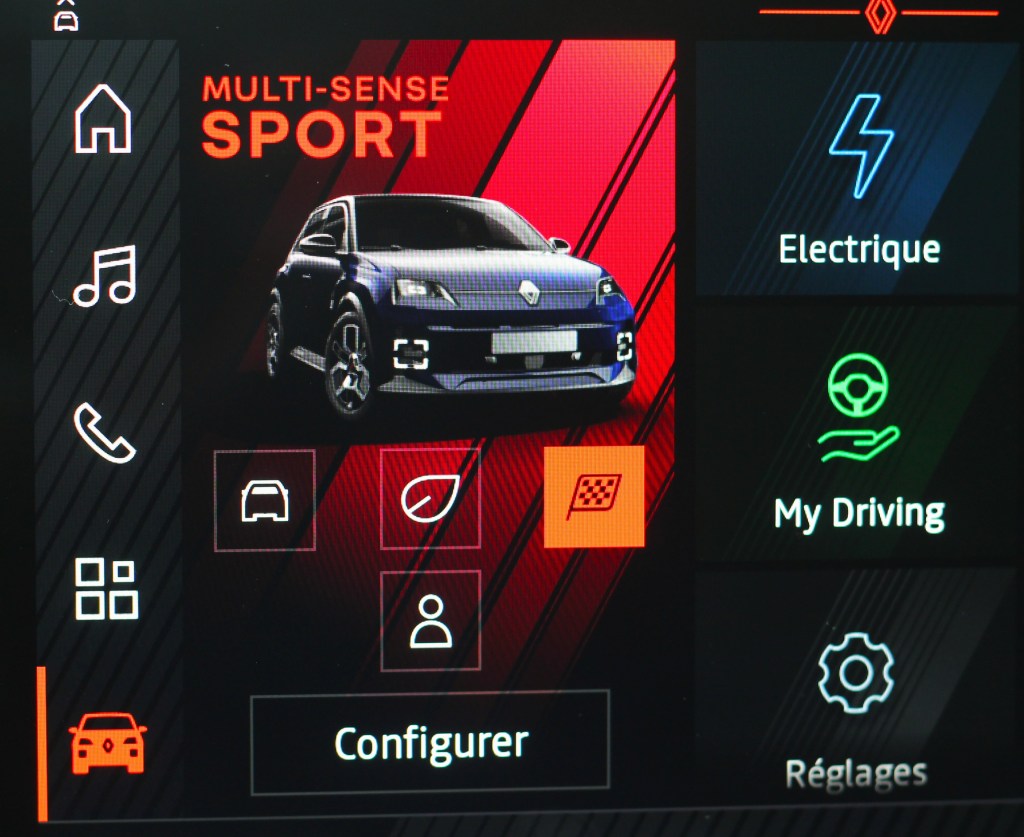
The screens are quite practical after some obvious acquaintance, and we liked the extra row of physical knobs and controls for heating and ventilation below the panels.
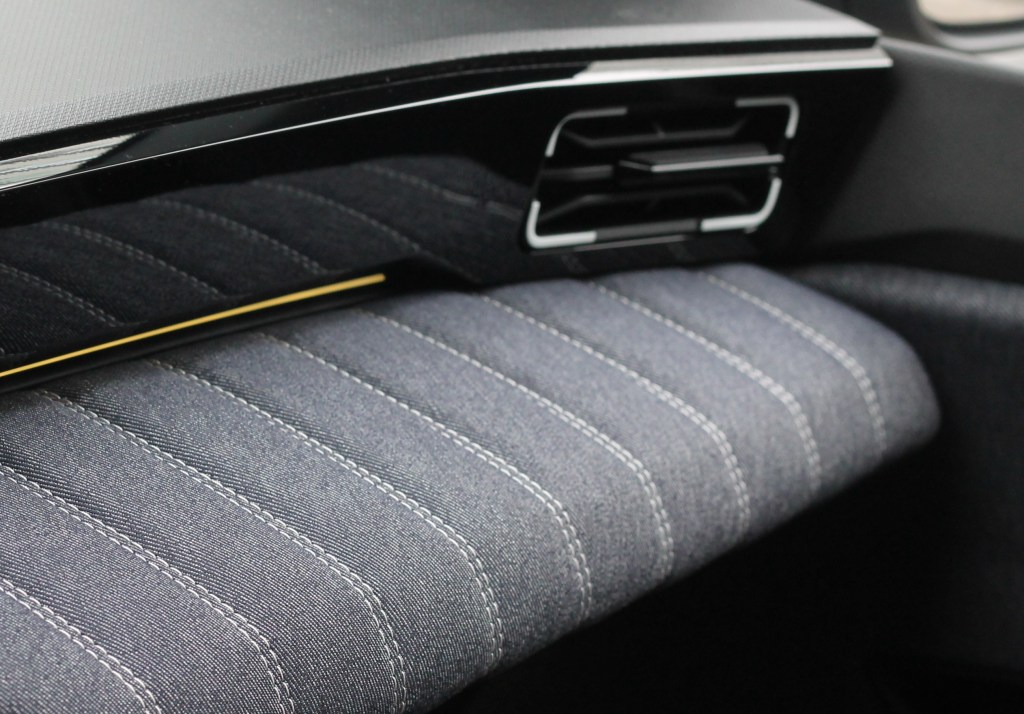
We liked the seventies styling of the seats which are also comfortable and well adjustable. The driver seat is also height adjustable as standard. In the front there is is ample leg and headroom, at the rear the available space is only adequate for adults. But this is a (city) car for young (at heart) adults, so in the rear you will mostly find kids or grandchildren..
The boot space is more than adequate for this compact EV, with 255 liters under the luggage cover. There is no separate stowing space for the charger and cables, just a stylish bag is provided.
Rediscovering driving pleasure…with an EV.
This is where this Renault 5 E-Tech really stands out: it gives you TONS of driving pleasure behind the wheel. No small feat for an EV. Not in the least because it steers and handles like a dream. The steering is precise, the suspension is sporting but not too harsh, and it just LOVES winding roads.
The car is wonderfully agile, and when you steer it into corners with abandon, it will even oversteer, which is of course easily corrected. Just great. Straight line and high speed stability is excellent. Does this 5 inspire you always to a sporting driving style as a must?
Not at all, it is whisper quiet, and the excellent sound system (can be optionally equipped with a Harman Kardon sound system) lets you enjoy classical or your preferred music along the route. Wind and tyre noise are virtually absent and this makes the compact “Cinq” a car with the manners and driving refinement of a premium automobile. Fit for long journeys too!
With outstanding performance to match…
What about range and performance you will ask. Our test car was equipped with the 150 HP or 110 kW engine, and this means vigorous accelerations, considering that the weight of the 5 is reasonable with 1450 kg. The 0 to 100 km/h sprint is absolved in some 8 seconds, top speed is reasonably limited to 150 km/h.
The car with this engine version has a 52 kW battery, which results in a average range of some 350 km, based on a consumption of 17 kW/100 km. City driving will easily give you average consumptions around 13-14 kW, corresponding with a range of some 400 km. Brisk motorway driving will limit the range, as the boxy 5 E-Tech with a Cw value of 0,32 is not a champion in aerodynamics. Speed charging up to 100 kW is possible with the Cinq, so within a 30 minute coffee break the battery is easily recharged from 20 to 80 pct.
Up to date infotainment
Of course, noblesse oblige, in this day and age the 5 E-tech has Android Auto and Apple Carplay, also handles voice commands over Google Assistant, offers two USB C connections. The navigation system is based on Google Maps. You can also plot your charging points en route. You can personalise the system via your Google account and of course you can be further informed about your car by using the Renault App. With over the air updates, your Renault can always be kept up to date…
Conclusion
This 5 E-Tech has the looks and offers you pleasure behind the wheel. It is indeed fun to drive and look at, and will also spoil you with the whispering silence of a premium car.
It is also well priced, and its timeless iconic shape will let you enjoy it for many years to come…
Hans Knol ten Bensel
Photographers’ notes: the photos here are made again with our Sony Alpha 5100 with its F4 16-70 Zeiss lens, which produces punchy, sharp photos with rich contrast.
But we also used here a recently bought second hand 50 mm Canon EF F1,8 II lens, mounted here on our trusted EOS 1100 D Canon DSLR. It produced the detailed photos of dashboard screens and further bodywork details, creating an interesting bokeh due to its shallow depth of field at wide openings, yet being razor sharp and offering good contour contrast. The 50 mm lens is often overlooked, yet it is an excellent tool due to its luminosity, interesting bokeh and excellent sharpness…
Alfa’s have always been cars with a heart. They exude a unique aura and panache. How can you translate this into an EV, where you have to miss the characteristic roar of a thoroughbred engine?
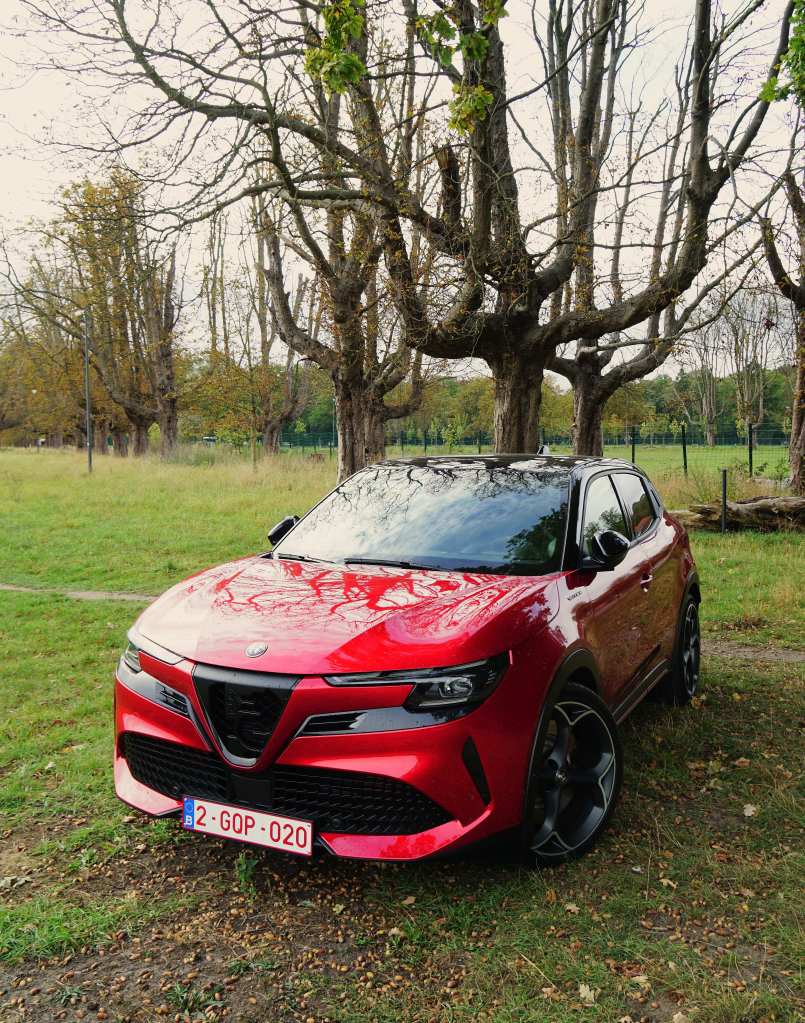
Well, the Alfa engineers and designers within the Stellantis family have found a bold answer: the Alfa Junior. The styling of the Junior is appealing, to say the least. Of course, it runs on the Stellantis Electric Common Modular Platform (e-CMP2), which it shares with virtually all the other brands of the group that are present in the B-Segment.
But the Centro Stile Alfa Romeo rolled up its sleeves, and treats your eyes with a new grille, displaying the restyled “Scudetto.” The 20 inch “Venti” alloys are also designed along the DNA of the house, the rear end shines with an aerodynamic “coda tronca”. The well-balanced muscular proportions please the eye.
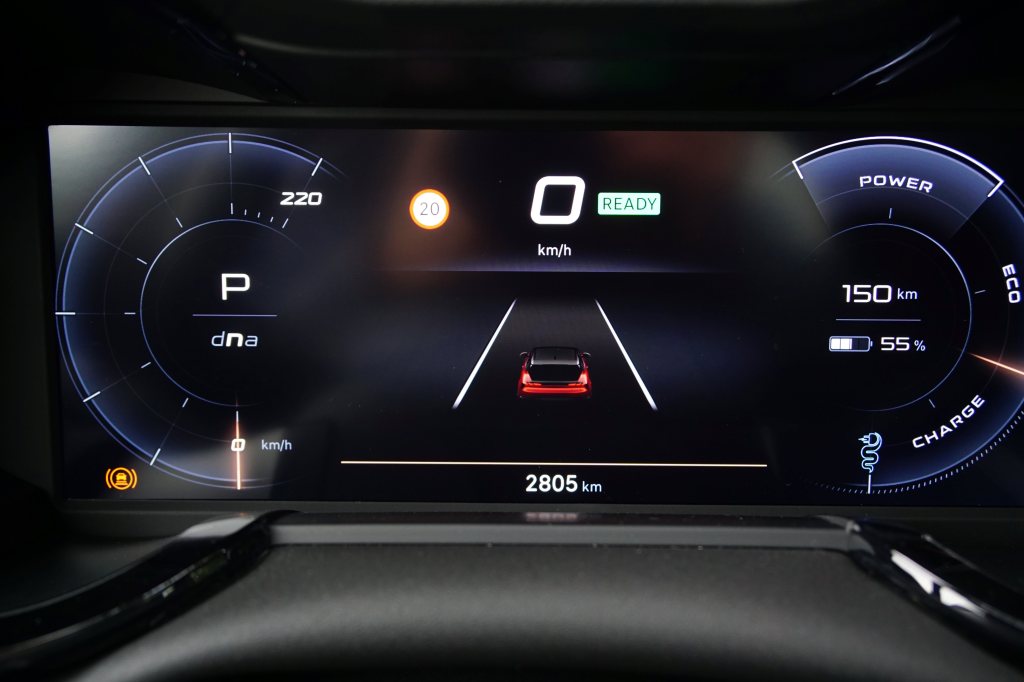
The same can be said for the cabin: personally I would like to have more “vintage drama” in the instrumentation, with proper dials with “real”arrows, which are now easy to emulate digitally, but the “less is more” philosophy today has its rights these days.
What we liked is overall the dashboard styling and the use of alcantara on some panels. On the central console one now finds the familiar Stellantis selector switches, which Alfisti will find a bit regrettable, and maybe a small tricolore adorned aluminum Alfa lever would have been nice, but there you go.
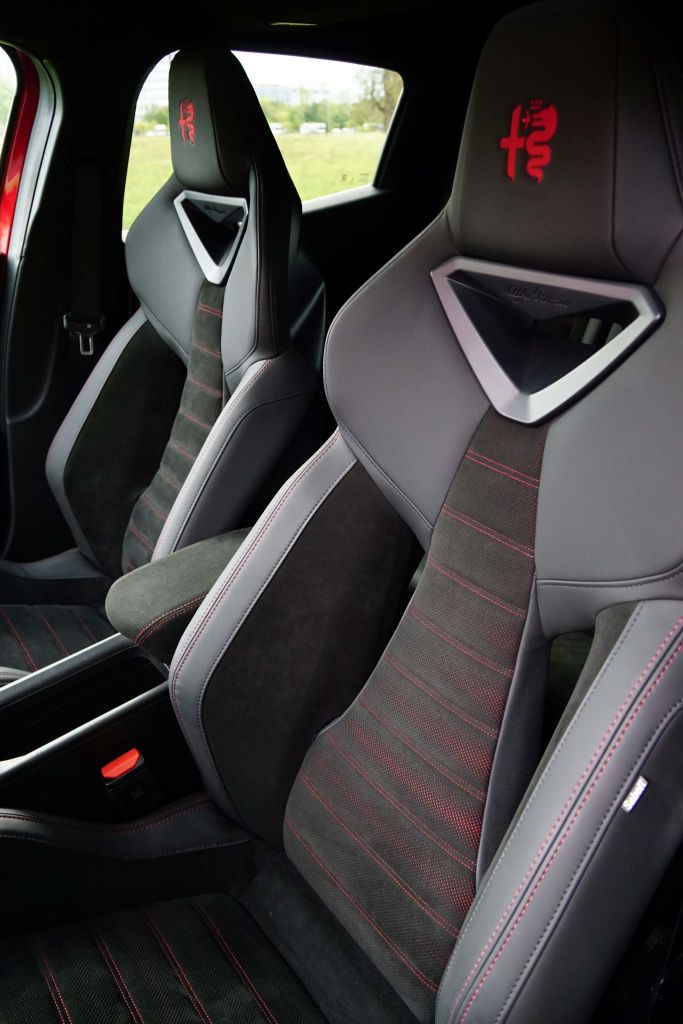
The central screen is turned well to the driver and not too big and overwhelming, which I liked. Our test car had the beautiful optional “Corsa” bucket seats, made by Sabelt, which are yours when you opt for the Sport Pack. They add not only to the looks and atmosphere in the interior, they also sit wonderfully too…
“Stellar” performance.
Stellantis opted to install in the “Veloce” version of the Junior a 280 HP or 207 kW electric motor, which is also found in the Abarth 600e “Scorpionissma” and in the announced Peugeot e-208 GTI. The performance is nothing short of spectacular: 0 to 100 km/h is absolved in 5,9 seconds, top speed is limited to 200 km/h. The maximum torque is 345 Nm. Of course, in our tested version a limited slip differential allows you to get all this power seamlessly on the road.
Handling is absolutely beyond reproach: it has a widened track and stiffened anti-roll bars…
To enjoy all this, one has to use the “Dynamic” mode on the drive selector, which should be the permanent choice for the Alfa enthusiast.
If you drive with somewhat more restraint using this mode, and adopt an anticipative driving style, the regeneration function when coasting lets you achieve creditable values between 16 and 17 kWh in both city and open road use. Based on WLTP cycle, the consumption is quoted at 17,9 kW.
The 54 kW battery (51 kW net available power) gives you an adequate range, the manufacturer quotes – using the WLTP standard – a range between 325 – 315 km. We found a “safe” range of some 260 km more realistic. Hooked on a 100 kW charger, the Veloce will charge up from 20 to 80 % in 27 minutes. The time of a leisurely coffee break.
The Veloce costs some 10.000 Euros more than the standard Junior Elettrica, and the “sport” version with set you back another 2.000 Euro’s, but then for true Alfa aficionados, love and passion has no price…
Hans Knol ten Bensel
Photographers’ notes: For this test, we used our Sony Alpha 5100 with the newly acquired Zeiss Vario-Tessar T E 16-70 mm f/4 ZA OSS and enjoyed the punch and sharpness of the legendary Zeiss lenses. The photos are also used in the reel on the Alfa Junior Veloce on my Instagram page autoprova.be.
At a three quarter view the car reveals its proper proportions, a wide angle lens and a lower standpoint will make the car look more impressive. An overcast sky combined with a quiet background and natural surroundings are ideal…
Car lovers as we are, we all would like to photograph our car(s). But how do we master the art? Here we give you a few useful tips, which will let you avoid mistakes and lead you right away to achieve impressive results…
Photography is all about light, so indeed choosing the right lighting is very important.
So avoid midday sun, but choose rather, if you can, the “golden hour”, which is at sunrise or sunset, when the light is warm and soft, enhancing the contours and reflections of the car.
Overcast days are also good, as it avoids harsh shadows and renders the colors of the car very well.. When you cannot avoid the sun, look for shadow spots, certainly when you are photographing details of the car.
When shooting details, try to evoke the character of the car. This Jaguar D Type is all about speed. When looking at this photo, You hear the straight six roaring down the Mulsanne straight at Le Mans…
Very important also is choosing your best angle. Ideal is kneeling down to the height of the headlamps, but of course this is a matter of taste. Try it out… Three quarter shots will show best the overall design of the car, but profile shots are also a good starting point. When you have photographed front and back of the car, it is time to shoot the details. Your (classic) car has many…
Very useful, and we would say a must, is the use of a polarizing filter. For your smartphone, there are simple clip-on versions available. It avoids reflections of windscreen and painted surfaces. Shooting from an angle can also minimize the reflections of these surfaces.
I tried to catch the atmosphere of rallying with this shot. I took the reflection of the chequered flag in the door window into the composition of the image.
Use your hand to shield the lens from sunlight, or use a lens hood on your camera.
Look for a quiet, non distracting background. That is, choose a quiet country road, foliage, or an empty parking lot (the marks on the ground can be quite disturbing however). Leave enough room around the car. It shows then something about the setting around it. Indeed, it tells a story…
Use also the rule of thirds. The rule of thirds is a fundamental photography guideline suggesting that images are more pleasing when subjects are placed along imaginary lines that divide the frame into thirds, both horizontally and vertically, or at their intersections. Your smartphone has this grid most probably, so put it on. Then position your main subject along these lines or at their 4 intersections (often called “power points”).
Never forget “human interest” photos. The face of the young woman is at an upper “power point” of the rule of thirds grid, leading your eyes to her face.
If your photo includes a horizon line, position it along the upper or lower third line, rather than dead center, to create a more balanced image.
You can also be creative when shooting a moving car: choose the burst mode on your camera or phone. Also try a slow shutter speed, it also gives surprising results…
This photo of the Volvo 122 S evokes the memory of legendary champion Tom Trana, throwing his Volvo along the gravel roads at a Swedish Midsummer rallye…
Our modern smartphones offer quite impressive quality, so for many there is no need for a proper camera. But then again, many find the use of a “real” camera more engaging and pleasant, as your servant does. Try a wide angle lens, which gives excellent results, but know that a 35 mm film equivalent lens or a 28-90 film equivalent zoom lens will do everything you would ever want, except of course when you are on the racing circuit taking action photos. That is a completely different matter, and this will be the subject of another article.
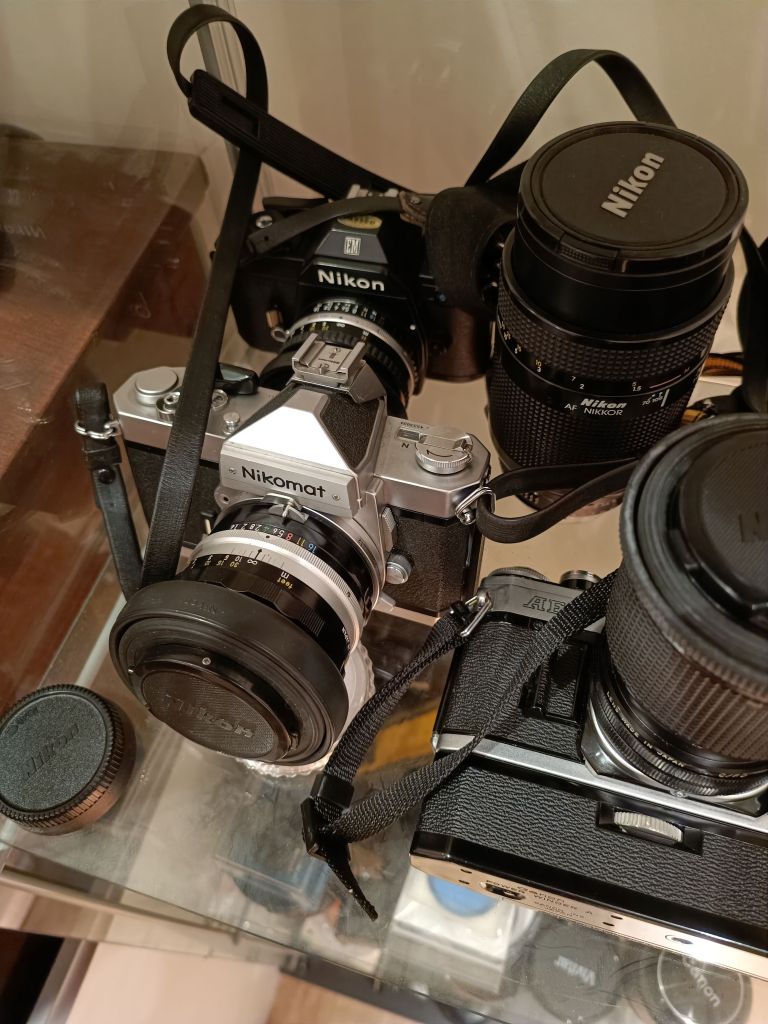
My very first camera, back in 1974: a Japanese bought Nikomat with the 1,4 50 mm Nikon lens, alongside the Canon AE-1 with motor drive.
Mirrorless cameras are more compact, but a good trusted (second hand) DSLR will do everything you would ever want marvelously. It is however rather heavy, so keep this in mind when you carry it along for hours on end. A shoulder harness which would allow to carry without effort even two big DSLRs would then be the thing to wear…
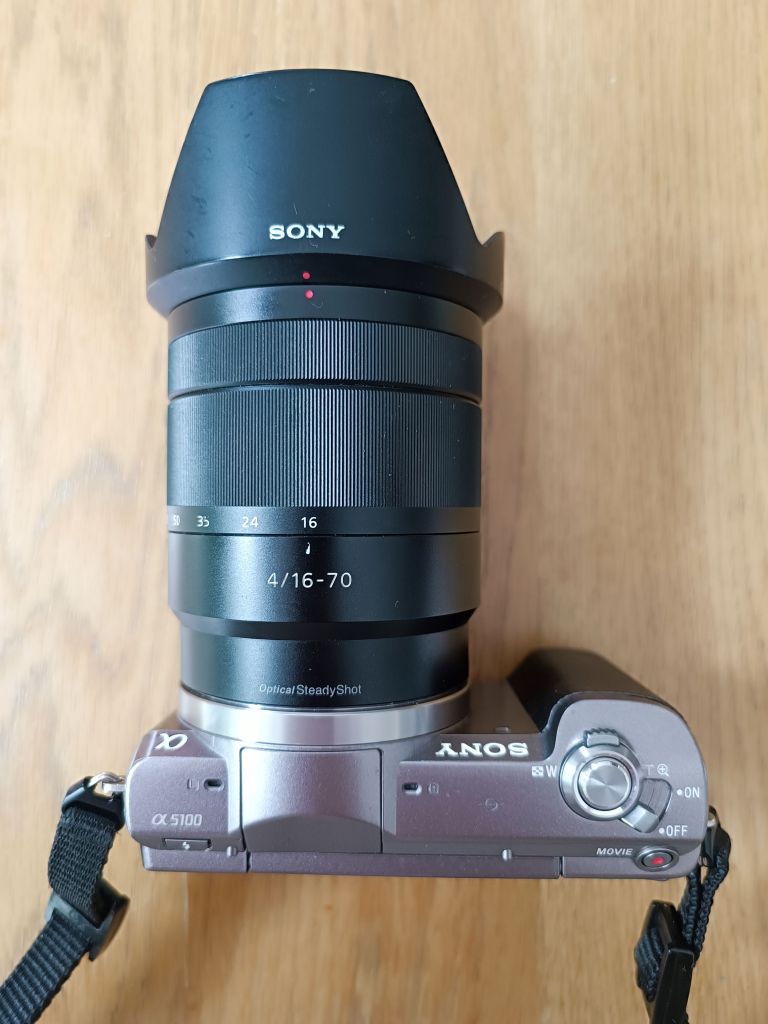
Mirrorless cameras are superb. Light, yet with excellent sensors, offering 24 m pixels here, combined with an F 4 Zeiss Vario-Tessar T E 16-70 mm.
Dashboards always make you dream away. Look for even light conditions, avoid strong contrasts and reflections.
Of course, the now iconic and much wanted compact mirrorless analog vintage look cameras like the Fujifilm X100 which I have been using for years now earn you much sympathy and open many doors for you at events…
Advantages of the camera are, besides the pleasure of using it, the longer battery life when you are taking many photos, for instance at a classic car event or rally.
The same can be said about classic engines…
When using your smartphone, make sure to choose highest quality, and RAW format if you have a RAW editor to edit your photos afterwards. Also choose the HDR setting, or high dynamic range. If your smartphone allows you to choose portrait mode, then select it to have a shallow depth-of-field effect.
Photos of car details can tell the whole story: You would like to sit in this seat, driving through the Alps…
Tap the screen for focus and exposure adjustment, and you are all set. Of course you can use the post processing filters your smartphone software offers you, but don’t overdo things. Just work on your style, and keep trying. Even full professional photographers take some two years to perfect their style in post processing.
You are all set, now get behind that lens and shoot!
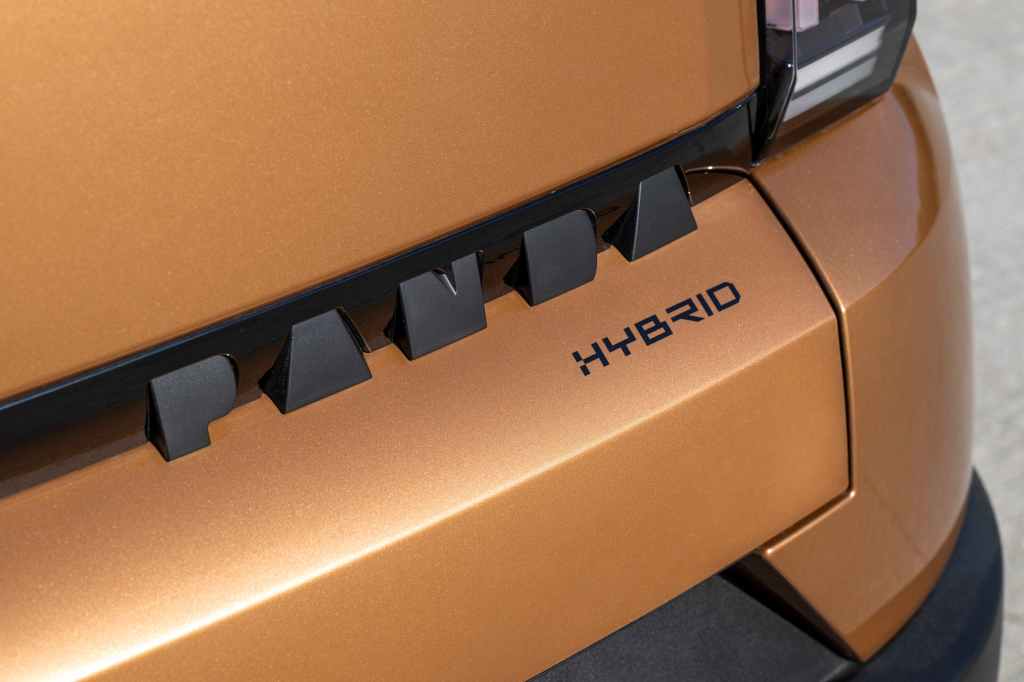
FIAT launches the new Grande Panda Hybrid, marking a significant milestone in its global product strategy: making the electrified transition possible for all thanks to this affordable, and cool B-segment Panda.This hybrid version marks the brand’s role as a leader in volume and accessibility, says Stellantis, echoing the golden years of FIAT when simplicity, innovation, and emotional design moved millions.
The Grande Panda project is the cornerstone of a new global vehicle family developed entirely under the guidance of the FIAT HQ and Centro Stile in Mirafiori, Turin. Your servant remembers its visit at the Centro Stile a few years ago, when he stood eye to eye with the clay model of the FIAT “centoventi” or 120, which showed already the proportions and styling language of the present day Panda. Technologically, it already incorporated the solutions we see today.
The model sits on Stellantis’ “Smart Car” Platform. At the heart of this model lies the T-Gen3 hybrid powertrain, featuring a 1.2-liter, 3-cylinder turbocharged engine delivering 110 HP, combined with a 48V Li-ion battery and a eDCT 6-speed dual-clutch automatic transmission. This system integrates a 21kW electric motor,an inverter, and a central control unit.
Through functions like e-launch, e-creeping, and e-parking, the Grande Panda Hybrid can operate in full-electric mode during low-speed manoeuvres, allowing for up to 1 km of electric-only driving at speeds under 30 km/h. These features result in smoother acceleration, silent city driving, and less fuel consumption and CO₂ emissions, made possible in part also by the Miller Cycle combustion strategy. The eDCT transmission further enhances efficiency and provides a relaxed, two-pedal driving experience that embodies FIAT’s “easy drive” philosophy.
All trims, and one can choose between three levels, notably POP, ICON, and LA PRIMA, come equipped with a comprehensive ADAS suite, including Cruise Control, Speed Limiter, Active Safety Brake, Lane Keeping Assist, Driver Attention Warning, and open-door alerts. The LA PRIMA trim enhances this with front sensors and a rear view camera. Connectivity is supported through the onboard 10” digital cluster, 10.25” central touchscreen, and wireless smartphone mirroring. Customers benefit from multiple USB-C ports, a wireless charging pad, and seamless digital integration.
Continuing the 4 X 4 tradition of the Panda with a 4 X 4 concept…
The new Grande Panda 4×4 concept model, presented during the Grande Panda Hybrid Media Drive, is the direct heir of the Panda 4×4 from the ‘80s. It has exclusive details, and the unique dark red livery, bringing the 80s Panda’s character into the modern era.
It has an electrified, innovative rear axle that delivers all-terrain versatility. We look forward to see this concept hitting the road soon…
We invite you to look at the accompanying photos for now…










































 Autoprova - for the Connaisseur