When testing the Arkana Hybrid, we already mentioned the clever way Renault sources know how and expertise across boundaries. With the electric age coming upon us, further cooperation is growing to develop and produce ever more efficient drivetrains, using ever less resources. The news came that Renault is now joining forces with Valeo and Siemens… interesting!
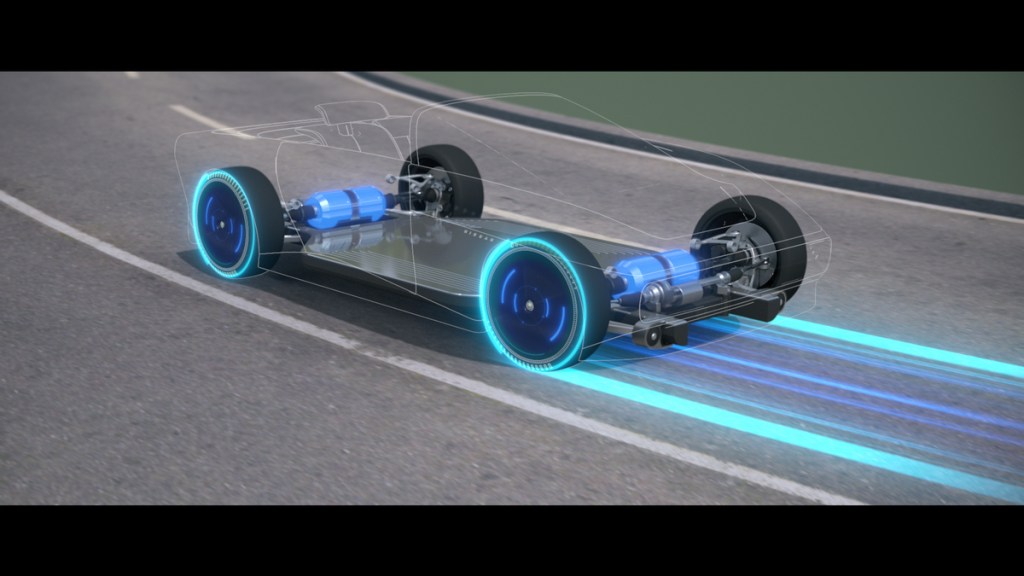
Indeed, Renault Group, Valeo and Valeo Siemens eAutomotive have signed on February 10th a memorandum of understanding to form a strategic partnership for the design, co-development and manufacture in France of a new-generation automotive electric motor, eliminating the use of rare earths.
Under this partnership, each of the three partners will contribute to the development and production of the two key parts of the electric motor: the rotor and the stator.
Overall architecture comes from Renault…
Renault will develop and produce the EESM (electrically excited synchronous motor) rotor technology, designed without the use of rare earths, it offers enhanced energy performance.
In addition to the supply of components based on each company’s best expertise, the overall architecture of the all-in-one motor for Renault Group will also be designed by Renault.
Valeo and Valeo Siemens eAutomotive will develop and produce the stator, which is based on Valeo’s technological expertise in copper wire assembly. Thanks to its unique know-how in this field, which allows it to use a higher density of copper in the stator, Valeo is able to generate more power without having to use more electrical energy.
Renault Group, Valeo and Valeo Siemens eAutomotive will be the first to mass produce a 200kW electric motor without using rare earths, starting in 2027. Production of the motor for the automaker’s own needs will be based at Renault Group’s Cléon plant in Normandy, France.
The dashboard of the new Austral: a drawing by Damien DURAND
The Renault Design team completely redesigned the all-new Renault Austral’s passenger compartment down to the last detail – and it makes the most of OpenR technology, of with more soon in a separate report…
Spacious and modular…
The cabin design of the Austral has all the traditional SUV hallmarks. But the high and wide central console stands out. The dashboard’s architecture gives it a slim and wide look, and the connections to the door panels give front-seat passengers that distinct cockpit feeling. The fact that the door panels are high up also create a sense of safety. The overall design follows the angled lines that give the car its dynamic stance.
The passenger compartment is also modular. It has multiple storage areas, starting with a wide sliding armrest that can provide extra storage and makes using the OpenR Link multimedia system simpler. The console has two large storage areas and a nest to hold your smartphone – and induction-charge it at the same time if you want. Combined, the choice of nooks around All-new Renault Austral’s passenger compartment can fit more than 30 litres.
To make the cocoon effect perfect, a flecked fabric decks the entire roof and windscreen posts. Seat comfort also got special attention. At the front, each person has an ample, ergonomic and comfy area. The rear is also roomier because the transmission tunnel is gone. Versatile and multipurpose All-new Renault Austral has a sliding and folding rear bench, operated with a button in the boot. The seats are designed for chatting: as the front ones taper at the top, it’s easier for passengers in the front and rear to interact.
Agneta Dahlgren, Renault Design Project Director, sums it up for us.
“When we created All-new Renault Austral’s passenger compartment, the three recurring themes were the perception of space, edgy design and a protective feel. And all that based on high quality standards.”
Technology focused on the user…
Passengers also enjoy the large “OpenR” screen. This centrepiece in the passenger compartment is one of the largest screens on the market. Its L-shaped configuration sweeps across the central dashboard and the total display area spans 24.3 inches (774 sq. cm.). It is easy to look at, easy to reach, intuitive and connected. And it has controls for practically all of the car’s features – so the rest of the passenger compartment is considerably leaner.
This state-of-the-art technology runs on the Google Automotive Services system and is so bright and anti-reflective that it makes the visor over the dashboard superfluous. Besides its visual streamlining, the panel has inconspicuous built-in vertical air vents, and the ultra-fine contouring around the screen is perfectly flush. The steering wheel is squarer, and slightly flatter in the centre to enhance driving pleasure while providing the driver with an unobstructed view of the dashboard screen.
Packed with the latest connected and smart solutions, the OpenR Link interface includes Android Auto and Apple CarPlay, plus a Google search feature and Google Maps. A full 90% of the features you need every day are only one or two clicks away. The OpenR screen is as smooth and simple to use as a smartphone. And it’s one of Renault’s biggest breakthroughs in on-board technology in the past several years. We will tell you soon more about this “OpenR” screen architecture!
We are driving the impressive DS 4 E-TENSE, and you will read our driving experiences soon. Did you know that since its launch, DS Automobiles has a 100% electrified range offered to its buyers since 2019?
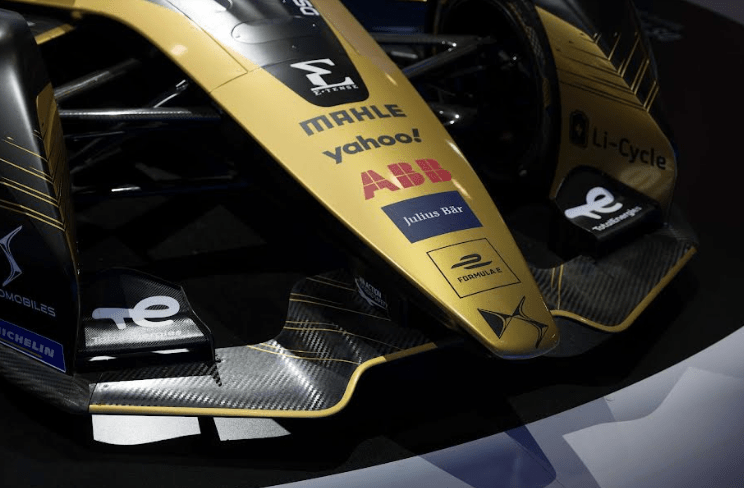
DS Automobiles was the first premium manufacturer to commit to Formula E, and is the only brand to have won two consecutive Teams’ and Drivers’ titles. As of now, DS Automobiles has renewed its commitment until 2026, while starting development of a new generation of single seater that’s more competitive and more efficient. This technology laboratory enables progress to continue with production models.
On the Stellantis stand, DS Automobiles is showing off its Formula E World Championship DS E-TENSE FE21 single seater, like a winning secret of electrification from the brand.
Taking advantage of its commitment to this competition to transfer its expertise to its production vehicles, DS Automobiles is accelerating its electrification strategy and will present new exclusively 100% full electric models from 2024…
For the moment, with the 100% electric DS 3 CROSSBACK E-TENSE plus DS 4 E-TENSE, DS 7 CROSSBACK E-TENSE and DS 9 E-TENSE plug-in hybrids with 225 to 360 horsepower, every DS is offered with an electrified power unit.
In 2020 and H1 2021, DS Automobiles has been the leading multi-energy brand in Europe with the lowest average CO2 emissions (100.2 g/km WLTP in 2021) with its electrified range (34% of registrations).
Range and efficiency are set to define the electric era. Outstanding range will make electric cars suitable for every journey and will also speed up the adoption by the public. Exceptional efficiency will create a virtuous circle of battery size and weight reduction, allowing Mercedes to go further with less. Indeed, the men (and women) at Mercedes-Benz are determined to lead the way.
The brand with the star is already leading the charts of real-world range with the EQS with 245 kW (electrical consumption WLTP combined: 19.8-15.7 kWh/100 km; CO2 emissions: 0 g/km)[1], as evidenced by the recent Edmunds test where an EQS 450+ travelled 422 miles on one charge, 77 miles further than any other car previously tested.
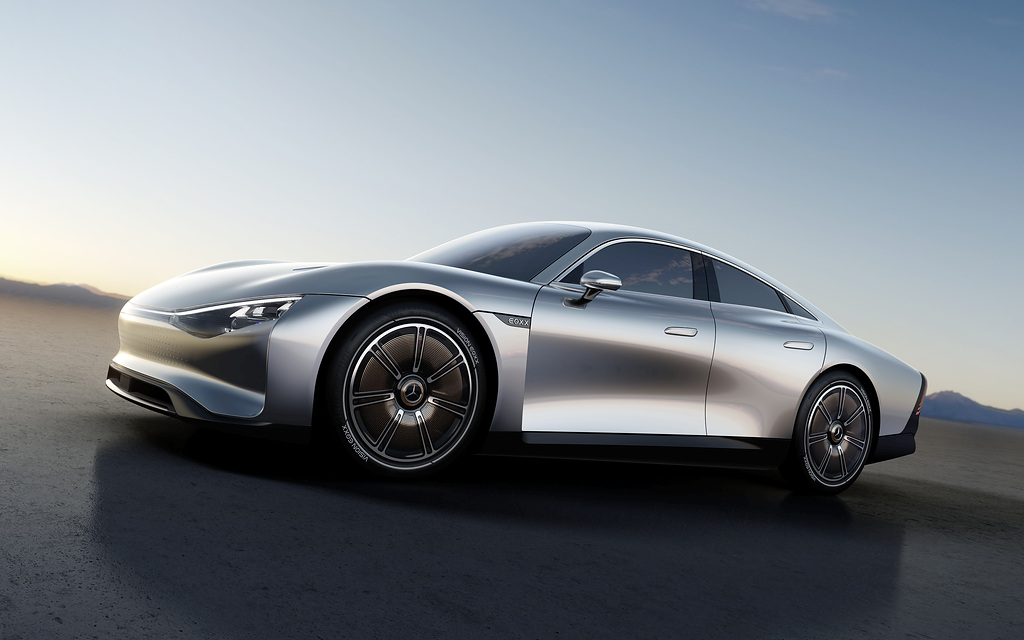
But Mercedes-Benz is not resting. Driven by the idea of zero impact on our planet and a highly responsible use of green energy, the engineers are working intensively to take range and efficiency to a whole new level. The VISION EQXX is the result of a mission to break through technological barriers across the board and to lift energy efficiency to new heights. It demonstrates the gains that are possible through rethinking the fundamentals from the ground up. This includes advances across all elements of its cutting-edge electric drivetrain as well as the use of lightweight engineering and sustainable materials. Complete with a barrage of innovative and intelligent efficiency measures, including advanced software, VISION EQXX allows to explore new frontiers of efficiency.
Mercedes-Benz VISION EQXX, exterior
Ola Källenius, Chairman of the Board of Management of Daimler AG and Mercedes-Benz AG commented: “The Mercedes-Benz VISION EQXX is how we imagine the future of electric cars. Just one-and-a-half years ago, we started this project leading to the most efficient Mercedes-Benz ever built – with an outstanding energy consumption of less than 10 kWh per 100 kilometres. It has a range of more than 1,000 kilometres on a single charge using a battery that would fit even into a compact vehicle. The VISION EQXX is an advanced car in so many dimensions – and it even looks stunning and futuristic. With that, it underlines where our entire company is headed: We will build the world’s most desirable electric cars.”
VISION EQXX – The EV road trip reimagined by Mercedes with a new technology blueprint for series production
There’s a reason why road trips have been a cultural touchstone for at least 70 years, telling stories from the highway in books, movies and music.
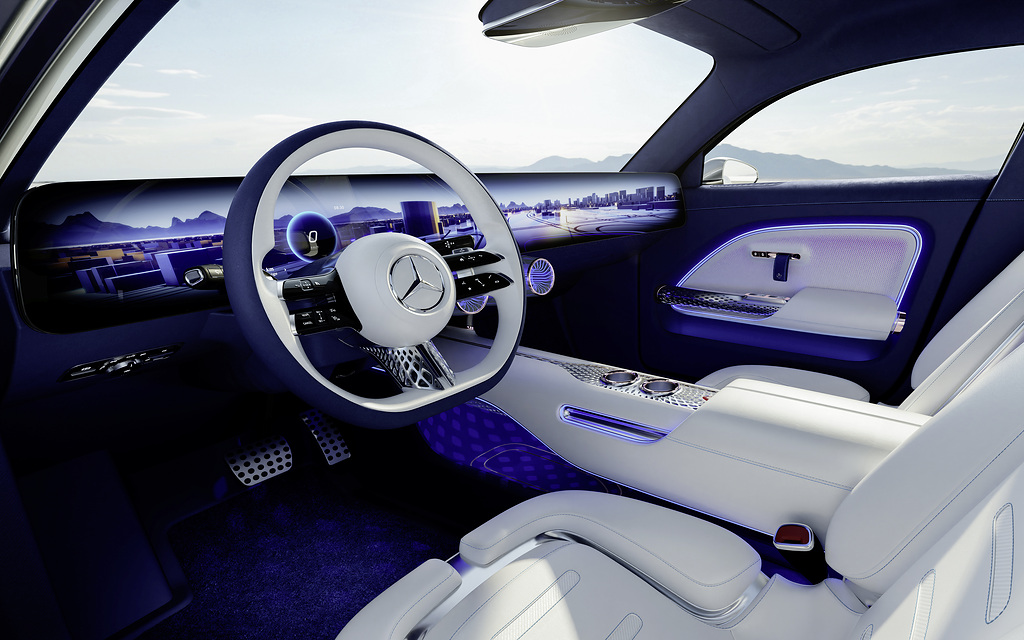
Mercedes-Benz VISION EQXX, interior
The journey to electric mobility is a road trip; as exhilarating as it is challenging, as unknown as it is certain. The Mercedes-Benz VISION EQXX is a vehicle designed for that road trip. It answers the progressive demands of a modern generation of customers for and emotionality through innovation. Part of a far-reaching technology programme, this software-defined research prototype was engineered by women and men with the creativity, ingenuity and determination to deliver one of the planet’s most efficient cars – in every respect. They did so using the latest digital technology, the agility of a start-up and the speed of Formula 1.
The result is an efficiency masterpiece that, based on internal digital simulations in real-life traffic conditions, will be capable of exceeding 1,000 kilometres on a single charge with an outstanding energy consumption of less than 10 kWh per 100 kilometres (efficiency of more than 6 miles per kWh).
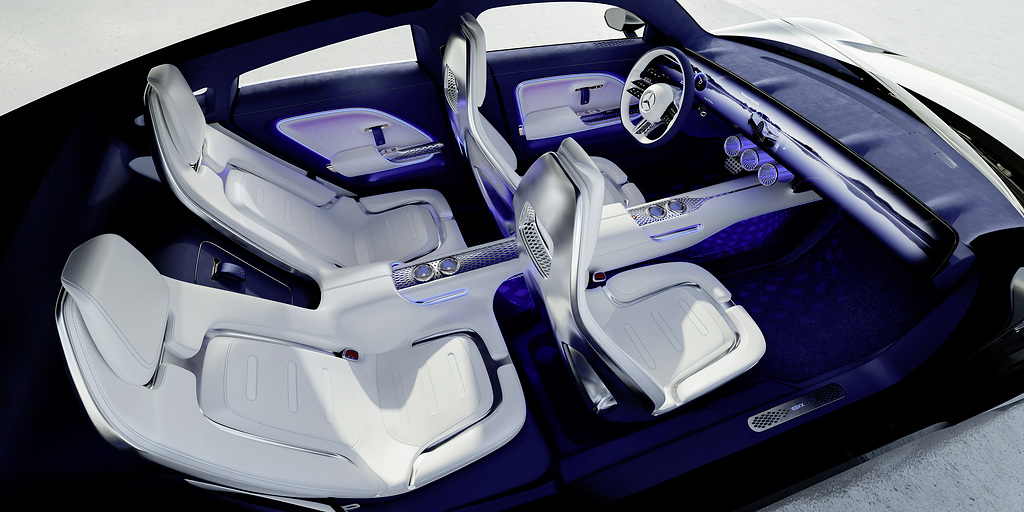
Mercedes-Benz VISION EQXX, interior
By ripping up the automotive engineering rule book, Mercedes-Benz has built a software-driven electric car that re-imagines the road trip for the electric era. At the same time, it presents a highly progressive interpretation of the fundamental Mercedes-Benz principles of modern luxury and Sensual Purity. Rather than simply increasing the size of the battery, the cross-functional, international team focused on maximising long-distance efficiency. They pulled out all the stops in drivetrain efficiency, energy density, aerodynamics and lightweight design.
“The technology programme behind the VISION EQXX will define and enable future Mercedes-Benz models and features,” says Markus Schäfer, Member of the Board of Management of Daimler AG and Mercedes‑Benz AG, Chief Technology Officer responsible for Development and Procurement. “As a halo car, the VISION EQXX firmly establishes Mercedes-Benz as the brand that pairs luxury with technology in the automotive world and beyond. And the way we developed it is as revolutionary as the vehicle itself. VISION EQXX has seen the best minds from our R&D centres work together with engineers from our Formula 1 and Formula E programmes. They are proving that innovations from motorsport – where powertrains are already highly electrified – have immediate relevance for road car development. We are challenging current development processes with innovative spirit and outside-the-box thinking. This truly is the way forward.”
The VISION EQXX is how Mercedes-Benz imagines the future of electric cars.
The VISION EQXX offers meaningful answers to pressing issues. For instance, sustainable materials throughout cut the carbon footprint considerably. Its UI/UX features a radical new one-piece display that comes to life with responsive real-time graphics and spans the entire width of the vehicle. Other elements of the UI/UX help the car and driver work together as one, and even use technology that mimics the workings of the human brain. And the software-led development process that delivered it revolutionises the way electric cars are designed.
This car is one outcome of an ongoing programme that is delivering a blueprint for the future of automotive engineering. Many of its features and developments are already being integrated into production, including the next generation of the MMA – the Mercedes-Benz Modular Architecture for compact and medium-sized cars.
We will come back soon more in detail about this outstanding EQXX…just show you some photos…
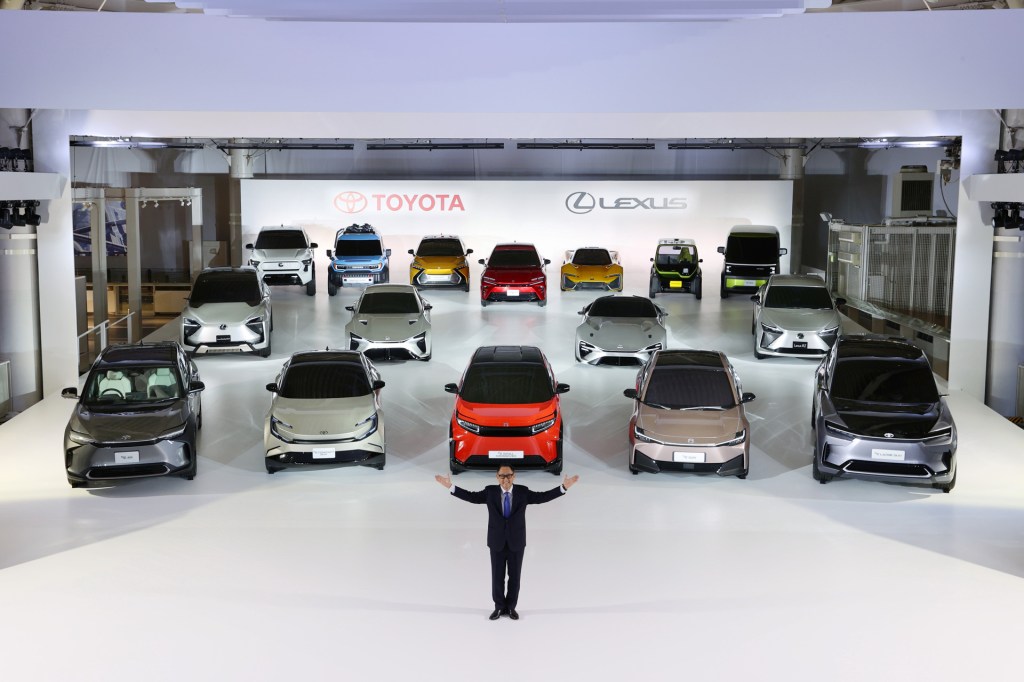
Toyota now takes the BEV market very seriously: Akio Toyoda, President of the Toyota Motor Corporation, seen on the photo above, today presented news concerning the company’s carbon neutrality strategy, by outlining its plans to offer 30 battery electric models by 2030 (Toyota & Lexus combined).
The company expects total global battery electric vehicle sales to reach 3.5M by 2030, and this announcement underpins the plan of for a 100% CO2 reduction in all new vehicles sales by 2035 in Western Europe.
Toyota’s bZ (beyond Zero) battery electric family in Europe is also soon to expand with introduction of a compact SUV as follow up to bZ4X launch. Not less than three battery electric ‘Toyota bZ’ vehicles are planned for Europe by 2025.
Toyota will further increase its investment in batteries from the 1.5 trillion yen – which was announced in September – to 2 trillion yen (15 billion euros).
The Lexus electrified sport will have formidable performance and range…
Now let’s turn the spotlight on Lexus:
Lexus aims for 100% battery electric mix in Europe, North America and China by 2030
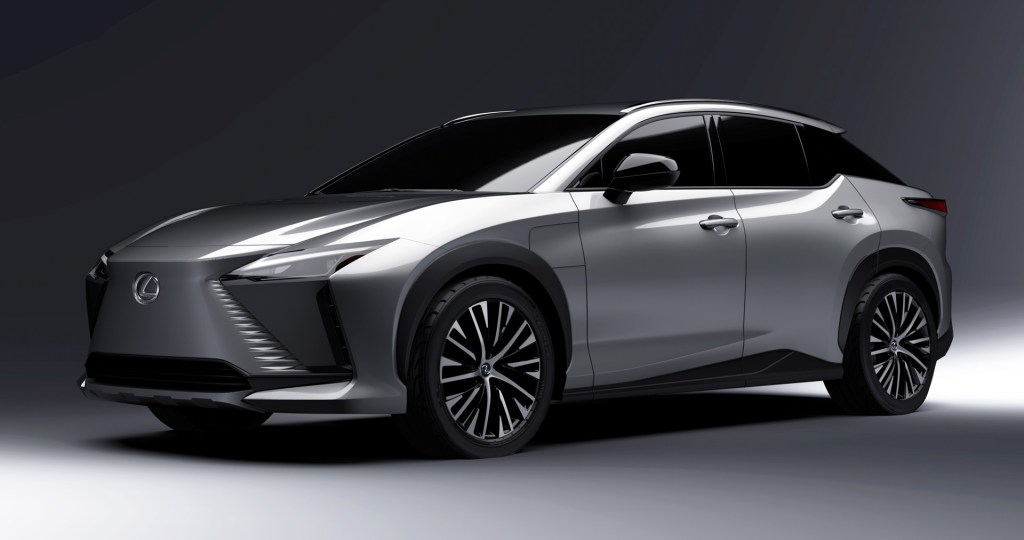
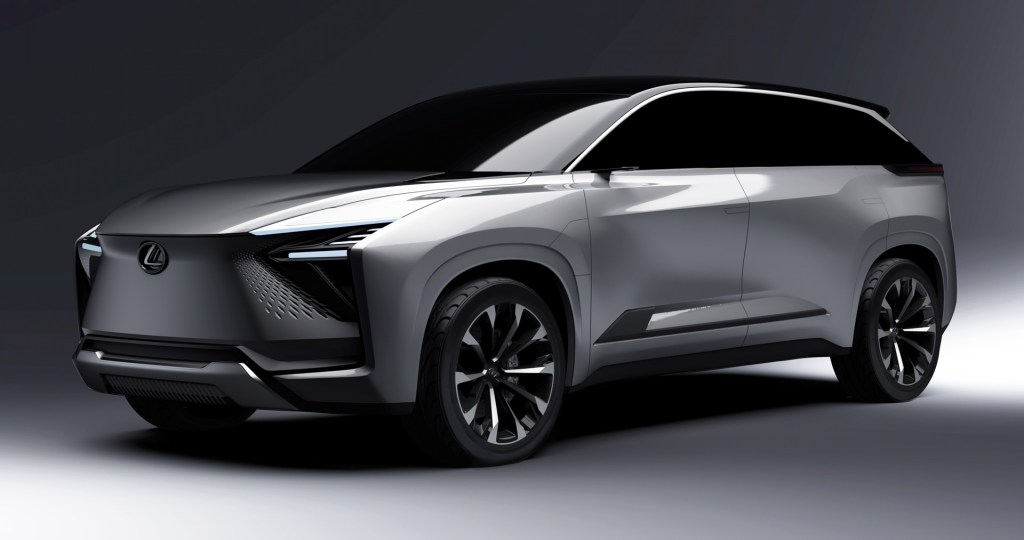
The full name of the new Lexus BEV (that will be launched towards the end of 2022) was revealed: the Lexus RZ450e. See the photo here below…
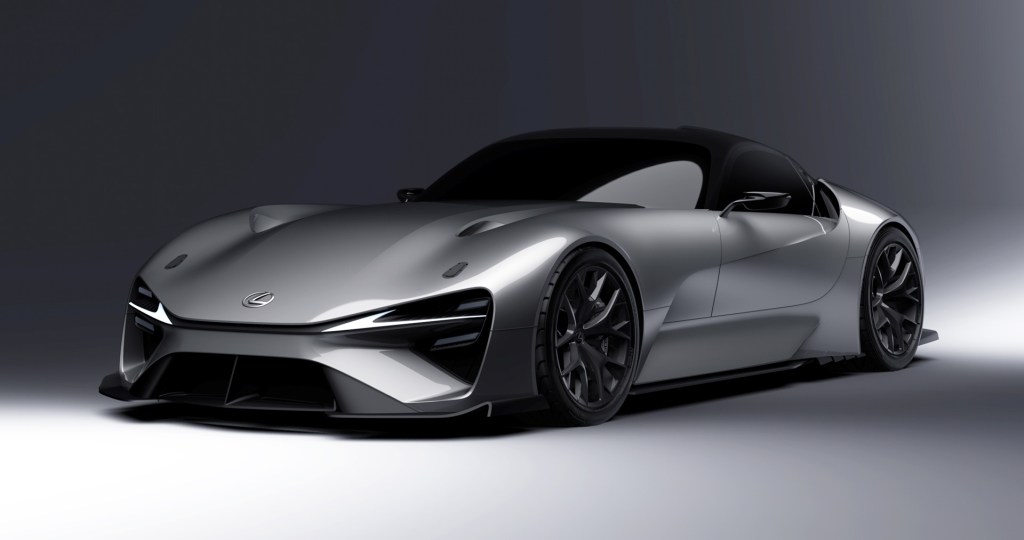
The Lexus Electrified Sport (Sports BEV) concept was also shown: it offers impressive Lexus driving performance, with an acceleration time that will be in the low 2 second range and a cruising range over 700km.
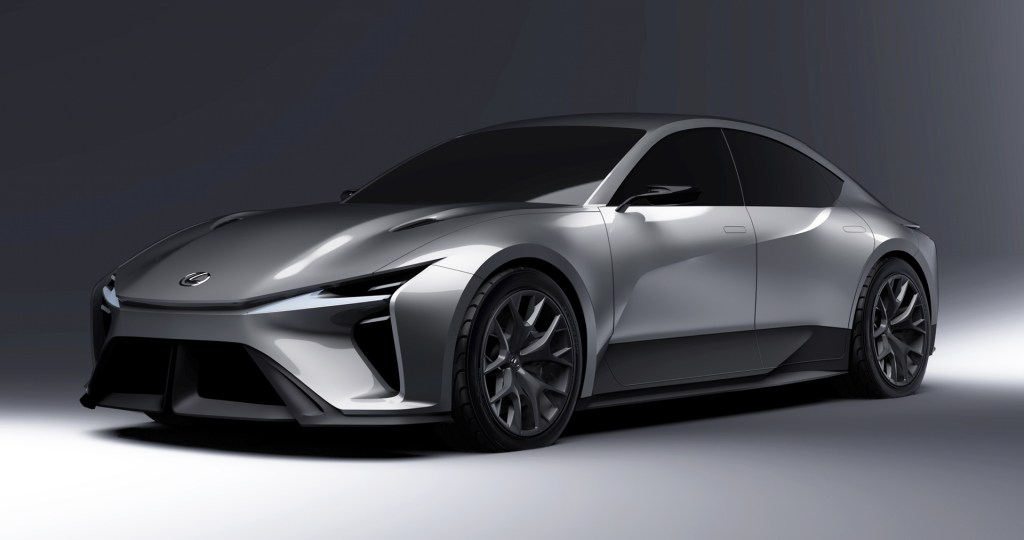
There were also two other future concepts were shown: the Lexus Electrified Sedan (BEV Sedan), and Lexus Electrified SUV (SUV BEV). We show you the photos here.
The Lexus electrified sedan…
More interesting Toyota/Lexus news to come. Faithful readers know that we are the a satisfied owner of a midnight blue Lexus CT 200h, which proves to be not only frugal with an average consumption this year of 4,7 liter/100 km, but also utterly reliable and recently passed the yearly technical inspection with flying colours. A report will follow soon. Stay tuned!
We are driving now the magnificent CLS 220 d. This sleek limousine embodies all the good qualities of the cars with the star. By the way, its diesel engine is also superb. But Mercedes gears up for the future. And takes now a major step towards automated driving…
Indeed, Mercedes-Benz is the first automotive company in the world to meet the demanding legal requirements of UN-R157 for a Level 3 system. SAE Level 3 means that the automated driving function takes over certain driving tasks. However, a driver is still required. The driver must be ready to take control of the vehicle at all times when prompted to intervene by the vehicle. But nevertheless, the driving elements which it takes over become more important…
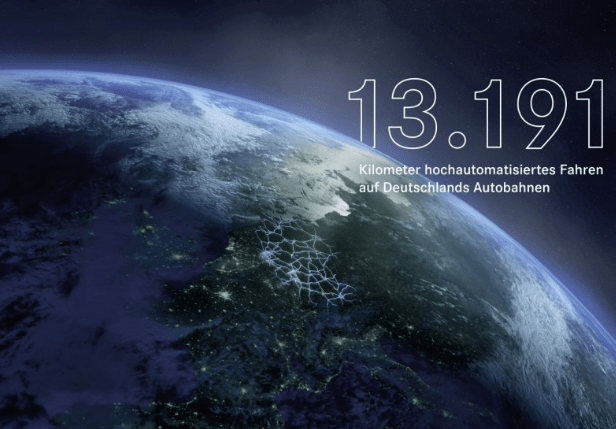
13,191 kilometers of highly automated driving on Germany’s iconic Autobahnen…
The German Federal Motor Transport Authority (KBA) has granted system approval for this on the basis of the technical approval regulation UN-R157, thus paving the way for offering such a system internationally, provided that national legislation allows it. The ECE contracting states (57) incl. states of the EU, GB, Japan, Korea, Australia…
Germany has taken a pioneering role in this with the opening of the Road Traffic Act (StVG) for Level 3 systems already in 2017. This is why the first customers will be able to buy an S-Class with DRIVE PILOT in the first half of 2022, enabling them to drive in conditionally automated mode at speeds of up to 60 km/h in heavy traffic or congested situations on suitable stretches of motorway in Germany! The special DRIVE PILOT equipment takes the strain off the driver and allows him or her to perform ancillary tasks on the central display such as online shopping or processing e-mails in the in-car office. Which secondary activities of the driver are legally permissible depends on the respective national road traffic regulations. Important to note that the system approval also applies to the EQS.
A milestone reached, says the management…
“For many years, we have been working to realize our vision of automated driving. With this LiDAR based system, we have developed an innovative technology for our vehicles that offers customers a unique, luxurious driving experience and gives them what matters most: time. With the approval of the authorities, we have now achieved a breakthrough: We are the first manufacturer to put conditionally automated driving into series production in Germany,” says Markus Schäfer, Member of the Board of Management of Daimler AG and Mercedes-Benz AG, Chief Technology Officer responsible for Development and Purchasing. “With this milestone, we are once again proving our pioneering work in automated driving and also initiating a radical paradigm shift. For the first time in 136 years of automotive history, the vehicle takes over the dynamic driving task under certain conditions. At the same time, we are pleased that Germany is continuing its pioneering role in automated driving with this approval.”
The technical approval regulation with which such a system can be certified did not come into force until the beginning of 2021. Since then, it can be implemented in Europe – an opportunity that Mercedes-Benz was quick and the first manufacturer to seize. With the opening of the Road Traffic Act (StVG) for Level 3 systems in 2017, Germany was the first country to create a legal basis for the intended use of these systems.
Mercedes-Benz is initially offering DRIVE Mercedes-Benz is initially offering DRIVE PILOT on 13,191 kilometres of motorway in Germany. Extensive test drives for this systems are already underway, for example in the USA and China. As soon as there is a national legal framework for conditionally automated operation in additional markets, the technology will be rolled out step by step! Again, we repeat ourselves, brave new world!
Times are changing in our electronic age, and fast. Manufacturers will have to build cars with an open software-defined platform, and three new platforms will arrive as early as 2024… says Stellantis.
Indeed, Stellantis N.V. today mapped out its software strategy to deploy next-generation tech platforms, building on existing connected vehicle capabilities to transform how customers interact with their vehicles, and to generate approximately €20 billion in incremental annual revenues by 2030.
This transformation will move Stellantis’ vehicles from today’s dedicated electronic architectures to an open software-defined platform that seamlessly integrates with customers’ digital lives. It greatly expands the options customers have to add innovative features and services via regular over-the-air (OTA) updates keeping vehicles fresh, exciting and updated years after they have been built.
“Our electrification and software strategies will support the shift to become a sustainable mobility tech company to lead the pack, leveraging the associated business growth with over-the-air features and services, and delivering the best experience to our customers,” said Carlos Tavares, Stellantis CEO. “With the three all-new AI-powered technology platforms to arrive in 2024, deployed across the four STLA vehicle platforms, we will leverage the speed and agility associated with the de-coupling of hardware and software cycles.”
Stellantis plans to invest more than €30 billion through 2025 to execute its software and electrification transformation.
The Stellantis software strategy works hand-in-hand with the Company’s vehicle electrification plans, detailed at EV Day in July 2021, which targets that more than 70 percent of its vehicle sales in Europe and more than 40 percent of vehicle sales in the United States will be low emission vehicles (LEV) by 2030. Each of the Company’s 14 iconic brands is committed to offering best-in-class fully electrified solutions.
More about this, and the strategic partnership with suppliers and software companies it implies, will follow soon!
We will drive for you at the end of this year the latest Qashqai, and look forward to have a go next year at their new (EV powered) products; In the meantime, there is some interesting Nissan news.
Did you know that by 2026, this is merely within some four years, more than 75% of all Nissan passenger cars sold in Europe will be electrified?
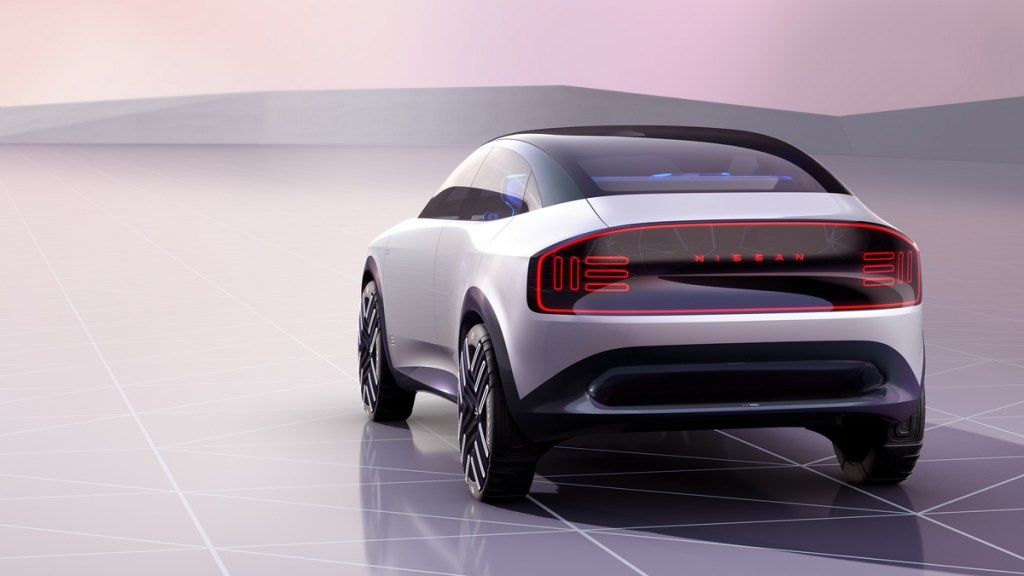
Nissans “CHILL OUT” concept foreshadows the future 100% electric crossover to be built in Sunderland, and there is a new battery recycling facility planned in Europe…
Just read further!
Hans Knol ten Bensel
Nissan Motor Co. Ltd. Unveiled the Nissan Ambition 2030, the brand’s new long-term strategy that goes beyond mobility.
Earlier this year, Nissan launched the EV36Zero concept, the world’s first fully integrated EV production ecosystem, which connects mobility and energy management to help achieve carbon neutrality for Nissan. The future hub is centered around the production facility in Sunderland, UK, and will include the production of an EV, a new giga production facility and use of 100% renewable electricity. Initially, £1 billion will be invested.
The AMIEO Region, centered on the EV36Zero, will play a leading role in realizing the “Ambition 2030” vision, which will help Nissan achieve carbon neutrality across the entire lifecycle of its products by fiscal year 2050. Here are some key points:
By the end of fiscal 2023, Nissan will offer electrified versions of all models offered in Europe, and by fiscal 2026, more than 75% of all Nissans sold are expected to be electrified.
The now-unveiled CHILL OUT crossover concept, as announced in Sunderland in July as part of the EV36Zero project, uses the Renault-Nissan Alliance CMF-EV platform to deliver the European handling and performance customers expect. The model has a sleek and modern design, is both attractive and aerodynamically optimized, fun-to-drive, has advanced safety technologies and has a practical and comfortable interior, according to Nissan.
Nissan plans to expand battery recycling and reuse facilities outside of Japan with a new location in Europe during fiscal year 2022. This infrastructure will support a circular economy for energy management. Nissan plans to fully market its ‘vehicle-to-everything’ and ‘home battery’ systems in the coming years.
Building on the success of the Nissan LEAF, Nissan will soon introduce innovative e-POWER technology in the all-new Qashqai and X-Trail. With the 100% electric crossover Ariya and the future all-electric Townstar Van on the way, an electrified European model program is in the works.
‘In the past period, Europe has been leading in the transition to electrification. Our goal for the next decade is to accelerate this development, with new products and technologies that will enhance the driving experience for Nissan’s customers,” said Guillaume Cartier, President of Nissan AMIEO Region.
Not only will we be offering an electrified version of every Nissan model in Europe, our 360-degree vision of sustainable mobility also means using 100% renewable electricity in our EV Hub in the UK. New battery recycling and reuse facilities will also be built in Europe.
To spearhead the transition to full electrification and carbon neutrality, our teams and products in Europe will serve as a source of information and support for our plans for electrified cars in the rest of the AMIEO Region and other markets.”
Bold new plans… we will report on them regularly as they unfold!
Autonomous vehicles will certainly be important to improve the efficiency of large ports, all over the world.
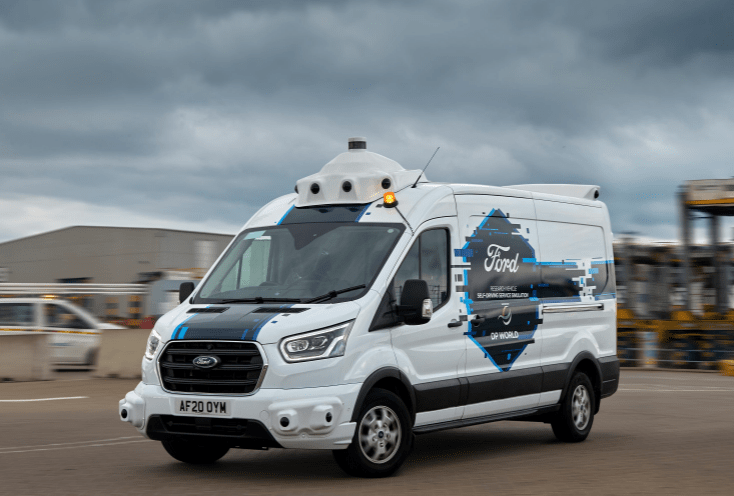
So Ford collaborates with DP World London Gateway to demonstrate how autonomous delivery could benefit large worksites, such as ports. DP World London Gateway – one of the UK’s fastest growing ports – is located 40 km east of central London and already embraces automated technology as an intrinsic part of its operations as a deep-sea container port.
The trial is part of Ford’s Self-Driving Research Programme, which works directly with customers to better understand how autonomous vehicles could integrate into their businesses
Researchers monitored DP World employees as they both loaded and accessed parcels directly to and from a simulated autonomous vehicle – without any assistance from a driver…brave new world!
The initiative is part of Ford’s Self-Driving Research Programme, designed to help businesses understand how autonomous vehicles could benefit their operations.
First launched in June to explore the potential impact upon courier services and doorstep deliveries, the DP World trial tested how recipients managed when accessing self-driving delivery vehicles themselves.
The underlying intention behind the pilot programme is to identify new opportunities and models for autonomous vehicle operations – in particular understanding how existing processes and human interactions can work alongside automated vehicles.
“It was incredible to see how enthusiastically the team at DP World embraced working with the support of a self-driving vehicle. We are continuing to work very closely with our customers to learn how these vehicles can benefit their businesses and it is exciting to see first-hand the impact this can have across a diverse range of locations,” said Richard Balch, director, Autonomous Vehicles and Mobility, Ford of Europe. “What worked so well at DP World premises could equally be of benefit at universities, airports and manufacturing facilities.”
Ford has been testing self-driving technology in major cities across the U.S. in partnership with Argo AI. The company plans to invest around $7 billion (€6.02 billion) in autonomous vehicles during 10 years through to 2025 – $5 billion (€4.3 billion) of that from 2021 forward – as part of its mobility initiatives.
We will be driving the coming month the stylish M4 Coupé, and we are looking forward to it. But in the meantime, we show you here some (very) interesting news from BMW, which is a harbinger of stylish things for the brand to come…
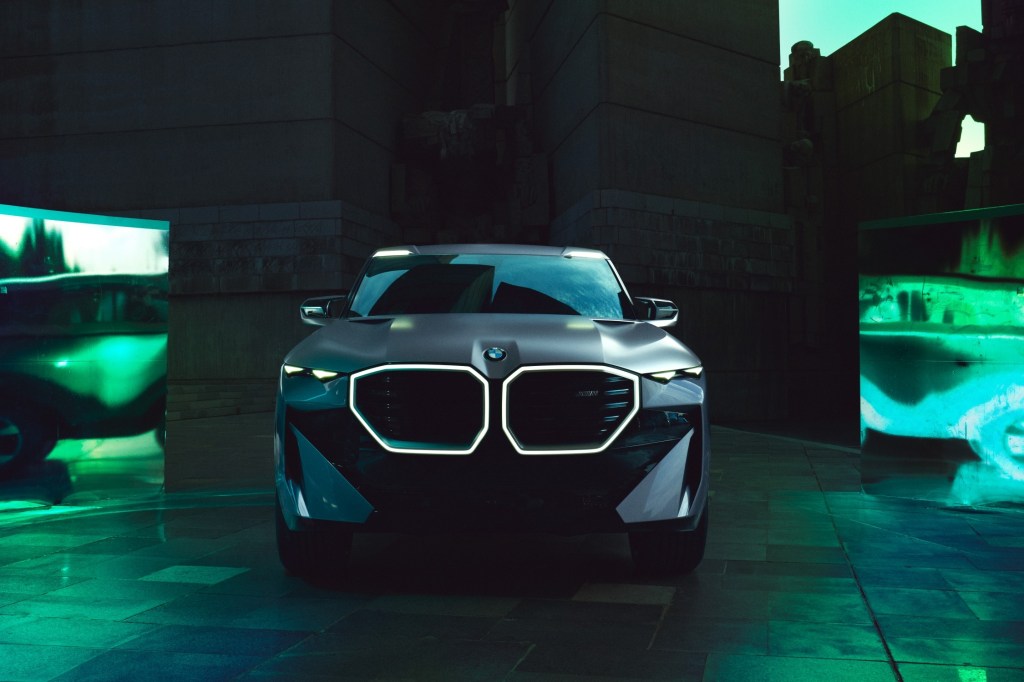
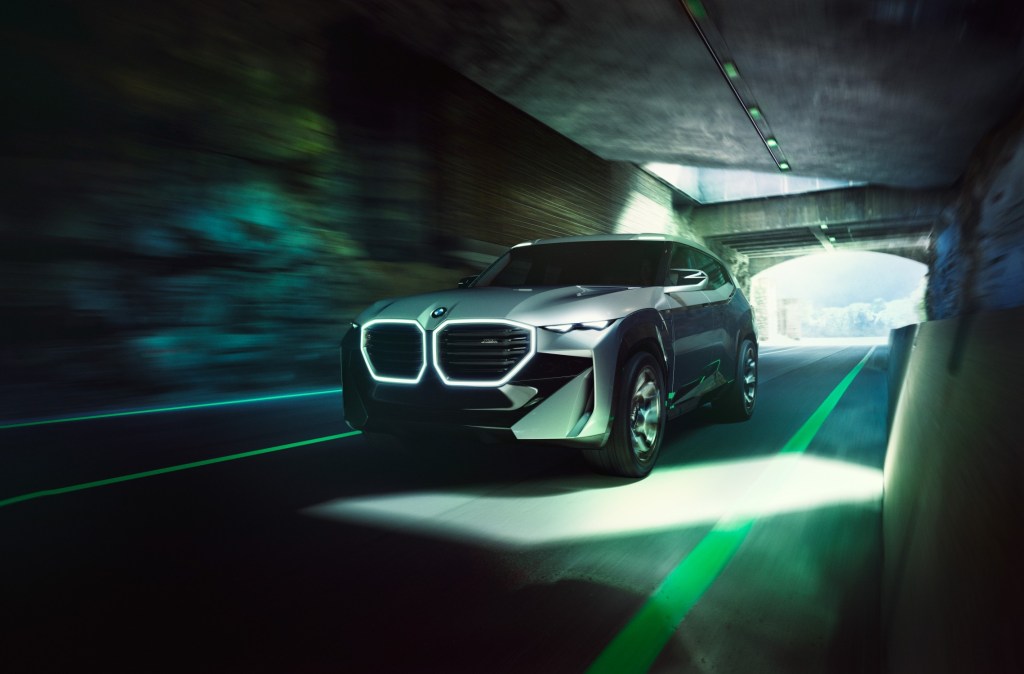
At Art Basel’s 2021 Miami Beach show, BMW M GmbH is presenting an expressive new vehicle concept on the global stage. The BMW Concept XM looks ahead to the most powerful BMW M car ever to go into series production, which is set to begin at the end of next year.
The BMW Concept XM provides a first glimpse of the new front-end design for BMW’s forthcoming luxury-class models. It will also introduce its audience to a highly progressive and distinctive take on BMW X model design and an all-new form of luxury and sense of space for the interior.
The series-production model – the BMW XM – will be built from the end of 2022 at BMW Group Plant Spartanburg in the USA, the most important sales market for the new high-performance car. BMW M will therefore be introducing its first standalone vehicle since the legendary BMW M1 in the year it celebrates its 50th anniversary. The BMW XM will be available in plug-in hybrid form only and exclusively as an M model.
The bold exterior styling of the Concept XM reflects the car’s exceptional performance attributes: dynamism, agility and precision, plus an all-electric range of up to 80 km. The newly developed M Hybrid drive system in the BMW Concept XM brings together a V8 engine and a high-performance electric motor to develop maximum output of 550 kW/750 hp and peak torque of 1,000 Nm (737 lb-ft). The first electrified vehicle from BMW M GmbH in the high-performance segment is therefore pointing the way for the future of the brand.
BMW M goes its own way in the luxury segment…
The BMW Concept XM sees BMW M GmbH forging a distinctive path in the luxury segment. The car’s exterior majors on presence and extrovert appeal. Inside the car, a special take on the driver-focused cockpit typical for the M models meets an all-new rear compartment design: high-comfort seats and an illuminated, sculptural headliner add panache.
“The design of the BMW Concept XM is an extravagant statement by BMW M in the heart of the luxury segment,” says Domagoj Dukec, Head of BMW Design. “It has a unique identity and embodies an expressive lifestyle like no other model in the BMW line-up.”
The front end: progressive design for maximum presence.
The BMW Concept XM debuts the new, progressive front-end design for BMW’s luxury-class models, a version of which will be seen for the first time in 2022 as part of the BMW model offensive in the luxury segment. The headlights have been split into two separate modules. The horizontal kidney grille sits between the headlights and tapers towards the outer edges, producing a near-octagonal outline that emphasises the front end’s character. The black kidney grille elements are enclosed within an intricate surround and appear almost to be floating freely within a High-gloss Black surface. The new XM logo in the kidney grille and the large air intakes hint at the power of the V8 engine, which teams up with the electric motor to form the M Hybrid system.
M-specific details point to compromise-free performance.
The glasshouse of the BMW Concept XM rises up vertically, accentuating the front end’s imposing feel. The colour of the roof contrasts with the black finish of the A-pillars. The windscreen seems to have an even heavier rake as a result, injecting modern dynamism into the front end. Slim LED searchlights have been incorporated into the roof above the A-pillars.
The powerful and heavily contoured proportions of the BMW Concept XM highlight the car’s identity and draw the eye to the coupé-like character of the body. The visually striking front end, long bonnet and stretched, sloping roofline present a characterful two-box design with a distinctive outline.
The two-tone paint finish of the BMW Concept XM further accentuates its lines: the upper section is in matt gold-bronze, while the lower section sports the Space Grey metallic shade. Below the window graphic, a broad, High-gloss Black line – the “black belt” – separates the two exterior colours. The charging flap rearwards of the front-left wheel is a reminder of the M Hybrid drive system at work.
The rear : bold stature
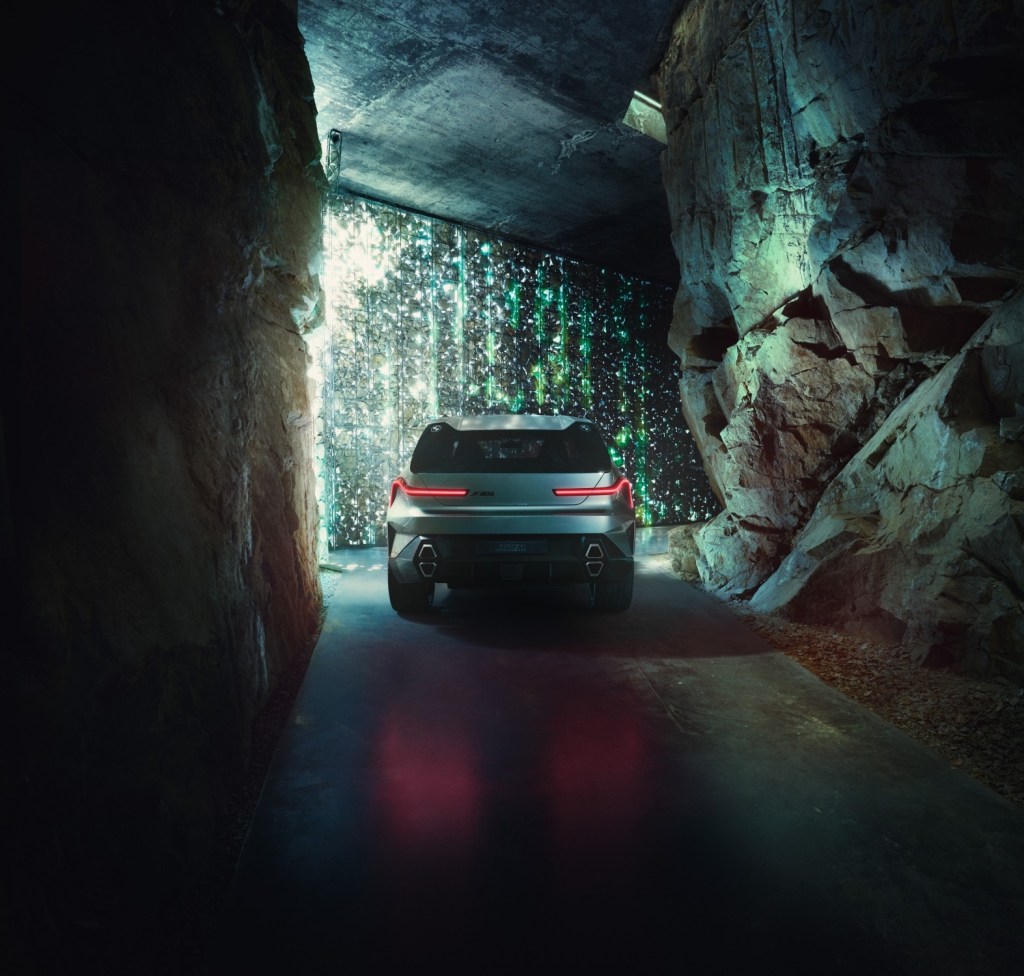
The design of the rear end likewise accentuates the car’s powerful stance, and the BMW Concept XM cuts a low and sporty figure from this angle. The BMW logo is laser-etched into the window below each of the two cant rails. This is a stylistic reference to the BMW M1, to date the only example of a standalone model developed exclusively by BMW M GmbH.
The interior design – high performance and extrovert luxury.
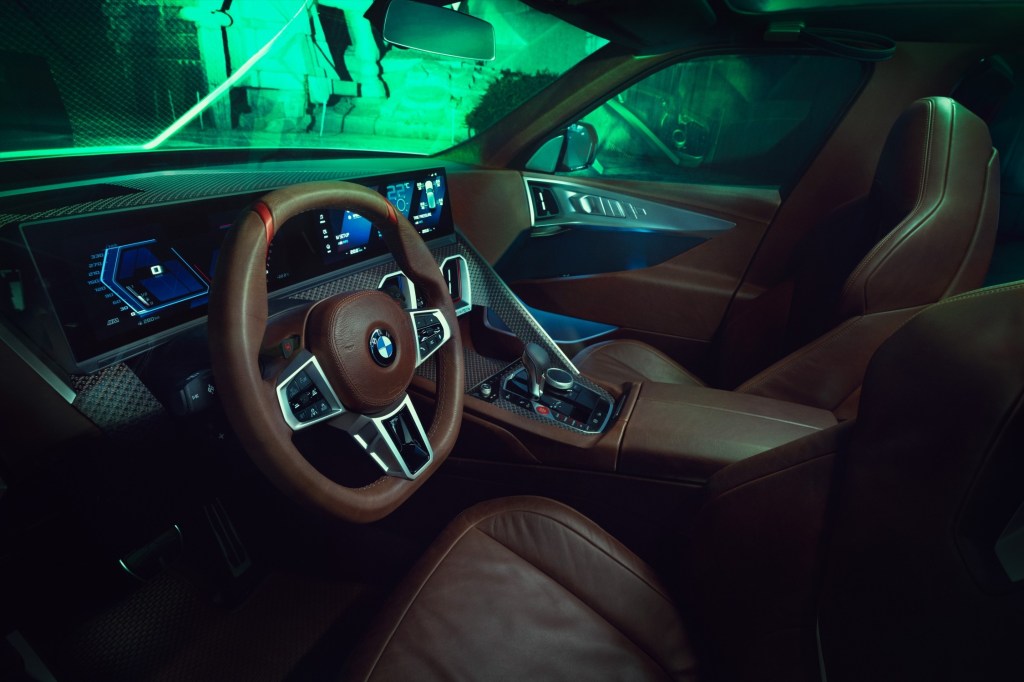
Inside the BMW Concept XM, the driver will find a distinctive M interpretation of driver-focused cockpit design. The lines and surface design of the instrument panel, centre console, door trim and seats give the ambience in the front compartment a progressive feel with their powerful geometry and high-quality materials. Brown, vintage-look leather, copper and carbon fibre create a bridge between luxury and motor sport. A bold trim element provides clear visual separation between the driver’s area and the other sections of the car.
The new BMW Curved Display screen grouping creates a neat balance between traditional driver focus and modern digitality. Red accents on the steering wheel and centre console are M-specific references to the car’s sporting DNA. A trio of vertical elements presented in the three colours of the BMW M brand logo form the heart of the centre console.
Spacious and luxurious: the M Lounge.
The unwavering driver focus of the front compartment contrasts with the extravagant and luxurious lounge-like ambience in the rear of the BMW Concept XM. Special materials, visually powerful surfaces and expressive details turn the rear seats into the unique M Lounge, black-tinted rear side windows underscoring the abiding sense of privacy here. While warm brown leather dominates the cockpit, the rear is decked out in the rich colour shade Petrol. The large rear seat bench with its deep seat recesses forms an inviting space to relax. Only the diamond-shaped area of the head restraints – which provides the supporting function familiar from BMW M Sport seats in other models – is leather-trimmed.
Illuminated and sculptural: the headliner .
The visual highlight of the cabin is its headliner with a three-dimensional prism structure. A combination of indirect and direct lighting produces a relief-like structure. The ambient lighting can be activated in the three BMW M colours.
BMW Curved Display with M-specific user interface.
Based on the latest generation of BMW iDrive, the M-specific version of the control/operation system translates the high-performance character of the BMW Concept XM into the digital world. Showcased in the familiar three M colours, it visualises the modes of the hybrid drive system as well as the pure-electric driving mode with captivating aesthetic appeal.
















 Autoprova - for the Connaisseur