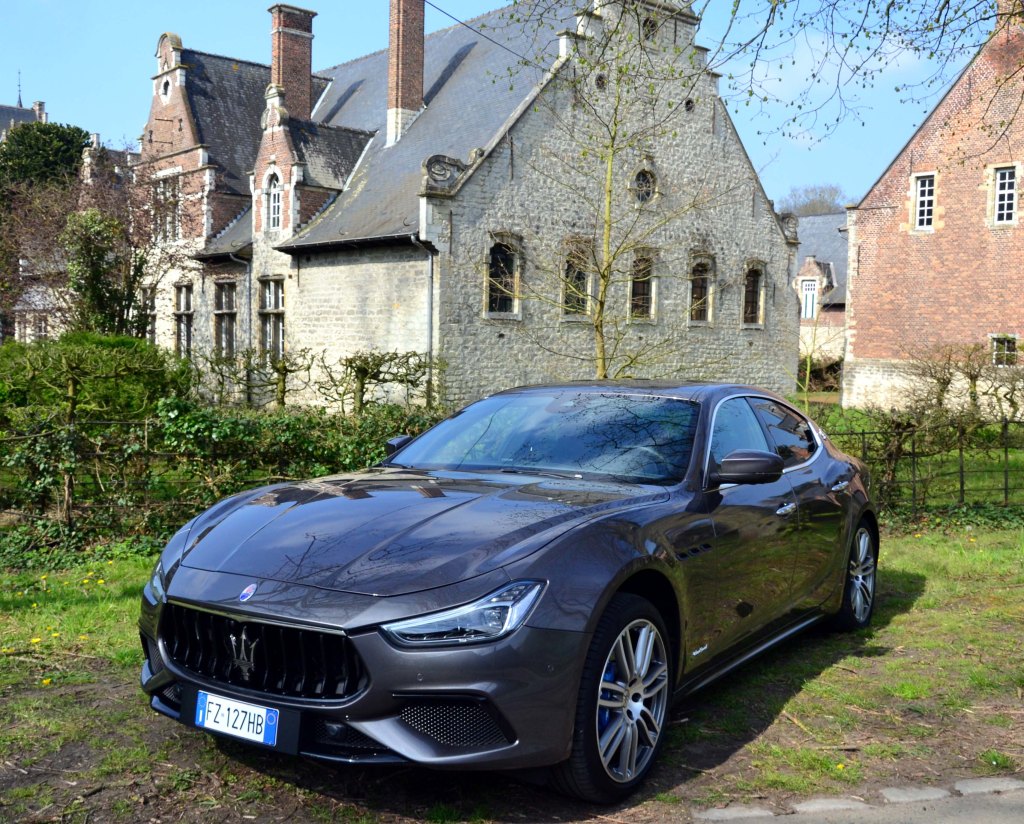
We drove the Maserati Ghibli Hybrid: an electrifying thoroughbred…

When a “pur-sang” four door Gran Turismo car gets electrified to carry it into our “green” age, one has to do this cleverly. For Maserati engineers, the challenge was to retain the character, performance and panache of the brand. This meant retaining a sporting typical sound and presence of a combustion engine, “la macchina” so to say, in every driving situation. Typical for every Maserati built so far.  This also meant at least maintaining the present performance and handling levels, all this combined with of course a marked difference in consumption and CO2 emissions.

As the Ghibli marks the brand’s first entry into electrification, it was very important to get it right.

Well, after this test we can say, the about 100 engineers and developers involved in the Ghibli Hybrid project, did a marvelous job. Just read further.

Hans Knol ten Bensel

Choosing the right engine…

From the beginning it was clear the efficiency of a smaller volume four cylinder engine was called for. Within FCA, a true gem was waiting in the Alfa Romeo stable: a two litre four cylinder petrol engine, with a state-of-the art cylinder head and excellent thermal efficiency. But for the Ghibli, more power was needed, as the present performance level had to be retained. This meant a maximum power of 330 HP.

The internal mechanical components of the two litre 4 cylinder Alfa engine derived from FCA have been completely reworked by the Maserati Innovation Lab in Modena, to achieve greater torque and enable the turbocharger and e-booster to deliver the required extra power. The engine’s electronic control system is also totally different, with a switch to a Bosch new-generation ECU. Practically, all that remains of the original engine are the dimensions and part of the cylinder head: this four cylinder has been transformed into a true Maserati engine. The engine is built by the way at the big powertrain & engine production plant at Termoli. This plant builds various engines and drivetrains for the brands of the (now merged) FCA group.

…and coupling it to the ideal hybrid drivetrain.

Keeping the weight down to achieve equal or even better performance, whilst retaining an ideal weight distribution to preserve the excellent handling, excluded a solution using a large battery and a separate electric motor.  

Preserving the kinetic energy of this dynamic Maserati was the key focus. We point out here that the Ghibli Hybrid is built around a modified version of the chassis and bodywork of the Ghibli V6.

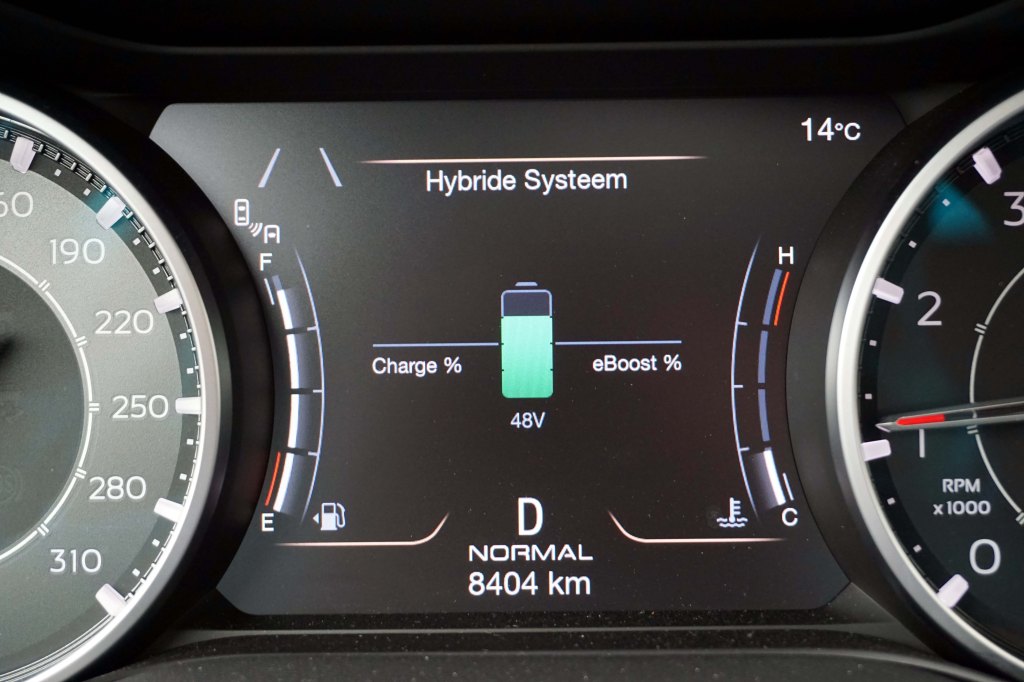
So Maserati opted for a 48 volt hybrid system, which has four parts: the BSG (Belt Starter Generator), the battery, eBooster and a DC/DC converter. The BSG does the job of an alternator, recovers energy during braking/deceleration and charges the battery in the boot, which in turn powers the engine’s eBooster. The reason for installing an eBooster on the car is to back up the conventional turbocharger, working in tandem with it, to sustain the engine’s power output at low rpm. The hybrid system’s operating strategy ensures that the eBooster is always available, with current delivered via battery or BSG, whenever it is needed.

The result is an immensely tractable power unit, with torque delivery equal to the previous V6 Diesel, and guaranteeing brilliant acceleration performance. What to say of an acceleration from 0 to 100 km in merely 5,7 seconds, with the Ghibli Hybrid hurting smoothly further to a top speed of 255 km/h?

Smooth 8 speed transmission…

And of course, all this performance is delivered smoothly and effortlessly. Not least thanks to the excellent ZF transmission. Like the other Ghibli versions, the Hybrid is equipped with the same eight-speed ZF automatic transmission, which is used on the Quattroporte and Levante models. This unit is a true gem. It caters for all demands, from comfort to fast gear shifting, and from minimized fuel consumption to low noise, vibration and harshness (NVH). The car also recognizes a variety of conditions, such as uphill or downhill driving, hard braking or driving through a corner, and selects the optimal gear and the most suitable gearshift style accordingly.

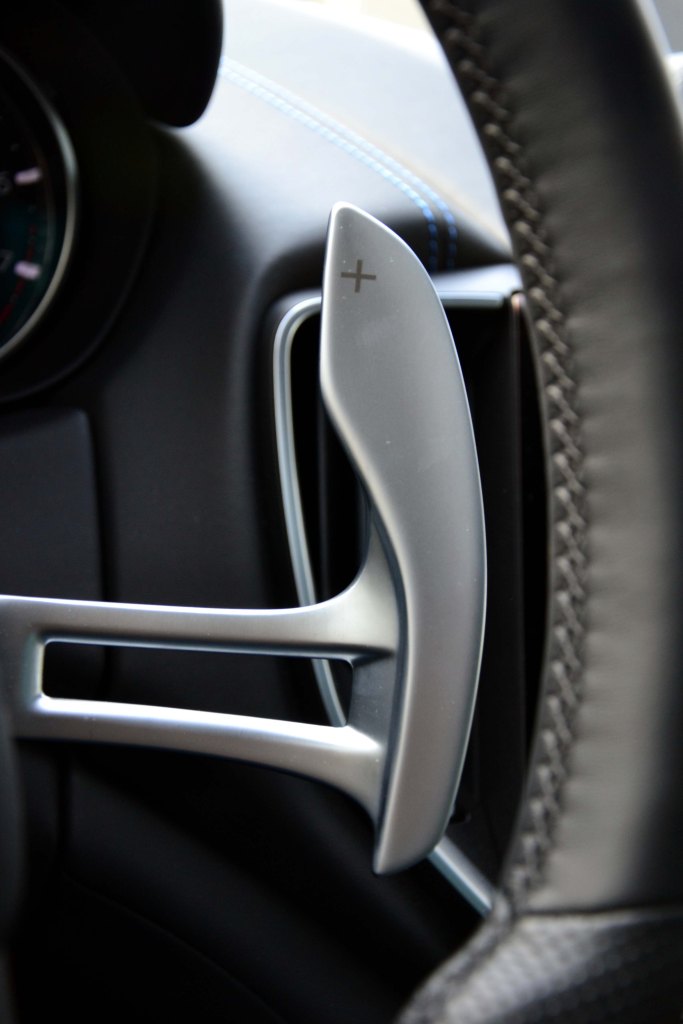
In Manual Normal mode the system automatically shifts up as the red line approaches, while in Manual Sport, gearshifts are quicker and sharper and the engine can be pushed to the red line without the system intervening.

The true Maserati sound retained…

Here the Maserati engineers performed some miraculous work. Even on small throttle openings at urban crawling speeds, the unit has the hum of a multicylinder thoroughbred. Indeed, this Ghibli Hybrid still has the distinctive growl of every Trident model, and all this is achieved without resorting to amplifiers, by just tweaking the fluid dynamics of the exhausts and adopting resonators, tuned to deliver the typical roar.

Driving is believing…

Indeed, driving this Ghibli Hybrid is an exquisite experience. Ultrasmooth at slow speeds, reacting with thoroughbred staccato when you put your foot down. This Hybrid has retained the agility and responsiveness of a true Maserati. As it recuperates kinetic energy, an anticipative (urban) driving style will greatly reward you with good economy. It was no trouble to stay well below the 10 litre/100 km mark in dense city traffic, cruising at constant legal speeds on the open road will get consumption down to around 8 litres/100 km. The high gearing and the thermal efficiency of the engine see to that, along with the good aerodynamic qualities of the body of course. Typically at 120 km/h, the engine turns over at 1500 rpm. By the way, the manufacturer quotes for the WLTP combined cycle (l/100 km) 8.1 – 9.4, for the WLTP combined cycle (g/km) 183 – 213.

But using the exhilarating performance is an undisturbed pleasure. Our test car was executed in the GranSport trim. (The Ghibli Hybrid is available in both GranLusso and GranSport trims) and this meant that our car came standard with the Skyhook suspension system, where all four dampers can be electronically controlled independently of each other.

The default mode of the Skyhook suspension system prioritizes comfort, and is more sporty if the driver presses the suspension button. This extra damping stiffness, which was developed in both extreme test scenarios and on the racetrack, pushes the Ghibli’s handling characteristics to even higher levels. Essentially, the Skyhook system drastically reduces both longitudinal and lateral load transfers and minimizes body roll to bring out the sportiest side of the car’s character. The computer system in control of the Skyhook dampers monitors a vast array of parameters, including speed, lateral and longitudinal acceleration, individual wheel movements, body movement and damper dynamics. Adjusting to suit the suspension mode selected by the driver, the system delivers the perfect damping mode for each wheel almost instantly. We can tell you, it has to be experienced to be believed…

The well-balanced handling of this Ghibli is of course mainly due to its weight distribution and the general layout of its suspension. The battery in the back actually improves the weight distribution, whilst the double-wishbone suspension layouts are a race-bred tradition at Maserati. The Ghibli continues with this heritage but also incorporates some new technologies, featuring high-mounted all-aluminium double wishbones at the front to guarantee light and precise handling characteristics. The system’s geometry has delivered a quadrilateral architecture, which has enabled Maserati’s handling team to deliver a precise, communicative and comfortable steering feel.

The rear suspension employs a five-bar multi-link system with four aluminium suspension arms, and ensures exceptional ride comfort on the one hand and sports performance on the other. The Ghibli’s suspension package is based around a fixed-rate damping system to control the movement of its steel springs and anti-roll bars.

Superb stopping power…

Dual Cast technology, pioneered by Maserati, combines the strength of cast iron with the lightness of aluminium to reduce unsprung mass and, therefore, increase handling prowess. These brakes have a large swept area, highly efficient cooling and are designed for consistent performance in sports driving situations.

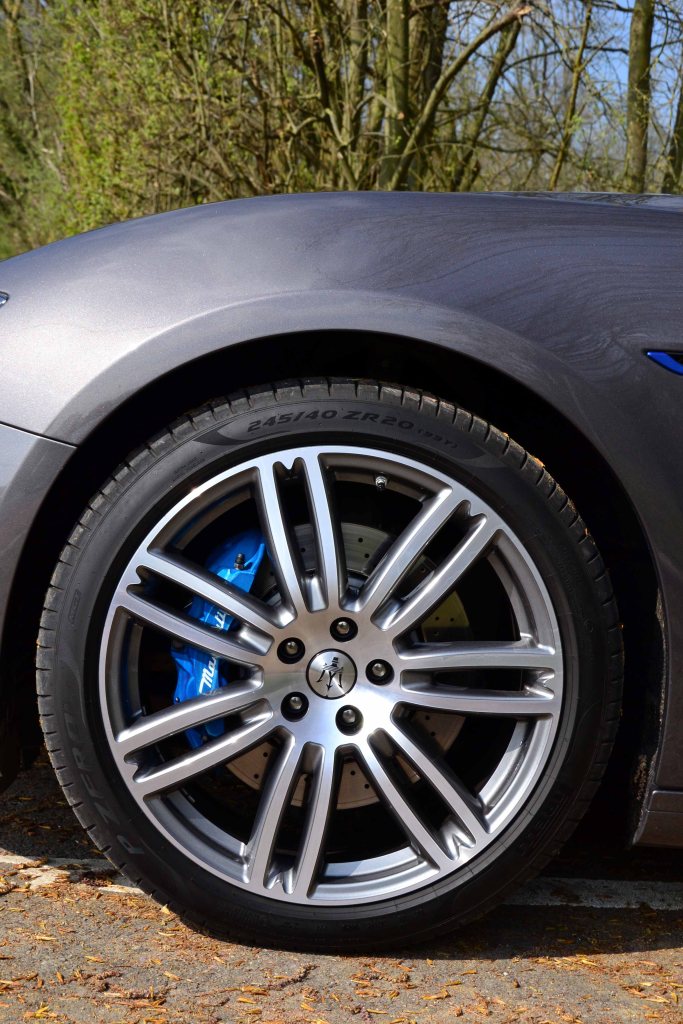
The Ghibli Hybrid is fitted with Dual Cast 360×32 mm ventilated and cross-drilled brake discs with six-piston fixed alloy Brembo calipers on the front axle, while the rear axle is fitted with four-piston fixed alloy 345×28 mm Brembo calipers.

Electrifying elegance and comfort, both inside and out…

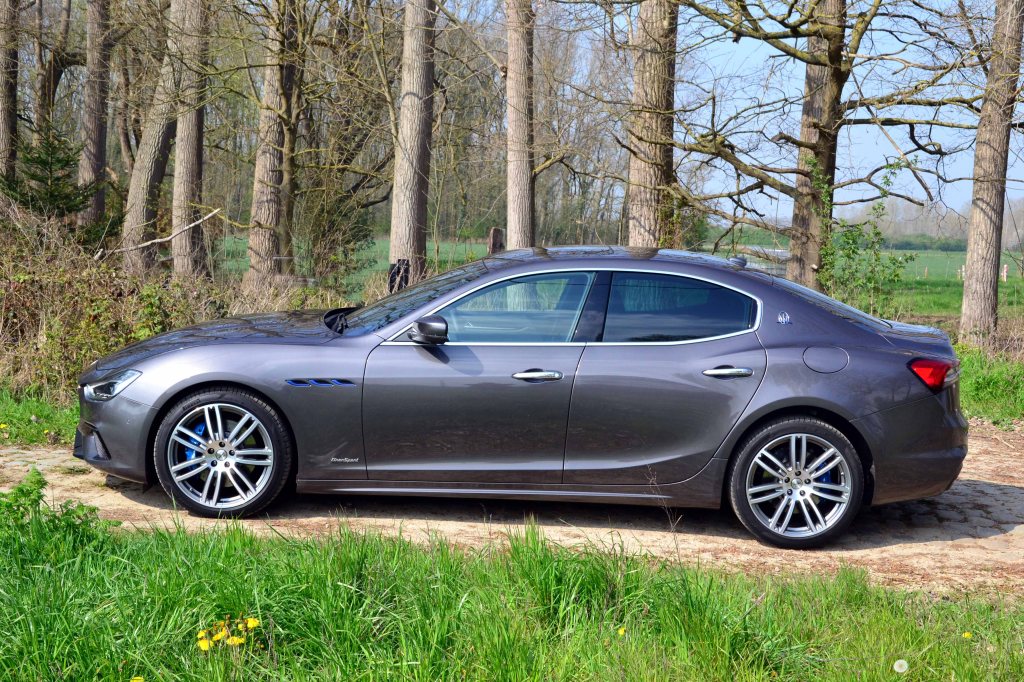
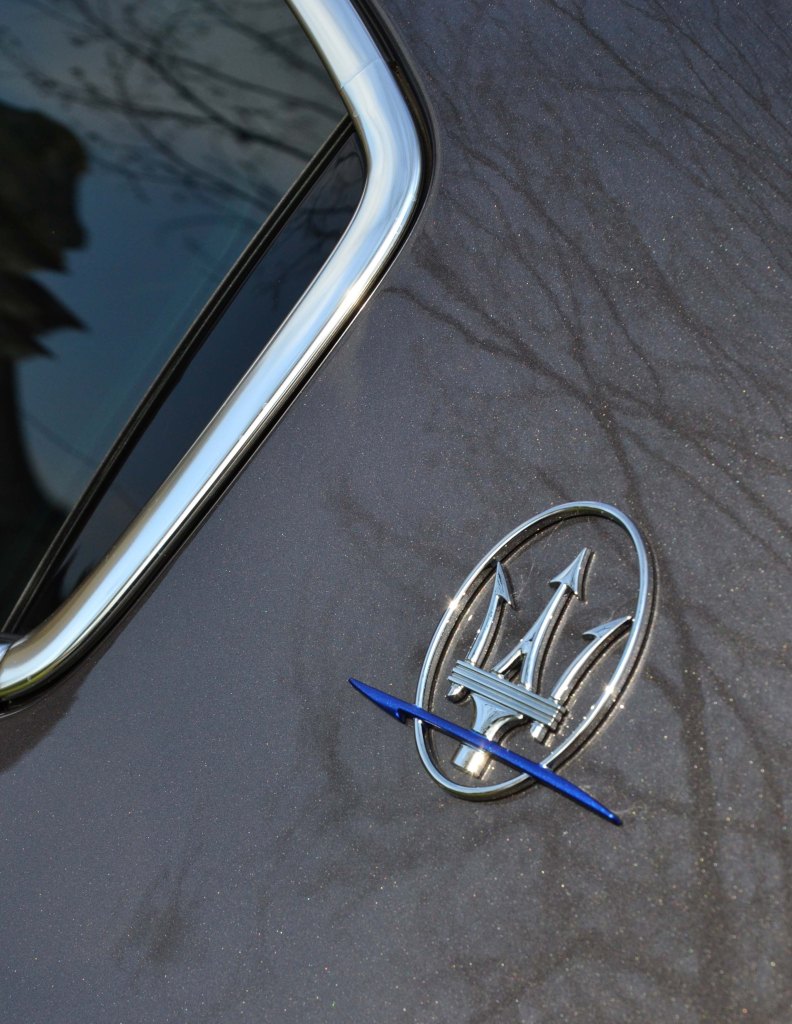
The hybrid version of Ghibli features a number of details in dark blue, the colour universally adopted as the symbol of clean mobility. The three traditional air ducts on the front mudguard have a blue trim, and the Brembo brake calipers and the thunderbolt in the pillar logo are in the same colour.

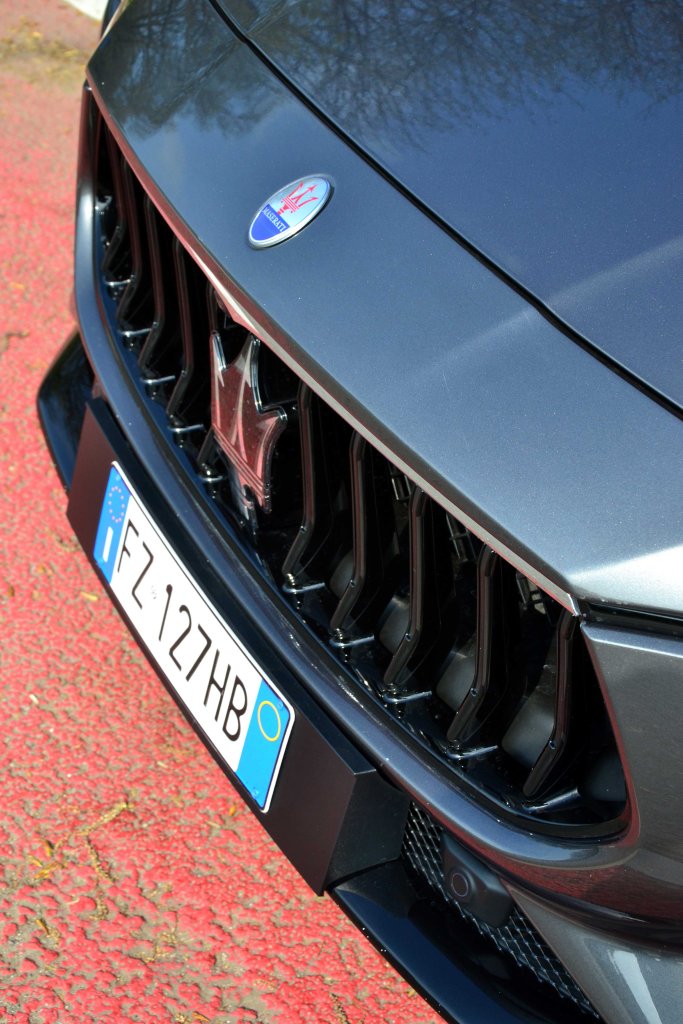
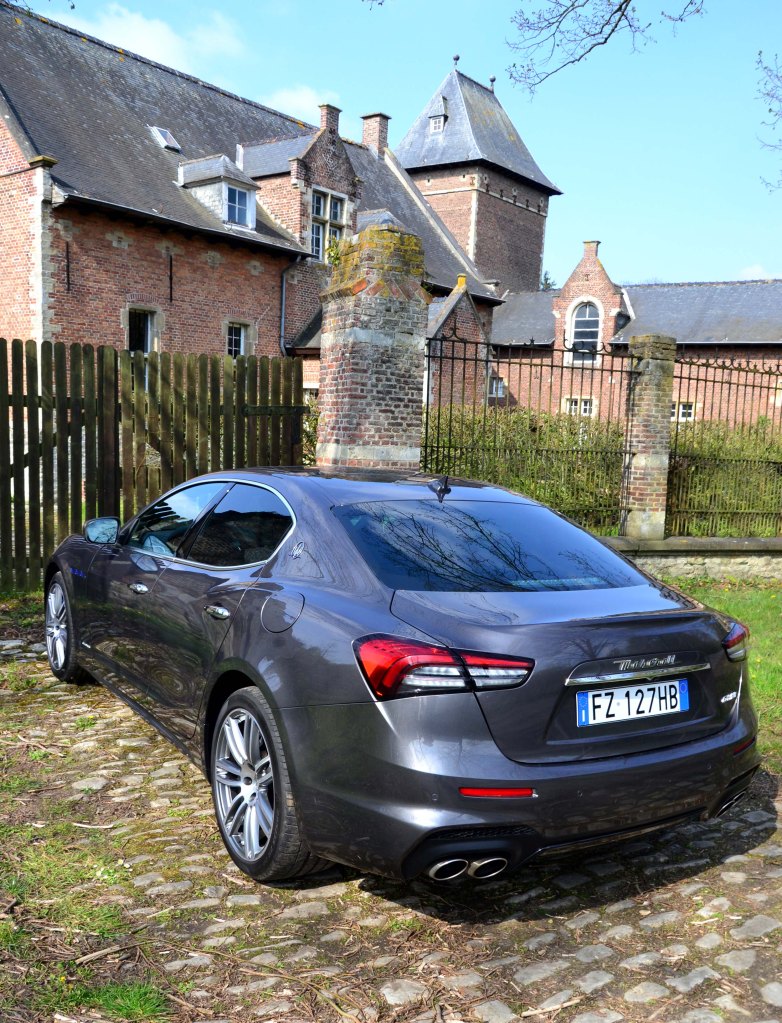
Ghibli Hybrid makes its debut with a new front grille, characterized by a distinctive feature: the Maserati tuning fork. In fact, the updated front grille is based on this shape, and is finished in chrome in the GranLusso trim and in an even more aggressive, sportier Black Piano in the GranSport trim. Like the other cars in the Trident Brand’s range, Ghibli also transforms its rear look, with the development of a new light cluster with a style known as boomerang design, inspired by many Maserati models from history and typical of the Brand’s genetic identity

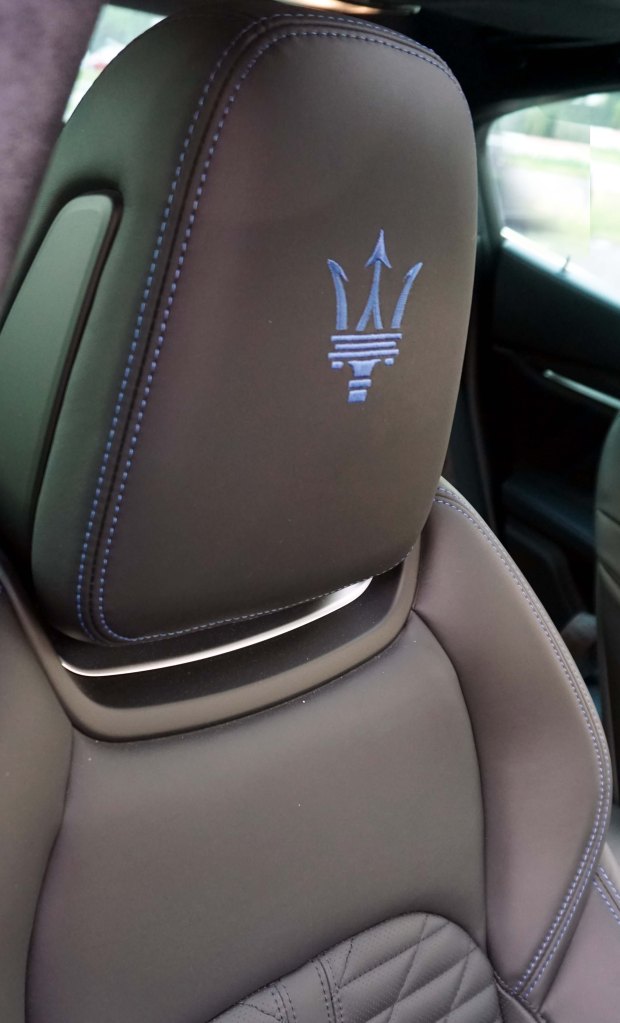
In the interior, the Maserati panache prevails more than ever. The sculpted sport seats are upholstered with a premium full-grain “Pieno Fiore” natural leather, with contrasting dark blue stitching and an embroidered Trident on the headrests. The same styling is repeated on the door panels and instrument cluster.

The driver’s seat offers 6-way electric adjustment, while the GranLusso and GranSport trims both have standard 12-way power front seats. Needless to say, an ideal seating position is soon found…

The sport steering wheel fitted with aluminium gearshift paddles, and the Inox sport pedals are also typical for the GranSport trim.

Infotainment and connectivity up to scratch…

The Ghibli Hybrid is complete with all the technology upgrades featured on MY21 models, and thus also the new generation MIA (Maserati Intelligent Assistant) multimedia system. The heart of the MIA is the powerful Android Automotive operating system, with full personalization to the driver’s use preferences. The HD screen of the MIA system is enlarged from 8”4 with a ratio of 4:3 to 10”1 with a ratio of 16:10 and is now frameless for a more contemporary look, with the surrounding bezel almost removed.

With effect from MY21 all Maserati cars are connected thanks to the new Maserati Connect program. Having the Maserati connected at all times enables an eye to be kept on the car’s health, and Maserati Connect will alert the driver when a service is due. With a Smartphone or Smartwatch, drivers can always stay in contact with their Maserati thanks to the Maserati Connect app; this is also possible from home via their virtual personal assistant (Amazon Alexa & Google Assist).

Last but not least we enjoyed the stunning Bowers & Wilkins Premium Surround Sound System, with 15 speakers, a 1,280 W amplifier and QuantumLogic™ Surround.

Driving aids galore…

The Integrated Vehicle Control (IVC) function is incorporated in the Maserati Stability Program control for enhanced active safety and driving dynamics, while the optional active Advanced Driver Assistance Systems provide Level 2 autonomous driving technology.

IVC uses a smart, feed-forward controller that predicts driving situations in advance and adapts the engine speed and brakes accordingly. IVC intervenes more smoothly and with less noise than a traditional ESP, ensures better car balance and traction at the limits of the car’s dynamics and employs intelligent torque vectoring to optimize lateral dynamics in a natural way even when MSP is off. In dynamic test maneuvers, like slalom and lane change, IVC has demonstrated higher drive-through speed and improved racetrack lap times. Wow!

Conclusion

The step towards electrification of its range has been done very harmoniously with this Ghibli Hybrid. Whilst completely retaining the original undistilled thoroughbred character of the Trident brand, it succeeded in putting very reasonable economy in place, in combination of course with a corresponding anticipative (urban) driving style, in line with modern times.

All this packed in a timelessly styled, elegant body which exudes elegance and style for the coming decades, this Ghibli Hybrid is a perfect companion, and is also an ambassador for how you understand motoring and individual mobility, for years to come…

Hans Knol ten Bensel

Maserati unveils its Levante Hybrid


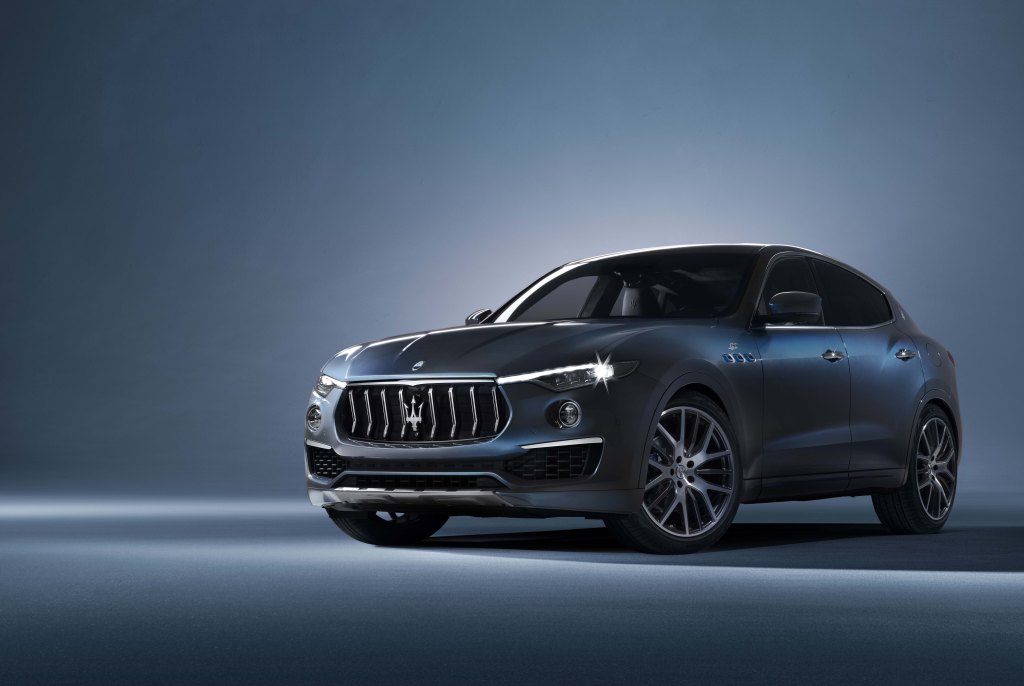
The Levante Hybrid was presented at ist launch in Azzuro Astro color. This metallic paint consists of three layers and is available through the Maserati Fuoriserie personalization program.

The Maserati Levante Hybrid has today experienced both a physical and a digital world premiere. At the time of the car’s unveiling at the Shanghai Auto Show, a virtual presentation has taken place simultaneously on the houseof.maserati.com website.

With its first electrified SUV, Maserati is taking another important step in the future plan launched last year with the Ghibli Hybrid, which will lead to the electrification of all new Maserati models.

“Faster. Cleaner. Unique ” is the motto at the launch: the Levante Hybrid is faster than a diesel, more durable than a car with an internal combustion engine and unique thanks to specific features and details.

The Levante Hybrid combines a two-liter four-cylinder engine with a 48-volt hybrid system that recovers energy during engine deceleration and application of the brakes. The hybrid SUV is lighter than the six-cylinder version (petrol and diesel) and also has a more balanced weight distribution because the battery – without sacrificing luggage space – is placed in the rear of the car. One of the goals during the development of the Levante Hybrid was to take the dynamics and driving pleasure to an even higher level.

 With a maximum power of 330 hp and a torque of 450 Nm, which is available from just 2,250 rpm, the four-wheel drive Levante Hybrid delivers impressive performance: the car has a top speed of 240 km/h and accelerates from 0 to 100 km in 6 seconds.

The Levante Hybrid was presented at ist launch in Azzuro Astro color. This metallic paint consists of three layers and is available through the Maserati Fuoriserie personalization program.

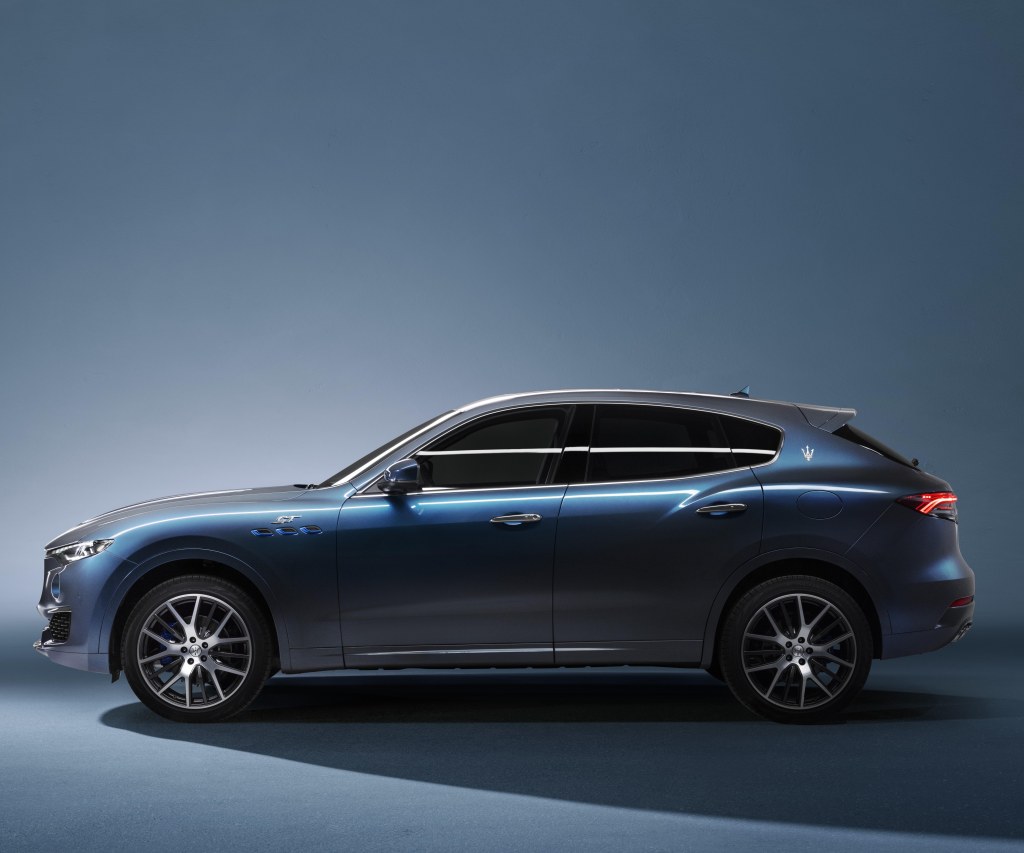
The Levante Hybrid is immediately recognizable by the unique details in the exterior and interior. Several elements are finished in blue, a color specifically chosen for Maserati hybrid models. Like the brake calipers and trident on the C-pillars, the iconic side vents are finished in this shade of blue. The same color returns in the interior, including the stitching of the seat upholstery.

With Maserati Connect, the Levante Hybrid is always connected to the outside world. The driver remains fully informed about the technical condition of the car: Maserati Connect alerts the owner when maintenance is required, thus improving the quality of the service. The owner is in contact with the car via the Maserati app on the smartphone or smartwatch. You can also contact the car from home with a virtual assistant such as Amazon Alexa or Google Assist.

The digital world premiere of the Levante Hybrid on houseof.maserati.com has been attended by Maserati’s global brand ambassador David Beckham and Italian songwriter and producer Dardust, who has composed an exclusive soundtrack for the unveiling of the Levante Hybrid.

More soon about this Levante in technical detail. Stay posted!

Hans Knol ten Bensel      
Audi unveils its first all-electric compact SUV’s: the Audi Q4 e-tron and the Q4 Sportback e-tron…

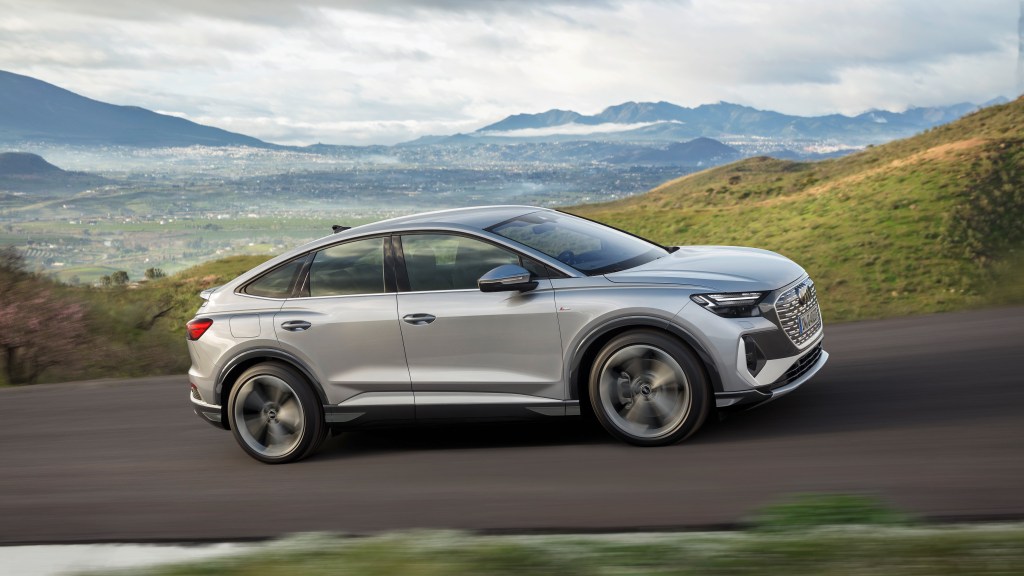
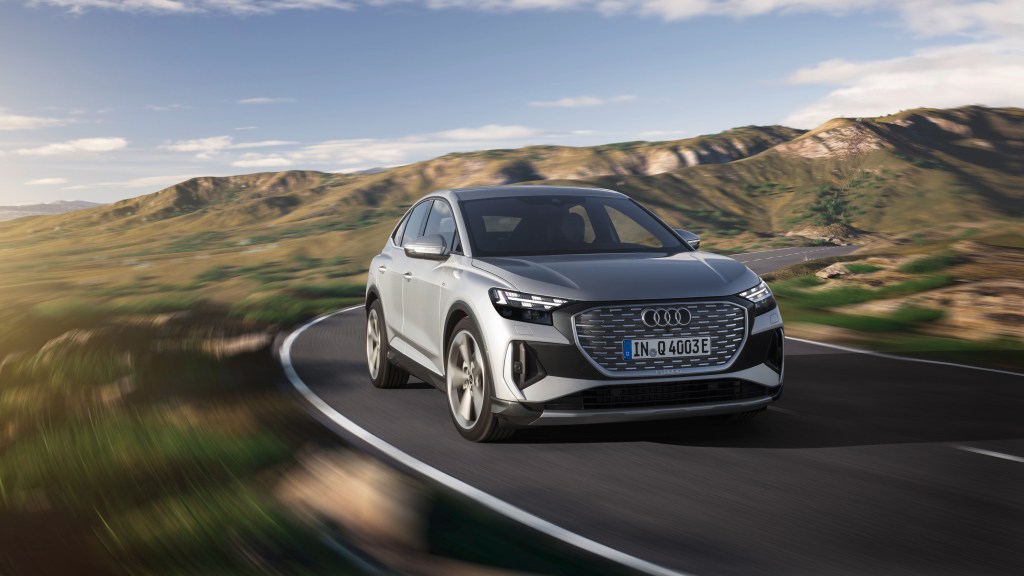
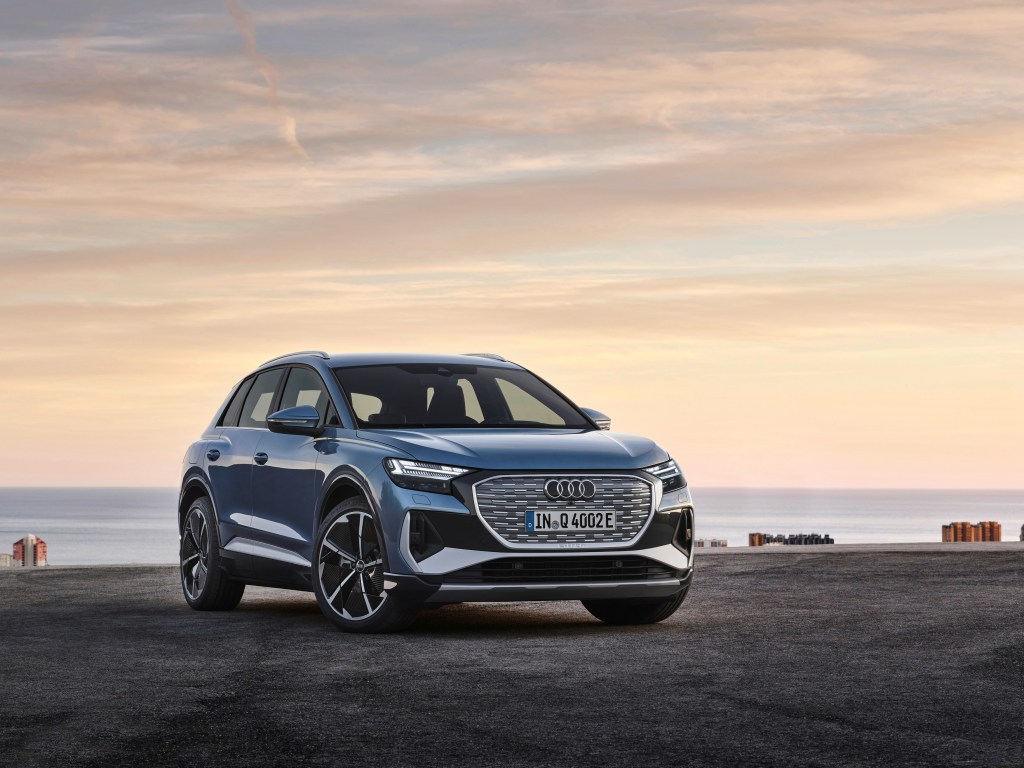
Audi Q4 50 e-tron quattro Colour: Geyser blue, metallic and Audi Q4 50 e-tron quattro Edition One Colour: Typhoon gray

Versatile all-rounders for everyday use that transfer the progressive design of the concept cars into series production and that can be driven locally without any emissions: The Audi Q4 e-tron and the Q4 Sportback e-tron are the first compact electric SUVs from the brand with the Four Rings.

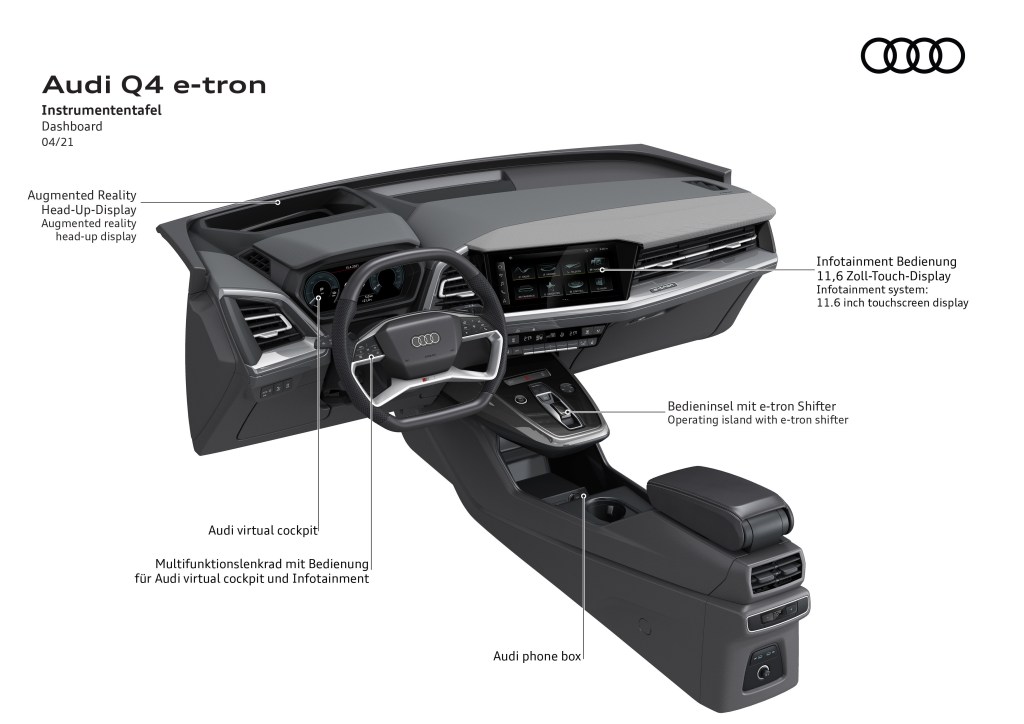
Both of them impress with a new spacious dimension in the interior and pioneering solutions when it comes to operation, display, and assist systems. The augmented reality head-up display connects the virtual and the real worlds in a totally new way.

Q4 50 Sportback e-tron Quattro Colour: Florett silver

The range comprises three drive versions, spearheaded by a quattro model with a maximum output of 220 kW (299 PS). Attributes that they all share are zero local emissions driving  and high ranges, charging times of around ten minutes for sufficient power to travel about 130 kilometers (80.8 mi) in ideal conditions (WLTP) and convenient charging with the e-tron Charging Service. The rear-wheel drive Q4 40 e-tron achieves a range of up to 520 kilometers (323.1 mi) in the WLTP cycle. It goes on sale in Europe in June 2021, with prices in Germany starting at EUR 41,900 – where the customer can claim a subsidy of EUR 9,000 (net).

Audi’s next step: the exterior design

With the Q4 e-tron and the Q4 Sportback e-tron, Audi is taking the next step in the design language of its electric models.

The two compact SUVs bring into series production the body line that the Audi Q4 concept and Audi Q4 Sportback e-tron concept show cars demonstrated at the beginning of 2019.

In the Audi Q4 Sportback e-tron, the especially low coupé-style roofline ends in an expressively designed rear where the spoiler sits deep on the two-part window.

On request, both of these compact electric SUVs can be driven off the assembly line with Matrix LED headlights. What’s more, the driver can switch between four signatures in the MMI touch operating system. At the rear, a light strip links the taillight units to each other. A choice of eight colors is available for the paint finish, including the new metallic shade aurora violet. In addition to the basic version, there are the two advanced and S line exteriors.

E-mobility for everyone…

Audi wants its new Q4 line to be an all-round car which offers everything for everyone. The available space in the interior is comparable with the full-size SUV class; there is no center tunnel. The feeling of spaciousness is not just confined to the front seats – with the generous legroom, passengers in the rear also benefit from the advantage of the technological platform, which is designed as electric-only.

Depending on the positioning of the rear seat backs, the volume of the luggage compartment is 520 to 1,490 liters in the Q4 e-tron and 535 to 1,460 liters under a power trunk lid in the Sportback. Both models can tow trailers with a weight of up to 1,000 kilograms (braked, at 12% incline), with the quattro versions even able to pull up to 1,200 kilograms.

Another strength for everyday use is the high range – the Q4 40 e-tron travels up to 520 kilometers (323.1 mi) (WLTP) on a single battery charge. Thanks to a maximum charging capacity of 125 kW, in ideal conditions it can charge enough power for about 130 kilometers (80.8 mi) (WLTP) in around ten minutes. Using the myAudi app, the owner can activate charging at home and pre-entry climate control from their smartphone.

In the interior, there are also quite a few innovations. For instance totally new is the steering wheel with its seamless touch surfaces, which the driver uses to control the digital instrument cluster.

Infotainment and navigation are operated primarily using the central MMI touch display, which will also be available in the largest configuration level of 11.6 inches towards the end of the year. Natural voice control provides the third operating interface.

On request, the Audi Q4 e-tron and the Q4 Sportback e-tron can be equipped with another innovation on board – the augmented reality head-up display.

Fully digital: the Q4 e-tron is an e-mobility device

The Q4 e-tron models offer a fully digital user experience. The infotainment package in the electric compact SUV is structured in three levels – from MMI through MMI plus to MMI pro.

Different functions are provided depending on the configuration level, including the augmented reality head-up display and the Audi virtual cockpit plus. The optional levels provide the online services of Audi connect, including the intelligent e-tron route planner for working out the optimal route that stays close to the public charging infrastructure. For premium sound, the Sonos sound system which combines lifestyle, technology and design in a new dimension.

Audi Q4 50 e-tron quattro Static photo, Colour: Geyser blue, metallic Audi Q4 50 e-tron quattro Edition One Static photo, Colour: Typhoon gray

For urban commuters and long-distance drivers: battery, drive and charging options

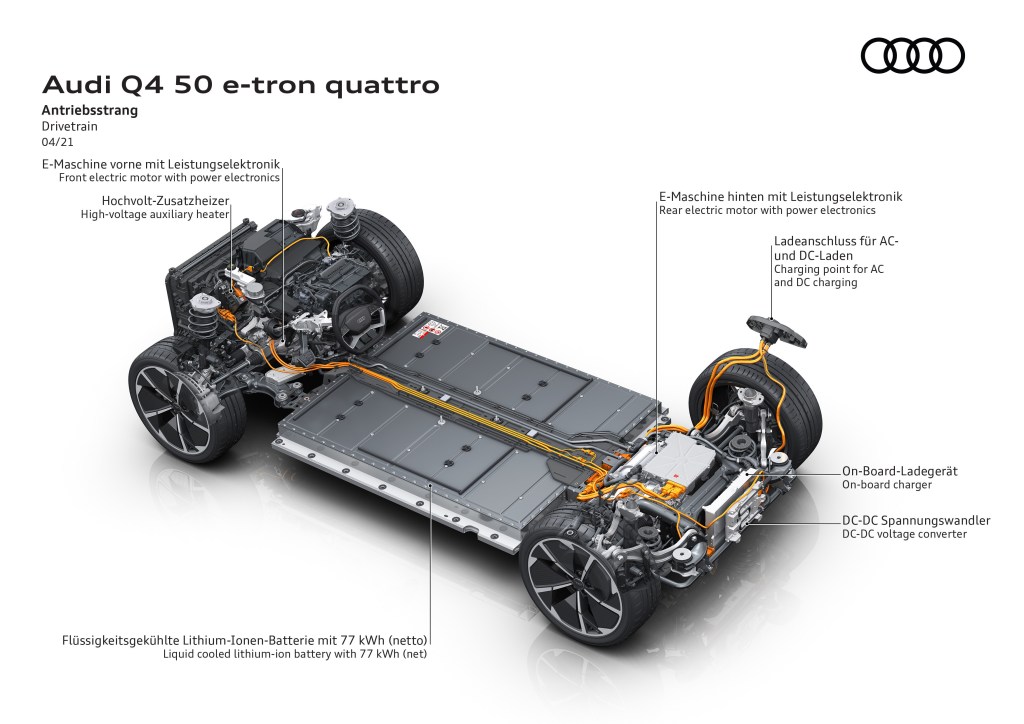
The drive portfolio of the two compact electric models lives up to the expectations of very different groups of customers – from the urban commuter to the long-distance driver. It includes two battery variants and three drive variants. The compact battery for the Q4 35 e-tron has a net energy content of 52 kWh (55 kWh gross), while the figures for the large battery in the Q4 40 e-tron and Q4 50 e-tron quattro are 77 (82) kWh.

The Q4 35 e-tron and the Q4 40 e-tron have an electric motor that drives the rear wheels, with an output of 125 kW (170 PS) and 150 kW (204 PS) respectively. The top-of-the-range version Q4 50 e-tron quattro has two electric motors for the electric all-wheel drive. They give it a maximum output of 220 kW (299 PS) – sufficient for a sprint from 0 to 100 km/h in 6.2 seconds and an electronically limited top speed of 180 km/h. For efficiency, the motor on the front axle comes into action only when high power or a strong grip is needed.

Another important factor in energy-saving driving is intelligent recuperation, which also incorporates navigation and topographical data.

Dashboard

Audi’s two new electric SUVs can be charged with different outputs using alternating current (AC) and direct current (DC) depending on the battery. The compact battery can get up to 7.2 kW with AC charging and up to 100 kW when using HPC charging (high-power charging) with direct current. As standard, the larger battery allows for up to 11 kW with AC and up to 125 kW with HPC.

Audi e-tron Charging Service…

Drivetrain

The Audi e-tron Charging Service provides access to around 210,000 public charging points in 26 European countries, 4,400 of which are HPC fast-charging points (as of April 2021), using just one charging card. In the transit tariff, customers buying the Q4 e-tron do not pay any basic fee in the first year. They benefit here especially from the preferential conditions in the IONITY network: The charged kilowatt hour costs 31 cents, which corresponds to the price level when charging at home in Germany.

The Audi Q4 e-tron will appear in June 2021 on European markets, with the Q4 Sportback e-tron following in the late summer. Of course we are keen to sample driving impressions this summer!

Hans Knol ten Bensel

Leasys and FCA Bank launch from 12 to 30 of April the “Electric Days”…

Electric mobility is growing more popular worldwide, and even more so in Europe where the growth of electric and hybrid cars has been in three figures recently.

Leasys and FCA Bank want to play a leading role in this trend, and therefore they launched the “Electric Days”, three weeks of special offers dedicated to electric mobility, all entirely in digital fashion.

The offers will be active from the moment of writing until the end of April and they are designed to make the services offered by the Group and its rental company Leasys even more accessible and convenient.

Digital offers range in Europe from mobility to financial and banking products: from personal loans to GO4xe financing, from CarCloud to Leasys Miles, to Clickar.

Leasys and FCA Bank launch a cross-country commercial promotion that includes 10 European countries simultaneously dedicated to electric mobility and sustainability. Italy, France, Germany, Spain, UK, Netherlands, Poland, Portugal, Denmark and Belgium will offer their customers the best digital solutions to satisfy every green mobility and financial needs in every different market.

For Belgium, PR & Communication Director Dominique Fontignies announced that the first offer of this campaign gives professional clients the opportunity to drive a Jeep Compass 4xe Plug-in Hybrid from € 319/month (excl. VAT) in the financial renting formula.(60 months). Leasys offers this model in operational leasing from € 589/month (incl. VAT).

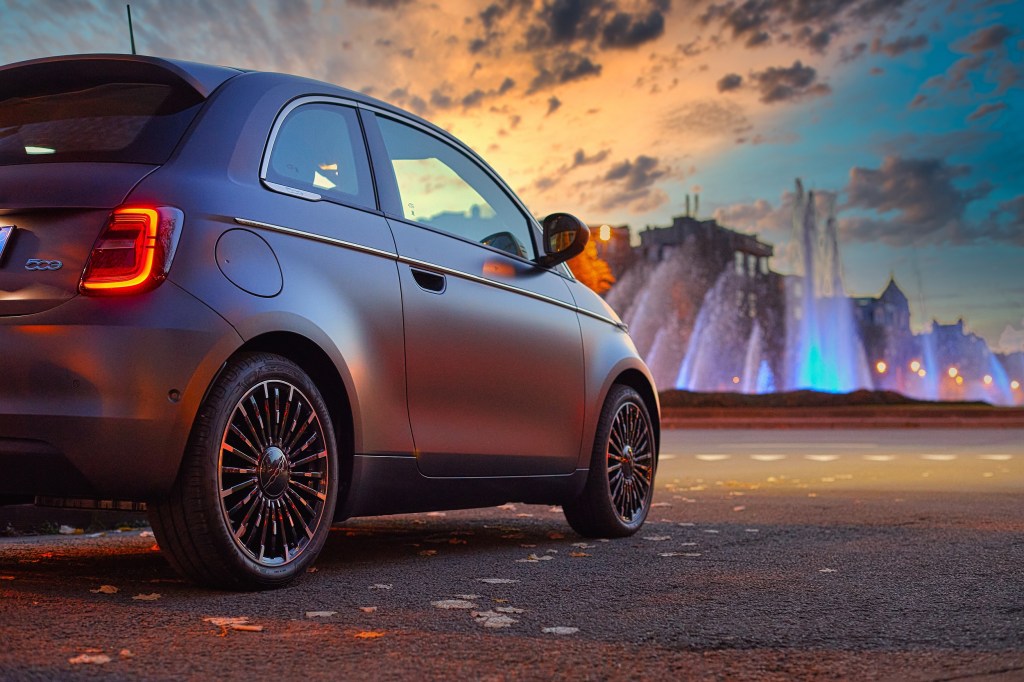
Leasys also offers the Fiat 500e Business Edition. This 500e is available from € 469/month (incl. VAT) in operational leasing. Finally, the Fiat 500C Hybrid Lounge is available in operational leasing from € 269/month (incl. VAT).

There is more news to come from Jeep, we will soon present here the new Compass…

Hans Knol ten Bensel

Bentley celebrates the production of its 200.000th car…


The Bentayga Hybrid, destined for a Chinese customer, met the oldest surviving Bentley, EXP 2, and a number of long serving colleagues, as it rolled off the production line at the home of Bentley in Crewe this week.

Things have taken off for the inconic brand over the last 18 years. Thanks to the success of the Continental GT and more recently the Bentayga SUV, daily production has soared. Indeed, over that period, over 75 per cent of 101 years of production has been hand-built at the Crewe factory, more than ever the home of Bentley. Current daily production, 85 cars per day, equals monthly production numbers of two decades ago.

The Bentley Continentals – then and now…

I vividly recall the interview I made at the Frankfurt Motor Show more than a decade ago with Franz-Josef Paefgen, then CEO of Bentley Motors and Bugatti Automobiles, posts he left in 2011.

During his time as the Chief Executive Officer of Bentley Motors Ltd., he was responsible for the Bentley Mulsanne and the Bentley Continental series of cars. From 2003 to 2005, Dr. Paefgen was responsible for the development of the Bugatti Veyron.

Every Bentley is actually a four wheeled chapter in automotive history…

I asked him then whether a hybrid Bentley was not on the cards, as Bentley’s could be considered the pinnacle of engineering and an electrified Bentley would be proper. It clearly was not in the strategy of the VW Group then, as the idea was immediately brushed aside by Mr. Paefgen as unrealistic, customers not wanting this at all…

Well times have changed quite a bit since then, as we now read that Company aims to be end-to-end carbon neutral by 2030 with entire model range switched to battery electric vehicles(!). Bentley will move to full electrification – PHEV or BEV only – by 2026, then switch the entire model range to battery electric vehicles by 2030. The industry-leading Beyond100 Strategy will transform every aspect of the business as Bentley accelerates into its second century of luxury car production.

Six cylinder Bentley engine production in the ’50s in Crewe…

What this means for the retail value and depreciation of the existing and historic Bentley’s remains to be seen…

But back to the production history.

The Continental GT was the first landmark…

In 2003 the introduction of the Continental GT represented a transformative moment for the brand, and this Bentley alone, has represented 80,000 sales of the total of 200,000, and created both a new segment, and a contemporary image foundation for the Bentley business.

The Crewe factory in 1940…

…followed by the Bentayga

The success of the Continental GT has been mirrored by the Bentayga, offering a true Bentley driving experience and unparalleled luxury. Launched in 2015, when it established the luxury SUV sector, the fastest SUV in the world has reached its 25,000 production landmark. It is expected that the Bentayga could surpass total sales of the Continental GT within a decade and become the biggest selling Bentley model in history.

And now in 2021…

Since 2005, the company has also built 40,000 examples of the Flying Spur, the most successful luxury sports saloon in the world.

We show you here some photos, lifting a veil of the very interesting and multifaceted production history of the brand, and then we have told nothing of their sporting achievements…

Hans Knol ten Bensel
The BMW Group Annual Conference 2021 will bring a new chapter in reporting….

The BMW Group is embarking on a new chapter in its reporting: For the first time, it will be combining its Annual Report and its Sustainable Value Report for the reporting year 2020 in a single Integrated BMW Group Report.

After the Board of Management redefined the company’s central sustainability goals in 2020, integrated reporting marks the next logical step – thanks to integrated management of the company. Henceforth, the Integrated Report will be published to coincide with the BMW Group Annual Conference, outlining the company’s economic performance, as well as its contribution to the environment and to society.

The livestream is on Wednesday, March 17…

So, stay tuned again on Wednesday!

The BMW Group Annual Conference 2021 will be broadcast live via livestream and satellite.

Agenda  17.03.2021

08:00 –09:00 GMT                       BMW Group Conference – LIVE

09:00 – 10:30 GMT                      BMW Group Conference – Q&A Session LIVE

13:45 – 14:45 GMT                      BMW Group Conference – Replay 

You can follow the BMW Group Annual Conference 2021 at http://www.live.bmwgroup.com and @BMWGroup social media channels:

Twitter: http://twitter.com/BMWGroup

Facebook: http://www.facebook.com/BMWGroup

Hans Knol ten Bensel

Kia introduces its new design philosophy and presents it in the brand new EV6…

Kia Corporation has revealed the first images of the exterior and interior design of EV6, its first dedicated battery electric vehicle (BEV), ahead of the car’s world premiere at the end of March.

EV6 was designed under the brand’s new design philosophy ‘Opposites United’, which takes inspiration from the contrasts found in nature and humanity.

At the centre of the design philosophy is a new visual identity evoking positive forces and natural energy, with contrasting combinations of sharp stylistic elements and sculptural shapes.It is definitely contemporary and has timeless proportions, which will please for years to come, with a purity not unlike for instance VW’s ID3 and ID4.

Boasting a distinctive crossover-inspired design and based on the brand’s new Electric-Global Modular Platform (E-GMP), the EV6 is Kia’s first dedicated BEV to be influenced by the new design philosophy.

Opposites United: a design philosophy for all future Kia vehicles

The Opposites United design philosophy makes its debut on EV6, and will inform the design of all future Kia models. The philosophy is based on five key design pillars: ‘Bold for Nature’, ‘Joy for Reason’, ‘Power to Progress’, ‘Technology for Life’, and ‘Tension for Serenity’.

We explain it more in detail here.

Bold for Nature is based on interaction with nature, informed by the details, shapes and proportions found both in the natural and human worlds. This design pillar creates organic, yet technical structures and finishes for vehicle interiors; exterior designs are characterised by a combination of clear and simple lines with bold, ever-changing surfaces.

Joy for Reason focuses on the feel and ambience of Kia’s future vehicles. Future designs will fuse the emotional with the rational, creating vehicles that influence the mood of passengers, by relaxing and inspiring. It will also influence the adoption of new organic materials and more daring colours, expressing a sense of youth and playfulness.

Power to Progress builds on the brand’s current design strengths. By drawing on and developing the skills and expertise learned throughout Kia’s recent era of design-led transformation, the designs and layouts of the brand’s future products will continue to evolve. Future designs will draw on experience and creativity to invent and innovate new designs.

Technology for Life embraces new technologies and innovations to foster positive interactions between humans and machines. The brand’s future vehicles will adopt a next-generation in-car user experience (UX) through design and innovation and advancements in lighting, feel and in-car connectivity – to help customers engage with their cars.

Tension for Serenity evokes the tension between opposing forces and creative contrasts, and recognises the design equilibrium that comes from two opposing forces. It delivers striking design concepts that use sharp, highly technical details to create surface tension – and realise a harmonised, future-oriented design vision.

Exterior design: a future-oriented EV design characterised by high-tech details

The exterior design of EV6 is a powerful representation of ‘Power to Progress’.

At the front, characteristic daytime running lights create a sleek appearance. They form part of the car’s ‘Digital Tiger Face’, a design progression evoking the spirit of Kia’s ‘Tiger Nose Grille’ for the electrified era. The design of the lamps also includes a ‘sequential’ dynamic light pattern.

The side profile displays a crossover-inspired design aesthetic, contrasting with sharp lines and high-tech details to create a sense of tension in the design.

Designed in part to realise ultimate aerodynamic performance, the rear displays a sloping rear C-pillar with an integrated black glossy insert which visually widens the window glass.

The EV6 is the result of a collaborative effort between all three studios in Kia’s global design network in Namyang (Korea), Frankfurt (Germany), and Irvine (California, US).

Interior design: a modern and spacious interior for the EV era

A distinct product of the EV era, the interior design is liberated as it were by Kia’s dedicated E-GMP platform, which offers increased space compared to previous Kia EVs based on existing model architecture. Here Kia goes with VW’s trend set in with their ID series.

One of the most striking elements of the new interior is a seamless high-tech curved high-definition audio visual and navigation (AVN) screen. The simple form language of the wide curved screen and the slim dashboard give the space an open feel.

The width of the screen creates an immersive experience for the driver, while a minimal number of physical buttons offer an uncluttered and soothing driving experience.

Underneath the AVN screen, passengers control HVAC (heating, ventilation and air conditioning) settings by using haptic ‘buttons’, while below this panel, the dashboard slopes away towards the front of the car, creating a sense of space and openness for the front-seat passengers.

The seats are slim, lightweight and contemporary, and clad in modern, visually interesting and robust fabrics created using recycled plastics, which create yet greater openness in the cabin.

EV6 will make its world premiere in March 2021, during a special online event. We will keep you posted!

Hans Knol ten Bensel

Renault will build its best-sellers also for Mitsubishi in European markets…

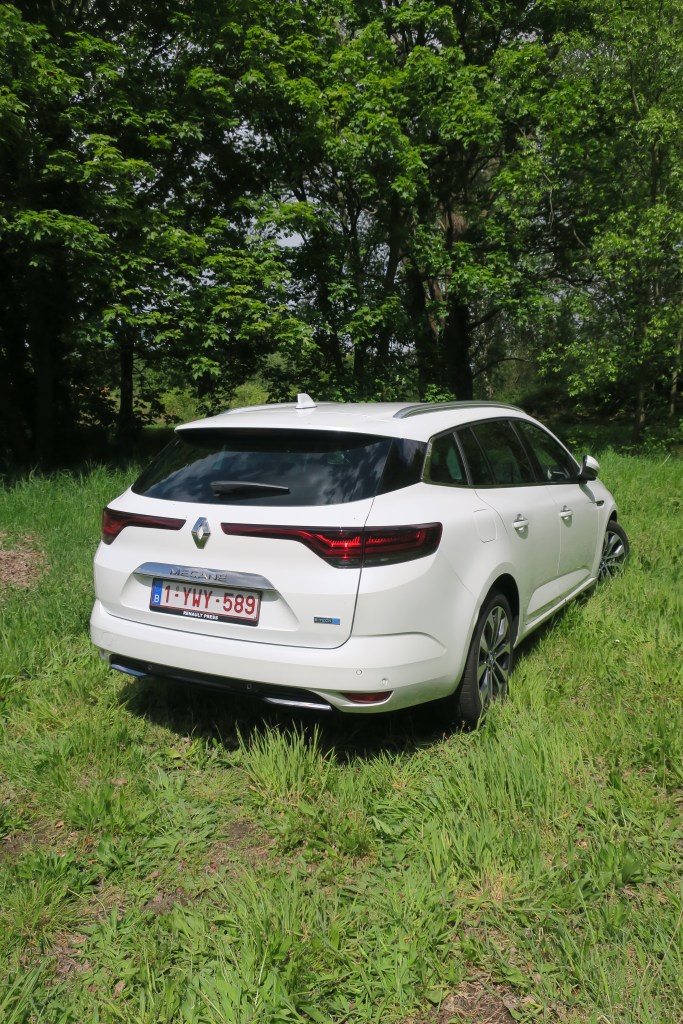
The Mitsubishi Eclipse PHEV will get the company soon of Renault designed models in selected European markets….

Mitsubishi Motors has decided to procure OEM-model vehicles from Renault, best-sellers on the European market which already meet regulatory requirements, for selected major markets in Europe. Starting 2023, Mitsubishi Motors will thus sell two “sister models” produced in Groupe Renault plants, which are based on the same platforms but with differentiations, reflecting the Mitsubishi brand’s DNA.

A model mix of the newly launched Mitsubishi Eclipse Cross PHEV and the Renault-developed sister models will enable Mitsubishi Motors to be more competitive in the market.

The comments of the CEO’s both at Renault and Mitsubishi are quite positive:

“Mitsubishi Motors welcomes Renault’s OEM models for the European market, and ultimately new customers. Mitsubishi Motors has been implementing structural reforms in Europe and our decision to freeze new car development for the European Market, announced in July 2020 in our mid-term business plans, remains.

However, the OEM supply agreement will provide us with a solution to offer new products developed and manufactured in Europe– alongside our ongoing after sales business,” said Takao Kato, CEO Mitsubishi Motors.

“Our new approach within the Alliance, focusing on impactful and meaningful projects, is turning into reality. This pragmatic, value-driven initiative will make a difference in our plants, in our partner’s footprint and on the European streets. This beautiful project meets all partners’ expectations from a design, regulatory and business perspective.

This is what the Alliance is meant for and we are very happy, at Groupe Renault, to contribute to this new step in its history of cooperation.” said Luca de Meo, CEO Groupe Renault.

So we can look forward to interesting “European” Mitsubishi models in the forthcoming future…

Hans Knol ten Bensel

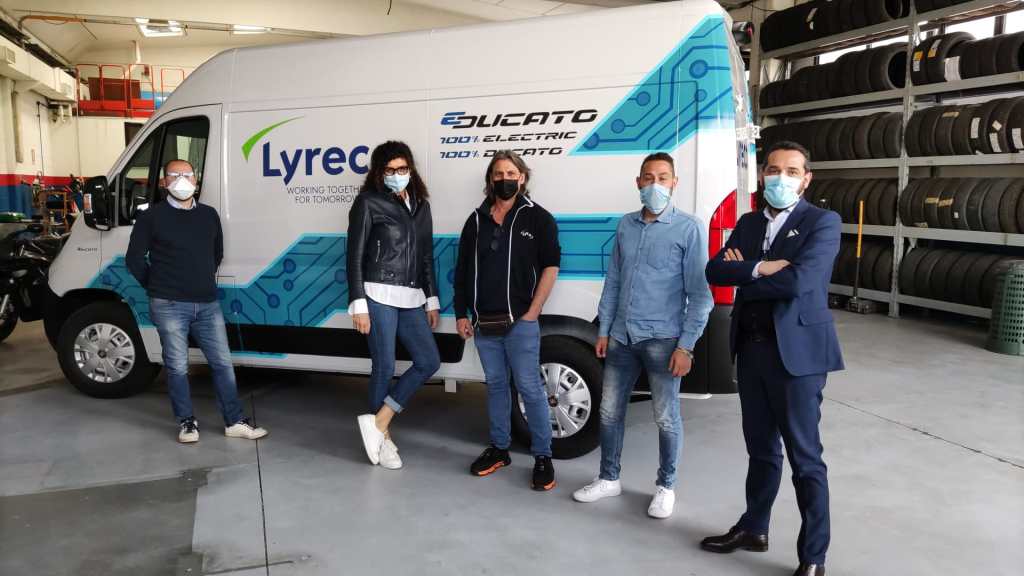
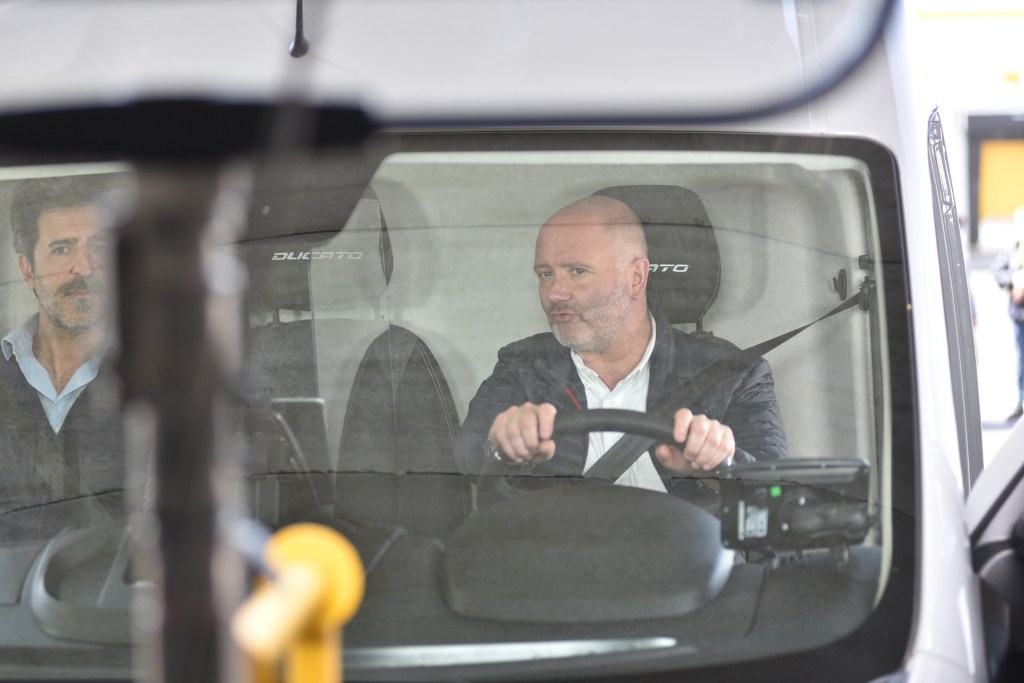
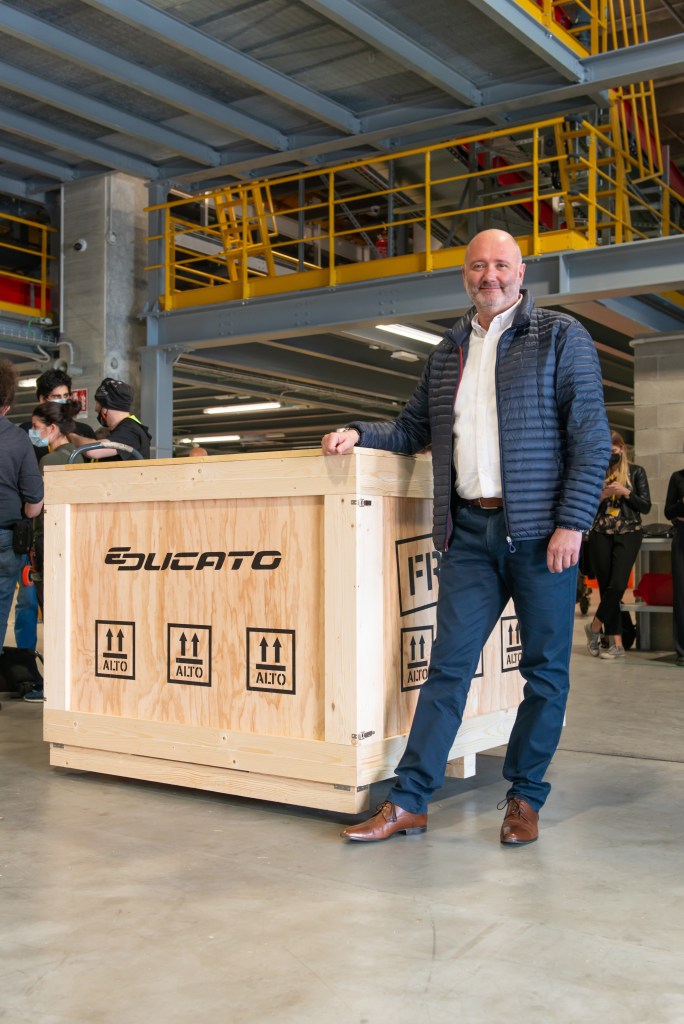
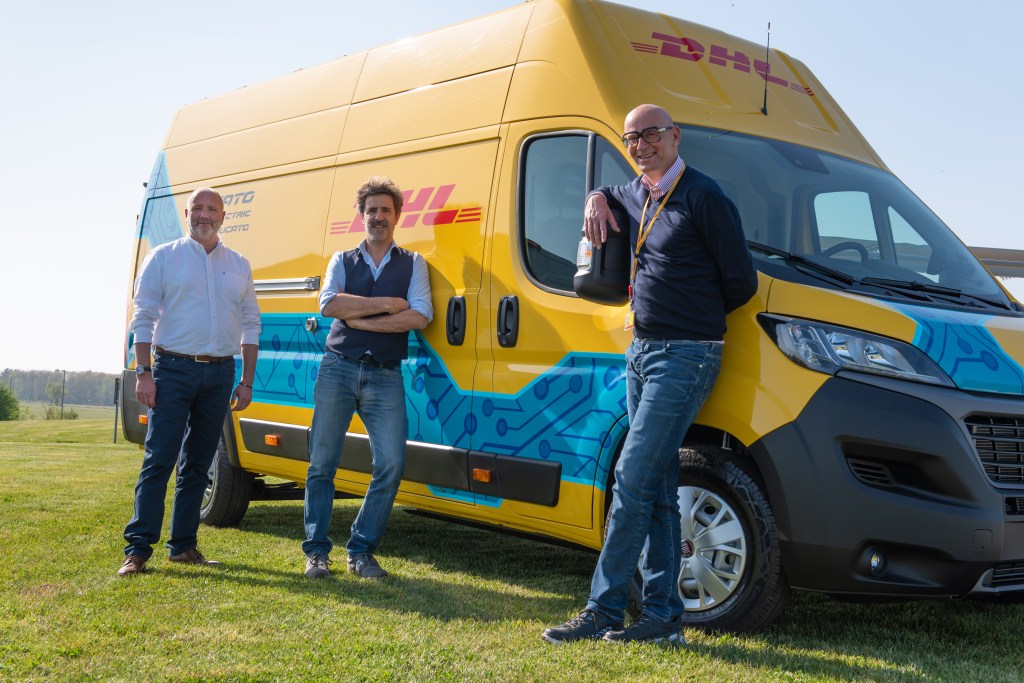
Fiat e-Ducato can be yours now for clean, e-powered delivery!

Faithful readers know that we reported already about the e-Ducato and the dynamic people behind this project, notably Madame Angelica Carapezza, who we interviewed back in 2019. Now the e-Ducato is fully available…

Indeed, orders are open for the new E-Ducato, the full-electric, fully connected version of the Fiat Professional best seller, It guarantees continuity in the technology transition with similar performance, at a comparable cost.

The line-up of configurations meets every need: vans from 10 to 17 m3, cab vehicles in 4 different lengths, plus people-carrying capabilities to cover any business need.The Ducato has best-in-class load volume from 10 to 17 m3, payload of up to 1,910 kg.

There is a modular choice of batteries, with ranges from over 230 to 370 km in the urban cycle; 2 different AC chargers at launch, with DC Fast Charge available as an option.

The exclusive Pro Fit by E-Ducato app is available, for the ideal E-Ducato configuration based on real-world usage data, to best meet every specific need.

A wide range of benefits are included in the price: Vans from €60,800 for the 3.5-ton Medium Wheelbase version (10 m3 load volume); Cab vehicles from €60,300 in the 3.5-ton Medium Wheelbase version.

The line-up extends all the way to a 4.25-ton van.

At launch, 5 years of routine maintenance and a 5-year vehicle warranty  and up to 10-year battery warranty are included. Three packs with the most sought-after optional extras are available on request.

To support the launch and the “electric project”, Fiat Professional and the Sapient agency have developed the “Numbers” digital campaign. Of which more in detail later.

The vehicle’s arrival in dealerships and early deliveries are scheduled from late March onwards.

Hans Knol ten Bensel

We drove the Subaru XV e-boxer: with e-power into the go-anywhere future…

The XV embodies perfectly what a Subaru stands for: it is compact, styled with zest and panache, versatile, rugged and of course crammed from bumper to bumper with state of the art, innovative and exclusive technology. This legendary Subaru boxer technology, combined with unique 4WD capability comes now to you with additional e-power, to make this Subaru fit for the E future which is coming upon us.

Subaru prefers rugged no-nonsense go anywhere capability, and therefore opts for hybrid technology: the 2 litre direct injected boxer engine is coupled via a Lineartronic CVT Transmission to a 12.3 kW e-motor which sits right behind the engine and is fed by a 13.5 kWh battery pack which sits behind the rear wheels. E power is available at slow speeds up to 40 km/h. Subaru describes this as the EV driving mode. Depending on the enthusiasm of your right foot and the state of charge of the battery pack, you could drive on E power over distance of up to 1,6 kilometers at speeds, as we said earlier, of up to 40 km/h. In practice, the battery and motor just assist the combustion engine when driving away from traffic lights and in slow stop and go traffic.

When you really keep your right foot very calm, a lot can be gained here. As you servant is well trained with his Lexus 200 CTH, it was no trouble at all to eke out a consumption of 6 litres/100 km in tightest urban traffic. It just takes a good amount of concentration and anticipation.

The Subaru changes very smoothly from E- to petrol power and vice versa at varying speeds above 40 km/h in the “engine assist function.” Nice too is that the CVT transmission has 6 “steps” or ratios if you want to, so you can avoid that the willing boxer revs too high for your liking when you really put your foot down and accelerate hard on a motorway entrance for instance.

At higher speeds, the petrol engine takes over fully and charges also the battery. The beauty of hybrids is that you can use them anywhere, anytime, for any distance, just like any other petrol engined car. With a significant reduction in petrol consumption if you understand them and know how to drive them…

We averaged between 6 and seven litres/100 km on our regular routes. The manufacturer quotes 6,5 litre/100 km as average consumption, and 149 g/km in CO2 emissions.

Off road capability…

But then, this car is a Subaru. This means king of the road, off-road. The XV offers go anywhere capability with its Symmetrical AWD, and its further developed X Mode. This mode effectively remaps the 4WD system, using the E motor to modulate the traction on all 4 wheels even more finely. Taking the family out on a weekend skiing or having fun in the snow: this Subaru gets you there and back… and how!

Good performer

Although it will not invite you to throw it around corners, it certainly has the rally-bred stamina to do it. This XV has legendary on-road handling, and remains controllable and neutral no matter in what situation you put it in. The hazards of winter season and/or slippery roads simply do not exist for the XV.

Outright performance leaves nothing to be desired: 0 to 100 km/h is reached in 10.3 seconds, top speed is a healthy 193 km/h.

Of course the Subaru is an excellent motorway cruiser. The suspension is comfortable, the XV rolls on the brand new Subaru Global Platform which added considerably more body stiffness, but then a very stiff body is also prone to resonances, and there is some road/tyre/wheel noise noticeable.

Subaru’s EyeSight keeps you safe

Another point we cannot miss to mention is the superb EyeSight Driver Assist Technology. Driving in thick fog on motorways, winding forest roads has no collision risk for you anymore. Two stereocamera’s sit on both sides of the rear view mirror and keep an eye on the road ahead. Coupled with the adaptive cruise control, the system will assist in keeping a safe distance and adapt speed automatically to the car in front of you over a very wide speed range between 0 and 180 km/h.

Well-equipped and pleasant cabin

The XV dashboard has three screens, two on the centre console, and one between the nicely finished round instruments for speed and revs. Infotainment is intuitive and easy to use, and leaves nothing to be desired. The whole cabin is well finished, quality of materials used is very good, sturdy and fit for no nonsense practical use for years to come, in the good Subaru tradition.

Boot space is not enormous, due also partially to the rear battery pack, but the standard 355 litres can be easily enlarged when the rear seats are folded down. On the other hand, the Subaru still has a healthy 1270 kg braked trailer pulling power, and if you have any doubts about Subaru’s mettle, just have a look at the numerous You Tube films where Subaru’s are pulling stranded trucks out of snowy ditches…

Conclusion

Together with the Forester, Subaru now has two (partially) E-powered models in its range, and the ever so popular XV has become even more desirable now. Embodying all the traditional legendary Subaru qualities, the XV now offers excellent economy and the “Zen” driving style which comes with electric propulsion. Definitely have a long hard look at thisone when you consider buying a crossover in this segment. This car has so many unquestioned and unique talents, you shouldn’t miss it for anything in this automotive world.

Hans Knol ten Bensel