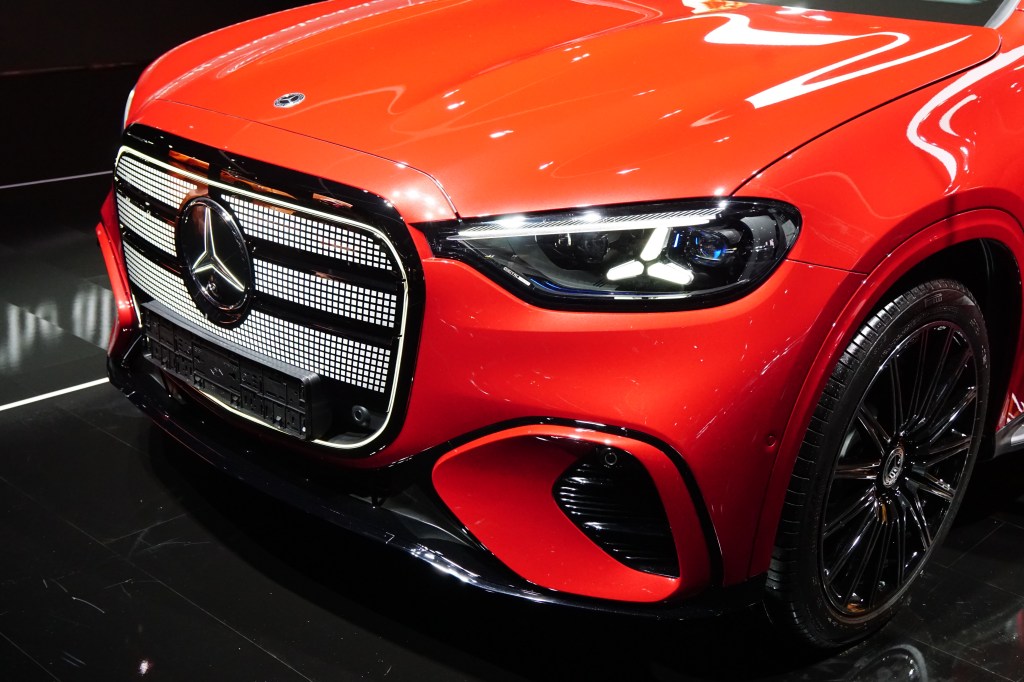
We drove the Mercedes 450e S Class: the pinnacle of luxury motoring…

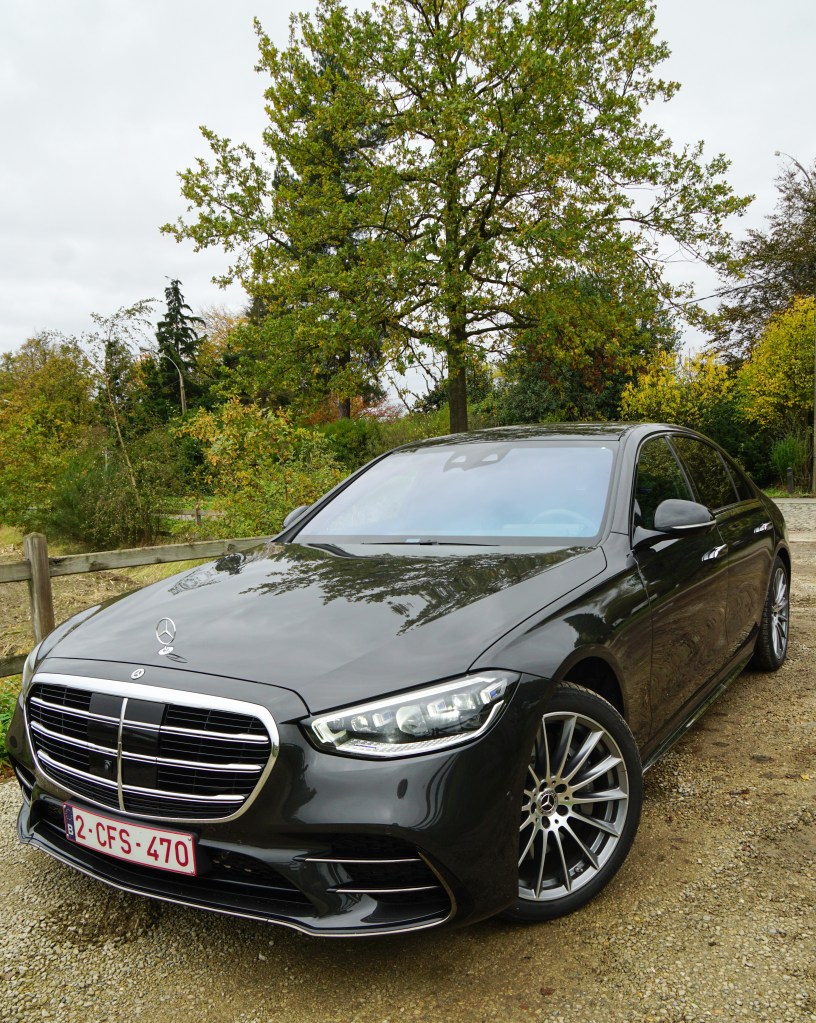
The Mercedes S-Class has been the benchmark of luxury limousine comfort since 1972. Now we are at the W223 series, and it is still unsurpassed in terms of comfort, workmanship, mechanical and electronic excellence, and last but not least, panache.

Our test car is the plug-in hybrid version of the S-Class, designated as the S 450 e. Furthermore, we drive the “L” or long version, which, of course gives you totally superb rear passenger comfort.
 

Don’t think that this imposing S Class version will be difficult to drive in town: thanks to the rear-axle steering (optional) the turning circle of the S-Class is reduced by up to two metres. The steering angle at the rear axle goes up to 10 degrees…The steering is also surprisingly direct: only 2 turns are needed to steer from full right to left.   

Stepping behind the wheel in this magnificent limousine will however still require some caution, certainly if you wear a hat. The a-pillar is  raked rather steeply for good aerodynamic reasons, but this means that you will still have to tilt your head slightly…

Once your are sitting down you are enveloped in superb somfort. The front seats have a 4 way back support, electronically adjusted, and of course there is a whole (optional) massage program waiting for you, just touch the “comfort” symbol on the large central control screen and you can choose your favorite session…

You can also opt for an active “multi-contour” package, which gives you extra lateral support when you are cornering at speed.
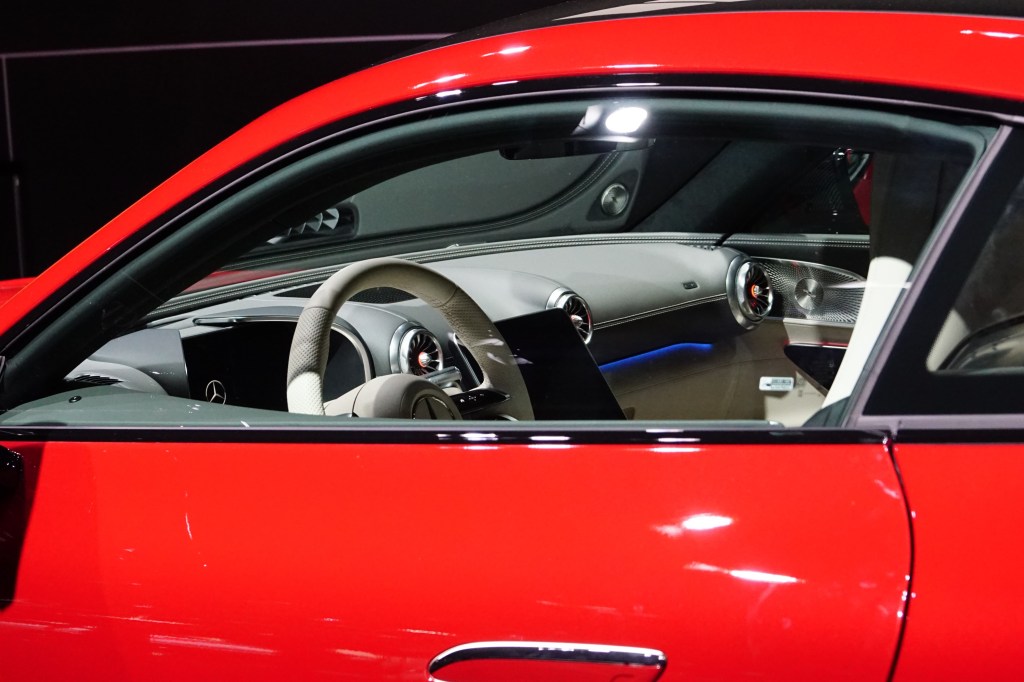
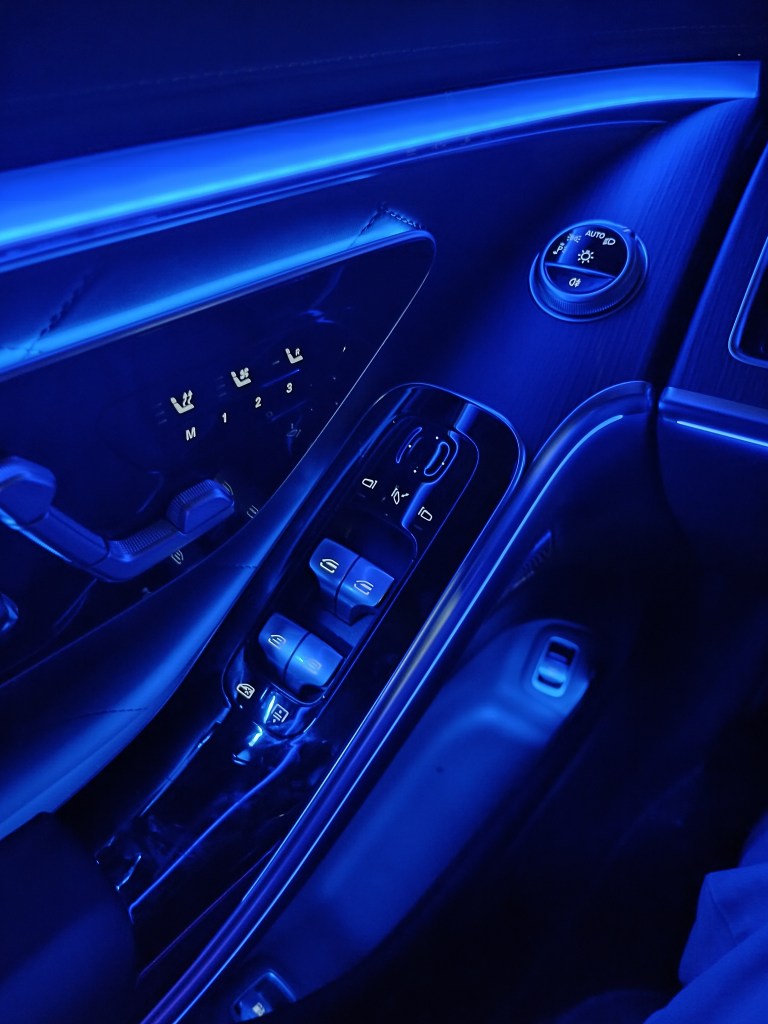
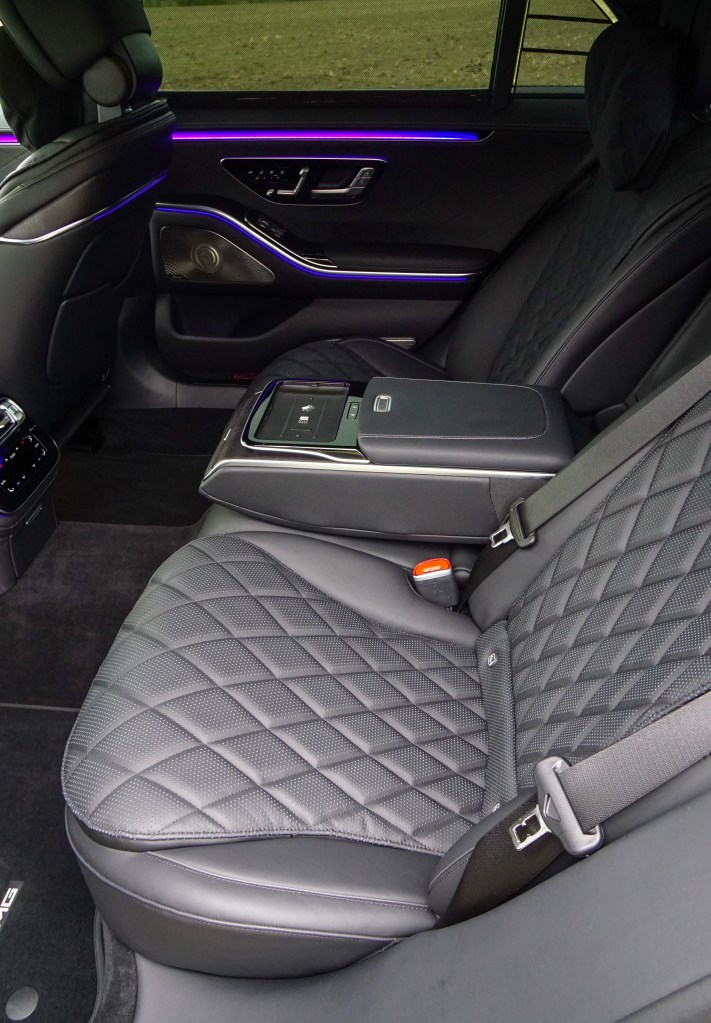
 The cabin bathes you in a wonderful light ambiance, which, of course you can adjust at will.

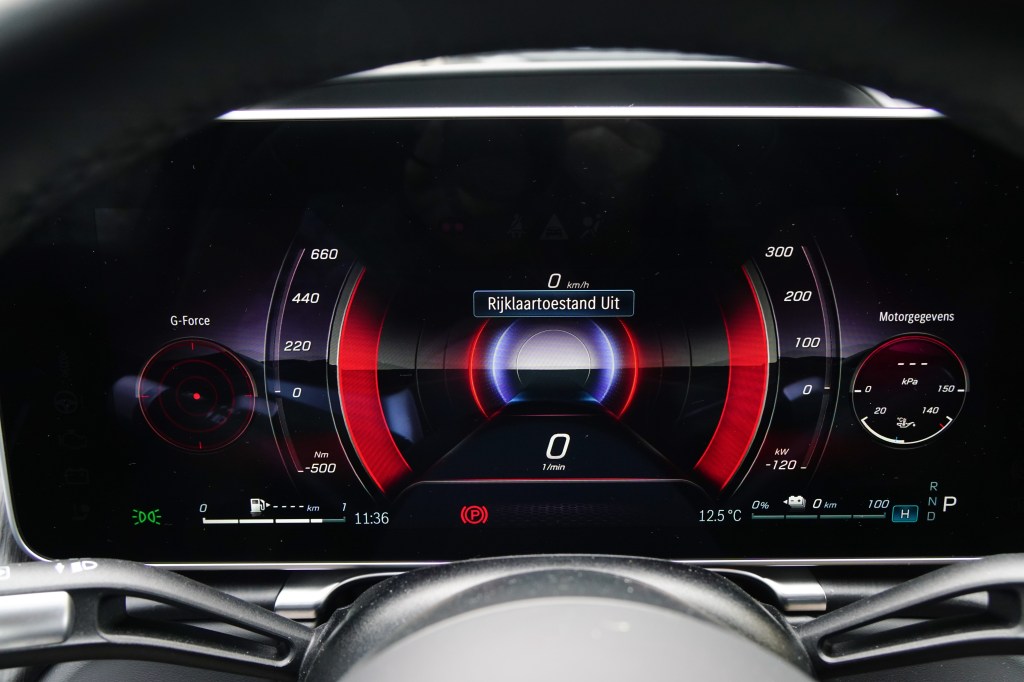
The instrumentation is clear, the immense screens both in front of the driver and the central screen are largely self-explanatory, although we would still suggest that you take some time to get acquainted with all its wonderful features.

Superb and ultra-refined performance…

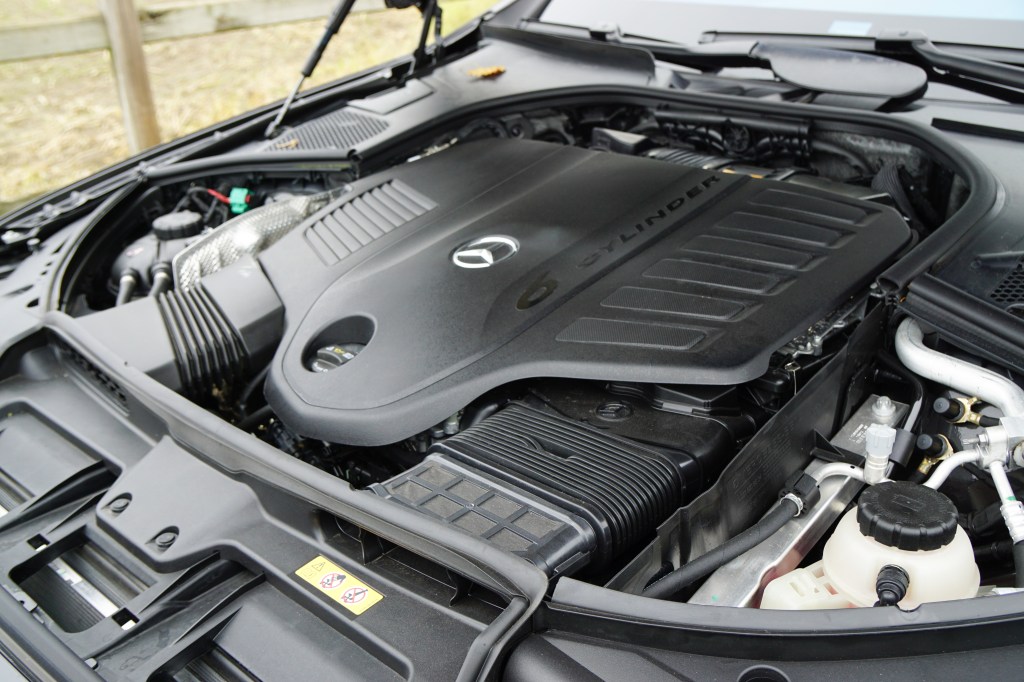
The fourth generation of the hybrid drive celebrated its premiere in the S-Class in 2021. The present 450 e version has a 3 litre straight-six cylinder under the hood, developing 220 kW or 299 hp, combined with a rather powerful 110 kW or 150 hp electric motor. The battery is not enormous with 21,96 kWh, but powerful enough to give the 2,5 tonne “e” S-Class a range between 105 and 70 km.

:

You can calculate it for yourself on the simulator which you can find on the Mercedes website.

We show you it here in two screenshots: assuming 35 % of the trip made on the Autobahn, the electric only range with an outside temperature of 20° is 100 km, when the ambient temperature drops to 10°, the range drops to 77 km. Quite sufficient in our opinion to perform a daily commute on E-power…

You can charge the battery with a maximum power of 60 kW, and on an ordinary wallbox or public charging point (Max 20 kW on DC) you can charge the battery from 10 to 80 pct in merely 20 minutes.

The outright performance leaves nothing to be desired: this S-Class will sprint from 0 to 100 km/h in merely 5,9 seconds. The top speed is electronically limited to 250 km/h.

But the beauty lies of course, in the smooth way all this performance unfolds. The electric engine is totally inaudible, the 6 cylinder 3 litre engine is ideally balanced and vibrationless, and only a soft purr is heard when accelerating hard. The engine is mated to a smooth and alert 9G-TRONIC Plus automatic gearbox, which makes imperceptible gear changes. You have gearchange paddles at the steering wheel, but with 9 gears to choose from, one is soon overwhelmed… and we chose to let the clever gearbox do the work. The 9th gear allows very relaxed cruising at very low revs. At 120 km/h,  the engine exceeds barely 1500 rpm.

Consumption is, of course, very much in function of the battery status, or rather, whether you drive on e-power or not. The WLTP standard consumption is officially quoted at 2,4 l/100km. The manufacturer’s official figure for average e-consumption is 17,4 kWh/100km, which I find a rather more realistic indicator. On the open road, your flagship is still quite economical, due also to its excellent aerodynamics: it has a Cw coefficient of merely 0,22. When you drive at fast cruising speeds, the consumption hardly exceeds 11 l/100 km. Town driving will cost you around 10,5 l/100 km.

Floating carpet comfort…

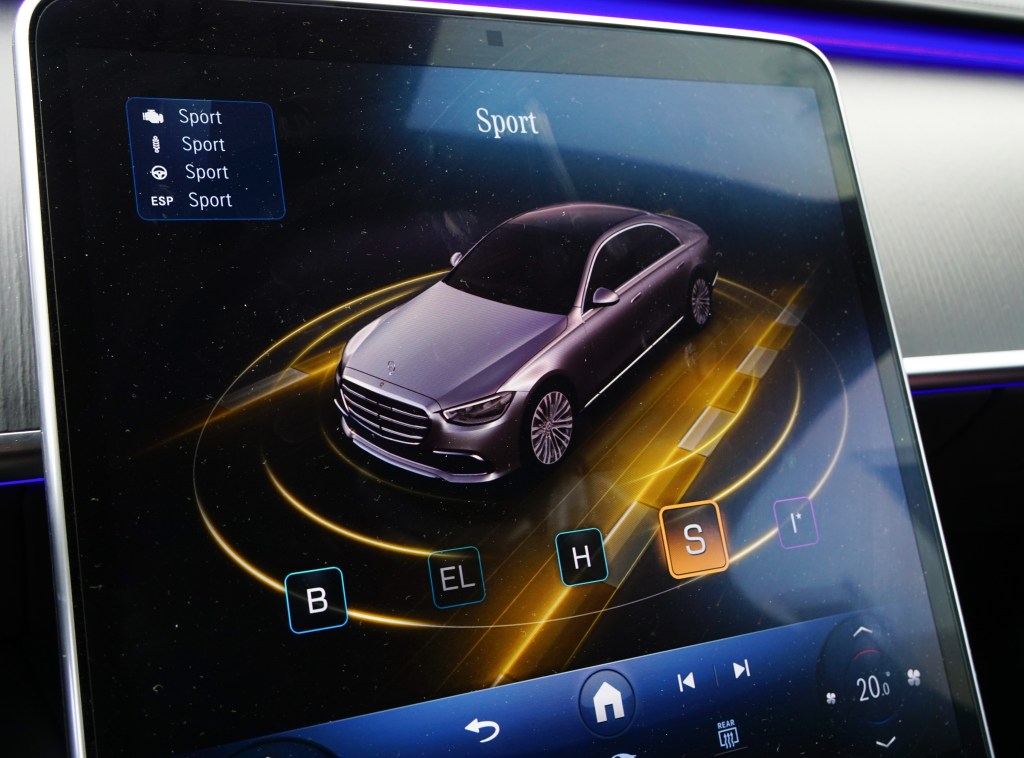
The S-Class can be considered to be the ultimate standard in limousine driving comfort. It has standard an air suspension with adaptive dampers, and you can opt for E-Active body control, which keeps the car body stable even under very fast cornering. The suspension swallows any road irregularities totally smoothly and this even at very slow speeds, and one truly enjoys a “floating carpet” ride. You can choose between different suspension settings, but even in the “sport” mode the ride remains totally smooth.

Heating and ventilation are also in a class of its own. Two-zone airco is standard, but you can opt for four-zone airco. Of course the rear passengers are spoilt too. You can obtain all conceivable extras, from heated side panels to heated and ventilated seats fore and aft, dark window curtains at the rear; you name it..

Infotainment reaches into the stars…

Mercedes is quite proud of its MBUX infotainment system, and deservedly so. As we said above, the system is quite intuitive, provided you take the effort to study the system and carefully go through all the menus. The indications are chrystal clear and seen on a massive 12,8 inch central touchscreen.  

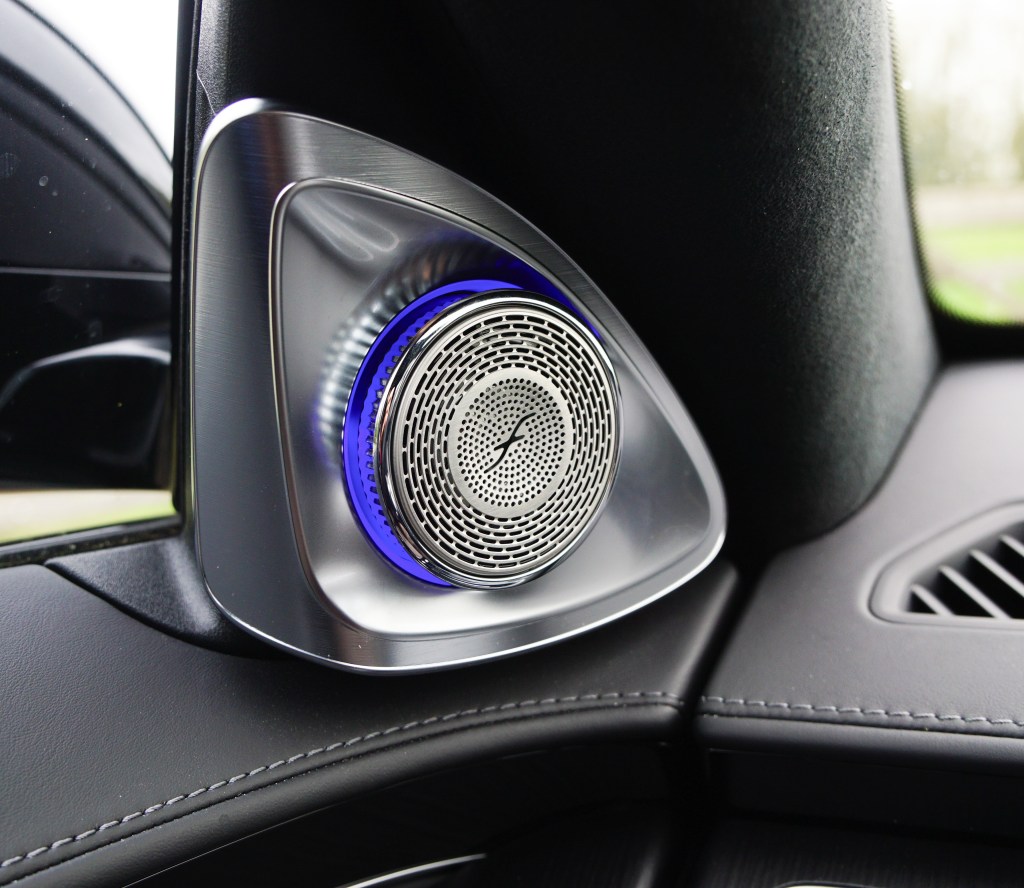
The sliding volume control for the superb Burmeister (31-speaker!) sound system takes some practice, but soon you become a master at it. You can also choose the instrument layout on the screen in front of you, and the overhead display of our test car was also eminently readable. You can also enjoy the optional augmented reality feature on this display, which shows you, with clearly visible arrows, which route to take…

This flagship Mercedes was updated last year, and has further optimized the MBUX user interface: suggestions for assisted parking are now located more intuitively in the menu. The Mercedes-Benz Automatic Lane Change (ALC) function now offers a further intelligent development: if a slower vehicle is traveling ahead, the car can initiate a lane change itself.

Indeed, if the radar recognizes sufficient open space and lane markings are detected, it can overtake the slower vehicle in front… fully automatically(!). The prerequisites are a motorway-like road with at least two lanes and a speed limit as well as a vehicle equipped with MBUX Navigation. The system does not require any further input from the driver to carry out the automatic lane change. Brave new world, we would say…

Let there be light…

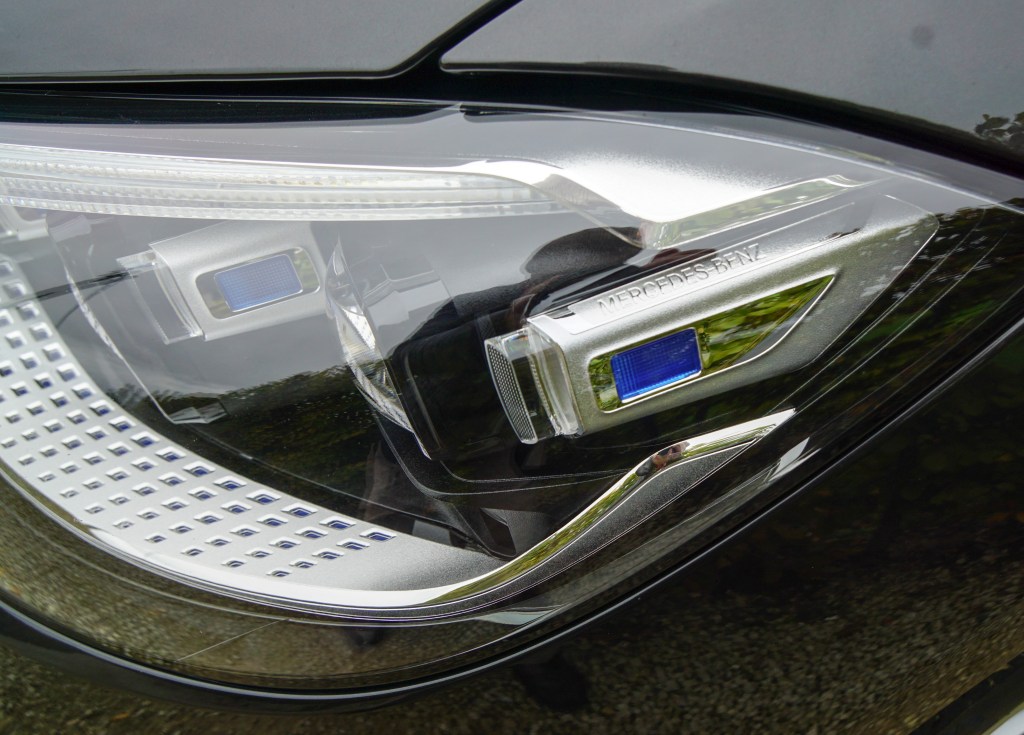
The LED headlights are state of the art, with light shining in bends, combined with excellent long-range visibility with dynamic headlight assistant and extra powerful LED elements. The headlights shine up to a distance of … 650 meters (!).


The Long version of the 450 is as you can expect enormously spacious at the rear. But also in front there is enough head- and legroom for 2 metre tall adults. Boot space is of course also sufficient with 450 liters.
 
 Conclusion

The Mercedes S Class continues to be the absolute benchmark in luxury, mechanical and electronic perfection, comfort and sheer performance. Add to this the legendary quality seen in the perfect fit and quality of the materials used, and you know that this car is built for a lifetime of superb motoring.

Of course, all this doesn’t come cheap, even more so when you take into account the long list of optional extras.

But then, when one reaches the pinnacle of what a series production luxury saloon can embody and represent, it is still quite reasonable when compared with exotic supercars…

Hans Knol ten Bensel

We drove the Fiat Grande Panda Elettrica: EV driving with panache and style…

Italy is the birthplace of style and elegance, and this Grande Panda truly shows it. We personally love it and both the exterior and cabin styling solutions have won our hearts. It truly stands out in character and practicality and shows many competitors how a compact B-segment car can also be designed and built.

The Grande Panda Elettrica runs on the Stellantis compact EV platform, which it shares with the Citroën C3 (Aircross) and Opel Corsa/Frontera.

It has a 44 kW battery, and a 83 kW/113 HP electric motor. Perfect for town driving, where the less ideal aerodynamic boxy bodywork doesn’t spoil the fun. This means that in town, a practical range of some 300 km is quite realistic.

On the open road and certainly on the motorway, you better have a somewhat lighter foot, as the wind resistance pushes the consumption higher into 18-19 kW/100 km, reducing the range below 220 km.

The engineers wisely limited the top speed to some 132 km/h, which is totally reasonable. Cruising around 110 km/h will get you around 250 km useable range. The WLTP consumption is quoted at 16,8 kW/100 km. Charging on an 11 kW charger will cost 4,5 hours from zero to a full battery.

The Grande Panda is very much in its element both in town and on the open road. It steers light and precise, is quite comfortable on city pavés and is also remarkably silent, also at speed.

The electric engine is smooth and inaudible, just a faint whirr is heard when it recuperates energy when slowing down. Wind and tyre roar increase with speed, but it never gets obtrusive.

A model of the original Panda, remembering the banked round curves of the famous “pista” on top of the iconic original Fiat factory in Turin…

Besides the silence and smoothness of the electric engine, one can also enjoy the zest and power offered by the 83 kW motor. It will sprint from 0 to 100 km/h in just over 11 seconds, but actually the intermediate accelerations tell you the whole story: accelerating from 60 to 100 km/h costs slightly over 6 seconds…

Handling is quite good and predictable. This Panda doesn’t mind to drive with speed on winding roads, with good motorway stability also guaranteed.
 

A pleasant cabin

So much for the driving part. Stepping into the car one enjoys the modern and stylish “ambiance” of the interior. Well done! We liked the styling elements and surface texture of the glove box, the square shaped ventilation openings, the layout of digital dashboard screen and the 10,25 inch centre screen. Everthing is simple, yet there is every information you will ever need.

Of course, no navigation is provided, so the apps on your phone will via Apple Car Play or Android Auto will have do the work. It also pays to have an app on your phone which shows charging stations…

There is plenty of room on the dashboard to put your stuff and the centre console has room for your phone. Two USB C slots are provided in front near the centre console.  

We liked the “Panda”lettering on the seats, and the front seats were pleasantly soft and comfortable. We were further seduced by the evident controls of heating and ventilation: three round knobs, which were a child’s play to use… When the battery is charged more than 30 pct, you can even pre-heat your Panda in the morning.

Also in the rear there is enough room for two rather tall adults.  The luggage space is also more than adequate with 361 liters, with the rear seat down this increases to 1315 liters. The charging cables have no separate space, so they occupy the boot…

Conclusion

If you are looking for a B segment car which stands out in style, then this Grande Panda is the one to look at. It offers enough room for four adults and their luggage, is a dream to drive in town and will let you tour through Europe in comfort.

Its personality will let you enjoy EV motoring, that’s for sure, and last but not least, the price will also make you smile…

Hans Knol ten Bensel

We drove the Renault 5 E-Tech: the automotive future now embraces its historic icons..

Indeed Renault is looking back, but then only to inject its unique iconic true DNA into the cars it designs for the E-future. This is a clever strategy of this iconic French automaker. Indeed, in the roaring sixties and seventies, it did put cars on the road which continue to inspire several generations, and this right until this day.

Besides the ”4L” or charmingly called in the Gallic language ” la quatre elle” , there was the Renault 5, lovingly called “la Cinq”.

Another Renault icon is the starting blocks by the way, the new Twingo E-TECH, and all these new characterful cars are based on the same platform which Renault has developed for the new age of very efficient, compact and financially accessible EV’s.

Renault showed a prototype of its electric “5” already in 2021, and we are delighted to see that virtually all the styling elements of this project car are found back in the series production model.

The “5” is indeed an absolute pleasure to look at, it is wonderfully proportioned and stacked with delightful details.

Like the big letter “5” on the hood which gradually lights up when you charge the car, so you can  immediately see how far the battery is recharged. So cool!

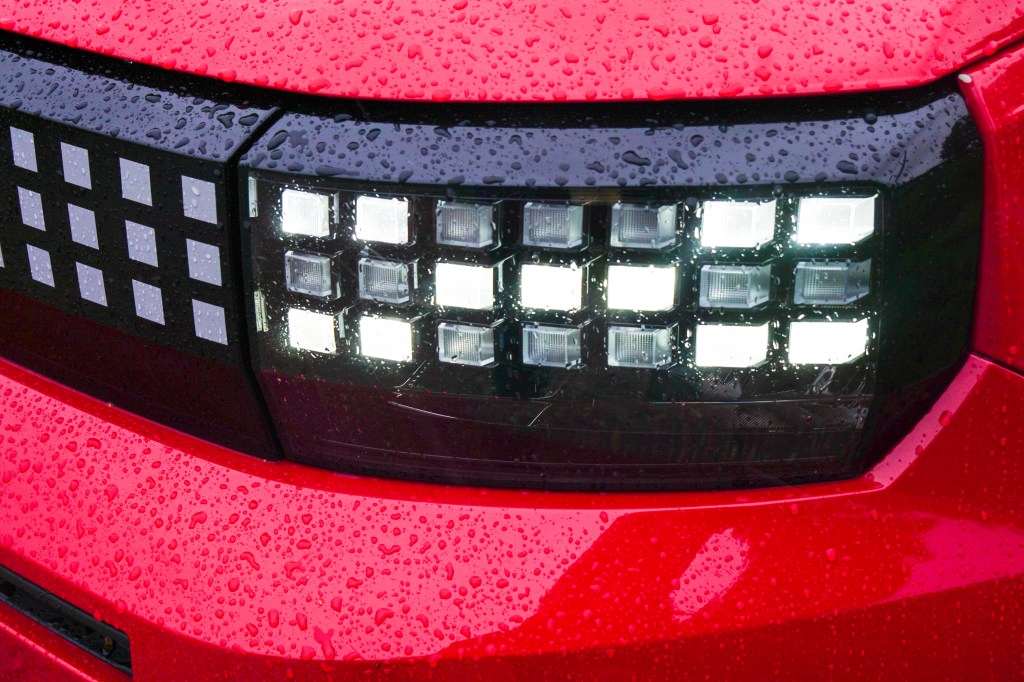
The headlamps are also wonderfully styled, and accompanied by square led light patterns below them.

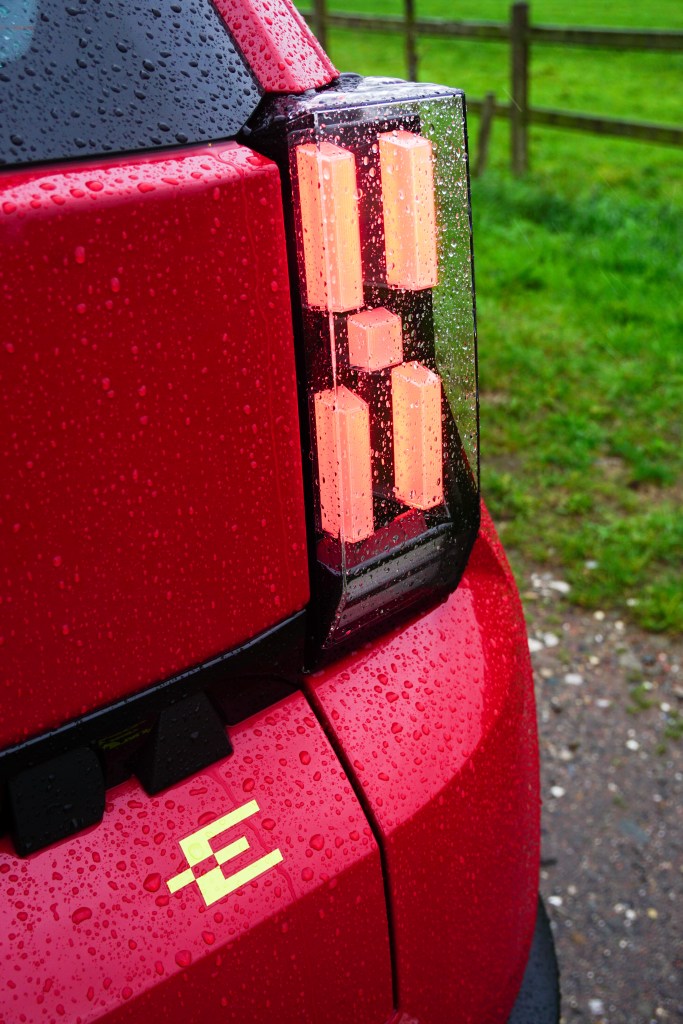
The rear lights are sculpted as on the legendary R5 Turbo. By the way, the power and panache of this Turbo classic is not much more in driving practice than the torque and immediate pulling power of the 150 HP electric motor of our test car. And then there is the 218 HP Alpine Version, which we hope to drive soon…

A wonderful cabin…

The fun continues in the cabin. We find here the typical square design style of the seventies, which is continued in the yellow colour and graphic patterns of the displays found in front of the driver and the centre.

The screens are quite practical after some obvious acquaintance, and we liked the extra row of physical knobs and controls for heating and ventilation below the panels.

We liked the seventies styling of the seats which are also comfortable and well adjustable. The driver seat is also height adjustable as standard. In the front there is is ample leg and headroom, at the rear the available space is only adequate for adults. But this is a (city) car for young (at heart) adults, so in the rear you will mostly find kids or grandchildren..

The boot space is more than adequate for this compact EV, with 255 liters under the luggage cover. There is no separate stowing space for the charger and cables, just a stylish bag is provided.
 

Rediscovering driving pleasure…with an EV.

This is where this Renault 5 E-Tech really stands out: it gives you TONS of driving pleasure behind the wheel. No small feat for an EV. Not in the least because it steers and handles like a dream. The steering is precise, the suspension is sporting but not too harsh, and it just LOVES winding roads.

The car is wonderfully agile, and when you steer it into corners with abandon, it will even oversteer, which is of course easily corrected. Just great. Straight line and high speed stability is excellent. Does this 5 inspire you always to a sporting driving style as a must?

Not at all, it is whisper quiet, and the excellent sound system (can be optionally equipped with a Harman Kardon sound system) lets you enjoy classical or your preferred music along the route. Wind and tyre noise are virtually absent and this makes the compact “Cinq” a car with the manners and driving refinement of a premium automobile. Fit for long journeys too!

With outstanding performance to match…

What about range and performance you will ask. Our test car was equipped with the 150 HP or 110 kW engine, and this means vigorous accelerations, considering that the weight of the 5 is reasonable with 1450 kg. The 0 to 100 km/h sprint is absolved in some 8 seconds, top speed is reasonably limited to 150 km/h.

The car with this engine version has a 52 kW battery, which results in a average range of some 350 km, based on a consumption of 17 kW/100 km. City driving will easily give you average consumptions around 13-14 kW, corresponding with a range of some 400 km. Brisk motorway driving will limit the range, as the boxy 5 E-Tech with a Cw value of 0,32 is not a champion in aerodynamics. Speed charging up to 100 kW is possible with the Cinq, so within a 30 minute coffee break the battery is easily recharged from 20 to 80 pct.
 

Up to date infotainment

Of course, noblesse oblige, in this day and age the 5 E-tech has Android Auto and Apple Carplay,  also handles voice commands over Google Assistant, offers two USB C connections. The navigation system is based on Google Maps. You can also plot your charging points en route. You can personalise the system via your Google account and of course you can be further informed about your car by using the Renault App. With over the air updates, your Renault can always be kept up to date…

Conclusion

This 5 E-Tech has the looks and offers you pleasure behind the wheel. It is indeed fun to drive and look at, and will also spoil you with the whispering silence of a premium car.

It is also well priced, and its timeless iconic shape will let you enjoy it for many years to come…

Hans Knol ten Bensel

We drove the Opel Mokka Hybrid: the bestseller with lightning style and panache…  

The Opel Mokka, one of the bestsellers in the Opel range, has got a facelift combined with some important technical refinements. More than reason enough to put the hybrid version through its paces for you here.  It was the first Opel to receive the now iconic characteristic brand fascia, the so-called “Opel Vizor”, and now it got even more character: with the facelift the black Vizor visually integrates the new Blitz and the headlights into one element. Black elements are decidedly en vogue: a black design line runs from the bonnet to the rear above the side windows. Black claddings at the front, rear and wheel arches also give a more sporting look.

Also in the cabin things have further improved. First of all, there is a new steering wheel, flattened at the top and bottom and made from vegan material, with the new Blitz emblem proudly at the centre.

The centre console between the front seats, in a matt silver tone, has a cleaner, upmarket style and the design of the remaining switches for the electric parking brake and the selectable driving modes is identical to the all-new Opel Grandland. The material of the seats consists now of recycled material, but it is good to know that the whole cabin gives now a decidedly more upmarket impression.

A hybrid with 48 Volt technology…

Opel calls it a “modern hybrid”, and it consists of a 100 kW (136 hp) 1.2-litre turbocharged petrol engine with a 21 kW (28 hp) electric motor and an electrified six-speed dual-clutch transmission. The transmission is very smooth, the electric motor assists the engine in accelerations with helpful extra torque and all this results in very pleasant performance combined with excellent efficiency.

When accelerating slowly and driving at moderate constant speeds on city boulevards, the engine will run at very low revs in the highest possible gears, and this without any noticeably noise or vibrations. Pushing the trottle a bit further will cause the E-motor to react immediately and the transmission will intantly choose the correct gear for the engine to step in.

Driven with restraint, you will easily achieve a consumption in city driving at around 6 litres/100 km, and even slightly lower, whereas cruising on the open road will let the consumption drop to around 5,2 litres/100 km. According to WLTP standards, fuel consumption is 4.9 l/100 km, CO2 emissions are 110 g/km; the CO2 label is a C.

The 3 cylinder engine has now a chain driven distribution system, and the Continetal-developed oil lubricated belt has been abandoned, resulting in improved reliability.

A drivers’ car…  

We find Opels always very attractive drivers’ cars, striking a very good balance between comfort, performance and a predictable, engaging handling. The Mokka again proved this wonderfully. It responds admirably to a brisk driving style, but will never let you feel uncomfortable when you decide to drive smoothly and leasurely.

Seating position behind the wheel is also excellent. The knee room for rear passengers is somewhat more restrained, and boot space is not cavernous either, but with 350 litres is still sufficient for most.

Performance is excellent, with the Mokka proving to be an “Autobahn Meister” with a smooth top speed of 207 km/h and an acceleration from 0 to 100 in just above 9 seconds. This Mokka is a fast GT, let this be said. This performance is almost identical to the original Porsche 2 litre 911, don’t forget!  

… with up to scratch infotainment

The facelifted Mokka also is no laggard when it comes to modern infotainment. The cockpit uses Qualcomm Technologies’ next generation Snapdragon Cockpit Platform and Snapdragon Auto Connectivity Platform3 to enable premium in-vehicle experiences, including state-of-the-art graphics, multimedia and enhanced connectivity capabilities such as Wi-Fi, Bluetooth and 4G, says Opel.

A 10-inch digital driver information display and an equally large colour touchscreen are also standard. The latter can be easily operated via widgets, just like a smartphone – alternatively and in combination with the optional navigation system, a ‘Hey, Opel’ is enough to use the natural voice recognition.
 

Both displays can be personalised. The system recognises the driver’s personal profile on the connected smartphone; the connection is always wireless in the new Mokka. Virtual shortcuts can be set up on the central screen and you can choose between different colour schemes.

When ordered with the integrated navigation system, map updates are made available over-the-air. The system also constantly learns and – based on the habits of the linked driver profile – independently suggests destinations and routes.

The “myOpel” app can also be used to easily send the destination and the corresponding route to your car.  Furthermore, Opel offers ChatGPT4 (available in combination with Connected Navigation) for the new Mokka…

To sum it all up, we liked the Mokka Hybrid very much indeed, having style, performance, offering driving pleasure combined with excellent performance and economy, all this combined with a very reasonable price…

We drove the Alfa Romeo Junior Veloce Elettrica: It makes your heart beat faster…

Alfa’s have always been cars with a heart. They exude a unique aura and panache. How can you translate this into an EV, where you have to miss the characteristic roar of a thoroughbred engine?

Well, the Alfa engineers and designers within the Stellantis family have found a bold answer: the Alfa Junior. The styling of the Junior is appealing, to say the least. Of course, it runs on the Stellantis Electric Common Modular Platform (e-CMP2), which it shares with virtually all the other brands of the group that are present in the B-Segment.

But the Centro Stile Alfa Romeo rolled up its sleeves, and treats your eyes with a new grille, displaying the restyled “Scudetto.” The 20 inch “Venti” alloys are also designed along the DNA of the house, the rear end shines with an aerodynamic “coda tronca”. The well-balanced muscular proportions please the eye.

The same can be said for the cabin: personally I would like to have more “vintage drama” in the instrumentation, with proper dials with “real”arrows, which are now easy to emulate digitally, but the “less is more” philosophy today has its rights these days.

What we liked is overall the dashboard styling and the use of alcantara on some panels. On the central console one now finds the familiar Stellantis selector switches, which Alfisti will find a bit regrettable, and maybe a small tricolore adorned aluminum Alfa lever would have been nice, but there you go.

The central screen is turned well to the driver and not too big and overwhelming, which I liked. Our test car had the beautiful optional “Corsa” bucket seats, made by Sabelt, which are yours when you opt for the Sport Pack. They add not only to the looks and atmosphere in the interior, they also sit wonderfully too…

“Stellar” performance.

Stellantis opted to install in the “Veloce” version of the Junior a 280 HP or 207 kW electric motor, which is also found in the Abarth 600e “Scorpionissma” and in the announced Peugeot e-208 GTI. The performance is nothing short of spectacular: 0 to 100 km/h is absolved in 5,9 seconds, top speed is limited to 200 km/h. The maximum torque is 345 Nm. Of course, in our tested version a limited slip differential allows you to get all this power seamlessly on the road.

Handling is absolutely beyond reproach: it has a widened track and stiffened anti-roll bars…

To enjoy all this, one has to use the “Dynamic” mode on the drive selector, which should be the permanent choice for the Alfa enthusiast.

If you drive with somewhat more restraint using this mode, and adopt an anticipative driving style, the regeneration function when coasting lets you achieve creditable values between 16 and 17 kWh in both city and open road use. Based on WLTP cycle, the consumption is quoted at 17,9 kW.
 

The 54 kW battery (51 kW net available power) gives you an adequate range, the manufacturer quotes – using the WLTP standard – a range between 325 – 315 km. We found a “safe” range of some 260 km more realistic. Hooked on a 100 kW charger, the Veloce will charge up from 20 to 80 % in 27 minutes. The time of a leisurely coffee break.  

The Veloce costs some 10.000 Euros more than the standard Junior Elettrica, and the “sport” version with set you back another 2.000 Euro’s, but then for true Alfa aficionados, love and passion has no price…

Hans Knol ten Bensel

The futuristic Adler 2,5 Litre anno 1937…

The six cylinder Adler had a streamlined body with a cW of merely 0,36…

The first car in a series where I delight you, dear reader, with my recent car drawings is the astonishing Adler 2,5-litre.

It showed its streamlined body on the 1937 Berlin Motor Show to a surprised public, and indeed it caused nothing short of a sensation. The Germans had a special name for the sloping roof saloon body: “Schiebedach Limousine”. It was designed by Karl Jenschke, who was until 1935 the director of Engineering at Steyr-Daimler-Puch. There he had created the Steyr 50, which also had a streamlined body akin to the Adler.

The Adler 2,5 litre was also available as a sleek cabriolet, built by Karmann in Osnabrück…

The Adler factory was situated in Frankfurt am Main. After the war, the management decided to stop with car production, as the factory had also been completely destroyed. Instead, it started manufacturing…typewriters.

But let’s turn back to the glorious days when Adler cars were rolling of the production lines.

Actually, the fast back saloon body was built by Ambi Budd in its factory in Berlin. The Adler Typ 10, as the car was officially known, was also available in two- and four door cabriolet bodies, which came from Karmann in Osnabrück.

A classic sidevalve straight six was powering the streamlined Adler…

A six cylinder for the Autobahn…

In 1937 the construction of the German Autobahnen was in full swing. This meant that the German automakers were keen on building cars meant for speed. The streamlined body was a first step, and the second one was providing sufficient power. So the Adler engineers opted for a 2,5 litre straight six, which otherwise was still fairly traditional with side valves and a four-bearing crankshaft. It offered a rather sedate 58 PS or 43 kW, but was nevertheless thanks to its streamlined body with a drag coefficient of merely 0,36 still 125 kph fast.

In 1938, a “Sport” version was offered. It had a two-door body that was lower and longer, built by Gläser-Karosserie in Dresden. It had the same 2,494 cc engine as the sedan, but had now THREE carburetors instead of one. Together with a higher compression ratio, 80 PS was achieved. It was offered for 8,750 Reichsmarks instead of 5,750 Reichsmarks for the standard Limousine. The stylish cabriolet version was costing only a few hundred Reichsmarks more.

A small Philips radio, proudly mentioning “Made in Holland” was placed close to the steering wheel column…

This Adler offered a few more futuristic touches like a compact Phillips car radio and a centrally located gear lever, emerging from the dashboard, later seen in the Citroën 2 CV…
 

The instrument panel was rather boldly styled with a central placed gearlever on the dashboard…

Comfort and handling were already quite sophisticated. The front suspension used wishbones and quarter-elliptical springs. The rear wheels were attached to a swing axle with a transverse leaf spring and tie rods. The differential was bolted to the frame. All four wheels used hydraulic shock absorbers and hydraulically controlled drum brakes. This Adler can indeed be used in today’s traffic without a hitch.

The engine hood consisted of two panels, which could be opened to reach the engine on both sides… the central part of the hood with its long profiles stayed fixed.

Despite its futuristic qualities and ingenuity, the actual sales success did not materialize; from its introduction to the end of production in 1940, only 5,295 units were sold, all versions combined. Maybe this streamlined proved too modern for its age…Just enjoy the drawings!

Hans Knol ten Bensel

Alfa Romeo shows its sporting panache at the Lago Di Como

From May 24 to 25, in the extraordinary setting of the Villa Sucota overlooking Lake Como, Alfa Romeo will be the Official Partner of the 2025 edition of FuoriConcorso, and will show its beautiful cars, with its unique sporting design language, a festival of beautiful contours and shapes which are an everlasting delight to the eyes of every car enthusiast.

Just read on and enjoy the photos…

Hans Knol ten Bensel

The FuoriConcorso is an event with a well rooted tradition: it was founded in 2019 by Guglielmo Miani, president of Larusmiani, the bespoke menswear and gentleman accessories firm which has been there for gentlemen since 1922. The passion for cars results also in a boutique to create an exclusive collection limited edition. There now you can purchase a collectors box of the Alfa Romeo 6C which contains: the numbered t-shirt with rear print depicting the car and a caption postcard with the history of the car.

But let’s return to the FuoriConcorso. It has grown to an international event that every year attracts thousands of collectors, experts and car enthusiasts from all over the world. The theme selected for this year is – “Velocissimo – Italian Race Cars”, and this means that Alfa Romeo will put its mark on this event. Indeed, the splendid Villa Sucota will become this year the “Casa Alfa Romeo”.

Around 15 extraordinary models will be on show there, some from the Alfa Romeo Museum in Arese and others from private collections.

The Zagato 6C…

A car which truly stands out is the 1930 6C 1750 Gran Sport, one of the most famous Alfa Romeos for its unmistakable line (Zagato), six-cylinder engine with compressor and its wide-ranging trophy haul in motorsport, spread out between the Mille Miglia, Targa Florio, Tourist Trophy and many other victories in endurance races.

On a model similar to the one on display, the legendary Tazio Nuvolari won the 1930 Mille Miglia, setting an average speed record of 100 km/h across the entire route, in a memorable duel with his teammate, Achille Varzi, also driving a 1750.

The Giulia TZ2…

Many aficionados still dream of the golden era of road racing, and the cars which played a prominent part in this. Like the spectacular 1965 Giulia TZ2. An evolution of the previous Giulia TZ, this car is lower, more tapered and aerodynamic, with fiberglass bodywork on a tubular chassis. Designed by Ercole Spada at Zagato, it sports a sleek and muscular line, dominated by the famous truncated tail, which consecrates it as one of the most beautiful racing cars ever.

The 1.6 twin-cam engine evolved with double ignition and dry sump, reaching 170 hp and 250 km/h. At its debut in 1965, it won its class at the 1000 km of Monza and went on to take other victories in the same season, including the 12 Hours of Sebring, the Targa Florio and the 1000 km of the Nürburgring. One year later, the TZ2 achieved the same feat at Monza, Sebring, the “Targa” and the “Ring.”

The 33 TT12…

Then there is the 1975 33 TT12. It made its racing debut  on May 5, 1973 at the “1000 km of Spa-Francorchamps,” when the World Championship for Makes was experiencing a period of great popularity and commitment from the most prestigious manufacturers, including Alfa Romeo with the “Tipo 33” family.

The “33” which saw the light in 1967 has now become legendary, where  the letters “TT” stand for Telaio Tubulare (‘tubular chassis’; based on its forerunner the 33 TT3 with a V8 or ’Otto Vu’  engine) and “12” is the `number of cylinders of the new 180° (‘flat’) three-liter V engine that can exceed the threshold of 500 hp. The aesthetics are unmistakable, with its side fins and famous periscope. After a year of development and initial wins in ’74, total domination came in 1975: seven victories out of eight races to win the World Championship for Makes, the fourth overall title in Alfa Romeo history. Legendary drivers such as Merzario, Andretti, Ickx, Vaccarella and many others were behind the wheel to build this immense series of wins.

The legendary F1 compressor Alfetta’s…

When you stroll a few steps away from Villa Sucota, an exclusive area pays homage to the bolides that have made Formula 1 history, starring the 1951 Alfa Romeo GP Tipo 159 “Alfetta,” the veritable ruler of the first two World Championships. An evolution of the legendary 158 of 1938, the 159 triumphed with Fangio after the victory by “Nino” Farina in 1950. After the title – the first of five for Fangio – Alfa Romeo officially withdrew from racing to devote itself to the Giulietta.

Compared to the 158, the 159’s engine was equipped with a two-stage compressor, De Dion rear suspension – the name given to the 1972 Alfetta is based on the adoption of this technical solution – and a more efficient aerodynamic look. The supercharged 1.5-liter inline 8-cylinder engine reaches incredible levels of power: in tests, it even achieved 450 hp, equivalent to 304 hp/liter. This was also made possible by the use of alcohol based special fuels, which had a considerable cooling effect when evaporating, making higher compression rates possible without corresponding high combustion temperatures.

Last but not least, the 33 Stradale…

Also on show at Villa Sucota will be the new 33 Stradale, a “custom-built” car approved for road use that ensures outstanding performance on the track.

It was unveiled in 2023 and produced in only 33 models (all of which have already been sold), the car represents the return of the legendary 33 Stradale, an icon of the 1960s, reputed by many to be one of the most beautiful cars of all time, and derived directly from the Tipo 33 – once a big name in world motorsport.

We can only suggest you to take a look at the photos, and spend some delightful ”Alfa” moments…

Hans Knol ten Bensel

We drove the new Opel Grandland: a “big” Opel with distinct premium character and style…

The second generation of the big Opel SUV impresses with a stylish makeover which adds further character and panache to the car. The “vizor” front end has received a transparent cover with the Opel lightning badge being now illuminated for the first time.

The rear the letters “Opel” across the boot lid are now boldy styled and illuminated  in red coloured led light. Opel calls this its “edge light” technology.

The styling language is elegant and simple, and this same styling philosophy is found in the cabin, where Opel’s strategy of keeping instrumentation as minimal and clear as possible for driver and passengers is continued under the adage “less is more”. This doesn’t mean that the information provided is incomplete, only that nothing but the relevant information is displayed when asked for it. We love this quiet simplicity. We found also the cabin very well finished and the quality of the materials used add a distinct premium touch.

This second generation Grandland comes after 7 years, and it runs on the Stellantis Platform which it shares amongst others with the Peugeot 3008 for instance.  Nevertheless, the new Grandland was developed in Rüsselsheim and is assembled and built at the Opel plant in Eisenach.

The biggest news is that the Grandland is now also available in full electric form, with a battery package of up to 98 kW. This allows a range of up to 700 kilometers on a full charge, thanks to the new more efficient electric motor and provided the heat pump is installed.

As Opel caters for a wide(r) public, a plug in hybrid version is also offered which offers a 85 km useable “pure” electric range and last but not least a so-called Mild Hybrid which is the subject of this test.

Under the hood of this MHEV Grandland lies the 3 cylinder 100 kW engine which is shared in so many Stellantis group cars.  The MHEV Grandland has a kerb weight of a good 1,6 tonnes, but nevertheless, thanks to the good torque charcteristics, accelerations are still quite brisk with an acceleration up to 100 km/h in just over 10 seconds.

On the autobahn, this Grandland still shows its panache with a top speed of 202 km/h. Consumption depends here greatly on your driving style, where the efficient drivetrain with an electric motor of 28 HP and 51 Nm of torque coupled to the transmission allow you to make good use of the E-power when starting from standstill and driving at slow speeds.

When you really concentrate and use an anticipatory and relaxed driving style, you can cover up to 50 % of urban distances on E-power, and consumption drops to between 5,5 and 6 liters, even  in busy urban traffic.

On the open road, cruising at legal maximum speeds will show the good efficiency of the drivetrain with consumption hardly exceeding the 6,5 litre mark on 100 km.

The six speed eDCT transmission is smooth and responsive, well adapted to the engine’s torque characteristics. We found the engine not overly smooth, also emitting a distinct throb, but this actually adds to the dynamic character of the new Grandland. At constant speeds, the engine is smooth and virtually inaudible.

We liked the way the now 17 cm longer and markedly bigger Grandland steers and handles. It has lost nothing of its predictive handling and responsiveness, and if any, this has even improved. It remains utterly stable at high speeds and is indeed very engaging and pleasant to drive.

Comfort is also very good, and here we have to applaud the overall roominess of the cabin. As said, the Grandland has grown 17 cm in length, and this allows also the rear passengers to really stretch their legs. There is also more elbow room, as the new Grandland is also 6 cm wider…

Luggage space is also abundant with a standard 550 liters.

Driving assistance systems are also well cared for, and adaptative intelligent cruise control with stop and go function is standard, together with emergency collision braking and speed limit recognition. You can opt for Opel’s Intelli-Drive-2.0 system which helps you when parking and offers you also a 360° view of the car’s surroundings. One good note also for the excellent lighting system. Now the Grandland shines (literally) with Intelli-Lux Pixel Matrix HD-Lights, which dispose of not less than 25.000 light elements on each side. The front camera of the Grandland recognizes uncoming traffic and corrects the light beam accordingly. A head-up display lets you keep focused on the road.  

Conclusion

The Grandland has matured to a premium class SUV, with even in its “base” MHEV version offering many qualities, last but not least it pleases with its agility thanks also to its 1,6 tonne weight, which is markedly less than the plug-in and full EV versions. Furthermore there is the excellent finish, the quality of the materials (all recycled) in the interior, the roominess, the stylish details and the overall good proportions of the car. Then we have said nothing about its very good overall performance and efficiency, its roominess and practicality. Last but not least it offers good value for money, certainly in this Mild Hybrid version…

Hans Knol ten Bensel

We drove the Alfa Romeo Junior Ibrida…

The Alfa Romeo Junior series has always been a sporting icon for the Alfa Romeo enthusiast. It stood for pure efficiency, with a somewhat smaller engine and less power, but had the same undiluted sportiness as its faster and bigger brothers in the Alfa range.

So when Stellantis launches today’s Junior again for its Alfa Romeo brand, we expect something special indeed, and we were very keen to drive for you the Alfa Junior Ibrida, which has a 1,2 litre 3 cylinder turbo under the hood and enjoys a 48 volt mild hybrid system. Does this Junoir retain the unmistakable Alfa Romeo thoroughbred qualities with a drivetrain and platform, which it has in common with its many sisters in the Stellantis group?

With this Junior, Stellantis aims also at efficiency and some degree of practicality and comfort, as it wants to attract a wider range of young customers to the iconic Milanese brand. We will find out in this test whether this new Junior fulfills all these high expectations…

Hans Knol ten Bensel.

Sporty looks…

When approaching the new Alfa Junior we are seduced by its good proportions. The front grille has character, the led headlights accentuate things further and the air inlets add an agressive touch. The car looks good from the side, the rear end with its peculiar headlight shapes is somehow a departure from the typical Alfa styling language, and shows us that Alfa is also entering a new era.

But there are Alfa styling icons which remain, like the wheel alloys with circular spokes, which suit the car very well.

The cockpit has also much Alfa Character, although aficionados will miss the typical large gear-change paddles on both sides of the steering wheel column, but then again, the smaller paddles indicate that this Alfa has somehow a different mission, and indeed this Junior wants also to convince the Alfa driver with somewhat different qualities.

But we liked very much here again the digital instrumentation, the 10 inch large central touchscreen which is set in a stylish cluster directed towards the driver, with below it a leaner centre console, which houses the Stellantis-typical drive selector, contributing to an air of sportiness with a large circular start/stop button towering above it.

The illuminated ventilation openings adorned with the Alfa symbol also add character. We liked the color pattern of the seats, with a large central red stripe, which gives the distinct optical illusion of a glowing ribbon. The seating position is rather deep, which again accentuates the thoroughbred panache of this Alfa. Note that the seats have heating and massage functions, a distinct plus..

Everything is well finished, some harder plastics are found, but the panel surfaces of the dashboard still exude a distinct premium feeling. The ergonomics are beyond reproach, and below the central touchscreen one finds still a row of “analog” touch buttons for ventilation with, last but not least, the volume control of the radio…


Performance and handling: the DNA of a true Alfa.

The Junior uses a 48V mild-hybrid system that combines a 1.2-litre three-cylinder Miller cycle petrol engine,with variable-geometry turbo and distribution chain for maximum reliability. The electrical component consists of a 48-volt lithium-ion battery and a 21-kW electric motor built into the 6-speed dual-clutch gearbox, which works together with the inverter and transmission control unit to ensure maximum efficiency.  The total power output of the system driving the front wheels is 134bhp, enabling acceleration from 0 to 100km/h in 8.9 seconds.

Indeed, performance leaves nothing to be desired, and thanks to the support of the electric motor the acceleration from standstill is smooth and powerful. The changes of the six-speed dual-clutch automatic transmission are silky smooth under spirited acceleration, and indeed we found the whole drive-train behaving wonderfully when your right foot is somewhat heavier and you engage in a more spirited driving style.

The engineers have worked beautifully to give the 3 cylinder 1,2 litre unit, which is also found in many Stellantis models, this typical Alfa growl, reminiscent of the classic weber carburetted Veloce’s from the sixties and seventies. We just loved it.

So acceleration pleasure is to be had, and this is paired with a low fuel consumption which the classic Alfa’s never had to this extent. Yes, when cruising leasurely and avoiding high revs and (very) brutal accelerations, it is very well possible to achieve average consumptions in the 5-6 litre range, and even less.

The Ibrida is a so-called mild hybrid, this means that the electric motor, which is integrated in the transmission, has 28 HP, and the battery is also rather small with a gross capacity of 0,89 kW/h. But it does the job of giving that extra E-power smoothness and delivering E-propulsion at crawling speeds typical for start/stop situations.

The Ibrida is of course an excellent long distance motorway cruiser, with a top speed of a good 206 km/h. But it is also very much in its element on winding roads, and is both agile and completely predictable in its handling. So is this Junior an Alfa which can be driven with verve? Yes indeed, and it brings joy to motoring…

Practical and well equipped…

The luggage space is standard a good 415 liters, up to a maximum of 1218 liters. Of course Android Auto and Apple Car Play is provided, and the safety features as standard include level 2 autonomous driving, connected navigation, 180° rear camera, a handsfree electric tailgate, and a keyless system with proximity access technology as standard.

Conclusion

Is the Junior offering an attractive proposition for the die-hard aficionados of the brand? Yes it does, for us it breathes the DNA of a true Alfa. On the other hand, it offers ease of driving in town, practical everyday docility and last but not least excellent fuel economy and energy efficiency..

There are still more powerful versions, like the 280 HP Junior 280 Veloce all electric version, which  weighs only 1,590 kg. It emits also a typical “Alfa Sound” during acceleration, it appears. We are very keen to lay a hand on this throughbred EV-bomb in the not too distant future…

Hans Knol ten Bensel

We drove the Kia EV3: steering into the EV future…

Kia has not only adopted a new logo, it is now building cars with an avant-garde touch and style. Their EV3 has continued this new path with success, as it had been chosen European Car of the Year 2025.

For all the good reasons: not only does it run on the same dedicated, bespoke EV tech platform as its bigger sister, the also award winning EV9, it offers style, practicality, roominess, and range which put it at the top of its segment.

Needless to say,our expectations were high when we crept behind the wheel of this EV3 and admired the clean yet superbly well-designed dashboard… just read further.

Hans Knol ten Bensel
Aiming higher…

We have always believed that this Korean brand would reach the top, when we drove its cars almost a decade ago. They learned very fast, and their commitment towards innovation was unseen, while offering affordable quality, technical sophistication, and style.   

Now we drive the result of this strategy, with this EV3. Just look at its overall contours and one sees that it breathes with its angular looks the styling language of today. This is a car for NOW and the years ahead.

We liked its boxy contours, its wheel contours and the styling treatment fore and aft. Also, the angular styling of the LED headlamps and rear lights are adding to a distinct lighting signature. The proportions are well chosen, and even the 19 inch alloys do not disturb the balanced contours of the car. It truly stands out, and the result is that soon the wide public will recognize it as a new generation Kia.
Modern and clever…

The same can be said of the interior. When you step in the car for the first time, you have the distinct impression that you are entering the future. A 30 inch wide display dominates the dashboard, and combines seamlessly instrumentation, infotainment and connectivity functions. Of course you can adjust heating and ventilation via the screen menus, but thankfully there are analog switches and button controls beneath the screen, which let you adjust all the functions manually. We also liked the centrally placed roll-shaped volume control, so that the front passenger can also use it. The driver has of course the same roller-styled volume control on the steering wheel…

Everything is well thought out, and indeed one can find its way and expertly use all the controls and functions of this Kia without having to use a manual, although it is ALWAYS very wise to read it…it is time very well spent!

We also liked the leather-like seat upholstery, which had a very pleasant feel and touch, with the seats also being comfortable indeed. The front seats also fully recline, so you can take a restful nap while recharging the battery.

There are also a lot of nice details on this EV3 Kia. It has aerodynamic door handles, which flip open when you press the remote key to open the car. It has a central armrest with a sliding table underneath which fits your portable PC.

After you have locked the car,  you can still move the car fore and aft into tight spaces with your remote key. The sun visors can also be extended when flipped sideways to block lateral sunlight, and the central screen has a small separate cluster of symbols on its left side to make climate control a breeze. The backs of the front seats are styled to be used as coat hanger, which is indeed so practical…  

Comfort put first…

The EV3 offers plenty of legroom, and this is thanks to its relatively long wheelbase of not less than 2,68 meters. The luggage space is also more than adequate for an EV, varying between 460 and 1251 liters. No worries about charging cables lying around, they are neatly tucked away in the frunk, which holds 25 liters.

The EV3 has a very comfortable suspension, and this you notice from the first meters you drive it. Its ride feels like a (very) large SUV, one is cocooned in comfort, and well insulated from potholes and rough roads. The whole cabin has also an excellent sound insulation, with virtually no tire noise entering the cabin. This allows easy listening to classical music, even at cruising speeds.

Good driving range…

This Kia invites you to drive in absolute “Zen” mood to your destination, and it is indeed a very restful car. Peace of mind abounds, also when one considers the very good driving range. Consumption according to WLTP standard is 14,9 kW/100 km, which is quite efficient for a car with a kerb weight of a good 1,8 tonnes.

The EV3 has an 150 kW/204 HP  electric motor driving the front wheels, and you can choose between a standard 58,3 kW or a larger 81,4 kW battery. This means that in summer temperatures around 20 C°, a motorway range of over 400 kilometer is very well possible. Of course this range shrinks rather drastically in winter temperatures.

Say that you are cruising at 100 km/h, the range then dwindles from 401 km at 20 C° to 341 km at 0 C°. We find this still quite reasonable. When you drive somewhat slower on wintry roads, at 90 km/h, the range is then still a good 378 km at 0 C°. The manufacturer quotes higher ranges, but we consider these figures as more realistic.

When you opt for the bigger battery, the picture gets of course even more rosier. Driving at 100 km/h at 0 temperature will give you a range of 473 km, and in summer conditions at 20 C° this raises to 557 km.

In normal, everyday use, the smaller battery might be sufficient, we would think. Because the EV3 can take up to 100 kW fast charge, and this means that it will cost less than 30 minutes to recharge the battery from 10 to 80 pct, and these figures are almost reached in wintry conditions, provided one pre-conditions the battery.

Lively performance…

The 150 kW of the engine and the ample torque of 283 Nm make this EV3 truly sprint. Accelerating from 0 to 100 km/h costs merely 7,6 seconds, top speed is electronically limited to 170 km/h. More than enough for everyday driving, we would say. Maybe it is good to know that the Kia EV3 can tow up to 500 kg with the smaller battery, and even up to 1 tonne with the larger 81,4 kW battery.

Conclusion

The Kia EV3 has won its accolade as “Car of the Year” for all the good reasons. Spacious, styled for the future, practical and well equipped, with excellent efficiency and range and more than adequate performance, it offers smooth transport from A to B. It is well built and finished, it is attractvely priced and enjoys the 7 year Kia guarantee, need we say more?

Hans Knol ten Bensel