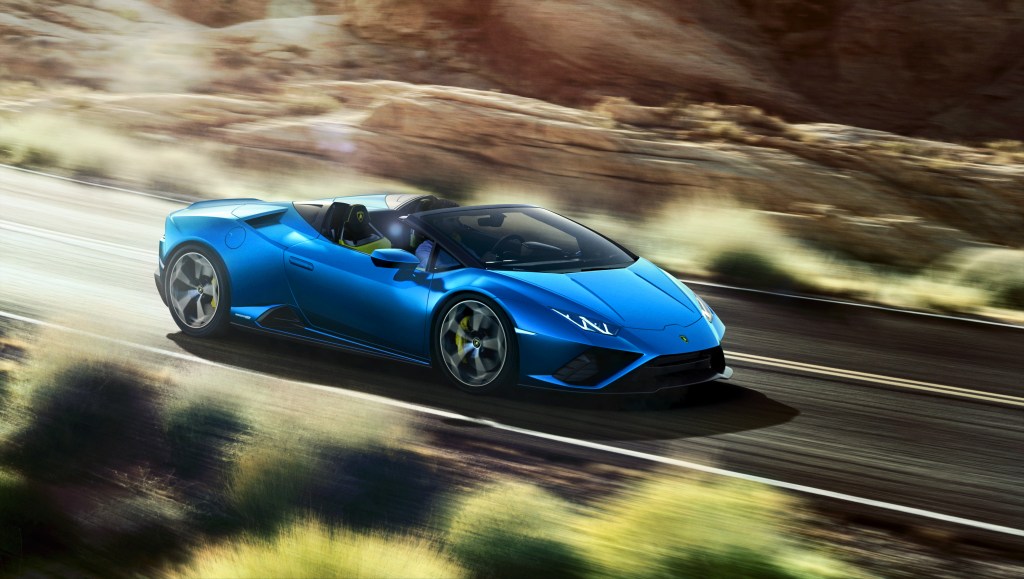
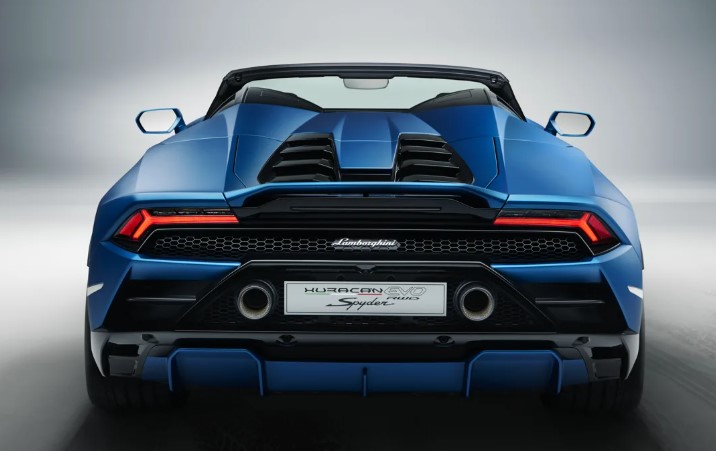
Automobili Lamborghini reveals the new Huracán EVO Rear-Wheel Drive Spyder virtually, using for the first time Augmented Reality (AR) on its official website lamborghini.com.
The new V10 model provides drivers with an open-air celebration of lightweight engineering, with rear-wheel drive and a specially tuned Performance Traction Control System (P-TCS). Roof up or down, daily driving and high-performance fun are accompanied by the inimitable sound of the V10 aspirated power plant, delivering the same 610 hp (449 kW) and 560 Nm of torque as the coupé version.
With a 0-100 km/h acceleration of just 3,5 seconds and a top speed of 324 km/h, like its coupé stablemate the Spyder is an instinctive driver’s car, delivering a fun-to-drive experience via hardware rather than software.
The Huracán EVO RWD Spyder’s design optimizes the integration and function of the extremely lightweight soft top. The Spyder is a true Lamborghini with roof open and closed. The Spyder’s exterior lines ensure drag reduction and the downforce matches that of the coupé without requiring additional aerodynamic appendages, while enhancing the rear-wheel drive car’s balance and dynamism with roof both up and down.
Driving modes…
The Huracán EVO Spyder’s ANIMA button on the steering wheel puts the pilot in control of driving modes, with the P-TCS calibrated to suit.
STRADA provides stability and safety in all conditions by minimizing rear-wheel slippage, and more proactively managing torque delivery on low-adhesion surfaces.
In SPORT mode, the driver enjoys drifting fun, allowing the rear wheels to slide and skate during acceleration, with torque limited when oversteer angles increase rapidly so the driver can stabilize and control the car.
CORSA mode optimizes the car’s traction and agility when exiting a corner in high-performance conditions, maximizing dynamics and speed.
Low weight…
The Huracán EVO RWD Spyder’s aluminum and thermoplastic resin body sits on a lightweight hybrid chassis in aluminum and carbon fiber, with a dry weight of 1,509 kg and a weight-to-power ratio of 2.47 kg/hp.
Front/rear weight distribution of 40/60, with double wishbone suspension with overlapped quadrilaterals and passive shock absorbers, providing optimized driver feedback. Ventilated and cross-drilled steel brakes are fitted to 19” Kari rims with specially-developed Pirelli P Zero tires, with optional 20” rims and carbon ceramic brakes.
Porsche has now completed its sports car trio: following on from the Coupé and Cabriolet, the third body variant of the new 911 generation now makes its debut with the all-wheel drive 911 Targa 4 and 911 Targa 4S models. The Targa remains unique with its fully automatic roof system. As on the legendary original Targa from 1965, it consists of a wide Targa roll bar, a movable roof section over the front seats and a wraparound rear window. The roof can be conveniently opened and closed in just 19 seconds. Just read on…
Hans Knol ten Bensel
More power…
It is powered by a six-cylinder, three-litre boxer engine with twin turbochargers: in the 911 Targa 4, it delivers 283 kW (385 PS) and, in combination with the optional Sport Chrono package, allows the 0-100 km/h sprint in 4.2 seconds – one tenth faster than before. In the 911 Targa 4S, it boasts 331 kW (450 PS), enabling the new model to reach the 100 km/h mark in just 3.6 seconds under the same conditions – four tenths faster than its predecessor. The top speed of the 911 Targa 4 is 289 km/h (up 2 km/h), while the 4S peaks at 304 km/h (up 3 km/h).
Both sports cars are fitted with the eight-speed dual-clutch transmission (PDK) and intelligent all-wheel drive Porsche Traction Management (PTM) as standard to deliver maximum driving pleasure.
…and a choice of transmissions
Alternatively, the 911 Targa 4S can be ordered with the newly developed seven-speed manual gearbox, which includes the Sport Chrono package. New technology has also been integrated to extend the range of features for both 911 models and, for the first time, Porsche InnoDrive, which includes adaptive cruise control, is available.
AWD further developed…
The enhanced performance of the new all-wheel drive models goes hand in hand with further development of the front-axle drive system. The clutch and differential unit is water-cooled and has reinforced clutch discs for greater robustness and a higher load capacity. The increased actuating torque at the clutch improves its adjustment accuracy and also improves the function of the additional front-axle drive system. Overall, the enhanced front-axle drive system with PTM (Porsche Traction Management) contributes to even better traction in all road conditions.
Suspension also taken a step further…
The electronically controlled variable damping system PASM (Porsche Active Suspension Management) is part of the standard equipment on the new 911 Targa models. This system automatically adjusts the damping characteristics in terms of driving comfort and handling to each driving situation and has two manually adjustable maps: Normal and Sport. Porsche Torque Vectoring Plus (PTV Plus), which includes an electronic rear differential lock with fully variable torque distribution, is added as standard equipment on the Targa 4S and is available as an option on the Targa 4.
Like the other eighth generation Porsche 911 variants, the Targa models are also equipped with Porsche Wet mode as standard. If sensors in the front wheel arches detect significant levels of surface water, a signal is issued in the instrument cluster as a recommendation for the driver to manually switch to Wet mode. The drive responsiveness is then adapted to the conditions to guarantee maximum driving stability.
Driving dynamics up another level…
The driving dynamics set-up for the 911 Targa 4 includes 235/40 ZR tyres on 19-inch alloy wheels on the front axle and 295/35 ZR tyres on 20-inch wheels on the rear axle. As standard, the 4S model is fitted with 245/35 ZR tyres on its 20-inch front wheels and with 305/30 ZR tyres on its 21-inch rears. On the Targa 4, deceleration is taken care of on both axles by 330-millimetre brake discs with black four-piston monobloc fixed callipers. The red-painted brake callipers of the Targa 4S have six pistons on the front axle and four pistons at the rear, while its discs measure 350 mm front and rear. The Porsche Ceramic Composite Brake (PCCB) can be ordered as an option.
Needless to say that we are anxiously awaiting to see this Targa in the flesh and report to you about our driving impressions…
The Alfa GTA was always an iconic thoroughbred for car lovers. We all remember them on the race circuits in the seventies, racing for well deserved victories. In 2020 we are commemorating 110 years of the brand, and the best way to celebrate this is to go back to its origins and resurrect one of the legends of motorsport: the Giulia GTA. Now the Alfa Centro Stile adds a further unique touch…by developing dedicated liveries for the Giulia GTA. Just read on!
Hans Knol ten Bensel
GTA tradition of power and lightness reborn…
From a technical point of view and in terms of concept, the new Giulia GTA is inspired by the Giulia GTA of 1965: the “Gran Turismo Allegerita” developed by Autodelta based on the Giulia Sprint GT that racked up sporting successes worldwide.
The new GTA is based on the Giulia Quadrifoglio and is fitted with a more powerful version of the Alfa Romeo 2.9 V6 Bi-Turbo engine with 540 hp. With its extensive use of ultra-light materials, it is 100 kg lighter than the Giulia Quadrifoglio, achieving a best-in-class weight/power ratio of 2.82 kg/hp.
The 500 Giulia GTA and GTAm, tailor-made
For the 500 lucky owners of the Giulia GTA and GTAm, Alfa Romeo wanted to offer a “project within the project”, making the Giulia GTA not simply a car to buy but an experience to be had.
What could be better than getting into an Alfa Romeo Giulia GTA? Only one thing: to get into the GTA of your dreams, built around you, able to meet to every aesthetic need. That’s why Alfa Romeo has developed a series of ad hoc modifications and customizations to the exterior and interior of the car, offering a unique and authentically tailored experience.
History and creativity available to the customer
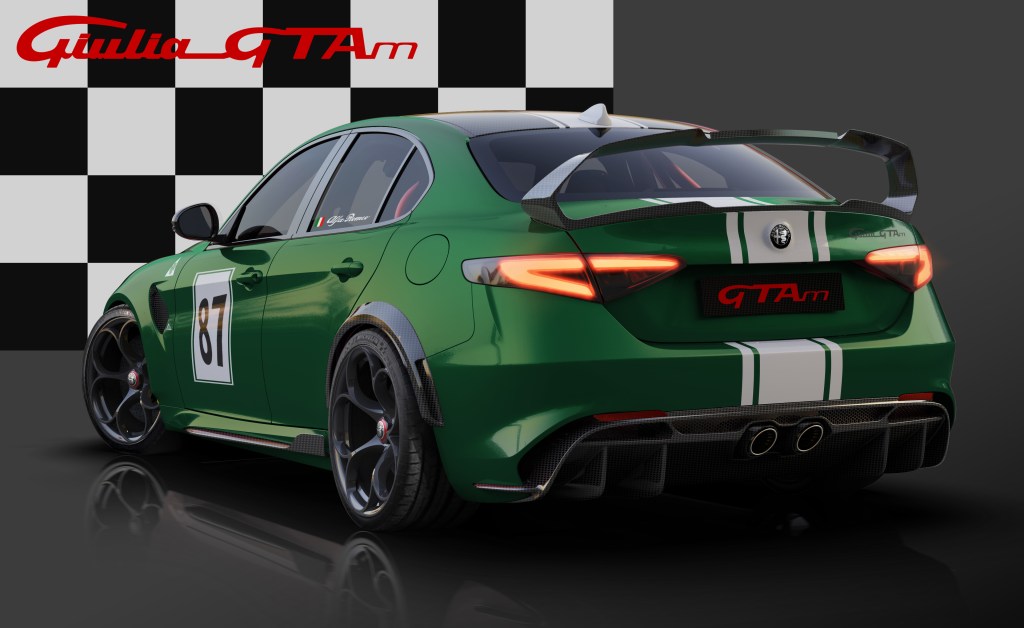
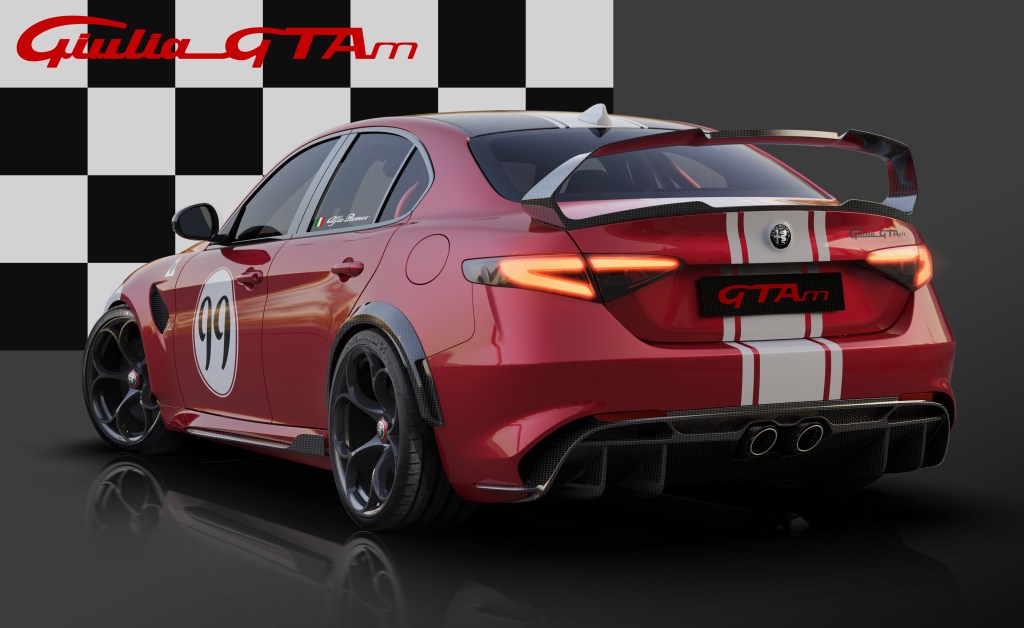
The Centro Stile Alfa Romeo’s creative and technical commitment in designing the car included wide-ranging research of the liveries that have been associated with the GTA’s historic pathway and long list of victories. These liveries have been analyzed and appropriately reinterpreted. The front, characterized by the historic white “mask”, is undoubtedly the first element of distinction that, combined with the lateral stripes, immediately brings the heart and mind to racing. The hood incorporates iconographic elements of the Alfa Romeo logo such as the cross, the Biscione and the Italian flag.
Some of the most representative and evocative liveries include those in ocher and white and in red and yellow.
The ocher recalls the 1750 GTAm and the 2000 GTAm, in which Toine Hezemans won the European Touring Car Championship in 1970 and 1971 respectively. Its symbolic features included the Biscione on the bonnet, along with lines on its sides, both specific to the GTA 1300 Junior. The longitudinal stripes, meanwhile, were the aesthetic quirks of individual drivers.
As for the red and yellow livery on the other hand, the choice of painted fronts arose from the need to distinguish the drivers in the same race from each other. While developing the liveries, the Centro Stile Alfa Romeo coherently and creatively drew on the Brand’s diverse history. For example, the painted front of the 1965-1968 Sprint GTA was not symmetrical, although it was in the GTA 1300 Junior. A yellow front end marked out the car that won the 1971 and 1972 European Touring Car Championships, while in certain races in 1971, Gianluigi Picchi drove cars with their lower front end painted yellow. These were all links with the GTA’s most prestigious victories.
Individual customers may request one of these liveries for their car, with an additional option of selecting the side number and a Goodwool car cover in the same livery.
In addition to the Centro Stile’s liveries (limited availability), the Giulia GTA and GTAm will come in GTA Red, Trophy White and Montreal Green, a range of colors that pay tribute to the Italian flag. Another layer of customization lies in the selection of a color for the brake calipers, and in the interior, roll bar, seat belts and stitching.
Starting today, a dedicated online configurator allows the customer to view the various possible combinations on Giulia GTA and GTAm, available at https://gta.alfaromeo.com.
GTA buyers get a unique experience package…
The same exclusivity found in the Giulia GTA and Giulia GTAm will also be found in the dedicated customer experience, designed to treat the 500 lucky owners to a unique interaction, 100% Alfa Romeo.
For those who booked one, there will be a dedicated sales process, with a Brand ambassador product specialist following up each customer from order to delivery.
The purchase also includes a personalized experience package, with a Bell helmet in special GTA livery, a tailor-made Goodwool car cover to keep their GTA or GTAm safe in the garage, and a specific driving course devised by the Alfa Romeo Driving Academy. The GTAm will also ship with full Alpinestars racing apparel (suit, gloves and shoes), available on request with the GTA.
But there’s more! Customers may also request delivery of their GTA or GTAm to one of the Brand’s most iconic locations, the Autodelta workshop in Balocco. Uniqueness and exclusivity are determining factors for every Alfa Romeo fan and for every collector.
Giulia GTA and Giulia GTAm are priced starting from €143,000 and €147,000 pretax respectively throughout Europe.
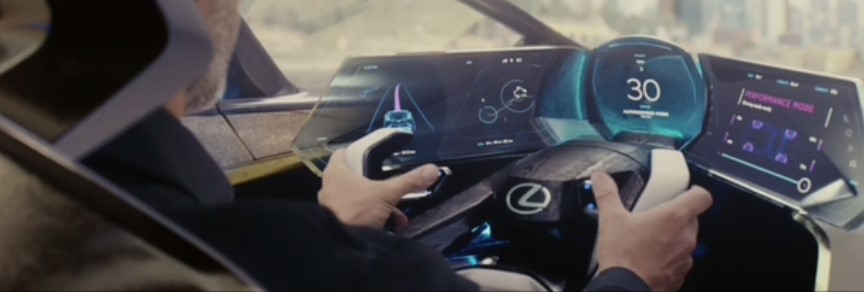
In an exclusive interview with Lexus Electrified Chief Engineer, Lexus has recently unveiled its vision for an upcoming generation of electrified vehicles, under the banner “Lexus Electrified”.
The “Lexus Electrified” vision targets a fundamental leap in vehicle performance, handling, control and driver enjoyment – even as mobility within our society continues to change with autonomous driving and vehicle electrification.
Evoking the original fun of driving, Lexus intends to use its 15 years of experience in electrification technologies to further evolve driving pleasure, and to fundamentally transform the essence of luxury vehicles of the future – creating a unique Lexus driving signature with exceptional ride comfort, quietness and craftsmanship.
Takashi Watanabe, Chief Engineer at Lexus, takes us through the key aspects of this “Lexus Electrified” strategy in an exclusive interview.
The man behind it all…
Takashi Watanabe started his career with Toyota in 1993 with engine systems development. He has worked on many different types of engines and exhaust systems. Since 2012, he has worked also on the development of several Lexus vehicles and became in 2017 leader of the Lexus Electrified Project.
Just watch and listen, and be transported into the electric future…by Lexus, using their unique “Lexus-ness.”
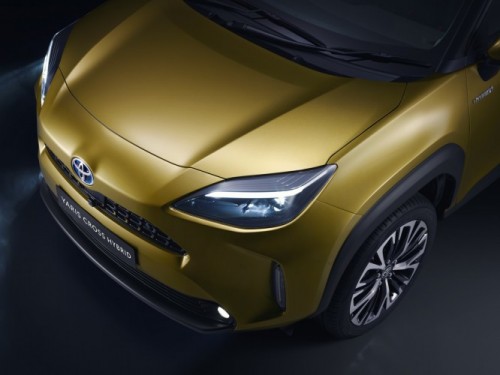
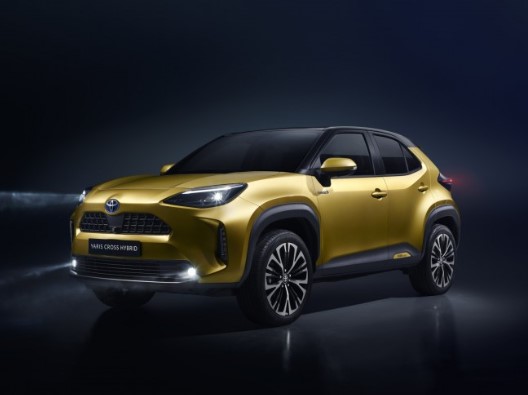
It is there: the new Yaris is the second model to be based on Toyota’s GA-B platform, has Toyota’s 4th-generation hybrid technology and is designed and developed for Europe.
The car will be produced at Toyota Motor Manufacturing France (TMMF) in the Onnaing factory, near Valenciennes in France, and plans to achieve a B-SUV segment share of more than 8%.
Production is cheduled from 2021 onwards, with annual volume exceeding 150,000 units, alongside the new generation Yaris hatchback.
It now makes its world debut in April 2020, well ahead of European market introduction in 2021. Read on!
Hans Knol ten Bensel
True hybrid, true SUV
Toyota’s first used a hybrid system in a B-segment car with the original Yaris Hybrid in 2012. It now is in its fourth generation…
As a member of the Yaris family, Yaris Cross is built on Toyota’s new GA-B compact car platform. It also shares the “big-small” design and packaging concept that characterized the original Yaris.
Adding Yaris Cross to the line-up will give Toyota an SUV range that spans the B, C and D segments.
New hybrid powertrain
As said, the Yaris Cross benefits from Toyota’s fourth generation hybrid technology.
The Yaris and Yaris Cross are the first models to use Toyota’s latest 1.5 hybrid system, developed directly from the larger 2.0 and 2.5-litre powertrains used by recent new models such as the Corolla, C-HR, RAV4 and Camry.
This now features a new 1.5-litre, three-cylinder Atkinson-cycle petrol engine, precision-engineered to reduce friction and mechanical losses and optimise combustion speed. The result is high torque at low engine speeds and excellent fuel efficiency. The engine’s thermal efficiency is rated at 40%, which is greater than comparable diesel engines and ensures strong fuel economy and low CO2 emissions.
The new hybrid system has a maximum output of 116 DIN hp. Special attention has been given to power delivery, making the system very responsive to drive. In terms of emissions efficiency, the front-wheel drive model starts from below 90 g/km CO2 and the AWD-i version from below 100 g/km*
Compact
The Yaris Cross has the same 2,560 mm wheelbase as the new Yaris hatchback, but is 240 mm longer overall, with 60 mm added to the front overhang and 180 mm to the rear, securing more interior space. The ground clearance is 30 mm higher and the vehicle is taller and wider overall – by 90 and 20 mm respectively.
Practical
There’s a power back door, an adjustable deck height to give the flexibility of either a secure underfloor compartment or increased trunk space for larger loads.
The deck board itself can be split in two, giving customers both increased space and an underfloor storage area. The trunk is also equipped with a new flex belt system to secure items and stop them shifting during driving.
Intelligent all-wheel drive
The so-called AWD-i is an electric system, being more compact and weighting less than mechanical AWD units, helping the Yaris Cross Hybrid AWD-i achieve lower fuel consumption and CO2 emissions than any of its all-wheel drive B-SUV competitors.
The system directs drive torque to the rear axle when pulling away and when accelerating. In normal driving, the Yaris Cross operates with front-wheel drive, but when low-grip conditions are detected, all-wheel drive is engaged automatically.
Advanced Driver Assistance System
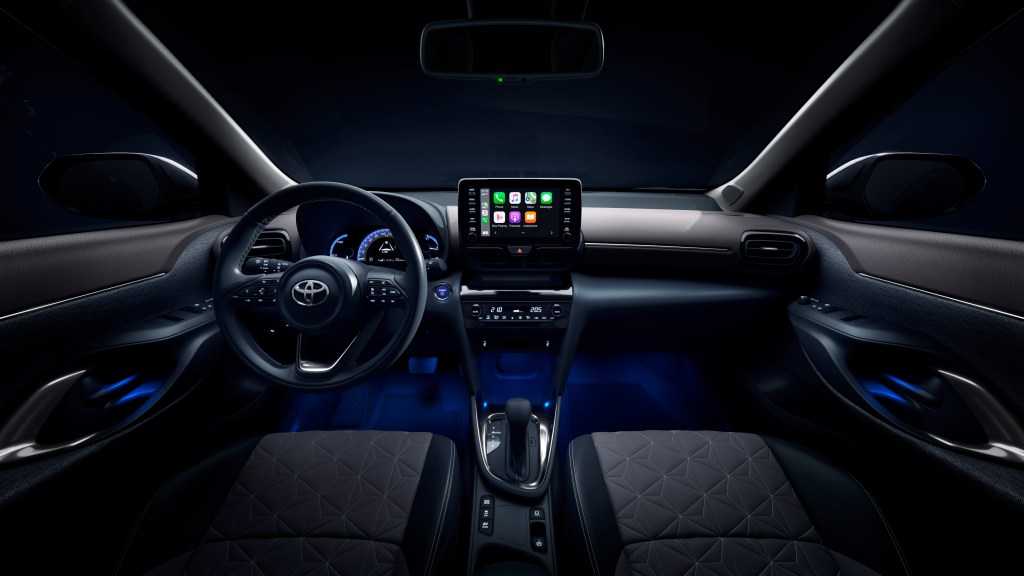
With its GA-B platform, it benefits from Toyota Safety Sense active safety systems and advanced driver assistance functions.
Designed in Europe and Japan…
The design process of Yaris Cross brought together a wide team from studios in both Europe and Japan. To describe their ideas and inspiration in more detail, please find below the words of one member of the team – Lance Scott, Design General Manager at Toyota’s EDD studio in Nice, France.
“When we started this process, we understood that whilst style is the number one purchase reason in the B-SUV segment, customers were also keen to have a high level of practicality. Not easy things to reconcile, especially in a compact package.
From the very beginnings of the design concept, we had the European customer in mind, but needed to understand more about them. So we went out and interviewed real customers to understand their lifestyle, what they liked, what their daily activities were and how they enjoyed themselves.
As a team, we came up with the key words ‘Robust’ and ‘Minimalistic’, which we felt would express both compactness and agility, as well as the robustness and strength of an SUV.
When we started to sketch ideas for the exterior, the iconic image of a diamond consistently came to mind. Subsequently we coined the phrase ‘nimble diamond’ to express the hard, strong and premium image of the gemstone combined with the agile and fun to drive personality we felt the car needed to convey.
From the top view, or plan view as we call it, we ‘cut’, or ‘shaved’ the body to give us a diamond shape that allowed us the space to emphasise the fenders. This diamond body shape combined with the 4 bold fenders gave us an energetic shape which was both strong and sophisticated.
Clearly, we want the car to be immediately perceived as a SUV, so we emphasised a higher ground clearance, a strong horizontal axis giving a great balance and poise, big squared wheel arches and of course big wheels … up to 18”!
The face was also a very important aspect for us. We wanted to keep the strong DNA of Toyota’s SUV line-up but at the same time give Yaris Cross an identity of its own.
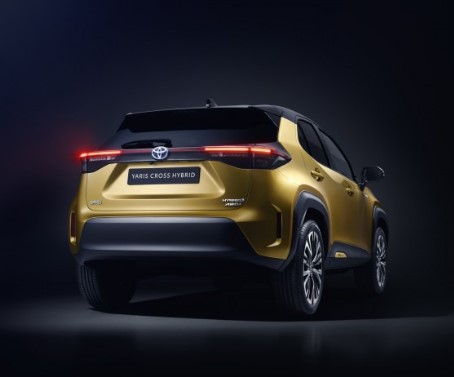
At the rear, we again focused on giving the car a good stance with the wide fenders illustrating how it looks planted on its wheels. Combining the horizontal rear tail lamps and rear screen clearly shows family identity with Yaris, yet the wider and more squared tailgate hints at the luggage space’s larger flexibility for daily usage.
For the exterior colour, we started to think about something that could express an active and high-quality image that our target customers would really appreciate. Looking at future colour trends we can see that there is a growing tendency for gold and other precious metals, but we wanted to offer something a bit more natural and urban. Adding a subtle hint of green to the gold direction, whilst also de-saturating the colour to emphasis the metal like appearance, gave us this fresh urban yet active appeal that highlighted the surface form of the exterior. The final result is a colour we call Brass Gold”
Interesting all this, we will be keen to see this new B-segment SUV in the flesh soon!
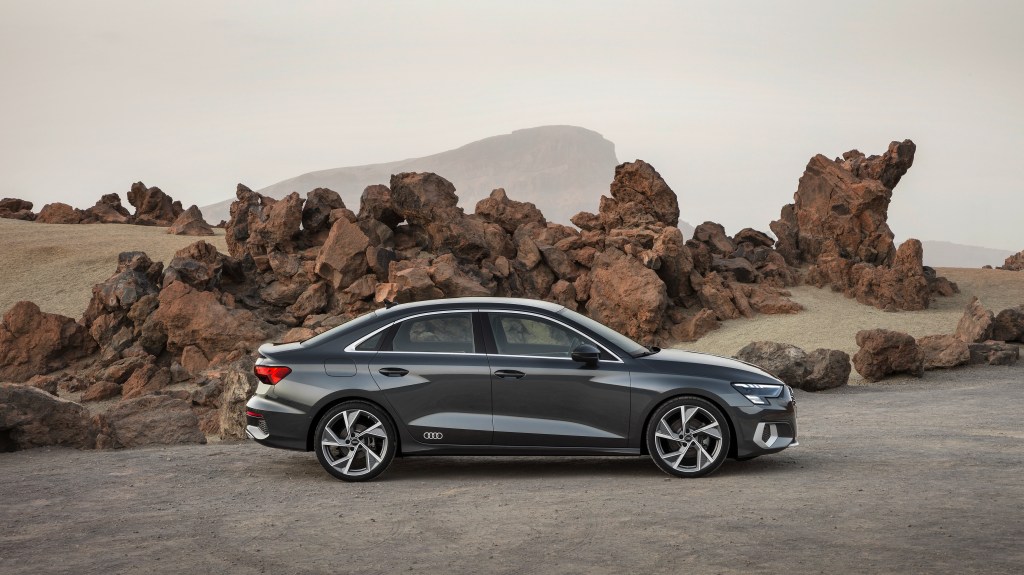
The second generation sedan is there: beneath its elegant body, new drives and refined suspension tuning ensure a driving experience that is as efficient as it is dynamic.
The A3 Sedan will be on the lots of European dealerships beginning in summer 2020.
Compared with its predecessor, it is now 4 centimeters longer at 4.50 meters , while its wheelbase remains unchanged. Its width has increased by 2 centimeters, and with 425 liters (15.0 cu ft), the luggage capacity is exactly the same as in the predecessor model. The car looks coupé-like: The roof line slopes down from the B-pillar dynamically – just like on a coupé – and finishes in a striking spoiler on the tailgate.
The aerodynamics benefit from the higher rear end compared with the predecessor as well as the large diffuser. As a result, the new A3 Sedan with the 2.0 TDI 110 kW (150 PS) achieves a Cd value of 0.25 and is therefore 0.04 Cd points better than the first generation.
Digitalized cockpit
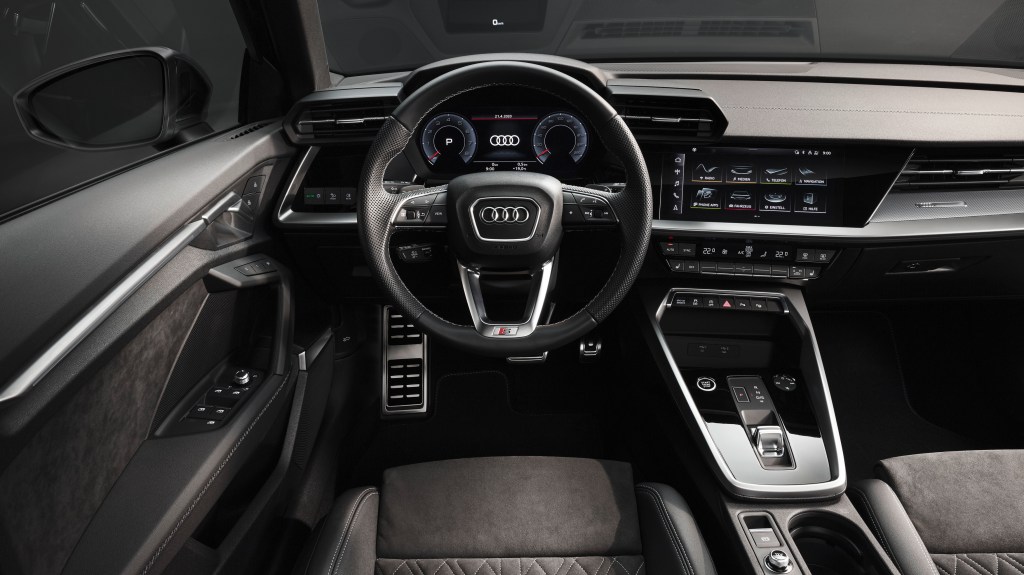
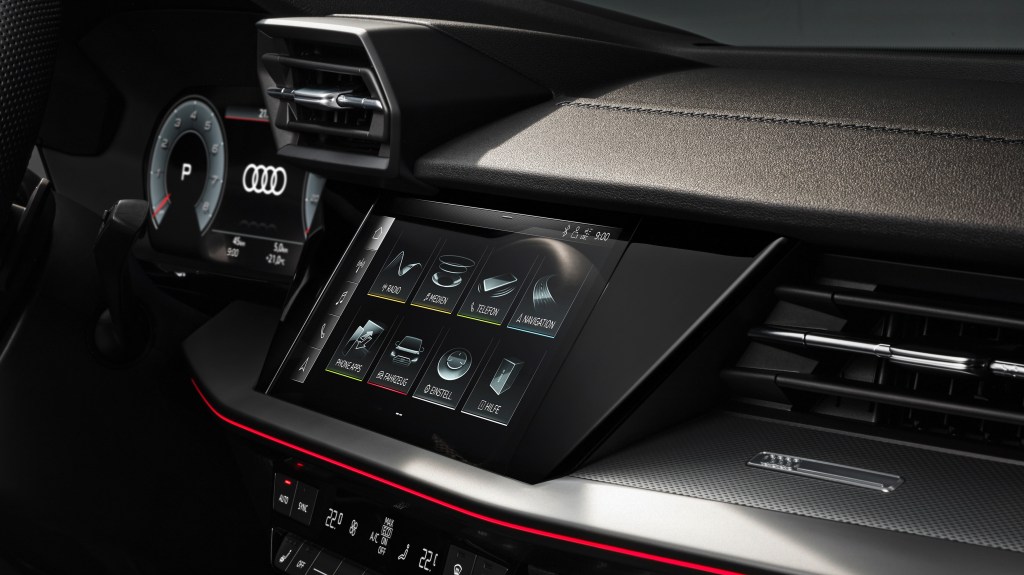
The cockpit of the A3 Sedan is entirely focused on the driver. This begins with the interior design and ends with the display and control elements. Thus, the instrument panel with the central MMI touch display is inclined slightly toward the driver. It has a 10.1-inch diagonal and is intuitive to operate. As standard, it includes handwriting detection as well as natural language control that can optionally draw on the capabilities of the cloud.
The 10.25-inch instrument cluster behind the steering wheel is digital even in the basic model. As the Audi virtual cockpit plus, it measures 12.3 inches and offers three different views, including sporty graphics with inclined digits and a particularly dynamic layout.
The RPM and speed are shown here as bar diagrams with angular red graphical elements. Upon request, a head-up display complements the display concept, whereby it projects important information onto the windshield in the driver’s direct field of vision.
Connected…
The top infotainment system in the new A3 Sedan is the MMI Navigation plus, which uses the third-generation modular infotainment platform (MIB 3). The MIB 3 boasts computing power ten times higher than in the predecessor model, connects the car via LTE Advanced speed, and connects the smartphones of the passengers to the Internet via Wi-Fi hotspot.
The MMI Navigation plus offers a multitude of Audi connect services as standard, including online traffic information, news, and additional information such as photos, opening times, and user reviews relating to points of interest.
The new A3 Sedan is available with a choice of two TFSI engines and one TDI engine at launch.
The 35 TFSI, a 1.5-liter direct injection engine, produces 110 kW (150 PS) and is available in two versions – with a newly developed six-speed manual transmission (combined fuel consumption in l/100 km: 5.0 – 4.7).and with a quick-shifting seven-speed S tronic. (combined fuel consumption in l/100 km: 4.9 – 4.7). CO2 emissions are between 107 to 114 g/km.
Besides the cylinder on demand technology, the powertrain in conjunction with the S tronic dual-clutch transmission uses a 48-volt mild hybrid system. It recovers energy during deceleration, supports the engine with up to 50 Nm (36.9 lb-ft) of torque when driving off and accelerating from low engine speeds and allows the A3 Sedan to coast with the engine switched off in many situations.
In everyday driving, it reduces consumption by up to 0.7 liters (0.1 US gal) per 100 kilometers.
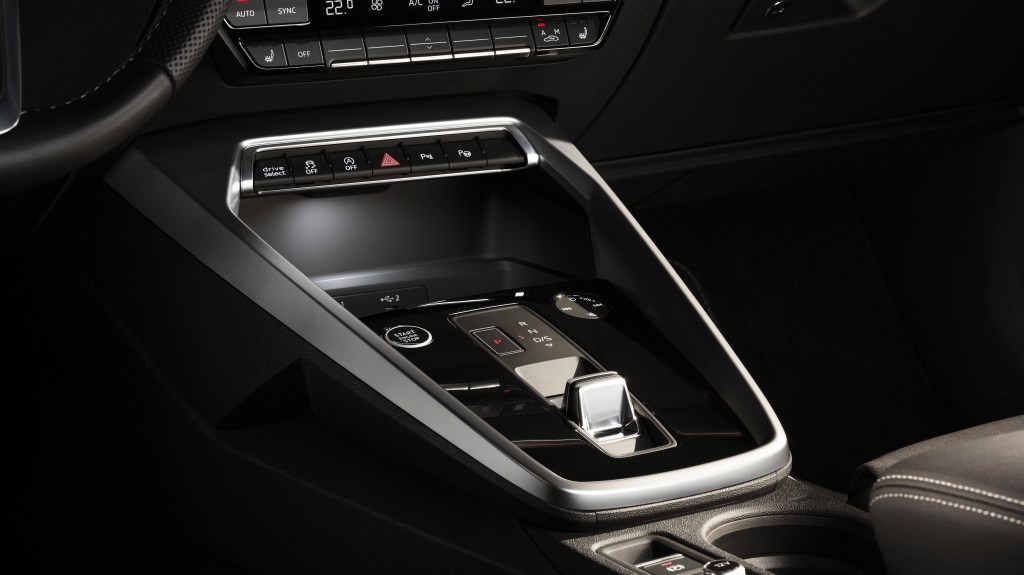
The 2.0 TDI with 110 kW (150 PS) also works in conjunction with a seven-speed S tronic, whereby gear shifts are performed via a new switch using shift-by-wire technology.
The suspension of the new A3 Sedan has been tuned to be sporty and harmonious – a touch more precise than in the predecessor model. To a large degree, this precision and reaction speed is thanks to the central dynamic handling system that ensures optimal interaction between all the components relevant to the transverse dynamics. As an alternative to the standard setup, there is a sport suspension and a suspension with controlled dampers.
Market launch
Presales of the new A3 Sedan will begin at the end of April 2020 in Germany and many other European markets. Deliveries will commence in the summer.
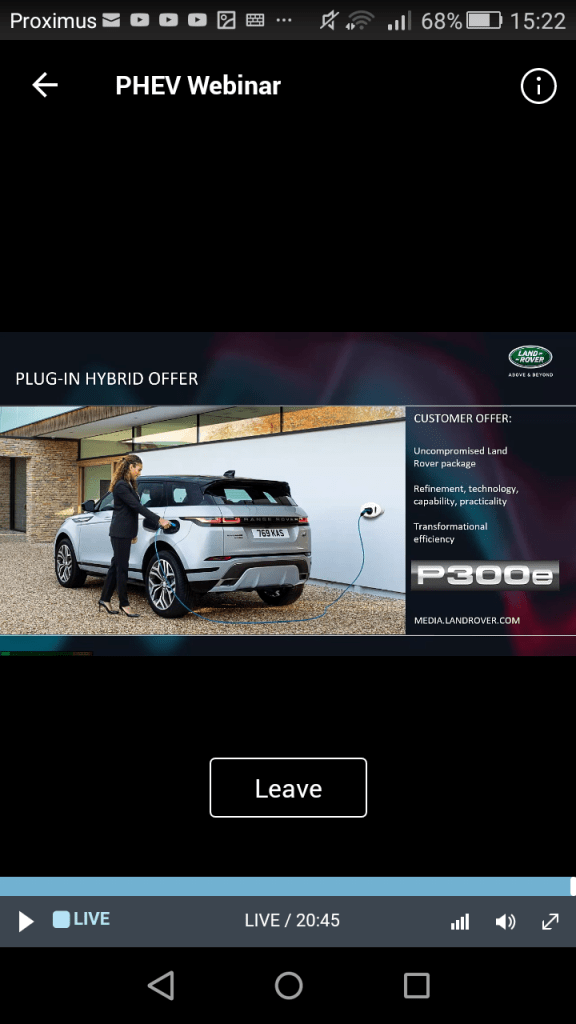
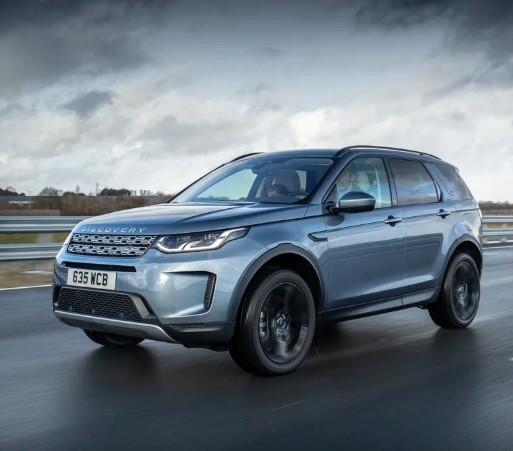
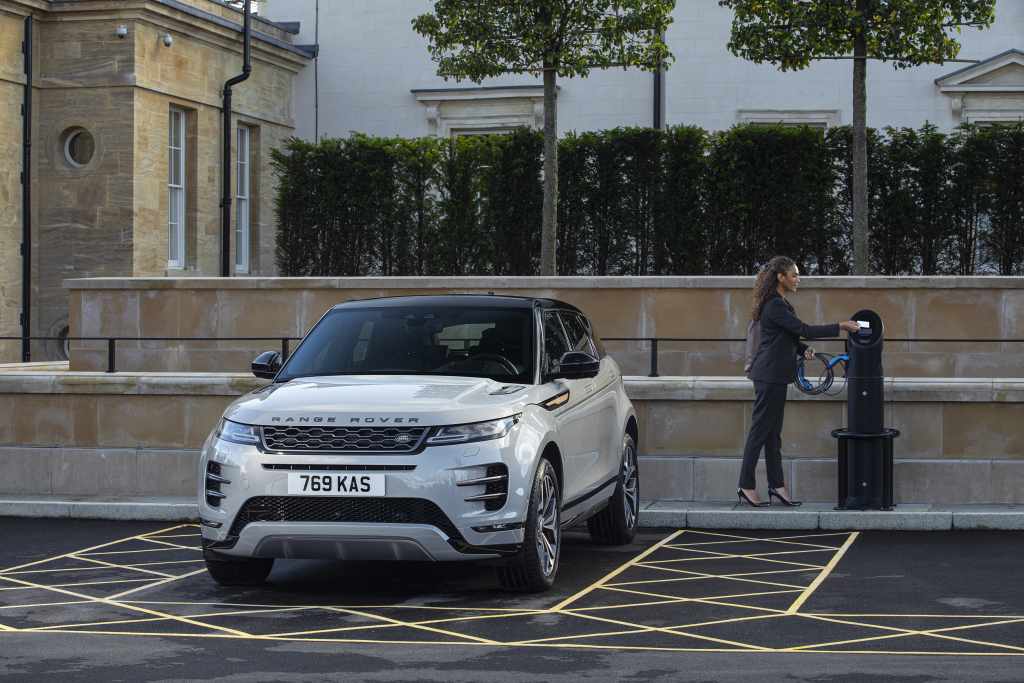
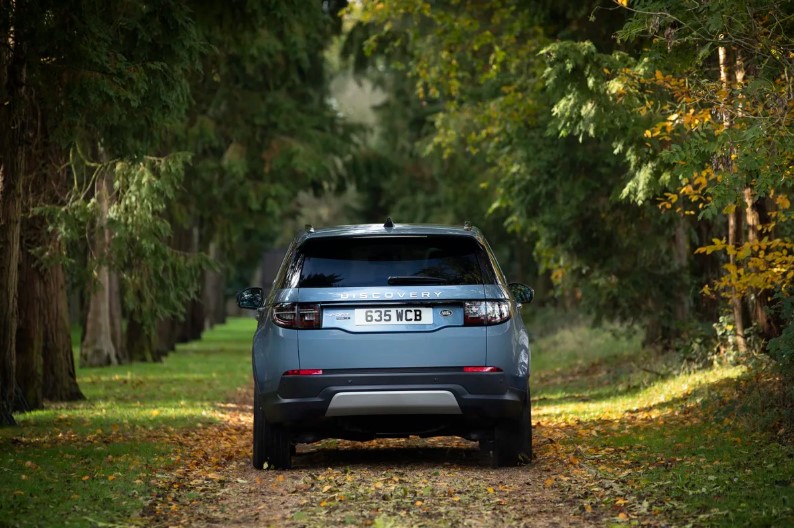
We were invited yesterday by the PR Manager Jaguar Land Rover Belux Annick Van Cauwenberge to attend a webinar to witness the launch of the new PHEV versions of the best selling Range Rover Evoque and Land Rover Discovery Sport.
We were invited yesterday to an exclusive webinar, presenting both PHEV’s…
They are now available as efficient plug-in hybrids with CO2 emissions from only 32g/km and an all-electric range of up to 66km (41 miles) – enough for many to drive the average daily commute distance without recharging.
Just read on…
Hans Knol ten Bensel
Highlights
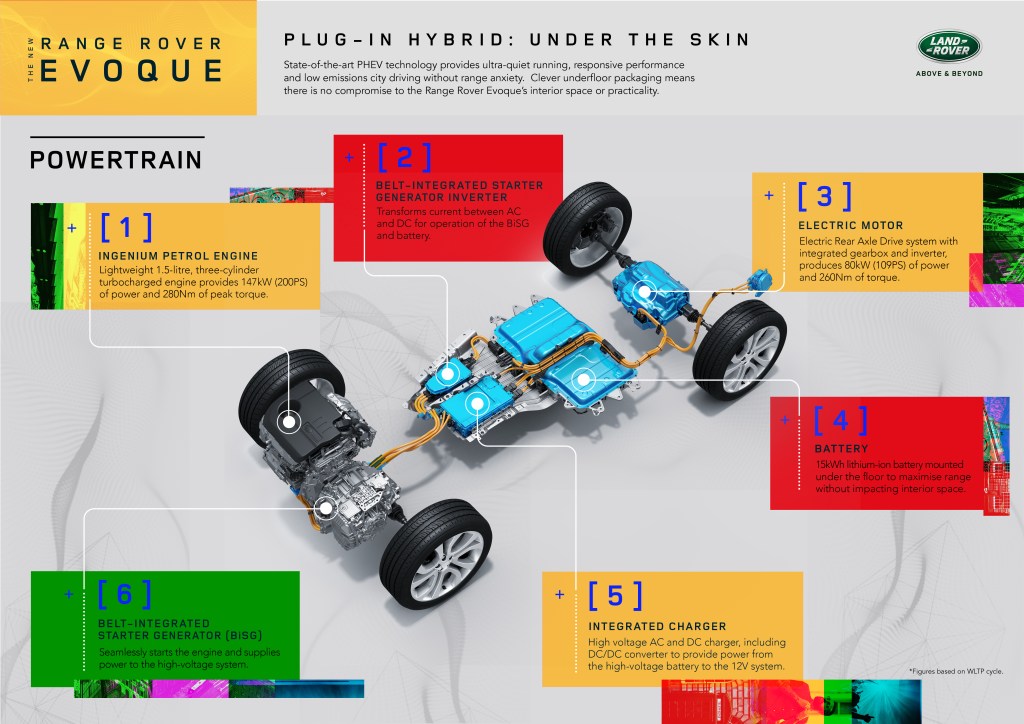
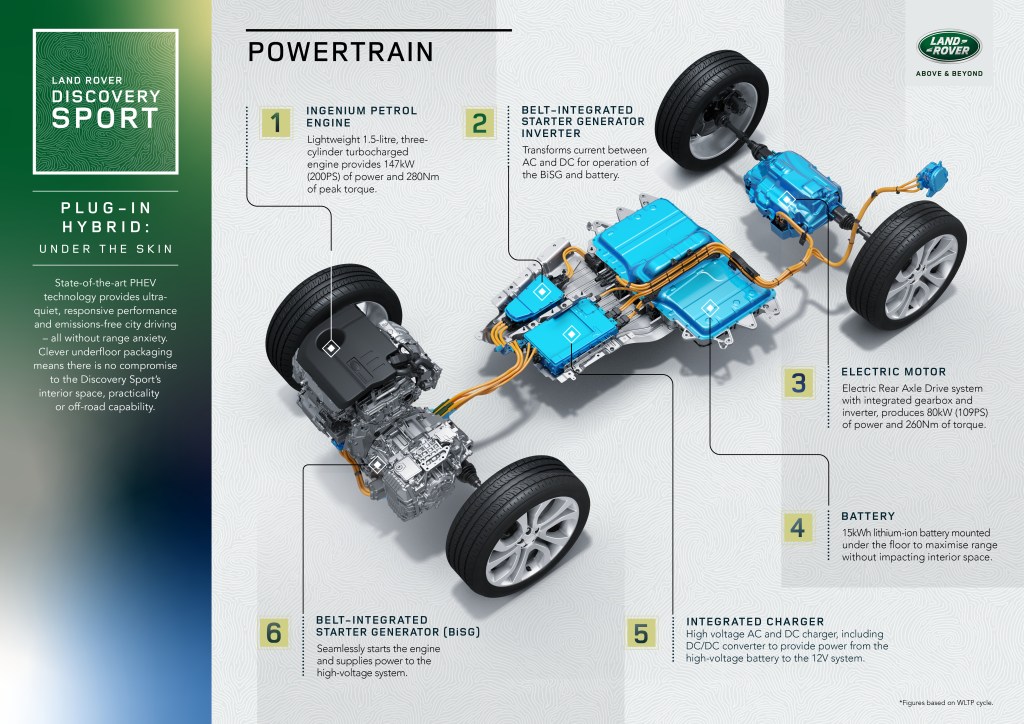
The technical heart of both these cars is a new 200PS three-cylinder 1.5-litre Ingenium petrol engine coupled to an equally new eight-speed automatic transmission, driving the front wheels. But these cars are 4WD SUV’s, so a 109PS Electric Rear Axle Drive motor guarantees Land Rover’s signature all-wheel-drive capability. This motor is powered by a 15kWh lithium-ion battery located below the rear seats.
These new Rovers are also very kind on your wallet, with a fuel consumption being as low as 1.4L/100km. Of course, all this depends on the way you use and integrate E-power in your daily driving, but again, this is frugal indeed. The PHEV system can operate in electric-only mode, combustion engine-only mode, or a combination, using GPS and navigation data to optimize efficiency on every journey.
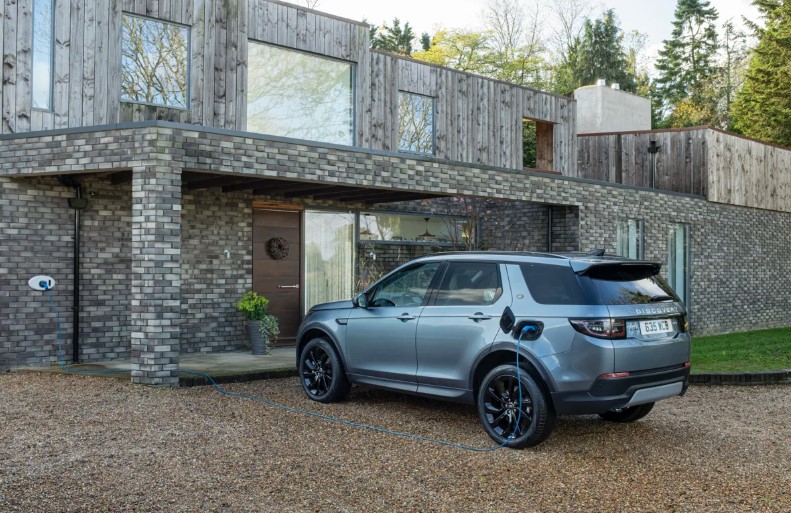
Charging can be fast: 0-80 per cent in as little as 30 minutes using 32kW DC public charging or just 1hr 24mins using a 7kW AC wallbox.
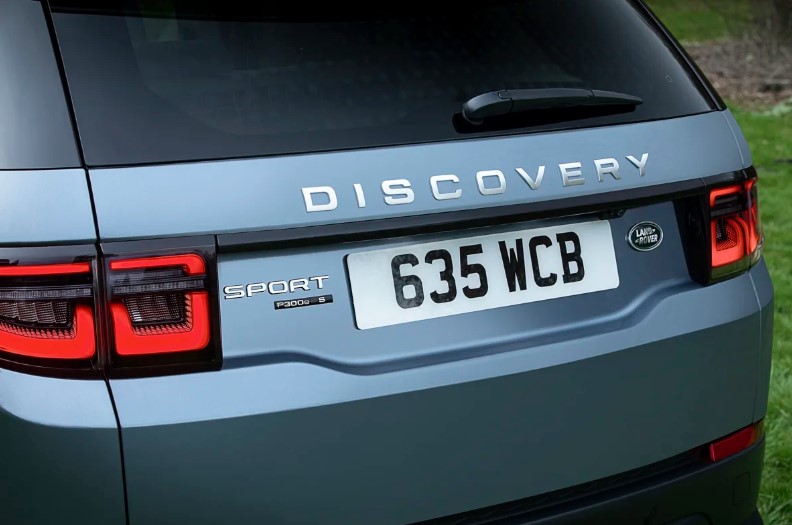
You have a wide choice, as the Range Rover Evoque and Discovery Sport PHEV models, which are badged P300e, are available in S, SE and HSE specifications, each as standard or R-Dynamic, with a range of wheel designs from 18 to 20 inches.
State-of-the-art Premium Transverse architecture
Both the new Range Rover Evoque and Land Rover Discovery Sport plug-in hybrids are based on Land Rover’s , which was designed to support electrification while maintaining Land Rover’s signature off-road capability. The new plug-in hybrid P300e models join the existing 48-volt mild-hybrid SUVs, bringing new levels of efficiency to the premium compact SUV sector.
With total output being 309 PS and offering 540 Nm of torque, the performance is up to scratch, with an acceleration of 0-100km/h in just 6.4 seconds (0-60mph in 6.1 seconds) in the Range Rover Evoque. Meanwhile, the Discovery Sport offers 0-100km/h in 6.6 seconds (0-60mph in 6.2 seconds). Both can reach speeds of up to 135km/h (84mph) using electric power alone.
Driver-selectable modes
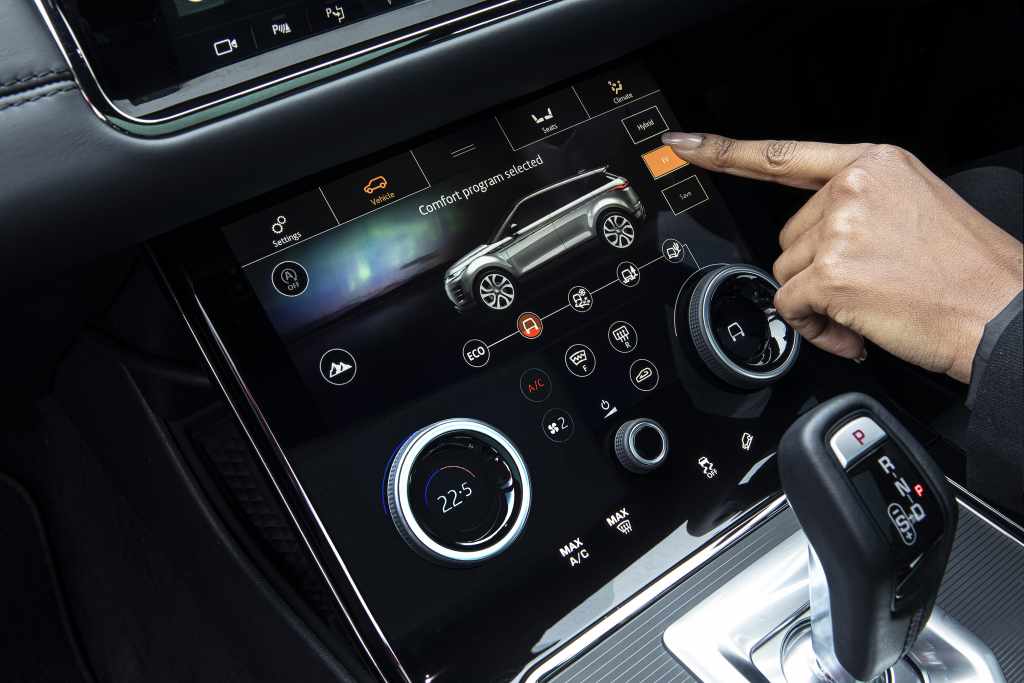
As said, drivers of both models can select from three driving modes. 1.HYBRID mode (the default driving mode) – automatically combines power from the electric motor and petrol engine. The operating strategy adapts to driving conditions and the remaining charge in the battery. Entering a destination in the navigation system enables the Predictive Energy Optimisation (PEO) function to intelligently integrate route and GPS data to maximize efficiency and comfort for the selected journey.
2.EV (Electric Vehicle) mode – enables the vehicle to run solely on the electric motor using the energy stored in the battery, for quiet, zero-tailpipe emission journeys.
3.SAVE mode – prioritizes the combustion engine as its main power source, maintaining battery State of Charge at the chosen level.
PHEV technology
As pointed out, the new compact SUVs are produced using Land Rover’s Premium Transverse Architecture, which was designed from the outset to accommodate plug-in and mild-hybrid technologies. The hardware is cleverly packaged beneath the cabin floor without compromising interior space.
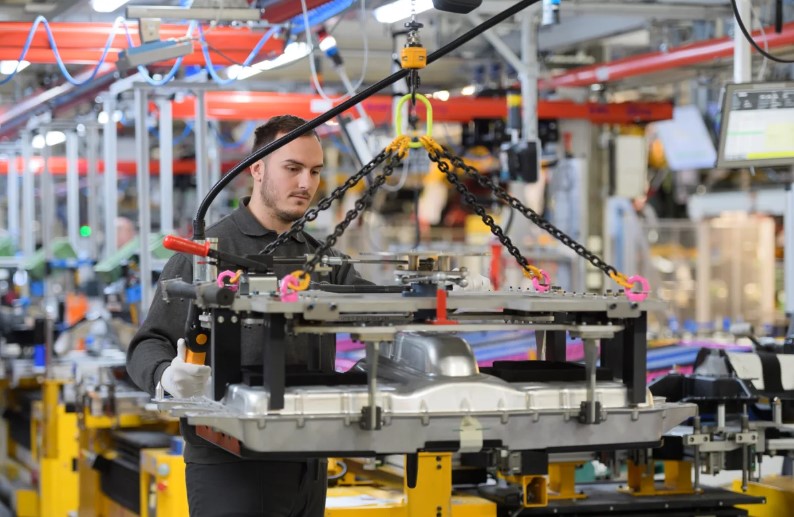
The Electric Rear Axle Drive (ERAD) is powered by a compact 15kWh lithium-ion battery located below the rear seats. The battery is made up of 84 prismatic cells, arranged in seven 50Ah modules of 12, with a 6mm-thick steel undertray that protects the battery without compromising the vehicles’ hallmark all-terrain capability.
The advanced Electric Rear Axle Drive (ERAD) features a light, compact and efficient synchronous permanent magnet motor. To optimize package space, the drive-shafts are concentric with the motor and single-speed transmission, while the inverter is also integrated within the ERAD casing. The ERAD module is neatly integrated within the Integral Link rear suspension system.
At speeds above 135km/h (84mph), the electric motor is decoupled to reduce drag and therefore optimise efficiency, and then seamlessly re-engages when the speed falls below this.
Ctrl + to enlarge…
The compact high-voltage junction box (HVJB) under the front seats is another engineering innovation. This comprises the DC: DC converter (changes high-voltage current from the hybrid battery to low voltage to support the 12-volt network) and the 7kW on-board charger used to charge the hybrid battery when the vehicle is plugged in.
Packaged next to this is the Belt-integrated Starter Generator (BiSG) Inverter which, through intelligent electrical management, can send recuperation energy to the high-voltage battery for storage to use later or for immediate redeployment to support full all-wheel drive capability.
A new brake-by-wire system replaces the traditional brake vacuum servo, and seamlessly blends regenerative and friction braking to provide a consistent and precise pedal feel. The system can deliver up to 0.2g of deceleration under regenerative braking, maximizing energy efficiency by using the vehicles’ kinetic energy to recharge the battery on the overrun.
Intelligently locating the PHEV system throughout the structure improves dynamics, lowering the centre of gravity by six per cent and further optimizing front-rear weight distribution.
A state-of-the-art 1.5-litre three-cylinder petrol engine
This is at the heart of the new PHEVs: the latest member of the modular Ingenium engine family, which now has three-, four- and six-cylinder variants.
The lightweight aluminium engine is 37kg lighter than the four-cylinder.
This small-capacity engine achieves exceptionally low levels of friction, which contribute to its excellent efficiency. The exhaust manifold is integrated into the aluminium cylinder head, contributing to the rapid warm-up times and minimizing the distance from the exhaust ports to the turbocharger’s turbine wheel for improved responsiveness.
The three-cylinder configuration delivers a better flow of exhaust gases, ensuring the turbine wheel delivers boost pressure almost instantaneously. A highly efficient Water cooled Charge Air Cooler means the density of air being drawn into the combustion chambers remains high, further enhancing performance and efficiency across the engine’s operating range.
The three-cylinder – like the four-cylinder mild hybrid models – also features a belt-integrated starter-generator (BISG) unit. This works alongside the ERAD to deliver regenerative braking, recharging the battery on the overrun, and also enables smoother, quieter and faster stop-start operation than a traditional starter motor.
New eight-speed automatic transmission
This matches the power and torque delivery of the three-cylinder engine and work seamlessly with the ERAD. As well as being 5kg lighter than the nine-speed transmission used in the other models, the new eight-speed delivers enhanced refinement and shift feel, and is an integral part of the hybrid system.
Cost of ownership is very low, so no use waiting any longer to order your Range Rover Evoque or Land Rover Discovery now, combining rational economy with the Rover’s unique 4WD SUV qualities…
The new, second generation GLA is now the eighth model in the current generation of compact Mercedes-Benz models.
It has already established itself as a popular entry into the impressive SUV family of the brand.
The new GLA has a more pronounced SUV character: it is now more than 10 cm higher than its predecessor at 1,611 mm (1,616 mm with roof rails).
The higher and characteristic SUV seating position also offers more headroom in the front. Another bonus compared to its predecessor is the increased legroom in the rear. Characteristic for the off-road design are the steep front, the short overhangs at the front and rear and the protective mouldings all around.
The 4MATIC models are standard equipped with the off-road engineering package. This package includes an additional driving program, a hill-starting aid and an off-road animation in the media display, as well as, in combination with MULTIBEAM LED headlamps, a special light function for off-road driving.
The dynamic PR people of FCA Belgium created a new video to keep in touch with current customers and future prospects in Belgium and Luxembourg, a few weeks before the official celebration of the brand’s 110th anniversary.
To have a look at this new video for sports car enthusiasts who look forward to taking the wheel of their Alfa Romeo again in optimal living conditions, just click https://we.tl/t-hGoEXfwzUA
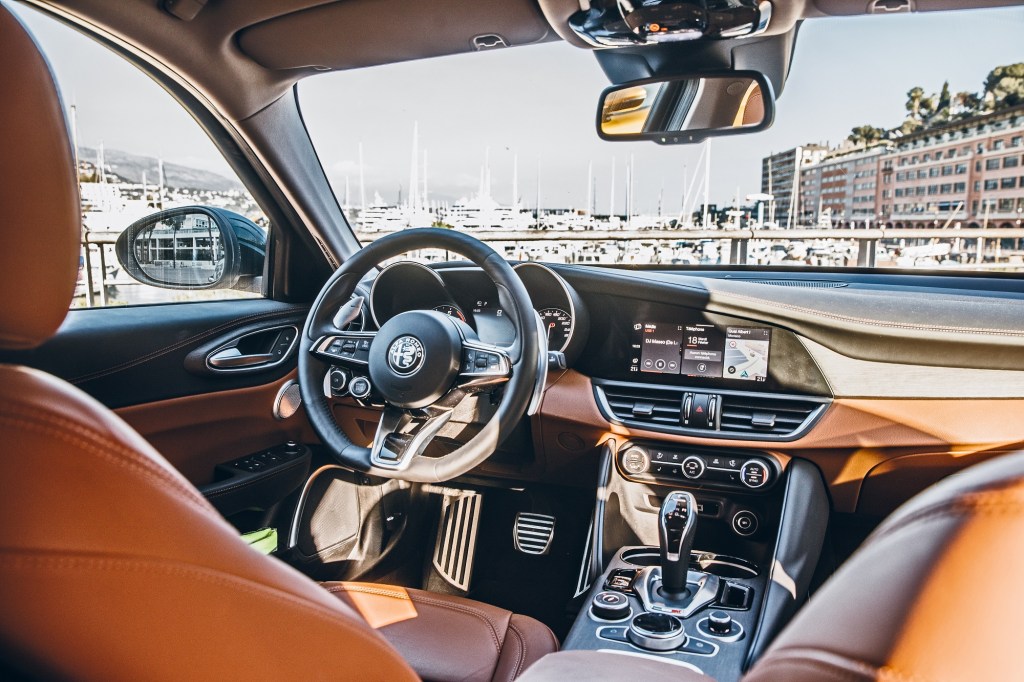
The video footage was shot on the streets of the Principality of Monaco, which also serves as a prestigious setting for the F1 Grand Prix and where the brand’s latest publicity campaign was shot for the new Giulia and Stelvio MY202. The new models Giulia and Stelvio are equipped with new exclusive content: dynamic driving becomes a real driving experience.
Prices for the New Alfa Romeo MY2020: Giulia from € 34,900 (€ 33,746 in Luxembourg) and Stelvio from € 39,990 (€ 38,668 in Luxembourg).
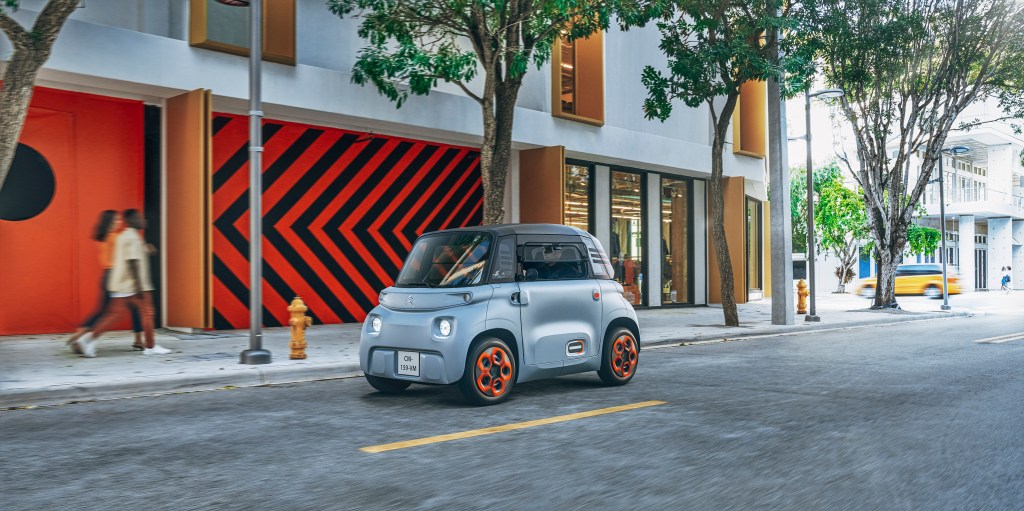
Citroën changes the world once again, after its post war 2 CV. Now in (and after) Corona times, it launches an E-powered runabout, which will make the world think differently about affordable, urban electric mobility.
The “AMI”is non-conformist, with 2 seats, 100% electric, comfortable and protective, compact and agile, of course to be customized at will.
As a direct descendant of AMI ONE Concept introduced at the Geneva Motor Show in March 2019 and following the strong interest it generated, Ami has become a reality in barely a year.
Ami is a practical response to new mobility expectations for short journeys: enabling easier access to city centres, finding micro-mobility means for everyone, and presents a real alternative to scooters, bicycles, mopeds, public transportation at reasonable cost.
Nimble and simple, E power for all…
The AMI is ultra-compact: set on its specially designed 14″ wheels located at all four corners for easy handling, Ami is 2.41m long, 1.39m wide and 1.52m high.It has a 7.20m turning diameter. It is a light quadricycle, which benefits from a smooth clutch-less ride and an instant acceleration from a stand-still , capable of speeds of up to 45km/h. Ideal for multiple short trips in the city – such as going to a meeting, to work, running an errand or going out for the evening – Ami has a range of up to 70 kilometres.
Its 5.5 kWh lithium-ion battery, housed flat under the floor, can be charged via the on-board electric cable located in the passenger-side doorway. Once the cable is plugged in, 3 hours are enough for a full charge on a conventional 220 V socket. The use of Ami is as simple as any everyday electric object. Ami – 100% electric can also be charged at a public terminal or Wall Box using a suitable cable.
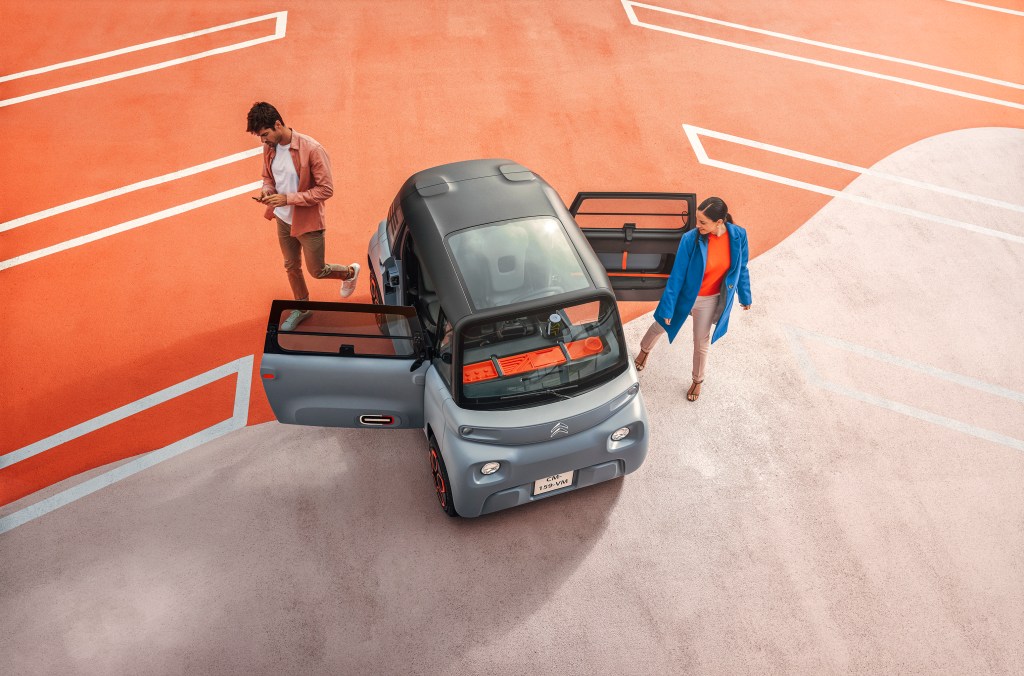
The AMI has a standard panoramic roof. In a nod to Citroën’s history, the side windows open by manually tilting upwards like the 2 CV.6 coloured accessory packs are available. Bright and pleasant, it is symmetrically designed. The wide doors that are completely identical on the right and left and open in the opposite direction: rear-hinged on the driver’s side to benefit from better on-board accessibility and increased comfort, and traditionally front-hinged on the passenger side.
Make your own mark…
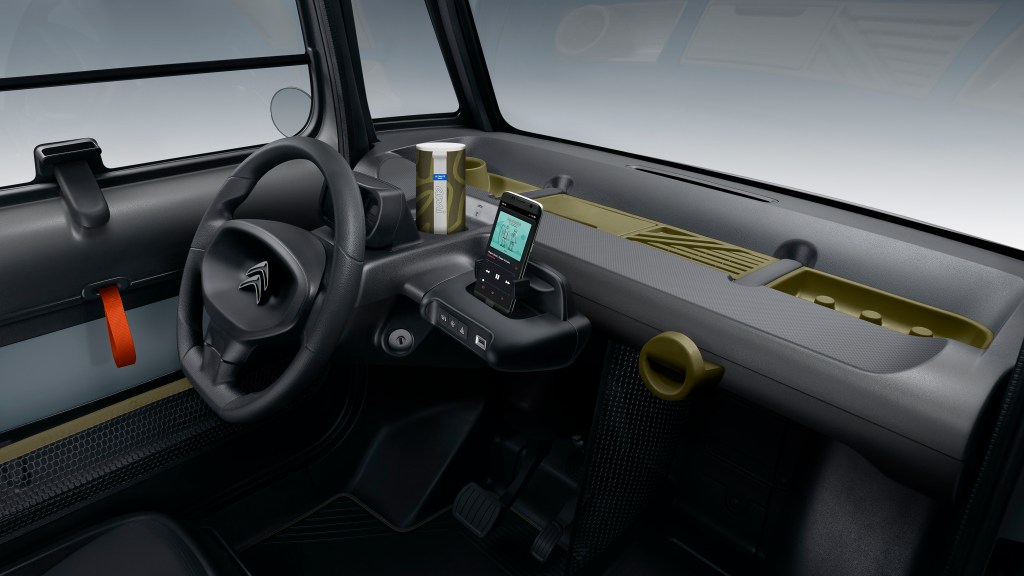
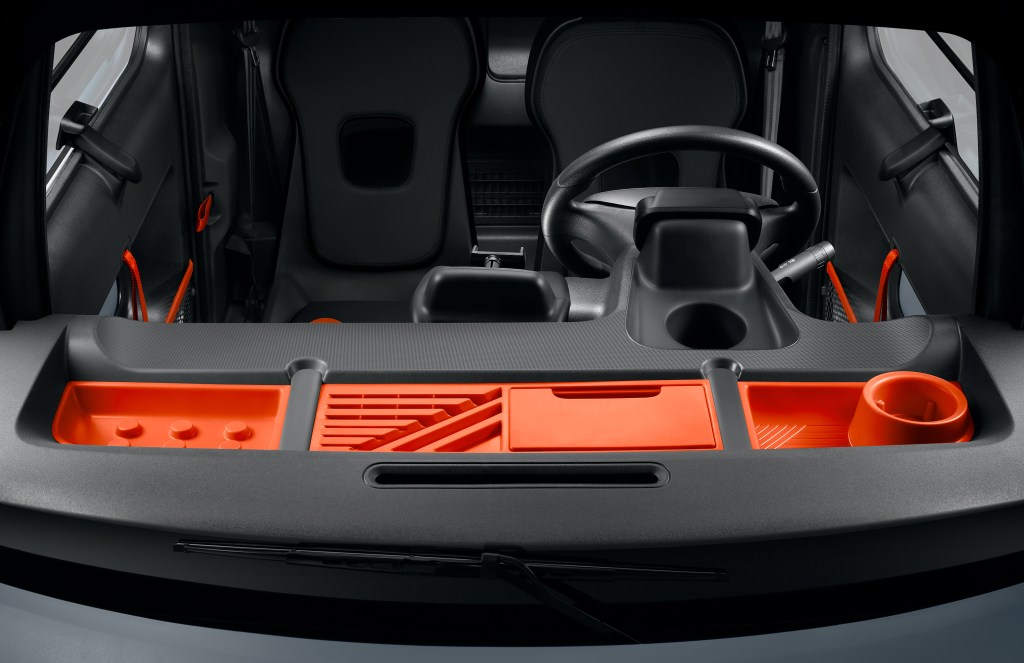
In a “Do It Yourself” fashion, the possibility of creating the object that suits each customer’ tastes through a kit of accessories that can easily be installed yourself. This kit incorporates functional decorative items: a central separation net, a door storage net, mat, storage tray on the top of the dashboard, small hook for a handbag, smartphone clip, DAT@MI box (dongle device) connected to the My Citroën app to retrieve essential information from Ami on the smartphone.
Post-production : Astuce Productions
There is harmony between the interior and the exterior with touches of colour on the wheel trims, quarter-panel stickers or even a capsule at the bottom of the door. 4 main shades are available: MY AMI GREY, MY AMI BLUE, MY AMI ORANGE, and MY AMI KHAKI. This accessory kit allows everyone to create their own mood and tailor the functionalities to their needs.
Post-production : Astuce Productions
Another and even higher level of customisation offers 2 packs combining all the aforementioned decorative elements as well as large stickers that dress up the exterior of Ami giving it a style all of its own:
My Ami POP with the Orange customisation and a fun, young and sporty design, with a rear spoiler
My Ami VIBE with the Grey colour and more upscale, chic and graphic accessories that incorporate roof trims to complement the stickers.
The installation of these higher level customisation packs is entrusted to professionals before delivery.
The AMI is in its home country AM licenced, i.e. for engines under 50 cm3. Any 14 year old can drive it. In most European countries, a 16 year old can do too. Ami also makes life easier for its customers in accessing mobility by offering them several formulas through digital solutions: car sharing, rental or purchase. The rates are very low indeed, will of course vary from country to country. But let it be known that you can purchase an AMI for around 6,000 Euros…
Post-production : Astuce Productions
Ami is offered in France at a rent of €19.99 including VAT per month with an initial payment of €2,644 including VAT (Ami Ami version; long-term rental of 48 months, ecological bonus of €900 including VAT deducted in France).
Buy it from home…
It is therefore possible to acquire Ami – 100% ëlectric 24 hours a day, 7 days a week. Everything, from discovery to order, can be done from your sofa using your tablet or smartphone in just a few clicks via citroen.fr website, which is the entry point for finding out about Ami, which provides information on the product and on solutions adapted to the needs dictated by each person’s needs.
Digital is present in using Ami – 100% ëlectric with My Citroën mobile app via DAT@MI connected box. The application allows drivers to access essential information about Ami at any time via a smartphone, including: range, charge status and time remaining for a 100% charge, mileage, maintenance alerts and after-sales appointment scheduling. The app also makes it easy to locate nearby public charging stations, a feature offered by Free2Move Services.
More details to come soon, the opening of orders is scheduled for 30 March in France, and a few months later in Spain, Italy, Belgium, Portugal and then Germany. The first deliveries to customers are scheduled for June in France. Car-sharing at Ami’s wheel will start in Spring in Paris with versions bearing the “Free2Move” logo. Of course we are eagerly awaiting to see and drive the AMI “in the flesh”!



























 Autoprova - for the Connaisseur