Jacky Ickx has his 75th birthday this year, and the organisers of the Brussels Interclassics decided to celebrate him on the sixth edition of their show, which will be held on the weekend of 19, 20 and 21 November.
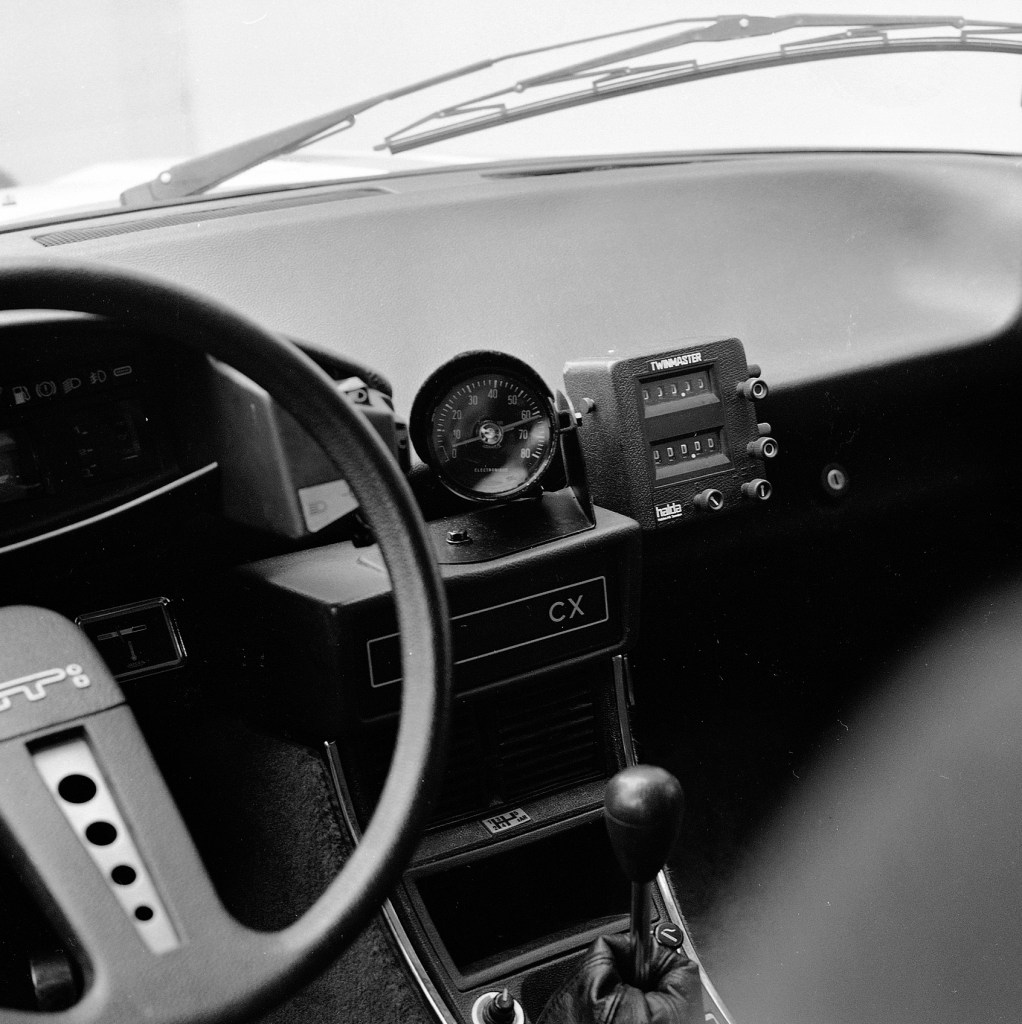
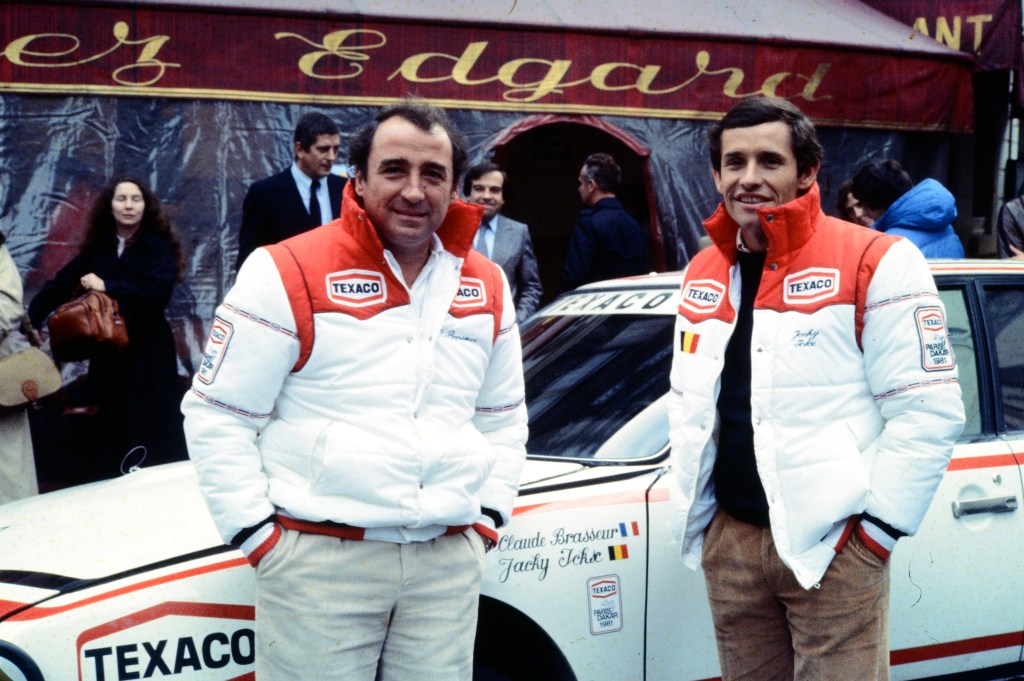
15 cars will be shown on the event, representing the milestones of Jacky’s career. On the central display, a Citroën CX 2400 GTI will also be seen, a perfect replica of the CX he drove on the 1981 Paris Dakar, together with his co-pilot, the French actor Jean Claude Brasseur.
The Citroën CX in Paris Dakar livery was remarkably close to standard, and therefore making a replica was quite feasable…
For the third edition of Paris Dakar, Citroën had entered 4 cars, one in white, driven by Jacky Ickx. The other teams were well trained, Jacky had only seen some film reels of the event prior to the race, and he commented later “Jean Claude and I were total novices to the event, we could have won this race, as the car proved very competitive indeed”.
Nevertheless, Jacky and his team mate led the race, only to abandon in the last stage due to an accident.
The impressive CX 2400 GTI is to be admired in hall 5, stand 5.307. The car is put on the show by CQS Classics, based in Tienen.
We just let you enjoy the photos here, and let you admire how sleek, powerful and efficient these rally Citroëns were in their heydays.
For Citroën enthusiasts, your servant can tell you here Citroëns have always been quite exceptional cars for me, I always cherished the moments I sat behind the wheel of them. I just love their comfort, their unerring stability, even in the worst of weather and road conditions.
Jacky Ickx and his faithful team mate, French actor Jean-Claude Brasseur
My first encounter with the marque of the “double chevron” was behind the one spoked “volant” of a DS 23 Pallas injection electronique, although as a passenger, my memories were even earlier. My aunt in Holland had bought in 1955 a white DS 19, and I sat as a king on the deep blue rear seat, totally smitten by the futuristic design both inside and out, the beautiful and cleanly styled dashboard, the hydraulic commands, the unique comfort and roadholding. My aunt liked to drive with zest, and on the straight but still rather narrow roads, speeds well above 120 km/h were often seen. It felt perfectly normal in this DS. Indeed, the goddess of the road it was called, and deservedly so.
But also the CX left us with indelible memories. I remember driving the CX 2400 GTI – indeed, exactly that model – to the Birmingham motor show. What a delightful Gran Turismo experience it was.
We can tell you here that more Citroën news is to follow: we drove the range of electric Citroëns, amongst others the Berlingo and C4 near Paris, and also tested a diesel powered version of the C4 with the 8 speed automatic, which proved very impressive indeed, showing all the good Citroën qualities.
After the new S Class comes usually the new C Class with systems and functionalities found in its bigger brother, to set new benchmarks also in its D segment.
Driving the new C200 Luxury Line Limousine, we can say that the brand with the star has fully succeeded. This car stands out in its class, discreetly but with assurance… Just read further.
Hans Knol ten Bensel
S-Class looks…
The C Class breathes the styling language of its bigger brother, if you look merely at the front and rear end. The profile of the C Class is then again marked by the bigger door window areas. The overhang over the rear wheels is slightly longer, and this makes the car look more elegantly stretched, just like the S-Class. The car is also some 6,5 centimeters longer than the previous C-Class generation, breathes panache, looks modern and is purposefully aerodynamic.
…also in the cabin
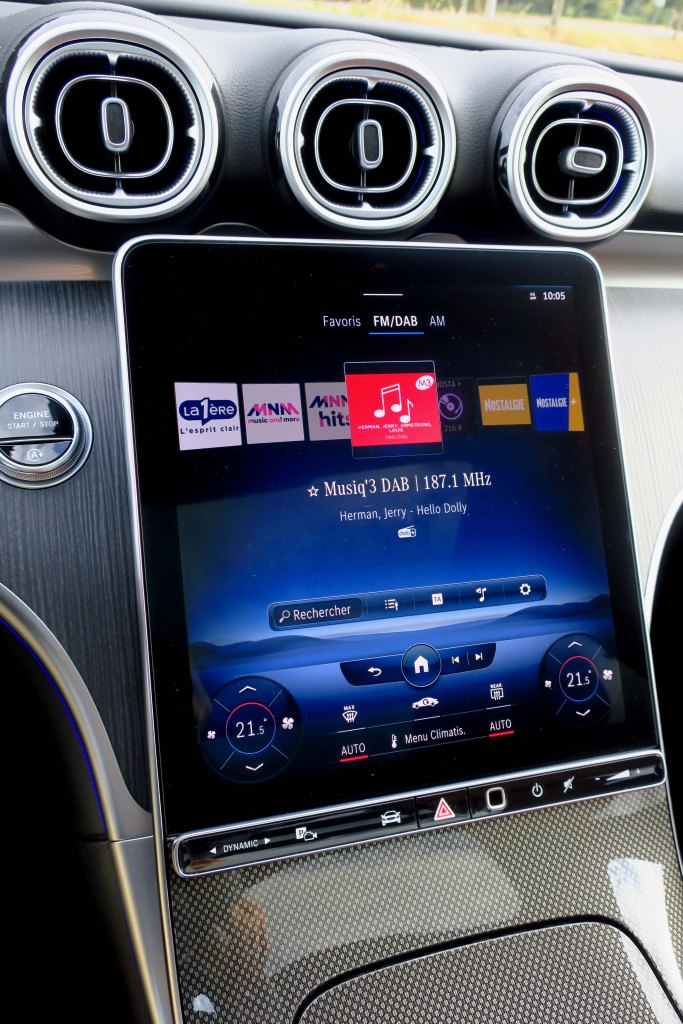
In the interior, the family resemblance with the top of the line S-Class is even more marked. Sliding behind the wheel, one immediately is overwhelmed by the two big digital screens, one in front of the driver, and another one in massive Tesla style on the centre console.
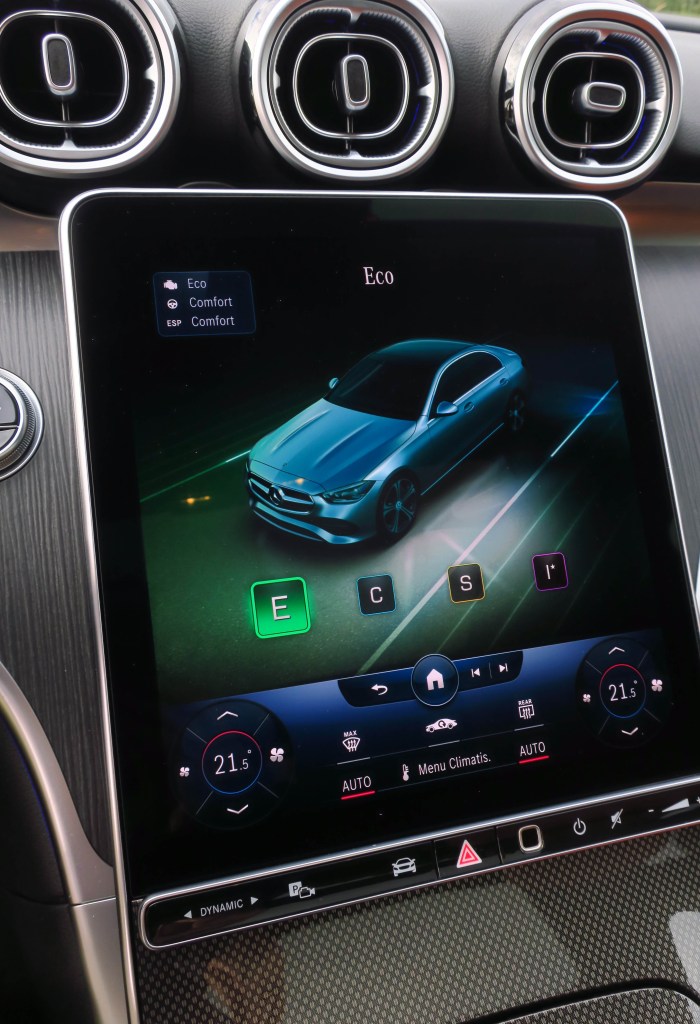
The Mercedes MBUX system is developed now close to perfection, and even novices soon find their way intuitively through the very logical buildup of the system. And if you would still get lost, there is always the voice command. Just say ‘Hey Mercedes’ and say what you want done…
We loved the 360° camera parking aid very much. The system is so clever, that sometimes you want the system to be even smarter, for example, in situations where one approaches a kerb with the front end of the car when parking in a bay, you would like the front end camera to start up automatically to show you how close you are. Now you first have to push the camera button on the centre console, or use reverse gear first.
You would also want the camera system to get into action automatically – even accompanied by an alert sound – if you get with one of the stylish 18 inch alloy wheels too close to a trottoir border, fence or other obstacle. Now you are left all too often to guesswork. Maybe there is a mode for it, but we did not find it intuitively. The seats are excellent, and adjustable in every conceivable way. Also the rear passengers enjoy enough legroom, thanks partially to the well curved backs of both front seats.
State of the art propulsion…
The 200 C has a 1,5 litre DOHC four cylinder under the hood, developing not less than 204 HP with 300 Nm of torque. If that wasn’t enough, there is also an E-boost of 20 HP and 200 Nm. A small battery will store kinetic energy when decelerating and braking, delivering then its power for the extra boost when called for. The performance leaves nothing to be desired: This 200 C accelerates from 0 to 100 km/h in merely 7,3 seconds, its top speed is not less than 247 km/h. The engine is almost inaudible and superbly smooth, provided you don’t push your right foot too deep. When you accelerate hard from standstill or low speeds, the unit lets it heard as it frantically revs through the gears, and one clearly feels and hears that a smaller thoroughbred engine is at work here.
At motorway cruising speeds, things get silent and smooth again, not least because of the high final gear of the superb 9 speed automatic gearbox, ideally mated to the engine.
There are of course several driving modes to choose from, and we liked most the ‘ECO’ mode, where also the E-boost is best felt. The small capacity of the engine has its advantages in economy, and the manufacturer quotes 6,4 liters/100 km as average WLTP consumption. Don’t expect however this C 200 to be exceptionally frugal however in urban driving. This is a 1,5 tonne car and when you drive it with verve, power is needed. The official figure is 8,7 liters/100 km, and very short distance urban errands with very slow traffic will push the consumption well over 10 liters/100 km. There is no secret, in partial and varying load driving, diesels are so much better…EQ-boost or not.
Comfort is to be expected, and this Luxury Line C Class has the Agility Control Damper system as standard. The fundamental setting is already quite firm, so we opted for the comfort mode, which already supports a very spirited driving style with excellent stability and handling. Steering is also precise, and the C Class doesn’t’ mind being driven with verve. The seats also keep you firmly in place, and this goes for the passengers as well.
Road noise is well suppressed, and we enjoyed fully the Burmeister 3D surround sound system in our test car.
Conclusion
Our test car came fully equipped, from electronic adjustable seats to a panorama sunroof and keyless entry. This is how a Mercedes should be, although our less lavishly equipped 1,6 litre B Class which is now more than 4 years old pleases us every day we drive it. It is the balance, workmanship, thorough engineering, overall smoothness, solidity and pervading sense of security which make a Mercedes, and this C 200 continues the good tradition…
We have always loved Citroëns for their comfortable ride and indeed, their idiosyncrasies. In character and design, we found them always really stand out. Some models really oozed with pure panache, and we mean here of course the DS/ID and the 2 CV. But there were others, like the well styled GS with its air cooled four cylinder boxer engine and also the CX. Today then we are still totally smitten by the elegant C6.
This quest for originality we find back in all the models of the present range, notably the C3 Aircross which is the subject of our test here. The well rounded styling language stands out, and touches of character are added with the side cushions (Airbumps) which protect the bodywork from the rigors of modern urban life.
The Aircross has now a completely new grille and a revised light signature, as has been introduced on the 2020 C3. On the technical side, Citroën is – as could be expected – reaping the rewards of the Stellantis Group: the C3 shares its platform with the Opel Crossland X.
The dual tone paintwork adds extra panache, and also in the interior the dashboard architecture and air vents underline the original personality of this Citroën. We liked the instrumentation with its round dials, the judicious positioning of the new 9 inch infotainment screen and the look and finish of the seats. This Citroën is a car to live with and enjoy in daily life. Everything is well placed and easy to use.
Comfort comes first…
Like we said, Citroën means comfort, and this is immediately felt in this C3, right from the first metres you drive it. The suspension is pleasantly soft and copes very well with potholes and irregular pavés, although, as we said, it shares its platform with the Crossland X.
Sitting cozily in our seat, we moved the lever of the six speed automatic in “D” and basically left it there. The newly developed three cylinder 1199 cc engine develops a healthy 130 hp when coupled to the automatic transmission and this is more than enough to guarantee very lively performance for this 1150 kg heavy C3. It goes from 0 to 100 km/h in less than close to 10 seconds and its top speed is over 190 km/h.
But comfort is to be enjoyed here, and we did not adopt a too enthusiastic driving style with our test car. We just enjoyed the elegant and smooth progress. The C3 rewarded us also with low noise levels and very good economy when driven with restraint. The modern, direct injection three cylinder is silent, even under power, and when one adopts a more sedate driving style, the consumption stays close to 6 litres/100 km, even in urban driving. On the open road, cruising at legal speeds will deliver a consumption between 5 and 6 litres. CO2 emissions are quoted as some 116 g/km.
The automatic transmission is smooth and matches the engine characteristics very well.
The suspension is set up for comfort, and this means that the C3 will not really invite you to throw it around corners, although the handling is quite good. Remember it’s also the Crossland platform, it is just that body roll is more noticeable. In long, fast bends the C3 behaves wonderfully, as a “grande routière” befits.
But then the C3 treats you very well on urban pavés and frost ridden secondary roads. Straight line stability is excellent and the C3 is therefore well at home on autoroutes.
The Aircross version has some terrain capacities; we liked the driving aids like Grip Control and Hill descent Assist.
The seats are also very comfortable and have been further improved in this latest generation C3. Citroën calls them now “advanced comfort” seats, and are provided with extra 150 mm high density foam inserts. There is ample head and legroom for the front passengers. In the rear, seating conditions are a bit more cramped, but for children and smaller adults, everything is just fine.
Practical
Luggage space is good for its class with 410 litres, and this can be expanded to 520 litres when the rear seat is shifted forward. The seats can be folded in 40/60 split fashion, and when both are completely down, some 1289 liters are available. The rear sill is rather high, but not unduly so.
Our test car came with a 9 inch touch screen, and of course the screen of your Smartphone can be mirrored via Apple Carplay, Android Auto and Mirrorlink. The C3 also has an 120 degree camera built in the rear mirror, which can be actuated with a button or activates automatically in case of accident. You can even use an app to transfer the video to your Smartphone.
Not less than 12 driving aid systems are provided, and indeed, compared with the competition, the C3 is indeed lavishly equipped. On this Aircross version there is as we mentioned for instance grip control and hill assist descent control, and a coloured head display to top it all. It spoils you also with coffee break alert, rear view camera, hands free access and keyless starting, traffic sign recognition, active safety brake, automatic headlight dimming, park assist, lane departure warning, dead angle warning, driver attention alert and last but not least park assist.
Add to all this the panoramic roof, and you will agree that pleasure is to be had in the cabin of this C3.
Conclusion
The C3 is quite impressive in its class, with very good all round qualities and above all excellent comfort. You can take it as well for an extended urban (shopping) trip as on that long Gran Turismo tour along European motorways and winding mountain passes, it feels equally well at home in both!
It is sufficiently compact to be practical in our cities, yet offering enough room for a family of four including their luggage. With the 130 hp engine and the six speed automatic, there is more than enough zest to keep even de most demanding drivers happy, and they will also keep smiling at the pump. Add to all this the pleasant personality, with the Aircross version even the character of a compact SUV, and you will agree that this C3 deserves your attention when you are in the market for a compact car…
Subaru is deservedly famous for its excellent engineering. It embraces 4WD and boxer engine technology, and sticks to it with an uncanny sense of tradition. Rightly so.
Comes of course the EV age, and Subaru makes with the e-Boxer range it first steps into this world. The e-Boxer drivetrain can best be described as a self-charging hybrid. It does the job, whilst retaining its unique Subaru character: the willing boxer engine, the excellent off-road capabilities, the well balanced and inspiring handling on tarmac, it is all still there.
We tested already the 2020 XV e-Boxer, just read our previous test report on these columns. We find our positive findings confirmed, and focus here also on the main topics of the facelift…
Hans Knol ten Bensel
Bolder looks
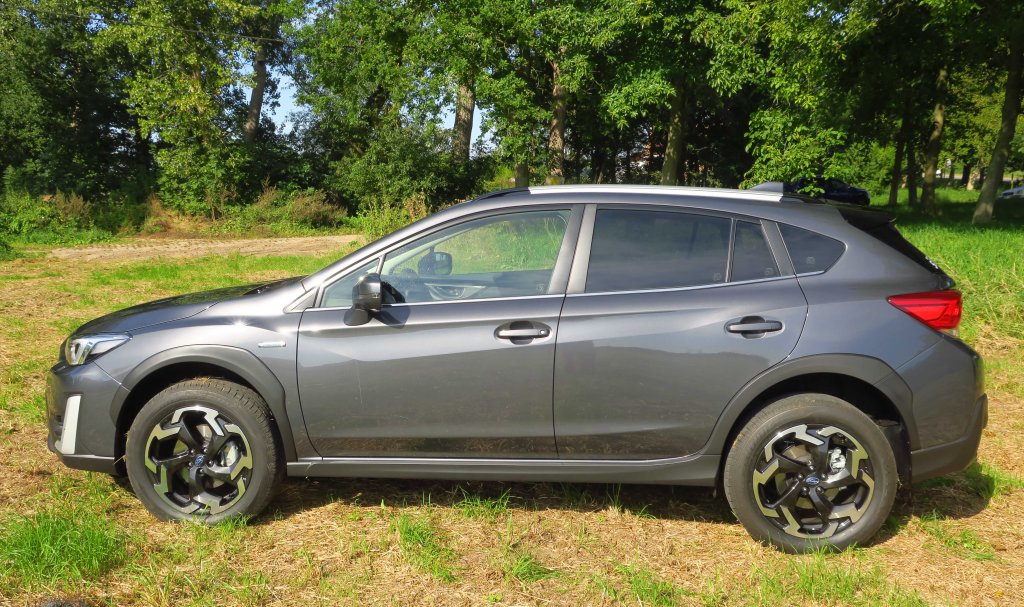
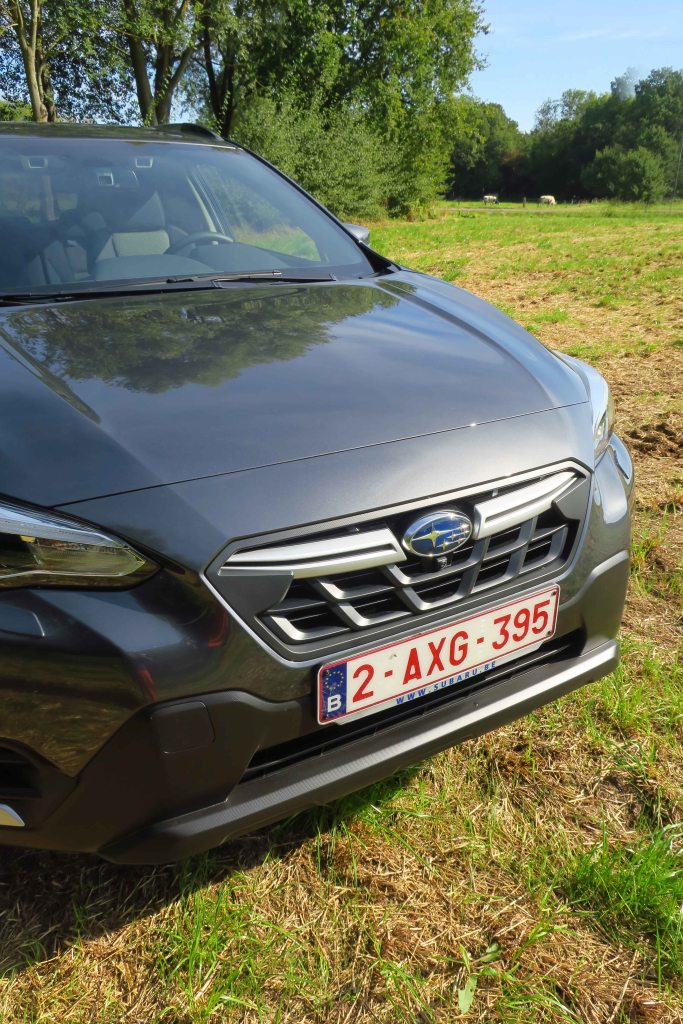
The compact crossover has now a modified front, with an even tougher look. The front bumper was redesigned with a larger black plastic part, a new skid plate and L-shaped silver-grey inserts. The fog lamps received a new frame and the grille was tightened with a new mesh. The crossbar in the grille itself is now slightly wider, making the Subaru logo larger and more prominently visible. Finally, the design of the 17- and 18-inch alloy wheels has been revised.
The drivetrain becomes even more sophisticated
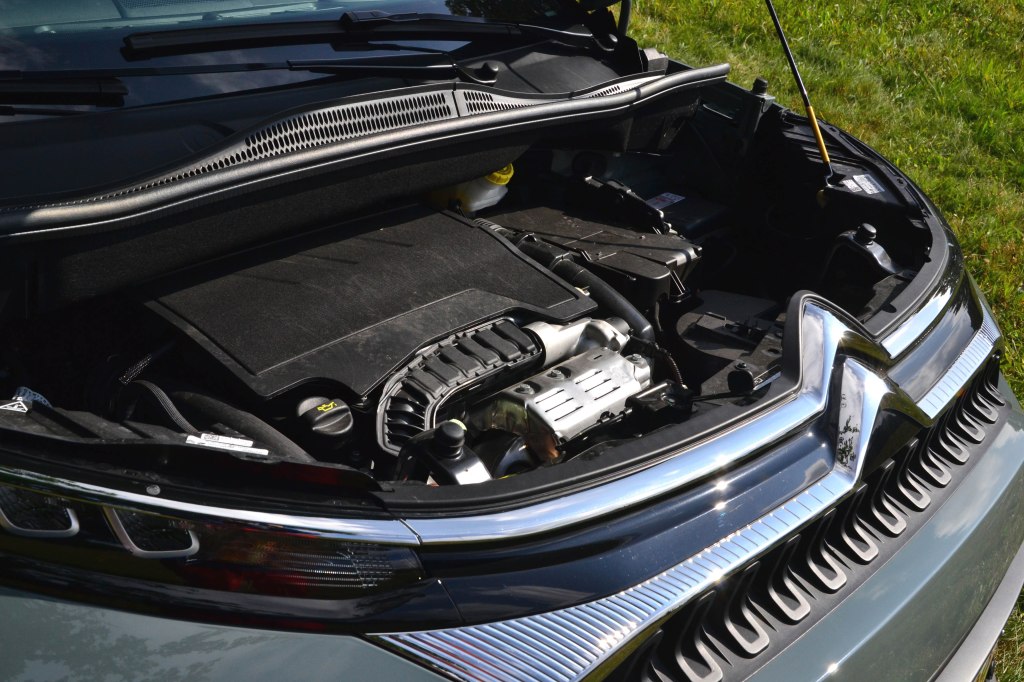
Let’s first look at the drivetrain, which it has of course in common with the other e-Boxer models in the Subaru range. The redesigned 2 litre boxer engine is coupled to a 12.3kW electric motor sitting on the CVT transmission and small 13.5kWh battery, and as we said, Subaru calls it a self-charging hybrid. Modest beginnings, but on the other hand this adds only some 167 kilo to the scale.
Does it work? Yes, it certainly does, that is if you hone your driving style, so the hybrid can function optimally. We indicated this already in our previous test report, and we can only repeat it here.
It will run on the electric motor at lower speeds, for shorter distances. The trick is to accelerate slowly and keep constant speeds in urban traffic. These driving conditions which will not prompt the boxer engine to set in, but let the 17 HP electric motor do its work as much as possible.
The CVT transmission will also choose higher ratio’s when you keep the throttle openings small. The result is lower revs, which will keep consumption very reasonable. Subaru did some very good detail work in setting up the CVT transmission, added an “Intelligent” setting which is ideal for constant speed boulevard drives and keeps revs close to 1000 rpm or so when touring in 30 km limit areas.
All this lets consumption drop to between 7 and 6.5 l/100 km even in tight urban driving conditions. All this also happens with uncanny smoothness, and this Subaru is a very refined automobile indeed.
As said, Subaru added with the facelift the so-called “I-Drive” as standard. The system has two settings, Sport (S) and Intelligent (I), each with their own character: thanks to the smooth power delivery, Intelligent mode is ideal for city driving, for long distances and for driving as efficiently as possible. Indeed, this setting keeps the revs down as much as possible. The Sport mode is a highly responsive mode and is well suited to all-round conditions thanks to its instant acceleration.
Of course in this Sport mode you cannot bend the laws of physics, and when the willing boxer engine delivers its 150 HP pulling power, the fuel consumption goes invariably up.
The manufacturer quotes 6,5 l/100 km as average consumption and mentions CO2 emissions of some 149 g/km. Performance is everything you could ever wish for: 0 to 100 km in 10,7 seconds and a top speed of 193 km/h.
Precise and inviting handling, on and off-road…
The Subaru XV runs on its new Global Platform, which delivers more safety and stiffness, as we said before, resulting in very good handling, and this XV is a pleasure to drive on winding stretches. Suspension comfort is also very good, both on tarmac as on (very) rough terrain. When it comes to safety, it is good to know that the XV has been awarded the maximum 5-star Euro NCAP safety rating.
Subaru’s Permanent Symmetrical All-Wheel Drive constantly shifts power to the wheels with the most traction, and the XV has not less than 220 mm ground clearance.
With X-MODE with Hill Descent Control, you negotiate steep inclines and descents as an expert. At the push of a button, it takes command of the engine, transmission, Symmetrical AWD, brakes and other components to help you navigate challenging terrain. Here the facelift has made things even better. Subaru also optimized this X-MODE. It is now equipped with a dual function that allows the driver to choose between “Snow / Dirt” and “Deep Snow / Mud”. X-MODE takes advantage of the high torque and fast response of the motor to prevent stalling in extremely poor surfaces
Living with the XV
The seating position is also very good, with fine, supportive seats.
We liked already in the previous test the dashboard layout and clear, the fine chrome finished round dials, which evoke a bit of pur-sang atmosphere which we like so much. Connectivity and driving aids are up to scratch, not to mention Subaru’s unique EyeSight.
This keeps you on a safe distance to cars in front of you, avoids front end collisions with cars and detects pedestrians in front of you. Of course infotainment is also top notch, with Android Auto and Google CarPlay provided for ideal connectivity.
Conclusion
Every bit a Subaru, this e-Boxer. But, if you drive it with intelligence, it will reward you with very interesting consumption figures. Subaru will soon have a full electric vehicle, so they also go up that path. In the meantime, in the remote outback, this is your ideal car to hit all the country roads in an electrified and environmentally conscious manner…
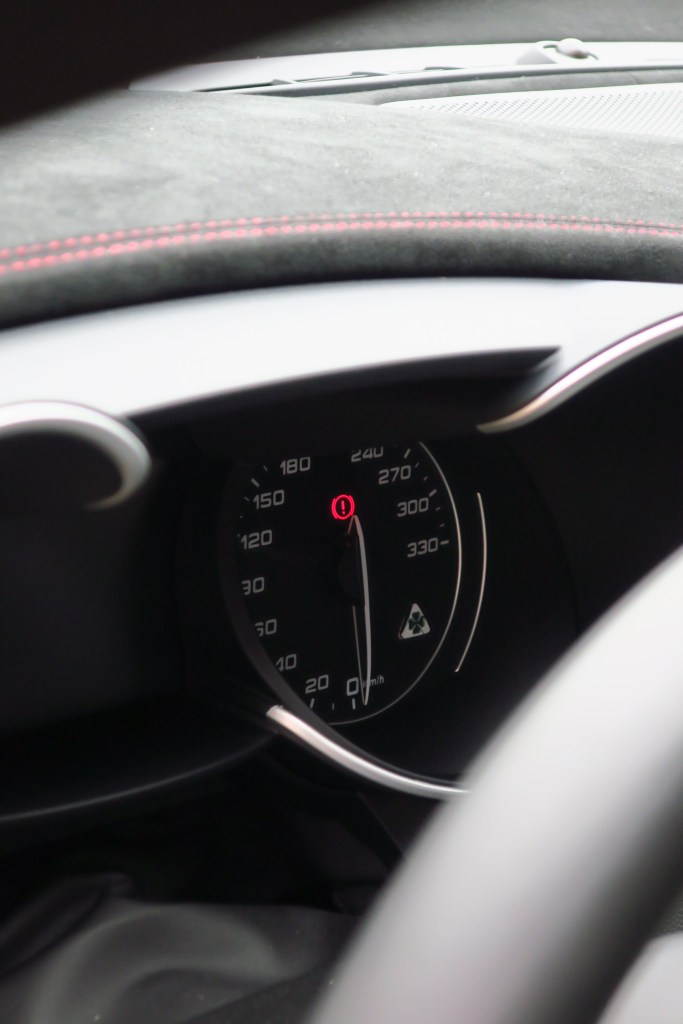
Alfa Romeo will be present at the 2021 edition of the Zoute Grand Prix, which will take place in Knokke from 6 to 10 October. “I am delighted that the Alfa Romeo brand can once again participate in the Zoute Grand Prix this year, especially as we have been participating since the first edition in 2010,” said Patrice Duclos, General Manager of the Alfa Romeo brand for Belgium and Luxembourg.
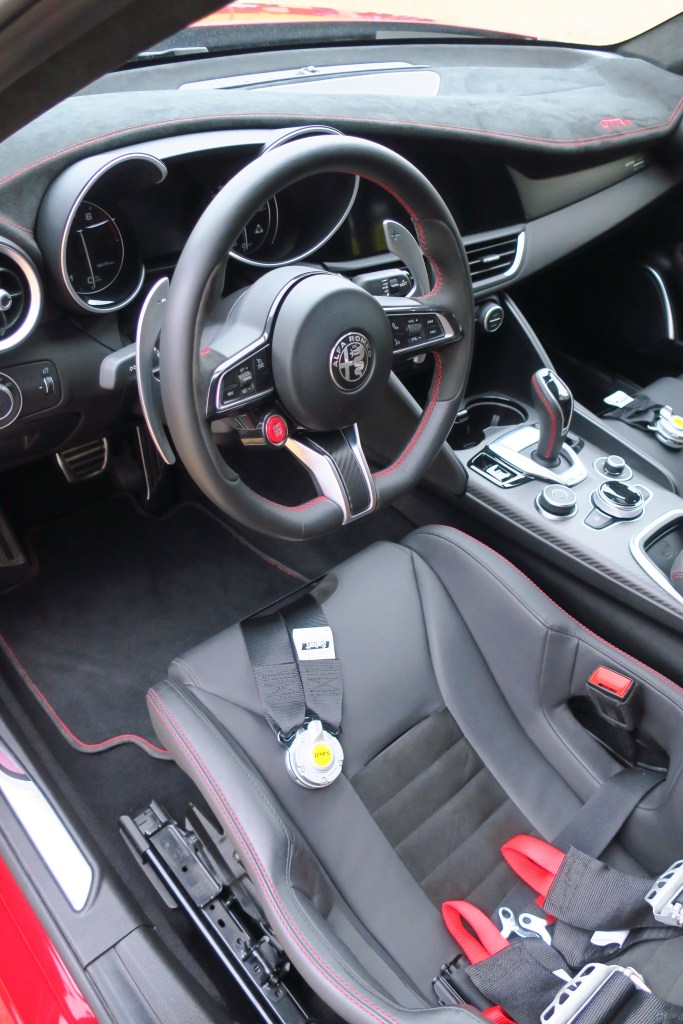
This year Alfa Romeo will participate in the Zoute Grand Prix with a car with a special history: the latest Giulia GTAm, of which the limited edition of 500 cars has now been sold out. “The Giulia GTAm on the Alfa Romeo stand at the 2021 Zoute Grand Prix is not only an exclusive car, but also of particular interest to us,” said Patrice Duclos. “This car was driven by our two drivers of the Alfa Romeo ORLEN Racing F1 team on the eve of the Belgian F1 Grand Prix last August. We can say that this model has a historical side that should interest car enthusiasts in our country!”
In all respects, the Giulia GTA/GTAm is a collector’s car. All 500 numbered units, introduced to the international press last May, have since been sold to customers worldwide, including a significant number in China, Japan and Australia, making the Giulia GTA an international commercial success.
RAIKKONEN Kimi (fin), Alfa Romeo Racing ORLEN C41, GIOVINAZZI Antonio (ita), Alfa Romeo Racing ORLEN C41, portrait during the Formula 1 Belgium Grand Prix, 12th round of the 2021 FIA Formula One World Championship from August 27 to 29, 2021 on the Circuit de Spa-Francorchamps, in Stavelot, near Liège, Belgium – Photo Florent Gooden / DPPI
An exclusive video
On the occasion of the 2021 Zoute Grand Prix, Alfa Romeo offers its fans a unique testimony about the Giulia GTAm, with a video in which Kimi Räikkönen and Antonio Giovinazzi, the two official drivers of Alfa Romeo ORLEN Racing, take a seat in the car. They can be seen leaving the Hotel de la Source in Spa, right next to the Formula 1 circuit, to take the roads from Spa to the heights of Balmoral. This video can be viewed via the following link: https://we.tl/t-fcEfX7EsEm
First appearance of the new Alfa Romeo Stelvio 6C Villa d’Este
The Alfa Romeo Stelvio 6C Villa d’Este appears for the first time at the Zoute Grand Prix and is offered with the 210 hp 2.2 Turbo or the 280 hp 2.0 Turbo, both four-cylinder aluminum diesel engines with carbon fiber crankshaft, combined with an 8-speed automatic transmission and four-wheel drive (Q4). In addition to the exterior paintwork, the special series features chrome side window surrounds and 21″ five-hole alloy wheels.
This new limited edition is inspired in terms of colours and design elements by the elegance of the 6C 2500 SS Coupé produced by Alfa Romeo in the 1940s…
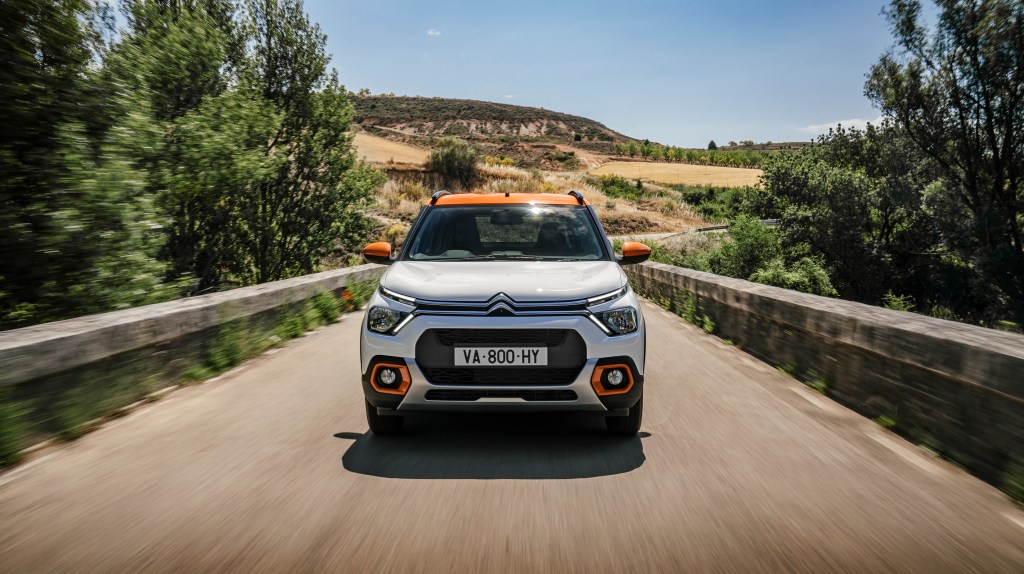
Stellantis CEO Carlos Tavares has bold plans for Citroën and its role within the group. The iconic brand is set to sharpen up its international strategy, and therefore unveiled on September 16 a totally new C3, according to Citroën “a versatile hatchback measuring less than 4m in length”. It will enable the brand to expand in India and consolidate its presence in South America.
This new C3 is very important: not in the least because it is the first model in a family of three vehicles aimed at the international market. It is developed and produced in India and South America and which will exclusively sold in those two regions over the next three years.
New C3 is conceived as a modern hatchback designed to meet the needs and road conditions of the two regions, offering comfort and connectivity to progressive customers in search of peace of mind and prestige.
Does this mean that Citroën, which since many decades has developed a tradition of providing affordable and reliable mobility (one has only to think of the iconic 2CV…) through ingenuity and excellent engineering focusing on effective solutions, will use its design and engineering experience in India and SA to strengthen and refine its acumen and expertise as manufacturer of affordable transport in our markets?
What Citroën CEO Vincent Cobée has to say about the brand and its international strategy…
The dynamic Stellantis PR department in Belgium offered us to participate in a media roundtable conference with Vincent Cobée, and of course the abovementioned question was burning in our minds.
Here follows what Mr. Cobée answered:
“Citroën is about innovation, well-being and you can call that humanism, you can call that audacity, you can call that a bit of a militant brand. We will remain like this, translated into the Indian ecosystem. We are not a petrolhead brand (although, we should note here, that Citroën played a favorite role in international rallies…) but we will be true to our global DNA. We will be competitive in India, which means developed, manufactured and distributed in India.
Having said this, we have entered in Europe in the car industry in Europe a rather complex period, where the technological requirements imposed by the European legislation are going to make the cars more expensive, and this at a time where there is an economic crisis looming, and at the same time the availability of freedom of movement is going to become more and more important with the pandemic which we have been living for the last year or so.
If you put those three things together, there will be an aggravated tension into affordable mobility.
So Citroën, as a social progressive, innovative brand, has a role to play here. The environment is obviously different from what we see in India or Brazil and those represent different challenges, but the spirit of maintaining and enhancing the freedom of mobility in an environment where there is a mismatch between the (consumer) appetite and the regulatory cost, this is something that we will address with ambition.
So every lesson that we can learn from our development in fast going markets outside of Europe will be helpful and indeed used…
Inspired by SUV architecture…
Now let’s turn to the new C3. It is built for international markets, where roads are not always in top condition. So this Citroën adapts to the terrain by drawing inspiration from SUVs for its ground clearance, high bonnet and elevated driver position.
In addition to Citroën’s trademark comfort and market-leading spaciousness, its clever design meets the wishes of a young, tech-savvy public, grown up with smartphones, which are totally integrated and connected to an XXL 10” touchscreen.
But that is not all. Set to be launched in the first half of 2022, New C3 will also offer an unprecedented customer experience, including innovative services and the opening of a dedicated sales website in certain markets.
India is both promising and (very) important…
India is a rather new market for Citroën and one with significant potential that will soon be the third largest in the world.
The brand announced its arrival in 2019 and launched its first import model at the start of 2021: C5 Aircross. As a new market player, Citroën is initially focusing on large metropolitan areas. As said here earlier, it offers a top level customer experience.
Citroën products are positioned at the forefront of the Indian market, thanks to a strategy of high-level local integration (more than 90%) based on the two joint venture agreements between the Stellantis Group and the companies in the CK Birla Group (car assembly and distribution and power-train manufacturing).
The automotive market in India is growing rapidly and is expected to reach over four million cars sold annually by 2025. B-segment hatchbacks represent nearly 23% of this market.
The new C3 is meant to appeal to customers for whom their car is a reflection of their personality. A car that they can customize however they wish, which is a strong expectation on the Indian market.
In addition, the compactness (less than 4m to fall into a lower tax band), agility, versatility, on-board space, comfort and connectivity will improve the experience of traffic conditions which can sometimes be difficult, while adapting to each individual’s lifestyle.
This new C3, which will be produced in Chennai, will be aimed at new married consumers in their thirties, from the emerging middle class, with a comfortable income, who will be attentive to the value offered by a product that represents a significant outgoing and which needs to be robust and practical to maintain. It must be attractive, modern with innovative options for connecting to the family’s smartphones, while reflecting their tastes and their personality.
A stronger position in South America…
Citroën’s presence in South America is much older, dating back to the 1960s. Citroën’s objective today is to gain a firmer foothold in this market with modern products, in step with customer aspirations. The C4 Cactus is produced in the Porto Real plant and embodies Citroën’s positioning in Argentina and Brazil with its original and bold styling as well as comfort.
Produced in Porto Real in Brazil, the New C3 symbolizes a real renewal in the region, with its modern styling, its connectivity and the experience of its on-board comfort. The B-Hatch segment accounts for almost 30% of the total market in Brazil and almost 26% in Argentina (data FY 2020).
The versatility and positioning of New C3 will ensure greater coverage of the segment (in Brazil, New C3 will cover 90% of the segment’s needs, compared to 40% for the former model, while that coverage rate in Argentina is set to increase from 50% to 75%).
It will be aimed at active couples in their forties, married and with two children, looking for a prestigious, versatile and spacious car for their short everyday journeys and also weekend getaways.
It will also appeal to independent and active single people in their thirties, living in cities and with a slightly higher-than-average monthly income, looking for a vehicle that is elegant (for modernity and status), robust and safe.
We show you here some photos of this new C3, and tell you here also that soon we will test the Citroën C3 Crossback and the C4… stay tuned on these columns!
Driving is believing, the saying goes, and this is especially so for the latest model of DS automobiles, which is built by the brand to be a benchmark in the C-Segment in terms of comfort and dynamic refinement.
We started our extended test drive with the E-TENSE plug-in hybrid version, combining exhilarating performance with smooth responsiveness and interesting economy. Just read further…
Hans Knol ten Bensel
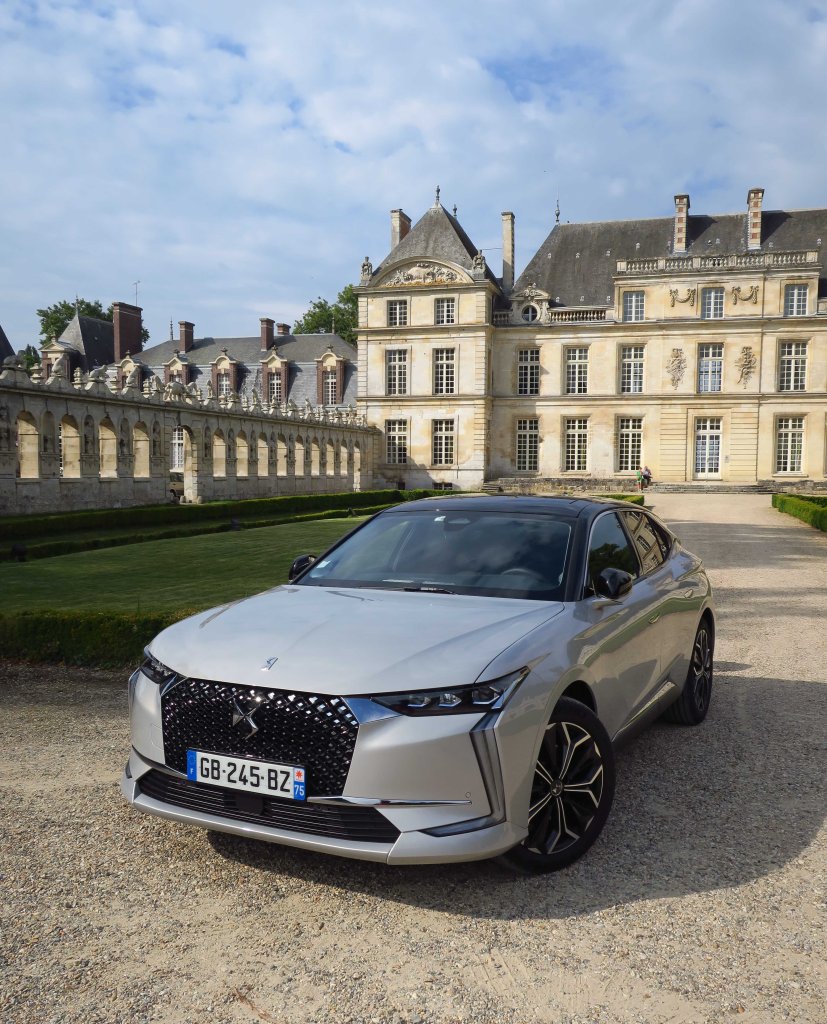
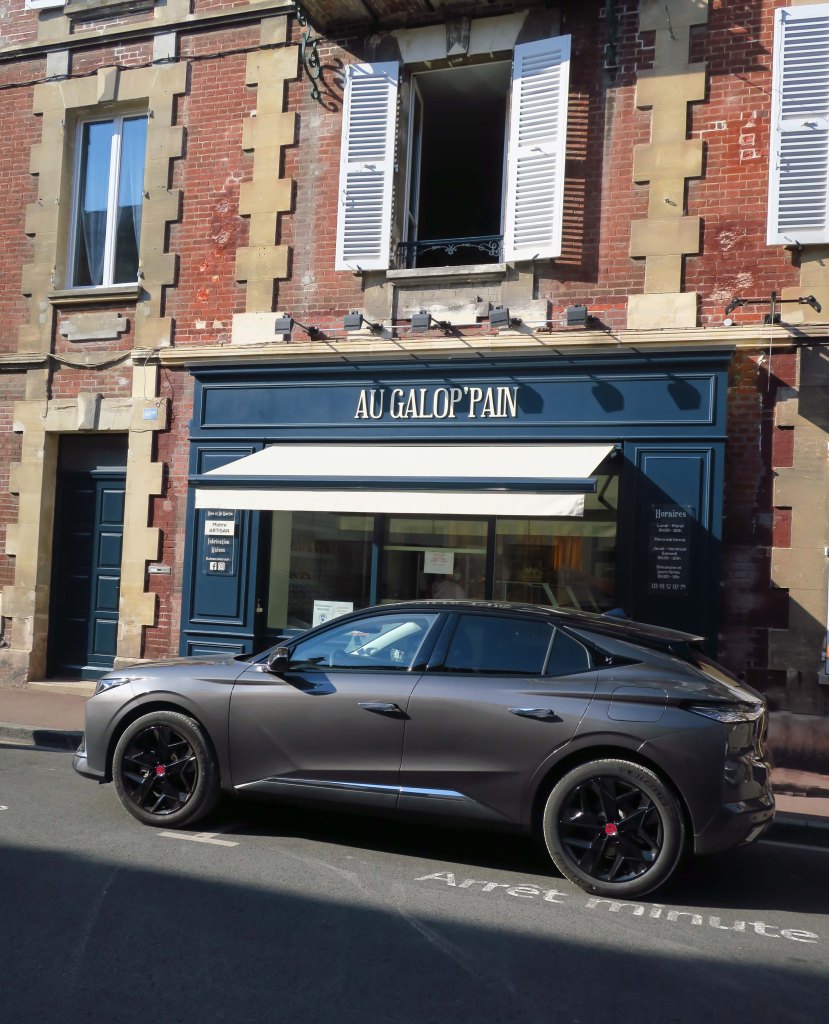
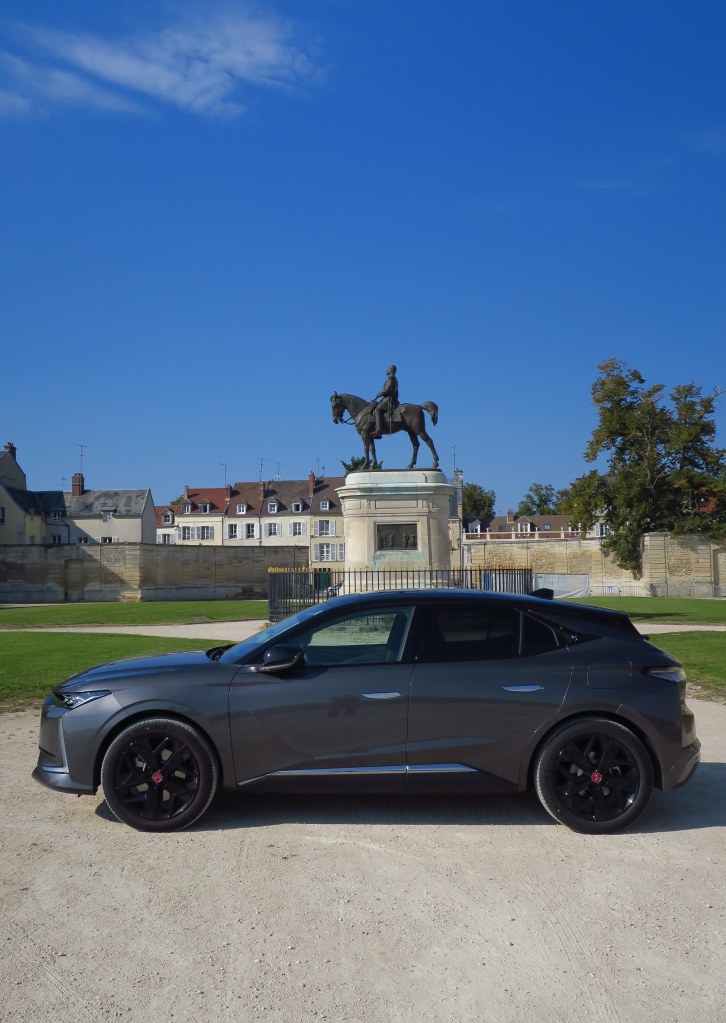
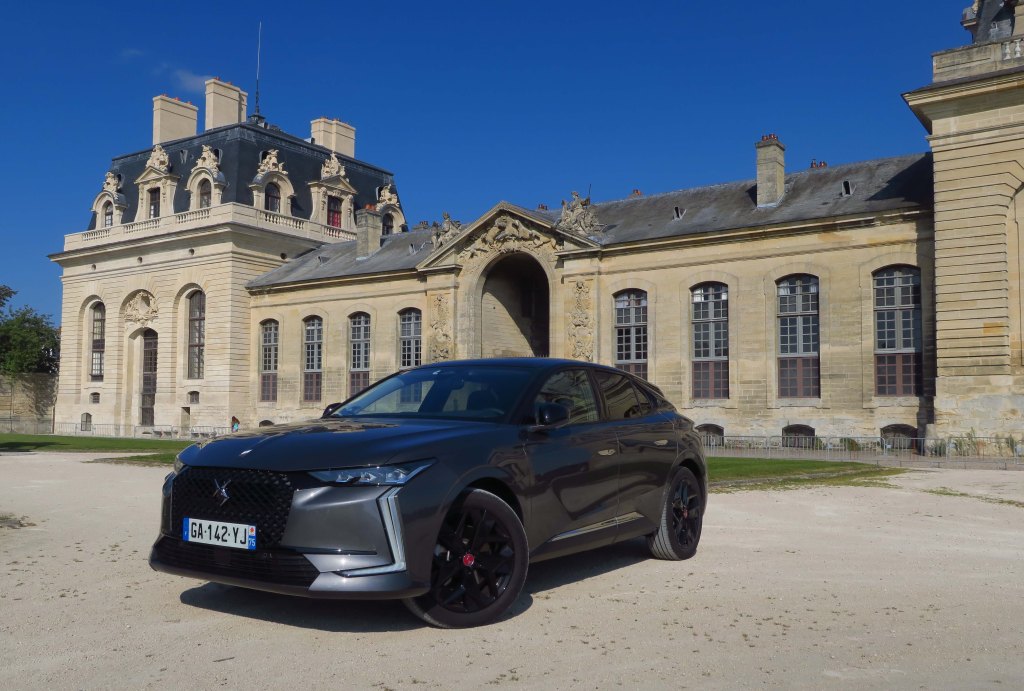
The DS4 shows its elegance in front of the shops in Chantilly, the town of the horse…
This second generation DS4 is indeed geared to offer a maximum of creature comfort. It starts of course with a good position behind the wheel, and indeed for your 1,70 m servant an excellent driving position was soon found. We tested the Performance Line+ DS4 which came with very comfortable Alcantara/leather seats, and a very tasteful interior.
The overhead display proved also eminently visible. DS automobiles calls it “DS extended head up display”, and with the use of an optical illusion, data are displayed four metres ahead of the windscreen to follow the driver’s gaze diagonally at 21-inches. We found it very useful, and indeed, it kept our eyes on the road.
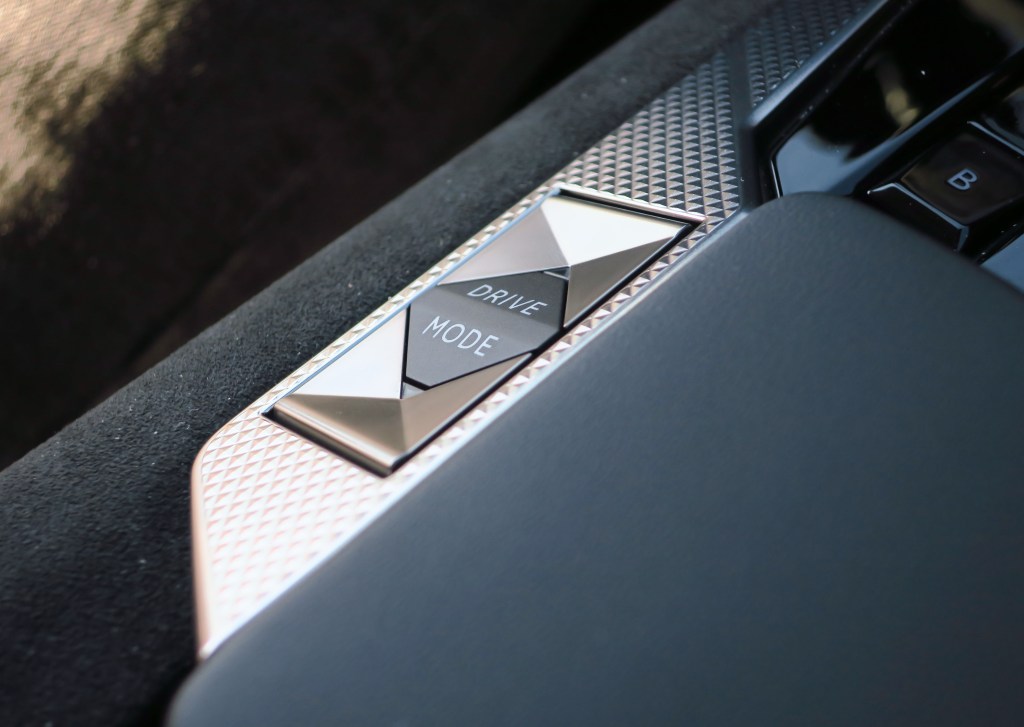
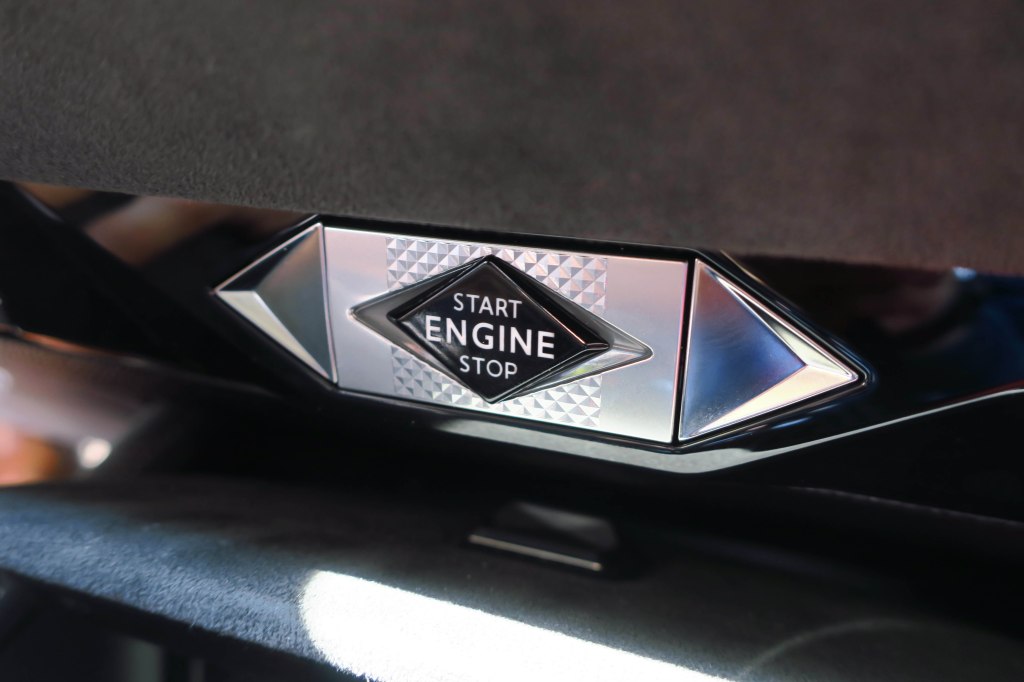
With a magnificently styled mode selector button (more about the interior design when we talk about the styling of this car in a separate report, incorporating then also the designer’s comments) you can choose your driving mode. We chose the modes “normal”, “comfort” and “sport”, to check the handling, comfort and steering precision of this DS4.
In all modes, we found that the comfort level remained top notch. It proved definitely very important for engineers and designers, and we can only applaud their choice. The DS4 ranks therefore with panache amongst the iconic “Grandes Routières”, totally in line with the tradition set in by the original DS. Steering is also very precise in all the chosen modes.
The DS4 runs on a new version of EMP2 platform and uses technical solutions such as bond-welding (almost 34 metres of adhesive bead and welding points used on the car’s body) as well as completely redesigned suspension and steering components. This indeed delivers driving comfort through optimal body rigidity with exceptional responsiveness and precision in the handling department.
The suspension has also been redesigned with the new platform version… but there is more.
The engineers have taken things even a step further by introducing the so-called DS ACTIVE SCAN SUSPENSION , which controls the damping by using a camera. It is positioned at the top of the windscreen, views and anticipates irregularities in the road surface and transmits the data to a computer. With the four attitude sensors and three accelerometers, the system controls each of the wheels independently. Using the information it receives, it makes the suspension harder or softer depending on what’s required. The result is indeed excellent comfort whatever kind of (winding) road you’re on. We were truly impressed by the overall dynamic serenity of the car, whatever the driven speed…
Smooth and powerful
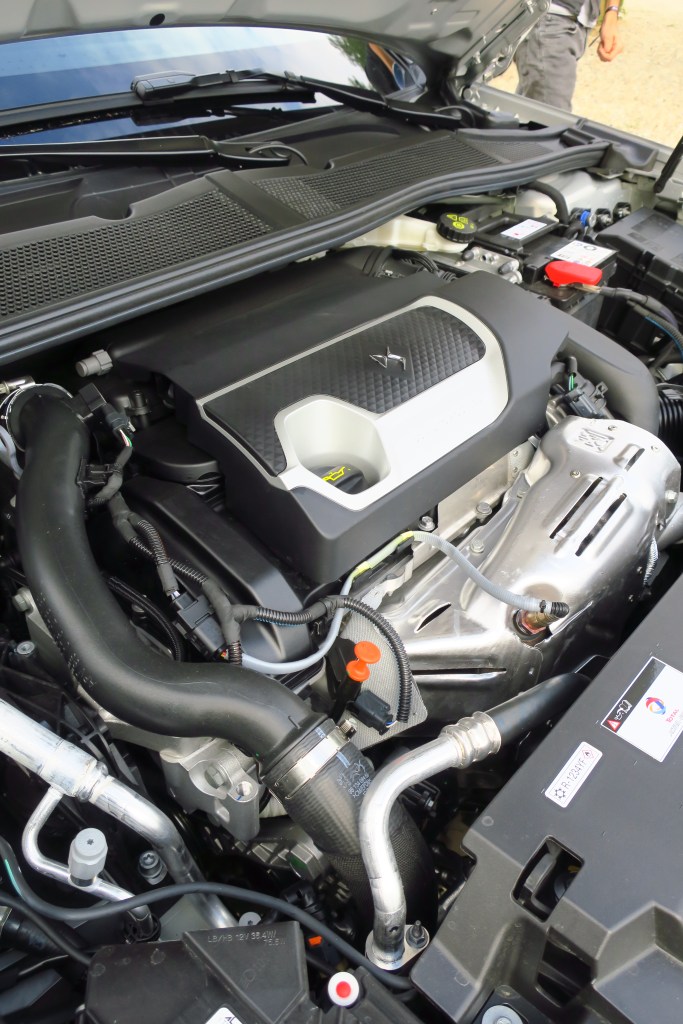
In the E-TENSE version, a turbocharged 180 horsepower 4-cylinder engine is paired with a 110 horsepower electric motor and an EAT8 gearbox, for a combined 225 horsepower. As we said earlier in our first report, the combination is fed by a more efficient battery with new more compact and larger capacity cells. This battery is situated behind the deformable beam and providing a useable a range of more than 50 kilometres in zero emissions mode (WLTP combined cycle).
The drivetrain is supersmooth, and the transition from battery to engine power is not noticeable. When driven with restraint and anticipation, the system will use the kinetic energy to recharge the batteries while you drive, and indeed, in tight heavy and slow traffic we managed to recharge the battery from 14 % to a good 28 % just using the kinetic energy as much as we could, which of course asks for some concentration, but this is well rewarded! The system will regenerate the energy irrespective of the chosen driving mode, and we achieved these results in the “Sport” mode.
Depending how much E-power you use during your drive, fuel consumption will vary accordingly, and the manufacturer quotes a fuel consumption of 1,3 litre/100 km and CO2 emissions of 29 g/km on the combined WLTP cycle. Running on the petrol engine only will get you anything between 6-8,5 litres/100 km, greatly depending on your driving style.
On the second day of our extended test drive we drove the DS4 with top of the range “Rivoli” trim and the PureTech 225 HP petrol engine version with the same 8-speed automatic gearbox. Driving in normal or comfort mode delivered very much the same smoothness as the E-TENSE drivetrain, and we were surprised by the very low noise level of this engine, certainly when you are adopting a relaxed driving style. Putting your right foot down will let the engine rev harder, but this gets never obtrusive. When you want to add some smooth panache to your spirited driving style, it is best to use the gearchange paddles at the steering wheel, so you have better control over engine revs under heavy braking or acceleration. The DS4 takes a fast pace over curvy and undulating roads very well in its stride, as a “Grande Routière” befits.
The DS4 is a car designed to travel on long journeys, as well as performing comfortable city errands. It is build to cocoon you in relaxing and silent comfort. Indeed, its tire to road noise is also eminently filtered. The seats are just marvelous, and the soft padding of armrests and surfaces of centre console and dashboard just give you that sense of well-being which comes close to cocooning. The dashboard layout is just an icon of good taste, and its controls are soon learned… and are not overwhelming. It is advisable to take some time to get acquainted with your DS 4, it has a lot to offer.
Having said this, your servant is as a journalist always very cautious to give an opinion about the practicality of functions or controls, as we spend only a week or at a presentation even only a few days with a test car, whereas the owner will have months and years to learn all the functions. But he has to learn them, and in the beginning spend some useful time reading the manual, sitting behind the wheel and trying everything out, and repeating this! One never learns enough, and indeed note that bis repetita placet…
As a photographer, I still look at the manuals and YouTube films about the camera I use, be it compact or DSLR, and still learn…after months!
A host of useful functions…
Coming to the subject of functions, the DS4 has a lot of them, to make your journey safer and more relaxing.
First of all, we were much ten by the excellent ventilation It has been developed with very compact vents, positioned high up and fitted with invisible vanes.
The principle behind DS AIR is a flow of air that’s aimed by a cone giving the best possible direction upwards and downwards. All while operating like a classic vent. Thanks to its upright compactness, it appears discreet and tucked away which enables a purity of design in DS 4’s cockpit. Impressive and well done!
Then there is the DS IRIS SYSTEM can be controlled by voice and gesture. This System features a personal assistant capable of recognising what’s said to it so that the system can carry out requests.
For gestures, there is DS SMART TOUCH, located on the centre console, it is an elegant small screen below the big central screen, which you can command with your fingertips. Gesturing towards one of the pre-entered functions on the big screen is enough. The smaller screen also identifies normal movements such as zooming in, zooming out and has handwriting recognition. Just try it, it avoids having to reach out to the big screen, and soon enough you get he hang of it.
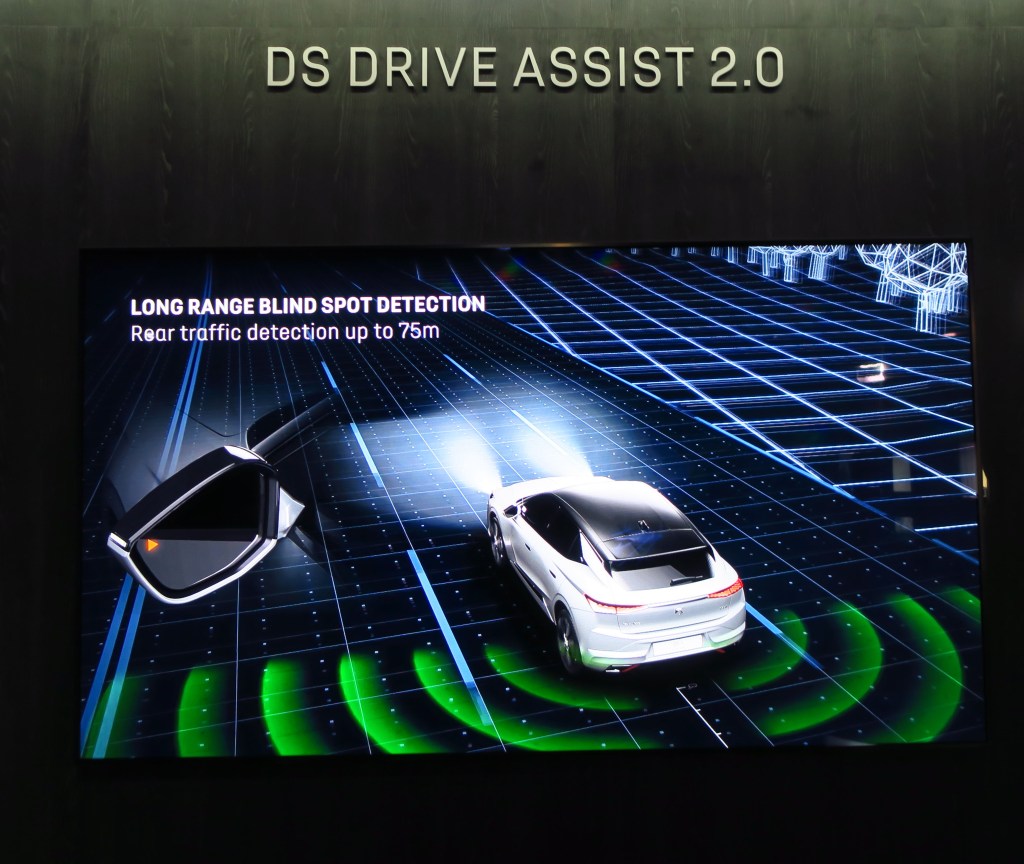
Level 2 automated driving also had a major update for DS 4 with DS DRIVE ASSIST 2.0.
This translates into the precise car positioning itself in the lane of the driver’s choice, supplemented by new functionality such as semi-automatic overtaking, speed adjustment for corners and anticipated speed recommendations from signposts.
DS DRIVE ASSIST 2.0 includes sensors that record everything that happens in and around the car to help the driver. It sports frontal radar, radar at the four corners of the car, and a camera at the top of the windscreen, DS 4 positions itself where its driver wants through artificial intelligence which analyses information gathered in real time.
DS NIGHT VISION: An infrared camera, located in the grille, spots pedestrians and animals up to 200 metres away at night and in poor light. The driver views the road in their digital instrument display and sees hazards appear as warnings in the DS EXTENDED HEAD UP DISPLAY enabling them to react.
Let there be light: the DS light signature
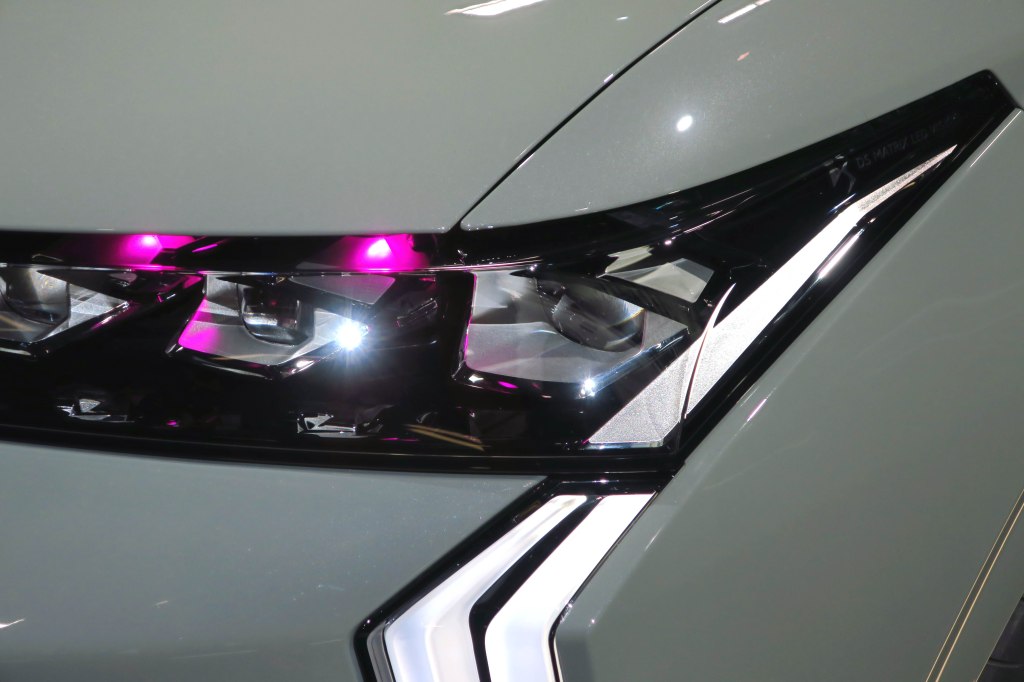
With a new generation of DS MATRIX LED VISION headlamps that are narrower and more modern, the Matrix Beam and Dynamic Bending Light technology have been combined in the same system.
The DS MATRIX LED VISION headlamps are still made up of three LED modules which are the DS Automobiles signature:
The inner module of the headlight is used for the dipped function.
The rotating central module can turn to an angle of 33.5°. It illuminates the sides of the road and follows where you’re looking in corners. The system adapts to traffic conditions, the angle of the steering wheel, speed and weather conditions with five pre-set modes: town, country, motorway, poor weather and fog. This is also a nod to the directional headlamps of the 1967 DS…
The outside Matrix Beam module turns on for driving, split into fifteen segments which turn on and off independently, depending on the driving conditions it senses.
The projector headlamps adapt to traffic conditions, steering wheel angle, speed and weather conditions with five preset modes: city, country, highway, harsh weather and fog. They enable you to drive constantly on main beam without ever dazzling other road users. Using the camera located in the top part of the windscreen, these intelligent headlamps adapt their light beam automatically with a reach of 300 metres, depending on traffic conditions, without ever dazzling others. Need we say more?
The DS MATRIX LED VISION headlamps are complemented by extended daytime running lights made up of 98 LEDs. As well as the recognisable vertical light signature, these daytime running lights perform a new high-technology welcome routine.
The first drive of this DS4 was impressive indeed, comfortable, relaxing, smooth, powerful, and full of style…
In these columns you will soon read more about the design of the car and the hand made craftsmanship it has been built. Stay tuned!
At DS Automobiles, the art of designing and building the avant-garde automobile has been celebrated again since 2015, the birth of this unique premium brand.
In stylish Chantilly, we stood eye to eye with their latest creation, the DS 4. Stunning in style, gracious elegance and technology, this premium C segment car did not fail to impress your servant.
The DS 4 has eye-catching proportions. With a benchmark width of 1.83 metres and large diameter 720-millimetre wheels (alloys up to 20 inches, 19 inches as standard from TROCADERO and PERFORMANCE LINE up), for a compact length of 4.40 metres and a roof height of 1.47 metres, the dimensions are striking indeed.
Also the entire press presentation of this noble automobile was in line with its qualities: we were not only able to meet Mme Béatrice Foucher, the CEO of DS Automobiles personally at dinner, together with the communications people of the brand at lunch, we had also interesting workshops with the designers, engineers and last but not least the craftsmen and artists who make the DS 4 into the hand made four wheeled gem it is.
Mme Béatrice Foucher also presented the bold electrification strategy of the brand: in 2022-2023 it will increase the electrified mix with more E-TENSE sales, and from 2024 onwards it will only launch models which are battery only EV’s, with only electrified models presented for sale in Europe.
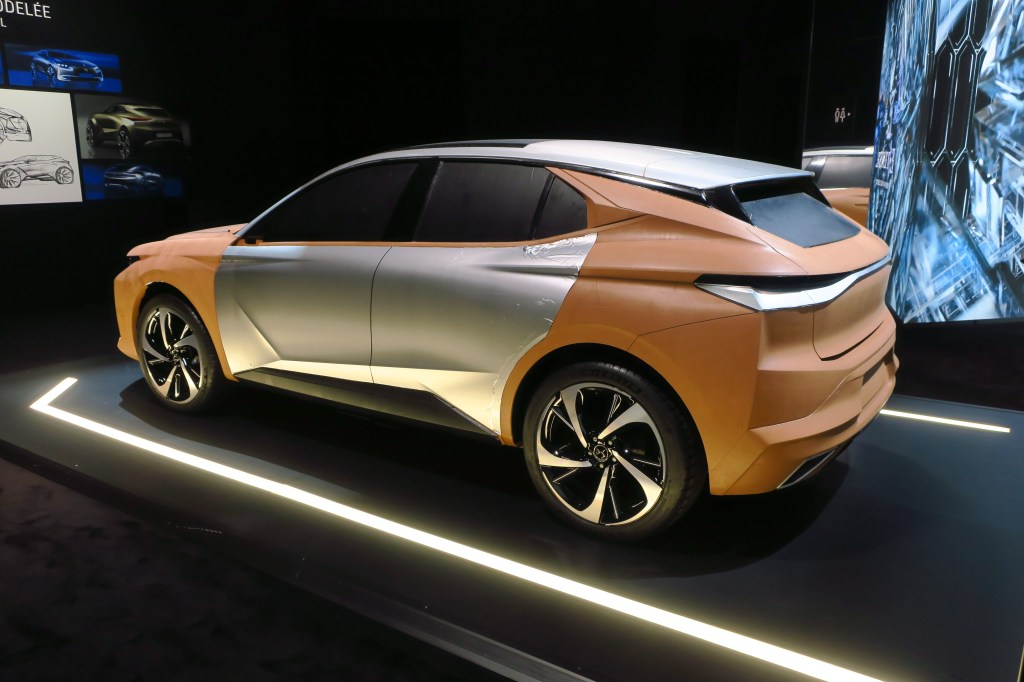
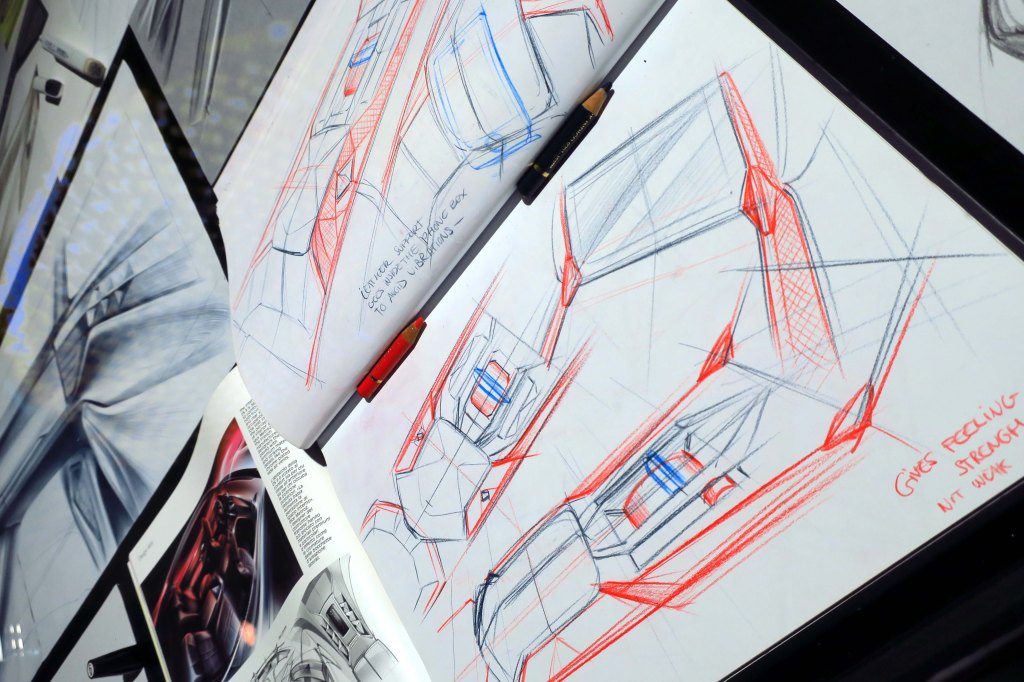
The designers also presented their drawings and a fully fledged clay model too, and the craftsmen presented their tools and unique hand made items of the car, of which much more later.
We were able to drive the entire range of the DS 4 on a 245 km circuit around scenic Chantilly, and we can tell you already that we were very taken by the plug-in hybrid version, the E-TENSE. Not surprisingly, as one knows that DS Automobiles puts great value on electrification, as does their avant-garde clientele, by the way.
For the DS4, a new version of the EMP2 platform was conceived to accommodate a new generation plug-in hybrid drive train without compromising cockpit space. It is important to note here that, being an important premium brand for Stellantis, the choices DS Automobiles are making in terms of proportions and styling of their cars and last but not least their technology are important signals for the engineers in the group wo develop the respective platforms. Noblesse oblige… Here you see the naked bodywork displayed on its platform.
The E-TENSE sports a turbocharged 180 horsepower PureTech 4-cylinder engine, which is paired with a 110 horsepower electric motor and an EAT8 gearbox, for a combined 225 horsepower.
The combination is fed by a more efficient 12,4 kW battery with new more compact and larger capacity cells situated behind the deformable beam and giving a range of 55 kilometres in zero emissions mode (WLTP combined cycle). The E-TENSE impressed your servant not only with its uncanny smoothness, it delivered also all the performance you could wish for: The 360Nm of torque enables 100km/h to be reached in 7.7 seconds with fuel consumption of just 1.3 litre/100km and emissions from 29g/km of CO2 on the WLTP combined cycle.
A wide range with a broad choice of interior equipment levels…
We will tell you soon more about the driving impressions of this DS 4 in their different engine configurations, we just present here the model and equipment line-up. Besides the E-TECH, three petrol engine models, PureTech 130 Automatic, PureTech 180 Automatic and PureTech 225 Automatic plus a BlueHDi 130 Automatic Diesel will be offered.
In terms of body styles, the range is made up of three versions: DS 4, DS 4 CROSS et DS 4 PERFORMANCE LINE, with each version enjoying multiple trim levels:
– Four trim levels for the DS4: BASTILLE, BASTILLE +, TROCADERO and RIVOLI, as well as a Limited Edition “LA PREMIÈRE” for the launch, offering exclusive touches above and beyond the existing trims.
– For the DS 4 CROSS body version, we have the CROSS TROCADERO and CROSS RIVOLI trim levels,
– PERFORMANCE LINE and PERFORMANCE LINE + trims for the DS 4 PERFORMANCE LINE.
The iconic Fiat 500 is entering into the electric era, and it is doing this very convincingly with superb technology and style.
It even has the panache to add a third door to its well-shaped body, to set it apart from the rest.
And indeed, apart from the rest it is. It has a whole new body, and is six centimeters longer and 3 cm taller than the “normal” Cinquecento, yet it retains fully its ideal and iconic proportions.
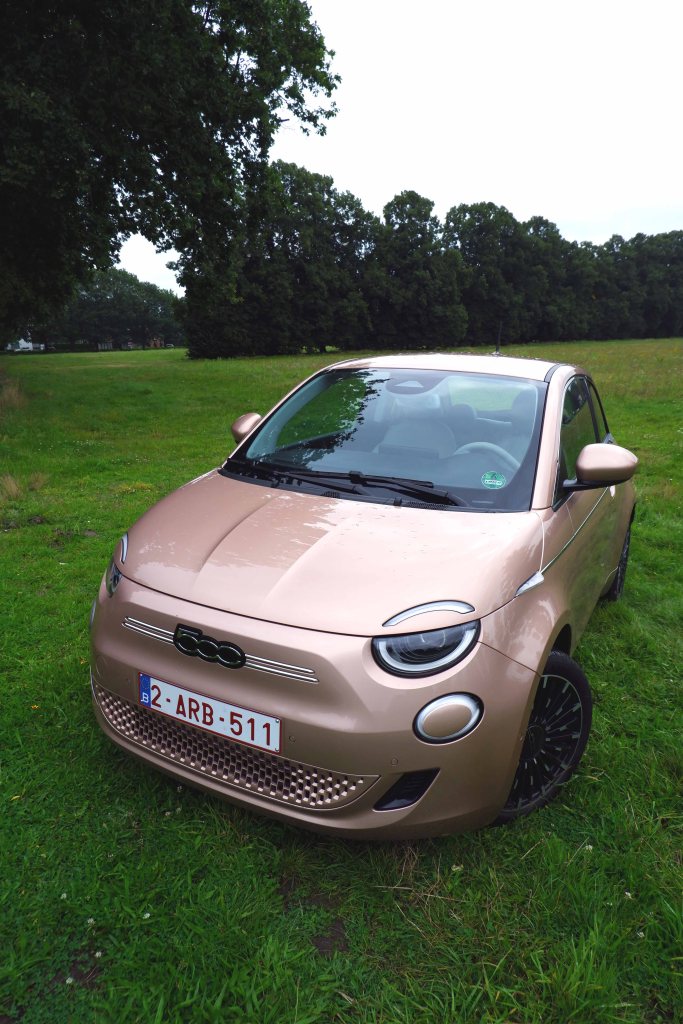
We drove the “prima” Cinquecento, sprayed in very pleasing Rose Gold, and we liked very much its performance, ride and style, just read further…
Hans Knol ten Bensel
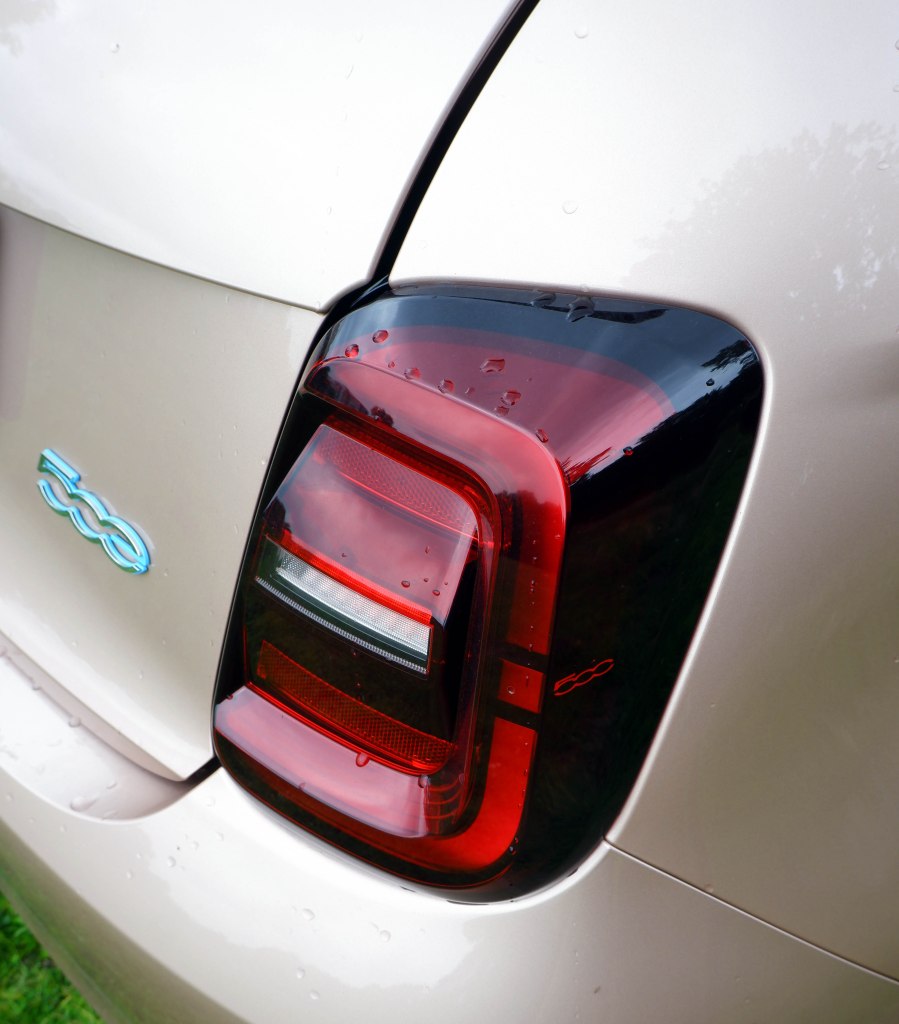
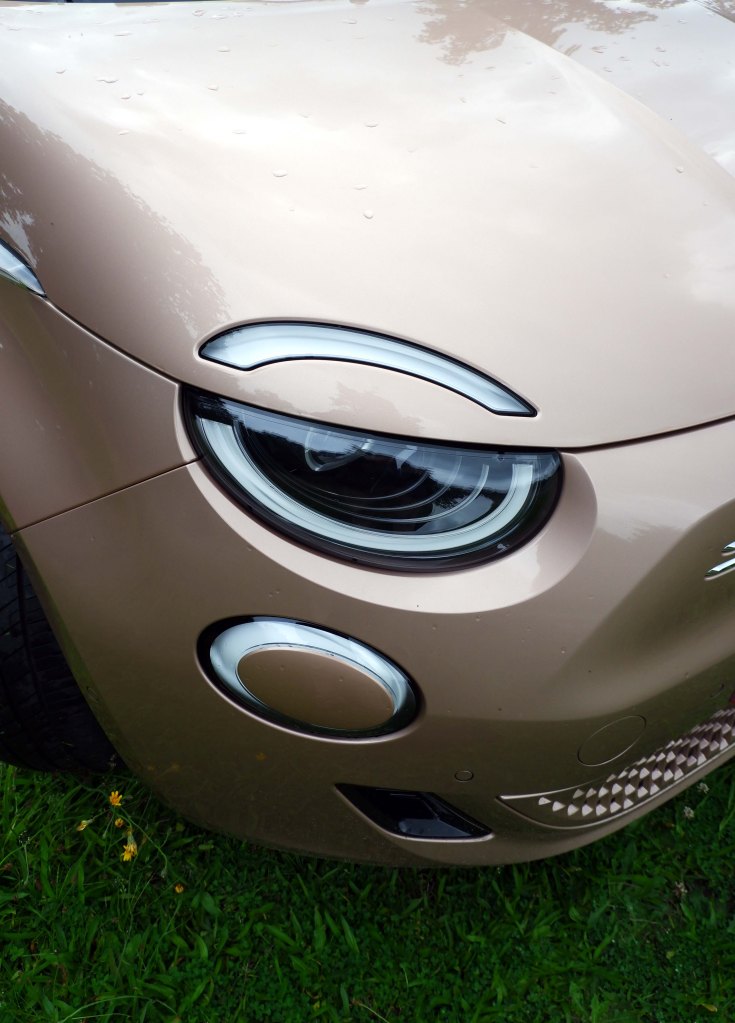
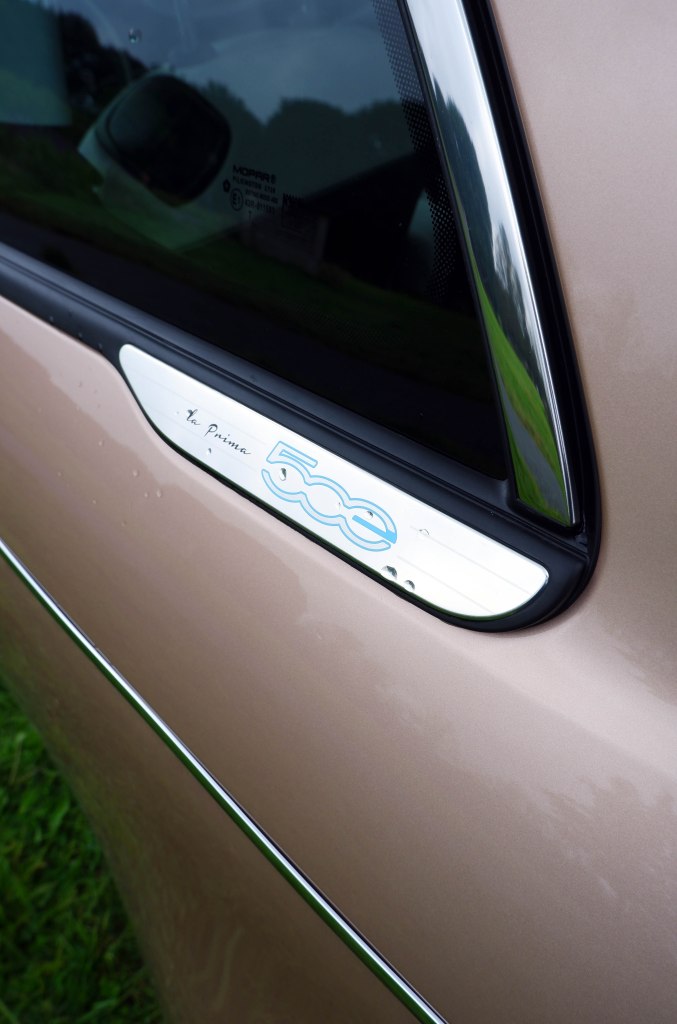
The New 500 3+1 “la Prima” has it all, and stands out with a range of exclusive details: full LED headlights with an ‘Infinity design”, two-tone 17” diamond-cut wheel rims and chrome-plated inserts on the windows and side panels.
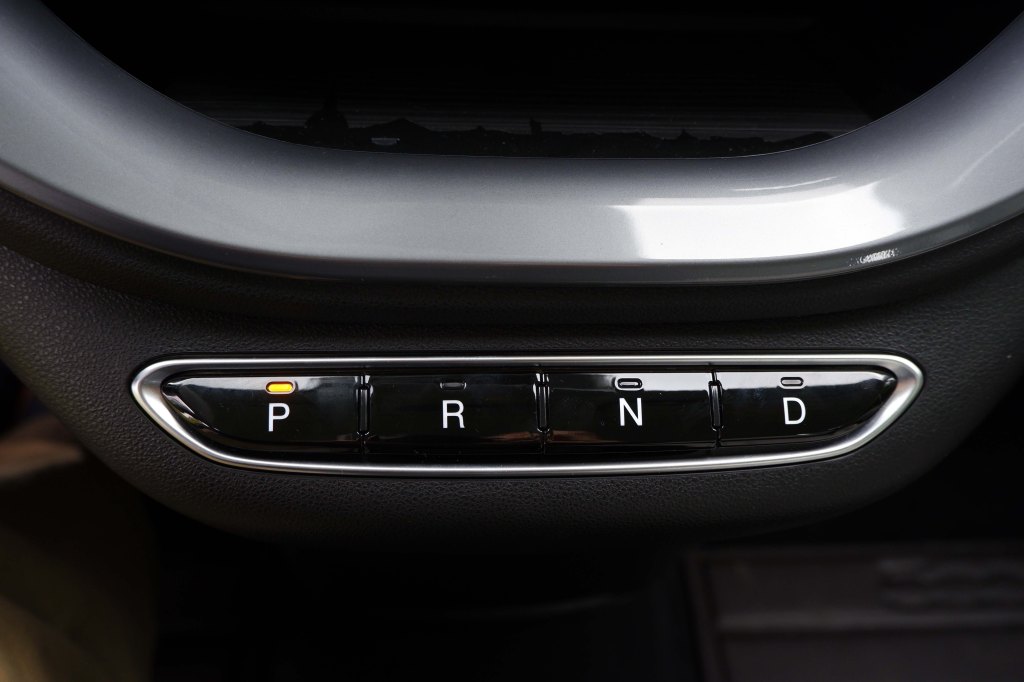
In the interior, the pleasant ambiance continues: soft-touch seats studded with Fiat monograms, a two-tone steering wheel flattened at the bottom and an exclusive “la Prima” tag on the console. We also liked very much the finish of the dashboard panels on our test car.
Comfort is also paramount: six-way adjustable front seats, mats, an “electro chrome” internal rearview mirror and 360° ‘drone view’ parking sensors. The steering wheel is also adjustable in height and length over a wide range, so an ideal seating position is soon found. Add to this the spacious glove box, the wide door bins and trays on the center console, and you notice that this New Electric 500 is geared to make your daily life a lot rosier.
“Zen” electric driving is addictive…
But let’s turn now to driving this Torino-built electric icon of style. It is not only constantly pleasing to the eye, it is also a soothing, relaxing experience to move it from A to B.
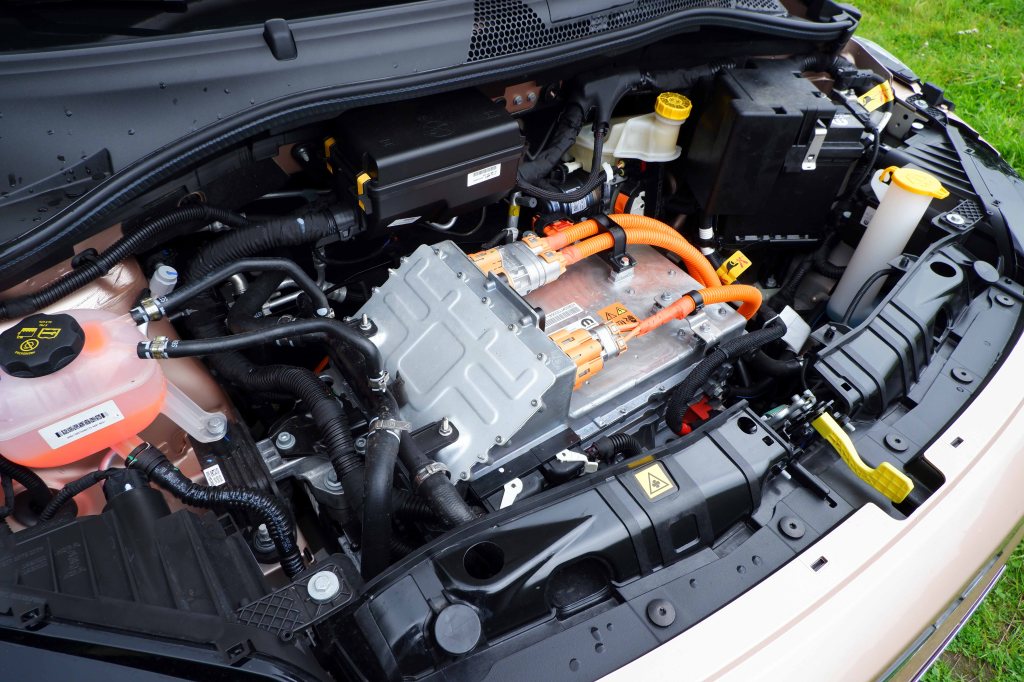
Even if you are driving with kind smoothness, only caressing the right pedal, you feel its whispering power. All 118 HP or 87 kW of it, with 220 Nm of instant torque. Technically very refined, motor and drivetrain being vibrationless and totally inaudible over the whole speed range.
Zesty it is indeed. It will whisk you from 0 to 100 km/h in merely 9 seconds. And when pulling away from standstill, you reach 50 km/h in just 3.1 seconds. But it is the “Zen” character of e-driving which gets you sold, and puts a broad smile on your face.
No frantic revving, no jolts from clumsy gearchanges, just a smooth, utterly silent, silk smooth flow of power. You can fully concentrate on the traffic and everything around you, undisturbed, enjoying the purity and elegance of your progress. Only e-power can convey this feeling, and we have to admit it, it is addictive.
We caught ourselves cruising on urban boulevards even below the 50 km/h speed limit, just to enjoy the ride. Urban driving at the corresponding lower speeds delivers of course also excellent economy, and throughout our test the consumption was a very reasonable 8.1 km/kWh. We have to admit that we drove this “Elettrica” very smooth indeed. On a fully loaded battery, which has a capacity of 42 kWh, the TFT 7 inch instrument panel indicated a 260 km range, which is totally adequate for our country. The 500 Electric can be charged with a fast 85 kW charger, so you can recharge from a flat battery to 80% range in 35 minutes, or to 50 km – the average daily distance driven – in around 5 minutes.
We used the 11 kW standard charger, getting from 40 % to 80 % charge in about 3 hours. In our neighborhood, with only two charging points for a few thousand inhabitants, we are allowed to stay maximum 3,5 hours at the charging point, but this was luckily enough for us.
As everyone knows, the charging infrastructure in Belgium is completely below any standard, and will very probably remain so for considerable time to come. It is therefore almost essential in our country to have a private home and/or garage/driveway, if you want to call an fully electric car your own and use it regularly.
The electric 500 is about 300 kg heavier than its petrol engined counterpart, so the suspension setup is somewhat stiffer, without being uncomfortable however. Despite its 1,3 tons weight, the car still feels quite nimble and agile, and the excellent 9,7 m turning circle and super light steering make it your ideal partner in town.
On the open road, the electric 500 stands very well its own, with a regulated maximum speed of 150 km/h. It doesn’t feel fussy at all when driving at the legal maximum motorway speeds. Of course, look out for fast(er) charging points and plan your trip carefully…
One word about the driving modes. In the “normal” driving mode, the car will coast essentially when you lift the throttle, retaining the kinetic energy for you to use. In the “range” mode, the electric motor will use this kinetic energy to charge the battery, allowing you to use a “one pedal” driving style with ease, as the braking effect of the motor is quite marked. Last but not least there is the “sherpa” mode, where motor and battery are carefully governed to allow you to squeeze a maximum distance out of the remaining battery charge.
Infotainment and driving aids…
“La Prima” is equipped with the most advanced ADAS systems available:
What to think of Intelligent Adaptive Cruise Control (iACC) and Lane Centering, Traffic Sign Recognition, Autonomous Emergency Brake with pedestrian and cyclist recognition, Intelligent Speed Assistant, Lane Control, High-resolution rear camera with dynamic grid, 360° parking and urban blind spot sensors, Automatic twilight and dazzle sensors, Emergency call and Electronic parking brake?
Last but not least it features automatic air conditioning…need we say more?
Connectivity is also hardly neglected.
This electric 500 has the new UConnect 5 infotainment system, which means a 7″ TFT Display, a 10.25″ Touch Screen With navigation, an excellent DAB Radio, Wireless CarPlay / Android Auto, the Uconnect Box (a telematic box enabling the connected services) and a wireless smartphone charger.
We were very impressed by the functionality and computing power of the central touchscreen, with excellent and fast graphics.
Practical
The third door, which can only be opened when the corresponding front door is opened, proved very practical, and allowed much easier access to the rear seats. The rear accommodation is essentially meant for kids or (very) small grown-ups. In a 500, noblesse oblige… this is a car with style. Nevertheless, it has a standard boot space of 185 liters, and of course the backrests of the rear seats can be folded.
Conclusion
The Cinquecento is alive more than ever, and the transplant with an electronic heart has succeeded masterfully. It was a very wise decision – also technically necessary of course to house the batteries in the chassis floor – to build an entirely new body for this car, and it was even more judicious to retain faithfully its iconic proportions too.
Technically, the car is totally mature, providing premium character smooth transport, assisted by driving aids and made to measure top notch infotainment.
If you are looking for attractively priced (urban) electric transport with iconic panache and style, take a long hard look at this car…
Hans Knol ten Bensel
Photographer’s notes: for the photos of this test, we took our recently acquired Fujifilm X-A5 through its paces. We like the excellent contrast and contour sharpness of the Fujinon Apherical Zoom lens, delivering the fine definition you see here on these images. We used the TV or shutter priority mode set at 1/125 s, to avoid any eventual motion blur. We found the autofocus a bit on the slow side compared to our Nikon DSLR, but this was not much of an issue as the car was stationary anyway.
The car we tested then had the five speed manual transmission, this time we enjoyed the sequential five speed box, which can be driven in automatic mode or manually controlled with the gearchange paddles at the steering wheel. But besides this the unique driving pleasure remained, and this was more than a good reason to put this Abarth again through its paces…
Just read further!
Hans Knol ten Bensel
Abarths are built for those amongst us who enjoy driving. As we pointed out earlier, this does not mean that you have to be a true aficionado who knows and can repair every bolt on your “bolide.” Far from it. You just have to love cars, and enjoy to take the wheel.
Nor do you have to know also all the subtle secrets of inducing power slides and maintain oversteer by playing the throttle. You don’t have to pass a racing or car handling course, although this would certainly help. But it is not a conditio sine qua non to enjoy this Abarth. Its builders have seen to it that all the electronic driving aids keep you out of trouble, the only requirement is that you understand somehow the laws of physics and know their boundaries.
All in all, the masterfully set up sporting suspension teaches you to become a better driver. Day by day, step by step.
A formidable cockpit..
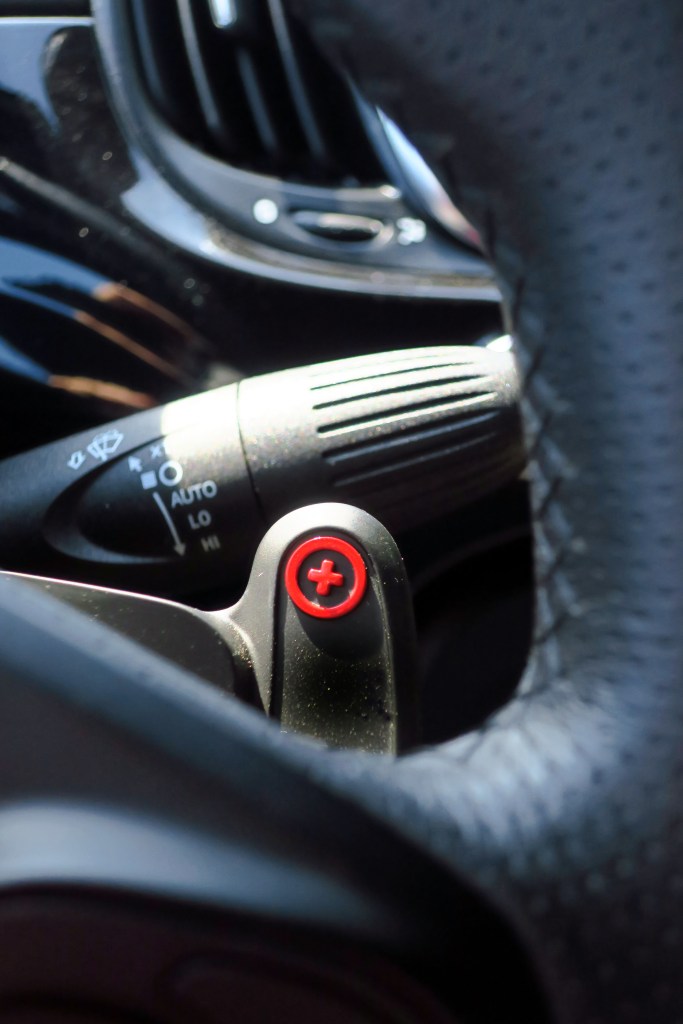
All the controls are in their proper place for the sporting driver. Even the central parts of the front seats have a special padded surface to keep you firmly in position. The steering wheel falls ideally in your hand, the gearchange paddles are always close to your finger tips.
A breeze to use them for those spirited shifts under acceleration. 165 HP warrant exhilarating performance. 0 to 100 km/h is reached in merely 7,3 seconds. The sequential gearbox is lightning fast and efficient. You can concentrate on the braking, the box will downchange for you, even when in manual mode.
But if you feel more lazy, or just want to admire the urban scenery when pottering down the streets, push the “A/M” button to select the auto mode and the transmission will do it all for you. Soon you learn to induce the gearchanges by lifting your right foot slightly. Smoothness is your reward.
Thoroughbred engine…
The 1,4 litre four cylinder is everything you want a truly sporting engine to be. Freely revving, ultra responsive, even more so in the “sport” mode, it delivers formidable punch, with a wonderful staccato when fully “on song”, combined with a characteristic burble at idling and low revs. You just get never tired of it. Never.
At the same time, this engine will not protest when you potter through urban streets and slow traffic for hours on end. It will not foul its plugs or start running unevenly. It will always run razor sharp and react immediately on the slightest blip of the throttle. This Abarth is totally fit for daily use, both by experts or novices, and this makes this “bolide” even more endearing.
Infotainment up to scratch…
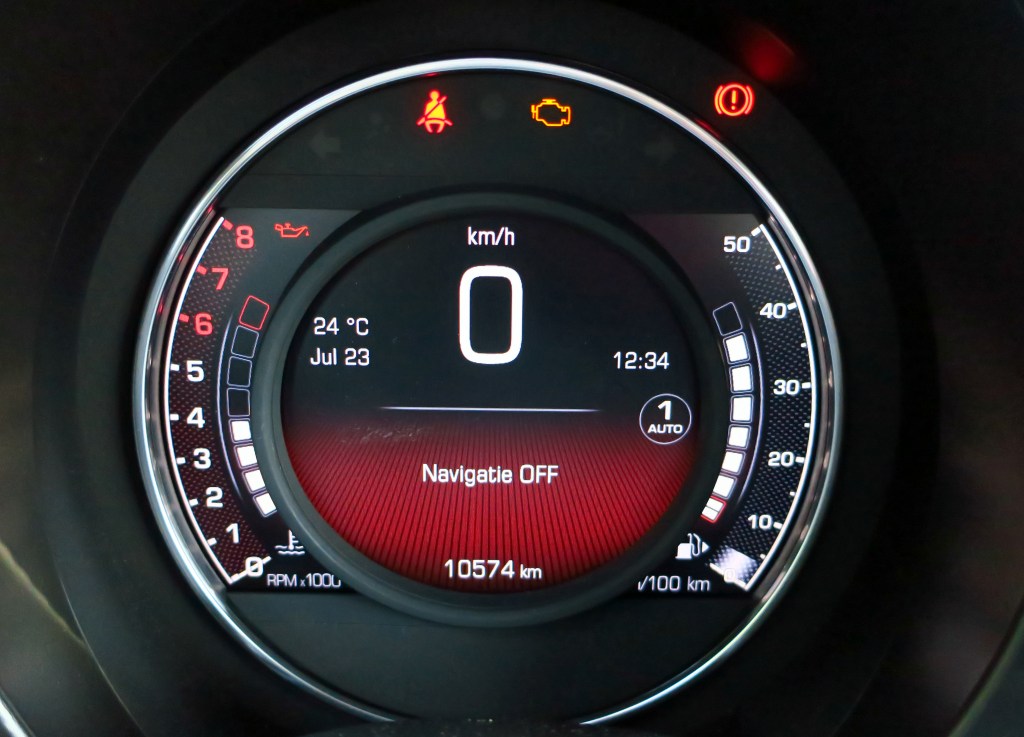
Daily use is also made more pleasant with its excellent infotainment. As we told you already, the Abarth 595 Scorpioneoro offers the best infotainment currently available: the 7″ HD UconnectTM system fitted with Apple CarPlay and Google Android AutoTM* – a fast platform with high definition monitor, GPS and DAB digital radio – as well as the sophisticated BeatsAudio™ system with overall output of 480 W and a 8-channel digital speaker including a cutting-edge equalization algorithm capable of reproducing the full sonic spectrum of a recording studio. Need we say anything more?
Frugal, if you want it to be…
On fuel economy, this Abarth is of course as frugal or thirsty as you want it. All depends on your right foot here.
When you cruise along on the motorway at the legal limit, a consumption between 6 and 7 litres/100 km is totally normal, and if you drive along with the urban traffic flow, a city driving consumption of around 8 litres/100 km is also in the cards.
When it comes to service costs, all the drivetrain elements are well proven and reliable, so it will not be beyond what you expect from any normal compact car…
Conclusion
This Abarth is the endearing sporting thoroughbred which begs you to explore its panache, but will also be a pleasant and docile companion on your urban errands. This makes this Abarth so unique, for those who enjoy cars with character, but also want to live with it. And it will only mature further over the years, never lose an inch of its charisma. So you will cherish it, for years to come… maybe alongside a New 500 elettrica in your garage, who knows?



































 Autoprova - for the Connaisseur