Kia Niro HEV revisited … and as frugal and refined as ever!

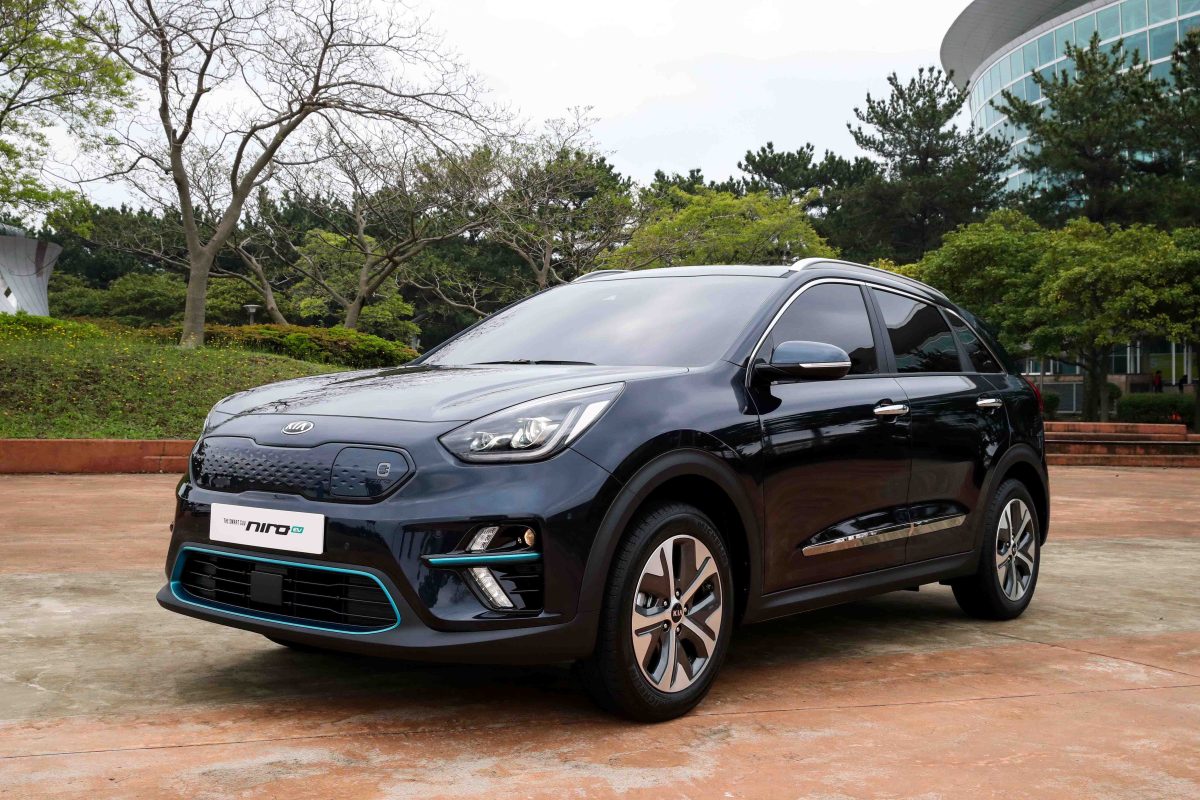
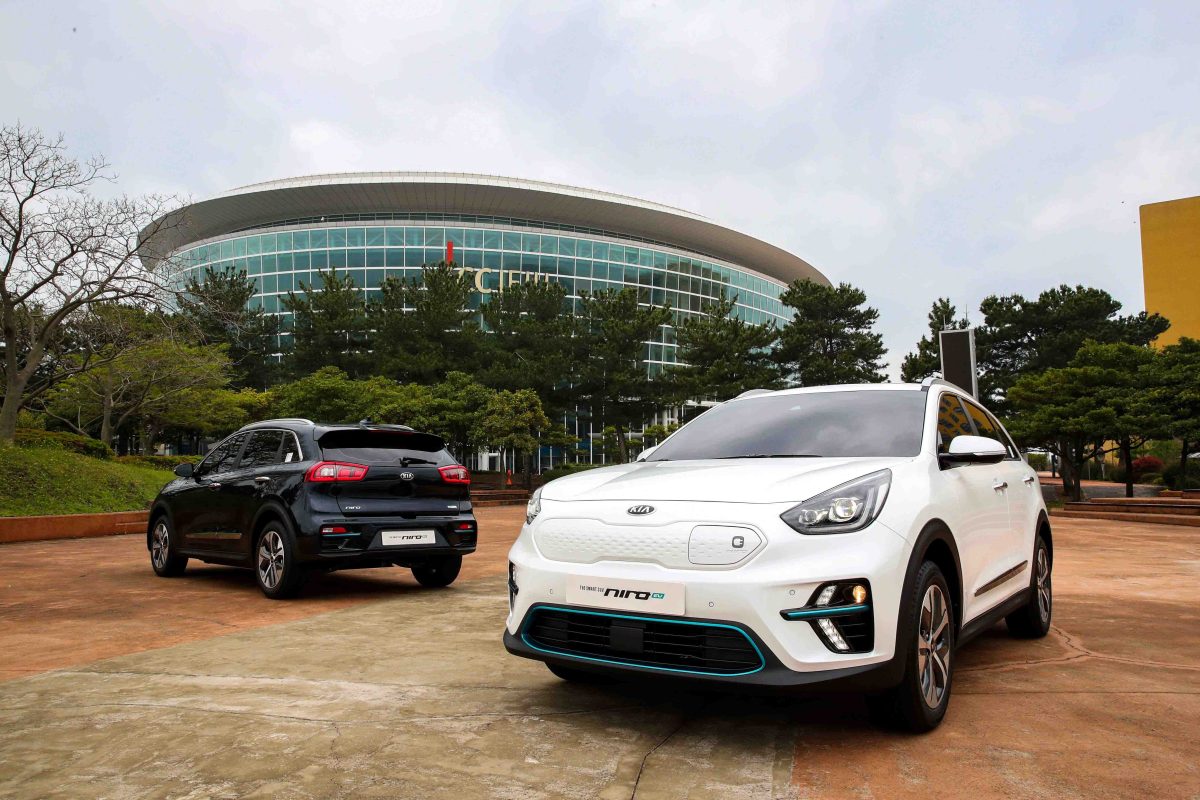
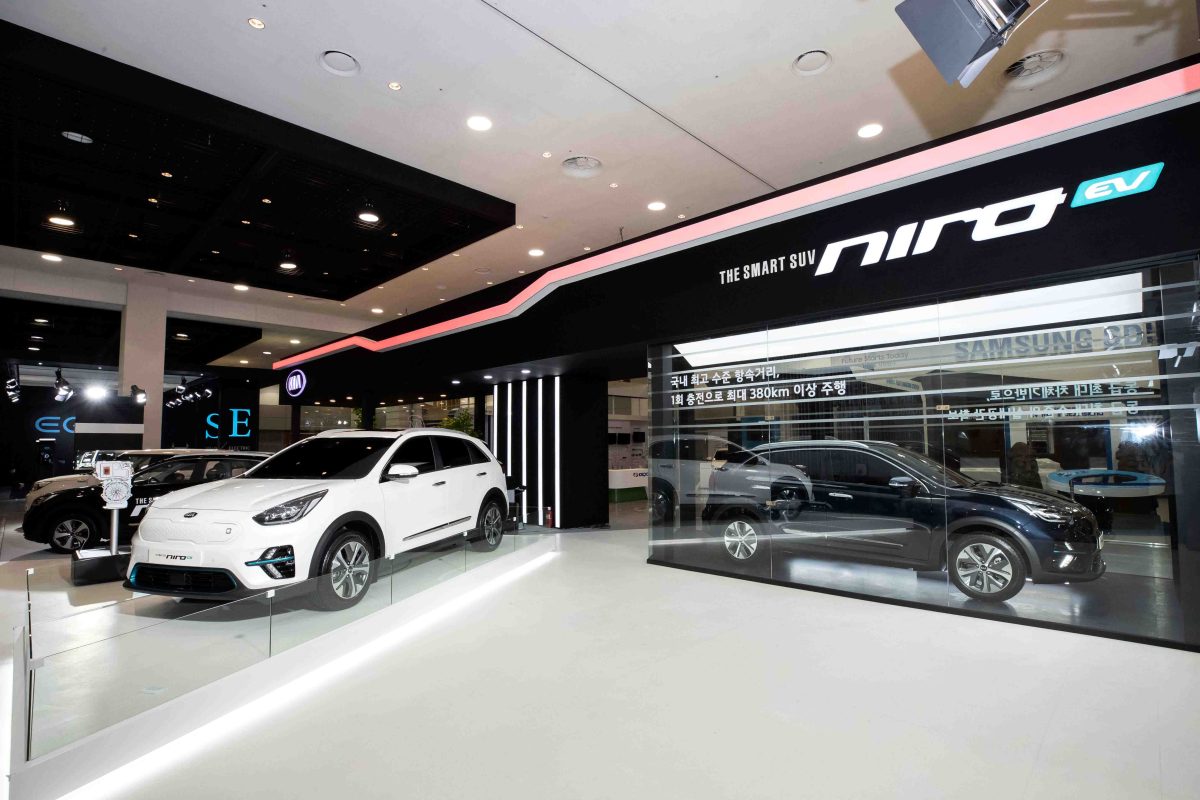
Recently we tested again the latest edition of the Kia Niro HEV, and were impressed again by its style, refinement and practicality.

Modern day hybrids are certainly here to stay, chalking up very impressive consumption figures. To tell you right away, the Kia 1,6 GDI “Kappa” engine in combination with the 6 speed Double Clutch transmission and a 32 kW electric engine delivered on a long drive in the Dutch countryside on secondary roads with lots of roundabouts an astonishing 4,6 liters/100 km, with quite a bit of stop and go dense holiday traffic thrown in too.
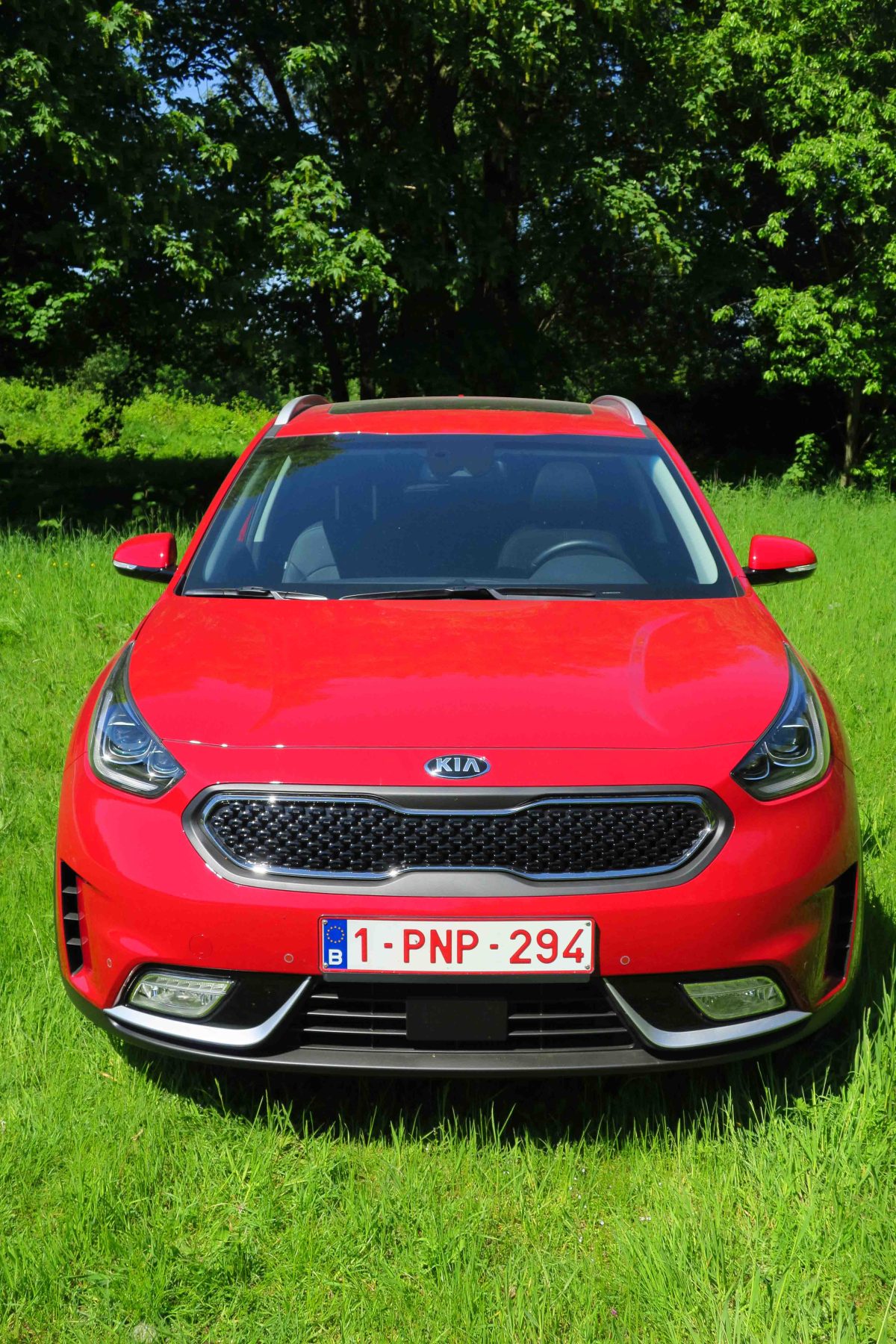
It is of course not only the economy which counts, it is also the way this performance is achieved, or rather the effortless and very refined way this performance is delivered. Especially slowing down for roundabouts and accelerating away from them is an exercise in which this hybrid due to its technical layout truly excels. Under moderate braking, the batteries are charged, and the Niro accelerates then subsequently under the assistance of e-power. Smooth, vibrationless, silent.

The combined power of the driveline is 141 HP, with 265 Nm of torque. This is virtually equal to the low end pulling power of a normally aspirated three liter engine, to put everything in perspective.

All this pulling power is available at the slightest blip of the throttle, and that is the beauty of it. Flat out acceleration from 0 to 100 km/h is done in 11,5 seconds, top speed is 162 km/h.

When maneuvering and parking, the e-engine does the work, and this makes it of course a very restful exercise.

A few words about the transmission: Kia developed the so-called Transmission-Mounted Electric Device (TMED), to optimize the cooperation between the engine and the e-motor, which makes it possible to transmit the full power of both units parallel through the transmission, with minimal power loss.

Style and practicality

We already commented earlier on the very pleasing contours of the Niro, and the car is styled in both styling centers in California and Namyang in Korea. The wheelbase is quite long with 2.700 mm, and the battery pack is lodged under the rear seat. This gives the Niro a standard luggage volume of 427 liter, which can be enlarged to 1425 liter.

Infotainment with Kia Connected Services, Android Auto™ and Apple CarPlay™.

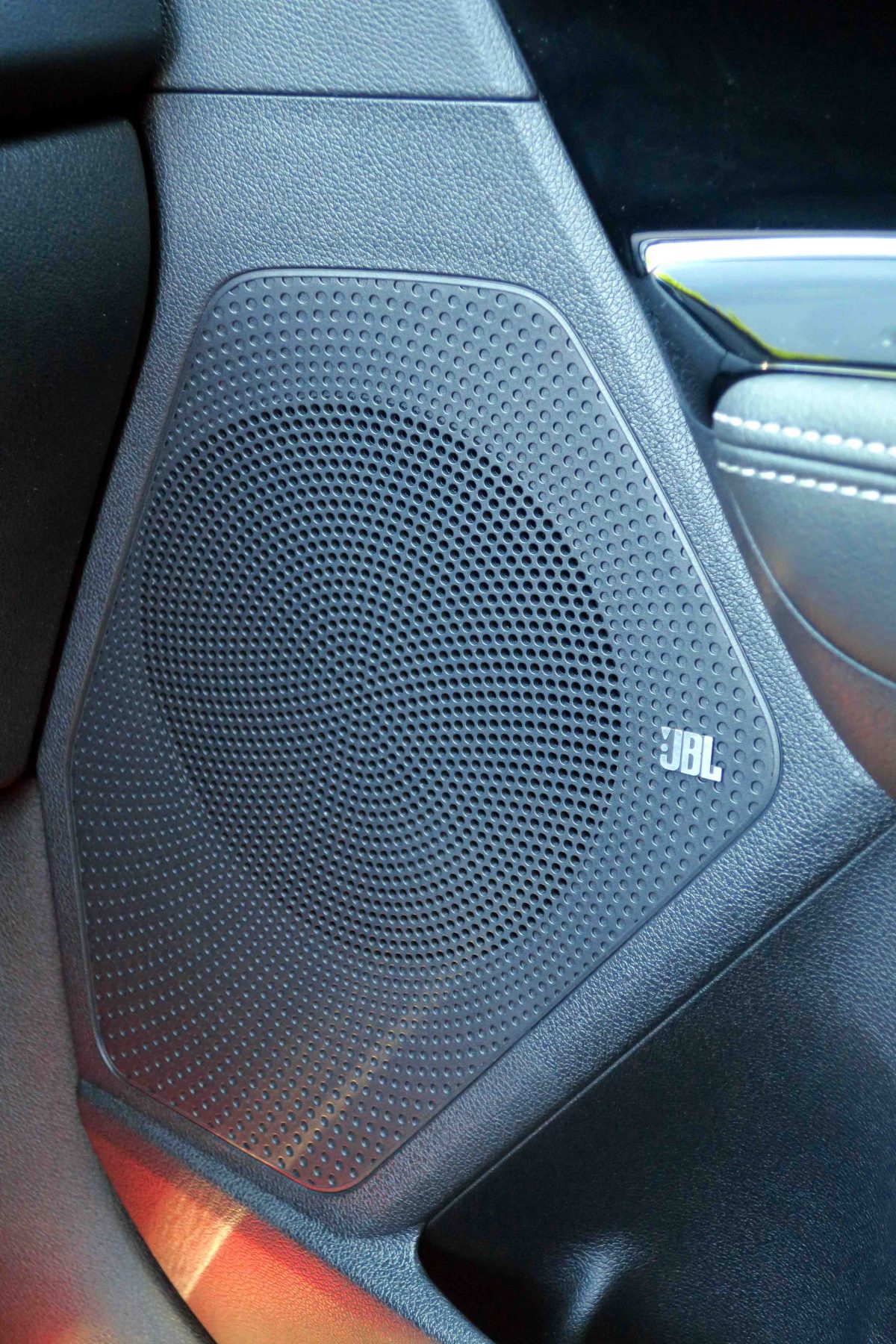
We enjoyed the top of the range sound system with 8 JBL speakers and a 320 watt amplifier. The car was equipped with the DAB+ radio, and came also with Android Auto™, suited for Android devices with Lollipop 5 steering systems and higher. Users can also stream music through Google Play Music™.
Apple CarPlay™ will make complete voice control possible through Siri for several functions and apps, enable navigation with Apple-maps, and also make dictating text possible. Apple CarPlay™ supports also audio-apps, like music streaming and audio books which passengers have downloaded on their i-phone.

Needless to say we were spoiled again, and certainly enjoyed our “zen” drive with the Niro, listening in the quiet cabin to the beautiful semi-finals and finals of the Queen Elisabeth Competition for classic song and bel canto…

Conclusion

This second acquaintance convinced us one more of the uncanny mechanical refinement, style, practicality and last but not least economy of this Kia Niro. Add to this the low maintenance costs and expected longevity, with a 7 year/150.000 km guarantee thrown in, and you will agree with us that this Niro has a lot of good arrows on its bow…

Hans Knol ten Bensel


The Mercedes star shines again in the Mille Miglia 2018…

The love affair between the three pointed star and the Mille Miglia is now nine decades old.

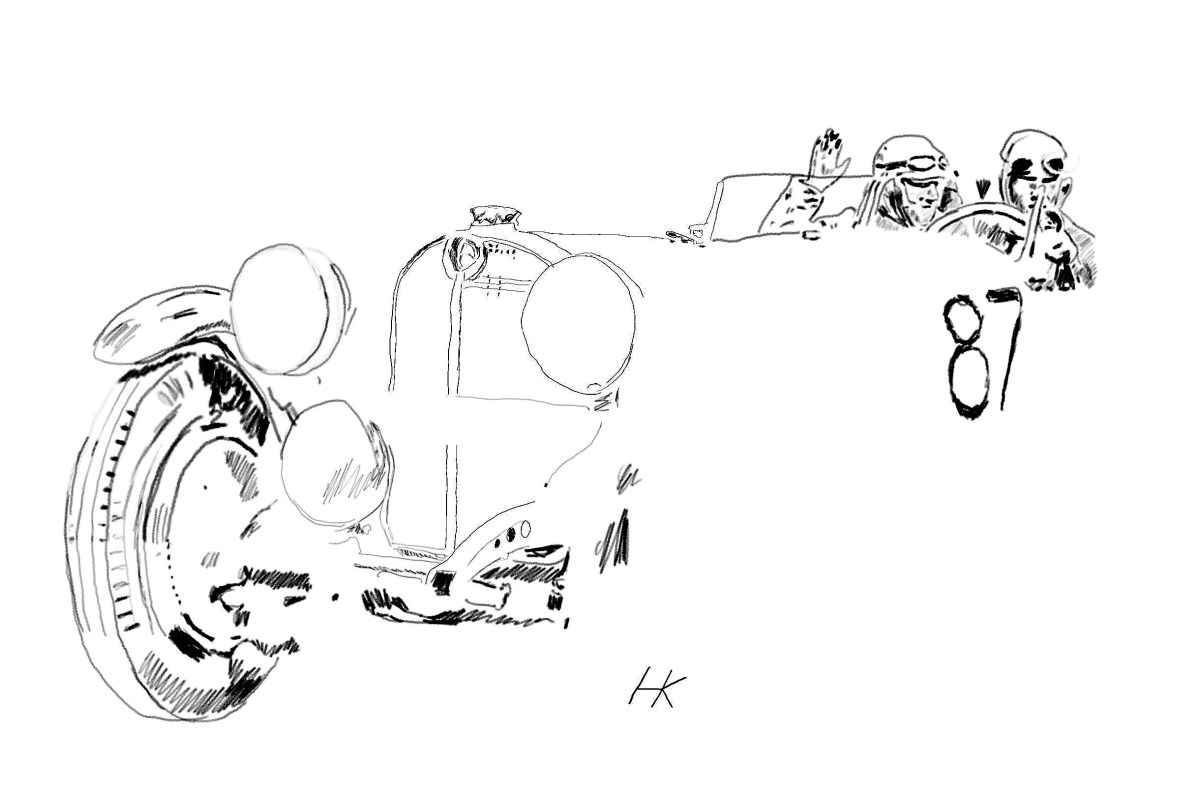
The legendary successes include the victory of Rudolf Caracciola as the first non-Italian driver in 1931, with his co-driver Wilhelm Sebastian in a Mercedes-Benz SSKL (“Super Sport Short Light”). I included here my drawing based on the historical photo taken at the finish, drawn with ink pen and 2B pencil, focusing on the drivers, bringing them more in detail.  

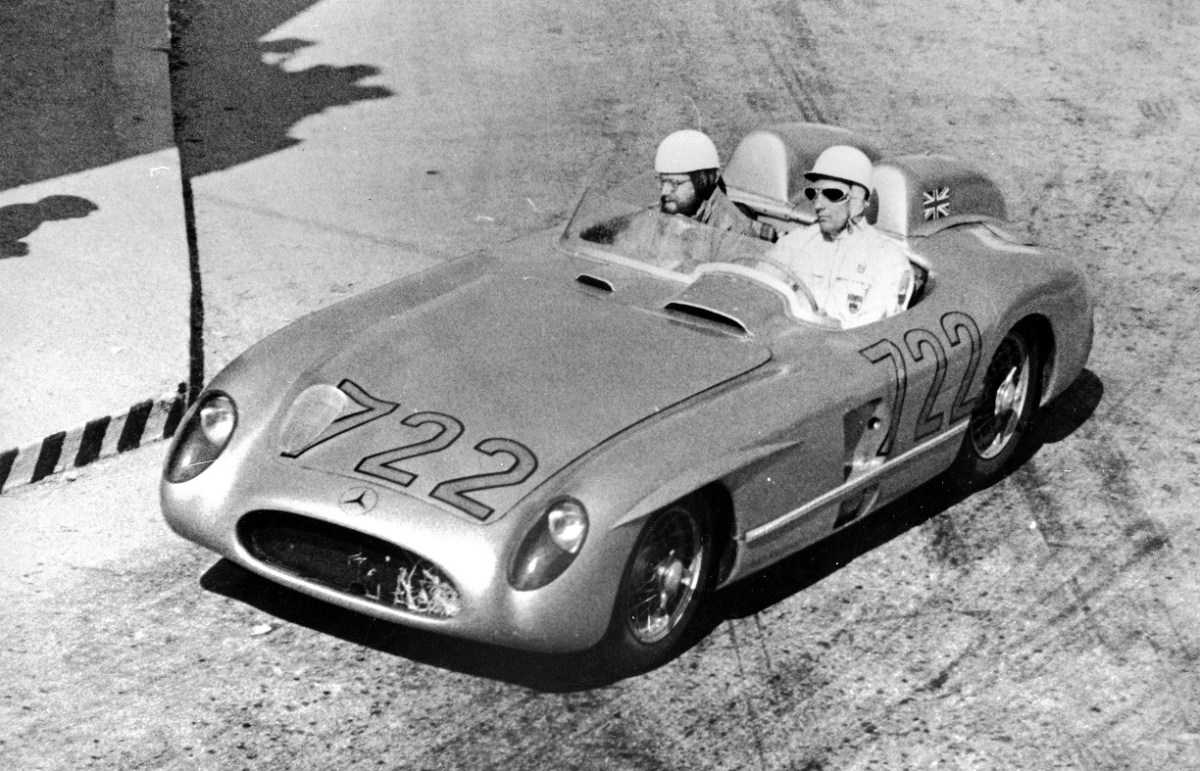
Then there is the sensational success of Stirling Moss and Denis Jenkinson in 1955, with the overall victory and a still unbeaten record time of 10 hours, 7 minutes and 48 seconds. In 1955 Stirling Moss and Denis Jenkinson drove the 300 SLR racing sports car (W 196 S) to overall victory ahead of their team mate Juan Manuel Fangio.


Mille Miglia 1955: Stirling Moss and Denis Jenkinson on the way to overall victory in a Mercedes-Benz 300 SLR racing sports car (W 196 S), with the best time ever achieved in the Mille Miglia, 1 May 1955.

Also triumphant were the 300 SL “Gullwing” sports cars (W 198) in the Gran Turismo class over 1,300 cc displacement, and the 180 D (W 120) won a victory in the diesel class.

In 1956, in addition to several 300 SL “Gullwing” cars and three luxury class saloons of the 220 “Ponton” (W 180) model, a privately entered Mercedes-Benz 190 SL (W 121) also competed successfully in the race.


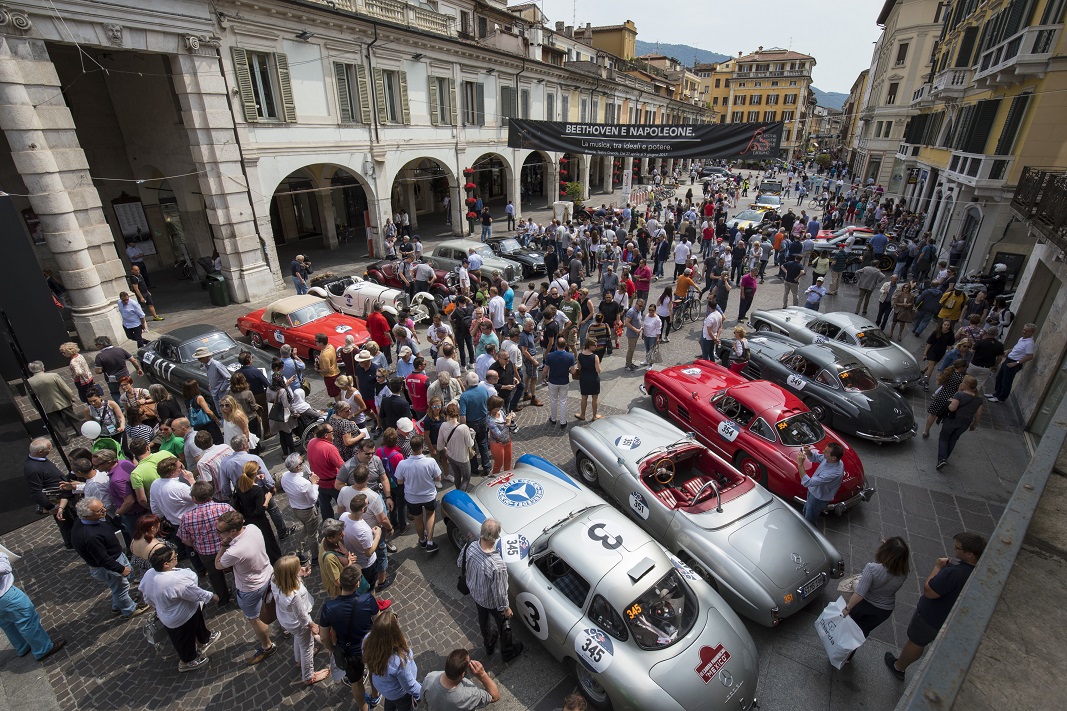
Mille Miglia 2017: Mercedes-Benz Classic cars. Left to right: 300 SL racing sports car (W 194), 190 SL (W 121), 300 SL “Gullwing” Coupés (W 198). Stage from Brescia to Padua, 18 May 2017.

In 2018, a large contingent of the Mercedes-Benz models SSK (W 06), 300 SL “Gullwing” (W 198), 190 SL (W 121) and 220 “Ponton” (W 180) vehicles will be lining up at the start in Brescia. Among others, Mercedes-Benz Classic brand ambassadors Roland Asch, Ellen Lohr, Bernd Mayländer and Bernd Schneider will be at the wheel of the vehicles.


Mercedes-Benz Classic at the Mille Miglia 2017. Ellen Lohr in a 300 SL “Gullwing” (W 198, built from 1954 to 1957).

Today’s version of the “1000 Miglia” is run on a route which closely follows that of the original road race. This year, the first stage (16 May 2018) will lead from Brescia to Cervia-Milano Marittima, and then on to Rome on the second day (17 May). The route to Parma is on the agenda on the third day (18 May), before the rally returns to Brescia on the fourth day (19 May). Entry is restricted to vehicle models that already participated in the famous Italian road race during the period from 1927 to 1957.

Museo Mille Miglia: Public starting ramp with famous racing cars


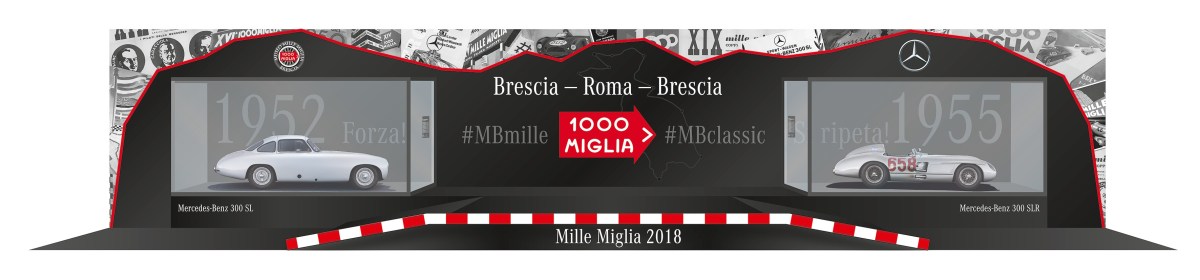
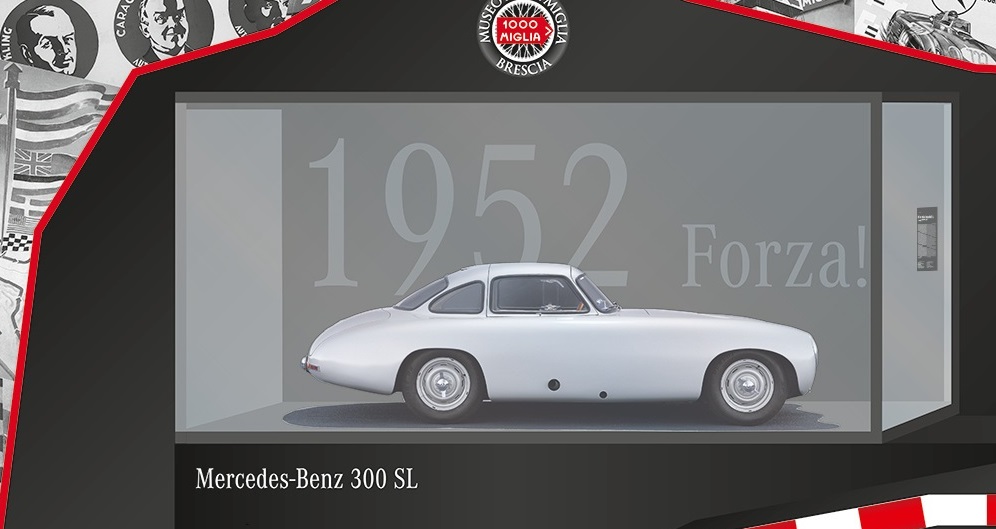
Public starting ramp with famous racing cars: Special exhibition of Mercedes-Benz Classic in the courtyard of the Museo Mille Miglia, Brescia, 10 May to 21 June 2018. Visualisation of the installation. At left, the 300 SL racing sports car (W 194, 2nd and 4th place in the Mille Miglia 1952), at right the 300 SLR (W 196 S, 1st and 2nd place 1955).

The ties between the brand and the racing tradition are also underlined by the cooperation between Mercedes-Benz Classic and the Museo Mille Miglia in the historical monastery complex of Sant’Eufemia della Fonte just outside Brescia.


Detail of the left side of the starting ramp, with the 300 SL racing sports car (W 194, 2nd and 4th place in the Mille Miglia 1952).

This year, Mercedes-Benz is putting on an extraordinary special exhibition in the courtyard of the museum: every visitor can drive his vehicle on a starting ramp as is typical for the Mille Miglia. He can position his vehicle for a photo between two famous Mercedes-Benz racing cars which caused a sensation at the Mille Miglia with their successes: the 300 SL racing sports car (W 194) from 1952 (2nd and 4th place) and the 300 SLR (W 196 S) from 1955 (1st and 2nd place).


Mille Miglia 1952: Premiere of the Mercedes-Benz 300 SL racing sports car (W 194). The team Rudolf Caracciola / Peter Kurrle (start number 613) finishes in 4th place, 3/4 May 1952.

This staging can be seen and used from 10 May to 21 June 2018.

Mercedes-Benz “1000 Miglia Challenge 2018”

Apart from the actual competition, this is also down to programme items such as the Mercedes-Benz “1000 Miglia Challenge 2018”.

The participants in the Mercedes-Benz “1000 Miglia Challenge” will drive ahead of the classic cars on the same route and will compete in the same special stages. Vehicles permitted to take part in the Challenge are Mercedes-Benz SL models of various generations and vehicles from Mercedes-AMG plus models of particular historical value from the product history.

Hans Knol ten Bensel


The BMW M5 gets even sharper with the M5 Competition…

aP90300374_highRes_the-new-bmw-m5-compe (1)s

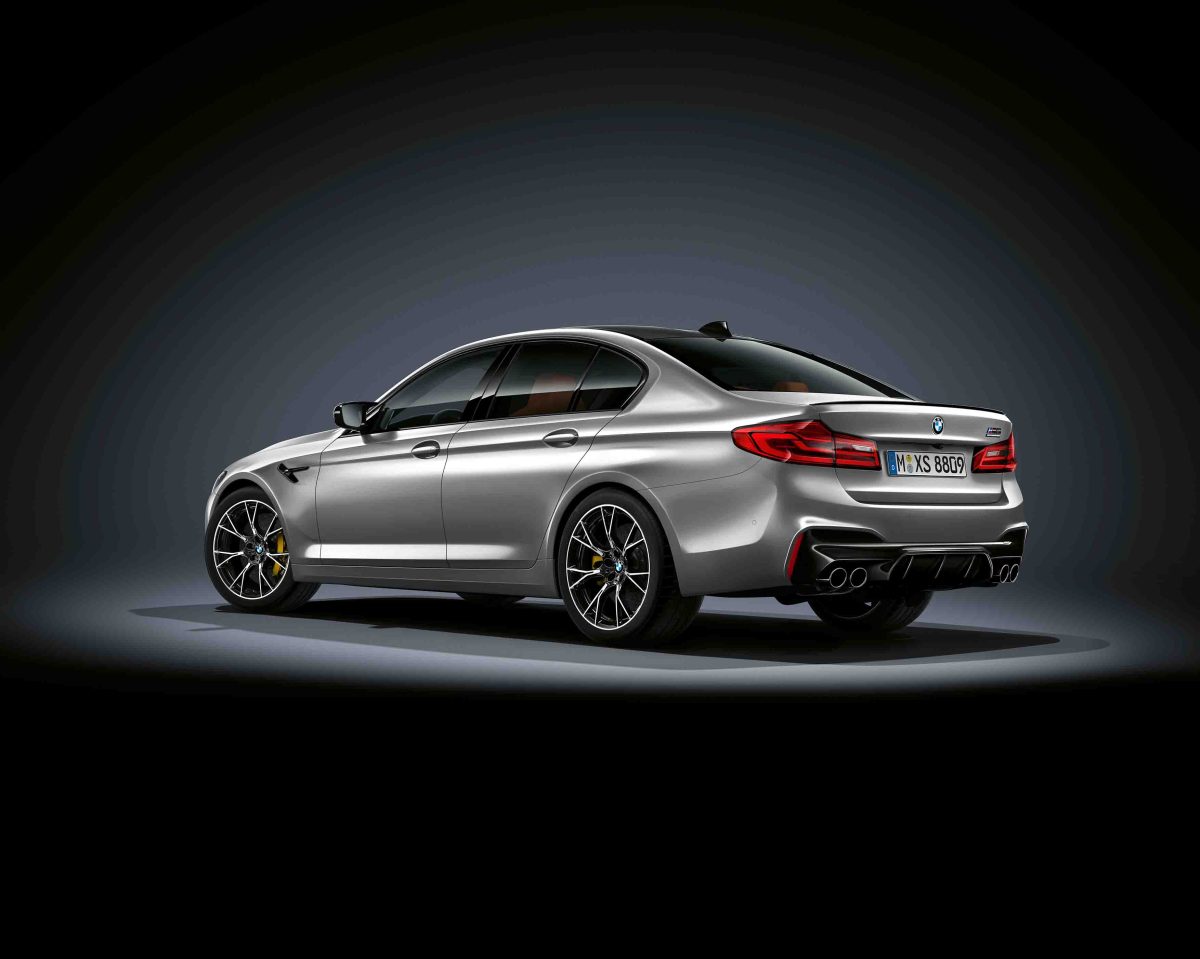
BMW M GmbH has sharpened the race-inspired character of its BMW M5 high-performance sedan with an even more powerful model: the BMW M5 Competition, creating a new product category. In future, BMW M GmbH will offer the most powerful variants of its high-performance cars as standalone models. This new status reflects the individual character of the BMW M5 Competition.

It also embodies the latest chapter in a history of success which began with the M Competition package (including power boost) configured specifically for the predecessor to the current BMW M5 – and which the exclusive new BMW M5 Competition builds on convincingly.

aP90300381_highRes_the-new-bmw-m5-compecrops

A 19 kW/25 hp hike in engine output over the standard version of the new BMW M5 (to 460 kW/625 hp), even more direct responses and bespoke chassis tuning combine to maximize dynamics, agility and precision.

Superb performance…

The 4.4-litre V8 engine with M TwinPower Turbo technology has been modified specifically for this new application and develops peak torque of 750 Nm (553 lb-ft) across an even broader rev range – from 1,800 rpm to 5,800 rpm.

aP90300388_highRes_the-new-bmw-m5-compes

You can image that the performance is stellar: acceleration of 0 to 100 km/h (62 mph) goes in 3.3 seconds and 0 to 200 km/h (124 mph) in 10.8 seconds.

Of course, there is also the sound. Indeed, the tune of the standard-fitted M Sport exhaust system can be adjusted at the touch of a button. The driver can also use the M Sound Control button to initiate an extremely discreet soundtrack.

aP90300381_highRes_the-new-bmw-m5-compecropsshift

Sharp drivetrain, chassis and suspension

Model-specific engine mounts with a higher spring rate provide a much firmer connection between the drive unit and vehicle structure in the new BMW M5 Competition. This has a noticeable effect on the car’s responses, the sharpness of its turn-in and the experience of the engine’s soundtrack inside the car.

aP90300381_highRes_the-new-bmw-m5-compes

The engine’s power is channeled to the road via an eight-speed M Steptronic transmission with Drivelogic. Added to which, the new BMW M5 Competition is specified with the M xDrive M-specific all-wheel-drive system and the Active M Differential at the rear axle.

The centrally controlled interaction between the two systems optimizes traction, agility and directional stability.

The M xDrive system’s rear-wheel bias provides the ideal basis for a full blooded performance-driving experience. Added to which, the new BMW M5 Competition supplements M Dynamic Mode with three driving programs honed for use on the track: 4WD, 4WD Sport and 2WD, which switches to pure rear-wheel drive and deactivates the Dynamic Stability Control (DSC).

Features of the chassis include a seven-millimeter drop in ride height, special damper hydraulics and stiffer springs, an increased camber at the front axle and modified toe links and anti-roll bars at the rear.

Sportiness in style…

aP90300381_highRes_the-new-bmw-m5-compecroparms

Eye-catching design cues emphasize the exclusivity of the new BMW M5 Competition. BMW Individual high-gloss Shadow Line trim is complemented by the use of high-gloss black for the kidney grille surround, decorative grating of the signature BMW M gills, rear spoiler and exterior mirror caps. “Competition” lettering is added to the likewise black “M5” badge on the boot lid. Standard specification for the new BMW M5 Competition also comprises exclusive 20-inch forged M light-alloy wheels with mixed-size tyres.

An impressive BMW, needless to say that we would love to lay our hands on one in a not too distant future…

Hans Knol ten Bensel
Factory reproduction of 300 SL body parts: the three starred diva is now immortal…

Ersatzteile für den Mercedes-Benz 300 SL „Gullwing“ (W 198, 1954 bis 1957): Zahlreiche wichtige Teile sind in originaler Werksqualität erhältlich. Foto der Präsentation auf der Techno Classica 2018. Replacement parts for the Mercedes-Benz 300 SL “Gullwing” (W 198, 1954 to 1957): Numerous key parts are available in genuine factory quality. Photo of presentation at Techno Classica 2018.

Replacement parts for the Mercedes-Benz 300 SL “Gullwing” (W 198, 1954 to 1957): Numerous key parts are available in genuine factory quality. Photo of presentation at Techno Classica 2018.

We were browsing for information about the participation of Mercedes in the next Mille Miglia, and we stumbled on other remarkable news, which shows how painstakingly professional Mercedes is caring about its products and notably its classic and historic cars.

Form now on, key body parts for the Mercedes-Benz 300 SL “Gullwing” (W 198) are again available in factory quality. They can be ordered by their part number from any Mercedes-Benz sales partner, just like that!

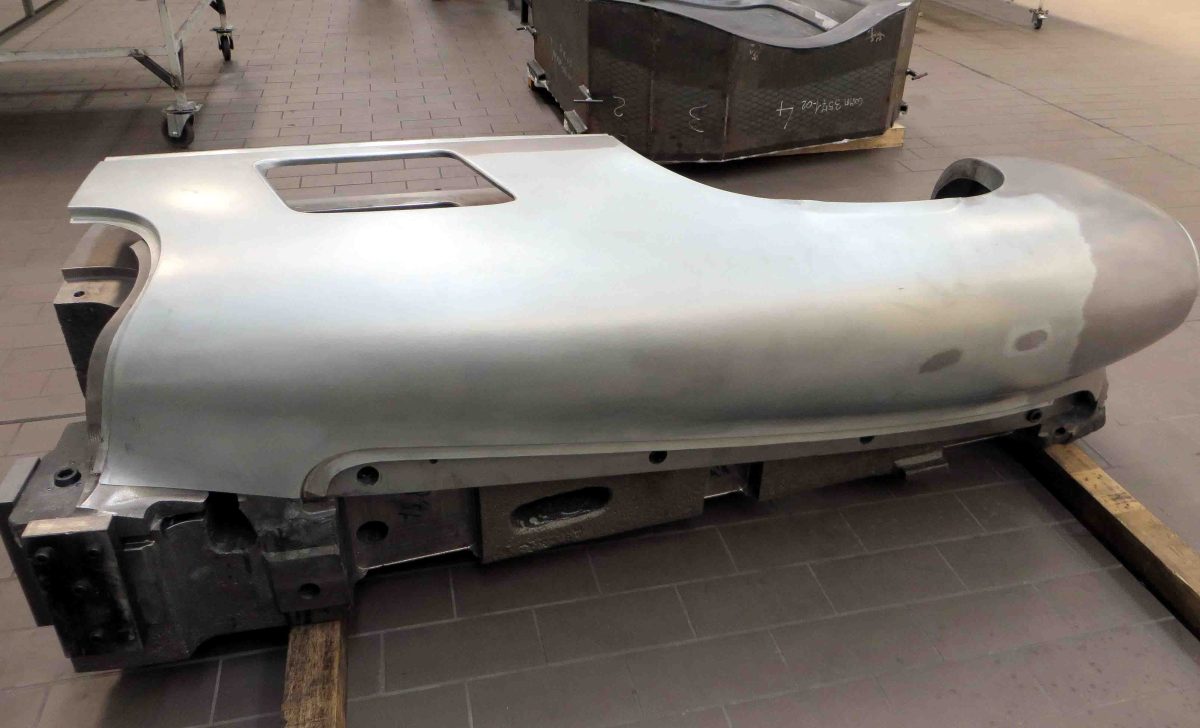
Mercedes-Benz Original-Ersatzteile für den 300 SL „Gullwing“ (W 198, 1954 bis 1957). Nachfertigung von Karosserie-Blechteilen gemäß den hohen Werksstandards der Daimler AG. Das Foto zeigt einen Kotflügel im Presswerkzeug. Mercedes-Benz genuine replacement parts for the 300 SL “Gullwing” (W 198, 1954 to 1957). Reproduction of metal body parts in accordance with the high factory standards of Daimler AG. The photo shows a wing in the pressing tool.

Mercedes-Benz genuine replacement parts for the 300 SL “Gullwing” (W 198, 1954 to 1957). Reproduction of metal body parts in accordance with the high factory standards of Daimler AG. The photo shows a front wing in the pressing tool.

The metal parts are produced for Mercedes-Benz Classic by a certified supplier, whose expertise includes the highly complex construction of tools from optimised 3D data from original bodies. Metal parts produced on these tools are then worked into their final shape by hand using wooden mallets – another special process.

Mercedes-Benz Original-Ersatzteile für den 300 SL „Gullwing“ (W 198, 1954 bis 1957). Nachfertigung von Karosserie-Blechteilen gemäß den hohen Werksstandards der Daimler AG. Das Foto zeigt die Maßprüfung an der Öffnung für den Scheinwerfer. Mercedes-Benz genuine replacement parts for the 300 SL “Gullwing” (W 198, 1954 to 1957). Reproduction of metal body parts in accordance with the high factory standards of Daimler AG. The photo shows the dimensional inspection at the aperture for the headlamp.

Mercedes-Benz genuine replacement parts for the 300 SL “Gullwing” (W 198, 1954 to 1957). Reproduction of metal body parts in accordance with the high factory standards of Daimler AG. The photo shows the dimensional inspection at the aperture for the headlamp.

The precise 3D tool data also provide the basis for quality inspection by means of painstaking false colour comparison. The measuring tool receives the data as a reference and uses false colours to visualise the measured deviations between the desired state and the actual state, thus making it possible for the measurement results to be unambiguously and quickly interpreted.

Mercedes-Benz Original-Ersatzteile für den 300 SL „Gullwing“ (W 198, 1954 bis 1957). Nachfertigung von Karosserie-Blechteilen gemäß den hohen Werksstandards der Daimler AG. Das Foto zeigt die Prüfung der Heckdeckel-Wölbung: Der Mercedes-Stern liegt flächenbündig auf. Mercedes-Benz genuine replacement parts for the 300 SL “Gullwing” (W 198, 1954 to 1957). Reproduction of metal body parts in accordance with the high factory standards of Daimler AG. The photo shows the inspection of the curved section of the boot: the Mercedes star is flush with the surface.

Mercedes-Benz genuine replacement parts for the 300 SL “Gullwing” (W 198, 1954 to 1957). Reproduction of metal body parts in accordance with the high factory standards of Daimler AG. The photo shows the inspection of the curved section of the boot: the Mercedes star is flush with the surface.

The body parts meet the high standards of Daimler AG and can be ordered by their part number from any Mercedes-Benz sales partner. Their surfaces are electrophoretically painted, which assures the highest technical and visual standards. The prices include VAT.

  • Front panelling left (A198 620 03 09 40), 11,900 euros
  • Front panelling right (A198 620 04 09 40), 11,900 euros
  • Rear panelling left (A198 640 01 09 40), 14,875 euros
  • Rear panelling right (A198 640 02 09 40), 14,875 euros
  • Rear-end center section (A198 647 00 09 40), 2,975 euros
  • Rear-end floor (A198 640 00 61 40), 8,925 euros

We let you further have a look at the photos…

Hans Knol ten Bensel

Mille Miglia 2018: the Alfa Romeo legend lives on more than ever…


Alfa-Romeo-Mille-Miglia-1

The 36th edition of the iconic race coincides with the 90th anniversary of the first of the 11 victories Alfa Romeo recorded from 1927 to 1957: a record which will now never be beaten.

This anniversary will be celebrated on 19 May, when the race will pay a visit to Milan and to the Museo Storico Alfa Romeo at Arese, where time trials will be held on the internal circuit. Held for the 36th time this year, the race will be run over the traditional Brescia-Rome-Brescia route and will star Alfa Romeo both as Automotive Sponsor and as “guest of honour”, as this year marks the 90th anniversary of its first victory in the legendary race, held from 1927 to 1957.

Alfa-Romeo-Mille-Miglia-2

From 19 May to December 2018, the Museum will host the “11 volte campione” [11 times champion”] exhibition, which celebrates these sporting exploits, engraved in the memories of fans all over the world.

Inaugurated on 24 June 2015, the fascinating Museo Storico Alfa Romeo – known as “The Time Machine” – is the heart of a real “brand centre”, created by a major upgrading project by architect Benedetto Camerana, which brings together the brand’s past, present and future. As well as the area displaying the key models from the Alfa Romeo historic collection, the site is buzzing and vibrant, with the Archive, the internal circuit, the events spaces, the Alfa Romeo Café and the show-room with delivery area. More on this museum in a special report.

Alfa-Romeo-Mille-Miglia-3

Competing in this year’s race will be several wonderful classic Alfa Romeo cars from the FCA Heritage collection: from the 6C 1500 SS to the 6C 1750 GS, and from the 1900 SS to the 1900 Sport Spider.

On 19 May, drivers Marcus Ericsson and Charles Leclerc from the Alfa Romeo Sauber F1 Team currently taking part in the 2018 Formula 1 championship will also be present. Their participation is a tangible sign of how indelibly the racing world is engraved in the Alfa Romeo DNA… we just let you look here at the photos, and tell you also soon more about other iconic brands participating at the Mille Miglia 2018…

Hans Knol ten Bensel

The 1924 Alfa Romeo P2 Grand Prix Engine: Vittorio Jano’s brainchild…

Alfa P2sketch6

Dear reader, we now take you back to the twenties. To the days where engines counted most in a racing car. Aerodynamics and chassis design, tyres and brakes where timidly starting to develop, the focus was on the engine. A true genius designed it for Alfa Romeo. His name was Vittorio Jano.

Actually, he was born  as Viktor János in San Giorgio Canavese, in Piedmont, son of Hungarian immigrants, who settled there several years earlier. He began at the car and truck company Società Torinese Automobili Rapid owned by G.B. Ceirano. In 1911 he moved to Fiat under Luigi Bazzi. He went with Bazzi to Alfa Romeo in 1923 to replace Giuseppe Merosi as chief engineer.

There is also a truly wondrous story to tell about the designers of Fiat and their engineers in the period between the two world wars, and it will be subject of a later series where we will present drawn  portraits of the men and women who marked our automotive history.

Alfa P2 laterasketchl8wet

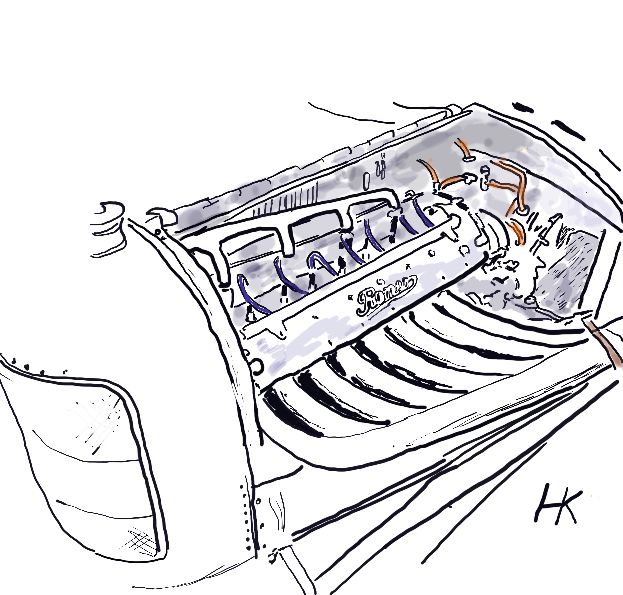
Here one sees the carburettor side of the engine, its architecture being an example for all Alfa engines to follow, right until this day… On both drawings, some watercolor was added.

His first design with Alfa Romeo was the 8-cylinder in-line mounted P2 Grand Prix car, which won Alfa Romeo the inaugural world championship for Grand Prix cars in 1925. But he was going to do much, much more for Alfa. In 1932, he produced the sensational P3 model which later was raced with great success by Enzo Ferrari when he began Scuderia Ferrari in 1933. We will also bring a special about this marvelous engine.

Jano also definitely established Alfa’s engine architecture, and indeed made Alfa technically what is Alfa all about. For the Alfa series production cars,  Jano developed a series of small-to-medium-displacement 4-, 6-, and 8-cylinder inline power plants based on the P2 unit that established the classic architecture of Alfa engines, with light alloy construction, hemispherical combustion chambers, centrally located plugs, two rows of overhead valves per cylinder bank and dual overhead cams…

Indeed, this straight 8 engine is the architectural forerunner of what a classic Alfa engine is right until this day.

This 1,987 cc engine had Twin Roots Superchargers and 2 Memini carburettors, developed 140 bhp (104 kW) @ 5500 rpm in 1924, and 155 bhp (115 kW) a year later. As the P2 did only weigh 614 kg, it was fast enough to win 14 grand prix until 1930, and embodied together with the Bugatti 35 the most iconic grand prix cars in the twenties.

Its designer Vittorio Jano would in 1937 move to Lancia, and later to Ferrari, where he designed the V6 and V8 engines, which are still a technical basis for the Ferrari’s today…

Hans Knol ten Bensel

Kia launches EV-Niro…

Kia has today unveiled a new all-electric version of Niro at the 5th International Electric Vehicle Expo in Jeju, Korea. It is due to receive its European debut at the Paris Motor Show in October 2018.

aKia Niro EV (2)s

The car was developed at Kia’s design centres in California, USA and Namyang, Korea and took inspiration from the the Niro EV Concept unveiled at the 2018 Consumer Electronics Show in Las Vegas. It has a rather futuristic air intake and arrowhead-shaped LED daytime running lights, and looks overall pleasingly muscular.

aKia Niro EV (4)s

The Niro EV is powered by Kia’s next-generation electric vehicle powertrain, using new production technologies developed specifically for Kia EVs. Equipped with a high-capacity 64 kWh lithium-polymer battery pack, the Niro EV will be able to drive over 450 km on a single charge with zero emissions, or more than 300 km on an optional 39.2 kWh battery system, according to the manufacturer.

aKia Niro EV (3)s

The Niro EV will go on sale in Korea during the second half of 2018, and as said, will be seen in Paris!

Hans Knol ten Bensel


The new Porsche Cayenne has now a plug-in hybrid version…

aP18_0063_a5_rgbs

The next stage in Porsche’s road to (full) e-mobility is the Cayenne E-Hybrid. While the power of the 3 litre V6 engine moderately improves on its predecessor by five kW (Seven hp) to 250 kW (340 hp), the performance of the electric engine is now over 43 per cent higher at 100 kW (136 hp). Both combine for a total system power of 340 kW (462 hp).

Just read further…

Hans Knol ten Bensel

Continue reading “The new Porsche Cayenne has now a plug-in hybrid version…”

Mercedes brings all-new A Class: small is now (very) big…

Mercedes-Benz A 180 d, Progressive, mountaingrau, Leder macchiatobeige/schwarz.;Kraftstoffverbrauch kombiniert: 4,5-4,1 l/100 km; CO2-Emissionen kombiniert: 118-108 g/km* Mercedes-Benz A 180 d, Progressive, mountain grey, Leather macchiato beige/black;Fuel consumption combined: 4,5-4,1 l/100 km; combined CO2 emissions: 118-108 g/km*

The Mercedes-Benz A 180 d,  more stylish than ever in mountain grey, ;Fuel consumption combined: 4,5-4,1 l/100 km; combined CO2 emissions: 118-108 g/km.

The smallest Mercedes is more than ever a true Mercedes. It breaks not only new ground in body styling, also its new cabin layout is a big step forward, and then we said nothing about its formidable touchscreen and enhanced connectivity and infotainment, which was hitherto unseen in its class. An important Mercedes, and therefore we tell you here more about it…

Hans Knol ten Bensel

Continue reading “Mercedes brings all-new A Class: small is now (very) big…”

The formidable V16 Auto Union Type C engine…

+Motor Auto Union V 16sketch

Without any doubt, the powerful rear engine Auto Unions were ahead of their time. Their sheer “Leistung” or power was absolutely legendary. Just tires couldn’t cope, and the sheer chassis dynamics and even more importantly aerodynamics were not fully understood at the time. So the cars had no downforce at racing speeds, and the narrow tires with their still softer construction and not so adhesive compounds did not help.

The V16 engine of this Type C was a Porsche design, and started off in the type A with a displacement of 4360 cc. But it was originally meant to be a 6 litre engine, and this it was in the Type C. The two cylinder banks were angled at 45 degrees, and one central camshaft operated all the 32 valves. That is why the engine has this typical look of 16 pushrods in their gleaming chromed shafts connected with the exhaust valves, while the intake valves were actuated by the camshaft through rocker arms. So we see three valve covers on this beautiful engine.

Toerenteller V16 Auto Union tekeningbisbeterter

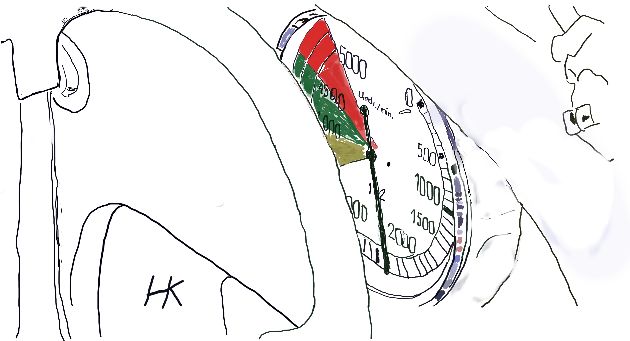
The engine was laid out to develop massive low end torque, and for a racing engine, it revved quite low, as the rev counter clearly tells.

All this torque, a hefty 853 Nm being available at 2500 rpm, was very difficult to handle for the narrow rear wheel tires, and a limited slip differential was badly needed to stop the inner wheel in narrow corners from spinning fiercely through under full throttle, even in the dry!
V16 Compressorsketch6bis

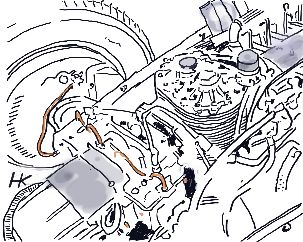
The impressive two-stage Roots compressor at the back of the engine, fed by a battery of two carburetors… 

Maximum power ranged from 485 to 520 PS or 357-382 kW during the racing seasons, and whether the race was to be long or short. It was achieved at – at least for a racing engine –a very lowish 5000 rpm. A two stage roots compressor was used, with 0,95 bar pressure.

One last item, which one tends to forget when talking about the sheer performance of this engines, is that the 200 L tank did not contain ordinary fuel. A (secret) mixture using amongst others ethanol and methanol was used. This did allow higher combustion chamber pressures and temperatures, without problems of knocking or lack of cooling. One needs to flush the system after races because the mixture is corrosive.

In our next edition, we will go for the equally stunning Alfa Romeo P2 straight 8 compressor engine…

We just let you look here at our drawings!

Hans Knol ten Bensel