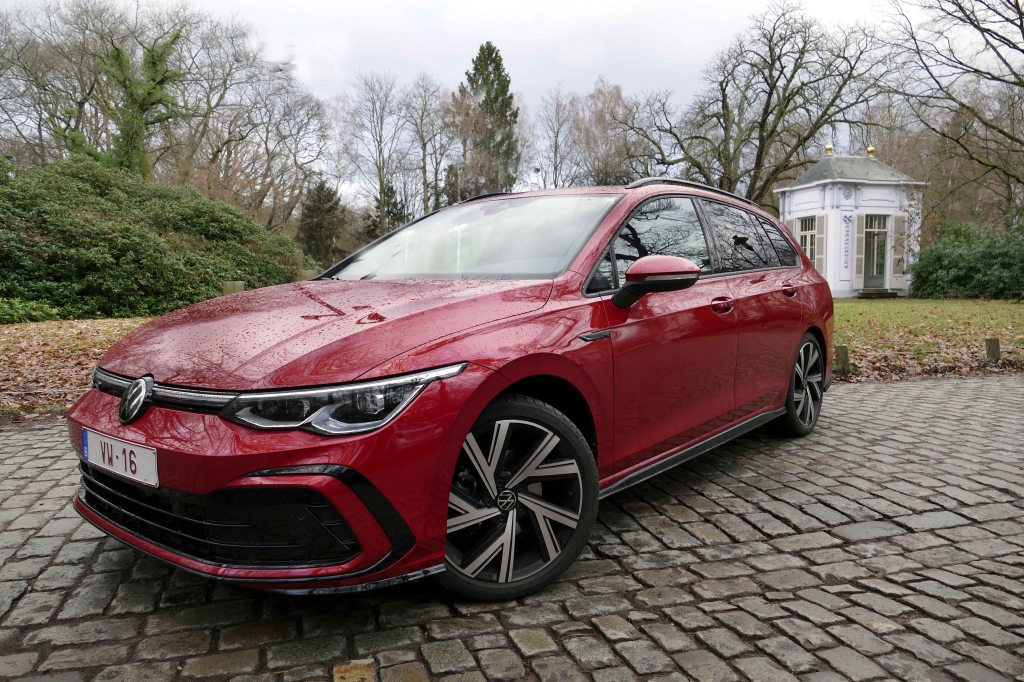
We drove the Golf Variant R-Line 1,5 eTSI DSG7: the beauty of efficiency…

Volkswagen hones its bestsellers to perfection, and the Golf range takes here of course centre stage. The Golf also caters for a wide array of users, also for those among us which still choose for a “classic” combustion-engined drivetrain, albeit here with the electric support of a 48 V battery and a belt driven starter/generator.

This choice can be the right one for many reasons, last but not least for example the poor availability and density of the charging infrastructure and of course the type of use of his/her car. Frequent and almost daily high-speed long distance runs on Autobahnen and autoroutes or longer trips in remote mountain/rural areas on this globe can make the choice for an efficient petrol engined car the right one.

We wanted to find out with this test how they behave in terms of consumption and efficiency in our present day “green” world…

We also took a close look at the practical qualities of the Variant version, which also tops in the popularity charts. Did you know that Golf Variant has already impressed more than 3 million customers since its debut in 1993?

Hans Knol ten Bensel
Timeless looks and top notch build quality…

The Golf Variant runs of the production line in the “home” factory in Wolfsburg, and this is true for the entire Golf range now. The Golf stands out with excellent finish and quality of the materials used. The vast experience of the group in achieving high standards of finish in its mass produced cars certainly shows. There is further the attention to detail and every aspect of the styling of the Golf range, which is also a good example of how to combine timeless contours and proportions with an overall elegance which appeals to (almost) all of us. The 2024 edition has received a further facelift by the way, with revamped infotainment. But interior dimensions remain unchanged.

Stepping into the cabin is as one might expect totally easy, even for the tallest among us. Also two adult rear passengers find more than adequate leg- and headroom. See further more about the practical qualities of this Variant.

We like the dashboard layout and the no nonsense design of the round instruments you can choose in the digital display in front of you, clearly readable in the good VW tradition. The central touchscreen is also well oriented and clearly readable. After the most recent facelift the now free-standing touchscreen is further enlarged, with a screen diagonal up to 32.8 cm.

What is truly impressive is the enormous plethora of information you can display on both the central touchscreen and the instrument cluster in front of you. Don’t get too enthusiastic when trying this out, as you can wind up with a drivers’ screen which informs you about too many things…

As with any car, it certainly pays to read the instruction manual carefully, something which hardly anyone does, much to their own expense. You will learn a lot, and the manufacturer has gone to great lengths to inform you, no efforts spared. For example, the manual of my trusted Lexus CT 200h is…696 pages long! Instead of looking at You Tube films to know more about using your car, read the manual first… 

We reconfigured the Variant drivers’ display to indicate also the oil temperature, and this gave us again some very interesting information. It reminded us that one needs to drive at least 10 minutes and/or up to 15 kilometers to get an oil temperature at working temperature. Water temperature is much sooner at its “ideal” level, as the thermostat brings it there rapidly to ensure ideal thermal efficiency and reduced fuel consumption. So don’t floor the accelerator too soon and don’t rev the engine too high on short (urban) runs…

An ideal driving position is soon found, with plenty of adjustment range available in seats and steering wheel column. 

One of the Achilles heels in the present day generations of VW’s are the haptic touch buttons to use the different infotainment functions of the car. It certainly needs a sensitive hand and index finger to get acquainted with them. But practice (and patience) makes perfect…. The slider controls for heating and ventilation are illuminated too, which is welcome at night.

Driving

The Golf has always been an excellent drivers’ car in its segment, and this Variant 1,5 eTSI DSG7 is no exception. The 130 HP 4 cylinder engine is smooth and willing, and well matched to the 7 speed DSG auto box. There is the addition of a mild-hybrid system and a powerful brake energy recuperation function, paired exclusively with the 7-speed dual-clutch gearbox (DSG).

The energy stored in the 48 V lithium-ion battery supplies the 12 V vehicle electrical system and drives the 48 V belt starter generator. Below 20 km/h, when coasting, the engine will shut off automatically, and it does also under braking.
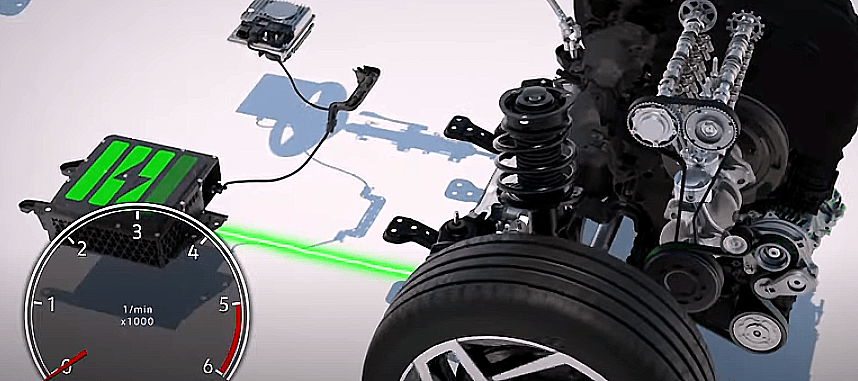
The belt starter generator also starts the combustion engine – which as we said is switched off as much as possible while the vehicle is moving – in a barely perceptible way. Driving at normal throttle openings, the engine will change quickly into higher gears, keeping revs low. This belt-driven starter-alternator not only takes on the role of the alternator and starter but also operates as a small, lightweight electric motor that instantly boosts the drive torque when moving off.

The good torque characteristics of this unit still warrant brisk accelerations. Mind you, the Changes are smooth and jerk free, making (urban) driving most relaxing. Performance is up to scratch, with the “classic” 0 to 100 km/h sprint absolved in 9,6 seconds, and a top speed of not less than 206 km/h.

How does this translate in fuel efficiency? Again, much depends, as always, on your driving style. But the starter generator helps you. In low speed stop and go urban traffic expect a consumption in the range of 7,3 liters/100 km. On the open road, it is easy to get below 5 liters/100 km, and autobahn runs at legal speeds cost you seldom more than 6,5 liters. Indeed, the “coasting” function with automatic engine shut of when you lift the throttle at speed is smooth, very relaxing and indeed saves fuel.

VW claims that the assistance of the starter/generator reduces average fuel consumption by some 0,4 l/100 km. If you adapt your driving style to the philosophy of this eTSI, this is certainly true. The CO2 emissions according to WLTP  standards are 129 g/km, the emission standard is Euro 6d (WLTP).

Handling and comfort beyond reproach.

Needless to say that the Golf platform, it uses the Modular Transverse Toolkit (Modular Quer Bau) is currently Volkswagen’s most widely used technology platform, and allows for the Golf to offer customers a choice between petrol, diesel, CNG, electric and plug-in hybrid powertrains. The Golf Variant offers most excellent (high speed) stability and impeccable handling, behaving very predictably in all thinkable situations. We tested the car in very snowy conditions, and it proved to be masterful in every respect, of course when driven sensibly…

Practical There is another strong point of the Golf Variant, and that is offering room for its occupants and luggage. The Variant is now 4,633 mm long and now boasts a wheelbase of 2,686 mm (respectively a 66 mm increase compared with its predecessor). Much to the advantage of the interior: the legroom thereby also increases by 48 mm. There is also room for your luggage:  when loaded up to the top edge of the rear seat backrest, it offers 611 litres of stowage space.
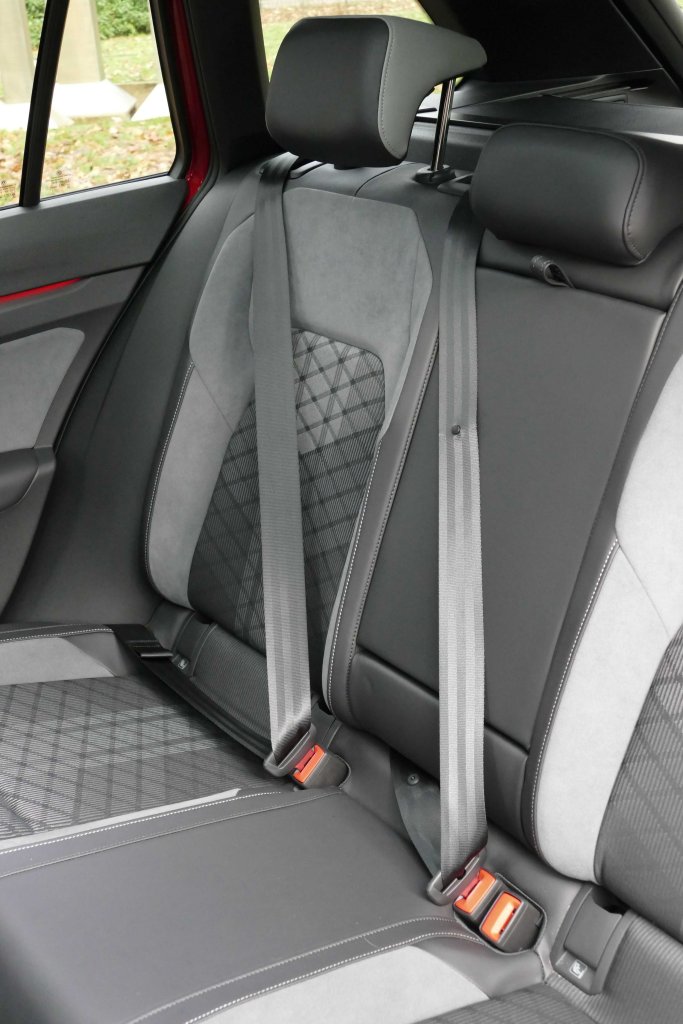
With the vehicle loaded up to the roofliner with integrated luggage compartment net and the front seat backrests, the volume increases to 1,642 litres.

We drove the posh “R Line” equipment version, but it is good to know that the Golf Variant standard features already include the Lane Assist lane departure warning system, Front Assist with City Emergency Braking System and Pedestrian Monitoring, the new oncoming vehicle braking when turning function, XDS electronic differential lock, the Car2X traffic hazard alert, the keyless comfort start system Keyless Start and automatic lighting control. Always as standard in the vehicle interior: Digital Cockpit Pro (digital instruments), Composition online infotainment system touchscreen, We Connect and We Connect Plus online services and functions, a multifunction steering wheel, Air Care Climatronic automatic air conditioner and a Bluetooth telephone interface.

Conclusion

This Golf Variant eTSI A formidable practical companion, bringing you swiftly and economically in all types of weather and roads, with a useable range of 750 kilometers from its 45 liter tank, offering lots of passenger room fore and aft and for massive luggage too.

It is everything you would like a car to be, dependable, timeless, iconic, classless, standing indeed the test of time.

In its starter/generator configuration it makes clever use of e-power, not adding much weight in heavy batteries, which is also an advantage as European governments now soon want increasingly to tax cars on their weight. The Golf is also reasonably compact considering the room it offers, so it will have for many years (literally) its place in urban areas.

Hans Knol ten Bensel

Abarth reveals the New Abarth 600e, the most powerful ever…

We don’t have to wait much longer now, the New Abarth 600e is undergoing final tests and will soon be making its first public debut in Milan, where shooting is going on at the moment of writing for its commercial film debut.

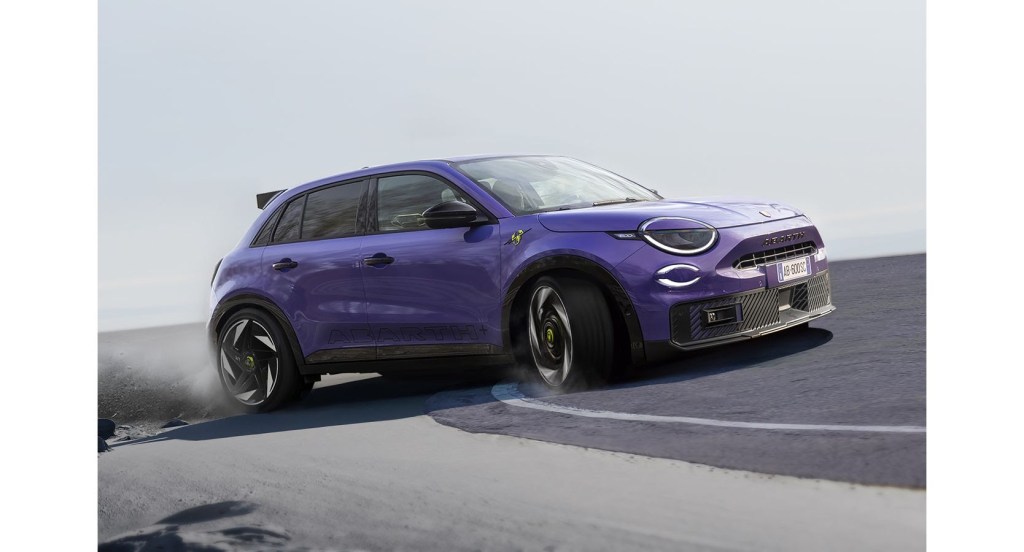
Here you see already a first picture, revealing  instantly the “evil” or “pur sang” character of the Abarth 600e Scorpionissima launch version, which will be produced in a limited-edition of 1,949 units.

Equipped with 240 HP, the New Abarth 600e Scorpionissima is fiercely competitive and powerful. There has never been a more powerful Abarth. Made to be unique in the field of electric cars, the Abarth 600e will feature a mechanical limited slip differential that guarantees excellent driving stability, improved handling, and traction.

The exceptional performance of the limited slip differential takes the car to new heights, especially when combined with its high-performance tires which were jointly developed with the supplier for Formula E to ensure maximum grip and guarantee excellent racing dynamics in all kinds of conditions. A harmonious equilibrium is attained by balancing performance and limited resistance, ensuring an improved range in an electric vehicle.

Looking at the car you can see it is clearly an Abarth! The exclusive Hypnotic Purple, the launch color inspired by the post-puncture hypnotic effect, highlights its aggressiveness, while the aerodynamic rear spoiler is designed to maximize performance.

It also has expansive wheels, a low profile, and 20-inch wheels designed to accommodate an extensive brake system.

For collectors and Abarth aficionados, the New Abarth 600e Scorpionissima will come with an authenticity certificate. And of course, there is more to come….like the Abarth 695 75° Anniversario limited edition, we will tell you about it also soon!

Hans Knol ten Bensel

We spoke with Pierre Voineau, Managing Director Citroën Belgium & Luxemburg

On BEV-mobility In the B segment, we will indeed be the spearhead for the Stellantis Group.

On the recently held Stellantis  Press conference where it unfolded its strategy, results and future plans for its brands, we had the opportunity to talk with the leading managers of the several brands. As Citroën is the linchpin of the group in terms of European volume sales, we were keen to talk with Pierre Voineau, more specifically about a very important EV for Citroën, the new ë-C3.

Just read on…

 Hans Knol ten Bensel

HKTB: The new electric C3 will be a very important car for Citroën on our market…

PV: Indeed, it is the most important model launch for the Citroën brand over the last decade. Of course, the C3 is the most popular car here in Belgium, and has been already over the last few years. We also want to revolutionize the EV market with this car, making it accessible for everybody and at the same time producing the car in Europe…

We are at the crossroads of a decisive moment both for the Citroën brand as well as the car market in general.  

HKTB: For you it is also a mini-SUV, the C3 has grown taller…

PV: Indeed, we have injected the DNA of an SUV into the well known C3, but we did not make the car any longer or wider. This was very important. The car does not take up more room on the road than the present C3, just by a few centimeters at most. But we heightened the ground clearance of the car by 3 centimeters, and raised the roof line considerably with 10 centimeters. The passengers sit higher and indeed the front end is more imposing with a styling reminiscent of the OLI prototype you saw in Paris. The OLI embodies the strategy of the brand in terms of the total technical concept and styling in the long term, but indeed, some elements are already incorporated in this new C3.

HKTB: Which extra market segments or client groups do you want to attract besides the existing Citroën buyers?

PV: We will not in the first instance attract other client groups. It is rather the mobility itself which changes. With this, the needs of our existing client base also evolve. Now the need arises for cheap EV mobility, and we respond to that.

HKTB: The problem for you as a brand and certainly for a big automotive group like Stellantis is that the public charging infrastructure is still insufficient to meet all the mobility requirements. What do you put forward strategically here as a brand and a large group?

PV: We have Free2move eSolutions within the Stellantis group, which accompanies the client from A to Z in purchasing and installing his home charging point. When the client is in a particular situation and has no home or office charging point, or otherwise, it is good to know that in the spring we will also offer a thermal version of the C3.

Having said this, we will also have a special application, called e-ROUTES, on our electric C3. The route planner knows how many kilometers you need to travel, it will calculate a stop at say 20 % of the battery left, indicating the position of a charging point and also whether this charging point is available. It will indicate the recharging time needed, depending on the power of the charging station. One can charge up to 100 kW by the way. This will give the customer peace of mind when traveling over longer distances. With a battery of 44 kW and a range of some 320 kilometers one responds to almost all needs. On average, customers don’t travel more than 80 km per day.

HKTB: EV driving also needs a different state of mind and driving style…

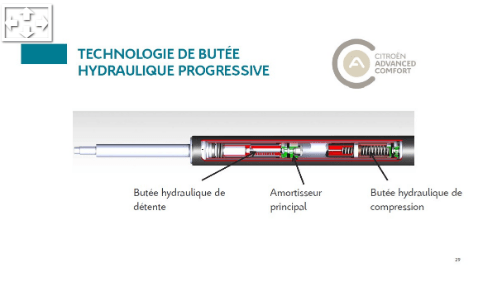
PV: Indeed, one will embrace a different, anticipative, more leisurely and “zen” driving style… What’s more, we focus at Citroën also on comfort: the new electric C3 has a so-called Progressive Hydraulic Cushions® suspension, ensuring that you enjoy the legendary ‘magic carpet ride’ feeling of comfort on the road, thanks to the use of progressive Hydraulic bump stops.

PV: We also have a manual airco on all the equipment versions of the C3, including a rear-end sensor. This combination of e-refinement with comfort and lavish standard equipment has great appeal and indeed the European wide orders for the new car at the end of December last year amounted to not less than 20,000. This year, we have chalked up already 1,000 orders in Belgium only. On BEV-mobility In the B segment, we will indeed be the spearhead for the Stellantis Group.

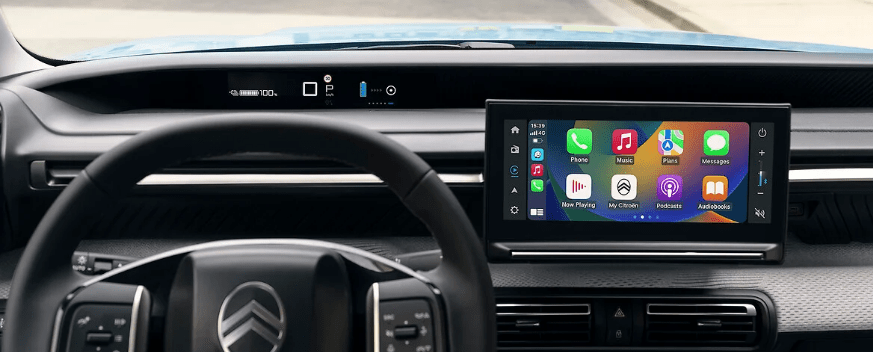
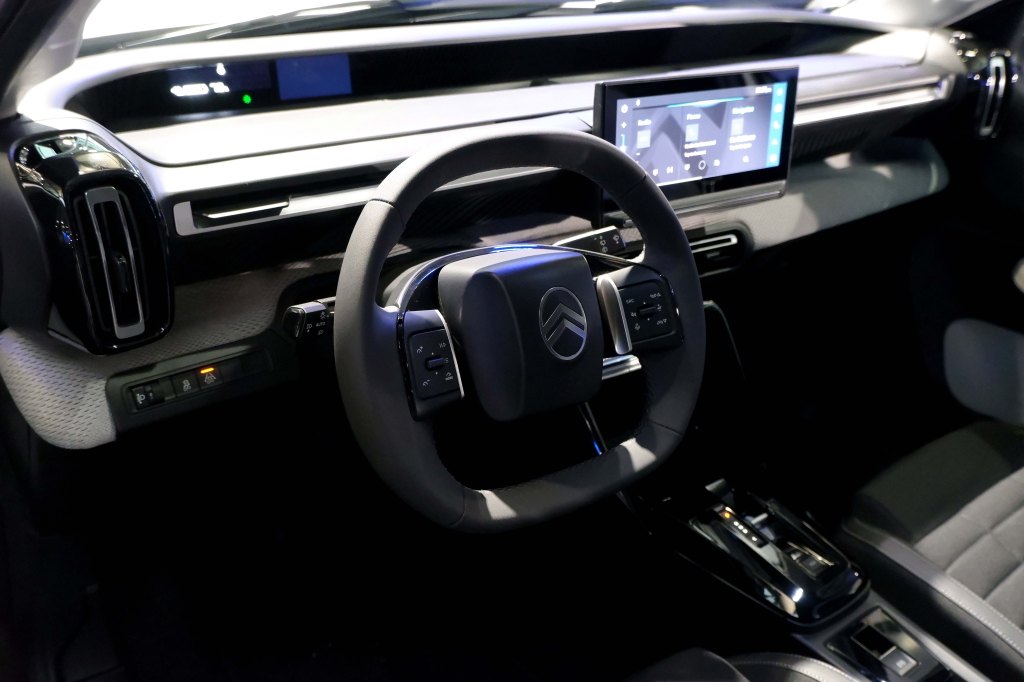
PV: I would like to comment also a bit more on the interior of the C3. Just look at the display. It reflects vehicle information onto a glossy black section between the top of the dash panel and the bottom of the windscreen. This smart solution ensures there is no duplication of information as there would traditionally be between a Head Up Display system and instrument cluster, and ensures drivers can easily access all the key information they need without taking their eyes off the road. The new multi-function steering wheel is also smaller, and so does not obstruct the head-up display.

Owners of the ‘You’ model have as standard equipment the ‘My Citroen Play with Smartphone Station’ dedicated App to access music, radio, calls and navigation via their own device.

HKTB: The clever use of the smartphone was also a solution found on the OLI prototype… actually, this C3 has everything of a compact “grande routière”…

PV: Indeed, as said, standard on ‘You’ models and features a built-in smartphone holder that allows drivers to ‘dock’ their device and auto launch the dedicated new App using NFC (Near Field Communication) wireless technology. Via this app, owners use their device to access shortcuts to Phone, Radio, Navigation and Music App services. The ë-C3’s steering wheel controls ensure drivers keep their hands on the wheel, and the ‘Home’ button makes it easy to navigate back to the homepage of the App.     

Indeed, she has everything of a “petite grande”…

HKTB I thank you for this interview.

Hans Knol ten Bensel

Stellantis Belux unveils cars and future plans in a multi-brand car show …  

Indeed, the  Management and PR team of Stellantis Belux, welcomed recently the Press and B2B to a, called ‘House of Innovation’.

A fitting initiative, set up in the absence of the Brussels Motor Shows, keeping the tradition in our country of a traditional show period and at the same time providing a platform for unveiling the latest innovations, concept cars and the future direction of the Stellantis brands.

Needless to say we were very keen to attend this event, giving your servant also the opportunity to have several interviews with the managers of several brands, which we will present soon on our columns. Here in this first report about this “Kickoff Press conference” we will focus on the future strategy of Stellantis and its plans for the Belux market. Just read further!

Hans Knol ten Bensel
The event started with an inspiring introduction by Florian Kraft, CEO of Stellantis Belux

…followed by interactive brand presentations and workshops. “This event symbolizes our continued pursuit of innovation and progress in the automotive world. We are excited to share our latest developments and our vision for the future with the press and our valued customers and partners,” said Florian Kraft, CEO.

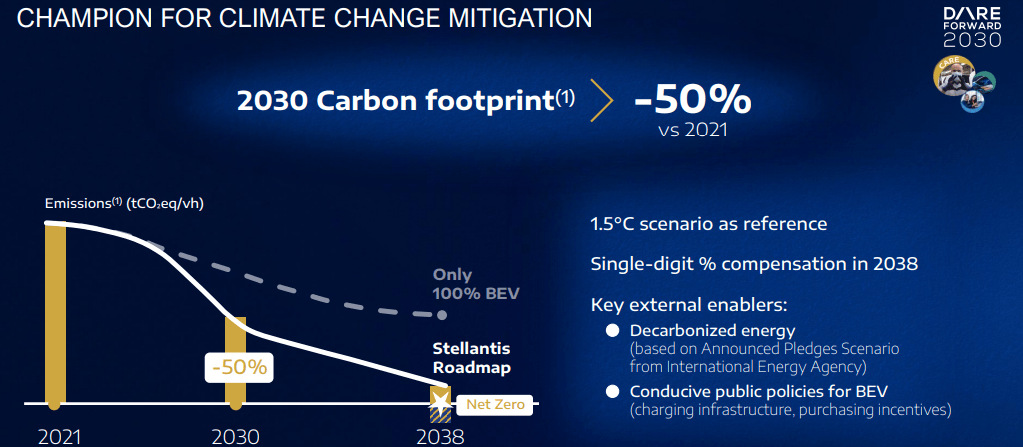
Florian Kraft first pointed out the four core targets of the Stellantis “Dare Forward strategic plan 2030.” This plan will move Stellantis into a sustainable mobility tech company.

The first target is reducing its carbon footprint by 50 % in total CO2 emissions per vehicle compared with 2021, on the path to achieving carbon net zero in 2038. This then includes not only from well to wheel, but also throughout the entire supply chain. 

The second target is setting the course for 100% BEV sales in Europe and 50% in the United States in 2030. The third is achieving number one position in customer satisfaction. The fourth is doubling net revenues while transforming our business models and sustaining double-digit operating margins. How Stellantis will achieve this, will be the subject of a future report in our columns. Stay tuned!

Ambitions for 2024…

Looking ahead to 2024, Stellantis Belux has set itself several goals. In terms of network, the company aims to ensure a successful transition to the New Retailer Model using its existing network. Indeed, Stellantis is progressing at full speed in the execution of its Dare Forward 2030 Strategic Plan, with the ambition to be #1 in customer satisfaction in all markets, in products and services. Indeed, the customer experience will be at the core of this retailer model.

Customers will be able to take advantage of a multi-brand and multi-channel approach with a wider range of services. Dealers will have a new and efficient business model aimed at benefitting from Stellantis’ 14-brand portfolio, creating synergies, optimizing distribution costs and offering additional sustainable mobility solutions, says Stellantis. So far for the aims, let’s explain this further in more concrete terms.

In September last year, Stellantis launched the reorganization of its European dealer network, starting with four specific markets before extending it further across Europe in 2024. Stellantis announced it was ending its previous sales and services contracts with European dealers for its 14 brands and moving toward a new distribution framework based on an agency model. What is this agency model?

Under this model, the manufacturer becomes the retailer while the dealer remains the physical touchpoint with the customer. The agent/dealer receives a commission on each sale and no longer individually sets prices or discounts.

As the dealer does not have to purchase the cars from the manufacturers anymore, he does not carry significant commercial risks and has less administrative costs as billing and payment towards the customer is done by the manufacturer. It protects also the profitability of the retailer. Because, as everybody knows, profit margins on new car sales can fluctuate.

With the Lancia Pu+Ra HPE, the Lancia journey towards the future begins, drawing inspiration from the past

The advantage for the car manufacturer is a direct contact with the customer, which it did not have so far….

The manufacturer can now determine end-customer discounts themselves, in this way achieving price consistency and avoiding  competition between dealers of the same brand. They can optimize costs through centralization, and profit from the scale effect of transferring responsibilities from individual dealerships to the bigger sales organizations on national levels.

The new Alfa Romeo Stradale: the future is already a pur-sang reality…

It also is more in line with today’s consumer preferences, which would rather see fixed prices and an equally simple buying process as they experience in e-commerce.

Stellantis is moving towards this model in big steps now. In September last year, Stellantis announced that the revised retail model will be fully effective from Sept. 4, starting with Austria, Belgium, Luxembourg and the Netherlands. Stellantis is not the only one to prefer this agency sales model. BMW and Mercedes opt for it too…

The BEV line up at Peugeot: towards a leading position in the B and C segment…

Stellantis market position in Belux …

In terms of sales, Stellantis Belux aims to regain the lost market share in 2024 and further strengthen its position. In 2023, Stellantis Belux achieved a global market share of 17.2%, with more than 100,000 units sold. On the LEV (Low Emission Vehicles) market, Stellantis Belux occupies a fourth place with an 11.6% market share. The BEV (Battery Electric Vehicle) and the PHEV (Plug-in Hybrid Electric Vehicle) occupy a fourth place with respectively 10.5% and 12.8%.

Stellantis Belgium confirms its strong position with a pole position in the segment A and with not less than six models of Stellantis (Peugeot e-208, Peugeot e-2008, Opel Corsa Electric, Jeep Avenger, Opel Mokka Electric, DS3 E-tense) in the TOP 10 of the segment B (BEV), representative 66% of the part of the segment.

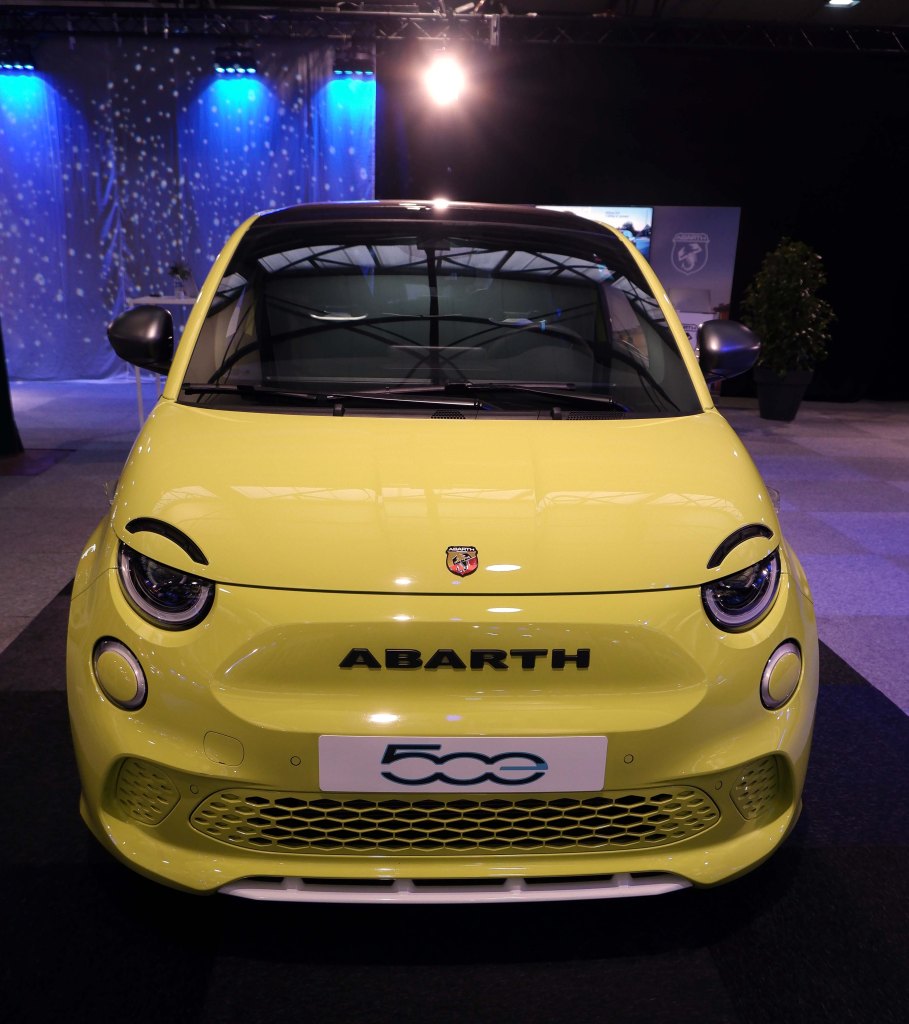
Introducing petrolheads to the joys of E-power: the Abarth 500 E, waiting for the imminent 240 HP 600 E…

Last but not least, Stellantis Belux is the leader in the segment of the LCV (Light Commercial Vehicle) with more than 30% of market share, of which more than 50% is electrified!

In terms of product innovation, Stellantis Belux will continue its electrification, where it currently leads in the A-B segment and LCV, and further expand it to the C segment with models such as the Opel Astra, Peugeot 308 and 3008 and Citroën C4.

As is tradition in January, the Stellantis brands start the year with super attractive “salon conditions” on their range. This applies to both private and professional customers and to electric and ‘thermal’ vehicles.

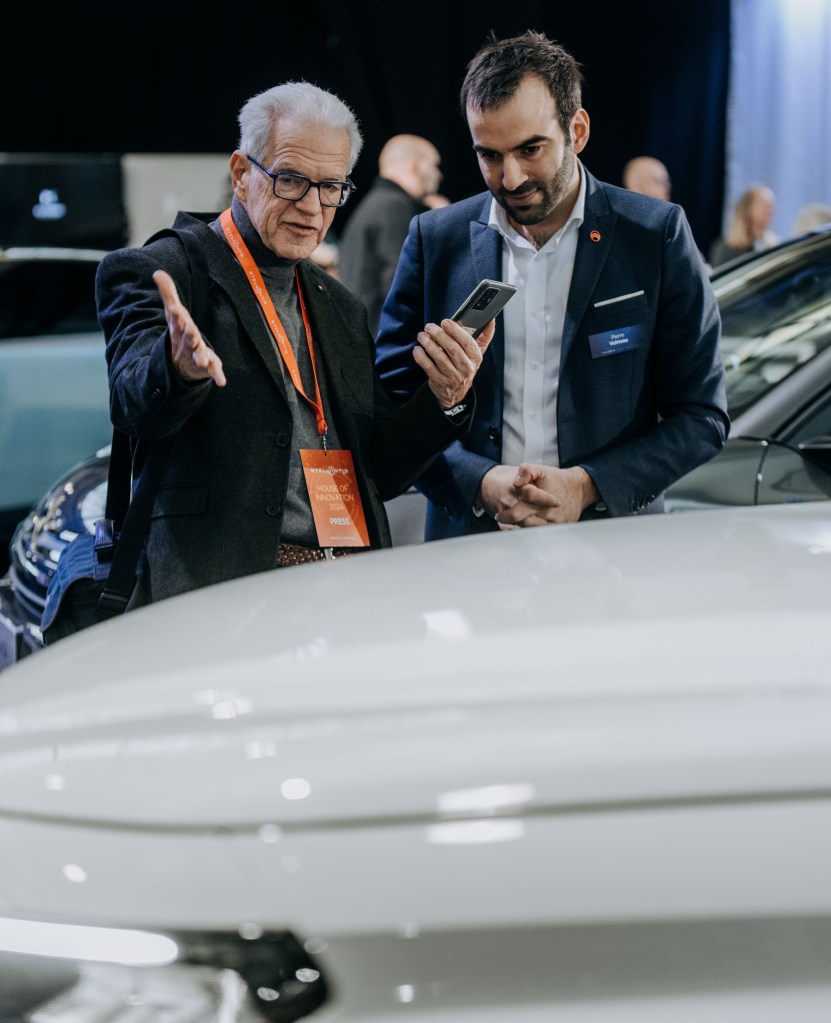
We made on this event interviews with Pierre Voineau, Managing Director Citroën Belgium & Luxemburg, (see photo here above), Asterio Perez, Managing Director of Fiat, Abarth and Fiat Professional in Belgium and Luxemburg, and last but not least Eric Laforge, Head of Jeep Brand Enlarged Europe.

This will be followed by a special report on the magnificent prototypes which were displayed amongst the 36 cars on this conference.

So stay tuned for (much) more soon!

Hans Knol ten Bensel

Nissan Benelux unfolds her strategy for the Benelux market…

Managing Director Jerome Saigot unfolds the strategy of Nissan Benelux…

We are at the start a new automotive year, and therefore it is a good opportunity for manufacturers to look forward into 2024 and announce to the Belgian press what their strategy, plans and objectives will be in the forthcoming 12 months.

So we were invited at the end of last year by the Melvin Keuter, head of communications of Nissan Benelux at their press conference…and their interesting initiatives are certainly worth a closer look. Just read further!

Hans Knol ten Bensel

Melvin Keuter, head of communications of Nissan Benelux, exposed the electrification strategy of Nissan and its future…

Nissan Belux and Nissan Nederland merged into Nissan Benelux

On the 1st of July last year, this merger was executed in order to improve response to the needs of the Benelux market. Now the two entities are joined in a new so-called Regional Business Unit, led by Managing Director Jerome Saigot. Indeed, the car market is going through a fundamental transition, and Nissan will respond to these challenges by focusing on electrification, digitalization of the customer approach and responding to major changes in the buying behavior of their clients. Mr. Saigot emphasized these points of the strategy in his presentation at the press conference. He sees also in this merger further useful synergies for staff and dealerships.

He exposed the mission of Nissan Benelux, which is to be an innovative brand which offers electrified mobility and a superior service to its customers. Its objectives are to enlarge its volume, raise brand identity and awareness as well as boosting profitability.

The strategy to achieve this will be to focus, as we said, on further digitalization of customer approach, further electrification of the model range, strengthening corporate sales, bolstering brand identity and streamlining distribution.

According to Jerome Saigot, digitalization is a major trend which will strengthen further. In 2020, only 4 % of customers were buying a car online, which has risen to 12 % in 2023. Market surveys show that soon 45 % of the future customers will buy their car online. Of course, Nissan will work further on its electrification, and indeed focus also increasingly on corporate sales.

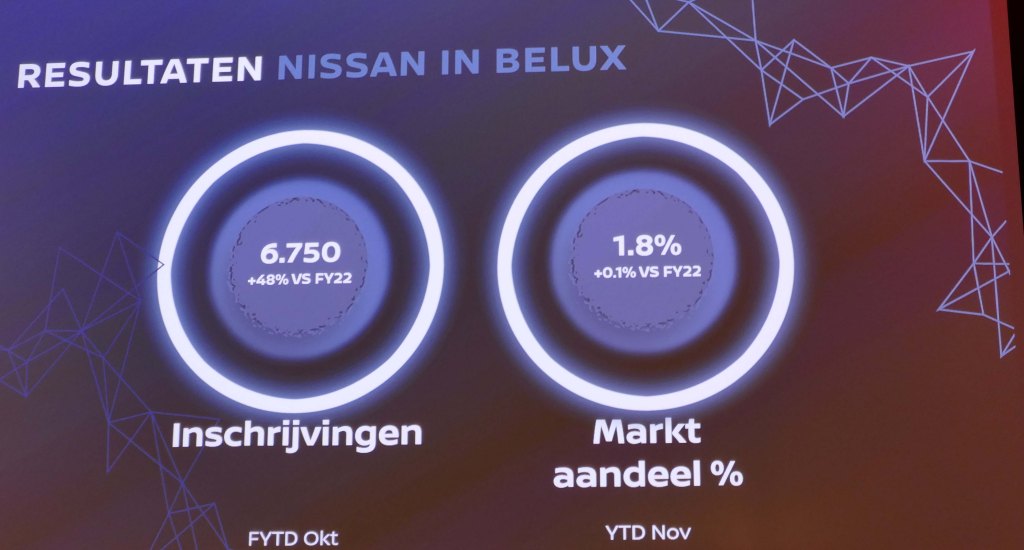
Looking at the results last year of Nissan Belux, 6.750 units were sold, which is an impressive 48 % rise compared to FY 22.

Also in distribution and dealership the focus will be on further developing synergies and tailoring the customer approach on their changing preferences and buying behavior. In December last year, Nissan sent a message to the professionals, small and medium enterprises, craftsmen and the like, pointing out the attractiveness of their increasingly electrified LCV segment.

Decisive steps toward further electrification… or EV36Zero.

EV36Zero is a key part of Nissan Ambition 2030. In this period Nissan will deliver exciting, electrified vehicles and technological innovations while expanding and transforming its operations globally the company announces. The vision supports Nissan’s goal to be carbon neutral across the lifecycle of its products by fiscal year 2050.

In November last year, Nissan announced that the EV36Zero hub in Sunderland, Nissan’s blueprint for future manufacturing, will consist of three electric vehicles (EVs), three gigafactories and up to £3bn investment.

The transformational project includes future all-electric versions of Nissan’s flagship Qashqai and JUKE crossovers, and Nissan also confirmed that the third vehicle planned for UK production will be next-generation Nissan LEAF.

Nissan also announced that that it expects its passenger car line-up in Europe to be 100% electric by 2030.

Nissan is also incorporating in their electrification strategy the latest developments in battery technology. It will adopt Cobalt-free batteries, and towards 2028 there will be a cost reduction in comparison with Lithium-Ion batteries of not less than 65 %. This year Nissan will open a pilot factory in Yokohama to produce solid-state batteries, which can be charged three times faster and cost much less. They will be introduced to the market in 2028…  

Looking into the future…

After exposing the good qualities of the present range, a veil was lifted in this conference about the cars we can expect in the (not so) distant future.

Indeed, the three future versions of the full electric Juke, Qashqai and Leaf will be inspired by three exciting all-electric concept models, two of which were recently unveiled at the Japan Mobility Show:

The Nissan Hyper Urban Concept, a crossover EV characterized by a sleek and modern aesthetic.

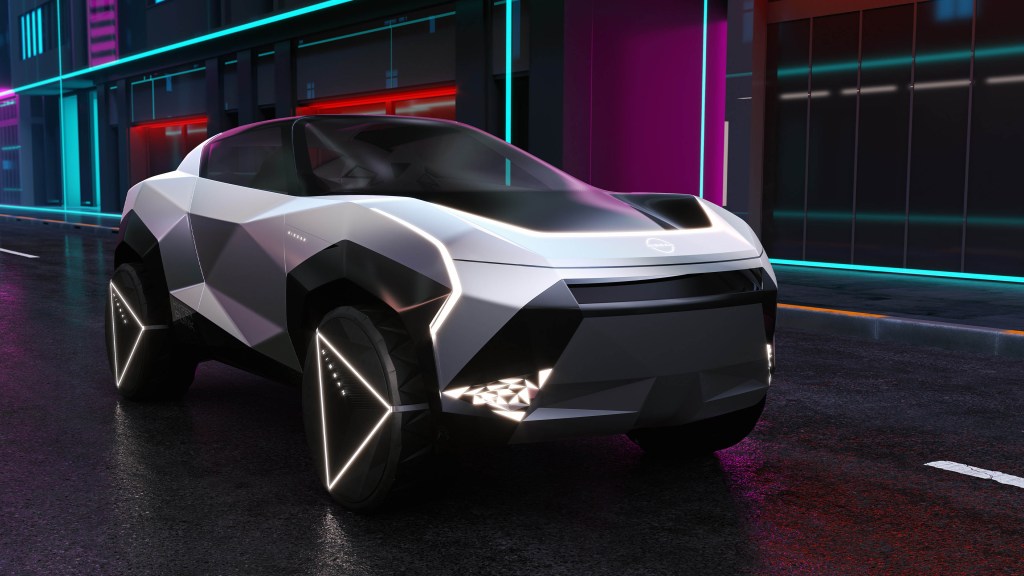
The Nissan Hyper Punk Concept, an all-electric compact crossover with an exterior aesthetic defined by multifaceted and polygonal surfaces.

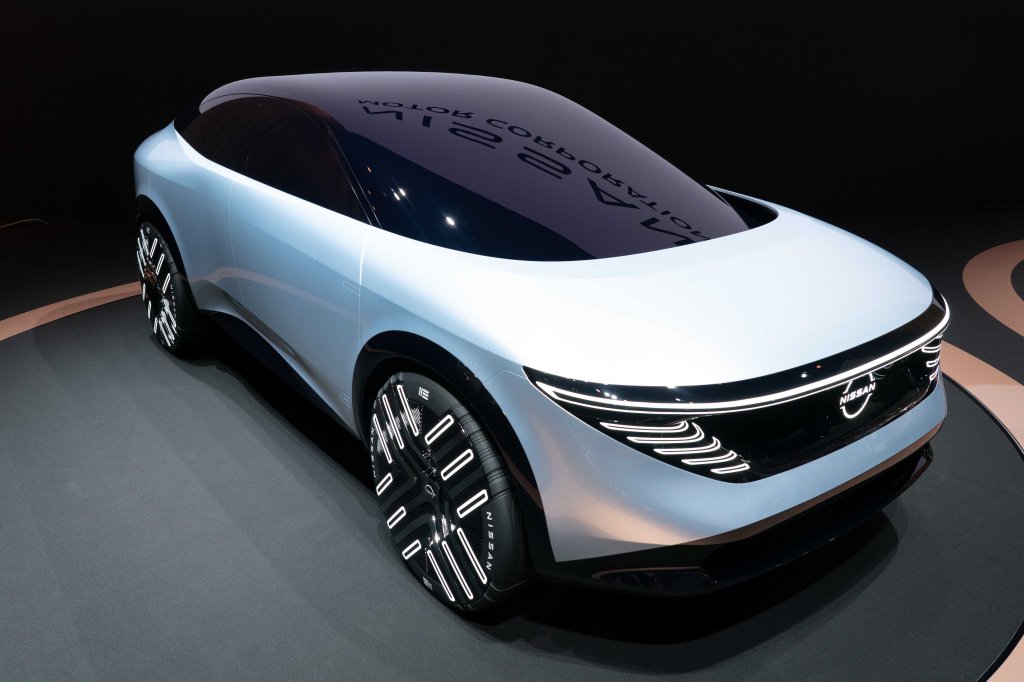
The Nissan Chill-Out Concept, was unveiled in 2021 and previously confirmed as the inspiration for a future EV to be built in Sunderland.

 The car is a compact, sporty, city EV concept with an influence from the world of virtual gaming. Besides the sleek and modern design, advanced safety technology, it has a productive and comfortable interior space.

The Chill-Out, – see photo here above – which looks to us as a very realistic concept car which we might see on our roads in the (very?) near future, utilizes the CMF-EV platform.

The Nissan Hyper Urban Concept – see photo here above – was announced at the 2023 Japan Mobility Show; its styling complements the sophisticated tastes of its target users, such as urban and suburban based professionals who prioritise environmental sustainability.

This all-electric crossover concept is designed to remain up to date for every new owner, ensuring an extended lifecycle through regular software and hardware upgrades, aiming to achieve the utmost sustainability. To maximize this further, the vehicle seamlessly integrates into the electric vehicle ecosystem (V2H/B/G), for power sharing.

Last but not least, there is the Nissan Hyper Punk concept was also announced at the 2023 Japan Mobility Show.

It is positioned as an all-electric compact crossover concept, catering for a dynamic audience seeking self-expression through style and creativity. It offers owners a canvas for self-expression with its polygonal-shaped exterior with dynamic color changes.

Further styling exercises: the Nissan Concept 20-23

To celebrate the 20th anniversary of Nissan Design Europe (NDE) being located in London, Makoto Uchida, Nissan’s President and Chief Executive Officer, visited NDE in September last year to unveil an all-new sporty urban electric concept car called Nissan Concept 20-23.

The car certainly turns heads, as you can see from the accompanying photo. It was designed by a team including some the younger members of NDE, with the simple brief to design a car – with no constraints – which they would like to drive on the streets of the city where they work.

Of course there is the present range of Nissan, with the Juke, bestseller Qashqai and Ariya. Last but not least also the Leaf. Head of Marketing Rémy Le Gall presented them. See photo here below.

Soon we will refresh our driving impressions of these cars for you, and tell you then more about their unique qualities. Stay posted!

Hans Knol ten Bensel