We drove the Leapmotor TO3: a surprisingly adult EV city car…

Things are moving at the bottom end of the EV market. More affordable EV city cars are offered, and Stellantis has also quite literally made a bold leap forward. Last year it took a 51 pct share in the Amsterdam-based joint venture Leapmotor International BV, and now brings the city car TO3 to our shores, as well as a large SUV, the C10.

Needless to say that we were very keen to have a test drive with this TO3, which at first sight looks not unfamiliar, as it resembles a Smart ForFour. It certainly is fit for the city, with its compact overall length of 3,62 meters. But we discovered it has a lot more good qualities. Just read further..

Hans Knol ten Bensel

Roomy, well equipped and comfortable…

The cute TO3 really surprised us. Stepping into the car, we found ample headroom and even the tallest can sit comfortably behind the wheel of this Leapmotor. Even the rear passengers don’t touch their heads and can step in comfortably as the TO3 has wide opening four doors. No cramped mini car feeling whatsoever. Luggage space is also reasonable, with 210 liters with the rear seat backrest up, and up to a maximum of 880 liters with everything folded down.

Don’t expect bare austerity either when it comes to infotainment. One soon notices that the Chinese are masters in the game. The TO3 has a 10 inch touchscreen with a christal clear rear view camera, which indicates even the remaining centimetres when you back up close to another vehicle or wall…

It also has an excellent navigation system, DAB radio and you can choose between not less than three driving modes. On the central display you can choose “vehicle control” and then make your choice. We left it in the ”standard” driving mode virtually all the time.

The ventilation/heating controls take some getting used to, and are not logical at first sight. But soon enough you get around it…

The T03 has a range of some 250 kilometers in practice…

Also fit for the open road…

With its small turning circle and good visibility it is a pleasure to drive in town, where at urban speeds, that is to say up to 30 km/h, you are constantly accompanied by a well audible whine. This disturbs a bit the totally “ZEN” feeling which normally the absolutely silent EV power conveys, but for the sake of safety it is of course very useful.

The standard equipment is lavish: below the central touchscreen one has even two USB C ports, a 12 V plug and room for your phone…

When you enter the motorway, the compact TO3 shows remarkable ”adult” behaviour, staying remarkably silent and stable at speed. It is fully capable of cruising at say 120 km/h, and this means this TO3 is also a perfect intercity motorway commuter…
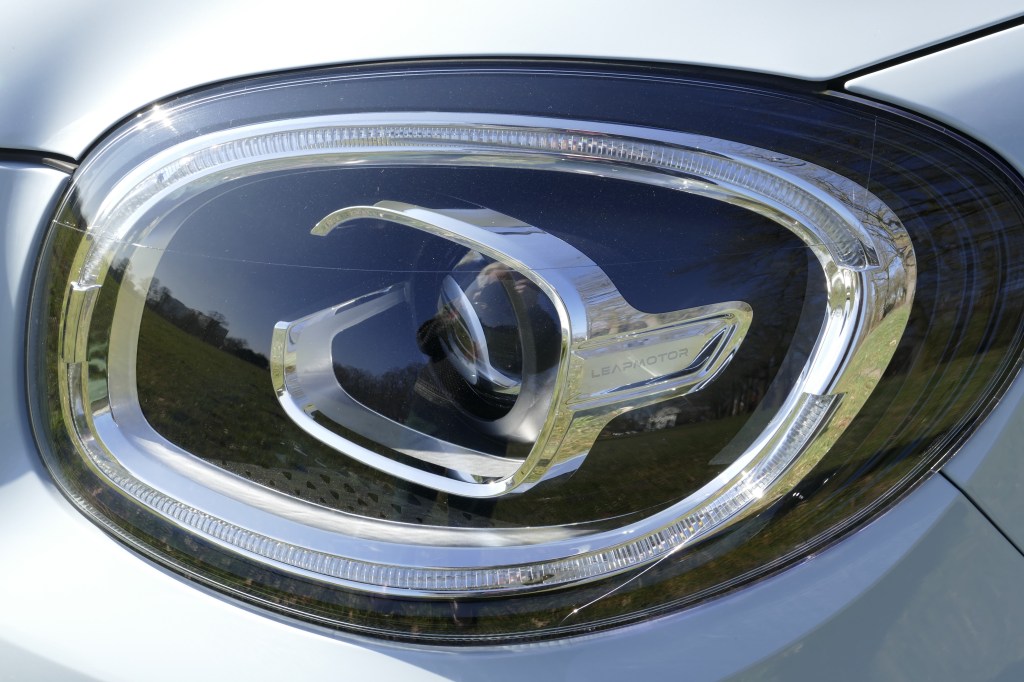
LED headlamps are standard…

As the range is rather limited, you need to recharge it frequently between commutes, but when a charger is available both at home and the office, this Leapmotor is perfect for the job. The manufacturer quotes a range of up to 265 km, and WLTP consumption is 16,5 kWh/100 km. We found that this figure is easily achieved in practice, and indeed we experienced that a range of around 250 km is very realistic.

Blind spot monitor, cruise control, distance control and lane assist are also standard…

Performance is zesty with a 0 to 100 km/h sprint in 12,7 seconds, top speed is electronically limited to 130 km/h, which is totally sufficient given the vocation of the TO3.

The TO3 is also very keen to keep you safe under all driving circumstances, and constantly warns you when you don’t keep your eyes on the road, ignore speed limits and the like, and is constantly buzzing and chiming to warn you of imminent dangers.

The driver is constantly watched by camera’s, and it warns you to keep your eyes on the road…

This can be annoying at times, and it is good to know that these audible warnings can be muted, although they will reset themselves soon as you restart the car…

The TO3 comes with a warranty of 3 years and 100.000 km, which will satisfy most.

Conclusion

The TO3 impressed us, with its all-round qualities, making it the perfect urban runabout, also fit for faster intercity motorway commuting. It has sufficient room to sit four, and its range is limited,  but still sufficient when charging opportunities are easily available both near home AND office/workplace.


It is well finished, has impressive standard equipment and infotainment. So if you want to step into the EV world with a smaller ”entry” budget, just take a very close look at this endearing Leapmotor…

Hans Knol ten Bensel

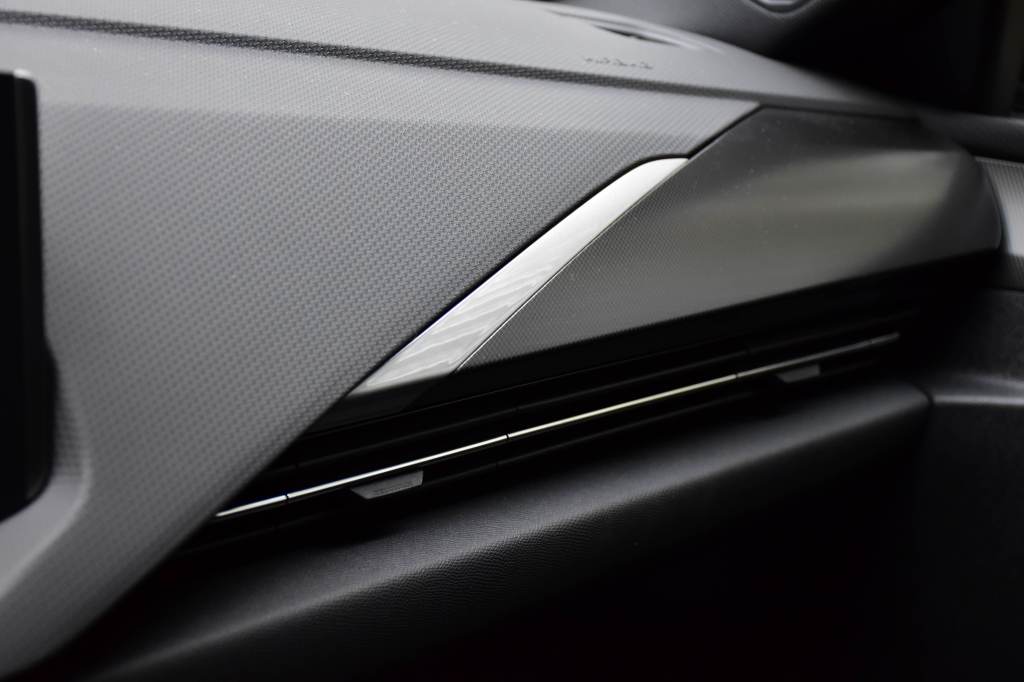
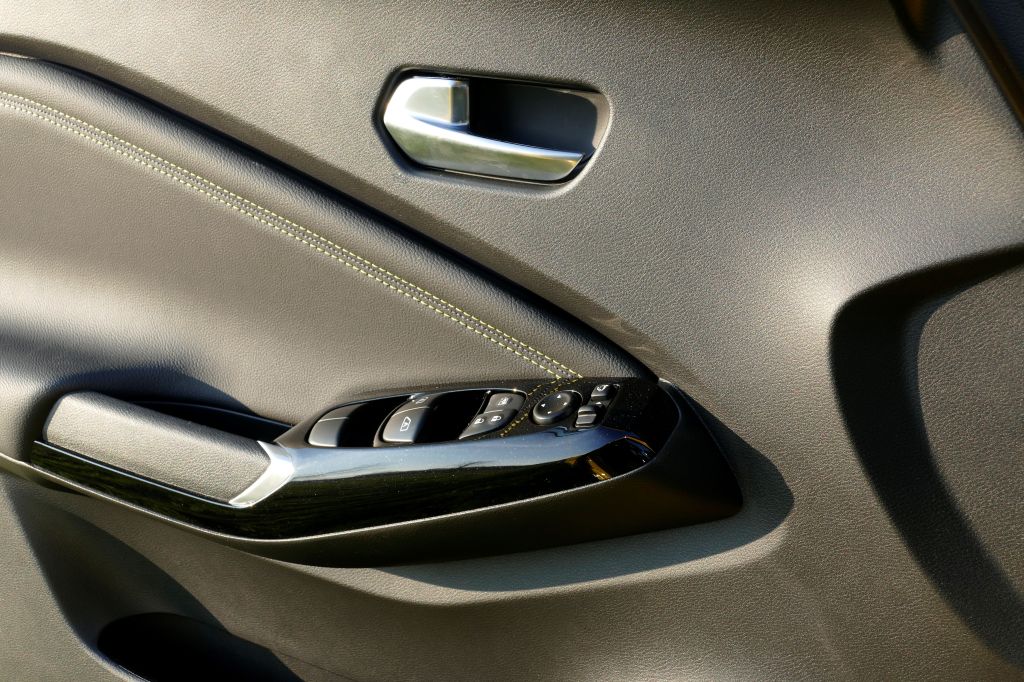
Photographers’ notes: we used again our Panasonic Lumix DMC-FZ1000. Its Leica zoom lens is also ideal for photographing details, as shown above…

We drove the Kia EV3: steering into the EV future…

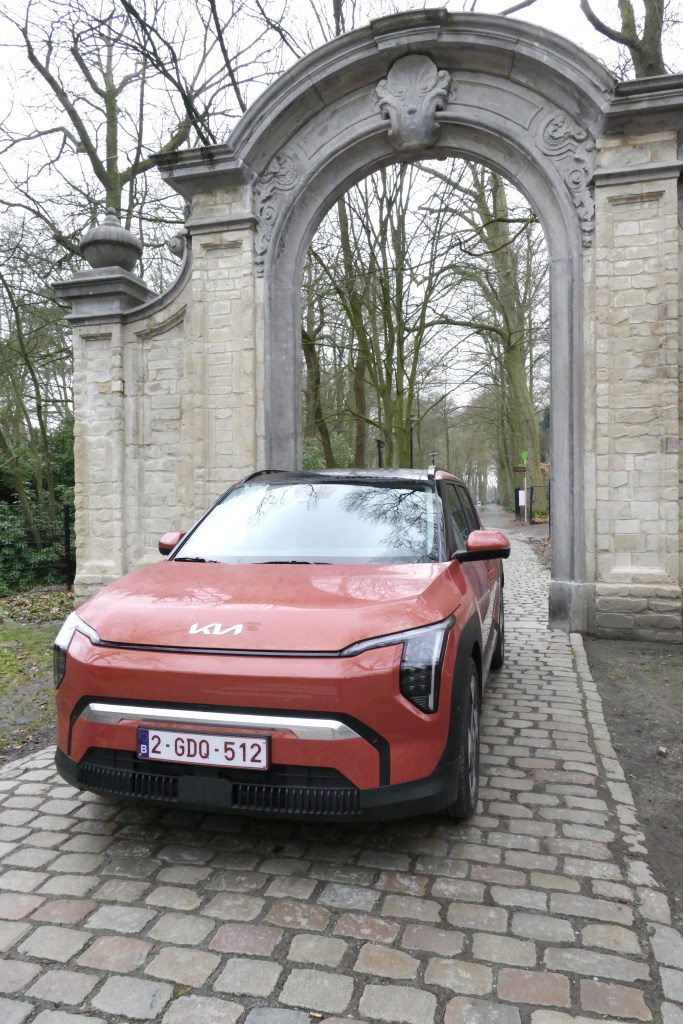
Kia has not only adopted a new logo, it is now building cars with an avant-garde touch and style. Their EV3 has continued this new path with success, as it had been chosen European Car of the Year 2025.

For all the good reasons: not only does it run on the same dedicated, bespoke EV tech platform as its bigger sister, the also award winning EV9, it offers style, practicality, roominess, and range which put it at the top of its segment.

Needless to say,our expectations were high when we crept behind the wheel of this EV3 and admired the clean yet superbly well-designed dashboard… just read further.

Hans Knol ten Bensel

Aiming higher…

We have always believed that this Korean brand would reach the top, when we drove its cars almost a decade ago. They learned very fast, and their commitment towards innovation was unseen, while offering affordable quality, technical sophistication, and style.   

Now we drive the result of this strategy, with this EV3. Just look at its overall contours and one sees that it breathes with its angular looks the styling language of today. This is a car for NOW and the years ahead.

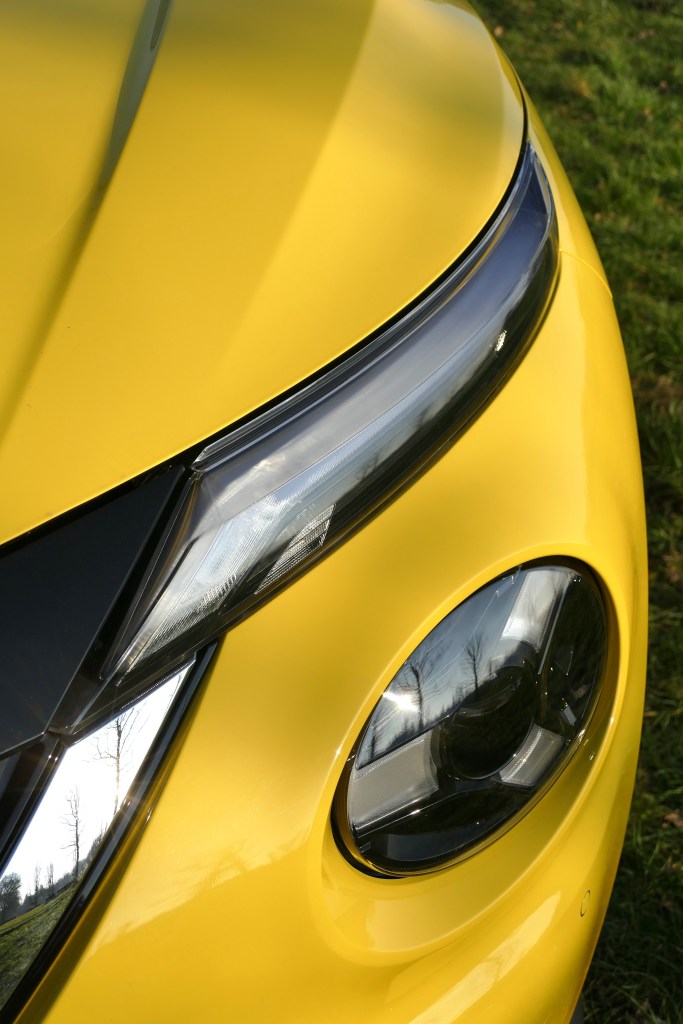
We liked its boxy contours, its wheel contours and the styling treatment fore and aft. Also, the angular styling of the LED headlamps and rear lights are adding to a distinct lighting signature. The proportions are well chosen, and even the 19 inch alloys do not disturb the balanced contours of the car. It truly stands out, and the result is that soon the wide public will recognize it as a new generation Kia.

Modern and clever…

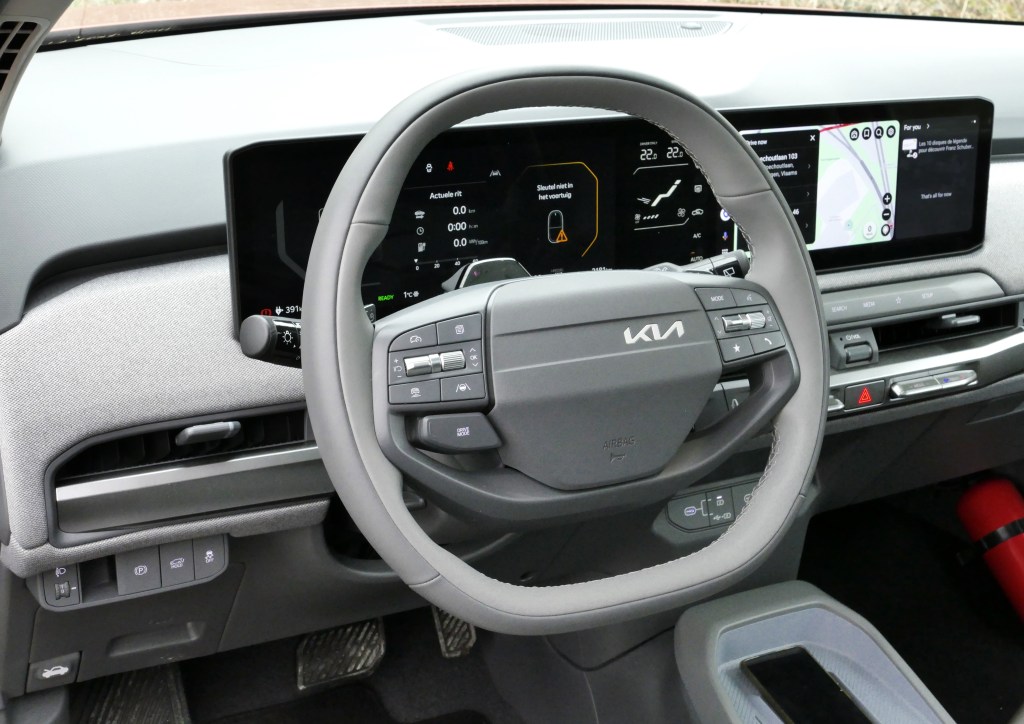
The same can be said of the interior. When you step in the car for the first time, you have the distinct impression that you are entering the future. A 30 inch wide display dominates the dashboard, and combines seamlessly instrumentation, infotainment and connectivity functions. Of course you can adjust heating and ventilation via the screen menus, but thankfully there are analog switches and button controls beneath the screen, which let you adjust all the functions manually. We also liked the centrally placed roll-shaped volume control, so that the front passenger can also use it. The driver has of course the same roller-styled volume control on the steering wheel…

Everything is well thought out, and indeed one can find its way and expertly use all the controls and functions of this Kia without having to use a manual, although it is ALWAYS very wise to read it…it is time very well spent!

We also liked the leather-like seat upholstery, which had a very pleasant feel and touch, with the seats also being comfortable indeed. The front seats also fully recline, so you can take a restful nap while recharging the battery.

There are also a lot of nice details on this EV3 Kia. It has aerodynamic door handles, which flip open when you press the remote key to open the car. It has a central armrest with a sliding table underneath which fits your portable PC.

After you have locked the car,  you can still move the car fore and aft into tight spaces with your remote key. The sun visors can also be extended when flipped sideways to block lateral sunlight, and the central screen has a small separate cluster of symbols on its left side to make climate control a breeze. The backs of the front seats are styled to be used as coat hanger, which is indeed so practical…  

Comfort put first…

The EV3 offers plenty of legroom, and this is thanks to its relatively long wheelbase of not less than 2,68 meters. The luggage space is also more than adequate for an EV, varying between 460 and 1251 liters. No worries about charging cables lying around, they are neatly tucked away in the frunk, which holds 25 liters.

The EV3 has a very comfortable suspension, and this you notice from the first meters you drive it. Its ride feels like a (very) large SUV, one is cocooned in comfort, and well insulated from potholes and rough roads. The whole cabin has also an excellent sound insulation, with virtually no tire noise entering the cabin. This allows easy listening to classical music, even at cruising speeds.

Good driving range…

This Kia invites you to drive in absolute “Zen” mood to your destination, and it is indeed a very restful car. Peace of mind abounds, also when one considers the very good driving range. Consumption according to WLTP standard is 14,9 kW/100 km, which is quite efficient for a car with a kerb weight of a good 1,8 tonnes.

The EV3 has an 150 kW/204 HP  electric motor driving the front wheels, and you can choose between a standard 58,3 kW or a larger 81,4 kW battery. This means that in summer temperatures around 20 C°, a motorway range of over 400 kilometer is very well possible. Of course this range shrinks rather drastically in winter temperatures.

Say that you are cruising at 100 km/h, the range then dwindles from 401 km at 20 C° to 341 km at 0 C°. We find this still quite reasonable. When you drive somewhat slower on wintry roads, at 90 km/h, the range is then still a good 378 km at 0 C°. The manufacturer quotes higher ranges, but we consider these figures as more realistic.

When you opt for the bigger battery, the picture gets of course even more rosier. Driving at 100 km/h at 0 temperature will give you a range of 473 km, and in summer conditions at 20 C° this raises to 557 km.

In normal, everyday use, the smaller battery might be sufficient, we would think. Because the EV3 can take up to 100 kW fast charge, and this means that it will cost less than 30 minutes to recharge the battery from 10 to 80 pct, and these figures are almost reached in wintry conditions, provided one pre-conditions the battery.

Lively performance…

The 150 kW of the engine and the ample torque of 283 Nm make this EV3 truly sprint. Accelerating from 0 to 100 km/h costs merely 7,6 seconds, top speed is electronically limited to 170 km/h. More than enough for everyday driving, we would say. Maybe it is good to know that the Kia EV3 can tow up to 500 kg with the smaller battery, and even up to 1 tonne with the larger 81,4 kW battery.

Conclusion

The Kia EV3 has won its accolade as “Car of the Year” for all the good reasons. Spacious, styled for the future, practical and well equipped, with excellent efficiency and range and more than adequate performance, it offers smooth transport from A to B. It is well built and finished, it is attractvely priced and enjoys the 7 year Kia guarantee, need we say more?

Hans Knol ten Bensel

We drove the Nissan Juke Hybrid N-Sport: stylish and frugal…  

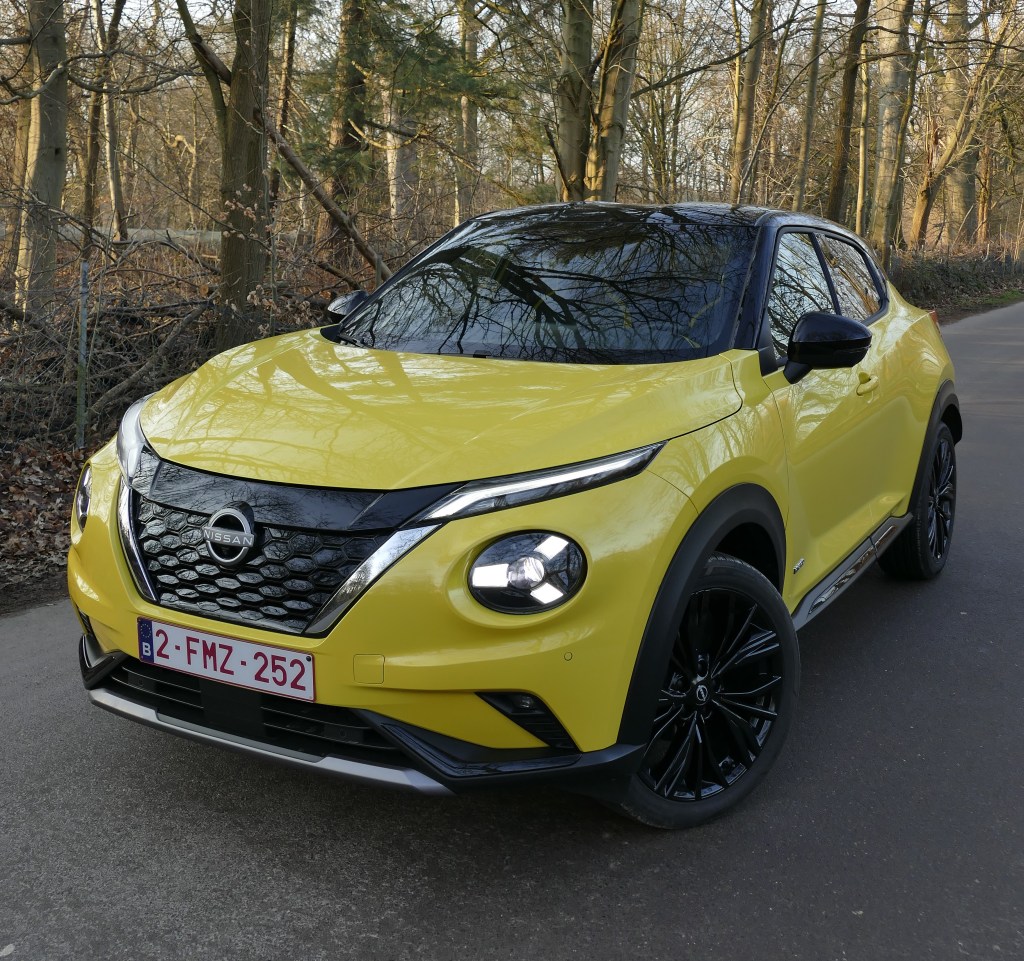
The Nissan Juke pioneered the compact SUV with its very original styling, and has remained an iconic car indeed. Since 2019 the Juke is in its second generation, and has last year received a facelift with minor exterior changes but with a revamped interior and a bolder colour palette. It runs on the same platform as the Renault Captur, but as said, it’s the styling which makes this Juke really stand out.

Since 2022 it is also offered in hybrid version, and as hybrids are gaining in popularity, it is this version we preferred to put here through its paces for you.

Hans Knol ten Bensel

Proven hybrid technology

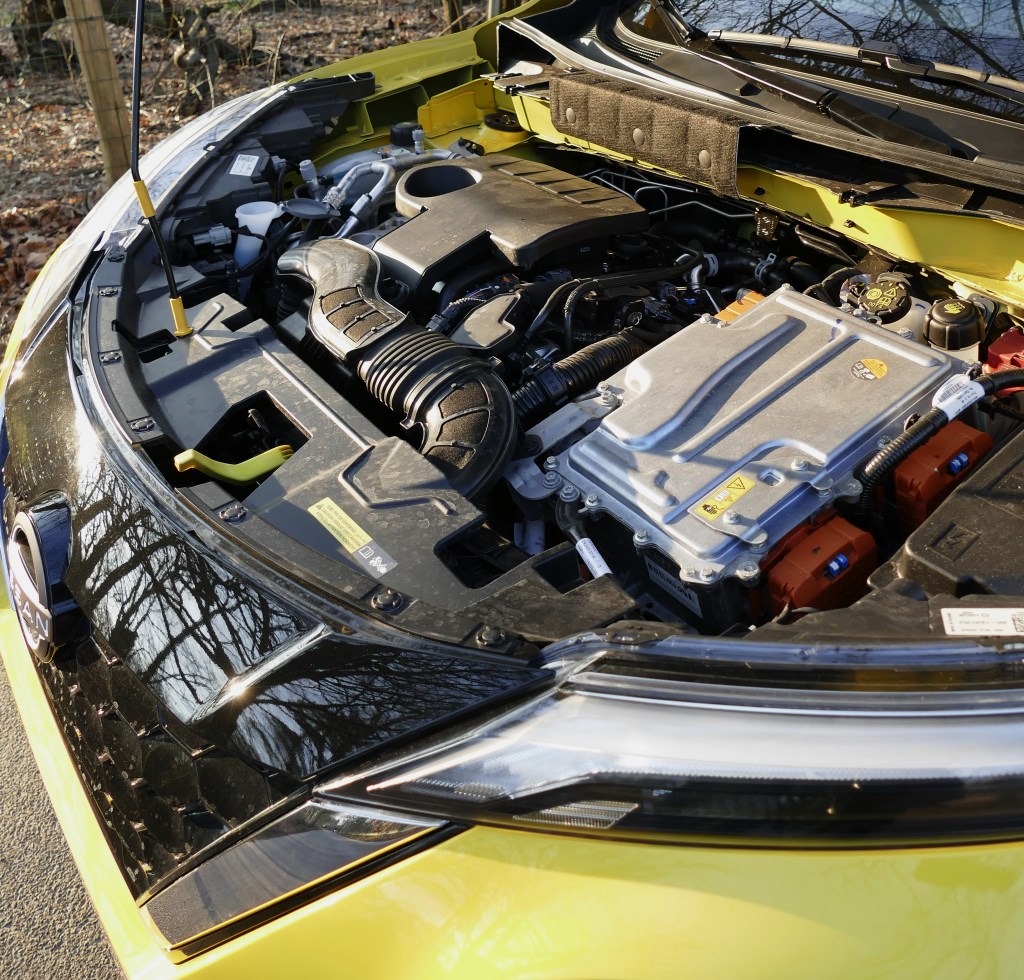
The hybrid version inherits the know how built up in this field by Renault, which is also technically speaking understandable as it shares, as we said, its platform with the Renault Captur. It has a 16 valve 1598 cc four cylinder under the hood, developing 69 kW or 94 HP at 5600 rpm. It has two electric motors, an alternator and a traction motor, bringing total system power to 143 HP/100 kW.

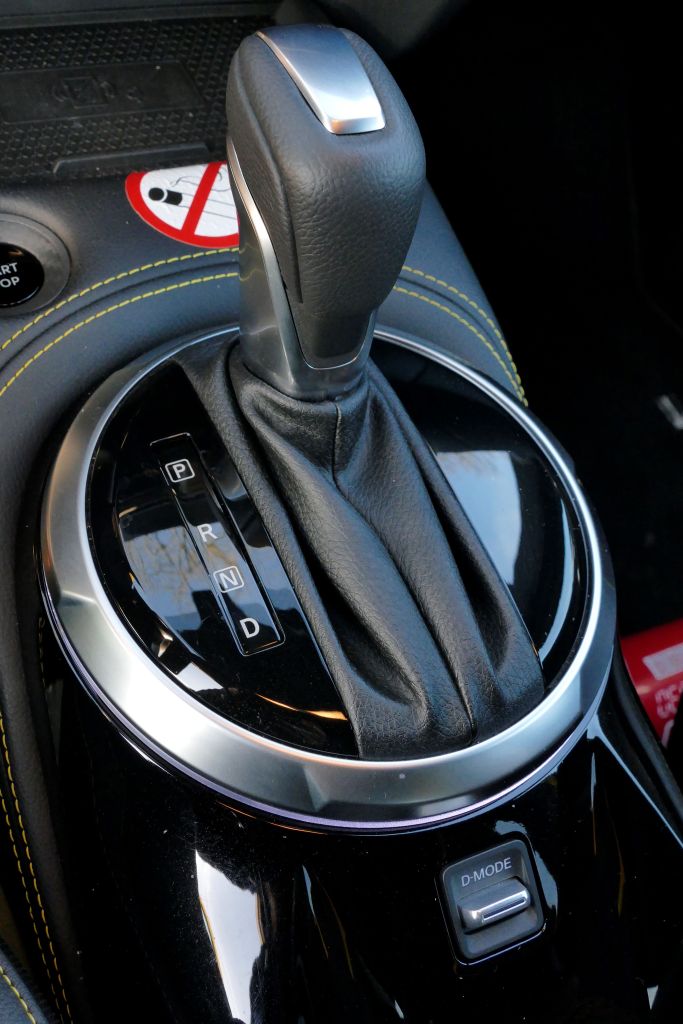
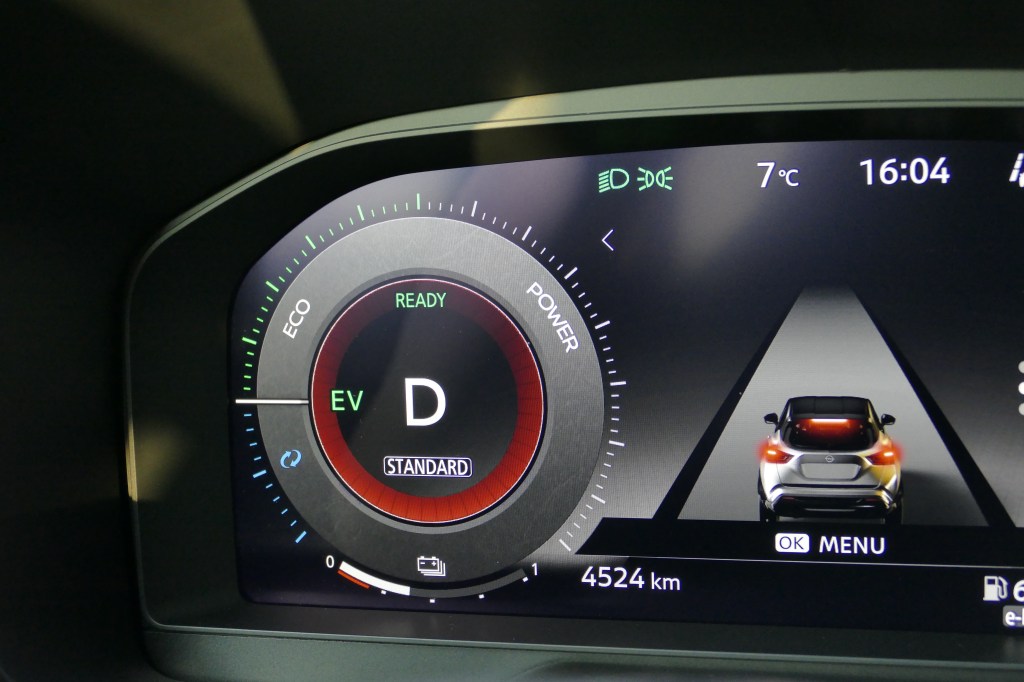
It has the same Renault engineered E-TECH multi-mode automatic gearbox, and it lets you select between three driving modes, standard, ECO and Sport. When starting from standstill, the computer controlling the transmission will select the electric motor and will continue to do so, until more power is asked by your right foot and the combustion engine has to set in.

The power transitions are smooth and virtually imperceptible, resulting in quite stress free and pleasant city driving. The lithium battery is of course not a formidable power source with a capacity of merely 1,2 kW, and this means that the combustion engine has to recharge the battery frequently, which it does preferably when you are driving at a slow (urban) constant speed.

This can result in the combustion engine starting to rev quite significantly when you are cruising quietly at some 35 km/h on a city boulevard, which can initially be quite unsettling, but no alarm, the computer is doing its intelligent job to let you progress as efficiently as possible. The multi-mode transmission chooses not less than 15 gear- and power combinations for you.

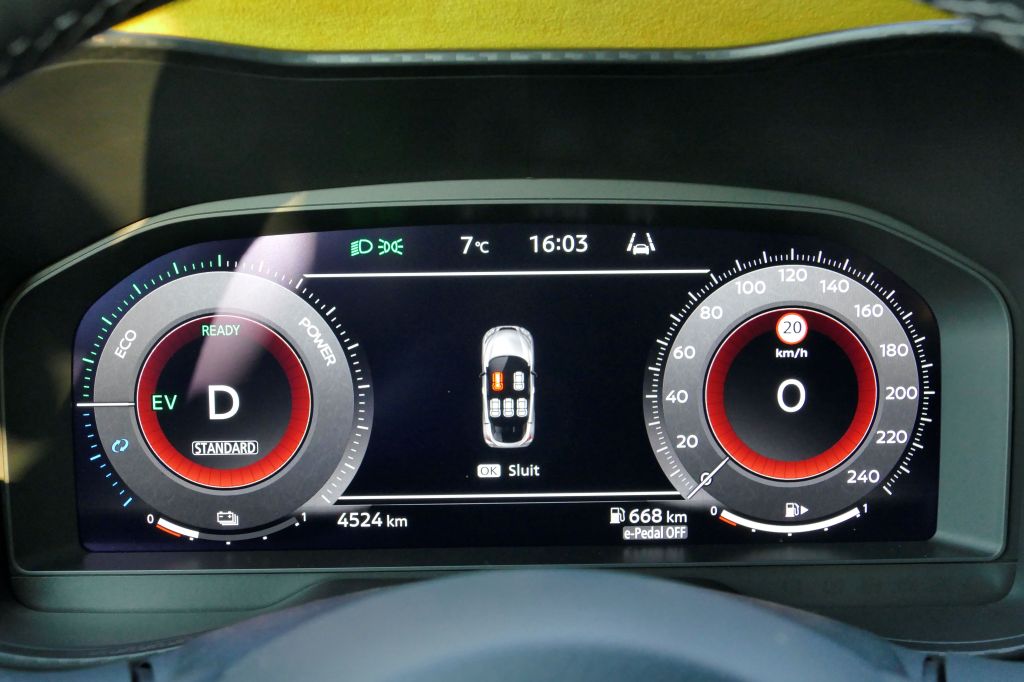
All this wizardry results in good (urban) consumption figures of around 5,5-6 liters/100 km. On the open road the Juke is quite efficient too. We clocked on a drive to Amsterdam and back an average of 5,4 liters/100 km.

CO2 emissions are some 107 g/km by the way.

Acceleration performance is pleasantly brisk with 0 to 100 km/h absolved in merely 10,1 seconds. It is the punch at slow speeds which is impressive (and important), with for example going from 15 to 30 km/h in just 1,2 seconds.

Top speed is a reasonable 165 km/h, but indeed, absolute high speed driving is not the forte of this Nissan. Of course it is perfectly capable of cruising effortlessly and comfortable on our motorways at legal speed limits…

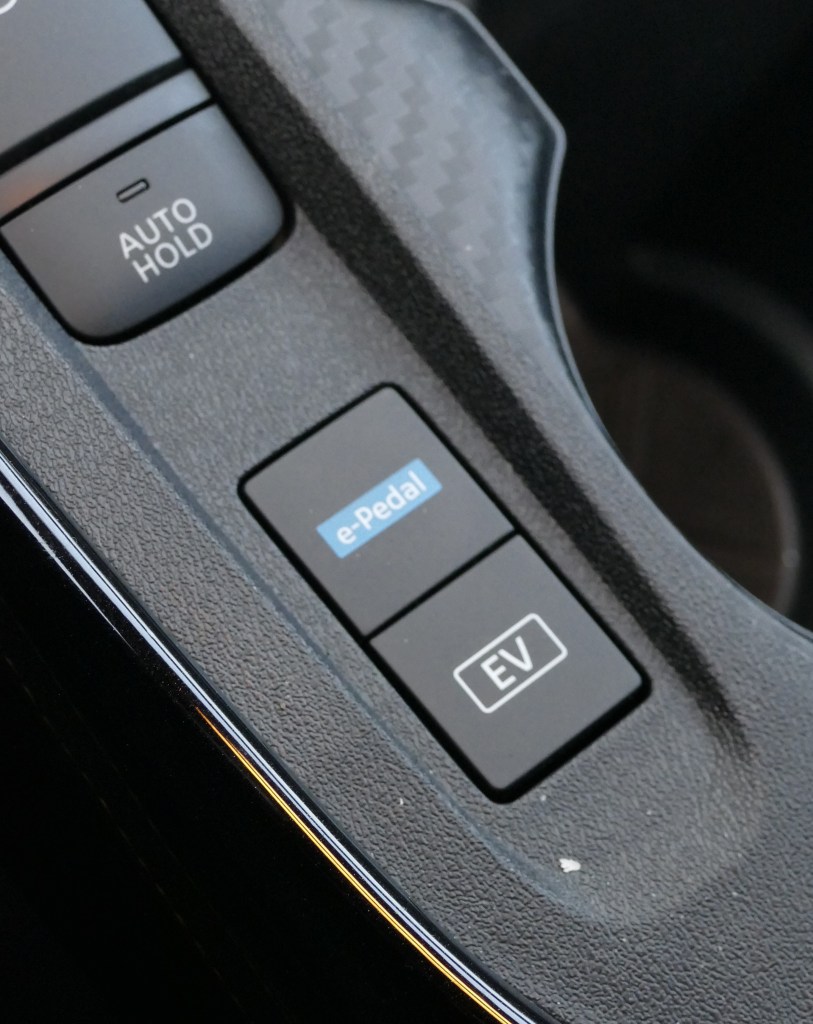
We also liked the “e-pedal”, where the generator motor will use the kinetic energy even more intensely to recharge the battery. You soon learn to use this to the extent that you will hardly need the brakes…

Travelling in style, and oh, that sound…

The SUV character of the Juke makes you sit pleasantly somewhat higher, and getting in and out if the car is also easier. We found the seating position excellent, and everything fell “just right” in our hands.

The Juke has now a bigger central touchscreen of 12,3 inches and a revamped digital instrument display with identical 12,3 inch dimensions. Very readable and elegant round dials are displayed in front of the driver, and you can choose to display the navigation function also between the dials. Of course Apple Car Play and Android Auto are installed and voice commands are also reliable and reactive.

We liked the big round knob for the sound system volume and the further touch buttons for audio functions and last but not least the camera. There are also welcome “physical” commands for the ventilation/heating system.

Our test car came with the Bose Plus personal audio system with not less than 10 audio speakers, two of which are also positioned in the headrests, and this offers a very impressive sound experience.

To enjoy classical music however one has to take into account that you are driving a compact SUV, and besides the fact that tire/road noise levels are good for its segment, it can still impair a perfect listening experience.

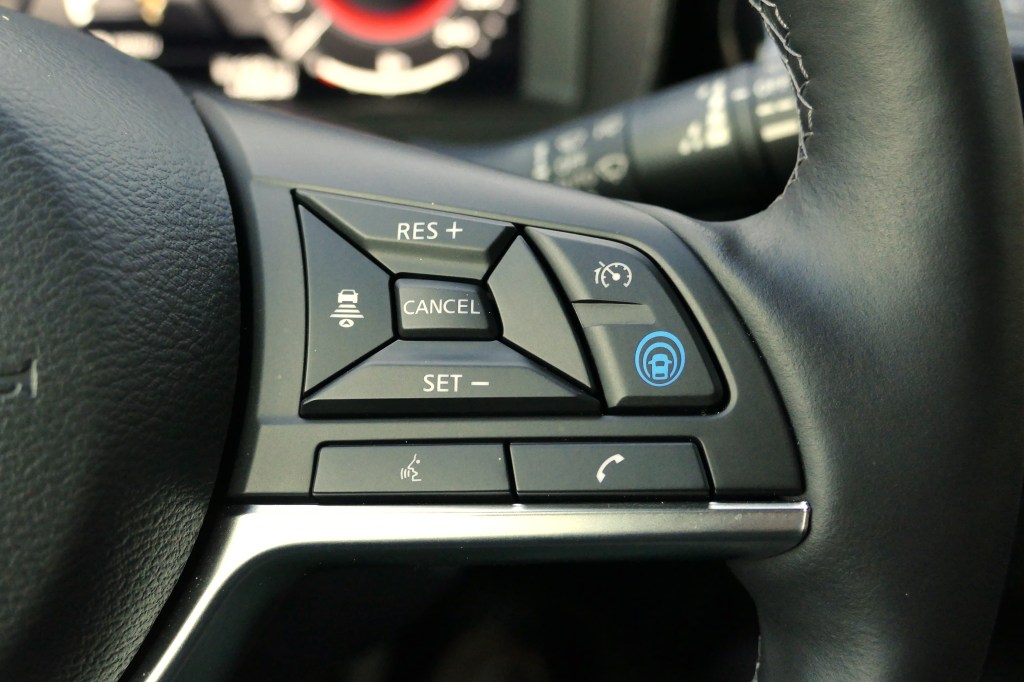
Our test car came also with the so-called “technology package”, and this includes adaptive cruise control, lane change warning and further driving aids like blind spot warning and rear cross traffic alert. It also has the Intelligent Nissan Round View Monitor, which we liked very much, as the visibility towards the rear is rather poor due to the original styling of the Juke.
 

The N-Sport equipment version pleased us optically with its nice black lacquered 19 inch “Akari” alloys, lacquered bumpers, the two-tone paint finish.

More room and comfort

The Juke is comfortable, the suspension is never too harsh and seats are fine. Passenger space at the rear has been improved since 2019 with a lengthened wheel base by some 10 centimeters, resulting in about 6 centimeters more space for your knees in the back. Due to the bold styling of the Juke, the floor of the luggage compartment is rather high. Luggage volume is reasonable, varying between 354 to maximum 1237 liters.

Positive handling

The Juke is stable and has predictable handling, but does not actually invite you to throw it around corners. It steers precise and pleasant however, and is relaxing to drive also on winding roads. It feels very surefooted on motorways, and indeed it is also an excellent companion on long distances.

Conclusion

For those who like to travel in style, enjoying this unique higher stance and feel so typical of an SUV, then the Juke is the choice. It truly convinces in its hybrid configuration, delivering smooth and fast accelerations in town, combining it with excellent economy. Infotainment and driving aids are up to scratch, and will please younger hearts. The Juke inspires confidence due to its finish and workmanship, the cabin is well equipped and pleasant, so enjoy the ride…

Hans Knol ten Bensel  

We spoke with Sébastien Decarris, Head of Product Strategy & Advanced phase – DS Automobiles: “DS offers elegance, comfort and luxury with a unique French touch”.

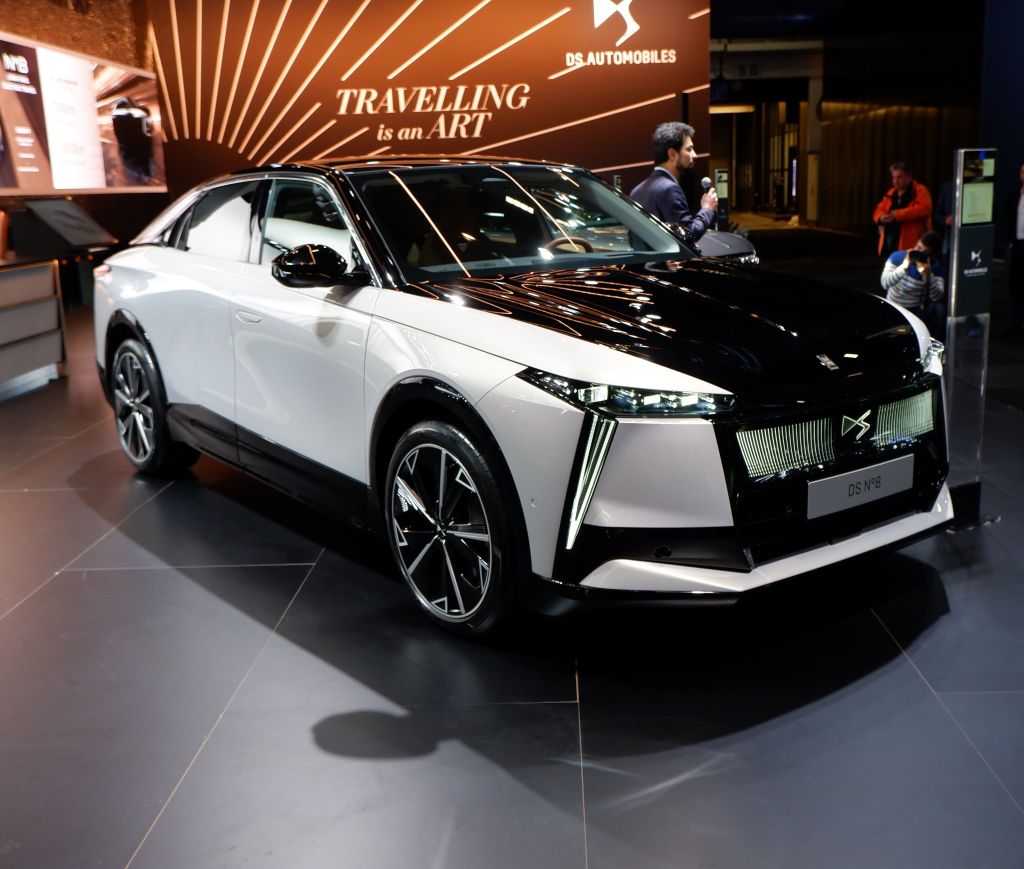
DS Automobiles made headlines at the 101th edition of the Brussels Motor Show by presenting its beautiful N° 8 to the public. This car will undoubtedly make its mark in the D segment, with its stunning looks, comfort and up to date EV technology. This car also means a lot for DS Automobiles. So we thought that an interview about the strategy of the brand would be very interesting , and we thank the dynamic PR department of Stellantis Belgium for arranging this interview. Just read further…

Hans Knol ten Bensel

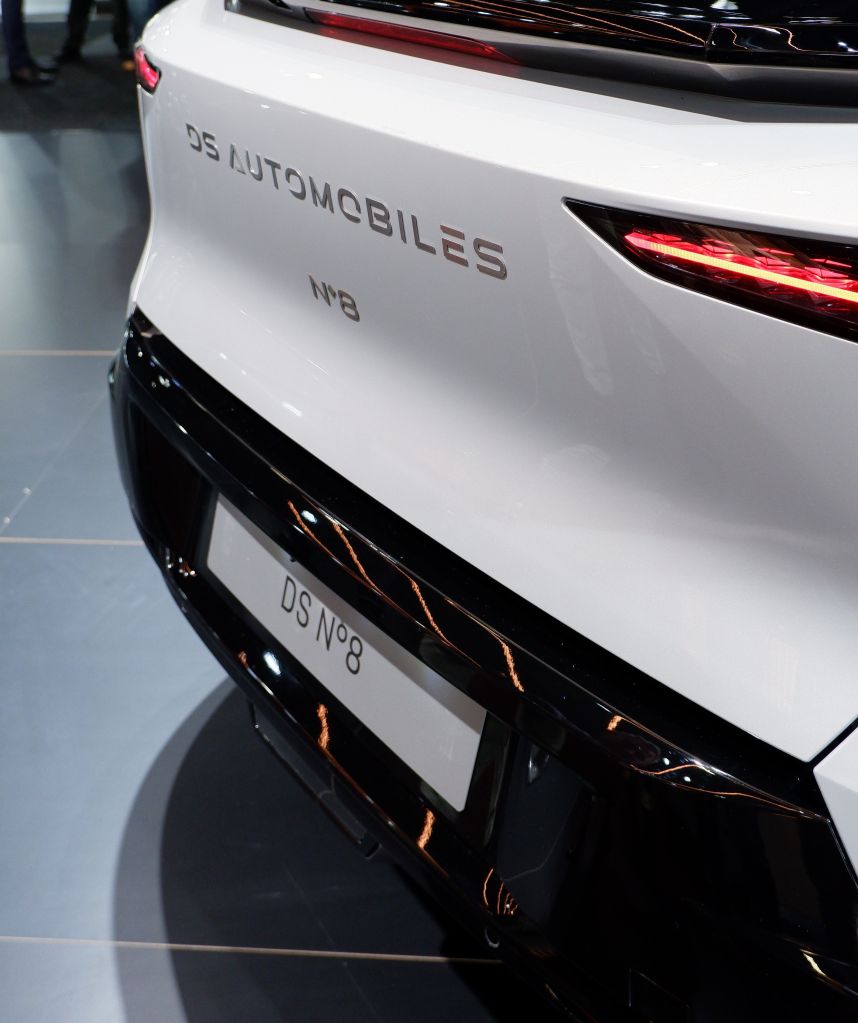
The DS Automobiles N°8 made its debut on the Brussels Salon…

HKTB: It is always quite a challenge to combine the typical DS styling language with the imperatives and constraints modern cars in this D segment have to respond to and offer in terms of safety, performance and space efficiency.

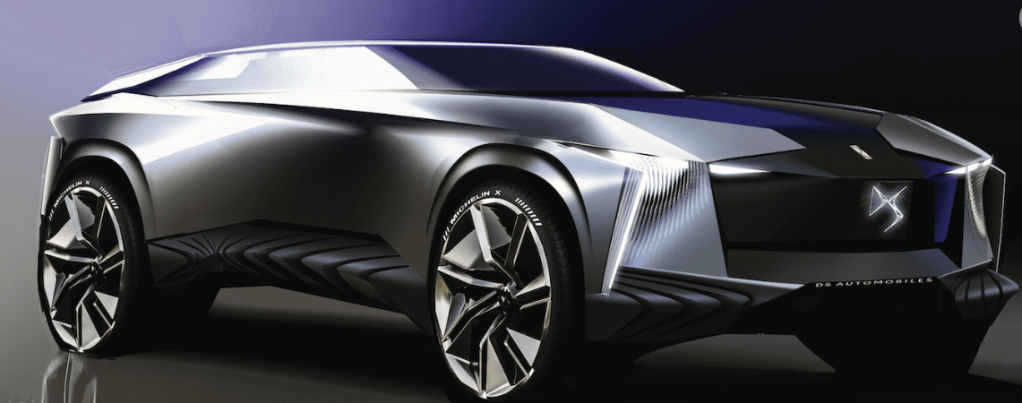
SD: Indeed, we have to show that in terms of elegance and French “savoir faire”, we offer something remarkable. We have shown this with the ASL (Aero Sport Lounge) concept car, which was designed by exterior designer Thomas Duhamel. We wanted to bring a dynamic saloon.
A designers’s drawing of the Aero Sport Lounge Concept Car…

HKTB: What is now on the European and global market the strategy of DS Automobiles?

SD: The strategy is to occupy a strong presence in the premium segment, with an emphasis on electrification in a market which is now fully involved in this energy transition. We want to keep this exceptional French character, with a “savoir faire” in the use of the materials, performing the art of elegantly rendering details, with this attention to styling and design down to the very details, which is not immediately found with our competitors.

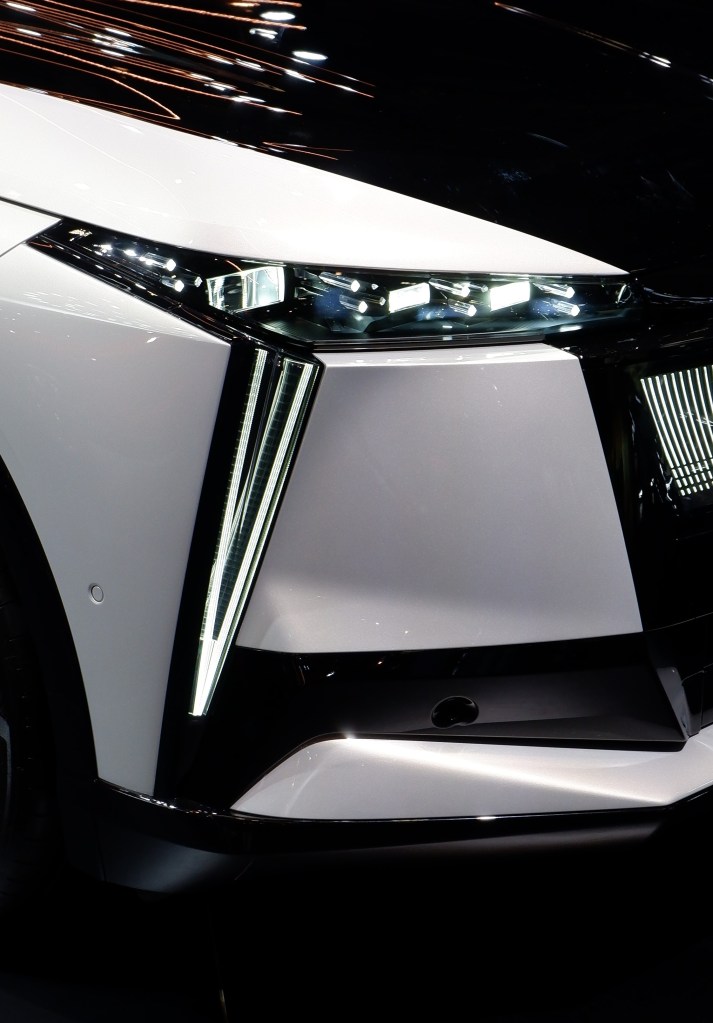
We bring elegance, not only in the contours and proportions, but also in the light signature of the car. This makes the car stand out in traffic. This has worked well from the first DS3 onwards and is the unique hallmark of DS Automobiles. Of course we keep this on our new N°8, and this signature will be found further on our future cars.

HKTB: The adoption of numbers is also a step..

SD: Indeed, it is a further evolution, an eye-wink towards further sophistication… What is also important is the reference we make to French coach-building tradition with a dual tone paintwork, a sophistication which is not immediately found on other cars in this D segment.

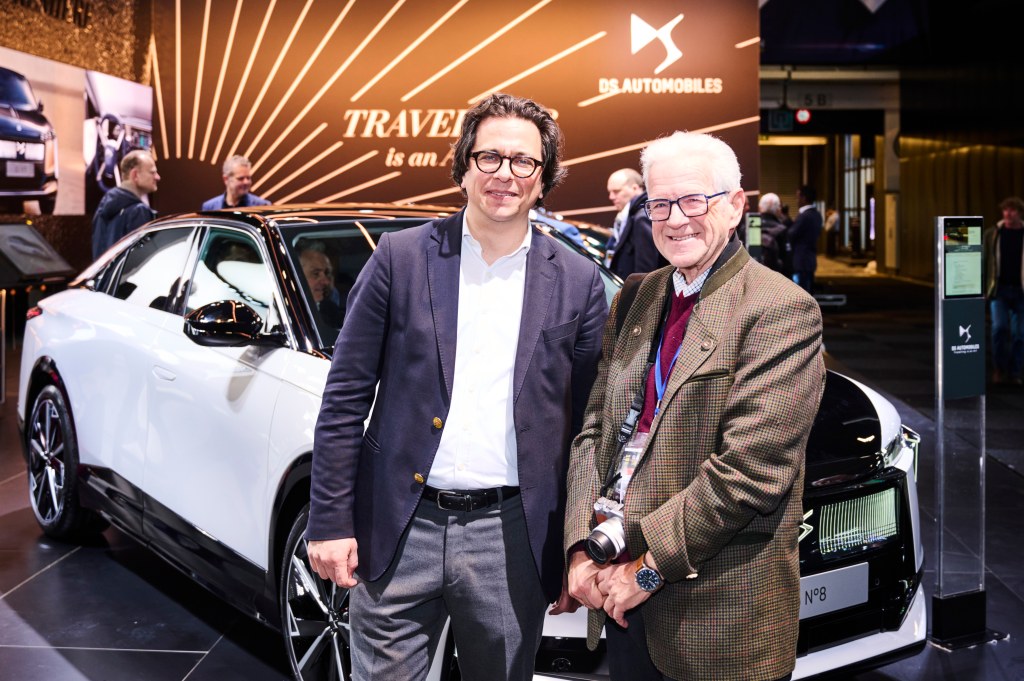
Your servant together with Sébastien Decarris at the Brussels Show in front of the Ds N° 8

HKTB: Indeed, the styling language is also a continuation of the angular tradition so typical in French coachbuilding, like the iconic Voisin cars…

SD: En effet! Indeed, when we work on the design of DS cars, we indeed talk about Voisin… and then, there is the comfort, which is also very important for us. It is more than just a “must have”, it is crucial. It concerns the suspension, the seats, and also the thermal comfort. It is especially important in EV cars, and we worked hard on it. For instance, we introduced neck-area heating, which is hitherto only seen on cabriolets…

HKTB: As DS also puts forward “the art of travel” or “l’art du voyage”, I personally would like to see an infotainment software which delivers automatically audio info about the region(s) and cities you are travelling through, and where you can choose political, social or cultural history…

SD: It is an idea we are working on. Of course, in the first place we want to reassure the client driving an EV car, and inform him about charging possibilities on his trip.

HKTB: On the charging infrastructure, are you considering the idea to build a dedicated “DS Automobiles” charging network?

SD: We offer our clients an infrastructure via the “free to move” network. We want to reassure the client in the first place with the car we offer him, i.e. having a long range and an outstanding fast charging capacity. (Up to 160 kW) We wanted to reassure the client, giving him peace of mind with a long(er) range. We think that having a long range is more important than the possibility of (ultra)fast charging.  The automobile is for us (and our clients) first and foremost an object of freedom, of “liberté.” This means that you have to offer a range of around 500 km and more on the motorway.

HKTB: Quality and workmanship is of course also very important in the premium segment. Where is the N°8 built?

SD: It is built in Italy, at the plant in Melfi. The N° 8 is running on the STLA Medium platform, and this is decisive in the industrial strategy and where the cars will be produced.

HKTB: The batteries are also important…

SD: Indeed, they are produced by ACC, (Automotive Cells Co, with as stakeholders SAFT, which is wholly owned by TotalEnergies, and Stellantis and Mercedes – note from the author). We planned from the outset a premium car with a maximum 750 km range, using batteries manufactured in the EU.  

HKTB: Will the N°8 be future proof and be able to accommodate new developed batteries and electric motors during its production run?

SD: Certainly, the platform is able to receive newly developed components during the production life of the N°8. We have a modular strategy and the platforms are designed to accommodate them. This concerns the batteries as well as the electric motors. For all the models of the DS Automobiles range, we were from the outset prepared for its electrification, it is an essential element of our policy and you see this now unfold in the D-segment.

HKTB: I thank you for this interview.

Hans Knol ten Bensel

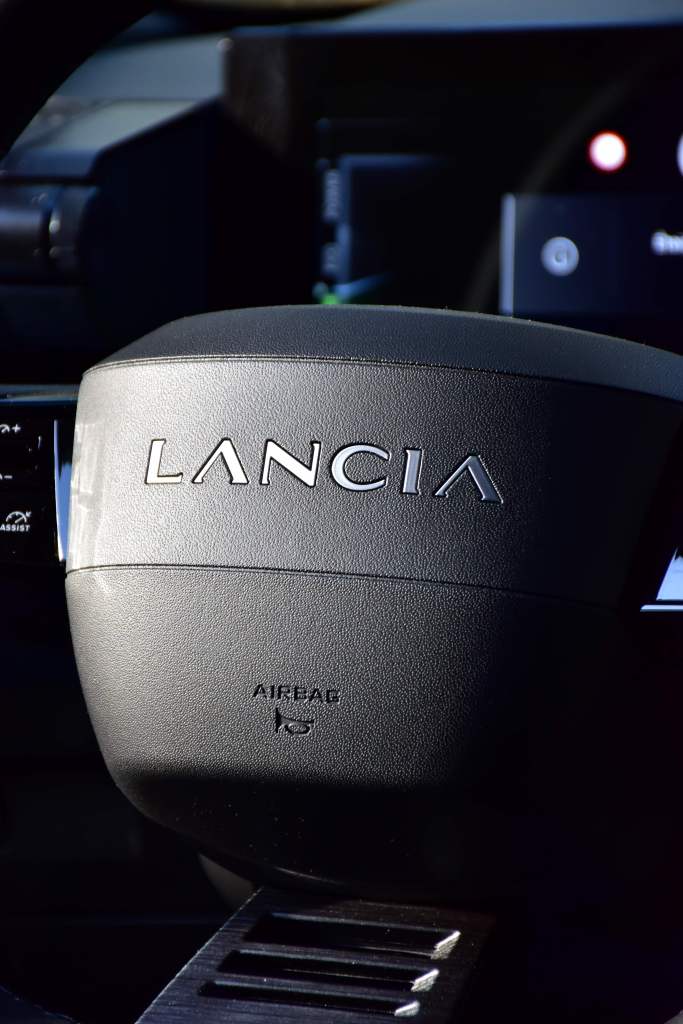
We drove the Lancia Ypsilon electric: elegance, character and smooth panache

Lancia has always embodied style and elegance, coupled with mechanical refinement. This makes the new Ypsilon a very fitting candidate for EV propulsion. Indeed, after an extended test behind the wheel of this Lancia, we can only agree. It is most endearing as an EV, and indeed, it is a delight to steer it in town and on every road you may drive it.

Hans Knol ten Bensel

Renaissance on a well proven platform

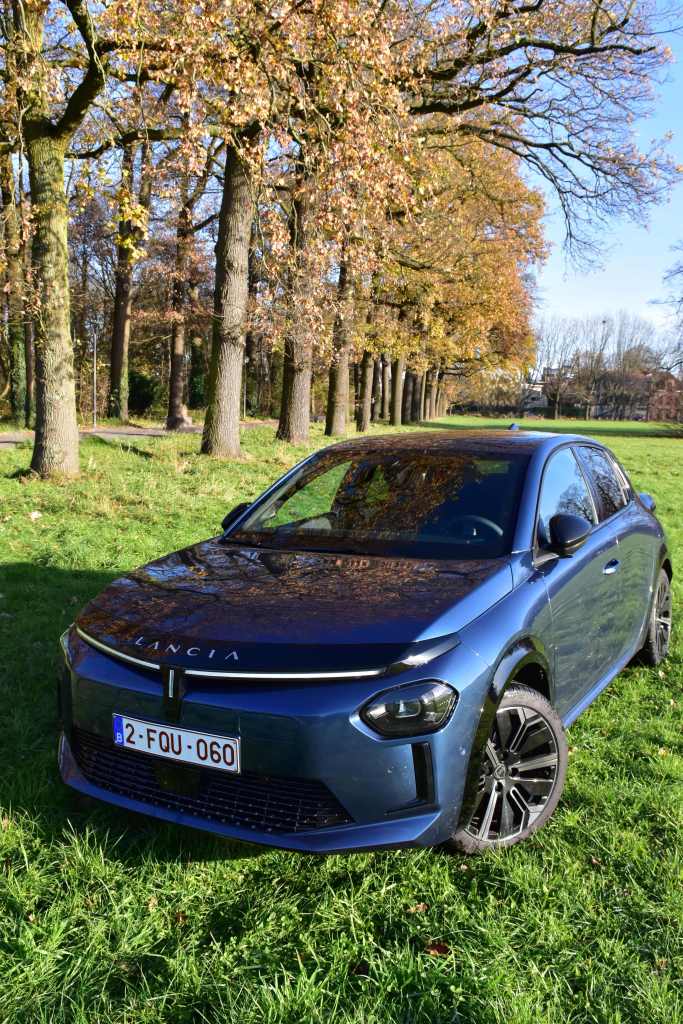
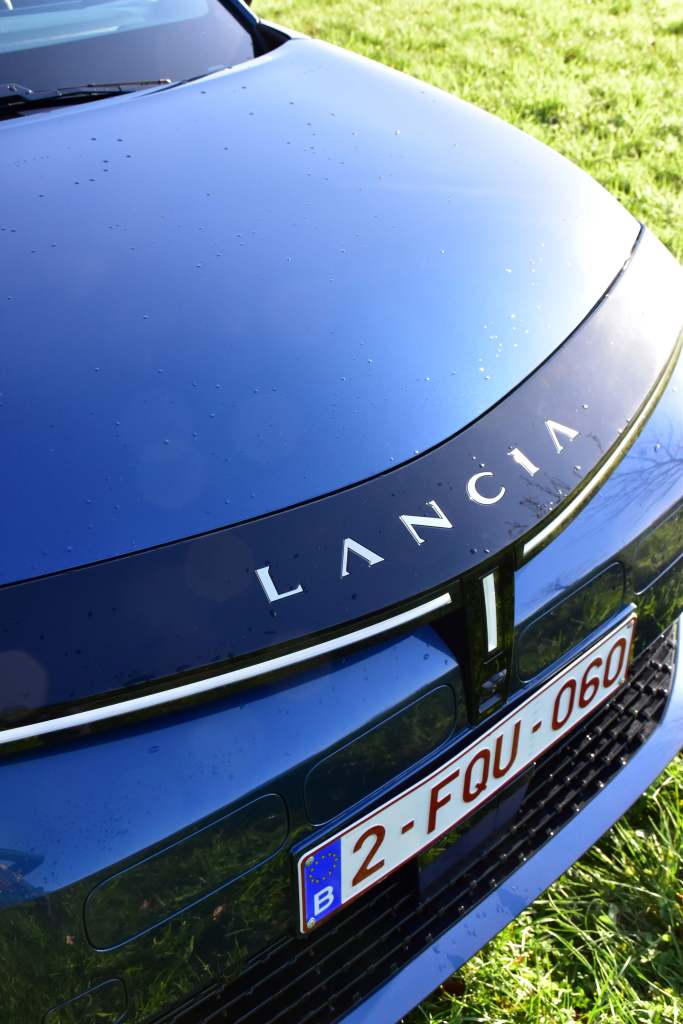
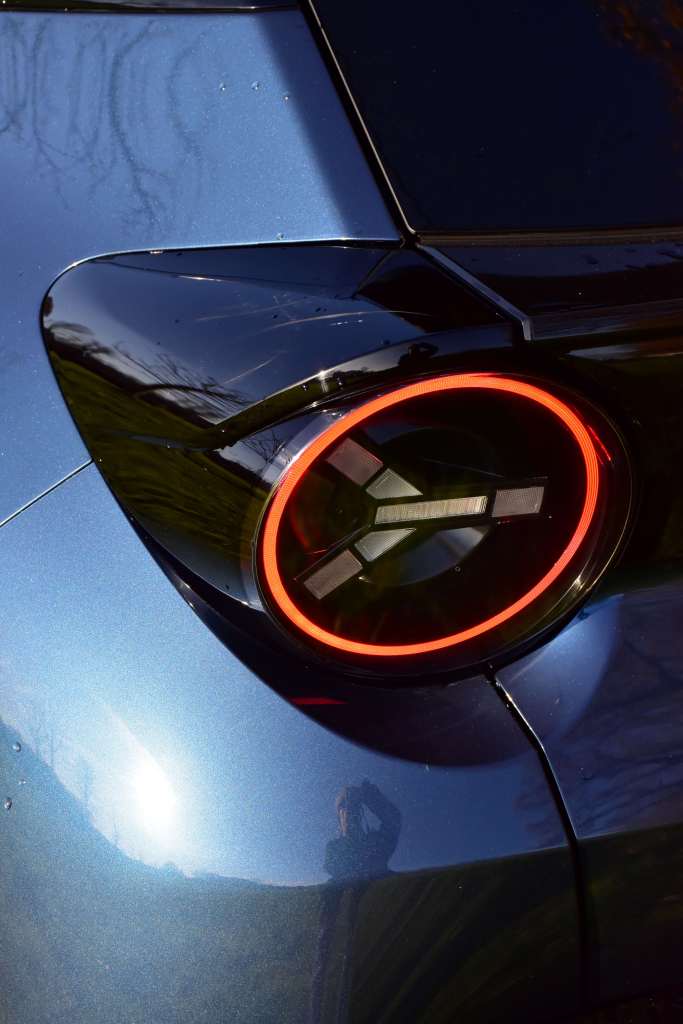
With the birth of Stellantis it was clear that a revival of Lancia was in the cards. We already told you in length about the introduction of this Ypsilon. It carries typical styling icons of the brand, like the “calice” on the front end, and the round rear lights reminiscent of the legendary Stratos.
In my opinion it is the most attractive of the Stellantis compact range, but that is of course a very subjective preference.

Iconic cabin

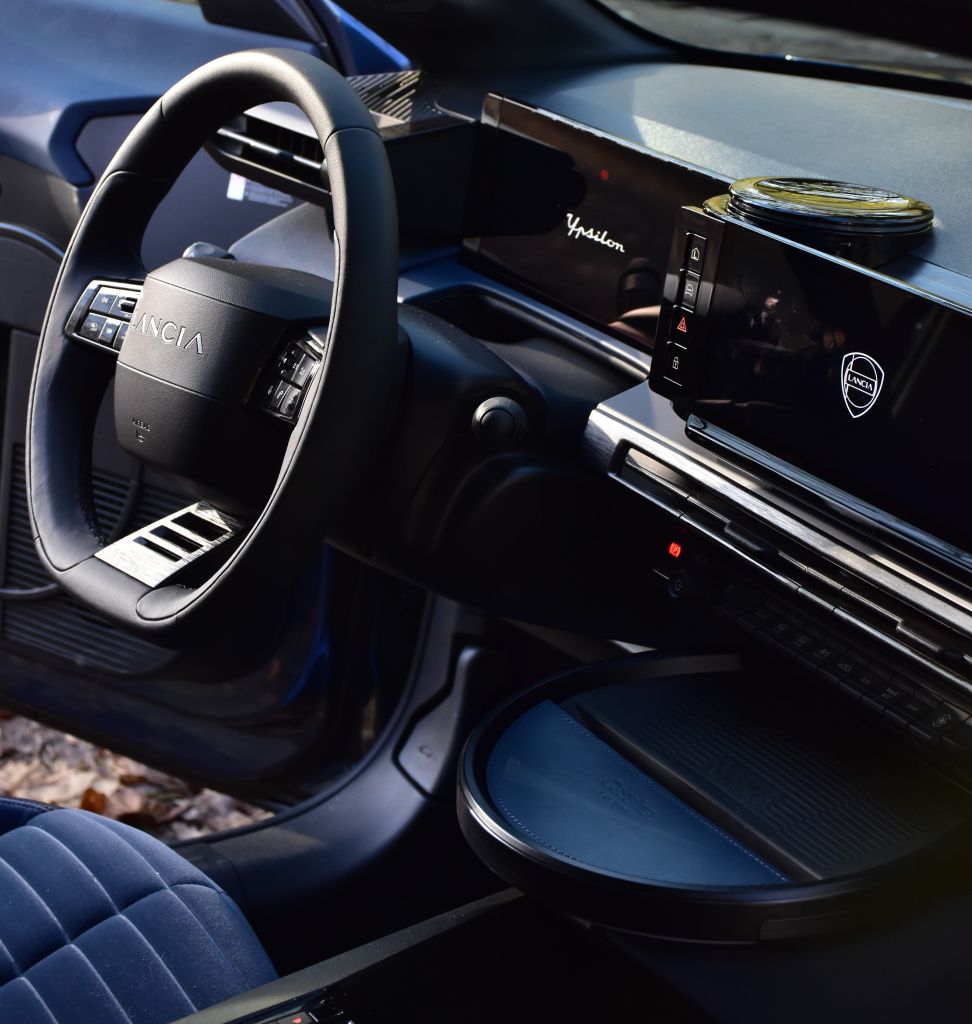
The elegance and the Lancia typical panache continues in the interior. We loved the layout of the dashboard, the resolutely square screens, the cute and well finished little central table or ”tavola”.

You can leave flat and light objects on it, everything else is of course hazardous when you drive  your Lancia with verve. We loved the blue/grey/black colour palette in the interior, so in tune with the tradition of the brand. Of course, it is a pleasure to find “real” commands and knobs for ventilation/heating for instance, and one feels quickly at home in this Lancia. One has Android Auto or Apple Carplay, and you can stream La Callas and delight in hearing how beautifully she brings Casta Diva. Indeed, the sound system is up to scratch.

The seats are quite comfortable and give excellent support. Space for the rear passengers is adequate, but of course one cannot expect miracles from a car with an overall length of 4,08 meters. Boot space is more than adequate for its class, with a standard available space of 309 liters.

Smooth EV power…

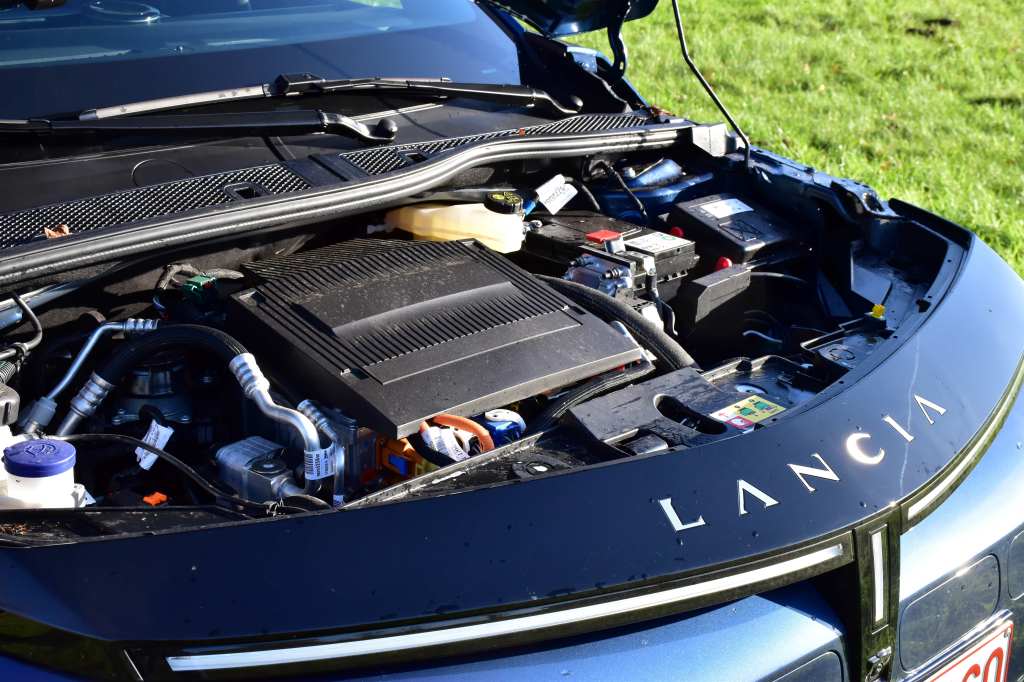
The Lancia shares its EV drivetrain with other cars in the Stellantis group, like the Opel Corsa, Peugeot 208, Jeep Avenger and Fiat 600. This means we’ll proven technology, with a 115 kW electric motor and a 54 kW battery, of which 51 kW is available in practice on the road.

This drivetrain is quite efficient, and indeed it is well possible to achieve consumption averages of 14-15 kW/100 km. It  results in a practical range of some 360 km under reasonable temperatures. Fast charging is possible up to 100 kW, which means you can charge your Lancia in less than 1/2 hour from 20 to 80 pct.

The smoothness of the EV drivetrain is an absolute delight and suits the character of the car wonderfully. Performance is quite zesty with an acceleration time from 0 to 100 km/h in 8,2 seconds. Top speed is limited to 150 km/h, which is very wise indeed, as high speed driving with an EV is a very wasteful affair.

Handling is brisk and precise, and indeed even  when driven with abandon on winding roads, this Lancia will delight you.

Conclusion

We found this Ypsilon utterly pleasing with the EV drivetrain. The silence and smoothness of EV power is just what this car needs. We are curious to see how it behaves with its 1,2 litre 16 V combustion engine, and even more so in the hybrid form. But here in our eyes, it already earned top marks…

Hans knol ten Bensel 

We drove the Opel Astra Electric Grand Tourer: space and EV smoothness…

The very popular Astra Grand Tourer occupies a quite unique position in the EV segment: instead of the usual SUV, it is a low slung station wagon, and indeed combines style and looks with roominess and practicality. Just read further…

Hans Knol ten Bensel

We already drove the Astra in a full electric version, and we were indeed quite impressed. Of course we were keen to drive for you the Sports Tourer station wagen version here. It certainly has the good looks, and also the extra practicality. The electric Astra has a 54-kWh lithium-ion battery with  102 battery cells housed in 17 modules. The motor delivers 115 kW or 156 hp and 270 Nm of torque
at the front wheels.

More than sufficient to deliver zesty performance, providing these delightful instant accelerations from very low speeds which we have come to love so much with EV’s.

The biggest advantage I personally find is the absolute smoothness of the propulsion an electric motor gives you. It adds so much driving pleasure when driving at slow speeds in (urban) traffic, transforming it in an absolute ”Zen’’ experience. My Audi A5 V6 with its CVT transmission attains the same smoothness and pulling power, but it needs a 3 litre engine to do it…


Top speed is set at 170 km/h, which is more than enough to make your way on Autobahnen. We all know that high speed driving is the Achilles heel of EV’s, and the range of your EV dwindles like snow in the (winter) sun when you drive it with verve on the left lane. The experienced EV driver knows than staying at around 110-120 km/h on the open road and absolutely avoid fierce accelerations is the only way to have a reasonable range and consumption.

The Opel -or shall we say Stellantis engineers- have made their homework, as our test car proved quite efficient indeed. We clocked averages between 14 and 15 kW/100 km, which we find excellent. This results in a realistic range of around 360 to 400 km. You can charge it in merely 26 minutes from 20 to 80 pct as it allows 100 kW fast charging.


Cabin layout shows less is more…

We like the philosophy of simplicity which Opel uses when designing its dashboards and infotainment. The necessary information is there, in clear and no nonsense fashion. I am personally a lover of large speedometer and rev counter displays in the most dramatic fashion, but this purposeful simplicity is nevertheless also quite attractive. This approach of course will only have its merits when the essential controls one frequently uses are intuitive and physical when appropriate, and also here the Opel designers have done a very good job. We also liked the very readable Intelli-HUD (Head up Display). Of course, Android Auto and Apple car Play are installed, and Bluetooth Audio Streaming is also possible.

A word of praise is also fitting for the front seats. Opel has designed them in team with medical experts, culminating in the ’’Aktion Gesunder Rücken”, or freely translated ”action healthy backs” and this results in truly excellent seating, ideal for long drives. A small ribbon on the seat with the initials ”AGR’’ tells you the story. Read also the words of praise we wrote in our previous test of the Opel Astra Electric in our columns.


Driving the Astra, or (re)discovering the essence of Opel…

Surefooted stability on winding roads and on Autobahnen up to very high cruising speeds, predictable handling without surprises, these are the hallmarks of every Opel since the mid ’70s of last century. The rally successes of Walter Röhrl at the wheel of the Mantas and Asconas amply proved this point already decades ago.
This Astra breathes the same DNA, and it inspires confidence behind the wheel, at every speed. Of course, a rather firm suspension setup goes with it, but it is well calibrated and never unduly harsh. At night, we enjoyed the Intelli-Lux® LED Pixel headlamps with not less than 168 individual LED segments. We also appreciated the smooth and efficient assistance of the Intelli-Drive 2.0 system, which includes Advanced Intelligent Speed Adaptation (A-ISA) and Semi-Automated Lane Change (SALC). The Intelli-Vision systeem is activated when you select reverse and uses four camera’s.  

Quality built…

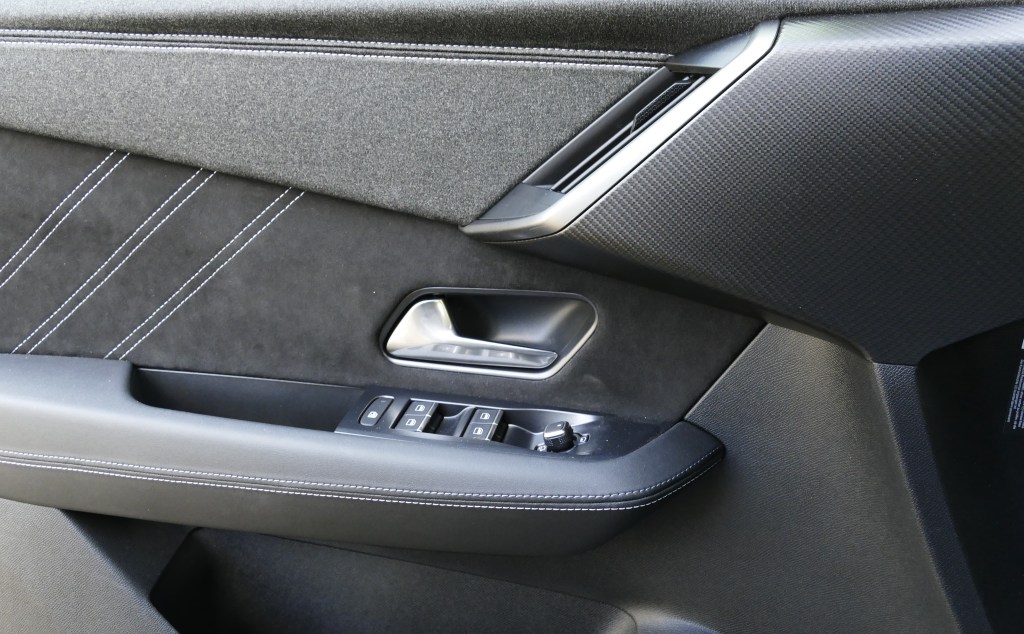
The fit and finish of the Astra is quite good, as is the overall quality of the materials. Durability is also paramount and attention is also given to easy cleaning and maintenance of the panels and surfaces. Opels are built to be lived with everyday…

…and practical

The EV Astra runs (still) on a ’’universal’’ platform which also allows for ICE engines and their drivetrains, which results in the presence of a  transmission tunnel fore and aft, costing some rear legroom and less space for the rear middle passenger, making it not a fully fledged five seater. This station wagon version offers of course extra space and indeed this Sports Tourer offers you a maximum space of 1553 liters, and you can enjoy the 40/20/40 folding rear seats and Opel’s Intelli- Space double loading floor.

Conclusion

The Astra is stylish, well built, agile and even more pleasant to drive with its electric motor. It is overall quite efficient, with a reasonable range and good (100 kW) recharging capacity, so a coffee break provides enough time to give you a further range of a few hundred kilometers. We suggest you to read also our conclusions in our test of the sedan version of the Astra Electric. We certainly liked to sit behind the wheel of this Astra once again…

Hans Knol ten Bensel

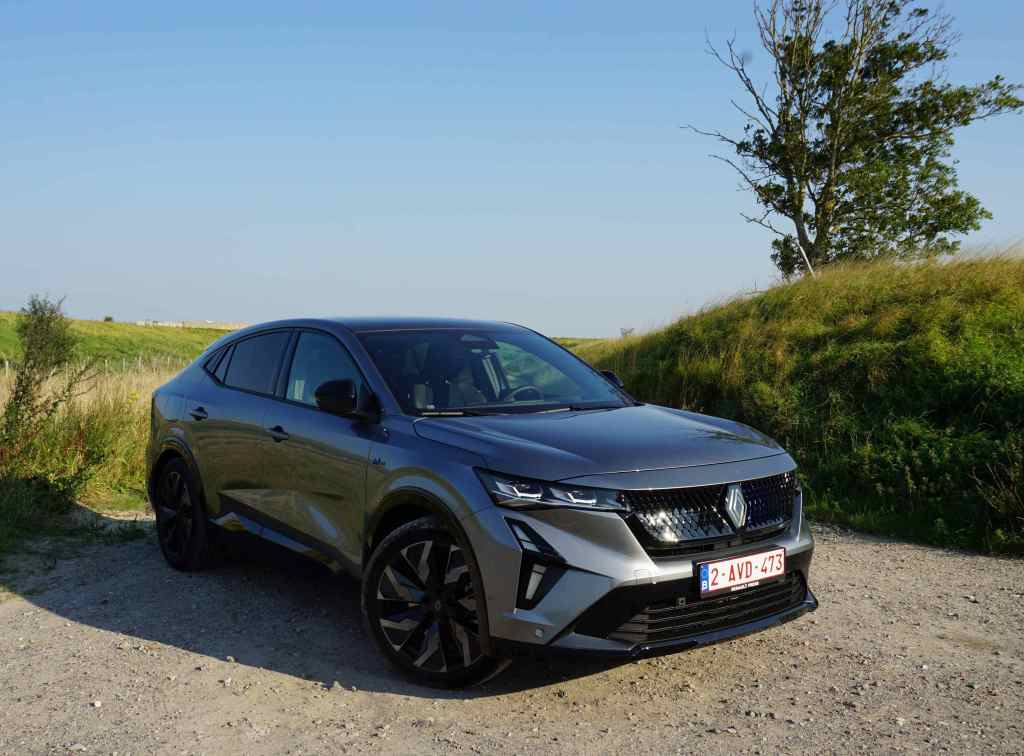
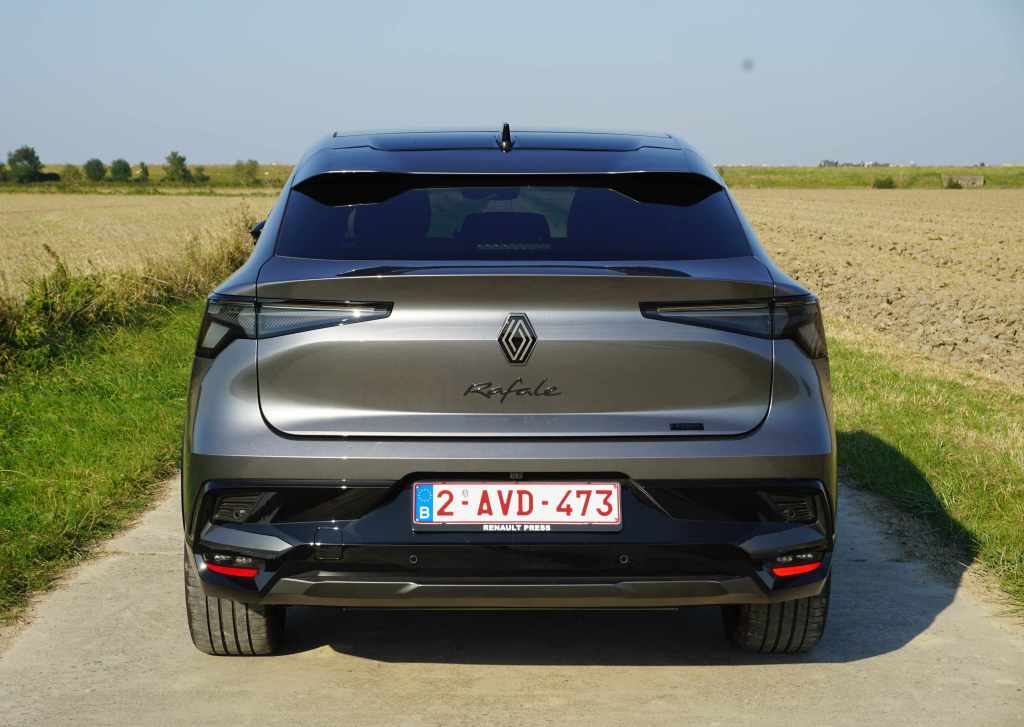
We drove the Renault Rafale : an elegant flagship with sporting panache…

There are days where the life of a car journalist are very bright indeed. For example when sitting behind the wheel of the Renault Rafale, a stylish high tech hybrid full of character and ingenuity.

Renault has poured all its car making know how into their latest SUV Coupé, making it very much in tune with the times: it is a full hybrid, offering electric driving without recharging, and has style too. We drove the 200 HP model  in the “Esprit Alpine” equipment version, adding to the unique panache of this Rafale… just read further.

Hans Knol ten Bensel

Stylish, inside and out

The Rafale has the looks, now coming from the hand of Gilles Vidal. Surprisingly Renault has abandoned the design language which Laurens van den Acker started in 2009 when he became chief designer and which culminated in the recent Megane E-Tech electric. Now Gilles Vidal is at the designer table, and he comes from the Peugeot stable. He brought the design language of the recent Peugeot C-segment sales hits (3008) to Renault, and this is what Luca de Meo apparently wanted.

This new Renault DNA takes some getting used to, but we understand the strategy, as this styling language is trendy for the C segment and upward. Don’t forget, the Rafale is a D segment car.  Renault is also choosing different and highly original styling paths when it comes to the new “retro” 5 and 4, which are indeed amazing and bound to be successful.

But back to the Rafale. I must admit that I like the name. It harks back to the also very stylish and rakish pre-war record plane with a Renault aircraft engine, and did you know that Dassault is still building a ”Rafale” jet fighter?

Renault has also added a touch of “Alpine magic” to it. Your eyes fall on the illuminated “A” with an arrow on the backrest of the front seats. It pulses to the beat of a human heart. Wooww….The colour of the lighting matches the option selected in the MULTI-SENSE settings. Agneta Dahlgren, the design project director on the new CMF-CD platform also used for the Austral and the Espace , sees the illuminated logo when you enter the car as an invitation to experience driving pleasure…

The interior of the Rafale is quite welcoming, ergonomic and spacious. It has a high tech aura about it, accentuated by phasing out the use of leather in its cars. In the Esprit Alpine version we tested, the use of … SLATE is surprising. Renault says that “it evokes the Alps”, an environment where the rally Alpine Berlinettes stormed to victory. Present on the dashboard facing the passenger, these thin sheets of slate mould to the contours as easily as wood veneer.

The interior is also quite spacious. Understandable, as it is built on the same platform as Espace. The Rafale shares its 2.74m wheelbase, allowing not less than 302 mm knee room in the back. The long wheelbase and gently sloping roof line allow a rear headroom of 880 mm, almost the same as on Espace (892 mm). The Rafale has a standard boot space of 627 litres (532 dm3).

A digital cockpit…

The cockpit offers driver and front passenger Renault’s “Open R” digital instrumentation with two screens forming an L shape. There is a horizontal TFT dashboard display of 12.3 inches diagonally and a vertical touch screen measuring 12 inches diagonally in the centre of the
console. Eminently legible and intuitive to use.

Staying connected…

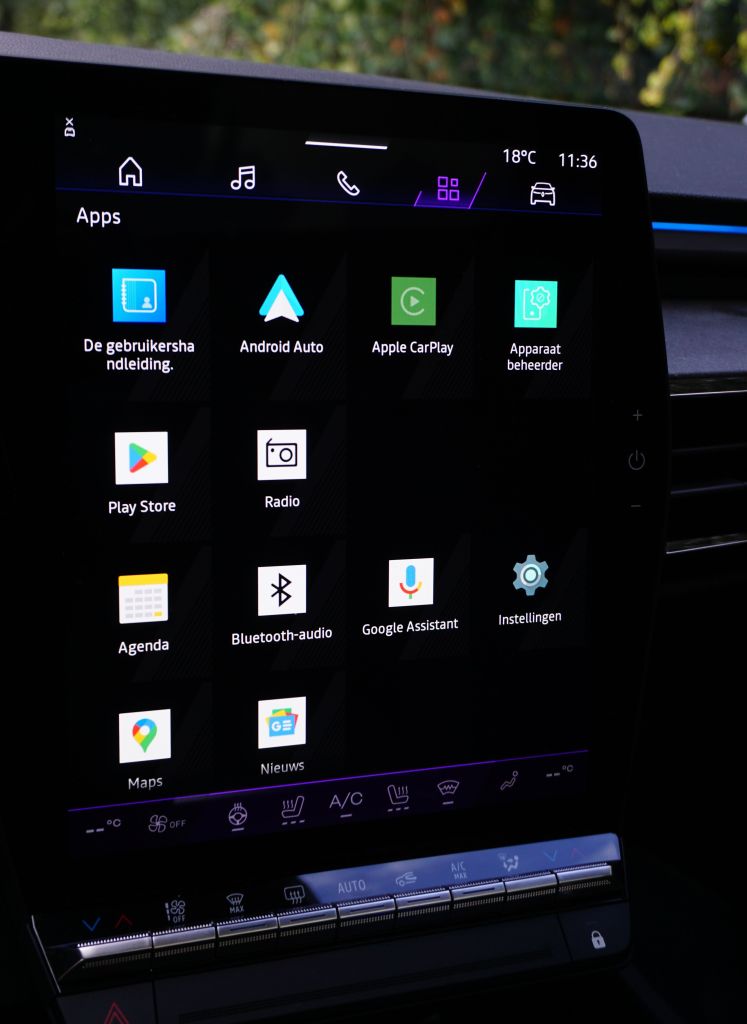
The Rafale connects indeed seamlessly with your smartphone through its in-car “OpenR” Link multimedia system with Google built-in.
The system provides access to Google Maps, Google Assistant and a host of apps (50 or more depending on the country and version) via the Google Play catalogue. Just like on a smartphone. The interface is also fully customisable and compatible with Android Auto and Apple Carplay.

As it is an open-ended system connected to the cloud, OpenR Link automatically integrates the recommended updates using FOTA firmware over the air) technology.

A clever, full hybrid drivetrain…

The Rafale has a 3-cylinder 1.2 litre turbocharged petrol engine developing 130 hp (96 kW) with 205 Nm of torque underneath the hood, and two electric motors. Let’s start with the engine. It has a Miller combustion cycle, low-pressure exhaust gas recirculation, a variable-geometry turbocharger and a longstroke architecture similar to that of a diesel. The result is an extraordinary efficiency level of 41%.

You guessed it, this engine does not spoil your ears with a thoroughbred high revving staccato, but rather sounds indeed like, well, a lower revving piston aircraft engine when called to duty. Especially as the computer which controls the hybrid system lets the  engine rev up to recharge the small 2 kW battery, which it does when you are driving at a (lower) constant speed or coasting, when you are using little engine power otherwise to propel the car. The computer then cleverly takes the opportunity to rev up the engine to recharge swiftly the battery, so it can again deliver its e-power for e-driving in slow urban traffic or to e-boost swift acceleration when called for.

This typically gives the driver the impression that the engine is revving up like the original Rafale record airplane before take-off… one would almost like to sit behind the wheel with leather gloves and a leather flying cap and goggles!

Renault’s full hybrid system is indeed very clever and astonishingly efficient. The two electric motors are respectively a main motor, developing 50 kW or 70 hp, and this is the one fed by the 2 kW 400 V battery. The other one is a starter-generator motor of 25 kW, which starts/stops the engine and performs the gear changes in the clutchless  multimode automatic dog box developed using Formula 1 technology. It  combines two gears for the main electric motor and four for the internal combustion engine. The motors and engine with this box combine 15 different operating possibilities, to offer te ideal solution in any driving situation. Soo clever!
But there is more. Renault went as far as to introduce on its flagship car so-called “predictive hybrid driving”. This function is meant to maximise the use of electrical energy while driving.

Connected to Google’s mapping data, such as the topography of the road over the next seven kilometers (or the most likely route if no destination is recorded), provides advance information to the battery management system to maximise the use of electric power….

Brisk performance

With a total system power of 200 HP, acceleration of this 1,6 tonne Rafale is quite good with a sprint time from 0 to 100 km/h of 8,9 seconds, and an intermediate dash between 80 and 120 km/h being absolved in 5,6 seconds. Of course, when driving full power for an extended period, the e-power is consumed and the petrol engine has further to do all the work, which translates therefore with its 130 HP in a relatively modest top speed of 180 km/h.

The good thing is that one is driving in urban traffic to a very large extent on e-power, which translates indeed in very good fuel economy. The WLTP figure is 4,7 l/100 km with CO2 emissions being 105 g/km.

The paddles on the steering wheel are not meant for manual gear changes, just let you choose the level(s) of e-regeneration.

Alpine agility…

The Rafale has very good handling qualities, and much testing has been done by Renault people to eke out the very best the CMF-CD platform has to offer.

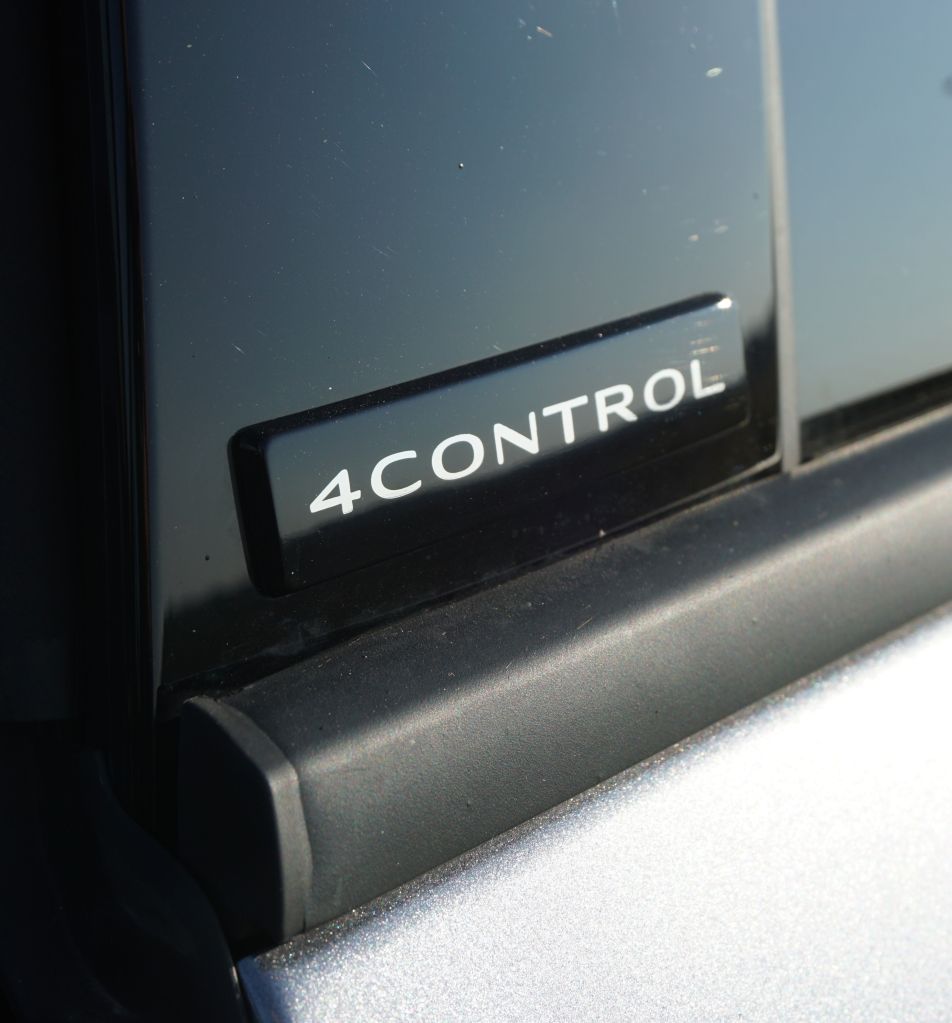
The Rafale has multi-link rear suspension as standard , and the Alpine version we drove has the “4Control” four-wheel steering technology. The rear wheels turn in the opposite direction to the front wheels (by up to 5 degrees), for better maneuverability on city streets. This results in a turning circle of merely 10.4m.
On the motorway, at higher cruising speeds,  the rear wheels then turn very slightly (up to 1 degree) in the same direction as the front wheels, improving vehicle stability by reducing the inertia of the rear axle.

We found the Rafale indeed quite agile and stable. Also thanks to the upgraded Vehicle Motion Control (VMC 2), an electronic system controlling the rear wheels, and ESP.  All this is further enhanced by the calibration of the steering with a direct steering ratio of 13. A truly sporting D segment car, when it comes to agility and road manners. In line with its French pedigree, it is very comfortable too.

Conclusion

With this Rafale, Renault makes an impressive statement in the D segment, offering a stylish SUV coupé with ample room, excellent handling, convincing performance and surprising economy. Its drivetrain is truly clever, its equipment and finish is full of panache, especially in the Alpine versions.

Soon there will be a 300 hp plug in hybrid 4×4 version, noblesse oblige, but already this 200 HP Rafale was very convincing indeed…

Hans Knol ten Bensel 

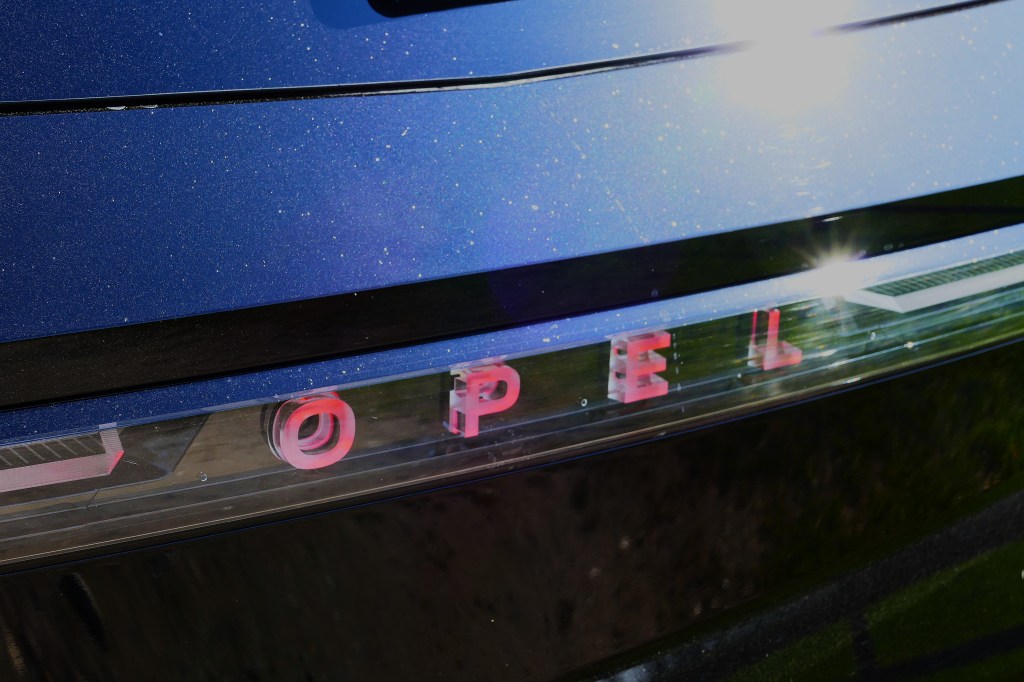
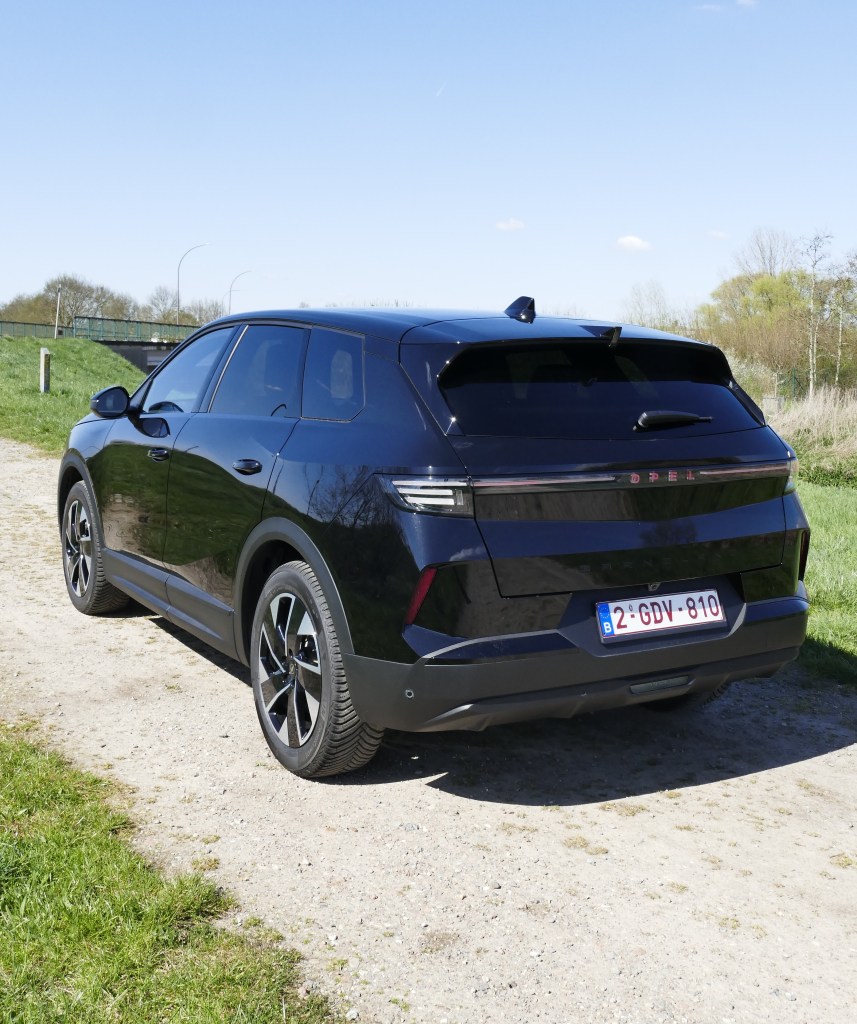
We drove the Opel Corsa Electric 156 HP: an electrifying bestseller..

In the very competitive B segment the Opel Corsa is a very interesting EV since a few years now, and like its Peugeot and Jeep sister models it has now also received a new, more efficient 156 HP electric motor and a slightly larger 54 kW battery. But there is more: it received a facelift, and now has also the iconic Opel “Visor” grille at the front. Also the infotainment system has been revamped and the driving assistance systems have been further refined. Its seats are as fine as ever and it has therefore excellent long distance qualities… just read further.

Hans Knol ten Bensel

We always had a weak spot for Opels. They were always part of my motoring life, from the Kadett A onwards to the Opel Rekords, the fantastic Manta, Commodore GS, the Admiral V8 and later the potent Ascona’s.

I found these Opels sturdy, touch, no nonsense, perfect Autobahn cars as well as excellent (urban) touring cars with pleasing docility.

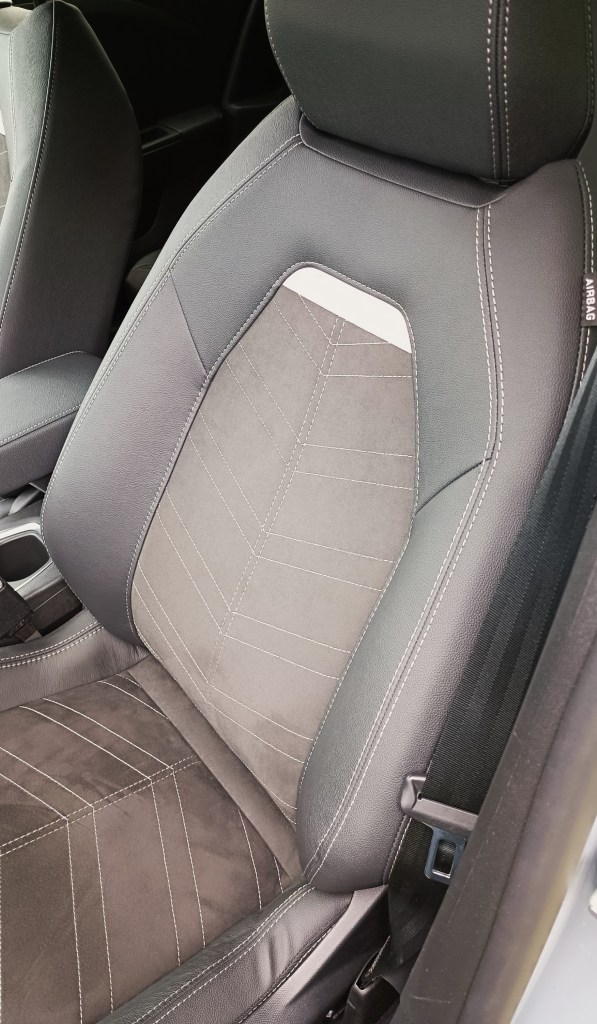
All these memories come back when you slide behind the wheel of this Corsa. No wonder it has been a top bestseller for years in its B segment.  The car feels nice, the seats are “just right” and give marvelous support, in the good Opel tradition.

The infotainment is now up to scratch with, as Opel calls it, “Snapdragon® Cockpit Platforms from Qualcomm Technologies, Inc.”. With now also an up to 10 inch large colour touchscreen.
Happily, virtually all the essential controls are physical knobs and buttons, so it’s easy to feel at home in this Corsa, as you would in virtually every Opel by the way.

Smooth power

We repeat ourselves here over and over. EV’s drive super nice. They seduce you with a velvety power stream and lots of pulling power at every speed, in any situation. With no noise and no vibration whatsoever. So charming, invariably making you feel totally ”Zen” behind the wheel. This electric Opel should carry the nickname “RAK”, as it goes, like its famous predecessor, like a rocket. It will, despite its more than 1,5 tonne kerb weight, catapult you in 8,1 seconds to 100 km/h. The engineers set the top speed at a sensible 150 km/h, which is only for the better, as the range will otherwise dwindle too drastically. And let’s face it, you would only lose your driver’s license in many countries…

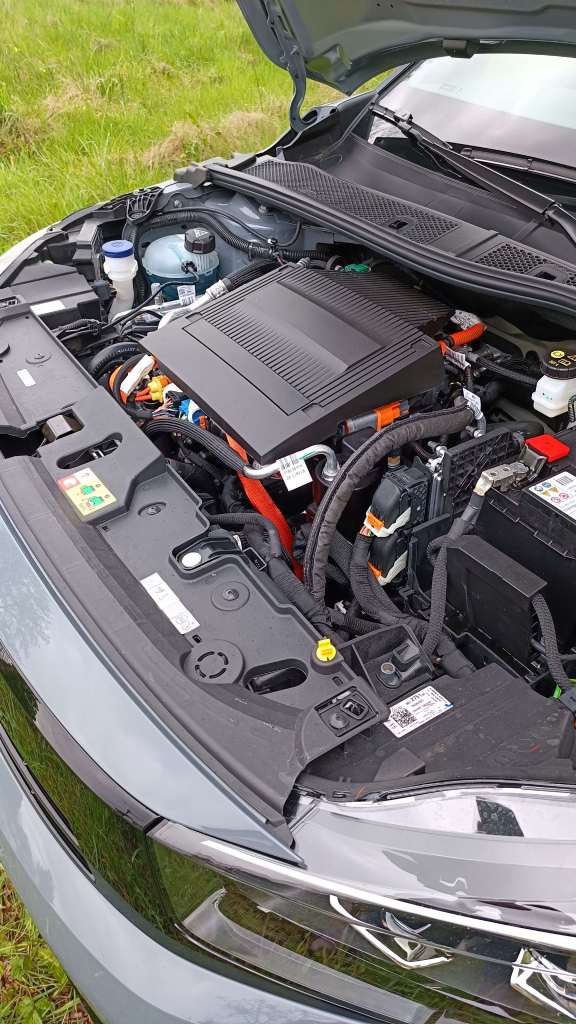
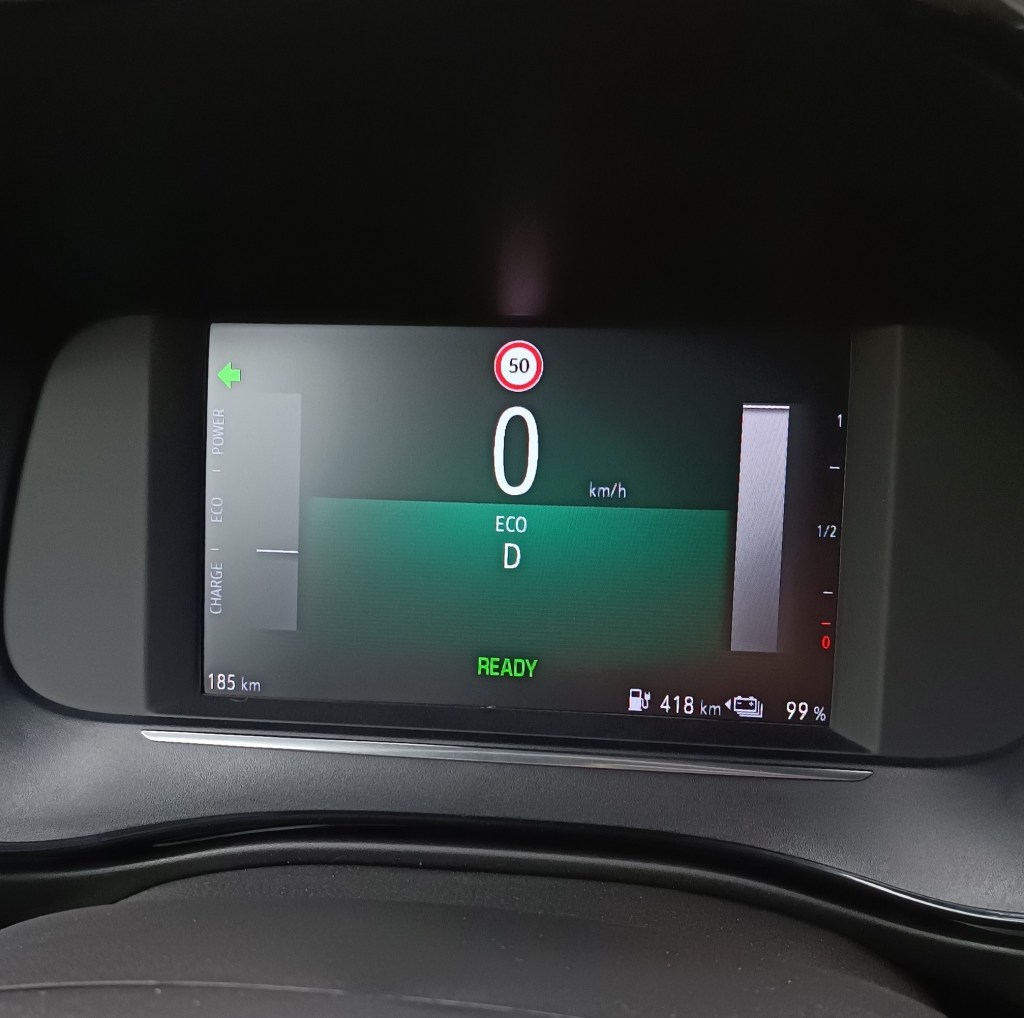
The new electric motor is more efficient than the previous 136 HP variant, which is by the way still available. This means indeed, that with some restraint in your driving style, you can achieve consumption’s in the region of 15 kW/100 km. The WLTP range of 402 kilometers is realistic when you drive mostly in slow (urban) traffic, and maintain reasonable (legal) cruising speeds on the open road.  Otherwise, something in the range of 350 kilometers is more realistic.

Of course, the Corsa can be charged rather quickly: on a 100 kW fast charger, it costs typically around 30 minutes to recharge it from 10 to 80 pct. On a (AC) wallbox, 3-phase at 11 kW it will take about 3 hours and 10 minutes.

State of the art electronics and infotainment in the cabin

The Corsa is very important for Opel and Stellantis, and therefore much attention has been given to keeping this bestseller up to date. Just like in the development of the latest Astra generation, the “Detox to the max” principle

was applied: the navigation system offers connected services, natural speech recognition “Hey Opel” and even more important, over-the-air updates. In addition, the displays in the 10-inch colour touchscreen of the navigation and multimedia system and in the driver information display have been made even clearer. Apple

CarPlay and Android Auto compatible smartphones can now be connected to the vehicle’s multimedia systems and also recharged – both wirelessly.

Let there be light…

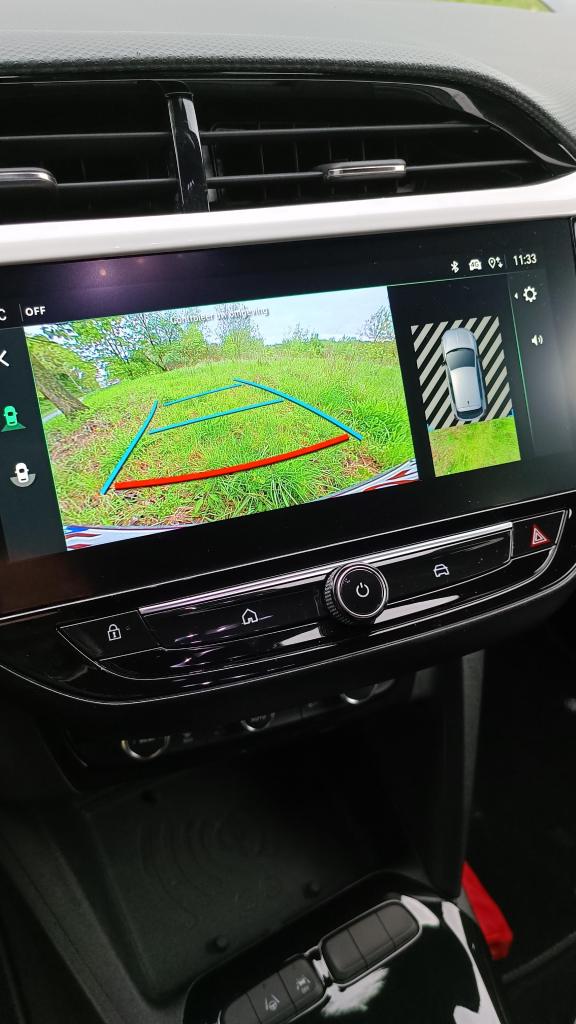
The Corsa now also receives not less than 14 controllable elements in its Intelli-Lux LED® matrix light system, instead of the eight it had already since its introduction in 2019. There is also the new, high-resolution panoramic rear-view camera, an adaptive cruise control and speed limiter and the forward collision alert with automatic emergency braking and pedestrian detection.

All this makes an impressive car, and it is no surprise therefore that the Opel Corsa Electric has been named the “2024 EV of the Year” by the Association of Business Drivers in the Netherlands in the so-called ‘Mid Segment’ category.

Practical and offering driving pleasure with a sporting touch…

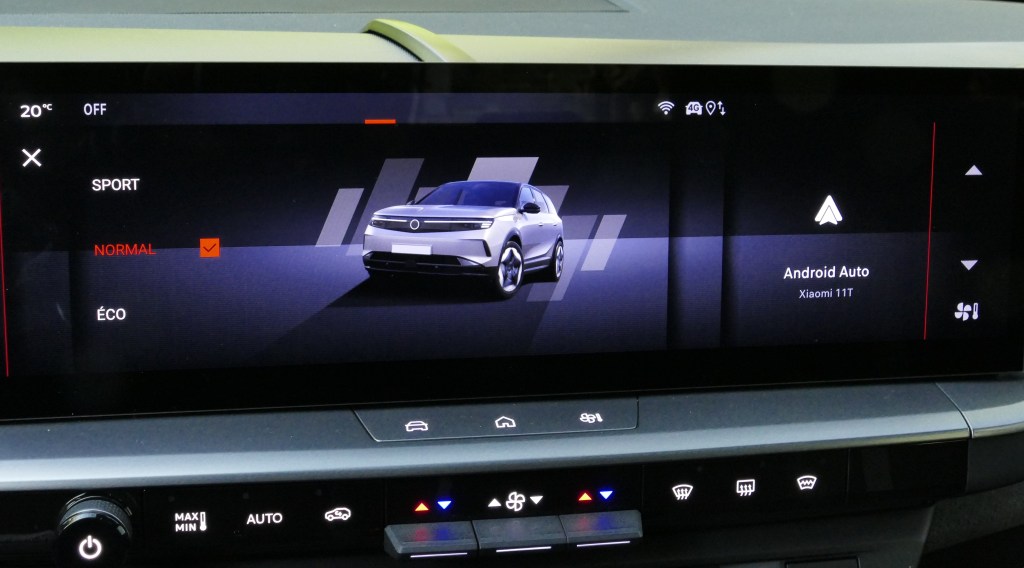
Indeed, it offers room for four, has practical storage spaces in the cabin and sufficient boot space too. Besides the smoothness of the drive train, the Corsa offers a hint of sporting driving pleasure. It steers precise, and does not protest when you drive it with verve. High speed stability is important for the German market, and therefore the Opel engineers did not hesitate to make the suspension rather firm, also taking into account its impressive kerb weight of 1544 kg. You can choose between thee driving modes, Eco, normal and sport.

Conclusion 

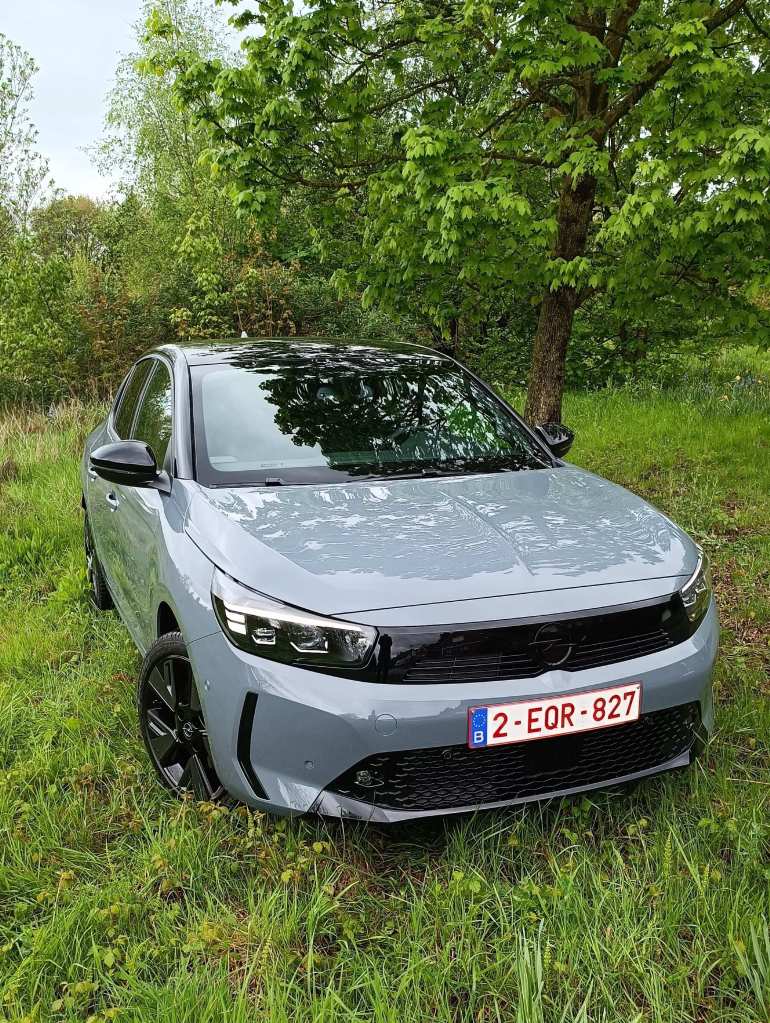
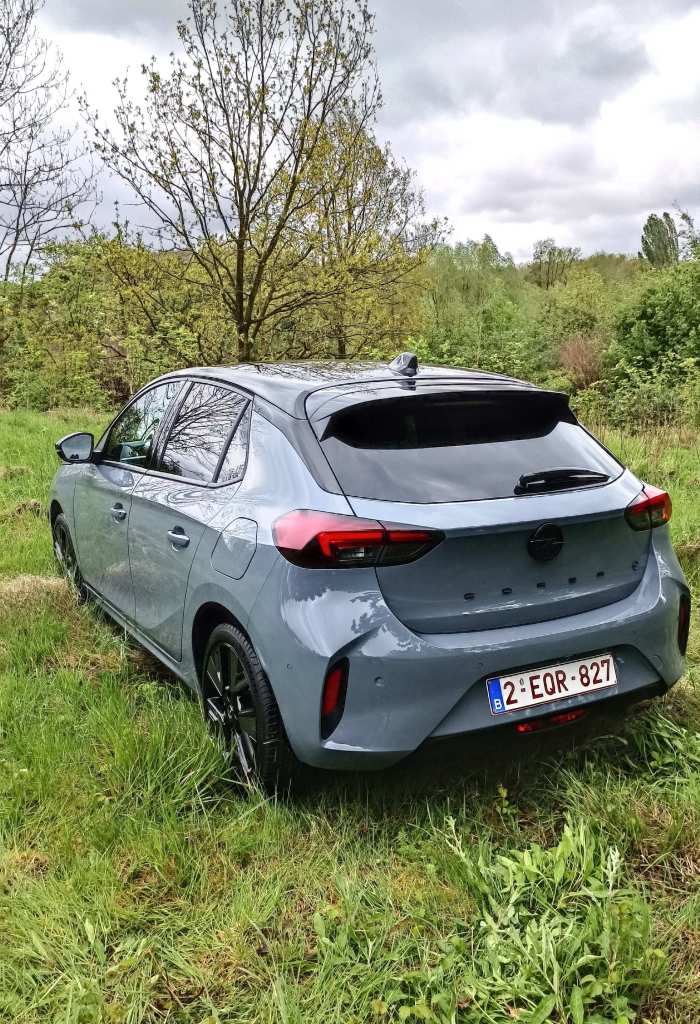
If you opt for electric transport, the Corsa merits a long hard look. Well built, it makes you instantly feel at home with its intuitive controls, its no-nonse simplicity, its excellent seats and quality finish. It handles and drives well, is practical, and last but not least good looking. Our test car was finished in Grafik Grey, and it suited it very well…

Hans Knol ten Bensel

We drove the Renault Megane E-Tech Iconic EV60 220 hp

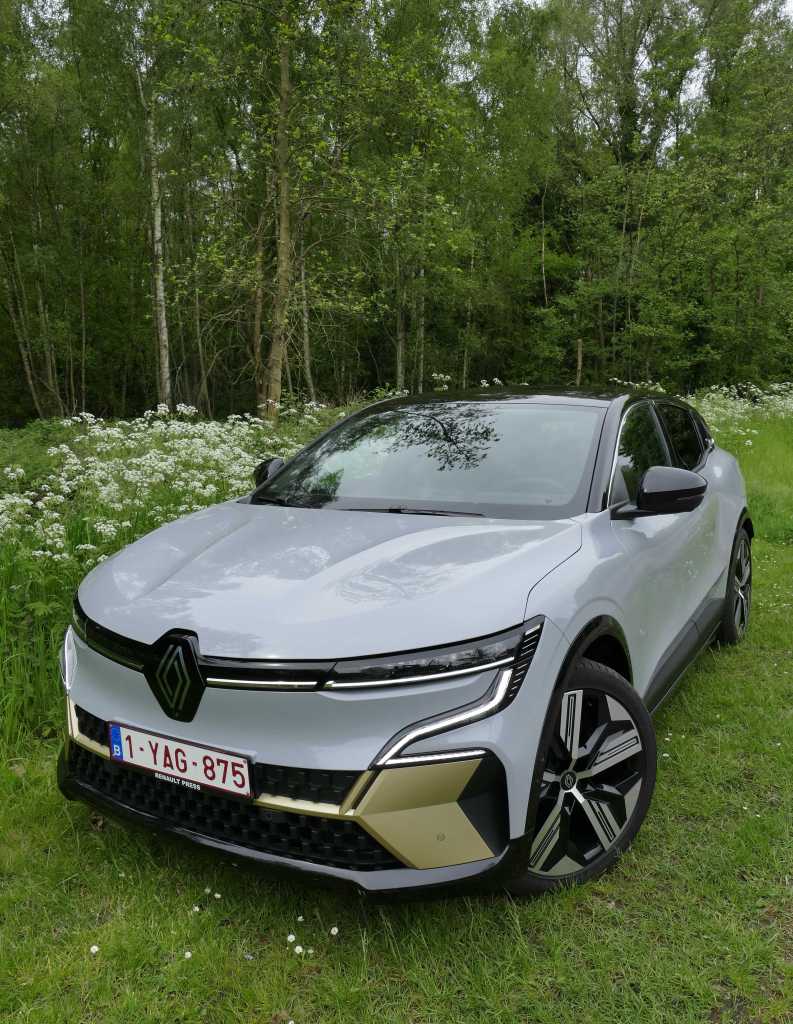
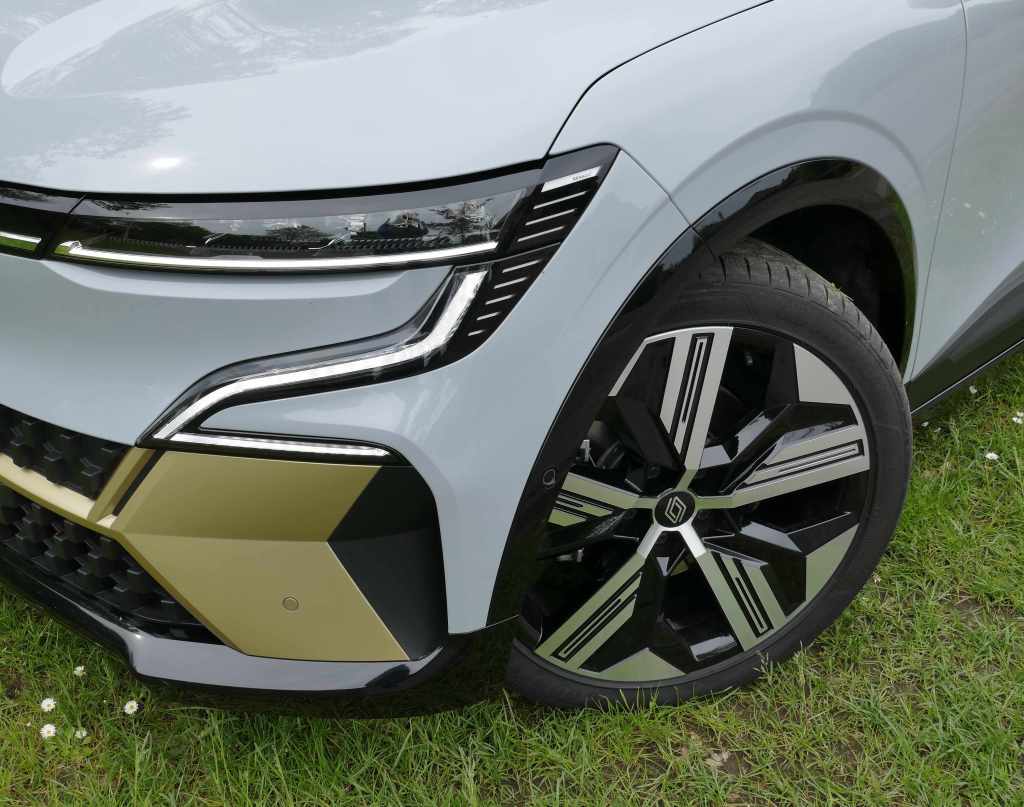
Renault has been very early in the EV game, with its fittingly called ZOE, which has been for years an absolute bestseller. The new Megane has been completely redesigned and is the first Renault model to run on the new so-called CMF-EV platform, co-designed with Nissan. The new Megane is compact with its 4,20 meters, which is almost identical with the previous, fourth generation Megane, but that’s were any similarity ends. The new Megane stands proudly on its big wheels (20 inch in the version we tested) and its proportions are beautiful indeed. The longer weelbase of some 2,70 meters clearly shows that this is a latest generation EV. It certainly has style and panache. Will it also convince as an EV? Just read further…

Hans Knol ten Bensel

Modern times…

The Megane has not only a contemporary flair, it also offers quite enough room for four adults and their luggage. They are greeted by a pleasant and premium interior, with impeccable styling. On the top version we tested, your eyes wander over a well finished dashboard and meet with a crisp 12 inch central screen which offers state of the art infotainment and connectivity. Of course, Apple Car Play and Android Auro are provided. But this is also standard in the base model. Indeed, the latest Megane generation comes very well equipped. Then you get a 9 inch screen, but a rear camera and speed limit recognition combined with cruise control are also standard.

Cocooning

Indeed, the digitalized instrumentation leaves nothing to be desired. Renault has integrated Google functions in its OpenR link, and offers very good information for the EV driver. First of all it uses the chrystal clear Google maps, and when plotting the chosen route for you, it will take into account the charging situation of your battery, and even indicate the estimated remaining charge status at your destination.

Of course it will also suggest stops and places where you can recharge your battery. The layout of the dashboard is quite practical, and it is good to see that the commands for heating and ventilation are placed on a separate physical touchboard below the central screen. One also finds the legendary and iconic audio command stick on the right side of the steering column, which is typical for every Renault since the R 25 sedan, launched way back in the seventies…

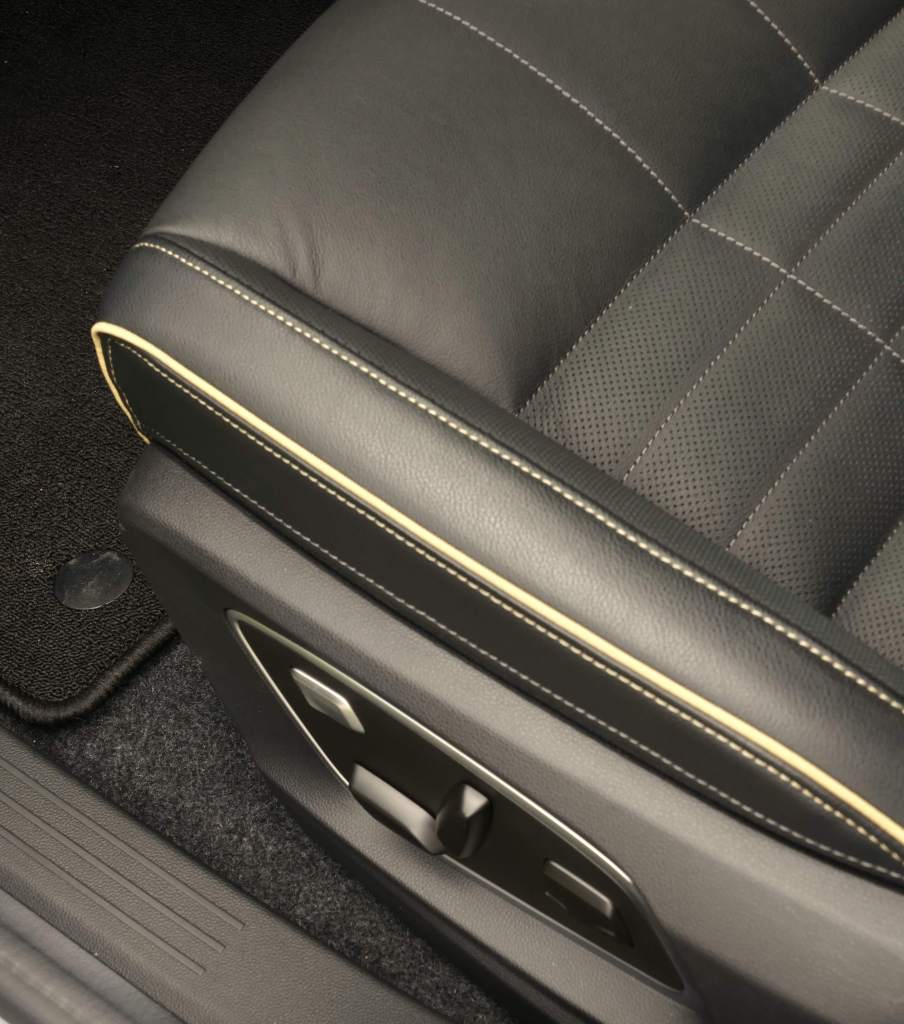
The finish level of the  cabin and seats is high indeed. In the top “Iconic” version we tested, Renault has also provided electric powered front seats with memory and massage functions. The seats are very comfortable and the upholstery is firm.

Smooth power

We tell you nothing new when I tell you that EV’ s spoil you with lots of super-smooth power. With its 300 Nm and 220 HP you can expect very sporting performance. Not only is this Renault very quick off the mark with a sprint from 0 to 100 kmh in merely 7,5 seconds, it excels in traffic with very brisk accelerations. From 60 to 100 kmh costs merely 3,6 seconds, which makes overtaking or joining faster traffic the proverbial breeze. Besides the silence and smoothness, it is this permanent presence of this abundance of power which makes an EV truly delightful to drive. The pleasure stops at 160 kmh, as the electronic limiter sets in quite sensibly. Indeed, high cruising speeds wreck havoc to the range of your EV.

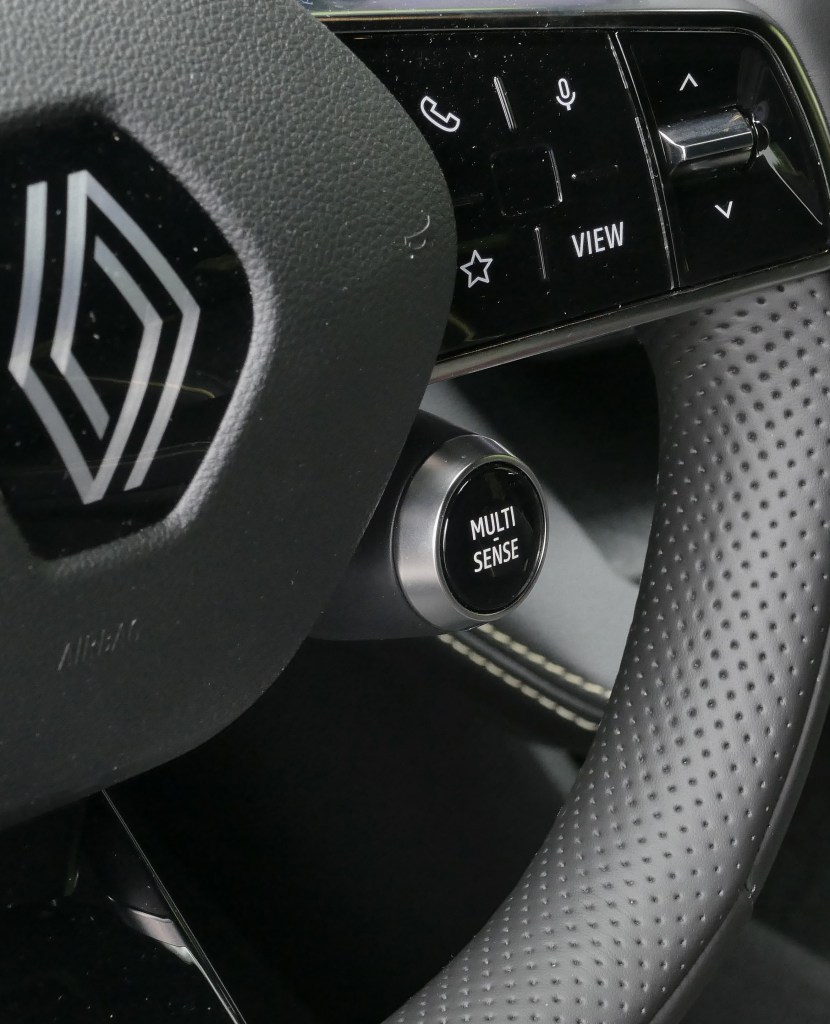
There is a round knob at the steering wheel column where you can choose the different driving modes from eco to sport, and with the paddles on both sides of the steering wheel you can select the amount of energy recuperation you want on your drive. 

Despite being only front wheel drive, the drivetrain copes well with all this power. When it comes to consumption, the slower you accelerate and cruise, the better your range will be. We learned to drive EV’s with restraint, despite their abundant power, and this is the only way  to achieve a consumption which comes close to the official WLTP figures. We regularly achieved values between 15 kW in urban traffic and 17 KW on the open road, at moderate cruising speeds. When you use this Renault more briskly, you have to reckon with 19-20 kW, which is still a very good value indeed.

The battery has 60 KW capacity, and this means a range between 370 and 400 km is quite realistic and achievable when you drive it with restraint and achieve a consumption of around 15-16 kW. It accepts up to 130 kW fast charging, and this means that you can charge it from 10 to 80 pct in merely 41 minutes. The battery is guaranteed to deliver 70 pct of its capacity for a period of 8 years or 160.000 km.

Practical

We already applauded the excellent infotainment and good cabin layout. The boot space is adequate with some 330 liters, with the rear backrests down this raises to some 750 liters. The boot floor lies very deep, and this makes loading heavy objects a bit cumbersome. One minus point in everyday life might be the rather poor backward visibility, due to the small rear window, high waistline and the large C pillar. But then the Megane has a rear camera as standard equipment, and in the top version we were spoiled with an electronic rear view mirror.

Comfort and handling

The Megane is in good French tradition laid out for comfort, it is also at home on winding roads and offers excellent stability at motorway speeds. We already applauded the comfortable seats, and getting in and out of the car is also easy due to its higher stance.

Conclusion

A well styled car, well built and finished, powerful and reasonably frugal, the Megane betrays the excellent ”savoir faire” of the French car builder in making EV cars. It is full of panache, both inside and out, and certainly deserves a good look if you are looking for an EV in this segment.

Hans Knol ten Bensel

We drove the Volkswagen ID.7: your electrifying flagship…

Volkswagen has gained over the years already quite some experience in designing, developing and building EV’s with its already iconic ID series. All this know how is now brought together in the ID.7, the big EV limousine at the top of their ID range. The result is manifest: this car is full of good qualities, and earns indeed top marks in virtually all aspects. We found it clearly one of the best bigger EV’s we have come across lately.
Just read further…

Hans Knol ten Bensel

Imposing and well proportioned

The ID.7 has the same styling and form language as the smaller models in its ID range, but its proportions are even better, not in the least because of its  longer weelbase. The overall length of 4,97 meters lets the lines and contours flow more gradually and elegantly and indeed, this ID.7 looks good from any angle.
The ID.7 is also very aerodynamic, with a Cw value of merely 0,23. This is very crucial to reduce energy consumption at higher cruising speeds, and to achieve longer ranges on long distances. But there is more: the VW engineers gave the ID.7 also a brand new electric motor. It drives like in the other ID models the rear wheels and develops 210 kW or 286 HP.

Plenty  of power, to say the least, and this ID.7 is very agile indeed. It sprints from 0 to 100 km/h in merely 6,5 seconds and overtaking becomes the proverbial breeze. The ID.7 behaves also wonderfully when you drive it more quietly, and the car then rewards you with a very reasonable consumption. We achieved during our test an average of 17.60 kW/100 km, and we think that this tells the whole story.
Indeed, VW succeeded in giving their flagship EV an impressive range of close to 500 km. Of course, the usable range varies with outside temperatures and driven speeds, but let’s say that this ID.7 has its merits as a long distance Gran Turismo.
This good range is achieved with the 77 kW battery which is also found in the other cars of the ID  range, and all this is due to the improved motor and the better aerodynamic qualities. Of course, as you already know by now, EV cars just LOVE slow driving. The slower the (constant) speed, the further you go. Even to very slow speeds, like say 40 km/h, EV’s are frugal, where IC engined cars need to revert to lower gearing to keep the revs up and are therefore less efficient. Also the outside temperatures are relevant. So at a nice springtime outside temperature of 20 degrees and at a cruising speed of say 90 km/h, you will drive far beyond 600 kilometers with your stylish ID.7. Top speed is sensibly limited to 180 km/h.

This electric flagship will also recuperate its kinetic energy nicely. If you put it in Eco mode, it will also decelerate smoothly and anticipate for bends and crossroads.

Comfort and space…

We found the suspension of the ID.7 actually “just right”, offering excellent comfort in all circumstances and under all driving styles, with outstanding handling and agility. A superbly balanced car indeed.

But it is not only the suspension which stands out, the generous dimensions in the cabin do the rest. Indeed, this is a limousine fit for the very tallest. Even when the front seats are put back to accommodate 1,95 meter tall front passengers, you will still enjoy ample legroom in the back. Indeed, this is a car to fit four basket ball players, and this is pretty unique.
Your servant is barely 1,70 m tall, so you can imagine that I was absolutely spoiled.

Climate comfort

The seats itself also merit superlatives. The front seats are optionally equipped with so-called ’Adaptive Climate Control’.  It has to be felt to believe it. Humidity sensors in the backrest will prevent transpiration, small jets will cool or heat the seats for optimal comfort.
Besides this, the seats will also spoil you with an array of massage functions.

The light atmosphere in the cabin can be changed almost at will, 10 different colour shades are standard, and can optionally be as many as 30…

Our test car came with a panoramic roof, which has a layer of polymer dispersed liquid crystals, so you can control the transperance with a simple touch.

Heating and ventilation are controlled on the immense central touchscreen, although there is an illuminated control bar at the base of the screen which lets you adjust with sliders the basics like air  temperature and airflow volume. The direction of the airflow through the vents can only be adjusted on the touchscreen however. Your servant is very sensitive to colder airflows, and was very surprised to feel an intermittent air stream on his face. Indeed, the airvents can be set to turn constantly on a horizontal axis, like a stand ventilator in your home…

A range of well over 500 kilometers is quite possible with the ID.7..

On a public charging point it will accept power up to 11 kW, and the battery will be 80 pct charged in about 4 hours…

Touch controls…and clear instrumentation.

Again the haptic touch controls are the hallmark of this VW, as is typical for the entire ID range. It takes some getting used to, and for instance you are well advised to set the voice command sensor on the steering wheel properly, otherwise she will ask you what she can do for you at every turn of the way.

What we loved is the very clear and concise driver information the instrument display puts in front of you. Indeed, less is more. There is also a very readable head up display. It informs you about speed, the direction you should take and energy consumption.

Practical

In good VW tradition, the boot space is enormous. When you fold the back seats and load until the window openings, you can store 888 liters…
There is even a small separate 25 litre storage space for the charging cables.

The ID.7 is rather wide for urban traffic, but its turning circle is a modest 10,7 meters, and indeed the car is thanks to the driving aids also a breeze to park.

Fast charging is a strong point of the ID.7. It will accept up to over 180 kW charging power, and under these conditions it will take little more than half an hour to recharge this flagship from 10 to 80 pct. On a public or wallbox charger it will typically accept 11 kW, and you have to reckon with a charging time of some 8 hours.

Conclusion

The ID.7 is indeed a totally convincing limousine EV. It is hard to find any weak points, and it is therefore not surprising that it earns many top laurels in the international motoring press. Notably it was given the very best note ever for an EV by the German ADAC in their test.

Quality doesn’t come cheap, but then this is a rather formidable EV, and we sincerely regretted to part with it…

Hans Knol ten Bensel