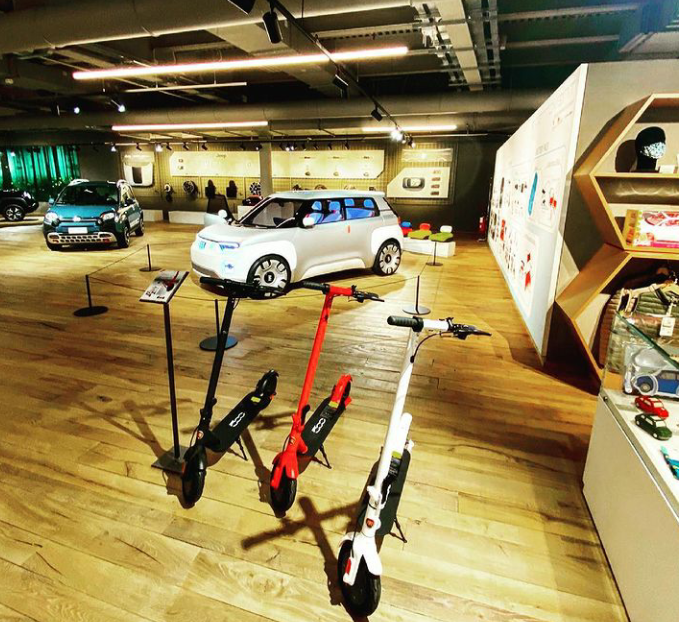
Dynamic Stellantis PR Manager Dominique Fontignies sent us yesterday his photo of the Fiat Centoventi concept displayed at the “e-Village” in the Green Pea building in Torino.
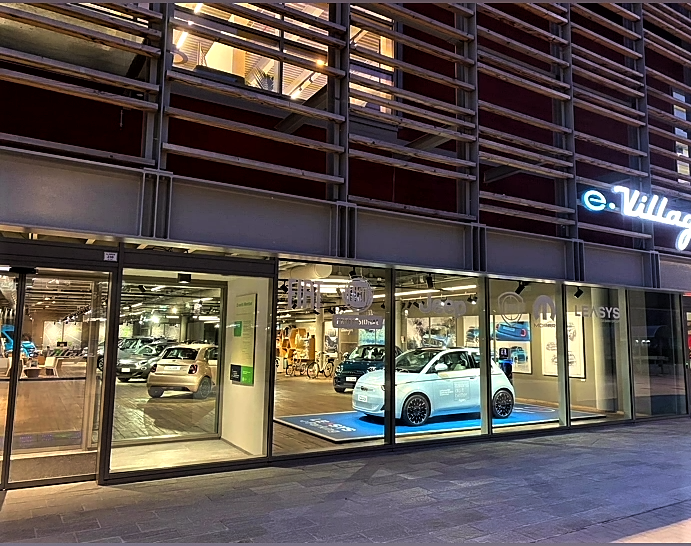
What is this e-Village? It is a branch of Mirafiori Motor Village in Turin and it’s the biggest sales point of electrified cars in Europe.
It’s located in an area of 1300 square meters inside Green Pea and showcases all FCA technologies related to electrification, including hybrid and all-electric vehicles on the market, as well as prototypes of upcoming models.
Another photo made by Dominique Fontignies…
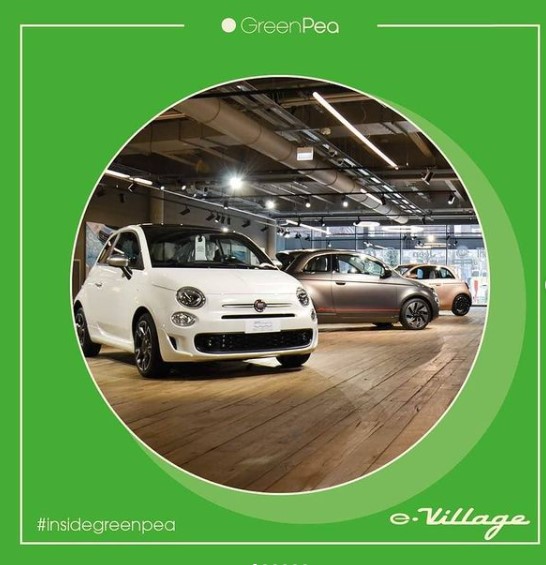
It’s a zero-impact space that adopts the “reuse, reduce, recycle” philosophy and it can be considered the fulfillment of the efforts made by FCA to promote the future of mobility.
At Floor 0 – move, energy & connect, inside the e-Village: the space entirely dedicated to the sustainable future of mobility wanted by Stellantis, the fourth automotive group in the world.
In e-Village halls you can find all solutions of the Group’s for the avant-garde mobility, such as the Electric New 500, Panda Mild Hybrid and Jeep and Ducato’s electric vehicle range.
Traditionally, in February and March, the Brussels based Autoworld Museum organizes a special for Volkswagen historical exhibition, culminating in a Beetle love parade on St. Valentine’s day.
However, the parade will not take place in 2021 for obvious reasons, but the exhibition organized in collaboration with Volkswagen is very special indeed!
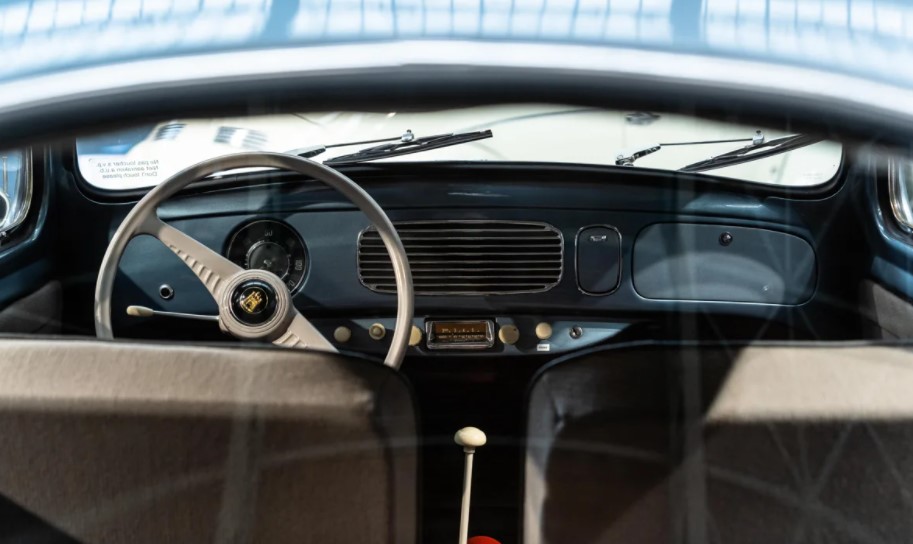
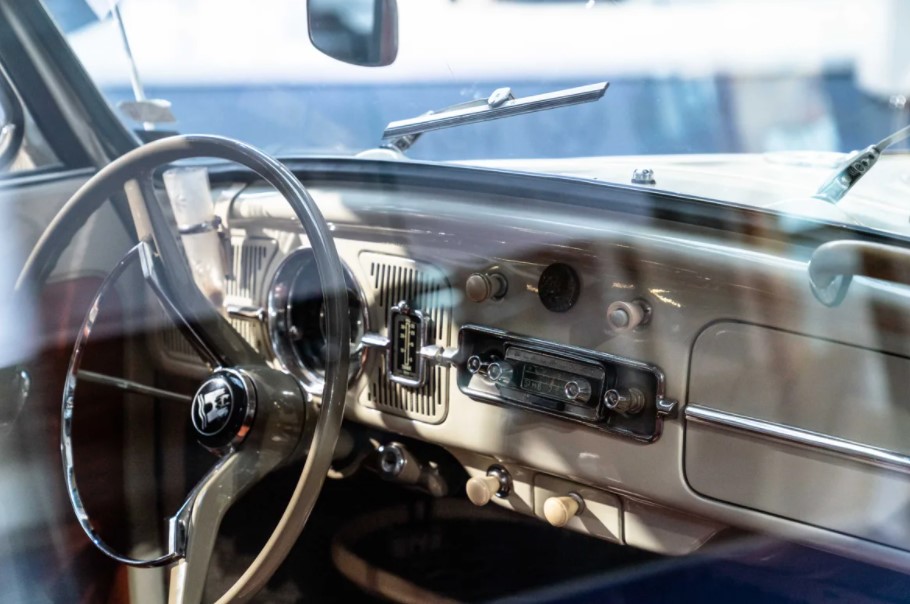
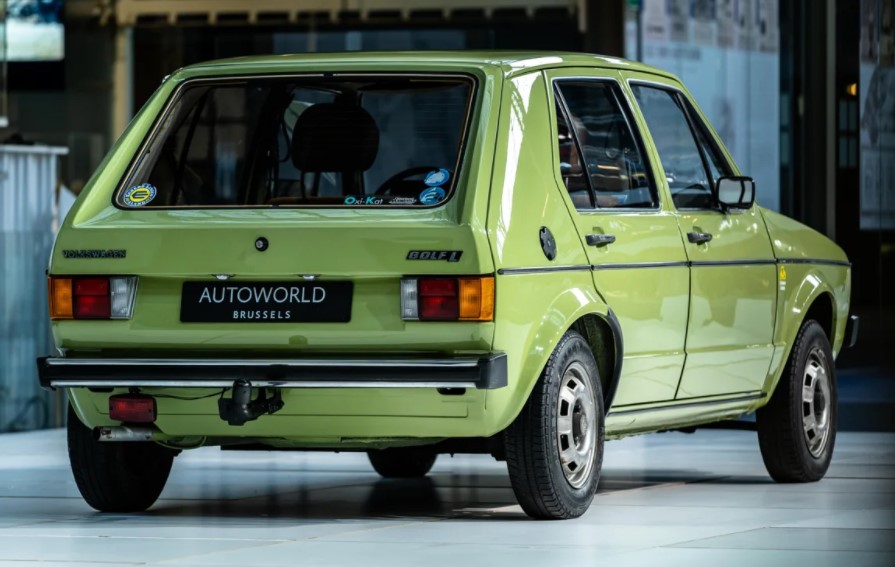
The exhibition is dubbed “Volkswagen Milestones” and reflects the historical zeitgeist of the car of “Everyone and everbody” on the basis of the three important models in the history of the brand: the Beetle from the 50s – 60s, the Golf from the 70s to the early 80s and last but not least, the “Electrical Age”, with the new ID.3.
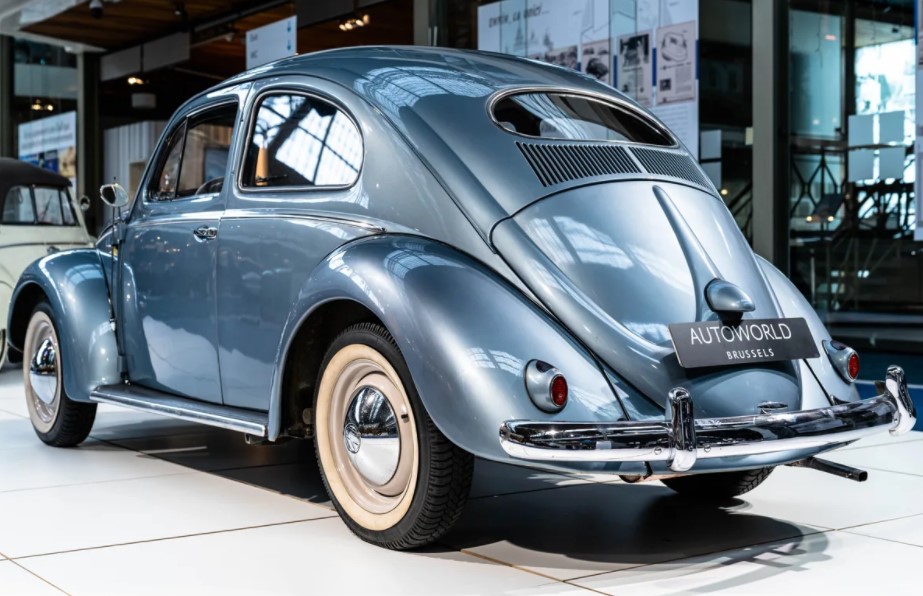
When I saw the cars on the exhibition, via a magnificent photo portfolio shot by Yves Noël, I couldn’t help reflecting back to my early days of motoring. Because, of course, I started out myself behind the wheel of a Beetle. I had bought, as a student, this ’55 (I believe) Beetle De Luxe Export from the famous and iconic television, arts and performance critic and column writer Johan Anthierens, who had learned the craft of journalism from my father, then Chief Editor of the illustrated weekly magazine “De Post”. He had hired Johan to write the Television column in “De Post”. Johan Anthierens bought a new car, and he sold his Beetle to me for the modest sum of 500 Belgian Frank, which is the equivalent of…some 12,5 Euros.
This Beetle is the exact same car as figures here on Yves Noël’s magnificent shots, with – if I recall well, the indestructible 30 HP 1200 cc version of the famous boxer in the back. Indestructible, well, almost. At higher mileages the third cylinder suffered unavoidably rather more from lean mixture than the others, and compression losses in this cylinder due to worn exhaust valves were often de result. This situation was however not bad with this one.
This beetle, with dark green livery, had soon its hubcaps removed and its wheels painted silver, and looked the part! We drove four years with it with the greatest joy throughout Europe, from Copenhagen to Bordeaux, over Routes Nationales and Autobahnen, and our greatest admiration for Porsche and its designs was born then.
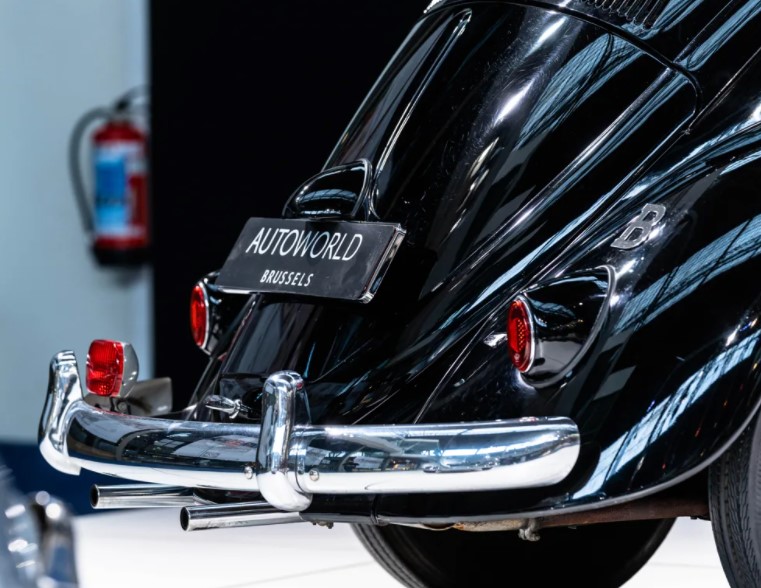
Then, I stumbled on another bargain Beetle, the exact self same car as the black one here on the photo. It still had the 30 PS (manual choke) engine, but an “American type” steering wheel, with a big chromed claxon ring, and, progress, the bigger rear window.
Performance was basically the same as the first one, but I adorned the dual exhaust with slightly bigger diameter tail-end pipes, and this gave a deeper, throaty exhaust note, very similar to a 356 Porsche.
Boy, did I love driving this Beetle with zest… I drove it for another 3 years, until I got engaged to my present wife. Her father changed cars, and so I became as a “welcoming present” suddenly the happy and proud owner of the famous big Volkswagen 411 L, donned in dark British Racing Green paint, which suited it very well. That was my (big) Volkswagen during the Golf era, being also the last creation by VW within the air cooled boxer engine at the rear philosophy. A very comfortable and fast car, which would have merited an even greater success than it had. But other times were coming, also for the “bigger” VW’s. Not only the Passats were soon to come, but in those days also another beauty which was born on the drawing tables in Neckarsulm, the VW K70. This car fitted better in the Golf era, where thermal efficiency, economy, light construction and excellent road manners together with style became the norm.
The Golf era started in 1974, and these cars changed the perceptions about what a small car could do. Winners, I found, were the Golf GTD, which could cruise along all day at 140 km/h and consume still only 6 litres/100 km or thereabouts, with its 1,5 litre Diesel being a pleasant and eagerly revving machine. Then, there was the ultimate Golf, the GTI. Originally 110 PS, but what zest and panache. Also the styling details are absolutely iconic, to say nothing about its handling and performance.
There were also the three spoked steering wheel, the chequered seats, the wheels, the paint scheme, the throaty exhaust note…
Of course, there is also VW’s electric future on display, and indeed the ID.3 is a very convincing car. Just read our test report in these columns. We have just left hospital last week after two major operations, but around easter we are able to take the wheel again. The new VW hybrids are cars we are looking forward to. We will ask Joke Boon, Press Events Coordinator and VW Press and PR Director Jean Marc Ponteville to have a look in their calendar… and thank Joke Boon here for all the Autoworld photo’s she sent me!
Just some practical info: Autoworld – Jubelpark 11 – 1000 Brussels. Open every day, also Monday, from 10 AM to 17 PM (Saturdays and Sundays until 18 PM)
Admission: €12/adult – €10/senior – €9/student – €5/child (6-12 yr) free for children below 6 yr. Tickets bought online cost 1 Euro less.
Maserati’s successful Ghibli has already won several prizes and awards, and on February 11 recently today it has received a very special one as it won the “Upper Middle Class – Import” category at BEST CARS 2021. Initiator of this readers’ choice is the leading German car magazine AUTO MOTOR UND SPORT. More than 100,000 readers had followed the call and picked their favourites from 378 vehicles in eleven categories. This is the 45th time that these prestigious awards have been held.
Of course, this led to smiling faces at Maserati. Davide Grasso, CEO Maserati, said: “Ghibli is an iconic Maserati model. With over 100,000 units produced since its launch in 2013, this model perfectly embodies our DNA and the Brand’s values. For this reason we have also chosen the Ghibli to ignite the spark of electrification which projects the Brand into the future: last year we revealed the new Ghibli Hybrid, the first hybrid vehicle in Maserati’s history.”
We will return in these columns on this Hybrid version of the iconic Ghibli, and hope to lay our hands on one for you the coming months. The new Ghibli Hybrid has a 2.0 litre 4 cylinder engine that is coupled with BSG, eBooster and 48 volt battery. It is certainly no sluggard: it has an output of 330 hp, which ensures a top speed of 255 km/h and a sprint from 0 to 100 km/h in 5.7 seconds.
For the current MY 2021, Ghibli received comprehensive technical and stylistic enhancements. Among other things, there is the completely new infotainment system MIA (Maserati Intelligent Assistant) with a 10.1” screen in 16:10 format. Furthermore, the new Maserati Connect program enables the owner to stay connected to their vehicle and, for example, to be informed about the cars condition in detail.
A 580 HP V8 engine makes its debut…
For the first time a V8 engine is also available in the Ghibli’s range. The 580 hp 3.8 litre twin turbo unit accelerates the Ghibli Trofeo from 0 to 100 km/h in just 4.3 seconds and provides a top speed of 326 km/h – a Maserati sedan has never been faster. The exclusivity of this version is also underlined by the new “Corsa” driving mode and stylistic elements that make the uniqueness clearly recognizable.
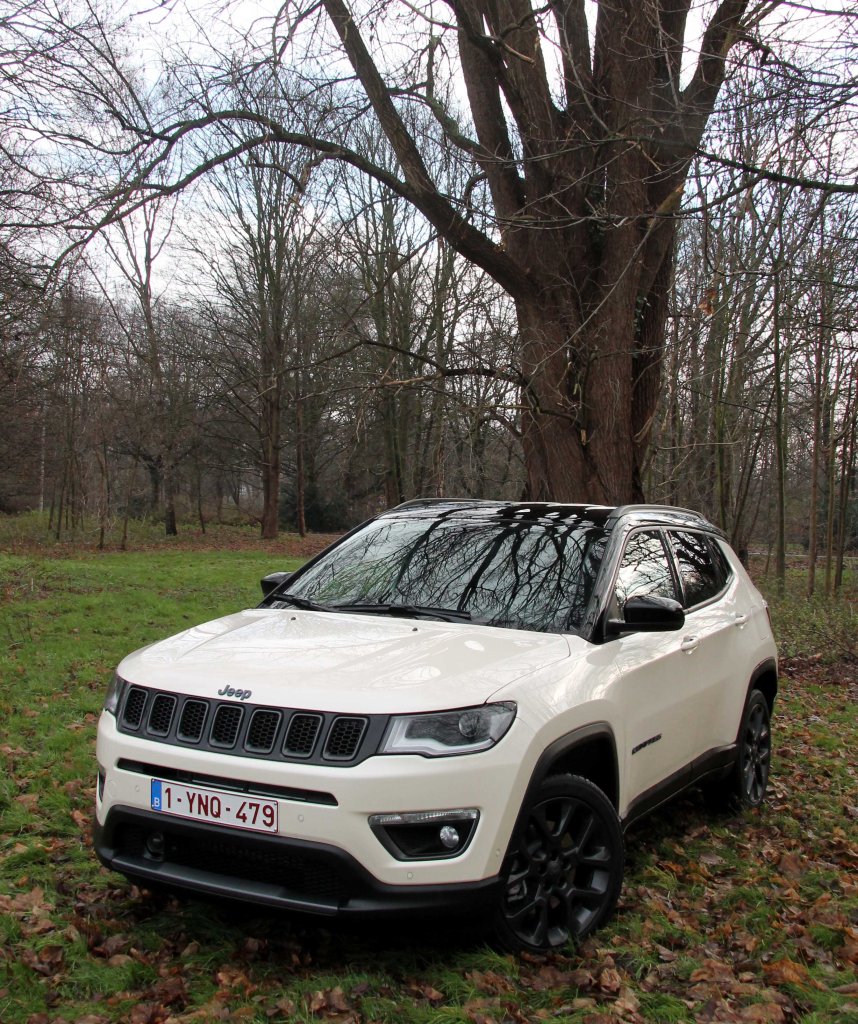
Jeep is building on a very comprehensive drivetrain offering across its range, with increasing emphasis on (hybrid) E-power.
Jeep has always been a vehicle which has been near to nature, and this new 4xe range comes ever closer to its vocation. It represents an important step of the brand’s evolutionary process, which is oriented more than ever towards sustainability and electrification.
In these columns you could read already about our driving impressions of the Compass with the very smooth new four-cylinder 1.3-litre turbo petrol engine made at the FCA plant in Melfi, in the Italian region of Basilicata. Just read our report titled “We drove the new Compass “Made in Europe” with the brand new 1,3 litre petrol engine…” It is part of the new FCA Global Small Engine family, launched in mid-2018 on the Jeep Renegade. As you can read in this post, we were very impressed. But there is an even more interesting version, which we test for you today: the 4xe, with an electric motor mated to a choice of either the 190 hp and 240 hp version of the 1.3-litre Global Small Engine. What’s more, both these 4xe versions are four-wheel drive only. Just read on…
Hans Knol ten Bensel
Thorough development…
The 4xe range is important for the brand, so the greatest attention was given to its development.
The painstaking development process of the Compass 4xe culminated at the Arjeplog Proving Grounds in Swedish Lapland. Up to 3,800 kilometers of road tests were clocked up to reach Arjeplog from Turin and put the Jeep plug-in hybrid SUVs through their paces in all conditions that customers might need to tackle. Tests continued in the winter of 2019 in Arjeplog and during the long-awaited Jeep Winter event in Champoluc (Val d’Aosta, Italy), where the brand provided a glimpse on the operation of the 4xe system through a cross section of a Jeep Renegade on display. The beginning of 2020 welcomed the launch of the “First Edition”, the exclusive launch editions for both Jeep Renegade 4xe and Jeep Compass 4xe.
No secrets, even for a novice…
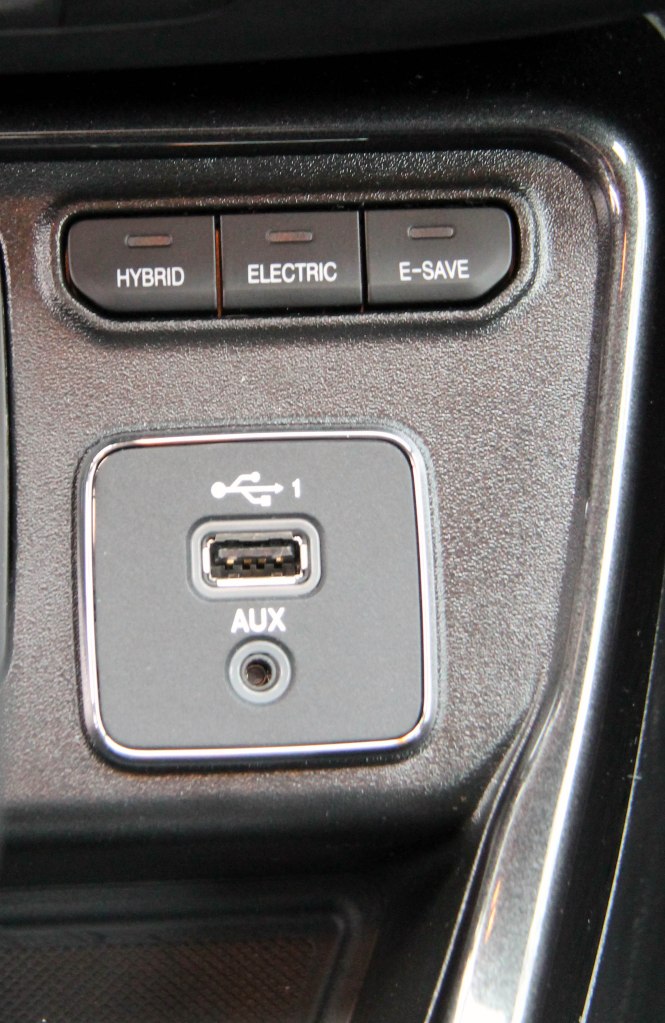
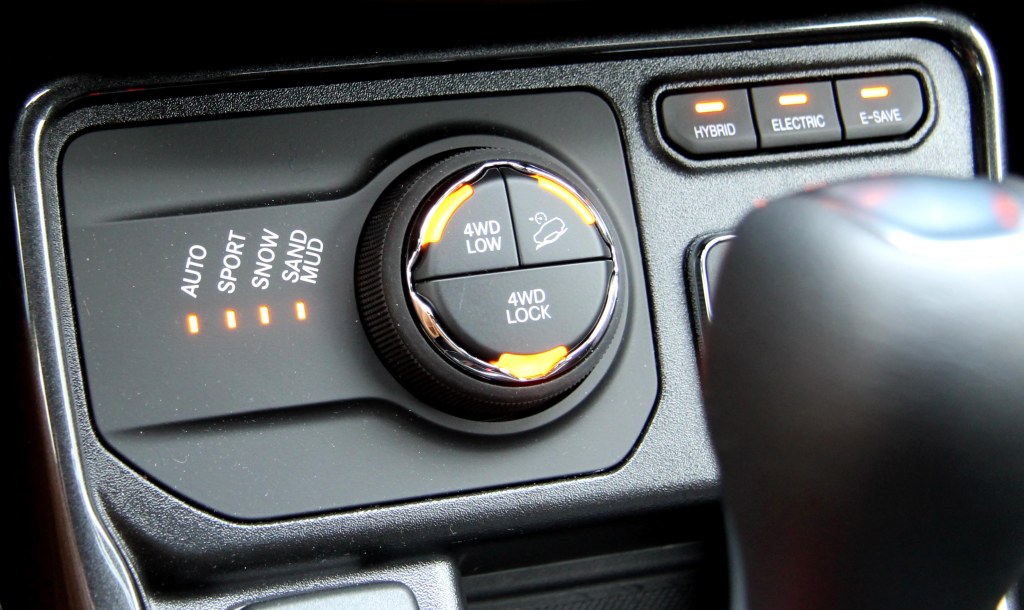
We must admit, the results are quite impressive. Right from the first meters, this PHEV shows its maturity. What’s more, it is not only thoroughly engineered, it is also eminently practical, and understandable even for the first time hybrid and 4WD driver for that matter. The driver can easily select one of the three buttons on the center console, i.e. “hybrid”, “electric” and “e-save.” This can be done at the start, but also whilst driving, one can select between the three modes. The modes are self-explaining actually, but we describe them for you here:
Hybrid is the default mode selected when the car is started. It is designed to manage and use the system in the most efficient way, optimizing power and minimizing fuel consumption. The internal combustion engine and electric motor work together according to the road type, with braking energy recovery phases.
Initially, the system favors electric driving (so the power is supplied by the electric motor). When the battery reaches the minimum charge level (called “SOC”, State Of Charge), the internal combustion engine is used for propulsion. Throughout the drive or trip, the system manages start-up and intervention through an optimization algorithm (Hybrid Control Processor – HCP) designed to maximize the system efficiency levels.
Electric is the mode that provides a full-electric average range of around 50 kilometers at zero emissions. It is designed to maximize the electric driving experience through a different calibration of the HCP optimization algorithm. The car drives in electric-only mode as long as there is sufficient charge in the battery. The system automatically switches to HYBRID mode when the battery is completely flat or when the driver uses kick-down. A top speed of up to 130 km/h can be reached. This is the ideal mode for traveling in city centers with traffic and emission restrictions.
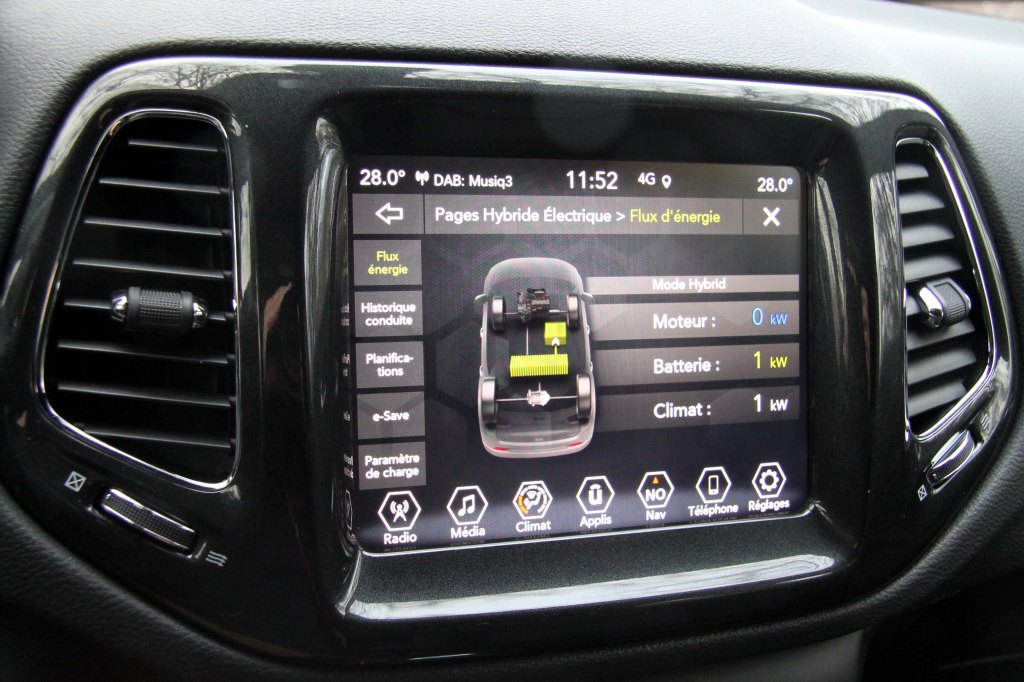
E-SAVE , on the other hand, is the mode for maintaining battery charge or for charging it while driving using the internal combustion engine. E-SAVE mode supports two secondary modes, called Battery Save (passive E-SAVE) and Battery Charge (active E-SAVE), both of which can be activated on the Uconnect system screen.
Passive E-SAVE or Battery Save: maintains the state of charge of the battery through the predominant use of the internal combustion engine;
E-SAVE active or Battery Charge: charges the battery up to 80% through the operation of the internal combustion engine on which the combined front electric generator acts.
We tested of course all the modes, but to measure the overall efficiency of the E-drivetrain, we opted for quite an important part of our test for the E-SAVE active mode. While keeping the battery charged on longer trips, even recharging it indeed up to 75-80 %, we clocked an average consumption of 7,6 liters/100 km, which, for a full 4WD vehicle is very, very creditable indeed. It must be said that we drove this Compass with anticipation and respected the legal speed limits. In hybrid mode, with the E-motor also delivering some work, consumption evidently drops. In the combined cycle, the manufacturer quotes 2,1 l/100 km. CO2 emissions are very low with 47 – 49 g/km.
We were also very impressed, as in our previous test with the “normal” Compass, by the outstanding level of technical refinement of this drivetrain. The Compass we tested was equipped with the 130 HP version of the smooth 1,3 litre engine, plus the 60 hp produced by the electric motor, adding up to a total of 190 hp. In terms of torque, the electric motor produces 250 Nm, while the combustion engine delivers 270 Nm. Performance does not leave anything to be desired: 0 to 100 km/h costs 7,9 seconds and top speed is 183 km/h.
E-power…
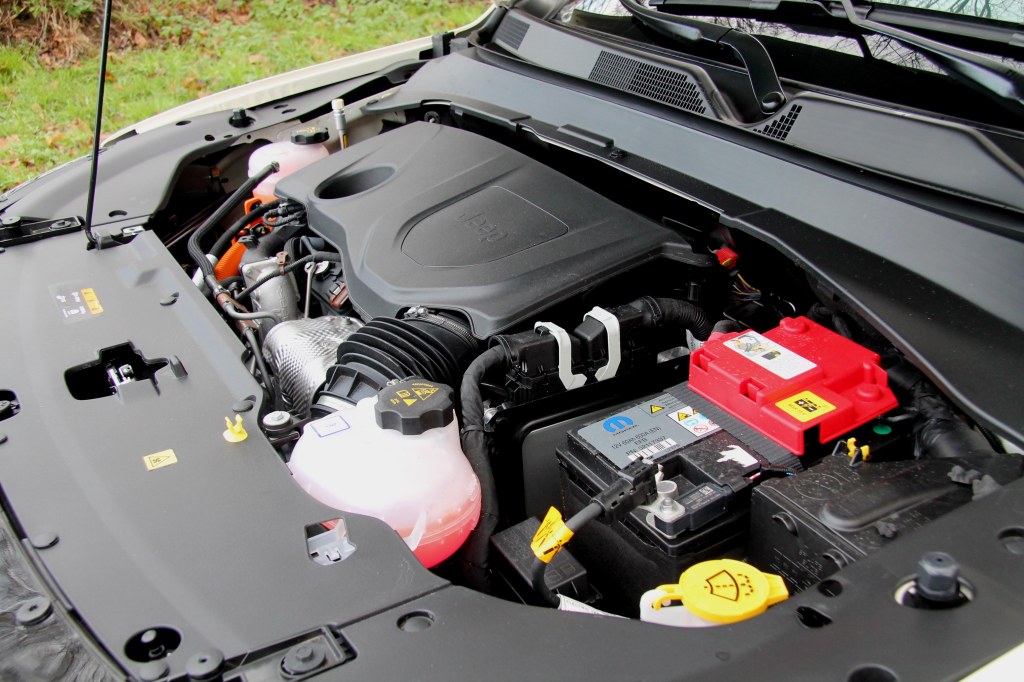
The Compass has two electric motors, one of which is located on the front axle and coupled to the internal combustion engine that, in addition to working in synergy with the engine, can act as a high-voltage generator, as necessary.
The second one is located on the rear axle and features reduction gear and integrated differential (“e-axle”). It delivers 60 hp of power and 250 Nm of torque, generating traction and recovering energy while braking. The electric motor actually drives the rear wheels, the combustion engine the front wheels.
The 11.4 kWh, 400-volt lithium-ion battery pack uses cobalt-nickel manganese/graphite chemistry. It is located underneath the second-row of seats, where it is protected from outside elements. Enclosed in a steel casing, the pack is fitted with a dedicated heating and cooling circuit to keep the battery at its optimum temperature for best performance.
The 11.4 kWh battery pack allows the Renegade and Compass 4xe to travel an average range of 50 kilometers* in full-electric, zero-emission mode. The hybrid system also includes a power inverter (PIM) housed inside the battery pack, which is also protected from damage.
Regenerative braking and…e-Coasting!
The 4xe Compass is relaxing and smooth to drive in town, where you can enjoy the “zen” qualities of pure E-power, and the six-speed auto box is super smooth when you enjoy the pulling power qualities of the 1,3 litre engine. But there is more than just smooth progress. There is regenerative braking, which is always active regardless of the driving mode (internal combustion engine or electric motor) to maximize energy recovery when the throttle and brake pedals are released. But the Compass has more upon its sleeve. It also allows e-Coasting. This function is available when the gearlever is put in “D”. By pressing the ‘e-Coasting’ button, the regenerative braking intensity can be activated according to two different levels, more or less intense.
A warning light on the instrument panel display indicates activation through two different colors: White (“Normal”) if the “Intense” function is selected but not active (accelerator pedal not released); Green, if the “Intense” function is selected and active (accelerator pedal released).
After the more intense function has been activated, the regenerative braking calibration is more explicit when coasting. This feature reduces the speed faster than standard regenerative braking and generates more electricity to be conveyed to the battery pack.
A dedicated message will appear on the instrument panel during the transition from the “Intense” to “Normal” function and vice versa.
The absolute king off-road…
The legendary offroad qualities of a Jeep are well known to all of us. With an electric motor with its instant massive torque driving the rear wheels independently from the front wheels, 4WD torque delivery can be even more gradual and fine-tuned, and this Compass (and Renegade) 4xe even outclasses in this respect the “classic” Jeeps. The Jeep driver has the usual choice between different off-road driving modes: Auto, Sport, Snow, Sand/Mud. Remarkable is also this “Sport” mode: This is a first on the Compass and Renegade, and uses both the electric motor and the internal combustion engine to deliver sporty driving performances. It tightens up the steering, sharpens the throttle response and adjusts the behavior of the transmission via higher upshifts for full power and torque delivery. Just great!
And then here is also Jeep Selec-Terrain traction control. It combines the dynamic modes to two different 4×4 traction modes, i.e. 4WD Lock and 4WD Low. In the 4WD Lock mode, the four-wheel drive is permanently engaged at speeds up to 15 km/h, keeping the rear electric motor (P4) constantly running to provide 4×4 traction at low speeds with a constant distribution of torque between the two axles (the distribution ratio varies depending on the selected Terrain mode). At speeds above 15 km/h, AWD becomes on-demand. Jeep thought here of everything: what if the battery charge is low? Well, the full functionality of the 4xe four-wheel drive is guaranteed by the ’Powerlooping‘ function when the battery charge level is low. This ensures that the front electric motor, which is mechanically connected to the internal combustion engine, continuously generates high-voltage current to power the rear electric motor and so maximum traction is delivered regardless of the state of charge of the battery.
4WD Low mode is used when the going gets really rough: like when you are tackling big rocks for example…
Versatile
The Compass is an eminently versatile 4WD vehicle. Smoothly at home in urban and open road traffic, and a master off-road: there is nothing this Compass cannot do. It’s hybrid system is quite practical and self-explaining to use, and the Compass is also the proverbial breeze to charge: either through the normal domestic socket using the supplied cable, or by connecting to the handy easyWallbox charger the evening before. Using the “E-Control” function, the driver can set the favorite start time and the battery charging time, for instance picking the most cost-effective electricity tariffs. He can also program charging from home using his smartphone.
Easy charging
FCA is developing solutions to fulfill every requirement, starting from charge points: the around 3,600 charging columns installed at dealerships across Europe and in plant parking lots are heading in this direction, as are the agreements with Enel X and ENGIE, leading players in the energy sector, to offer simple and immediate access to public and home charge points, like the easyWallbox.
Based on another partnership with Digital Charging Solutions (DCS), customers who choose the Jeep Renegade and Compass 4xe will have access to “My easy Charge”, a digital service providing access to the largest public charging network in the world, managed by DCS.
Via a dedicated app and a single card, this solution will offer access to more than 130,000 charging stations in 21 European countries. Finally, with ENGIE Eps and Terna, FCA e-Mobility has developed laboratories for innovative technologies, such as Vehicle-to-Grid (V2G), a system whereby an electric car interacts with the electricity network to return or store energy.
Conclusion
A very clever and eminently useful Plug In Hybrid, which is totally in tune with the times, has style, panache, roominess, sturdiness, smoothness, is economical and has legendary off-road qualities. Above all, it is a Jeep, the genuine article. What are you waiting for?
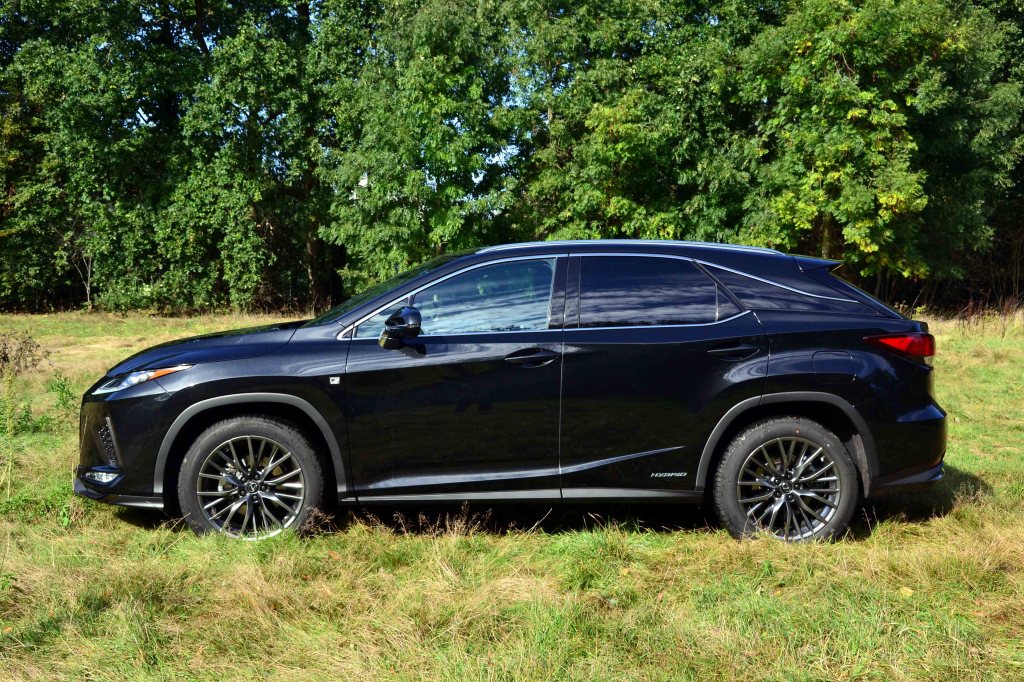
Did you know that the Lexus RX 450h has been for many years now the absolute top choice in the luxury SUV segment? As Lexus states: “Not only it is the world’s bestselling luxury hybrid SUV and all-time best sold Lexus model, but it is also the world’s first luxury SUV that has created its own segment back in 1998.”
Indeed, it has been popular the world over, and this for all the (very) good reasons. Mechanical perfection, smoothness, performance, economy, superb finish, comfort, reliability, combined with its ease of use, and last but not least ample standard equipment. Need we say more? Maybe, after this test, we might come up with some more good experiences. Just read on…
Hans Knol ten Bensel
The Lexus RX series SUV is indeed a worldwide winner. Indeed, its looks are good, and hardly needed any changes over de last few years. It breathes the typical angular yet fluent styling language we have grown accustomed to in the Lexus model range, with pleasing proportions and an overall size which many find “just right”.
The RX is not overly generous when it comes to luggage space – but rest assured – Lexus has the right RX for you. More spacious than ever before, the RX “L” has also evolved into a seven-seat model. It is effectively a new model, with body length extended by 110 mm and the back window set at a steeper angle to ensure those sitting in the rearmost seats are as comfortably accommodated as other passengers.
Returning to “our” RX, it does offer enough room for its occupants. It seats easily four, and we can tell you it offers ample legroom in the back, you can even cross your legs effortlessly. The third passenger in the back suffers somewhat from lack of headroom, and comfort is somewhat impaired, as he/she sits on the big central, foldable armrest.
Silk smooth hybrid progress…
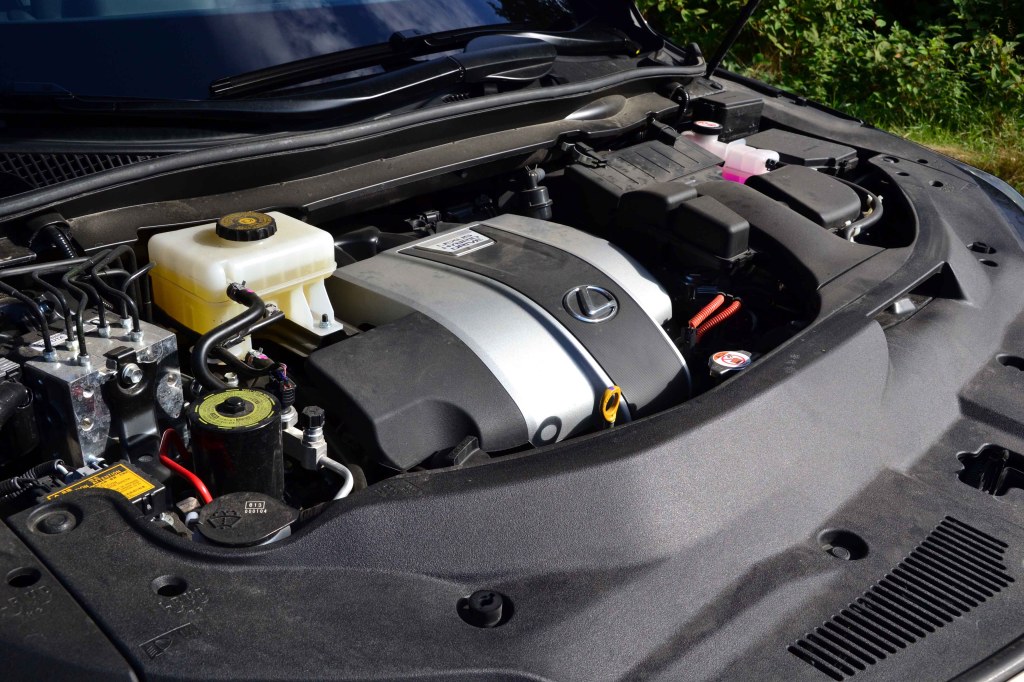
Under the hood of the Lexus purrs a 3 litre V6, coupled with the Lexus Hybrid system. This means a total system power of 312 PS or 229 kW at your disposal, enough to propel your Lexus in some 8,2 seconds to 100 km/h and hurtle further to a governed top speed of 180 km/h. But when you drive and own this car, it is not pure performance you are looking for. It is comfortable, whispering, vibrationless progress. And here the RX delivers. Beautifully. Via the continuously variable transmission both engines deliver the computer calculated ideal mix of power to the wheels, and the result is a smoothness in propulsion which you have to experience to believe it.
On the open road at higher cruising speeds, the efficient V6 gets into its own, and delivers honest economy. But it is in slow and tight stop and go urban traffic that the hybrid system excels. The onboard computer will choose E power more often than not, putting the combustion engine to work to either recharge the battery and/or help the E-motor, but – and that’s also the cleverness of it – doing this at an ideal rpm/throttle opening combination which lets it reach its ideal thermal efficiency.
All this without the slightest shock and with only the gentlest hum being heard when the V6 engine sets in. It is this hybrid system which Toyota has introduced in … 1997 for its first Prius, and which it has perfected ever since.
We have applauded this system already many times in these columns, and when it comes to smoothness combined with slow speed economy, we find it still among the very best.
Depending on your driving style, economy can be truly astonishing when you let the system use the E-power in the driving cycle. Urban errands driving with anticipation and restraint will not cost more than 7 litres/100 km and even less in this big 2090 kg SUV. Driving with verve on winding open roads at varying speeds will let de consumption vary between 7 and 8 litres/100 km. CO2 emissions are quoted by the manufacturer at 134 g/km. All these values are excellent, but it’s the sheer smoothness and refinement of progress which truly stands out.
For those who are interested, we can tell you here that the V6 engine develops 262 PS/193 kW at 6000 rpm, with 335 Nm of torque at 4800 rpm. The electric motor in front develops 167 PS.
As usual in a Lexus, you can chose between eco, normal and Sport (even Sport+) driving. The virtual instrumentation places then a big rev counter in your central line of vision, and drivetrain/steering responsiveness are up a notch.
Comfort in the cabin and on the road
The seats are excellent, and will not tire you even after many hours, and the same can be said of how this RX floats over the road. Potholes, ridges, everything is nicely swallowed and hardly reaches the passengers. Add to this the excellent sound insulation and you understand that driving and travelling in this RX is a very relaxing affair. The Levinson sound system is a chapter on its own and lets you make the voyage in the most exquisite sound atmospheres.
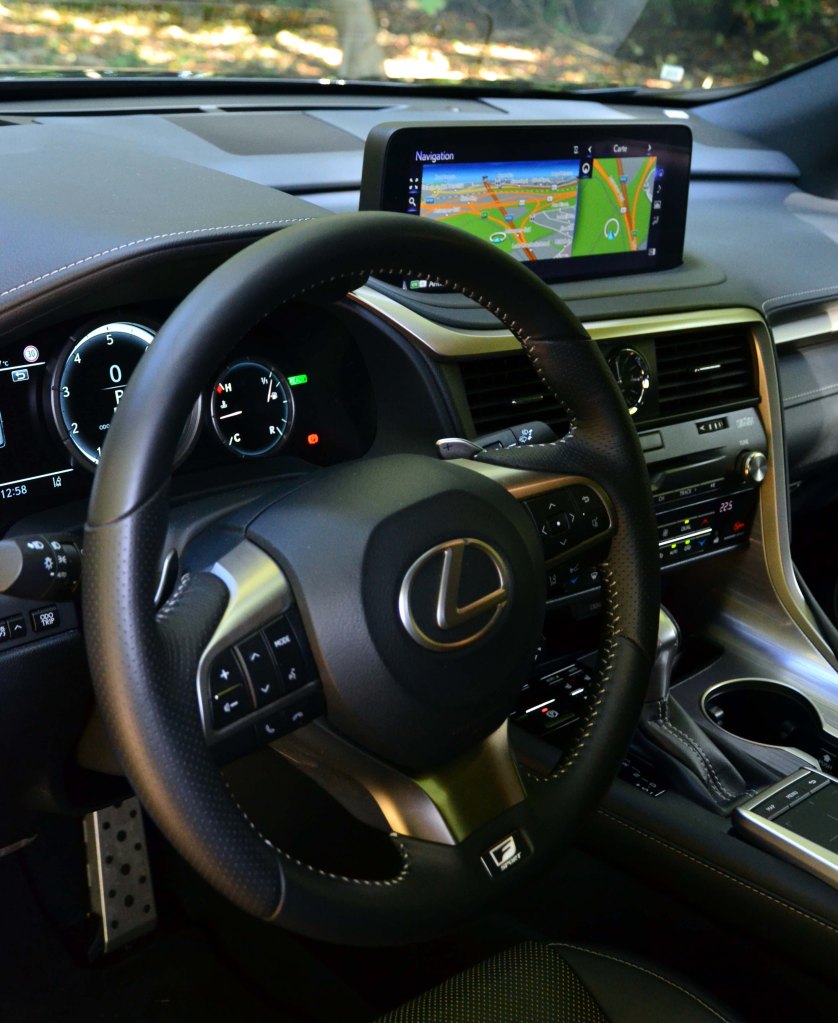
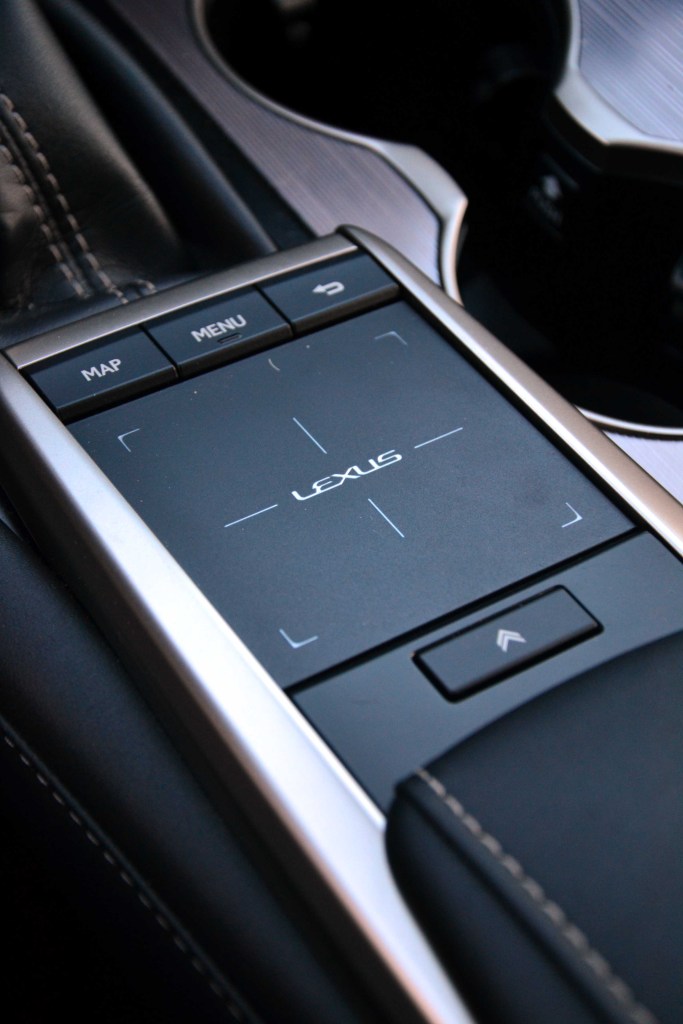
The screen and infotainment system are also honed to perfection, eminently practical and useable. Lexus has left the central mouse knob for a touchpad system, and some find this better. Personally, we are very found of the mouse in our Lexus CT200h, but when the majority of users want another setup, why shouldn’t you change?
The Lexus RX driver gets all road info, driving assistance and infotainment he can wish for, even considering Apple and Android audio are now also thrown in.
For the 2021 model year, the Lexus RX 450h comes with a Blind Spot Monitor (BSM) and Rear Cross Traffic Alert (RCTA) as standard across all vehicle equipment levels. We also found the overhead display also one of the best we have come across…
The RX is eminently practical too, with chargers fore and aft for your electrical equipment, large bins for bottles, beverages and small items, it is all very well thought out to make everyday a joy to drive this RX450h.
Conclusion
We said it, a top car in its segment, and it has everything to stay in this enviable position. It impressed us again, as a gentle, powerful everyday companion, built to soothe and relax you when you move from A to B, be it 5 or many hundreds of kilometers or miles, and this for years to come… with style, reliability and economy to match!
VW takes a big bet on the future of mobility. Europe will – or should be – driving electrified in the (very) near future. So VW got to work on an all-new platform which it will use on all its fully E-powered cars, and there will be many…
Indeed, VW is quite ambitious. It wants to be the world’s market leader in electric mobility. The Group plans to launch up to 75 all-electric models by 2029.
It also asked its styling department to come up with a totally appealing Golf-sized car with much extra room however for passengers and their luggage, taking advantage of the space gained by the underfloor mounted engine and batteries, the short overhangs and the long wheelbase.
This car, the ID.3 should also be totally connected for the present and future generations, with all the possible driving aids and safety features included.
VW has succeeded. It builds in Zwickau a pleasantly practical, futuristic and good-looking hatchback which does it all. It has not only zesty power (150 kW) and smoothness, but also a very usable range.
We drove here for you the “1ST MAX” edition with a lithium-ion battery with a net energy capacity of 58 kWh. Good for a WLTP range of 426 km. Well, eh, in practice some 330 km or thereabouts, as in practice, one uses heating or airco…
Read further for our findings!
Hans Knol ten Bensel
Pleasing styling with a futuristic touch…
We must admit that VW designers have hit the ballpark. This ID.3 looks (very) good from any angle, with its dual tone paintwork, its nice spoiler and the superb surface treatment of all bodywork panels. The ID.3 has a clean, fluid angularity which has a timeless touch, directed towards the future. Flowing lines are found at the front, with the headlights looking like eyes. The low drag coefficient of 0.27 completes the picture.
This futuristic touch is also found even more in the interior, with its all-digital and well-placed screens, both in front of the driver and on the central console. The zesty atmosphere is further enhanced with the array of different mood lighting’s one can choose in the cabin. The ID. Light beneath the windscreen visually communicates with passengers. The ID.3 is largely operated via the multifunction steering wheel, the central 10-inch touchscreen or the “Hello ID.” intelligent voice control. The whole cabin is airy, welcoming and clean.
Daily interaction with the ID is so easy. Just step in, as the car automatically opens. Put the small handle just beneath the right side of the steering wheel in “D” or “B”, which lets you recuperate the kinetic energy and effectively brakes the car with 0,3 G when you lift the throttle, and off you go. At the end of the trip, just push the “park” button and step out. The ID.3 shuts itself and all its systems off.
All the functions on the 10-inch touchscreen are there. It takes some getting used to in order to navigate and learn all its clever functions, but most of it is very intuitive. The rest you will learn and grow accustomed to in a few days! The buttons on the steering wheel spokes also host an array of commands. The sound command lacked some progressiveness, but everything is quite clever and logical.
Driving the ID.3: a “zen” experience with a sporting touch…
Sliding behind the wheel in the ID.3 sets you in this friendly futuristic world, where you immediately feel at home, having found an ideal seating position in seconds. As said, driving away is the simplest affair. Overwhelmingly pleasing is the “feel” of immediate power under your right foot. Make no mistake: the ID.3 has a 150 kW/204 HP E-motor, with 310 Nm of torque. This means supercar performance, well almost. 0 to 100 km/h is silently reached without any effort in merely 7,3 seconds. This is a full two seconds faster than a ‘70s 911 T 2 litre Porsche Targa, to put anything in perspective…
Driving at legally allowed speeds is a dream in an E-powered vehicle, as it goes so silent and vibrationless.
Especially in urban areas where the new speed limits get ever more draconian, down to 30 km/h in many European inner cities, it is a delight to glide along the boulevards with the cruise control set at this speed.
Volkswagen is also returning to its roots with the electric motor: this is located at the rear and drives the rear wheels – as was the case back in the day with the Beetle. The electric drive motor achieves a maximum speed of 16,000 rpm and is coupled to a one speed gearbox and differential.
The motor is so quiet that it can hardly be heard outside the car. For this reason, a loudspeaker emits a synthetic electronic engine sound up to a speed of around 30 km/h in order to warn passers-by. It is efficient too: the permanently excited synchronous motor (PSM) reaches well above 90 pct efficiency no matter how (hard) you drive.
On winding secondary roads, the punch of the motor makes spirited driving also an undistilled pleasure. Handling and steering precision are also quite up to the mark, and the ID.3 indeed feels quite sporting. The state of the art platform architecture has located the large high-voltage battery between the axles. This means at the lowest point of the car, with also the weight distribution very close to the ideal value of 50:50.
The suspension as a whole is on the rather firm side without being uncomfortable, but don’t expect a softly sprung car here. Of course, to achieve stable and precise handling with a 1,8 tonne car, the laws of physics command firmer suspension settings.
Suspension-wise, VW has put in the works: the ID.3 has a McPherson front axle and a complex five-link design at the rear. In town, even with the large wheels, its turning circle is just 10.2 metres. This makes the ID.3 quite nimble to drive in town.
Our test car came with beautiful 20 inch alloys. Disc brakes with a disc diameter of up to 330 millimetres are fitted at the front, with drum brakes at the rear. Their great advantage is their robustness: the pads are designed for the service life of the car. And corrosion is not an issue, even though the wheel brakes are used only rarely in everyday driving, assures us VW.
On the motorways, cruising at legal speeds or even below that is the right thing to do. We settled to a restful gait of some 105-110 km/h, nestled ourselves in the excellent seats and appreciated the fold-able middle armrest (the same are found in my classic 1963 MK 2 Type S Jaguar) and literally enjoyed the music through the excellent sound system, equipped with DAB+ radio of course. This transforms the ID.3 in a four wheeled, “zen”- moving concert hall. The sedate cruising speed also made the ID.3 reach easily the indicted WLTP ranges. By the way, top speed is 160 km/h, totally in line with the character of this ID.3.
Fast recharging…
Building the charging infrastructure in Europe is now the greatest challenge ahead for many.
There are rosier times ahead: By 2025, Volkswagen Group will install around 35,000 charge points in Europe itself together with its retail partners. Many of these will be publicly accessible.
These will be complemented by the flexible, fast charging stations from Volkswagen Group Components, which can be set up wherever there is a short-term need, such as at major events. They become fixed charge points through connection to the low-voltage network and can charge two electric cars simultaneously with up to 150 kW thanks to their fast charging technology.
In Europe, ID.3 drivers can use already more than 150,000 public charge points. They benefit from attractive conditions in the IONITY fast charging network.
When you are so lucky to have a garage with electric connection or an individual home, VW has a ID. Charger, the new home charging station from Volkswagen. It is available in three versions, all of which offer a charging capacity of up to 11 kW. This allows an empty vehicle battery to be fully charged again in around six to seven and a half hours,depending on the model. The ID. Charger base model currently costs only 388 euros. The ID. Charger Connect and ID. Charger Pro offer full connectivity and can be controlled with the We Connect ID. app via smartphone.
In Belgium, the VW Importer D’Ieteren offers installation of charging stations to its customers via its EDI (Electric by D’Ieteren) subsidiary. More info on www.edi.be.
Roomy and connected…
The ID.3 has almost the space and legroom of a VW Passat, and that is no small feat. Also the luggage space is quite adequate, with 385 liters. Wide bins in the doors lets you pack all the bottles and small items one needs.
The electronics platform of the ID.3 has been newly designed from scratch. Two high-performance computers bundle a large number of functions, and the software is designed to be highly flexible like on a server. This makes it easy to download updates to the car, and in future also function upgrades, via a mobile network. The services of We Connect Start connect the car to the owner’s smartphone, allow control of charging and air conditioning, supply traffic information and also display live data about charging stations on the navigation map. App Connect (standard) permits media streaming via a smartphone.
Conclusion
The ID.3 has it all. It has formidable qualities, able to convince our European drivers to take the EV plunge. It offers good value for money, considering the car’s qualities and size. Driving it has been a pleasant experience, and the “zen” character of EV propulsion and the design and roominess of the ID.3 are most endearing.
Hyundai and Kia are participating in the IONITY charging network…
As the E-powered cars are decidedly coming of age, we will keep you regularly abreast with more EV news….so here is one, and many more will follow! Soon we will also report about our driving impressions with the VW ID.3…
Hyundai Motor Group has joined IONITY, Europe’s leading high-power charging network, as a strategic partner and shareholder. Through its participation in this joint venture, Hyundai Motor Group – including Hyundai and Kia brands – will drive the expansion of the high-power charging network along Europe’s highways, promoting the further adoption of zero-emission mobility.
The IONITY charging network uses the European CCS (Combined Charging System) charging standard. Since the network uses 100 percent renewable energies, thanks to IONITY, drivers of electric vehicles are not only able to travel emission-free, but also CO2-neutral. This is an important step when it comes to making electric mobility a success in Europe.
New Sorento plug in hybrid can be ordered in Belgium…
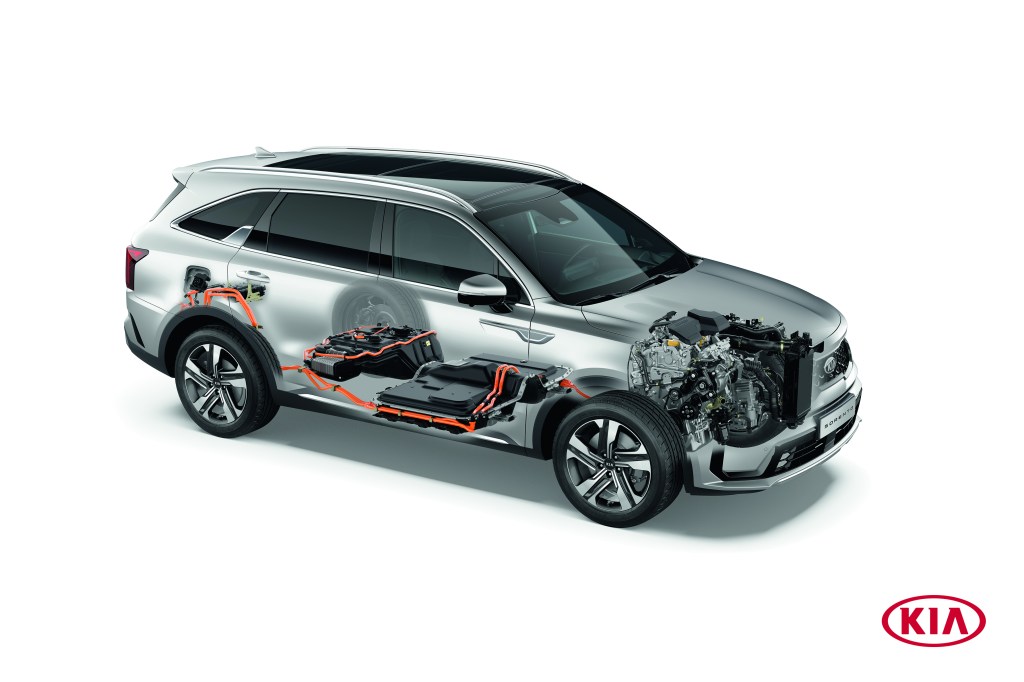
In the meantime, Kia Motors has released a ‘cutaway’ image revealing the packaging of the new three-row, seven-seat Kia Sorento Plug-in Hybrid.
The photo reveals how the large battery pack, fuel tank, engine and electric motor are integrated within the vehicle’s structure, retaining maximum space for luggage and up to seven occupants.
The Sorento can be ordered in our country (Belgium) from next week onwards…
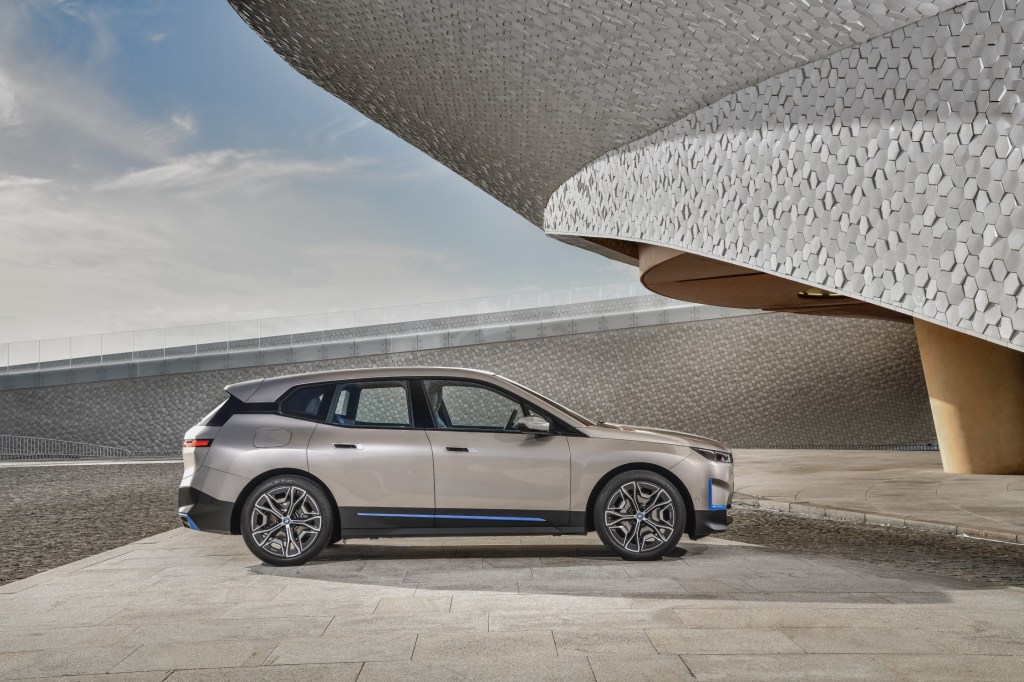
Until now the VISION iNEXT took centre stage when we looked at BMW’s electric vision for the future. With a year still to go before its market launch at the end of 2021, the BMW Group lets us have a first look ahead to the future BMW iX, which is currently still in the series development phase.
The BMW iX is very important: it is the first model based on a new, modular, scalable future toolkit developed by the BMW Group. It embodies a fresh interpretation of design, sustainability, versatility and luxury.
Driving pleasure, versatility and luxury.
The iX is from the outset designed for purely electric mobility, and BMW claims it is redefining the successful Sports Activity Vehicle (SAV) concept.
The BMW iX harnesses the latest innovations in the fields of electrification, automated driving and connectivity to deliver a mobility experience which puts people first. Therefore, its design has been developed from the inside out, says BMW.
Sustainability is also important, and we find optimised aerodynamics, intelligent lightweight design and extensive use of natural and recycled materials.
Fifth-generation BMW eDrive technology for a long range…
The fifth generation of BMW eDrive technology consists of two electric motors, state of the art power electronics, charging technology and a high-voltage battery. It has the zest of a true BMW: some 370 kW/500 hp, enough to power the BMW iX from 0 to 100 km/h (62 mph) in under 5.0 seconds.
BMW nevertheless targets an electronic power consumption of less than 21 kWh per 100 kilometres (62 miles) in the WLTP test cycle. A gross energy content of more than 100 kWh should enable the latest-generation high voltage battery to record a range of over 600 kilometres in the WLTP cycle.
That equates to more than 300 miles according to the EPA’s FTP-75 test procedure.
DC fast charging: over 120 kilometres (75 miles) of extra range in ten minutes.
The new charging technology of the BMW iX enables DC fast charging at up to 200 kW. In this way, the battery can be charged from 10 to 80 per cent of its full capacity in under 40 minutes.
The friendly cabin is centered on the driver and its passengers…
Added to which, within ten minutes enough energy can be fed into the battery to increase the car’s range by more than 120 kilometres (75 miles). It takes less than eleven hours to charge the high-voltage battery from 0 to 100 per cent at 11 kW from a Wallbox.
More power for automated driving…
The level of computing power has been developed to process 20 times the data volume of previous models. As a result, around double the amount of data from vehicle sensors can be processed than was previously possible.
Bold and impressive styling
The exterior of the BMW iX has the powerful proportions of a large BMW SAV. The BMW iX is comparable with the BMW X5 in length and width, and is almost the same height as the BMW X6 on account of its flowing roofline. The size of its wheels, meanwhile, brings to mind the BMW X7.
At the centre of the front end stands the prominent, vertical kidney grille. Since the electric drive system of the BMW iX requires only a small amount of cooling air, the kidney grille is completely blanked off.
This upright grille has reinvented itself as an innovative and multifunctional high-tech interface for
the advanced driver assistance systems with which the BMW iX paves the way for automated driving.
Human friendly cabin
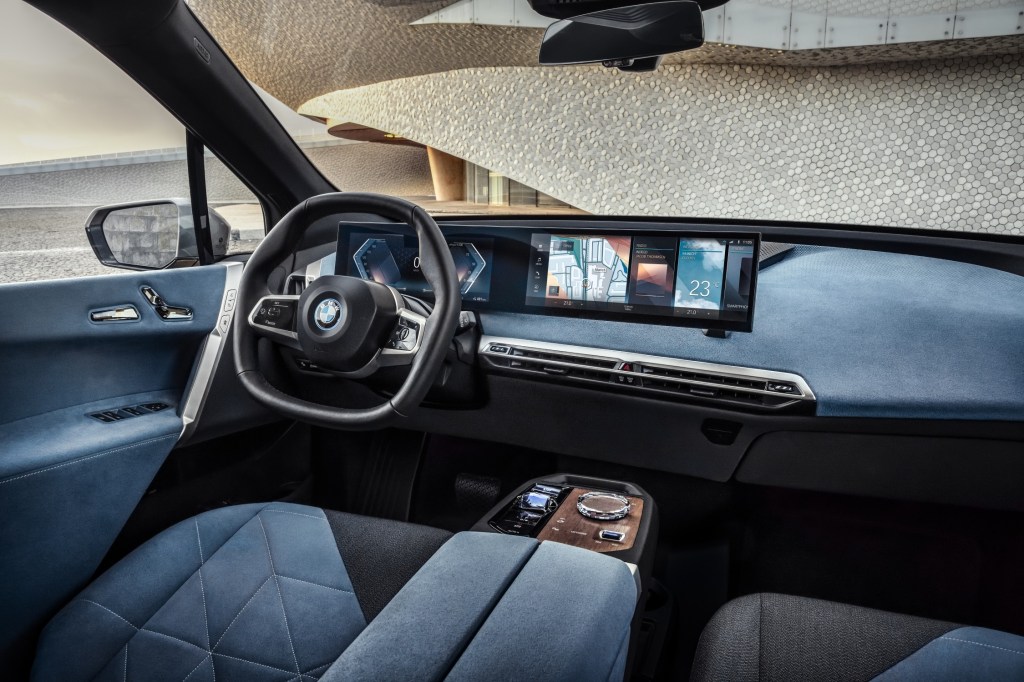
The architecture of the BMW iX cabin underpins a perfectly clear and straightforward functionality that revolves entirely around the needs and emotions of the driver and occupants.
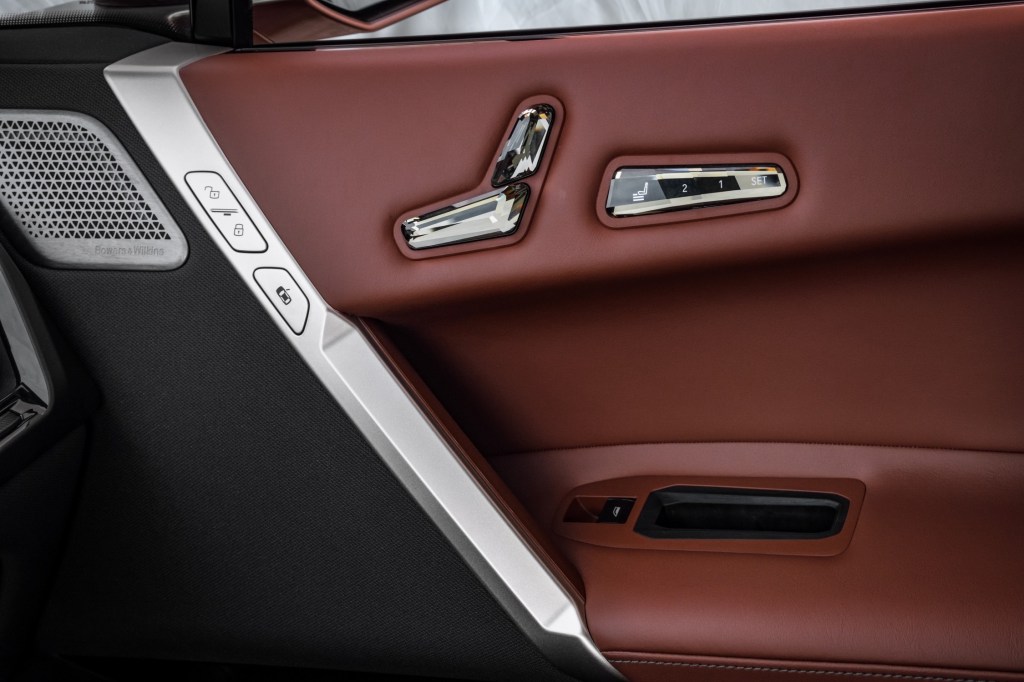
The displays and controls are all stripped down to the essentials, further reinforcing the impression of an uncluttered cabin offering a place of relaxation. The technology of the BMW iX only becomes visible when it is needed. This makes it intuitive to use rather than seeming overly complex.
The hexagonally shaped steering wheel, a rocker switch for gear selection and the BMW Curved Display – which forms part of the next-generation BMW Operating System – clearly advertise the futuristic form of driving pleasure.
Lightweight design
The body structure, featuring an aluminium spaceframe and innovative Carbon Cage, can claim extremely high torsional stiffness, which in turn enhances agility and maximises occupant protection, while minimising weight.
Fully capitalising on the benefits provided by the all-electric drive system and meticulously implementing proven measures from the past in the front end of the car, the underbody section, the wheels and the rear end gives the BMW iX optimised aerodynamics. This resuls in a drag coefficient (Cd) of just 0.25!
We let you look at the photos here…and are anxious to see this new BMW in the flesh!
In Brussels autumn streets, enjoying the latest Italian electric gem: the Fiat 500 Elettrica…
Bringing back the stunning Alfa Romeo Stelvio test car (full test report soon on these pages…), we had the lucky occasion to slide behind the wheel for a short spin through the Brussels streets with the brand new all-electric 500. Press Officer Wim Willems of the ever so dynamic FCA Belgium PR team invited me proudly to take the wheel behind one of the still Italian registered test cars.
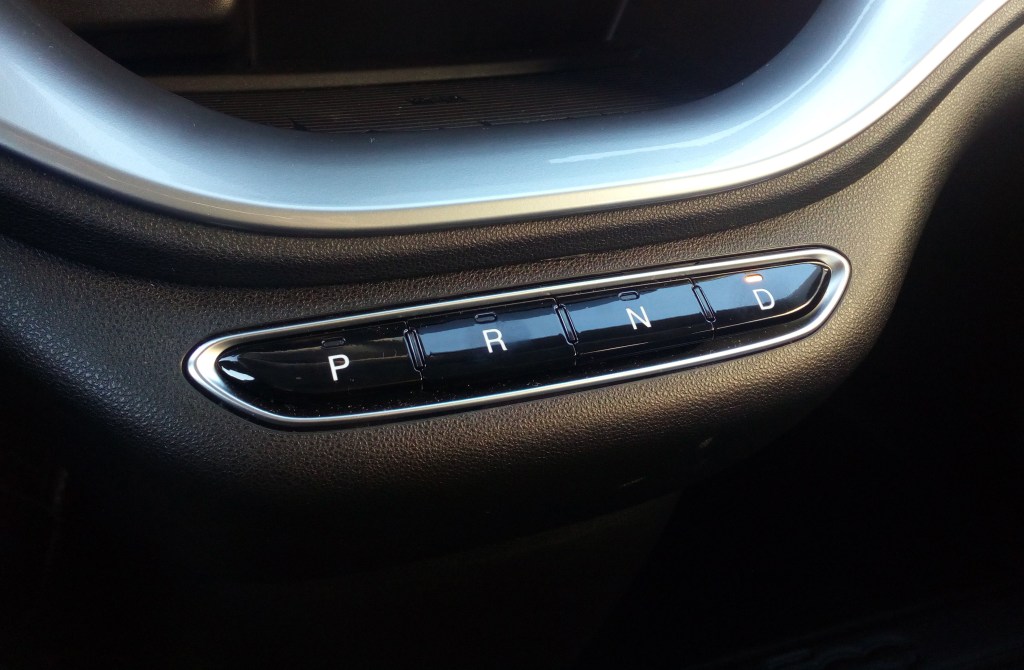
The four wheeled beauty – the styling of the electric 500 is truly spot on – drives absolutely “zen”, silent and smooth, and is of course totally intuitive to drive. On the middle of the dashboard are the four touch buttons let you choose between drive, reverse, neutral and park. This is literally all there is to it!
This electric Cinquecento we drove was the top notch ICON version, and the stylish fun starts the moment you get the keys of the car: it’s a black button-free pebble, a smart wearable key you carry in your pocket or bag, which communicates with the car and automatically unlocks the doors when you step closer.
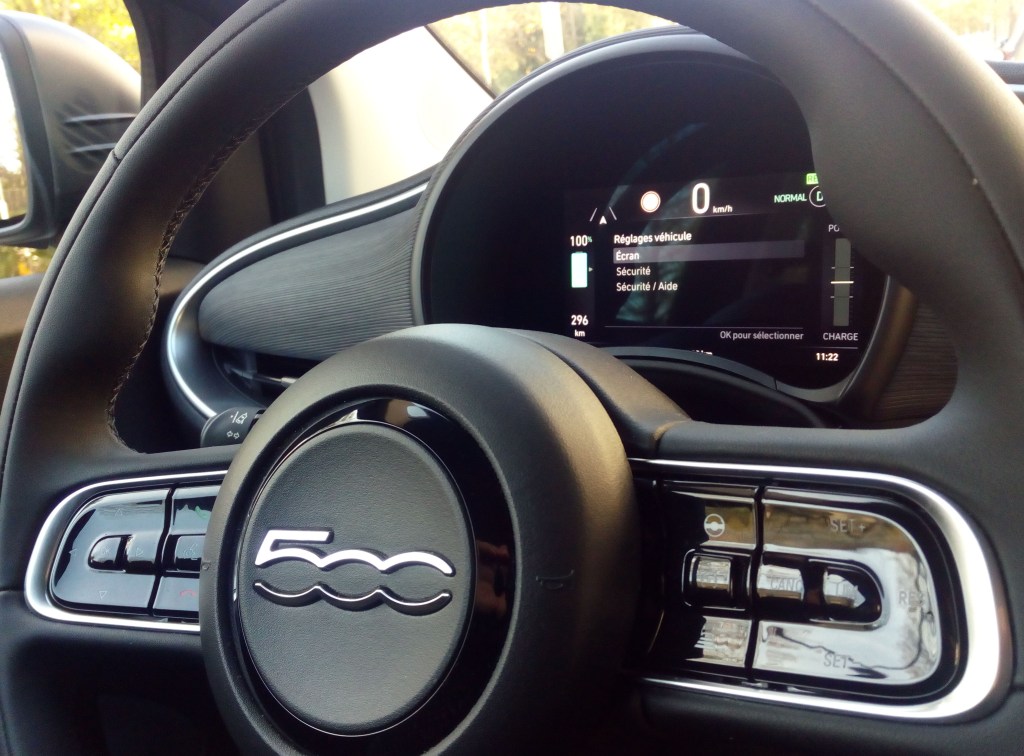
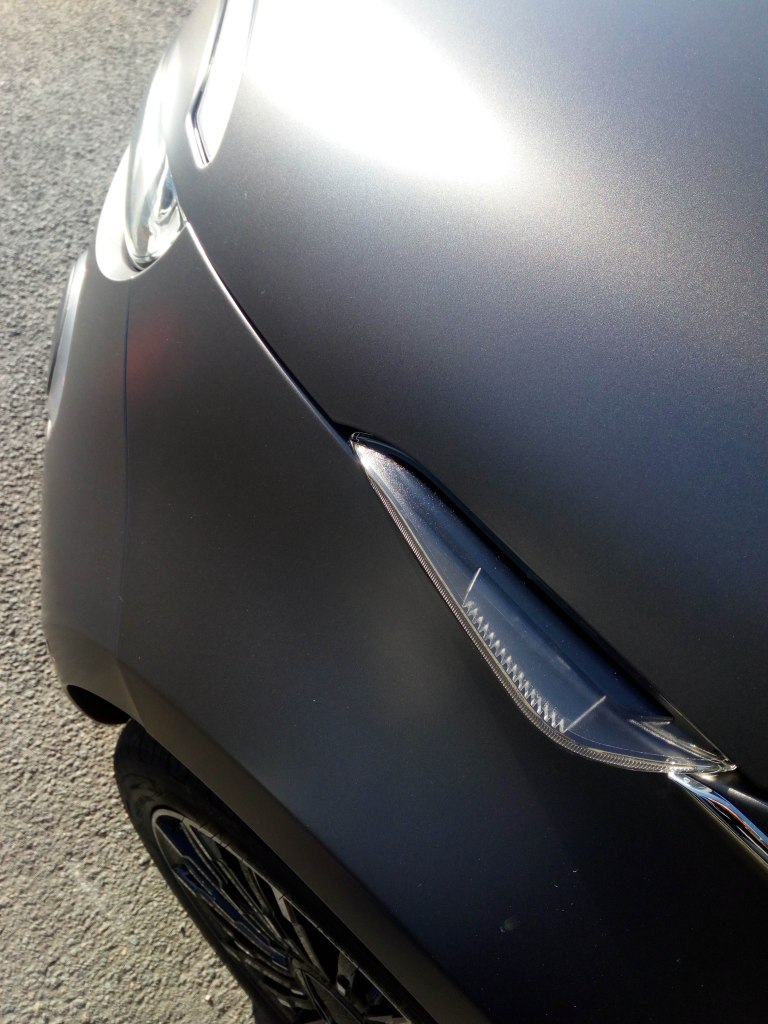
The dashboard has the same color as the bodywork, which was in our test car executed in matte grey, and in the center is a a 10.25” ‘cinerama’ touchscreen display, with GPS and the Uconnect 5 system. So superbly connected you are… more on all these features when we get our hands on this electrical gem for a test.
Let’s turn to the supersmooth driving experience. You can choose between three driving modes. The “Normal” mode gives you all the nippy performance you could ever wish for: output of 87 kW – equivalent to 118 hp, 220 Nm of torque, available instantly, and sports car acceleration from 0 to 50 km/h in 3.1 seconds, or 0 to 100 in 9 seconds.
We started off our test drive with 296 km range…
But there is more. The “Range” mode treats you to a new driving experience, using only one foot. The ‘one-pedal’ function means you can control acceleration and deceleration by just pushing or lifting the throttle. When you lift off, the car recovers energy to the max, and the Cinquecento will slow down markedly until it stops.
Red hot: the test car is still running on Italian licence plates…
When your battery is low, this 500 gets you home anyway. You choose the ‘Sherpa’ mode, and here the 500 will find the right balance between all the components of the drivetrain to reduce fuel consumption to a minimum.
One last word about the range: The 500 ICON will drive of up to 320 km in the WLTP cycle, increasing to 460 km in the urban cycle alone. Rapid recharging is guaranteed by the DC fast charging system, running at up to 85 kW.
But rest assured, we will come back on all the smart recharging solutions Fiat offers for its new electric baby. We just treat you here to the few photos I shot during our first drive!
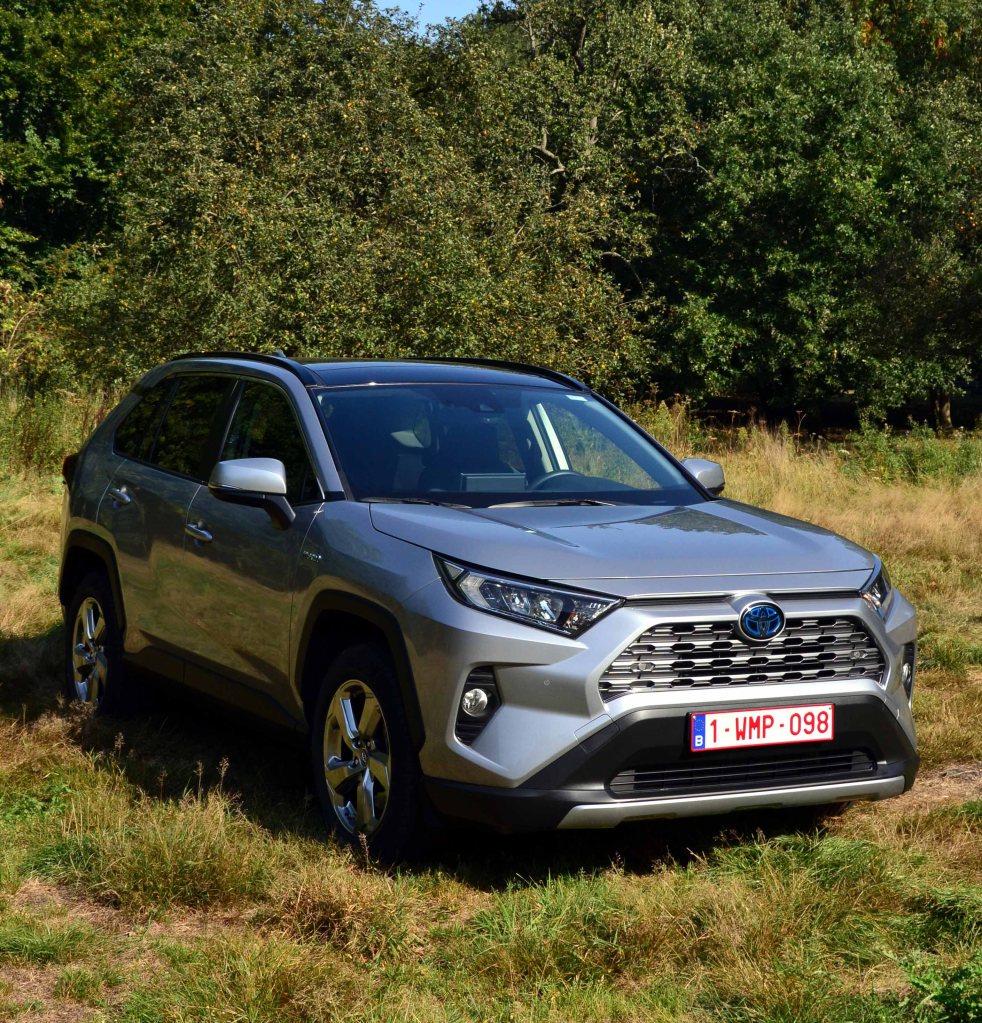
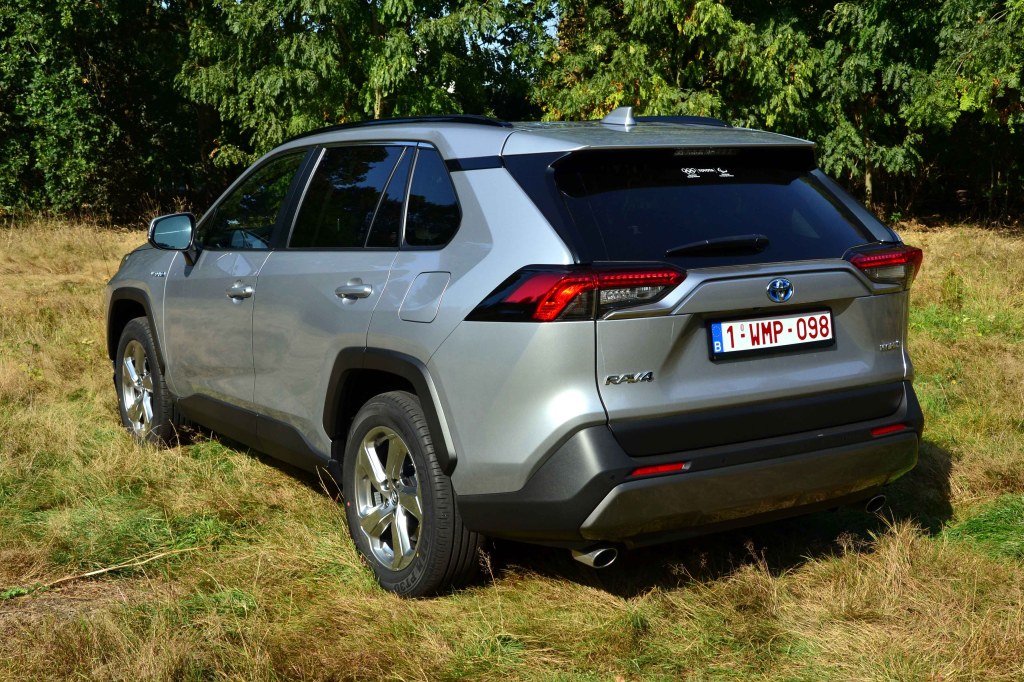
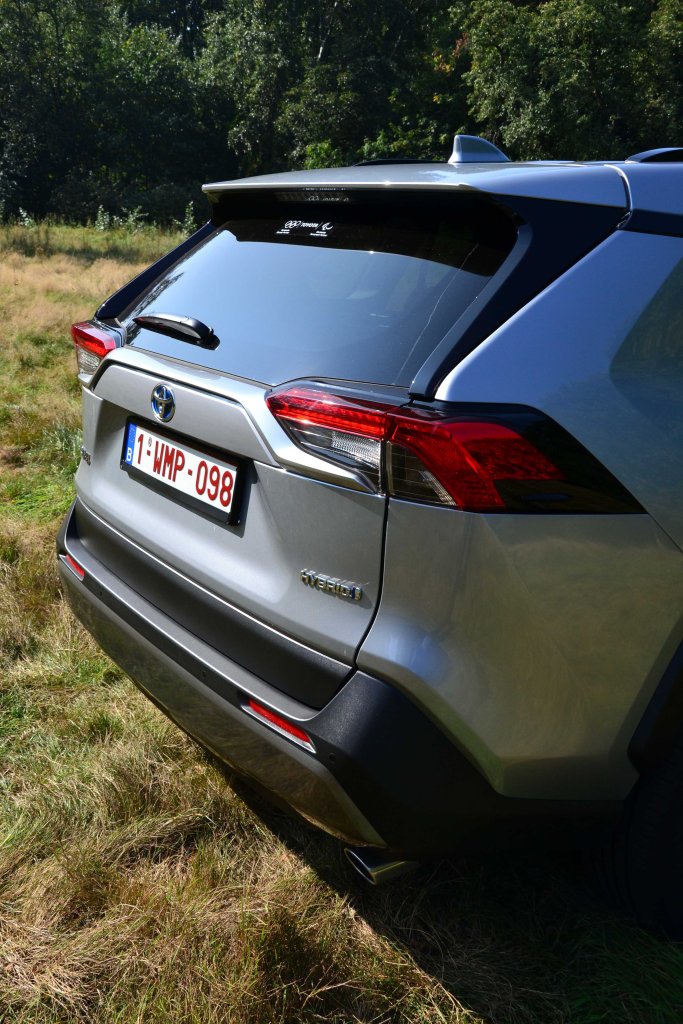
The formidable RAV4 has now some 10 million enthusiast owners, and now enters its fifth generation. It has gained in style, and is as hybrid as ever on our shores: 85 % of the European buyers opt for the self-charging hybrid power drivetrain.
It rolls on the new GA-K platform, allowing the RAV4 to be sleeker with a lower center of gravity and increased body rigidity. This also means both better handling and ride comfort, a more spacious interior, ample load space (580 liters VDA with seats in place) and enhanced styling with lower roof and hood lines in combination with higher ground clearance.
Indeed, the new RAV4 has the looks, and the ride too…Just read on!
Hans Knol ten Bensel
Self-charging hybrid, masterfully engineered…
The RAV4 continues the successful Toyota hybrid story. Under the hood purrs a completely newly redesigned 2.5-litre petrol hybrid “Dynamic Force” engine, offering 218 DIN hp in front-wheel drive form. Indeed, this RAV4 is loaded with state-of-the-art top tech.
What to think of the Atkinson cycle technology and a 14.0:1 compression ratio (compared to 12.5:1 for the previous unit). It comes with D-4S direct and indirect (!) fuel injection and intelligent variable valve-timing – electric VVTiE for the intake and hydraulic VVT-i for the exhaust. The valve-timing range for both intake and exhaust has been increased. There are still more clever solutions put in this engine. Be astonished with us…
The cylinder heads are designed to generate high tumble of the fuel/air mixture, with an enlarged valve included angle and laser-cladded valve seats. A variable cooling system with an electric water pump and electric thermostat is used to improve combustion by maintaining the required temperature. There is also a fully variable oil pump for efficient engine oil pressure management.
Toyota’s fourth generation self-charging hybrid system makes its debut in the new RAV4, delivering multiple benefits. Key components, including the power control unit (PCU) and the nickel metal-hydride battery are more compact and lighter in weight, and the transaxle and transmission have been engineered to reduce electrical and mechanical losses.
The new battery pack is 11 per cent lighter than before and transmission losses have been reduced by 25 per cent compared to the previous system.
How does all this work in practice? The engine is very docile, and develops 221 Nm between a very large rev range from 3,600 – 5,200 rpm. Admittedly, these are rather high revs, but the low-end pulling power is of course greatly helped by the electric motor, which develops a healthy 202 Nm.
This means that this RAV4 will pull away always with very impressive power, and this we find is the very “zen” beauty of Toyota’s hybrid system. The electric motor alone is good for 88 kW, so you can imagine what happens when you put your foot down.
Acceleration from 0 to 100 km/h is absolved in merely 8,4 seconds. But in the lower speed ranges, the velvety power is overwhelming. The hybrid system carefully manages how both engines participate in the total power delivery, and engine revs are kept especially low at partial throttle openings.
Silk smooth progress is for you to be enjoyed: even at spirited driving the engine hums quietly, and all this contributes to let you relax behind the wheel. What is also pleasant is the total smoothness of the drivetrain, not the slightest jolt or shock will disturb you or your passengers. Not many (super)cars will reach this level of total smoothness.
Besides all this smooth power, the hybrid system warrants also excellent economy. The secret is to accelerate and decelerate smoothly, to drive with anticipation. This lets the hybrid system use the recuperation function fully when slowing down, and use the electric motor as much as possible at constant speeds below, say 70 km/h. This results in excellent economy, also and even more so in slow urban driving and stop and go traffic. It proved no effort to reach averages of 6 l/100 km. Toyota quotes 4.5/4.6 l/100 km as average consumption, with CO2 emissions being 102 g/km. Oh yes, the top speed is a good 180 km/h. More than enough for all, we would say.
Driving pleasure…
The new platform enhances handling stability and precision. The RAV4 has improved the response of the Electric Power Steering by moving the assist motor from the column to the rack, and indeed this RAV4 steers accurately. The handling is neutral and predictable.
The RAV4’s GA-K platform also distinguishes itself in its use of a double wishbone rear suspension system. What’s more, thanks to the low center of gravity and high body rigidity, the suspension does not have to be rendered stiffer to meet dynamic targets. Indeed, we found the RAV4 quite comfortable too! Its suspension travel is wide, and we know of few cars in its class which takes the many potholes and bumps on our Belgion roads with such ease.
A strong point is also the good visibility. The TNGA platform allows the hood to sit 15 mm lower, adding two degrees to the driver’s forward field of vision, and the external mirrors have been moved to a lower position on the front doors. Luggage space is 79 liters more than in the previous, fourth generation RAV4.
Flexibility is designed-in so that the space can easily be adapted to gain more cargo room when required: with the rear seats folded down, the new RAV4 can accommodate a 29-inch mountain bike without any wheels having to be removed.
Well equipped, also for safety…
The new RAV4 offers generous equipment specifications across its range, with all models equipped as standard with the latest iteration of Toyota Safety Sense and an E call emergency contact function. Quite impressive!
The improved system features a single-lens camera and millimeter-wave radar, both with enhanced performance to expand the scope of hazard detection and functionality. The unit has also been made smaller, so driver gains an even wider field of vision. We found this RAV4 delightful with the wide range of safety features.
The Toyota Safety Sense unit includes Pre-Collision System with Pedestrian Detection (PCS w/PD), intelligent Adaptive Cruise Control (iACC), Lane Departure Alert with Steering Assist (LDA w/SA), Road Sign Assist (RSA) and Automatic High Beam (AHB). In addition, it introduces Lane Tracing Assist (LTA), which provides more advanced driving support.
The system can determine collision risks at speeds from zero to 180 km/h. If it calculates an imminent risk of collision, it will alert the driver and prepare the brakes (PreCrash Brake Assist) for maximum stopping force. If the driver fails to act, it will trigger Autonomous Emergency Braking, which can reduce vehicle speed by up to 40 km/h, potentially bringing the car to a stop and avoiding an impact.
The new intelligent Adaptive Cruise Control (iACC) is also able to work in conjunction with the car’s Road Sign Assist system. When the car is travelling at a constant, pre-set speed, iACC can recognise new speed limits on major roads and let the driver adjust the speed to keep within the limit, simply by using switches on the steering wheel.
The intelligent Adaptive Cruise Control and Lane Tracing Assist work together in slow, stop/go traffic, tracking the vehicle ahead within the traffic lane, maintaining a safe distance and speed, bringing the vehicle to a halt when necessary and moving off seamlessly when traffic flow resumes. We found this feature a delight to use and indeed it takes away quite some stress in urban stop and go traffic.
Roomy cabin and creature comfort
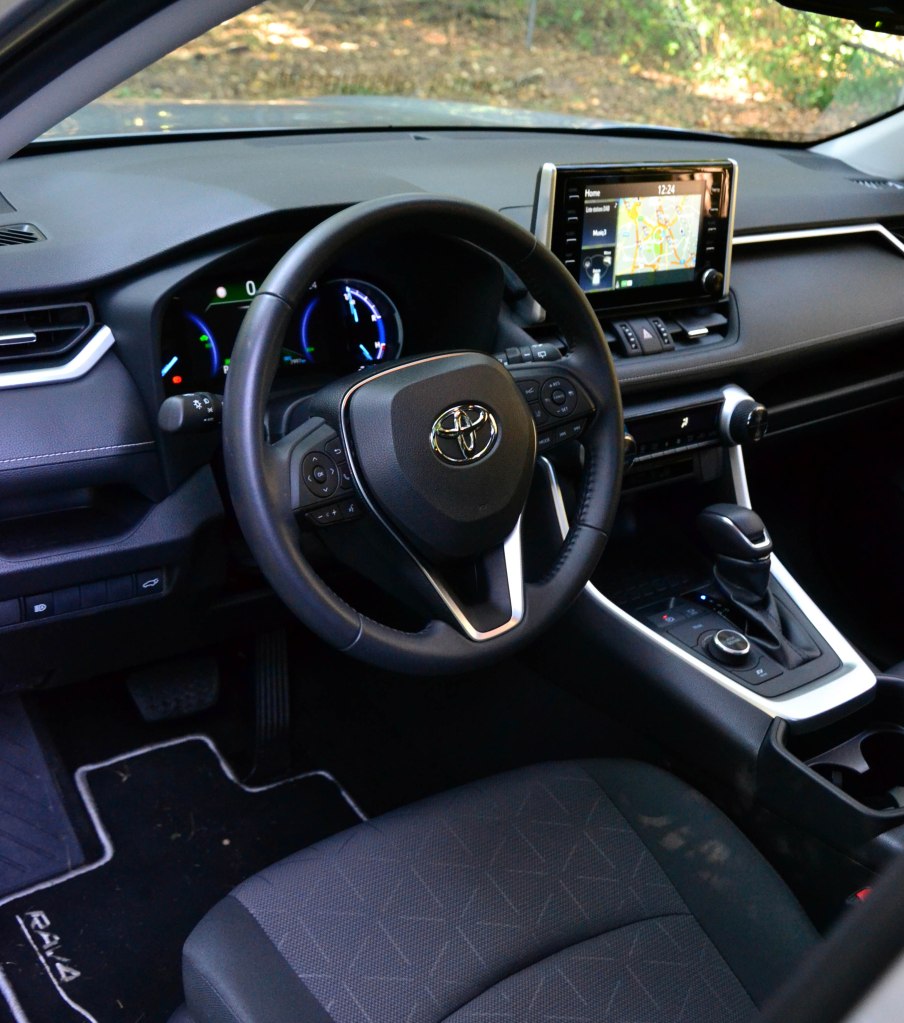
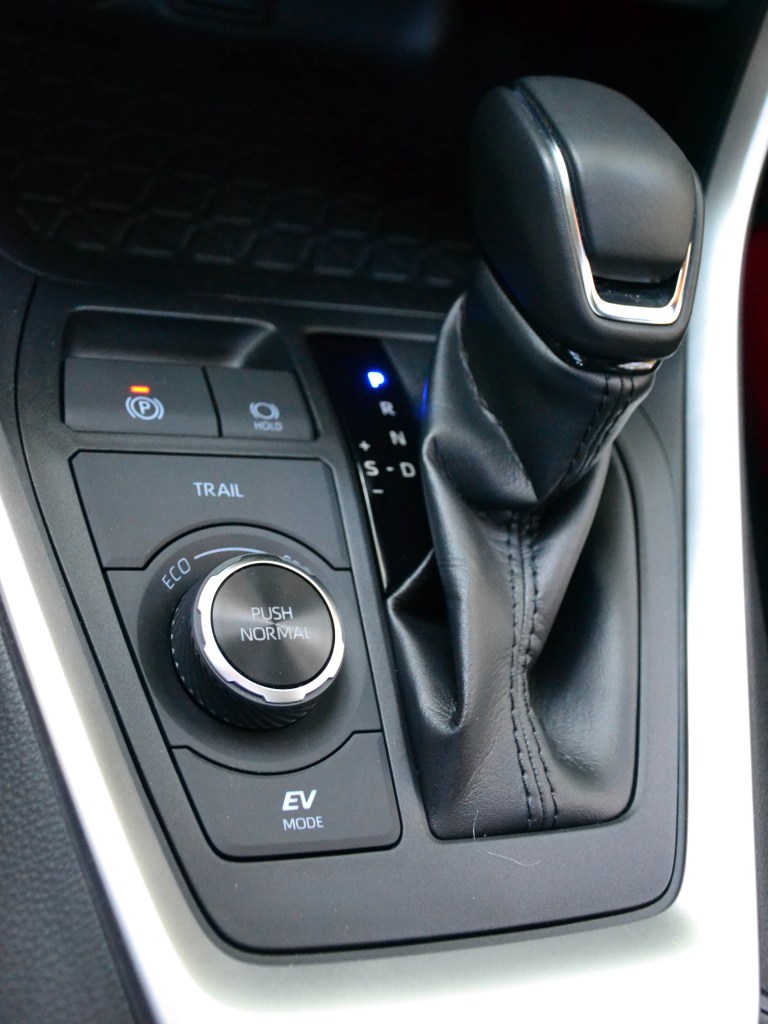
We found the cabin quite practical; it is purpose built with all the knobs and handles in the right places. The gearlever/selector is now totally classical in looks and feel, and this is maybe a good thing for many SUV enthusiasts. Seats are excellent, the lower, more dynamic seating position was appreciated. As said, there is plenty of room inside. Of course, excellent connectivity and an intuitive to use navigation system was appreciated and makes this RAV4 a pleasure in daily use.
Conclusion
A well styled, but above all superbly engineered SUV, which is sturdy, practical, mechanically refined, frugal, and roomy.
It has a very comfortable ride, and the smoothest of drivetrains. This SUV displays lively performance and surprises with excellent economy. Its unique hybrid system makes it truly stand out, and will make it also totally future proof in our ever-greener world. The RAV4 will continue to be a bestseller, and deservedly so…
































 Autoprova - for the Connaisseur