Nissan Benelux unfolds her strategy for the Benelux market…

Managing Director Jerome Saigot unfolds the strategy of Nissan Benelux…

We are at the start a new automotive year, and therefore it is a good opportunity for manufacturers to look forward into 2024 and announce to the Belgian press what their strategy, plans and objectives will be in the forthcoming 12 months.

So we were invited at the end of last year by the Melvin Keuter, head of communications of Nissan Benelux at their press conference…and their interesting initiatives are certainly worth a closer look. Just read further!

Hans Knol ten Bensel

Melvin Keuter, head of communications of Nissan Benelux, exposed the electrification strategy of Nissan and its future…

Nissan Belux and Nissan Nederland merged into Nissan Benelux

On the 1st of July last year, this merger was executed in order to improve response to the needs of the Benelux market. Now the two entities are joined in a new so-called Regional Business Unit, led by Managing Director Jerome Saigot. Indeed, the car market is going through a fundamental transition, and Nissan will respond to these challenges by focusing on electrification, digitalization of the customer approach and responding to major changes in the buying behavior of their clients. Mr. Saigot emphasized these points of the strategy in his presentation at the press conference. He sees also in this merger further useful synergies for staff and dealerships.

He exposed the mission of Nissan Benelux, which is to be an innovative brand which offers electrified mobility and a superior service to its customers. Its objectives are to enlarge its volume, raise brand identity and awareness as well as boosting profitability.

The strategy to achieve this will be to focus, as we said, on further digitalization of customer approach, further electrification of the model range, strengthening corporate sales, bolstering brand identity and streamlining distribution.

According to Jerome Saigot, digitalization is a major trend which will strengthen further. In 2020, only 4 % of customers were buying a car online, which has risen to 12 % in 2023. Market surveys show that soon 45 % of the future customers will buy their car online. Of course, Nissan will work further on its electrification, and indeed focus also increasingly on corporate sales.

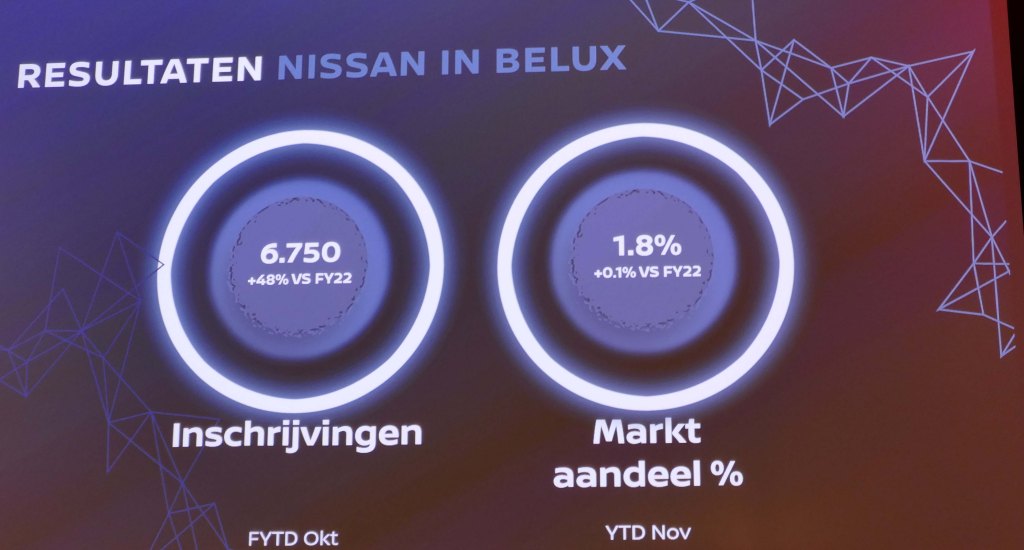
Looking at the results last year of Nissan Belux, 6.750 units were sold, which is an impressive 48 % rise compared to FY 22.
Also in distribution and dealership the focus will be on further developing synergies and tailoring the customer approach on their changing preferences and buying behavior. In December last year, Nissan sent a message to the professionals, small and medium enterprises, craftsmen and the like, pointing out the attractiveness of their increasingly electrified LCV segment.

Decisive steps toward further electrification… or EV36Zero.

EV36Zero is a key part of Nissan Ambition 2030. In this period Nissan will deliver exciting, electrified vehicles and technological innovations while expanding and transforming its operations globally the company announces. The vision supports Nissan’s goal to be carbon neutral across the lifecycle of its products by fiscal year 2050.

In November last year, Nissan announced that the EV36Zero hub in Sunderland, Nissan’s blueprint for future manufacturing, will consist of three electric vehicles (EVs), three gigafactories and up to £3bn investment.

The transformational project includes future all-electric versions of Nissan’s flagship Qashqai and JUKE crossovers, and Nissan also confirmed that the third vehicle planned for UK production will be next-generation Nissan LEAF.

Nissan also announced that that it expects its passenger car line-up in Europe to be 100% electric by 2030.

Nissan is also incorporating in their electrification strategy the latest developments in battery technology. It will adopt Cobalt-free batteries, and towards 2028 there will be a cost reduction in comparison with Lithium-Ion batteries of not less than 65 %. This year Nissan will open a pilot factory in Yokohama to produce solid-state batteries, which can be charged three times faster and cost much less. They will be introduced to the market in 2028…  

Looking into the future…

After exposing the good qualities of the present range, a veil was lifted in this conference about the cars we can expect in the (not so) distant future.

Indeed, the three future versions of the full electric Juke, Qashqai and Leaf will be inspired by three exciting all-electric concept models, two of which were recently unveiled at the Japan Mobility Show:

The Nissan Hyper Urban Concept, a crossover EV characterized by a sleek and modern aesthetic.

The Nissan Hyper Punk Concept, an all-electric compact crossover with an exterior aesthetic defined by multifaceted and polygonal surfaces.

The Nissan Chill-Out Concept, was unveiled in 2021 and previously confirmed as the inspiration for a future EV to be built in Sunderland.

 The car is a compact, sporty, city EV concept with an influence from the world of virtual gaming. Besides the sleek and modern design, advanced safety technology, it has a productive and comfortable interior space.
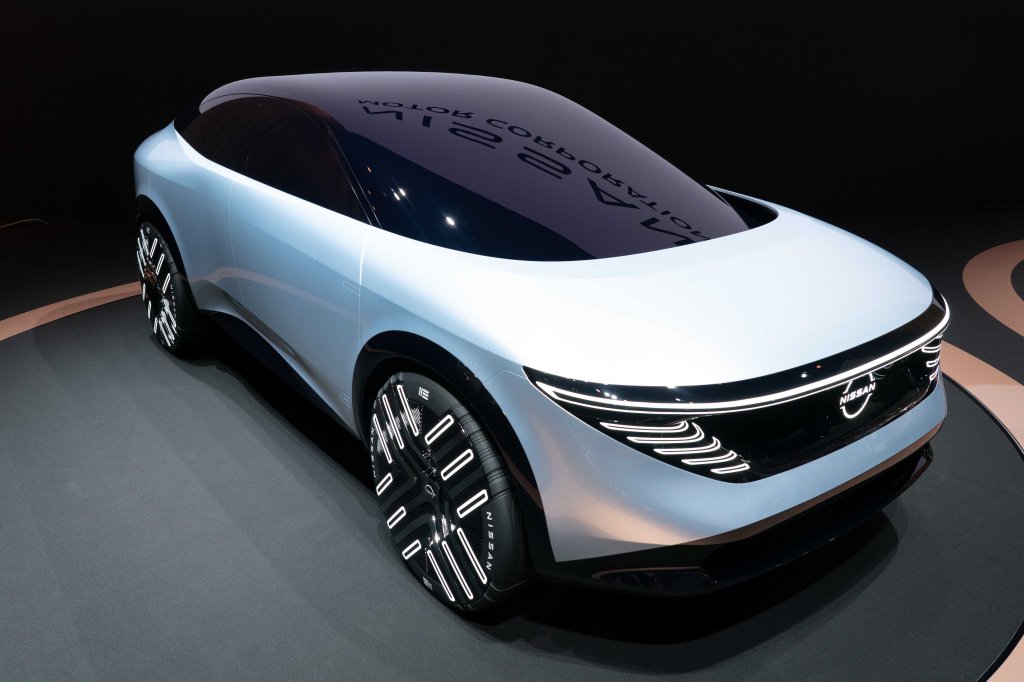
The Chill-Out, – see photo here above – which looks to us as a very realistic concept car which we might see on our roads in the (very?) near future, utilizes the CMF-EV platform.

The Nissan Hyper Urban Concept – see photo here above – was announced at the 2023 Japan Mobility Show; its styling complements the sophisticated tastes of its target users, such as urban and suburban based professionals who prioritise environmental sustainability.

This all-electric crossover concept is designed to remain up to date for every new owner, ensuring an extended lifecycle through regular software and hardware upgrades, aiming to achieve the utmost sustainability. To maximize this further, the vehicle seamlessly integrates into the electric vehicle ecosystem (V2H/B/G), for power sharing.
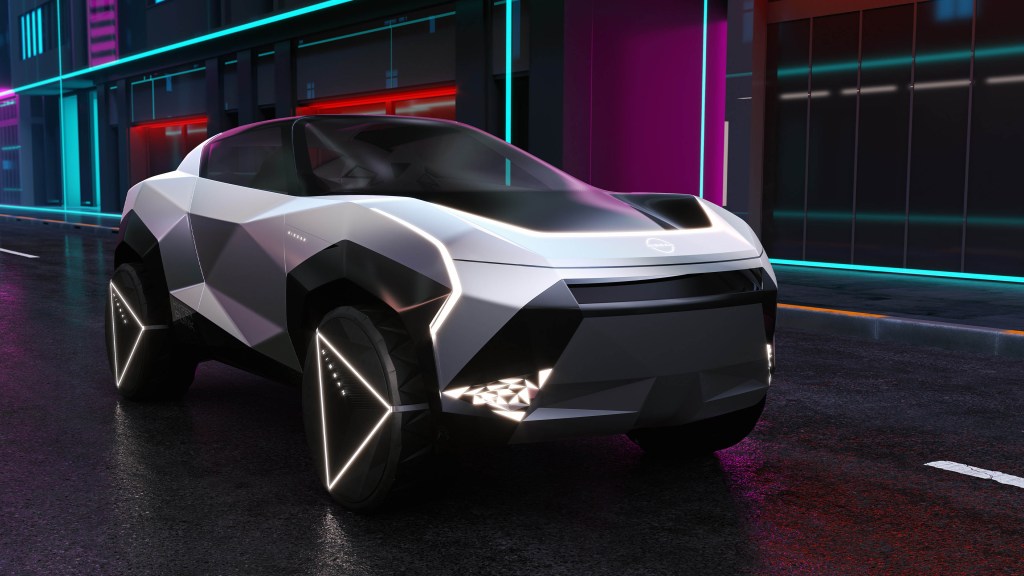
Last but not least, there is the Nissan Hyper Punk concept was also announced at the 2023 Japan Mobility Show.

It is positioned as an all-electric compact crossover concept, catering for a dynamic audience seeking self-expression through style and creativity. It offers owners a canvas for self-expression with its polygonal-shaped exterior with dynamic color changes.

Further styling exercises: the Nissan Concept 20-23

To celebrate the 20th anniversary of Nissan Design Europe (NDE) being located in London, Makoto Uchida, Nissan’s President and Chief Executive Officer, visited NDE in September last year to unveil an all-new sporty urban electric concept car called Nissan Concept 20-23.

The car certainly turns heads, as you can see from the accompanying photo. It was designed by a team including some the younger members of NDE, with the simple brief to design a car – with no constraints – which they would like to drive on the streets of the city where they work.

Of course there is the present range of Nissan, with the Juke, bestseller Qashqai and Ariya. Last but not least also the Leaf. Head of Marketing Rémy Le Gall presented them. See photo here below.

Soon we will refresh our driving impressions of these cars for you, and tell you then more about their unique qualities. Stay posted!

Hans Knol ten Bensel  

The VW Golf is now 50 years with us!


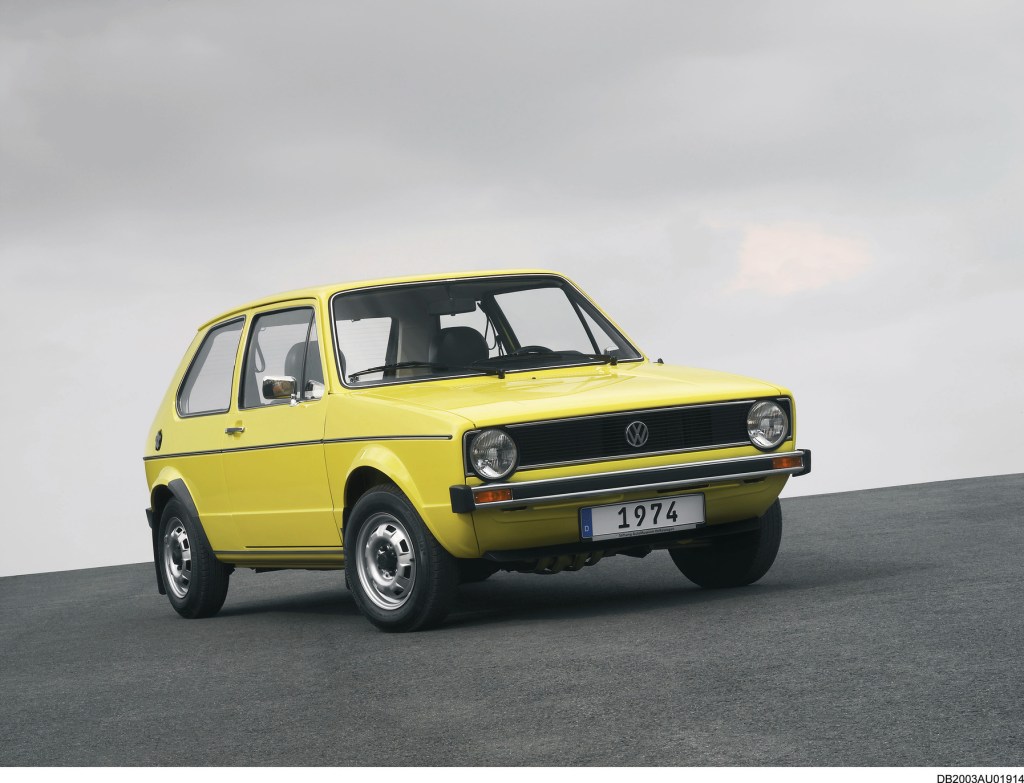
The “Ur” Golf, which looks still quite “modern”, 50 years later.

Many people will say that things are changing rapidly, and many things have disappeared or are not what they used to be. Well, we can be sure of one thing: the Golf, the heart of what Volkswagen as a car manufacturer stands for, is still amongst us.

Indeed, during five decades already, the Golf still accompanies us in our automotive life. Since 1974. Then your servant got married, and drove indeed the first Golf as a test car, and has the fondest memories of this first series, especially when testing the Golf GTI. This sporting Golf created nothing short of a legend. 50 years later, the sporting sound of its 1,6 liter 110 HP engine still seduces, as does its handling and acceleration.

The stuff of eternal legends: the Golf GTI

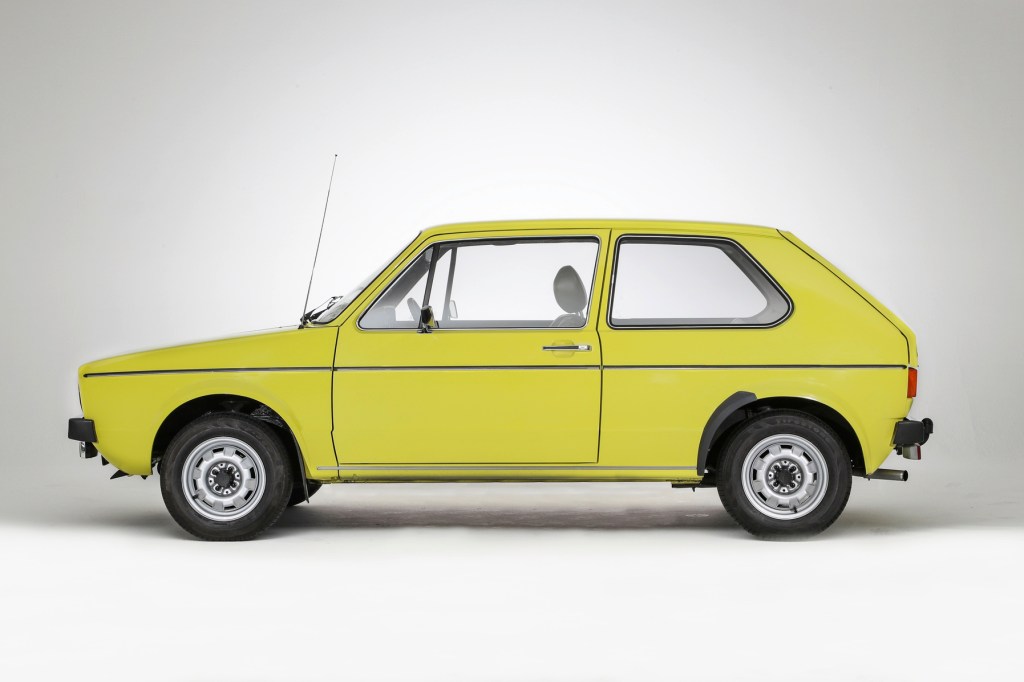
To me, even this very first series is still a “young” car. The straight-line design created by Giorgetto Giugiaro is timeless, the proportions are just right, the “Ur” Golf still looks good from any angle. Just read further…

Hans Knol ten Bensel

An instant hit…

The Golf set out to win hearts. The Golf quickly became a true “Volkswagen”, and the first million units were sold as early as 1976. Now, more than 37 million Golf’s have hit the road.

Over the decades, the portfolio has been expanded to include further variants: besides the GTI, there was also the Golf Cabriolet or Golf Variant, or many others.

With each new model generation, state-of-the-art technologies, safety concepts and convenience features have been incorporated into the compact class. The Volkswagen Golf has thus democratised not just technologies such as the monitored catalytic converter and anti-lock braking system, but also airbags, cruise control and electronic assist systems as well as mild and plug-in hybrid drives.

In the anniversary year 2024, Volkswagen will present the evolutionary development of the eighth Golf generation. It will impress with visually refined features, new assist systems and powertrains, and also next-generation infotainment systems and software. The world premiere of the new Golf is just a few weeks away, with pre-sales scheduled for spring 2024.

Keeping history alive Volkswagen Classic will also accompany the Golf in its anniversary year and will present historic Golf models from the Volkswagen collection on numerous occasions. First rendez-vous is in Paris. From 31 January to 4 February 2024, the Golf Generations I to VII will enhance Volkswagen France’s presence at the “Salon Rétromobile” show in Paris.

Directly afterwards, from 2 to 4 February 2024, Volkswagen will show a Golf I and the unique EA 276 concept car – the Golf predecessor from 1969 developed in Wolfsburg – at the “Bremen Classic Motorshow”.

A long history… with a touch of NSU

In this first report we will focus on the first series. The concept was nothing less than a complete technical revolution for Volkswagen. They had already acquired NSU in 1969, and so the technology of in-line engines was already present in the group, with the VW K70, originally an NSU design, and the famous Prinz 1000 to 1200 TT’s. The K70 was also a front wheel drive car, and the art of “Leichtbau”, or making light bodyworks, was also already acquired with this car.

Technical forerunner of things to come: the in line 1000/1200 cc four cylinder of the NSU Prinz in the late sixties, still air cooled however…

So the beacons were set in terms of technical product design and manufacturing engineering, to make a mass produced light car with transverse 4 cylinder in line engine.

The new Golf was light, some 165 kg lighter as the Beetle. The styling was done by Italdesign under the direction of Giorgetto Giugiaro. The first Golf is also beautifully compact: only 370 cm long. It had some good power, a healthy 50 HP with the basic 1100 cc engine, and 70 HP with the 1,5 litre engine. So the performance was something the Beetle could only dream of. The chassis, suspension and handling were also in another league. On top of it all, the Golf was cheaper to produce, but cost 600 Euros more than the last Beetle 1303…

In 1976 came the Diesel and the GTI version, and as I said, from that moment on, the “modern” VW was a fact…

More soon about the Golf history…

Hans Knol ten Bensel

We drove the Alfa Romeo Tonale Hybrid: smooth Italian (super)power…

I vividly remember my visit to the Centro Stile Alfa Romeo. Indeed, I sat in the prototype mock up bodywork/interior of the Tonale, and had to be very cautious not to touch anything, as it was made of plaster, clay and wood. I was invited at the Centro Stile Alfa Romeo by Chief designer Klaus Busse and his team, when the plaster and wood prototype of the Tonale was just finished. We admired its typical proportions in tune with the higher stance of an SUV, with a horizontal accent line reminiscent of the styling language of the famous ‘Disco Volante’ two seater, created by Carrozzeria Touring back in 2013 and the original Disco Volante 1900 C52 born 1952, also designed by the Milanese coachbuilder Carrozzeria Touring… I just love the the iconic Scudetto grille and certainly the five-hole 20-inch alloys…

Another highlight was the first acquaintance with the plug-in Hybrid version on the Balocco proving ground. See the whole story on these columns, by clicking the following link: https://autoprova.be/2022/11/17/we-drove-the-alfa-romeo-tonale-plug-in-hybrid-q4-in-balocco-the-wonderful-panache-of-todays-efficient-sportiness/ and https://autoprova.be/2022/11/20/the-alfa-romeo-tonale-plug-in-hybrid-q4-the-full-story-of-a-modern-electrified-thoroughbred/

But now read further…

Hans Knol ten Bensel

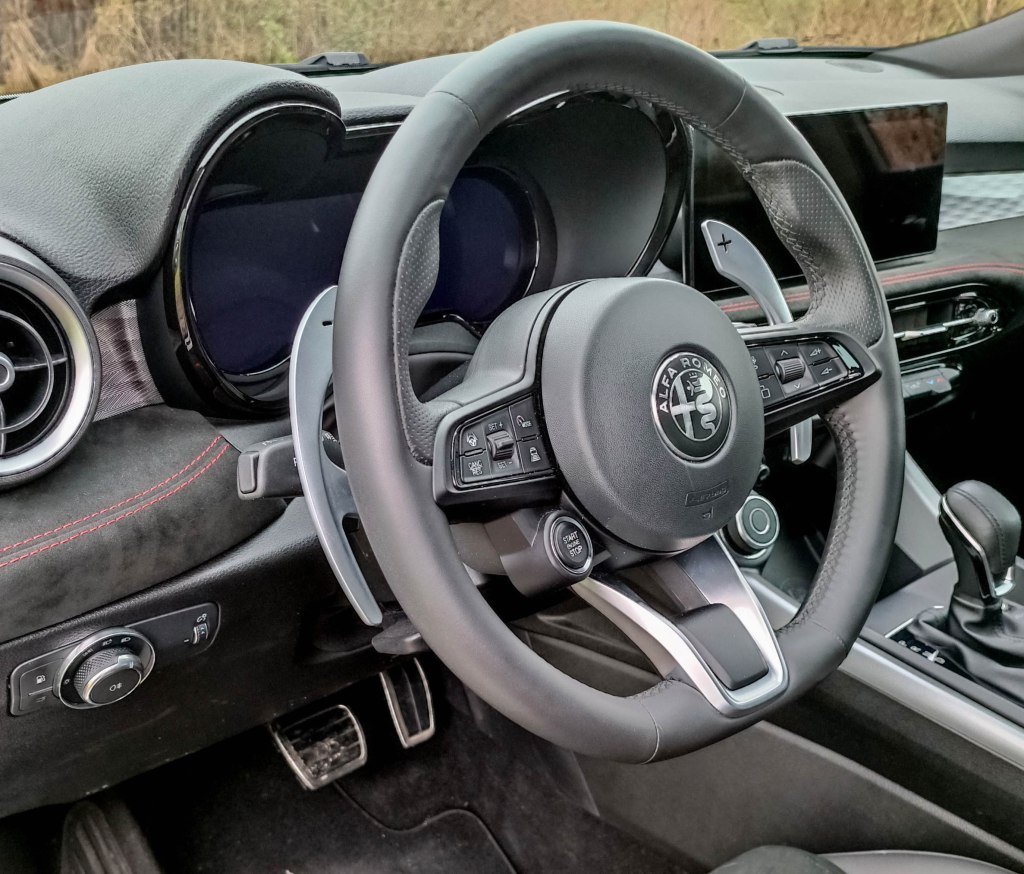
So when we took the wheel of our white Tonale Hybrid test car, the sweet memories came back instantly. The Tonale seduces not only with the right proportions and curves of its bodywork, also in the cabin the iconic Alfa Romeo atmosphere reigns. The round instrument clusters, the big sized gearshift paddles around the classic steering wheel inspire the enthusiast, and it is indeed just how an Alfa Romeo should look. The interior is all black andorned with red stitching on dashboard panels and seats, and this is the only color to choose from for the time being…

A swift turn of the “DNA” drive mode selector lets you choose how you want to drive your Tonale for the day. There are three modes to choose from. Dynamic will reveal all the sporting qualities of this 280 HP Tonale, N means “Naturale” or natural, and then this Alfa will choose for you the right propulsion in each situation, adeptly choosing between engine or E-power. When you want to enjoy more the “Zen” smoothness of battery power, then select the “A” mode, and this Tonale will treat you whenever possible to the delights of electric propulsion. Of course, this happy feeling doesn’t last forever with a 15.5-kWh lithium-ion battery pack, the Tonale has some 60 kilometers in store for you. When the battery is depleted, the Tonale will switch automatically to the “Naturale” mode, and you then can still enjoy the clever smoothness of hybrid propulsion. The battery is recharged fully after some 2,5 hours when connected to your 240 V home charging plug.

Power

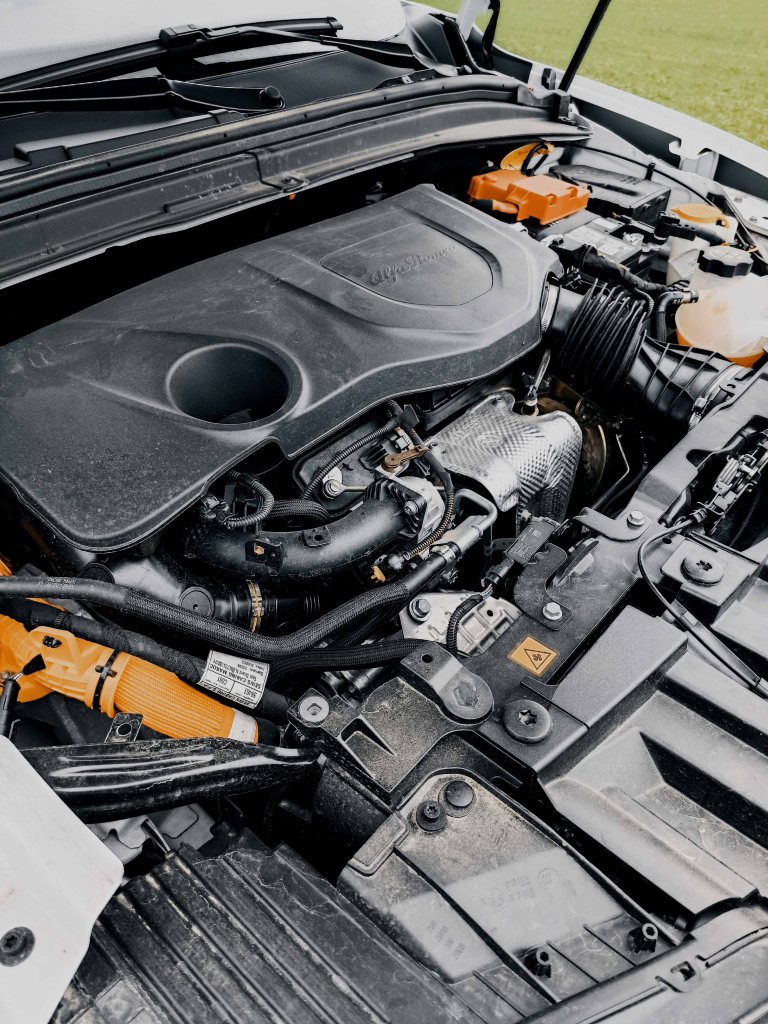
The 1.3-liter MultiAir turbo four and the electric motor produce a total of 280 horsepower, of which 121 are derived solely from the 90-kW electric motor mounted in the rear, as we said, fed by a 15.5-kWh battery pack located under the cabin. All this develops beautiful, smooth punch, which we also fondly remember during our high speed laps on the circuit on the Balocco proving ground. A Giulia Quadrifoglio was then our pace car, and we had no trouble at all following this throughbred beauty, which was driving at 9/10 of its capacities, as the Alfa people  told us afterwards. A smooth avalance of power is yours in this Tonale when you put your foot down. 0 to 100 km/h is reached in 6,2 seconds. This tells the whole story… The top speed is reached at 206 km/h. The MultiAir engine itself develops 180 HP at 5750 rpm, giving it a score of not less than 135,1 HP/L. 

So yes, the Tonale in plug-in Hybrid form is a smooth performer, also thanks to its 6 speed automatic, which reacts nicely to your right foot.  As a bonus, you get four wheel drive thrown in. It is to me a very strong point in favor of this PHEV. When we come to fuel consumption, the official WLTP figure is 1.13-1.48 l/100 km. Let’s say that in pure electric mode, the consumption is stated at 19 kW/100 km, and when you drive solely on petrol, it all depends on your driving style. Anything between 10 and 6 litres/100 km, we would say. Driven with some restraint, an average consumption around 7,3 liters is normally achievable, with some distance driving thrown in, as was proven by our test. Of course, the Tonale scores well on emissions:  CO2 emissions are 26-34 g/km. All these figures are quite remarkable as the Tonale is certainly not a lightweight car with its 1835 kg.

Thoroughbred handling

Despite its all steel underpinnings, the Tonale handles excellent indeed. When you go for the dual-stage valve active suspension, you will find it a smooth companion on pothole filled urban roads. The Tonale feels indeed equally well at home on winding roads when you drive it with abandon, as when you drive it slowly and smoothly in town. The light steering also helps to put a smile on your face, even in tight urban traffic. Stopping power is delivered in the top Veloce version which we tested by Brembo brake calipers, and it is totally beyond reproach.

Infotainment and connectivity

Every Tonale comes standard with a 10.3-inch touchscreen infotainment system. It has the Uconnect 5 software found on other models within the Stellantis group. The home screen can be customized, and you can adapt the interfaces and create not less than five unique user profiles. It has standard Apple CarPlay and Android Auto, as well as of course wireless phone charging. We must say that sometimes we found the touchscreen rather slow and hesitant to react to our finger pressure, certainly awkward when driving and you want just to perform an easy command with one touch of your finger.

Of course the Tonale offers all the thinkable safety and driver-assist features, like automated emergency braking and a very smooth and subtle adaptive cruise control, which I enjoyed very much. Especially the clever refinement of the adaptive cruise control impressed me. Indeed, enormous progress has been made in this field over the last few years.

Practical

The Tonale offers ample comfort for four, has certainly in the top Veloce version everything you could wish for, and with the entire camera supported driving aids, it is a breeze to drive in town and to park in narrow spaces. Boot space is sufficient, with 385 l with all seats up, and to a maximum of 1430 l with everything flat. You can also use your Tonale as a tow car, and it is good for 1250 kg trailer load with brakes, and 700 kg without.

Conclusion

Stylish, full of panache both inside and out, the plug-in version of the Tonale has a lot to please. Enormous performance, with handling to match, it is a true high-performance Alfa, and thanks to the E-power it delivers this performance effortlessly and smoothly.

When you are in the mood, very decent economy is possible, and in normal everyday driving this leaves you smiling all the way.

All these good qualities DO have a price, but then, beauty in this world is never cheap, is it?

Think about this: the timelessness of the styling, the excellent proportions, the emission values thanks to its hybrid configuration make this Tonale a companion for years, if not decades to come, on all the regions and cities in Europe and beyond, so why not fall in love with this Tonale, and set the right tone for your future mobility…

Hans Knol ten Bensel

Unique historic Porsches to be seen at Brussels Autoworld…

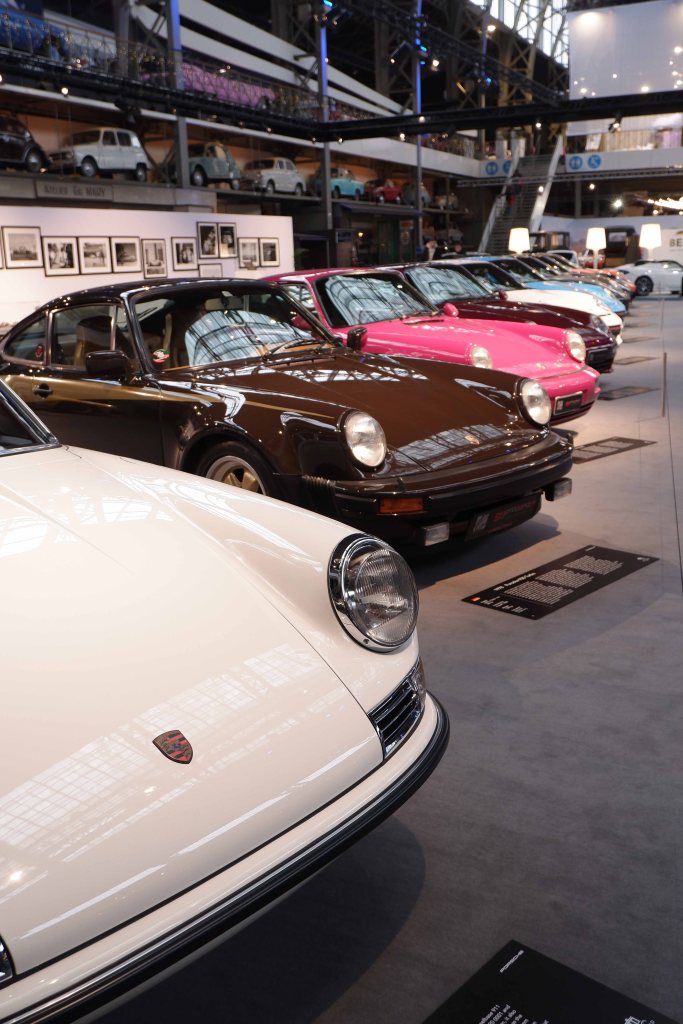
Autoworld, the impressive car museum at the Brussels Cinquantenaire, holds now an exhibition ”Porsche, driven by dreams” celebrating the 75th anniversary of the brand. You can already read about it in our columns. Some 50 Porsches are displayed, many of them brought to the capital of Europe by the Stuttgart Porsche museum, with some of them never seen before on public display in Belgium.

It ranges from the 984 to the “Mission E” prototype, the latter which was a harbinger of the alternative future coming to us all.

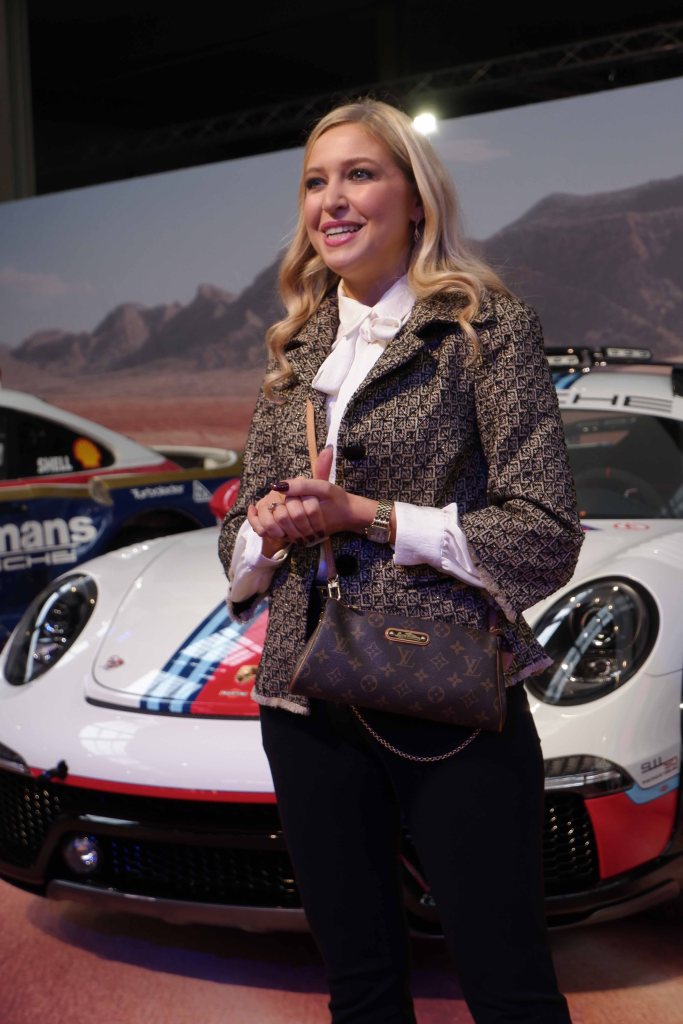
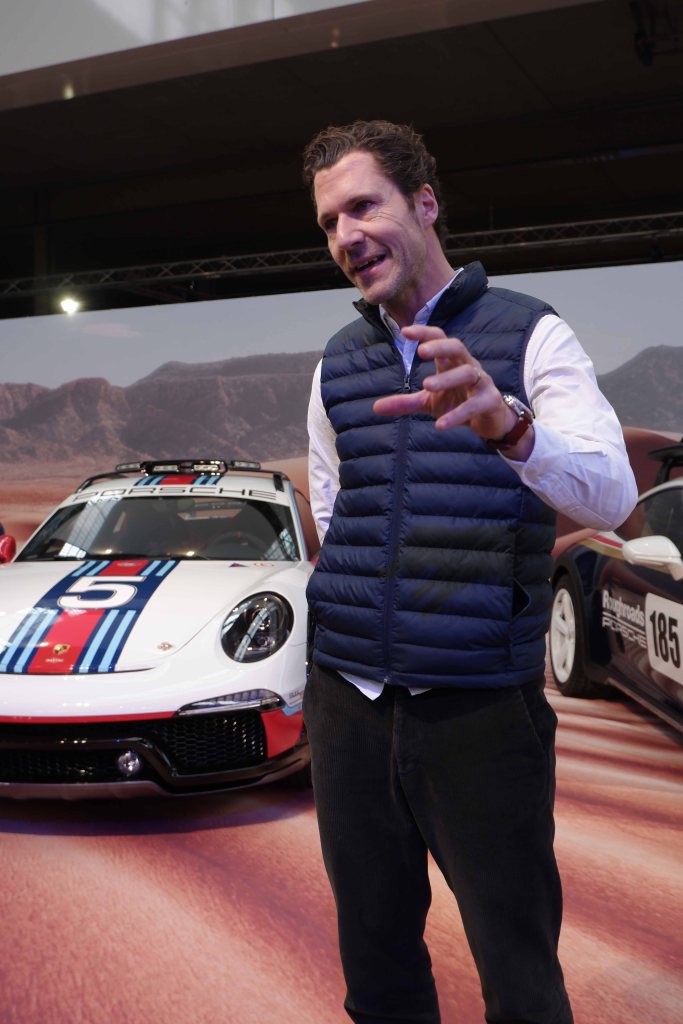
The show was presented by PR manager Porsche Belgium Liana Picard, General director Autoworld Sebastien de Baere and last but not least car expert and curator of Autoworld Leo Van Hoorick, who showed us around the exhibition and offered us his expert comments and insights. (See photo here and further in the article).

Hans Knol ten Bensel

The 911 is now already 60 years among us, and your servant still remembers driving these 911’s with sporting abandon in the early seventies. I just loved to take these genuine drivers’ cars to the limit, their handling needed an expert hand, but they never betrayed me and on the contrary, it was a pure delight to master them. The flat six engine was then still air cooled, and the echo of their roar and hiss at high revs still echoes in my ears. Just look a bit further in our columns, click the following link: https://autoprova.be/2021/03/27/some-early-photos-from-my-automotive-beginnings/


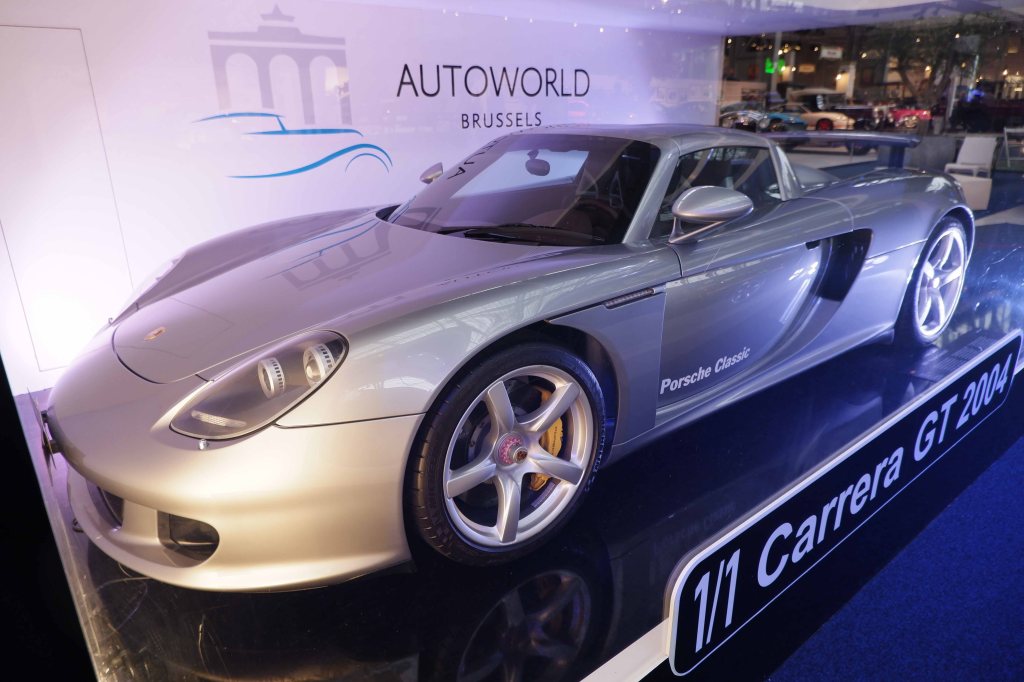
Besides the iconic 911, of which we still found an absolute classic early version in the Museum, on display outside the specific Porsche show, just look at the photo here  above, there were indeed some very dramatic Porsche Museum Cars, and the most stunning for me was the Carrera GT with its V10 engine.  It is a stylish classic sportscar, breathing the “Zeitgeist” of two decades ago, with its clean, fluent lines, inspired by the bolides at le Mans.

It’s a carbon-fibre, mid-engined super car, and made its debut at the 2003 Geneva International Motor Show. It came three years after its debut appearance at the Paris Motor Show in prototype form – an event itself which caused such an explosion of interest that Porsche knew their dream needed to be made a reality. The birth of what is today considered one of the greatest of modern classic sports cars, says Porsche. We can only agree…

Pushing technical boundaries 23 years ago…

The Carrera GT is a car that pushed technological boundaries beyond any supercar of that time. Its beautiful profile encompassed a staggeringly powerful 612PS V10 engine that was a direct descendant of the 10-cylinder race engine developed for the Le Mans 24-hours of 2000. The only modifications the race engine required were those to meet worldwide emissions and noise regulations for road legal cars. In keeping with its push for innovation, the Carrera GT also pioneered the use of pure carbon fibre for its monocoque and subframe.  Performance is – considering even today’s standards – quite impressive. It can reach 100km/h in just 3.9secs and roar on to 200km/h in 9.9secs. The top speed of the Carrera GT is officially 330km/h.

The racing engine needs of course a fair amount of cooling. The huge air intake along the car’s flanks, along with the three radiators are five times larger in area than that of the Porsche 911 Turbo of the time.

Then there are the purposeful contours of the Carrera GT. It was designed by a team headed up by legendary Dutch car designer, Harm Lagaay. He already worked since 1971 for Porsche, and designed the 924. He moved to BMW in 1985, and designed for them the BMW Z1. Also purposeful and elegant. This purposefulness is found also in this GT. He returned to Porsche in 1989 as head of the “Style Porsche” department in Weissach, and oversaw the design of the Porsches of the period – the 968, 989 (the stillborn four door Porsche), 993 (the 1993-1997 generation of the 911 for which Englishman Tony Hatter is also credited), Boxster, 996 (the all-new 911 of 1997), last but not least the Cayenne and one of his absolute masterpieces, the Carrera GT.

General director Autoworld Sebastien de Baere…

Some 1270 units of the Carrera GT were made in total over its production life (manufacture ended in May 2006). Today, the Carrera GT Type 980 is an official member of the Porsche Classic family, which means both owners and those Porsche Classic partners and Porsche Centres who maintain the cars have access to an extensive supply of genuine parts. As you might expect, many of them are still on our roads and retail at around the $1 million range for a reasonably good example… Mind you, it cost close to half a million Euros when new…

Italian blood: the Carrera Abarth

Can you believe, looking at the picture above, that this car was built in 1960? Three years before the 911, as the dust sheet was pulled back on this brand-new Porsche model at the 1963 Frankfurt International Motor Show. Looking in profile, it is quite reminiscent of the overall proportions of the 911. Just a bit more muscular, racier, more pur-sang even. It is officially called the Porsche 356 B 2000 GS Carrera GTL Abarth, and for me, it is one of the “purest” Porsche street cars.

We go back to the early sixties here. To remain competitive in Grand Touring (GT) racing, Porsche needed lightweight versions of the 356 B. They looked south for help, and found it in the Italian-Austrian sports car builder and Porsche representative Carlo Abarth. He has enjoyed a good relationship with Zuffenhausen since their collaboration with the Type 360 Cisitalia Grand Prix car in 1947. Abarth now commissions Ugo Zagato in Milan to build 20 lightweight coupés. The handcrafted aluminium bodies featuring the characteristic air scoop on the rear are compact and streamlined. It is a true beauty with wonderful proportions, in our opinion a forerunner of what the 911 was to be.

Gave us expert information about the Porsches in the exhibition, connaisseur and Autoworld curator Leo Van Hoorick…

. The 356 B Carrera GTL Abarth weighs almost 120 kilograms less than the standard 356 B. The “marriage” of the chassis and body takes place in Milan, with the GTL receiving its finishing touches at Abarth and Porsche. The list of successes of the 356 B Carrera GTL Abarth includes class victories at the Targa Florio – in 1960 with a 1.6-litre engine, 1961 with a 2-litre Carrera unit – plus outright victory at the Lyon-Charbonnières Rally of 1960 as well as class wins at Le Mans.

Driving the Abarth GTL, racing drivers such as Hans Herrmann, Herbert Linge, Edgar Barth and Paul Ernst Strähle win world championship titles in 1961 for Porsche for GT cars with a displacement of up to 2 litres. Further international titles in 1961 include Heini Walter’s fourth victory at the European Mountain Championship and Hans-Joachim Walter’s win at the European Rally Championship.

Even with the 1,588 cc flat four, developing 135 hp or 99 kW, the 778 kg Carrera was 220 km/h fast…

There is a lot more to see in this Porsche exhibition in Autoworld, and we will come back on this in following reports, where we will delve more in detail about the Porsche prototypes and the iconic Gmünd Coupé. Stay tuned!

Hans Knol ten Bensel
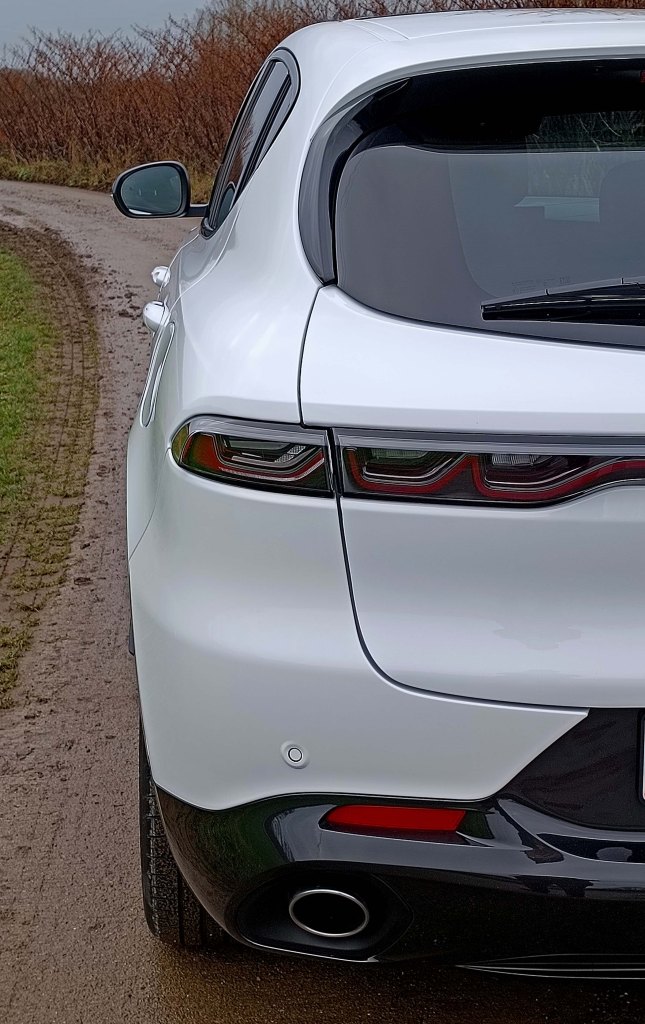
We drove the Cupra Formentor 1.5 TSI 150 HP: a sporting beauty…

Creating within the Seat family the Cupra line is a very wise decision. We always found that the quality and panache of the recent Seats merited special place, and with Cupra, they truly found it. We can even say that Cupra will become the main mass market sporty brand for Volkswagen.

The Cupra designers and stylists put on wheels one of the best looking SUV’s in its segment, and for your servant this alone is a very good reason to have a good look at this car and call it your own.

Furthermore, it carries the well proven VW group technology, and with that comes performance, economy and reliability.

Just read further…

Hans Knol ten Bensel

Exquisite

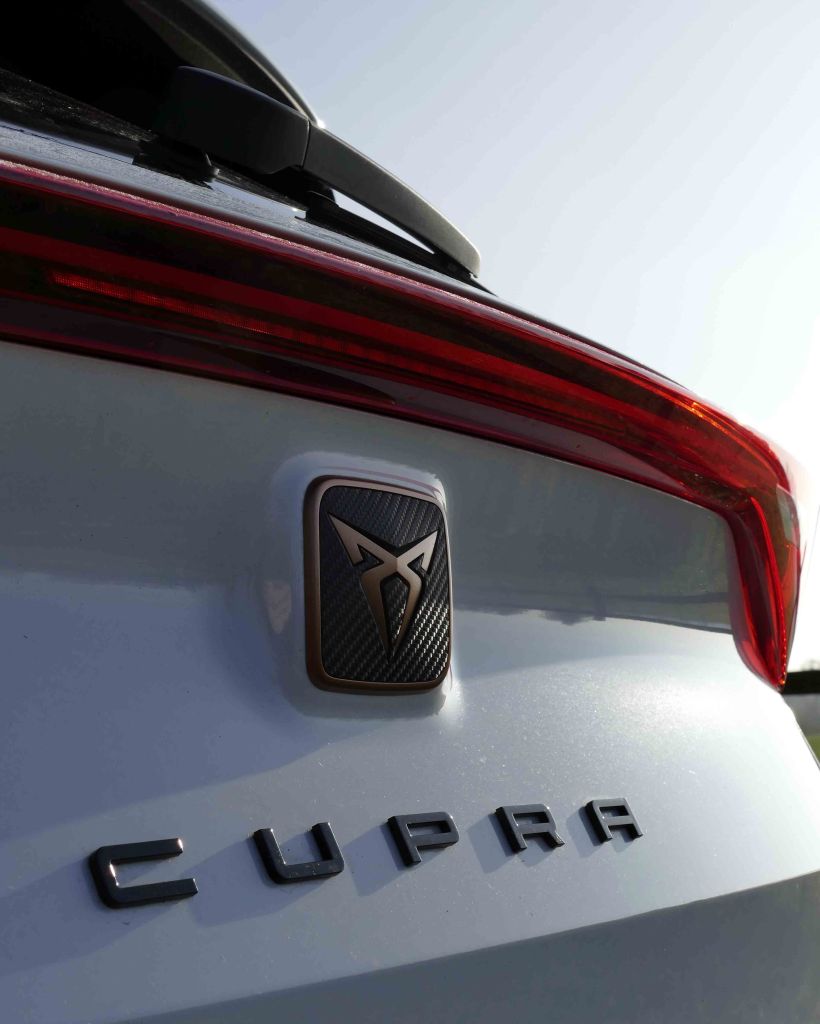
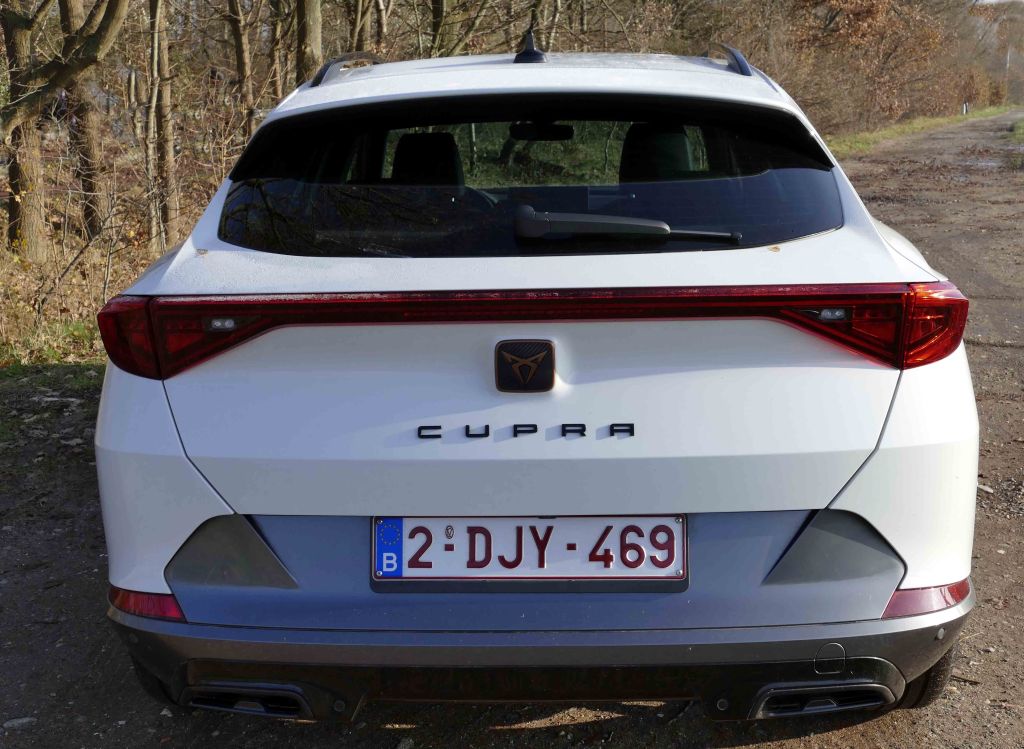
The Formentor certainly is kind for your eyes. Indeed, the car is pleasing to look at from any angle. It seduces with gentle, well balanced curves, well proportioned accent lines, and a very pleasing light signature. At the rear, it is reminiscent of the Lamborghini Urus and displays also a touch of the Panamera. The front end also conveys exactly what the Formentor stands for, and the beautiful alloys complete the picture perfectly. It is a low slung SUV. The manufacturer defines the Formentor as a bespoke SUV Coupé, and deservedly so. Formentor signals its Spanish roots, and actually is the name of a beautiful peninsula in Majorca.

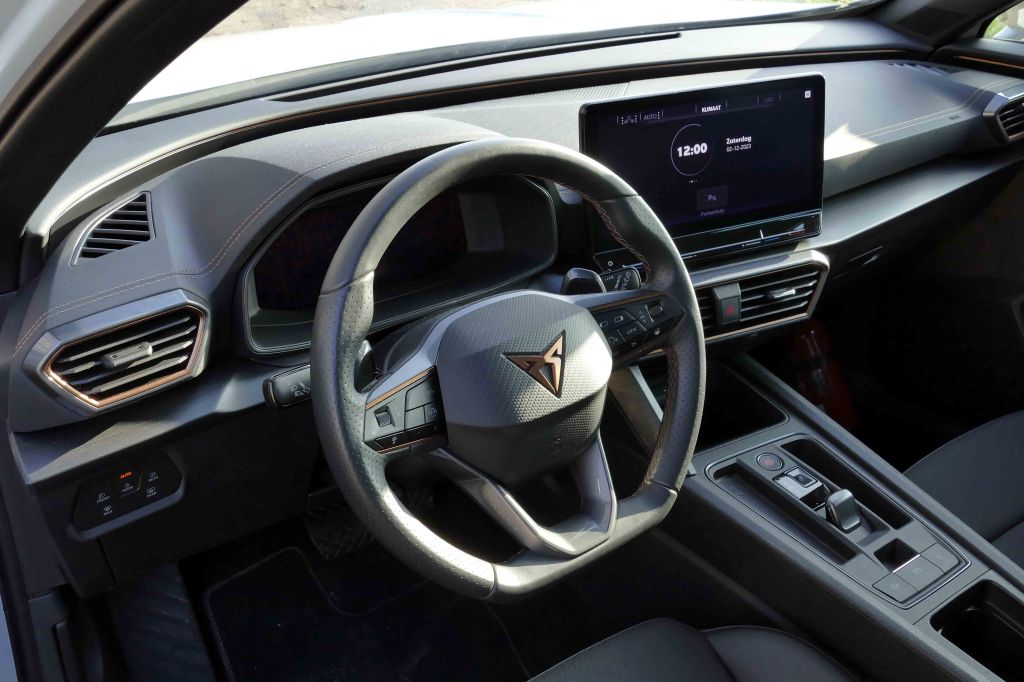
Also in the cabin, the designers have done their homework. One finds copper coloured accents throughout, from the stitching to the copper tinted badge on the steering wheel. The led lighting is also dramatic, with as default hue a copper yellow which runs along the dashboard edge. Note also that this wraparound LED also alerts you to objects in your blind spot (!). Of course, when you step in your Formentor at night, the CUPRA Welcome light projects the CUPRA logo down onto the floor.

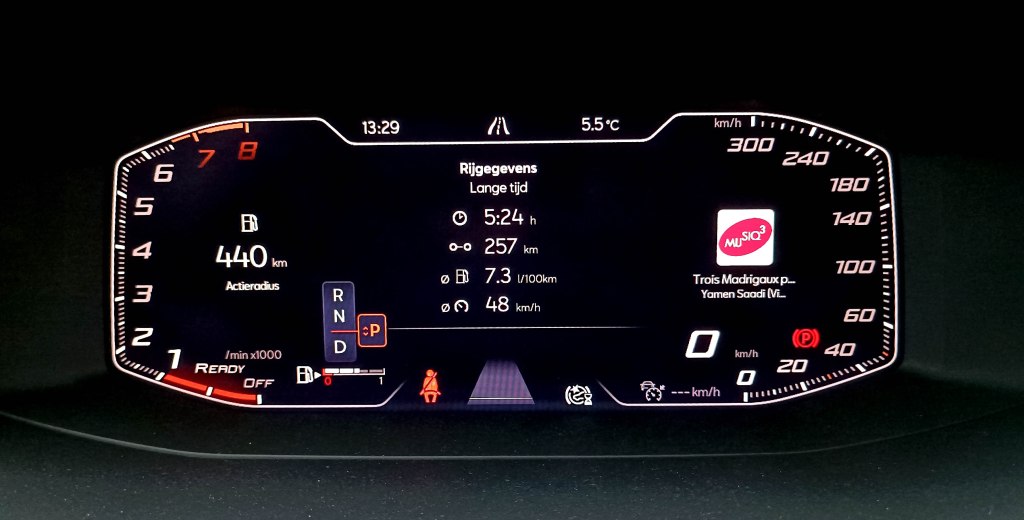
Then we have said nothing about the digital instruments on the panel in front of the driver. You can choose between calm simplicity with some navigation and audio information thrown in or two classic round dials,

and last but not least a large Porsche style central rev counter or as icing on the cake the two square shaped clusters reminiscent of BMW’s.

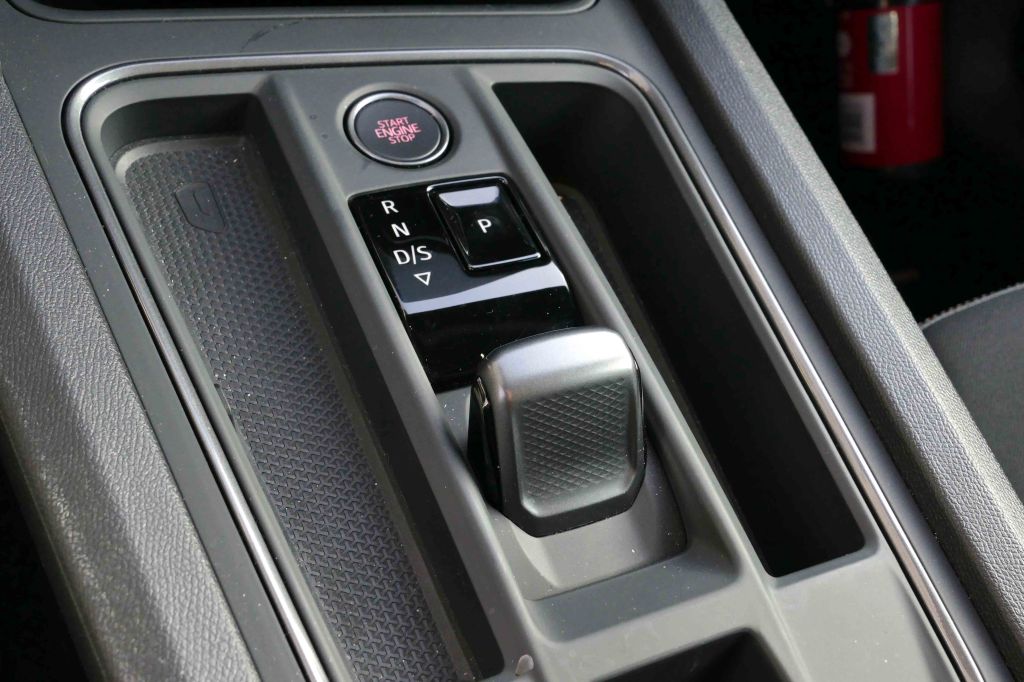
Of course we preferred most of the time the “Porsche” large rev counter in front of us, as we liked to see what we heard, i.e. the pleasant throb of the efficient 1,5 litre four cylinder at work. This 150 HP/110 kW long stroke unit is coupled to the well proven DSG 7 speed box, and it suits the engine characteristics perfectly. Well honed electronic engine and gearbox management sees to that. The engine develops a healthy 250 Nm of torque between a very wide rev range of 1,500 to 3,500 rpm.  One has the choice between different driving modes, from sport to comfort.

The engine is lively enough and has more than sufficient pulling power to warrant an inspired driving style, so we opted most of the time during our test for the comfort mode. Indeed, it is hardly necessary to put the throttle deeper, the absolute performance figures amply prove the point. Accelerating from 0 to 100 km/h is absolved in 8,9 seconds, with the engine revving with a beautiful staccato. Indeed, this is one of the joys of driving a petrol engined car…Top speed is a good 203 km/h. Mind you, these overall performance figures are the same as the original 911 Porsche!

Of course, fuel consumption varies a lot in function of your driving style. During our test, we averaged some 7,2  liters, with several long motorway stretches thrown in. Driven in a rather spirited manner in urban traffic, consumption rises to a good 10,5 liters/100 km. The manufacturer quotes according to the WLTP cycle for the DSG version a consumption ranging between 6.6-7.2 l/100 km. CO2 emissions are  150-163 g/km.

Superb handling

The Formentor runs on the VW Group MQB platform, with the suspension of course calibrated to its sporting pedigree. It handles and steers with balance and precision, and it is a true joy to drive it with verve on winding roads. Of course, the chassis and suspension are laid out for far more power than this 1,5 litre 150 HP version. The most powerful is the 310 HP variant, so you can understand that the car has a rather easy play with the performance of this one.

All these good road manners are combined with very good comfort. The Formentor is nicely sprung, striking a good balance between low and high speed stability, surefootedness and absence of body movement in sharp corners. The suspension is also not unduly firm on rougher surfaces either. We noticed on some road surfaces somewhat higher wheel roll noises, which force you to turn the audi knob a bit higher than you would like.

Everyday life

The Formentor is very pleasant to live with. We said, one is already spoiled by the aesthetics of the instrumentation and cabin, and on top of that you will find out that you have more than sufficient head and legroom both in front and at the rear. Boot space is also more than sufficient with its standard 450 liters. One good word also about the infotainment system. On the centre console we find the easy to read and manipulate 12 inch touchscreen, with of course all the necessary functions at your fingertips.

There are lots of pleasant features for your phone. For instance the place your smartphone in the Connectivity Box to amplify signal, charge seamlessly and sync to play music via the premium BeatsAudio™ system. There is also CUPRA CONNECT: you receive real – time traffic updates and directions while seamlessly connecting to your smartphone to utilise apps and listen to music services on the move. Of course there is Wireless Full Link, so your Apple or Android smartphone seamlessly syncs up, so you can display your favourite apps and functions on screen.

Conclusion

The Formentor is a compact SUV with lots of style and character, and it was actually the main reason why we found it so endearing. For more sporting souls, the Formentor has many more cards upon its sleeve, and the dynamic SEAT/Cupra PR department at D’Ieteren promised us also a test with the 2 litre 190 HP version early next year, so indeed we have something very good to look forward to in 2024!

Hans Knol ten Bensel

Renault unveils a tip of the veil of its cute 5 E-Tech electric ahead of Geneva Show…

Indeed, Renault will enrichen the world with its iconic full electric “Cinq”, reminiscent of its wonderful R5 which stole so many hearts decades ago. With this car, Renault wants to bring EV driving to the masses, affordable and with a distinct link to its glorious past.

The car will be a star on the 26 February at the Geneva International Motor Show, and it now starts gradually unveiling details of the car.

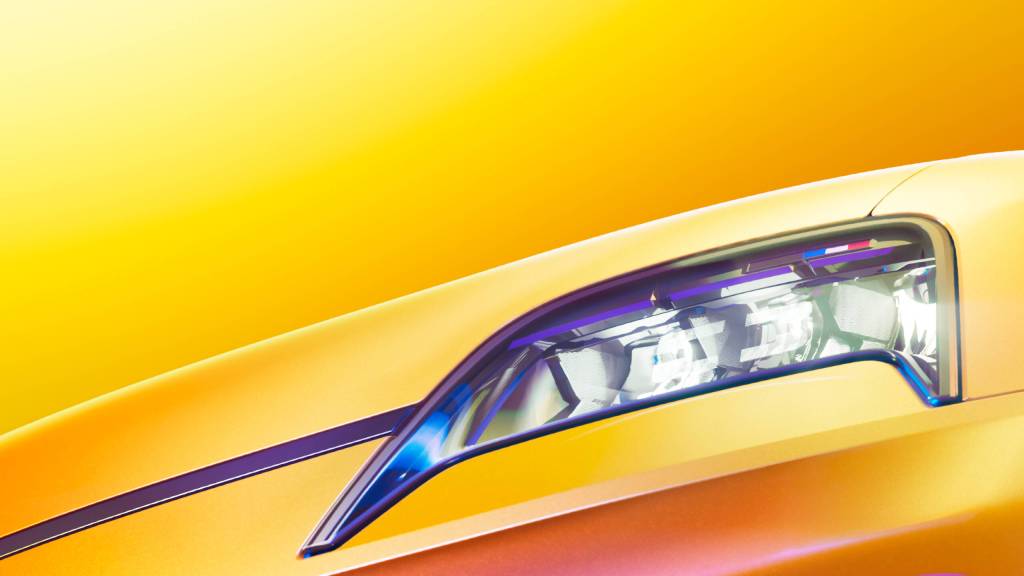
The headlights of R5 are a key design feature, making the front end instantly recognisable. It is not only their shape that sets them apart, but also the mark in the centre of the lens, resembling the pupil of the human eye.  This nod to the 1972 advert featuring “The Adventures of Supercar” gives the modern-day R5 a human-like expression.

At the front end, the air intake present on the bonnet of the historic model has disappeared. Clearly showing that Renault 5 E-Tech electric belongs to the world of electric vehicles, it has been replaced by a charge indicator light forming the iconic number “5” when the vehicle is fully charged.

The wheel arches create a broader stance, giving R5 the look of a compact car with real on-road presence. Their graphic design underlines a unique and instantly recognisable personality, reminiscent of R5 Turbo.

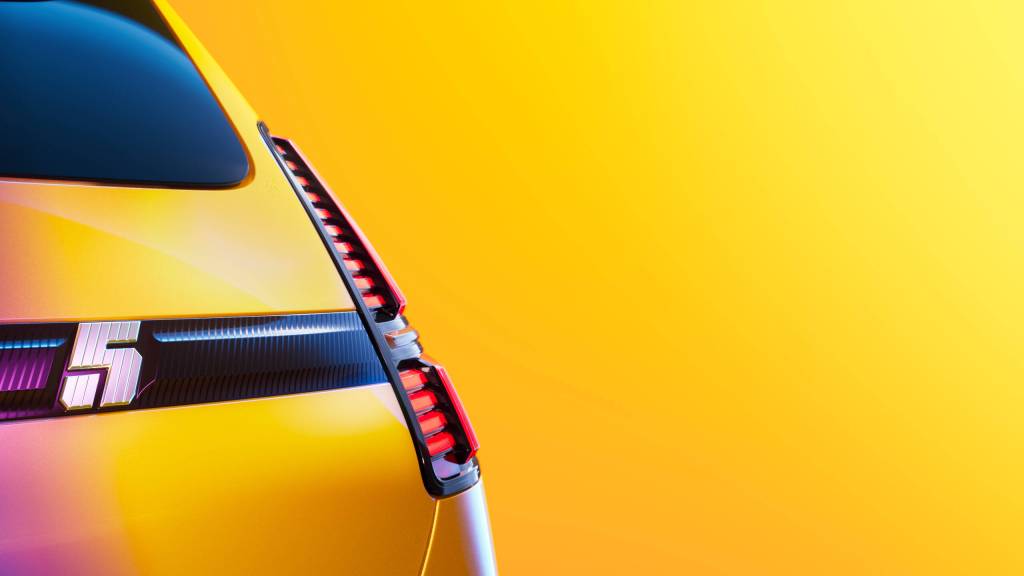
The vertical rear lights were a hallmark of the R5, and here they include a function extending the side panel.

R5 R Pass, a skip-the-line programme for online customers

At the end of last month, Renault is rolled out a unique experience for future customers: the R5 R Pass programme. R5 R Pass holders will be able to order the new iconic all-electric vehicle in the Renault network 10 days before orders open to the general public. Customers placing an order during this special period will be among the lucky first to take delivery of their vehicle from autumn 2024, with the ElectriCity plant in Douai, France, giving priority to their order on the production line. Holders of an R5 R Pass will receive a scale model of Renault 5 E- Tech electric after its reveal and will be the first to access content and events around Renault 5.

Available at a cost of €150, the R5 R Pass will be available from http://www.renault.fr/r5 and in the seven participating countries (France, Germany, Italy, Spain, United Kingdom, Belgium and the Netherlands).

An all-electric city icon…

Just 3.92m long, Renault 5 E-Tech electric is every inch a city car. Ideal for urban driving, this all-electric icon is also fit for the open road with its 52 kWh battery giving it a range of up to 400 km WLTP. This battery will be the first available when orders open. A second 40 kWh battery will become available at a later date.

Renault 5 E-Tech electric will be the first vehicle built on the new AmpR Small platform (formerly CMF-B EV), designed for true driving pleasure. The multi-link rear suspension, usually found only on vehicles further up the market, contributes to the excellent stability and roadholding.

Renault will gradually show more of its new all-electric baby. Stay tuned!

Hans Knol ten Bensel

We spoke with Milosz Tomanek, Premium Cluster Director Belux, about Lancia’s renaissance…

In the magnificent surroundings of the Italian embassy in Brussels, we talked with Milosz Tomanek about Lancia’s return to the Belux market…

At the presentation of the Lancia Pu+Ra HPE and the announcement of the return of Lancia in Belgium, we had an interesting talk with the Director of the Premium Cluster Belux at Stellantis, on the opportunities of the iconic brand on the Belux market…

Hans Knol ten Bensel

Q: The Belgian market has much potential for Lancia, but due to its long absence, the question arises what is now your client base and what is your approach to re-enter our market? We have the Dutch approach, where the market is already very digitised. Both countries have a very large fleet market, and this will also be the challenge for Lancia…

MT: Indeed, the fleet market is with around 70 pct of the total volume very important. For the premium segment, its share is even 80 pct. When we want to re-launch Lancia, we have to establish ourselves in this fleet market too. This is also the reason why we have electrified the new Ypsilon, and are offering a plug-in hybrid version as well as a full electric variant.

When we want to re-launch a brand, we have also to take the right steps to grow. We have to start from a solid base. The B segment is quite large in Belgium with a total volume of not less than 125.000 cars. We also have the private client. His market importance has admittedly diminished over time, but he exists. When a new model is launched by an Italian brand, it is the private client who is the first to show substantial interest.

Driven mostly by family members or acquaintances which had previous ties with the brand. When it was rumoured that Lancia would come back to Belgium, many private clients reacted eagerly to the news. This shows clearly that Lancia still stirs emotions and interest amongst many. Clients which are looking for emotion, design, a sporting touch, elements which are intrinsically part of Lancia. We must certainly not overlook this segment.

Q: I also think that the interest of the private client forms the basis for the subsequent appeal of the brand in the fleet market. Don’t you agree?

MT: Indeed, this is why the private client constitutes the basis of our market approach.

Q: Will you adopt for Lancia a similar service model which Stellantis uses for the other premium brands in the group, like DS for instance? MT: What you are saying now is somewhere the essence of the premium approach, but we have three brands with their own, specific identity. If you put the three brands in a showroom, the clients will invariably go to the niche or corner of their brand. But of course, what DS has established and built over the last few years is valuable. We have to offer a credible and worthy alternative of the German brands. Having said this, we have to offer a client experience which is at least as good as what the German competition is offering. But we don’t have to merely copy their approach. The client has to discover the identity of the brand in his service experience. Therefore we cannot simply copy what DS or Alfa does for its clients, but we take the right elements which are in line with the identity and character of the brand.  Last but not least we have to offer a proper atmosphere of the reception and showrooms of the dealerships.

One of my tasks is to find the synergies, but always with an eye for the specific identity of the brand. We don’t want to be merely a corner within the Alfa showroom, we want to offer a complete client experience, but then of course we will use the best practices learned with DS and Alfa Romeo. One must not forget that despite their iconic and long history, these brands are relatively young for the Belgian market in terms of a substantial market presence. But the brands nourish each other, this is also important for our distribution network.

There will be 10 dealers this year which will have also Alfa or even the three premium brands under one roof, and we see that proven best practices are shared for the three brands, inspiring but not cannibalizing each other in their specific client approach.  

Q: We will see the Ypsilon in a full electric and electrified hybrid version, also to enable a smooth transition for the existing Ypsilon owners to this electric age, which is certainly indicated for senior clients who live in urban areas and apartments…

MT: Indeed, there is a philosophy behind this. We will not dictate what the client has to buy. We will listen to the client, but at the same time we have to project what the client of the future will buy. We notice that the market is getting more mature what full electric purchases is concerned, and political decisions now cause a rapid expansion of this segment. But this switch is slower for clients living in urban areas.  

Thanks to the financial strength of the Stellantis Group, we could carefully work out our renaissance strategy and roll it out judiciously step by step. This consistency has helped me when I started up the team and the retailers were identified. Credibility was already created. One should keep in mind that irrespective of the fact that a brand has been absent of the market for 5 or 10 years, you only have one chance to (re)launch a brand successfully. You have to do it right. I am convinced we are doing it the correct way…

Q: Thank you for this interview.

Hans Knol ten Bensel

We spoke with Manuele Tomasorri, Exterior Designer Lancia: the art of sculpting the modern world in the premium tradition of the brand…

At the occasion of the presentation of Lancia Pu+Ra HPE at the Residence of the Italian Ambassador in Bruxelles, we took the opportunity to have an interview with the young and inspired exterior designer of the Lancia Pu+Ra HPE… it proved very interesting indeed!

Q: The Lancia design department has been producing now a wonderful and iconic car which embodies the styling language of future Lancia’s. You are responsible for exterior design, can you tell us what is your vision on design, and why have you chosen to join the Lancia design department?

Also can you tell us a bit more about your design education, your school, and even more important, what do you want to create and establish as a designer…

MT: I understand your point. It is a very good question. Before I studied design, I did different things. It was rather more manual and mostly on focused on the mechanical aspect. I came to design out of curiosity. Then I started in Italy my studies in transportation design in Turin, at IED, Istituto Europeo di Design. There I developed an understanding of the meaning of Design. What is Design? Why do we have to do this? The reason why I chose Lancia is simple: what Lancia stands for in terms of form language coincides with my ideas about Design. So I understand fully what they want to convey.

Q: This means you are taken by the Lancia spirit?

MT: Indeed, completely!

We have included in our design language elements stemming from architecture, fashion, everything that surrounds us in our modern world, it is truly eclectic in its inspiration. All this, we have the chance also to embed all this into our heritage. Because this viewpoint, this approach, we have used it also in the past. It is of course a dream for a designer to work in this environment…not everybody has this history and has tried so many wonderful things in its past.

Q: When we come to the design language of the Pu + Ra, the emphasis lies on well rounded shapes and surfaces.

MT: Indeed, this concept car is really a synthesis and includes the logic of the design of our future cars. The contrast between the soft curves and the hard edges will be seen in future Lancias, it will be indeed our design bible. It will be our reference book or bible, so to say.

Q: You will also embody with your design a distinct premium level…

MT: Indeed, we will be very serious and thorough in lifting our design language well into the premium level. This will reflect itself in the quality of the chosen materials as well as the shapes. In our design, we want to express also the (sporting) heritage of our brand. So we look for compactness, agility, efficiency. The Pu+Ra is compact in its overall dimensions, like the historic Lancias.

Q: Will we see these design elements already in the future Ypsilon, because there the design is already established and fixed now…

MT: The design elements shown here in the Pu + Ra HPE will be seen in the forthcoming Lancia’s we announced here today…,For instance, the iconic “Calice”, Chalice or Cup  in the front of the car will also adorn the front of these Lancias.

Q: It will be so to say the light signature of the Lancia’s…

MT: Indeed… also the choice of the materials conveys quality and durability. This is also a credo of Lancia, and we express this with the use of durable materials.

Thank you very much for this interview.

We will soon follow with an interview with Mr. Milosz Tomanek_Premium Cluster Director Belux. Stay tuned!

Hans Knol ten Bensel
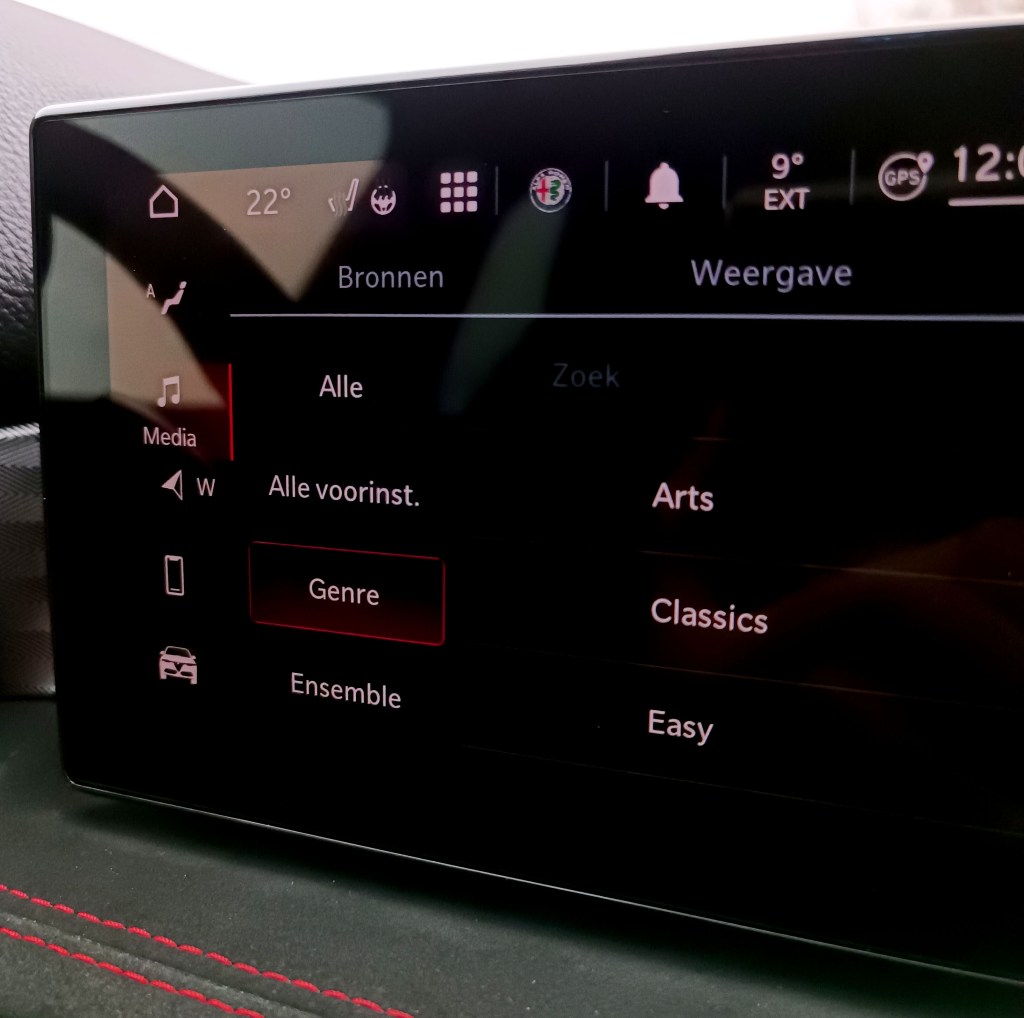
Lancia is back…

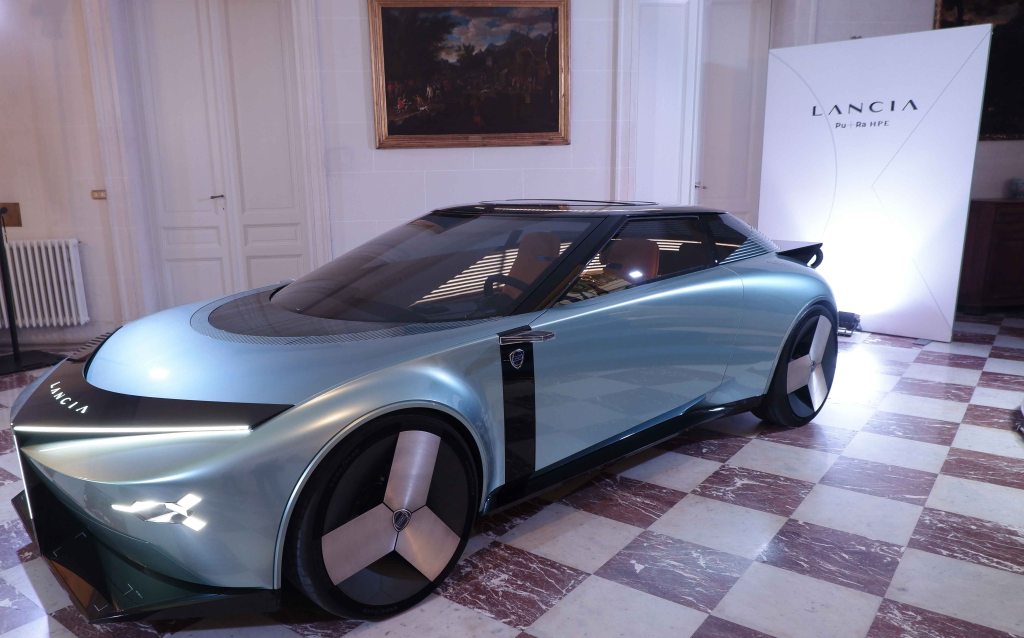
Belgium has always been a country with many Lancia enthusiasts, and the iconic brand returns therefore in its renaissance strategy also to our country and Luxemburg as one of its 6 major European markets. We could witness the presentation at the Italian embassy in Brussels of the beautiful and stunning Lancia Pu+Ra HPE, a concept car which embodies, as Lancia puts it,  “the brand manifesto for the next 10 years in terms of design, interior home feeling, sustainability, electrification and effortless technology.” We will come back in more detail on the styling and innovations incorporated in this car, which will indeed be a harbinger of things to come for the brand.

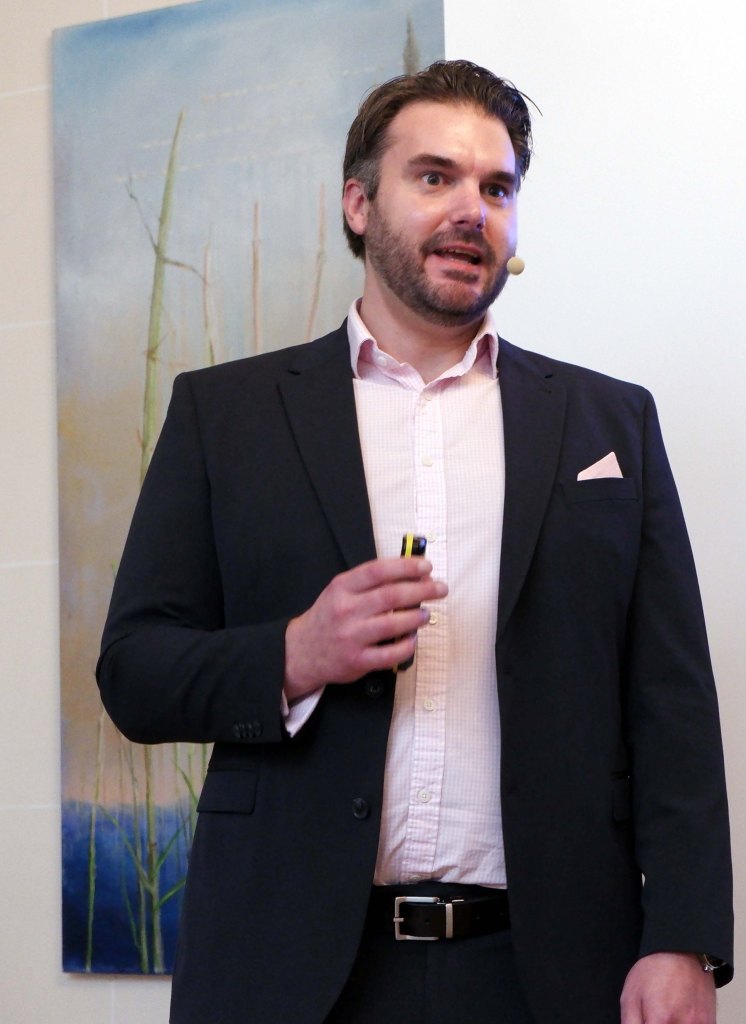
At the press conference, we listened to four speakers, Mr. F. Colonnese Business Development Manager EE (see photo here above) , Mr. C. Louwerse_Premium Cluster Director NL, Mr. Milosz Tomanek_Premium Cluster Director Belux and last but not least Emanuele Tomassorri, Exterior Designer.

We could have an interview with both misters Tomanek and Tomassorri, which you will see further soon in our columns.

Milosz Tomanek, Director of the Stellantis Premium Cluster in Belgium and Luxembourg (photo here above) stated “as soon as we announced Lancia return to Belgium and Luxembourg, we set up a dedicated team to work on and implement the brand Renaissance, making of Lancia the brand that embodies the Italian elegance. For the launch of the new Ypsilon in 2024, we will have 10 retailers and 13 after-sales service points. We are ready to have Lancia back and make of Belgium and Luxembourg two of the main European markets for Lancia.” Lancia will also launch the Gamma in 2026 and last but not least the Delta in 2028. From 2026, Lancia will only be launching 100% electric models and, from 2028, it will only sell 100% electric cars.

Lancia’s Roadmap for Europe

Lancia’s arrival in Belgium and Luxembourg is another step of the brand’s Renaissance towards its internationalization and forms part of a roadmap in line with the Stellantis “Dare Forward 2030” strategic plan.

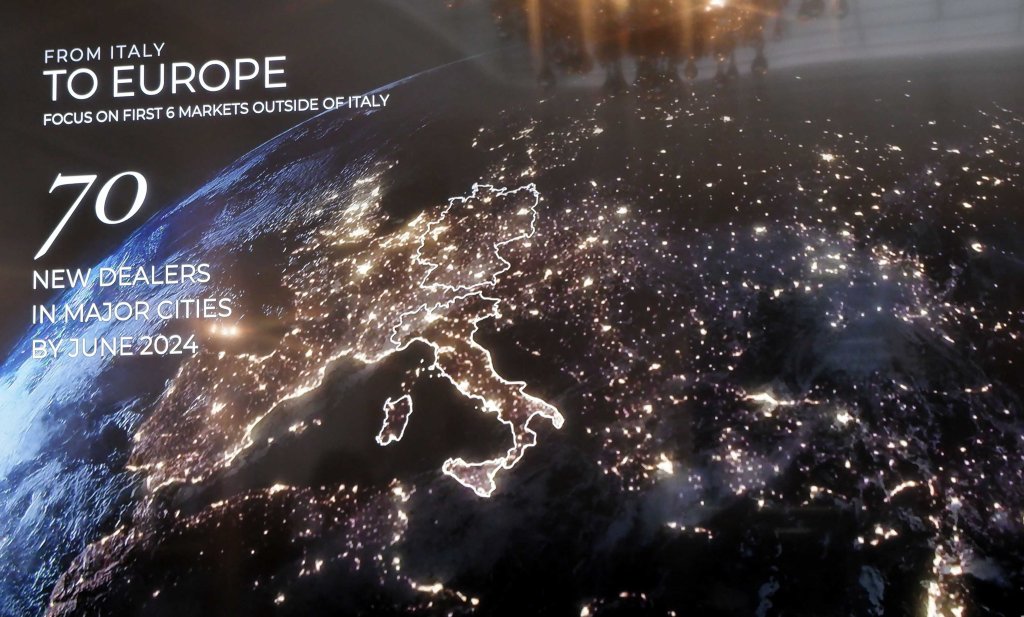
By the first half of 2024, the brand will have 70 new retailers in 70 major European cities and 100% of the letters of intent have already been signed. The strategy involves, as Lancia puts i officially, a new efficient and innovative distribution model, with a selected number of retailers based on a key concept of Lancia Renaissance: quality.

The new showrooms will provide customers with a totally immersive experience, both online and offline, recreating a “home feeling” atmosphere, thanks to materials, colors and attention to detail, inspired by Italian architecture and design.

As said, more soon with interviews and further separate reports and comments on the design of the Pu+Ra HPE…

we just tell you here that the name Lancia Pu+Ra HPE is based on Pu+Ra, the brand’s new pure and radical design language, whereas HPE stands for ‘High-Performance Electric’…

Hans Knol ten Bensel

Audi’s Q8  gets an update…

The new Q8, here in Sakhir gold metallic…

Audi recently made its top SUV line even more attractive. It revised the exterior design of the new Q8 with new front and rear aprons, underscoring the strong character of the SUV coupé.

The S line in Waitomo blue…

The optional S line exterior package caters to customers who desire more sportiness. For the first time, Audi is equipping the Q8 with HD Matrix LED headlights with a laser as an additional high beam. The headlights also feature digital daytime running lights with selectable light signatures.
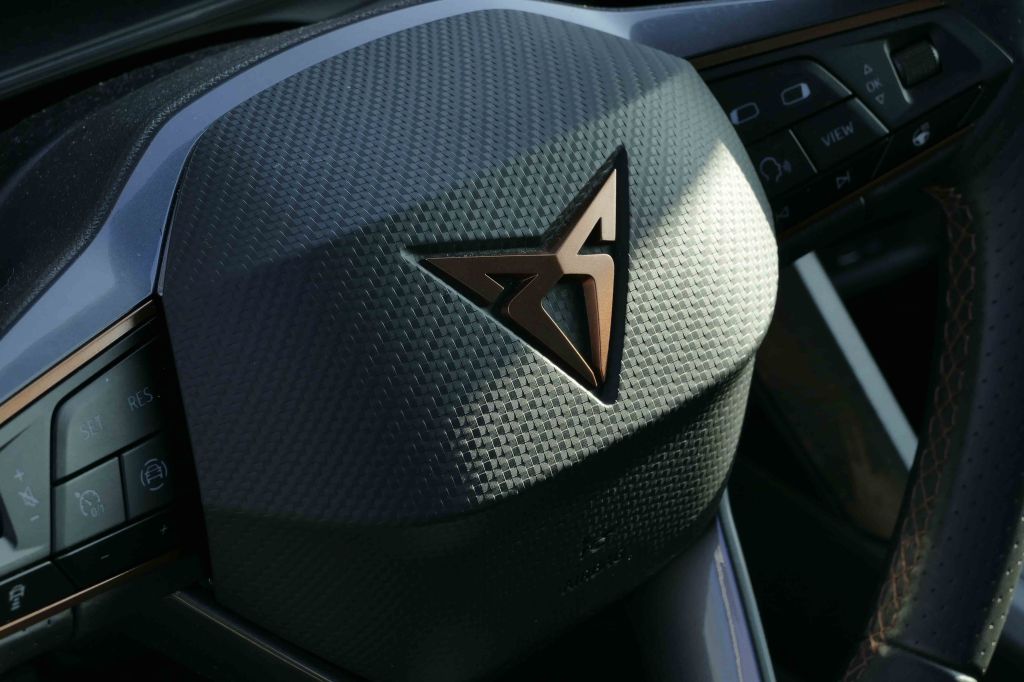
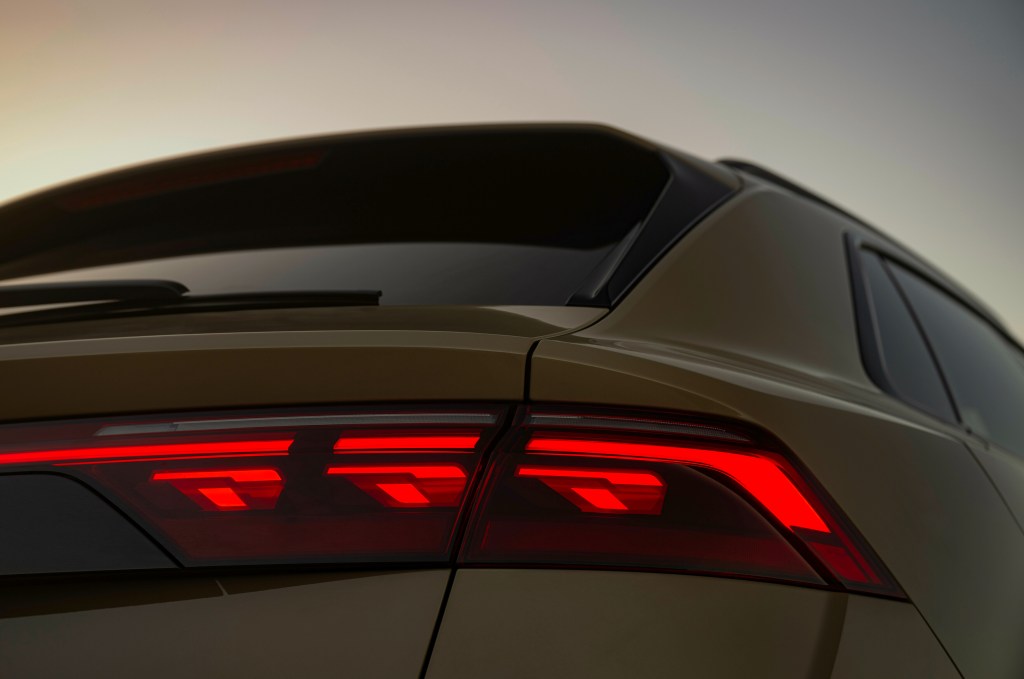
Digital OLED rear lights with four selectable rear light designs complete the expanded light offering. New wheels, colors, decorative inlays, and seats with contrast stitching highlight the car’s top position among the Q models…

Hans Knol ten Bensel