We drove the BMW ix3: the looks, the power and the range…

After the revolutionary and dedicated i3, BMW uses the popular bestseller X3 as a basis for an EV which will inspire many to take the step towards full electric mobility. Does it convince? It certainly does…

The i-version of the X3 saw light in China, where  production began in September 2020 at BMW’s factory in Dadong, China.  

Of course, the EV version doesn’t come exactly cheap, but then its major competitors, the Mercedes EQC, the Audi e-tron and the Jaguar F-pace also need a deeper pocket to call them your own. In Flanders,  these EV’s mostly appeal as business cars, also due to the simple fact that business cars in our country need to be EV’s in order to benefit from the fiscal advantages which make them interesting.

The problem with using EV’s überhaupt at the moment in our country lies with the abysmal charging infrastructure we encounter. Let it be said, this has nothing to do with the car. During our test however, we met further charging problems, which made us use the efficiency of the iX3 to the limit, and indeed we clocked an average EV consumption of 16,4 kWh, which is, considering the weight and size of the car, excellent. It resulted in a range of around 482 km, which is certainly no small feat.
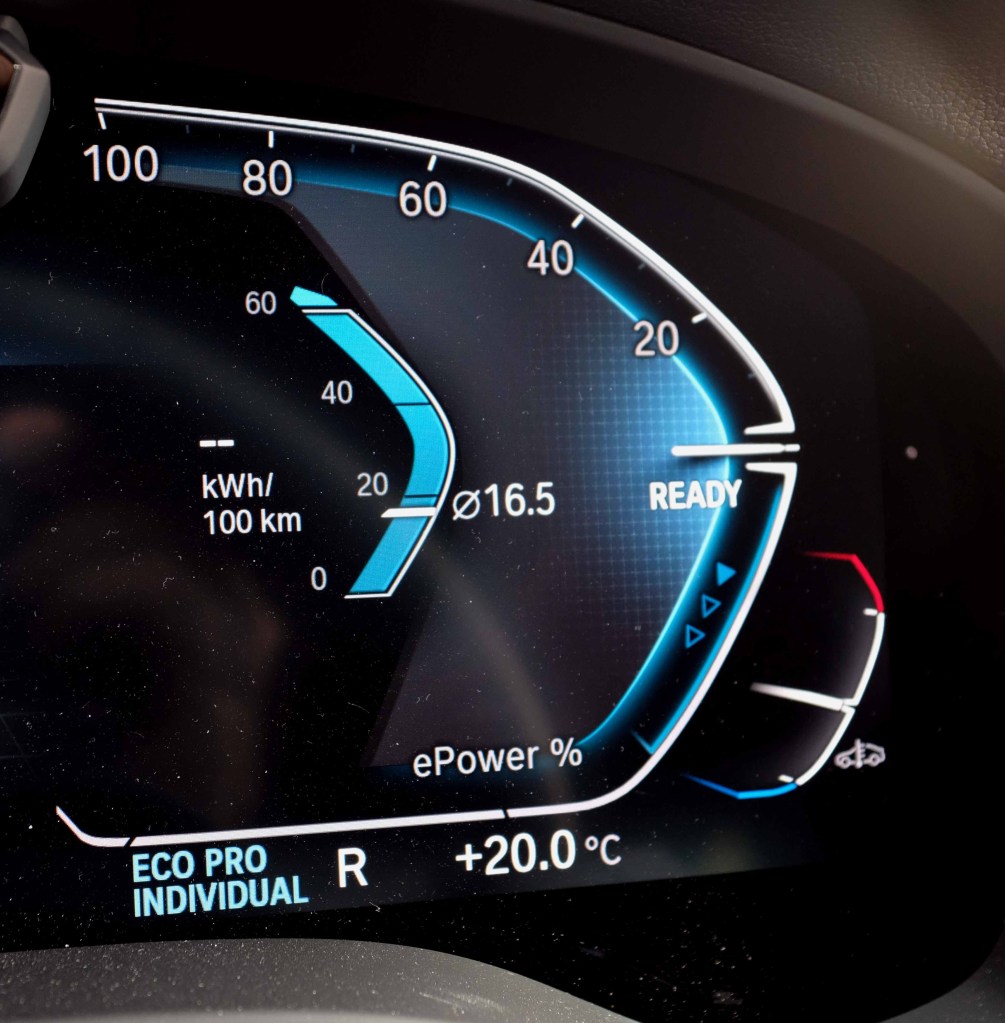
Needless to say that in order to achieve these low consumption levels, one can only use merely 10 % of the available power, and you can imagine that we enjoyed during most of our test the acceleration performance and speed of a heavy truck…But then coasting along with the slower traffic was a very restful experience!

Powerful and “zen”.

Not that the iX3 lacks power. It has not less than 210 kW or 286 HP driving the rear wheels, and even for a 2,2 tonne car this means performance. It will sprint from 0 to 100 km/h in 6,8 seconds, and hurtle smoothly to a top speed of 180 km/h.

But sheer performance does not tell the whole story. The feeling that all this power is immediately available all the time at the slightest movement of your right foot is one of the beauties of EV driving, besides the utter smoothness and silence which adds to this unique “zen” feeling, which pervades you every moment you are behind the wheel, and this certainly so in urban driving conditions.

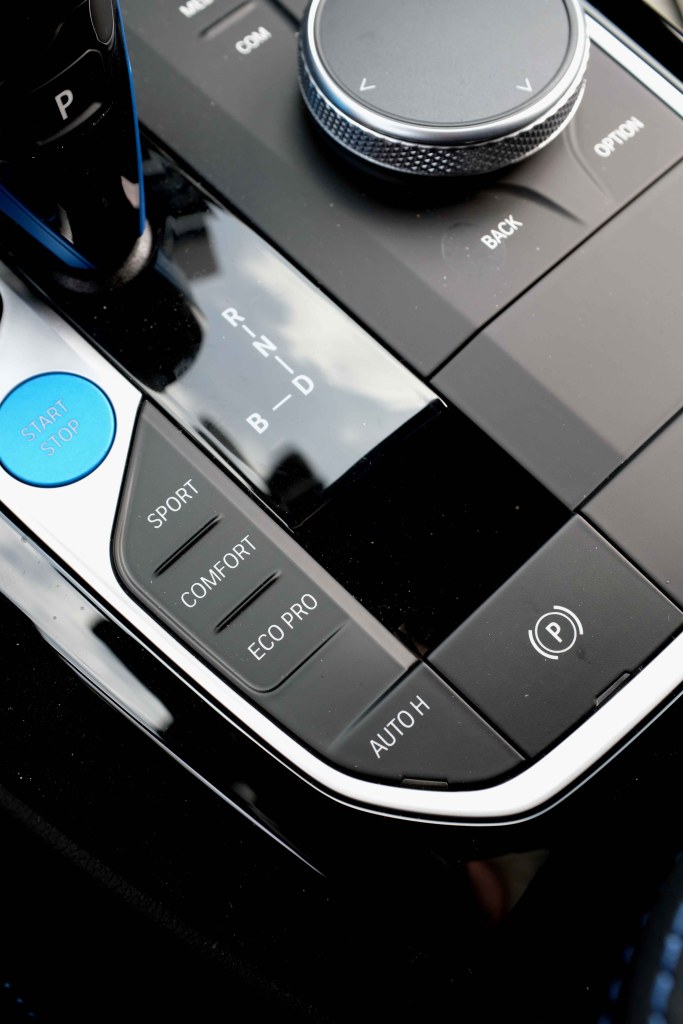
The iX3 driver has three modes at his/her disposal, “sport”, “comfort” and “eco pro”. Needless to say that given our charging situation we used the “eco pro” function virtually all the time.

The electric powertrain is BMW’s fifth-generation scalable electric drivetrain, and has a very compact layout with the electric motor, transmission, and power electrics grouped together in a single component. It does not use any rare-earth materials in its construction. The 80 kW Litrium Ion battery consists of 188 prismatic cells.

This BMW thinks with you…

If you use the navigation function together with the adaptive speed control, an intelligent interaction between the two systems unfolds. Indeed, navigation data and the sensors of the driving systems combine to slow the car at junctions or approaching bends.
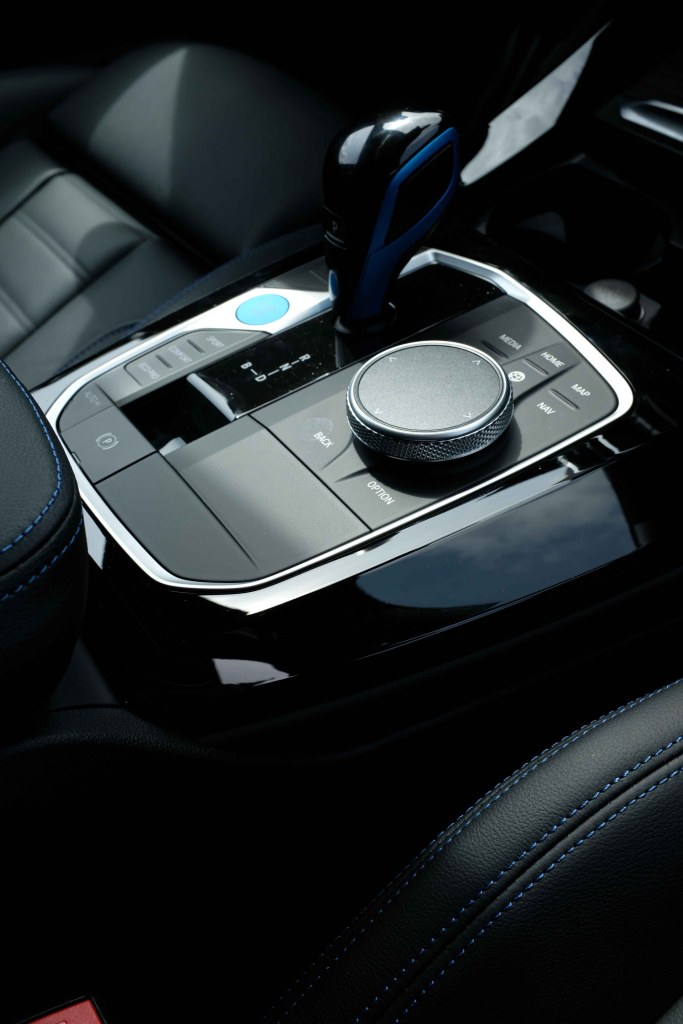
When you are driving at fairly constant speeds with low traffic density, lifting your right foot will cause the car to coast, when you activate the direction indicators, the recuperation mode sets in immediately. Soo clever….

The front camera can even detect whether the traffic light jumps to green, so the recuperation mode is immediately interrupted.

Of course you can set the recuperation mode in three different intensities, to get that pleasant “one pedal” feel. We used it to the max.

A wide array of charging possibilities

The iX3 can be charged in AC mode up to 11 kW, in DC mode up to 150 kW. We had no experience of this as we were due to malfunctions unable to recharge the car during our test. At the maximum 150 kW level, one could recharge the BMW in about 30 minutes to 80 pct of its charge.  You can also enjoy the info of the digital service offered by BMW, dubbed Connected Charging, which helps you find public charging stations. Not of any use for us, as the BMW charge card malfunctions (or otherwise?) prevented us from charging the car during our test, as we said earlier.
By the way, over the last several years I live in the Antwerp (Wilrijk) urban area not one public charging has been added within reasonable walking distance from my home. At the moment, there are only three charging points, which are now almost permanently in use. This makes the regular use of an EV (still) a rather nervous affair with range anxiety setting in the minute you get behind the wheel.

Dynamic handling…

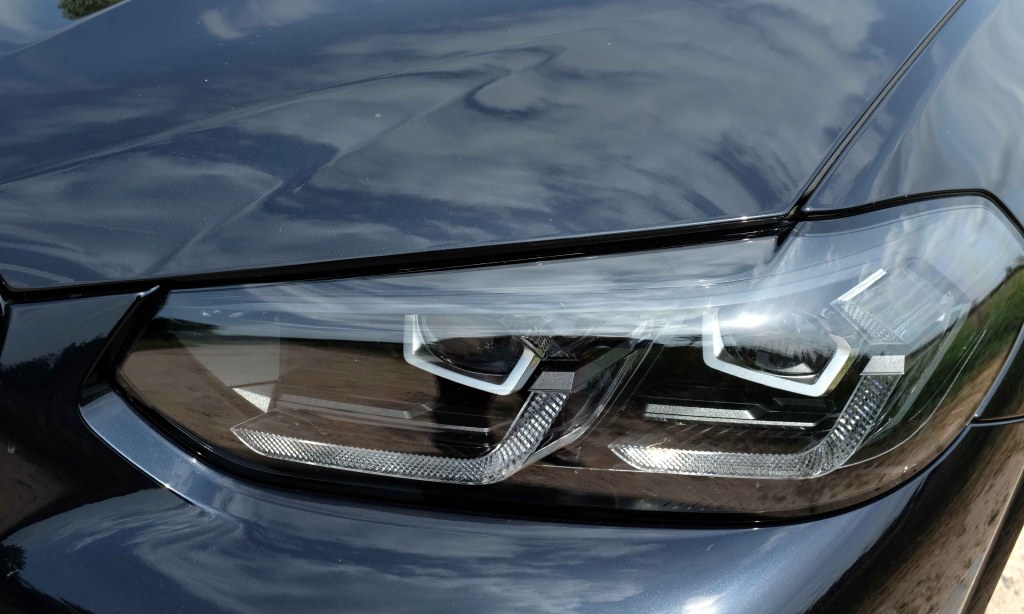
A BMW is and remains a BMW. The iX3 handles very well indeed. Of course, this EV version has standard adaptive damping and its centre of gravity has been lowered by some 7,5 centimetres. Aerodynamics have also been improved with the new closed grille and the special air slippery 19 inch alloys. The front and rear end has been restyled and this iX3 carries also a somewhat bolder light signature.
Revised cabin

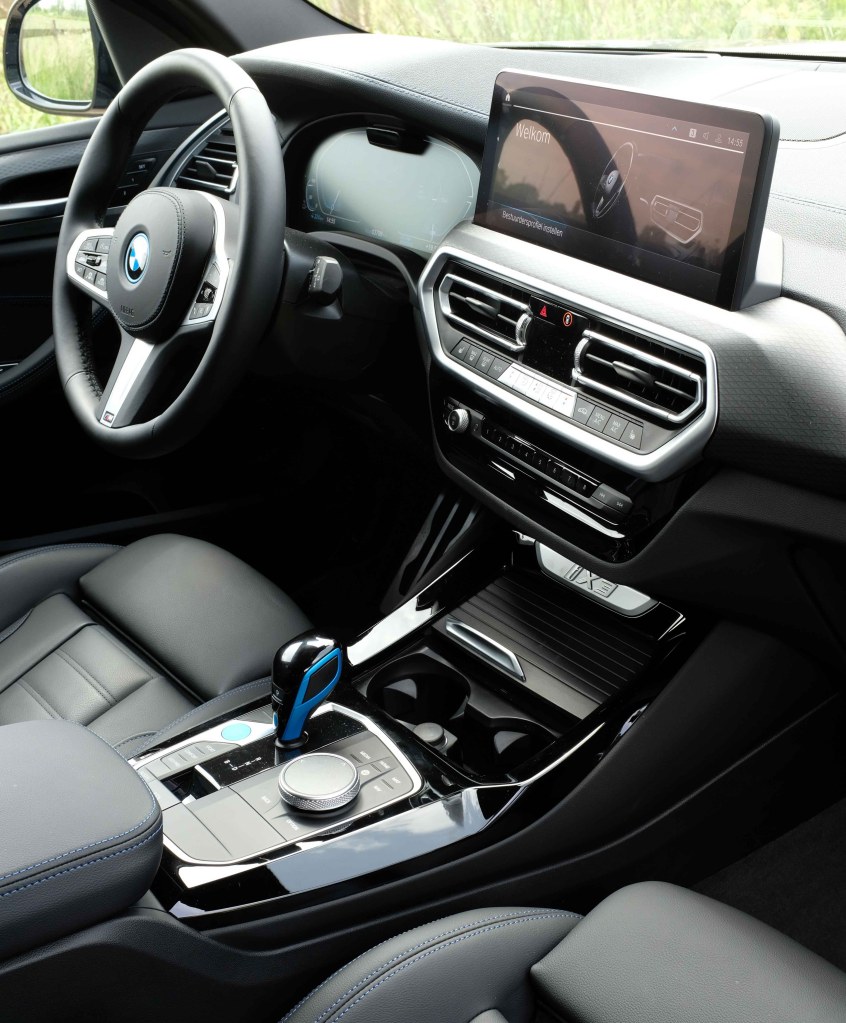
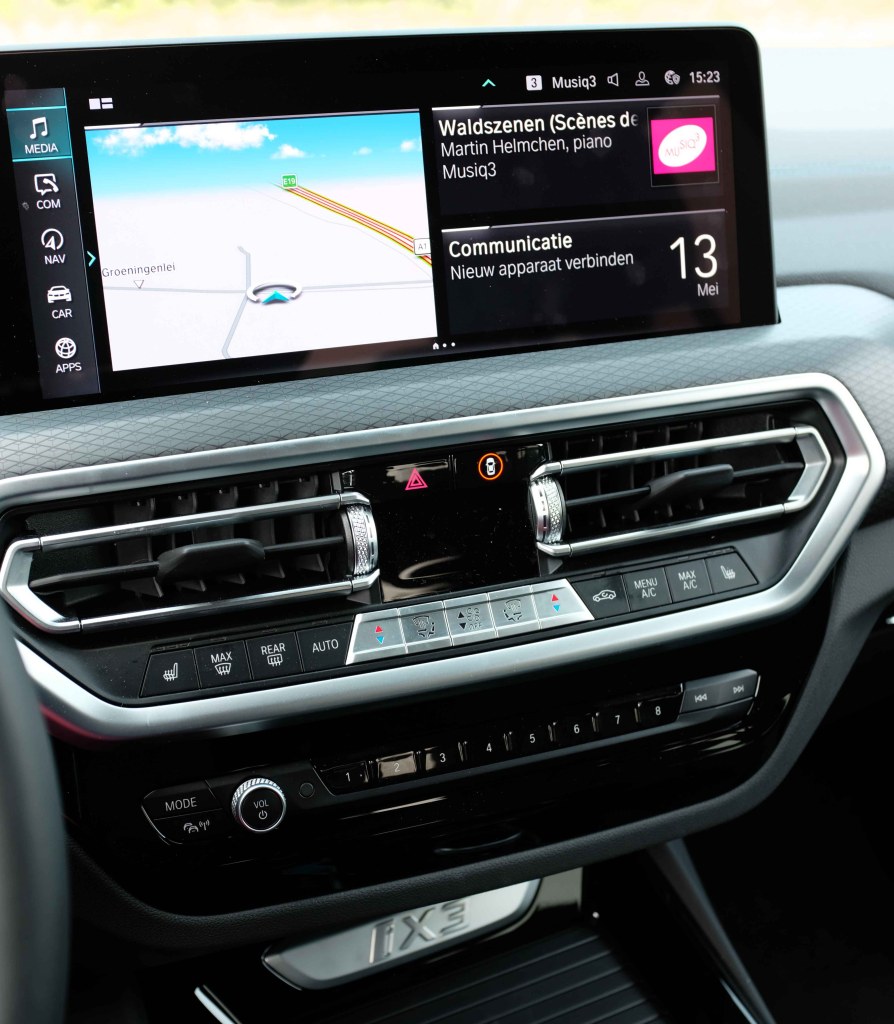
The dashboard has been further modernized, as well as the array of knobs and functions, which all are logical and quite intuitive. We truly love the layout of the audio commands for instance. But there is the big central 12,3 inch control display, combined with the also 12,3 inch large instrument display. Of course, the plethora of available digital information, menus and functions take some good study, but are worth every minute you spend on learning them. By the way, many functions can be steered by voice control, called the BMW Intelligent Personal Assistant.
You are also engulfed at night with blue accent lighting while you enjoy the now standard sports seats in the front.

Assistance systems galore

Safety is also an important issue for BMW. In the iX3, you enjoy the support of their Driver Assistant Professional, with amongst others the active navigation guidance function.

Space

Their is enough space for five, with the three rear seat backrests foldable independently. Total boot volume is 510 litres, with all the backrests folded down, some 1.560 litres.

Two equipment levels
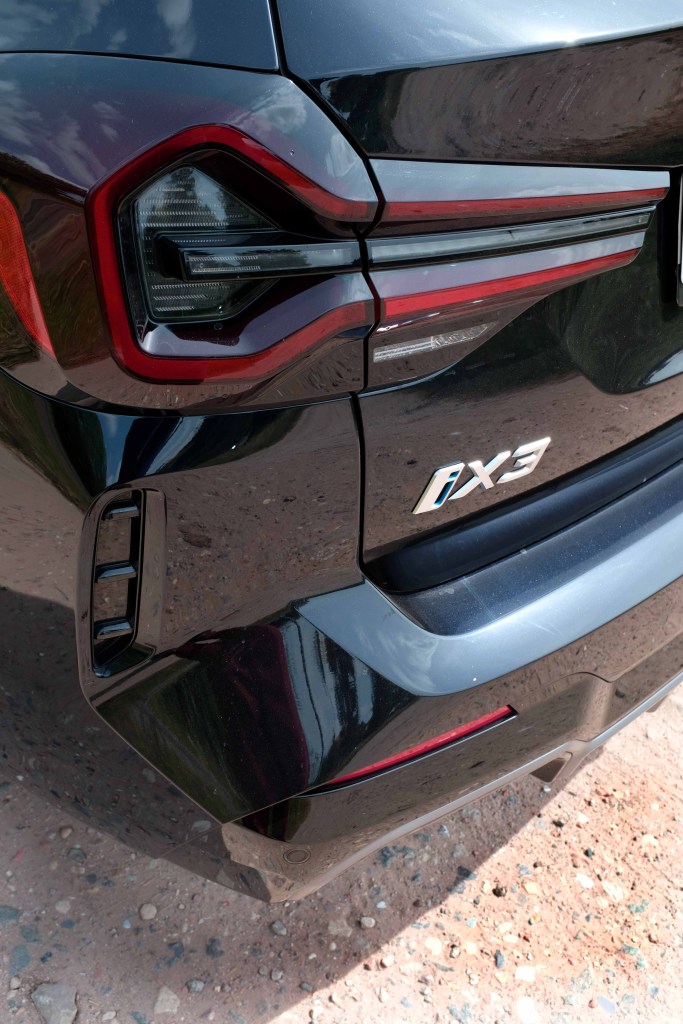
At the moment of writing, the iX3 is offered in two equipment levels, Inspiring and Impressive. The Inspiring level is already very complete with panoramic sunroof, electrically adjustable front seats, metallic paint, smartphone integration and DAB radio. We already applauded the active navigation. The inspiring level now sets you back some 71.000 Euros.

Conclusion

A well thought out EV, in a superb X3 body, inheriting all the good qualities of this model. The facelift is stylish and underlines the EV character of this SUV. It has impressive efficiency and range, combined with more than adequate performance. When you are looking for an EV, this is a very good choice indeed.
EV’s of this stature don’t come cheap, and their longevity and resale value will depend on battery life, the evolution in battery technology, and last but not least the venue of alternatives like Hydrogen. Will this source be practical and available for the masses?

Big oil companies are increasingly looking at the latter possibility, as they are familiar with the manufacturing, transport and storage of liquid molecular sources of energy. They plan on building big solar E-plants to manufacture Hydrogen and then transport and distribute it to the whole wide world. Also for individual cars? This remains to be seen in a more distant “green” future…

Hans Knol ten Bensel

Photographers’ notes

The Fujifilm X100F is the latest addition to our mirrorless digital camera fleet. It has a superb 35mm equiv. F2 lens. Inside, the camera has a new 24.3MP CMOS sensor along with an updated image processor , and it is a true gem. The photo conditions were very difficult here, strong sunlight and a black car, but the camera still managed to produce creditable results. You will see more photos with this camera with a unique precision feel…

We drove the new Citroën C5 Aircross: a SUV with added panache and superb comfort…

We drove the 225 HP plug-in hybrid version in the Alpes Maritimes around Cannes and Nice…

When the brand with the double chevron builds an SUV in the C segment, you can expect something very special. Indeed, after a long drive in the Alpes Maritimes around Grasse, on the immensely scenic Route Napoléon, the  Départementale 6085, we stepped out totally relaxed and surprised. This is a totally harmonious car, with very impressive qualities. First of all, the total comfort, which cars of many times its price (and size) can only mach at best. But that is not all.

There is also the perfect balance of this SUV. Its totally impeccable handling. Its unerring stability and precision, with total lack of body roll when you steer it with high speed in fast corners. Then comes the smooth drivetrain, with a silky stream of power, in the 225 HP Hybrid version we drove. We made this choice, because the plug-in hybrid version currently accounts for 41% of sales. Performance and pulling power galore, and on top of that all this is happening in vibrationless silence, with any road noise also well insulated . When you put the lever in “B”, the kinetic energy regeneration is optimal, and we drove quite long stretches of winding and hilly roads with zero average E- consumption, with the engine shut off!

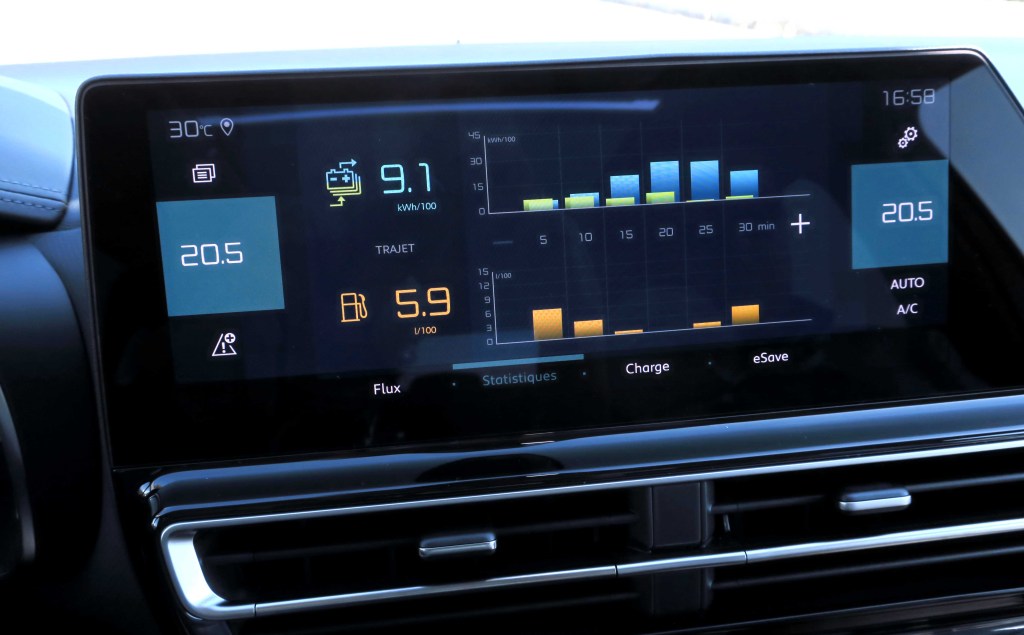
The sedate driving style at the end of our trip resulted in an average total consumption of… 7,4 kW and 4,5 l/100 km.

Actually, in this paragraph, the whole story is told. Let’s now tell you more about the facelift features of this C-Segment SUV, which found since its introduction in 2018 already some 325.000 buyers worldwide…

More modern and imposing front end and announcing colour…

A more imposing front end…

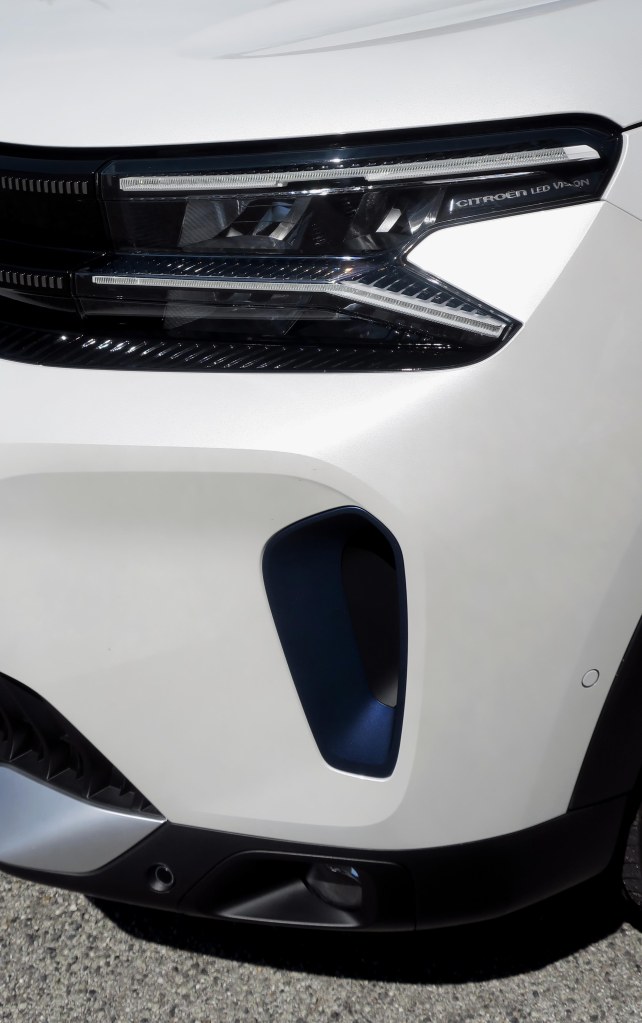
Citroën introduces a new design language to its successful C-Class SUV. Tauter lines and a vertical so-called “stepped construction” contribute to visual widening the front end of C5 Aircross. The Brand logo now detaches itself from the daytime running lights. The chevrons now appear in black lacquer set off in chrome, and we liked it.

They extend visually via a set of increasingly tight chrome and black piano keys that gradually blend into LED daytime running lights, very subtle! Characteristic of the new Citroën identity, the V-shaped day time running lights LED signature carries a piano keys design.

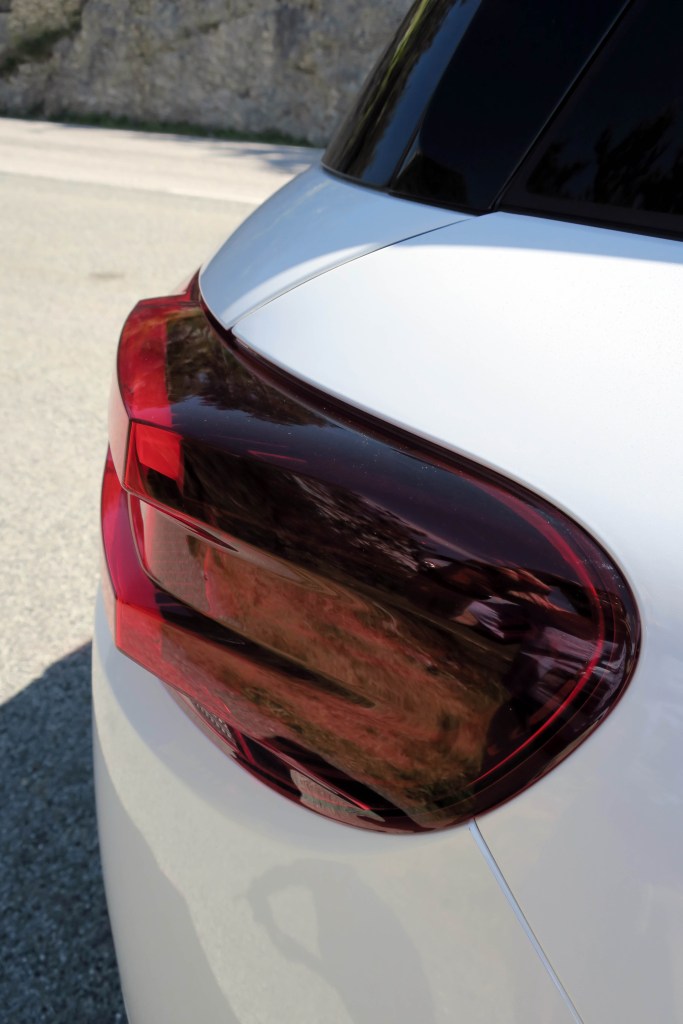
More dynamism is also found at the rear in the new structured headlight lenses. Without changing size, the lamp unit is now fitted with dark and structured glass, highlighting the three LED lighting modules that constitute the light signature. The car also runs on new 18” diamond-cut PULSAR alloy wheels, and also the side panels have more structured lines and accents.

Four new Colour Packs, which allow C5 Aircross to assert its SUV character and its elegance: Glossy Black, Dark Chrome, Anodized Bronze and Energetic Blue. The new colours of the Colour Packs also feature on the front air intakes and the Airbump®.

Stylish and more upmarket cabin

The C5 Aircross gets a new 10” touchscreen that appears to float on the dashboard, more in your line of vision. In addition, the fully customisable 12”3 digital display provides all essential and customisable information directly in the driver’s eye-line: navigation map report, information on active driver-assistance systems, information on the operating status of the hybrid engine, etc. We appreciated the simplicity of it. We noticed also a clever gimmick in the hybrid version we drove: the digital numbers indicating the speed are in blue when you are driving on E-power, and white when the combustion engine is doing the work.

Legendary seats…

Citroën Advanced Comfort® seats already present on C4 and C5 X are making their way also in the C5. They are made of high-density foam in the core of the seat, have an extra 15 mm layer of foam and of course a specific construction… and indeed, they offer a wonderful comfort and support. We already applauded the qualities of the Progressive Hydraulic Cushions® suspension.

Bolder rear lights…

The central console, has been modernised with a black leather-effect-fabric enhanced by chrome design lines. We have a new, e-Toggle gear selector, a new driving mode selection button incorporating the Grip Control function and, on the plug-in-hybrid versions, an intuitive choice of the driving mode (Electric, Hybrid or Sport). The central console also integrates a large storage trail regrouping the connectivity with 2 USB-ports and a wireless charger.

Citroëns have always been practical, and this C5 Aircross makes no exception: it’s the only SUV in the segment to offer three individual sliding, reclining and retractable rear seats. The boot volume goes from 580 L to 720 L in the petrol and diesel versions and from 460 L to 600 L for the hybrid version.

We enjoyed the utter quietness of the car, as we said above, and indeed it was equipped with the optional acoustic laminated front windows.

We ended our test with an even lower consumption of merely 4,5 litres/100 km…

The plug-in-hybrid version allows a driving in electric mode up to 135 km/h, and a  55 km E-range.

Users of the C5 Aircross Plug-In Hybrid also benefit from a range of services to facilitate charging: with management either directly in the vehicle or from their smartphone, as well as the possibility of programming charging times. Charging is fast, with a full charge completed in less than two hours on a Wall-box, says Citroën.

Of course we have 20 benchmark driver-assistance systems in the compact SUV segment. These include Highway Driver Assist, a level 2 autonomous driving system, combining Adaptive Cruise Control with a Stop & Go function and the Active Lane Departure Warning system.

Needless to say, the C5 Aircross impressed us greatly. We are keen to test this car soon, also in the petrol engined 130 HP version. But really, the plug-in version couldn’t be missed…

Hans Knol ten Bensel

Photographers’ notes:

We took our trusty Canon G9 X to  Nice. It’s wonderfully compact, has a cropped 20 megapixel sensor, 1.0 type back-illuminated CMOS, and a well performing 10,2 to 30,6 mm zoom lens, (35 mm equivalent: 28 – 84 mm.). It is of superb construction, with 8 elements in 6 groups (2 double sided aspherical UA lens, 1 single sided aspherical lens). It is fast too, with f/2.0 – f/4.9. We simply love this baby, and it has been for years our favorite. We mostly use it in AV mode (Aperture priority). Mind you, it has a built-in ND filter.

Lancia announces bold renaissance…

Lancia launched last week a ten-year strategic plan, which includes three new models, one every two years, starting in 2024, for an attractive and iconic model range to cover 50% of the market.

The plan will begin in 2024 with the new Lancia Ypsilon, which will be around 4-meters long, belonging to the B segment and will be launched with a 100% electrified powertrain. In 2026, the new flagship will arrive, 4.6-meter long and will allow the brand to enter into the largest segment in Europe. 2028 will be the year of the new 4.4-meters long “Delta”, a sculpted and muscular car, with geometric lines, which will attract car enthusiasts throughout Europe.

These three new models will cover 50% of the market and will have the duty to contribute to the improvement of Stellantis performance in its premium and luxury cluster, as laid out in the “Dare Forward 2030” Stellantis strategic plan.

“Today is an important day,” declared Luca Napolitano, CEO of Lancia brand, “Lancia is now ready for Europe, taking a first step to become a credible and respected brand in the premium segment.

Lancia’s ten-year plan has also a clear electrification strategy: from 2026 the brand will only launch 100% electric models and from 2028 will solely sell 100% electric models.

In addition, a wide use of innovative materials will make Lancia the Stellantis brand with the highest percentage of recycled material, with 50% of touchable surfaces made from eco-sustainable materials in order to contribute to building a better world for future generations.

Inside the new vehicles, Lancia customers will be welcomed in a typical Italian elegance style. Inspired by the exclusive materials of its past iconic vehicles, like the Gamma, Thema and Flavia, the next-generation Lancia vehicles will provide a comfortable environment with simple and intuitive on-board technology which is in line with its DNA.

The S.A.L.A., Sound Air Light Augmented (sala in Italian means living room), will be a minimalist and intelligent virtual interface which will give the customer total control of the vehicle’s cabin from the sound system to the air conditioning and lighting, with the use of a single button.

Lancia also introduces an innovative distribution model with 50% of online sales, and will establish a presence in 60 major cities with a network of 100 dealerships.

In unfolding the country strategy outside Italy, Lancia uses three criteria:

The first is love and passion for the “Made in Italy”, with Spain, Belgium and France leading the way.

The second is the relevance of online sales, with The Netherlands and Germany in pole position.

The third is the dimension of the B premium segment, with all these countries ranking in the top five.

These five countries represent the first step in the internationalization process of the brand, which will be present in Europe in and 50% of sales online.

 More Lancia news soon!

Hans Knol ten Bensel

Citroën Belux is the official partner of the 11th edition of the ‘Jeux Internationaux de la Jeunesse’ (YOU),  held in Brussels from May 30 to June 4!

Each year, the Jeux Internationaux de la Jeunesse (‘The International Youth Games’) brings together more than 350 high school students from around the world to honor fundamental values such as excellence, respect, friendship, solidarity and tolerance.

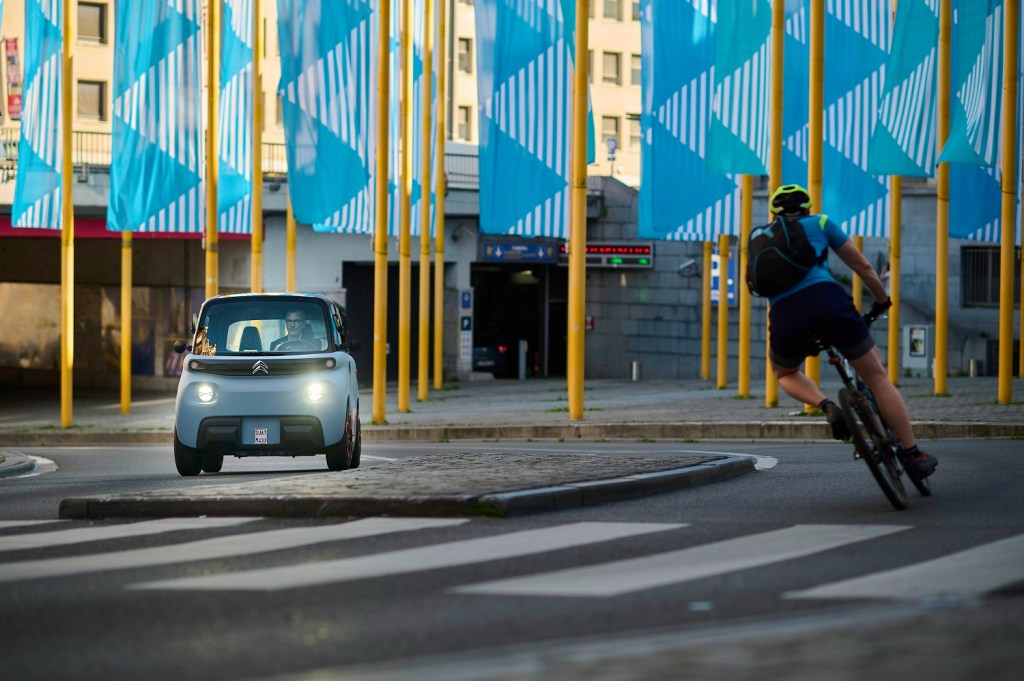
A truly popular phenomenon, the Citroën AMI will be the banner of this edition of the YOU and will be seen at each and every venue of the event.

This global event, whose growing success has not diminished over the past decade, will find a full international resonance thanks to the strength of the powerful network of 552 French secondary schools around the world and the prestigious school sports federation of the French national education system, the UNSS.

More about YOU…

For the past 11 years, YOU have brought together young people from French secondary schools around the world for a week of sporting and cultural activities. This year, and for the first time in its history, the YOU in Belgium will take place at the Lycée Français Jean Monnet in Brussels, in collaboration with the French Embassy in Belgium. Over five days and at various locations in Brussels, no fewer than 400 16 and 17 year olds from 33 countries (including Belgium, France, Ireland, Italy, Luxembourg, Portugal and the United Kingdom) will meet there.

Citroën Belux is one of the official sponsors of this important event and takes the opportunity to highlight the AMI model, a popular mobility phenomenon that is on the rise. The Citroën AMI will be at all the different venues of the events: amongst others at the Lycée Français in Brussels, at the Hotel Dolce La Hulpe where the participants stay, at the Golf D’Hulencourt where the closing ceremony will take place and on the official opening night of the YOU with the presence of some ambassadors from the different participating countries.

AMI: built for Youth…

Already a leader in the quadricycle segment, Citroën AMI is a highly valued mobility solution, especially for young people. With AMI, Citroën is responding to the challenges of urban mobility, which are more than ever at the heart of the concerns and expectations of city dwellers. AMI is an individual mobility solution that makes it possible to travel protected in a closed, 100% electrical object that is accessible to everyone.

More (Youthful) Citroën news soon!

Hans Knol ten Bensel

We drove the Peugeot 508 SW Sport Engineered: your passionate Lion…

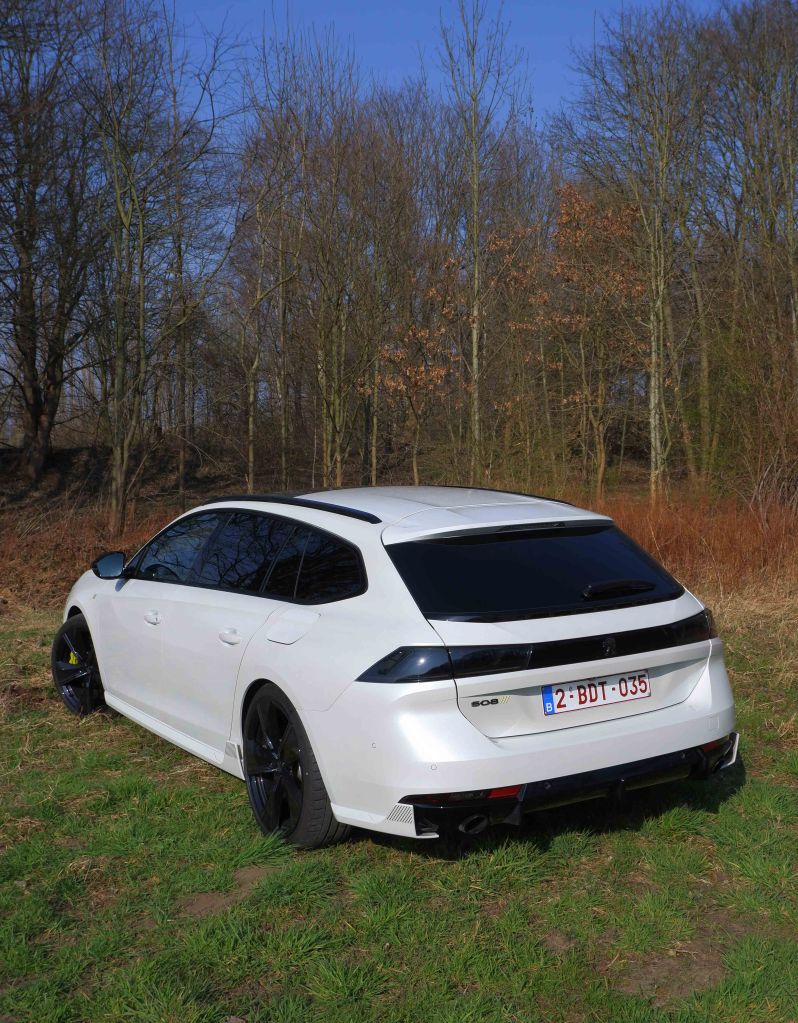
There are cars which make the life of a car journalist truly wonderful. This time it’s being behind the weel of the “Sport Engineered” Peugeot  508. What is this? You might ask. Well, there is since decades an active high performance division at Peugeot, called PEUGEOT SPORT ENGINEERED. Over recent years, this department has acquired considerable experience in marrying the power and performance of combustion engines with the unique characteristics of e-power. They have proven themselves time and time again: in international competitions such as the WRC (World RallyChampionship), DAKAR, Pikes Peak or the WEC (Word EnduranceChampionship), with the development of the 208 FE concept in 2013 (46 g CO2/km – 0/100in 8.2s) and the 308 R HYbrid in 2015 (500 bhp – 720 Nm – 0/100 in 4.0s).

At the same time as the launch of this SPORT ENGINEERED label, PEUGEOT is announcing its return to the World Endurance Championship (WEC) in the LMH (Le MansHypercar) top category this year.

So the 508 sedan and SW – the version which we tested here – is their first technical showcase and indeed their first chapter in series production under its new label.

With these cars, with a newfound alliance between sportiness and technology, PEUGEOT is – so they say – reinventing the codes for renewed performance, a responsible performance: they call it “Neo-Performance.” The signature of this new line with 3 Kryptonite claws refers to PEUGEOT SPORT’s new identity, to the light signatures of the production models and is drawing inspiration from the brand’s heritage with the rear lights from the iconic PEUGEOT 504 Coupé.

But let’s now have a closer look at this 508. It’s the most powerful production car ever built by PEUGEOT.

The powertrain can reach 360 hp and 520 Nm of torque by combining thermal and electrical energy.  This level of performance is unprecedented for the brand:  0 to 100 km/h in merely 5.2s, 1000 m DA in 24.5s, 80 to 120 km/h in 3s, finally last but not least a maximum speed of 250 km/h (electronically controlled). Need we say more?

Indeed, there are two electric motors besides the 1,6 liter combustion engine, making this 508 also a 4WD. The combustion engine – the well proven 1.6-litre PureTech turbo petrol unit – produces 197bhp, the front motor adds 108bhp, while the rear electric motor is good for 111bhp.

We can tell you, power comes totally unfussy, smooth and plentiful through the 8 speed transmission, and makes this 508 a truly superb car. Of course the gentlemen engineers at Peugeot took also proper care of the handling. These SPORT ENGINEERING series 508’s have an optimized chassis.

They fine tuned first and for all the variable shock absorber setups (Comfort/Hybrid/Sport), the springs are 50 per cent stiffer compared with the 508 Hybrid. They  widened the tracks by 24 mm at the front and 12 mm at the rear. For extra stopping power, they fitted 380 mm diameter front brake discs and fixed four-piston calipers, the 20-inch diameter alloys are shod with Michelin© Pilot Sport 4S tires.

The result is dynamic, precise, predictable handling. You can really throw this 508 around, and it displays up to the limit uncanny stability. What a wonderful Gran Turismo this car truly is.

Does this car move boundaries when it comes to combining efficiently super performance with docility and refined smoothness? It certainly does. But there is more…

Efficient and versatile…

Indeed, that is not all. It is also very versatile in combining e-power in various ways with the panache of a high performance combustion engine. Just note that the 8-speed automatic transmission controls the engine and the front e-motor.

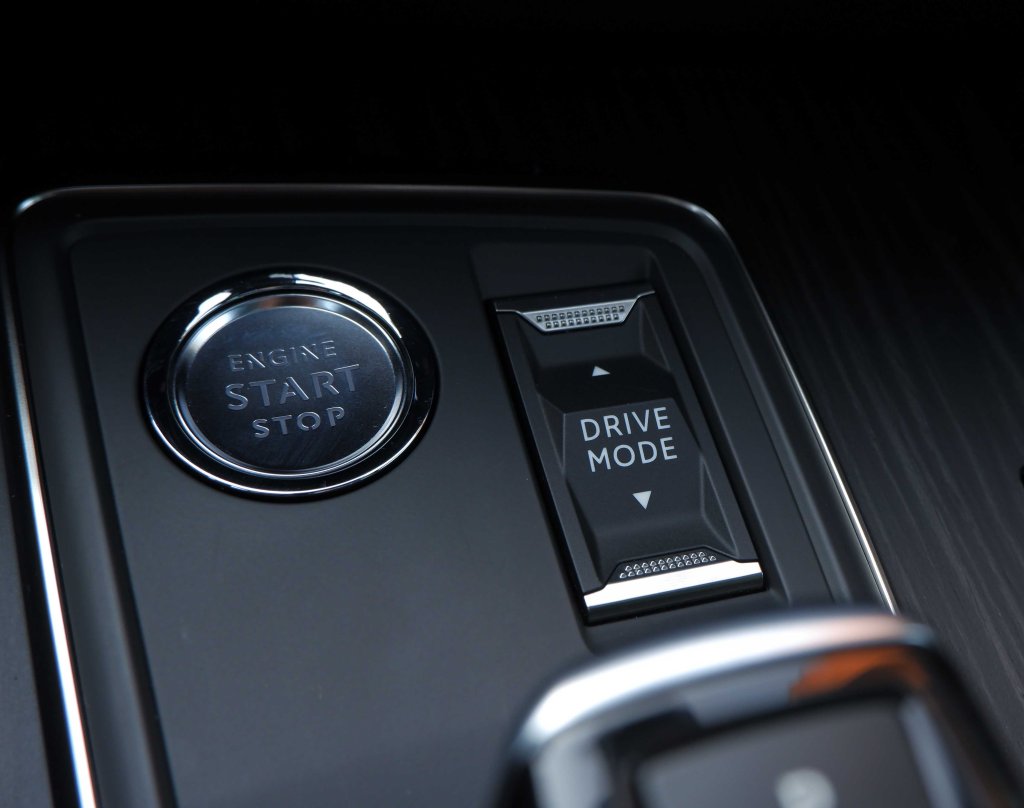
With a mode selector on the centre console, and this lets you choose between 5 driving modes:

Electric: for smooth 100% electric driving in total silence, with a range of 42 km according to WLTP. This makes your 508 future proof, giving you access to the green zones in urban areas. But the sweetness of e-power is well known: it provides instant acceleration thanks to the ample and immediate pulling power of the electric engines fore and aft, and this from 0 km/h to 140 km/h.

Comfort: this is the hybrid mode with softened suspensions for sedate, restful “high comfort”driving.

Hybrid: this mode mode automatically selects combustion or electric power depending on the circumstances with a distinct bias towards optimized consumption.

Sport: maximum power of 360 hp for ultimate driving pleasure! This mode also affects steering, shock absorption, accelerator pedal mapping and adjusts digitally engine responsiveness and torque characteristics. The combustion engine also keeps the battery charged for maximum power at all times.

 4WD: maximum traction for slippery grip situations.

So the 508 ideally suits your driving moods… and is indeed literally very transporting when driven in “sport” mode. It then leaves very little to be desired, and the extra pulling power of the electric motors delivers rather formidable intermediate accelerations. We already mentioned it: you will sprint from 80 to 120 km/h in merely 3 seconds… Ok, your ears are not enjoying the sound of a high revving straight six, but all the performance is there!

Indeed, this 508 SW we drove literally stormed uphill and from one sharp bend to another, well reined by excellent brakes and a responsive suspension and chassis.

In addition to its 4-wheel drive, the 508 SPORT ENGINEERED comes with all the driving aids available within the PEUGEOT 508 range: night vision, adaptive cruise control with Stop & Go function, lane departure warning system, automatic emergency braking.

Sporting accents inside and out

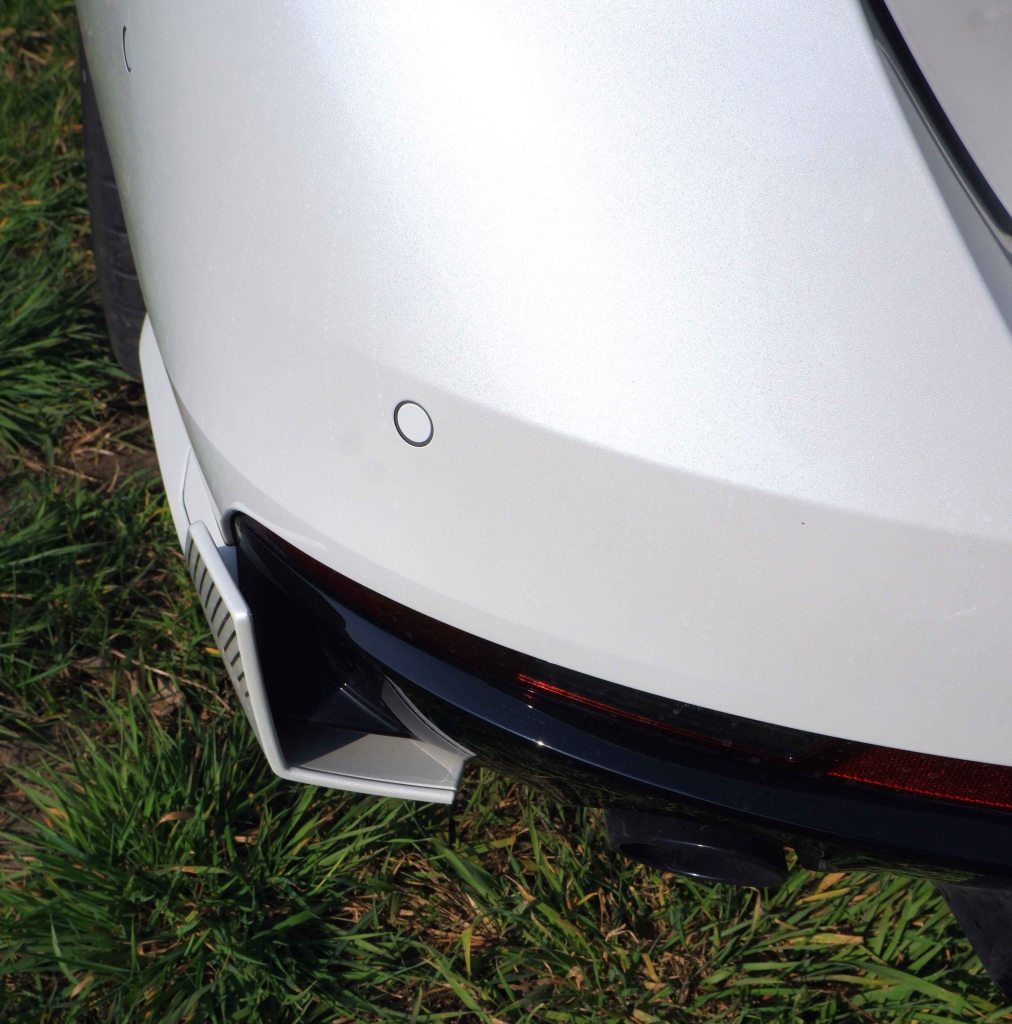
That you are driving a very special 508 should also be noticed, and indeed it does:  the aerodynamic design of the bodywork is further enhanced with a sharp grille, rakish front bumper, scoops and Kryptonite monogram. In the sides of the car you find also the three foils with specific decorative elements, the three claws again on the front wing on the SW.

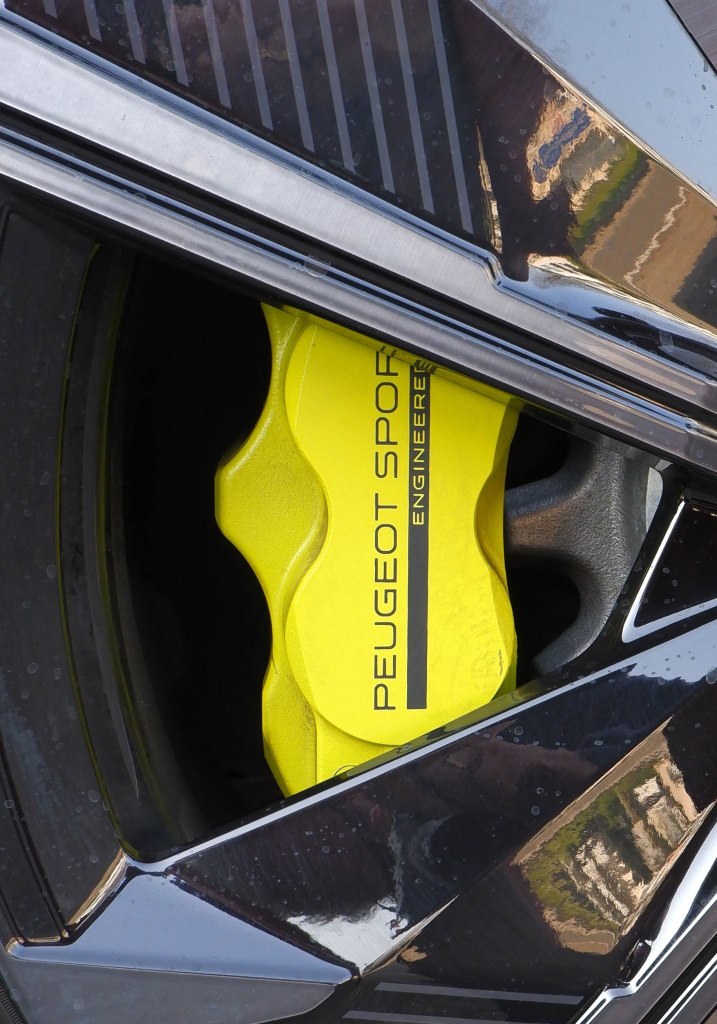
At the rear you will find electrolytic treated black exhaust outlets, black gloss central diffuser, last but not least 20-inch wheels fitted with MICHELIN© Pilot Sport 4S tires, with yellow painted PEUGEOT SPORT Kryptonite front brake calipers.

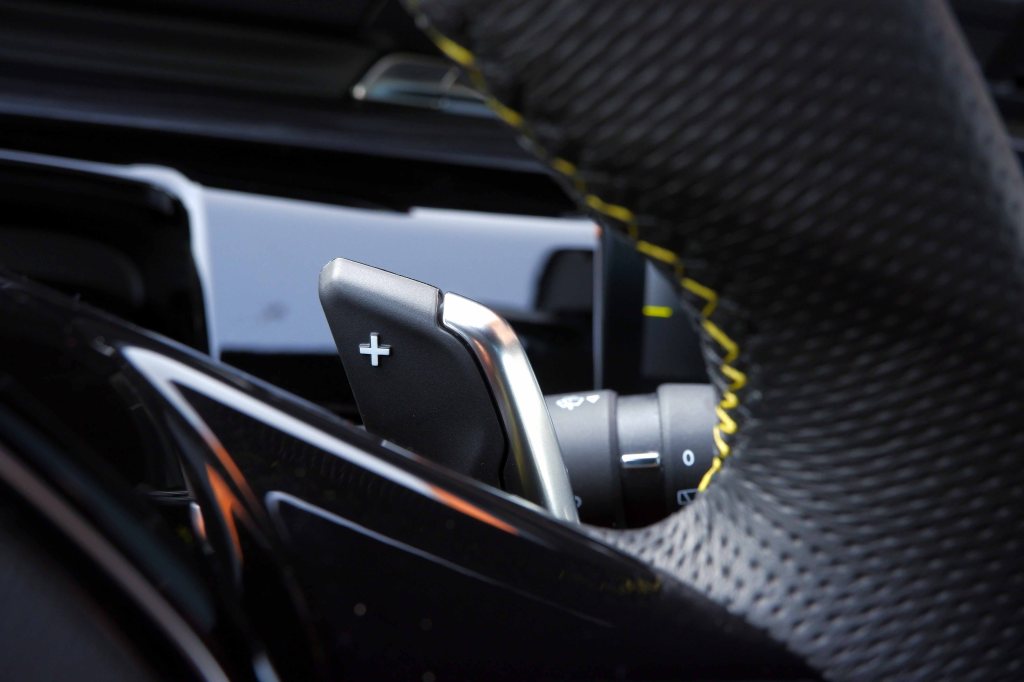
The PEUGEOT i-Cockpit® comes into its own with a compact steering wheel featuring the three Kryptonite claws, and a 100% digital head-up display. We just loved the compact steering wheel, adding greatly to the zest and personality of the car when you are behind the wheel.

The i-Cockpit® graphic animations and the central 10″ HD screen have adopted the label’s signature too.

The upholstery of the “comfort-fit” seats also has a distinctive look we liked very much with a tasteful and photogenic mix of leather, 3D mesh and Alcantara©. The passenger compartment is decorated with double Tramontane grey and Kryptonite stitching. The FOCAL® Hi-Fi audio system, which is certainly a delight to listen to, is also supplied as standard.

Conclusion

An elegant car with loads of panache, yet delivering this almost supercar performance with a hint of understatement. This Peugeot is comfortable and practical too, able also to shine in everyday use. You have good seating comfort and room also at the rear, and 530 litres of luggage space in the standard configuration.

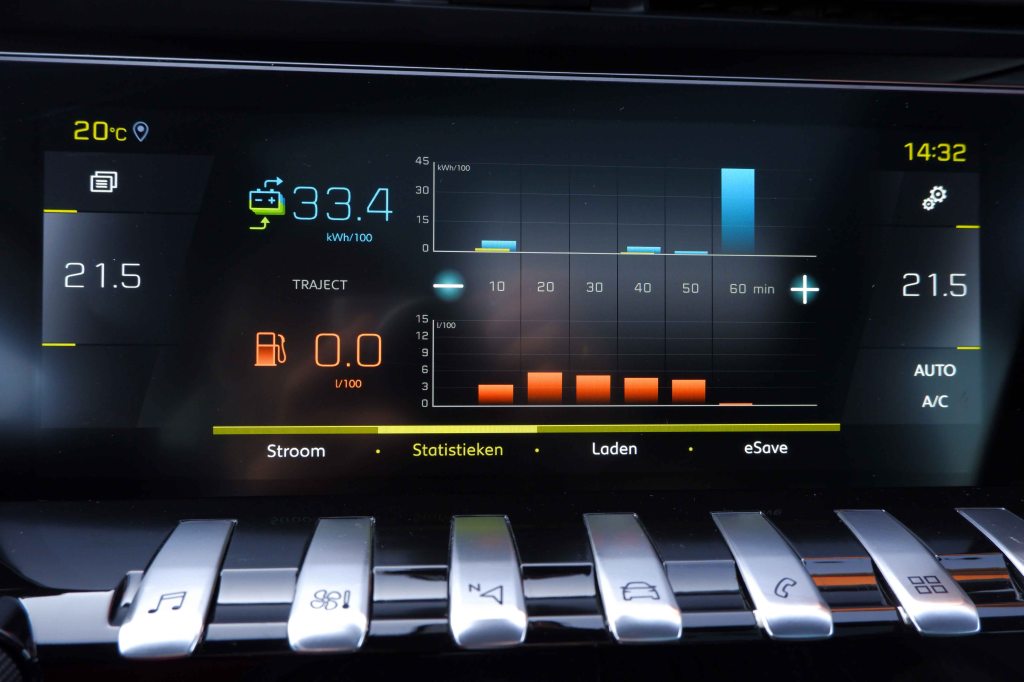
As the graph clearly shows, this high performance estate can also be quite frugal… max 6 l/100 km in relaxed driving conditions!
On top of that this Peugeot goes through daily life as a hybrid, with all the consumption and tax advantages that entails. The Peugeot Sport Engineering also is quite original, and its e-efficiency is a good argument to win you over…

Hans Knol ten Bensel

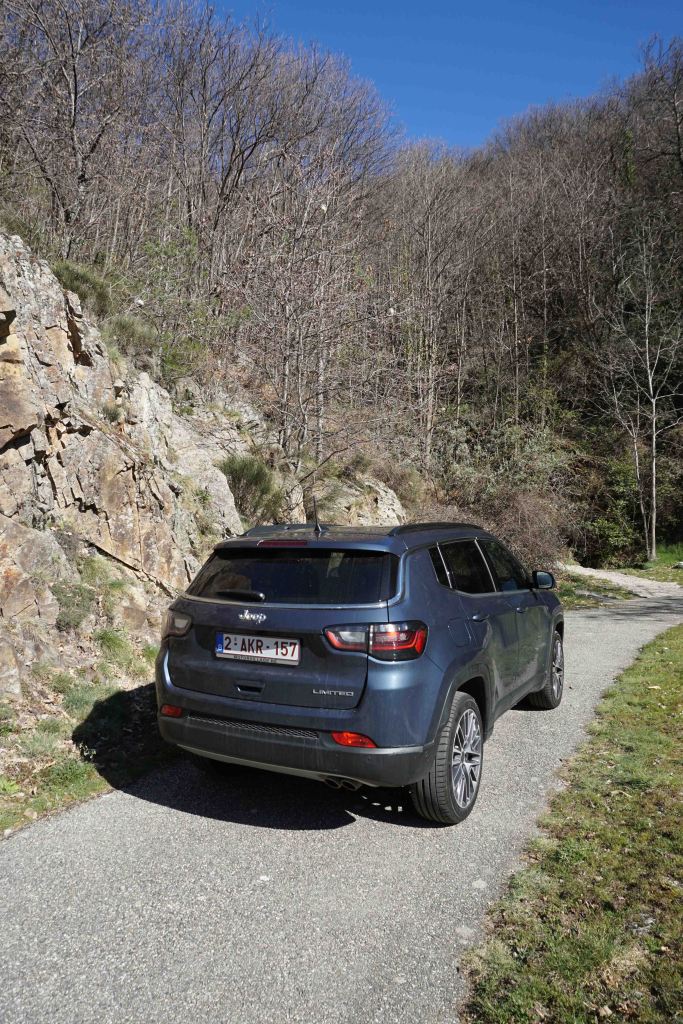
Touring in central France with the Jeep Compass: enjoying authentic driving pleasure and Gran Turismo comfort…

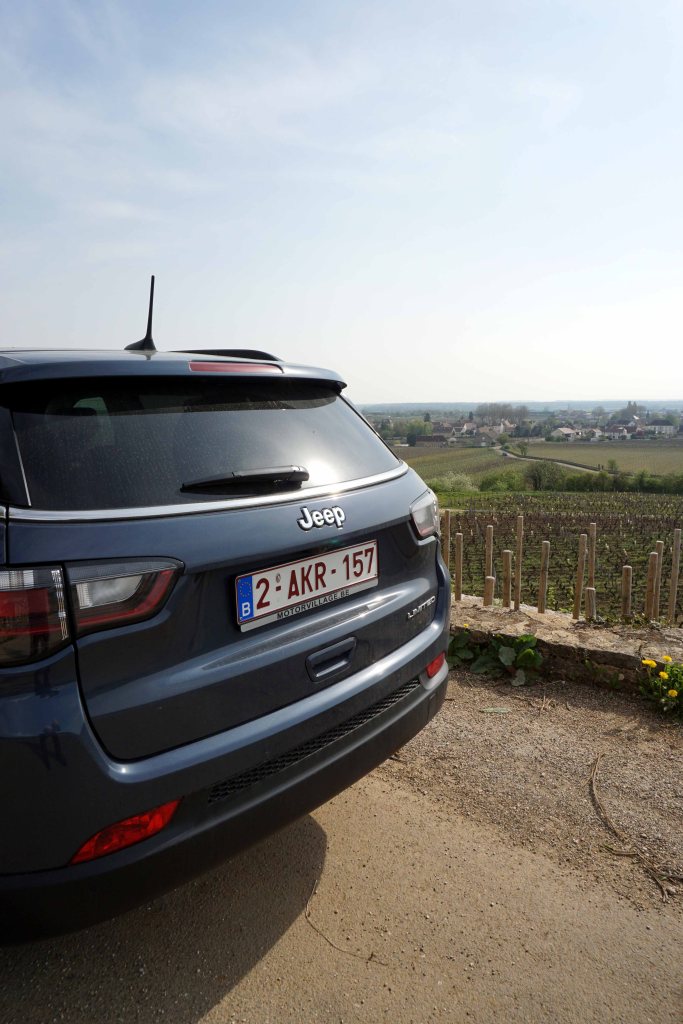
Where do Jeep drivers go in France? Of course to the Château du Clos de Vougeot in the very heart of Burgundy’s vineyards…

The Jeep Compass, launched last year, has been the first new Jeep model since it joined the Stellantis Group, and is one of its most important bestsellers. In Europe, it accounts for 40 % of total Jeep sales.

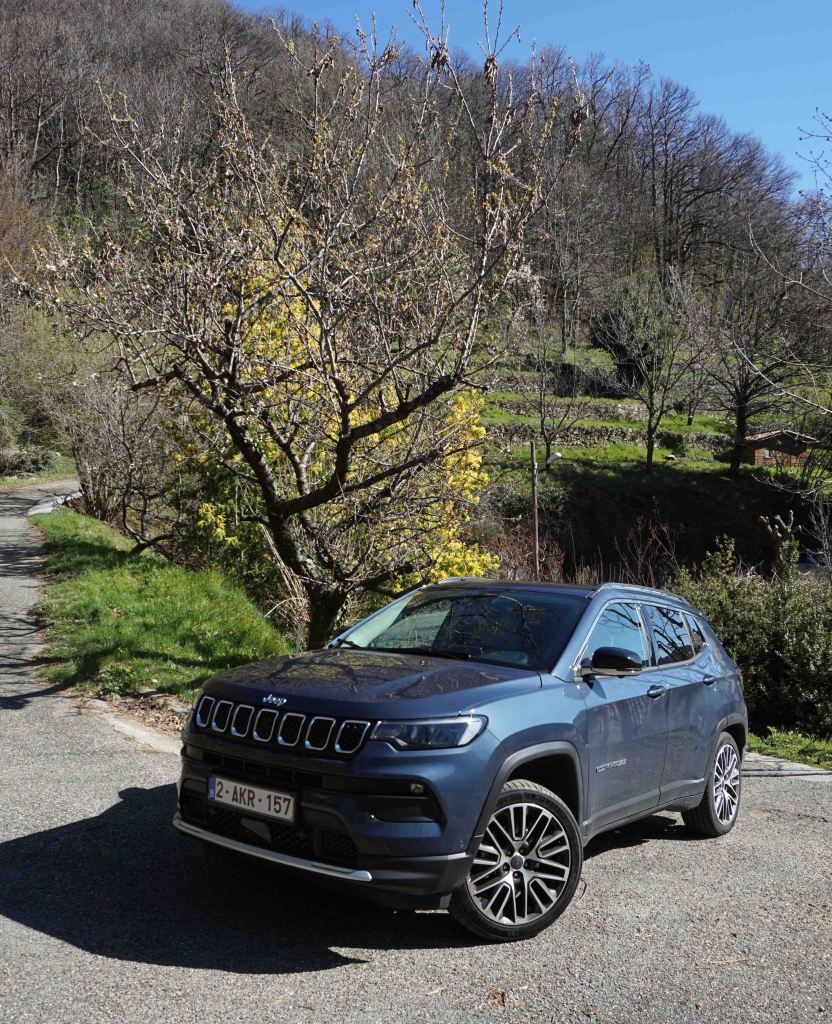
More than reason enough to put it through its paces: we drove the 96 kW/130 HP petrol engined version with the 6 speed manual transmission, all the way through France, on many autoroutes, routes nationales and départementales, to find out what a modern, petrol engined car in this day and age (still) has to offer. We were truly surprised how refined, powerful and frugal this Compass really is. Just read further…

Hans Knol ten Bensel

The Jeep is compact enough to feel ideally at home on Cévenne country roads…

Well proportioned …

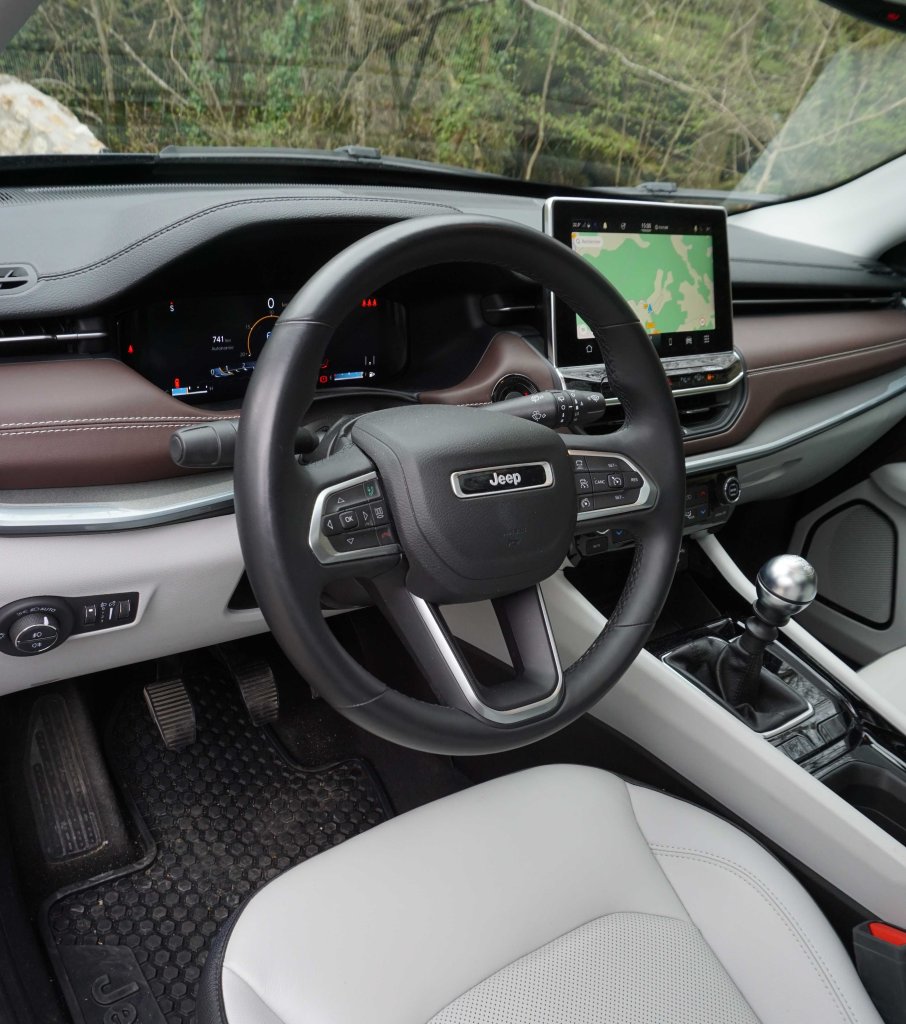
The new Compass combines the typical Jeep styling cues with well proportioned modernism, and indeed it pleases from any angle. Its dimensions are indeed “just right” for those customers who seek space and comfort, as we found out when we drove it on the narrow mountain and village roads in the Massif Central and Alpes Maritimes. Visibility of the edges of the car is greatly helped by the panoramic camera’s fore and aft, and one needs them indeed when maneuvering in narrow spaces.

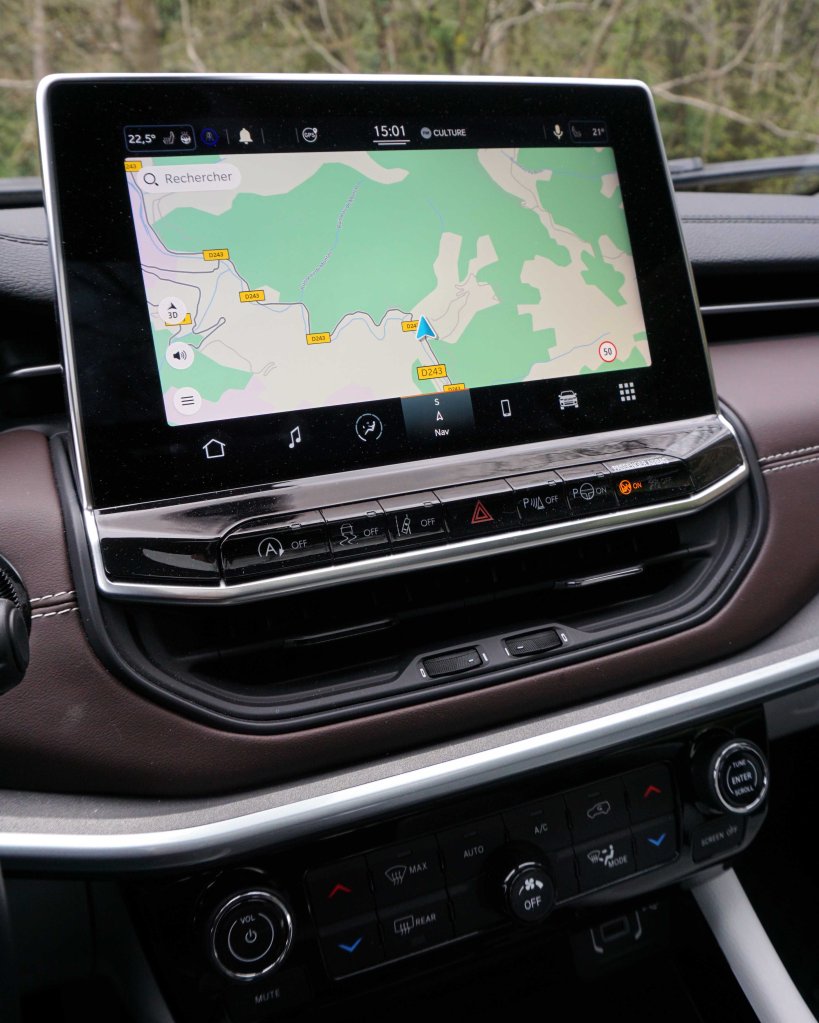
The interior has been completely redesigned. The central horizontal dashboard panel looks elegant, with ultra-slim air intakes that almost disappear into its layered structure. The controls are easy to reach, as is the connectivity touchscreen that dominates the middle of the dashboard, now in a higher and more ergonomic position. We liked this. The fact that this Compass now has the new Uconnect 5 system with a more powerful, higher-performance processor with a five times better responsiveness than the previous generation, made selecting your route or favorite music the proverbial breeze.

By using an Android operating system and 4G connectivity with Over-the-Air (OTA) updates, the Uconnect 5 brings flexibility and the possibility to offer continuously new content, features and services. On longer trips, not only excellent and clear route and map info is important, but also a state-of-the-art sound system. This Compass offered both…

The controls are logical, intuitive, and soon we were cruising happily along…

The driving info from the digital instruments is also to the point: we focused on relaxed economical driving, and to monitor our driving exploits, it proved ideal. Indeed, it shows you at a glance your instant consumption, and graphically shows with an illuminated arc how this relates to the average consumption. It also shows you when to change up to achieve most economical driving. Truly excellent! For the rest, it limits itself to rev counter and large digital speed indicator.

Of course you can select on the steering wheel another display which gives you info about the oil and water temperature, oil pressure and battery charge…for the technical buffs amongst us, and the Jeep drivers who really want to KNOW.

For our long French drive, the seats proved very comfortable, and here we also want to put a good word about the excellent sound insulation. Road and tire noise as well as wind noise are almost totally absent, and also the engine is inaudible at cruising speeds. So listening to the conversations and interviews on France Culture is effortless, and you or your passenger can also speak totally normally. A factor which is so important to relaxed driving, but is rarely mentioned…

Engine: zesty, quiet, flexible and willing…

Under the hood purrs a 1332 cc 4 cylinder petrol engine, developing 130 HP (96 kW) @ 4750 rpm, with a very healthy pulling power. Indeed, 270 Nm is available already @ 1560 rpm. Understandable as one knows that this is a long stroke unit with 70 mm bore and 86,5 mm stroke. It is turbo fed and has a Multi Air III GDI – Third Generation Gasoline Direct Injection, is indeed totally docile and will pull readily from 1200 rpm onwards; this excellent torque greatly helped our relaxed and economical driving, and we enjoyed the totally silent, vibration free pulling power in the 1200 to 2000 rpm range, delivering power comfort totally akin to an electrical power unit. So indeed, change up the gears as soon as possible, flow with the traffic and enjoy!

Driveability is somewhat hesitant in bottom gear at smaller throttle openings, so one learns to change into second as soon as possible when one is not in a hurry and want the smoothest getaway. Modern automatic transmissions take care of this beautifully, so, despite our love for manuals, we would prefer the excellent 8 speed auto box here to enjoy your Compass even more in stop and go traffic. This option is however coupled to a 150 HP version of this engine.

Of course, when put through its paces, good performance is there. Acceleration from 0-100 km/h takes 10,3 seconds, top speed is 192 km/h. More than we ever used on our touring trip.

The manufacturer quotes fuel consumption – combined cycle (l/100km) at 6.6 – 6.9 l, we achieved an average of 6,6 liters during our test, which besides Autoroutes  and Nationales  included also many villages, cities and mountain roads and winding  Départementales. CO2 emissions – combined cycle (g/km) lies between 152 – 158.

Of course, with a kerb weight of 1,505 kg including driver, it is very important to conserve kinetic energy as much as possible and certainly in urban driving an anticipative driving style will be rewarded.

The practical advantages of petrol engined propulsion do not have to be further underlined here. A beautiful useable range of over 800 km on a full 55 litre tank, with the plentiful availability of gas stations and of course no recharging times to reckon with. For example at Vougeot, in the midst of the Burgundy vineyards we would be (very) hard pressed to find a recharging station in the village… nearby our hotel, if any! There was just ONE, with 4 charging posts at the hotel Clos de la Vouge, which was about 400 m from our hotel. It was of course occupied by the own hotel guests. It was run by Shell Recharge, and it was – according to internet info – not powered by renewable energy.

On top of that, with an average consumption of 6,6 litres/100 km, the well to wheel figure will compare rather well with a similar EV, which would weigh an additional 500 kg because if its batteries… 

This amply shows that the charging infrastructure in Europe has still a long way to go, to enjoy carefree EV mobility everywhere, and a petrol engined car still remains in the present material circumstances a viable proposition…

If you would ever consider holiday travelling with an EV through France, you MUST have first a look at https://www.electricfelix.com/france. It is interesting and full of very valuable tips! Consulting https://chargemap.com will also put you (literally) on the good path.

Comfortable

We drove the Compass in the Limited edition, and this includes accessories like the motion controlled automatic rear boot lid. It proved indeed a very practical option on any Gran Turismo trip. We mentioned already the total ease of use and practicality of the Compass, and we also should mention that the Uconnect 5 system with a 10.1-inch touchscreen and integrated TomTom navigation also boasts the natural language interface system with advanced voice recognition, so you can talk to the car to control its settings, program the air conditioning and choose your favorite music. This feature is integrated into vehicles with Tom-tom navigation and can be activated hands-free with the wake word “Hey Jeep!”.

Boot space is standard with seats up some 438 litres, with seats folded 1,387 litres.

The suspension gives a good feedback of the road surfaces and is overall quite comfortable. The Compass version we drove has only front wheel drive, but with its ample ground clearance of 198 mm we steered it with utter confidence on unhardened country roads, and enjoyed urban and (mountainous) rural France to the full.

Conclusion

The Jeep Compass proved to be a well-balanced, ideal Gran Turismo car, an absolute joy to take on a long(er) trip.

It also made very clear that a modern petrol engined car still is a very reasonable and above all practical means of transport, with excellent economy combined with smooth and refined performance. On top of that comes the typical panache of Jeep, growing ever more into an iconic brand, with a very fitting styling language. So if you have a heart for (even the slightest) adventure and appreciate motoring which character, take the road of (this) Jeep…

Hans Knol ten Bensel

We drove the Kia EV6: a top EV car with lots of panache…

Soon after the elegant Ioniq 5, we could take the Kia EV6 for an extended test drive, and as both cars ride on the same E-GMP or Electric-Global Modular Platform, a comparison between the two cars is inevitable. Let it be said, also this EV6 scores very high indeed, and has the same excellent qualities and futuristic aura than its four wheeled sister, albeit altogether a bit sportier.

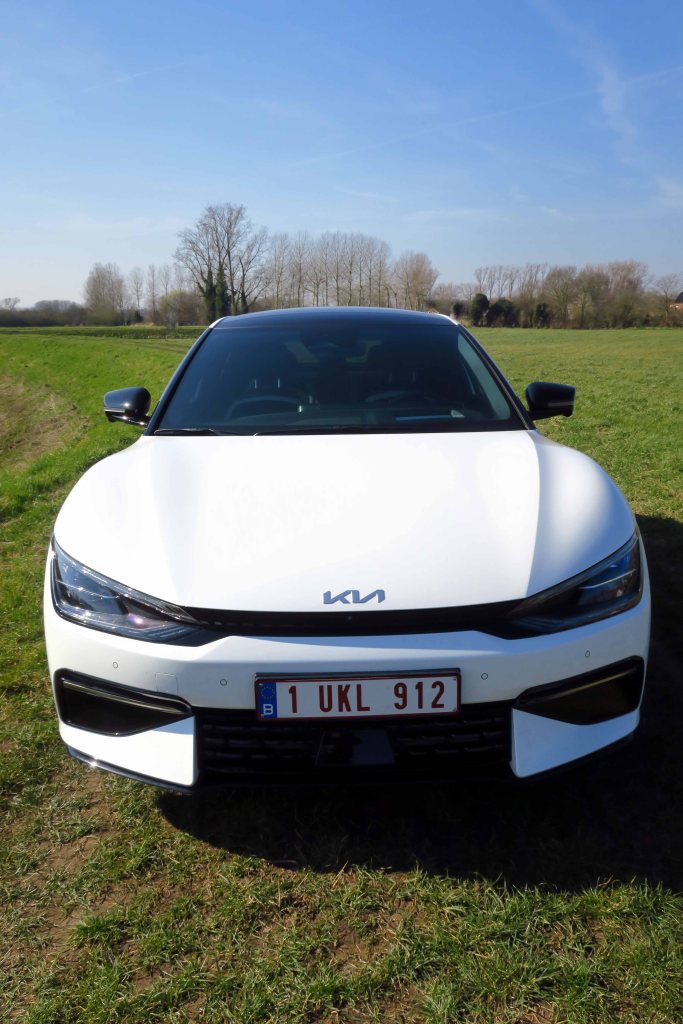
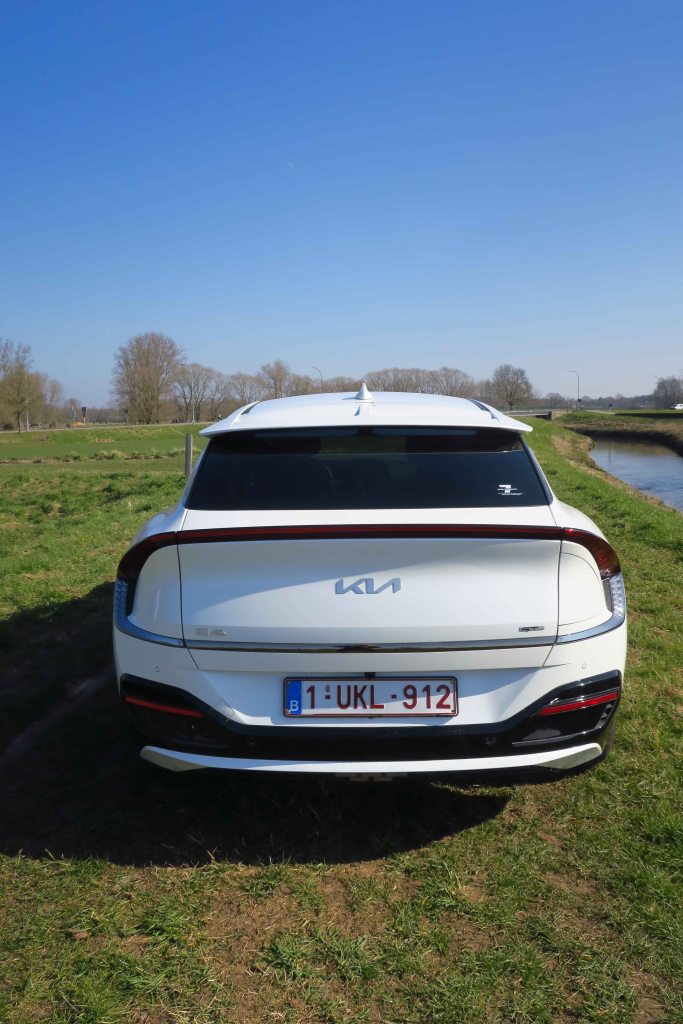
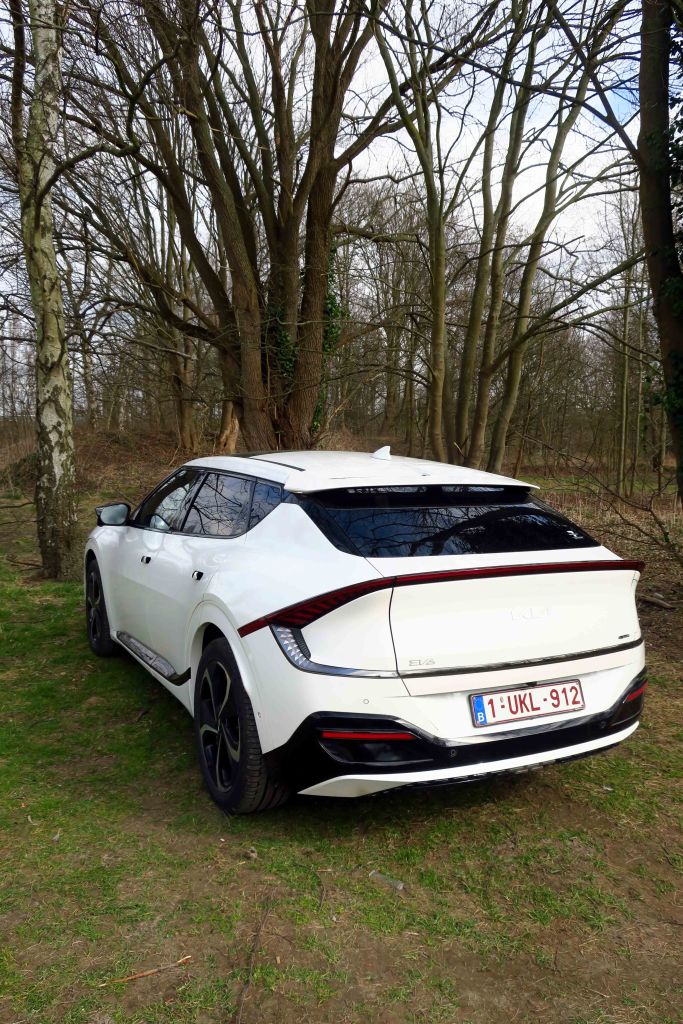
We drove the EV6 GT Line, pleasing the eye with its 20 inch alloys, its snow white pearl paint and black interior with white and aluminum accents and alcantara/leather seats.

Our test car was the rear wheel drive version with 168 kW/229 Hp motor and the 77,4 kWh battery. More than enough for exhilarating performance and an impressive range…

Hans Knol ten Bensel

More rounded, organic styling…

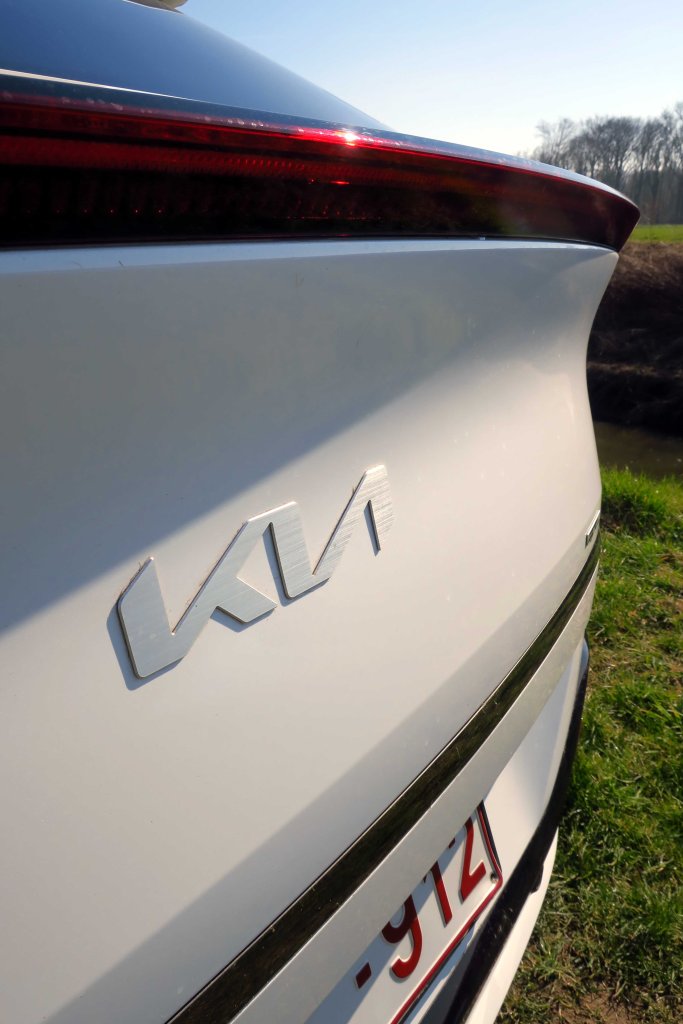
The Kia distinguishes itself from the angular lines of the Ioniq 5 by offering more fluent lines, reminiscent of the last Saab, Jaguar I Pace, and the likes. The rear end with the built in spoiler and the tail light running across the car is reminiscent of Porsches, with the curves of the rear lid shaped as a spoiler being even more outspoken. The panache of the whole car varies with the paint color chosen, and we like the pearl white finish of our car here, although we think the car looks even more stunning in a matte grey finish. A beautiful, well proportioned car it certainly is.

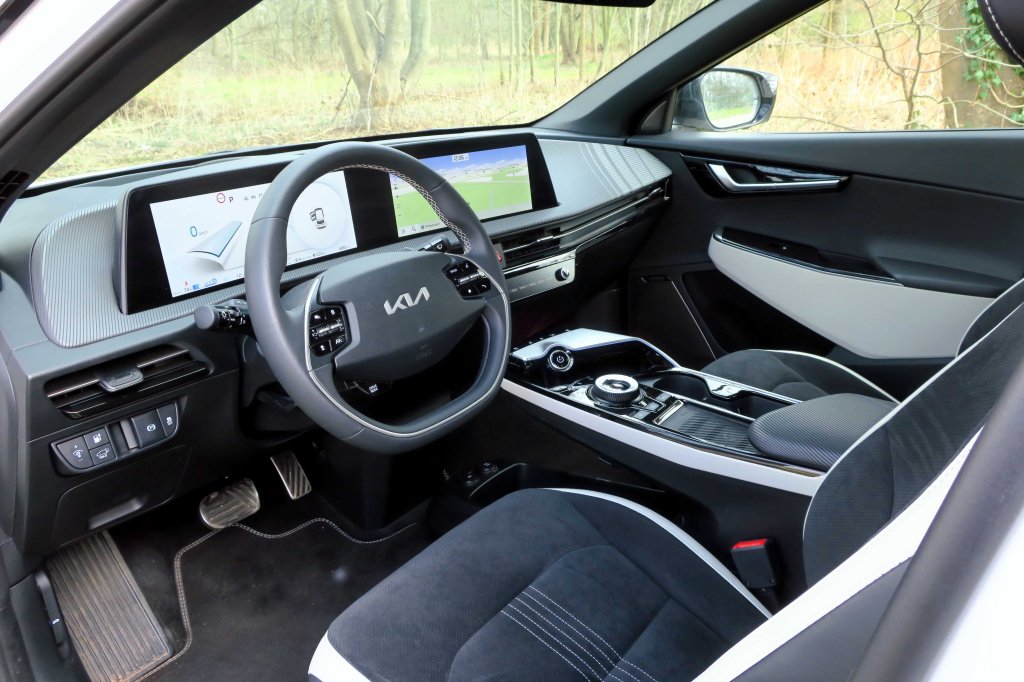
In the interior one has the same two big screens with identical digital instrumentation and infotainment layout, and we enjoyed also the same excellent head up display we found in the Ioniq 5.

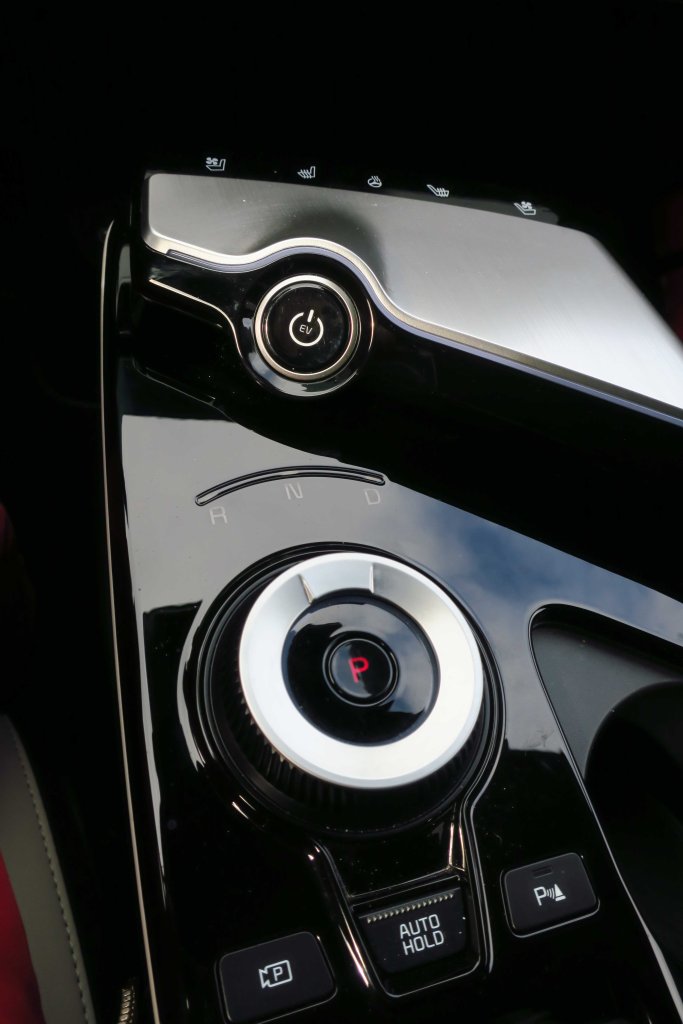
But the shape of the centre console is different, has more curves and is a bit more adventurous. You have lots of space for your drinks, bottles and sundry, and a round selector knob for Drive, Neutral and Reverse instead of the rotating stick in the steering column in the Ioniq 5.

The car and its touch screens is simple and intuitive to use, and typical for Kia is the well designed centre console, where you can toggle between heating/ventilation or audio controls. You find your way in a breeze.

The seats are excellent; the front seats also fully recline as in the Ioniq 5, so you can have a (short) nap when you recharge the car. The rear seat backrests are also adjustable.

With a 2,9 meter wheelbase, there is plenty of legroom both in the front and especially in the rear, with slightly less headroom for the rear passengers than the Ioniq 5, but this is still more than enough if you are less than 1,90 m tall. Standard boot space is 520 litres, extendable to 1300 litres.    

Our test car came with the drive assist pack, which included the autonomous parking aid, the 360 ° camera view and as said the very easy to read head up display. The large and wide EV6 is therefore a pleasure to drive and park in town. The additional cameras are necessary, as the overall visibility of the bodywork is not so good, especially to the rear.  

Impressive performance and handling…

The 229 HP EV6 delivers punchy performance: it sprints from 0 to 100 km/h in merely 7,3 seconds, and quite frankly, who needs more? The top speed is limited to 185 km/h. You have the choice between three driving modes, from “Eco” to “Sport”, and with the paddles on the steering column you can choose the amount of energy recuperation and also opt for automatic braking to standstill.  The brakes are sensitive and progressive.  

The suspension of the EV6 is sportier and firmer than the Ionic 5. The EV6 is slightly less comfortable, but never harsh, and has less body roll when driven with verve on winding roads. The car is neutral with an understeer bias, is very stable in fast corners and has excellent straight line stability up to its top speed.      

You would like even more performance? The EV6 can also be had with an extra motor driving the front wheels, and total power in this 4WD layout is 239 kW/325 PS. If you want nothing less than supercar performance, it is good to know that in autumn, Kia will present a GT version with some 430 kW/585 PS. This results in an acceleration from 0 to 100 km/h in 3,5 seconds, with a top speed of not less than 260 km/h…

With a very big range, up to a good 500 km…

Our test car came also with a heat pump, costing less energy to heat and cool things. The EV6 is remarkably frugal, and it is no effort at all to achieve an average consumption of around 18-19 kWh per 100 km. This means that in practice, this EV6 has indeed a useable range of some 500 km, and that is no small feat! According to the WLTP norm, the distance is 528 km.

The EV6 runs – like the Ioniq 5 – on a 800 V system, and this means not only the possibility of using thinner cables and therefore gaining weight, but it also means larger load capacities and shorter recharging times. Even in less than ideal circumstances, you can recharge your EV6 in about 30 minutes to run another 380 kilometers.

 Like the Ionic 5, the EV6 has also a Vehicle-to-load-Function, which means an extra external plug to power lamps, microwaves, cookers when you are camping out, and you could even charge (with patience) another EV with it! You just need the small adapter which I housed in the front luggage bin, (called “Frunk”) under the engine cover lid, which contains some 52 liters of luggage space.

Conclusion

The EV6 is a top class EV, certainly when one considers its price tag. Our test car in the GT Line equipment level came with the Drive Assist Pack and the Premium pack, which included a 14 speaker Meridian Sound System together with the Head-Up display. It also had a panoramic sunroof, heat pump (1200 Euros extra) and 20-inch alloy wheels. The total price including VAT was 59.990 Euros. On top of that it is roomy, has stunning looks and offers sportiness. Last but not least, the range is superb and thanks to the 800 V system its recharging times are short. Indeed, also this Kia EV6 paves the way to a bright EV future…

Hans Knol ten Bensel

Istituto Europeo di Design (IED) and Alpine create a hydrogen concept car…  

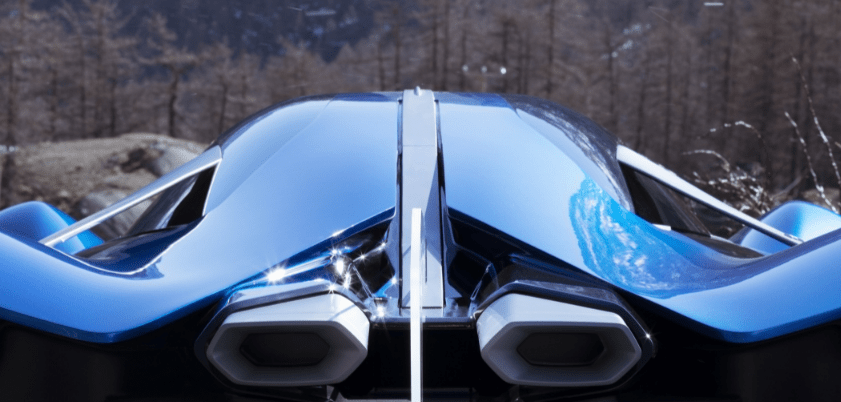
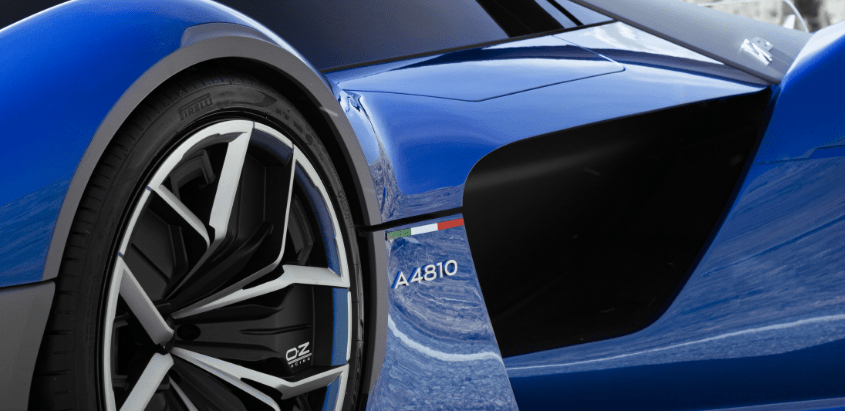
Students at the Italian Istituto Europeo di Design (IED) presented the ‘A4810 Project by IED’, their new concept car made in collaboration with Alpine. The result of this collaboration between the Italian design school and Alpine is a hydrogen-powered two-seater supercar.

Twenty-eight Masters students studying Transportation Design at IED worked on the project.

Alpine proposed the students to design a ‘super berlinette’ for the year 2035. The two-seater supercar was designed to be a high-performing vehicle both in terms of performance and environmental impact.

After the brief was given last autumn, students worked individually to come up with their own interpretation and present it to the Alpine designers. Alpine then selected a combination of two main ideas. Based on the two selected proposals, the young designers created the ‘A4810 Project by IED’: a light yet powerful and agile concept car that boasts pure driving pleasure.

During the design phase, the students sought to combine vision and innovation, without losing sight of the traditional roots of the French car manufacturer.

Furthermore, they chose a name that conveyed the brand’s legacy. In fact, ‘4810’ is the height (in meters) of the Mont Blanc: the highest and most emblematic peak in the Alps that sits at the border between Italy and France, like a bridge connecting IED and Alpine. The car manufacturer is named after the very same mountains and evokes the joy of driving along their winding roads.

A STUNNING LOOKING CONCEPT CAR

The Alpine A4810 Project by IED (length 5,091 mm – width 2,010 mm – height 1,055 mm – wheelbase 2,717 mm) is a two-seater supercar with the experimental combination of the shape of a berlinette with a hydrogen powertrain.

While the engine and fuel tanks are built like those on a typical hypercar, the subtraction process is proof of considerable innovation. The design alternates between empty and full spaces, giving the vehicle a lightweight look and aerodynamic features inspired by Formula 1 models. Furthermore, the A4810 Project by IED was tasked with bringing the brand to the cusp of the sports car category.

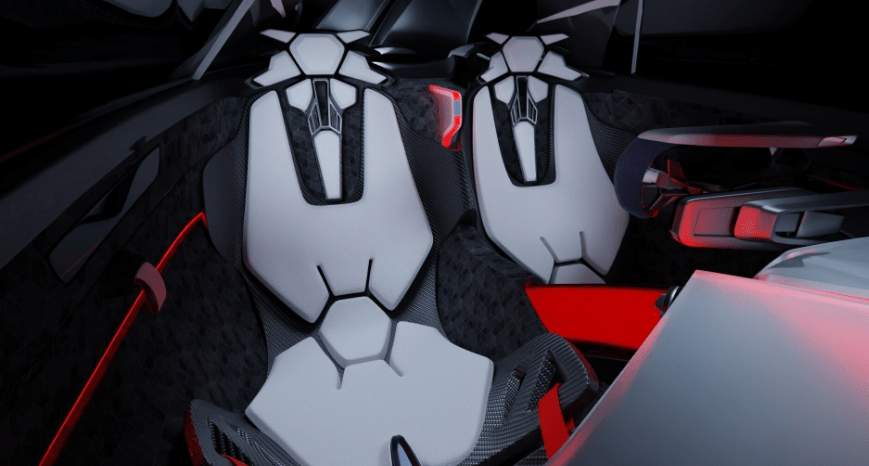
The team of students used digital tools to design the interior through sketches, 3D models, renderings, animations, and HMI (Human Machine Interface) development.

The A4810 Project by IED was presented on Friday, 18th March with a livestream broadcast from OGR Tech in Turin. For more info, please visit www.iedA4810.makeitlive.it.

Just click your way to Alpine’s sporty future, and in the meantime, have a look at the photos…!

Hans Knol ten Bensel

BMW presents details of the future BMW 7 Series

The distinctive grille of the new 7 series will get an extra light signature…

At the BMW Group Annual Conference held on March 16, Frank Weber, Member of the Board of Management of BMW AG for Development, presented the first details of the future BMW 7 Series.

The focus lies initially on technology highlights, a new front-end design based on hallmark BMW design features and a unique interior experience consisting of digital features and exclusive materials. In April, BMW will present the all-electric BMW i7, and with it the entire new BMW 7 Series.

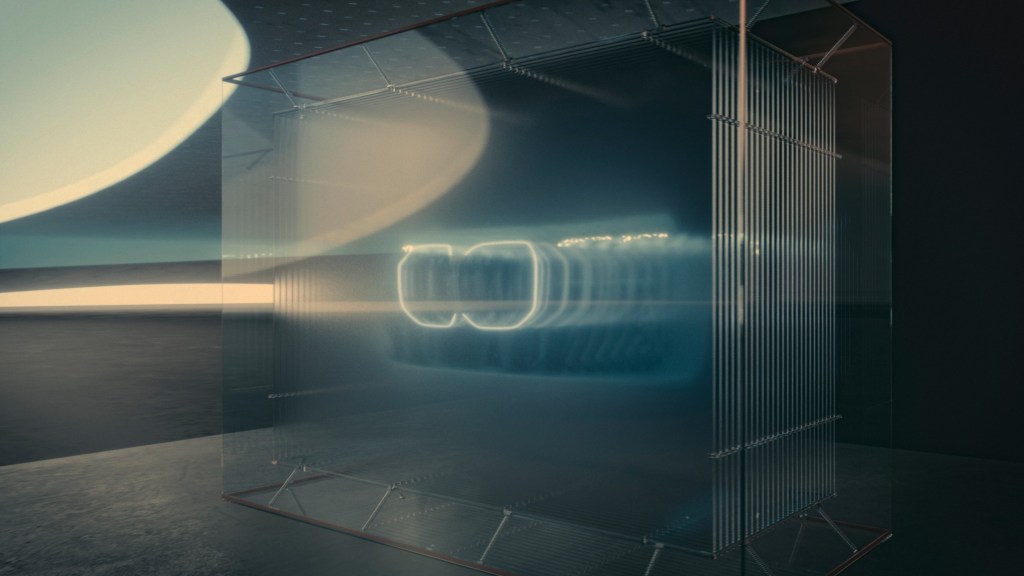
In the BMW i7, the characteristic design elements of twin round headlights and BMW grille have been completely reinterpreted. Some of the special design statements are upper light elements made of exclusive crystal glass and the illuminated contour of the kidney grille.

BMW developed also a new “My Modes” and the latest generation of the iDrive operating system. My Modes enable the driver to precisely customise the car’s driving characteristics and interior ambience. In addition to the BMW Curved Display, a new type of light and function strip on the instrument panel and the doors provides a visual and haptic quality.

The BMW Interaction Bar is part of the ambient lighting and also features integrated control buttons. In addition, the newly developed Sky Lounge panoramic glass roof adds to the feeling of spaciousness.

Cinema entertainment for the rear passengers…

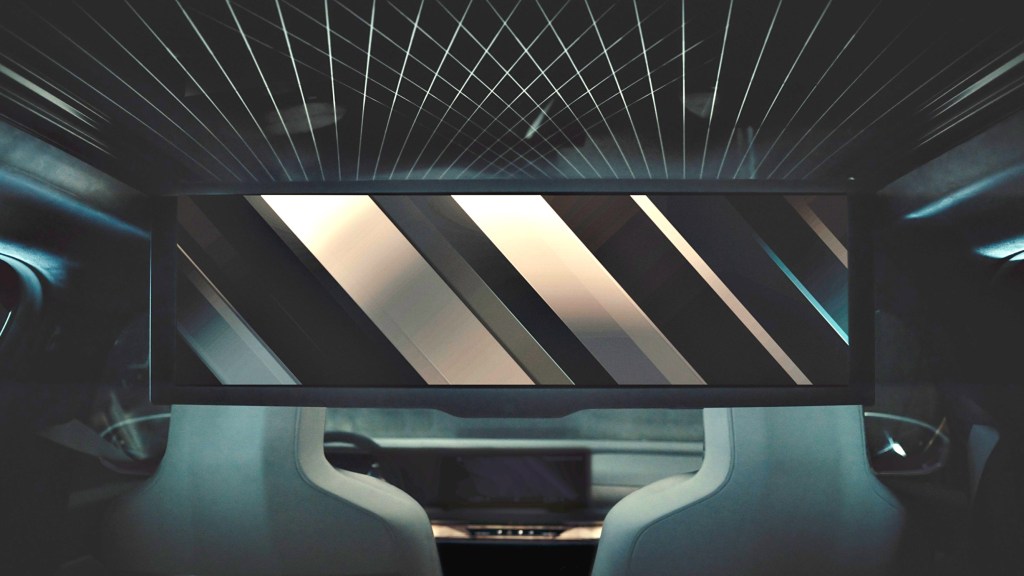
The rear of the BMW i7 sets new entertainment standards offering a unique cinematic experience. There is a BMW Theatre Screen, which moves out of the roof liner, an ultra-wide screen with a 31 inch screen, 32 : 9 panoramic display format and 8K streaming resolution. It transforms the rear seats into an exclusive, private cinema lounge where passengers can select their personal entertainment programme from a diverse range of streaming offers!

More BMW news soon!

Hans Knol ten Bensel

We drove the Hyundai Ioniq 5: an EV beyond your expectations…  

The Ioniq 5 is elegant with its retro-futuristic style…

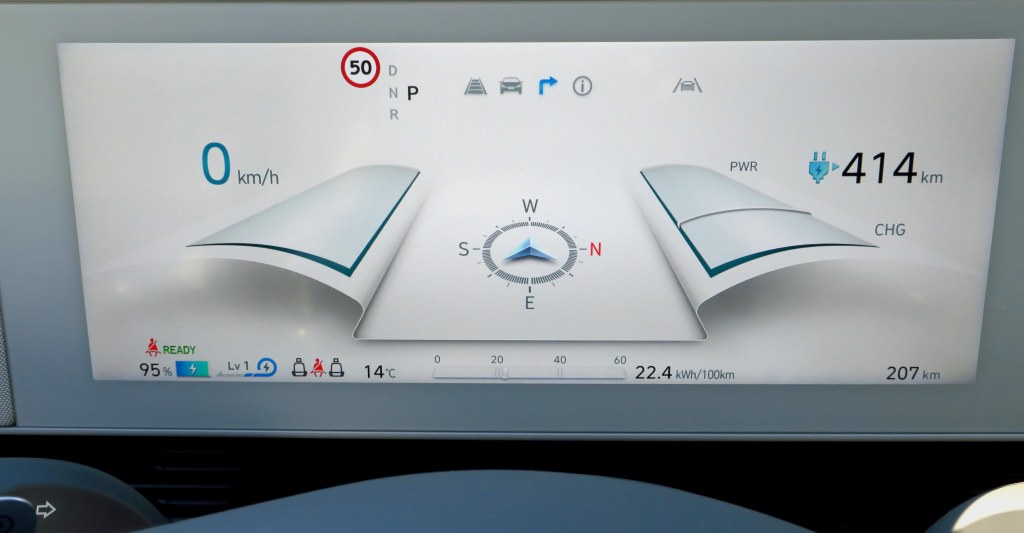
There are cars which make a mark in history. Such a car is certainly also the Ioniq 5. In the EV-segment, its retro-futuristic style make it really stand out. This also goes for the interior. Brimming with superb and clever solutions, the Ioniq 5 is nothing less than a game changer. It is the first car for me where you really get the feeling of driving a car of the future, and this is already by just looking at the graphics of the instruments in front of you.

Behind the wheel, the future smiles at you

And then we have said nothing about the way you sit in it, what space you have and how it drives, handles and performs…and how much it (only) costs.  It moves boundaries, for sure. Just read on.

Hans Knol ten Bensel

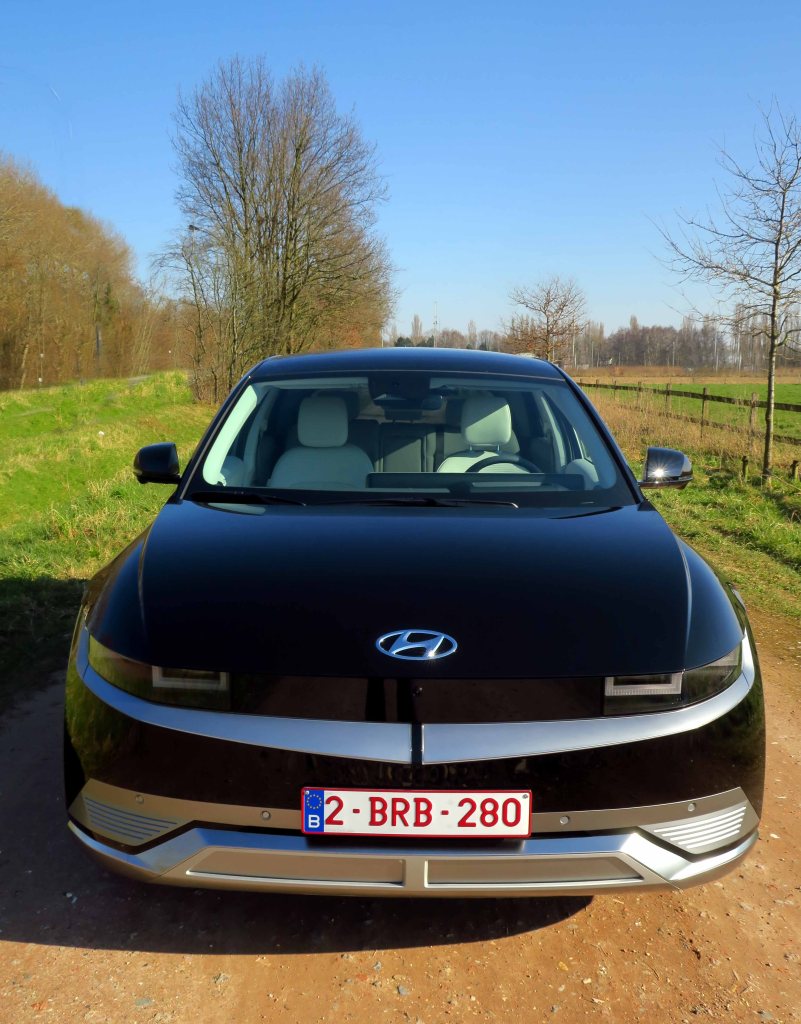
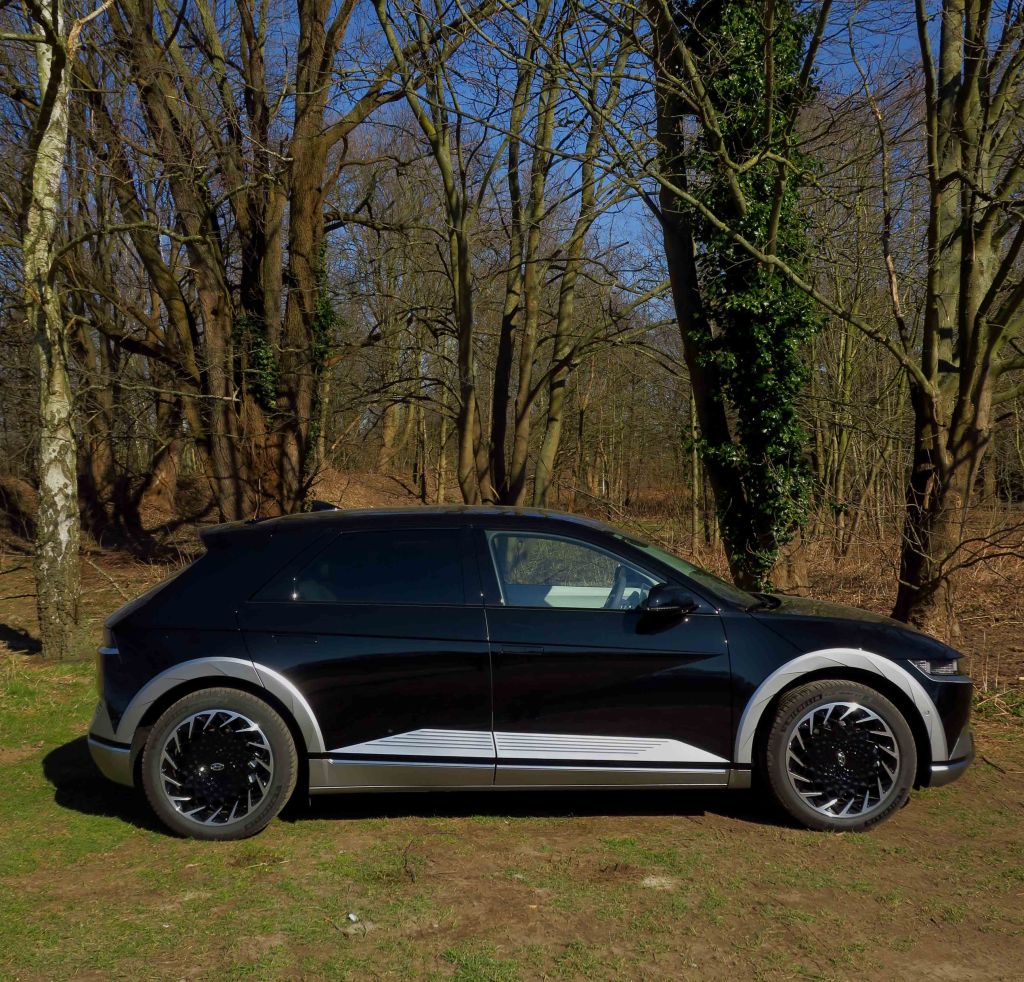
Hyundai created for its electric cars a proper sub-brand: Ioniq. Now it has created the car which can justifiably be called the iconic ambassador of this brand: de Ioniq 5. This uniquely styled car (we truly love it) is classified as a CUV, or Crossover Utility Vehicle.

It runs on a totally new, dedicated platform, which Hyundai has specially developed for its electric cars. The so-called Electric Global Modular Platform or E-GMP. This platform comprises the chassis of the vehicle including the battery, motor and power electric system, and its scalable wheelbase allows it to form the backbone of many different vehicles. Indeed, Hyundai has great plans with it: it will underpin the Ioniq 6, which will be launched in the middle of this year. This will be an electric sports limousine. Then followed in 2024 by the Ioniq 7, a “classic” large SUV.

When it comes to EV’s, Hyundai is ambitious. It wants to have a technological top position in the EV-market by 2025. All this doesn’t seem to be unrealistic. The Hyundai Kona already impresses with impressive EV efficiency.

The electronic architecture of this platform also sets new benchmarks. Its 800V charging capability enables super-fast charging. In just five minutes the battery can charge enough for a range of 100km, and that is one of the very strong points of this Ioniq. With a 350-kW charger, the IONIQ 5 can charge from 10% to 80% in just 18 minutes.

But there are more advantages offered by this platform. It enables total freedom in vehicle design. Designed exclusively for BEV’s, it has no transmission tunnel at all. A completely flat floor is an ideal playground for (interior) designers. So explains Vice President of design, Haksoo Ha: “The innovative platform means we can design for greater productivity in transit,” and “Seats reclining to a near-horizontal will provide a ‘zero gravity’ experience and will open up endless configuration opportunities.”

Indeed, the front seats convert into first class sleeping seats. Ideal when on a longer evening trip you can take a power nap when your Ioniq is quickly recharging to bring you home…  

There is no transmission tunnel, the front centre console can be moved backward, so front legroom is also limitless sideways.

Also in the back there is ample legroom, last but not least because of the Ioniq’s long 3 meter wheelbase. With the absence of the transmission tunnel, it seats three grownups relatively comfortable at the rear. The back seat can also be inclined and moved fore and aft! Indeed, the well proportioned and elegant Ioniq is big. It is 4,64 meters long, and 1,89 meter wide. Its boot offers 531 l space in standard setup, and with the rear backrests down, a maximum space of 1591 l is available.

Under the front hood, above the electric motor, you find a neat box with its lid having the appearance of an engine cover. When you drive the two wheel version of the Ioniq 5, this box offers 57 liters, with the 4WD version this is “only” 24 liters.

But let’s turn to the stylish dashboard. Notwithstanding its futuristic clean architecture with two wide screens, it is surprisingly intuitive to use, and you really don’t need an instruction manual to put all its functions to work. Beneath the central touchscreen you find the heating/ventilation functions, with classic buttons and controls.

Under the hood…

The E-GMP platform allows a wide choice of drivetrain combinations. The Ioniq 5 can be had with one or two electric motors, resulting in rear wheel drive or 4WD as the second motor drives the front wheels, and two battery capacities, 58 or 72,6 kW respectively.

Total available power ranges from 125 kW/170 HP to 225 kW/, with the top version accelerating from 0 to 100 km/h in 5,2 seconds. Top speed is for all the power versions limited to 185 km/h.

Our test car had the 160 kW/217 HP engine, developing 350 Nm of torque. This resulted in an acceleration from 0 to 100 km/h in 7,4 seconds, coupled with the 72,6 kW battery. Consumption according to WLTP standards is 16,8 kWh/100 km, with a range of some 481 km. Range anxiety is in the light of the fast recharging capacities a thing of the past…

On a 101 km triip with dense traffic at varying speeds, we clocked a consumption of 16,1 kWh…

The larger battery also allows you to tow greater loads, up to 1600 kg for our test car…

Did you know that the Ioniq 5 also has a 230 V external plug adapter? It’s so-called “V2L” function in the car can also supply up to 3.6 kW of power. So when you are out in the open, and want to charge your laptop or use a spot light or portable fridge or recharge the battery of your electric bike, the Ioniq 5 helps you out…

The Ioniq 5 has of course the usual driving modes, from Eco to sport, and you have also two paddles at the steering wheel which allow you to choose the degree of E-recuperation when you lift the throttle. During our test, we used mostly the level 3 position, which we felt delivered the right deceleration, and with some experience, we managed to drive around town and on the open road without ever touching the brake pad pedal at all…

Driving is (again) believing…

Driving with the Ioniq 5 is nothing short of delightful. Twist the ring on the selector stick a click forward in “D” and there you go. The Head-up-Display with Augmented-Reality-Function is ultra visible and shows what you need to know. Progress is silent and smooth. The suspension is also quite comfortable, and the Ioniq seems literally to float over the road surface. Body roll is virtually absent and the suspension is not too soft either, but copes rather well with potholes and ridges.

This is your ideal mount for long urban and/or Gran Turismo trips. Handling is also much more precise and nimble than one would expect from a two-tonne car, but the low gravity point of the battery package results in impeccable and stable cornering. We found also the lane assist functioning very smoothly, and we liked also the electronic displays of blind spots when you operate the left or right indicator. A wonderful solution!

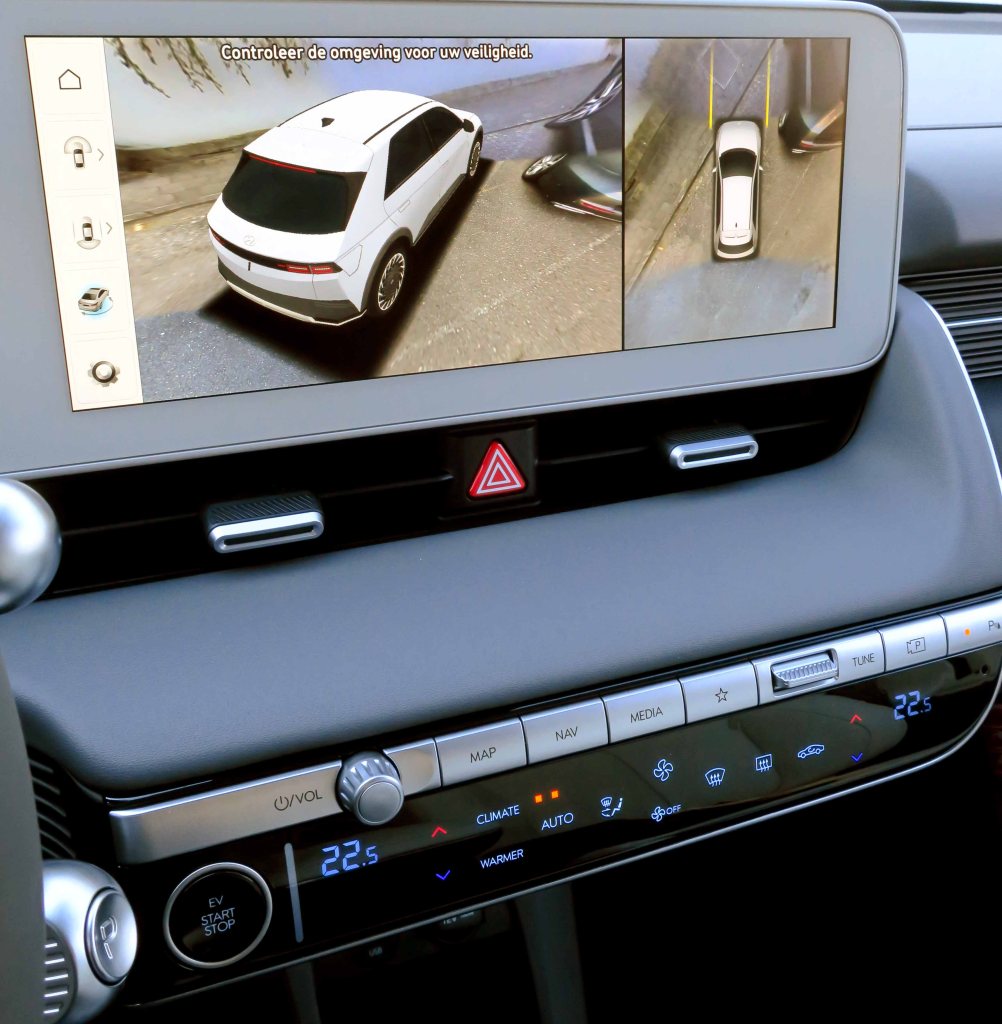
The Ioniq 5 is large, but just be surprised with us, this Ioniq offers distance parking! Just press the symbol on the key, and the Ioniq 5 will sweetly drive itself into or out of a narrow parking space. 

The superb smoothness and acoustic refinement of the Ioniq is further enhanced with a superb Bose audio system, and Classic Music and Jazz buffs as we are, our ears also enjoyed every ride…

Conclusion

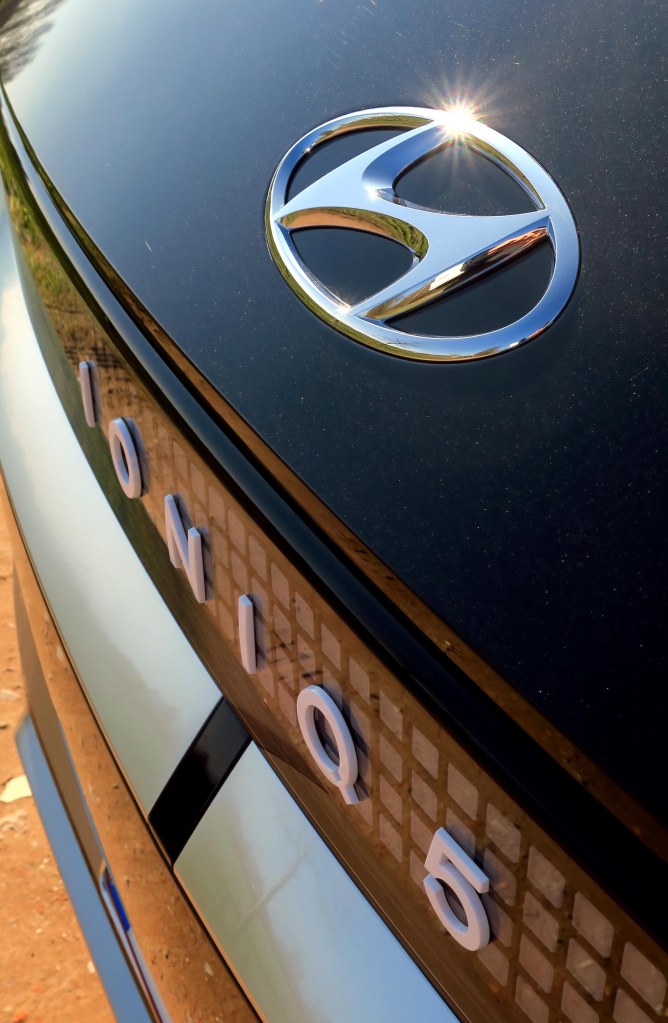
Style, grace, space, this Ioniq has it all; add to this the panache in the design details of headlamps and rear lights, in ’80 retro futuristic fashion. It really stands out.

Also the 20 inch alloys are elegant and aerodynamically efficient. This Hyundai has been carefully thought out, is wonderfully designed with no detail being overlooked. Add to this the efficient motors, the impressive recharging capacity, the generous space, and you understand our enthusiasm. You will also be smiling when you see the price of the Ioniq 5 in whatever version you choose.

Hard to beat? We should think so. Except maybe by the Kia EV6, running on the same platform and using the same technology, which we are driving at the moment of writing, and of which you will also read our driving impressions soon!

Hans Knol ten Bensel