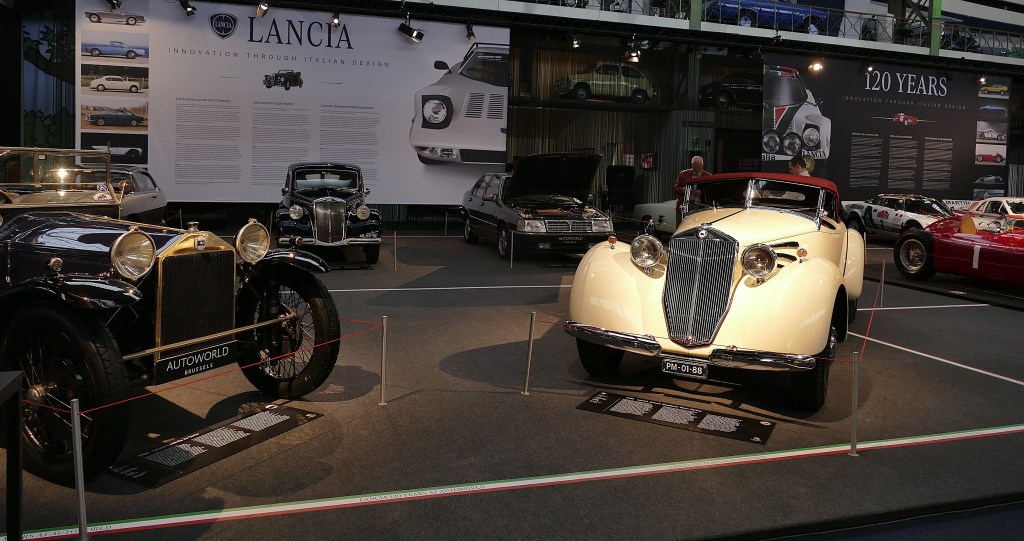
Autoworld Brussels has again an exquisite exhibition ready for us: until April 19 we can admire a carefully curated selection of about 12 absolutely iconic Lancias. It shows us the elegance and innovation through design, as the title of the exhibition indicates. But we would add, the pop-up exhibition also showcases innovation through ingenuity and engineering excellence.
The cars are beautifully displayed at the beginning of the vast and inviting central hall of Autoworld, taking you on a journey of more than a century of technical innovation, refined design, and engulfing you in its rich motorsport heritage.
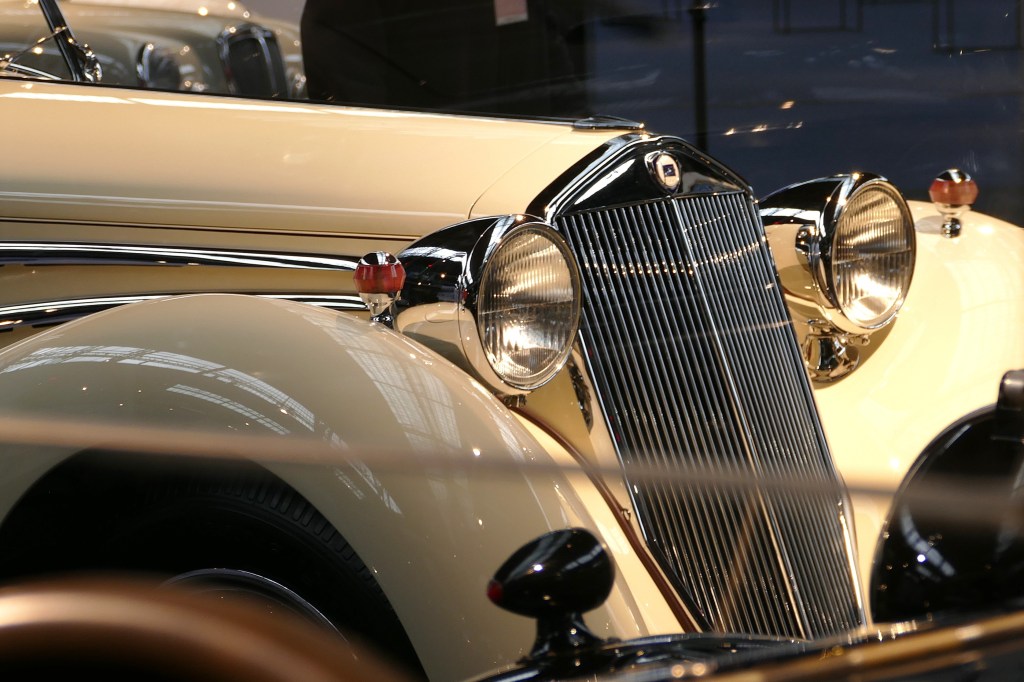
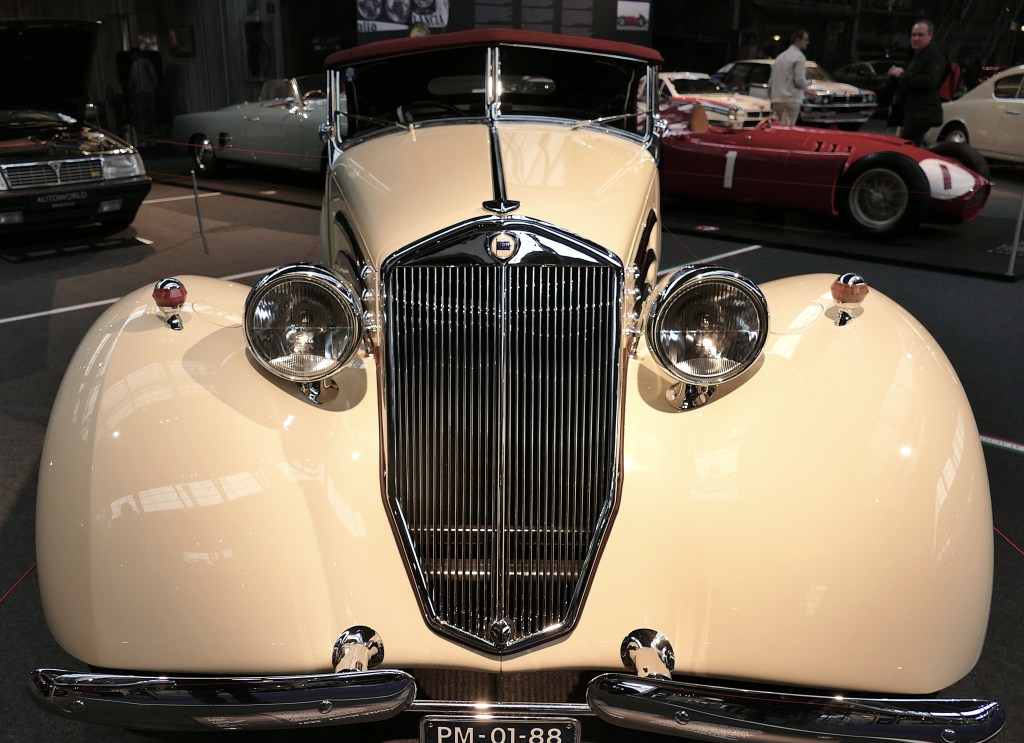
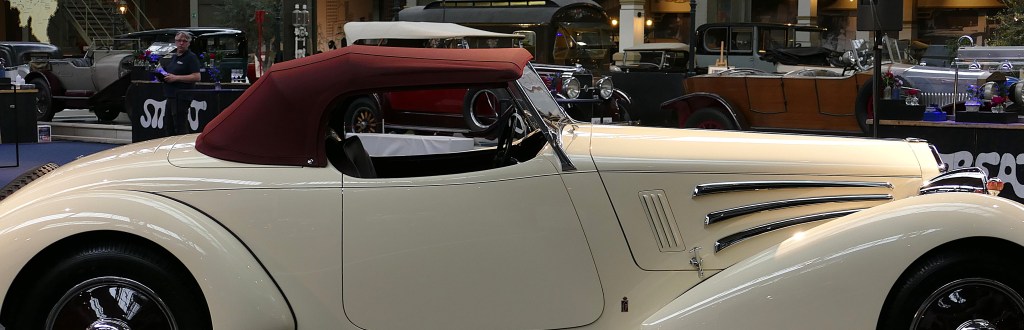
My eyes first fell on, at least to my taste, the absolute beauty of the show, the Lancia Astura Roadster by Pinin Farina. This 1935 Astura is a technical gem. The V8 engined car was introduced on the Paris Motor Show in 1931. This Astura on the show belongs to the third series, built between 1933 and 1937, with 1,243 units made.
The third-generation Astura was offered in short-wheelbase and long-wheelbase variants, and was powered by a new, larger engine. Indeed, it was enlarged from 2,6 to 3 litres, and the 17° narrow angle V8 single overhead camshaft engine now developed 82 hp. This short wheelbase you see on the photos was ideal for coachbuilders to show their talent.
ounded with the moral and financial support of Vicenzo Lancia, the Carrozzeria of Battista “Pinin” Farina witnessed a revival and produced breathtaking bodies. Of the just 328 “Corto” chassis built, many were clothed by Pinin Farina. The contours of this roadster are from the artistic hand of Mario Revelli di Beaumont, an independent stylist who worked actually for several “carrozzerie”…
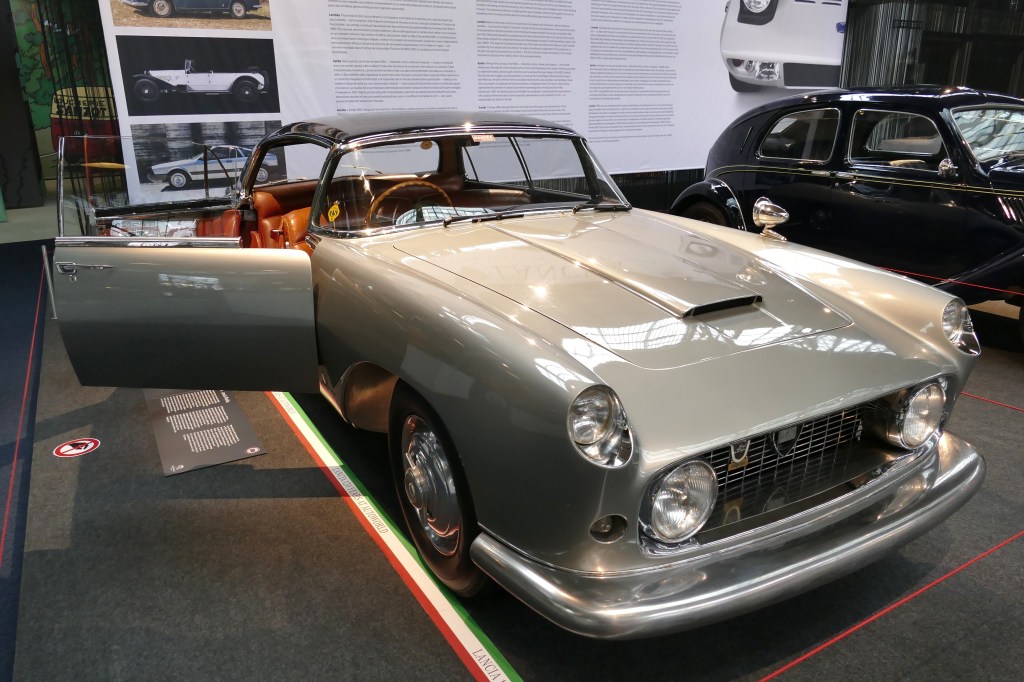
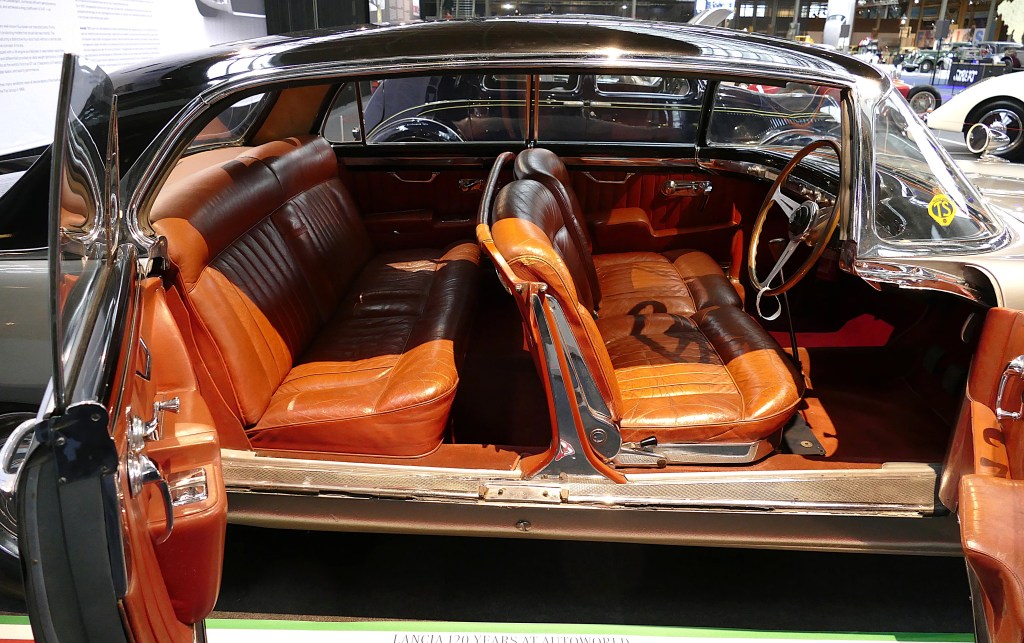
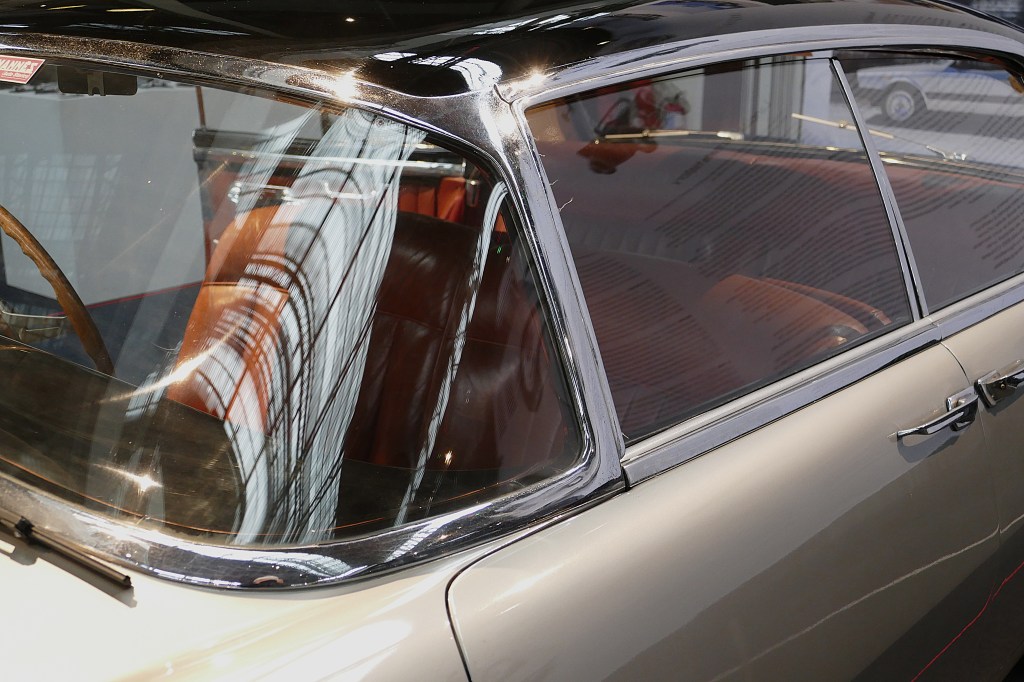
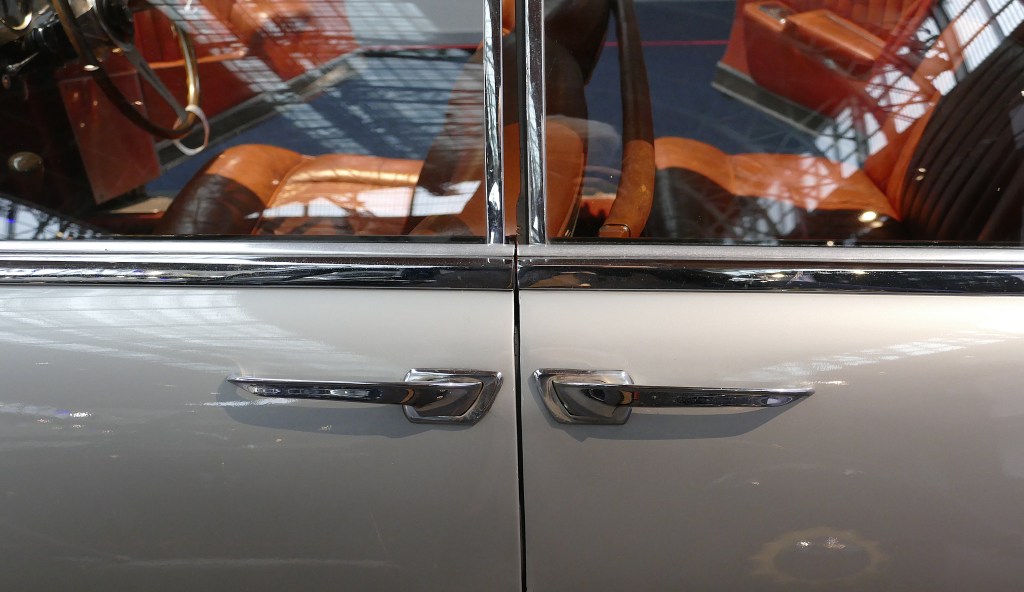
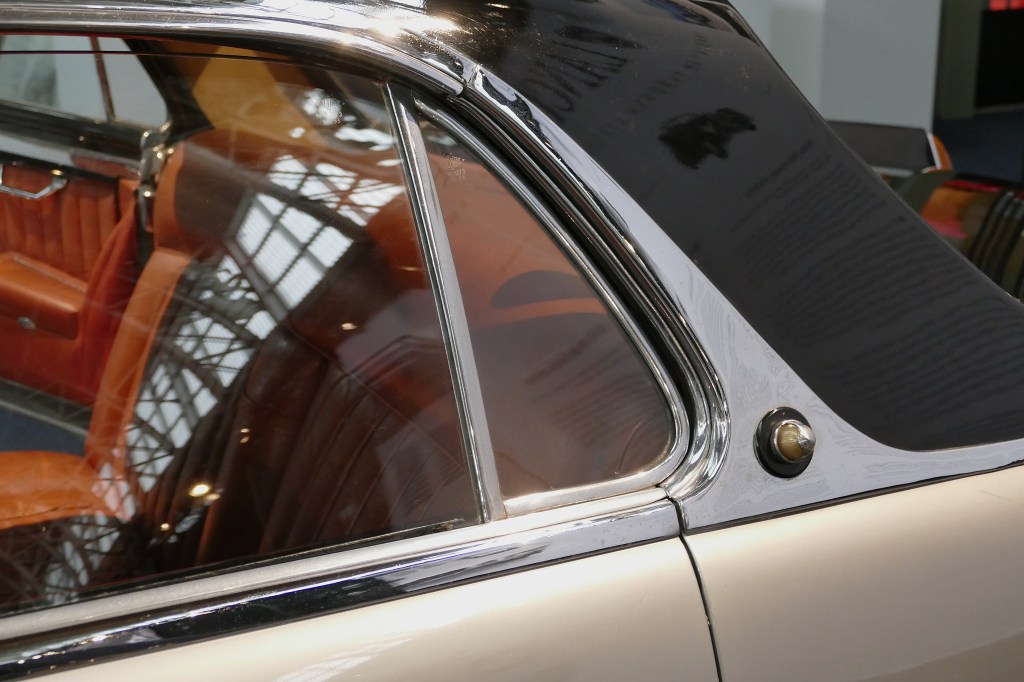
Another car by the hand of Pinin Farina was for me the Lancia Flaminia. I was therefore elated to see the conceptual predecessor of the Flaminia, the Florida. The “bellezza” and elegance of this car deeply moves me. Just look at the photos. The car was built by Pinin Farina on an Aurelia B56 chassis, and it was a technically quite daring four-door pillarless saloon.
It was shown on the 1956 Brussels salon, and as a young boy, I dreamt about it. Just like the Boano styled Ferrari’s, it was for me the pinnacle of what human art, intellect and craftmanship could reach in terms of sheer contemporary beauty.
The pillarless doors had to go in the production version, the Flaminia, therefore the elegance of this Florida truly stands out.
Much more to follow on this Lancia show at Autoworld soon, about the D50 racing car, the iconic rally cars like the Stratos… just remember, go and see it, it is on show until April 19.
Practical info: Autoworld, Parc du Cinquantenaire 11 1000 Brussels, Belgium.
Please note, the museum is closed Wednesday 11 March, Thursday 12 March and Monday 16 March 2026.
We attended a remarkable conference organized by the Belgian Historic Vehicle Association on the Brussels Salon, moderated by automotive history connoisseur Philippe Casse. The speakers were experts in the field: Loïc de la Roche, General Director of the Aventure Peugeot Citroën DS. He was followed by Thomas Stebbich, head of Audi Tradition and Audi Archives, Audi Museum Mobile and last but not least the August Horch Museum in Zwickau.
The third speaker was Thomas Antoine, honorary ambassador of Belgium and philosopher. Needless to say that he viewed the opened a very original perspective on our historic vehicle world.
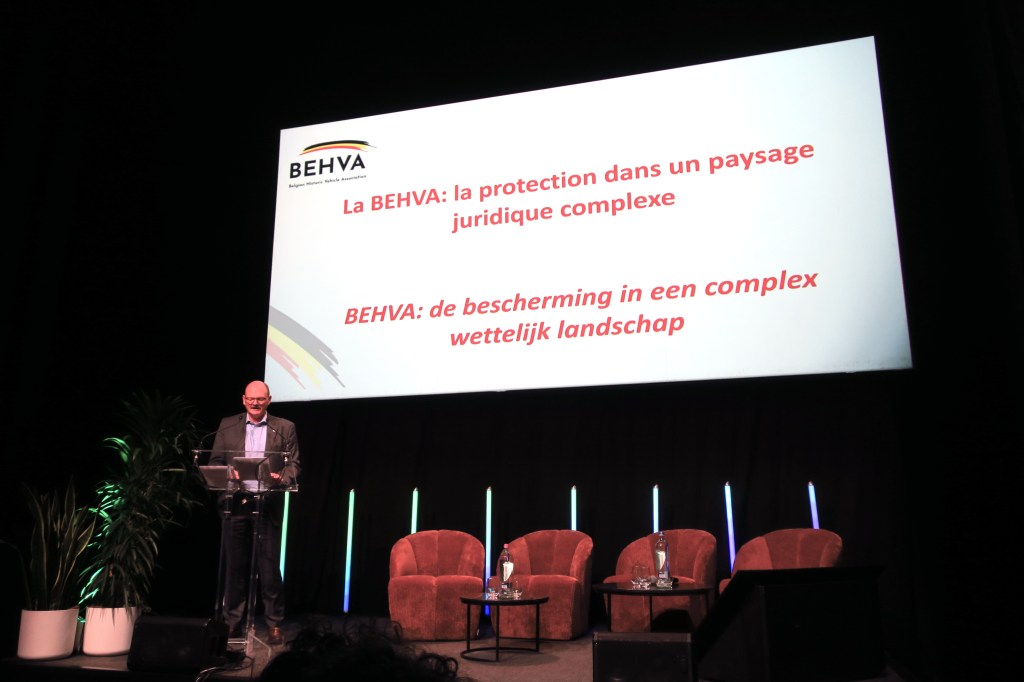
Other (introductory) speakers were respectively Philippe Dehennin, President of BEHVA and Peeter Henning, CEO of Behva.
We thought it is useful to go more extensively into depth on what the speakers brought forward, as it was indeed interesting and opened many further perspectives. We therefore split the report in 3 parts.
You read here in this first part the main points put forward by the first respective speakers, offering us much food for thought: just read further…
Hans Knol ten Bensel
Introduction
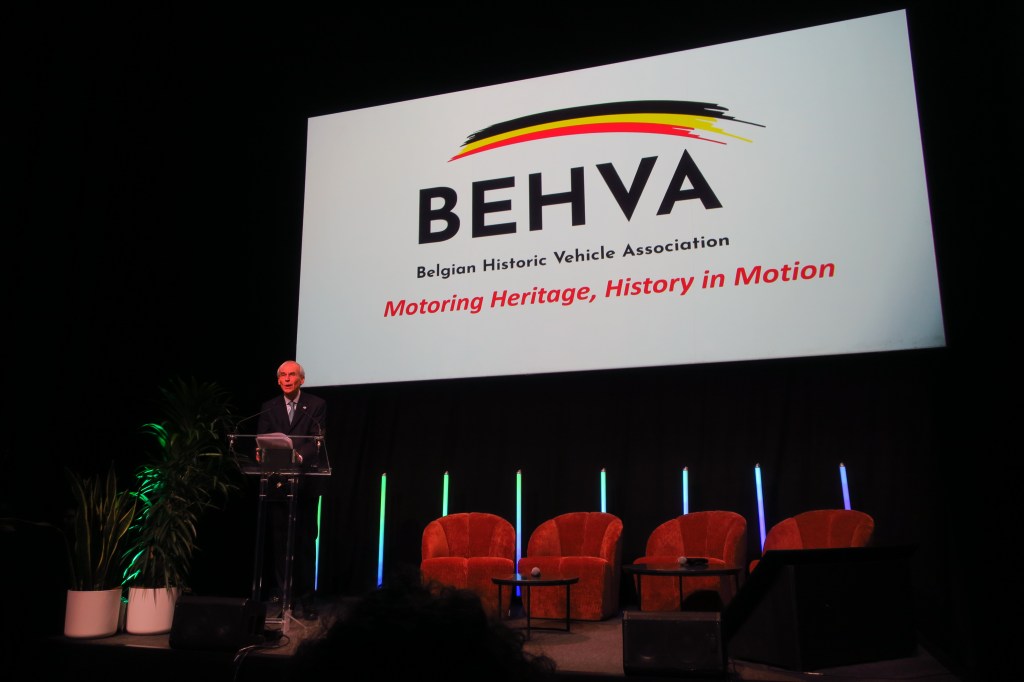
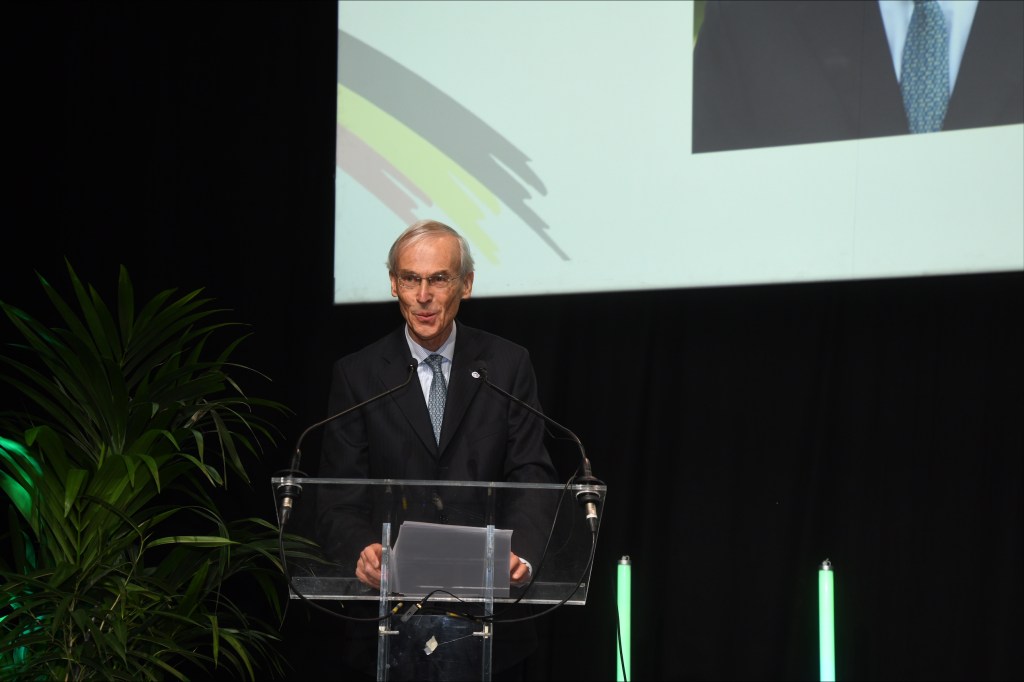
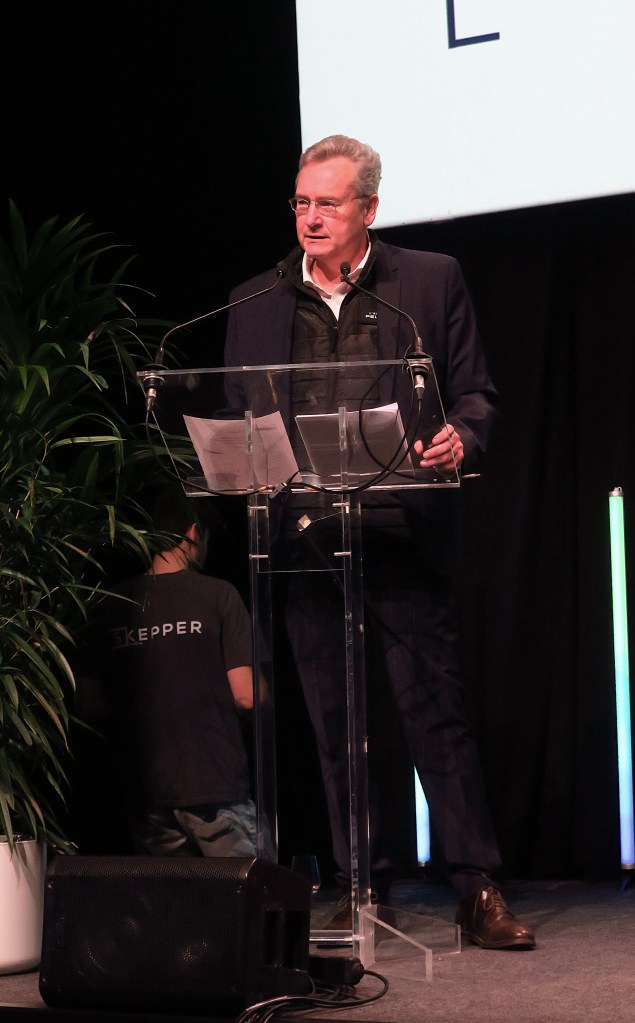
An introductory adress was held by Philippe Dehennin, (see photo here above) who pointed out the explosive growth of historic automotive collections and museums. This automotive heritage forms now an integral and dynamic part of our European identity, and embodies a physical and iconic bridge between our past, present and future.
The crucial role of BEHVA…
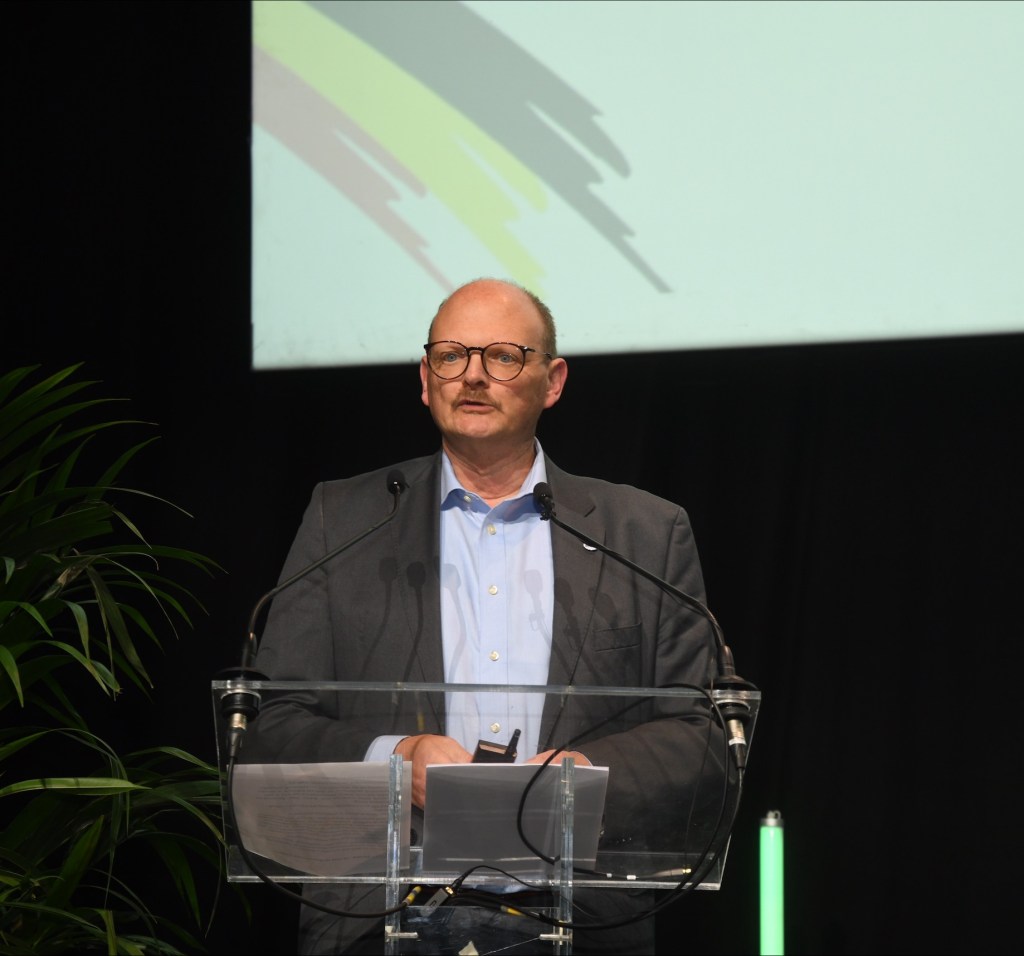
Peeter Henning (see photo below) then presented the role and activities of BEHVA. The title of this conference already summarizes what BEHVA as an organization stands for: preserving a heritage that is not standing in a garage or museum, but which is to be admired and enjoyed on the road. We are all here together because we all believe that mobile heritage is cultural heritage, he pointed out. They bear witness to our technical, social, and cultural history. They celebrate craftsmanship, evoke industrial production and design, and last but not least, individual mobility and freedom.
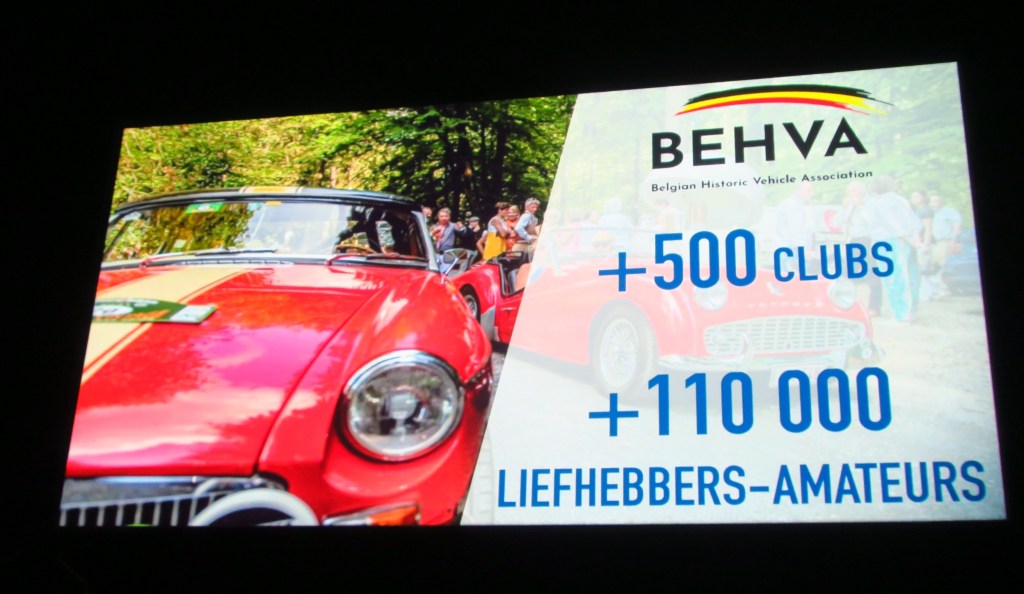
The role of BEHVA is to defend the interests of this heritage. The BEHVA represents in Belgium all the amateurs of historic cars and their clubs. This includes more than 500 clubs and 110.000 members.
But our lawmakers put the existence and use of this heritage under pressure. BEHVA is the spokesperson for all these enthusiasts at the government level and is also the bridgehead toward the automotive sector and the international historic car world. We continuously stress the fact that the mileage of the cars of our members is about the equivalent of one month of an ordinary vehicle, and that lawmakers should take this into account.
BEHVA also keeps a close contact with all the actors of the automotive world, importers, independent specialists, insurers, education centers and schools. BEHVA Insurance now insures more than 72.000 historic vehicles in Belgium. We are the official representative at FIVA for our country in establishing international standards.
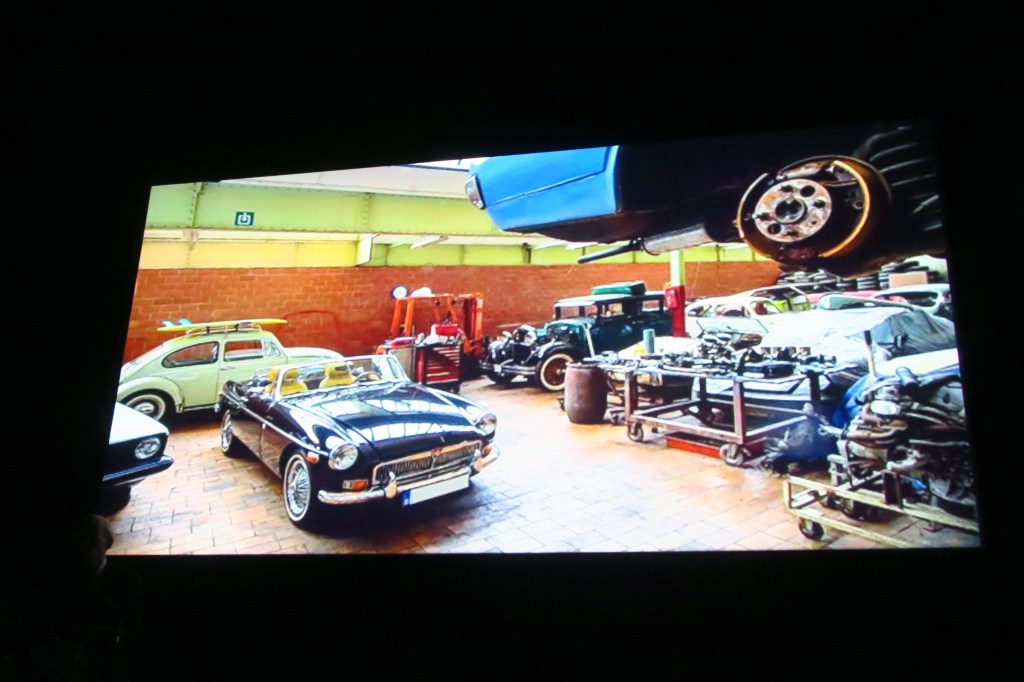
Preserving our heritage needs also the upkeep of technical knowledge, and passing them on to future generations. We have education projects for our youth, in maintenance, restoration and electric, mechanical and bodywork repair. We form a bridge between the professional garage and maintenance sector and schools and education centers, and tie them with the our historic car world.
There is a need in the sector for motivated young people and we create learning possibilities for them, as they are in need for a succesful career. Historic cars live in an ecosystem which BEHVA actively supports. Thousands of jobs are connected to this system. It is our mission that this history in motion stays indeed, in motion…
A filmed message was shown of the president of FIVA, Alberto Scuro. He is president of Automotoclub Storico Italiano (ASI) and was elected in november last year as president of FIVA. FIVA was founded in 1966 by an international group of historic vehicle organisations, who felt the time had come for a worldwide body to promote and guide the interests of the historic vehicle movement throughout the world. At present, FIVA comprises member organisations in 71 countries throughout the world, which in turn represent many millions of historic vehicle enthusiasts. We will come back on the role and function of FIVA in a special report soon…
A story of 9000 brands…
Moderator Philippe Casse discussed the beginnings of automotive history, and pointed out that Aristotle came up first with the idea of a self propelling vehicle, or “auto mobile.” It took another two millenia before Bertha Benz drove on August 5th 1888 at the wheel of her husband’s invention, the Patent Motorwagen, 106 kilometers from Mannheim to Pforzheim. Aristotle had already pointed out, there is no genius without a touch of folly… but it has changed the life of billions.
In 138 years, not less than 9000 different brands, of which 158 were Belgian, saw the light. They all together produced about 3,5 billion cars, of which today some 1,5 billion are every day on the road.
Every brand contributed to this, and therefore merits to be appreciated and preserved, as the collectors and clubs do today. Numerous brands also have museums, archives and collections. There are not less than 1,500 museums worldwide and several hundred thousand collectors.
The speakers today will convince you of the importance to preserve this heritage, this legacy which has triggered fundamental socio economcial changes brought about by the fabulous tool which is the automobile. Indeed, preserving this heritage is of great importance for the future of the automobile, and also to actively appeal to young generations to continue this task.
L’Aventure Peugeot and Citroën DS…
Loïc de la Roche also stressed that the automotive “patrimoine” or heritage is a tangible witness of history; just look at the museum in Sochaux, and it is also something that is essential to transmit to future generations. It also adds to brand value, showing its roots. In his conclusion he presented what we have to remember and which lessons we have to learn from all this.
Loïc stated that it will be a voyage in time, discovering the (historic)passion and emotion(s) around the automobile. It will be about discovering the emotions which the automobile has triggered in us throughout history. Discovering the (historic) automobile, getting to grips with it, drive it, describing the adventurous experience this represents.
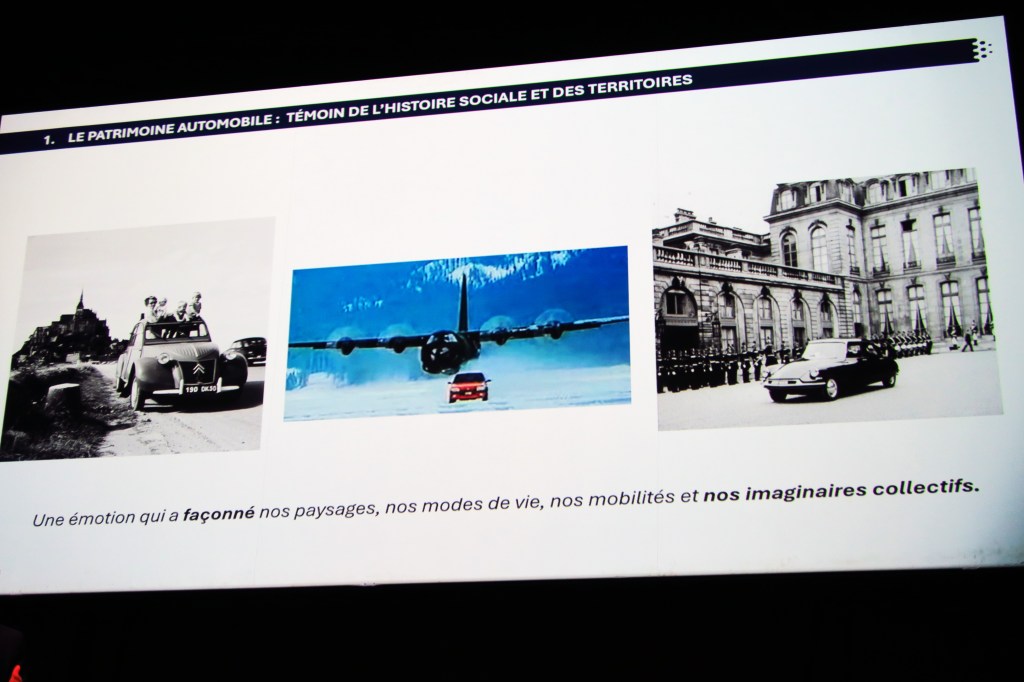
He proposed to start with the beginning, the automobile as a witness of social and territorial history. Indeed, the automobile has changed landscapes, our way of life, our mobility but also our collective imagination.
This collective imagination is the story we tell about the cars of our youth, we dream about. Therefore we call it “adventure”, as it moves our imagination and inspires us. It is the present and the future, and this collective imagination is the strength of our brands.
Automotive industry changed societies…
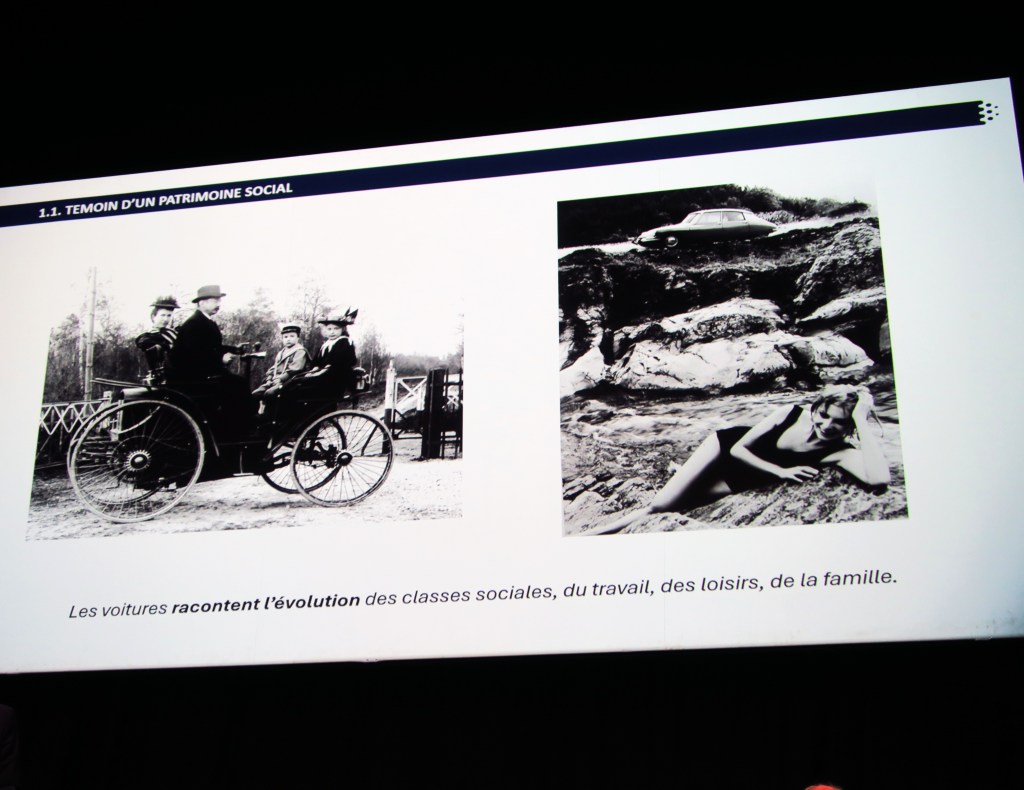
The car also tells us about the evolution of the social classes, work, liberty of society. Our archives are mostly visited by…sociologists. Based on the documents, they reconstruct a period, a social history of people and their territory.
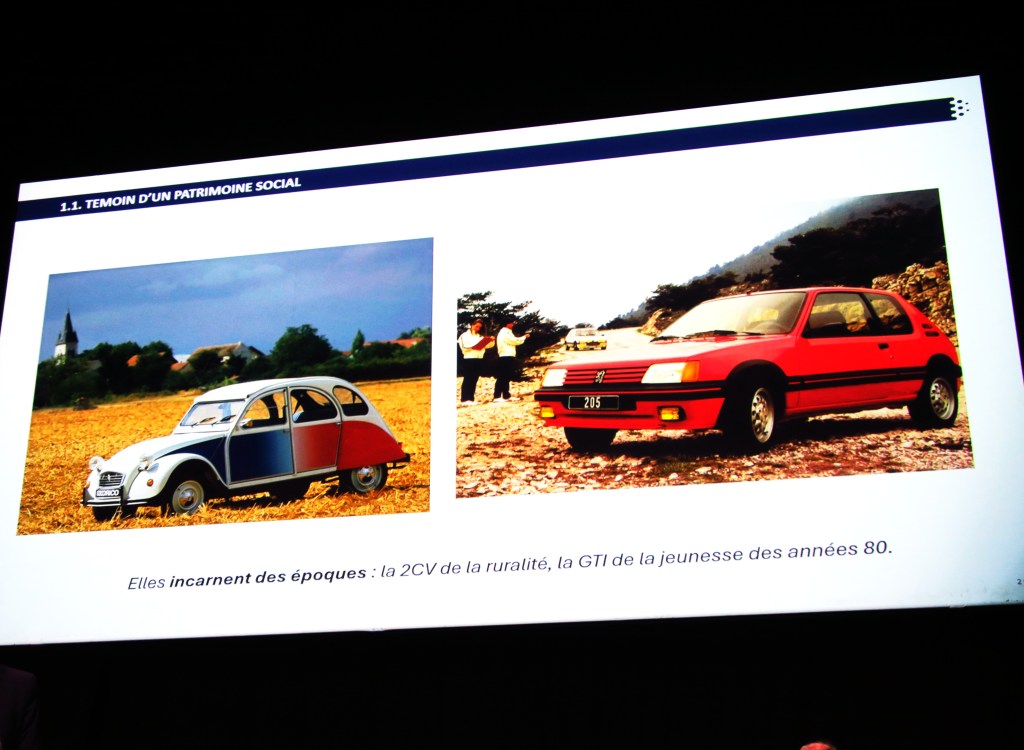
The cars also evoke an epoch, like the 2 CV. The Peugeot 205 (GTI) inspires young generations. They illustrate the cultural mirror which is the automobile. Then comes the importance of power, technology, the new ways to use a car, mobility contracts, etc.
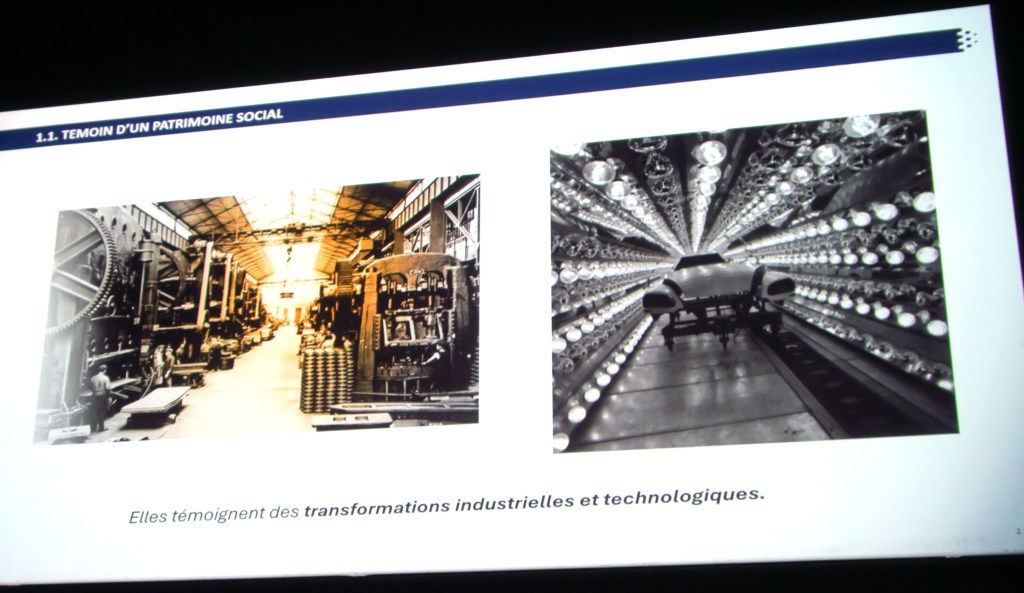
Everything that surrounds the automobile, amongst others the industrial heritage, mass production, mondialisation, energy transition, all this has a heavy impact on people. The factory in Rennes in 1961 had originally 14,000 workers, in 1980 it was slightly below 3,000…
We open our museum to companies organizing B2B events for instance, and we discuss with them about what they want to convey to the participants and people they invite. Some parts of the museum are more suitable for them to convey the message they want to put across.
The automobile has always been a very important factor in triggering innovation, notably in the materials. So one finds always an element in the history of the automobile and in our Peugeot museum in Sochaux which allows the visiting companies to attach their message to it and to convey the values which they want to bring to their invitees.
The automotive industry also shaped our regions and landscapes…
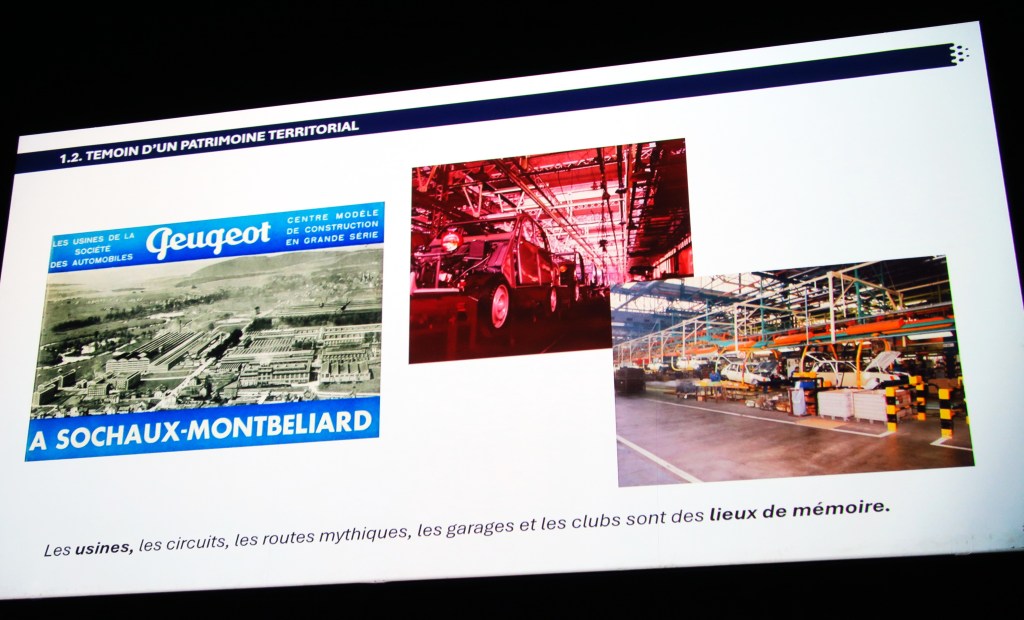
As we said, the automobile industry is also a witness to our territorial heritage. We have noticed that the visitors to our museum are not only interested in the cars, but that the visit was for them also an industrial and territorial happening and experience, an adventure so to say. They see how the region has developed and changed due to the presence of industry. The Sochaux factory was 20,000 square meters in 1921, 585 hectars in 1960 and in 2022 we are again concentrated at 150 hectars.
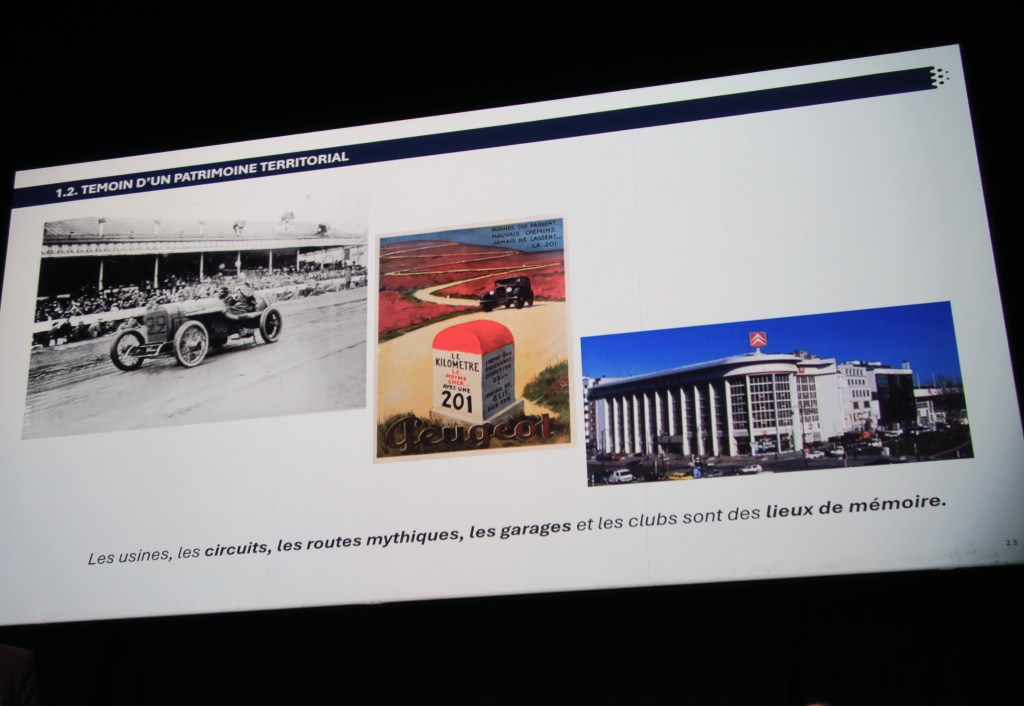
The car racing circuits are also an important witness. Of course, you all know Spa Francorchamps, Monthléry, but there are also iconic roads, like the Nationale 7. You have also mythical dealerships, like the Citroën dealership building at the Place de l’Yser in Brussels, now being converted in an art museum.
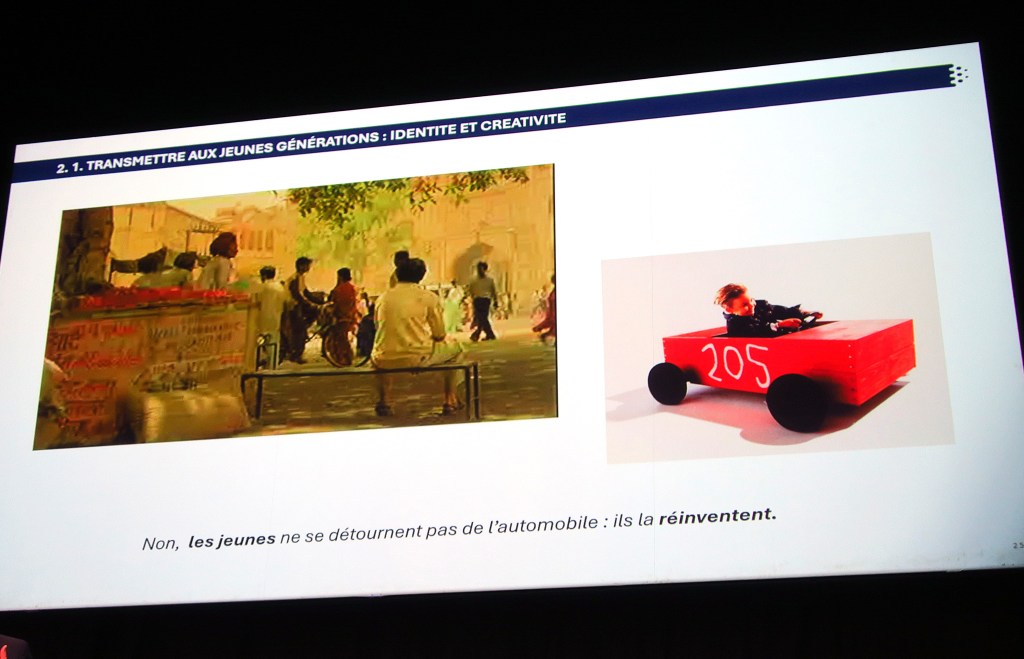
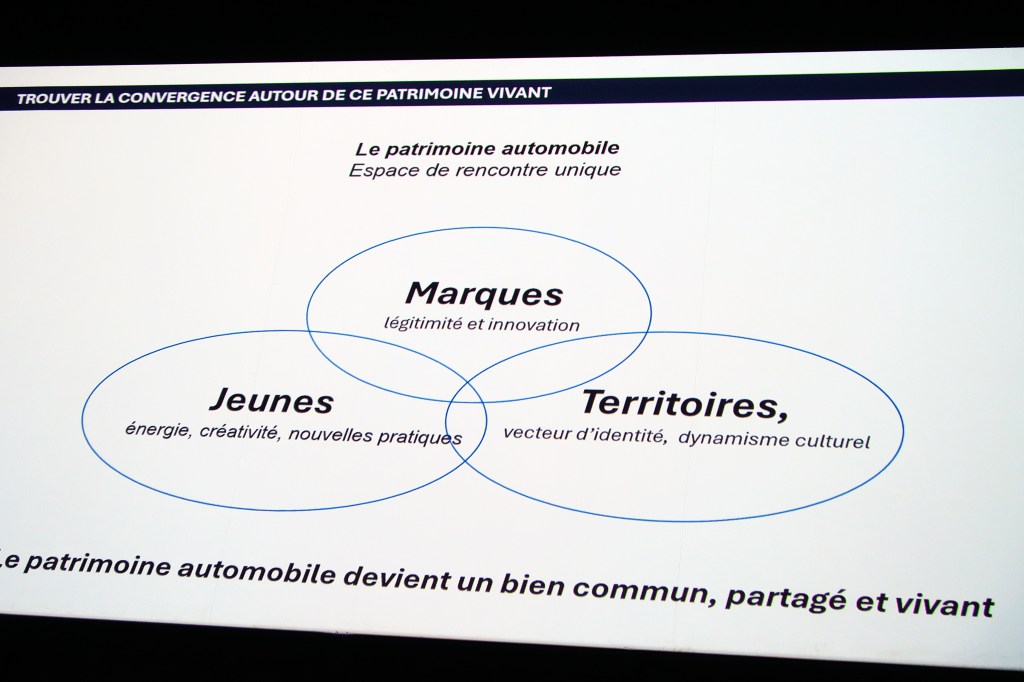
The young generations will also change the way in which they will approach, accept and acquire the historic automobile. They will reinvent it, so to say. Many young people now also enter into the realm of the “aventure Peugeot” and are inspired and seduced. They search authentic experiences, they want to connect with it physically. They also accept that things can break down, in an age where everything works perfectly without a hitch. The Aventure Peugeot has of course connections with schools and education/training centers.
Automobile history also brings emotion…
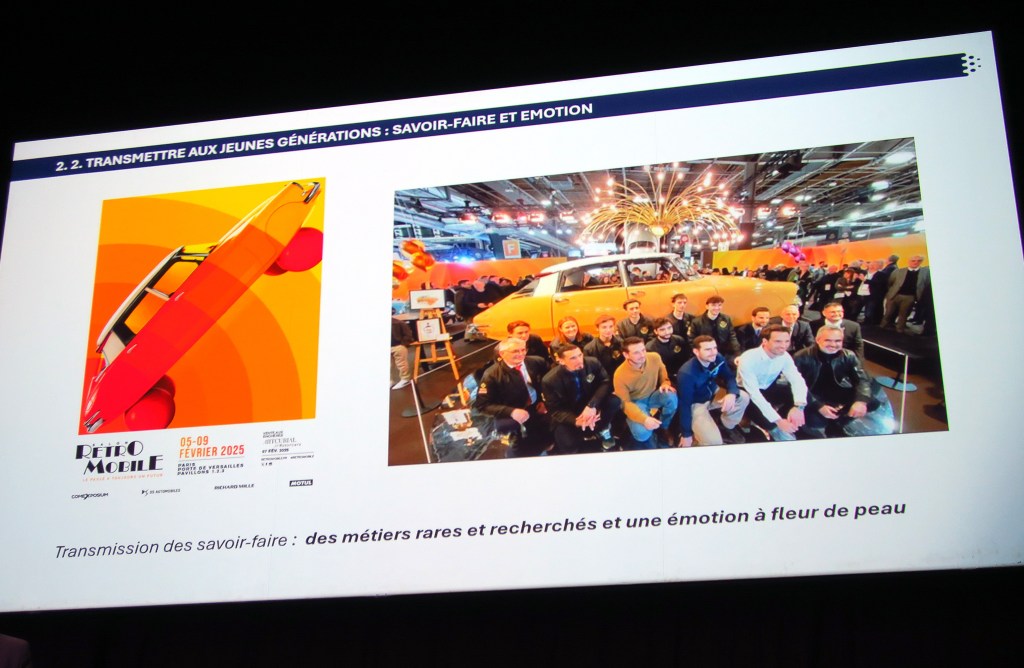
We also want to transmit emotion. This was particularly true at the happening when celebrating 70 years of DS, notably at Rétromobile. The DS “Ballon” has been meticulously recreated, as the original was…dismantled and sold to a private customer(!) A team of 25 young “compagnons de métiér” did a wonderful job, and the car has been shown throughout 2025 on 16 venues, amongst witch Autoworld in June last year. The car continues its tour…
A museum of national importance…
The director of the MUCEM Museum in Marseille told Loïc de la Roche in a discussion about the Aventure Peugeot and its museum that considering the richness of the message you can transmit about the automobile and its history to the future engineers, it makes it such a such an important subject that you can consider it to be part of the national soverignity. What is better than a museum like ours to inspire young engineers to a career in (automotive) engineering? This indeed, is now an element in our strategy.
Social engagement…
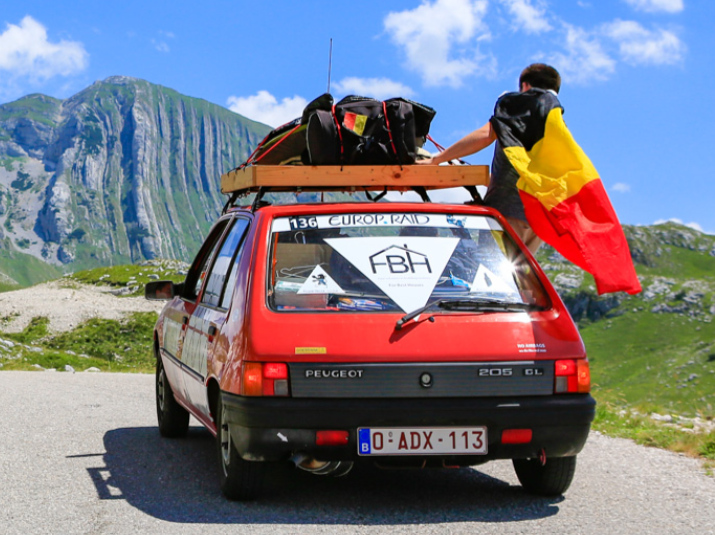
A further element we want to transmit is social engagement. We organise the Europe Raid, through 20 pays, visiting 12 capital cities, 60 UNESCO heritage sites and 220 stages, over the most scenic routes of Europe. One creates strong ties, also between generations, and indeed, the world is moving. Recently a club Citroën C6 has seen the light. The average age of its members is 25 years…
We also look at video games to attract the enthusiasm and engagement of young generations and to awaken the desire to find and preserve our moving heritage, even if it is more recent and consequently inspires them.
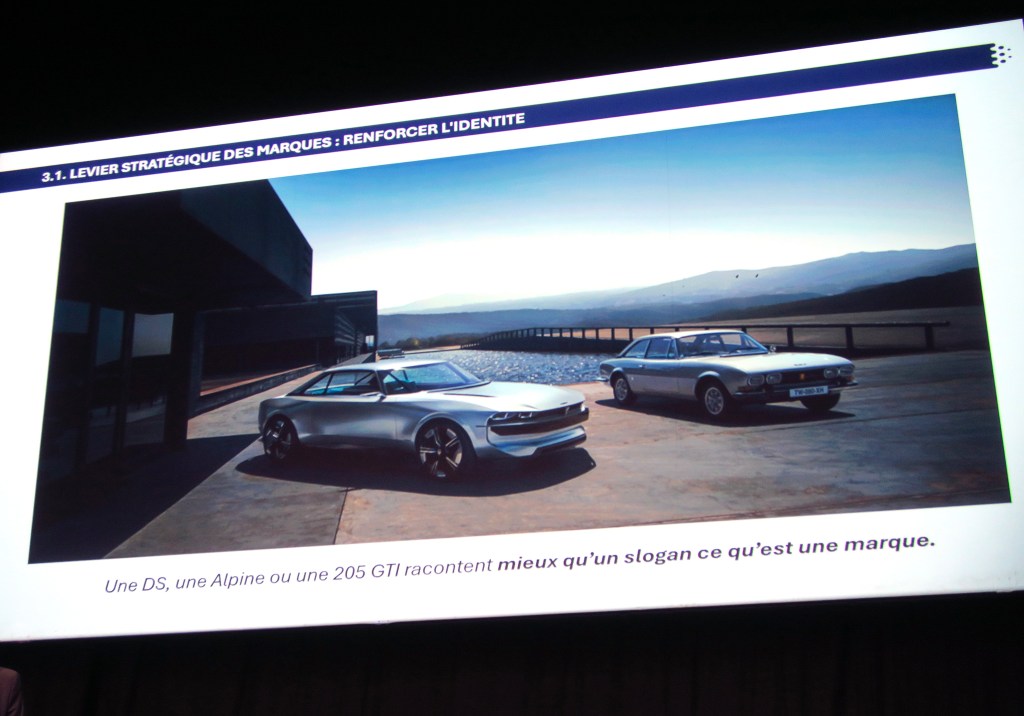
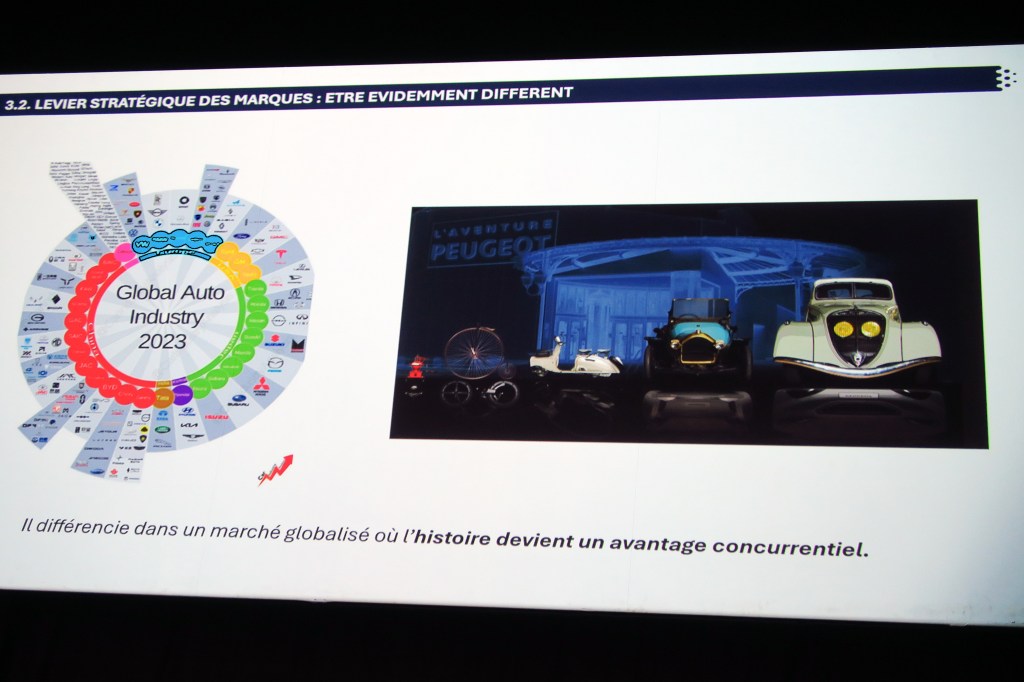
An important pillar in the Aventure Peugeot is also to strengthen and enhance our brand image. It is craftmanship, know how, but above all embodying and bringing a promise, strengthening and upholding our values, our identity. In our present automotive market it is important to have a history, a distinct design language and putting this in perspective. This allows us to be different and stand out. Of course we talk about icons and sagas.
The saga is the 205 and the icon is the GTI. Our present e 205 GTI is a perfect example of this strategy, where we use our history as a future oriented spearhead. Last year before the start of the Le Mans race, Peugeot had invited 50 owners to drive their 205 GTI around the circuit. It is difficult to describe the enormous energy this triggered, spreading across generations. Here we really talk about authentic experiences. Also in our museum we search to enhance these experiences, so we invite the visitors to see also our restoration workshop. We are also entering the aftermarket to rescue and preserve spare parts, and we also support the collectors to keep their cars which are (partially) electronic running reliably. In France, some 30,000 persons are involved in the ecosystem of historic cars, representing a turnover of some 3,5 billion Euros…
Preserve it for future generations…
With the car history in general and the Adventure Peugeot Citroën, we have here an enormous immaterial asset, which we will keep alive with a coherent history which is preserved also in the future. I will finish with the slogan of the Patek Philippe Watches, which I will turn around a bit: when you have a historic Peugeot or Citroën, you will merely be its keeper, and preserve it to hand it over to future generations…showing that the automobile is a magnificent human adventure.
In the part 2 of our report on this remarkable conference we will present the speech of Thomas Stebbich and Thomas Antoine. In the third and final part we will present the subsequent panel discussion.
Do you know “Automechanika” ? It is actually one of the pillars in the “Messe Frankfurt” organization, which generally offers tailor-made trade fairformats worldwide with an international target audience. Of course, the automotive sector is an important part of their activity. Therefore, they organise automotive events, and also automotive aftermarket events.
Automechanika, being the leading trade fair brand, is its most important platform with 16 events worldwide. Not only is it the international meeting place for the manufacturing industry, repair shops and automotive trade, it also represents the entire automotive aftermarket value chain like no other trade fair brand.
Now they have launched a new B2B Classic Car Network, and are working to establish a comprehensive network between the automotive aftermarket and the classic car sector.
As we all know, classic and collectible cars and supercars represent a market worth billions – and a key goal of this initiative is to bring clarity to this fragmented sector.
Members of the new network will receive industry insights and exclusive invitations to classic and collectible car events, while also enjoying the opportunity to discover new business models and make new contacts in the worlds of industry, retail, workshops and services. Just read further…
Hans Knol ten Bensel
Put Frankfurt 8-12 September in your diary…
During the trade fair from 8 to 12 September 2026, the new community will be gathering in Hall 11 for a daily happy hour where they can network and share ideas. There will also be a captivating supporting programme organised by Jürgen Book, a classic car aficionado and paintwork expert with more than 45 years of experience in the automotive industry. One highlight will be the presentation of the ‘Golden Classic’ award by Auto BILD Klassik on the evening of 8 September 2026.
Bringing together leading players from industry, workshops and retail to address topics throughout the automotive value chain is part Automechanika’s DNA. This is also true for Automechanika’s network concept for the classic car business.
Automecahnika has taken this step in response to growing global interest in classic cars and associated challenges such as spare parts supply, the retention and transfer of expertise (increasingly important as many experienced specialists retire), and, also very important, a distinct lack of specialised training formats.
For many workshops, classic cars have been little more than a sideshow to date, yet they offer numerous automotive businesses a lucrative additional source of income – in restoration, maintenance, spare parts supply and specialised services for classic vehicles.
The network specifically strengthens the visibility and networking of professionals in this sector while helping them to network. This includes not only industry companies exhibiting at the event, but also international associations and institutions, as well as trade visitors with business ties in the classic car business.
Automechanika Frankfurt’s organisers will be getting support from their new strategic partner FIVA (Fédération Internationale des Véhicules Anciens), the well known international association for classic cars.
FIVA represents clubs in more than 70 countries with over two million members and has one of the largest international networks in the world of classic cars. We will discuss also more at length the role and acivities of the FIVA organisation when we present you here on this site the conference organised by the Belgian Historic Vehicle Association (BEHVA), titled “Motoring Heritage, History in Motion.” You can read a first short comment of this event on my Instagram Site autoprova.be. But more to come soon on this site here.
Tiddo Bresters, President of FIVA commented on the B2B Classic Network: “Our strategic partnership with Automechanika, a global player in the B2B automotive supply exhibition industry, demonstrates confidence in the growth potential of the historic vehicle business and the opportunities it also offers young people for a career in this market.”
Supported by industry…
Automechanika’s initiative is besides FIVA also supported by its partners Bosch, DAT (Deutsche Automobil Treuhand), Eucon and ROWE.
Bosch Classic comes here in the picture. Michael Mack, Director of Bosch Classic commented: “Bosch Mobility Aftermarket has had a strong presence at Automechanika for many years now. We are delighted to be adding Bosch Classic’s portfolio of products and services to the mix in 2026 and relish the opportunity to present these to a broad international audience. Automechanika Frankfurt’s B2B Classic Car Network promises to make a valuable contribution to the classic car community in future.”
Osvaldo Celani, Managing Director of Eucon: “The dynamics of the classic car market are presenting the industry with new challenges. Factors such as increasing technical complexity, growing market diversity and higher expectations among stakeholders mean that classic cars can no longer be viewed merely as a hobby, but rather as a professional business area. Reliable data and strong partnerships are crucial in this regard. With our data service for classic cars, we at Eucon are increasing transparency and efficiency in this segment – an important contribution to sustainable growth and the future viability of the classic car industry.”
Raphael Dammann, DAT Head of Sales Strategy: “DAT has been an integral part of the automotive industry since 1931. We help our experts, workshops and dealers with data and values that help keep our automotive heritage moving throughout the vehicle lifecycle. We welcome the additional opportunity that the Automechanika B2B Classic Car Network gives us to come into contact with highly specialised providers.”
Stefan Wermter, CEO of ROWE Mineralölwerk GmbH: “Our participation in the B2B Classic Car Network is a clear commitment to our involvement in the field of classic and modern classic cars. Historic vehicles exude pure fascination, but also require particularly intensive care from their owners to protect them and maintain their value. The interests and needs of the classic car scene are as diverse and exciting as our high-quality full range of products.
Our product solutions thrive on the exchange with connoisseurs. With the classic oils in our vintage product range, ROWE already offers a wide selection that meets the special requirements of young and oldtimers. The coming together of the automotive aftermarket with professionals from the scene offers enormous potential for establishing contacts, expanding our portfolio in a targeted manner and thus contributing to ensuring that enthusiasts can enjoy their classic cars for as long as possible.”
We will keep you posted on further developments of this laudable initiative of Automechanica. Stay tuned for the report of the conference held by BEHVA on the latest Brussels Motor Show!
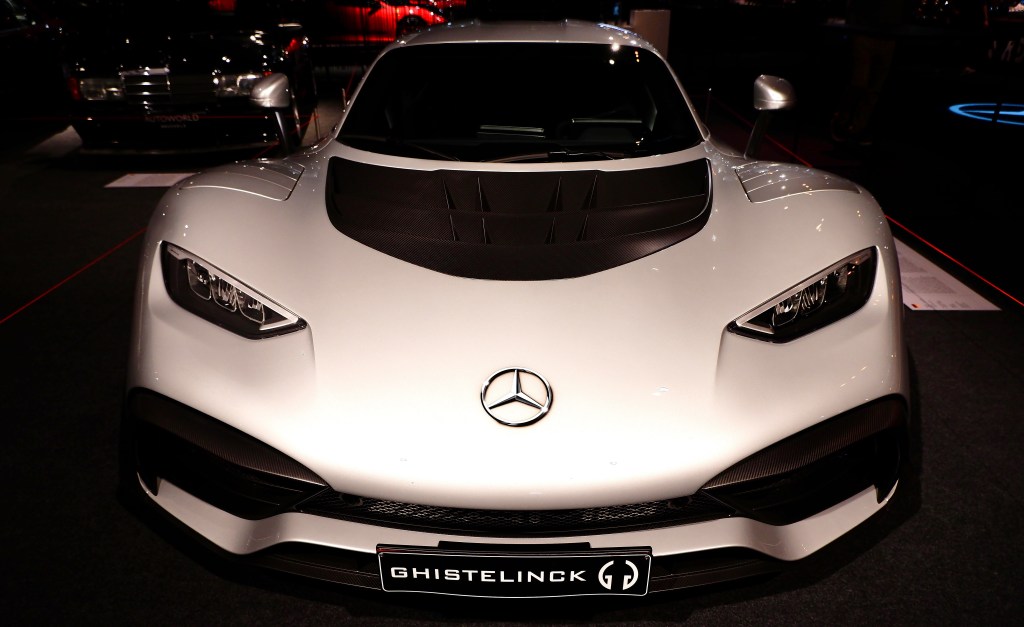
The exhibition retraces this remarkable story, from the very first three-wheeled Benz (1886) to the spectacular AMG ONE, here on the photo.
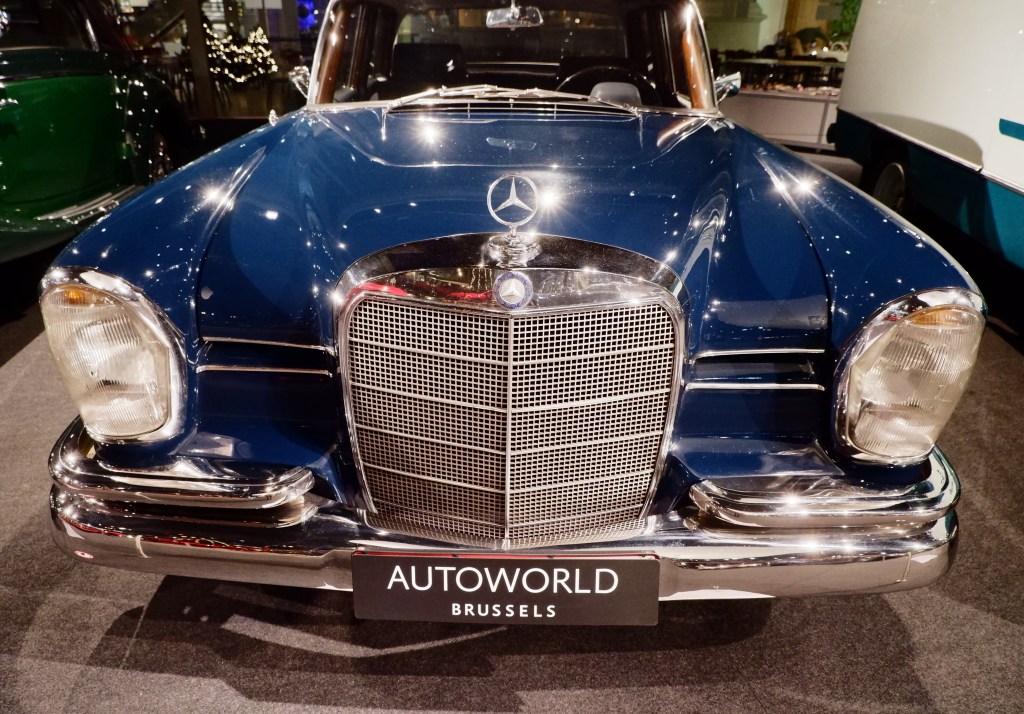
The magnificent Autoworld Museum traditionally ends the year with a major exhibition. This year, the house with the good star, Mercedes, takes centre stage. You can admire all the cars which made the brand truly legendary, and this until 22nd of February 2026.
Indeed, Mercedes has quite something to celebrate: not only is the brand now 140 years old, but it celebrates also the 100th anniversary of the merger between Daimler and Benz.
The exhibition retraces this remarkable story, from the very first three-wheeled Benz (1886) to the spectacular AMG ONE. More than fifty vehicles, including several rare highlights, are brought together for the first time in Belgium, displayed across thematic zones that reveal the many faces of Mercedes-Benz.
We attended the press evening, and of course we took our Fujifilm camera along the exhibits. We show you here some remarkable cars, but you should definitely put a visit to Autoworld, housed in the magnificent Cinquantenaire monumental site.
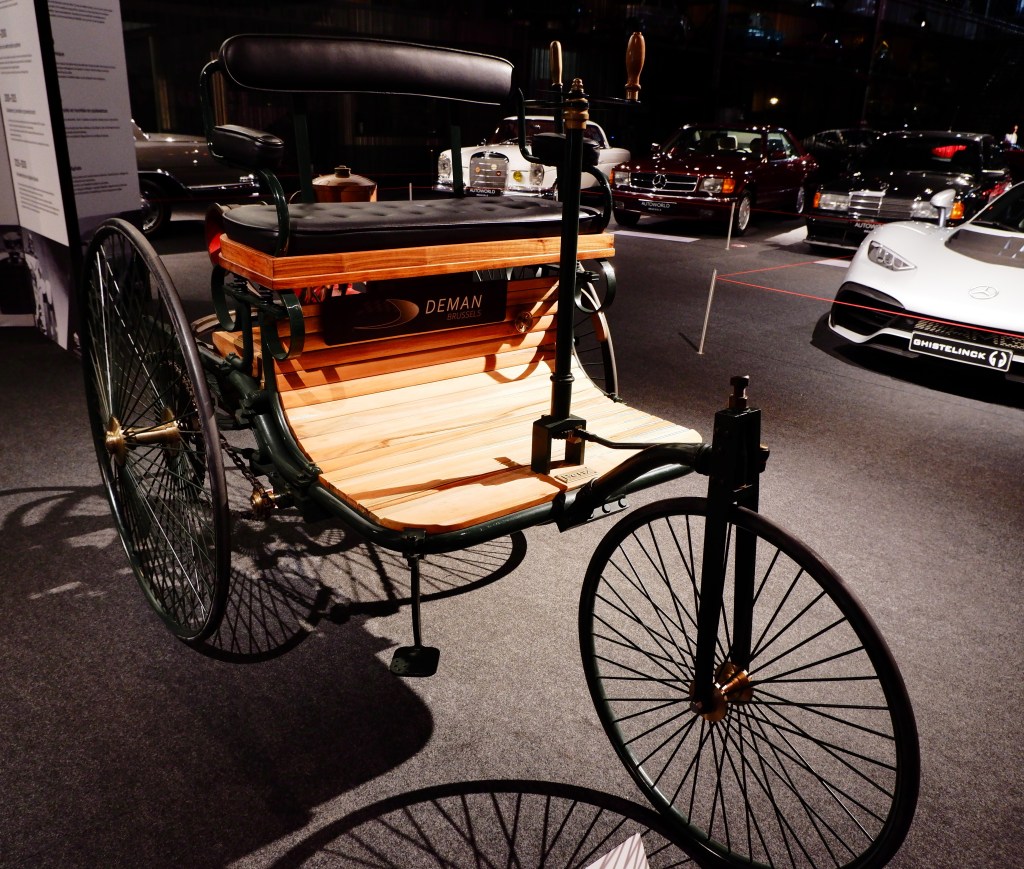
You can start your tour with the 1886 Benz Patent-Motorwagen Replica. A replica indeed, as Mercedes had 100 replicas build in England, to celebrate the 100th birthday in 1986.
Carl Benz (1844 -1929) built the car and it contained quite a few novelties: fully elliptic springs were used at the back with chain drive on both sides. A simple belt system served as a single-speed transmission. The four-stroke engine was extremely light for the time, weighing about 100 kg. A large horizontal flywheel stabilized the power output. Nevertheless, Benz was cautious, and opted for 3 wheels because he was… as an engineer not really familiar with a 2-wheel steering mechanism (!). The vehicle was awarded the German patent number 37435, applied for on 29 January 1886. Everyone knows about the drive which his wife Bertha Benz made with this car to visit her mother. The first fully-fledged automobile drive ever… when you see the car in the flesh, you wonder how on earth this was ueberhaupt possible.
The unique Mercedes DNA was soon established…
When you stroll a few meters further, you stand eye to eye with a magnificent green 1937 Mercedes-Benz 540 K Sport Cabrio A (W29). The car was originally delivered to Alfred Krupp , and was early after the second world war sold to Prince Bernard, the husband of Queen Juliana of the Netherlands. Since he wanted his cars to be green, it was resprayed in his favorite color.
It was sold to a Swedish owner in 1953. Around 1990, Daimler-Benz meticulously restored the car to its original specification. The current owner has cherished this remarkable automobile since 1995.
Alongside the 540 K stands a 1961 220 S (W111) “Heckflossen”. This nickname stemmed from the rather timidly styled rear fins, which Mercedes apologetically commented as “helpful for parking”. This 220 S was revolutionary for its “safety cell”, truly representing a milestone in car design where front and rear crumple zones absorbed kinetic energy on impact. F1 Racing car engineer Rudolf Uhlenhaut had a major hand in the design of suspension and refining the handling of this beautiful car, and since my father owned one in these days, it is a car in which I learned to drive expertly. I still love the specific handling of this car, and I vividly remember a long drive with a 230 S “Universal” together with Autoworld Curator Leo Van Hoorick to visit the German Mercedes Benz museum, where I could enjoy behind the wheel the wonderful performance and stability in fast corners and at speed of this car. I think Leo fell immediately in love with this very car, and soon after he bought this car from the Mercedes Benz Belgium collection…and still owns it!
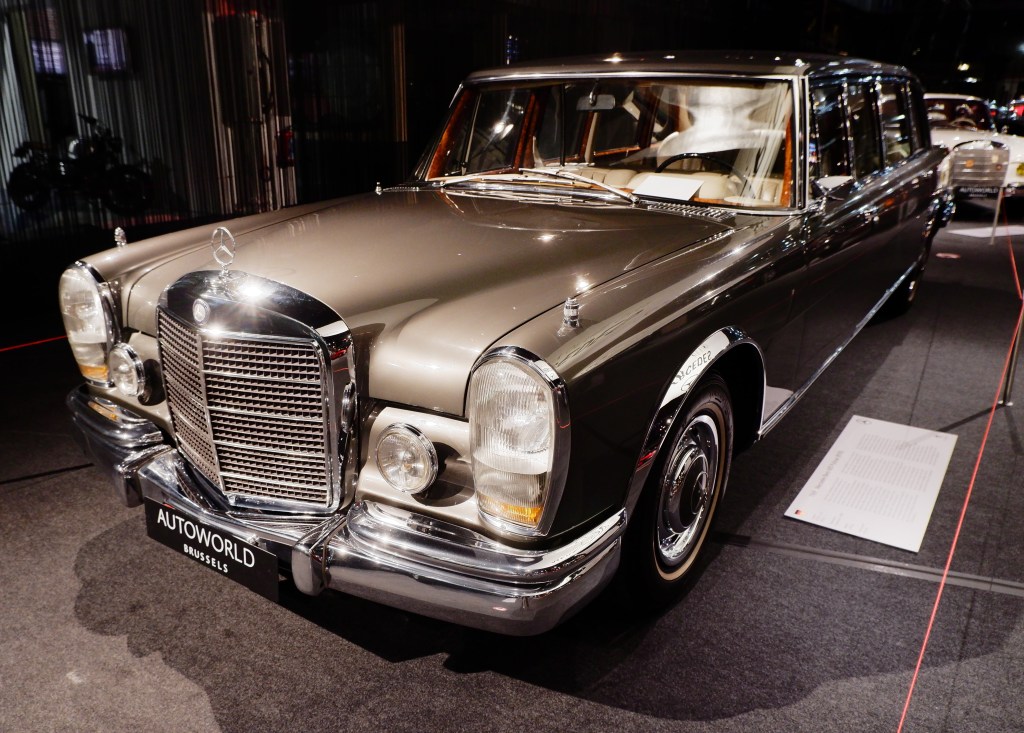
Royal transport: the 600 “Pullmann”
Strolling a bit further, one stands eye to eye with royal transport. Indeed, this car has served exclusively at the Belgian Royal Court, and is known as the “King Baudouin.”
This car, designed by the Frenchman Paul Bracq, (he also designed the iconic “Pagode” 230 SL) did not undergo a single modification during its 18-year career, undoubtedly due to its modern styling. It is equipped with air conditioning and a hydraulic system that controls, among other things, power steering, braking, and the hydraulic windows. Production began in 1964, and more than 600 variants were built until 1972. The production continued, albeit at a slower pace, until 1981. In total, 2,677 units were produced of which 487 long-wheelbase Pullmans. (overall length 6,240 mm).
A F1 Mercedes for the road…
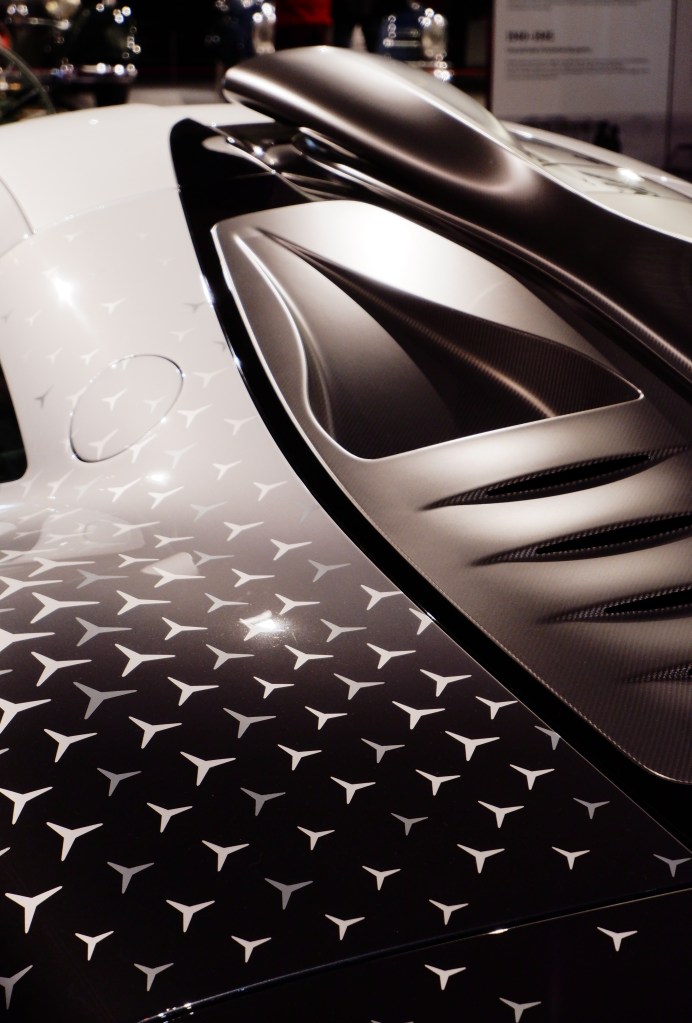
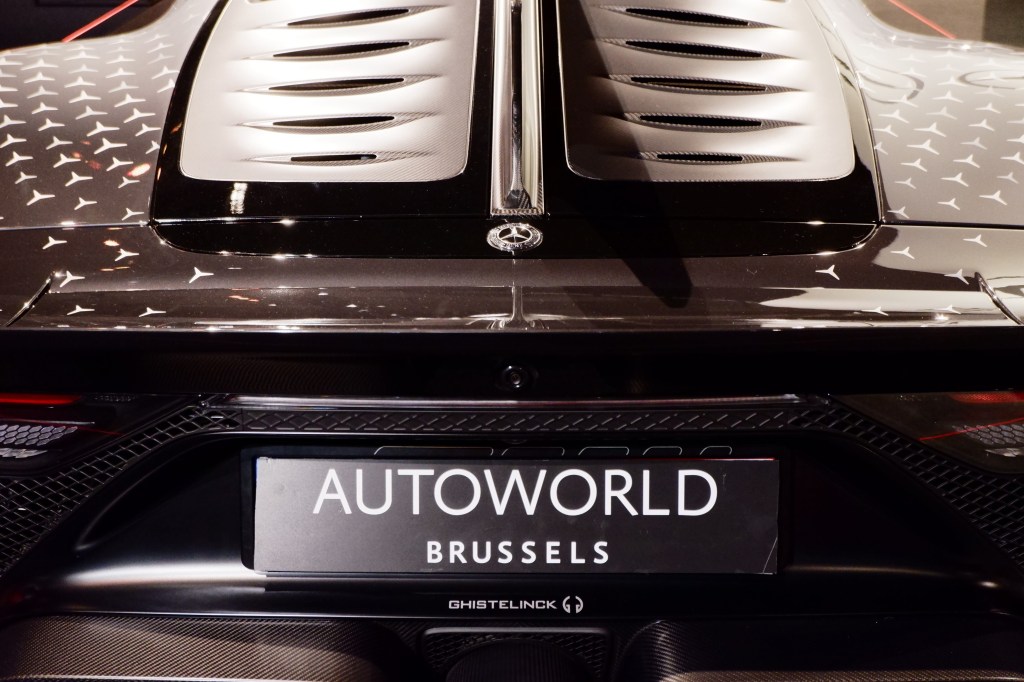
Sensational to admire is the 2025 Mercedes AMG-One. It is a hybrid supercar, nothing else actually than a F1 car adapted for road use. Behind the driver rests a 1,6 litre V6 turbo engine sourced from the Mercedes F1 car. But that is not enough: it also has four electric motors, which results in a total power delivery of 1062 HP and a top speed of 352 km/h. All this is not exceptional anymore in our dizzying EV age, but it stays quite impressive of course. The car made its debut on the 2017 IAA show in Frankfurt, but putting this complex drivetrain into production appeared to be a quite formidable task. So series production actually started only in August 2022. Only 275 units were planned, and of course they were completely sold out long before actual production began. The demand for this car was far higher, but AMG and Mercedes maintained the original production run, also to keep the car very exclusive.
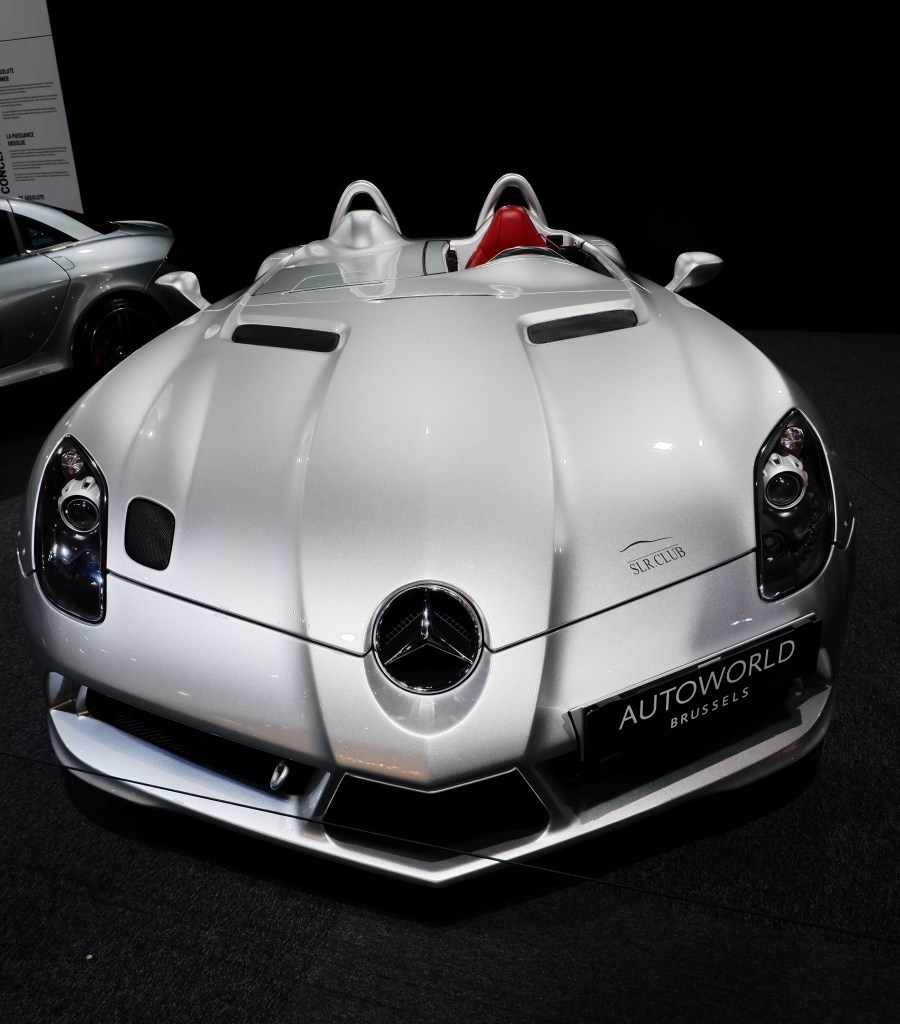
A tribute to Stirling Moss: the 2009 Mercedes-Benz SLR McLaren “Stirling Moss” (R199).
Your servant has vivid memories of this iconic British champion when he participated in the historic Mille Migilia in the official Mercedes factory team, alongside Stirling Moss. Together with my father, we drove the works 180 D “ponton”, which was far more comfortable and cooler that the 300 S Panamericana which Stirling Moss steered along the 1000 mile course. “You were having fun”, he commented, “you could drive virtually the whole course flat out!”
We like the panache and the contours of the car here which is built in his honour. Stirling drove this car on the 2009 Goodwood festival of speed.
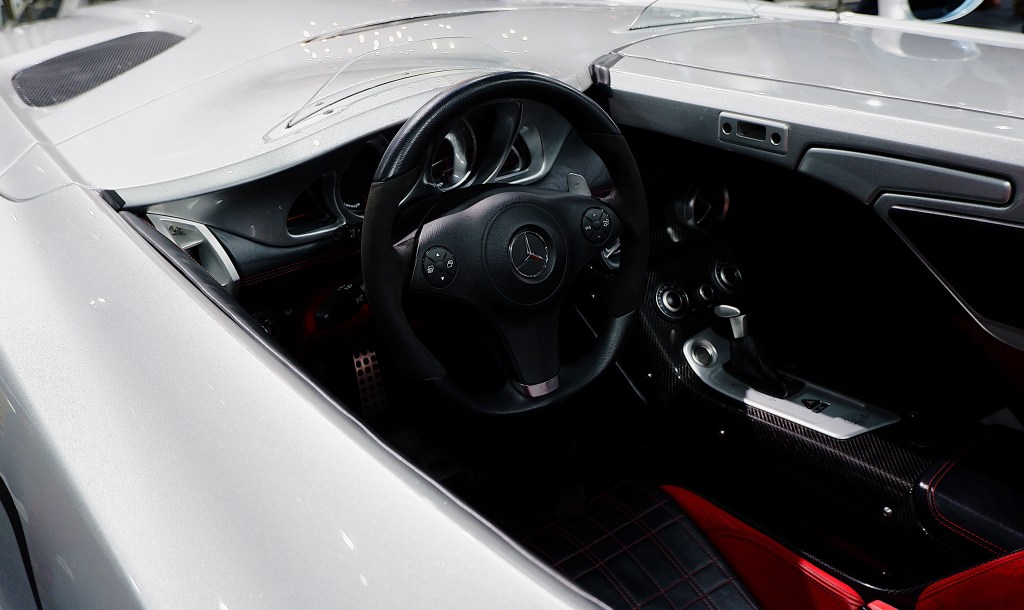
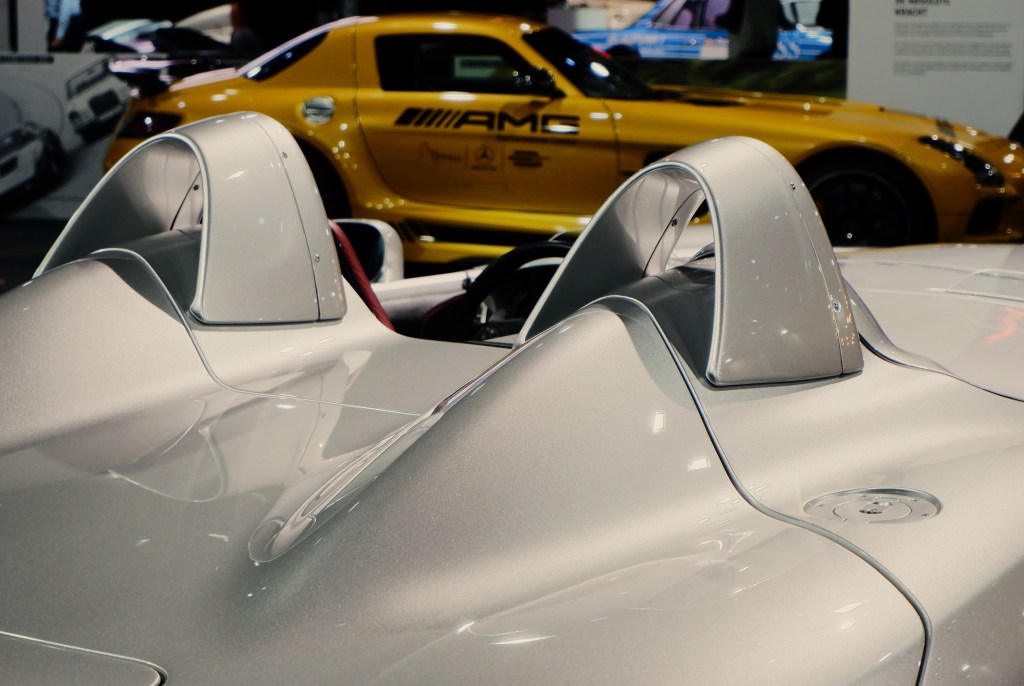
This limited edition variant uses a speedster styling that does not include a roof or a windscreen. The car is designed by Korean designer Yoon Il-hun and is of course inspired by the 300 SLR race car. The SLR Stirling Moss was to be the last series of the McLaren SLR built under the partnership between Mercedes-Benz and McLaren.
he car is approximately 200 kg lighter than the standard model thanks to carbon fibre construction and speedster styling. All 75 cars planned to be produced were completed by December 2009. It was available only to the existing SLR owners and each car cost in excess of US$1 million. This one was driven and signed by Stirling Moss in Goodwood in 2009….
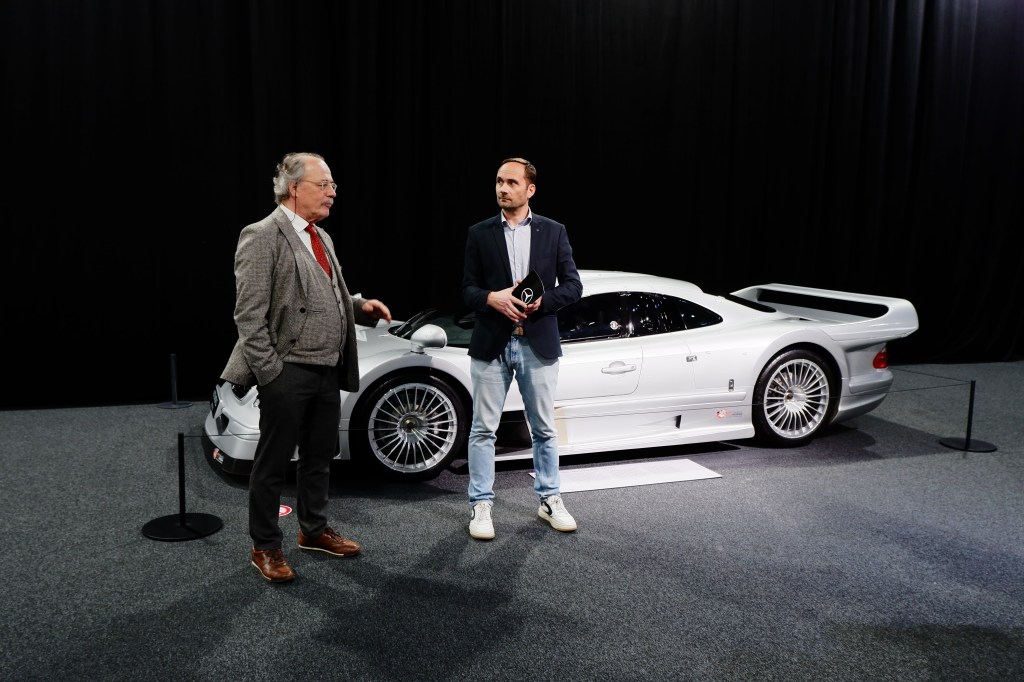
Autoworld curator Leo Van Hoorick (left) and Mercedes Benz Cars PR Bastien van Den Moortel guided us expertly through the exhibition…
But of course there is much more to be seen of stunning Mercedes cars in Brussels Autoworld. As said, the exhibition runs until February 22nd. Not to be missed…
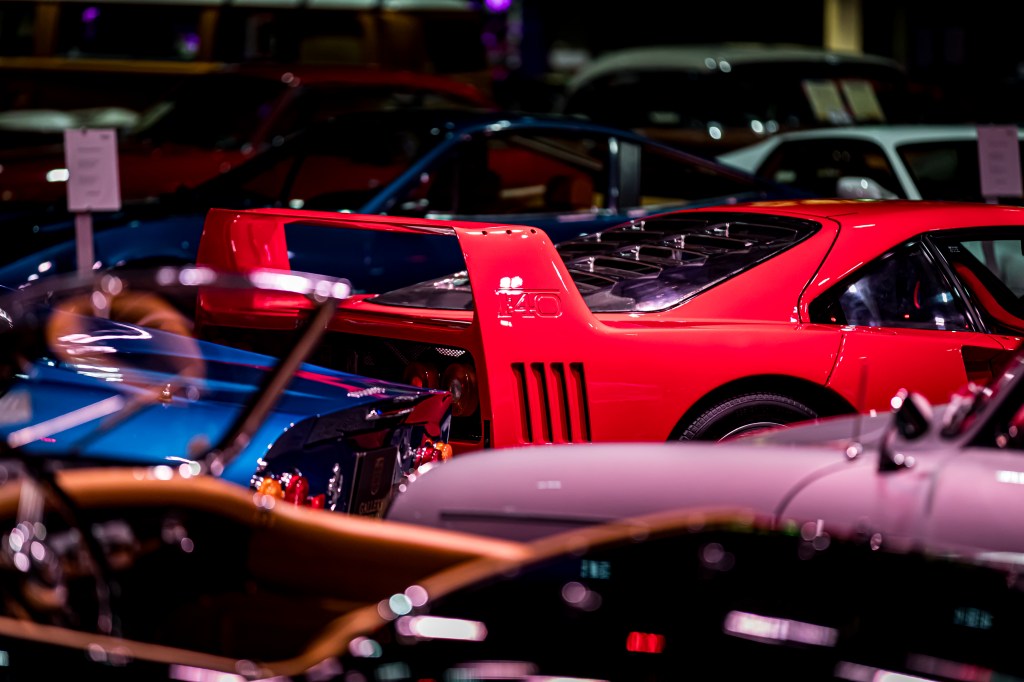
In the vast “palaces” of the iconic Brussels Expo, the 10th edition of this event proved quite popular, with no less than 29.472 enthusiasts admiring the four-wheeled classics. Special theme of the show was the celebration of the looks, fury and sound of the V12 engine, which is of course at home in many supercars. The good news is that these wonderful engines are here to stay, as our Brussels EU politicians are going to allow combustion engines to live on after 2035…
The festival of supercars: a Koeningsegg was admired by many…
The show also focused on the 75th anniversary of Formula 1. Many supercars were therefore to be seen on the show, and this inspired the organiser MECC Maastricht to provide a special “Supercar Foyer” at the InterClassics Maastricht, which is to be held from 15 to 18 January in Maastricht.
International character
Organiser Erik Panis also mentions the international character of the show, and indeed, it is becoming one of the hallmarks of the Brussels event. It has now grown to the biggest indoor classic car event in the Benelux. Also, if you look at the number of cars which changed hands on the show, one notes that the classic car sector is still growing…
BEHVA promotes youth education…
One of the important partners of MECC is the Belgian Historic Vehicle Association (BEHVA). They worked actively to support students and teachers in car maintenance, repair, and service. Indeed, without the (specialized) professional mechanical and service know-how in repair and workshops and classic car care centres, the classic car industry and sector simply cannot survive and have a good future.
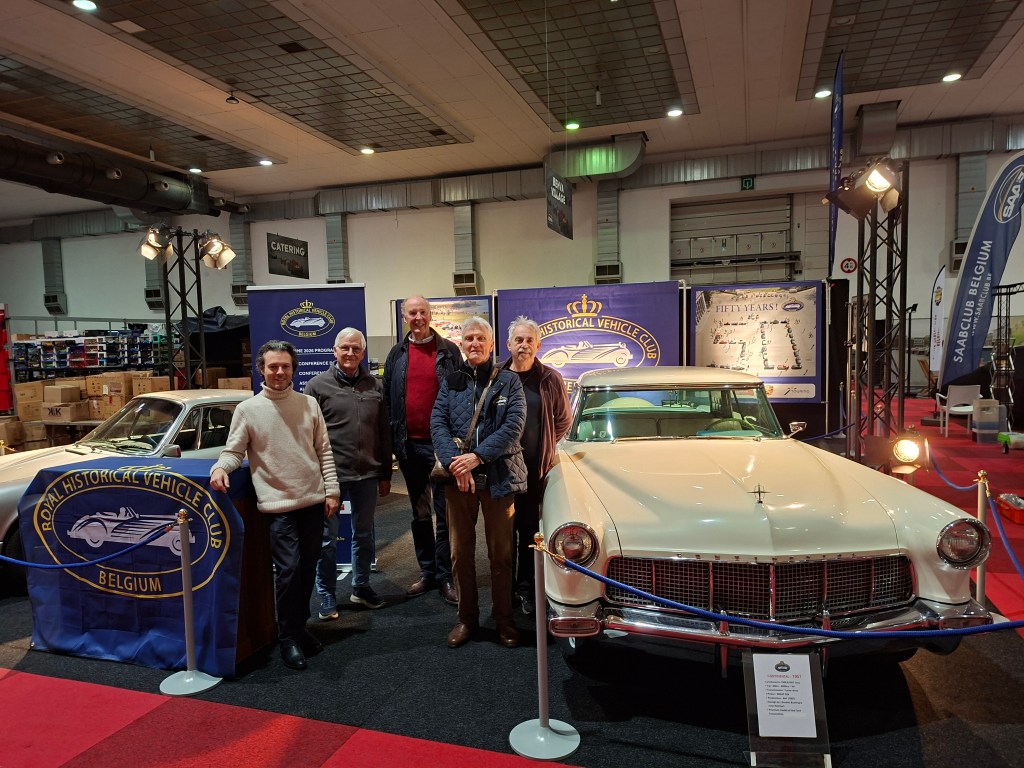
Many beauties were to be found on the show, and our beloved Royal Historical Vehicle Club Belgium, which had put up a beautiful stand at the InterClassics show, won a special prize with a well-preserved Lincoln Continental Mark II built in 1957. The club also celebrated its 50 years of existence…
The body, interior, and chassis of this Continental are totally original; of course, the mechanics underwent a thorough overhaul to make it roadworthy and reliable. For Emmanuel de Menten, (here far left in the photo), the proud owner of this Lincoln with classic “European” and Latin/Italianate styling language, hence the name “Continental”, owning this car is the fulfillment of a child’s dream…
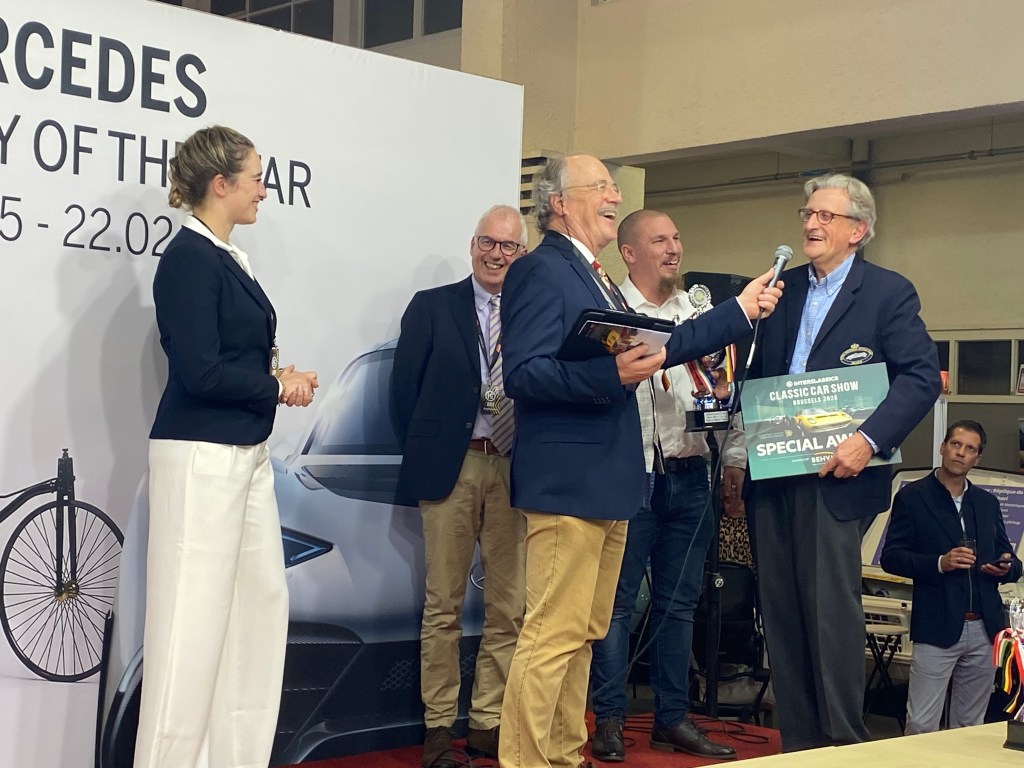
On the photo below you see the counselor and member of the executive committee of Autoworld Brussels, Leo Van Hoorick, handing over the Special Price of the BEHVA Jury to RHVCB President Michel Van Eesbeeck.
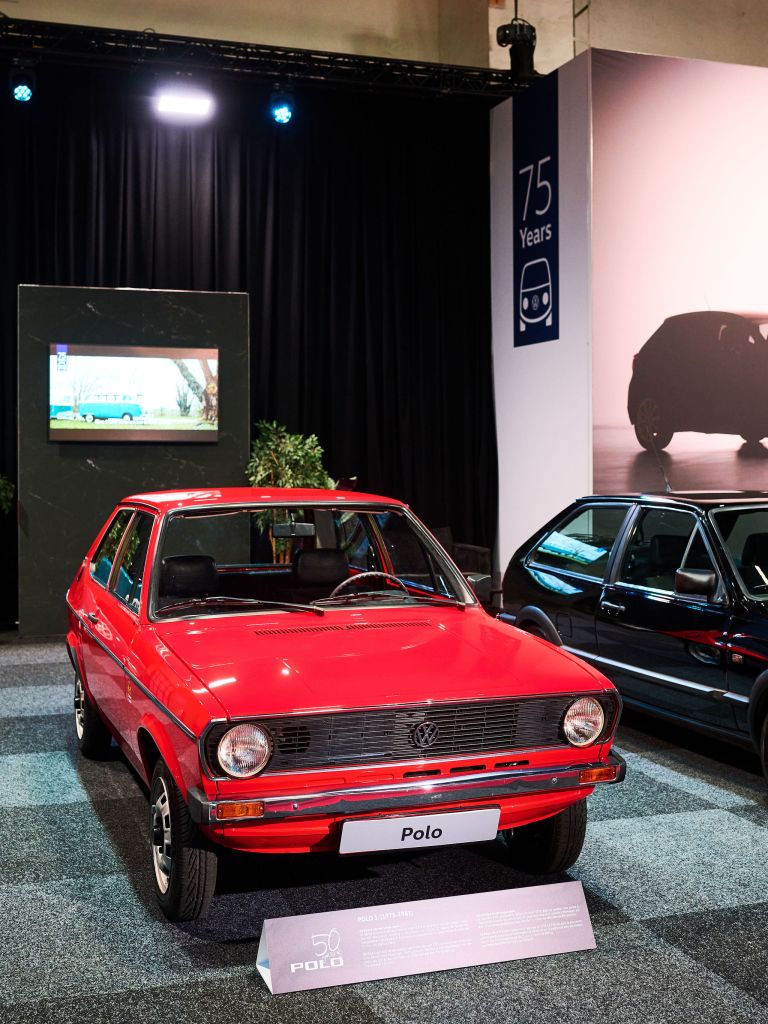
Celebrating 50 years of VW Polo…
Your servant vividly remembers driving the Audi 50 as a test car, and soon after I sat behind the wheel of the first Polo, a more dressed down version of the Audi sister model, launched in 1975. The original Polo 1 was sold in not less than 1,1 million units, and was built, including a facelift, until 1981. Of course, the history of the Polo merits a special article by itself and we will come back on this.
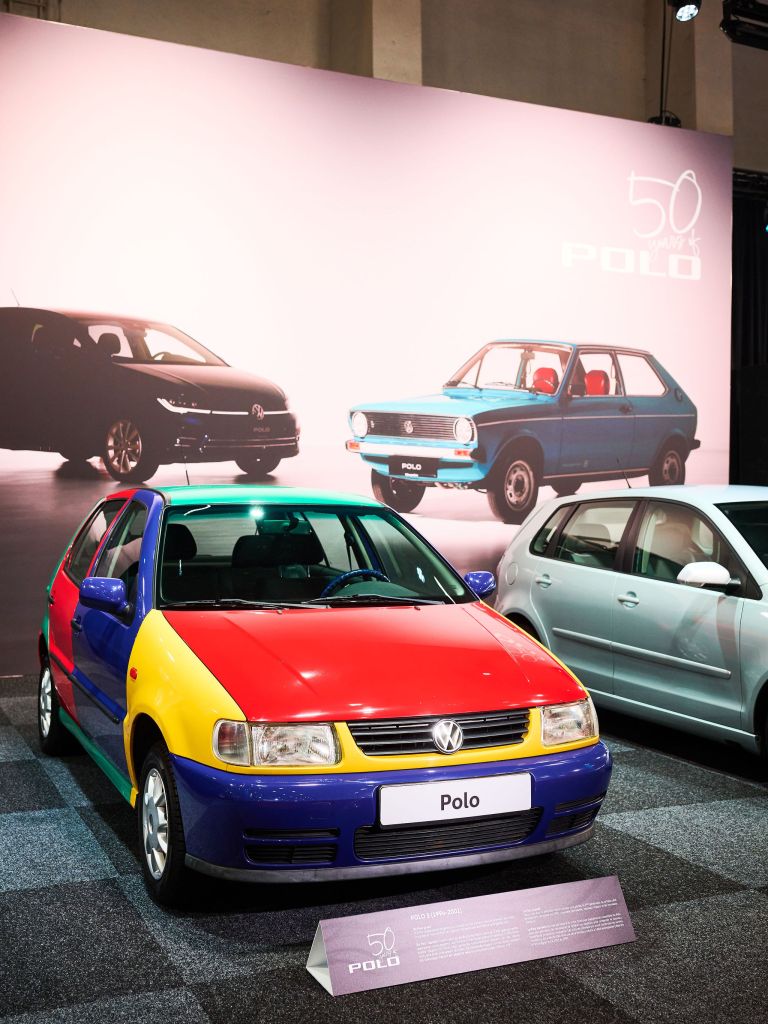
We limit ourselves here to the remarkable Polo models on the VW stand of the show, the Polo Harlekin and the Polo R WRC.
The story of the “Harlekin” is a special one. When the third generation of the Polo was introduced in 1994, Volkswagen also launched its modular production system. This allowed some parts to be exchanged with other models and brands within the group.
To highlight this approach, a small group of production engineers decided to fit ten Polos with body parts of different colours, and the Wolfsburg marketing department liked the idea and decided to make a limited production run for the German market. In total, from 1995 to 1997, 3.806 units were built, with 103 extra right hand drive Polos for the UK market.
The Polo R WRC is an icon of the World Rally Championship! Over four seasons, this car ensured that Volkswagen Motorsport and its beloved duo Sébastien Ogier and Julien Ingrassia won four world titles for manufacturers, and the same number for drivers and co-drivers. Of the 52 rallies in which the Polo R WRC participated, the car won 43 (or 82.7%) and at least one of its drivers finished on the podium 50 times.
The Polo R WRC, which is showcased at the Belgian VW Club stand during InterClassics, is the car that Sébastien Ogier and Julien Ingrassia used in 2013. The 1.6-litre turbo engine produces around 315 hp, a power that is transmitted to all four wheels via a sequential gearbox. Good for a sprint from 0 to 100 km/h in less than four seconds!
You can write the next InterClassics Brussels in your agenda: it is scheduled from 20 to 22 november next year!
At a three quarter view the car reveals its proper proportions, a wide angle lens and a lower standpoint will make the car look more impressive. An overcast sky combined with a quiet background and natural surroundings are ideal…
Car lovers as we are, we all would like to photograph our car(s). But how do we master the art? Here we give you a few useful tips, which will let you avoid mistakes and lead you right away to achieve impressive results…
Photography is all about light, so indeed choosing the right lighting is very important.
So avoid midday sun, but choose rather, if you can, the “golden hour”, which is at sunrise or sunset, when the light is warm and soft, enhancing the contours and reflections of the car.
Overcast days are also good, as it avoids harsh shadows and renders the colors of the car very well.. When you cannot avoid the sun, look for shadow spots, certainly when you are photographing details of the car.
When shooting details, try to evoke the character of the car. This Jaguar D Type is all about speed. When looking at this photo, You hear the straight six roaring down the Mulsanne straight at Le Mans…
Very important also is choosing your best angle. Ideal is kneeling down to the height of the headlamps, but of course this is a matter of taste. Try it out… Three quarter shots will show best the overall design of the car, but profile shots are also a good starting point. When you have photographed front and back of the car, it is time to shoot the details. Your (classic) car has many…
Very useful, and we would say a must, is the use of a polarizing filter. For your smartphone, there are simple clip-on versions available. It avoids reflections of windscreen and painted surfaces. Shooting from an angle can also minimize the reflections of these surfaces.
I tried to catch the atmosphere of rallying with this shot. I took the reflection of the chequered flag in the door window into the composition of the image.
Use your hand to shield the lens from sunlight, or use a lens hood on your camera.
Look for a quiet, non distracting background. That is, choose a quiet country road, foliage, or an empty parking lot (the marks on the ground can be quite disturbing however). Leave enough room around the car. It shows then something about the setting around it. Indeed, it tells a story…
Use also the rule of thirds. The rule of thirds is a fundamental photography guideline suggesting that images are more pleasing when subjects are placed along imaginary lines that divide the frame into thirds, both horizontally and vertically, or at their intersections. Your smartphone has this grid most probably, so put it on. Then position your main subject along these lines or at their 4 intersections (often called “power points”).
Never forget “human interest” photos. The face of the young woman is at an upper “power point” of the rule of thirds grid, leading your eyes to her face.
If your photo includes a horizon line, position it along the upper or lower third line, rather than dead center, to create a more balanced image.
You can also be creative when shooting a moving car: choose the burst mode on your camera or phone. Also try a slow shutter speed, it also gives surprising results…
This photo of the Volvo 122 S evokes the memory of legendary champion Tom Trana, throwing his Volvo along the gravel roads at a Swedish Midsummer rallye…
Our modern smartphones offer quite impressive quality, so for many there is no need for a proper camera. But then again, many find the use of a “real” camera more engaging and pleasant, as your servant does. Try a wide angle lens, which gives excellent results, but know that a 35 mm film equivalent lens or a 28-90 film equivalent zoom lens will do everything you would ever want, except of course when you are on the racing circuit taking action photos. That is a completely different matter, and this will be the subject of another article.
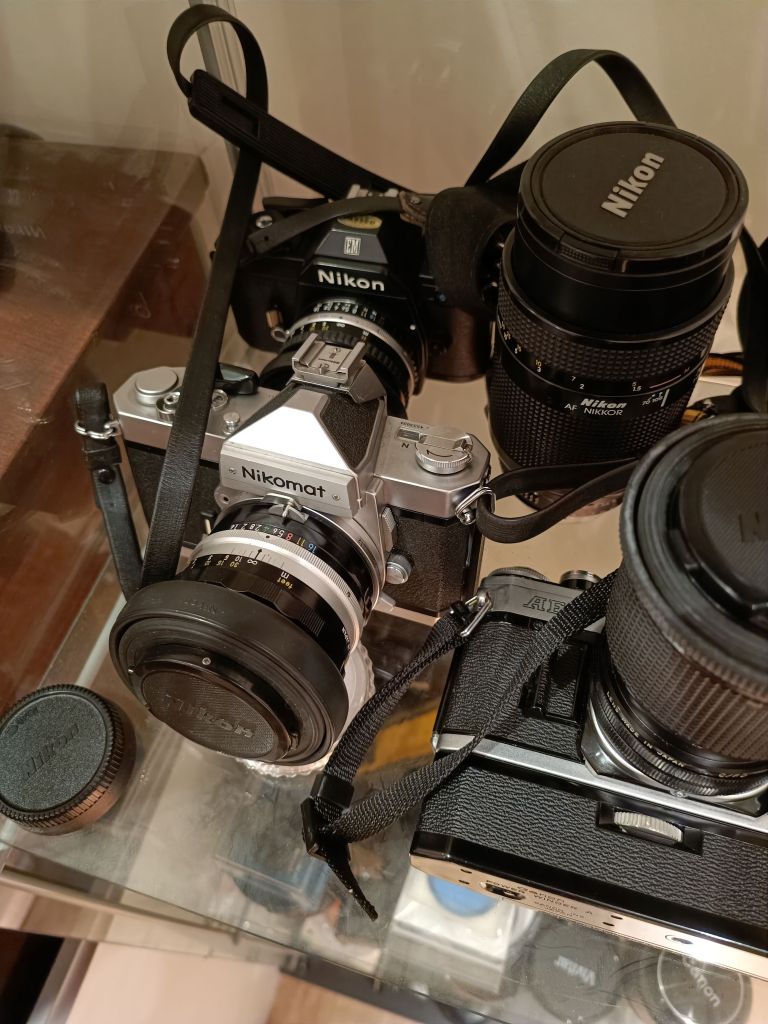
My very first camera, back in 1974: a Japanese bought Nikomat with the 1,4 50 mm Nikon lens, alongside the Canon AE-1 with motor drive.
Mirrorless cameras are more compact, but a good trusted (second hand) DSLR will do everything you would ever want marvelously. It is however rather heavy, so keep this in mind when you carry it along for hours on end. A shoulder harness which would allow to carry without effort even two big DSLRs would then be the thing to wear…
Mirrorless cameras are superb. Light, yet with excellent sensors, offering 24 m pixels here, combined with an F 4 Zeiss Vario-Tessar T E 16-70 mm.
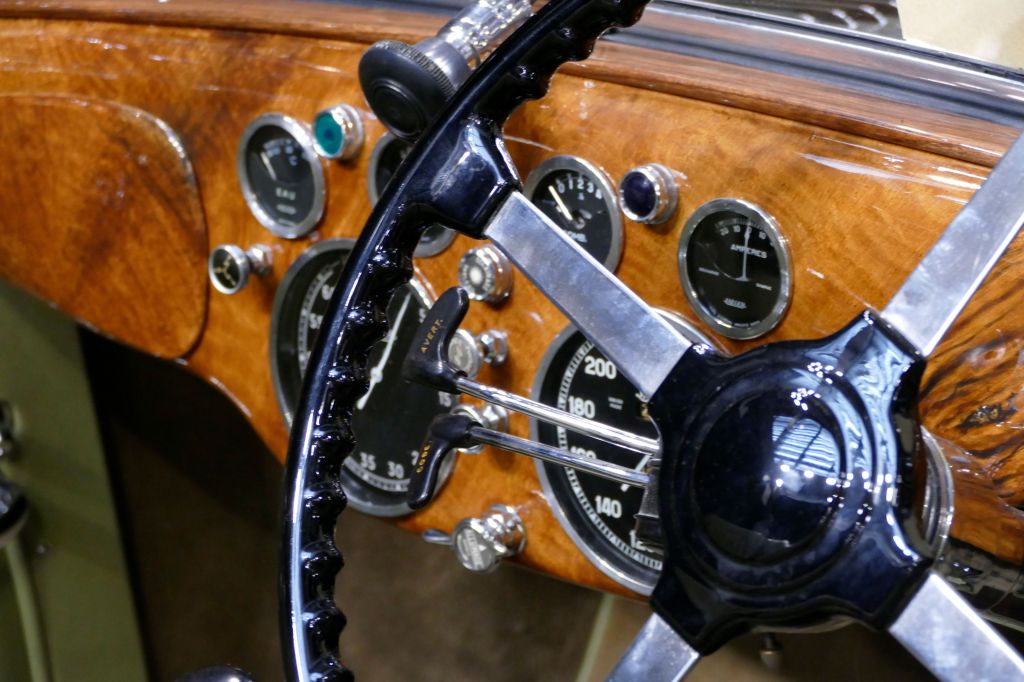
Dashboards always make you dream away. Look for even light conditions, avoid strong contrasts and reflections.
Of course, the now iconic and much wanted compact mirrorless analog vintage look cameras like the Fujifilm X100 which I have been using for years now earn you much sympathy and open many doors for you at events…
Advantages of the camera are, besides the pleasure of using it, the longer battery life when you are taking many photos, for instance at a classic car event or rally.
The same can be said about classic engines…
When using your smartphone, make sure to choose highest quality, and RAW format if you have a RAW editor to edit your photos afterwards. Also choose the HDR setting, or high dynamic range. If your smartphone allows you to choose portrait mode, then select it to have a shallow depth-of-field effect.
Photos of car details can tell the whole story: You would like to sit in this seat, driving through the Alps…
Tap the screen for focus and exposure adjustment, and you are all set. Of course you can use the post processing filters your smartphone software offers you, but don’t overdo things. Just work on your style, and keep trying. Even full professional photographers take some two years to perfect their style in post processing.
You are all set, now get behind that lens and shoot!
April 26 was already for weeks firmly put in the agenda for all the (Belgian) fans of British cars. After all, that’s when parts specialist Anglo Parts organized its annual “British Car Day”, where the classic car clubs and restoration specialists could put their best foot forward to recruit members or appeal to customers.
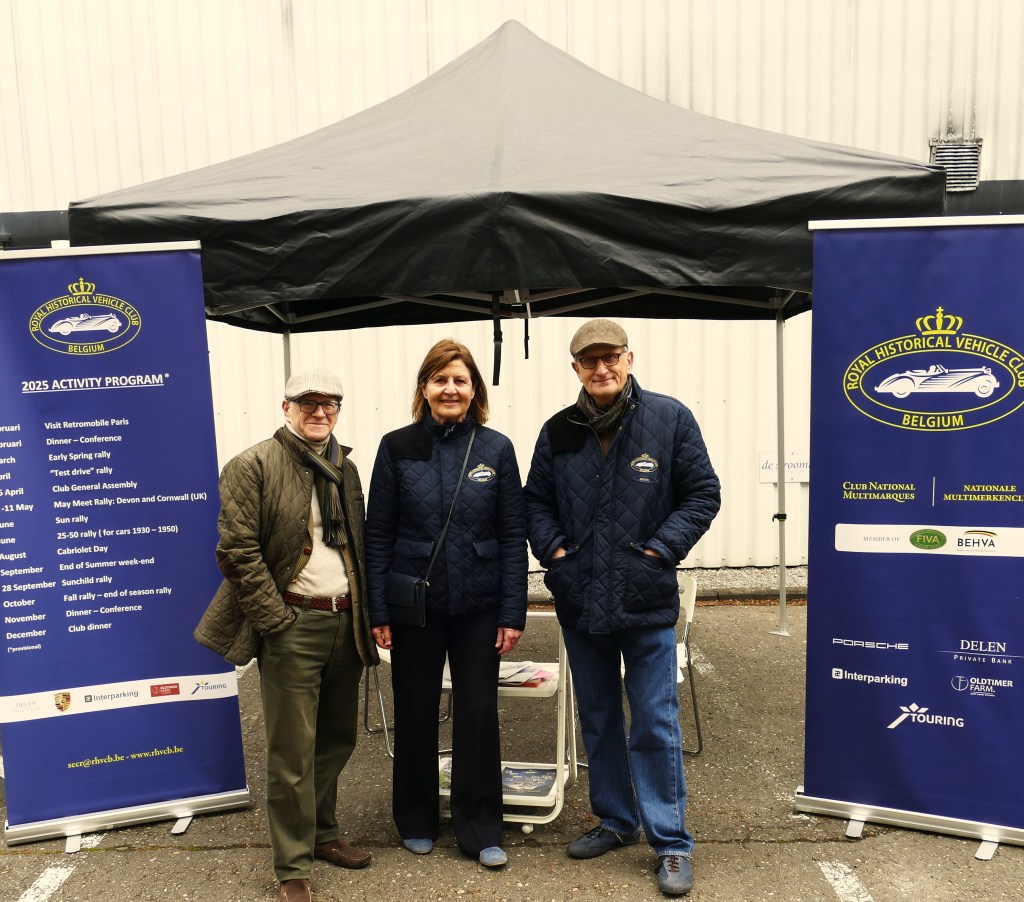
From left to right on our RHVCB stand: your servant, Ingrid De Jonge and Club president Michel Van Eesbeek
As faithful readers already have read in our post about our visit to parts specialist Anglo Parts, (see the post “Lifeblood for your British Classic Car”) your servant has become board member of the Royal Historical Vehicle Club Belgium, and I was present at the event which a stand of our club.
This time the weather gods were better than in the previous edition, and this attracted twice as many spectators.
At the event itself there were a lot of enthusiastic enthusiasts who came up with very special cars. For example, we came face to face with a very rare Marendaz Special, a car designed by DMK (Donald Marcus Kelway) Marendaz and built between 1926 and 1932 in Brixton Road in London, and then until 1936 in Maidenhead in Berkshire. Of this beautiful sports car, whose radiator resembles that of the Bentleys of the time, only 20 to 50 copies were built by the eccentric Marendaz, who fought air battles in France during the First World War as a member of the Royal Flying Corps, in which he was wounded in 1918.
Your servant will make an extensive (photo) report of this very special car on our columns soon…
Most Marendaz Specials used Anzani engine(s)…
Also, a very enthusiastic more than 80 year old English enthusiast had arrived with a vintage… taxi. The man’s name is Dirk Harland, and he had left Hemel Hempstead the day before in his 1955 Beardmore London Taxi Mk7, with his grandson in the back.
He crossed the channel from Dover to Calais, and unfortunately got into a massive one and a half hour traffic jam on the Antwerp ring road. But don’t worry, he showed up flawlessly the next morning at the British Car Day with his Beardmore…
Furthermore, there was of course a legion of MGs to admire, Triumphs, Minis in all kinds of tune , Jaguars, in short, something for everyone…
Relatively rare: an MGA Twin Cam
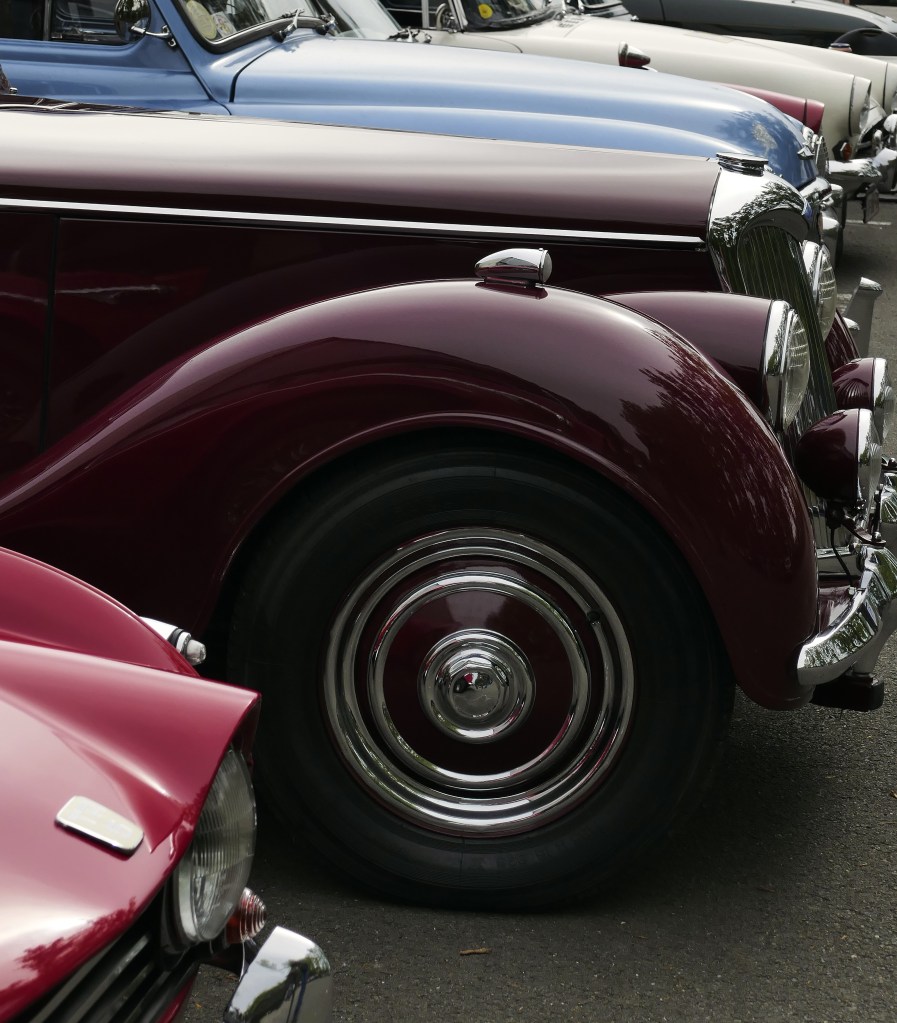
The event was also characterized by the enormous venue of enthusiasts, who all had taken out their British Classic and had it parked on the road and areas around the premises of the organizer Anglo Parts. Just have a look at the photos…
Enjoying and driving an oldtimer means also that you have to take it to the technical inspection in regular intervals.
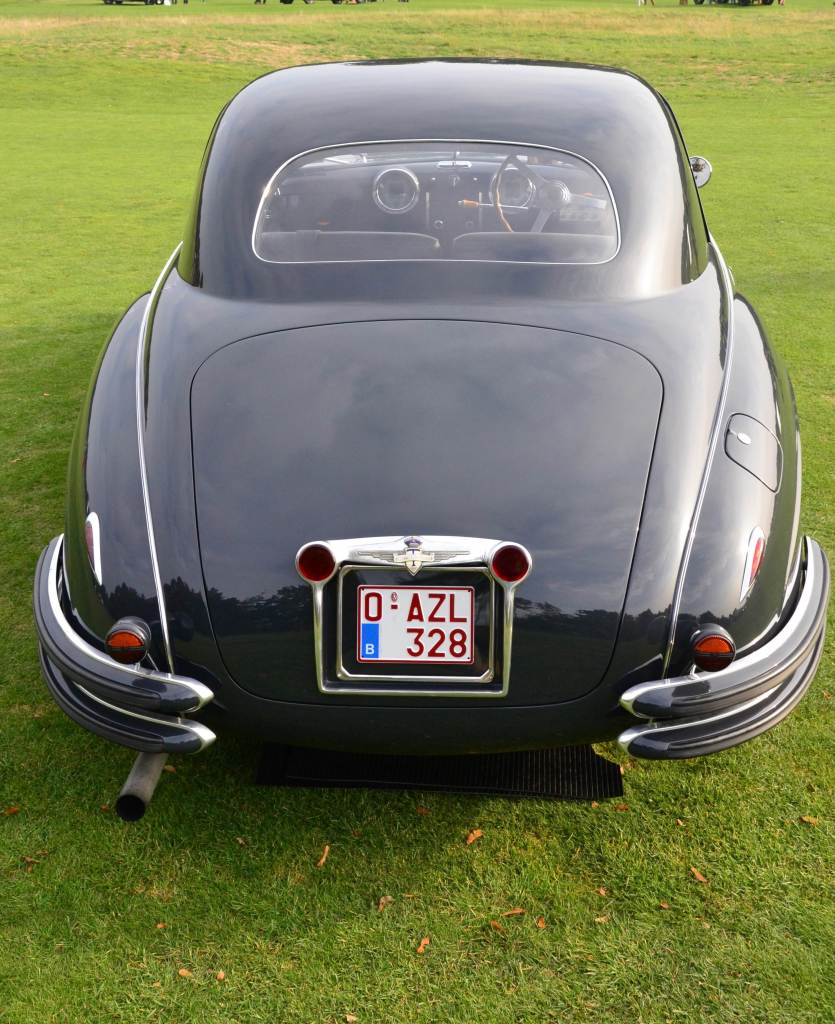
In Belgium, a car is an “oldtimer” when it has been registered 30 years ago. You can then register your car with an “O” (oldtimer) license plate. This means that you enjoy reduced road tax, but on the other hand the use of the car is restricted. Any commercial and/or professional use is prohibited. You cannot use it as stage prop or décor for film productions for example. Neither can you use it for weddings and other special occasions which involves transporting passengers, even when this is done for free. Nor can you use the car as a daily commuter between home and work.
As Belgium has three regions, notably Brussels, Flanders and the Walloon region, the regulations for technical inspection for oldtimers show some differences.
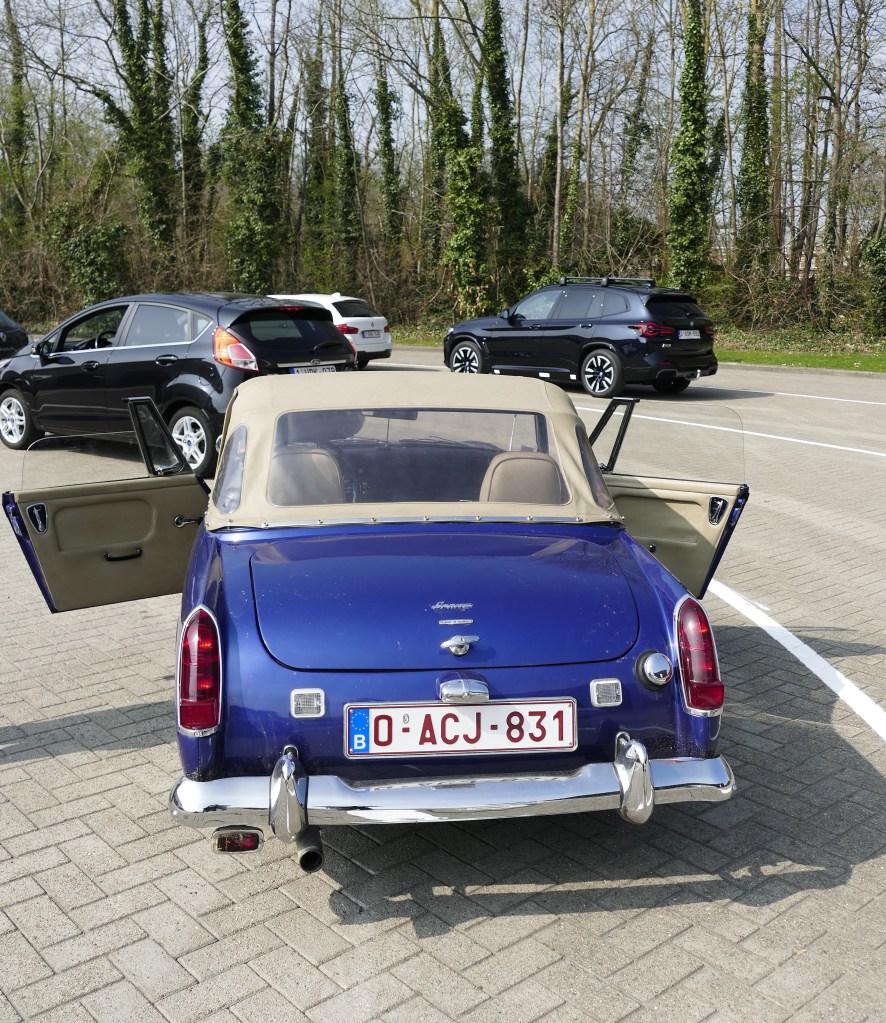
In the Brussels region, cars between 30 and 50 years old have to be taken to the technical inspection every two years. When the car is older, you have to do this only every 5 years. This was the case for our Sprite…
In the Flanders region, the rules are identical. If your car is older than 1st of January 1926, you don’t have to submit the car to a technical inspection.
In the Walloon region, cars between 30 and 50 years have also to be inspected every two years. However, when a car older than 30 years has a “historic value or interest”, it is set free of periodic inspection. The car has to be in original condition and out of production, and no major modifications are allowed, except replacing the chassis when necessary, change to radial tires, and of course all the (safety) changes and improvements which are legally prescribed over the years.
Cars older than 50 years don’t have to be taken to inspection any more.
So we took the Austin Healey Sprite out of its winter sleep two weeks before the inspection. Of course we picked a day when the weather was fine. As the Sprite has been fairly recently fully restored and has enjoyed an extensive mechanical overhaul, we did not expect too many problems. Also the battery had been replaced recently. Starting the engine was nevertheless somewhat hesitant, as it did not fire up after two attempts after having waited previously for the fuel pump to fill the carburettor fuel reservoirs. We had the choke fully out, and were uncertain whether the air/fuel mixture was correct, so to prevent the engine from over-flooding we gently pressed the accelerator halfway on the third attempt and the engine then immediately fired up. We found the engine idling steadily, but nevertheless rather rough, so some tuning of the two SU carburetors might be necessary. We have the impression the air/fuel mixture setting is rather lean for the moment, but only a tune up using mixture measuring instruments will tell.
Oil pressure was OK, which is to be expected as the engine had been totally restored. We took the Sprite for its first spring tour over a distance of a good 35 kilometers, keeping a watchful eye on the cooling temperature and oil pressure gauges and letting the engine and drive train warm up thoroughly. Of course (hand)brake and all the controls were tested.
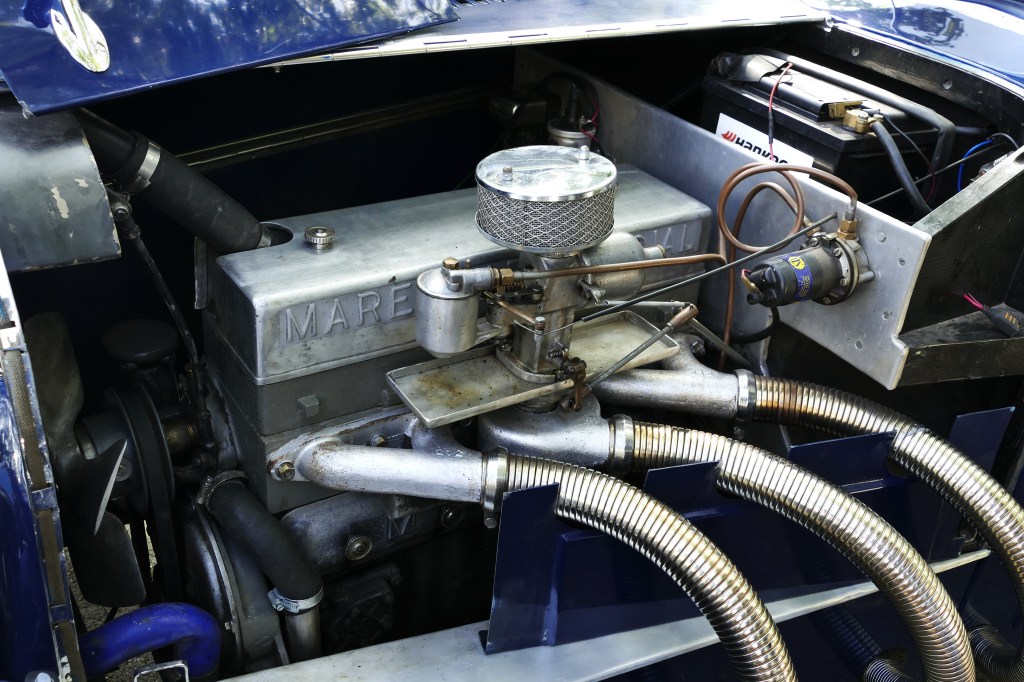
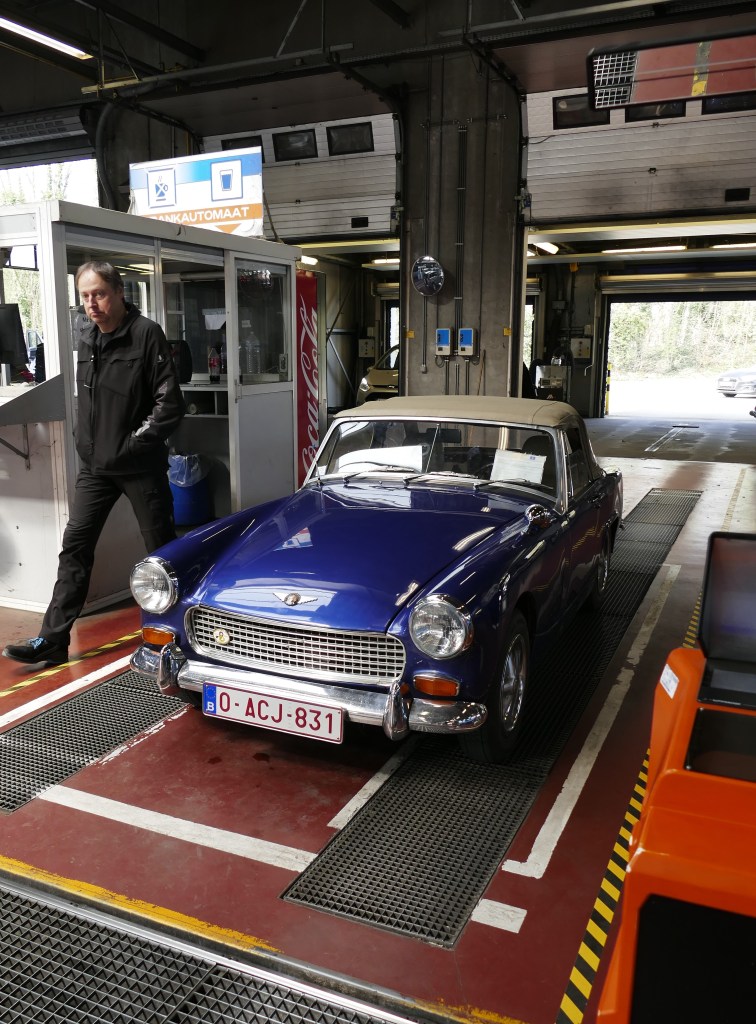
Several weeks later it was time to put it through the technical inspection. We did not expect many problems, and indeed there weren’t any. The inspectors admired the clean engine bay, and the 1275 cc Series A BMC engine, which is basically identical in the Mini Cooper S, save for the tuning. It makes the 714 kg Sprite quite a lively performer, where it develops a healthy 65 HP at 5800 rpm. Mind you, acceleration is rather brisk with 0 to 100 km/h reached in about 12,5 seconds. The engine is a long stroke unit, therefore quite flexible, developing a good torque for its size of 98 Nm at 3000 rpm.
The BMC A series engine is a very interesting and beautiful “classic” engine, and has a very long history. We will come back in more detail about this engine in further posts.
As said, the technical inspection went without a hitch, as brakes, suspension, chassis and all auxiliaries were found to be in perfect working order. The engine’s CO2 emissions were also found to be OK, taking into account the historic emission standards of course. Apparently it was a good idea that we left the carburetor settings unchanged for the time being, although the idle is still rather rough.
So we received a “green” inspection report, which is now valid for another five years.
On the way back from the technical inspection, we used the motorway for most of the trip, and the Sprite was happily cruising along with a beautiful exhaust roar at some 3500 rpm.
We now also filled up the fuel tank, choosing 98 octane fuel, and avoiding the use of Euro E10 95 octane petrol, which contains 10 pct methanol. There is a product “Classic Valvemaster plus” sold amongst others by Anglo Parts, which protects engines originally designed to run on leaded fuel for the negative effects of Methanol. Another product they distribute is EPS Ethanol protection from Millers Oils. We performed a major cleaning and detailing session with the Sprite to bring it to (almost) concours condition before we used it our next sortie , driving it to Mechelen for the “British Car Day” organised by Anglo Parts on the 26th of April, were the Sprite was proudly present on the stand of the Royal Historical Vehicle Club and met wich much interest from young and old…
This year we will turn again more regularly also to classic cars, as their importance starts to grow over the years, and your servant has always had a very keen interest in them. Indeed, I am the proud owner, since now about 47 years(!) of a 3.4 Jaguar Mk II S-Type. Over the years, a BMW Z3 roadster with a fixed hard top in the matching ice blue metallic joined my stable as my favored “Youngtimer”. You read about it regularly in these columns under the category “our cars”.
As a board member of the Royal Historical Vehicle Club Belgium, I will on my site report also regularly about the activities of this club, which will also be present at the “British Car Day”, organized by Anglo Parts at their premises on April 26. We will tell you more about this event in a following post.
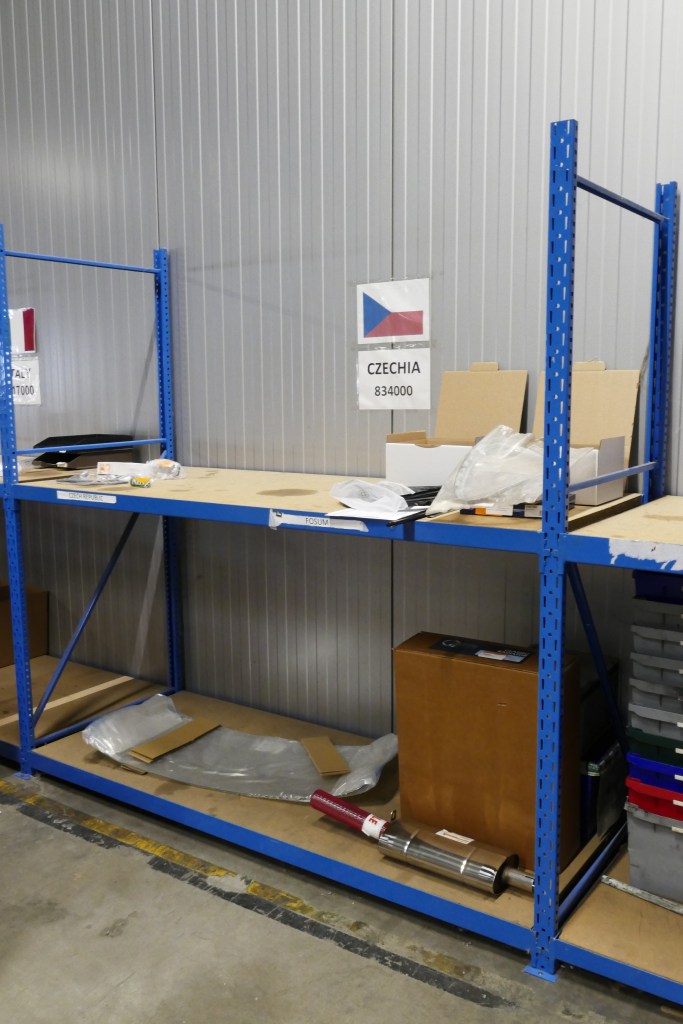
But now let’s tell you more about what I saw and heard on my recent visit to Anglo Parts. It is one of Europe’s largest online British classic car parts suppliers, and is operating in not less than 11 countries. Indeed, it regularly ships parts to the Netherlands, Italy, France, Sweden, Spain, Luxembourg, Finland, Poland, Czech Republic and Hungary. It is situated at Zandvoortstraat 53 B-2800 Mechelen, and its webshop can be reached via www.angloparts.com.
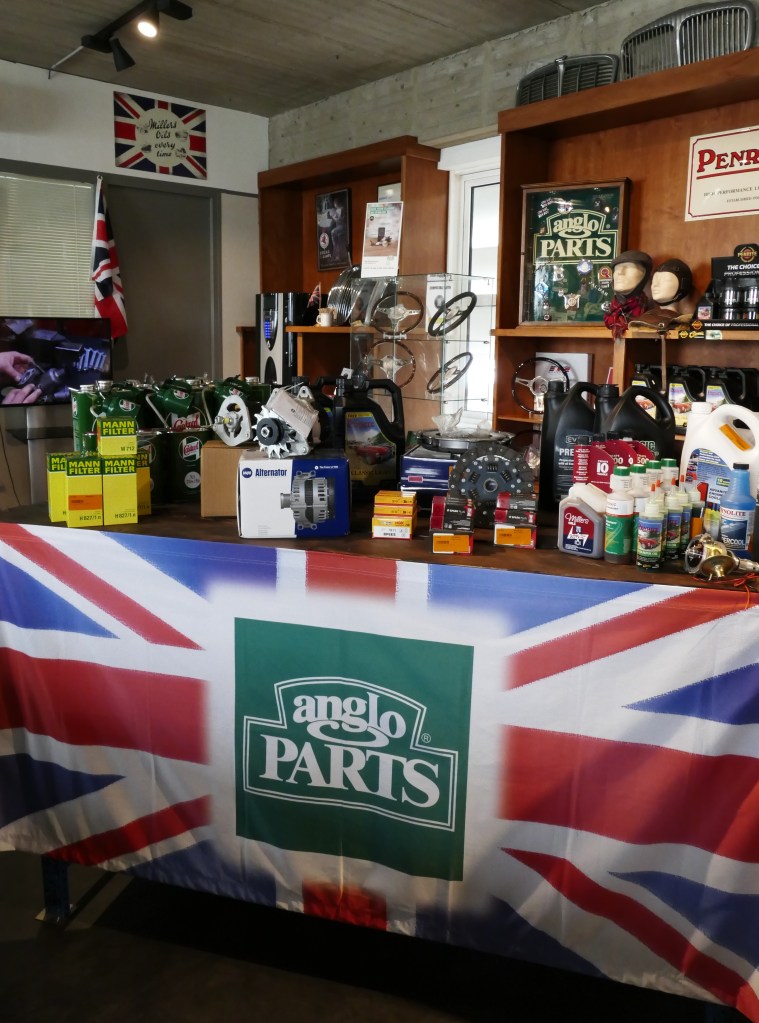
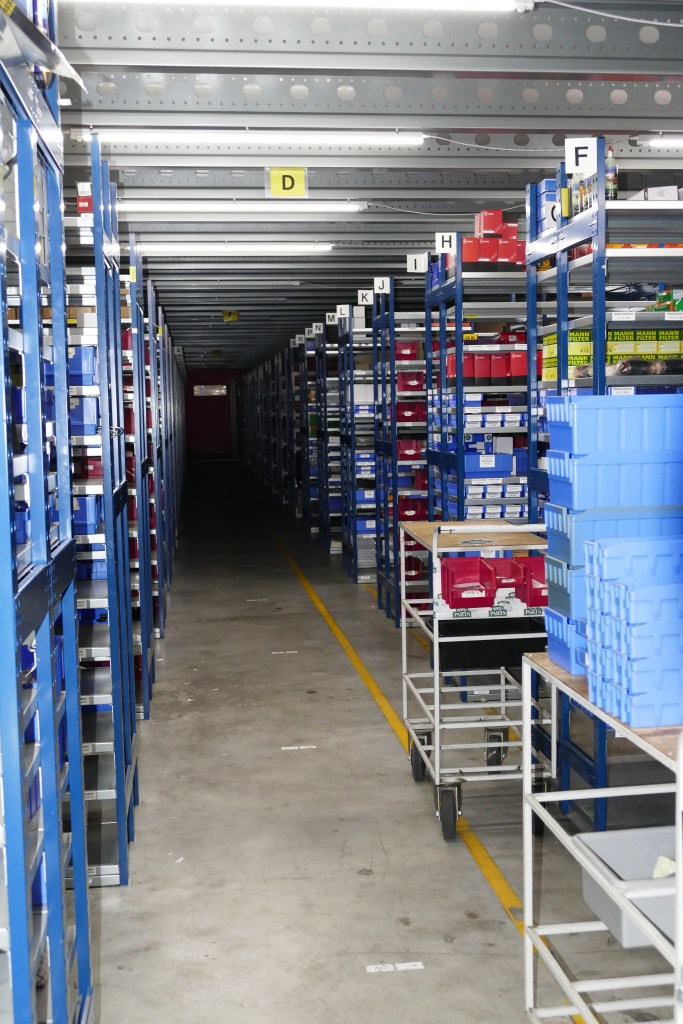
They have about 60,000 parts in stock, specializing in parts for MG, Jaguar, Triumph, Austin Healey, Land Rover, Mini and Morris Minor, actually for over 56 types of British classic cars. They are approved specialists of British Motor Heritage for MG, Mini, Triumph and Morris Minor spare parts and accessories.
Anglo Parts operates as a webshop, and therefore has a user friendly website using the original (factory) drawings as a reference to locate the parts you need. You can easily find the right parts via their index.
But you can of course visit the company in Mechelen, where it has its vast (2500 m2) parts warehouse and where you can collect the parts you want, and visit its shop with a host of car care products and accessories for your classic. We show you here some photos of their shop and the warehouse.
The Anglo Parts team consists of highly qualified professionals, who will assist you with expert advice in your search for the right part for your car. Many of the staff own a (British) classic themselves, so their experience really counts.
Anglo Parts also offers you products which can upgrade your classic, improve smooth running and increase its reliability. Like the fully electronic Classic Sport Ignition. All CSI systems are installed into a special housing which can’t be distinguished from original, your classic will keep its authentic look…
Anglo Parts will also offer you advice in their blog letter on their website to avoid problems when running your classic. Like for instance avoiding using Euro95 petrol, as it will be replaced by the ‘cleaner’ variant E10. This is petrol with 10% ethanol, made from beetroot for example. Whilst this is good for the environment, it might be a hazard for your classic car.
Anglo parts will also service and repair your dashboard instruments and wiper motors, amongst others…
Ethanol is highly flammable, but it can dissolve in the fuel tank, attract moist and be the cause of rust or blockages. Or, especially in classic cars, combust too soon and cause damage to your engine. The Dutch classic car federation Fehac even recommends never to use this fuel.
Soon your servant will be present at the “British Car Day” on April 26…
Hans Knol ten Bensel
Photographers’ notes:
We used again here our Panasonic Lumix DMC-FZ1000, proving its excellent versatility with its 25-400 mm Leica zoom lens. For the indoor photos, we used a film speed ISO between 1250 to 3200, which still produces no image noise whatsoever, and allowed us to stop down the aperture to F 7,1 for maximum depth of field.
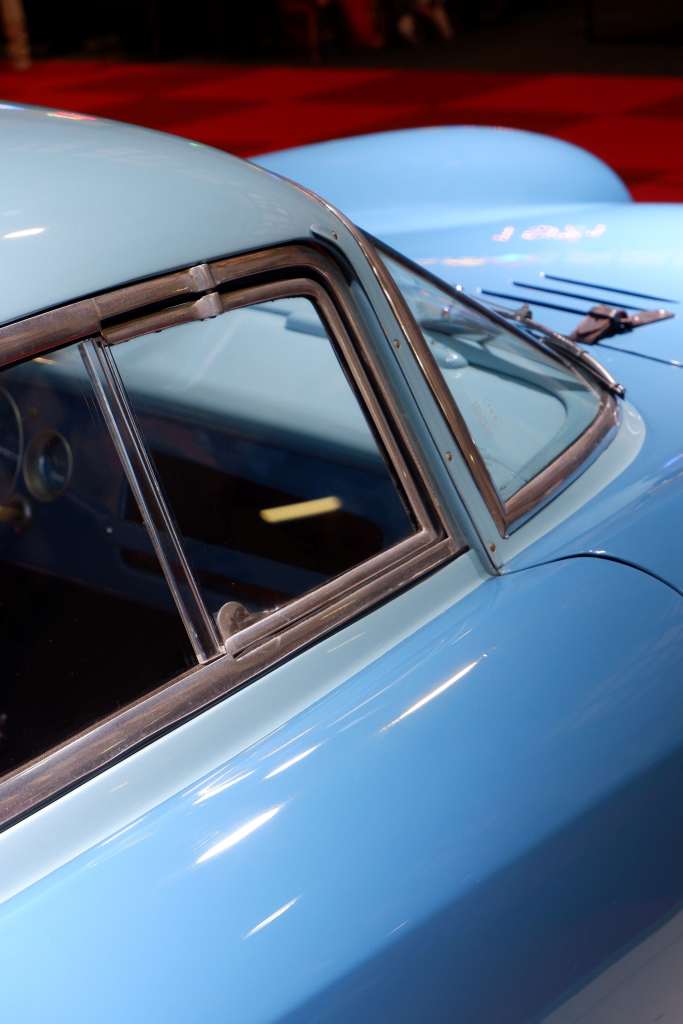
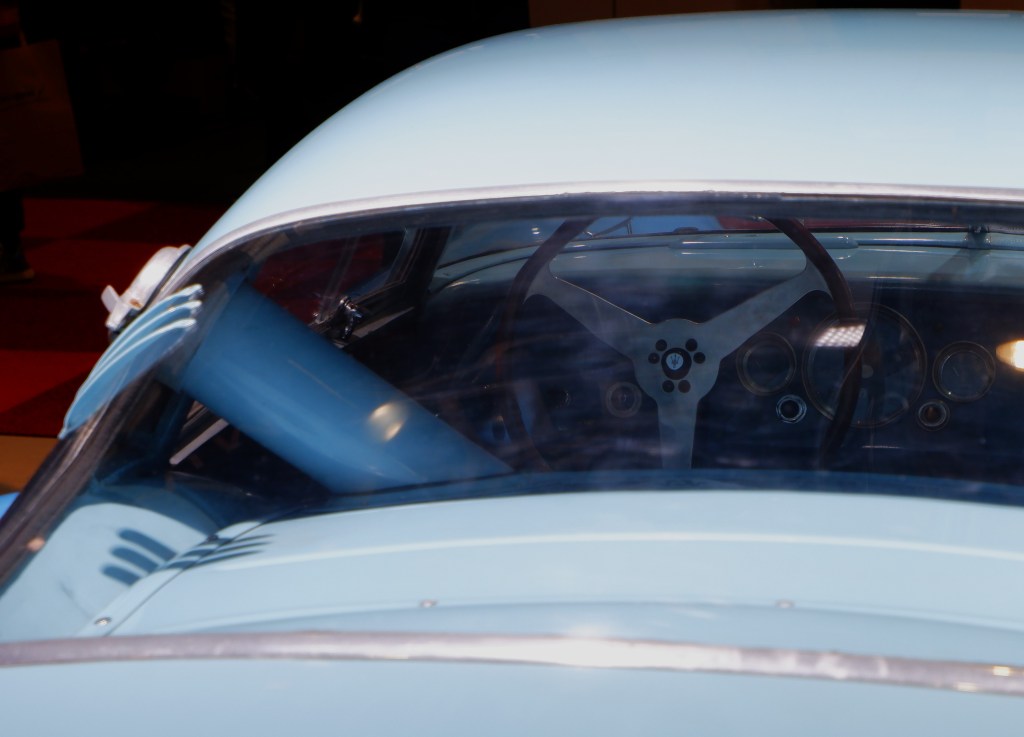
The breathtaking contours of the award winning Maserati A6GCS/53 Berlinetta by Pinin Farina, presented by the Brussels Autoworld museum on their stand.
The 9th edition of the Interclassics car show proved again a formidable event. The 40.000 m2 spread over several palaces was filled with collectible four wheeled beauties, and lovers of Italian, British, German, French or last but not least American classics could have a true delightful time from Friday 15 to Sunday. Your servant also took his Fujifilm X-A5 camera along, and shares here with you his impressions.
Hans Knol ten Bensel
D’Ieteren celebrates 345 years of heritage…
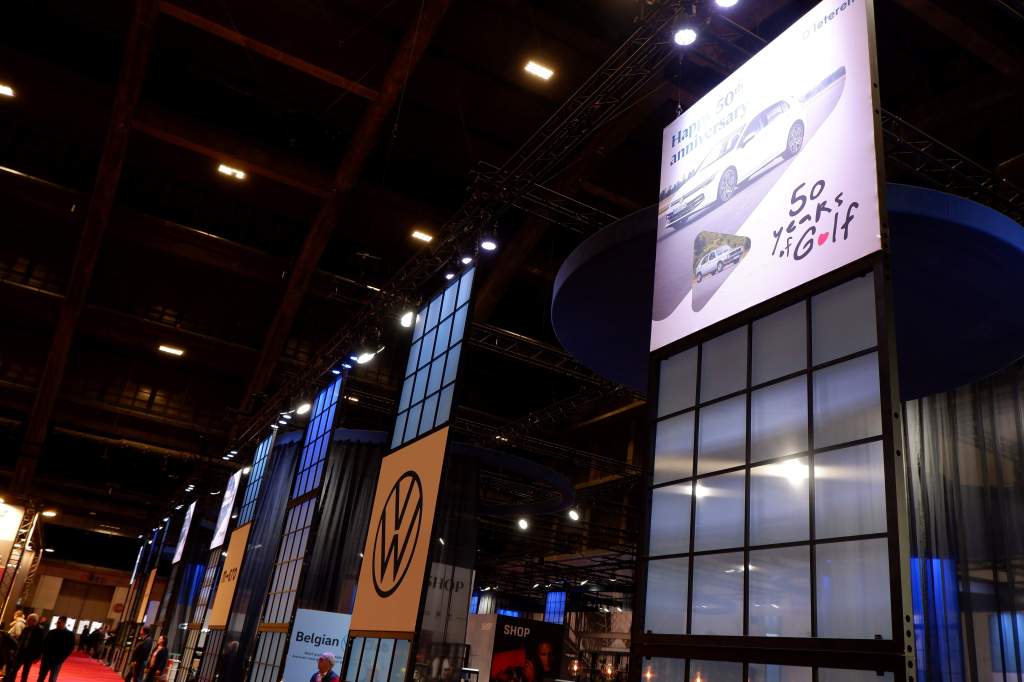
The dynamic PR department of D’Ieteren invited me to their magnificent stand, where they celebrated the anniversaries of some of the most iconic models of the brands they import into our country.
To present the rich history of its brands, D’Ieteren adopted the theme of the evolution of technology, and so displayed the vintage models of the Volkswagen Golf, Audi 100, SEAT Ibiza, Škoda Octavia and Porsche 911 alongside their current versions. The cute Microlino was also present, next to the iconic BMW Isetta…
What better for me to do than to aim my Fujinon lens to bodywork details of both current and vintage cars, visually telling the story of progress along many decades…
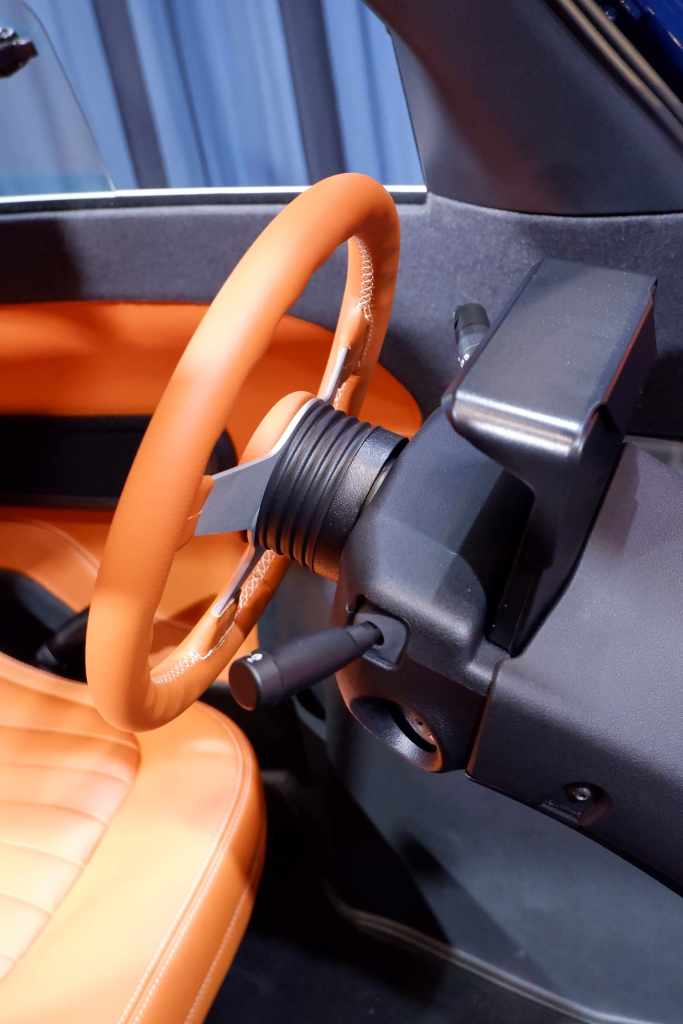
Down to the very essence: the “dashboard” of the BMW Isetta…
The electric Microlino continues this tradition of “less is more…”
In doing this, I found it remarkable how ”modern” the Porsches still look, and indeed a ”classic” Porsche hardly feels out of place five decades later. What’s more, its sheer performance and road manners still are impressive today. Actually, the same can be said of the ”Ur” Golf, its proportions, styling, performance and overall stance are still quite modern.
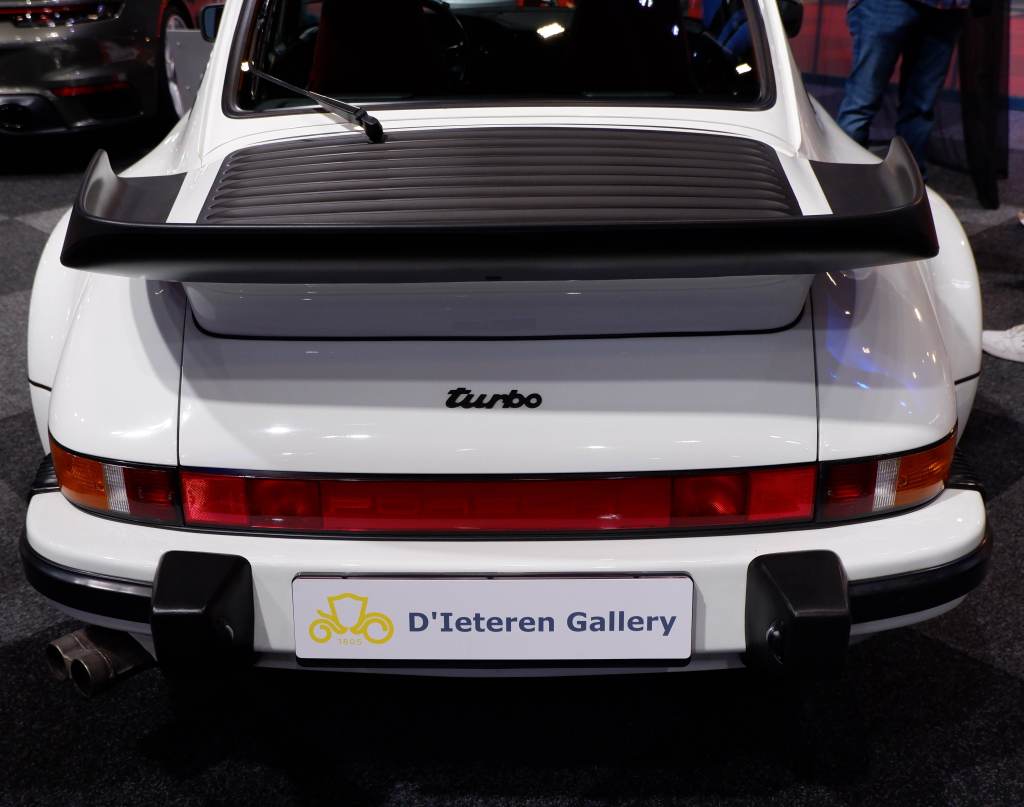
Porsche celebrated the 50th anniversary of the Porsche 911 Turbo . The Porsche 911 Turbo Type 930 made its debut in 1974. I still have the fondest memories of these early Porsche 911’s. As a young car journalist I drove them to the limit, enjoying their delicate handling, the hiss of the air cooled flat six at high revs, the tout feel and precision of the whole car. Indeed, Porsche’s are unique, and once you sat behind the wheel of them, they make an indelible impression.
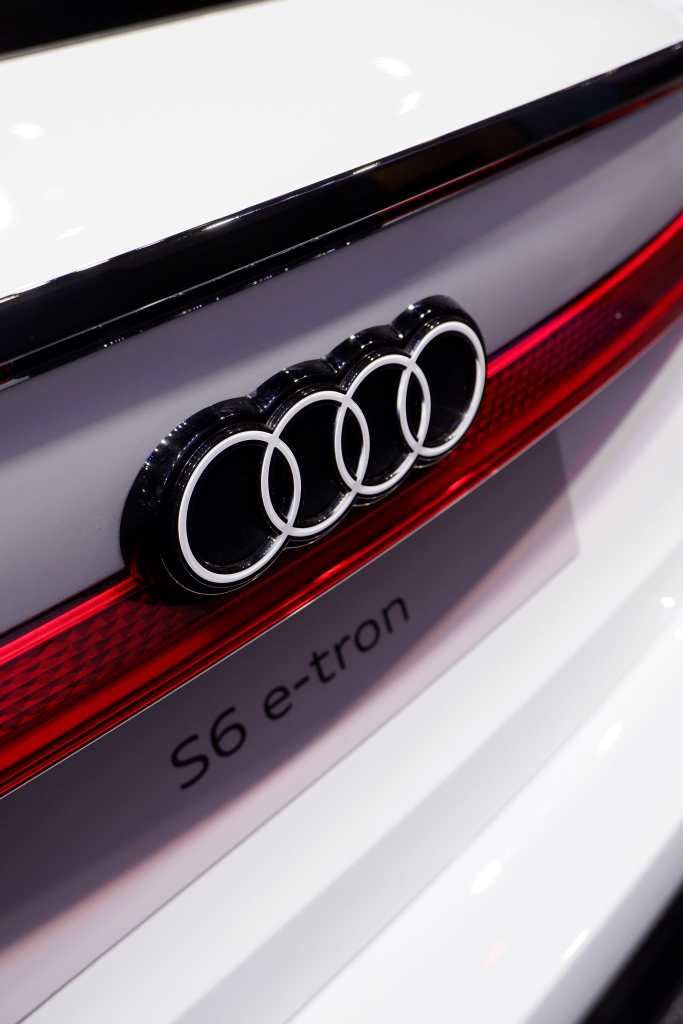
Celebrating 50 years of Audi in Belgium , D’Ieteren also put a truly pristine and original Audi 100 L Automatic alongside the brand new A6 e-tron, which has just hit the market. It completed this with an equally formidable 100 Coupé.
The dramatic styling details of the ’74 Audi S Coupé…
And the clean lines of the S6 e-tron…
Bentley showed a recent 2022 Flying Spur alongside a mid ‘80s Bentley Turbo R. This now classic Bentley brings back sweet personal memories, as I was invited to drive this impressive powerful V8 turbocharged saloon personally from Brussels to le Mans to attend the 2003 Le Mans 24 hour race, witnessing the event from the Bentley pit stand, and see the Bentley Speed 8 win the race!
Massive power with style…
Seat celebrated 40 years of the Ibiza, showing an immaculate 1984 model, shown here below.
Automotive technical evolution was most apparent when one compared the 65 year old Skoda Octavia Break 1201 with the present Octavia. Understandable, as in the mid sixties, the styling and technology of the products behind the iron curtain were somewhat lagging behind what was made in the west, and indeed, a time span of more than six decades is also very long indeed.
Last but not least there was the Microlino on the D’Ieteren stand, next to the car which inspired it, the BMW Isetta. Similar in shape, but totally different in technology.
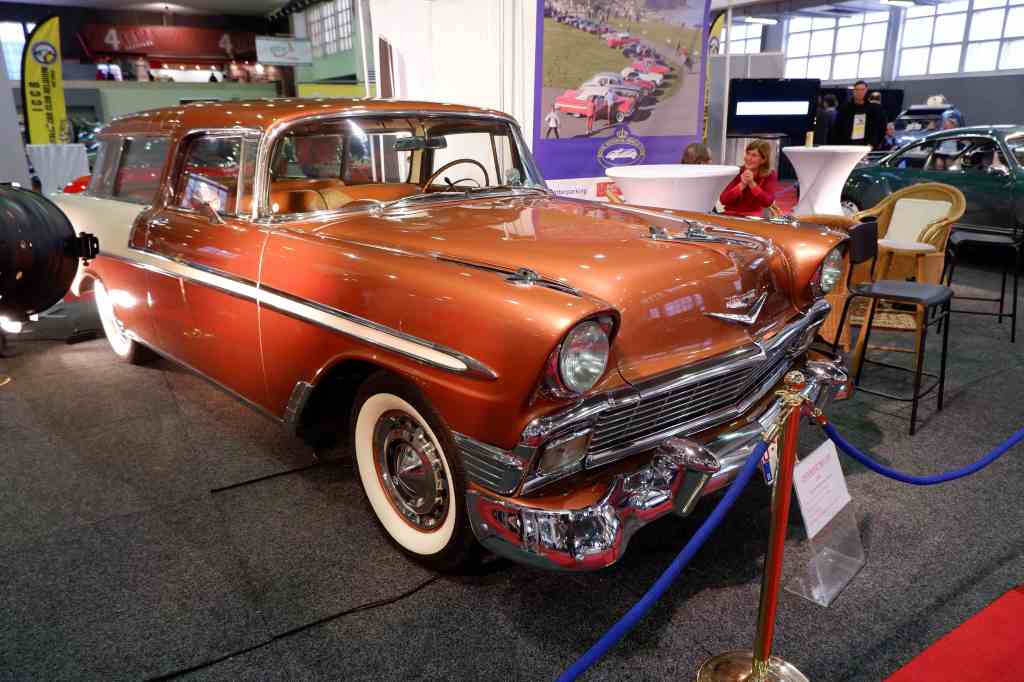
Of course, there were some beautiful American classics on the show. Just look at the 1956 Chevrolet Bel Air Nomad Sport Wagon shown here on the stand of the Royal Historical Vehicle Club Belgium…
Maserati, or the unique magic of pur sang…
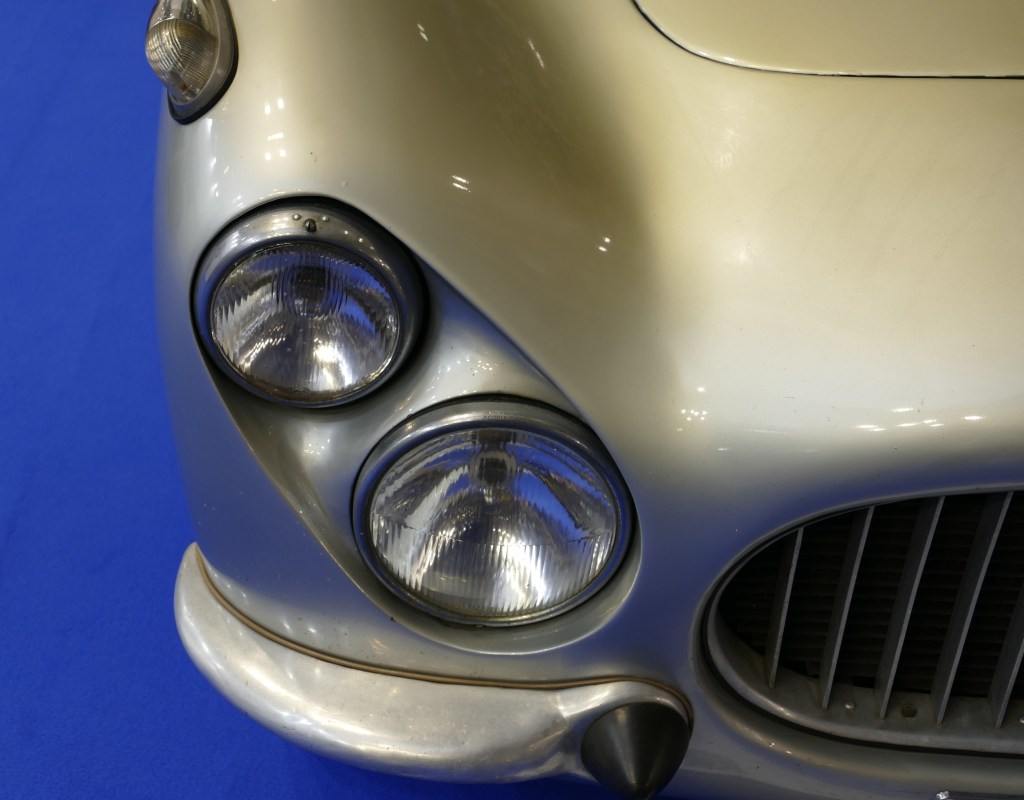
The quality of the Maserati’s on display was nothing short of stunning, and the car which was prized best of show was a pale blue A6GCS/53 Berlinetta by Pinin Farina, presented by the Brussels Autoworld museum on their stand. I show you here some photos of this gorgeous coupé. I am totally smitten by its feline stance and wonderful proportions.
It just has tons of character, and it embodies everything the brand with the trident stood and still stands for. This ninth edition of the Brussels Interclassics was certainly a wonderful show, and we are already looking forward to the next edition. Just enjoy the photos…

































 Autoprova - for the Connaisseur