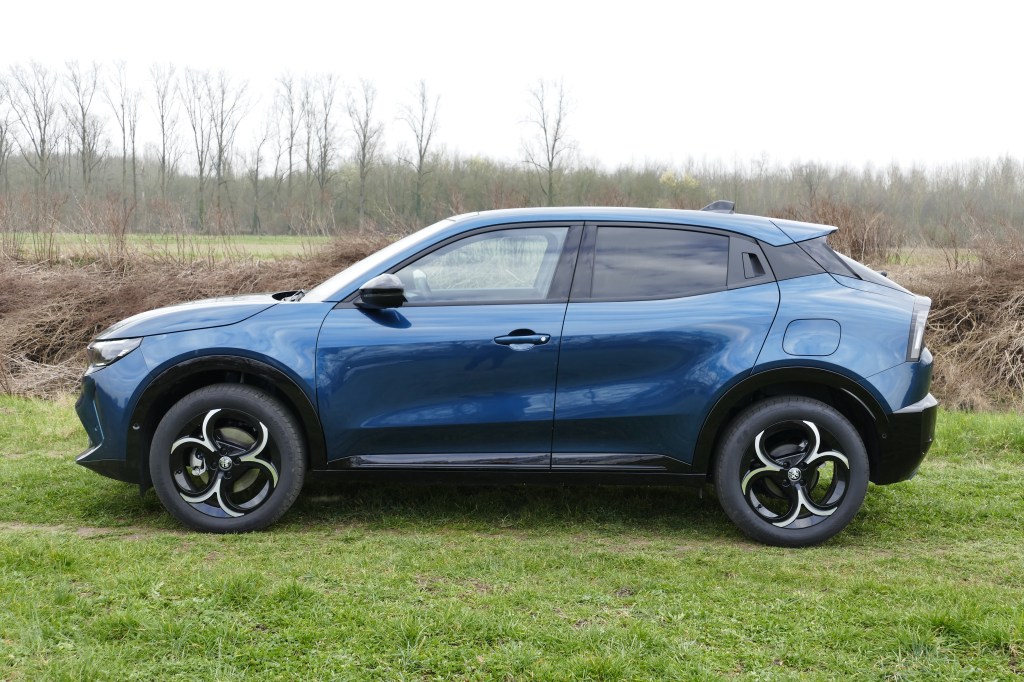
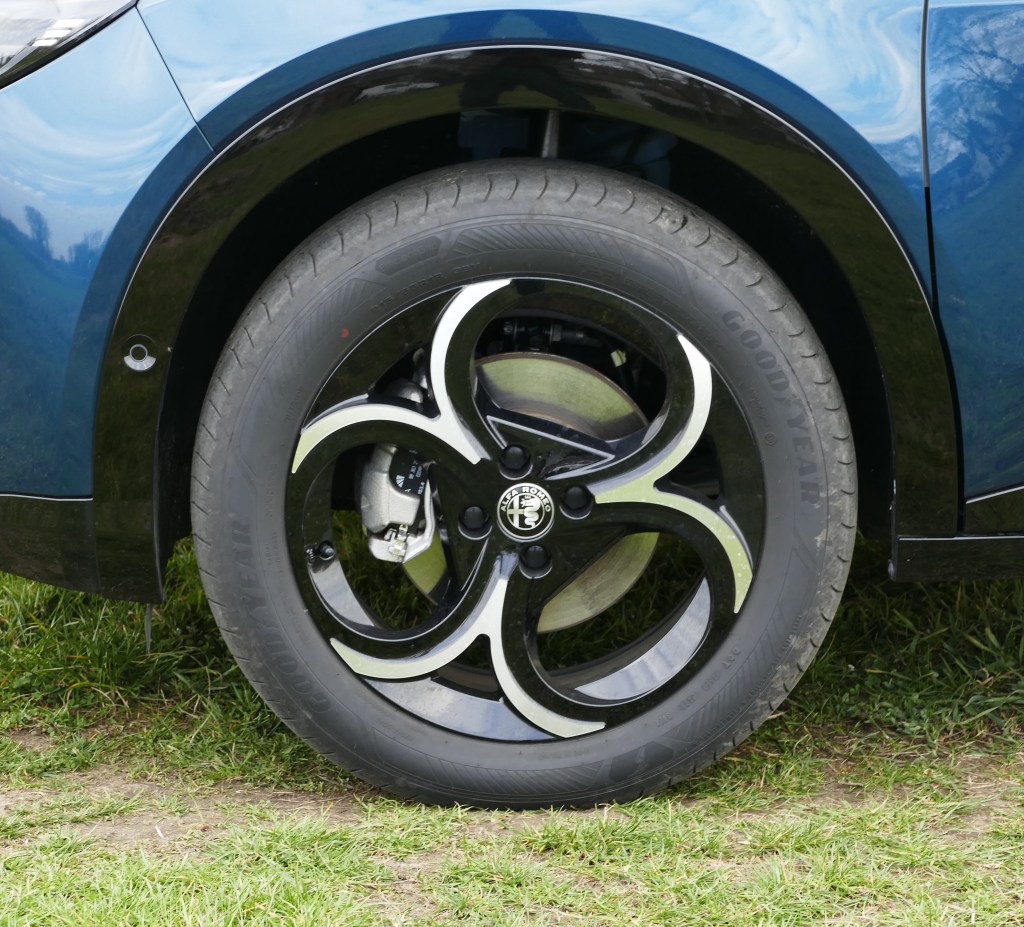
We drove the Lancia Ypsilon electric: elegance, character and smooth panache

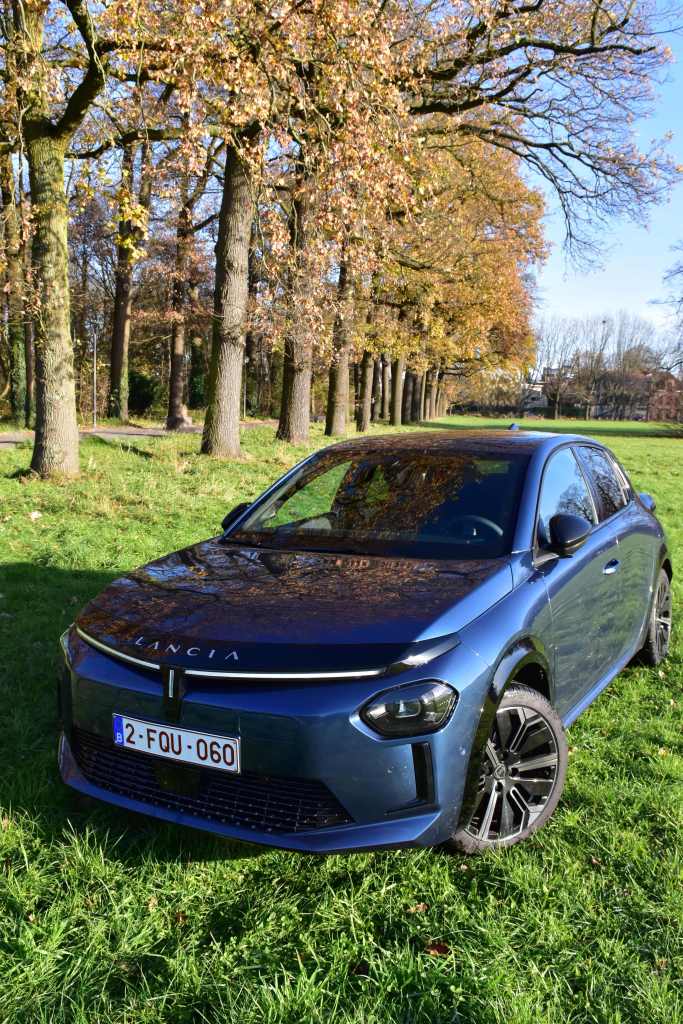
Lancia has always embodied style and elegance, coupled with mechanical refinement. This makes the new Ypsilon a very fitting candidate for EV propulsion. Indeed, after an extended test behind the wheel of this Lancia, we can only agree. It is most endearing as an EV, and indeed, it is a delight to steer it in town and on every road you may drive it.

Hans Knol ten Bensel

Renaissance on a well proven platform

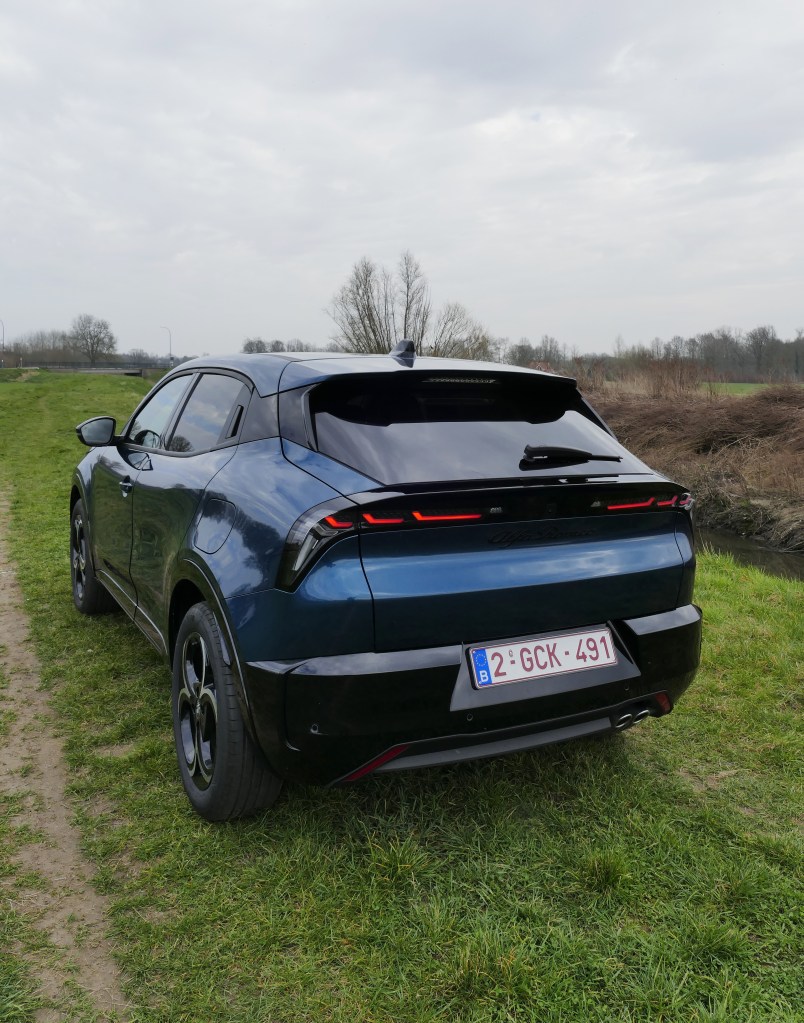
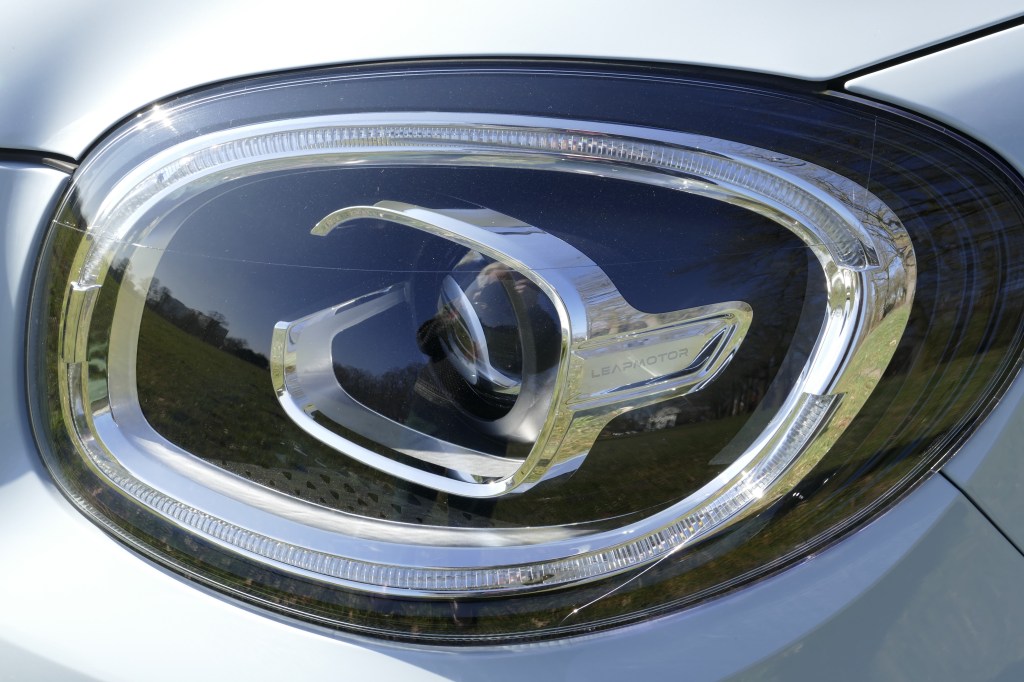
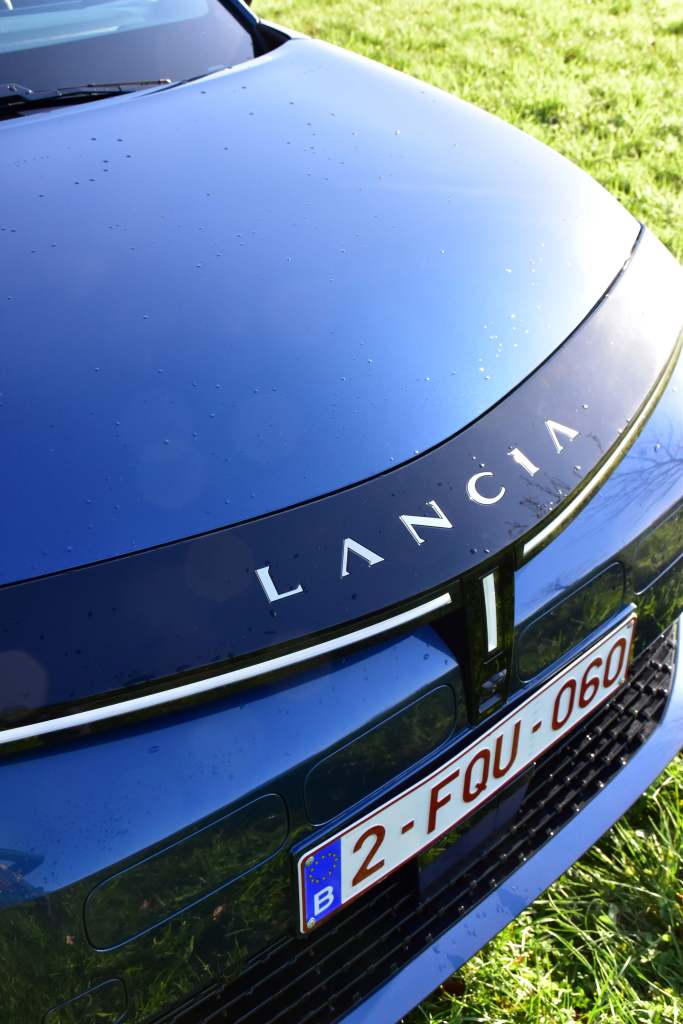
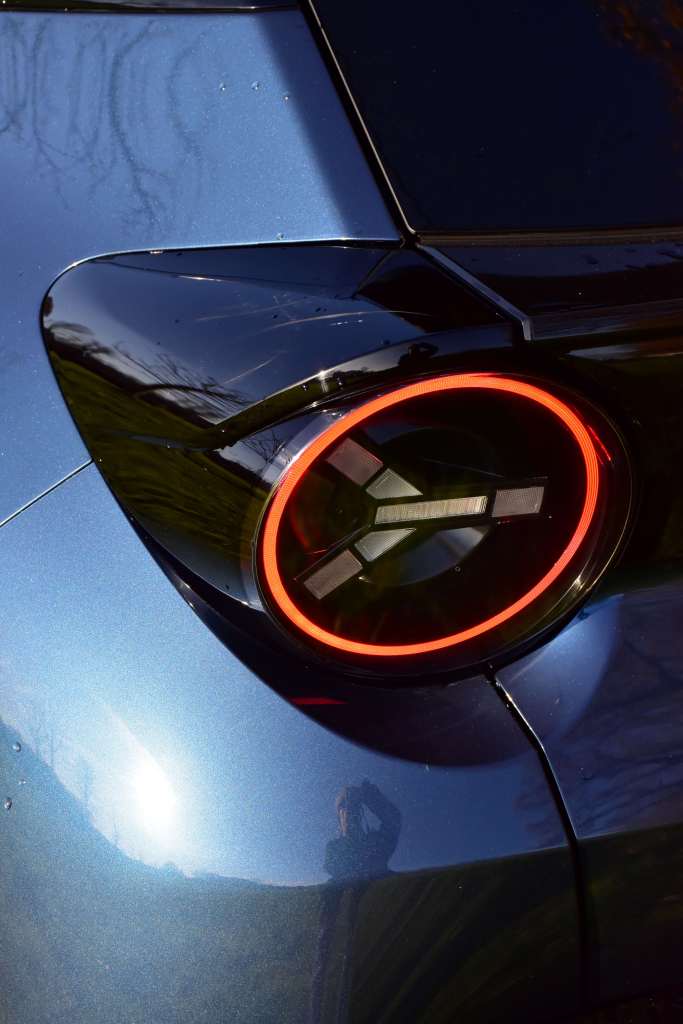
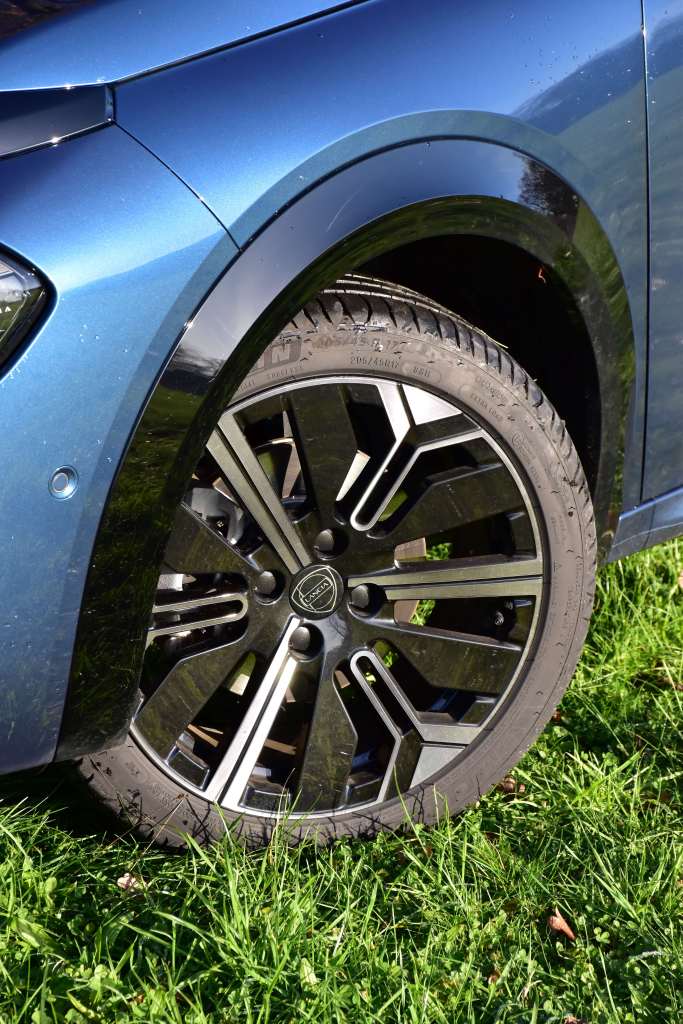
With the birth of Stellantis it was clear that a revival of Lancia was in the cards. We already told you in length about the introduction of this Ypsilon. It carries typical styling icons of the brand, like the “calice” on the front end, and the round rear lights reminiscent of the legendary Stratos.
In my opinion it is the most attractive of the Stellantis compact range, but that is of course a very subjective preference.

Iconic cabin

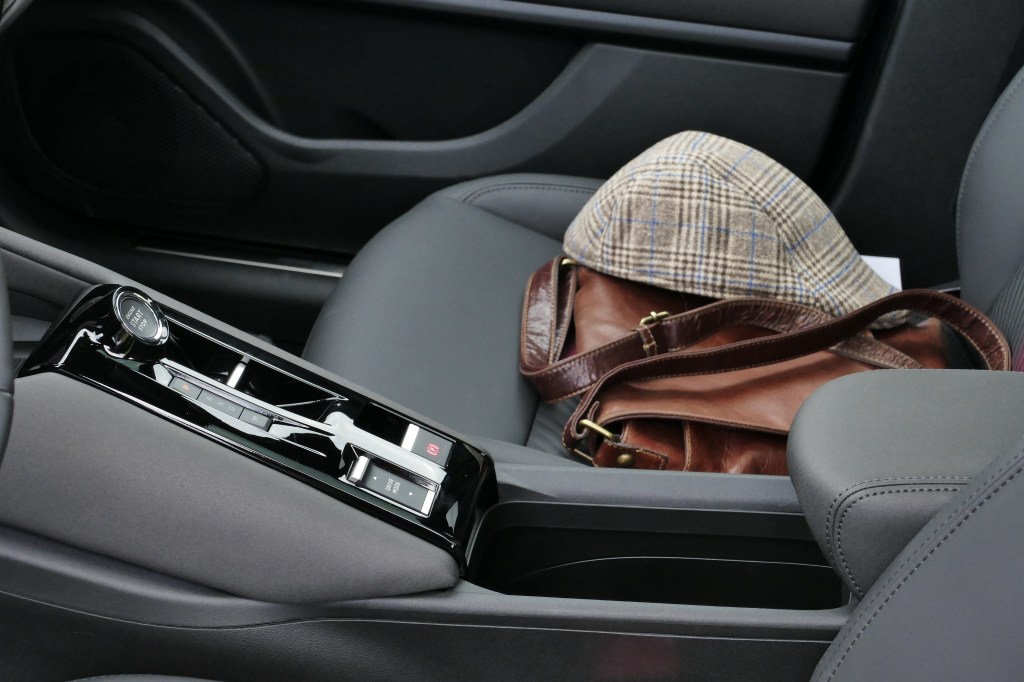
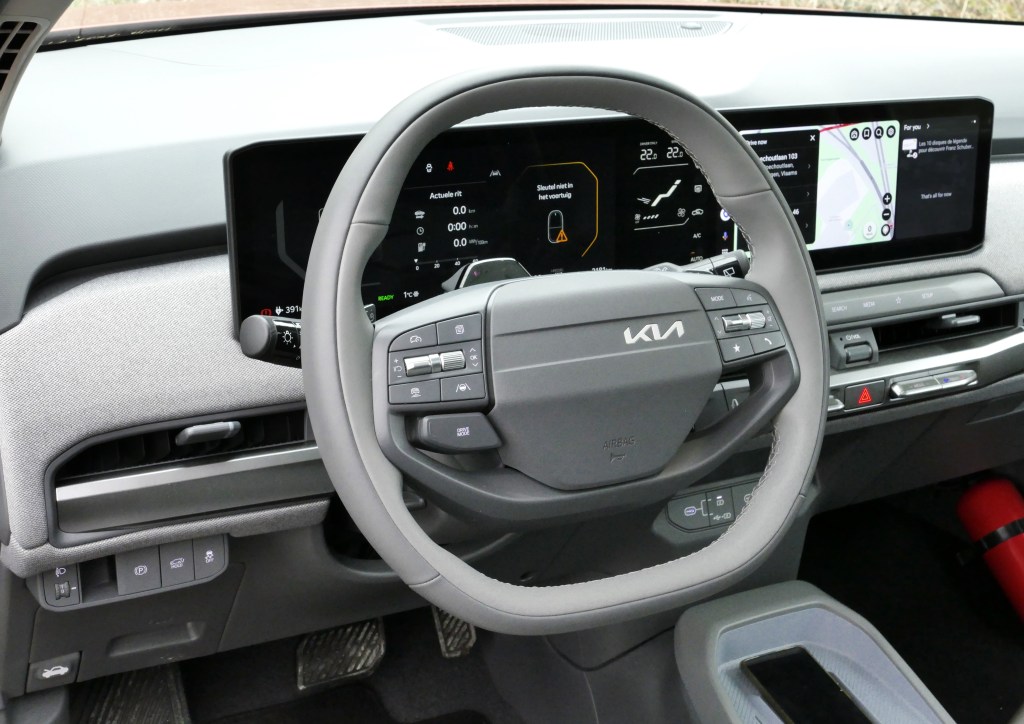
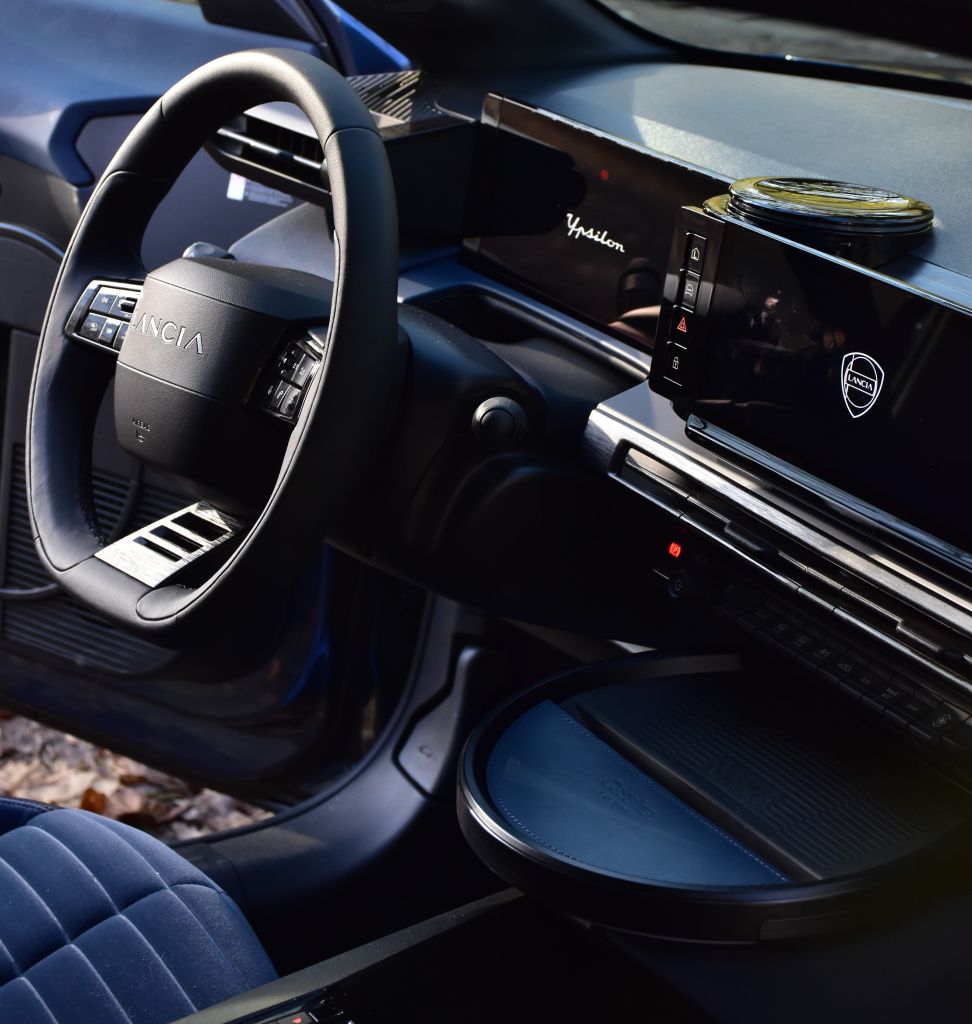
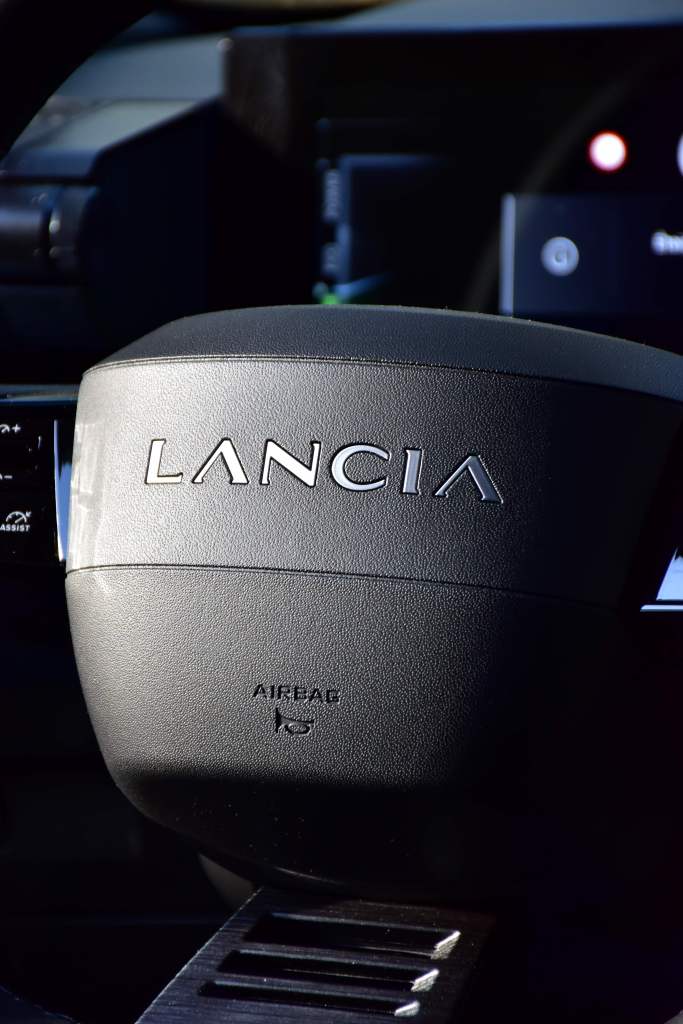
The elegance and the Lancia typical panache continues in the interior. We loved the layout of the dashboard, the resolutely square screens, the cute and well finished little central table or ”tavola”.

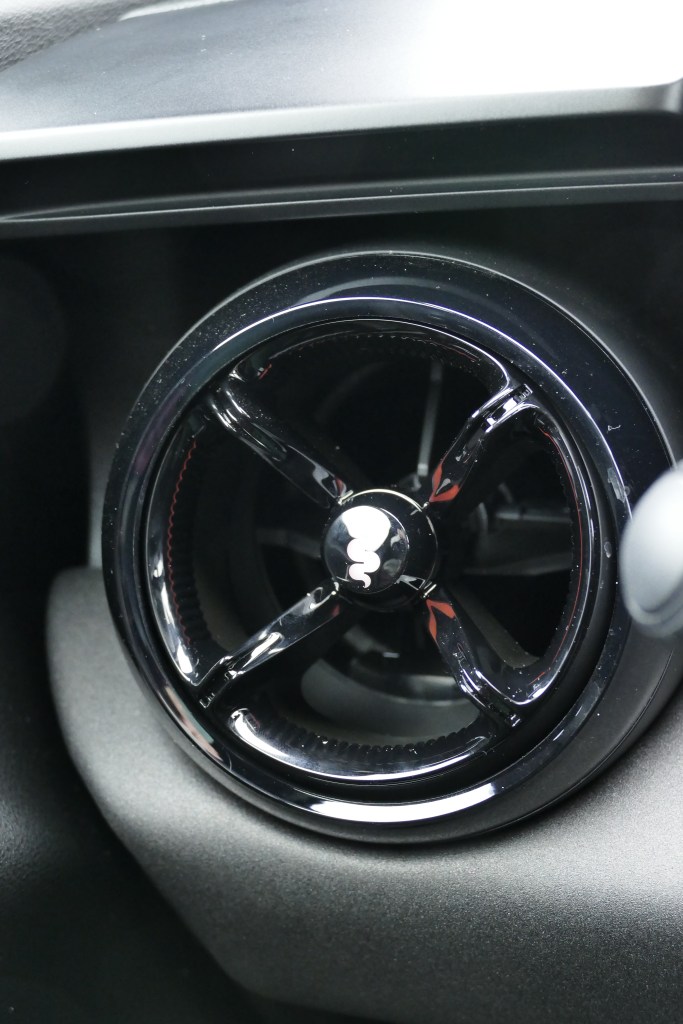
You can leave flat and light objects on it, everything else is of course hazardous when you drive  your Lancia with verve. We loved the blue/grey/black colour palette in the interior, so in tune with the tradition of the brand. Of course, it is a pleasure to find “real” commands and knobs for ventilation/heating for instance, and one feels quickly at home in this Lancia. One has Android Auto or Apple Carplay, and you can stream La Callas and delight in hearing how beautifully she brings Casta Diva. Indeed, the sound system is up to scratch.

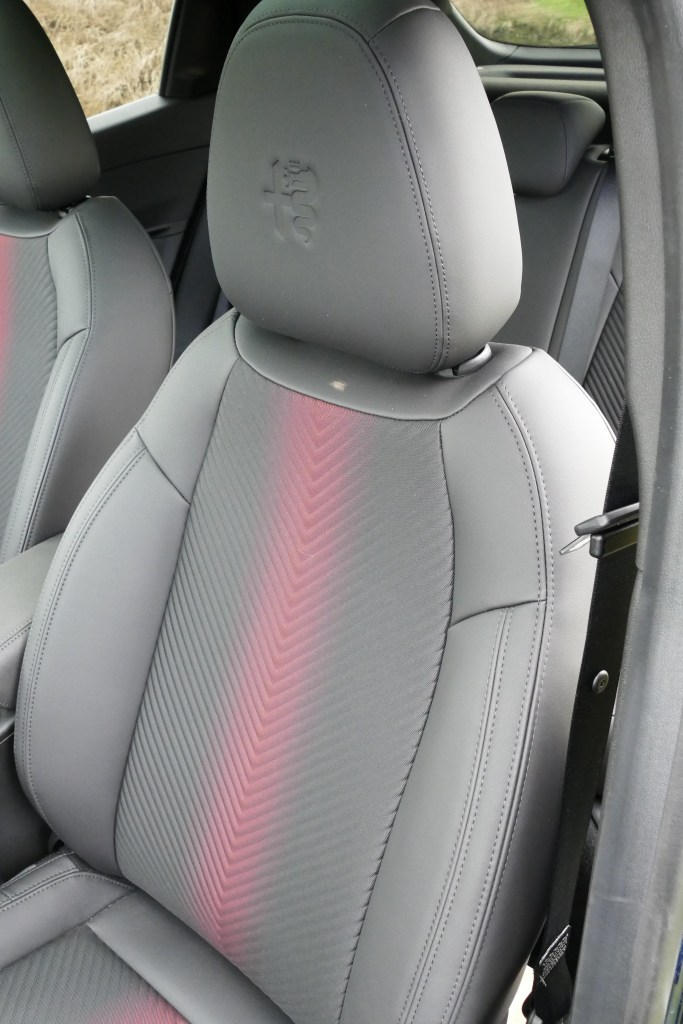
The seats are quite comfortable and give excellent support. Space for the rear passengers is adequate, but of course one cannot expect miracles from a car with an overall length of 4,08 meters. Boot space is more than adequate for its class, with a standard available space of 309 liters.

Smooth EV power…

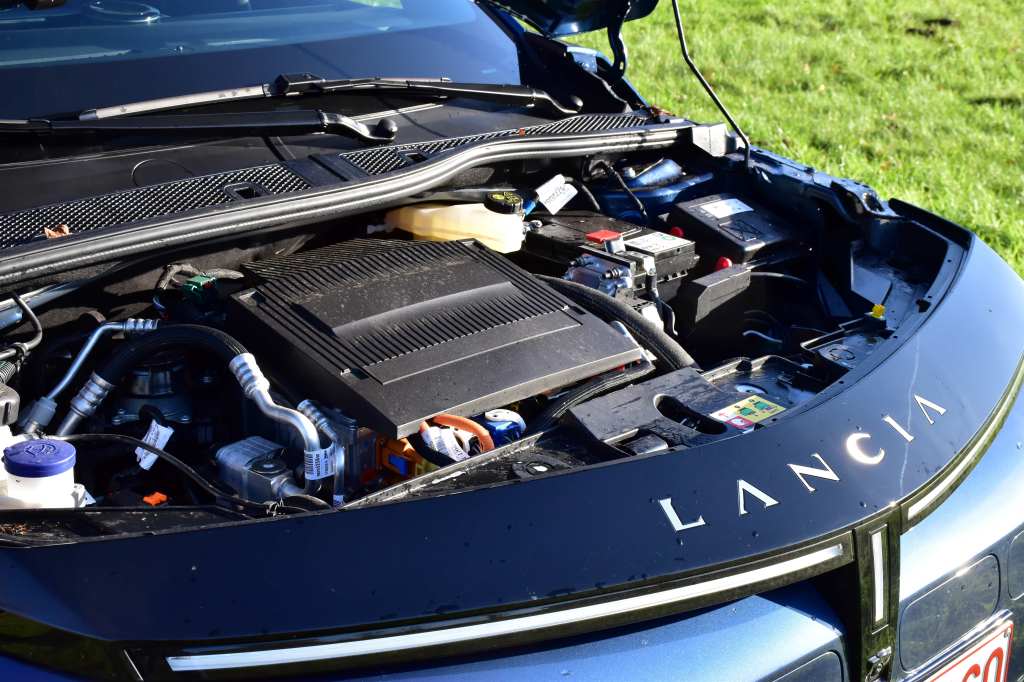
The Lancia shares its EV drivetrain with other cars in the Stellantis group, like the Opel Corsa, Peugeot 208, Jeep Avenger and Fiat 600. This means we’ll proven technology, with a 115 kW electric motor and a 54 kW battery, of which 51 kW is available in practice on the road.

This drivetrain is quite efficient, and indeed it is well possible to achieve consumption averages of 14-15 kW/100 km. It  results in a practical range of some 360 km under reasonable temperatures. Fast charging is possible up to 100 kW, which means you can charge your Lancia in less than 1/2 hour from 20 to 80 pct.

The smoothness of the EV drivetrain is an absolute delight and suits the character of the car wonderfully. Performance is quite zesty with an acceleration time from 0 to 100 km/h in 8,2 seconds. Top speed is limited to 150 km/h, which is very wise indeed, as high speed driving with an EV is a very wasteful affair.

Handling is brisk and precise, and indeed even  when driven with abandon on winding roads, this Lancia will delight you.

Conclusion

We found this Ypsilon utterly pleasing with the EV drivetrain. The silence and smoothness of EV power is just what this car needs. We are curious to see how it behaves with its 1,2 litre 16 V combustion engine, and even more so in the hybrid form. But here in our eyes, it already earned top marks…

Hans knol ten Bensel 

Nissan Benelux looks ahead for 2025 with a bold future strategy and new models…

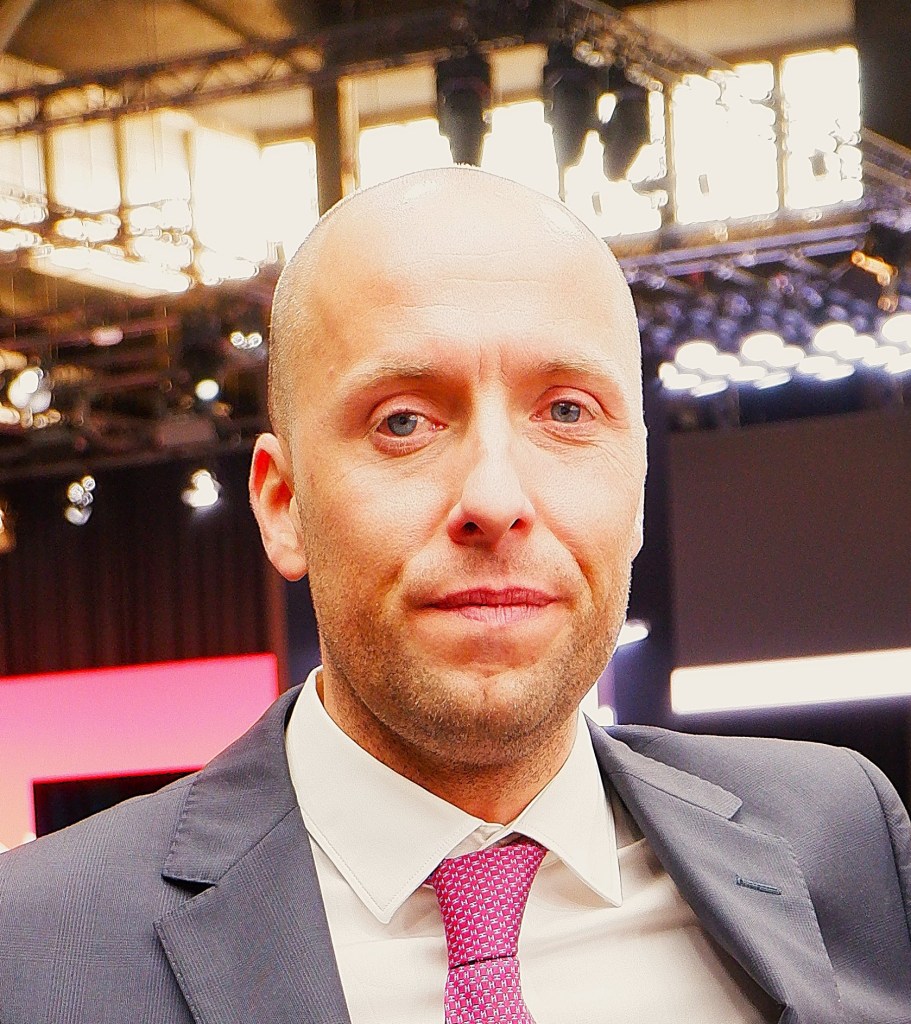
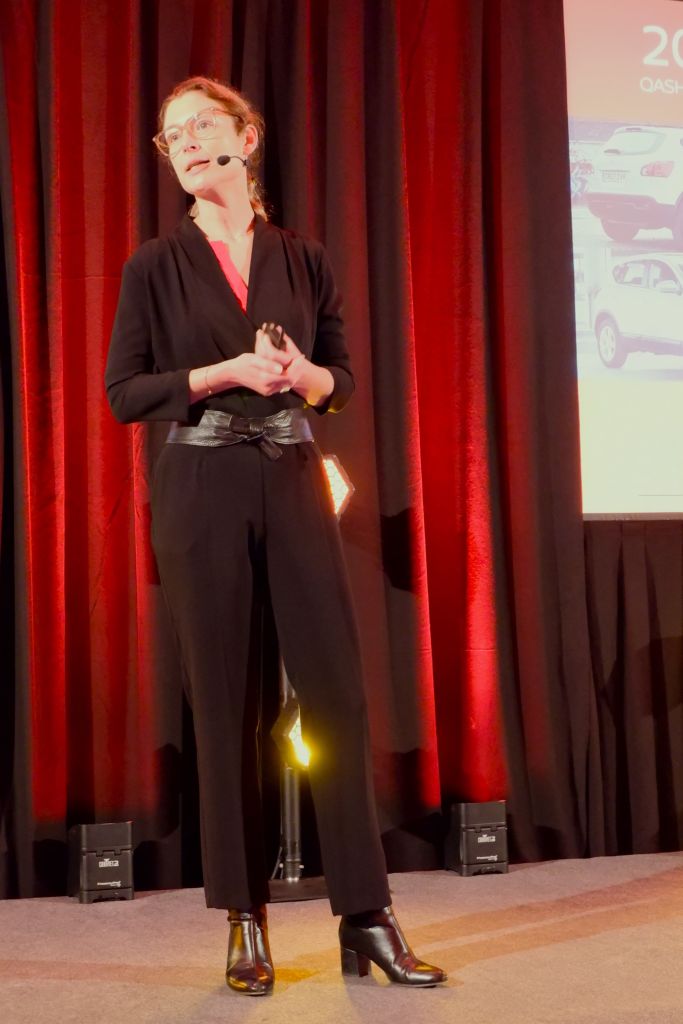
Head of Communications Melvin Keuter opened the yearly Nissan Benelux press conference…

Your servant attended the yearly Nissan Benelux press conference, again expertly organized by the dynamic PR team led by Head of Communications Melvin Keuter. Together with Managing Director Jérôme Saigot they presented the mid-term and mid-long term strategic plan of the company, the new products which were launched in 2024 and the new cars for next year. Just read further…

Hans Knol ten Bensel

The Arc: A bridge to Nissan Ambition 2030.

The Arc is positioned between the Nissan NEXT transformation plan running from fiscal year 2020 through fiscal year 2023 and Nissan Ambition 2030, the company’s long-term vision. The new plan is split into mid-term imperatives for fiscal years 2024 through 2026, and mid-long-term actions to be carried out through 2030. 

Managing Director Jérôme Saigot presented the Nissan short and mid-term strategy…

Under the two-part plan, Nissan will first take actions to ensure volume growth through a tailored regional strategy and prepare for an accelerated transition to EVs, supported by a balanced electrified / internal combustion engine product portfolio, volume growth in major markets, and firm financial discipline.

This will pave the way for the second part of the plan aimed to enable the EV transition and realize long-term profitable growth, supported by smart partnerships, (see below more about partnership with Honda)  EV competitiveness, differentiated innovations and new revenue streams. For Europe, it will maximize its collaboration with Ampere in Europe to complement their own electrification strategy.

To achieve healthy growth in the future, Nissan is now rightsizing the organization and transforming the profit structure to enable the company to afford shareholders’ return, even with a projected annual sales of 3.5 million units by fiscal year 2026.

Three new full electric vehicles for Europe…and battery development

Nissan has for our market three models in preparation which will be produced in the Sunderland factory, replacing the present Qashqai and Juke crossovers and the next-gen Nissan Leaf: the “Chill-out”, the “Hyper Urban” and the “Hyper Punk.”

Nissan will offer enhanced nickel, cobalt and manganese (NCM) lithium-ion batteries, lithium iron phosphate (LFP), and all solid-state batteries to provide diversified EVs to meet different customer needs. Nissan will significantly enhance NCM li-ion batteries, reducing quick-charging time by 50% and increasing energy density by 50% compared to the Ariya. LFP batteries, to be developed and produced in Japan, will be launched that will reduce cost by 30% compared to the Sakura EV minivehicle. New EVs with enhanced NCM li-ion, LFP and all-solid-state batteries will be launched in fiscal year 2028.


The future line-up in Europe…

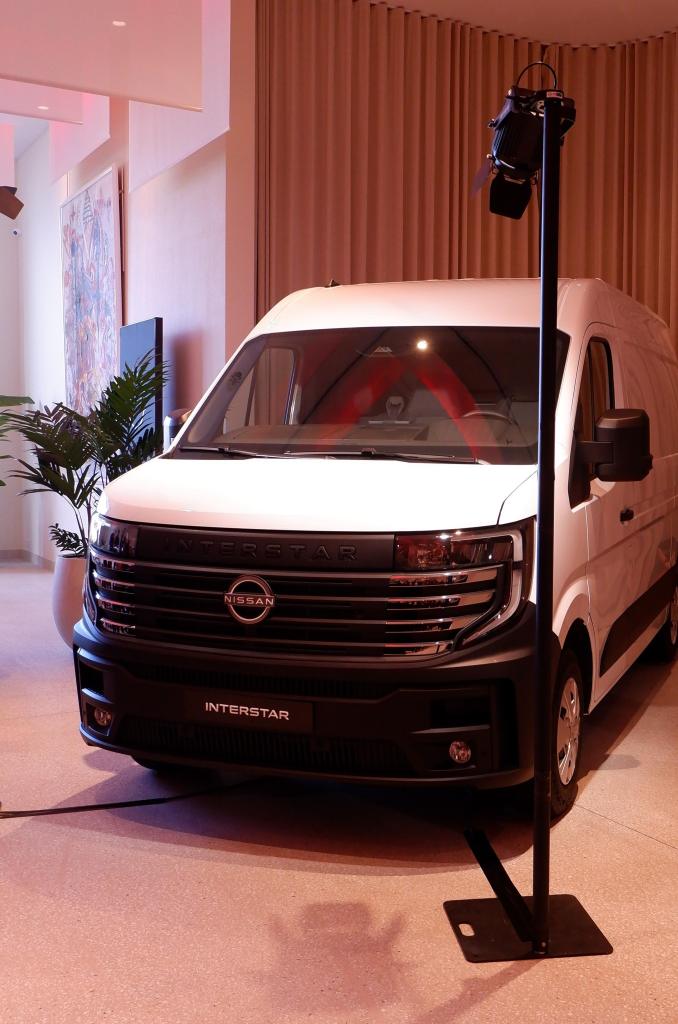
The model portfolio will be further enhanced with a new all-electric Interstar LCV, a replacement for the Leaf and the Micra and last but not least all-electric versions for the popular Juke and Qashqai.

… and partnership with Honda.

Nissan and Honda agree to joint research in fundamental technologies for a next-generation SDV platform. SDV means Software Defined Vehicle (note of the author), which means that the vehicle uses software as the main driver for its operations, features and functions. Nissan and Honda aim to complete basic research in approximately one year and based on the results consider the possibility of mass production development. (Research note of the author).

The two companies have reached a basic agreement to unify the specifications of their respective e-Axles, over the medium to long term, to be used in the next-generation EVs of both companies.

The agreed first step is to share motors and inverters, the core of the e-Axle. (Research note of the author).

With the models to be sold globally by Nissan and Honda, the two companies will consider supplementing models from a short-term to medium- to long-term perspective. For the short-term, Nissan and Honda reached a basic agreement on models and regions to be complemented by each company, and also agreed on the outline of a product review system to be jointly operated by both companies. Furthermore, ICE and EVs are being considered as vehicles for mutual complementation. (Research note of the author).

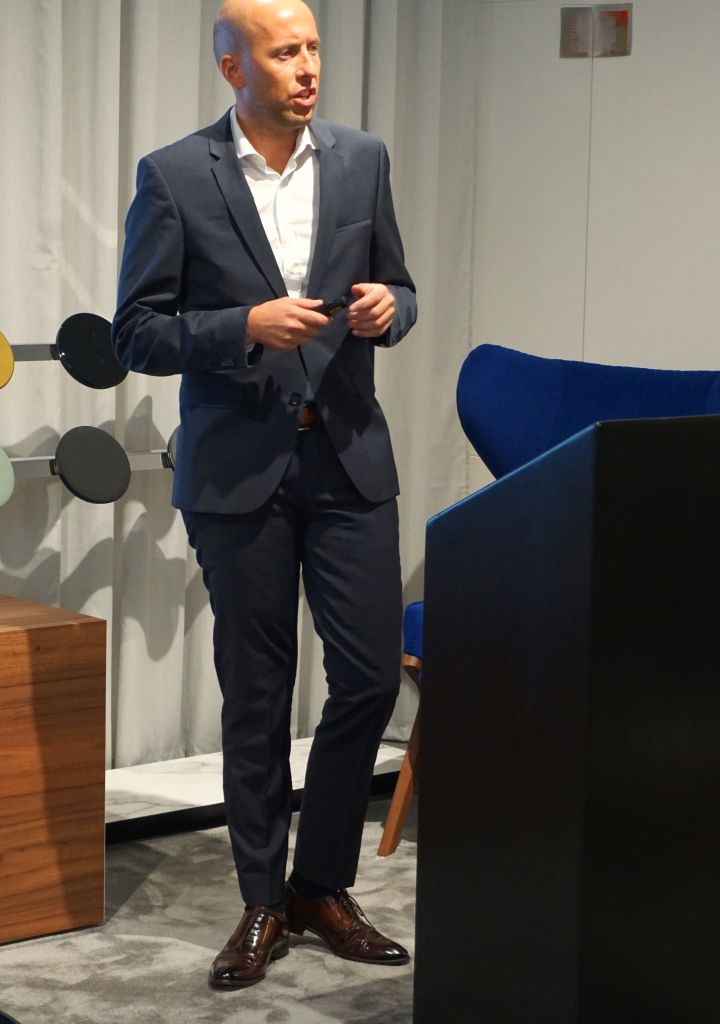
Melvin Keuter highlighted the new features of the 2024 Juke,

and Julie Engelborghs presented the 2024 Qashqai, now with e-power, uplifted design and upgraded tech and connectivity.

A further highlight was the new Interstar LCV, with a new EU 6E norm M920 Diesel engine and of course a choice between a 40 and 87 kW EV battery for the full EV versions.

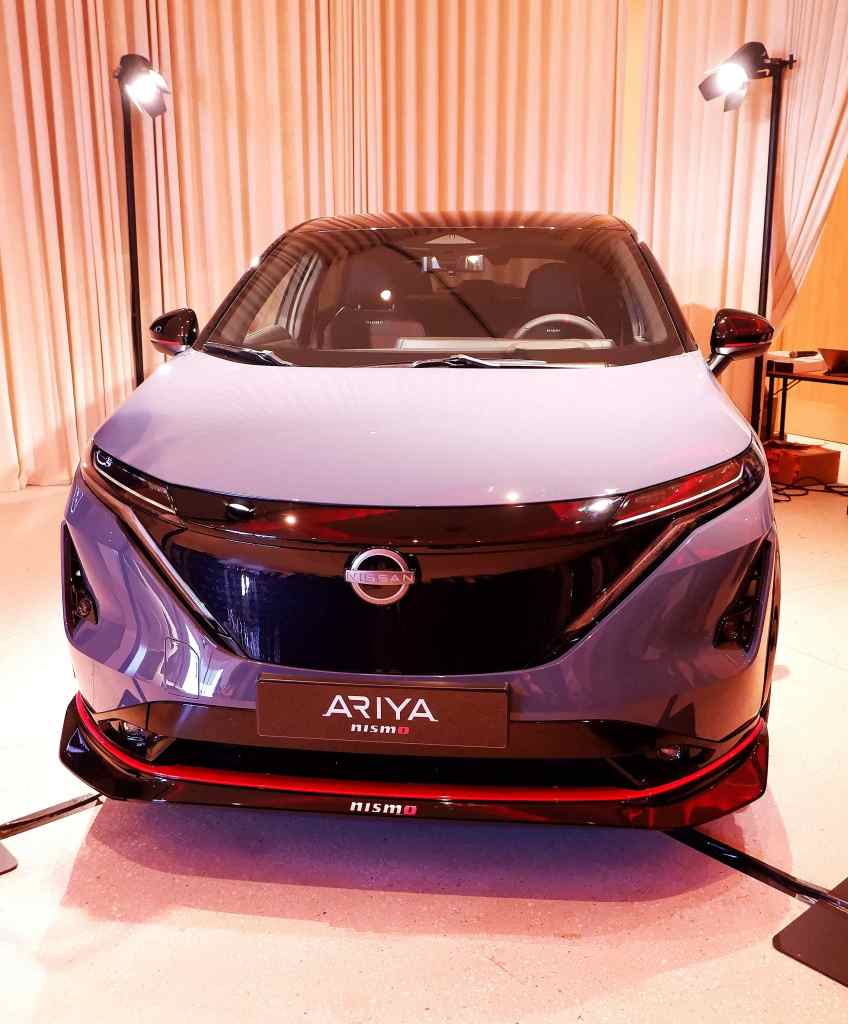
Icing on the cake: the Ariya NISMO…

With this car, NISMO (Nissan Motor Sport) is back in Europe. Based on the Ariya e-4ORCE and featuring a dynamic new-generation EV NISMO design, the Ariya NISMO delivers greater confidence and peace of mind thanks to its extremely powerful yet smooth acceleration, exemplary handling and stellar aerodynamic performance — all brought about by NISMO’s exclusive tuning, Nissan stated when introducing the car.

The motor has approximately 10 percent greater peak output and performance is further enhanced by the combination with special acceleration tuning and an exclusive NISMO driving mode that maximizes response. 

Aerodynamic performance is improved thanks to race-derived technologies that reduce drag and provide greater down force at higher speeds — factors particularly important for EV’s.

Of course, also the interior exudes a premium air with high quality features throughout, including specially designed NISMO seats and trim.

Much more soon on this formidable SUV, but we just tell you here that you can now pre-order this NISMO at nissan.be. The price is at the moment of writing set at € 65.900. The first 250 European customers who order the car get it delivered in the exclusive exterior color Stealth Grey – the iconic body colour from NISMO. In addition, they benefit from a free charging for one year via Nissan Charge…

Soon more about Nissan, amongst others the affordable vehicle to grid technology Nissan will introduce in Europe in 2026…

Hans Knol ten Bensel

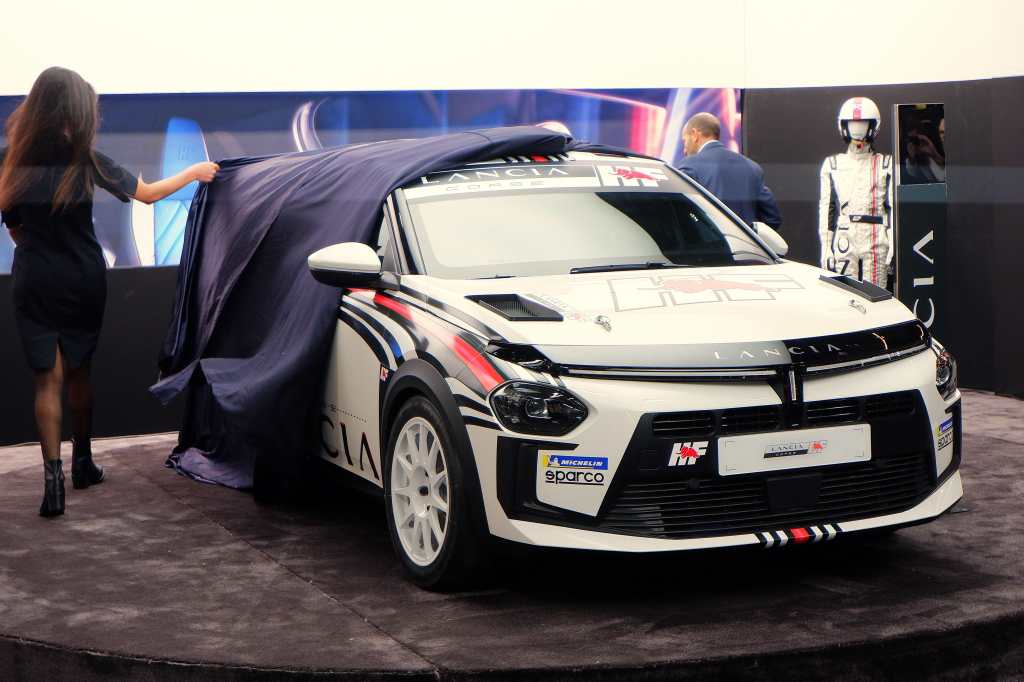
Lancia is back in Belgium, and presented in its return to world of rallying with the debut of the Ypsilon Rally 4 HF…

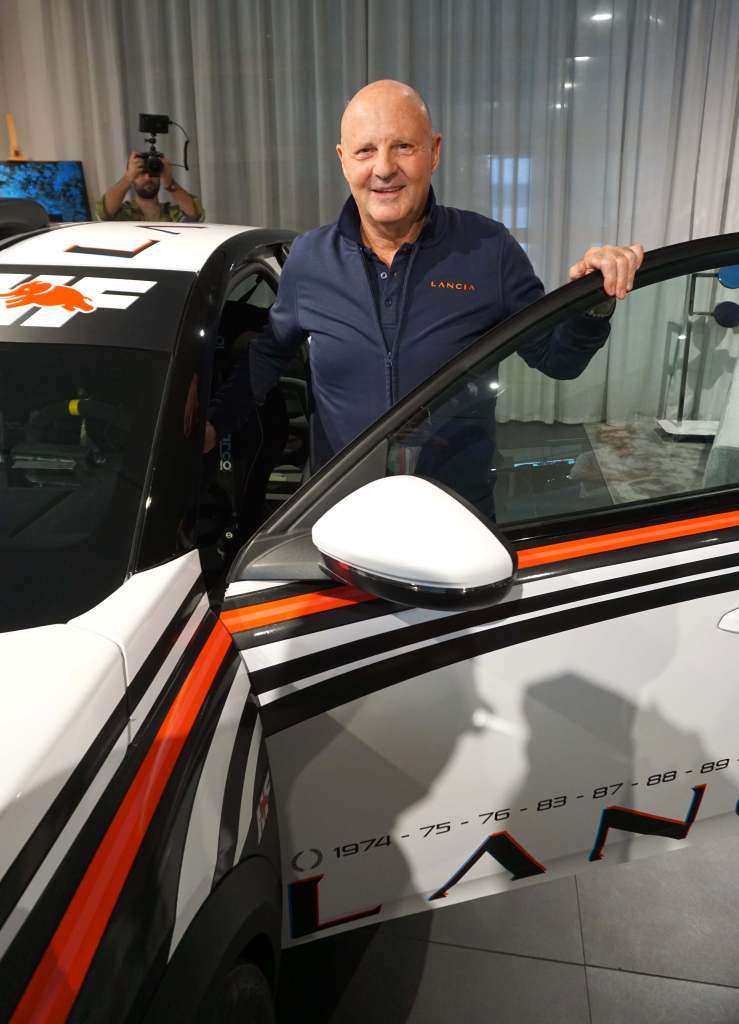
Lancia presented its Ypsilon Rally 4 HF, with from left to right rally champion Miki Biasion, Charles Fuster, Lancia head of Marketing and Communication and Eugenio Franzetti, head of Lancia Corse HF.

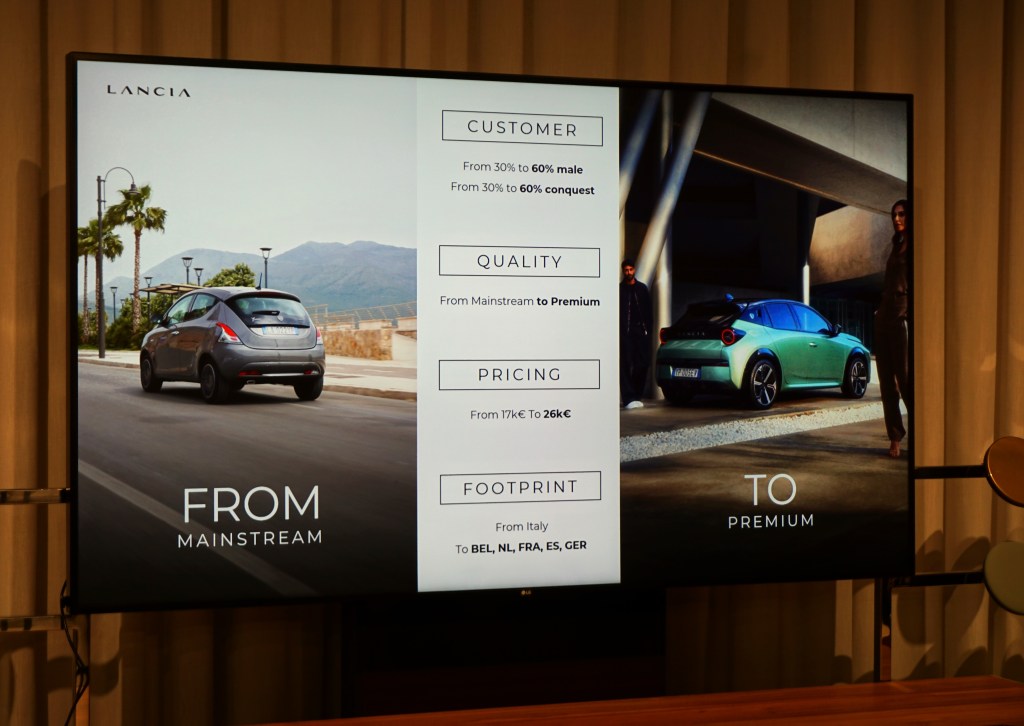
Indeed, Lancia is making an impressive comeback in our low countries, notably Belgium/Luxembourg  and the Netherlands. The three countries have always had a strong interest and passion for the brand, and therefore represent an important portion of the brand’s internationalization plan. It is good to know that by the end of this year, Lancia will get ten new showrooms in Belgium-Luxembourg and five in the Netherlands.

“Lancia is Back” said Charles Fuster, Head of Marketing and Communication for the Lancia brand, with indeed already a grand opening of six showrooms in the Belgium-Luxembourg region, located in Aartselaar, Overijse, Kortrijk, Gent, Gilly and Bertrange, with a network set to grow to ten showrooms by the end of 2024, including upcoming locations in Drogenbos, Hasselt, Namur and Herstal.
In the Netherlands, the brand inaugurated five new showrooms at strategic locations, in Amsterdam, Rotterdam, The Hague, Utrecht and Zwolle.
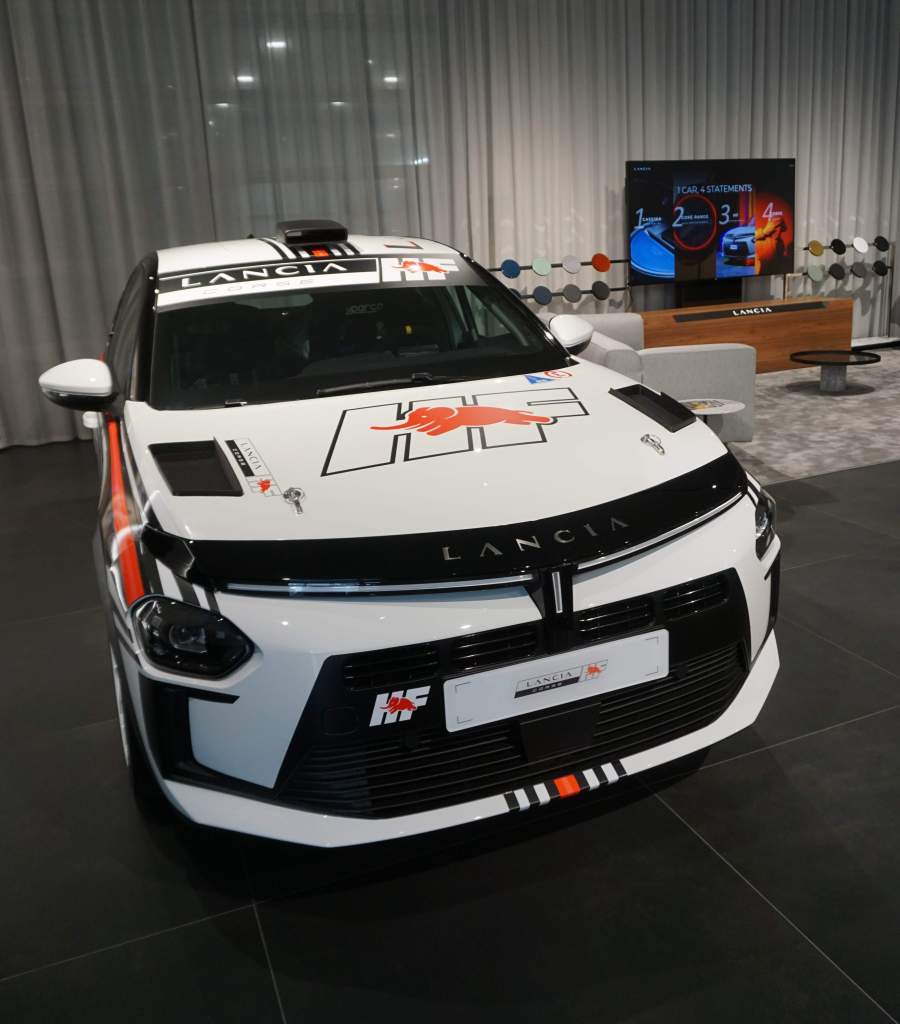
The Lancia Ypsilon Rally 4 HF…

But Lancia – as announced already several months ago by Stellantis CEO Carlos Tavares – is also returning to motorsport, and presented now in Brussels, Antwerp and Utrecht for the first time the Lancia Ypsilon Rally 4 HF.

As the name “Rally 4” already suggests, this Lancia will take part in the Rally 4 championship, a gateway to the world of rallies where junior drivers make their first steps towards becoming professional rally drivers.

and champion Miki Biasion…

Miki Biasion, the world rally champion in 1988 and 1989 with the Lancia Delta of Martini Racing, was present at the presentation, and we were able to have a few words with him.

“I am really glad to support the Lancia Product Team and the Stellantis Motorsport Team in the fine-tuning of both the Ypsilon HF and the Lancia Ypsilon Rally 4 HF,” he said. “We worked to improve the performance of the car, fine-tuning several parameters: engine response, trying out different ignition/injection mappings.” Then he continued: “We worked also extensively on grip and handling, also working on the settings of springs and shock absorbers. We also honed and perfected the braking system, the responsiveness and gearchange speed of the gearbox, also testing new ratios”

Indeed, the Lancia Ypsilon Rally 4 HF has a “classic” 1,2 three-cylinder 1.2-liter turbo engine with four valves per cylinder and an output of 212 hp under the bonnet. It has only front-wheel drive, a mechanical transmission with five gears and a mechanical limited slip differential. All this to make the car affordable for debutant young drivers, which is also the strategy of Stellantis, pursued already with the Peugeot 208 and the Opel Corsa.
 

Relying on private teams…

We spoke also with Eugenio Franzetti, presently Director of Lancia Corse HF. He told us that the strategy of Lancia and Stellantis in general is to rely for the Lancia Rally 4 HF on private teams at the start of the 2025 season, and therefore the car has to be both affordable as well as competitive.

Eugenio Franzetti together with Silvia Cassani, Head of Lancia Communications

Eugenio already occupied various important positions in the Stellantis Group. He was communications and competitions director for Peugeot in Italy, director of communications for DS Automobiles/Citroën/Peugeot in Italy, director of sales for Citroën in Italy, director of communications for Peugeot Global and Italy’s Managing Director of the DS brand before becoming director of DS Performance.

Today he remains in his position as the DS Performance Director and he will therefore retain the dual role.

E power for the road: the Lancia Ypsilon HF

The Lancia Ypsilon HF, the 100% electric performance version of the new Ypsilon, is powered by a 280 hp electric motor, which enables acceleration from 0-100 km/h in just 5.8 seconds. This drivetrain is also found in the Alfa Junior Veloce and the Abarth 600e.

With its lowered chassis, wider track and muscular design, the Ypsilon HF is a nod to the iconic models from Lancia’s rich past. The car will be launched in May 2025…

Hans Knol ten Bensel

Fiat celebrates 125 years and launches a new iconic “grande” Panda for the world…

Fiat has now for more than a century been the pounding heart of Italian engineering and industrial genius. It has given the world wonderful cars, and to me, besides the pre-war Balilla and Topolino, the post-war cars are even more iconic and are absolute milestones in automotive history. Let’s begin with the Fiat 1100 or millecento compact four dour sedan, which is still serving in India as a taxi and has been built there until a few years ago. I absolutely loved the PininFarina styled six cylinder 1800/2100 four door sedans launched in the sixties, and then of course the Seicento and the Cinquecento in ‘57…

About ten years later came the Fiat 124, the 1967 European car of the year, which put the whole east-bloc and Russia on wheels, built in Russian Togliattigrad as the Lada.

Then there was the Fiat 127, putting front wheel drive and excellent performance to the disposal of the masses. Soon then came the Panda, an absolute icon which I photographed in the Galerie de la Reine in Brussels for Keesings Auto Magazine at the time. This car I still find absolutely modern, by the way.

The iconic Panda, born in the 80s, still totally modern and contemporary today…

Now we live in different times, but the Panda is still inspiring many. Therefore only logical that Stellantis put its new Fiat Grande Panda on the new global line-up based on a multi-energy platform.  FIAT now starts its transition from local-based production to a global offer through a common global platform. But there is still an Italian DNA left, as it has been styled at the Centro Stile in Turin, and certainly has lots of character as the photos show.


The new Grande Panda

Olivier Francois, FIAT CEO and Stellantis Global Chief Marketing Officer, summarized it well at the presentation: “Currently we have launched FIAT’s comeback to the global mainstream based on 3 pillars: Italian design and development, global platform and local relevance—and the Grande Panda is the first member of our new global family.”

The Grande Panda will first land in Europe, Middle East, and Africa, and will be available in both electric and hybrid versions.

Proudly presenting the big new Panda: John Elkann, Chairman of Stellantis, Carlos Tavares, Stellantis CEO, and Olivier Francois, FIAT CEO and Stellantis CMO.

Needless to say that we eagerly await to get more acquainted with the Grande Panda soon, both in hybrid and E-versions, which, as we read, will be aggressively priced.
 

A Fiat 500e Giorgio Armani

But at this anniversary, celebrated on the iconic “Pista 500”, the circular test track on the roof of the famous Lignotto factory building, now converted in a hotel, where the walls of the guestrooms are decorated with mural size photos of details of historic Fiats and a MUST to spend a night when you are in Turin, Fiat stylists and Giorgio Armani designed together an elegant version of the 500e.

The standout exterior design element are the wheels, representing the GA logo on a macro scale. They become the car’s star feature, ensuring it stands out…

We hoe you enjoyed here the photos of the celebration, a very enjoyable event for a brand we always kept very close to our car-loving heart…

Hans Knol ten Bensel  

We drove the Renault Megane E-Tech Iconic EV60 220 hp

Renault has been very early in the EV game, with its fittingly called ZOE, which has been for years an absolute bestseller. The new Megane has been completely redesigned and is the first Renault model to run on the new so-called CMF-EV platform, co-designed with Nissan. The new Megane is compact with its 4,20 meters, which is almost identical with the previous, fourth generation Megane, but that’s were any similarity ends. The new Megane stands proudly on its big wheels (20 inch in the version we tested) and its proportions are beautiful indeed. The longer weelbase of some 2,70 meters clearly shows that this is a latest generation EV. It certainly has style and panache. Will it also convince as an EV? Just read further…

Hans Knol ten Bensel

Modern times…

The Megane has not only a contemporary flair, it also offers quite enough room for four adults and their luggage. They are greeted by a pleasant and premium interior, with impeccable styling. On the top version we tested, your eyes wander over a well finished dashboard and meet with a crisp 12 inch central screen which offers state of the art infotainment and connectivity. Of course, Apple Car Play and Android Auro are provided. But this is also standard in the base model. Indeed, the latest Megane generation comes very well equipped. Then you get a 9 inch screen, but a rear camera and speed limit recognition combined with cruise control are also standard.

Cocooning

Indeed, the digitalized instrumentation leaves nothing to be desired. Renault has integrated Google functions in its OpenR link, and offers very good information for the EV driver. First of all it uses the chrystal clear Google maps, and when plotting the chosen route for you, it will take into account the charging situation of your battery, and even indicate the estimated remaining charge status at your destination.

Of course it will also suggest stops and places where you can recharge your battery. The layout of the dashboard is quite practical, and it is good to see that the commands for heating and ventilation are placed on a separate physical touchboard below the central screen. One also finds the legendary and iconic audio command stick on the right side of the steering column, which is typical for every Renault since the R 25 sedan, launched way back in the seventies…

The finish level of the  cabin and seats is high indeed. In the top “Iconic” version we tested, Renault has also provided electric powered front seats with memory and massage functions. The seats are very comfortable and the upholstery is firm.

Smooth power

We tell you nothing new when I tell you that EV’ s spoil you with lots of super-smooth power. With its 300 Nm and 220 HP you can expect very sporting performance. Not only is this Renault very quick off the mark with a sprint from 0 to 100 kmh in merely 7,5 seconds, it excels in traffic with very brisk accelerations. From 60 to 100 kmh costs merely 3,6 seconds, which makes overtaking or joining faster traffic the proverbial breeze. Besides the silence and smoothness, it is this permanent presence of this abundance of power which makes an EV truly delightful to drive. The pleasure stops at 160 kmh, as the electronic limiter sets in quite sensibly. Indeed, high cruising speeds wreck havoc to the range of your EV.

There is a round knob at the steering wheel column where you can choose the different driving modes from eco to sport, and with the paddles on both sides of the steering wheel you can select the amount of energy recuperation you want on your drive. 

Despite being only front wheel drive, the drivetrain copes well with all this power. When it comes to consumption, the slower you accelerate and cruise, the better your range will be. We learned to drive EV’s with restraint, despite their abundant power, and this is the only way  to achieve a consumption which comes close to the official WLTP figures. We regularly achieved values between 15 kW in urban traffic and 17 KW on the open road, at moderate cruising speeds. When you use this Renault more briskly, you have to reckon with 19-20 kW, which is still a very good value indeed.

The battery has 60 KW capacity, and this means a range between 370 and 400 km is quite realistic and achievable when you drive it with restraint and achieve a consumption of around 15-16 kW. It accepts up to 130 kW fast charging, and this means that you can charge it from 10 to 80 pct in merely 41 minutes. The battery is guaranteed to deliver 70 pct of its capacity for a period of 8 years or 160.000 km.

Practical

We already applauded the excellent infotainment and good cabin layout. The boot space is adequate with some 330 liters, with the rear backrests down this raises to some 750 liters. The boot floor lies very deep, and this makes loading heavy objects a bit cumbersome. One minus point in everyday life might be the rather poor backward visibility, due to the small rear window, high waistline and the large C pillar. But then the Megane has a rear camera as standard equipment, and in the top version we were spoiled with an electronic rear view mirror.

Comfort and handling

The Megane is in good French tradition laid out for comfort, it is also at home on winding roads and offers excellent stability at motorway speeds. We already applauded the comfortable seats, and getting in and out of the car is also easy due to its higher stance.

Conclusion

A well styled car, well built and finished, powerful and reasonably frugal, the Megane betrays the excellent ”savoir faire” of the French car builder in making EV cars. It is full of panache, both inside and out, and certainly deserves a good look if you are looking for an EV in this segment.

Hans Knol ten Bensel

BMW makes you dream in the sky…

Designers can make you dream, and at BMW this is no exception. It brought to this year’s Concorso d’Eleganza Villa d’Este a unique design study: the BMW Concept Skytop. It has clearly athletic proportions, and Adrian van Hooydonk, head of BMW Group Design, commented: “It offers a combination of driving dynamics and elegance at the highest level, comparable to its historic ancestors, like the BMW Z8 or BMW 503.”

Indeed, it does, its lines, surfaces and volumes breathe the classic proportions of its iconic predecessors. Is it a harbinger for future BMW styling? It certainly has interesting details, like winglets integrated into the door shoulders replace conventional door handles. Light-alloy wheels with precise lamellas are also adding elegance and drama.

We like the impressive long bonnet and the classic kidney grille, and also the retracted rear end and the pronounced central spline, which runs over the bonnet through the interior and ends an aluminium trim positioned on the tailgate, add both panache.

The LED headlight units, positioned on milled aluminium carriers, were custom developed for the BMW Concept Skytop, utilizing the latest technology and design for automotive headlights with the slimmest profile currently available.

We also love the leather-finished roll-over bar behind the BMW Concept Skytop’s two seats, as it is combined with side fins on the B-pillar and a fully retractable rear window. The setup is quite practical: the two removable roof parts, also finished in leather, can be stored in a special compartment in the luggage space.

Color harmonies…

The colour scheme ensures a smooth transition from interior to exterior, regardless of whether the roof is open or closed. In the rear section, the reddish-brown tone of the roof flows into the muted silver with chrome shadow effect of the exterior paintwork. The technically elaborate colour gradient was crafted by an experienced master painter at BMW Group Plant Dingolfing (!)

…and luxury in brogue-style leather…

The leather seats in the interior carry brogue-style accents. The reddish-brown tone of the leather gives the whole interior a sense of luxury and spaciousness. Chrystal elements and further are artfully embedded in the gearchange lever and the cockpit, adding to the overall impression. The interior surfaces of the BMW Concept Skytop were crafted in the traditional saddlery of the BMW Group plant in Dingolfing.

The spirit of the Z8 reigns also in this concept car: under the hood roars the most powerful V8 engine in the BMW drive train portfolio.

Of course there is much more news on the BMW front: the new 3 Series Sedan and Touring, the new 5 series Touring and the first BMW i5 Touring, to say the least. Stay tuned!

Hans Knol ten Bensel

We spoke with Barbara De Mol, Marketing Director Lancia and Alfa Romeo…

HKTB: Let me first congratulate you with your new responsibility, and thank you for granting this interview. You have already built up quite a career in the automotive world…

BDM: Indeed!  I made my first steps at Renault, then joined the Group D’Ieteren, where I worked in the Marketing department at Porsche, and then took a new challenge by joining Electric by D’Ieteren, putting their product in the market. Then, as I was launching a new product in a premium (electric) automotive market, it was a logical step for me when an iconic brand like Lancia was (re)launching itself in our market, to take up also this challenge and this is how I landed here as a marketing director for Lancia and Alfa.

HKTB: Lancia is a unique premium brand with a noble Italian elegance and spirit, embedded in a rich history…

When I heard that 9 dealers will represent the Lancia brand in our country, with 1 in Luxemburg, it intrigues me to know how they will receive and approach the client and give him this premium impression and “feel” the moment he enters the showroom. What kind of support do you provide to these dealers?

BDM: Indeed, our support goes further than just marketing, and contains other aspects. For instance, the appearance and “look” of the showroom itself. We prescribe a premium level here. But there is also the sales person, i.e. the person who makes the first contact with the client. So we have established a training programme, where learning how to establish a good “face to face” contact is very important. We also have to address any doubts the client may have about the quality of our Italian cars, and therefore we offer an extended guarantee for the entire duration of the contract on our products.

HKTB: Do you work together with Italy to develop this training program for the sales staff?

BDM: Indeed, we have a very good collaboration. They communicate about their best practices, and of course we also have in Belgium our own training team. We have also developed a specific sales course, not only focusing on the technical aspects of the car, but also pointing out which elements constitute a premium brand.

HKTB: And the philosophy of the brand…

BDM: Of course. This has also a special appeal for them. The Italian elegance, the rally successes, there are many aspects. The history of Lancia is also very important.

HKTB: Can you tell us a bit more about the geographical distribution of the dealerships, for instance, there is no dealer in Knokke…

BDM: Indeed, there might come one in 2025… The first idea is of course to spread the dealerships  across Belgium, and the person who lives in Knokke or rather has his second residence there, lives usually also in one of the main Belgian cities.

HKTB: You have a dealership in Courtrai…

BDM: Indeed! The (first) locations have been chosen in function of the potential sales volumes. We need motivated dealers who want to invest in the brand, and therefore we need to offer them an opportunity to grow…

HKTB: What about the dealerships who previously sold the Lancia Ypsilon, now some years ago?

BDM: These dealers will still exist for after sales service. Presently there are only two dealers in this situation. They can service the new Ypsilon, even when they don’t have the car in their showroom.

HKTB: The car has many technical similarities with other cars in the the Stellantis group, not to mention the Peugeot 208 and Opel Corsa …

BDM: Indeed, but when it comes to selling and servicing the Ypsilon, the approach is to maintain its strictly Italian character, which is reflected in the dealer strategy…and which is to be applauded!

HKTB: Do you have a cooperation with the Netherlands?

BDM: We are different, but we work together, as the Ypsilon is launched simultaneously in both countries.

HKTB: Within the Stellantis group, DS is also a brand which addresses a premium client base. Is there a “cross fertilization” concerning client approach, an exchange of best practices in this field?

BDM: Not really. Indeed, we have three premium brands in the group, Alfa, DS, Lancia. We can share some training programmes on how to sell a premium brand, but then for Lancia and Alfa the passion for the automobile, its elegance and its design are rather more important. It is more “Italian”.

HKTB: Can you tell a bit more about the plans and potential for the fleet market for this Ypsilon?

BDM: We know that in Belgium the premium is very much fleet oriented, but as the Ypsilon is a city car, we reckon that about 50 % will be sold in the fleet market and indeed 50 % will find its way to private clients, who will opt rather more for the hybrid version.

HKTB: There will also be a follow up in the Lancia model range with the Gamma…

BDM: Indeed, and next year also there will be the more engaging HF version of the Ypsilon.

HKTB: Are the dealers exclusively Lancia?

BDM: No, they are also Alfa. They are so-called multibrand, but they will have a specific showroom, dedicated to the brand. The showrooms of the different brands have also to be clearly separated, and indeed the sales people are also specific. There is a dedicated sales person for the brand, who has an intimate knowledge of the brand.

HKTB: Are you going to engage with Lancia in cultural and other events? Will you for example sponsor in the future events like the Concours Reine Elisabeth?

BDM: Not in 2024, we now concentrate on the launch of the brand; but the retailers will probably organize or sponsor (local) events. There will be however specific events for the fleet clientele.

HKTB: I am (also) an artist myself and have a keen interest in artistic events, and I could see Lancia sponsoring events in the cultural sector…

BDM: This is a very good suggestion! Maybe in 2025. But you can always contact me, I am always open to new ideas and suggestions! The first event is now the opening of our retailers. The 22nd of May, the Luxembourg retailer will open its doors…

HKTB: Thank you very much for this interview!

Hans Knol ten Bensel  

We drove the Volkswagen ID.7: your electrifying flagship…

Volkswagen has gained over the years already quite some experience in designing, developing and building EV’s with its already iconic ID series. All this know how is now brought together in the ID.7, the big EV limousine at the top of their ID range. The result is manifest: this car is full of good qualities, and earns indeed top marks in virtually all aspects. We found it clearly one of the best bigger EV’s we have come across lately.
Just read further…

Hans Knol ten Bensel

Imposing and well proportioned

The ID.7 has the same styling and form language as the smaller models in its ID range, but its proportions are even better, not in the least because of its  longer weelbase. The overall length of 4,97 meters lets the lines and contours flow more gradually and elegantly and indeed, this ID.7 looks good from any angle.
The ID.7 is also very aerodynamic, with a Cw value of merely 0,23. This is very crucial to reduce energy consumption at higher cruising speeds, and to achieve longer ranges on long distances. But there is more: the VW engineers gave the ID.7 also a brand new electric motor. It drives like in the other ID models the rear wheels and develops 210 kW or 286 HP.

Plenty  of power, to say the least, and this ID.7 is very agile indeed. It sprints from 0 to 100 km/h in merely 6,5 seconds and overtaking becomes the proverbial breeze. The ID.7 behaves also wonderfully when you drive it more quietly, and the car then rewards you with a very reasonable consumption. We achieved during our test an average of 17.60 kW/100 km, and we think that this tells the whole story.
Indeed, VW succeeded in giving their flagship EV an impressive range of close to 500 km. Of course, the usable range varies with outside temperatures and driven speeds, but let’s say that this ID.7 has its merits as a long distance Gran Turismo.
This good range is achieved with the 77 kW battery which is also found in the other cars of the ID  range, and all this is due to the improved motor and the better aerodynamic qualities. Of course, as you already know by now, EV cars just LOVE slow driving. The slower the (constant) speed, the further you go. Even to very slow speeds, like say 40 km/h, EV’s are frugal, where IC engined cars need to revert to lower gearing to keep the revs up and are therefore less efficient. Also the outside temperatures are relevant. So at a nice springtime outside temperature of 20 degrees and at a cruising speed of say 90 km/h, you will drive far beyond 600 kilometers with your stylish ID.7. Top speed is sensibly limited to 180 km/h.

This electric flagship will also recuperate its kinetic energy nicely. If you put it in Eco mode, it will also decelerate smoothly and anticipate for bends and crossroads.

Comfort and space…

We found the suspension of the ID.7 actually “just right”, offering excellent comfort in all circumstances and under all driving styles, with outstanding handling and agility. A superbly balanced car indeed.

But it is not only the suspension which stands out, the generous dimensions in the cabin do the rest. Indeed, this is a limousine fit for the very tallest. Even when the front seats are put back to accommodate 1,95 meter tall front passengers, you will still enjoy ample legroom in the back. Indeed, this is a car to fit four basket ball players, and this is pretty unique.
Your servant is barely 1,70 m tall, so you can imagine that I was absolutely spoiled.

Climate comfort

The seats itself also merit superlatives. The front seats are optionally equipped with so-called ’Adaptive Climate Control’.  It has to be felt to believe it. Humidity sensors in the backrest will prevent transpiration, small jets will cool or heat the seats for optimal comfort.
Besides this, the seats will also spoil you with an array of massage functions.

The light atmosphere in the cabin can be changed almost at will, 10 different colour shades are standard, and can optionally be as many as 30…

Our test car came with a panoramic roof, which has a layer of polymer dispersed liquid crystals, so you can control the transperance with a simple touch.

Heating and ventilation are controlled on the immense central touchscreen, although there is an illuminated control bar at the base of the screen which lets you adjust with sliders the basics like air  temperature and airflow volume. The direction of the airflow through the vents can only be adjusted on the touchscreen however. Your servant is very sensitive to colder airflows, and was very surprised to feel an intermittent air stream on his face. Indeed, the airvents can be set to turn constantly on a horizontal axis, like a stand ventilator in your home…

A range of well over 500 kilometers is quite possible with the ID.7..

On a public charging point it will accept power up to 11 kW, and the battery will be 80 pct charged in about 4 hours…

Touch controls…and clear instrumentation.

Again the haptic touch controls are the hallmark of this VW, as is typical for the entire ID range. It takes some getting used to, and for instance you are well advised to set the voice command sensor on the steering wheel properly, otherwise she will ask you what she can do for you at every turn of the way.

What we loved is the very clear and concise driver information the instrument display puts in front of you. Indeed, less is more. There is also a very readable head up display. It informs you about speed, the direction you should take and energy consumption.

Practical

In good VW tradition, the boot space is enormous. When you fold the back seats and load until the window openings, you can store 888 liters…
There is even a small separate 25 litre storage space for the charging cables.

The ID.7 is rather wide for urban traffic, but its turning circle is a modest 10,7 meters, and indeed the car is thanks to the driving aids also a breeze to park.

Fast charging is a strong point of the ID.7. It will accept up to over 180 kW charging power, and under these conditions it will take little more than half an hour to recharge this flagship from 10 to 80 pct. On a public or wallbox charger it will typically accept 11 kW, and you have to reckon with a charging time of some 8 hours.

Conclusion

The ID.7 is indeed a totally convincing limousine EV. It is hard to find any weak points, and it is therefore not surprising that it earns many top laurels in the international motoring press. Notably it was given the very best note ever for an EV by the German ADAC in their test.

Quality doesn’t come cheap, but then this is a rather formidable EV, and we sincerely regretted to part with it…

Hans Knol ten Bensel

Lancia is back in our low countries…

Belgium, the Netherlands and Luxemburg have always been “home” for Lancia. Indeed, our roads were marked 4 to 5 decades ago by the presence of the elegant Fulvia’s, and connoisseurs were at the wheel of the Flaminia’s, not to speak of the beautiful Superleggera’s and later, last but not least, the 4WD Lancia Delta “Integrale”, which still makes the hearts of aficionados beat faster.

The rear lights of the new Ypsylon are reminiscent of the legendary Stratos, with also the “Y” Calice symbol worked in…

Even your servant fell for the brand with the elegant chromed “calice” on its radiator, namely a Dedra 1,8 i.e. By then, Lancia was already part of the larger Fiat concern, and it proved to be an utterly reliable and pleasant companion for four years in my stable, and I still remember it fondly. It already had the beautiful dark blue body paint and equally blue Alcantara interior and seats.

Given this enthusiasm, it is hardly surprising that Stellantis decided to pick the Benelux as one of the ideal places in Europe to have the renaissance of the brand, in line with the “Stellantis Dare Forward” strategic plan.

The Lancia Ypsilon is the much loved debutante…

The Ypsilon has maintained the brand alive in Italy, and has been highly popular there over the years. Not that the new Ypsilon has anything in common with its predecessor. It carries the Lancia Pu+Ra Design (the name a combination of ‘pure’ and ‘radical’), the one-of-a-kind Lancia design language with a timeless touch. The new Ypsilon It is available as a pure EV and in hybrid form. The 156 HP EV with a 51 kW battery has a WLTP measured range of 403 kilometers, the 3 cylinder, 100 HP 48 V hybrid caters for a wide(r) public and can be bought at an attractive base price of 24,000 Euros. The EV has the same technical basis as the Peugeot e-208 and the Opel Corsa Electric, but it certainly has quite different looks.

Lancia presented us their Ypsilon at the launch in a very attractive top notch “Edizione Limitata Cassina” version, whith an iconic “Lancia Blu” color for interior and bodywork, ”panno” wool upholstery for the seats executed in “cannelloni” pattern and as icing on the cake, one is seduced by an iconic “tavola” or small round table in the centre of the dashboard, sitting on top of the centre console. This brings you in the unique S.A.L.A. or “living room” atmosphere, which the Lancia designers created in collaboration with Cassina.

The abbreviation S.A.L.A., meaning living room in Italian, actually stands for Sound, Air, Light, Augmentation and is the new name used for the infotainment system. Its command module sits as a disk on top of the dashboard. We will come back on this system more in detail when we will get acquinted with the Ypsilon, hopefully soon…

This Cassina edition is exclusive: only 1906 units will be produced, and the number is actually also quite symbolic, as 1906 is the year Vicenzo Lancia was born…

The Benelux customer can now order this Ypsilon, and besides the top Cassina and the “base” version, one can also opt for the premium LX version. LX is also symbolic, as it is the Latin acronym for 60, created in 1966 to celebrate the 60th anniversary of the brand.

Even the base version is well equipped, with multifunctional steering wheel, automatic airco and keyless entry/start/lock. There is also one 10,25 inch digital instrument screen and an equally big  central touchscreen. Of course Apple CarPlay and Android Auto is also provided.

A new dealer and sales network

The renaissance of Lancia comprises also an all-new network made up of 9 new showrooms in Belgium, 6 in the Netherlands, and 1 in Luxembourg, with 12, 6, and 1 after-sales service points respectively. You can order also your new Ypsilon online, if you wish.

Should you opt for a “pure” EV, it is good to know that Lancia offers “Free2move Charge”, a simple, complete, and integrated ecosystem that allows worry free charging at home and gives you access to 600,000 charging points across Europe. Lancia offers also the Easy Wallbox Home Charging solution and has interesting financial renting offers in store, worked out in collaboration with Stellantis Financial Services.

Last but not least, we had at the presentation an interview with Barbara de Mol, Marketing Director for Lancia and Alfa Romeo, about Lancia’s dealer/sales and marketing approach in our country. It to be published soon, so stay tuned!

Hans Knol ten Bensel  

We drove the Peugeot e-2008: a bestseller goes electric…

The stylish 2008 has already won many car loving hearts in its B-SUV segment over the last three years, and Peugeot now again improved its styling, equipment and last but not least gave it a new electric motor, bigger battery and longer range.

Reason enough for us to have a go for you behind its cute, dynamic and very pleasant small steering wheel, which gives this 2008 the extra panache and feel to brighten up your daily driving. We drove the top notch GT version here, and were spoiled indeed…

Hans Knol ten Bensel

The E-2008 was already quite popular in its earlier  version, with not less than 75,000 units sold. It accounted for 17.4% of sales in 2022, placing it on the podium of European sales of electric SUVs in the B segment.

Even more style…

The 2008 had already an appealing overall design, but now after the new 508 saloon and 508 SW, the 2008 is the second model to adopt the new PEUGEOT signature light. This consists of three vertical light claws which are integrated into the gloss black inserts on the bumper. In the GT versions, the effect of the three claws is extended in the lighting of the full LED headlamps through the use of three light modules. We liked it…see the photo below.


The new LED rear lights on all versions of the new 2008 are redesigned. The emblematic three claws are made up of three superimposed horizontal double slats, giving the 2008 optically a wider stance.

The new 2008 has a new front end, which features the new PEUGEOT emblem, and we liked very much the new Selenium Grey which was chosen as the launch colour. It gives the 2008 a decidedly upmarket appeal.
The wheel design is now in line with those introduced on the PEUGEOT 408. Several models are available, in 16-inch “NOMA” (ACTIVE versions), 17-inch “KARAKOY” (ALLURE and GT) or 18-inch “EVISSA” (optional on GT). All alloy wheels feature a 4-spoke wheel centre, stamped with the PEUGEOT crest…

A pleasant cabin and a new digital instrument cluster

Ideally located at eye level, just above the steering wheel, the new 2008’s instrument cluster is digital on the ALLURE and GT versions. Its 10-inch digital display has a new design and, on GT versions, a 3D display. The colour of the display, the hierarchy and the layout of the information can be fully adjusted to suit the driver’s preferences, and indeed, is quite intuitive to use. We like the Peugeot idea of putting the instruments in your line of vision, just above the upper rim of the small steering wheel, but we would suggest that you test this out for yourself so that you feel comfortable with it.

Of course, the central display will also show your Android Auto connection…

All 2008 models now come with a 10-inch central touchscreen as standard, and on the ALLURE and GT versions, the central screen has improved readability thanks to HD technology. It is indeed a breeze to use, also thanks to the row of piano keys under the central screen, giving quick access to key functions. We also liked very much the big round audio volume control knob, it is always the most intuitive and useful tool for radio listening, no matter what…

The cabin is pleasant, the seats not only look good, but give excellent comfort and support. As icing on the cake, the GT version we tested offers ambient lighting which can be customised in eight different colours, coordinated with those of the central touch screen and even taking into account the selected driving mode (!).

If you plan to take your E-2008 to snowy alps or muddy country roads, it is good to know that the 2008 comes with Grip Control, which provides access to three driving modes: sand, mud and snow. Depending on the country, this grip control offer is combined with ‘3PMSF’ all-season tyres.

A new electric engine and longer range…

Stellantis installs now a more powerful 156 HP electric motor in the 2008, and this engine is also found in the E-208 and E-308. The same goes for the improved battery, now good for 54 kWh. All this results in a longer range – according to WLTP standards – of 406 km.
Everybody now knows that outside temperatures and driving styles greatly influence the possible range of an EV. And it must also be said that for EV driving, the slower is the better, contrary to IC engined cars, which in the top gear have a so called ”sweet” spot for economy driving at some 70-85 km/h. At this speed, an EV is already consuming a LOT MORE kWh than at say 50-60 km/h. Speeds between 30 and 40 km/h are most economic for an EV, this is the reason why it excels in urban traffic, and this is the main reason for adopting hybrid drivetrains to lower overall consumption in frequent urban use.

To achieve decent efficiency at higher speeds and more dynamic use, manufacturers of electrified cars have adopted the so-called ”drive modes” systems, as is of course also found on this E-2008. In this ”Eco” mode, the engine power is harnessed to some 109 HP, which is indeed more than sufficient for everyday driving. The excellent torque characteristics of an electric motor make up for this, and one never has the feeling that the car is underpowered.


What remains is the uncanny and brilliant smoothness of EV driving, and indeed, nothing comes close if you want pleasant (urban) mobility. On the open road, we try to achieve in the milder springtime temperatures a decent range of some 350 kilometers, and this means cruising in the ”Eco” mode at some 100 km/h, which means that you truly can enjoy the jazz or classical music coming from the very melodious sound system.
On the practical recharging level, it is good to know that you can fast charge the 2008 at up to 100 kW. This means that you can recharge this Peugeot in merely 27 minutes from 10 to 80 %.

We also appreciated here the very well dampened rolling noises, making a longer trip a very relaxing and enriching experience.
EV cruising is indeed under these circumstances a marvelous ”Zen” activity, where we are of course grateful that the distances in our rather small country are not by any means large. A word of praise also for the sound system, very important now in an EV.

French car builders have a unique “savoir faire”, when it comes to making suspensions which are both comfortable and well balanced, offering excellent road manners. The small steering wheel inspires you to adopt a more active driving style, and indeed, the 2008 doesn’t miss a beat, on any road and at (almost) any speed…Having said this, this 2008 feels however most at ease when you adopt a zesty, but a still rather relaxed driving style.

With 156 HP the E-2008 offers quite adequate performance, if not sensational. It will sprint from 0 to 100 km/h in 9,1 seconds, top speed being limited to 145 km/h.

Practical

The 2008 scores well in everyday life. Offering good seating comfort fore and aft, luggage space is still very much OK with 434 litres, and you can extend the luggage space by folding the 60:40 split rear seats. When it comes to equipment, there are three levels you can choose, Active, Allure and the Gt version we tested. The Allure version seems the ideal compromise in terms of value for money, as it offers most of the things you get in the GT  version, although we must admit that we liked the extra panache of the GT nevertheless…

Conclusion

The 2008 convinces in styling, above all a fantastic looking interior and dashboard. It is smooth and comfortable, seats four easily, has adequate boot space, and is reasonably e-efficient. It is very well possible to achieve an average consumption of around 15 kW/h given a relaxed driving style.

Hans Knol ten Bensel