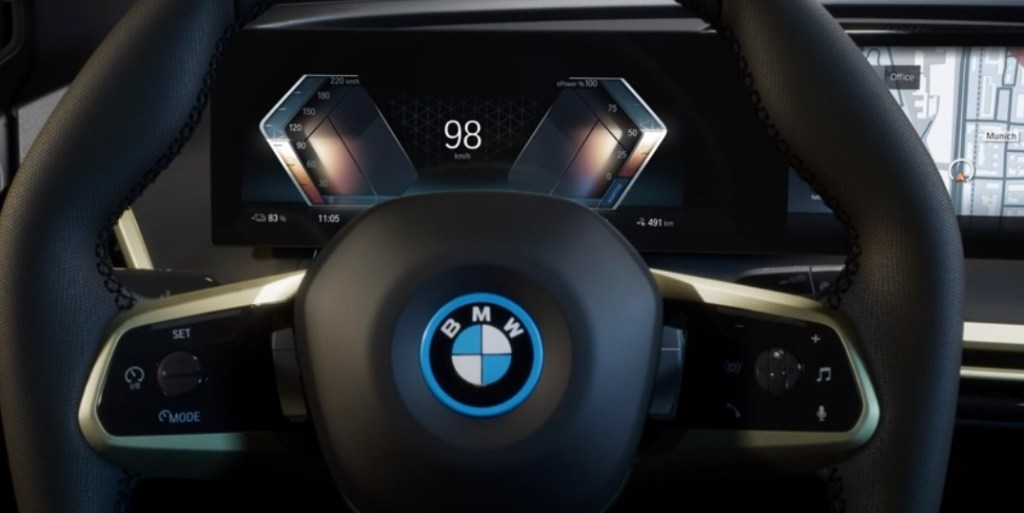
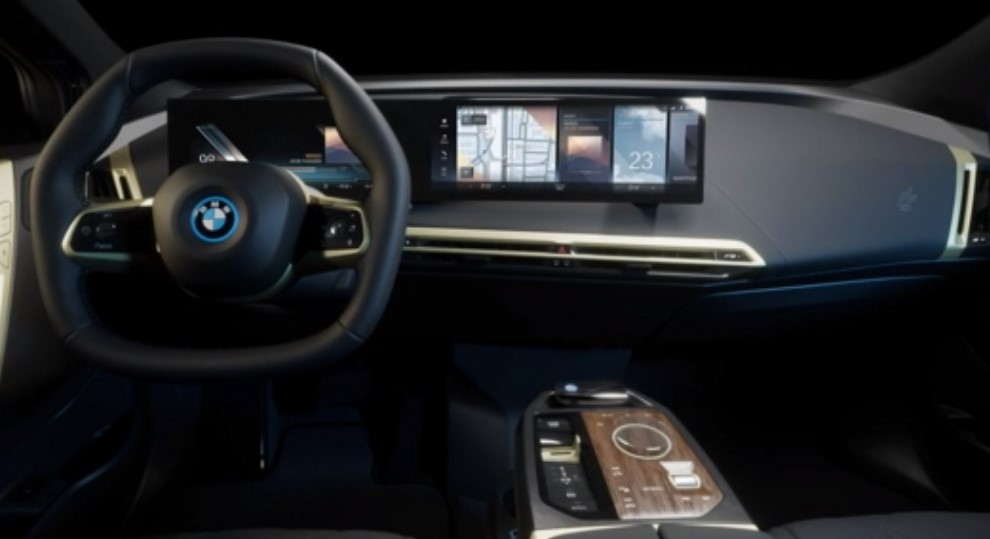
We just witnessed the presentation, and of course we will come back on this with more details, but we can say already that BMW again produced a breakthrough in car to driver communication…
We show you here some screenshots of the presentation, but, as said, there is more to come about this very convincing approach…
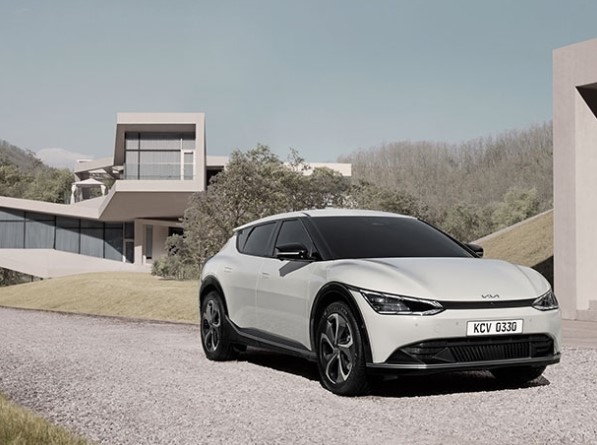
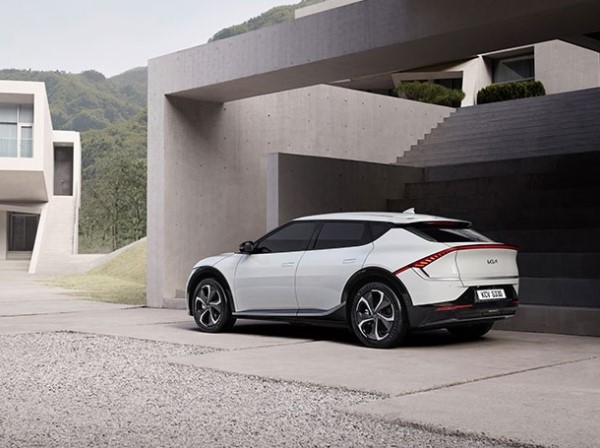
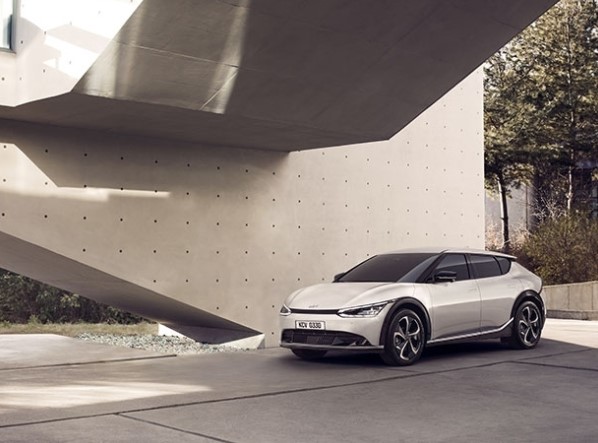
Kia Corporation has revealed the first images of the exterior and interior design of EV6, its first dedicated battery electric vehicle (BEV), ahead of the car’s world premiere at the end of March.
EV6 was designed under the brand’s new design philosophy ‘Opposites United’, which takes inspiration from the contrasts found in nature and humanity.
At the centre of the design philosophy is a new visual identity evoking positive forces and natural energy, with contrasting combinations of sharp stylistic elements and sculptural shapes.It is definitely contemporary and has timeless proportions, which will please for years to come, with a purity not unlike for instance VW’s ID3 and ID4.
Boasting a distinctive crossover-inspired design and based on the brand’s new Electric-Global Modular Platform (E-GMP), the EV6 is Kia’s first dedicated BEV to be influenced by the new design philosophy.
Opposites United: a design philosophy for all future Kia vehicles
The Opposites United design philosophy makes its debut on EV6, and will inform the design of all future Kia models. The philosophy is based on five key design pillars: ‘Bold for Nature’, ‘Joy for Reason’, ‘Power to Progress’, ‘Technology for Life’, and ‘Tension for Serenity’.
We explain it more in detail here.
Bold for Nature is based on interaction with nature, informed by the details, shapes and proportions found both in the natural and human worlds. This design pillar creates organic, yet technical structures and finishes for vehicle interiors; exterior designs are characterised by a combination of clear and simple lines with bold, ever-changing surfaces.
Joy for Reason focuses on the feel and ambience of Kia’s future vehicles. Future designs will fuse the emotional with the rational, creating vehicles that influence the mood of passengers, by relaxing and inspiring. It will also influence the adoption of new organic materials and more daring colours, expressing a sense of youth and playfulness.
Power to Progress builds on the brand’s current design strengths. By drawing on and developing the skills and expertise learned throughout Kia’s recent era of design-led transformation, the designs and layouts of the brand’s future products will continue to evolve. Future designs will draw on experience and creativity to invent and innovate new designs.
Technology for Life embraces new technologies and innovations to foster positive interactions between humans and machines. The brand’s future vehicles will adopt a next-generation in-car user experience (UX) through design and innovation and advancements in lighting, feel and in-car connectivity – to help customers engage with their cars.
Tension for Serenity evokes the tension between opposing forces and creative contrasts, and recognises the design equilibrium that comes from two opposing forces. It delivers striking design concepts that use sharp, highly technical details to create surface tension – and realise a harmonised, future-oriented design vision.
Exterior design: a future-oriented EV design characterised by high-tech details
The exterior design of EV6 is a powerful representation of ‘Power to Progress’.
At the front, characteristic daytime running lights create a sleek appearance. They form part of the car’s ‘Digital Tiger Face’, a design progression evoking the spirit of Kia’s ‘Tiger Nose Grille’ for the electrified era. The design of the lamps also includes a ‘sequential’ dynamic light pattern.
The side profile displays a crossover-inspired design aesthetic, contrasting with sharp lines and high-tech details to create a sense of tension in the design.
Designed in part to realise ultimate aerodynamic performance, the rear displays a sloping rear C-pillar with an integrated black glossy insert which visually widens the window glass.
The EV6 is the result of a collaborative effort between all three studios in Kia’s global design network in Namyang (Korea), Frankfurt (Germany), and Irvine (California, US).
Interior design: a modern and spacious interior for the EV era
A distinct product of the EV era, the interior design is liberated as it were by Kia’s dedicated E-GMP platform, which offers increased space compared to previous Kia EVs based on existing model architecture. Here Kia goes with VW’s trend set in with their ID series.
One of the most striking elements of the new interior is a seamless high-tech curved high-definition audio visual and navigation (AVN) screen. The simple form language of the wide curved screen and the slim dashboard give the space an open feel.
The width of the screen creates an immersive experience for the driver, while a minimal number of physical buttons offer an uncluttered and soothing driving experience.
Underneath the AVN screen, passengers control HVAC (heating, ventilation and air conditioning) settings by using haptic ‘buttons’, while below this panel, the dashboard slopes away towards the front of the car, creating a sense of space and openness for the front-seat passengers.
The seats are slim, lightweight and contemporary, and clad in modern, visually interesting and robust fabrics created using recycled plastics, which create yet greater openness in the cabin.
EV6 will make its world premiere in March 2021, during a special online event. We will keep you posted!
BMW stunned the automotive world 20 years ago with their iDrive BMW opened a new era of in-car operating technology.
Keen to get a grip on the constantly expanding array of functions in vehicle interiors, in 2001 BMW instigated a paradigm shift in the then new BMW 7 Series.
Today, BMW developers and designers focusing on user interaction and user experience have faced up to a new set of challenges. The 8th generation of BMW iDrive brings about another paradigm shift – this time to a new kind of relationship between driver and their vehicle. Needless to say, we are very intrigued and will certainly follow the premiere online!
Indeed, You can follow the world premiere live at www.live.bmwgroup.com, on Monday, 15 March 2021, 15:30 GMT.
You can also follow the @BMWGroup social media channels for the live broadcast.
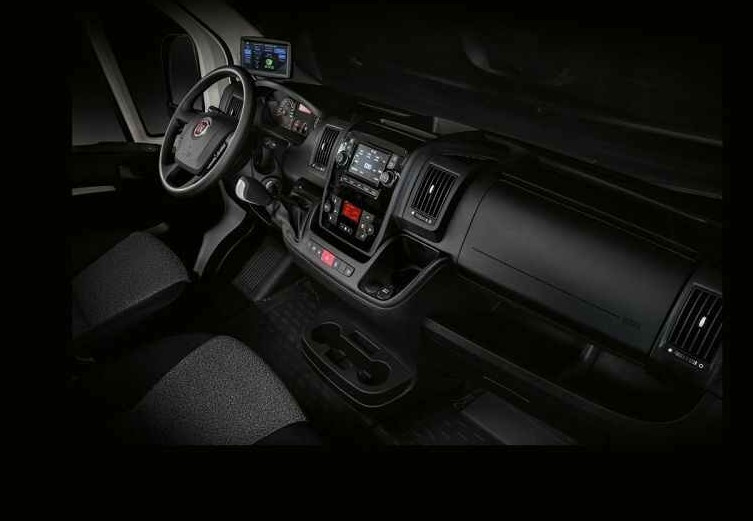
Faithful readers know that we reported already about the e-Ducato and the dynamic people behind this project, notably Madame Angelica Carapezza, who we interviewed back in 2019. Now the e-Ducato is fully available…
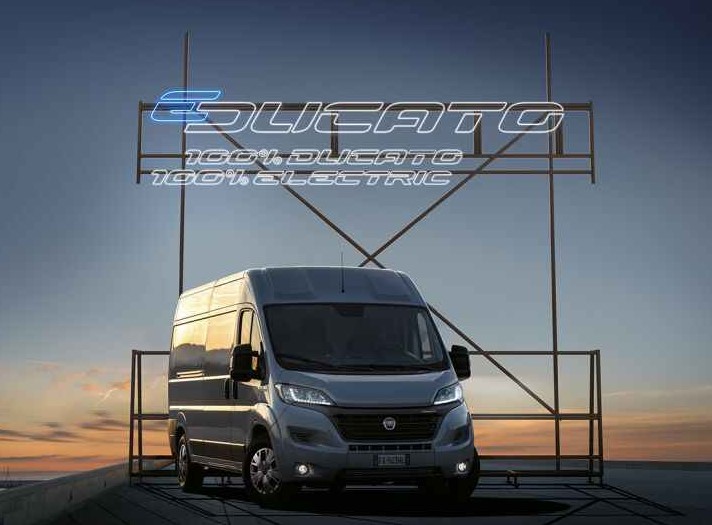
Indeed, orders are open for the new E-Ducato, the full-electric, fully connected version of the Fiat Professional best seller, It guarantees continuity in the technology transition with similar performance, at a comparable cost.
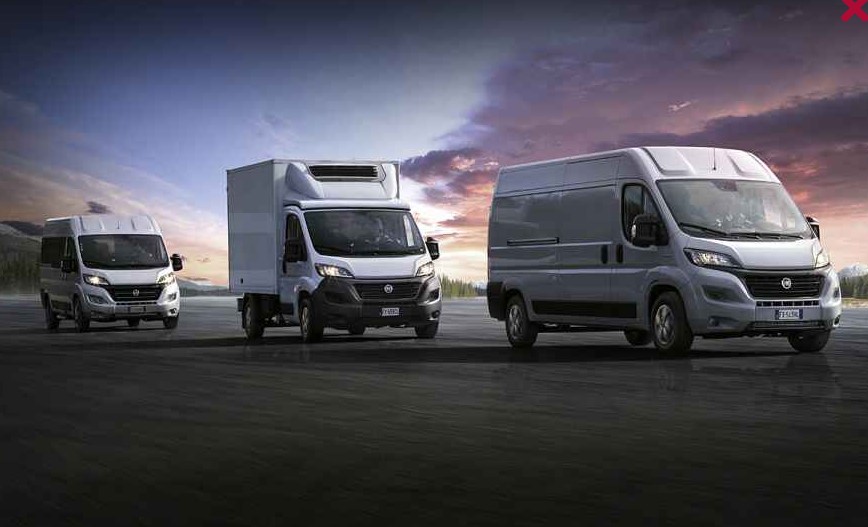
The line-up of configurations meets every need: vans from 10 to 17 m3, cab vehicles in 4 different lengths, plus people-carrying capabilities to cover any business need.The Ducato has best-in-class load volume from 10 to 17 m3, payload of up to 1,910 kg.
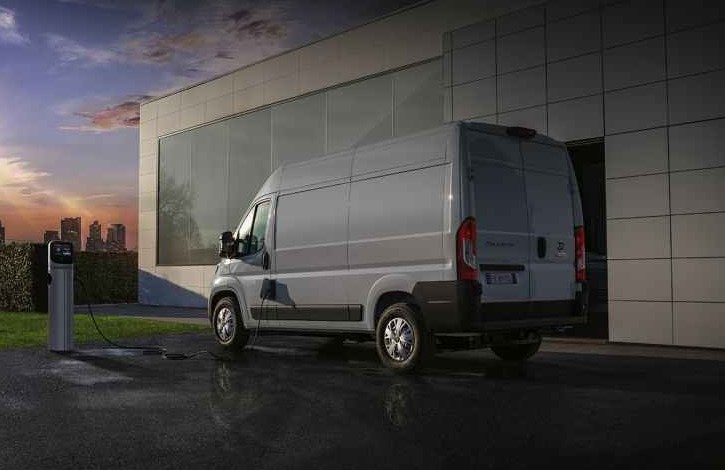
There is a modular choice of batteries, with ranges from over 230 to 370 km in the urban cycle; 2 different AC chargers at launch, with DC Fast Charge available as an option.
The exclusive Pro Fit by E-Ducato app is available, for the ideal E-Ducato configuration based on real-world usage data, to best meet every specific need.
A wide range of benefits are included in the price: Vans from €60,800 for the 3.5-ton Medium Wheelbase version (10 m3 load volume); Cab vehicles from €60,300 in the 3.5-ton Medium Wheelbase version.
The line-up extends all the way to a 4.25-ton van.
At launch, 5 years of routine maintenance and a 5-year vehicle warranty and up to 10-year battery warranty are included. Three packs with the most sought-after optional extras are available on request.
To support the launch and the “electric project”, Fiat Professional and the Sapient agency have developed the “Numbers” digital campaign. Of which more in detail later.
The vehicle’s arrival in dealerships and early deliveries are scheduled from late March onwards.
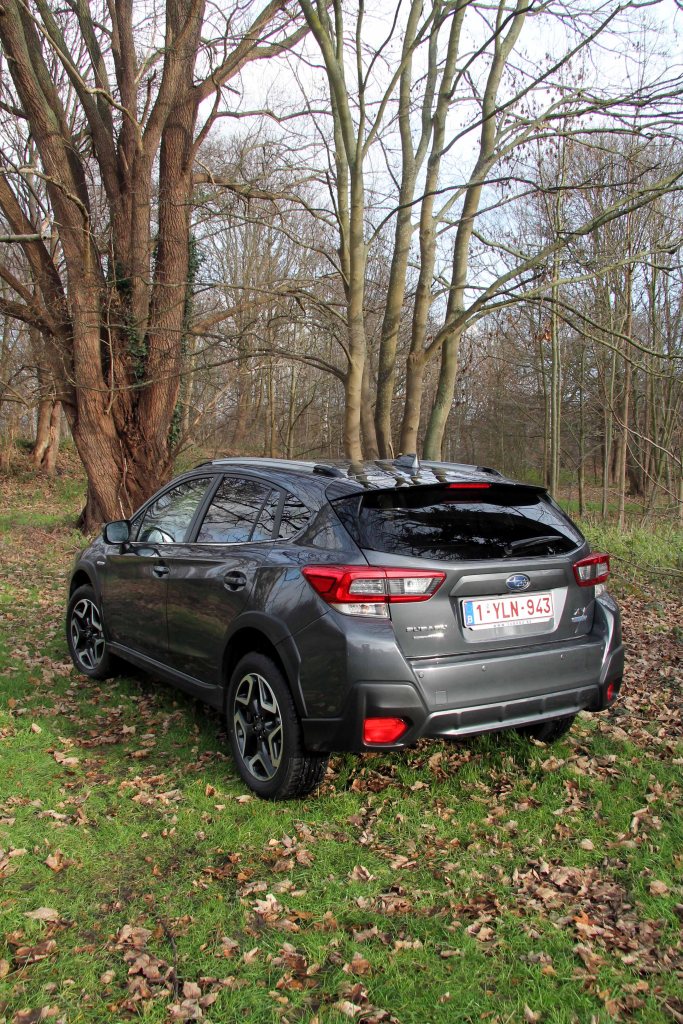
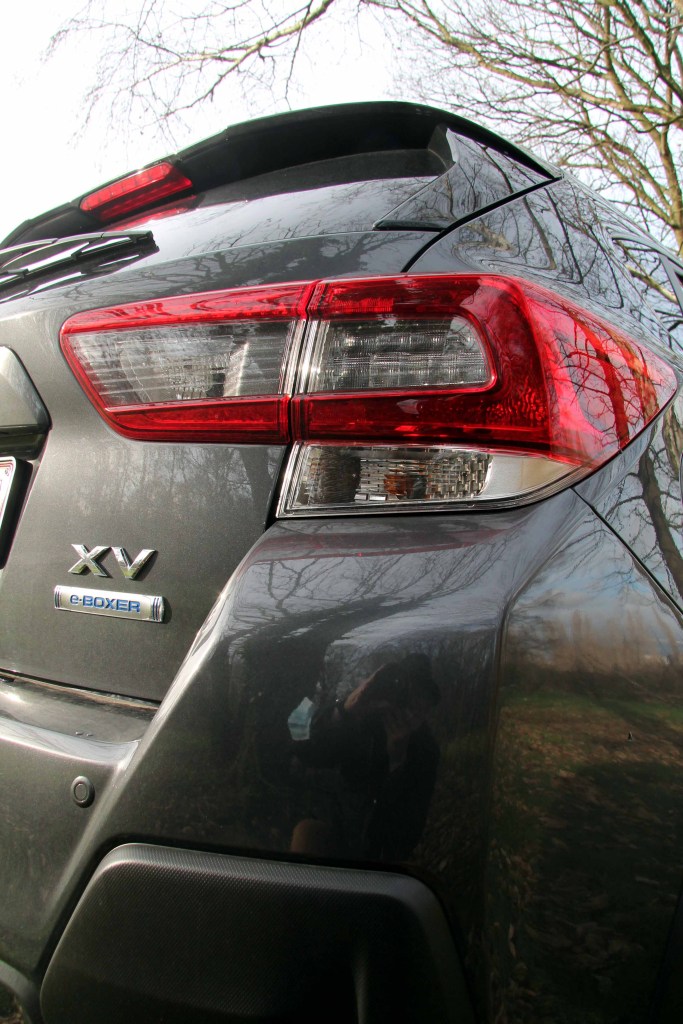
The XV embodies perfectly what a Subaru stands for: it is compact, styled with zest and panache, versatile, rugged and of course crammed from bumper to bumper with state of the art, innovative and exclusive technology. This legendary Subaru boxer technology, combined with unique 4WD capability comes now to you with additional e-power, to make this Subaru fit for the E future which is coming upon us.
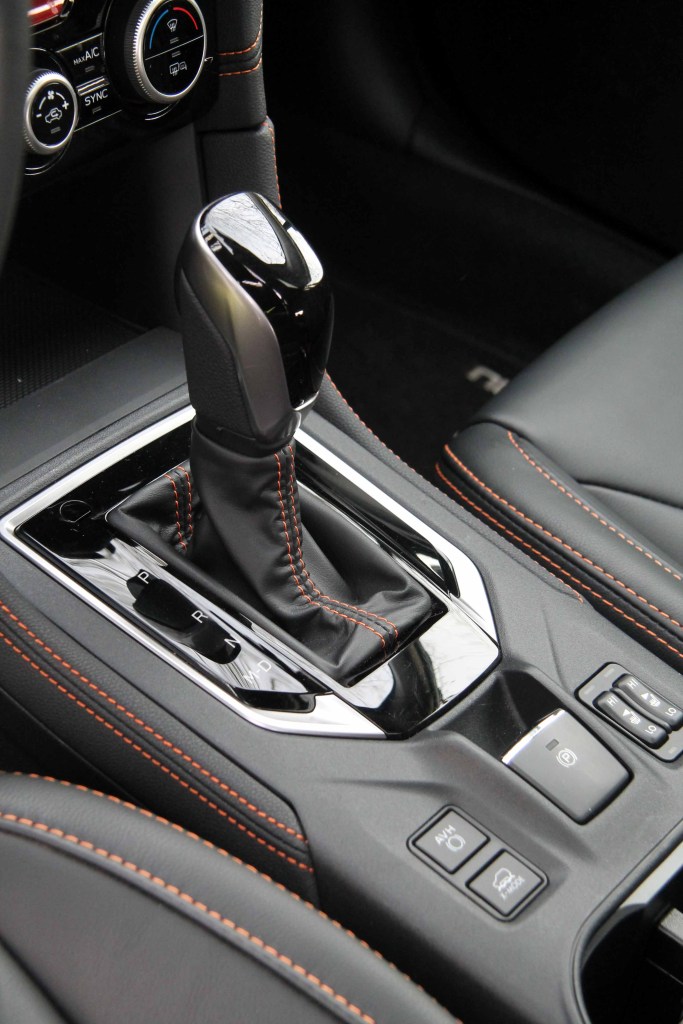
Subaru prefers rugged no-nonsense go anywhere capability, and therefore opts for hybrid technology: the 2 litre direct injected boxer engine is coupled via a Lineartronic CVT Transmission to a 12.3 kW e-motor which sits right behind the engine and is fed by a 13.5 kWh battery pack which sits behind the rear wheels. E power is available at slow speeds up to 40 km/h. Subaru describes this as the EV driving mode. Depending on the enthusiasm of your right foot and the state of charge of the battery pack, you could drive on E power over distance of up to 1,6 kilometers at speeds, as we said earlier, of up to 40 km/h. In practice, the battery and motor just assist the combustion engine when driving away from traffic lights and in slow stop and go traffic.
When you really keep your right foot very calm, a lot can be gained here. As you servant is well trained with his Lexus 200 CTH, it was no trouble at all to eke out a consumption of 6 litres/100 km in tightest urban traffic. It just takes a good amount of concentration and anticipation.
The Subaru changes very smoothly from E- to petrol power and vice versa at varying speeds above 40 km/h in the “engine assist function.” Nice too is that the CVT transmission has 6 “steps” or ratios if you want to, so you can avoid that the willing boxer revs too high for your liking when you really put your foot down and accelerate hard on a motorway entrance for instance.
At higher speeds, the petrol engine takes over fully and charges also the battery. The beauty of hybrids is that you can use them anywhere, anytime, for any distance, just like any other petrol engined car. With a significant reduction in petrol consumption if you understand them and know how to drive them…
We averaged between 6 and seven litres/100 km on our regular routes. The manufacturer quotes 6,5 litre/100 km as average consumption, and 149 g/km in CO2 emissions.
Off road capability…
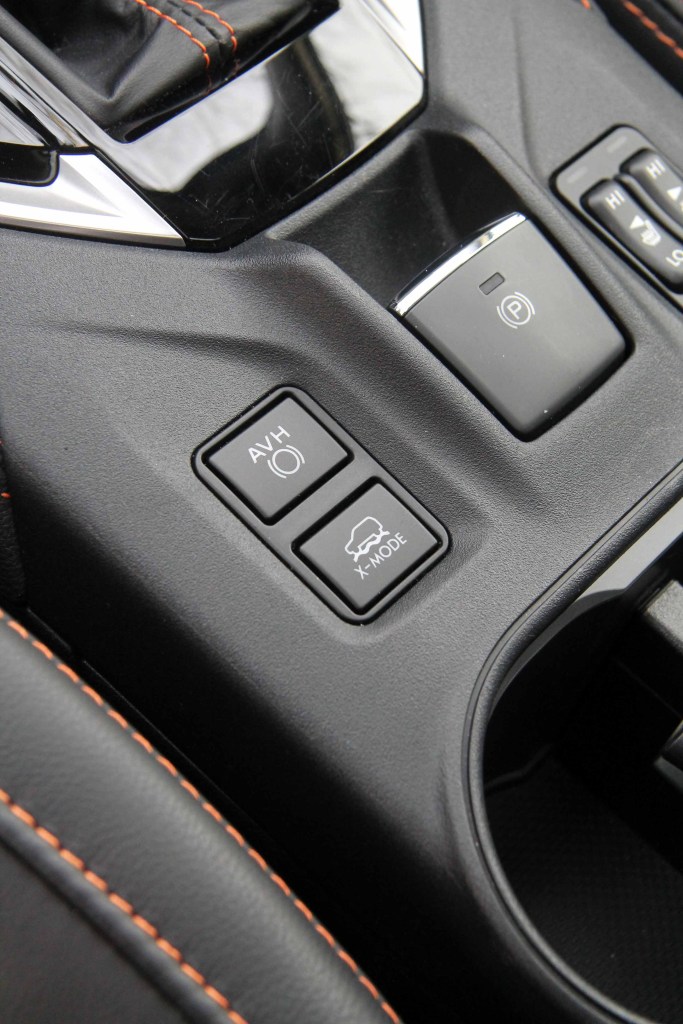
But then, this car is a Subaru. This means king of the road, off-road. The XV offers go anywhere capability with its Symmetrical AWD, and its further developed X Mode. This mode effectively remaps the 4WD system, using the E motor to modulate the traction on all 4 wheels even more finely. Taking the family out on a weekend skiing or having fun in the snow: this Subaru gets you there and back… and how!
Good performer
Although it will not invite you to throw it around corners, it certainly has the rally-bred stamina to do it. This XV has legendary on-road handling, and remains controllable and neutral no matter in what situation you put it in. The hazards of winter season and/or slippery roads simply do not exist for the XV.
Outright performance leaves nothing to be desired: 0 to 100 km/h is reached in 10.3 seconds, top speed is a healthy 193 km/h.
Of course the Subaru is an excellent motorway cruiser. The suspension is comfortable, the XV rolls on the brand new Subaru Global Platform which added considerably more body stiffness, but then a very stiff body is also prone to resonances, and there is some road/tyre/wheel noise noticeable.
Subaru’s EyeSight keeps you safe
Another point we cannot miss to mention is the superb EyeSight Driver Assist Technology. Driving in thick fog on motorways, winding forest roads has no collision risk for you anymore. Two stereocamera’s sit on both sides of the rear view mirror and keep an eye on the road ahead. Coupled with the adaptive cruise control, the system will assist in keeping a safe distance and adapt speed automatically to the car in front of you over a very wide speed range between 0 and 180 km/h.
Well-equipped and pleasant cabin
The XV dashboard has three screens, two on the centre console, and one between the nicely finished round instruments for speed and revs. Infotainment is intuitive and easy to use, and leaves nothing to be desired. The whole cabin is well finished, quality of materials used is very good, sturdy and fit for no nonsense practical use for years to come, in the good Subaru tradition.
Boot space is not enormous, due also partially to the rear battery pack, but the standard 355 litres can be easily enlarged when the rear seats are folded down. On the other hand, the Subaru still has a healthy 1270 kg braked trailer pulling power, and if you have any doubts about Subaru’s mettle, just have a look at the numerous You Tube films where Subaru’s are pulling stranded trucks out of snowy ditches…
Conclusion
Together with the Forester, Subaru now has two (partially) E-powered models in its range, and the ever so popular XV has become even more desirable now. Embodying all the traditional legendary Subaru qualities, the XV now offers excellent economy and the “Zen” driving style which comes with electric propulsion. Definitely have a long hard look at thisone when you consider buying a crossover in this segment. This car has so many unquestioned and unique talents, you shouldn’t miss it for anything in this automotive world.
Traditionally, in February and March, the Brussels based Autoworld Museum organizes a special for Volkswagen historical exhibition, culminating in a Beetle love parade on St. Valentine’s day.
However, the parade will not take place in 2021 for obvious reasons, but the exhibition organized in collaboration with Volkswagen is very special indeed!
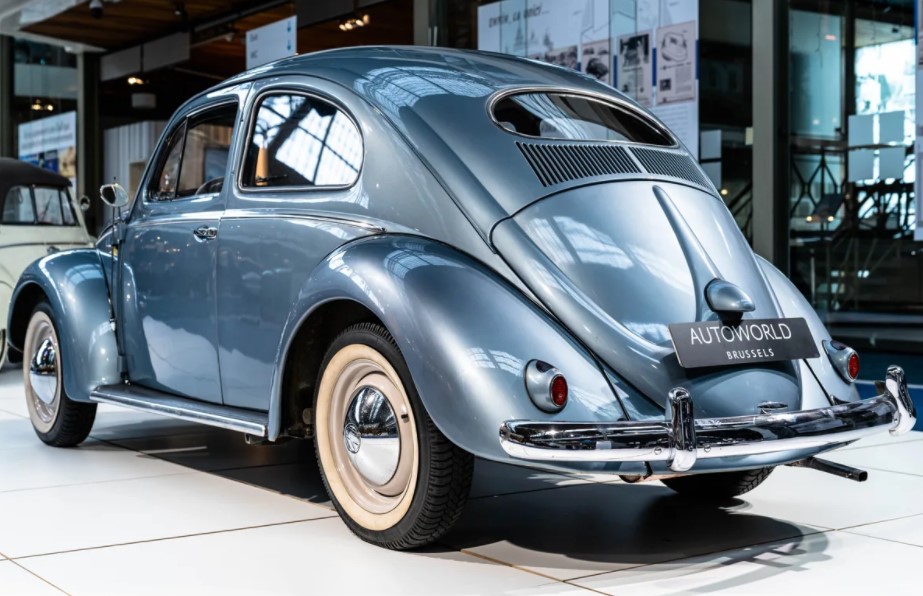
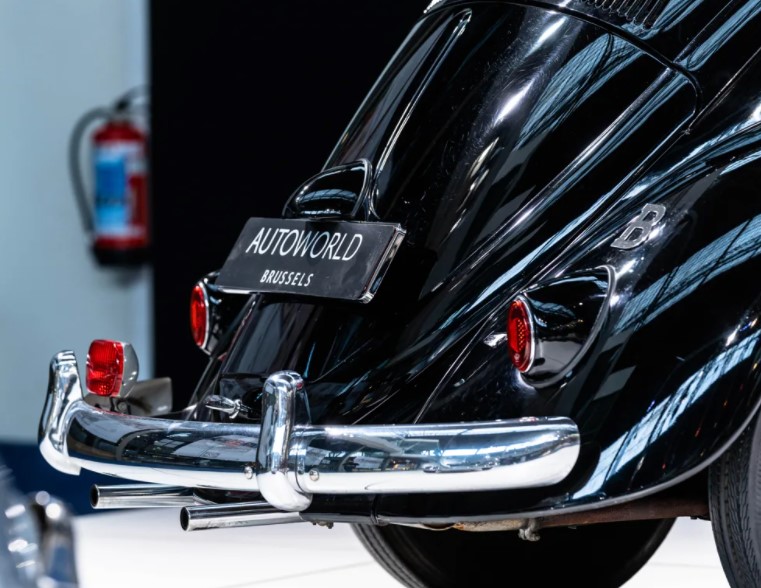
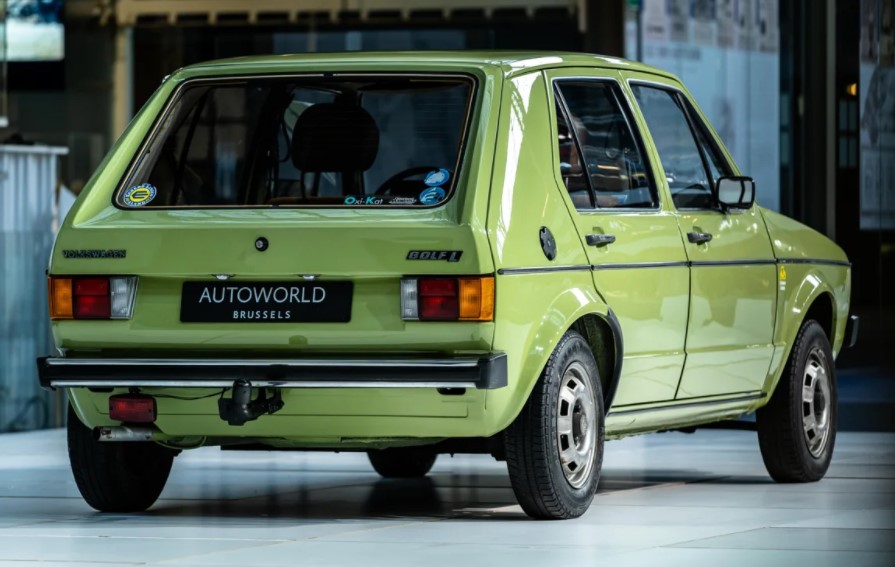
The exhibition is dubbed “Volkswagen Milestones” and reflects the historical zeitgeist of the car of “Everyone and everbody” on the basis of the three important models in the history of the brand: the Beetle from the 50s – 60s, the Golf from the 70s to the early 80s and last but not least, the “Electrical Age”, with the new ID.3.
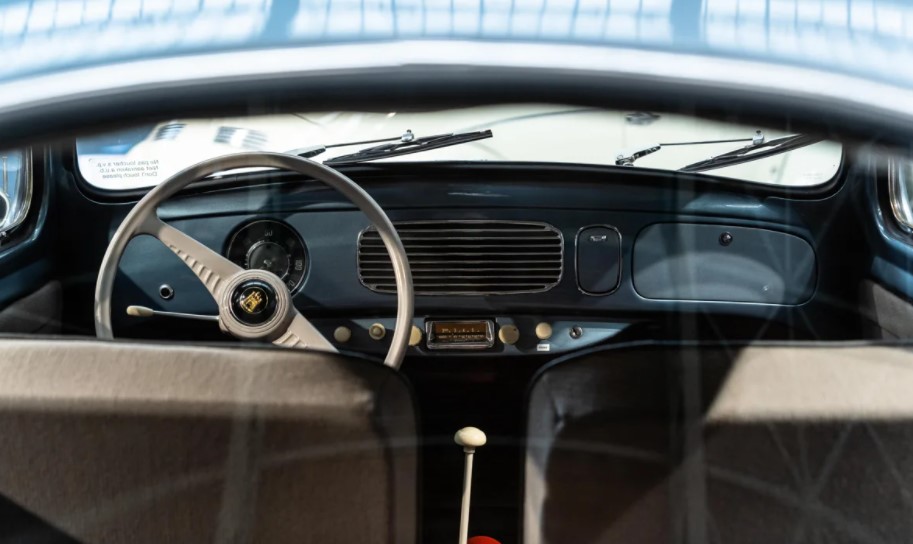
When I saw the cars on the exhibition, via a magnificent photo portfolio shot by Yves Noël, I couldn’t help reflecting back to my early days of motoring. Because, of course, I started out myself behind the wheel of a Beetle. I had bought, as a student, this ’55 (I believe) Beetle De Luxe Export from the famous and iconic television, arts and performance critic and column writer Johan Anthierens, who had learned the craft of journalism from my father, then Chief Editor of the illustrated weekly magazine “De Post”. He had hired Johan to write the Television column in “De Post”. Johan Anthierens bought a new car, and he sold his Beetle to me for the modest sum of 500 Belgian Frank, which is the equivalent of…some 12,5 Euros.
This Beetle is the exact same car as figures here on Yves Noël’s magnificent shots, with – if I recall well, the indestructible 30 HP 1200 cc version of the famous boxer in the back. Indestructible, well, almost. At higher mileages the third cylinder suffered unavoidably rather more from lean mixture than the others, and compression losses in this cylinder due to worn exhaust valves were often de result. This situation was however not bad with this one.
This beetle, with dark green livery, had soon its hubcaps removed and its wheels painted silver, and looked the part! We drove four years with it with the greatest joy throughout Europe, from Copenhagen to Bordeaux, over Routes Nationales and Autobahnen, and our greatest admiration for Porsche and its designs was born then.
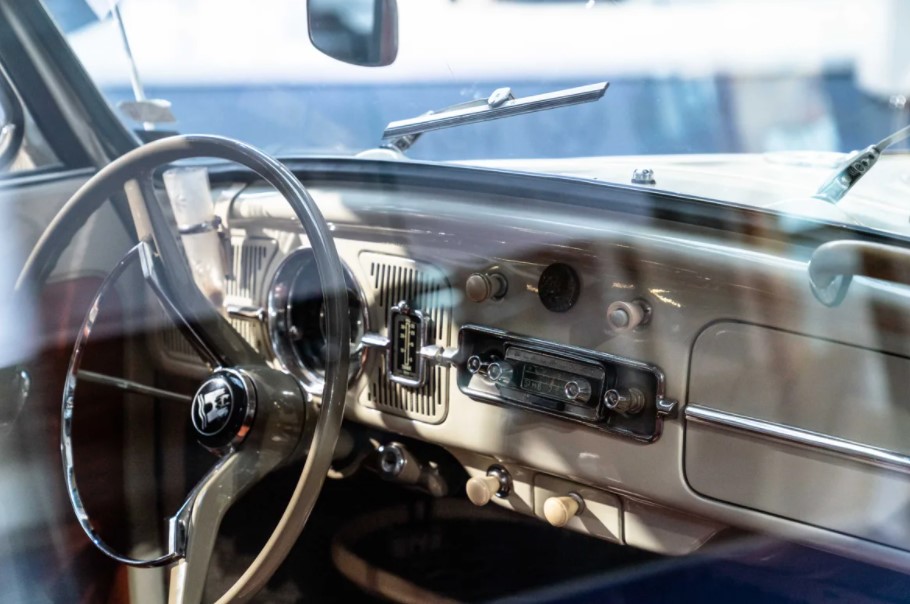
Then, I stumbled on another bargain Beetle, the exact self same car as the black one here on the photo. It still had the 30 PS (manual choke) engine, but an “American type” steering wheel, with a big chromed claxon ring, and, progress, the bigger rear window.
Performance was basically the same as the first one, but I adorned the dual exhaust with slightly bigger diameter tail-end pipes, and this gave a deeper, throaty exhaust note, very similar to a 356 Porsche.
Boy, did I love driving this Beetle with zest… I drove it for another 3 years, until I got engaged to my present wife. Her father changed cars, and so I became as a “welcoming present” suddenly the happy and proud owner of the famous big Volkswagen 411 L, donned in dark British Racing Green paint, which suited it very well. That was my (big) Volkswagen during the Golf era, being also the last creation by VW within the air cooled boxer engine at the rear philosophy. A very comfortable and fast car, which would have merited an even greater success than it had. But other times were coming, also for the “bigger” VW’s. Not only the Passats were soon to come, but in those days also another beauty which was born on the drawing tables in Neckarsulm, the VW K70. This car fitted better in the Golf era, where thermal efficiency, economy, light construction and excellent road manners together with style became the norm.
The Golf era started in 1974, and these cars changed the perceptions about what a small car could do. Winners, I found, were the Golf GTD, which could cruise along all day at 140 km/h and consume still only 6 litres/100 km or thereabouts, with its 1,5 litre Diesel being a pleasant and eagerly revving machine. Then, there was the ultimate Golf, the GTI. Originally 110 PS, but what zest and panache. Also the styling details are absolutely iconic, to say nothing about its handling and performance.
There were also the three spoked steering wheel, the chequered seats, the wheels, the paint scheme, the throaty exhaust note…
Of course, there is also VW’s electric future on display, and indeed the ID.3 is a very convincing car. Just read our test report in these columns. We have just left hospital last week after two major operations, but around easter we are able to take the wheel again. The new VW hybrids are cars we are looking forward to. We will ask Joke Boon, Press Events Coordinator and VW Press and PR Director Jean Marc Ponteville to have a look in their calendar… and thank Joke Boon here for all the Autoworld photo’s she sent me!
Just some practical info: Autoworld – Jubelpark 11 – 1000 Brussels. Open every day, also Monday, from 10 AM to 17 PM (Saturdays and Sundays until 18 PM)
Admission: €12/adult – €10/senior – €9/student – €5/child (6-12 yr) free for children below 6 yr. Tickets bought online cost 1 Euro less.
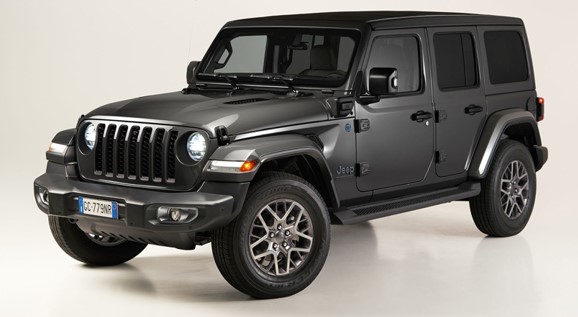
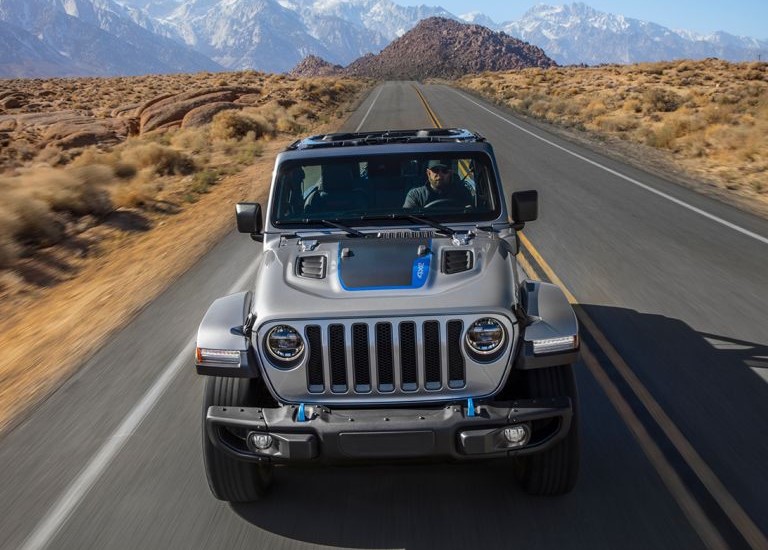
We are absolutely total Jeep lovers: we just are totally sold on its style, panache and how these cars ride and perform. There is also very good news: four months after its world premiere, staged last September in Detroit, the new Jeep® Wrangler 4xe is available for pre-booking in selected European markets before going on sale later this year.
Customers in Italy, Spain, Germany, France, Switzerland, the Netherlands, Belgium and Austria, can be among the first to discover the new Jeep Wrangler 4xe “First Edition” with just a few clicks on the dedicated website, and express their interest in being contacted when the vehicle will be available at dealerships.
This new initiative serves as confirmation of the journey embarked upon early last year, with the pre-booking initiative for the Renegade and Compass 4xe – a resounding success, generating a lot of interest across Europe. The arrival of the Jeep Wrangler 4xe also marks a significant moment in the brand’s evolution and another step in the strategy towards the electrification of its entire range, announced in 2020. This journey will include the introduction of at least one electric or electrified version of each model in the coming years.
A few days ago, the dedicated website was launched in Italy, France, Germany and Switzerland and will be soon available in the other markets involved in the initiative.
The all-inclusive “First Edition” configuration will be packed with comprehensive technological and driving assistance features, the easyWallbox for more efficient home charging, and a Mode 3 cable for public charging. A specific launch package is also standard on the Wrangler 4xe “First Edition” and features a practical Cargo Organiser for the storage space, the new 4xe car cover, 3 years of extended vehicle warranty (providing a total of 5 years) as well as the advantages of “Jeep Wave”, with first two routine services as per the user and maintenance manual included.
“Jeep Wave” is the new loyalty and customer care program offered on the new Jeep Wrangler 4xe First Edition and all models in the 2021 Jeep range. This program provides exclusive services and benefits, including the first two routine services at Jeep dealerships, 24/7 roadside assistance, a new dedicated customer service accessed through a multi-lingual Jeep call center for priority support and privileged entry to brand events and partnerships.
The Wrangler 4xe is the most technologically advanced and capable Wrangler ever.
It offers a maximum combined output of 380 horsepower, courtesy of the pairing of two electric motor generators, a high-voltage battery pack, a high-tech turbocharged 2.0-litre petrol engine and the proven TorqueFlite eight-speed automatic transmission. This is the most advanced powertrain ever fitted to the Wrangler and optimises efficiency of consumption and CO2 emissions, offering the option to drive in full electric, with a range of up to 50 km*. The electric powertrain is also perfectly integrated into the 4×4 system, taking the off-road performance of the Wrangler 4xe to the next level.
Packed with comprehensive equipment as standard and dedicated styling cues.
The Wrangler 4xe “First Edition” will be available with a choice of three exteriors: Black, Granite Crystal and Bright White – the colors most beloved by European customers. The new model will also come with new driving modes: Hybrid, Full Electric, E-save, as well as specific functions for electrified driving and charge management.
Full of Panache and Zest: the Rubicon version…
The First Edition’s standard features and specific styling cues include Granite Chrystal accents, 18-inch wheels, full-LED high-visibility headlights, hard cover for the spare tyre, 8.4-inch UconnectTM NAV system with touchscreen, smartphone integration and on-board connectivity (as managing the recharge from the smartphone), plus a 7-inch TFT for information on battery charge levels and range (electric and hybrid). Standard safety features include Adaptive Cruise Control, Forward Collision Warning Plus, Blind Spot Monitoring with Rear Cross-Path Detection, rear camera and new front camera, front and rear parking sensors, Keyless Enter ‘N Go™ and electric rearview mirrors.
The exclusive “First Edition” is the most comprehensive trim in the Wrangler 4xe range, which is due to arrive in European Jeep showrooms before this summer.
Maserati’s successful Ghibli has already won several prizes and awards, and on February 11 recently today it has received a very special one as it won the “Upper Middle Class – Import” category at BEST CARS 2021. Initiator of this readers’ choice is the leading German car magazine AUTO MOTOR UND SPORT. More than 100,000 readers had followed the call and picked their favourites from 378 vehicles in eleven categories. This is the 45th time that these prestigious awards have been held.
Of course, this led to smiling faces at Maserati. Davide Grasso, CEO Maserati, said: “Ghibli is an iconic Maserati model. With over 100,000 units produced since its launch in 2013, this model perfectly embodies our DNA and the Brand’s values. For this reason we have also chosen the Ghibli to ignite the spark of electrification which projects the Brand into the future: last year we revealed the new Ghibli Hybrid, the first hybrid vehicle in Maserati’s history.”
We will return in these columns on this Hybrid version of the iconic Ghibli, and hope to lay our hands on one for you the coming months. The new Ghibli Hybrid has a 2.0 litre 4 cylinder engine that is coupled with BSG, eBooster and 48 volt battery. It is certainly no sluggard: it has an output of 330 hp, which ensures a top speed of 255 km/h and a sprint from 0 to 100 km/h in 5.7 seconds.
For the current MY 2021, Ghibli received comprehensive technical and stylistic enhancements. Among other things, there is the completely new infotainment system MIA (Maserati Intelligent Assistant) with a 10.1” screen in 16:10 format. Furthermore, the new Maserati Connect program enables the owner to stay connected to their vehicle and, for example, to be informed about the cars condition in detail.
A 580 HP V8 engine makes its debut…
For the first time a V8 engine is also available in the Ghibli’s range. The 580 hp 3.8 litre twin turbo unit accelerates the Ghibli Trofeo from 0 to 100 km/h in just 4.3 seconds and provides a top speed of 326 km/h – a Maserati sedan has never been faster. The exclusivity of this version is also underlined by the new “Corsa” driving mode and stylistic elements that make the uniqueness clearly recognizable.
Audi launches the Audi e-tron GT: a breathtakingly styled four-door coupé, which will be introduced on the market as simultaneously as an RS model. Audi reinterpreted with this e-tron GT the classic idea of the gran turismo: an emotive design packed with revolutionary technology. Two powerful electric motors provide confident electric all-wheel drive and stunning road performance.
The high-voltage battery has a net energy content of 85 kWh and enables ranges of up to 487 kilometers (302.6 mi) for the Audi e-tron GT quattro. The e-tron GT can be recharged extremely quickly thanks to its 800-volt technology.
Your servant is at the moment hospitalized for a cardiac operation, but soon enough we will tell you more about the ins and outs of this beautiful Gran Turismo, a benchmark car for anyone who is interested in sporting and stylish e-mobility. Stay tuned!
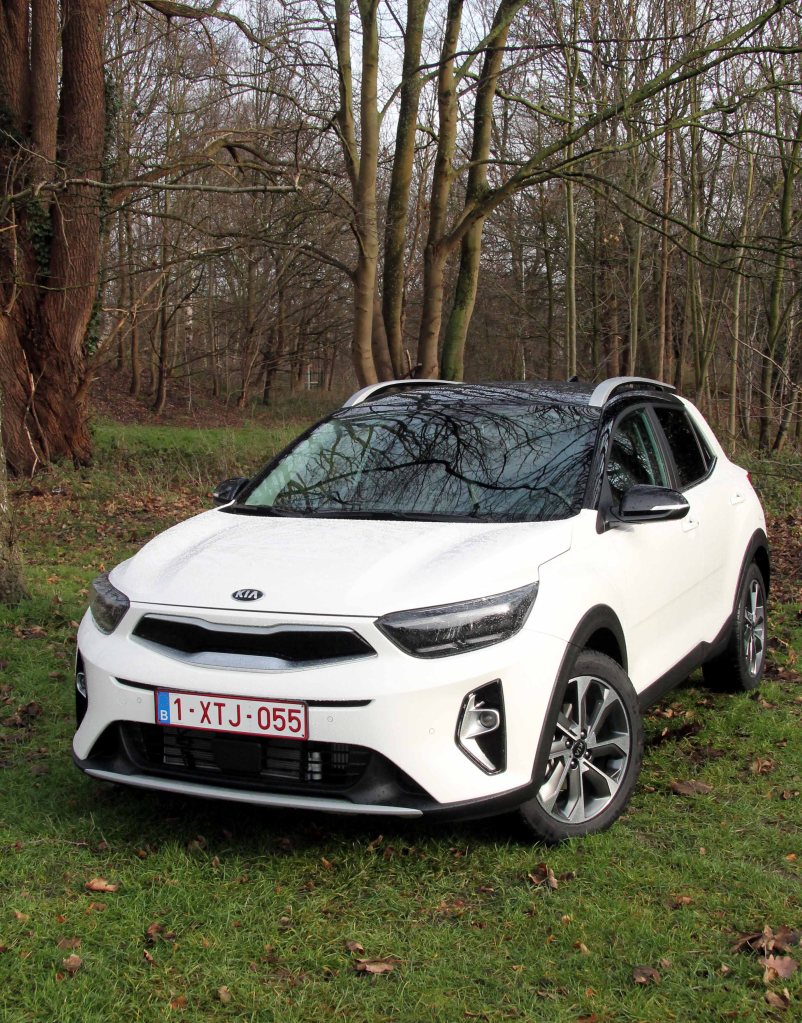
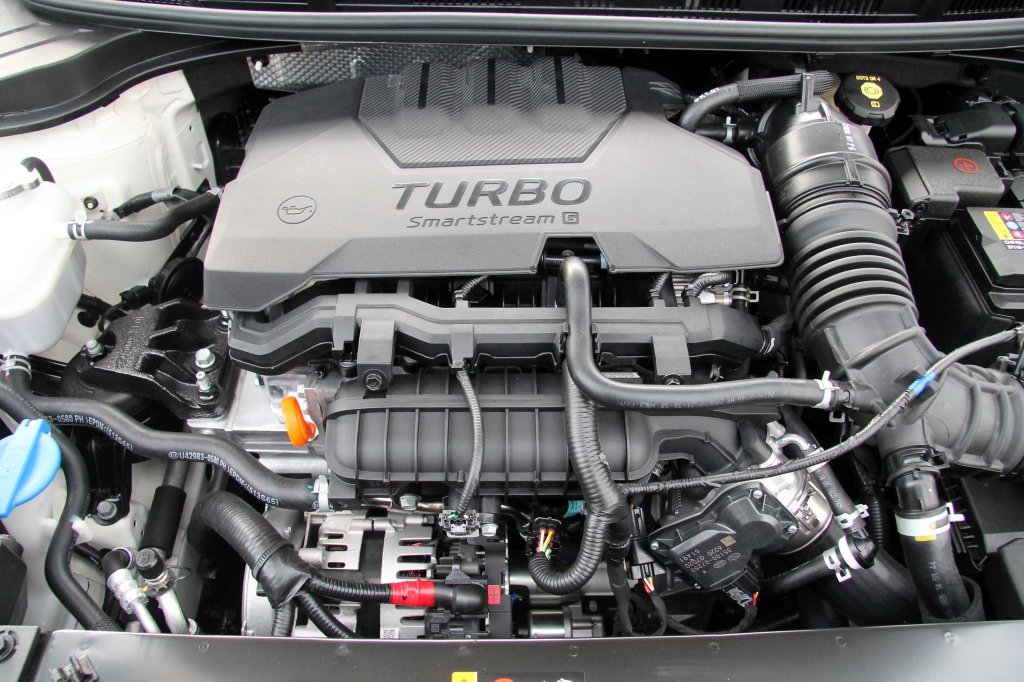
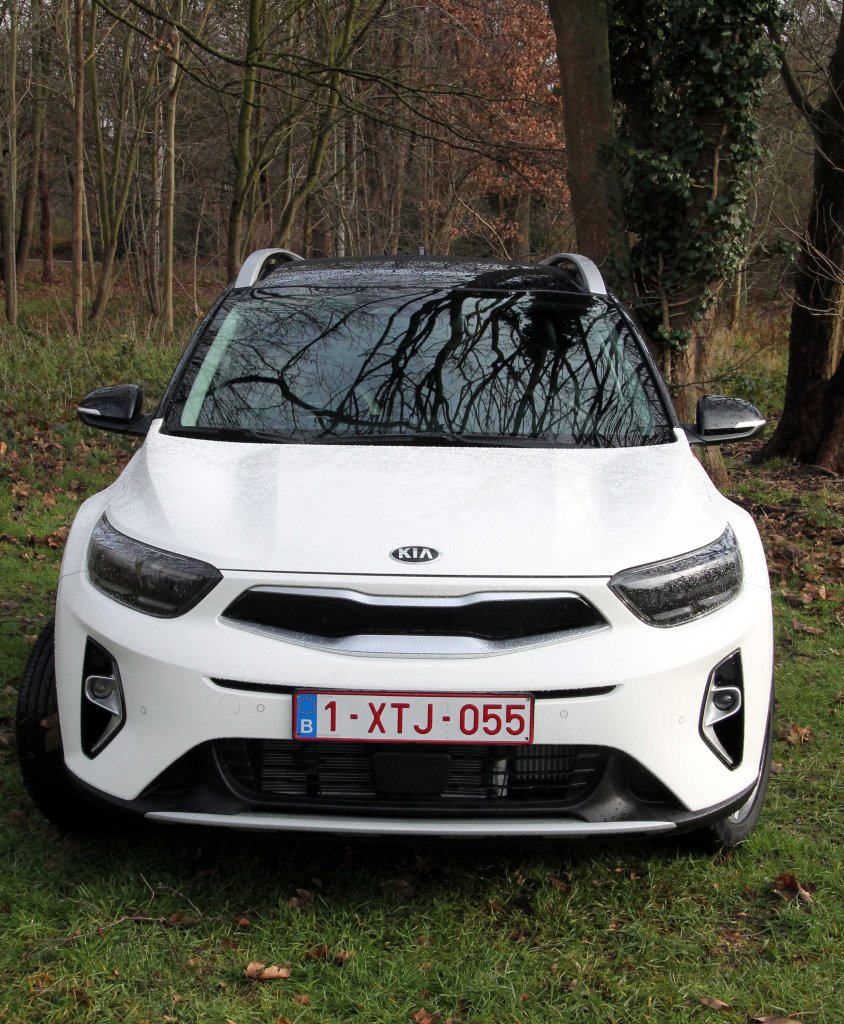
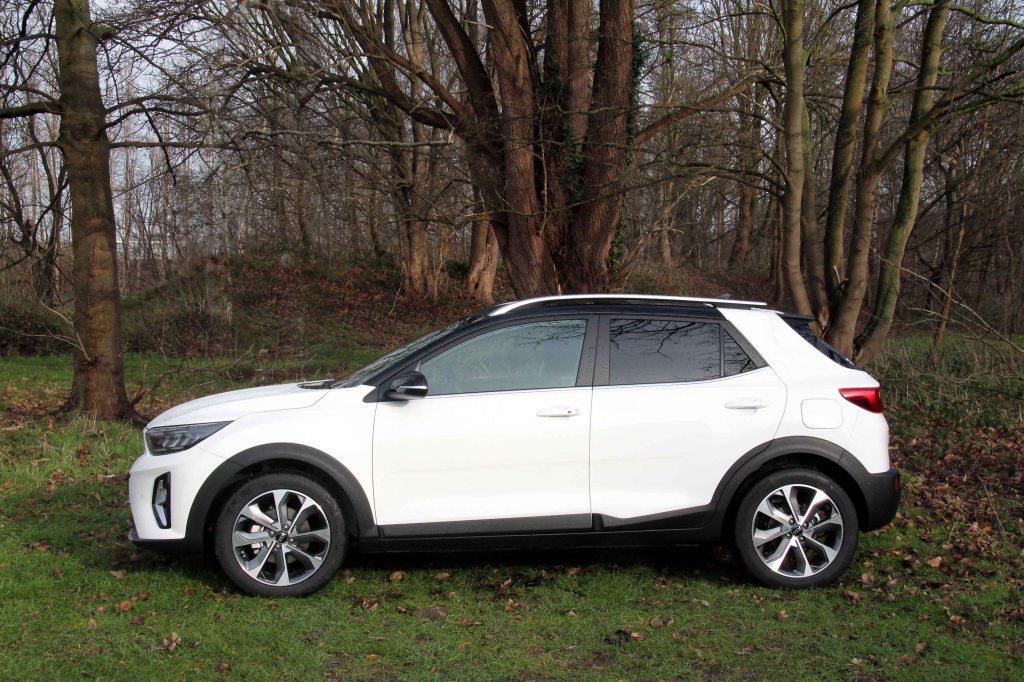
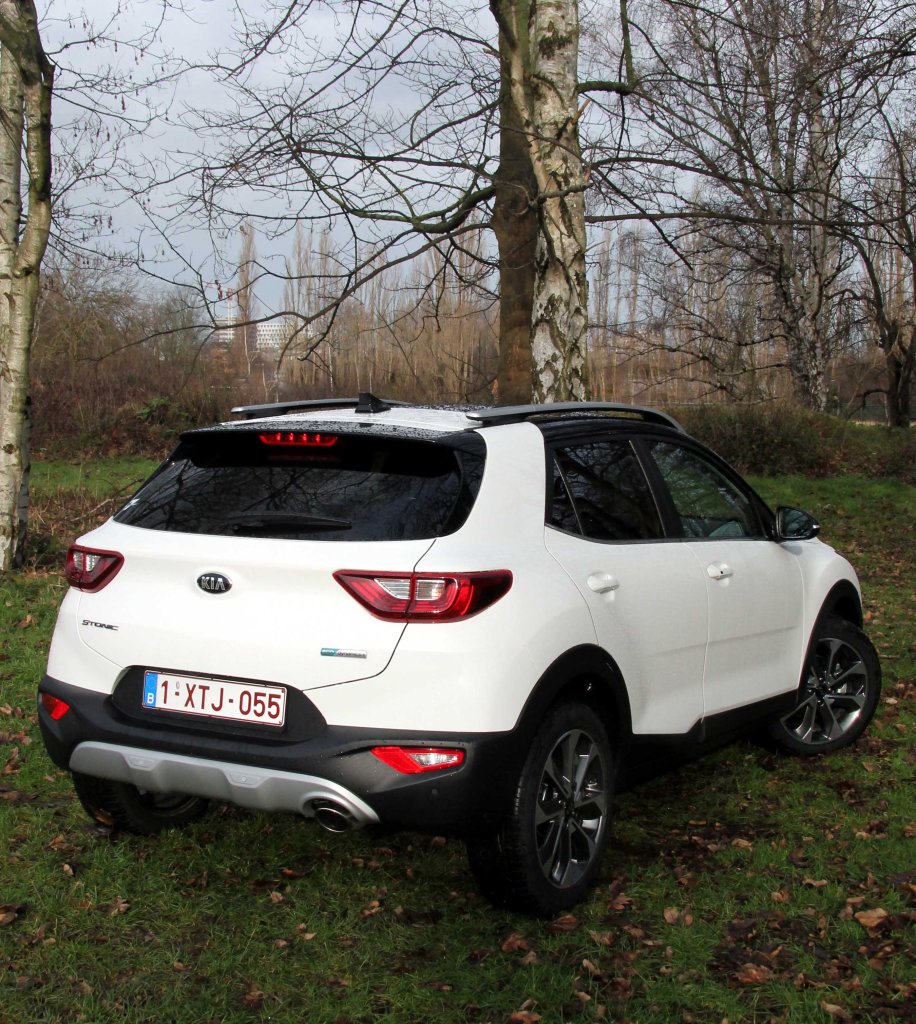
The Kia Stonic has been amongst us since 2017, and has recently been upgraded with a GT and a Mild Hybrid version. The latter we found very interesting to investigate for you further. The mild hybrid powertrain is based on the 1 litre three-cylinder turbo unit, dubbed the ‘Smartstream’ 1.0-liter T-GDi, developing some 120 HP, and was coupled to a 7-speed double clutch auto transmission in our test car.
How does it behave in practice? Just read on…
Hans Knol ten Bensel
The mild-hybrid system does not increase the power or allow zero-emission electric motoring, but it can harvest energy normally lost while braking or decelerating, and assist the engine when it’s delivering power, reducing fuel consumption…and making the car more lively.
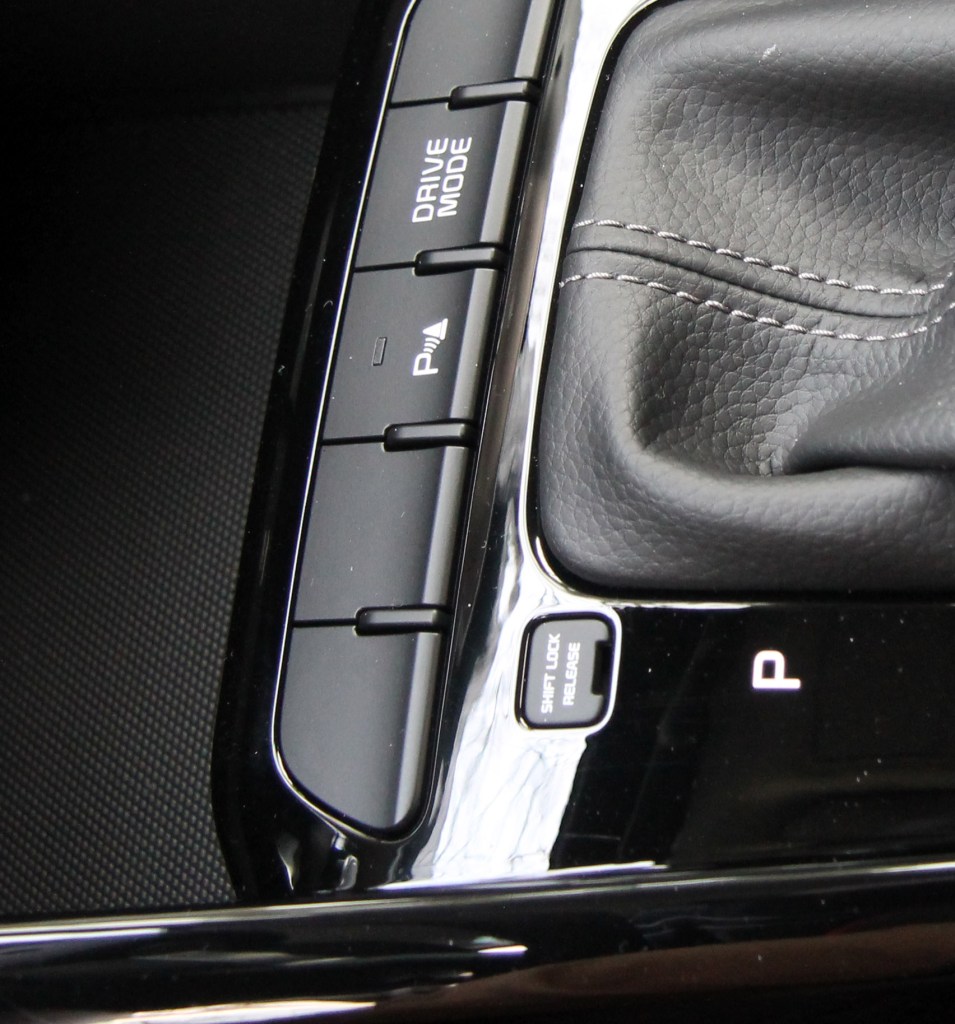
When starting up one is pleasantly surprised by the three-cylinder throb of this engine, which when you rev it up has a six-cylinder tinge to it. We always have loved the sound of three-cylinders, and this Stonic is no exception to this melodious rule. You can drive this Stonic in three modes, “eco”, “normal” and “sport”, and to test out the capabilities of the mild hybrid system, we stayed most of the time in the “eco” mode. In this mode, the 48 V new mild-hybrid belt driven starter-generator (MHSG) switches from ‘motor’ to ‘generator’ modes to improve overall efficiency.
The MHSG uses electric power to provide assistance during acceleration in ‘motor’ mode, thus reducing engine load and emissions, and can automatically switch to ‘generator’ mode during deceleration and under certain conditions to recharge the battery. This battery is a lithium/polymer battery, good for a temporary boost when one accelerates of some 12 kW or 16 HP.
Depending on the chosen mode, the extent and manner the kinetic energy is recuperated varies somewhat. In the “eco” mode and at lower speeds, the kinetic energy is fully transformed into electric energy, at higher speeds the “coasting” function is rather chosen, the car is just rolling and the engine is cut off.
In slower, urban driving, certainly in the “eco” mode, the car decelerates markedly when lifting off, and one soon learns to anticipate stops or slower traffic without using the brakes at all.
This results in quite good consumption figures in urban traffic, around 6 liters/100 km if one avoids fierce accelerations. On the open road and higher speeds, one finds oneself coasting quite frequently when one lifts the throttle, with the engine even shutting off. This is possible at speeds up to 125 km/h. On the open road, and respecting the legal speed limits, it’s easy to achieve figures between 5,5 and 6 liters/100 km. CO2 emissions are set at 127 g/km, with the manufacturer also quoting 5,6 l/100 km as average consumption.
The 7 speed DCT works smooth and alert, and gearchange patterns are varying according to the chosen mode. The changes are smooth and fast, and one clearly feels that manufacturers have learned a lot in developing and building DCT transmissions. At slower speeds and small throttle openings, de DCT seems to hesitate somewhat between gears, but as soon as you push the throttle again, it immediately knows what to do.
The Stonic is relatively light, some 1,2 tonnes, and this means that it has a lot of zest with the 120 HP engine. 0 to 100 km/h is reached in under 10 seconds, top speed being over 180 km/h.
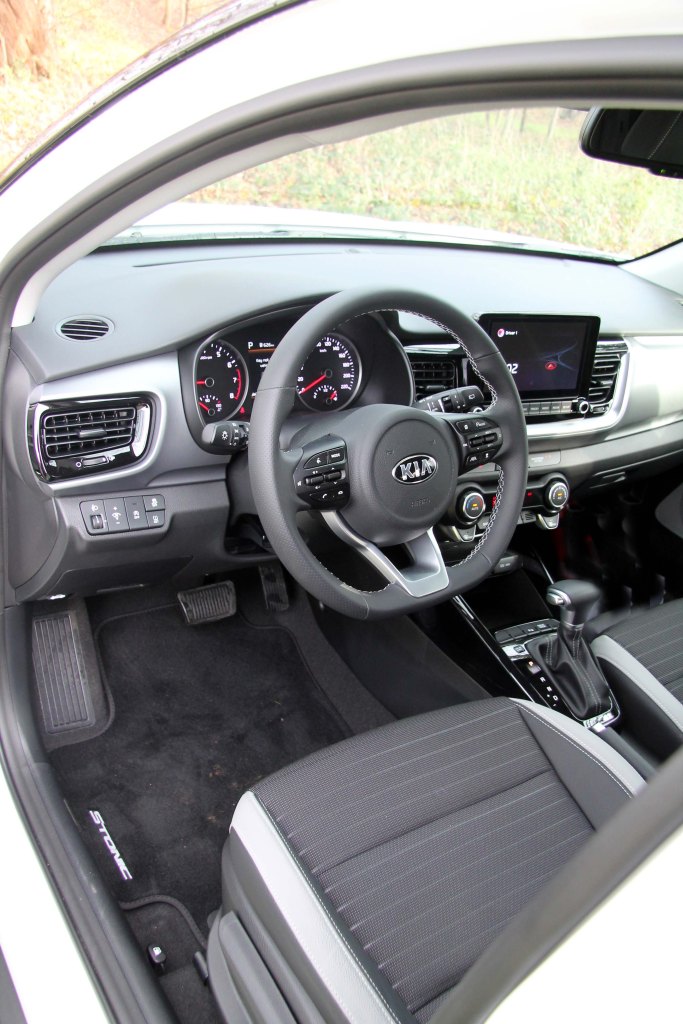
Styling inside and out remains largely unchanged since the introduction of this cute compact crossover in 2017.
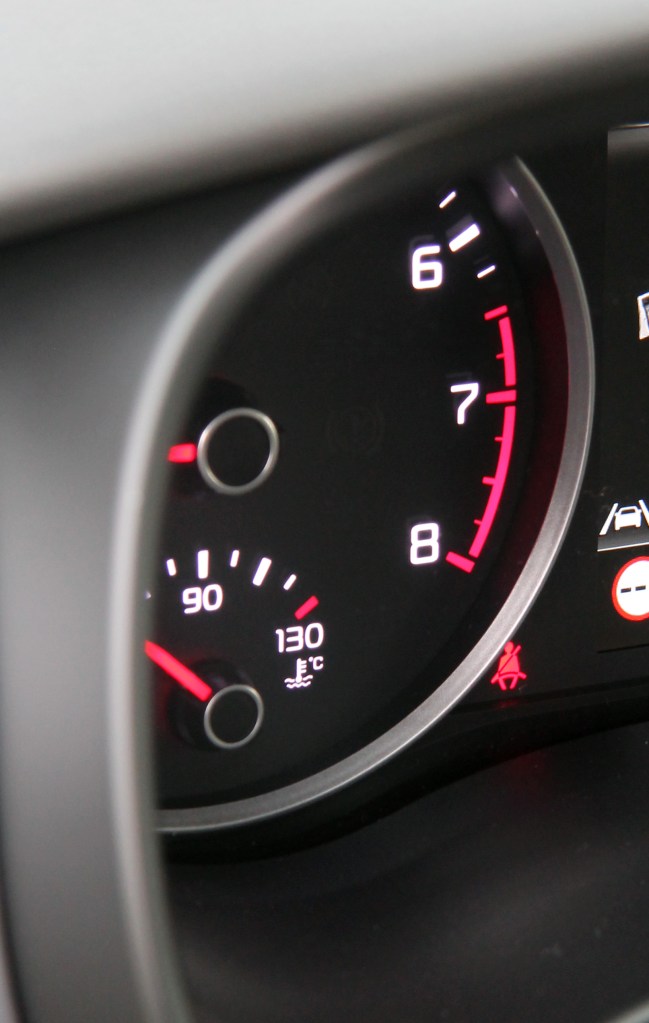
In the cleanly styled and pleasant-looking cabin, a new 4.2-inch instrument cluster and an eight-inch infotainment system awaits you.
The Stonic has now Kia’s new safety and driver-assist systems such as lane-keep assist, blind-spot collision warning and collision-avoidance assist, lane-follow assist, and smart cruise control. In stop and go traffic our test car was able to stop and accelerate again by itself, when cruising along in the traffic lane with the cruise control set at 30 km/h. The Stonic nicely slowed down and stopped when the vehicle in front came to a standstill. When the traffic got moving again, the Stonic also started up again. Wonderful!
Engaging to drive
The Stonic steers precise, has very good handling and feels nimble and quite sporty. It is rather fun to drive on winding roads, and one finds oneself adopting a dynamic driving style intuitively. Indeed, its an engaging and lively compact crossover. Comfort does not suffer too much, although we must admit that this Stonic lets you feel which road it is on, and also transmits some tire noise from the road surface.
Top notch infotainment
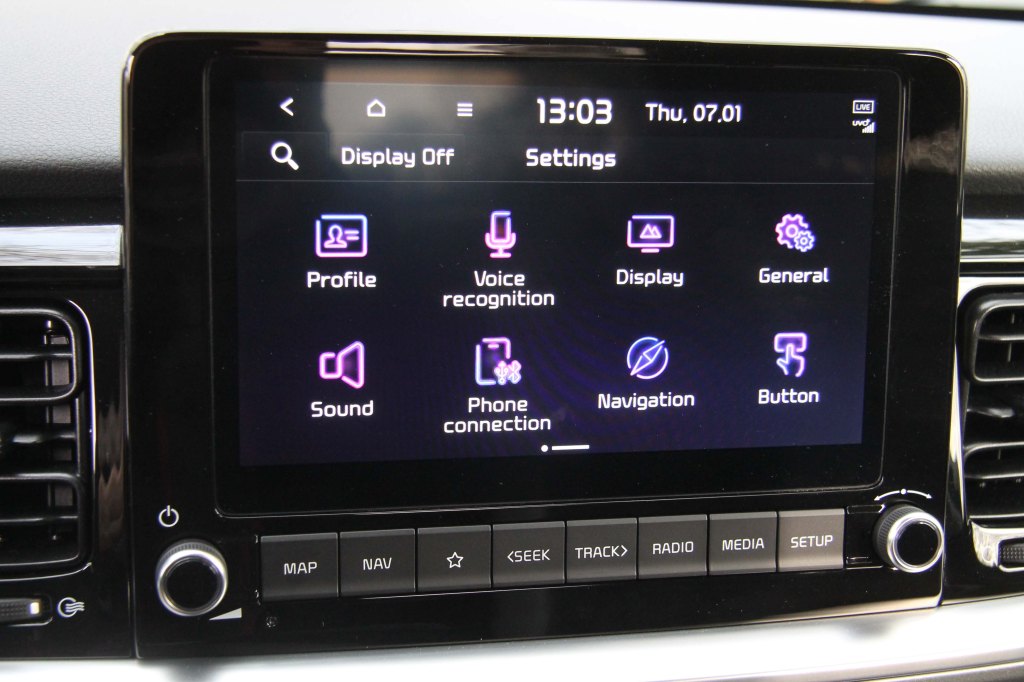
The Kia Stonic spoils its occupants when it comes to infotainment. It is prepared for Apple Car play and Android Auto, has an excellent DAB+ radio, and the 8-inch screen on the center of the dashboard harbors an excellent navigation system with state-of-the-art graphics, UVO connect and Kia Connected Services. The UVO app has been developed to work in combination with your Kia equipped with UVO Connect. This app the offers an overview of key elements of your car’s status such as door locks, ignition, battery and charge level and supplies you with a Monthly Vehicle Report giving an overview of your car usage. It also allows you to pre-plan and set your journey through the app for seamless use in the navigation system.
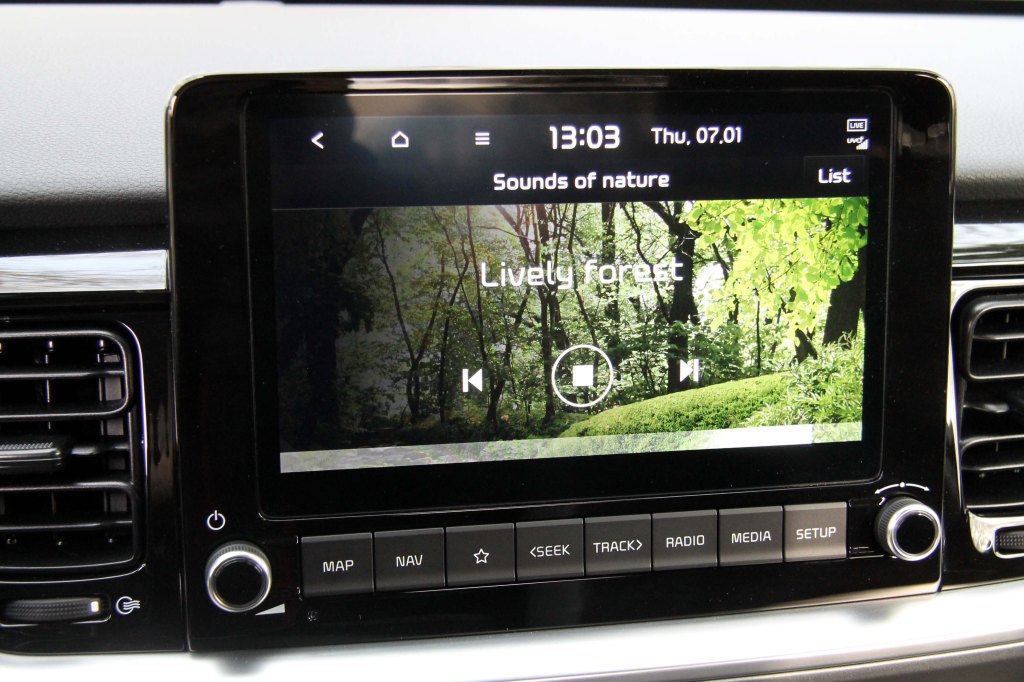
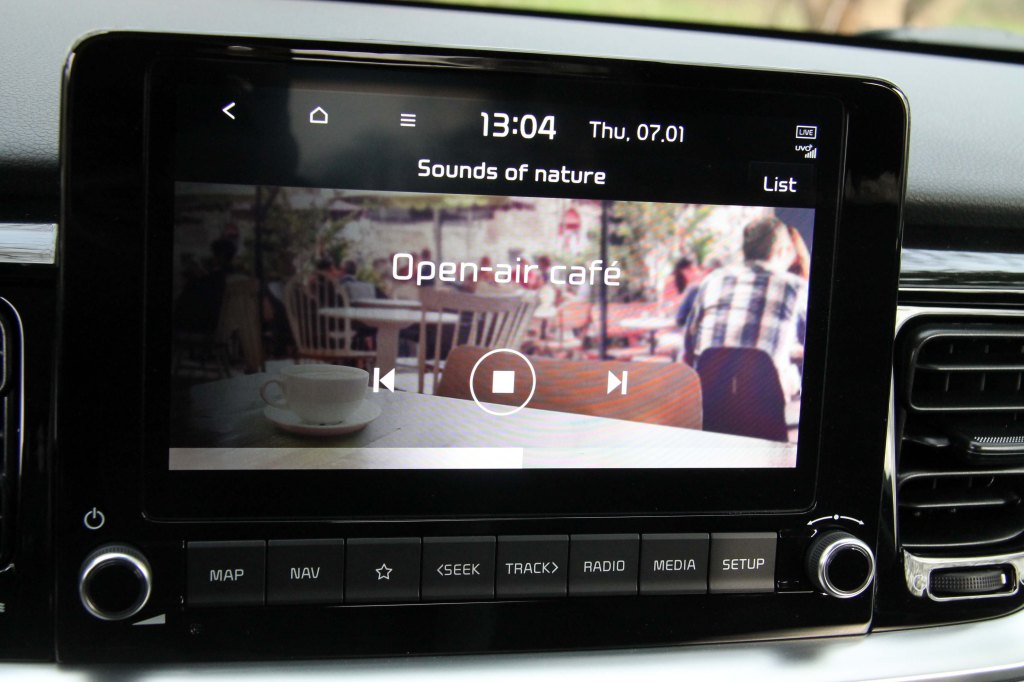
A pleasant gimmick: you can choose your ambient music on the display: the sounds of a rainforest or a busy café…
Kia Connected Services featuring TomTom Live services takes reliable route guidance to the next level of accuracy. At the heart is a WiFi unit that enables the navigation system to connect to the internet through a smartphone. A new map update programme for your Kia is available at a cost.
Conclusion
A very convincing compact crossover, which made an impressive entry into the mild hybrid world, with a useful and alert Mild Hybrid system. It really makes a difference in consumption as well as in performance and responsiveness, making this Stonic very endearing and pleasant to drive and own, certainly if you know that it comes with the 7-year warranty, like all the other Kia’s…

















 Autoprova - for the Connaisseur