The VW Golf is now 50 years with us!


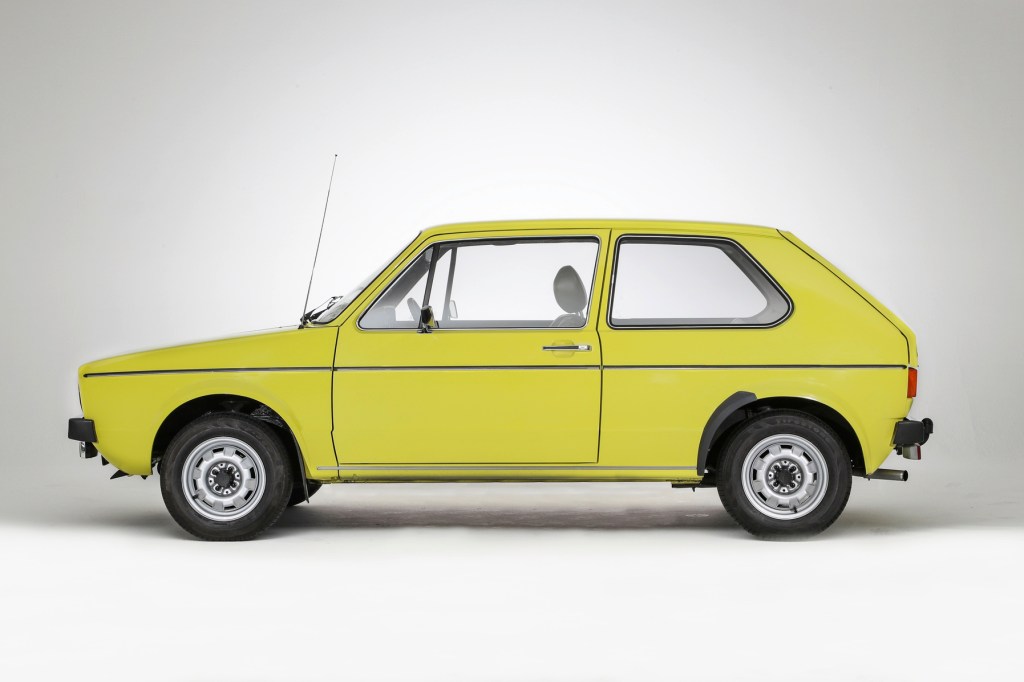
The “Ur” Golf, which looks still quite “modern”, 50 years later.

Many people will say that things are changing rapidly, and many things have disappeared or are not what they used to be. Well, we can be sure of one thing: the Golf, the heart of what Volkswagen as a car manufacturer stands for, is still amongst us.

Indeed, during five decades already, the Golf still accompanies us in our automotive life. Since 1974. Then your servant got married, and drove indeed the first Golf as a test car, and has the fondest memories of this first series, especially when testing the Golf GTI. This sporting Golf created nothing short of a legend. 50 years later, the sporting sound of its 1,6 liter 110 HP engine still seduces, as does its handling and acceleration.

The stuff of eternal legends: the Golf GTI

To me, even this very first series is still a “young” car. The straight-line design created by Giorgetto Giugiaro is timeless, the proportions are just right, the “Ur” Golf still looks good from any angle. Just read further…

Hans Knol ten Bensel

An instant hit…

The Golf set out to win hearts. The Golf quickly became a true “Volkswagen”, and the first million units were sold as early as 1976. Now, more than 37 million Golf’s have hit the road.

Over the decades, the portfolio has been expanded to include further variants: besides the GTI, there was also the Golf Cabriolet or Golf Variant, or many others.

With each new model generation, state-of-the-art technologies, safety concepts and convenience features have been incorporated into the compact class. The Volkswagen Golf has thus democratised not just technologies such as the monitored catalytic converter and anti-lock braking system, but also airbags, cruise control and electronic assist systems as well as mild and plug-in hybrid drives.

In the anniversary year 2024, Volkswagen will present the evolutionary development of the eighth Golf generation. It will impress with visually refined features, new assist systems and powertrains, and also next-generation infotainment systems and software. The world premiere of the new Golf is just a few weeks away, with pre-sales scheduled for spring 2024.

Keeping history alive Volkswagen Classic will also accompany the Golf in its anniversary year and will present historic Golf models from the Volkswagen collection on numerous occasions. First rendez-vous is in Paris. From 31 January to 4 February 2024, the Golf Generations I to VII will enhance Volkswagen France’s presence at the “Salon Rétromobile” show in Paris.

Directly afterwards, from 2 to 4 February 2024, Volkswagen will show a Golf I and the unique EA 276 concept car – the Golf predecessor from 1969 developed in Wolfsburg – at the “Bremen Classic Motorshow”.

A long history… with a touch of NSU

In this first report we will focus on the first series. The concept was nothing less than a complete technical revolution for Volkswagen. They had already acquired NSU in 1969, and so the technology of in-line engines was already present in the group, with the VW K70, originally an NSU design, and the famous Prinz 1000 to 1200 TT’s. The K70 was also a front wheel drive car, and the art of “Leichtbau”, or making light bodyworks, was also already acquired with this car.

Technical forerunner of things to come: the in line 1000/1200 cc four cylinder of the NSU Prinz in the late sixties, still air cooled however…

So the beacons were set in terms of technical product design and manufacturing engineering, to make a mass produced light car with transverse 4 cylinder in line engine.

The new Golf was light, some 165 kg lighter as the Beetle. The styling was done by Italdesign under the direction of Giorgetto Giugiaro. The first Golf is also beautifully compact: only 370 cm long. It had some good power, a healthy 50 HP with the basic 1100 cc engine, and 70 HP with the 1,5 litre engine. So the performance was something the Beetle could only dream of. The chassis, suspension and handling were also in another league. On top of it all, the Golf was cheaper to produce, but cost 600 Euros more than the last Beetle 1303…

In 1976 came the Diesel and the GTI version, and as I said, from that moment on, the “modern” VW was a fact…

More soon about the Golf history…

Hans Knol ten Bensel

Renault unveils a tip of the veil of its cute 5 E-Tech electric ahead of Geneva Show…

Indeed, Renault will enrichen the world with its iconic full electric “Cinq”, reminiscent of its wonderful R5 which stole so many hearts decades ago. With this car, Renault wants to bring EV driving to the masses, affordable and with a distinct link to its glorious past.

The car will be a star on the 26 February at the Geneva International Motor Show, and it now starts gradually unveiling details of the car.

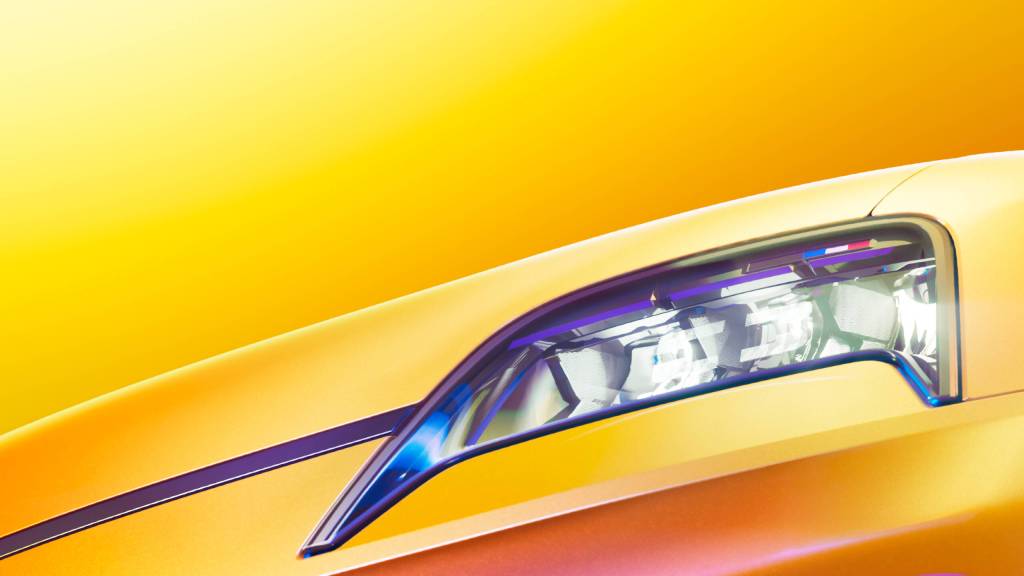
The headlights of R5 are a key design feature, making the front end instantly recognisable. It is not only their shape that sets them apart, but also the mark in the centre of the lens, resembling the pupil of the human eye.  This nod to the 1972 advert featuring “The Adventures of Supercar” gives the modern-day R5 a human-like expression.

At the front end, the air intake present on the bonnet of the historic model has disappeared. Clearly showing that Renault 5 E-Tech electric belongs to the world of electric vehicles, it has been replaced by a charge indicator light forming the iconic number “5” when the vehicle is fully charged.

The wheel arches create a broader stance, giving R5 the look of a compact car with real on-road presence. Their graphic design underlines a unique and instantly recognisable personality, reminiscent of R5 Turbo.

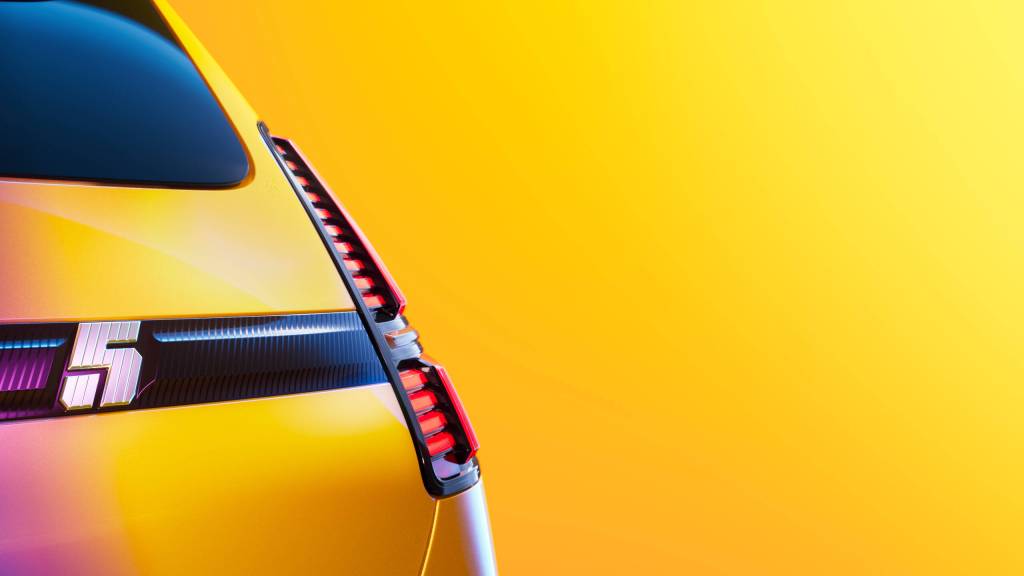
The vertical rear lights were a hallmark of the R5, and here they include a function extending the side panel.

R5 R Pass, a skip-the-line programme for online customers

At the end of last month, Renault is rolled out a unique experience for future customers: the R5 R Pass programme. R5 R Pass holders will be able to order the new iconic all-electric vehicle in the Renault network 10 days before orders open to the general public. Customers placing an order during this special period will be among the lucky first to take delivery of their vehicle from autumn 2024, with the ElectriCity plant in Douai, France, giving priority to their order on the production line. Holders of an R5 R Pass will receive a scale model of Renault 5 E- Tech electric after its reveal and will be the first to access content and events around Renault 5.

Available at a cost of €150, the R5 R Pass will be available from http://www.renault.fr/r5 and in the seven participating countries (France, Germany, Italy, Spain, United Kingdom, Belgium and the Netherlands).

An all-electric city icon…

Just 3.92m long, Renault 5 E-Tech electric is every inch a city car. Ideal for urban driving, this all-electric icon is also fit for the open road with its 52 kWh battery giving it a range of up to 400 km WLTP. This battery will be the first available when orders open. A second 40 kWh battery will become available at a later date.

Renault 5 E-Tech electric will be the first vehicle built on the new AmpR Small platform (formerly CMF-B EV), designed for true driving pleasure. The multi-link rear suspension, usually found only on vehicles further up the market, contributes to the excellent stability and roadholding.

Renault will gradually show more of its new all-electric baby. Stay tuned!

Hans Knol ten Bensel

We spoke with Milosz Tomanek, Premium Cluster Director Belux, about Lancia’s renaissance…

In the magnificent surroundings of the Italian embassy in Brussels, we talked with Milosz Tomanek about Lancia’s return to the Belux market…

At the presentation of the Lancia Pu+Ra HPE and the announcement of the return of Lancia in Belgium, we had an interesting talk with the Director of the Premium Cluster Belux at Stellantis, on the opportunities of the iconic brand on the Belux market…

Hans Knol ten Bensel

Q: The Belgian market has much potential for Lancia, but due to its long absence, the question arises what is now your client base and what is your approach to re-enter our market? We have the Dutch approach, where the market is already very digitised. Both countries have a very large fleet market, and this will also be the challenge for Lancia…

MT: Indeed, the fleet market is with around 70 pct of the total volume very important. For the premium segment, its share is even 80 pct. When we want to re-launch Lancia, we have to establish ourselves in this fleet market too. This is also the reason why we have electrified the new Ypsilon, and are offering a plug-in hybrid version as well as a full electric variant.

When we want to re-launch a brand, we have also to take the right steps to grow. We have to start from a solid base. The B segment is quite large in Belgium with a total volume of not less than 125.000 cars. We also have the private client. His market importance has admittedly diminished over time, but he exists. When a new model is launched by an Italian brand, it is the private client who is the first to show substantial interest.

Driven mostly by family members or acquaintances which had previous ties with the brand. When it was rumoured that Lancia would come back to Belgium, many private clients reacted eagerly to the news. This shows clearly that Lancia still stirs emotions and interest amongst many. Clients which are looking for emotion, design, a sporting touch, elements which are intrinsically part of Lancia. We must certainly not overlook this segment.

Q: I also think that the interest of the private client forms the basis for the subsequent appeal of the brand in the fleet market. Don’t you agree?

MT: Indeed, this is why the private client constitutes the basis of our market approach.

Q: Will you adopt for Lancia a similar service model which Stellantis uses for the other premium brands in the group, like DS for instance? MT: What you are saying now is somewhere the essence of the premium approach, but we have three brands with their own, specific identity. If you put the three brands in a showroom, the clients will invariably go to the niche or corner of their brand. But of course, what DS has established and built over the last few years is valuable. We have to offer a credible and worthy alternative of the German brands. Having said this, we have to offer a client experience which is at least as good as what the German competition is offering. But we don’t have to merely copy their approach. The client has to discover the identity of the brand in his service experience. Therefore we cannot simply copy what DS or Alfa does for its clients, but we take the right elements which are in line with the identity and character of the brand.  Last but not least we have to offer a proper atmosphere of the reception and showrooms of the dealerships.

One of my tasks is to find the synergies, but always with an eye for the specific identity of the brand. We don’t want to be merely a corner within the Alfa showroom, we want to offer a complete client experience, but then of course we will use the best practices learned with DS and Alfa Romeo. One must not forget that despite their iconic and long history, these brands are relatively young for the Belgian market in terms of a substantial market presence. But the brands nourish each other, this is also important for our distribution network.

There will be 10 dealers this year which will have also Alfa or even the three premium brands under one roof, and we see that proven best practices are shared for the three brands, inspiring but not cannibalizing each other in their specific client approach.  

Q: We will see the Ypsilon in a full electric and electrified hybrid version, also to enable a smooth transition for the existing Ypsilon owners to this electric age, which is certainly indicated for senior clients who live in urban areas and apartments…

MT: Indeed, there is a philosophy behind this. We will not dictate what the client has to buy. We will listen to the client, but at the same time we have to project what the client of the future will buy. We notice that the market is getting more mature what full electric purchases is concerned, and political decisions now cause a rapid expansion of this segment. But this switch is slower for clients living in urban areas.  

Thanks to the financial strength of the Stellantis Group, we could carefully work out our renaissance strategy and roll it out judiciously step by step. This consistency has helped me when I started up the team and the retailers were identified. Credibility was already created. One should keep in mind that irrespective of the fact that a brand has been absent of the market for 5 or 10 years, you only have one chance to (re)launch a brand successfully. You have to do it right. I am convinced we are doing it the correct way…

Q: Thank you for this interview.

Hans Knol ten Bensel

We drove the new DS 7 E-Tense: elegance, comfort and power, the French way…

DS Automobiles is going from strength to strength: it succeeds admirably in making cars with a very distinct character and style, with French “savoir faire” and bold, elegant design of both bodywork and dashboard and interior, creating a unique proposition in today’s car market. They also embarked into electrification: their model range is virtually completely electrified.

The new DS7 shows this again: it is available with not less than three so-called “E-Tense” plug-in hybrid versions, but then also still offered with the well proven BlueHDI 130 Diesel engine… fit for those who drive long distances on a (very) regular basis. We tested here for you the E-tense plug-in version, fit for electrified mobility. Read more about it here below…

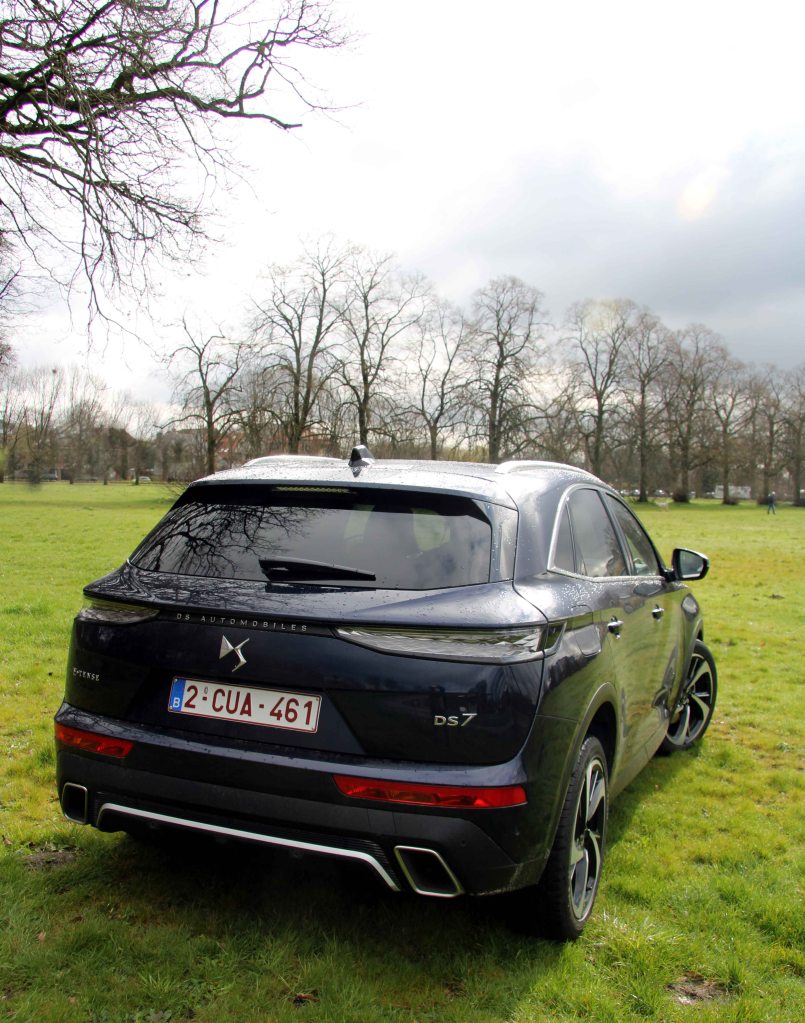
The latest version of the DS 7, dubbed the “New” DS 7, has a restyled front with sharper lines, adding indeed further panache and “noblesse” to its stance. The work was carried out in close cooperation between the team of the Paris DS Design Studio and the production team at the Mulhouse factory.

Special attention has been given to refining the light signature. The headlamps – DS calls them DS PIXEL LED VISION 3.0 – are slimmer, and the daytime running lights are also seamlessly integrated. DS calls them LIGHT VEIL, and this consists besides the classic daytime running light also of four vertical luminous bands with not less than 33 LEDs. DS used an innovative process here: the laser-etched polycarbonate surface is only painted on the inner side. This results in a look alternating between light and body coloured parts, and gives the lighting effect of a piece of jewelery. Very refined indeed…

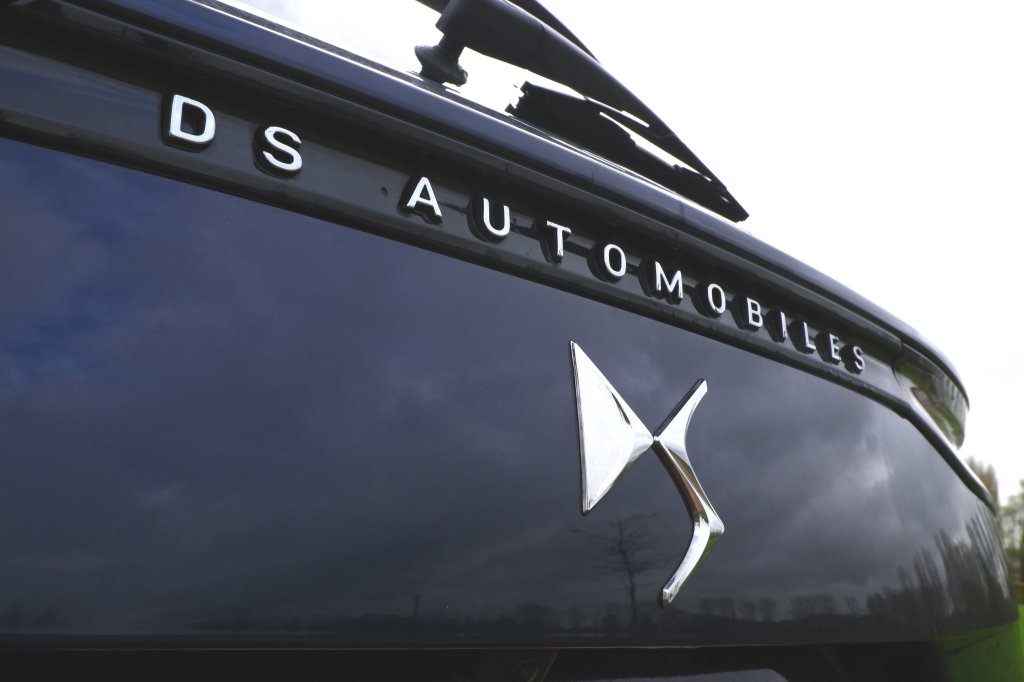
The Pixel Led Vision 3.0 headlamps have pixel modules which optimize the light output. For example the lighting in corners is controlled by the exterior LED’s of the pixel modules, depending on the steering angle. The LED rear lights are slimmer, boot lid and badge have been restyled and the “DS Automobiles” name is now wide lettered on the rear, adding a premium touch…

Our test car, in Opera trim and painted in a very fitting Eclipse Blue, had 20 inch “Tokio” alloys, which suited the car fine.

Interior with panache

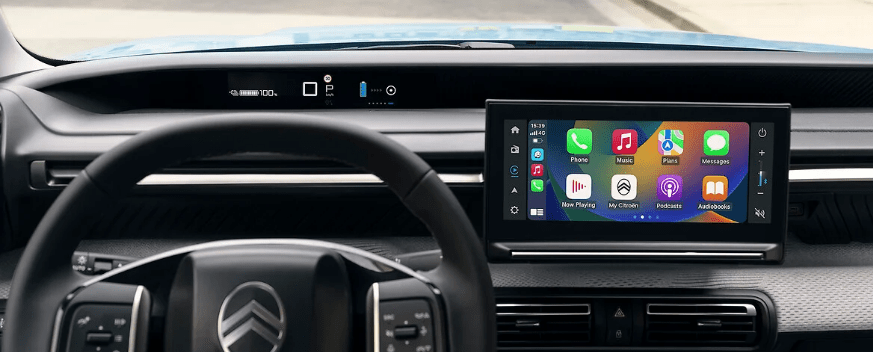
We absolutely loved the styling and finish of dashboard and interior. The commands for the windows are neatly lined up on the centre console, are uniquely elegant and at the same time very ergonomic indeed. The central 12 inch instrument panel is intuitive to use and can be totally personalized.

We also loved its graphics, and the sound volume control in its center, a finely chiseled tube which one rolls up and down, marvelously simple and ergonomic. Of course we loved the clock in the centre of the dashboard. All round visibility is also greatly en enhanced by new high-resolution digital cameras. We also loved the comfortable seats, which have also – noblesse oblige – a high quality Nappa leather upholstery inspired by the metal bracelet of a luxury watch.

Also the steering wheel has the unique “feel” which custom made leather stitching offers, and adds to the overall sense of refinement this DS 7 evokes. We also loved the superb Focal Electra sound system.

Comfort

The DS 7 has standard a formidable camera controlled damping system, called DS ACTIVE SCAN SUSPENSION. It has to be experienced to be believed. Electronics make it possible. Indeed, the camera scans the road surface ahead, and then adjusts each wheel independently to deliver this unique “carpet” ride. We just loved it, and it makes this DS 7 really stand out.

We left the drive mode throughout the test mostly in “comfort” mode, and it was a dream to drive the DS 7 like this. This comfortable setup does not impair handling, and indeed you can drive this DS 7 in a spirited manner over winding roads. Stability and surefootedness in the wet is also beyond reproach.

Sound insulation at speed is also top notch, and this makes the DS 7 a true “grande routière”. Wind noise is also absent, and motorway cruising with the DS 7 is literally an undisturbed pleasure. It remains completely smooth and silent at speed, and it is rather easy to surpass the speed limits, so one is well advised to use the cruise control on motorway journeys.

Performance

The DS 7 “E-Tense” we tested was the 225 HP version, which has a 180 HP 1,6 litre petrol engine driving the front wheels through an 8 speed automatic, as well as a 110 HP electric motor. A very smooth combination, with imperceptible transitions from combustion to E-power, offering the delightful feel of E-power in urban traffic, and a smooth power flow of the petrol engine on the open road.

Of course, plug-in hybrids need to be charged frequently to enjoy this (urban) electric propulsion, good for the environment and your car loving heart. The cost of this depends greatly on your charging situation, public charging stations tend to become rather expensive, and this rather sooner than later. The battery is new, with a 14.2 kWh capacity. This means that you can charge it in about 2 hours on a 7.4 kW charger. The range is – according to WLTP AER combined – a good 65 km. Acceleration is of course excellent with all this pulling power. The petrol engine is rather sporting when more power is called for, but otherwise is almost inaudible. The DS 7 accelerates from 0 to 100 km/h is 8,9 seconds, the top speed is an impressive 225 km/h.

Economy

This is the thing with plug-in hybrids. The E-power possibility distorts the consumption figures of course, and they can be seen as largely theoretical, but then again, they form a basis of comparison. The DS 7 225 HP E-tense has officially 28 g/km of CO2 emissions and the fuel consumption is homologated at 1,2 litre/100 km.

 When the battery is flat, then the real life petrol consumption becomes important. Much – if not everything -depends here on how you drive. We achieved a consumption between 7 and 8 litres/100 km, adopting a fluent, anticipative driving style with nevertheless a lot of urban traffic included. One should always keep in mind that this is a 1,7 tonne SUV, and there is no escape from the laws of physics…

Practical

The DS 7 offers a good array of electronic driving assistance systems; of course one can also enjoy Apple Car Play. Our test car was also equipped with DS Drive Assist, an adaptive cruise control with stop and start without driver intervention. The DS 7 has ample room for five, boot space is also adequate with a volume of 555/1712 litres. The petrol tank is rather small with 42 litres, reminding you to recharge the battery of your plug-in Hybrid. The DS 7 is also a fairly good tow car, with 750 kg weight allowed unbraked, and 1275 kg braked.

Conclusion

The DS 7 appeals to customers who are looking for refinement, elegance and individuality when it comes to choosing a car. They also get a good portion of “savoir faire” Français, the Gallic way of doing things, and this makes a DS automobile really stand out. Then there is the fabulous comfort of this DS7, which is also unique in its segment. Performance and economy also tick all the boxes, and the plug-in hybrid layout gives you all the liberty of movement one could wish for in our Europe where the E-energy providers are hardly certain that they can supply enough electricity to cope with a fast transition the coming years towards full EV, and the availability of charging points still needs a massive effort from the EU member states, except the Netherlands…

Hans Knol ten Bensel

We drove the Nissan Ariya : a noble e-beauty

We all know, EV’s offer refinement. Some also offer roominess and the stance of a big SUV. Nissan decided to take things a step further: they also offer pure beauty.

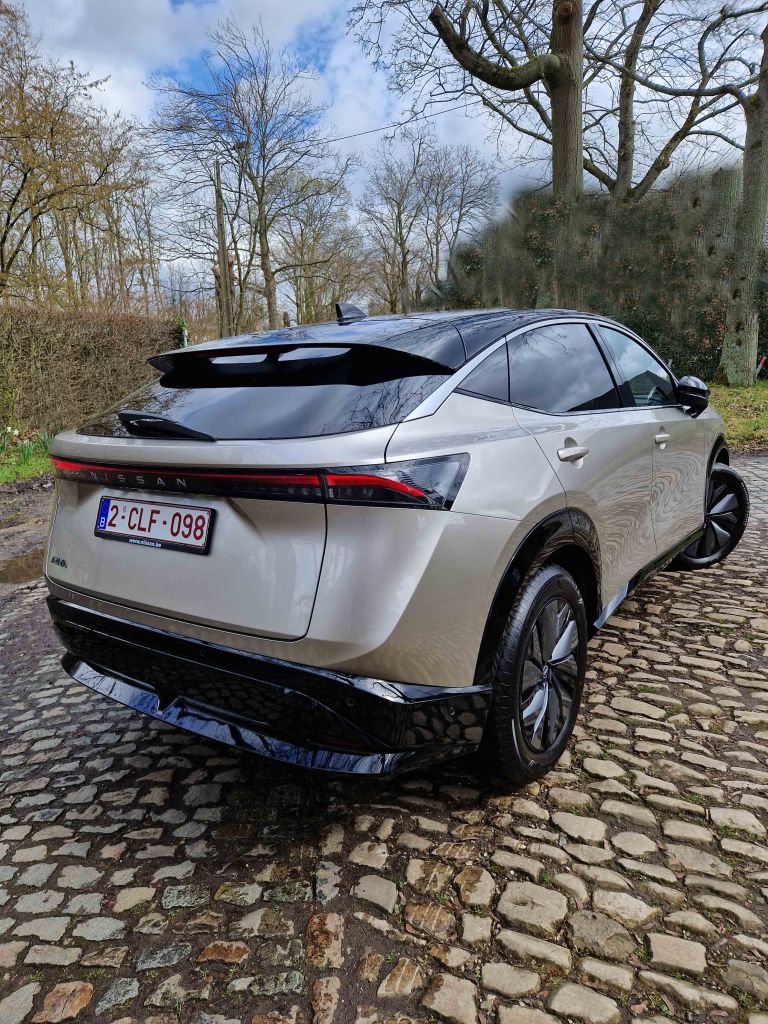
Indeed, the designers of the Ariya surpassed themselves: they transformed the clunky dimensions of a SUv into fluid lines, which are sleek, well proportioned and completely natural. If you look at this car, the volumes, shapes and lines are completely logical, achieving an unsurpassed purity which seduces the viewer at first hand. Nissan calls its design language “Timeless Japanese Futurism”; it certainly is. 

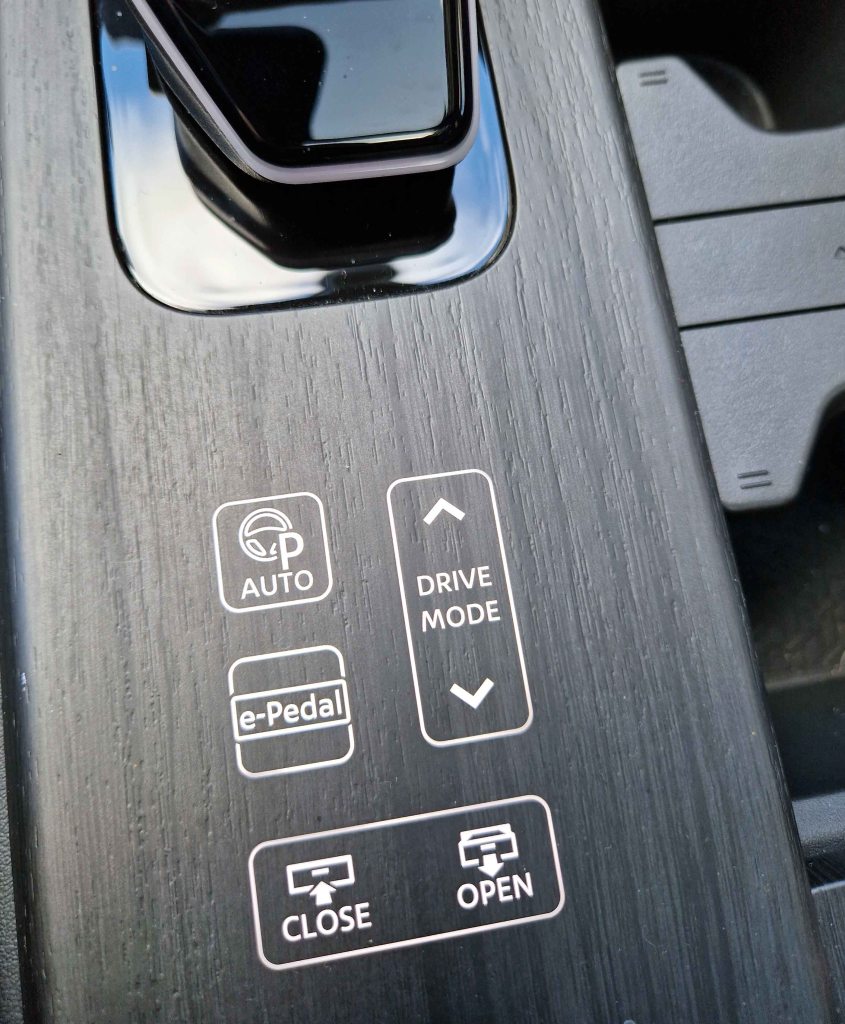
The interior breathes the same logical simplicity, underlined by a judicious choice of noble materials. The climate controls and the drive mode together with other essential functions on the console are – noblesse oblige in these modern times – haptic with a very positive feel. The styling of the dashboard is beautifully clean, the seats and steering wheel are electrically adjustable and soon an ideal seating position is found. One feels immediately totally at home in this Ariya, everything is totally self explaining what the commands are concerned, and a “Zen” feeling pervades you even before you have pressed the starting button.

The instrumentation has different modes and readings, you can have nice round dials if you want, the layout and functions of the touchscreen is top notch, with the “camera” functionality well placed in the top left of the screen, easy to push when you enter a tight garage entry for instance with your big Ariya. In the centre of the dashboard is an electric deploy-able tray, which is opened with one of the haptic buttons on the console.

Driving

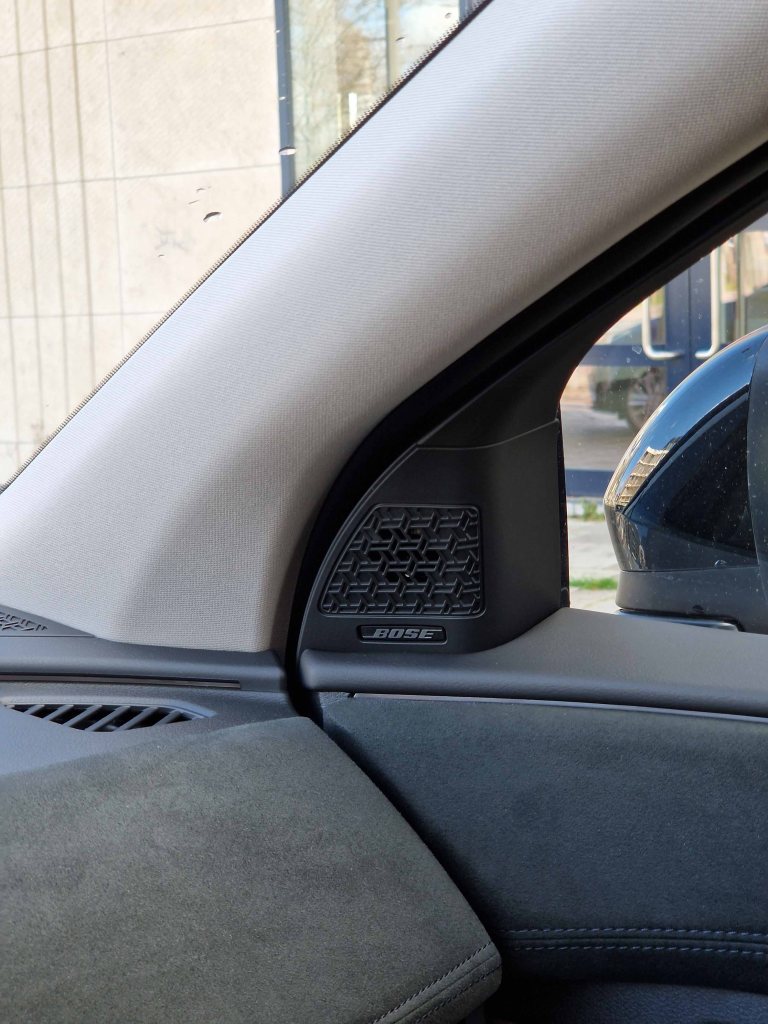
The Ariya is of course completely silent and smooth, and one has the choice between three driving modes, eco, standard and sport. For our test, we left it mostly on standard mode, but we always used the clever e-pedal mode, which lets you, after having learned it a bit, drive with anticipation using almost no brakes. Lifting the throttle puts the electric motor in regeneration mode. You cannot completely stop the Ariya without applying the brakes however, which is actually a good thing, as you can approach the traffic light smoothly, slightly creeping and accelerate immediately again away when it turns green. It adds to driving smoothness, and smooth driving is actually what EV’s are all about. Always remember that you are driving a two tonne car, which needs to be accelerated and stopped, and this is costing much energy indeed. If you want to reach easily the official driving range of your EV, drive it smoothly in town, avoid any brisk accelerations, which disturb the “Zen” feeling of the car anyway and hardly impresses any girl above 10 years of age, just enjoy the music AND the journey. There was a 10 speaker BOSE system in our Ariya, together with a DAB radio. You can imagine how we felt in this Ariya…

It rewards you with consumption figures as low as 9 (yes nine) kWh. This was reached on a urban stretch of 2 km with FOUR traffic lights. (!) Over the test, we reached without effort a driving range of well over 500 kms. We mention here that our test car came with the 87 kWh battery pack. Reaching this range supposes of course you also have to take it easy also on the open road. Settle for a cruising speed of 95-100 km/h, just a bit faster than the trucks. You have a wonderful, silent, relaxing voyage. Yes, we know, the charging situation in our country is still abysmal. So for the time being, be easy on the throttle, and by the way, aren’t we environmentally conscious?

You can charge it up to maximum 130 kW DC. Charging times than dwindle, in 35 minutes you can charge for a distance from 44 to 348 km or let’s say, from 10 to 80 % capacity.

Performance

Let’s first point out that the Ariya is available in three versions (Ariya 2WD 63kWh, Ariya 2WD 87kWh, Ariya e-4ORCE AWD 87kWh). With performance to match… For the 178 kW (242PS) 2WD version, acceleration from 0 to 100 km/h is in 7,6 seconds, top speed being limited at 160 km/h. Largely sufficient for any needs!  

Handling and comfort

The suspension is not too firm, with the suspension being a bit noisy on bumps and ridges, with a responsive and precise steering. Road noise is very well suppressed; the Ariya is very silent at speed. The Arya is quite engaging to drive at speed on winding roads, there is hardly any body roll. So yes, (sporting) driving pleasure is certainly to be had!

Just note here that the the Ariya is built on the all-new Alliance-developed CMF-EV platform that’s optimised to deliver unparalleled performance. Suspension in the front consists of independent MacPherson struts, in the rear there is an independent mulit-link setup.

Let’s talk about visibility. The visibility up front is excellent. The C pillar is a bit wide, so it obstructs the three quarter rear view somewhat. Rear visibility is also further enhanced by the built in camera in the rear view mirror. The camera’s give also an excellent 360° surround view

Practicality

There is good storage space in the Ariya, and indeed, the car comfortably seats five. With enough legroom in the back and no transmission tunnel, the third passenger sits comfortably too. One even gets heated seats in the back and the obvious USB sockets of course. The boot capacity is 466 litres, which is not enormous. There is no front boot space either. But the boot cover can be stored underneath the floor when you need more space and put the rear seats down. If you want to tow things up to 1500 kilos, you need the 4WD version, the Ariya with front wheel drive will only pull a good 750 kilos.

Luxurious

The Ariya is very well equipped. The Evolve version we drove featured a panoramic retracting sunroof, Intelligent Rear View Mirror, head-up display, power-adjustable center console and steering column, Digital Audio Broadcasting (DAB) radio, Bose 10-speaker stereo and temperature-controlled front seats.  We liked the Intelligent Rear View Mirror, indeed, a special camera in the rear view mirror lets you “see through” the third passenger on the back seat… The center console can also be moved fore and aft electrically, which we liked very much and let you really settle in comfortably.

Conclusion

A beauty, which also gives you the ultimate “Zen” driving feeling, with its clean interior, its superb commands, excellent sound insulation, roominess and good comfort. Add to this the good, predictable handling and practicality, leaving the excellent range as a last, very decisive argument too take a good look at this Ariya. It will brighten up your motoring life…

Hans Knol ten Bensel
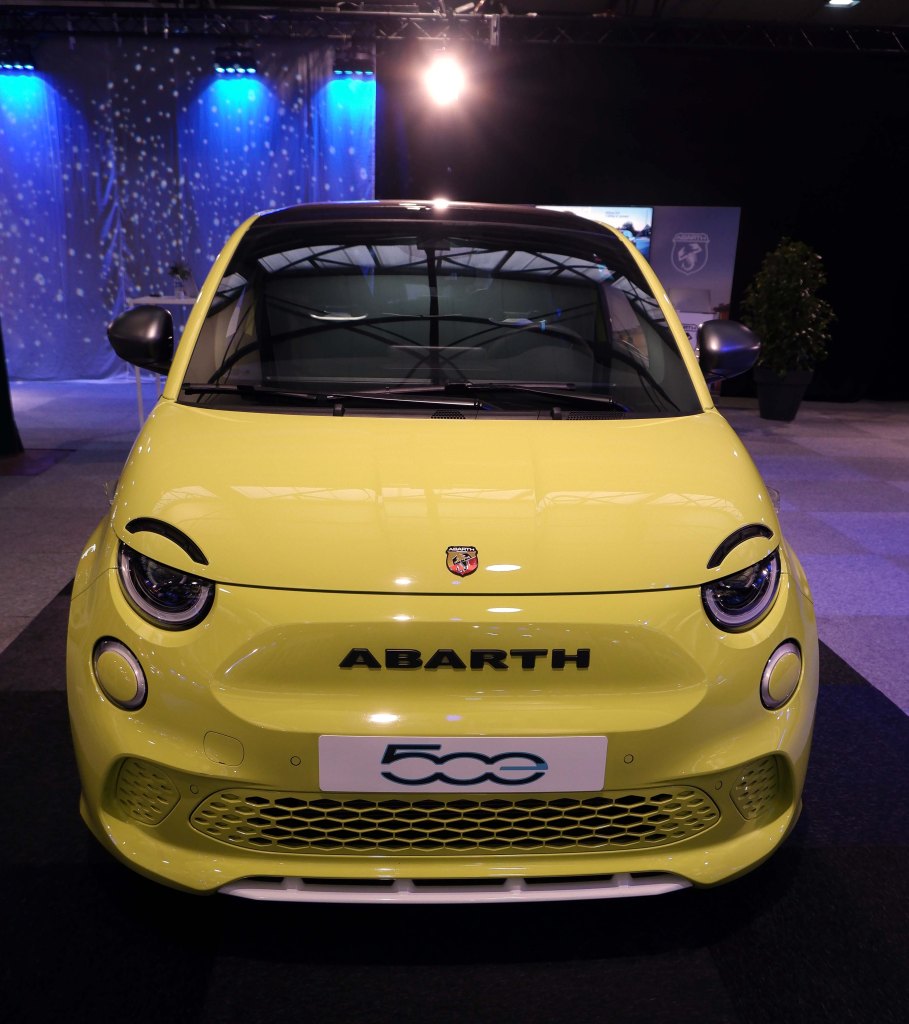
Volkswagen takes a bold step towards the affordable EV for the masses with its ID.2all* concept car.

It’s coming: Volkswagen brought us a first glimpse of an all-electric Volkswagen costing less than 25,000 euros with their “ID. 2all” concept vehicle.

It is of course front-wheel drive, range of up to 450 kilometres, innovative technological features such as Travel Assist, IQ.LIGHT or Electric Vehicle Route Planner and a new Volkswagen design language.

Technical buffs are interested to know that this new “E”VW for the masses will be based on the MEB Entry platform and is one of ten(!) new electric models that Volkswagen will launch by 2026.

In my modest opinion, VW takes here a formidable and bold gamble… will the European car markets (and more specifically its electric infrastructure) be ready for this?

Read further about this “milestone” E-VW…it is sooo interesting and will be a harbinger for things to come!  

Hans Knol ten Bensel

VW’s goals and ambitions with this new true “E”-VW…

It is certain that VW wants the wider public to again fall in love with its cars: Thomas Schäfer, CEO of Volkswagen Passenger Cars stated it clearly: “We are transforming the company rapidly and fundamentally – with the clear objective of making Volkswagen a genuine Love Brand.”

The concept of “Wertarbeit”, a concept so beloved by the Germans, which can be freely translated to “Quality work which creates value”, is also not lost in the boardroom and lobby’s of Volkswagen. Imelda Labbé, Member of the Brand Board of Management for Sales, Marketing and Aftersales, stated it clearly: “We are transferring the typical Volkswagen virtues to the new world of mobility: top quality and workmanship, outstanding software and digital services with genuine added value.”

Mechanical perfection and reliability is therefore of prime importance, and so VW adops well-tried solutions, present in the MEB platform, which by the way uses also all the automated product processes which are already well in place.

Kai Grünitz, Member of the Brand Board of Management responsible for Development, states it for us: “The ID. 2all will be the first MEB vehicle with front-wheel drive. We are exploiting the great flexibility offered by our modular electric drive (MEB) platform and will set new standards in terms of technology and everyday usability with the MEB Entry platform.”

This VW will also certainly be no sluggard: It has a powerful electric drive motor with an output of 166 kW / 226 PS and will have a calculated WLTP range of up to 450 kilometres.

A new design…

The ID. 2all concept vehicle was designed by Andreas Mindt, who took over as the new Head of Volkswagen Design on 1 February 2023. Volkswagen is in his blood, as his father was a designer in Wolfsburg before him. Andreas Mindt joined Volkswagen in 1996 after studying design. He created bestsellers such as the first Tiguan and the seventh-generation Golf. In 2014, he moved to Audi in Ingolstadt as Head of Exterior Design.

The next step followed in 2021 when Mindt became Director of Design at Bentley in Crewe, England. However, he has always maintained his close ties to Volkswagen and continues to be the proud owner of a Beetle. Andreas Mindt on his first project as Volkswagen Head of Design: “We are transferring the DNA of our icons into the future. The ID. 2all is therefore also homage to the Beetle, Golf and Polo.”

Andreas Mindt has developed a new Volkswagen design strategy – one that will ensure the brand’s DNA remains clearly recognisable in the future. Mindt: “I am focusing on three main pillars: stability, likeability and excitement.”

“The most important value for Volkswagen design is stability,” says Andreas Mindt. This includes value stability, stability of form, reliability and recognisability. “A second core element of the brand is likeability,” explains the designer. The Beetle, Volkswagen bus, new Beetle and ID. Buzz clearly demonstrate this. “Stability and likeability – we have to achieve these two values in every respect.” But there is much more to a successful Volkswagen than that: “We also want to create excitement in our customers.” For example, with added dynamics, improved operability or the classic “form follows function” of an ID. Buzz or Golf. Technologies, forms and concepts are what make a Volkswagen desirable. Stability, likeability and excitement are typical characteristics of the Volkswagen design, the Volkswagen feeling. Mindt assigns three design elements to each of these three values. They are all reflected in the ID. 2all.

I was happy to read Mindt’s comments on design, which I have repeated time and again in my guide tours at Audi Brussels: Automotive design is an art form, but there are still clear laws that apply – such as the golden ratio. I couldn’t agree more with Andreas Mindt: “Likeability is created by the golden ratio. This is quite simply the ratio of three fifths to two fifths.” Leonardo da Vinci already followed this geometrical principle in works such as the Mona Lisa. The designer continues: “The feature line running below the window shoulder is located on exactly the golden ratio line of the ID. 2all. Both the Beetle and Golf also always followed the principle of the golden ratio.” People perceive this division created by nature as being pleasant and likeable.

Easy to use…

VW has learned from the usability mishaps in the commands of the early ID’s. VW now calls it ‘self-explanatory operation’. The touch display (diagonal: 32.7 cm / 12.9 inches) of the infotainment system has a new menu structure. Below this there is a newly developed, separate air conditioning control panel. Other vehicle functions are operated by means of a menu control in the centre console, which can also be used to change the look of the digital instruments. The new multifunction steering wheel is designed to be clear and self-explanatory – two thumbwheels on the left and right and two buttons each, and nothing else.

Charged to 80 per cent in less than 20 minutes…

The battery permits a calculated WLTP range of up to 450 kilometres. At DC quick-charging stations, the battery can be charged from 10 to 80 per cent in 20 minutes.

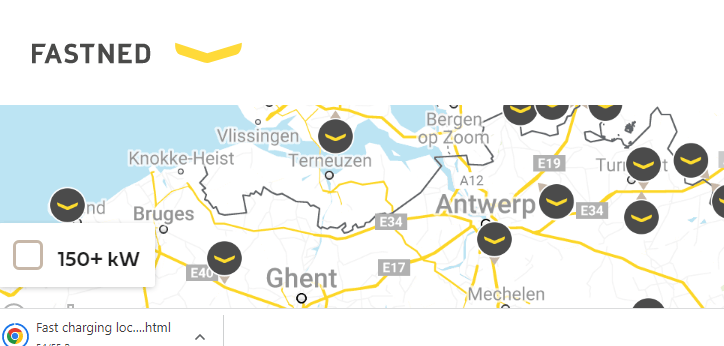
Provided we find these stations! In our country, the situation is still abysmal what these quick charging stations is concerned. Take Fastned: when I want for instance to drive from Antwerp to Knokke, I need to have enough range to make the 210 km trip back and forth to Antwerp, and to make things even worse, there is no Fastned charging station in the whole Antwerp region so far, and NONE in Knokke… so I would have to go towards Brussels in Steenokkerzeel, about 43,7 km from Antwerp, to find one… ridiculous isn’t it? I need at least 260 km range for the trip! To avoid any misunderstandings, we looked here only for Fastned charging stations. There are of course some other 4 to 38 kW charging stations, but any of the apps to find chanrging stations do NOT show whether you can use your bank card or not. At more than 90 %, it is not possible…

Back to our concept car…

Of course, this VW accelerates like a bullet: 0 to 100 km/h in less than 7 seconds. Its top speed is limited to 160 km/h.

A bold step for Volkswagen, but a very logical one if you take a look at its strategy. Soon, we will live in (very) different times…

Hans Knol ten Bensel

We spoke with Béatrice Foucher, Brand Chief Executive Officer of DS Automobiles…

We met already Mme Béatrice Foucher at the presentation of the DS 4 last year in Chantilly, where she presented the strategy of DS Autombiles at the “DS Week” event…

DS Automobiles is carving a fine niche for itself in the premium segment. Your servant appreciates the refinement, comfort and last but not least the style of these fine DS automobiles. You can understand that we were delighted to meet Mme Béatrice Foucher at the presentation of the DS 4 in the “DS week” last year in Chantilly. Then, the entire press presentation of this noble automobile was in line with its qualities: we were not only able to meet Mme Béatrice Foucher personally at dinner, together with the communications people of the brand at lunch, we also had interesting workshops with the designers, engineers and last but not least the craftsmen and artists who make the DS 4 into the hand made four wheeled gem it is. You can read more about this event in our columns, see https://autoprova.be/2021/09/05/we-had-a-first-drive-with-the-elegant-ds-4-the-electrified-future-has-arrived-at-ds-automobiles/

At the Brussels Salon this year, we were again invited to have an interview with her. Just read further…

Hans Knol ten Bensel

A prototype of the DS 4 was displayed in Chantilly, symbol indeed of French “Savoir faire”…

HKtb: I have to congratulate you on your client approach and your philosophy to extend the refinement of your cars, not only in its external styling, but also in the interior.

BF: Indeed, that is our “raison d’être”, it is a combination of technology and the French “savoir faire” or know-how. Indeed, after having admired the exterior, customers must open the door of our cars, like for instance the DS4, see the new leather, the new solutions in the interior we developed in the DS3, the new DS7. From the next year onwards, we are going to create what we call collections, like there exist in the world of fashion.

The stunning interior of the DS prototype seen last year in Chantilly. Look at the contours and wood lined finish of the seats. A harbinger of things to come?

HKtB: We see here on the Salon, the very stylish DS E-Tense Performance 600 kW prototype, are there details of this car we will see in the production models?

BF: This will be more for the exterior than the interior, its bodywork lines which will be seen on our cars from 2024 onwards.(See our photo below of this prototype)

HKtB: But you emphasize the “savoir faire” Français, the French art of life…in automotive mobility.

BF: Indeed, that’s it. This lies in the materials we use, the art of treating them and producing exquisite textures. The French know-how in terms of stock market value lies now in the companies producing luxury goods, who have an established international reputation. This know-how is internationally recognized and appreciated, and this we put into our cars. Indeed, we see the car as a part of the interior one lives in, a part of one’s private home, and so the satisfaction and the reason people buy our cars is this choice of materials which appeals to them.

The reasons why our clients buy a DS is first of all the design, both as well exterior as interior, as this is a car which tells something about them. The second element is the elegance and the luxury and last but not least, the comfort. These are the three aspects which make people purchase a DS. The level of satisfaction is very high; clients are very pleased with their choice.

HKtB: Are your clients mostly women?

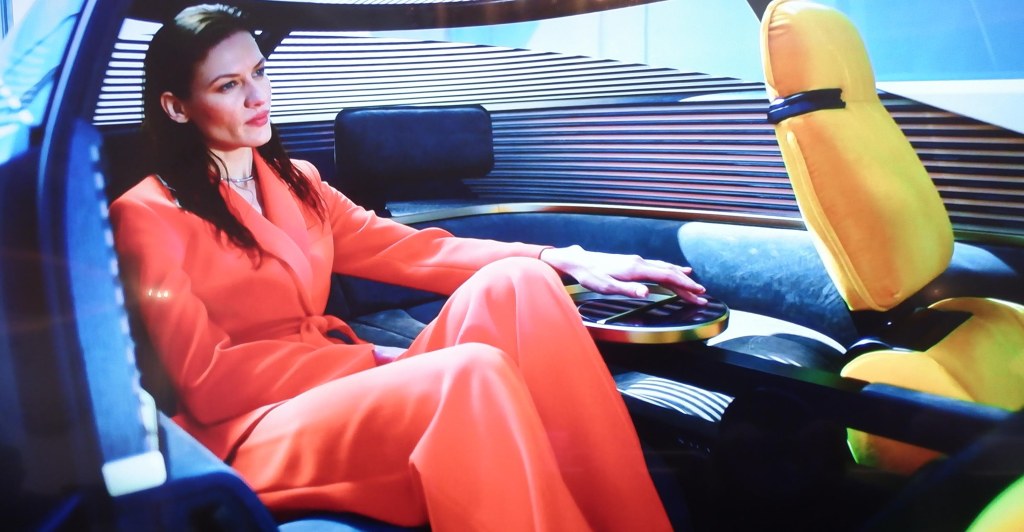
BF: No! When we look at the statistics, we have the same share of male clients than the other premium brands, even for the DS3, which appeals only slightly more to women. The reason why our clients buy a DS is because it’s a French premium brand, they like a different car in this premium segment, and indeed, the (male) clients show the car to their spouses, they enter the car, and they fall for it. So indeed we have a female clientele “on the second row”, they have a strong influence in the choice of the car which doesn’t show in the statistics.

HKtB: When cars are too feminine, women (and men) don’t necessarily buy it…

BF: Indeed, but as soon as the cars embody a social statement, as premium cars do, the (sexual) codes are not important. We put forward the codes of “savoir faire” Français, of luxury, of refinement, which appeals to both men and women.

HKtB: Indeed, a Cartier watch also appeals to men…

HKtB: The successes of your involvement in the Formula E racing does not really translate into the image of the brand…it did not create the “Audi” effect.

BF:  You mentioned Audi. Now their Quattro was a car entering in rallies with iconic figures behind the wheel. Rallies are very popular. We are a young brand, dating from 2014, we chose the Formula E because it tells the story of our brand, with its fast and early move towards electrification. Formula E is not as popular as F1 for example, but it is iconic and indeed quite amusing and interesting.

I mention also here that the DS 7 360 or the DS9 is built by the DS Performance team. This means that besides the drivetrain which is shared with Peugeot, everything else is specific, it has a unique “feel” on the road and offers an exceptional handling. We also optimized the regeneration also on this car, which clients consider important. But indeed, we don’t have decades of sporting history to tell here…

HKtb:  Also the typical DS client is not the one who drives (very) fast or seeks the ultimate in performance…

BF: Indeed, this is what we want, and that’s the reason why we call it also “the art of the voyage”. The quality of the time you spend in the car is important. The satisfaction enjoying the comfort of a car being surrounded by noble materials. Of course, you have not less than 360 HP. I can use them if I want it, but what is offered here with this car to me is comfort and refinement. One has more than enough power at hand, but it is not an issue.

HKtb: Are your clients young, and is connectivity important for them?

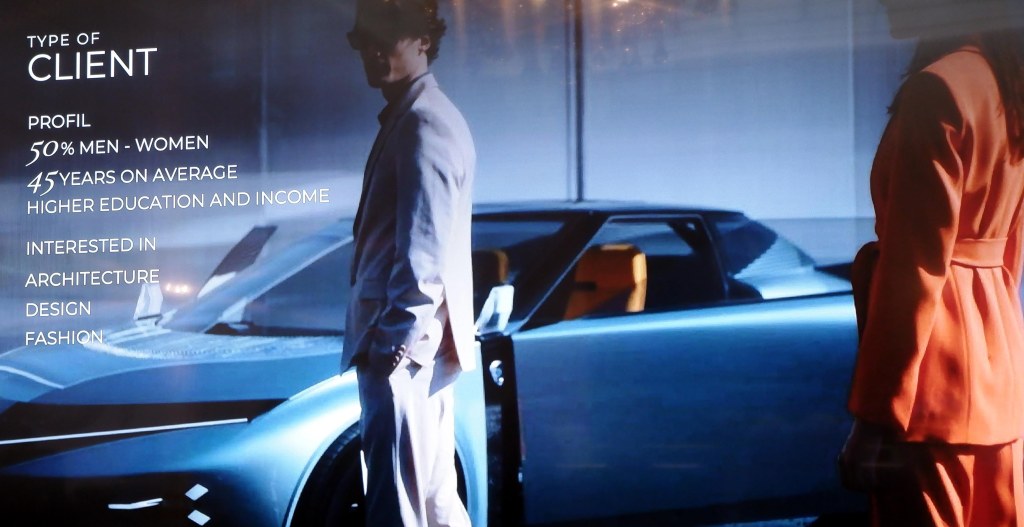
BF: Our clients are not young, which is the case for all premium brands, if one looks at the B to C statistics, they are between 58 and 60 years old, the B to B is younger, from 45 to 50 years, let’s say. Everybody wants to be seen as an amateur of technology, being a “technophile”, because one thinks that if you don’t love technology, you are missing out. So everyone wants a car which is up to this. It is a social statement of modernity. I tell to my teams, the value of a car is nowadays 50 % hardware and 50 % software.

HKtB: This digitalization takes still further steps, like is shown by BMW with its “Neue Klasse” with screen wide displays and dashboard instrumentation and touch knobs and buttons reduced to the minimum, as the underlying digital menus are doing the rest.

BF: Our philosophy is very clear and we showed it also on our concept car, it is to say that what makes the value of our cars is that when you open the door, you have the impression to enter in a Bugatti. We have refinement, savoir faire, and this we want to stress even more in the future. Of course we consider also the increasing digital infotainment needs, as a modernist social statement, but we want this digital element to disappear when the client wishes so. If you enter the car, there is nothing on the screen. Only when you put the contact, the screen appears. That is our philosophy and our goal. Because at a certain point, showing a plethora of screens is not premium. The faculty of having the information appear and again discreetly disappear is premium. This is the direction in which we work. Of course, we need the technology to make this happen.

HKtb: What I would also look for in future DS automobiles is incredible sound…

BF: We made a partnership with Focal, installed in our higher equipment versions like the Rivoli line, which reaches already very good sound quality… of course we have now more silent, electrified or fully electrified cars, which makes this even more important. Everybody works on this, and we also work with partners who have built an enviable reputation in pure sound management. You will see more in the future…

HKtb: When I travel on a motorway, in a certain region, I would like to tune in on my sound system for cultural, historic or general information about where I travel.

BF: This fits in our philosophy of cultivating “the art of the voyage”, and this is also want the digitalization to bring us. My name I Beatrice, and I want to know about the culture, or art places to visit in the region or city where I travel. This is what connectivity should give me.  

 HKtb: I thank you for this interview.   

Hans Knol ten Bensel

We spoke with Pierre Leclercq: “our Citroën Oli is not only style. It is French Design.”  

On the Brussels Salon, Citroën showed its already iconic Oli prototype, a harbinger of things to come in the Citroëns which will be in the showrooms already this and next year. Reason enough for your servant to have a talk with its head of design, Pierre Leclercq, about the design philosophy of the progressive brand with the “double chevron”, and so much more…

Hans Knol ten Bensel

I started this interview asking indeed about this new design philosophy of the brand, striving towards simplicity, practicality, lightness, durability and sustainability in a very bold and original package.

PL: “With the Oli, there are two things. First there is the brand identity, as we show with the Oli styling elements which we will bring to the market as soon as this year. The front end, the new logo, the head- and rear lamps, also the coherence between the front and rear end. The latter is a very important element in our brand identity. (We have seen this already in the Ami – editor’s note).

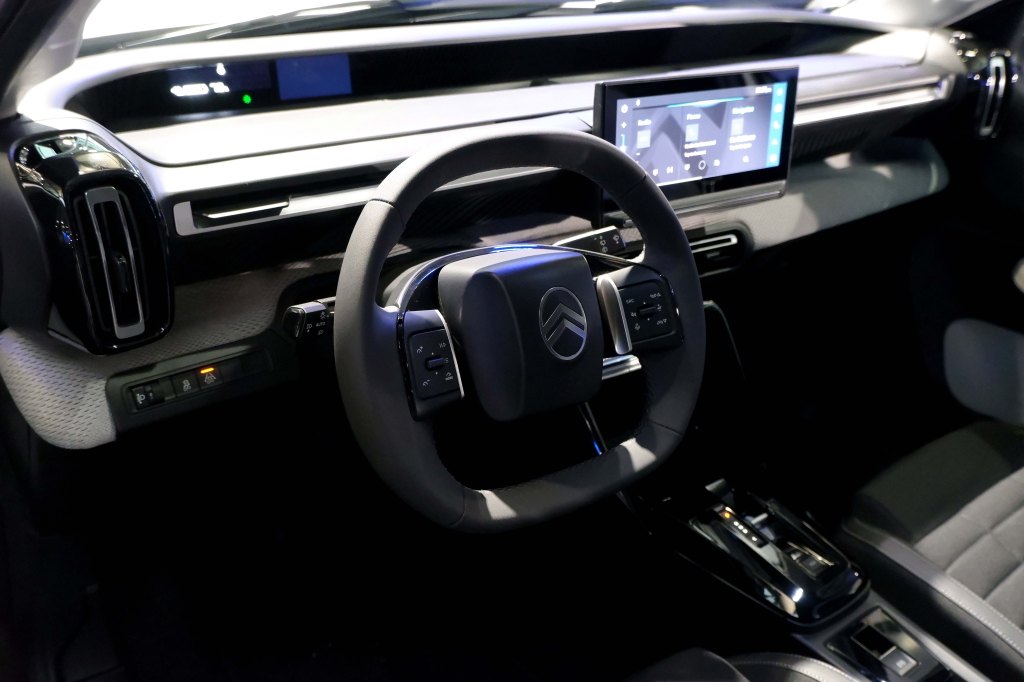
The form language, the simplicity of the edges and the curves will also be seen on our future production cars, but then also the contrasting vertical elements will be present. Our designers will deviate here from the strictly automotive styling which you see in the other brands of the group, we have a non-automotive touch which will be a distinctive element in our future styling.

The magic goals of French Design…

The second fact is that the Oli is not just a styling exercise. It is not only style. It is really French Design. We work together with our engineers to reduce weight, the cost, we are striving for intuitive and simple solutions.

For instance the seats. It’s very important, we work with a whole team to get a seat which is very distinctive, which we can put into production. We discovered with the Oli that our clients are ready for these things. We see that our clients are ready to take bold steps together with us, because we have an image that we will bring something more on the road than just a nice looking car.

HKtB: This translates also into the choice of the materials, the dialogue with the suppliers about the substance and texture of the elements and their surfaces, their unique touch and feel, the atmosphere and character this gives to the car…

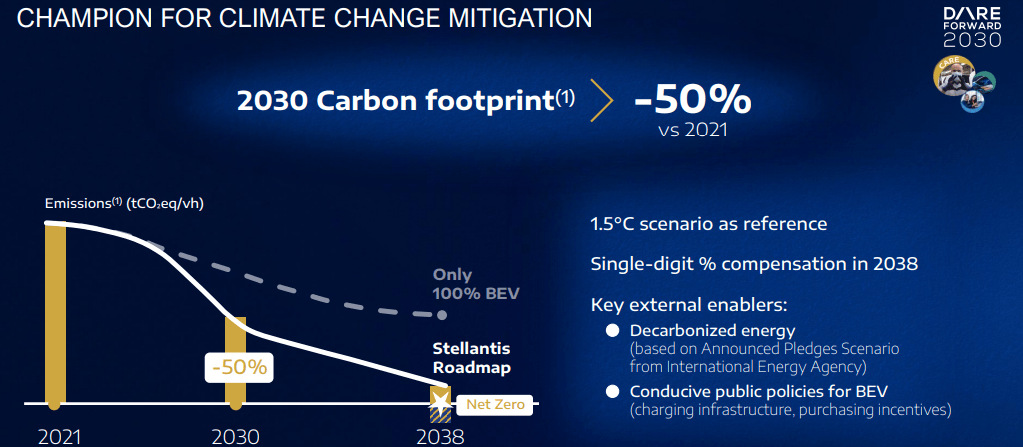
PL: We will be a zero carbon company in 2038, and this has a huge impact on materials. Not so long ago, the choice of the materials came very late in the process of building a car. The exterior and interior, the colors, it was seen as pure decoration. Here and there, one started to use recycled materials for some items, but that was it. This process is now completely turned around at Citroën. We now ask first to tell us which materials we can use, as we want recycled materials, unpainted, and we will go from there and adopt them. This is most interesting. And I think that our clients are also ready for this.

HKtB: These elements and this approach we also see in the Ami. The French, as even Mr. Tavares recently put it, love their individual mobility. The Ami is fit for the (mega)city… will there be other models geared for a new City Mobility in the spirit of the Oli?

We always search for new solutions…

PL:  We have many projects running now. It’s a bit like a funnel. When there is one project hitting the road, we have already other proposals in the pipeline. We are always searching for new solutions. If you remember, two years ago, we showed a rather disruptive project of robotized platforms, which is an intelligent use of the present day autonomous technology, in controlled urban areas. But I imagine perfectly in 2030 and 2035 that these solutions will be used in our cities. The design will then focus on the interior of the cabins and structures rolling on these platforms, a very interesting evolution.

The Ami represented a big risk for us, indeed, we thought about the city, but in fact, we scrutinized the clients who bought the Ami, age, location, etc, and we noticed that the Ami is not only used in the cities. We have clients who buy the Ami for their children and grandchildren, remember that in France you can drive an Ami at the age of 14, and it is better than a scooter. And in a market where these vehicles cost between 12 and 15.000 Euros, ours is available for 6.000 Euros… No small feat, as we respect the profitability margins of our group! It is now on the market for two years, and it has grown more into a lifestyle than a car. This is also what the 2 CV has achieved. It is not easy to create the same phenomenon in this day and age…

HKtB: Can you tell a bit more about your Ami buyers?

We have also many clients who buy an Ami for their holiday homes. And as I said, of course grandparents who buy the Ami for their grandchildren. There are also clients who own a Ferrari and buy an Ami for their third or fourth car…

HKtB: We talked earlier in Paris about your open mindedness towards other designers, in other sectors, who could become involved in offering elements of the car during its life, for example, that in a further future one could offer replacement seats for Oli’s or Citroëns who after years of intensive use get a bit long in the teeth… or, rather, offer parts and items to customize the new Citroëns…

PL: It’s a philosophy I love very much. People more and more want an object which is really theirs. Design is not a luxury anymore. If you go for an Ikea kitchen, you can still choose the finish, styling and colors you want, to make it yours. This is now also true for cars. We have started this with the Ami.

HKtB: It is also true for Jeep. Mopar offers a wide array of accessories.

PL: Indeed, this trend is already more prominent in the States. But with the Ami we started off in Europe with the same trend. Not that we offer many accessories, but we created a desire with the customer to customize his car. It’s like Apple. They don’t offer many accessories themselves, but are produced by Belkin etc. It is a very interesting path for our cars in the future. This will give us for instance incredible interiors. I want the client to appropriate our geometries. Why not share our geometries on the internet Open Space and invite the developers to have fun with it?

Every brand has its own design team to embody its proper DNA

HKtB: What is your relationship or rather dialogue between your styling department and the suppliers? Do they come present you what is possible, or after having established a manifest for yourselves what you want to do in styling in the next five years, let’s say, you ask them to come up with new materials, possibilities?

PL: The dialogue goes both ways. But I want to stress here that the design has become very important. The suppliers are specialized in offering technology, for instance for the platforms we have conceived within the group, but over the last 30 years, what have we done? Instead of asking PininFarina or Bertone to style all the cars in the world, we have all established our design centers which carry truly our DNA, and every brand has its own equipe or team of designers. This is génial, because we have cars within the group which don’t resemble each other at all…

HKtB: With the new materials comes also repair friendliness, durability…

PL: Indeed, we want our cars to have a longer lifespan, and we will refresh them within our network. We need of course more control as nowadays we don’t see the car anymore after it has been produced. We have to control the recyclability of the car. Otherwise it’s no use to build the car with recyclable materials.

HKtB: It think it is necessary to tell the client that his car now has a long life and that you as the manufacturer will follow the car throughout its life.

PL: Indeed, a lifelong car, staying with you the rest of your life.

HKtB: Indeed, that as a brand policy you commit yourself to the clients that your Citroën model, Type A, B, or whatever, that you will always follow this car for decades to come…

PL: Ca serait génial, that would be a stroke of genius. It is our goal. It would be very interesting and it would completely change the idea of the automobile of today.

HKtB:  The youth is already there. They support and adopt the circular economy. I think Citroën is the right brand to do this. 

PL: Indeed, we push within the Stellantis group for these concepts, and I think that our clients are far more inclined to make these choices than the buyers of other brands.

HKtB: I thank you for this interview. Thinking out of the box is always interesting.

PL: I thank you, always lovely to exchange these ideas, thank you for the conversation. I also think that every car we build has to make the life of our clients better. These are not empty words. The Ami improves lives. We offered a new service; in Paris, people smiled when they saw the car. It takes something to convince a Parisien!

Hans Knol ten Bensel

BMW rides you into an enhanced real and virtual world at CES Las Vegas…

The BMW Group is sharing its vision of the future digital experience, both inside and outside the vehicle, at the Consumer Electronics Show (CES) 2023 in Las Vegas.

It presented the BMW i Vision Dee, a futuristic mid-size sedan with a new and pared-down design language. The name “Dee” stands for Digital Emotional Experience – and that is precisely its aim: to create an even stronger bond between people and their cars.

This car has future digital functions will go far beyond the level of voice control and driver assistance systems we are familiar with today.

It starts all with a BMW Head-Up-Display extending across the full width of the windscreen, providing a glimpse of the next vehicle generation.

From 2025 onwards, this innovation will be available in the models of the NEUE KLASSE. The BMW Group has also refined its use of colour-change technology. Having unveiled the BMW iX Flow Featuring E Ink, with the ability to change from black to white, at the last CES, BMW i Vision Dee can now curate its exterior in up to 32 colours.

“With the BMW i Vision Dee, we are showcasing what is possible when hardware and software merge. In this way, we are able to exploit the full potential of digitalisation to transform the car into an intelligent companion. That is the future for automotive manufacturers – and, also, for BMW: the fusion of the virtual experience with genuine driving pleasure,” said Oliver Zipse, Chairman of the Board of Management of BMW AG. “At the same time, BMW i Vision Dee is another step on the road to the NEUE KLASSE. With this vision, we are looking far into the future and underlining the tremendous importance of digitalisation for our upcoming product generations.”

With its intelligent, almost human capabilities, BMW i Vision Dee accompanies drivers not only through real-life situations on the roads, but also in their digital environment.

“A BMW lives by its unparalleled digital performance. BMW i Vision Dee is about perfect integration of virtual and physical experiences,” said Frank Weber, member of the Board of Management of BMW AG responsible for Development. “Whoever excels at integrating the customer’s everyday digital worlds into the vehicle at all levels will succeed in mastering the future of car-building.”

BMW Mixed Reality Slider: into the virtual world in five steps

The BMW, in combination with the advanced Head-up Display, is the digital highlight and central operating control of BMW i Vision Dee. The completely virgin and simple dashboard panel shows just a line with dots. This is the Mixed Reality Slider. By using shy-tech sensors on the instrument panel, drivers can decide for themselves how much digital content they want to see on the advanced Head-Up Display. The five-step dot selection ranges from analogue, to driving-related information, to the contents of the communications system, to augmented-reality projection, right up to entry into virtual worlds. In parallel, dimmable windows can also be used to gradually fade out reality. Mixed reality can be experienced in BMW i Vision Dee in an immersive way that engages different senses without requiring any additional tools, creating a new dimension of driving pleasure for the user.

Advanced BMW Head-Up-Display: in NEUE KLASSE from 2025

The BMW Group is known in the automotive sector as a trailblazer for the Head-Up-Display and has systematically refined this technology over the past two decades. In BMW i Vision Dee, projection across the entire width of the windscreen allows information to be displayed on the largest possible surface – which only becomes recognisable as a display once it is activated. In this way, the BMW Group demonstrates the huge potential of projection technology and BMW i Vision Dee visualizes how a advanced Head-Up-Display could also be utilized in the future for the display and operating concept. The standard-production version of the BMW Head-up-Display extending across the full width of the windscreen will be used in the models of the NEUE KLASSE from 2025 onwards.

Welcome scenario with voice and phygital icons

The digital experience already begins outside the vehicle, with a personalized welcome scenario that combines graphical elements, light and sound effects. Natural language serves as the simplest, most intuitive form of interaction, enabling perfect understanding between humans and their vehicles. The headlights and the closed BMW kidney grille also form a common phygital (fusion of physical and digital) icon on a uniform surface, allowing the vehicle to produce different facial expressions. This means BMW i Vision Dee can talk to people and, at the same time, express moods such as joy, astonishment or approval visually. BMW i Vision Dee can also project an image of the driver’s avatar onto the side window to further personalize the welcome scenario.

World premiere for full-colour E Ink technology

Following the spectacular debut of the BMW iX Flow Featuring E Ink at CES 2022, the BMW Group is now unveiling a full-colour version of the E Ink technology in BMW i Vision Dee that will be used as the outer skin of the vehicle for the first time worldwide.

BMW i Vision Dee, rather than simply alternating between black and white, now showcases a multi-coloured, fully variable and individually configurable exterior. An ePaper film from the BMW Group’s cooperation partner, E Ink, is applied to the body to create this magical display of colour. Up to 32 colours can be displayed.

The body surface of the BMW i Vision Dee is divided into 240 E Ink segments, each of which is controlled individually. This allows an almost infinite variety of patterns to be generated and varied within seconds. The laser cutting process used to trim the films and the electronic control design were developed in partnership with E Ink. The adaptation of this technology for curved surfaces and the programming of the animations, were developed by BMW Group’s in-house engineers – enabling a form enabling a form of customisation that is unique throughout the automotive sector worldwide.

Reductive design – inside and out

The design of BMW i Vision Dee has been deliberately pared down to focus attention on the digital experience and the DNA of the BMW brand. The exterior is defined by the classic three-box sedan design that forms the core of the BMW brand. Traditional design elements, like the BMW kidney grille, twin circular headlights and the Hofmeister kink, are reimagined, with phygital icons replacing analogue elements. This gives BMW i Vision Dee its own digital, but human, character.

Inside, digitalisation goes hand in hand with reductive use of materials, operating controls and displays to ensure nothing distracts from the digital experience and the new feeling of enhanced driving pleasure. The unconventional design of the steering wheel, with its central vertical spoke, creates touchpoints that come to life when approached or touched and can be operated by moving the thumb. These phygital touchpoints control selection of the content projected onto the windscreen and, together with the Head-Up Display, thus support the principle of “hands on the wheel, eyes on the road”.

“With BMW i Vision Dee, we are showing how the car can be seamlessly integrated into your digital life and become a trusty companion. The vehicle itself becomes your portal to the digital world – with the driver always in control,” said Adrian van Hooydonk, head of BMW Group Design. “Implemented the right way, technology will create worthwhile experiences, make you a better driver and simply bring humans and machines closer together.”

Another milestone on the road to the NEUE KLASSE

The future of the BMW Group is electric, circular and digital. BMW i Vision Dee represents the digital aspect of this trio and will be another milestone on the road to the next vehicle generation, the NEUE KLASSE. The BMW Group will provide further insights and glimpses of the revolutionary vehicle concept of the NEUE KLASSE over the course of 2023. See more news soon!

Hans Knol ten Bensel
Fiat present at CES with the 500 electric, and a metaverse powered showroom…

The FIAT brand is playing its original approach to automotive mobility again at the Consumer Electronics Show (CES) in Las Vegaswith two major exhibits starring the New 500 electric.

FIAT unveils for the first time the world’s first metaverse-powered showroom: the FIAT Metaverse Store. This revolution in customer experience is accessible, thanks to the partnership with Microsoft and Touchcast, at the Microsoft booth located in the West Hall #6017, recreating the feel of a showroom from home.

Alongside the FIAT Metaverse Store, the New 500 will also be the center of attention in the Free2move area of the Stellantis booth.
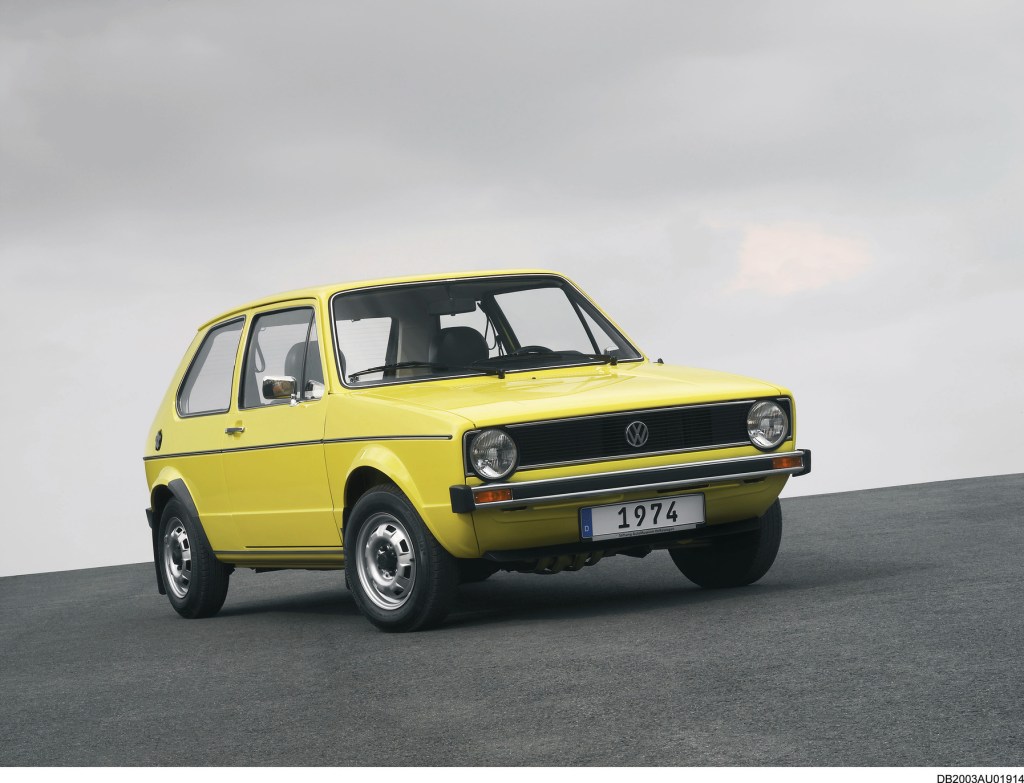
Reinventing customer approach in North America…

At the Los Angeles Autoshow 2022 Olivier Francois, FIAT CEO and CMO Global of Stellantis, officially announced the launch of the new Fiat 500e in North America in the first quarter of 2024 and the FIAT Metaverse Store will be one of the key innovative pillars for launching the FIAT electric icon in the US.

Launched last December in Italy, the FIAT Metaverse Store makes the Brand a leader in offering an immersive, simple, and human-driven brand experience. Inside the FIAT Metaverse Store, customers will be able to discover, configure, and even purchase the New 500 La Prima by Bocelli, experiencing the feel of a showroom with the help of the FIAT Product Genius, a real person ready to answer any questions. The entire New 500 line-up, additional models and markets can be found in the metaverse-powered showroom during 2023.

The FIAT Metaverse Store is a user-friendly and accessible to all technology, in fact it does not require a virtual reality (VR) headset or expensive hardware. The public will be able to try it out at the Microsoft booth located in the West Hall #6017 at CES 2023.

FIAT and Free2move together for more sustainable urban mobility

Lights shine on the New 500e 3+1 in the special Rose Gold livery, displayed as the only car at the Free2move stand. A collaboration, between FIAT and Free2move, stemming from a common goal: to build an increasingly sustainable urban mobility ecosystem as part of their mission to make EVs more accessible. The two brands are working on a unique value proposition that goes beyond rental, car sharing, and subscription. The customers will be able to enjoy a 360° Free2move experience through a Fiat car for a few minutes, several days or even months. This offer allows customers to tailor their rental contracts and associated services based on usage with a single invoice, directly from a dedicated APP.

More Fiat news soon also on the Brussels Salon de l’auto!

Hans Knol ten Bensel