E-Power for all: the Fiat Grande Panda goes hybrid…

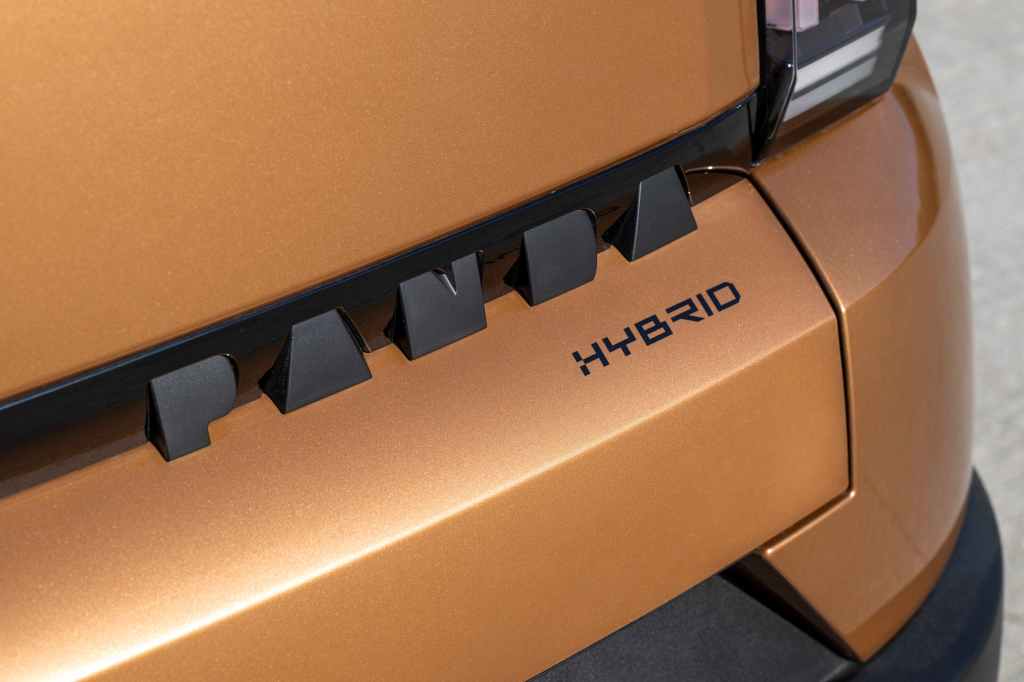
FIAT launches the new Grande Panda Hybrid, marking a significant milestone in its global product strategy:  making the electrified transition possible for all thanks to this affordable, and cool B-segment Panda.This hybrid version marks the brand’s role as a leader in volume and accessibility, says Stellantis, echoing the golden years of FIAT when simplicity, innovation, and emotional design moved millions.

The Grande Panda project is the cornerstone of a new global vehicle family developed entirely under the guidance of the FIAT HQ and Centro Stile in Mirafiori, Turin. Your servant remembers its visit at the Centro Stile a few years ago, when he stood eye to eye with the clay model of the FIAT “centoventi” or 120, which showed already the proportions and styling language of the present day Panda. Technologically, it already incorporated the solutions we see today.

The model sits on Stellantis’ “Smart Car” Platform. At the heart of this model lies the T-Gen3 hybrid powertrain, featuring a 1.2-liter, 3-cylinder turbocharged engine delivering 110 HP, combined with a 48V Li-ion battery and a eDCT 6-speed dual-clutch automatic transmission. This system integrates a 21kW electric motor,an inverter, and a central control unit.

Through functions like e-launch, e-creeping, and e-parking, the Grande Panda Hybrid can operate in full-electric mode during low-speed manoeuvres, allowing for up to 1 km of electric-only driving at speeds under 30 km/h. These features result in smoother acceleration, silent city driving, and less fuel consumption and CO₂ emissions, made possible in part also by the Miller Cycle combustion strategy. The eDCT transmission further enhances efficiency and provides a relaxed, two-pedal driving experience that embodies FIAT’s “easy drive” philosophy.


All trims, and one can choose between three levels, notably POP, ICON, and LA PRIMA, come equipped with a comprehensive ADAS suite, including Cruise Control, Speed Limiter, Active Safety Brake, Lane Keeping Assist, Driver Attention Warning, and open-door alerts. The LA PRIMA trim enhances this with front sensors and a rear view camera.
Connectivity is supported through the onboard 10” digital cluster, 10.25” central touchscreen, and wireless smartphone mirroring. Customers benefit from multiple USB-C ports, a wireless charging pad, and seamless digital integration.

Continuing the 4 X 4 tradition of the Panda with a 4 X 4 concept…

The new Grande Panda 4×4 concept model, presented during the Grande Panda Hybrid Media Drive, is the direct heir of the Panda 4×4 from the ‘80s. It has exclusive details, and the unique dark red livery, bringing the 80s Panda’s character into the modern era.


It has an electrified, innovative rear axle that delivers all-terrain versatility.  We look forward to see this concept hitting the road soon…

We invite you to look at the accompanying photos for now…

Hans Knol ten Bensel

We drove the new Opel Grandland: a “big” Opel with distinct premium character and style…

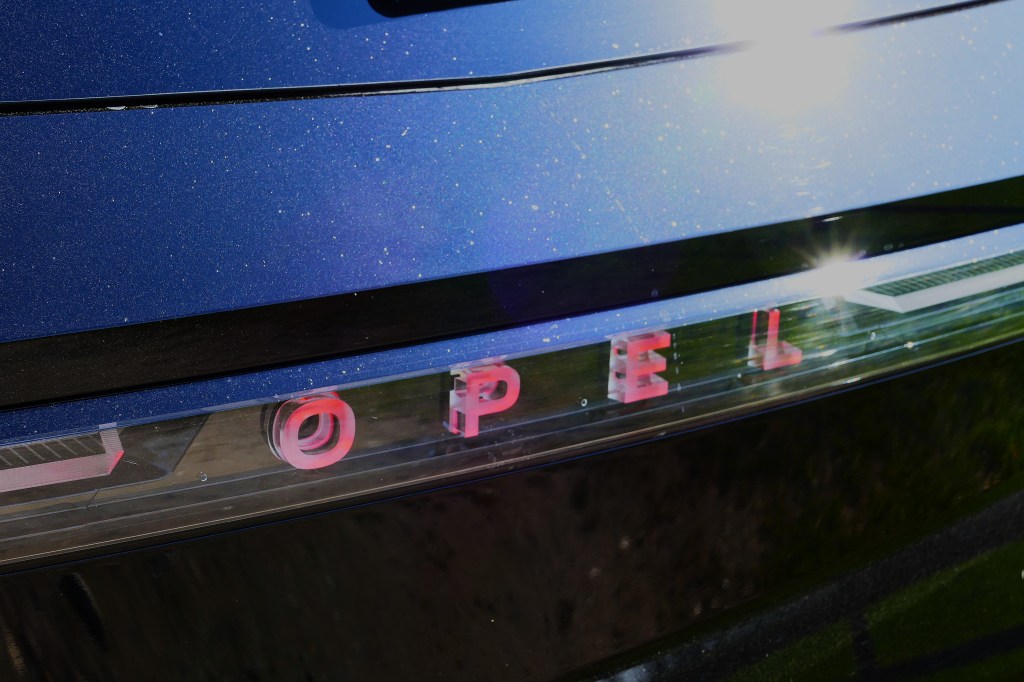
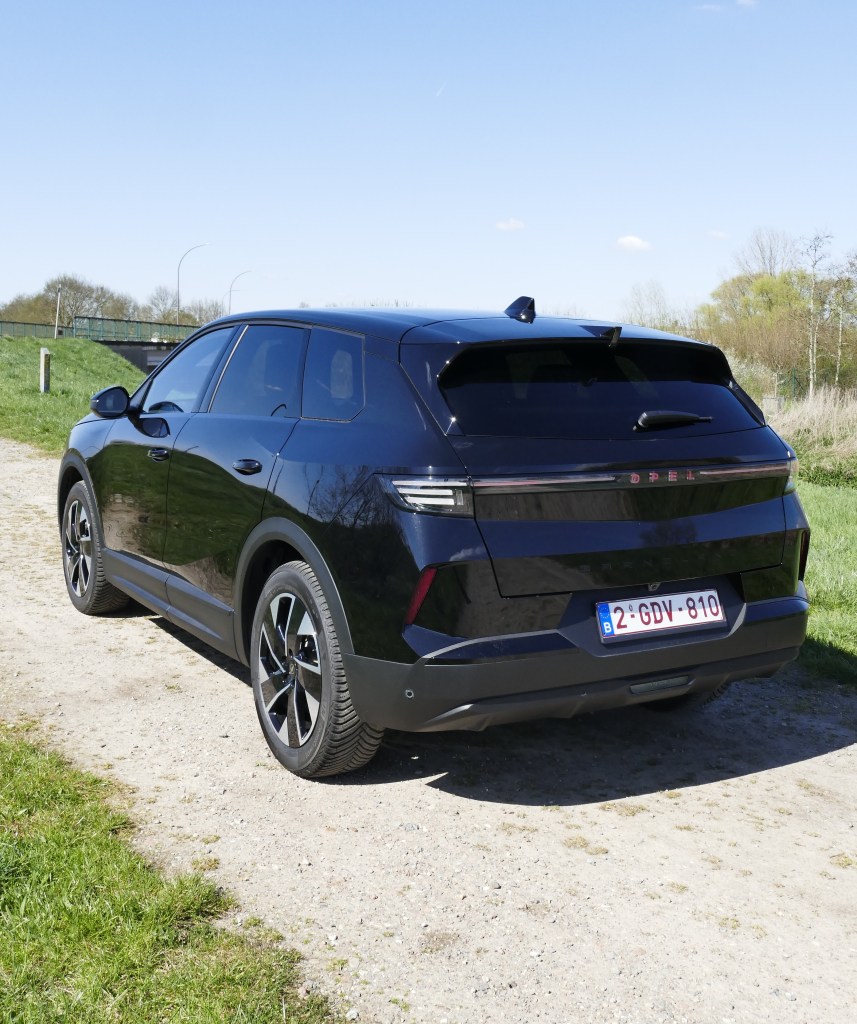
The second generation of the big Opel SUV impresses with a stylish makeover which adds further character and panache to the car. The “vizor” front end has received a transparent cover with the Opel lightning badge being now illuminated for the first time.

The rear the letters “Opel” across the boot lid are now boldy styled and illuminated  in red coloured led light. Opel calls this its “edge light” technology.

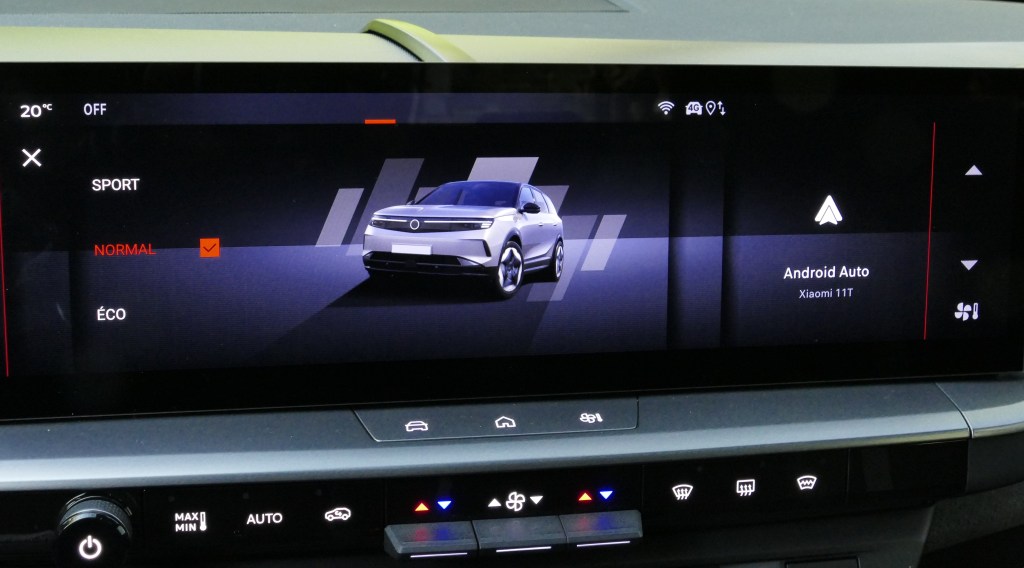
The styling language is elegant and simple, and this same styling philosophy is found in the cabin, where Opel’s strategy of keeping instrumentation as minimal and clear as possible for driver and passengers is continued under the adage “less is more”. This doesn’t mean that the information provided is incomplete, only that nothing but the relevant information is displayed when asked for it. We love this quiet simplicity. We found also the cabin very well finished and the quality of the materials used add a distinct premium touch.

This second generation Grandland comes after 7 years, and it runs on the Stellantis Platform which it shares amongst others with the Peugeot 3008 for instance.  Nevertheless, the new Grandland was developed in Rüsselsheim and is assembled and built at the Opel plant in Eisenach.

The biggest news is that the Grandland is now also available in full electric form, with a battery package of up to 98 kW. This allows a range of up to 700 kilometers on a full charge, thanks to the new more efficient electric motor and provided the heat pump is installed.

As Opel caters for a wide(r) public, a plug in hybrid version is also offered which offers a 85 km useable “pure” electric range and last but not least a so-called Mild Hybrid which is the subject of this test.

Under the hood of this MHEV Grandland lies the 3 cylinder 100 kW engine which is shared in so many Stellantis group cars.  The MHEV Grandland has a kerb weight of a good 1,6 tonnes, but nevertheless, thanks to the good torque charcteristics, accelerations are still quite brisk with an acceleration up to 100 km/h in just over 10 seconds.

On the autobahn, this Grandland still shows its panache with a top speed of 202 km/h. Consumption depends here greatly on your driving style, where the efficient drivetrain with an electric motor of 28 HP and 51 Nm of torque coupled to the transmission allow you to make good use of the E-power when starting from standstill and driving at slow speeds.

When you really concentrate and use an anticipatory and relaxed driving style, you can cover up to 50 % of urban distances on E-power, and consumption drops to between 5,5 and 6 liters, even  in busy urban traffic.

On the open road, cruising at legal maximum speeds will show the good efficiency of the drivetrain with consumption hardly exceeding the 6,5 litre mark on 100 km.

The six speed eDCT transmission is smooth and responsive, well adapted to the engine’s torque characteristics. We found the engine not overly smooth, also emitting a distinct throb, but this actually adds to the dynamic character of the new Grandland. At constant speeds, the engine is smooth and virtually inaudible.

We liked the way the now 17 cm longer and markedly bigger Grandland steers and handles. It has lost nothing of its predictive handling and responsiveness, and if any, this has even improved. It remains utterly stable at high speeds and is indeed very engaging and pleasant to drive.

Comfort is also very good, and here we have to applaud the overall roominess of the cabin. As said, the Grandland has grown 17 cm in length, and this allows also the rear passengers to really stretch their legs. There is also more elbow room, as the new Grandland is also 6 cm wider…

Luggage space is also abundant with a standard 550 liters.

Driving assistance systems are also well cared for, and adaptative intelligent cruise control with stop and go function is standard, together with emergency collision braking and speed limit recognition. You can opt for Opel’s Intelli-Drive-2.0 system which helps you when parking and offers you also a 360° view of the car’s surroundings. One good note also for the excellent lighting system. Now the Grandland shines (literally) with Intelli-Lux Pixel Matrix HD-Lights, which dispose of not less than 25.000 light elements on each side. The front camera of the Grandland recognizes uncoming traffic and corrects the light beam accordingly. A head-up display lets you keep focused on the road.  

Conclusion

The Grandland has matured to a premium class SUV, with even in its “base” MHEV version offering many qualities, last but not least it pleases with its agility thanks also to its 1,6 tonne weight, which is markedly less than the plug-in and full EV versions. Furthermore there is the excellent finish, the quality of the materials (all recycled) in the interior, the roominess, the stylish details and the overall good proportions of the car. Then we have said nothing about its very good overall performance and efficiency, its roominess and practicality. Last but not least it offers good value for money, certainly in this Mild Hybrid version…

Hans Knol ten Bensel

We drove the Alfa Romeo Junior Ibrida…

The Alfa Romeo Junior series has always been a sporting icon for the Alfa Romeo enthusiast. It stood for pure efficiency, with a somewhat smaller engine and less power, but had the same undiluted sportiness as its faster and bigger brothers in the Alfa range.

So when Stellantis launches today’s Junior again for its Alfa Romeo brand, we expect something special indeed, and we were very keen to drive for you the Alfa Junior Ibrida, which has a 1,2 litre 3 cylinder turbo under the hood and enjoys a 48 volt mild hybrid system. Does this Junoir retain the unmistakable Alfa Romeo thoroughbred qualities with a drivetrain and platform, which it has in common with its many sisters in the Stellantis group?

With this Junior, Stellantis aims also at efficiency and some degree of practicality and comfort, as it wants to attract a wider range of young customers to the iconic Milanese brand. We will find out in this test whether this new Junior fulfills all these high expectations…

Hans Knol ten Bensel.

Sporty looks…

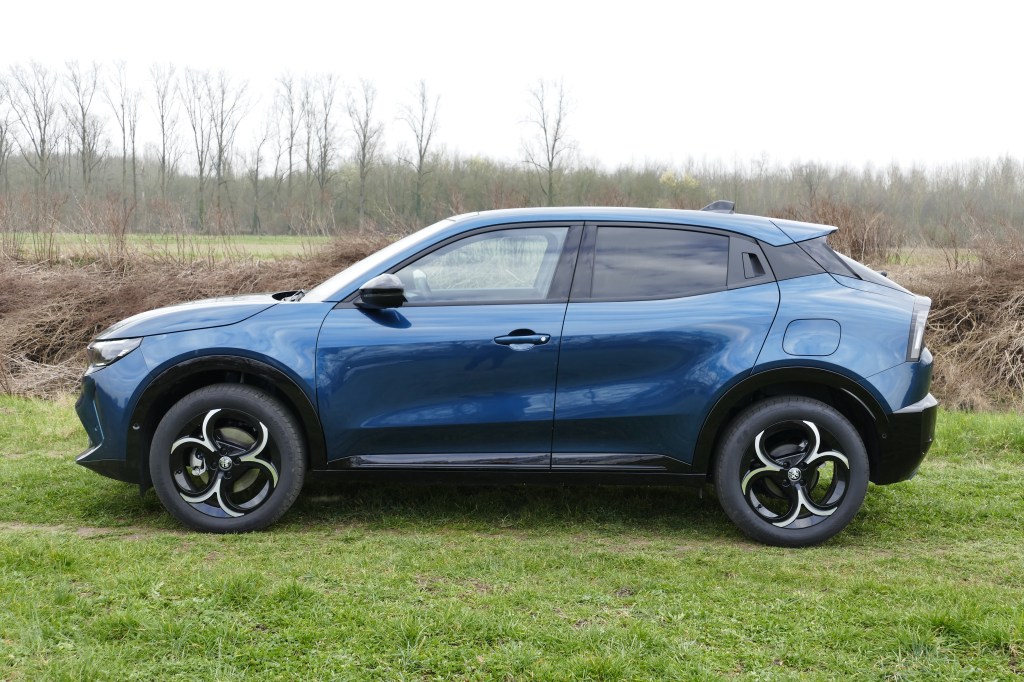
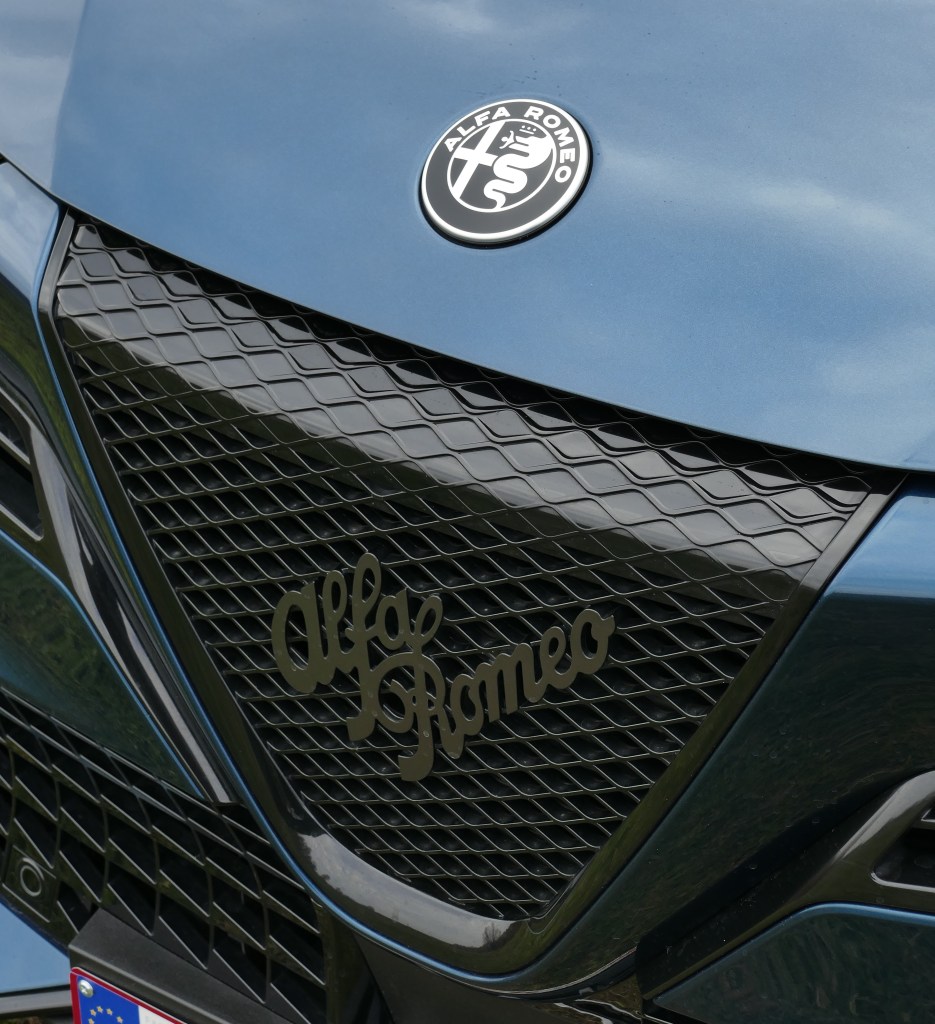
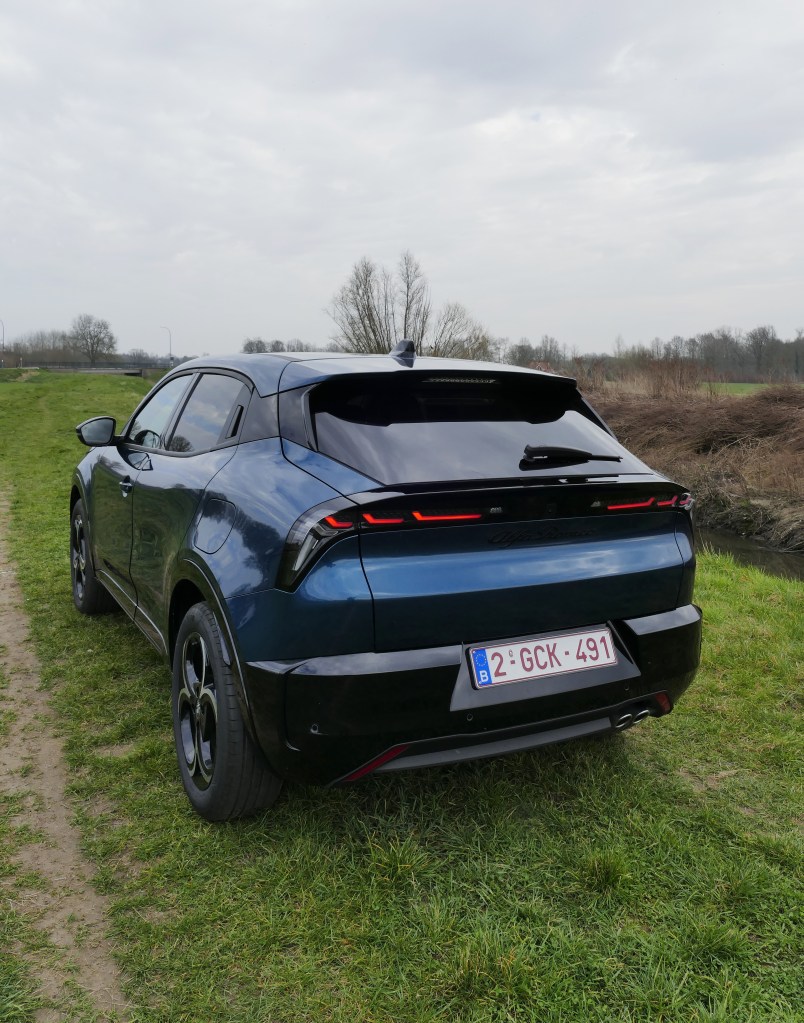
When approaching the new Alfa Junior we are seduced by its good proportions. The front grille has character, the led headlights accentuate things further and the air inlets add an agressive touch. The car looks good from the side, the rear end with its peculiar headlight shapes is somehow a departure from the typical Alfa styling language, and shows us that Alfa is also entering a new era.

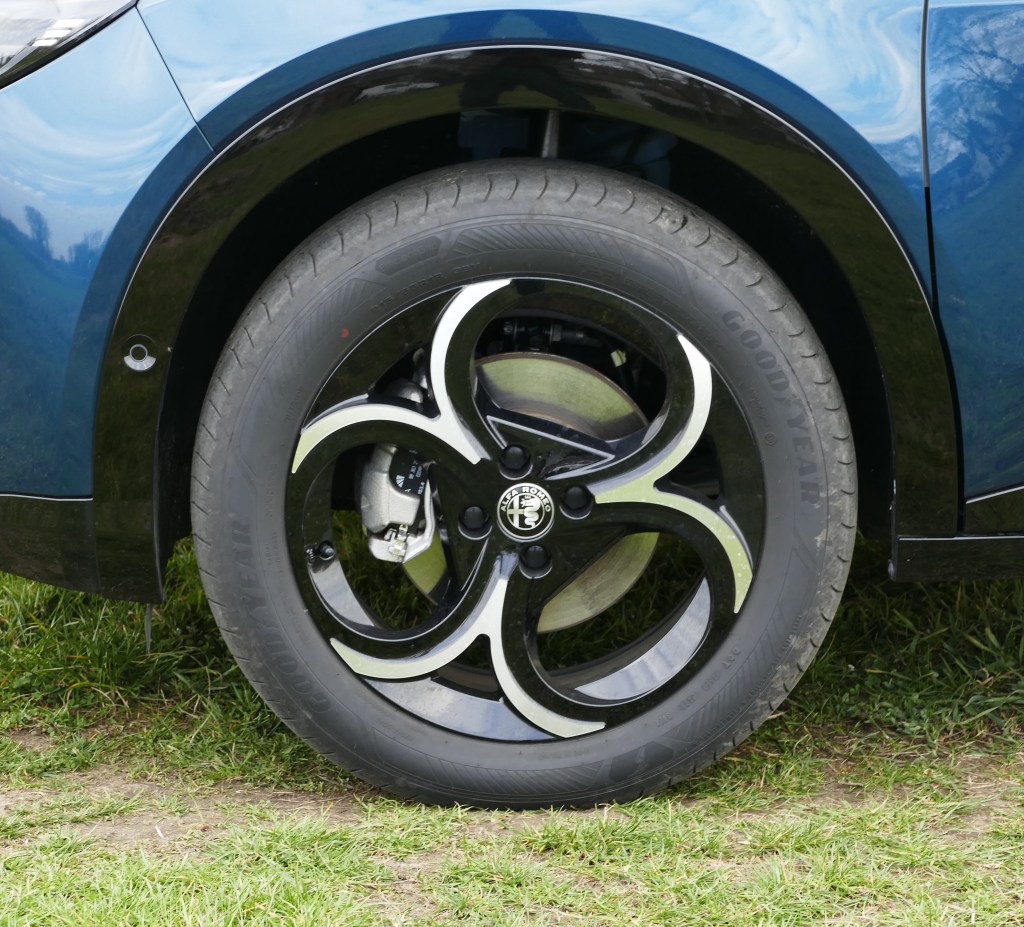
But there are Alfa styling icons which remain, like the wheel alloys with circular spokes, which suit the car very well.

The cockpit has also much Alfa Character, although aficionados will miss the typical large gear-change paddles on both sides of the steering wheel column, but then again, the smaller paddles indicate that this Alfa has somehow a different mission, and indeed this Junior wants also to convince the Alfa driver with somewhat different qualities.

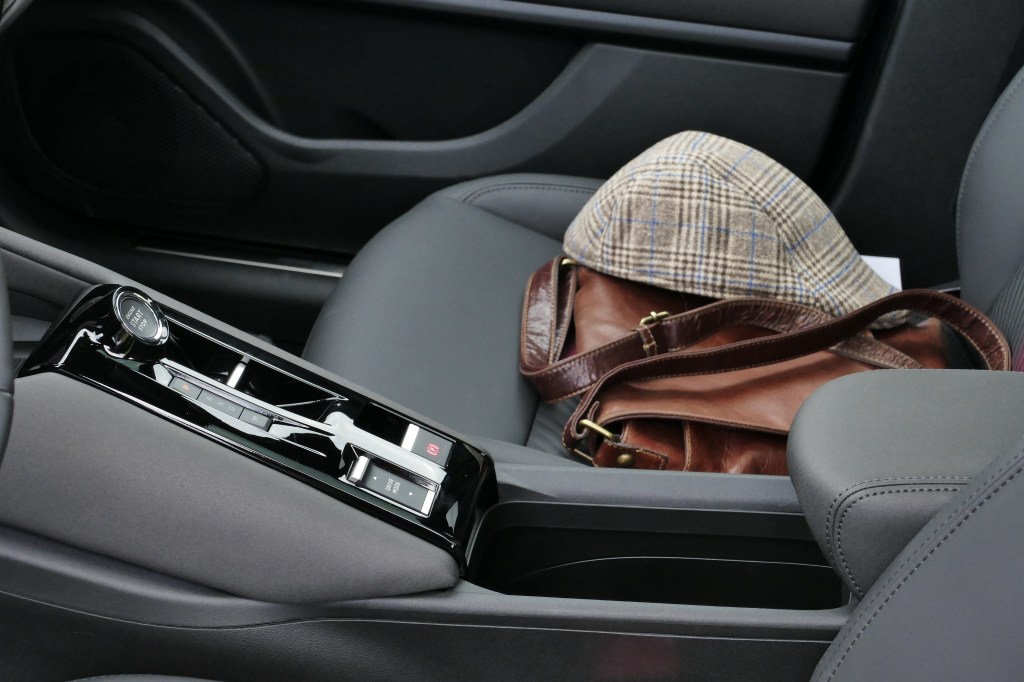
But we liked very much here again the digital instrumentation, the 10 inch large central touchscreen which is set in a stylish cluster directed towards the driver, with below it a leaner centre console, which houses the Stellantis-typical drive selector, contributing to an air of sportiness with a large circular start/stop button towering above it.

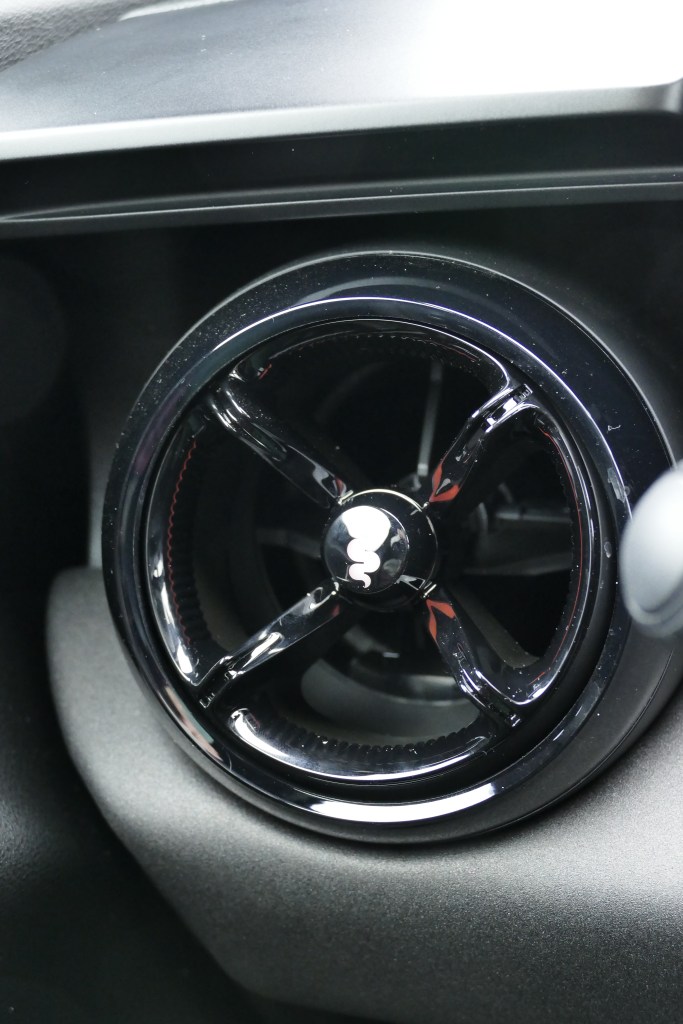
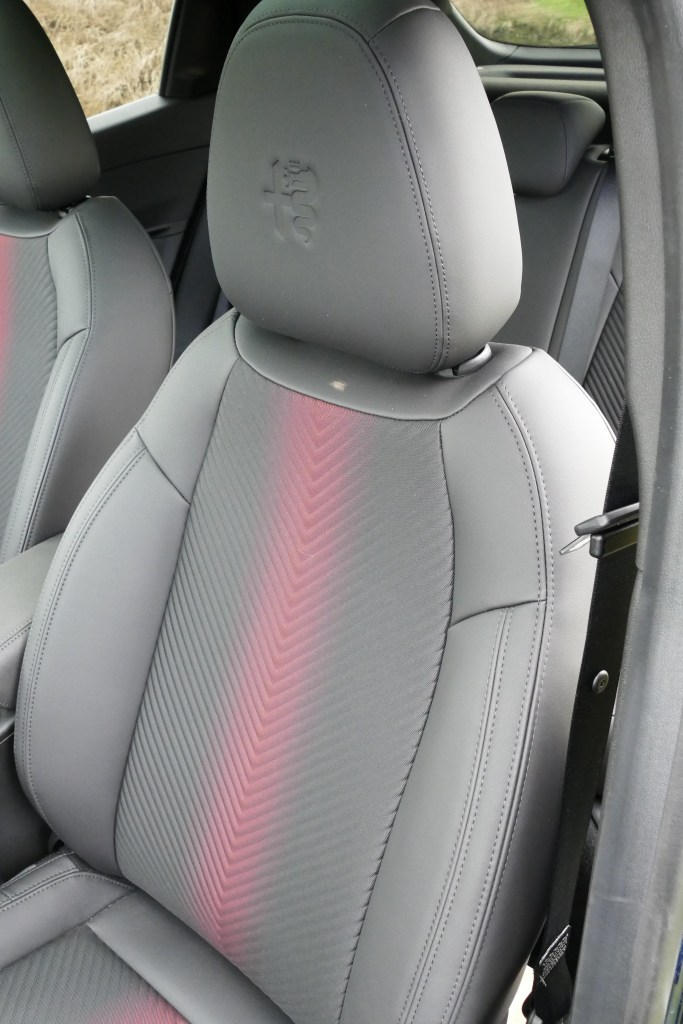
The illuminated ventilation openings adorned with the Alfa symbol also add character. We liked the color pattern of the seats, with a large central red stripe, which gives the distinct optical illusion of a glowing ribbon. The seating position is rather deep, which again accentuates the thoroughbred panache of this Alfa. Note that the seats have heating and massage functions, a distinct plus..

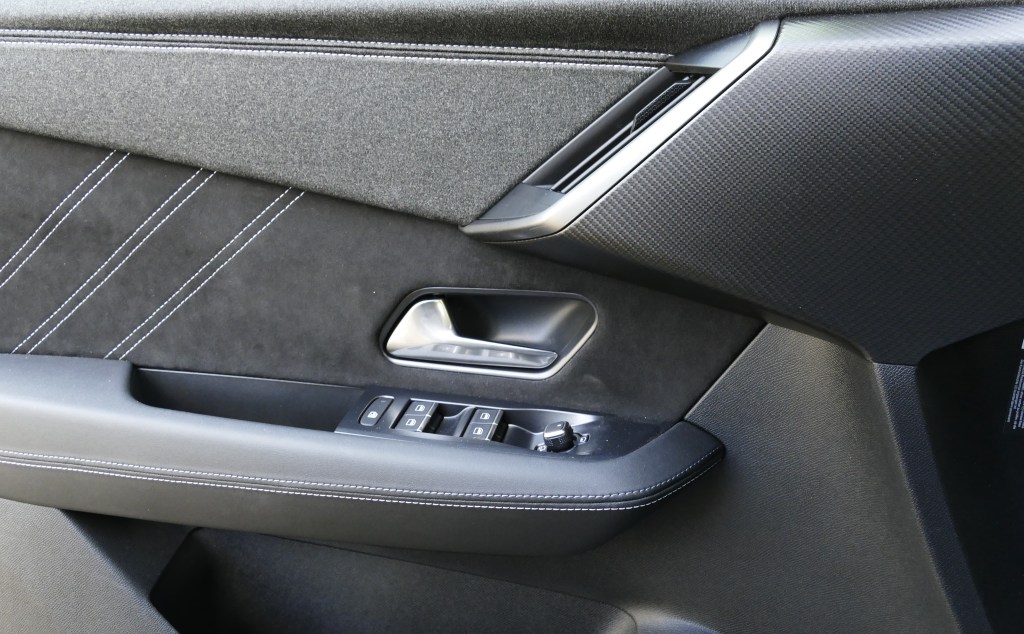
Everything is well finished, some harder plastics are found, but the panel surfaces of the dashboard still exude a distinct premium feeling. The ergonomics are beyond reproach, and below the central touchscreen one finds still a row of “analog” touch buttons for ventilation with, last but not least, the volume control of the radio…


Performance and handling: the DNA of a true Alfa.

The Junior uses a 48V mild-hybrid system that combines a 1.2-litre three-cylinder Miller cycle petrol engine,with variable-geometry turbo and distribution chain for maximum reliability. The electrical component consists of a 48-volt lithium-ion battery and a 21-kW electric motor built into the 6-speed dual-clutch gearbox, which works together with the inverter and transmission control unit to ensure maximum efficiency.  The total power output of the system driving the front wheels is 134bhp, enabling acceleration from 0 to 100km/h in 8.9 seconds.

Indeed, performance leaves nothing to be desired, and thanks to the support of the electric motor the acceleration from standstill is smooth and powerful. The changes of the six-speed dual-clutch automatic transmission are silky smooth under spirited acceleration, and indeed we found the whole drive-train behaving wonderfully when your right foot is somewhat heavier and you engage in a more spirited driving style.

The engineers have worked beautifully to give the 3 cylinder 1,2 litre unit, which is also found in many Stellantis models, this typical Alfa growl, reminiscent of the classic weber carburetted Veloce’s from the sixties and seventies. We just loved it.

So acceleration pleasure is to be had, and this is paired with a low fuel consumption which the classic Alfa’s never had to this extent. Yes, when cruising leasurely and avoiding high revs and (very) brutal accelerations, it is very well possible to achieve average consumptions in the 5-6 litre range, and even less.

The Ibrida is a so-called mild hybrid, this means that the electric motor, which is integrated in the transmission, has 28 HP, and the battery is also rather small with a gross capacity of 0,89 kW/h. But it does the job of giving that extra E-power smoothness and delivering E-propulsion at crawling speeds typical for start/stop situations.

The Ibrida is of course an excellent long distance motorway cruiser, with a top speed of a good 206 km/h. But it is also very much in its element on winding roads, and is both agile and completely predictable in its handling. So is this Junior an Alfa which can be driven with verve? Yes indeed, and it brings joy to motoring…

Practical and well equipped…

The luggage space is standard a good 415 liters, up to a maximum of 1218 liters. Of course Android Auto and Apple Car Play is provided, and the safety features as standard include level 2 autonomous driving, connected navigation, 180° rear camera, a handsfree electric tailgate, and a keyless system with proximity access technology as standard.

Conclusion

Is the Junior offering an attractive proposition for the die-hard aficionados of the brand? Yes it does, for us it breathes the DNA of a true Alfa. On the other hand, it offers ease of driving in town, practical everyday docility and last but not least excellent fuel economy and energy efficiency..

There are still more powerful versions, like the 280 HP Junior 280 Veloce all electric version, which  weighs only 1,590 kg. It emits also a typical “Alfa Sound” during acceleration, it appears. We are very keen to lay a hand on this throughbred EV-bomb in the not too distant future…

Hans Knol ten Bensel

We drove the Leapmotor TO3: a surprisingly adult EV city car…

Things are moving at the bottom end of the EV market. More affordable EV city cars are offered, and Stellantis has also quite literally made a bold leap forward. Last year it took a 51 pct share in the Amsterdam-based joint venture Leapmotor International BV, and now brings the city car TO3 to our shores, as well as a large SUV, the C10.

Needless to say that we were very keen to have a test drive with this TO3, which at first sight looks not unfamiliar, as it resembles a Smart ForFour. It certainly is fit for the city, with its compact overall length of 3,62 meters. But we discovered it has a lot more good qualities. Just read further..

Hans Knol ten Bensel

Roomy, well equipped and comfortable…

The cute TO3 really surprised us. Stepping into the car, we found ample headroom and even the tallest can sit comfortably behind the wheel of this Leapmotor. Even the rear passengers don’t touch their heads and can step in comfortably as the TO3 has wide opening four doors. No cramped mini car feeling whatsoever. Luggage space is also reasonable, with 210 liters with the rear seat backrest up, and up to a maximum of 880 liters with everything folded down.

Don’t expect bare austerity either when it comes to infotainment. One soon notices that the Chinese are masters in the game. The TO3 has a 10 inch touchscreen with a christal clear rear view camera, which indicates even the remaining centimetres when you back up close to another vehicle or wall…

It also has an excellent navigation system, DAB radio and you can choose between not less than three driving modes. On the central display you can choose “vehicle control” and then make your choice. We left it in the ”standard” driving mode virtually all the time.

The ventilation/heating controls take some getting used to, and are not logical at first sight. But soon enough you get around it…

The T03 has a range of some 250 kilometers in practice…

Also fit for the open road…

With its small turning circle and good visibility it is a pleasure to drive in town, where at urban speeds, that is to say up to 30 km/h, you are constantly accompanied by a well audible whine. This disturbs a bit the totally “ZEN” feeling which normally the absolutely silent EV power conveys, but for the sake of safety it is of course very useful.

The standard equipment is lavish: below the central touchscreen one has even two USB C ports, a 12 V plug and room for your phone…

When you enter the motorway, the compact TO3 shows remarkable ”adult” behaviour, staying remarkably silent and stable at speed. It is fully capable of cruising at say 120 km/h, and this means this TO3 is also a perfect intercity motorway commuter…

LED headlamps are standard…

As the range is rather limited, you need to recharge it frequently between commutes, but when a charger is available both at home and the office, this Leapmotor is perfect for the job. The manufacturer quotes a range of up to 265 km, and WLTP consumption is 16,5 kWh/100 km. We found that this figure is easily achieved in practice, and indeed we experienced that a range of around 250 km is very realistic.

Blind spot monitor, cruise control, distance control and lane assist are also standard…

Performance is zesty with a 0 to 100 km/h sprint in 12,7 seconds, top speed is electronically limited to 130 km/h, which is totally sufficient given the vocation of the TO3.

The TO3 is also very keen to keep you safe under all driving circumstances, and constantly warns you when you don’t keep your eyes on the road, ignore speed limits and the like, and is constantly buzzing and chiming to warn you of imminent dangers.

The driver is constantly watched by camera’s, and it warns you to keep your eyes on the road…

This can be annoying at times, and it is good to know that these audible warnings can be muted, although they will reset themselves soon as you restart the car…

The TO3 comes with a warranty of 3 years and 100.000 km, which will satisfy most.

Conclusion

The TO3 impressed us, with its all-round qualities, making it the perfect urban runabout, also fit for faster intercity motorway commuting. It has sufficient room to sit four, and its range is limited,  but still sufficient when charging opportunities are easily available both near home AND office/workplace.


It is well finished, has impressive standard equipment and infotainment. So if you want to step into the EV world with a smaller ”entry” budget, just take a very close look at this endearing Leapmotor…

Hans Knol ten Bensel

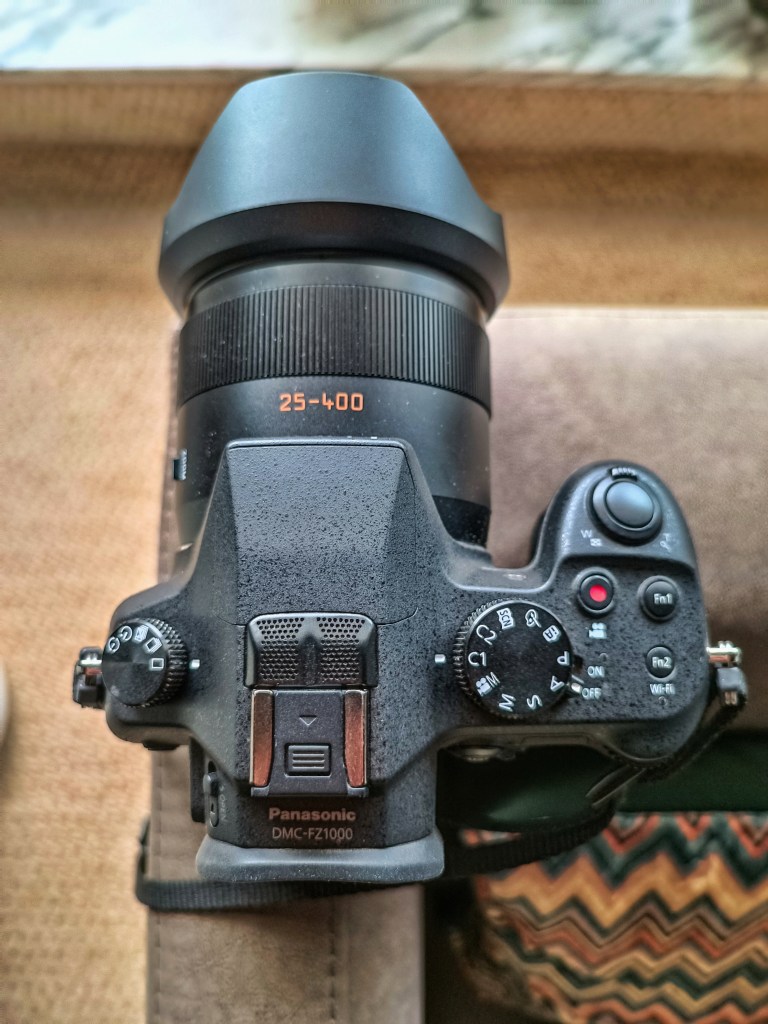
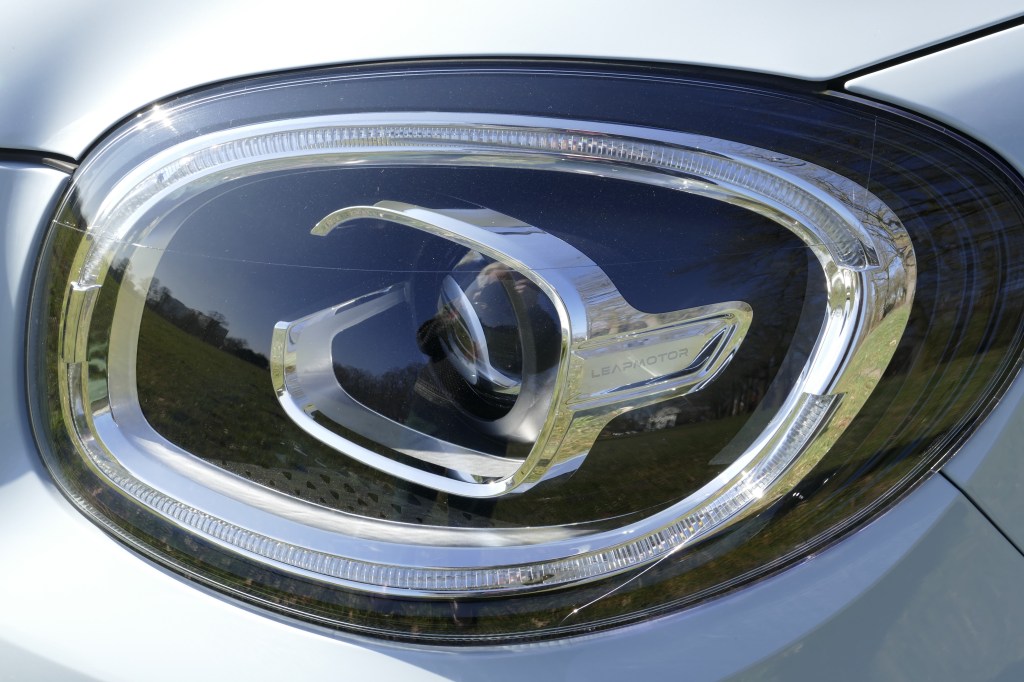
Photographers’ notes: we used again our Panasonic Lumix DMC-FZ1000. Its Leica zoom lens is also ideal for photographing details, as shown above…

We drove the Kia EV3: steering into the EV future…

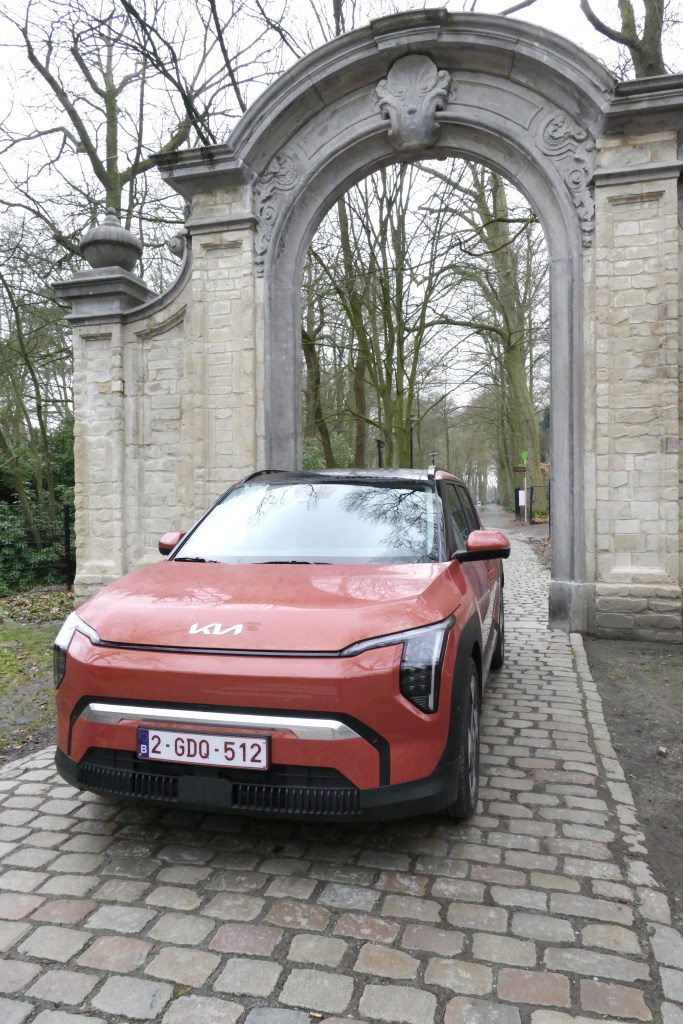
Kia has not only adopted a new logo, it is now building cars with an avant-garde touch and style. Their EV3 has continued this new path with success, as it had been chosen European Car of the Year 2025.

For all the good reasons: not only does it run on the same dedicated, bespoke EV tech platform as its bigger sister, the also award winning EV9, it offers style, practicality, roominess, and range which put it at the top of its segment.

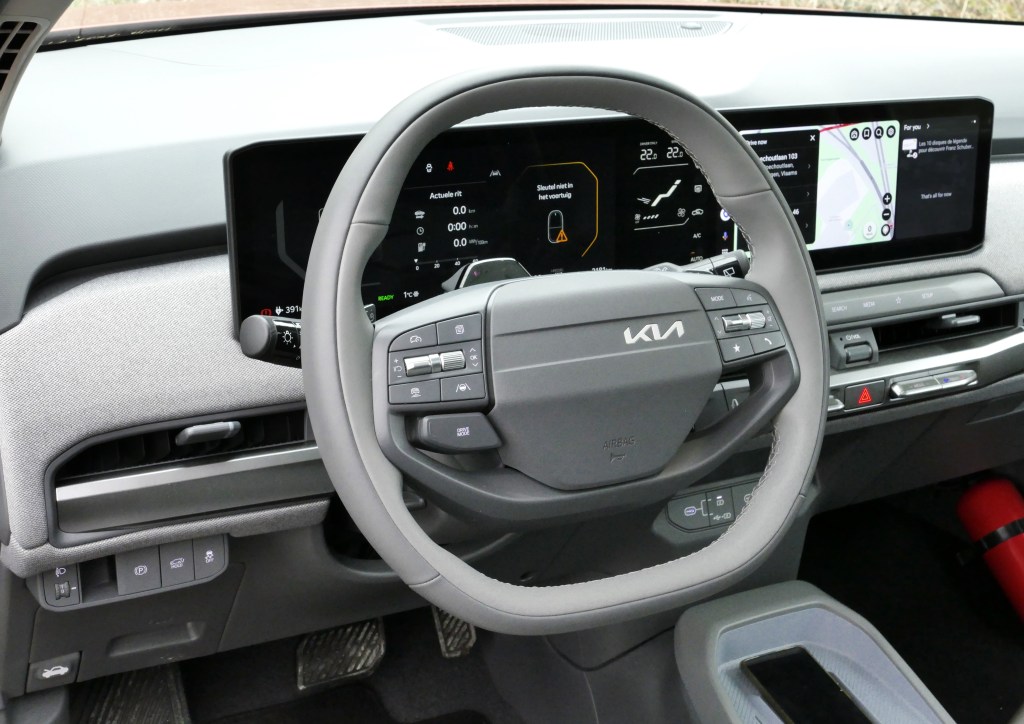
Needless to say,our expectations were high when we crept behind the wheel of this EV3 and admired the clean yet superbly well-designed dashboard… just read further.

Hans Knol ten Bensel

Aiming higher…

We have always believed that this Korean brand would reach the top, when we drove its cars almost a decade ago. They learned very fast, and their commitment towards innovation was unseen, while offering affordable quality, technical sophistication, and style.   

Now we drive the result of this strategy, with this EV3. Just look at its overall contours and one sees that it breathes with its angular looks the styling language of today. This is a car for NOW and the years ahead.

We liked its boxy contours, its wheel contours and the styling treatment fore and aft. Also, the angular styling of the LED headlamps and rear lights are adding to a distinct lighting signature. The proportions are well chosen, and even the 19 inch alloys do not disturb the balanced contours of the car. It truly stands out, and the result is that soon the wide public will recognize it as a new generation Kia.

Modern and clever…

The same can be said of the interior. When you step in the car for the first time, you have the distinct impression that you are entering the future. A 30 inch wide display dominates the dashboard, and combines seamlessly instrumentation, infotainment and connectivity functions. Of course you can adjust heating and ventilation via the screen menus, but thankfully there are analog switches and button controls beneath the screen, which let you adjust all the functions manually. We also liked the centrally placed roll-shaped volume control, so that the front passenger can also use it. The driver has of course the same roller-styled volume control on the steering wheel…

Everything is well thought out, and indeed one can find its way and expertly use all the controls and functions of this Kia without having to use a manual, although it is ALWAYS very wise to read it…it is time very well spent!

We also liked the leather-like seat upholstery, which had a very pleasant feel and touch, with the seats also being comfortable indeed. The front seats also fully recline, so you can take a restful nap while recharging the battery.

There are also a lot of nice details on this EV3 Kia. It has aerodynamic door handles, which flip open when you press the remote key to open the car. It has a central armrest with a sliding table underneath which fits your portable PC.

After you have locked the car,  you can still move the car fore and aft into tight spaces with your remote key. The sun visors can also be extended when flipped sideways to block lateral sunlight, and the central screen has a small separate cluster of symbols on its left side to make climate control a breeze. The backs of the front seats are styled to be used as coat hanger, which is indeed so practical…  

Comfort put first…

The EV3 offers plenty of legroom, and this is thanks to its relatively long wheelbase of not less than 2,68 meters. The luggage space is also more than adequate for an EV, varying between 460 and 1251 liters. No worries about charging cables lying around, they are neatly tucked away in the frunk, which holds 25 liters.

The EV3 has a very comfortable suspension, and this you notice from the first meters you drive it. Its ride feels like a (very) large SUV, one is cocooned in comfort, and well insulated from potholes and rough roads. The whole cabin has also an excellent sound insulation, with virtually no tire noise entering the cabin. This allows easy listening to classical music, even at cruising speeds.

Good driving range…

This Kia invites you to drive in absolute “Zen” mood to your destination, and it is indeed a very restful car. Peace of mind abounds, also when one considers the very good driving range. Consumption according to WLTP standard is 14,9 kW/100 km, which is quite efficient for a car with a kerb weight of a good 1,8 tonnes.

The EV3 has an 150 kW/204 HP  electric motor driving the front wheels, and you can choose between a standard 58,3 kW or a larger 81,4 kW battery. This means that in summer temperatures around 20 C°, a motorway range of over 400 kilometer is very well possible. Of course this range shrinks rather drastically in winter temperatures.

Say that you are cruising at 100 km/h, the range then dwindles from 401 km at 20 C° to 341 km at 0 C°. We find this still quite reasonable. When you drive somewhat slower on wintry roads, at 90 km/h, the range is then still a good 378 km at 0 C°. The manufacturer quotes higher ranges, but we consider these figures as more realistic.

When you opt for the bigger battery, the picture gets of course even more rosier. Driving at 100 km/h at 0 temperature will give you a range of 473 km, and in summer conditions at 20 C° this raises to 557 km.

In normal, everyday use, the smaller battery might be sufficient, we would think. Because the EV3 can take up to 100 kW fast charge, and this means that it will cost less than 30 minutes to recharge the battery from 10 to 80 pct, and these figures are almost reached in wintry conditions, provided one pre-conditions the battery.

Lively performance…

The 150 kW of the engine and the ample torque of 283 Nm make this EV3 truly sprint. Accelerating from 0 to 100 km/h costs merely 7,6 seconds, top speed is electronically limited to 170 km/h. More than enough for everyday driving, we would say. Maybe it is good to know that the Kia EV3 can tow up to 500 kg with the smaller battery, and even up to 1 tonne with the larger 81,4 kW battery.

Conclusion

The Kia EV3 has won its accolade as “Car of the Year” for all the good reasons. Spacious, styled for the future, practical and well equipped, with excellent efficiency and range and more than adequate performance, it offers smooth transport from A to B. It is well built and finished, it is attractvely priced and enjoys the 7 year Kia guarantee, need we say more?

Hans Knol ten Bensel

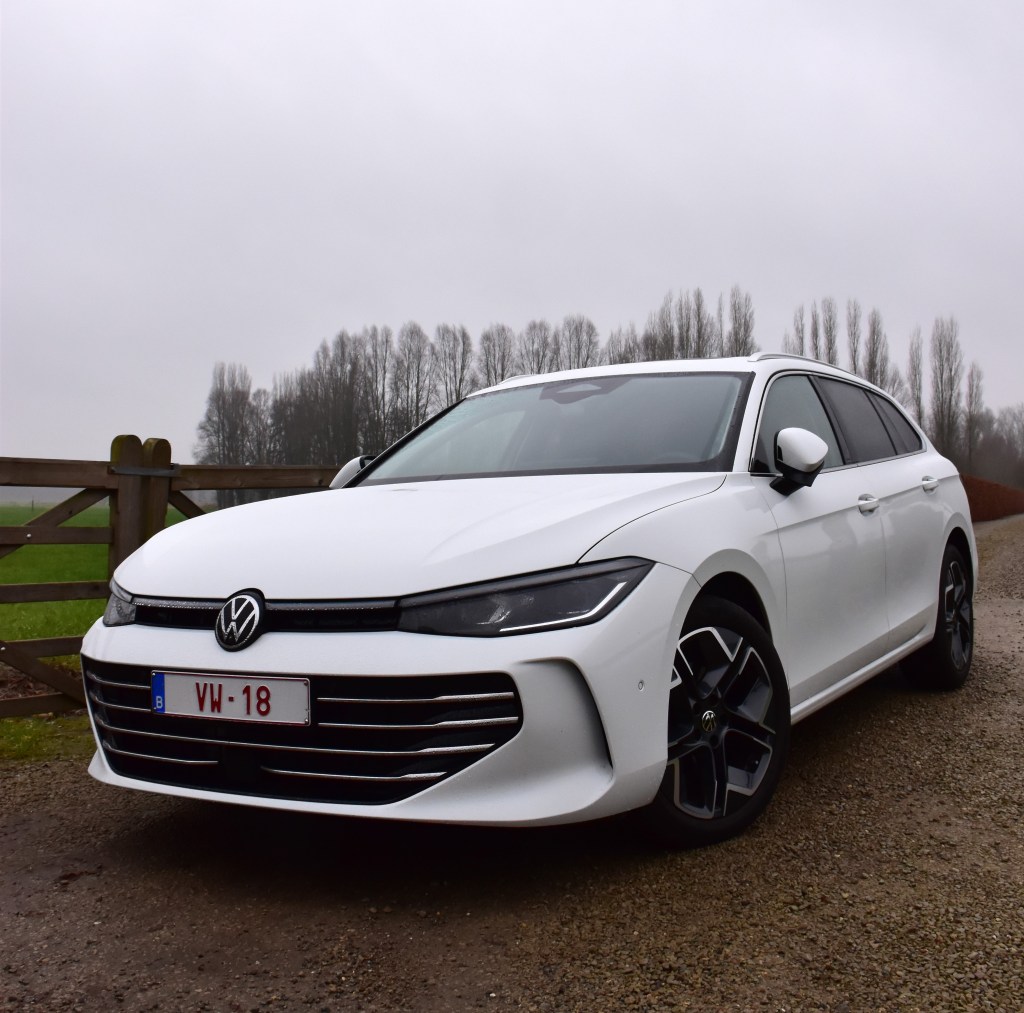
We drove the Volkswagen Passat 1,5 eTSI 150 hp DSG7 Elegance: a perfect bestseller…

The Passat is almost a lifetime with us: some 51 years now. It is now since last year in its ninth generation, and still has many followers, for all the good reasons. It offers massive space, comfort, style and economy. It is the absolute showcase of the expertise Volkswagen has achieved in building “classic” combustion engine cars, now also electrified with (plug-in) hybrid versions. It is nothing less than a benchmark in its class and even beyond. It is a top notch business and family car, and therefore only available as a station car. We drove this Passat with the “base” 1,5 eTSI engine, and Volkswagen proved here again its masterful know-how when it comes to combustion engines.

Just read further…

Space and grace

The new Passat is actually a disguised Skoda Superb, and this means that it is nothing less than a space miracle. It is 4,92 meters long, and that is a solid 15 centimeters more than its predecessor.  

The wheelbase is now 2,84 meters, and you know what this means: more rear passenger legroom and premium comfort overall.  Load capacity is nothing less than cavernous: from 690 to 1920 liters! Of course, the designers put practicality first, and this results in a very low loading floor height.

These generous overall dimensions of the Passat make it easier for designers to draw long fluid lines, and the Passat “Elegance” version is indeed elegant from any angle.

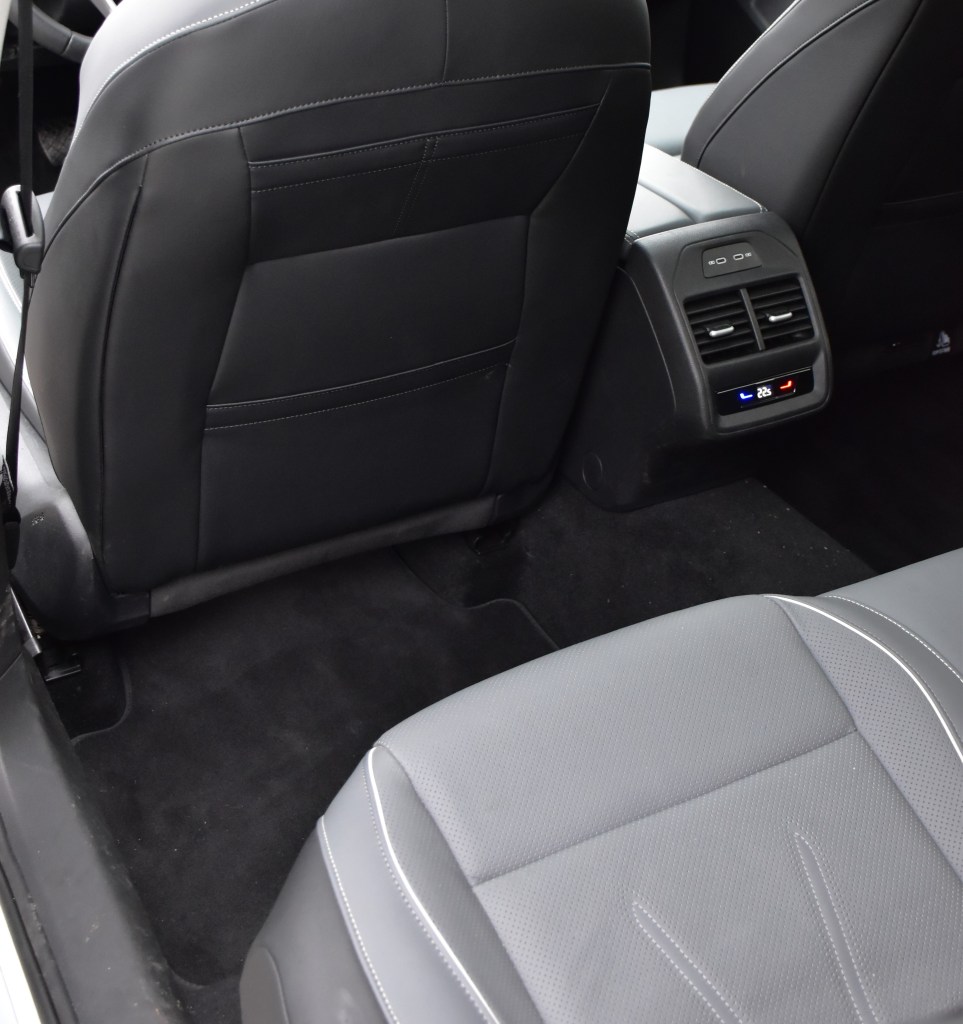
Stepping behind the wheel, one is impressed by the size of the car, and the aura of opulence which pervades you. Excellent fit and workmanship with soft, padded materials in the upper regions of dashboard and cabin, followed by generous and comfortable ergonomic seats, it all has distinct premium character.

VW has revamped the dashboard and infotainment of its flagship bestseller, and one finds now an optional 15 inch central display (standard it is 12,9 inch). The infotainment/navigation functions are fast and stable, even the touch/slider functions for heating/ventilation below the screen are easier to use and always illuminated.

DAB+ radio, live traffic info, Apple CarPlay and Android Auto are provided of course. Voice command and partly also ChatGPT functions are also built in.

Engine and drive train know-how…

The “base” engine is the 1,5 litre 150 HP eTSI. It carries the “e” letter because it has a 48 volt mild hybrid system. The integrated belt driven starter generator has some 15 kW power and assists the engine when pulling away from standstill or accelerating at very low speeds. It you creep or drive very slow in traffic jams, it will let you run on its E-power. If you lift the throttle at speed, the transmission will also let you freewheel, and the engine shuts completely off only to be smoothly restarted by the starter generator when you push the throttle again, optimizing the use of the kinetic energy of the Passat. It also has the selective cylinder shut off (ACT Plus). In driving situations when little power is needed, it will run on two cylinders, almost totally imperceptible by the driver.

The 7 speed DSG is smooth and reactive, so all this results in excellent economy. Driven with anticipation in urban traffic, consumption between 6-7 liters in town is very well possible, and on the open road, it drops easily between 5-6 liters. The manufacturer quotes an average consumption of 5,4 liters with CO2 emissions at 124 g/km.

Performance is quite sufficient, even with this “base” engine. 0 to 100 km/h is absolved in 9,2 seconds, top speed is a worthy 222 km/h. The beauty is that even high speed driving doesn’t cost you much more than 6 liters/100 km.

Comfort

VW engineers have payed great attention to make the Passat as quiet and refined as possible, and indeed wind, tire and mechanical noises are very subdued. This makes the Passat totally “zen” to drive over long distances. Add to this the comfortable suspension combined with stable and predictable handling, and we can put the comfort of this Passat clearly in the premium segment.

Conclusion

In these SUV times, the elegant Passat surely stands its own. It is very well equipped and finished, honed almost to perfection.

We were impressed by the overall refinement, also of the “base” version engine. Moreover, it is good to know that the Passat can be had with a wide choice of not less than 8 different engines and electrified (plug in hybrid) drive trains. We are convinced it will continue to win many hearts…

Hans Knol ten Bensel

We drove the Nissan Juke Hybrid N-Sport: stylish and frugal…  

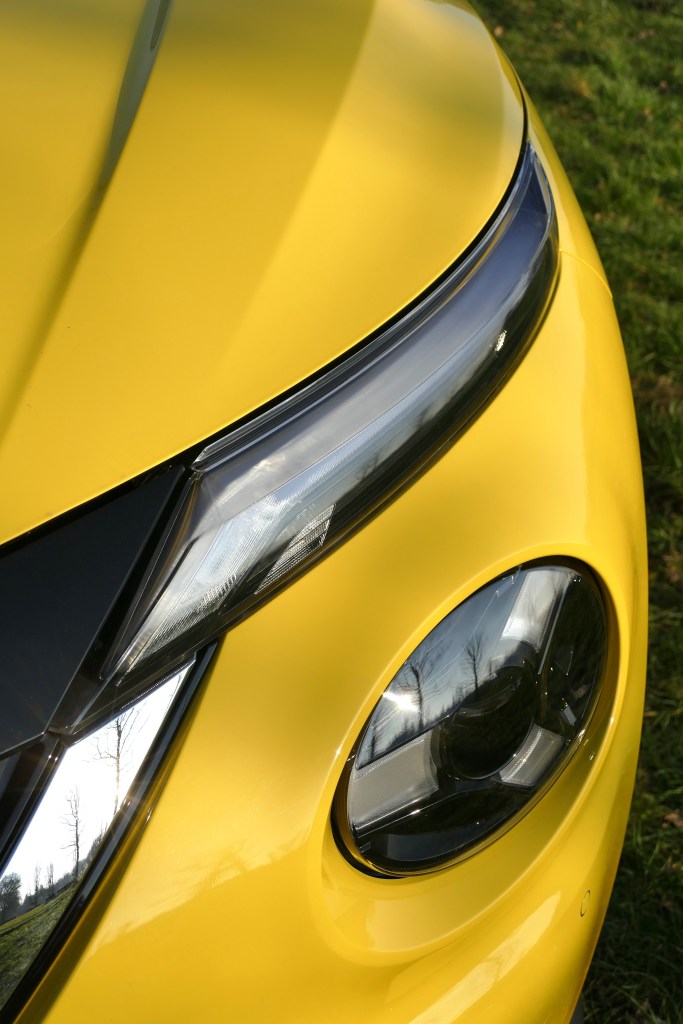
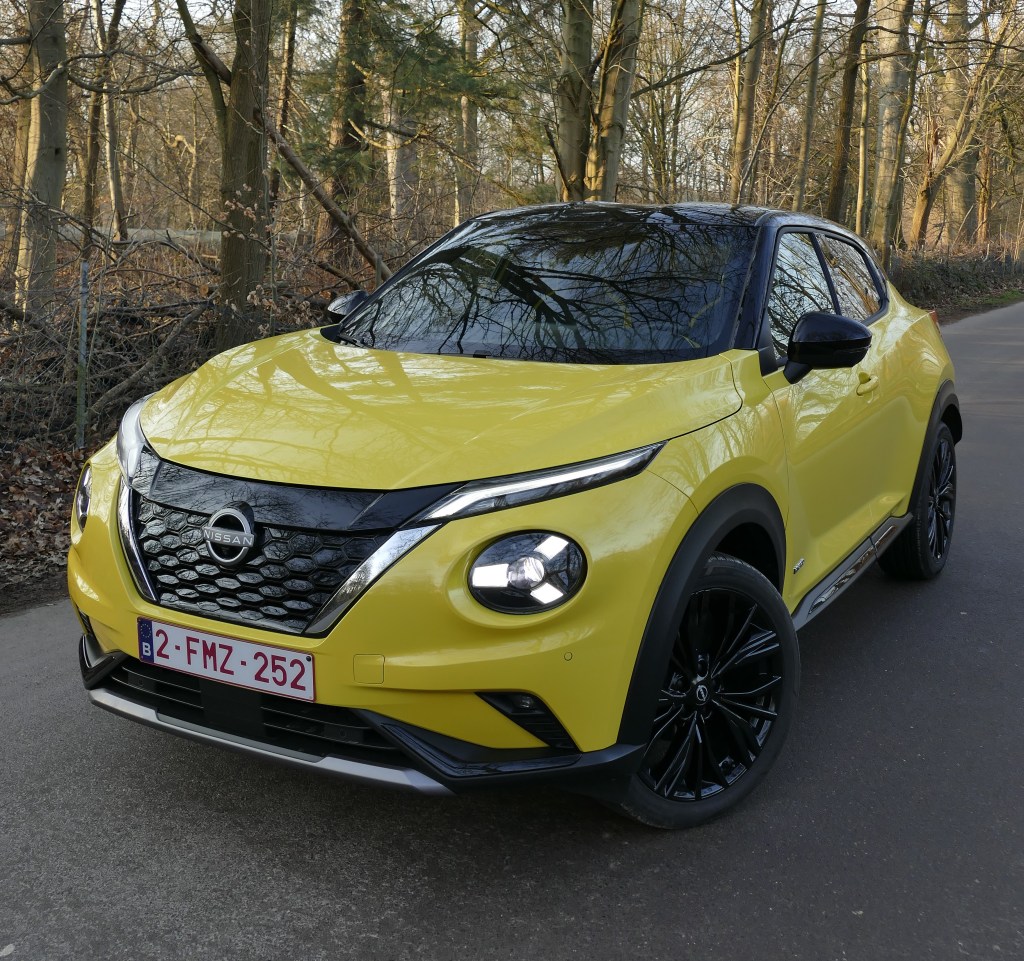
The Nissan Juke pioneered the compact SUV with its very original styling, and has remained an iconic car indeed. Since 2019 the Juke is in its second generation, and has last year received a facelift with minor exterior changes but with a revamped interior and a bolder colour palette. It runs on the same platform as the Renault Captur, but as said, it’s the styling which makes this Juke really stand out.

Since 2022 it is also offered in hybrid version, and as hybrids are gaining in popularity, it is this version we preferred to put here through its paces for you.

Hans Knol ten Bensel

Proven hybrid technology

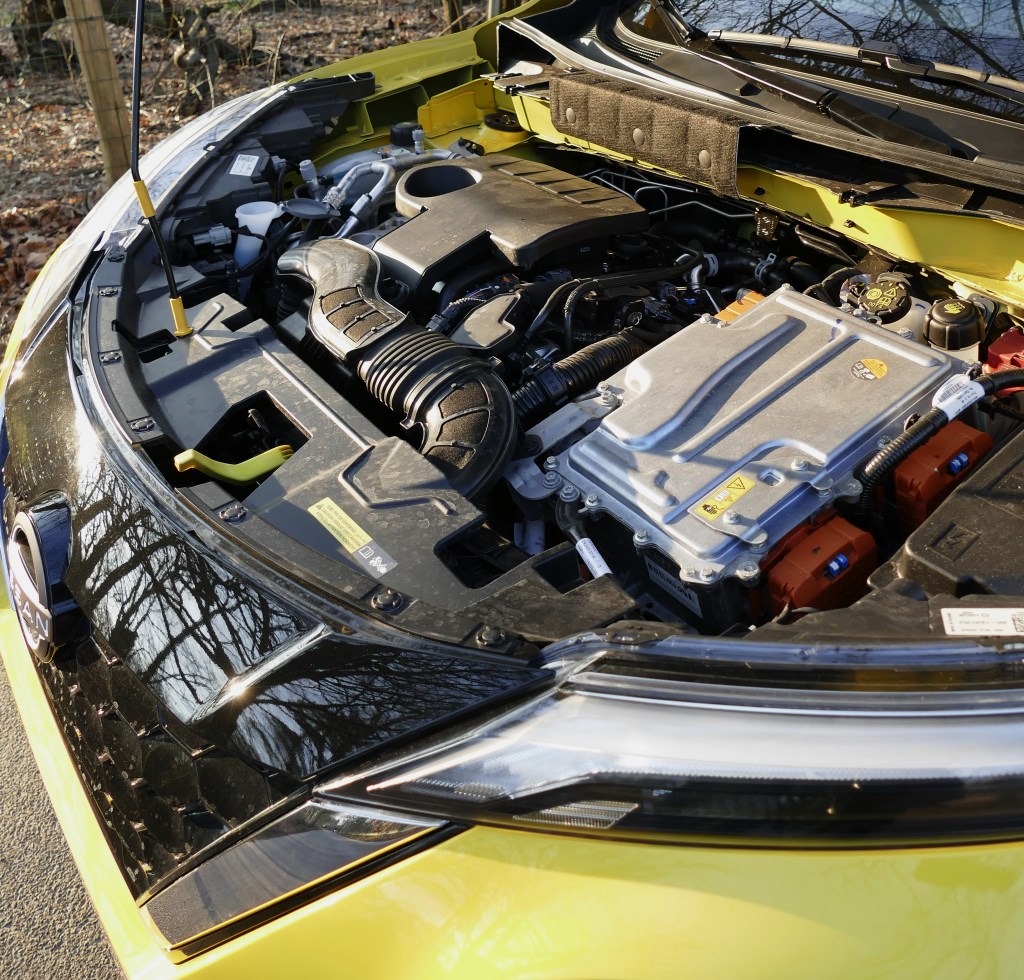
The hybrid version inherits the know how built up in this field by Renault, which is also technically speaking understandable as it shares, as we said, its platform with the Renault Captur. It has a 16 valve 1598 cc four cylinder under the hood, developing 69 kW or 94 HP at 5600 rpm. It has two electric motors, an alternator and a traction motor, bringing total system power to 143 HP/100 kW.

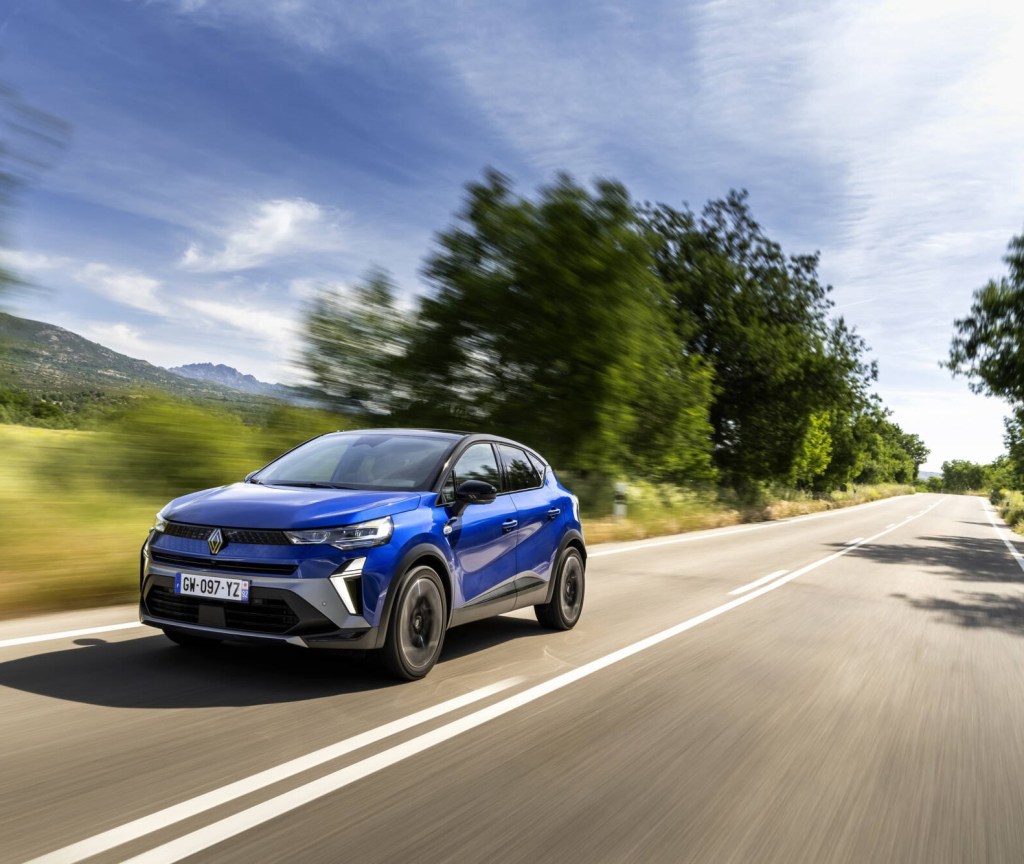
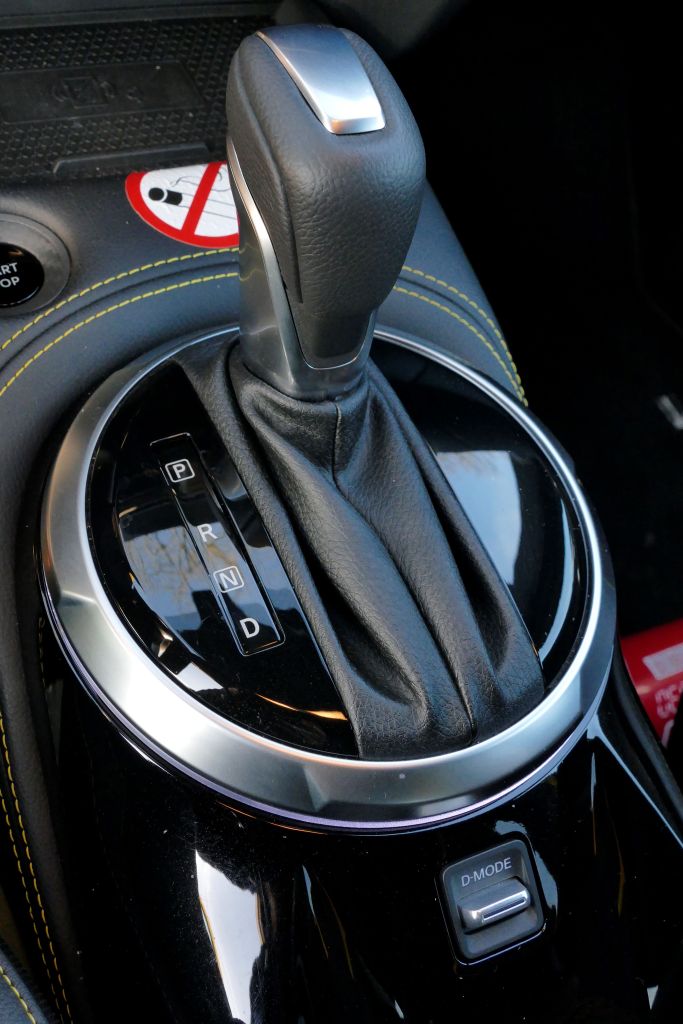
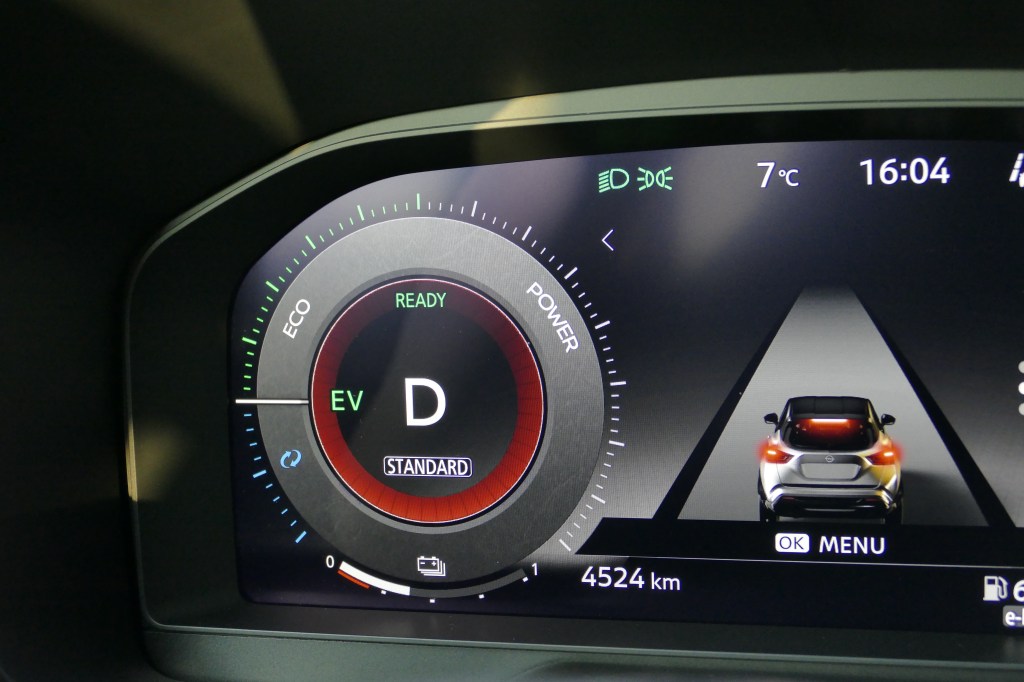
It has the same Renault engineered E-TECH multi-mode automatic gearbox, and it lets you select between three driving modes, standard, ECO and Sport. When starting from standstill, the computer controlling the transmission will select the electric motor and will continue to do so, until more power is asked by your right foot and the combustion engine has to set in.

The power transitions are smooth and virtually imperceptible, resulting in quite stress free and pleasant city driving. The lithium battery is of course not a formidable power source with a capacity of merely 1,2 kW, and this means that the combustion engine has to recharge the battery frequently, which it does preferably when you are driving at a slow (urban) constant speed.

This can result in the combustion engine starting to rev quite significantly when you are cruising quietly at some 35 km/h on a city boulevard, which can initially be quite unsettling, but no alarm, the computer is doing its intelligent job to let you progress as efficiently as possible. The multi-mode transmission chooses not less than 15 gear- and power combinations for you.

All this wizardry results in good (urban) consumption figures of around 5,5-6 liters/100 km. On the open road the Juke is quite efficient too. We clocked on a drive to Amsterdam and back an average of 5,4 liters/100 km.

CO2 emissions are some 107 g/km by the way.

Acceleration performance is pleasantly brisk with 0 to 100 km/h absolved in merely 10,1 seconds. It is the punch at slow speeds which is impressive (and important), with for example going from 15 to 30 km/h in just 1,2 seconds.

Top speed is a reasonable 165 km/h, but indeed, absolute high speed driving is not the forte of this Nissan. Of course it is perfectly capable of cruising effortlessly and comfortable on our motorways at legal speed limits…

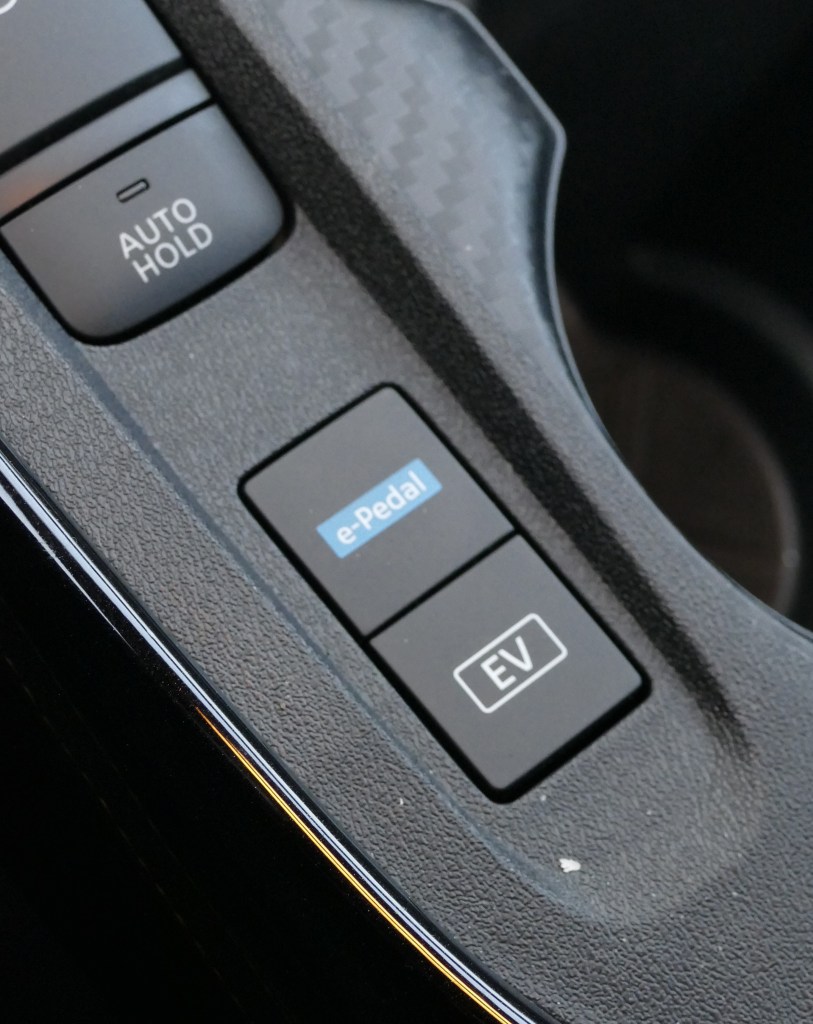
We also liked the “e-pedal”, where the generator motor will use the kinetic energy even more intensely to recharge the battery. You soon learn to use this to the extent that you will hardly need the brakes…

Travelling in style, and oh, that sound…

The SUV character of the Juke makes you sit pleasantly somewhat higher, and getting in and out if the car is also easier. We found the seating position excellent, and everything fell “just right” in our hands.

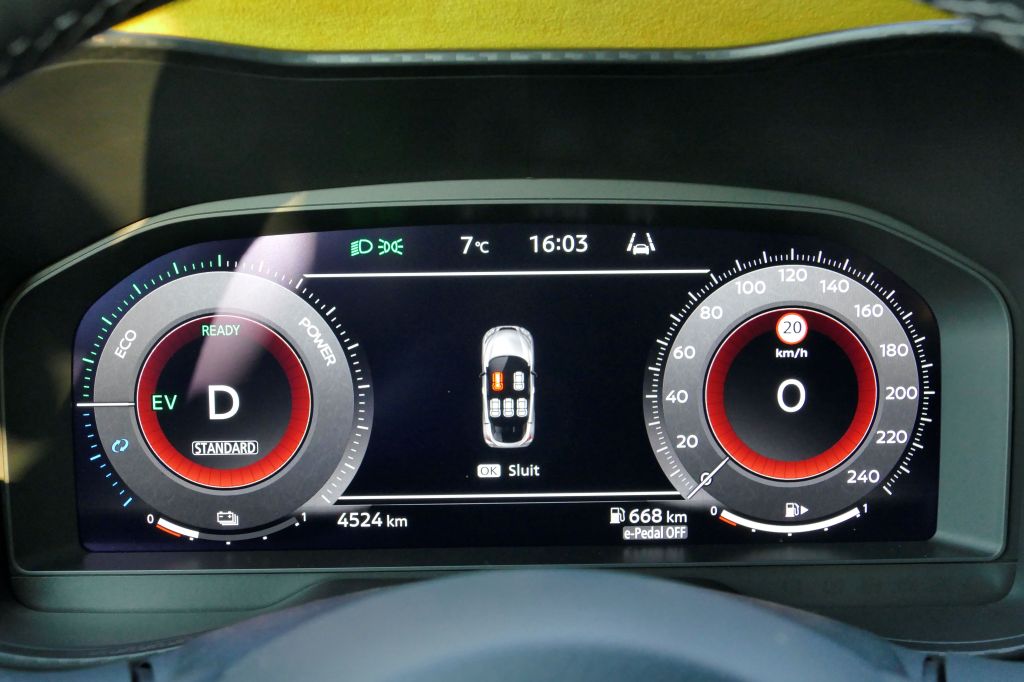
The Juke has now a bigger central touchscreen of 12,3 inches and a revamped digital instrument display with identical 12,3 inch dimensions. Very readable and elegant round dials are displayed in front of the driver, and you can choose to display the navigation function also between the dials. Of course Apple Car Play and Android Auto are installed and voice commands are also reliable and reactive.

We liked the big round knob for the sound system volume and the further touch buttons for audio functions and last but not least the camera. There are also welcome “physical” commands for the ventilation/heating system.

Our test car came with the Bose Plus personal audio system with not less than 10 audio speakers, two of which are also positioned in the headrests, and this offers a very impressive sound experience.

To enjoy classical music however one has to take into account that you are driving a compact SUV, and besides the fact that tire/road noise levels are good for its segment, it can still impair a perfect listening experience.

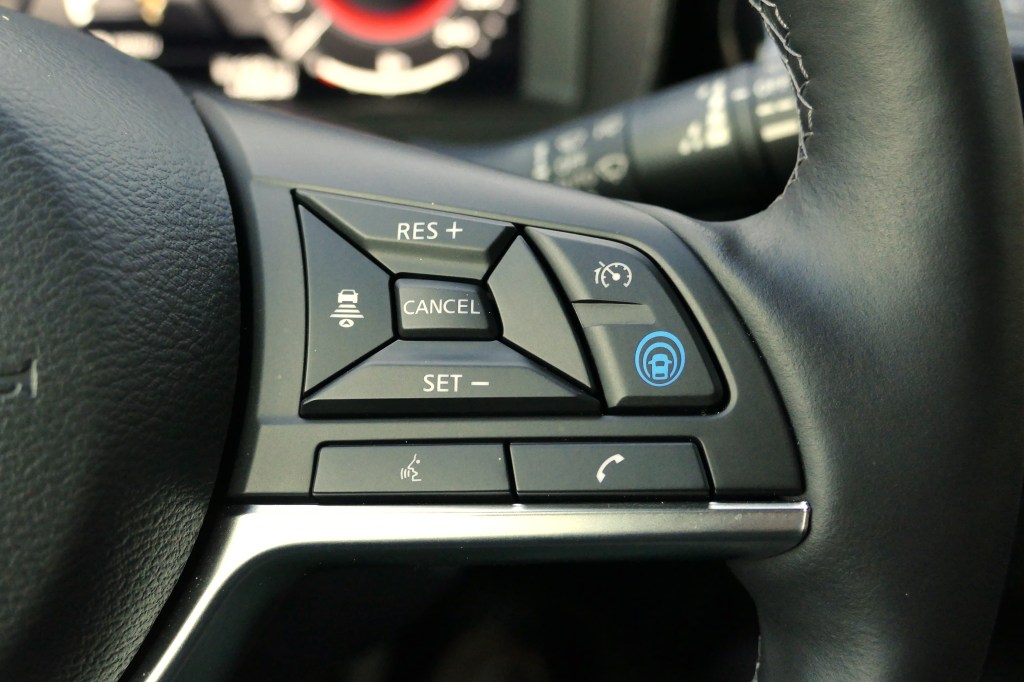
Our test car came also with the so-called “technology package”, and this includes adaptive cruise control, lane change warning and further driving aids like blind spot warning and rear cross traffic alert. It also has the Intelligent Nissan Round View Monitor, which we liked very much, as the visibility towards the rear is rather poor due to the original styling of the Juke.
 

The N-Sport equipment version pleased us optically with its nice black lacquered 19 inch “Akari” alloys, lacquered bumpers, the two-tone paint finish.

More room and comfort

The Juke is comfortable, the suspension is never too harsh and seats are fine. Passenger space at the rear has been improved since 2019 with a lengthened wheel base by some 10 centimeters, resulting in about 6 centimeters more space for your knees in the back. Due to the bold styling of the Juke, the floor of the luggage compartment is rather high. Luggage volume is reasonable, varying between 354 to maximum 1237 liters.

Positive handling

The Juke is stable and has predictable handling, but does not actually invite you to throw it around corners. It steers precise and pleasant however, and is relaxing to drive also on winding roads. It feels very surefooted on motorways, and indeed it is also an excellent companion on long distances.

Conclusion

For those who like to travel in style, enjoying this unique higher stance and feel so typical of an SUV, then the Juke is the choice. It truly convinces in its hybrid configuration, delivering smooth and fast accelerations in town, combining it with excellent economy. Infotainment and driving aids are up to scratch, and will please younger hearts. The Juke inspires confidence due to its finish and workmanship, the cabin is well equipped and pleasant, so enjoy the ride…

Hans Knol ten Bensel  

We spoke with Charles Fuster, VP Global Marketing and Communication at Lancia: “Lancia is back in Belgium”

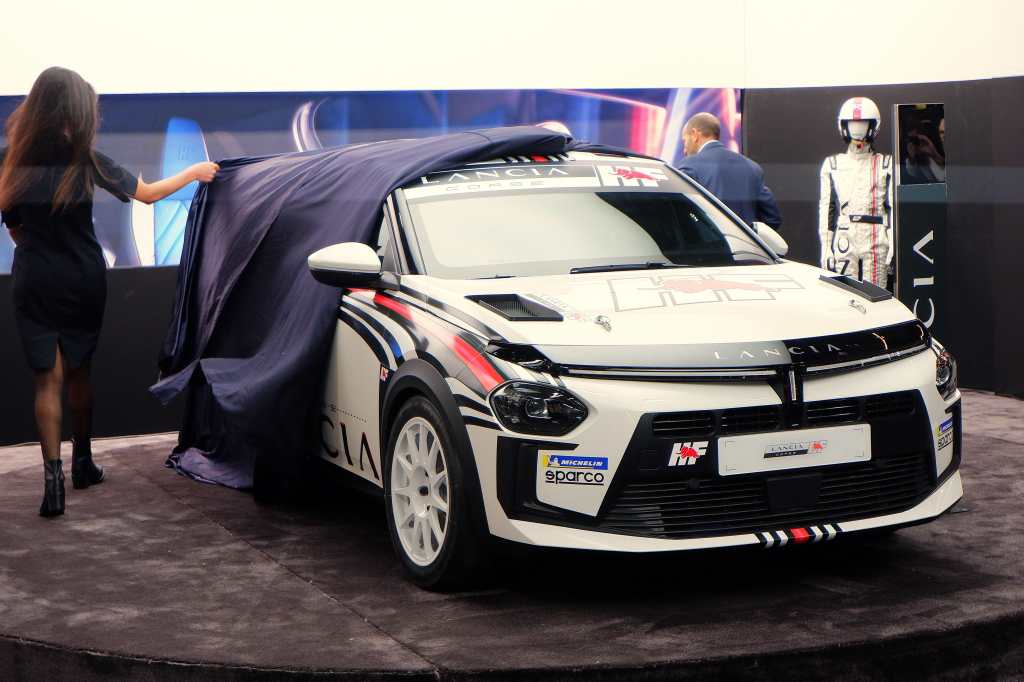
Lancia is back in Belgium, and was indeed also present at the Brussels Motor Show with the New Ypsilon hybrid & full electric. The Ypsilon Rally4 HF was also showcased, marking the return of Lancia in Rally in 2025. The HF took a central place on the Lancia stand, and as it was developed and fine-tuned by Miki Biasion, the motorsport legend and World Rally Champion with Lancia. Miki was also present at the Belgian event.

The HF Rallye version wans unveiled on the Lancia stand at the 101st Brussels Motor Show…

The renaissance of Lancia is very important for Stellantis, and a well balanced internationalisation process is under way. It is an essential part of of Lancia’s Renaissance, which includes an initial network of 70 new showrooms in 70 major European cities.

Charles Fuster presenting the Lancia Ypsilon HF on September 10th last year in Aartselaar…

The first markets involved are France, Spain, Belgium-Luxembourg, the Netherlands, and, by 2025, Germany. All of these showrooms will feature the brand’s new corporate identity, which reflects the four pillars at the foundation of its strategic plan: quality, electrification, sustainability, and an innovative sales model.

Lancia celebrated its return to Belgium-Luxembourg last September with the inauguration of six showrooms in Aartselaar, Overijse, Kortrijk, Ghent, Gilly and Bertrange, and the recent addition of locations in Drogenbos, Hasselt, Namur and Herstal. as well as 14 service points. Your servant was present at the inouguration in Aartselaar, and you find my report in our columns.

Reason enough for us to have an interview with  Charles Fuster, VP Global Marketing and Communication.

Hans Knol ten Bensel

HKTB: My question turns around the strategy of the brand in the coming one or two years.

CF: When we started with saying “Lancia is Back” three years ago, we said that we have three pillars for this comeback. First of all, there is the product line up. And we are keeping our promises, with the introduction of the Ypsilon, and after six months we launched the HF version, which you see here on our stand in Brussels. The return is super positive, by journalists and the public.

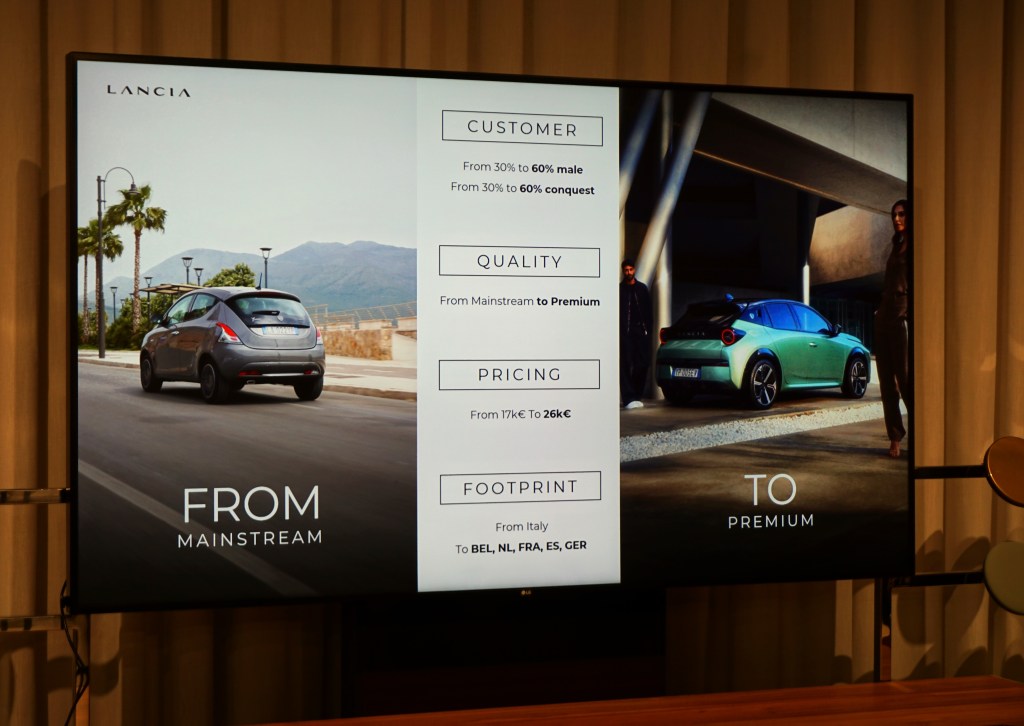
Lancia goes with its new Ypsilon from mainstream to premium

The further product is the Lancia Gamma, which will roll of the production line in our factory at Melfi. It will come in 2026. The second pillar is to build a new brand identity, we have now 160 new showrooms in Italy, all refurbished. Back in the day Lancia was presented in a corner in the showroom, now we have a dedicated showroom and dedicated sales people.

The elegant Ypsilon at the Brussels Motor Show…

The third pillar was then to launch Lancia in Europe. This is our internationalisation process, and in November we have officially relaunched Lancia in Belgium, the Netherlands, France and Spain.

HKTB: What will you do in 2025?

CF: This year, it will be the first full year of the Ypsilon, and the HF which will hit the market this spring and summer. With this car, we are back into Rally Motorsport. We start in Italy in April, with the Italian Cup, next year the European Championship, and at the end of 2025 we start getting ready for the launch of the new Gamma.

HKTB: What do you expect for the Ypsilon in the Belgian market?

CF: The Belgian public loves Italy.  They also love cars and motorsport. When you put Italian cars in the rally scene, you end up with Lancia, so our ambition is quite strong here. I think we can do well, 10 years ago we were doing well in Belgium, so we expect the same results more or less.

HK: Thank you very much for this interview!

Hans Knol ten Bensel  
We spoke with Sébastien Decarris, Head of Product Strategy & Advanced phase – DS Automobiles: “DS offers elegance, comfort and luxury with a unique French touch”.

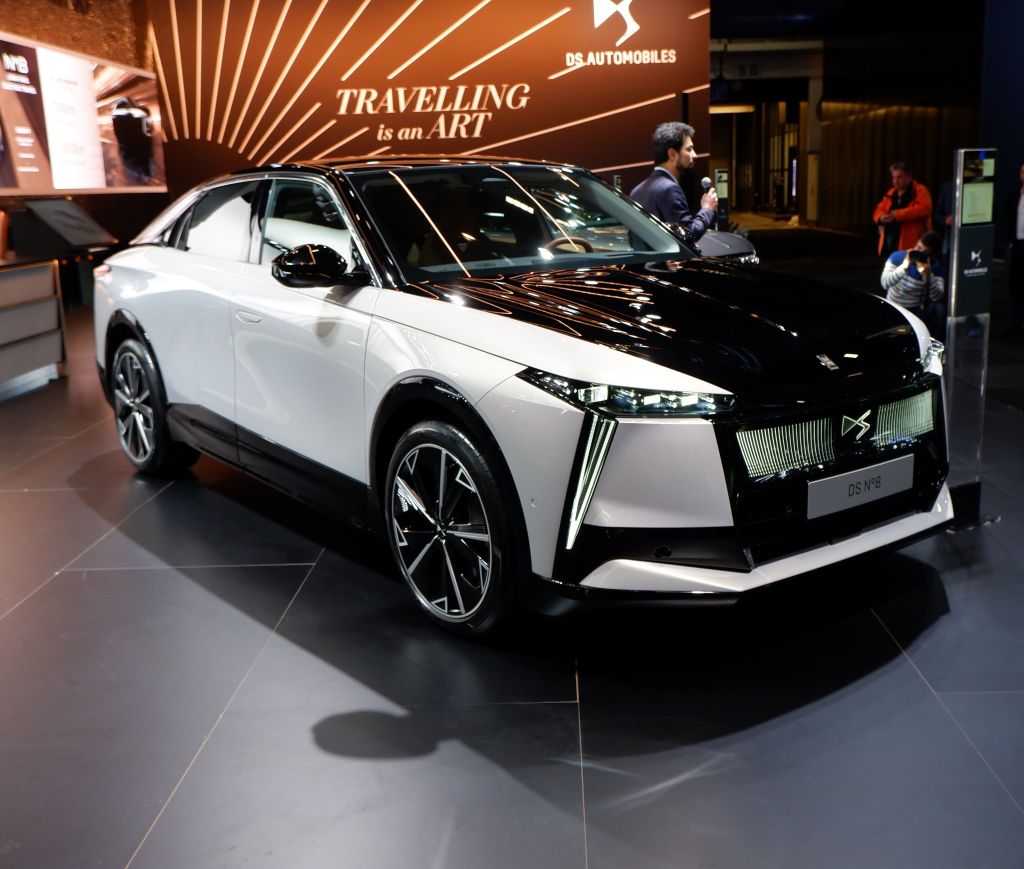
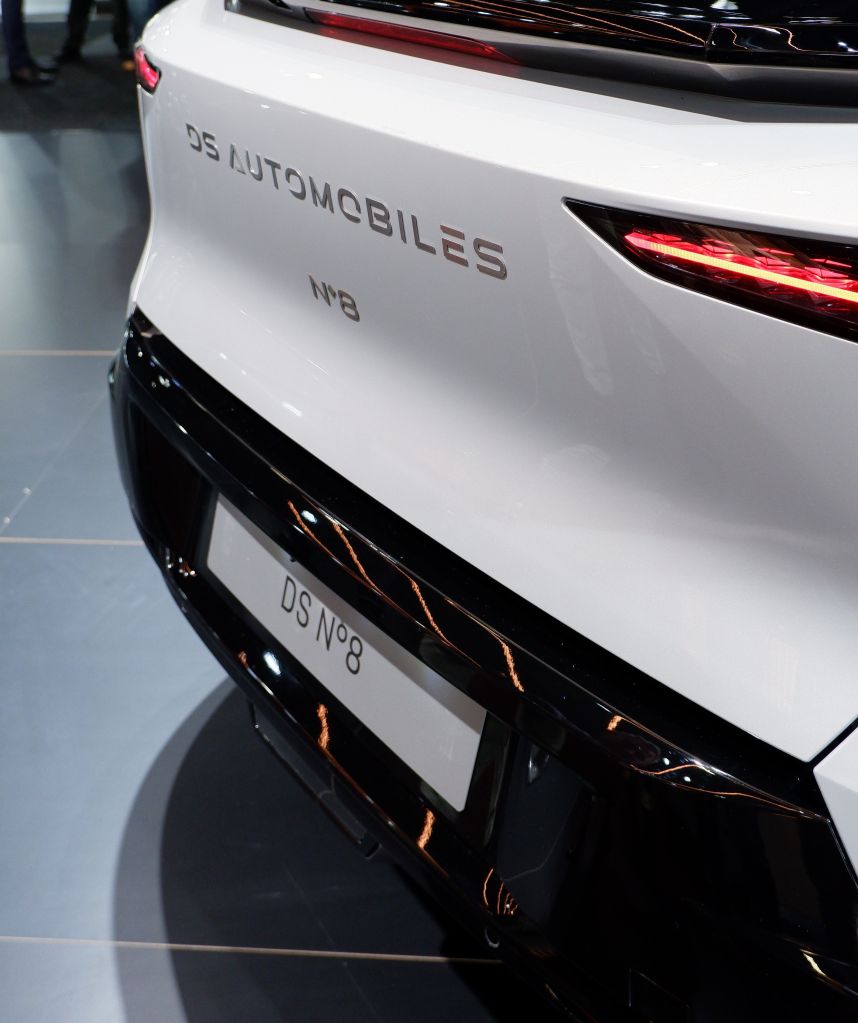
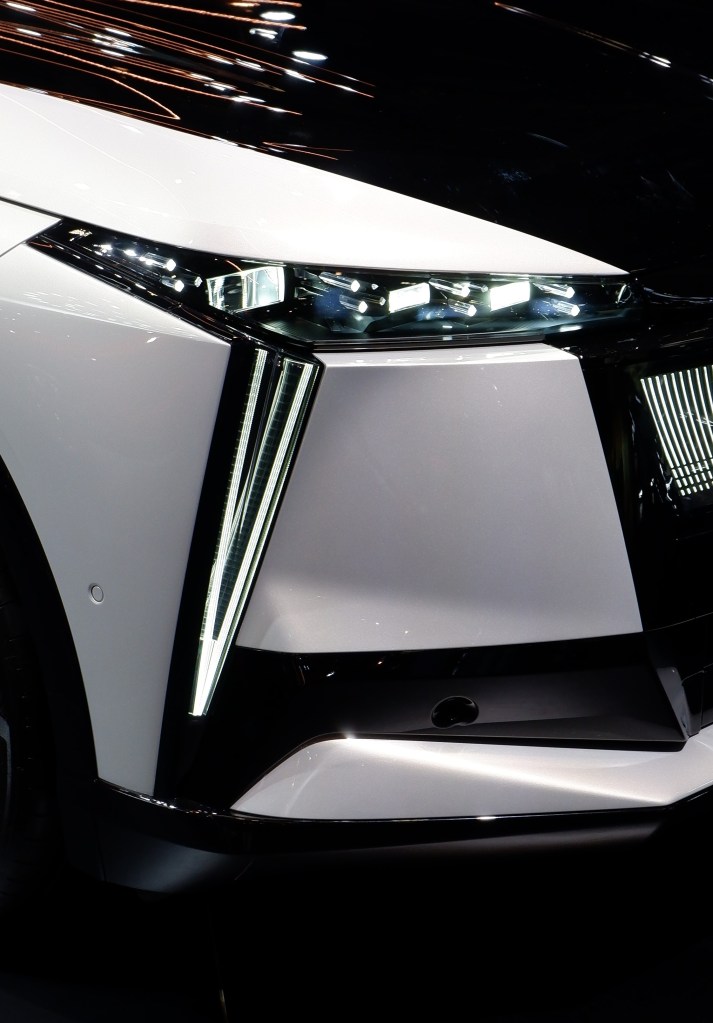
DS Automobiles made headlines at the 101th edition of the Brussels Motor Show by presenting its beautiful N° 8 to the public. This car will undoubtedly make its mark in the D segment, with its stunning looks, comfort and up to date EV technology. This car also means a lot for DS Automobiles. So we thought that an interview about the strategy of the brand would be very interesting , and we thank the dynamic PR department of Stellantis Belgium for arranging this interview. Just read further…

Hans Knol ten Bensel

The DS Automobiles N°8 made its debut on the Brussels Salon…

HKTB: It is always quite a challenge to combine the typical DS styling language with the imperatives and constraints modern cars in this D segment have to respond to and offer in terms of safety, performance and space efficiency.

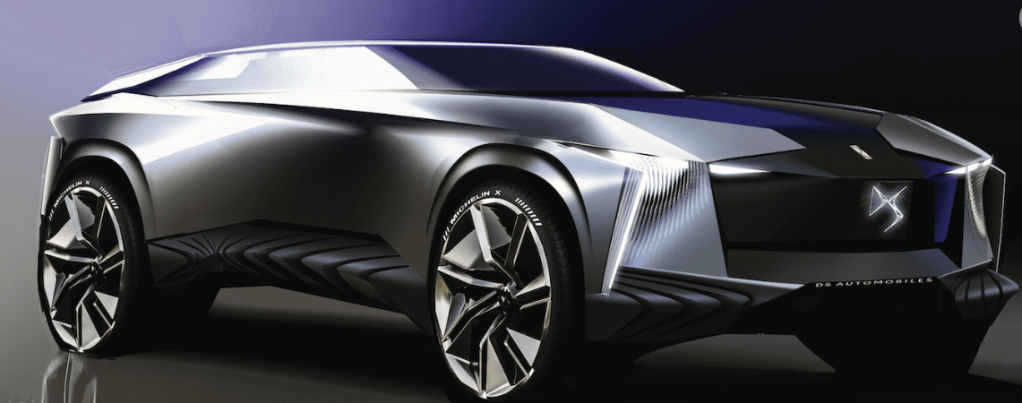
SD: Indeed, we have to show that in terms of elegance and French “savoir faire”, we offer something remarkable. We have shown this with the ASL (Aero Sport Lounge) concept car, which was designed by exterior designer Thomas Duhamel. We wanted to bring a dynamic saloon.

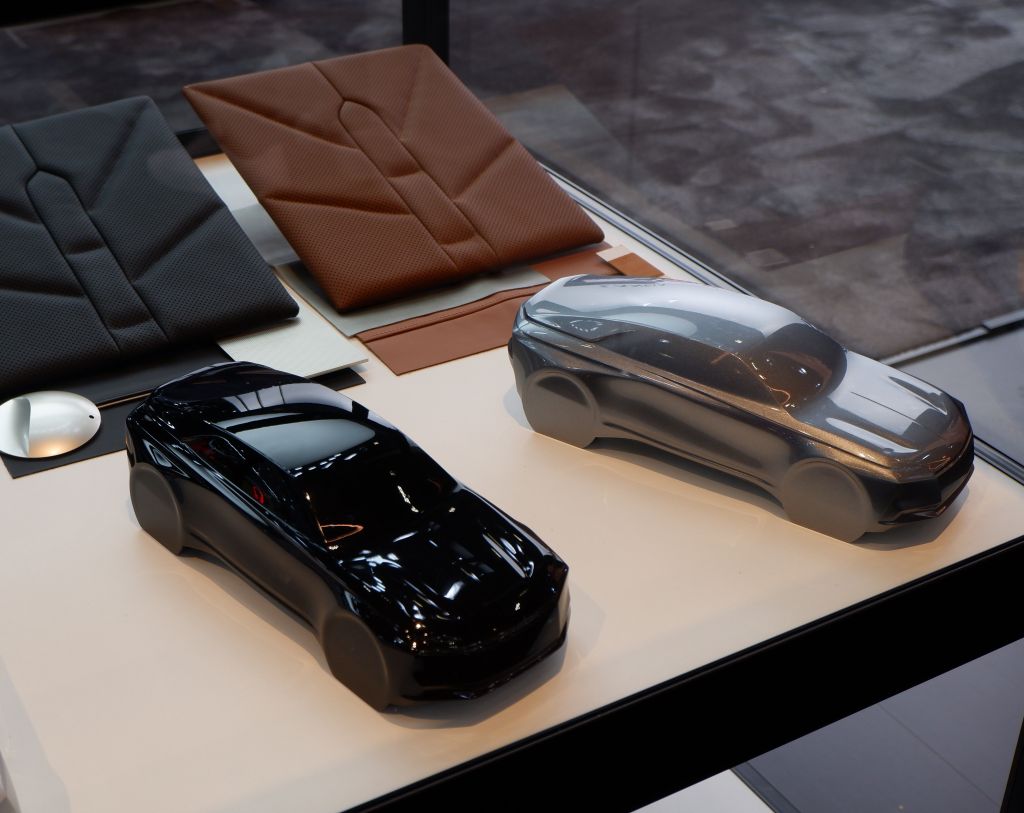
A designers’s drawing of the Aero Sport Lounge Concept Car…

HKTB: What is now on the European and global market the strategy of DS Automobiles?

SD: The strategy is to occupy a strong presence in the premium segment, with an emphasis on electrification in a market which is now fully involved in this energy transition. We want to keep this exceptional French character, with a “savoir faire” in the use of the materials, performing the art of elegantly rendering details, with this attention to styling and design down to the very details, which is not immediately found with our competitors.

We bring elegance, not only in the contours and proportions, but also in the light signature of the car. This makes the car stand out in traffic. This has worked well from the first DS3 onwards and is the unique hallmark of DS Automobiles. Of course we keep this on our new N°8, and this signature will be found further on our future cars.

HKTB: The adoption of numbers is also a step..

SD: Indeed, it is a further evolution, an eye-wink towards further sophistication… What is also important is the reference we make to French coach-building tradition with a dual tone paintwork, a sophistication which is not immediately found on other cars in this D segment.

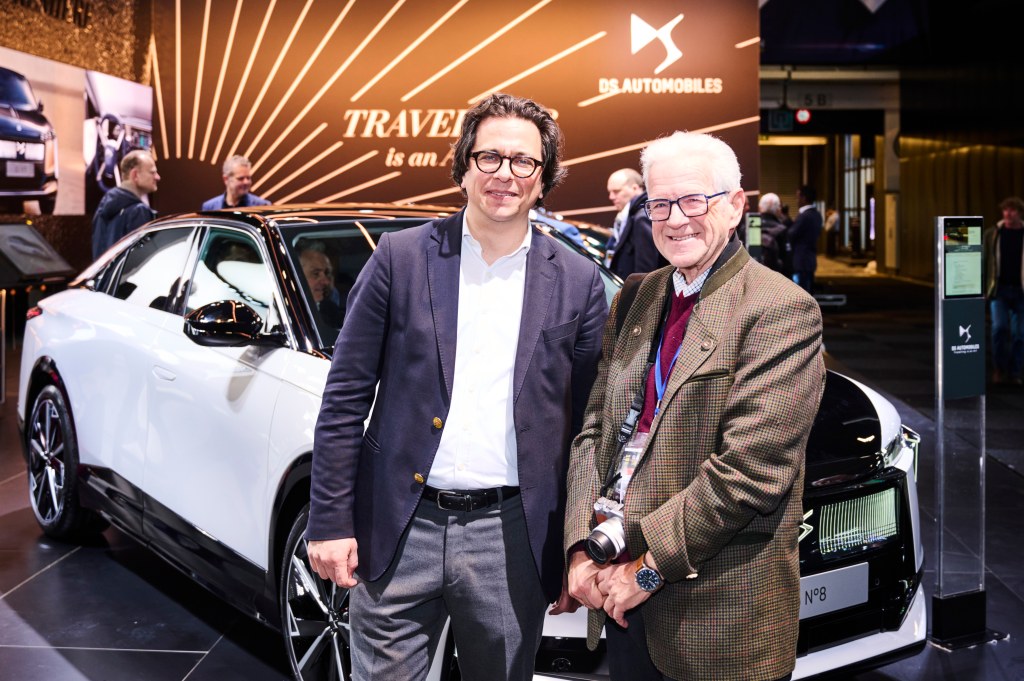
Your servant together with Sébastien Decarris at the Brussels Show in front of the Ds N° 8

HKTB: Indeed, the styling language is also a continuation of the angular tradition so typical in French coachbuilding, like the iconic Voisin cars…

SD: En effet! Indeed, when we work on the design of DS cars, we indeed talk about Voisin… and then, there is the comfort, which is also very important for us. It is more than just a “must have”, it is crucial. It concerns the suspension, the seats, and also the thermal comfort. It is especially important in EV cars, and we worked hard on it. For instance, we introduced neck-area heating, which is hitherto only seen on cabriolets…

HKTB: As DS also puts forward “the art of travel” or “l’art du voyage”, I personally would like to see an infotainment software which delivers automatically audio info about the region(s) and cities you are travelling through, and where you can choose political, social or cultural history…

SD: It is an idea we are working on. Of course, in the first place we want to reassure the client driving an EV car, and inform him about charging possibilities on his trip.

HKTB: On the charging infrastructure, are you considering the idea to build a dedicated “DS Automobiles” charging network?

SD: We offer our clients an infrastructure via the “free to move” network. We want to reassure the client in the first place with the car we offer him, i.e. having a long range and an outstanding fast charging capacity. (Up to 160 kW) We wanted to reassure the client, giving him peace of mind with a long(er) range. We think that having a long range is more important than the possibility of (ultra)fast charging.  The automobile is for us (and our clients) first and foremost an object of freedom, of “liberté.” This means that you have to offer a range of around 500 km and more on the motorway.

HKTB: Quality and workmanship is of course also very important in the premium segment. Where is the N°8 built?

SD: It is built in Italy, at the plant in Melfi. The N° 8 is running on the STLA Medium platform, and this is decisive in the industrial strategy and where the cars will be produced.

HKTB: The batteries are also important…

SD: Indeed, they are produced by ACC, (Automotive Cells Co, with as stakeholders SAFT, which is wholly owned by TotalEnergies, and Stellantis and Mercedes – note from the author). We planned from the outset a premium car with a maximum 750 km range, using batteries manufactured in the EU.  

HKTB: Will the N°8 be future proof and be able to accommodate new developed batteries and electric motors during its production run?

SD: Certainly, the platform is able to receive newly developed components during the production life of the N°8. We have a modular strategy and the platforms are designed to accommodate them. This concerns the batteries as well as the electric motors. For all the models of the DS Automobiles range, we were from the outset prepared for its electrification, it is an essential element of our policy and you see this now unfold in the D-segment.

HKTB: I thank you for this interview.

Hans Knol ten Bensel

We drove the Skoda Octavia Combi : an all-round (family) bestseller…

Skoda’s are popular family friends, and indeed the Octavia steals the hearts of many. For good reason: Skoda builds on the platform of the Golf (now it is the Golf VIII) an even more roomy and practical version, the Octavia Sedan and Combi. It tops the charts in many (European) countries, as it is well built, stylish, marvelously practical and offers last but not least very good value for money.

We tested for you two versions: the 115 HP 1,5 TSI with the 6 speed manual in “Corporate” trim and the 150 HP 1,5 TSI m-HEV with the 7 speed DSG auto box in the top of the line “Selection” trim.

Sliding behind the wheel of the Octavia puts immediately a respectful smile on your face. It’s interior certainly impresses. Roomy, well finished, big instrument and infotainment screens, lavishly  equipped, certainly in the equipment versions we tested.
 

The interior of the 115 HP “Corporate” equipment version. It already has everything you might need…

Starting the 1,5 TSI results in a quiet purr, and you move the slick lever into first gear. The gearbox changes are precise and smooth, the engine is flexible and willing. It develops a healthy pulling power with maximum torque of 220 Nm, developed from 1500 to 3500 rpm. This means you can flow along with the traffic in the higher gears, with only a whisper of engine sound, and enjoy urban consumption figures between 7 and 8 litres/100 km. On the open road, adopting the same quiet driving style, you will see consumption soon dropping below 6 litres/100 km. Skoda officially quotes 5,2-5,7 l/100 km, with CO2 emissions given between 118 and 129 g/km, putting it in class D.

This 1,5 TSI engine belongs to the ultra-modern EA211 TSI series,  Thanks to Active Cylinder Management (ACT), two of the four cylinders are switched off as often as possible, and this is almost inperceptible.

Of course, this Octavia can stand its own on long fast trips and Autobahnen. It will sprint in 10,5 seconds to 100 km/h and has a top speed of 203 km/h. It is a beautiful high speed cruiser, along with many other good handling qualities. It has the platform of the Golf VIII, remember, and Skoda knows something about chassis and suspension tuning, just think of the RS versions. The top RS beast has not less than 265 HP, which is identical to the sixties super car, the Jaguar E-Type.

But again, the “base” version with its 115 HP coupled to a 6 speed manual will satisfy most. Since our silver grey test car came second in the contest of the “family car of the year” organized by the Belgian VAB magazine during our test, the car was needed for photo and marketing purposes by the Belgian importer D’Ieteren, so we had the opportunity to test also the 150 HP 1,5 TSI m-HEV, which is the mild hybrid version of the Octavia.

Like the 115 HP engine, the 1.5 TSI with 110 kW (150 PS) delivers its maximum power between 5,000 and 6,000 rpm. This diminishes both consumption and emissions. The maximum torque of the 110 kW engine is 250 Nm and this is also available between 1,500 and 3,500 rpm.

The 150 HP version came with leather seats and leather covered dashboard panel surfaces , giving the interior extra panache and a touch of luxury…
The m-HEV version has a 48 V lithium-ion battery, which supplies the 12 V vehicle electrical system and drives a 48 V belt-driven starter-alternator. This belt-driven starter-alternator takes on the role of the alternator and starter while simultaneously operating as a small, lightweight electric motor that instantly boosts the drive torque when moving off. The output of the generator is transferred by the belt drive. It also starts the combustion engine – which is switched off as much as possible while the vehicle is moving – in a barely perceptible way. In this case, the 48 V battery supplies energy to all the important systems of the car.
Luggage space is absolutely cavernous…

We liked this smooth extra EV power, and the engine switching off really enhances your quiet driving style. It adds greatly to the “zen”feeling when driving in busy traffic. We also liked the coasting function when you lift the throttle at speed. It is astonishing how frequently one can profit from the kinetic energy of the car when you drive it just a bit with anticipation. It certainly results in lower fuel consumption in urban driving situations, where we achieved averages of around 7 liters/100 km in town without any effort. Skoda quotes averages of 5 to 5,8 liters/100 km, and indeed in practice this Skoda was about 0,5 liters more economical than the 115 HP 6 speed version. CO2 emissions are quoted between 114 and 133 g/km.

Coupled to the smooth 7 speed DSG the Octavia really comes into its own, and it is a delightful everyday car.

Our test car had drive mode selection, which added further to driving pleasure and well being behind the wheel. Performance is here truly admirable, with 0 to 100 acceleration in 8,6 seconds and a top speed of not less than 226 km/h.

Put in the proper driving mode, this Octavia can really be moved with zest on winding roads, and has excellent Gran Turismo qualities. Leaving it in the comfort mode makes it a very restful (long distance) car for both driver and passengers.

Roomy and practical

Skoda engineers have a talent to create room on the platforms of the group, and what they have built on the Golf VIII platform is nothing short of astonishing. It is a fully fledged five seater, with luggage space to match. You have 640 liters with the rear seats up, and up to 1700 liters when everything is laid flat.  

Seating comfort is also one of the strong points of the Octavia. The position behind the wheel is nothing short of ideal, with in the top equipment  version we tested anatomical seats with adjustable seat  functions throughout. The rear passengers enjoy ample legroom and also headroom is more than sufficient. The 150 HP Octavia sported also very aesthetic beige leather seats which added a touch of panache to the interior.

Infotainment

The Octavia comes with a large touchscreen in the centre, combined with a digital instrument cluster in front of the driver. Skoda has increased the functionality of its infotainment functions with artificial intelligence, and it is now possible to have a more efficient dialogue with your car. It just shows how much importance Skoda is giving to stay competitive in its class. Skoda was indeed also quite clever to use touch/roll buttons for the various commands at the steering wheel column, instead of the haptic/touch sliders used in the VW (ID) range.


Conclusion

The more you drive this Skoda Octavia, the better you come to appreciate its qualities. It is indeed an all round practical car which literally ticks all the boxes. It is elegant with no thrills or frills in its overall styling, both inside and out, offers acres of room for passengers and their luggage, is mechanically smooth and well honed.

It offers impressive performance and allows you a ’zen’ driving experience in town. It is quite frugal too, when you adopt a reasonable driving style. So that families just love this Octavia is obvious. Indeed, enduring success is based on solid qualities, and this Octavia continues to have them…

Hans Knol ten Bensel