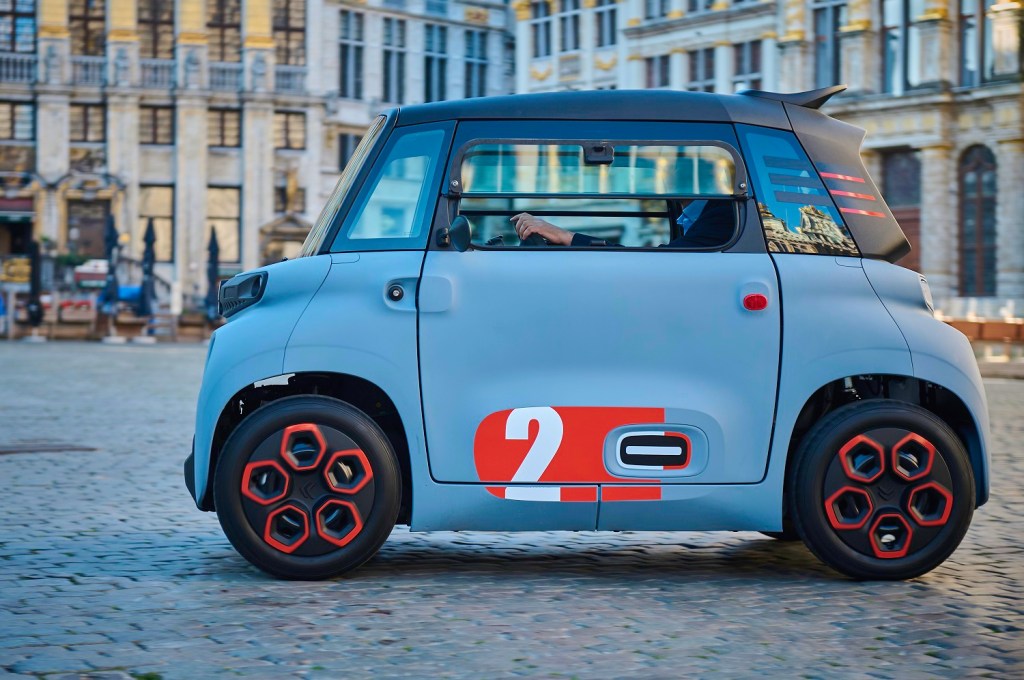
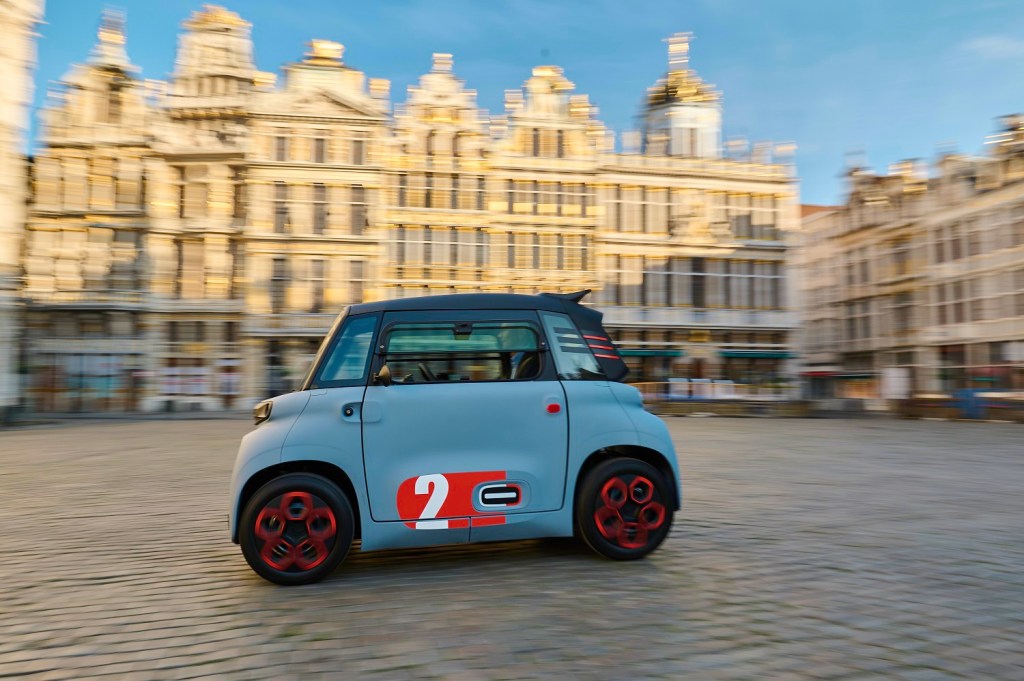
Citroën has always been THE brand for breakthrough mobility solutions. It responded this time to today’s challenges by offering 100 % electric mobility literally for all: a cute, roomy two seater with an 8 HP (6 kW) electric motor which can be charged in 3 hours on your home socket and which offers up to 75 km electric range in town or country/village roads. What’s more, since it is only 45 km fast, you don’t even need a drivers’ license for it. In France, 14 year old’s can drive it, in most European countries this is possible from 16 years onwards. But it is also excellent news for the (very) elderly, they have the ideal, roomy two seater which protects them from the elements, it is easy to step in and out of, has two wide opening doors and is the proverbial breeze to drive.
Citroën has done it, and we were delighted thanks to the dynamic PR team to experience the first kilometers behind its cute steering wheel in the streets, squares and boulevards of Brussels. Just read further…
Hans Knol ten Bensel
Light and roomy
Like the iconic 2 CV, this AMI is designed with nothing but practicality in mind. Its symmetrical body shape is unique, with a long roof and cabin, offering a sea of space for its two happy occupants. Only the driver’s seat can be moved fore and aft, the passenger’s seat is fixed, and therefore one sits normally a bit further back than the driver.
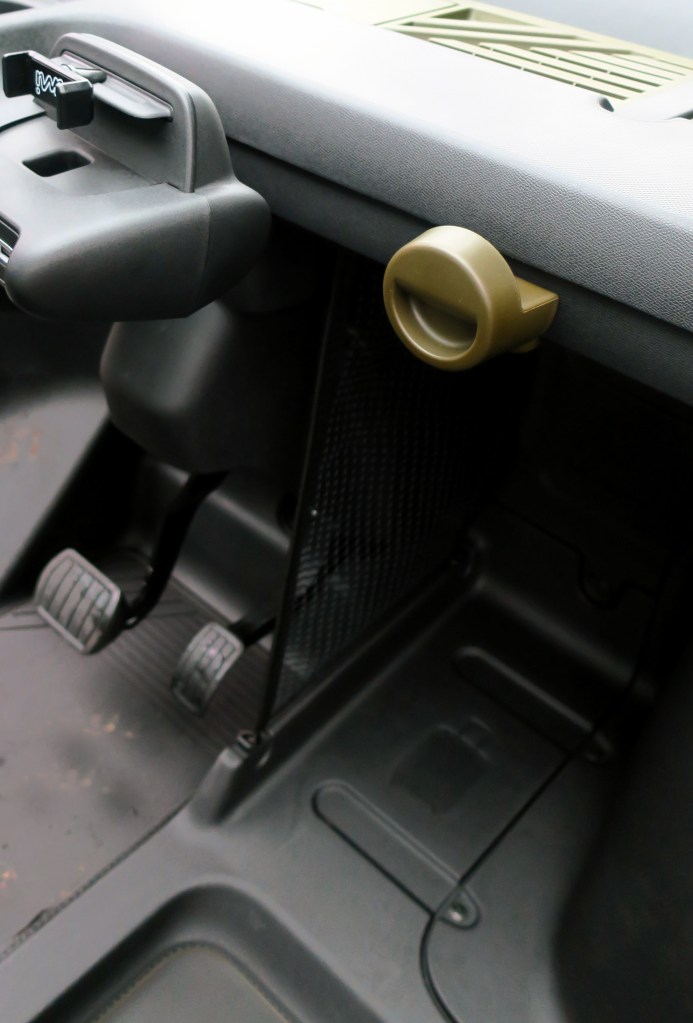
Room for a cabin space suitcase, and an elegant hook to hang your bag…
But she/he enjoys formidable legroom, and can actually stretch its legs fully. This means that seating with your legs in a normal position, there is even room for a cabin size suitcase in front of your feet! So there is always enough room for your errands, as besides in the cabin, the AMI has still an extra luggage space in the back.
Citroën has decided to make this long cabin as light and airy as possible. Therefore, a glass panoramic roof is fitted standard. So it is la Vie en Rose in your AMI. One gets in through the wide opening doors, which are identical and because of that opening in different directions. The driver’s door sways out in the front, making getting in and out super easy.
You can throw your pocket camera, bottle and sundry in one of the three customizable bins just behind the window, hang your city/handbag on the elegant hook provided on the passenger’s side, and get behind the wheel. The dashboard just reveals speed and battery charge level, indicating also the remaining range in km. Further, there is a switch for heating and fan. Next to it is a smartphone holder, so your phone can provide for navigation and music.
The row of knobs for “Drive”, “Reverse”, “Neutral” and “Park” sits on the left side of the driver’s seat. Just push “D” and off you go. Acceleration is lively, but don’t expect miracles from 8 HP moving a cute car with a total weight with battery of 485 kg, where one still has to add the weight of one or two passengers. But it is certainly enough to move along with the flow of urban traffic, and with some restraint one soon notices that a cruising speed of around 40 km/h needs just a push of 1 or 2 centimeters on the throttle. You don’t get any deceleration from the E-motor when you lift the throttle at speed, so adapt your driving style and drive with more anticipation as the distances to make good use the kinetic energy are longer. But it can be done, and soon you get the hang of it…
Driving in Brussels one soon notices that the indicated range is absolutely realistic, and that’s a big plus. Also remember, three hours is enough to fully (re)charge the AMI.
Brussels paves are ridden with potholes and ridges, but the AMI took it very well in its stride with a surprisingly comfortable suspension.
Make it your very personal AMI…
As said, life is good in this AMI. Typical and reminiscent of the 2CV are the side windows, which open by manually tilting upwards.
Citroën offers, in a “Do It Yourself” fashion, the possibility of creating the object that suits each customer’ tastes through a kit of accessories that can easily be installed yourself. This kit incorporates functional decorative items: a central separation net, a door storage net, mat, storage tray on the top of the dashboard, small hook for a handbag, smartphone clip, DAT@MI box (dongle device) connected to the My Citroën app to retrieve essential information from your Ami on the smartphone.
4 main shades are available for these accessory kits, costing 400 Euros: MY AMI GREY, MY AMI BLUE, MY AMI ORANGE, and MY AMI KHAKI.
2 characterful packs are available on AMI for even more customization. These 2 packs contain all the above decorative elements and large format stickers that cover the outside and thus give AMI its very own style.
– My Ami POP with Orange personalization and a fun, young and sporty look, with a rear spoiler, is available for €8,190 incl. VAT.
– My Ami VIBE in gray with a more upscale, chic and graphic design that integrates roof coverings in addition to the stickers, is available for € 8,690 incl. VAT.
The installation of these 2 personalization packs is entrusted to professionals before delivery.
The specific exterior body colour is neither too feminine nor too masculine and works with the different colour packs Citroën has developed (blue, white, khaki and orange).
So the Ami is a base that can become a completely customised object with exterior and interior accessories that are either pure style or offer real extra functionality, as well as stickers that give it a completely different characters, tells us Pierre Leclercq, Head of Citroën Style.
Prices…
AMI AMI: 7.290€ incl. VAT
MY AMI ORANGE, KHAKI, GREY, BLUE: 7.690€ incl. VAT
The MINI Countryman has grown to be a medium size SUV, like for instance the Audi Q2 or Nissan Qashqai, and has borrowed many mechanical elements of the BMW X1. But it also has retained all the quintessential styling elements of the MINI, its typical upright proportions, styling language and bodywork details, which it continues even more in the interior, where we find the big central round dial with the infotainment display, and the typical toggle switches, amongst others.
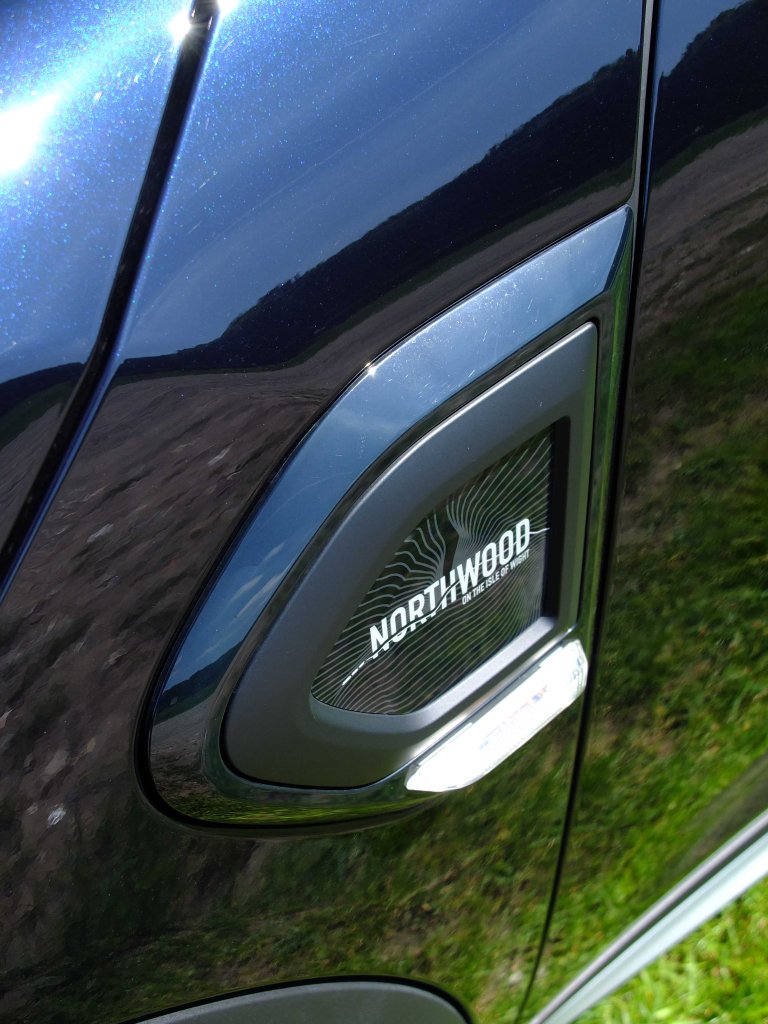
The MINI Countryman buyer has plenty of choice: in addition to plug-in hybrid drive, the new MINI Countryman is available with three petrol engines and three diesel engines featuring the latest MINI TwinPower Turbo Technology. But besides a wide array of drivetrains, the range of accessories has also been greatly expanded, and indeed, we saw also the launch of the fully equipped Northwood Edition. We told already more about it then in these columns, and you can read about it with the following link: https://autoprova.be/2021/02/12/stylish-and-iconic-mini-launches-the-new-mini-countryman-northwood-edition/
We drove for you this fully loaded edition with the 100 kW/132 HP three-cylinder petrol engine and the 6-speed manual transmission. Plenty of zest and driving pleasure is guaranteed, we can already tell you here. Just read further…
Hans Knol ten Bensel
Northwood ambiente inside and out…
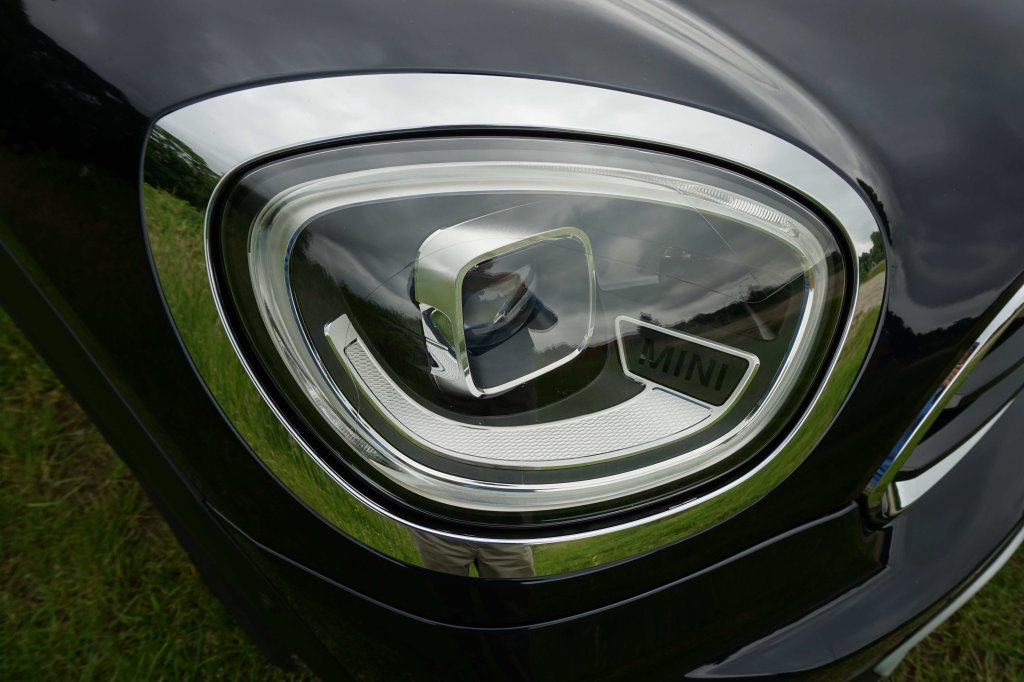
Our test car was certainly pleasing to the eye. Executed in a deep blue, it was shod with stylish black alloys, and compared to the previous model, it sports a newly designed radiator grille, with LED headlamps and LED fog lights now as standard.
The standard trim of the new MINI Countryman also includes LED fog lights, with a light band in the upper semicircle of each fog light serving as a parking light. The LED rear lights are now also in Union Jack design.
In the interior your eyes admire the new digital cockpit display with a 5-inch colour screen, and also the Piano Black interior surfaces for the cockpit and door bezels are putting you in a good mood.
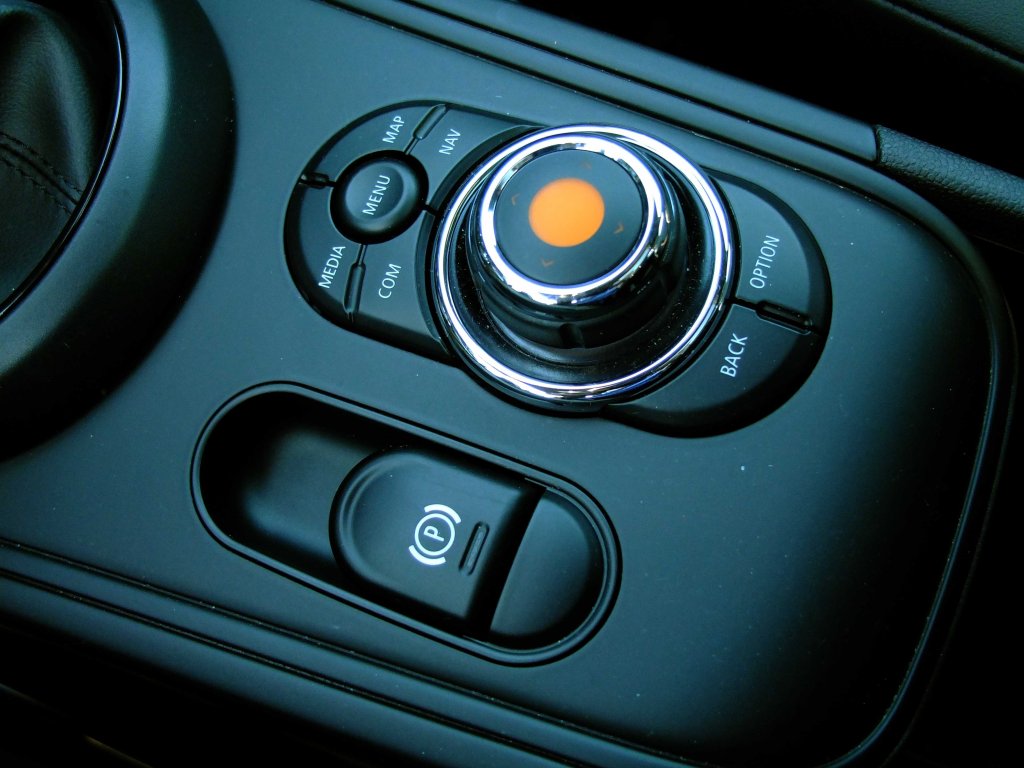
We just love also the toggle switches, and find all commands easy at hand. The sports leather steering wheel also falls ideally in your hand. Only when your MINI has been standing in the sun, the wheel rim of the sports leather wheel can get very hot, and can be barely touched for the first few minutes without wearing gloves. Indeed, classic driving gloves are a necessary accessory in our ever-warmer summers now…
The Connected Media and Connected Navigation Plus options, available as an alternative to the basic configuration, each include an 8.8-inch colour screen with touchscreen function located in the central instrument that is typical of the brand. The circular control unit in the new MINI Countryman looks great, with the audio control panel and the buttons for hazard lights and driver assistance systems now integrated even better. Meanwhile touch-sensitive bookmark buttons and high-gloss Piano Black surfaces underscore the premium character of the central instrument.
Even the standard audio system offers audio streaming via a Bluetooth connection and a hands-free telephone system with USB interface. The Radio MINI Visual Boost and the digital instrument display form part of the optional equipment item Connected Media, while the Connected Navigation option makes a range of additional infotainment functions available in the new MINI Countryman in addition to providing a convenient route guidance system. This option also comprises wireless charging for compatible mobile phones and a second USB socket.
The new MINI Countryman is equipped with a SIM card that is permanently fitted in the car. This enables use of Intelligent Emergency Call with automatic detection of vehicle location and accident severity, as well as MINI TeleServices. The new MINI Countryman is always online, enabling seamless integration of the voice assistant Amazon Alexa.
This provides access to the Real Time Traffic Information service as well as the internet platform MINI Online and preparation for Apple CarPlay. MINI Connected can be used to send navigation destinations from the smartphone to the vehicle. The mobile phone connection also means that the vehicle’s navigation map is updated automatically.
Very willing engine…
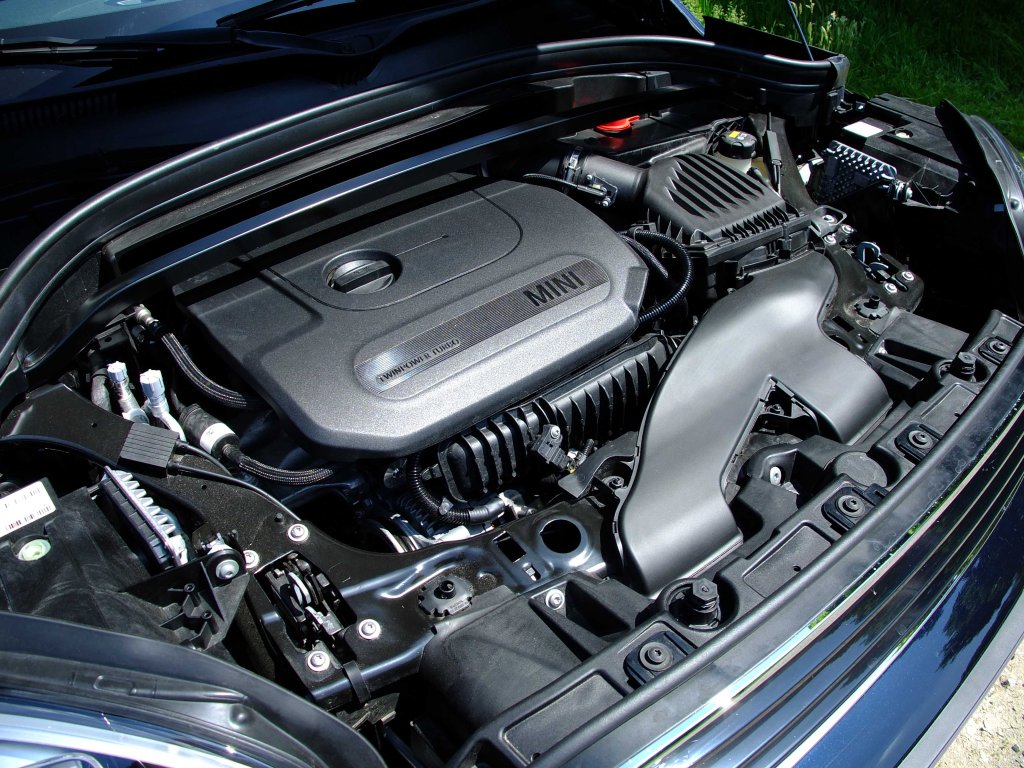
MINI TwinPower Turbo Technology is used in the 3-cylinder petrol engines, and they are very responsive indeed. Throttle response is immediate and without any hesitation, from very low revs onwards. The exhaust manifold is integrated in the cylinder head along with turbo charging. Among other things, this ensures highly effective cooling of the exhaust gases and the turbocharging system. Also, the petrol engine direct injection system operates at a maximum pressure that has been increased from 200 to 350 bar. With this very willing engine, performance is rather brilliant, with an acceleration from 0 – 100 km/h in 9.7 seconds. Top speed is an impressive 205 km/h.
The six-speed gearbox is a delight to use, spoils you with precise, quick changes. The clutch is very smooth and progressive, the drivetrain copes wonderfully with all the pulling power, as it has been designed to cope with far more torque and power in the sportier models.
But the bare performance figures do not tell the whole story. The sheer effortlessness and smoothness when you use the full performance of this MINI has to be felt to be believed. It is indeed a very agile as well as smooth car in everyday use, and that makes a lot of the charm of this MINI.
With all this smooth and vibration free willingness, one is tempted to put the throttle somewhat deeper than originally intended, and this bout of extra enthusiasm translates also in the consumption figures. We clocked a test average of some 8 liters/100 km, using the performance more often than not. Constant speed economy is excellent, so when cruising at the legal limits the immediate consumption hovers between 5 and 6 liters and less. The manufacturer quotes 5.9 – 5.6 liters/100 km, with CO2 emissions being 135 – 129 g/km.
Masterful on the road…
The MINI Countryman has wonderful handling and road manners. Despite its more than 4-meter length, it feels nimble and agile, as indeed a true MINI should. It steers wonderfully precise, and invites you to take winding roads with spirit and zest. Straight line stability is of course also excellent, and this Countryman is also a perfect “Autobahnwunder”, capable of cruising at very high speeds indeed.
Practical
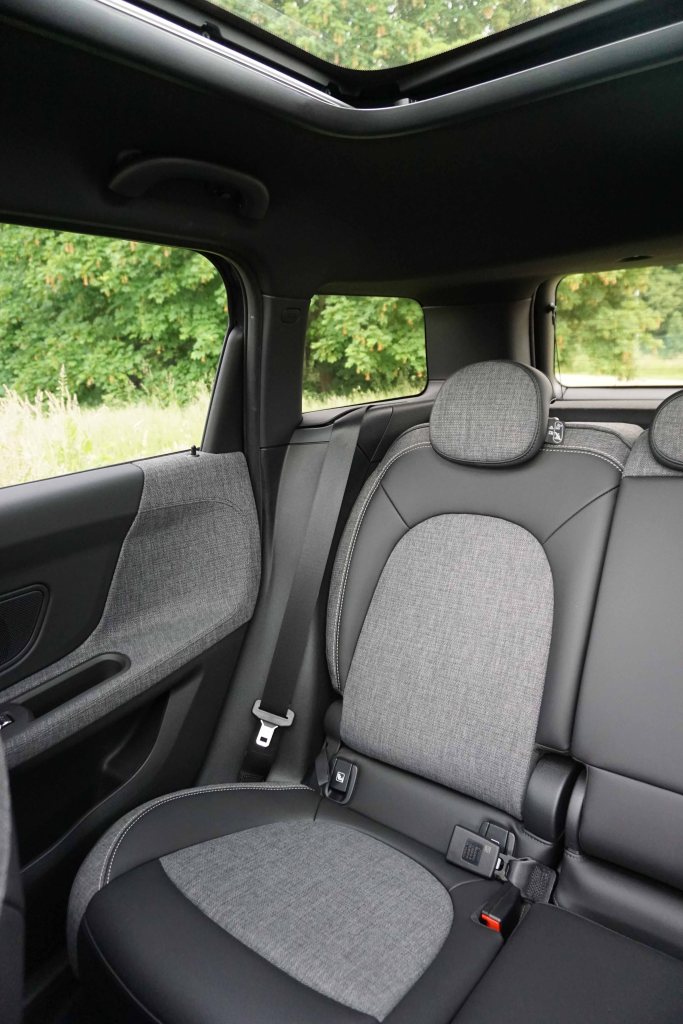
The new MINI Countryman has as the biggest MINI a versatile interior. Three fully-fledged seats are available at the rear. Alternatively, the second row of seats can also be used to expand transport capacity. By folding down the rear seat with a 40 : 20 : 40 split, storage space can be extended from 450 to up to 1 390 liters.
Conclusion
Providing character, unique panache, space in combination with mechanical excellence, superb handling and zesty performance, this is what the MINI Countryman is all about. The Northwood Edition spoils you with a full equipment, to keep you connected, amused, comfortable and happy.
This car is a true delight to use every day, and you will hardly get tired of it. We liked the version we tested, but there is – as we said – so much more, from E-power to full all wheel drive.
We hope to lay our hands soon on one of these more powerful (AWD) versions, not forgetting the electrified versions. Stay tuned on these columns…
In our interview series of remarkable women and men in the automotive world, we had an interview with the first woman to lead Stellantis’ historic American brand in the old continent: Antonella Bruno, now Head of Jeep Brand for the Enlarged Europe region.
She has not less than 20 years experience in the automotive industry, and started her career at the company in 2007. Since then, she has held increasingly prestigious roles in the sales and marketing divisions, becoming Market Director Italy for the Lancia Brand in 2012, followed by a position as Head of Lancia Brand in 2013.
From 2017, in addition to her role at Lancia, she served as Head of Network Development and Customer Experience, an interesting position which together with her new challenge at Jeep, were reasons enough for having this interview…
Hans Knol ten Bensel
Antonella Bruno posing in front of the impressive Rubicon at the recent Jeep Media Drive…
Q1 My first question is, you had a long career in the automotive world, I think it has to do with what your father did, but could you tell me why you find the automotive sector so fascinating?
AB: As you rightly said, I grew up close to the automotive world, my father was leading one of the SKF plants, one of the subsidiaries, so after my degree it was natural to step into this sector. I got an opportunity to start working in MSF, and then on further, so it was a kind of natural path for me.
Q2: Why do you think the industry is so unique? What do you think about its future, about the energy transition… and the many mobility and environmental revolutions it is going through, like electrification among others. Do you have any comments on that?
AB: Let’s say that the automotive industry is very magnetic because it is especially now evolving very rapidly, and electrification is one of the main topics in the future, so at Jeep we started last year with the launch of the Renegade and Compass 4Xe, our first two electrified models, and we are carrying on with that strategy, this will represent our future. We are also working to let the customer understand that buying or considering an electrified car is rather easy, and that the technology is user friendly.
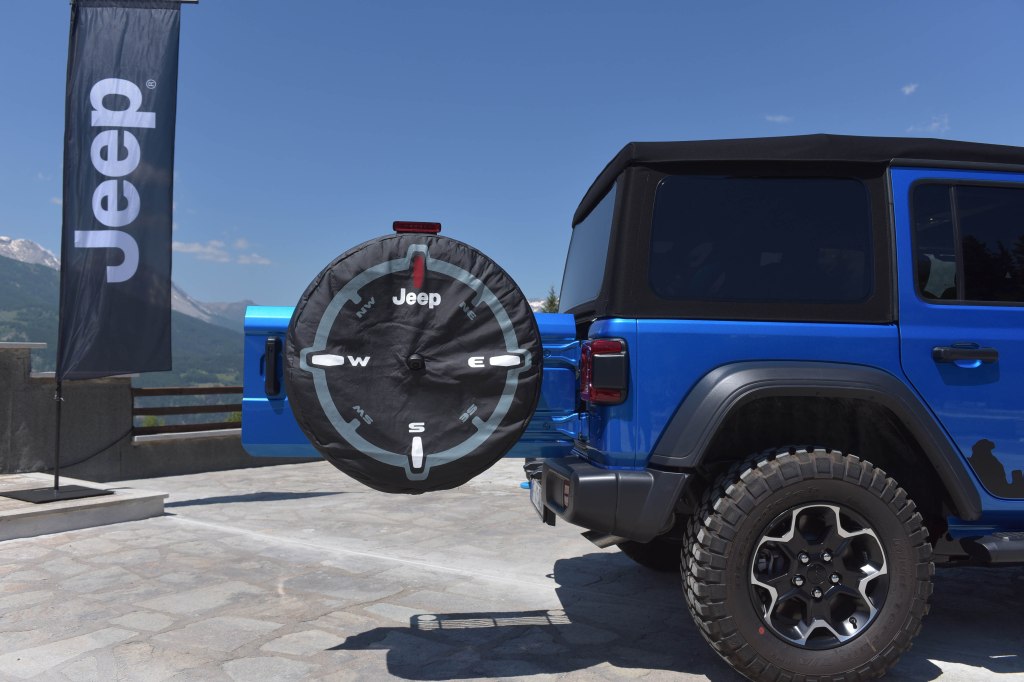
At the recent Jeep 4Xe presentation, you see here the Jeep Wrangler 4Xe in the picture…
We also make clear that being electrified does not mean that they lose the core of Jeep. So for us electrification means catching new customers, with a less aggressive and more sustainable stance, but at the same time – and this is really crucial – it means also to stay true to our values and not really dilute our DNA.
Q3: It is indeed a balancing act for you, you have the customers who appreciate the authenticity of Jeep and go for the Wrangler Unlimited so to speak and at the other end of the spectrum you have new urban Jeep buyers who chose the Renegade and possibly opted for hybrid electrification. Indeed, you have to keep your DNA…
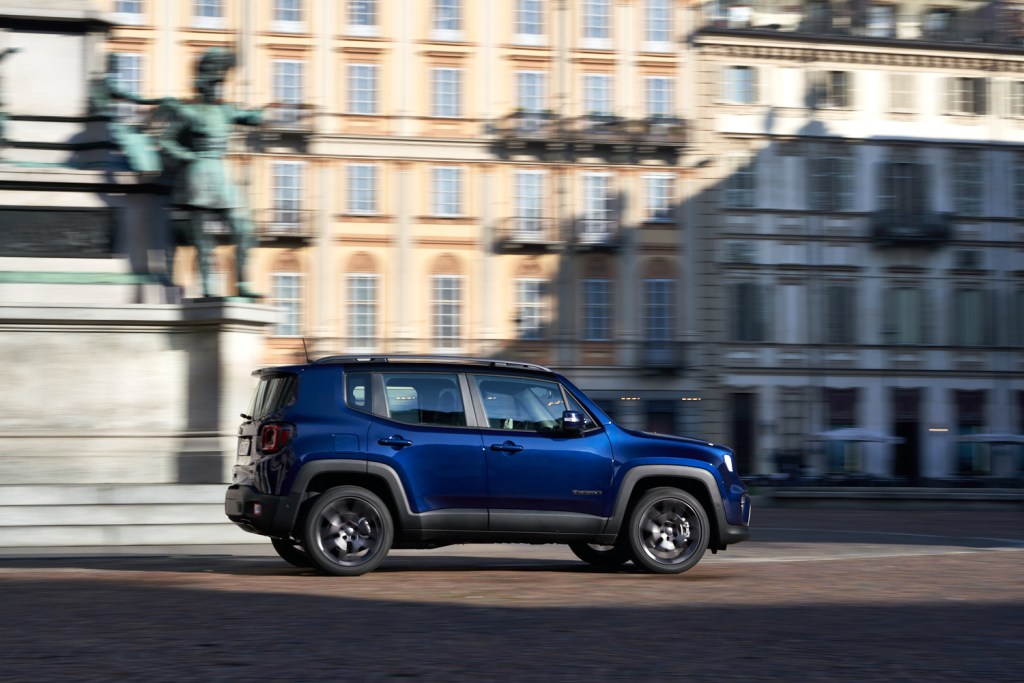
The Renegade has urban qualities…
AB: You are right in saying that we have a more urban clientele opting for the Renegade back in 2018 when it was launched, but also the whole current range of 4Xe models are a perfect example of what we mean in terms of balancing the sustainability and capability because the Wrangler (4Xe and plug-in hybrid) is now a car which you can use daily. If you drive the car, you will notice it performs even better off road thanks to the electrification and this balance I mentioned between sustainability and capability is crucial for a brand like Jeep.
Q4: With the venue of the Renegade in the mass compact SUV segment, the market presence of the brand has widened considerably…
AB: Yes, as I was saying, before the Renegade the brand was rather more a kind of niche brand in Europe, but when the car was launched, we really grew in terms of volumes and we opened a new segment of (potential) customers.
But equally feels at home in the mountain snow…
Q5: My next question brings us a bit more to the personal side, focusing on the woman in the corporate world. I would like to ask you which skills, which talents did you hone and perfect during your long career and at the same time what would you advise young people and/or young women specifically when they enter the corporate world. What should they watch for, what should they study in terms of human relations, management?
AB As a woman I had the possibility of starting at Ford when I started the first part of my career, and let’s say I had to opportunity to grow a lot, and in terms of skills, I think that it is related to the way I am behaving outside work.
I am an ex-volleyball player so I am used to be very determined, passionate. But I have to be honest, I studied a lot, because when I was young, my first passion was reading, automotive magazines among others. I was very curious, and I used to listen to people who were more experienced than me. Because I think you need also at the beginning to be humble, indeed to be very curious but at the same time humble enough to listen to people who have more experience than you.
I did not experience any kind of difference between men and women, so I was very lucky, and for me it is not a matter of gender, it is a matter of being a professional, being skilled, and you need to keep studying along your career. You grow during your career, but you cannot ever consider that you have arrived, because each new role (re)defines your profile, and therefore at the same time requires you to keep studying. It is important to be a strong, skilled manager, and this goes for both men and women.
Q6: Do you think Corona has affected the position of women in the workplace?
AB: Corona has changed the way we are working in this sense that that now we are spending a lot of time working from home, and this requires a different kind of organization. It requires a kind of cooperation between men and women, let’s say within the family, because it is a new way of working. It depends therefore on the single situation whether this is to the disadvantage of women. It requires an important ability to organize your time.
Q7: If we come back to your new and first rather to your previous function, I was very intrigued that you were Head of Network Development and Customer Experience. Can you tell me more about it?
AB: AB: As head of customer experience, I can tell you that it was a cross-brand function, and with Corona the digital experience became very relevant and even more so after the sanitary crisis.
So by making the digital experience more efficient, we provide our customer with the ability to order the car online, this is very relevant and it is the future. You have to provide additional content and the digital experience has to be very easy, because you know that 90% of the first research when you are interested in a car starts on the web. So this was the main activity before Corona.
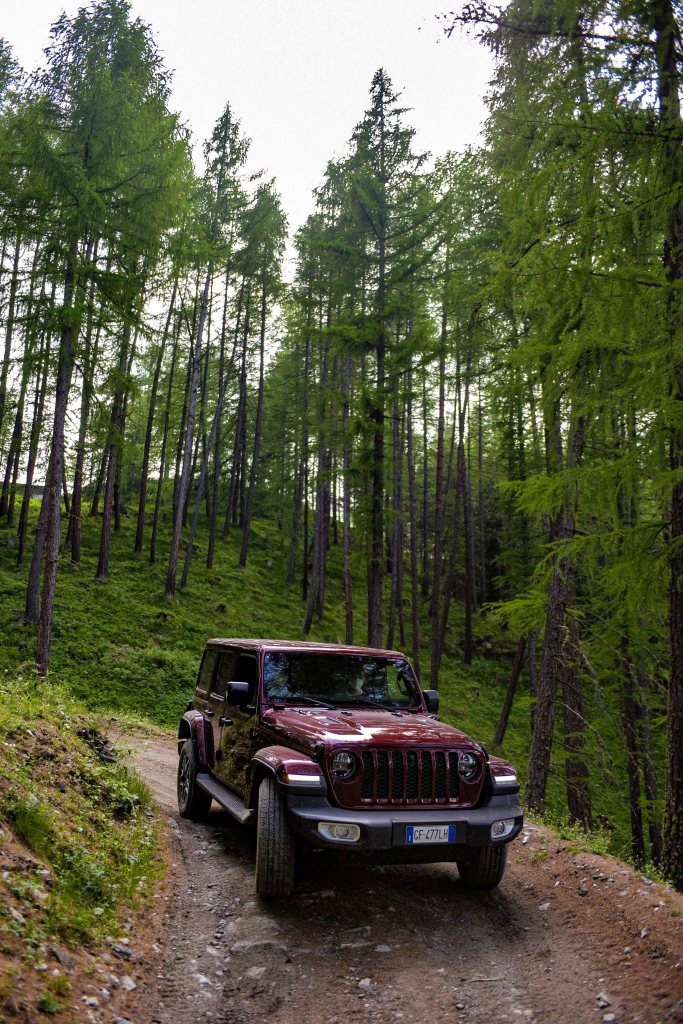
Go anywhere with a Jeep… now also electrified…
Coming back to the network, I had the privilege of leading the network development, which is also very related to the customer experience. To reach the customer is the first mission, but in the final stage we need to explain and pass all the information on the product to the end customer, especially now that we are going through the electrification (of our range). Having said that, we need to offer the best professionalism from our sales staff and we also need to offer a real customer experience in line with our brands. We also need to help the customer to overcome anxiety when it comes to electrification. “
Q8 Can you tell a bit more about the markets in the Enlarged Europe region?
AB: In Europe, the most important market is Italy, representing almost 50 pct of volumes, and we need to keep growing in markets like Germany, which is the most important market in Europe when we talk about electrification. Also France is of key importance for our future.
Retaining Jeep’s unique DNA is our mission…
The high penetration in Italy is explained by the strong legacy with our network, and since June last year we are producing both Renegade and Compass at our factory in Melfi, so Italy is performing very well. I am sure that we will keep growing thanks to the electrification in the markets outside Italy.
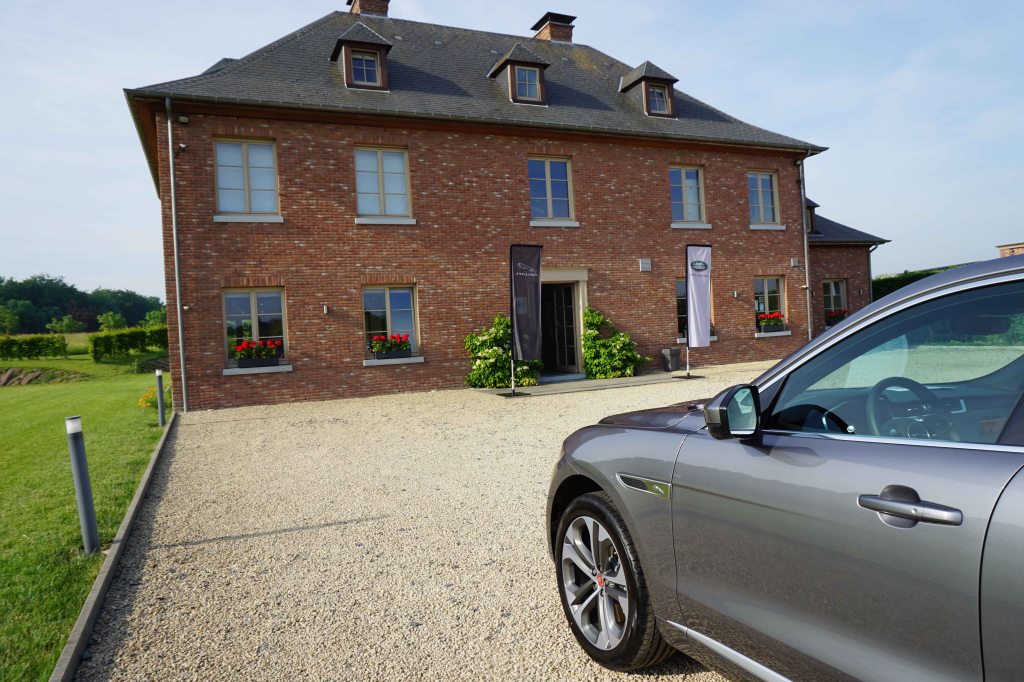
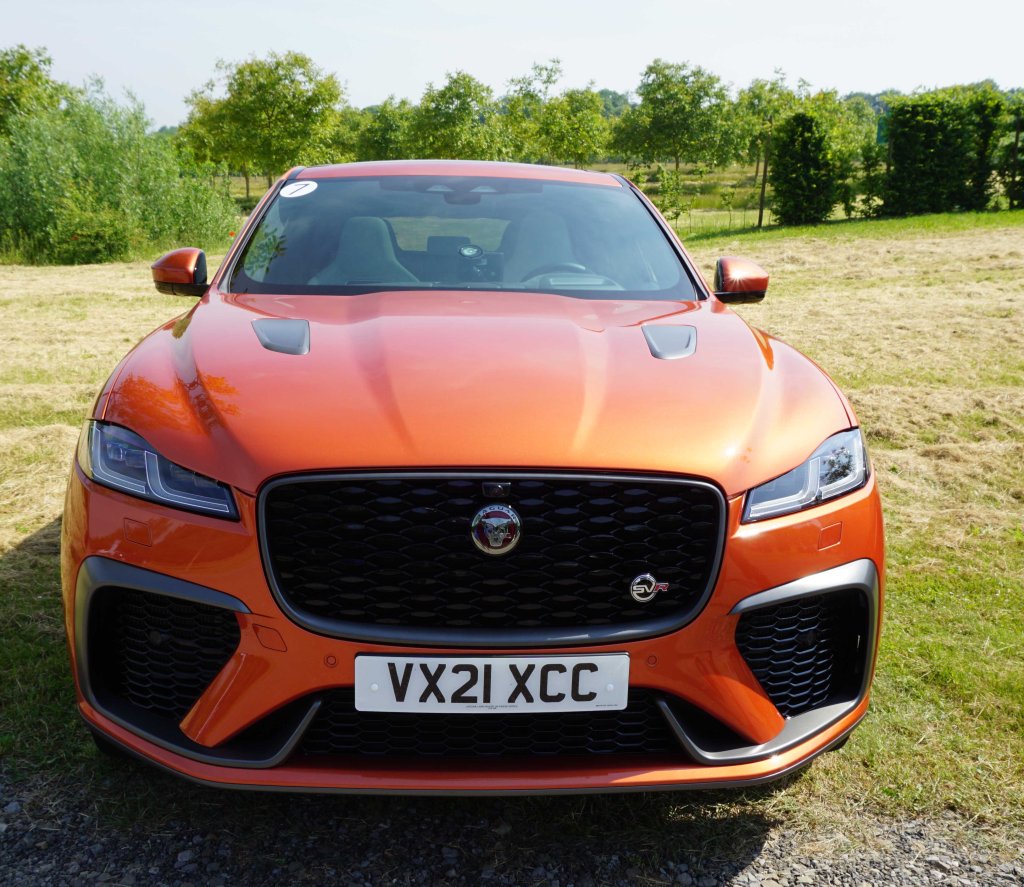
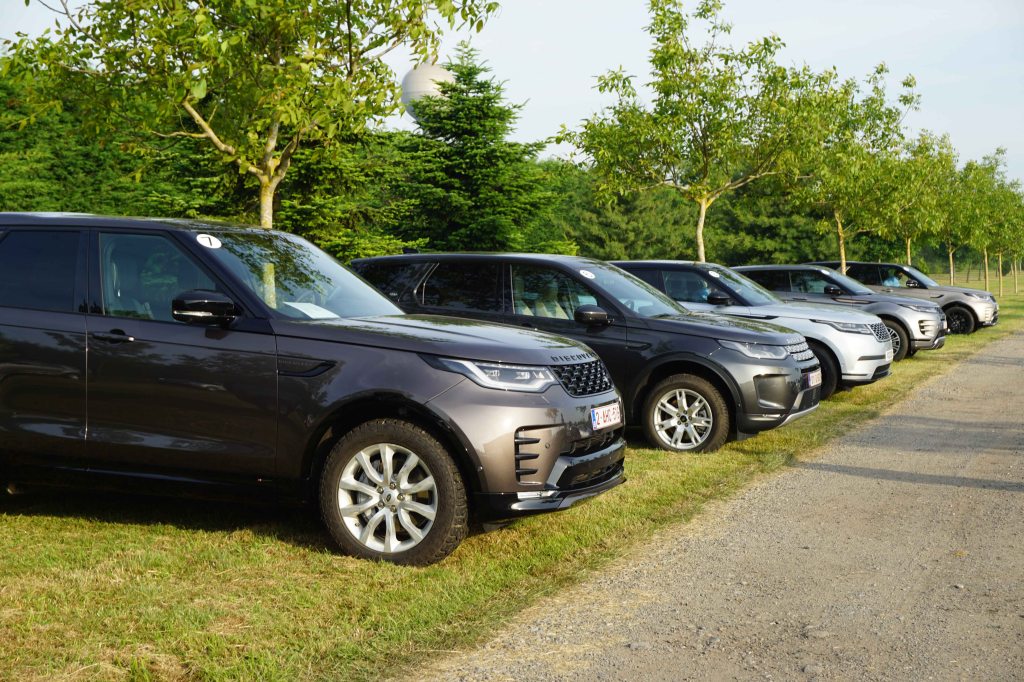
Today we were invited by the people of Jaguar Land Rover Belux for a Jaguar Land Rover Media Drive at the magnificent establishment La Noiseraie , and it proved a wonderful experience. The whole range of Jaguars were driven on the scenic winding roads and motorways around Namur…with the exquisitely sporting SV R being the icing on the cake, although the hybrid and full electric Jaguars proved very impressive indeed.
The Land/Range Rovers were put to the ultimate off-road test at the Land Rover Experience Center at Suarlée.
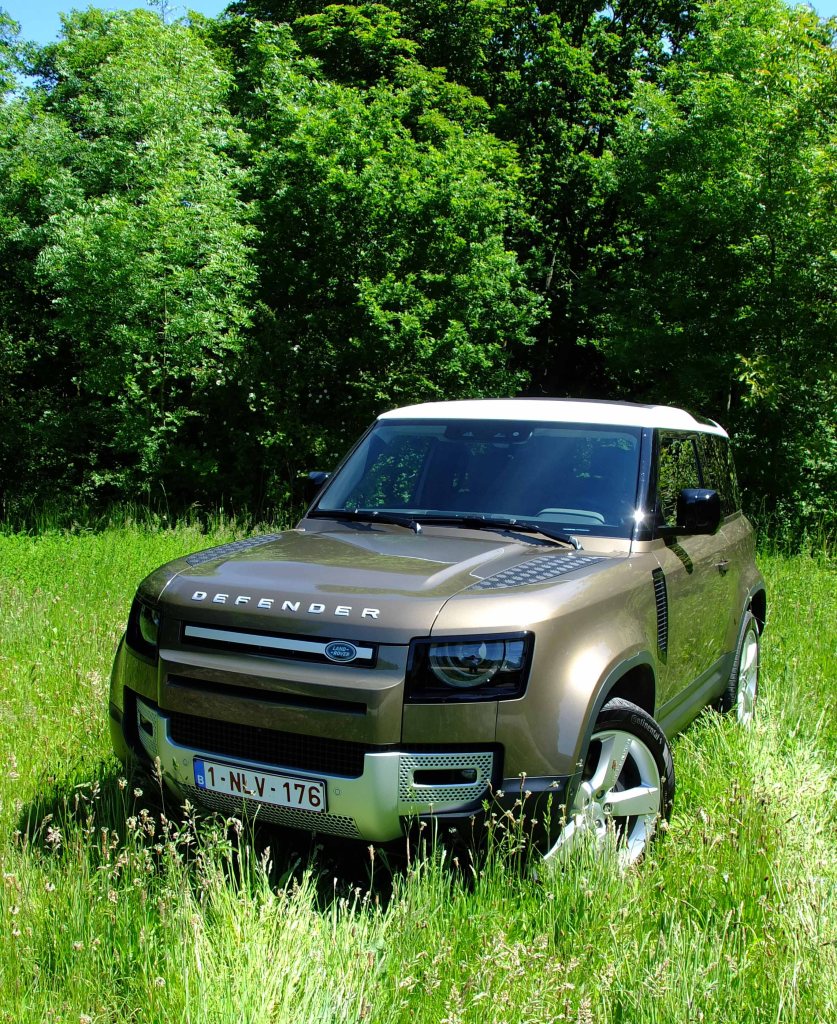
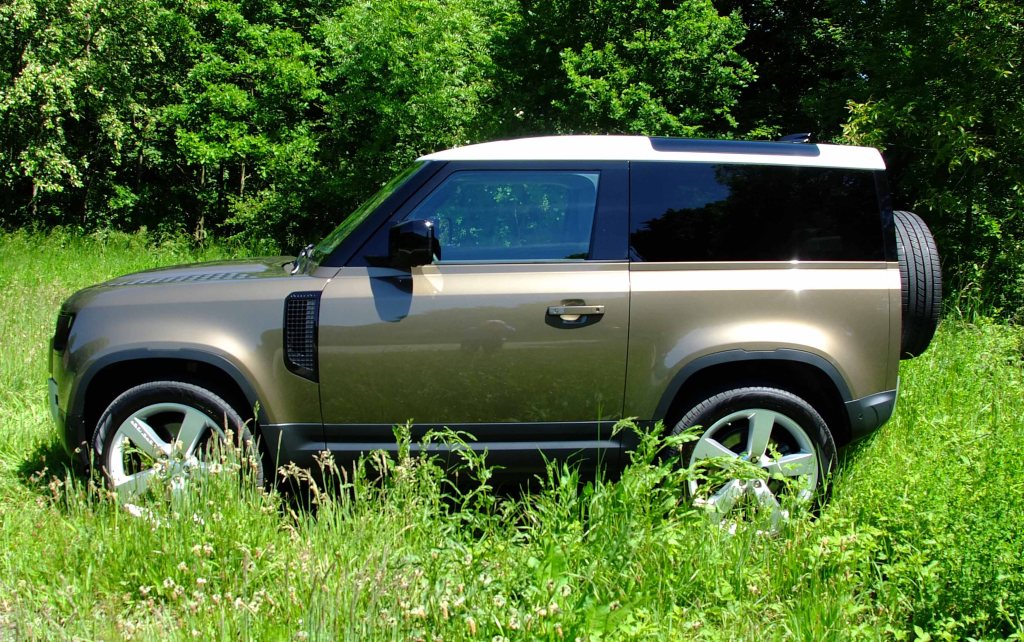
We were also able of course to have a thorough go in our former test car we drove earlier, the New Defender, see also our test on these pages…
More on all this soon, we just show you here a few images, which say more than thousand words… just stay tuned on these columns!
It is always tricky to restyle and re-engineer a classic icon. But the people of Land Rover have succeeded. And how: a thoroughly modern looking car that nevertheless retains all the iconic elements of the original Defender. Its tall, upright stance, its purposeful short overhangs, to name but a few. Technically, the New Defender truly belongs to a new era. Painstaking efforts have been made to retain and even improve the legendary terrain capabilities of the Defender, while vastly improving the on-road driving qualities. The level of handling, comfort and road manners have nothing to do any more with the original. This makes this New Defender again fit for another few decades, enough time to grow into another icon. We were already convinced after this test. Just read further.
Hans Knol ten Bensel
Inspired by its past, but not harnessed by it…
These words were said by Gerry McGovern, Chief Design Officer, Land Rover, and it all sums it up just right. This is a new Defender for a New Age, he says, and we agree. The lines are clean, well proportioned. Besides the short wheelbased 90 and its hardtop version, there is also the 110, which offers five, six or 5+2 seating configurations, with a load space behind the second-row seats of up to 1,075-litres, and as much as 2,380-litres when the second row is folded. The Defender 90 is capable of accommodating six occupants in a vehicle the length of a compact family hatchback. It is aerodynamic too: it even has a flat underbody which both optimizes aerodynamic performance (as low as 0.38Cd).
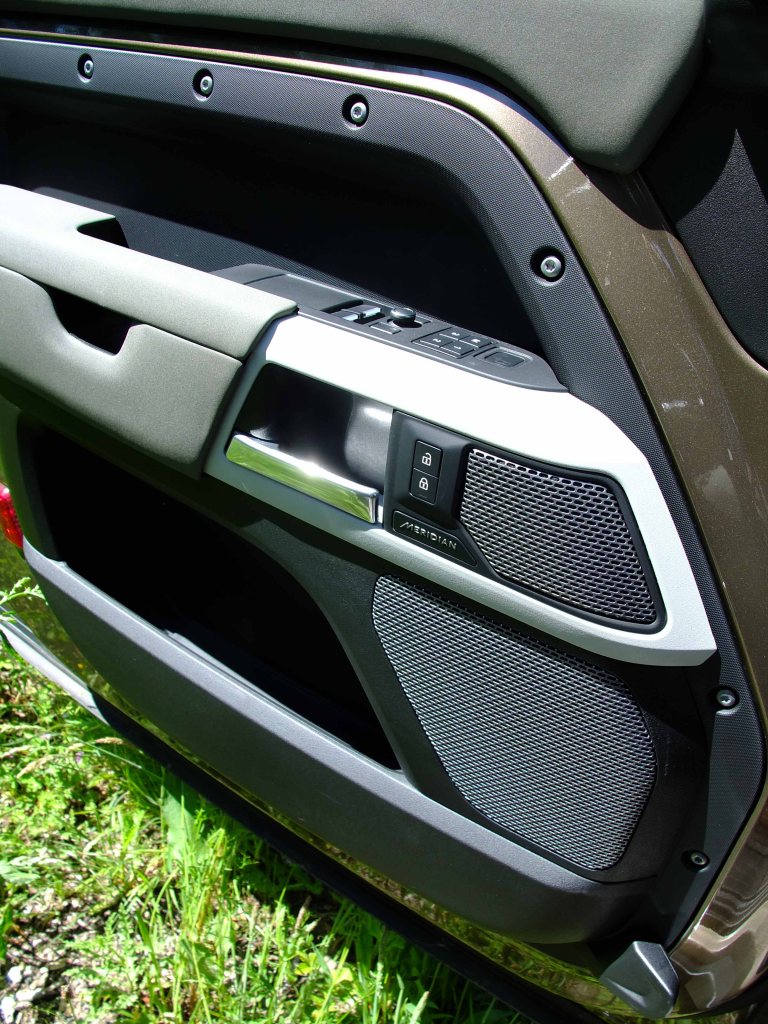
The stripped-back personality of the original Defender has also been embraced inside, where structural elements and fixings usually hidden from view have been exposed, with the emphasis on simplicity and practicality. New features include a dash-mounted gear shifter to accommodate an optional centre front ‘jump’ seat, which provides three-abreast seating across the front like early Land Rovers. The back of this ‘jump’ seat folds neatly forward, offering an immense centre console/armrest, and we just loved it.
Our test car came with the optional full-length Folding Fabric Roof – available on both 90 and 110 – for that open-top feel. There is even more: it also allows passengers in the second-row seats to stand up when parked to provide the full safari experience…
Strong and durable
Bystanders admiring the new Defender usually comment “we still like the old one for its robustness”. Well, they are wrong. Chassis engineering is now living in modern times. And the new Defender is the rolling proof of it.
Its new D7x (for extreme) architecture is based on a lightweight aluminium monocoque construction to create the stiffest body structure Land Rover has ever produced. It is three times stiffer than traditional body-on-frame designs, providing perfect foundations for the fully independent air or coil sprung suspension and supports the latest electrified powertrains.
Our test car had the air sprung suspension, and it is a superb experience, both on- and off road.
Outstanding both on- and off road…
This New Defender drives truly top notch on the road. Our test car proved with its air suspension superbly comfortable, and even spirited driving on winding roads delivered predictable handling with little body roll. Straight line motorway driving at high speeds is also what the New Defender is built for.
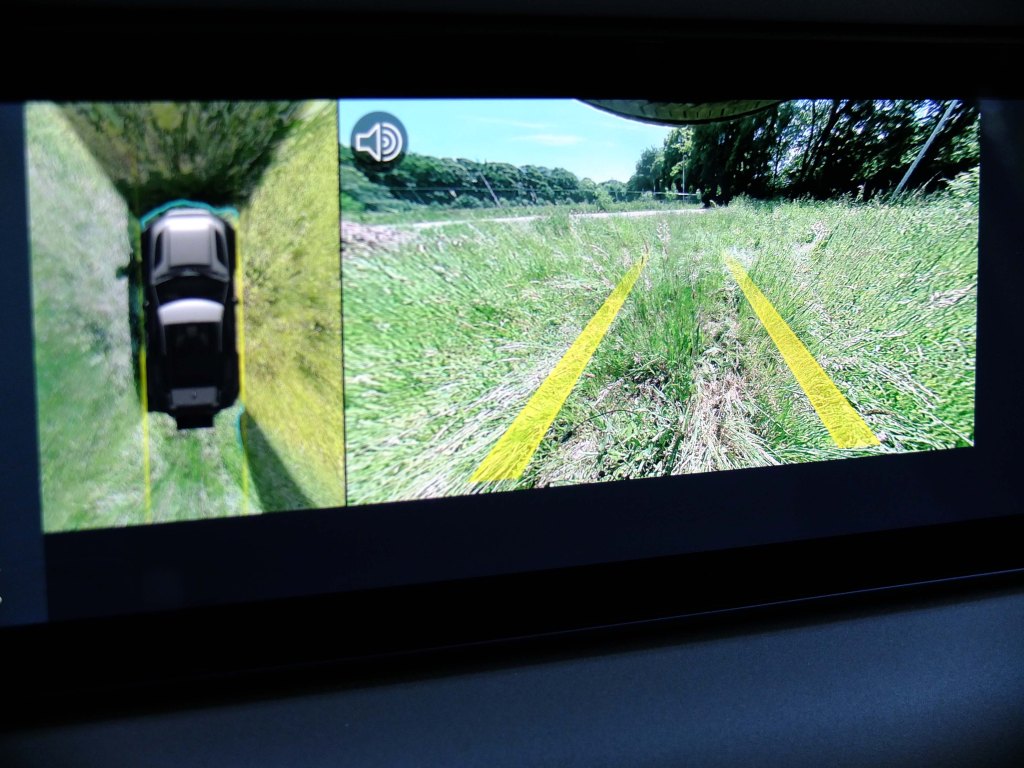
In urban traffic and on terrain, Land Rover’s advanced ClearSight Ground View technology helps drivers by showing the area usually hidden by the bonnet, directly ahead of the front wheels, on the central touchscreen.
But also off road the Defender has what it takes to excel. Permanent all-wheel drive and a twin-speed automatic gearbox, centre differential and optional Active Locking Rear Differential ensure it has all the hardware required to feel at home in desert sand or (arctic) tundra.
“Configurable Terrain Response” debuts on New Defender, allowing experienced off-roaders to fine-tune individual vehicle settings to perfectly suit the conditions, while inexperienced drivers can let the system detect the most appropriate vehicle settings for the terrain, using the intelligent “Auto” function.
The new body architecture provides ground clearance of 291mm and world-class off-road geometry, giving the 110 approach, breakover and departure angles of 38, 28 and 40 degrees (Off-Road height) respectively. Its maximum wading depth of 900mm is supported by a new Wade programme in the Terrain Response 2 system, which ensures drivers can ford deep water with complete confidence.
Up-to-date power…
The New Defender offers a choice of advanced petrol and cleaner diesel engines, while a Plug-in Hybrid Electric Vehicle (PHEV) powertrain provides silent EV-only progress of up to some 43 km.
The petrol line-up comprises a four-cylinder P300 and a powerful six-cylinder P400, featuring efficient Mild Hybrid Electric Vehicle (MHEV) technology.
Our test car came with the P400, and indeed powerful it is.
This in-line six-cylinder Ingenium petrol, as said with MHEV technology, features both a conventional twin-scroll turbocharger and an advanced 48-volt electric supercharger, with a belt-integrated starter motor in place of the alternator to assist the petrol engine. Indeed, this starter motor ensures more responsive and refined operation of the Stop/Start system and provides extra assistance to the engine when accelerating.
The MHEV system also has a 48-volt lithium-ion battery to store energy captured as the vehicle slows down.
Driven with restraint, coupled with an ultra smooth 8 speed auto box, this six cylinder (how do we love the sound of straight sixes…) just hums along at anything between 1200 and 2000 rpm, letting you enjoy its impressive torque. It develops not less than 550 Nm over a wide rev range of 2000 to 5000 rpm. Push the throttle deeper and the Defender lifts its heels. Indeed, 400 PS or 295 kW between 5500 and 6500 rpm really make you move. The Defender storms from 0 to 100 km/h in 6 seconds, and its top speed is 191 km/h. This New Defender counts therefore among the fast cars on our roads, a truly outstanding feat.
Fuel consumption depends heavily on how you drive your Defender. Anything between 14,2 and 9 liters/100 km and even slightly less when you concentrate yourself on adopting a smooth and anticipative driving style, is what you can expect, even when driving in town. (!). The MHEV system helps here of course. The manufacturer quotes 9,6 l/100 km for the NEDC cycle, with CO2 emissions being 219 g.
We also note that your new Defender can tow up to 3500 kg (!).
State-of-the art infotainment…
The New Defender introduces Land Rover’s new “Pivi Pro” infotainment system. The touchscreen is intuitive and user-friendly, requiring few inputs to perform frequently used tasks, while its always-on design guarantees almost instant responses.
In addition, the New Defender takes Software-Over-The-Air (SOTA) technology to a new level, with 14 individual modules capable of receiving remote updates.
…and you can personalize your Defender
Like on our test car, a Satin Protective Film can be specified to make the exterior paintwork even more durable. The wrap helps protect against everything from car park scratches to bramble rash and is available as a factory-fit option in Gondwana Stone, Pangea Green and Eiger Grey, providing a unique contemporary finish as it protects the Defender’s paintwork.
In addition to the Accessory Packs, the New Defender is available with the widest choice of individual accessories ever assembled for a new Land Rover, with everything from a Remote Control Electric Winch, Rooftop Tent and Inflatable Waterproof Awnings to more conventional tow bar systems and roof racks.
Conclusion
This New Defender oozes with panache, with its clean body to its impressive, well styled interior, breathing uniquely the aura of our modern times, combining it with a reductionist styling language.
Technically, from chassis, suspension, drivetrain and engine(s), this new Defender is truly top notch. The result is formidable comfort and very good handling on the road, and masterful behavior and capabilities once you leave the beaten track.
The 400P provides excellent performance, and offers reasonable economy when you drive relaxed. A car for all seasons, for any road or place in the world. You will feel at home in it, everywhere you go.
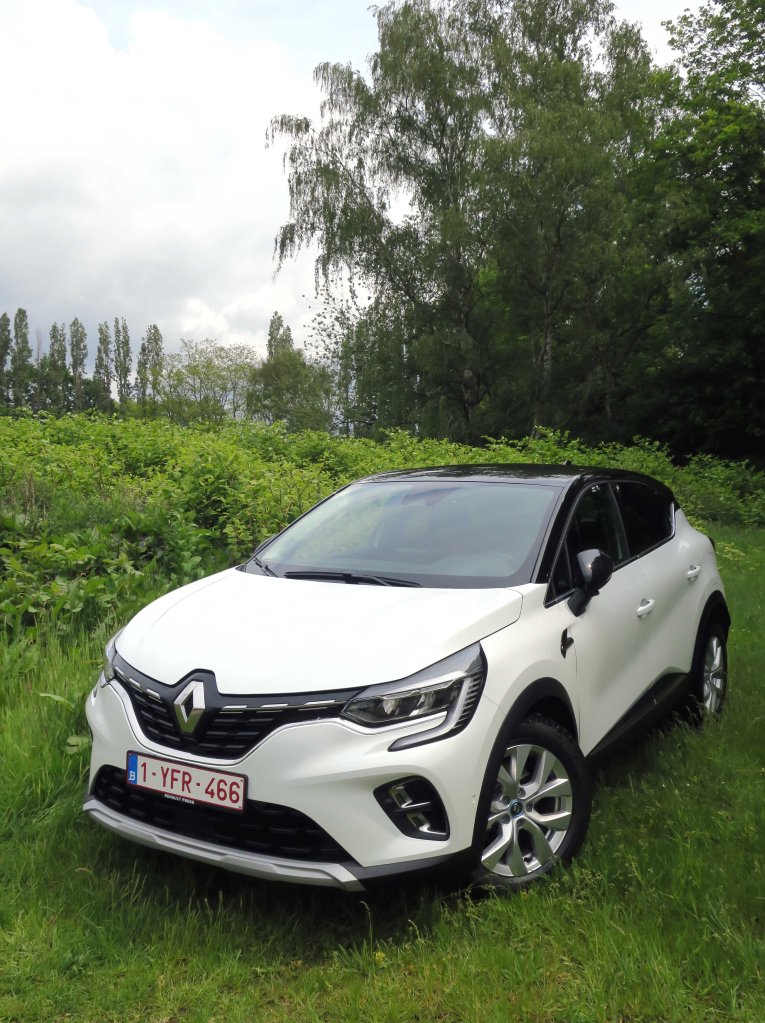
Renault has now also introduced its clever E-Tech Hybrid system in its Captur range, showing clearly that besides full electric propulsion, the hybrid solution has certainly its firm place in the Renault drivetrain strategy.
Having driven also the Mégane GrandTour with the same E-Tech technology, we were again very pleased with the refined qualities of the system, which also makes very efficient use of both electric and classic combustion engined propulsion. Indeed, provided you adopt a relaxed driving style, this Captur will spoil you with a close to 50 km range on its batteries, and an average fuel consumption in hybrid mode with (almost) depleted batteries still well below 6 liters/100 km. Add to this the “Zen” feeling of electric driving – the Captur will always drive away on E-power – and you will understand that we loved testing this good looking SUV. Just read further.
Hans Knol ten Bensel
Elegant
The Captur is well styled and proportioned, and pleases to the eye from any angle. A strong selling point, and now the Captur is further enhanced by the equally well designed led head- and rear lamps.
The cabin is also vastly improved, the level of finish and the quality of the materials used is now top notch. We just loved again the tall upright 10,25 inch touchscreen, the easy to manipulate round knobs for heating and ventilation, the Renault typical audio control, the quality of infotainment, the easy and self-explaining choice of the different driving modes. Apple Car Play and Android Auto connectivity are also to be had. The Captur is practical too, with large doorbins to stow away the things you take along on a car ride and an adequate luggage space with split floor to accomodate the charging cables. (Indeed, there is one for domestic plugs and one type 2 charging cable.) The Captur will also seat five without too many problems.
The E-Tech drivetrain convinces…
After the Mégane, the E-Tech system in the Captur convinced us again. It transforms the Captur in a comfortable, smooth, relaxed performer. As said, the fact that you will always drive away on the 67 HP electric motor adds greatly to the premium feeling this Captur gives you. The acceleration in those first meters is not only smooth, it is also quite powerful, and be sure that the Captur is a quite lively car at traffic lights.
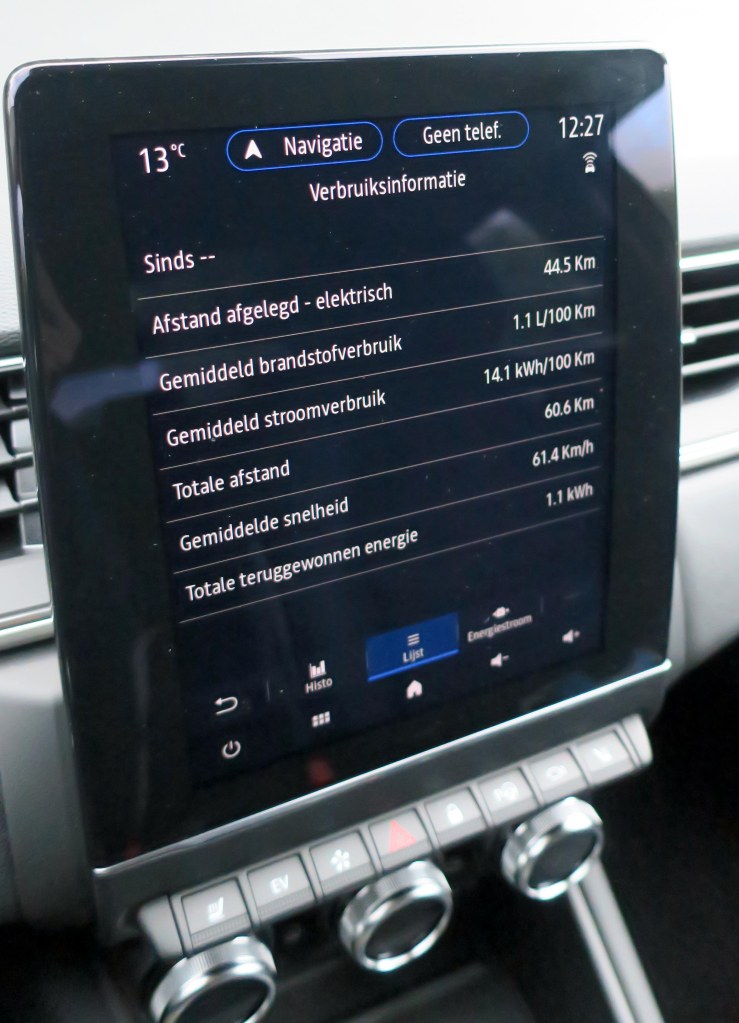
At the beginning of our test, we managed to drive 44,5 km on battery power, with the rest of the distance, 60,6 km, driven in “My Sense” mode, using both engine and battery power. Average fuel consumption was 1,1 liter/100 km, E-consumption 14,4 kW/100 km.
The E-Tech system has three engines: one 1,6 litre Atkinson cycle 91 HP combustion engine, the 67 HP electric motor and then a smaller second electric motor which serves as starter motor for the combustion engine and generator. Acceleration is especially good at lower speeds, but the 0 to 100 km/h sprint is still quite creditable with a time of 10,1 seconds.
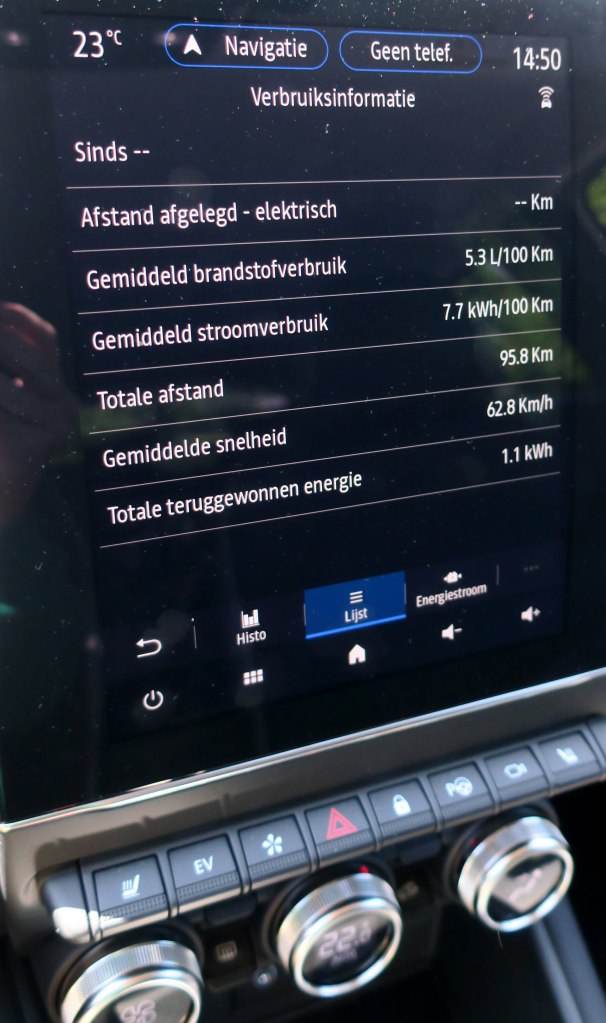
With batteries (almost empty, we drove a stretch of 95 km on the open road, using mostly the combustion engine, staying in the “my sense” mode. Fuel consumption was a very creditable 5,3 l/100 km.
Top speed is also a very satisfactory 174 km/h, which makes this Captur a quite potent motorway cruiser.
When asking full performance, the combustion engine will step in verve and will of course be pushed to high revs, but soon one learns to be sensitive with the right foot: a slight lift off of the throttle will induce the gearbox to choose a higher gear, and the engine revs will immediately drop. The E-Tech drivetrain, as well as the Captur, are built for comfort and a relaxed driving style, rewarding you, as we pointed out in our introduction, with very good efficiency, both in liters and KWh /100 km.
Choice between driving modes…
One can opt for the “Sports” mode which makes a performance oriented choice between the electric motors and engine, but most will choose the “My Sense” mode, as we did during most of our test, and the inboard computers will make the smooth and efficient choices for you. We also drove the Captur with the stylish gear lever put in “B” position, which increases the regenerative function when you lift the throttle, and soon enough you will be able to drive the Captur as a “one pedal” E-car in urban traffic. Then you can choose the “Pure” function, which lets the Captur run solely on E-power, and select the “E-Save” function or mode when you want to save battery power for later.
Needless to say that this Captur is very much fun to drive in town, but thanks to the 158 HP hybrid drivetrain it is also well at home on the open road, and this over long distances.
The Captur has a 9,8 kWh battery pack, which is housed under the rear seat, but the interior space is hardly impaired at all, and the rear seat bench can even be shifted back and forth to gain either legroom or luggage space.
The stylish gear selector sits on a “floating” console…
The extra weight of the batteries made a somewhat stiffer suspension necessary, but this did not make the Captur uncomfortable. Handling is also still quite pleasing, the car can be driven spiritedly over winding roads, but this being said, it will not invite you to throw it around corners. As we said before, the true vocation of this Captur is relaxed and comfortable touring, and to enjoy the “Zen” panache of electrified motoring.
Conclusion
Renault stepped into the hybrid arena, and convincingly so. With the plug-in facility, you have literally the best of both worlds. In our country though, one needs a home charger. But then again, if no charging points are available, you have the pleasant possibility of running on fuel, and the Captur proves here to be quite frugal too. So this go anywhere anytime electrified pleasant looking compact SUV has many cards upon its sleeve…
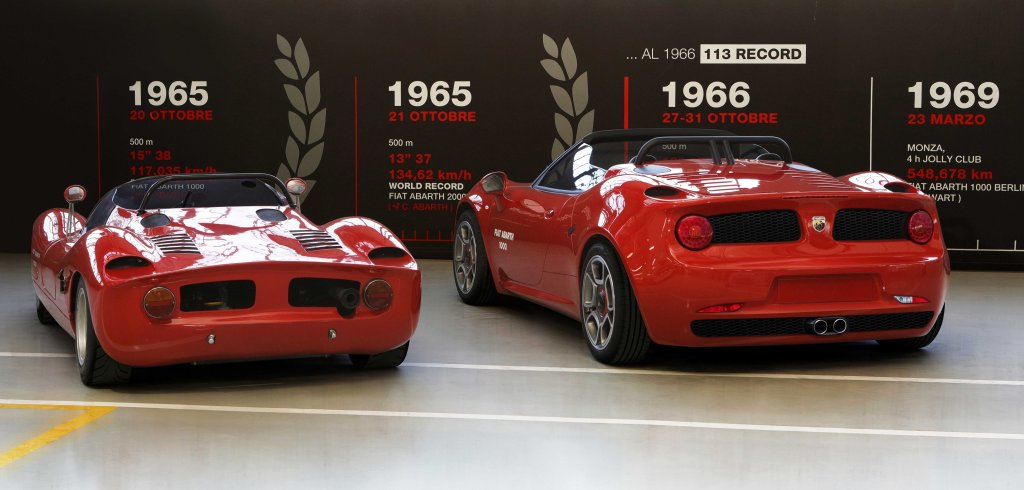
The slender original ’60s Abarth 1000 SP on the left, alongside the new one-off successor…
Sometimes, things happen which make the heart of a car enthusiast beat faster. Like an initiative taken by the people of the Centro Stile Fiat & Abarth.
They have now rolled out a contemporary interpretation of the superbly stylish and iconic Abarth prototipo Designed in 1966 by the Milan engineer Mario Colucci. Just look at the accompanying photo. Of course, we can only hope and pray that this will not limit itself to this one-off styling and engineering exercise.
A beautiful evocation of the purity of the original Abarth 1000SP…
The points and lines of the original car’s design were respected to ensure continuity between the ’60s sports car and the concept car of the new millennium.
The contemporary Abarth 1000 SP respects three fundamental design principles already seen in the ’60s model. First and foremost, the lightness of its forms, its volumes and of course its weight.
The second principle is aerodynamics: modern design technologies have made it possible to combine the iconic lines of the 1000 SP with an aerodynamic coefficient worthy of a contemporary sports car.
Finally, ergonomics, aimed at improving the user experience, to optimize the vehicle’s control and agile driveability.
A faithful evocation…
The Abarth 1000 SP echoes the lines and aesthetics characteristic of its forerunner. The sinuous body, with the soft surfaces of the fenders highlighting the position of the wheels, takes up the pattern of the spider with a central engine.
The cockpit glazing features shaped side deflectors, with their profile lowered towards the roll bar, the latter strictly “in view”, to highlight our being in the presence of a “no-holds-barred” spider.
Of course, today’s passive safety requirements make the car taller and more imposing…
The rear geometries of the Abarth 1000 SP accentuate the harmony between the lights and the exhaust pipes.
Of course, The livery is strictly red and the characteristic air intakes appear all over, from the front bonnet to the cooling slots in its rear counterpart.
The headlights also follow the minimalist scheme of the historic 1000 SP, with point lights on the nose and a single pair of round headlights to accentuate the car’s remarkable breadth when seen from behind.
The present Abarth 1000 SP thus maintains a very similar identity to its forerunner’s, courtesy of the meticulous work to update the historic, no-holds-barred Abarth 1000 SP.
Despite modern safety requirements, the designers of Centro Stile managed to retain the character of the original…
Conversely, the tubular chassis under the “skin” of the historic Sport Prototipo gives way to a hybrid frame, with a central cell in carbon fiber and an aluminum front. The “new” Abarth 1000 SP features a powerful turbocharged 4-cylinder, 1742-cc central engine, capable of 240 hp. The sophisticated mechanics of the concept boasts overlapping triangle suspension in the front, with an advanced MacPherson strut at the rear.
We will tell you more about the original 1966 Abarth later, so stay tuned!
The “G-Class” is with us since 1979, when in 1972 with a collaboration agreement between then Daimler-Benz AG and Steyr-Daimler-Puch in the Austrian city of Graz resulted in the development of an off-road vehicle which has since been honed and further developed in one of the world’s best off-road cars – ever. We drove the latest 400 G with the six cylinder in line 330 HP Diesel engine. As superb as it will ever be. Just read further!
An iconic shape…
All-wheel drive and 100-percent differential locks have also been part of the “G” since that time, as has the robust ladder-type frame. Also its external appearance has not changed significantly since 1979.
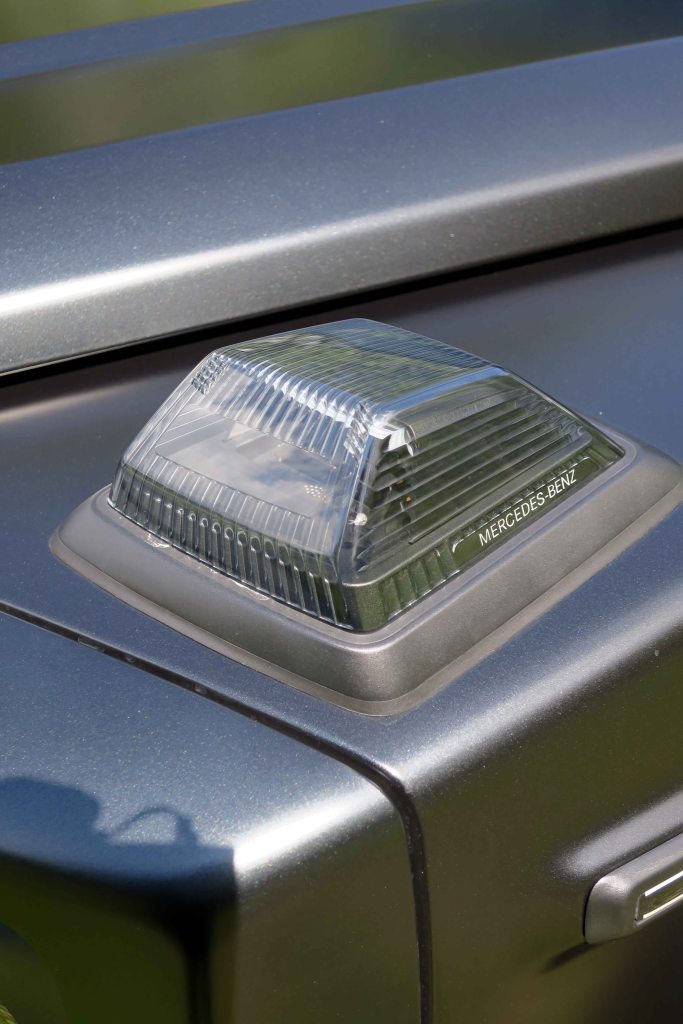
Iconic elements continue to serve very specific purposes, now as then, and to give the G-Class its unique appearance. All these are still found in the new G-Class: the distinctive door handle and the characteristic closing sound, the robust exterior protective strip, the exposed spare wheel on the rear door and the prominent indicator lights. We just loved them, as it was easy to judge were the edges of the car were.
The design of the G-Class follows the philosophy of “Sensual Purity”, as Mercedes puts it, and at the same time remains true to the character of the original. As a result, the door hinges positioned on the outside and the surface-mounted bonnet are carried over to the new generation. With the latest update, however, the faithful G body has grown quite a bit: it is now 53 mm longer and especially 121 mm wider and this results in even greater presence, on the road as well as in terrain.
All surfaces have a more taut design and are have more tension, while the surface quality has been taken to an even higher level. So the “G” is now cast even more of “one piece”, and the meticulous design results in wheel arches and bumpers now forming a more integral part of the body and thus looking less like add-on features.
Top notch exterior trims…
From 1 September 2020 onwards, the standard equipment is even more extensive. At the same time, there are also more personalization options available through the “G manufaktur” programme. New exterior colours and equipment packages as well as the widescreen cockpit, which now comes as standard, round out the offering. We will discuss the interior later.
The G 400 d is now also freely configurable…
Popular is the so-called “night package”, which was found on our test car. It comprises heat-insulating dark-tinted glass, outside mirror housings and radiator grille (including louvres with the surround of the Mercedes star) in obsidian black metallic, as well as darkened turn signal lamps, reversing lamps and headlamps.
If the G-Class is ordered with a matt magno paint finish, which was the case with our test car, the package can be configured as the Night Package magno. In this case, the corresponding add-on parts come in the colour night black magno. The Stainless Steel Package continues to be available with spare wheel cover, running boards, door sills and loading sill protection in stainless steel and adds a painted spare wheel ring and an exterior protective strip with trim insert in a pinstripe look to the Night Packages.
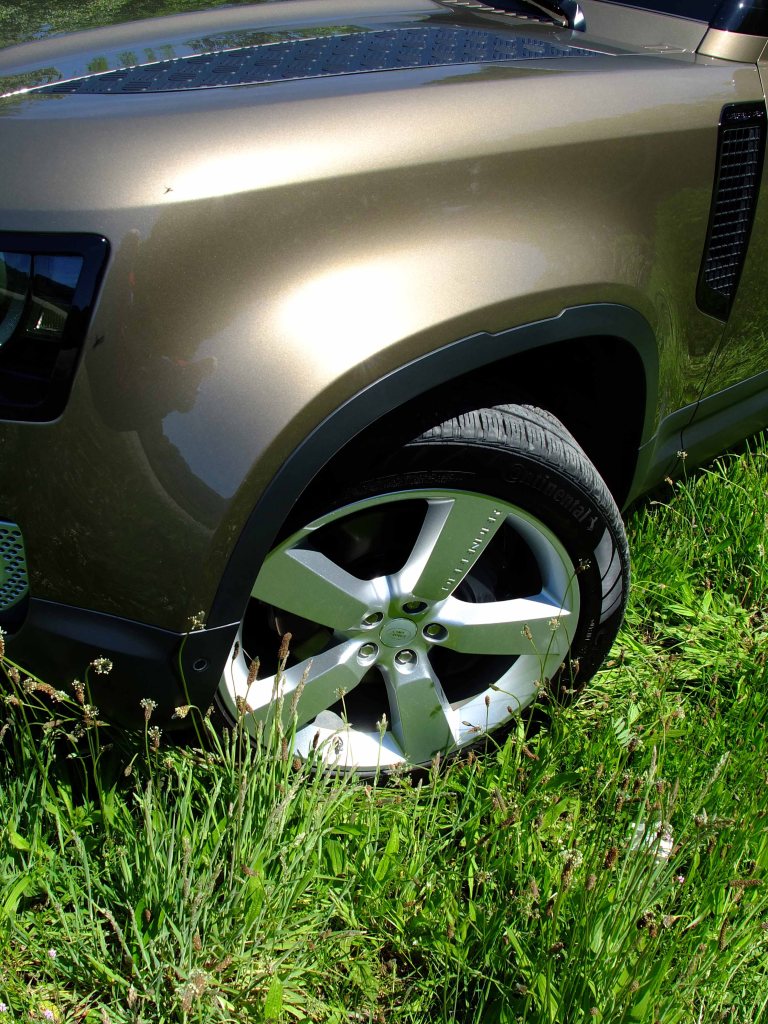
The new 20-inch 5-twin-spoke light-alloy wheel available exclusively for the AMG Line has a high-sheen finish and is painted in a choice of high-gloss black or himalaya grey. We liked them too…
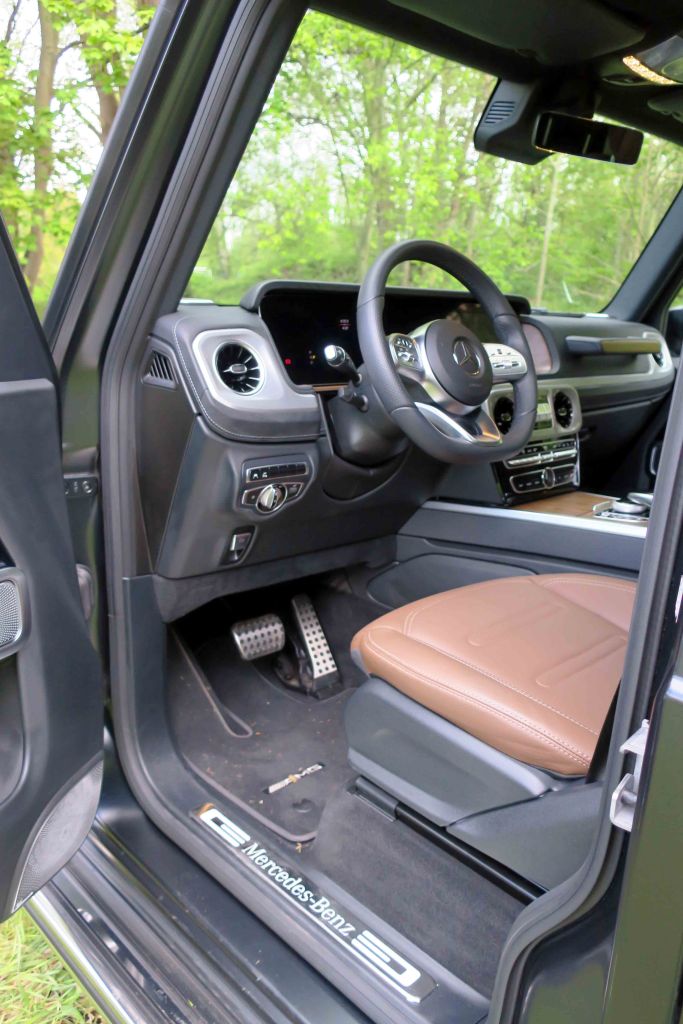
The cabin: high-tech with a pleasant vintage touch…
Let’s start with the vintage part: the pleasant upright seating position, the magnificent visibility over this angular body. I own a vintage Suzuki Samurai Jeep, and although everything in the “G” is just much bigger, I find the same plain and flat window screen and the same straight windscreen wipers, for instance. Yes, above the glove box of my Samurai is also the big grab handle for the passenger, as found here in this G 400.
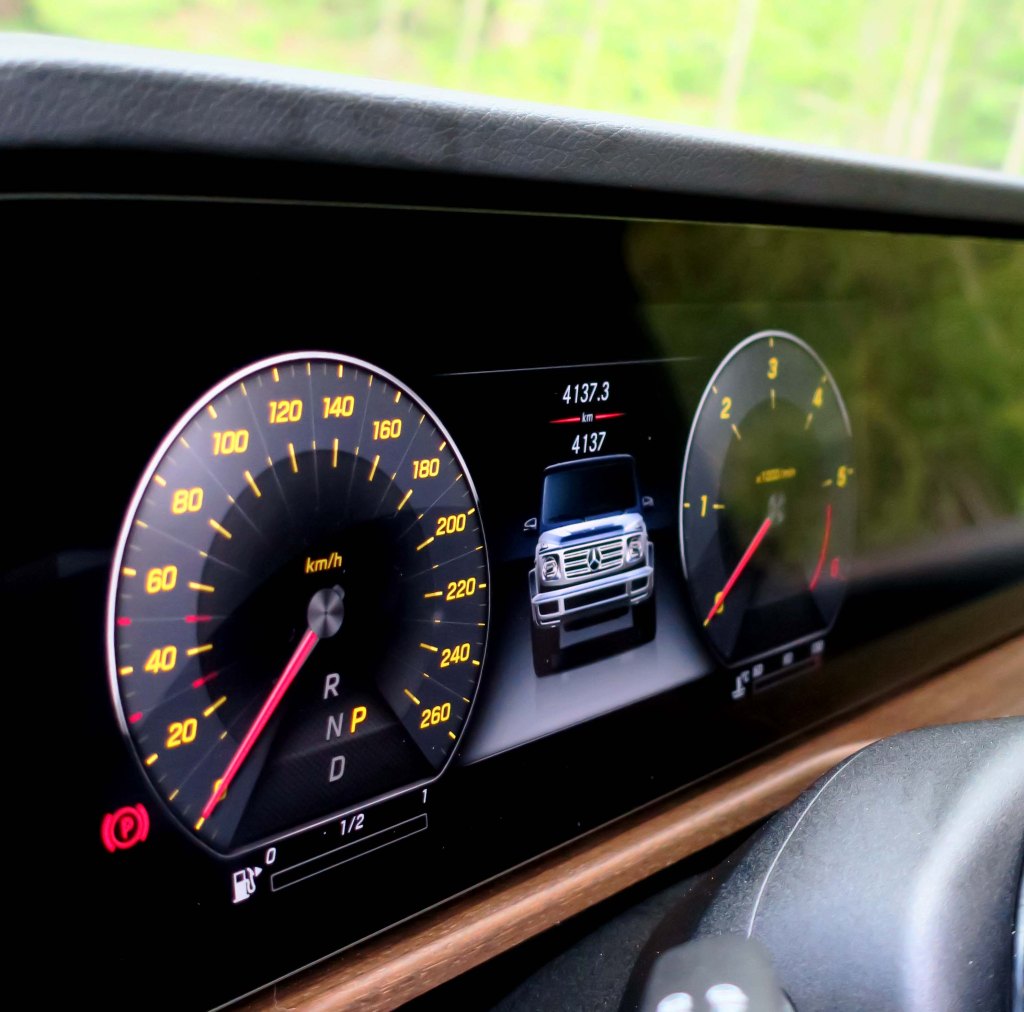
But that’s where every comparison ends. Because the digital MBUX (Mercedes Benz User Experience) has also now made its entry in the G-Class. The widescreen cockpit is now part of the standard equipment in all G-Class models. So, everything is totally familiar when you are already acquainted with this MBUX system.
The two 12.3-inch displays blend visually into a Widescreen Cockpit beneath a shared glass cover. Drivers can choose between three different styles for the displays – “Classic”, “Sport” and “Progressive” – and also select relevant information and views according to their individual needs.
The design of the iconic indicators is found again in the shape of the loudspeakers. Hallmarks of the G-Class include – as said – the grab handle in front of the front passenger and the chrome-highlighted switches for the three differential locks.
Thanks to haptic impulses and audible feedback from the on-board speakers, we could use the touchpad with controller in the centre console without taking their eyes off the road. Top notch.
The seats are of course a class of their own when it comes to creature comfort. Features include the Memory function for the driver’s seat, seat heating front and rear, as well as luxury head restraints in the front. This ride comfort can optionally be boosted still further with the Active Multicontour Seat Package. In addition to the special multicontour seats, this encompasses such features as various massage functions, climate-controlled seats, and fast seat heating. Need we say more?
Driving the G-Class on- and offroad: a driver’s dream.
The G-Class is on tarmac a supersmooth performer, with superb comfort. Thanks to the new suspension, introduced in 2018, which emerged from the collaboration between Mercedes-Benz G GmbH and Mercedes-AMG GmbH.
The result is an independent suspension with double-wishbone front axle in combination with a rigid rear axle. When redesigning the suspension, the focus was also on even beter off-road capacities and greater rigidity. The components of the double-wishbone front axle are therefore directly mounted to the ladder-type frame without a subframe. The lower wishbone’s attachment points on the frame in Z-direction are positioned as high up as possible. So front axle ground clearance is an impressive 270 mm. The result is a sublime ride. Also thanks to the well controlled live rear axle. In contrast to the predecessor, the new rigid axle is controlled by four trailing arms on each side and a Panhard rod. Indeed, maximum comfort on the open road.
À la carte: “Comfort”, “Sport”, “Individual” or “Eco” …and last but not least: “Desert!”
As is familiar with other cars of the brand, also the G-Class can be suited to your driving mood. The four programs “Comfort”, “Sport”, “Eco” and “Individual” , and yes, “Desert” can be set via the DYNAMIC SELECT rocker switch. Characteristics of the engine, transmission, suspension, steering and assistance systems are adapted at the driver’s behest.
The “Desert” mode makes the G-Class fit for sandy terrain with a perfect interplay of late upshifting, direct throttle response and adjusted ESP® control.
But there is more: the “G-Mode” The G-Class changes to “G-Mode” independently of the chosen driving mode as soon as one of the three differential locks has been activated or the LOW RANGE off-road reduction gear has been engaged. When your G is equipped with adjustable damping, that is. This off-road mode adapts the adjustable damping of the chassis and the steering as well as the accelerator characteristic, avoids unnecessary gear shifts and thus ensures optimum control and maximum off-road capability.
Besides offering a superbly comfortable ride, thanks to the new front axle design, the on-road performance of the G-Class and its agility and steering precision is faultless, and it is truly in a class of its own. On the road, the “G” is as agile as it is comfortable, and genuine driving pleasure is to be had. The steering is now electronic, and provides excellent feedback and steering “feel.” Its excellent behavior on the open road is one of our biggest surprises we had when driving this “G”.
Superb mechanical refinement
This off-roader has a separate chassis, and this is already a prerequisite for nicely filtered vibrations emanating from its drivetrain. The “G” Class excels here again. The Diesel straight six is superbly smooth, inaudible even when starting from cold, only the subdued hum of a six cylinder will caress your ears. It is coupled to a 9 speed G-TRONIC automatic transmission with torque converter, which is adapted to meet the needs of this off-road icon. The developers have managed to reduce the shift and response times of the 9-speed transmission by means of a dedicated software application.
The result translates into absolutely smooth and fast changes, as said, according to the chosen driving modes.
The six cylinder diesel has output of 243 kW (330 hp) and maximum torque of 700 Nm at 1200 to 3200 rpm. Pulling power at low revs is what counts, and as you see, this “d” has plenty of it. It accelerates from 0 to 100 km/h in merely 6,4 seconds and pushes you further to a top speed of 210 km/h. More than enough to satisfy most of us mortals, we would think.
This diesel, derived from the 350 G, succeeds also in bringing genuine economy to this opulent off-roader. The manufacturer quotes a combined fuel consumption of 8.9-8.7 l/100 km, with combined CO₂ emissions being 235-229 g/km.
Driving with restraint and anticipation in “Eco” mode, it was no trouble at all to reach 9 liters/100 km even in dense urban traffic conditions, which is no small feat! Of course, it took a gentle foot on the accelerator, as you can imagine.
Conclusion
The Burmeister sound system adds a dramatic backdrop to your scenic drives…
The 400 G admirably withstands the test of time. It has grown into a unique classic icon, embodying simultaneously all the possible technical refinements modern automotive technology has to offer. There is even more: it excels not only on the open road, it stands out also when… there is no road at all, and will even take you to the desert!
This is a car every traveler in history would have wished for, a car Marco Polo would have dreamt of.
It is a Mercedes in the truest form, actually. It will accompany you for decades – if need be – into your automotive life, offering room, comfort, go anywhere performance with even rather good economy in the diesel version. Superbly engineered, it will never let you down, offer you decades of dependable service.
This excellence comes at a price, but remember, a lot on this car is hand finished. If you look at its long service life, the value it will retain over the years, you will discover it is actually rather sensible. Of course, electrification lures around the corner. A plug-in hybrid version would not surprise me for the not too distant future…
Would you like to know my secret wish now? Have a drive in one of the early examples of this “G”, have a feel of its so honest ruggedness and spirit. Must be awesome too…
When a “pur-sang” four door Gran Turismo car gets electrified to carry it into our “green” age, one has to do this cleverly. For Maserati engineers, the challenge was to retain the character, performance and panache of the brand. This meant retaining a sporting typical sound and presence of a combustion engine, “la macchina” so to say, in every driving situation. Typical for every Maserati built so far. This also meant at least maintaining the present performance and handling levels, all this combined with of course a marked difference in consumption and CO2 emissions.
As the Ghibli marks the brand’s first entry into electrification, it was very important to get it right.
Well, after this test we can say, the about 100 engineers and developers involved in the Ghibli Hybrid project, did a marvelous job. Just read further.
Hans Knol ten Bensel
Choosing the right engine…
From the beginning it was clear the efficiency of a smaller volume four cylinder engine was called for. Within FCA, a true gem was waiting in the Alfa Romeo stable: a two litre four cylinder petrol engine, with a state-of-the art cylinder head and excellent thermal efficiency. But for the Ghibli, more power was needed, as the present performance level had to be retained. This meant a maximum power of 330 HP.
The internal mechanical components of the two litre 4 cylinder Alfa engine derived from FCA have been completely reworked by the Maserati Innovation Lab in Modena, to achieve greater torque and enable the turbocharger and e-booster to deliver the required extra power. The engine’s electronic control system is also totally different, with a switch to a Bosch new-generation ECU. Practically, all that remains of the original engine are the dimensions and part of the cylinder head: this four cylinder has been transformed into a true Maserati engine. The engine is built by the way at the big powertrain & engine production plant at Termoli. This plant builds various engines and drivetrains for the brands of the (now merged) FCA group.
…and coupling it to the ideal hybrid drivetrain.
Keeping the weight down to achieve equal or even better performance, whilst retaining an ideal weight distribution to preserve the excellent handling, excluded a solution using a large battery and a separate electric motor.
Preserving the kinetic energy of this dynamic Maserati was the key focus. We point out here that the Ghibli Hybrid is built around a modified version of the chassis and bodywork of the Ghibli V6.
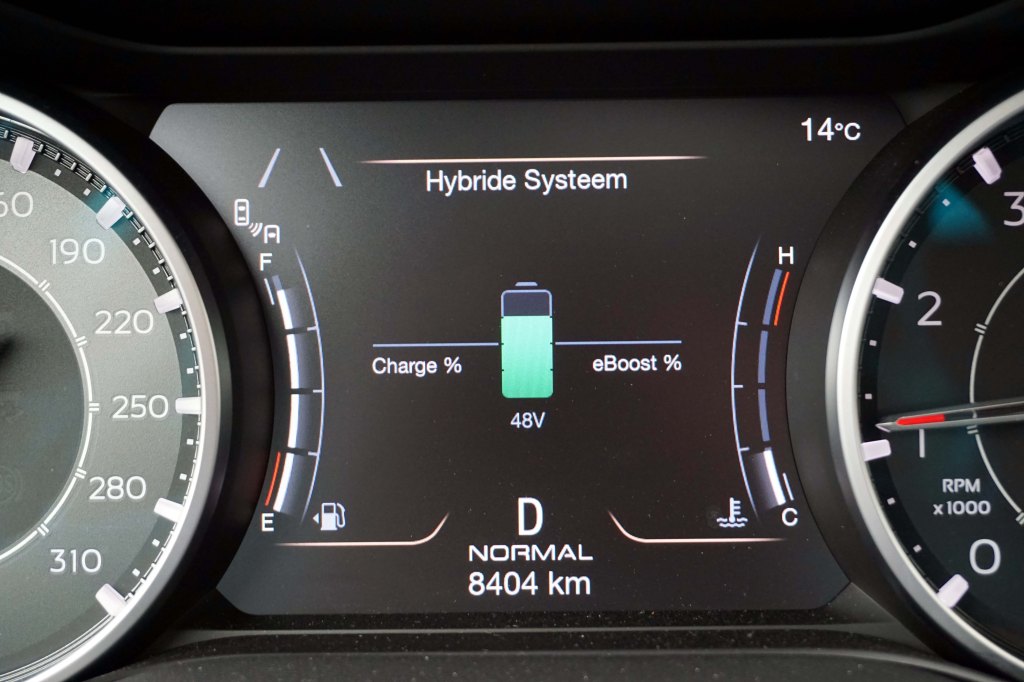
So Maserati opted for a 48 volt hybrid system, which has four parts: the BSG (Belt Starter Generator), the battery, eBooster and a DC/DC converter. The BSG does the job of an alternator, recovers energy during braking/deceleration and charges the battery in the boot, which in turn powers the engine’s eBooster. The reason for installing an eBooster on the car is to back up the conventional turbocharger, working in tandem with it, to sustain the engine’s power output at low rpm. The hybrid system’s operating strategy ensures that the eBooster is always available, with current delivered via battery or BSG, whenever it is needed.
The result is an immensely tractable power unit, with torque delivery equal to the previous V6 Diesel, and guaranteeing brilliant acceleration performance. What to say of an acceleration from 0 to 100 km in merely 5,7 seconds, with the Ghibli Hybrid hurting smoothly further to a top speed of 255 km/h?
Smooth 8 speed transmission…
And of course, all this performance is delivered smoothly and effortlessly. Not least thanks to the excellent ZF transmission. Like the other Ghibli versions, the Hybrid is equipped with the same eight-speed ZF automatic transmission, which is used on the Quattroporte and Levante models. This unit is a true gem. It caters for all demands, from comfort to fast gear shifting, and from minimized fuel consumption to low noise, vibration and harshness (NVH). The car also recognizes a variety of conditions, such as uphill or downhill driving, hard braking or driving through a corner, and selects the optimal gear and the most suitable gearshift style accordingly.
In Manual Normal mode the system automatically shifts up as the red line approaches, while in Manual Sport, gearshifts are quicker and sharper and the engine can be pushed to the red line without the system intervening.
The true Maserati sound retained…
Here the Maserati engineers performed some miraculous work. Even on small throttle openings at urban crawling speeds, the unit has the hum of a multicylinder thoroughbred. Indeed, this Ghibli Hybrid still has the distinctive growl of every Trident model, and all this is achieved without resorting to amplifiers, by just tweaking the fluid dynamics of the exhausts and adopting resonators, tuned to deliver the typical roar.
Driving is believing…
Indeed, driving this Ghibli Hybrid is an exquisite experience. Ultrasmooth at slow speeds, reacting with thoroughbred staccato when you put your foot down. This Hybrid has retained the agility and responsiveness of a true Maserati. As it recuperates kinetic energy, an anticipative (urban) driving style will greatly reward you with good economy. It was no trouble to stay well below the 10 litre/100 km mark in dense city traffic, cruising at constant legal speeds on the open road will get consumption down to around 8 litres/100 km. The high gearing and the thermal efficiency of the engine see to that, along with the good aerodynamic qualities of the body of course. Typically at 120 km/h, the engine turns over at 1500 rpm. By the way, the manufacturer quotes for the WLTP combined cycle (l/100 km) 8.1 – 9.4, for the WLTP combined cycle (g/km) 183 – 213.
But using the exhilarating performance is an undisturbed pleasure. Our test car was executed in the GranSport trim. (The Ghibli Hybrid is available in both GranLusso and GranSport trims) and this meant that our car came standard with the Skyhook suspension system, where all four dampers can be electronically controlled independently of each other.
The default mode of the Skyhook suspension system prioritizes comfort, and is more sporty if the driver presses the suspension button. This extra damping stiffness, which was developed in both extreme test scenarios and on the racetrack, pushes the Ghibli’s handling characteristics to even higher levels. Essentially, the Skyhook system drastically reduces both longitudinal and lateral load transfers and minimizes body roll to bring out the sportiest side of the car’s character. The computer system in control of the Skyhook dampers monitors a vast array of parameters, including speed, lateral and longitudinal acceleration, individual wheel movements, body movement and damper dynamics. Adjusting to suit the suspension mode selected by the driver, the system delivers the perfect damping mode for each wheel almost instantly. We can tell you, it has to be experienced to be believed…
The well-balanced handling of this Ghibli is of course mainly due to its weight distribution and the general layout of its suspension. The battery in the back actually improves the weight distribution, whilst the double-wishbone suspension layouts are a race-bred tradition at Maserati. The Ghibli continues with this heritage but also incorporates some new technologies, featuring high-mounted all-aluminium double wishbones at the front to guarantee light and precise handling characteristics. The system’s geometry has delivered a quadrilateral architecture, which has enabled Maserati’s handling team to deliver a precise, communicative and comfortable steering feel.
The rear suspension employs a five-bar multi-link system with four aluminium suspension arms, and ensures exceptional ride comfort on the one hand and sports performance on the other. The Ghibli’s suspension package is based around a fixed-rate damping system to control the movement of its steel springs and anti-roll bars.
Superb stopping power…
Dual Cast technology, pioneered by Maserati, combines the strength of cast iron with the lightness of aluminium to reduce unsprung mass and, therefore, increase handling prowess. These brakes have a large swept area, highly efficient cooling and are designed for consistent performance in sports driving situations.
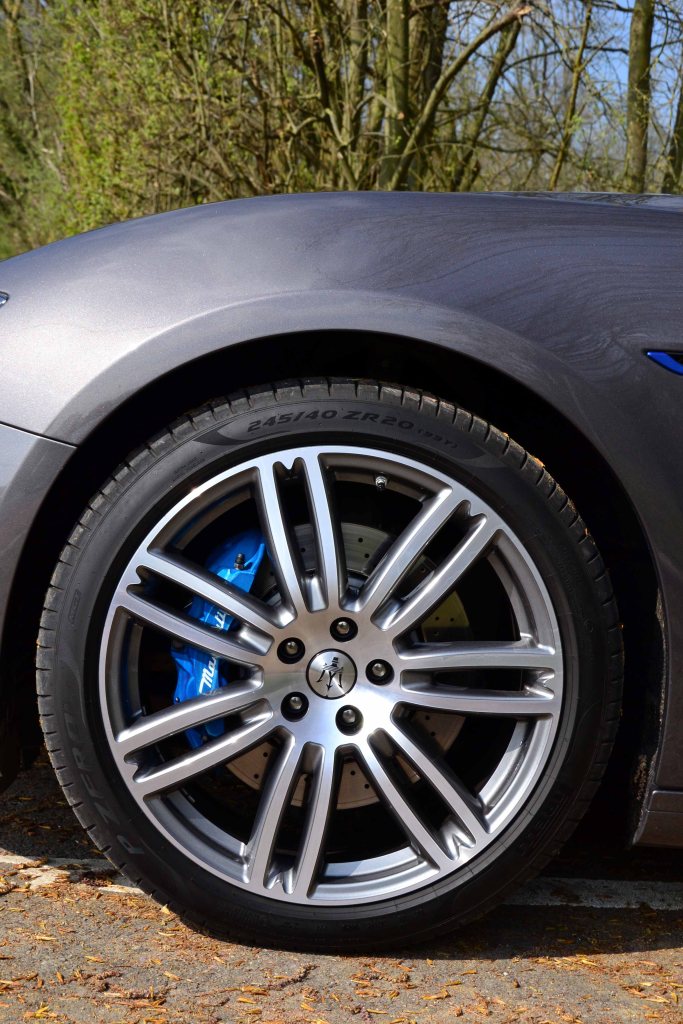
The Ghibli Hybrid is fitted with Dual Cast 360×32 mm ventilated and cross-drilled brake discs with six-piston fixed alloy Brembo calipers on the front axle, while the rear axle is fitted with four-piston fixed alloy 345×28 mm Brembo calipers.
Electrifying elegance and comfort, both inside and out…
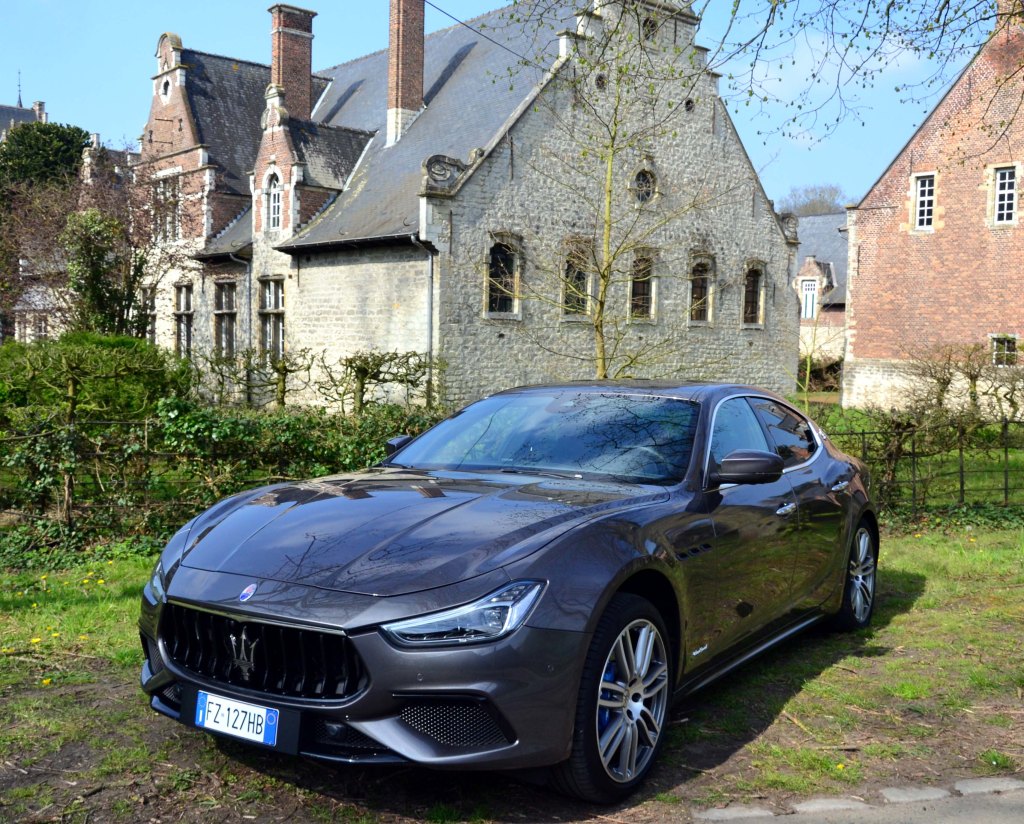
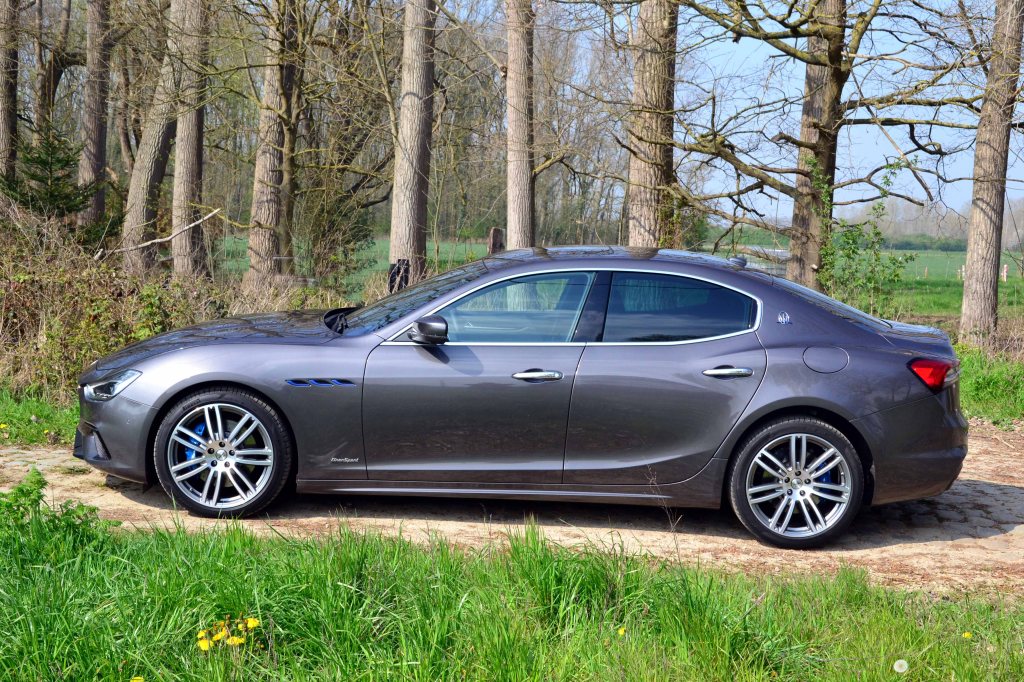
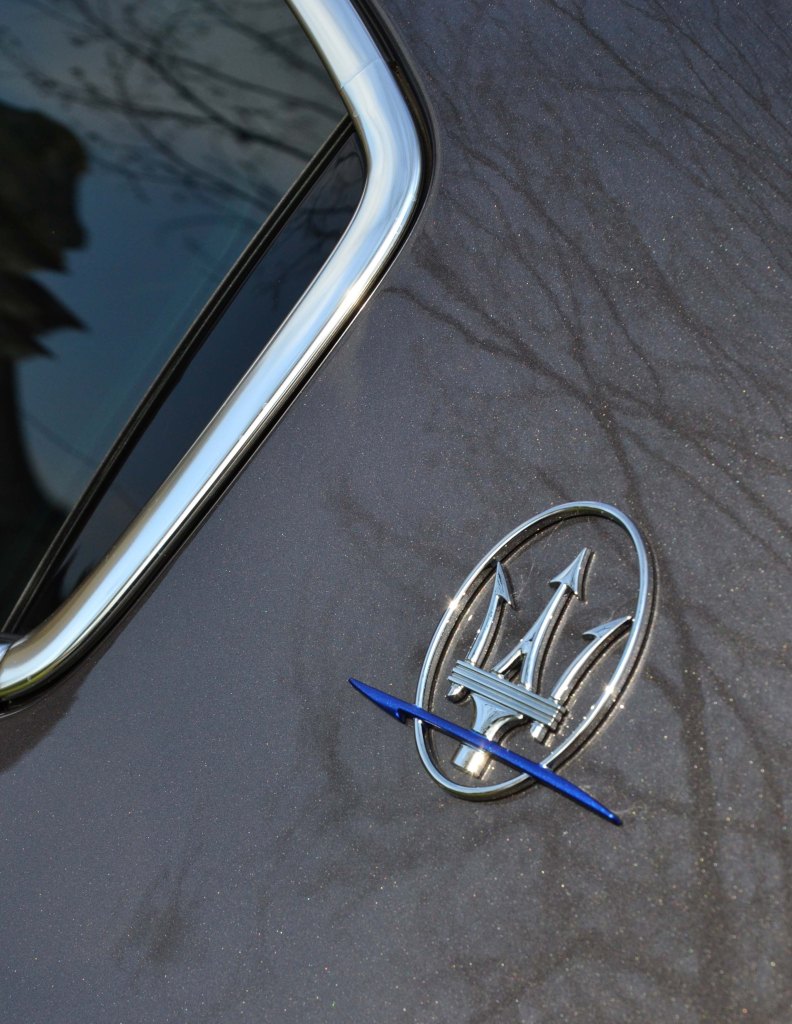
The hybrid version of Ghibli features a number of details in dark blue, the colour universally adopted as the symbol of clean mobility. The three traditional air ducts on the front mudguard have a blue trim, and the Brembo brake calipers and the thunderbolt in the pillar logo are in the same colour.
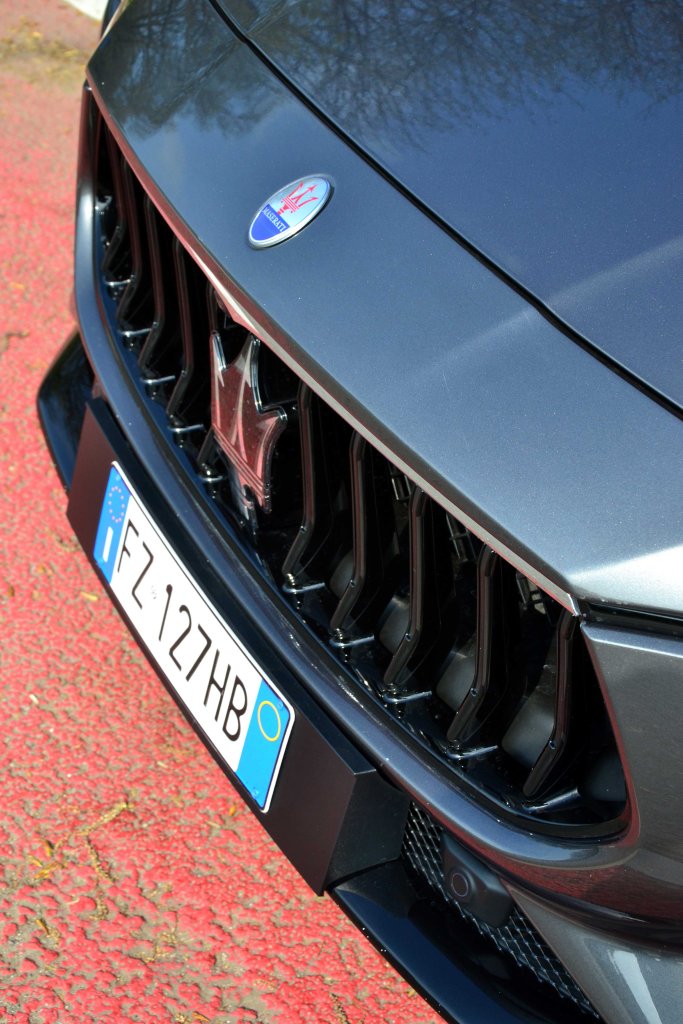
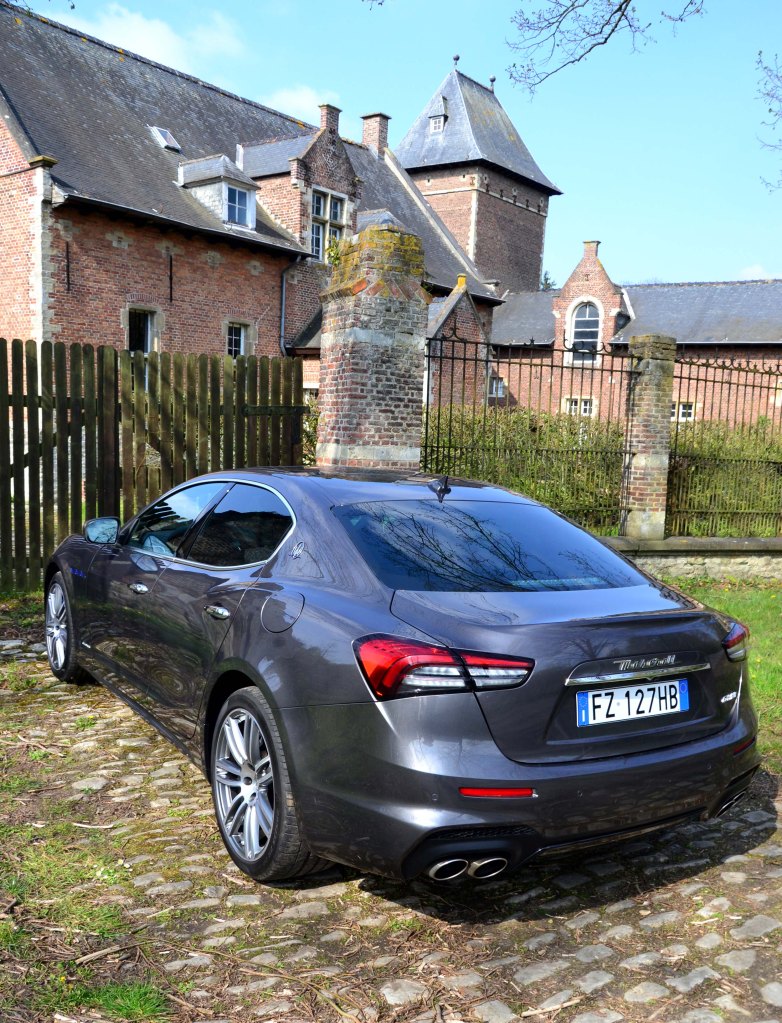
Ghibli Hybrid makes its debut with a new front grille, characterized by a distinctive feature: the Maserati tuning fork. In fact, the updated front grille is based on this shape, and is finished in chrome in the GranLusso trim and in an even more aggressive, sportier Black Piano in the GranSport trim. Like the other cars in the Trident Brand’s range, Ghibli also transforms its rear look, with the development of a new light cluster with a style known as boomerang design, inspired by many Maserati models from history and typical of the Brand’s genetic identity
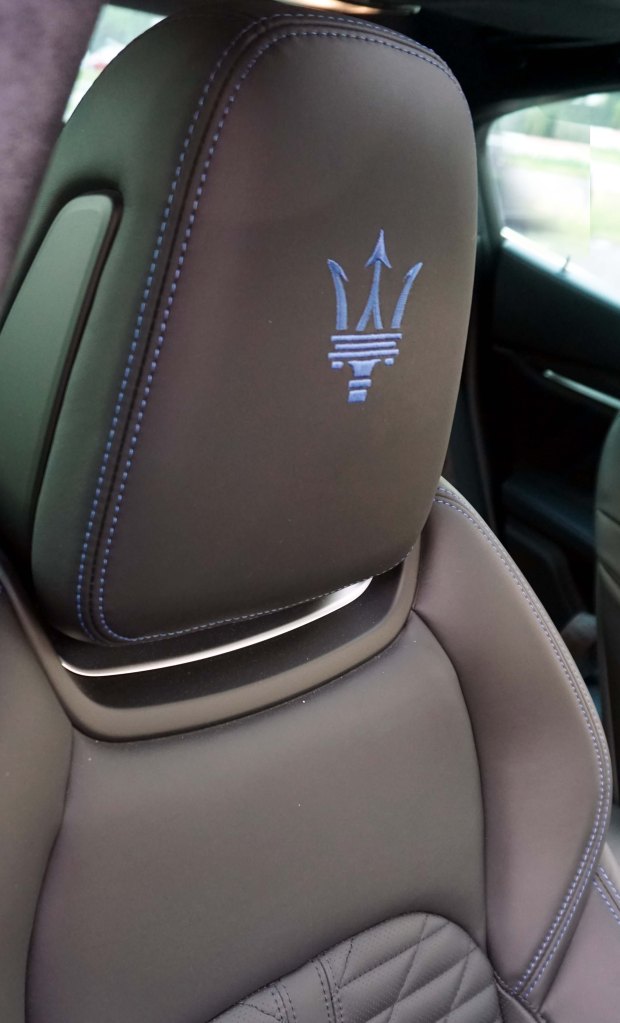
In the interior, the Maserati panache prevails more than ever. The sculpted sport seats are upholstered with a premium full-grain “Pieno Fiore” natural leather, with contrasting dark blue stitching and an embroidered Trident on the headrests. The same styling is repeated on the door panels and instrument cluster.
The driver’s seat offers 6-way electric adjustment, while the GranLusso and GranSport trims both have standard 12-way power front seats. Needless to say, an ideal seating position is soon found…
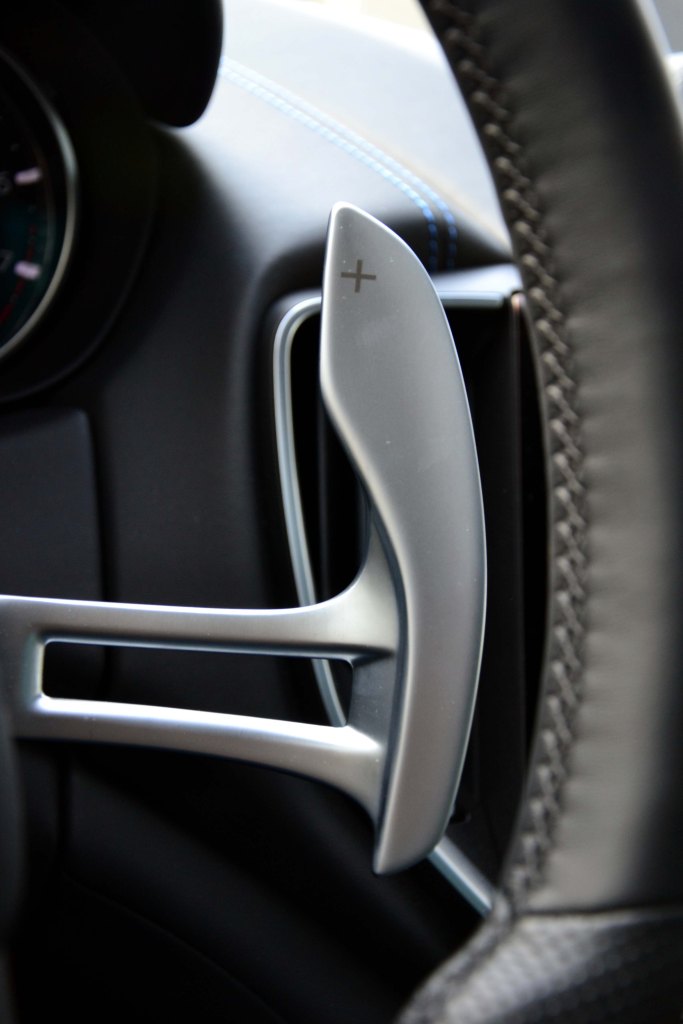
The sport steering wheel fitted with aluminium gearshift paddles, and the Inox sport pedals are also typical for the GranSport trim.
Infotainment and connectivity up to scratch…
The Ghibli Hybrid is complete with all the technology upgrades featured on MY21 models, and thus also the new generation MIA (Maserati Intelligent Assistant) multimedia system. The heart of the MIA is the powerful Android Automotive operating system, with full personalization to the driver’s use preferences. The HD screen of the MIA system is enlarged from 8”4 with a ratio of 4:3 to 10”1 with a ratio of 16:10 and is now frameless for a more contemporary look, with the surrounding bezel almost removed.
With effect from MY21 all Maserati cars are connected thanks to the new Maserati Connect program. Having the Maserati connected at all times enables an eye to be kept on the car’s health, and Maserati Connect will alert the driver when a service is due. With a Smartphone or Smartwatch, drivers can always stay in contact with their Maserati thanks to the Maserati Connect app; this is also possible from home via their virtual personal assistant (Amazon Alexa & Google Assist).
Last but not least we enjoyed the stunning Bowers & Wilkins Premium Surround Sound System, with 15 speakers, a 1,280 W amplifier and QuantumLogic™ Surround.
Driving aids galore…
The Integrated Vehicle Control (IVC) function is incorporated in the Maserati Stability Program control for enhanced active safety and driving dynamics, while the optional active Advanced Driver Assistance Systems provide Level 2 autonomous driving technology.
IVC uses a smart, feed-forward controller that predicts driving situations in advance and adapts the engine speed and brakes accordingly. IVC intervenes more smoothly and with less noise than a traditional ESP, ensures better car balance and traction at the limits of the car’s dynamics and employs intelligent torque vectoring to optimize lateral dynamics in a natural way even when MSP is off. In dynamic test maneuvers, like slalom and lane change, IVC has demonstrated higher drive-through speed and improved racetrack lap times. Wow!
Conclusion
The step towards electrification of its range has been done very harmoniously with this Ghibli Hybrid. Whilst completely retaining the original undistilled thoroughbred character of the Trident brand, it succeeded in putting very reasonable economy in place, in combination of course with a corresponding anticipative (urban) driving style, in line with modern times.
All this packed in a timelessly styled, elegant body which exudes elegance and style for the coming decades, this Ghibli Hybrid is a perfect companion, and is also an ambassador for how you understand motoring and individual mobility, for years to come…
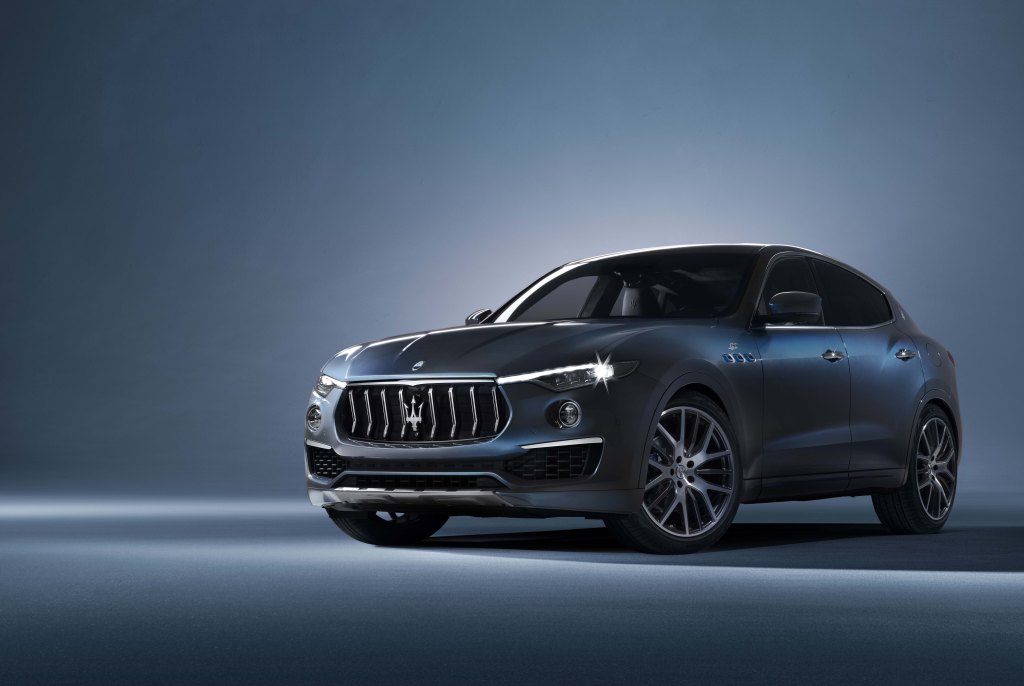
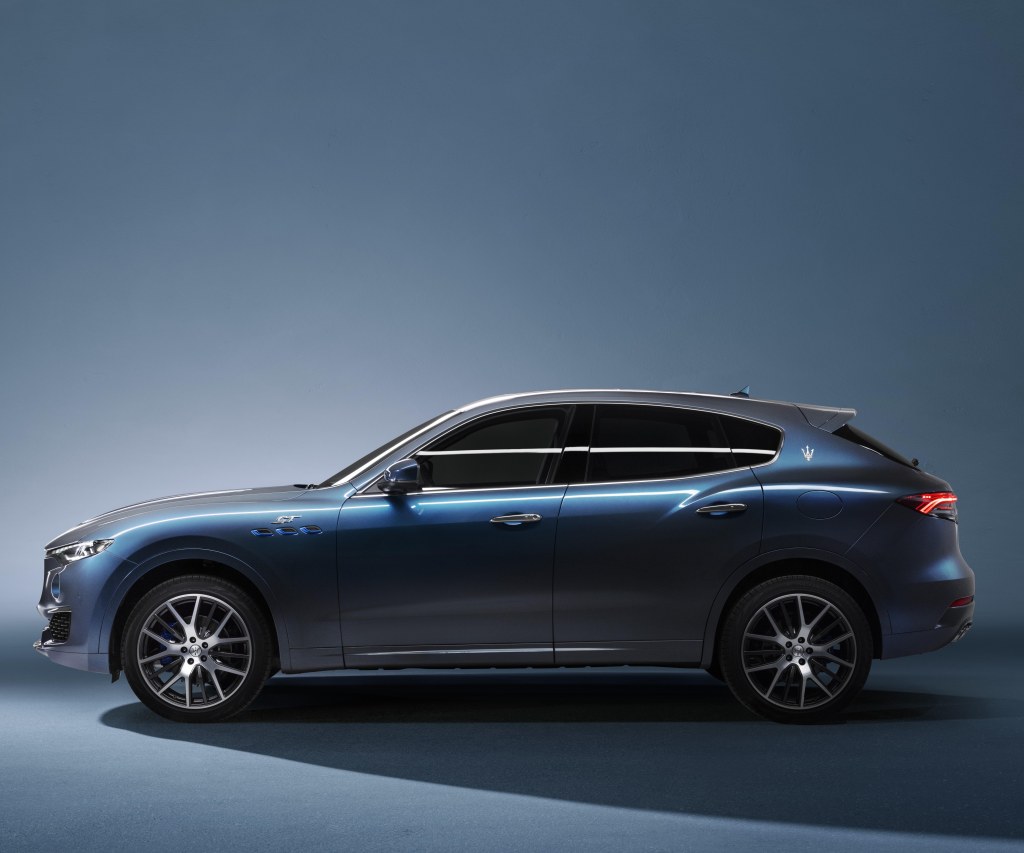
The Levante Hybrid was presented at ist launch in Azzuro Astro color. This metallic paint consists of three layers and is available through the Maserati Fuoriserie personalization program.
The Maserati Levante Hybrid has today experienced both a physical and a digital world premiere. At the time of the car’s unveiling at the Shanghai Auto Show, a virtual presentation has taken place simultaneously on the houseof.maserati.com website.
With its first electrified SUV, Maserati is taking another important step in the future plan launched last year with the Ghibli Hybrid, which will lead to the electrification of all new Maserati models.
“Faster. Cleaner. Unique ” is the motto at the launch: the Levante Hybrid is faster than a diesel, more durable than a car with an internal combustion engine and unique thanks to specific features and details.
The Levante Hybrid combines a two-liter four-cylinder engine with a 48-volt hybrid system that recovers energy during engine deceleration and application of the brakes. The hybrid SUV is lighter than the six-cylinder version (petrol and diesel) and also has a more balanced weight distribution because the battery – without sacrificing luggage space – is placed in the rear of the car. One of the goals during the development of the Levante Hybrid was to take the dynamics and driving pleasure to an even higher level.
With a maximum power of 330 hp and a torque of 450 Nm, which is available from just 2,250 rpm, the four-wheel drive Levante Hybrid delivers impressive performance: the car has a top speed of 240 km/h and accelerates from 0 to 100 km in 6 seconds.
The Levante Hybrid was presented at ist launch in Azzuro Astro color. This metallic paint consists of three layers and is available through the Maserati Fuoriserie personalization program.
The Levante Hybrid is immediately recognizable by the unique details in the exterior and interior. Several elements are finished in blue, a color specifically chosen for Maserati hybrid models. Like the brake calipers and trident on the C-pillars, the iconic side vents are finished in this shade of blue. The same color returns in the interior, including the stitching of the seat upholstery.
With Maserati Connect, the Levante Hybrid is always connected to the outside world. The driver remains fully informed about the technical condition of the car: Maserati Connect alerts the owner when maintenance is required, thus improving the quality of the service. The owner is in contact with the car via the Maserati app on the smartphone or smartwatch. You can also contact the car from home with a virtual assistant such as Amazon Alexa or Google Assist.
The digital world premiere of the Levante Hybrid on houseof.maserati.com has been attended by Maserati’s global brand ambassador David Beckham and Italian songwriter and producer Dardust, who has composed an exclusive soundtrack for the unveiling of the Levante Hybrid.
More soon about this Levante in technical detail. Stay posted!



































 Autoprova - for the Connaisseur