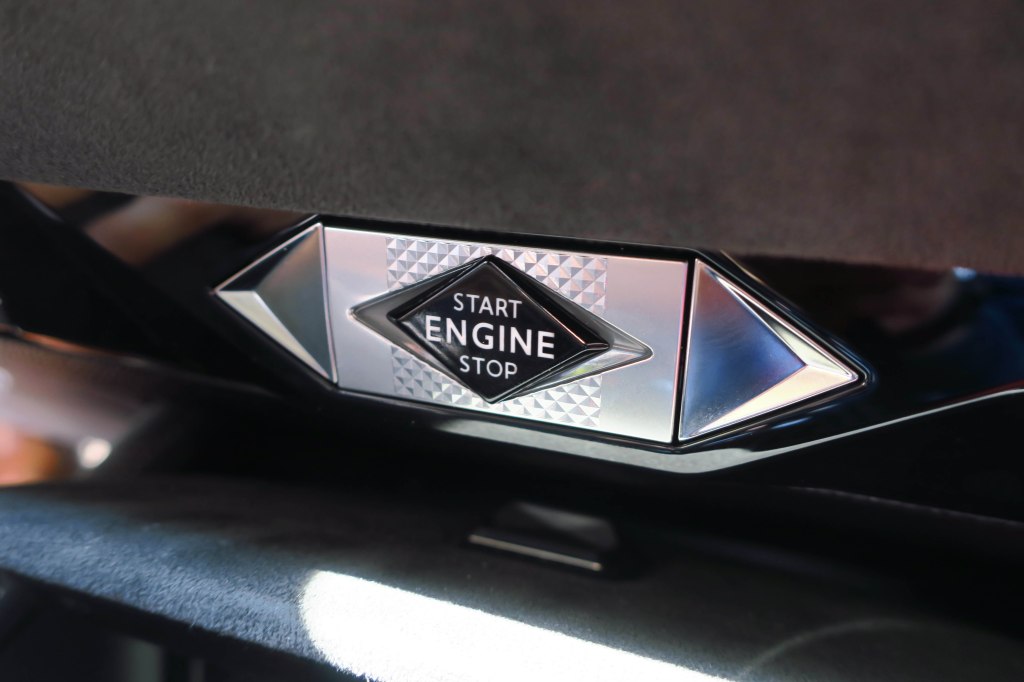
We drove the Citroën C4 BlueHDi 130 HP: the magic of the Double Chevron…

Citroëns have always been quite exceptional cars for me, not onIy the “big” Citroëns, but also the compact cars, beginning with the GS. In the early days of my career as a car journalist, I vividly remember the stylish GS as a test car. Indeed, not only the boxer engine, also the suspension and styling where totally of another league.

I also recall fondly a very fast trip to the Frankfurt Motor Show, with a 1,6 litre petrol engined C4, the generation prior to the Cactus, driving totally relaxed at speeds between 160-180 km/h in pouring rain on the Autobahn, showing superb GT qualities in total comfort. But also the 1,9 litre Diesel versions were extraordinary. I remember the used red BX and the used dark blue Xantia, both of which I drove as long-term test cars for Autokrant. They offered excellent performance, GT panache and comfort, combined with exemplary economy.
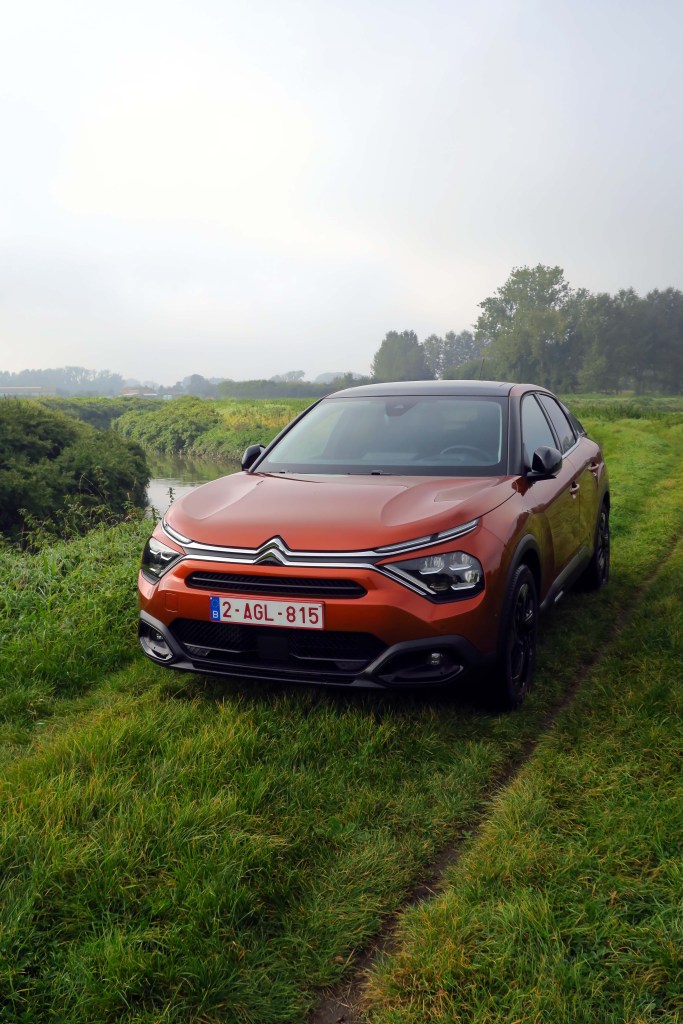
But now let’s turn our nostalgic hearts to the present day C4. To tell you right away, it continues the tradition with its equally unique suspension, Progressive Hydraulic Cushions® and Advanced Comfort seats. It has the same unique personality and character as its predecessors, and even a lot more. Just read on…

Hans Knol ten Bensel

With the new ë-C4 and New C4, actually Citroën’s new-generation compact hatchback, the iconic brand is targeting this time the still very important (European) hatchback market. This C4 has a rather elevated posture, not unlike we see with Asian competitors like amongst others the Toyota CH-R, with the same quite busy styling language.

Citroën says that it wants to combine the dynamism of a hatchback with SUV design forms for added character. With its sloping rear window and spoiler, Citroën says, the rear end draws its inspiration from the 2004 C4 Coupé with its original two-piece rear window topped by an aerodynamic spoiler.

Sliding behind the wheel, we are pleasantly surprised by a restful and uncluttered simplicity, indeed every effort has been made not to distract the driver unduly. The instrument cluster is a superb example of less is more: small dials for water temperature, revs and a digital speed indicator are the only things to attract your attention. The designers have kept these indicators rather small, and indeed your eyes should rather focus on the road and the large colored head-up display. Restful and efficient!

In the centre, at the top of the dashboard sits the ultra-thin borderless 10-inch touchscreen, which is of course the nerve centre of the vehicle’s controls. The controls of the dual-zone automatic climate control – thankfully also physical for immediate access to change the settings – have chrome dials and gloss black push buttons.

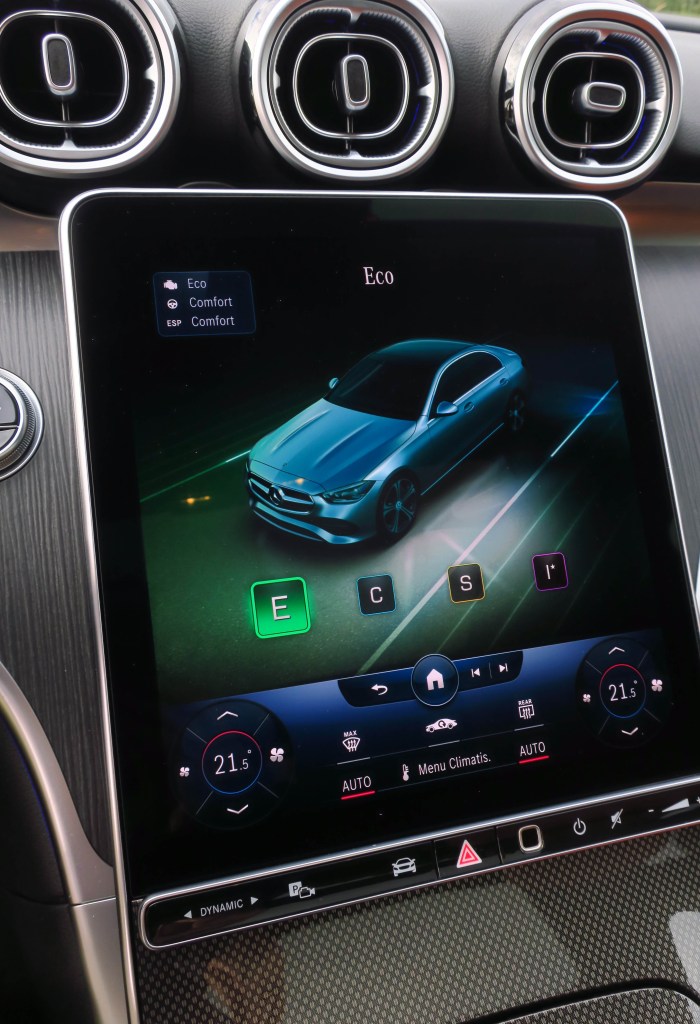
One finds easily his way in this C4. There is also an elegant guilloché metal automatic gear lever. It has the three usual positions (R, N and D) that are backlit for clarity. There are also two backlit push buttons: P to activate Parking mode, M to activate manual driving mode (for conventional engine versions) or B to activate the “Brake” energy recovery mode for the electric version. The console also incorporates the electric parking brake and a driving mode selector that has three settings on automatic transmission versions: Eco, Normal, Sport.

Smooth diesel power combined with a fluent 8 speed automatic…

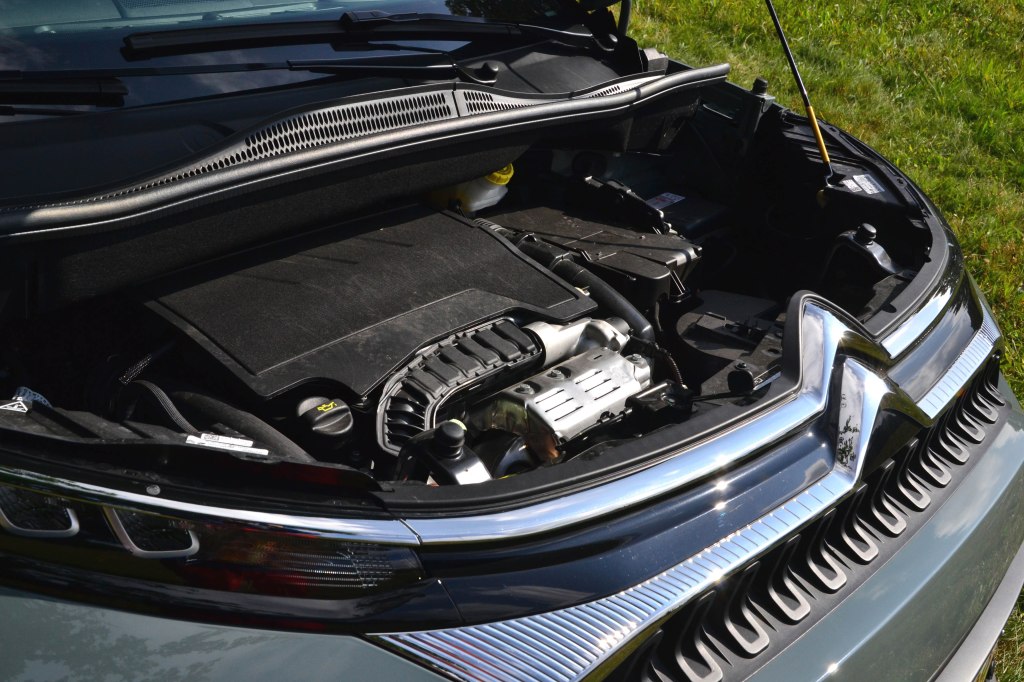
Indeed, we drove here the BlueHDi 130 S&S in combination with the EAT8 Auto gearbox. Here we again were impressed by what a modern 1499 cc four valve turbocharged diesel engine (still) has to offer in terms of velvety power delivery and sheer economy, all this in paired with a state of the art transmission.

Starting from cold, the once so familiar diesel clatter is totally absent: this engine runs smooth, virbationless and silent right from the word go. At speed, it is totally inaudible, and very unobtrusive indeed at urban crawling speeds. The transmission is ideally mated to the engine’s torque characteristics. Indeed, the unit has ample pulling power, developing 300 Nm at a low 1700 rpm. Performance therefore leaves nothing to be desired: it will accelerate smoothly in 10,6 sec to 100 km/h, further to an impressive top speed of 206 km/h. Revs are kept low due to the high final gearing of the transmission, providing very restful high speed cruising. Indeed, maximum power of 96 kW or 130 HP is developed at a very sedate 3700 rpm.

So this C4 has everything in house to excel as a fast “grande routière”, and on top of that there is a truly astonishing fuel economy: we reached an average during our test of merely 4,4 l/100 km!

Legendary comfort…

The C4 is equipped, as standard, with the Citroën brand’s innovative suspension system featuring Progressive Hydraulic Cushions®, which were first introduced on C4 Cactus and C5 Aircross SUV. The suspension setup offers supreme comfort and a “magic carpet ride” effect, according to Citroën. Indeed, comfort is truly top notch. Not less than twenty patents were filed in the development of this suspension system. Its operating principle is simple: the Citroën Progressive Hydraulic Cushions® system adds two hydraulic stops – one for compression, the other for decompression besides the classic metal springs and shock absorbers. The suspension works in two stages, depending on the stresses it encounters.

For light compression and decompression, the spring and shock absorber control vertical movements together with no assistance required from the hydraulic stops. However, the presence of the hydraulic stops means the engineers have greater freedom to tune the setup to achieve the fabled “magic carpet ride” effect, which gives the impression that the car is gliding over uneven road surfaces.

Indeed, with major impacts, the spring and shock absorber work together with the hydraulic compression or decompression stops, which gradually slow the movement to avoid jolts at the end of the range. Unlike a traditional mechanical stop, which absorbs energy, but then returns part of it as a shock, the hydraulic stop absorbs and dissipates this energy. Clever!

The C4 is also quiet: particular attention has been paid to acoustic insulation, with a focus on running and aerodynamic noise. Special attention has been paid to the insulation around the engine block.

…is also found in the seats

The special foam on the surface of the seat, thickened by 15 mm, offers softness and support from the first contact. The new high-density foam at the core of the seats holds the occupants in place during long journeys. The seats are also pleasantly wide and generously dimensioned.

The front seat passenger is also spoiled…

A Smart Pad Support Citroën™ is a World Premiere on New ë-C4 and New C4. It is a retractable system designed to hold a tablet computer. It is solid, functional and directly built into the dashboard. It enables the front passenger to make the most of the time spent on-board. Ideal to put your co-pilot at work to read for you the stories and information about the towns or the regions you travel through, which you have prepared on your IPad or tablet prior to your voyage of course…

The Dashboard tray itself is a large sliding drawer with a cushioned action, positioned in front of the front passenger. It has a special anti-slip surface to store personal items or hold a tablet in place in complete safety. Just great!

Of course there is an open wireless charging area for smartphones, which comes combined with two USB sockets, one of which is Type C.

Infotainment and connectivity galore…

The 10-inch touchscreen, with a capacitive screen that needs only be touched with the tip of a finger, allows the driver to configure the vehicle, access the multimedia system, telephone, air-conditioning and navigation. It also features voice recognition.

Wireless charging for smartphones allows a wide range of Qi-compatible devices to be induction-charged using a charging mat incorporated into the centre console. The wireless transmission of electrical energy is based on the principle of magnetic induction. Connect Play, using the Android Auto and Apple CarPlay™ compatible Mirror Screen function are installed of course.
ConnectedCAM Citroën® is an independent camera system integrated into the base of the rear-view mirror. It uses full HD and GPS technology. The camera allows you to take a photo or video of the outside scene in front of your vehicle, with the corresponding data stored on the integrated 16 GB memory card. Thanks to the WiFi connection, the data recorded by the camera can be transferred to a smartphone to be shared via e-mail or social networks. ConnectedCAM Citroën® continuously films the road in front of the windscreen and automatically saves the recordings in the event of an accident.

As well as driving aids…

The new ë-C4 and New C4 are packed with driving aids – no less than 20 latest-generation technologies in all. That is as many as on C5 Aircross SUV, which is the benchmark for driving aids at Citroën.

Practical and spacious…
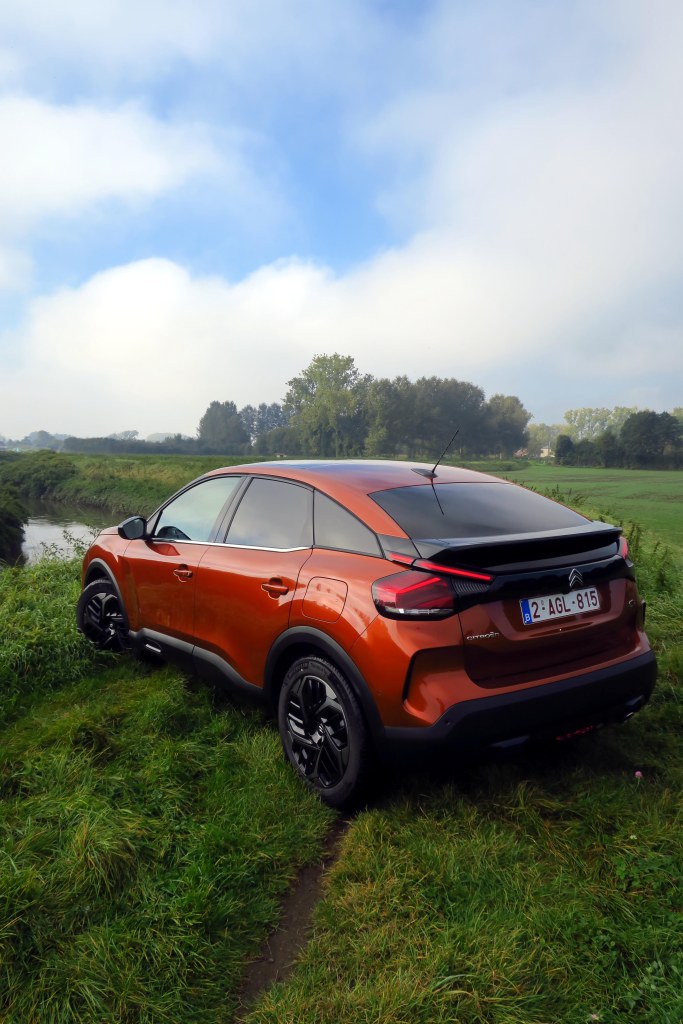
The C4 has a wheelbase measuring 2,670 mm – one of the longest in the segment – delivering the “Best in Class” knee room in the rear at 198 mm. The 1,800 mm exterior width easily accommodates three people in the rear – providing 1,380 mm of width at the shoulders and 1,440 mm at the elbows. Headroom in the back is a bit restricted for the tallest among us though.

With a 380-litre boot and a low, flat loading sill (715 mm), the C4 is at the heart of the segment. For added convenience, a two-position floor allows the boot to be divided into compartments and provides a flat floor when the rear seating is folded down. For even more practicality in everyday life, hooks are present to hang bags, while a ski hatch allows particularly long objects to extend into the cabin.

Last but not least we tell you here that this Citroen C4 is built at its Madrid plant, and Stellantis has spent €144 million in upgrading the factory and designing the new C4.

We also had a short drive with the electric ë-C4, and we tell you soon about our driving impressions… stunning indeed!

Conclusion

In terms of driving comfort, long-legged cruising performance, and last but not least exceptional economy and smoothness, this C4 truly stands in a class of its own. It is one of the most harmonious cars we have come across lately. Its 1,5 litre 130 HP diesel showed us again how formidable these engines have become, offering a useable range of well over 1,000 kilometers.

This C4 breathes originality and character, even more so in the interior, and we can tell you this: just slide behind the wheel of this one, and you will notice, Citroën driving is addictive, and this feeling grows further with every meter you drive it…

Hans Knol ten Bensel

Jacky Ickx to be celebrated at Brussels Interclassics with his ‘81 Citroën CX 2400 GTI “Paris Dakar”

Jacky Ickx has his 75th birthday this year, and the organisers of the Brussels Interclassics decided to celebrate him on the sixth edition of their show, which will be held on the weekend of 19, 20 and 21 November.

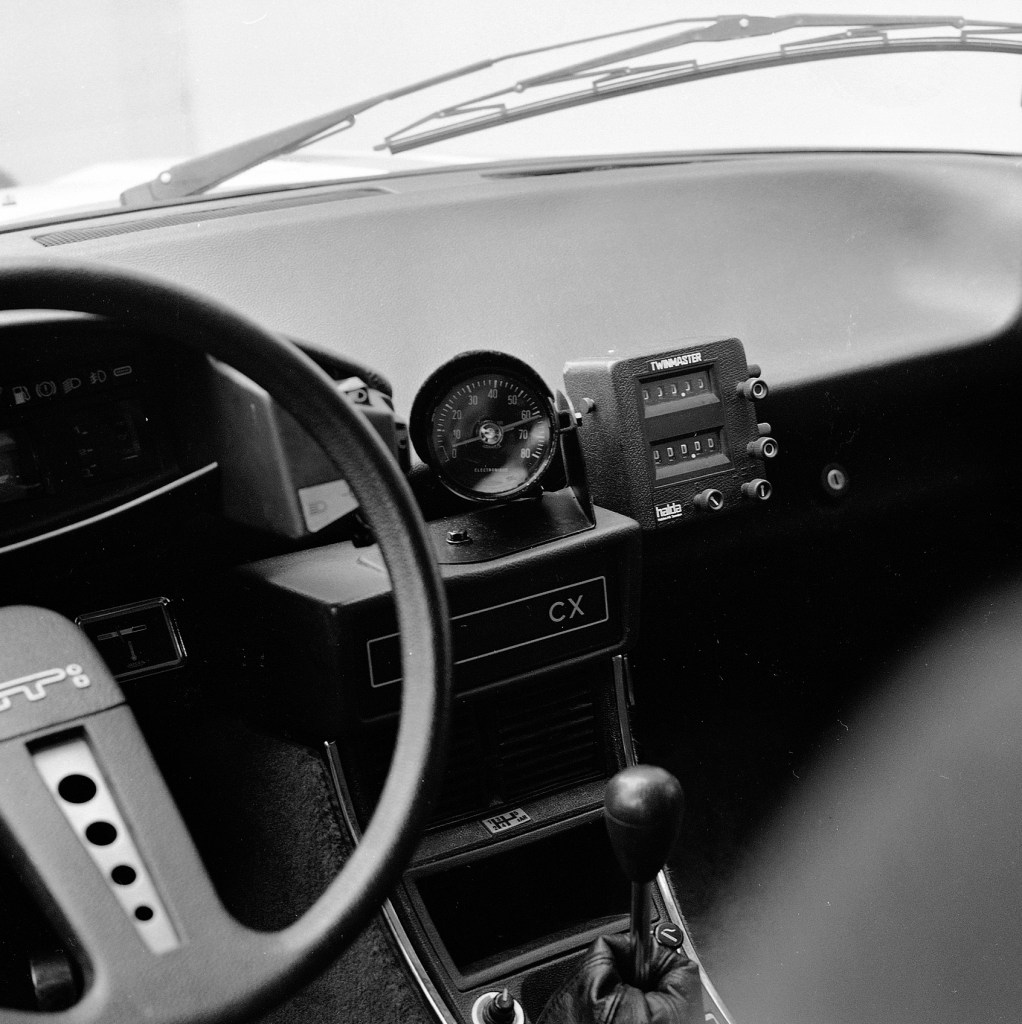
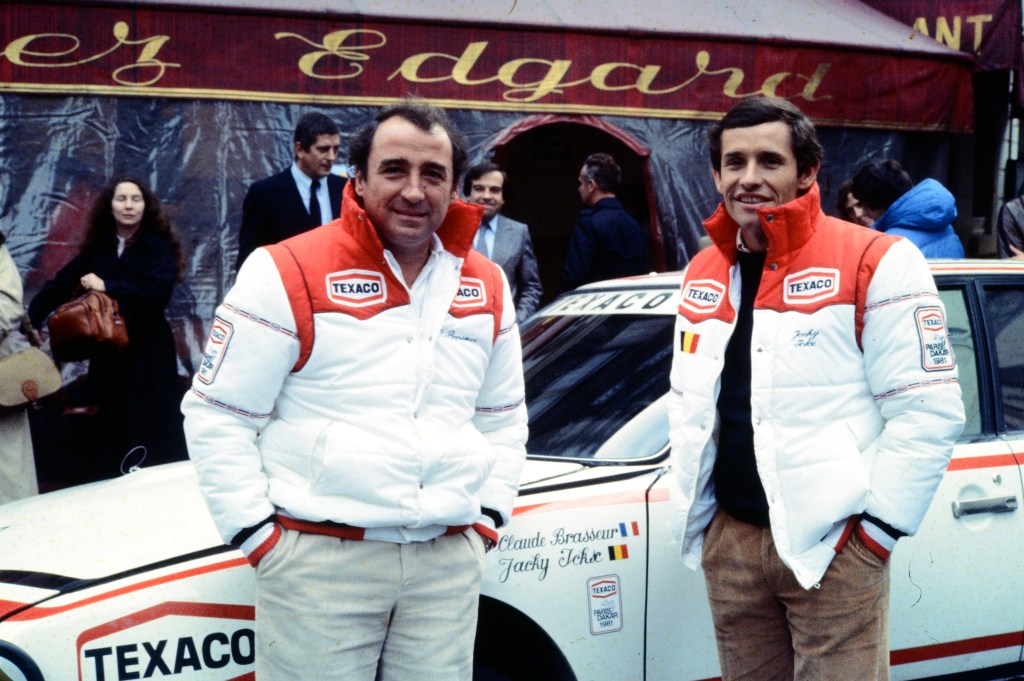
15 cars will be shown on the event, representing the milestones of Jacky’s career. On the central display, a Citroën CX 2400 GTI will also be seen, a perfect replica of the CX he drove on the 1981 Paris Dakar, together with his co-pilot, the French actor Jean Claude Brasseur.

The Citroën CX in Paris Dakar livery was remarkably close to standard, and therefore making a replica was quite feasable…

For the third edition of Paris Dakar, Citroën had entered 4 cars, one in white, driven by Jacky Ickx. The other teams were well trained, Jacky had only seen some film reels of the event prior to the race, and he commented later “Jean Claude and I were total novices to the event, we could have won this race, as the car proved very competitive indeed”.

Nevertheless, Jacky and his team mate led the race, only to abandon in the last stage due to an accident.

The impressive CX 2400 GTI is to be admired in hall 5, stand 5.307. The car is put on the show by CQS Classics, based in Tienen.

We just let you enjoy the photos here, and let you admire how sleek, powerful and efficient these rally Citroëns were in their heydays.

For Citroën enthusiasts, your servant can tell you here Citroëns have always been quite exceptional cars for me, I always cherished the moments I sat behind the wheel of them. I just love their comfort, their unerring stability, even in the worst of weather and road conditions.

Jacky Ickx and his faithful team mate, French actor Jean-Claude Brasseur

My first encounter with the marque of the “double chevron” was behind the one spoked “volant” of a DS 23 Pallas injection electronique, although as a passenger, my memories were even earlier. My aunt in Holland had bought in 1955 a white DS 19, and I sat as a king on the deep blue rear seat, totally smitten by the futuristic design both inside and out, the beautiful and cleanly styled dashboard, the hydraulic commands, the unique comfort and roadholding. My aunt liked to drive with zest, and on the straight but still rather narrow roads, speeds well above 120 km/h were often seen. It felt perfectly normal in this DS. Indeed, the goddess of the road it was called, and deservedly so.

But also the CX left us with indelible memories. I remember driving the CX 2400 GTI – indeed, exactly that model – to the Birmingham motor show. What a delightful Gran Turismo experience it was.

We can tell you here that more Citroën news is to follow: we drove the range of electric Citroëns, amongst others the Berlingo and C4 near Paris, and also tested a diesel powered version of the C4 with the 8 speed automatic, which proved very impressive indeed, showing all the good Citroën qualities.

Stay tuned!

Hans Knol ten Bensel

Our BMW Z3 successfully repaired…

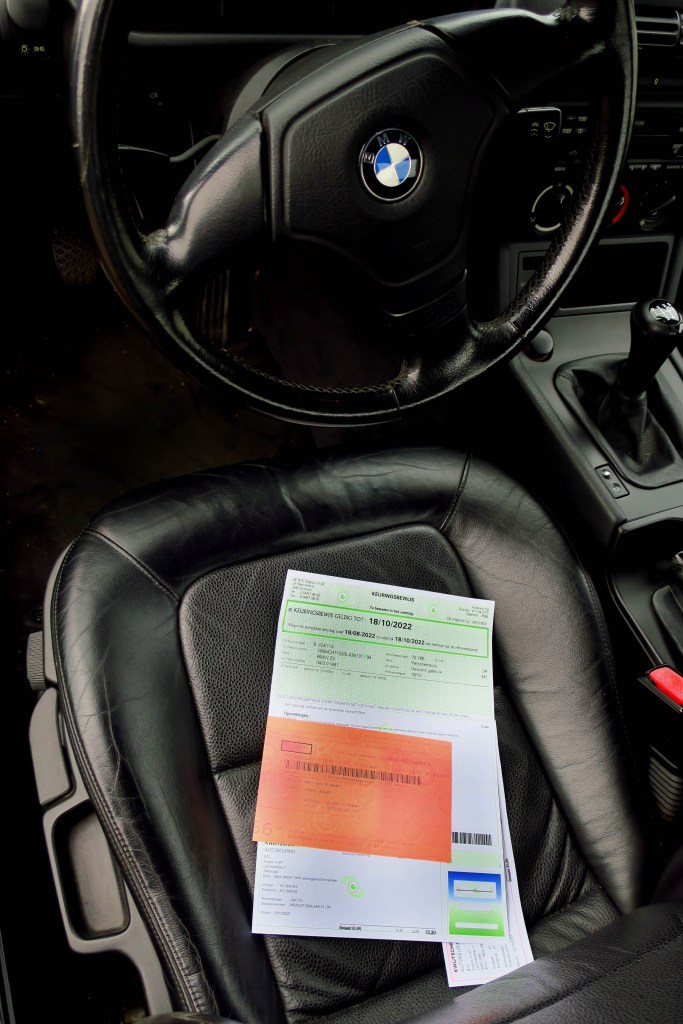
Our pristine Z3 is now fit for the road again…passing the technical control without a hitch.

In these columns you could read about the play in the driver’s seat which prevented our shining mount to pass the annual technical control. As the bushes were very probably worn and the repair was rather intricate as the seat mounts have to be moving strictly parallel when propelled forward or backward by the electric motor, we decided to leave the repair in the expert hands of BMW dealer Jorssen Zuid.

The bushes on the driver’s seat were completely worn out, actually virtually shredded!

I first thought that only the driver’s seat had play, but closer inspection by the mechanics of Jorssen revealed that the passenger seat was also rocking fore and aft in its rails. This was not noticed by the inspectors of the technical control.

Then they ordered the parts necessary for the repair, which were 2 sets of guide bushes for 23,96 Euro each (ex VAT) and 8 six sided screws at 7,27 Euro each, again ex VAT. It brought the total cost of all the necessary parts for this repair to 106,08 Euros, ex VAT.

The bushes on the passenger seat witnessed the same fate…

The Jorssen mechanics then proceeded to remove the seats from the car. Removing and again installing the seats cost in total 35 minutes, the repair itself, disconnecting and reconnecting the electric motors, replacing the bushes, reinstalling everything and ensuring than the seat attachments are perfectly parallel cost in total 1 hr. 10 minutes.

Finally a 10 minute driving test was executed. The total cost of the repair, ex VAT, amounted to 316,17 Euros.

Very reasonable we would say, and BMW Jorssen is not only to be applauded for its diligence, it is also very comforting to see that the parts for a 1997 built BMW are readily available.

We asked the people at Jorssen also to take some photos of the worn out bushes, for the sake of our report here, showing indeed that they were completely worn out and even literally torn to pieces.

Fit for the road again for another year with a green technical control card…

This shows again how it important is for premium – and actually for all car manufacturers – to test and inspect the quality of each part in their products. Cutting corners in quality can impair not only the reliability, but also the security of their products.

Needless to say that the subsequent technical control went without a hitch, and our beloved Z3 is again totally fit for another year on our roads. It is even allowed to drive around in the emission zone in Antwerp until 2024, and this also puts a broad smile on our face…

We just let you look at the photos here, and soon we will proceed with a thorough cleaning, protecting and rejuvenating of the leather of the nice seats of our Z3…

Stay tuned!

Hans Knol ten Bensel

We drove the Mercedes C 200 Luxury Line: setting the pace again…

After the new S Class comes usually the new C Class with systems and functionalities found in its bigger brother, to set new benchmarks also in its D segment.

Driving the new C200 Luxury Line Limousine, we can say that the brand with the star has fully succeeded. This car stands out in its class, discreetly but with assurance… Just read further.

Hans Knol ten Bensel

S-Class looks…

The C Class breathes the styling language of its bigger brother, if you look merely at the front and rear end. The profile of the C Class is then again marked by the bigger door window areas. The overhang over the rear wheels is slightly longer, and this makes the car look more elegantly stretched, just like the S-Class. The car is also some 6,5 centimeters longer than the previous C-Class generation, breathes panache, looks modern and is purposefully aerodynamic.

…also in the cabin

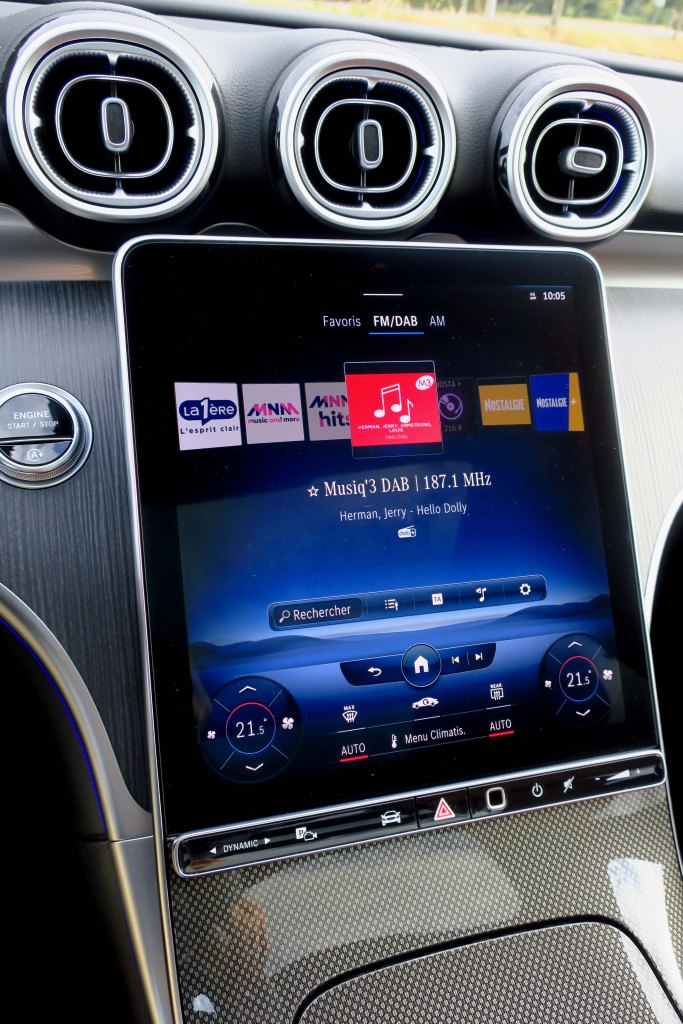
In the interior, the family resemblance with the top of the line S-Class is even more marked. Sliding behind the wheel, one immediately is overwhelmed by the two big digital screens, one in front of the driver, and another one in massive Tesla style on the centre console.

The Mercedes MBUX system is developed now close to perfection, and even novices soon find their way intuitively through the very logical buildup of the system. And if you would still get lost, there is always the voice command. Just say ‘Hey Mercedes’ and say what you want done…

We loved the 360° camera parking aid very much. The system is so clever, that sometimes you want the system to be even smarter, for example, in situations where one approaches a kerb with the front end of the car when parking in a bay, you would like the front end camera to start up automatically to show you how close you are. Now you first have to push the camera button on the centre console, or use reverse gear first.

You would also want the camera system to get into action automatically – even accompanied by an alert sound – if you get with one of the stylish 18 inch alloy wheels too close to a trottoir border, fence or other obstacle. Now you are left all too often to guesswork. Maybe there is a mode for it, but we did not find it intuitively. The seats are excellent, and adjustable in every conceivable way. Also the rear passengers enjoy enough legroom, thanks partially to the well curved backs of both front seats.

State of the art propulsion…

The 200 C has a 1,5 litre DOHC four cylinder under the hood, developing not less than 204 HP with 300 Nm of torque. If that wasn’t enough, there is also an E-boost of 20 HP and 200 Nm. A small battery will store kinetic energy when decelerating and braking, delivering then its power for the extra boost when called for. The performance leaves nothing to be desired: This 200 C accelerates from 0 to 100 km/h in merely 7,3 seconds, its top speed is not less than 247 km/h. The engine is almost inaudible and superbly smooth, provided you don’t push your right foot too deep. When you accelerate hard from standstill or low speeds, the unit lets it heard as it frantically revs through the gears, and one clearly feels and hears that a smaller thoroughbred engine is at work here.

At motorway cruising speeds, things get silent and smooth again, not least because of the high final gear of the superb 9 speed automatic gearbox, ideally mated to the engine.

There are of course several driving modes to choose from, and we liked most the ‘ECO’ mode, where also the E-boost is best felt. The small capacity of the engine has its advantages in economy, and the manufacturer quotes 6,4 liters/100 km as average WLTP consumption. Don’t expect however this C 200 to be exceptionally frugal however in urban driving. This is a 1,5 tonne car and when you drive it with verve, power is needed. The official figure is 8,7 liters/100 km, and very short distance urban errands with very slow traffic will push the consumption well over 10 liters/100 km. There is no secret, in partial and varying load driving, diesels are so much better…EQ-boost or not.

Comfort is to be expected, and this Luxury Line C Class has the Agility Control Damper system as standard. The fundamental setting is already quite firm, so we opted for the comfort mode, which already supports a very spirited driving style with excellent stability and handling. Steering is also precise, and the C Class doesn’t’ mind being driven with verve. The seats also keep you firmly in place, and this goes for the passengers as well.

Road noise is well suppressed, and we enjoyed fully the Burmeister 3D surround sound system in our test car.

Conclusion

Our test car came fully equipped, from electronic adjustable seats to a panorama sunroof and keyless entry. This is how a Mercedes should be, although our less lavishly equipped 1,6 litre B Class which is now more than 4 years old pleases us every day we drive it. It is the balance, workmanship, thorough engineering, overall smoothness, solidity and pervading sense of security which make a Mercedes, and this C 200 continues the good tradition…

Hans Knol ten Bensel

We drove the Citroën C3 Aircross: a compact car with panache…

We have always loved Citroëns for their comfortable ride and indeed, their idiosyncrasies. In character and design, we found them always really stand out. Some models really oozed with pure panache, and we mean here of course the DS/ID and the 2 CV. But there were others, like the well styled GS with its air cooled four cylinder boxer engine and also the CX. Today then we are still totally smitten by the elegant C6.

This quest for originality we find back in all the models of the present range, notably the C3 Aircross which is the subject of our test here. The well rounded styling language stands out, and touches of character are added with the side cushions (Airbumps) which protect the bodywork from the rigors of modern urban life.

The Aircross has now a completely new grille and a revised light signature, as has been introduced on the 2020 C3. On the technical side, Citroën is – as could be expected – reaping the rewards of the Stellantis Group: the C3 shares its platform with the Opel Crossland X.

The dual tone paintwork adds extra panache, and also in the interior the dashboard architecture and air vents underline the original personality of this Citroën. We liked the instrumentation with its round dials, the judicious positioning of the new 9 inch infotainment screen and the look and finish of the seats. This Citroën is a car to live with and enjoy in daily life. Everything is well placed and easy to use.

Comfort comes first…

Like we said, Citroën means comfort, and this is immediately felt in this C3, right from the first metres you drive it. The suspension is pleasantly soft and copes very well with potholes and irregular pavés, although, as we said, it shares its platform with the Crossland X.

Sitting cozily in our seat, we moved the lever of the six speed automatic in “D” and basically left it there. The newly developed three cylinder 1199 cc engine develops a healthy 130 hp when coupled to the automatic transmission and this is more than enough to guarantee very lively performance for this 1150 kg heavy C3. It goes from 0 to 100 km/h in less than close to 10 seconds and its top speed is over 190 km/h.

But comfort is to be enjoyed here, and we did not adopt a too enthusiastic driving style with our test car. We just enjoyed the elegant and smooth progress. The C3 rewarded us also with low noise levels and very good economy when driven with restraint. The modern, direct injection three cylinder is silent, even under power, and when one adopts a more sedate driving style, the consumption stays close to 6 litres/100 km, even in urban driving. On the open road, cruising at legal speeds will deliver a consumption between 5 and 6 litres. CO2 emissions are quoted as some 116 g/km.

The automatic transmission is smooth and matches the engine characteristics very well.

The suspension is set up for comfort, and this means that the C3 will not really invite you to throw it around corners, although the handling is quite good. Remember it’s also the Crossland platform, it is just that body roll is more noticeable. In long, fast bends the C3 behaves wonderfully, as a “grande routière” befits.

But then the C3 treats you very well on urban pavés and frost ridden secondary roads. Straight line stability is excellent and the C3 is therefore well at home on autoroutes.

The Aircross version has some terrain capacities; we liked the driving aids like Grip Control and Hill descent Assist.

The seats are also very comfortable and have been further improved in this latest generation C3. Citroën calls them now “advanced comfort” seats, and are provided with extra 150 mm high density foam inserts. There is ample head and legroom for the front passengers. In the rear, seating conditions are a bit more cramped, but for children and smaller adults, everything is just fine.

Practical

Luggage space is good for its class with 410 litres, and this can be expanded to 520 litres when the rear seat is shifted forward. The seats can be folded in 40/60 split fashion, and when both are completely down, some 1289 liters are available. The rear sill is rather high, but not unduly so.

Our test car came with a 9 inch touch screen, and of course the screen of your Smartphone can be mirrored via Apple Carplay, Android Auto and Mirrorlink. The C3 also has an 120 degree camera built in the rear mirror, which can be actuated with a button or activates automatically in case of accident. You can even use an app to transfer the video to your Smartphone.

Not less than 12 driving aid systems are provided, and indeed, compared with the competition, the C3 is indeed lavishly equipped. On this Aircross version there is as we mentioned for instance grip control and hill assist descent control, and a coloured head display to top it all. It spoils you also with coffee break alert, rear view camera, hands free access and keyless starting, traffic sign recognition, active safety brake, automatic headlight dimming, park assist, lane departure warning, dead angle warning, driver attention alert and last but not least park assist.

Add to all this the panoramic roof, and you will agree that pleasure is to be had in the cabin of this C3.

Conclusion

The C3 is quite impressive in its class, with very good all round qualities and above all excellent comfort. You can take it as well for an extended urban (shopping) trip as on that long Gran Turismo tour along European motorways and winding mountain passes, it feels equally well at home in both!

It is sufficiently compact to be practical in our cities, yet offering enough room for a family of four including their luggage. With the 130 hp engine and the six speed automatic, there is more than enough zest to keep even de most demanding drivers happy, and they will also keep smiling at the pump. Add to all this the pleasant personality, with the Aircross version even the character of a compact SUV, and you will agree that this C3 deserves your attention when you are in the market for a compact car…

Hans Knol ten Bensel
The Zoute Grand Prix 2021: living now in everyone’s heart…

The Zoute Grand Prix inspired young and old to take out their beloved classics…

This year’s edition of the Zoute Grand Prix has been spreading over several Flemish cities now. Bruges and Ostend have stepped also in the game.

This year we were of course in Knokke, but decided to live the event through the public and bystander’s eye.

The Zoute Grand Prix has indeed grown into a formidable event with a very wide and large public impact. For Knokke Heist, it has become the busiest weekend of the year, with absolute record hotel bookings.

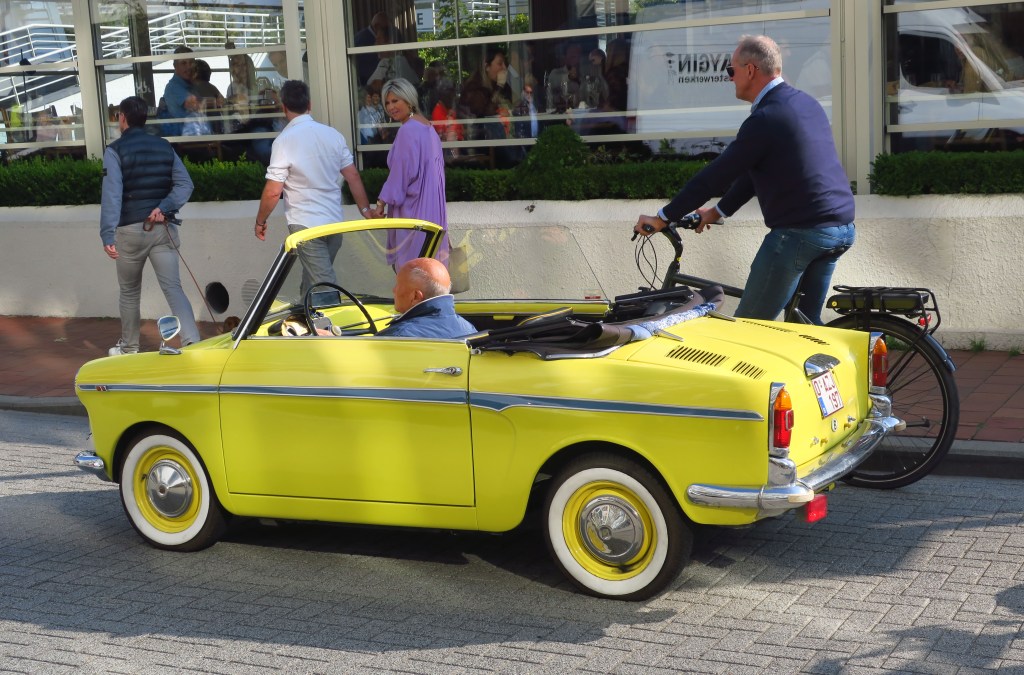
It raises the spirits of car lovers of all ages, and many are those who take out their beloved young- or oldtimer out for a spin on the Knokke streets during the event, and have their own very personal Grand Prix.

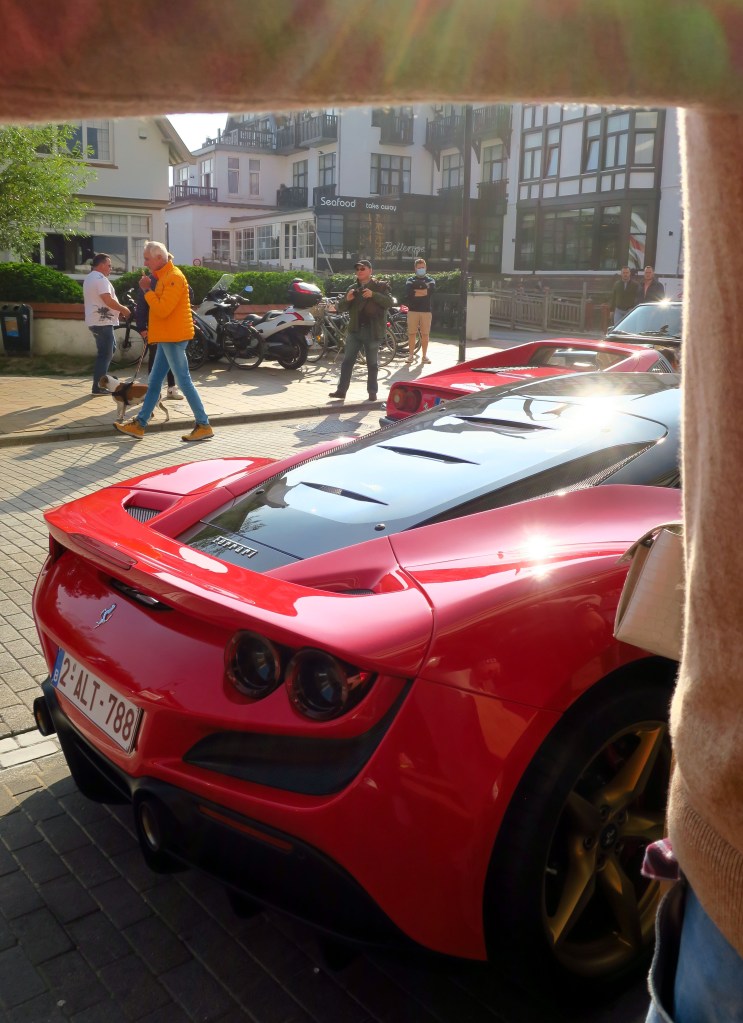
There are also a lot of new and very recent cars around, many of them with tuned exhaust to add some extra drama to their Knokke sortie.

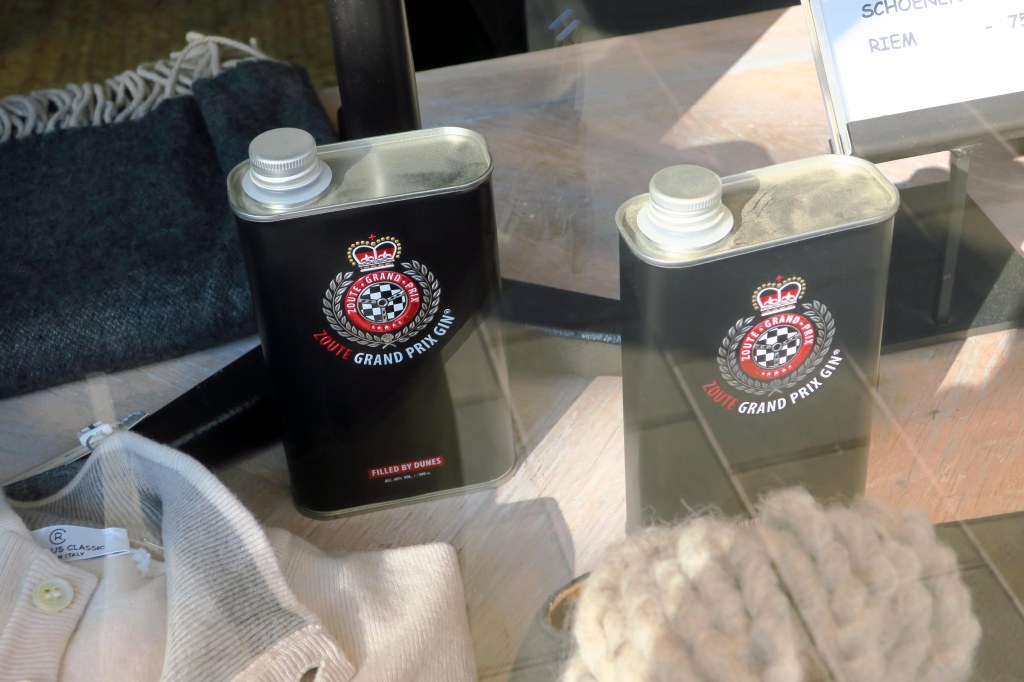
Shops of every kind in Knokke had arranged their showrooms and added to their shop windows a specific touch referring to the theme of the event.

Even your daily(?) gin can be enjoyed – literally – in the spirit of the Zoute Grand Prix…

We just let you enjoy some of the snapshots we took on the Knokke streets, where, we must admit, no EV’s or electrified cars were to be seen for near or afar this weekend…

Classic racing cars can also run like clockwork…
Capelleschi Gallery, specializing in car paintings, added with a Ferrari flag to the theme…

We will report on the actual event, including the Bonham’s auction and the Concours d’Elegance in these columns soon!

Hans Knol ten Bensel

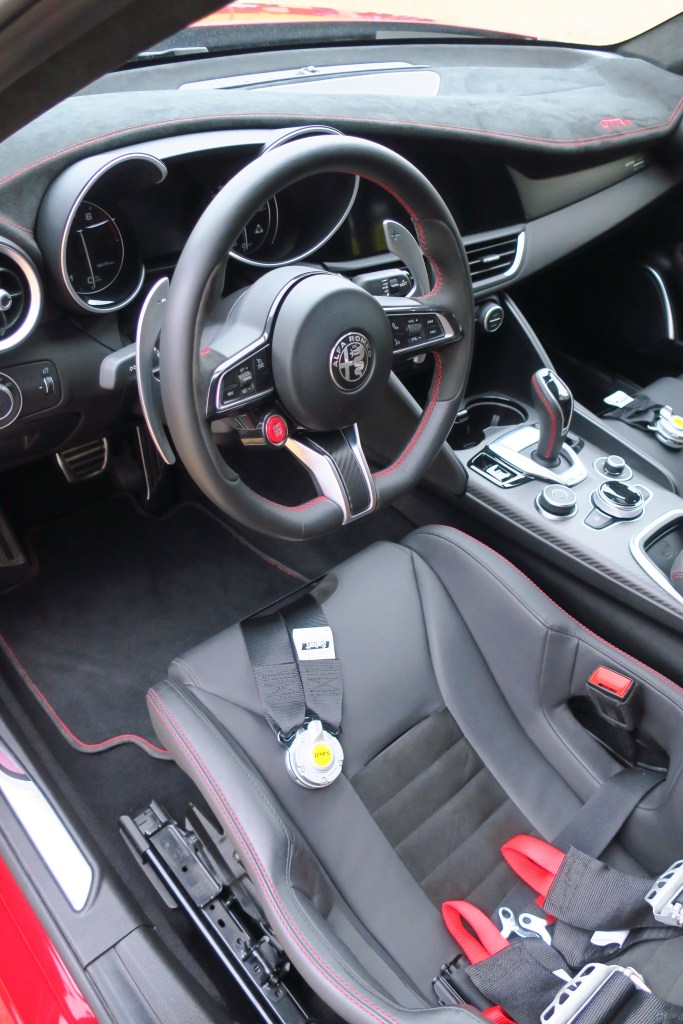
The Alfa Romeo Giulia GTAm, which Kimi Räikkönen and Antonio Giovinazzi drove during the Belgian F1 GP, on display at the 2021 Zoute Grand Prix

Alfa Romeo will be present at the 2021 edition of the Zoute Grand Prix, which will take place in Knokke from 6 to 10 October. “I am delighted that the Alfa Romeo brand can once again participate in the Zoute Grand Prix this year, especially as we have been participating since the first edition in 2010,” said Patrice Duclos, General Manager of the Alfa Romeo brand for Belgium and Luxembourg.

This year Alfa Romeo will participate in the Zoute Grand Prix with a car with a special history: the latest Giulia GTAm, of which the limited edition of 500 cars has now been sold out. “The Giulia GTAm on the Alfa Romeo stand at the 2021 Zoute Grand Prix is ​​not only an exclusive car, but also of particular interest to us,” said Patrice Duclos. “This car was driven by our two drivers of the Alfa Romeo ORLEN Racing F1 team on the eve of the Belgian F1 Grand Prix last August. We can say that this model has a historical side that should interest car enthusiasts in our country!”

In all respects, the Giulia GTA/GTAm is a collector’s car. All 500 numbered units, introduced to the international press last May, have since been sold to customers worldwide, including a significant number in China, Japan and Australia, making the Giulia GTA an international commercial success.

RAIKKONEN Kimi (fin), Alfa Romeo Racing ORLEN C41, GIOVINAZZI Antonio (ita), Alfa Romeo Racing ORLEN C41, portrait during the Formula 1 Belgium Grand Prix, 12th round of the 2021 FIA Formula One World Championship from August 27 to 29, 2021 on the Circuit de Spa-Francorchamps, in Stavelot, near Liège, Belgium – Photo Florent Gooden / DPPI

An exclusive video

On the occasion of the 2021 Zoute Grand Prix, Alfa Romeo offers its fans a unique testimony about the Giulia GTAm, with a video in which Kimi Räikkönen and Antonio Giovinazzi, the two official drivers of Alfa Romeo ORLEN Racing, take a seat in the car. They can be seen leaving the Hotel de la Source in Spa, right next to the Formula 1 circuit, to take the roads from Spa to the heights of Balmoral. This video can be viewed via the following link: https://we.tl/t-fcEfX7EsEm

First appearance of the new Alfa Romeo Stelvio 6C Villa d’Este

The Alfa Romeo Stelvio 6C Villa d’Este appears for the first time at the Zoute Grand Prix and is offered with the 210 hp 2.2 Turbo or the 280 hp 2.0 Turbo, both four-cylinder aluminum diesel engines with carbon fiber crankshaft, combined with an 8-speed automatic transmission and four-wheel drive (Q4). In addition to the exterior paintwork, the special series features chrome side window surrounds and 21″ five-hole alloy wheels.

This new limited edition is inspired in terms of colours and design elements by the elegance of the 6C 2500 SS Coupé produced by Alfa Romeo in the 1940s…

Come and see them in Knokke!

Hans Knol ten Bensel

We drove the Jeep Wrangler 4xe: the iconic Jeep now comes with e-power…

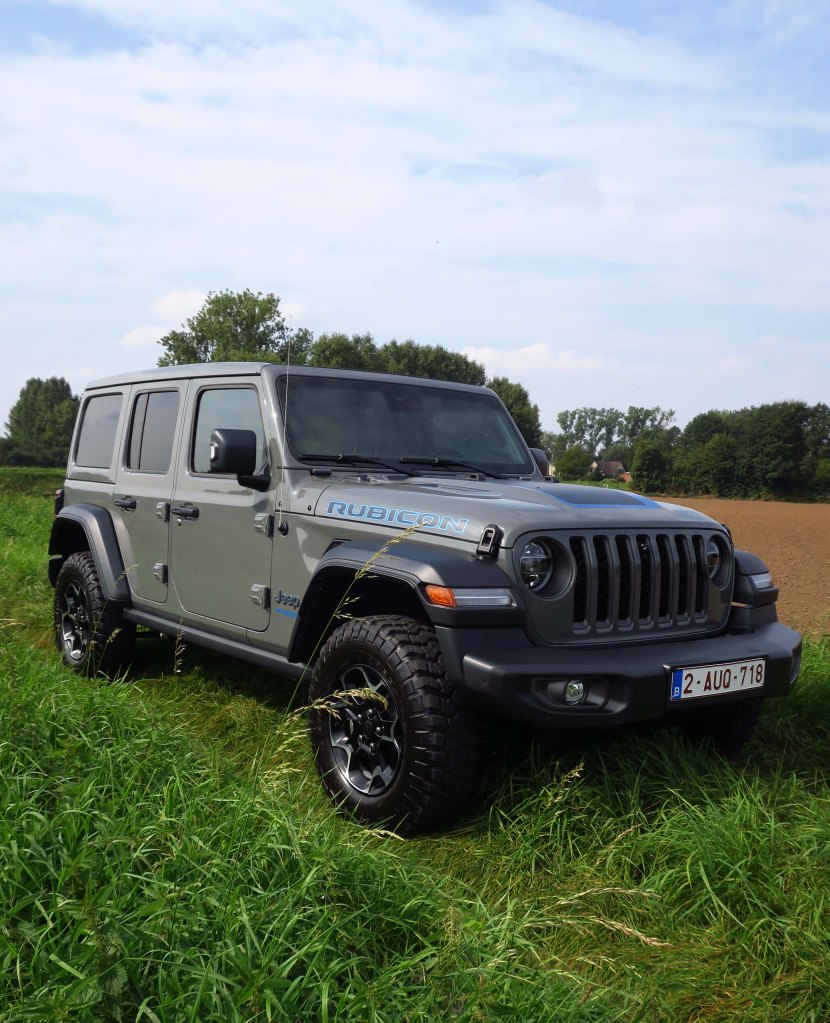
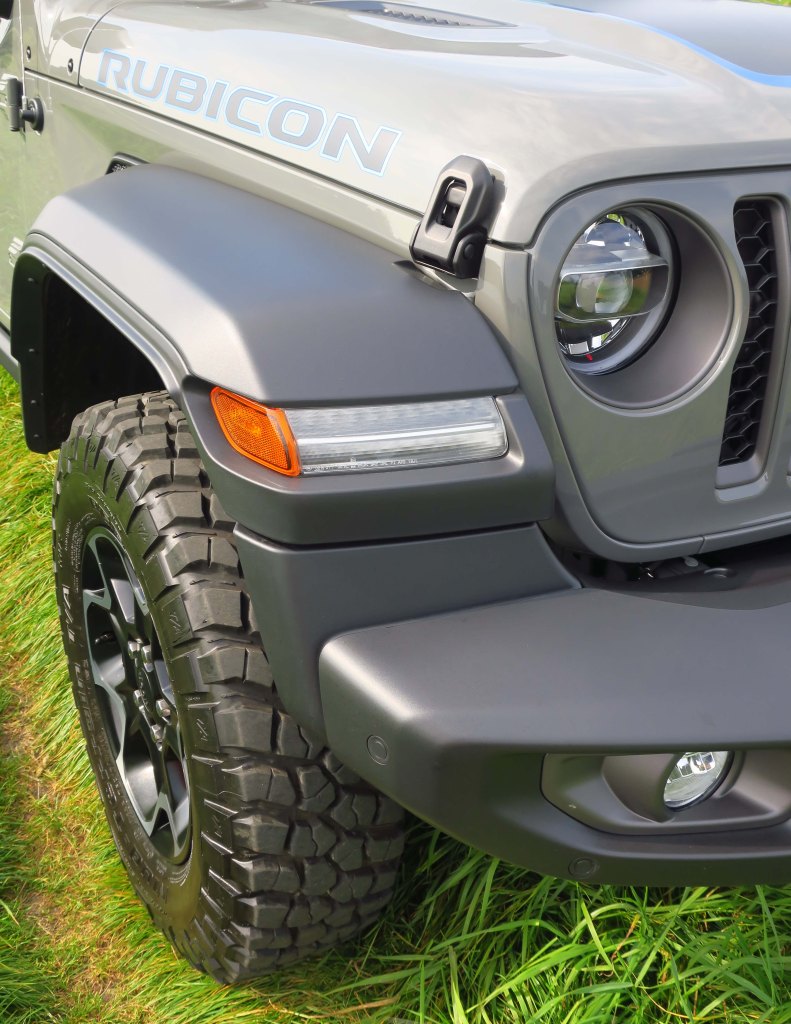
The blue stripes on the hood show it: this Jeep runs also on E-power…

We drove the Jeep Wrangler in its authentic Rubicon livery in plug-in hybrid form, aptly called 4xe. We can tell you right away: this e-Jeep has lost strictly nothing of its legendary off-road capabilities, on the contrary even. In the meantime, the Jeep 4xe owner can now steer proudly into a green world: when using the plug-in function, one can enjoy the merits of e-motion, and this is both excellent for both environment and your wallet…

Just read further!

Hans Knol ten Bensel

Every bit as authentic as it ever was…

Walking toward and around the Jeep Wrangler Rubicon is already a feast for the eye and mind: this Jeep has got terrific looks, and we are certain you will continue to admire and cherish it for many years to come.

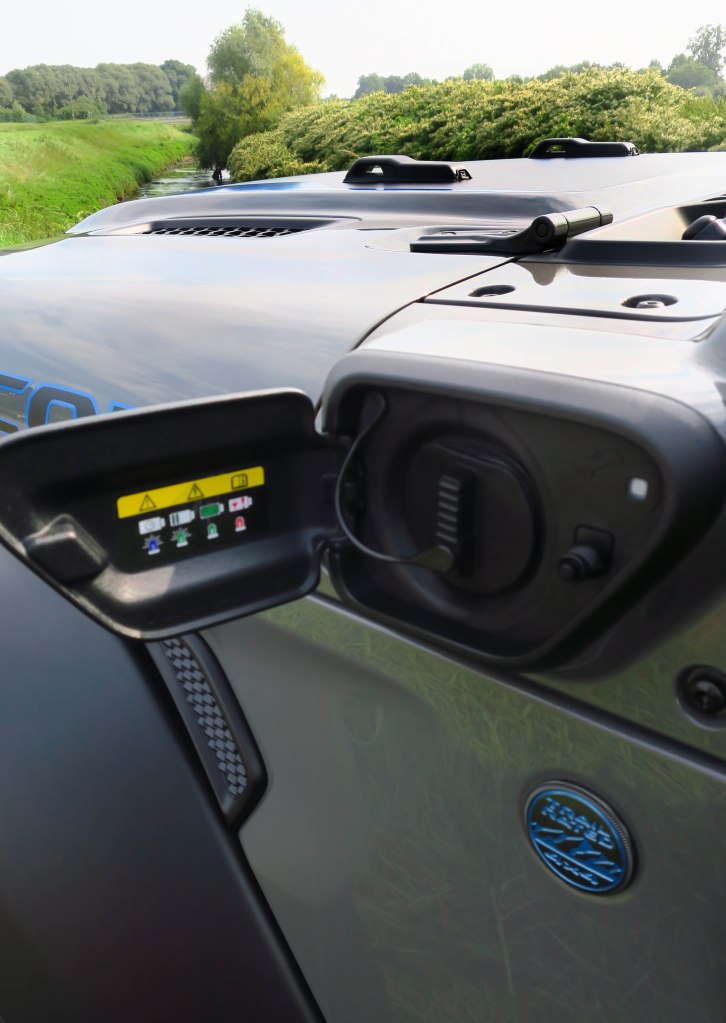
The Jeep styling people are indeed masters in the art of designing a car full of character and panache, and they succeeded in adding some “electrified” touches to its exterior just to suggest to the purist that this car also runs on e-power. Some blue touches betray this indeed, like the Electric Blue tow hooks at the front and rear, and the blue theme which we find in the Trail Rated badges and other graphics elements across the hood and body.

We like the subtle charging port mounted high on the front driver’s side fender, which does not disturb the Wrangler’s looks at all.

A superb, “vintage” cabin…

Stepping, or rather mounting high up behind the wheel of the Jeep Wrangler you enter into a unique, somewhat vintage world; the dashboard and steering wheel are rather close to your chest, with the windscreen not being far off either.

Round instruments are facing you, although the infotainment age has definitely also made its entrance here. We just love it, this tightly laid out dashboard and driver’s space. Jeep has been around for many decades now, and this you should feel and touch.

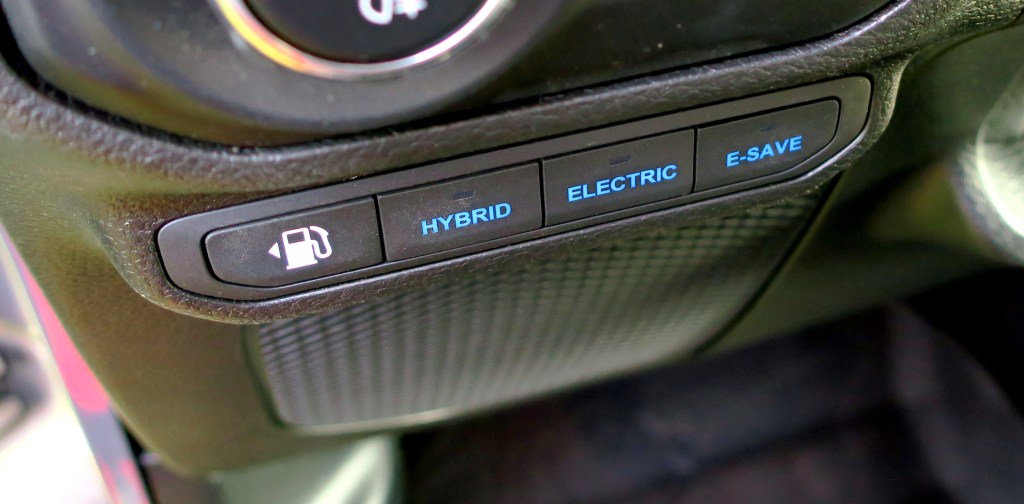
The electronic age has quetly ushered itself into this dashboard by three blue buttons which sit discreetly left to the steering column.

… with the choice of three driving modes

With these buttons, you can indeed select three ways the e-power of the battery is coming to the wheels.

Hybrid: The vehicle will switch between all-electric mode and hybrid, and the computer calculates out how to use the two in order to achieve the best possible fuel efficiency. Regardless of the mode selected, the 4xe operates as a hybrid once the battery nears its minimum state of charge.

Electric:  The 2-liter turbocharged 4 cylinder engine remains off unless the vehicle determines that extra power is required. It will then turn on the petrol engine to add power, or switch to hybrid mode when the battery is depleted.

E-Save: The 4xe operates as a hybrid and maintains the battery’s state of charge. There’s also an additional setting in this E-Save mode which allows you to actually charge the high voltage battery pack to a higher state of charge using the 4-cylinder engine. We liked this mode very much, as this is very future proof: on any longer highway or cross-country trip, you can charge the battery so you can use its power to get you beautifully around in a totally zero emissions town (up to some 50 km or thereabouts on a full battery), a situation we will encounter rather sooner than later if one sees how regulators all over the world are now taking measures to achieve a greener, low-emissions planet.

E-power to go…

Indeed, this Wrangler can act daily as your ideal electric vehicle. If you charge it regularly and drive everyday not more than some 40 kilometers that is. Then the power of the 17 kWh battery, of which approximately 15 kWh is usable, will get you around. Progress is silent, and the only thing we heard was the impressive rolling noise of the all-terrain tyres of our Rubicon. Remember, this is a true Jeep, and your ears should hear this…

Just flow along with the traffic, and the 4xe (pronounced “four-by-e”, like four-by-four) will reward you with a very useable e-range.

Fuel consumption depends greatly on how you mix electric with combustion power…

The fuel consumption or rather the overall economy you achieve with this (or any, for that matter) plug-in hybrid depends totally on how you use it. Short distances, frequent recharging and a relaxed driving style will deliver top notch economy, any amount of longer distances, infrequent recharging or heavier right foot will cost more energy and also more fuel. It is as simple as that. Physics have no miracles in store for you. Manufacturers will indicate the fuel consumption under the most ideal ratio between e-power and combustion engine, but, as said, this is a full-blown Jeep, which is also an absolute master off-road, so do not get over enthusiastic…

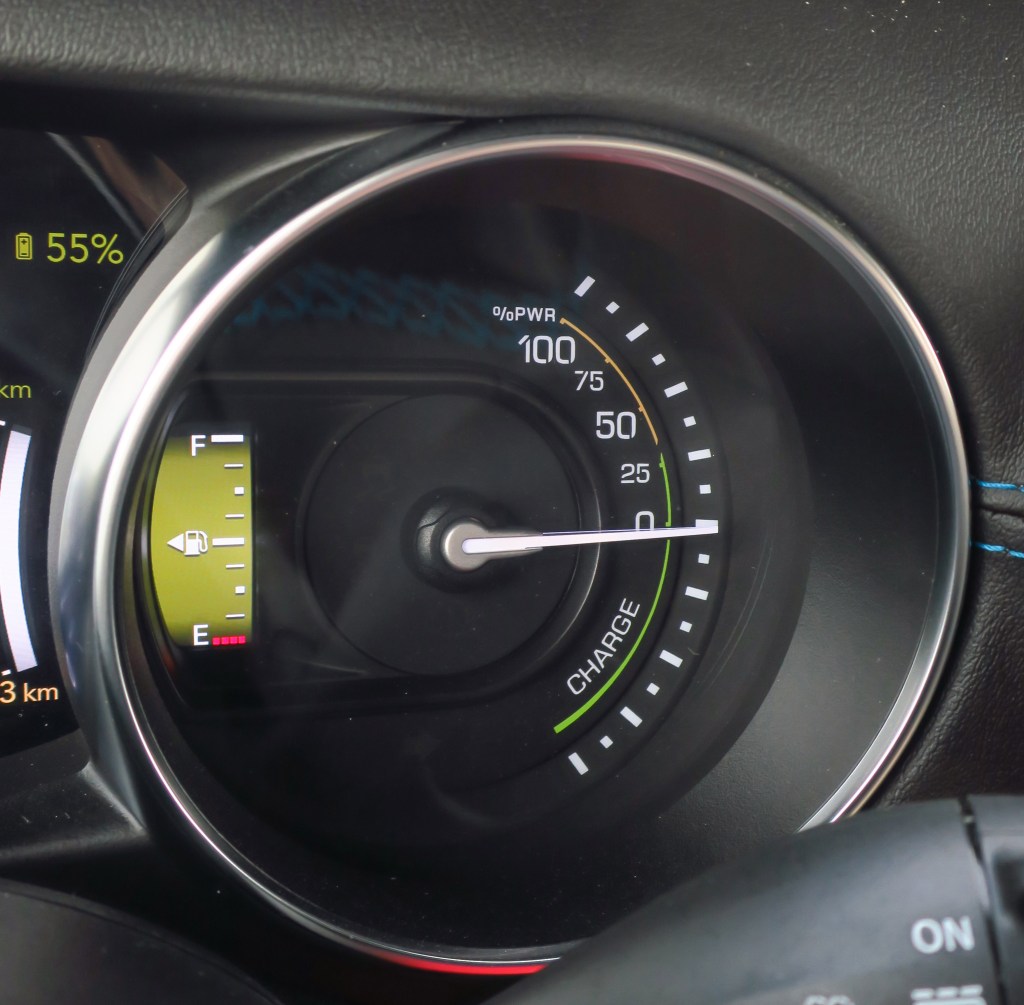
Stay in the “green” zone, using about 25 % of available power, and your consumption is very reasonable. Also, you enjoy your Wrangler at the wheel a bit longer every ride!

On our test, we drove the Rubicon in a rather restrained manner, taking into account that wind and road rolling resistance greatly rise when the speed builds up. So on longer trips, using mostly the engine power, we achieved averages between 8 and 8,5 litres/100 km, rolling along with the traffic flow. When we met very tight (urban) traffic conditions, we just relied fully on e-power. The manufacturer quotes a fuel consumption of around 3.5 liters/100 km in hybrid mode with CO2 emissions lower by almost 70% compared to the petrol version, all this according to the WLTP cycle.

Charging is also a rather easy operation, courtesy of specific public and home charging solutions with the easyWallbox – ensuring a full charge in less than 3 hours at 7.4 kWh – offered by Free2Move eSolutions (a joint venture between Stellantis – through its subsidiary FCA Italy S.p.A. – and Engie EPS) and Mopar®.

Retaining all the qualities of a true Jeep…

The 4xe is powered by Jeep’s 2.0-liter turbocharged four-cylinder engine, aided by a small starter/generator motor. It is similar in design and function to the eTorque mild-hybrid motor, though this one operates at 400 volts rather than 48.

Sandwiched between the gasoline engine and the standard eight-speed automatic transmission — replacing the torque converter — is the larger, main electric drive motor. A pair of clutches connect it to the gearbox and the gasoline powerplant, allowing the combustion engine to be completely decoupled from the wheels for full-electric driving.

Further on, there is the identical four-wheel-drive system, two-speed transfer case and locking differentials as the non-hybrid Wrangler.

Of course, the most important thing about the 4xe is that it’s still a Wrangler; it still must deliver on the go-anywhere capability that name commands. And this it does.

Don’t forget that this Rubicon has an impressive crawl ratio and relies of course on the excellent torque of its main electric motor. The 4xe’s PHEV extra motor and battery adds to the weight of the Wrangler, but the position of the battery actually improves weight distribution. It also lowers its centre of mass, making this Jeep even more sure footed.

Brilliant performance

Mind you, the Wrangler 4xe has 380 hp of maximum combined output and peak torque of 637 Nm. This means that the Wrangler 4xe accelerates from 0 to 100 km/h in 6.4 seconds…

All the infotainment and practical versatility you need…

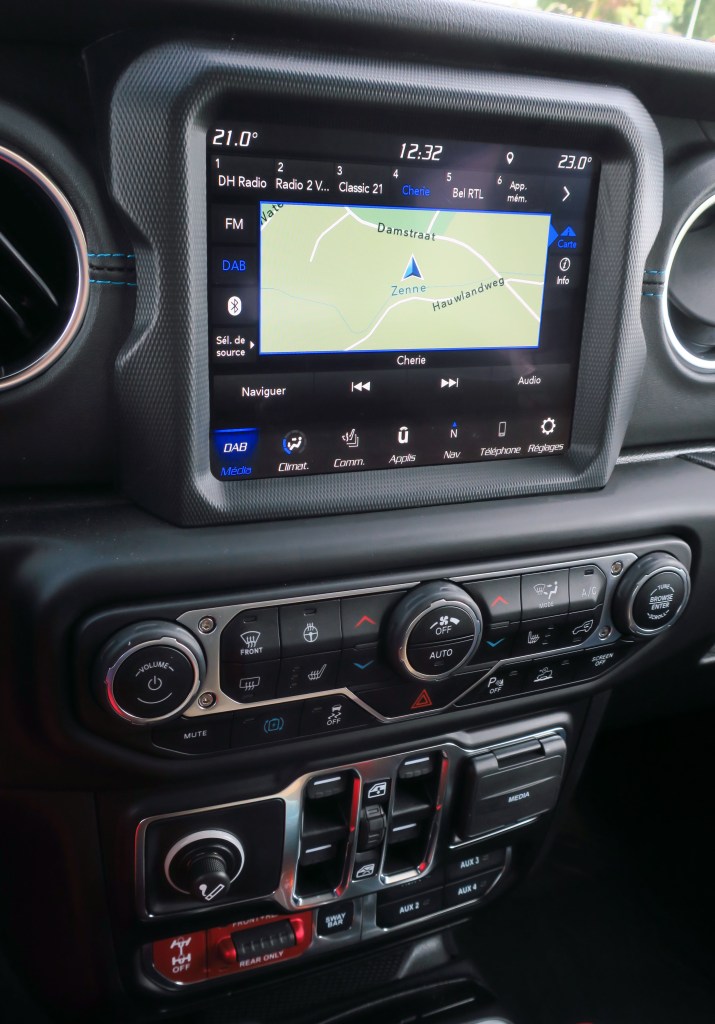
The 4xe Wrangler includes standard the 8.4-inch Uconnect™ NAV system with touchscreen, comprehensive on-board connectivity with Apple CarPlay and Android Auto smartphone integration and Uconnect Services (for the monitoring of the vehicle’s parameters through the My Uconnect app).

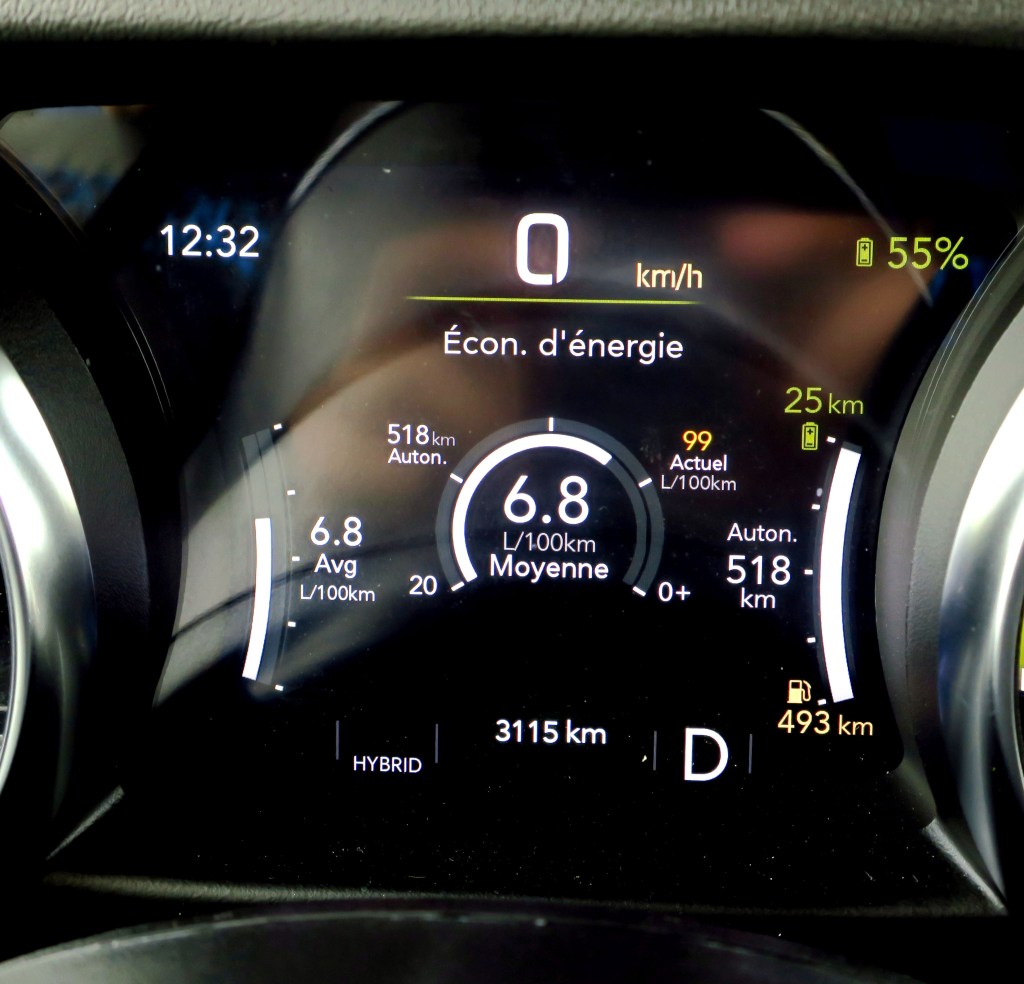
Specific of the 4xe models’ is the 7-inch TFT display with information on battery charge levels and range (in electric and hybrid modes), 9-speaker Alpine audio system with 552-W subwoofer.

In terms of safety, the new Wrangler 4xe offers the most advanced ADAS systems, including standard Blind Spot Monitoring with Rear Cross-Path Detection, rearview camera, Electronic Stability Control (ESC) with Electronic Roll Mitigation (ERM), front and rear Park Assist and Keyless Enter’n’Go™. Optional safety features include Adaptive Cruise Control, Forward Collision Warning Plus and new forward-facing camera (which is standard on the Rubicon).

Conclusion

The Jeep Wrangler in this 4xe version is now more versatile and future-oriented than ever. It has also retained all its iconic off-road qualities, looks and panache. So despite being an enthusiast’s car, it now is endowed with many practical qualities, which make it not only pleasant, but also eminently reasonable to use it every day. And a long life with this Wrangler is also made more interesting with the immense array of accessories which are available by the Mopar® brand: indeed you can select more than 100 accessories for your cherished Jeep…

Hans Knol ten Bensel

We drove the DS 4 in Chantilly…

Driving is believing, the saying goes, and this is especially so for the latest model of DS automobiles, which is built by the brand to be a benchmark in the C-Segment in terms of comfort and dynamic refinement.

We started our extended test drive with the E-TENSE plug-in hybrid version, combining exhilarating performance with smooth responsiveness and interesting economy. Just read further…

Hans Knol ten Bensel

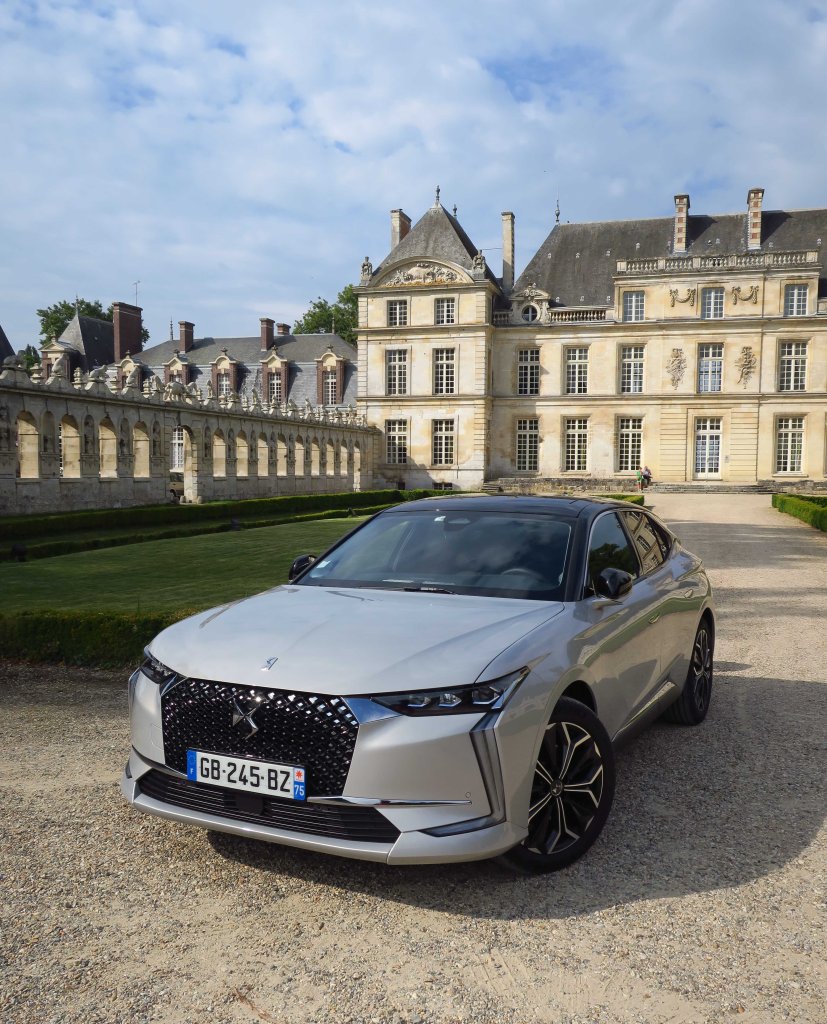
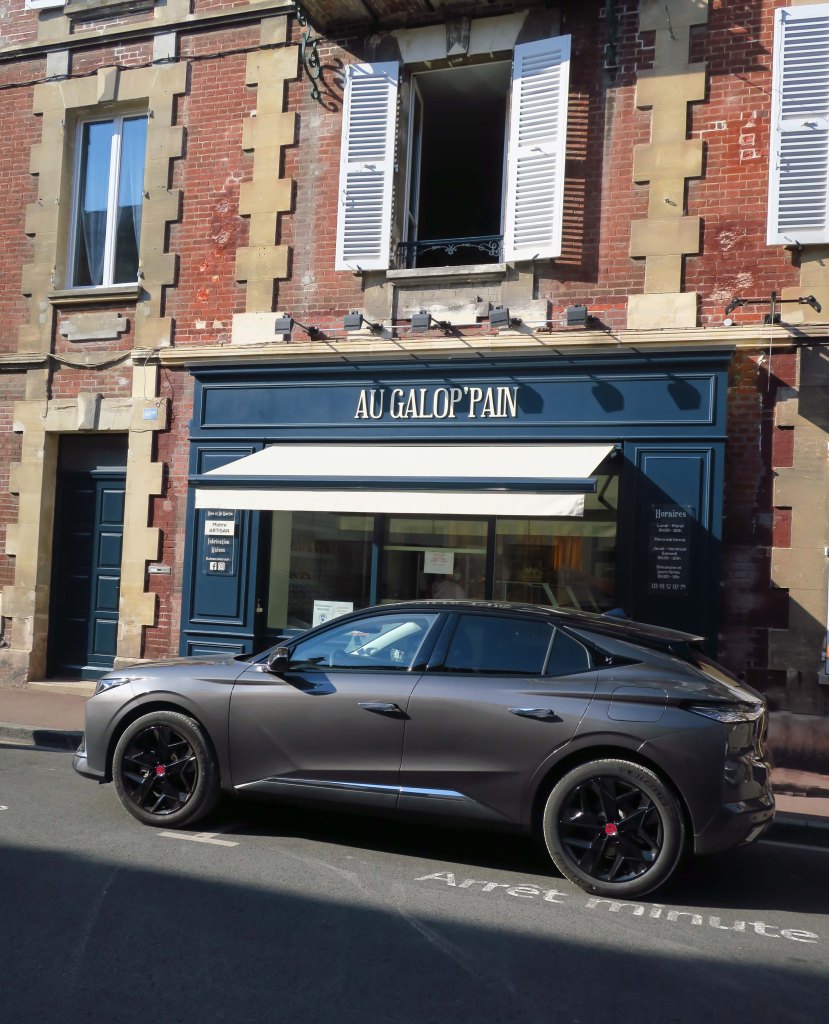
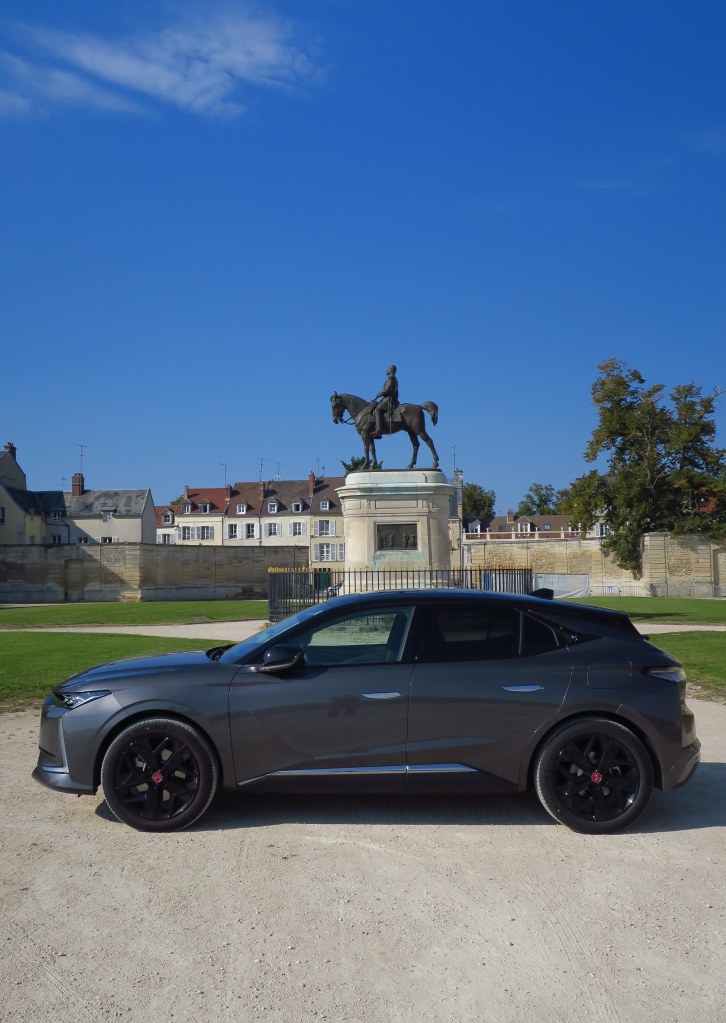
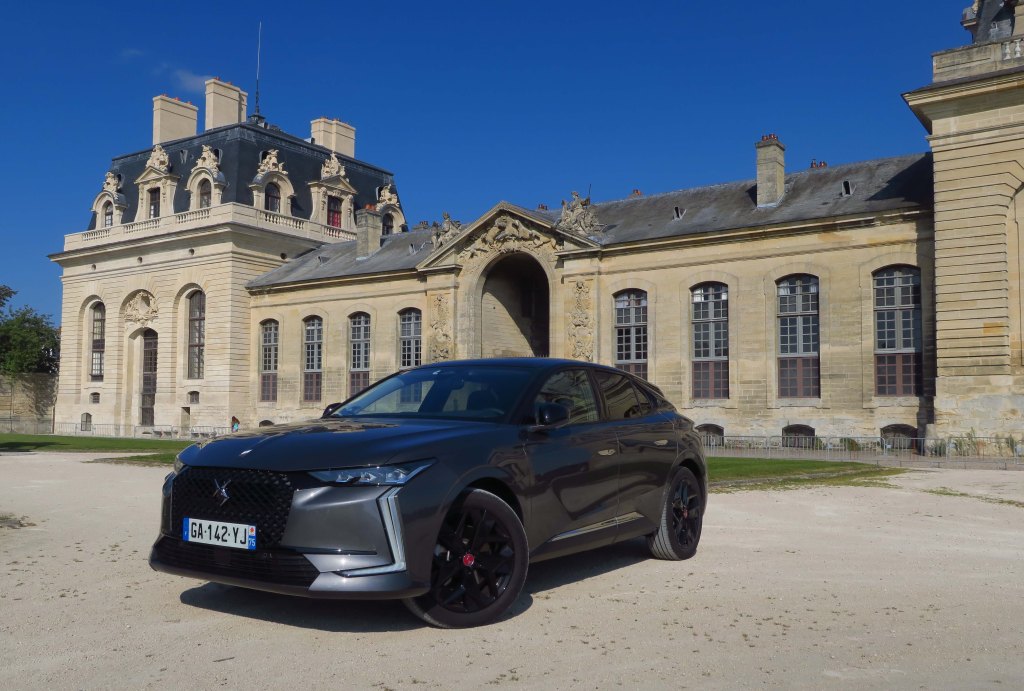
The DS4 shows its elegance in front of the shops in Chantilly, the town of the horse…

This second generation DS4 is indeed geared to offer a maximum of creature comfort. It starts of course with a good position behind the wheel, and indeed for your 1,70 m servant an excellent driving position was soon found. We tested the Performance Line+ DS4 which came with very comfortable Alcantara/leather seats, and a very tasteful interior.

The overhead display proved also eminently visible. DS automobiles calls it “DS extended head up display”, and with the use of an optical illusion, data are displayed four metres ahead of the windscreen to follow the driver’s gaze diagonally at 21-inches. We found it very useful, and indeed, it kept our eyes on the road.

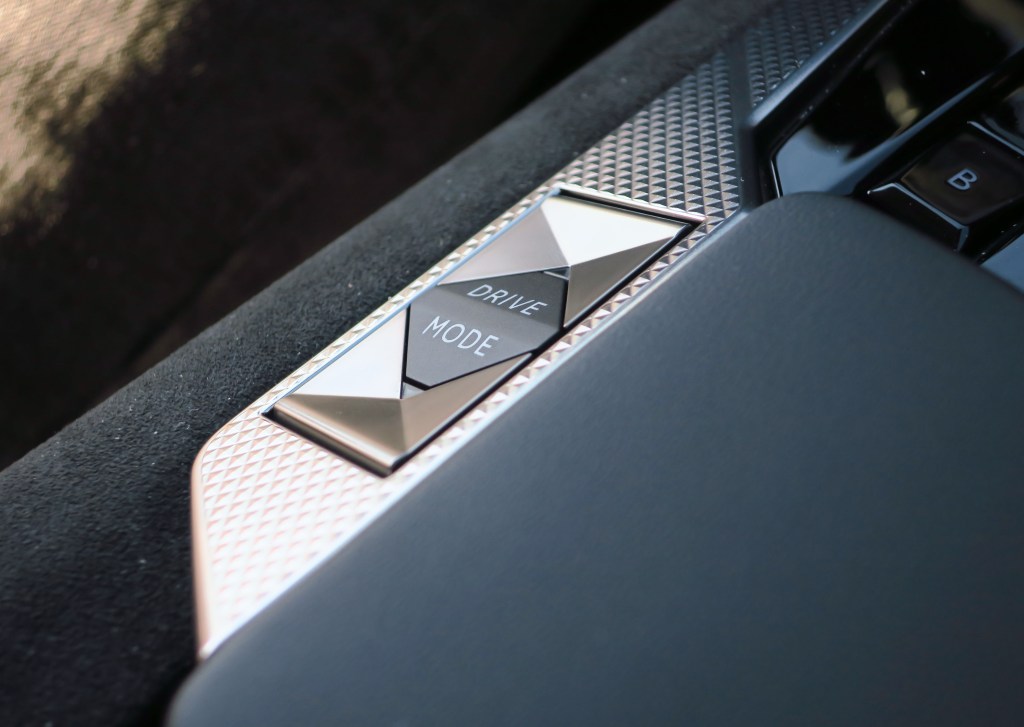
With a magnificently styled mode selector button (more about the interior design when we talk about the styling of this car in a separate report, incorporating then also the designer’s comments) you can choose your driving mode. We chose the modes “normal”, “comfort” and “sport”, to check the handling, comfort and steering precision of this DS4.

In all modes, we found that the comfort level remained top notch. It proved definitely very important for engineers and designers, and we can only applaud their choice. The DS4 ranks therefore with panache amongst the iconic “Grandes Routières”, totally in line with the tradition set in by the original DS. Steering is also very precise in all the chosen modes.

The DS4 runs on a new version of EMP2 platform and uses technical solutions such as bond-welding (almost 34 metres of adhesive bead and welding points used on the car’s body) as well as completely redesigned suspension and steering components. This indeed delivers driving comfort through optimal body rigidity with exceptional responsiveness and precision in the handling department.

The suspension has also been redesigned with the new platform version… but there is more.

The engineers have taken things even a step further by introducing the so-called DS ACTIVE SCAN SUSPENSION , which controls the damping by using a camera. It is positioned at the top of the windscreen, views and anticipates irregularities in the road surface and transmits the data to a computer. With the four attitude sensors and three accelerometers, the system controls each of the wheels independently. Using the information it receives, it makes the suspension harder or softer depending on what’s required. The result is indeed excellent comfort whatever kind of (winding) road you’re on. We were truly impressed by the overall dynamic serenity of the car, whatever the driven speed…

Smooth and powerful

In the E-TENSE version, a turbocharged 180 horsepower 4-cylinder engine is paired with a 110 horsepower electric motor and an EAT8 gearbox, for a combined 225 horsepower. As we said earlier in our first report, the combination is fed by a more efficient battery with new more compact and larger capacity cells. This battery is situated behind the deformable beam and providing a useable a range of more than 50 kilometres in zero emissions mode (WLTP combined cycle).

The drivetrain is supersmooth, and the transition from battery to engine power is not noticeable. When driven with restraint and anticipation, the system will use the kinetic energy to recharge the batteries while you drive, and indeed, in tight heavy and slow traffic we managed to recharge the battery from 14 % to a good 28 % just using the kinetic energy as much as we could, which of course asks for some concentration, but this is well rewarded! The system will regenerate the energy irrespective of the chosen driving mode, and we achieved these results in the “Sport” mode.

Depending how much E-power you use during your drive, fuel consumption will vary accordingly, and the manufacturer quotes a fuel consumption of 1,3 litre/100 km and CO2 emissions of 29 g/km on the combined WLTP cycle. Running on the petrol engine only will get you anything between 6-8,5 litres/100 km, greatly depending on your driving style.

On the second day of our extended test drive we drove the DS4 with top of the range “Rivoli” trim and the PureTech 225 HP petrol engine version with the same 8-speed automatic gearbox. Driving in normal or comfort mode delivered very much the same smoothness as the E-TENSE drivetrain, and we were surprised by the very low noise level of this engine, certainly when you are adopting a relaxed driving style. Putting your right foot down will let the engine rev harder, but this gets never obtrusive. When you want to add some smooth panache to your spirited driving style, it is best to use the gearchange paddles at the steering wheel, so you have better control over engine revs under heavy braking or acceleration. The DS4 takes a fast pace over curvy and undulating roads very well in its stride, as a “Grande Routière” befits.

The DS4 is a car designed to travel on long journeys, as well as performing comfortable city errands. It is build to cocoon you in relaxing and silent comfort. Indeed, its tire to road noise is also eminently filtered. The seats are just marvelous, and the soft padding of armrests and surfaces of centre console and dashboard just give you that sense of well-being which comes close to cocooning. The dashboard layout is just an icon of good taste, and its controls are soon learned… and are not overwhelming. It is advisable to take some time to get acquainted with your DS 4, it has a lot to offer.

Having said this, your servant is as a journalist always very cautious to give an opinion about the practicality of functions or controls, as we spend only a week or at a presentation even only a few days with a test car, whereas the owner will have months and years to learn all the functions. But he has to learn them, and in the beginning spend some useful time reading the manual, sitting behind the wheel and trying everything out, and repeating this! One never learns enough, and indeed note that bis repetita placet…

As a photographer, I still look at the manuals and YouTube films about the camera I use, be it compact or DSLR, and still learn…after months!

A host of useful functions…

Coming to the subject of functions, the DS4 has a lot of them, to make your journey safer and more relaxing.

First of all, we were much ten by the excellent ventilation It has been developed with very compact vents, positioned high up and fitted with invisible vanes.

The principle behind DS AIR is a flow of air that’s aimed by a cone giving the best possible direction upwards and downwards. All while operating like a classic vent. Thanks to its upright compactness, it appears discreet and tucked away which enables a purity of design in DS 4’s cockpit. Impressive and well done!

Then there is the DS IRIS SYSTEM can be controlled by voice and gesture. This System features a personal assistant capable of recognising what’s said to it so that the system can carry out requests.

For gestures, there is DS SMART TOUCH, located on the centre console, it is an elegant small screen below the big central screen, which you can command with your fingertips. Gesturing towards one of the pre-entered functions on the big screen is enough. The smaller screen also identifies normal movements such as zooming in, zooming out and has handwriting recognition. Just try it, it avoids having to reach out to the big screen, and soon enough you get he hang of it.

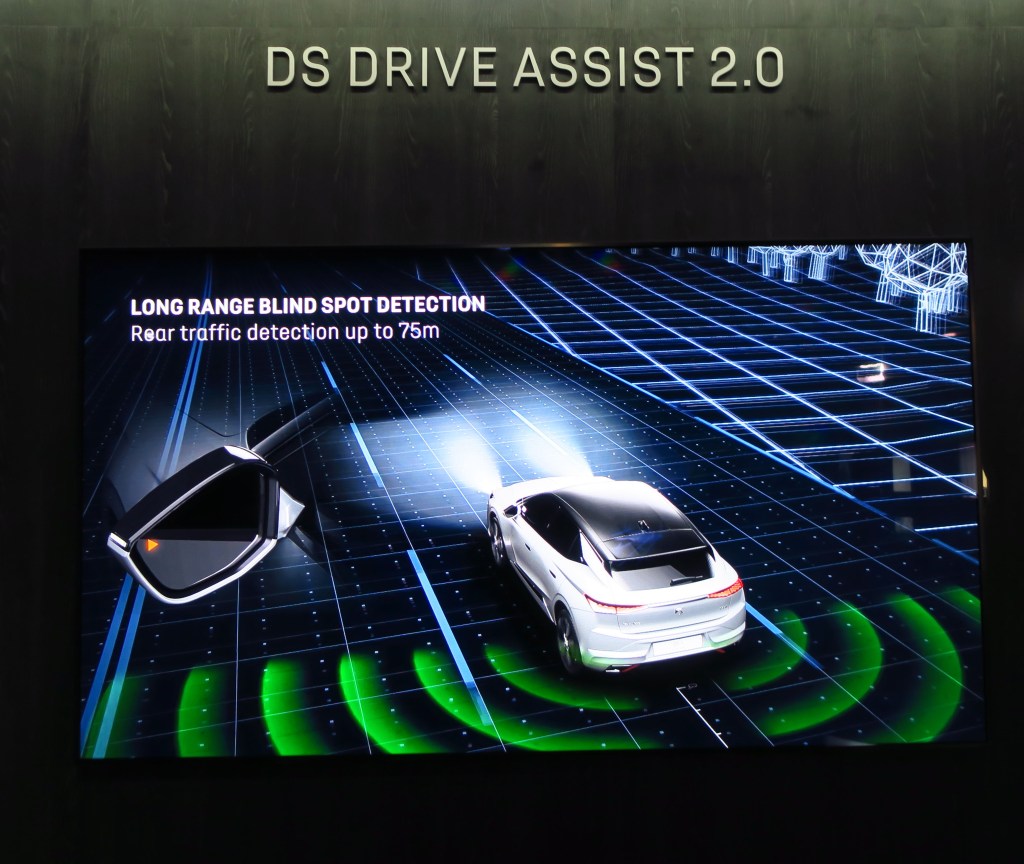
Level 2 automated driving also had a major update for DS 4 with DS DRIVE ASSIST 2.0.

This translates into the precise car positioning itself in the lane of the driver’s choice, supplemented by new functionality such as semi-automatic overtaking, speed adjustment for corners and anticipated speed recommendations from signposts.

DS DRIVE ASSIST 2.0 includes sensors that record everything that happens in and around the car to help the driver. It sports frontal radar, radar at the four corners of the car, and a camera at the top of the windscreen, DS 4 positions itself where its driver wants through artificial intelligence which analyses information gathered in real time.

DS NIGHT VISION: An infrared camera, located in the grille, spots pedestrians and animals up to 200 metres away at night and in poor light. The driver views the road in their digital instrument display and sees hazards appear as warnings in the DS EXTENDED HEAD UP DISPLAY enabling them to react.

Let there be light: the DS light signature

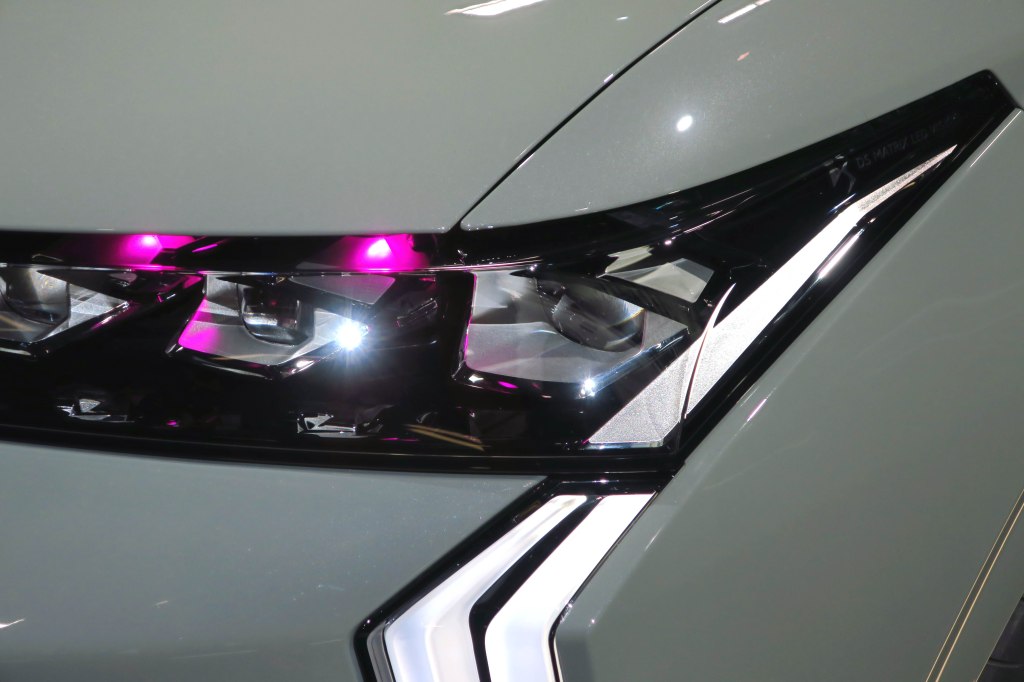
With a new generation of DS MATRIX LED VISION headlamps that are narrower and more modern, the Matrix Beam and Dynamic Bending Light technology have been combined in the same system.

The DS MATRIX LED VISION headlamps are still made up of three LED modules which are the DS Automobiles signature:

The inner module of the headlight is used for the dipped function.

The rotating central module can turn to an angle of 33.5°. It illuminates the sides of the road and follows where you’re looking in corners. The system adapts to traffic conditions, the angle of the steering wheel, speed and weather conditions with five pre-set modes: town, country, motorway, poor weather and fog. This is also a nod to the directional headlamps of the 1967 DS…

The outside Matrix Beam module turns on for driving, split into fifteen segments which turn on and off independently, depending on the driving conditions it senses.

The projector headlamps adapt to traffic conditions, steering wheel angle, speed and weather conditions with five preset modes: city, country, highway, harsh weather and fog. They enable you to drive constantly on main beam without ever dazzling other road users. Using the camera located in the top part of the windscreen, these intelligent headlamps adapt their light beam automatically with a reach of 300 metres, depending on traffic conditions, without ever dazzling others. Need we say more?

The DS MATRIX LED VISION headlamps are complemented by extended daytime running lights made up of 98 LEDs. As well as the recognisable vertical light signature, these daytime running lights perform a new high-technology welcome routine.

The first drive of this DS4 was impressive indeed, comfortable, relaxing, smooth, powerful, and full of style…

In these columns you will soon read more about the design of the car and the hand made craftsmanship it has been built. Stay tuned!

Hans Knol ten Bensel

We had a first drive with the elegant DS 4: the (electrified) future has arrived at DS Automobiles…

At DS Automobiles, the art of designing and building the avant-garde automobile has been celebrated again since 2015, the birth of this unique premium brand.

In stylish Chantilly, we stood eye to eye with their latest creation, the DS 4. Stunning in style, gracious elegance and technology, this premium C segment car did not fail to impress your servant.

The DS 4 has eye-catching proportions. With a benchmark width of 1.83 metres and large diameter 720-millimetre wheels (alloys up to 20 inches, 19 inches as standard from TROCADERO and PERFORMANCE LINE up), for a compact length of 4.40 metres and a roof height of 1.47 metres, the dimensions are striking indeed.

Also the entire press presentation of this noble automobile was in line with its qualities: we were not only able to meet Mme Béatrice Foucher, the CEO of DS Automobiles personally at dinner, together with the communications people of the brand at lunch, we had also interesting workshops with the designers, engineers and last but not least the craftsmen and artists who make the DS 4 into the hand made four wheeled gem it is.

Mme Béatrice Foucher also presented the bold electrification strategy of the brand: in 2022-2023 it will increase the electrified mix with more E-TENSE sales, and from 2024 onwards it will only launch models which are battery only EV’s, with only electrified models presented for sale in Europe.

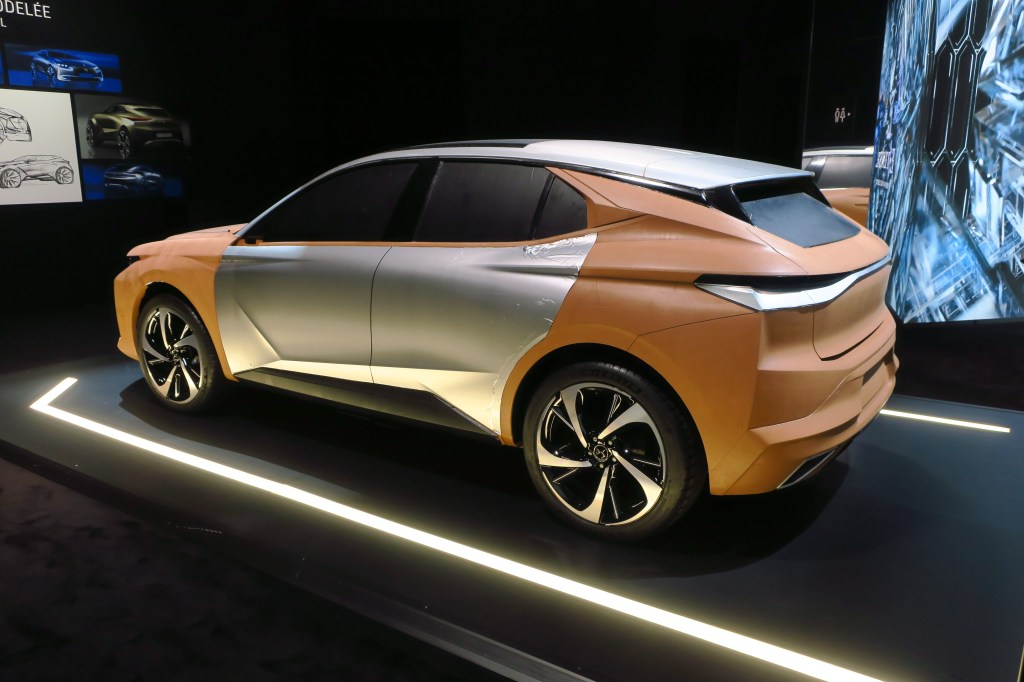
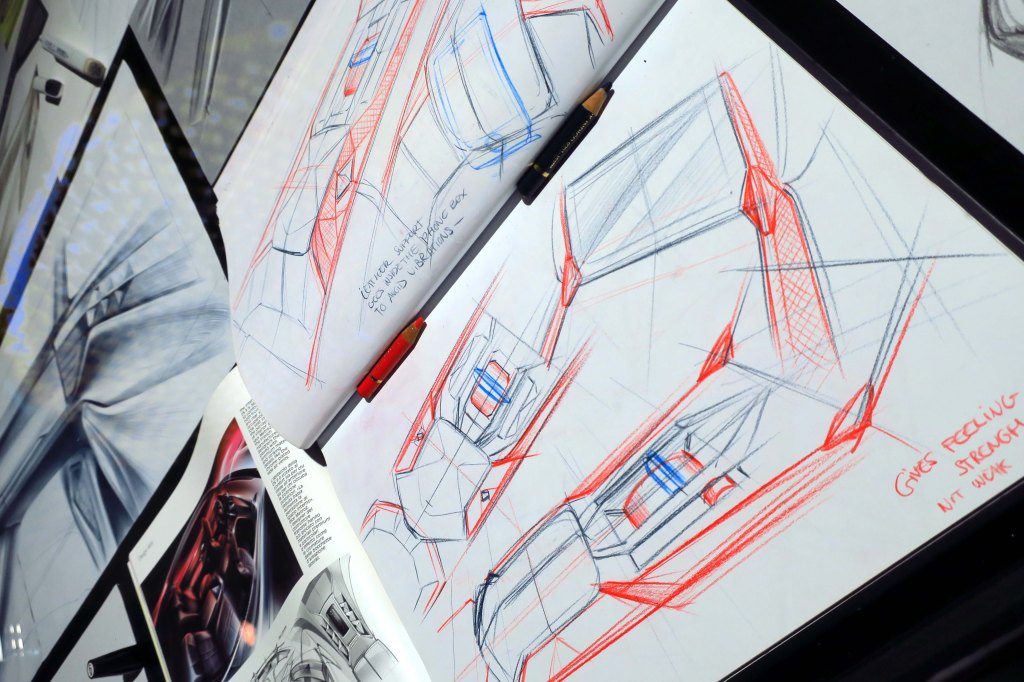
The designers also presented their drawings and a fully fledged clay model too, and the craftsmen presented their tools and unique hand made items of the car, of which much more later.

We were able to drive the entire range of the DS 4 on a 245 km circuit around scenic Chantilly, and we can tell you already that we were very taken by the plug-in hybrid version, the E-TENSE. Not surprisingly, as one knows that DS Automobiles puts great value on electrification, as does their avant-garde clientele, by the way.

For the DS4, a new version of the EMP2 platform was conceived to accommodate a new generation plug-in hybrid drive train without compromising cockpit space. It is important to note here that, being an important premium brand for Stellantis, the choices DS Automobiles are making in terms of proportions and styling of their cars and last but not least their technology are important signals for the engineers in the group wo develop the respective platforms. Noblesse oblige… Here you see the naked bodywork displayed on its platform.

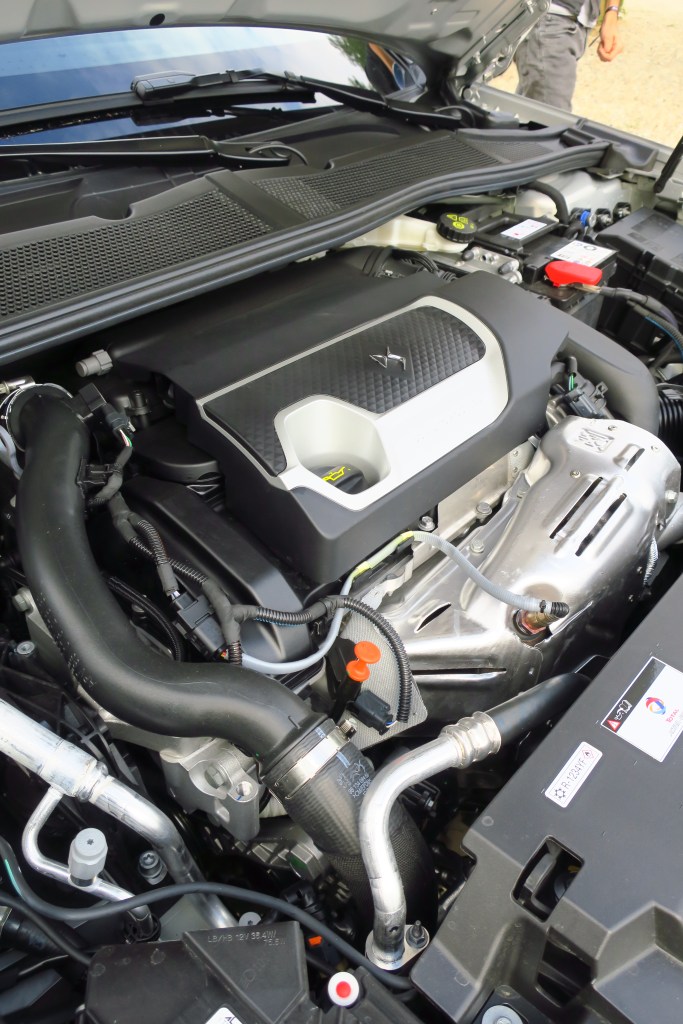
The E-TENSE sports a turbocharged 180 horsepower PureTech 4-cylinder engine, which is paired with a 110 horsepower electric motor and an EAT8 gearbox, for a combined 225 horsepower.

The combination is fed by a more efficient 12,4 kW battery with new more compact and larger capacity cells situated behind the deformable beam and giving a range of 55 kilometres in zero emissions mode (WLTP combined cycle). The E-TENSE impressed your servant not only with its uncanny smoothness, it delivered also all the performance you could wish for: The 360Nm of torque enables 100km/h to be reached in 7.7 seconds with fuel consumption of just 1.3 litre/100km and emissions from 29g/km of CO2 on the WLTP combined cycle.

A wide range with a broad choice of interior equipment levels…  

We will tell you soon more about the driving impressions of this DS 4 in their different engine configurations, we just present here the model and equipment line-up. Besides the E-TECH, three petrol engine models, PureTech 130 Automatic, PureTech 180 Automatic and PureTech 225 Automatic plus a BlueHDi 130 Automatic Diesel will be offered.

In terms of body styles, the range is made up of three versions: DS 4, DS 4 CROSS et DS 4 PERFORMANCE LINE, with each version enjoying multiple trim levels:

– Four trim levels for the DS4: BASTILLE, BASTILLE +, TROCADERO and RIVOLI, as well as a Limited Edition “LA PREMIÈRE” for the launch, offering exclusive touches above and beyond the existing trims.

– For the DS 4 CROSS body version, we have the CROSS TROCADERO and CROSS RIVOLI trim levels,

– PERFORMANCE LINE and PERFORMANCE LINE + trims for the DS 4 PERFORMANCE LINE.

More soon, stay tuned on these columns!

Hans Knol ten Bensel