Alfa Romeo shows its sporting panache at the Lago Di Como

From May 24 to 25, in the extraordinary setting of the Villa Sucota overlooking Lake Como, Alfa Romeo will be the Official Partner of the 2025 edition of FuoriConcorso, and will show its beautiful cars, with its unique sporting design language, a festival of beautiful contours and shapes which are an everlasting delight to the eyes of every car enthusiast.

Just read on and enjoy the photos…

Hans Knol ten Bensel

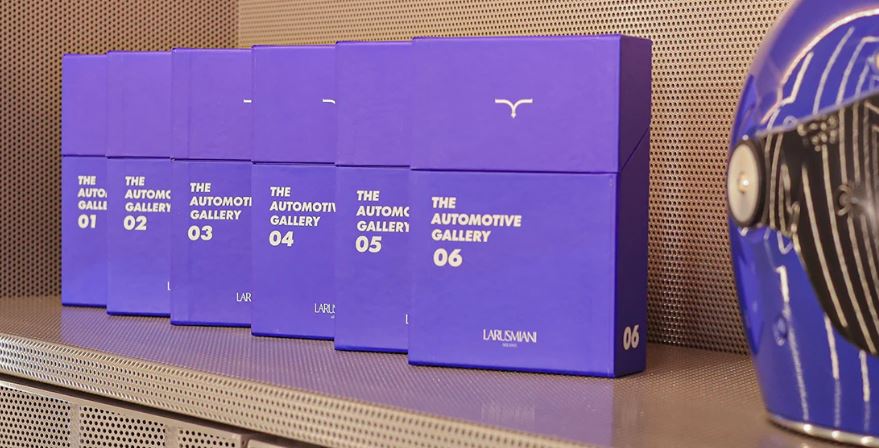
The FuoriConcorso is an event with a well rooted tradition: it was founded in 2019 by Guglielmo Miani, president of Larusmiani, the bespoke menswear and gentleman accessories firm which has been there for gentlemen since 1922. The passion for cars results also in a boutique to create an exclusive collection limited edition. There now you can purchase a collectors box of the Alfa Romeo 6C which contains: the numbered t-shirt with rear print depicting the car and a caption postcard with the history of the car.

But let’s return to the FuoriConcorso. It has grown to an international event that every year attracts thousands of collectors, experts and car enthusiasts from all over the world. The theme selected for this year is – “Velocissimo – Italian Race Cars”, and this means that Alfa Romeo will put its mark on this event. Indeed, the splendid Villa Sucota will become this year the “Casa Alfa Romeo”.

Around 15 extraordinary models will be on show there, some from the Alfa Romeo Museum in Arese and others from private collections.

The Zagato 6C…

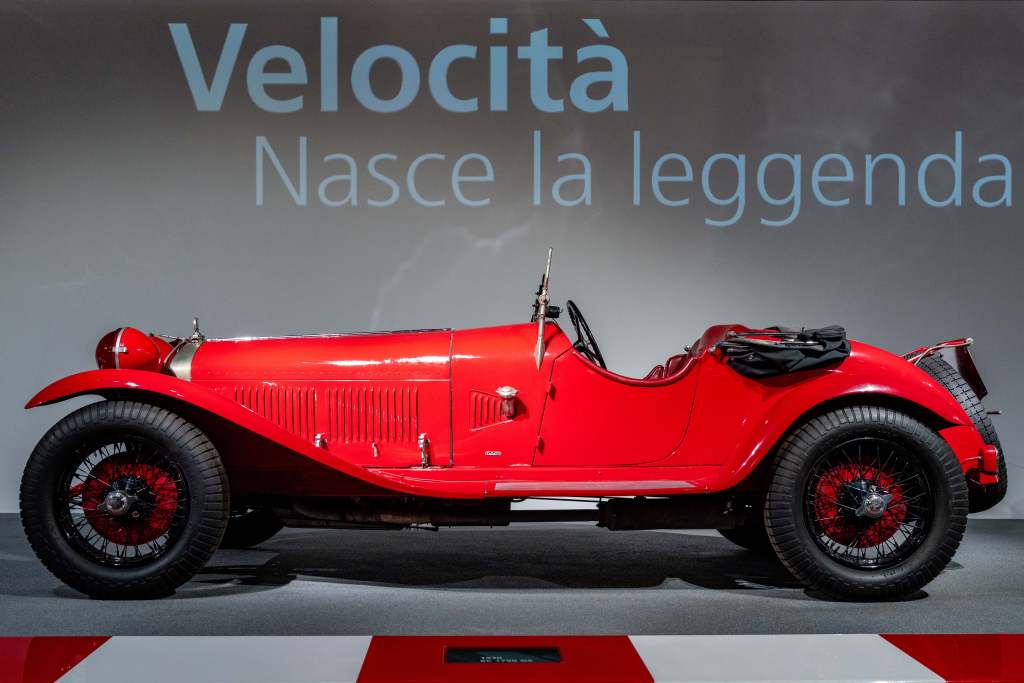
A car which truly stands out is the 1930 6C 1750 Gran Sport, one of the most famous Alfa Romeos for its unmistakable line (Zagato), six-cylinder engine with compressor and its wide-ranging trophy haul in motorsport, spread out between the Mille Miglia, Targa Florio, Tourist Trophy and many other victories in endurance races.

On a model similar to the one on display, the legendary Tazio Nuvolari won the 1930 Mille Miglia, setting an average speed record of 100 km/h across the entire route, in a memorable duel with his teammate, Achille Varzi, also driving a 1750.

The Giulia TZ2…

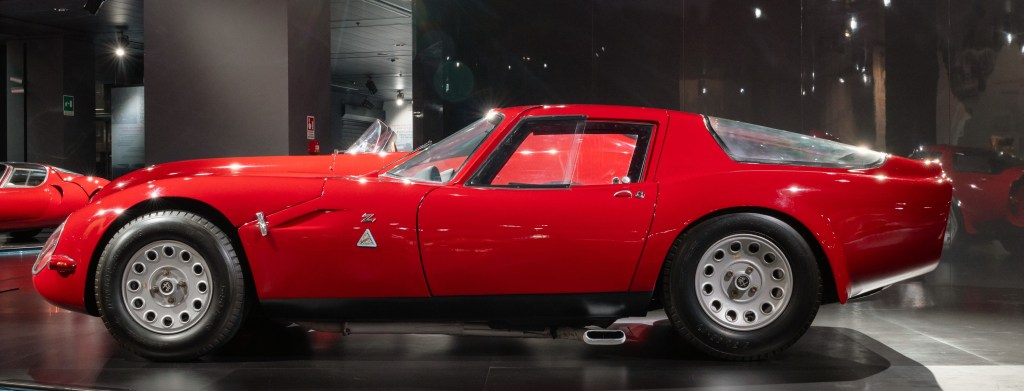
Many aficionados still dream of the golden era of road racing, and the cars which played a prominent part in this. Like the spectacular 1965 Giulia TZ2. An evolution of the previous Giulia TZ, this car is lower, more tapered and aerodynamic, with fiberglass bodywork on a tubular chassis. Designed by Ercole Spada at Zagato, it sports a sleek and muscular line, dominated by the famous truncated tail, which consecrates it as one of the most beautiful racing cars ever.

The 1.6 twin-cam engine evolved with double ignition and dry sump, reaching 170 hp and 250 km/h. At its debut in 1965, it won its class at the 1000 km of Monza and went on to take other victories in the same season, including the 12 Hours of Sebring, the Targa Florio and the 1000 km of the Nürburgring. One year later, the TZ2 achieved the same feat at Monza, Sebring, the “Targa” and the “Ring.”

The 33 TT12…

Then there is the 1975 33 TT12. It made its racing debut  on May 5, 1973 at the “1000 km of Spa-Francorchamps,” when the World Championship for Makes was experiencing a period of great popularity and commitment from the most prestigious manufacturers, including Alfa Romeo with the “Tipo 33” family.

The “33” which saw the light in 1967 has now become legendary, where  the letters “TT” stand for Telaio Tubulare (‘tubular chassis’; based on its forerunner the 33 TT3 with a V8 or ’Otto Vu’  engine) and “12” is the `number of cylinders of the new 180° (‘flat’) three-liter V engine that can exceed the threshold of 500 hp. The aesthetics are unmistakable, with its side fins and famous periscope. After a year of development and initial wins in ’74, total domination came in 1975: seven victories out of eight races to win the World Championship for Makes, the fourth overall title in Alfa Romeo history. Legendary drivers such as Merzario, Andretti, Ickx, Vaccarella and many others were behind the wheel to build this immense series of wins.

The legendary F1 compressor Alfetta’s…

When you stroll a few steps away from Villa Sucota, an exclusive area pays homage to the bolides that have made Formula 1 history, starring the 1951 Alfa Romeo GP Tipo 159 “Alfetta,” the veritable ruler of the first two World Championships. An evolution of the legendary 158 of 1938, the 159 triumphed with Fangio after the victory by “Nino” Farina in 1950. After the title – the first of five for Fangio – Alfa Romeo officially withdrew from racing to devote itself to the Giulietta.

Compared to the 158, the 159’s engine was equipped with a two-stage compressor, De Dion rear suspension – the name given to the 1972 Alfetta is based on the adoption of this technical solution – and a more efficient aerodynamic look. The supercharged 1.5-liter inline 8-cylinder engine reaches incredible levels of power: in tests, it even achieved 450 hp, equivalent to 304 hp/liter. This was also made possible by the use of alcohol based special fuels, which had a considerable cooling effect when evaporating, making higher compression rates possible without corresponding high combustion temperatures.

Last but not least, the 33 Stradale…

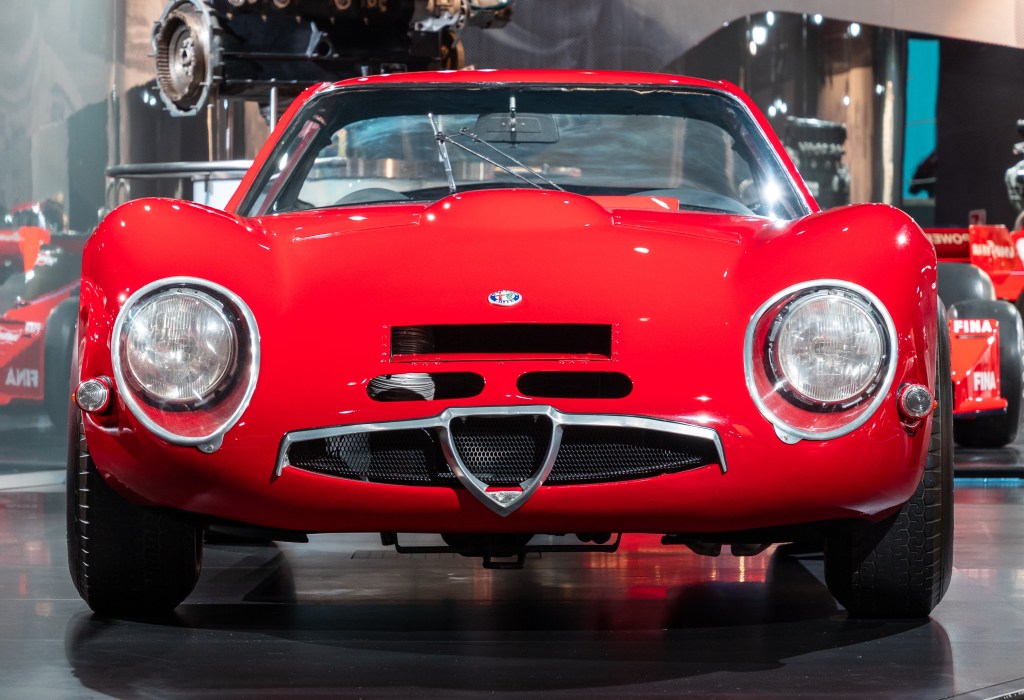
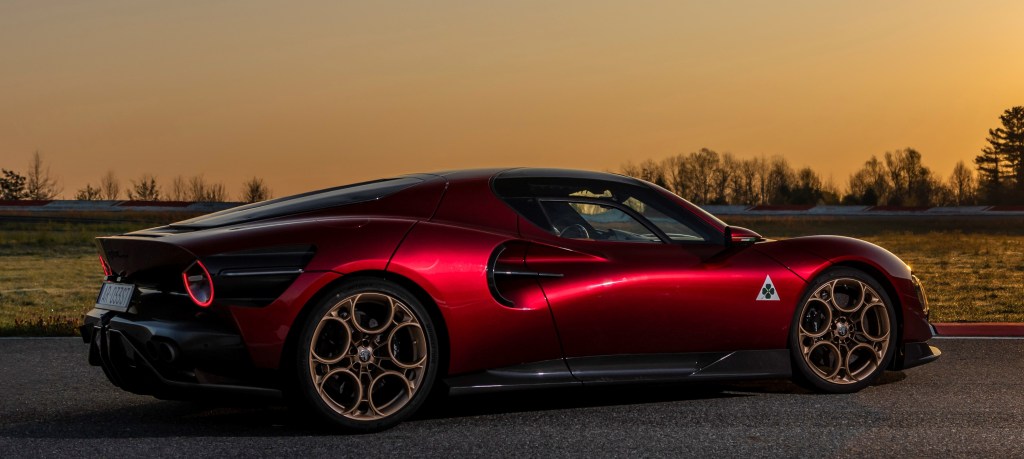
Also on show at Villa Sucota will be the new 33 Stradale, a “custom-built” car approved for road use that ensures outstanding performance on the track.

It was unveiled in 2023 and produced in only 33 models (all of which have already been sold), the car represents the return of the legendary 33 Stradale, an icon of the 1960s, reputed by many to be one of the most beautiful cars of all time, and derived directly from the Tipo 33 – once a big name in world motorsport.

We can only suggest you to take a look at the photos, and spend some delightful ”Alfa” moments…

Hans Knol ten Bensel

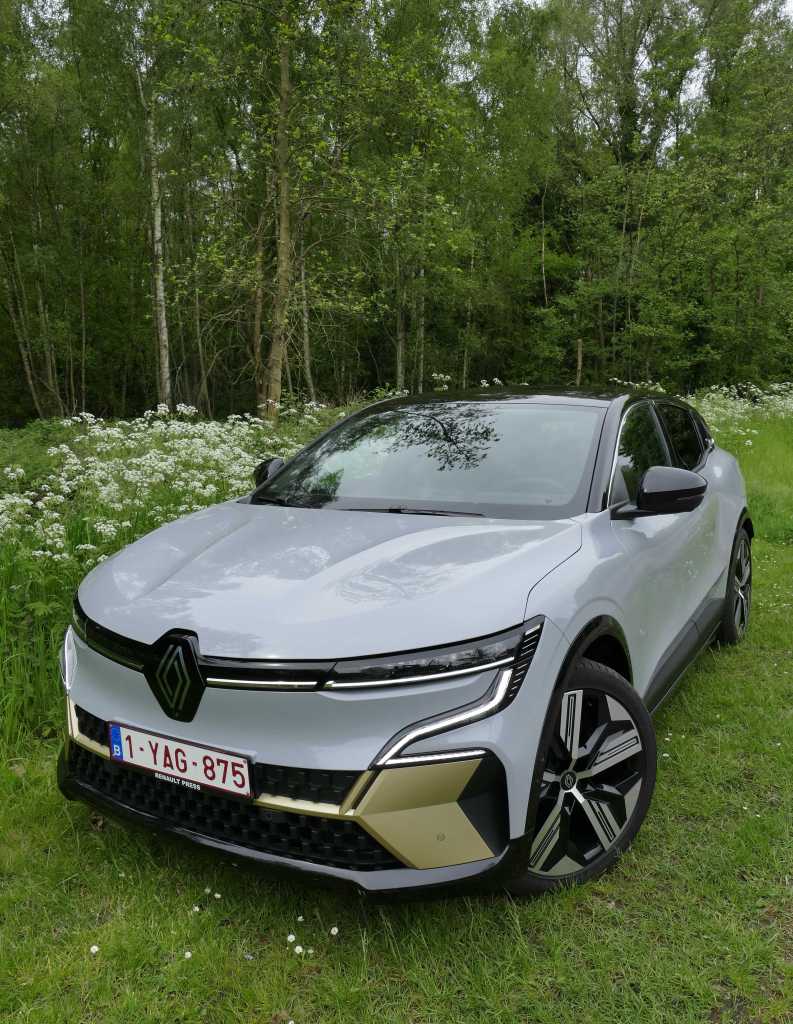
We drove the Renault Megane E-Tech Iconic EV60 220 hp

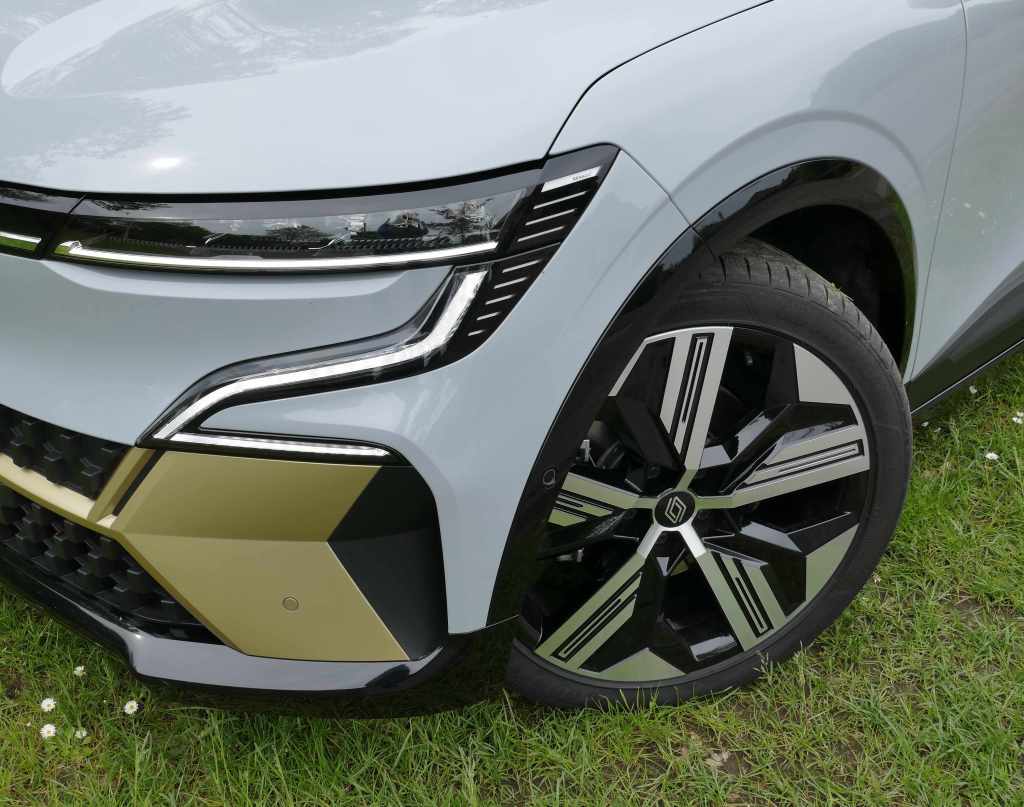
Renault has been very early in the EV game, with its fittingly called ZOE, which has been for years an absolute bestseller. The new Megane has been completely redesigned and is the first Renault model to run on the new so-called CMF-EV platform, co-designed with Nissan. The new Megane is compact with its 4,20 meters, which is almost identical with the previous, fourth generation Megane, but that’s were any similarity ends. The new Megane stands proudly on its big wheels (20 inch in the version we tested) and its proportions are beautiful indeed. The longer weelbase of some 2,70 meters clearly shows that this is a latest generation EV. It certainly has style and panache. Will it also convince as an EV? Just read further…

Hans Knol ten Bensel

Modern times…

The Megane has not only a contemporary flair, it also offers quite enough room for four adults and their luggage. They are greeted by a pleasant and premium interior, with impeccable styling. On the top version we tested, your eyes wander over a well finished dashboard and meet with a crisp 12 inch central screen which offers state of the art infotainment and connectivity. Of course, Apple Car Play and Android Auro are provided. But this is also standard in the base model. Indeed, the latest Megane generation comes very well equipped. Then you get a 9 inch screen, but a rear camera and speed limit recognition combined with cruise control are also standard.

Cocooning

Indeed, the digitalized instrumentation leaves nothing to be desired. Renault has integrated Google functions in its OpenR link, and offers very good information for the EV driver. First of all it uses the chrystal clear Google maps, and when plotting the chosen route for you, it will take into account the charging situation of your battery, and even indicate the estimated remaining charge status at your destination.

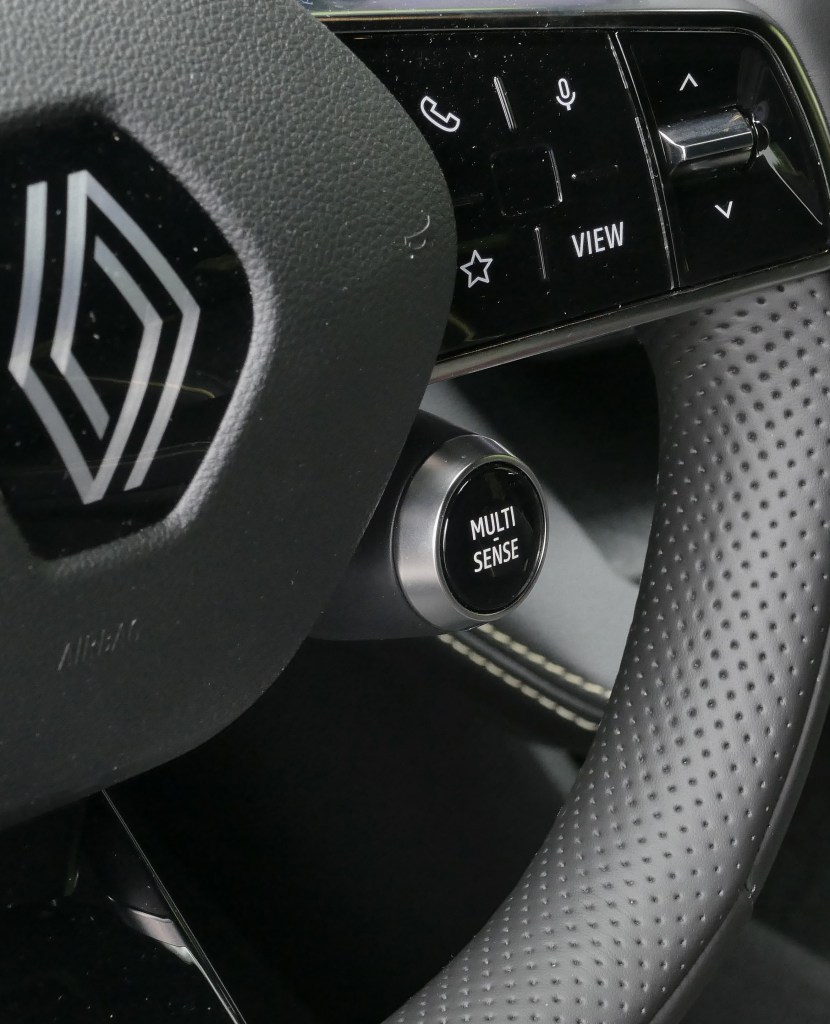
Of course it will also suggest stops and places where you can recharge your battery. The layout of the dashboard is quite practical, and it is good to see that the commands for heating and ventilation are placed on a separate physical touchboard below the central screen. One also finds the legendary and iconic audio command stick on the right side of the steering column, which is typical for every Renault since the R 25 sedan, launched way back in the seventies…

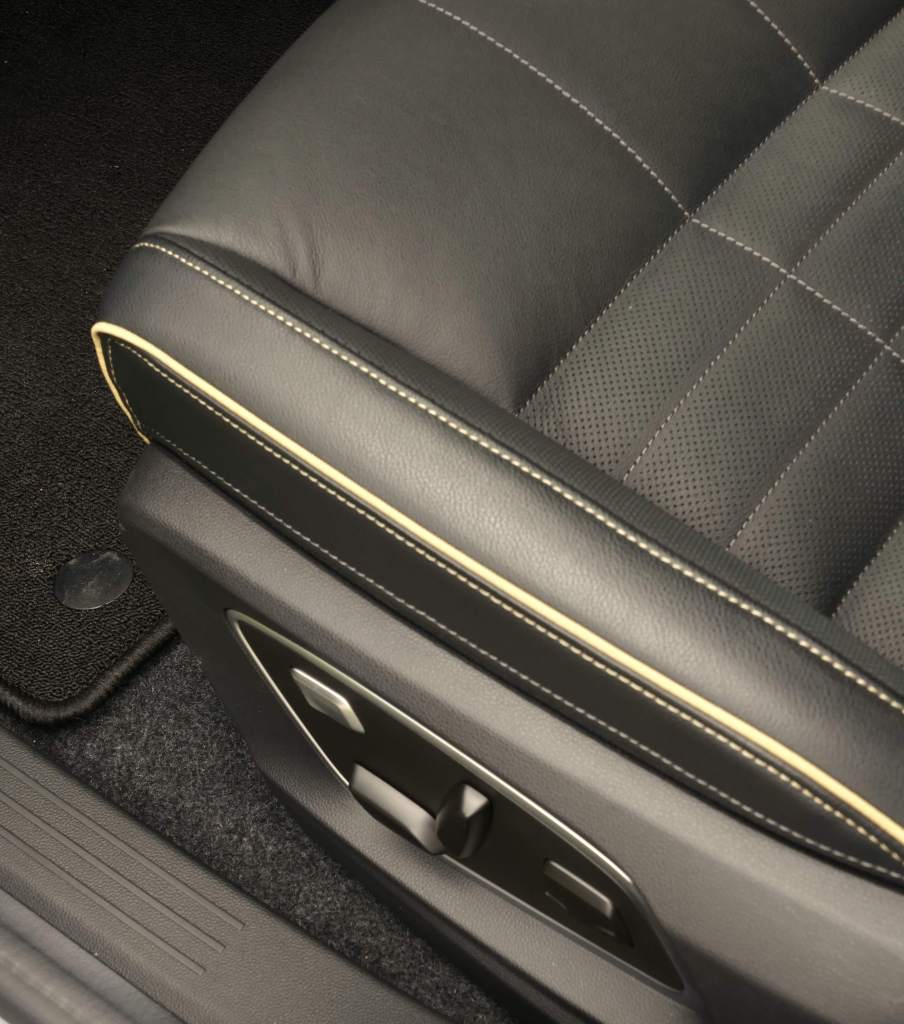
The finish level of the  cabin and seats is high indeed. In the top “Iconic” version we tested, Renault has also provided electric powered front seats with memory and massage functions. The seats are very comfortable and the upholstery is firm.

Smooth power

We tell you nothing new when I tell you that EV’ s spoil you with lots of super-smooth power. With its 300 Nm and 220 HP you can expect very sporting performance. Not only is this Renault very quick off the mark with a sprint from 0 to 100 kmh in merely 7,5 seconds, it excels in traffic with very brisk accelerations. From 60 to 100 kmh costs merely 3,6 seconds, which makes overtaking or joining faster traffic the proverbial breeze. Besides the silence and smoothness, it is this permanent presence of this abundance of power which makes an EV truly delightful to drive. The pleasure stops at 160 kmh, as the electronic limiter sets in quite sensibly. Indeed, high cruising speeds wreck havoc to the range of your EV.

There is a round knob at the steering wheel column where you can choose the different driving modes from eco to sport, and with the paddles on both sides of the steering wheel you can select the amount of energy recuperation you want on your drive. 

Despite being only front wheel drive, the drivetrain copes well with all this power. When it comes to consumption, the slower you accelerate and cruise, the better your range will be. We learned to drive EV’s with restraint, despite their abundant power, and this is the only way  to achieve a consumption which comes close to the official WLTP figures. We regularly achieved values between 15 kW in urban traffic and 17 KW on the open road, at moderate cruising speeds. When you use this Renault more briskly, you have to reckon with 19-20 kW, which is still a very good value indeed.

The battery has 60 KW capacity, and this means a range between 370 and 400 km is quite realistic and achievable when you drive it with restraint and achieve a consumption of around 15-16 kW. It accepts up to 130 kW fast charging, and this means that you can charge it from 10 to 80 pct in merely 41 minutes. The battery is guaranteed to deliver 70 pct of its capacity for a period of 8 years or 160.000 km.

Practical

We already applauded the excellent infotainment and good cabin layout. The boot space is adequate with some 330 liters, with the rear backrests down this raises to some 750 liters. The boot floor lies very deep, and this makes loading heavy objects a bit cumbersome. One minus point in everyday life might be the rather poor backward visibility, due to the small rear window, high waistline and the large C pillar. But then the Megane has a rear camera as standard equipment, and in the top version we were spoiled with an electronic rear view mirror.

Comfort and handling

The Megane is in good French tradition laid out for comfort, it is also at home on winding roads and offers excellent stability at motorway speeds. We already applauded the comfortable seats, and getting in and out of the car is also easy due to its higher stance.

Conclusion

A well styled car, well built and finished, powerful and reasonably frugal, the Megane betrays the excellent ”savoir faire” of the French car builder in making EV cars. It is full of panache, both inside and out, and certainly deserves a good look if you are looking for an EV in this segment.

Hans Knol ten Bensel

BMW makes you dream in the sky…

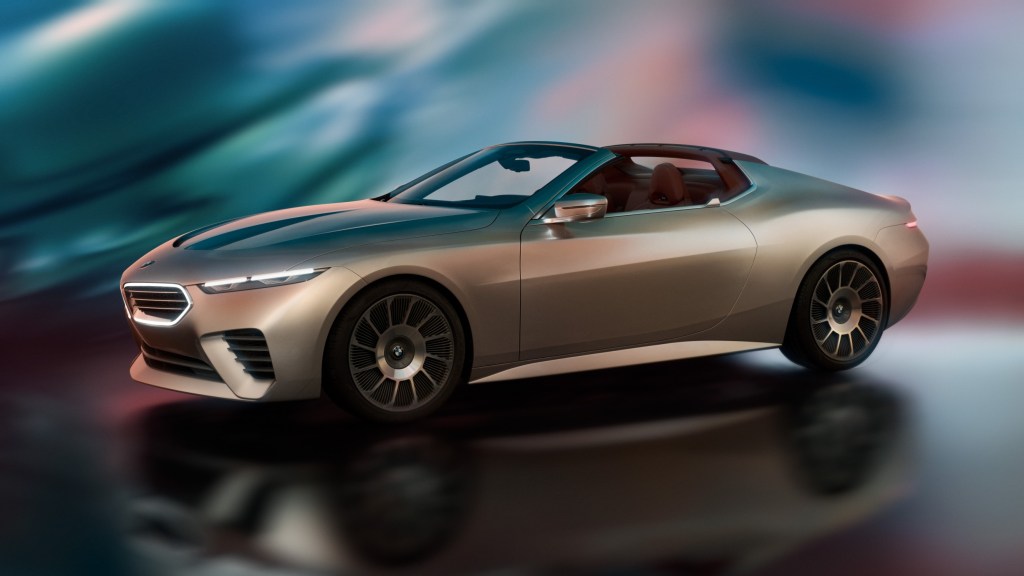
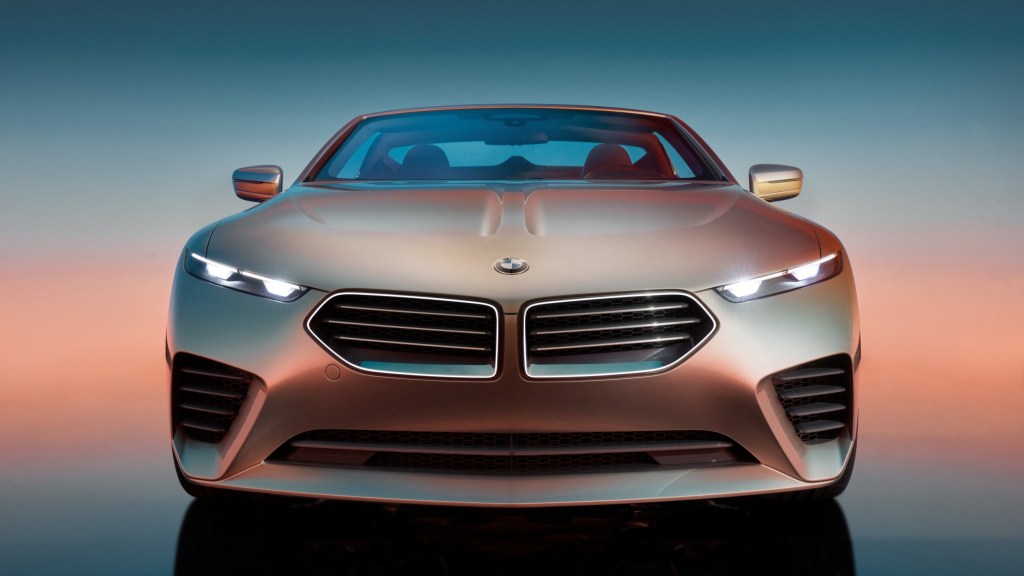
Designers can make you dream, and at BMW this is no exception. It brought to this year’s Concorso d’Eleganza Villa d’Este a unique design study: the BMW Concept Skytop. It has clearly athletic proportions, and Adrian van Hooydonk, head of BMW Group Design, commented: “It offers a combination of driving dynamics and elegance at the highest level, comparable to its historic ancestors, like the BMW Z8 or BMW 503.”

Indeed, it does, its lines, surfaces and volumes breathe the classic proportions of its iconic predecessors. Is it a harbinger for future BMW styling? It certainly has interesting details, like winglets integrated into the door shoulders replace conventional door handles. Light-alloy wheels with precise lamellas are also adding elegance and drama.

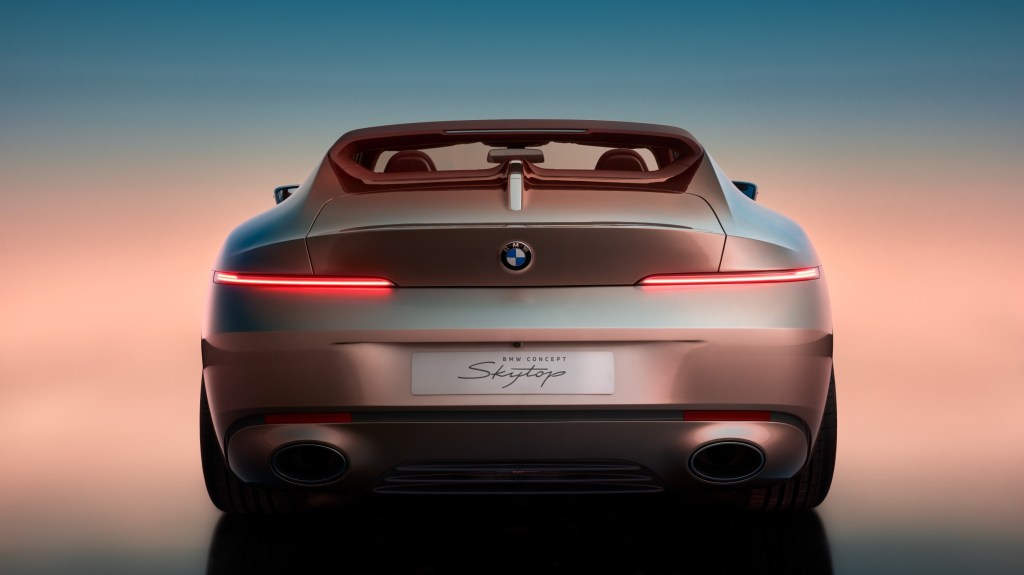
We like the impressive long bonnet and the classic kidney grille, and also the retracted rear end and the pronounced central spline, which runs over the bonnet through the interior and ends an aluminium trim positioned on the tailgate, add both panache.

The LED headlight units, positioned on milled aluminium carriers, were custom developed for the BMW Concept Skytop, utilizing the latest technology and design for automotive headlights with the slimmest profile currently available.

We also love the leather-finished roll-over bar behind the BMW Concept Skytop’s two seats, as it is combined with side fins on the B-pillar and a fully retractable rear window. The setup is quite practical: the two removable roof parts, also finished in leather, can be stored in a special compartment in the luggage space.

Color harmonies…

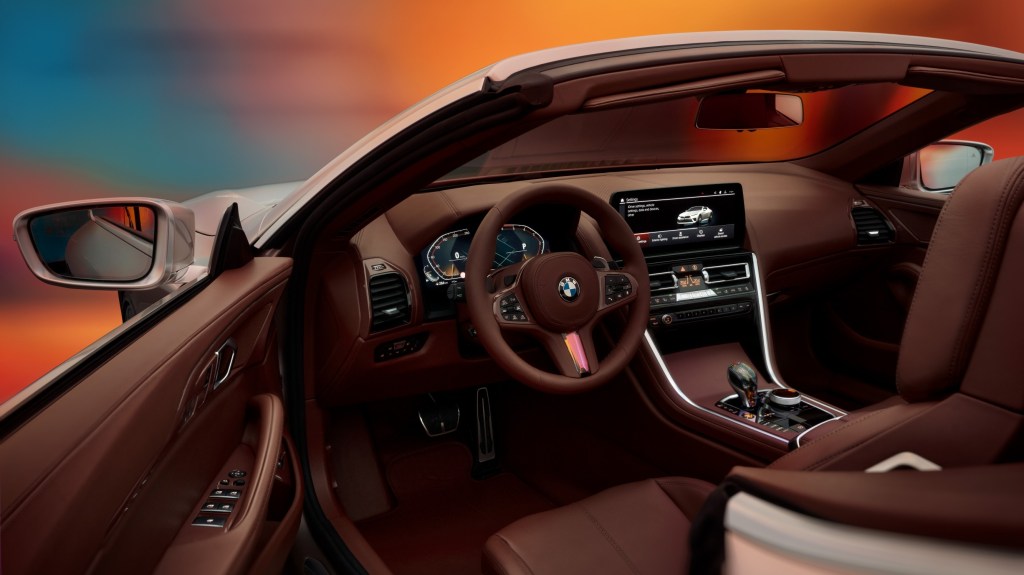
The colour scheme ensures a smooth transition from interior to exterior, regardless of whether the roof is open or closed. In the rear section, the reddish-brown tone of the roof flows into the muted silver with chrome shadow effect of the exterior paintwork. The technically elaborate colour gradient was crafted by an experienced master painter at BMW Group Plant Dingolfing (!)

…and luxury in brogue-style leather…

The leather seats in the interior carry brogue-style accents. The reddish-brown tone of the leather gives the whole interior a sense of luxury and spaciousness. Chrystal elements and further are artfully embedded in the gearchange lever and the cockpit, adding to the overall impression. The interior surfaces of the BMW Concept Skytop were crafted in the traditional saddlery of the BMW Group plant in Dingolfing.

The spirit of the Z8 reigns also in this concept car: under the hood roars the most powerful V8 engine in the BMW drive train portfolio.

Of course there is much more news on the BMW front: the new 3 Series Sedan and Touring, the new 5 series Touring and the first BMW i5 Touring, to say the least. Stay tuned!

Hans Knol ten Bensel
We spoke with Milosz Tomanek, Premium Cluster Director Belux, about Lancia’s renaissance…

In the magnificent surroundings of the Italian embassy in Brussels, we talked with Milosz Tomanek about Lancia’s return to the Belux market…

At the presentation of the Lancia Pu+Ra HPE and the announcement of the return of Lancia in Belgium, we had an interesting talk with the Director of the Premium Cluster Belux at Stellantis, on the opportunities of the iconic brand on the Belux market…

Hans Knol ten Bensel

Q: The Belgian market has much potential for Lancia, but due to its long absence, the question arises what is now your client base and what is your approach to re-enter our market? We have the Dutch approach, where the market is already very digitised. Both countries have a very large fleet market, and this will also be the challenge for Lancia…

MT: Indeed, the fleet market is with around 70 pct of the total volume very important. For the premium segment, its share is even 80 pct. When we want to re-launch Lancia, we have to establish ourselves in this fleet market too. This is also the reason why we have electrified the new Ypsilon, and are offering a plug-in hybrid version as well as a full electric variant.

When we want to re-launch a brand, we have also to take the right steps to grow. We have to start from a solid base. The B segment is quite large in Belgium with a total volume of not less than 125.000 cars. We also have the private client. His market importance has admittedly diminished over time, but he exists. When a new model is launched by an Italian brand, it is the private client who is the first to show substantial interest.

Driven mostly by family members or acquaintances which had previous ties with the brand. When it was rumoured that Lancia would come back to Belgium, many private clients reacted eagerly to the news. This shows clearly that Lancia still stirs emotions and interest amongst many. Clients which are looking for emotion, design, a sporting touch, elements which are intrinsically part of Lancia. We must certainly not overlook this segment.

Q: I also think that the interest of the private client forms the basis for the subsequent appeal of the brand in the fleet market. Don’t you agree?

MT: Indeed, this is why the private client constitutes the basis of our market approach.

Q: Will you adopt for Lancia a similar service model which Stellantis uses for the other premium brands in the group, like DS for instance? MT: What you are saying now is somewhere the essence of the premium approach, but we have three brands with their own, specific identity. If you put the three brands in a showroom, the clients will invariably go to the niche or corner of their brand. But of course, what DS has established and built over the last few years is valuable. We have to offer a credible and worthy alternative of the German brands. Having said this, we have to offer a client experience which is at least as good as what the German competition is offering. But we don’t have to merely copy their approach. The client has to discover the identity of the brand in his service experience. Therefore we cannot simply copy what DS or Alfa does for its clients, but we take the right elements which are in line with the identity and character of the brand.  Last but not least we have to offer a proper atmosphere of the reception and showrooms of the dealerships.

One of my tasks is to find the synergies, but always with an eye for the specific identity of the brand. We don’t want to be merely a corner within the Alfa showroom, we want to offer a complete client experience, but then of course we will use the best practices learned with DS and Alfa Romeo. One must not forget that despite their iconic and long history, these brands are relatively young for the Belgian market in terms of a substantial market presence. But the brands nourish each other, this is also important for our distribution network.

There will be 10 dealers this year which will have also Alfa or even the three premium brands under one roof, and we see that proven best practices are shared for the three brands, inspiring but not cannibalizing each other in their specific client approach.  

Q: We will see the Ypsilon in a full electric and electrified hybrid version, also to enable a smooth transition for the existing Ypsilon owners to this electric age, which is certainly indicated for senior clients who live in urban areas and apartments…

MT: Indeed, there is a philosophy behind this. We will not dictate what the client has to buy. We will listen to the client, but at the same time we have to project what the client of the future will buy. We notice that the market is getting more mature what full electric purchases is concerned, and political decisions now cause a rapid expansion of this segment. But this switch is slower for clients living in urban areas.  

Thanks to the financial strength of the Stellantis Group, we could carefully work out our renaissance strategy and roll it out judiciously step by step. This consistency has helped me when I started up the team and the retailers were identified. Credibility was already created. One should keep in mind that irrespective of the fact that a brand has been absent of the market for 5 or 10 years, you only have one chance to (re)launch a brand successfully. You have to do it right. I am convinced we are doing it the correct way…

Q: Thank you for this interview.

Hans Knol ten Bensel

Lancia is back…

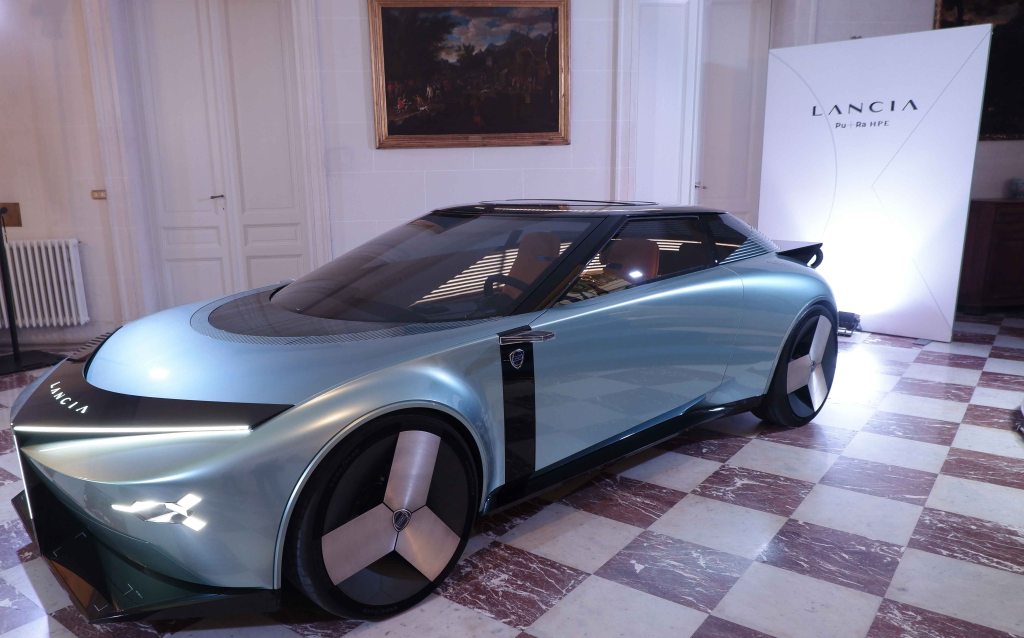
Belgium has always been a country with many Lancia enthusiasts, and the iconic brand returns therefore in its renaissance strategy also to our country and Luxemburg as one of its 6 major European markets. We could witness the presentation at the Italian embassy in Brussels of the beautiful and stunning Lancia Pu+Ra HPE, a concept car which embodies, as Lancia puts it,  “the brand manifesto for the next 10 years in terms of design, interior home feeling, sustainability, electrification and effortless technology.” We will come back in more detail on the styling and innovations incorporated in this car, which will indeed be a harbinger of things to come for the brand.

At the press conference, we listened to four speakers, Mr. F. Colonnese Business Development Manager EE (see photo here above) , Mr. C. Louwerse_Premium Cluster Director NL, Mr. Milosz Tomanek_Premium Cluster Director Belux and last but not least Emanuele Tomassorri, Exterior Designer.

We could have an interview with both misters Tomanek and Tomassorri, which you will see further soon in our columns.

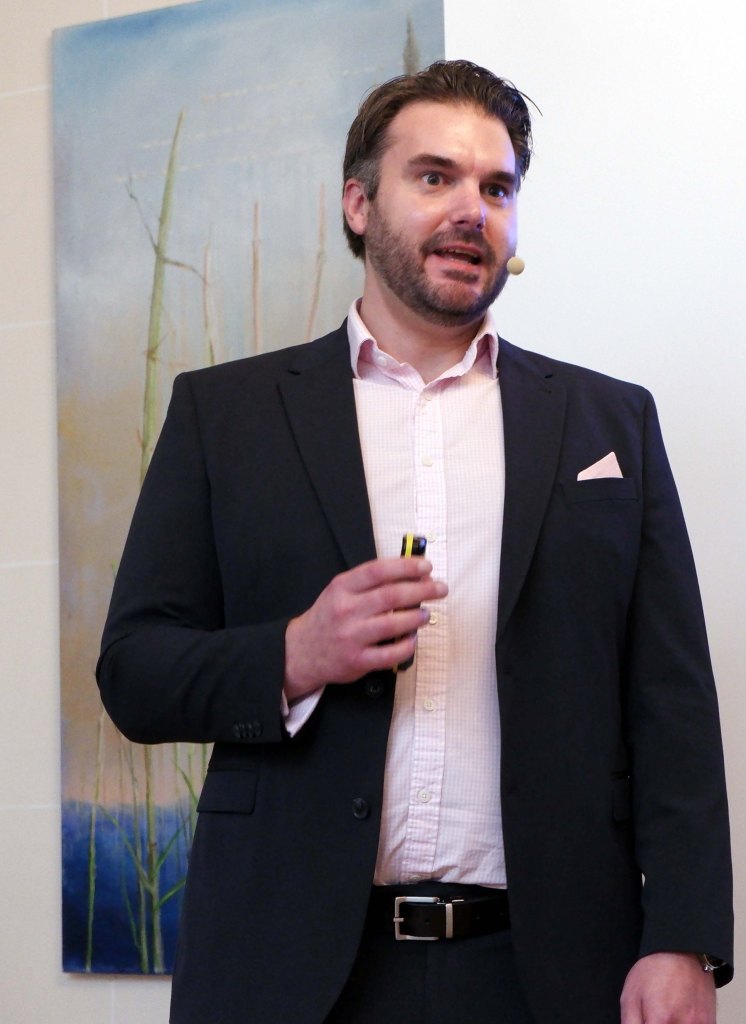
Milosz Tomanek, Director of the Stellantis Premium Cluster in Belgium and Luxembourg (photo here above) stated “as soon as we announced Lancia return to Belgium and Luxembourg, we set up a dedicated team to work on and implement the brand Renaissance, making of Lancia the brand that embodies the Italian elegance. For the launch of the new Ypsilon in 2024, we will have 10 retailers and 13 after-sales service points. We are ready to have Lancia back and make of Belgium and Luxembourg two of the main European markets for Lancia.” Lancia will also launch the Gamma in 2026 and last but not least the Delta in 2028. From 2026, Lancia will only be launching 100% electric models and, from 2028, it will only sell 100% electric cars.

Lancia’s Roadmap for Europe

Lancia’s arrival in Belgium and Luxembourg is another step of the brand’s Renaissance towards its internationalization and forms part of a roadmap in line with the Stellantis “Dare Forward 2030” strategic plan.

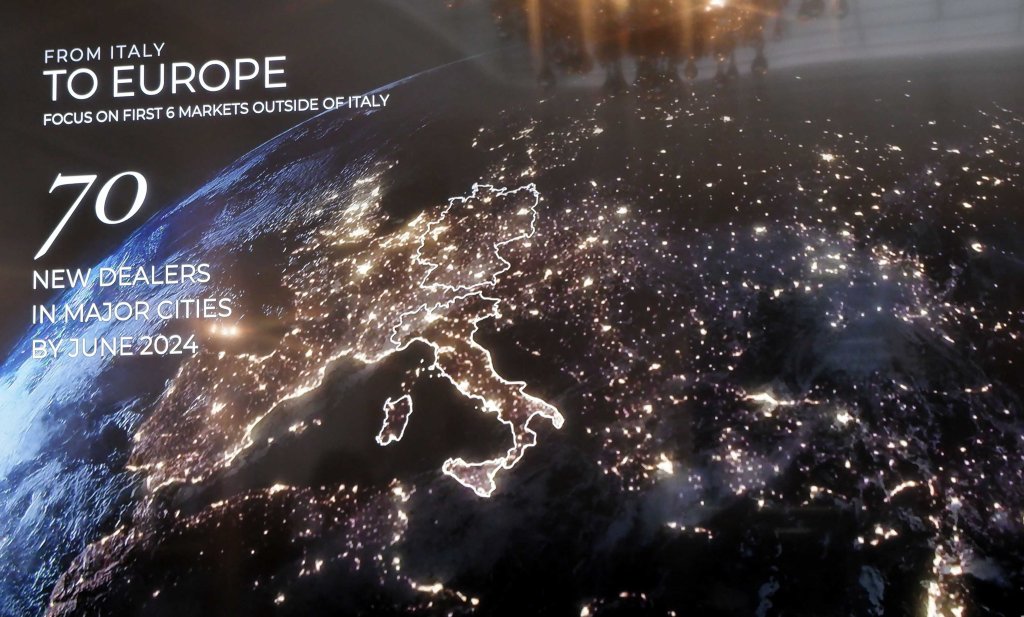
By the first half of 2024, the brand will have 70 new retailers in 70 major European cities and 100% of the letters of intent have already been signed. The strategy involves, as Lancia puts i officially, a new efficient and innovative distribution model, with a selected number of retailers based on a key concept of Lancia Renaissance: quality.

The new showrooms will provide customers with a totally immersive experience, both online and offline, recreating a “home feeling” atmosphere, thanks to materials, colors and attention to detail, inspired by Italian architecture and design.

As said, more soon with interviews and further separate reports and comments on the design of the Pu+Ra HPE…

we just tell you here that the name Lancia Pu+Ra HPE is based on Pu+Ra, the brand’s new pure and radical design language, whereas HPE stands for ‘High-Performance Electric’…

Hans Knol ten Bensel

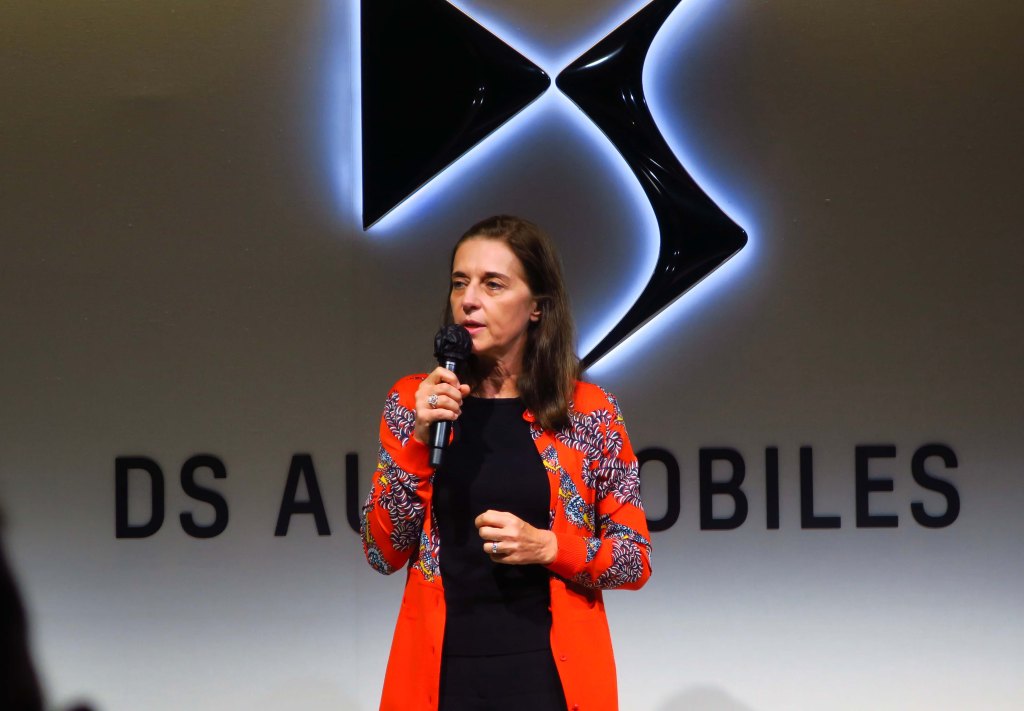
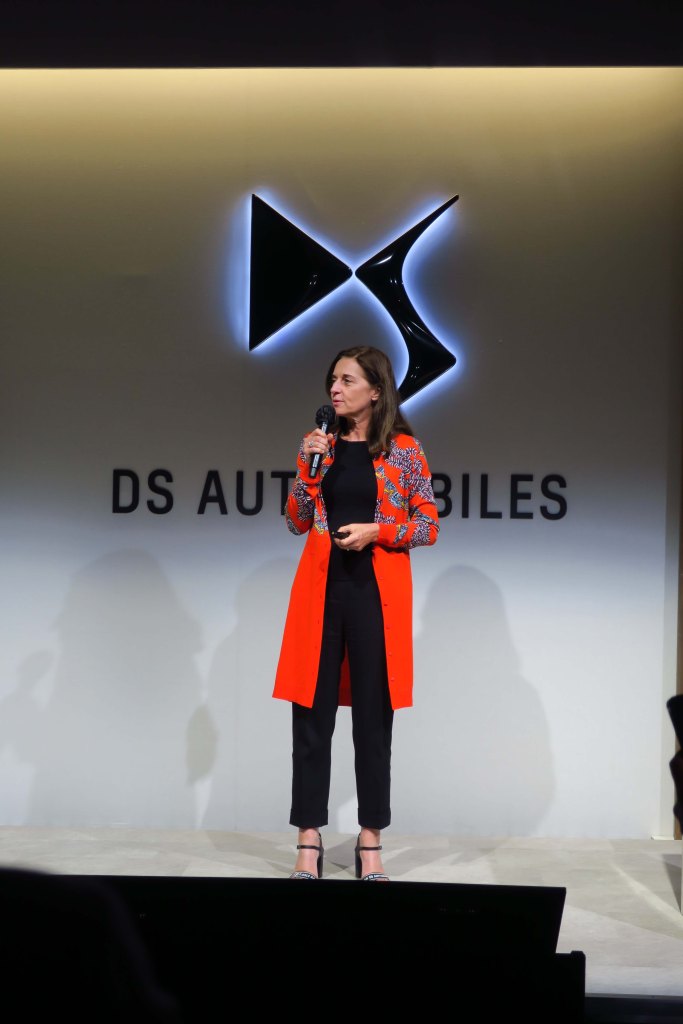
We spoke with Béatrice Foucher, Brand Chief Executive Officer of DS Automobiles…

We met already Mme Béatrice Foucher at the presentation of the DS 4 last year in Chantilly, where she presented the strategy of DS Autombiles at the “DS Week” event…

DS Automobiles is carving a fine niche for itself in the premium segment. Your servant appreciates the refinement, comfort and last but not least the style of these fine DS automobiles. You can understand that we were delighted to meet Mme Béatrice Foucher at the presentation of the DS 4 in the “DS week” last year in Chantilly. Then, the entire press presentation of this noble automobile was in line with its qualities: we were not only able to meet Mme Béatrice Foucher personally at dinner, together with the communications people of the brand at lunch, we also had interesting workshops with the designers, engineers and last but not least the craftsmen and artists who make the DS 4 into the hand made four wheeled gem it is. You can read more about this event in our columns, see https://autoprova.be/2021/09/05/we-had-a-first-drive-with-the-elegant-ds-4-the-electrified-future-has-arrived-at-ds-automobiles/

At the Brussels Salon this year, we were again invited to have an interview with her. Just read further…

Hans Knol ten Bensel

A prototype of the DS 4 was displayed in Chantilly, symbol indeed of French “Savoir faire”…

HKtb: I have to congratulate you on your client approach and your philosophy to extend the refinement of your cars, not only in its external styling, but also in the interior.

BF: Indeed, that is our “raison d’être”, it is a combination of technology and the French “savoir faire” or know-how. Indeed, after having admired the exterior, customers must open the door of our cars, like for instance the DS4, see the new leather, the new solutions in the interior we developed in the DS3, the new DS7. From the next year onwards, we are going to create what we call collections, like there exist in the world of fashion.

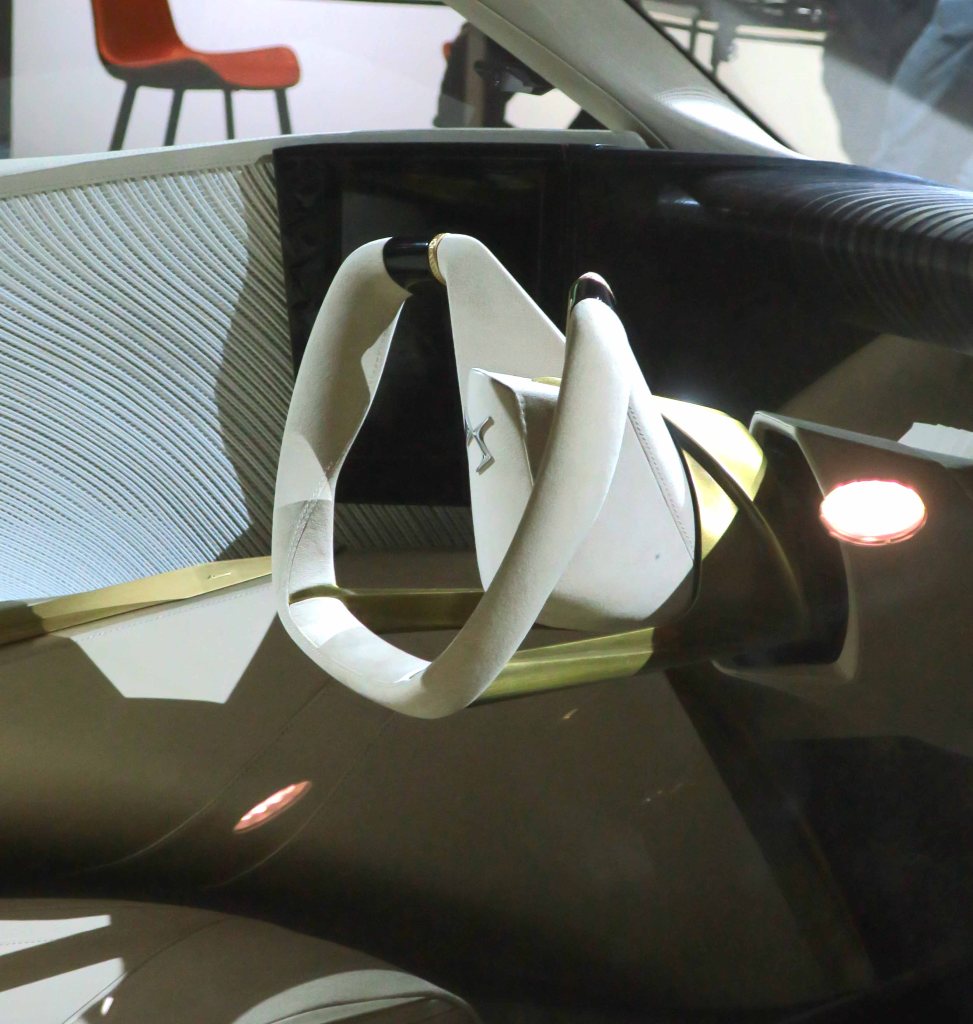
The stunning interior of the DS prototype seen last year in Chantilly. Look at the contours and wood lined finish of the seats. A harbinger of things to come?

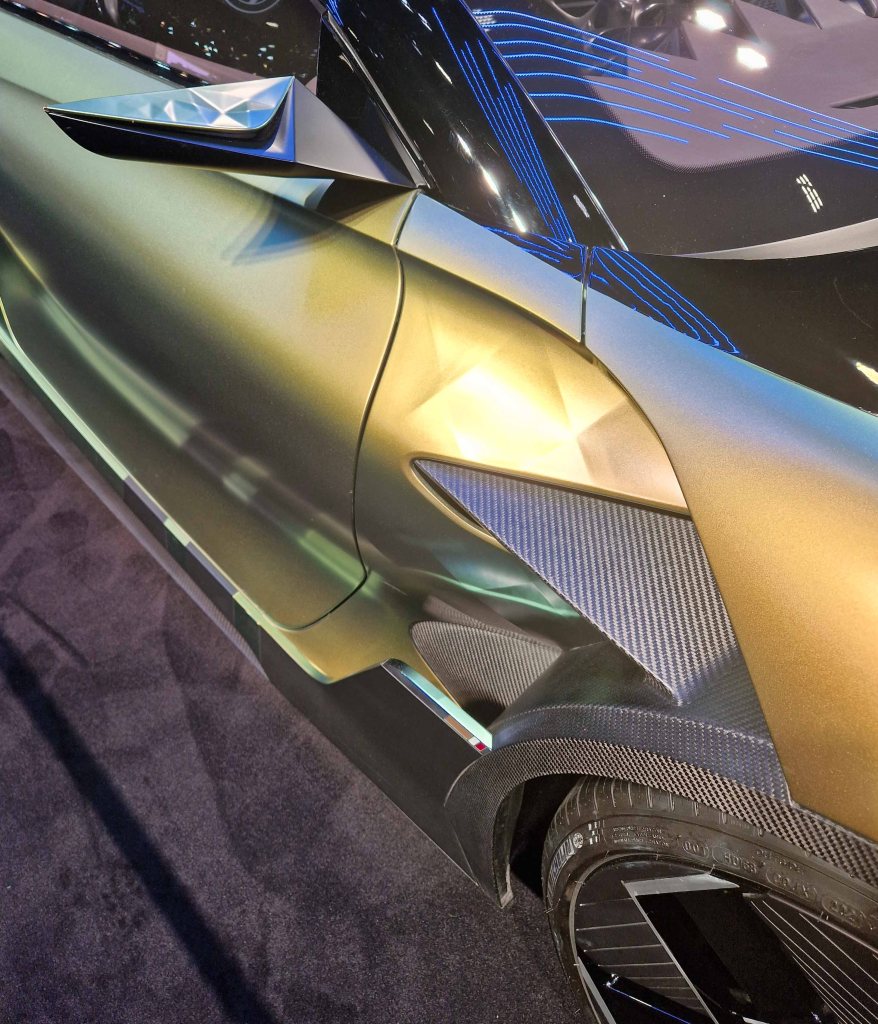
HKtB: We see here on the Salon, the very stylish DS E-Tense Performance 600 kW prototype, are there details of this car we will see in the production models?

BF: This will be more for the exterior than the interior, its bodywork lines which will be seen on our cars from 2024 onwards.(See our photo below of this prototype)

HKtB: But you emphasize the “savoir faire” Français, the French art of life…in automotive mobility.

BF: Indeed, that’s it. This lies in the materials we use, the art of treating them and producing exquisite textures. The French know-how in terms of stock market value lies now in the companies producing luxury goods, who have an established international reputation. This know-how is internationally recognized and appreciated, and this we put into our cars. Indeed, we see the car as a part of the interior one lives in, a part of one’s private home, and so the satisfaction and the reason people buy our cars is this choice of materials which appeals to them.

The reasons why our clients buy a DS is first of all the design, both as well exterior as interior, as this is a car which tells something about them. The second element is the elegance and the luxury and last but not least, the comfort. These are the three aspects which make people purchase a DS. The level of satisfaction is very high; clients are very pleased with their choice.

HKtB: Are your clients mostly women?

BF: No! When we look at the statistics, we have the same share of male clients than the other premium brands, even for the DS3, which appeals only slightly more to women. The reason why our clients buy a DS is because it’s a French premium brand, they like a different car in this premium segment, and indeed, the (male) clients show the car to their spouses, they enter the car, and they fall for it. So indeed we have a female clientele “on the second row”, they have a strong influence in the choice of the car which doesn’t show in the statistics.

HKtB: When cars are too feminine, women (and men) don’t necessarily buy it…

BF: Indeed, but as soon as the cars embody a social statement, as premium cars do, the (sexual) codes are not important. We put forward the codes of “savoir faire” Français, of luxury, of refinement, which appeals to both men and women.

HKtB: Indeed, a Cartier watch also appeals to men…

HKtB: The successes of your involvement in the Formula E racing does not really translate into the image of the brand…it did not create the “Audi” effect.

BF:  You mentioned Audi. Now their Quattro was a car entering in rallies with iconic figures behind the wheel. Rallies are very popular. We are a young brand, dating from 2014, we chose the Formula E because it tells the story of our brand, with its fast and early move towards electrification. Formula E is not as popular as F1 for example, but it is iconic and indeed quite amusing and interesting.

I mention also here that the DS 7 360 or the DS9 is built by the DS Performance team. This means that besides the drivetrain which is shared with Peugeot, everything else is specific, it has a unique “feel” on the road and offers an exceptional handling. We also optimized the regeneration also on this car, which clients consider important. But indeed, we don’t have decades of sporting history to tell here…

HKtb:  Also the typical DS client is not the one who drives (very) fast or seeks the ultimate in performance…

BF: Indeed, this is what we want, and that’s the reason why we call it also “the art of the voyage”. The quality of the time you spend in the car is important. The satisfaction enjoying the comfort of a car being surrounded by noble materials. Of course, you have not less than 360 HP. I can use them if I want it, but what is offered here with this car to me is comfort and refinement. One has more than enough power at hand, but it is not an issue.

HKtb: Are your clients young, and is connectivity important for them?

BF: Our clients are not young, which is the case for all premium brands, if one looks at the B to C statistics, they are between 58 and 60 years old, the B to B is younger, from 45 to 50 years, let’s say. Everybody wants to be seen as an amateur of technology, being a “technophile”, because one thinks that if you don’t love technology, you are missing out. So everyone wants a car which is up to this. It is a social statement of modernity. I tell to my teams, the value of a car is nowadays 50 % hardware and 50 % software.

HKtB: This digitalization takes still further steps, like is shown by BMW with its “Neue Klasse” with screen wide displays and dashboard instrumentation and touch knobs and buttons reduced to the minimum, as the underlying digital menus are doing the rest.

BF: Our philosophy is very clear and we showed it also on our concept car, it is to say that what makes the value of our cars is that when you open the door, you have the impression to enter in a Bugatti. We have refinement, savoir faire, and this we want to stress even more in the future. Of course we consider also the increasing digital infotainment needs, as a modernist social statement, but we want this digital element to disappear when the client wishes so. If you enter the car, there is nothing on the screen. Only when you put the contact, the screen appears. That is our philosophy and our goal. Because at a certain point, showing a plethora of screens is not premium. The faculty of having the information appear and again discreetly disappear is premium. This is the direction in which we work. Of course, we need the technology to make this happen.

HKtb: What I would also look for in future DS automobiles is incredible sound…

BF: We made a partnership with Focal, installed in our higher equipment versions like the Rivoli line, which reaches already very good sound quality… of course we have now more silent, electrified or fully electrified cars, which makes this even more important. Everybody works on this, and we also work with partners who have built an enviable reputation in pure sound management. You will see more in the future…

HKtb: When I travel on a motorway, in a certain region, I would like to tune in on my sound system for cultural, historic or general information about where I travel.

BF: This fits in our philosophy of cultivating “the art of the voyage”, and this is also want the digitalization to bring us. My name I Beatrice, and I want to know about the culture, or art places to visit in the region or city where I travel. This is what connectivity should give me.  

 HKtb: I thank you for this interview.   

Hans Knol ten Bensel

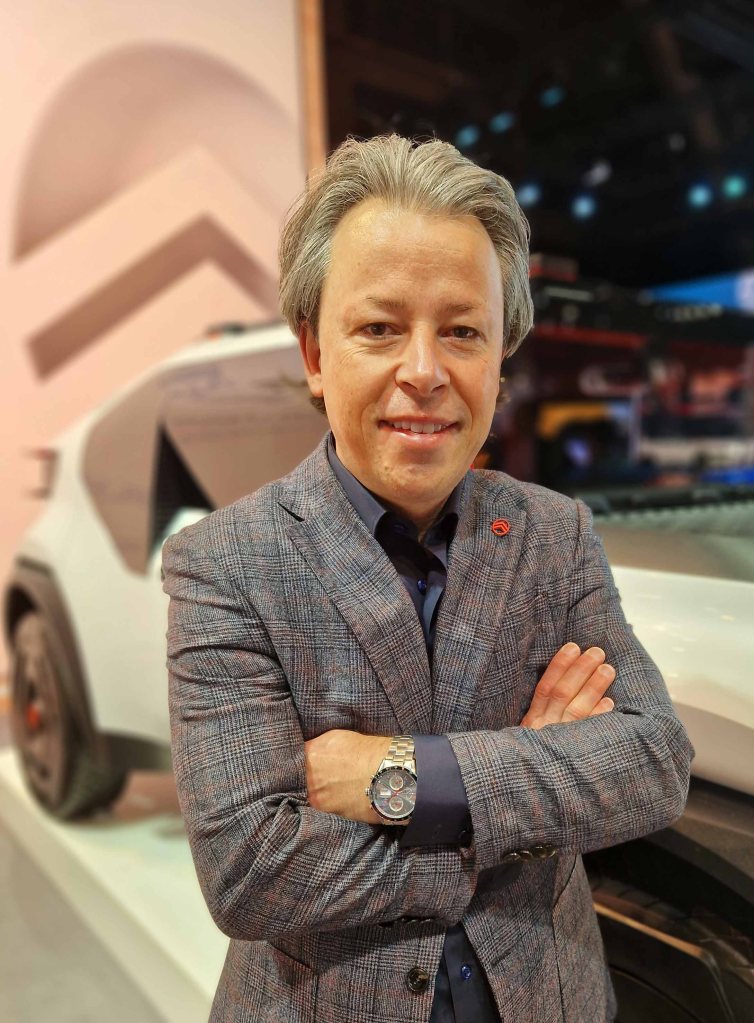
We spoke with Pierre Leclercq: “our Citroën Oli is not only style. It is French Design.”  

On the Brussels Salon, Citroën showed its already iconic Oli prototype, a harbinger of things to come in the Citroëns which will be in the showrooms already this and next year. Reason enough for your servant to have a talk with its head of design, Pierre Leclercq, about the design philosophy of the progressive brand with the “double chevron”, and so much more…

Hans Knol ten Bensel

I started this interview asking indeed about this new design philosophy of the brand, striving towards simplicity, practicality, lightness, durability and sustainability in a very bold and original package.

PL: “With the Oli, there are two things. First there is the brand identity, as we show with the Oli styling elements which we will bring to the market as soon as this year. The front end, the new logo, the head- and rear lamps, also the coherence between the front and rear end. The latter is a very important element in our brand identity. (We have seen this already in the Ami – editor’s note).

The form language, the simplicity of the edges and the curves will also be seen on our future production cars, but then also the contrasting vertical elements will be present. Our designers will deviate here from the strictly automotive styling which you see in the other brands of the group, we have a non-automotive touch which will be a distinctive element in our future styling.

The magic goals of French Design…

The second fact is that the Oli is not just a styling exercise. It is not only style. It is really French Design. We work together with our engineers to reduce weight, the cost, we are striving for intuitive and simple solutions.

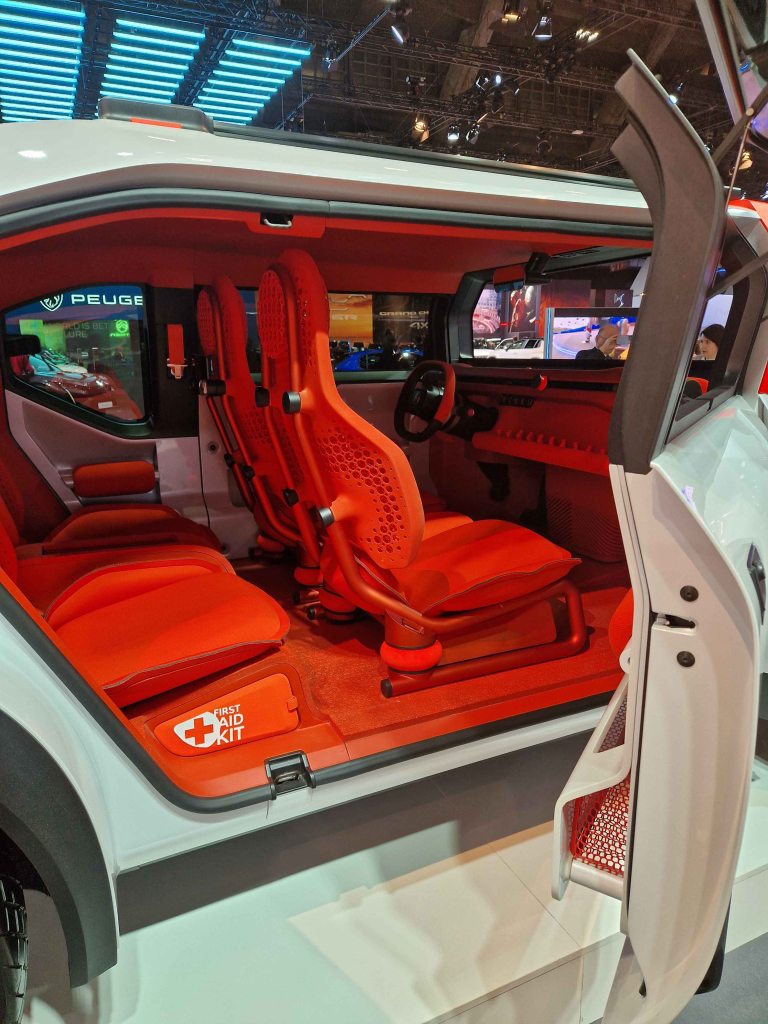
For instance the seats. It’s very important, we work with a whole team to get a seat which is very distinctive, which we can put into production. We discovered with the Oli that our clients are ready for these things. We see that our clients are ready to take bold steps together with us, because we have an image that we will bring something more on the road than just a nice looking car.

HKtB: This translates also into the choice of the materials, the dialogue with the suppliers about the substance and texture of the elements and their surfaces, their unique touch and feel, the atmosphere and character this gives to the car…

PL: We will be a zero carbon company in 2038, and this has a huge impact on materials. Not so long ago, the choice of the materials came very late in the process of building a car. The exterior and interior, the colors, it was seen as pure decoration. Here and there, one started to use recycled materials for some items, but that was it. This process is now completely turned around at Citroën. We now ask first to tell us which materials we can use, as we want recycled materials, unpainted, and we will go from there and adopt them. This is most interesting. And I think that our clients are also ready for this.

HKtB: These elements and this approach we also see in the Ami. The French, as even Mr. Tavares recently put it, love their individual mobility. The Ami is fit for the (mega)city… will there be other models geared for a new City Mobility in the spirit of the Oli?

We always search for new solutions…

PL:  We have many projects running now. It’s a bit like a funnel. When there is one project hitting the road, we have already other proposals in the pipeline. We are always searching for new solutions. If you remember, two years ago, we showed a rather disruptive project of robotized platforms, which is an intelligent use of the present day autonomous technology, in controlled urban areas. But I imagine perfectly in 2030 and 2035 that these solutions will be used in our cities. The design will then focus on the interior of the cabins and structures rolling on these platforms, a very interesting evolution.

The Ami represented a big risk for us, indeed, we thought about the city, but in fact, we scrutinized the clients who bought the Ami, age, location, etc, and we noticed that the Ami is not only used in the cities. We have clients who buy the Ami for their children and grandchildren, remember that in France you can drive an Ami at the age of 14, and it is better than a scooter. And in a market where these vehicles cost between 12 and 15.000 Euros, ours is available for 6.000 Euros… No small feat, as we respect the profitability margins of our group! It is now on the market for two years, and it has grown more into a lifestyle than a car. This is also what the 2 CV has achieved. It is not easy to create the same phenomenon in this day and age…

HKtB: Can you tell a bit more about your Ami buyers?

We have also many clients who buy an Ami for their holiday homes. And as I said, of course grandparents who buy the Ami for their grandchildren. There are also clients who own a Ferrari and buy an Ami for their third or fourth car…

HKtB: We talked earlier in Paris about your open mindedness towards other designers, in other sectors, who could become involved in offering elements of the car during its life, for example, that in a further future one could offer replacement seats for Oli’s or Citroëns who after years of intensive use get a bit long in the teeth… or, rather, offer parts and items to customize the new Citroëns…

PL: It’s a philosophy I love very much. People more and more want an object which is really theirs. Design is not a luxury anymore. If you go for an Ikea kitchen, you can still choose the finish, styling and colors you want, to make it yours. This is now also true for cars. We have started this with the Ami.

HKtB: It is also true for Jeep. Mopar offers a wide array of accessories.

PL: Indeed, this trend is already more prominent in the States. But with the Ami we started off in Europe with the same trend. Not that we offer many accessories, but we created a desire with the customer to customize his car. It’s like Apple. They don’t offer many accessories themselves, but are produced by Belkin etc. It is a very interesting path for our cars in the future. This will give us for instance incredible interiors. I want the client to appropriate our geometries. Why not share our geometries on the internet Open Space and invite the developers to have fun with it?

Every brand has its own design team to embody its proper DNA

HKtB: What is your relationship or rather dialogue between your styling department and the suppliers? Do they come present you what is possible, or after having established a manifest for yourselves what you want to do in styling in the next five years, let’s say, you ask them to come up with new materials, possibilities?

PL: The dialogue goes both ways. But I want to stress here that the design has become very important. The suppliers are specialized in offering technology, for instance for the platforms we have conceived within the group, but over the last 30 years, what have we done? Instead of asking PininFarina or Bertone to style all the cars in the world, we have all established our design centers which carry truly our DNA, and every brand has its own equipe or team of designers. This is génial, because we have cars within the group which don’t resemble each other at all…

HKtB: With the new materials comes also repair friendliness, durability…

PL: Indeed, we want our cars to have a longer lifespan, and we will refresh them within our network. We need of course more control as nowadays we don’t see the car anymore after it has been produced. We have to control the recyclability of the car. Otherwise it’s no use to build the car with recyclable materials.

HKtB: It think it is necessary to tell the client that his car now has a long life and that you as the manufacturer will follow the car throughout its life.

PL: Indeed, a lifelong car, staying with you the rest of your life.

HKtB: Indeed, that as a brand policy you commit yourself to the clients that your Citroën model, Type A, B, or whatever, that you will always follow this car for decades to come…

PL: Ca serait génial, that would be a stroke of genius. It is our goal. It would be very interesting and it would completely change the idea of the automobile of today.

HKtB:  The youth is already there. They support and adopt the circular economy. I think Citroën is the right brand to do this. 

PL: Indeed, we push within the Stellantis group for these concepts, and I think that our clients are far more inclined to make these choices than the buyers of other brands.

HKtB: I thank you for this interview. Thinking out of the box is always interesting.

PL: I thank you, always lovely to exchange these ideas, thank you for the conversation. I also think that every car we build has to make the life of our clients better. These are not empty words. The Ami improves lives. We offered a new service; in Paris, people smiled when they saw the car. It takes something to convince a Parisien!

Hans Knol ten Bensel

Lancia starts a journey from its iconic past to a stylish future…

Today starts the first of three appointments in anticipation of the Lancia Design Day on November 28th, the first event of Lancia Renaissance to describe the style of some of its most past iconic vehicles which inspired the design of its three future models.

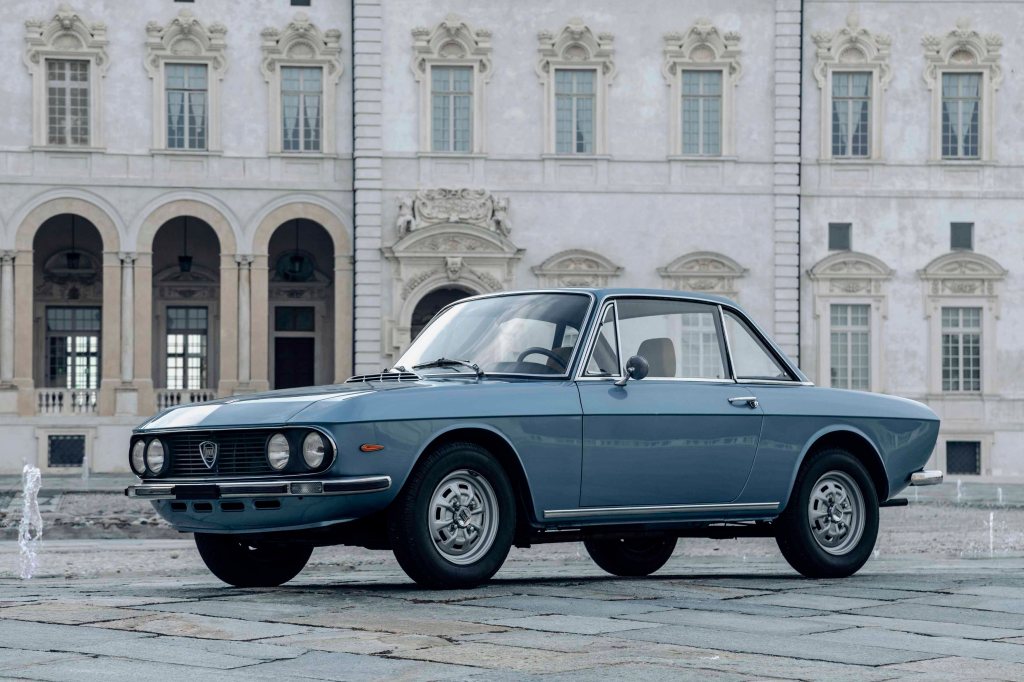
The stars are the Lancia vehicles which have inspired so many car lovers: from Aurelia to Flaminia, from Fulvia to Beta HPE, Gamma, Delta, Stratos, and 037. Some are just the pinnacle of elegance, while others are brutal and efficient. But all have a style capable of remaining timeless. This is what kept them beautiful, contemporary, and authentic expressions of Italian design until today.

“The design and beauty of these “moving masterpieces” inspired us in our creation of the three Lancia models of the future” stated Luca Napolitano, Lancia CEO. “This includes the new Ypsilon in 2024, our new flagship which will allow us to enter Europe’s biggest segment, and the sculpted and muscular new “Delta” in 2028 with its geometric lines which will excite car enthusiasts throughout Europe.

We like to describe Lancia as a “Progressive Classic” brand, continues mr. Napolitano, where “Classic” means leveraging and respecting the value of our heritage, while “Progressive” entails our ability to look to the future with ambition. Innovation and timeless design have always been our values and we now want to add sustainability, and responsibility, always putting the customer at the center of our value proposition. These are the guiding principles of the ten-year plan of our Renaissance: through them, we are aiming at becoming a credible and respected brand in the premium European market. Protagonists of this roadmap will be the three new Lancia models of the future that we designed to make them recognizable and consistent one another. All three vehicles will feature three distinctly Lancia design elements: the calice, the sinuous lines and the geometric-primitive forms. Inspired by the front of the iconic Lancia Aurelia and Delta, the new calice will be reinterpreted in a modern key, preserving its distinctive feature that brings together a vertical and horizontal line to include the Brand logo.”

Moreover, the three new models will display sinuous lines on their side, a typical feature of some of Lancia historical models, such as Aurelia B20.

Finally, there are the geometric-primitive forms on both the front and the rear, among which the round taillights stand out, that refer to the Brand’s more brutal and technical spirit, which tips its cap to the legendary 037, Stratos, and Delta, the racing “beasts” that dominated Rally for over 20 years”.

Besides elegance and grit, there is a third element of Lancia design that is eclecticism, i.e., the tendency to be inspired by various sources, even contrasting ones, to create something harmonious and consistent at the same time. This is what happens, for example, in the Italian living room areas that inspired Lancia to create the original and welcoming interiors of the Gamma and Beta models. The same refinement of the interiors can be found in the 1965 Fulvia Coupé, elegant, aggressive and high performing at the same time. This is another example of Lancia eclecticism.

The Lancia Beta HPE, marking an era with its “venetian blinds-inspired structure”

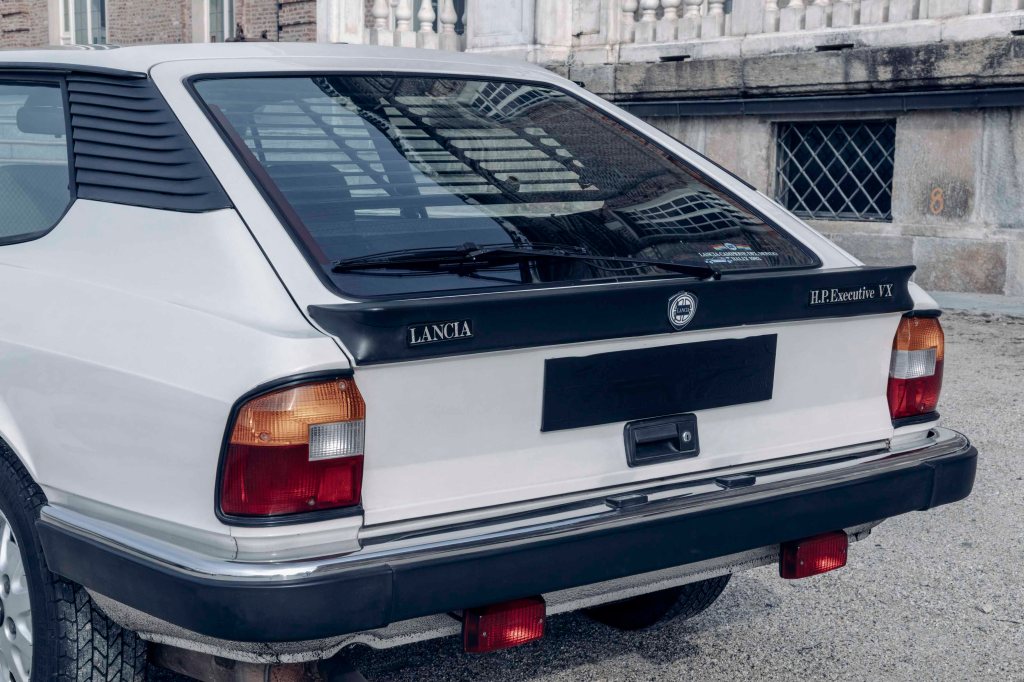
The Lancia Beta HPE (High Performance Estate) is a gorgeous, sporty, and high-performing family car which is low, graceful, and equipped with a spacious trunk. Designed by Pininfarina and produced in three series, it is definitely the most fascinating Lancia Beta model. Introduced at the 1975 Geneva Motor Show, the Lancia Beta HPE stood out for its eclecticism featured as the “practical elegance”. The rear of the cabin stands out for its angled hatch where one can make out an innovative venetian blinds-inspired structure behind the glass, which limits the effects of sun glare and protects rear visibility. This innovative solution is finished off by two trims on the third pillar which gets visually blended with the original finish on the rear window.

Lancia Gamma Coupe: the “traveling living room” that sets new rules…

At the Geneva Motor Show in 1976, Lancia displayed the futuristic design of the Lancia Gamma Coupe. With classic exteriors and eclectic interiors, this vehicle is remembered as the “traveling living room”. It was given this nickname as the cab recreates a welcoming, comfortable, and innovative atmosphere, as demonstrated by its original color combination and its dashboard inspired by the  product design of the 70’s. The refinement and the fine quality of the material are the result of collaborations with famous fashion brands, including the maison of Ermenegildo Zegna. The final evolution of Lancia great GT coupes, a noble range that includes Aurelia and Flaminia, the Gamma Coupe was inspired by the Flaminia Coupe. This might be why it looks more graceful and sleeker at first glance than the five-door sedan, thanks as well to its slanted roof. More stylish news soon, and for now just look at the photos… and the film which you can also admire on my Instagram page.

Hans Knol ten Bensel
The iconic and ultra-exclusive Citroën My Ami Buggy in Brussels and Knokke…

The My Ami Buggy was presented to us at Brussels Tour & Taxis…

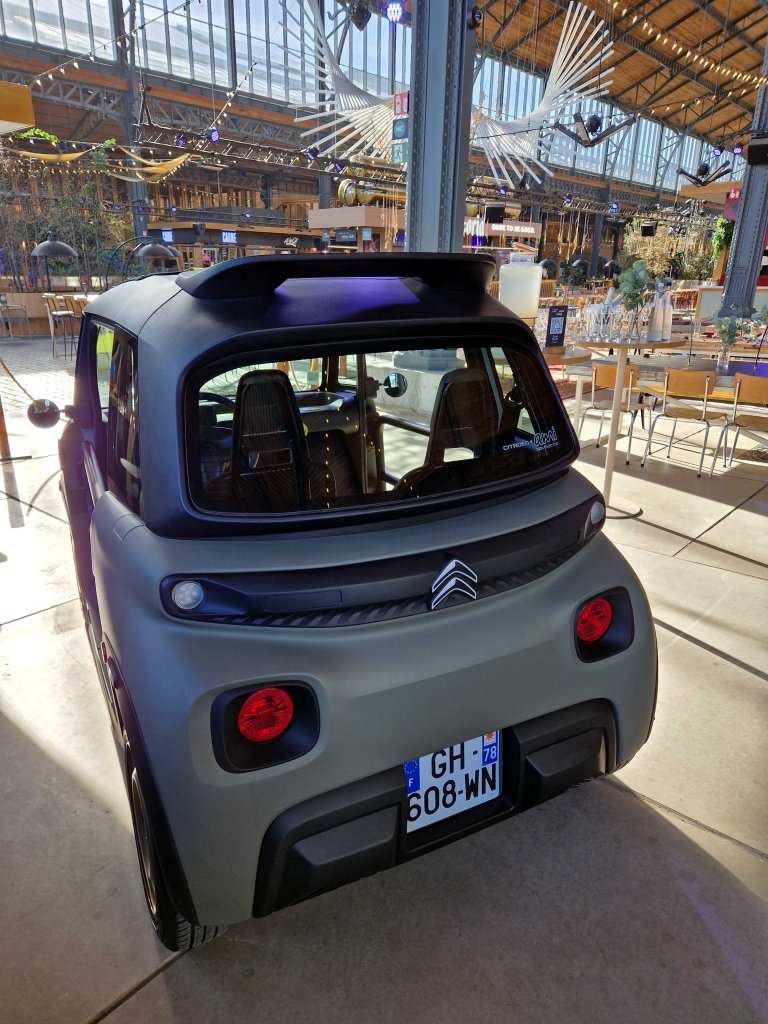
Friday 7 October we stood eye to eye in Tour & Taxis in Brussels with the “Buggy” version of Citroën’s celebrated My Ami. The original “Buggy” concept was presented in December 2021, and met right away with strong public demand. This led Citroën to produce a very small first series of merely 50 units.

It was originally only intended for the French market, and it was launched on June 21 via an online sales site. In 17 minutes 28 seconds, they were all sold out…

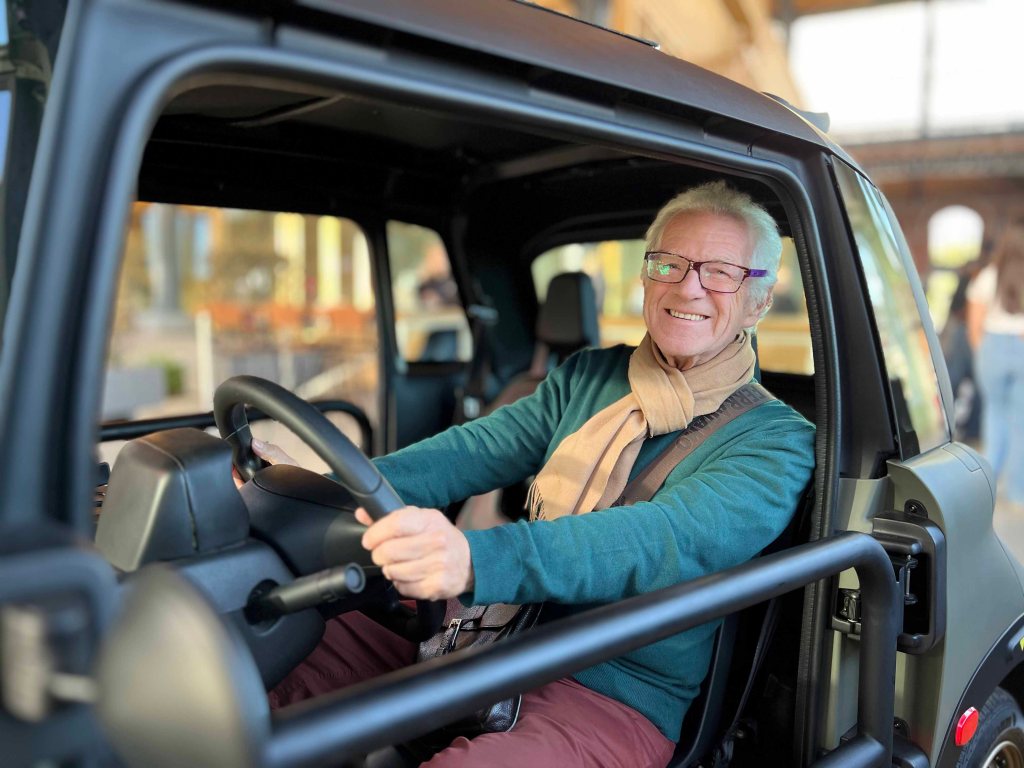
Your servant at the wheel of the Buggy…

We were therefore very pleased when Citroën Belux took the initiative to present this little gem to us at the premises of Tour & Taxis in Brussels,

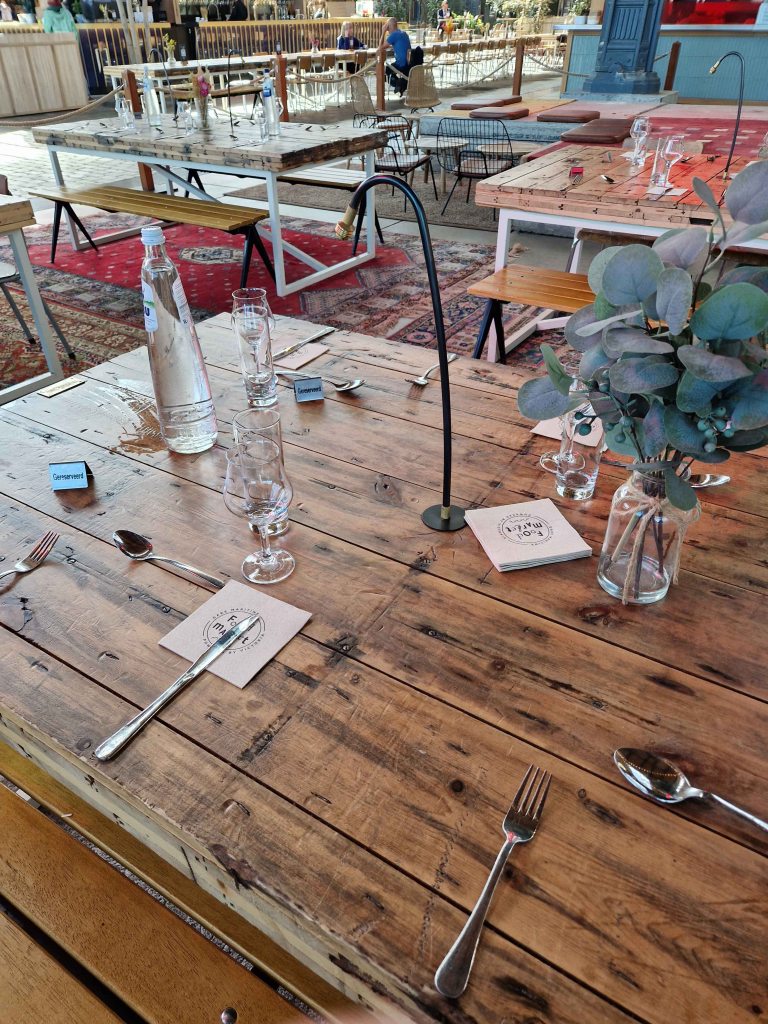
where they also treated us to culinary delights in the Gare Maritime Food Market. Indeed, there you can discover the Belgian terroir with 10 new street food concepts, in market style format, presented by 8 top chefs in an iconic venue with a unique bar experience.

The “sustainable” style tables will carry delicious dishes from star chefs for you to enjoy…

But there is more of the “Buggy” to see in Knokke…

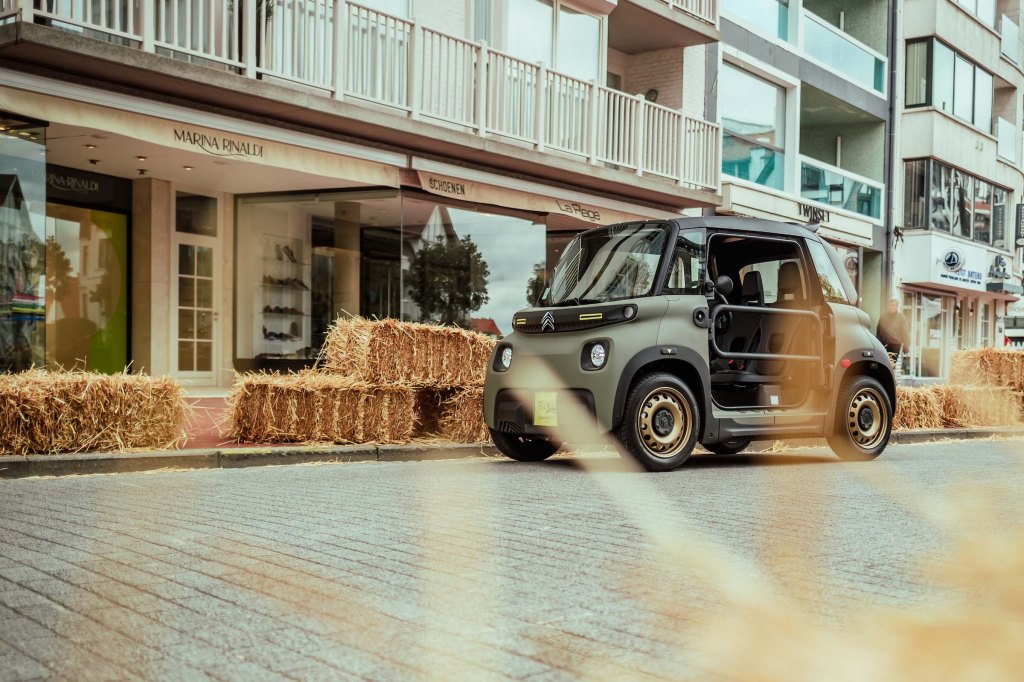
On the sidelines of the activities that will take place this weekend in the fashionable seaside resort of Knokke (Zoute Grand Prix, from October 6 to 9), the exclusive Citroën My Ami Buggy will, after a brief visit to Bruges at the beginning of the week, its first kilometers on our Belgian roads, to the delight of ‘carspotters’ always in search of original images.

My Ami Buggy with its adventurous look embodies the liberty of mobility and the holiday spirit with its totally open interior. The doors are being replaced by tubular metal gates. The roof has also disappeared in favor of a removable canvas to make the most of the great outdoors.

It looks also quite adventurous with its Khaki bodywork, its fender flares, its front and rear bumpers, its golden rims. It’s also hard to resist its yellow accessories as they are so inviting to be used…

So see you this weekend, Saturday October 8, when the My Ami Buggy will make its bold appearance in Knokke…

Hans Knol ten Bensel
Citroën introduces a bold concept car for family electric mobility: less is more, thanks to the power of genius…

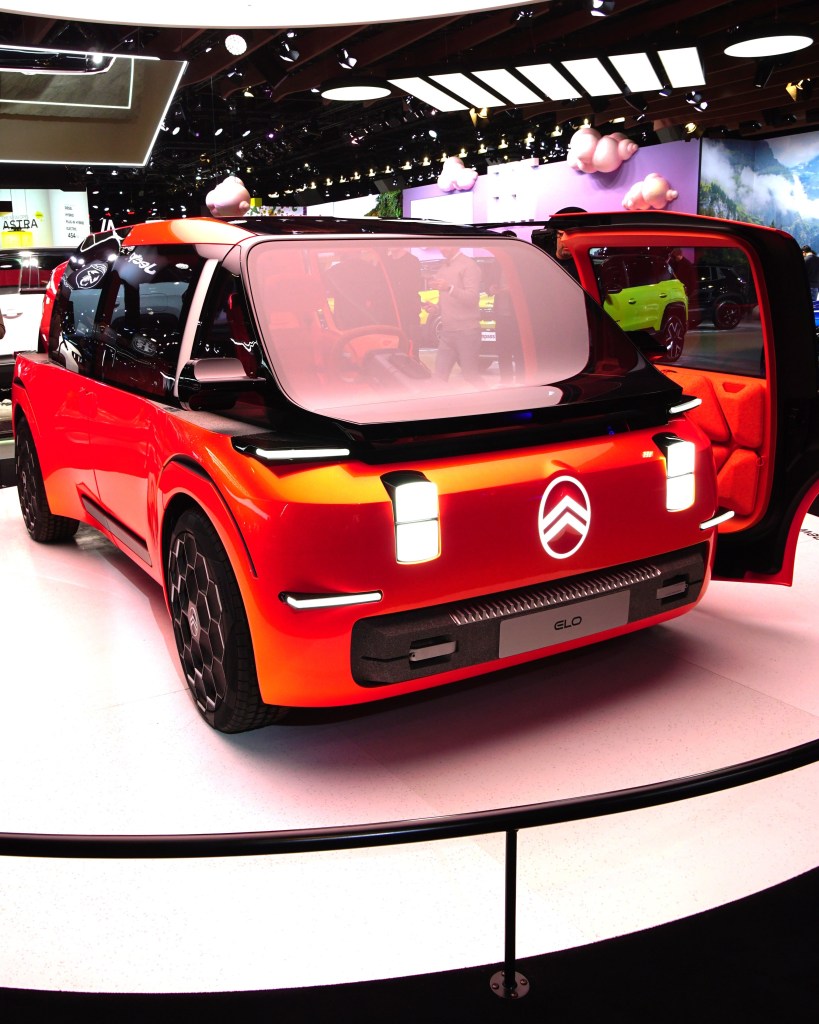
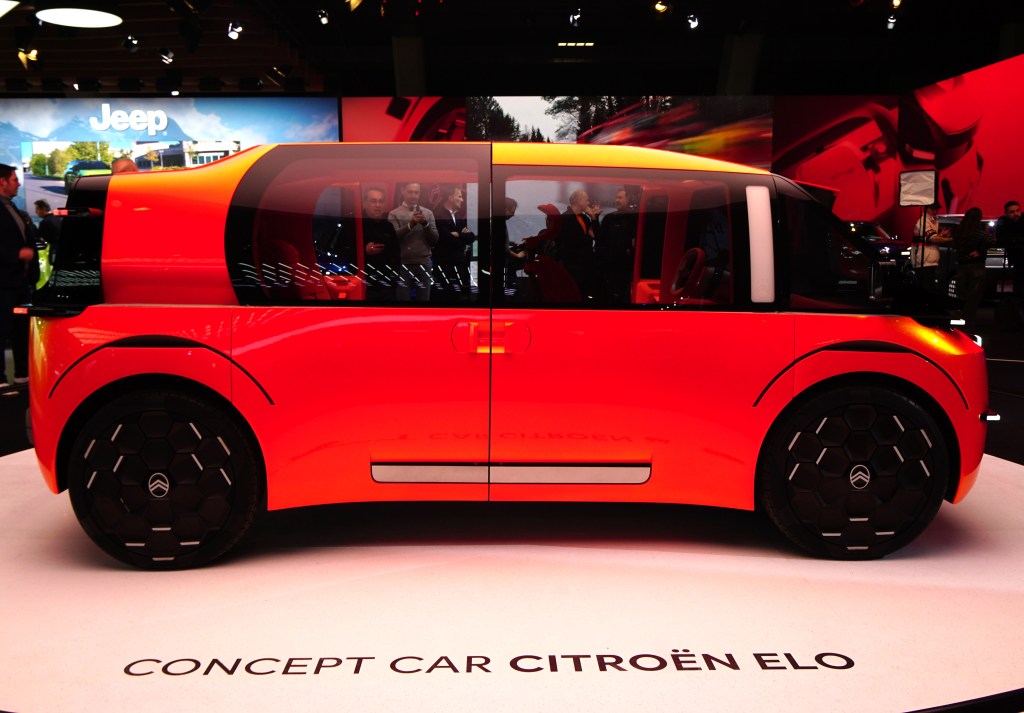
Right after having unveiled its new brand identity, Citroën stunned the international press last Friday, when it presented its OLI concept car in Paris.

You can judge yourself from the photos I took with my flagship Samsung S22 (I am getting increasingly used to it now) how completely groundbreaking the design and the whole concept of the car is actually.

I decided to bring the news of this concept car in different episodes, as thanks to the excellent PR people, I was able to have interviews with not only the CEO of Citroën, Vincent Cobée, but also with Laurence Hansen, Head of Citroën Product Development and Citroën’s Head of Design, Pierre Leclercq. I will bring this extensively in further reports, together with also a further interview with Laurent Barria, responsible for marketing.

So read on, and you can expect much more soon!

Hans Knol ten Bensel
The oli concept car focuses on how more can be achieved with lesssays Citroën CEO Vincent Cobée

In the footsteps of the Ami…now for mobility of the whole family.

Citroën already showed with its Ami (in a few days, we will also attend in Brussels the introduction of the Ami Buggy) that it believes strongly in offering affordable mobility, and it builds further on this concept, taking ‘unconventional’ to a new level with this conceptual oli [all-ë].

The Citroën oli concept is designed to do the same for family mobility that Ami achieved for personal urban mobility. Significantly, oli acts as a precursor to the concepts and innovations that will be available in future Citroën electric models.

The oli concept car focuses on how more can be achieved with less, first and foremost with less weight, how the inventive use of responsible materials and a sustainable production process can lead to inexpensive yet desirable zero-emission vehicles that meet multiple lifestyles.

In his introduction speech, CEO Vincent Cobée  stated “Three societal conflicts are happening simultaneously – first is the value of and dependence on mobility, second is economic constraints and resource uncertainty, and third is our growing sense of desire for a responsible and optimistic future.”

Then he commented on the trend that cars are becoming bigger, heavier and more complex…

Styling language which is soon to be seen on new Citroën models…

“A typical mid-70s family car weighed around 800kg and was 3.7 m long and 1.6m wide.” He continued. Today’s equivalents have grown to more than 1200kg, are at least 4.3 m long and 1.8m wide. Some even weigh more than 2500kg. Legal and safety requirements have driven some of this, but if the trend continues and we carry on parking these vehicles 95% of each day and driving 80% of journeys with a single occupant, the conflict between the need to protect our planet and the future promise of sustainable, electrified mobility will not easily be resolved.”

He concluded: ““Citroën believes electrification should not mean extortion, and being eco-conscious should not be punitive by restricting our mobility or making vehicles less rewarding to live with.  We need to reverse the trends by making them lighter and less expensive and find inventive ways to maximize usage.”

So true we would say, and it is this unerring vision which inspired Citroën to build this concept car.

They focused instead on creating a pure, honest vehicle that is above all lighter, less complicated and truly affordable, as well as inventive and joyful.

With oli, Citroën is raising the stakes for future family mobility by re-thinking every detail to reduce resources and needed materials without compromising on quality or versatility.

A car conceived and built for a (very) long life

Laurence Hansen, Head of Citroën Product Developmentnow we choose a lifestyle, and the car which responds to it…

Who does not crave for a car which becomes your classic, beloved, (life)long companion? Well, that’s the beauty of it, the oli will be at your side, no matter what or how long. This conceptual multi-activity family vehicle has  sustainability at its heart and demonstrates how ‘best-in-class’ Life-Cycle-Assessment (LCA) can be achieved, from conception onwards with restrained, optimal use of lightweight and recycled materials, to sustainable production processes, and from durability for an extended ‘life in service’ to responsible end-of-life recyclability. The front and rear end parts can be easily changed, upgraded, customized, and the oli can within the family be passed from one generation to another…

 Thoughtful details…

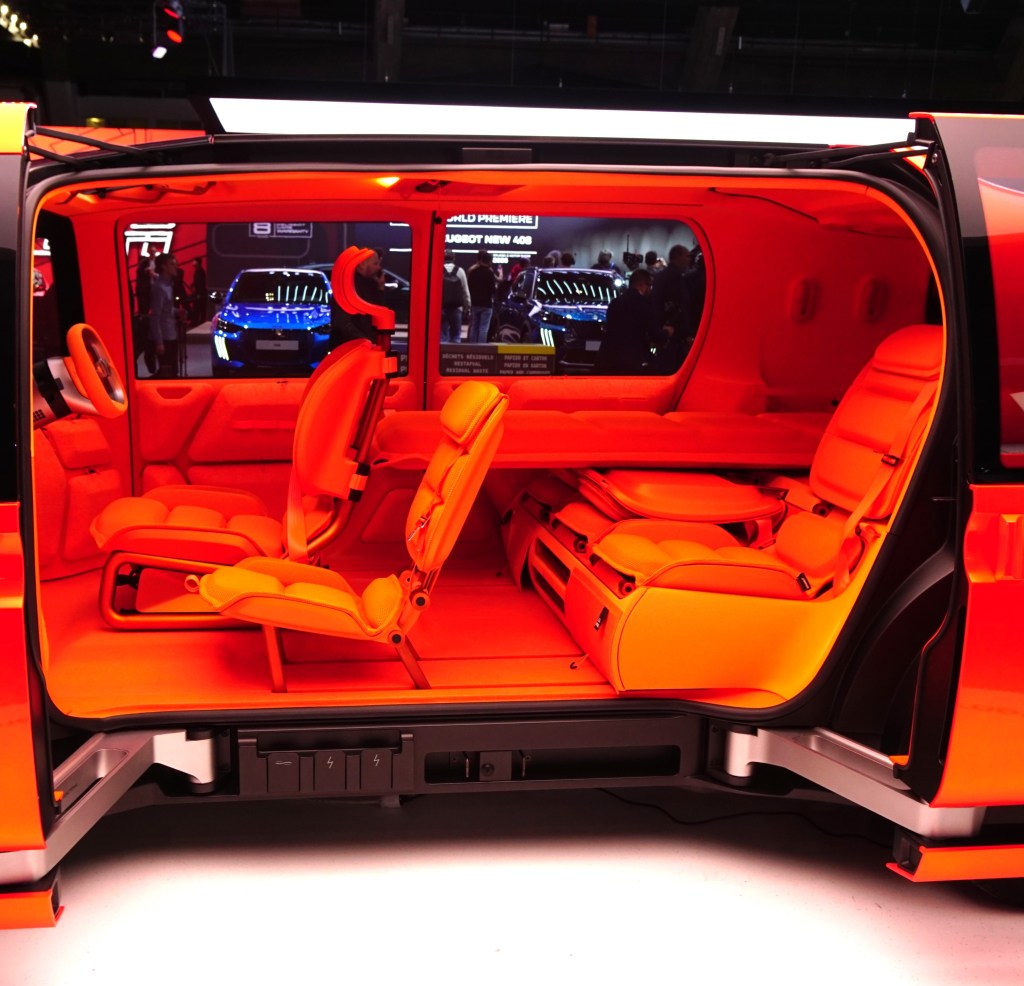
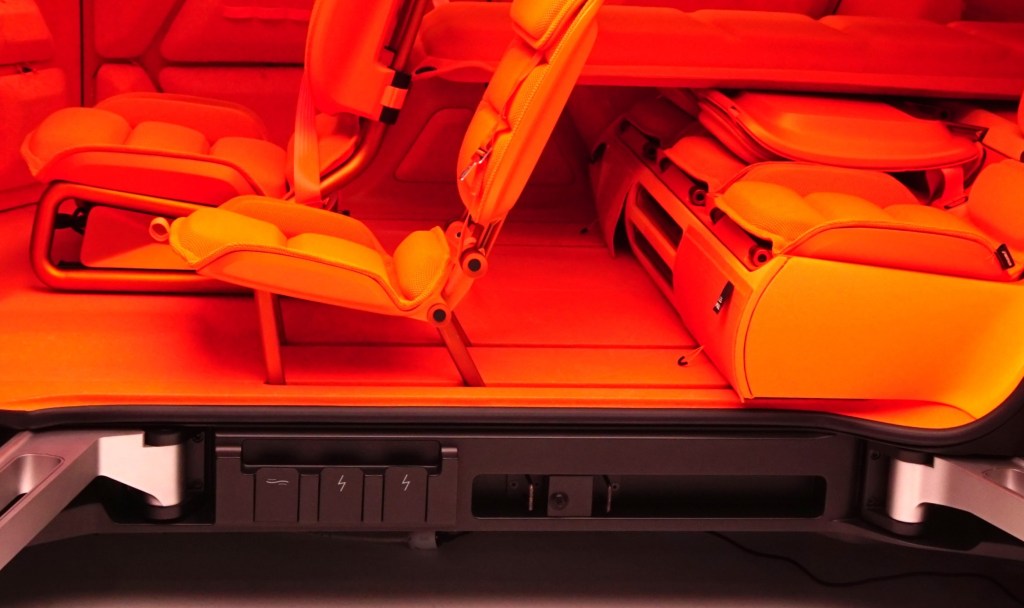
Clever details are found throughout. The seats, for example, are simply constructed and use 80% less parts than a traditional seat. They are made of recycled materials and clever ‘mesh’ backrest designs enhance the natural light inside the vehicle.

They can also be easily upgraded or personalized to suit the taste of individual owners. It’s indeed the result of a chosen and adopted lifestyle, and the concept  car reflects that. Your servant also suggested to Citroën Head of Design Pierre Leclercq that in the aftermarket, a company like Ikea could offer their version of the seats to rejuvenate the interior after many years of use, for instance. Pierre Leclercq liked the idea…

Less weight means less power needed and more range…

 The oli offers reasonable, useable performance for many. Through the use of lightweight materials, oli can extend the range of the 40kWh battery on board to up to 248 miles between charges. Citroën has also limited the top speed of the oli to 68mph to maximise efficiency, while rapid charging capability ensures a charge from 20% to 80% takes just 23 minutes.

Extraordinary looks, harbinger of a total revolution…

The reasonable performance – read top speed – gave extra room for the designers to shape the concept car. Striking and clearly making a statement, oli’s unconventional stance and silhouette exude personality, productivity and positivity in a footprint similar to a compact SUV at 4.20m long, 1.65m high and 1.90m wide.

It defies traditional labelling. oli can be whatever it needs to be – family limo, urban explorer, adventure vehicle, workmate, or even an extension to the family home thanks to its ability to power everyday appliances.

The oli was presented in the stunning setting of a caserne de sapeurs pompiers in Paris…

Pierre Leclercq, believes oli embraces purity and geniality for families who don’t care for automotive status and stereotypes. I couldn’t agree more…

In the oli, the aesthetic approach has been deliberately exaggerated to reinforce functionality and versatility. And, like Ami, it is not afraid to show its simple and intuitive approach and distinguishes itself with its playful use of colour highlights, bright trim materials and vivacious patterns that advocate opportunities for personalisation.

Versatile

The oli truly threads new paths here. Oli’s flat bonnet, roof and rear ‘pick-up bed’ panels, as well as driving the vehicle’s unique silhouette, were chosen to meet the objectives for low weight, high strength and maximum durability.

Made from recycled corrugated cardboard formed into a honeycomb sandwich structure between fibreglass reinforcing panels, they have been co-created with partner BASF. They are coated in Elastoflex® Polyurethane resin covered in a protective layer of tough, textured Elastocoat®, which is often used on parking decks or loading ramps, and painted with innovative, waterborne BASF R-M Agilis® paint.

The panels are very rigid, light and strong – so strong that an adult can stand on them – and weight is reduced by 50 per cent when compared to an equivalent steel roof construction.

The roof is quite strong, as is amply demonstrated by Laurence Hansen, with Pierre Leclercq and CEO Vincent Cobée applauding…

Load carrying versatility is not compromised either, as roof rails each side of the roof panel allow owners to attach accessories like bicycle racks and roof boxes for family vacations, while below the bonnet panel are neatly detailed storage areas including compartments for charging cables plus personal and emergency items.

Not afraid to go vertical…

All of the key design elements on oli are perfectly horizontal or vertical, indeed, Citroën is looking for honesty and efficiency in the form language.

 The windscreen is vertical because it’s the shortest distance between top and bottom and uses the smallest amount of glass. As well as reducing weight and complexity, the smaller screen is less expensive to produce or replace.

To aid aerodynamic efficiency, oli features an experimental “Aero Duct” system between the front section of the bonnet and the flat top panel which blows air towards the screen, creating a curtain effect to smooth airflow over the roof.

The eye-catching windscreen frame is finished with a bright ‘infra-red’ wrap – a new signature colour Citroën will use in conjunction with its new brand identity.

The contrast between horizontal and vertical is evident in the rationally thought-through side panels and glass.

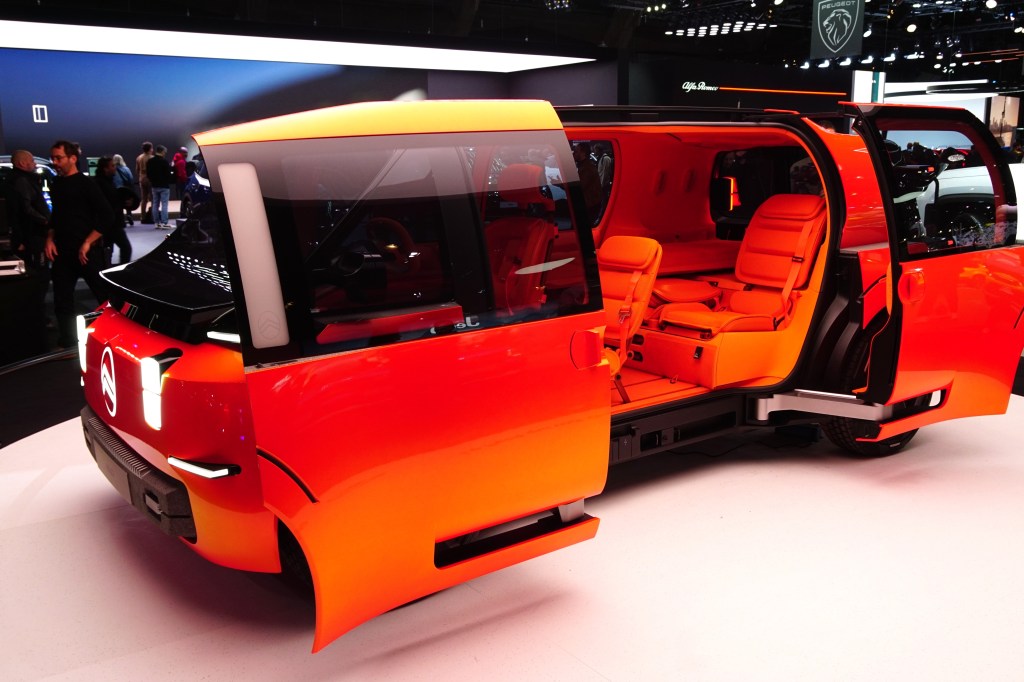
The front doors follow the example set by Ami and are identical on each side, though mounted differently. They are lighter, yet still strong, and much easier to make and assemble.

Reducing complexity and simplifying construction saves 20% in weight per door compared to a typical family hatchback. Half the number of components is required, and around 1.7kg per door is saved by the removal of the loudspeaker, soundproofing material and electrical wiring.

The external door panel is simpler to stamp and is designed to maximize interior storage. Gentle curvatures flow up the sides of the vehicle, and into the top of the side glass as it tumbles home to the roof.

Large, horizontal windows are tilted slightly towards the ground to help to reduce the effects of the sun, and manual, easy-to-operate “flip up” pantograph opening sections, similar to those used on Ami, provide fresh air ventilation.

The narrower rear doors are hinged at the rear of the vehicle and use vertical glass to give rear passengers more light and visibility. The change in form between the front and rear doors also gave an opportunity to add a passive air intake providing ventilation for rear seat passengers.

Access to the spacious cabin is wide, uncluttered and unhindered with both side doors open – ideal for when the driver needs to get straggling family members loaded efficiently.

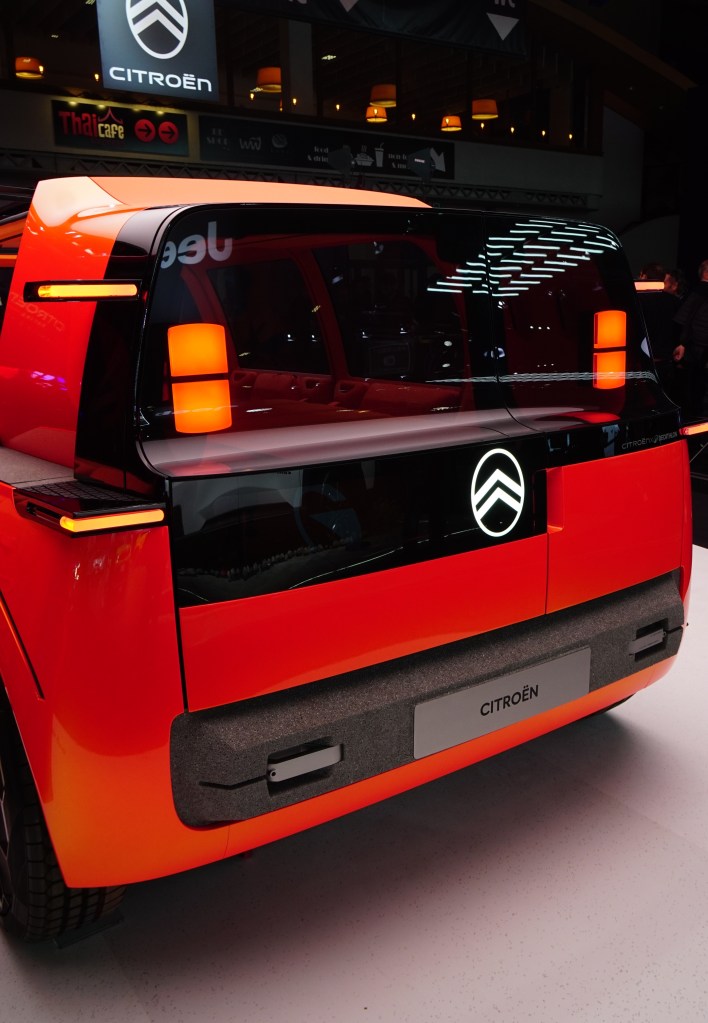
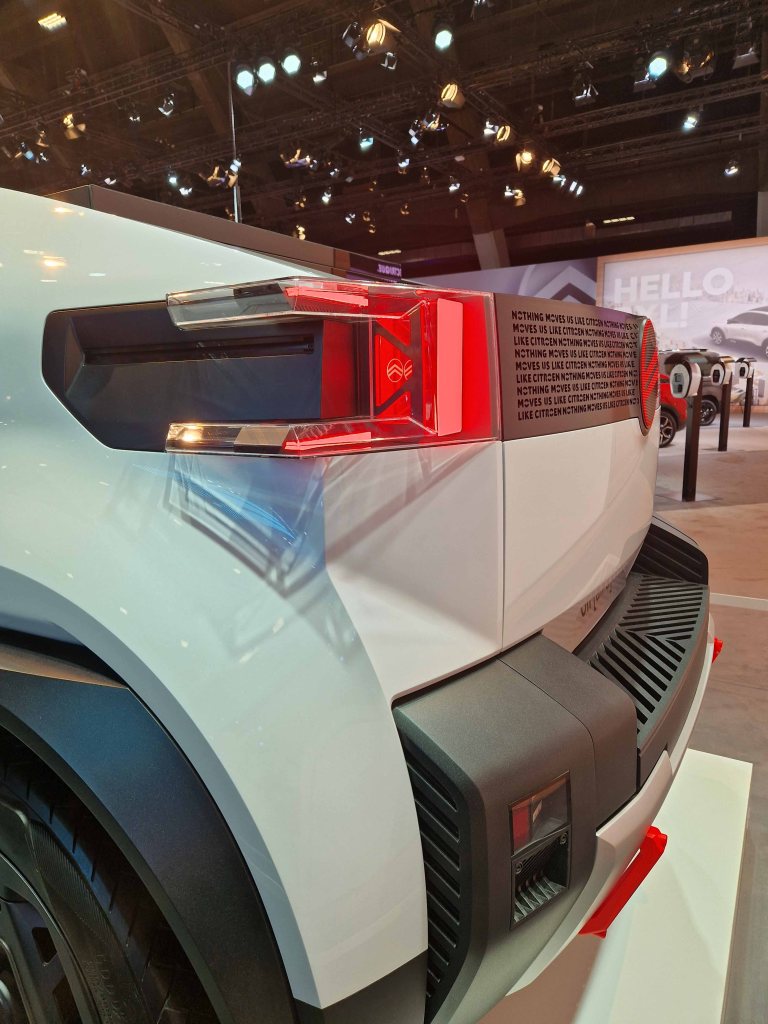
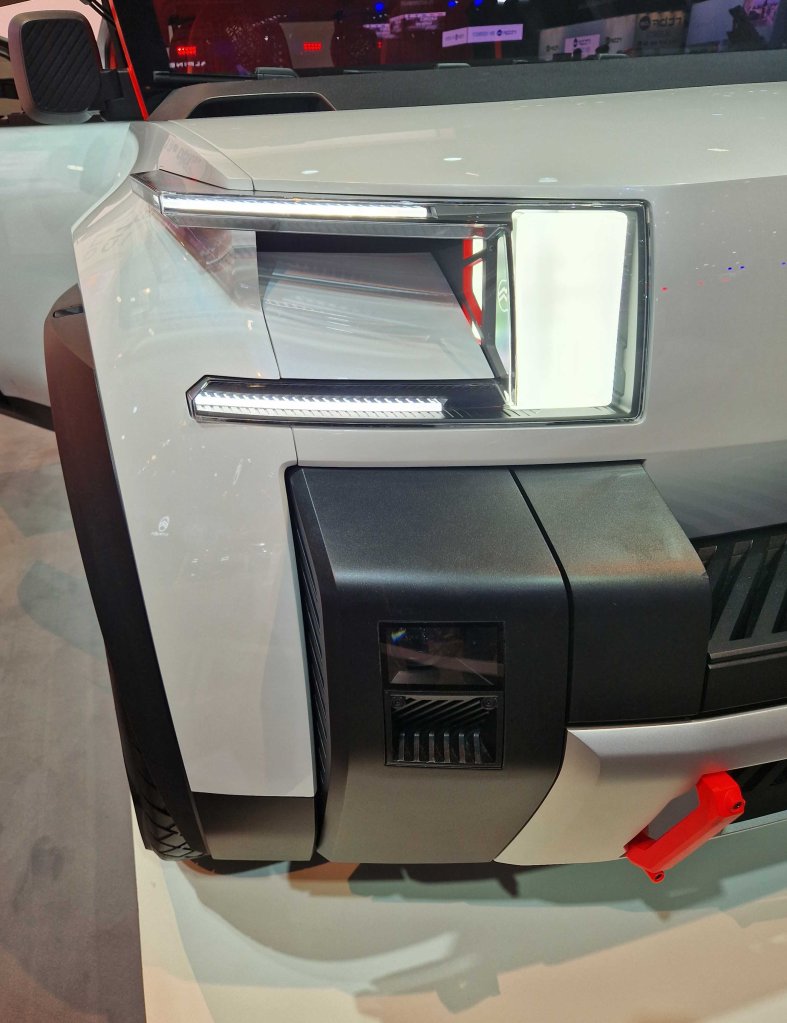
Front and rear lighting modules are, again, uncomplicated but highly distinctive, and also play with the contrast between two horizontal lines and one vertical section. This approach will be evolved further as a distinctive Citroën lighting signature in future production vehicles.

A pick-up (load)bed in the boot…

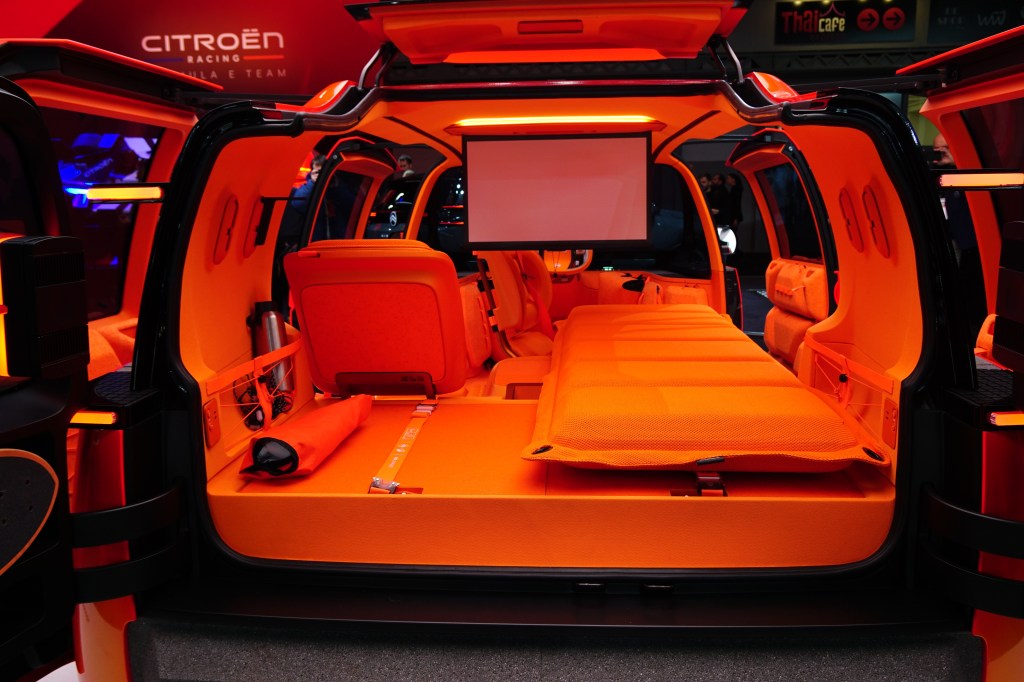
Instead of a conventional boot, oli features an unexpected, inspired exercise in useful product design, and comes with a pick-up bed inside the boot for added practicality. The independent rear seat headrests pop up into the roof, the rear screen glass opens upwards, with the flat 994mm wide removable load bed expanding in length from 679mm to 1050mm.

The tailgate folds down and with the load bed panel removed there is up to 582 mm height between the vehicle floor and the rear glass. With the panel in place, 330 mm height of useful and secure trunk space is available below. The removable bed panel is light and flat, and made from the same recycled cardboard structure as the bonnet and roof panels.

But there is more, on the bodywork, the interior, the wheels and drivetrain. More soon!

Hans Knol ten Bensel