We drove the new DS 7 E-Tense: elegance, comfort and power, the French way…

DS Automobiles is going from strength to strength: it succeeds admirably in making cars with a very distinct character and style, with French “savoir faire” and bold, elegant design of both bodywork and dashboard and interior, creating a unique proposition in today’s car market. They also embarked into electrification: their model range is virtually completely electrified.

The new DS7 shows this again: it is available with not less than three so-called “E-Tense” plug-in hybrid versions, but then also still offered with the well proven BlueHDI 130 Diesel engine… fit for those who drive long distances on a (very) regular basis. We tested here for you the E-tense plug-in version, fit for electrified mobility. Read more about it here below…

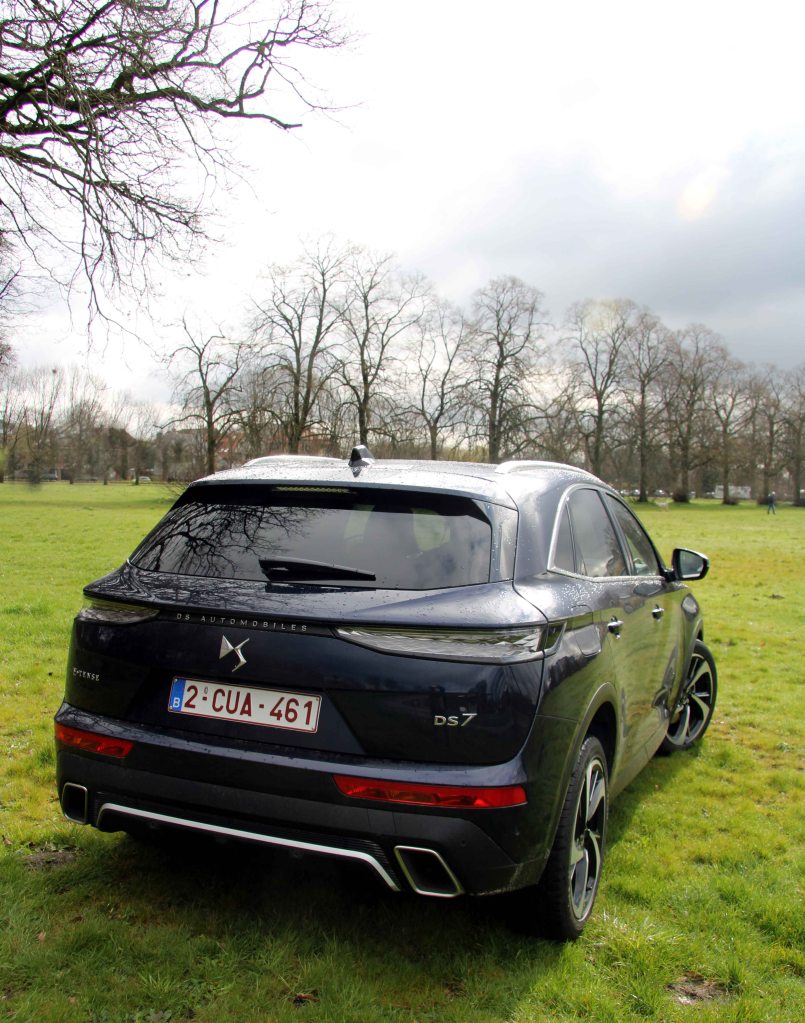
The latest version of the DS 7, dubbed the “New” DS 7, has a restyled front with sharper lines, adding indeed further panache and “noblesse” to its stance. The work was carried out in close cooperation between the team of the Paris DS Design Studio and the production team at the Mulhouse factory.

Special attention has been given to refining the light signature. The headlamps – DS calls them DS PIXEL LED VISION 3.0 – are slimmer, and the daytime running lights are also seamlessly integrated. DS calls them LIGHT VEIL, and this consists besides the classic daytime running light also of four vertical luminous bands with not less than 33 LEDs. DS used an innovative process here: the laser-etched polycarbonate surface is only painted on the inner side. This results in a look alternating between light and body coloured parts, and gives the lighting effect of a piece of jewelery. Very refined indeed…

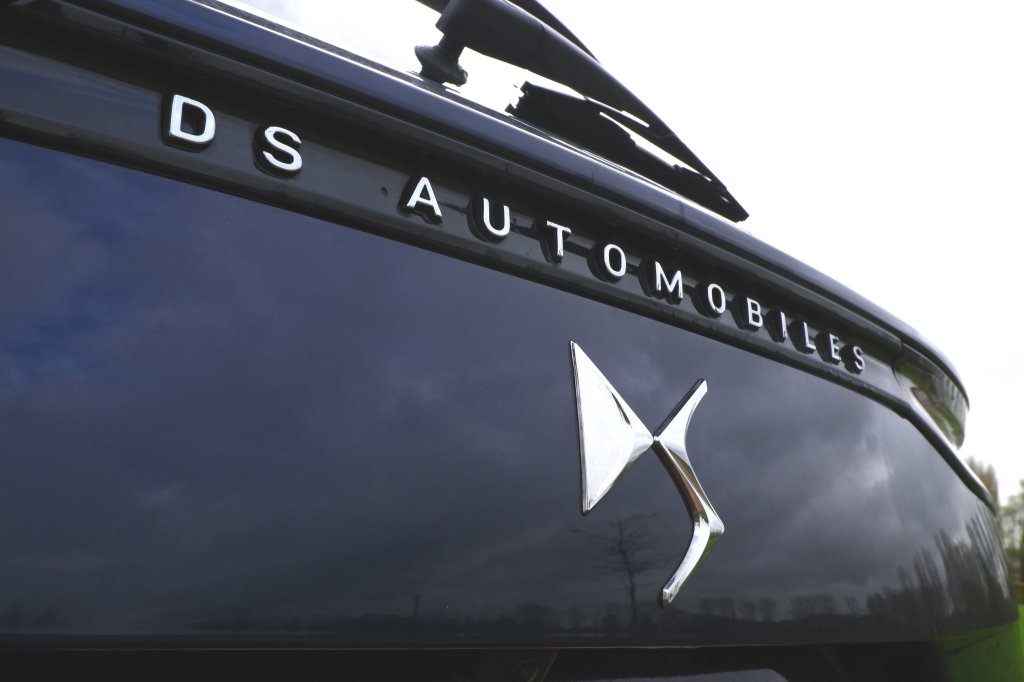
The Pixel Led Vision 3.0 headlamps have pixel modules which optimize the light output. For example the lighting in corners is controlled by the exterior LED’s of the pixel modules, depending on the steering angle. The LED rear lights are slimmer, boot lid and badge have been restyled and the “DS Automobiles” name is now wide lettered on the rear, adding a premium touch…

Our test car, in Opera trim and painted in a very fitting Eclipse Blue, had 20 inch “Tokio” alloys, which suited the car fine.

Interior with panache

We absolutely loved the styling and finish of dashboard and interior. The commands for the windows are neatly lined up on the centre console, are uniquely elegant and at the same time very ergonomic indeed. The central 12 inch instrument panel is intuitive to use and can be totally personalized.

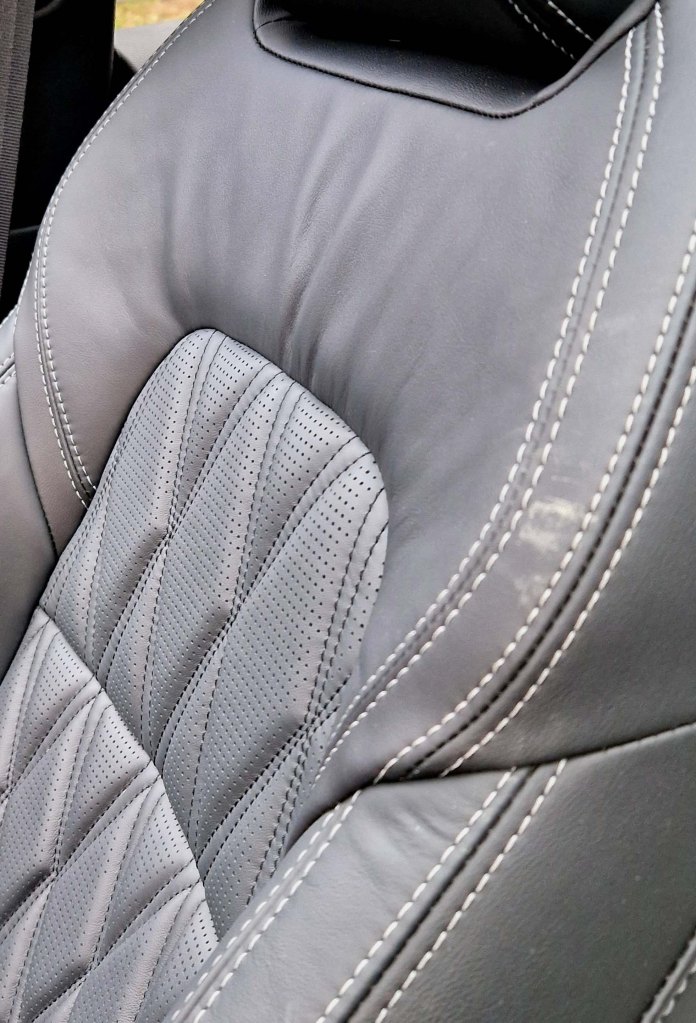
We also loved its graphics, and the sound volume control in its center, a finely chiseled tube which one rolls up and down, marvelously simple and ergonomic. Of course we loved the clock in the centre of the dashboard. All round visibility is also greatly en enhanced by new high-resolution digital cameras. We also loved the comfortable seats, which have also – noblesse oblige – a high quality Nappa leather upholstery inspired by the metal bracelet of a luxury watch.

Also the steering wheel has the unique “feel” which custom made leather stitching offers, and adds to the overall sense of refinement this DS 7 evokes. We also loved the superb Focal Electra sound system.

Comfort

The DS 7 has standard a formidable camera controlled damping system, called DS ACTIVE SCAN SUSPENSION. It has to be experienced to be believed. Electronics make it possible. Indeed, the camera scans the road surface ahead, and then adjusts each wheel independently to deliver this unique “carpet” ride. We just loved it, and it makes this DS 7 really stand out.

We left the drive mode throughout the test mostly in “comfort” mode, and it was a dream to drive the DS 7 like this. This comfortable setup does not impair handling, and indeed you can drive this DS 7 in a spirited manner over winding roads. Stability and surefootedness in the wet is also beyond reproach.
Sound insulation at speed is also top notch, and this makes the DS 7 a true “grande routière”. Wind noise is also absent, and motorway cruising with the DS 7 is literally an undisturbed pleasure. It remains completely smooth and silent at speed, and it is rather easy to surpass the speed limits, so one is well advised to use the cruise control on motorway journeys.

Performance

The DS 7 “E-Tense” we tested was the 225 HP version, which has a 180 HP 1,6 litre petrol engine driving the front wheels through an 8 speed automatic, as well as a 110 HP electric motor. A very smooth combination, with imperceptible transitions from combustion to E-power, offering the delightful feel of E-power in urban traffic, and a smooth power flow of the petrol engine on the open road.

Of course, plug-in hybrids need to be charged frequently to enjoy this (urban) electric propulsion, good for the environment and your car loving heart. The cost of this depends greatly on your charging situation, public charging stations tend to become rather expensive, and this rather sooner than later. The battery is new, with a 14.2 kWh capacity. This means that you can charge it in about 2 hours on a 7.4 kW charger. The range is – according to WLTP AER combined – a good 65 km. Acceleration is of course excellent with all this pulling power. The petrol engine is rather sporting when more power is called for, but otherwise is almost inaudible. The DS 7 accelerates from 0 to 100 km/h is 8,9 seconds, the top speed is an impressive 225 km/h.

Economy

This is the thing with plug-in hybrids. The E-power possibility distorts the consumption figures of course, and they can be seen as largely theoretical, but then again, they form a basis of comparison. The DS 7 225 HP E-tense has officially 28 g/km of CO2 emissions and the fuel consumption is homologated at 1,2 litre/100 km.

 When the battery is flat, then the real life petrol consumption becomes important. Much – if not everything -depends here on how you drive. We achieved a consumption between 7 and 8 litres/100 km, adopting a fluent, anticipative driving style with nevertheless a lot of urban traffic included. One should always keep in mind that this is a 1,7 tonne SUV, and there is no escape from the laws of physics…

Practical

The DS 7 offers a good array of electronic driving assistance systems; of course one can also enjoy Apple Car Play. Our test car was also equipped with DS Drive Assist, an adaptive cruise control with stop and start without driver intervention. The DS 7 has ample room for five, boot space is also adequate with a volume of 555/1712 litres. The petrol tank is rather small with 42 litres, reminding you to recharge the battery of your plug-in Hybrid. The DS 7 is also a fairly good tow car, with 750 kg weight allowed unbraked, and 1275 kg braked.
Conclusion

The DS 7 appeals to customers who are looking for refinement, elegance and individuality when it comes to choosing a car. They also get a good portion of “savoir faire” Français, the Gallic way of doing things, and this makes a DS automobile really stand out. Then there is the fabulous comfort of this DS7, which is also unique in its segment. Performance and economy also tick all the boxes, and the plug-in hybrid layout gives you all the liberty of movement one could wish for in our Europe where the E-energy providers are hardly certain that they can supply enough electricity to cope with a fast transition the coming years towards full EV, and the availability of charging points still needs a massive effort from the EU member states, except the Netherlands…

Hans Knol ten Bensel

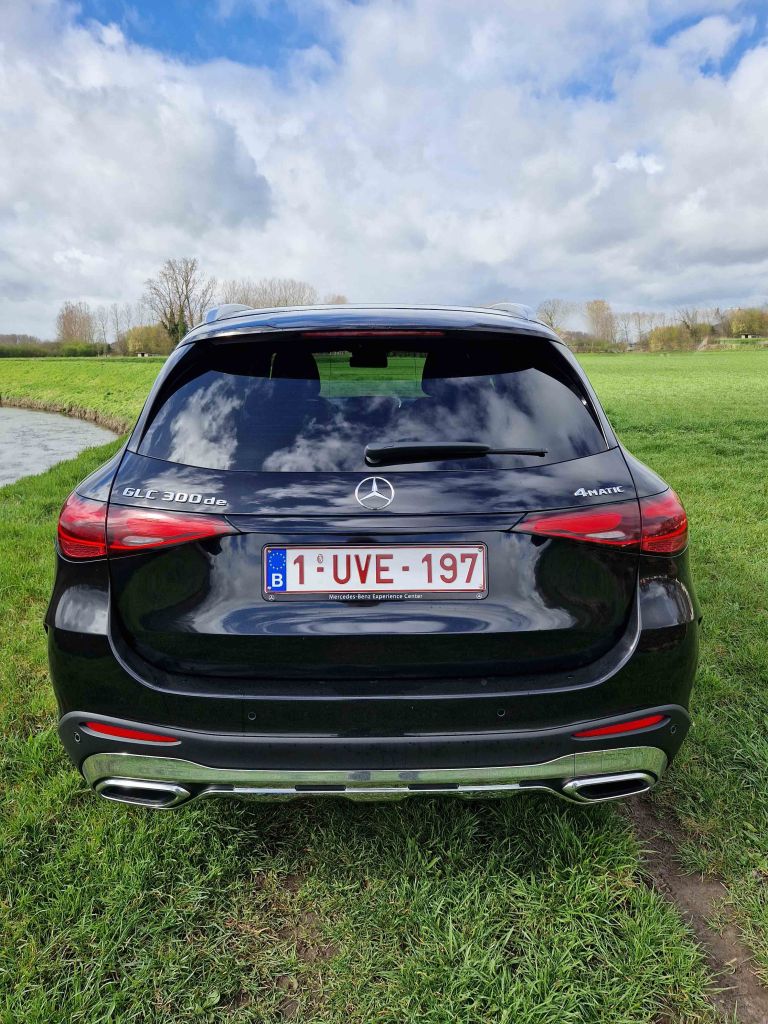
We drove the Mercedes GLC 300 de 4Matic: the perfect star for your mobility…

We are living in fast changing times, full of transition. Car markets have grown massively in China (did you know that the GLC has also been built in Beijing since 2011?) and India, influencing the strategy of European car makers, while the EU commission projects for a greener Europe transform the outlook and the nature of our mobility. Besides all that, the choice of a new car is now also influenced by the fiscal treatment it receives, besides of course the concerns for our environment. What car to choose?

We drove here for you this Mercedes which provides an answer to all the changes which will affect our mobility. It is electrified, lets you drive some 100 km in full EV mode and at the same time gives you unlimited long distance mobility with its diesel engine. It is also fit to carry you to far flung places amidst pure nature: it has four driven wheels assisted by all the clever electronics to make you an experienced unpaved terrain driver. Besides that, it is roomy and is also a good towing car.

Does this Mercedes indeed tick all the boxes? Just read further…

Hans Knol ten Bensel

Impressive, classic looks…

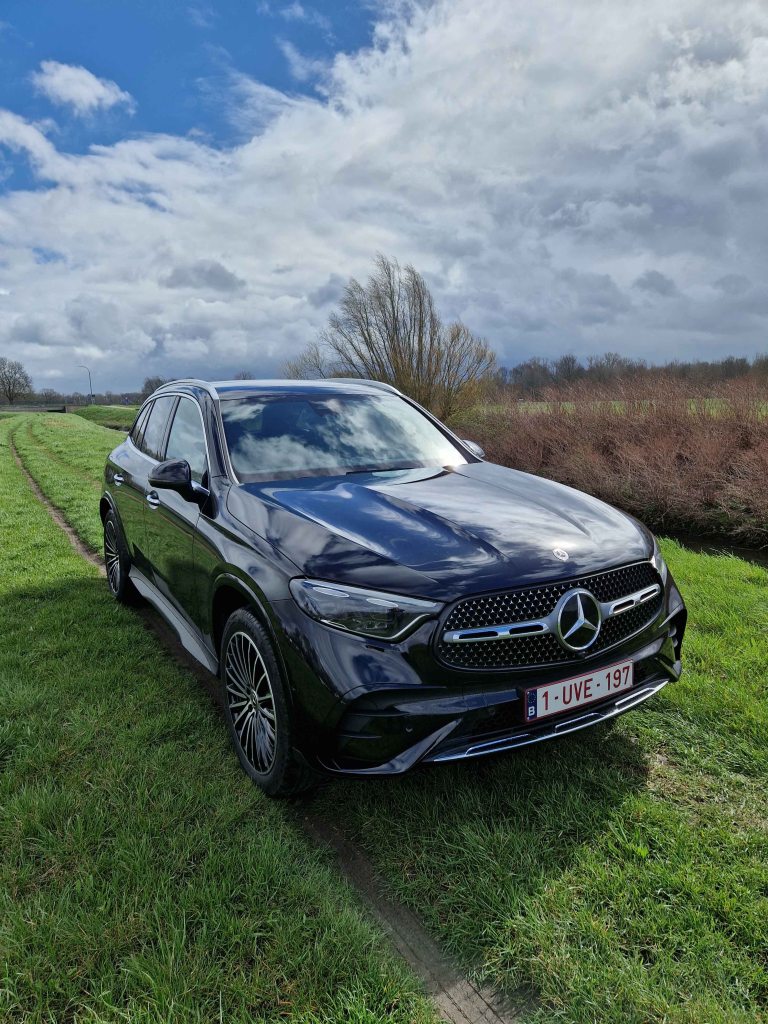
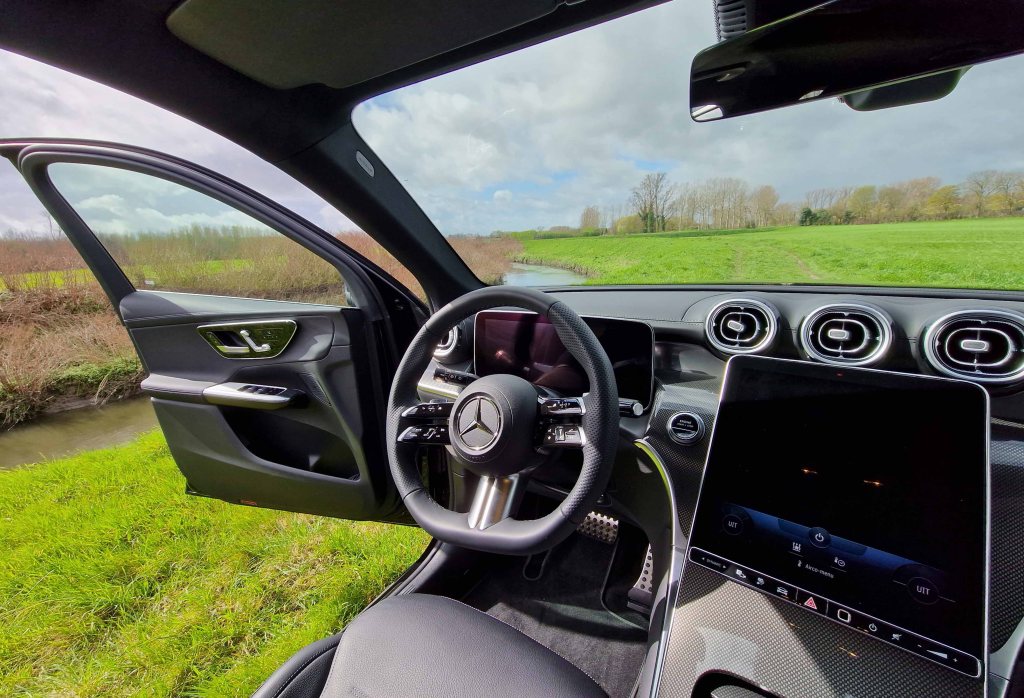
One instantly recognizes a Mercedes by its styling language, and the overall shape and proportions show clearly what the designers meant it to be. This GLC has a solid stance, but has a sporting flair akin to the C Class. Not unpleasing, and unmistakably Mercedes. The front end has been revised and the headlights are more integrated in the 2023 edition. The interior breathes also the philosophy of the brand: big screens in front of the driver and the same on the centre console, where it takes an eminent position. Well curved and upholstered seats, all functions and knobs solid and well finished. German premium brands make very good use of electronics, and also Mercedes has given this aspect much importance and has given it much thought.

Therefore all the functions are well balanced, ergonomic and mostly intuitive. Of course using it demands nevertheless a distinct learning curve for novices, as the many functions can sometimes be overwhelming. You are therefore well advised to read the manuals about the infotainment and screen functions carefully, it will lead to years of happier life with your Mercedes…but as we said, Mercedes has got things right when it comes to functionality of its infotainment.

We liked a bit less the haptic touches on the steering wheel. Sometimes you touch them while driving with sometimes annoying results. One thing: opening and closing the panoramic roof is not intuitive, so read the manual first.

Workmanship and engineering standards truly impress…

In the good tradition of the oldest manufacturer in the world, the level of finish and the quality of the used materials is what truly impresses. You are surrounded by non frivolous, long-lasting luxury… Typical for the brand are also the seat controls in the door panels, letting you adjust your seating position electronically in a breeze. It pays to carefully study the manual and go through the menus. You will discover that on the large central screen you can touch in your height, and the car will find for you automatically the proper driving position. The ideal climate setting is also soon found and off you go, after having pushed the big starting button. Put the small gearchange lever in D and off you go under silent E-power. As this is a plug-in hybrid, Mercedes has developed their now fourth generation (plug-in) hybrid concept even further. It has developed a so called “improved hybrid driving programme”.

This means that Artificial Intelligence electronics think with you: once you have put in your route, the car’s AI will calculate what is the most economical and environment friendly way to make the journey. If the route leads through urban areas, E-power is automatically preferred, when the route includes open roads and motorways, the car will use the diesel engine. The latest GLC hybrid generation now has a 100 kW electric motor. Marvelously smooth, as E-power goes. You can enjoy its 440 Nm of torque too. When you cruise leasurely on the motorway at 100-110 km/h or so and drive smoothly along with the urban traffic flow, the useable E-range is well above 100 km. In EV mode, it is no sluggard either. You can reach a top speed of not less than 140 km/h solely on E-power. Average E-consumption according to WLTP standards is between 27,2 and 24,4 kWh/100 km.

The battery has an enlarged capacity compared with the previous plug-in hybrid GLC generation. It now carries a 31,2 kWh battery, which is an in-house Mercedes-Benz development. The maximum DC charging power of the GLC PHEV is 60 kW. Even with a completely empty battery, full charging is possible in some 30 minutes. This means that the GLC is an eminently useable EV for urban use and shorter hauls with nevertheless an impressive range thanks to the larger battery. Mercedes has indeed created a very clever balanced concept of how a plug-in hybrid should perform. You can drive your plug-in hybrid Merc in different modes, i.e. Hybrid, Electric and Battery Hold. When you choose the electric mode, you feel in the accelerator pedal a haptic pressure point. Push further and the engine starts too.   

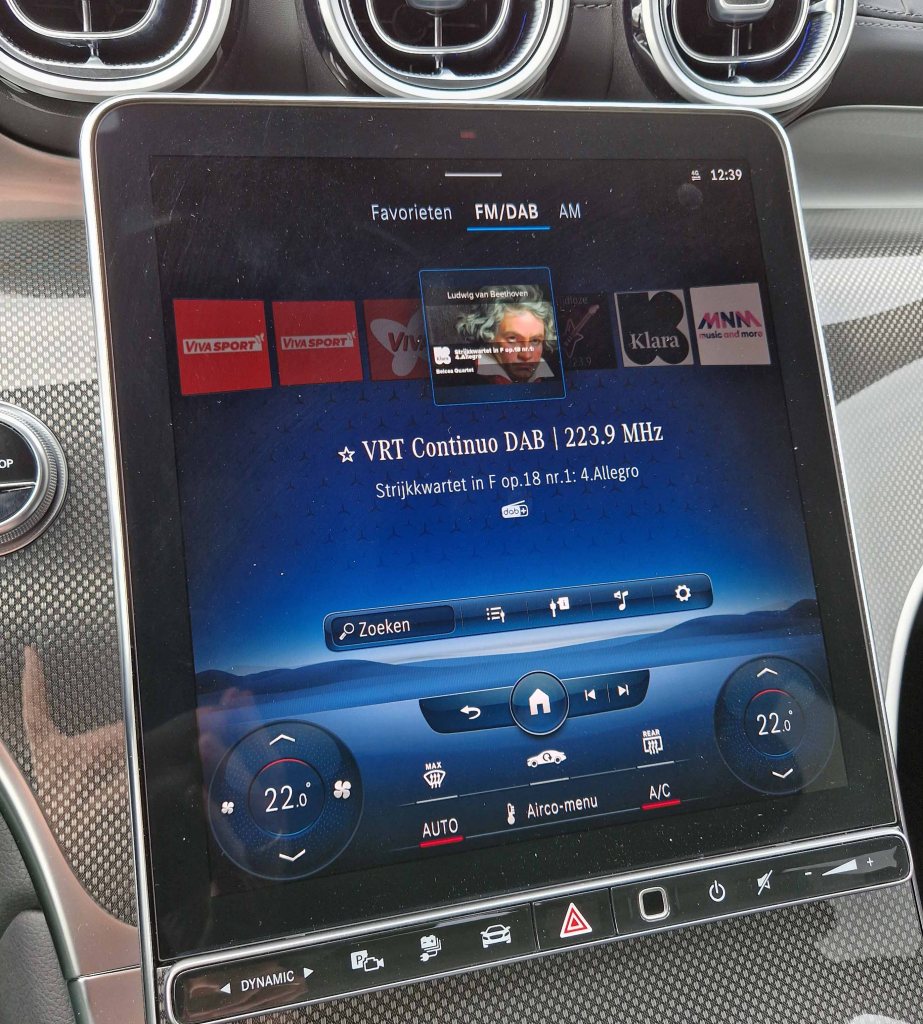
Stability is as you would expect excellent, the suspension is comfortable, wind and road noise are of course well insulated. You can enjoy the sound system, let your eyes wander to the big central touchscreen, and see for example the info of the music which is played over the excellent DAB radio. You are also experiencing how good the seats are, always a strong point of the brand with the good star.

Performance

This plug-in hybrid GLC 300 de is built for those who do not want to sacrifice performance and range in these E-times. Indeed, this Mercedes still feels very much at home on the left lane of the Autobahnen. Top speed is a solid 216 km/h, and it accelerates also like the proverbial bullet, a sprint from 0 to 100 km/h is absolved in merely 6,4 seconds. Mind you, this is the performance of a well tuned Jaguar E-type…

The diesel engine is the well proven double overhead cam 1.993 cc 4 cylinder intercooler turbo common rail unit, developing not less than 145 kW or 200 HP at 3000 rpm. Did you ever believe this was possible with a diesel engine? The ponton 180 D, the first Mercedes my father owned in 1955, had also a four cylinder 1,8 litre long stroke unit, was developing some…38 HP. We were so lucky, my father and me, to drive the factory entered 180 D in the Mille Miglia, invited as a member of the official Mercedes Mille Miglia team, together with Stirling Moss, who drove a 300 S… Mind you, our brave Diesel was still able to be almost as fast on the course as the Lancia Aurelia’s, although this called for some very spirited driving! Of course I covet the Shopard watch I have as a memory of this adventure, with our starting number 147 engraved in the back…

Pulling power of this 300 d is abundant, 440 Nm at merely 1600 rpm. The engine has a slightly longer stroke due to a new crankshaft. Total system power is 245 kW (333 HP) and total torque is 750 Nm, hence the excellent performance figures. Of course, this diesel lets itself heard with an unobtrusive deep throb when pressed hard, but even when you are driving your GLC 300 de in a spirited manner, the enormous torque hardly lets the engine rev higher, and everything is comfortably silent indeed.

The beauty of diesels is of course their frugality, they excel when quite substantial power is required over long periods/distances. So driving this GLC doesn’t cost you a fortune at the pump, even with a totally empty battery, you can achieve with this 2-tonne SUV a consumption between 6 and 8 litres/100 km, depending on your driving style of course, one simply cannot bend the laws of physics. The tank capacity is 62 litres, which gives you a radius of some 800 km on Diesel fuel alone. The WLTP consumption is between 0,7-0,5 l/100 km, CO2 emissions are 17-13g/km. The GLC is equipped with a 9 speed automatic gearbox, which in the PHEV layout guarantees a smooth power flow in all circumstances, as the electric motor with its ample torque steps in when the gearbox has to make up its mind which gear to choose under hectic driving.

Comfort and predictable handling with the good star…

We said it already, seating comfort is excellent. The suspension irons out urban street potholes rather well, and strikes a very good balance between handling and comfort. Choosing the “sport” driving mode shows quite decent handling on winding roads, stable, surefooted, predictable. It offers some driving pleasure, but it does not exactly invite you to adopt a brisk driving style. We already told you about finding the ideal position behind the wheel by simply choosing your height on the central touchscreen. But there is more.

There is a finger print sensor which recognizes who you are, and will engage your preferred sound settings. You can choose not less than 7 settings.(!) One word of praise is justified for the Burmeister sound system. Truly to be enjoyed. There is also a large and very readable head up display, with lots of information. It also shows you which driving mode you are in.

There is also a special offroad driving mode. It not only lets you control the drivetrain ideally, it also steers the cameras. Indeed, when you are driving in terrain, the front camera lets you even see what is underneath the bonnet and front wheels, as it “remembers” what it has seen in front and reproduces that again when you are driving over it…

There is enough leg- and headroom for three grownups in the rear, and the rear passengers even have their own climate controls and USB slots. The doorbins are absolutely massive, so there is more than enough room to store your bottles.

Boot space is sufficient, and you can charge your GLC with not less than 625 kg and tow not less than 2000 kg, so this 4WD will certainly prove its worth when you love horses, camping or boats…

Conclusion

This GLC 300 de 4 Matic has already convinced many buyers in its previous generation, and now thanks to its larger battery is striking an ideal balance between E-power and engine propulsion, electronically managed by its improved hybrid driving programme. This results in a well and truly very useable “pure” EV in many situations, thanks to its generous over 100 km “E” range. It is also well built, powerful, roomy, practical and has panache and style. Due to its versatile hybrid character, this might be your car in these times of transition…

Hans Knol ten Bensel        

We drove the Mazda CX-60 e SkyActiv PHEV : a flagship SUV the Mazda way…

Mazda has bold ambitions. It wants to be an absolute premium manufacturer within a few years, and it is building up its model range accordingly. Looking at its latest SUV, the CX-60, it is definitely succeeding. This PHEV Mazda impressed us. Read further…

Hans Knol ten Bensel

Mazda elegance and style

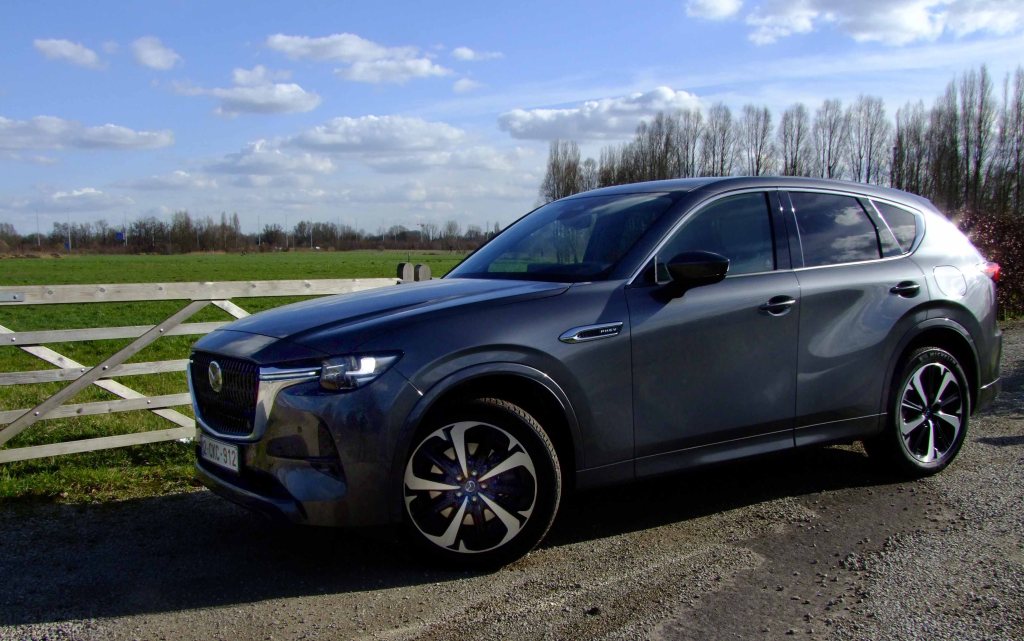
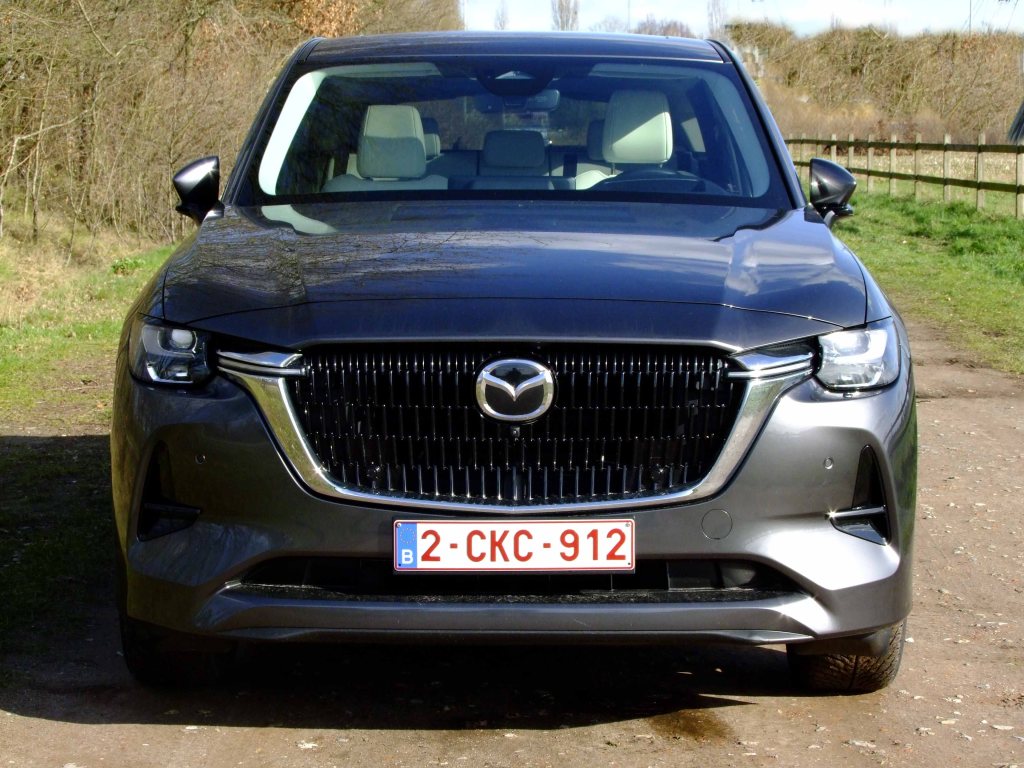
Mazda’s are well proportioned and styled, and have indeed a distinct, proper styling language which makes them stand out from the rest. The lines of this bigger SUV are not too busy, instead they are fluent and exude a distinct sportiness together with a quest for simplicity and elegance. The front end and radiator grille carry also the distinct Mazda DNA, which is now becoming well established and is quite pleasing.

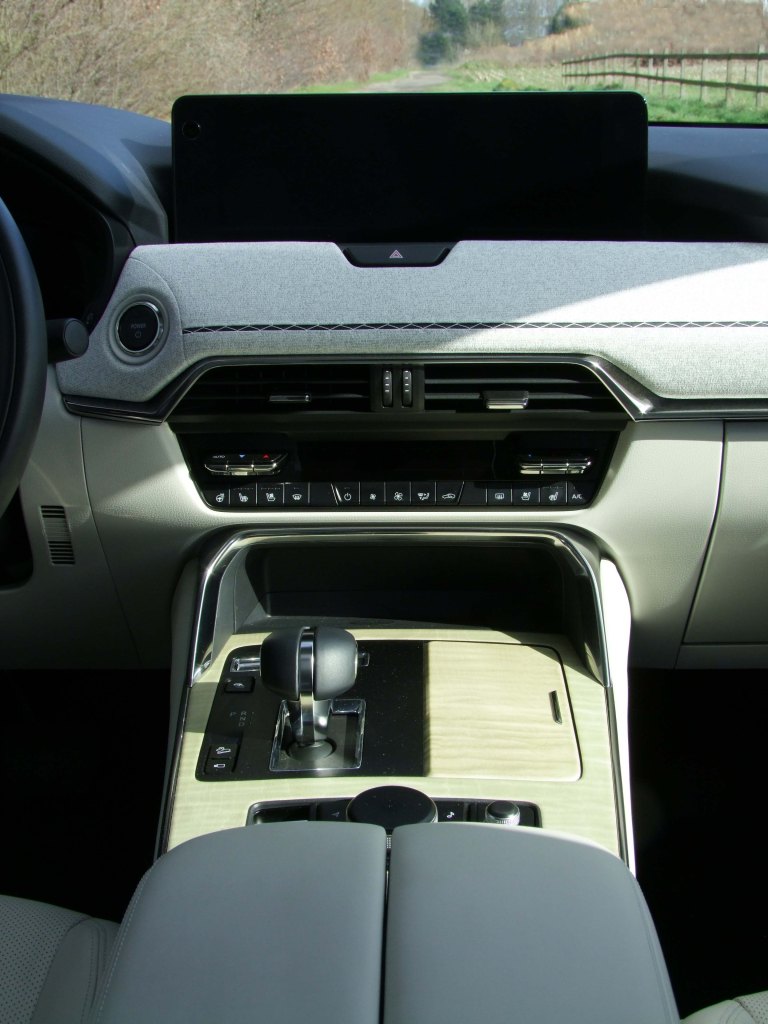
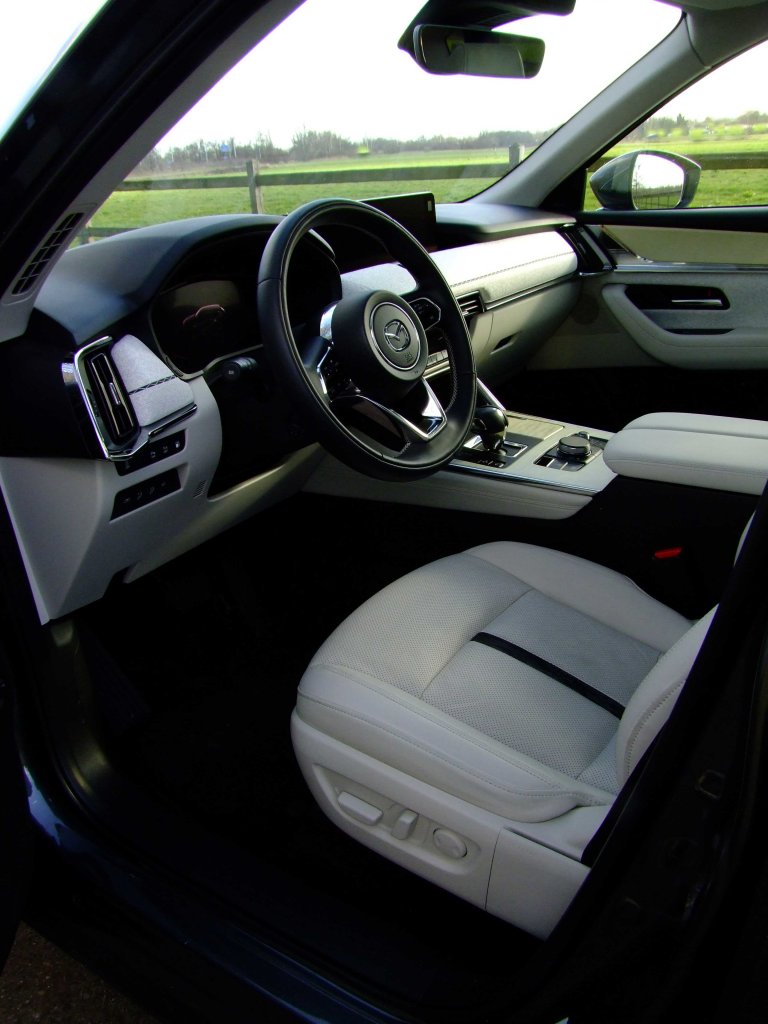
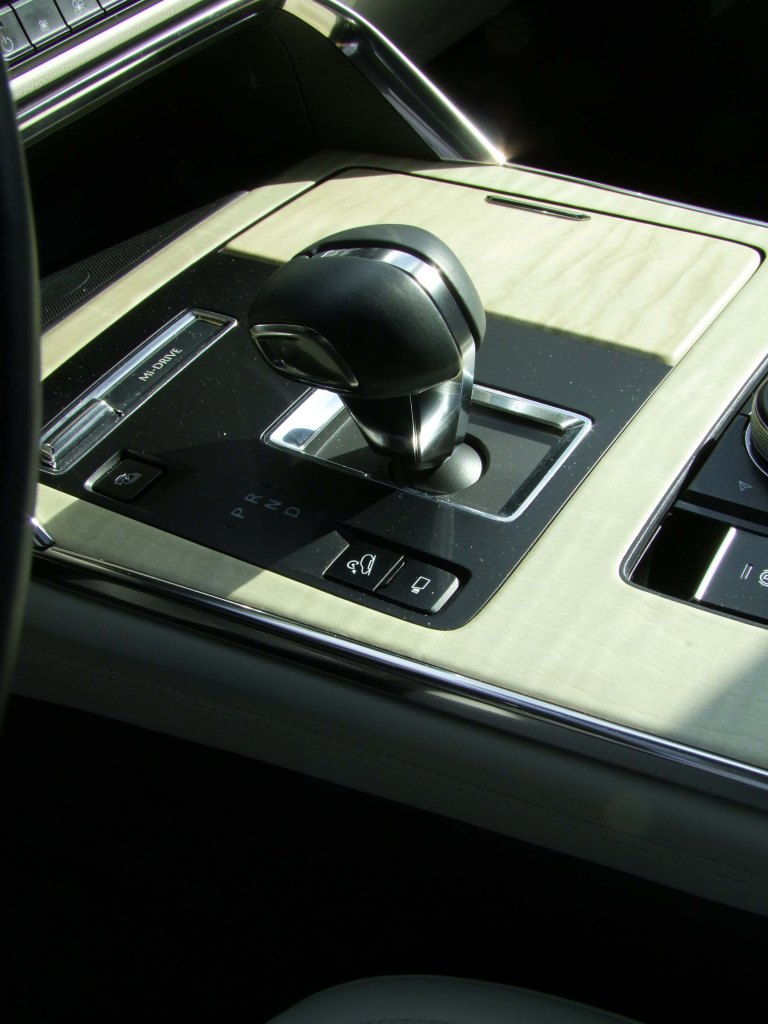
The style and sophistication is also found in the interior. We absolutely loved the white colour of the surface panels, upholstery and seats, and the lavish use of chrome around the edges of the lateral vents. On the wide central console, which is impressive due to the simple fact that a transmission runs through it, one finds even a tropical white wood veneer finish. Very oriental, we would say, and a refreshing departure from the all black colour schemes we so often encounter.

The elegant interior design introduces the ideas of Kaichou – an element of disruption which mixes different materials and textures. With the flagship Takumi grade, which was the top equipment version found in our test car, materials such as maple wood, nappa leather combine with uniquely worked Japanese textiles and chrome details, and Musubu – the art of binding which was the inspiration for a specially detailed instrument panel stitching. We liked that also very much.

The treatment of the maple wood trim reflects the Japanese aesthetic of Hacho – asymmetrical balance, or intentional unevenness. The woven fabrics’ diverse patterns and yarns respond sensitively to changes in light, and a Japanese stitching technique called Kakenui creates ‘hanging stitching’ seams with spaces between the trim fabrics revealing a glimpse of the material beneath. As we said, very elegant indeed…

Very powerful

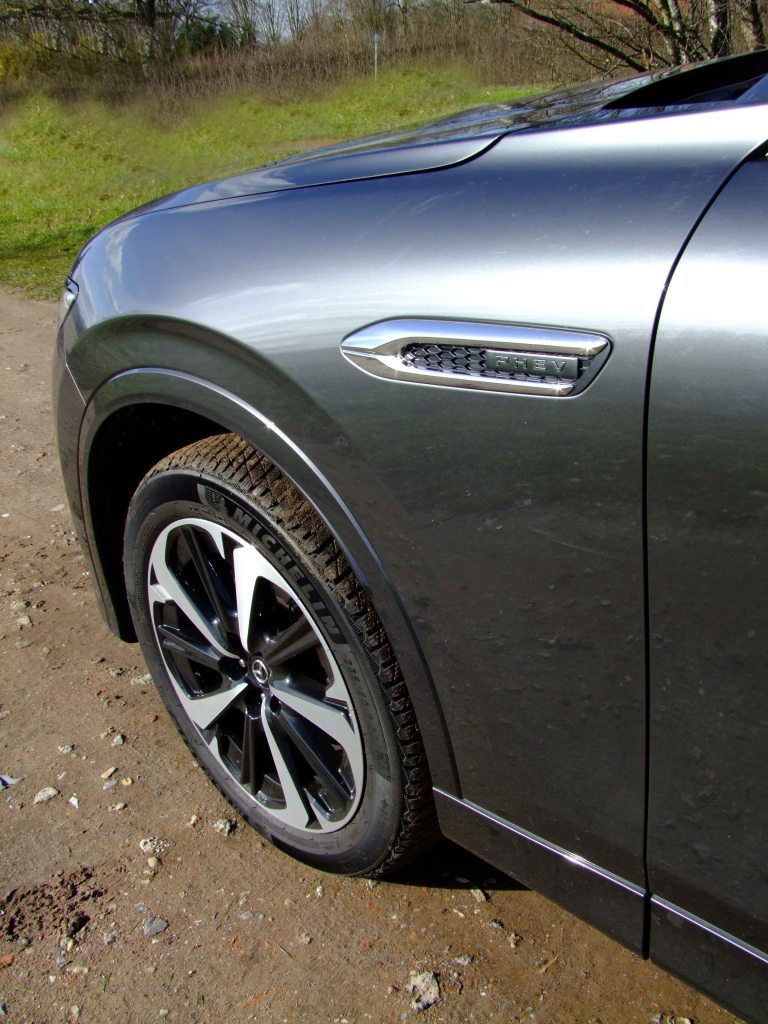
The Mazda CX-60 comes with several engines, and even a six cylinder in line Diesel in world markets, but for the time being, in our country it’s a 2,5 litre four cylinder “Sky Active” petrol engine which is doing part of the work, as the CX-60 is a PHEV. The electric motor sits between the engine and the gearbox, and even has its own clutch, so this Mazda remains a 4WD also when in EV mode. Power galore with this Mazda. What to say of an electric motor which develops already 134 hp, and which is able to propel this two tonne SUV with the inboard 17.8 kWh battery on EV power alone for a range of 62 km.

Indeed, when you have charging possibilities at home and the office, and if your daily commute is rather short, it is totally feasible to use your Mazda as an EV. Just choose with the “I mode” sliding lever on the console the EV mode and you’re ok. You can expect then formidable economy, as the engine then is hardly used. The benchmark and crucial WLTP CO2 emissions value is set 33g/100 km. The WLTP combined fuel consumption is just 1.5l/100 km.

Combined with the petrol engine total power is an impressive 327 PS/241 kW. This makes it the most powerful Mazda ever, having also not less than 500 Nm torque, with performance to match: this SUV sprints in 5,8 seconds from 0 to 100 km/h, and top speed is not less than a limited 200 km/h. For your information, the petrol engine develops a maximum power output of 141 kW at 6000 rpm and 261 Nm of torque. The electric motor delivers 129 kW of power and 270 Nm of torque at 400 rpm.

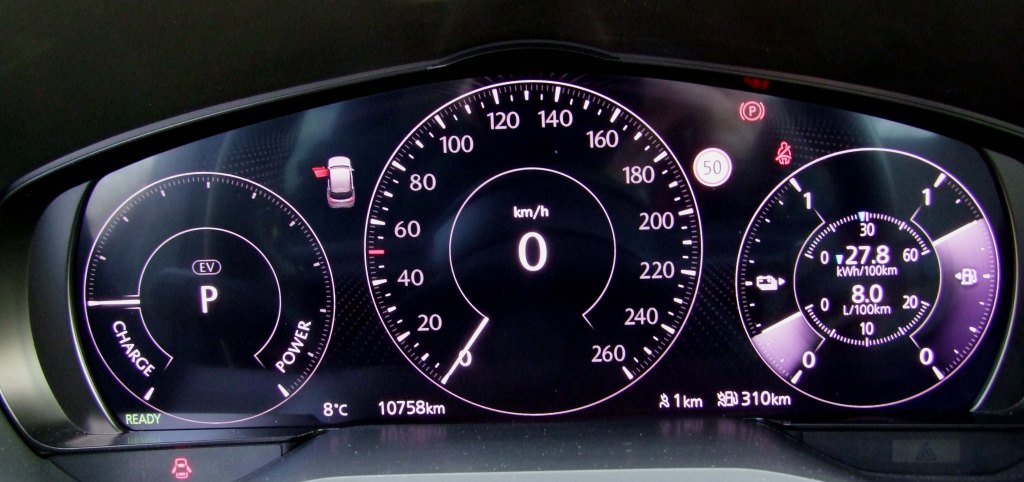
Does this CX-60 invite you to use all this power? Not quite, where I have to admit that we are a bit economy buffs, and seeing the cleverly designed instant consumption dial hovering fiercely in the red zone, with consumption well above 20 liters/100 km when we press our right foot a bit deeper, we tended intuitively to slow things down a bit.

Add to this that the engine makes itself well heard when called to duty, and you understand that we rather avoided using the “sport” mode. This Mazda will also use its engine rather often when the battery is low, which is understandable since one needs power to move this 2 tonne SUV around. Driving this CX 60 with restraint when the battery is depleted, one achieves an average consumption of some 7,8 litres/100 km as we registered during our test, which is a very good score considering the size and weight of this 4WD CX 60. The efficient 2,5 litre Skyactiv unit is coupled to an all new 8 speed automatic, which doesn’t use a classic hydraulic converter, but a multi-plate clutch as well as an integrated electric motor/generator.

Mazda claims that by replacing the torque converter with a clutch, the torque of the engine and motor is transmitted directly, with fast and rhythmic shifting much like a manual transmission. A little bit of the Mazda MX-5 “Zoom zoom” philosophy is still felt here. Nowadays, Mazda is aiming to become a premium manufacturer more than ever. The larger public should only be more aware of this…

The transmission is indeed very smooth when driving away from standstill, some jerkiness is felt when the transmission changes down when coasting and slowly decelerating. But under power, everything just feels great.

Driving dynamics

Mazda put a great effort in the handling and agility of this big Mazda. It wants it to be nimble, responsive and engaging. Not a small brief for a big SUV. First of all, it should be noted that the CX-60 The new Mazda CX-60 is based on Mazda’s Skyactiv Multi-Solution Scalable Architecture, designed to be compatible with the SUV’s longitudinal front-engine rear-wheel drive mechanical layout.

The Skyactiv Multi-Solution Scalable Architecture features numerous enhancements to improve as Mazda calls it, the Jinba-Ittai driving.

The feeling of Jinba-ittai (oneness between car and driver) that can be experienced when driving the CX-60 in varied day-to-day situations, remains the same even on challenging off-road paths during weekend outdoor activities or on slippery winter roads covered in snow and ice.

The i-Activ AWD and Mazda Intelligent Drive Select (Mi-Drive) allow the car to maintain responsive on-road driving while also offering a safe and secure driving experience even on various off-road surfaces thanks to its high controllability.

The bodyshell rigidity lets you feel the car’s handling and movements without lag. We should also mention here the Mazda-unique vehicle posture control system – Kinematic Posture Control (KPC). This stabilizes vehicle posture when cornering, braking the inside rear wheel to mitigate roll and draw the car body downwards.

How does all this translate in practice? The suspension revealed itself as rather firm, understandably so if you have to balance a 2,1 tonne SUV. Steering is precise, but rather busy. Yes, the CX-60 could indeed be thrown around corners, is up to the job, but it doesn’t exactly invite you to do so. The CX-60 sports double wishbones at the front and a multi-link rear suspension.

Driving aids

This Mazda of course incorporates all the usual driving aids and then some. We greatly appreciated the so-called “see through” function, which enhances even the 360 degrees camera function in this sense that it projects an image on the screen which lets the driver see through the front and rear corners of the car. Advanced Smart City Brake Support uses a front camera to show cars and pedestrians ahead.

Command comfort…

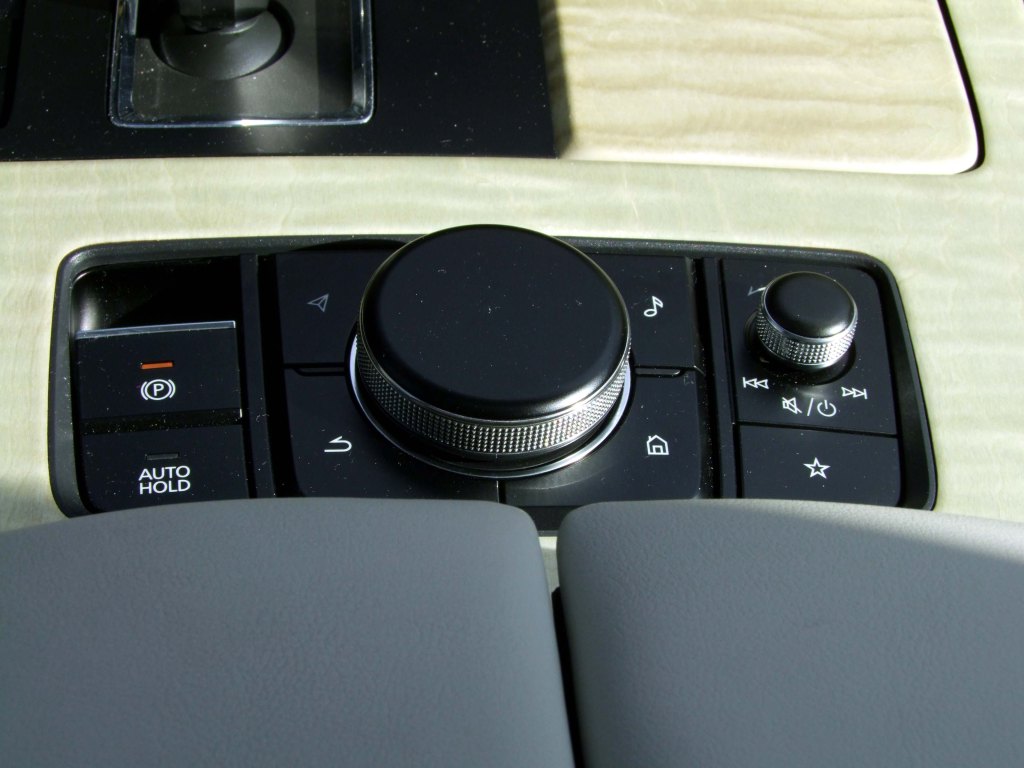
We greatly appreciated also the large central armrest and the command knob to, steer the functions displayed on the screen. Mazda is in my opinion only to, be applauded for maintaining this circular command knob, which is so much easier and stable to use when on the move on bouncy roads and avoids the unhygienic, finger prints on the screen. COVID-19 times made us aware of this ever more…

There is also the so-called Driver Personalisation System, which detects with a camera the eye position of the driver and his physique, then automatically adjusts the seat and steering wheel, Active Driving Display and the door mirrors.

And practicality

The boot space is 570 litres, increasing to 1148 litres with the rear seats folded flat. The load space is equipped with a 12 V 150 watt outlet, which can be raised in the PHEV to 230 V with not less than 1500 watts…

The CX-60 is also excellent for towing, as it can pull a weight of not less than 2500 kg…

Conclusion

Mazda succeeds in making this CX-60 an absolute premium SUV, certainly when it comes to styling, finish and opulent elegance, especially in the interior. As a PHEV, it offers its EV qualities when it can be frequently recharged. On the other hand, when the battery is depleted, it remains reasonably frugal. It certainly handles well, but a fluent, relaxed driving style suits it most.

It is lavishly equipped, and this goes for all the equipment versions you choose. The top version we tested leaves strictly nothing to be desired, with 20 inch alloys and panorama roof included, and this makes the CX-60 also attractive…

Hans Knol ten Bensel

Photographers notes

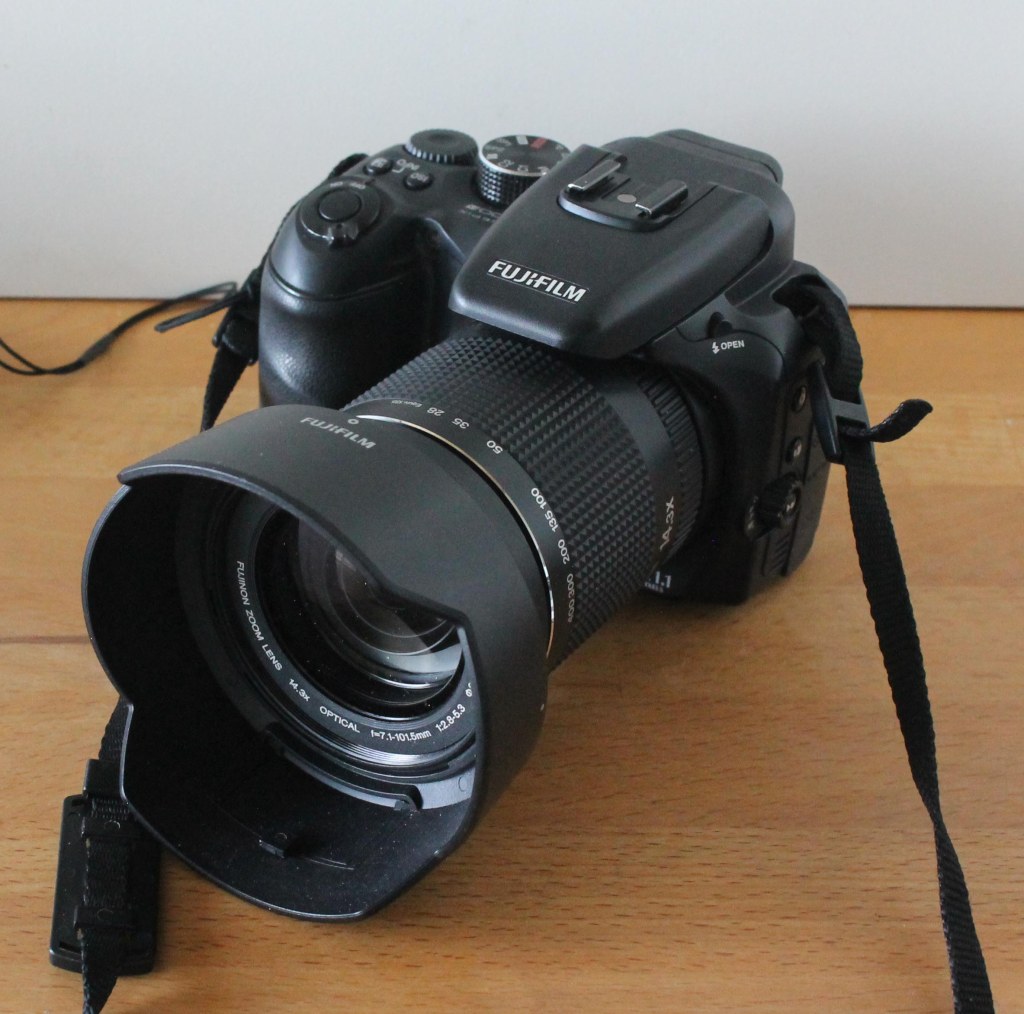
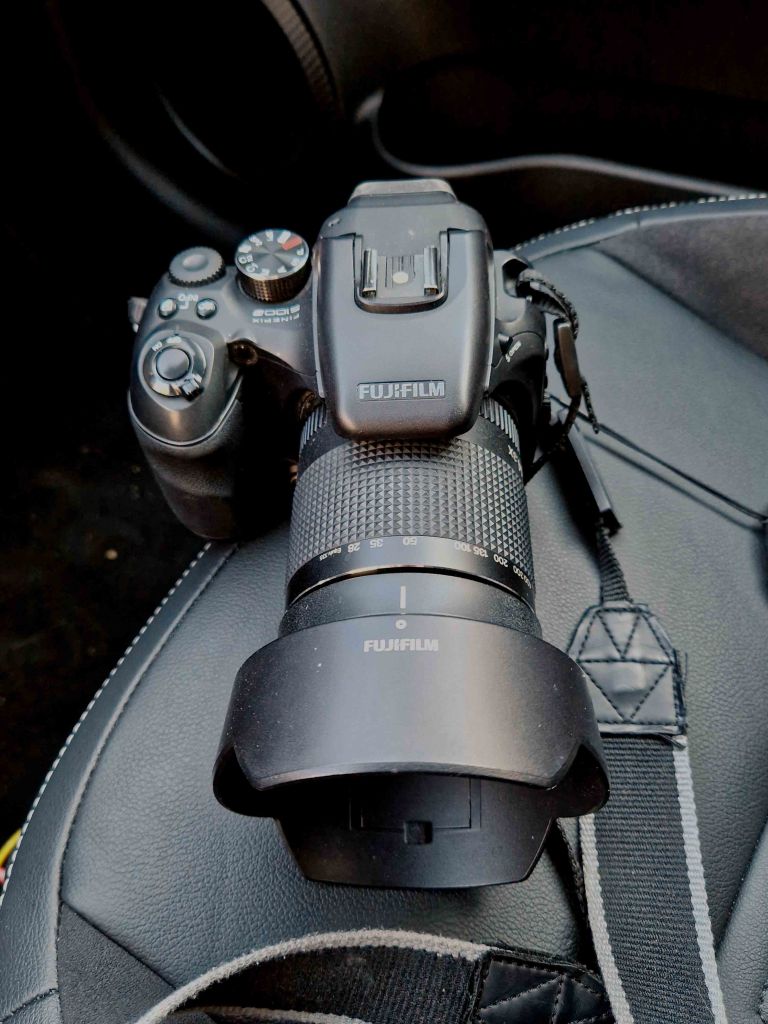
We shot the Mazda here entirely with our Fujifilm Finepix S100 FS , which was bought, as you know, for less than 70 Euros. We erroneously left the Dynamic Range at 100. Given the strong sunlight, we should have set it at least at 200 or 400. But there you are. The results are still pretty decent, considering also that we were also still shooting in JPEG. The sensor produces 11,1 megapixel images, which is plenty for our work. The 28-400 mm zoom lens even has a macro function and an ultra macro function, making close ups a breeze…

Hans Knol ten Bensel

Volkswagen takes a bold step towards the affordable EV for the masses with its ID.2all* concept car.

It’s coming: Volkswagen brought us a first glimpse of an all-electric Volkswagen costing less than 25,000 euros with their “ID. 2all” concept vehicle.

It is of course front-wheel drive, range of up to 450 kilometres, innovative technological features such as Travel Assist, IQ.LIGHT or Electric Vehicle Route Planner and a new Volkswagen design language.

Technical buffs are interested to know that this new “E”VW for the masses will be based on the MEB Entry platform and is one of ten(!) new electric models that Volkswagen will launch by 2026.

In my modest opinion, VW takes here a formidable and bold gamble… will the European car markets (and more specifically its electric infrastructure) be ready for this?

Read further about this “milestone” E-VW…it is sooo interesting and will be a harbinger for things to come!  

Hans Knol ten Bensel

VW’s goals and ambitions with this new true “E”-VW…

It is certain that VW wants the wider public to again fall in love with its cars: Thomas Schäfer, CEO of Volkswagen Passenger Cars stated it clearly: “We are transforming the company rapidly and fundamentally – with the clear objective of making Volkswagen a genuine Love Brand.”

The concept of “Wertarbeit”, a concept so beloved by the Germans, which can be freely translated to “Quality work which creates value”, is also not lost in the boardroom and lobby’s of Volkswagen. Imelda Labbé, Member of the Brand Board of Management for Sales, Marketing and Aftersales, stated it clearly: “We are transferring the typical Volkswagen virtues to the new world of mobility: top quality and workmanship, outstanding software and digital services with genuine added value.”

Mechanical perfection and reliability is therefore of prime importance, and so VW adops well-tried solutions, present in the MEB platform, which by the way uses also all the automated product processes which are already well in place.

Kai Grünitz, Member of the Brand Board of Management responsible for Development, states it for us: “The ID. 2all will be the first MEB vehicle with front-wheel drive. We are exploiting the great flexibility offered by our modular electric drive (MEB) platform and will set new standards in terms of technology and everyday usability with the MEB Entry platform.”

This VW will also certainly be no sluggard: It has a powerful electric drive motor with an output of 166 kW / 226 PS and will have a calculated WLTP range of up to 450 kilometres.

A new design…

The ID. 2all concept vehicle was designed by Andreas Mindt, who took over as the new Head of Volkswagen Design on 1 February 2023. Volkswagen is in his blood, as his father was a designer in Wolfsburg before him. Andreas Mindt joined Volkswagen in 1996 after studying design. He created bestsellers such as the first Tiguan and the seventh-generation Golf. In 2014, he moved to Audi in Ingolstadt as Head of Exterior Design.

The next step followed in 2021 when Mindt became Director of Design at Bentley in Crewe, England. However, he has always maintained his close ties to Volkswagen and continues to be the proud owner of a Beetle. Andreas Mindt on his first project as Volkswagen Head of Design: “We are transferring the DNA of our icons into the future. The ID. 2all is therefore also homage to the Beetle, Golf and Polo.”

Andreas Mindt has developed a new Volkswagen design strategy – one that will ensure the brand’s DNA remains clearly recognisable in the future. Mindt: “I am focusing on three main pillars: stability, likeability and excitement.”

“The most important value for Volkswagen design is stability,” says Andreas Mindt. This includes value stability, stability of form, reliability and recognisability. “A second core element of the brand is likeability,” explains the designer. The Beetle, Volkswagen bus, new Beetle and ID. Buzz clearly demonstrate this. “Stability and likeability – we have to achieve these two values in every respect.” But there is much more to a successful Volkswagen than that: “We also want to create excitement in our customers.” For example, with added dynamics, improved operability or the classic “form follows function” of an ID. Buzz or Golf. Technologies, forms and concepts are what make a Volkswagen desirable. Stability, likeability and excitement are typical characteristics of the Volkswagen design, the Volkswagen feeling. Mindt assigns three design elements to each of these three values. They are all reflected in the ID. 2all.

I was happy to read Mindt’s comments on design, which I have repeated time and again in my guide tours at Audi Brussels: Automotive design is an art form, but there are still clear laws that apply – such as the golden ratio. I couldn’t agree more with Andreas Mindt: “Likeability is created by the golden ratio. This is quite simply the ratio of three fifths to two fifths.” Leonardo da Vinci already followed this geometrical principle in works such as the Mona Lisa. The designer continues: “The feature line running below the window shoulder is located on exactly the golden ratio line of the ID. 2all. Both the Beetle and Golf also always followed the principle of the golden ratio.” People perceive this division created by nature as being pleasant and likeable.

Easy to use…

VW has learned from the usability mishaps in the commands of the early ID’s. VW now calls it ‘self-explanatory operation’. The touch display (diagonal: 32.7 cm / 12.9 inches) of the infotainment system has a new menu structure. Below this there is a newly developed, separate air conditioning control panel. Other vehicle functions are operated by means of a menu control in the centre console, which can also be used to change the look of the digital instruments. The new multifunction steering wheel is designed to be clear and self-explanatory – two thumbwheels on the left and right and two buttons each, and nothing else.

Charged to 80 per cent in less than 20 minutes…

The battery permits a calculated WLTP range of up to 450 kilometres. At DC quick-charging stations, the battery can be charged from 10 to 80 per cent in 20 minutes.

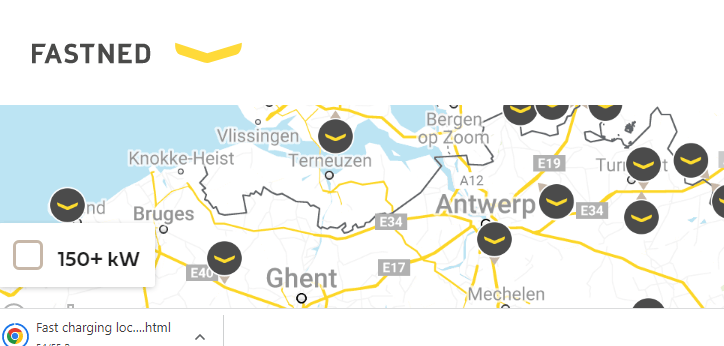
Provided we find these stations! In our country, the situation is still abysmal what these quick charging stations is concerned. Take Fastned: when I want for instance to drive from Antwerp to Knokke, I need to have enough range to make the 210 km trip back and forth to Antwerp, and to make things even worse, there is no Fastned charging station in the whole Antwerp region so far, and NONE in Knokke… so I would have to go towards Brussels in Steenokkerzeel, about 43,7 km from Antwerp, to find one… ridiculous isn’t it? I need at least 260 km range for the trip! To avoid any misunderstandings, we looked here only for Fastned charging stations. There are of course some other 4 to 38 kW charging stations, but any of the apps to find chanrging stations do NOT show whether you can use your bank card or not. At more than 90 %, it is not possible…

Back to our concept car…

Of course, this VW accelerates like a bullet: 0 to 100 km/h in less than 7 seconds. Its top speed is limited to 160 km/h.

A bold step for Volkswagen, but a very logical one if you take a look at its strategy. Soon, we will live in (very) different times…

Hans Knol ten Bensel
We drove the Nissan Qashqai e-power: enjoying the delights of EV driving…with no strings attached

We all know it too well: Battery powered full EV’s are just wonderful to drive, seducing you with their stream of vibrationless, quiet and instant EV power.

We also realize however that at least in Belgium and also in several European countries the public charging infrastructure seems to be still in its infancy, and when you don’t have a house with a driveway with your own charging unit, you can forget about fully enjoying your EV for private use.

Indeed, apartment or condominium inhabitants can also better look elsewhere: beefing up the power circuit in de building meets much resistance from the owners, and they also find the potential fire hazard of an EV car in their underground garage rather too big.

So if you want to sell a car to a wide public which wants to enjoy the EV smoothness, without the recharging troubles, then it is wise to develop a car such as this Qashqai “e-power.”

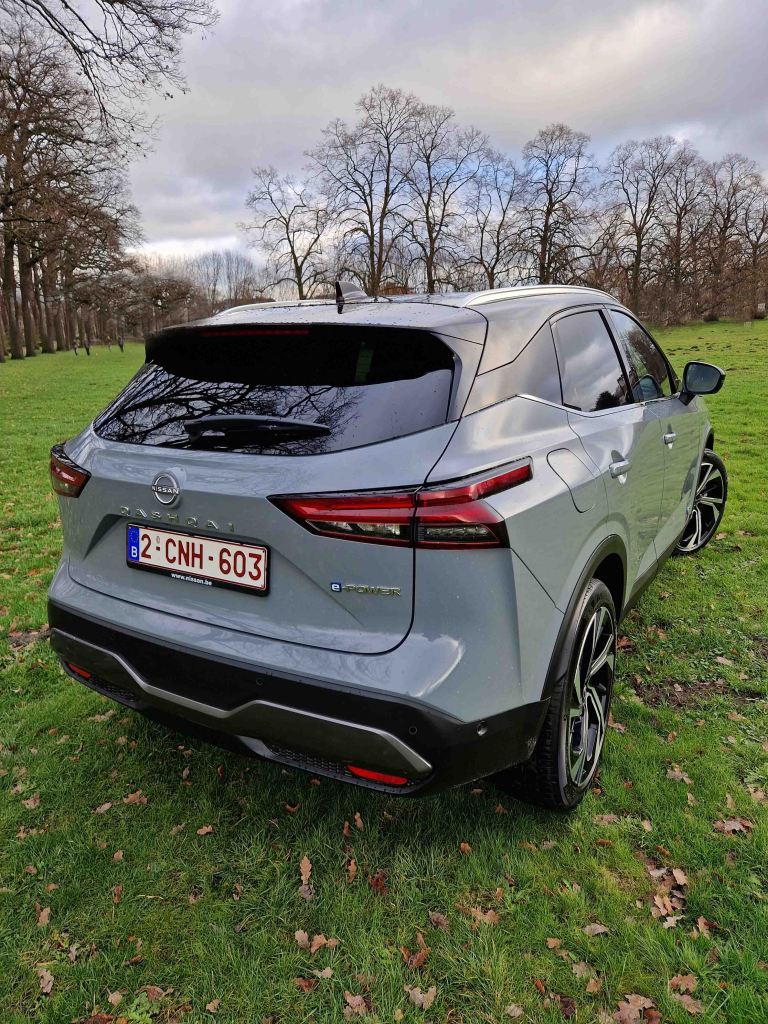
The Nissan engineers indeed took the hybrid concept a step further: the petrol engine, here a 1,5 litre three cylinder unit,  just generates electricity and the wheels are therefore only driven by an electric motor. Does it all work fine? Just read on…

Hans Knol ten Bensel

Full Hybrid the Nissan way…

Let’s tell it right away, this is definitely one of the very smoothest hybrids I have ever driven. Indeed, total EV smoothness is achieved as there is only the electric motor powering the car. This electric motor is good for 140 kW with a torque of not less than 330 Nm. So this Qashqai is indeed well powered, as the performance figures clearly show. This Nissan will accelerate smoothly from 0 to 100 km/h in merely 7,9 seconds, reaching an electronically governed top speed of 170 km/h.

The engine – the Nissan KR15DDT unit , a 1498 cm3 3 cylinder unit with direct injection, DOHC and CVTCS (Continuously Variable Timing Control System), is very well insulated and indeed is almost inaudible, adding greatly to the pleasant feel of driving a fully fledged EV. Just for the record, it develops 116 kW / 158 PS / at 4600 rpm, torque is 250 Nm between 2400 and 4400 rpm.

Nissan also names this engine ‘VC Turbo’, with those first two letters standing for Variable Compression. The engineers went to very great lengths: instead of conventional connecting rods, the pistons are joined to the crankshaft through motor-driven, multi-link devices which vary the top and bottom dead centre positions of the pistons. This allows to adopt a high compression when performance is wanted, or low compression to improve fuel economy. Soo clever!

But how about fuel efficiency and consumption? As there are invariably losses in the drivetrain in the generation of the electric energy, you are well advised to adopt a smooth driving style, driving with anticipation in order to save as much kinetic energy as possible. The less kW the engine has to generate given a certain distance, the better it is.

Of course, the hybrid concept in this Qashqai has also efficiency gains when the urban pace is low and involves many stops.

Simply because under these circumstances the EV motor does all the work, with the combustion engine recharging the battery under ideal load and revs, computer controlled of course. Indeed, only with the advent of electronic management of the drivetrain is this possible, but this has now been the case for many years, and has already been proven millions of times. It is good to note too that the e-power Qashqai has a 2.1kWh battery, which is somewhat larger than most non plug-in hybrids.

Therefore the Qashqai can achieve good efficiency in urban traffic, where we achieved a consumption between 6 and 6,5 l/100 km. On the open road, the engine has to feed rather more the electric motor with electricity, so when speeds are moderate, say up to 100 km/h, it is still possible to stay in the 6 litres/100 km range. 

It is only on the motorway at high cruising speeds that things are getting a bit awkward. The motor has then to feed the e-power to the electric motor for real, and this means averages between 7 and 7,8 l/100 km. So, what’s the verdict? EV smoothness and “zen” character of the drivetrain is yours indeed to enjoy fully, and we loved the Qashqai e-power for it. The consumption however will not break records here. You just need a very sensitive right foot and the constant awareness that developing kinetic energy costs money at the pump, and that you have to retain it as much as you can, adopting an anticipative driving style. Certainly in urban traffic the fuel economy is very creditable indeed…

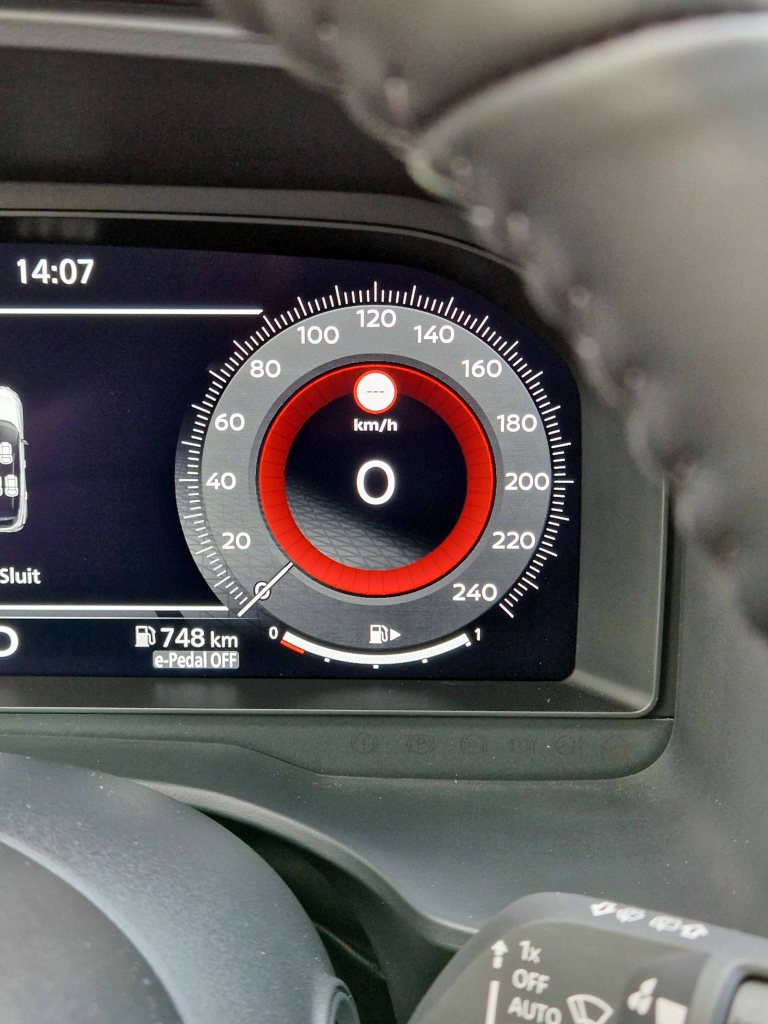
You have many choices in driving this Nissan: The D-Mode lets you select between normal, power and eco, the EV button lets you use the electric motor in urban driving conditions as much as possible, and the e-pedal lets the electric motor act as a generator when you lift the throttle

The qualities of a bestseller…

Did you know that in the UK the Qashqai is a bestseller in its segment? By the way, it is built in the Nissan factory in Sunderland, UK, where also the Juke and the Leaf roll of the production lines.

We can understand its success, as this SUV, which we tested in the Tekna top equipment version, has all the qualities to put a (broad) smile on your face. It has a very readable head-up display, a 12.3-inch ‘Nissan Connect’ touchscreen infotainment system, a powered rear tailgate and a of course many driver assistance functions. We liked the classic round dials, instrumentation buffs as we are, and also the good mix between touchscreen functions and physical knobs and levers.      

It is also practical, offering you a boot space of 505 litres, and it has very wide opening doors, a boon for mothers with toddlers which have to be heaved in the baby seats.

Comfort

This Nissan is very well insulated from engine and road/wheel noise, and the suspension is comfortable at speed. In urban driving situations on our Belgian inner city tram rails and ridges the suspension is rather firm, but feels never obtrusive. Of course the Tekna top equipment level leaves very little to desire indeed, including a very good sound system, which we enjoyed to the full in this marvelously quiet car.

This Qashqai really convinced us by combining the wonderful qualities of EV driving with the limitless mobility a fuel powered combustion engine offers us. We must admit that your servant regretted to part with it…

Hans Knol ten Bensel

BMW rides you into an enhanced real and virtual world at CES Las Vegas…

The BMW Group is sharing its vision of the future digital experience, both inside and outside the vehicle, at the Consumer Electronics Show (CES) 2023 in Las Vegas.

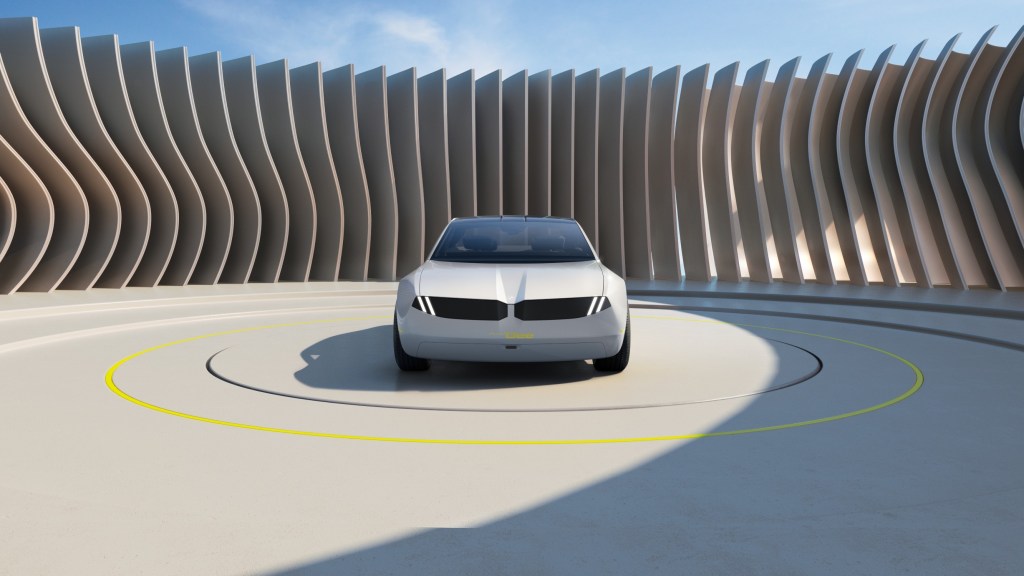
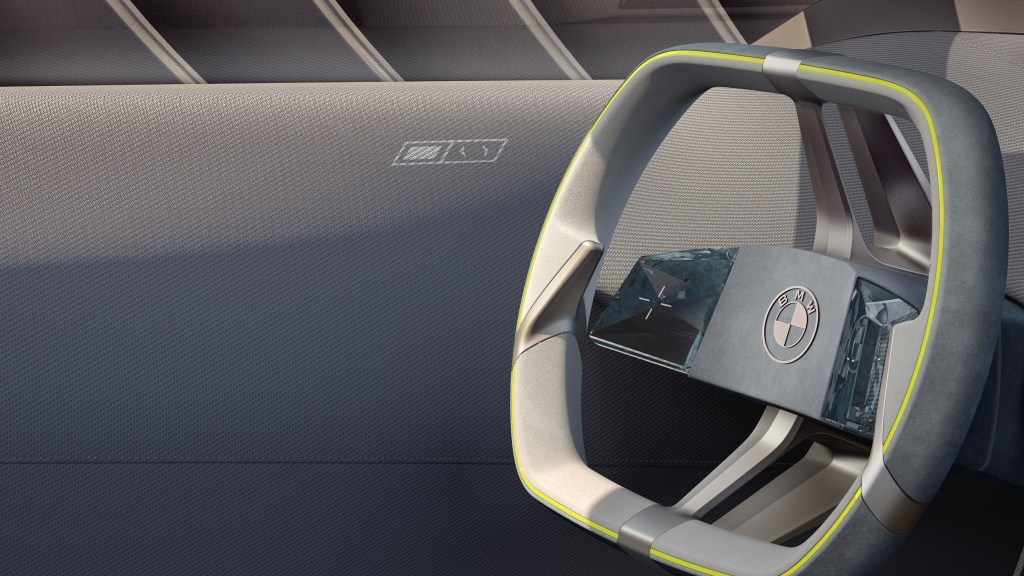
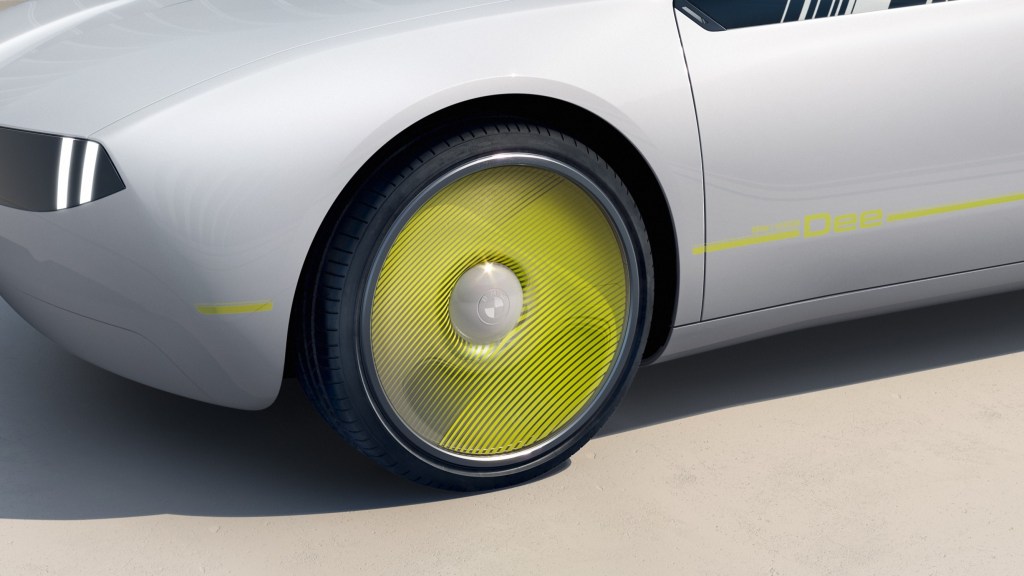
It presented the BMW i Vision Dee, a futuristic mid-size sedan with a new and pared-down design language. The name “Dee” stands for Digital Emotional Experience – and that is precisely its aim: to create an even stronger bond between people and their cars.

This car has future digital functions will go far beyond the level of voice control and driver assistance systems we are familiar with today.

It starts all with a BMW Head-Up-Display extending across the full width of the windscreen, providing a glimpse of the next vehicle generation.

From 2025 onwards, this innovation will be available in the models of the NEUE KLASSE. The BMW Group has also refined its use of colour-change technology. Having unveiled the BMW iX Flow Featuring E Ink, with the ability to change from black to white, at the last CES, BMW i Vision Dee can now curate its exterior in up to 32 colours.

“With the BMW i Vision Dee, we are showcasing what is possible when hardware and software merge. In this way, we are able to exploit the full potential of digitalisation to transform the car into an intelligent companion. That is the future for automotive manufacturers – and, also, for BMW: the fusion of the virtual experience with genuine driving pleasure,” said Oliver Zipse, Chairman of the Board of Management of BMW AG. “At the same time, BMW i Vision Dee is another step on the road to the NEUE KLASSE. With this vision, we are looking far into the future and underlining the tremendous importance of digitalisation for our upcoming product generations.”

With its intelligent, almost human capabilities, BMW i Vision Dee accompanies drivers not only through real-life situations on the roads, but also in their digital environment.

“A BMW lives by its unparalleled digital performance. BMW i Vision Dee is about perfect integration of virtual and physical experiences,” said Frank Weber, member of the Board of Management of BMW AG responsible for Development. “Whoever excels at integrating the customer’s everyday digital worlds into the vehicle at all levels will succeed in mastering the future of car-building.”

BMW Mixed Reality Slider: into the virtual world in five steps

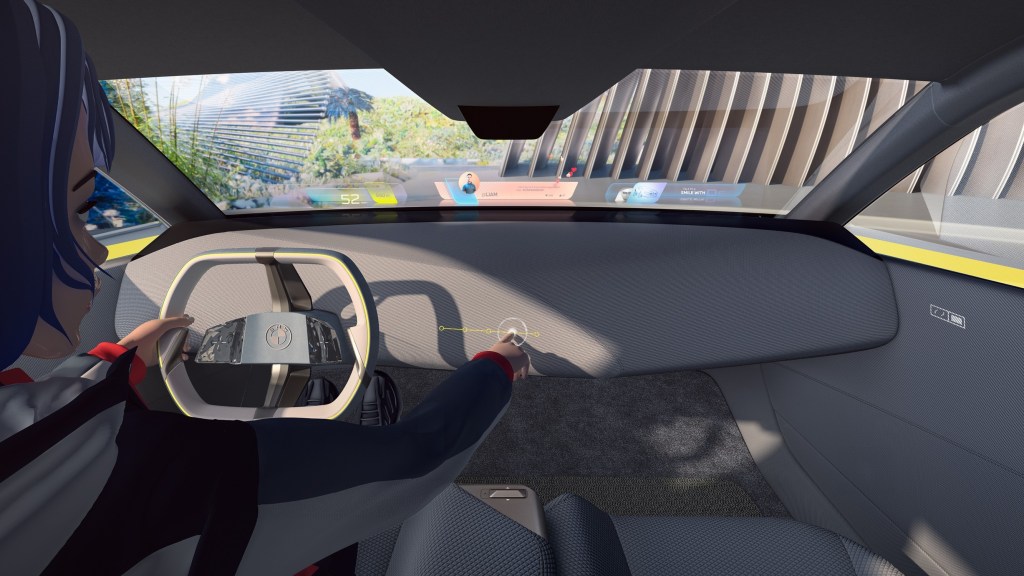
The BMW, in combination with the advanced Head-up Display, is the digital highlight and central operating control of BMW i Vision Dee. The completely virgin and simple dashboard panel shows just a line with dots. This is the Mixed Reality Slider. By using shy-tech sensors on the instrument panel, drivers can decide for themselves how much digital content they want to see on the advanced Head-Up Display. The five-step dot selection ranges from analogue, to driving-related information, to the contents of the communications system, to augmented-reality projection, right up to entry into virtual worlds. In parallel, dimmable windows can also be used to gradually fade out reality. Mixed reality can be experienced in BMW i Vision Dee in an immersive way that engages different senses without requiring any additional tools, creating a new dimension of driving pleasure for the user.

Advanced BMW Head-Up-Display: in NEUE KLASSE from 2025

The BMW Group is known in the automotive sector as a trailblazer for the Head-Up-Display and has systematically refined this technology over the past two decades. In BMW i Vision Dee, projection across the entire width of the windscreen allows information to be displayed on the largest possible surface – which only becomes recognisable as a display once it is activated. In this way, the BMW Group demonstrates the huge potential of projection technology and BMW i Vision Dee visualizes how a advanced Head-Up-Display could also be utilized in the future for the display and operating concept. The standard-production version of the BMW Head-up-Display extending across the full width of the windscreen will be used in the models of the NEUE KLASSE from 2025 onwards.

Welcome scenario with voice and phygital icons

The digital experience already begins outside the vehicle, with a personalized welcome scenario that combines graphical elements, light and sound effects. Natural language serves as the simplest, most intuitive form of interaction, enabling perfect understanding between humans and their vehicles. The headlights and the closed BMW kidney grille also form a common phygital (fusion of physical and digital) icon on a uniform surface, allowing the vehicle to produce different facial expressions. This means BMW i Vision Dee can talk to people and, at the same time, express moods such as joy, astonishment or approval visually. BMW i Vision Dee can also project an image of the driver’s avatar onto the side window to further personalize the welcome scenario.

World premiere for full-colour E Ink technology

Following the spectacular debut of the BMW iX Flow Featuring E Ink at CES 2022, the BMW Group is now unveiling a full-colour version of the E Ink technology in BMW i Vision Dee that will be used as the outer skin of the vehicle for the first time worldwide.

BMW i Vision Dee, rather than simply alternating between black and white, now showcases a multi-coloured, fully variable and individually configurable exterior. An ePaper film from the BMW Group’s cooperation partner, E Ink, is applied to the body to create this magical display of colour. Up to 32 colours can be displayed.

The body surface of the BMW i Vision Dee is divided into 240 E Ink segments, each of which is controlled individually. This allows an almost infinite variety of patterns to be generated and varied within seconds. The laser cutting process used to trim the films and the electronic control design were developed in partnership with E Ink. The adaptation of this technology for curved surfaces and the programming of the animations, were developed by BMW Group’s in-house engineers – enabling a form enabling a form of customisation that is unique throughout the automotive sector worldwide.

Reductive design – inside and out

The design of BMW i Vision Dee has been deliberately pared down to focus attention on the digital experience and the DNA of the BMW brand. The exterior is defined by the classic three-box sedan design that forms the core of the BMW brand. Traditional design elements, like the BMW kidney grille, twin circular headlights and the Hofmeister kink, are reimagined, with phygital icons replacing analogue elements. This gives BMW i Vision Dee its own digital, but human, character.

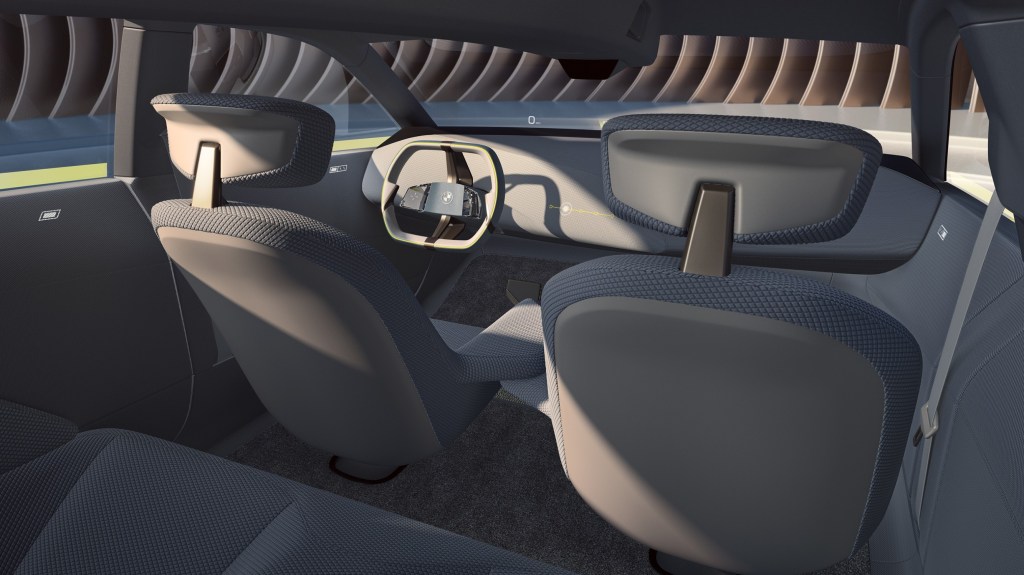
Inside, digitalisation goes hand in hand with reductive use of materials, operating controls and displays to ensure nothing distracts from the digital experience and the new feeling of enhanced driving pleasure. The unconventional design of the steering wheel, with its central vertical spoke, creates touchpoints that come to life when approached or touched and can be operated by moving the thumb. These phygital touchpoints control selection of the content projected onto the windscreen and, together with the Head-Up Display, thus support the principle of “hands on the wheel, eyes on the road”.

“With BMW i Vision Dee, we are showing how the car can be seamlessly integrated into your digital life and become a trusty companion. The vehicle itself becomes your portal to the digital world – with the driver always in control,” said Adrian van Hooydonk, head of BMW Group Design. “Implemented the right way, technology will create worthwhile experiences, make you a better driver and simply bring humans and machines closer together.”

Another milestone on the road to the NEUE KLASSE

The future of the BMW Group is electric, circular and digital. BMW i Vision Dee represents the digital aspect of this trio and will be another milestone on the road to the next vehicle generation, the NEUE KLASSE. The BMW Group will provide further insights and glimpses of the revolutionary vehicle concept of the NEUE KLASSE over the course of 2023. See more news soon!

Hans Knol ten Bensel

Volkswagen Group of America will provide a glimpse of the ID.7…

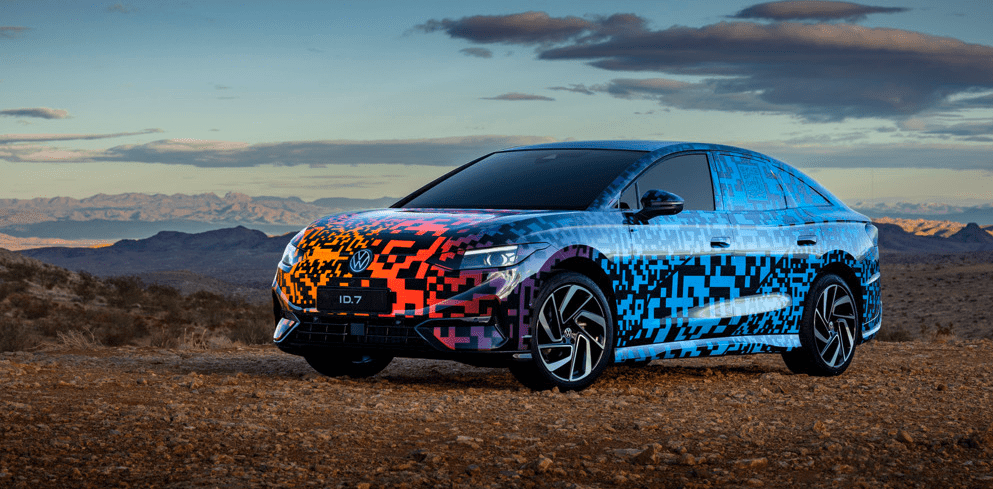
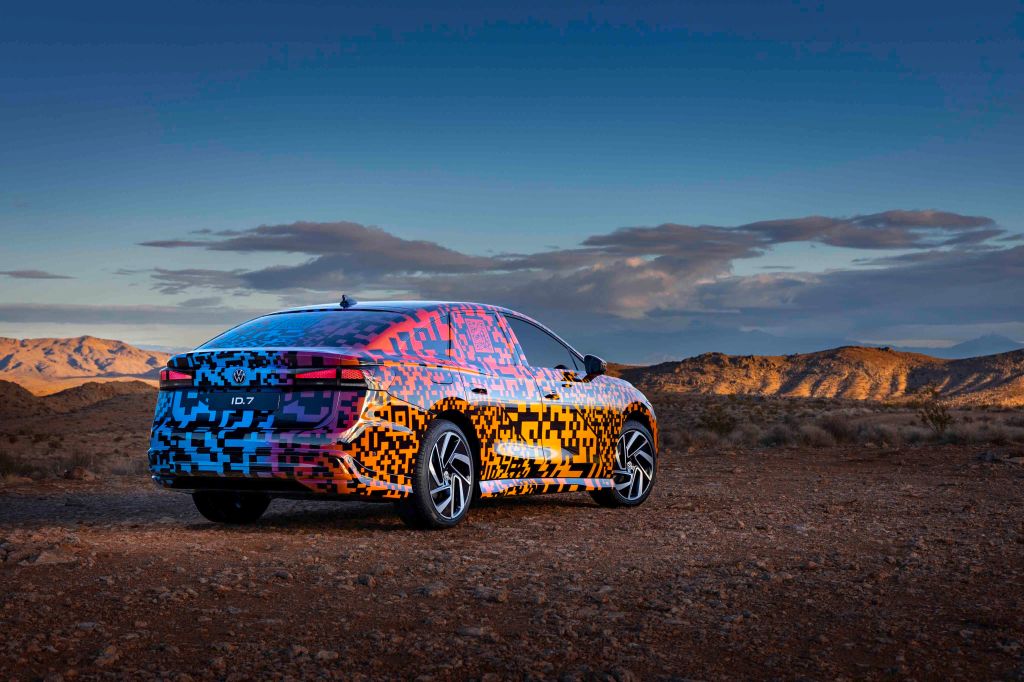
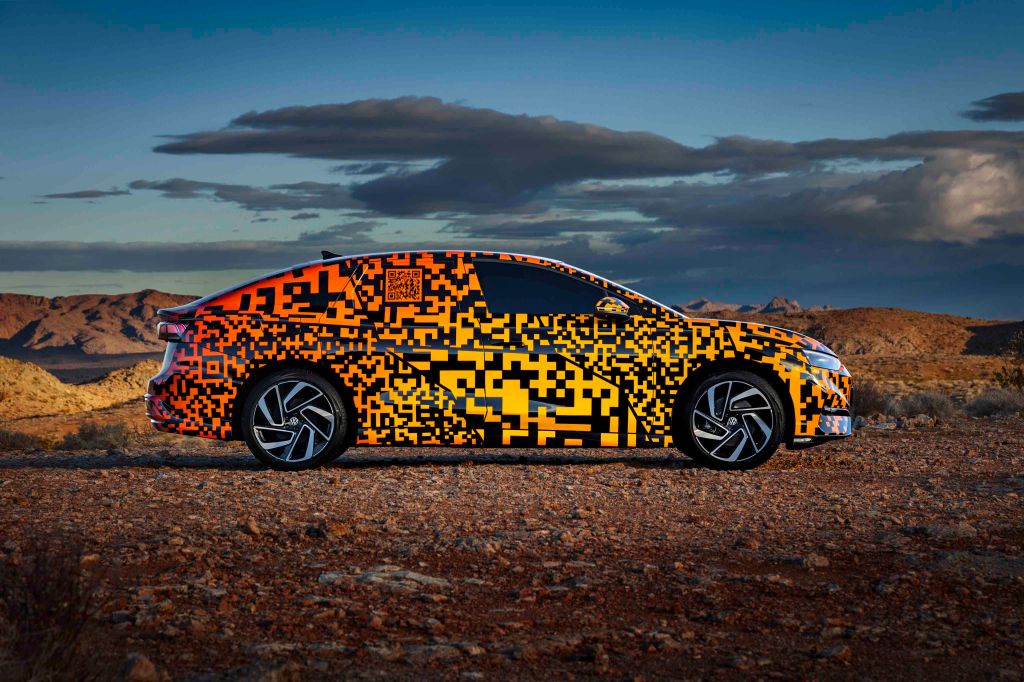
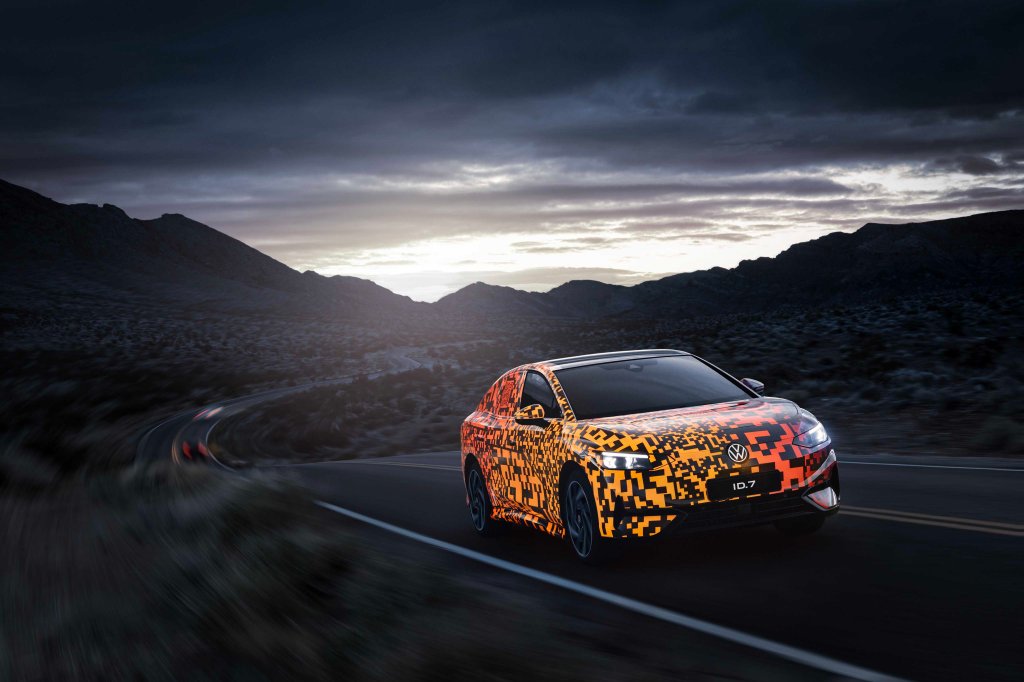
At the CES (Consumer Electronics Show) in Las Vegas between 5 and 8 January 2023, Volkswagen Group of America will showcase its first fully electric sedan based on the modular electric drive matrix (MEB). It will still be seen in a “smart” camouflage, which uses unique technology and multi-layered paintwork to create light effects on parts of the vehicle.

The ID. AERO3 concept vehicle initially presented in China already provided a preview of the new model, which embodies an aerodynamic design concept and is able to achieve ranges of up to 700 kilometers (WLTP).

After a six-year break, Volkswagen Group of America is returning to the CES – the world’s largest trade show for electronics – with a very special product…

With the new ID.7, VW is extending its electric model range into the upper segments. The ID.7 is one of ten new electric models that VW is planning to launch by 2026.

VW seems to have learned some lessons when it comes to the functionality of the various infotainment and dashboard commands. It ofeers a new display concept, an augmented reality head-up display, a 38-centimeter (15-inch) screen and new air conditioning controls integrated into the first level of the infotainment system. Now we also have illuminated touch sliders…

Like all other models in the ID. family, the ID.7 is based on the MEB of the Volkswagen Group. The advantages of the modular matrix with short overhangs and long wheelbase (2.97 meters) provide a large interior.

With its ID.7 sedan, Volkswagen is expanding its successful fully electric ID. family into the upper middle class of the high-volume segment and advancing its electric mobility campaign with the ACCELERATE strategy. VW has already reached a first milestone: Since the first ID.3 models were handed over to customers in September 2020, Volkswagen has delivered 500,000 vehicles from its ID. family worldwide through its subsidiaries – around one year earlier than planned and despite the ongoing difficulties in the supply chain.

After the ID.3, ID.4, ID.5 and ID.6 (only in China) models and the new ID. Buzz7, the ID.7 will be the sixth model from the ID. family and is Volkswagen’s second global car to be based on the MEB after the ID.4. It is planned to launch the electric sedan in the three primary markets of China, Europe and North America. The ID.7 for the European market will be produced at the Volkswagen Emden plant. After the ID.4, it will be the second model based on the modular electric drive matrix to be built in Emden.

More news soon!

Hans Knol ten Bensel

We drove the Kia Niro Hybrid: your smooth and stylish companion…

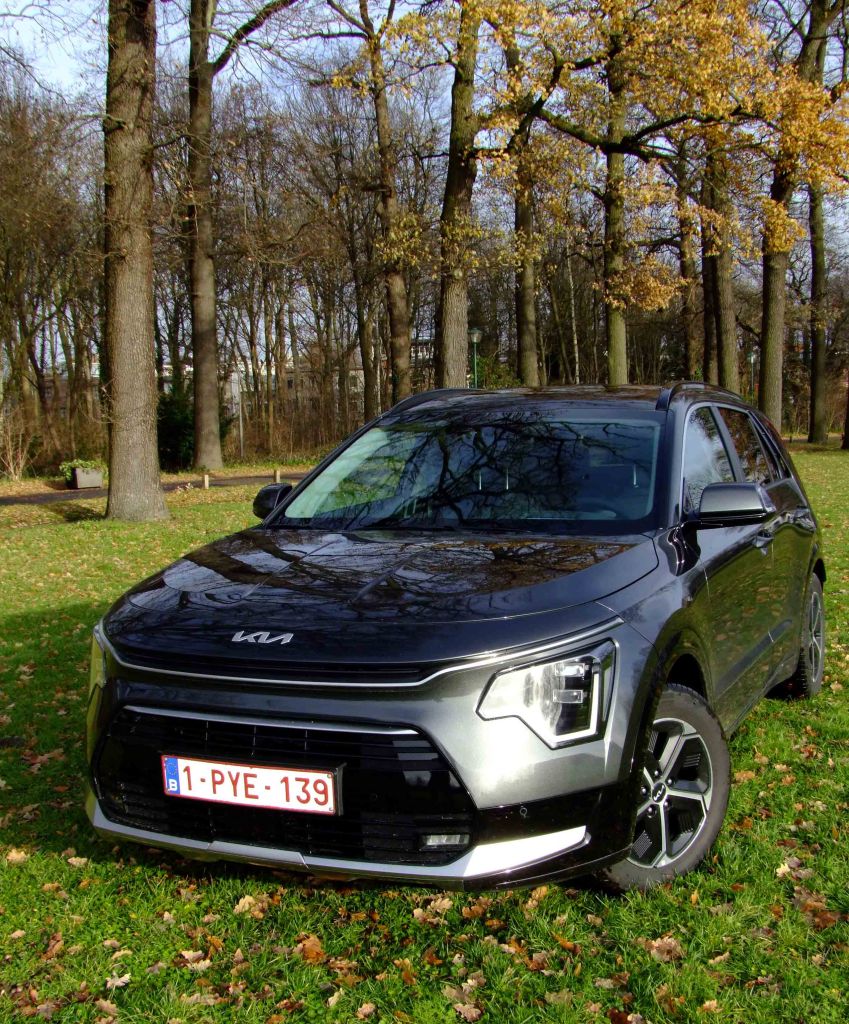
The second generation Kia Niro is succesfully restyled… Photo was taken here with the “vintage” Fujifilm Finepix 100fs: bought recently for merely 59 Euros…

With the second generation, the Kia Niro has decidedly come of age. It is altogether more stylish, and comes with all possible electrified drivetrain options: you can have it as a straightforward hybrid, like the Niro we tested here for you, or as a PHEV, and of course as a fully fledged EV. We impressed by the smoothness, space, comfort and user friendliness of this “pure” hybrid, which can be very frugal too… just read further.

Hans Knol ten Bensel
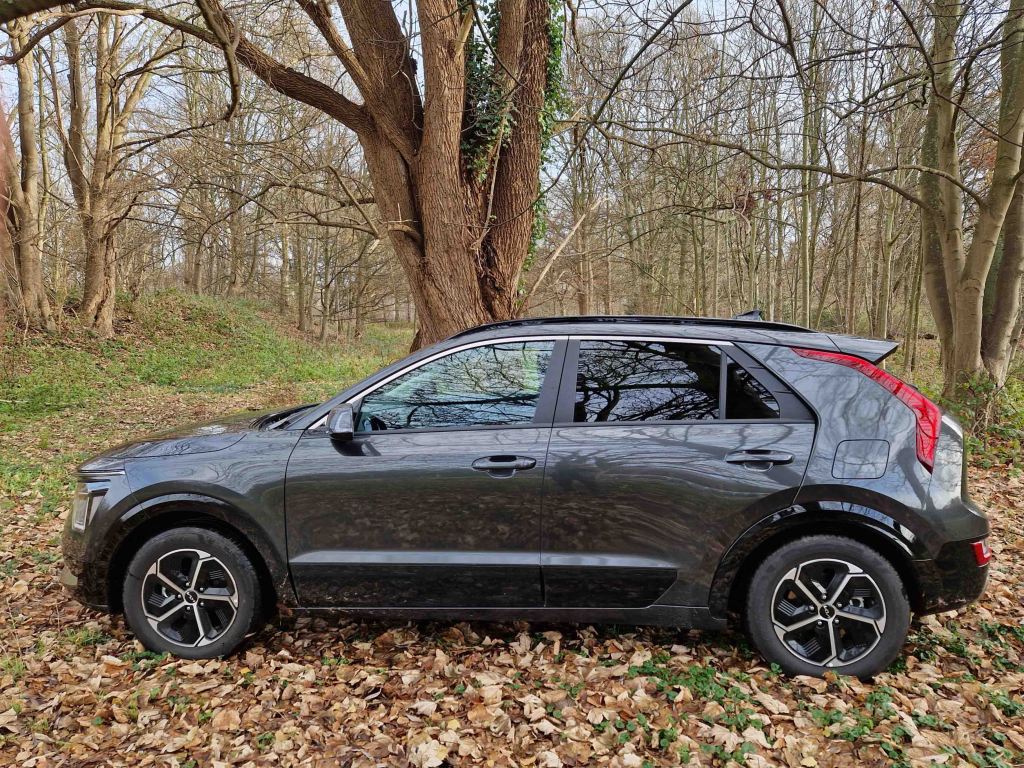
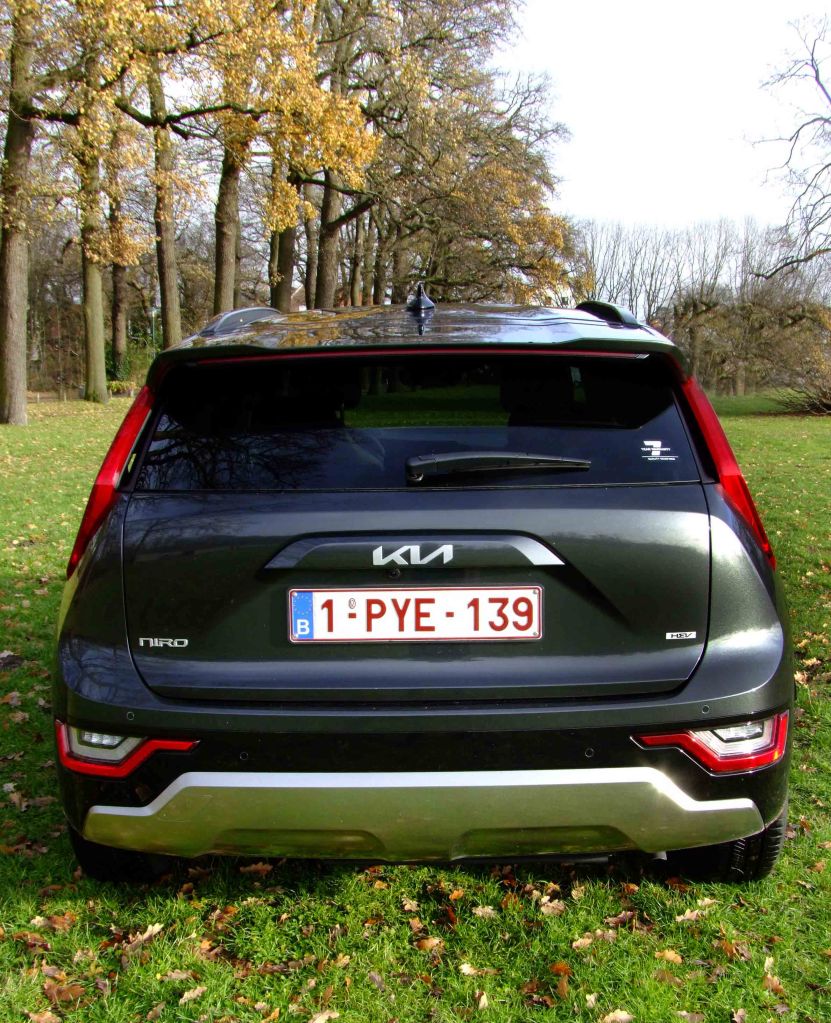
Indeed, the Niro has gained in style. The C Pillar ends with nicely sculpted rear lights, curved like we see on Volvo’s, with a passage between the bodywork and the lamp cluster, to improve air flow along the side of the car.

Photo taken again with the “vintage” Fujifilm Finepixshowing excellent colour balance.

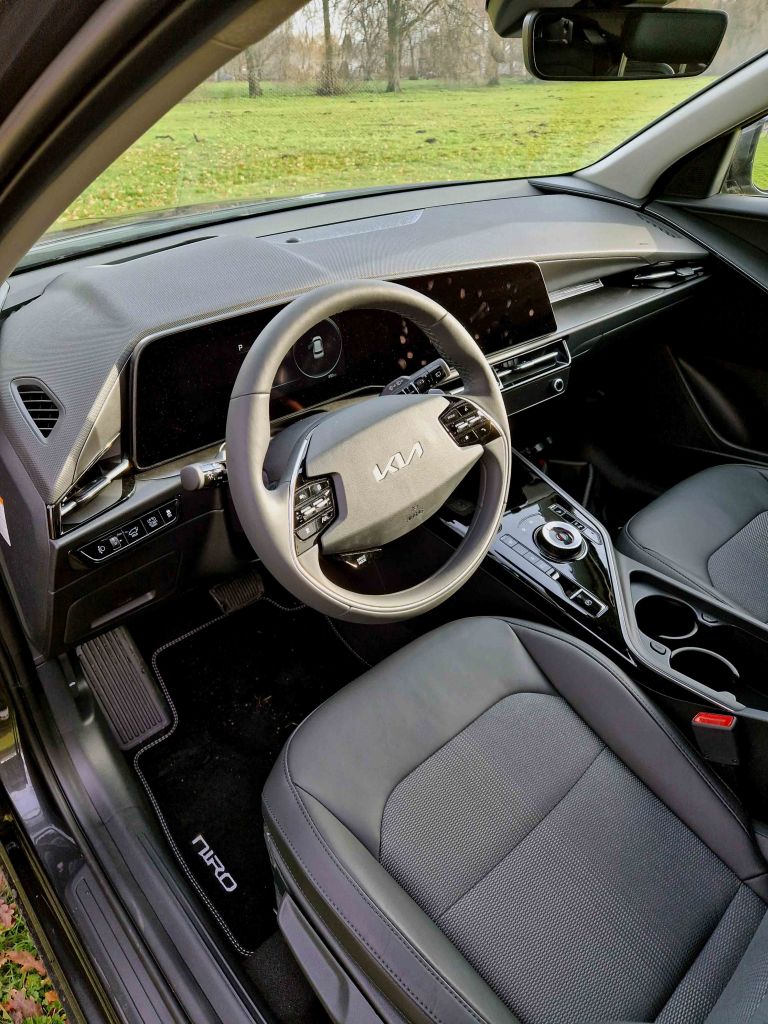
The C-pillar can also be had in contrasting colours. Also the front end has improved in stance and presence with a wide aluminium coloured rim around the hood and its big lights. The same goes for the interior. A sweeping design, good quality materials give you that premium feeling.

Photo here taken with the latest “flagship” Samsung S22 smartphone … wih heavy correction of colour balance and exposure.

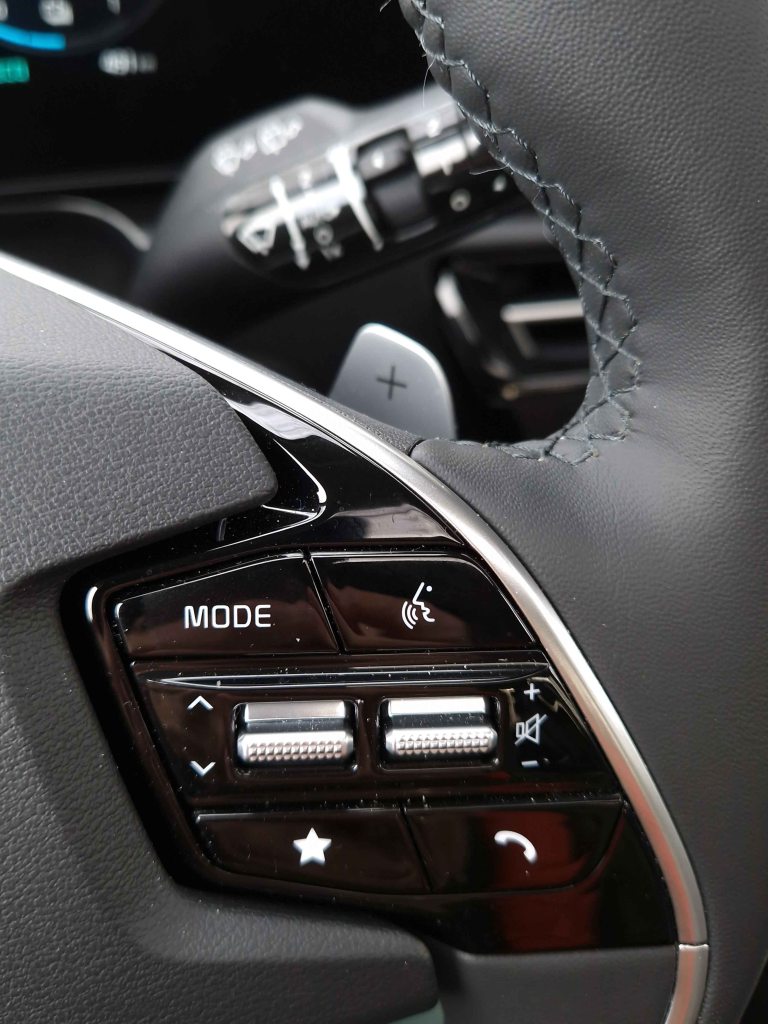
The screen layout is very good, nice to toggle between climate and screen controls to get you swiftly to the commands you want. We like the round control knob to switch between D, N and R, with the P button right on top of it, it’s all very ergonomic and you wouldn’t want it to be otherwise once you are at behind the wheel of this Kia. Many ergonomic solutions and knobs are similar to the flagship EV6, and that’s only to be applauded.

Photo here taken with the latest “flagship” Samsung S22 smartphone

The seats are good, with even a relax mode in the front seats depending on the equipment version you choose. There is plenty of storage, and leg and headroom is also quite decent in the rear. The floor in the rear is completely flat, so even three adults can reasonably sit in comfort. Boot space is excellent with a good 450 liters, and there is a separate tray for sundry like spare wheel equipment etc.

Drivetrain: smoothness and efficiency first…

Photo here taken with the latest “flagship” Samsung S22 smartphone

The hybrid Niro has a 1,6 litre Turbo under the hood, Kia calls it its Smartstream 1.6-litre GDI (Gasoline Direct Injection) gasoline engine. It is a 16 valve four cylinder, with a compression ratio of not less than 1:14, with Continuously Variable Intake and exhaust Valve Timing, or abbreviated CVVT. To improve torque and thermal efficiency in the mid rev range it is a long stroke unit, 72 x 97 mm, and you understand immediately that this is not the unit that likes to be trashed hard with corresponding high revs. Surprisingly however, it develops its maximum power of 105 PS @ a rather high 5,700 rpm, and its maximum torque of 147 Nm comes in @ 4,000 rpm.

Photo here taken with the latest “flagship” Samsung S22 smartphone. Not the frugal average consumption of 5 l/100 km.

But its torque curve is relatively flat, so indeed there is plenty of pulling power at low revs. It runs indeed very smoothly at low revs, remember, it runs on low-friction ball bearings(!) The hybrid version has a permanent magnet synchronous electric motor of 32 kW, but more importantly, developing a torque of 170 Nm, and that gives you the pleasant liveliness and delightful “EV feel” at low urban speeds. The Niro Hybrid is paired as standard with the brand’s second-generation six-speed dual-clutch automatic transmission (6DCT with gears optimized for transmission efficiency, and the removal of the reverse gear that saves a significant 2.3kg). This improves the overall consumption by 0.62%. Reverse drive comes indeed from the electric motor…

Photo here taken with the latest “flagship” Samsung S22 smartphone. When driving very slowly due to urban congestion, the hybrid relies on the electric motor, and shows its worth: merely 2,9 litres/100 km on the driven distance!

The Niro Hybrid shows its smooth qualities when driven with restraint and anticipation; the engine and transmission then behave supersmooth, and the Artifical Intelligence of the power train will choose the optimum balance between engine and battery power, and manages to achieve optimal efficiency, together with more than enough power combined with excellent acoustic comfort. Consumption even in the busiest of urban traffic will remain well below 6 litres/100 km, and that’s what it’s all about when we talk about environment conscious transport.

Photo taken with the Fujifilm Finepix S100fs again…

Of course, higher speeds on Autostradas will take their toll, but driving at the legal maximum speeds on our European motorways will not set you back unduly. Performance is all you could wish for: 0 to 100 km/h in 10,4 seconds, a top speed of 165 km/h, on 16 inch wheels… The manufacturer quotes an average fuel consumption between 4.4 – 4.7 litres/100 km, and CO2 emissions of 100-107 g/km according to the wheel dimension, i.e. 16 and 18 inch respectively. 

Photo here taken with the latest “flagship” Samsung S22 smartphone.

Predictable handling

The Niro uses Kia’s third-generation ‘K’ platform, conceived from the outset to support a mix of electrified powertrains and provide high levels of torsional rigidity. The Kia engineers have tuned the suspension and steering system with an eye to comfort, succeeding in also offering a responsive, confidence-inspiring driving experience.

Photo here taken with the latest “flagship” Samsung S22 smartphone.

State of the art driving aids and connectivity

The usual driving aids are found, like Lane Keeping Assist (LKA), Lane Following Assist (LFA), Highway Driving Assist (HDA), Driver Attention Warning (DAW), High Beam Assist (HBA), Navigation-based Smart Cruise Control-Curve (NSCC-C), Blind-Spot Collision-Avoidance Assist (BCA), Rear View Monitor (RVM) and Rear Cross-Traffic Collision-Avoidance Assist (RCCA). The Niro’s front view camera and in-built navigation system integrate to display the current speed limit. The Intelligent Speed Limit Assist (ISLA) system will display the current speed limit and automatically change the set speed (after confirmation by the driver) by using the information detected through the front view camera.

Last but not least, a clear 10-inch head-up display (HUD) system projects vital driving information, including speed, ADAS data and navigation indications onto the front windscreen, very readable indeed.

Photo here taken with the Fujifilm Finepix S100fs

Conclusion

The current Niro family is Kia’s third best-seller in Europe. Did you know that of the previous generation, Kia has sold 350,000 Niro models (54% HEV, 15% PHEV and 31% EV). So Kia took utmost car to hone this important car for them to another level. It is also reflected in the prices, but then it offers style and top notch technology. It will prove to be a very pleasant and smooth companion, as we said in the title of this report, when you drive it with respect for the environment and the law… indeed, as hybrid cars are meant to be driven to show their sublime qualities…

Hans Knol ten Bensel
Photographers’ notes: we used besides our state of the art Samsung S22 phone also the Fujifilm Finepix S100 fs, which proved a very creditable contender…

We drove the Nissan Juke 1,6 Hybrid: a very refined and stylish urban SUV…

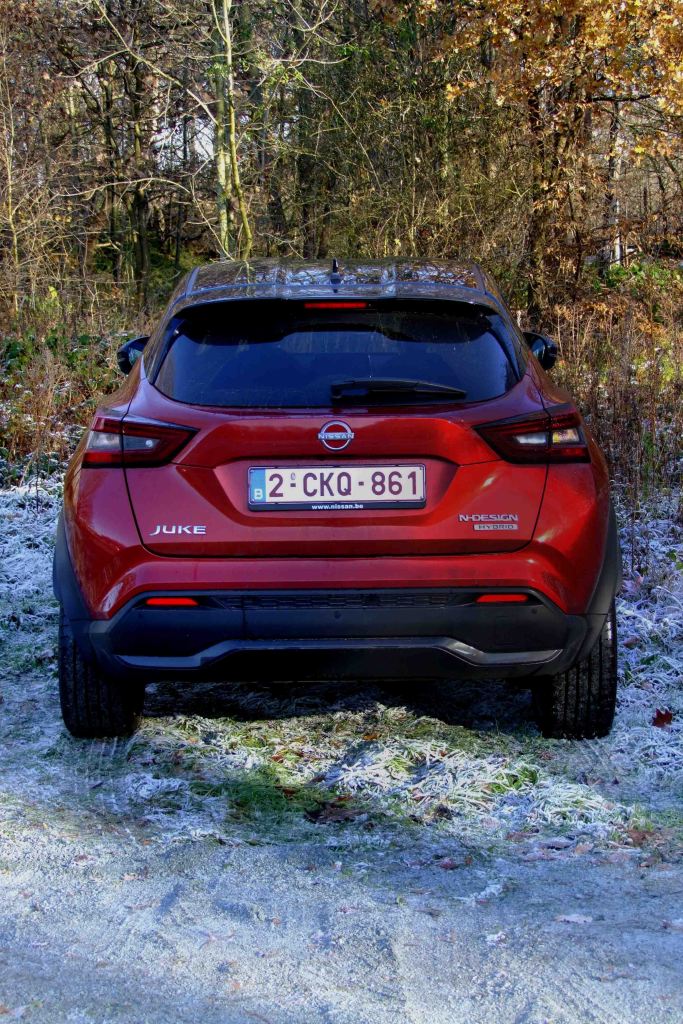
The Juke has invented the compact, urban SUV and indeed has gained many faithful followers over the years. Times have changed, and the reduction of CO2 emissions is crucial now. So when the facelift of the Juke came along, it was time also to launch a hybrid version. Within the Renault group, the drivetrain of the Renault Captur was the obvious choice, and so here we are with a 1,6 litre petrol engine combined with an electric motor, delivering a system power of 105 kW or 143 HP. Nissan engineers have further honed Renault’s hybrid system, and we found it operating very refined indeed. The second generation Juke also underwent some styling changes for the better, but retained its iconic shape. Just read further…

Hans Knol ten Bensel

Pleasing…

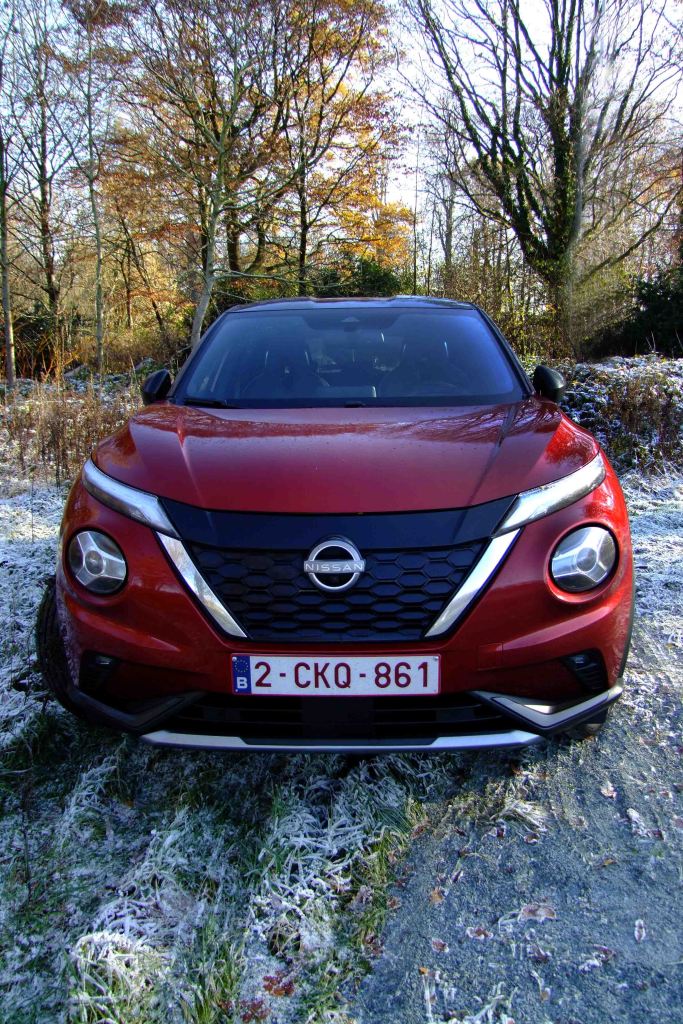
The front end of the Juke now features a honeycomb grille with also the headlamps elegantly integrated in the bodywork with the indicators and running lights stylishly elongated along the bonnet. We already tell you here that the headlamps feature already in the standard equipment full LED, as well as the rear lights.

The interior is also very well finished, with soft padding on the dashboard, door panels and centre console. We like the very readable round instruments, and the touch screen sits nicely high up on the centre of the dashboard. Everything is quite intuitive to handle, and one feels well at home in this cosy, rather dark interior, the latter as a (happy?) result of the typical styling of this SUV.

The steering wheel is eminently adjustable, and the front seats are very comfortable indeed. Thanks to its SUV character one sits pleasantly high, with the front seats being some 52 cm above street level. So getting in and out is a breeze.

Refined, at least when you drive it smoothly…

Driving a Hybrid is also an art, which you have to learn. Ok, the hybrid offers you thanks to its electric motor that added torque and immediate pulling power which is the very charm of EV driving. But the smoothness and silence of the drivetrain will please you even more when you drive it quietly, with anticipation and restraint.

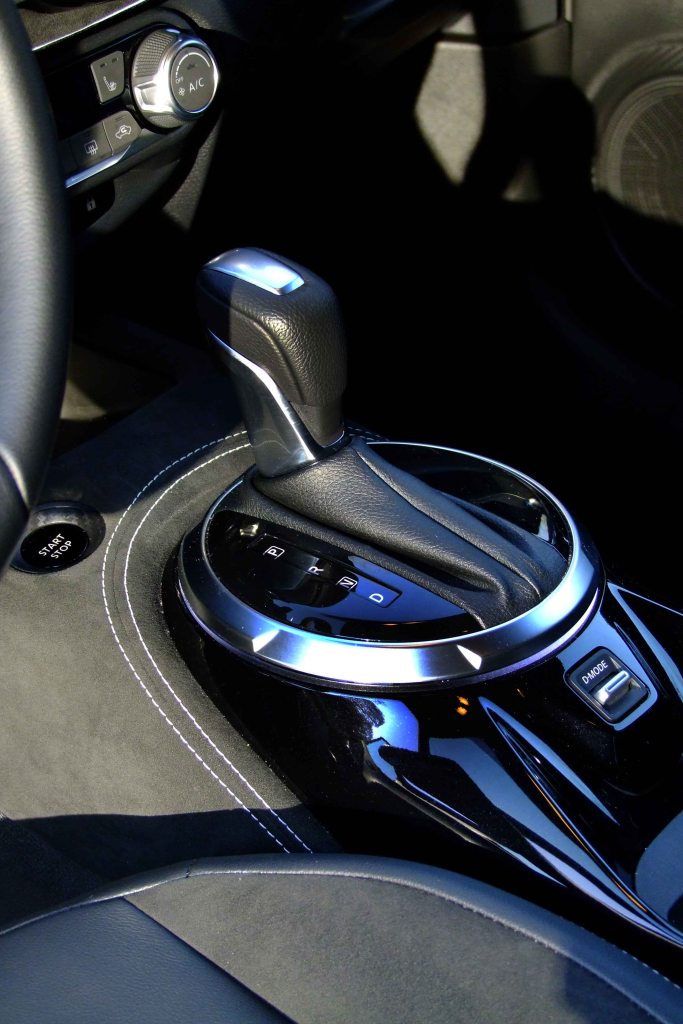
Then the clever (thanks to computer-age Artifical Intelligence) system will manage the power stream masterfully between E- and combustion power, the engine revs will not rise unduly and in urban traffic you will achieve anything between 5 and 5,5 litres/100 km. The hybrid Juke will also let you use the e-pedal function, so you can recuperate kinetic energy via the electric motor, which then acts as a generator. Of course, you set the drive selector on the centre console in “Eco” mode, and leave it there.

When you want more performance of the Juke, you can forget about any extra economy. Logically, as then the combustion engine has to do most, if not all the work, as it has also to maintain a minimum charge in the battery. Only the e-pedal will let you recuperate kinetic energy, so you can use the e-boost of the electric motor when re-accelerating. The engine revs high, one clearly hears that it’s there, and the transmission is very busy choosing the right gears with sometimes a hint of jerkiness.

This is also the reason why high cruising speeds on the motorway are also to be avoided if you want to see decent economy. Diesels can run at high speeds with consumptions remaining between 6 and 7 l/100 km, but NOT petrol engines. The Juke will then set you back with averages between 7,5 and 8 litres/100 km. No miracles, dear readers, just the laws of physics. The Nissan engineers also set the tone already, as the top speed of this Juke Hybrid is “only” 166 km/h. You shouldn’t be doing it, if you think about the earth. Enough zest though, as the Juke will sprint from 0 to 100 in 10,7 seconds.

The Hybrid Juke has a so-called “Multi-Mode” transmission, with 4 speeds for the petrol engine, and two speeds for the electric motor. AI chooses for you not less than 15 gear combinations! The engine is good for 94 HP and 148 Nm, additionally supported by a 15 kW starter/generator. The electric motor has 49 HP and 205 Nm of torque.

Our average test consumption stayed well below 6 litres/100 km, as indeed we drove the Juke Hybrid as it is engineered to be. CO2 emissions are set at 114 g/km according to WLTP standards.

When starting from cold, the engine will at least during the first few kilometers rev quite clearly, as it has to reach its operating temperature as fast as possible and also has to keep the battery (re)charged. When you use EV power extensively in (very) slow and quiet driving, every now and then, the engine will eagerly rev again, but then this is to recharge the battery. It does this even when you hardly touch the throttle or even not at all, which seems a bit unsettling at first, but soon you get used to this.

Enjoy the music…in comfort

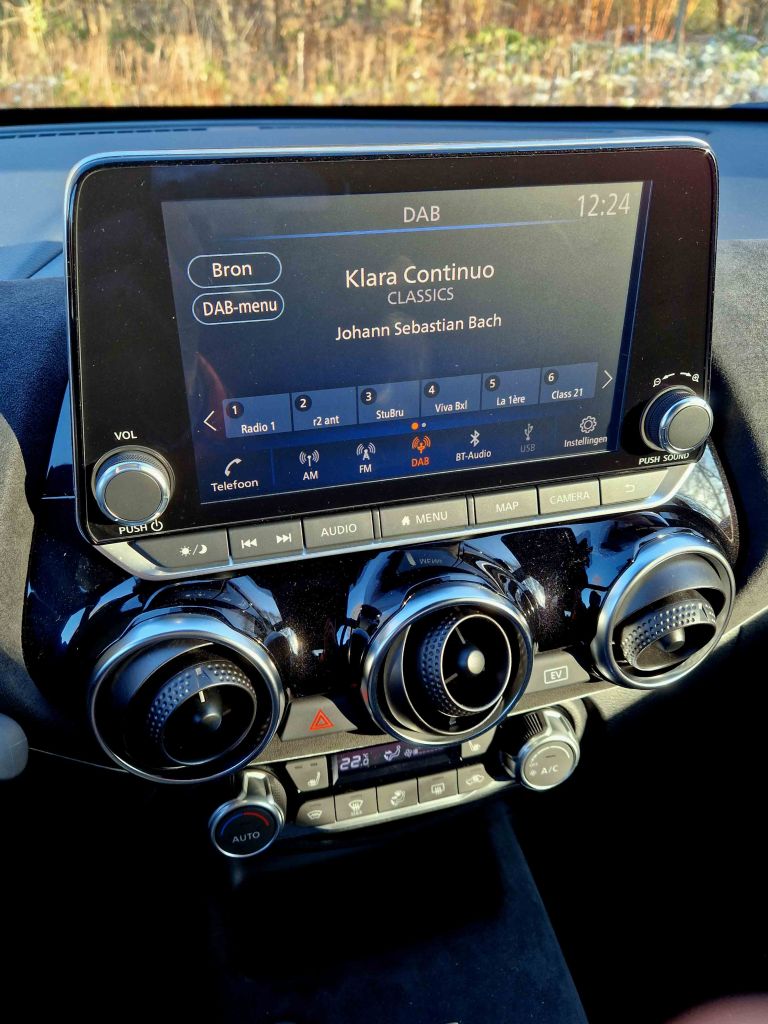
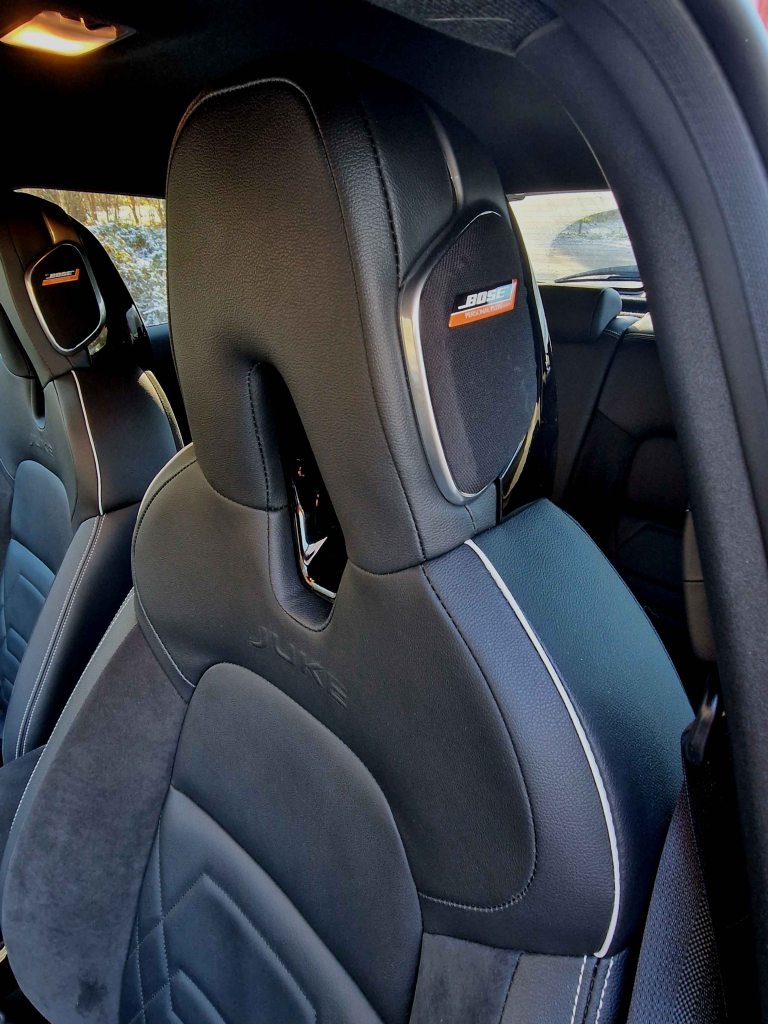
Driven in the right way, the Juke will seduce you with quietness, and this lets you enjoy the DAB+ radio and the excellent sound system. We had a Bose system with speakers integrated also in the headrests, and the sound experience was indeed wonderful. The suspension is comfortable, a bit firmish, but never harsh. Seating is excellent with more than enough headroom in the front. In the back, this is less generous, but legroom is very much OK. There is also enough room in door bins for even 1 litre bottles.

Connectivity is also top notch, with Apple Car play and Android Auto provided.

Stable and predictable handling

The Juke steers precise, has very good stability at speed and is predictable in corners. Even abruptly lifting the throttle in de midst of a curve will trigger the ESP and the Juke will maintain its course. The steering is reasonably direct (2,5 turns from lock to lock) as an urban compact befits. The Juke is quite safe, in the NCAP Crash test it achieved 94 pct of all the achievable points. Brake performance is very good, with the wider tires of course enhancing the deceleration.

Practical

Boot space is adequate for a compact SUV with 301 liters, and there is an under floor tray with an additional 90 l. With all seats folded there is 705 liters available when you load until the rear window base. One has to lift the luggage rather high into the opening however, some 78 cm.  

Conclusion

The Juke has its iconic looks further improved, and is certainly a smooth urban performer with its Hybrid layout. On the open road it is also a good travel companion, with high speeds letting the petrol engine work rather hard, which limits economy. But as said above, adopting the proper driving style will let you enjoy fully its “zen” qualities, for years to come…

Hans Knol ten Bensel

Photographer’s notes: we took most of the photos here with the bargain of the year: a still totally pristine Fujifilm Finepix S100fs, with a Fujinon 28-400 mm 35 mm equivalent lens, bought two weeks ago for almost the original price of its sun lens hood: 59 Euros!!

It proved to have excellent color and light balance, surpassing even the Samsung S22 state of the art flagship smartphone, which did not succeed in making a well color balanced photo of the e-pedal button on the centre console. The auto color balance got so completely out of line in the shadowy interior of the juke that I had to print here the photo in black and white here (see photo in the article above) instead of the exaggerated blue the S22 produced.

We drove the Seat Cupra Born…

The Spanish, more ardent version of the Volkswagen ID.3 is the Seat Cupra Born. More, sporting, more zesty, more panache, that’s what the VW group wants to offer here. And indeed, this Fully electric Cupra fills the bill, when it comes to looks, handling and performance. We put for you the 150 kW version through its paces, equipped with the 58 kWh battery. As you already well know, electric motors have formidable torque, and this Cupra surely delivers at the traffic light. It sprints from 0 to 100 km/h in 7,3 seconds, and so the beautiful EV story is again told, performance wise at least. But the Born has also other (dynamic) qualities, just read further…

Hans Knol ten Bensel
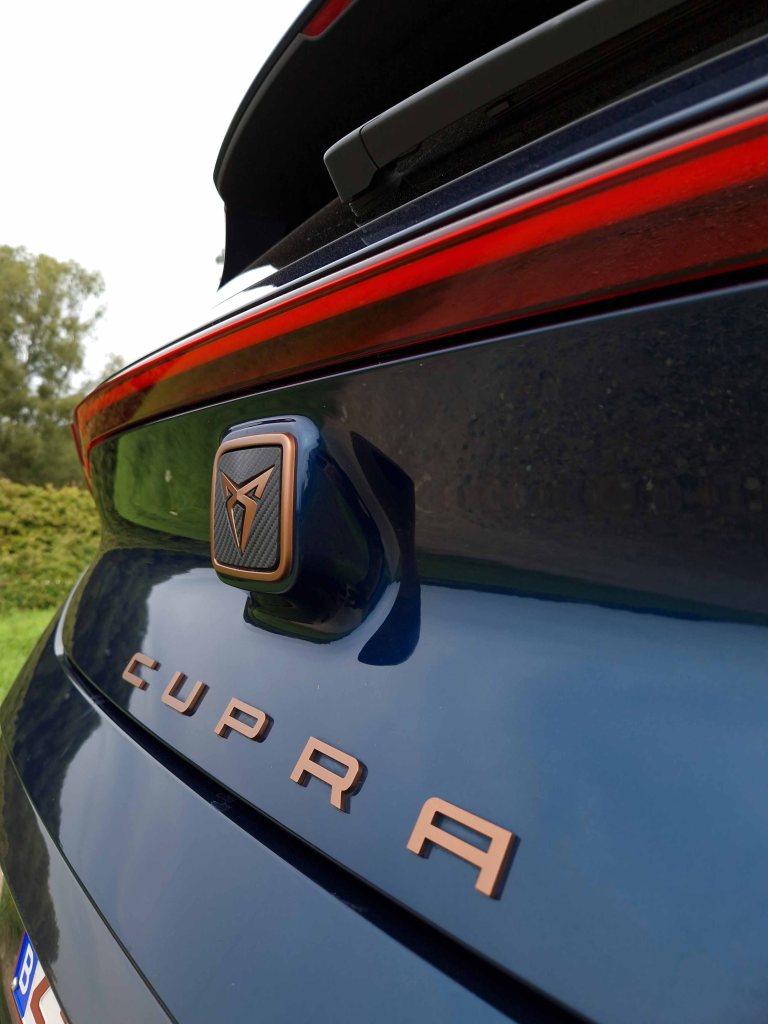
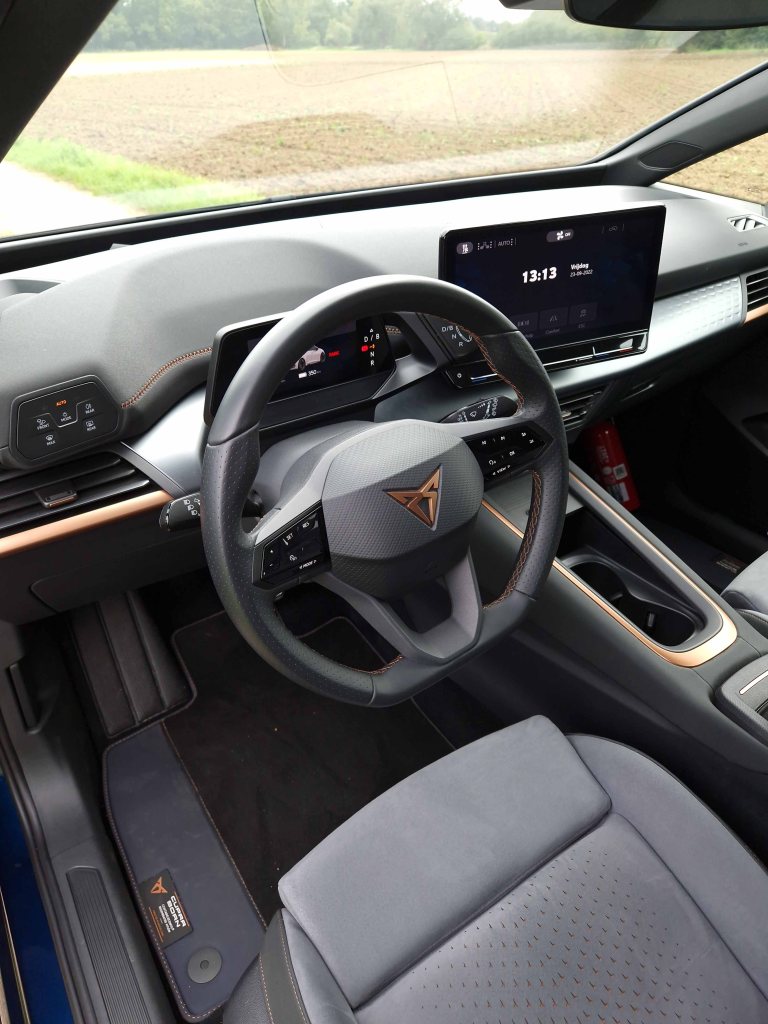
Looking at our Cupra test car, we liked its colour palette very much, and the external sporty styling elements. Also bystanders admired it, so yes it enhances clearly the personality of this car. I like the front end, the copper coloured badging, the big roof spoiler above the rear window, the nice streamlined alloys, the texture on the c pillar.

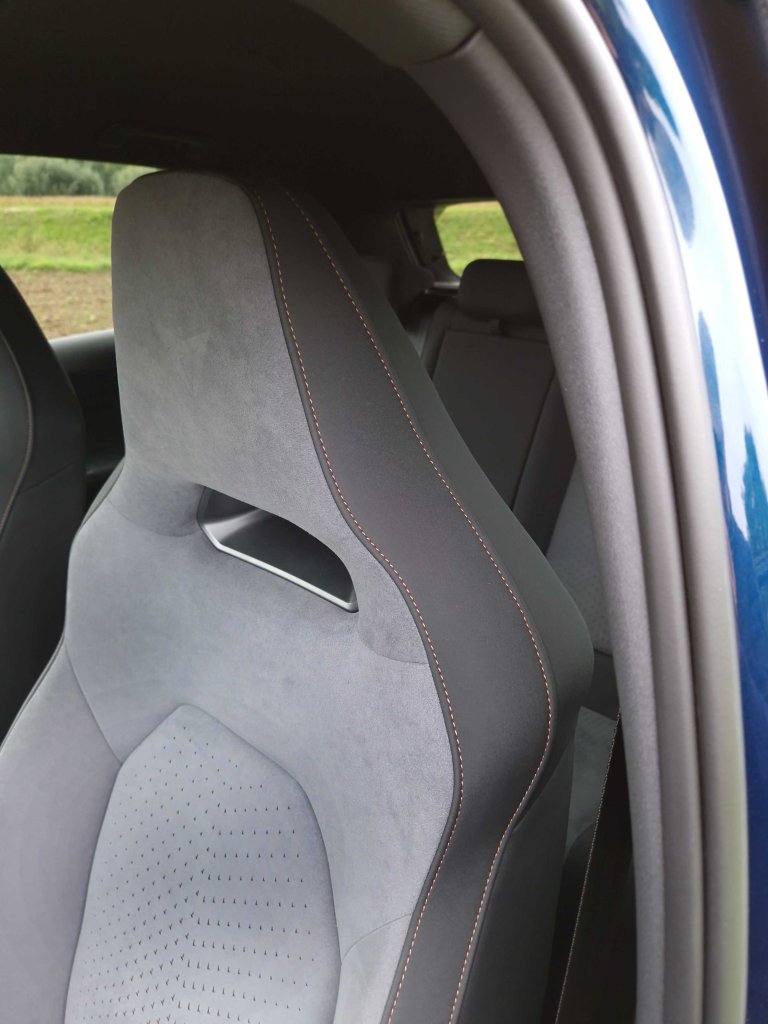
Also the interior breathes this flamboyant sportiness, although what screens, instrumentation and buttons are concerned, it is identical to the ID.3. The design of the dashboard surface does look a bit cooler though, with some added textures and copper coloured surroundings of the centre console for instance. Very nice are also the body hugging front seats.

On both sides of the steering column one finds buttons like a Formula 1 driver would use. The right button puts you immediately in the sports mode. Performance galore, but your range will soon dwindle, even more so in winter. With the left button you can click through the available driving modes, from eco to sports.

Given de immediacy and sheer amount of the available power, we found the “eco” mode more than enough for our needs, and it gave us also a more or less reasonable range. Our test car had the 58 kW battery, and this gives you a theoretical range of 425 kilometres. That supposes of course very fair weather and a driving style which even trucks find on the slow side. Under the same driving style, my Hybrid Lexus clocks then 3,9 liters/100 km… indeed, an EV rewards you with a sedate driving style in town, and very moderate cruising speeds up to max 100/110 km on the open road. Then things are truly fine. The simple truth is, the laws of physics apply everyday everywhere, for all EV’s too, miracles just don’t happen. By the way, the top speed of this Cupra is limited to 160 km/h. At higher speeds, you would spend exponentially more time at the charging stations, so there is no time gain and thus no point in going faster.

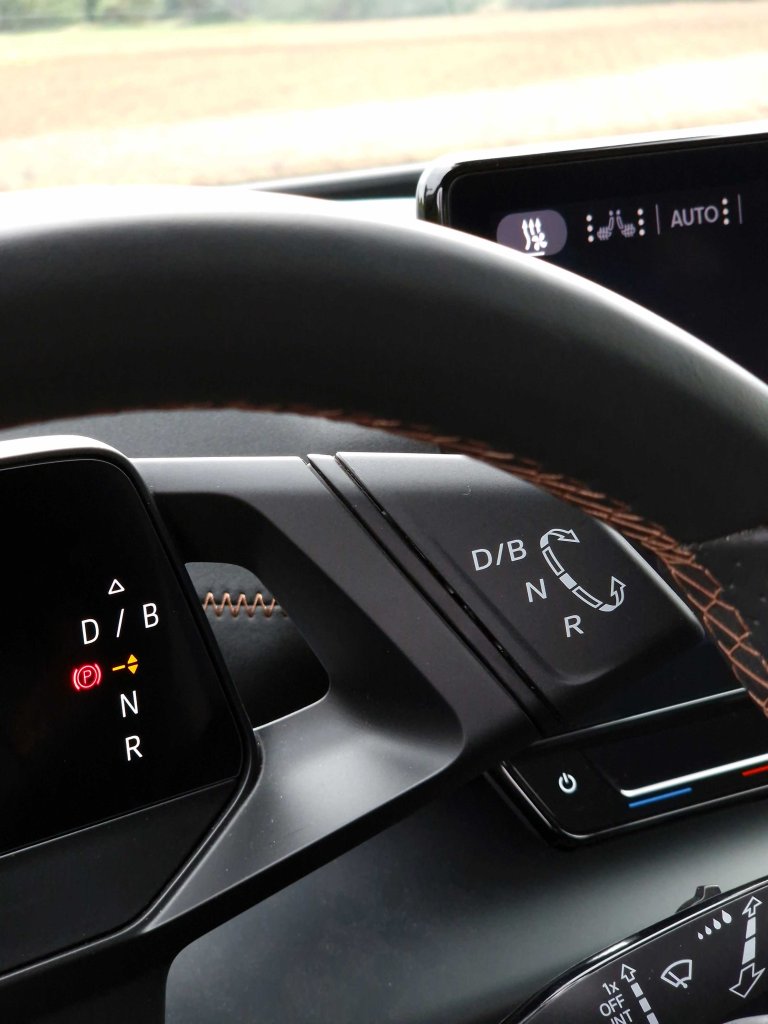
You can opt for a more powerful Cupra Born with a 170 HP motor and a bigger 77 kW battery, which would give you also a higher range of 550 km, but we found our test car totally sufficient, once you adhere to the philosophy of environmentally friendly EV driving, smooth and sedate, flow the traffic, drive with anticipation and make minimal use if the brakes, letting the electric motor recuperate the energy. We are totally convinced that this is the only way an EV should be driven. Everything else is rather absurd, given that an EV is meant to emit less and protect our world. The Cupra has also the nice “B” position on the drive selector, and that lets you use the regeneration fully so you can really drive and brake this car using one pedal only.

Smoothness is what you go for…

Refinement is your biggest reward when you choose an EV. The Born delivers here too, as you could expect. Utter silence, mechanical smoothness, it is unsurpassed. Abundant torque is always at your disposal, immediate response at the slightest blip of the throttle. Just wonderful.

The handling of the Born is also a notch better than the ID.3. The Born sits lower on its wheels, has wider tyres, bigger brakes, and steers more direct and precise. Just more fun behind the wheel here.

Otherwhis it runs on the same platform as the ID.3, the celebrated MEB platform of the VW group. By the way, it also comes from the same assembly lines as the ID.3…

The Born is well equipped, and has all you could wish for in terms of driver assistance systems and connectivity. The haptic slider controls of the ID.3 are also found on this Born. They take some getting used to, and the new ID.3 will undergo some changes, of which future Borns will also benefit of course. The annoying thing about their sensitivity is that one sometimes turns on the sound volume as you brush the steering heel spokes when taking a corner! The car is roomy enough for four, with plenty of leg and headroom in the back, due to the rather narrow bodywork it gets a bit cramped for three adults in the back. The door bins are large also in the back, and one gets also two USB connections for the rear passengers.
Boot space is adequate with some 385 liters, when you fold the rear seats down, there is still a ridge where you have to lift your luggage over. On the other hand, it prevents heavy luggage items to slide forward…

Fast charging

The Born is of course well geared for the future, and the 58 kW battery accepts fast charging of up to 120 kW. This means that you can charge from 10 to 80 pct in merely 35 minutes. When our infrastructure is up and running, this is good news. It will set you free to use the full EV power more often, provided the energy prices stay reasonable of course.

Conclusion

This Cupra Born has the extra panache which makes it even more attractive to some than the ID.3, which is build rather with a no nonsense futuristic flair, which we happen also to like by the way. Embedded into the VW group with its massive experience and know how, this Cupra will prove to be reliable and (very) long lived, so you will be able to enjoy it for many years to come, with a bit more zest added…

Hans Knol ten Bensel