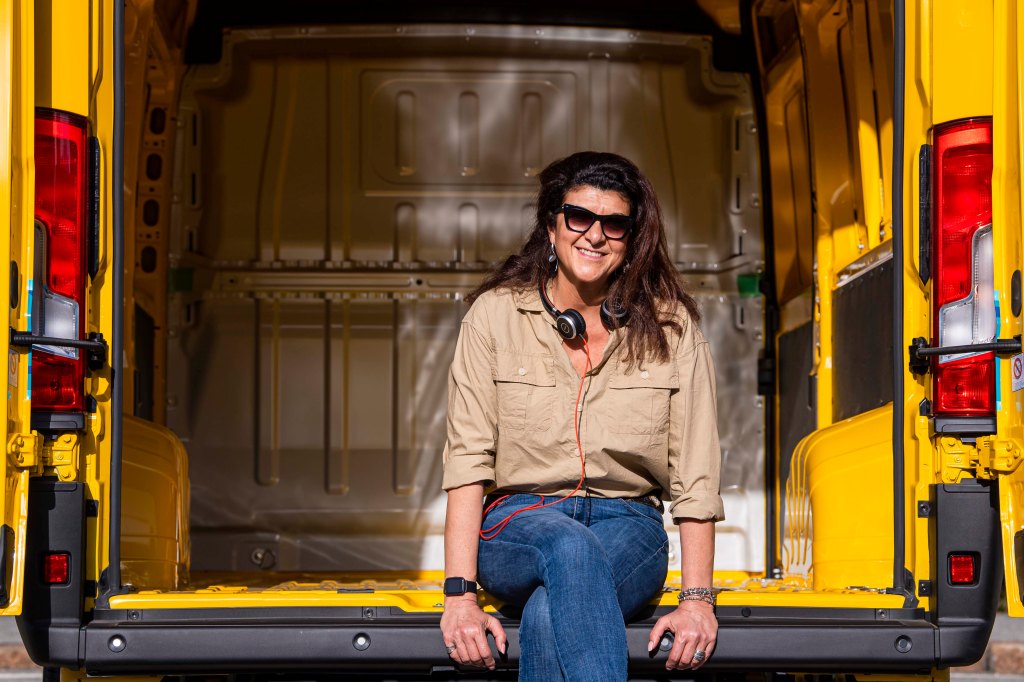
A woman tailoring the Fiat E-Ducato to your needs: Angelica Carapezza

Her vast experience, very good knowledge of the company and a well established large and well honed network were the keys for Angelica Carapezza to bring the complex E-Ducato pilot project towards customers to a succesful end.

At the first presentation of the E-Ducato in mid- 2019 we met up with some very remarkable people of Fiat Professional, notably with Angelica Carapezza, now responsible for managing and coordinating the implementation of the Ducato’s electrification programs at full scale.

Now with the E-Ducato “coming of age” as it were with its commercial launch, after having went through a very thorough process of profiling the customer and their needs, we were very intrigued how this process exactly went about. All the more reasons for a second interview. The first interview, where we told you more about Angelica Carapezza’s multi-faceted career, can of course also be read in our columns, by following the link https://autoprova.be/2019/09/15/women-behind-cars-angelica-carapezza/.

Just read our second interview with Mme Carapezza here below…

Hans Knol ten Bensel

HK: The Ducato has built up an enviable reputation of commercial success, so launching a fully electric version is quite a challenge, as the expectations of the market are high. What was your business philosophy here in positioning the E-Ducato into the market?

AC: We have a long 120-year history in the LCV market, and Fiat Professional has always been a Brand that “lets the facts speak for themselves”. It is down to earth, so to say, producing vehicles that are first and foremost an ideal tool for the small or big entrepreneur who wants to grow his business. With this approach throughout the years, we achieved an undisputed leadership position in the world of light commercial vehicles, as shown by the figures for the Ducato: over 5 million units produced since 1981 in the biggest plant in the world, having also conquered over 75% of volumes in the Caravan bases sector and, finally, having achieved the European Best Seller status in 2020.

HK: Being close to the customer, responding to its needs, how did this translate in the actual approach?

AC: We wanted the E-Ducato to be absolutely “tailor made”. I can refer here to the Press Statement recently released by Stellantis about our “Pilot Project” to tune the E-Ducato to the needs of our customers, but let me explain it also a bit more for you here how we went about.

We first started with gathering data. With a solid database, you know where you’re going. So we collected data for a whole year from 4,000 thermal Ducato vehicles, whose control units, connected in real time, allowed the different individual mission profiles of our customers to be identified in their real application on the road.

E-Ducato’s were delivered to corporate customers like Arcese to further fine tune them to their needs…and collect their experiences.

Then we started analyzing the collected data, and aggregated them. Now, and this is of course crucial, we had established ourselves a very good idea about the profile of daily missions which could be accomplished by an electric instead of a thermal vehicle without causing any business interruption for the customer: in this way we identified the market segment which is “ready to divert” from thermal to electric, based on their specific mission(s) or activity and the size of their fleet.

This analysis which well founded, as it was carried out after not less than 50 million km being traveled by connected vehicles. This confirms again how deep knowledge about customers and their needs is fundamental and conditio sine qua non for the successful sale of commercial vehicles.

HK: Based on your findings, you could now further develop and fine-tune the engineering of the E-Ducato…

AC: Indeed, but we wanted our customers also to test out right from the beginning our pre-production vehicles, and communicate to us their findings during further development of the E-Ducato. We wanted them to have “their” driving experience in the field, based on real life conditions. To achieve this, we launched a “Pilot Project” so complete and complex that it was unprecedented in the history of Fiat Professional. During this engineering development phase of the electric version of the Ducato, we produced a mini fleet of pre-series vehicles and then assigned them to strategic customers. This time it allowed us to sample further data in purely electric mode.

Briefly, each user is assigned a vehicle on free loan for a period of 4-6 weeks, depending on mission/s tested, geography, type of paths chosen, allowing each customer effectively and empirically to start “his” Ducato experience.

The final target is to identify “his” vehicle, which is the result of the combination of two key and indivisible elements: offer and demand. Fiat Ducato’s commercial offer covers more than 18.000 different versions of the same vehicle, available with either thermic or electric propulsion, so you may imagine how important is for us to provide always the right and the best solution to our customers. In other words, we find the right match between on one hand the customer’s specific needs (type of route, daily km, delivery times/shifts, working days, type of goods transported and charging profile) and on the other hand the “right” Ducato with its wide range of product combinations (battery size, body configuration, options).  

This allowed a “real life” customer profile to be established, and so we could tailor the E-Ducato not only ideally to its specific delivery tasks and missions, but also to the individual market-specific requirements and local conditions, with indeed the geography being another important key factor in the choice of the vehicles.  

HK: Very remarkable, this close cooperation with customers. Does it have a following?

AC: Right indeed, the collaboration with selected customers for the “Pilot Project” continues today and covers various communication channels: press, web, social, co-marketing, joint participation in events and promotion of new experimental business lines.

Furthermore, in terms of identification and visibility, it is worth emphasizing that the E-Ducato fleet bears the distinctive livery of the model, combined with that of the international partners who took part in the project, including Arcese, GLS, Lyreco, Mercitalia, EDF, Fraikin, CSB, Nippon Express and BT Fleet, and last but not least DHL: all leading companies in the market and devoted to innovation, which have shown that they want to combine the commercial side of their business with respect for the environment.

HK: Indeed, I understand, customers and manufacturers are working together towards eco-sustainable mobility…

AC: Absolutely. Respective expectations have the same target: to give a consistent contribution in achieving truly eco-sustainable mobility from the beginning, throughout the value chain, and this new mobility is now the result of two companies sharing a single major strategic goal. OEMs cannot any longer sell just vehicles; they have to sell a full mobility solution in a world that is constantly evolving and where customers need easy solutions to continue their daily mission. LCV customers make a purchase choice based on tangible elements: payload, volume, range; here there is no room for emotion like for passenger cars; our customers have a clear idea about what they want and need, they are very demanding, the vehicle is the business for them. With E-Ducato we are proud to state that we “emotionally sell product contents”.  

HK: The car industry is now on the threshold of major eco-conscious changes… with its customers changing too…

AC: The entry of Electric Mobility happens not only in the Automotive market per se, but especially also in the culture and education of the people, which is leading to an epochal change that will impact heavily on the customer’s commercial approach, making her/his choice a «choice of full Mobility»: the customer is a pro-active stakeholder of this process of a new behavior and approach to Mobility.

For the car industry this means not only making the switch from thermal to electric, but also and above all fostering the evolution from the simple sale of a vehicle to the sale of a complete sustainable mobility service, in which the customer’s knowledge and needs become essential elements of the sale itself. Once again, Fiat Professional becomes the protagonist of a cultural change through a concrete approach to the issue of sustainability, with our “tailor-made” E-Ducato.

HK: What were your personal experiences, findings and satisfactions in setting up and bringing to a good end this complex project, amid Corona times? Do you have a message here – as a woman with a career– to our readers?

Well, good question Hans! If you ask me to summarize all my experiences with only one adjective, I would tell you “complicated”, but let me add a second one: “satisfying”. However, as satisfying as all complicated and challenging tasks are, it was not a “promenade”, notwithstanding my 35 years of experience in the Automotive Sector and having clear idea how the “machine” runs.

The Corona virus played its part too in complicating easy things like meeting the customers, feed commercial relations, being on the field, have internal meetings with the team and speed up developments. In one stroke, all these tools were taken away by the Corona pandemic, and we had to cope with delays and only virtual experiences at all levels. But I would mention Einstein here, “in the middle of every difficulty lies an opportunity”, and the Corona virus gave us the opportunity to deal with in a new – and unpredictable – scenario, in finding new ways to establish the collaboration in each part of the long chain of automotive processes, where everybody gave her/his strong contribution to deliver the project.

To those people, my colleagues, go my special thanks for having supported me for each time I asked for something that was “never done before”. Whether you are a man or a woman, if you commit yourself first and you strongly believe in what you are asking for, the results come in.

HK: In more general terms, do you think that the Corona Pandemic has affected the position of women in the working place? What challenges in your opinion lie ahead for them?

AC: Well… a question which is not so easy to answer. Once more, statistical data show us that most of the women have lost their job. We can state generally that women belong indeed still to a weak professional category: they are always the first to pay any change.

I can consider my self – as all women in multinational companies- as a privileged person, since I had immediately the chance to continue my daily job. To avoid any disruption, the Company had made work from home immediately available to all its staff, but of course, everything became virtual. I did not lose my job, but I had to change the way of doing it.

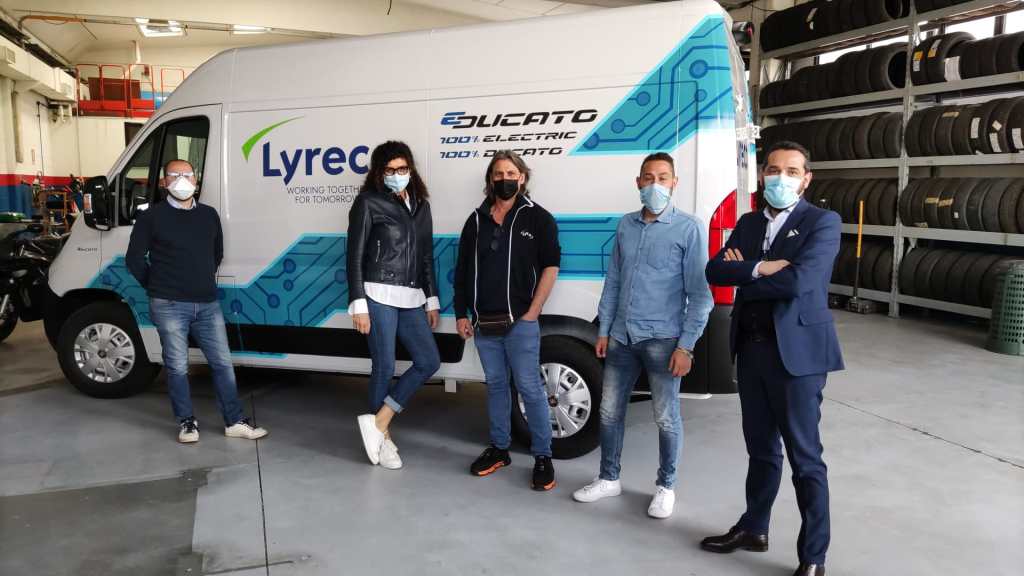
Angelica Carapezza, second from left, seamlessly adapting her dress code to the occasion, delivering the E-Ducato to customer Lyreco…

HK: Did your function in the Company pose specific personal challenges for you?

AC: I’m a Senior Marketing Manager, I’m responsible of the E-Ducato Pilot Project: this job is based on relationships, both within the company as well as externally.  

This meant that, at the outbreak of the pandemic, we all had to rely on and capitalize as much as we could on the network we had build up so far. I can say that without a deep knowledge of the organization at all levels, If I would not have already known the thousands of people that work here and what they do, if I would not have built personal relations in the past, I would never have been able to deliver the Pilot Project as it is today.

Along with the network I built up, my professional experience also played an important role in this pandemic situation.

I think it must have been very difficult for young people who had just entered the organization prior to the pandemic. I keep asking myself, how have they worked from their homes without knowing the processes, the people, the organization flows, the fundamentals when you have to deal with an enormous organization? How could they develop that special feeling of “belonging to” the company if they could not experience it hands on and feel it on their skins?

HK: And to return to our first question, what were the extra challenges for women in general with this pandemic?  

If you ask me about the challenge… well the challenge was just even bigger now with the pandemic, if you consider a full working day for a woman.

From a personal point of view, I think we have to see both sides of the so-called “remote working opportunity”: what it appears to be and the everyday reality. At first sight it seems that from home you can better manage and organize your daily workload, which  – apparently –, leaves you more room to organize your life. But the truth is quite another matter.  

The reality is that from home, as women, we tripled our daily tasks and got more and more efficient being at  same time managers, mothers, housekeepers with no time limits!  

We, like our children who paid the most expensive cost of this pandemic, lost the human contact, everything is done behind the screen, everything is happening inside your house, and most of times you don’t perceive that it’s time to switch off the PC.

HK: The pandemic has affected us all…

The pandemic has affected us as human beings. We are not born to become home robots. As a woman, I want to go back to work, I need to put on a nice dress, have make-up, wear shoes and go out, before we all forget what is so fundamental for a human being: the interaction among us, the fact that we need to see each other into the eyes, to talk face to face, directly, to shake hands, to re-establish relationships. Human relationships: this makes us live.

HK: I thank you for this interview.

Hans Knol ten Bensel

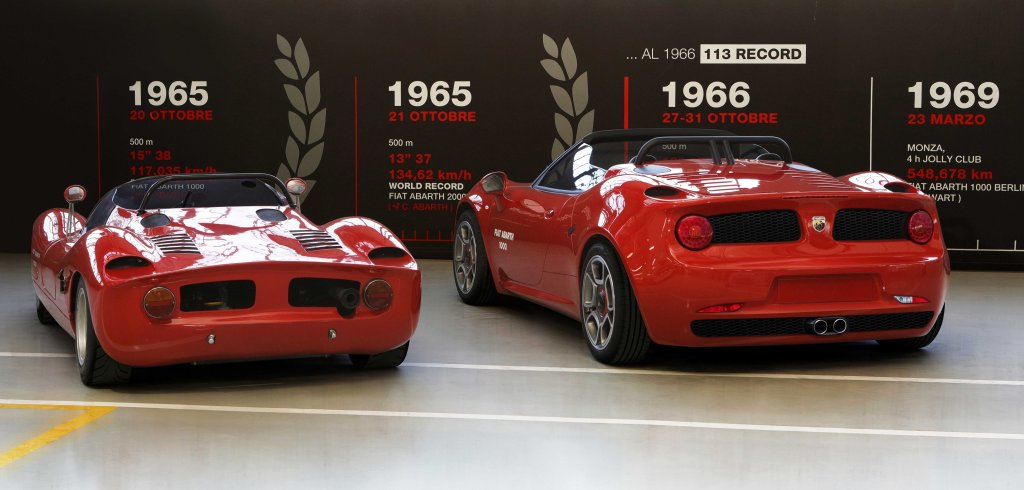
Centro Stile Fiat and Abarth creates a stunning one-off based on the beautiful ‘60s Abarth 1000SP…

The slender original ’60s Abarth 1000 SP on the left, alongside the new one-off successor…

Sometimes, things happen which make the heart of a car enthusiast beat faster. Like an initiative taken by the people of the Centro Stile Fiat & Abarth.

They have now rolled out a contemporary interpretation of the superbly stylish and iconic Abarth prototipo Designed in 1966 by the Milan engineer Mario Colucci. Just look at the accompanying photo. Of course, we can only hope and pray that this will not limit itself to this one-off styling and engineering exercise.

A beautiful evocation of the purity of the original Abarth 1000SP…

The points and lines of the original car’s design were respected to ensure continuity between the ’60s sports car and the concept car of the new millennium.

The contemporary Abarth 1000 SP respects three fundamental design principles already seen in the ’60s model. First and foremost, the lightness of its forms, its volumes and of course its weight.

The second principle is aerodynamics: modern design technologies have made it possible to combine the iconic lines of the 1000 SP with an aerodynamic coefficient worthy of a contemporary sports car.

Finally, ergonomics, aimed at improving the user experience, to optimize the vehicle’s control and agile driveability.

A faithful evocation…

The Abarth 1000 SP echoes the lines and aesthetics characteristic of its forerunner. The sinuous body, with the soft surfaces of the fenders highlighting the position of the wheels, takes up the pattern of the spider with a central engine.

The cockpit glazing features shaped side deflectors, with their profile lowered towards the roll bar, the latter strictly “in view”, to highlight our being in the presence of a “no-holds-barred” spider.

Of course, today’s passive safety requirements make the car taller and more imposing…

The rear geometries of the Abarth 1000 SP accentuate the harmony between the lights and the exhaust pipes.

Of course, The livery is strictly red and the characteristic air intakes appear all over, from the front bonnet to the cooling slots in its rear counterpart. 

The headlights also follow the minimalist scheme of the historic 1000 SP, with point lights on the nose and a single pair of round headlights to accentuate the car’s remarkable breadth when seen from behind.

The present Abarth 1000 SP thus maintains a very similar identity to its forerunner’s, courtesy of the meticulous work to update the historic, no-holds-barred Abarth 1000 SP.

Despite modern safety requirements, the designers of Centro Stile managed to retain the character of the original…

Conversely, the tubular chassis under the “skin” of the historic Sport Prototipo gives way to a hybrid frame, with a central cell in carbon fiber and an aluminum front. The “new” Abarth 1000 SP features a powerful turbocharged 4-cylinder, 1742-cc central engine, capable of 240 hp. The sophisticated mechanics of the concept boasts overlapping triangle suspension in the front, with an advanced MacPherson strut at the rear.

We will tell you more about the original 1966 Abarth later, so stay tuned!

Hans Knol ten Bensel.

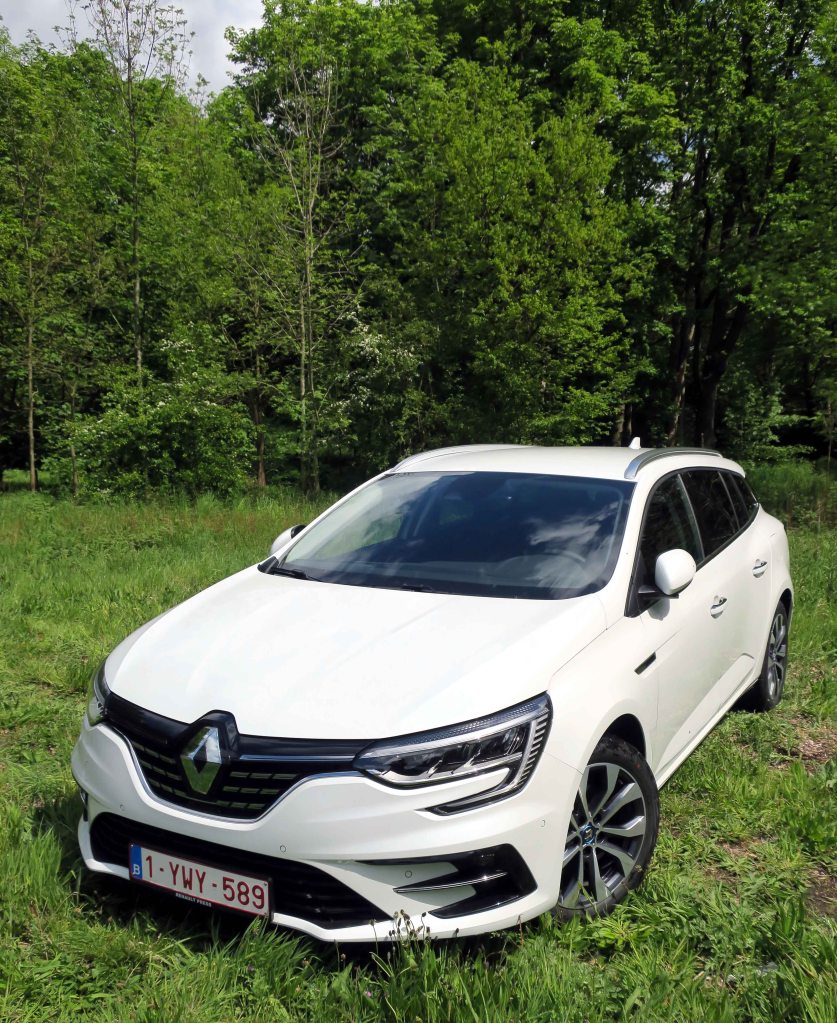
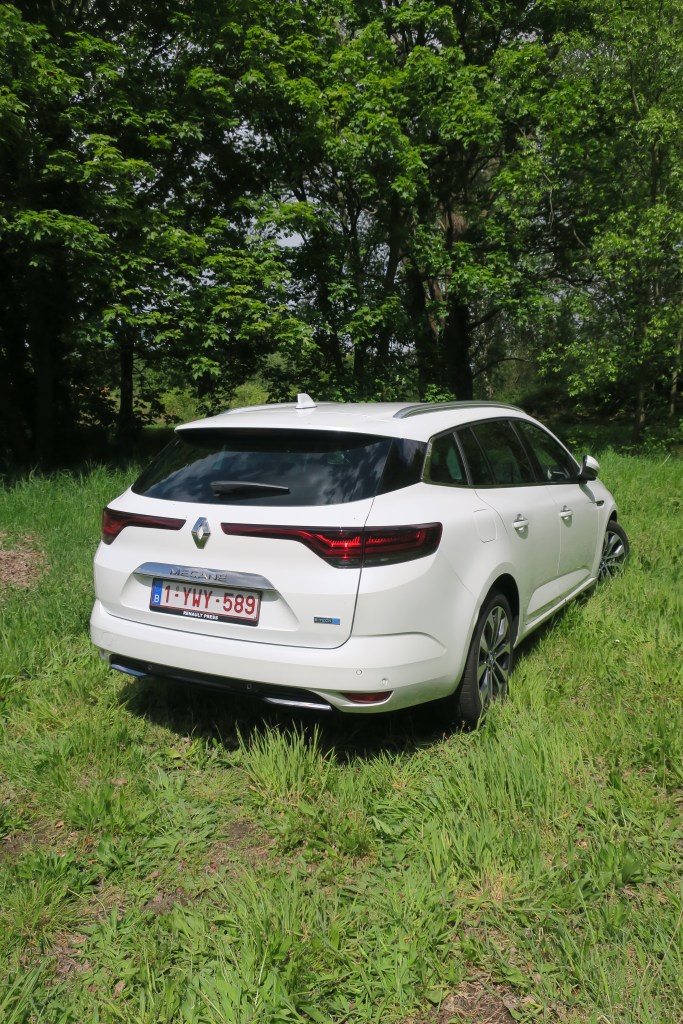
We drove the Renault Mégane Grandtour Plug-In Hybrid: high-tech versatility with a touch of French genius…

The elegant Mégane is now already a few years amongst us, and has conquered a solid place in its market segment.

A mid-term facelift was in the cards, and this time the facelift of the popular Mégane family was mostly technical, and saw the introduction of a plug-in hybrid version. Directly derived from its Formula 1 technology, its cleverness impressed us. Just read further…

Hans Knol ten Bensel

Changes found mainly under the hood…

Externally, the changes to the Mégane are mainly cosmetic, with revised head- and rear lamps, which are now LED-powered and have a new light signature.

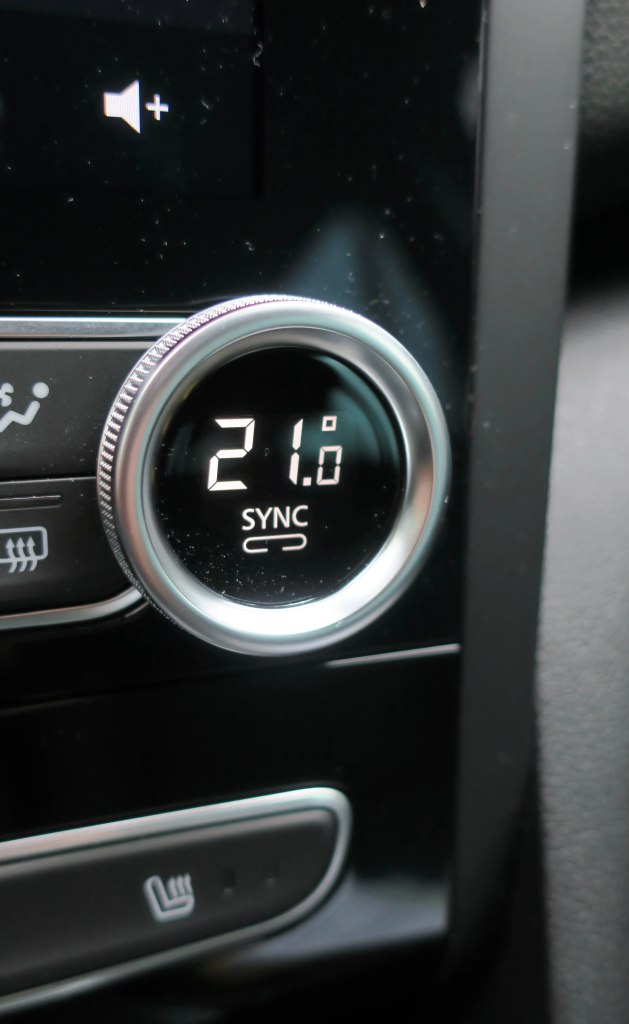
There is a wider choice of (RS) trim line versions, and in the cabin the main news is the revised digital display in front of the driver to illustrate and control the functioning of this plug-in hybrid. Also all the heating/ventilation/airco commands are grouped together below the display on the central console, and the temperature can be set manually via ergonomic circular knobs.

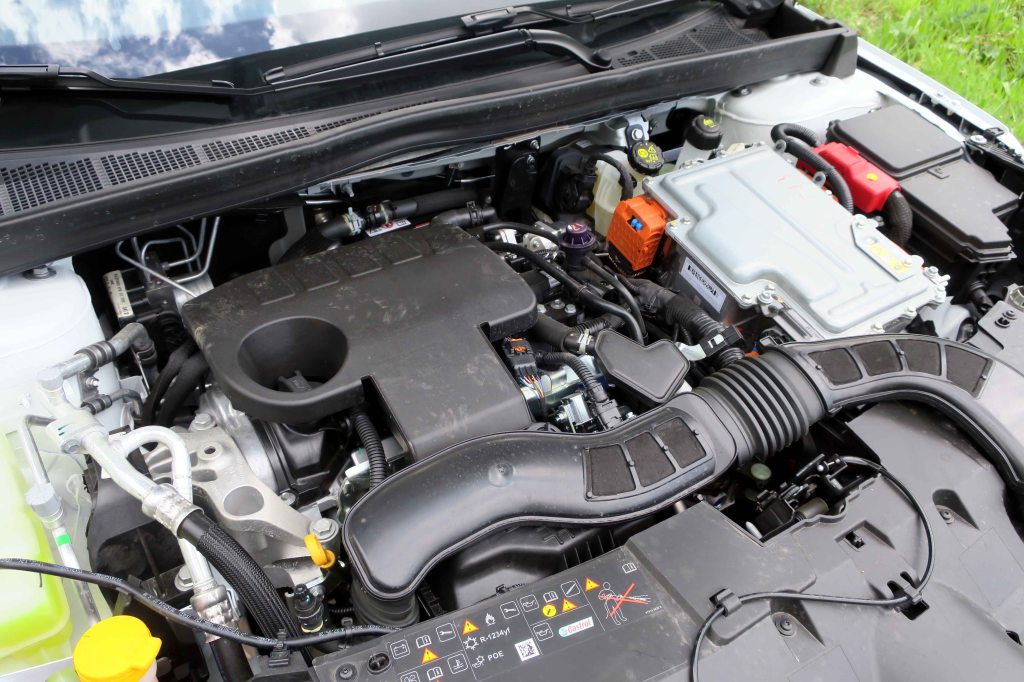
But the main news is found under the hood. Renault opted for a sedate version of their double overhead cam 1,6 litre four cylinder, laid out with Atkinson cycle combustion for optimal efficiency. No turbo this time either, resulting in some 91 HP at 5600 rpm. Torque is 144 Nm at 3200 rpm, and this means this engine has to rev a bit to show its best. But then this petrol engine is further helped by two electric motors.

The main E-motor is good for 49 HP, and has an excellent 205 Nm of torque. This motor is always used when you drive away from standstill with this hybrid, with the petrol engine setting in later when more acceleration is wanted. Then there is a third starter/generator motor which develops 25 HP and 50 Nm of torque. Its function is also to match the rpm of the engine with the main electric motor, and to recuperate kinetic energy. Taking into account the power losses in the drivetrain, total system power is 160 HP.

This results in more than adequate performance, with 0 to 100 km/h being achieved in 9,8 seconds with a top speed of 185 km/h.

The automatic transmission operates with dog clutches, with both the petrol engine (5) and the main electric motor having several (3) gears, resulting in 15 gears in total.

The second electric motor will match the revs between itself and the petrol engine choosing the right gear combination. The matching is flawless, resulting in smooth, imperceptible changes. The engine will be kept in lower and middle rev ranges most of the time, even in the chosen “sport” mode. Only when using full kickdown, the transmission software will let the engine rev much high(er), which is only logical when full performance is required. Overall, the silence of the engine(s) and drivetrain seduces under more sedate driving conditions, although even under these circumstances brisk performance can certainly be enjoyed. But indeed, this Mégane E-TECH inspires you rather to a comfort-oriented driving style.

Technology derived from Formula 1 experience…

The adoption of ultra-efficient dog clutches for the transmission stems from Formula 1 technology. Only changes had to be smoother for everyday road use, and therefore the extra E-motor is used to seamlessly match revs between the main E-motor and the combustion engine and make smooth changes. This clever technology has been the subject of more than 150 patents…

All-electric for the daily commute…

The 400 volt Lithium-ion battery has a capacity of 9,8 Kw, enough for a useable range of up to 50km in combined cycle (WLTP) and up to 65km in urban cycle (WLTP). We managed indeed to drive a good 45 km between Drogenbos near Brussels, where we collected the test car, to our home town Antwerp on electric power only, albeit adopting a slower cruising speed of around 100/110 km/h on the motorway.

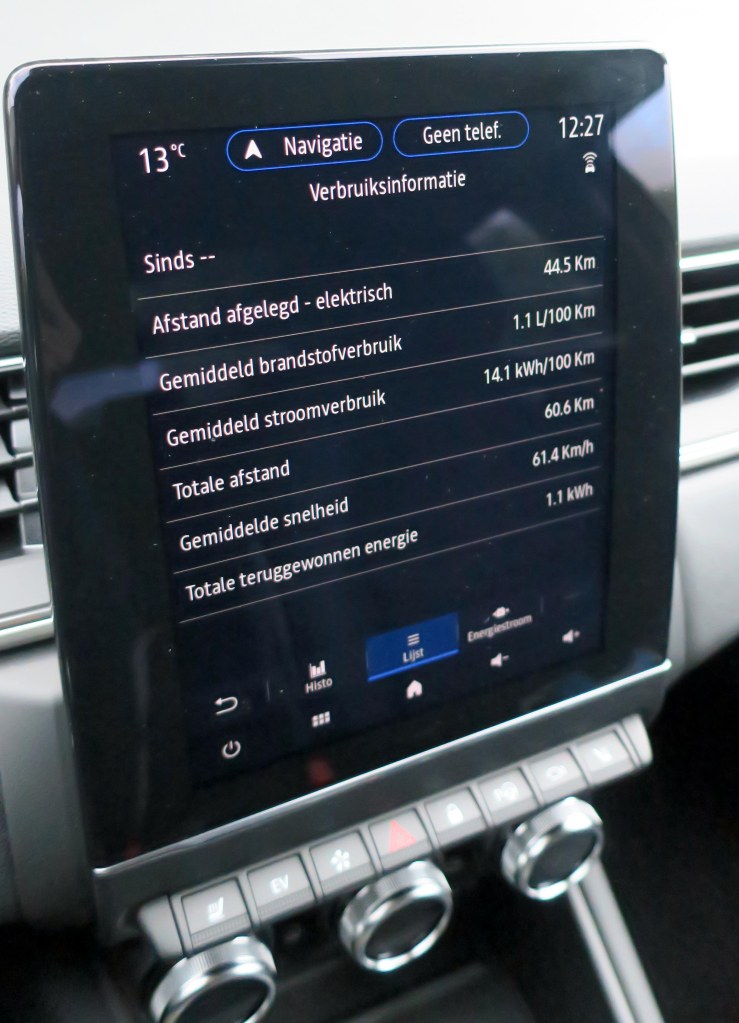
The E-TECH Mégane told us exactly what had happened during our first 67 km drive: distance travelled on E-power: 50,6 km, average fuel consumption: 1,1 l/100 km, average E-current use: 12,6 kWh /100 km. Recuperated energy 1,3 kWh.

Choice between three driving modes…

In the so called “Pure” mode, one drives 100% electric up to a top speed of 135 km/h. You can select also the “MySense” or “Sport” mode to take advantage of the E-SAVE function, always ensuring a minimum 40% battery charge. In both the MySense and Sport mode you enjoy regenerative braking, and when one drives with the necessary anticipation, the system will use the electric battery power again as long as the battery is charged above the set minimum threshold. This means than more often than not, you will still drive electric in urban start stop situations, and consumption will benefit accordingly.

Consumption: anything between zero and around eight litres/100 km…

The amount of fuel you consume depends entirely on the amount of electricity you use to drive  your Mégane. You charge it at home and office and commute some 30 km daily? Then your weekly fuel consumption is of course nil. Are you driving in “Sport” mode on a holiday to the South of France in one fast trip and you don’t want to bother recharging? Then it is good to know that this Mégane has the following stated consumption figures: 6.7/4.6/5.4 l/100km urban/extra-urban/combined. Of course, this Mégane will always start your journey all electric, until the batteries are depleted to the threshold level. Renault knows also that this car will have a reasonable consumption, and opted for a tank volume of only 39 litres.

An urban asset: the “B” mode.

Besides the obvious “D” position of your gearbox selector, you can push it one notch further to the “B” position.

Driving is now easier in the town or in slow-moving traffic with this “B” Mode. The electric motor will now regenerate the kinetic energy more intensely, resulting in increased engine braking. This allows for a one-pedal driving experience, meaning less brake pedal use, a more relaxing drive and better still, it helps preserve or even increase your battery range!

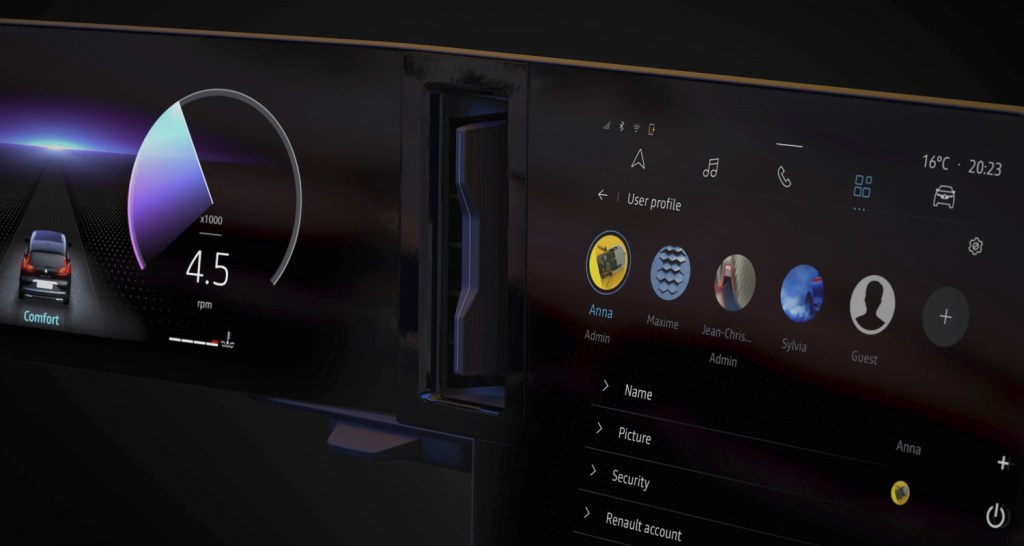
On the map display in your EASY LINK 9,3” touchscreen you can display the charging stations, and you can manage your battery level from your customisable 10.2” driver’s screen.

You can also install the MY Renault app to monitor your battery level, programme charging, or to pre-heat the passenger compartment of your MEGANE Sport Tourer E-TECH Plug-in Hybrid to the optimum temperature from your smartphone.

All in all, we found this E-Tech Plug-in Hybrid very pleasant and relaxing to drive, as we have a natural preference for a cool, fluent driving style, which is exactly what this Mégane seems to be built for.

French comfort

French cars, and also Renaults, are first of all built “pour vivre”, to please and serve you in everyday life. So they are comfortable and practical. Suspension, seats, commands, keyless entry, everything is engineered and perfected to make your daily life a pleasure. This is also what makes this car so endearing to us.

The Mégane also scores in its excellent ride, handling and comfort. The extra weight of about 200 kg, with the batteries sitting under the rear seat, made the engineers adopt a mulitlink rear suspension, so the handling stays top notch. The boot space remains unchanged also at 447 litres, with a neat underfloor space for the charging cables, so they don’t interfere with other luggage.

In the cabin, your led illumination stripes along door panels and centre console light up in electric blue, as do dashboard light accents, so you are well aware that you are driving in the electric age…

Conclusion

This good looking Mégane is superbly versatile, built for the future. Whatever our politicians have in store for us with emission free zones in our European (mega)cities, this Mégane is built for it and can cope. When the extra-urban charging infrastructure in Europe remains insufficient for some time to come, your mobility is nevertheless not impaired, ever.

It is built for the relaxed driving style which suits our congested roads and dense traffic anyway, offering good sound insulation, seating comfort and predictable handling on top of that. It is pleasant to live with, with well-designed amenities.

Renault made a clever throw at making the ideal all-round car for our present times, fit for whatever the future has in store for us. So it deserves a long hard look if you look for a replacement of your company or private car in the coming months…

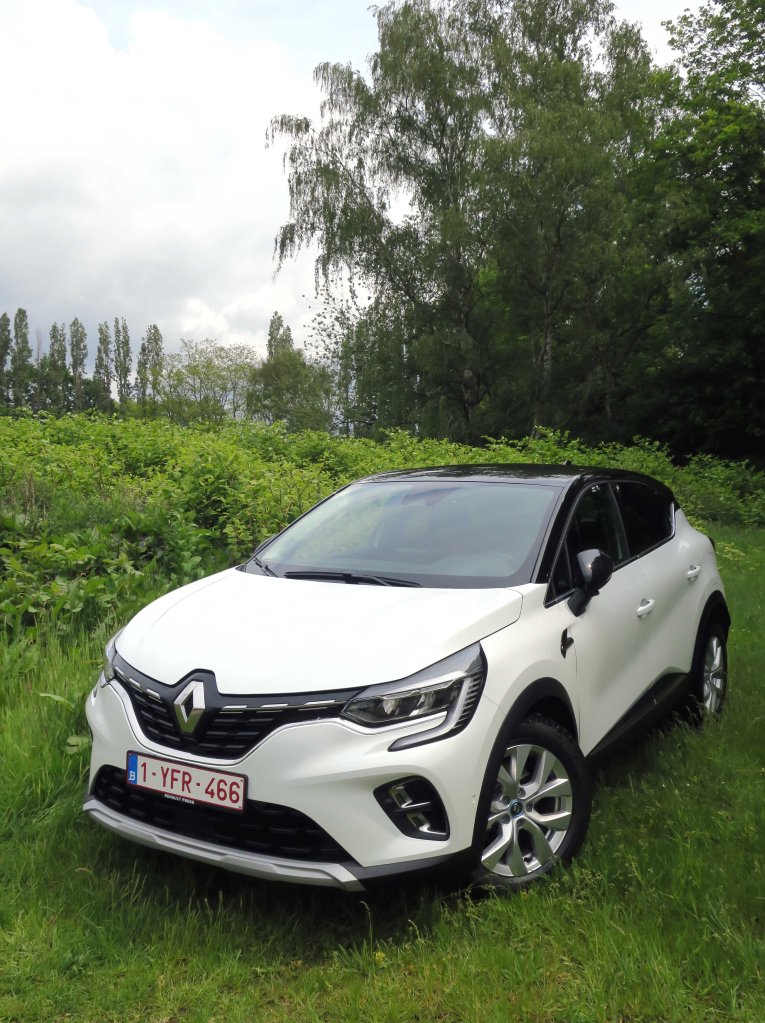
We will soon test also the Captur in the same plug-in hybrid layout, and will also get acquainted with the all-electric ZOE… stay tuned!

Hans Knol ten Bensel  

We drove the Mercedes 400 G d: an icon which remains THE off-road technological benchmark…

The “G-Class” is with us since 1979, when in 1972 with a collaboration agreement between then Daimler-Benz AG and Steyr-Daimler-Puch in the Austrian city of Graz resulted in the development of an off-road vehicle which has since been honed and further developed in one of the world’s best off-road cars – ever. We drove the latest 400 G with the six cylinder in line 330 HP Diesel engine. As superb as it will ever be. Just read further!

An iconic shape…

All-wheel drive and 100-percent differential locks have also been part of the “G” since that time, as has the robust ladder-type frame. Also its external appearance has not changed significantly since 1979.

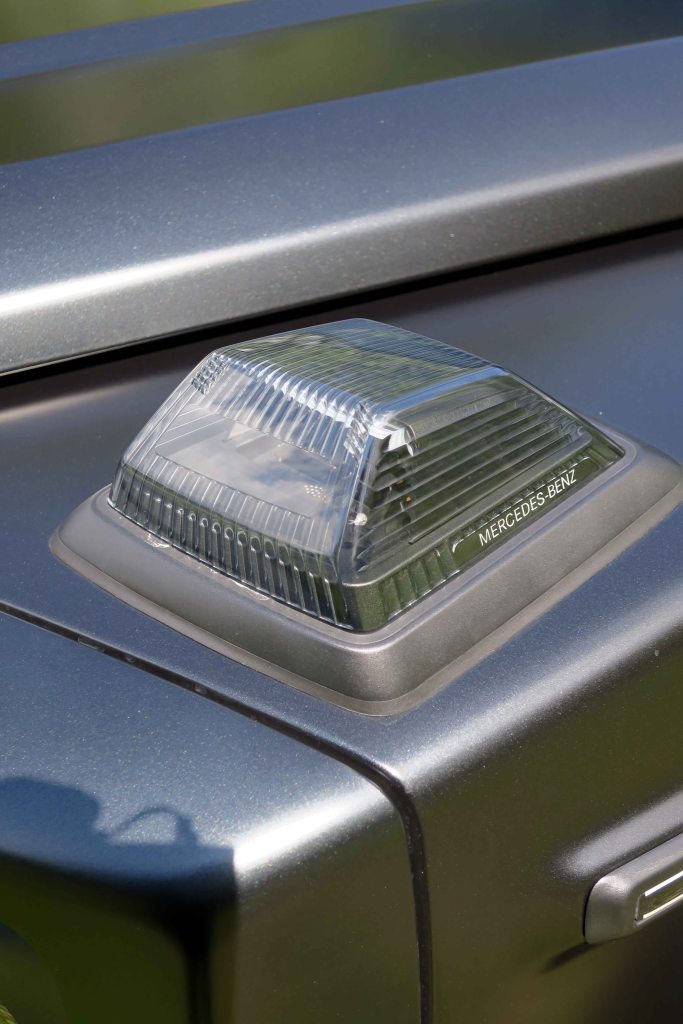
Iconic elements continue to serve very specific purposes, now as then, and to give the G-Class its unique appearance. All these are still found in the new G-Class: the distinctive door handle and the characteristic closing sound, the robust exterior protective strip, the exposed spare wheel on the rear door and the prominent indicator lights. We just loved them, as it was easy to judge were the edges of the car were.

The design of the G-Class follows the philosophy of “Sensual Purity”, as Mercedes puts it, and at the same time remains true to the character of the original. As a result, the door hinges positioned on the outside and the surface-mounted bonnet are carried over to the new generation. With the latest update, however, the faithful G body has grown quite a bit: it is now 53 mm longer and especially 121 mm wider and this results in even greater presence, on the road as well as in terrain.

All surfaces have a more taut design and are have more tension, while the surface quality has been taken to an even higher level. So the “G” is now cast even more of “one piece”, and the meticulous design results in wheel arches and bumpers now forming a more integral part of the body and thus looking less like add-on features.

Top notch exterior trims…

From 1 September 2020 onwards, the standard equipment is even more extensive. At the same time, there are also more personalization options available through the “G manufaktur” programme. New exterior colours and equipment packages as well as the widescreen cockpit, which now comes as standard, round out the offering. We will discuss the interior later.

The G 400 d is now also freely configurable…

Popular is the so-called “night package”, which was found on our test car. It comprises heat-insulating dark-tinted glass, outside mirror housings and radiator grille (including louvres with the surround of the Mercedes star) in obsidian black metallic, as well as darkened turn signal lamps, reversing lamps and headlamps.

If the G-Class is ordered with a matt magno paint finish, which was the case with our test car, the package can be configured as the Night Package magno. In this case, the corresponding add-on parts come in the colour night black magno. The Stainless Steel Package continues to be available with spare wheel cover, running boards, door sills and loading sill protection in stainless steel and adds a painted spare wheel ring and an exterior protective strip with trim insert in a pinstripe look to the Night Packages.

The new 20-inch 5-twin-spoke light-alloy wheel available exclusively for the AMG Line has a high-sheen finish and is painted in a choice of high-gloss black or himalaya grey. We liked them too…

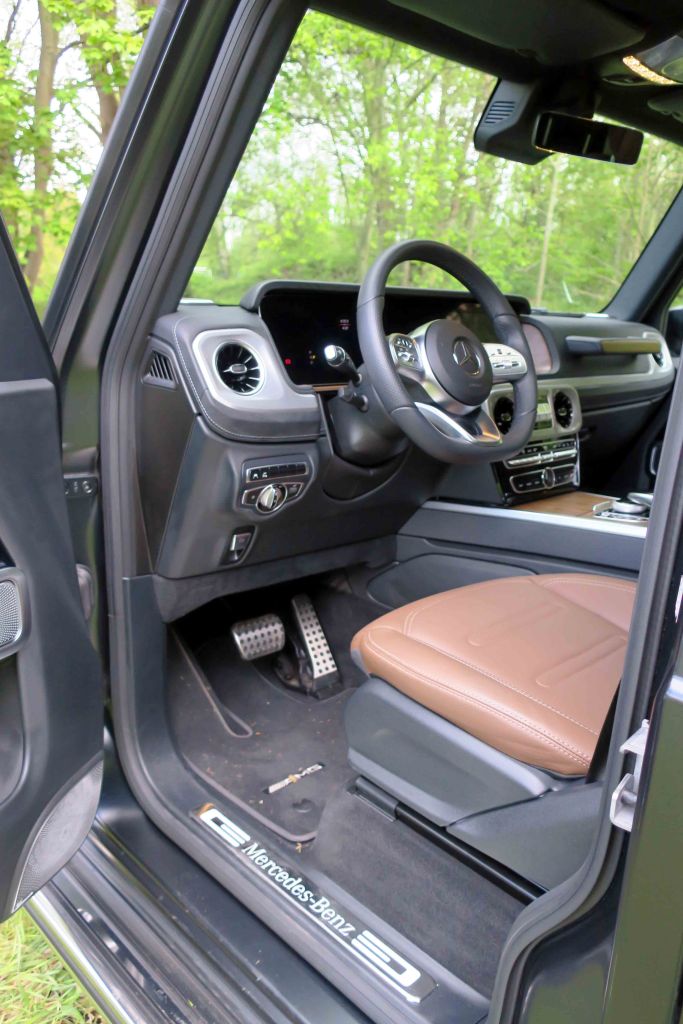
The cabin: high-tech with a pleasant vintage touch…

Let’s start with the vintage part: the pleasant upright seating position, the magnificent visibility over this angular body. I own a vintage Suzuki Samurai Jeep, and although everything in the “G” is just much bigger, I find the same plain and flat window screen and the same straight windscreen wipers, for instance. Yes, above the glove box of my Samurai is also the big grab handle for the passenger, as found here in this G 400.

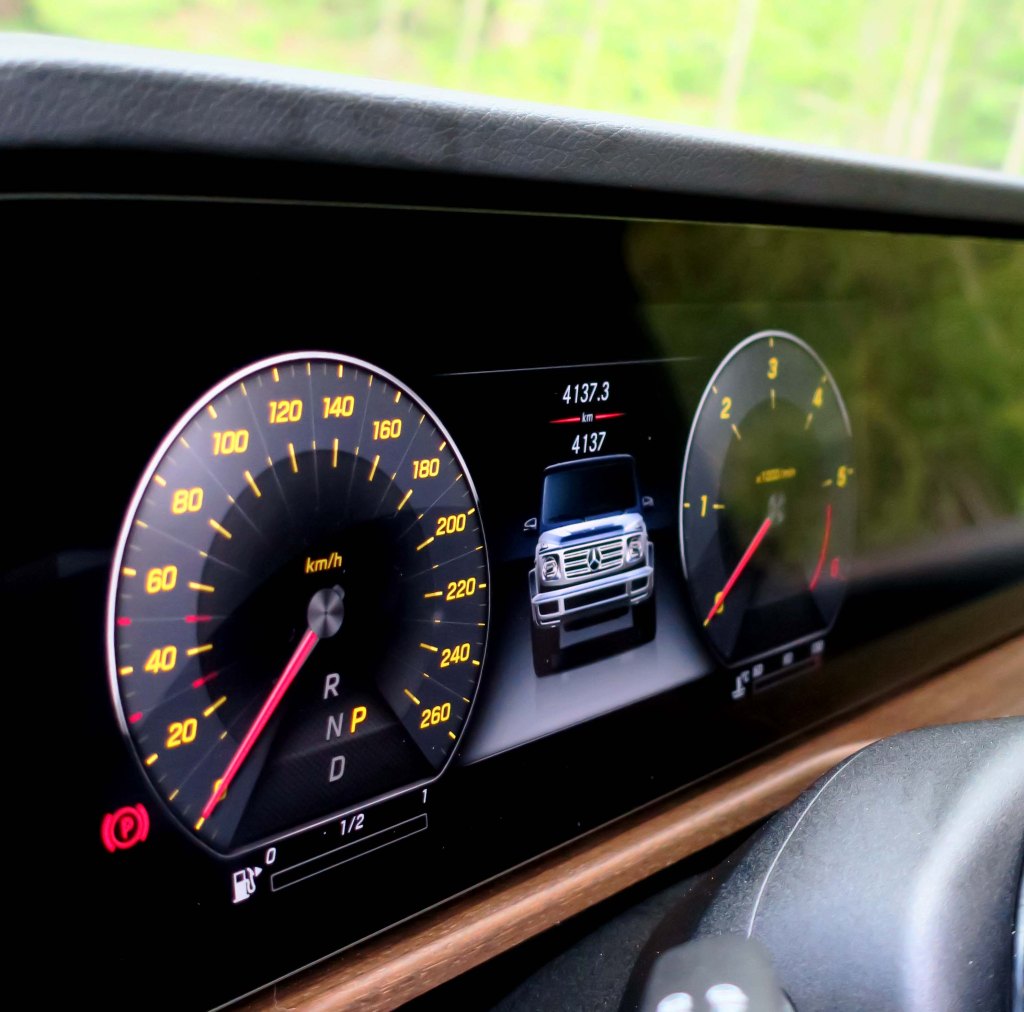
But that’s where every comparison ends. Because the digital MBUX (Mercedes Benz User Experience) has also now made its entry in the G-Class. The widescreen cockpit is now part of the standard equipment in all G-Class models. So, everything is totally familiar when you are already acquainted with this MBUX system.

The two 12.3-inch displays blend visually into a Widescreen Cockpit beneath a shared glass cover. Drivers can choose between three different styles for the displays – “Classic”, “Sport” and “Progressive” – and also select relevant information and views according to their individual needs.

The design of the iconic indicators is found again in the shape of the loudspeakers. Hallmarks of the G-Class include – as said – the grab handle in front of the front passenger and the chrome-highlighted switches for the three differential locks.

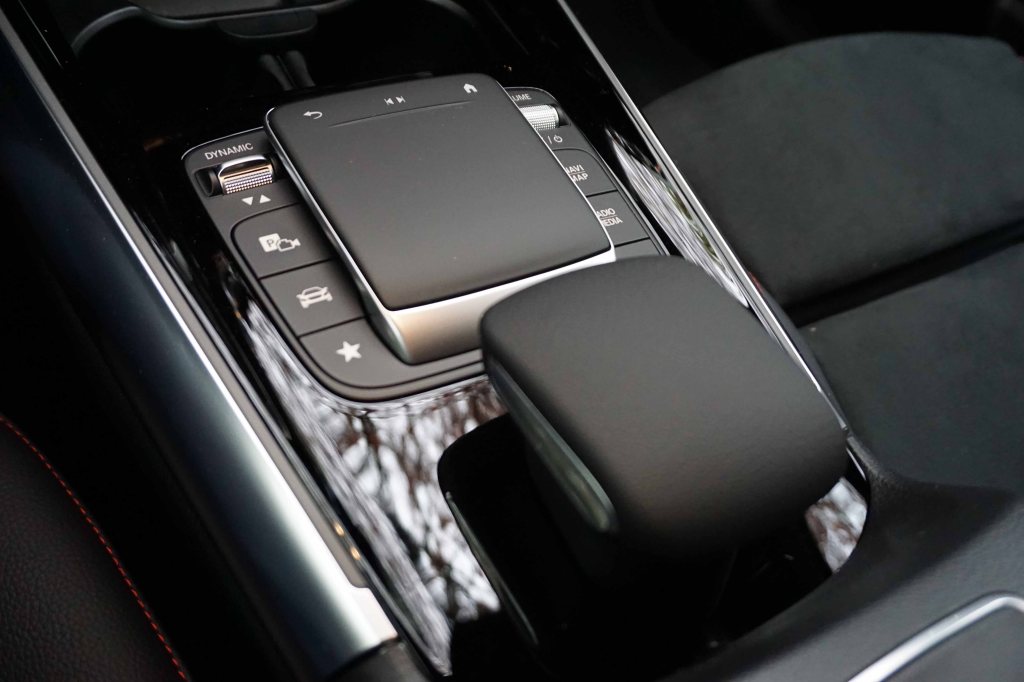
Thanks to haptic impulses and audible feedback from the on-board speakers, we could use the touchpad with controller in the centre console without taking their eyes off the road. Top notch.

The seats are of course a class of their own when it comes to creature comfort. Features include the Memory function for the driver’s seat, seat heating front and rear, as well as luxury head restraints in the front. This ride comfort can optionally be boosted still further with the Active Multicontour Seat Package. In addition to the special multicontour seats, this encompasses such features as various massage functions, climate-controlled seats, and fast seat heating. Need we say more?

Driving the G-Class on- and offroad: a driver’s dream.

The G-Class is on tarmac a supersmooth performer, with superb comfort. Thanks to the new suspension, introduced in 2018, which emerged from the collaboration between Mercedes-Benz G GmbH and Mercedes-AMG GmbH.

The result is an independent suspension with double-wishbone front axle in combination with a rigid rear axle. When redesigning the suspension, the focus was also on even beter off-road capacities and greater rigidity. The components of the double-wishbone front axle are therefore directly mounted to the ladder-type frame without a subframe. The lower wishbone’s attachment points on the frame in Z-direction are positioned as high up as possible. So front axle ground clearance is an impressive 270 mm. The result is a sublime ride. Also thanks to the well controlled live rear axle.  In contrast to the predecessor, the new rigid axle is controlled by four trailing arms on each side and a Panhard rod. Indeed, maximum comfort on the open road.

À la carte: “Comfort”, “Sport”, “Individual” or “Eco” …and last but not least: “Desert!”

As is familiar with other cars of the brand, also the G-Class can be suited to your driving mood. The four programs “Comfort”, “Sport”, “Eco” and “Individual” , and yes, “Desert” can be set via the DYNAMIC SELECT rocker switch. Characteristics of the engine, transmission, suspension, steering and assistance systems are adapted at the driver’s behest.

The “Desert” mode makes the G-Class fit for sandy terrain with a perfect interplay of late upshifting, direct throttle response and adjusted ESP® control.

But there is more: the “G-Mode”  The G-Class changes to “G-Mode” independently of the chosen driving mode as soon as one of the three differential locks has been activated or the LOW RANGE off-road reduction gear has been engaged. When your G is equipped with adjustable damping, that is. This off-road mode adapts the adjustable damping of the chassis and the steering as well as the accelerator characteristic, avoids unnecessary gear shifts and thus ensures optimum control and maximum off-road capability.

Besides offering a superbly comfortable ride, thanks to the new front axle design, the on-road performance of the G-Class and its agility and steering precision is faultless, and it is truly in a class of its own. On the road, the “G” is as agile as it is comfortable, and genuine driving pleasure is to be had. The steering is now electronic, and provides excellent feedback and steering “feel.” Its excellent behavior on the open road is one of our biggest surprises we had when driving this “G”.

Superb mechanical refinement

This off-roader has a separate chassis, and this is already a prerequisite for nicely filtered vibrations emanating from its drivetrain. The “G” Class excels here again. The Diesel straight six is superbly smooth, inaudible even when starting from cold, only the subdued hum of a six cylinder will caress your ears. It is coupled to a 9 speed G-TRONIC automatic transmission with torque converter, which is adapted to meet the needs of this off-road icon. The developers have managed to reduce the shift and response times of the 9-speed transmission by means of a dedicated software application.

The result translates into absolutely smooth and fast changes, as said, according to the chosen driving modes.

The six cylinder diesel has output of 243 kW (330 hp) and maximum torque of 700 Nm at 1200 to 3200 rpm. Pulling power at low revs is what counts, and as you see, this “d” has plenty of it. It accelerates from 0 to 100 km/h in merely 6,4 seconds and pushes you further to a top speed of 210 km/h. More than enough to satisfy most of us mortals, we would think.

This diesel, derived from the 350 G, succeeds also in bringing genuine economy to this opulent off-roader. The manufacturer quotes a combined fuel consumption of 8.9-8.7 l/100 km, with combined CO₂ emissions being 235-229 g/km.

Driving with restraint and anticipation in “Eco” mode, it was no trouble at all to reach 9 liters/100 km even in dense urban traffic conditions, which is no small feat! Of course, it took a gentle foot on the accelerator, as you can imagine.

Conclusion

The Burmeister sound system adds a dramatic backdrop to your scenic drives…

The 400 G admirably withstands the test of time. It has grown into a unique classic icon, embodying simultaneously all the possible technical refinements modern automotive technology has to offer. There is even more: it excels not only on the open road, it stands out also when… there is no road at all, and will even take you to the desert!

This is a car every traveler in history would have wished for, a car Marco Polo would have dreamt of.

It is a Mercedes in the truest form, actually. It will accompany you for decades – if need be – into your automotive life, offering room, comfort, go anywhere performance with even rather good economy in the diesel version. Superbly engineered, it will never let you down, offer you decades of dependable service.

This excellence comes at a price, but remember, a lot on this car is hand finished. If you look at its long service life, the value it will retain over the years, you will discover it is actually rather sensible. Of course, electrification lures around the corner. A plug-in hybrid version would not surprise me for the not too distant future…

Would you like to know my secret wish now? Have a drive in one of the early examples of this “G”, have a feel of its so honest ruggedness and spirit. Must be awesome too…

Hans Knol ten Bensel
RENAULT TALK #1: a new ERA – THE RENAULT BRAND RESTATES ITS AMBITIONS

A new Logo, and a bold future…

Today Luca de Meo, Renault Brand CEO, and the Renault brand team have participated in the first ever “Renault Talk”, a brand-new all-digital event where they discussed their vision of the wider group.

The new direction, unveiled by the team, presents Renault Group as an energy transition leader, at the forefront of the latest technology and services, operating in a more sustainable and responsible manner as part of its ‘Nouvelle Vague’ (New Wave). 

A people-centric brand, Renault is entering a new era as it delivers enhanced modernity to the European automotive industry.

Technology and state of the art electronics will hallmark the future Renaults…

Nouvelle Vague…

The ‘Nouvelle Vague’ will turn Renault into a brand focused on technology, services and clean energy, by engineering smarter everyday vehicles and mobility solutions that are more sustainable.

This is in line with the DNA as a company that changed with the times throughout the 20th century with innovative, modern vehicles.

Now, more than ever, Renault strives to meet market expectations of responsible, carbon-free, safe and scalable mobility solutions that are in line with customer needs.

The Arkana, the first SUV Coupé of a volume manufacturer… presented here by Laure Grégoire – Model launch Manager.

During Renault Talk #1, Luca de Meo restated the direction set for the brand, at the heart of the Group’s Renaulution plan:

  • As industry leader of the energy transition, the Renault brand will be the greenest brand in Europe as of 2030, with nine out of 10 cars on sale being electrified.
  • At the forefront of technology and services, the Renault brand is shaping the future of urban mobility, primarily via the ‘Software Republique’. More than 2,000 engineers from five industry-leading companies will bring their shared expertise in cyber security, artificial intelligence, data processing, software, and microelectronics, in order to deliver turnkey mobility solutions for cities and communities.
  • The Renault Re-Factory – Europe’s first circular-economy hub – marks a move towards a more sustainable and responsible model, with up to 120,000 vehicles (EV included) recycled or upcycled every year. Nearly 80 per cent of strategic recycled materials will be reused in new batteries.  By 2030, Renault will become the world’s best automotive manufacturer when it comes to the percentage of recycled materials in new vehicles.
  • Renault is taking its ‘voitures à vivre’ to upper segments: Seven models will be released in the C and D segments by 2025, all of them electrified, with the All-New Arkana marking the beginning of this offensive. The next generation Megane E-TECH Electric, a vehicle that embodies the future of connected and full-electric cars, is also set be launched in the near future. Lastly, ongoing improvements to E-TECH hybrid technology will continue to provide upcoming C- and D-segment vehicles with the very best in efficiency and dynamic driving experiences.

A NEW ERA, and a NEW LOGO

Throughout its history, the Renault brand has undergone several changes to its visual identity. But one thing has remained unchanged since 1925: the instantly recognizable Renault diamond, a true brand icon.

The latest version of the Renault logo was created in 1992 before being slightly refreshed and reworked in 2015. As a brand deeply rooted in a modern, international market, this all-new logo brings a more modern and vibrant feel and serves a key purpose of portraying the Renault brand as more relatable and built on people-centric values. A streamlined design without typography or brand signature, the logo is an open-ended shape, reflecting the brand’s openness and transparency.

The new logo was co-designed with Landor & Fitch consultants and will be phased in as of next year on all Renault brand vehicles and throughout the Renault network. By 2024, the whole Renault range will bear the new logo.  

During the Renault Talk, Gilles Vidal, Renault Brand Design Director, unveiled an image of the logo as it will appear on the back of the new Megane E-TECH Electric, which will come to market in 2022.

ALL-NEW BRAND EXPRESSION

According to Arnaud Belloni, VP of Global Marketing for the Renault brand, the ‘Nouvelle Vague’ is also reflected in the brand’s advertising.

Imbued with a creative and modern edge, they incorporate some of the brand’s most iconic pieces of memorabilia: the Renault Fuego, covers of cult classics like ‘Johnny & Mary’, or the Renault-Gitane cycling jersey featured in a recent advert for the Captur E-TECH Hybrid.

Renault makes their “Cars fit for true living” increasingly electrified… presented here by Gilles Le Borgne – Engineering Director Renault Group

THE RENAULT E-TECH HYBRID OFFENSIVE

With more than 10 years of experience and almost 400,000 vehicles sold to date, Renault is a leader in the European EV market. Building from its expertise in pure-electric vehicles, Renault has extended its EV range with hybrid and plug-in hybrid versions of its core market vehicles.

With more than 150 patents to its name and having leveraged the brand’s experience in Formula One, E-TECH hybrid technology is as unique as it is modular. In both hybrid and plug-in hybrid versions, it provides the best in energy efficiency and driving pleasure while also reducing CO2 emissions and fuel consumption.

This revolutionary piece of technology debuted on three of the brand’s core vehicles in 2020 as a way of making the EV experience something for everyone:

  • Clio E-TECH Hybrid
  • Captur E-TECH Plug-in Hybrid
  • Megane Sport Tourer E-TECH Plug-in Hybrid

In 2021, the E-TECH range is set to expand with the release of the All-New Arkana and Captur E-TECH Hybrid, plus the Megane E-TECH Plug-In Hybrid, totalling an electrified range of six E-TECH hybrid and plug-in hybrid vehicles.

Gilles Le Borgne, EVP, Engineering, Renault Group, has confirmed that the brand is preparing for the future by extending the scope of its E-TECH hybrid technology to future generations.  

Upper segments – especially the C-SUV segment – will see the arrival of a brand-new 1.2-litre three-cylinder engine combined with an electric motor, for a 200hp hybrid vehicle in 2022 and a 280hp in plug-in hybrid four-wheel drive vehicle in 2024.

ALL-NEW ARKANA: SPORTY, HYBRID, AND SPACIOUS

The All-New Arkana’s unique, full-hybrid design is the first SUV with coupe design from a mass-market manufacturer.

Its TCe engines feature 12-volt micro-hybrid technology delivering enhanced fuel efficiency, while the E-TECH hybrid powertrain is capable of running in electric mode for up to 80 per cent of the time on urban roads, contributing to around 40 per cent in fuel savings compared with a standard petrol engine.

Across Europe in May so far, more than 6,000 orders have already been placed for the All-New Arkana.  

THE ALL-NEW KANGOO: ELEGANT AND SPACIOUS

The All-New Kangoo combines sophisticated design, space and technology, offering superior practicality with three full-sized seats in the rear and more than 49 litres of accessible storage areas. The car is here presented by Thierry Plantegenest – VP Sales Marketing LCV and Pick-ups, (on the left).

The  bootspace ranges from 775 litres up to 3,500 litres of flat-bed cargo area, while it can be specified in five- or seven-seat models. The All-New Kangoo also boasts 14 standard-fit driver assistance systems.

In 2022, the All-New Kangoo range will expand further as it becomes available as a full-electric E-TECH model.

VALUE FIRST

Fabrice Cambolive, SVP, Renault Brand Sales and Operations, restated Renault brand’s commercial priorities:

  • The ‘green’ offensive: Ramping up the EV range and furthering the E-TECH offensive, as already in Europe, 25 per cent of Renault sales are electrified and 30 per cent of Clio sales in France are for the E-TECH Hybrid
  • Products: Speeding up product line renewal, both in Europe and abroad, by winning back market shares in the
    C-segment

A global player…

Proud of its French roots, the Renault brand is also an international brand. The Renaulution plan is Renault’s way of bolstering its international presence, while boosting efficiency. Model by model, market by market, the Renault brand has overhauled its business model. The final objective is to increase the profitability of its vehicles while preparing a generation of new products to conquer new markets.  

Internationally, the Renault brand has been investing in its historical high-potential markets with a strong local presence – Brazil, Russia, Turkey, and India – while keeping risk levels in check.

In Europe, Renault continues to rely on its key markets – France, Spain, Italy, Germany, and the United Kingdom – with a more visible range and a clear roadmap: leverage E-TECH to foster E-mobility leadership and ramp up efforts to increase market shares for both C-segment and commercial vehicles.

A bold future lies ahead! We will soon test for you the Megane Grandtour and Captur Plug in Hybrid, as well as the bestselling ZOE – stay tuned!

Hans Knol ten Bensel

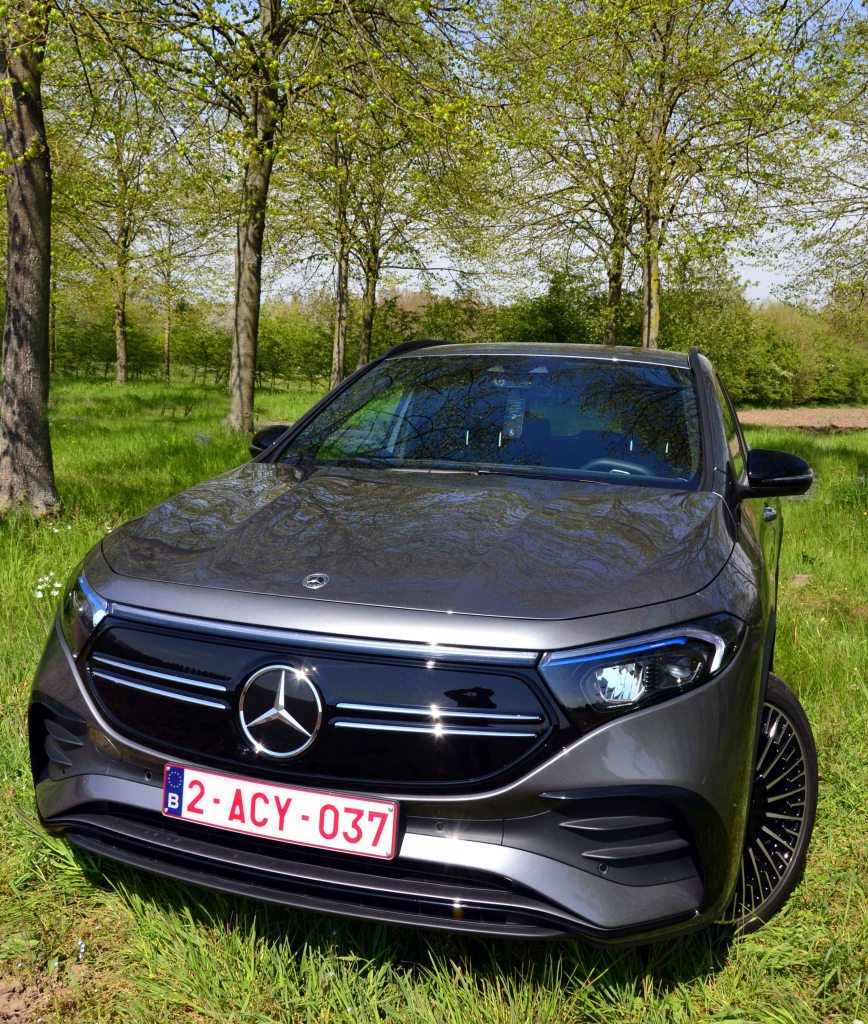
We drove the Mercedes EQA: a compact SUV with e-powered excellence…

Mercedes steps boldly into the all-electric vehicle world, and now enters the mainstream compact SUV segment with its EQA. Here the competition is fiercer, but then the oldest car manufacturer in the world has some solid arguments up its sleeve: the state-of-the art MBUX (Mercedes Benz User Experience) infotainment system we find throughout the range is also present in this EQA, and the lavish interior, quality of used materials and workmanship is one of the very best in the electric car field, certainly in its segment.

Add to this the very pleasant styling with a touch of futurism so typical for the EQ range, and the excellent insulation and silence of the electric motor which results in very refined progress, and you have in a nutshell all the reasons why this EQA merits our (and your) attention here…

Hans Knol ten Bensel

A solid base…

The EQA runs on the platform of the GLA, an obvious choice as its SUV body can provide easy accommodation for the batteries, which are floor mounted and sitting within a specially developed frame made out of extruded sections. The cabin space is therefore largely similar as the GLA, with the rear passengers having a somewhat raised floor, which doesn’t impair legroom and seating comfort though. The boot space has been reduced somewhat to 340 L instead of 435 L with the GLA, but then the three rear seat backs can be folded individually, which makes the EQA quite versatile.

Meticulous attention has been given to insulating the drivetrain from the body, resulting in absolutely noise and vibration free progress, one of the most silent and refined we have come across in the all-electric car field, which makes this EQA truly stand out in its class. More in detail about this later.

Adequate performance and range…

The EQA starts its life as the EQA 250 with 140 kW available at the front wheels. The manufacturer quotes a combined electrical consumption of 15.7 kWh/100 km and a range according to NEDC of 486 kilometers. In real life this boils down to a practical range of some 340 kilometers, as we experienced during our test. Performance is more than adequate we would say, with a 0 to 100 km/h sprint absolved in 8,9 seconds. Let’s not forget that the EQA (mostly due to its batteries, having an energy content of 66.5 kWh) puts a hefty 2040 kg on the scale. Top speed is sensibly limited to 160 km/h.

The conclusion is obvious: the EQA in its present form is meant to be a comfortable and refined cruiser, rather than a high-performance car.

We said in its present form, as like any self-respecting German manufacturer, Mercedes plans more powerful versions of the EQA in the future, including a 200 kW four-wheel drive version, with a second electric motor driving the rear wheels.

Mercedes also works on further improving efficiency and range, with the answer not being in using ever-larger batteries, but rather in systematic improvement in the efficiency of all vehicle components.

Clever e-planning of your trip…

Of course, Mercedes has all the electronic intelligence and wizardry on board to make range anxiety on longer trips a thing of the past. The navigation with “Electric Intelligence” as they call it, calculates the route that will get you to your destination fastest, taking into account charging times. On the basis of continuous range simulations, the system makes allowance for any necessary charging stops as well as a host of other factors, such as the topography and the weather. It is also able to react dynamically to changes, for instance in the traffic situation or personal driving style.

The charging point density in suburban Antwerp (i.e. Wilrijk) leaves much to be desired, with the nearest charging point for your servant being some 7-800 meters away, and being mostly occupied.

Mercedes has launched “me Charge”. This allows customers convenient use of the charging stations of various providers, even when travelling abroad. By registering just once, you can benefit from an integrated payment function with a simple billing process.

If Navigation with Electric Intelligence is activated, the battery may also be pre-heated or cooled while driving in order to ensure that it is within the ideal temperature window for a rapid charging station. One has thought of everything(!).

Efficient driving modes

Behind the steering wheel, one finds back the usual paddles, which here have a different function however: The driver can select the recuperation function manually using these paddles. The paddle on the left increases the level of recuperation, the paddle on the right reduces it.

Of course you can monitor the setting in the instrument cluster. The following recuperation stages are available: DAuto (recuperation via ECO Assist to suit the particular situation) D+ (coasting), D (low recuperation), D- (medium recuperation) and D- -(high recuperation). New with the EQA is that, if the function DAuto is selected, this mode remains the default setting when the car is restarted.

Clever: ECO assist

ECO Assist coaches the driver with messages when the accelerator can be released, for instance because a speed limit is approaching, and with functions such as gliding and specific control of recuperation. For this purpose, navigation data, traffic sign recognition and information from the intelligent safety assistants (radar and stereo camera) are linked and processed.

ECO Assist continuously generates coasting simulations in the background: depending on the state of charge of the battery and the traffic situation, it computes whether the vehicle should ideally be allowed to coast (or “glide”) with the lowest possible driving resistance with the driver’s foot off the pedals, or whether it should be decelerated so that the battery can be efficiently charged (recuperation).

All in all, these system will add to the efficiency, but it is good to know that when driving short urban errands, more energy is used by heating/ventilating the car than by the electric motor actually moving it…

A proper heat pump…

Therefore the EQA has a heat pump as standard. This reuses the waste heat from the electric drive system. Clever! 

Predictable handling…and attention to utmost safety.

Our test car was equipped with the AMG line package, and also included beautiful multi-spake 20 inch alloys. It also came with the driving assistance package, of which more here later. But it is good to know that the AQA has standard on board the Active Lane Keeping Assist and Active Brake Assist. In many situations the purpose of the latter is to prevent a collision by autonomous braking, or to mitigate its consequences. The system is also able to brake for stationary vehicles and crossing pedestrians at typical city speeds and even to prevent collisions, depending on the situation.

The EQA gives good feedback of the road surface, but will not invite you with razor-sharp steering to throw it around corners. Driven with verve on winding roads it will keep its course admirably, albeit with some body roll. But the EQA is above all comfortable, with however the typical rather firm suspension setup which we encounter also in the other passenger cars and SUV’s from the brand.

Let it be known too that an Adaptive Damping System is available as an option. This enables the driver to choose the preferred damping characteristics. A valve in each of the four shock absorbers is electronically actuated to control the oil flow. The damping characteristics are changed by regulation of the oil flow. The Comfort programme comes into its own especially when travelling at low speeds, for example on a cobblestone road.

Mercedes is also well known for its electronic driving aid systems, which it has been pioneering for decades now.

The Driving Assistance package we mentioned above in our test car has the lot, from Active Distance Assist DISTRONIC, Active Steer Assist, down to PRE-SAFE® PLUS, which can detect a potential rear impact. It will firmly apply the brakes of the stationary vehicle, minimizing the risk of whiplash injuries by reducing the forward jolt caused by an impact from the rear… need we say more?

It is this painstaking attention to utmost safety which makes a Mercedes really stand out, ranging from the solid and crash tested body construction and platform, to the electronic driving aids which protect you in many ways.

Silence and refinement…

In order to reduce road and tyre noise, the engineers introduced a compact, shear-resistant integral mount which has significantly increased the introductory rigidity at the guide bearing of the front axle. The subframe of the multi-link rear axle is furthermore elastically isolated by rubber bushings.

The front subframe connection is integrated into the C-ring structure and therefore has the necessary rigidity for isolation. A cross-member is integrated into the multifunction recess to increase the introductory rigidity of the rear subframe connection.

There is more: The single-speed transmission that forms an integral part of the electric powertrain at the front axle (eATS) operates particularly smoothly thanks to the improved microgeometry of the gearing. Indeed, we did not hear a thing…

Futuristic electrified styling

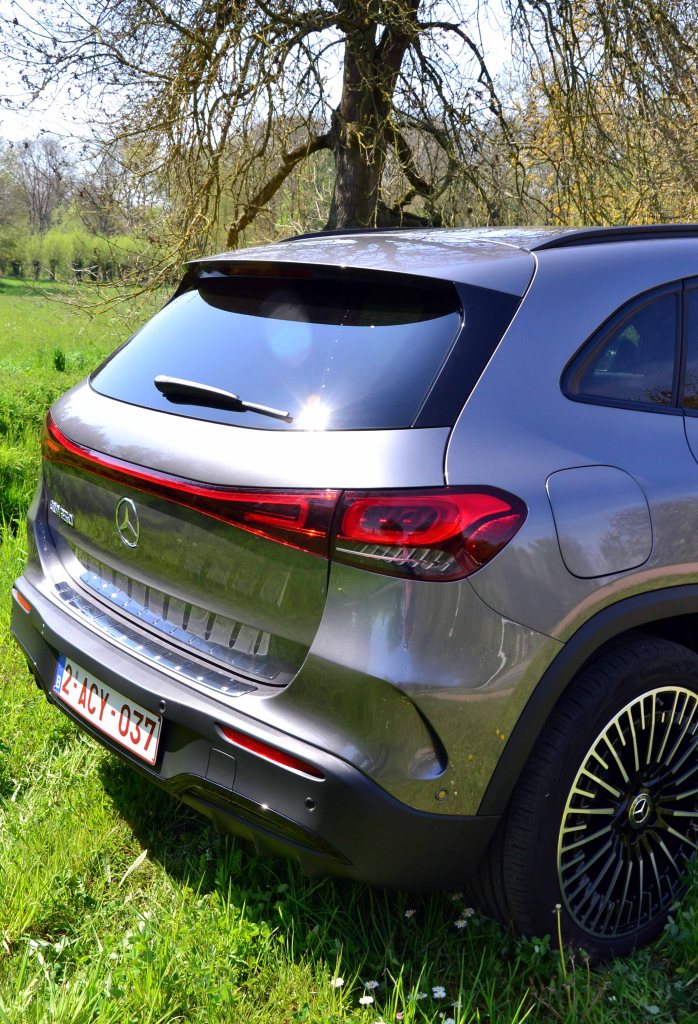
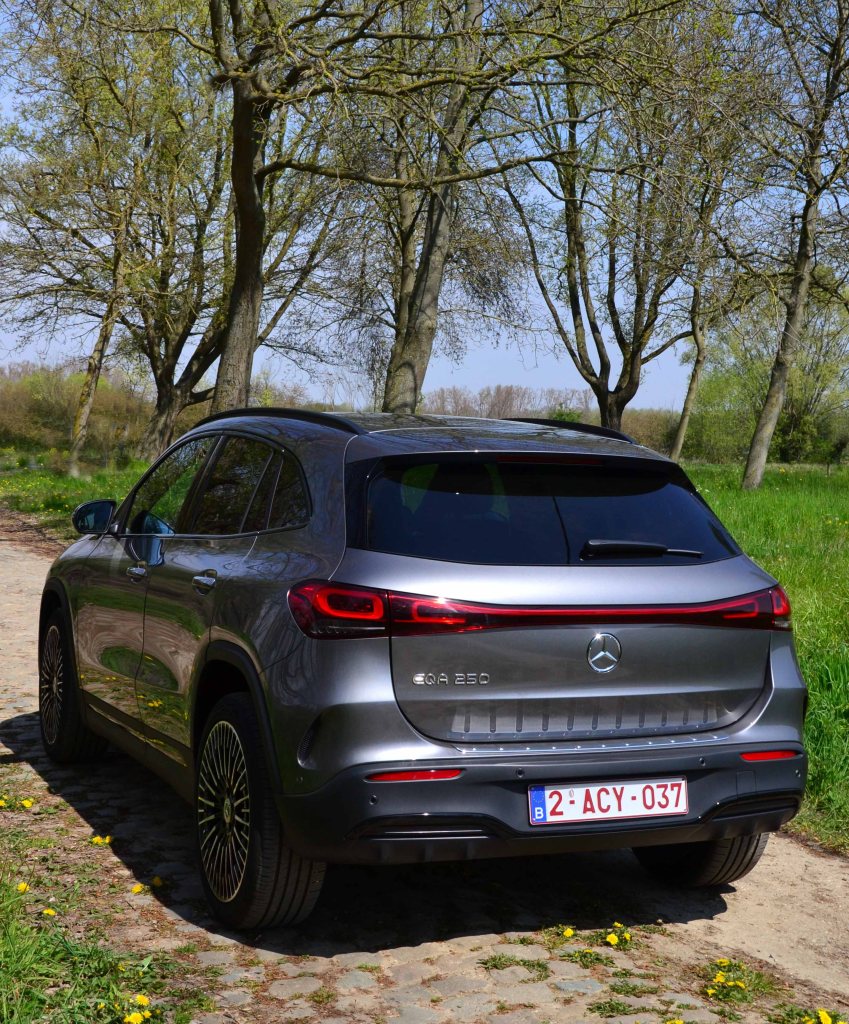
The EQA drives you into the future, and it shows it clearly. Already the rounded front grille with a car wide led illumination between the headlights give it an unmistakable character and light signature. The same is repeated at the rear, where also a light bar is running over the whole width of the EQA. In the cabin, you can choose an atmosphere lighting out of not less than 64 colours, so sitting in a Mercedes is more than ever a moving experience. The EQA is the first model from Mercedes-EQ range whose aerodynamic development has been undertaken entirely digitally. The ensuing measurements undertaken in the wind tunnel revealed a Cd value of 0.28, thereby confirming the high quality of the numerical simulation.

Conclusion

This EQA is a true Mercedes, inside and out, through and through. Excellent workmanship, with an admirable finish seen and felt in the cabin, and also a build quality of its sleek SUV body being beyond reproach. Add to this, as we said, the uncanny silence and absolute mechanical refinement of the drivetrain, putting this EQA together with its bigger brothers at the top of what an E-powered car can offer nowadays. All very solid arguments to take a closer look at this car.

Last but not least this EQA is rather affordable, which has us truly convinced that the EQA has all what it takes to carve a sizeable niche in its segment. And for those who want a but more panache, it is good to know that powerful 4WD versions are soon to come…

Hans Knol ten Bensel

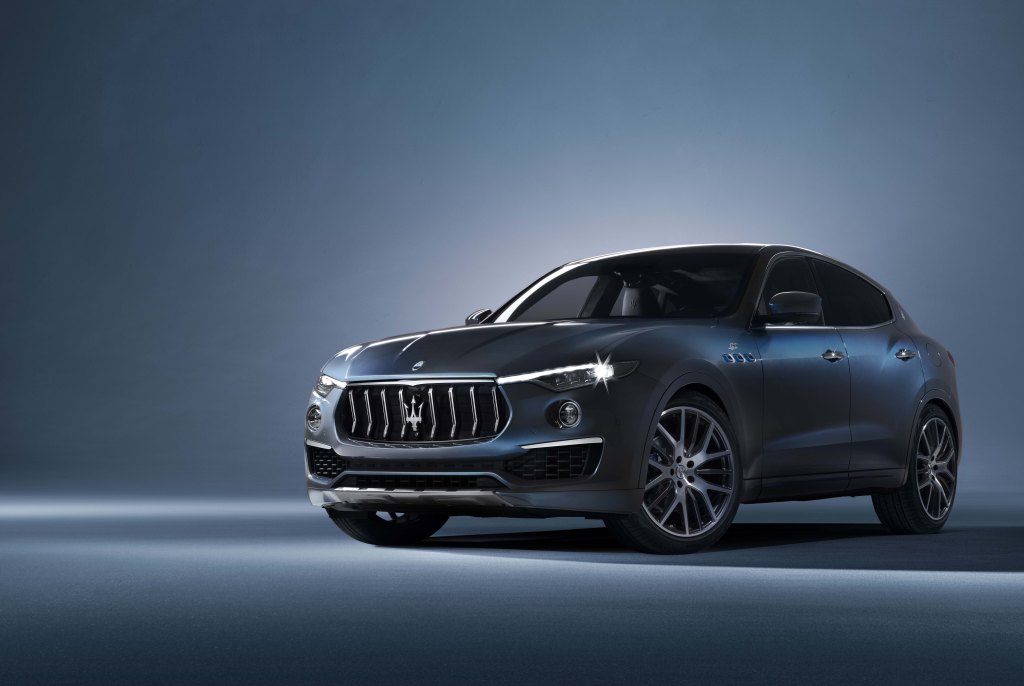
Maserati unveils its Levante Hybrid


The Levante Hybrid was presented at ist launch in Azzuro Astro color. This metallic paint consists of three layers and is available through the Maserati Fuoriserie personalization program.

The Maserati Levante Hybrid has today experienced both a physical and a digital world premiere. At the time of the car’s unveiling at the Shanghai Auto Show, a virtual presentation has taken place simultaneously on the houseof.maserati.com website.

With its first electrified SUV, Maserati is taking another important step in the future plan launched last year with the Ghibli Hybrid, which will lead to the electrification of all new Maserati models.

“Faster. Cleaner. Unique ” is the motto at the launch: the Levante Hybrid is faster than a diesel, more durable than a car with an internal combustion engine and unique thanks to specific features and details.

The Levante Hybrid combines a two-liter four-cylinder engine with a 48-volt hybrid system that recovers energy during engine deceleration and application of the brakes. The hybrid SUV is lighter than the six-cylinder version (petrol and diesel) and also has a more balanced weight distribution because the battery – without sacrificing luggage space – is placed in the rear of the car. One of the goals during the development of the Levante Hybrid was to take the dynamics and driving pleasure to an even higher level.

 With a maximum power of 330 hp and a torque of 450 Nm, which is available from just 2,250 rpm, the four-wheel drive Levante Hybrid delivers impressive performance: the car has a top speed of 240 km/h and accelerates from 0 to 100 km in 6 seconds.

The Levante Hybrid was presented at ist launch in Azzuro Astro color. This metallic paint consists of three layers and is available through the Maserati Fuoriserie personalization program.

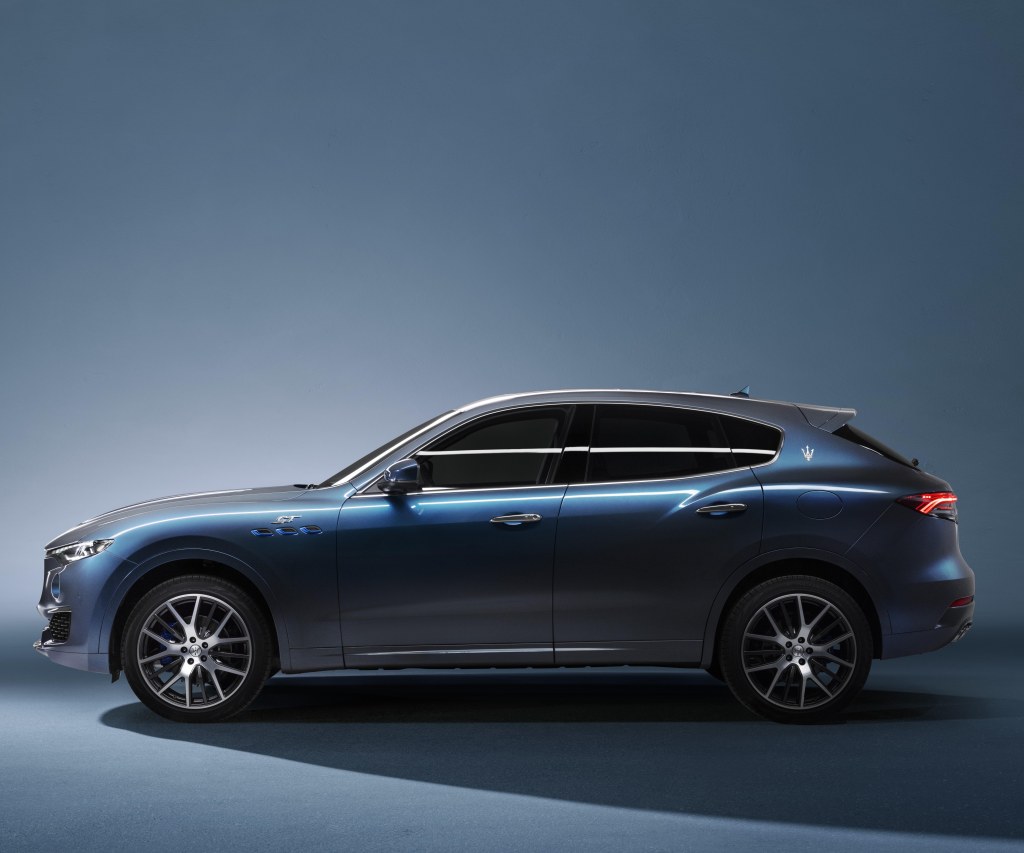
The Levante Hybrid is immediately recognizable by the unique details in the exterior and interior. Several elements are finished in blue, a color specifically chosen for Maserati hybrid models. Like the brake calipers and trident on the C-pillars, the iconic side vents are finished in this shade of blue. The same color returns in the interior, including the stitching of the seat upholstery.

With Maserati Connect, the Levante Hybrid is always connected to the outside world. The driver remains fully informed about the technical condition of the car: Maserati Connect alerts the owner when maintenance is required, thus improving the quality of the service. The owner is in contact with the car via the Maserati app on the smartphone or smartwatch. You can also contact the car from home with a virtual assistant such as Amazon Alexa or Google Assist.

The digital world premiere of the Levante Hybrid on houseof.maserati.com has been attended by Maserati’s global brand ambassador David Beckham and Italian songwriter and producer Dardust, who has composed an exclusive soundtrack for the unveiling of the Levante Hybrid.

More soon about this Levante in technical detail. Stay posted!

Hans Knol ten Bensel      

Audi unveils its first all-electric compact SUV’s: the Audi Q4 e-tron and the Q4 Sportback e-tron…

Audi Q4 50 e-tron quattro Colour: Geyser blue, metallic and Audi Q4 50 e-tron quattro Edition One Colour: Typhoon gray

Versatile all-rounders for everyday use that transfer the progressive design of the concept cars into series production and that can be driven locally without any emissions: The Audi Q4 e-tron and the Q4 Sportback e-tron are the first compact electric SUVs from the brand with the Four Rings.

Both of them impress with a new spacious dimension in the interior and pioneering solutions when it comes to operation, display, and assist systems. The augmented reality head-up display connects the virtual and the real worlds in a totally new way.

Q4 50 Sportback e-tron Quattro Colour: Florett silver

The range comprises three drive versions, spearheaded by a quattro model with a maximum output of 220 kW (299 PS). Attributes that they all share are zero local emissions driving  and high ranges, charging times of around ten minutes for sufficient power to travel about 130 kilometers (80.8 mi) in ideal conditions (WLTP) and convenient charging with the e-tron Charging Service. The rear-wheel drive Q4 40 e-tron achieves a range of up to 520 kilometers (323.1 mi) in the WLTP cycle. It goes on sale in Europe in June 2021, with prices in Germany starting at EUR 41,900 – where the customer can claim a subsidy of EUR 9,000 (net).

Audi’s next step: the exterior design

With the Q4 e-tron and the Q4 Sportback e-tron, Audi is taking the next step in the design language of its electric models.

The two compact SUVs bring into series production the body line that the Audi Q4 concept and Audi Q4 Sportback e-tron concept show cars demonstrated at the beginning of 2019.

In the Audi Q4 Sportback e-tron, the especially low coupé-style roofline ends in an expressively designed rear where the spoiler sits deep on the two-part window.

On request, both of these compact electric SUVs can be driven off the assembly line with Matrix LED headlights. What’s more, the driver can switch between four signatures in the MMI touch operating system. At the rear, a light strip links the taillight units to each other. A choice of eight colors is available for the paint finish, including the new metallic shade aurora violet. In addition to the basic version, there are the two advanced and S line exteriors.

E-mobility for everyone…

Audi wants its new Q4 line to be an all-round car which offers everything for everyone. The available space in the interior is comparable with the full-size SUV class; there is no center tunnel. The feeling of spaciousness is not just confined to the front seats – with the generous legroom, passengers in the rear also benefit from the advantage of the technological platform, which is designed as electric-only.

Depending on the positioning of the rear seat backs, the volume of the luggage compartment is 520 to 1,490 liters in the Q4 e-tron and 535 to 1,460 liters under a power trunk lid in the Sportback. Both models can tow trailers with a weight of up to 1,000 kilograms (braked, at 12% incline), with the quattro versions even able to pull up to 1,200 kilograms.

Another strength for everyday use is the high range – the Q4 40 e-tron travels up to 520 kilometers (323.1 mi) (WLTP) on a single battery charge. Thanks to a maximum charging capacity of 125 kW, in ideal conditions it can charge enough power for about 130 kilometers (80.8 mi) (WLTP) in around ten minutes. Using the myAudi app, the owner can activate charging at home and pre-entry climate control from their smartphone.

In the interior, there are also quite a few innovations. For instance totally new is the steering wheel with its seamless touch surfaces, which the driver uses to control the digital instrument cluster.

Infotainment and navigation are operated primarily using the central MMI touch display, which will also be available in the largest configuration level of 11.6 inches towards the end of the year. Natural voice control provides the third operating interface.

On request, the Audi Q4 e-tron and the Q4 Sportback e-tron can be equipped with another innovation on board – the augmented reality head-up display.

Fully digital: the Q4 e-tron is an e-mobility device

The Q4 e-tron models offer a fully digital user experience. The infotainment package in the electric compact SUV is structured in three levels – from MMI through MMI plus to MMI pro.

Different functions are provided depending on the configuration level, including the augmented reality head-up display and the Audi virtual cockpit plus. The optional levels provide the online services of Audi connect, including the intelligent e-tron route planner for working out the optimal route that stays close to the public charging infrastructure. For premium sound, the Sonos sound system which combines lifestyle, technology and design in a new dimension.

Audi Q4 50 e-tron quattro Static photo, Colour: Geyser blue, metallic Audi Q4 50 e-tron quattro Edition One Static photo, Colour: Typhoon gray

For urban commuters and long-distance drivers: battery, drive and charging options

The drive portfolio of the two compact electric models lives up to the expectations of very different groups of customers – from the urban commuter to the long-distance driver. It includes two battery variants and three drive variants. The compact battery for the Q4 35 e-tron has a net energy content of 52 kWh (55 kWh gross), while the figures for the large battery in the Q4 40 e-tron and Q4 50 e-tron quattro are 77 (82) kWh.

The Q4 35 e-tron and the Q4 40 e-tron have an electric motor that drives the rear wheels, with an output of 125 kW (170 PS) and 150 kW (204 PS) respectively. The top-of-the-range version Q4 50 e-tron quattro has two electric motors for the electric all-wheel drive. They give it a maximum output of 220 kW (299 PS) – sufficient for a sprint from 0 to 100 km/h in 6.2 seconds and an electronically limited top speed of 180 km/h. For efficiency, the motor on the front axle comes into action only when high power or a strong grip is needed.

Another important factor in energy-saving driving is intelligent recuperation, which also incorporates navigation and topographical data.

Dashboard

Audi’s two new electric SUVs can be charged with different outputs using alternating current (AC) and direct current (DC) depending on the battery. The compact battery can get up to 7.2 kW with AC charging and up to 100 kW when using HPC charging (high-power charging) with direct current. As standard, the larger battery allows for up to 11 kW with AC and up to 125 kW with HPC.

Audi e-tron Charging Service…

Drivetrain

The Audi e-tron Charging Service provides access to around 210,000 public charging points in 26 European countries, 4,400 of which are HPC fast-charging points (as of April 2021), using just one charging card. In the transit tariff, customers buying the Q4 e-tron do not pay any basic fee in the first year. They benefit here especially from the preferential conditions in the IONITY network: The charged kilowatt hour costs 31 cents, which corresponds to the price level when charging at home in Germany.

The Audi Q4 e-tron will appear in June 2021 on European markets, with the Q4 Sportback e-tron following in the late summer. Of course we are keen to sample driving impressions this summer!

Hans Knol ten Bensel
New ŠKODA ENYAQ iV earns five stars in Euro NCAP test.

The new ŠKODA ENYAQ iV truly scores: The new electric SUV has achieved the highest classification of five stars in tests conducted by the independent European New Car Assessment Programme (Euro NCAP).

It now ranks among the safest vehicles currently available with a total of 86% of the possible points.

And there is more: The ŠKODA ENYAQ iV achieved the best result ever in the Euro NCAP test for occupant protection, with 94% for adult passengers and 89% for children.

ŠKODA’s first model based on the Volkswagen Group’s Modular Electrification Toolkit thus continues the string of top scores for ŠKODA vehicles in the crash safety reference test, even with the now stricter assessment criteria. ŠKODA’s bestseller, the OCTAVIA, the compact model SCALA and the SUV models KODIAQ, KAROQ and KAMIQ, among others, have all been awarded the coveted five star rating.

Needless to say that the ENYAQ iV inspires, with its styling and build quality, and we will be keen to sample driving and test impressions in the coming months…

Hans Knol ten Bensel

Bentley celebrates the production of its 200.000th car…


The Bentayga Hybrid, destined for a Chinese customer, met the oldest surviving Bentley, EXP 2, and a number of long serving colleagues, as it rolled off the production line at the home of Bentley in Crewe this week.

Things have taken off for the inconic brand over the last 18 years. Thanks to the success of the Continental GT and more recently the Bentayga SUV, daily production has soared. Indeed, over that period, over 75 per cent of 101 years of production has been hand-built at the Crewe factory, more than ever the home of Bentley. Current daily production, 85 cars per day, equals monthly production numbers of two decades ago.

The Bentley Continentals – then and now…

I vividly recall the interview I made at the Frankfurt Motor Show more than a decade ago with Franz-Josef Paefgen, then CEO of Bentley Motors and Bugatti Automobiles, posts he left in 2011.

During his time as the Chief Executive Officer of Bentley Motors Ltd., he was responsible for the Bentley Mulsanne and the Bentley Continental series of cars. From 2003 to 2005, Dr. Paefgen was responsible for the development of the Bugatti Veyron.

Every Bentley is actually a four wheeled chapter in automotive history…

I asked him then whether a hybrid Bentley was not on the cards, as Bentley’s could be considered the pinnacle of engineering and an electrified Bentley would be proper. It clearly was not in the strategy of the VW Group then, as the idea was immediately brushed aside by Mr. Paefgen as unrealistic, customers not wanting this at all…

Well times have changed quite a bit since then, as we now read that Company aims to be end-to-end carbon neutral by 2030 with entire model range switched to battery electric vehicles(!). Bentley will move to full electrification – PHEV or BEV only – by 2026, then switch the entire model range to battery electric vehicles by 2030. The industry-leading Beyond100 Strategy will transform every aspect of the business as Bentley accelerates into its second century of luxury car production.
Six cylinder Bentley engine production in the ’50s in Crewe…

What this means for the retail value and depreciation of the existing and historic Bentley’s remains to be seen…

But back to the production history.

The Continental GT was the first landmark…

In 2003 the introduction of the Continental GT represented a transformative moment for the brand, and this Bentley alone, has represented 80,000 sales of the total of 200,000, and created both a new segment, and a contemporary image foundation for the Bentley business.

The Crewe factory in 1940…

…followed by the Bentayga

The success of the Continental GT has been mirrored by the Bentayga, offering a true Bentley driving experience and unparalleled luxury. Launched in 2015, when it established the luxury SUV sector, the fastest SUV in the world has reached its 25,000 production landmark. It is expected that the Bentayga could surpass total sales of the Continental GT within a decade and become the biggest selling Bentley model in history.

And now in 2021…

Since 2005, the company has also built 40,000 examples of the Flying Spur, the most successful luxury sports saloon in the world.

We show you here some photos, lifting a veil of the very interesting and multifaceted production history of the brand, and then we have told nothing of their sporting achievements…

Hans Knol ten Bensel