Jaguar launches a stunning “R-Dynamic” version of their elegant F-Type…

Jaguar launches a mouth-watering version of their elegant F-TYPE: the Exclusive F-TYPE R-Dynamic Black. It boasts additional equipment as standard and is offered in Coupé and Convertible body styles

There is an even more desirable version: the so-called “Black Pack”, with 20-inch gloss black wheels, and choice of Santorini Black, Eiger Grey or Firenze Red metallic paint.

Refinement…

The driver-focused interior is equipped with 12-way adjustable Windsor Leather Performance Seats in Ebony with Light Oyster stitch or in Mars with Flame Red stitch. An Ebony coloured suede cloth headliner enriches the iconic ‘1+1’ cabin.  

The R-Type comes with many appealing details: A heritage-inspired monogram pattern is used for seat and door trim stitching and also embossing of the suede cloth wrap for the instrument cluster.

And abundant power…

The F-Type comes with what it takes: the 300PS Ingenium four-cylinder and 450PS supercharged V8 with rear- or all-wheel drive and eight-speed ‘Quickshift’ transmissions deliver engaging, exploitable performance and outstanding driver reward.

The new R-Dynamic Black models add to the purity and presence that already sets Jaguar’s definitive sports car apart.

The F-TYPE’s shape is further accentuated by the Black Pack and 20-inch, five split-spoke wheels with gloss black finish. Known as ‘Style 5039’, these wheels are not available on any other model in the range. Complementing these perfectly is the choice of three metallic paints: Santorini Black, Eiger Grey or Firenze Red.

Performance galore…

Exclusively rear-wheel drive, the 300PS, 2.0-litre turbocharged Ingenium four-cylinder engine generates maximum torque from just 1,500rpm, delivering exceptional throttle response throughout the rev range. It also provides the performance expected from F-TYPE and enables acceleration from 0-60mph in only 5.4 seconds and a top speed of 155mph. 

The 450PS, 5.0-litre supercharged V8 has been developed to offer exploitable, useable and rewarding performance – maximum torque of 580Nm is generated from 2,500rpm. It is offered with a choice of all-wheel drive with Intelligent Driveline Dynamics or – for purists – rear-wheel drive. Both 450PS powertrains feature an electronic active rear differential to optimise traction, and both enable 0-60mph in just 4.4 seconds and a maximum speed of 177mph.

The 300PS and 450PS units are also available in other F-TYPE models, but for truly exceptional performance in all weathers and on any kind of road there is the F-TYPE R. Offered exclusively with all-wheel drive, its supercharged V8 delivers 575PS and 700Nm: the benchmark sprint to 60mph takes just 3.5 seconds, while maximum speed is an electronically-limited 186mph. 

Tailoring your Jaguar to your personal driving style…

The F-TYPE R and P450 models are equipped as standard with Jaguar’s Adaptive Dynamics system with Configurable Dynamics. Using electronically-controlled, continuously-variable dampers, Adaptive Dynamics optimizes both low speed comfort and high-speed control, while Configurable Dynamics enables the driver to tailor the settings for suspension stiffness, steering weight, throttle response and gearshifts. All 300PS four-cylinder F-TYPEs use meticulously tuned passive monotube dampers to deliver the ride and handling attributes which give these models their unique character.

Needless to say that we are keen to sample test driving impressions from these wonderful, sporting and elegant Jaguars soon…

Hans Knol ten Bensel

We personally witnessed the unfolding of the Audi Quattro (Rally) Saga…

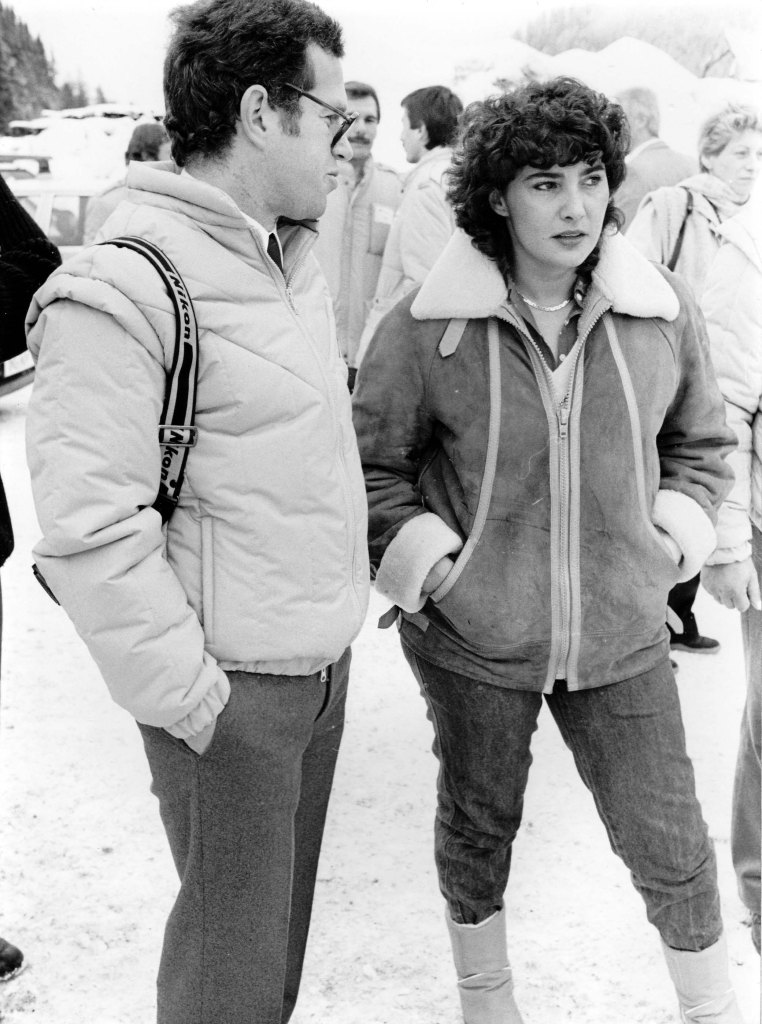
We were there: your servant in conversation with Michèle Mouton in Sankt Moritz, on December 8, 1982…

Your servant was already active as a freelance car journalist from the mid-seventies of last century, so we witnessed up close the birth of the Audi 5-cylinder engines and the (rally) cars powered by it were quite familiar. When we were telling you the long career of Audi’s 5 cylinder engine, we told you how your servant remembered a drive behind the wheel of the Audi 80 Quattro with this magnificent engine. Just look at our pages on this site, and more especially https://autoprova.be/2016/09/18/sweet-memories-our-drive-with-the-5-cylinder-audi-80-5e-quattro-in-sankt-moritz/

This memorable test drive of this Audi 80 5E Quattro took place in Sankt Moritz, on 8 and 9 December 1982. For the assembled international journalists, Audi had also organized a demonstration run with the Quattro Rally Cars, and had brought Michèle Mouton and Stig Blomquist to the venue.

You see me here chatting with Michèle Mouton before having a demo drive with her at the wheel in her Quattro Rally machine…

Sweet memories!

Hans Knol ten Bensel

A clever setup: in the new Dacia Sandero, your smartphone is a …multimedia screen!

Our smartphone follows us everywhere. So why not use it as a multimedia screen in the car? That would be smart. For Dacia it was self-evident, albeit on the condition that it was fully integrated into the driving experience. This is how Media Control was born.

Nicolas Legros, Director of Transversal Operations for Dacia, explains the philosophy and advantages of this system, which is introduced in New Dacia Sandero.

“At Dacia, we are committed to redefining the essence of the car. For that we had to find a smart, simple and attractive multimedia solution. Moreover, customer studies show that the buyers of the brand prioritize simplicity in this area. That is an important point raised by members of the Dacia community as well. Our engineers and designers have worked closely together to create Media Control, a system that places our customers’ favorite screen – their smartphone – at the center of the multimedia experience in the interior. ”

Indeed, taking your smartphone out of your pocket to make it your travel companion without having to place a hard-to-attach support on your ventilation grilles? That ease of use would appeal to many people. And this is well understood at Dacia. To make life easier for drivers with smart, affordable and contemporary solutions, the brand’s engineers and designers have pooled their talents and came up with a very practical solution…

What is Media Control?

Nicolas Legros explains the system: “Media Control is a complete multimedia system. It includes a radio, two speakers, a USB connection, Bluetooth connectivity, steering wheel controls and, above all, a docking station for smartphones integrated into the dashboard. From the start of the project, this station was fully integrated into the design of the dashboard. In this way we guarantee comfort and user-friendliness for our customers. ”

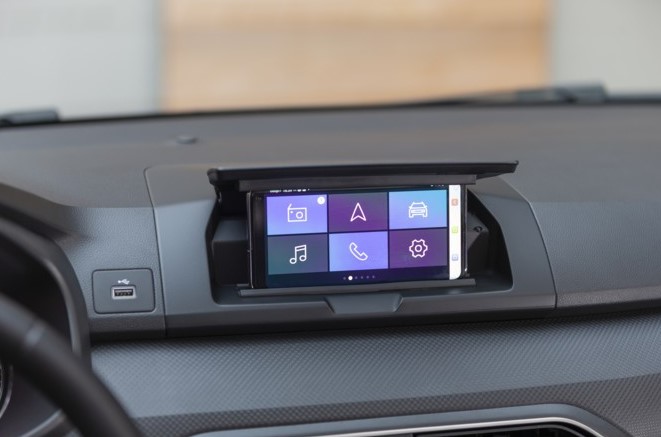
The smartphone, which is placed in the universal housing in the center of the dashboard of New Dacia Sandero and held firmly in place, integrates perfectly into the driving experience. The strategic placement, at the top of the dashboard and slightly turned towards the driver, guarantees readability of the data, which improves safety. All you need to do is download the Dacia Media Control app on your smartphone. A simple Bluetooth connection then turns your smartphone into a full-fledged addition to the dashboard, replacing the integrated multimedia system.

Navigation, radio, music, telephone and even access to vehicle information – all essential functions are at your fingertips. Even the voice control is present, thanks to the voice recognition of the smartphone.

And when the phone is not in the holder, the latter disappears into the dashboard for more discretion.

A smart system with sophisticated functions

However, all this is not enough to turn Media Control into a 100% smart multimedia system. Thanks to the customizable app, the system also adapts to the needs of each user and even connects to the car’s on-board computer.

However, all this is not enough to turn Media Control into a 100% smart multimedia system. Thanks to the customizable app, the system also adapts to the needs of each user and even connects to the car’s on-board computer.

This makes it possible to create shortcuts to your favorite widgets and apps and even to frequently called contacts. To navigate, each driver chooses his own preferred app thanks to the wide choice of maps and guidance systems. Choose multimedia à la carte. Radio, playlists from your telephone, subscription to music platforms, USB stick or MP3 player … There is no shortage of choice. In addition to calls, the phone has all the essential functions: a hands-free mode to look up contacts in the phone book, consult the call history or consult scheduled events in the calendar. With Android devices, and soon also on iOS, the SMS function even reads out messages. In terms of vehicle functions, Driving ECO provides real-time access to consumption data and gives the driver personalized driving tips at the end of each journey.

Upon arrival, more distracted drivers will appreciate the phone alert and the Go To My Car feature, which guides them back to the car’s last parking spot.

All this is so smart and practical!

Hans Knol ten Bensel

BMW’s new generation iDrive further explained…part 1

We will bring you in several reports some further details about the latest iDrive, which is a further step into improved vehicle interaction in this era where things get increasingly smarter.

BMW’s operating system equips the vehicle to actively engage in its relationship with those on board. As BMW states, a natural dialogue is created with the aim of precisely tailoring all the functions controlled via BMW iDrive to the driver’s needs and preferences as the situation demands.

Underpinning the unique user experience are the new BMW Operating System 8, a new generation of displays, controls and software, and extremely powerful connectivity and data processing. The new iDrive will be rolled out gradually across all vehicle classes, making its debut later this year in the BMW iX before also featuring in the BMW i4.

The BMW Intelligent Personal Assistant adjusts to the driver’s individual needs and routines, as well as the situation at hand, and this makes it – more than ever – a central operating channel of human-machine interaction.

The operating system is designed with a clear focus on dialogue-based interaction using natural language and touch operation via the BMW Curved Display.

But there is more. BMW speaks of “Great Entrance Moments”, bringing emotionality to the relationship between driver and vehicle even before the driver climbs on board.

This new customer experience welcomes the driver and invites him or her into the vehicle with a thoroughly choreographed routine. During the journey, the new “My Modes” use an all-encompassing interplay of various functions to conjure special moments from a combination of vehicle characteristics and the interior ambience adapted to the situation at hand.

Processing data leading to further personalisation…

The new BMW iDrive constantly processes a large quantity of self-generated data, information available online and data imported from the BMW Group vehicle fleet to implement the driver’s wishes in a context-related way.

This is paving the way for even greater personalisation, and this system is called the “BMW ID.”

This system recognises repetitive situations, learns from them and provides suggestions on how functions can be activated accordingly. There is even more to keep the system up to date: Remote Software Upgrade allows the new BMW iDrive to benefit from regular over-the-air improvements, integrate additional functions and stay up to date at all times.

Design approach and operating concept.

The BMW iX all-electric Sports Activity Vehicle was developed from the inside out. It’s the same story with the user experience for the new BMW iDrive. The wishes of those travelling in the iX underpin how the user experience is designed – in all its facets and for all the senses.

Advances made in the field of digital design are likewise reflected in the design of a user interface which not only fulfils its functional role but is also clear, aesthetically pleasing and rich in detail.

This artistic approach creates surprising moments, with graphic presentation on the displays precisely designed, down to the last pixel.

The interaction between driver and vehicle becomes a unique experience in which the boundaries between the digital and analogue worlds melt away.

The digital design’s use of form fits in neatly with the geometric structures of the analogue elements in the new BMW design language. A prime example is the use of clear, minimalist design in both the exterior and interior of the car, which is reflected in the pure, reduced design of the digital elements of BMW iDrive.

The Curved Display takes centre stage…

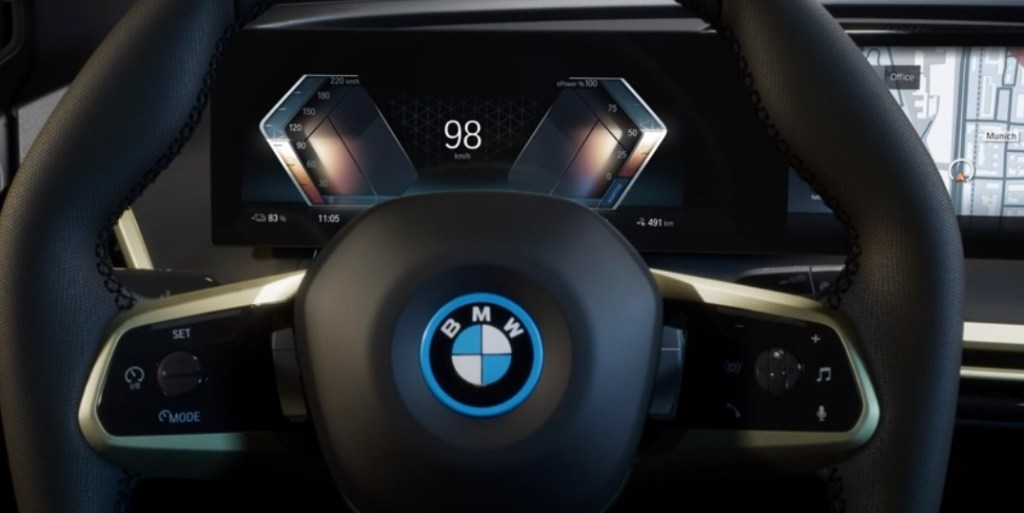
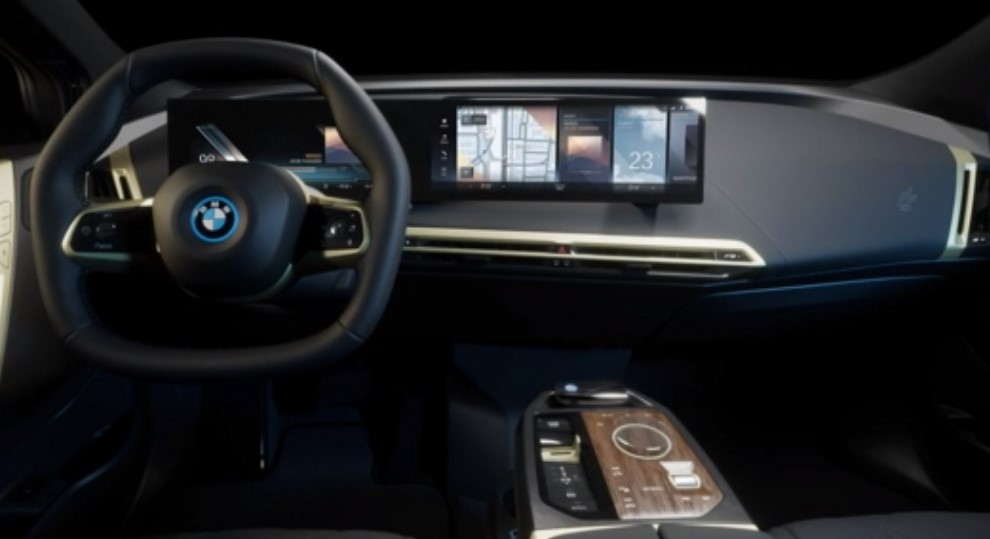
The most distinctive new addition to the physical components on board is the BMW Curved Display, which groups together the information display and control display. This curving screen offers a futuristic interpretation of the traditional driver orientation in the cockpit design of BMW models. The BMW Curved Display is angled clearly towards the driver , making the intuitive touch control even more straightforward. In this new BMW Curved Display, the screen areas of the 12.3-inch information display and 14.9-inch control display merge together into a single unit.

The “Act, Locate and Inform” principle, which ensures information is distributed clearly and screen redundancy is avoided, takes the signature BMW driver orientation of the cockpit design to a new level. Pre-filtering ensures that only information relevant to the driving situation is presented to the driver – and always shown where they can absorb it as quickly and easily as possible.

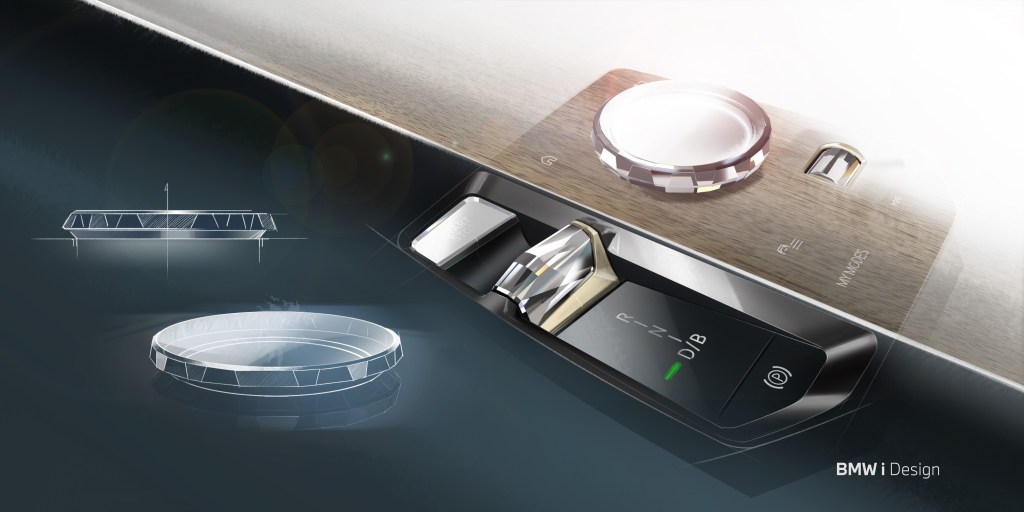
Voice control and the touch function of the BMW Curved Display were prioritized as usage options in the development of the new BMW iDrive. The number of buttons and switches has been reduced by almost half. At the same time, control clusters for relevant and frequently used basic functions are retained where customers expect to find them. The control panels on the centre console and instrument panel have an all-new, minimalist design. The familiar iDrive Controller is the central control element on the centre console. The Touch Controller, designed in an extremely smart glass-effect finish for the BMW iX, is encircled by a bezel painted in Gold Bronze.

The upgraded BMW Intelligent Personal Assistant performs the role of a digital character which can engage in natural dialogue with the driver and front passenger – similarly to a relationship between humans.

More about the Graphical User Interface in a following report…

Last but not least, we are looking forward to drive some BMW and Mini products in June, and maybe get a first “real” experience of the iDrive also in the coming months…

Stay tuned!

Hans Knol ten Bensel
BMW iDrive: a stunning presentation, and a bold step towards a safe personal driving experience…

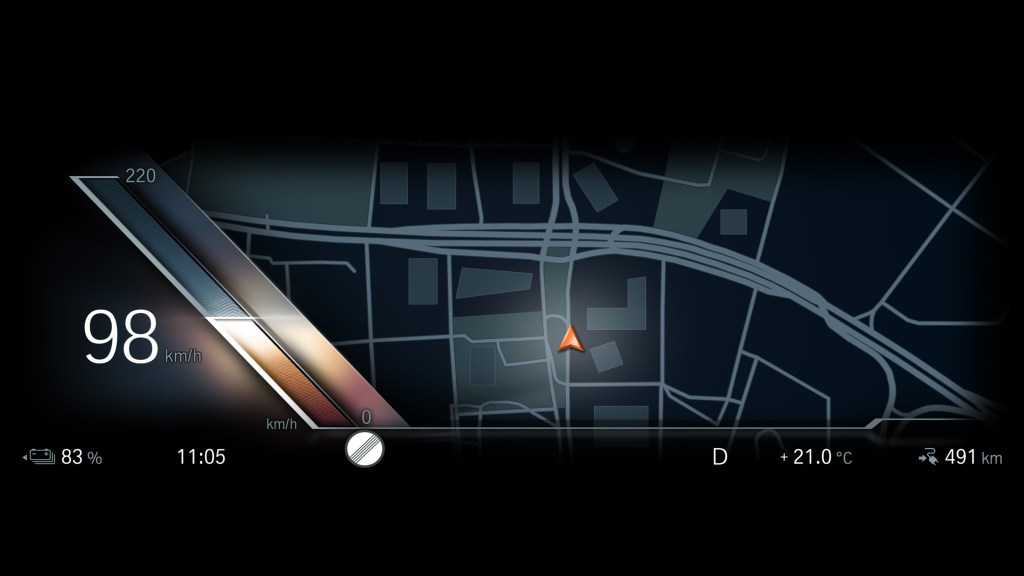
We just witnessed the presentation, and of course we will come back on this with more details, but we can say already that BMW again produced a breakthrough in car to driver communication…

We show you here some screenshots of the presentation, but, as said, there is more to come about this very convincing approach…

Hans Knol ten Bensel

Kia introduces its new design philosophy and presents it in the brand new EV6…

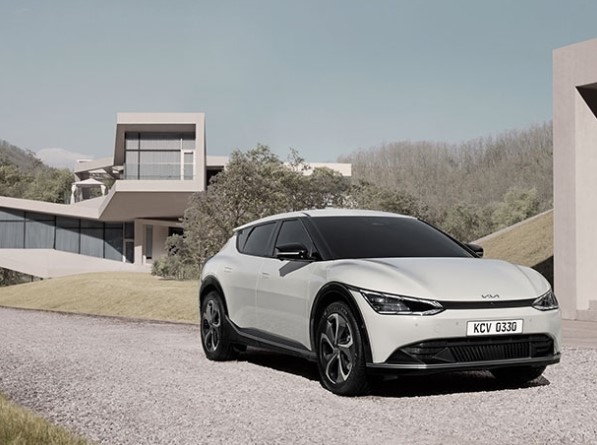
Kia Corporation has revealed the first images of the exterior and interior design of EV6, its first dedicated battery electric vehicle (BEV), ahead of the car’s world premiere at the end of March.

EV6 was designed under the brand’s new design philosophy ‘Opposites United’, which takes inspiration from the contrasts found in nature and humanity.

At the centre of the design philosophy is a new visual identity evoking positive forces and natural energy, with contrasting combinations of sharp stylistic elements and sculptural shapes.It is definitely contemporary and has timeless proportions, which will please for years to come, with a purity not unlike for instance VW’s ID3 and ID4.

Boasting a distinctive crossover-inspired design and based on the brand’s new Electric-Global Modular Platform (E-GMP), the EV6 is Kia’s first dedicated BEV to be influenced by the new design philosophy.

Opposites United: a design philosophy for all future Kia vehicles

The Opposites United design philosophy makes its debut on EV6, and will inform the design of all future Kia models. The philosophy is based on five key design pillars: ‘Bold for Nature’, ‘Joy for Reason’, ‘Power to Progress’, ‘Technology for Life’, and ‘Tension for Serenity’.

We explain it more in detail here.

Bold for Nature is based on interaction with nature, informed by the details, shapes and proportions found both in the natural and human worlds. This design pillar creates organic, yet technical structures and finishes for vehicle interiors; exterior designs are characterised by a combination of clear and simple lines with bold, ever-changing surfaces.

Joy for Reason focuses on the feel and ambience of Kia’s future vehicles. Future designs will fuse the emotional with the rational, creating vehicles that influence the mood of passengers, by relaxing and inspiring. It will also influence the adoption of new organic materials and more daring colours, expressing a sense of youth and playfulness.

Power to Progress builds on the brand’s current design strengths. By drawing on and developing the skills and expertise learned throughout Kia’s recent era of design-led transformation, the designs and layouts of the brand’s future products will continue to evolve. Future designs will draw on experience and creativity to invent and innovate new designs.

Technology for Life embraces new technologies and innovations to foster positive interactions between humans and machines. The brand’s future vehicles will adopt a next-generation in-car user experience (UX) through design and innovation and advancements in lighting, feel and in-car connectivity – to help customers engage with their cars.

Tension for Serenity evokes the tension between opposing forces and creative contrasts, and recognises the design equilibrium that comes from two opposing forces. It delivers striking design concepts that use sharp, highly technical details to create surface tension – and realise a harmonised, future-oriented design vision.

Exterior design: a future-oriented EV design characterised by high-tech details

The exterior design of EV6 is a powerful representation of ‘Power to Progress’.

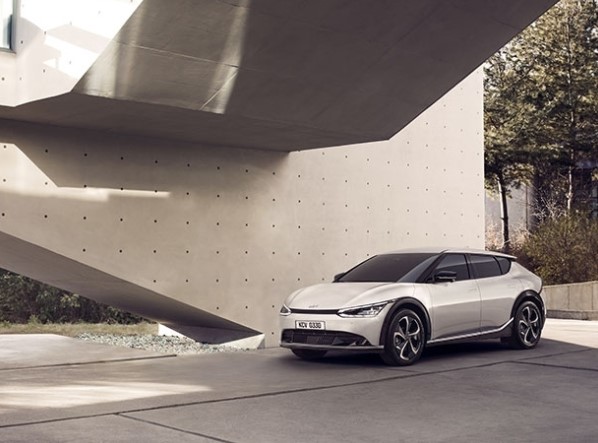
At the front, characteristic daytime running lights create a sleek appearance. They form part of the car’s ‘Digital Tiger Face’, a design progression evoking the spirit of Kia’s ‘Tiger Nose Grille’ for the electrified era. The design of the lamps also includes a ‘sequential’ dynamic light pattern.

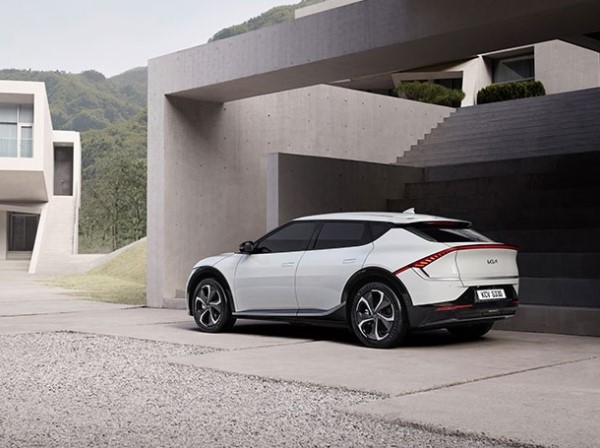
The side profile displays a crossover-inspired design aesthetic, contrasting with sharp lines and high-tech details to create a sense of tension in the design.

Designed in part to realise ultimate aerodynamic performance, the rear displays a sloping rear C-pillar with an integrated black glossy insert which visually widens the window glass.

The EV6 is the result of a collaborative effort between all three studios in Kia’s global design network in Namyang (Korea), Frankfurt (Germany), and Irvine (California, US).

Interior design: a modern and spacious interior for the EV era

A distinct product of the EV era, the interior design is liberated as it were by Kia’s dedicated E-GMP platform, which offers increased space compared to previous Kia EVs based on existing model architecture. Here Kia goes with VW’s trend set in with their ID series.

One of the most striking elements of the new interior is a seamless high-tech curved high-definition audio visual and navigation (AVN) screen. The simple form language of the wide curved screen and the slim dashboard give the space an open feel.

The width of the screen creates an immersive experience for the driver, while a minimal number of physical buttons offer an uncluttered and soothing driving experience.

Underneath the AVN screen, passengers control HVAC (heating, ventilation and air conditioning) settings by using haptic ‘buttons’, while below this panel, the dashboard slopes away towards the front of the car, creating a sense of space and openness for the front-seat passengers.

The seats are slim, lightweight and contemporary, and clad in modern, visually interesting and robust fabrics created using recycled plastics, which create yet greater openness in the cabin.

EV6 will make its world premiere in March 2021, during a special online event. We will keep you posted!

Hans Knol ten Bensel

BMW presents on Monday 16 March their 8th Generation of iDrive…

BMW stunned the automotive world 20 years ago with their iDrive BMW opened a new era of in-car operating technology.

Keen to get a grip on the constantly expanding array of functions in vehicle interiors, in 2001 BMW instigated a paradigm shift in the then new BMW 7 Series.

Today, BMW developers and designers focusing on user interaction and user experience have faced up to a new set of challenges. The 8th generation of BMW iDrive brings about another paradigm shift – this time to a new kind of relationship between driver and their vehicle. Needless to say, we are very intrigued and will certainly follow the premiere online!

Indeed, You can follow the world premiere live at www.live.bmwgroup.com, on Monday, 15 March 2021, 15:30 GMT.

You can also follow the @BMWGroup social media channels for the live broadcast.

LinkedIn: https://www.linkedin.com/company/bmwgroup/

Twitter: http://twitter.com/BMWGroup

Facebook: http://www.facebook.com/BMWGroup

YouTube: http://www.youtube.com/BMWGroupView

We would say, don’t miss it!

Hans Knol ten Bensel
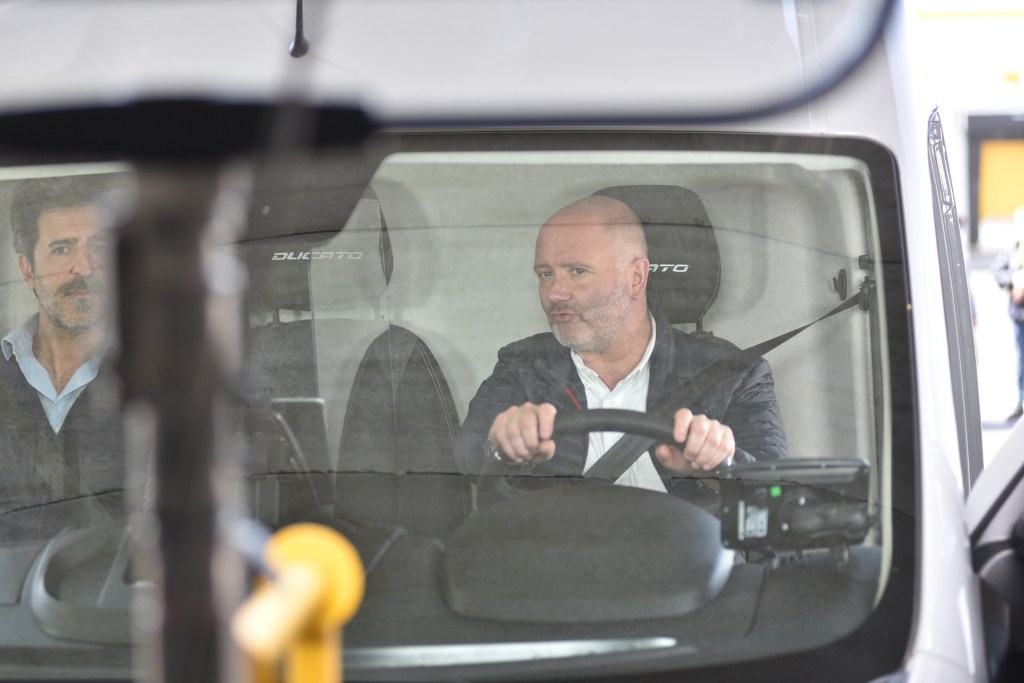
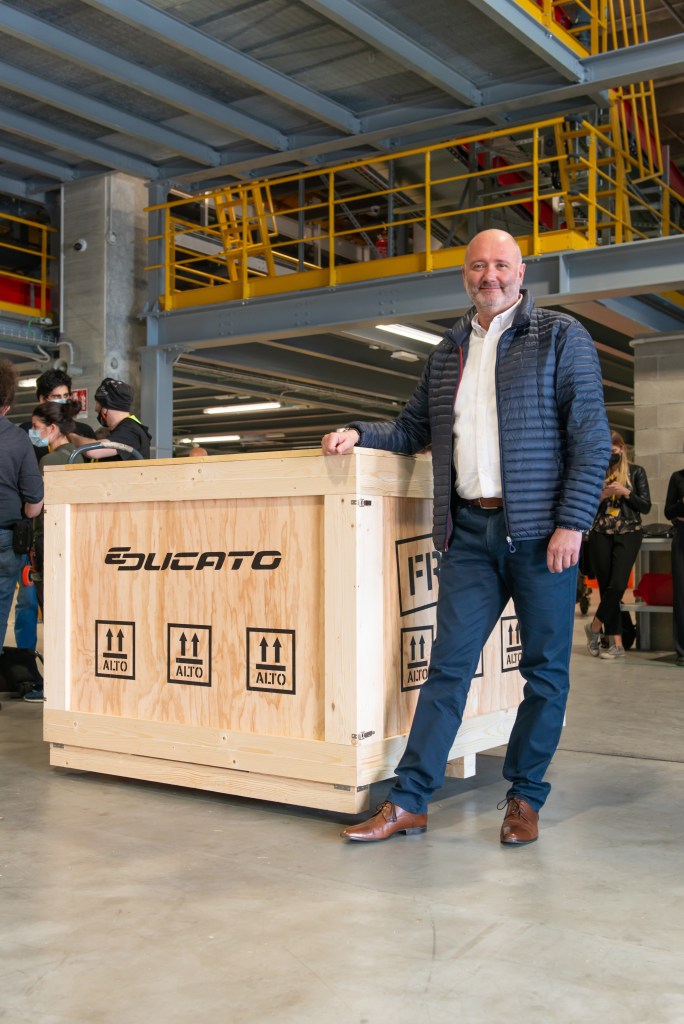
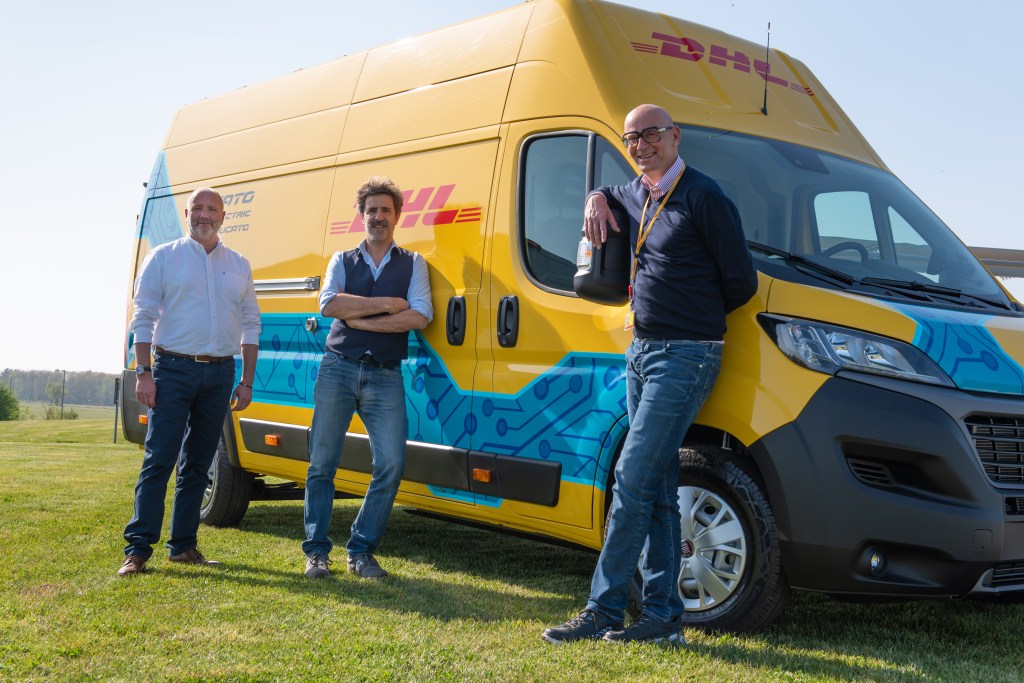
Fiat e-Ducato can be yours now for clean, e-powered delivery!

Faithful readers know that we reported already about the e-Ducato and the dynamic people behind this project, notably Madame Angelica Carapezza, who we interviewed back in 2019. Now the e-Ducato is fully available…

Indeed, orders are open for the new E-Ducato, the full-electric, fully connected version of the Fiat Professional best seller, It guarantees continuity in the technology transition with similar performance, at a comparable cost.

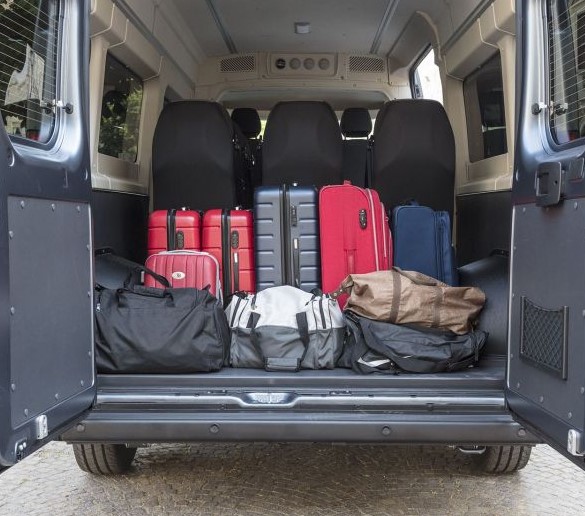
The line-up of configurations meets every need: vans from 10 to 17 m3, cab vehicles in 4 different lengths, plus people-carrying capabilities to cover any business need.The Ducato has best-in-class load volume from 10 to 17 m3, payload of up to 1,910 kg.

There is a modular choice of batteries, with ranges from over 230 to 370 km in the urban cycle; 2 different AC chargers at launch, with DC Fast Charge available as an option.

The exclusive Pro Fit by E-Ducato app is available, for the ideal E-Ducato configuration based on real-world usage data, to best meet every specific need.

A wide range of benefits are included in the price: Vans from €60,800 for the 3.5-ton Medium Wheelbase version (10 m3 load volume); Cab vehicles from €60,300 in the 3.5-ton Medium Wheelbase version.

The line-up extends all the way to a 4.25-ton van.

At launch, 5 years of routine maintenance and a 5-year vehicle warranty  and up to 10-year battery warranty are included. Three packs with the most sought-after optional extras are available on request.

To support the launch and the “electric project”, Fiat Professional and the Sapient agency have developed the “Numbers” digital campaign. Of which more in detail later.

The vehicle’s arrival in dealerships and early deliveries are scheduled from late March onwards.

Hans Knol ten Bensel

We drove the Subaru XV e-boxer: with e-power into the go-anywhere future…

The XV embodies perfectly what a Subaru stands for: it is compact, styled with zest and panache, versatile, rugged and of course crammed from bumper to bumper with state of the art, innovative and exclusive technology. This legendary Subaru boxer technology, combined with unique 4WD capability comes now to you with additional e-power, to make this Subaru fit for the E future which is coming upon us.

Subaru prefers rugged no-nonsense go anywhere capability, and therefore opts for hybrid technology: the 2 litre direct injected boxer engine is coupled via a Lineartronic CVT Transmission to a 12.3 kW e-motor which sits right behind the engine and is fed by a 13.5 kWh battery pack which sits behind the rear wheels. E power is available at slow speeds up to 40 km/h. Subaru describes this as the EV driving mode. Depending on the enthusiasm of your right foot and the state of charge of the battery pack, you could drive on E power over distance of up to 1,6 kilometers at speeds, as we said earlier, of up to 40 km/h. In practice, the battery and motor just assist the combustion engine when driving away from traffic lights and in slow stop and go traffic.

When you really keep your right foot very calm, a lot can be gained here. As you servant is well trained with his Lexus 200 CTH, it was no trouble at all to eke out a consumption of 6 litres/100 km in tightest urban traffic. It just takes a good amount of concentration and anticipation.

The Subaru changes very smoothly from E- to petrol power and vice versa at varying speeds above 40 km/h in the “engine assist function.” Nice too is that the CVT transmission has 6 “steps” or ratios if you want to, so you can avoid that the willing boxer revs too high for your liking when you really put your foot down and accelerate hard on a motorway entrance for instance.

At higher speeds, the petrol engine takes over fully and charges also the battery. The beauty of hybrids is that you can use them anywhere, anytime, for any distance, just like any other petrol engined car. With a significant reduction in petrol consumption if you understand them and know how to drive them…

We averaged between 6 and seven litres/100 km on our regular routes. The manufacturer quotes 6,5 litre/100 km as average consumption, and 149 g/km in CO2 emissions.

Off road capability…

But then, this car is a Subaru. This means king of the road, off-road. The XV offers go anywhere capability with its Symmetrical AWD, and its further developed X Mode. This mode effectively remaps the 4WD system, using the E motor to modulate the traction on all 4 wheels even more finely. Taking the family out on a weekend skiing or having fun in the snow: this Subaru gets you there and back… and how!

Good performer

Although it will not invite you to throw it around corners, it certainly has the rally-bred stamina to do it. This XV has legendary on-road handling, and remains controllable and neutral no matter in what situation you put it in. The hazards of winter season and/or slippery roads simply do not exist for the XV.

Outright performance leaves nothing to be desired: 0 to 100 km/h is reached in 10.3 seconds, top speed is a healthy 193 km/h.

Of course the Subaru is an excellent motorway cruiser. The suspension is comfortable, the XV rolls on the brand new Subaru Global Platform which added considerably more body stiffness, but then a very stiff body is also prone to resonances, and there is some road/tyre/wheel noise noticeable.

Subaru’s EyeSight keeps you safe

Another point we cannot miss to mention is the superb EyeSight Driver Assist Technology. Driving in thick fog on motorways, winding forest roads has no collision risk for you anymore. Two stereocamera’s sit on both sides of the rear view mirror and keep an eye on the road ahead. Coupled with the adaptive cruise control, the system will assist in keeping a safe distance and adapt speed automatically to the car in front of you over a very wide speed range between 0 and 180 km/h.

Well-equipped and pleasant cabin

The XV dashboard has three screens, two on the centre console, and one between the nicely finished round instruments for speed and revs. Infotainment is intuitive and easy to use, and leaves nothing to be desired. The whole cabin is well finished, quality of materials used is very good, sturdy and fit for no nonsense practical use for years to come, in the good Subaru tradition.

Boot space is not enormous, due also partially to the rear battery pack, but the standard 355 litres can be easily enlarged when the rear seats are folded down. On the other hand, the Subaru still has a healthy 1270 kg braked trailer pulling power, and if you have any doubts about Subaru’s mettle, just have a look at the numerous You Tube films where Subaru’s are pulling stranded trucks out of snowy ditches…

Conclusion

Together with the Forester, Subaru now has two (partially) E-powered models in its range, and the ever so popular XV has become even more desirable now. Embodying all the traditional legendary Subaru qualities, the XV now offers excellent economy and the “Zen” driving style which comes with electric propulsion. Definitely have a long hard look at thisone when you consider buying a crossover in this segment. This car has so many unquestioned and unique talents, you shouldn’t miss it for anything in this automotive world.

Hans Knol ten Bensel

Volkswagen celebrates its history in Autoworld…

Traditionally, in February and March, the Brussels based Autoworld Museum organizes a special for Volkswagen historical exhibition, culminating in a Beetle love parade on St. Valentine’s day.

However, the parade will not take place in 2021 for obvious reasons, but the exhibition organized in collaboration with Volkswagen is very special indeed!

The exhibition is dubbed “Volkswagen Milestones” and reflects the historical zeitgeist of the car of “Everyone and everbody” on the basis of the three important models in the history of the brand: the Beetle from the 50s – 60s, the Golf from the 70s to the early 80s and last but not least, the “Electrical Age”, with the new ID.3.

When I saw the cars on the exhibition, via a magnificent photo portfolio shot by Yves Noël, I couldn’t help reflecting back to my early days of motoring. Because, of course, I started out myself behind the wheel of a Beetle. I had bought, as a student, this ’55 (I believe) Beetle De Luxe Export from the famous and iconic television, arts and performance critic and column writer Johan Anthierens, who had learned the craft of journalism from my father, then Chief Editor of the illustrated weekly magazine “De Post”. He had hired Johan to write the Television column in “De Post”. Johan Anthierens bought a new car, and he sold his Beetle to me for the modest sum of 500 Belgian Frank, which is the equivalent of…some 12,5 Euros.

This Beetle is the exact same car as figures here on Yves Noël’s magnificent shots, with – if I recall well, the indestructible 30 HP 1200 cc version of the famous boxer in the back. Indestructible, well, almost. At higher mileages the third cylinder suffered unavoidably rather more from lean mixture than the others, and compression losses in this cylinder due to worn exhaust valves were often de result. This situation was however not bad with this one.

This beetle, with dark green livery, had soon its hubcaps removed and its wheels painted silver, and looked the part! We drove four years with it with the greatest joy throughout Europe, from Copenhagen to Bordeaux, over Routes Nationales and Autobahnen, and our greatest admiration for Porsche and its designs was born then.

Then, I stumbled on another bargain Beetle, the exact self same car as the black one here on the photo. It still had the 30 PS (manual choke) engine, but an “American type” steering wheel, with a big chromed claxon ring, and, progress, the bigger rear window.

Performance was basically the same as the first one, but I adorned the dual exhaust with slightly bigger diameter tail-end pipes, and this gave a deeper, throaty exhaust note, very similar to a 356 Porsche.

Boy, did I love driving this Beetle with zest… I drove it for another 3 years, until I got engaged to my present wife. Her father changed cars, and so I became as a “welcoming present” suddenly the happy and proud owner of the famous big Volkswagen 411 L, donned in dark British Racing Green paint, which suited it very well. That was my (big) Volkswagen during the Golf era, being also the last creation by VW within the air cooled boxer engine at the rear philosophy. A very comfortable and fast car, which would have merited an even greater success than it had. But other times were coming, also for the “bigger” VW’s. Not only the Passats were soon to come, but in those days also another beauty which was born on the drawing tables in Neckarsulm, the VW K70. This car fitted better in the Golf era, where thermal efficiency, economy, light construction and excellent road manners together with style became the norm.

The Golf era started in 1974, and these cars changed the perceptions about what a small car could do. Winners, I found, were the Golf GTD, which could cruise along all day at 140 km/h and consume still only 6 litres/100 km or thereabouts, with its 1,5 litre Diesel being a pleasant and eagerly revving machine. Then, there was the ultimate Golf, the GTI. Originally 110 PS, but what zest and panache. Also the styling details are absolutely iconic, to say nothing about its handling and performance.
There were also the three spoked steering wheel, the chequered seats, the wheels, the paint scheme, the throaty exhaust note…

Of course, there is also VW’s electric future on display, and indeed the ID.3 is a very convincing car. Just read our test report in these columns. We have just left hospital last week after two major operations, but around easter we are able to take the wheel again. The new VW hybrids are cars we are looking forward to. We will ask Joke Boon, Press Events Coordinator and VW Press and PR Director Jean Marc Ponteville to have a look in their calendar… and thank Joke Boon here for all the Autoworld photo’s she sent me!
Just some practical info: Autoworld – Jubelpark 11 – 1000 Brussels. Open every day, also Monday, from 10 AM to 17 PM (Saturdays and Sundays until 18 PM)

Admission: €12/adult – €10/senior – €9/student – €5/child (6-12 yr) free for children below 6 yr. Tickets bought online cost 1 Euro less.

Hans Knol ten Bensel