Early next year we will drive for you the DS4 and the DS9, and we are looking forward to have a taste of French refinement, elegance and panache.
But did you know that thanks to an electrification strategy pursued since its inception, DS Automobiles is the multi-energy brand with the lowest average CO2 emissions in Europe?
Indeed, it registered 100.2 grams CO2 per kilometer per vehicle in the first half of 2021 according to the WLTP cycle. Not surprisingly, as its production mix of electrified cars exceeds a third. This strategy is now only gaining momentum: from 2024, all new DS Automobiles models will be 100% electric only.
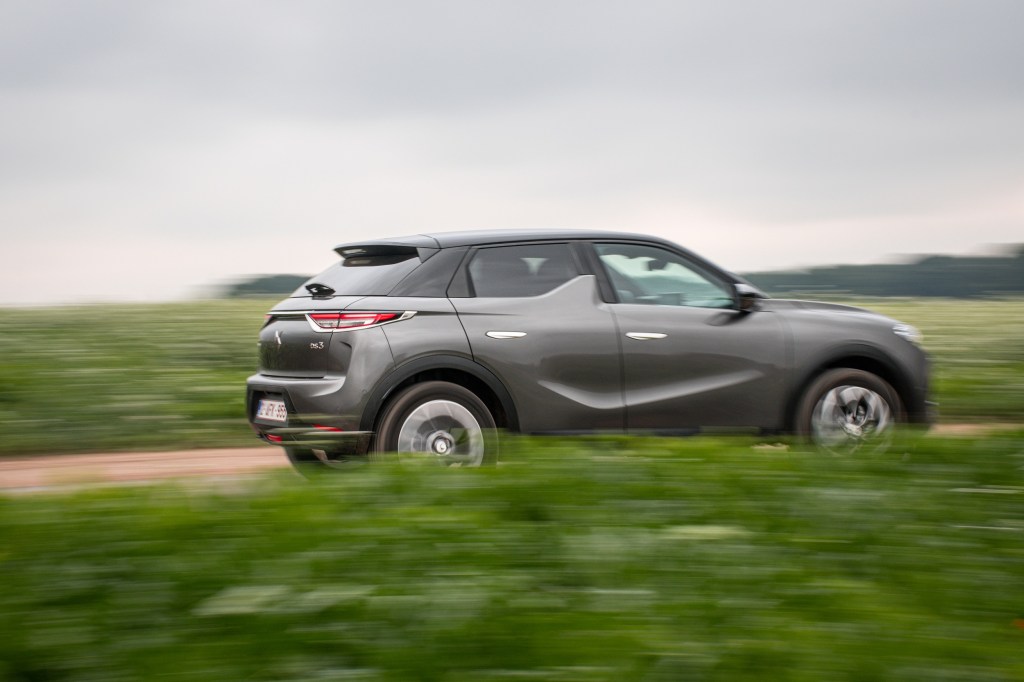
The first 100% electric model in the DS range is continuously under further development. The DS 3 CROSSBACK E-TENSE, on the market since 2019, now has a range of 340 kilometers according to the combined WLTP cycle, an increase of almost 7%.
During development, the focus has always lied on improving the practical use of the DS 3 CROSSBACK E-TENSE. In particular, the heat pump has been improved through the use of a humidity sensor to improve efficiency. The heat pump, supplied as standard, produces heat by compression to generate warm air. This significantly reduces the need for E-energy.
As a result of continuous development and ongoing discussions with the Formula E championship team, supported by DS Performance, the transmission ratio has also been optimized to improve the efficiency of the DS 3 CROSSBACK E-TENSE.
The hand stitched steering wheel upholstery stands out in an interior full of French panache…
Greater autonomy in real-world use is also achieved through the use of new 17″ class A tires developed by Continental. The Continental EcoContact 6 Q is available in 215/60 R17 96H and has a new high-tech silica compound to improve rolling resistance. improve and reduce noise emissions.
In Belgium, the DS 3 CROSSBACK E-TENSE is available from €38,400 (incl. VAT) with a 100 kW (DC) and 11 kW (AC) charger.
Recently, the new EQB has been added to the Mercedes full-EV fleet. An interesting car, which we hope to drive soon. In the meantime, we are looking forward to test for you from 7 December onwards the CLS 220d, and see what a modern Mercedes Diesel can still offer in these electrifying times. Also soon our faithful 1,6 litre petrol engined (now already more than 4 years old…) 180 B Class gets its Type A service at Hedin Automotive in Kontich, about which we will report too.
Then there is more intriguing company news about the Mercedes revolutionary production techniques they are unfolding in their Berlin factory, where they are rolling out electric motors for their EV cars. More about this in a forthcoming special report.
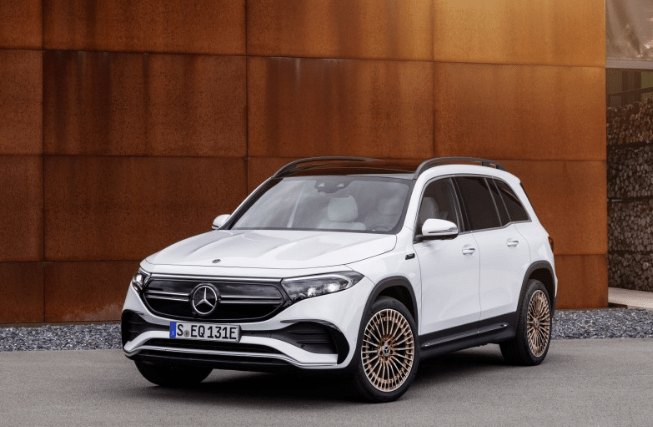
But now to some more news about the EQB. The EQB 300 4MATIC can be ordered now in our country, from € 63,041 VAT incl.
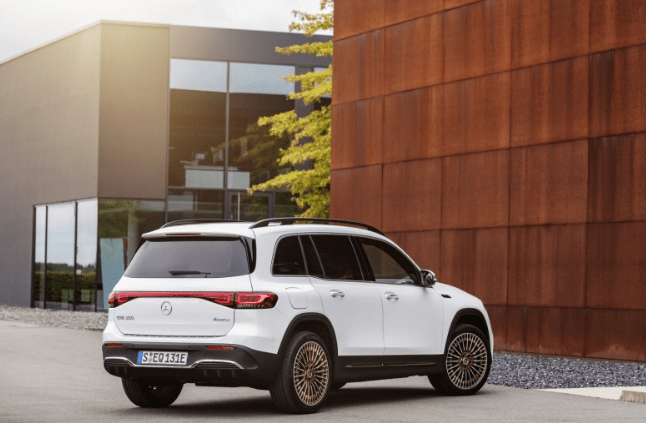
The EQB is quite roomy, and is optionally also available as a seven-seater. After the EQA, the EQB is already the second fully electric compact model from Mercedes-EQ.
The model range initially consists of the EQB 300 4MATIC (combined power consumption: 19.4-18.1 kWh/100 km). It has a motor developing 168 kW/228 hp. Then there is also the EQB 350 4MATIC (combined power consumption: 19.2-18.3 kWh/100 km) Its electric motor develops 215 kW/292 hp. The price of this more powerful version starts at € 65,945 VAT incl.
The sale price of the EQB includes one year of Mercedes me Charge. Mercedes-EQ customers have easy access to a network of more than 600,000 charging points worldwide via Mercedes “me Charge.” At the same time, they benefit from an integrated payment function with simple invoicing.
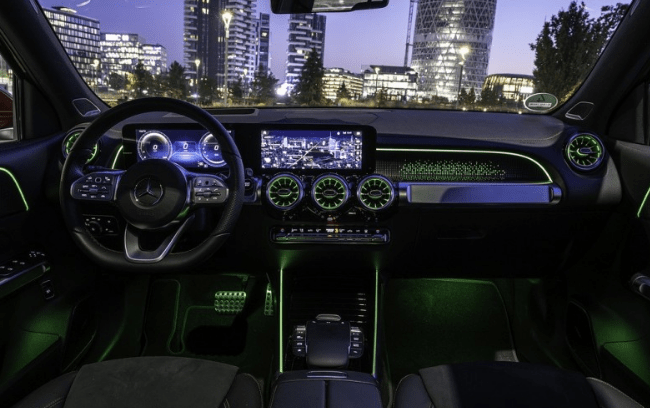
The EQB will be available as Edition 1 for a limited period after its launch. Externally, this limited edition combines elements from the “Night package” with AMG styling. But there is more: 20-inch AMG light-alloy wheels, matt copper and high-sheen finish complete the sporty look. Highlights of the Edition 1 interior are the upholstery in neva gray leather with CYBER CUT blue, the rear-illuminated trim in spiral look and air vents with the outer ring in silver chrome and the inner ring in energy blue.
Here are the main options and packages of this 4WD EQB, which is offered in Luxury Line and AMG line trims:
The third row of seats with two additional individual seats comfortably accommodates people up to 1.65 meters tall. The comprehensive safety equipment includes extendable head restraints, seat belts with belt tensioner and belt force limiter on all outer seats and a window bag that also protects the passengers in the third row of seats.
The Premium package further enhances comfort with the KEYLESS GO comfort package, the THERMOTRONIC 2-zone automatic air conditioning, a rich sound system and a wireless charging system for mobile terminals.
The EQB comes with intelligent driver assistance systems with cooperative driver support. The Driving Assistance package now includes additional functions. It includes for example the exit function, the emergency lane function, the exit warning function that warns the driver of passing cyclists or vehicles, and a warning when pedestrians are detected near a zebra crossing.
We show you here some photos of the EQB in the meantime. Stay tuned for, as said, more news about the cars with the iconic star!
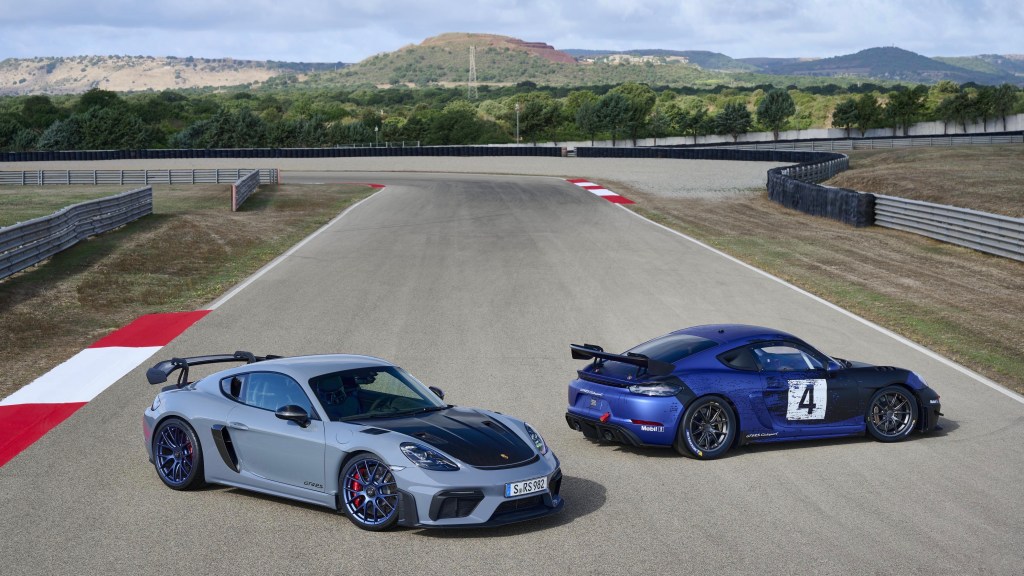
The 718 Cayman GT4 RSand718 Cayman GT4 RS Clubsport
Indeed, there is no Motor Show in Brussels this year. But in the showrooms, there is no lack of news. Also from one of the most iconic sports car manufacturers around: Porsche. Your servant had a good taste of these unique cars in his early days as a (test) driver. Just look at my report in these columns “Some early photos from my automotive beginnings”, where I am to be seen behind the wheel of a 914-6 VW Porsche, or an early 911… Just klick on the link here: https://autoprova.be/2021/03/27/some-early-photos-from-my-automotive-beginnings/
Needless to say that we want to repeat the experience, and collect for you some driving impressions of their latest products. In the meantime, we will present Porsche news on a very regular basis in the future!
Just read on here…
Hans Knol ten Bensel
A three lane future for Porsche…
Porsche is seen cruising into the future in three lanes: alongside exhilarating petrol engines and powerful plug-in hybrids, electric powertrains form the third pillar of the powertrain strategy.
This diversity was clearly seen on display at the LA Auto Show. In total, Porsche exhibits there five world premieres. In addition to the new 718 Cayman GT4 RS – the highlight of the motor show – the 718 Cayman GT4 RS Clubsport, the Taycan GTS, the Taycan GTS Sport Turismo and the Panamera Platinum Edition are making their first appearances.
The Porsche 718 Cayman GT4 RS is the new flagship model in the 718 family. On the Nürburgring Nordschleife, it outpaced its sibling, the 718 Cayman GT4, by more than 23 seconds with a time of 7:04.511 minutes on the 20.6 km version of the circuit.
The heart of this sports car is the 368 kW (500 PS) naturally aspirated six-cylinder boxer engine. The maximum torque is 450 Nm. The low-ratio Porsche dual clutch transmission (PDK) underpins the incredible acceleration. The 718 Cayman GT4 RS sprints from 0 to 100 km/h in just 3.4 seconds and has a top speed of 315 km/h.
In Belgium, the new Porsche 718 Cayman GT4 RS can now be ordered at a base price of 153.065 euros (including 21 per cent VAT).
At the same time, the 718 Cayman GT4 RS Clubsport racing version will celebrate its premiere in Los Angeles. From 2022, the customer sports car will be launched in multiple national and international racing series.
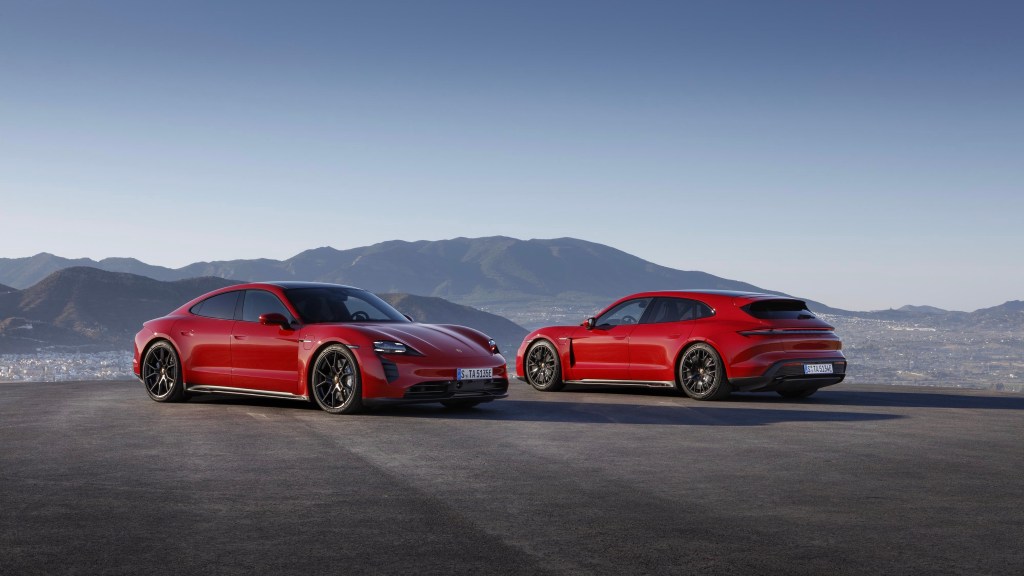
Truly electrifying: Taycan GTS and Taycan GTS Sport Turismo
With a range of up to 504 km, based on WLTP figures, the new Taycan GTS is the first of the model series to hit the 500-km mark. The new GTS is the sporty all-rounder of the model range. With up to 440 kW (598 PS) of overboost when using Launch Control, its power is impressive to say the least…
The third body variant of the first all-electric Porsche model series is the Taycan GTS Sport Turismo. The newcomer shares its silhouette and rearward-sloping roof line with the Taycan Cross Turismo. It ps practical too: the luggage compartment offers more than 1,200 litres of load capacity under the tailgate.
Both model variants will roll out to dealers in spring 2022. Further engine options for the Sport Turismo will follow soon!
Elegance with the Panamera Platinum Edition
The new Panamera Platinum Edition combines elegant, sporty design and high-quality equipment at an attractive price.
The exterior is characterised by accents in Satin Gloss Platinum. These can be found on the air outlet trims, the PORSCHE logo, the model designation and the standard 21-inch exclusive Design Sport wheels. The side window trims and the sports tailpipes are finished in High-Gloss Black to match. The interior is up to the mark with 14-way electrically adjustable comfort seats, the Black décor made of brushed aluminium and the door sill guards with the Platinum Edition logo. This extensive list of standard equipment also includes LED main headlights with matrix beam including PDLS Plus, adaptive air suspension including PASM, a BOSE® Surround Sound System and much more.
Depending on the market, the Platinum Edition is available as the Panamera, Panamera 4 and Panamera 4 E-Hybrid. The first models will be delivered to customers beginning 2022.
Due to the harsh Covid times, the Belgian Motor Show early next year has been canceled, which is unfortunate for many manufacturers. Renault has some very good news, and since it is not on the show, we will present it here for you on these pages. We have also fond memories of testing the E-Tech plug-in hybrid Mégane Grandtour, Captur and the all electric ZOE. But in the meantime many more interesting Renaults and last but not least Dacia’s are launched, and we hope to collect some test and driving impressions for you soon.
Let’s here have a look at what Renault has up its sleeve for our market(s) here…
Hans Knol ten Bensel
Mégane E-TECH Electric in Belgian premiere
Renault is exhibiting in its dealer showrooms for the first time the all-new Mégane E-TECH Electric, in line with its announced offensive in the compact car segment (C-segment), the largest segment in Europe.
With Renault’s new ‘Nouvel’R’ logo, the Mégane E-TECH Electric represents the transformation of the brand: it symbolizes the reinvention of the core market. It presents itself as unique and technological with the jewel in its interior, the “OpenR” screen that merges the data from the dashboard with the multimedia system as a whole.
New Dacia Jogger…
The New Jogger will be the star of the Dacia showrooms. The Dacia Jogger offers up to seven seats and offers the efficiency of a station wagon, the interior space of a van and the look of an SUV.
With its Spring, Dacia is starting its electric transition. By offering the cheapest electric car on the market, Dacia is making mobility affordable again, just like it did with Logan back then. The success testifies to the market enthusiasm for a simple and affordable electric car, as 40,000 orders have already been registered in Europe, of which more than 650 in Belgium (between July and November).
New Alpine range in world premiere
The new Alpine A110 S
Visitors to the Alpine showrooms can experience the brand new Alpine A110 range in a world premiere. The sporty coupé is now available in three versions, each with its own character. Alpine A110 with its 252 hp 1.8 engine is the entry model and the “purest” version of the range, according to some aficionados. New is the Alpine A110 GT, which shows itself more opulent and more powerful with its 300 hp 1.8 litre engine, is the sports car for everyday rides and long journeys.
Also the new Alpine A110 S presents itself with its specific sports chassis. It can now be fitted optionally with semi-slick tires and an exclusive aerodynamic kit, consisting of a carbon fiber rear spoiler for increased downforce, a carbon fiber front splitter and extended front fairings under the car to increase the efficiency of the rear diffuser and flat floor. We will be keen to collect some driving impressions for you!
At my recent visit to the Ford Europe proving ground in Lommel I got a taste of Ford cars, and I must admit that I was very impressed by their excellent dynamic qualities. A good reason to take a closer look at their products and what Ford is up to lately.
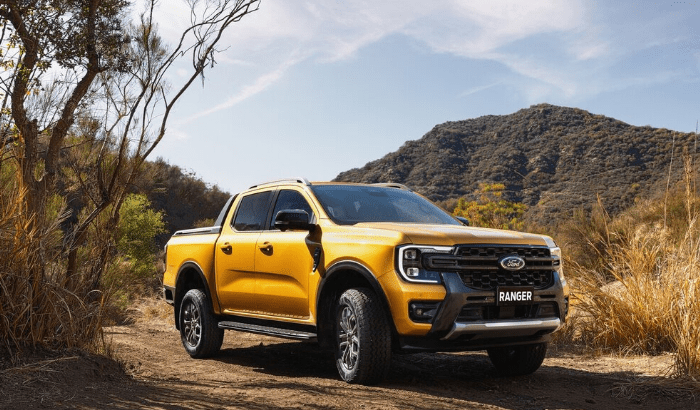
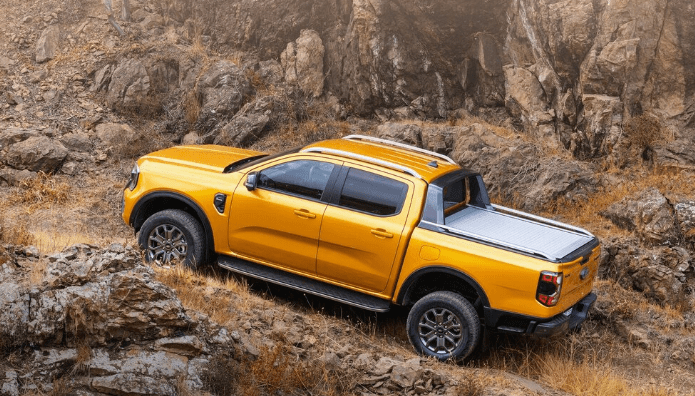
Today they announced the following generation of their evergreen in the pick-up scene, the Ranger. In fact, Ford engineers and designers teamed up with customers around the world to create a pick-up they can rely on for work, family and play. They changed the exterior design and designed a more high-tech, inviting interior.
The design features a defined new grille, and signature C‑clamp headlight treatment at the front while we also see bolder wheel arches which gives Ranger a sure-footed stance. For the first time, Ford Ranger offers matrix LED headlights.
Beneath the new bodywork is an upgraded chassis riding on a wheelbase 50 mm longer and a track 50 mm wider than the prior Ranger.
New powertrain choices
Customers wanted a choice of more power and torque for towing heavy loads and extreme off‑roading, so the team added Ford’s proven 3.0-litre V6 turbodiesel and developed it for the Ranger.
The next-gen Ranger will also come with a choice of proven Single-Turbo and Bi-Turbo 2.0-litre in-line four-cylinder diesels.
Improved ride and handling
To develop the ride and handling expected of a truck customer’s use for a wide range of work, family and play – engineers focused on the fundamentals.
Engineers moved the front wheels forward by 50 mm for a better approach angle and outboard for better off-road articulation, both of which improve the off‑roading experience. They also shifted the rear suspension dampers outboard of the frame rails to give drivers and passengers a better ride both on- and off‑road, no matter if they’re carrying heavy cargo for work, or just taking the family out for dinner.
Customers will have a choice of two four-wheel drive systems – an electronic shift-on-the-fly system, or an advanced new full-time four-wheel drive system with a reassuring set-and-forget mode, designed for capability when and where customers need it. Off-road recovery is made easier with prominent dual recovery hooks in the front bumper.
Customer-focused interior
Customers wanted a flexible, modern cockpit that caters to both work and family duties. So, Ranger needs to serve as both a workspace and a haven, providing smart and connected features with more comfort and storage options than ever before.
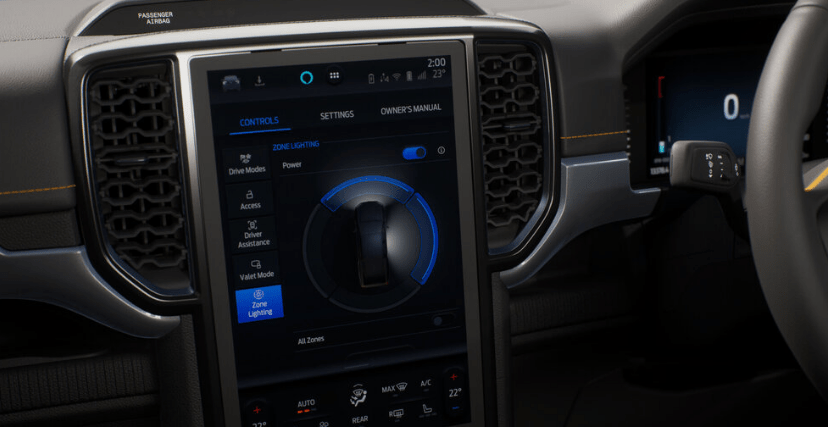
The heart of the Ranger’s connective experience is the large 10.1-inch or 12-inch touchscreen in the centre stack. It complements the fully digital instrument panel.
Many of the traditional driving mode controls have been moved from the dash and centre console to their own dedicated display on the SYNC™ screen. With one button press, drivers can go to Ranger’s dedicated screen for all off-road and drive modes where they can monitor the driveline, steering angle, vehicle pitch and roll angles and other controls.
Better access…
Ford designers created an integrated side-step behind the rear tyres of the next‑generation Ranger, to create a strong, more stable way for them to access the box.
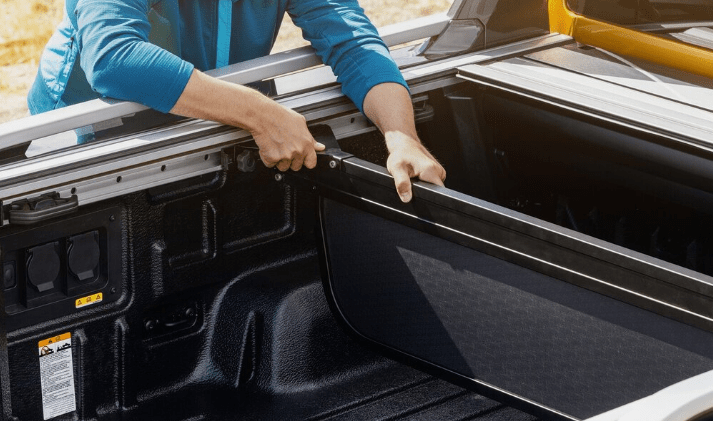
Additional thoughtful, customer-focused touches include a new, tough plastic-moulded bedliner that helps protect both the truck bed from scratches and owners’ knees from kneeling on a steel truck bed.
Durable, flexible load box caps around the sides of the box and across the tailgate conceal structural attachment points for canopies and other aftermarket accessories.
In addition, Ranger offers a new cargo management system designed with dividers to hold various sized items – like timber or toolboxes.
Accessories to help you personalize your Ranger…
Customers in Europe will be able to personalise their next-gen Ranger from launch with a range of over 150 fully factory‑backed work, urban and adventure accessories.
Order books for next-generation Ranger will open in Europe in late 2022 for customer delivery in early 2023. The current Ranger is Europe’s pick-up segment leader and recently set a new September year-to-date sales record of 45,539 units, with market share of 39.9 per cent.
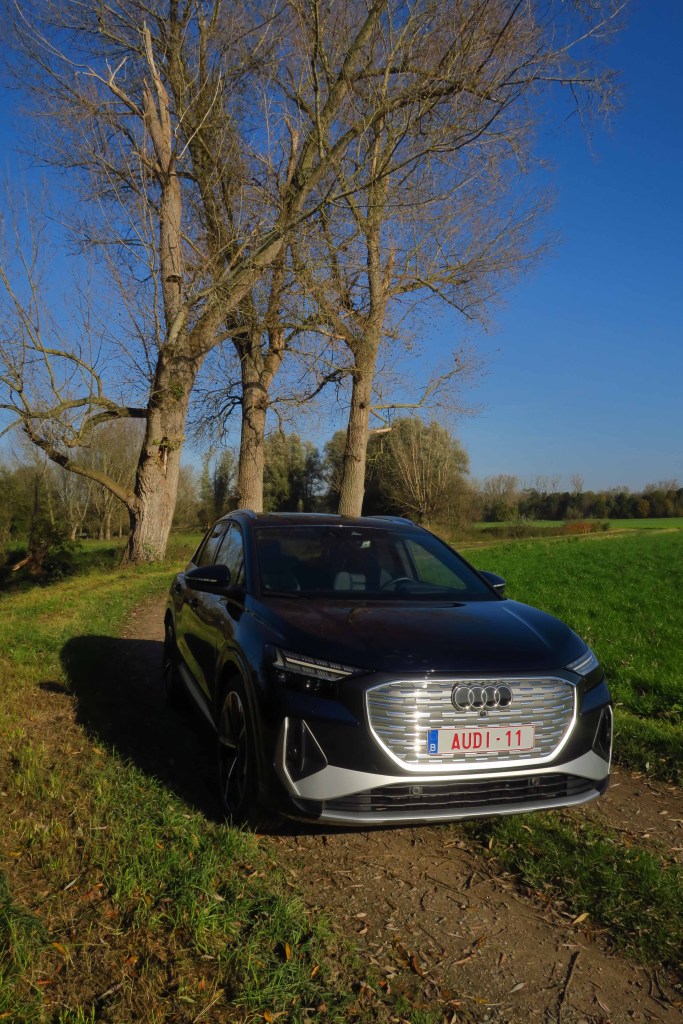
Audi has ambitious plans for further electrification: in 2025, it will have not less than 20 pure EV’s in its model range. Besides the big Audi e-tron Quattro and its Sportback version and the stunning e-tron GT, another pure EV joins the party: the compact SUV Q4, which is also available right away in a stylish Sportback version.
The Q4 comes in two battery and power versions. The base model is the Q4 35 with a 55 kWh battery. Its range is said to be 350 kilometers and it has a 125 kW/170 HP motor driving the rear wheels. We tested for you the Q4 40 which has the 77 kWh battery and the 150 kW/204 HP motor we also find in the VW ID.4.
The Q4 is built… in the VW factory in Zwickau, where also the ID.3 and ID.4 are rolling off the production lines. Only logical if one knows that the Q4 runs on the same MEB platform as the two Volkswagens.
So the Q4 is a dressed up VW? Not at all, the Audi engineers and designers have succeeded in giving the Q4 its unmistakable premium character and Audi identity.
Just read further…
Hans Knol ten Bensel
Stylish
The bodywork of the Q4 breathes the timeless Audi styling language, with very good proportions throughout. The front end grille betrays its “pure” EV character, as it is closed. Indeed, electric motors need a lot less cooling.
The dashboard and cabin breathe Audi panache: the instrumentation is directed towards the driver here, rather untypical for a SUV. Bravo for Audi, and they did also very well with the instrument layout: two large dials are seen in front of you, on the digital display which is almost equally as large as the central touchscreen.
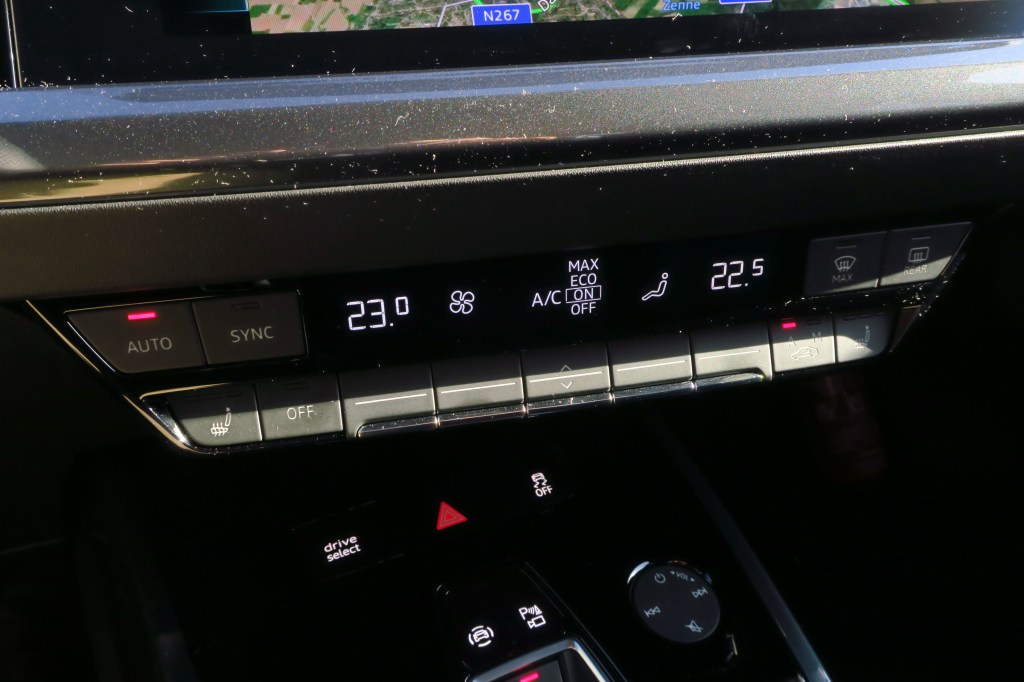
The ventilation commands are thankfully also on a separate panel with extra knobs, and also the audio volume knobs are of the rotating touch type as found on the early Apple I pods.
When you opt for the MMI package, you can also enjoy an augmented reality head up display. Our test car came with it and we liked it very much.
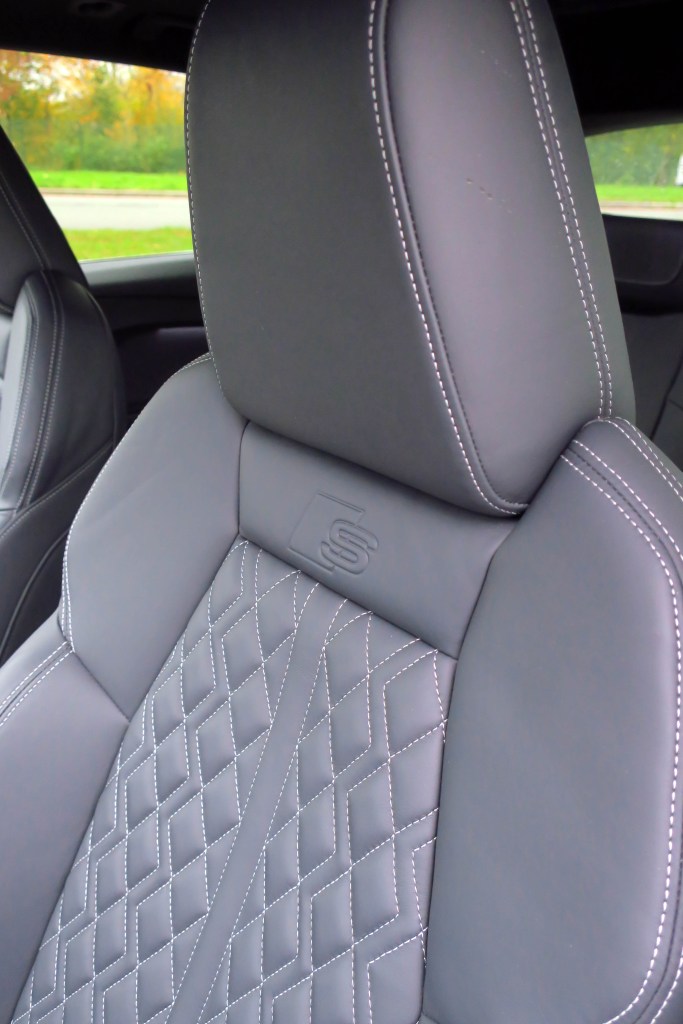
In the posh “S line” equipment level of our test car the seat upholstery with its typical cross stitched patters was very pleasing to the eye, and the seats are also very comfortable indeed.
While we are talking about the cabin, we can mention here that also the Q4 offers plenty of room, also for its rear passengers, taking advantage of the good qualities of the MEB platform. This SUV is certainly not compact here…
There is also plenty of room for storage in the interior, a good 24,8 liters. On the central console between the two front seats you have already 4,4 liters at your disposal.
Luggage space is more than adequate with 520 liters, with both rear backrests down you have a maximum of 1490 liters at your disposal, when you use the available space up to the roof.
The charging cables are neatly tucked away under the luggage floor. Only a bit cumbersome to reach them when the boot is fully loaded when on holiday. For the rest of the year it’s very fine.
Dynamic and smooth…
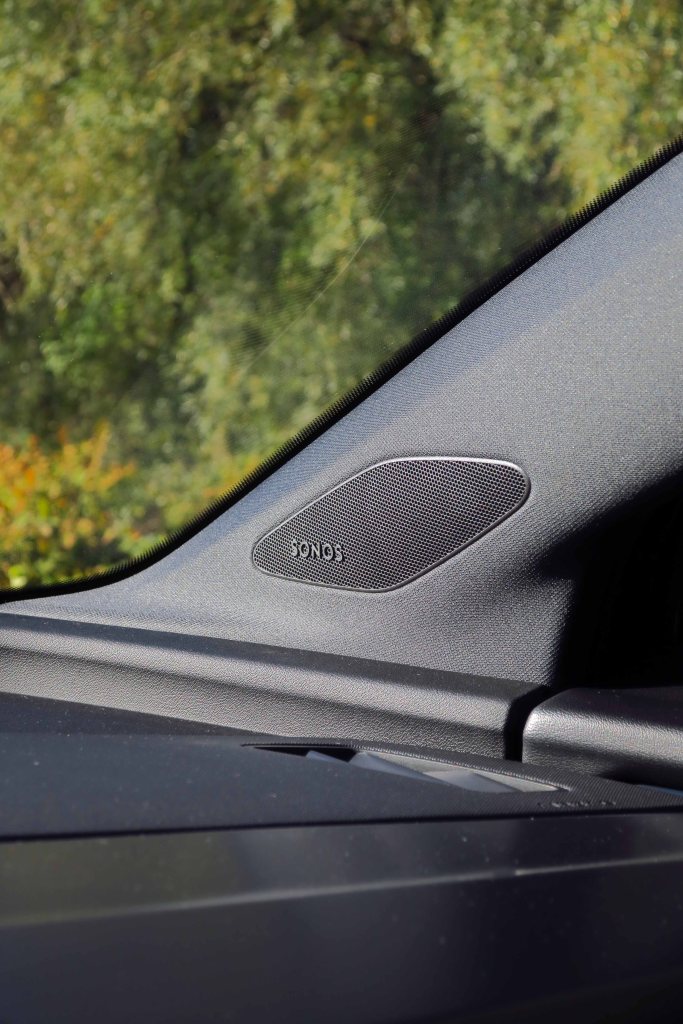
Let’s get behind the wheel now and start driving. As an EV befits, this Audi is again supersmooth. It is “Zen” driving all the way. EV’s are just a delight to drive in town, with their feline power delivery. 310 Nm of torque is at your disposal, always. It makes this Audi beautifully agile and nimble in dense traffic. Stop and go traffic is now for you an ideal moment to relax behind the wheel, and enjoy the beautiful sound coming from the Sonos system we had in our test car.
Performance is of course excellent, with a 0 to 100 km/h acceleration time of 8,5 seconds. Top speed is limited to 160 km/h, as in the ID.4.
German Autobahn aficionados would like this to be more, but then we would not speak of a useable range anymore.
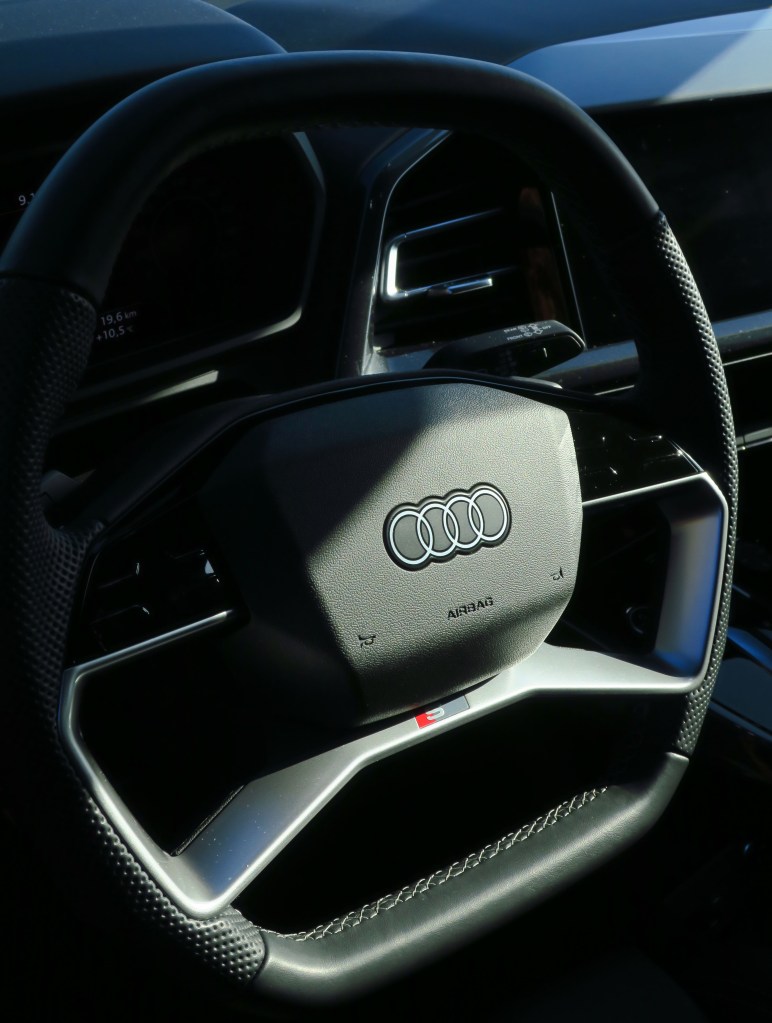
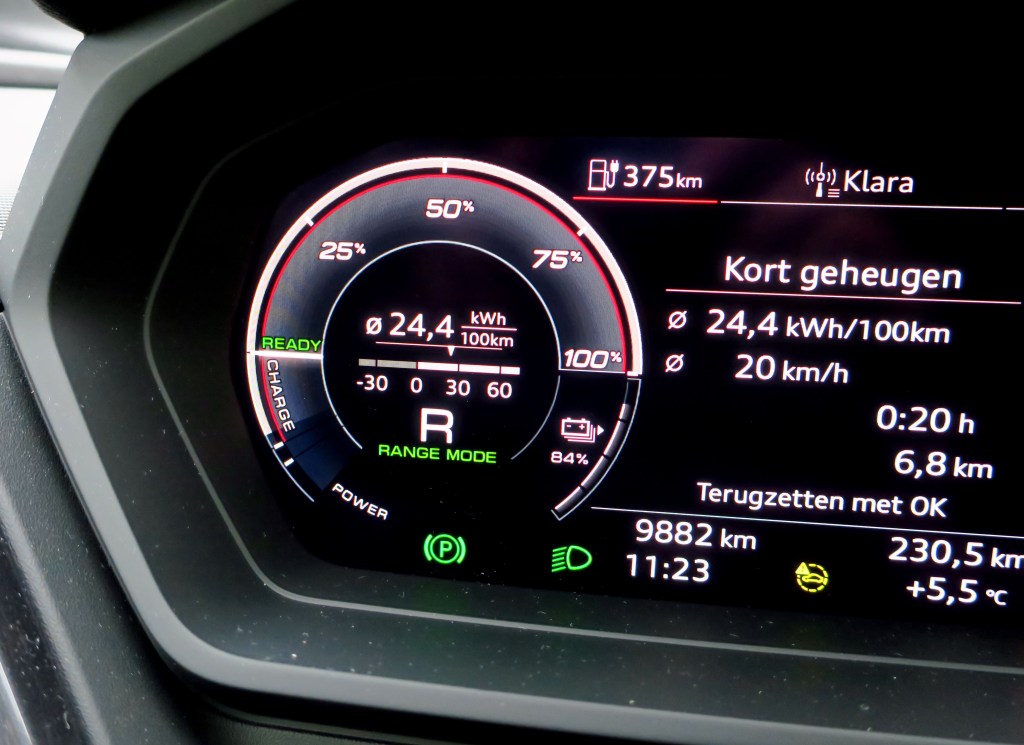
When it comes to range, your driving style is here of paramount importance. You see it clearly on the photo showing the instrumentation: when collecting our test car, we drove it gently to the motorway, where we drove a constant 95 km/h, just a bit faster than the trucks, to reach our photo spot. Consumption was then a very reasonable 15,2 kWh/100 km, over 19,6 km at an average speed of 42 km/h.
A cold start in the morning, with heater full ablaze and just some slow stop and go traffic paints another picture. There the consumption over 5,4 km was a whopping 43,6 kWh. The following photo tells the story.
When we take the WLTP consumption as the norm, being 19,3 kWh, then the effective range would be 530 km. In practice, you can expect a useable range of a good 400 km.
There are different driving modes on the Audi, one of them being the “Range” mode. It limits power and sets a maximum speed of 90 km/h.
Charging at the home wallbox is possible up to 11 kWh, and on public charging points you can “fast charge” your Audi at not less than 125 kWh. Then it takes only 10 minutes to add an extra of 130 km to your range.
Practice in our country is of course rather different to say the least. 98 % of our existing condominium and apartment buildings have NO wallbox provisions in their underground garages, not even electricity sockets in many cases, limiting possibilities of enjoying EV propulsion greatly.
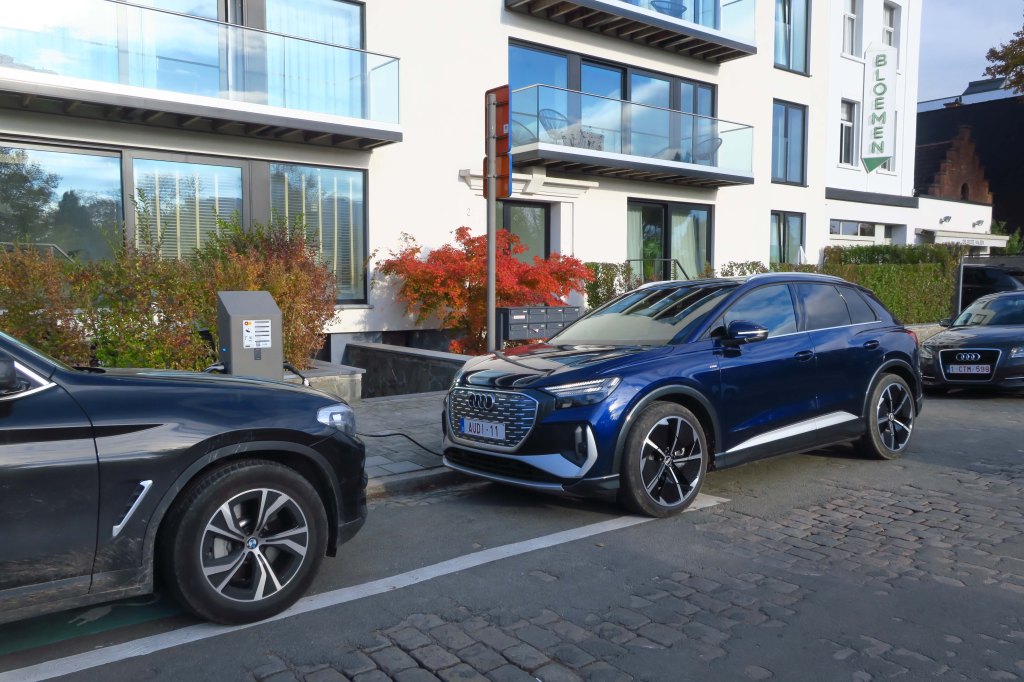
My nearest public charging point is about 1 kilometre away, and this is not a “fast” charging point. Allowed time for charging is also limited to 3,5 hours. Belgian municipalities – at least those near Antwerp – have still to wake up to reality that the charging points have TWO sockets and can actually charge two cars simultaneously. The square they paint on the pavement actually is clearly meant for ONE car. Users of the charging point are so kind and gentlemen-like to ignore this, so your servant could charge the Q4 too, as the following photo shows, which leaves one certainly perplex…
Driving the Q4 to Knokke, we found no unoccupied charging points within a reasonable walking distance from the place we stayed, so the next day we used the “Range” Driving mode to get us home again. It was a magnificent and leisurely drive…
Car manufacturers are certainly not to blame here. Their products increasingly offer useable ranges, and we could easily plan a longer route on the Audi, where the touchscreen clearly indicated which charging points en route we could use, how long we had to charge, which were open, etc.
Of course, providers are working hard to change the situation. At the moment of writing, IONITY is invetsing 700 million € for 5.000 extra HPC charging points in Europe.
Comfortable and agile
Besides room of its occupants, the Audi Q4 also offers a genuinely comfortable ride and steering is also precise and engaging. Audi’s are build to deliver driving pleasure, and this is also found in this Q4. A well balanced car, certainly making the very best of what the MEB platform has to offer. The same goes for the brakes, which can be well dosed to come to a smooth stop.
We also mention here the “coasting function”. When one hasn’t chosen the “B” mode, the Audi will just coast along when you lift the throttle, and this adds greatly to the “Zen” driving pleasure, once you have mastered the art of anticipative driving.
Of course you can recuperate energy when decelerating, or you can leave everything to the wisdom of this Q4. Indeed, you can put the Predictive Energy Assistant at work, which will interpret road signs and navigation data. Then the system will calculate for you continuously the right balance between sailing and energy recuperation, no less!
Conclusion
Audi has succeeded in designing and building a magnificent compact EV on the MEB platform. A car with impeccable finish, oozing with style, panache, good comfort and handling, very good range and performance, and on top of all that roomy too.
Of course this has a price tag, but it is a timelessly styled premium car, one of the very best which ever rolled of VW production lines.
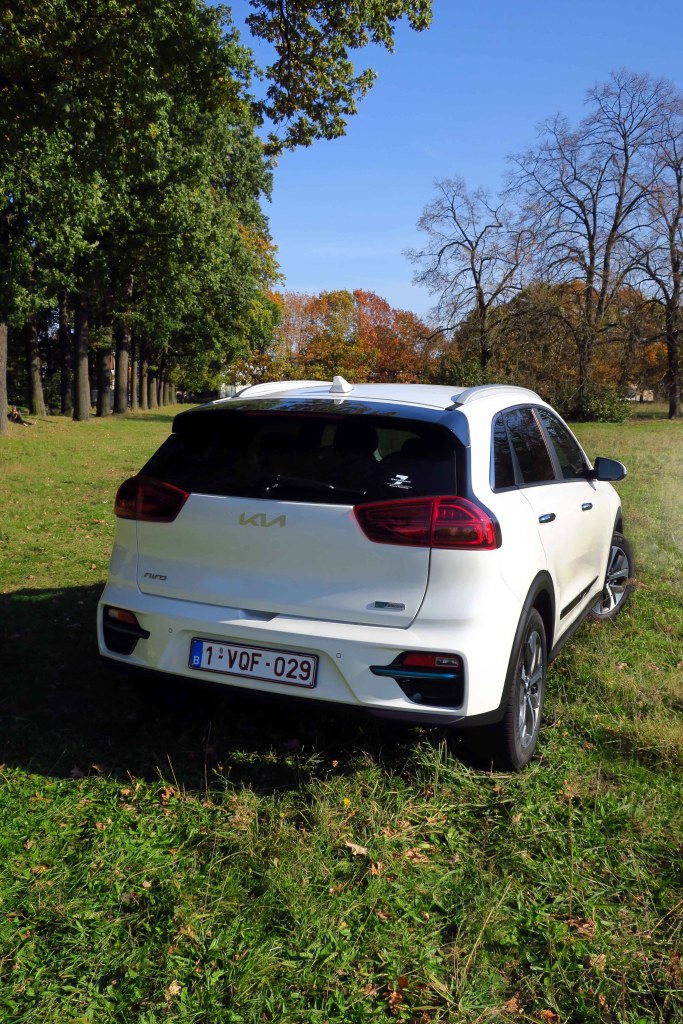
The Kia Niro is already a few years amongst us, first electrified as hybrid, then plug-in hybrid, and finally as a “pure” EV.
The competition has become a lot stronger since its introduction, notably with newcomers as the Volkswagen ID.3, the Peugeot 2008 and the Citroën ë-C4, but this Kia still has a lot of qualities which make it still earn very well an excellent place its segment. Of course, Kia is ready for this competition, and at the moment of this test going to press, it presents a completely new version of the Niro at the Seoul motor show, but the present model is still relevant enough to put it through its paces for you here.
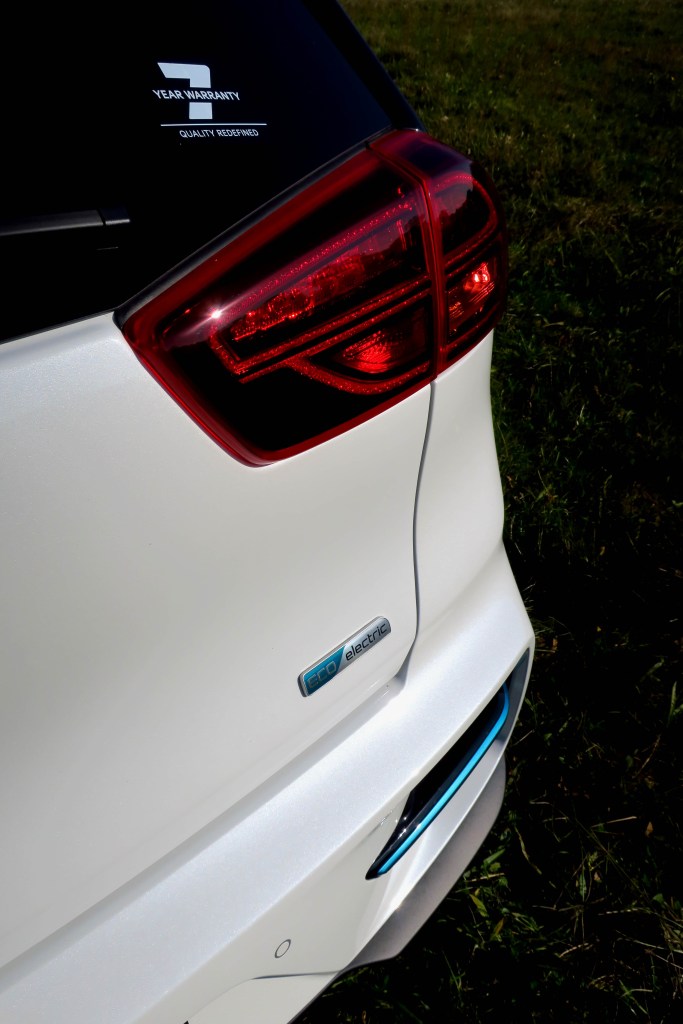
We should also not forget that this Kia EV with its 64 kW battery set the trend towards longer ranges: according to the WLTP norm, it is still good for 455 km…and on top of that, it offers very good value for money, with a 7 year guarantee!
Hans Knol ten Bensel
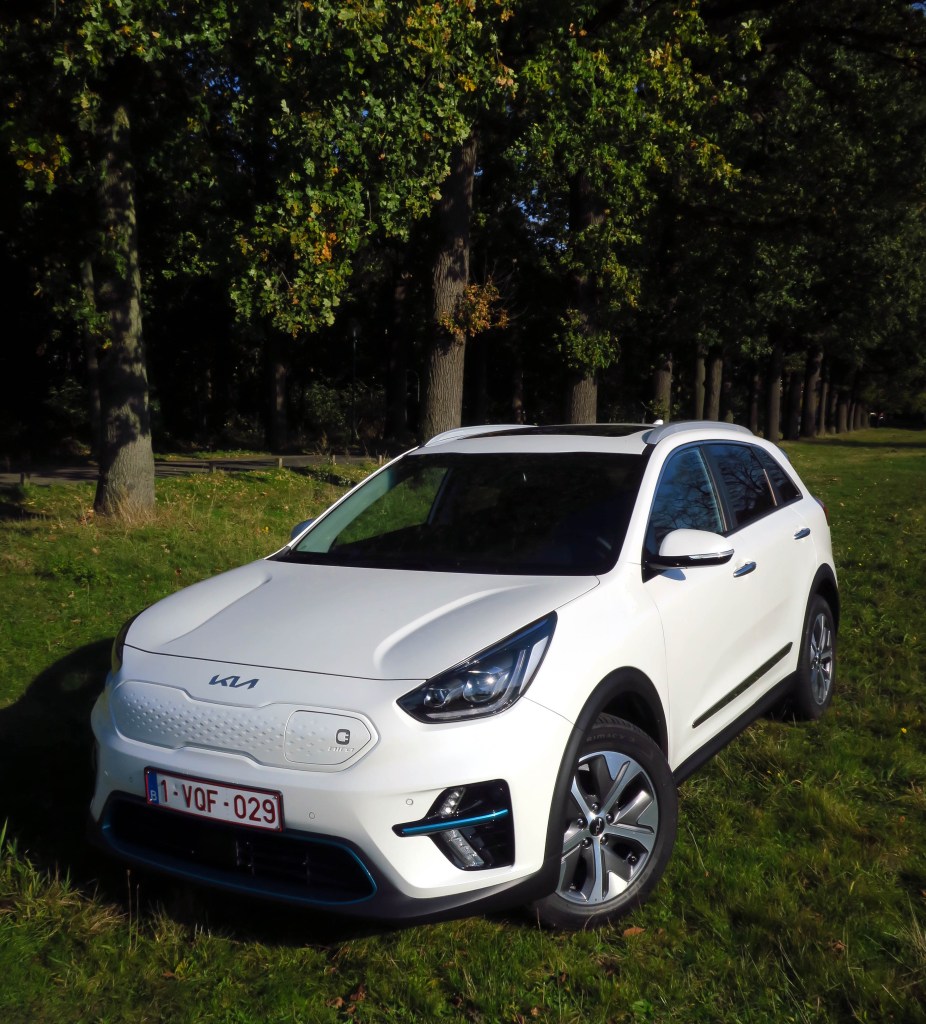
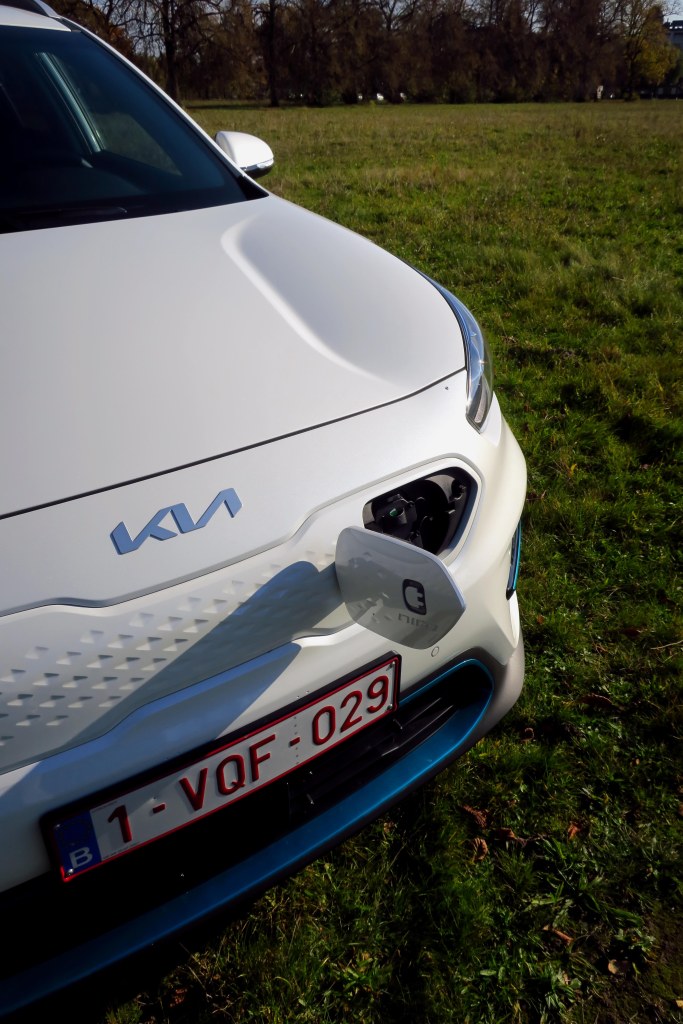
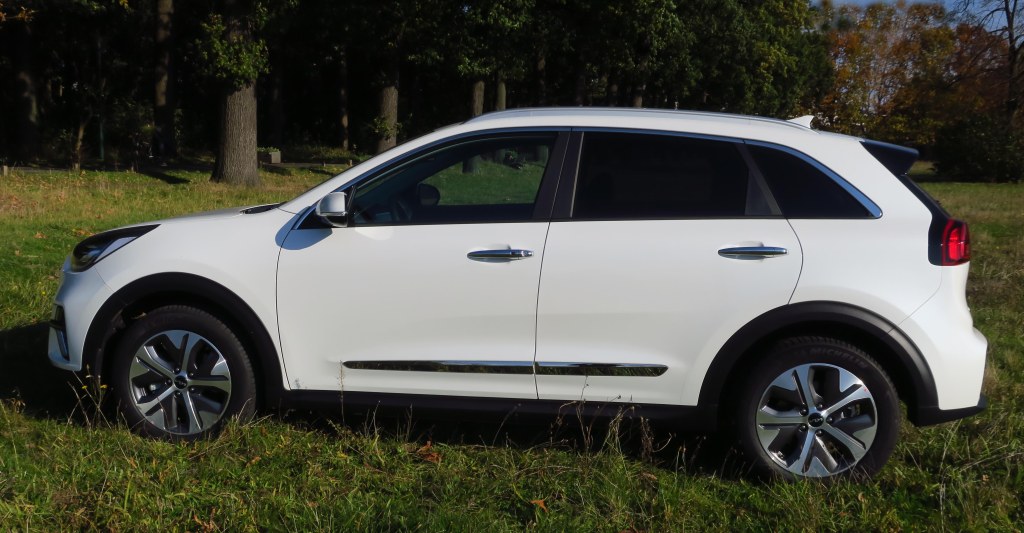
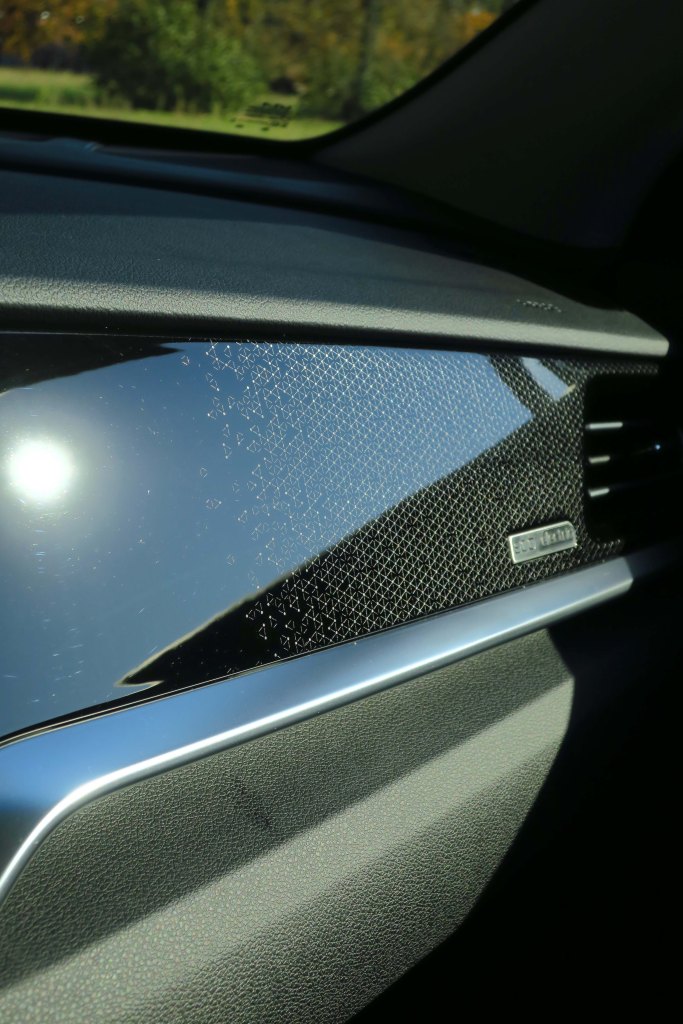
The Kia Niro still has very pleasing and now already familiar looks, with some specific blue coloured accents for the EV version. The front end clearly shows its EV character, and also the flap of the charging sockets is clearly visible. The cabin is well laid out, with classic disposition of instrumentation, commands and central touchscreen, so indeed one would hardly suspect sitting in an EV vehicle. This is all for the better, as one is very soon familiarised in using and driving this Niro.
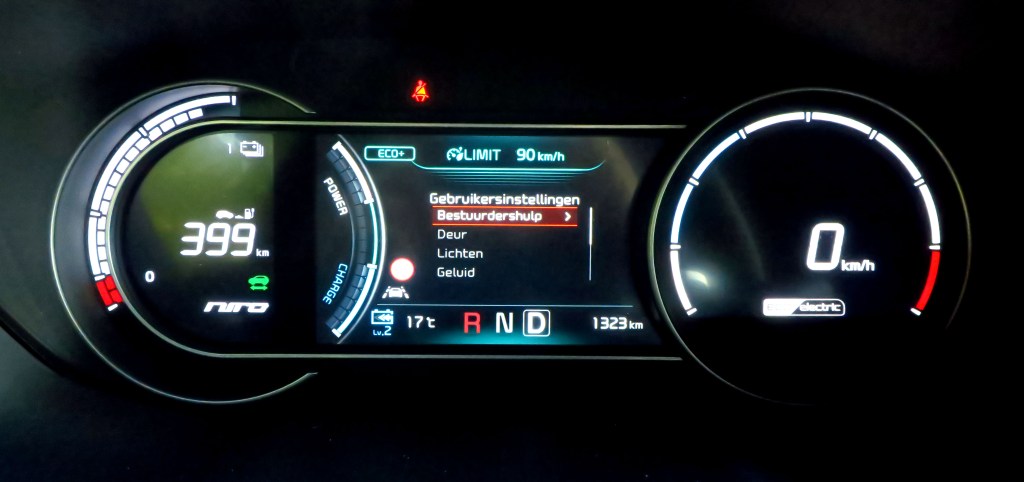
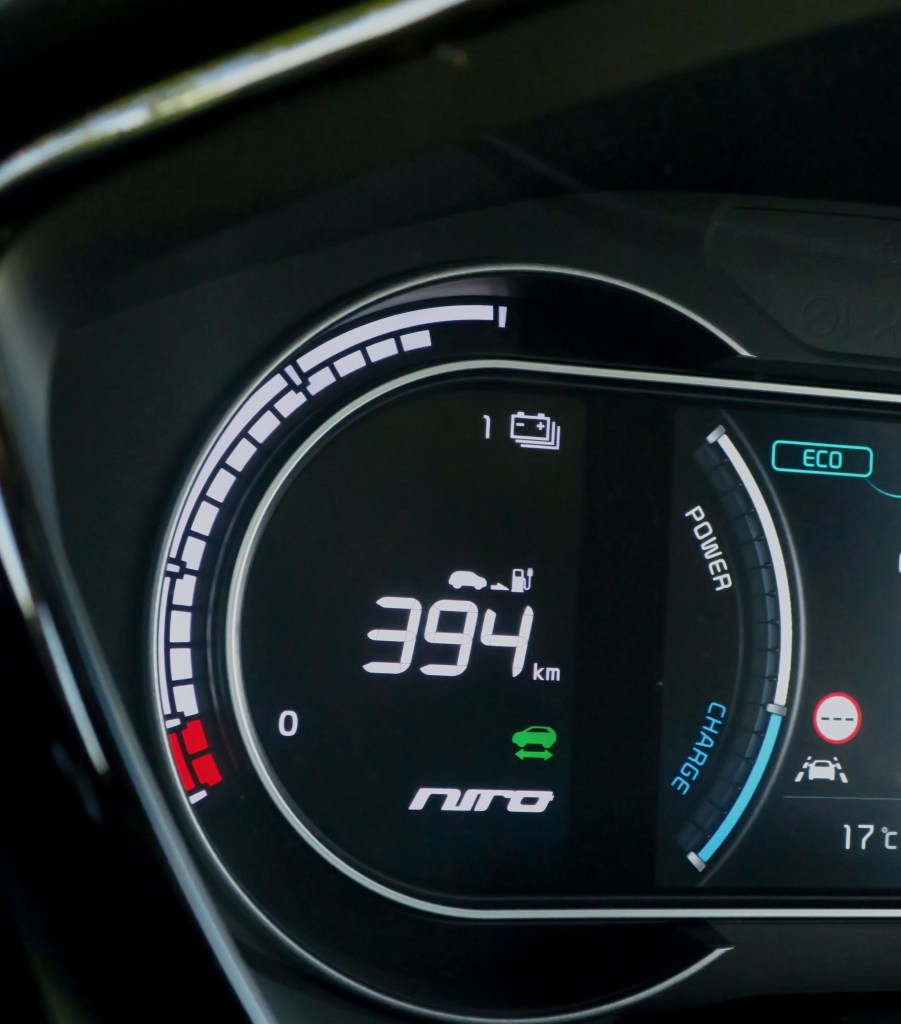
The display in front of you clearly indicates of course battery status and range, as well as the immediate or average consumption in KW/h. Soon one notices that this 150 kW or 204 HP Kia is quite frugal, where your driving style is of prime importance of course.
The manufacturer quotes 15,9 kW/h according to the overall quite realistic WLTP cycle. We took the test car on a lengthy trip to Holland, using the ECO mode throughout, and easily achieved an average of 17 kW/h.
It was delicious to be able to make this trip without the usual range anxiety, and on top of that to find plenty of public charging points in the Netherlands, not even 50 meters away from the house of the family member where we stayed over the weekend. All in all, in this ECO mode, a range of over 400 kilometers is even in more wintry conditions easily achievable when adopting a normal driving style.
Having said this, EV cars have decidedly come of age with our northern neighbours, where the e-Niro has been the top selling car in 2020 by the way…
Smoothness combined with power…
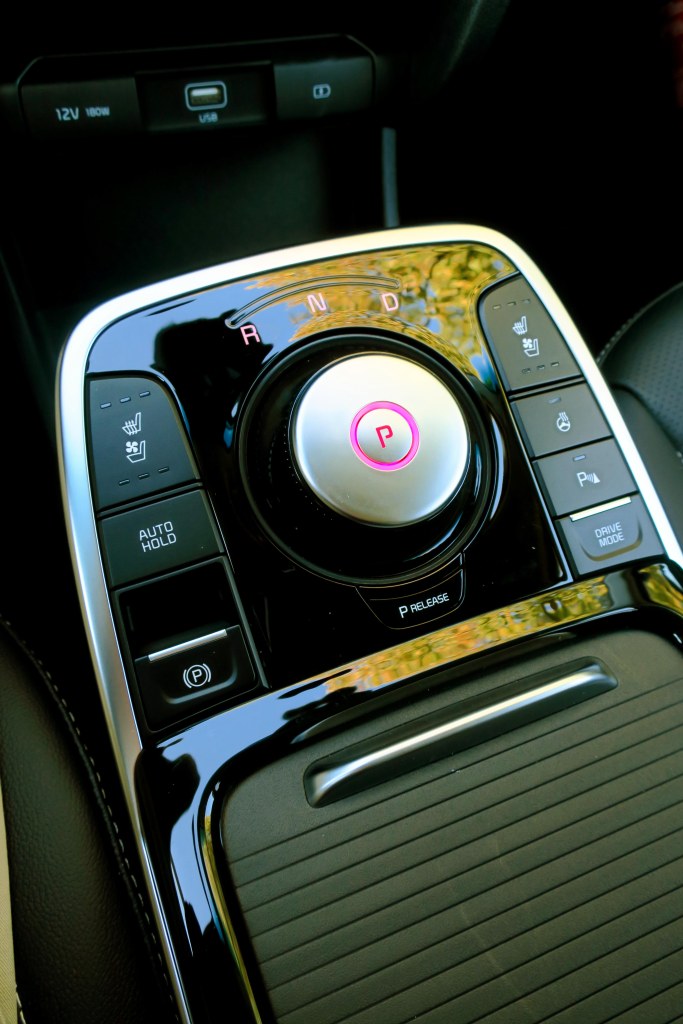
As a pure EV befits, “Zen” like feline and vibrationless power is for you to enjoy here. On the centre console is a familiar circular knob which lets you choose between drive and reverse, as we have seen in Jaguars and Land Rovers.
Off you go, and indeed, this Kia has under the hood what it takes. The front wheels are driven, and will pull you from 0 to 100 km/h in merely 7,8 seconds, which is no small feat as one knows that the kerb weight of the e-Niro is 1712 kg. Top speed is a very creditable 167 km/h. So performance wise, one is rather spoiled too, besides of course the uncanny smoothness and silence of the drivetrain.
There are paddles at the steering wheel column which let you choose the amount of regenerative braking, so “one pedal” driving is easy to achieve.
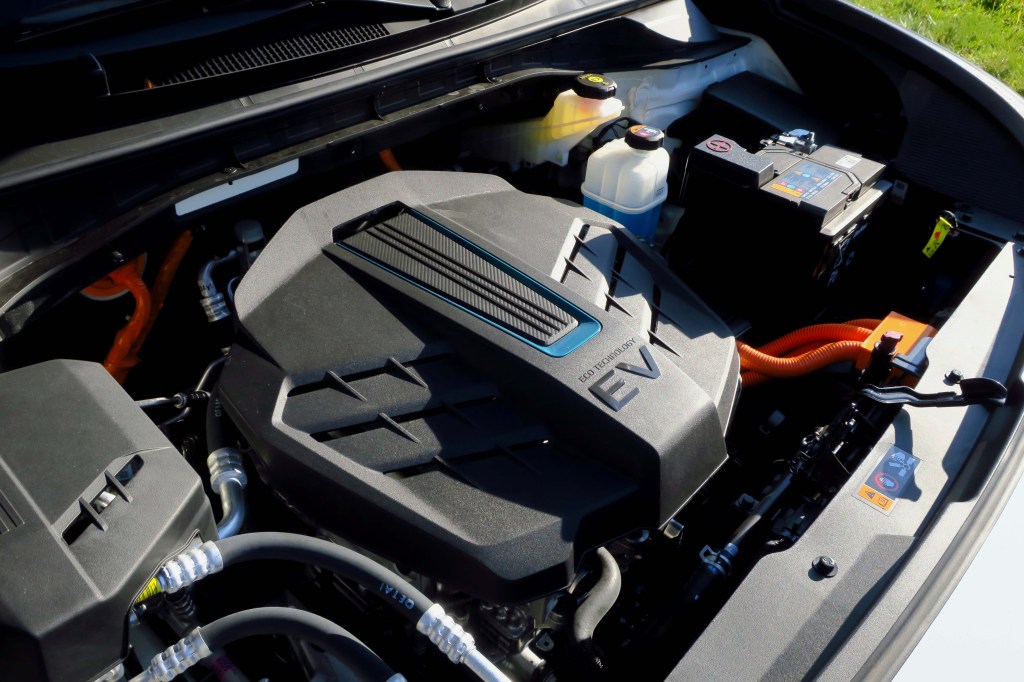
On the technical side, let us tell you here that our test car was equipped with the lithium-polymer 64 kW/h battery and that the permanent magnet synchronous motor has a power of 150 kW/204 HP and 395 Nm of torque.
For home charging, one is of course well advised to install a three-phase wallbox. With the optional three phase onboard charger, you can be fully charged in some 4,5 hours.
Roomy and practical
The e-Niro is quite roomy, with sufficient legroom also for taller passengers in the rear, with standard luggage space being a good 451 and 1405 liters.
With the rear cover in place, the volume is reduced to 280 and 1175 liters respectively. In the cabin, there is enough storage room in the central console and beneath the central armrest as well as the door bins. As we said, using infotainment and all the commands for heating/airco/ventilation is intuitive, and we also used the voice command to good effect for navigation amongst other things.
Safe handling
The e-Niro will not exactly invite you to throw it around corners, but its handling is fine to say the least. Sudden steering wheel movements will be met with initial understeer, with well controlled oversteer by the ESP when you lift the throttle. This e-Niro will not lean unduly in fast corners, has good straight line stability and is comfortable too.
Conclusion
The present e-Niro with its attractive range is still very much a desirable EV, combining excellent performance with low E-consumption. Add to this the good value for money considering the space and equipment found, with last but not least the 7-year warranty. You will agree that this EV-range trendsetter which will accompany you for many years in to wonderful “Zen” world of EV motoring and mobility.
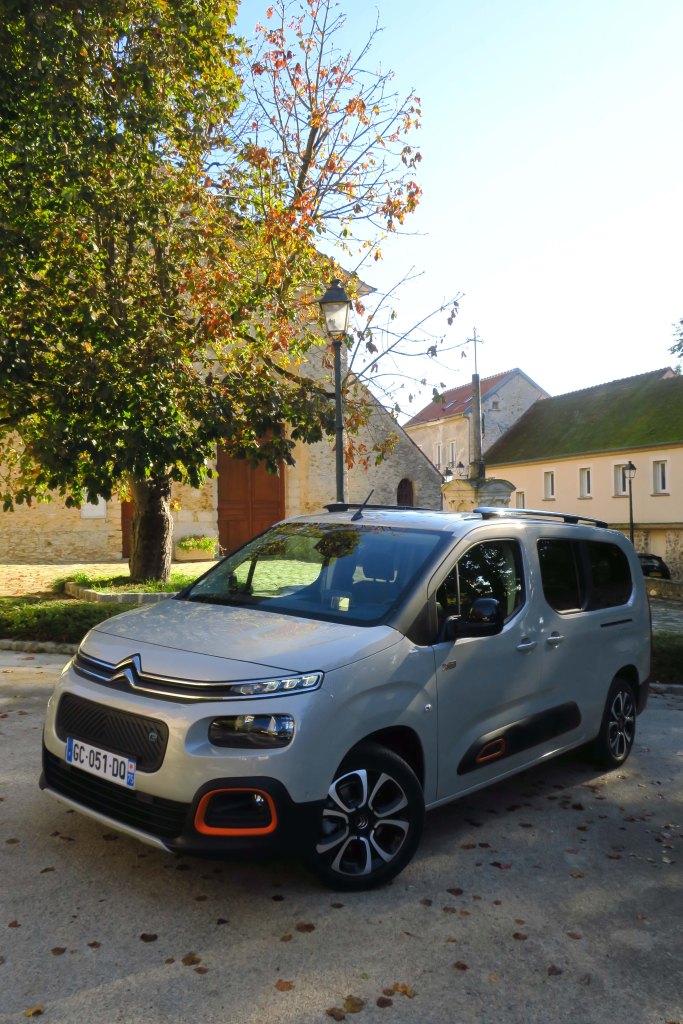
We drove the ë-Berlingo in the scenic surroundings of the Domaine des Maffliers, near Paris…
Electrification is now also expanding to commercial vehicles and popular minivans and family carriers like the Berlingo. We sat for a few hours behind the wheel of this spacious and endearing Citroën to enjoy all the delicious “Zen” refinements brought by electric propulsion, which totally transformed the driving experience of this Berlingo.
The Citroën PR and marketing team had carefully chosen a very scenic route around and in the woods of the Domaine des Maffliers, in the neighborhood of Paris. An excellent environment to get a taste the velvety power of its electric motor, to enjoy the seating and suspension comfort of this Berlingo.
We first tested the M version, which is 4,4 meters short, and thereafter the 4,75 meter “long” version. Suspension comfort and handling is virtually the same in both versions, and the EV drivetrain is identical. But then even more space is to be found in the “long” version, which can seat comfortably up to seven people.
Along the scenic villages near Paris with the “long” version…
A smooth performer…
The silence and utter smoothness of the electric motor totally transforms the driving experience. With its very comfortable suspension, one has the distinct feeling of sitting behind the wheel of a top class limousine, helped by the comfortable central armrest which supports your right arm and elbow, which has the only task to select the proper driving mode on the central selector.
But let us first tell you a bit more about the drivetrain. Citroën selected a 100 kW or 136 HP electric motor, fed by a 50 kW/h battery. Torque is sufficiently ample with 280 Nm. Top speed is limited to 135 km/h.
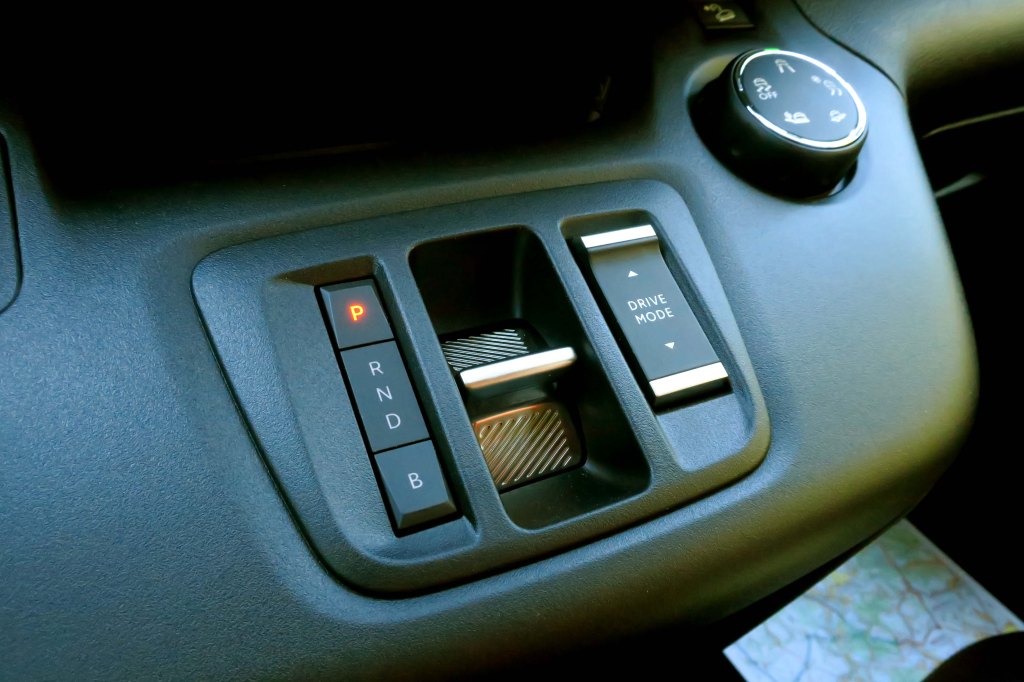
The driver has the choice between three driving modes, activated with a special so-called ë-toggle.
Comfortable simplicity: ë-toggle on the right for the drive modes, selector in the middle for reverse and drive, knobs for “P” and “B” to the left…
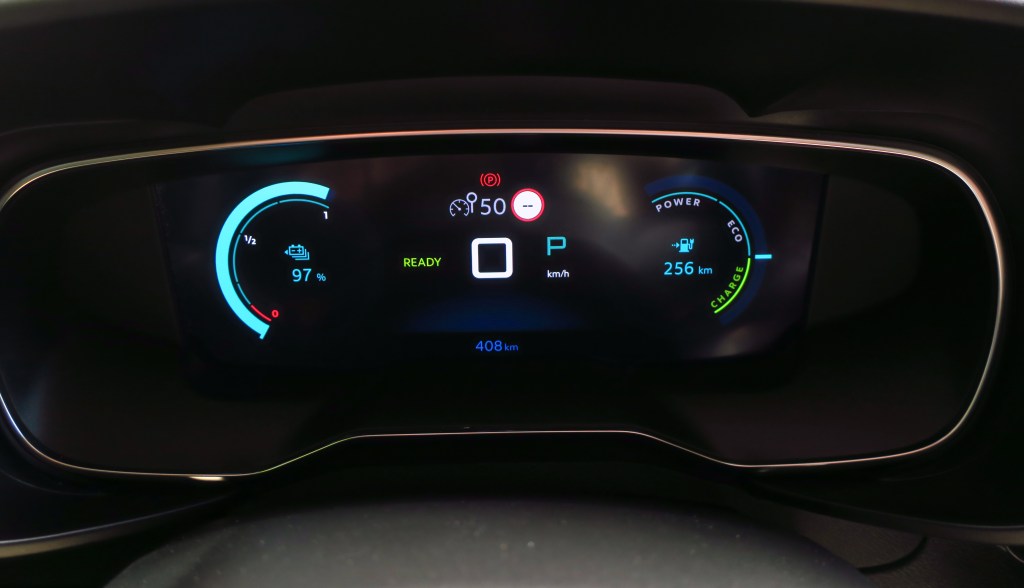
First, there is the so-called Normal mode, where the motor develops 80 kW/210 Nm, striking a good compromise between performance and economy. Then comes the Eco mode, with 60 kW/180 Nm, still quite sufficient in terms of liveliness we found, which gets you further on a full charge. According to WLTP, the range is then a good 280 kilometers. You also have to settle for reduced heating or airco power, but this remains still within comfortable limits. Finally there is the power mode, where the full 100 kW is at your disposal. Interesting of course when the Berlingo is heavily loaded, and/or you are driving in hilly or mountainous areas.
Simplicity is truth…
Of course there is also a “B” knob on the centre console, which lets you recuperate energy when you lift the throttle, and gives that “one pedal” driving opportunity when you adopt an anticipatory driving style, which you learn soon enough…
Spacious…
The battery pack sits snugly on the floor of the Berlingo, so the charging volume is not impaired at all. The M version has 775 liters luggage space, the XL version in 5 seat configuration brings this to a whopping 1050 liters.
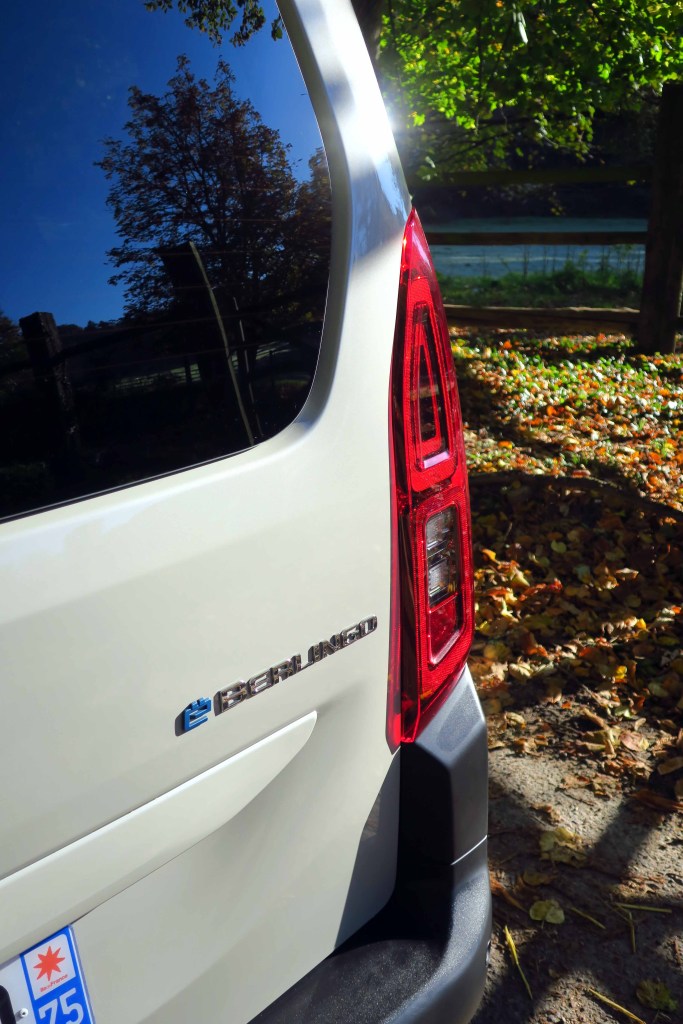
The ë-Berlingo proudly wears its badge…
The cabin boasts a further 167 liters of storage space, so this Berlingo makes you truly feel at home. This is a car which makes family life really easy…
… and easy charging
The practicality of a fully fledged EV stands or falls with the charging facilities, and we all know that the public charging situation in Belgium is nothing short of abysmal. Home or office charging is the answer for the time being, and here Citroën offers for its Berlingo plenty of opportunities.
Home charging can be done with the so-called Mode 2 cable, which is compatible with an 8A and/or 16 Amp socket. For fast chargers, both public or private, one needs an optional Mode 3 cable. This allows you to charge from 0 to 100 % in 7,5 hours if you have a single phase 7,5 kW wallbox. This is reduced to 5 hours if you have a three phase 11 kW wallbox.
Super fast charging is possible at public charging points up to 100 kW, and there one needs a mode 4 cable which is integrated in the charger. It then takes merely 30 minutes to charge the 50 kW battery up to 80 %.
The Berlingo leaves you the choice between three connected packages, connect assist, connect nav and connect play.
In the basic assist package you can get connected with a call center in case of emergency or accident, and via the My Citroën App you can be informed about range, charging status, mileage, next service, etc.
In the nav package, you can use voice command/recognition for interaction with the phone, navigation and radio functions. TomTomTraffic displays for you the best route under up to date traffic conditions.
The connect play feature sports Mirror Screen technology, compatible with Apple CarPlay™ and Android Auto.
Conclusion
Electrification is not an empty word at Citroën anymore…
The electric propulsion completely transforms the driving experience with this Berlingo, and this refined upper class panache makes this family friendly space car even more endearing and desirable. But not only for the family man. Every craftsman or public/private services worker/small entrepreneur who works in urban spaces will just love this EV version, which will be a soothing companion in his daily work life. After a stint behind the wheel, you will indeed wonder how we fared for decades without this full EV enjoyment and “Zen” progress…
Note that at this Citroën ë-experience day we also drove the full EV version of the C4. More about our driving impressions soon…
With this ID.4, Volkswagen is taking another bold step forward: it is building an SUV which will be offered worldwide, notably built and sold in China, the US and Europe. For us here, it is produced in Zwickau. It is the second model to use the celebrated MEB platform, the EV platform which is also sold to Ford. The car embodies a quite important if not formidable step for VW, where every aspect of this car has to please many customers, all over our globe.
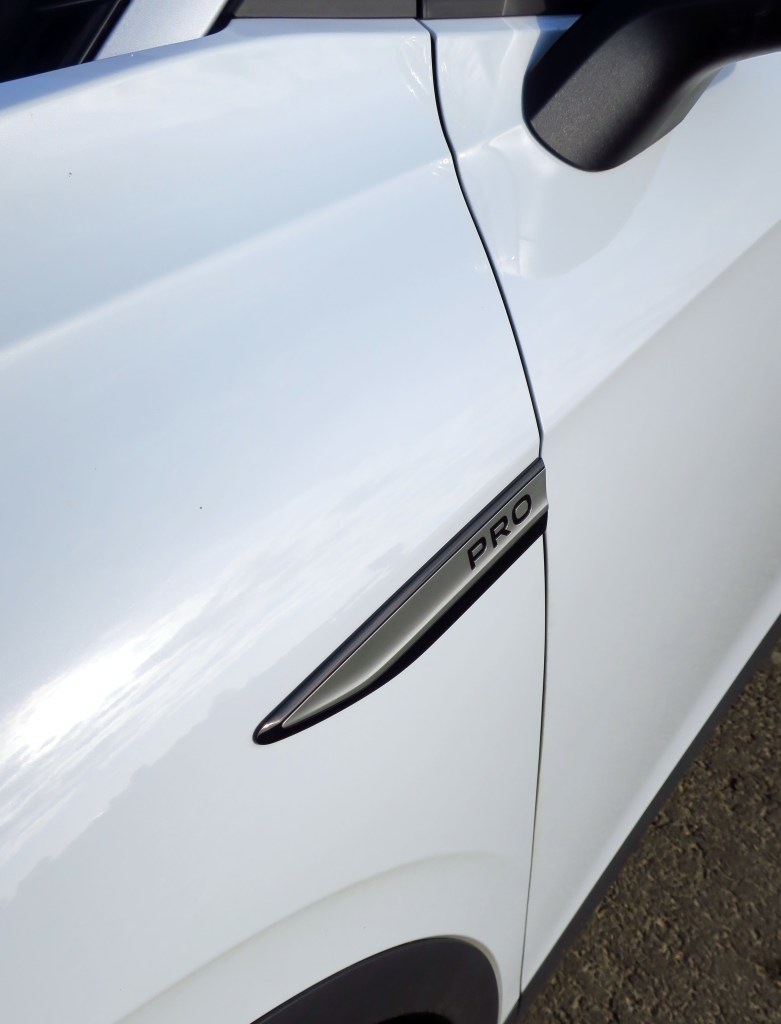
We drove the so-called “Pro” version, with the 77 kW battery, about 500 km range, 204 HP or 150 kW, and lively performance. It certainly did please us, and this pleasant impression got better the longer we drove it. Just read on…
Hans Knol ten Bensel
Friendly and harmonious looks
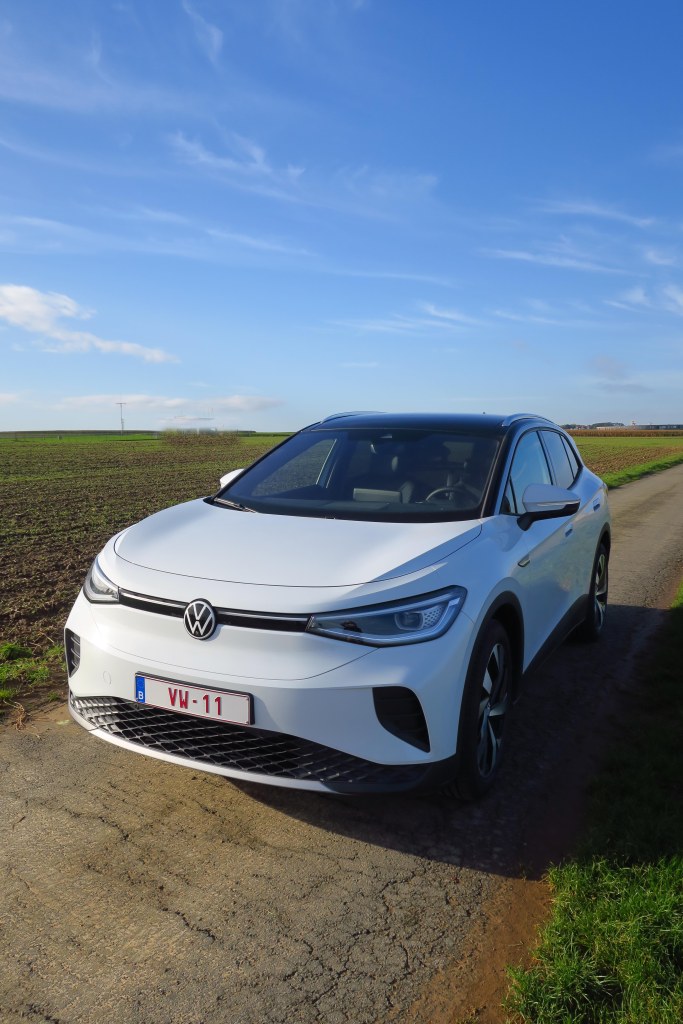
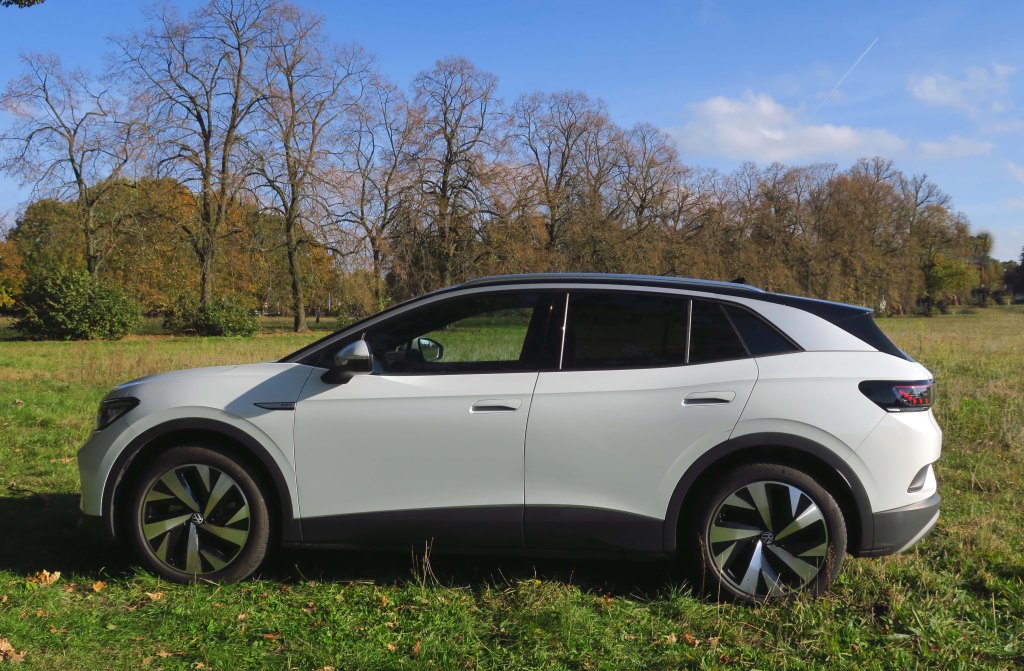
Stylists of a world car have no easy task. It looks that they have succeeded though. Just know that the ID.4 has recently been singled out for the “2021 World Car of the Year” award. When we approached the ID.4 and walked around it, our eyes meet iconic, timeless and pleasing shapes. Lines and contours with character, evoking exactly what this car wants to be: a family-friendly roomy SUV, which will accompany its owner with style for years to come. The rounded styling language is never aggressive, the front end is clean, not without elegance, has a timeless touch. The proportions are well chosen, look just right from every angle, also the big wheels with their aerodynamic alloys add panache to this SUV. We took some photos close to the runway of Zaventem airport, so the flatness of the empty landscape adds to the clean lines of this ID.4.
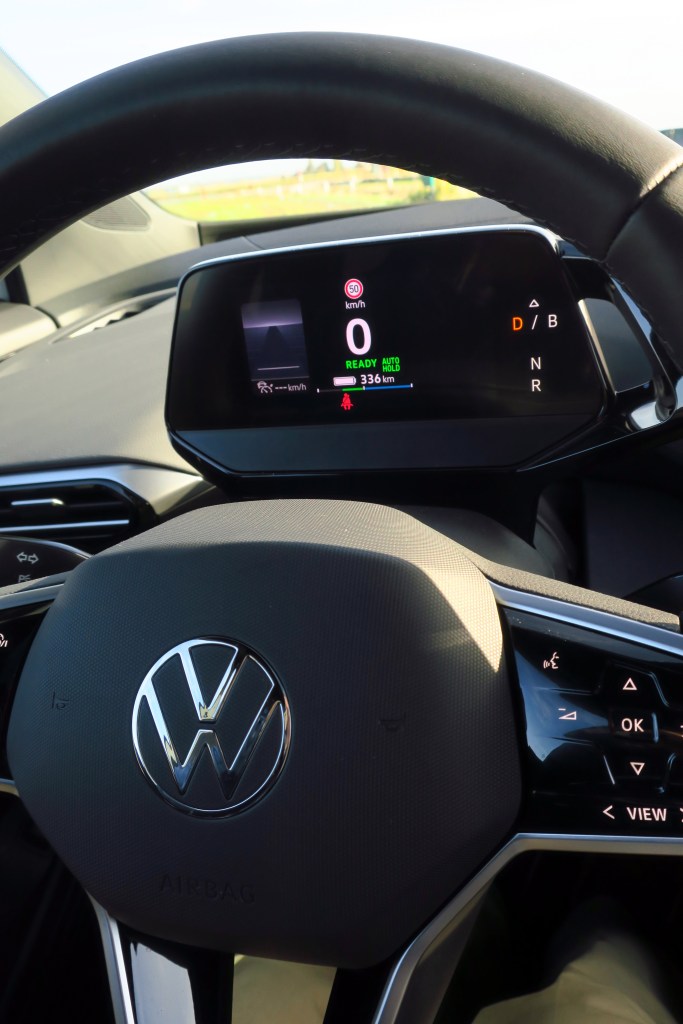
The same simplicity and clean lines are found in the interior and the dashboard layout and instrumentation. It is very similar to the ID.3, with an instrument cluster forming one unit with steering column and steering wheel, and a large touch screen in the centre of the dashboard. Its driver assistance and infotainment system is everything you could wish for. Of course you have to familiarize yourself with its controls, so we suggest you to read the instruction book carefully.
Reading the instructions is the proper thing to do when you buy a car of this refinement, engineering excellence and build quality. It is by the way ALWAYS the thing to do when you purchase any car, actually. Also, remember, there is YouTube. Many VW car dealers have a film made for you, so-called instruction films, where you can see and hear the workings of every accessory and functionality.
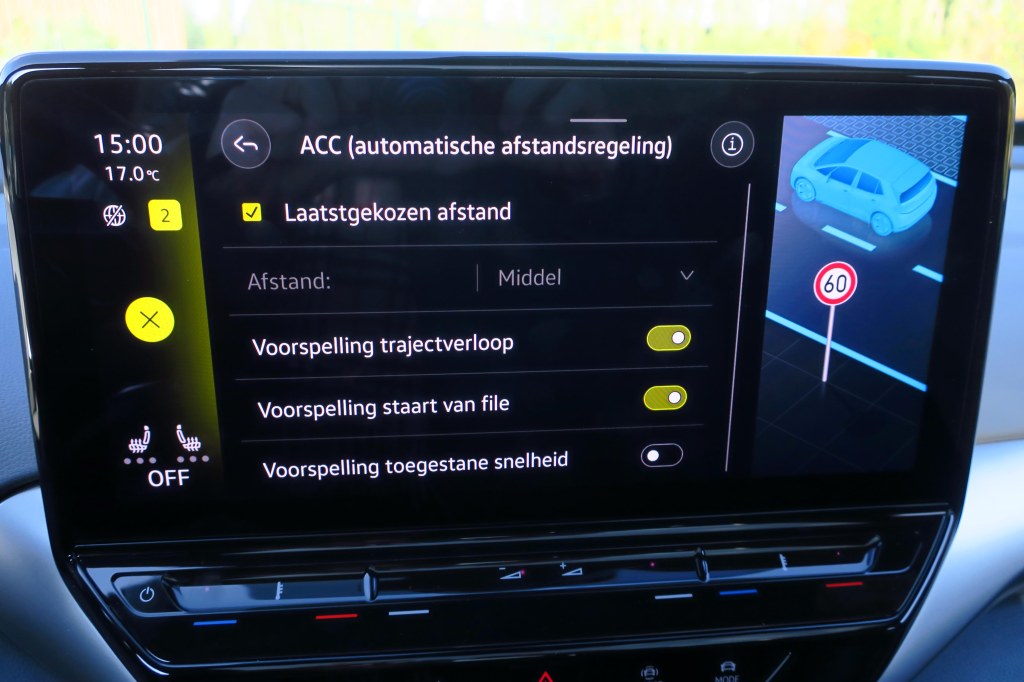
In our test car, suffice to say the diagonal size of the touch display was 10 inches, and it is good to know that natural voice control with an online connection and the ID. Light come as standard. You will not read any critique here about the workings of any of the functions of the ID.4, it takes getting used to, and even a week can be too short for this to have everything intuitively in its fingers.
I always keep in mind that the owner or user of this car will be behind the wheel of this VW for months, if not years, and will have familiarized him (her) with every function, that is if he (she) was not too lazy to read about it in the manual or try it out. I mentioned ID. Light. It is a light strip below the windscreen, and tells you when to take a left or right turn, when it has understood a voice message from you, after you said first “Hello ID.” Indeed, the future has arrived in this car.
The driver uses the central display to manage the telephone system, navigation system, entertainment functions, assist systems and the vehicle setup. Sliders for volume and temperature adjustment are located below the display. Clean and purposeful.
Daily life with the ID.4 has become simple. Just step in, push the brake pedal and select “D”. Off you go. On the right side of the steering column is a big switch which you have to turn towards or from you, to select D, B or Reverse. At the end of this switch us a big knob “P”. Just push it and the parking brake is on.
With “D” you drive normally, with “B” the electric motor regenerates energy when you lift the throttle. It will decelerate the car of course. When you are a master in anticipative driving, remain in “D”, you can coast then almost forever. Using kinetic energy by just coasting is still the most efficient, albeit the most difficult thing to do as you have REALLY to anticipate traffic situations.
“Zen” driving…
The biggest advantage of EV’s, I find personally, is their supersmooth progress. Gone is the so disturbing jerkiness of sticky transmissions and unwilling cold engines. So the ID.4 is also a very soothing vehicle. Silent, vibrationless, with smooth feline power thanks to its impressive torque. 310 Nm if it. Good enough to take this rather heavy ID.4 from standstill to a speed of 100 km/h in 8,5 seconds. Almost pushing your back firmly in the seat. Almost, but remember, this is meant to be a family car. Top speed is limited to 160 km/h. It is also a towing vehicle. Up to 1,000 kg in our test car’s configuration.
The suspension is rather firm, but not uncomfortable. The laws of physics command some firmness as there is a good 500 kg of batteries in the platform underneath the seats. The electric 150 kW motor sits above the rear axle and drives the rear wheels. The advantage is that it allows a small turning circle of just 10.2 metres. Rear wheel drive then, but do not expect to make any power slides. Steering is precise and handling is quite good, even on the rather sporting side.
The WLTP range with the 77 kW battery is according to the manufacturer up to 522 km. There is no secret. Using kW/h costs range. If you cruise at say 85 km/h on the motorway (the truck drivers won’t like this and disturb your “Zen” progress) everything is fine. In winter, and/or when driving faster, the practical range can be estimated as being a good 360-380 kilometers, which is still quite OK. At a DC quick-charging station, the ID.4 with its 77 kWh battery and a charging capacity of 125 kW can be recharged ready for the next 320 km in around 30 minutes (according to WLTP).
Roomy
The VW engineers and stylists have kept one thing firmly in mind: this is a family SUV. So indeed, it offers room which is actually that of a SUV which belongs to a class higher. Ample legroom in the rear, (similar to the Tiguan Allspace), three passengers can sit easily, and even tall drivers do not touch the roof when they put their seat in the highest position. Need we say more? Suffice to say that the wheelbase is a good 2766 millimeters.
The ID.4 has also lots of room in the front centre console, as there is no gearchange lever to disturb things. The luggage space is also impressive: 543 litres of luggage, a figure that increases to 1,575 litres after folding down the backrests (loaded to roof height).
And comfortably equipped
Standard features in all ID.4 models include the ten-colour ambient lighting, the speed limiter and Air Care Climatronic. This is coupled with an electric stationary air conditioning system, which can also be activated when the car is not charging from the mains power grid. Life is good with the ID.4.
All nine ID.4 models are equipped with the Discover Pro navigation system and 10-inch display as standard. All models above the ID.4 City and ID.4 Life come with the Infotainment package. (We tested the “Pro” version.) Its highlights include the Comfort mobile phone interface, which is able to connect a smartphone to the vehicle’s electronic system and charge it inductively. The standard App-Connect function enables media to be streamed via a smartphone, which can be embedded in its native environment using Android Auto, Apple Car Play and Mirror Link. In the Infotainment Plus package (which comes with the ID.4 Tech and ID.4 Max), the navigation system has a 12-inch display.
The ID.4 is equipped with the lane keeping system Lane Assist as standard. Front Assist monitors the area in front of the vehicle and responds with warnings and braking interventions to warn the driver of impending collisions with other road users. The acoustic Park Distance Control function is able to avoid parking collisions or reduce the level of damage using the automatic manoeuvre braking function. The speed limiter is also included in the ID.4’s standard equipment.
Another technology that every ID.4 has on board is called Car2X, which allows the car to exchange information about local hazards with other vehicles and the traffic infrastructure – via the wireless standard WLAN p. The maximum distance here is 800 metres, with warning transmission taking only milliseconds. Car2X is currently active from a speed of 80 km/h, but is also intended to improve safety and traffic flow in urban traffic in the future.
Conclusion
A very able, roomy and stylish compact SUV and a marvelous EV, that’s what this ID.4 essentially is. It is a true Volkswagen, setting standards in timeless modernity, embodying purposeful and clever engineering.
Add to this the know-how of a world manufacturer, the vast dealer network, you will agree that this new generation VW EV have a lot going for it. It ranks already in some countries where the charging infrastructure is decent among the bestsellers, so this ID.4 has a bright future ahead, electrifying the world…
Citroëns have always been quite exceptional cars for me, not onIy the “big” Citroëns, but also the compact cars, beginning with the GS. In the early days of my career as a car journalist, I vividly remember the stylish GS as a test car. Indeed, not only the boxer engine, also the suspension and styling where totally of another league.
I also recall fondly a very fast trip to the Frankfurt Motor Show, with a 1,6 litre petrol engined C4, the generation prior to the Cactus, driving totally relaxed at speeds between 160-180 km/h in pouring rain on the Autobahn, showing superb GT qualities in total comfort. But also the 1,9 litre Diesel versions were extraordinary. I remember the used red BX and the used dark blue Xantia, both of which I drove as long-term test cars for Autokrant. They offered excellent performance, GT panache and comfort, combined with exemplary economy.
But now let’s turn our nostalgic hearts to the present day C4. To tell you right away, it continues the tradition with its equally unique suspension, Progressive Hydraulic Cushions® and Advanced Comfort seats. It has the same unique personality and character as its predecessors, and even a lot more. Just read on…
Hans Knol ten Bensel
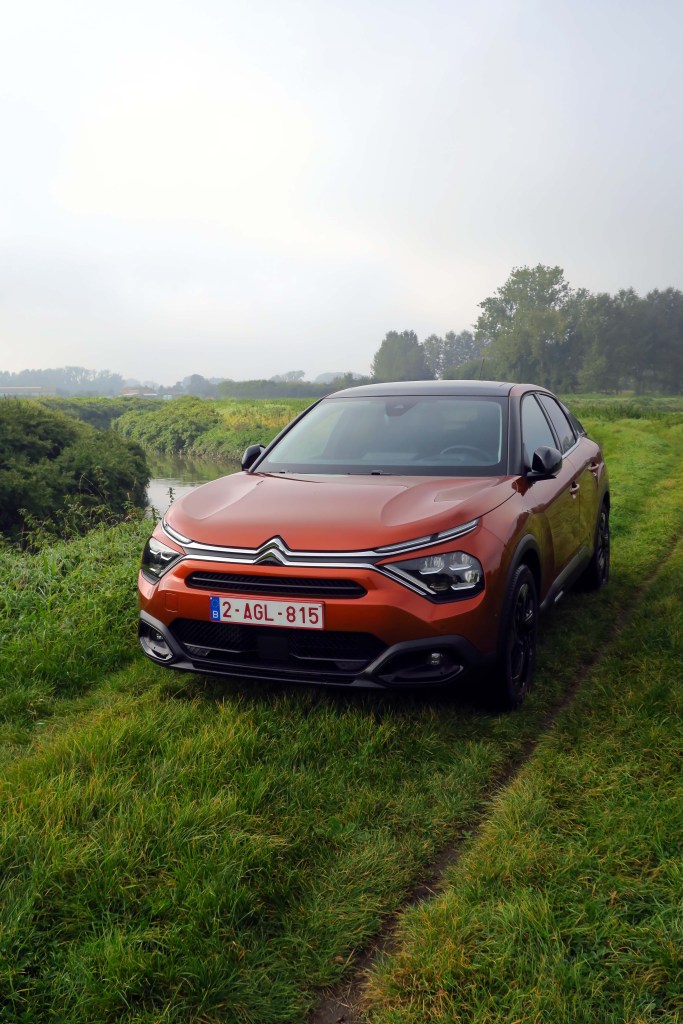
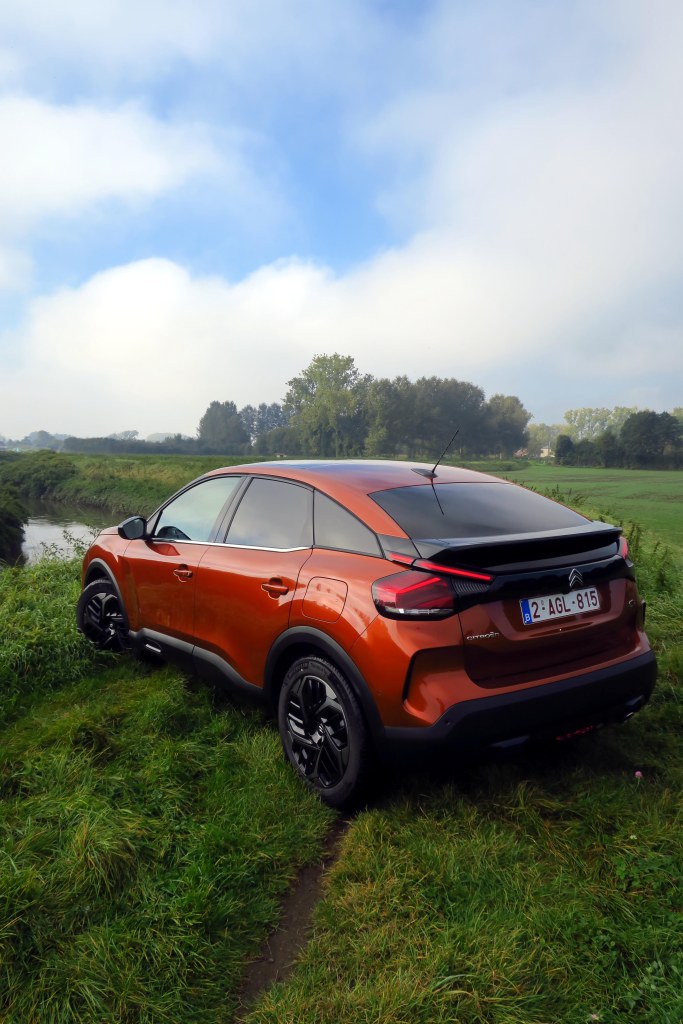
With the new ë-C4 and New C4, actually Citroën’s new-generation compact hatchback, the iconic brand is targeting this time the still very important (European) hatchback market. This C4 has a rather elevated posture, not unlike we see with Asian competitors like amongst others the Toyota CH-R, with the same quite busy styling language.
Citroën says that it wants to combine the dynamism of a hatchback with SUV design forms for added character. With its sloping rear window and spoiler, Citroën says, the rear end draws its inspiration from the 2004 C4 Coupé with its original two-piece rear window topped by an aerodynamic spoiler.
Sliding behind the wheel, we are pleasantly surprised by a restful and uncluttered simplicity, indeed every effort has been made not to distract the driver unduly. The instrument cluster is a superb example of less is more: small dials for water temperature, revs and a digital speed indicator are the only things to attract your attention. The designers have kept these indicators rather small, and indeed your eyes should rather focus on the road and the large colored head-up display. Restful and efficient!
In the centre, at the top of the dashboard sits the ultra-thin borderless 10-inch touchscreen, which is of course the nerve centre of the vehicle’s controls. The controls of the dual-zone automatic climate control – thankfully also physical for immediate access to change the settings – have chrome dials and gloss black push buttons.
One finds easily his way in this C4. There is also an elegant guilloché metal automatic gear lever. It has the three usual positions (R, N and D) that are backlit for clarity. There are also two backlit push buttons: P to activate Parking mode, M to activate manual driving mode (for conventional engine versions) or B to activate the “Brake” energy recovery mode for the electric version. The console also incorporates the electric parking brake and a driving mode selector that has three settings on automatic transmission versions: Eco, Normal, Sport.
Smooth diesel power combined with a fluent 8 speed automatic…
Indeed, we drove here the BlueHDi 130 S&S in combination with the EAT8 Auto gearbox. Here we again were impressed by what a modern 1499 cc four valve turbocharged diesel engine (still) has to offer in terms of velvety power delivery and sheer economy, all this in paired with a state of the art transmission.
Starting from cold, the once so familiar diesel clatter is totally absent: this engine runs smooth, virbationless and silent right from the word go. At speed, it is totally inaudible, and very unobtrusive indeed at urban crawling speeds. The transmission is ideally mated to the engine’s torque characteristics. Indeed, the unit has ample pulling power, developing 300 Nm at a low 1700 rpm. Performance therefore leaves nothing to be desired: it will accelerate smoothly in 10,6 sec to 100 km/h, further to an impressive top speed of 206 km/h. Revs are kept low due to the high final gearing of the transmission, providing very restful high speed cruising. Indeed, maximum power of 96 kW or 130 HP is developed at a very sedate 3700 rpm.
So this C4 has everything in house to excel as a fast “grande routière”, and on top of that there is a truly astonishing fuel economy: we reached an average during our test of merely 4,4 l/100 km!
Legendary comfort…
The C4 is equipped, as standard, with the Citroën brand’s innovative suspension system featuring Progressive Hydraulic Cushions®, which were first introduced on C4 Cactus and C5 Aircross SUV. The suspension setup offers supreme comfort and a “magic carpet ride” effect, according to Citroën. Indeed, comfort is truly top notch. Not less than twenty patents were filed in the development of this suspension system. Its operating principle is simple: the Citroën Progressive Hydraulic Cushions® system adds two hydraulic stops – one for compression, the other for decompression besides the classic metal springs and shock absorbers. The suspension works in two stages, depending on the stresses it encounters.
For light compression and decompression, the spring and shock absorber control vertical movements together with no assistance required from the hydraulic stops. However, the presence of the hydraulic stops means the engineers have greater freedom to tune the setup to achieve the fabled “magic carpet ride” effect, which gives the impression that the car is gliding over uneven road surfaces.
Indeed, with major impacts, the spring and shock absorber work together with the hydraulic compression or decompression stops, which gradually slow the movement to avoid jolts at the end of the range. Unlike a traditional mechanical stop, which absorbs energy, but then returns part of it as a shock, the hydraulic stop absorbs and dissipates this energy. Clever!
The C4 is also quiet: particular attention has been paid to acoustic insulation, with a focus on running and aerodynamic noise. Special attention has been paid to the insulation around the engine block.
…is also found in the seats
The special foam on the surface of the seat, thickened by 15 mm, offers softness and support from the first contact. The new high-density foam at the core of the seats holds the occupants in place during long journeys. The seats are also pleasantly wide and generously dimensioned.
The front seat passenger is also spoiled…
A Smart Pad Support Citroën™ is a World Premiere on New ë-C4 and New C4. It is a retractable system designed to hold a tablet computer. It is solid, functional and directly built into the dashboard. It enables the front passenger to make the most of the time spent on-board. Ideal to put your co-pilot at work to read for you the stories and information about the towns or the regions you travel through, which you have prepared on your IPad or tablet prior to your voyage of course…
The Dashboard tray itself is a large sliding drawer with a cushioned action, positioned in front of the front passenger. It has a special anti-slip surface to store personal items or hold a tablet in place in complete safety. Just great!
Of course there is an open wireless charging area for smartphones, which comes combined with two USB sockets, one of which is Type C.
Infotainment and connectivity galore…
The 10-inch touchscreen, with a capacitive screen that needs only be touched with the tip of a finger, allows the driver to configure the vehicle, access the multimedia system, telephone, air-conditioning and navigation. It also features voice recognition.
Wireless charging for smartphones allows a wide range of Qi-compatible devices to be induction-charged using a charging mat incorporated into the centre console. The wireless transmission of electrical energy is based on the principle of magnetic induction. Connect Play, using the Android Auto and Apple CarPlay™ compatible Mirror Screen function are installed of course.
ConnectedCAM Citroën® is an independent camera system integrated into the base of the rear-view mirror. It uses full HD and GPS technology. The camera allows you to take a photo or video of the outside scene in front of your vehicle, with the corresponding data stored on the integrated 16 GB memory card. Thanks to the WiFi connection, the data recorded by the camera can be transferred to a smartphone to be shared via e-mail or social networks. ConnectedCAM Citroën® continuously films the road in front of the windscreen and automatically saves the recordings in the event of an accident.
As well as driving aids…
The new ë-C4 and New C4 are packed with driving aids – no less than 20 latest-generation technologies in all. That is as many as on C5 Aircross SUV, which is the benchmark for driving aids at Citroën.
Practical and spacious…
The C4 has a wheelbase measuring 2,670 mm – one of the longest in the segment – delivering the “Best in Class” knee room in the rear at 198 mm. The 1,800 mm exterior width easily accommodates three people in the rear – providing 1,380 mm of width at the shoulders and 1,440 mm at the elbows. Headroom in the back is a bit restricted for the tallest among us though.
With a 380-litre boot and a low, flat loading sill (715 mm), the C4 is at the heart of the segment. For added convenience, a two-position floor allows the boot to be divided into compartments and provides a flat floor when the rear seating is folded down. For even more practicality in everyday life, hooks are present to hang bags, while a ski hatch allows particularly long objects to extend into the cabin.
Last but not least we tell you here that this Citroen C4 is built at its Madrid plant, and Stellantis has spent €144 million in upgrading the factory and designing the new C4.
We also had a short drive with the electric ë-C4, and we tell you soon about our driving impressions… stunning indeed!
Conclusion
In terms of driving comfort, long-legged cruising performance, and last but not least exceptional economy and smoothness, this C4 truly stands in a class of its own. It is one of the most harmonious cars we have come across lately. Its 1,5 litre 130 HP diesel showed us again how formidable these engines have become, offering a useable range of well over 1,000 kilometers.
This C4 breathes originality and character, even more so in the interior, and we can tell you this: just slide behind the wheel of this one, and you will notice, Citroën driving is addictive, and this feeling grows further with every meter you drive it…






























 Autoprova - for the Connaisseur