Another prestigious award for the Alfa Romeo Giulia, the car magazine “auto motor und sport” having named it “Best Car 2021”. Readers voted for the Italian sports sedan as the winner in the mid-size/import category – for the fourth time in the past five years. With a share of 22 percent of the vote, the Alfa Romeo Giulia prevailed against 14 competitors. The Alfa Romeo Giulietta and Alfa Romeo Stelvio, second and third in their respective categories, complete Alfa Romeo’s success in the “Best Car 2021” awards.
More than 101,000 readers took part in the 45th edition of the “Best Cars” competition, held by the magazine “auto, motor und sport”. They had the choice between 387 models divided into 11 categories, including separate acknowledgments for import vehicles. The awards ceremony took place virtually for the first time…
Maserati’s successful Ghibli has already won several prizes and awards, and on February 11 recently today it has received a very special one as it won the “Upper Middle Class – Import” category at BEST CARS 2021. Initiator of this readers’ choice is the leading German car magazine AUTO MOTOR UND SPORT. More than 100,000 readers had followed the call and picked their favourites from 378 vehicles in eleven categories. This is the 45th time that these prestigious awards have been held.
Of course, this led to smiling faces at Maserati. Davide Grasso, CEO Maserati, said: “Ghibli is an iconic Maserati model. With over 100,000 units produced since its launch in 2013, this model perfectly embodies our DNA and the Brand’s values. For this reason we have also chosen the Ghibli to ignite the spark of electrification which projects the Brand into the future: last year we revealed the new Ghibli Hybrid, the first hybrid vehicle in Maserati’s history.”
We will return in these columns on this Hybrid version of the iconic Ghibli, and hope to lay our hands on one for you the coming months. The new Ghibli Hybrid has a 2.0 litre 4 cylinder engine that is coupled with BSG, eBooster and 48 volt battery. It is certainly no sluggard: it has an output of 330 hp, which ensures a top speed of 255 km/h and a sprint from 0 to 100 km/h in 5.7 seconds.
For the current MY 2021, Ghibli received comprehensive technical and stylistic enhancements. Among other things, there is the completely new infotainment system MIA (Maserati Intelligent Assistant) with a 10.1” screen in 16:10 format. Furthermore, the new Maserati Connect program enables the owner to stay connected to their vehicle and, for example, to be informed about the cars condition in detail.
A 580 HP V8 engine makes its debut…
For the first time a V8 engine is also available in the Ghibli’s range. The 580 hp 3.8 litre twin turbo unit accelerates the Ghibli Trofeo from 0 to 100 km/h in just 4.3 seconds and provides a top speed of 326 km/h – a Maserati sedan has never been faster. The exclusivity of this version is also underlined by the new “Corsa” driving mode and stylistic elements that make the uniqueness clearly recognizable.
Audi launches the Audi e-tron GT: a breathtakingly styled four-door coupé, which will be introduced on the market as simultaneously as an RS model. Audi reinterpreted with this e-tron GT the classic idea of the gran turismo: an emotive design packed with revolutionary technology. Two powerful electric motors provide confident electric all-wheel drive and stunning road performance.
The high-voltage battery has a net energy content of 85 kWh and enables ranges of up to 487 kilometers (302.6 mi) for the Audi e-tron GT quattro. The e-tron GT can be recharged extremely quickly thanks to its 800-volt technology.
Your servant is at the moment hospitalized for a cardiac operation, but soon enough we will tell you more about the ins and outs of this beautiful Gran Turismo, a benchmark car for anyone who is interested in sporting and stylish e-mobility. Stay tuned!
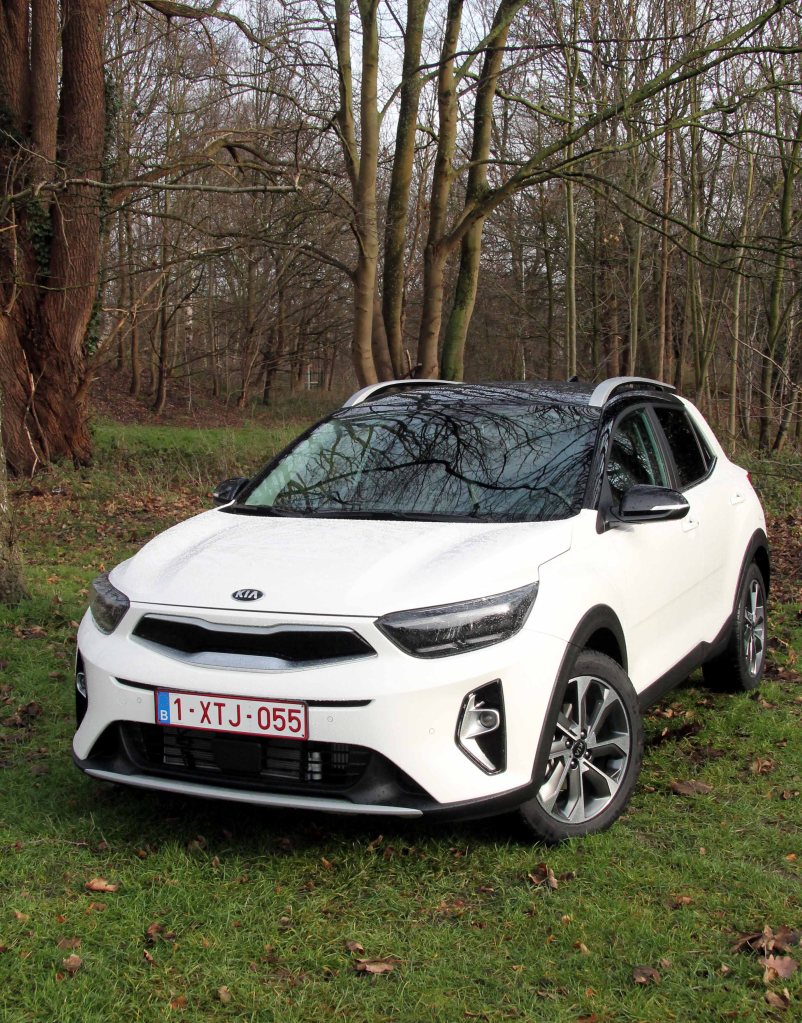
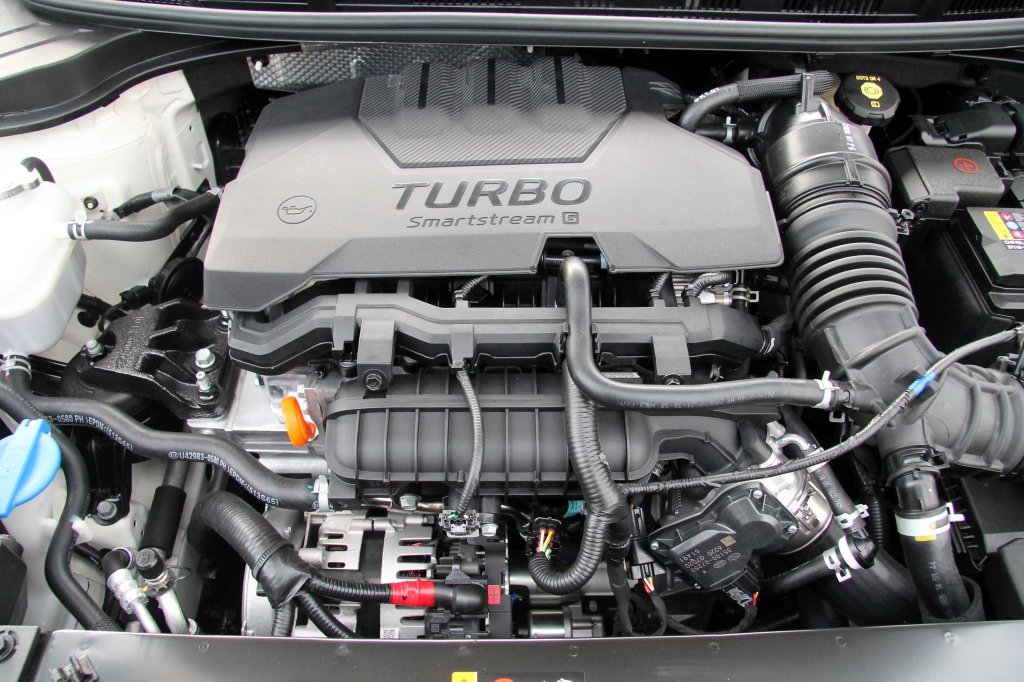
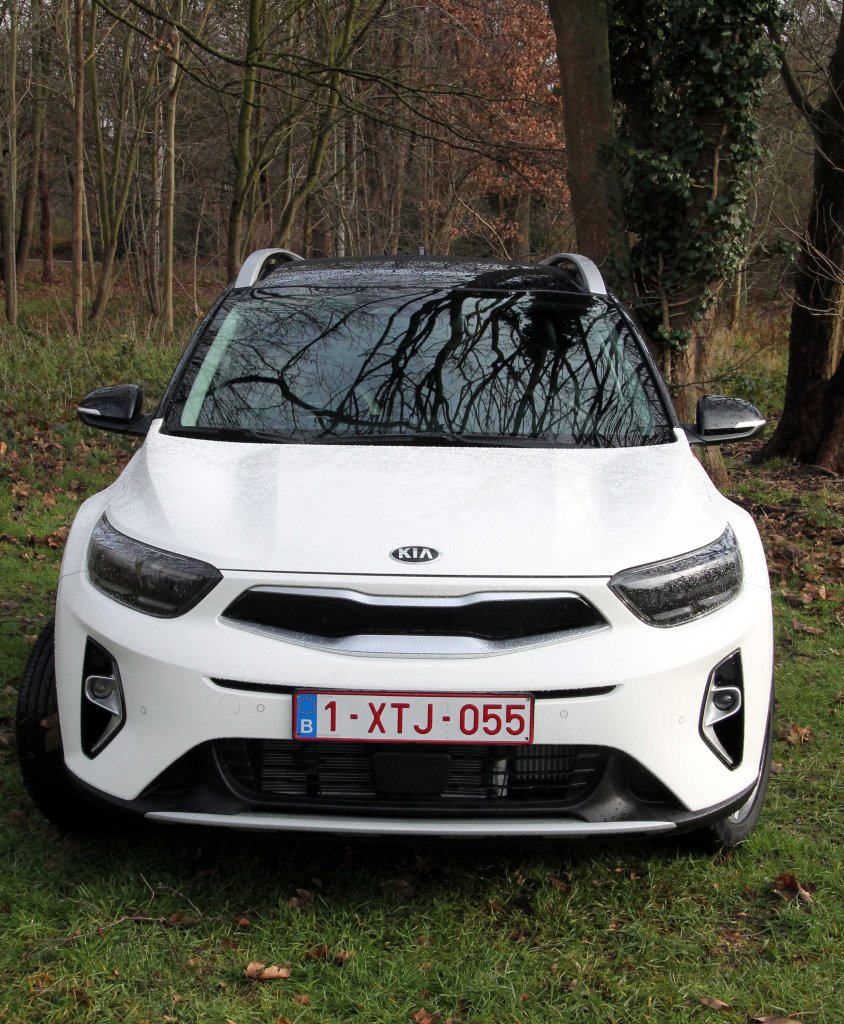
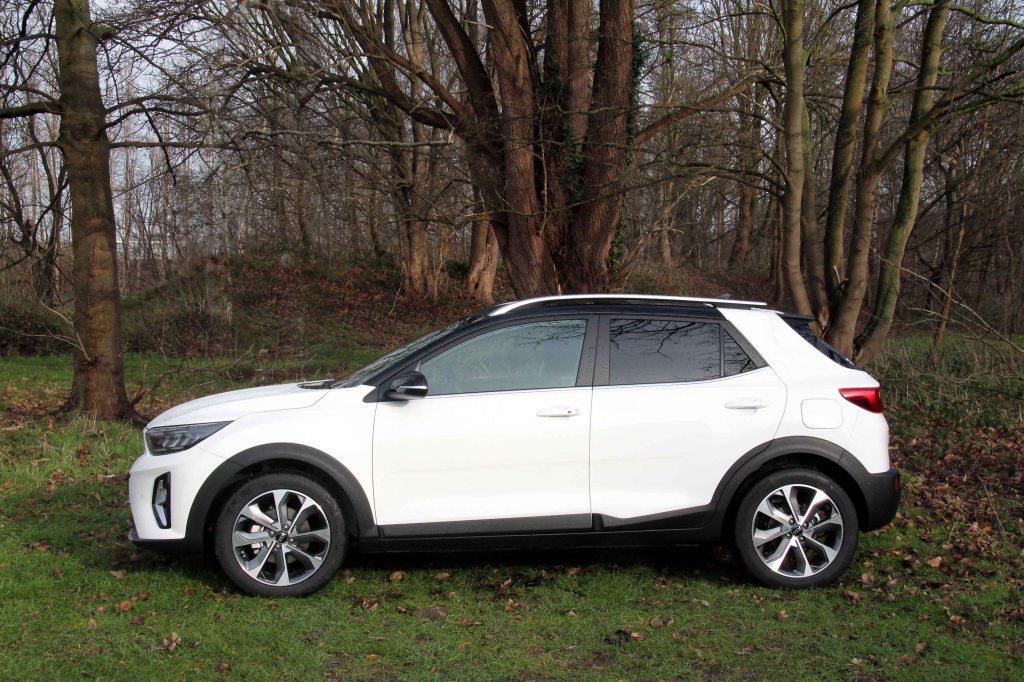
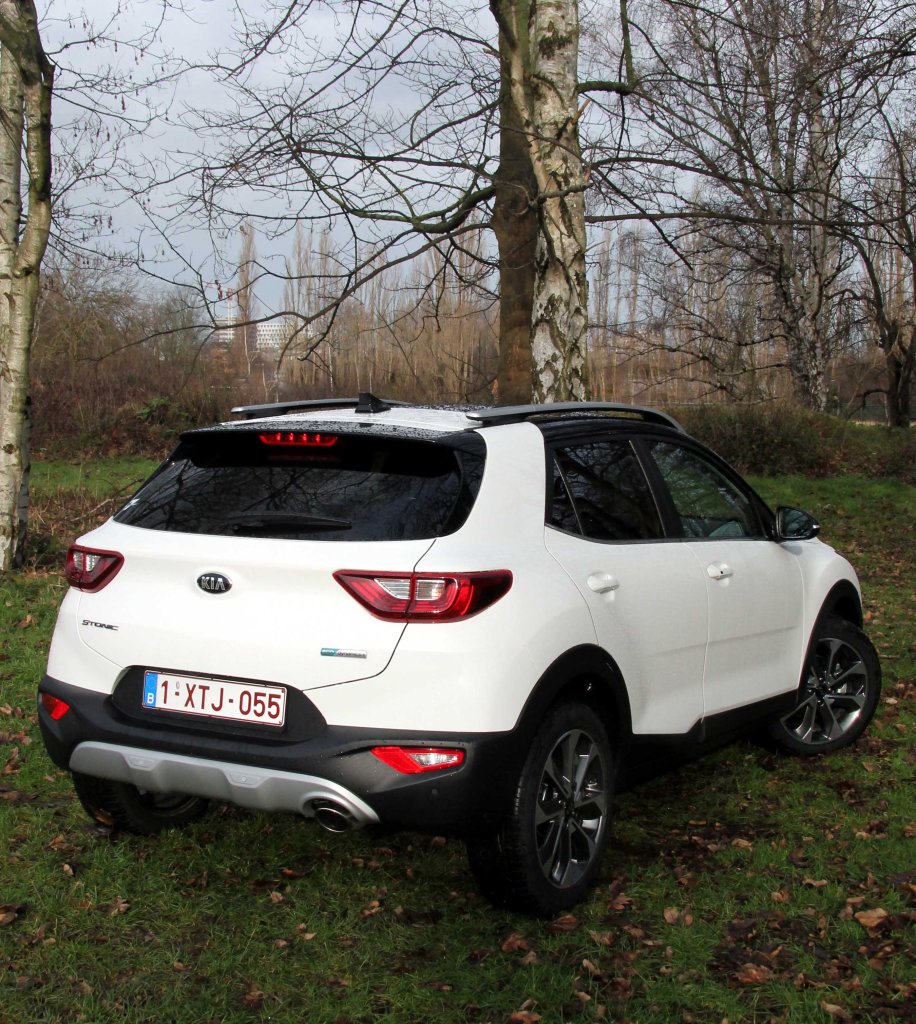
The Kia Stonic has been amongst us since 2017, and has recently been upgraded with a GT and a Mild Hybrid version. The latter we found very interesting to investigate for you further. The mild hybrid powertrain is based on the 1 litre three-cylinder turbo unit, dubbed the ‘Smartstream’ 1.0-liter T-GDi, developing some 120 HP, and was coupled to a 7-speed double clutch auto transmission in our test car.
How does it behave in practice? Just read on…
Hans Knol ten Bensel
The mild-hybrid system does not increase the power or allow zero-emission electric motoring, but it can harvest energy normally lost while braking or decelerating, and assist the engine when it’s delivering power, reducing fuel consumption…and making the car more lively.
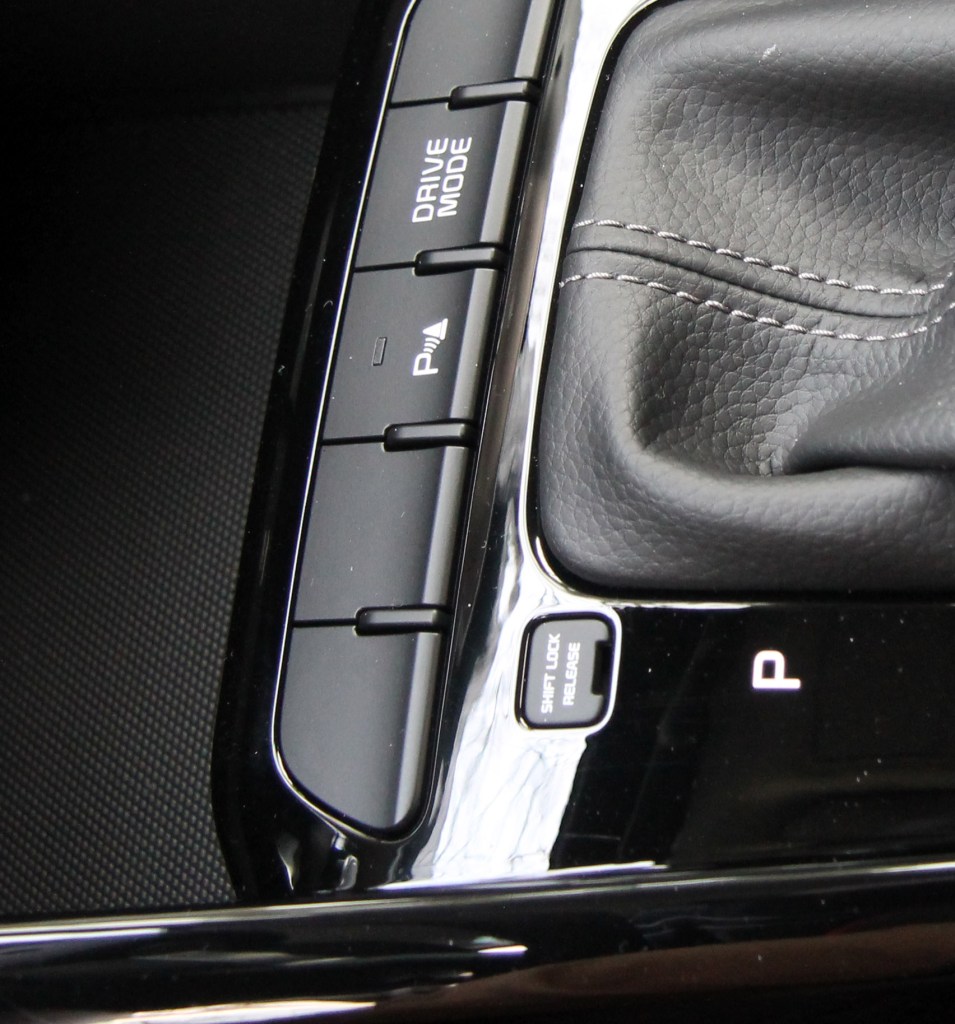
When starting up one is pleasantly surprised by the three-cylinder throb of this engine, which when you rev it up has a six-cylinder tinge to it. We always have loved the sound of three-cylinders, and this Stonic is no exception to this melodious rule. You can drive this Stonic in three modes, “eco”, “normal” and “sport”, and to test out the capabilities of the mild hybrid system, we stayed most of the time in the “eco” mode. In this mode, the 48 V new mild-hybrid belt driven starter-generator (MHSG) switches from ‘motor’ to ‘generator’ modes to improve overall efficiency.
The MHSG uses electric power to provide assistance during acceleration in ‘motor’ mode, thus reducing engine load and emissions, and can automatically switch to ‘generator’ mode during deceleration and under certain conditions to recharge the battery. This battery is a lithium/polymer battery, good for a temporary boost when one accelerates of some 12 kW or 16 HP.
Depending on the chosen mode, the extent and manner the kinetic energy is recuperated varies somewhat. In the “eco” mode and at lower speeds, the kinetic energy is fully transformed into electric energy, at higher speeds the “coasting” function is rather chosen, the car is just rolling and the engine is cut off.
In slower, urban driving, certainly in the “eco” mode, the car decelerates markedly when lifting off, and one soon learns to anticipate stops or slower traffic without using the brakes at all.
This results in quite good consumption figures in urban traffic, around 6 liters/100 km if one avoids fierce accelerations. On the open road and higher speeds, one finds oneself coasting quite frequently when one lifts the throttle, with the engine even shutting off. This is possible at speeds up to 125 km/h. On the open road, and respecting the legal speed limits, it’s easy to achieve figures between 5,5 and 6 liters/100 km. CO2 emissions are set at 127 g/km, with the manufacturer also quoting 5,6 l/100 km as average consumption.
The 7 speed DCT works smooth and alert, and gearchange patterns are varying according to the chosen mode. The changes are smooth and fast, and one clearly feels that manufacturers have learned a lot in developing and building DCT transmissions. At slower speeds and small throttle openings, de DCT seems to hesitate somewhat between gears, but as soon as you push the throttle again, it immediately knows what to do.
The Stonic is relatively light, some 1,2 tonnes, and this means that it has a lot of zest with the 120 HP engine. 0 to 100 km/h is reached in under 10 seconds, top speed being over 180 km/h.
Styling inside and out remains largely unchanged since the introduction of this cute compact crossover in 2017.
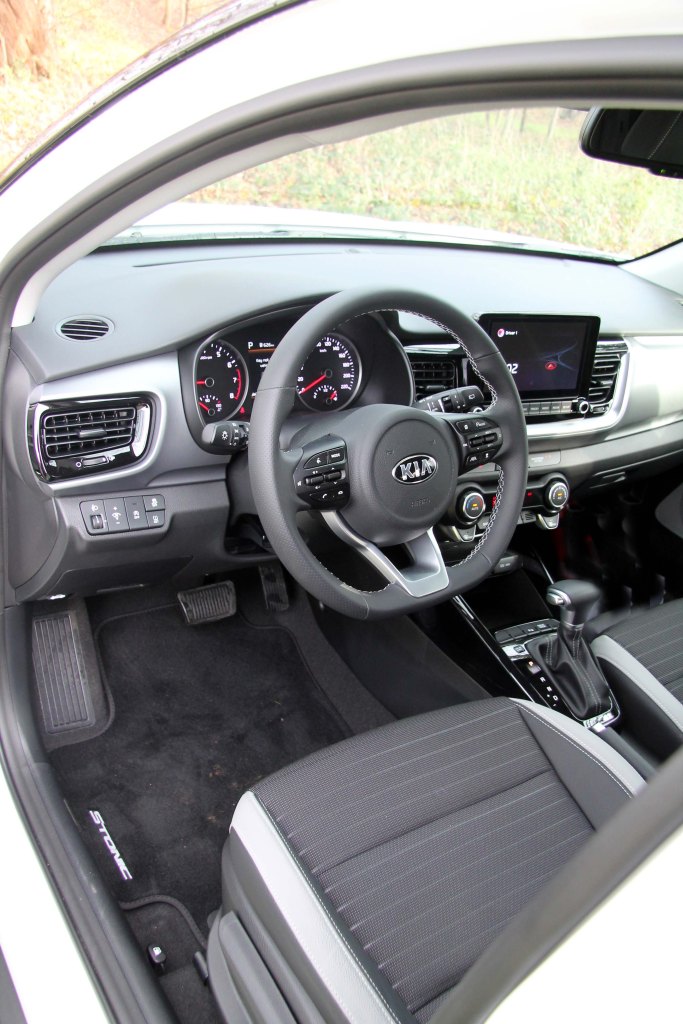
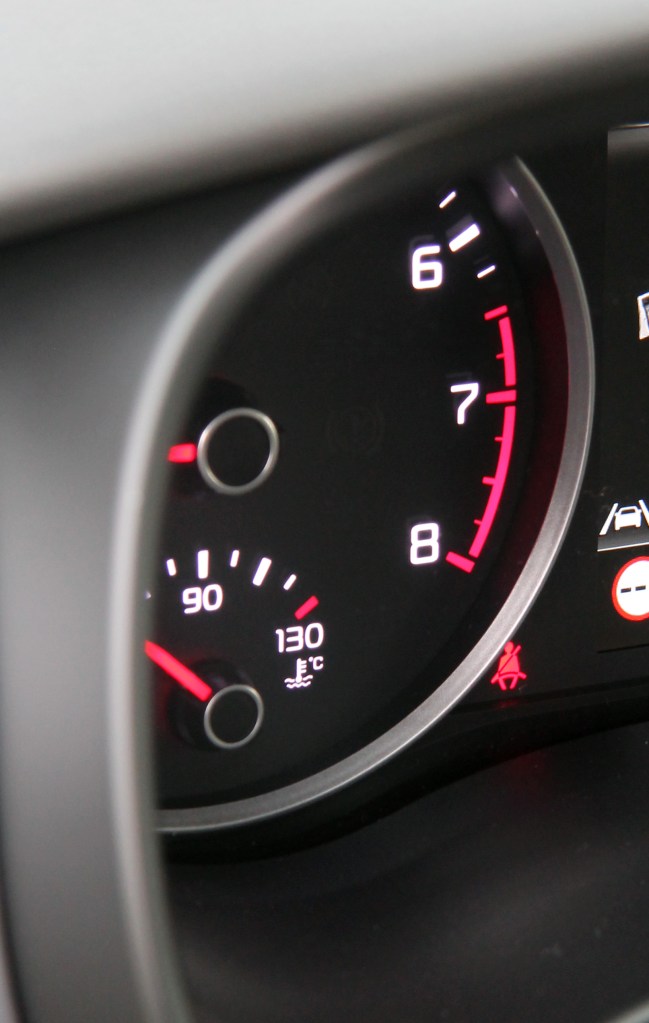
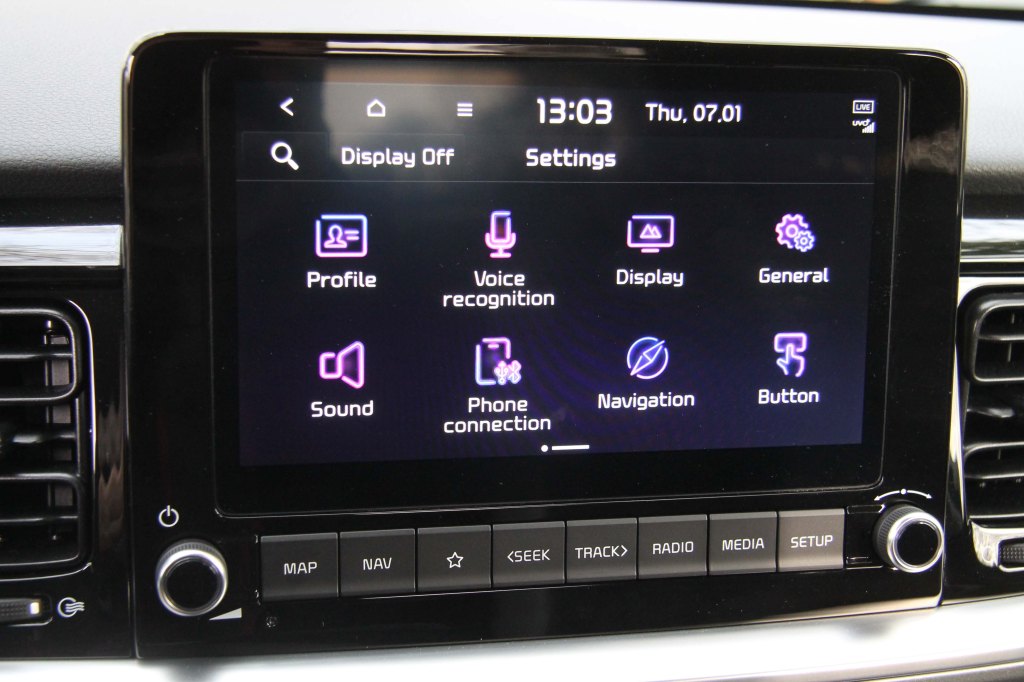
In the cleanly styled and pleasant-looking cabin, a new 4.2-inch instrument cluster and an eight-inch infotainment system awaits you.
The Stonic has now Kia’s new safety and driver-assist systems such as lane-keep assist, blind-spot collision warning and collision-avoidance assist, lane-follow assist, and smart cruise control. In stop and go traffic our test car was able to stop and accelerate again by itself, when cruising along in the traffic lane with the cruise control set at 30 km/h. The Stonic nicely slowed down and stopped when the vehicle in front came to a standstill. When the traffic got moving again, the Stonic also started up again. Wonderful!
Engaging to drive
The Stonic steers precise, has very good handling and feels nimble and quite sporty. It is rather fun to drive on winding roads, and one finds oneself adopting a dynamic driving style intuitively. Indeed, its an engaging and lively compact crossover. Comfort does not suffer too much, although we must admit that this Stonic lets you feel which road it is on, and also transmits some tire noise from the road surface.
Top notch infotainment
The Kia Stonic spoils its occupants when it comes to infotainment. It is prepared for Apple Car play and Android Auto, has an excellent DAB+ radio, and the 8-inch screen on the center of the dashboard harbors an excellent navigation system with state-of-the-art graphics, UVO connect and Kia Connected Services. The UVO app has been developed to work in combination with your Kia equipped with UVO Connect. This app the offers an overview of key elements of your car’s status such as door locks, ignition, battery and charge level and supplies you with a Monthly Vehicle Report giving an overview of your car usage. It also allows you to pre-plan and set your journey through the app for seamless use in the navigation system.
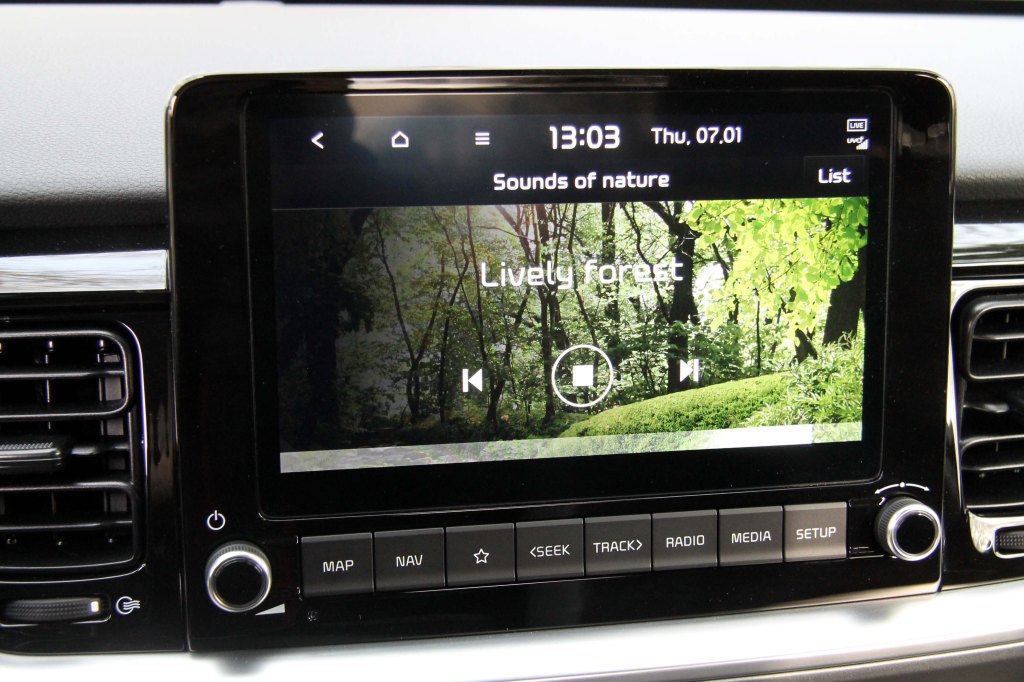
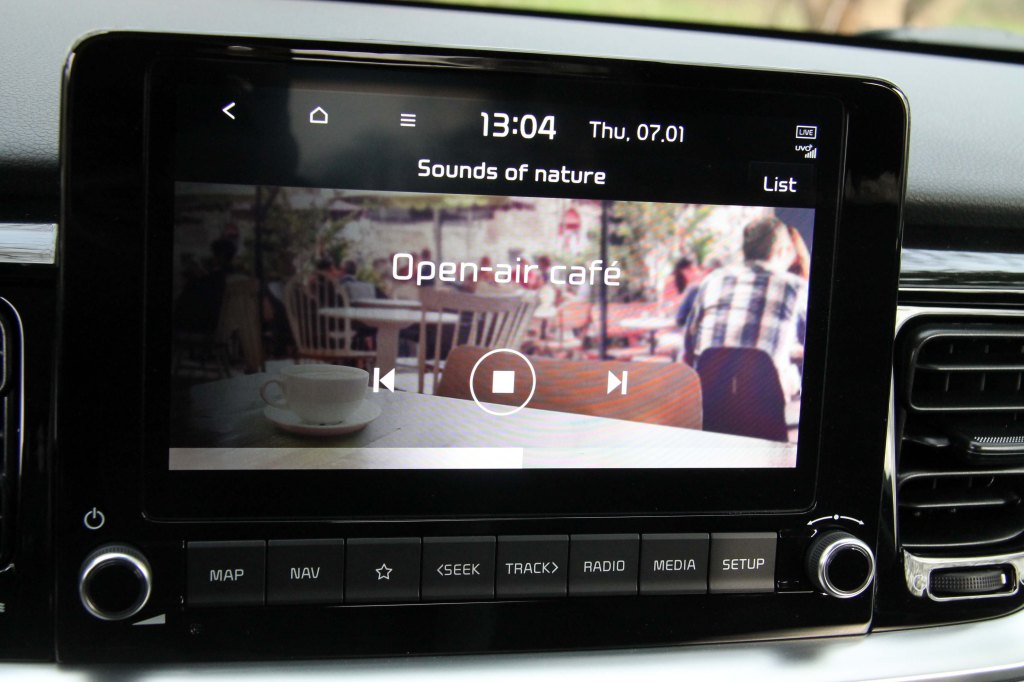
A pleasant gimmick: you can choose your ambient music on the display: the sounds of a rainforest or a busy café…
Kia Connected Services featuring TomTom Live services takes reliable route guidance to the next level of accuracy. At the heart is a WiFi unit that enables the navigation system to connect to the internet through a smartphone. A new map update programme for your Kia is available at a cost.
Conclusion
A very convincing compact crossover, which made an impressive entry into the mild hybrid world, with a useful and alert Mild Hybrid system. It really makes a difference in consumption as well as in performance and responsiveness, making this Stonic very endearing and pleasant to drive and own, certainly if you know that it comes with the 7-year warranty, like all the other Kia’s…
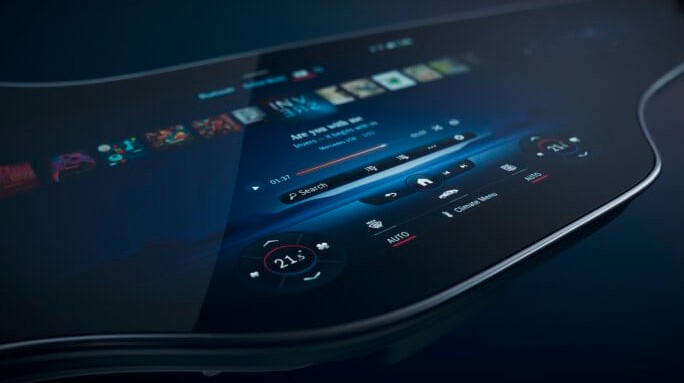
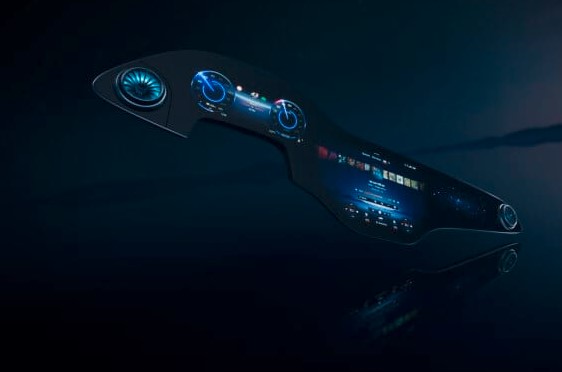
Mercedes is making another breakthrough in terms of dashboard infotainment. In 2018 the MBUX (Mercedes-Benz User Experience) was unveiled in the current A-Class, and there are now more than 1.8 million Mercedes-Benz passenger cars equipped with it on the roads worldwide. A few months ago, the second generation of this learn-capable system debuted in the new S-Class. The next big step now follows in the form of the new EQS and the optionally available MBUX Hyperscreen.
The large, curved screen unit stretches almost the entire width from the left to the right A-pillar. In addition to its sheer size, the high-quality, detail-loving design also provides a “wow” effect. This aesthetic high-tech look is the emotional dimension of the MBUX hyperscreen.
Added to this is artificial intelligence (AI): With software capable of learning, the display and operating concept adapts completely to its user and makes personalized suggestions for numerous infotainment, comfort and vehicle functions.
Thanks to the so-called zero layer, the user does not have to scroll through submenus or give voice commands. The most important applications are always offered in a situational and contextual way at the top level in view. In this way, numerous operating steps are taken away from the EQS driver. And not only him: The MBUX Hyperscreen is also an attentive assistant for the passenger. It receives its own display and operating area.
“The MBUX Hyperscreen is both the brain and nervous system of the car”, says Sajjad Khan (photo here above) , Member of the Board of Management of Mercedes-Benz AG and CTO. “The MBUX Hyperscreen continually gets to know the customer better and delivers a tailored, personalized infotainment and operating offering before the occupant even has to click or scroll anywhere.”
We are of course quite keen to get acquainted with this Hypersreen…hopefully soon!
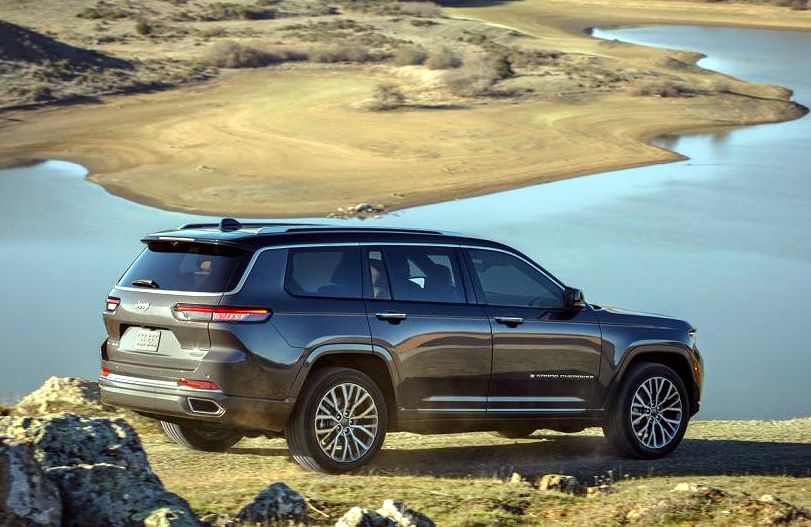
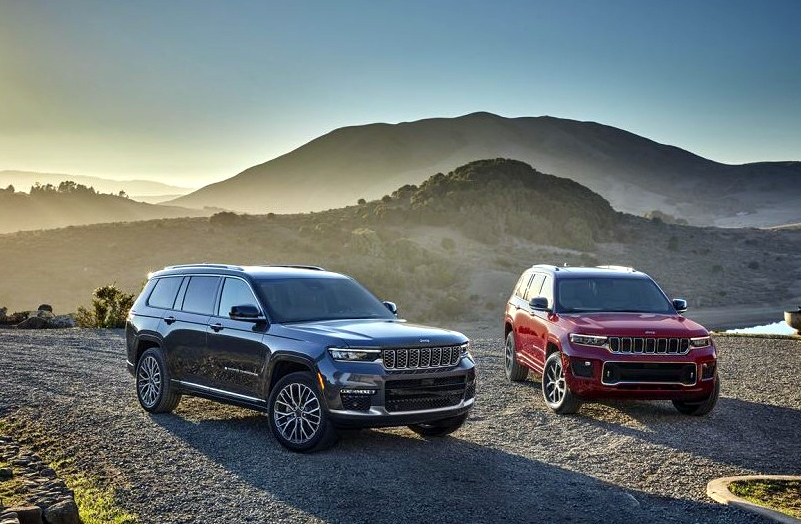
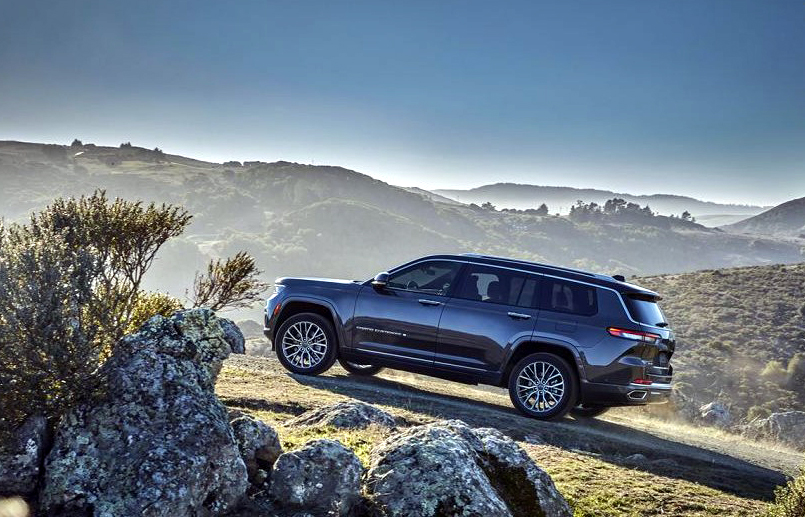
The new Grand Cherokee was launched on Jan 7 in Detroit, for the time being only for the US market. Commercialization in Eurpe, Millde East and Africa is expected by late 2021. But as the Grand Cherokee now comes in three-row form for the first time, it is important enough to present this impressive Jeep here in our columns…
Hans Knol ten Bensel
Rooted in a legacy of Jeep® 4×4 capability, luxury and advanced technologies, and loaded with Grand Cherokee and FCA firsts, the all-new 2021 Jeep Grand Cherokee—now with seven-passenger seating—delivers an exceptional customer experience
Despite its luxury and impressive size, three Jeep 4×4 systems and Selec-Terrain traction management system with not less than five terrain modes continue and improve the legendary off-road capability, including more off-road ground clearance and water fording capability compared with previous generations
All-new vehicle architecture, independent front and rear suspensions and class-exclusive Quadra-Lift air suspension with electronic adaptive damping deliver good on-road driving dynamics
The new body style has of course the “signature Jeep design” cues, including Jeep’s signature seven-slot grille, aggressive front approach angle and trapezoidal wheel arches
Premium, spacious interior features standard 10-inch display screens across the instrument panel, including a frameless digital gauge cluster and touchscreen radio, all-new LED lighting with ambient features, driver and front passenger seat massage and personalized climate zones
Luxury is offered with hand-wrapped, quilted Palermo leather, open-pore Waxed Walnut wood, 21-inch wheels and standard premium amenities on the new Summit Reserve Package.
The new Grand Cherokee comes with more than 110 advanced safety and security features, including L2 driver-assist systems with hands-on automated driving, along with 360-degree surround view and night vision cameras; advanced hands-free L2 automated driving system will be available in late 2021 on the 2022 Grand Cherokee L
Infotainment is of course top notch including the most advanced Uconnect system ever with wireless Apple CarPlay and Android Auto, windshield Head-up Display (HUD), digital rearview mirror, frameless digital cluster, rear seat monitoring camera and an exclusive and premium 960-watt, 19-speaker McIntosh audio sound system.
The new Jeep Grand Cherokee two-row and its 4xe electrified version scheduled to debut later on the US market (and also in Europe) in 2021
We just let you look at the photos here… and wait for autumn!
The new logo features ‘symmetry’, ‘rhythm’ and ‘rising’ elements that embody Kia’s confidence and commitment to customers.
The logo is a symbol of Kia’s new brand purpose and the values it promises to offer customers through future products and services, and the experiences these enable. Kia seals its brand promise by developing the new logo to resemble a handwritten signature. The rhythmical, unbroken line of the logo conveys Kia’s commitment to bringing moments of inspiration, while its symmetry demonstrates confidence. The rising gestures of the logo embody Kia’s rising ambitions for the brand, and, more importantly, what it offers to customers.
Dazzling show of pyrodrones…
The new logo was unveiled during a record-breaking pyrotechnic display in the skies above Incheon, Korea. The event saw 303 pyrodrones launching hundreds of fireworks in a synchronized artistic display, igniting and celebrating Kia’s new beginning. This set a new Guinness World Record for ‘Most unmanned aerial vehicles (UAVs) launching fireworks simultaneously’. The dazzling display can be seen on the Kia Global YouTube channel: https://youtu.be/s61_IsjqLzc
Kia discloses new brand slogan: ‘Movement that inspires’
In addition to an all-new logo, Kia revealed its new global brand slogan, ‘Movement that inspires’.
Details on Kia’s new brand strategy, including brand purpose and philosophy as well as application to Kia’s future product line-up, will be shared through the digital ‘New Kia Brand Showcase’ event to be held at 01:00 AM CET, January 15. The event can be viewed on the Kia Global YouTube channel.
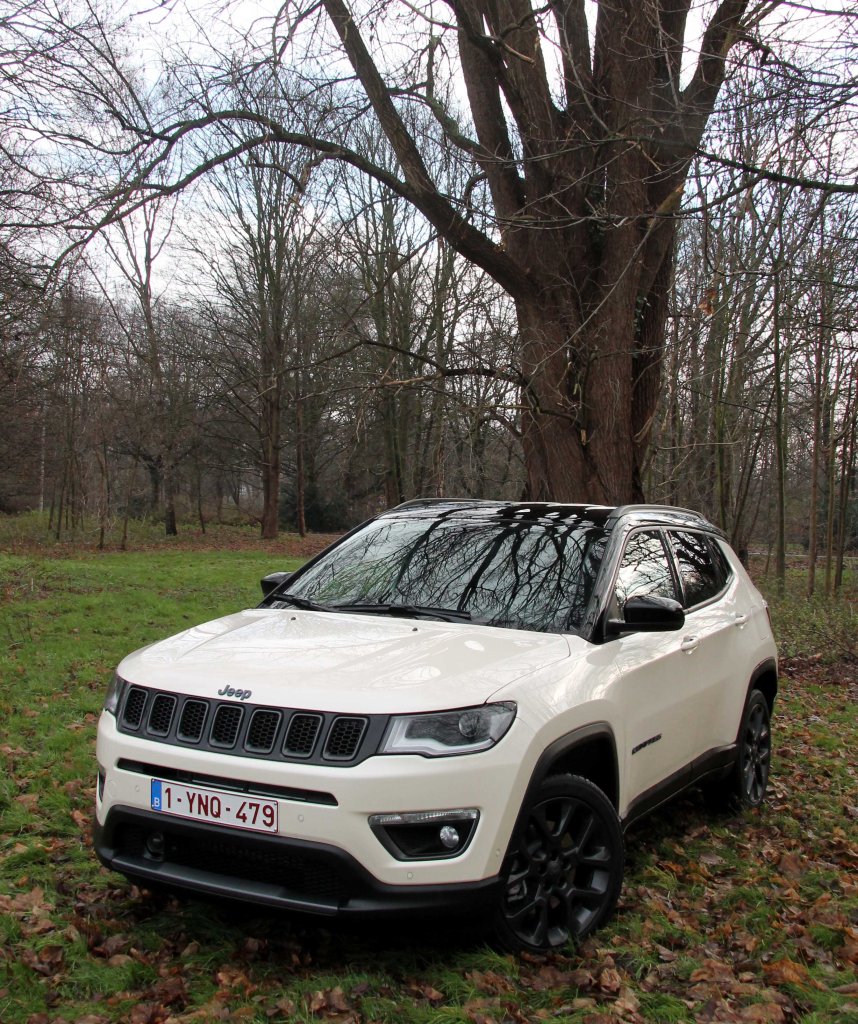
Jeep is building on a very comprehensive drivetrain offering across its range, with increasing emphasis on (hybrid) E-power.
Jeep has always been a vehicle which has been near to nature, and this new 4xe range comes ever closer to its vocation. It represents an important step of the brand’s evolutionary process, which is oriented more than ever towards sustainability and electrification.
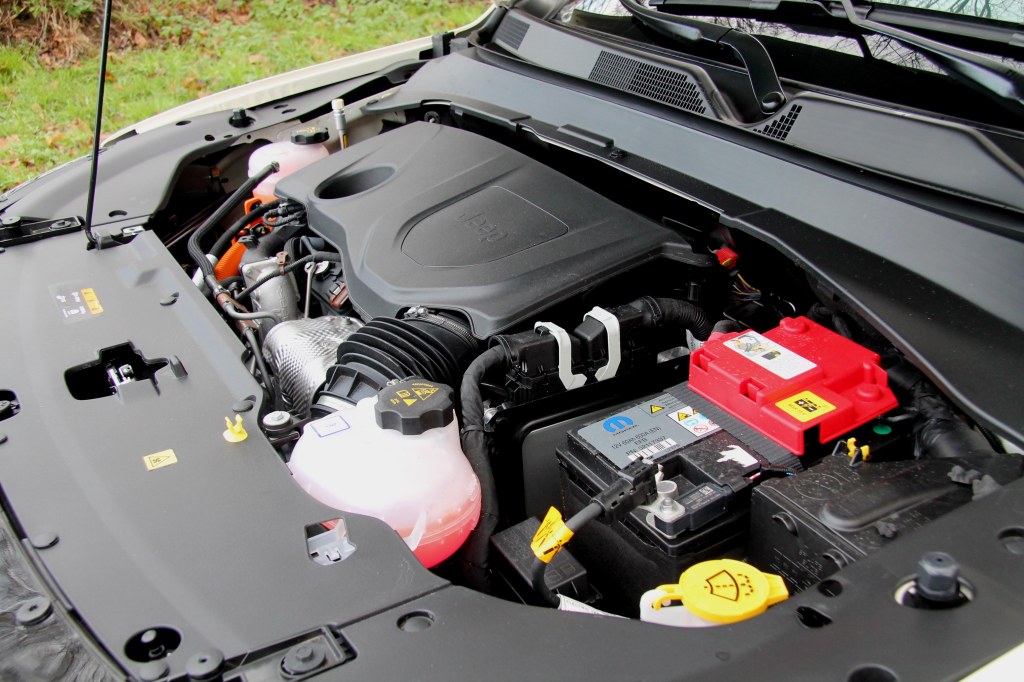
In these columns you could read already about our driving impressions of the Compass with the very smooth new four-cylinder 1.3-litre turbo petrol engine made at the FCA plant in Melfi, in the Italian region of Basilicata. Just read our report titled “We drove the new Compass “Made in Europe” with the brand new 1,3 litre petrol engine…” It is part of the new FCA Global Small Engine family, launched in mid-2018 on the Jeep Renegade. As you can read in this post, we were very impressed. But there is an even more interesting version, which we test for you today: the 4xe, with an electric motor mated to a choice of either the 190 hp and 240 hp version of the 1.3-litre Global Small Engine. What’s more, both these 4xe versions are four-wheel drive only. Just read on…
Hans Knol ten Bensel
Thorough development…
The 4xe range is important for the brand, so the greatest attention was given to its development.
The painstaking development process of the Compass 4xe culminated at the Arjeplog Proving Grounds in Swedish Lapland. Up to 3,800 kilometers of road tests were clocked up to reach Arjeplog from Turin and put the Jeep plug-in hybrid SUVs through their paces in all conditions that customers might need to tackle. Tests continued in the winter of 2019 in Arjeplog and during the long-awaited Jeep Winter event in Champoluc (Val d’Aosta, Italy), where the brand provided a glimpse on the operation of the 4xe system through a cross section of a Jeep Renegade on display. The beginning of 2020 welcomed the launch of the “First Edition”, the exclusive launch editions for both Jeep Renegade 4xe and Jeep Compass 4xe.
No secrets, even for a novice…
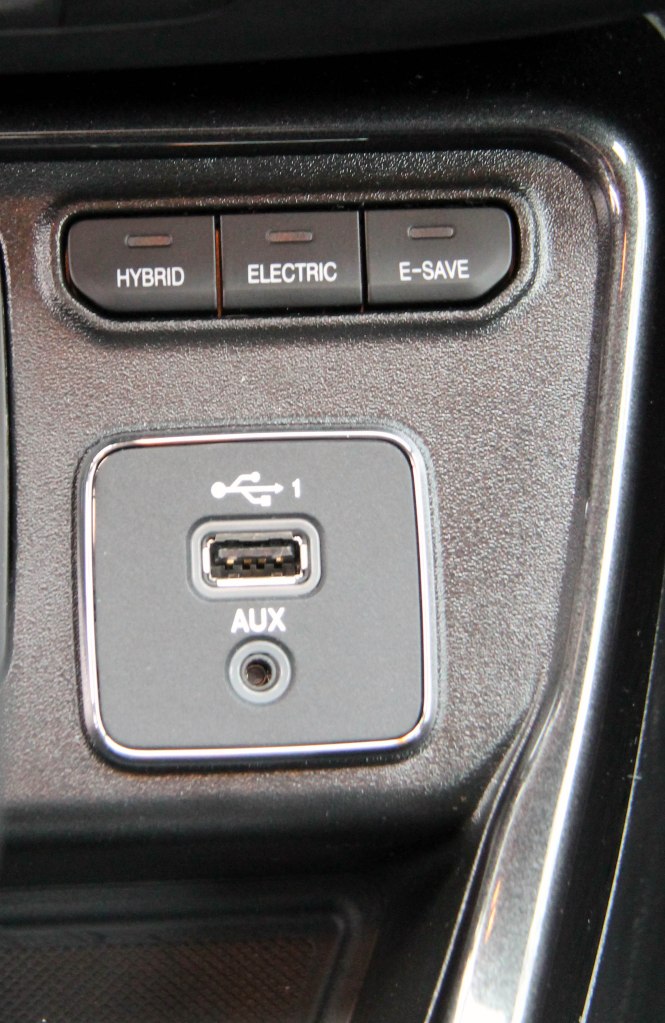
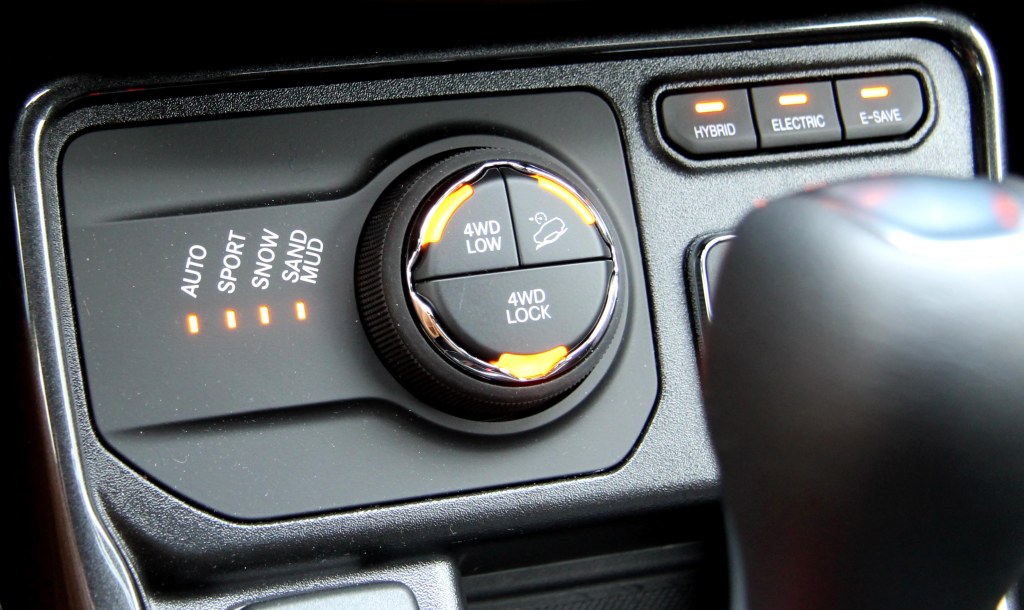
We must admit, the results are quite impressive. Right from the first meters, this PHEV shows its maturity. What’s more, it is not only thoroughly engineered, it is also eminently practical, and understandable even for the first time hybrid and 4WD driver for that matter. The driver can easily select one of the three buttons on the center console, i.e. “hybrid”, “electric” and “e-save.” This can be done at the start, but also whilst driving, one can select between the three modes. The modes are self-explaining actually, but we describe them for you here:
Hybrid is the default mode selected when the car is started. It is designed to manage and use the system in the most efficient way, optimizing power and minimizing fuel consumption. The internal combustion engine and electric motor work together according to the road type, with braking energy recovery phases.
Initially, the system favors electric driving (so the power is supplied by the electric motor). When the battery reaches the minimum charge level (called “SOC”, State Of Charge), the internal combustion engine is used for propulsion. Throughout the drive or trip, the system manages start-up and intervention through an optimization algorithm (Hybrid Control Processor – HCP) designed to maximize the system efficiency levels.
Electric is the mode that provides a full-electric average range of around 50 kilometers at zero emissions. It is designed to maximize the electric driving experience through a different calibration of the HCP optimization algorithm. The car drives in electric-only mode as long as there is sufficient charge in the battery. The system automatically switches to HYBRID mode when the battery is completely flat or when the driver uses kick-down. A top speed of up to 130 km/h can be reached. This is the ideal mode for traveling in city centers with traffic and emission restrictions.
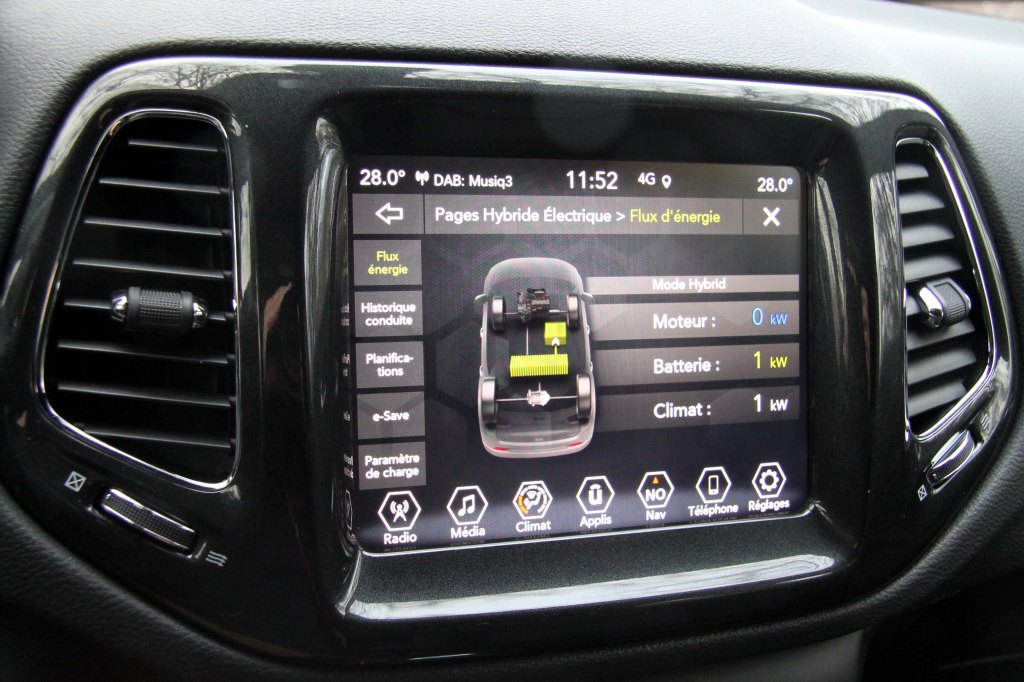
E-SAVE , on the other hand, is the mode for maintaining battery charge or for charging it while driving using the internal combustion engine. E-SAVE mode supports two secondary modes, called Battery Save (passive E-SAVE) and Battery Charge (active E-SAVE), both of which can be activated on the Uconnect system screen.
Passive E-SAVE or Battery Save: maintains the state of charge of the battery through the predominant use of the internal combustion engine;
E-SAVE active or Battery Charge: charges the battery up to 80% through the operation of the internal combustion engine on which the combined front electric generator acts.
We tested of course all the modes, but to measure the overall efficiency of the E-drivetrain, we opted for quite an important part of our test for the E-SAVE active mode. While keeping the battery charged on longer trips, even recharging it indeed up to 75-80 %, we clocked an average consumption of 7,6 liters/100 km, which, for a full 4WD vehicle is very, very creditable indeed. It must be said that we drove this Compass with anticipation and respected the legal speed limits. In hybrid mode, with the E-motor also delivering some work, consumption evidently drops. In the combined cycle, the manufacturer quotes 2,1 l/100 km. CO2 emissions are very low with 47 – 49 g/km.
We were also very impressed, as in our previous test with the “normal” Compass, by the outstanding level of technical refinement of this drivetrain. The Compass we tested was equipped with the 130 HP version of the smooth 1,3 litre engine, plus the 60 hp produced by the electric motor, adding up to a total of 190 hp. In terms of torque, the electric motor produces 250 Nm, while the combustion engine delivers 270 Nm. Performance does not leave anything to be desired: 0 to 100 km/h costs 7,9 seconds and top speed is 183 km/h.
E-power…
The Compass has two electric motors, one of which is located on the front axle and coupled to the internal combustion engine that, in addition to working in synergy with the engine, can act as a high-voltage generator, as necessary.
The second one is located on the rear axle and features reduction gear and integrated differential (“e-axle”). It delivers 60 hp of power and 250 Nm of torque, generating traction and recovering energy while braking. The electric motor actually drives the rear wheels, the combustion engine the front wheels.
The 11.4 kWh, 400-volt lithium-ion battery pack uses cobalt-nickel manganese/graphite chemistry. It is located underneath the second-row of seats, where it is protected from outside elements. Enclosed in a steel casing, the pack is fitted with a dedicated heating and cooling circuit to keep the battery at its optimum temperature for best performance.
The 11.4 kWh battery pack allows the Renegade and Compass 4xe to travel an average range of 50 kilometers* in full-electric, zero-emission mode. The hybrid system also includes a power inverter (PIM) housed inside the battery pack, which is also protected from damage.
Regenerative braking and…e-Coasting!
The 4xe Compass is relaxing and smooth to drive in town, where you can enjoy the “zen” qualities of pure E-power, and the six-speed auto box is super smooth when you enjoy the pulling power qualities of the 1,3 litre engine. But there is more than just smooth progress. There is regenerative braking, which is always active regardless of the driving mode (internal combustion engine or electric motor) to maximize energy recovery when the throttle and brake pedals are released. But the Compass has more upon its sleeve. It also allows e-Coasting. This function is available when the gearlever is put in “D”. By pressing the ‘e-Coasting’ button, the regenerative braking intensity can be activated according to two different levels, more or less intense.
A warning light on the instrument panel display indicates activation through two different colors: White (“Normal”) if the “Intense” function is selected but not active (accelerator pedal not released); Green, if the “Intense” function is selected and active (accelerator pedal released).
After the more intense function has been activated, the regenerative braking calibration is more explicit when coasting. This feature reduces the speed faster than standard regenerative braking and generates more electricity to be conveyed to the battery pack.
A dedicated message will appear on the instrument panel during the transition from the “Intense” to “Normal” function and vice versa.
The absolute king off-road…
The legendary offroad qualities of a Jeep are well known to all of us. With an electric motor with its instant massive torque driving the rear wheels independently from the front wheels, 4WD torque delivery can be even more gradual and fine-tuned, and this Compass (and Renegade) 4xe even outclasses in this respect the “classic” Jeeps. The Jeep driver has the usual choice between different off-road driving modes: Auto, Sport, Snow, Sand/Mud. Remarkable is also this “Sport” mode: This is a first on the Compass and Renegade, and uses both the electric motor and the internal combustion engine to deliver sporty driving performances. It tightens up the steering, sharpens the throttle response and adjusts the behavior of the transmission via higher upshifts for full power and torque delivery. Just great!
And then here is also Jeep Selec-Terrain traction control. It combines the dynamic modes to two different 4×4 traction modes, i.e. 4WD Lock and 4WD Low. In the 4WD Lock mode, the four-wheel drive is permanently engaged at speeds up to 15 km/h, keeping the rear electric motor (P4) constantly running to provide 4×4 traction at low speeds with a constant distribution of torque between the two axles (the distribution ratio varies depending on the selected Terrain mode). At speeds above 15 km/h, AWD becomes on-demand. Jeep thought here of everything: what if the battery charge is low? Well, the full functionality of the 4xe four-wheel drive is guaranteed by the ’Powerlooping‘ function when the battery charge level is low. This ensures that the front electric motor, which is mechanically connected to the internal combustion engine, continuously generates high-voltage current to power the rear electric motor and so maximum traction is delivered regardless of the state of charge of the battery.
4WD Low mode is used when the going gets really rough: like when you are tackling big rocks for example…
Versatile
The Compass is an eminently versatile 4WD vehicle. Smoothly at home in urban and open road traffic, and a master off-road: there is nothing this Compass cannot do. It’s hybrid system is quite practical and self-explaining to use, and the Compass is also the proverbial breeze to charge: either through the normal domestic socket using the supplied cable, or by connecting to the handy easyWallbox charger the evening before. Using the “E-Control” function, the driver can set the favorite start time and the battery charging time, for instance picking the most cost-effective electricity tariffs. He can also program charging from home using his smartphone.
Easy charging
FCA is developing solutions to fulfill every requirement, starting from charge points: the around 3,600 charging columns installed at dealerships across Europe and in plant parking lots are heading in this direction, as are the agreements with Enel X and ENGIE, leading players in the energy sector, to offer simple and immediate access to public and home charge points, like the easyWallbox.
Based on another partnership with Digital Charging Solutions (DCS), customers who choose the Jeep Renegade and Compass 4xe will have access to “My easy Charge”, a digital service providing access to the largest public charging network in the world, managed by DCS.
Via a dedicated app and a single card, this solution will offer access to more than 130,000 charging stations in 21 European countries. Finally, with ENGIE Eps and Terna, FCA e-Mobility has developed laboratories for innovative technologies, such as Vehicle-to-Grid (V2G), a system whereby an electric car interacts with the electricity network to return or store energy.
Conclusion
A very clever and eminently useful Plug In Hybrid, which is totally in tune with the times, has style, panache, roominess, sturdiness, smoothness, is economical and has legendary off-road qualities. Above all, it is a Jeep, the genuine article. What are you waiting for?
We all know that the Giulia is an absolute champion on the German “Green Hell”, the Nürburgring. That in terms of handling, it really sands out. The Giulia Quadrifoglio has been elected “Sportscar of the Year” by the specialist magazine AUTO BILD SPORTSCARS. After a test with this beautifully proportioned sedan, we can only agree…
We drove here the 2,2 liter Diesel version: does it have the charm, refinement and panache to make the Giulia remain a true Alfa?
Just read on…
Hans Knol ten Bensel
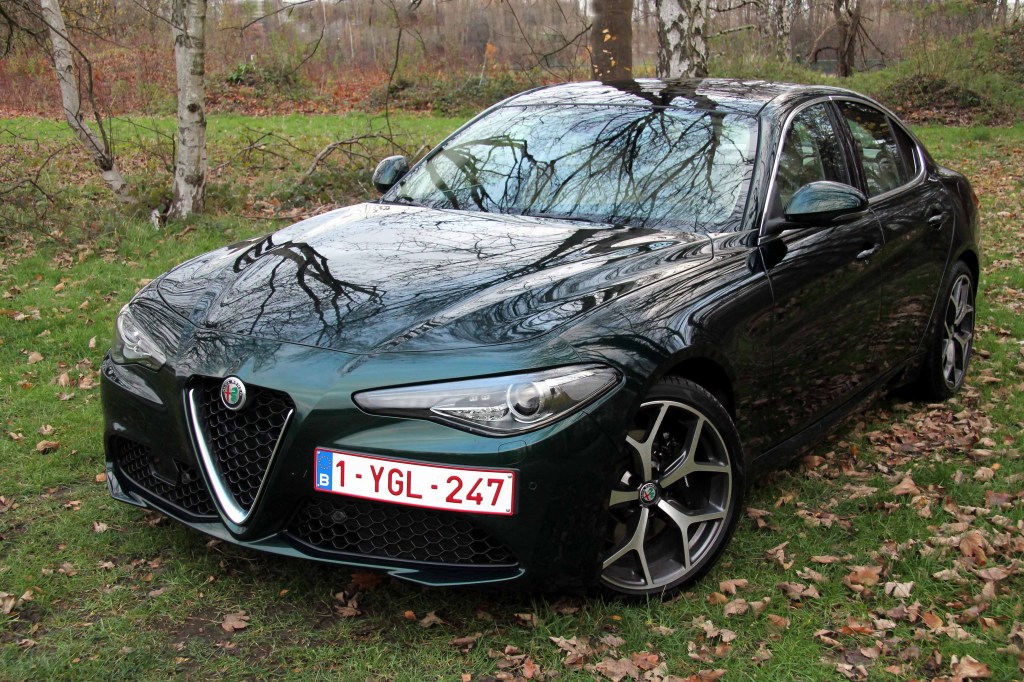
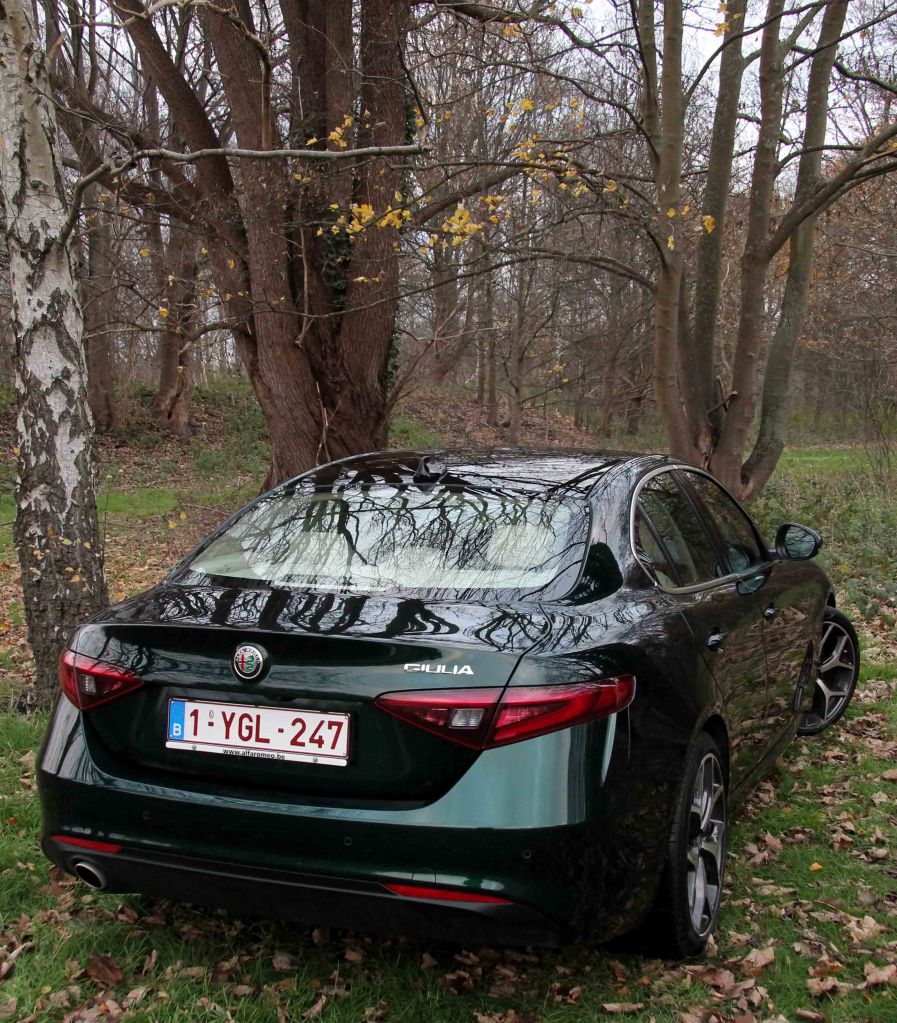
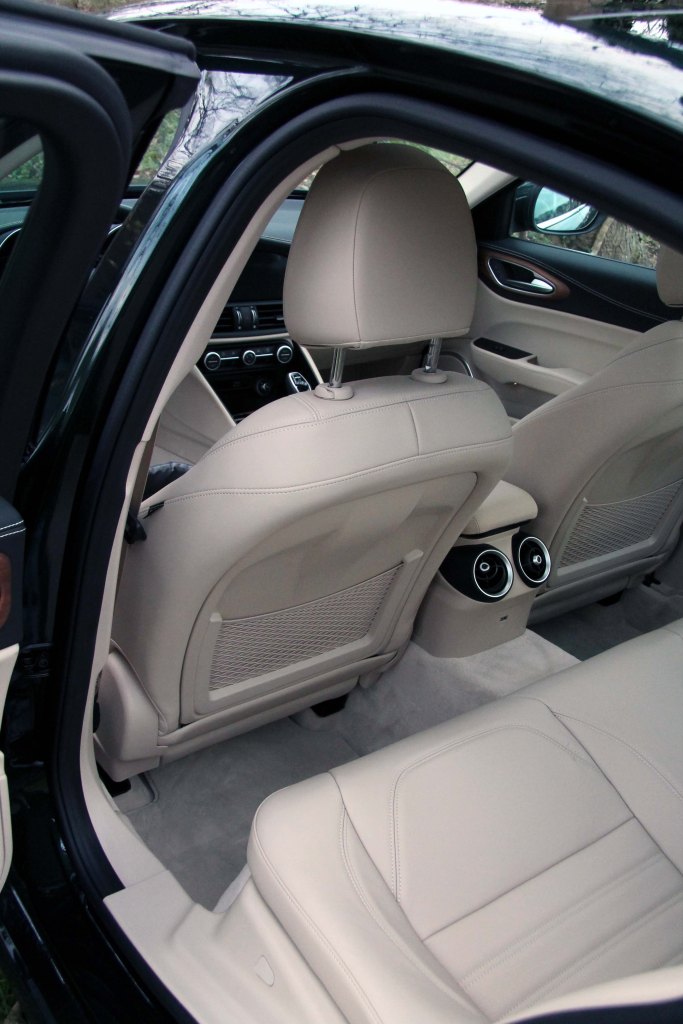
The Giulia is continuously being honed to become the 4-door sedan embodying the absolute pinnacle in sportiness and panache. To start with, let’s just focus about its looks. Our test car came in an absolutely beautiful metallic green, with matching beige interior. This good-looking color combination was further enhanced by light alloy wheels, making this Giulia have the taut and elegant stance it so befits.
The seats are excellent, really wrap around you and behind the wheel a good seating position is soon found. In the back is enough legroom, and this Giulia is a comfortable four-seater by any standards.
The large and beautiful round dials for speed and revs are still analog, and have timeless beauty. In our opinion, Alfa should never change them. They are classic and are eminently readable. To the eye, they are just perfect. In the center of the dashboard sits a well styled and beautifully integrated touchscreen, with all the state-of-the-art driving aids, infotainment and connectivity. More about this later.
We love the clean styling of the dashboard, with its tasteful wooden panels and a well-shaped center console, with the lever of the 8-speed auto box sitting in an insert which is also adorned by the Italian “tricolore”. Here you find also Alfa’s famous DNA button, letting you select between three driving modes, going from “sporting” to “normal” and then adapted to wintery surfaces and driving conditions.
On both sides of the steering column sit two very long gear change paddles, so characteristic of these pur sang Alfa’s. I like heir long length and width, so you can always easily reach and touch them, even under the most frantic cornering. Moreover, they look beautiful too.
Diesel power…
We tested the Giulia with the least powerful version of the 2,2 liter four cylinder Diesel unit, which has proven itself totally in the FCA Group, and is found under the hood in many model ranges. The Giulia comes indeed with more powerful Diesel versions of this engine to up to 154 kW, but our 2143 cc engine developed exactly 100 kW at a quiet 3250 rpm. For any engine, and certainly a Diesel engine, it is the sheer pulling power which counts, and this is found in the torque curve. Here one sees that the 100 kW version of this engine produces a hefty 450 Nm at 1750 rpm, and this is exactly as much as its more powerful sisters. So when accelerating from lower speeds, this 100 kW unit produces the same punch, and helped by the alert 8 speed transmission, this Giulia feels and actually is just as agile. All out performance is quite credible with a 0 to 100 acceleration in some 9,5 seconds, and top speed is a good 210 km/h.
When testing the Stelvio, we already told you about the sporting merits of the Giorgio platform and suspension. One has to steer the Giulia through fast and slow curves to believe it. It is so wonderfully precise and totally well balanced and neutral. It is a wonderful Gran Turismo chassis, sits so miraculously well on the road, hugs every corner. Steering around straight urban corners or roundabouts makes you appreciate the nimbleness and light-footed panache of the Giulia. It is a thoroughbred; you feel it every meter you steer it.
The Giulia is a wonderful companion when you decide on a European trip, taking it through the Alps to its Mediterranean homeland, for instance…
But also, a long or short urban commute will not tire you. The good seats, excellent ventilation/airco, DAB radio and all the driver assistance systems will soothe and relax you even in the tightest traffic.
Level 2 automated driving…
The Giulia is a fully fledged “smart” and connected car, fully tuned in to what modern day customers come to expect from a premium sedan. What to think a complete set of ADAS (Advanced Driver Assistance Systems) features, offering the highest level of autonomous driving which still leaves plenty of room to have pure driving pleasure. This is level 2, achieved by definition of the amount of control the car takes over from the driver, like the accelerator, brakes and steering under certain conditions. This level makes full use of electronic systems which however still require continuous monitoring by the driver, at the same time providing the support of greater comfort on long journeys. As said, the driver always remains in control, and has always his/her hands on the steering wheel.
The main driver assist systems present in the Giulia – and by the way also the Stelvio – are:
• Lane Keeping Assist: detects whether the vehicle is veering outside its lane without any direction indicators being activated, and alerts the driver using visual and haptic signals. It actively intervenes to steer the vehicle back into lane;
• Active Blind Spot Assist: monitors rear blind spots, reports any approaching vehicles and corrects steering to avoid a collision;
• Active Cruise Control: automatically adjusts the car’s speed to maintain a safe distance from the vehicles in front. In conjunction with the traffic sign recognition system, this technology adjusts the speed to within the set limit, for a more comfortable drive;
• Traffic Sign Recognition and Intelligent Speed Control: this system uses the on-board camera, recognizes traffic signs, reports them on the display, and alerts the driver of the current speed limit.
The system then suggests the driver reduce their speed to the limit detected. If the driver accepts, the cruise control settings are automatically adjusted;
• Traffic Jam Assist and Highway Assist: To complement Active Cruise Control, these systems monitor lateral positioning, keeping the car in the middle of the lane in heavy traffic (Traffic Jam Assistant) or on the highway (Highway Assist), while also adjusting the speed according to the current limits;
• Driver Attention Assist: this function constantly monitors the driver’s attention levels, and if necessary, alerts them if they might need to take a break.
Economy, the wonders of a Diesel
The ZF built 8 speed transmission, which is a perfect example of alertness combined with a smooth power flow, comes with a very intelligent, sensitive and subtle coasting function. Lifting the throttle from medium to high speeds, will decouple the engine from the gearbox, which then settles into an idle while the car further coasts along, using its kinetic energy to the full. When you get the hang of it, you can use this feature much to your advantage in urban boulevard traffic with its ever-varying speeds.
Anticipative driving where you concentrate on coasting instead of braking brings you wonderful consumption figures; around 6 liters/100 km is easily achieved here. Cruising on secondary roads at the legal limits gets the consumption down to 5 liters, motorway cruising at legal limits is below 6 liters/100 km. CO2 emissions are also rather creditable with 127 g/km. Never forget, this is a car with a kerb weight of 1465 kg…
We know, E-cars are all the rage, but then again, just look how good Diesels have become. This Giulia is only whispering at speeds up to 175-190 km/h… and remains then even below 10 liters/100 km, also thanks to its excellent aerodynamics of course.
Conclusion
This Giulia has it all, if you like a car with character. The Diesel engine makes this Giulia also frugal, making it fit for high annual mileages and long trips. This Alfa retains its zest and panache, even in the lowest powered Diesel version, and merits a long hard look from you, if you are opting for a Diesel.
Of course, there are the petrol engined gems, and last but not least the Quadrifoglio, which makes Alfa Giulia driving an absolute dream. We hope soon to lay our hands on one, and tell you about our experiences behind the wheel of this absolute Gran Turismo champion. But don’t miss this one!
There are cars in our world which are worth their weight in gold. Every bit of it. These cars are called Abarths. Their creator had one principle: build absolute thoroughbreds. Pur sang engines, pur sang suspension, pur sang style and soul. Even when they were born and bred based on mass produced Fiats. Enthusiasts remember them immediately. The racing-ready 850 TC’s for instance. The 500 Abarth’s “Esse Esse”, to stay within the original Nuova Cinquecento theme, now decades ago.
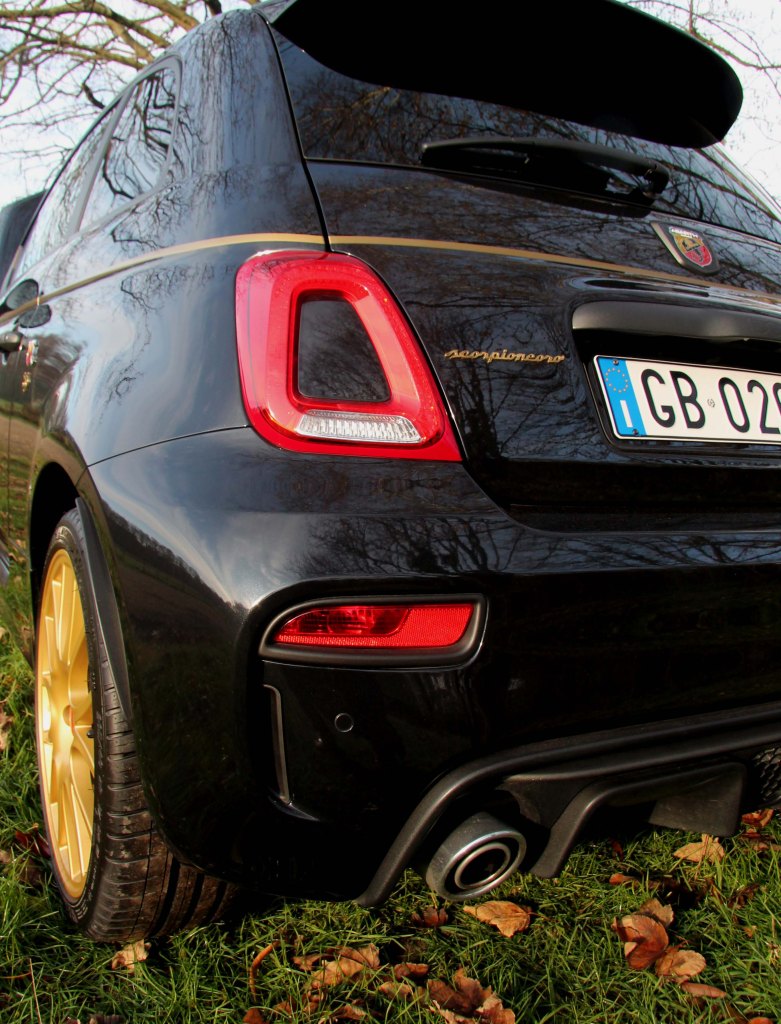
The 595 “Scorpione oro” or “Golden Scorpion” is reminiscent of the exclusive A112 Abarth “Gold Ring”, better known to fans as the A112 Abarth “Targa Oro”. A truly exclusive car, only 150 models of which were produced in 1979, all featuring a black livery, golden details, sophisticated interiors and a wide range of equipment as standard, in line with the Italian tradition of “granturismo” cars.
This dapper front wheel drive transverse engined four seater started life as the Autobianchi 112, which had the 903 Fiat four cylinder under the hood. Already in standard form, it produced a healthy 43 DIN HP at 6.000 rpm, good for 0-100 in some 17 seconds. The Abarth Version actually was dubbed officially as “Autobianchi A-112 5a Serie Abarth.” Its 1050 cc four cylinder was fed with a Weber 32DMTR38/250 2-barrel carburettor, and was good for 70 HP. It already proved a good sprinter, with 0 to 100 km/h reached in 11,4 seconds.
Brilliant performance with panache
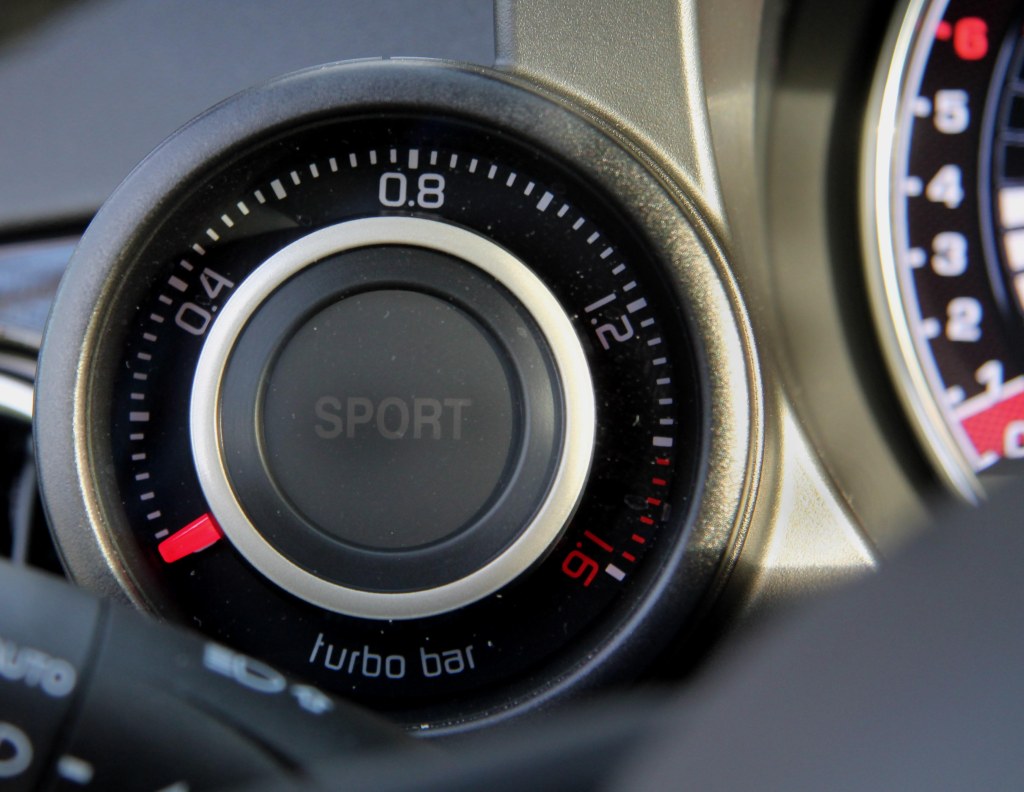
This is where all comparison ends. The actual Abarth 595 is still compact, but then again a lot sturdier with a kerb weight of slightly more than 1 tonne, much heavier than the nimble 700 kg of the A112. The engine is now the well proven double overhead cam 1368 cc unit, developing here 165 HP, and is very characteristic with its deep exhaust roar. It is very civilized in town, ready to pull away without hesitation from 900 rpm onwards, and this proved to be very pleasant in slow traffic. We tested this Scorpioneoro with the 5 speed manual transmission, and it delighted us with its very subtle and slick changes, combined with a very smooth and progressive clutch. With all this, the 595 behaves delightfully smooth and easy in tight urban traffic, and is of course an absolute dream on the open road.
The chassis and stiff and very sporting suspension truly come to their own there, and delight the enthusiast driver with precise, neutral handling and steering, which lets you take all bends and fast curves like a master.
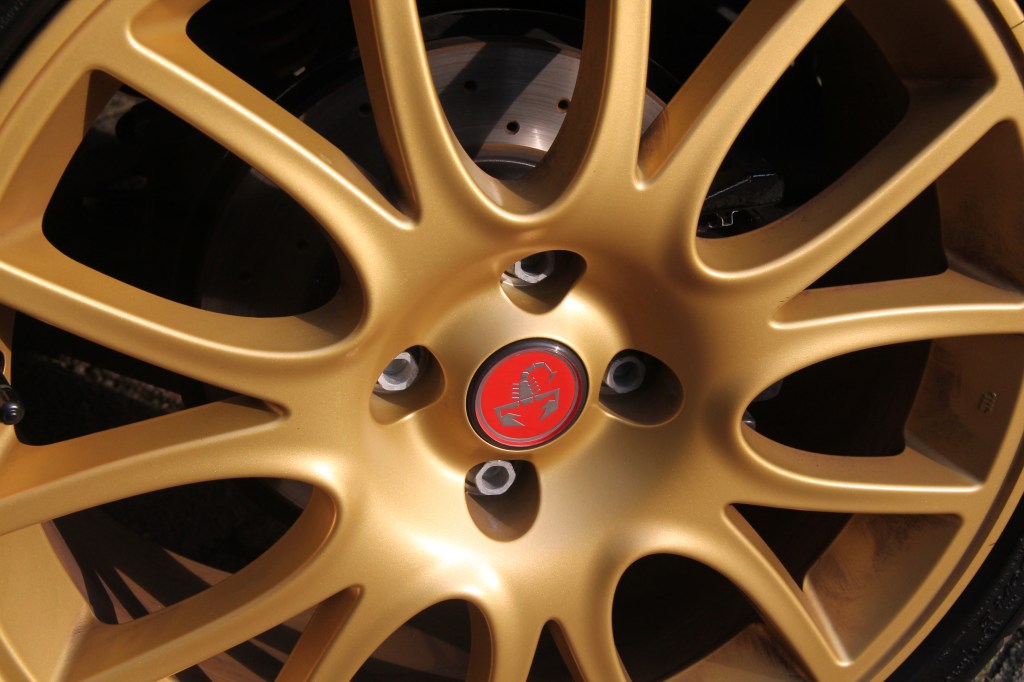
This brilliant experience is made even more dramatic by the wonderful roar and staccato of the willing four cylinder, catapulting you from one corner to another. Suffice to say that this Abarth races from 0 to 100 km/h in merely 7,3 seconds. The brakes are of course quite up to the task, and the 17” “golden” alloy wheels are kept firmly on the tarmac in all circumstances.
The special Abarth 595 Scorpioneoro series is a genuine “collector’s item”, produced as it is in a limited edition and bearing a prestigious numbered plate in its cockpit.
The new special series is recognizable by its black scorpion livery – available on request in Podium Blue, Racing White and Record Gray – and the matt black chessboard roof is matching the “tar cold gray” finish of the handles, mirror caps, and the front and rear DAM.
To emphasize its “Golden” or “Oro” character, this new special series includes golden details, such as the scorpion on the bonnet, the lining around its bodywork and – we already mentioned it – the 17” “golden” alloy wheels or, on request, 17” “black” alloy wheels with the golden scorpion on the hubcap.
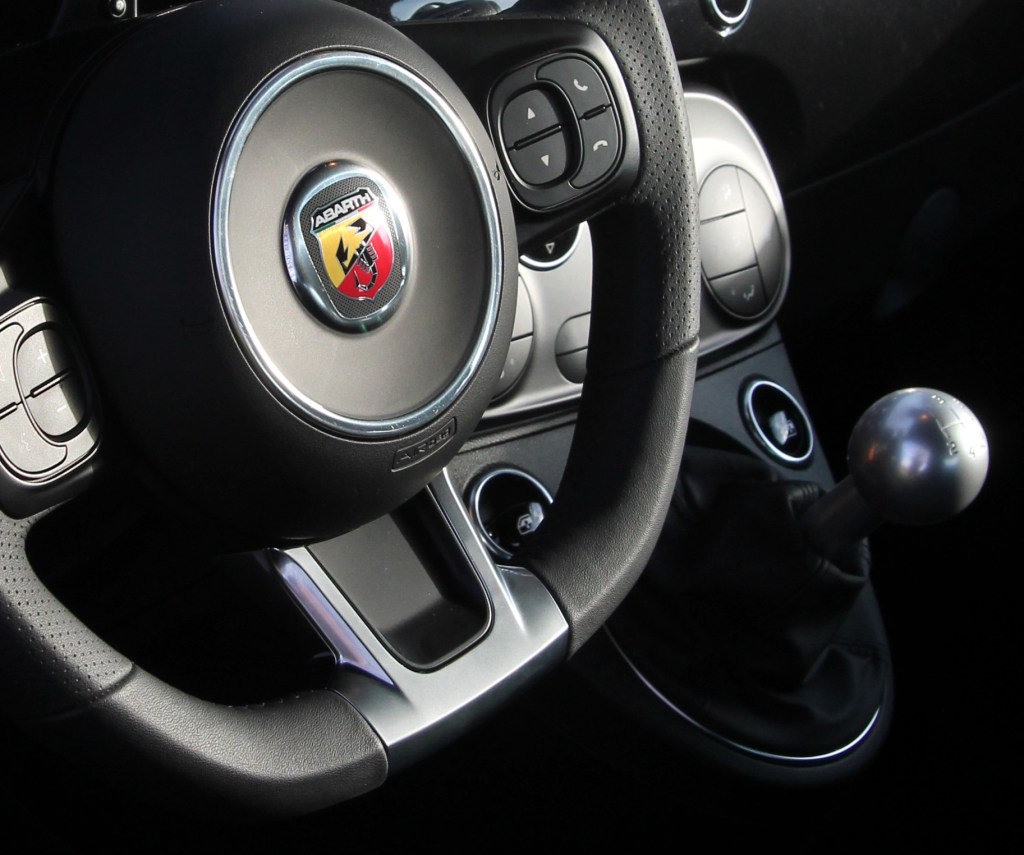
In the interior, everything kept in sporting black, with dramatic looking new Abarth “Scorpionflage” sports seats with black leather upholstery.The centre of the seat is in special material with high friction, to better contain the body during the sportiest driving. On the front seat head restraints, embroidered “Scorpioneoro” lettering alongside the Italian flag and Abarth embroidery. The new seats combine with the Scorpion Black dashboard with matte black details, last but not least with the gold plate on the central tunnel and of course personalized mats.
State of the art infotainment
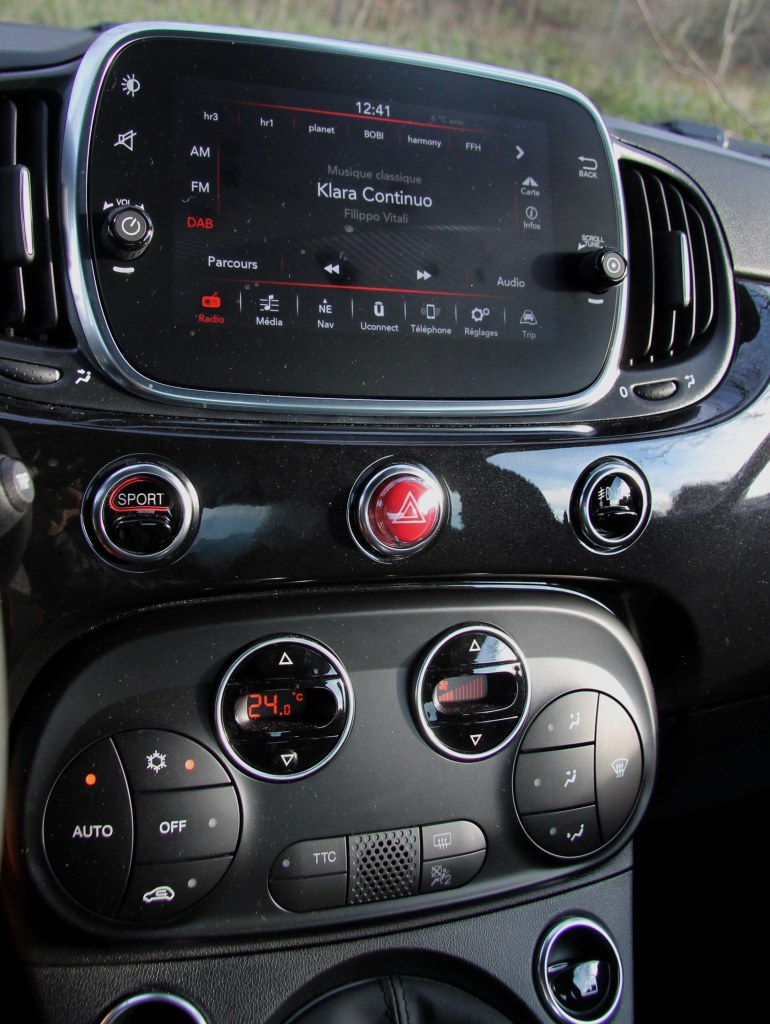
To top everything off, the Abarth 595 Scorpioneoro offers the best infotainment currently available: the 7″ HD UconnectTM system fitted with Apple CarPlay and Google Android AutoTM* – a fast platform with high definition monitor, GPS and DAB digital radio – as well as the sophisticated BeatsAudio™ system with overall output of 480 W and a 8-channel digital speaker including a cutting-edge equalization algorithm capable of reproducing the full sonic spectrum of a recording studio.
All this to please the ears of the Abarth pilot. But to be honest, during our test we rather listened to the music of the Abarth exhaust, ranging from a deep burble to a staccato roar, which drives more adrenaline in your veins than you ever thought possible.
Modern-day panache
The beauty of these 595 Abarth’s is their stunning everyday useability. Gone are the times when these thoroughbred engines needed regular finetuning of their Weber carburettors, a delicate right foot to avoid fouling the plugs when starting up the cold engine in damp weather.
The days when the good roadholding still needed an expert and sensitive hand or “Fingerspitzengefühl” to drive it on the limit are also to some extent behind us.
To some extent, as this Abarth still will reward a masterful hand when driven as hard as it can. But at least all the electronic driving aids will keep you out of trouble, unless you totally transgress the limits of physics, of course.
This being said, this Abarth teaches you to become a better driver, make you better understand with every ride the kinetics of a motor car, the forces which act upon it. The 595 is a very forgiving teacher, which lets you climb step by step higher into the art of sporting driving and racing.
On the other hand, you can hand the keys with closed eyes to every less experienced driver, he or she will not foul the plugs or do any mischiefs to the drivetrain, the totally predictable and safe behaviour and handling of this car will also see that the car is still in one piece when you get the keys back…
On fuel economy, this Abarth is of course as frugal or thirsty as you want it. All depends on your right foot here. When it comes to service costs, all the ingedients are well proven and reliable, so it will not be beyond what you expect from any normal compact car…
So when you are dreaming of a totally sporting but also eminently practical everyday urban and Gran Turismo car, this Abarth 595 is totally right for you. And we bet you will cherish it, for years to come.



























 Autoprova - for the Connaisseur