The Citroën C5 Aircross, or the magic of a voyage in total comfort…

The fine art of travel: we drove the C5 Aircross for a stay in Hotel des Indes in The Hague…

Driving between and into the iconic cities of Europe in a Citroën has always a special touch. Our test car indeed added the unique aura of the brand on our tour through Belgium, Holland and Germany. Comfortable, smooth, spacious, frugal and efficient, being last but not least also fast and safe. These are the qualities of this C5 plug in hybrid SUV we appreciated on motorways and narrow inner city roads along Dutch canals and their historic houses. Just read further…

Hans Knol ten Bensel
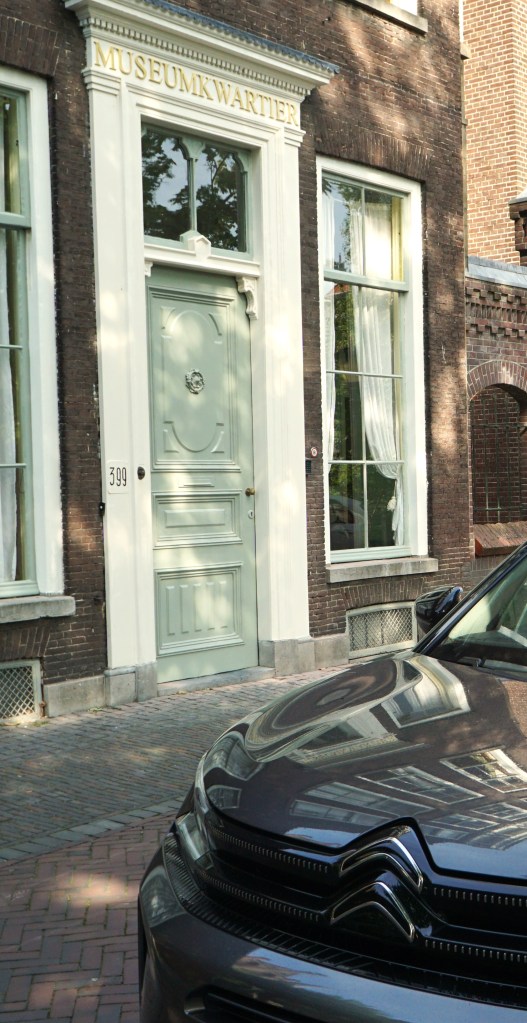
Enjoying Utrecht by staying a few nights in a historic house in the beautiful city centre along the grachten…

The Citroën we tested came with a 180 HP engine, combined with a 81 HP electric motor coupled to a battery pack which gives you close to 60 km range. A wonderful hybrid drivetrain, smooth and pleasantly frugal when you drive it sensibly, of course. This C5 is not unduly heavy, with a kerb weight of 1.825 kg, which indeed makes it future proof when weight coupled road taxes will be imposed increasingly in the coming years.

The iconic city centre of Gouda…

We liked the looks and the typical Citroën styling language with a preference for well-rounded shapes while keeping an eye for boxy room efficiency in its overall proportions. The silver grey paint scheme and the judicious use of chromed accents added a touch of luxury and panache to “our” C5. Since its facelift in 2022, its overall looks have dramatically improved, especially on the front end.
Your spacious travelling companion…

Right away we were very seduced by the excellent luggage capacity and the overall shape of the boot, as it allowed to stow our large suitcases upright on their side which allowed us to take maximum use of the available space of without having to fold down the rear seat backrests at all, leaving the cabin uncluttered and free for passengers. Indeed, the three individual back seats can be moved back and forth over a distance of not less than 15 cm. In the plug in hybrid version we drove, the available space is at least 425 litres. One can enjoy that the luggage load is discreetly stowed away, which makes city visits more safe when on tour between hotels and cities with a fully loaded car. A major practical advantage which is often not fully appreciated…

Superb seating and driving comfort…

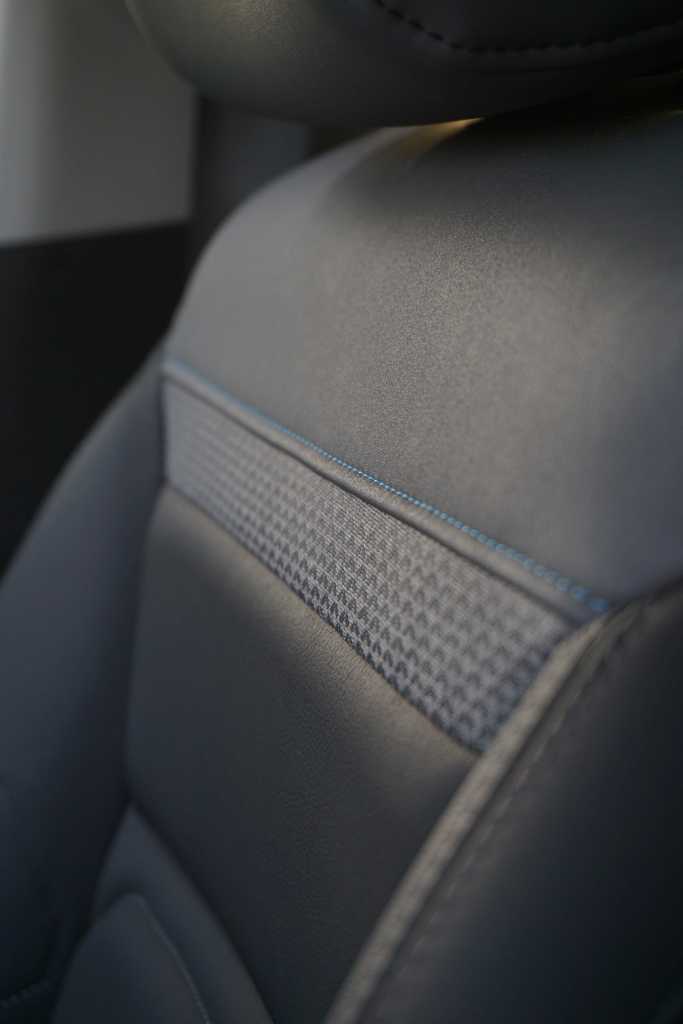
Citroën goes to great lengths in making their seats comfortable, and indeed, they are a class of their own. They provide smooth and restful support, due to the clever use of foam material. Citroën calls them Advanced Comfort, and they are also pleasantly wide.

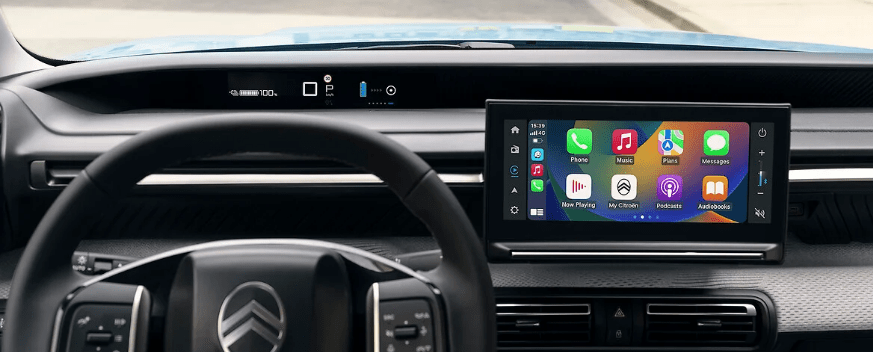
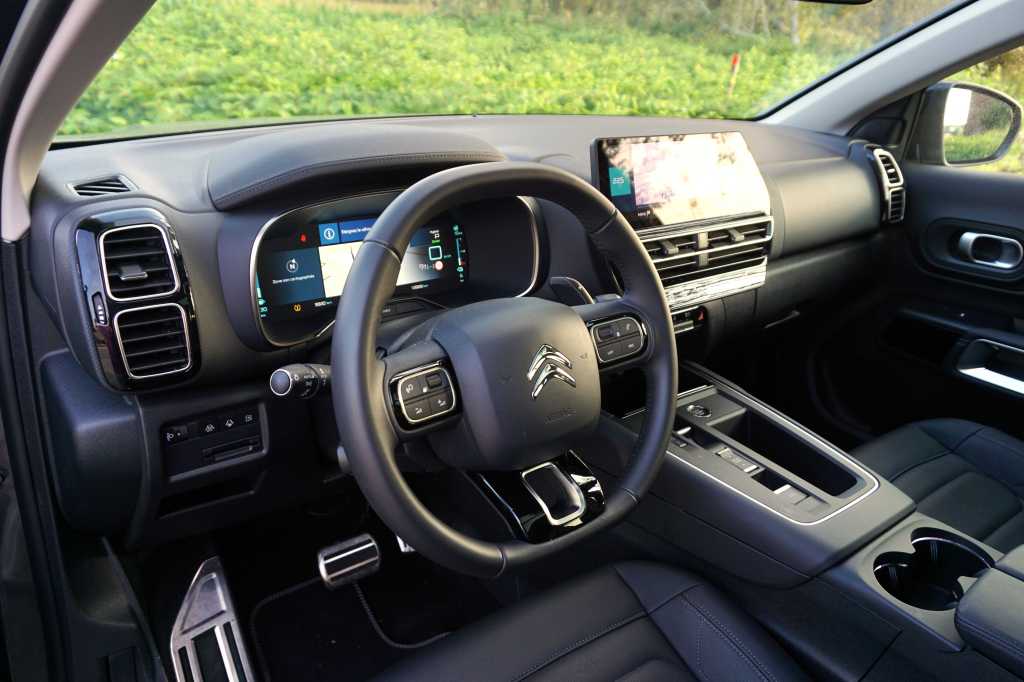
Infotainment is up to scratch, and Android Auto as well as Apple Car play are possible; we liked very much the dual digital clusters, which enabled the navigation map to be displayed both on the central screen as well as in the instrument panel in front of the driver, which is so useful when you have to find your way in unknown iconic city centres.
The suspension of the C5 is also calibrated and set up to combine good handling and surefootedness with excellent comfort, both at high and low speeds. We were also quite impressed by the high speed stability on German Autobahnen, where this hybrid SUV left nothing to desire in terms of fast GT cruising. It just goes to show again how good cars have become nowadays…The C5 is also remarkably silent, even at higher speeds.

Performance and economy

On this voyage we never ever felt the desire for more power, and indeed the C5 Aircross has all what it takes. Its 180 HP engine combined with the 81 HP electric motor develop a total of 224 HP, resulting in an acceleration time from 0 to 100 km/h in under 9 seconds, and a top speed of not less than 225 km/h, as we could enjoy on German Autobahnen, where the Citroën truly impressed with its silent ease at these high speeds.

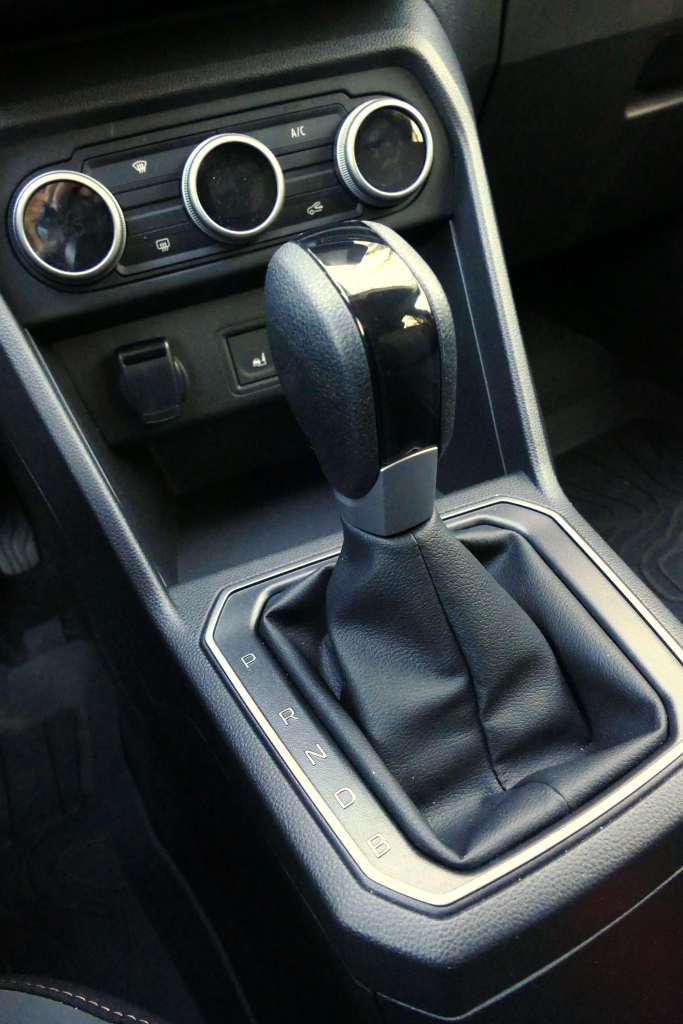
Economy of this hybrid depends totally on the way you drive and use it. You can recharge it regularly and drive only on E power over its 50 km useful E-range, or choose one of the several ’E-Save’ modes, and drive it as a hybrid. In the E-save modes, one can keep or recharge the battery up to a certain chosen level for later use in emission-restricted zones. Driving in hybrid mode, one can achieve easily values ranging between 7 and 8 litres/100 km. The drivetrain, also thanks to the super smooth Aisin 8 speed auto transmission, is beyond reproach, responsive and refined.

Fit for urban use

The C5 needs some vision aids when driving in town centres, and we appreciated these accessories indeed very much. The C5 is rather wide with its 2,11 meters, but then reasonably compact again with a total length of 4,5 meters. It has distance warnings fore and aft as standard equipment.

Conclusion

The C5 Aircross is a bestseller in the Citroën range, and with voyage we found all the good reasons for it. Last but not least it is good to know that the C5 Aircross is offered with a wide choice of different drivetrains, from the 136 HP petrol engine and a Diesel version with the same power to the (plug in) hybrid versions with respectively 180 and 225 HP system power.

It is marvelously versatile, has genuine GT qualities, is roomy, comfortable, is frugal and fast, has distinct, characteristic looks, and indeed drives like a true Citroën…

Hans Knol ten Bensel 

Thoughts about the future of our automotive mobility and our energy resources…  

Mr. Philippe Dehennin pleaded passionately for a change in EU Commission decarbonization policies in the interest or European car industry, its workers and its consumers…

Recently I assisted at an interesting luncheon conference held by Philippe Dehennin, Chairman of BEHVA and honorary Chairman of Febiac after a lifelong career at BMW, at the premises of Autoworld and organised by the dynamic Royal Historical Vehicle Club. 

He talked about the one-sided approach of the present EU commission and parliament in drafting the path to carbon neutrality of our automotive mobility.

He passionately pleaded for a neutral stance by the EU political decision makers concerning the technologies which are to be used in reducing carbon emissions. This is in the interest of both consumers and the European automotive industry, which is under pressure and economical risk due to one sided technological solutions (i.e BEV) which distort competitive balances in the global economy. Here I present to you an extensive report of his conference.

On the subject mentioned in our title, we will regularly report on what the captains of automotive industry have to say, and the adjustments they bring to their corporate strategies in these turbulent times of energy transition… Just read further!

Hans Knol ten Bensel   

The lunchean conference was held at Brussels Autoworld…and organised by the Royal Historical Vehicle Club.

After illustrating the broad evolution of our (Belgian and European) mobility from the early fifties to the present day, Mr. Dehennin described, amongst others, the positions of ecologists on our future mobility.

In terms of preference, these ecologists adhere to the following pecking order: walking, biking, metro, bus, and finally the individual car. They see further carpooling and car sharing as the only viable use for cars. They see the latter solution also ideal for bikes, like cargo- or tandem bikes for example.

However, all studies show clearly that in all everyday life situations, the car remains the preferred means of transport. This situation is somewhat less outspoken in cities, but the preference is even more outspoken on the countryside and suburbs. For many families and households, the car remains an outright necessity.

In terms of reducing the ecological footprint, car manufacturers have made a quite remarkable progress over the years and have convinced many car owners and users not to give up what they have acquired in terms of individual mobility. The car will have a bright future ahead, unless the EU commission maintains its stance to forbid the sale of cars with IC engines from 2035 onwards.

The private car buyer hesitates…

Do we have to fear that this will happen? Studies on the behavior of average, modest households, which represent the majority of our consumer base, clearly show  that they are largely opposed to the electrification of their cars. This situation now starts to have an impact on our politicians.

In the EU, only 1 in 10 of private car buyers opt for an electric vehicle. In Belgium, this is only one household on 20. The EV’s are just too expensive for the majority of average households. Many would just be forced to postpone the purchase of a new car and face the consequences of driving around illegally in (urban) low emission zones. Cities are aware of this and are starting to mitigate and loosen their emission regulations.  

But the trend is changing. There are also several countries who do not forbid anymore the sale of IC engine cars within their borders. The same goes for the use of heat pumps, etc. EU countries are now more than ever on the issue of decarbonization.

No place for climate skepticism…

I want to stress here that I am not a climate skeptic. I am convinced that reducing carbon emissions is an absolute necessity, but it has to be done with the support of the larger public, within the boundaries and limitations of their purchasing power. Now, EU and national politicians are increasingly becoming aware of this.

The actual and invasive consequences of the socially utopian obligations and regulations are seen and felt by the EU public, and one can indeed ask oneself whether these measures are deemed necessary, taking into account that Europe represents merely 8 pct. of global CO2 emissions. Since 1990, these EU emissions have dropped by 50 %, whereas the emissions of China and India have increased over the same period by 300 %.  

Saving the European car industry… through adopting a wider array of technologies.

Of course, the BEV is useful for many applications, notably in cities. But I also believe in the future of “thermal” or IC engine cars. 8 European countries, housing the majority of the not less than 13 million jobs tied to the automotive industry, have not said their last word. Nobody wants to open a free road to chinese imports. Germany obtained formal guarantees to be able to develop and use synthetic fuel for IC engines from 2026 onwards.

Jean Dominique Sénard, Chairman of the Board of Directors of the Renault Group, has repeated the strategy of Renault to go further on the path of electrification, but he thinks also that the combustion engine has still many good years ahead of it, thanks to the use of synthetic fuels, which he expects to go down in price in the coming years.

Oliver Zipse, chairman of the board of management of BMW AG, sees also hydrogen having a place in a diversified energy strategy to meet the varied needs of users the world over. In his latest statement, Zipse said “There is no “one size fits all” when it comes to mobility. Markets, customer wishes and conditions develop differently. This is a fact. As a global company, we take this into account. We are continuing to develop all powertrain technologies, including further researching the potential of hydrogen with our BMW iX5 Hydrogen pilot fleet.” (Added by editor).

Of course, hydrogen offers freedom of mobility with very short recharging times. BMW also believes in the future of thermal engines. Because the IC engine will live on for at least a century…And indeed, thermal engines are a crucial sector of European engineering excellence, whereas battery technology is a sector of Chinese engineering prowess.  

If we are driven by the political authorities in only one direction, i.e. BEV, without certainty of the geopolitical developments, nor the certainty of access to the necessary raw materials, without having the necessary “green” E-power and the corresponding adequate charging infrastructure, we will not be able to offer what the customer wants, nor will we be able to guarantee employment in the automotive sector.

A brief for the new EU commission: to adopt a neutral technological stance…

We need to convince the EU Commission to adopt a neutral stance on the technological level. The commission cannot dictate to the industry the technological path to follow. This has never been done in the past and should not be done now.

The CO2 neutral mobility has to be adapted to the diversified realities of the broad consumer base. Also the Diesel engine has not told its last word with the appearance of “clean” synthetic fuels on the market..

The new commission has to steer our European industry in an intelligent manner through this energy transition. If we need EV’s for our needs, we should also invite Chinese manufacturers to open  factories also on our shores; because only employment will generate the necessary prosperity and purchasing power.

Of course, the challenge for our manufacturers lies in offering also models for the average consumer besides the premium segment, where our European presence is already well established.

Only a combination of technologies will offer the proper solutions to the very diverse mobility needs of the EU consumer. The consumer should have the necessary freedom of choice, the liberty of selecting the ideal technology for his purposes.

Europe is a continent of liberties, the result of the declaration of human and citizen’s rights, like the freedom of speech, thought, opinion, property, the freedom to move when and how he or she wishes.

It is difficult to understand the complacency of a part of public opinion for those who seek to constrain us towards a single solution, i.e. the BEV and the bycicle. We need a technologically neutral, ecologically responsable mobility, respecting and preserving our economical prosperity. This will allow us to co-finance, together with the major powers, the decarbonization of the African continent.   

Europe has to be again the home of automobiles with passion and style…

One last word about design. It is time that the European car industry starts to offer intense and passionate automobiles, incarnating a (design) culture proper to each brand. This trend is now (thankfully) growing… concluded the speaker.

Hans Knol ten Bensel

We drove the Dacia Jogger Hybrid 140: your (price) winner…

Hans Knol ten Bensel

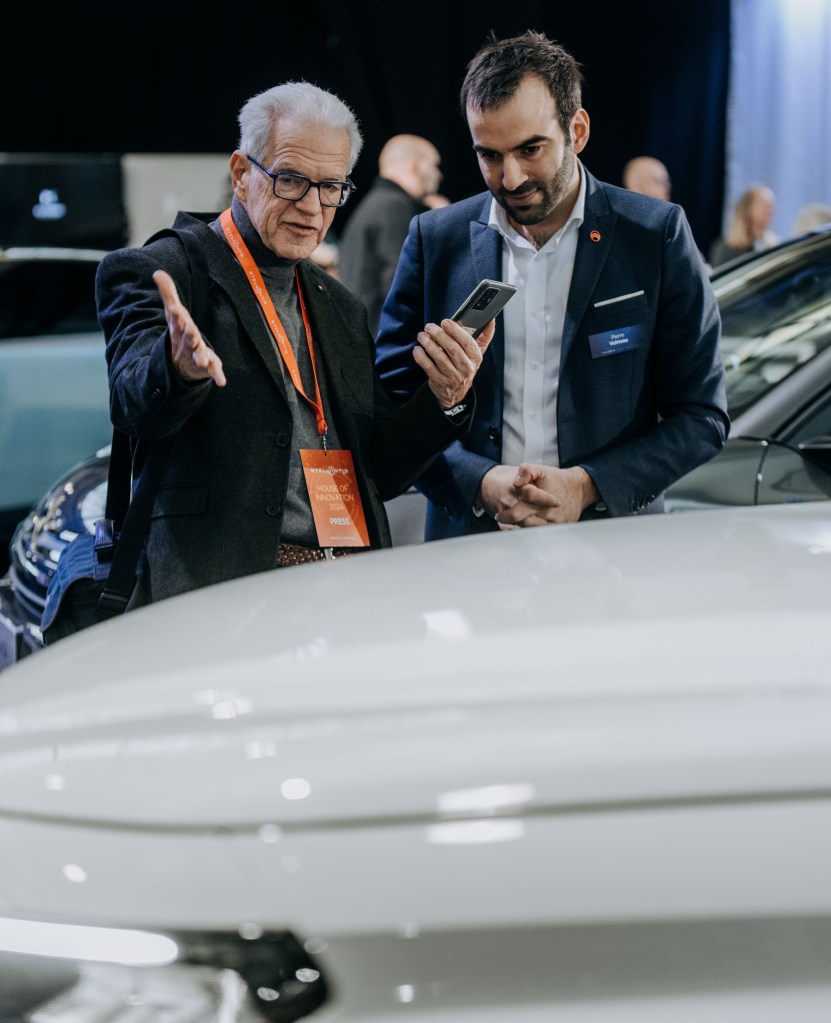
We spoke with Pierre Voineau, Managing Director Citroën Belgium & Luxemburg

On BEV-mobility In the B segment, we will indeed be the spearhead for the Stellantis Group.

On the recently held Stellantis  Press conference where it unfolded its strategy, results and future plans for its brands, we had the opportunity to talk with the leading managers of the several brands. As Citroën is the linchpin of the group in terms of European volume sales, we were keen to talk with Pierre Voineau, more specifically about a very important EV for Citroën, the new ë-C3.

Just read on…

 Hans Knol ten Bensel
HKTB: The new electric C3 will be a very important car for Citroën on our market…

PV: Indeed, it is the most important model launch for the Citroën brand over the last decade. Of course, the C3 is the most popular car here in Belgium, and has been already over the last few years. We also want to revolutionize the EV market with this car, making it accessible for everybody and at the same time producing the car in Europe…

We are at the crossroads of a decisive moment both for the Citroën brand as well as the car market in general.  

HKTB: For you it is also a mini-SUV, the C3 has grown taller…

PV: Indeed, we have injected the DNA of an SUV into the well known C3, but we did not make the car any longer or wider. This was very important. The car does not take up more room on the road than the present C3, just by a few centimeters at most. But we heightened the ground clearance of the car by 3 centimeters, and raised the roof line considerably with 10 centimeters. The passengers sit higher and indeed the front end is more imposing with a styling reminiscent of the OLI prototype you saw in Paris. The OLI embodies the strategy of the brand in terms of the total technical concept and styling in the long term, but indeed, some elements are already incorporated in this new C3.

HKTB: Which extra market segments or client groups do you want to attract besides the existing Citroën buyers?

PV: We will not in the first instance attract other client groups. It is rather the mobility itself which changes. With this, the needs of our existing client base also evolve. Now the need arises for cheap EV mobility, and we respond to that.

HKTB: The problem for you as a brand and certainly for a big automotive group like Stellantis is that the public charging infrastructure is still insufficient to meet all the mobility requirements. What do you put forward strategically here as a brand and a large group?

PV: We have Free2move eSolutions within the Stellantis group, which accompanies the client from A to Z in purchasing and installing his home charging point. When the client is in a particular situation and has no home or office charging point, or otherwise, it is good to know that in the spring we will also offer a thermal version of the C3.

Having said this, we will also have a special application, called e-ROUTES, on our electric C3. The route planner knows how many kilometers you need to travel, it will calculate a stop at say 20 % of the battery left, indicating the position of a charging point and also whether this charging point is available. It will indicate the recharging time needed, depending on the power of the charging station. One can charge up to 100 kW by the way. This will give the customer peace of mind when traveling over longer distances. With a battery of 44 kW and a range of some 320 kilometers one responds to almost all needs. On average, customers don’t travel more than 80 km per day.

HKTB: EV driving also needs a different state of mind and driving style…

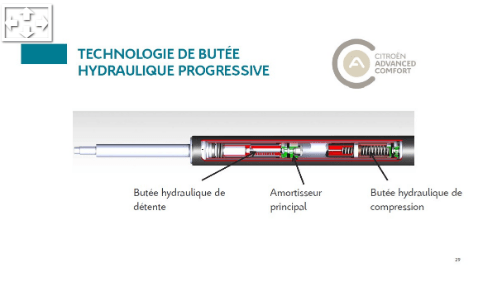
PV: Indeed, one will embrace a different, anticipative, more leisurely and “zen” driving style… What’s more, we focus at Citroën also on comfort: the new electric C3 has a so-called Progressive Hydraulic Cushions® suspension, ensuring that you enjoy the legendary ‘magic carpet ride’ feeling of comfort on the road, thanks to the use of progressive Hydraulic bump stops.

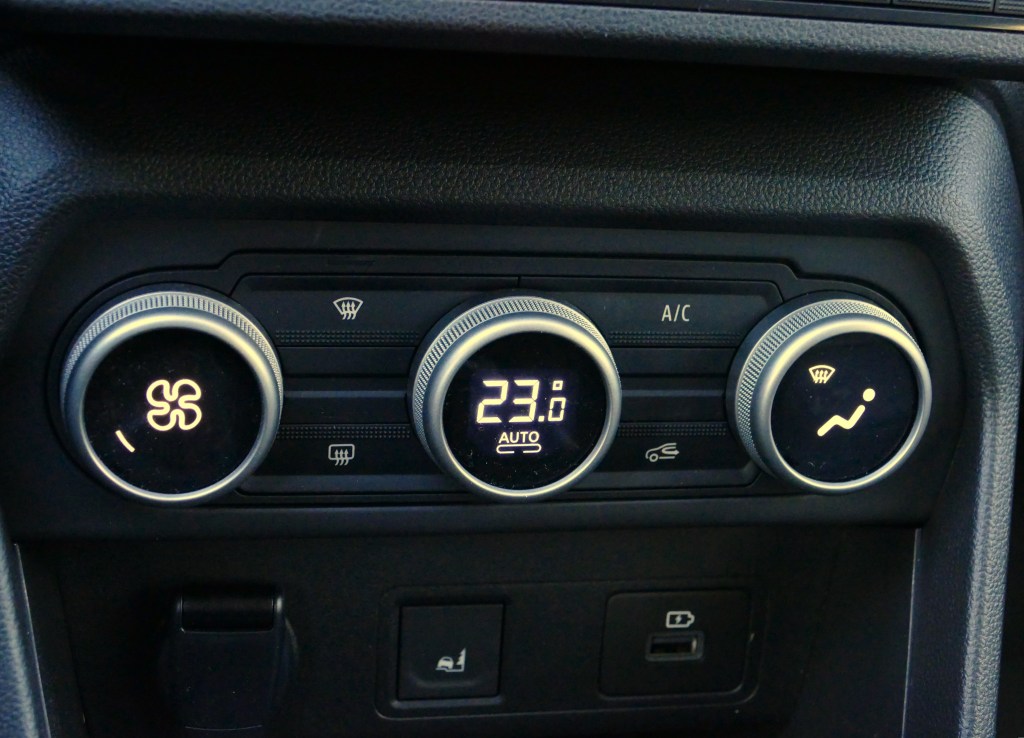
PV: We also have a manual airco on all the equipment versions of the C3, including a rear-end sensor. This combination of e-refinement with comfort and lavish standard equipment has great appeal and indeed the European wide orders for the new car at the end of December last year amounted to not less than 20,000. This year, we have chalked up already 1,000 orders in Belgium only. On BEV-mobility In the B segment, we will indeed be the spearhead for the Stellantis Group.

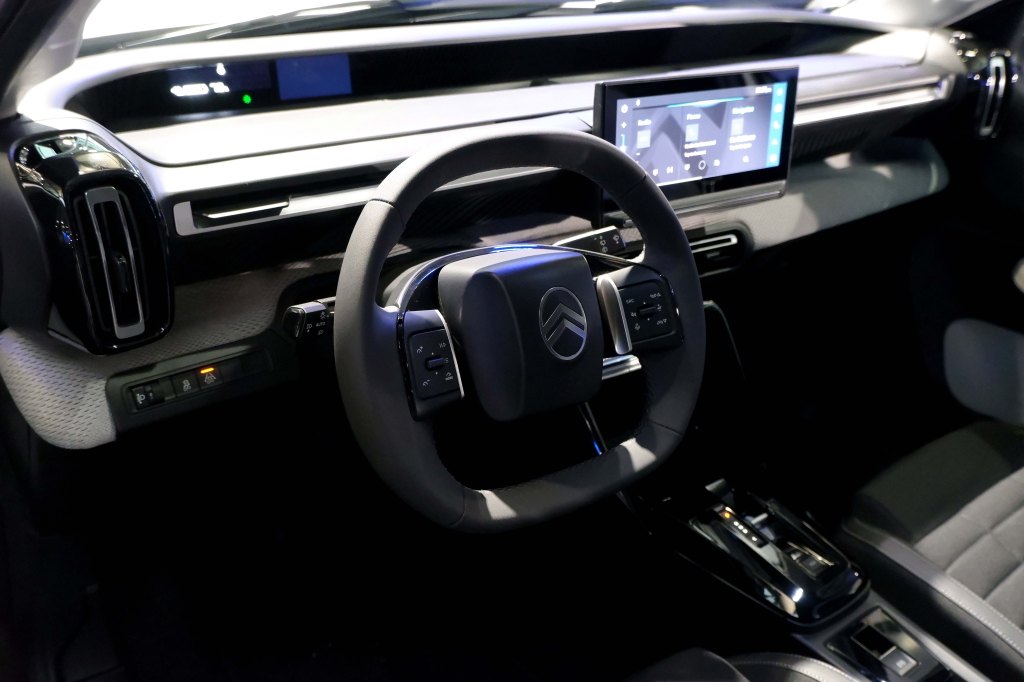
PV: I would like to comment also a bit more on the interior of the C3. Just look at the display. It reflects vehicle information onto a glossy black section between the top of the dash panel and the bottom of the windscreen. This smart solution ensures there is no duplication of information as there would traditionally be between a Head Up Display system and instrument cluster, and ensures drivers can easily access all the key information they need without taking their eyes off the road. The new multi-function steering wheel is also smaller, and so does not obstruct the head-up display.

Owners of the ‘You’ model have as standard equipment the ‘My Citroen Play with Smartphone Station’ dedicated App to access music, radio, calls and navigation via their own device.

HKTB: The clever use of the smartphone was also a solution found on the OLI prototype… actually, this C3 has everything of a compact “grande routière”…

PV: Indeed, as said, standard on ‘You’ models and features a built-in smartphone holder that allows drivers to ‘dock’ their device and auto launch the dedicated new App using NFC (Near Field Communication) wireless technology. Via this app, owners use their device to access shortcuts to Phone, Radio, Navigation and Music App services. The ë-C3’s steering wheel controls ensure drivers keep their hands on the wheel, and the ‘Home’ button makes it easy to navigate back to the homepage of the App.     

Indeed, she has everything of a “petite grande”…

HKTB I thank you for this interview.

Hans Knol ten Bensel