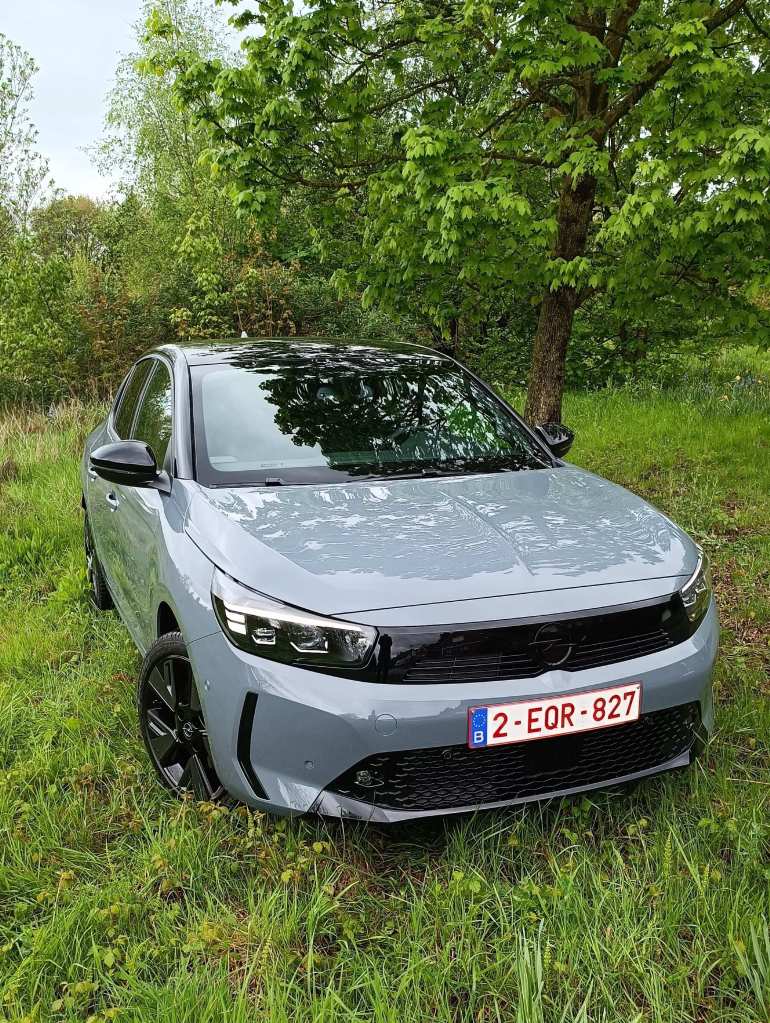
We drove the Opel Corsa Electric 156 HP: an electrifying bestseller..

In the very competitive B segment the Opel Corsa is a very interesting EV since a few years now, and like its Peugeot and Jeep sister models it has now also received a new, more efficient 156 HP electric motor and a slightly larger 54 kW battery. But there is more: it received a facelift, and now has also the iconic Opel “Visor” grille at the front. Also the infotainment system has been revamped and the driving assistance systems have been further refined. Its seats are as fine as ever and it has therefore excellent long distance qualities… just read further.

Hans Knol ten Bensel

We always had a weak spot for Opels. They were always part of my motoring life, from the Kadett A onwards to the Opel Rekords, the fantastic Manta, Commodore GS, the Admiral V8 and later the potent Ascona’s.

I found these Opels sturdy, touch, no nonsense, perfect Autobahn cars as well as excellent (urban) touring cars with pleasing docility.
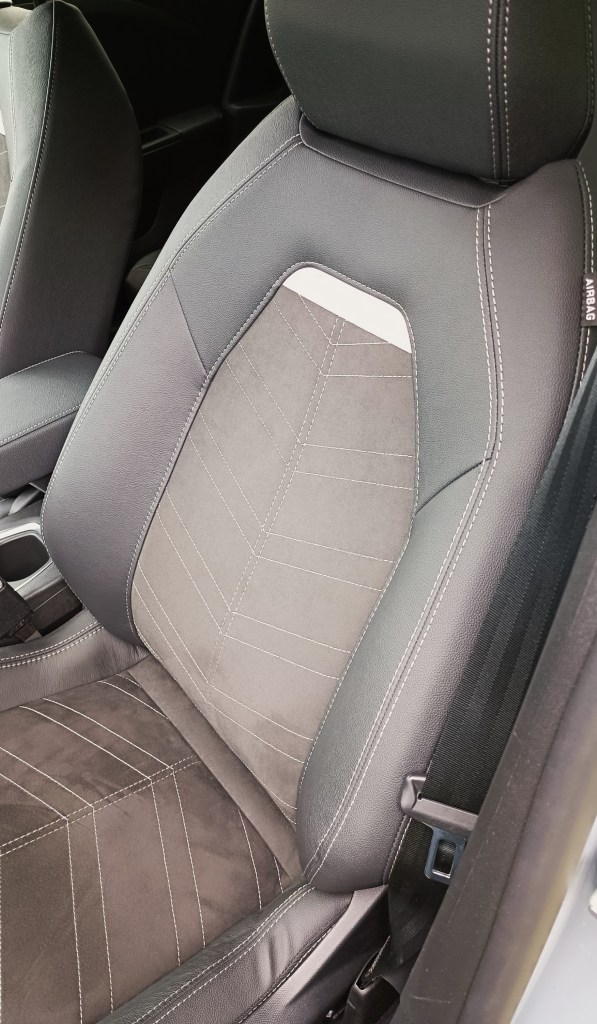
All these memories come back when you slide behind the wheel of this Corsa. No wonder it has been a top bestseller for years in its B segment.  The car feels nice, the seats are “just right” and give marvelous support, in the good Opel tradition.
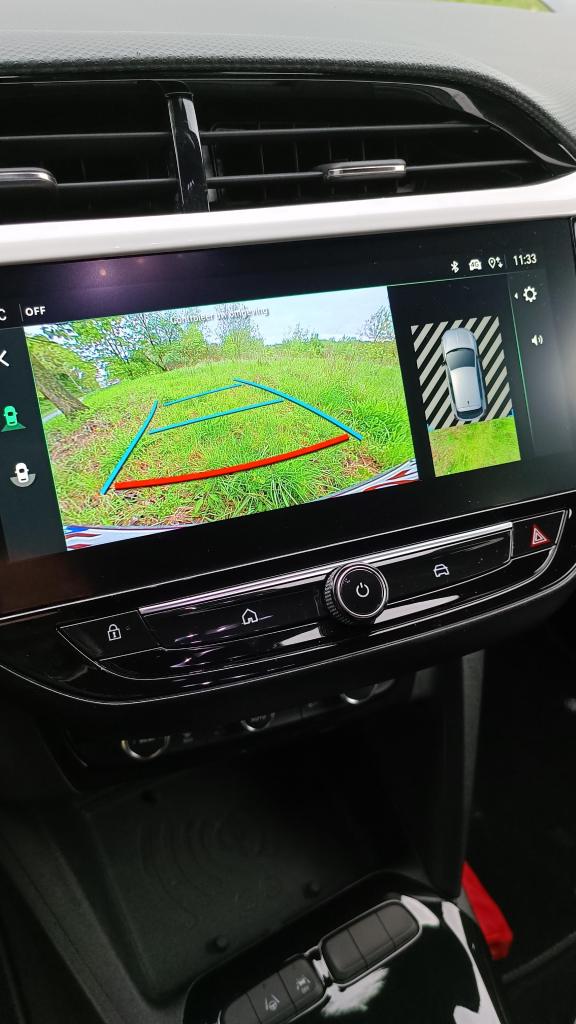
The infotainment is now up to scratch with, as Opel calls it, “Snapdragon® Cockpit Platforms from Qualcomm Technologies, Inc.”. With now also an up to 10 inch large colour touchscreen.
Happily, virtually all the essential controls are physical knobs and buttons, so it’s easy to feel at home in this Corsa, as you would in virtually every Opel by the way.
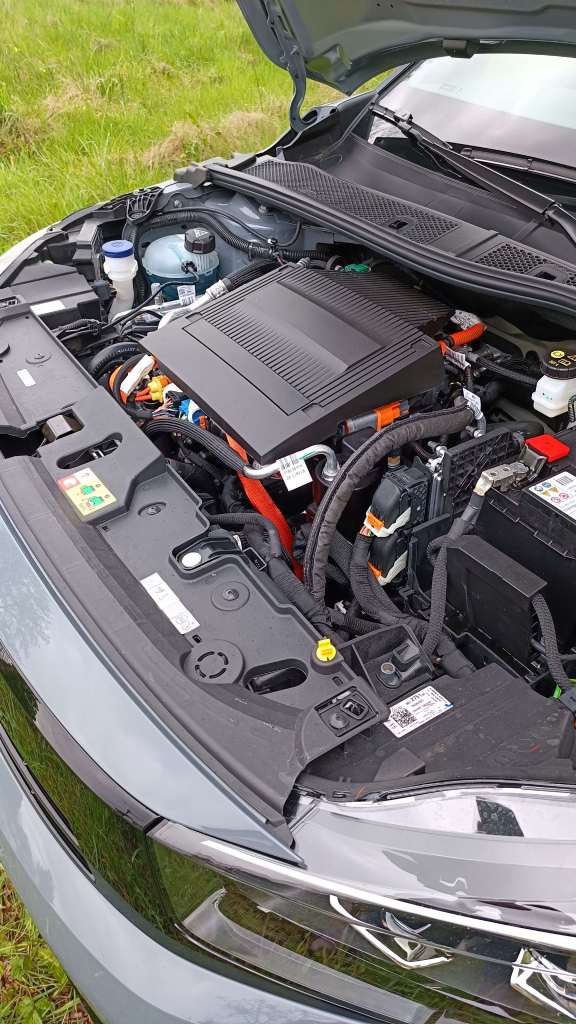
Smooth power

We repeat ourselves here over and over. EV’s drive super nice. They seduce you with a velvety power stream and lots of pulling power at every speed, in any situation. With no noise and no vibration whatsoever. So charming, invariably making you feel totally ”Zen” behind the wheel. This electric Opel should carry the nickname “RAK”, as it goes, like its famous predecessor, like a rocket. It will, despite its more than 1,5 tonne kerb weight, catapult you in 8,1 seconds to 100 km/h. The engineers set the top speed at a sensible 150 km/h, which is only for the better, as the range will otherwise dwindle too drastically. And let’s face it, you would only lose your driver’s license in many countries…
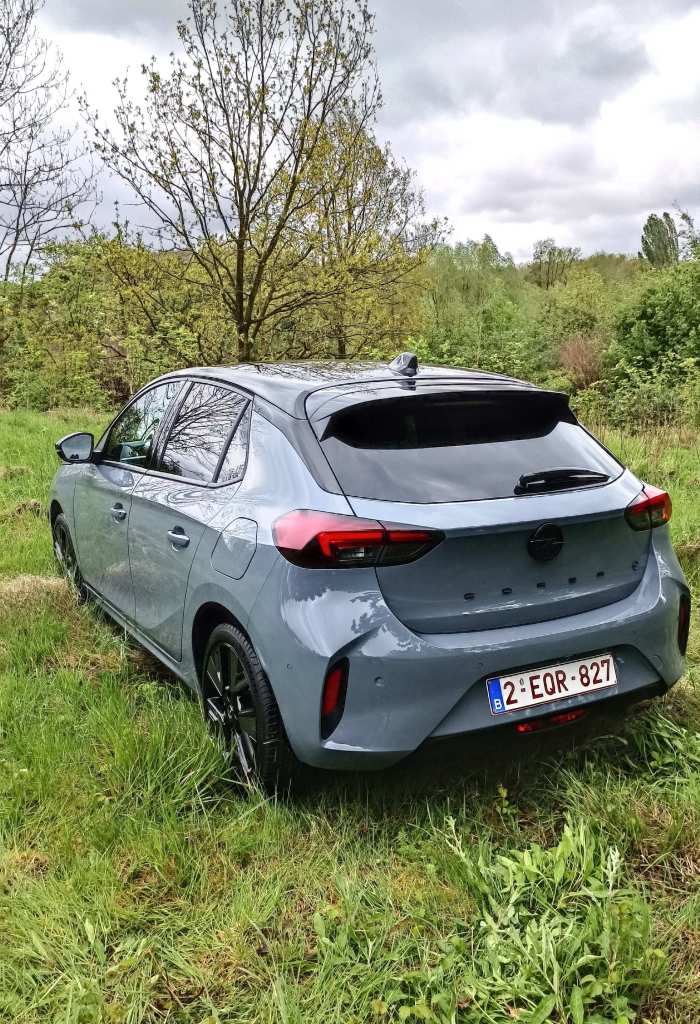
The new electric motor is more efficient than the previous 136 HP variant, which is by the way still available. This means indeed, that with some restraint in your driving style, you can achieve consumption’s in the region of 15 kW/100 km. The WLTP range of 402 kilometers is realistic when you drive mostly in slow (urban) traffic, and maintain reasonable (legal) cruising speeds on the open road.  Otherwise, something in the range of 350 kilometers is more realistic.

Of course, the Corsa can be charged rather quickly: on a 100 kW fast charger, it costs typically around 30 minutes to recharge it from 10 to 80 pct. On a (AC) wallbox, 3-phase at 11 kW it will take about 3 hours and 10 minutes.
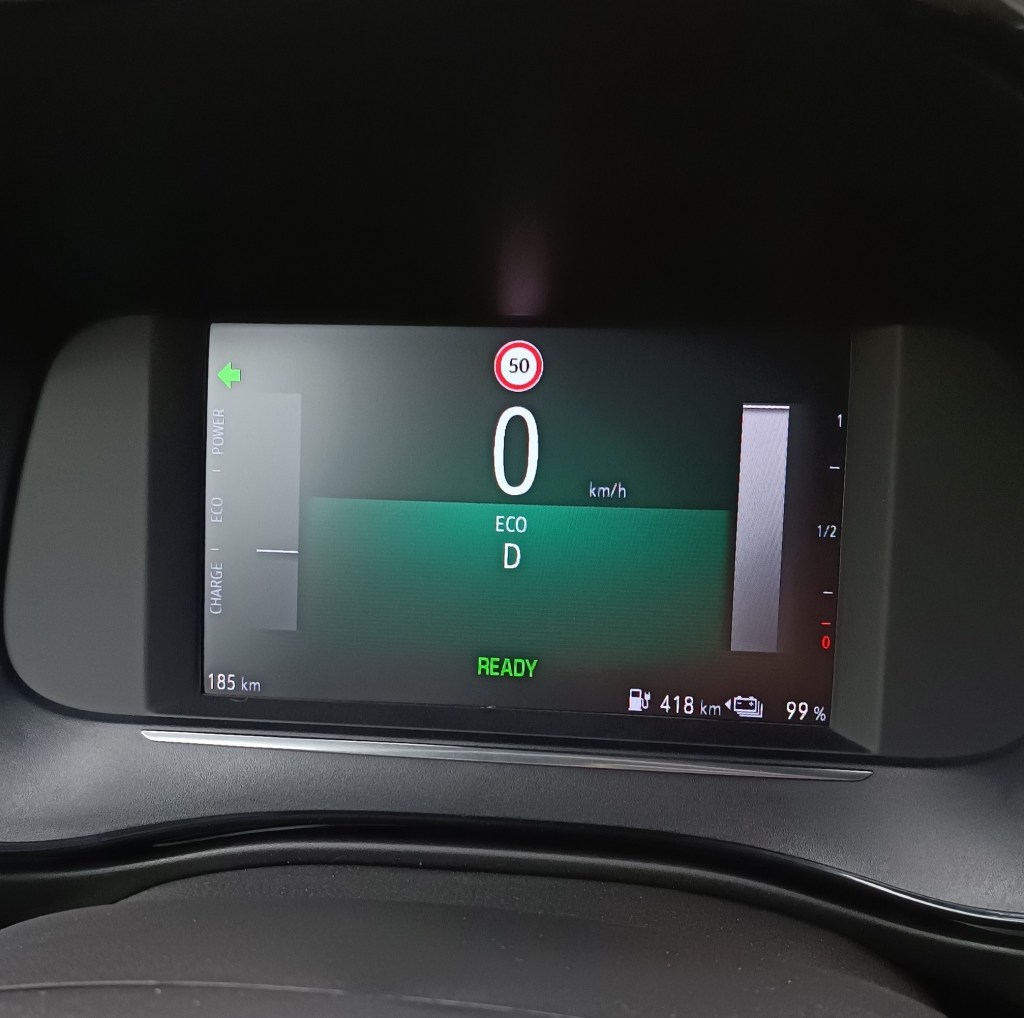
State of the art electronics and infotainment in the cabin

The Corsa is very important for Opel and Stellantis, and therefore much attention has been given to keeping this bestseller up to date. Just like in the development of the latest Astra generation, the “Detox to the max” principle

was applied: the navigation system offers connected services, natural speech recognition “Hey Opel” and even more important, over-the-air updates. In addition, the displays in the 10-inch colour touchscreen of the navigation and multimedia system and in the driver information display have been made even clearer. Apple

CarPlay and Android Auto compatible smartphones can now be connected to the vehicle’s multimedia systems and also recharged – both wirelessly.

Let there be light…

The Corsa now also receives not less than 14 controllable elements in its Intelli-Lux LED® matrix light system, instead of the eight it had already since its introduction in 2019. There is also the new, high-resolution panoramic rear-view camera, an adaptive cruise control and speed limiter and the forward collision alert with automatic emergency braking and pedestrian detection.

All this makes an impressive car, and it is no surprise therefore that the Opel Corsa Electric has been named the “2024 EV of the Year” by the Association of Business Drivers in the Netherlands in the so-called ‘Mid Segment’ category.

Practical and offering driving pleasure with a sporting touch…

Indeed, it offers room for four, has practical storage spaces in the cabin and sufficient boot space too. Besides the smoothness of the drive train, the Corsa offers a hint of sporting driving pleasure. It steers precise, and does not protest when you drive it with verve. High speed stability is important for the German market, and therefore the Opel engineers did not hesitate to make the suspension rather firm, also taking into account its impressive kerb weight of 1544 kg. You can choose between thee driving modes, Eco, normal and sport.
Conclusion 

If you opt for electric transport, the Corsa merits a long hard look. Well built, it makes you instantly feel at home with its intuitive controls, its no-nonse simplicity, its excellent seats and quality finish. It handles and drives well, is practical, and last but not least good looking. Our test car was finished in Grafik Grey, and it suited it very well…

Hans Knol ten Bensel

We drove the Volkswagen ID.7: your electrifying flagship…

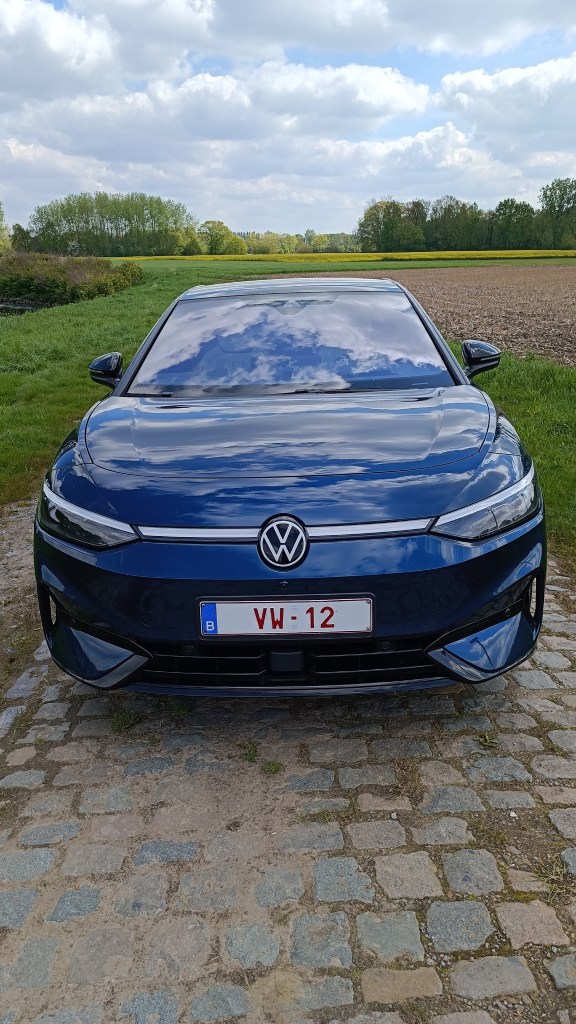
Volkswagen has gained over the years already quite some experience in designing, developing and building EV’s with its already iconic ID series. All this know how is now brought together in the ID.7, the big EV limousine at the top of their ID range. The result is manifest: this car is full of good qualities, and earns indeed top marks in virtually all aspects. We found it clearly one of the best bigger EV’s we have come across lately.
Just read further…

Hans Knol ten Bensel

Imposing and well proportioned

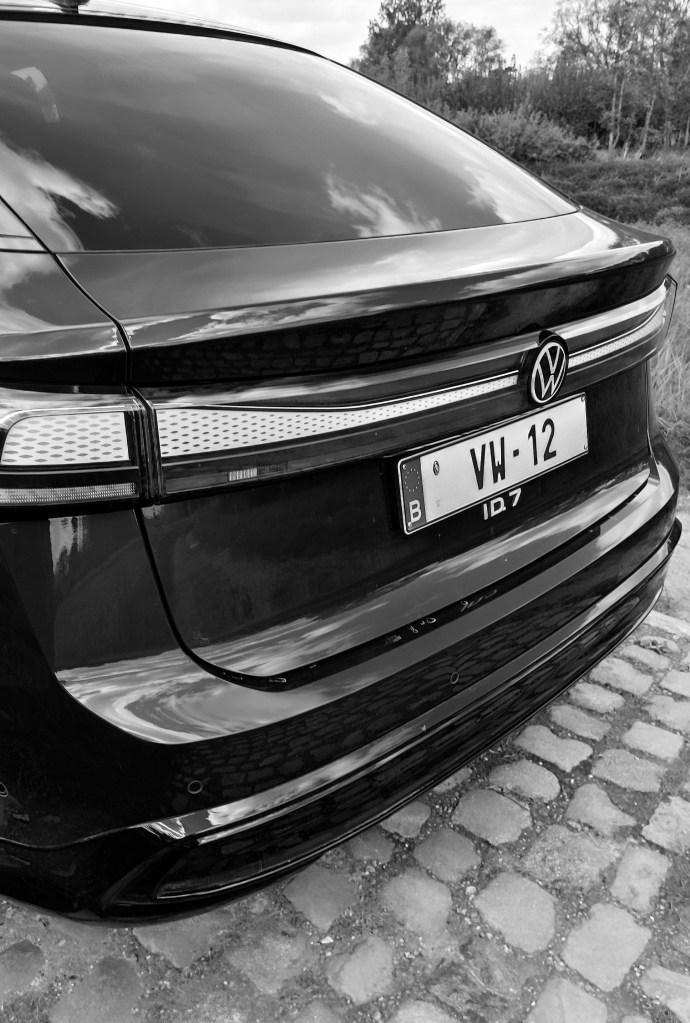
The ID.7 has the same styling and form language as the smaller models in its ID range, but its proportions are even better, not in the least because of its  longer weelbase. The overall length of 4,97 meters lets the lines and contours flow more gradually and elegantly and indeed, this ID.7 looks good from any angle.
The ID.7 is also very aerodynamic, with a Cw value of merely 0,23. This is very crucial to reduce energy consumption at higher cruising speeds, and to achieve longer ranges on long distances. But there is more: the VW engineers gave the ID.7 also a brand new electric motor. It drives like in the other ID models the rear wheels and develops 210 kW or 286 HP.

Plenty  of power, to say the least, and this ID.7 is very agile indeed. It sprints from 0 to 100 km/h in merely 6,5 seconds and overtaking becomes the proverbial breeze. The ID.7 behaves also wonderfully when you drive it more quietly, and the car then rewards you with a very reasonable consumption. We achieved during our test an average of 17.60 kW/100 km, and we think that this tells the whole story.
Indeed, VW succeeded in giving their flagship EV an impressive range of close to 500 km. Of course, the usable range varies with outside temperatures and driven speeds, but let’s say that this ID.7 has its merits as a long distance Gran Turismo.
This good range is achieved with the 77 kW battery which is also found in the other cars of the ID  range, and all this is due to the improved motor and the better aerodynamic qualities. Of course, as you already know by now, EV cars just LOVE slow driving. The slower the (constant) speed, the further you go. Even to very slow speeds, like say 40 km/h, EV’s are frugal, where IC engined cars need to revert to lower gearing to keep the revs up and are therefore less efficient. Also the outside temperatures are relevant. So at a nice springtime outside temperature of 20 degrees and at a cruising speed of say 90 km/h, you will drive far beyond 600 kilometers with your stylish ID.7. Top speed is sensibly limited to 180 km/h.

This electric flagship will also recuperate its kinetic energy nicely. If you put it in Eco mode, it will also decelerate smoothly and anticipate for bends and crossroads.

Comfort and space…

We found the suspension of the ID.7 actually “just right”, offering excellent comfort in all circumstances and under all driving styles, with outstanding handling and agility. A superbly balanced car indeed.

But it is not only the suspension which stands out, the generous dimensions in the cabin do the rest. Indeed, this is a limousine fit for the very tallest. Even when the front seats are put back to accommodate 1,95 meter tall front passengers, you will still enjoy ample legroom in the back. Indeed, this is a car to fit four basket ball players, and this is pretty unique.
Your servant is barely 1,70 m tall, so you can imagine that I was absolutely spoiled.

Climate comfort

The seats itself also merit superlatives. The front seats are optionally equipped with so-called ’Adaptive Climate Control’.  It has to be felt to believe it. Humidity sensors in the backrest will prevent transpiration, small jets will cool or heat the seats for optimal comfort.
Besides this, the seats will also spoil you with an array of massage functions.

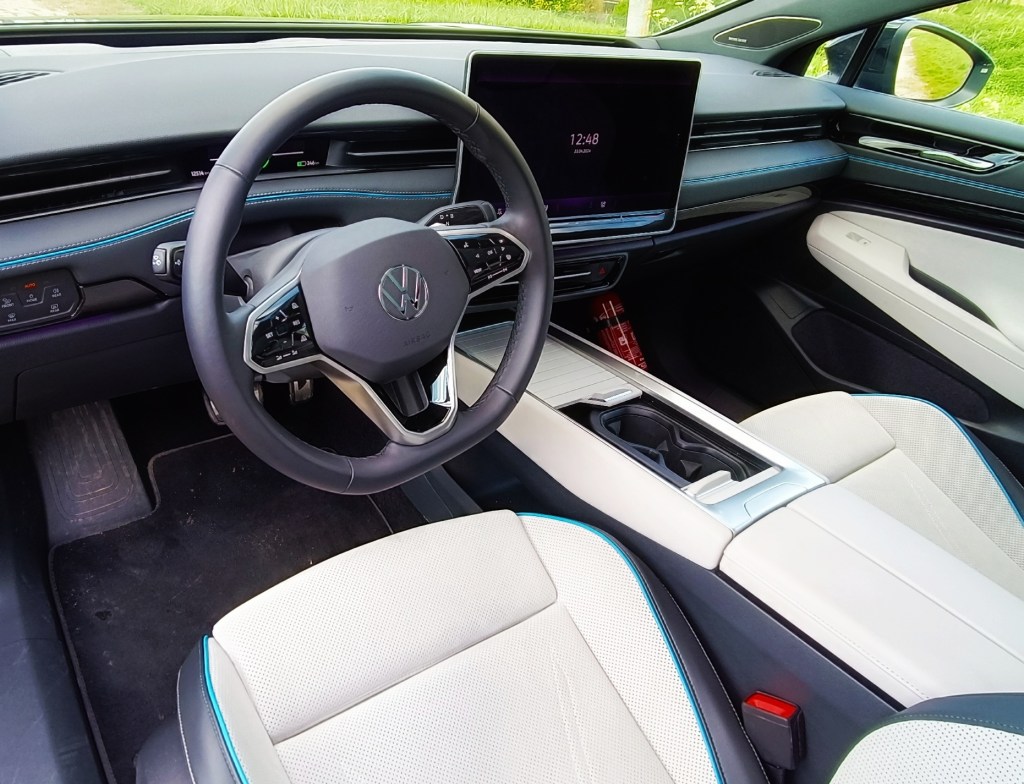
The light atmosphere in the cabin can be changed almost at will, 10 different colour shades are standard, and can optionally be as many as 30…

Our test car came with a panoramic roof, which has a layer of polymer dispersed liquid crystals, so you can control the transperance with a simple touch.

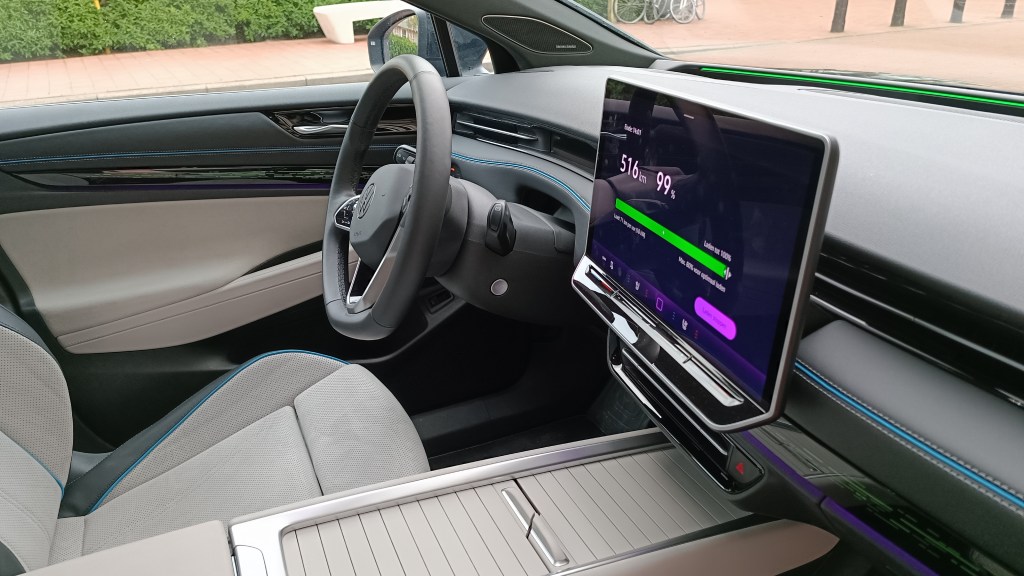
Heating and ventilation are controlled on the immense central touchscreen, although there is an illuminated control bar at the base of the screen which lets you adjust with sliders the basics like air  temperature and airflow volume. The direction of the airflow through the vents can only be adjusted on the touchscreen however. Your servant is very sensitive to colder airflows, and was very surprised to feel an intermittent air stream on his face. Indeed, the airvents can be set to turn constantly on a horizontal axis, like a stand ventilator in your home…

A range of well over 500 kilometers is quite possible with the ID.7..

On a public charging point it will accept power up to 11 kW, and the battery will be 80 pct charged in about 4 hours…

Touch controls…and clear instrumentation.

Again the haptic touch controls are the hallmark of this VW, as is typical for the entire ID range. It takes some getting used to, and for instance you are well advised to set the voice command sensor on the steering wheel properly, otherwise she will ask you what she can do for you at every turn of the way.

What we loved is the very clear and concise driver information the instrument display puts in front of you. Indeed, less is more. There is also a very readable head up display. It informs you about speed, the direction you should take and energy consumption.

Practical

In good VW tradition, the boot space is enormous. When you fold the back seats and load until the window openings, you can store 888 liters…
There is even a small separate 25 litre storage space for the charging cables.

The ID.7 is rather wide for urban traffic, but its turning circle is a modest 10,7 meters, and indeed the car is thanks to the driving aids also a breeze to park.

Fast charging is a strong point of the ID.7. It will accept up to over 180 kW charging power, and under these conditions it will take little more than half an hour to recharge this flagship from 10 to 80 pct. On a public or wallbox charger it will typically accept 11 kW, and you have to reckon with a charging time of some 8 hours.

Conclusion

The ID.7 is indeed a totally convincing limousine EV. It is hard to find any weak points, and it is therefore not surprising that it earns many top laurels in the international motoring press. Notably it was given the very best note ever for an EV by the German ADAC in their test.

Quality doesn’t come cheap, but then this is a rather formidable EV, and we sincerely regretted to part with it…

Hans Knol ten Bensel

We drove the Nissan X-Trail e-Power e-4ORCE : the best of both worlds?

Nissan is carving itself a wonderful niche in the electrified SUV world, with both its popular Qashqai and the all new X-Trail.

It offers a bold technological solution for these two popular models by decoupling the engine entirely from the proper drivetrain, letting it act solely as a generator to one (and in this case two) electric motors.

The idea behind it is obvious: it offers the pulling power and mechanical refinement of the electric motor and at the same time it avoids the inefficiency of the combustion engine when it operates under low charge  situations combined with relatively high revs, like in urban stop start traffic.

It lets the engine do its charging work under ideal thermal working conditions and loads, and uses a small(er) battery to deliver the extra electric energy when needed in specific driving situations, like starting off from standstill or engaging in fierce acceleration. Ideal? Let’s find out…

Hans Knol ten Bensel

Smooth…

The driving impressions are indeed very convincing: progress is silky smooth, and indeed the X-Trail is delightful to drive in town and slow traffic.

The ample torque of both electric motors inspires confidence, and lets you master every driving situation. The combustion engine, a 1,5 litre three cylinder, is well insulated and hardly audible. Its recharging task depends of course on how much e-power you want it to deliver, and therefore the more relaxed your driving style, the less you hear it. Whether it will rev higher depends also on the driven speed, soo clever! The Nissan engineers did a very good job here, as this gives a very “natural” impression to driver and passengers.

Total power of our top op the range e-Power e-4orce X-Trail is not less than 213 HP, and the torque is even more important with 330 Nm at the front and 220 Nm at the rear. Smooth performance is the result: the 1,9 tonne 7 seater will sprint from 0 to 100 km/h in 7 seconds and the top speed is an impressive 180 km/h. Indeed, this X-Trail will never feel underpowered.

Geared for comfort

Does the X-Trail awaken the sporting driver in you? Well, rather not. Its utter smoothness puts you rather in a “Zen” mood, and the comfortable suspension does the rest. The car is well balanced and stable in all circumstances, and this adds to the overall relaxing character of the car.

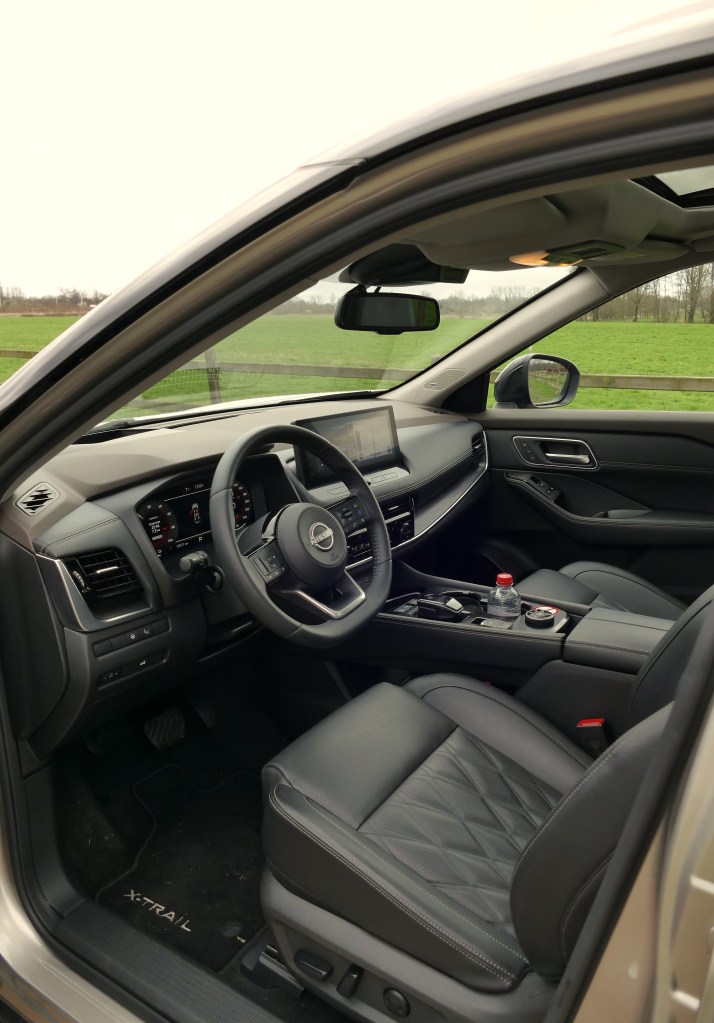
Well being is also found in the cabin. Of course, the top Tekna+ equipment version spoils your senses. The interior is also well laid out, stylish and the designers did keep wisely an array of knobs so you quickly find your way intuitively to all the functions of this X-Trail. We also liked the look of the digital instruments and screen display.

The X-trail e-4ORCE AWD is with its dual motors and 4WD very well at home off- road too…

… but also for economy?

The Nissan engineers had first and foremost the mechanical smoothness of e-propulsion in mind, and combined this with range comfort. Consumption seemed not to be an absolute priority. Nissan opted for a smaller  battery, not least because it would cost room, make the car heavier and pricier. This means that the engine has nowhere to dump its generating power when the battery is full. Of course, the drivetrain software will shut the IC engine down as soon as possible, or let it turnover purely on e-power. Having said this, if you adopt a relaxed driving style, it is quite possible to achieve a consumption between 7,5 and 8 litres, which is quite efficient for a car weighing close to two tonnes. Official figures indicate an average consumption of 6,4 litres/100 km, and 146 g/km of CO2 emissions.

A seven seater…

Indeed, this X-Trail will transport two youngsters on the third row seat, but this is not meant to be for super long trips. But a short run to the supermarket or football club is always in the cards, and this can be quite practical on more occasions than you would expect.

Conclusion

This Nissan X-Trail e-4ORCE is a very well balanced, refined car which offers you all the sophisticated “Zen” pleasures of electric driving combined with the range and long distance cruising panache of IC engined cars. It is very well finished, is lavishly equipped and offers more than adequate space.

We were so seduced by all its good qualities that we decided to join a Nissan e-Power e-4ORCE to our stable of cars, so soon we will inform  you regularly about how it behaves in long term use…

Hans Knol ten Bensel 

We drove the Dacia Jogger Hybrid 140: your (price) winner…

Hans Knol ten Bensel

Nissan Benelux unfolds her strategy for the Benelux market…

Managing Director Jerome Saigot unfolds the strategy of Nissan Benelux…

We are at the start a new automotive year, and therefore it is a good opportunity for manufacturers to look forward into 2024 and announce to the Belgian press what their strategy, plans and objectives will be in the forthcoming 12 months.

So we were invited at the end of last year by the Melvin Keuter, head of communications of Nissan Benelux at their press conference…and their interesting initiatives are certainly worth a closer look. Just read further!

Hans Knol ten Bensel

Melvin Keuter, head of communications of Nissan Benelux, exposed the electrification strategy of Nissan and its future…

Nissan Belux and Nissan Nederland merged into Nissan Benelux

On the 1st of July last year, this merger was executed in order to improve response to the needs of the Benelux market. Now the two entities are joined in a new so-called Regional Business Unit, led by Managing Director Jerome Saigot. Indeed, the car market is going through a fundamental transition, and Nissan will respond to these challenges by focusing on electrification, digitalization of the customer approach and responding to major changes in the buying behavior of their clients. Mr. Saigot emphasized these points of the strategy in his presentation at the press conference. He sees also in this merger further useful synergies for staff and dealerships.

He exposed the mission of Nissan Benelux, which is to be an innovative brand which offers electrified mobility and a superior service to its customers. Its objectives are to enlarge its volume, raise brand identity and awareness as well as boosting profitability.

The strategy to achieve this will be to focus, as we said, on further digitalization of customer approach, further electrification of the model range, strengthening corporate sales, bolstering brand identity and streamlining distribution.

According to Jerome Saigot, digitalization is a major trend which will strengthen further. In 2020, only 4 % of customers were buying a car online, which has risen to 12 % in 2023. Market surveys show that soon 45 % of the future customers will buy their car online. Of course, Nissan will work further on its electrification, and indeed focus also increasingly on corporate sales.

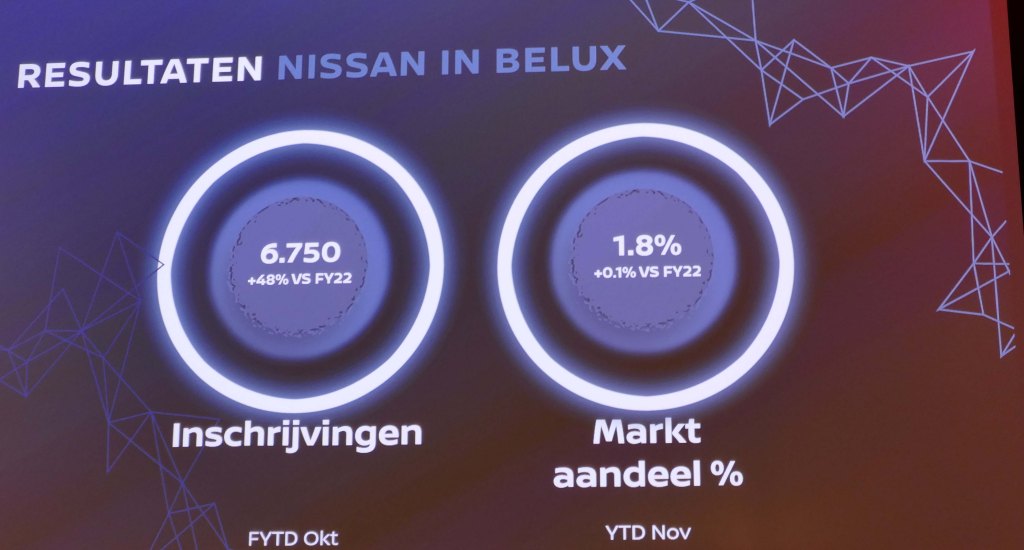
Looking at the results last year of Nissan Belux, 6.750 units were sold, which is an impressive 48 % rise compared to FY 22.

Also in distribution and dealership the focus will be on further developing synergies and tailoring the customer approach on their changing preferences and buying behavior. In December last year, Nissan sent a message to the professionals, small and medium enterprises, craftsmen and the like, pointing out the attractiveness of their increasingly electrified LCV segment.

Decisive steps toward further electrification… or EV36Zero.

EV36Zero is a key part of Nissan Ambition 2030. In this period Nissan will deliver exciting, electrified vehicles and technological innovations while expanding and transforming its operations globally the company announces. The vision supports Nissan’s goal to be carbon neutral across the lifecycle of its products by fiscal year 2050.

In November last year, Nissan announced that the EV36Zero hub in Sunderland, Nissan’s blueprint for future manufacturing, will consist of three electric vehicles (EVs), three gigafactories and up to £3bn investment.

The transformational project includes future all-electric versions of Nissan’s flagship Qashqai and JUKE crossovers, and Nissan also confirmed that the third vehicle planned for UK production will be next-generation Nissan LEAF.

Nissan also announced that that it expects its passenger car line-up in Europe to be 100% electric by 2030.

Nissan is also incorporating in their electrification strategy the latest developments in battery technology. It will adopt Cobalt-free batteries, and towards 2028 there will be a cost reduction in comparison with Lithium-Ion batteries of not less than 65 %. This year Nissan will open a pilot factory in Yokohama to produce solid-state batteries, which can be charged three times faster and cost much less. They will be introduced to the market in 2028…  

Looking into the future…

After exposing the good qualities of the present range, a veil was lifted in this conference about the cars we can expect in the (not so) distant future.

Indeed, the three future versions of the full electric Juke, Qashqai and Leaf will be inspired by three exciting all-electric concept models, two of which were recently unveiled at the Japan Mobility Show:

The Nissan Hyper Urban Concept, a crossover EV characterized by a sleek and modern aesthetic.

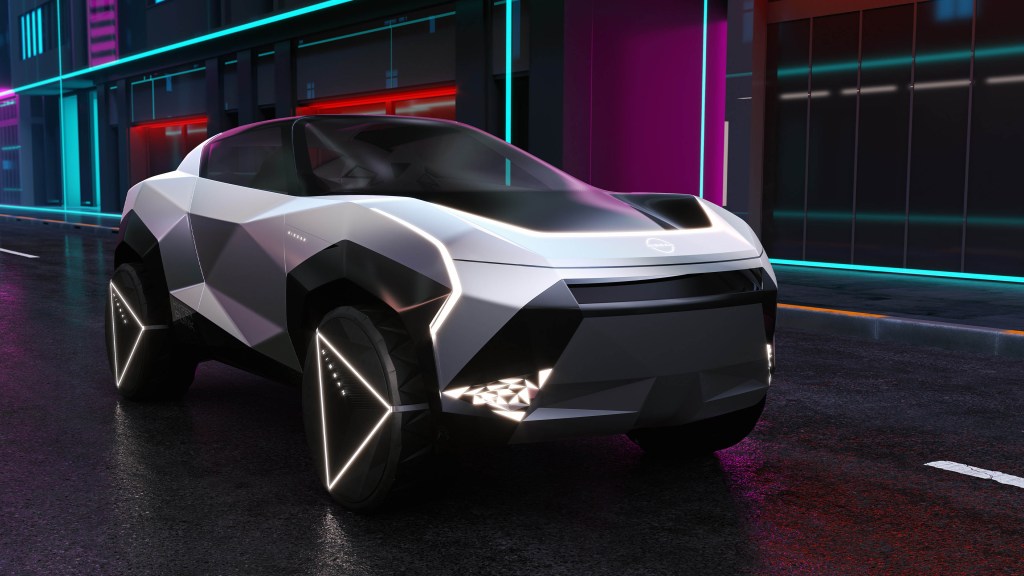
The Nissan Hyper Punk Concept, an all-electric compact crossover with an exterior aesthetic defined by multifaceted and polygonal surfaces.

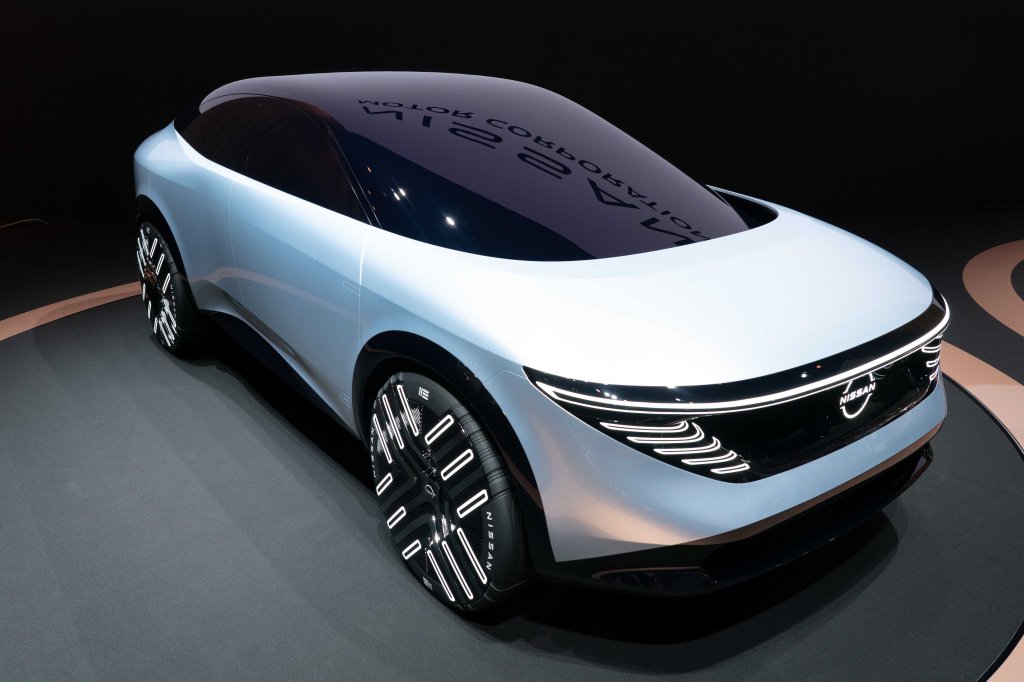
The Nissan Chill-Out Concept, was unveiled in 2021 and previously confirmed as the inspiration for a future EV to be built in Sunderland.

 The car is a compact, sporty, city EV concept with an influence from the world of virtual gaming. Besides the sleek and modern design, advanced safety technology, it has a productive and comfortable interior space.

The Chill-Out, – see photo here above – which looks to us as a very realistic concept car which we might see on our roads in the (very?) near future, utilizes the CMF-EV platform.

The Nissan Hyper Urban Concept – see photo here above – was announced at the 2023 Japan Mobility Show; its styling complements the sophisticated tastes of its target users, such as urban and suburban based professionals who prioritise environmental sustainability.

This all-electric crossover concept is designed to remain up to date for every new owner, ensuring an extended lifecycle through regular software and hardware upgrades, aiming to achieve the utmost sustainability. To maximize this further, the vehicle seamlessly integrates into the electric vehicle ecosystem (V2H/B/G), for power sharing.

Last but not least, there is the Nissan Hyper Punk concept was also announced at the 2023 Japan Mobility Show.

It is positioned as an all-electric compact crossover concept, catering for a dynamic audience seeking self-expression through style and creativity. It offers owners a canvas for self-expression with its polygonal-shaped exterior with dynamic color changes.

Further styling exercises: the Nissan Concept 20-23

To celebrate the 20th anniversary of Nissan Design Europe (NDE) being located in London, Makoto Uchida, Nissan’s President and Chief Executive Officer, visited NDE in September last year to unveil an all-new sporty urban electric concept car called Nissan Concept 20-23.

The car certainly turns heads, as you can see from the accompanying photo. It was designed by a team including some the younger members of NDE, with the simple brief to design a car – with no constraints – which they would like to drive on the streets of the city where they work.

Of course there is the present range of Nissan, with the Juke, bestseller Qashqai and Ariya. Last but not least also the Leaf. Head of Marketing Rémy Le Gall presented them. See photo here below.

Soon we will refresh our driving impressions of these cars for you, and tell you then more about their unique qualities. Stay posted!

Hans Knol ten Bensel  

Renault unveils a tip of the veil of its cute 5 E-Tech electric ahead of Geneva Show…

Indeed, Renault will enrichen the world with its iconic full electric “Cinq”, reminiscent of its wonderful R5 which stole so many hearts decades ago. With this car, Renault wants to bring EV driving to the masses, affordable and with a distinct link to its glorious past.

The car will be a star on the 26 February at the Geneva International Motor Show, and it now starts gradually unveiling details of the car.

The headlights of R5 are a key design feature, making the front end instantly recognisable. It is not only their shape that sets them apart, but also the mark in the centre of the lens, resembling the pupil of the human eye.  This nod to the 1972 advert featuring “The Adventures of Supercar” gives the modern-day R5 a human-like expression.

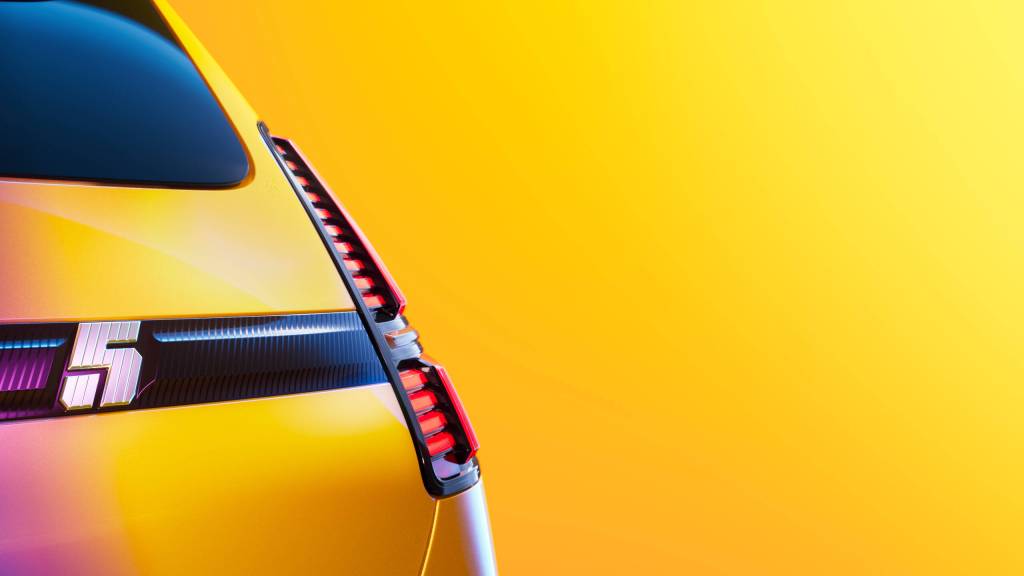
At the front end, the air intake present on the bonnet of the historic model has disappeared. Clearly showing that Renault 5 E-Tech electric belongs to the world of electric vehicles, it has been replaced by a charge indicator light forming the iconic number “5” when the vehicle is fully charged.

The wheel arches create a broader stance, giving R5 the look of a compact car with real on-road presence. Their graphic design underlines a unique and instantly recognisable personality, reminiscent of R5 Turbo.

The vertical rear lights were a hallmark of the R5, and here they include a function extending the side panel.

R5 R Pass, a skip-the-line programme for online customers

At the end of last month, Renault is rolled out a unique experience for future customers: the R5 R Pass programme. R5 R Pass holders will be able to order the new iconic all-electric vehicle in the Renault network 10 days before orders open to the general public. Customers placing an order during this special period will be among the lucky first to take delivery of their vehicle from autumn 2024, with the ElectriCity plant in Douai, France, giving priority to their order on the production line. Holders of an R5 R Pass will receive a scale model of Renault 5 E- Tech electric after its reveal and will be the first to access content and events around Renault 5.

Available at a cost of €150, the R5 R Pass will be available from http://www.renault.fr/r5 and in the seven participating countries (France, Germany, Italy, Spain, United Kingdom, Belgium and the Netherlands).

An all-electric city icon…

Just 3.92m long, Renault 5 E-Tech electric is every inch a city car. Ideal for urban driving, this all-electric icon is also fit for the open road with its 52 kWh battery giving it a range of up to 400 km WLTP. This battery will be the first available when orders open. A second 40 kWh battery will become available at a later date.

Renault 5 E-Tech electric will be the first vehicle built on the new AmpR Small platform (formerly CMF-B EV), designed for true driving pleasure. The multi-link rear suspension, usually found only on vehicles further up the market, contributes to the excellent stability and roadholding.

Renault will gradually show more of its new all-electric baby. Stay tuned!

Hans Knol ten Bensel